1a. Knowing and understanding young children’s characteristics and needs
1b. Knowing and understanding the multiple influences on development and learning
1c. Using developmental knowledge to create healthy, respectful, supportive, and challenging learning environments
Chapter and Topic
Chapter 2
• Books featuring physical differences p. 25
Chapter 3
• Natural language emergence p. 40
• Early phonological awareness p. 43
• Early language emotional environment p. 45
• Early language social environment p. 51
• Early language physical environment p. 55
Chapter 4
• Children recognizing rhyming words p. 70
• Children following their natural beat p. 75
• Feeling heartbeats p. 76
• Music and the brain p. 86
• Music and emotions p. 87
Chapter 5
• Stages of preschool language production p. 96
Chapter 6
• Developing eye-hand coordination p. 129
• Muscle development sequence p. 130
• Developing drawing/writing skills p. 139
• Developing visual literacy through pictures p. 150
Chapter 8
• Emergent book reading behaviors p. 195
2: Building Family and Community Relationships
2a. Knowing about and understanding diverse family and community characteristics
2b. Supporting and engaging families and communities through respectful, reciprocal relationships
2c. Involving families and communities in their children’s development and learning
3: Observing, Documenting, and Assessing to Support Young Children and Families
3a. Understanding the goals, benefits, and uses of assessment
3b. Knowing about and using observation, documentation, and other appropriate assessment tools and approaches
3c. Understanding and practicing responsible assessment to promote positive outcomes for each child
3d. Knowing about assessment partnerships with families and with professional colleagues
Chapter 2
• Why use multicultural picture books? p. 22
• The all white classroom p. 21
Chapter 5
• Giving attention to home languages p. 104
• Speaking the home language at home p. 105
• Mothers conversing with babies p. 108
Chapter 8
• Grandparents reading to individuals p. 198
Chapter 9
• Cultural considerations p. 233
• Involving families in literacy activities p. 235
• Parents and grandparents in the classroom p. 242
Chapter 1
• Assessing children’s literacy achievements p. 11
Chapter 5
• Assessing children’s language production p. 96
• Accomplishment cards p. 114
Chapter 6
• Assessing children’s eye-hand coordination p. 130
Chapter 7
• Observing children’s writing development p. 182
Chapter 8
• Assessing children in retelling familiar book stories p. 203
• Recording children’s retelling of book stories p. 210
Chapter 10
• Kindergarten assessment p. 276
4: Using Developmentally Effective Approaches to Connect with Children and Families
Key Elements of the Standard
4a. Understanding positive relationships and supportive interactions as the foundation of their work with children
4b. Knowing and understanding effective strategies and tools for early education
4c. Using a broad repertoire of developmentally appropriate teaching/learning approaches
4d. Reflecting on their own practice to promote positive outcomes for each child
5: Using Content Knowledge to Build Meaningful Curriculum
5a. Understanding content knowledge and resources in academic disciplines
5b. Knowing and using the central concepts, inquiry tools, and structures of content areas or academic disciplines
5c. Using their own knowledge, appropriate early learning standards, and other resources to design, implement, and evaluate meaningful, challenging curricula for each child
Chapter and Topic
Chapter 1
• Appropriate technology for preschool programs p. 13
Chapter 8
• Supporting dual language emergent readers p. 214
• Bilingual computer storybook programs p. 215
Chapter 9
• Family literacy, what is it? p. 222
• Home reading p. 229
• Home reading book spin-off p. 225
• Books for Spanish speakers p. 228
• The father’s role p. 232
Chapter 1
• Early literacy skills identified by research p. 6
• Early childhood curriculum criteria p. 9
Chapter 5
• The basics of communication p. 108
• Learning to listen through story reading p. 115
Chapter 7
• Discovering how to write p. 160
• Progressing from scribbling to writing p. 165
Chapter 8
• Emerging into reading p. 194
6: Becoming a Professional
6a. Identifying and involving oneself with the early childhood field
6b. Knowing about and upholding ethical standards and other professional guidelines
6c. Engaging in continuous, collaborative learning to inform practice
6d. Integrating knowledgeable, reflective, and critical perspectives on early education
6e. Engaging in informed advocacy for children and the profession
Chapter 2
• Values from multicultural literature p. 29
• Book spin-offs to discussions about teasing p. 26
Chapter 8
• Teaching skills vs. engaging children in reading p. 216
Chapter 9
• Face-to-face communication p. 234
Chapter 10
• Literacy acquisition and development continuum p. 248
• Information technology as educational tools p. 272
Note: Every effort has been made to provide accurate and current Internet information in this book. However, the Internet and information on it are constantly changing, so it is inevitable that some of the Internet addresses listed in this textbook will change.
Library of Congress Cataloging-in-Publication Data
Beaty, Janice J.
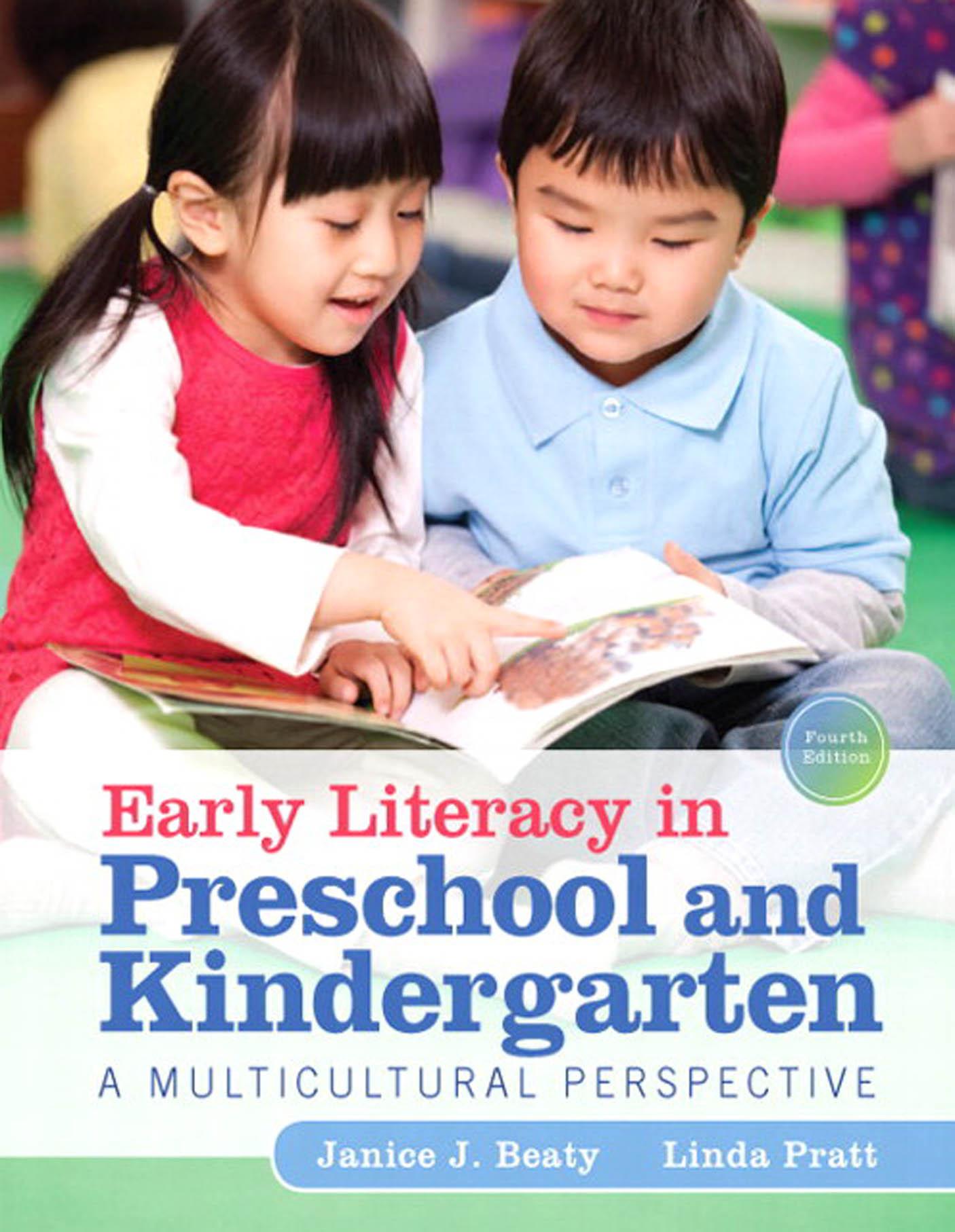
Early literacy in preschool and kindergarten: a multicultural perspective/Janice Beaty, Linda Pratt.—4th ed. p. cm.
Includes bibliographical references and index.
ISBN-13: 978-0-13-356330-6
ISBN-10: 0-13-356330-8
1. Language arts (Kindergarten) 2. Language arts (Preschool) I. Pratt, Linda, II. Title.
ISBN-13: 978-0-13-356330-6
ISBN-10: 0-13-356330-8
To Ann Gilchrist, Director, Ret.
Central Missouri Foster Grandparents Program— for making a lasting contribution to the lives of the elderly and the young and for being such a fine friend
About the Authors
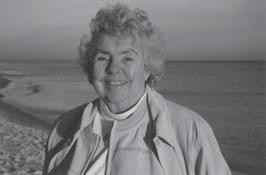
Janice J. Beaty, Professor Emerita, Elmira College, Elmira, New York, is a full-time writer of early childhood college textbooks and a consultant and trainer in early childhood education from her home in Cape Coral, Florida. She taught for 20 years at Elmira College, developing a Human Services Early Childhood program and CDA Training of Trainers workshops. Some of her textbooks include Skills for Preschool Teachers, 9th Edition ; Observ ing Development of the Young Child, 8th Edition; Preschool Appropriate Practices, 4th Edition; 50 Early Childhood Literacy Strategies, 3rd Edition ; and 50 Early Childhood Guidance Strate gies, also in Chinese. Dr. Beaty has visited early childhood programs in New York, South Carolina, Georgia, Florida, Missouri, New Mexico, and Arizona, as well as in Russia, Poland, China, and Bermuda.
Linda Pratt is the Executive Director of Teacher Education and Charles Dana Professor of Education at Elmira College. Some of her responsibilities include administering all teacher certification programs and teaching undergraduate and graduate courses. Dr. Pratt’s primary scholarly interests are in the areas of preservice teacher development, literary acquisition, literacy assessment, international education, transcultural children’s literature, and action research. In addition to publishing, she has given presentations in the United States as well as in Asia, the Bahamas, the Caribbean, Canada, Eastern and Western Europe, and South America.
This page intentionally left blank
CHAPTER 1 Foundations of Early Literacy 1
The Meaning of Early Literacy 2
Examples of Emergent Literacy 2
Early Literacy Skills Identified by Research 6
Brain Research 7
Play as Learning 8
Early Childhood Curriculum Criteria 9
NAEYC Standards and Criteria 10
Assessing Children’s Literacy Achievements 11
Appropriate Technology for Preschool Programs 13
The Chapters to Follow 14
Summary 17
Learning Activities 17
Suggested Readings 17
Helpful Websites 18
Helpful Multimedia 18
CHAPTER 2 A Multicultural Perspective 19
A Multicultural Perspective 20
A Breakthrough 21
The All-White Classroom 21
Why Use Multicultural Picture Books 22
Books Featuring Multicultural Characters 23
Books Featuring Physical Differences 25
Spin-off Activities After Book Reading 25
Learning Center Spin-off Activities 26
Book Spin-offs to Discussions About Teasing 26
Using Multicultural Books with Children 27
Multicultural Characters as Role Models 27
Book Spin-offs into a Multicultural Curriculum 29
Picture Books Are Important 29
The Under-use of Picture Books 31
Choosing Appropriate Books 32
Acquiring Multicultural Picture Books 34
Paradigm Shift 35
Summary 36
Learning Activities 36
Suggested Readings 36
Children’s Books 37
Helpful Websites 38
Helpful Multimedia 38
CHAPTER 3 Language Emergence in Young Children 39
Natural Language Emergence 40
Brain Research 40
Babies Recognizing Sentences Before Words 41
Babies Recognizing Their Names 41
Early Phonological Awareness 43
Foot Sound Book Spin-offs 44
Early Language Emotional Environment 45
Teacher–Child Acceptance 46
Language Acceptance 46
Dual Language Learners 47
Use of Photos 48
Use of Names 49
Early Language Social Environment 51
Child–Child Acceptance 51
Concern for Others 52
Newcomers Becoming Accepted 53
Friendship 53
Early Language Physical Environment 55
Dramatic Play Center 55
Block Building Center 57
Book Center 57
Listening Center 58
Writing Center 58
Music Center 59
Art Center 59
Manipulative/Math Center 60
Science/Discovery Center 60
Computer Center 61
Large-Motor Center 61
Woodworking Center 61
Cooking Center 62
Sensory Table 62
Learning Center Checklist 62
Summary 66
Learning Activities 66
Suggested Readings 67
Children’s Books 67
Helpful Websites 68
Helpful Multimedia 68
CHAPTER 4 Music as a Natural Language 69
Children Recognizing Rhyming Words 70
Word-Play 70
Rhyming Word Games 71
Strange-Sounding Words 72
Word Segmenting 73
Syllable Awareness 73
Dinosaur Books 73
Poetry Books 74
CD of Poems Read by the Poets 75
Children Following Their Natural Beat: Rhythm 75
Brain Research 76
Feeling Heartbeats 76
Poetry with Natural Beats 76
Playing Rhythm Instruments 76
Making Drums and Rhythm Instruments 78
Children Doing Chanting 79
Chants from Multicultural Instrument Books 79
Physical Movements to Chants 80
Action Chants for Picture Book Characters 81
Literacy Concepts and Brain Research 83
Children Singing, Their Natural Language 84
Brain Research 85
Music and the Brain 86
Music and Emotions 87
Singing 87
Singing with Children 88
Making Up Songs 89
Song Storybooks 90
Playing with Words and Music 90
Summary 91
Learning Activities 92
Suggested Readings 92
Children’s Books 93
Helpful Websites 94
Helpful Multimedia 94
CHAPTER 5 Speaking and Listening 95
Stages of Preschool Language Production 96
Assessing Children’s Language Production 96
Preproduction Stage 98
Acceptance of Ungrammatical Language 99
Understanding Spoken Language 100
Question-and-Answer Games 100
Common Bonds 101
Early Production 101
Expansion of Production 103
Supporting Dual Language Learners 104
Giving Attention to Home Languages 104
New Technology to Translate Home Languages 104
Speaking the Home Language at Home 105
Spanish, a First Language 106
Multiple Languages 106
Using Bilingual Picture Books 107
Opportunities for Conversation 108
The Basics of Communication 108
Mothers Conversing with Babies 108
Teacher–Child Conversations 109
Spontaneous and Facilitated Conversations 109
Child–Child Conversations 111
Pairing Dual Language Learners 111
Multicultural Books to Promote Conversations in Dramatic Play 112
Dramatic Play Center 112
Multicultural Dolls 113
Accomplishment Cards 114
Story Reading for Listening and Learning New Vocabulary Words 115
Learning to Listen Through Story Reading 115
Listening to Teacher-Read Books 119
Listening to Books-on-CDs 119
Listening to Story Reading to Learn New Vocabulary Words 121
Words to Listen for in Other Read-Aloud Books 122
Storytelling for Listening Practice 122
Getting Started 123
Folktales/Fairy Tales 123
Preparing for Storytelling 124
Telling the Story 124
Summary 125
Learning Activities 125
Suggested Readings 125
Children’s Books 126
Helpful Websites 127
Helpful Multimedia 127
CHAPTER 6 Art as a Natural Language 128
Developing Eye–Hand Coordination 129
Eye–Hand Coordination 129
Muscle Development Sequence 130
Assessing Children’s Eye–Hand Coordination 130
Strengthening Eye–Hand Coordination Through Three-Dimensional Art 131
Cutting Paper with Scissors 132
Collage 133
Pinwheel 134
Kite 135
Snowflakes 136
Quilt 136
Modeling Play Dough 136
People Figures 136
Modeling Clay 138
Clay Pots 139
Developing Drawing/Writing Skills Through Scribbling 139
Playing with Art Materials 139
From Scribbles to Pictures 140
Uncontrolled Scribbles 141
Encourage Scribbling 142
Finger Painting 143
Digital Mark-Making Software 143
Controlled Scribbles 143
Easel Painting 144
Chalk 144
Crayons 145
Developing a Graphic Language Through Drawing 145
Named Scribbles 145
Reggio Emilia Schools 146
First Visual Representations: Humans 146
Expanding Graphic Language 147
Visual Education 148
Drawing Round Fruits 150
Developing Visual Literacy Through Book Pictures 150
Reading the Pictures 151
Writing with Pictures 153
Curriculum Springboards 153
Leading Children Forward 155
Kindergarten Children Writing with Pictures 155
Summary 156
Learning Activities 156
Suggested Readings 156
Children’s Books 157
Helpful Websites 158
Helpful Multimedia 158
CHAPTER 7 Becoming a Writer 159
Discovering How to Write 160
Scribbles Become Writing 161
How Do They Learn? 162
Awareness of Written Language 162
Dual Language Learners 163
Writing Before Speaking and Reading 163
Observing Children’s Emergent Writing 163
Progressing from Scribbling to Writing 165
Role of the Teacher in Promoting Emergent Writing 166
Teachers Taking Story Dictation 169
Print Awareness and the Alphabet 169
To Teach or Not to Teach 170
Letters in Children’s Names 170
Learning to Write Their Names 173
Recognizing Letters 174
Orientation of Letters 174
Alphabet Books 175
Computer Alphabet Programs (CD-ROMs) 178
Alphabetic Principle 181
Letter Sounds 181
Writing to Communicate 181
A Process of Discovery 181
Observing Children’s Writing Development 182
Phonological Awareness in Dramatic Play 182
Writing in Kindergarten 183
Invented Spelling (Phonemic Spelling) 184
In the Writing Center 185
Story Writing (Shared Writing) 187
Writer’s Workshop 188
Writing at Home 189
Summary 189
Learning Activities 190
Suggested Readings 190
Children’s Books 191
Helpful Websites 192
Helpful Multimedia 192
CHAPTER
8 How Reading Emerges 193
Conventional Versus Emergent Reading 194
Emergent Book Reading Behaviors 195
Book Handling 196
Page-by-Page Reading 197
Grandparents Reading to Individuals 198
Using Book Pictures in Emergent Reading 199
Book Pictures Overlooked 200
Function of Pictures 200
Visual Literacy 201
Picture Naming 201
Picture Walking 201
Assisting Children in Retelling Familiar Book Stories 203
Practice Reading 203
Predictable Books 204
Using Predictable Books with Children 205
Retelling Big Book Stories 207
Big Book Differences for Preschoolers 207
Retelling Stories with Multicultural Character Cutouts 208
Paper Dolls 209
Storytelling Boards 209
Teacher as a Model 210
Recording Children’s Retelling of Book Stories 210
Story Drama 211
Improving Children’s Emergent Skills Through Print Referencing 212
Print-Salient Picture Books 212
Interactive, Read-Aloud, Print Referencing 213
Supporting Dual Language Emergent Readers 214
Bilingual Pairs 214
Bilingual Computer Storybook Programs 215
Teaching Skills Versus Engaging Children in Reading 216
Summary 217
Learning Activities 217
Suggested Readings 218
Children’s Books 218
Helpful Websites 220
Helpful Multimedia 220
CHAPTER 9 Home Book Experience 221
Family Literacy 222
Family Literacy—What Is It? 222
Initial Interview 223
Home Book Environment 225
A Print-Rich Environment 225
Obtaining Books 226
Home Reading 229
Interactive Reading 229
Story Reading Workshop 230
The Father’s Role 232
Cultural Considerations 233
Cultural Differences in Story Reading 234
Involving Families in Literacy Activities 235
Programs to Support Home Reading 236
Lending Libraries and Family Literacy Pack Programs 236
Home Lending Library 236
Family Literacy Backpacks 237
Family Literacy Workshops 240
Books in the Home 241
Parents and Grandparents in the Classroom 242
Summary 242
Learning Activities 243
Suggested Readings 243
Children’s Books 244
Helpful Websites 244
Helpful Multimedia 244
CHAPTER 10 Becoming a Reader 245
Transition from Preschool to Kindergarten 246
A Kindergarten Classroom 247
Literacy-Acquisition and Development Continuum 248
Common Core State Standards 249
CCSS Kindergarten Foundational Reading Skills 249
The Balance Between Meaning and Print 250
Cueing Systems 250
Connections Among Meaning, Print, Book, and Story 250
Foundational Reading Skills and Anchor Standards 252
Noninformational and Informational Texts 255
Text Complexity 256
Implementing Text Complexity Multi-Index 257
Types of Kindergarten Reading Instruction 257
Read-Alouds 261
Interactive or Dialogic Read-Alouds 262
The Language Experience Approach 263
Shared Reading 265
Sustained Silent Reading 267
Paired Reading 268
Independent Reading 268
Buddy Reading 269
One-to-One Reading 269
Supported Reading 269
Guided Reading 270
Literature Circles 270
Reading Workshop 271
Information Technology as Educational Tools 272
E-books 273
Response to Intervention 275
Impact of RTI 275
Kindergarten Assessment 276
Assessment Rubrics 276
Phonological Awareness Rubric 277
Portfolios 278
Summary 280
Learning Activities 280
Suggested Readings 281
Children’s Books 282
Helpful Websites 283
Helpful Multimedia 283
APPENDIX Multicultural Paperback Books from Scholastic 284
References 285
Index of Children’s Books 292
Index 296
Credits 307
This page intentionally left blank
Preface
Here is the textbook early childhood educators have been waiting for. This entire text focuses on early literacy in preschool, leading up to children’s accomplishments in kindergarten. Early Literacy in Preschool and Kindergarten: A Multicultural Perspective, Fourth Edition, presents a rewritten, updated approach to exploring literacy with preschool and kindergarten children. The current recognition that learning to read and write can emerge naturally in young children has led the authors to develop a fresh approach that uses multicultural children’s literature to involve all children in their own learning, even dual language learners. This is a practical book combining theory and research with fun, hands-on activities for children and their teachers. Emergent literacy is the result.
To support such development, this text presents ideas to involve teachers, teaching assistants, student teachers, and their children in a unique approach that uses literacy spin-offs from children’s picture books as activities in every classroom learning center to engage children in speaking, listening, writing, and reading. These books also introduce children to the multicultural world around them in a meaningful way through multicultural book characters children can identify with—such as the Korean girl Yoon who wouldn’t use her name, the African boy William who built a real windmill to electrify his dark village, the African American girl Grace who ran for class president when she learned no presidents were female, or the Hispanic boy Mario whose mud tacos taught everyone a lesson about teasing.
Teachers and student teachers learn to use puppets, dolls, character cutouts, block figures, unit blocks, drums, painting, MP3 recorders, e-books, computers, roleplaying, storytelling boards, and story drama to bring these book characters to life. Children take it from there, converting their adventures with these multicultural characters into accomplishments in speaking and listening, letter writing, practice reading, and storytelling, to name a few.
The text consists of nine chapters describing how literacy emerges in preschool programs, and a final 10th chapter continuing these skills in kindergarten. The core knowledge necessary for children to write and read is presented according to the NAEYC’s literacy curriculum criteria, and culminates with the Common Core State Standards in kindergarten. All literacy emergence is illustrated with spin-off activities from multicultural picture books, which readers learn how to choose and use.
Beginning with chapters on how language develops in young children, the chapters continue showing how rhyme, rhythm, and song promote children’s phonological awareness, and how young children learn to speak and listen through story reading and storytelling. Next comes a chapter showing how drawing helps children transition into writing, and how writing evolves from scribbles to pictures to letters. Then comes reading emergence, the home book experience, and types of reading instruction and assessment used in kindergarten.
Teachers can use this approach with ease through helpful checklists such as Choosing Multicultural Picture Books (Chapter 2), Learning Center Checklist (Chapter 3), and Choosing Predictable Multicultural Books Checklist (Chapter 8).
Assessment of children’s skills is an ongoing affair that teachers can also accomplish with ease using the Book Involvement Checklist ( Chapter 1 ); Spoken Language Checklist (Chapter 5); Eye–Hand Coordination Checklist, Drawing Skills Checklist, Visual Literacy Checklist (Chapter 6); Early Childhood Emergent Writing Checklist ( Chapter 7 ); and Early Childhood Emergent Book Reading Checklist (Chapter 8); plus Print Concepts Rubric, Phonological Awareness Rubric in kindergarten (Chapter 10). Acquiring books can be accomplished through bookstores, publishers, and websites listed, or inexpensively with the 57 paperback books from Scholastic listed in the Appendix.
The information presented has been carefully researched. The author’s photographs of children engaged in exciting multicultural literacy activities should stimulate original ideas in every reader. Thus, Early Literacy in Preschool and Kindergarten: A Multicultural Perspective, Fourth Edition, should help both teachers and student teachers to solve the problems of “What kinds of reading and writing activities are really appropriate for such young children?” and “How should I go about implementing these activities successfully?”
New Content in the Fourth Edition
• A multicultural focus includes new book spinoffs about teasing and bullying, support for dual language learners, new translation software for home languages, and features on multicultural books adjacent to their corresponding activities.
• Coverage of technology appropriate for preschool programs includes a list of new tools and a discussion about each tool’s age-appropriate and educational uses, NAEYC principles to guide the use of technology and interactive media, and relevant multimedia programs and websites.
• Up-to-date research on early literacy that helps teachers choose effective braindevelopment activities, such as using nursery rhymes, chanting, and steady beat sounds to increase attention to language among young learners.
• Early Phonological Awareness is covered in Chapter 3, discussing the importance of immersion in language activities involving word sounds for young children, and provides examples for teachers to use in the classroom.
• Print referencing is covered in Chapter 8, describing the process by which preschool children can begin to read certain words.
• Word-segmenting coverage in Chapter 4 shows how to help children divide speech into separate words through poetry book rhymes and how to teach syllable awareness through fun reading activities.
• Common Core State Standards for foundational reading skills and anchor standards in kindergarten are covered, providing a way for teachers to determine children’s basic skills and how best to help students progress.
• The importance of informational texts in kindergarten is covered in Chapter 10.
• Response to Intervention is discussed as an early intervention strategy to head off protracted failure in children’s academic programs from K–12.
Support Materials for Instructors
The following resources are available for instructors to download on www. pearson highered.com/irc. Instructors log in, then enter the author or title of this book, select this particular edition of the book, and click on the “Resources” tab to download textbook supplements.
Instructor’s Resource Manual and Test Bank
The Instructor’s Resource Manual and Test Bank includes essential content and teaching strategies plus multiple-choice, true/false, and short answer questions for each chapter. It also provides classroom handouts.
Acknowledgments
Our special thanks for the new edition of this book go to the directors, teachers, parents, and children of the Park Avenue and Tiger Paws Head Start Programs, and Trinity Lutheran Child Learning Center in Columbia, Missouri. It is always inspiring for me to visit these fine programs and photograph the children as they work and play together, developing their own unique selves. Thanks also to Ann Gilchrist, former director of the Central Missouri Foster Grandparents Program for setting up my observations in these centers and allowing me to participate with the grandparents who have given so much of themselves to the young children in these programs. My appreciation also goes to Elaine West, former director of the Missouri Association for Community Action for allowing me to use children’s art from the MACA calendars. Both Linda and I also wish to thank her husband Dr. J. Michael Pratt and my son, David Beaty for their assistance and support. Thanks also to our acquisitions editor Kathryn Boice, our project manager Barbara Strickland, and to the following reviewers: Claudia T. Conway, Medaille College; Elizabeth J. Lovoy, University of Central Flor ida; Janet Luch, Touro College; and Michelle Sobolak, University of Pittsburgh.
—J.J.B. and L.P.
This page intentionally left blank
Exploring the Variety of Random Documents with Different Content