An Introduction to Medicinal Chemistry 7th Edition Graham
L. Patrick
https://ebookmass.com/product/an-introduction-to-medicinalchemistry-7th-edition-graham-l-patrick/
ebookmass.com
Concepts, Phenomena, and Applications
Copyright©2024byPrincetonUniversityPress
PrincetonUniversityPressiscommittedtotheprotectionofcopyrightandtheintellectualpropertyourauthorsentrusttous.Copyrightpromotestheprogressandintegrityofknowledge.Thankyouforsupporting freespeechandtheglobalexchangeofideasbypurchasinganauthorizededitionofthisbook.Ifyouwish toreproduceordistributeanypartofitinanyform,pleaseobtainpermission.
Requestsforpermissiontoreproducematerialfromthiswork shouldbesenttopermissions@press.princeton.edu
PublishedbyPrincetonUniversityPress 41WilliamStreet,Princeton,NewJersey08540 99BanburyRoad,OxfordOX26JX press.princeton.edu
AllRightsReserved
Names:vanSaarloos,Wim,author.|Vitelli,Vincenzo,author.|Zeravcic,Zorana,author.
Title:Softmatter:concepts,phenomena,andapplications/WimvanSaarloos,VincenzoVitelli, ZoranaZeravcic.
Description:Princeton:PrincetonUniversityPress,[2024]|Includesbibliographicalreferencesandindex. Identifiers:LCCN2023030322(print)|LCCN2023030323(ebook)|ISBN9780691191300(acid-freepaper) |ISBN9780691251691(ebook)
Subjects:LCSH:Softcondensedmatter—Textbooks.|BISAC:SCIENCE/Physics/General|SCIENCE/ LifeSciences/Biophysics
Classification:LCCQC173.458.S62.V362023(print)|LCCQC173.458.S62(ebook) |DDC530.4/1—dc23/eng/20231002
LCrecordavailableathttps://lccn.loc.gov/2023030322
LCebookrecordavailableathttps://lccn.loc.gov/2023030323
BritishLibraryCataloging-in-PublicationDataisavailable
Editorial:IngridGnerlichandWhitneyRauenhorst
ProductionEditorial:NatalieBaan
TextandJacketDesign:WandaEspaña
Production:JacquiePoirier
Publicity:WilliamPagdatoon
Copyeditor:BhishamBherwani
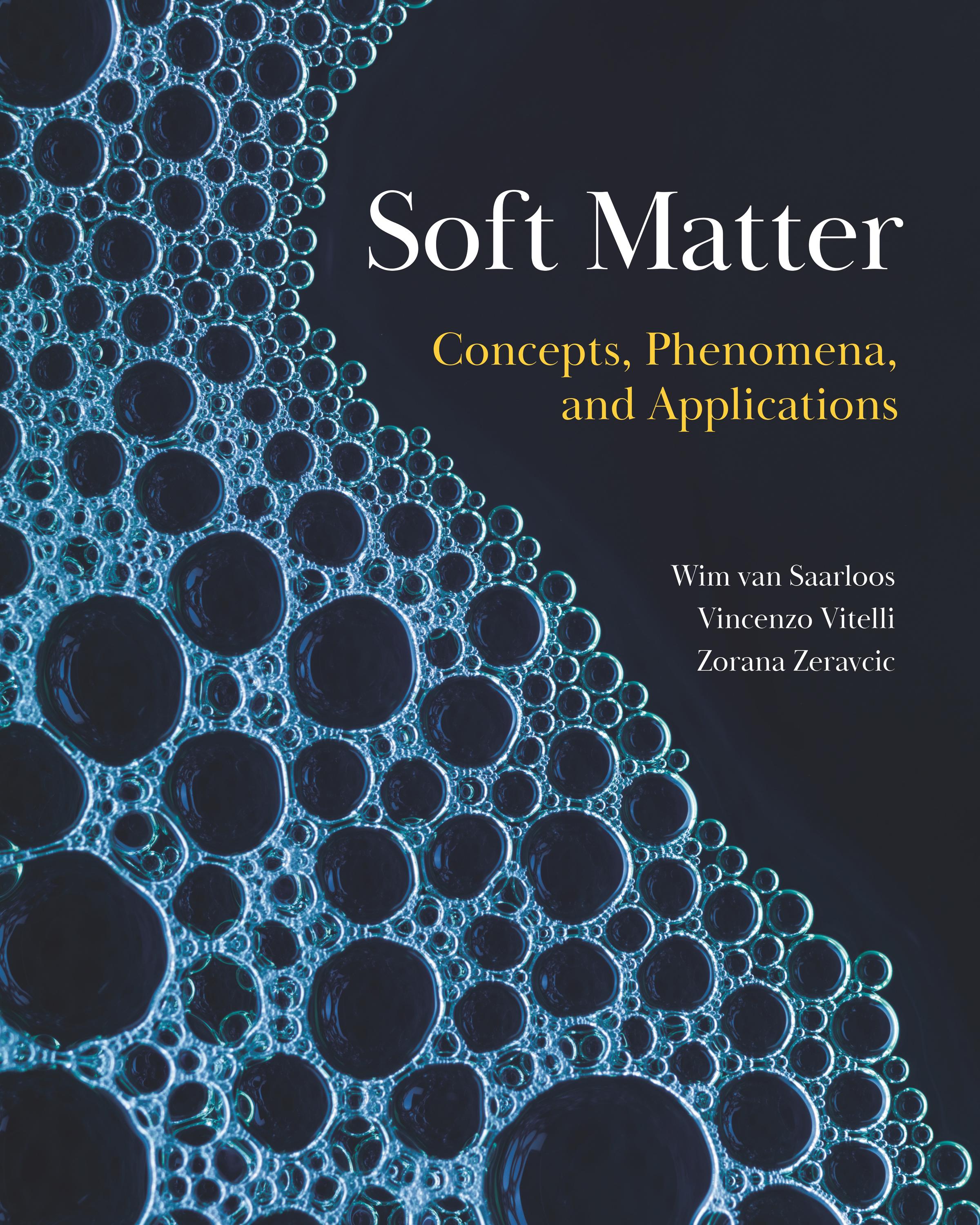
Jacketimage:HenrikSorensen/GettyImages
ThisbookhasbeencomposedinPalatino,PazoMath,LatinModern,andnewpxmath
ThisbookhasbeencomposedinLATEX˙
Thepublisherwouldliketoacknowledgetheauthorsofthisvolumeforactingasthecompositorfor thisbook.
PrintedinChina 10987654321
1.1Therelevanceandattractivenessofacontinuumdescriptionoffluids..............
1.2Hydrodynamicsasabalanceequationoffluidelements.....................
1.3.1Thematerialorconvectivederivative............................
1.3.2Separatingoutthevariouscomponentsofflow......................
1.4Oncemore:Reflectionsontheunderlyingpicture.........................
1.5Thedissipativeterms:Onsagerreciprocityrelations........................
1.6ThestresstensorandheatcurrentforaNewtonianfluid.....................
1.6.1Stresstensorandheatcurrent................................
1.6.2Theresultinghydrodynamicequations...........................
1.7.1Theequationforsoundpropagation............................
1.7.2Analysisoftheequationwithdamping...........................
1.8Whencanwetreataflowasincompressible?............................
1.9TheNavier-Stokesequations.....................................
1.10Thedimensionsofphysicalquantities,dimensionlessnumbers,andsimilarity.........
1.11FromsmalltolargeReynoldsnumbers...............................
1.11.1LowReynoldsnumberhydrodynamics...........................
1.11.2IntermediateReynoldsnumbers...............................
1.11.3VerylargeReynoldsnumbers................................
2.8.3Thegeneralforceandtorquebalanceequationsforstaticrods..............
2.8.4Equationsinthesmalldeflectionapproximation......................
2.10.5Thecrossoverlengthscale..................................
2.10.6Jammedpackingsversusdisorderedcrystals........................
2.10.7Towarddesignergranularmatter..............................
3.2LangevinequationforBrownianmotion..............................
3.2.1BasisoftheLangevinequation................................
3.2.2TheLangevinequation....................................
3.2.3Meansquarevariationsofvelocityandposition:Diffusion................
3.2.4TheStokes-Einsteinequationforthediffusioncoefficient.................
3.2.5Cuttingcornersandwhatwelearnfromit.........................
3.3TheFokker-Planckequationfortheprobabilitydistribution...................
3.3.1TheFokker-Planckequation:EquivalencetoaLangevinequation............
3.3.2TheFokker-PlanckequationforthevelocityoftheBrownianparticle..........
3.3.3TheFokker-PlanckequationforthepositionofaBrownianparticlein anexternalpotential.....................................
3.3.4ThediffusionequationanditsGaussiansolution.....................
3.3.5Self-similarityandself-similarsolutions..........................
3.3.6TheKramersproblem:Fluctuation-drivenescapeoverabarrier.............
3.4Themasterequation..........................................
3.5SizemattersfordiffusionanddispersionofBrownianparticles.................
3.5.1Diffusion............................................
3.5.2Dispersionsversusgranularmedia.............................
3.6Probingfluctuationsandtakingadvantageofthemasaprobe..................
3.6.1Measuringforceconstantsofbiomatterexperimentally..................
3.6.2DirectedBrownianmotionofmolecularmotors......................
3.6.3Bendingmodulusorsurfacetensionfromshapefluctuationmeasurements......
3.6.4Thermalfluctuationsinabucklingcolloidalchain.....................
3.7Probingsoftmatterwithscatteringtechniques...........................
3.7.1Essentialsofscatteringexperiments.............................
3.7.2Probingsmallfluctuationsincontinuumsystemswithlaserlightscattering......
3.8Whathavewelearned.........................................
3.9Box3:Calculatingthermalaverages
4.1.1Colloids:Fundamentalstudies................................
4.3.1TheVanderWaalsattraction.................................
4.3.2Depletioninteraction.....................................
4.3.3Inducedattractiveinteractionduetoperturbationsofthesurroundingmedium....
4.4.2Stericstabilizationbygraftingpolymersonthesurface..................
4.5Playingwithcolloidsasmodelsystems...............................
4.5.1Colloidalaggregates.....................................
4.5.2Fromspheres,rods,andplatestocubesandbeyond...................
4.5.3Theuseofcolloidalcrystalstomakeopticalbandgapmaterials.............
4.5.4Colloidalglasses........................................
4.5.5Colloidalmotifsasthebuildingblocksofdesignermatter................
4.5.6Colloidsasactivematter...................................
4.6Non-Newtonianrheologyofcolloidaldispersions.........................
4.6.1Shearthinningandshearthickening............................
4.6.2Atemporaltransitionduetocompetitionbetweenagingandrejuvenation.......
4.7Whathavewelearned.........................................
4.8Problems ................................................
5Polymers
5.1Theever-broadeningfieldofpolymerscience............................
5.2Polymers:Longchainmoleculeswithmanyaccessibleconformations..............
5.3Idealchains,excludedvolumeeffects,andtheFloryargument..................
5.3.2Excludedvolumeinteractionandself-avoidingwalks...................
5.3.3TheFloryargumentfortheexcludedvolumeinteraction.................
5.4.1Thewormlikechainmodelanditspersistencelength...................
5.4.2Chargeeffectsonthepersistencelength...........................
5.4.3Whyexcludedvolumeeffectsaresmall...........................
5.4.4Theforce-extensioncurveoftheWLC............................
5.5.1Thediluteregime.......................................
5.5.2Fromsemi-dilutetoconcentratedsolutions.........................
5.5.3Concentratedsolutions....................................
5.7Flory-Hugginsmean-fieldtheory..................................
5.7.1Flory-Hugginsapproach...................................
5.7.2Flory-Hugginsasamean-fieldtheory............................
5.8.1Biopolymernetworks.....................................
5.8.2Theslackorthermal-fluctuation-inducedcontraction...................
5.8.3Thestress-strainresponseofanetwork...........................
5.8.4Beyondthesimpleapproximation..............................
5.9Reptationandtheviscosityofpolymermelts............................
5.9.1Thepolymerviscosityplaysonlyalimitedroleinseveralrelevantfloweffects.....
5.9.2Reptation............................................
5.10Non-Newtonianrheologyofpolymersolutionsandmelts....................
5.10.1Importanceofpolymerstretchingeffects..........................
5.10.2ThedimensionlessWeissenbergnumber..........................
5.10.3TheOldroyd-BandupperconvectedMaxwellmodelforpolymerrheology......
5.10.4Polymerflowinstabilitiesduetohoopstresses.......................
5.11Whathavewelearned.........................................
5.12Problems
6.1Liquidcrystalsasmesophases....................................
6.1.1Abewilderingvarietyofliquidcrystalphases.......................
6.1.2Molecularliquidcrystalsversuscolloidalliquidcrystalphases.............
6.1.3Thepowerofcoarse-graininginthespiritofLandau...................
6.1.4Thedirectorfield ˆ n ......................................
6.2Landau–deGennesapproachtotheisotropic-nematictransition.................
6.3Frankenergyexpressionforthenematicdirectorfield.......................
6.3.1TheFrankfreeenergy.....................................
6.3.2Splay,twist,andbenddistortions..............................
6.3.3Boundaryconditions.....................................
6.4Analysisofequilibriumsolutions..................................
6.5Switchingthedirectorwithafield:TheFréedericksztransitionandLCDs...........
6.5.1TheFréedericksztransition..................................
6.5.2Liquidcrystaldisplays....................................
6.6Topologicaldefectsinthedirectororientation...........................
6.6.1Defectsinthedirectorfield..................................
6.6.2Visualizationofdefectsinthinsamplesbetweencrossedpolarizers...........
6.6.3Interactionofdefectsintwodimensions..........................
6.7Nematohydrodynamicsbasedonnon-equilibriumthermodynamics..............
6.8Playingwiththemolecularshape..................................
6.9Opportunitiesandchallengesatinterfaceswithotherfields...................
6.9.1Biologicalliquidcrystals...................................
6.9.2Liquidcrystalsindropletsandotherconfinedgeometries................
6.9.3Colloidalliquidcrystalsandbeyond............................
6.9.4Mesophasesoflipidmoleculesrelevanttopharmaceutics,cosmetics, andfood............................................
6.9.5Epithelialcellsdieanddisappearnear +
/
6.10Renormalizationgroupanalysisofthedefectunbindingtransition...............
6.10.1StatisticalmechanicsofagasofCoulombcharges.....................
6.10.2TheideabehindtheRGcalculation:Screening.......................
6.10.3SettinguptheRGcalculation.................................
6.10.4Howtoderivetherenormalizationgroupflowrelations.................
6.10.5Criticalscaling.........................................
7.2Helfrichfreeenergyformembranes.................................
7.3Virusshapesandbucklingtransitionsinsphericalshells.....................
7.4Crumplingofmembranesandsheets................................
7.4.1Acrumplingtransitioninthermalsystems?........................
7.4.2Athermalcrumplingbycompression............................
7.5Asoftmatterrealizationoftheone-dimensionalKPZequation.................
7.6Whathavewelearned.........................................
8PatternFormationoutofEquilibrium
8.1Spontaneouspatternformationresultingfrominstabilities....................
8.2Gearingupforstudyingpatternsinspatiallyextendedsystems.................
8.2.1Thepitchforkbifurcationofdynamicalsystems......................
8.2.2TheSwift-Hohenbergmodelequation...........................
8.2.3Supercriticalversussubcriticaltransitions.........................
8.3Inspiration:Rayleigh-BénardconvectionandTuringpatterns...................
8.3.1TheRayleigh-Bénardinstability...............................
8.3.2Turinginstabilities.......................................
8.4Threetypesoflinearinstabilities...................................
8.5AmplitudeequationsforstationarytypeIinstabilities.......................
8.5.1Inspirationfromasimpleperturbativecalculationfor theSwift-Hohenbergequation................................
8.5.2Amplitudeequationinonedimensionfor
8.5.3Two-dimensionalpatterns..................................
8.6DynamicsjustaboveatypeIIinstability..............................
8.7AmplitudeequationsforoscillatorytypeIinstabilities......................
8.7.1Amplitudeequationsforone-dimensionaltravelingwaves................
8.7.2Dominantstructures:Sourcesandsinks..........................
8.8AmplitudeequationsfortypeIIIinstabilities............................
8.9.1Box4:Summaryofinsightsfromamplitudeequationapproach
9.3.1ActiveBrownianparticles..................................
9.6.1Movingandself-propelledsolids..............................
9.6.2Oddelasticity.........................................
9.6.3Oddelastodynamics.....................................
9.7.1Hydrodynamicsofself-spinningparticles.........................
9.7.2Oddviscosity.........................................
9.8Nonreciprocalphasetransitions...................................
9.8.1Chiralphasesinnonreciprocalactivematter........................
9.8.2Nonreciprocalpatternformation:Acasestudy......................
9.8.3Exceptionalpointsandparity-breakingbifurcations....................
9.9.2Activemattereffectsduringmorphogenesis........................
9.9.3Tissuemechanicsandvertexmodels............................
I.11991NobelPrizecitationforP.-G.deGennes.............................
I.2Arangeofsoftmatterbehaviorobtainedbymodifyingacolloidalparticle............
I.3TheoriginaldrawingofPerrinshowingBrownianmotion.....................
I.4IllustrationofanexperimentinwhichonepullsonDNAwithanopticaltrap..........
I.5Afractalaggregategrowninapetridish...............................
I.6Illustrationofshearthinningandshearthickeningbehaviorofcolloidaldispersions......
I.7Cornstarch:Itsmicrostructureandillustrationofthepossibilityofwalkingonit.........
I.8Illustrationofthemicrostructureofpaintandmayonnaise.....................
I.9Moderntechniquesallowonetoprobethestrainresponseofacolloidalpacking........
I.10Therelaxationtimeofpolydispersecolloidsdivergesonapproachingtheglasstransition...
I.11Hardcorepolyhedracanformallkindsofinterestingphases....................
I.12Playingwiththeinteractionsallowsonetomakeself-assemblystronglydirected........
I.14Microtubulesandmolecularmotorsareactivematterwithliquidcrystal–likeordering.....
1.1Liquidandgasphasesofatoms....................................
1.2Illustrationofcoarse-grainingandthescalesofhydrodynamicphenomena............
1.3Euler’sarticlefrom1757.........................................
1.4TheLagrangianandEuleriandescriptionsofafluidelement....................
1.5Illustrationofvarioustypesofflow..................................
1.6Illustrationofthevariouscomponentsofthestresstensor.....................
1.7Swimmingbacteriaasanexampleofanactivefluid.........................
1.8Behavioroflongpolymersinsimpleshearflow...........................
1.9OnsagerrelationsillustratedwiththePeltierandSeebeckeffects..................
1.10Illustrationofvariouswaystoanalyzealinearmodewithdampinginspaceortime......
1.11Taylor-Couetteflowanditsrichphasediagram...........................
1.12OsborneReynoldsinthelabprobingthetransitiontoturbulenceinpipeflow..........
1.13FlowpastacylinderatdifferentReynoldsnumbers.........................
1.14IllustrationofflowreversalatsmallReynoldsnumbers.......................
1.15IllustrationofthevariousflowregimesforincreasingReynoldsnumbers.............
1.16CloudformationpatternresultingfromtheKelvin-Helmholtzinstability.............
1.17Simulationsofthevorticitygeneratedbyadragonflywing.....................
1.18Sketchofathinlayerinthediscussionofthelubricationapproximation.............
1.19Entrainmentofairunderaliquiddroplet...............................
1.20Contactangle,wetting,andMarangoniflow.............................
1.21Waterdropletsonaplant’sleaf.....................................
1.22Coffeestainsduetoenhancedevaporationofthedropletattherim................
1.23Bubbleoscillationsinsoftmatter....................................
1.24AbouncingdropletduetoMarangoniflow..............................
1.27BasicsetupfortheRayleigh-TaylorandKelvin-Helmholtzstabilitycalculations.........
1.28SimulationsofafluidinterfaceexhibitingtheRayleigh-Taylorinstability.............
1.29Lubricationapproximationforflowbetweentwospheresapproachingeachother........
Chapter2
2.1Illustrationofthenaturaltendencyofanauxetictobend......................
2.2Bucklingpatternsinabilayersysteminwhichthesubstratelayerisinitiallyprestressed....
2.3Illustrationofthespontaneouscurvatureofabilayer........................
2.4Adriedapplegetswrinkled......................................
2.5Illustrationofthechangeofpositionofmaterialelementsofasolidunderstress.........
2.6Fluctuationsofagraphenesheetcausequiteabitofenergy....................
2.7StretchingofabarintheanalysisofthePoissonratio........................
2.8Cork,amaterialwithaPoissonratioofaboutzero..........................
2.9EvolutionofthePoissonratioofvariousrubberypolymerswithtime...............
2.10Dynamicmodulusofanultrasoftelastopolymergel.........................
2.11TheMaxwellmodelandtheKelvin-Voigtmodelfortime-dependentresponse..........
2.15Examplesofwrinklingsheetsduetocouplingofstretchingandbending.............
2.19ThesimilarityofthebucklingtransitionwiththeLandautheoryofphasetransitions......
2.22Theelastictorqueassociatedwithabentsheetorrod........................
2.23Illustrationofmicrotubules,thecellular’rails’ofmicromotors...................
2.25Auxeticandprogrammablesoftmatterstructures..........................
2.26Responseofametamaterialwithtwotypesofholesfordifferentprestrains............
2.27Differencesinforcesbetweenmoleculesandsmallparticles....................
2.28Manysoftmattersystemsconsistofparticleswithstrongrepulsiveforces............
2.30Illustrationofjammingbyincreasingthedensityofpolydispersedisks..............
2.31Variationoftheratioofelasticconstantsuponapproachingtheisostaticpointatjamming...
2.32Theevolutionofthedensityofstatesuponapproachingthejammingpoint...........
2.33Lowest-frequencyeigenmodesatandfarabovethejammingpoint................
2.34Evolutionoftheratio µ/K ofelasticnetworksuponpruningvarioustypesofbonds......
2.35Optimizationoftheshapeofmotifsinagranularpacking.....................
2.36TheBurgersvectorandtwobounddefectsonatriangularlattice..................
2.37Colloidalexperimentshowingthetransitionfromsolidtohexaticandliquidphasein2D...
2.38Agyroscopelatticewithavibrationaledgemode..........................
2.39Topologicalzero-energyedgemodesinamechanicalstructure...................
2.40Triangularandhoneycomblattices...................................
2.41Dislocationsanddisclinations.....................................
Chapter3
3.1IllustrationofaBrownianparticle...................................
3.2Sketchofwhitenoise..........................................
3.3Meansquaredisplacement (∆X (t)2) ofcolloidalparticlesofvarioussize...........
3.4Evolutionoftheprobabilitydistributioninphasespace.......................
3.5TitleandabstractoftheoriginalpaperofKramers..........................
3.6Thepotential U (X ) inthecaseoftheKramersproblemofescapeoverabarrier.........
3.7Illustrationofthetransitionprobabilitiesinthemasterequation..................
3.8Densitymatchinginacolloidalsystem................................
3.9ExtractionoftheforceonDNAfromthefluctuationsofthebeadattachedtoit..........
3.10ExperimentallowingustopullandtwistaDNAstrandwithamagneticparticle........
3.11Illustrationofthehand-over-handandinchwormmotionofBrownianmotors..........
3.12Stepsandfluctuationsofmolecularmotors..............................
3.13Variousmembraneshapefluctuations.................................
3.14Bucklingofacolloidalchainundercompression...........................
3.15Illustrationofthesetupofascatteringexperiment..........................
3.16Light-scatteringspectrumofwater...................................
3.17Interchangingtheorderoftheintegrals................................
3.18Fermiacceleration............................................
Chapter4
4.1Thetobaccomosaicvirus........................................
4.2Collageofcolloidalparticlesofvariousshapesandsizes......................
4.3DipolefluctuationsleadingtotheVanderWaalsinteraction....................
4.4Thedepletioninteractionillustrated..................................
4.5Attractionbetweentwocolloidsatafluidinterface.........................
4.6Chargescreeningofcolloids......................................
4.7TheDLVOinteractionbetweencolloids................................
4.8Stericrepulsionresultingfromgraftingcolloidswithpolymers..................
4.9Diffusion-limitedaggregationclusters.................................
4.10Schematicbehaviorofthescatteringintensity S(q) ofDLAclusters................
4.11Measuredscatteringintensity S(q) fromfractalaggregates.....................
4.12Colloidalparticleswiththeshapeofaroundedcube........................
4.13Acolloidalcrystalandaphotonicbandgapmaterialmadefromacolloidalcrystal.......
4.14Colloidalglassesasamodelsystem..................................
4.15Viscosityofapolydispersecolloidaldispersionasafunctionofvolumefraction.........
4.16Functionalcolloidalmotifs.......................................
4.17ColloidalparticlescoatedwithDNApatchestogivedirectionalbonding.............
4.18Theworkhorseofactivecolloids:TheJanusparticle.........................
4.19Akaleidoscopeofwaysofmakingandmanipulatingactivecolloids................
4.20Colloidaldispersionsascomplexfluids:Non-Newtonianrheologicalbehavior..........
4.21Snapshotofclusterformationincolloidrheology..........................
4.22Bifurcationbehavioroftheviscosityofabentonitesolution....................
4.23Scalingplotofthestressversusshearratenearthejammingpoint.................
4.24Anexampleofthefrictioncoefficientofgranularmediaasafunctionoftheshearrate.....
4.25Typicalinteractionpotentialbetweencolloids............................
4.26Twosemi-infiniteslabsattractingviatheVanderWaalsinteraction................
4.27TwospheresandthecalculationoftheDerjaguinapproximation.................
4.28Interactionbetweenlockandkeycolloids...............................
4.29Regularfractals:TheKochcurveandSierpinkigasket........................
4.30Thepercolationtransition........................................
4.31Coarse-grainingaone-dimensionalmodel..............................
4.32Self-similarityinthepercolationtransition..............................
4.33Renormalizationgroupfor2Dpercolation..............................
Chapter5
5.1Polyethyleneandpolystyrene......................................
5.2Illustrationofvitrimers,andself-healingofarubberysupramolecularpolymer.........
5.3Transandgaucheconformationsofpolyethylene..........................
5.4Illustrationofdifferentconformationsofashortpieceofapolymer................
5.5AFMpictureofDNAonasurfacewithapersistencelengthofabout50nm...........
5.6Theidealchainmodel..........................................
5.7Illustrationofrandomwalksandself-avoidingwalks........................
5.8Interactionofamonomerwiththeaveragenumberofmonomersinaballaroundit......
5.9TheFloryfreeenergyasafunctionofthepolymerradius
5.11TheorganizationoftheDNAmoleculeonvariouslengthscales..................
5.14SketchofDNAatlargepullingforce..................................
5.15Force-extensioncurveofDNAfittedwiththewormlikechainexpression.............
5.16Measuringtheforce-extensioncurveofoverstretchedDNA.....................
5.17Neutron-scatteringintensity S(q) fordeuteratedpolystyrene....................
5.18Illustrationofthediluteregimeandthecrossovertothesemi-diluteregime...........
5.19Thecrossoverlength ξφ andtheblobpictureinthesemi-diluteregime..............
5.20Neutron-scatteringdatafrompolystyreneatvariousconcentrationsabove
5.21Scalingplotoftheosmoticpressureofpolymersolutions......................
5.22Sketchofapolymerbrush.......................................
5.23SketchoftheFlory-Hugginsfreeenergy................................
5.24PhasediagramofdiblockcopolymersasobtainedfromFlory-Hugginsmean-fieldtheory...
5.25Phasediagramofdiblockcopolymerswithfluctuationeffectsincluded..............
5.26Biopolymernetworksandtheirresponse...............................
5.27Theforce-extensioncurveofabiopolymerinanetwork.......................
5.28Illustrationofpolymerstretchinginanetworkunderaffinestrain.................
5.29Differentialelasticmodulusofactinfilamentnetworks........................
5.30Illustrationofanathermalnetworkundershear...........................
5.31Illustrationofthereptationprocessofpolymerrelaxation.....................
5.32Illustrationofreptation.........................................
5.33Theviscosityasafunctionofdegreeofpolymerizationforseveralpolymermelts........
5.34Surprisingdemonstrationsofthenon-Newtonianrheologyofpolymers.............
5.35Illustrationofhoopstressesduetocurvedstreamlines.......................
5.36TheOldroyd-BandupperconvectedMaxwellmodelrepresentdumbbells............
5.37Examplesofviscoelasticflowinstabilities..............................
5.38Stressasafunctionofshearrateinviscoelasticflowdrivenbyarotatingdisk..........
5.39IllustrationofthecoordinatesanddistancesintheOdijklengthcalculation............
5.40Schematicillustrationofaserpentilechannelusedtostudyviscoelasticflowinstabilities....
5.41CriticalWeissenbergnumberforviscoelasticflowinserpentinechannels.............
5.42Polymermelttransformingintoacrosslinkedmelt..........................
Chapter6
6.1Thenematic,smectic,andcholestericliquidcrystalphases.....................
6.2Phasediagramofhardcorespherocylinders.............................
6.3Discoticmoleculesandliquidcrystalphases.............................
6.4IllustrationoftheliquidcrystalbluephaseII.............................
6.5Illustrationofthedirectorasacoarse-grainedorientationfield..................
6.6Illustrationofthemicroscopicoriginofthe
symmetryofthenematicphase......
6.7FormoftheLandau–deGennesfreeenergyneartheisotropic-nematictransition........
6.8Inverseofthelight-scatteringintensityof8CBandMBBAasafunctionoftemperature.....
6.9Splay,twist,andbenddistortionsofanematicliquidcrystal....................
6.10Thehomeotropicandhomogeneousboundaryconditionsofaliquidcrystal...........
6.11ThemagneticfieldFréedericksztransition..............................
6.12IllustrationofapixelofanLCD....................................
6.13Twonematicdisclinationswith s = 1
6.14Thetwohalf-integerdisclinationsand s
6.15Topologicalpointdefectsinnematics:Hedgehogsandboojums..................
6.16Howliquidcrystaldefectsshowupbetweencrossedpolarizers..................
6.17IllustrationoftherotationdirectionoftheSchlierenimageofdefects...............
6.18Schlierenimageofapairofsurfaceboojums.............................
6.19Polarwedge-shapedliquidcrystalmoleculesformingsplayedstripeddomains.........
6.20Illustrationoftheflexoelectriceffect..................................
6.21Elecronmicrographofthefdvirus...................................
6.22Liquidcrystaldropletswithboojumsorahedgehog.........................
6.23AJanusparticlecoupledtoanematicfield..............................
6.24Micellesandinversemicellesformedbylipidmolecules......................
6.25Themagiclipidmonoolein.......................................
6.26Lipidicmesophasesofvariousdimensionality............................
6.27Nematicorderanddefectsinepithelialcells.............................
6.28Illustrationofthescreeningofelasticconstantsbydefectpairs...................
6.29Renormalizationgroupflowsofthe2DCoulombgassystem....................
6.30Escapeofthedirectorinthethirddimension.............................
6.31Illustrationofacrystalline,acolumnar,andasmecticphase....................
Chapter7
7.1Sketchofaredbloodcell........................................
7.2Sketchofabilayermembrane......................................
7.3Thetworadiiofcurvatureofasurface.................................
7.4Illustrationofthegenusofaclosedsurface..............................
7.5BifurcationsandevolutionofmembraneshapesaccordingtotheHelfrichmodel........
7.6Theadenovirusandsalmonellaphagevirus.............................
7.7Alargeflattriangularnetwithadisclinationcanreleaseitsstrainbybuckling..........
7.8Theenergyofaflatelasticshellwithadisclinationandthatofacone...............
7.9Asphericityofvirusesasafunctionoftheirradius..........................
7.10Apieceofcrumpledpaper.......................................
7.11Crumplingtransitionofatetheredsurface..............................
7.12Compressionexperimentoncrumplingofpaper...........................
7.13Resultsofanumericalstudyofcrumpling..............................
7.14CurvatureandfacetsofweaklyandstronglycompactedMylarsheets...............
7.15KPZscalingofgrowinginterfacesinnematicelectroconvection..................
7.16ExperimentsandsimulationsofthepropagatingRayeighinstability................
7.17Sketchofawettingfront........................................
7.18ThederivationoftheEulerformula..................................
7.19Curvedspacecrystals..........................................
7.20Aphaseseparatedsystem........................................
Chapter8
8.1TopviewofBénard-Marangonicellsatthesurfaceofafluidheatedfrombelow.........
8.2Sketchoftheamplitudeconcept....................................
8.3Theflowdynamicsofavariable
8.5ThedispersionrelationoflinearmodesintheSwift-Hohenbergequation.............
8.6EvolutionoftheenergyinasimulationoftheSwift-Hohenbergequation.............
8.7Supercriticalandsubcriticalbifurcations...............................
8.8SketchofaRayleigh-Bénardcell....................................
8.9ThedispersionrelationoftheRayleigh-Bénardproblemwithslipboundaryconditions.....
8.10Rayleigh-Bénardpatternsevolvewithdistancefromthreshold...................
8.11RangeofexistenceofstablestaticconvectionpatternsinRayleigh-Bénardconvection......
8.12SummaryoftheTuringstabilitydiagramoftwocoupledreactiondiffusionequations......
8.13TuringpatternsobservedinchemicalreactorsandintheMinproteinsystem...........
8.14Thethreepossibleinstabilityscenariosofspatiallyextendedsystems...............
8.15Scalingofgrowthrateandinstabilitybandoffinitewavelengthinstabilities...........
8.16Sketchofthebandofperiodicsolutionsasafunctionof
8.17Sketchofthestabilityofphasewindingsolutionsabovethresholdinonedimension......
8.18Sketchof σ(q) forarotationallysymmetrictwo-dimensionalsystem...............
8.19Thestabilityballoonforstripepatternsaccordingtothelowestorderamplitudeequation...
8.20Illustrationoftheoriginofthephaseinstabilitiesofstripepatternsintwodimensions.....
8.21Variousregularpatternsandtheirdominantmodesnearthreshold................
8.22Thethreeunitvectorsusedtodescribehexagonalpatterns.....................
8.23HexagonalpatternobservedjustbelowthresholdinaRayleigh-Bénardexperiment.......
8.24Autocorrelationpatternsintheneuralresponse...........................
8.25Simulationoftheone-dimensionalKuramoto-Sivashinskyequation...............
8.26Chaoticdynamicsinone-dimensionalhydrothermalwaves....................
8.27Sourcesandsinksinaheatedwireexperiment...........................
8.28Illustrationofsourcesandsinksintravelingwavesystems.....................
8.29Illustrationofadomainwallsolution.................................
8.30AsimulationofthecomplexGinzburg-Landauequationintwodimensions...........
8.31ThestabilityballoonofvegetationpatternsinAfrica.........................
8.32ThenullclinesoftheTuringmodelwhichgiverisetoexcitablemediumbehavior........
8.33Timedependenceofthefieldsofanexcitabledynamicalsystem..................
8.34Apropagatingpulseinanexcitablemedium.............................
8.35ExampleofexcitablewavesintheBelousov-Zhabotinskyreaction.................
8.36Thesignalofthepropagationofanervepulse............................
8.37SymmetryofflowpatternsintheBoussinesqapproximation....................
Chapter9
9.1Agalleryofactivematter........................................
9.2Aflockofbirds..............................................
9.3Vicsekmodelsimulationsforvariousdensitiesandnoisestrengths................
9.4FlockingbehaviorobservedforQuinckerotationofcolloidalparticles...............
9.5TheeffectivepotentialintheToner-Tutheory.............................
9.6Numericalsimulationsofmotility-inducedphaseseparation....................
9.7Experimentalverificationofmotility-inducedphaseseparation..................
9.8Bacterialsuspensionsexhibitswarming,turbulence,andavanishingviscosity..........
9.9Runandtumblebehaviorofbacteria.................................
9.10Illustrationoftheroleofdefectsinproducingactiveturbulence..................
9.11Inducedflowfieldaround ± 1 2 defectsinanactivenematic.....................
9.12Threeexamplesofactivesolids.....................................
9.13Observationofstarfishembryoswhichself-organizeintolivingchiralcrystals..........
9.14Examplesofmetamaterialsinwhichoddelasticityplaysarole...................
9.15Aspringwithodd-elasticresponse..................................
9.16Layersofacolloidalchiralfluidexhibitinstabilities.........................
9.17Effectofnonreciprocalinteractionsonflockingmodelsandpatternformation..........
9.18Space-timeplotsofnonreciprocallycoupledSwift-Hohenbergmodels..............
9.19Perturbativephasediagramoftheexceptionaltransition......................
9.20Schematicbifurcationdiagramoftheexceptionaltransition....................
9.21Exceptionalpoints-inducedinstabilities................................
9.22Sketchofanactivegelcomposedofactinfilamentsandmyosinmotors..............
9.23Shapeofadividingcellcomparedtoanactivegelmodel......................
9.24Topologicaldefectsinaregenerated Hydra
9.25Myosinflowonthesurfaceofa
9.26Amachinelearningmodelanalysisoftissueflowin
9.27Sketchofavertexmodelforcelldynamics..............................
9.28TheVicsekmodelfornonmovingbirdsasanoisyspinmodel...................
9.29Exampleofanactiveflowdrivenbythedirectorfieldinanactivenematic............
9.30Simplifiedcelldivision.........................................
Chapter10
10.1Buildingblocksofdesignermatterfromthenanoscaletothemacroscale............
10.23Dprintingonthemacroscale.....................................
10.3Illustrationofathermalcloak.....................................
10.4Agranulararchitecture,anultra-lightweightmaterial,andanallostericnetwork.........
10.5Illustrationoftwodifferentlatticestructuresrelatedbyduality...................
10.6Anextremelystretchablehydrogel..................................
10.7Aself-foldingorigamimadewiththeaidofahydrogel.......................
10.8Digitalalchemy:Designofnovelcrystalstructure..........................
10.9ColloidalcrystalsmadefromDNA-coatedcolloids.........................
10.10Designprinciplesforself-assemblyofrigidstructuresmadeofeightparticles..........
10.14Illustrationoftheconceptofreturn-pointmemory..........................
10.15Memorybehaviorresultingfromcyclicdrivingofashearedparticlesystem...........
10.19IllustrationofpathreversalinviscousliquidforsmallReynoldsnumber.............
Preface
Thisbookgrewoutofourexperienceteachingintroductorycoursesonsoftmatterin LeidenandChicago.ThechallengeinLeidenwastodevelopacourseaimedatfirstyearmaster’sstudents,studentswhojusthavecompletedathree-yearbachelordegree inphysicsorarelatedfield.Theyhaveadiversebackgroundandwillchoosetheir specializationanddecidewhethertogointotheoreticalorexperimentalphysicsonly sometimeaftertakingthecourse.TheChicagocoursetargetsbeginninggraduate students,butwithsimilarlydiversebackgroundsandinterests.
Manycolleaguesweconsultedaboutteachingsoftmatterfromaphysicsperspective struggledwiththesamedilemmawefaced:howtodevelopacoursewhichintroduces someofthebasicconceptsdevelopedinthepreviouscentury,butwhichatthesame timegivesafeelforsomeoftheexcitingresearchquestionsthesedays,aswellasfor therevolutionizingnewopportunitiesofferedbymodernvisualizationtechniques anddigitalanalysis.Moreover,formanyofusthecharmofsoftmatterisitsdiversity, thefactthatitcannotsimplybetreatedonthebasisofasingleoverarchingtheoretical framework,andthatitpaystohaveanintuitiveunderstandingofmanydifferent approachesandmaterials.Howcanwebringacrossthenecessity,power,andfun ofbeingabletoshiftperspectivesandtobringknowledgefromvariousdisciplines tobearonaproblem?Wefoundourselvescombiningbitsandpiecesfromseveral classicalintroductionstothefieldandfrombooksfocusedonaparticularphaseof softmatter,excerptsfromliteratureonapplicationsandpresent-dayresearchtopics, andourownlecturenotes.
Thisbookreflectsourteachingapproachandphilosophy:itisintendedtobeessentiallythetypeofbookwewouldhavelikedtohaveavailableasabasisforthecourses wedeveloped.Inshort,wehavetriedtowriteasomewhatdifferentintroductory textbookonthebasicconceptsofsoftmatter.Itsaimistogiveadvancedundergraduateandbeginninggraduatestudentsanintroductoryoverviewofthevarioussoft matterphasesandtheirrheology,andtheconceptualframeworktoanalyzethem.We haveattemptedtochooseourapproachandtopicsinsuchawaythatstudentswho specializeinothersub-disciplineswillacquireagoodoverviewofthefield,andget familiarwithconceptsandtreatmentsthathavebroaderapplication.Moreover,as studentsandresearchersnowadaysaremotivatedmorethanevertopayattentionto possibleapplicationsoftheirinsightsandmethods,inbothscienceandtechnology, wepayattentiontothelargerangeofapplications.Forstudentswhocontinueinsoft matterresearch,thebookshouldbeasteppingstoneforfurtherspecialization,while forstudentswhosemainresearchfocusisinbiomatterorattheinterfaceofphysics withbiology,thisbookshouldgivethemthenecessarybackgroundtounderstand theapplicationofsoftmatterphysicsconceptsinbiology.Wehavemadeaneffortto includelinksbetweensoftmatterandbiomatterthroughoutthebook.
Adistinctivefeatureofourtreatment,especiallywhencomparedtomostotherintroductorysoftmatterphysicsbooks,isitsfocusonthepowerofphenomenology andthehydrodynamicapproach.Thebookreviewsthemainsoftmatterclassesand theirrheologywithembeddedexplanationsofkeyconceptsandmethods(scaling,
Landauapproach,bifurcations,correlationfunctions,renormalizationgroup,scatteringapproach,etc.)withoutassumingdetailedpreviousknowledgeofcontinuum mechanics.Wedoassumesomebackgroundinstatisticalphysicsandsomeelementaryknowledgeofphasetransitions,though.Quiteafewconceptsappearseveral timesindifferentchaptersandexamples,asthisdeepensthestudents’understandingandstimulatesthemtoexplorehowthevarioustopicsareinterrelated.Through this,wehopetodevelopstudents’intuitionandgivethemakindofintellectual ’agility’inreasoningtheirwaythroughcomplexsoftmatterphenomena.
Ourapproachistodevelopmanysuchembeddedconcepts’onthefly,’ratherthanin separateappendicesorboxes,mirroringhowweourselvesoftenpickupnewconcepts whiledoingresearch,orfromtalks.Thesameholdsforsomeofthemoderntopics wetouchononlybrieflywithashortparagraph,afigure,oranoteinthemargin. Werealizethat,asaresult,suchtopicsaretypicallynotdevelopedinasmuchdepth orassystematicallyastheywouldbewereseparatesectionsorappendixesdevoted tothem.Butourownstudentsappreciatethismoreinformalstyle,whichiscloser tohowscienceisactuallyoftendoneinpractice.Moreover,theyfinditstimulates themtorealizeandexploreconnectionsbetweentopicsthatinthebeginningoftheir studiesweretreatedasseparatesubjects.Wehavealsoexperiencedthatithelps topromotetheiragilityandtoovercometheirhesitancetoworkwithaconcept theyhavenotmasteredcompletely.Weroutinelygivepointerstoliteraturewhere interestedstudentscanfindmoreinformation.
Wesupportthisstyleandapproachwithourlayoutanduseofreferences.Wedevelop themainstorylineinthetextasmuchaspossibleandwithoutinterruptions,andwe reservenotesinthemargintopointoutconnectionsortodrawthestudent’sattentiontoimportantsideissues.Weviewthesemarginnotes,whichoftenalsocontain referencestorelevantpapersortomoredetailedtreatmentsinothertextbooks,as anintegralpartofourapproach.Numberedendnotesareusedforbackingupsome oftheassertionsinthetext,orfordrawingattentiontosubtletiesorconnectionsto otherworks.Theseendnotesareintendedforstudentswhoareeagertolearneven more;sometimestheyprovideanswerstosubtlequestionswhichmightemergefrom studyingthemaintext.Weimagineareaderskippingtheseendnoteswhenstudying atopicforthefirsttime.
Thephilosophysketchedaboveisalsoreflectedintheorganizationofthechapters. Theyalwaysstartwithafocusonintroducingandexplainingthebasicconcepts;we envisionalecturerwantingtotreatthesesectionsindetailifthebookisusedasthe basisforacourse.Towardtheend,mostchaptersshifttodescriptionsofinteresting examplesandapplications,whichstudentsshouldbeabletostudybythemselves. Thereare,ofcourse,ampleopportunitiesforlecturerstohighlightafewofthese topicsandexpandonthem,dependingonthefocusofthecourseandtheinterests ofthestudents.Butlecturersareadvisedtomakeaselectionhereandencouragethe studentstostudytheothermaterialbythemselvestoenhancetheirunderstanding ofthefieldanditsbreadth.Wehaveattemptedtoprovidesufficientreferencestothe literatureinalltheselatersections,whichcouldalsobeusedasabasisforstudent presentations.
Introducingwell-establishedconceptswhicharepartofatraditionalfieldorofthe softmattercanon,andconnectingthemwithpresent-daydevelopments,hasforcedus repeatedlytomaketoughchoicesaboutexamples.Wehavetriedtopickrepresentative
experimentsorresultsfromtopicswhicharelikelytocontinuetobeactivelyexplored inthecomingyears,andtoincludereferencestoreviewsthatwillgiveasuitableentry tothetopictostudentswhowouldliketoknowmore.Inevitably,theinterestsand knowledgeoftheauthorsintroduceanelementofbiasinthesechoices.
Wehavesplittheproblemswhichcomewitheverychapterasmuchaspossible intosmall,concretesteps.Here,too,wehavebeenledbyourexperiencewithundergraduatestudentsandthefeedbackwehavereceivedfromthem.Asmuchas possible,theproblemshavebeendesignedsothatifastudenthasdifficultywithone particularstep,theyshouldbeabletomoveontothenext.Thestep-by-stepformat oftheproblemsshouldalsomakethemparticularlysuitableforactivelearningand reverseclassroomsettings.Similarly,instructorscaneasilytransformtheseproblems intoadvancedlecturesbyintegratingmathematicaldetailsintothemorequalitative introductionsweprovideinthemaintext.Wehavesuccessfullyadoptedthisapproachourselveswhenteachingthematerialingraduateclasses.Wehopethatthe step-by-stepsolutionsavailableintheinstructormanualwillhelpotherinstructors achievethisgoal.Themoreadvancedproblemsaremarkedwithanasterisk,themost challengingoneswithtwoasterisks.
Studentsarealsoencouragedtodeepentheirunderstandingofthevarioustopics bysimulatingsimpleprocessesonacomputer.Inordertofacilitateupdatingand downloadingofcode,andtoincludelinkstorelevantothermaterial,wehavemade suggestionsforcodingproblemsavailableonthewebsite www.softmatterbook.online complementingthisbook.
Thetopicstotreatifthisbookisusedforacoursewillnaturallydependonthe backgroundandlevelofthestudents.ThechaptersinpartIofthebookhavebeen includedforstudentslikemostofourown,whohavenotyethadanintroduction tofluiddynamicsandelasticitytheory,andwhowouldlikeashortrefresheron fluctuations.Eventhoughtheintroductorypartsofthesechapterscouldbeskipped bysomestudents,themoreadvancedpartsconnecttheclassicalfieldswithmore moderndevelopmentsthatmaybeneweventosomeprofessors.Sowerecommend payingattentiontotheseextensions.PartIIcontainsthecorematerialofthebook; ofthiswesuggeststudyingatleastchapters4–6,andtimepermittingalsochapter 7.WhetherornotanyoftheadvancedtopicsofpartIIIareincludedwilldepend verymuchonthebackgroundandinterestsofthestudentsandthenumberofhours available.Theycanbeleftoutofanintroductorycoursewithoutharm.Thematerial inthesechapters(possiblysupplementedbyselectedreadingsfromearlierchapters orfromintroductorytextbooksondynamicalsystems)couldformthebasisofanadvancedgraduatecourseemphasizingnon-equilibriumaspectsofsoftmatterphysics. Wehadpositiveexperiencesteachingpartsofthisadvancedmaterialinsummer schoolsalsoattendedbypostdocsandcolleagues.WeendthebookinpartIVwitha briefperspectiveonnewfrontiersinsoftmatterresearch.Unlikethepreviouschapters,theoneinthispartismuchlessinthestyleofatextbook—itprimarilygives aglimpseofemergingnewdirections,mostlybywayofexamples.Theseexamples andcorrespondingpointerstotheliteratureprovideplentyofinspirationforstudents topickend-of-courseprojectsaimedatindependentlystudyingpapersandpresentingtheminactivelearningsessions.Theprojectscancomplementourproblemsas amoredynamicwayofgettingstudentsengagedandfacilitatingtheirtransitionto research.
Thisbookofcoursereflectsourownunderstandingofsoftmatter,aswellasour ownspecificinterestsandstyle.Bothhavebeenshapedbyourownteachersand byinteractionswithmanycolleaguesworldwidewhosharedtheirknowledgeand passionwithus.WvSwouldliketotakethisopportunitytoexpresshisindebtedness totwoformercolleaguesatBellLabs,JohnWeeksandthelatePierreHohenberg. VVwouldliketothankDavidNelsonforallowinghimtoseebeautyincondensed matterphysicsthroughhiseyes.ZZwouldliketothankSidNagel,MartinvanHecke, andMichaelBrennerfortheirlong-lastingmentorshipandcollaboration.Hopefully thisbookreflectshoweachofthem,inhisownway,setaninspiringexampleforour careers,forhowtoapproachphysics,andforwritingwithpassionandclarity.
Overtheyears,wehavehadtheprivilegeofinteractingandcollaboratingwithmany wonderfulcolleagueswhohavesharedtheirinsightswithus.Ourunderstanding ofthetopicstreatedinthisbookhasbenefitedinparticularfromdiscussionsand collaborationswithDanielAalberts,AlexanderAbanov,AndreaAlù,ArielAmir, DenisBartolo,KatiaBertoldi,JoséBico,DanielBonn,MarkBowick,ErezBraun, MichaelBrenner,CarolinaBrito,JasnaBrujic,ChristianeCaroli,MikeCates,Paul Chaikin,HuguesChaté,PatCladis,AdamCohen,ItaiCohen,CorentinCoulais, ChiaraDaraio,OlivierDauchot,BennyDavidovitch,JuanDePablo,MartinDepken, ZvonimirDogic,MarileenDogterom,UteEbert,WouterEllenbroek,NiktaFakhri, AlbertoFernandez-Nieves,DaanFrenkel,JoostFrenken,MichelFruchart,Margaret Gardel,LucaGiomi,PaulGoldbart,NigelGoldenfeld,RayGoldstein,RaminGolestanian,MingHan,SilkeHenkes,MartinHoward,DavidHuse,WilliamIrvine,HeinrichJaeger,RandyKamien,NathanKeim,KinneretKeren,DanielaKraft,Ludwik Leibler,StanLeibler,HenkLekkerkerker,DovLevine,PeterLittlewood,AndreaLiu, DetlefLohse,TeresaLopez-Leon,TomLubensky,AndyLucas,TonyMaggs,LakshminarayananMahadevan,VinnyManoharan,CristinaMarchetti,AlexanderMorozov, ArvindMurugan,SidNagel,DavidNelson,PeterPalffy-Muhoray,DebPanja,JiwoongPark,JaysonPaulose,JoeyPaulsen,DavidPine,WilsonPoon,PatrickOakes, SriramRamaswamy,PedroReis,OlivierRivoire,BenRogers,BenoitRomain,Chris Santangelo,SriSastri,MichaelSchindler,JimSethna,BorisShraiman,JaccoSnoeijer, EllákSomfai,AntonSouslov,FrancescoStellacci,KeesStorm,SebastianStreichan, ShashiThutupalli,BrianTighe,JohnToner,FedericoToschi,AriTurner,SuriVaikuntanathan,Jan-WillemvandeMeent,WillemvandeWater,MartinvanHecke,Hans vanLeeuwen,BrianVansaders,DaveWeitz,MaxWelling,TomWitten,andMathieuWyart.Wesuspectvirtuallyallofthemwillbeabletoidentifyparticularchoices, viewpoints,orwordingswhichtheyrecognizeasreflectingourinteractions—weowe youabigthanks!
Inaddition,WvSwouldliketothankLucaGiomiforgraciouslysharinghisnotes fromanearliersoftmattercoursewhenWvSstartedteachingthecoursewhich eventuallystimulatedhiswritingthisbook,andZhihongYouandLudwigHoffmann whoasteachingassistantsdevelopedseveralproblemsforthecourse;someofthese foundtheirwaytothisbook.Similarly,VVwouldliketothankVinzenzKoning, RichardGreen,TaliKhain,NoahMitchell,Colin,Scheibner,JonathanColenandLuca ScharrerforservingasteachingassistantsinthecourseshetaughtatLeidenand Chicagoandhelpinginpreparingproblemsets,solutions,andlecturenotes.Wethank LucaScharrerandEgeErenforpreparingtypesetsolutionsoftheproblemsforthe instructormanual.Finally,wewouldliketothankYaelAvni,ChaseBroedersz,Sujit Datta,JohnDevany,MarjoleinDijkstra,DaanFrenkel,MichelFruchart,TaliKhain,
DanielaKraft,HenkLekkerkerker,DetlefLohse,DavidMartin,AlexandreMorin, AlexanderMorozov,MichaelSchindler,DanielSeara,KeesStorm,SebastianStreichan,andMartinvanHecke,whoprovidedinputorfeedbackduringthewriting process,fortheirhelpandtheiradviceandAndrejMesarosforhisgeneroushelp, support,andadvicethroughoutthewholeprocess.
Wewouldalsoliketoexpressourgratitudetothegreatmanycolleagueswhowere kindenoughtoprovideuswithhigh-resolutionimagesorplotsfromtheirearlier work.Theirnamesaregiveninthecreditlistattheendofthebook.
Finally,wewouldliketothankseveralstaffmembersofPrincetonUniversityPress fortheirwarm,dedicated,andeminentsupport:IngridGnerlichforstimulatingus towritethisbook,andforadvisingandguidingusthroughtheapplication,writing, andreviewprocedure;WhitneyRauenhorstforherhelpandadviceonthefigures; NatalieBaanforoverseeingandcoordinatingtheproduction;DimitriKaretnikovfor invaluableadviceonfinalizingtheart;andcopyeditorsBhishamBherwaniandWill DeRooyformeticulouslygoingthroughthemanuscripttopreserveconsistencyof styleandpresentation,andensureuseofproperEnglish.
Youwillbeabletofindsupplementarymaterialandcodingproblemsforeachchapter onourbook’swebsite www.softmatterbook.online.Wewillalsokeepalistoferrataon thiswebsiteandwillbegratefultoreaderswhosendusanycommentsonthematerial andthewaywepresentit,orsuggestionsforadditionalcomputersimulations.You cancontactusviathiswebsite.
Leiden,Chicago,andParis
WimvanSaarloos,VincenzoVitelli,ZoranaZeravcic
September2023