Throughout the nation’s history, numerous men and women of all ranks and branches of the US military have served their country with honor and distinction. During times of war and peace, there are individuals whose exemplary achievements embody the highest standards of the US armed forces. The aim of the American Warriors series is to examine the unique historical contributions of these individuals, whose legacies serve as enduring examples for soldiers and citizens alike. The series will promote a deeper and more comprehensive understanding of the US armed forces.
Series editor: Joseph Craig
An AUSA Book
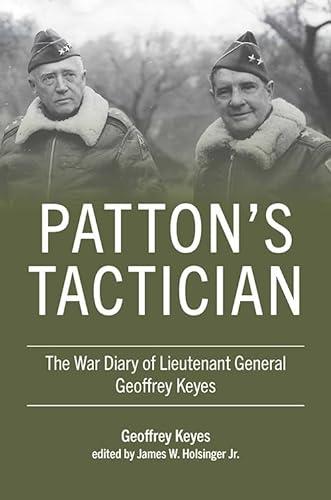
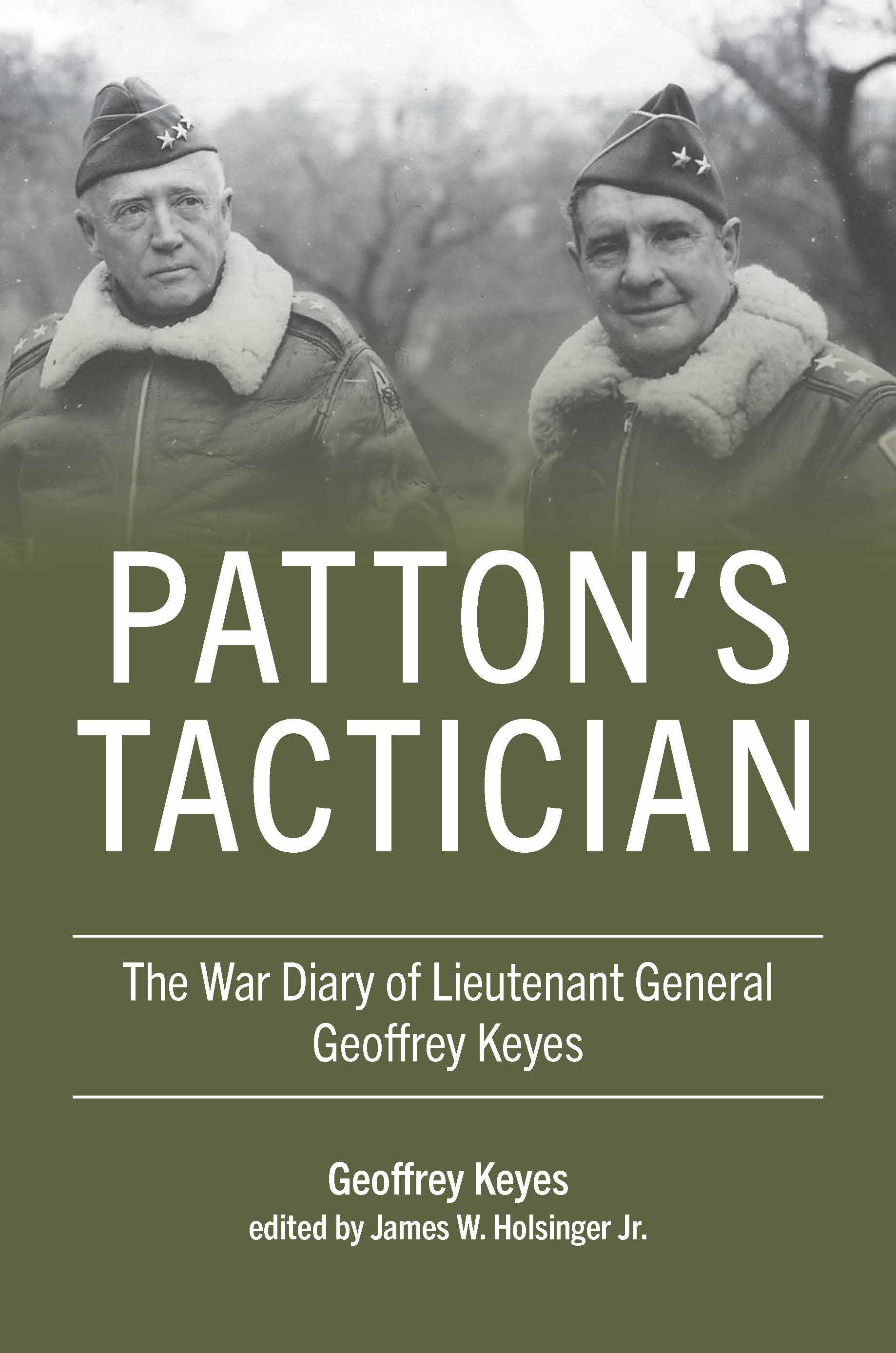
PATTON’S TACTICIAN
The War Diary of Lieutenant General
Geoffrey Keyes
Edited by James W. Holsinger Jr.
A note to the reader : General Keyes’s war diary includes references to race and ethnicity that contemporary readers may find insensitive. This volume reproduces the original, unedited language to present an accurate record of General Keyes’s thoughts and opinions in their full historical context. Discretion is advised.
Scholarly publisher for the Commonwealth, serving Bellarmine University, Berea College, Centre College of Kentucky, Eastern Kentucky University, The Filson Historical Society, Georgetown College, Kentucky Historical Society, Kentucky State University, Morehead State University, Murray State University, Northern Kentucky University, Spalding University, Transylvania University, University of Kentucky, University of Louisville, University of Pikeville, and Western Kentucky University. All rights reserved.
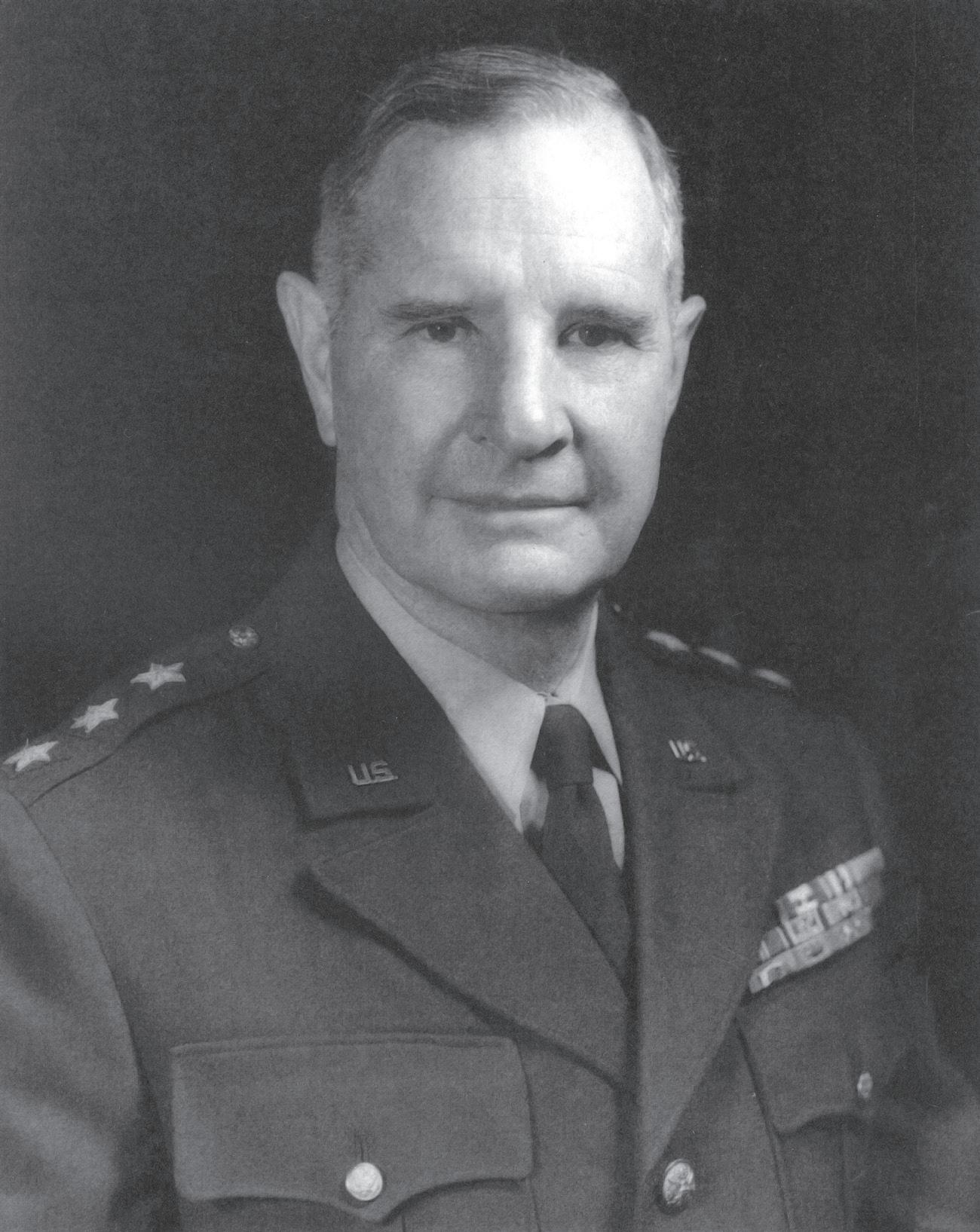
Frontispiece: Lieutenant General Geoffrey Keyes (Keyes Family Archive) Maps by Richard Gilbreath
Editorial and Sales Offices: The University Press of Kentucky 663 South Limestone Street, Lexington, Kentucky 40508-4008 www.kentuckypress.com
Cataloging-in-Publication data is available from the Library of Congress.
ISBN 978-0-8131-9871-2 (hardcover : alk. paper)
ISBN 978-0-8131-9874-3 (epub)
ISBN 978-0-8131-9873-6 (pdf)
This book is printed on acid-free paper meeting the requirements of the American National Standard for Permanence in Paper for Printed Library Materials.
Manufactured in the United States of America.
Member of the Association of University Presses
For my band of brothers:
Dr. Bill T. Arnold
The Reverend Daniel B. Baer
Robert J. Benvenuti III, Esq.
The Reverend Keith D. Boyette, Esq.
David W. Brock
Dr. Erik L. Carlton
Phillip F. Connolly
David E. Fleenor, Esq.
Dr. George H. Freeman
Dr. Joel B. Green
Dr. Jeffrey E. Greenway
Dr. W. W. (Tim) Havens
Dr. George G. Hunter III
Dr. Emmanuel D. Jadhav
Dr. Bruce A. Lucas
Dr. Stephen W. Wyatt
and in memory of
Dr. Terry L. Birdwhistell (1950–2023)
Major General Joseph G. Gray (1935–2021)
Dr. George C. Herring Jr. (1936–2022)
Dr. F. Douglas Scutchfield (1942–2022)
and in honor of Brigadier General James W. Holsinger (1905–1994)
Contents
Abbreviations xi
Keyes Family xv
List of Maps and Map Symbols xvii
Note on Military Units xix
Editor’s Note xxi
Introduction: A Biographical Sketch of Lieutenant
General Geoffrey Keyes 1
1. Operation Torch and the North African Campaign 5
2. Operation Husky and the Sicilian Campaign 25
3. Crossing the Rapido 52
4. On to Rome 87
5. The River Crossings 124
6. The End of the War 171
7. The Occupation of Germany 190
8. High Commissioner for Austria 275
Conclusion 369
Appendix A 375
Appendix B 379
Notes 385
References 431
Oral History Interviews 443
Index 445
Illustrations follow page 251
Abbreviations
AAA Antiaircraft Artillery
ACC Allied Control Council
AAI Allied Armies, Italy
AES Army Exchange Service
AFHQ Allied Force Headquarters
AFN Armed Forces Network
Ammo Ammunition
ARC American Red Cross
ASR Adjusted Service Rating
ASW Assistant Secretary of War
BOWD Budget Office, US War Department
Br British
CCA Combat Command A
CCB Combat Command B
CEF Corps Expéditionnaire Français (French Expeditionary Corps)
CFM Council of Foreign Ministers
CG Commanding General
CI Civilian Internee
CIE Civilian Internment Enclosure
CIC Combat Information Center
CO Commanding Officer
COPRA Comparative Postwar Recovery Analysis
COS or CoS Chief of Staff
CP Command Post
CPX Command Post Exercise
DD Destroyer
DivArty Division Artillery
DP Displaced Person
DSC Distinguished Service Cross
DSM Distinguished Service Medal
xii Abbreviations
ECA Economic Cooperation Administration
ERP European Recovery Plan
ETOUSA European Theater of Ooperations, US Army
FAITC Fifth Army Invasion Training Center
FDR President Franklin Delano Roosevelt
FEC French Expeditionary Corps
FO Field Order
fwd Forward
GBK Geoffrey B. Keyes
GCM General George C. Marshall
“George” George Harrison (Keyes’s brother-in-law)
GO General Order
GOC General Officer in Command
GSP General George S. Patton Jr.
HQ Headquarters
I & E Inspiration and Encouragement
IG Inspector General
ISB Information Service Branch, USFA
INS Immigration and Naturalization Service
IRO International Refugee Organization
KT “Happy Hour”
LCI Landing Craft, Infantry
LO Liaison Officer
LCT Landing Craft, Tank
LHK Leila Harrison Keyes
LM Legion of Merit
LST Landing Ship, Tank
LT Lieutenant
MTO Mediterranean Theater of Operations
METOUSA Mediterranean Theater of Operations USA
MG Machine Gun
MP Military Police
NATOUSA North African Theater of Operations, US Army
NCO Noncommissioned Officer
NE Northeast
NW Northwest
NZ New Zealand
OEEC Organization for European Economic Cooperation
OI Operations Instructions
Abbreviations xiii
OLC Oak Leaf Cluster
OMGUS Office of Military Government, United States
OP Observation Post
OPD Operations and Plans Division, War Department
General Staff
Office of Defense Planning (after July 1947)
OSS Office of Strategic Services
PM Prime Minister (Winston Churchill)
PRO Public Relations Office or Officer
PW Prisoner of War
RAF Royal Air Force
RCN Cavalry Reconnaissance Squadron
RCT Regimental Combat Team
SA South Africa
SANACC State-Army-Navy-Air Force Coordinating Committee
SGS Secretary, General Staff
SHAEF Supreme Headquarters Allied Expeditionary Force
SO Special Order
SP Self-propelled
SS Silver Star or Special Services
SWNCC State-War-Navy Coordinating Committee
TD Tank Destroyer
TDY Temporary Duty
TF Task Force
TFA Task Force Alpha
TFB Task Force Bravo
T/O Table of Organization
TSSET Theater Services Support European Theater
UNRRA United Nations Relief and Rehabilitation Administration
US United States
USACA United States Commission for Allied Austria
USAT
United States Army Transport
USEUCOM United States European Command
USFA
USFET
USGCC
United States Forces Austria
United States Forces European Theater
United States Group Control Council
USS United States Ship
V V-Mail
xiv Abbreviations
VAC Vienna Area Command
WAC Women’s Army Corps
WD War Department
WTF Western Task Force
ZI Zone of the Interior; i.e., United States
88 German 88 mm antiaircraft and antitank artillery gun
Keyes Family
Mary Ross Ray
George F. E. Harrison
Ross Ray Harrison (Ross)
George Leslie Harrison (George)
Leila Harrison (LHK, Leila)
Virginia Maxwell
Alexander S. B. Keyes
CPT
Geoffrey Keyes (Geoff)
LTG
Berenice May Keyes (Bev)
M1. Maximiliano Luna
M2. Howard Anderson
COL Roberts Sherwood Demitz (Ginger, Ginge) (Bob)
Virginia Maxwell Keyes
Maximillian Maxwell Keyes
LTG
William Robertson Desobry (Jackie) (Bill, Des)
Jacqueline Harrison Keyes
Lucy Beatrice Keyes
COL James Fuller McKinley Jr. (Les)
Mary Leslie Keyes
COL Levin Barnett Broughton (Leila Jr.) (Barney) (Jimmy)
Geoffrey Brooks Keyes (GBK, Geoff, Buster)
Leila Harrison Keyes
Edward Keyes (Jack)
Ethel Keyes
List of Maps
Maps and Map Symbols
1. Operation Torch, November 8, 1942
2. Tunisian Campaign, January 24–May 13, 1943 15
3. Sicilian Campaign, July 9–August 16, 1943 30
4. German Defensive Lines in Italy 54
5. The Battle for Cassino, February 4–12, 1944 82
6. Liberation of Rome, May 11–June 4, 1944 111
7. Breakthrough into the Po Valley, April 14–21, 1945 183
8. The Drive across the Po Valley, April 21–26, 1945 185
9. Occupation Zones in Austria 193
10. Occupation Zones in Germany 203
River
Map Symbols
AxisAllies
Advance
Infantry
Mountain
Landmark
City/town
Airborne
Unit
Note on Military Units
For World War II military units, the theater of operations was the geographic area required for conducting offensive or defensive military operations and for the administration of combat units.1 An Army Group consisted of two or more armies and was a tactical unit with few supply or administrative functions. A numbered army was the largest self-contained unit, consisting of a headquarters, organic army troops, with corps and divisions assigned based on its mission, the terrain of operations, and the enemy forces. The numbered army was the fundamental unit of strategic maneuver, and it planned and executed strategic and tactical operations, having in addition territorial, tactical, and administrative functions.2 A numbered corps was a tactical unit consisting of a headquarters, certain corps troops, and divisions assigned depending on the mission, terrain, and combat situation. During combat, the corps commander influenced the outcome of the battle by maintaining close contact with the engaged divisions, coordinating or changing their disposition as necessary.3 The division, an administrative and tactical unit, was the basic large unit. It consisted of a headquarters and assigned infantry, cavalry, or armored units, as well as field artillery and other organic units.4 The regiment was both an administrative and a tactical unit, consisting of a headquarters and two or more battalions.5 The battalion was the basic tactical unit, composed of a headquarters and two or more companies of similar type.6
Editor’s Note
While speaking to Sherwood Demitz, my boyhood friend and the grandson of Lieutenant General Geoffrey Keyes, I discovered that General Keyes had maintained a diary throughout World War II and the Cold War occupation of Germany and Austria. My father, Colonel (later Brigadier General) James W. Holsinger, served with General Keyes as the assistant chief of staff, G-4, Logistics, for II Corps and during the Italian campaign, then as the assistant chief of staff, G-5, Civil Affairs, for the Seventh Army. As I have worked through the diary, it has become clear to me that my father modeled himself as an Army officer on General Keyes. Many of the terms used to describe Keyes’s attributes could likewise be ascribed to my father, particularly in the final four years of his thirtythree-year military career, when he served as commander for the 2nd and 3rd Armored Division artillery and V Corps artillery. Both men were highly regarded commanders who cared deeply for their soldiers. They took their religion seriously and were beloved by their spouses and families.
As a youth, while living in Arlington, Virginia, I vividly remember the visits of General and Mrs. Keyes, and subsequently at the Armed Forces Staff College in Norfolk, as our family lived next door to General Keyes’s daughter, Virginia, and her husband, Colonel Robert Demitz. These visits number among the very few times that I remember my father talking about his three years of combat, from the landing of II Corps at Oran until the surrender of Germany on May 8, 1945. As a consequence, the opportunity to edit the diary of Lieutenant General Geoffrey Keyes has been a remarkable experience, drawing me closer to both my father and a mentor and friend whom he deeply admired.
In researching the details of the diary and inserting the various Editor’s Notes, I have been cognizant of the need to utilize primary and secondary sources produced in close temporal proximity to the events related in the diary. General Keyes did not have access to the German or Soviet archives that have become available in more recent years. He was
xxii Editor’s Note
in a position of only knowing what he knew firsthand, especially during his time as high commissioner in Occupied Austria. Based on that knowledge, he carried out his duties to the best of his and his staff’s ability.
Various Editor’s Notes appear throughout the book in italics and provide context to General Keyes’s diary. Additional explanatory insertions are noted with brackets. The full names of senior officers as well as endnotes indicating their official positions have been added to provide context. Ranks have been written out to enhance the readability of the diary. Abbreviations are spelled out when they first occur and are found in the List of Abbreviations. The spelling of proper names and geographic locations have been checked and, where necessary, corrected.
I am grateful for the assistance of research librarians at several institutions. Lynn Smith, video archivist at the Hoover Presidential Library and Museum, provided an introduction to Linda K. Smith, archivist specialist at the Eisenhower Presidential Library and Museum, who graciously assisted me in obtaining letters written to then General Eisenhower by Generals Patton and Keyes. Bruce Kirby, reference librarian at the Library of Congress, provided an important letter written by General Keyes to General Patton. Justine Melone and Thomas Buffenbarger, staff members at the US Army Heritage and Education Center, facilitated my visit to its archive. Elizabeth Fink accurately transcribed much of the diary, for which I am grateful. Richard Gilbreath, an extraordinary cartographer, graciously provided his expertise in creating the outstanding maps. Ashley Runyon, the director of the University Press of Kentucky, greatly encouraged me to engage in this project and consistently provided her support to bring it to a successful conclusion. Natalie O’Neal Clausen, acquisitions editor, and Tatianna Verswyvel, acquisitions assistant, provided expert assistance, encouragement, and support throughout the project. I am indebted to Derik Shelor for his outstanding copy editing of the manuscript. I am indebted to my friend and colleague for many years at the University of Kentucky, Dr. George Herring, a remarkable and talented historian, for reading, editing, and critiquing the manuscript as it was being written and making important suggestions for revisions and additions to the notes. I am grateful for the financial support of the University of Kentucky College of Public Health. Without the strong support of the family of General Keyes, this book would not have been completed. Sherwood Demitz played a key role in not only providing a copy of General Keyes diary, but in coordinating his family’s response to the effort to produce it for publication. I am grateful for his personal contribution to the project. In addition, the family provided insight, photo-
Editor’s Note xxiii
graphs, and encouragement, making it possible to complete the project. Finally, my spouse of sixty years, Dr. Barbara Craig Holsinger, once again supported the use of my time for this book. Without her love, care, and encouragement, this project would not be finished.
James W. Holsinger Jr. Major General, AUS-RET
June 4, 2023
Introduction
A Biographical Sketch of Lieutenant General Geoffrey Keyes
Lieutenant General Geoffrey Keyes was born on October 30, 1888, at Fort Bayard, New Mexico Territory, into what an Albuquerque newspaper called “one of the distinguished military families of this country.” His father, Captain Alexander S. B. Keyes, served as a cavalry officer, and his mother, Virginia Maxwell Keyes, was the eldest daughter of a legendary New Mexico landowner, Lucien B. Maxwell, a former hunter, trapper, and US Army scout for John C. Frémont, explorer of the American West, Army officer, and presidential candidate. As a young man, General Keyes was said to idolize his older brother Maxwell, who fought in the SpanishAmerican War in 1898 as a lieutenant in the Rough Riders, Theodore Roosevelt’s famed 1st US Volunteer Cavalry Regiment. Lieutenant Maxwell Keyes was killed in the Philippine Insurrection in 1899, and a week later his brother-in-law, Captain Maximiliano Luna, was killed in the same conflict.
Following in his father’s footsteps, Keyes enrolled at the US Military Academy at West Point, New York, on March 2, 1908. He was outstanding in several sports, and excelled as a football player. An account of a 1912 game against Syracuse University reads: “This contest . . . belonged to Army’s Geoffrey Keyes. Scoring two touchdowns, kicking two conversion points and booting a 43 yard field goal, Keyes accounted for 17 of the Cadets’ points.” Marty Maher, the West Point football team trainer for fifty-five years, later said that Keyes “was the only man who could stop Jim Thorpe.” His 1913 class yearbook, The Howitzer, stated “if there is a man in the Corps who is more universally liked than he, we have yet to find him. . . . His standing among his classmates and the Corps is a natural consequence of his sterling character and qualities which are admired among men.”1