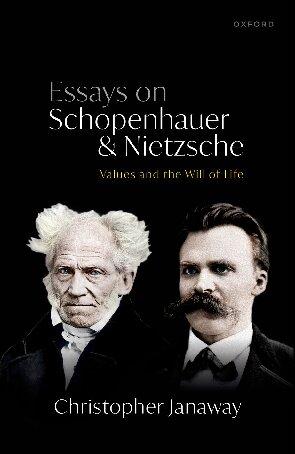
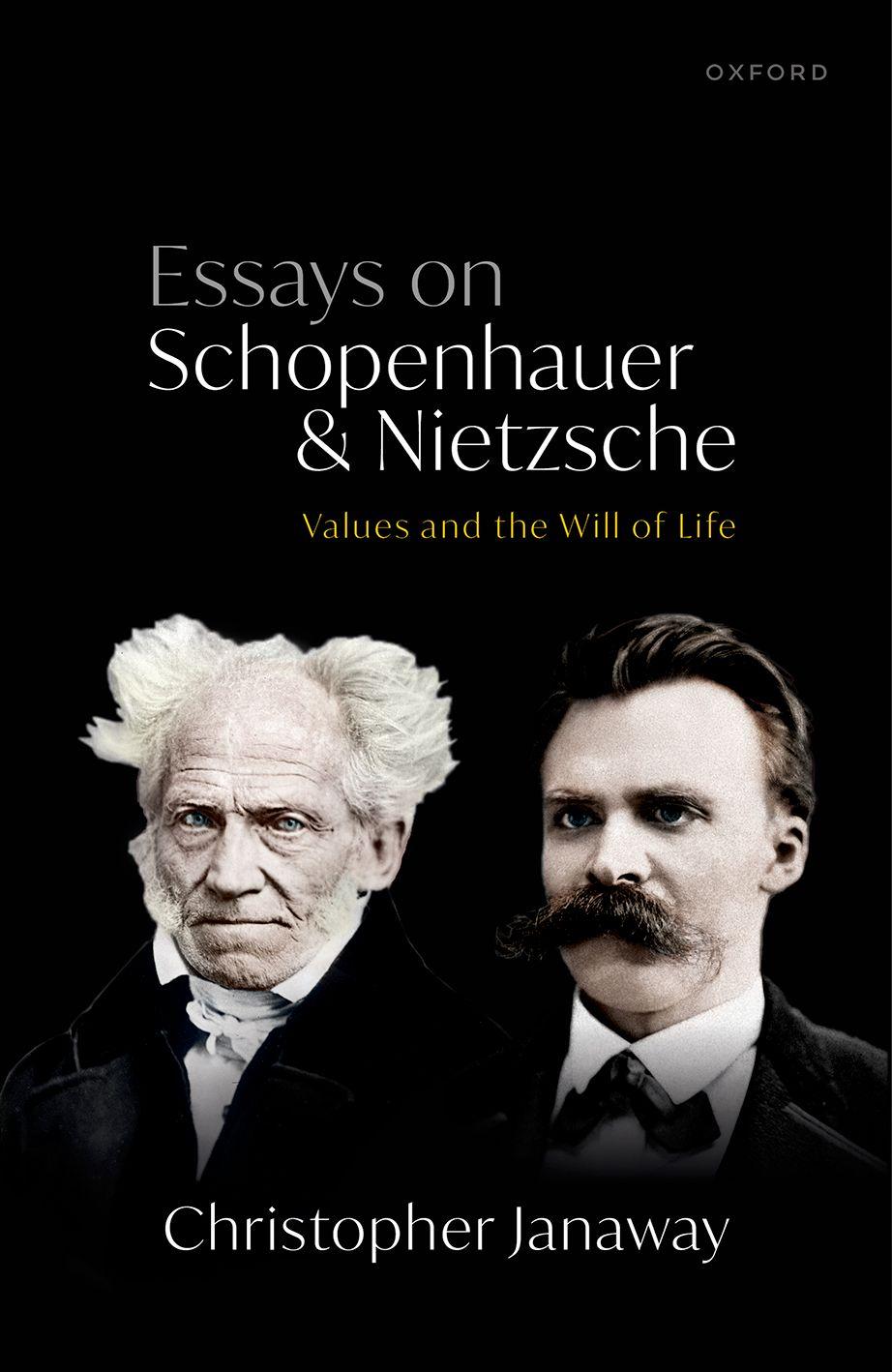
EssaysonSchopenhauer andNietzsche
ValuesandtheWillofLife
CHRISTOPHERJANAWAY
GreatClarendonStreet,Oxford,OX26DP, UnitedKingdom
OxfordUniversityPressisadepartmentoftheUniversityofOxford. ItfurtherstheUniversity’sobjectiveofexcellenceinresearch,scholarship, andeducationbypublishingworldwide.Oxfordisaregisteredtrademarkof OxfordUniversityPressintheUKandincertainothercountries
©ChristopherJanaway2022
Themoralrightsoftheauthorhavebeenasserted
FirstEditionpublishedin2022
Impression:1
Allrightsreserved.Nopartofthispublicationmaybereproduced,storedin aretrievalsystem,ortransmitted,inanyformorbyanymeans,withoutthe priorpermissioninwritingofOxfordUniversityPress,orasexpresslypermitted bylaw,bylicenceorundertermsagreedwiththeappropriatereprographics rightsorganization.Enquiriesconcerningreproductionoutsidethescopeofthe aboveshouldbesenttotheRightsDepartment,OxfordUniversityPress,atthe addressabove
Youmustnotcirculatethisworkinanyotherform andyoumustimposethissameconditiononanyacquirer
PublishedintheUnitedStatesofAmericabyOxfordUniversityPress 198MadisonAvenue,NewYork,NY10016,UnitedStatesofAmerica
BritishLibraryCataloguinginPublicationData Dataavailable
LibraryofCongressControlNumber:2022941814
ISBN978–0–19–886557–5
DOI:10.1093/oso/9780198865575.001.0001
PrintedandboundintheUKby ClaysLtd,ElcografS.p.A.
LinkstothirdpartywebsitesareprovidedbyOxfordingoodfaithand forinformationonly.Oxforddisclaimsanyresponsibilityforthematerials containedinanythirdpartywebsitereferencedinthiswork.
Contents
Preface vii
Acknowledgements ix
AbbreviationsandReferences xi
Introduction1
PARTI.SCHOPENHAUERONTHEWILL
1.TheRealEssenceofHumanBeings:Schopenhauerand theUnconsciousWill15
2.Necessity,Responsibility,andCharacter:Schopenhauer onFreedomoftheWill30
3.SchopenhauerontheAimlessnessoftheWill55
4.What’sSoGoodaboutNegationoftheWill?Schopenhauer andtheProblemofthe summumbonum 73
PARTII.SCHOPENHAUER:BEING,NOT BEING,ANDTHEINDIVIDUAL
5.BeyondtheIndividual:Schopenhauer,Wagner,andthe ValueofLove101
6.Schopenhauer ’sConsolingViewofDeath116
7.WorsethantheBestPossiblePessimism?Olga Plümacher’sCritiqueofSchopenhauer130
PARTIII.NIETZSCHERESPONDS TOSCHOPENHAUER
8.Schopenhauer ’sChristianPerspectives153
9.OntheVeryIdeaof ‘JustifyingSuffering’ 174
10.AffectandCognitioninSchopenhauerandNietzsche190
11.BeautyisFalse,TruthUgly:NietzscheonArtandLife211
12.AttitudestoSuffering:ParfitandNietzsche230
13.NietzscheonMorality,Drives,andHumanGreatness255
14.Who orWhat SaysYestoLife?275
Preface
Thisvolumebringstogetheraselectionofmywritingsonthephilosophyof SchopenhauerandNietzschefromtheyears2010to2021.Thepieceswere writtenforpresentationseparately,insomecasesforlessspecializedaudiences,withtheresultthattheysometimescrisscrossthesameterritoryfrom differentdirections.Ihopethereaderwill findthatthepiecestakentogether haveasatisfyingunity,andperhapsgiveamoreroundedviewofthecentral topics.Twothinkersareconjoinedhere,becauseI findthattheissuesover whichNietzschehadtocometotermswithSchopenhauer thedeathofGod, themeaningofexistence,suffering,compassion,thewill,Christianvalues,the affirmationornegationoflife areboththecentralandmostrewarding aspectsofNietzscheandthesiteofSchopenhauer’smostpotentintervention inthehistoryofphilosophy.IliketothinkthatIamnotdoctrinaireabout method,anditstrikesmeinretrospectthatintheseessaysIhavebeenworking withinaspaceboundedbyphilosophyandphilology.Myearliesttrainingwas asaclassicist,andIlaterbecamesomethingofaGermanist.Fromthese disciplinesIretainastrongsenseofthecarerequiredwhenconfronting textsfromanearliertimeinwhatisformeanotherlanguage.Hence,though IquotefromtranslationsofSchopenhauerandNietzsche,Iprovidereferences totheGermantextsthroughout.Iacquiredotherhabitsfromanalyticphilosophy,principallytoprioritizeclarityandengageactivelywiththethoughts thetextspresent.Istrivetodothiswithsomerestraint,avoidingtheexcesses ofanachronismandimmodestyintowhichanalyticphilosophycanstray whenitlooksatthepast,andinterveningjustenoughtobringthephilosophy ofSchopenhauerandNietzschetolife.
ForSchopenhauerthehumanworldwasprecarious: ‘Averymoderate increaseintemperaturewoulddryupallriversandsprings’ and ‘nine-tenths ofthehumanracelivesinaconstantstrugglewithwant,alwaysonthevergeof destructionandkeepingthemselvesthereonlywithtroubleandeffort.’ Iam consciousofwritingfromapositionofrelativesecurity,andIthankfamily, friends,andcolleaguesforthecontactswehavebeenabletomaintainduring therestrictionsandlockdownsofthelasttwoyears,andaboveallmywife,the philosopherChristineLopes,forallhersupportandforsuggestingthesubtitle forthevolume.
Acknowledgements
Duringthepreparationoftheearlierwritingsinthisvolume,IwasPrincipal InvestigatorontheAHRC-fundedresearchproject ‘NietzscheandModern MoralPhilosophy’ attheUniversityofSouthampton,andlaterIwasGeneral EditoroftheCambridgeEditionofSchopenhauer’sWorksintranslation. Iwouldliketothankmychiefcollaboratorsonbothprojects:KenGemes, DavidOwen,AaronRidley,andSimonRobertson;andDavidCartwright, AdriandelCaro,EdwardErdmann,JudithNorman,SabineRoehr,and AlistairWelchman.Earlierversionsofthevariouschapterswerepresented atBirkbeck,UniversityofLondon,GhentUniversity,NewYorkUniversity, PrincetonUniversity,UniversityofLondonInstituteofPhilosophy;the UniversitiesofBern,Calgary,Freiburg,Oxford,Sussex,Southampton,Texas atSanAntonio,Warwick,andYork;andatconferencesoftheInternational SocietyforNietzscheStudies,andtheNorthAmericanNietzscheSociety.Iam gratefultothehostsandaudiencesatalltheseoccasions,andtoeditorsand anonymousrefereesforthevariousjournalsandcollectionsinwhichthe pieceswere firstpublished(forwhichseebelow).Chapter5, ‘Beyondthe Individual:Schopenhauer,Wagner,andtheValueofLove’,ispreviously unpublished,butcontainsmaterialpresentedatanumberofthevenueslisted above.Iwouldespeciallyliketothankthefollowingpeoplefortheirsupport andcommentsonone,orinsomecasesmanymore,ofthepiecesincluded here:DanielCame,AlixCohen,SebastianGardner,KenGemes,MarieGuillot, BeatriceHan-Pile,RexHarley,AnthonyJensen,PaulKatsafanas,PaulLoeb, ChristineLopes,SimonMay,MarkMigotti,DavidOwen,BernardReginster, AaronRidley,SimonRobertson,ChristopherRyan,GeniaSchönbaumsfeld, SandraShapshay,RobertStern,KurtSylvan,BartVandenabeele,Dennis VandenAuweele,GudrunvonTevenar,andDavidBatherWoods.
Igratefullyacknowledgepermissiontopublishmaterialfromthefollowing sources:
‘TheRealEssenceofHumanBeings:SchopenhauerandtheUnconscious Will’ inAngusNicholls(ed.), TheConceptoftheUnconsciousinNineteenth CenturyGermanThought (Cambridge:CambridgeUniversityPress,2010), 140–55.©CambridgeUniversityPress2010,reproducedwithpermissionof theLicensorthroughPLSclear.
‘Necessity,ResponsibilityandCharacter:SchopenhaueronFreedomofthe Will’ , KantianReview 17(3)(2012):431–57.Reproducedwithpermission.
‘SchopenhauerontheAimlessnessoftheWill’ , BritishJournalfortheHistory ofPhilosophy 26(2018):331–47.Reprintedbypermissionofthepublisher, Taylor&FrancisLtd.http://www.tandfonline.com
‘What’sSoGoodaboutNegationoftheWill?SchopenhauerandtheProblem ofthe summumbonum’ , JournaloftheHistoryofPhilosophy,54(4)(2016): 649–69.Copyright©2016TheJohnsHopkinsUniversityPress.
‘Schopenhauer’sConsolingViewofDeath’ , IFCoLogJournalofLogicsand theirApplications 4No.11(2017):3705–18.
‘WorsethantheBestPossiblePessimism:OlgaPlümacher’sCritiqueof Schopenhauer’ , BritishJournalfortheHistoryofPhilosophy (2021):1–20. Reprintedbypermissionofthepublisher,Taylor&FrancisLtd.http://www. tandfonline.com
‘Schopenhauer’sChristianPerspectives’,inSandraShapshay(ed.),The PalgraveSchopenhauerHandbook (Cham,Switzerland:Palgrave Macmillan,2017),351–72.ReprintedbypermissionofSpringerNature CustomerServiceCenterGmbH.
‘OntheVeryIdeaof “JustifyingSuffering”’ , JournalofNietzscheStudies 48 (2017):152–70.Copyright©ThePennsylvaniaStateUniversityPress.This articleisusedbypermissionofThePennsylvaniaStateUniversityPress.
‘AffectandCognitioninSchopenhauerandNietzsche’,inAlixCohenand RobertStern(eds.), ThinkingabouttheEmotions:APhilosophicalHistory (Oxford:OxfordUniversityPress,2017),206–22.
‘BeautyisFalse,TruthUgly:NietzscheonArtandLife’,inDanielCame(ed.), NietzscheonArtandAesthetics (Oxford:OxfordUniversityPress,2014),39–56.
‘AttitudestoSuffering:ParfitandNietzsche’ , Inquiry 60(2017):66–95. Reprintedbypermissionofthepublisher,Taylor&FrancisLtd.http:// www.tandfonline.com
‘NietzscheonMorality,Drives,andHumanGreatness’,inChristopher JanawayandSimonRobertson(eds.), Nietzsche,Naturalismand Normativity (Oxford:OxfordUniversityPress,2012),183–201.
‘Who orWhat SaysYestoLife?’,inDanielCame(ed.), NietzscheonMorality andtheAffirmationofLife (Oxford:OxfordUniversityPress,2022),154–69.
Minorchangeshavebeenmadetoharmonizesectionheadingsandreferencing.MyquotationsfromSchopenhauer’spublishedwritingsarenow universallyfromtranslationsintheCambridgeEditionofSchopenhauer’ s Works,replacingequivalentpassagesfromthePaynetranslationsthat appearedinsomeofthepieceson firstpublication.
AbbreviationsandReferences
WorksbySchopenhauer
Germantexts
GB GesammelteBriefe.Ed.ArthurHübscher.Bonn:Bouvier,1978.
HN DerhandschriftlicheNachlaß.Ed.ArthurHübscher.FrankfurtamMain: Kramer,1970.
SW SämtlicheWerke.Ed.ArthurHübscher.Mannheim:F.A.Brockhaus,1988.
WWR₁₈₁₈ DieWeltalsWilleundVorstellung [1stedition].Leipzig:Brockhaus,1819 [1818].
CitationstoSWandHNgivevolumenumber,followedbypagenumber.
Worksintranslation
BM PrizeEssayontheBasisofMorals
FR OntheFourfoldrootofthePrincipleofSufficientReason
FW PrizeEssayontheFreedomoftheWill
MR ManuscriptRemains
PP ParergaandParalipomena
WN OnWillinNature
WWR TheWorldasWillandRepresentation
CitationstoMRgivevolumenumber,followedbypagenumber,ofthetranslationby E.F.J.Payne(Oxford:Berg,1988).AllothercitationsaretovolumesintheCambridge EditionoftheworksofSchopenhauer,givingpagenumbers(precededbyvolume numbersinthecaseofPPandWWR).
WorksbyNietzsche
Germantexts
KSA KritischeStudienausgabe.Ed.GiorgioColliandMazzinoMontinari. Berlin:deGruyter,1988.
KSB SämtlicheBriefe:KritischeStudienausgabe. Ed.GiorgioColliandMazzino Montinari.Berlin:deGruyter,1986.
CitationstoKSAandKSBgivevolumenumber,followedbypagenumber.
Worksintranslation
A TheAnti-Christ
BGE BeyondGoodandEvil
BT TheBirthofTragedy
CW TheCaseofWagner
D Daybreak
EH EcceHomo
GM OntheGenealogyofMorality
GS TheGayScience
HH Human,AllTooHuman
TI TwilightoftheIdols
UM UntimelyMeditations
WLN WritingsfromtheLateNotebooks
WP TheWilltoPower
Z ThusSpokeZarathustra
CitationstothetranslationsofNietzsche’sworksgive section numbers,unlessotherwisestated.Fordetailsofthetranslationsused,seeBibliography.
Introduction
TherearemanypossibleapproachestothestudyofSchopenhauerand Nietzsche.Bothphilosophersrespondedtomanyinfluences,influenced manylaterwriters,andcanbecomparedininterestingwayswithdiverse schoolsofthoughtfrombeforetheirtimeandafter.Foregroundingthe connectionbetweenSchopenhauerandNietzscheprivilegesaparticularkind ofnarrativeoverothers.IfNietzschehadneverexistedorhadneverread The WorldasWillandRepresentation,wemightwellviewSchopenhauersomewhatdifferentlythanwedonow.NobodyshouldthinkthatSchopenhaueris ofinterestonlybecauseheservedupdoctrinesthatNietzschecould firsttake toheartandthenreject,northatthisactofrejection,prominentthoughitis,is thesummationofNietzsche’sachievement.However,whenwefocusuponthe aspectsofNietzschethatreacttoSchopenhauer,wealsolightupaspectsof Schopenhauerthatwereapttoprovokesuchareaction,andIbelievewesee moreclearlysomeoftheissuesthatmattermosttobothofthem.
Forbothphilosophers,Godisdead.NietzschegaveSchopenhauercreditfor beingthe ‘first admittedanduncompromisingatheist’ amongGermanphilosophers(GS,357/KSA3:599).Theybothbelievedthatasaconsequencethe worldmustbeseentolackthemeaningChristianityhadassignedtoit.Europe thenentersanewera,facedwithanewquestion:
Lookingatnatureasifitwereproofofthegoodnessandcareofagod; interpretinghistoryinhonourofsomedivinereason,asacontinualtestimonyofamoralworldorderandultimatemoralpurposes;interpreting one ’sownexperiences ...asifeverythingwereprovidential,ahint,designed andordainedforthesakeofsalvationofthesoul thatis over now....Aswe thusrejecttheChristianinterpretationandcondemnits ‘meaning’ ascounterfeit, Schopenhauer’ s questionimmediatelycomesatusinaterribleway: Doesexistencehaveanymeaningatall? (GS,357/KSA3:599–601)
Nietzschewrotethesewordsin1887,whenhehadlongabandonedhis youthfulenthusiasmforSchopenhauer’sphilosophy.Nowthoroughly opposedtoSchopenhauer,hestillportrayshimashavingsingularsignificance
EssaysonSchopenhauerandNietzsche:ValuesandtheWillofLife. ChristopherJanaway,OxfordUniversityPress. ©ChristopherJanaway2022.DOI:10.1093/oso/9780198865575.003.0001
forEuropeanculture(‘he posed thequestion asagoodEuropean’,GS,357/ KSA3:599–601),andforhisowndevelopment,sayinginthesameyear ‘Ihad tostrugglealmostsolelywithmygreatteacherSchopenhauer’ (GM,Preface, 5/KSA5:251–2).SoifweelecttoviewNietzschefromtheperspectiveof Schopenhauer,wearefollowingclearsignalsfromNietzschehimself.He foundinSchopenhauerthepredicamentheneededtoconfront.
ForSchopenhauer,wearerootedinanaturethatisneithergoodnorcaring towardsus.Theindividualhumanbeingperseveresinlivingandhasanurge tobringfurtherindividualsintolife,butdoesnotreallyknowwhy. Schopenhauer’sexplanationforthisisthateachindividualisamanifestation ofsomethinglarger,anunderlyingdrivecommontoall,whichconstitutes theirinneressencebutisoutsideoftheircontrol.Thishecallswilltolife(Wille zumLeben).Butthiswilltolifebringsusnogood.Ittrapsusinself-centred desire,awrongidentificationofourtrueselfwiththehumanindividual,an egoisticconceptionofthegood,conflictwithotherbeings,andanexistence pervadedbysuffering.Opposedtothewilltolifestandseverythingofreal value:art,morality,andthekindofredemptionfromsufferingthatmystics fromseveraloftheworld’sreligionshaverecognizedinpastages.Headvocatesaselflessmoralcompassionfortheworld’ssufferings,butarguesthatthe onlysolutiontoourexistence,uponwhichChristianity,Buddhism,and Brahmanismallconverge,isaretreatintocompleteselflessnessthrougha cessationofwillingandtranscendenceofindividuality.Thisblissfulrelease canbeattainedoncethewilltolife negates itself.
Nietzscherebelsagainstallofthis.Forhim,moralityisaquestionable phenomenonandegoismiswronglymaligned;sufferingisanenhancement oflife,andtheattempttoeliminateitisimpoverishing;artisfull,notdrained, ofwilling;theworldreligionsandthewholeideaofbeingsavedfromourlife aresymptomsofamalaisefromwhichmodernculturehassomehowto recover.InSchopenhauerianself-negationhedetects ‘thebeginningofthe end,thestandstill,thebackward-glancingtiredness,thewillturning against life,thelastsicknessgentlyandmelancholicallyannouncingitself ’ (GM, Preface:5/KSA5:252).WeneedinsteadawayofaffirmingorsayingYesto whatisnaturalinus.AspartofhisresistancetoSchopenhauer,Nietzsche rejectsthecentralnotionofwilltolife.Hewroteinanotebook, ‘Willtolife? Ialwaysfoundinitsplaceonlywilltopower’ (KSA10:187).Butinasubtle twistofSchopenhauer’snotionhereferstowilltopowerasa ‘life-will’ (Lebenswille)thatbelongstoeverythingliving: ‘thegreatandsmallstruggle revolveseverywherearoundpreponderance,aroundgrowthandexpansion, aroundpower,inaccordancewiththewilltopower,whichissimplythewillof
life[derWilledesLebens]’ (GS,349/KSA2:585–6).¹Thissuggeststhatfor Nietzschethereisstillsomekindofstrivingthatattachestolifeitself.Inthese terms,Nietzsche’shopeisthatthosewhoareabletoseebeyondthepresuppositionsofreligionandthemoralityofcompassionwillbeabletorealign themselveswithlife’snaturaltendency,notmerelytoperpetuateitself,butto growandaffirmitself.
Someoftheessaysinthisvolumedealwithdifferentaspectsof Schopenhauer’sconceptof will,themainstayofhiswholephilosophy.Ishall makeafewbriefcommentsaboutthisconceptbywayoforientation.First, Schopenhaueroftentreatstheconcepts will and willtolife asinterchangeable. Butinpractice will isawiderandmorevariednotion.Asiswellknown, Schopenhauersaysthatthethinginitselfiswill.Thatis,hesaysthatthe metaphysicalrealitybeyondspace,time,causality,andindividuation,whose natureImmanuelKanthad,inSchopenhauer’swords,² ‘despaired’ ofever knowing,iswill.Buthowsecureisthiscentralclaim?Canweknowthenature ofthethinginitself,andiswillthethinginitselfafterall?Inamuch-cited passageinthe1844secondeditionof TheWorldasWillandRepresentation Schopenhauerraisesthequestion ‘Whatisthiswillultimatelyinitself?’ or ‘What isitquiteapartfromthefactthatitpresentsitself,oringeneral appears ...as will?’ andsaysthat ‘[t]hisquestionis never tobeansweredbecause ...beingcognizedinherentlycontradictsbeing-in-itselfandeverythingwecognizeis assuchmereappearance’.Thus ‘thethinginitself(whichwecognizemost directlyinwilling)mayhave ...determinations,properties,andwaysofbeing thatentirelyeludeourgrasporcognition,butwhichwouldremainasthe essenceofthethinginitselfevenwhen ...ithas freelyannulleditselfas will’ (WWR2,209/SW3:221–2).ThispassagesuggeststhatSchopenhauer’ s ubiquitousstatement ‘thewillisthethinginitself ’ shouldnotbetaken literally,oratleastnotunivocally,viewswithwhichrecentcommentators haveconcurred.³Muchhereisdebatable.Itmaybethatthethinginitselfis willinonesense,butnotinanother;itmaybethatSchopenhaueriscaughtin atensionbetweentwopositionshere,orthathisthinkingchangesovertime muchmorethanheacknowledges.However,theessaysinthisvolumeforthe mostpartleaveunresolvedthelargemetaphysicalandepistemologicalissues thatsurroundSchopenhauer’snotionofthethinginitself,andemphasize
¹AmendedfromtheCambridgetranslation,whoseinaccuratephrase ‘willtolife’ threatenstomake Nietzsche’spositionathrowbacktoSchopenhauer’s.Forotherusesof WilledesLebens,seeBGE,259/ KSA5:208,andGM,Preface,3/KSA5:250.
²SeeWWR1,455/SW3:507.
³See,forexample,Atwell1995:106–28;Cartwright2001;DeCianandSegala2002;Shapshay2008.
insteadtheespeciallyrichpsychologicalandethicalaspectsofthewillasit appearsinhumanlife.
Itmightbetemptingtosaythatmyfocusismoreonthewillthanonthe Will,ifweadoptthecommonpracticeof ‘distinguishingtypographically,in theservice ...of greaterphilosophicalclarity,betweentheindividual,phenomenalorempiricalwillandWillasthinginitself ’ (Jacquette2007:104).
ButIresistthisdistinction,fortworeasons.Oneisthatthedichotomyisan artefactofEnglish-languagecommentary,andnotinSchopenhauer’stexts. GivenGermanorthography,whichdemandsacapitalforeverynoun,hecan writeonly Wille everytimeheusestheword.Philosophicalclarityisalso perhapsnotsoeasilyachieved,becauseSchopenhauerarguablydoesnotuse Wille onlyinthetwowaysidentifiedabove.Forexample,heoftentalksof ‘ my will’ or(foranyarbitraryindividual) ‘hiswill’,whereweareseeminglytothink ofsomethingthatisindividual,pertaininguniquelytoonehumanbeing,yetat thesametimenotempirical.Forexample, ‘everyonecognizeshiswillonlyin thesuccessionofitsindividualacts,notinandforitself,asawhole:thus nobodyisacquaintedwithhischaracterapriori,butonlygetstoknowit empirically’ (WWR2,208/SW3:221).If ‘hiswill’ isacharacterpeculiartothe individual,itcannoteasilybeidentifiedwith ‘[t]hewillasthinginitself [which]iswholeandundividedineverybeing’ (WWR2,338/SW3:371).
So ‘hiswill’ or ‘mywill’ isnot ‘theWill’;butontheotherhanditishardto equateitsimplywithanythingpurelyempirical.Soratherthanforcingevery useof Wille intoonecamportheother,mypolicyissimplytoparallel Schopenhauer’sundifferentiatedusage.
IntheessaysontheSchopenhauerianwill,then,wearechieflyconcerned withthemanyfacetsofthewill’smanifestationinthelifeoftheindividual humanbeing.Theseincludedeliberatewilledactionsandthequestion whethertheyarefree,thenaturalnessofegoisticdesiresandthepossibility ofwillingthewell-beingofothers,anindividualmind’sunconsciouswishes andemotions,thehumandrivetoreproduction,therelationofdesireto suffering,therelativevaluesofsatisfyingdesiresasopposedtonothaving them,theimpactofaffectsandpassionsonourcapacityforobjectivecognition,andthepossibilityofacognitionpurgedofallaffectandofaconscious subjectexistinginastateofwill-lessness.
Forthemostpart,theseaspectsofthewillthatgiveourlivestheirdistinctive andoftenunsettlingcharactercanbeappreciatedwithoutresolvingquestions aboutthenatureorknowabilityofthethinginitself thoughoneexception arisesinChapter5,whereIarguethatSchopenhauer’stalkoftranscending individualityandbeingblissfullyabsorbedintoanultimatelyrealOneness
makessenseonlyifthatOnenessisnotthewill.AsforNietzsche,henever takesseriouslythethesisthatthethinginitselfiswillandisscepticalofthe verynotion ‘thinginitself ’.Butheengagesstronglywithaspectsofthelifeof willingindividualssuchasthosementionedabove.
Theemphasisinthepresentcollectionofessaysisbalancedfairlyevenly betweenthetwophilosophers.Althoughalltheessayswerewrittenseparately, Ihavegroupedthembythemeintofourparts.Asaroughguide,PartsIandII areonSchopenhauer,withlittleornodirectintrusionfromNietzsche,and PartIVcontainsexplorationsofNietzscheanthemeswithonlyoccasional referencetoSchopenhauer.TheessaysinPartIIIaremorehybridincharacter andexaminesomeofNietzsche’sinterpretiveandcriticalresponsesto Schopenhauermoredirectly.Butthereadershould findthemesthatstraddle the ‘Schopenhauerian’ and ‘Nietzschean’ partsofthevolumeandprovidea degreeofunitytothecollection.
Chapter1, ‘TheRealEssenceofHumanBeings:Schopenhauerandthe UnconsciousWill’,focusesonthewillasablindstrivingforexistence,life, andreproduction.Humanbeings,accordingtoSchopenhauer,havethesame essenceasallothermanifestationsofwillintheworld,andthishasseveral consequencesforSchopenhauer’sconceptionofhumanity.Thetruecoreof thepersonalityisnottheself-conscious ‘I’ orsubjectofknowledge,butrather thewill,whichisfundamentallyblindandwithoutknowledge,butwhich interactswiththeintellectalmostasanagentdistinctfromit.Schopenhauer makesvariouspsychologicalobservationsabouttheinterplayofintellectand will.Theseincludetheomnipresenceofsexualdesireinorbeneathour experience;thepersistenceofdesiresandaffectsunknowntotheselfconsciousintellect;thewill’scapacitytoprohibitrepresentationsintheintellectthatareliabletoarousecertainemotions;andtheoccurrenceofmadness whenmemoriespainfultothewillareshieldedfromtheintellectandarbitrary representationsaresubstituted.Thechapteralsodiscussestheextenttowhich theseideasinfluencedFreud’sconceptionoftheunconscious.
InChapter2, ‘Necessity,Responsibility,andCharacter:Schopenhaueron FreedomoftheWill’,weexaminetheargumentofSchopenhauer’ sessay On theFreedomoftheHumanWill,drawingalsoonhisotherworks. Schopenhauerarguesthatanindividualhumanbeing’sactsofwillarenot free:allhumanactionsarecausallynecessitated,asareallothereventsin empiricalnature,hencethereisnoabsolutefreedominthesenseofthe traditionalnotionof liberumarbitriumindifferentiae.However,oursenseof
responsibilityoragency(beingthe ‘doersofourdeeds’)isnonetheless unshakeable.ToaccountforthisSchopenhauerinvokestheKantiandistinctionbetweenempiricalandintelligiblecharacters.TheessayhighlightsdivergencesbetweenSchopenhauerandKantovertheintelligiblecharacter,which forSchopenhauercannotberationalandcannotcausallyinteractwithanything.Iraisethequestionswhethertheintelligiblecharactermayberedundant toSchopenhauer’sposition,andwhetheritcancoherentlybelongtoan individualagent,suggestingthatforSchopenhaueramoreconsistentposition wouldhavebeentodenyfreedomofwilltotheindividualaltogether.
Schopenhauerassertsthat ‘thewill,whichisobjectifiedinhumanlifeasitis ineveryappearance,isastrivingwithoutaimandwithoutend’,andChapter3, ‘SchopenhauerontheAimlessnessoftheWill’,takesitsdeparturefromthis statement,whichIinterpretasfollows:howevermanyspecificaimsofmy specificdesiresImanagetoattain,noneisa finalaim,inthesensethatnone terminatesmy ‘willingasawhole’,noneturnsmeintoanon-willingbeing.To understandSchopenhauer’sclaimwemustrecognizehiscentralcontrast betweenhappinessandwill-lessness.Happinessisthesatisfactionofindividualdesire,butnoactofwillthatsucceedsinsatisfyingindividualdesireisthe attainmentofa finalaim,inthatnonebringsaboutaconsciousstateinwhich thesubjectexperiencesnomoreunfulfilleddesires.Suchastateistheultimate goalofexistence,inSchopenhauer’sview,buthappinessdoesnotprovidea routealongwhichitcanbeattained.
Havingestablishedwillaswhatismostrealaboutourselves,Schopenhauer endshisaccountin TheWorldasWillandRepresentation bypromotingthe will’ s negation.SomecommentatorshaveassertedthatforSchopenhauer negationofthewillisthe ‘highestgood’.However,asImakeclearatthe startofChapter4, ‘What’sSoGoodaboutNegationoftheWill?Schopenhauer andtheProblemofthe summumbonum’,Schopenhauerstatesthatthere cannotbeahighestgoodor summumbonum literally,only figuratively.What isthereasonforthisambivalence?Schopenhauerdefinesgoodaswhateveris conducivetothewill,butitappearsthat,bythiscriterion,absenceofwillcould notbegood,muchlessthehighestgood.IsuggestthatSchopenhauerimplicitlyrecognizestwowaysofbeinggood,correspondingtotwokindsofwilling: ordinarywilling,aimedatthewell-beingofindividuals,andawilltobe withoutordinaryindividualisticwilling.Thushecanholdthatnegationof thewillisthehighestgood,whilealsomakingclearthatitisnotthehighestof thegoodsattainablebyordinaryindividualisticwilling.However,althoughhis positionseemstorequirethesecondkindofwilling,itremainsunclearhow hismetaphysicscanaccommodateit.
ThepiecesinPartIIconcernvariouslylove,death,andpessimism,onall ofwhichSchopenhauerhasdistinctiveandinfluentialviews.Intwoof thesepiecesweencountertheearlyreceptionofSchopenhauerby figures otherthanNietzsche,namelyRichardWagner,EduardvonHartmann,and theundeservedlyneglectedchroniclerofphilosophicalpessimism,OlgaPlümacher. VonHartmann’svoluminouswork PhilosophyoftheUnconscious, firstpublished in1868,wasverymuchinthephilosophicalmainstreamduringNietzsche’ s lifetimeandwentthroughtwelveeditionsintwodecades.Plümacher’sbook DerPessimismusinVergangenheitundGegenwart (1884and1888)represents vonHartmannasthemoreup-to-dateadvocateofpessimism,whohas completedSchopenhauer’sworkbyremovingseveralofhisfaults.Nietzsche readPlümacher’sbookthoroughlyandevenusedexcerptsfromit,unacknowledged,inhisownworksof1887.However,heisdismissiveofvonHartmann, towhomheregardsSchopenhauerasgreatlysuperior.⁴ Itisalwaysimportant toNietzschetohaveaworthyopponent.
Wagner’sdevotiontotheworksofSchopenhaueriswellknown.Inthe previouslyunpublishedChapter5, ‘BeyondtheIndividual:Schopenhauer, Wagner,andtheValueofLove’,IexploreSchopenhauer’streatmentof loveandWagner’sreactiontoitinhispresentationoftheloversTristanand Isolde.Schopenhauerhastwocontrastingconceptsoflove:sexuallove (Geschlechtsliebe)andlovingkindness(Menschenliebe).Heregardsthelatter asarisingoutofuniversalcompassionforallbeings,whichhealignswiththe Christianconceptsof agapē and caritas.Theerotickindofloveisworthlessto theindividual,whoisdeludedbythe ‘willofthespecies’ thatdrivesthehuman beingtoreproduction.Bycontrast,theselfless,moralkindofloveisastepon thepathtoredemptionthroughextinctionofdesireandoftheindividual-self inconsciousness.In TristanandIsolde WagnertriedtorectifySchopenhauer’ s philosophybymakingsexuallovetheroutetoaredemptionthattranscends individuality.However,ratherthanrectifyingSchopenhauer’sphilosophy, Wagner’sinterventionisquiteincompatiblewithit.Althoughbothkindsof lovetradeontheideathatindividuationisillusory,theymustbekeptapart fromoneanother:while Geschlechtsliebe ispartofSchopenhauer’sdiagnosisof whatiswrongwiththehumancondition, Menschenliebe belongstohis proposedremedyforthatcondition.
TheillusorinessoftheindividualalsoplaysaroleinSchopenhauer’srather complexattitudetodeath,whichIexamineinChapter6, ‘Schopenhauer’ s
⁴ SeeGS,220–1/KSA3:601–2.
ConsolingViewofDeath’.Humanbeings’ fearofdeathisnotrational, accordingtoSchopenhauer,becauseitstemsfromthenon-rationalwillto life,whichisouressence.Butwecanandshouldovercomethisnatural clingingtolife.Schopenhauerholdsthatlifeconsistsofsuffering,andthatit wouldhavebeenbetternottohaveexisted.Deathisanopportunitynolonger tobethehumanindividualwithallhisorhertroubles.Yethesaysthatitisa mistaketoterminateone’slifebecauseofitssufferings.Iarguethathisviewis consistent:suicidemayattainakindofgoodbyendingsuffering,butifit occursthroughegoisticdesire,itpreventsthemorevaluableoutcomeof redemptionthroughnegationofthewill.However,whileSchopenhauer contendsthatweshouldgenerallywelcomedeath,thenatureoftheconsolationheoffersseemsprimafaciedifficulttocomprehend.Heappearstosuggest thatdeathcanbewelcomedasanannihilation,whichisnomoretobefeared thanournon-existencebeforebirth.However,heinfactclaimsthatsomething aboutusisnotdestroyedwhenwedie.AppealingtoanalogousviewsinIndian philosophy,Schopenhauerregardsindividuationasillusory,andconsolesus withthethoughtthattheunderlyingwill,whichhedescribesasthetrueself, persistswhentheindividualdies.
Chapter7, ‘WorsethantheBestPossiblePessimism?OlgaPlümacher’ s CritiqueofSchopenhauer’,beginswithPlümacher’scharacterizationofphilosophicalpessimismascomprisingtwopropositions: ‘Thesumofdispleasure outweighsthesumofpleasure’ and ‘Consequentlythenon-beingoftheworld wouldbebetterthanitsbeing.’ ShecitesSchopenhauerasthe firstproponent ofthisposition,andEduardvonHartmannasthethinkerwhohasdeveloped ittoitsfullestpotential.SheheavilycriticizesSchopenhauerinmanyrespects, notforbeingapessimist,butratherfornotachievingasgoodapessimismas hemighthavedone,onthefollowingmajorgrounds:thathisaccountof pleasureasmerelyprivativeisimplausible,thathehasaconfusedaccountof individuation,thathisretentionofaChristiannotionofguiltisgratuitous, thathelapsesintotheself-pityingsubjectivityoftheconditionshecalls Weltschmerz,andthathisphilosophyleadstoquietism,andisthusinferior tovonHartmann’scombinationofpessimismandoptimism,whichallowsfor socialprogress.AlthoughPlümacher’sadvocacyofvonHartmann’srather implausiblepositionisunconvincing,hercritiqueofSchopenhauerispenetratingandprefiguressomelatercommentaries.
ThechaptersinPartIIIsetNietzschemoredirectlyindebatewith Schopenhauer’sphilosophy.InChapter8, ‘Schopenhauer’sChristian Perspectives’,ItakemyleadfromNietzsche’sremarksaboutSchopenhauer in TheGayScience,section357.IarguethatNietzscheisrightaboutwhat
Schopenhauerclaimstodo,thatistosay,todefendvaluesfromadistinctly Christian ‘asceticmoralperspective’ while ‘dismissingfaithinGod’.My governingaimsare:(1)toestablishthatSchopenhauerisgenuinelyanatheist; (2)tounderstandthenatureoftheChristianvalues thoseofselflesscompassionandasceticreleasefromtheworld thathenonethelessespouses;(3) toassessSchopenhauer’sclaimthatChristianityrepresentstruthsallegorically; and(4)toexaminethecoherenceorplausibilityofhisposition.Merely continuingChristianvaluesisnotthesameasbeing ‘stuck’ inthem(aphrase NietzschehadborrowedfromPlümacher).Nietzsche’sclaimisthatChristian valuesoughtnottosurvivethedeathofGodand,havingsupported Nietzsche’sdescriptionofSchopenhauer,Iendbyaddressingthequestion whetherheisalsorightinthisevaluation.
ManycommentatorshavesaidthatNietzscheisconcerned,eitherinallor insomepartsofhiscareer,withprovidingakindof ‘theodicy’,orwith justifyingor findingmeaninginsuffering.Chapter9, ‘OntheVeryIdeaof “JustifyingSuffering”’ examinesthesenotions,questioningwhetherterms suchas ‘theodicy’ or ‘justifyingsuffering’ arehelpfulingettingNietzsche’ s viewsintofocus,andexploringsomeunclaritiesconcerningthewayinwhich suchtermsthemselvesareunderstood.Thearticlediscussesthenotionof ‘aestheticjustification’ in TheBirthofTragedy,arguingthathere ‘justification’ isusedintheveryloosesenseof ‘enablingapositiveattitudetowards’.Ithen examineNietzsche’sretrospective ‘AttemptataSelf-Criticism’ andarguethat hereNietzschedoesnotendorsehisearliernotionofaestheticjustification,but ratherpraises TheBirthofTragedy foritsrefusalto findamoralmeaningin existence.Thisnegativevirtueispresentedinexplicitcontrastto Schopenhauer’sclaimthattheworldhasamoralmeaningthatmetaphysics candiscover.Schopenhauerrejectstheoptimisticmoralmeaningprovidedby theism,butreplacesitwithapessimisticmeaning:theworldisinitselfsuch thatitsnon-existencewouldhavebeenbetter.Thisshowsthattherecanbe meaninginexistencethatdoesnotcorrelatewithaffirmation.Thelater Nietzscherejectsthe ‘metaphysicalneed’ alongwiththeism,andreachesa positioninwhichneithermetaphysicaloptimismnormetaphysicalpessimism isviable.Iconcludethat,whileNietzsche’slaterpositioniscontinuouswith thetraditionoftheodicyinseekingtorelatesuffering’svaluetosomewider whole,itisalsodiscontinuouswiththattraditionbecauseitdoesnotholdthat sufferingassuchhasa fixednormativevalue,thatsufferingassuchhasa meaning,thatithappensforareason,orthatitisjustified,letalonethatthe world’scontainingsufferingisinlinewithourinterests,orthatweought becauseofsufferingtovalueourlivesonewayoranother.
Chapter10, ‘AffectandCognitioninSchopenhauerandNietzsche’,isbased aroundaclearcontrastofviews:Schopenhauerholdsthataffectsandemotionsimpaircognition,whileNietzscheapparentlyrepliesthattheyareineliminablefromcognition,andthattheyenhanceit.ForSchopenhauer,human cognitionisnormallyintheserviceofaffectivestatesthatheclassesas ‘movementsofthewill’.Butheseescognitionasspoiled,warped,ortainted byitsinabilitytoshakeofftheemotions,desires,ordrivesthatbelongto humannature.Theexceptionisararekindofcognitioninwhichanindividual becomesthe ‘puresubjectofcognition’.NietzscheacceptssomethinganalogoustoSchopenhauer’sdescriptivepositionontherelationbetweencognition andtheaffects.Buthe firmlyrejectsSchopenhauer’sevaluativestance,and deniesthepossibilityofapure,objective,affect-freecognition.Nietzsche arguesthattheinfluenceoftheaffectsonhumancognitionisnotonly necessary,butbeneficial.This,thechapterargues,isattheheartof Nietzsche’sfamous ‘perspectivism’.Iconsiderandreplytosomeobjections thathavebeenmadetoanearlierpresentationofmyreadingoftheperspectivismpassagein OntheGenealogyofMorality (GMIII:12/KSA5:363–5).
ThefourpiecesinPartIVarediscussionsofNietzsche’sviewsintheirown right,mentioningSchopenhauerlessfrequently,andinsomecasesnotatall. YetSchopenhauerstillhoversinthebackground,forwe findNietzsche concernedwiththequestionwhethersufferingisanobjectiontolife,with pessimism,andwithourcapacitytoaffirmliferatherthannegateit. Chapter11, ‘BeautyisFalse,TruthUgly:NietzscheonArtandLife’ looksat theroleNietzscheassignstoartinthecontextoftheseissues.Thereare passagesinNietzsche’scorpuswhichsuggestthathethinkstheevaluative attitudestolifethatmaybederivedfromartaresimplyamatterofillusion, falsification,anddeception.ThischapterarguesthatNietzsche’sconstrualof therelationofarttotruthisalwaysmoresubtlethanthatsimpleimpression wouldhaveit.In TheBirthofTragedy threedifferentrelationsofarttotruth arejuxtaposed:theApollonian,thetragic,andtheSocratic.Inlaterworks, especially TheGayScience,thereismuchtosuggestthatartisnecessaryasthe providerofillusionsthatmakelifebearable.Yetatthesametime,thechapter contends,Nietzschepromotesthe ‘intellectualconscience’ whichentailsa commitmenttoaffirmationoflife ‘asitis’.Thechapterconsiderswaysin whichthistensionmightberesolved,butarguesthattherelationbetweenart andtruthcontinuestobeunstableforNietzsche.
Chapter12, ‘AttitudestoSuffering:ParfitandNietzsche’ elucidates Nietzsche’sclaimthatsufferingisnotbadinitself,comingattheissueby addressingtheobjectionthatnoone,includingNietzsche,believesthatclaim.
In OnWhatMatters,DerekParfitarguesthatNietzschedoesnotdisagreewith centralnormativebeliefsthat ‘ we ’ hold.Suchdisagreementwouldthreaten Parfit’sclaimthatnormativebeliefsareknownbyintuition.However, Nietzschedefendsaconceptionofwell-beingthatchallengesParfit’ snormativeclaimthatsufferingisbadinitselfforthesufferer.Nietzscherecognizes thephenomenonof ‘growththroughsuffering’ asessentialtowell-being. Hence,removalofallsufferingwouldleadtodiminishedwell-being.Parfit claimsthatifNietzscheunderstoodnormativeconceptsinParfit’sobjectivist sense,hewouldnotdisagreewiththeclaimthatsufferingisbadinitself that intrinsicfactsaboutsufferingcountinfavourofournotwantingit.Iargue thatNietzschewoulddisagree.SufferingforNietzscheisnotmerelyinstrumentallynecessaryforpsychologicalgrowth,norisiteasytoconstrueitas somethingbadinitselfthatcontributesvalueaspartofagoodwhole. Sufferingthatcanbegivenmeaningthroughgrowthissomethingwehave reasontowant.Sufferingthatremainsbruteanduninterpretedissomething wehavereasonnottowant.ButforNietzsche,sufferingassuchhasno invariantvalueacrossallcontexts.
Nietzschepresentsasanidealtheabilitytoaffirmoneself,orone’slife,asa whole,withoutwantinganythingtobedifferent,anabilitythatcouldbetested byentertainingthethoughtof ‘eternalrecurrence’.Tobecapableofsuchselfaffirmationwouldbethemostvaluablestateforahumanbeing;butonly certainrareindividualswouldhavereasontowanttobeinsuchastate.Onthe otherhand,Nietzschesometimestalksofgreatnessintermsofpropertiesof, andrelationsbetween,ahumanbeing’sdrivesorinstincts:the ‘highest’ human beingwouldhavestrongdrives,amultiplicityofdrives,andinternaloppositionbetweendrivesthatwereharnessedintoaunity.Chapter13, ‘Nietzsche onMorality,Drives,andHumanGreatness’,seeksananalysisofthisnotionof greatness.Astowhatbringsaboutorconstitutesthe unity amongdrivesthatis requisiteforgreatness,Nietzscheappearstovacillate:sometimesitisamatter ofchance,atothertimesitseemstobeataskwhoseachievementinvolves consciousagencyofakindthatsomenaturalistreadingswishtodeny. Acentralquestionfortheessayishowtheidealofself-affirmationandthe idealofgreatnessasaninternalconstitutionofthedrivesrelatetooneanother. IarguethatNietzscheandrivesandinstinctsaredispositionsofacertainkind thatarenotfullywithintheagent’srationalcontrol.However,theyare mutableforNietzscheandaresubjecttoalterationbyculturalenvironments. Drivesorinstinctsmaybestrengthened,weakened,orevendieoutgiventhe degreeofnourishmenttheyreceivefromtheirenvironment.Henceinstincts suchasthoseof ‘self-denial’ and ‘self-sacrifice ’ thatNietzschelinkswith
morality,maybeculturallyacquired.Moralbeliefsandotherconsciouslyheld moralattitudesmustbeseenaseffectsofstatesofthedrives,butalsoas causallyinfluencingthestatesofthedrives,sinceNietzscheregardsmoralityas bothasymptomofdeclineinhuman flourishingandadangertoit.The converseofthisisthatanattitudeofself-affirmationcanfunctionbothasa symptomofthestateofthedrivescharacteristicofgreatness,andasa promoterofthatstate.
SimilarissuesareatstakeinChapter14, ‘Who orWhat saysYesto Life?’,whichexaminesattitudesorprocessesthatNietzschedescribesas ‘affirmation’ or ‘Yes-saying’ (Bejahung, Jasagen).Nietzscheoftenspeaksof somethingotherthananindividualasthelocusofaffirmation.Surveying Nietzsche’susesfromtheperiodof Daybreak onwards,we find Bejahung, Jasagen andcognateswithavarietyofgrammaticalsubjects,referringto humanindividuals,culturalproducts,andpracticessuchasartformsand value-systems,andsubpersonalitemssuchasinstinctsanddrives.Thisraises thequestionhowheconceivestheattitudeorprocessof ‘Yes-saying’.Takinga distinctionmadebyKenGemes,between ‘naïveaffirmation’ and ‘ reflective affirmation’,thearticlearguesthatNietzschegivesprioritytoaffirmationthat isthedirectexpressionofinstinctsordrivesinaction.However,manydrives orinstinctsareculturallyacquired,forNietzsche.Dispositionstoaction, feeling,andthoughtcanbecomedrivesorinstinctsthroughculturaltransmission,andoperateoutsideconsciouscontroltoinfluencecultureinturn. Thenotionthatadrive ‘inus’ saysYestolifeandthenotionthatasurroundingculturesaysYestolifedonotconflictbutaretwosidesofthesamecoin. TheessayendswiththereflectionthatNietzschehimselfmustfailtoembody thehighestaffirmativeidealbecause,unlikethe fictionalZarathustra,he inhabitsaculturethathasmouldedhisdrivesinwaysthatimpedeaffirmation.