CarnivoranEcology TheEvolutionandFunctionof Communities
StevenW.Buskirk ProfessorEmeritus,UniversityofWyoming
GreatClarendonStreet,Oxford,OX26DP, UnitedKingdom
OxfordUniversityPressisadepartmentoftheUniversityofOxford. ItfurtherstheUniversity’sobjectiveofexcellenceinresearch,scholarship, andeducationbypublishingworldwide.Oxfordisaregisteredtrademarkof OxfordUniversityPressintheUKandincertainothercountries
©StevenW.Buskirk2023
Themoralrightsoftheauthorhavebeenasserted
Allrightsreserved.Nopartofthispublicationmaybereproduced,storedin aretrievalsystem,ortransmitted,inanyformorbyanymeans,withoutthe priorpermissioninwritingofOxfordUniversityPress,orasexpresslypermitted bylaw,bylicenceorundertermsagreedwiththeappropriatereprographics rightsorganization.Enquiriesconcerningreproductionoutsidethescopeofthe aboveshouldbesenttotheRightsDepartment,OxfordUniversityPress,atthe addressabove
Youmustnotcirculatethisworkinanyotherform andyoumustimposethissameconditiononanyacquirer
PublishedintheUnitedStatesofAmericabyOxfordUniversityPress 198MadisonAvenue,NewYork,NY10016,UnitedStatesofAmerica
BritishLibraryCataloguinginPublicationData
Dataavailable
LibraryofCongressControlNumber:2022944176
ISBN978–0–19–286324–9
ISBN978–0–19–286325–6(pbk.)
DOI:10.1093/oso/9780192863249.001.0001
Printedandboundby
CPIGroup(UK)Ltd,Croydon,CR04YY
LinkstothirdpartywebsitesareprovidedbyOxfordingoodfaithand forinformationonly.Oxforddisclaimsanyresponsibilityforthematerials containedinanythirdpartywebsitereferencedinthiswork.
Preface
Thisbookarosefrommyseveraldecadesofinterest inandresearchoncarnivorans.Likemanyyoung peoplewithnaturalisttendencies,Iwasparticularlyintriguedbymyearlyencounterswithwild carnivorans—theirrarity,elusiveness,andimplicit threattomywell-being.Ivividlyrecallseeingmy firstbeartrackonasolobackpackingtripinthe SierraNevadaofCalifornia,followedbyasleeplessnightspentcontemplatingmyfate.Irecallthe horrorofmyoldersisterwhenIaskedhertostop ourparents’carsothatIcouldretrievearoad-killed domesticcatandadditsskulltomycollection.In thesummersofmycollegeyears,workingasatour guideinMountMcKinley(nowDenali)National Park,Alaska,Iobservedregularinteractionsinvolvingwolves,caribou,brownbears,moose,redfoxes, andotherspecies.Someoftheseobservationswere dramaticandphotogenic,butcuriousaswell.Why did150-kgbrownbearsinvestsomucheffortto capture200-ggroundsquirrels?Whydidwolves givebirthinthesamedensfordecadesonend, eventhoughtheywerewellknownandprone tohumandisturbance?Whywerecoyotesdeathly afraidofbeinganywherenearwolves,whilered foxesmerelystayedoutoftheirgrasp?
MyPhDresearchandsubsequentfaculty appointmentinZoologyandPhysiologyatthe UniversityofWyominggavemeopportunities topursuethesekindsofquestions.Whilemost carnivoranresearchofthattimegravitatedto intraspecificandpredator–preyinteractions, myinterestsrangedmorewidely.Myresearch addressedvariousmechanismsbywhichcarnivoransmightbelimited:thermalenergetics, allometry,toothmorphology,fastingendurance, geneticvariability,andinterspecificcompetition. Ilearnedthatpredator–preyinteractionswere
asmallpartofourgrowingunderstandingof whatlimitsthedistributionsandabundancesof carnivorans.
Duringthoseearlyyears,Idependedonthestandardacademicreferencesoftheday:journalarticles,monographs,bookchapters,theses,dissertations,andR.F.Ewer’s(1973) Thecarnivores.Ewer’s monographwasthedefinitivesourceforcarnivoranbiology—especiallypaleontologyandbehavior. Writingthecurrentaccountnearlyfiftyyearson, Ibenefittedfromawealthofhigh-qualitymaterial facilitatedbytherevolutioninpublishing—aproliferationofjournaltitles,manyofthemopenaccess, expandedopportunitiesforscientistsindevelopingcountriestopublishtheirwork,andmanymore womenworkingandpublishingasscientists.The periodsince2000hasofferedunprecedentedopportunitiestowriteabooksuchasthis,andthepandemicof2020–22gavemyisolationandfocusnew purpose.
Whatqualifiesmetowriteabookaboutallcarnivorans?Iamnotthemostprolificauthorofcarnivoranpapers,northeonewiththebroadestgeographicexperience.Othershavespentmoretime inthefield,oraremorequantitativethanI.However,myinterestsextendinmultipledirections, allofwhichrelatetohowcarnivoranssucceedor failinthewild.Iamasintriguedbyanswersto bigecologicalquestionsasbysolutionstospecific conservationproblems.Iamassatisfiedbyunderstandingofsomeecologicalpuzzleasbywatching alargecarnivorestalkanungulate.Iappreciatenew discoveriesinnaturalhistoryasmuchasIdostudiesoffunctionalgenomics.Ialsovaluethosewho studycarnivoransandsharetheirfindingswithscientistsandthepublic.Thisgroupoverlapsstrongly withthosecommittedtoassuringthepresenceand
importanceofcarnivoransinfuturecommunities. Thisbookisreallyabout,for,andtheresultof theworkofcarnivoranbiologists,conservationists, andnaturalists,bothprofessionalandamateur.It isabouttheirpassion.Lastofall,hopefullyitisa motivationforotherstofollowintheirtracks.
StevenW.Buskirk
ProfessorEmeritus,UniversityofWyoming December10,2022 SilverCity,NewMexico,US
Referencescited
Ewer,R.F.(1973). Thecarnivores.Ithaca:CornellUniversity Press.
Acknowledgments
Manypeoplesupportedandaidedmeinwriting thisbook.MywifeBethencouragedmeatevery stageandtoleratedmanyinterruptionstoourroutinesothatIcouldspendtimewriting.ClosecolleaguesDennisKnightandCarlosMartinezdelRio werereliablediscussantsandsourcesofencouragementearlyintheconceptionandearlywriting phases.HannahSeaseproducedallgraphicarts work,keepingpacewithmyrequeststhroughout hergraduatestudiesingraphicarts.
TheWilliamRobertsonCoeLibraryattheUniversityofWyomingprovidedoutstandingsupport,fillingscoresofrequestsformaterials,andtheJ.Cloyd MillerLibraryatWesternNewMexicoUniversity providedadditionalassistance.Myacademichome, theDepartmentofZoologyandPhysiologyatthe UniversityofWyoming,providedofficespaceand othersupportformostofdurationoftheproject.
Ibenefittedfromreviewsbyoverthirtyscientists,eightofthemcommissionedbyOxfordUniversityPress,andotherssolicitedbyme,who generouslyreviewedchaptersorshortersections: BenjaminAllen,RudyBoonstra,JeffBowman, JosephBump,EmilianoDonadio,JacobGoheen, HenryHarlow,DennisKnight,SergeLariviere, PaulLeberg,JasonLillegraven,CarlosMartinez delRio,SterlingMiller,RobertNaiman,Richard Ostfeld,JonathanPauli,JamesD.Rose,Oswald Schmitz,JohnSchoen,Qian-QuanSun,Blaire
VanValkenburgh,LarsWerdelin,andAndrzej Zalewski.Collectively,thereviewerscorrected errorsoffact,identifiedimportantomissions,providedmorepertinentormorerecentreferences, andimprovedtheorganizationandpresentation. Withouttheirhelptheprojectwouldnothavebeen possible.
Theillustrationsstrengthenthenarrative throughout,andsomeofthefinestartworkand photographywerecontributedgratisorlicensed atreducedrates.IparticularlythankJustinBinfet, DarinCroft,WaltonFord,StanGehrt,DonGutoski, EsperanzaIranzo,JeffreyKerby,JanetKessler, DéboraKloster,SusanMcConnell,ChrisMills, LarissaNituch,VelizarSimeonovski,Alejandro Travaini,JuanZanón,thePhilmontScoutRanch, andKasminGallery.AlthoughIhavetriedto selectphotostakenundernaturalconditions,I cannotassurethatnonewasstagedorinsomeway contrived.
ThestaffofOxfordPressweremostsupportiveandencouraging.IanSterlingwasimmediately receptivewhenIapproachedhimwithmyproposal,andconsistentlyimprovedmypresentation aswellasmyunderstandingsofhowthebookcould bemademostuseful.CharlieBathprovidedexcellentsuggestionsondraftchapters,andKatieLakina shepherdedtheprojectthroughtheeditorialand productionprocesses.
2.6.1Scansorialecomorph
2.6.2Dog-likeecomorph
2.6.3Cat-likeecomorph
2.6.4Scavengerecomorph
2.6.5Semi-fossorialecomorph
3.3Earlycarnivorans
4.1.1Solublecarbohydrates
4.2Dietaryrequirements
4.8.1Generalpatterns
5.1.2Chemosense
5.1.3Hearing
5.1.4Electromagneticradiation
5.1.5Geomagnetic
5.2Brainmorphology
5.2.1Brainsize
5.2.2Brainregionalsize
6.3.3Trophictransmissionandpreybehaviors
6.4Scavengingandaccesstocarrion
6.5Directeffectsonplantlifecycles
7.2.2Interferencecompetition
7.2.3Influencesoninterference
7.2.4Mesopredatorrelease
7.2.5Demographiceffectsofinterference
7.2.6Coexistenceorinterference?
7.2.7Abioticfactorsandinterference
7.2.8Humaninfluenceoninterference
7.3Domesticdogsascompetitorswithwildcarnivorans
7.4Carnivorans:apex,meso-,andother
8.1Whoeatswhom?
8.2Docarnivoranslimitpreyabundance?
8.2.1Bottom-upvs.top-downeffectsonherbivores
8.3Trophicdiversityandlimitingeffects
8.4Howherbivoresavoidpredation
8.4.1Antipredatorstructures
8.4.2Antipredatorchemicals
8.4.3Inducedpredatordefenses
8.5Physiologicalanddemographicresponsestorisk
8.6Carnivoransandpreypopulationcycles
8.7“Prudent”and“wasteful”predators
8.8Apparentcompetition
9.2Trophiccascades
Introductionto CarnivoranEcology
OrderCarnivorarepresentsoneofthemostspeciesrich,phenotypicallydiverse,widelydistributed, andecologicallyinfluentialmammalianlineages. Itsextantmembersliveonallcontinentsandin alloceansandrangefromvole-sized(c.30g) tolargerthanarhinoceros(c.4,000kg).They eatdiversefoodsincludingleaves,fruits,insects, honey,marineinvertebrates,andmammalslarger thanthemselves.Somespecieslivebelowground forweeksatatime,afewlivemostlyinthe forestcanopy,andothersliveatseaformonths onend.Manyarewildernessdwellers,waryof humansandtheiractivities,whilesomenondomesticspeciesthriveinmajorcities,largely dependentonhumansforfood,shelter,orprotectionfromlarger,wildercarnivorans.NoothermammalianorderapproachesCarnivorainthebreadth ofadaptivesuitesshownandecologicalniches occupied.
Humanshavealwaysbeenkeenlyinterestedin carnivorans.Ourhomininancestorswerepreyed onbycarnivoransandcompetedwiththemfor food.Bothspecieshuntedthesamepreyanddrove eachotherawayfrompreycarcasses(Figure 1.1) (Espigares etal.,2013).Paleolithichumansconvertedapotentialcompetitor,thewolf,toapartner. Theresultantdogwasthefirstdomesticatedanimal, andbecameessentialtohumanlives,providinga foodsource,vigilanceagainstintruders,transport ofpossessions,andassistanceinhuntingandherding(Figure 1.2).Dogsbecamesoimportanttoearly humansthattheyarecreditedwithshapinghuman evolutionasmuchashumansshapedtheirs(Pierotti andFogg,2017).
Thelife-or-deathnatureofpredationelicitsstrong humanemotions—eitherthepredatoreatsand lives,orthepreyescapesandsurvives.These
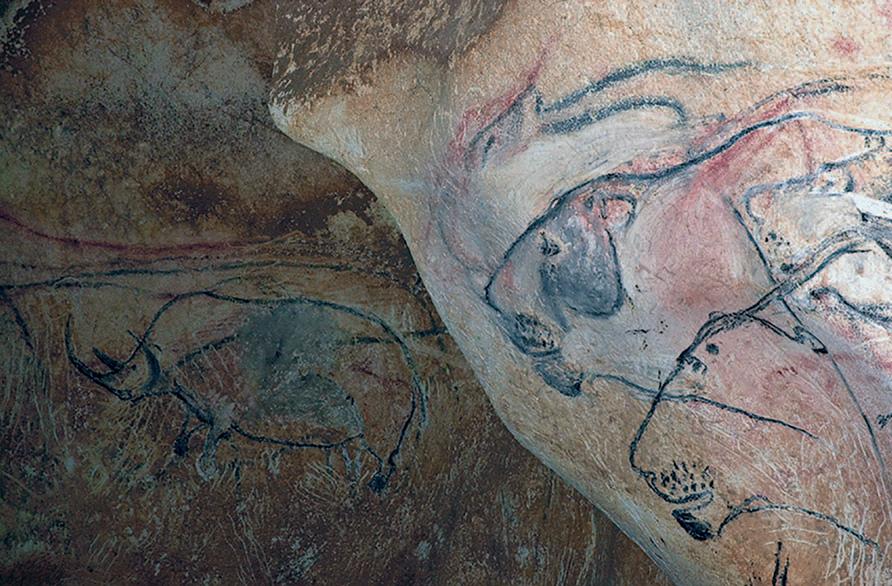
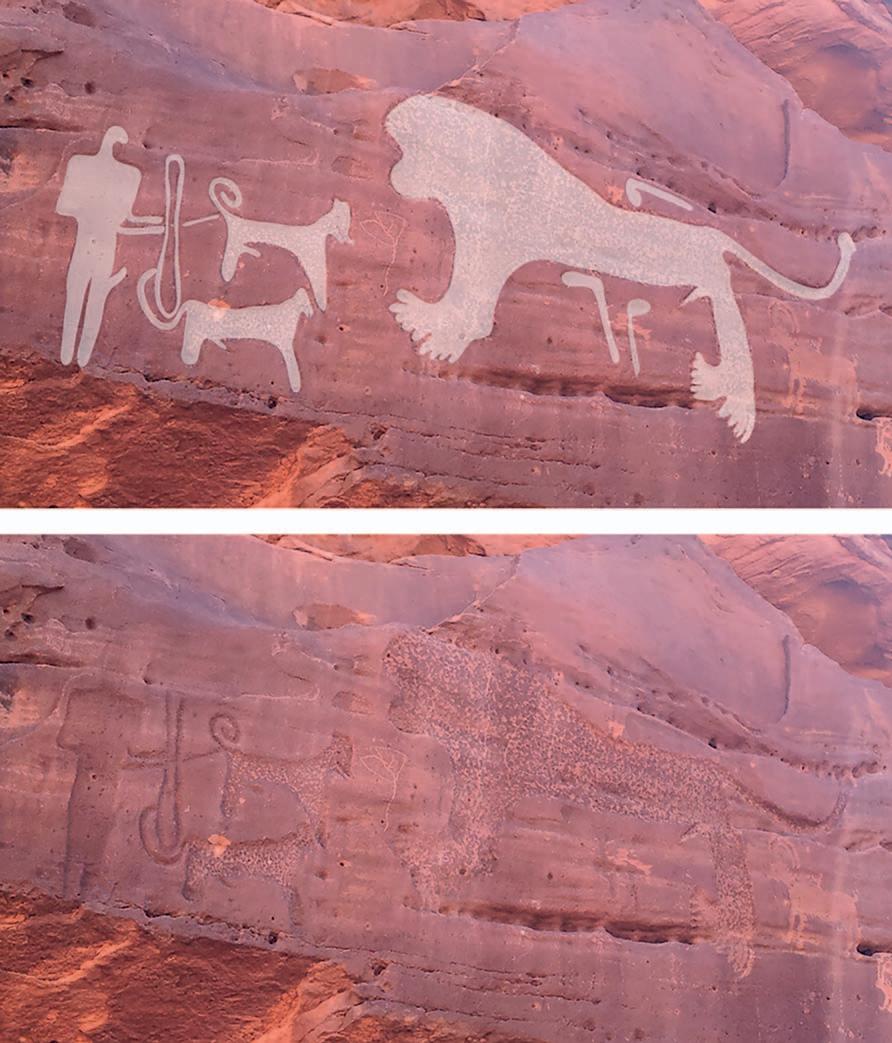
emotionsarestrongerwhenweimagineourselves oranimalsweownasprey.Asaresult,wehavelong imbuedcarnivoranswithspiritualpowerstomatch theirimpressivephysicalabilities,andourancestorsrepresentedcarnivoransinsomeoftheearliest figurativeart(Figure 1.3)(HartandSussman,2008; Azéma,2015).Today,wecontinuetousecarnivoranstosymbolizewildness,ferocity,andindependenceinvisualandliteraryarts.Everypocketand foldofmosthumancultures—languages,parables, spiritualbeliefs,andsymbols—isrichwithcarnivoranreferences.
1.1 “Carnivoran”vs.“carnivorous”
Theterms“mammalianpredator,”“mammalian carnivore,”and“carnivoran”arenotpreciselysynonymous.Predatorsareanimalsthatkillandconsumemulticellularanimals(Taylor,1984),whether oneatatime,orfilteredfromwaterbythethousands.Eagles,dragonflies,andbluewhalesare predators.Bycontrast,acarnivoreconsumesthe fleshofanimals,whetheritkillsorscavengesit;vultures,snakes,andVenusflytrapsarecarnivores and carnivorous.Carnivorans,thesubjectofthisbook, areexclusivelymammalsinOrderCarnivora—a branchofthetreeoflife.Speciesintheorder maypursueandkillvertebrates,eattermitesexcavatedfromsoil,orsubsistentirelyonplantparts (Figure 1.4).“Hypercarnivore”sometimesindicates aspecieswithadietexceedingsomethresholdlevel ofvertebrateprey,typicallykilledratherthanscavenged.Mostmembersofthecatfamily,theFelidae, areconsideredhypercarnivores.Otherterms,such as“mesopredator,”“apexpredator,”and“keystone predator,”haveimprecisemeaningsthatIparseas theyariseinthebook.
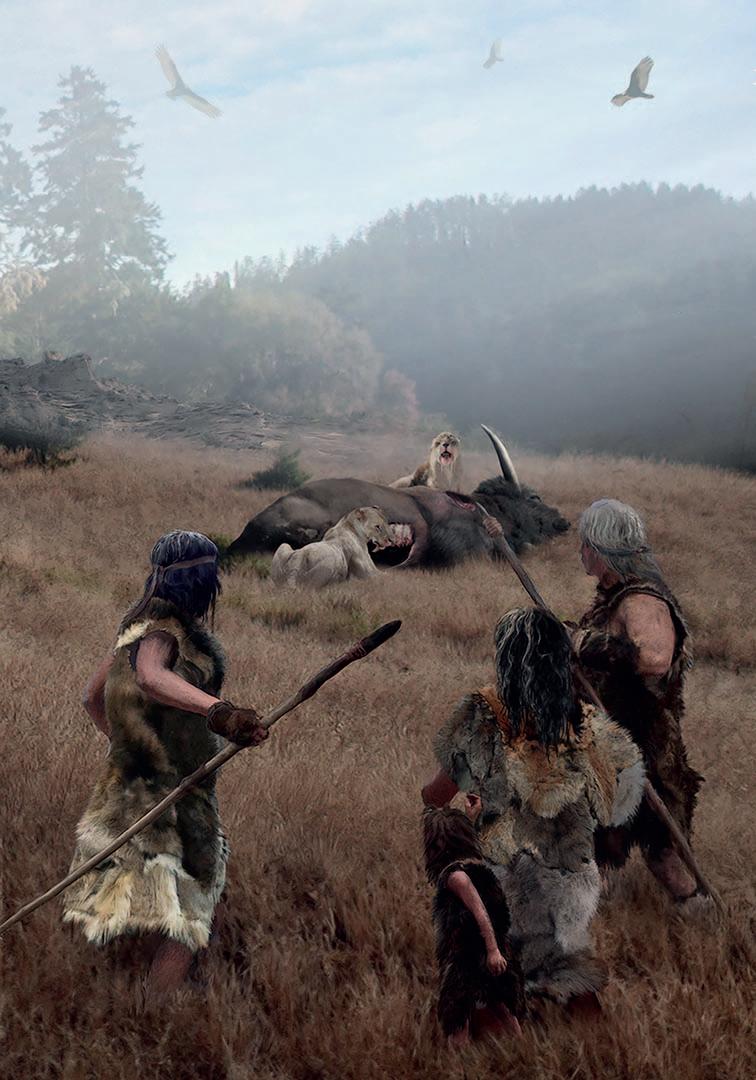
Figure1.1 Thefirstcontactbetweenhumansandthesaber-toothed Smilodon inAmerica,interpretedbyVelizarSimeonovski.Carnivoranshave beencompetitorswithandpotentialpredatorsofhomininsfrombeforewebecamehumansthroughtotoday. Painting:©VelizarSimeonovski.
Figure1.2 Lions(right)depictedonthewallsofSalleduFondinChauvet-Pontd’ArcCave,France,datingto32,000–30,000yearsago.Thelions appeartobewatchingarhinocerosonadistantpanel.Carnivoransweresubjectsofsomeoftheearliestfigurativeart.Verticalscratchesinthe lowerrightandontherhinocerospaintingweremadebycavebearstrappedindeepchambers.
Photo:J.Clottesin Azéma(2015),CC4.0.
Asisoftenthecaseinbiology,thedefiningtraits oftheCarnivora—thetraitsheldbyallmembers ofthelineage,bothlivingandextinct—aredifficult tostatewithoutqualification.Traditionally,biologistshavecitedthepresenceofcheekteeththathave shearingfunctions,comprisingtheupperfourth premolar(P4)andlowerfirstmolar(M1).Allliving carnivoranshaveancestorswiththistrait.However, livinggenets,bears,andsealshavesecondarilylost theshearingfunctionofthoseteeth,andatleast onespecieshaslostthoseteethcompletely.Some prehistoriclinagesofothercarnivorousmammals hadshearingcheekteeth,buttheyoccupiedother positionsinthetoothrow,forexampleM1 andM2. Theywerenothomologoustomoderncarnassials, andthelineagesthatexhibitedthemhavenoliving descendants.Thefusedscaphoidandlunatecarpal bones(thescapholunate)aresometimesregardedas
definingthegroup,becauseallmodernspecieshave thattrait,butsomeearlycarnivoransdidnot.
Predatoryplacentalmammals—thosethatprimarilykillotheranimalsforfood—occurinseveral orders,includingshrewsandmoles(OrderSoricomorpha),bats(Chiroptera),whales(Cetacea),pangolins(Pholidota),andhairyanteaters(Pilosa).If webroadenourframeofreferencetoincludemarsupialpredators,severaladditionalordersmust beincludedasmammaliancarnivores.Evensome obligateherbivores,amongthemungulatesand rodents,preyonorscavengevertebratesopportunistically(Boonstra etal.,1990; Dudley etal.,2016). Finally,manyextinctnon-carnivoranlineageswere atleastpartiallycarnivorous.Clearly,OrderCarnivoraisnotuniqueamongmammalsinkillingand eatingvertebrates.Thisbookisaboutamammalian lineage,notaforagingstyleortrophicniche.
Figure1.3 RockartinnorthwesternSaudiArabiashowingdogsresemblingmodernCanaandogsassistingwithlionhunting.Variousglyphs fromthissiteincludetheearliestdepictionsofdogsonleashes,12,000–10,000yearsold.Theupperimageisshadedtoshowreliefthatisless visibleinthelower,unalteredimage.
Photo:Guagninetal.(2018,Figure10)bypermission.
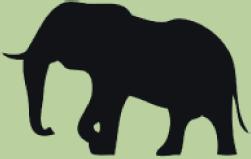
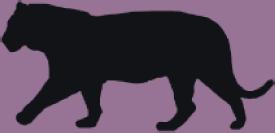
Figure1.4 Venndiagramofthe relationshipsbetweencarnivory,herbivory, andOrderCarnivora.Herbivorousmammals overlapwiththeCarnivora,andthe Carnivoraoverlapwithcarnivorous mammals.Elephantsareherbivorous non-carnivoranmammals.Thegiantpanda isanherbivorouscarnivoran.Thebrown bearisanomnivorouscarnivoran,neither fullyherbivorousnorcarnivorous.Thetigeris acarnivorouscarnivoran,andthekiller whaleisacarnivorousnon-carnivoran mammal.InthisbookIuse“carnivorous”to denotediet,and“carnivoran”todenote phylogeny—inclusioninOrderCarnivora.
1.2 Thecarnivorans—whoandwhere?
Theapproximately287extantspeciesofcarnivoransareorganizedintofifteencurrentlyrecognized families(AppendixI)andoccuronallcontinents,if weincludesealsthathauloutonAntarcticbeaches. Thesenumberschangeaswelearnmoreabout howmammallineagesarerelated.Forexample,the neotropicalolinguitorecentlyhasbeenidentifiedas distinctfromotherolingos,andtheAfricangolden wolfwasjudgedaseparatespeciesfromthegolden jackal,(Gaubert etal.,2012; Helgen etal.,2013).On theotherhand,thelong-recognizedredwolfofeasternNorthAmericaisnowregardedasanancient hybridofthewolfandthecoyote,withuncertain endangeredspeciesstatus(vonHoldt etal.,2016,but see Hohenlohe etal.,2017).Attheleveloftaxonomicfamilies,theskunksandstinkbadgerswere groupedwithweaselsandottersintheMustelidae beforeFamilyMephitidaewasrecognizedaswarrantingrecognition(DragooandHoneycutt,1999). Witheachsuchdiscovery,ourknowledgeofcarnivoranclassificationbecomesmorereflectiveof evolutionaryhistory,asrevealedthroughgenetic andmorphologicalstudies.
Carnivoranspeciesaredistributedunevenly acrosslineagesandcontinents.FamilyMustelidaeholdssixtyspecies,whereastheNandiniidae, Ailuridae,andOdobenidaeholdasinglespecies each.TheFelidae,Canidae,andMustelidaeare
nearlycosmopolitan,foundonallcontinentsexcept AntarcticaandAustraliabeforehumanstransportedthem.Ontheotherhand,theeightspecies ofEupleridaeoccuronlyonMadagascarIsland, theircommonancestorhavingraftedtherefrom theAfricanmainlandaround20millionyearsago (Ma).Thethirty-threeextantspeciesofseals,sea lions,andwalrusmakeupthepinniped(earfoot) group—alineagecomprisingtwoorthreefamilies thatarosefromasingleaquaticancestor.“Fissiped” (splitfoot),ontheotherhand,denotestheremaining,mostlyterrestrial,non-pinnipedcarnivorans.
1.3 Thegrowthofknowledge
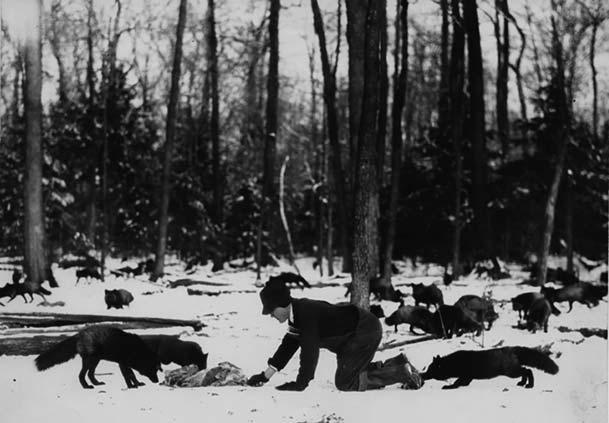
Before1900,understandingofcarnivoranecology (asopposedtonaturalhistory)waslimited,often basedonloreandconjecture.Muchofourknowledgeoftheirgenetics,behavior,andreproduction atthattimeresultedfromobservingdomesticcats, ferrets,anddogs,andfarmedminksandfoxes (Figure 1.5).Verylittlescientificknowledgeabout wildcarnivoransexisted,andmostinterestcenteredonthevalueoftheirfursorotherbody partsandthethreattheyposedtoagriculture.They weredifficulttostudydirectlybecauseoftheirlow densities,elusivebehaviors,andconstantpersecutionnearhumans.Wellintothetwentiethcentury, theleadingecologicalquestionsaboutcarnivorans
Herbivorous mammals Carnivora Carnivorous mammals
Elephant
Giant panda
Brown bear Tiger
Killer whale
dealtwithhowmanyungulates,waterfowl,and othervaluedvertebratestheykilledandhowtomitigatethoselosses(Leopold,1933).Inthelatetwentiethcentury,however,perspectivesshifted,tools improved,andecologicalresearchonthisgroup surged.Thenumberofscientificjournalarticles indexedbyWebofSciencewith“Carnivora”asa topicincreasedbyafactorofelevenfrom1992to 2016,comparedwithafactoroffourfor“mammal”andsixfor“Mammalia.”Newunderstandings ofcarnivoranbiology,especiallyecology,beganto unfoldinthe1960s,whencarnivoransgainedsignificanceinconservationissues,eitherasthreatened taxaorasagentsofendangermentofothertaxa orcommunities.Forexample,theseverecontractionindistributionandabundanceofthebrown bearinthecontiguousUnitedStatesfrom1850 to1950resultedingreatlyexpandedresearchin bearbiology,broadlycast.Of159scientificjournalarticleswiththetopics“grizzlybear + Yellowstone”indexedbyWebofScience,allbuttwowere publishedsubsequenttotheinitial1975listingof theYellowstonepopulationundertheEndangered SpeciesAct.Similarly,noarticlesindexedbyWeb ofSciencedealtwiththepopulationgeneticsofthe cheetahbeforethediscoveryby O’Brienandcolleagues(1983) thatcheetahsexhibitedlowgenetic variability.Thisfindinghadsuchstrongconservationimplicationsthat153subsequentarticles
reportedongenetictraitsofcheetahsrelatedto evolutionaryorecologicalprocesses.Geneticdepletioninothercarnivoranspeciesbecamearesearch focusaswell.
TheAmericanminkisanexampleofacarnivoranthathasstimulatedresearchasaresult ofthegreatecologicalharmitcauses.Introduced toEuropeandSouthAmericaduringthetwentiethcenturyforfurproduction,ittodayposes threatsonbothcontinents,spurringintensivestudy (BonesiandPalazon,2007; Crego etal.,2016).Over thepasttwenty-fiveyears,publishedstudieson theecologyofinvasiveAmericanminksoutside ofNorthAmericahavegreatlyoutnumberedthose conductedwithinthespecies’nativerange.
Thisexpansionofknowledgereflectsthat humansneedtoknowmuchmoreaboutcarnivoranecologythantheydidseventyyearsago. Forexample,publichealthplannersnowmust considerwhetherthemostrapidlyemerging infectiousdiseasesofhumansareinfluencedby thediversityandabundanceofwildcarnivorans (Section11.3.1)(Levi etal.,2012, Hofmeester etal., 2017).Thecurrentincidenceandseverityofsuch debilitatingzoonosesasavianandswineinfluenza, Lymedisease,andtick-borneencephalitismay bemediatedbythepresenceandabundanceof predators—manyofthemcarnivorans—thatkill intermediateoralternatehosts(Thulin etal.,2015).
Figure1.5 Farmedblack-phasered foxesatFrommFoxFarm,Wisconsin,US, intheearlytwentiethcentury.Knowledge ofcarnivoranreproductiveandnutritional physiologyduringthateracamelargely fromobservingdomesticatedandfarmed animals.
Photo:FrommHistoricalSociety.
EventheviralpandemicCOVID-19hasbeenlinked totransmissionoftheSARS-CoV-2virusamong variouswildanddomesticmammals—particularly carnivorans—andhumans.Thecarnivoransinclude domesticdogsandcats,captivetigers,andAmericanminks(VinodhKumar etal.,2020; Hammer etal.,2021).
Atthesametime,carnivoransarecredited withperformingvaluableecologicalservicesnot understooddecadesago.InChapter 6 Ishow thatbearsarerecognizedfortransportingmarinederivednutrientsinsalmoncarcassesfromspawningstreamstoneighboringforestsalongtheNorth PacificRim.Leopardsandpumasprotectsome plantsfromoverusebyherbivores.Fruit-eatingcarnivoranstransportseedsawayfromparentplants, insomecasesmoreeffectivelythanbirdsorherbivorousmammals.LeopardsinIndiaevenreceive creditforreducinghumanfatalitiesinflictedbyferal dogs,althoughleopardsthemselveskillasmall numberofhumans.Eachofthesefunctionsand serviceshasbeenrecognizedorbetterunderstood recently,contributingtoamuchricherandmore nuancedpictureofhowcarnivoransaffecthuman livesandwell-being.
1.4 Purposeandorganization ofthebook
Thisbookisintendedasatextforacollegecourse incommunityecologyorpredationecology,and asareferenceforstudents(academicorotherwise) ofecologywhohavesomebackgroundinbiologicalconceptsandvocabulary.Itemphasizesdocumented,mechanisticexplanationsfortheecologyof carnivoransandspeciestheyinteractwith.Importantly,Idonotreviewallbiologicalknowledgethat appliestotheCarnivora—onlythoseaspectsthat setcarnivoransapart;manyaspectsofcarnivoran biologyresemblethoseofothermammalianorders. Forexample,thevibrissaeofcarnivoransarewell developedandimportantfortactilesensation,but theprimaryresearchmodelforthisorganhasbeen thelaboratoryrat,notacarnivoran.Ananalogous situationexistsforgutfermentation—itisrareinthe Carnivoraandisbetterunderstoodfromstudiesof othermammalianorders.Tohelpwithvocabulary issues,Iprovideaglossaryoftechnicalterms.
Becauseofmyfocusoncommunityecology,the readerwillfindonlypassingmentionofsometopicscentraltocarnivoranbiologyinthepast.These includeintraspecificbehavioralinteractions:sociality,matingsystems,parentalcare,andterritoriality. Thesetopicswereattheforefrontofcarnivoranecologyduringthe1970s—theheydayofinterestinkin selection—buttheyareperipheraltocommunity interactions.Ecologicalsystemsarecomplex,with indistinctboundariesbetweencomponents.Predationrelatestocompetition,andcompetitionaffects populationgrowth.Populationdensityaffectsdispersal,which,inturn,drivescolonizationandbiogeography.Thiscomplexitymakesecologydifficult tocompartmentalize,andmychapterorganizationrequiresthereadertonavigatespecifictopics viatheindex,inadditiontothetableofcontents. Forexample,thereaderinterestedinpopulation biologywillfindcarnivoran-inducedchangesin preypopulationscoveredinChapter 8,butthe demographyofcarnivoransthemselvesistreatedin Chapter 10.Dentaladaptationsaremostlycovered inChapter 2,butsomeotheraspectsofdigestive morphologyfitbetterinChapter 4,thechapteron physiology.Theresponsesofpreyspeciestocarnivoranscanbebehavioral,physiological,demographic,orhaveuncertainmechanisms,andthese processesarecoveredinvarioussections,best locatedviatheindex.Chemicaldefensesagainst carnivoransbypreyandothercarnivorans,andby plantsagainstherbivores,aswellasdetoxification ofvenomsbycarnivorans,areeachtreatedseparately,insectionsbestlocatedintheindex.Habitat ecologyisatraditionalandhighlydiffusetopicthat permeateswildlifebiology.Scarcelyasectionofthis bookdoesnothavehabitataspects.However,no aspectofcarnivoranhabitatecologyseemsunique totheorder,soIfolddiscussionsofhabitatinwith others.
Thisaccountisbasedalmostentirelyonthepeerreviewedscientificliterature.Iusebothprimary andsecondarysources,relyingoncommunity-level analyses,meta-analyses,orreviewswherepossible. Ihavetriedtobecomparativethroughout,contrastingcarnivoranfamilieswitheachotherandcarnivoranswithothervertebratecarnivores,includingmarsupials,reptiles,andbirds.Ihavetended toprefermechanisticallybasedstudiestothose
basedonlyoncorrelativeresultsormodelingand havefavoredwidelyaccessiblepublicationstomore obscureones.
WhileIhavetriedtoenhancethegeographicand taxonomicdiversityofthecasestudiesthatIcited, Irecognizethattheliteratureisbiasedtowardstudiesfromdevelopedcountriesandonhigh-profile orendangeredcarnivorans.Therefore,mypresentationnodoubtincludesculturalbiasesthataffect thegeneralityofmyconclusions.Insomecases whereexamplessupportageneralizationandmultiplepublishedexamplesillustratethepoint,Ihave tendedtociteastudyfromaregionorecosystemthatislesswellrepresentedintheliterature, ratherthananequallyillustrativestudyfromNorth AmericaorwesternEurope.
Someunifyingthemesconnectthevariousfacets ofcarnivoranecology,andIreturntothemfrequently.Thesefactorsexplainmuchofthegreat diversityofformandfunctionacrosstheCarnivora, aswellasmanyofthedifferencesbetweencarnivoransandothermammalianorders.Themost importantarebodysize,metabolicrate,andtrophic level.Allometryisthestudyofbodysizeandits consequences,andthereaderwillnotetherecurringimportanceofallometryinmanyprocessesat physiologicalandcommunitylevels(Calder,1984). Metabolicrateisafunctionofbodysize,body temperature,andmitochondrialdensity,andhas strongexplanatorypowerincarnivoranecology. Trophicleveliscorrelatedwiththesefactors;carnivoransthateatlargemammalianpreyexemplify theconstraintsimposedandbenefitsconferredby highmetabolicrateandlargebodies—highforaging costsandmaintenancecosts—butfoodavailability thatismoreseasonallyconsistentthanforherbivoresorpredatorsofectotherms.Bywatchingfor therecurringmentionofbodysize,metabolicrate, andtrophiclevel,thereadercanappreciatehow muchcarnivorandiversityarisesfromonlyafew principles.
1.5 Contextincarnivoranecology
WhileIsearchforpatternincarnivoranecology, Imakescarcelyageneralizationaboutthisgroup withoutaqualificationorcaveat.Contingencies
havecausedthegrouptoradiateintoanastonishingrangeofphenotypes.Trophicnichedetermines dentition,digestiveprocess,andgutpassage.Sizeof preyspeciesaffectshuntingbehavior,frequencyof predationevents,andcompetitiveinteractionswith scavengers.Contextliesattheintellectualcoreof carnivoranecology,andIhaveembraceditfully. Conservationalsoisanappliedarenainwhich contextisall-important.Carnivoransarewidely regardedasoneofthemostthreatenedmammalian lineages,withseverechallengestospecies,subspecies,andpopulationsacrossEarth.Ontheother hand,carnivoransalsocauseorexacerbateconservationproblemsforotherspeciesthatarerare orthreatened.Furthercomplicatingthepicture, humanshavebenefitedsomecarnivoranspecies(or stoppedpersecutingthem),andothersarereoccupyingtheirformergeographicrangeswithorwithouthumanassistance.Carnivoreconservationdoes notmerelyrepresentasadlistofdecline,dysfunction,anddisappearance,butexamples—admittedly anomalous—ofrestorationandindependentrecovery.Ecologicalandsocio-economiccontextdeterminehowcarnivoransarefaringinthemodern world.Alltold,thebiologyoftheCarnivoraisan extraordinarilyrichsubdiscipline,fullofpattern, nuance,contingency,andrelevancetohumancultureandlivelihoods.
1.6 Nomenclature
Forthecurrentscientificnomenclatureofcarnivorans,IhavemodifiedWilsonandReeder(2005) toreflectrecenttaxonomicrevisions(AppendixI). Commonnamesaremoreproblematic,becauseall arelocalorregional,andusingonerequiresselectingfromamongthoseusedbyvariousindigenous groupsorcolonizingnations,orthenativetongue oftheoriginalnamingauthority.BecauseIwritein English,Idefaulttomylanguage,butIhavetried tousethecommonnameappliedmostgeographicallybroadlywherethespeciesoccurs.Forexample, Pumaconcolor occursfromPatagonia,SouthAmericatoYukonTerritory,NorthAmerica,withmany locallyusednamesoveritsrange.However,the commonnameappliedovermostofthegeographic rangeis“puma,”whichIusehere.
References
Azéma,M.(2015)“Animationandgraphicnarrationinthe Aurignacian,” Palethnology,7,pp.256–79.
Bonesi,L.andPalazon,S.(2007)“TheAmericanminkin Europe:status,impacts,andcontrol,” BiologicalConservation,134,pp.470–83.
Boonstra,R.,Krebs,C.J.andKanter,M.(1990)“Arctic groundsquirrelpredationoncollaredlemmings,” CanadianJournalofZoology,68,pp.757–60.
Calder,W.A.III.(1984). Size,functionandlifehistory.Cambridge:HarvardUniversityPress.
Crego,R.D.,Jiménez,J.E.andRozzi,R.(2016)“Asynergistictrioofinvasivemammals?Facilitativeinteractionsamongbeavers,muskrats,andminkatthe southernendoftheAmericas,” BiologicalInvasions,18, pp.1923–38.
Dragoo,J.W.andHoneycutt,R.L.(1999)“Systematicsof mustelid-likecarnivores,” JournalofMammalogy,78,pp. 426–43.
Dudley,J.P. etal.(2016)“Carnivoryinthecommonhippopotamus Hippopotamusamphibius:implicationsfor theecologyandepidemiologyofanthraxinAfrican landscapes,” MammalReview,46,pp.191–203.
Espigares,M.P. etal.(2013)“Homo vs. Pachycrocuta:earliestevidenceofcompetitionforanelephantcarcass betweenscavengersatFuenteNueva-3(Orce,Spain),” QuaternaryInternational,295,pp.113–25.
Gaubert,P. etal.(2012)“RevivingtheAfricanwolf Canis lupuslupaster inNorthandWestAfrica:amitochondrial lineagerangingmorethan6,000kmwide,” PLoSONE, 7,p.e42740.
Guagnin,M.,Perri,A.R.andPetraglia,M.D.(2018)“PreNeolithicevidencefordog-assistedhuntingstrategies inArabia,” JournalofAnthropologicalArchaeology,49,pp. 225–36.
Hammer,A.S. etal.(2021)“SARS-CoV-2transmission betweenmink(Neovisonvison)andhumans,Denmark,” EmergingInfectiousDiseases,27,pp.547–51.
Hart,D.andSussman,R.W.(2008) Manthehunted:primates, predators,andhumanevolution.Expandededn.Boulder: WestviewPress.
Helgen,K.M. etal.(2013)“Taxonomicrevisionoftheolingos(Bassaricyon),withdescriptionofanewspecies,the olinguito,”ZooKeys,324,pp.1–83.
Hofmeester,T.R.,Jansen,P.A.,Wijnen,H.J.,Coipan,E.C., Fonville,M.,Prins,H.H.T.,Sprong,H.,andvanWieren, S.E.2017.Cascadingeffectsofpredatoractivityontickbornediseaserisk. ProceedingsoftheRoyalSocietyB 284:20170453.
Hohenlohe,P.A. etal.(2017)“Commenton‘Wholegenome sequenceanalysisshowstwoendemicspeciesofNorth Americanwolfareadmixturesofthecoyoteandgray wolf’,” ScienceAdvances,3,p.e1602250.
Leopold,A.(1933) Gamemanagement.NewYork:Charles Scribner’sSons.
Levi,T. etal. (2012)“Deer,predators,andtheemergence ofLymedisease,” ProceedingsoftheNationalAcademyof SciencesoftheUnitedStatesofAmerica,109,pp.10942–7.
O’Brien,S.J. etal. (1983)“Thecheetahisdepauperatein geneticvariation,” Science,221,pp.459–62.
Pierotti,R.andFogg,B.R.(2017) Thefirstdomestication:how wolvesandhumanscoevolved.NewHaven:YaleUniversityPress.
Taylor,R.J.(1984) Predation.NewYork:Chapmanand Hall.
Thulin,C.-G.,Malmsten,J.andEricsson,G.(2015)“OpportunitiesandchallengeswithgrowingwildlifepopulationsandzoonoticdiseasesinSweden,” EuropeanJournalofWildlifeResearch,61,pp.649–56.
VinodhKumar,O.R. etal.(2020)“SARS-CoV-2(COVID19):zoonoticoriginandsusceptibilityofdomesticand wildanimals,” JournalofPureandAppliedMicrobiology, 14,pp.741–7.
VonHoldt,B.M. etal.(2016)“Whole-genomesequence analysisshowsthattwoendemicspeciesofNorth Americanwolfareadmixturesofthecoyoteandgray wolf,” ScienceAdvances,2,p.e1501714.