The Future of White-Collar and Corporate Crime 313
BOXES
Window to the World: Yates Memorandum, a letter from the Department of Justice 294
Debatable Issues: How Much Corporate Power Is Too Much? 304
Criminological Concerns: Corporate Fraud 314
Review 317
Criminology & Public Policy 317
You Be the Criminologist 317
Key Terms 317
13 Public Order Crimes 318
Drug Abuse and Crime 319
The History of Drug Abuse 319
The Extent of Drug Abuse 321
Patterns of Drug Abuse 321
Crime-Related Activities 324
Drug Control 325
Alcohol and Crime 329
The History of Legalization 329
Crime-Related Activities 330
Sexual Morality Offenses 331
Deviate Sexual Intercourse by Force or Imposition 332
Prostitution 332
Pornography 337
BOXES
Window to the World: Global Sexual Slavery: Women and Children 334
Debatable Issues: Cyberporn: Where Do We (Should We) Draw the Line? 336
Review 340
You Be the Criminologist 341
Key Terms 341
14 International and Comparative Criminology 342
What Is Comparative Criminology? 344
The Definition of Comparative Criminology 344
The History of Comparative Criminology 344
The Goals of Comparative Research 345
Engaging in Comparative Criminological Research 346
Comparative Research 346
Comparative Research Tools and Resources 346
The Special Problems of Empirical Research 347
Theory Testing 348
Validation of Major Theories 348
The Socioeconomic Development Perspective 348
Practical Goals 348
Learning from Others’ Experiences 348
Developing International Strategies 349
Globalization versus Ethnic Fragmentation 356
BOXES
Debatable Issues: What Should Be Done to Prevent International Corporate Fraud? 352
Review 357
Criminology & Public Policy 357
You Be the Criminologist 357
Key Terms 357
15 Processes and Decisions
The Stages of the Criminal Justice Process
Entry into the System
Prosecution and Pretrial Services
Adjudication Decisions
Sentencing Decisions
Corrections Decisions
Diversion out of the System
Juvenile Justice
The Development of the Juvenile Justice System
The Juvenile Justice Process
Victims and Criminal Justice
Victims’ Rights
The Victim’s Role in the Criminal Justice Process BOXES
Criminological Concerns: In re Gault: The Demise of Parens Patriae Review
Criminology & Public Policy
You Be the Criminologist
Key Terms
16 Enforcing the Law: Practice and Research
The History of Policing
The English Heritage Policing in the United States
Law Enforcement Agencies
Federal Law Enforcement
Department of Homeland Security
State Police
County Police
Municipal Police
Special-Purpose Police
Private Police
Command Structure
Operations Bureau: Patrol
Operations Bureau: Investigation
Specialized Units
Nonline Functions
Police Functions
Law Enforcement
Order Maintenance
Community Service
The Police and the Community Community Policing
Police-Community Relations Programs
The Rule of Law in Law Enforcement
Constitutional Due Process
Civil Rights
Use of Deadly Force and Police Brutality
Abuse of Discretion
Corruption
* Part 4, Chapters 15–18, are available on the Online Learning Center: http://highered.mheducation.com:80/sites/007814096x.
Police Officers and Their Lifestyle
Qualifications
Changing Composition of the Police Force
The Police Subculture
BOXES
Window to the World: Interpol: The International Criminal Police Organization
Criminological Concerns: Fear of Crime Decreases—Fear of Police Increases
Review
Criminology & Public Policy
You Be the Criminologist
Key Terms
17 The Nature and Functioning of Courts
The Origins of Courts
The U.S. Court System
State Courts
Federal Courts
Interaction between State Courts and Federal Courts
Lawyers in the Court System
The Role of the Trial Judge
Arraignment
Pretrial Motions
Release Decisions
Plea Bargaining
The Trial
Selecting the Jury: Voir Dire
The Proceedings
Jury Decision Making
Sentencing: Today and Tomorrow
Incapacitation
Deterrence
Retribution
Rehabilitation
Model Penal Code Sentencing Goals
Just Deserts
Restorative Justice
Sentencing Limits and Guidelines
Capital Punishment
The Deterrence Argument
The Discrimination Argument
Other Arguments
Trends in American Capital Punishment
BOXES
Window to the World: Judging at the World Level
Criminological Concerns: A New Crime: Hate
A New Punishment: Sentence Enhancement
Review
Criminology & Public Policy
You Be the Criminologist
Key Terms
18 A Research Focus on Corrections
Punishment and Corrections: A Historical Overview
From Antiquity to the Eighteenth Century Punishment in the New World
The Reformatory Movement
The Medical Treatment Model
Community Involvement
The Prisoners’ Rights Movement
Corrections Today
Types of Incarceration
The Size and Cost of the Correctional Enterprise
The Problem of Overcrowding
Prison Culture and Society
Correctional Officers
Programs in Penal Institutions
Evaluation of Rehabilitation
Medical Problems: AIDS, TB, and Mental Illness
The Elderly Inmate
Women in Prison
Privatization of Corrections
Community Alternatives
Probation
Parole
The Search for Cost-Beneficial Alternatives
Evaluation of Community Alternatives
BOXES
Debatable Issues: Beyond the Conjugal Visit?
Criminological Concerns: Boot Camp: A Military Option for Corrections
Review
Criminology & Public Policy
You Be the Criminologist
Key Terms
Notes N-1
Glossary G-1
Credits C-1
Indexes I-1
List of Boxes
CRIMINOLOGICAL CONCERNS
Is It Wrong to Criminalize and Punish Psychopaths? 92
National Gang Report 2015 144 Gangs and Parents 148 Defying Convention and Control: “In Your Face” 162 Labeling Countries “Corrupt”: A Perverse Outcome? 178 Strategy to Combat Transnational Organized Crime 239
Mortgage Fraud 270 Insurance Fraud 274
Corporate Fraud 314
In re Gault: The Demise of Parens Patriae Fear of Crime Decreases—Fear of Police Increases
A New Crime: Hate A New Punishment: Sentence Enhancement Boot Camp: A Military Option for Corrections
DEBATABLE ISSUES
Fame and Crime 18
Utilitarianism Gone Astray 56 Cults—Culture Conflict—Crime 122 Cohen vs. Miller 136
Are Human Beings Inherently Bad? 163 Maximum-Security Schools? 204 Does the Brady Law Work? 255 Piracy Emerges as a Major Worldwide Problem: How Can It Be Controlled? 267 How Much Corporate Power Is Too Much? 304 Cyberporn: Where Do We (Should We) Draw the Line? 336
What Should Be Done to Prevent International Corporate Fraud? 352
Life or Death? Beyond the Conjugal Visit?
WINDOW TO THE WORLD
Terrorism and the Fear of Terrorism 14 Victims around the World 45 Stone Age Crime and Social Control 54 A Social System Breaks Down 106 Nations with Low Crime Rates 168 The Forgotten Criminology of Genocide 186 Yates Memorandum, a letter from the Department of Justice 294 Global Sexual Slavery: Women and Children 334
Interpol: The International Criminal Police Organization Judging at the World Level
WORLD NEWS
Sex Trafficking Factsheet 8
Preface
Criminology is a young discipline. In fact, the term “criminology” is only a little more than a century old. But in this brief time, criminology has emerged as an important social and behavioral science devoted to the study of crime and criminal behavior, and the society’s response to both. Criminology fosters theoretical debates, contributes ideas and constructs, develops and explores new research methodologies, and suggests policies and solutions to a wide range of crime problems that dramatically affect the lives of countless people in the United States and around the world. Problems as vital and urgent as those addressed in this book are challenging, exciting, and, at the same time, disturbing and tragic. Moreover, these problems are immediately relevant to all of our lives. This is especially true today, when crimes here and abroad touch so many lives, in so many ways.
Our goal with this book has been, and remains, to discuss these problems, their origins, and their possible solutions in a clear, practical, straightforward fashion that brings the material to life for students. We invite faculty and students alike to join the authors’ in traveling along criminology’s path, exploring its expanding boundaries, and mapping out its future.
THE NINTH EDITION
In the eight preceding editions of this text, we sought to prepare students of criminology to appreciate the contemporary problems with which criminology is concerned and to anticipate those problems society would have to face as we progress in the twenty-first century. It is now time to face the new century’s crime problems as we simultaneously continue to work on solutions to old problems. Because of the forward-looking orientation of previous editions of Criminology and the respect and acceptance those editions have enjoyed, we maintain the book’s established structure and approach with modest but significant changes.
In prior editions we spent considerable time with the emergence of the crime of terrorism in the field of criminology, highlighting the threat of domestic terrorism as a catalyst of change in the criminal justice system. No single crime was ever poised to share and reshape the field of criminology
like the crime of terrorism. It remains unclear that this has happened or should happen. There is no doubt, however, that terrorism will continue to be studied intensely by criminologists around the world, and that such research will result in theoretically-rich and policy-relevant work. To that end, we continue to incorporate the latest findings from criminological research into terrorism.
The continued spate of corporate malfeasance represents another potential challenge to our field. We continue to expand our coverage of white-collar and corporate crimes, including significant coverage of some of the criminological antecedents of the credit crisis in the United States. Like crimes of terrorism, white-collar and corporate offenses have been on the periphery of the field of criminology— but no longer.
As in prior revisions, we have vigorously researched, refined, and updated every chapter of the text—not only to maintain this edition’s scholarly integrity, but also to ensure its relevance. In addition to updating the research presented in every chapter, we expanded coverage of the most critical issues facing the field, and how advances in sister disciplines, including the neurosciences, inform our research.
Inasmuch as developments in criminology influence and are influenced by media reports of national and local significance, students will find discussion and analysis of recent major current events.
As in previous editions, we have endeavored not only to reflect developments and changes, but also anticipate them on the basis of the latest criminological data. After all, those who study criminology with the ninth edition must be ready to address and resolve new criminological problems of tomorrow, when they are decision makers, researchers, faculty, and policy analysts. The aim with this edition, however, remains the same as it was with the first edition more than twenty years ago: to arrive at a future as free from crime as possible.
ORGANIZATION
The ninth edition of Criminology continues with the revised format of our book. The printed book contains Chapters 1–14, covering criminology. The remaining criminal justice chapters
(Chapters 15–18) are available at our book-specific Online Learning Center (http://highered.mheducation. com:80/sites/007814096x). For schools that retain the traditional criminology course, which includes criminological coverage of criminal justice, our text and the online chapters provide the ideal resource.
Part 1, “Understanding Criminology,” presents an overview of criminology—now made more exciting with integrated coverage of terrorism and related crimes—and describes the vast horizon of this science. It explains what crime is and techniques for measuring the amount and characteristics of crime and criminals. It also traces the history of criminological thought through the era that witnessed the formation of the major schools of criminology: classicism and positivism (eighteenth and nineteenth centuries).
Part 2, “Explanations of Crime and Criminal Behavior,” includes explanations of crime and criminal behavior based on the various theories developed in the twentieth century. Among the subjects covered are theories that offer biological, neurocriminological, psychological, sociological, sociopolitical, and integrated explanations. Coverage of research by radical, socialist, and feminist criminologists has been updated. Theories that discuss why offenders choose to commit one offense rather than another at a given time and place are also covered in Part 2.
Part 3, “Types of Crimes,” covers the various types of crimes from a legal and sociological perspective. The familiar street crimes, such as homicide and robbery, are assessed, as are criminal activities such as white-collar and corporate crime—so much in the spotlight these days—as well as technology-dependent crimes that have been highlighted by researchers only in recent years.
Part 4, “A Criminological Approach to the Criminal Justice System” (available only online), includes an explanation of the component parts and functioning of the system. It explains contemporary criminological research on how the people who run the criminal justice system operate it, the decision-making processes of all participants, and the interaction of all the system components.
PEDAGOGICAL AIDS
Working together, the authors and the editors developed a format for the text that supports the goal of achieving a readable, practical, and attractive text. In addition to the changes already mentioned, we include plentiful, current photographs to make the book even more approachable. Redesigned and carefully updated tables and figures highlight and amplify the text. Chapter outlines, lists of key terms, chapter review sections, and a comprehensive end-of-book glossary all help students master the material. Always striving to help students see the relevance of criminology in their
lives, we also updated a number of the features to this edition:
• Theory Connects marginal inserts. These notes in the text margins correlate the intensely applied material in Part 3 of the text (“Types of Crimes”) with the heavily theoretical material in Part 2 (“Explanations of Crime”), giving students much-needed cross-reference material and posing criticalthinking questions that will help them truly process what they are reading.
• Criminology & Public Policy exercises. These end-of-chapter activities challenge students to explore policy issues related to criminology.
• Crime Surfing. These particularly interesting web addresses accompanied by miniexercises allow students to explore chapter topics further.
• Did You Know? These surprising factual realities provide eye-opening information about chapter topics.
• Theory Informs Policy. These brief sections in theory chapters demonstrate how problems identified by criminologists have led to practical solutions.
Our “box” program continues to be updated and improved. In the boxes, we highlight significant criminological issues that deserve special attention. All chapters have a number of boxes that enhance and highlight the text—including boxes that raise debatable issues, criminological concerns, and reveal just how the field of criminological touches every part of the world.
The ninth edition of Criminology is now available online with Connect, McGraw-Hill Education’s integrated assignment and assessment platform. Connect also offers SmartBook for the new edition, which is the first adaptive reading experience proven to improve grades and help students study more effectively. All of the title’s website and ancillary content is also available through Connect, including:
• A full Test Bank of multiple choice questions that test students on central concepts and ideas in each chapter.
• An Instructor’s Manual for each chapter with full chapter outlines, sample test questions, and discussion topics.
• Lecture Slides for instructor use in class.
McGraw-Hill Connect®
Learn Without Limits
Connect is a teaching and learning platform that is proven to deliver better results for students and instructors.
Connect empowers students by continually adapting to deliver precisely what they need, when they need it, and how they need it, so your class time is more engaging and effective.
73% of instructors who use Connect require it; instructor satisfaction increases by 28% when Connect is required.
Analytics
Connect Insight®
Connect Insight is Connect’s new one-of-akind visual analytics dashboard—now available for both instructors and students—that provides at-a-glance information regarding student performance, which is immediately actionable. By presenting assignment, assessment, and topical performance results together with a time metric that is easily visible for aggregate or individual results, Connect Insight gives the user the ability to take a just-in-time approach to teaching and learning, which was never before available. Connect Insight presents data that empowers students and helps instructors improve class performance in a way that is efficient and effective.
Connect’s new, intuitive mobile interface gives students and instructors flexible and convenient, anytime–anywhere access to all components of the Connect platform.
Students can view their results for any Connect course.
Adaptive
T HE ADAPTIVE
READING EXPERIENCE DESIGNED TO TRANSFORM
THE WAY STUDENTS READ
More students earn A’s and B’s when they use McGraw-Hill Education Adaptive products.
SmartBook®
Proven to help students improve grades and study more efficiently, SmartBook contains the same content within the print book, but actively tailors that content to the needs of the individual. SmartBook’s adaptive technology provides precise, personalized instruction on what the student should do next, guiding the student to master and remember key concepts, targeting gaps in knowledge and offering customized feedback, and driving the student toward comprehension and retention of the subject matter. Available on smartphones and tablets, SmartBook puts learning at the student’s fingertips—anywhere, anytime.
Over 5.7 billion questions have been answered, making McGraw-Hill Education products more intelligent, reliable, and precise.
IN APPRECIATION
We greatly acknowledge the assistance and support of a number of dedicated professionals. At Rutgers University, the librarian of the N.C.C.D. Criminal Justice Collection, Phyllis Schultze, has been most helpful in patiently tracking and tracing sources. We thank Professor Sesha Kethineni (Illinois State University) for her tireless assistance on the first edition, Deborah Leiter-Walker for her help on the second, Kerry Dalip and Nhung Tran (University of Pennsylvania) for their assistance on the fourth, Reagan Daly and Ashish Jatia (University of Pennsylvania) for their work on the sixth edition, and Melissa Meltzer (University of Pennsylvania) for her work on the seventh edition. Gratitude is also owed to the many former and current Rutgers University students who have valiantly contributed their labors to all editions. They include Susanna Cornett, Dory Dickman, Lisa Maher, Susan Plant, Mangai Natarajan, Dana Nurge, Sharon Chamard, Marina Myhre, Diane Cicchetti, Emmanuel Barthe, Illya Lichtenberg, Peter Heidt, Vanja Steniius, Christine Tartaro, Megan McNally, Danielle Gunther, Jennifer Lanterman, Smita Jain, and Kim Roberts. Thanks also to Maria Shields for revising the supplements to accompany the seventh edition of this text.
Many academic reviewers offered invaluable help in planning and drafting chapters. We thank them for their time and thoughtfulness and for the experience they brought from their teaching and research:
Jay Albanese, Virginia Commonwealth University
Dr. Pamela Dee Parkinson, American Public University System, Utah
Kevin Drakulich, Northeastern University, Massachusetts
Jarrod Sadulski, American Public University System, Florida
Charles Crawford, Western Michigan University, Michigan
William Michael Holmes, UMASS Boston, Massachusetts
Tomasina Cook, Erie Community College, New York
John Courie, Schoolcraft College, Michigan
Thomas E. Allen, Jr., University of South Dakota
W. Azul La Luz, University of New Mexico
Tony A. Barringer, Florida Gulf Coast University
Stephen Brodt, Ball State University
Daniel Burgel, Vincennes University
Alison Burke, Southern Oregon University
David A. Camp, Culver-Stockton College
Daniel D. Cervi, University of New Hampshire
Bernard Cohen, Queens College, New York
Ellen Cohn, Florida International University
Cavit Cooley, Truman State University
Roger Cunningham, Eastern Illinois University
Richard P. Davin, Riverside Community College
Julius Debro, University of Hartford
Albert Dichiara, Eastern Illinois University
Sandra Emory, University of New Mexico
Edna Erez, Kent State University
Raymond A. Eve, University of Texas, Arlington
The late Franco Ferracuti, University of Rome, Italy
Edith Flynn, Northeastern University
Harold A. Frossard, Moraine Valley Community College
Karen Gilbert, University of Georgia
Ronald J. Graham, Fresno City College
Clayton Hartjen, Rutgers University
Marie Henry, Sullivan County Community College
John Hill, Salt Lake Community College
Matrice Hurrah, Southwest Tennessee Community College
Randy Jacobs, Baylor University
Joseph Jacoby, Bowling Green State University
Debra L. Johnson, Lindenwood University
Kareen Jordan, University of Central Florida
Deborah Kelly, Longwood College
Dennis Kenney, John Jay College of Criminal Justice
James Kenny, Fairleigh Dickinson University
Nicholas Kittrie, American University
Kathryn Noe Kozey, University of Maryland
James J. Lauria, Pittsburgh Technical Institute
Matthew T. Lee, University of Akron
Anna C. Leggett, Miami Dade Community College
Linda Lengyel, The College of New Jersey
Michael A. Long, Colorado State University
Joel Maatman, Lansing Community College
Coramae Mann, Indiana University, Bloomington
Harry L. Marsh, Indiana State University
Robert McCormack, The College of New Jersey
P. J. McGann, University of Michigan
Jean Marie McGloin, University of Maryland
Sharon S. Oselin, University of California, Irvine
Jesenia Pizarro, Michigan State University
Lydia Rosner, John Jay College of Criminal Justice
Lee E. Ross, University of Wisconsin
Harjit Sandhu, Oklahoma State University
Jennifer L. Schulenberg, Sam Houston State University
Clayton Steenberg, Arkansas State University
Richard Steinhaus, New Mexico Junior College
Melvina Sumter, Old Dominion University
Austin T. Turk, University of California, Riverside
Prabha Unnithan, Colorado State University
James Vrettos, John Jay College of Criminal Justice
Charles Wellford, University of Maryland at College Park
Frank Williams, California State University, San Bernardino
The late Marvin E. Wolfgang, University of Pennsylvania
We thank our colleagues overseas who have prepared translations of Criminology to help familiarize students of foreign cultures with criminological problems that are now global, with our theories, and with efforts to deal with the persistent problem of crime in the future:
The Arabic translation: Dr. Mohammed Zeid, Cairo, Egypt, and Rome, Italy
The Japanese translation: Dr. Toyoji Saito, Kobe, Japan, and his colleagues
The Hungarian translation: Dr. Miklos Levai, Miskolc, Hungary, and his colleagues
The Georgian translation: Dr. Georgi Glonti, Tbilisi, Georgia
Finally, we owe a special debt to the team at McGraw-Hill: Thank you for the leadership, encouragement, support, and timeless editorial work.
A combined total of over a hundred years of teaching criminology and related subjects provides the basis for the writing of Criminology, Ninth Edition. We hope the result is a text that is intellectually provocative, factually rigorous, and scientifically sound and that offers a stimulating learning experience for the student.
Freda Adler William S. Laufer
A Guided Tour
Up-to-the-Minute Coverage
The expansion of white-collar and corporate crime, the effects of the current global economic downturn, and a new look at the connection between biology and criminology are among the cuttingedge topics discussed in this Ninth Edition.
Hormones
Experiments have shown that male animals typically are more aggressive than females. Male aggression is directly linked to male hormones. If an aggressive male mouse is injected with female hormones, he will stop fighting.47 Likewise, the administration of male hormones to pregnant monkeys results in female offspring who, even three years after birth, are more aggressive than the daughters of non-injected mothers.48 While it would be misleading to equate male hormones with aggression and female hormones with nonaggression, there is some evidence that abnormal levels of male hormones in humans may prompt criminal behavior. Several investigators have found higher levels of testosterone (the male hormone) in the blood of individuals who have committed violent offenses.49 Some studies also relate premenstrual syndrome (PMS) to delinquency and conclude that women are at greater risk of aggressive and suicidal behavior before and during the menstrual period. After studying 156 newly admitted adult female prisoners, Katharina Dalton concluded that 49 percent of all their crimes were committed either in the premenstrual period or during menstruation.50 More recently, however, critics have challenged the association between menstrual distress and female crime.51
Neurocriminology
In England in the mid-1950s, a father hit his son with a mallet and then threw him out of a window, killing him instantly. Instead of pleading insanity, as many people expected him to do, he presented evidence of a brain tumor, which, he argued,
Chapter Openers
rape, and assault. Subsequent studies found that violent and impulsive male offenders had a higher rate of hypoglycemia than noncriminal controls. Consider the work of Matti Virkkunen, who has conducted a series of studies of habitually violent and psychopathic offenders in Finland. In one such study done in the 1980s, he examined the results of a glucose tolerance test (used to determine whether hypoglycemia is present) administered to 37 habitually violent offenders with antisocial personalities, 31 habitually violent offenders with intermittent explosive disorders, and 20 controls. The offenders were found to be significantly more hypoglycemic than the controls.46
Each chapter opens with an outline of key topics, followed by a lively excerpt highlighting concepts from the field of criminology.
Here we have a host of different types of crimes, committed in a two day period in New York. The prosecutors in these juris-
Labeling, Conflict, and Radical Theories
joined the revolution.
These criminologists turned away from theories that explained crime by characteristics of the offender or of the social structure. They set out to demonstrate that individuals become criminals because of what people with power, especially those in the criminal justice system, do. Their explanations largely reject the consensus model of crime, on which all earlier theories rested. Their theories not only question the traditional explanations of the creation and enforcement of criminal law but also blame that law for the making of criminals (Table 8.1). It may not sound so radical to assert that unless an act is made criminal by law,
Confirming Pages
NEW! World News Boxes
Part of our acclaimed thematic box program, World News boxes feature current issues and problems reported from across the globe.
Sex Trafficking Factsheet
Trafficking women and children for sexual exploitation is the fastest growing criminal enterprise in the world. This, despite the fact international law and the laws of 134 countries criminalize sex trafficking.
• At least 20.9 million adults and children are bought and sold worldwide into commercial sexual servitude, forced labor and bonded labor.
• About 2 million children are exploited every year in the global commercial sex trade.
• Almost 6 in 10 identified trafficking survivors were trafficked for sexual exploitation.
• Women and girls make up 98% of victims of trafficking for sexual exploitation.
Window to the World Boxes
Sex Trafficking Is a Human Rights Violation
They forced me to sleep with as many as 50 customers a day. I had to give [the pimp] all my money. If I did not [earn a set amount] they punished me by removing my clothes and beating me with a stick until I fainted, electrocuting me, cutting me.
—Kolab, sex trafficking survivor from Cambodia
Sex trafficking—whether within a country or across national borders— violates basic human rights, including the rights to bodily integrity, equality, dignity, health, security, and freedom from violence and torture. Key
international human rights treaties, including the Convention on the Elimination of All Forms of Discrimination against Women (CEDAW), consider sex trafficking a form of sex discrimination and a human rights violation. Survivors of sex trafficking tell stories of daily degradation of mind and body. They are often isolated, intimidated, sold into debt bondage and subject to physical and sexual assault by their traffickers. Most live under constant mental and physical threat. Many suffer severe emotional trauma, including symptoms of post-traumatic stress disorder and disassociation. They are at greater risk of contracting sexually transmissible infections, including HIV/AIDS. Many become pregnant and are forced to undergo often unsafe abortions.
former Soviet installations. During both the Clinton and the Bush administrations, fears were expressed that rogue states that have traditionally supported terrorism sought these materials for the creation of weapons of mass destruction. The United States finds itself at war with this justification as its premise. One of the pretexts for the U.S.-Iraq war was the issue of United Nations inspections of suspected Iraqi nuclear arms facilities. As history has demonstrated, no weapons of mass destruction were found by UN inspectors or U.S. military personnel.
numbers of persons linked to terrorist organizations.11 There are also masses of illegal aliens who have moved from Iran, Iraq, and Turkey—across the Aegean Sea—into Northern Africa, where they become vulnerable recruits for terrorist activities. The problem of illegal immigration is now a major political issue in the United States, raising concerns about border security, civil liberties, and the rights of citizenship.
Drawing on criminology’s increased emphasis on global factors, Window to the World boxes examine developments abroad that affect America’s crime situation.
Trafficking in Persons
WINDOW TO THE WORLD
Smuggling would-be illegal migrants from lessdesirable homelands to more promising lands of opportunity has become a huge criminal enterprise involving millions of human beings, billions in funds paid to smugglers, and the loss of a great number of innocent lives. Many of the countries of destination fear the growth of immigrant communities that might be terrorist havens, like the refugee camps of Palestine. Even greater is the fear that terrorist organizations deliberately infiltrate their members into immigrant populations. To their dismay, for example, Italian law enforcement authorities have learned that among the waves of illegal immigrants washing ashore in Sicily are increasing
Destruction of Cultural Property
Lenin’s terrorists became infamous for their efforts to destroy the evidence of a culture past: Christian churches were destroyed. Hitler’s terrorists burned down the synagogues of Germany and every other cultural symbol, especially literature, art, and music, deemed inconsistent with the new “culture” they wanted to impose. The Taliban took delight in firing artillery shells into two ancient statues of Buddha—the largest in the world—reducing them to rubble. And, countless antiquities have been destroyed in Syria and Iraq by ISIS “fighters.” Most disturbing is the damage to both art and architecture in the ancient Syrian city of Palmyra in 2015. Terrorists, especially those with millennial goals or of religious or political extremism, seek to destroy past cultures and to impose their own vision of culture.
The capacity for societies to maintain social control can change over time in response to other changes in social conditions. This means that countries labeled as either “low crime” or “high crime” at one point in time may experience changes in their crime status as social control mechanisms change
Japan, Nepal, Saudi Arabia, and Switzerland) have remarkably been able to maintain low crimes rates for several decades. In contrast, a couple of these countries, namely Bulgaria and Peru, were not able to maintain their “low crime” status as dramatic political and economic changes severely dis-
Debatable Issues Boxes
These boxes highlight controversies requiring real-world resolutions.
Schools?
Criminological Concerns Boxes
These boxes focus on problems that challenge us to come up with effective responses right now.
quality of significantly with aggressive, Delinquency effects of of death, absence cause equivocal. evidence comes by Joan relationship parental affection) and the childsubsequent family-related activity. affection mother’s lack deviance were of crimes father’s absence behavior. provide presence. Delinquent of family and found boys who
ing theorists reject the notion that internal functioning alone makes us prone to act aggressively or violently.
Learning Aggression and Violence
Social learning theory maintains that delinquent behavior is learned through the same psychological processes as any other behavior. Behavior is learned when it is reinforced or rewarded; it is not learned when it is not reinforced. We learn behavior in various ways: observation, direct experience, and differential reinforcement.
Observational Learning
Albert Bandura, a leading proponent of social learning theory, argues that individuals learn violence and aggression through behavioral modeling: Children learn how to behave by fashioning their behavior after that of others. Behavior is socially transmitted through examples, which come primarily from the family, the subculture, and the mass media.82
Psychologists have been studying the effects of family violence (Chapter 10) on children. They have found that parents who try to resolve family controversies by violence teach their children to use similar tactics. Thus, a cycle of violence may be perpetuated through generations. Observing a healthy and happy family environment tends to result in constructive and positive modeling.
To understand the influence of the social environment outside the home, social learning theorists have studied gangs, which often provide excellent models of observational learning of violence and aggression. They have found, in
Crime Surfing www.ncjrs.org
Maternal deprivation can be related to delinquent behavior. What happens to deprived (often abused and neglected) children? Is there a cycle of violence?
Crime Surfing Features
Internet references accompanied by mini-exercises allow students to further explore chapter topics.
DID YOU KNOW?
. . . that, while evidence is lacking that deprivation directly causes delinquency, research on the impact of family-based crime prevention programs is promising? Programs that target family risk factors in multiple settings (ecological contexts) have achieved success.
Chapter 4 Biological and Psychological Perspectives 89 01/24/17 09:00 PM
Theory Connects Features
These marginal notes correlate the applied material in Part 3 of the text (“Types of Crimes”) with the theoretical material in Part 2 (“Explanations of Crime”), giving students much needed cross-reference material and posing critical-thinking questions.
THEORY CONNECTS
Pornography
Psychologists have long studied the deleterious effect on children of violence on television (Chapter 4). Does cyber pornography pose similar threats to children? To what extent does violent pornography, freely available on the Internet, legitimize violence against girls and women?
Did You Know? Facts
Intriguing, little-known facts related to specific chapter topics engage students’ natural curiosity about criminology.
of children. That was the stance taken by many national and local societies devoted to the preservation of public morality in the nineteenth century. More recently, the emphasis has shifted to the question of whether the availability and use of pornography produce actual, especially violent, victimization of women, children, or, for that matter, men.
Pornography and Violence
The National Commission on Obscenity and Pornography in 1970 and the Attorney General’s Commission on Pornography in 1986 reviewed the evidence of an association between pornography, on one hand, and violence and crime, on the other. The National Commission provided funding for more than 80 studies to examine public attitudes toward pornography, experiences with pornography, the association between the availability of pornography and crime rates, the experience of sex offenders with pornography, and the relation between pornography and behavior. The commission concluded:
[E]mpirical research designed to clarify the question has found no evidence to date that exposure to explicit sexual materials plays a significant role in the causations of delinquent or criminal behavior among youth or adults. The Commission cannot conclude that exposure to erotic materials is a factor in the causation of sex crimes or sex delinquency.79
Between 1970 (when the National Commission reported its findings) and 1986 (when the Attorney General’s Commission issued its report), hundreds of studies had been conducted on this question. For example:
• Researchers reported in 1977 that when male students were exposed to erotic stimuli, those stimuli neither inhibited nor had any effect on levels of aggression. When the same research team worked with female students, they found that mild erotic stimuli inhibited aggression and that stronger erotic stimuli increased it.80
• Researchers who exposed students to sexually explicit films during six consecutive weekly sessions in 1984 concluded that exposure to increasingly explicit erotic stimuli led to a decrease in both arousal responses and aggressive behavior. In short, these subjects became habituated to the pornography.81
After analyzing such studies, the Attorney General’s Commission concluded that nonviolent and nondegrading pornography is not significantly associated with crime and aggression. It did conclude, however, that exposure to pornographic materials
(1) leads to a greater acceptance of rape myths and violence against women; (2) results in pronounced effects when the victim is shown enjoying the use of force or violence; (3) is arousing for rapists and for some males in the general population; and (4) has resulted in sexual aggression against women in the laboratory.82
The Feminist View: Victimization
To feminists, these conclusions supported the call for greater restrictions on the manufacture and dissemination of pornographic material. Historian Joan Hoff has coined the term “pornerotic,” meaning any representation of persons that sexually objectifies them and is accompanied by actual or implied violence in ways designed to encourage readers or viewers that such sexual subordination of women (or children or men) is acceptable behavior or an innocuous form of sex education.83
Hoff’s definition also suggests that pornography, obscenity, and erotica may do far more than offend sensitivities. Such material may victimize not only the people who are depicted but all women (or men or children, if they are the people shown). Pornographers have been accused of promoting the exploitation, objectification, and degradation of women. Many people who call for the abolition of violent pornography argue that it also promotes violence toward women. Future state and federal legislation is likely to focus on violent and violence-producing pornography, not on pornography in general.
The Legal View: Supreme Court Rulings Ultimately, defining pornographic acts subject to legal prohibition is a task for the U.S. Supreme Court. The First Amendment to the Constitution guarantees freedom of the press. In a series of decisions culminating in Miller v. California (1973), however, the Supreme Court articulated the view that obscenity, really meaning pornography, is outside the protection of the Constitution. Following the lead of the Model Penal Code and reinterpreting its own earlier decisions, the Court announced the following standard for judging a representation as obscene or pornographic:
• The average person, applying contemporary community standards, would find that the work, taken as a whole, appeals to prurient interests.
• The work depicts or describes, in a patently offensive way, sexual conduct specifically defined by the applicable state law.
Confirming Pages
values. Those communities most accessible to Atlantic City suffered the worst economic consequences.
Middle- and working-class people tend to escape the urban ghetto, leaving behind the most disadvantaged. When you add to those disadvantaged the people moving in from outside who are also severely disadvantaged, over time these areas become places of concentrated poverty, isolated from the mainstream.
Some social ecologists argue that communities, like people, go through life cycles. Neighborhood deterioration precedes rising crime rates. When crime begins to rise, neighborhoods go from owneroccupied to renter-occupied housing, with a significant decline in the socioeconomic status of residents and an increase in population density.
Later in the community life cycle, there is a renewed interest on the part of investors in buying up the cheap real estate with the idea of renovating it and making a profit (gentrification).59
Evaluation: Social Disorganization Theory
Although their work has had a significant impact, social ecologists have not been immune to challenges. Their work has been criticized for its focus on how crime patterns are transmitted, rather than on how they start in the first place. The approach has also been faulted for failing to explain why delinquents stop committing crime as they grow older, why most people in socially disorganized areas do not commit criminal acts, and why some bad neighborhoods seem to be insulated from crime. Finally, critics claim that this approach does not come to grips with middle-class delinquency.
Clearly, however, modern criminology owes a debt to social disorganization theorists, particularly to Shaw and McKay, who in the 1920s began to look at the characteristics of people and places and to relate both to crime. There is now a vast body of research for which they laid the groundwork.
THEORY INFORMS POLICY
Theorists of the Chicago School were the first social scientists to suggest that most crime is committed by normal people responding in expected ways to their immediate surroundings, rather than by abnormal individuals acting out individual pathologies. If social disorganization is at the root of the problem, crime control must involve social organization. The community, not individuals, needs treatment. Helping the community, then, should lower its crime rate.
The Chicago Area Project
Social disorganization theory was translated into practice in 1934 with the establishment of the
118 PART 2 Explanations of Crime and Criminal Behavior
adL4096X_ch05_101-124.indd 118
End-of-Chapter Features
Every chapter concludes with a Review, Criminology & Public Policy exercise, You Be the Criminologist exercise, and a listing of chapter-specific Key Terms. These tools help students reinforce and expand the chapter content.
Chicago Area Project (CAP), an experiment in neighborhood reorganization. The project was initiated by the Institute for Juvenile Research, at which Clifford Shaw and Henry McKay were working. It coordinated the existing community support groups—local schools, churches, labor unions, clubs, and merchants. Special efforts were made to control delinquency through recreational facilities, summer camps, better law enforcement, and the upgrading of neighborhood schools, sanitation, and general appearance.
In 1994, this first community-based delinquencyprevention program could boast 60 years of achievement. South Chicago remains an area of poverty and urban marginalization, dotted with boarded-up buildings and signs of urban decay, though the pollution from the nearby steel mills is under control. But the Chicago Area Project initiated by Shaw and McKay is as vibrant as ever, with its three-pronged attack on delinquency: direct service, advocacy, and community involvement. Residents, from clergy to gang members, are working with CAP to keep kids out of trouble, to help those in trouble, and to clean up the neighborhoods. “In fact, in those communities where area projects have been in operation for a number of years, incidents of crime and delinquency have decreased”.60
Operation Weed and Seed and Others
Operation Weed and Seed is a federal, state, and local effort to improve the quality of life in targeted high-crime urban areas across the country. The strategy is to “weed” out negative influences (drugs, crime) and to “seed” the neighborhoods with prevention and intervention.
When the program began in 1991, there were three target areas—Kansas City, Missouri; Trenton, New Jersey; and Omaha, Nebraska. By 1999, the number of target areas had increased to 200 sites. An eight-state evaluation showed that the effectiveness of Operation Weed and Seed varied by the original severity of the crime problems, the strength of the established network of community organizations, early seeding with constant weeding, active leadership of key community members, and the formation of partnerships among local organizations.61
Another community action project has concentrated on revitalizing a Puerto Rican slum community. Sister Isolina Ferre worked for 10 years in the violent Navy Yard section of Brooklyn, New York. In 1969, she returned to Ponce Plaza, a poverty-stricken area in Ponce, Puerto Rico, infested with disease, crime, and unemployment. The area’s 16,000 people had no doctors, nurses, dentists, or social agencies. The project began with a handful of missionaries, university professors, dedicated citizens, and community members who were willing to
Organizational crimes are characterized by the use of a legitimate or illegitimate business enterprise for illegal profit. As American corporations grew in the nineteenth and twentieth centuries, they amassed much of the nation’s wealth. Many corporations abused their economic power. Government stepped in to curb such abuses by legislation. Edwin Sutherland, who provided the first scholarly insight into the wrongdoing of corporations, originated the concept of white-collar crime. Subsequent scholars have distinguished whitecollar crime, committed by individuals, from corporate crime, committed by business organizations. Corporate or individual white-collar offenses include securities-related crimes, such as misrepresentation and churning; bankruptcy fraud of various kinds; fraud against the government, in particular contract and procurement fraud; consumer fraud; insurance fraud; tax fraud; bribery and political fraud; and insider-related fraud. In the twentieth century,
01/24/17 09:02 PM
“Sutherland challenged the traditional image of criminals and the predominant etiological theories of crime of his day. The white-collar criminals he identified were middle-aged men of respectability and high-social status. They lived in affluent neighborhoods, and they were well respected in the community. Sutherland was not the first to draw attention to such criminals. In earlier decades, scholars such as W. A. Bonger (1916) and E. A. Ross (1907) and popular writers such as Upton Sinclair (1906) and Lincoln Steffens (1903) pointed out a variety of misdeeds by businessmen and elites. However, such people were seldom considered by those who wrote about or studied crime and were not a major concern of the public or policy makers when addressing the crime problem.” (SOURCE: David Weisburd and Elin Waring, White-Collar Crime and Criminal Careers [Cambridge: Cambridge University Press, 2001], p. 8.)
Theory Informs Policy
These brief sections in theory chapters demonstrate how problems identified by criminologists have led to practical solutions.
REVIEW corporations have been subjected to criminal liability for an increasing number of offenses, including common law crimes and environmental as well as other statutory offenses. The phases of the corporate criminal law include a transition from a period when concerns over personhood predominated to a time when corporations used creative strategies to avoid criminal liability. In recent years—after a series of compliance and governance failures and multiple scandals—legislators, regulators, judges, and academics are raising questions about extant law. Models of corporate culpability that focus on proactive fault, reactive fault, corporate culture, constructive concepts of organizations, and corporate policy extend current law. With new allegations of fraud stemming from the credit crisis and the recent recession, it is clear that the future of organizational criminality and the legitimacy of Wall Street are inextricably connected.
Questions for Discussion Professors Weisburd and Waring make the point, in the introduction to their book White-Collar Crime and Criminal Careers, that much of the conventional wisdom of whitecollar offenders is untrue. These researchers previously established that white-collar offenders are not “elite” offenders as Sutherland conceived. Whitecollar criminals generally come from the middle class and have multiple contacts with the criminal justice system. White-collar offenders have criminal careers as well! What can you conclude from the similarity between and among white-collar and street criminals? Should criminologists expect meaningful differences in the life course of offenders? Should policy makers ensure different or similar treatment in the criminal process?
Understanding Criminology 1 PART
Criminology is the scientific study of the making of laws, the breaking of laws, and society’s reaction to the breaking of laws. Sometimes these laws are arrived at by the consensus of most members of a community; sometimes they are imposed by those in power. Communities have grown in size, from village to world, and the threats to communities have grown accordingly. Threats from sovereign nations and even self-proclaimed nations necessitated that criminological research and crime prevention strategies become globalized. Criminological research has become influential in policy making, and criminologists seek greater influence (Chapter 1).
Criminologists have adopted methods of study from all of the social, behavioral, and natural sciences. Like other scientists, criminologists measure. They assess crime over time and place, and they measure
the characteristics of criminals and crimes. Like other social scientists, criminologists pose research questions, state hypotheses, and test the validity of these hypotheses (Chapter 2).
Throughout history, thinkers and rulers have written about crime and criminals and the control of crime. Yet the term criminology is little more than a century old, and the subject has been of scientific interest for only two centuries. Two schools of thought contributed to modern criminology: the classical school, associated predominantly with Cesare Beccaria (eighteenth century), which focused on crime, and the positivist school, associated with Cesare Lombroso, Enrico Ferri, and Raffaele Garofalo (nineteenth and early twentieth centuries), which focused on criminals (Chapter 3). Contemporary American criminology owes much to these European roots.
The Changing Boundaries of Criminology
The Changing Boundaries of Criminology
Terrorism
Illicit Drug Trafficking
Strong Words on Dirty Money
Money Laundering
Infiltration of Legal Business
Computer Crime
Illicit Arms Trafficking
Trafficking in Persons
Destruction of Cultural Property
The Reach of Criminology
What Is Criminology?
The Making of Laws Deviance
The Concept of Crime
The Consensus and Conflict Views of Law and Crime
Fairy Tales and Crime
The Breaking of Laws Society’s Reaction to the Breaking of Laws Criminology and the Criminal Justice System
The Global Approach to the Breaking of Laws Research Informs Policy Review
Criminology & Public Policy
You Be the Criminologist
Key Terms
October 29, 2012. It’s Monday at 3:45 P.M. Superstorm Sandy approaches the Jersey shore. Hurricane winds extend 175 miles out from Sandy’s eye. U.S. Federal offices in Washington closed. The United Nations headquarters closed. Subways and municipal transit services shut down in cities along the East Coast. Stock exchanges closed, along with all New York airports. States of emergency are called. Storm surges hit with a vengeance. Homes in coastal communities are destroyed. With billions in damages, hundreds of deaths, Superstorm Sandy goes down as the second costliest tropical cyclone on record. According to the National Hurricane
1
Center, Sandy’s impact included damage to at least 650,000 houses. More than 8 million customers lost power. The storm resulted in estimated 50 billion dollars in property damage in the United States. Effects from the storm were felt as far away as Canada.
March 11, 2011. It’s a Friday. At 2:26 P.M. The most powerful earthquake hit Japan since records were kept, struck the northeast coast, about 250 miles from the heart of Tokyo. The tremor triggered a massive tsunami. Everything in its path of the massive wall of water was stripped from the land: Cars, ships, and buildings were literally swept away.
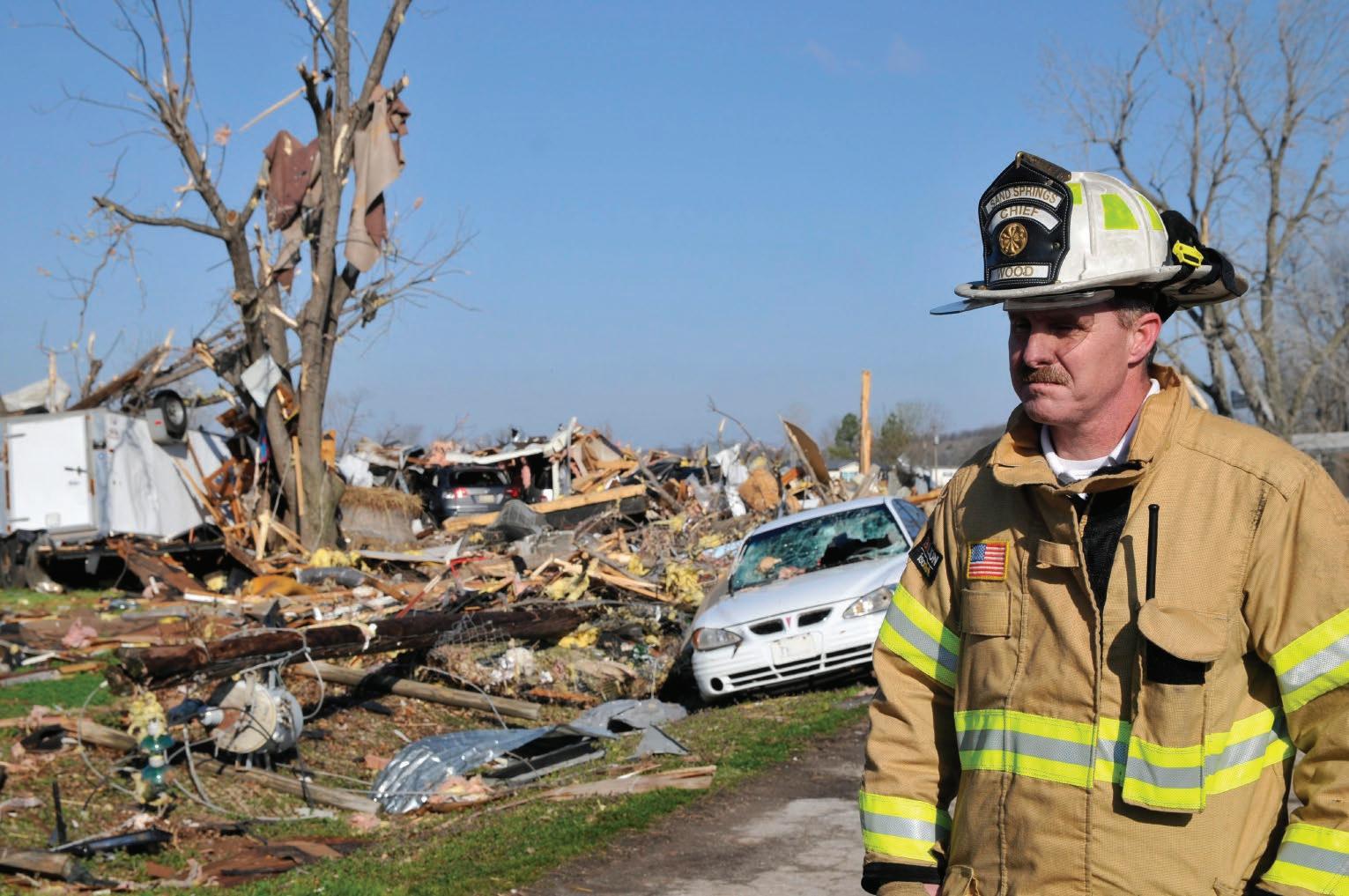
■ In the wake of a tornado in Oklahoma that left 80,000 residents without power, and many without homes, in March, 2015. Exploiting the tragic moment, looters pilfered homes for scrap metal, televisions, and car seats.