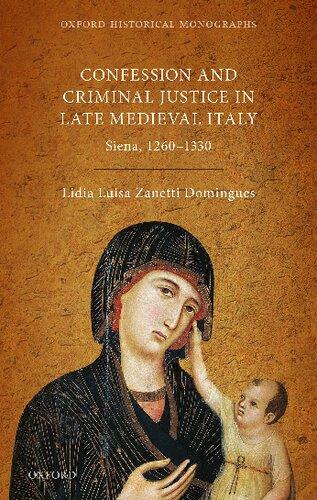
MedievalItaly
Siena,1260
–1330
LIDIALUISAZANETTIDOMINGUES
GreatClarendonStreet,Oxford,OX26DP, UnitedKingdom
OxfordUniversityPressisadepartmentoftheUniversityofOxford. ItfurtherstheUniversity’sobjectiveofexcellenceinresearch,scholarship, andeducationbypublishingworldwide.Oxfordisaregisteredtrademarkof OxfordUniversityPressintheUKandincertainothercountries
©LidiaLuisaZanettiDomingues2021
Themoralrightsoftheauthorhavebeenasserted FirstEditionpublishedin2021
Impression:1
Allrightsreserved.Nopartofthispublicationmaybereproduced,storedin aretrievalsystem,ortransmitted,inanyformorbyanymeans,withoutthe priorpermissioninwritingofOxfordUniversityPress,orasexpresslypermitted bylaw,bylicenceorundertermsagreedwiththeappropriatereprographics rightsorganization.Enquiriesconcerningreproductionoutsidethescopeofthe aboveshouldbesenttotheRightsDepartment,OxfordUniversityPress,atthe addressabove
Youmustnotcirculatethisworkinanyotherform andyoumustimposethissameconditiononanyacquirer
PublishedintheUnitedStatesofAmericabyOxfordUniversityPress 198MadisonAvenue,NewYork,NY10016,UnitedStatesofAmerica
BritishLibraryCataloguinginPublicationData Dataavailable
LibraryofCongressControlNumber:2021935495
ISBN978–0–19–284486–6
DOI:10.1093/oso/9780192844866.001.0001
PrintedandboundintheUKby TJBooksLimited
LinkstothirdpartywebsitesareprovidedbyOxfordingoodfaithand forinformationonly.Oxforddisclaimsanyresponsibilityforthematerials containedinanythirdpartywebsitereferencedinthiswork.
Acknowledgements
Asthisbookistheresultofmydoctoralresearch,Iwouldliketothank first ofallChrisWickham,mysupervisor,fortheunceasingsupport(froman academicbutalsopersonalpointofview)hegaveme.Asallgraduate studentsknow,agoodsupervisorisfundamentalforadoctoratetobea positive,enrichingexperience,andIcouldnothaveaskedforanybetter. PaoloGrillohasbeenapatientreaderandaconstantproviderofgood advice.TogetherwithRinaldoComba,hehashelpedmediscoverthe complexandfascinatingworldoftheItaliancommunes,andIoweboth ofthemmuchgratitudeforthis.Otheracademicsthathavementoredmein differentcapacities,andwhoIwouldliketothankare:MichelePellegrini, PhilipBooth,IanForrest,GervaseRosser,JohnBlair,JohnArnold,Bernard Gowers,FrancesAndrews,PiroskaNagy,andHannahSkoda.Ihavebeen veryluckytoreceivethesupportofsomanygreatscholars.TheopportunitiesIhadtoworkattheHumanitiesDivisionoftheUniversityofOxford andTheOxfordResearchCentreintheHumanitiesreallyhelpedmeseethe broadervalueoftheHumanities.ConversationswithLorenzoCaravaggi, LorenzoTabarrini,andAlbertoLuongohavebeenveryhelpfulinshaping andrefiningmyideas.Finally,Iamverygratefulforthe financialsupportof theArtsandHumanitiesResearchCouncil,oftheScatcherdEuropean ScholarshipoftheUniversityofOxford,ofthePastandPresentSociety, andoftheInstituteofHistoricalResearch.
ThisresearchallowedmetospendmuchtimeinSiena,which ‘cormagis tibipandit’.Thiswelcomingspiritisparticularlytruefortheemployeesof theArchiviodiStatodiSiena,whotaughtmehowtousearchivalsources andmademefeelathomethere.WhenIthinkofSienamythoughtsgoalso tomygrandmotherElsa,ofSienesedescent.Shewouldhavebeenvery happytoknowhergranddaughtergottostudyherancestors,asIamsure sheisfromwheresheisnow.
Academicresearchdoesnotstoplifefromhappening,andwithoutthe supportofaffectionatefriendsandfamilyIwouldnotbewhereIamnow. MyfriendsIrinaMattioli,FoscoDipoppa,MicolRotondo,ErikadeVivo, IdaAmlesù,andIsabellaCavalierealwayssupportedmethroughhardtimes, andIwillalwaysbethankfulforthis.IwouldalsoliketothankDavidSwan,
AversaSheldon,RobertCranage-Jones,AndrewSmall,andOliverFord.My sisterLaurahasbeennothingbutsupportiveandpatientwithme.Aspecial thanksalsotoGuglielmo,whoispartofthefamily,too.Moreover,inOxford Iwasluckyenoughto finda ‘gruppopotentissimo’ ofbrightyoungscholars, whohavebecomemysafetynetintheupsanddownsofpostgraduatelife. IthankinparticularDavideMassimo,thebest flatmate,andJonathan Krause,mysupportiveandbrilliantpartner.
ThisbookisdedicatedtomyparentsLuisaandMarcos,fortheirtrust, understanding,andunconditionallove.
NoteonDatesandTranslations ix
Abbreviations xi Introduction1
1.CompetingModelsforApproachingViolenceandConflict andtheirPointsofContact26
2.Emotions,Virtues,andVicesintheSieneseReflectionon ViolenceanditsRemedies65
3.ModelsofEmotionalityinActioninReligiousandLay SourcesonCriminalJustice76
4.DefiningtheComplexRelationshipbetweenMercy,Justice, andRevenge101
5.CommunalLegislationandthePursuitofDivineJustice122
6.TheDevelopmentofCriminalJusticeinSienaandthe InfluenceofReligiousIdeas153 Conclusion202 Bibliography 211 Index 237
Introduction
1.WhydoweReacttoViolencetheWaywedo?
Latemedievalpeoplereactedtoviolentorcriminalactsdifferentlyfromus, inwaysthatsometimeswe findastonishingandhardtounderstand.Ina paintingbyStefanodiGiovanni ‘Sassetta’,keptattheLouvre,forinstance, theblessedRanieridaSansepolcromiraculouslyliberatesalltheinmatesofa Florentineprison,regardlessoftheirinnocenceorguilt.Thisisnotan isolatedcase:theVirginMarysavesnumerouscriminalsfromexecutionin collectionsofMarianmiraclessuchasthatofGauthierdeCoincy;according tohis Vita,StThomasofCantiloupeintervenedinthehangingofaWelsh brigandtosavehislife.¹Thesebehaviourscontrastwiththeidea,quite widespreadnowadays,thatonlyinnocentsconvictedunjustlydeservetobe savedfrompunishment,butguiltypeopleneedonthecontrarytomake amends.Atthesametime,incontrastwithourgeneraldistasteforrevenge, seenassomethingopposedtorealjustice,vendettawasanimportantpartof latemedievalculture:incommunalItaly,theoriginsofpoliticalfactions suchastheGuelfsandtheGhibellineswereoftentracedbacktofeuds betweenfamilies.²Whythatwasthecaseinwhatisgenerallyseenasa profoundlyreligioussociety,eventhough(aswillbeseen)theChurch vocallyopposedthispractice,isanotheraspectoftheircivilizationwe struggletounderstand.
TheItaliancommuneofSienaprovidesuniqueinsightsforthehistorian seekingtounderstand ‘whylatemedievalpeoplereactedtoviolencetheway theydid’,thecentralquestionofthisbook.Thevarietyofdiscourseson criminaljusticeinSienaintheperiod c.1260–1330willbedescribedand analysedthroughanin-depthexaminationoflocalsourcesoflayand religiousorigin.Thiscityoffersanincredibleand,sofar,underutilized wealthofsourcesaboutviolentcrimeforaperiodthatwitnessedimportant innovationsinthedomainsofcriminaljusticeandpastoralcare.Thisis
¹OnThomasofCantiloupeseeBartlett, TheHangedMan. (Iuseshorttitlesthroughoutfor reasonsofspace.FullcitationswillbefoundintheBibliography.)
²Faini, ‘Ilconvito fiorentinodel1216’ .
ConfessionandCriminalJusticeinLateMedievalItaly:Siena,1260–1330.LidiaLuisaZanettiDomingues, OxfordUniversityPress.©LidiaLuisaZanettiDomingues2021.DOI:10.1093/oso/9780192844866.003.0001
2
particularlyimportantforthemethodologyofthepresentanalysis.This bookproposesthatreformsofcriminaljusticeintheItaliancommunescan beseenascomplexdecisionsdesignedtoachieveavarietyofaims,including notonlyretributionorpoliticalnegotiation,butalsopenanceandmoral reintegration.Therelativeimportanceofeachoftheseaims,andtheir variationovertimeandinrelationtohistoricalchange,thusbecomecentral intheinvestigation,asdoestheanalysisofwhichgroupsorindividuals favouredcertaindiscoursesoverothers.Sienahas,inthisrespect,the advantageofofferinganabundanceofsourcesthatuntilrecentlyhavenot beenconsideredsuitableforstudyingviolentcrime:thatis,pastoraltexts suchassermonsandhagiographies.Theiruseallowsthisanalysistouncover previouslyunderestimatedaimsofItaliancriminaljustice,basedona discourseheavilyinfluencedbytheinnovationsinmedievalspirituality thatculminatedinthethirteenthcentury.Asaresult,apenitentialdiscourse oncriminaljusticewillbeproposedascoexistingalongsidetheotherones basedonrevengeoronnotionsofpublicorderrevealedbyprevious scholarship.Thisadditioncanhelpclarifytheextenttowhichchurchmen andlaypeoplewereawareofthecontrastbetweenthepervasivenessof Christianeducationaboutpeaceandpenance,andtheequallypervasive natureofwhathasbeencalleda ‘cultureofrevenge’.³Bydoingso,thisbook followsthefootstepsofrecentapproachesthathavetriedtobridgethegaps betweenlayandreligioussourcesintheirtreatmentofthethemesof violenceandcrime,whilstdevelopingfurtherdiscursiveinterweavingof spiritualandsecularapproaches.
Throughadeeperunderstandingofawell-documentedcasesuchasthat ofSiena,thisbookcontributestotheadvancementofthehistoryofviolence, conflict,andcrimeinlatemedievalItalyandEuropemoregenerally:asseen intheexamplesmentionedatthebeginningofthisIntroduction,similar puzzlingbehaviourscharacterizethereactionstoviolenceofmedieval Italians,French,andEnglish.Atthesametime,thestudyofthemeansin whichthelatemedievalSieneseconceivedofviolentcrimeandthewaysto dealwithitcouldoffersomefoodforthoughtonwhatitisthatpromptsand haspromptedhumanitytorespondinavarietyofwaystoviolentacts throughoutourhistory.
Violentcrimeseemsindeedtoexertandhaveexertedaspecialfascination onpeopleofallagesandsocialclasses.Thepersistentsuccessofcrime
³Gonthier, ‘Fairelapaix:undevoirouundelit?’;Rossi, ‘Polisemiadiunconcetto:lapacenel bassomedioevo’,p.12.
novelsandTVseriesandtheongoingpopulardebatesaboutwhatshouldbe theappropriateaimsofpunishmentareallgoodcontemporaryexamples.⁴ It isthereforenotsurprisingthatresearchonconflict,andinparticularitssubcategoryofrevenge,hasbeencentralinthelastcenturyinthe fieldsbothof historyandofthesocialsciences,butthepicturespresentedhavebeenfar fromuniform.⁵ Revengeandconflictseemtohavebecome,inscholarly constructions,thetopicsofchoicetoreflectonbroaderquestionsabout identityandmodernity.Scholarshaveaskedforinstancewhetherweshould see,asmanyofusdo,vengefulnessasaresidueofapre-modernand barbaricmindsettobeeliminated,orratherasanineradicableaspectof humannaturethatderivesfromthewayourspeciesevolved.Theyhave ponderedwhetherconflictandviolencearealwayssynonymouswithdisorderanddisruption,orconstructiveforceswithinsociety,too.Giventhe highculturalsignificanceofsuchissues,itisunderstandablehow,despite thequantityofnewsynthesesproducedonthetopic,researchinthis field seemstobeinexhaustible. ⁶
Havewealwaysreactedtoviolencethewaywedonowadays,andifnot, whatpromptedchangesinourattitudesthroughouthistory?Thesequestionsareunderpinnedbythedebateontherelativerolesofnatureand nurture(orculture)inunderstandinghumancharacteristics,afundamental issuetheHumanitiesandtheSocialSciencehavebeengrapplingwithinthe lastfewdecades.⁷ Bothevolutionarybiologistsandculturalanthropologists haveproducedscholarlyworkaimingtoanswerthisquestion,andhistorianshavebeeninspiredbytheirconclusions.Therefore,we findhistorical workssubscribingtoeitherevolutionistorconstructivistapproaches,thatis, studiesthatattributeagreaterimportancetoeitherbiologicalorcultural
⁴ Thisfeaturehasgivenrisetoanautonomousareaofresearchwithinthe fieldofcultural studies.ForanintroductionseeYoung, TheSceneofViolence:Cinema,Crime,Affect
⁵ Peristiany(ed.), HonorandShame andDavis, ‘HonourandPoliticsinPisticci’,arethe classicsontheideaofhonourasaMediterraneanvalue;Pertile, Storiadeldirittopenale,p.14 andtheworksheciteshaveseenvendettaasaGermanicinstitution;medievalistshave interpretedvendettaaspartofanaristocraticethos(onthisseebelow,n.14);whereasMiller, ‘LowerClassCulture’,hasconnectedrevengetosocialmarginality.
⁶ Thebibliographyistoovasttoprovideacompletelist.Amongthemostrecentand influentialcontributionstothestudyofconflictandrevengeintheMiddleAgesseethe collectivevolumesrespectivelybyBrownandGórecki(eds), ConflictinMedievalEurope; Barthélemy,Bougard,andLeJan(eds), LaVengeance,400–1200;ThroopandHyams(eds), VengeanceintheMiddleAges;andthecollectionofsourcesbySmailandGibson, Vengeancein MedievalEurope.ForamoreexhaustivebibliographyseealsoZorzi, ‘Iconflittinell’Italia comunale’ . ⁷ Mazurel, ‘Delapsychologiedesprofondeursàl’histoiredessentiments’,p.38.
4
factorsinexplaininghumanbehaviour.⁸ Atthesametime,otherscholars havesuggestedthatthisdichotomyhasnotprovedparticularlyhelpfulin advancingourknowledge,andthatitistimetorethinkitandpossibly overcomeit.History,ofcourse,hasapeculiarlydiachronicperspective. Assuch,itcanprovidemodelsforthestudyofsocialphenomenathat offeramiddlegroundbetweenfullyconstructivistandfullyevolutionist approaches,inordertoadvanceourunderstandingofwhathasbeencalled the ‘bioculturalbrain’ . ⁹ Ifwerecognizetheinextricablelinkbetweencultural andbiologicalfactorsinhumanbehaviours,theonusonhistoriansiseven greatertoaccountfortheirvariationthroughtime.
2.LessonsonViolentCrimefromMedievalStudies
Medievalstudieshavecontributedtosuchdebatesatleastsincethe1970s when,thankstotheinfluenceoflegalanthropology,the fieldpartiallymoved awayfromanapproachtothestudyofviolentconflictcentredoninstitutions.Thefocusshiftedtotheinterpersonalrelationships,behaviours,and valuesofthepartiesinvolved,andthevarietyofformalandinformal practicesofconflictanditsresolution.¹⁰ Thesestudieshavesuggestedthat inmedievaltimesconflictandrevengewereusedstrategicallytoachievea varietyofgoals,andthatextrajudicialorinfrajudicialpracticesofconflict andpeace-makingwerealwaysengagedinadialecticalrelationshipwiththe officiallegalculture.¹¹
Thisshiftseemshowevertohaveencounteredsomeresistanceamong scholarsofthelatemedievalItaliancommunes,asthesepolitieswere interpretedbymanyhistoriansasforerunnersofmodernstates,inwhich
⁸ Seee.g.Smail, OnDeepHistoryandtheBrain,foranexampleoftheworkofahistorian deeplyinfluencedbyanevolutionistapproach.
⁹ Aseminalworkinthecriticismoffullyconstructivistandfullyevolutionistapproachesis Reddy, TheNavigationofFeelings.Forarecentdiscussionofthisapproachbasedontheideaof a ‘bioculturalbrain’ seeBoddice, TheHistoryofEmotions,chs1and6.
¹
⁰ Theinstitution-basedapproachhaditsforerunnerinElias, TheCivilisingProcess Fundamentalfortheshifttoapractice-basedonewasComaroffandRoberts, Rulesand Processes. ThedifferencebetweenthetwowillbefurtherdiscussedinChapter1.
¹¹Inthiscase,too,itispossibletoofferonlysomeexamplesofthiscopiousproduction:for instance,Cheyette, ‘Suumcuiquetribuere’;White, ‘Pactum...legemvincitetamorjudicium’ ; Bossy(ed.), DisputesandSettlements;Geary, ‘VivreenconflitdansuneFrancesansÉtat’ ; Wickham, Legge,praticheeconflitti.ForadditionalbibliographyrefertoBrownandGórecki, ‘WhatConflictMeans’,inBrownandGórecki(eds), ConflictinMedievalEurope
politicallifewasstronglyinstitutionalized.¹²Violenceandfactionalconflict wereseenasresiduesofpreviouspoliticalculturesthatthenewcommunal elitestriedtocurbbyallpossiblemeans.Thiswasseenasparticularlytrue forthe Popolo,aheterogeneouspoliticalmovementcomposedofsworn groupsofartisans,merchants,andotherpeoplewhohadmanagedto achieveeconomicsuccessinthecitiesbutwerenotincludedinthetraditionalgoverningclasses,andwhocametopowerinthesecondhalfofthe thirteenthcentury.¹³Thecultofhonourandthepracticeoffeudingconnectedtoitwerethereforeassociatedwiththemilitaryandaristocraticethos ofthe magnati,thecivicaristocracythathadtraditionallyruledthecommunesuntiltheaccessionofthe Popolo,andwhoseexclusionfromthe principalinstitutionalofficeshadbeenoneofthemainelementsofthe politicalprogrammeofthelatter.¹⁴
Fromthe1990s,however,aseriesofworksbyAndreaZorziandothers havetransformedthisparadigm.Theyhaveexposedthefactthatascholarly relianceonchronicleswaspartiallyresponsiblefortheassociationofmagnateswithrevenge.Thistypeofsourcewasthetypicalrepositoryofthe popularlegitimizingrhetoricabouttheviolenceofcivicaristocracy,andthe consequentnecessityoftheirexclusionfrompoliticstoprotectpeaceand the ‘commongood’.¹⁵ Ananalysisofawidervarietyofarchivalsourceshas shown,onthecontrary,thattheresolutionofconflictsthroughtheuseof privateviolencewasanordinaryphenomenon,diffusedamongeverysocial class.¹⁶ Inaddition,Zorzihasdemonstratedthattheideathatrevengewas theappropriateresponsetoviolenceorotheroffencesenactedby inimici (enemies)againstoneselforone’scircleof amici thatis,thosetowhichone wasconnectedbysolidarityorfamilyties wasafundamentalpartofthe
¹²Zorzi, ‘Iconflittinell’Italiacomunale’,pp.7–8.Foranexampleofthisapproachsee Ascheri, ‘BeyondtheCommune’
¹³Forarecentoverviewofstudiesonthe Popolo,seePoloni, PoterealPopolo.
¹⁴ Onrevengeasanattributeofthe magnati seee.g.Lansing, TheFlorentineMagnates, pp.164ff.,pp.184ff.(Lansinglaterrevisedherpositioninthearticle ‘MagnateViolence Revisited’);Maire-Vigueur, Cavaliersetcitoyens,pp.307–35.Ontheexclusionarypoliticsof populargovernmentsseeMilani, L’esclusionedalcomune.Onthepersistinginfluenceofthe magnati oncommunalpolitics,evenaftertheirexclusion,forinstancethroughthepracticeof judicialprofessions,seeMenzinger, Giuristiepoliticaneicomunidipopolo.
¹⁵ Zorzi, ‘PoliticaegiustiziaaFirenze’;Faini, ‘Ilconvito fiorentinodel1216’
¹⁶ Waley, ‘ABloodFeudwithaHappyEnding’;Zorzi, ‘Iuseratinarmis’;Zorzi, ‘Politicae giustiziaaFirenze’;Zorzi, ‘Conflitsetpratiquesinfrajudiciaires’;Zorzi, Latrasformazionediun quadropolitico;mostoftheessaysincludedinthecollection Conflitti,pacievendettenell’Italia comunale presentexamplesoffeudsthatinvolvedmembersofthe Popolo andanalysethe dynamicsofconflictswithinthepopularmilieu.
6
civicpedagogyoftheItaliancommune.¹ ⁷ Asaninstanceofthiswidespread ‘cultureofrevenge’,publiclyinsultingthosewhorenouncedtherightto exerttheirrevengeonenemieswasadefamatorypracticecommonamong membersofallsocialclasses.¹⁸ Additionally,scholarsbelongingtothis historiographicalschoolhaveproposedthatthis ‘cultureofrevenge’ was notdisruptiveofthesocialorder.Intheiropinionthepracticeoffeuding,as suggestedbyanthropologistMaxGluckmanfortheAfricanNuersociety, actuallyhadanorderingfunctiononhumanrelations,sinceitpromptedthe partiesinvolvedtocreatealliancenetworks.¹⁹ Revengecouldthereforebeat theoriginofprocessesofsocialinclusionthatultimatelylimitedviolence withinsociety.²⁰ ForthisreasonZorziandhisschoolclaimthatrevenge betweenfamiliesandindividualswaslegitimizedbycommunallegislation, whichdidnotbanthispracticebutlimiteditselftosettingboundariestothe actionofavengers,inordertoavoidtheescalationofconflicts.²¹
Whilstsomeaspectsofthisreconstructionarenowwidelyacceptedbythe scholarlycommunity(e.g.theideathatvendettawasnotanexclusively aristocraticpractice),criticismwassoonvoiced.TrevorDeanhasbeenone ofthemostvocalopponentsofthepossibilityofextendingthisreconstruction,mostlybasedonFlorentinesources,tocommunalItalyasawhole.²² AccordingtoDean,thepermissivenatureoftheFlorentinelegislationon revengedependedontherepublicannatureofthecity’spoliticalregime;in themajorityoftheotherItaliancity-statessignorialregimesaroseinthe secondhalfofthethirteenthcentury,andtheattemptbythe signori to controlmorestrictlythelegitimateformsofviolencewithinsocietyledtoa banonrevenge.Moreover,Deanarguedthatvendettanarrativesinlate medievalandearlymodernchroniclerswerehighlyformulaicandshouldbe seenas ‘purposefulmeansofrememberingandexplainingdisputes’,not objectivedescriptionsofa ‘cultureofrevenge’ inwhichactorsperceiveda realandunavoidableobligationtorespondtoeachoffencewithretaliation.²³
Thepossibilityofselectivelyrememberingpastwrongs,whichinsomecases happenedtopreviousgenerations,asdeservingaretaliatoryreactionfrom
¹⁷ Zorzi, ‘Laculturadellavendetta’
¹⁸ Onori, ‘PaceprivataeregolamentazionedellavendettainValdinievole’
¹⁹ Gluckman, ‘ThePeaceintheFeud’.²⁰ Zorzi, ‘Iuseratinarmis’,p.615.
²¹AselectionofrecentworksinwhichthispositionhasbeenmaintainedincludeGuarisco, Il conflittoattraversolenorme;Zorzi, ‘Pluralismogiudiziarioedocumentazione’;Zorzi, ‘LegitimationandLegalSanctionofVendetta’;Zorzi, ‘TheNotionandthePracticesof Vindicta’
²²Dean, ‘MarriageandMutilation’,pp.6–7;Dean, ‘Violence,VendettaandPeacemaking’ . ²³Dean, ‘MarriageandMutilation’,p.31.
livingkinsmenwasalsopresentedasanargumentforreconsideringtheidea offeudasapracticethatkeptthepeace.²⁴ Doubtsaboutthelegalityof revengeacrossnorthItaliancitieshaverecentlybeenreiteratedbyGlenn Kumhera,whohasseenthisfeatureasaTuscanspecificity.²⁵ SinceTuscany wascharacterizedinthelateMiddleAgesbyeitherthepersistenceof republicanregimesortheriseof ‘weaker’ signorie thantherestofcommunal Italy,histheoryisinpartialagreementwithDean’s.²⁶ Despitethewealthof researchonconflictandrevengeinEuropeandItaly,therefore,therearestill openissuesaboutthenatureofthesepracticesandtheirconceptualization intheItaliancommunes.Studiesondifferentpolitieshaveledtodifferent results,somethingwhichcallsforanexpansionofthenumberofcase studies,inordertounderstandwhichvariablesplayedaroleindetermining localandregionaldifferences.
Thedebateonthelegalityofrevengeislinkedincurrenthistoriographyto anotheropenquestion,thatoftheevolutionofcriminaljusticeinEurope fromthethirteenthcenturyonwards.²⁷ Themaintrendsobservedforthis periodinclude firstofallthegradualandnevertotallyachievedpassagefrom anaccusatorialproceduralsystem(inwhichlegalactionshadtobeinitiated bythevictimofacrime)toaninquisitorialone(inwhichtheprocedure couldbestartedexofficiobyajudgeonthebasisofthepublicknowledge thatacrimehadbeencommitted;thejudgethusproceededtocollectproofs throughaninvestigation,the inquisitio).²⁸ Secondly,historianshavenoticed aprocessof ‘publicization’ ofcriminaljusticeinlatethirteenth-century Europe,thatis,theriseoftheideathatcrimesshouldnotbeseenany moreasprivatemattersbetweenthepartiesinvolvedandtheirkin,butas actionsthatdamagedthewholecommunity.²⁹ Therallyingcryforthis expandingroleofthegovernmentintheprosecutionofcrimewasthe phrase,whichoriginatedincanonlawandwaspopularizedinlegaland
²⁴ Ibid.,p.35.TrevorDeanhasnotbeentheonlyhistorianwhoexpresseddoubtsabout applyingGluckman’stheorytothecontextofmedievalEurope:otherexamplesincludeMiller, ‘ChoosingtheAvenger’;White, ‘FeudingandPeace-MakingintheTouraine’.Formore informationonthisdebateseeDean, CrimeinMedievalEurope,p.49.
²⁵ Kumhera, TheBenefitsofPeace,p.12.
²
⁶ ArecentreassessmentofthesignorialphenomenoninlatemedievalTuscany,which howeverdoesnotdenyitspeculiaritiescompletely,canbefoundinZorzi(ed.), Lesignorie cittadineinToscana
²⁷ ForarecentoverviewofthestudiesoncrimeinlatemedievalEuropeseeDean, Crimein MedievalEurope.
²⁸ OnthesetwoproceduralmodelsseeRousseaux, ‘Initiativeparticulièreetpoursuite d’office ’ .
²⁹ Sbriccoli, ‘Vidicommuniterobservari’;Dean, CrimeinMedievalEurope,pp.5ff.
8
politicaldocumentsfromthethirteenthcentury, ‘publiceinterestne maleficiaremaneantimpunita’ (itisofpublicinterestthatcrimesarenot leftunpunished).³ ⁰ Consequencesofthisprocessincludedachangeinthe attitudestowardstheaimsofcriminaljustice,nowmorefocusedonpunishingoffendersthanonmediatingbetweenparties,theintroduction ofharsherphysicalpunishments,theexpansionofjudicialtortureasa meansofcollectingproofs,andthecriminalizationofawiderspectrumof behaviours.³¹Publicizationofcriminaljusticeandthepassagetoaninquisitorialmodelhadinsomecasessimilareffects,sincetheinquisitorialmodel emphasizedtheroleofthejudgeattheexpenseofthatoftheparties,but modernhistoriographyhasbeencarefulnottoconflatethemintoone.The effectsofthepublicizationofcriminaljustice,forinstance,couldbefeltalso inaccusatorialtrials.³²Itisnecessarythereforetoavoidseeingthepassage fromaccusatorialtoinquisitorialprocedureasalinearoneandinterpreting itinateleologicalwayasareflectionoftheevolutionofpolitiesintomodern states.³³
Despitetheseimportantnuances,thetransformationsofthesecondhalf ofthethirteenthcenturymightstillbeinterpretedassomethingthattriggeredachangeinsocialperceptionsofrevenge.³⁴ Thelegitimacyofprivate vendettawasbased,asseenabove,ontheideathatoffencesbestowedaright toretaliationprincipally,ifnotexclusively,upontheaggrievedparty.Courts wereonlyoneofthepossibleforainwhichtheycouldseektheirsatisfaction. Thenewprincipleof ‘publicinterest’ incriminalactions,onthecontrary, assertedtheprimacyofthecommunityindealingwithoffencesover considerationsofpersonalorfactionalhonour.HenceSarahRubin Blansheidescribedapassagefroma ‘personalized,modi fied-vendettasystem ofcriminaljustice ’ toa ‘depersonalized’ and ‘publicorcommunity-oriented’ one.³⁵ IntheItaliancommunes,moreover,thesetransformationsinthe systemofcriminaljusticehavebeenassociatedoncemorewiththepolitical ascentofthe Popolo.Acentralideaintherhetoricofthisgroup,whichhas
³⁰ Fraher, ‘TheTheoreticalJustificationfortheNewCriminalLaw’ .
³¹Becker, ‘ChangingPatternsofViolenceandJustice’;Sbriccoli, ‘Tormentumidesttorquere mentem’;Sbriccoli, ‘Vidicommuniterobservari’;Zorzi, ‘LapenadimorteinItalia’,p.52.
³²Sbriccoli, ‘Vidicommuniterobservari’,p.233.
³³Vallerani, IlsistemagiudiziariodelComunediPerugia;Vallerani, MedievalPublicJustice, pp.1–2.
³⁴ Dean, ‘Violence,VendettaandPeacemaking’,p.1.
³⁵ RubinBlanshei, ‘CrimeandLawEnforcement’,p.121.Foranexampleofthesametrend towardsimpersonalityintheEnglishcriminallegislationfromthethirteenthcenturysee Beckerman, ‘AddingInsulttoIniuria’ .
beenthesubjectofcarefulanalysisbyEnricoArtifoni,wasthatofpresenting itselfnotasyetanotherfactionorsworngroupamongthemanypresentin communalsociety,butasastrongholdofgeneralinterests.³⁶ Aconception ofcrimeasapublicmattercouldthusclearlyappealtoit.Variousscholars havearguedthatthisattitudewasnotpurepropaganda,sincethemedium andlowerstrataofthe Popolo weregenuinelyaffectedbytheaggressive behaviourofmorepowerfulmembersofsociety,andwerenotabletodefend themselveswithouttheinterventionofthegovernment,somethingwhich situatedthemamongthemainpromotersofreformsofcriminaljustice.³ ⁷
Despitetheseimportantachievements,thereisstillnoconsensusabout thedegreetowhichtheseideologicalproclamations,andeventhechanges inthelegislationoftheItaliancommuneswhichtheytriggered,affected theday-to-dayadministrationofcriminaljusticeinthecities.Vallerani andZorzi,forinstance,havearguedthatthenewjudicialpoliciesstilldid nothaveastheirprimaryaimthepunishmentofoffenders,astheyclaimed, butratherthelegitimizationofnew,stillunstablepoliticalregimesand thenegotiationofpenaltiestostrengthensocialconsensus.³⁸ Thisis why,notwithstandingthesystematicspreadofharsherpenaltiesinthe statutes,capitalpunishmentremainedarelativelyrareoccurrencein Italiantowns,andthesystemofcriminaljusticecouldbemanipulatedto beeithermorelenientorharshdependingontherelationshipoftheaccused withthepoliticalelite.³⁹ Theseobservationshavehelpedhistoriansrealize howthedevelopmentofcriminaljusticefromthesecondhalfofthe thirteenthcenturywasacomplexprocessthatcannotbesimplifiedashaving justasinglecauseandtrajectory.Comparisonsbetweencitieshaveshown that,althoughthegeneraltrendsdescribedsofarapplytocommunalItalyas awhole,localdifferencesintheimplementationofjudicialpoliciesarefar fromnegligible.Whilstsomecities(likeBologna)sawaprecociousrisein theratesofinquisitorialtrialsandexecutions,andconvertedintheirofficial documentstoalanguagestronglyinfluencedbyconceptsofcriminaldeterrenceandanideologycentredonthepeaceandcommongoodofthe community,others(likeSavona)continuedtoallowgreaterspaceto
³⁶ Artifoni, ‘Preistoriedelbenecomune’,p.71.
³⁷ Vallerani, ‘IprocessiaccusatoriaBologna’,pp.765ff;Poloni, PoterealPopolo,pp.28–9.
³⁸ Vallerani, MedievalPublicJustice,p.72;amongZorzi’smostrecentworksonthetopicsee Zorzi, ‘Negoziazionepenale’;Zorzi, ‘LapenadimorteinItalia’ .
³⁹ Blanshei, ‘CrimeandLawEnforcement’;Zorzi, ‘LapenadimorteinItalia’,p.53.However, seeCohn, ‘RepressionofPopularRevolt’,foradifferenttakeonthefrequencyofcapital punishmentsinlatemedievalItaly.
accusationsandcompositions.⁴⁰ Thereasonsforthesedifferenceshavenot beeninvestigatedindepth,sinceresearchhastendedtofocusonsinglecase studies;evenwhenscholarshaveattemptedacomparativeapproachthe methodologyofcomparingonlyafewcitieshasledtoconclusionsthat cannotalwaysbeextendedtootherrealities.⁴¹
Tosolvethesecomplexissues,anexpansionofthenumberofcasestudies andtheuseofnewmethodologicalapproacheswouldcertainlybeofgreat importance.ThechoiceofSienaasacasestudyfordevelopingthisapproach stemsexactlyfromthedesiretoexpandthesetofcitiesthathavebeen investigatedinstudiesofcrimeandconflictincommunalItaly,inwhich FlorenceandBolognahavesofarhadthecentralrole.AsarguedbyLansing, thestudyofavarietyofcitiescancontributetoredefiningwhatconstituted ‘typicality’ inlatemedievalcommunes,forwhichparadigmsareoften createdonthebasisofheavilystudied, ‘famous’ cities.⁴²Thestimulusto adoptanewmethodologycomesontheotherhandfromworksonviolence andcrimeinlatemedievalFrance.Theyhaveshownthefruitfulnessof approachesinwhichtheideaof findingunivocalmeaningstopracticesand behavioursrelatedtoconflictandcriminalityischallengedinfavourofa multi-layeredreading.⁴³Suchreadingssuggestedthatwithinasocietythere wereavarietyofvocabulariesanddiscoursesonviolenceandcrimethat originatedfromdifferentsourcesbutweregenerallyusedincombination witheachother.Therefore,inthecaseofrevengepeoplecouldunderstand theelementofsocialnegotiationinvolved,butstillworryaboutitspotential
⁴⁰ RubinBlanshei, ‘CriminalJusticeinMedievalPerugiaandBologna’ (comparingBologna andPerugia);Dean, CrimeandJusticeinLateMedievalItaly (comparingBolognaandSavona).
⁴¹RubinBlanshei, ‘CriminalJusticeinMedievalPerugiaandBologna’,pp.269–75,linksthe greaterreceptivityofBolognatothe Popolo-inspiredreformsofcriminaljusticetothestrong factionalismofthecity’spoliticallifeandtothegreaterinclusionofjudgesandnotariestrained inRomanlawintherulingclass.Thesetwofactorshoweverdonotseemtofullyexplainthe characteristicsofthesystemofcriminaljusticeinotherItaliancities.Florence,forinstance,a cityknownforitsexacerbatedfactionalism,didnotfollowtheBolognesemodeluntilmuch later,asshownbyZorziin GiustiziaesocietàaFirenzeinetàcomunale.Thisprobablydepends onthefactthatFlorencehadalegalsystembasedonLombard,andnotRoman,law(onthe differencesbetweenthemseeWickham, Legge,praticheeconflitti, pp.196–226).However,as shownbyMenzinger, Giuristiepoliticaneicomunidipopolo,inpopularregimes including Bologna juristswerenormallyidentifiedasmembersofthe magnati andthereforesometimes regardedaspossibleopponentsofthe Popolo’sjudicialreforms.
⁴²Lansing, PassionandOrder,p.9.Thisisnottosay,ofcourse,thattherearenostudieson othercities:seee.g.Ruggiero, ‘LawandPunishmentinEarlyRenaissanceVenice’;Perani, ‘Pluralitànellagiustiziapubblicaduecentesca’,onPavia;Graziotti, GiustiziapenaleaSan Gimignano.Forreasonsofspaceitisnotpossibletoprovideafulllisthere.
⁴³Cohen, TheCrossroadsofJustice,pp.206ff.;Skoda, MedievalViolence, ‘Conclusion’ .
destructiveeffectonthecommunity.⁴⁴ Inordertoimplementsuchamethodologicalproposal,however,itisnecessarytodevelopamodelinwhichthe maincharacteristicsofthesediscoursesareoutlined(bearinginmindthat separatingthemcompletelyfromoneanotherisanabstraction,however useful)andthesourcesareanalysedtoassesstowhatextenttheyare conflictingorcomplementary.Suchaprojectrequiresananalysisofallthe possiblesourcesofdifferentdiscoursesoncrime,violence,andconflict, includinginparticularthosewhichhavegenerallynotbeenintegratedinto studiesoflegalsystemsandpracticesbecauseoftoorigidaconceptionofthe boundariesbetweendisciplines.
Christianspiritualityisacaseinpointhere.Thereligioussignificanceof someofthecentralconceptsofthenewideologyofa ‘publicized’ criminal justice,suchaspeace,concord,andcommongood,hasbeenrecognizedby manyofthescholarsmentionedsofar,althoughthishasoftenbeenseenas anessentiallyinstrumentalborrowing. ⁴⁵ Previousresearchhasclearly shownthattheperiodstartingfromtheendofthetwelfthcentury,andin particularaftertheFourthLateranCouncil(1215),wascharacterizedbya ‘pastoralturn’oftheChurch.⁴⁶ Thatis,thepastoralactionoftheclergy obtainedforthe firsttimeprimacyovercontemplativeactivitieswithinthe Church,andinitiativessuchasthecreationofnewreligiousordersdevoted topastoralcare,theincreaseinpublicpreaching,orthedevelopmentof confraternitiesforlaypeoplewereundertaken. ⁴⁷ Alltheseinitiativeswere meanttorespondtoandencouragethelaity’sdesireforanincreased participationinreligiouslife,andforaspiritualitymoreadaptedtothe needsofamoreurbanized,economicallyvital,andsociallymobilesociety.
Inthiscontext,peacebecameacentralthemeinthespiritualityoflate medievalEurope,andinparticulartheItaliancommunes;somethingwhich, giventheunstablenatureofpowerstructuresinthesesociallymobile
⁴⁴ Skoda, MedievalViolence,p.234.
⁴⁵ Ontheuseofreligiousconceptsinlegalreformsasinstrumental,seeZorzi, ‘Biencommun ’.Zorzihasrecentlyrevisedhispositioninhisresearchontheeffectiveroleofthe DominicanOrderinshapingthepoliticalimaginaryoftheItaliancommunes.Hisviewofthe roleoftheologyalsoinshapingconceptionsofjusticeintheItaliancitieshasbecomemore positive:seeforinstanceZorzi, ‘TheNotionandthePracticesofVindicta’,pp.134ff.
⁴⁶ Vauchez, ‘Présentation’;Bériou, ‘AutourduLatranIV’;morerecently IlLateranenseIV:le ragionidiunconcilio
⁴⁷ OntheMendicantordersandpastoralactivityinurbancontextsseeLittle, ‘Religious PovertyandtheProfitEconomyinMedievalEurope’ (althoughhisviewsoneconomicthought shouldberevisedinthelightofTodeschini, Ricchezzafrancescana);onsermonsseeBériou, ‘Les Sermonslatinsaprès1200’;onconfraternitiesseeGazzini(ed.), Studiconfraternali.
12
societies,andtheirconsequentlyhighlevelofconflict,isnotsurprising. Anumberofworksdevotedtoanalysingreligiousideasandpracticesof peaceinlatemedievalEuropehaveappearedinthelastdecades,whichhave highlightedhowpeacewasa ‘polysemic’ and ‘polycentric’ conceptinlate medievalsociety,reflectingthevariegatedinfluencesthatcontributedto creatingitsdifferentdefinitions.⁴⁸ Thesealsoincluded,naturally,thepressureexertedbylocalcommunitiestoseetheirdreamsofpeaceandjustice cometrue,visibleatleastfromtheeleventhcenturywiththemovementof thePeaceofGod.⁴⁹ Themainpopularreligiousmovementsofthirteenthandfourteenth-centuryItaly,startingfromthe magnadevotio (Great Devotion)of1233,arenowseenprimarilyaspeacemovements,wherethe roleofpreacherswasthatofpropagandizingideasofanorderlycivicsociety inwhichconcord,charity,andjusticewouldreignforever.⁵⁰ Thepacifying effectofpopularmovementscouldactinsynergywiththelegislativeaction ofthe Popolo,asisthecasefortheFlagellantmovementofPerugiain1260.⁵¹ Therethe Popolo,whichhadjustgainedpower,activelypromotedthis religiousmovementandechoeditstheologicallychargedlanguageinits newlegislationagainstviolentcrimes.Acomparisonbetweenthecoeval statutes(ordinamenta)ofthecityandthehagiographyofthefounderofthe Flagellantmovement,RanieriFasani,hasshownsimilaritiesinthevocabularyused,whichreflectaconsciousintentionofthe Popolo totakeinspirationfromFlagellantideas.Historianshavethereforestressedthe ‘ordering function’ ofreligiousconceptionsofpeacewithrespecttourbansocieties.⁵² Atthesametime,however,itmustbestressedthatthereligiouspreachingof peaceshouldnotbeinterpretedsimplyasanattempttolegitimizeshaky powerstructures.SometimesChristianpeacecouldbedestabilizing:as stressedbyRaimondoMichetti,forexample,thepeacepreachedbythe friarswasnotcompletelyinaccordwiththatpromotedinpeaceagreements issuedbycommunalnotaries.⁵³
⁴⁸ Thesecollectionsare Paceeguerranelbassomedioevo;Dessì(ed.), Prêcherlapaixet disciplinerlasociété; Lapacetrarealtàeutopia. Foramoredetaileddescriptionofthe shortcomingsofprevioushistoriographyseeRossi, ‘Polisemiadiunconcetto:lapacenel bassomedioevo’,pp.9–34.
⁴⁹ A.Vauchez, ‘LaPaixdanslesmouvementsreligieuxpopulaires’ .
⁵⁰ A.Thompson, RevivalPreachersandPolitics;Guarisco, Ilconflittoattraversolenorme, pp.151–97;Jansen, PenanceandPeace,ch.2.ForpreviousworksontheAllelujamovementsee Rossi, ‘Polisemiadiunconcetto:lapacenelbassomedioevo’,p.39n.37.
⁵¹Vallerani, ‘Mouvementsdepaixdansunecommunedepopolo’ ⁵²Dessì, ‘Pratiquesdelaparoledepaix’ .
⁵³Ibid.,p.248;Michetti, ‘Françoisd’Assiseetlapaixrevelée’ .
Peace,moreover,cannotbeseparatedfrompenanceinthirteenth-century spirituality,asappearsveryclearlyinthelinkestablishedbycommunal preachersbetweenthe ‘internalpeace’ thatspringsfromconfessionandthe ‘externalpeace’ ofharmonioussocialrelationships.⁵⁴ Manyworkshave highlightedhowpeacemovementsmadeuseofpenitentiallanguageand practices(e.g. flagellation)totryandcreateanewsocietyinwhichenmities wereforsaken.⁵⁵ Inthepastfewyearsresearchershavemadeanotherstep forwardbycombiningthesetypesofstudyandsourceswithananalysisof peace-makingvocabulariesandpracticesinthecriminaljusticesystemof theItaliancity-states,andshowingtheinfluenceofpenitentialspirituality onthelegalcultureofthecommunes.⁵⁶ Byadoptingthisperspective scholarshavestartedtobridgethegapbetweenreligioushistoryand socio-politicalandlegalhistory,thusaddressingsomeofthedebatesstill openinthestudyoflatemedievalcrimeandconflict.KatherineJansen’ s analysisofFlorentinepeacecontractsfromtheperiod1257–1343,inparticular,hasshownthatthekissofpeace,aritualgesturecrucialinthe structureofthemedievalmass,wasfeaturedintheoverwhelmingmajority ofthedocuments.Thisisaclearexampleofhowvisionsofcivicpeace derivedfromacoalescenceofinterconnecteddiscourses,promotedbya varietyofreligiousandlayactors.Jansendoesnotcompletelyclarifywhat therelationshipbetweenthecenturies-oldpracticeofthe osculumpacis and thenewpenitentialspiritualitywas.Theseminalnatureofworkssuchas Jansen’sneverthelesspavesthewayformoreresearchinthisnewarea.
Penanceandpeacewerealsoinextricablylinkedtotheconceptofjustice. Itisnotbychancethatconfessionwasdescribedbychurchmenasthe ‘internalforum’ or ‘tribunalofpenance’ thatworkedalongsidethe ‘external forum’ representedbyecclesiasticalcourtsasameanstodispensejustice.⁵⁷ Inthisperiodmetaphorsusedbytheclergytodescribeconfessionsawashift fromthetraditionalsemantic fieldofmedicine(confessionas ‘medicinefor thesoul’)tothatofjustice(confessionasthe ‘tribunalofthesoul’),atthe samemomentasjudicialconfessionbecamemoreimportantinthelawof
⁵⁴ Bériou, ‘LeSermonsurlapaix’.SeealsoChapter1,30.
⁵⁵ E.g.theworksofVallerani,Michetti,Bériou,Thompson,andJansenmentionedinthis paragraph.
⁵⁶ Kumhera, TheBenefitsofPeace;Jansen, PenanceandPeace.Thesearenottheabsolute first attemptstocombinereligiousandlaysourcesinthestudyofconflictandcrime;butprevious worksontheItaliancommunesthatadoptedasimilarapproach(amongwhichthosementionedinthepreviousparagraphs)hadamorelimitedscope.
⁵⁷ Goering, ‘TheInternalForum’ .