Conceived, designed, and produced by The Bright Press
an imprint of The Quarto Group 1 Triptych Place, London, SE1 9SH, United Kingdom www.Quarto.com
All rights reserved. No part of this book may be reproduced or transmitted in any form or by any means, electronic or mechanical, including photocopying, recording, or by any information storage-and-retrieval system, without written permission from the copyright holder. Requests for permission to reproduce material from this work should be sent to permissions@press.princeton.edu
Library of Congress Control Number: 2023939566
ISBN: 978-0-691-24827-1
Ebook ISBN: 978-0-691-24825-7
British Library Cataloging-in-Publication Data is available
Publisher James Evans
Editorial Director Isheeta Mustafi
Art Director James Lawrence
Managing Editor Jacqui Sayers
Senior Editors Joanna Bentley, Caroline Elliker
Project Editor Ruth Patrick
Design Kevin Knight
Picture Research Katie Greenwood
Illustrations John Woodcock
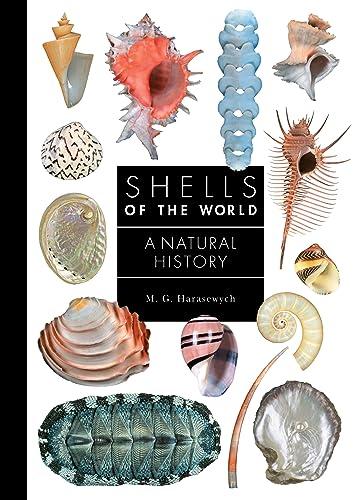
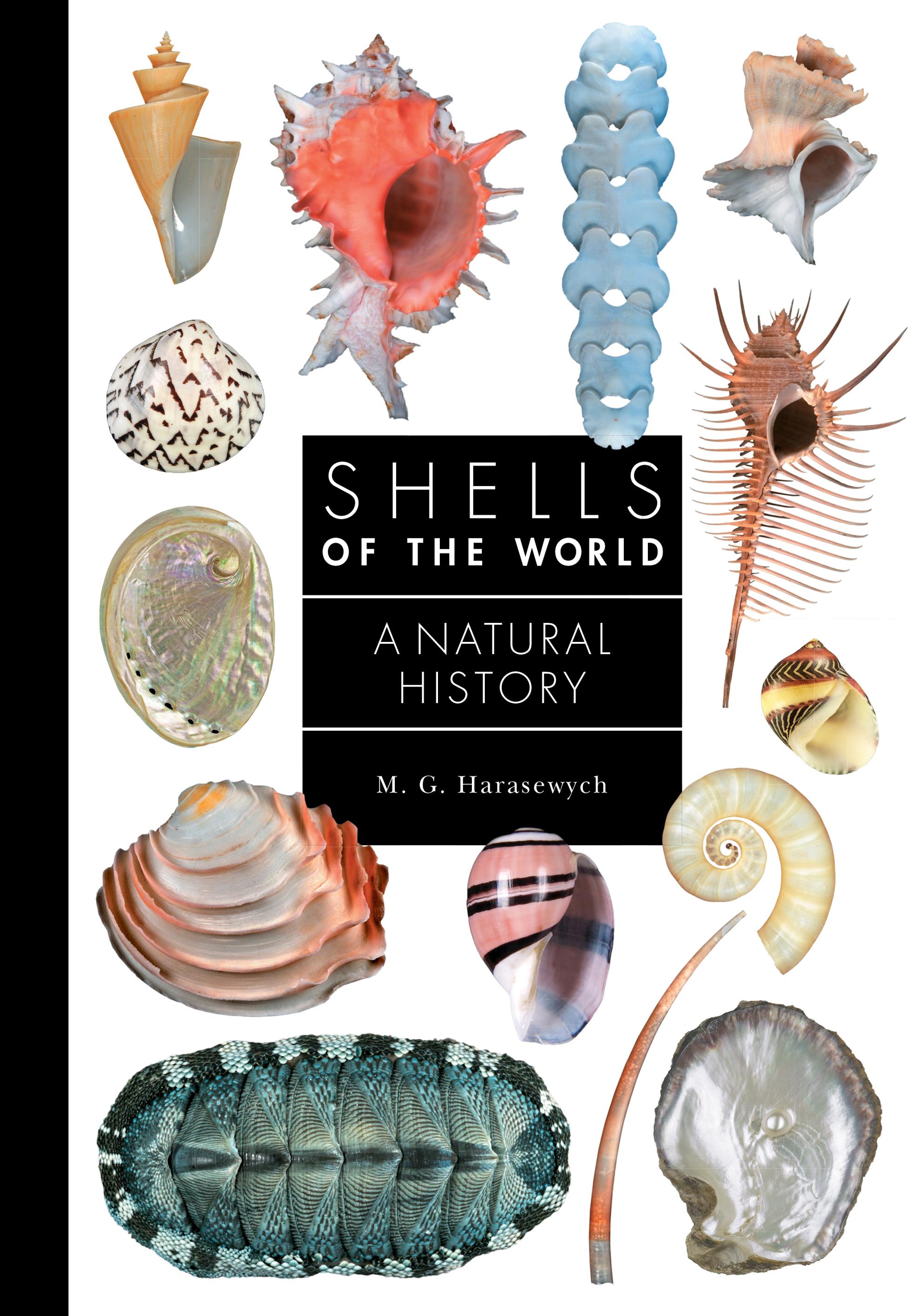
Cover photos: M. G. Harasewych
Printed in Malaysia
10 9 8 7 6 5 4 3 2 1
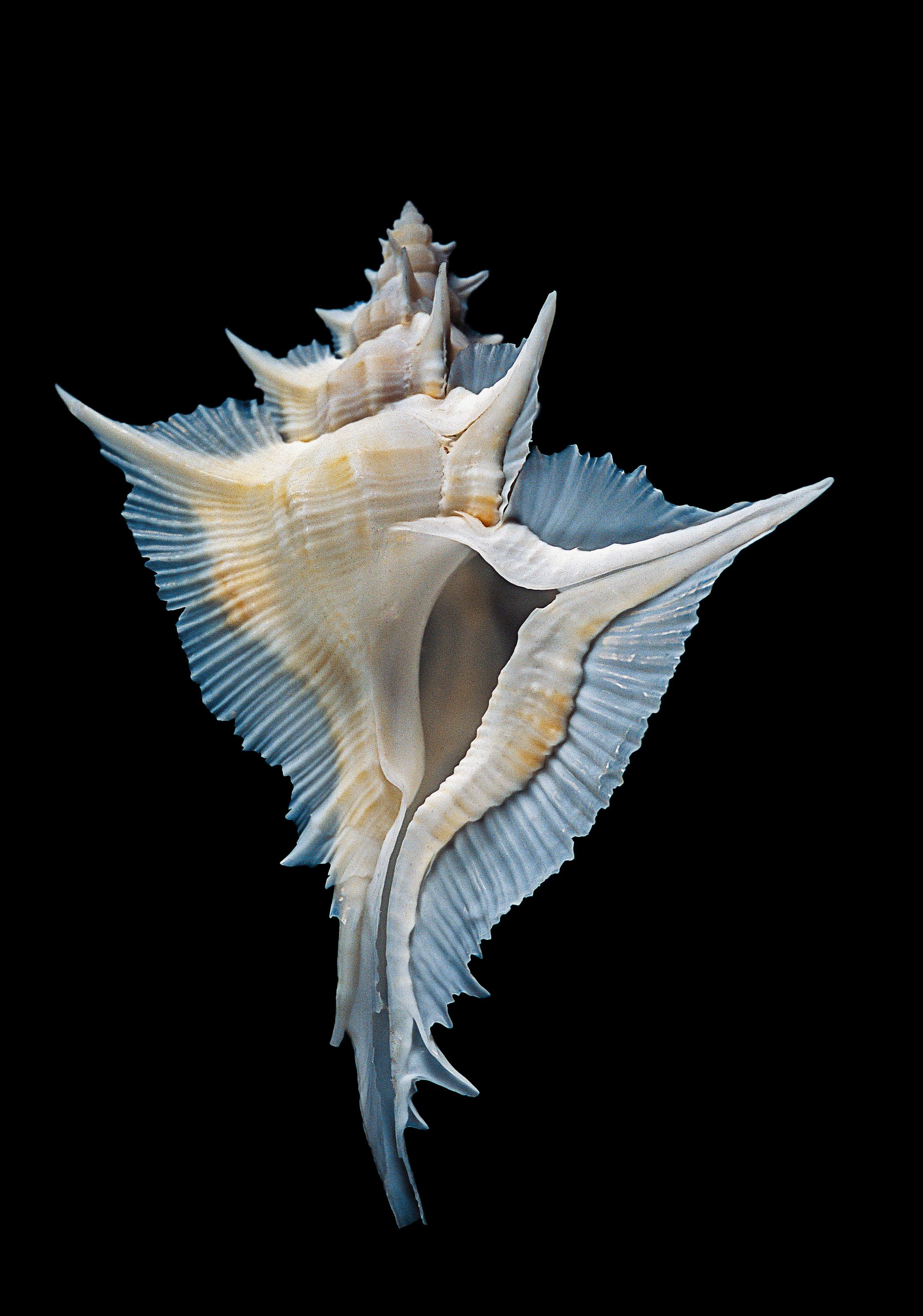
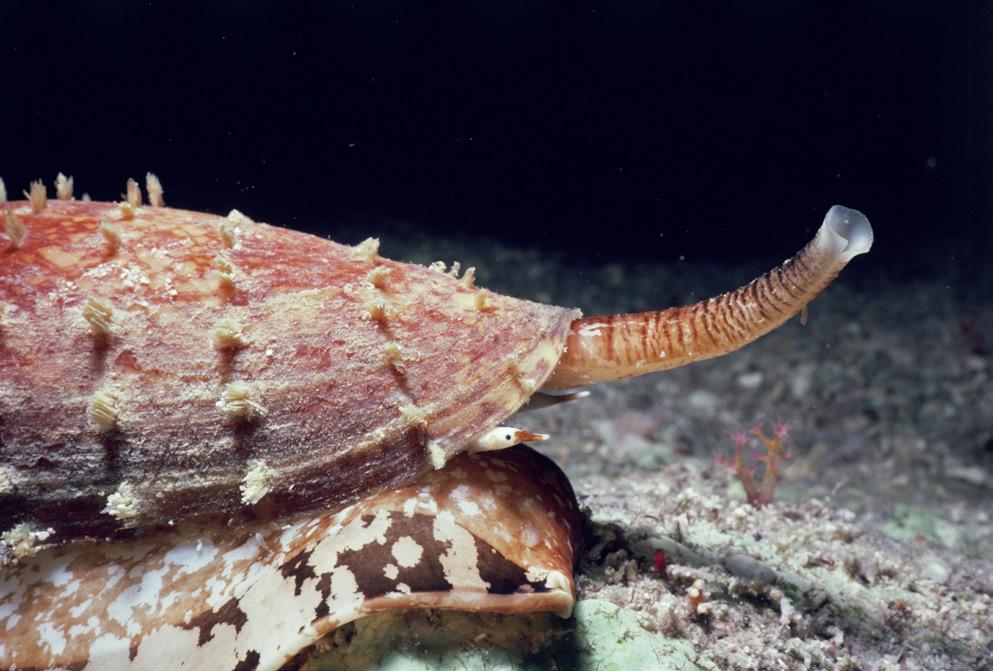
right | Conus geographus, a carnivorous snail that injects venom into its prey through a hollow, harpoon-like tooth. Its venom is fatal to humans within minutes.
INTRODUCTION
Shells (the external skeletons of mollusks) have intrigued and inspired humans and their ancestors from the Paleolithic to the present. Through the ages, shells have been used as tools, jewelry, decorations, currency, and religious symbols, and have inspired many forms of art, including architecture. Many of the mollusks that produced them have served as food, contributed to human illnesses (generally by being hosts to toxic microorganisms or intermediate hosts of human parasites), and are used in traditional medicine as treatments for a variety of ailments in many parts of the world.
SHELL FORMATION
A variety of organisms, among them foraminifera, corals, arthropods, and turtles, produce calcareous external coverings (mostly or partly composed of calcium carbonate) to protect the animal from the environment. However, the terms “shell” or “seashell” are limited to the external skeletons of mollusks. Arthropods produce an exoskeleton that includes an outer cuticle, which is periodically shed at certain stages in their life cycles (this process is known as ecdysis) or as the animal grows (molting),
while the bones of vertebrate skeletons contain living cells and are resorbed and regenerated during the life of the animal. In contrast, the shells of mollusks remain a part of the animal throughout its life. And while all seashells are produced by mollusks, not all mollusks living today produce shells. Several lineages that evolved from shelled ancestors now have reduced internal shells or no longer produce shells. Most notable are terrestrial slugs, nudibranchs, and most cephalopods.
A mollusk shell is first formed during the larval stage and continues to grow by addition of shell material along its outer edge, in the process archiving the environment of the mollusk at the time of deposition. Much like tree rings, these layers can be studied to determine the life span of the individual mollusk, which may range from less than a year to several centuries. The bivalve Arctica islandica is the longest living individual animal known; one specimen having lived to the age of 507 years before it was collected and analyzed (see page 92).
Trace elements and isotopes from the surrounding environment are incorporated into the deposited shell layers at the time that each shell increment is secreted. They can be analyzed to determine the environmental conditions at the time the mollusk lived as well as the age of the shell, which, if fossilized, can range in the hundreds of millions of years.
The shell is secreted outside the animal’s tissues by the outer surface of the mantle, an organ that is present in all mollusks. One section secretes a layer of protein (periostracum), while other cells secrete a fluid rich in calcium carbonate into the narrow space between the periostracum and the mantle. This fluid crystallizes onto the inner surface of the periostracum to produce the mineralized shell.
Rates of shell formation vary among mollusks. Some grow in small, regular increments; others form periodically in large sections. Growth tends to be rapid until the mollusk reaches adulthood. In some mollusks, growth continues at a much slower rate. In others, such as cowries and spider conchs, shell shape changes significantly in adulthood and growth is limited to small increases in thickness.
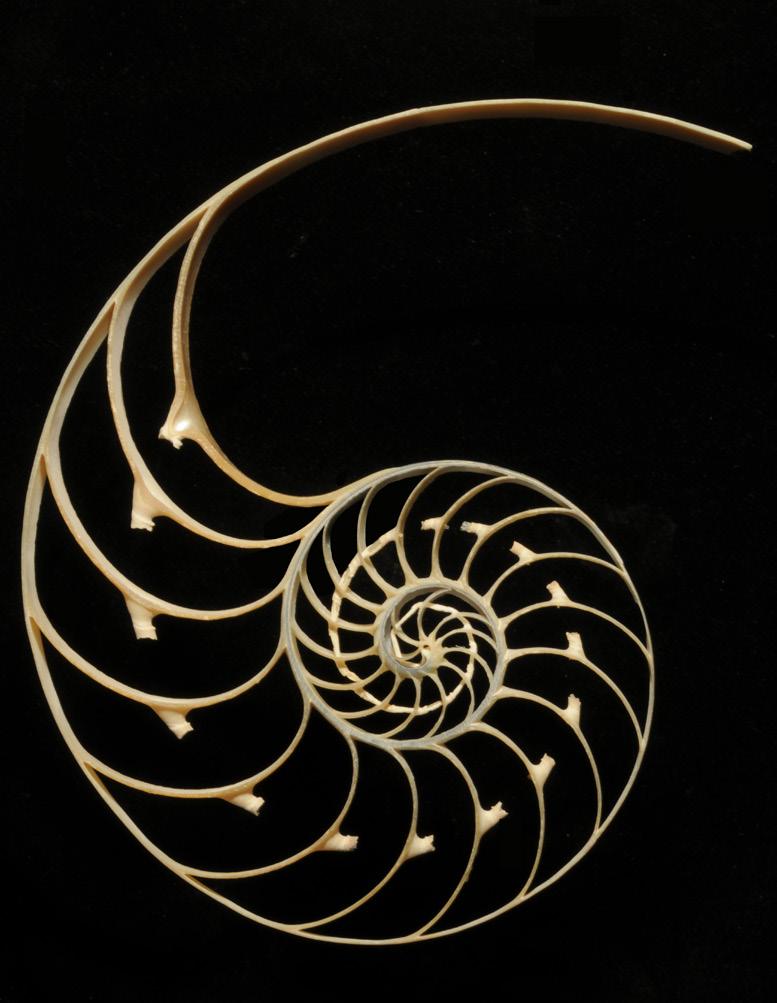
below | A section through the shell of Nautilus pompilius showing that the shell grows by addition of material to its outer edge in the form of a logarithmic spiral.
THE SUCCESS OF MOLLUSKS
Mollusks—with and without shells—are among the most successful organisms and have diversified to occupy nearly all habitats. They originally evolved in the oceans of the world and now occur in all marine habitats from the splash zones above high-tide lines to the deepest ocean trenches, including hydrothermal vents, and from the tropics to both polar regions. Several lineages of gastropods and bivalves have independently adapted to freshwater habitats, from estuaries to rivers, streams, lakes, and hot springs. Other gastropod lineages have evolved the ability to breath air and live on land, ranging from nearshore environments to grasslands, trees, mountains, and deserts. Some squid species are
even capable of briefly flying, much like flying fish, by swimming rapidly near the surface and then leaving the water to become airborne for tens of feet to escape predators.
Several mollusks are among the largest known animals. Some gastropods and bivalves approach 40 in (1 m) in length. Giant clams can attain a weight of 440 lbs (200 kg) while giant and colossal squid can exceed 50 ft (15 m) in length and 1,100 lbs (500 kg) in weight. Nevertheless, most mollusks are small animals. A survey of the mollusks collected in New Caledonia, for example, revealed that the majority of the nearly 3,000 species sampled had an adult shell size that was less than 5/8 in (17 mm). Some species never grow larger than 1/32 in (1 mm) in length.
Mollusks are extremely diverse in their habitats. The majority of aquatic species are benthic, living upon or burrowing within the ocean bottom. Many of these species have larvae with a planktonic stage (floating in the open ocean) that later metamorphose, or transform, and settle to the ocean bottom. Some mollusks, including most cephalopods (such as all Nautilidae, Spirulidae, Loliginidae, and some octopods like Argonautidae) and some gastropods (such as Carinariidae and Cavoliniidae), are pelagic, spending their entire lives in the open ocean as free-swimming animals. Among the benthic animals, some occur in high densities and form reefs (for example, oyster reefs), which can serve as a habitat for many other animals. Others occur more sparsely, their densities often determined by their diet and food availability.
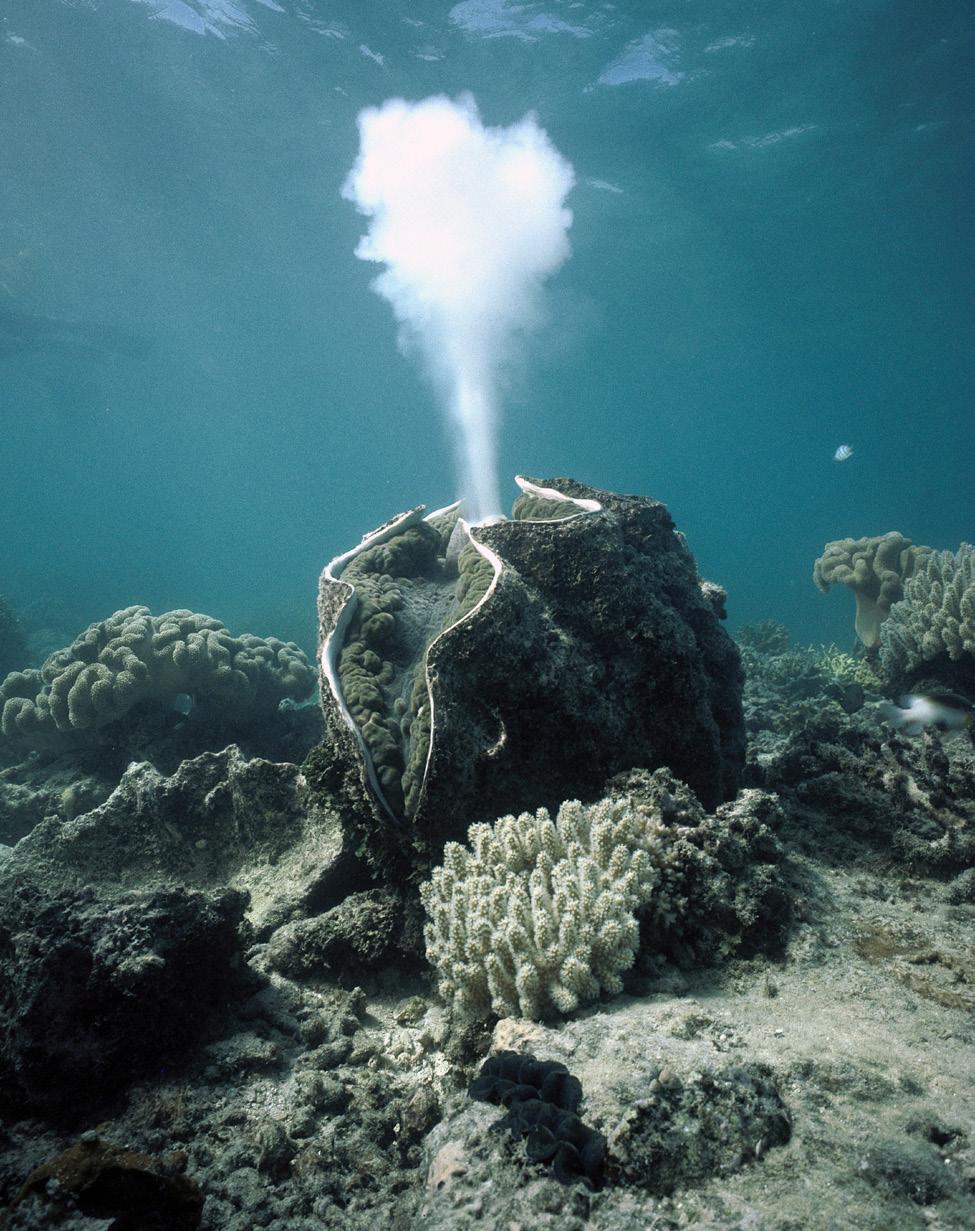
left | Tridacna gigas releasing spawn into the water along the Great Barrier Reef, Queensland, Australia.
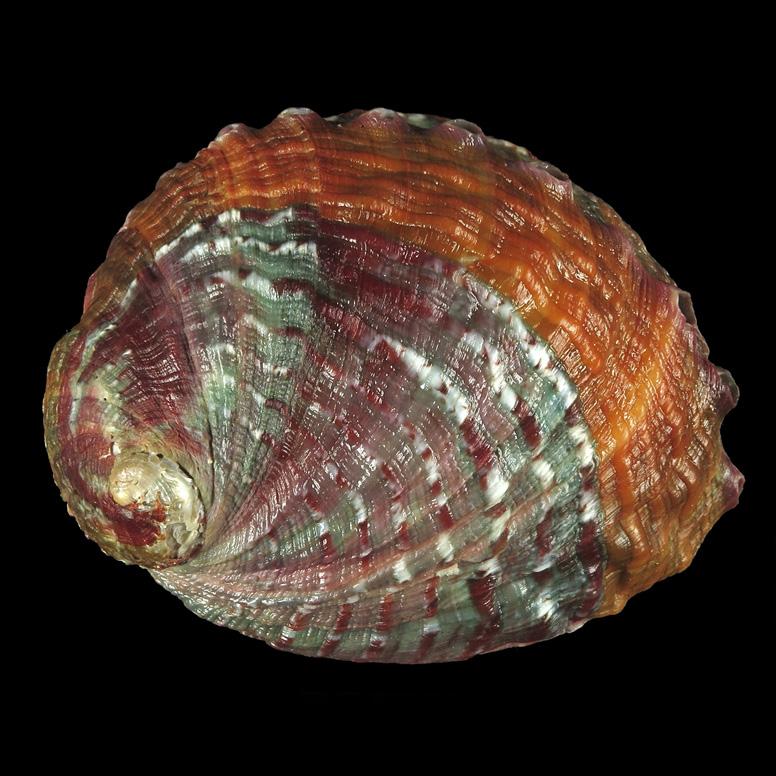
above | The Northern Abalone Haliotis kamtschatkana has been listed as an endangered species since 2006, according to the IUCN Red List.
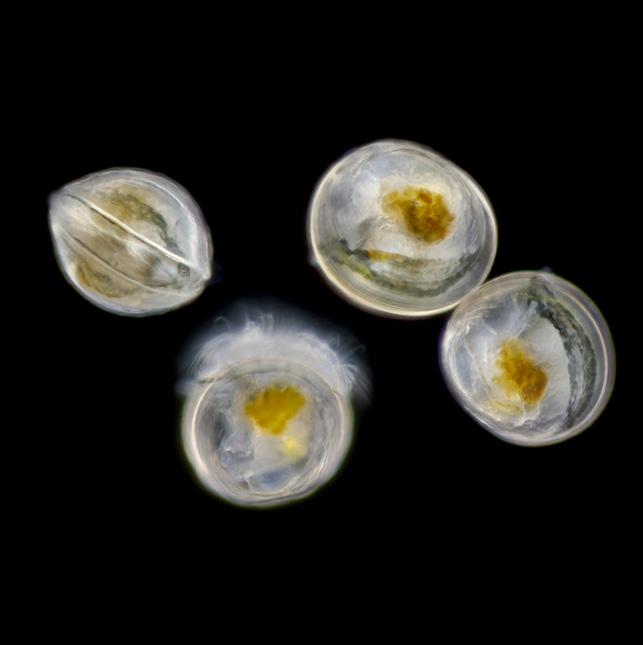
right | Free-swimming planktonic larvae of Ostrea edulis. After metamophosis, they will settle and become permanently attached to a hard substrate.
Modes of feeding also vary.
THREATS TO MOLLUSKS
Despite their diversity, many shelled mollusks have been and continue to be negatively affected by a variety of human activities, ranging from overfishing and introduction of invasive species that compete with native species to habitat destruction (for example, deforestation, dam construction, and oil spills) and increasing pollution of the land, sea, and air. The most immediate and greatest risk is for shelled mollusks that are limited to small or endemic populations, most notably terrestrial snails known only from small islands as well as freshwater snails and bivalves that are endemic to single springs, streams, or drainages.
Some feed on detritus, others are filter feeders; some are herbivores scraping algae with their radula (a flexible ribbon with multiple, rasp-like teeth). Many lineages of carnivores have evolved specialized feeding mechanisms. Some (such as Naticidae and Muricidae) are capable of penetrating the shells of their prey using a combination of chemical and mechanical means; others inject prey with toxins that rapidly paralyze them. Still others are parasitic on other mollusks or echinoderms (marine invertebrates that include starfish, sea urchins, and sea cucumbers). Giant clams host symbiotic algae within their tissues that contribute to their nutrition, while bivalves that occur at hydrothermal vents in the deep sea rely on symbiotic chemosynthetic bacteria growing within their gills for their nutrition.
The International Union for Conservation of Nature (IUCN) maintains a Red List of Threatened Species, which documents the extinction risk of portions of the world’s biota (plant and animal life within a particular area). It is strongly biased toward mammals and birds, but includes data on 9,862 species of mollusks, listing 308 species as extinct, 19 as extinct in the wild, and 744 as critically endangered. Human activities affect ocean-dwelling species but have generally been limited to areas that are smaller than the range of impacted species, which survive outside those areas, and can, over time, repopulate them. However, even mollusks that are endemic to hydrothermal vents—small hot springs along the ocean floor at depths of several thousand feet—are included in the Red List. Of 184 such endemic species that have been assessed, 39 are listed as critically endangered and another 75 endangered or vulnerable due to deep-sea mining for rare minerals.
THE ORIGIN AND EVOLUTION OF MOLLUSKS
All mollusks, living and extinct, are descended from a common ancestor. The phylum Mollusca is among the oldest groups of organisms on Earth, with many of the major shelled lineages already well-represented in the early Cambrian (539 mya) fossil record. Several taxa that either lacked a shell or had a flexible or weakly mineralized shell were present in the pre-Cambrian (555 mya) fauna and some have been questionably assigned to the phylum Mollusca.
MOLLUSK DIVERSITY
Mollusks have survived five major mass extinctions over the past 450 million years, each of which caused the extinction of over 75 percent of all animals and plants living at the time. Although
multiple molluscan lineages perished during these extinctions (among them Rostroconchia, Bellerophontoidea, and Ammonoidea), those that survived proliferated to become the most diverse group of animals in the oceans, and the second-most diverse phylum living today, second only to Arthropoda, which includes insects.
Estimates of molluscan diversity are in the range of 80,000 to over 100,000 presently known living species, with nearly as many extinct fossil species. Other estimates suggest that fewer than half of living species of mollusks have thus far
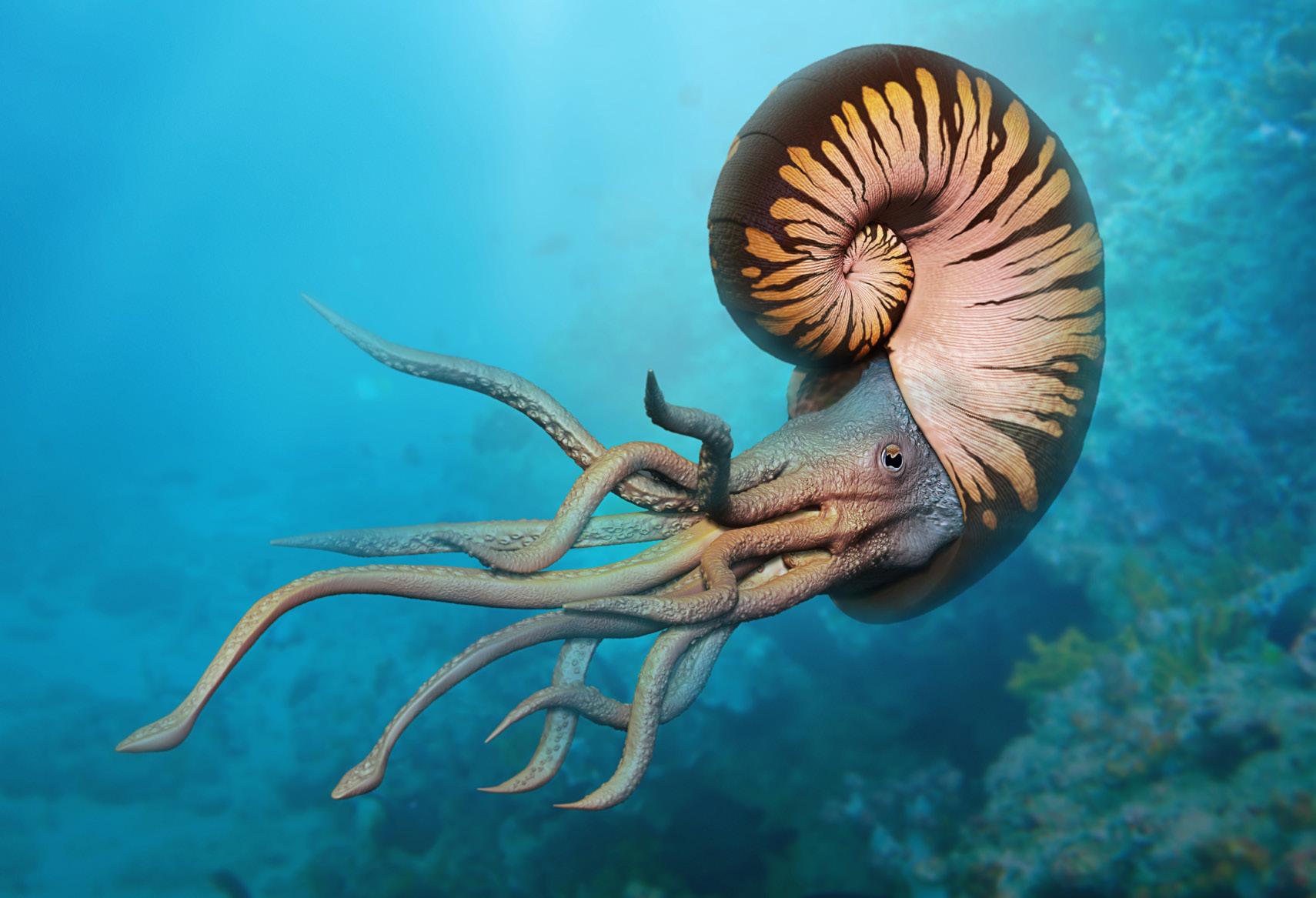
below | Drawing of an animal of the Ammonoid order Goniatida, which evolved during the Middle Devonian (390 mya) and became extinct during the End Permian Extinction (251.9 mya).
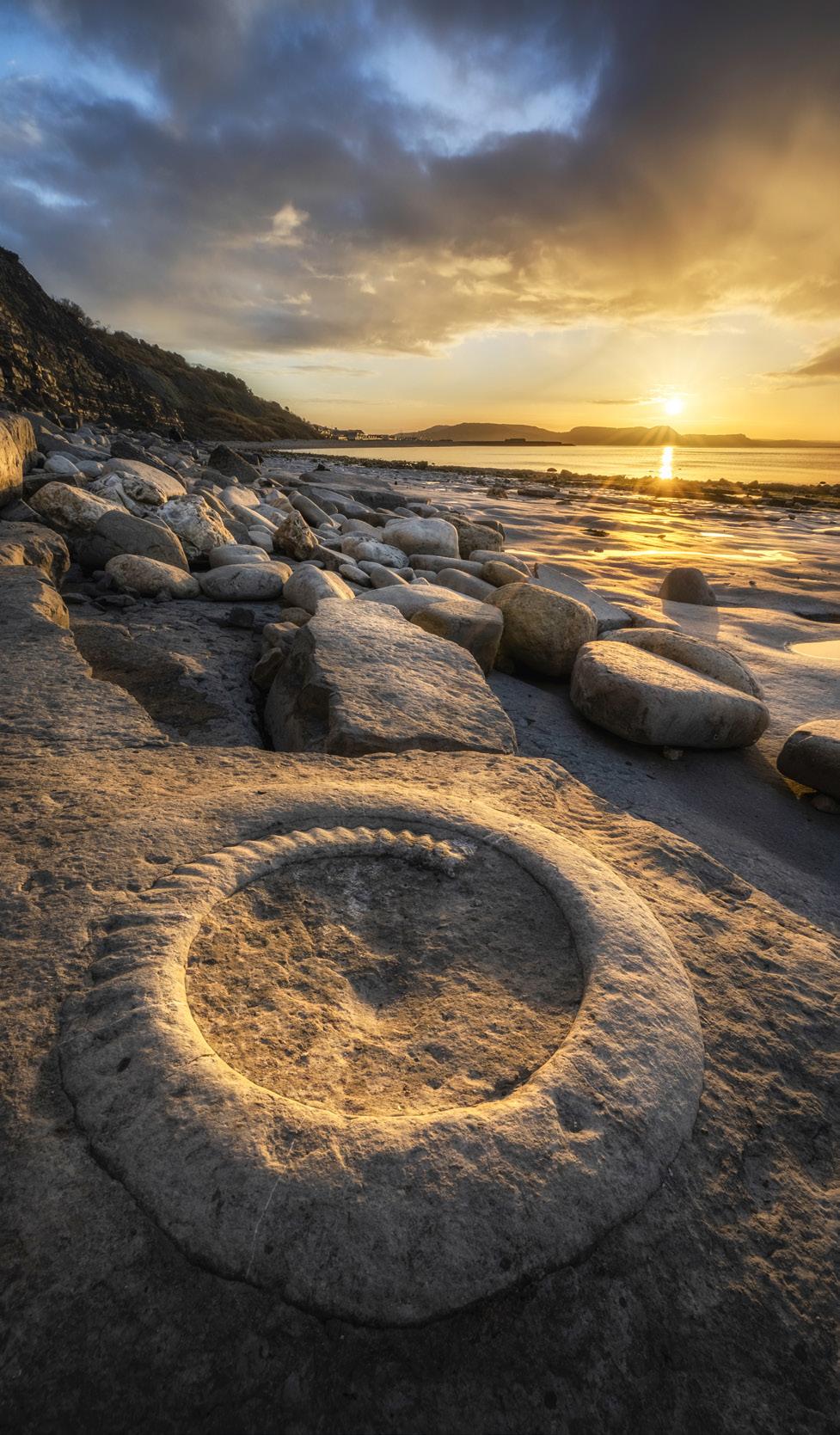
right | Ammonite fossil of Jurassic age exposed on Monmouth Beach, West of Lyme Regis, Dorset, England.
been discovered and documented. This extraordinary diversity of the phylum Mollusca is currently partitioned into eight classes living today, each representing a separate lineage that traces its ancestry, directly or indirectly, to the ancestral mollusk.
The evolutionary relationships among these lineages are the subject of ongoing research and remain in flux, undergoing frequent revisions and refinements as more data, increasingly based on DNA sequences, are accumulated. Phylogenomic studies indicate an early division within the phylum into two lineages: the Aculifera and the Conchifera. The Aculifera, which include the two shell-less lineages Caudofoveata and Solenogastres (currently regarded as separate classes, but previously considered to be subclasses within the class Aplacophora) as well as the Polyplacophora, which have a dorsal shell composed of eight interlocking valves, are thought to have originated at least 540 mya during the Ediacaran, while its sister taxon, the Conchifera, which includes the five remaining molluscan lineages that are descended from a single-shelled ancestor, appeared and diversified during the early Cambrian. The last common ancestor of all mollusks, the molluscan prototype, is thought to have lived during the Ediacaran (635–541 mya).
THE ANCESTRAL MOLLUSK
The hypothetical ancestral mollusk is deduced to have been a small (< 3 mm) animal that was bilaterally symmetrical along an anteroposterior axis, with an anterior head, a mouth containing a radula, a ventral foot, and a dorsal secretory mantle that was expanded posteriorly to form
a mantle cavity that contained paired gills, osphradia, anus, as well as openings of the nephrida and genital organs. These animals had a dorsal chitinous cuticle in which were embedded spicules or scales. These ancestral mollusks are thought to have lived in marine habitats at sublittoral depths. They were likely microcarnivores. Reproduction was by external fertilization of large, yolky eggs that developed into planktonic larvae before settling to a benthic habitat.
ABOUT THIS BOOK
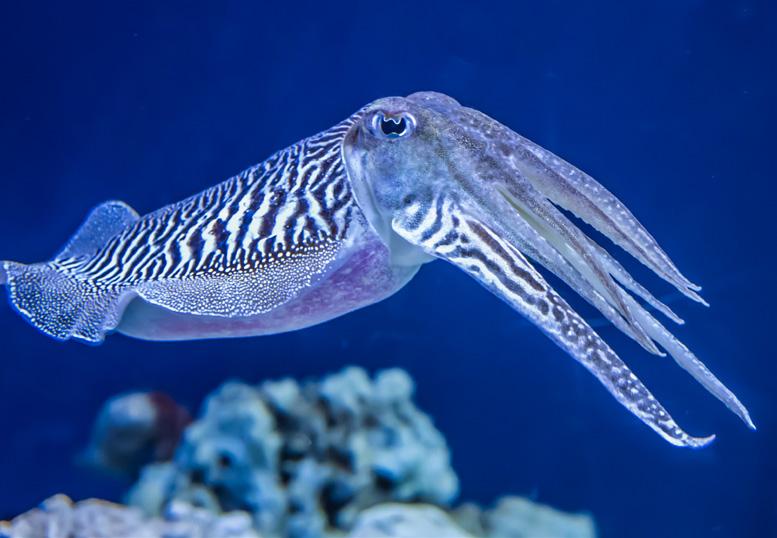
above | The common (European) cuttlefish (Sepia officinalis) is generally found in the eastern North Atlantic and Mediterranean Sea. It is a cephalopod, related to squid and octopus.
below | Chart showing the ocean depths referred to in this book.
This book focuses on the shelled mollusks that inhabit the oceans of the world. Neither shell-less mollusks nor freshwater or terrestrial mollusks are featured in The Shelled Classes (see pages 16–223). A short introduction is provided on the shell-less classes on pages 14–15.
Of the more than 700 families within Mollusca apportioned among the six shelled classes, 93 examples have been selected to provide a broad overview of the immense variability in morphology, habitat, and behavior within the phylum Mollusca. These are arranged according to our current understanding of the phylogenetic relationships of the classes and the families within the classes. Ongoing research to document molluscan biodiversity results in the discovery of dozens to hundreds of new species annually, while multiple studies of the relationships result in frequent additions and rearrangements
OCEAN ZONES
of genera and families within Mollusca. Websites such as the World Register of Marine Species (www. marinespecies.org) and Molluscabase (www. molluscabase.org) provide updated accounts of our current understanding of molluscan diversity and interrelationships of the various higher taxa.
The maps showing the distribution of each family are based on records documented by the Global Biodiversity Information Facility (GBIF, www.gbif.org), which is also continuously updated.
MOLLUSK FAMILY TREE
Solenogastres
Hypothetical ancestral mollusk
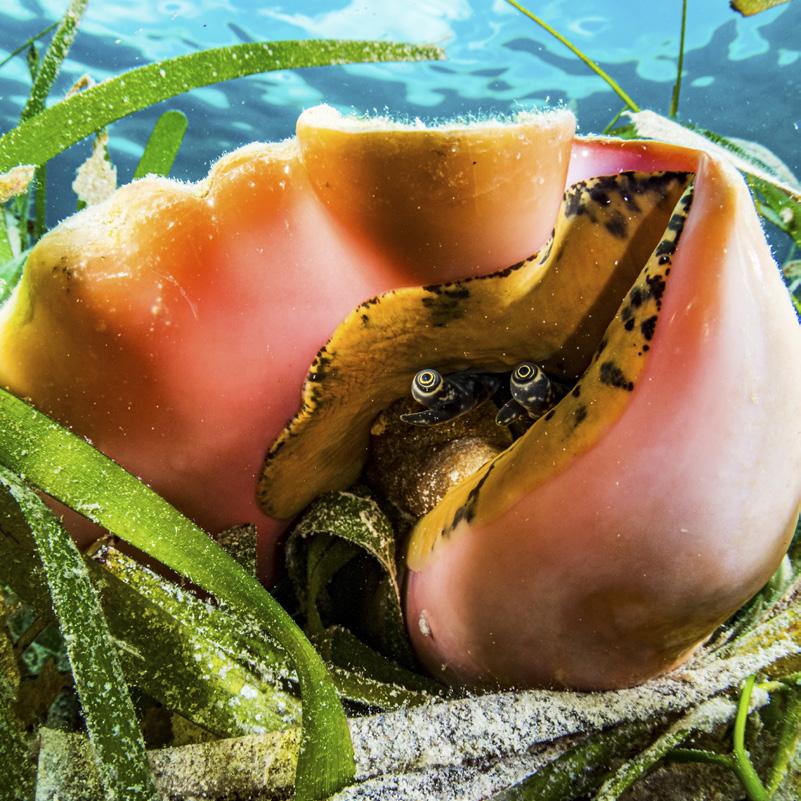
top | Animal of Aliger gigas in a seagrass bed in the Bahamas.
right | Relationships of the classes within the phylum mollusca.
Caudofoveata
Polyplacophora
Monoplacophora
Bivalvia
Scaphopoda
Gastropoda Cephalopoda
THE SHELL-LESS CLASSES
CLASS CAUDOFOVEATA
Neither common nor diverse, Caudofoveata are known from a single order containing 3 families, 14 genera, and about 150 species. The Caudofoveata are considered to include the most primitive mollusks living today. They exhibit most of the features attributed to the hypothetical ancestral mollusk.
Caudofoveata are worm-shaped and covered by a cuticle composed of protein, in which are embedded monocrystalline spicules. They have a cuticular oral shield, a simple bipartite radula, lack a ventral furrow or foot, and have one pair of gills (ctenidia) in the posterior mantle cavity. Caudofoveata have separate sexes and are broadcast spawners, releasing their sperm and eggs into open water. Eggs have a large yolk that provides nutrition to the developing trochophore (type of free-swimming, spherical, or pear-shaped marine larvae with cilia) before they settle to the ocean bottom.
Most species are less than an inch in length, although some grow to 5–6 in (125–150 mm). The majority of species have been reported from the northern hemisphere, where they burrow in the upper inch or so of soft sediments at depths ranging from 98–>23,000 ft (30–>7,000 m) and feed on organic detritus or on small organisms, primarily foraminiferans and small polychaetes (marine worms). This class has thus far not been recognized in the fossil record.
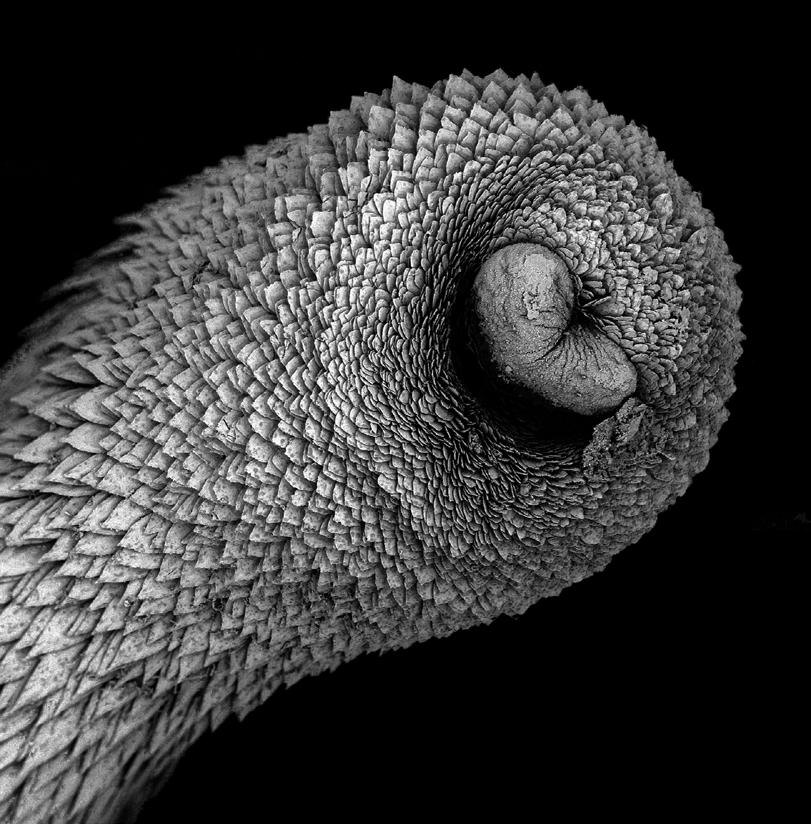
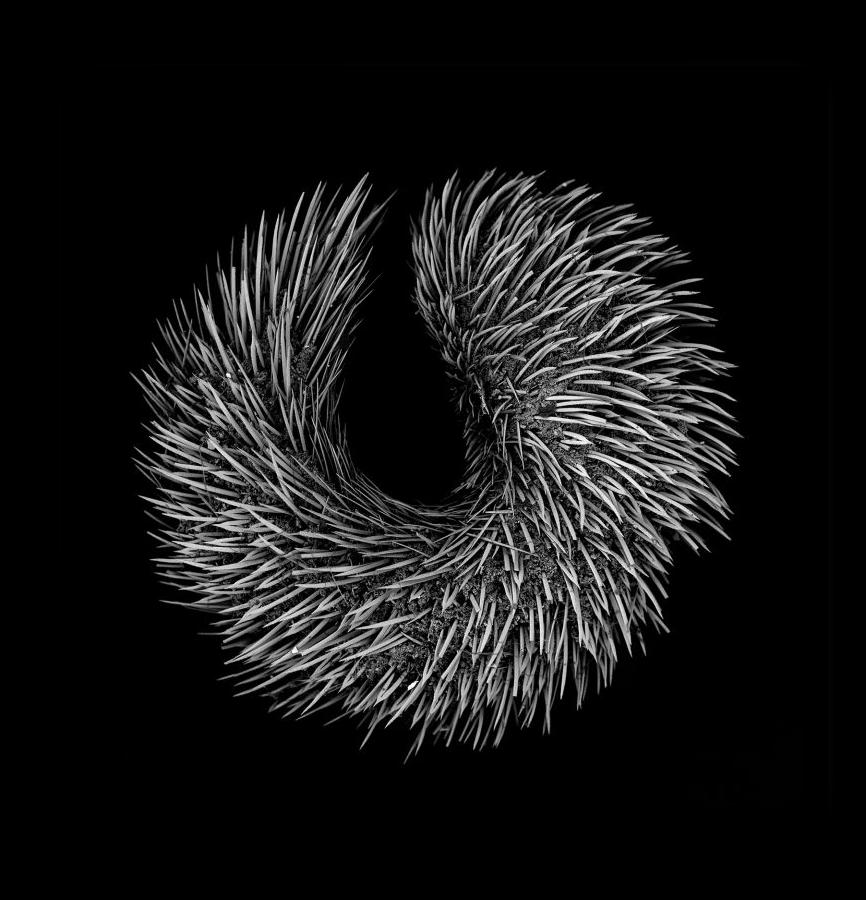
above | Close-up of mouth of Caudofoveata Falcidens sp, from New Zealand, taken using a scanning electron microscope.
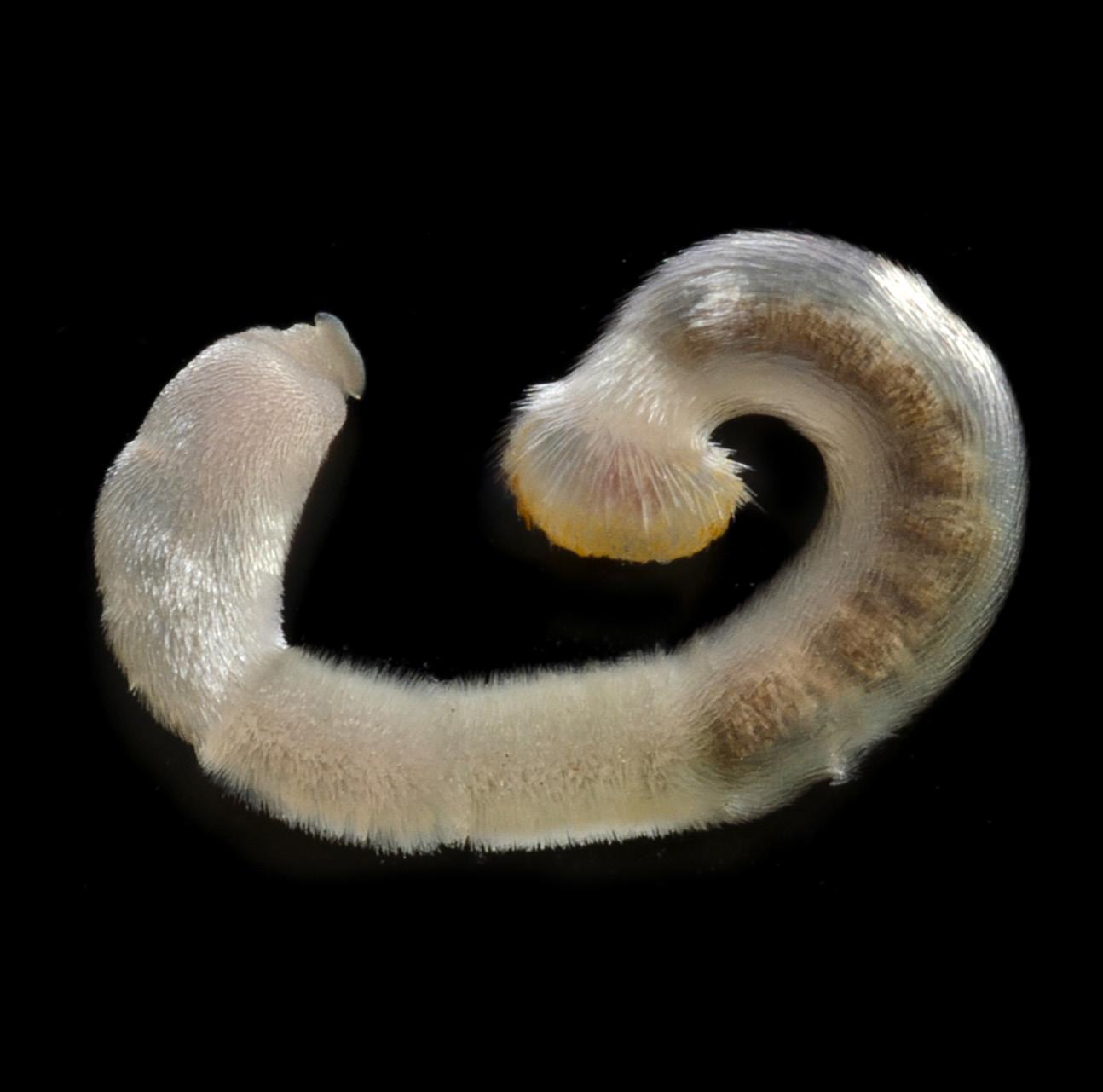
below | Chaetoderma argenteum. Observed at a depth of 597 ft (182 m), soft bottom, off Tacoma, Washington.
CLASS SOLENOGASTRES
Species of Solenogastres are also worm-shaped but are laterally compressed, with the ventral foot situated in a groove. The mantle produces a cuticle that has aragonitic spicules and scales. Solenogastres have an anteroventral mouth. A radula with thirteen teeth per row is present in most, but not all species. They lack gills or kidneys and are protandrous hermaphrodites.
Specimens are born male, becoming female as they grow. Fertilization is internal. Fertilized
eggs may be released or brooded in the mantle cavity.
Solenogastres currently contain 24 families, 75 genera, and 320 species. They occur in all oceans, although most species are known from the southern hemisphere. They inhabit shallow to abyssal (14,760 ft / 4,500 m) depths. Many are associated with hydroids, anemones, and soft corals, on which they feed. A putative Solenogastres has been reported in Silurian (443.8–419.2 mya) deposits.
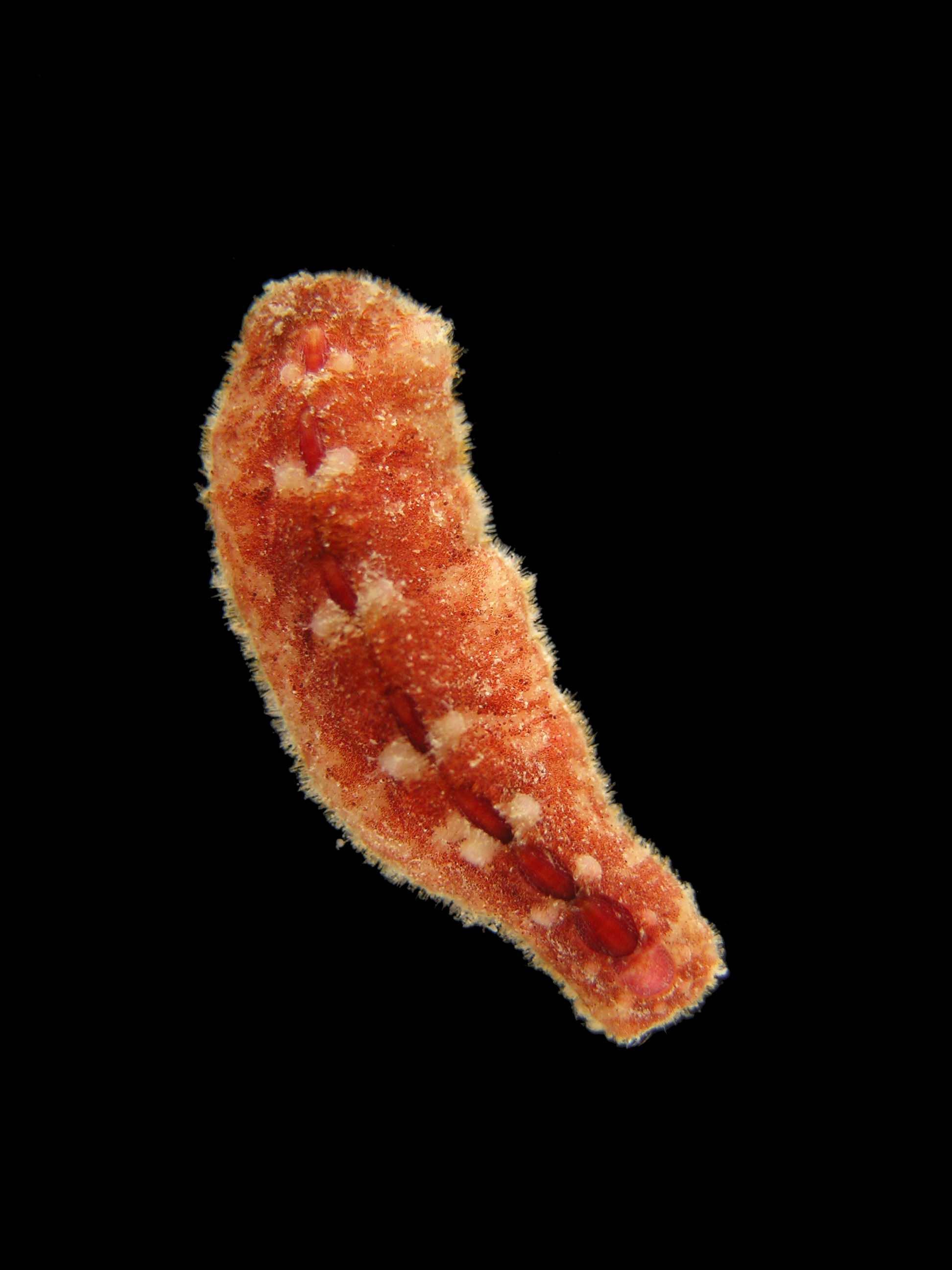
below | Neomenia sp. Observed off Panglao, Bohol Island, Philippines.
left | A scanning electron microscope image showing the spines and hooks of a pruvotinid Solenogaster, Iceland.
THE SHELLED CLASSES
Six of the eight classes within the phylum Mollusca have calcified external shells. Of these, the class Polyplacophora (see page 18), with a shell composed of eight interlocking plates, is currently regarded as being most closely related to the shell-less classes Caudofoveata (see page 14) and Solenogastres (see page 15) and included in the subphylum Aculifera. The remaining five classes, Monoplacophora (see page 34), Bivalvia (see page 36), Scaphopoda (see page 100), Gastropoda (see page 108), and Cephalopoda (see page 210), are classified as members of the subphylum Conchifera, and share a common ancestor with a single shelled ancestor resembling members of Monoplacophora.
This chapter features a small subset of the more than 700 families that span the range of shelled mollusks inhabiting the world’s oceans, with representation roughly proportional to the diversity among the classes. Some include common and wide-ranging genera and species that will be familiar to the casual observer. Others feature animals that provide insights into the broad ranges of habitats, behaviors, diets, and reproductive strategies that have and continue to evolve within the most diverse phylum in the oceans of the world.
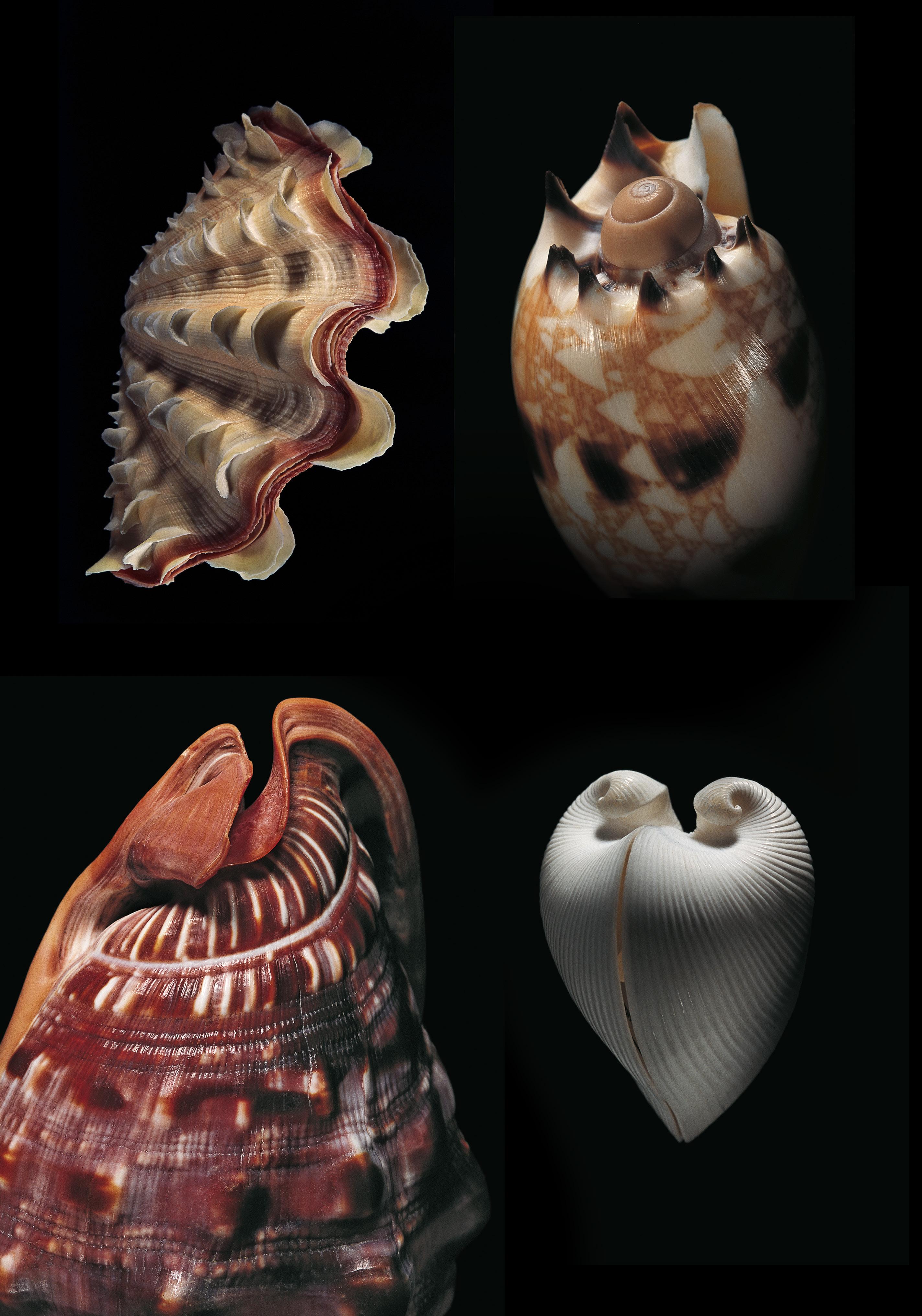
opposite | Clockwise from top left: Tridacna noae, Melo georginae, Meiocardia moltkiana, and Cypraecassis rufa
POLYPLACOPHORA
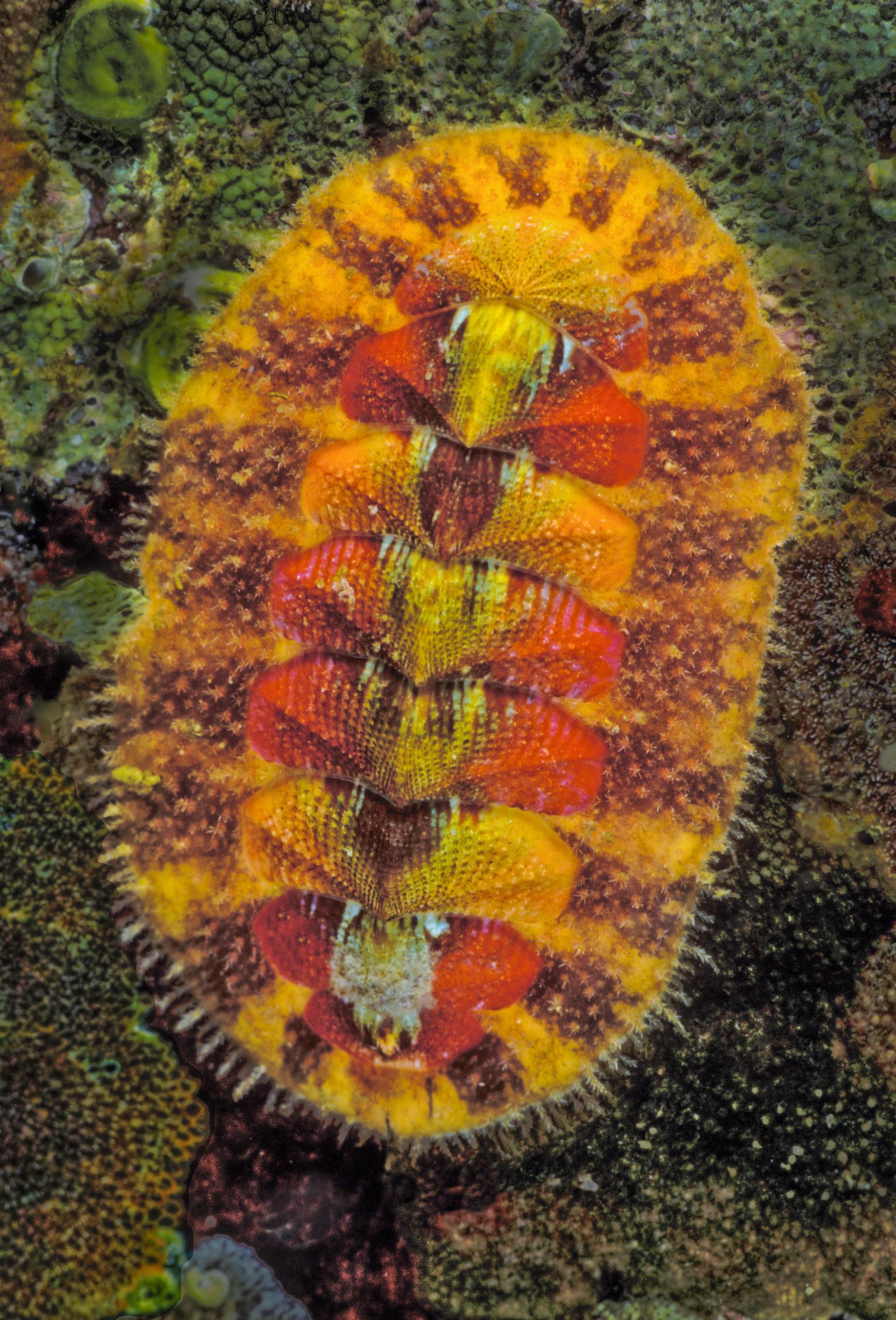
Polyplacophorans, also known as chitons or coat-of-mail shells, are elongate, bilaterally symmetrical, dorsoventrally compressed animals. Their shells are secreted as eight separate, parallel, interdigitating valves: a head valve, six intermediate valves, and a tail valve, all of which can move relative to each other. These valves are held together by muscles and an elliptical, cuticularized girdle, allowing the animal to cling and conform to uneven surfaces and to roll into a ball if dislodged. Each shell plate is composed of four layers—the outermost layer is the periostracum, and is composed of protein. The remaining three layers—the tegmentum, the articulamentum, and the hypostracum—are all composed of crystalline calcium carbonate. Light-sensing organs (aesthetes) that are unique to chitons pass through narrow pores in the shell plates. The girdle may have scales, spines, spicules, or chitinous hairs.
Polyplacophorans have a large foot flanked by a mantle groove that contains up to forty pairs of gills (ctenidia). Gonopores (reproductive organs) and kidney ducts also open into the mantle groove. The anterior head bears a mouth but lacks tentacles or eyes. The anus is posterior. The radula, specialized for scraping hard substrates, contains 13–17
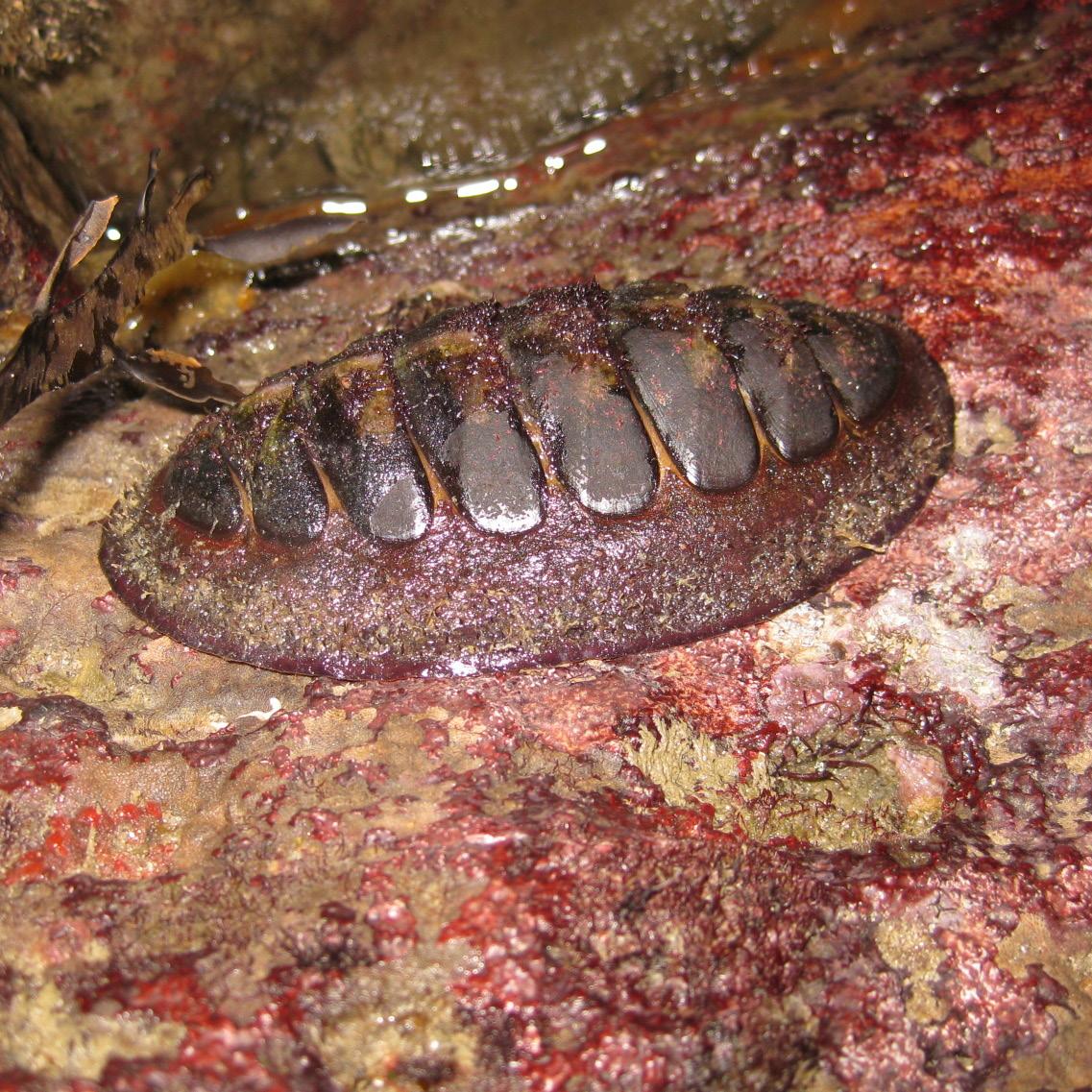
opposite | Mopalia ferreirai crawling on rock in Queen Charlotte Strait, British Columbia, Canada.
teeth per row, with 25–150 rows. Two teeth in each row are capped with magnetite (iron oxide) to make them harder and resist wear.
Sexes are separate in most chitons, although hermaphroditism has been reported in some species. Eggs are rich in yolk, and generally shed into the water or are deposited in clumps or gelatinous strings. Some species brood their eggs within the pallial groove.
Chitons are exclusively marine and live on hard substrates from intertidal to abyssal depths. Most live in shallow water on rocky shores and graze on algae, diatoms, foraminifera, and sponges growing on the rocks, but several taxa in three separate lineages are predators that capture and consume small crustaceans and worms. Some species exhibit homing behavior, returning to the same spot after feeding excursions. Deep-sea species feed on decaying sunken wood or biofilms that grow on it.
Most polyplacophoran species range in size from a fraction of an inch to about 4 in (100 mm), but some exceed 12 in (300 mm) in length. Living Polyplacophora are divided into 3 orders, 19 families, and approximately 950 species. Polyplacophora are represented in the fossil record since the Late Cambrian (490 mya).
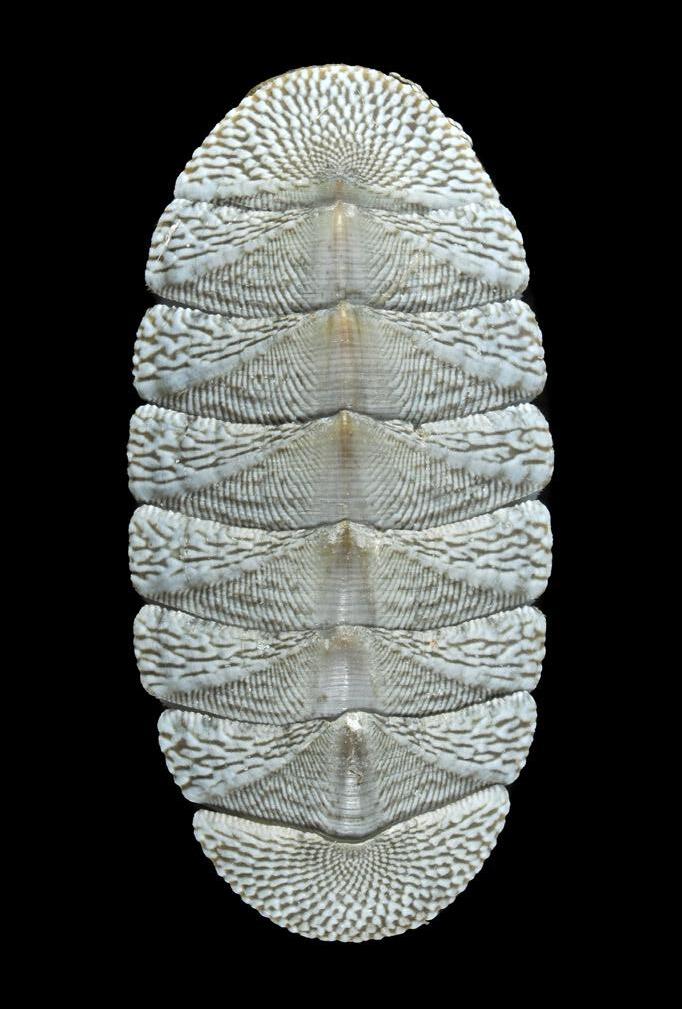
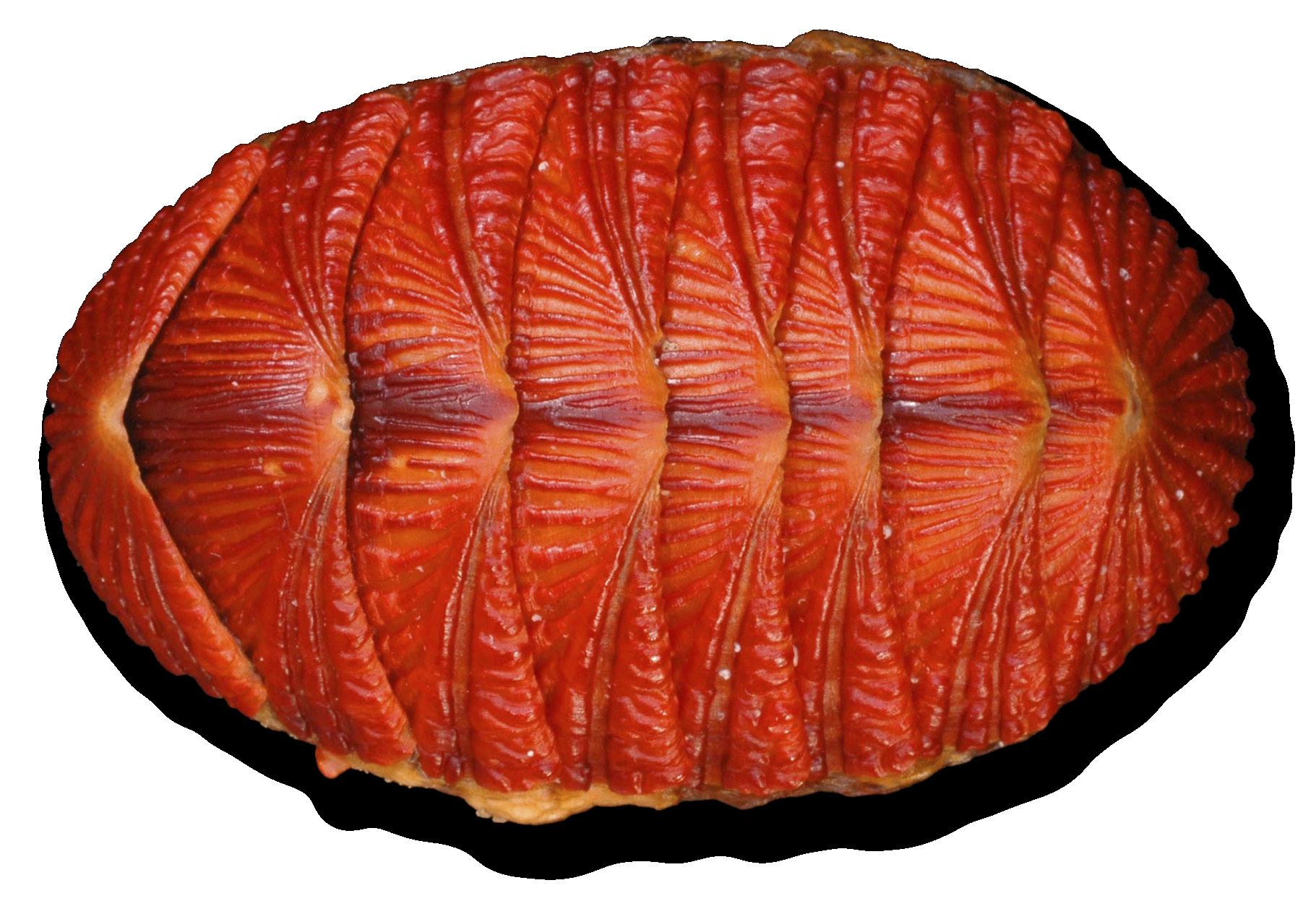
above | Shell of Chiton tuberculatus. The girdle is not present in this photo.
Anterior valve
Jugal area
Pleural area
Lateral area
Posterior valve
DORSAL VIEW OF CHITON
Jugal area
Girdle
VENTRAL VIEW OF CHITON
DORSAL AND VENTRAL VIEW OF HEAD VALVE
Insertion tray
Insertion plate Slit
Slit tray Apophysis Apophysis
DORSAL AND VENTRAL VIEW OF INTERMEDIATE VALVE
DORSAL AND VENTRAL VIEW OF TAIL VALVE
Slit tray
Insertion plate
Mouth
Foot
Mantle groove
Gills
Gonopore
Anus
Pallia lappet
Slit
Kidney opening
SLENDER CHITONS
Tdistribution
he family Leptochitonidae, a representative of Lepidopleurida, the most basal order of living Polyplacophorans, occurs in all oceans of the world. It is comprised of mostly small species that are less than 1 in (25 mm) in length. Shell valves lack insertion plates and sutural lamellae are small. The tegmentum tends to be colorless and pustulose, while the girdle may be covered with pustules or overlapping scales. Gills are situated in the posterior portion of the mantle groove. Most species inhabit deep water (to 26,250 ft/ 8,000 m), where they feed on bottom detritus and small organisms. Some deep-sea species feed on decaying wood and the biofilm growing on it.
Earliest records of this family, which represent an extinct lineage, date to the Ordovician (450 mya) deposits in Europe and North America. The majority of the known species are in the genus Leptochiton
left | Leptochiton asellus lives on the underside of rocks at depths to 820 ft (250 m) and is widespread throughout the North Atlantic Ocean.
Global, from the tropics to polar seas. Some species are subtidal, but many occur at bathyal to abyssal depths.
diversity
Family includes approximately 150 living species assigned to 6 genera within 1 subfamily.
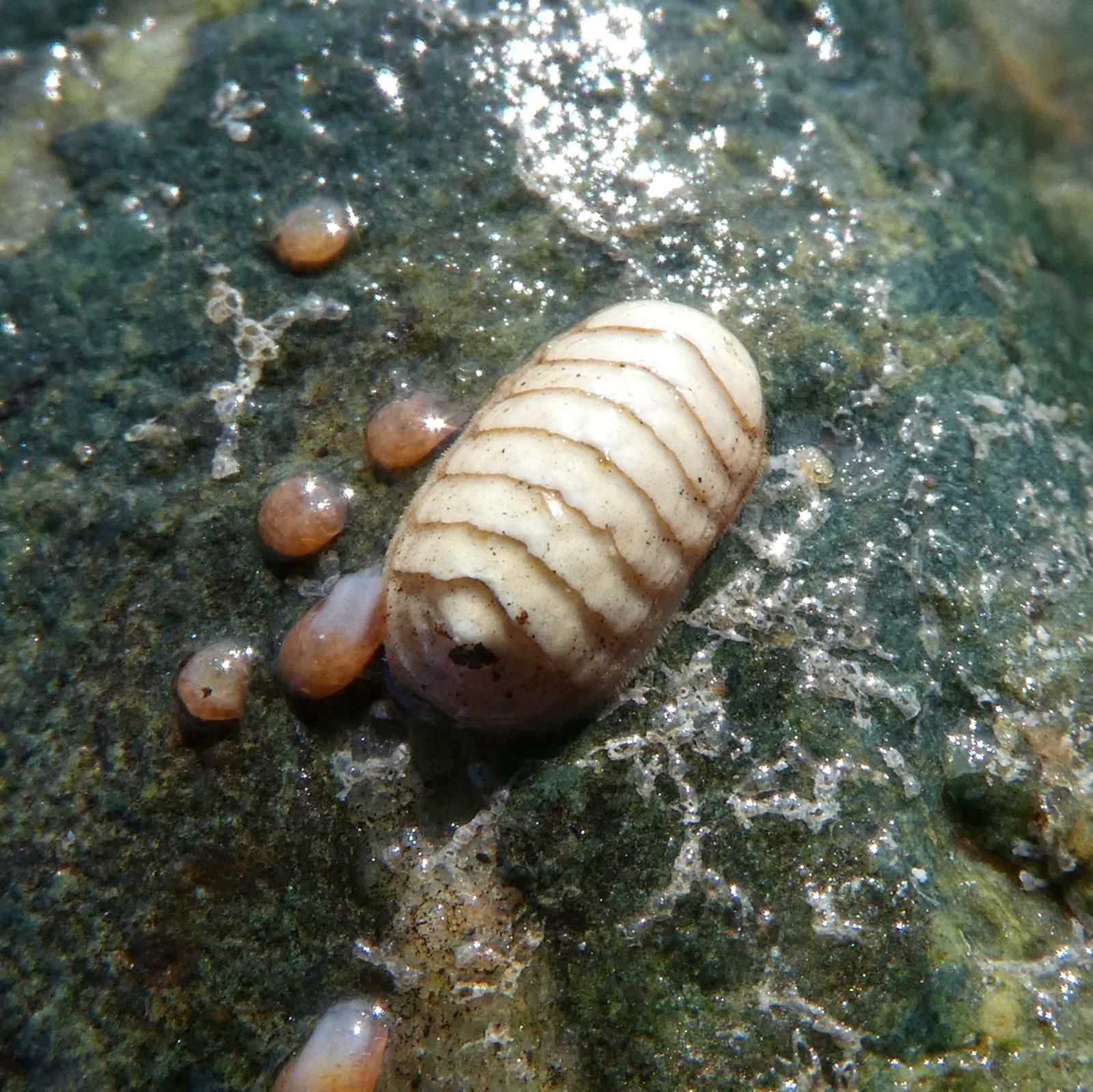
opposite | Leptochiton rugatus on intertidal rock, Strathcona, British Columbia, Canada.
habitat
Shallow-water species live on or under rocks and hard substrates. Deep-water species may live on sunken wood or sponges.
size
Species range in size from ¼–1¼ in (7–30 mm).
diet
Grazers, feeding on detritus, small organisms, sunken wood, and the biofilms growing on it.
reproduction
Sexes are separate, and fertilization is external, with eggs and sperm shed into the water. The eggs are surrounded by a simple and smooth jelly-like hull. There is an extended pelagic, free-swimming larval stage prior to metamorphosis and settlement to the ocean bottom.
CALLOCHITONS
The order Callochitonida, which contains a single family Callochitonidae, is the secondmost basal lineage of living chitons. It diverged from the order Chitonida, which includes all remaining living chitons during the early Permian.
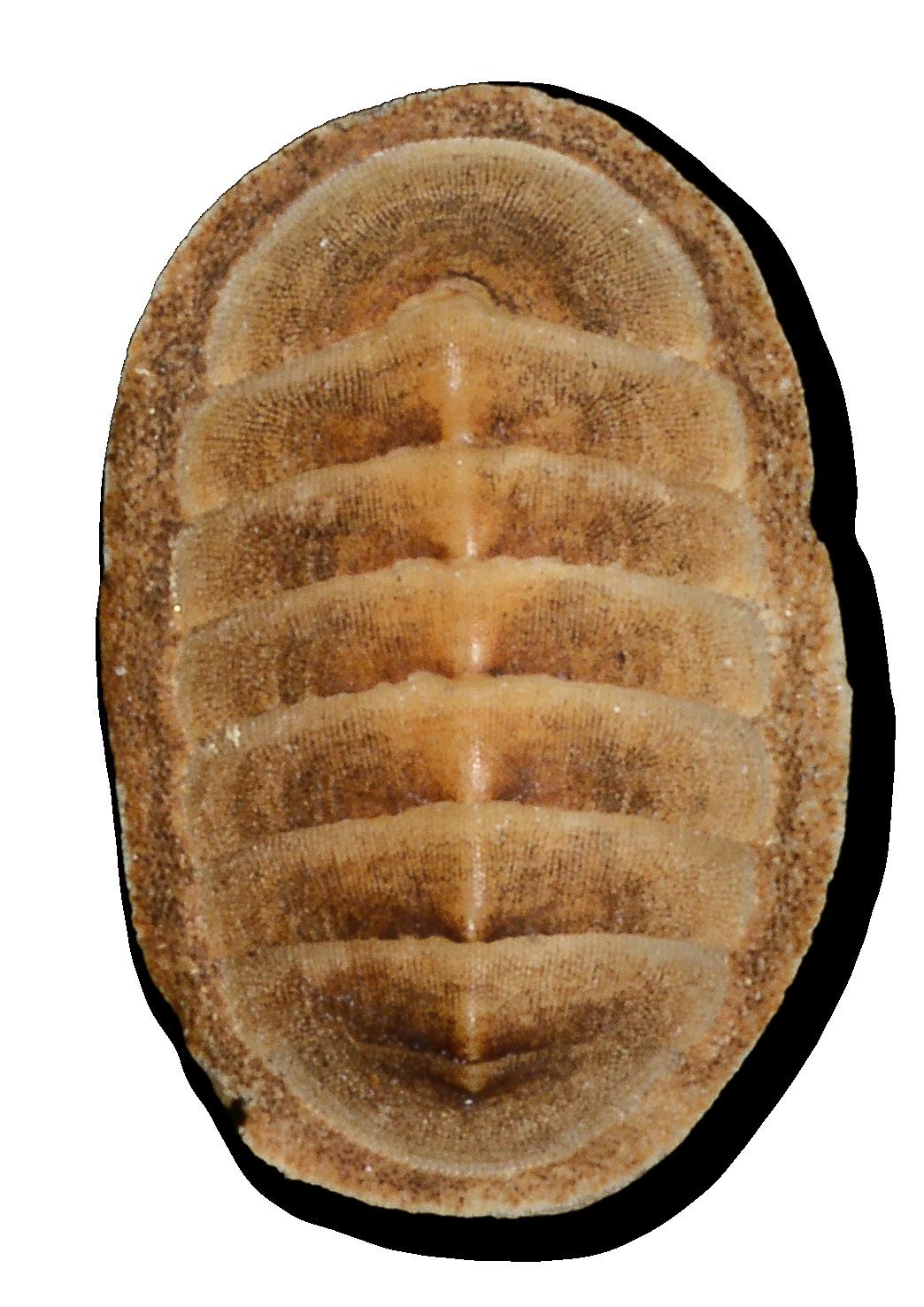
below | Callochiton septemvalvis from Catalonia, Spain.
Shells of Callochitonidae are small to moderately large and ovate to elongate in outline. The tegmentum may be smooth, finely granulose, or with longitudinal ribs. There are multiple well-developed pigmented aesthetes. The insertion plates on the head and tail valves may have from ten to twenty-four slits, the median valves from one to four slits. The girdle is thick and covered with closely packed minute scales, spicules, or scattered longer needles or bristles. Gills span the length of the mantle groove.
Callochitonidae live on hard substrates in shallow waters to depths of over 1,640 ft (500 m). Some species preferentially feed on coralline algae. Sexes are separate. Fertilization is external, with eggs covered with a jelly-like layer. Eggs hatch into lecithotrophic planktonic larvae without a veliger stage before metamorphosis.
distribution
Occurs in European seas, subtropical and tropical regions of the Indo-Pacific, and along the Southern Ocean.
diversity
Family includes 51 living species assigned to 5 genera within 1 subfamily.
habitat
On or under rocks and hard substrates at intertidal to bathyal depths up to 1,640 ft (500 m).
size
Species range in size from 5/16–4½ in (8–114 mm).
diet
Grazers, feeding on rocks covered with algae, diatoms, and detritus.
reproduction
Sexes are separate and fertilization is external. Larvae have a free-swimming stage before settling to the ocean bottom.
above | Eudoxochiton nobilis from the Bay of Plenty, New Zealand.
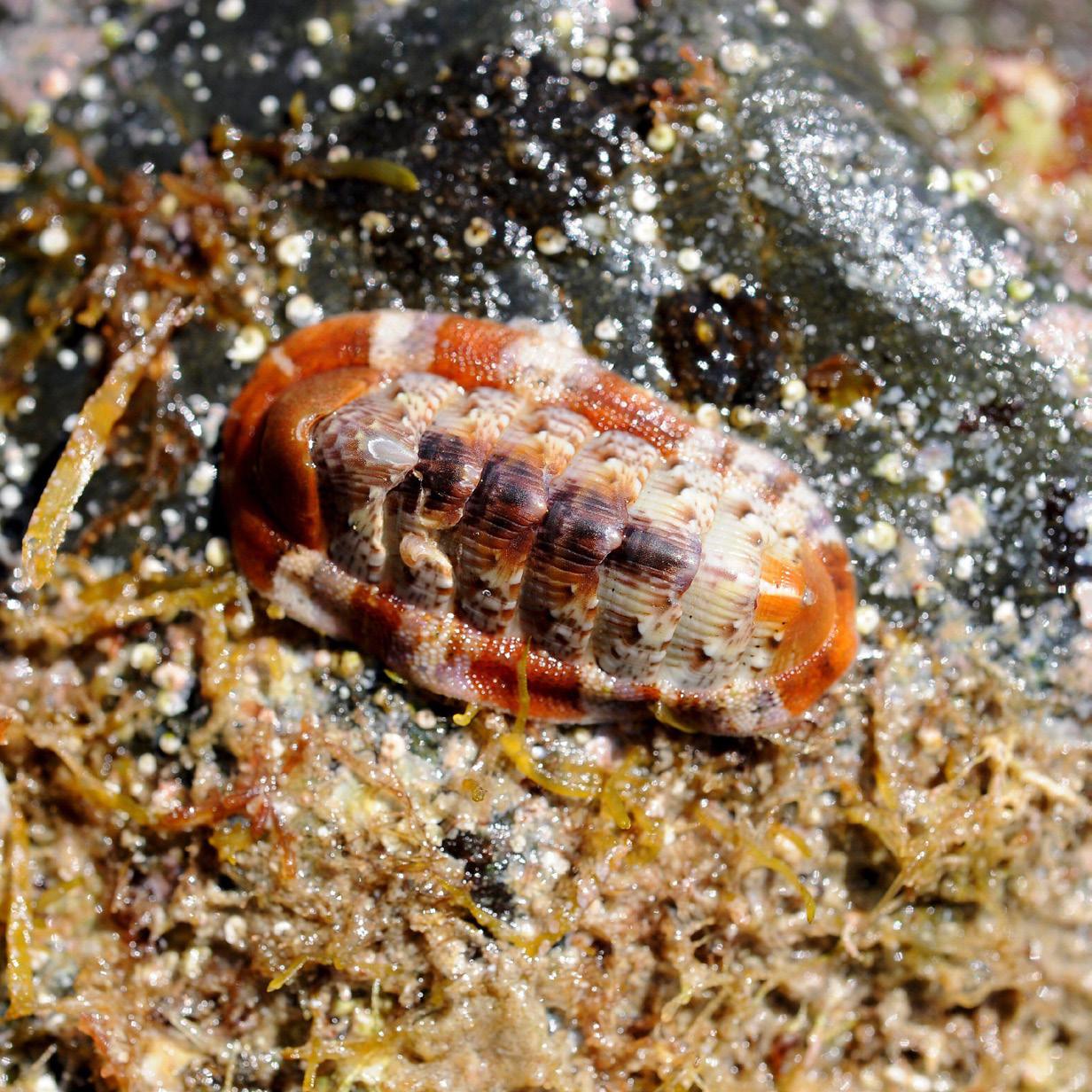
right | Callochiton sulcatus from the Galapagos Islands.