Oxford has created a website to accompany the titles in the Modern South Asia Series. Material that cannot be made available in a book, namely series editor information and submission guidelines are provided here. The reader is encouraged to consult this resource if they would like to find out more about the books in this series.
Clients and Constituents
Political Responsiveness in Patronage Democracies
JENNIFER BUSSELL
1
Oxford University Press is a department of the University of Oxford. It furthers the University’s objective of excellence in research, scholarship, and education by publishing worldwide. Oxford is a registered trade mark of Oxford University Press in the UK and certain other countries.
Published in the United States of America by Oxford University Press 198 Madison Avenue, New York, NY 10016, United States of America.
All rights reserved. No part of this publication may be reproduced, stored in a retrieval system, or transmitted, in any form or by any means, without the prior permission in writing of Oxford University Press, or as expressly permitted by law, by license, or under terms agreed with the appropriate reproduction rights organization. Inquiries concerning reproduction outside the scope of the above should be sent to the Rights Department, Oxford University Press, at the address above.
You must not circulate this work in any other form and you must impose this same condition on any acquirer.
Library of Congress Cataloging-in-Publication Data
Names: Bussell, Jennifer, 1975– author.
Title: Clients and constituents : political responsiveness in patronage democracies / Jennifer Bussell.
Description: New York, NY : Oxford University Press, [2019] | Includes bibliographical references.
Identifiers: LCCN 2018048645 (print) | LCCN 2019012888 (ebook) | ISBN 9780190945411 (Universal PDF) | ISBN 9780190945428 (Electronic Publication) | ISBN 9780190945398 (hardback : alk. paper) | ISBN 9780190945404 (pbk. : alk. paper)
Subjects: LCSH: Patronage, Political—India. | Patron and client—India. | Democracy—India. | India—Politics and government.
LC record available at https://lccn.loc.gov/2018048645
1 3 5 7 9 8 6 4 2
Paperback printed by WebCom, Inc., Canada Hardback printed by Bridgeport National Bindery, Inc., United States of America
For my most treasured constituents, Thad, Thalia, and Clio
1.1
List of Tables
2.3
2.4
7.1
7.4
7.5
8.1
10.1
10.6
List of Figures
8.6
8.7
9.1
9.2
9.3
Local Blocking Treatment with No Information on Electoral Behavior, Responsiveness Decreases in States with Longer History of
Preface and Acknowledgments
During the final stage of fieldwork for my first book, I interviewed a state legislator in Bangalore, in the Indian state of Karnataka. Approaching his home office, I encountered a stunning number of individuals gathered outside his residence; the line of waiting people trailed down the driveway and out onto the sidewalk. Naïvely, I asked my contact who had accompanied me: “What are all of these people doing here?” His answer was straightforward: “They are coming to ask the MLA [Member of the Legislative Assembly] for help.”
This seemingly simple response only raised more questions in my mind. For what had they come to ask? What sorts of people had chosen to make petitions to him? Why approach a high-level state legislator, and not someone lower down in the political hierarchy—who, I assumed, might be easier to access? To what extent did this elected official actually abet these citizens? And how did such direct assistance square with existing accounts of political representation and distributive politics in places such as India—which do not typically depict such apparent responsiveness of powerful politicians to their constituents? I was not able to resolve these questions at the time, but they stuck with me, and I set out to answer them in many intervening years of research. I lay out the results in this book.
I have accumulated numerous debts along the way, which I can only begin to repay by acknowledging them here. Given this origin story, it is appropriate first to thank Ram Manohar Shanthaveri, who kindly introduced me to this particular state legislator, among others, and, in so doing, helped set me down the path that led to this book. I am grateful to many others in India who played a vital role in this research, especially the many politicians, citizens, and bureaucrats who agreed to be interviewed, shadowed, or surveyed. I am also particularly grateful to Bhartendu Trivedi, Kamini Sahu, Deepali Agrahari, and others at MORSEL Research and Development for crucial work on
the surveys and shadowing. Similarly, I am deeply indebted to Yashwant Deshmukh, Gaura Shukla, and the team at CVOTER for their superb work on my India-wide field experiment. In addition, I thank Alok Srivastava and the Centre for Media Studies for access to individual-level data from the India Corruption Studies.
This research benefited from the assistance of many student researchers at the University of California, Berkeley. For their outstanding work through the Undergraduate Research Apprenticeship Program (URAP), I am grateful to Dhrushil Badani, Raniz Bordoloi, Derek Chin, Jeff Gong, Samed Jain, Vaibhav Srikaran, and Jasmine Virk. I also want to recognize the stellar contributions of multiple Berkeley graduate students, including Anustubh Agnihotri, Bhumi Purohit, and Melanie Thompson.
I offer sincere thanks to the scholars who took the time to read the full manuscript (in one version or another) and provide comments. For their keen insights, I am particularly grateful to Kanchan Chandra, Justin Grimmer, Anirudh Krishna, Daniel Posner, and Steven Wilkinson, as well as my Berkeley colleagues Ruth Collier, Alison Post, and Steven Vogel, who all participated in a book workshop supported by UC Berkeley’s Institute of International Studies.
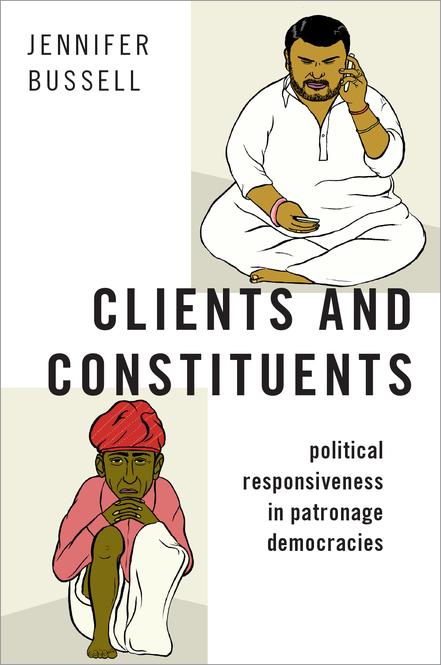
I am also thankful for the three anonymous reviewers at Cambridge University Press and Oxford University Press, who made remarkably thoughtful and constructive critiques that led, I believe, to substantial improvements in the manuscript. In addition, I want to thank my editor, David McBride, and the Oxford Modern South Asia series editor, Ashutosh Varshney, for their support and enthusiasm for the project. Thanks also to Emily Mackenzie of Oxford University Press and Asish Krishna of Newgen Knowledge Works, for overseeing the editing and production processes, and to Thom Lessner for the cover artwork. This book is markedly better for all of these inputs.
Various parts of the book also received generous feedback from participants in panels and workshops of the American Political Science Association, the Annual Conference on South Asia, the Asian Studies Association, Brown University, the Center for the Advanced Study of India (University of Pennsylvania), the Center on the Politics of Development (UC Berkeley), the Evidence in Governance and Politics (EGAP) network, the Goldman School of Public Policy (UC Berkeley), the Institute for South Asian Studies (UC Berkeley), Stanford University, the University of California, San Diego; and the University of Pennsylvania. Thanks especially to Claire Adida, Kate Baldwin, Prashant Bharadwaj, Jean Bussell, Karen Ferree, Miriam Golden, Saad Gulzar, Daniel Hidalgo, Guy Grossman, Akhil Gupta, Devesh Kapur,
Horatio Larreguy, Jo Burr Margadant, Karthik Muralidharan, Simeon Nichter, Irfan Nooruddin, Daniel Posner, Amanda Robinson, Sandip Suktankhar, Dawn Teele, Ashutosh Varshney, and Rebecca Weitz-Shapiro for their welcome insights. Special thanks to the members of the Berkeley Junior Faculty Lunch group, as well as the members of the short-lived but wonderful Berkeley South Asia Writing Group—Francesca Jensenius, Gareth Nellis, Maya Tudor, and Pavithra Suryanarayan. I am also grateful for stellar comments on several chapters to participants in my graduate and undergraduate seminars on political representation and distributive politics.
This project has spanned my three institutional homes—the University of Texas, Austin; Yale University; and UC Berkeley—and received financial support from the Institute of International Studies (UC Berkeley) and the Policy Research Institute (UT Austin). I feel so lucky to have been warmly welcomed at each place, and I thank all of my colleagues for their collegiality and support. I am especially grateful to Sarah Anzia, Leo Arriola, Henry Brady, Josh Busby, Pradeep Chhibber, David Collier, Ruth Collier, Allen Dafoe, Thad Dunning, Zachary Elkins, Angela Evans, Avi Feller, Sean Gailmard, Jack Glaser, Hilary Hoynes, Susan Hyde, Gabe Lenz, Amy Lerman, Elizabeth Linos, Karuna Mantena, Aila Matanock, Michaela Mattes, Jane Mauldon, Joel Middleton, Cecilia Mo, Alison Post, Robert Powell, Varun Rai, Victoria Rodriguez, Susan Rose-Ackerman, Eric Schickler, Sudha Shetty, Kalyanakrishnan Sivaramakrishnan, Laura Stoker, Susan Stokes, Chandler Stolp, Tariq Thachil, Steven Vogel, Peter Ward, Kate Weaver, Steven Wilkinson, Robert Wilson, and Jason Wittenberg.
I am extremely fortunate to be part of a remarkable community of scholars currently conducting comparative politics research on India, and South Asia more generally. I cannot imagine a smarter, more generous, and more collegial cohort. In particular, I thank Adam Auerbach, Anjali Bohlken, Rachel Brulé, Simon Chauchard, Nikhar Gaikwad, Francesca Jensenius, Gabrielle Kruks-Wisner, Gareth Nellis, Irfan Nooruddin, Mark Schneider, Prerna Singh, Neelanjan Sircar, Pavithra Suryanarayan, Tariq Thachil, Maya Tudor, Milan Vaishnav, Gilles Vernier, and Adam Ziegfeld for their excellent feedback and delightful camaraderie. An additional shout-out to Francesca and Gilles for the amazing public goods they have provided in diverse and detailed subnational data on India. For their guidance and leadership, I am also sincerely grateful to Kanchan Chandra, Pradeep Chhibber, Devesh Kapur, Anirudh Krishna, Aseema Sinha, Ashutosh Varshney, and Steven Wilkinson. While this research took place after completing graduate school, I remain always thankful for the support, from nearby or afar, of my cell of the
Preface and Acknowledgments
“Berkeley mafia.” Sending out the warmest wishes (and hopes for a CAPER reunion) to, among others, Naazneen Barma, Margaret Boittin, Rebecca Chen, Naomi Choi, Miguel de Figueiredo, Thad Dunning, Brent Durbin, Jill Greenlee, Rebecca Hamlin, Amy Lerman, Naomi Levy, Jessica Rich, Regine Spector, and Sarah Snip Stroup.
My most profound thanks go to my family. My parents, Jean and Harold Bussell, make so many things possible, especially now that I am also a working parent. For their love, inspiration, and generosity, not to mention childcare services at more academic conferences than they probably care to count, I am immensely grateful. My siblings Kim Fields, Mark Bussell, and Scott Bussell (R.I.P.), and their families, have exhibited remarkable patience, sense(s) of humor, and tolerance for their academic sister. My in-laws among the Dunnings and Margadants—my “family-in-love”—have welcomed me in the most heartfelt way, and I am so enriched by their presence in my life. My children, who were mere sparkles in our eyes at the start of this project, are now the center and heart of my life: Thalia and Clio, you are the most delightful of miracles. Finally, my partner, Thad, who has been with me every step, is an extraordinary companion in all aspects of life. My love and gratitude know no bounds.
Clients and Constituents
PART I
The Puzzle of Constituency Service
Introduction
Representation, Distribution, and Constituency Service
A newly minted legislator in the Indian state of Assam, on the first morning back in his constituency, dreamt that flies circled his head. When he woke, his dream had passed, and so had the flies—but a loud buzzing sound persisted. Curious, he arose and looked out his window at the courtyard of his home, where he saw around one hundred individuals chatting in the dawn light. The din was substantial as they awaited their chance to seek his personal intervention on behalf of their individual claims for public goods and services.1
On a different morning in Delhi, India, another legislator arrived to his office to find multiple visitors already waiting in the intense summer heat. Over the course of the next few hours, he received them in his office and entertained petitions for assistance with school admissions, scholarships, old age pensions, character certificates, problems with the local statesubsidized food shop, opening a government bank account, getting an operation in a public hospital, attaining a “below poverty line” card, and attending to a tree blocking a power line. He listened to each petitioner’s request and made some effort to help, be it by signing the required form, calling a responsible party, or providing additional information on how to acquire the service.2
1. Personal interview, April 22, 2016.
2. Observations from shadowing of politicians, Respondent F. I describe this methodology in Chapter 2 and Online Appendix B.
Visitors would encounter similar scenes at the homes and offices of politicians throughout India—and indeed, throughout many parts of the developing world. Legislators often have set times when they welcome petitioners, typically sitting in an open area to receive guests, and keeping an assistant on hand to quickly place a call, draft a letter, or complete a form. Citizens can thus come directly to their representative to make appeals. When their turn arrives, individuals deliver requests; politicians determine the appropriate next steps and often undertake them immediately, so as to work through the multitude of demands in as efficient and responsive a manner as possible.
As I show in this book, providing such assistance is in fact a predominant activity of many elected officials in India. The politicians we will meet in these pages not only pass legislation, receive party workers, and visit sites in their constituencies; to a significant extent, they interact with individual constituents on a regular basis and facilitate citizens’ access to fundamental benefits and services of the state. Perhaps surprisingly, this is true of high-level politicians— defined as those representatives with large constituencies who are unlikely to know most of their constituents personally—as well as local politicians who, as a result of considerably smaller constituencies, are more likely already to know those individuals requesting help. State and national legislators habitually dedicate large portions of a typical day to interacting with individual constituents, and frequently engage in “complaint handling,” such that “when people need help, they go to their legislator.”3 Such direct interactions with citizens— rather than with intermediaries, party workers, businessmen, or bureaucrats— comprise more than two-thirds of politicians’ meetings.4
Direct assistance to constituents is substantially prevalent in many other developing regions as well. As I document, face-to-face contact between citizens and high-level politicians is common across many African and Latin American countries.5 National legislators frequently receive tens or hundreds of requests from individual constituents on any given day.6 Data from these regions also suggest considerable responsiveness to citizens’ requests: politicians report that providing assistance to individual citizens is among their most
3. The first quotation is from Mohapatra (1976), the second from Chopra (1996: 102). See also Maheshwari 1976.
4. See “The burden of responsiveness,” Chapter 2.
5. See “Politician-citizen interaction in patronage democracies,” Chapter 11.
6. Afrobarometer 2008, Latinobarómetro 2008; see “Politician-citizen interaction in patronage democracies,” Chapter 11.
important activities, and some employ multiple individuals to respond to constituents’ appeals.7
For citizens, such personal assistance from high-level politicians can provide a crucial form of access to the state. In many developing countries, large portions of the population are unable to access public services, due both to inefficiencies and irregularities in bureaucratic processes and to discrimination in the assistance offered by politicians and bureaucrats at low levels of government. As a result, many individuals request help from high-level politicians with access to particularistic benefits—often, precisely the same types of services and benefits that other types of intermediaries, often at the local level, are frequently thought to facilitate. Such appeals thus constitute an important element of citizens’ strategies to acquire public goods and services. Politicians not only listen to their constituents’ entreaties but also help them overcome bureaucratic bottlenecks to obtain benefits. In the Indian case, substantial proportions of citizens report success in obtaining their desired benefit when assisted by high-level officials.8 In this manner, tens of millions of citizens receive assistance with acquiring critical basic services.9
The benefits that citizens receive through such petitions can constitute a substantial share of overall public welfare spending. As I describe in this book, high-level politicians in places such as India often influence the allocation of significant resources. Using new data sources, I estimate that the portion of benefits directed to individual citizens via high-level assistance constitutes a similar, and possibly larger, share of overall public welfare spending than those forms of distributive politics on which scholars have predominantly focused—including the clientelism and partisan bias that I will discuss shortly.10 Legislators in many other developing countries have similarly ample personal control over resources, due to influence over local officials and other factors.
Strikingly, as I also show in this book, high-level politicians often respond to constituents’ petitions in a remarkably equitable manner. By this I mean that it is often infeasible for politicians to make their assistance contingent
7. UNDP and IPU 2012; Barkin and Mattes 2014; personal interview with former staff member of Colombian senator.
8. See “Do appeals to high-level politicians resolve citizens’ problems?” in Chapter 7 and also Gupta 2017.
9. See “The value of responsiveness,” Chapter 2.
10. See below and Chapter 2.
on individual citizens’ attributes or their past or future political behaviors. Drawing on evidence from qualitative shadowing of politicians in India, quantitative surveys of Indian politicians, and large-scale field experiments with both citizens and politicians, I demonstrate that in interactions with individual constituents, high-level politicians often do not premise their responsiveness on citizens’ political preferences, ethnicity, or other attributes. To a remarkable degree, even indicators of citizens’ partisan preferences do not affect representatives’ willingness to provide direct assistance. Instead, politicians appear more responsive, and substantially more willing to help citizens of all kinds, than many theories of distributive politics—defined as the process by which decisions are made about the allocation of government resources across a population—would predict.
In this way, I provide in this book an account of the constituency service noncontingent, nonpartisan attention to the needs of citizens—offered by high-level politicians in many democratic developing countries.11 By intervening in distributive processes, politicians often engage in “mediation from above,” exerting pressure on bureaucratic underlings to facilitate citizens’ access to services and benefits. For citizens, these efforts offer a crucial source of assistance with the often-difficult process of accessing fundamental benefits from state welfare schemes. This assistance is thus an important mode of distributing state resources. Constituency service is also a key element of representation, acting as an important form of “service responsiveness.”12 Those individuals who have difficulty accessing benefits from the state can appeal to their elected representatives for assistance; by responding to the needs of these constituents, high-level politicians “represent” them to the state. In doing so, elected representatives respond to the interests of those citizens who might otherwise be excluded from individual-level public services and bring them within the distributive fold.
These direct exchanges between politicians and their constituents may appear similar to dynamics observed in western democracies. As Fenno notes in his account of state legislators’ behavior in the United States, “Constituent service [is] universally recognized as an important part of the job in its own right.”13 A former Canadian member of Parliament offers his own account: “As citizens showed up in my constituency office with their tales of
11. Fenno 2003 (1978).
12. Eulau and Karps 1977.
13. Fenno 2003 (1978): 101.
passports delayed, visas withheld, tax files mislaid, my staff and I would pick up the phone and try to help.”14 Similarly, in 1960s Ireland, there was an expectation among citizens that a legislator would, if asked, “give advice on any problem, help prepare applications to public authorities, and make inquiries, submissions, representations or appeals not only for those who vote for him but for anyone in the constituency and particularly his own district.”15
Yet, this type of interaction is also perplexing in a “patronage democracy” such as India—defined as a country where the state is a primary source of resources, but official distribution is often extensive, inefficient, and discretionary.16 A wealth of research on distributive politics in such contexts—most commonly in economically developing countries—suggests that politicians target state goods and services tactically for electoral advantage.17 For example, they may direct group-oriented goods to particular geographic areas, responding to the interests—and electoral support—of specific factions within their constituencies. Politicians in patronage democracies may have substantially greater capacity to influence the distribution of resources than in settings where the rules of distribution are relatively binding; and they may aim to use this discretion to mobilize turnout among core supporters or to persuade swing voters.18 Direct resource distribution by high-level politicians is thus both contingent and partisan.
Alternatively, according to many existing accounts, politicians may allocate resources indirectly, using clientelist strategies. Thus, political parties delegate to local-level intermediaries or “brokers” the responsibility of targeting state services to maximize electoral payoffs. Due to their proximity to citizens, such operatives can facilitate the mobilization of voters and the monitoring of political behavior. Beneficiaries are in turn expected to vote with their local intermediary’s party, either because benefits are granted in an explicit quid pro quo for electoral support or because citizens seek to boost
14. Ignatieff 2013: 104.
15. Chubb 1963: 276.
16. Chandra 2004, 2009.
17. Kramon and Posner 2013: 461.
18. See, e.g., Cox and McCubbins 1986, Lindbeck and Weibull 1987, Dixit and Londregan 1996, Porto and Sanguinetti 2001, Chandra 2004, Chhibber and Nooruddin 2004, Wilkinson 2007, Arulampalam et al. 2009, Keefer and Khemani 2009, Baskin and Mezey 2014, and Ejdemyr et al. 2017. Politicians in advanced countries may have substantial capacity to engage in targeted distribution as well, as discussed later; yet the contexts I discuss are characterized by a greater extent of political discretion in policy implementation.