Chinese Antitrust Exceptionalism
How the Rise of China Challenges
Global Regulation
ANGELA HUYUE ZHANG
Great Clarendon Street, Oxford, OX2 6DP, United Kingdom
Oxford University Press is a department of the University of Oxford. It furthers the University’s objective of excellence in research, scholarship, and education by publishing worldwide. Oxford is a registered trade mark of Oxford University Press in the UK and in certain other countries
© Angela Huyue Zhang 2021
The moral rights of the author have been asserted First Edition published in 2021
Impression: 1
All rights reserved. No part of this publication may be reproduced, stored in a retrieval system, or transmitted, in any form or by any means, without the prior permission in writing of Oxford University Press, or as expressly permitted by law, by licence or under terms agreed with the appropriate reprographics rights organization. Enquiries concerning reproduction outside the scope of the above should be sent to the Rights Department, Oxford University Press, at the address above
You must not circulate this work in any other form and you must impose this same condition on any acquirer
Crown copyright material is reproduced under Class Licence Number C01P0000148 with the permission of OPSI and the Queen’s Printer for Scotland
Published in the United States of America by Oxford University Press 198 Madison Avenue, New York, NY 10016, United States of America
British Library Cataloguing in Publication Data
Data available
Library of Congress Control Number: 2020944062
ISBN 978–0–19–882656–9
DOI: 10.1093/oso/9780198826569.001.0001
Printed in Great Britain by Clays Ltd, St Ives plc
Links to third party websites are provided by Oxford in good faith and for information only. Oxford disclaims any responsibility for the materials contained in any third party website referenced in this work.
To Richard A. Posner
Preface
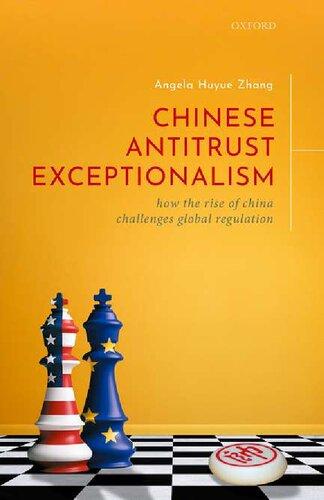
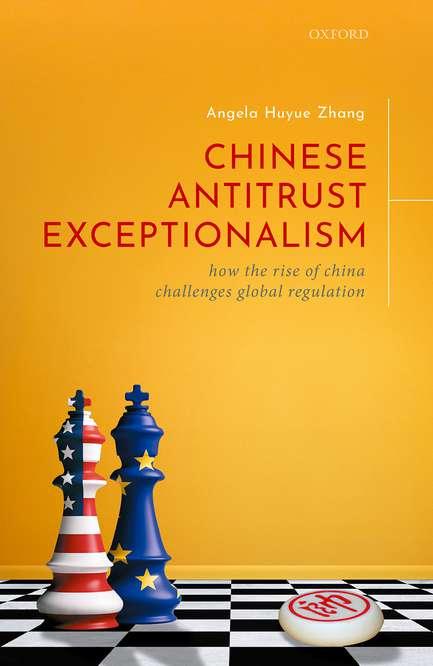
It had been almost three months since Hong Kong closed all its schools due to the coronavirus outbreak. And my five-year-old son was bored to tears. I decided that I needed to find something to keep him busy. An idea flashed through my mind when my publisher sent me an email asking for thoughts on my book cover.
‘Alan, would you like to design the cover for my book?’ I asked.
Alan looked at me with a twinkle in his eyes, ‘What is your book about?’
It suddenly dawned on me that a five-year-old could not even begin to fathom the word ‘antitrust’. How would I describe it? I tried by responding:
‘Well, there were two kids on the playground, one called Europe and the other called America. Suddenly, a new kid called China came along and wanted to join the game. But this game was unfamiliar to China, and she played it according to a different set of rules. This annoyed the other two kids and they decided to square up to her.’
‘Oh, that’s easy-peasy. I can do it!’ he exclaimed. Alan was very excited about his new project.
As someone who had only taken two drawing lessons, Alan appeared to have underestimated the challenge. And so had I, when I first conceived the idea of the book.
Almost four years ago, I approached Oxford University Press with the idea of writing a book detailing how China’s unprecedented rise would pose challenges to the global antitrust regulatory order. Long before China adopted its Anti-Monopoly Law in 2007, the United States and the European Union had already established the global rules and norms of antitrust regulation. Despite this, China did not shy away from making decisions that were often considered to deviate from existing international standards. China resembles that new kid on the playground: not only has it developed as a new antitrust regulator but also as a foreign target for antitrust regulation. In recent years, Chinese companies’ ambitious forays into Western markets have created unease among Western regulators, making them question whether their existing regulatory framework is enough to deal with Chinese firms. Clearly, legislators
in the United States and the European Union did not have the Chinese state-led economy in mind when designing their antitrust regulatory frameworks.
As I embarked on this project, I realized that I was not just writing a book about antitrust law but also about Chinese politics, economic institutions, and international relations. Moreover, the fast-changing legal and political developments that have occurred over the past four years have delayed and complicated the process of writing this book. After maintaining a decade-long tripartite enforcement structure, the three former Chinese antitrust enforcement agencies were consolidated in 2018, forming a brand new agency housed under a newly created central ministry called the State Administration for Market Supervision. Since bureaucratic politics played a crucial role in driving antitrust enforcement in its first decade, I decided that it was important to elaborate on this new enforcement structure and its implications for Chinese antitrust enforcement in the foreseeable future. Meanwhile, Donald Trump’s ascendency to the Presidency of the United States has had an indirect impact on Chinese antitrust policy as the Chinese government has responded in kind to US trade and legal sanctions by flexing its antitrust regulatory muscles. At present the Chinese legislature is proposing changes to the Anti-Monopoly Law to increase its sanctioning power in order to boost China’s extraterritorial regulatory capacity.
Aside from these fluid legal and institutional developments, the difficulty of writing this book has been compounded by the fact that it covers antitrust enforcement across three major antitrust jurisdictions, China, the European Union, and the United States. In recent years, foreign regulators have tightened their scrutiny over Chinese firms. In 2016, the EU’s antitrust regulator made a startling decision, declaring that it would treat all Chinese firms in the energy sector as a single entity for the purpose of merger assessments. This alarmed many practitioners and businesses who feared that the European Union might soon group all Chinese state-owned firms as a one ‘China, Inc’. Two years later, the US Supreme Court intervened in a high-profile export cartel case concerning a group of Chinese vitamin C manufacturers who argued that they had been compelled by the Chinese government to fix prices.
Despite these complications, my original framework has remained the same, and the new developments have in effect strengthened my thesis, namely that there exists inevitable friction between China and the global antitrust regulatory order. Indeed, even though this book focuses on antitrust, it is essentially a book about globalization and the ineluctable conflicts resulting from China’s rise. Not coincidentally, the reason I chose this topic was highly pertinent to my own personal background. I, myself, am a quintessential product
of globalization. Born and raised in mainland China, I received my first law degree from Peking University in China. I then went on to study in America, receiving both my master and doctoral degrees from the University of Chicago. Upon graduation, I practised law for five years at several international law firms based in New York, London, and Brussels. I taught in London and am now enjoying academic life in Hong Kong. These overseas experiences and the multicultural exposure gave me the opportunity to study China from a variety of different angles. As both an insider and outsider, I hope to provide an in-depth analysis of Chinese antitrust exceptionalism that is honest, balanced, and equitable.
Throughout the writing of this book, I was fortunate to have received kind support and help from many friends and colleagues. First and foremost, I owe an immense intellectual debt to my doctoral advisor, Richard Posner, whose pragmatic legal approach has had a profound influence on my scholarship. Years after I graduated from the University of Chicago, he continued to read and comment on much of my work. It was his friendship and unwavering support that solidified my pursuit as an independent legal scholar. I am also grateful to my former professors at the University of Chicago, particularly Lisa Bernstein and Saul Levmore, who inspired me to pursue a career in academia. I owe a great debt of gratitude to Harry First, Eleanor Fox, Curtis Milhaupt, Daniel Sokol, Spencer Waller, and Wentong Zheng, all of whom have generously offered pertinent comments and criticisms regarding my work in this area. Many antitrust practitioners, scholars, and government officials in China, too many to name here, have candidly shared their insights into antitrust practice with me over the years. My interactions with them have been a source of lasting inspiration for me.
I was fortunate to start my academic career at King’s College London and am grateful to my former colleagues, particularly Allison Jones, Bill Kovacic, Christopher Townley, and Richard Whish for providing me with a stimulating research environment in antitrust law. My good fortune continued at the University of Hong Kong, and I would especially like to thank my colleagues Thomas Cheng, Xin He, and Hualing Fu for their insightful comments on individual chapters of this book. My research assistants Zahra Kamaruddin, Carissa Ma, and Jonathan Yeung provided me with excellent support throughout this process. I received indispensable help from Anu Bradford, who gave me brilliant advice during the final stages of this book. My husband Alex Yang, a business school professor, read the entire manuscript with a sharp and critical eye, even though antitrust is far from his field of research. I wrote a significant portion of the book during the challenging time of COVID-19. I thank my angels
Alan and Alice for their complete cooperation, during quarantine and school closures, without which I would never have been able to finish this book.
Certain portions of this book rely on my own previous work. In particular, Chapter 3 draws on my published article ‘The Antitrust Paradox of China Inc.’, 50 N. Y. U. J. Int’l L. & Pol. 159 (2017) to which I have made substantive revisions, and Chapter 4 is a revised version of ‘Strategic Comity, 44 Yale J. Int’l L. 281 (2019). I was able to take the important step to develop this book thanks to the funding from the University Grants Committee of Hong Kong. I would like to acknowledge the support of my General Research Fund grant ‘Antitrust and the Rise of China: An Institutional Analysis’ (Project No 17603918).
Last but not least, I would like to thank my editor Imogen Hill at Oxford University Press, who has been extremely patient with me and has walked me tirelessly through the essentials of book publishing.
The morning after I delegated the task of designing a book cover to Alan, I saw him standing in front of our bookshelf, searching for inspiration to help his project. My son is pretty serious about keeping his commitments, I thought to myself. So I asked him:
‘Alan, now the three kids are fighting with each other, do you think they will ever be friends and play together again in the future?’
‘Of course!’ Alan said confidently.
‘Why do you think so?’ I asked.
‘Well, kids fight all the time. After they fight, they play together again’, Alan replied.
Alan was obviously not thinking about game theory when he replied. But I think he is right, as I will show you in the following chapters. And I remain hopeful that China, Europe, and the United States will eventually reach a compromise and ‘play together again’.
Hong Kong
July 2020
List of Abbreviations
AIC Regional Office of State Administration for Industry and Commerce
ALL Administrative Litigation Law
AMC Anti-Monopoly Commission
AML Anti-Monopoly Law
APE Government Shareholding Agency (France)
API active pharmaceutical ingredients
AQSIQ State General Administration of Quality Supervision, Inspection, and Quarantine
AUCL Anti-Unfair Competition Law
CEO chief executive officer
CFIUS Committee on Foreign Investment of the United States
CFO chief financial officer
CGN China General Nuclear Power Corporation
CIC China Investment Corporation
EUMR EU Merger Regulation
FCPA Foreign Corruption Practice Act
FDA Food and Drug Administration
FDI foreign direct investment
FGC Fujian Grand Chip
G gigabyte
GATT General Agreement on Tariffs and Trade
GSK GlaxoSmithKlein
ISP Internet service provider
ITC International Trade Commission
MIIT Ministry of Industry and Information Technology
MOE mixed ownership enterprise
MOFCOM Ministry of Commerce
NDRC National Development and Reform Commission
NOC national oil company
OECD Organisation for Economic Co-operation and Development
OFAC Office of Foreign Assets Control
P&G Proctor & Gamble
POE privately owned enterprise
PPE personal protective equipment
PPTN People’s Post and Telecommunication News
REN Redes Energeticas Nacionais
RPM resale price maintenance
SAIC State Administration for Industry and Commerce
SAIC-GM Shanghai Automotive Industry Company and General Motors
SAMR State Administration and Market Supervision
SASAC State-owned Assets Supervision and Administration
SEC Securities Exchange Commission
SEP standard essential patents
SOE state-owned enterprises
SPC State Planning Commission
SPC Supreme People’s Court
SQSIQ Administration of Quality Supervision, Inspection and Quarantine
SWF Sovereign Wealth Fund
TFEU Treaty on the Functioning of the European Union
TVEs township and village enterprises
VER voluntary export restraints
VIE variable interest entity
WTO World Trade Organization
Chinese Antitrust Exceptionalism
In early 2020, the outbreak of COVID-19 brought the Chinese economy to a standstill. Most Asian economies took an immediate hit from the drastic fall in Chinese demand, and global supply chains rooted in China were also disrupted. The world was quickly learning just how much it depended on China. As one economist put it: ‘When China sneezes, the rest of the world catches a cold.’1 China’s emergence as a global superpower is often perceived in the West as a threat to the liberal world order, with Western democracies debating whether to engage further with or contain the country. Parallel to its surging political and economic influence, China is quietly posing a fundamental challenge to the normative fabric of the global legal order. As China and its trading partners become embroiled in a growing number of disputes across various fronts, the consequences of China’s rise and its accession to the global trade rules have become the subject of vast commentary.2 Despite the increasing interest, there has yet to be a comprehensive and in-depth study of China’s impact on global antitrust policy, an area of law that could become a source of friction in trade. This book is designed to fill this gap.
Around the world, antitrust laws refer to rules and regulations that have been designed to promote vigorous competition and protect consumers from anticompetitive business practices. For multinational companies, antitrust has become part and parcel of their global compliance routine. A typical merger between two large companies requires approval from not just the countries where they are headquartered but also a whole host of other jurisdictions in which the merger has triggered the notification thresholds. A cartel formed by a group of leading suppliers would not only be investigated in their home jurisdictions, but also in the numerous countries to which these firms have supplied their products. Similarly, abusive conduct of a dominant firm can affect customers or suppliers overseas and prompt investigations by foreign antitrust
1 Stephen S. Roach, When China Sneezes, Project Syndicate (24 Feb. 2020). Many of the footnote references in this book are online materials and they can be easily accessible online.
2 Many trade law scholars have explored this question in the context of global trade orders. See e.g., Mark Wu, The ‘China, Inc.’ Challenge to Global Trade Governance, 57 Har. Int’l L. J. 284 (2016); Wentong Zheng, Trade Law’s Responses to the Rise of China, 34 Berkeley J. Int’l L. 109 (2016).
Chinese Antitrust Exceptionalism. Angela Huyue Zhang, Oxford University Press (2021). © Angela Huyue Zhang. DOI: 10.1093/oso/9780198826569.003.0001
authorities. With the proliferation of antitrust laws in emerging and developing economies over the last two decades, large multinational companies are facing an uphill battle in terms of navigating an increasingly complex regulatory maze, constantly tweaking or modifying products and services to suit the requirements of different antitrust regimes.
This is invariably the case as no centralized antitrust governance exists at the global level. International lawyers once proposed the construction of a global antitrust regime with a supranational enforcement agency or framework, but their proposals were ultimately aborted.3 Despite a lack of central governance, many of the regimes that latterly adopted antitrust laws have taken their cues from the United States or the European Union (EU), the world’s two most advanced antitrust regimes. With their long-standing history of antitrust legislation and vast experience in enforcement, the two jurisdictions have generously offered legislative and enforcement advice as well as assistance to other nations striving to adopt their own antitrust laws,4 and in doing so, these veteran regimes have managed to shape the enforcement approach of the nations they assisted. Most antitrust lawyers are accustomed to the fact that the United States and the European Union are setting the antitrust enforcement trends that other jurisdictions simply seem to emulate.
And then there is China. After fourteen years of wrangling and debate, China began implementing its Anti-Monopoly Law (AML) in 2008. Among the world’s greatest economic powers, China brings up the rear in adopting modern antitrust law. Although Chinese antitrust law closely resembles that of the European Union, a reflection upon China’s track record in antitrust enforcement over the past decade reveals many of its idiosyncrasies. Despite being a relatively new antitrust regime, China has not hesitated to impose harsh antitrust remedies on offshore merger transactions and intervene aggressively in business practices, departing from the usual approach of Western antitrust authorities. This is especially true after 2013, when China ramped up
3 See Eleanor M. Fox, Toward World Antitrust and Market Access, 91 Am. J. Int’l L. 1 (1997); Andrew T. Guzman, Antitrust and International Regulatory Federalism, 76 N. Y. U. L. Rev. 1142 (2001); Anu Bradford, International Antitrust Negotiations and the False Hope of the WTO, 48 Har. Int’l L. J. 383 (2007).
4 William E. Kovacic, Merger Enforcement in Transitions: Antitrust Controls on Acquisitions in Emerging Economies, 66 U. Cincinnati L. Rev. 1071 (1998); David Gerber, Constructing Competition Law in China: The Potential Value of European and U.S. Experience, 3 Washington Univ. Global Stud. L. Rev. 315 (2004); Mark Williams, Competition Law in China, Hong Kong and Taiwan (2005); Michael S. Gal, The ‘Cut and Paste’ of Article 82 of the EC Treaty in Israel: Conditions for A Successful Transplant, 9 European J. L. Reform 467 (2007); William E. Kovacic, The United States and Its Future Influence on Global Competition Policy, 22 George Mason L. Rev. 1157 (2015); Anu Bradford et al., The Global Dominance of European Competition Law Over American Antitrust Law, J. Empirical Legal Stu. 731 (2019).
enforcement on anticompetitive conduct. Businesses, sometimes confounded and rattled by the Chinese government’s pervasive intervention, complained of protectionism, unequal treatment, and the lack of due process. Yet China seems confident in straying from the beaten path. With a vast and dynamic market, China is a jurisdiction that few multinational companies can afford to ignore. This is why even though foreign firms have made mounting complaints to their respective chambers of commerce and governments, few have sought to launch a formal complaint against Chinese antitrust agencies in court. In most cases, disgruntled businesses paid their fines, made the necessary adjustments to their business strategy in China, and moved on.
But this is only part of the story. China is not only exceptional as an antitrust regulator but also as a target of antitrust regulation. In addition to being the second largest recipient of foreign direct investment (FDI) and a principal importer, China is the world’s largest exporter and one of the leading outward investors. Since the Great Recession in 2008, the growing prowess of Chinese firms and their rapid expansion into overseas markets has sparked global fears that China is taking over the world.5 These fears have been amplified by the fact that state-owned enterprises (SOEs) account for the lion’s share of FDI from China. In recent years, Chinese SOEs’ swift expansion into Europe has raised the eyebrows of antitrust regulators. SOEs are not new to Europe, but the sheer scale of Chinese state ownership and the Chinese government’s pervasive control of its economy have got on the nerves of European policy-makers. EU competition enforcers, who had never before encountered SOEs with such intricate yet opaque ties to their government, have delved deeply into the SOEs’ ownership structures and are contemplating to treat all Chinese SOEs as part of a ‘China, Inc.’ However, following such an approach will have enormous implications for future antitrust cases. In fact, it may even jeopardize the Commission’s jurisdiction over cases involving the mergers and cartels between Chinese firms.
Across the Atlantic, Chinese companies have suffered the same fate. A number of Chinese manufacturers, coordinated by government-sponsored trade associations, have had to grapple with successive private lawsuits and hefty fines for operating export cartels in the United States. Unbeknownst to many Americans, the United States relies heavily on China for the supply of pharmaceutical drugs as well as the critical ingredients and raw materials
5 Angela Huyue Zhang, Foreign Direct Investment from China: Sense and Sensibility, 34 Nw J. Int’l L. & Bus. 395 (2014).
needed to make them.6 The latest figures estimate that almost 97 per cent of the antibiotics and 90 per cent of the vitamin C used in America are now made in China.7 Meanwhile, 80 per cent of the active pharmaceutical ingredients, the basic components used to manufacture drugs in America, rely on imports from China and India.8 Experts have warned that as Chinese manufacturers gain greater control over the US supply of drugs, they might collude to raise prices to exploit American consumers.9 The vitamin C cartel formed in the early 2000s is a case in point where Chinese manufacturers were found to have hiked up their prices of vitamin C products almost six-fold during this period.10 Chinese exporters did not deny the allegations of price coordination, instead defended themselves on the grounds that they had been compelled by the Chinese government to do so in order to avoid potential anti-dumping charges. In a similar fashion to European regulators, US judges, including those on the Supreme Court bench, have struggled to determine the extent to which the Chinese government intervenes in Chinese exports, especially when confronted with somewhat conflicting and inconsistent factual circumstances. When a Chinese central government ministry came to the rescue of these Chinese firms by submitting an amicus brief boldly insisting that it had forced price-fixing practices among exporters, further controversy arose as to how much deference a US court should give to statements presented by a foreign government. The resolution of such cases, therefore, hinges not only on the logic of law, but also on politics.
In parallel, as Western countries become increasingly alarmed of China’s rise, there is a looming danger that such conflict might morph into antagonism and political catastrophe. Take, for example, the trade war that erupted between the United States and China in 2018. In addition to the imposition of high tariffs on Chinese goods, the Trump Administration has been aggressively prosecuting and sanctioning leading Chinese technology firms and their executives. However, by leveraging the administration’s almost unbridled prosecutorial discretion in sanctions law as bargaining chips in trade negotiations, President Trump is setting a bad example for China to follow. In retaliation, China is wielding its antitrust law strategically to demonstrate its
6 Rosemary Gibson & Janardan Prasad Singh, China Rx: Exposing the Risks of America’s Dependence on China for Medicine (2018).
7 Yanzhong Huang, The Coronavirus Outbreak Could Disrupt the U.S. Drug Supply, Council on Foreign Relations (5 Mar. 2020).
8 Id.
9 U.S.–China Economic & Security Review Commission, Hearing on Exploring the Growing U.S. Reliance on China’s Biotech and Pharmaceutical Products, Written Testimony of Rosemary Gilson (31 July 2019).
10 Id.
own extraterritorial regulatory capacity. The two sides are now locked in a dangerous race of regulatory competition, leaving a disastrous outcome to chance.
In this book, I focus on how Chinese exceptionalism, as shown in both the way China regulates and the way China is regulated, poses challenges to the existing global antitrust regulatory order, one that is dominated by the pre-existing standards and norms set by the advanced regimes such as the United States and the European Union. It is well-known that much of the Western world has long been chafed by China’s distinctness in the global political economy. Politically, China is an authoritarian country with a one-party system. Ideologically, China is committed to communism, which has traditionally perceived law as an instrument of the ‘Party-state’. Economically, China embraces a form of state capitalism that allows the state to play a central role in the economy despites decades of market reform. Institutionally, China lacks checks and balances, and its judiciary is too weak to counteract abusive administrative power. Concurrently, the Chinese state is so vast and complex that it is often difficult to obtain a coherent and accurate account of the country. As will be illustrated, Chinese antitrust exceptionalism in fact stems from the inherent contradictions present in the Chinese regime, an observation that runs throughout this book.
To begin, political power is highly concentrated in the hands of the Chinese Communist Party (the Party), which has further tightened its grip over various aspects of the Chinese society under the leadership of President Xi Jinping. But China is no longer ideological except in the pro forma way.11 And the Party’s renewed emphasis on Party control and discipline reveals more of its insecurity than its strength. Moreover, despite its appearances, the China state is hardly a monolith. Instead, power is fragmented within the Chinese bureaucracy. At the central level, different ministries with overlapping functions and divergent missions are relentlessly competing with each other for power, influence, and prestige, as demonstrated in Chapters 1 and 2. At the regional level, local governments engage in intense rivalry to achieve higher GDP growth, resulting in perennial local protectionism, as elaborated in Chapters 1, 3, and 4.
Second, large Chinese companies with ambitious expansion programmes overseas are often deemed part of a massive ‘China Inc.’ that is belligerently advancing the Party’s objectives. But in reality, the Party is constantly struggling to strike a balance between political control and market efficiency. After all, the Party’s legitimacy depends on its ability to deliver consistent economic
11 Bilahari Kausikan, China’s Zealous ‘Wolf Warrior’ Diplomacy Highlights Both Beijing’s Power and Insecurity, South China Morning Post (4 June 2020).
growth. In order to achieve this, the Party needs to delegate significant autonomy to Chinese SOEs to incentivize them to become efficient competitors, as elaborated in Chapter 3. This delegation, though, comes at a cost as agency problems become rampant among these corporate behemoths, as observed in the same chapter. And contrary to the popular belief that Chinese SOEs are managed under one roof, they in fact belong to different levels of the Chinese government in different regions. With each local government vying to prop up its own champions to increase local employment and tax revenue, this results in intense competition among domestic firms and chronic overcapacity problems, as will be illustrated in Chapters 3 and 4.
As such, it would require the careful consideration of extra-legal and institutional factors beyond antitrust law itself for businesses and lawyers to understand the Chinese regulatory outcome, and for foreign policy-makers to formulate an optimal regulatory response to Chinese companies’ overseas conduct. This is not to trivialize law, rather it is to acknowledge the limits of the law. No law, however refined, can anticipate all contingencies and meticulously spell out the rules and procedures to be followed in every conceivable circumstance.12
Recognizing the law’s incompleteness first requires us to take a closer look at the actors responsible for enforcing and interpreting the law. In the case of Chinese antitrust enforcement, the main actors are administrative agencies who enforce the law but are subject to few challenges from the judiciary. To understand why these agencies do what they do, we need to understand their incentives and the constraints they face. China’s vast bureaucratic machine, ranging from the central government to local authorities, handles different regulatory aspects of a company from the cradle to the grave. Despite its importance, much of the inner workings of the Chinese bureaucracy largely remain a mystery to outsiders. This book therefore represents an intensive effort to unpack the black box of the Chinese regulatory process and the incentives of the different actors involved. By closely examining the roles of bureaucratic politics, administrative discretion, and use of reputational sanctions exercised during Chinese antitrust enforcement, I hope to provide readers with a window into the private ordering of Chinese antitrust compliance. Antitrust is certainly just a small part of a firm’s regulatory compliance practice. However, this book is not simply about the law per se but rather the incentives of Chinese
12 Avinash K. Dixit, The Making of Economic Policy: A Transaction-Cost Politics Perspective 20 (1998).
law enforcers and the underlying institutional factors shaping the enforcement of the many facets of business regulation in China.
Recognizing the law’s incompleteness would also require us to discern new contingencies not foreseen by those who drafted the law. Indeed, antitrust law, originally formulated to tackle abusive monopolies in the market economy, was not constructed with the nature of Chinese SOEs in mind. But one of the most distinctive features of Chinese state capitalism is precisely the central role played by the SOEs, many of whom are deemed national champions and are increasingly active in the global markets.13 In fact, to survive and thrive in the Chinese institutional environment, Chinese firms, regardless of their ownership structure, need to ‘capture’ the state.14 In doing so, they gain special advantages from the authorities and return such favours by aligning themselves with the interests, goals, and priorities of the government.15 For instance, while Chinese SOEs have special privileges and enjoy generous subsidies, they are also subject to varying degrees of political control and supervision by the Party.16 Although successful private businesses such as Huawei, Alibaba, and Tencent have emerged in new technological and innovation markets without strong SOE incumbents, they too are not immune from political influence. As there are many grey areas of doing business in China, the Chinese government, through its expansive and powerful bureaucratic departments, can take any business hostage through various legal or extra-legal means. Successful private entrepreneurs in China are well aware of the importance of forging close links with the government through institutional or informal channels.17 Such intricate connections between businesses and the government therefore make it extremely difficult to assess the independence of Chinese firms. But at the same time, China’s highly decentralized economic structure and ensuing local protectionism have led to chronic problems of overcapacity, resulting in fierce competition among Chinese exporters and extremely low prices in overseas markets. This paradoxical feature of the Chinese economy presents a serious predicament for antitrust regulation, which often requires a clear delineation
13 Li-Wen Lin & Curtis J. Milhaupt, We Are The (National) Champions: Understanding The Mechanisms of State Capitalism in China, 65 Stan. L. Rev. 697 (2013); Yasheng Huang, Capitalism With Chinese Characteristics: Entrepreneurship and the State (2008).
14 Curtis J. Milhaupt & Wentong Zheng, Beyond Ownership: State Capitalism and Chinese Firm, 103 Geo. L. J. (2015).
15 Id. at 688.
16 Zhuang Liu & Angela Huyue Zhang, Ownership and Political Control: Evidence from Charter Amendments, 60 Int’l Rev. L. & Econ. (2019).
17 Bruce J. Dickson, Read Capitalists in China: The Party, Private Entrepreneurs, And Prospects for Political Change (2003); Bruce J. Dickson, Wealth Into Power: The Communist Party’s Embrace of China’s Private Sector (2008); Scott Kennedy, The Business of Lobbying in China (2005).
of a firm’s boundaries at the outset. It also puts Chinese firms in a vulnerable position: if they sell at a highly competitive price, they could be subject to antidumping duties in importing countries; if they coordinate to raise prices, they could be challenged for antitrust violations.
Viewed in this light, globalization has not only brought about economic prosperity for China and its trading partners but it has also engendered inevitable conflicts between China and the rest of the world. As economist Dani Rodrik has presciently warned us, we need to face the uncomfortable truth that we cannot simultaneously pursue democracy, national determination, and economic globalization.18 At the time of writing, Sino-US relations are encountering the most daunting challenges since the two countries first established formal diplomatic ties almost forty years ago. After Trump’s ascendency to US Presidency, the US government launched a series of attacks targeting Chinese trade policies, accusing China of using opaque administrative approvals to force the transfer of technology to Chinese businesses.19 Some of the cases elaborated in this book may lend support to these allegations. As Chinese antirust agencies belligerently press forward with antitrust enforcement, these actions have also often brought about outcomes that benefit domestic industries at the expense of foreign firms. But this interpretation of my findings obscures a more fundamental issue with Chinese law enforcement. As I will elucidate in this book, instead of a top-down process where the central government sets out clear goals and priorities of enforcement, Chinese antitrust enforcement is largely a bottom-up process driven by bureaucratic departments with divergent missions, cultures, and structures. As such, the incentives and constraints faced by Chinese antitrust agencies have significantly affected the type of cases that are brought, the manner in which the agencies coordinate with each other, the approach that is taken to tackle the cases, and, most importantly, the final regulatory outcome.
Understanding this point is crucial before one starts to ponder solutions to ease the current Sino-US conflict. Since the flare-up of the trade war, the Trump Administration has been placing pressure on China to amend many of its national laws to enhance legal protection for US businesses in its jurisdiction. But such a legalistic approach misses the point and does little to resolve the issue.20 The biggest challenge facing US businesses is not the law itself.
18 Dani Rodrik, The Globalization Paradox: Why Global Markets, States, and Democracy Can’t Coexist xviii (2011).
19 White House, How China’s Economic Aggression Threatens the Technologies and Intellectual Property of the United States and the World, June 2018.
20 Angela Huyue Zhang, The U.S.–China Trade Negotiation: A Contract Theory Perspective, 51 Geo. J. Int’l L.809 (2020).
As we see in the case of Chinese antitrust, even sound substantive rules that China has borrowed from advanced regimes such as the European Union and the United States can be easily undercut when the wrong legal institutions and procedures are being used to enforce them. In reality, the institutional environment and bureaucratic incentives are often the key factors resulting in biased enforcement outcomes that puts foreign businesses at a disadvantage. Instead of forcing China to rewrite its national laws, the US’ top priority should be to help China promote structural reform of its bureaucracy and enhance due process in administrative enforcement.21
The delegation of antitrust enforcement to the National Development and Reform Commission (NDRC), one of the three former Chinese antirust agencies, is a prime example. The predecessor of the NDRC was the State Planning Commission, a supra-ministry that was very powerful during the days China was centrally planned. Over the years, the NDRC, particularly its price control departments, has seen a significant reduction in power. Hence, the agency deemed the development of antitrust as a golden opportunity to step back into the policy-making limelight. It is not surprising then, that the antitrust bureau at the NDRC prioritized its enforcement efforts in strategic industries and daily consumer goods with the goal of stabilizing prices, and also applied the same pre-emptive enforcement measures used in price supervision to coerce companies to lower prices. As such, the odd enforcement outcome we observe in Chinese antitrust enforcement is actually the product of ubiquitous interagency competition in China. Indubitably, the path dependency of institutions would imply that it is very difficult to overcome the bureaucratic inertia. But the first step of conflict resolution between China and the United States is, at the very least, to understand the root cause of the problem rather than speculating and accepting what we see on the surface.
And among all the major US complaints about Chinese trade policy, perhaps the hardest one to resolve is China’s subsidies for SOEs which help these firms gain an unfair competitive advantage. The United States is not the only country to have raised its concerns over China’s state-led capitalism. EU countries, led by Germany and France, are calling on Brussels to do more to level the playing field for European firms when competing with Chinese firms. In June 2020, the European Commission unveiled its proposal to revamp EU competition rules in order to tackle state-backed acquisitions from China. Evidently, the Chinese state’s active intervention in the domestic economy has had a lasting impact on the ability of Chinese firms, state- or privately owned, to adapt to the
21 Id. at 864-65
regulatory requirements overseas. This will also present continuing challenges for Western policy-makers who are beginning to realize that their existing regulatory frameworks are inadequate to deal with the distinctive features of Chinese firms.
This begs the question: how can we address the conflict between China’s rise and the global antitrust order? There is no quick and easy fix, as such tensions, as laid out extensively in this book, are deeply rooted in the incompatibility between the Chinese political economy and the Western liberal order. At the same time, there has been no sign that China will converge with or adapt to Western values and standards. However, I remain hopeful about the prospect of China’s integration into the global antitrust regime. My optimism stems precisely from the dual challenges arising from the two dimensions of Chinese antitrust exceptionalism. As Chinese antitrust agencies hold foreign businesses hostage through the aggressive enforcement of antitrust law, foreign regulators can do the same by holding Chinese firms hostage, not necessarily through antitrust but also via other regulatory rules such as investment and trade. As I will illustrate, both the European Union and the United States are already heading in that direction. It is this reciprocal exchange of hostages that gives me hope for a peaceful resolution of the conflict. Of course, there is much uncertainty about how the situation will develop and whether the conflict might worsen in the future. However, as game theorists have long discovered about the magic of repeated interactions, in the absence of central governance, repetition can act as an enforcement mechanism enabling the emergence of a cooperative outcome.22 Thus, if we are patient and far-sighted enough, peace will be possible, and the world will eventually find the solution for a live-and-let-live approach to accommodate China’s rise.23
To help readers navigate the different parts of the book, the following is a summary of the principal findings of each chapter laid out in the book.
Part I: How China Regulates
Part I explores one dimension of Chinese antitrust exceptionalism by delving deeply into the political and legal institutions that have created the many idiosyncrasies of the current Chinese antitrust regulatory regime. Using a bottomup perspective, I will show how bureaucratic incentives and constraints shaped
22 Robert J. Aumann, War And Peace, Nobel Prize Lecture, 8 Dec. 2015.
23 Robert Axelrod, The Evolution of Cooperation (2016).
Chinese antitrust enforcement outcomes during the first decade of its implementation. As foreign firms were frequent targets of antitrust investigations in China, many of them struggled to adapt to the requirements in the Chinese regime.
Chapter 1: Bureaucratic Politics behind the Rise of Antitrust
This chapter presents the first intrinsic facet of Chinese antitrust exceptionalism by showing how Chinese antitrust enforcement is driven by bureaucratic incentives while being constrained by the formal and the tacit rules of the bureaucracy. Bureaucratic politics, though ubiquitous to any government, warrants special attention in the Chinese context. Chinese antitrust agencies are seldom subject to judicial scrutiny, and as a result, have monopolized the administrative enforcement of the AML. Similar to their European counterparts, Chinese antitrust officials from the central government are policy entrepreneurs who have promoted the rapid expansion of antitrust enforcement. The severe sanctions that can be imposed under the AML give high-powered incentives to both government enforcers who want to expand their policy control and businesses who wish to use the law strategically to sabotage rivals. Furthermore, the three former Chinese antitrust agencies were not assembled from scratch but were pre-existing departments within large central ministries. Naturally, the bureaucratic mission, culture, and structure of each of these agencies had shaped their enforcement agendas. Much of the discussion revolves around the NDRC as the agency stood out as the most aggressive institution among the three former agencies. Its rich record of enforcement also allows us to assess the link between these institutional factors and enforcement pattern in depth. In 2018, the three agencies were merged into a single bureau under a newly created central ministry. Looking ahead, I will elaborate on the continuing challenges faced by this new agency, including the bureaucratic hierarchy, the power fragmentation, and the regional inertia.
Chapter 2: Regulatory Hostage-taking and Shaming
This chapter presents the second intrinsic facet of Chinese antitrust exceptionalism by illustrating how resourceful Chinese antitrust agencies can leverage their regulatory discretion as well as the media to overcome their bureaucratic