Oxford University Press is a department of the University of Oxford. It furthers the University’s objective of excellence in research, scholarship, and education by publishing worldwide. Oxford is a registered trade mark of Oxford University Press in the UK and certain other countries.
Published in the United States of America by Oxford University Press 198 Madison Avenue, New York, NY 10016, United States of America.
All rights reserved. No part of this publication may be reproduced, stored in a retrieval system, or transmitted, in any form or by any means, without the prior permission in writing of Oxford University Press, or as expressly permitted by law, by license, or under terms agreed with the appropriate reproduction rights organization. Inquiries concerning reproduction outside the scope of the above should be sent to the Rights Department, Oxford University Press, at the address above.
You must not circulate this work in any other form and you must impose this same condition on any acquirer.
CIP data is on file at the Library of Congress ISBN 978–0–19–086902–1
Printed by Sheridan Books, Inc., United States of America
For Anne
List of Maps, Stemmata, and Figures
Maps
1 Roman Empire xiii
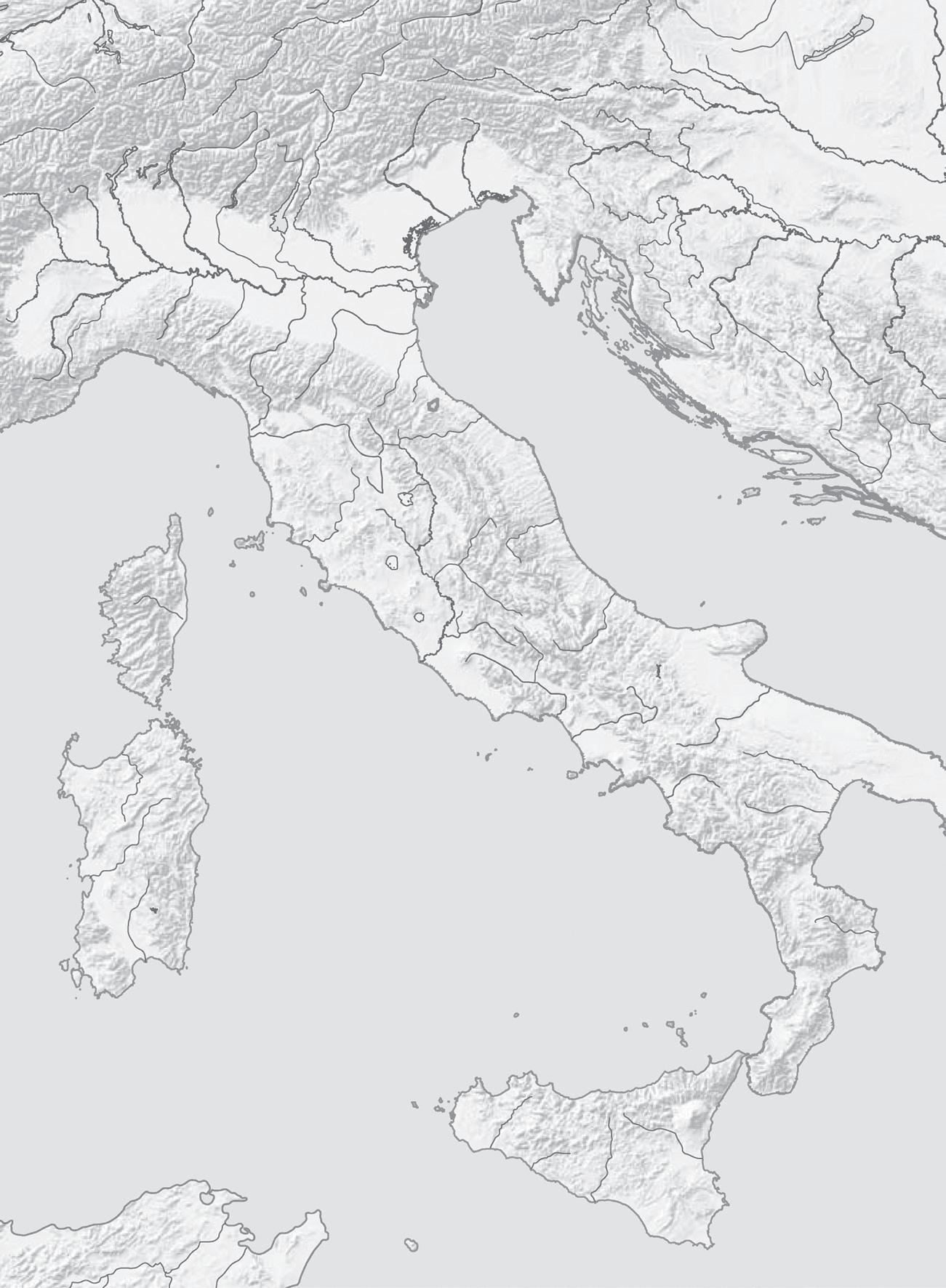
2 Roman Italy xiv
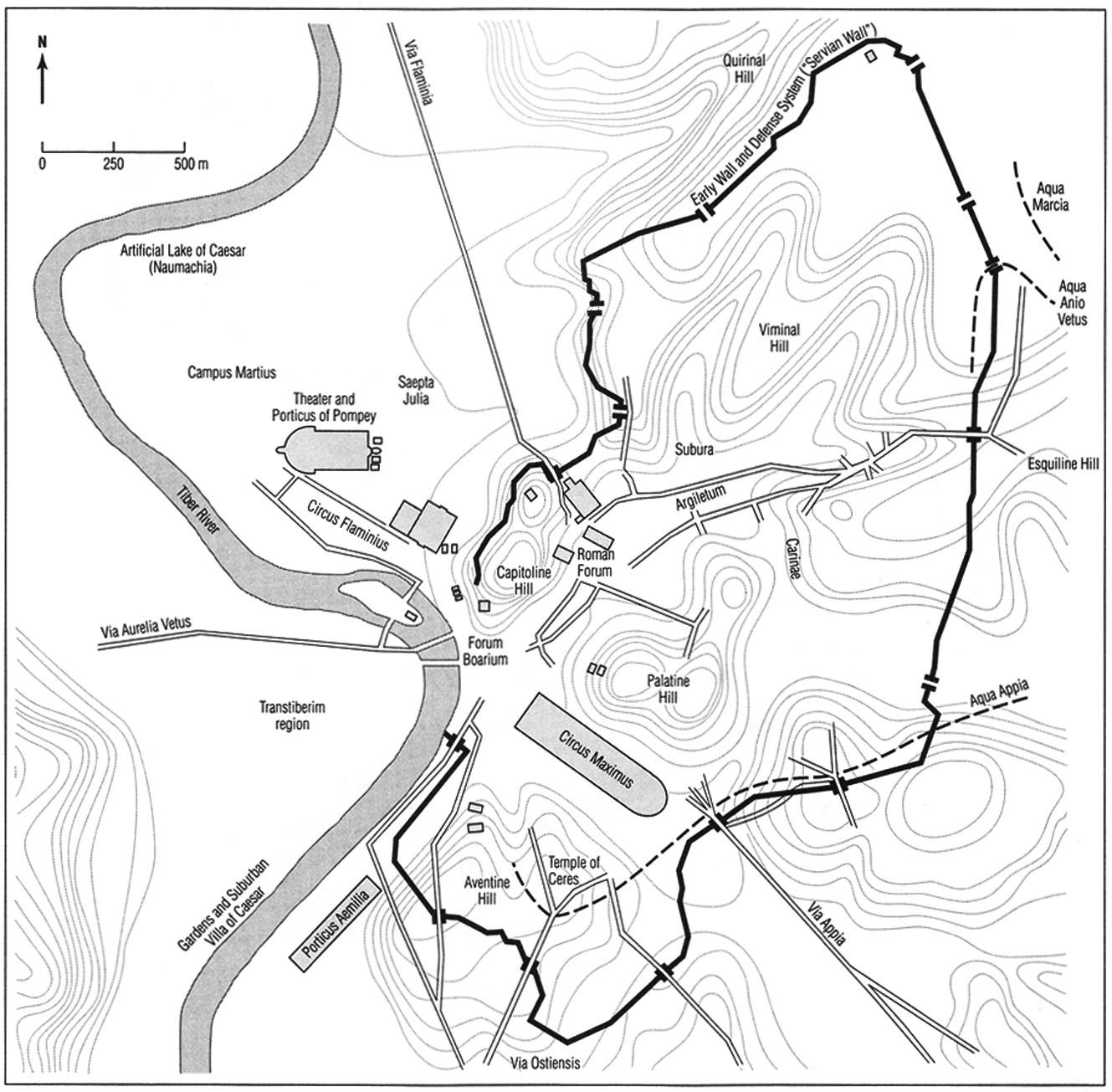
3 Rome in the Late Republic xv
4 Roman Forum xvi
Stemmata
1 Descendants of Marcus Porcius Cato the Elder xvii
2 Family of Marcus Porcius Cato the Younger xviii
Figures
2.1 Bust of Gnaeus Pompeius Magnus (Pompey the Great), Augustan copy of a ca. 70–60 bc original, Museo Archeologico Nazionale di Venezia. 40
3.1 Cato propaganda cup, 1st century bc, CIL VI 40904 = AE 1979, 64, from Museo Nazionale Romano - Terme di Diocleziano, Rome. 58
3.2 Bust of Marcus Tullius Cicero, 1st century ad Palazzo Nuovo, Musei Capitolini, Rome. 60
3.3 Green basalt bust of Gaius Julius Caesar, early 1st century ad, from Egypt. Altes Museum, Berlin. 69
3.4 Bust of Marcus Licinius Crassus, Augustan copy of a late 1st century bc original, Louvre, Paris. 76
E.1 The Death of Cato, Pierre Narcisse Guérin, (1744–1833). 1997, Ecole nationale supérieure des Beaux-Arts, Paris. 301
Acknowledgments
I have been wanting to write this book for a long time. Cato the Younger has fascinated me for years, not only because of his underappreciated role in the collapse of the Roman Republic, but also because he—more than any other man of his period—is usually remembered as a caricature. He is too often summed up as Caesar’s cranky nemesis, or as the arch-conservative senator who saw the end of the Republic coming but was powerless to prevent it, or even as the Stoic philosopher whose dedication to liberty was so great that he refused to live under Caesar’s domination. Cato was a major player in one of the most critical periods of Rome’s history, but he is too often reduced to a symbol or an ideal. This book is my attempt to recover Cato as he was, rather than as he generally has been remembered, and to explore his role and activity—for good and for bad—in the final decades of the Republic.
I was able to begin this project thanks to the generosity of the Kommission für Alte Geschichte und Epigraphik of the Deutsches Archäologisches Institut in Munich, which provided me with a fellowship to begin my research in their library. I am particularly grateful to the directors of the Kommission, Christof Schuler and Rudolf Haensch, for their support. As the book took shape, I was fortunate to receive encouragement and assistance from Elizabeth A. Meyer and J. E. Lendon, who generously read multiple drafts and improved the work significantly with their questions, critiques, and suggestions. I am also grateful to the members of New England Ancient Historians’ Colloquium, who gave many helpful comments on an early draft of the epilogue to this book, and to my editor Stefan Vranka and the anonymous readers who reviewed this book for Oxford University Press, all of whom offered many helpful suggestions.
Above all, I am profoundly grateful for the patience, assistance, and support of my wife Anne W. Drogula, to whom I offer this book—a mere token—with greatest love and devotion.
Augusta Praetoria orriia Prae
CISALPINE GAUL
Placentia n
Parma
Florentia i Pisae Luca
Mutina na Bononia Volaterrae
ETRURIA
CORSIC A
R u bicon
R avenna
Aquileia q
Ariminum
Sentium
Perusia P
Clusium u C
PICENUM
Alba Fucens
Roma
Tibur
Tusculum culum
Antium m Ostia Minturnae
Arpinum
Neapolis a N Nola
Cumae
SARDINIA
050 100 150 mi
050 100 150 km
Utica
Carthago
Tyr rh enian Se a
Pompeii
A d riatic S e a
C Cannae
APULIA
LUCANIA
Lipari Islands
Naulochus
Messana
Etna Mt
Agrigentum
Rhegium
Brundisium um
Tarentum
Syracusae
Rome in the Late Republic
ClivusArgentarius
AR X
Basilica Porcia
Ar giletu m
Basilica Aemilia Curia
SacraVia
Tabernae Argentariae
Regia Carcer
Columna Maenia COMITIUM
Rostra
Temple of Concordia
Temple of Vesta
Vicus Tuscus Scalae ScalaeGemoniae Cliv us Capito linu s
Q. Caecilius Metellus Pius Scipio Nasic a (cos. 52 bc)
Porcia
L. Domitius Ahenobarbus (cos. 54 bc)
M. Porcius Cato (d. 42 bc)
M. Calpurnius Bibulus (cos. 59 bc)
Atilia (2) Porcia (1)
(2) Marcia (1)
Q. Hortensius Hortalus (cos. 69 bc)
Servilia the Younge r L. Licinius Lucullu s (cos. 74 bc)
M. Licinius Lucullu s (d. 42 bc )
Porcia
Cat oP orci a
Porcius
Calpurnius Bibulus ?
?M. Junius Silanus (cos. 25 bc)
C. Cassius Longinus (pr. 44 bc)
Junia Tertia
M. Junius Brutu s (pl. tr. 83 bc)
Hortensia?
Q. Servilius Caepio (mil. tr. 72 bc)
Servilia?
Servili a (2) the Elder (1)
D. Junius Silanu s (cos. 62 bc)
M. Junius Brutu s (pr. 44 bc)
M. Aemilius Lepidus (cos. 46 bc)
Junia Secunda
P. Servilius Isauricus (cos. 48 bc)
Junia Prima
Cato the Younger
Introduction
The historian Sallust had been an eyewitness to the tumultuous events of the late Roman Republic, and in particular to the civil war between Caesar and Pompey that was the death knell of the Republican government. Having known and observed the men who drove events in the final decades of the Republic, Sallust made a remarkable statement affirming that Gaius Julius Caesar and Marcus Porcius Cato were the two most outstanding Romans in living memory. That Caesar should be singled out for such high praise is unsurprising, since few would deny that he was one of the most important men in the late Republic, if not the most important man. Caesar outclassed his opponents throughout his career, and his very name became synonymous with power and authority. Yet Sallust insisted that Cato had been Caesar’s equal in merit and virtue. This comparison may strike many readers as odd and surprising, because it is not immediately obvious why Cato—whose accomplishments are rarely (if ever) mentioned by historians—should receive such high praise. Cato never reached the consulship or led Roman legions in battle, he did not have great wealth or throngs of clients to do his bidding, and he is more often recalled as an obstinate crank than as a great statesman. So why does he rate higher in Sallust’s estimation than great men like Marius, Sulla, Pompey, Crassus, and Lucullus? How is Cato more deserving of praise than Cicero or Brutus? Sallust’s quote is worth citing in full:
But within my own memory there have been two men with exceptional virtue, albeit with differing characters: M. Cato and C. Caesar. . . . Their birth, age, and eloquence were very nearly the same, they had the same greatness of spirit, and their glory was evenly matched, although different to each. Caesar was held to be great because of his benefactions and munificence, but Cato for the integrity of his life. The first became famous for his mildness and mercy, while severity added distinction to the latter.
Caesar obtained glory through his giving, his assisting, and his pardoning, while Cato achieved this by engaging in no amount of bribery. The one was a shelter for those suffering, while the other was a bane for evil-doers. The courtesy of the first was praised, but the constancy of the second. Finally, Caesar had trained his mind to labor and to be alert, to focus on the business of friends and neglect his own concerns, and to refuse nothing that was worth giving. He hoped for himself a great command, an army, and a new war, where his bravery would be able to shine. But for Cato was the pursuit of restraint, of dignity, and most especially of severity. He did not contend with the wealthy in wealth, nor with the partisan in partisanship, but with the vigorous in virtue, with the restrained in decency, and with the upright in integrity. He preferred to be good rather than to seem good, and so the less he sought glory, the more it attended on him.1
Sallust identifies many of Cato’s admirable traits in this passage, but the comparison of him with Caesar is awkward—why did Cato’s austere virtues make him a match to Caesar? The virtue or merit of each man is defined in drastically different terms, but it is not immediately clear why Cato’s austerity made him Caesar’s equal in fame and glory, especially since Cato is rarely included among the important figures who directed major events in his lifetime. He lacked all of the usual sources of power in the Republic: he was no military commander; his father’s family was recently undistinguished and had all but disappeared; he had neither great fortune nor an army of clients; he never advanced high enough on the political ladder (the cursus honorum) to acquire the imposing authority of a consul; and his own political allies often found him a liability. By the political metrics of the time, therefore, Cato—for all of his virtues—should not have been particularly important, and yet Sallust was right: Cato became a leading figure among the Senate leadership and was able to marshal enough influence to stand toe to toe with Caesar in a political battle for control of the Republic. Cato was able to transmute his virtues into political power.
Cato’s influence came from his deft manipulation of tradition. The Romans were a naturally conservative people who looked to their ancestors for examples of proper values and actions, and senators tended to be even more conservative than the general population, since their collective authority and influence arose primarily from their claim that their families had always been the leaders of the Republic and the fathers of the state. Their families had done great and many
1. Sall. Cat. 53.6–54.6. All translations of Greek and Latin authors in this book are my own unless otherwise stated. The abbreviations in this text may be found in the fourth edition of the Oxford Classical Dictionary, edited by S. Hornblower, A. Spawforth, and E. Eidinow (2012).
services for Rome over the centuries, and in return they deserved to be seen as the natural leaders of the state. Roman voters responded positively to these claims, and they showed willing deference to senators whose ancestors had established the Republic and built Rome’s empire. Thus senators established and maintained their claim to be Rome’s “best men” (optimates) according to Rome’s traditional values, forming a meritocracy that deserved to lead the state. This deep and widespread respect for ancestral custom (the mos maiorum) usually enabled the Senate to control the voters by combining and directing the massed influence of its members. Although the citizens occasionally threw their backing behind a populist politician (a popularis) who sought widespread support by promoting policies that were favorable to the people (and usually at the expense of the elite classes), their deferential nature and innate respect for tradition normally inclined them to follow the lead of the Senate. Cato was one of these tradition-minded senators, but he used new and innovative ways to promote his conservatism in order to gain influence and status rapidly. Knowing that he lacked the advantages and resources necessary to become a leading member of the Senate according to the prevailing political calculations of his day, he instead found unusual and even radical ways to promote himself as the man who best embodied the mos maiorum. Exploiting the malleable nature of tradition, he adopted a number of old-fashioned practices and mannerisms that appeared to have been drawn from Rome’s archaic past, and promoted his own particular interpretation of what Rome’s ancestral customs had been (or—he thought—should have been). Many of these habits were long out of date, and some may never have actually existed, but Cato deftly used them to present himself as a man uniquely connected to Rome’s hallowed ancestors. Using aggressive and eye-catching methods, he promoted and popularized the idea that he was the most conservative and traditional man in the state, which turned out to be a potent political tool among the deferential Romans. Thus it was his deft and highly calculated appeal to an imaginary past, in a society with a fathomless reverence for the past, which allowed him to cast what was nearly a magical glamor over the so-often cynical senators of Rome.
His unusual tactics were very successful, and Cato became the living voice of Rome’s ancestors, an identity he used to acquire considerable influence and standing rapidly among the leadership of the Senate. While his self-promotion as the archconservative in Rome made him a figurehead for the senators, it also tested the limits of the Romans’ reverence for tradition. Cato was not merely conservative; he fashioned himself into his own particular interpretation of ancestral custom, and this interpretation was often too inflexible or unrealistic for many of his contemporaries. The people had great respect for the tradition Cato embodied, but his extreme interpretation of that tradition often offended the voters, who were not always prepared to revert back to the “ancestral values” they
admired. Thus Cato reveals the complexity of the Romans’ engagement with their own traditions. This was particularly visible among the leading senators, who saw in Cato a very useful champion of the traditional prerogatives of the Senate, but who frequently found his inflexible insistence upon old-fashioned morality to be a liability. Cato was very successful in uniting groups of senators with calls to defend tradition, but he was often frustrated to find that the Romans were not willing to go as far as he was in the defense of tradition, or that they had other priorities that were equally important to them. So while the Romans admired Cato deeply, they offered him little support when he tried to reach the consulship or pass major legislative reforms.
Yet Cato was a primary mover of events in the late Republic despite his political setbacks, and Sallust was right to recognize that his personal virtues were the foundation of his importance. Like Caesar, Cato understood the complex and mercurial world of the Roman Senate, in which blocks of senators were constantly shifting and realigning themselves depending upon which issues were at stake. Far from being a unified, policy-driven aristocracy, the matrixes of alliances within the Senate shifted regularly according to the priorities of each elite family, so holding a leading position in the Senate meant knowing how to navigate among (and influence) a large number of changing factions or alliances. Cato’s virtues and his unique, self-made identity as the voice of the ancestors often enabled him to unite critical masses of senators at key moments to oppose the daunting power of great men like Pompey and Caesar. Sometimes he was able to push senators into active opposition to the great men, and other times he was able to reduce the political support of his opponents. He was not the head of anything like a modern political party, but he was often successful in uniting a large number of senators to support him on certain issues, or at least in influencing them not to support his opponents. Some may have shared Cato’s values, while others may have been reluctant to be seen opposing Rome’s champion of tradition, but his influence enabled him to be a driving force in politics. He appears time after time at the center of those critical events or decisions that gradually pushed the Republic toward civil war. He played a central role in alienating Caesar from the leading men in the Senate; he was a chief architect of attacks on Caesar, Pompey, and Crassus that resulted in the formation of the First Triumvirate; he repeatedly scuttled attempts by Caesar and his allies to come to compromises with the Senate; and he supported and influenced the tactics that ultimately pushed Caesar into marching on Rome. Cato frequently appears at linchpin moments in the history of the late Republic, sometimes as a major player, and other times as the driving force that pushed others to act. So while Cato was not solely responsible for the actions that determined the fate of the Republic—such as the formation of the Triumvirate, or Caesar’s decision to cross the Rubicon—he did
play a decisive and even essential role in creating the conditions that made those decisions possible and even probable. Indeed, it is one of the great paradoxes of Roman history that Cato’s efforts to protect the Republic unintentionally but directly contributed to the collapse of the Republic.
In addition to being a critical player in Republican politics, Cato provides a particularly good window through which one can study the Roman engagement with ideas. His promotion of himself as the champion of ancestral tradition, and his efforts to assert the superiority of his interpretation of that tradition, reveal how flexible the idea of ancestral custom was in the minds of the Romans, and how the manipulation of ideas could be used as a political weapon. And because Cato’s political influence was so closely tied to his self-identification with Rome’s ancestral values, his successes and failures illustrate the strengths and weaknesses of appeals to tradition in late Republican politics. So the Romans admired Cato’s own antique austerity and honesty, but they rigorously rejected his attempts to curb electoral bribery, since it would deny them needed (but illicit) income. Likewise, Cato was often very successful at using appeals to core values such as libertas (liberty) and hatred of tyranny to build opposition to Caesar and his allies, but the limits of such appeals became evident on occasions when the voters nevertheless threw their support behind Caesar’s popular proposals. Cato viewed and presented his opposition to Caesar in cultural terms as a battle for freedom in opposition to tyranny, but the very flexibility of the tradition that he championed meant the Romans could engage with those ideas in a variety of ways, which often limited Cato’s effectiveness.
Cato is also a potent example of the personal nature of Roman politics. He goes down in history as a determined champion of the Republic who opposed Caesar’s tyrannical aims, but he actually began attacking Caesar very early in their careers, long before Caesar gave any clear evidence that he would attempt to challenge the Senate. Indeed, when Cato was demanding the death penalty for the Catilinarian conspirators in 63 bc, he tried to implicate Caesar falsely in their crime, which—if successful—would have resulted in Caesar’s execution before he had held a major magistracy or taken up his first military command. This extreme animosity may have arisen from a prescient understanding that Caesar would someday aim at a tyranny, but it was more likely the product of a personal feud that Cato conducted with Caesar. The origins of this feud are murky, and it is not even clear that Caesar reciprocated the hostility, but some personal motive drove Cato to attack Caesar relentlessly from the start of their careers. While such feuds were not unusual among Roman aristocrats, Cato’s feud would have the critical consequence of alienating Caesar from the senatorial leadership at a time when he might have been incorporated into their fold. Caesar was certainly ambitious, but the Senate had managed to accommodate and even use the