“Mom, dad and two kids: what could possibly go wrong? In this charmingly written, intimate look into the family life of the blue-footed booby, Hugh Drummond describes how siblings aggressively compete with each other from an early age, how parents carry on affairs while raising offspring with their spouse, and why all of this makes sense from an evolutionary perspective. An account that is both academically rigorous and studded with memorable anecdotes about the birds, and the biologists who study them ends with a revealing chapter that highlights the parallels between sibling competitive interactions in booby families and those in our own species. A ‘must read’ for scientists and for anyone else who is interested in how nuclear families in other species manage the conflicts that occur in them.”
Judy Stamps, Emeritus Professor of Evolution and Ecology, University of California, Davis
“We waited many years for Hugh Drummond to write this book, but when he did, what a treat! Drummond takes us through incredibly detailed and precise descriptions of inter-sibling competition to the theoretical underpinnings of virtually all animal behavior principles. He masterly combines diversity between species to commonality of principles, and, while doing that, it is great fun to read. If you are not a naturalist already, this book may make you wish to become one. Read it as novel, but take care to google each species as it makes its appearance, and seize your first opportunity to watch breeding birds and other animals as they sort out their family conflicts. Reading this wonderful book will empower you to see behind the surface and truly understand how life is a mesh of diversity and similarity. A long-lasting masterpiece.”
—Alex Kacelnik, FRS, Emeritus Professor of Behavioural Ecology, University of Oxford
“Hugh Drummond has written an astonishing three books in one: A scholarly treatise on the reproductive and social activities of some extraordinary birds; an account of the joys and challenges of doing natural history; and a particularly thoughtful, evidence-based exposition of what we can learn about humans from the study of other animals. These themes are interwoven in prose at once lucid, engaging, and compelling, such that blue-footed boobies is destined to become a classic in the study of animal behavior.”
Harry W. Greene, Emeritus Professor of Evolutionary Biology, Cornell University
“Any sibling rivalry in your family? If so you are definitely not alone. In this detailed account of family conflict within two species of fish-hunting sea birds, Hugh Drummond compares congenitally siblicidal brown boobies with only moderately less murderous blue-footed ones. Depending on circumstances, a bluefooted booby might occasionally allow a younger sib to grow up. Evolutionarily distant as these squabbling sea-birds are from our own order, primates, it’s impossible not to be impressed by the parallels with other apes like bonobos among whom stress hormones go zooming up upon the arrival of a younger sibling, or the near universal manifestation of sibling rivalries across human cultures. In between lyrical descriptions of the habits and habitats of these consummate diving birds, and the adventures of the scientists studying them, Drummond provides an overview of sibling rivalry across the natural world and expertly guides readers through various evolutionary theories to make sense of behavior so seemingly counter-intuitive as lethal conflict between close kin. A fascinating, if sometimes harrowing, read!”
Sarah Blaffer Hrdy, Emeritus Professor of Anthropology, University
of California, Davis
“Blue-Footed Boobies is a scientifically thorough, yet highly accessible, account of the evolutionary basis of family life. Although focused on the tropical marine birds Drummond has studied for decades, it does an expert job of relating his work to human behavior in a way that will appeal to professionals and nonprofessionals alike. Moreover, the meticulously dissected experiments provide a compelling counter to the ‘just-so’ stories sociobiologists have historically been accused of advocating.”
—
Walt Koenig, Research Zoologist Emeritus, University of California, Berkeley
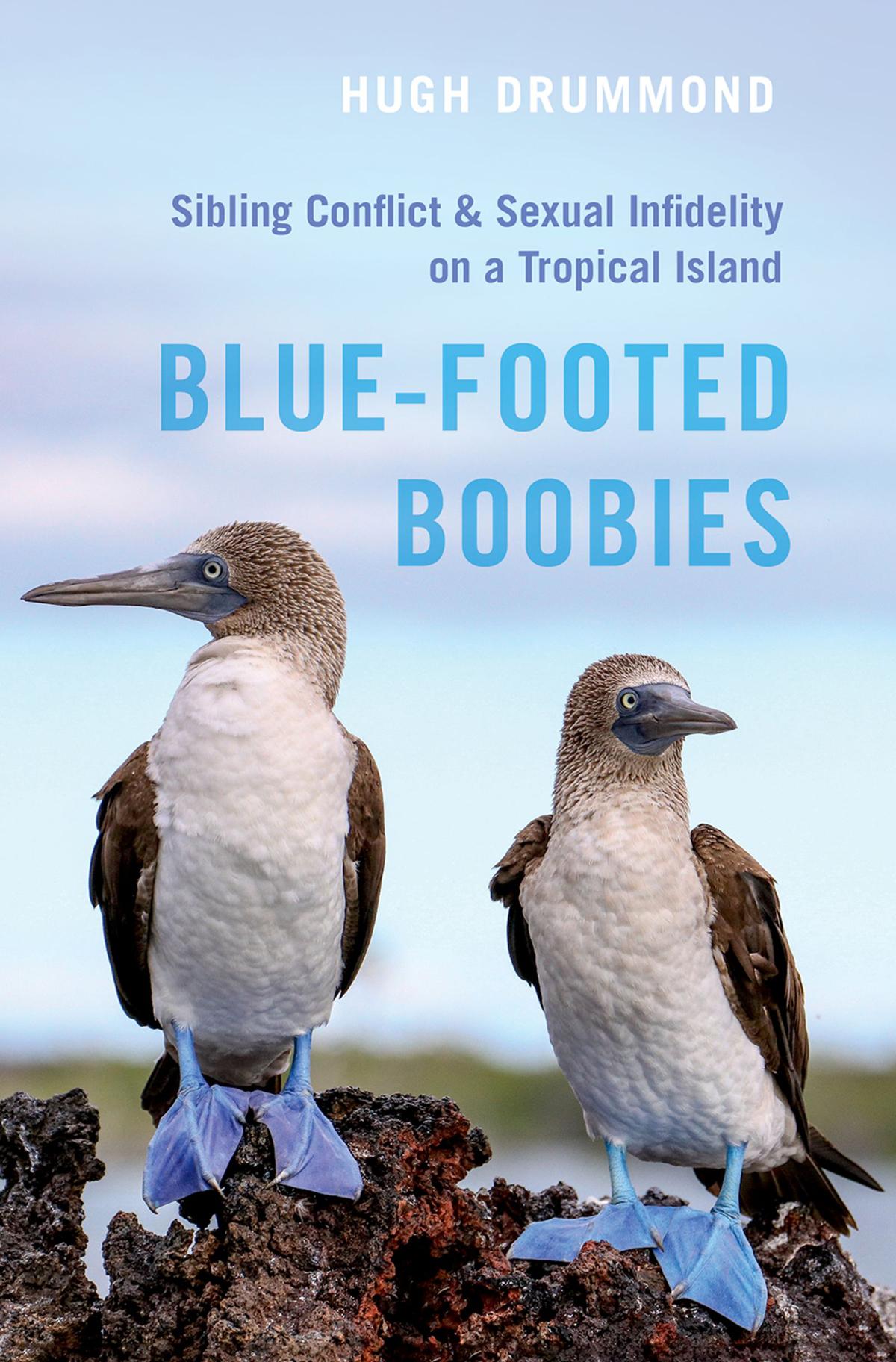
Blue-Footed Boobies
Sibling ConflictandSexualInfidelity on a Tropical Island
Oxford University Press is a department of the University of Oxford. It furthers the University’s objective of excellence in research, scholarship, and education by publishing worldwide. Oxford is a registered trade mark of Oxford University Press in the UK and certain other countries.
Published in the United States of America by Oxford University Press
198 Madison Avenue, New York, NY 10016, United States of America.
All rights reserved. No part of this publication may be reproduced, stored in a retrieval system, or transmitted, in any form or by any means, without the prior permission in writing of Oxford University Press, or as expressly permitted by law, by license, or under terms agreed with the appropriate reproduction rights organization. Inquiries concerning reproduction outside the scope of the above should be sent to the Rights Department, Oxford University Press, at the address above.
You must not circulate this work in any other form and you must impose this same condition on any acquirer.
Library of Congress Cataloging-in-Publication Data
Names: Drummond, Hugh, 1947– author.
Title: Blue-footed boobies : sibling conflict and sexual infidelity on a tropical island / Hugh Drummond.
Other titles: Sibling conflict and sexual infidelity on a tropical island
Description: New York, NY : Oxford University Press, [2023] | Includes bibliographical references and index.
Identifiers: LCCN 2023004674 (print) | LCCN 2023004675 (ebook) | ISBN 9780197629840 (hardback) | ISBN 9780197629864 (epub)
1. Two Approaches to Controlling and Killing Siblings
2. Beating Siblings into Submission
3. From Wild Violence to Courtly Rituals
4. To Kill or Not to Kill
5. Are Parents Okay with Sibling Bullying?
6. Bullying and Lifelong Scars
7. Happy Marriages with Blue Feet
8. Cheating, Infanticide, and Egg-Dumping
9. Are Humans Similar?
Notes
Glossary
References
ListofCommonandSystematicNames
Index
Acknowledgments
I warmly thank the colleagues and friends who put an end to my years-long dithering over whether to write a book by responding to a synopsis of our research on boobies with these words:
“Wow, Hugh. Thanks for sharing. What an outstanding encapsulation of your work!”
“Thank you, Hugh! Who says it’s not a page-turner? It’s the entire booby soapopera story, complete with the dramatic stuff that makes up their daily lives! In fact, the type of stuff that appealed to me when I went into the field of animal behavior. … ”
“Remarkable stuff. It brings together all the strands that you have shared with us over the years and gives a complete picture of your life’s work. Not only it is of great interest in scientific terms but fascinating in terms of all the blood, gore and cuckoldry! It would make a good series for Netflix following up on Game ofThrones!”
“Hugh, thanks for sending. This is such a great story of avian love, deception, and murder. You need to write a book. Seriously.”
Without this encouragement, I may never have taken the plunge. After all, I’d published the research in dozens of articles in scientific journals, so the blue-foot story was already out there. Why go to the trouble of repeating it all? I needed those friends, especially Hal Herzog, the author of the last response, to shake me up. And Hal went further—his advice helped me transition from writing technical, theory-oriented articles for specialists to entertaining naturalists of all stripes with the dramas of evolved family conflict. Similarly, I’m indebted to an anonymous reviewer of my book proposal who strenuously insisted on the book not just commenting on boobyhuman parallels but ending strongly with an explanatory account of the two species’ similarities. They got me to write, finally, what I had always wanted to write.
Since I morphed into an evolutionary biologist 40 years ago, I have felt grateful to three American colleagues who showed me what it means to become involved in the lives and ecology of populations of wild animals. When, as a graduate student, I spent time with each of them in the field, I was already a nature lover and experienced in hiking, camping, and climbing, but I didn’t know about garnering intimate knowledge of other species in their worlds. The examples of Steve Arnold (garter snakes), Stan Rand (green iguanas), and Brad Shaffer (axolotls) showed me what I must aspire to and how rewarding sustained fieldwork can be. And though I never actually spent much time with him in the field, the example of Harry Greene, my companion in graduate school, was similarly influential. Conversations with a thorough-going naturalist with a profound and unsentimental love of nature, an encyclopedic familiarity with reptiles, and the enthusiasm and patience to share his knowledge and passion with a naïve apprentice fostered my fascination with animals and my urge to delve into their lives.
I am grateful to a number of colleagues from different disciplines who took the trouble to critique one or more chapters in their areas of expertise. Sarah Hrdy generously provided salutary feedback on the chapter comparing family conflict in boobies and humans, taking time from her own writing to guide my outing into the literature of evolutionary anthropology. That chapter also benefitted from the comments of evolutionary/developmental psychologists Sybil Hart and Isaac Santoyo. Hal Herzog, a psychologist/anthrozoologist, kindly reviewed three chapters, and several ornithologically savvy behavioral ecologists reviewed chapters in their areas of expertise: Alejandro Gonzalez-Voyer, Lynna Kiere, Becky Kilner, Marcela Osorio, Judy Stamps, Roxana Torres-Avilés, and Alberto Velando.
My most staunch and supportive companions in this project have been the team of friends, not all academics, who read each chapter as it emerged from my keyboard and provided encouragement and advice for making chapters more readable and entertaining. Working in tandem, Roy Broughton and John Williams helped me to know when the prose and its organization were on track, rebuked my lapses into scientific journalese, nipped in the bud my obsession with
data and details, and usefully encouraged my digressions into natural history and the incidental amusements of field research. Regina Macedo, Claire Drummond, and Cristina Rodríguez provided moral support as well as feedback on contents and style, and Patty Gowaty periodically startled me with encouragement so stirring it made me ashamed of my slacking and self-doubt. Finally, my wife, Sylvia Rojas, was a mainstay. In the early weeks, she helped me to grasp and clarify what sort of book I wanted to write; throughout the writing, she helped me keep up the momentum and gave valuable feedback, including judicious suggestions and criticism on every chapter.
We have managed to sustain decades of fieldwork on an uninhabited and waterless island far out to sea without any important accidents or setbacks because the manager of our camp, monitoring program, and database, Cristina Rodríguez, comprehensively coordinated the logistics, including the recruitment of volunteers and the support of fishermen, the Mexican navy, and the administrators of Isla Isabel national park. She also organized the book’s bibliography. In addition, scores of volunteer students, mostly from the Universidad Nacional Autónoma de México (UNAM) and other Mexican universities, worked diligently for weeks or months at a stretch to sustain observations that were often repetitious and draining, and sometimes exhausting. Since I joined the UNAM in 1980, I have greatly appreciated and admired our students’ willingness, commitment, and good humor.
No less important were the contributions to the booby research program of valued collaborators from universities in Mexico, the United States, and Europe who contributed their skills in research design, laboratory and field techniques, data analysis, thesis supervision, and manuscript preparation, either from afar or during visits to the island: Sergio (Cheko) Ancona, René BeamonteBarrientos, Itzia Calixto-Albarrán, Jocelyn Champagnon, Diego Cortez, Cesar Domínguez, Brant Faircloth, Patty Gowaty, Robyn Hudson, Alex Kacelnik, Katharine Keogan, Becky Kilner, Sin-Yeon Kim, Sasha Kitaysky, V. V. Krishnan, Stacey Lance, Xinhai Li, Margarita Martinez-Gomez, Ale Núñez-de la Mora, Schyler Nunziata,
Dani Oro, José Luis (Mogli) Osorno, Cristina Rodríguez, Miguel Rubio-Godoy, Salvador Sanchez-Colon, Hubert Schwabl, Judy Stamps, Mary Stoddard, Tamas Székely, John Wingfield, Rebecca Young, and Jaime Zúñiga-Vega.
Without finance, permissions, and logistics, there would have been no booby research program, so it’s a pleasure to record my appreciation of the institutions that have steadfastly financed and otherwise supported us. These include, preeminently, the PAPIIT program of UNAM’s Dirección General de Apoyo al Personal Académico, the Consejo Nacional de Ciencia y Tecnología, the Consejo Nacional de Areas Naturales Protegidas, the Secretaria de la Marina, the National Geographic Society, and the Conservation and Research Foundation.
Finally, two special mentions. I warmly appreciate the drawings of boobies that Jaime Zaldivar-Rae enthusiastically contributed to the book. While studying the social behavior of Isla Isabel’s whiptail lizards, Jaime became so familiar with the blue-footed boobies that 10 years later, handed a set of mediocre photos, he could create the images that so faithfully capture the boobies’ behavior and essence. And I am forever indebted to Gordon Burghardt. Who else would accept a lawyer-turned-language teacher he had never met to study in his lab for a doctorate in comparative psychology and ethology? And furnish him with litters of newborn snakes and laboratory facilities along with technical support for building experimental enclosures? Understandably, other universities brushed my applications aside, but Gordon took a chance and admitted me to the profession, the community, and the life in which I have thrived.
Introduction
When the second chick of the blue-footed booby hatches into the shallow pit under its parent’s immense body, its sibling, 4 days older, bigger, and more coordinated, is just centimeters away. What these designated rivals get up to in that warm darkness is not known, but during the first several days each of them periodically arouses, eases its head from under the parent’s breast or wing feathers, stretches its skinny gray neck precariously upward, and vibrates its head, chirping rhythmically. If the parent is ready with some predigested fish, and if the chick’s begging goes on long enough to make it regurgitate, the parent will lower its daggerlike bill from on high and attempt an awkward mouth-to-mouth transfer to the naked, trembling creature one-thirtieth its own weight. Next, the chick will insert its head into the cavernous mouth and grope, usually unsuccessfully, for a mouthful of fish mush that it can swallow whole by withdrawing its head and tilting it back.
But the maneuver often fails well before the parental bill arrives, when the elder sibling’s head crashes into the younger’s, knocking the chick back into the pit. Or when repeated blows oblige the younger chick to crouch and cower. Nothing excites the rage of a booby chick as much as the lifted vibrating head of another chick; it must be toppled or bludgeoned into silence by a volley of pecks to the cranium, face, eyes, and nape, or indeed anywhere on its body. At the start of life, both chicks are equally motivated to attack in this way, but only the elder one has the height and muscle to pull it off. Then, over the course of 14 weeks of growth and development, new behavioral dynamics emerge as each family member adjusts its own strategy in the light of food availability, changing tactics of the others and whether its own interests will be best served by nurture, tolerance, or death of the second chick.
Sociobiologists, who study the evolution of the social behavior of animals, evolutionary psychologists, and anthropologists have argued extensively over whether humans are essentially good or bad. They get hot under the collar about whether evolution by natural selection has shaped them to compete selfishly and sometimes violently, or to empathize, cooperate, and work selflessly for the common good. In reality, natural selection has shaped species that live in families or social groups, including humans, to do both—compete selfishly and cooperate. Roughly 70 years of descriptive, experimental, and comparative studies of numerous species have revealed how animals treat their companions and their kin. We have come a long way in understanding how social behavior evolves in species over thousands of generations and develops in individuals over their lifetimes. And we understand better than ever how the behavior of other animals can shed light on our own motivation, emotions, and behavior.
To be clear, the tropical marine bird that is the focus of this book, and which makes spectacular aerial plunges into the ocean to engulf small fishes and breeds in noisy colonies of hundreds, is worthy of our attention for itself, and it is in this spirit that my colleagues and I have studied it for more than 40 years. But the family conflicts of the blue-footed booby also merit our attention because they arise from the same fundamental evolutionary tensions and some similar behavioral mechanisms to those that drive conflict and cooperation in our own lives. To illuminate our evolved behaviors, we habitually turn to our closest relatives—chimpanzees and bonobos—but for family conflict, blue-footed boobies are more relevant models and provide starker insights into our emotions and behavior.1–3
Bonding of male and female to cooperate in a joint project of producing, nurturing, and defending offspring is simply not the chimpanzee or bonobo way. Each female raises a single infant by herself in a competitive milieu in which females mate with several males, and males compete with each other for opportunities to mate with females. Males may defend the whole group, including its infants, but they provide infants with little or no nurture. We certainly share emotional and behavioral characteristics with our closest primate relatives and even with many monkeys, including rhesus
macaques. For example, there are some striking similarities in how adult males compete with each other and how mothers care for infants. But comparisons among primates can shed only limited light on social relations within human nuclear families. For that purpose, birds are often a better model because the majority of our planet’s approximately 10,000 avian species reproduce in nuclear families in which highly dependent offspring that are full- or half-siblings compete for the care provided by two hard-working parents.
Among birds with nuclear families, blue-footed boobies are a particularly good species for making informative comparisons with key aspects of human social behavior because they live long lives and breed repeatedly. Every year they pair monogamously and both partners commit to sharing all tasks in defending and nurturing a highly dependent brood of one to three chicks until all of them fledge or die. In boobies and humans, the nuclear family sets the scene for intense and protracted cooperation and conflict among individuals who are important to each other. Consequently, the within-family emotions and social behavior of boobies and humans have been exposed, over geological time, to similar selection pressures. Given the huge differences between these two species, we expect those similar selection pressures to have channeled the evolution of different behaviors that ultimately serve similar functions. Blue-foots are considerably less intelligent than humans and, for all we know, may be strangers to social learning and culture, pivotal influences on our own endlessly malleable social behavior. But boobies face some of the same fundamental challenges faced by humans, including how to cooperate with siblings, partners, and offspring while prevailing in conflicts of interest with them.
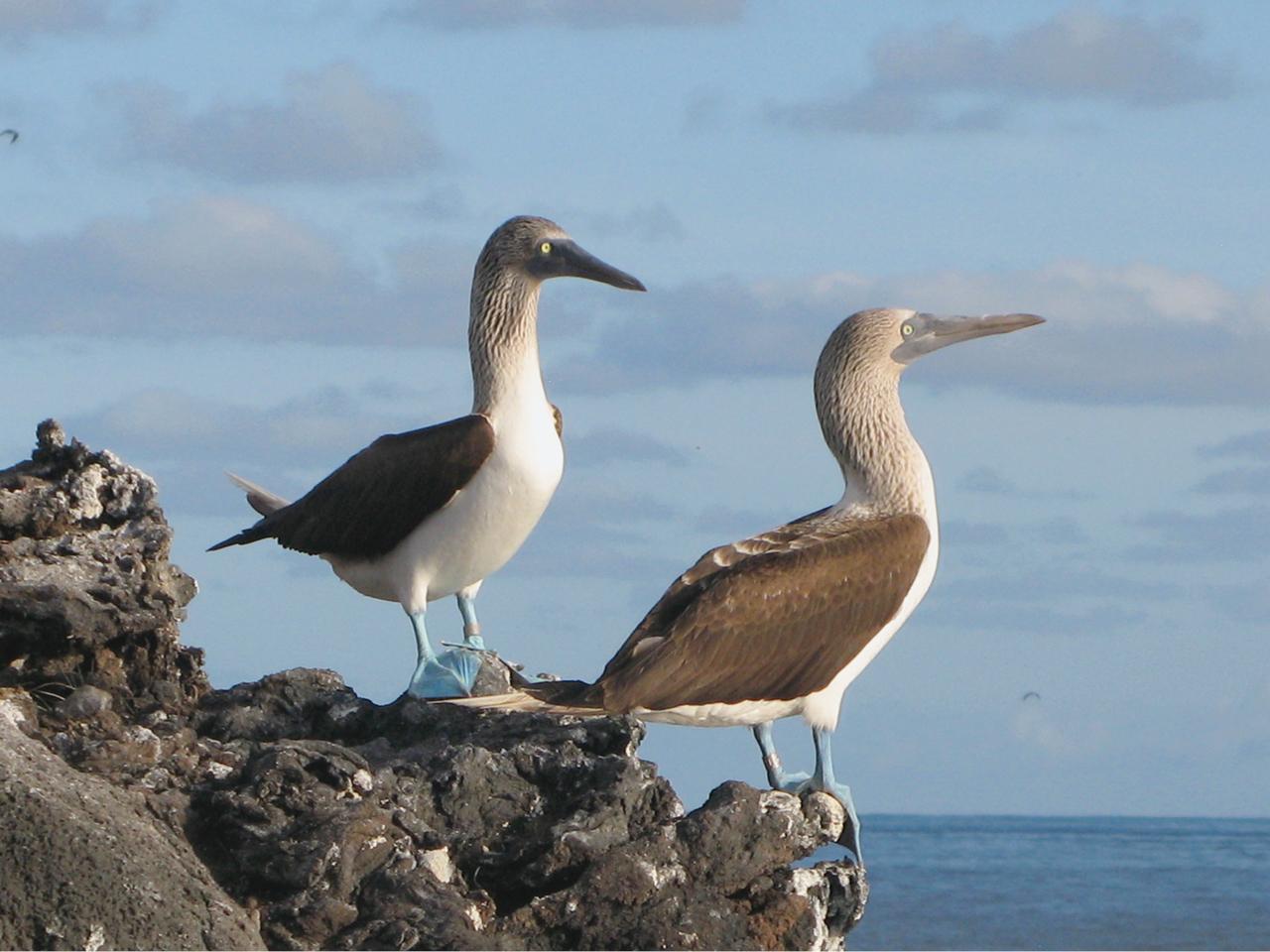
Fig. I.1 Blue-foots loafing on a cliff’s edge.
Photo by Hugh Drummond.
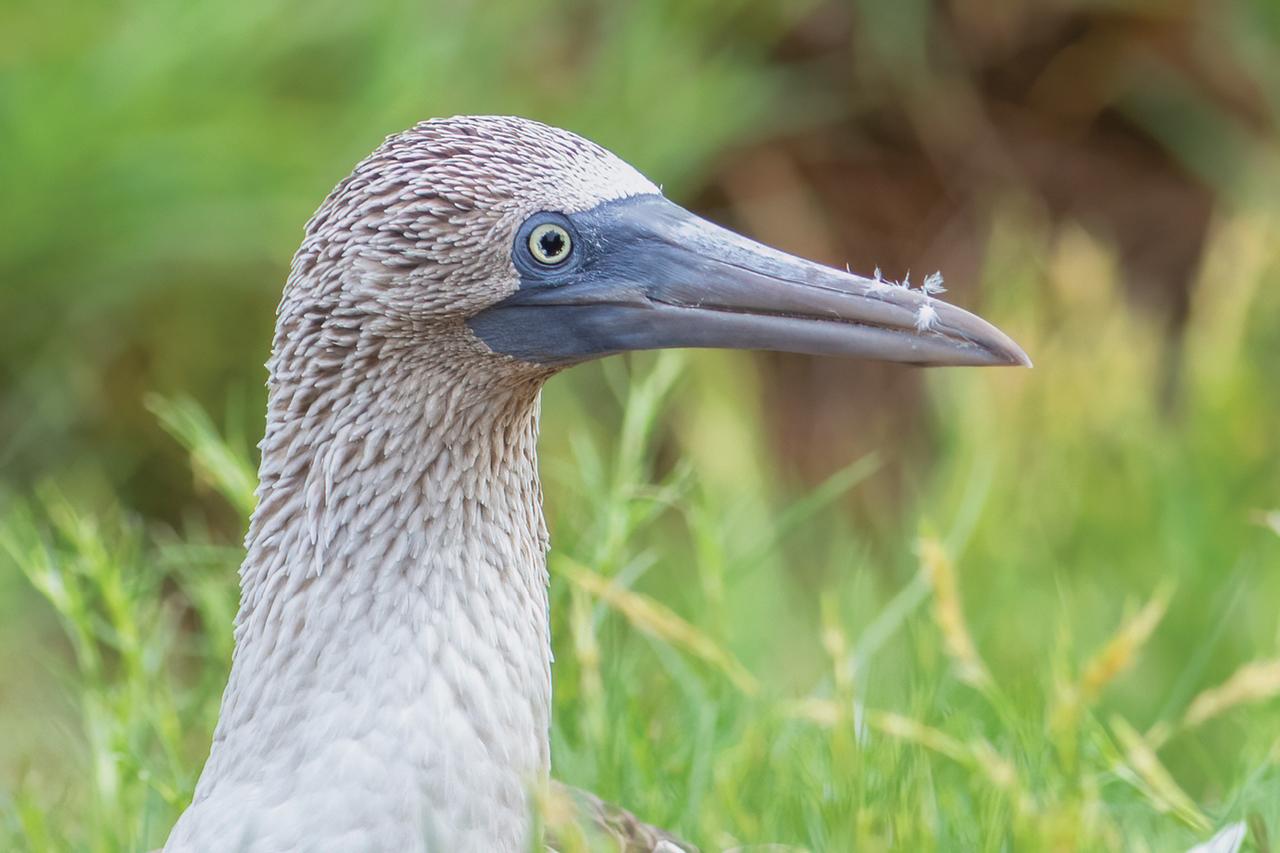
Fig. I.2 Female blue-foot.
Copyright Daniel J. Field, used with permission.
Competition between infant siblings, which occurs in most animal litters and broods that are cared for by parents, is a major component of booby social experience during infancy and supplies the first axis of this book. The raw, self-serving violence booby chicks use to gain the upper hand in competition and, inextremis, liquidate their siblings is the spectacle that first drew me to set up camp on a little tropical island and get acquainted with the nuclear families of a non-human animal.
I was not disappointed. Blue-foot chicks can go at their siblings so hard it hurts to watch, but it is by no means an unmoderated fight to the death. It is best understood as a partly caring relationship in which one chick imposes psychological dominance while carefully husbanding the dangerous but genetically valuable resource that is its sibling. That chick shoots for the jackpot of a double fledging in the service of its own reproductive achievement but is willing to kill if
necessary. The dominant chick’s restraint and the adaptiveness of the two rivals’ competitive strategies are put in perspective by contrasting with a close relative that lives in leaner ecological circumstances. In the closely related brown booby, the younger chick’s prospects for surviving alongside its sibling are so slim that it will give all it’s got to attempt a violent coup, even against overwhelming odds. For this reason, the elder chick kills it preemptively in the first few days of life. In all this, boobies are following impulses shaped by natural selection, in response to their rival’s behavior, their own experience, and current circumstances. As I will explain, I believe their competitive behavior, rather than being guided by comprehension of consequences, is driven by urges and emotion. They know not what they do; they just have to do it.
The second axis of the book is the reproductive cooperation and conflict between male and female blue-foots. Here there are no starry eyes, no ideals or moral codes, no guilt or shame. When a male and female commit themselves to a highly demanding and intricately coordinated project—producing fledglings while maintaining personal viability for subsequent breeding attempts—there can be nothing noble or disinterested about it. Natural selection does not readily tolerate unrewarded kindness or self-sacrifice. Rather, for this coordinated labor, both partners are economically driven and pragmatic about choosing the best available partner, calibrating their workload to circumstances, and allowing supernumerary offspring to be killed. Both members of each monogamous booby pair are also likely to engage in what in humans we call adultery. Males do it in order to produce additional offspring at another male’s nest (and expense!), females supposedly to obtain more favorable genes for their offspring. Some females also dupe other blue-foot pairs into adopting their offspring by covertly laying in their nests. These tactics and the countermeasures adopted to thwart them involve selfishness and deception between bonded partners and exploitation of others, and they find parallels in human behavior. As do some booby tactics we would tend to admire. For instance, rather than divorcing, some booby pairs renew their monogamous bond over several seasons,
resulting in better coordination, earlier nesting, greater hatching success, and the production of more fledglings.
Not that there are any straightforward moral lessons in the behavior of boobies or other non-human animals. Moral lessons are often sought though, and some of my colleagues strain to find, and are delighted when they uncover, social behavior in their study species that exemplifies what they consider praiseworthy in humans. This is fair enough when the worthy behavior is used casually as a motivational tool, but misguided when occurrence of the behavior in nature is taken to grant it moral authority in humans, a mistake known as the naturalistic fallacy.4 In nature, there is breathtaking beauty and there are countless behavioral phenomena to admire and marvel over. For example, the pole-to-pole migration of Arctic terns, the complex community coordination of cooperatively foraging honeybees, and the paternal devotion of emperor penguins incubating in the long Antarctic night. But there is also much in nature that we are likely to find disturbing, such as rodent mothers eating their own offspring, packs of wolves disemboweling live moose, and female wolf spiders eating their mates after copulating (sometimes instead of copulating!).
So while blue-footed boobies can delight us with the familiarity and complexity of their family behavior, and study of it suggests persuasive explanations for our own similar behavior, we commit a fallacy if we look to boobies for moral justification of our sibling hostilities, parental favoritism, or marital deviations. Natural selection has dictated what boobies must unknowingly do, to promote the propagation of their genes. We humans choose what we will do, under the influence of genetically rooted urges and emotions shaped also by social experience and culture. We can rebel against inclinations that are morally distasteful. However, the logic of similar, naturally selected behavioral tendencies in boobies and humans sometimes explains why we are tempted to abuse our siblings or partners. Some of the unworthy feelings and inclinations that we struggle to suppress are quite natural, and we should not feel guilty for experiencing them, only for indulging them.
From Law to Boobies
Let me tell you how I got so involved with boobies and why I want to share my story with you. The personal voyage by which I transitioned from a legal career to research in sociobiology, a branch of behavioral ecology, and devoted 40 years to studying family conflicts in boobies is a tale of wanderlust, progressive awakening to nature and evolution, and intellectual stimulation by new theories of social evolution. When in the late 1960s I followed growing up in London by studying law at the University of Bristol and the College of Law in Guildford, I had already resolved to switch to language teaching. It was a heady time at the end of the 1960s, and I had no desire to inhabit offices and courtrooms or entangle myself in the paperwork of other people’s conflicts. My game plan was to travel the world, experience exotic cultures, climates, and landscapes, and continue climbing cliffs and mountains (my undergraduate passion). After teaching American high school students in Montreux, Switzerland, for a year, and completing a 1-year graduate course in teaching English as a second language at the University of Leeds, I was offered teaching jobs in Norway, Costa Rica, and Mexico City.
The last of these had the most appeal. As I saw it, Mexico had it all, in the richness of pre-Colombian civilizations and their cultural and archaeological legacies; Atlantic, Pacific, and Caribbean coasts; climates ranging from sweltering heat in the tropical lowlands to permanent snow on the high volcanoes; dramatic diversity in landscapes; and a megadiverse flora and fauna. And it had not all been accessed by highways and condensed into maps and guidebooks, so travel felt like exploration. To my great surprise when I settled there, exploring natural habitats and landscapes inhabited by traditional communities largely supplanted my passion for climbing, and in my first 5 years I became familiar with Mexico’s high plateau and coasts, and some of its volcanos and islands. Guided very often by Joaquin Albuerne, an extraordinary enthusiast who rejoiced and indulged in Mexico’s natural and cultural treasures, I visited forests, deserts, grasslands, and coral reefs; dived in the Pacific Ocean, the Gulf of Mexico, and the Caribbean; and navigated
rivers and lakes in home-made boats. I thanked destiny for landing me in a developing tropical country with warm-hearted inhabitants where I could satisfy my own mandate not to go to my grave without experiencing the glorious diversity of the planet. Delighted by brilliant hummingbirds and coral reef fish, slothful tarantulas, and bustling army ant columns, as well as the imposing roars of howler monkeys and sweet gurgling of Montezuma oropendolas, for several years my cup was brimming. Never much of an animal lover, I was ever more a wild animal admirer.
Through books, that fascination led to a new vocation. I devoured inspiring pioneer studies of wild animal populations, including Jane Goodall’s chimpanzees and African hunting dogs,5,6 and George Schaller’s mountain gorillas.7 I read three page-turning books by Robert Ardrey dramatizing academic accounts of conflict and cooperation in wild animals, and offering tentative theories to explain it.8–10 Finally, with a nudge from my wife, Sylvia Rojas, a developmental psychologist, I alighted on the works of the three celebrated Europeans—Konrad Lorenz, Niko Tinbergen, and Karl von Frisch—who in 1973 shared a Nobel Prize for founding ethology, the science of natural animal behavior. I was captivated by the questions they addressed, the methods they used, and the concepts they invented to analyze the behavior of digger wasps and honeybees; cichlid fishes and sticklebacks; crows, herring gulls, and greylag geese. They were patently fascinated by animals in nature, and they explained the causation, development, and function of their behavior from a convincing evolutionary perspective.
So attracted was I by the elegance and astonishing explanatory power of evolutionary theory, and so eager to experience the behavior myself, that I set up twelve aquaria in my apartment in Mexico City. I wanted to see for myself what I had read about in Lorenz’s popular book King Solomon’s Ring.11 And that did it! Watching the courtship, mating, and parental care of paradise fish, mouth-brooding cichlids, and Siamese fighting fish resolved me to transition from rootless voyeur of natural history to professional ethologist. After 5 years of teaching English in Mexico, this
lawyer/language teacher was generously accepted to work for a PhD thesis in ethology and comparative psychology at the University of Tennessee. In the laboratory of Gordon Burghardt, a specialist in the behavior of reptiles and black bears, and one of the first American psychologists to appreciate the magic and theoretical importance of ethology, I set about gleefully studying whichever reptiles came to hand.
Thus did I spend the last 5 years of the 1970s probing the causation, development, and function of predatory fish-luring by alligator snapping turtles, migration of hatchling green iguanas from their nest burrows, and predation of semi-aquatic snakes on fish. I watched litters of newborn snakes make their first attempts at feeding. I learned how to probe the lives of secretive reptiles in California’s Sierra Nevada, the Little River in the Great Smokey Mountains, and Panama’s Lago Gatún. For hours at a time, I watched garter snakes feeding on tadpoles and minnows in little mountain ponds, and hatchling green iguanas being picked off by toucans, greater anis, and basilisk lizards as they dispersed from a rainforest clearing. For my doctoral thesis, I compared the underwater predation of five species of snake.
Under Gordon’s relaxed and benign supervision in Knoxville, Tennessee, immersed in a group of graduate students all working on their own reptile projects and discussing findings at enjoyable fortnightly seminars, I shed my legal and linguistic identities and became, as I had dreamed, a walking, talking apprentice ethologist. I also became a member of the community of ethologists and psychologists that converged annually from North and South America onto a university campus in the United States or Canada to present and discuss their research under the auspices of the Animal Behavior Society, my professional home, as I saw it. Those meetings were where, inevitably and almost unconsciously, I acquired the attitudes, values, and habits of thought of a community of people who delighted in observing and understanding what animals do in their natural habitats. Heaven! They were where I hooked up with experienced researchers I would eventually accompany and learn from at their field sites in northern California, Panama, and the
Mexican altiplano. And they were where I made friends with admired colleagues who years later would host me in their laboratories or visit my field site to enjoy the island and bring their research skills to bear on blue-footed boobies.
But an important part of my mind and the minds of many graduate students in animal behavior at that time was elsewhere, focused on the unfolding sociobiology revolution. Understanding of the evolution of social behavior was undergoing extraordinary, effervescent rethinking after the publication of papers in the 1960s and 1970s by a new generation of theoreticians, most notably, by the father of the revolution William Hamilton,12,13 followed by George Williams,14 Robert Trivers,15 Geoffrey Parker,16 and John Maynard Smith.17 Then in 1975 Edward O. Wilson published Sociobiology: The New Synthesis,18 a landmark review of the field, and in 1976 Richard Dawkins followed it up with The Selfish Gene,19 a masterful theoretical synthesis that rejoiced in explaining the treasure trove of social behavior of our planet’s animal species. Sociobiology was the talk of animal behavior conferences and was getting headlines as legions of students and researchers jumped on board. Meanwhile, some colleagues, leery of what they took to be distasteful political implications of genetic influences on behavior, denounced the theory and some of its most eminent proponents. Despite this unfair tarring,20,21 the field prospered and has continued to prosper as part of behavioral ecology, effectively the current name of ethology, and the social theory reviewed by Wilson and Dawkins has stood the test of time and burgeoned into the present.22–24
Before the 1970s, scientists and nonscientists had mostly assumed that animal families are fundamentally harmonious, with all members of every family committed to a common project: producing healthy, well-nourished, independent offspring. Observed deviations from that, such as bickering by littermates or tantrums by offspring denied food by parents could be put down to imperfections in animal design. After all, you can’t expect the division of food among the hungry or the trauma of weaning to go entirely smoothly; nothing does. But the emergent social theory, grounded not only in ethology and ecology
but also in population genetics, was conjuring up quite different expectations.25
For example, it posited a fundamental conflict of interests between each caretaking parent and its offspring, with the parent better served by providing less care than would be ideal for the offspring. This penny-pinching would allow the parent to apply its remaining resources to other offspring (current or future), and thereby maximize the cumulative production of offspring over the parent’s lifetime. Equally shocking at the time, the theory predicted conflict between siblings, with animals treating their siblings better than nonkin but not as well as they treat themselves, implying selfish and manipulative competition among brothers and sisters that could spill over into siblicide. Once you accept the insight of Hamilton and Trivers, that the fundamental competition in any population is not between the individuals themselves but between the competitive strategies they adopt, and even more fundamentally between the genes that influence the strategies, your understanding of family interactions is transformed. And the theory applied to all species that reproduce sexually, including humans. There was no reason to exempt humans, beyond our pride and species chauvinism.
Most radically, the new theory acknowledged the power of dependent offspring to advance their own interests, conceiving of them as active players rather than passive recipients of care. This opened the door to realizing that natural selection can favor the evolution of offspring wheedling extra care from parents, for example, by exaggerated begging, illness feigning, and aggressive suppression of siblings’ begging. Naturally, the existence of such traits sets up conditions for the evolution of parental countermeasures such as diminished responsiveness to begging, or punishment of sibling suppression. The upshot would depend on the characteristics of the species and the age of the offspring. It could be overt behavioral struggles between demanding offspring and nonindulgent parents. It could involve infants attempting to kill their siblings while parents defend them, or embryos attempting to extract extra nutrients from mothers by physiological means while mothers resist with their own physiological tactics. Evolution by natural
selection could no longer be conceived of as a broadly benign promoter of cooperation and harmony among family members. Incredibly, natural selection rooted for both sides of every family conflict and, paradoxically, every individual should seek parental indulgence when it’s an infant and rein in infant greed when it becomes a parent.
This was seismic. If you’ve always understood that in Darwin’s theory of evolution by natural selection is an almost omnipotent master craftsperson who, given enough time, can transform forelegs into wings, elaborate single photoreceptor cells into immaculate vertebrate eyes, and perfect all manner of physiological processes, corporeal structures, and behaviors, it’s hard to grasp that it has a dark side—that it can also pit the closest relatives against each other, to the detriment of individuals, the population, and ultimately the species. I was elated to be joining the evolutionary biologists at just the moment when a new paradigm was sweeping their field.
After a pause, the unsettling ideas counted on the approval of some of the most distinguished specialists in animal behavior, and they were moored to a wealth of scattered observations on wild animals. In his seminal paper on the evolution of parent–offspring conflict, the Harvard wunderkind Robert Trivers cited numerous provocative examples of mammalian and avian families interacting in conflictive and inefficient ways that demand an explanation, and which seemed to fit the predictions of his theory.15 For example, yellow baboon mothers and their infants in Kenya had been seen in protracted weaning conflict, involving daily tussles and loud cries from the infant, despite these monkeys being under strong selection to avoid predation by maintaining silence. Red warbler parents in the mountains around Mexico City had been seen attacking their own newly fledged offspring to silence their pestering food demands, and George Schaller,26 the naturalist of mountain gorilla and snow leopard fame, had described extreme begging by white pelican chicks at Yellowstone Lake. To demand more food, one chick threw a fit that seemed to threaten self-harm. It ran to the parent, threw itself to the ground, and beat its wings wildly while waving its head from side to side, at one point seizing its own wing in its huge beak and growling
continuously as it spun its body round and round. Even more dramatic was the black eagle chick in Tanzania that starved its younger sibling to death by harassing it fiercely during its first 6 days of life.27 The mother could rarely transfer food to the younger chick because the elder one persistently pecked and tore at it, shaking it as a terrier does a rat, stifling its begging by squatting on top of it. Was it frustrating the mother’s attempt to raise two chicks? Or was she complicit? These observations predating the new theory plainly contradicted the notion of family harmony.
Surely, you may think, it’s a truism that family members often, maybe even mostly, support and assist each other. Yes, of course, but we always knew that! The new challenge was to uncover and understand the exploitation, manipulation, and deception that accompany support and assistance, to discover how these strategies are resisted, and to work out who wins. The behavioral ecologists who dedicated themselves to that mission were not pessimistic about animal nature or human nature. They’d simply become aware that it was time to incorporate family conflict in their studies because the theoreticians had opened a fascinating can of predictions.
The body of game-changing social theory that was causing all the excitement at the end of the 1970s, and also eliciting some healthy skepticism and repudiation, needed testing, and its implications needed exploring. The theory had run ahead of the data, and there was a sense that it was now the turn of the empiricists. To bring the Hamiltonian revolution to fruition, researchers needed to get into the field to measure and describe the cooperation and conflict between relatives and assess its effects on them and their progeny. They needed to identify suitable species for making persuasive tests, find ways of getting the critical descriptive data, and carry out experiments in the field or laboratory. In addition to confirming or contradicting the expected patterns of interaction, they would need to understand the processes by which appropriate behavior develops in the individual, tease out the mechanisms by which the behavior is controlled, and identify the ecological contexts and species characteristics that favor the evolution of particular patterns of cooperation and conflict. That was the agenda I would eventually