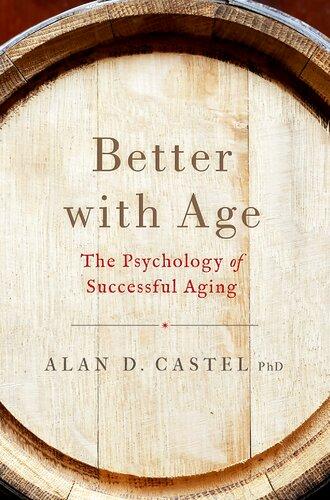
https://ebookmass.com/product/better-with-age-the-
Instant digital products (PDF, ePub, MOBI) ready for you
Download now and discover formats that fit your needs...
Handbook of the Psychology of Aging 9th Edition K. Warner Schaie
https://ebookmass.com/product/handbook-of-the-psychology-of-aging-9thedition-k-warner-schaie/
ebookmass.com
Platelets 4th Edition Edition Alan D. Michelson
https://ebookmass.com/product/platelets-4th-edition-edition-alan-dmichelson/
ebookmass.com
Belisarius & Antonina: Love and War in the Age of Justinian David Alan Parnell
https://ebookmass.com/product/belisarius-antonina-love-and-war-in-theage-of-justinian-david-alan-parnell/
ebookmass.com
Building Complex Temporal Explanations of Crime : History, Institutions and Agency 1st Edition Stephen Farrall
https://ebookmass.com/product/building-complex-temporal-explanationsof-crime-history-institutions-and-agency-1st-edition-stephen-farrall/
ebookmass.com
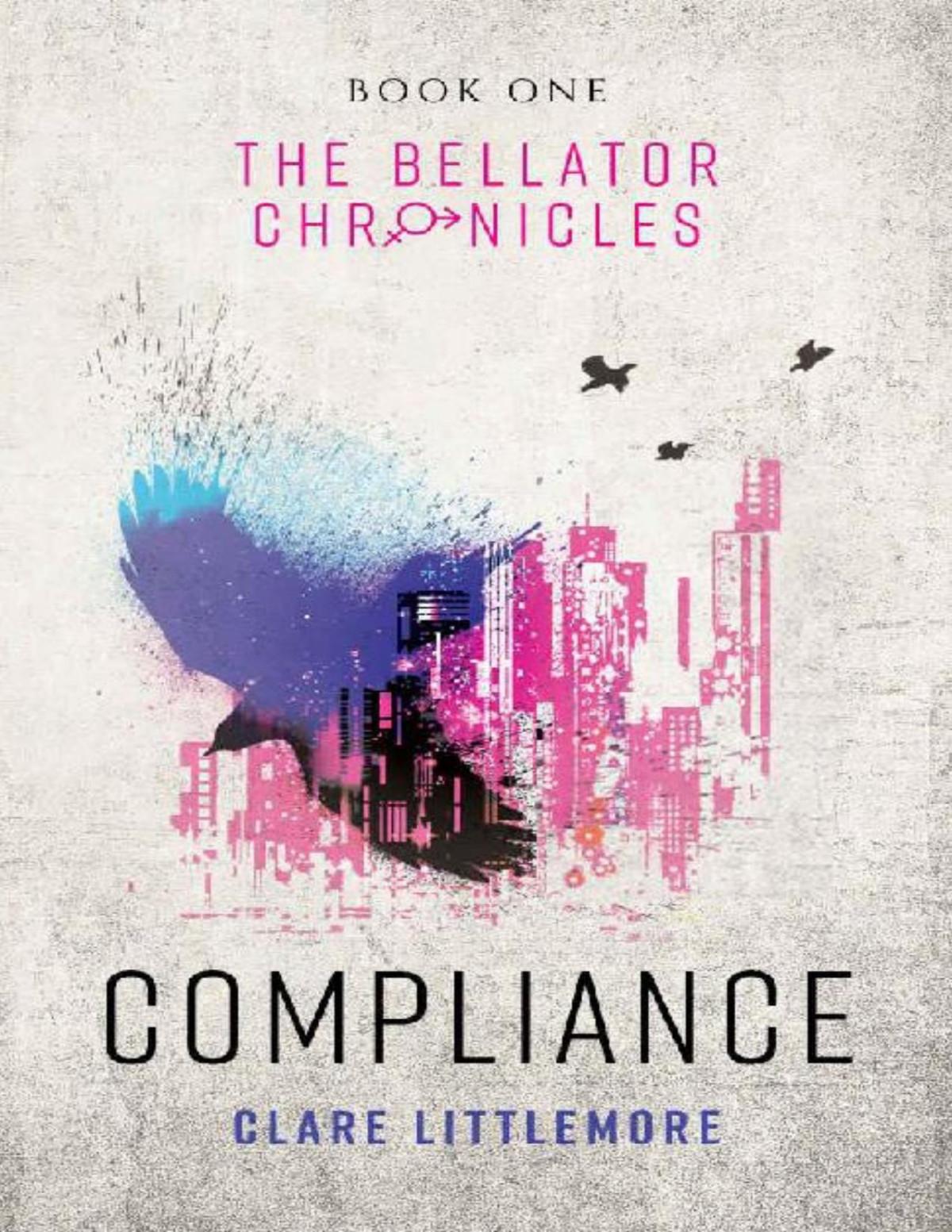
Compliance: A Young Adult Dystopian Romance (The Bellator Chronicles Book 1) Clare Littlemore
https://ebookmass.com/product/compliance-a-young-adult-dystopianromance-the-bellator-chronicles-book-1-clare-littlemore/
ebookmass.com
Famine: Its Causes, Effects and Management John R. K. Robson
https://ebookmass.com/product/famine-its-causes-effects-andmanagement-john-r-k-robson/
ebookmass.com
Book lovers. Un amore tra i libri Emily Henry
https://ebookmass.com/product/book-lovers-un-amore-tra-i-libri-emilyhenry/
ebookmass.com
The Germ of Justice: Essays in General Jurisprudence Leslie Green
https://ebookmass.com/product/the-germ-of-justice-essays-in-generaljurisprudence-leslie-green/
ebookmass.com
NLN Core Competencies for Nurse Educators: A Decade of Influence 1st Edition
https://ebookmass.com/product/nln-core-competencies-for-nurseeducators-a-decade-of-influence-1st-edition/
ebookmass.com
How Russian Literature Became Great (NIU Series in Slavic, East European, and Eurasian Studies) Hellebust
https://ebookmass.com/product/how-russian-literature-became-great-niuseries-in-slavic-east-european-and-eurasian-studies-hellebust/
ebookmass.com
“If you think a book about aging can’t be a fun and engrossing read—think again. Alan Castel’s Better with Age blends cuttingedge research with personal accounts from well-known Americans to create a roadmap for the later years. This engaging and inspirational book should be read by everyone who wants to know how to ensure a happy and healthy old age.”
—Karl Pillemer, Professor of Human Development, Cornell University and author of 30 Lessons for Living: Tried and True Advice from the Wisest Americans
“Reading Better with Age, you will regret not having read it at an earlier age. Professor Castel combines the wisdom of remarkable people he interviewed, with the latest research findings, to provide a masterful guide to become better with age.”
—Moshe F. Rubinstein, Professor of Engineering and Business at UCLA, author of Extraordinary Outcomes, age 87
“This evocative, compelling, insightful, thought provoking, readable, comprehensively researched book is a stunning celebration of not just aging but of all of life. As presented: age is no better or worse than youth, the 80’s or 90’s no better or worse than the 20’s or 30’s. Age is one of the phases of life, but like all phases, it must be mindfully lived differently. This symphony of life has been composed from a massive quantity of disciplined studies and powerfully expressive scenarios from real lives such that the reader can design custom tailored optimum phases for themselves. If only enough people would engage this thinking, the trajectory of the human species would be elevated into a new realm.”
—Story Musgrave, loving daddy to seven children, ages 57 to 11, grand-daddy to many, student of life, professor, pilot, trauma surgeon, astronaut on six flights
Better with Age
Better with Age
The Psychology of Successful Aging
Alan D. Castel, P HD
Oxford University Press is a department of the University of Oxford. It furthers the University’s objective of excellence in research, scholarship, and education by publishing worldwide. Oxford is a registered trade mark of Oxford University Press in the UK and certain other countries.
Published in the United States of America by Oxford University Press 198 Madison Avenue, New York, NY 10016, United States of America.
© Oxford University Press 2019
All rights reserved. No part of this publication may be reproduced, stored in a retrieval system, or transmitted, in any form or by any means, without the prior permission in writing of Oxford University Press, or as expressly permitted by law, by license, or under terms agreed with the appropriate reproduction rights organization. Inquiries concerning reproduction outside the scope of the above should be sent to the Rights Department, Oxford University Press, at the address above.
You must not circulate this work in any other form and you must impose this same condition on any acquirer.
Library of Congress Cataloging-in-Publication Data
Names: Castel, Alan D., author.
Title: Better with age: the psychology of successful aging / Alan D. Castel.
Description: New York, NY: Oxford University Press, [2019] | Includes bibliographical references and index.
Identifiers: LCCN 2017052747 | ISBN 978–0–19–027998–1 (alk. paper)
Subjects: LCSH: Adulthood—Psychological aspects. | Aging—Psychological aspects. | Aging—Social aspects.
Classification: LCC BF724.5.C37 2018 | DDC 155.67—dc23
LC record available at https://lccn.loc.gov/2017052747
9 8 7 6 5 4 3 2 1
Printed by Sheridan Books, Inc., United States of America
Contents
Prologue: How I Got Interested in Successful Aging at a Young Age vii
Introduction: The Benefits of Aging and the Psychology of Successful Aging xi
one What Is Successful Aging? 1
Two Happiness: A Funny Thing Happens as We Get Older 23
three Memory: Our Memory Becomes More Selective with Age 41
four Wisdom: The Benefits of Life Experiences and Creativity 63
FIVE Staying Sharp: What Is an Active Lifestyle? 81
SIX Brain Training: Can Computer Games Really Make Me Smarter? 101
SEVEN Habits and Hobbies: Old and New Friends 123
EIGHT Retiring and Rewiring: The New “R & R” of Old Age 141
NINE It Gets Even Better with Age: Start Successful Aging Now 163
Closing Comments 185
Epilogue: Are You Aging, or Is It Just Me? 187
Acknowledgments 189
Notes 193
Index 229
Prologue: How I Got Interested in Successful Aging at a Young Age
I learned to love old age early in life. I had one grandparent who celebrated with large birthday parties, and another who lied constantly about her age. My grandfather was very uninhibited and told me many funny and risqué jokes that I still remember to this day. My grandparents taught me my family history, sent chocolate in the mail, and showed me how to clean a penny in Coca-Cola. My early exposure to old age was filled with a cast of colorful characters.
As a child who grew up in Canada, I was able to escape many harsh winters by visiting my grandparents in sunny South Florida. Children were a cherished minority in the “snowbird” retirement community where we stayed each winter. My retired older relatives would take walks every day, visit orange groves, and rejoice in the warm, humid weather. Older adults taught me to play golf, chess, and shuffleboard. They also taught me when to yell at the TV while watching football. We would meet my older relatives at hotels and museums, often going out for early dinners and having ice cream. In my young eyes, old age looked pretty fun, literally like fun in the sun.
I used to have a great memory. In high school, I memorized all of the chemical elements in the periodic table. The names of those elements were mostly nonsense to me, so I just made up a catchy jingle to remember them. Was I good at chemistry, or simply good at memorizing? In college, I quickly forgot most of the chemistry I had memorized and learned that I had little interest in a deeper understanding of chemistry. Luckily, I took a class in psychology my first year of college, and discovered an interest in how we learn and why we forget. I learned about the scientific study of memory and aging and the “booming” field of gerontology. My early interest in older adults and aging was rekindled.
Our memories are our very identities, and my research at UCLA seeks to understand how we remember what is important to us, especially as we get older. As we age, we might actually get better at knowing what is important to remember—something that college students often find challenging. The ability to remember what is important is essential in a world overflowing with enticing but useless information. Memory and aging go hand in hand, as memory decline is one of the first things that concern most people as they age. But changes in memory really happen over a lifetime. In my 40s, I sometimes struggle to remember names and where I put my wallet or sunglasses. But I am also struck by how many older adults vividly recall remote memories and what is most important to them, even if some names are forgotten on occasion.
People often think about old age in a negative light, in terms of aches and pains. But when does old age actually begin? A few years before I turned 40, I hurt my back. I had a herniated disk, the result of an ill-advised zip-line adventure. I felt shooting pain in my lower back and nerve sensations in my toes for months. I had to hobble around, sometimes hunched over. People told me I was “just getting old.” It probably didn’t help that my hair was also thinning. My young daughters would say, “Daddy, why are you walking like Grandpa?” I would struggle with carrying my children, installing car seats, and lifting anything heavy. I wasn’t exercising as much as I used to, and I was complaining more about my various aches. I lost my prescription sunglasses enough times that I now have my name and phone number engraved on them. Sadly, some of my once-close friends died unexpectedly. Was this an early taste of what to expect in older age? Why didn’t getting older look like what I saw in sunny South Florida as a child?
Some people say you are only as old are you feel. I felt old when I started college, which in fact was a place where I often acted like a child. Later in life, my back injury led to people telling me I was getting old. I feel even older now that I have a mortgage. We learn as we grow older. I have learned from the people I’ve interviewed about successful aging, as well as from the students and older adults who do our research studies at UCLA. I see many impressive role models of aging, as well as those who struggle in older age. Having studied aging for several decades, I know we are never too young, or too old, to learn about the effects of aging.
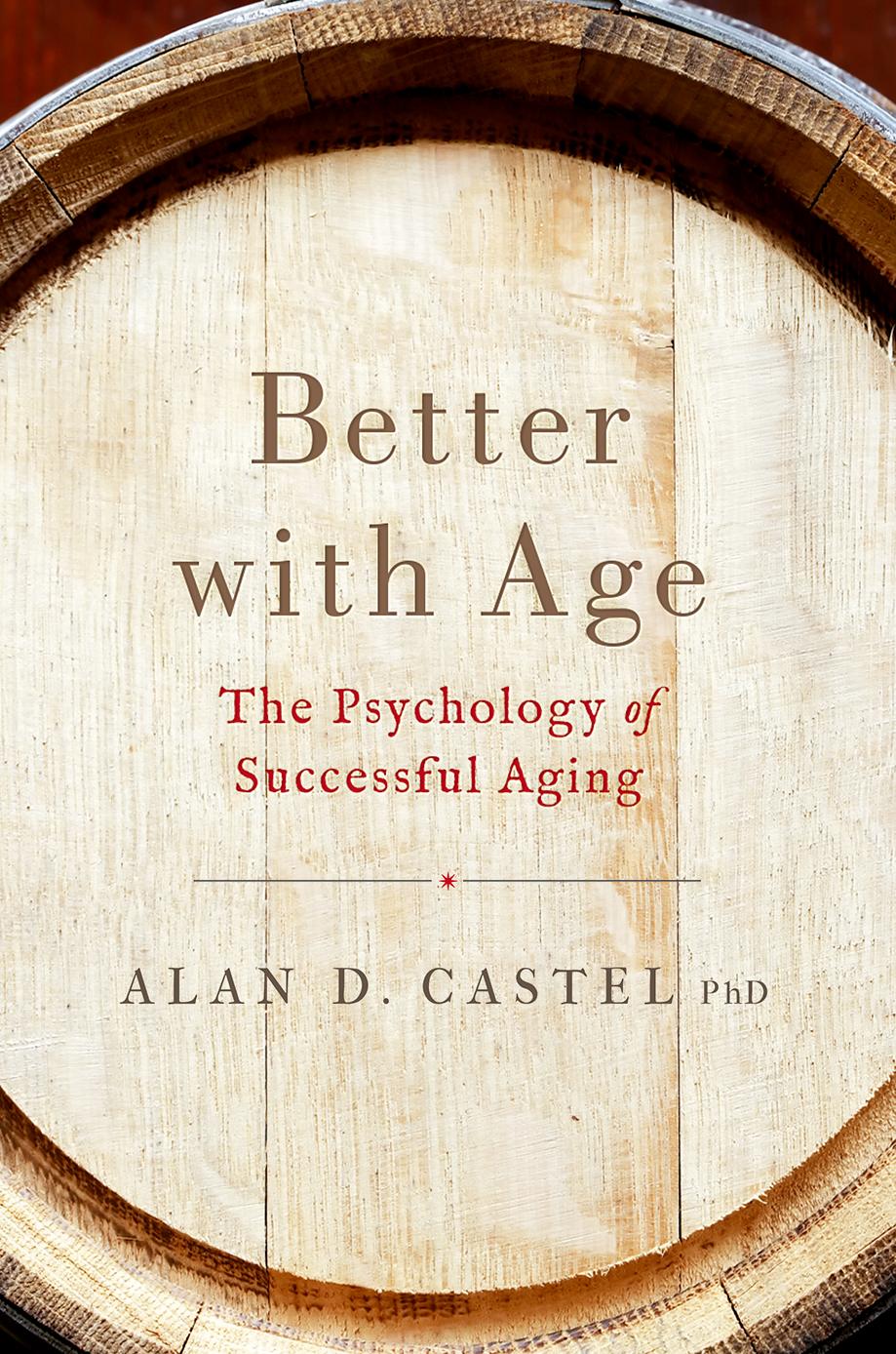
If you haven’t yet reached old age, then you are training to become an older adult. Our expectations about aging shape what we do in older age, and our expectations are influenced by observing how others age. Aging isn’t all downhill unless most of life is an uphill battle. Then navigating the downhill portions can be a challenging yet enjoyable journey. Frank Sinatra sings “The Best Is Yet To Come,” and the Robert Browning poem says “the best is yet to be.” The book title, Better with Age, may make one think of a fine wine that ages well with time, but like wine making, successful aging can be an active and involved process that requires development over time. This book shows how we can get better with age, and enjoy the benefits of old age.
Introduction: The Benefits of Aging and the Psychology of Successful Aging
Some say age is just a number, but it is an important number. Our age determines when we can vote and buy beer, and there are social age expectations about when we should marry, have children, and retire. However, most people feel younger than their actual age. While we celebrate birthdays, we also fear the aging process and spend time and money trying to conceal the signs of aging. The psychology of aging tries to make sense of not only how we age, but also our beliefs about aging and how expectations influence the way we age.
There are many measurable changes as we age. For example, we aren’t as fast as we used to be, and we tend to forget what’s-her-name’s name more often. We also adapt as we age so that we don’t need to be as fast, and we learn to compensate for memory challenges. As a cognitive psychologist, I have done hundreds of experiments to study the aging processes. My research team has measured reaction times, quantified memory accuracy and strategies, and uncovered pitfalls and unexpected strengths of thousands of older adults. I have also conducted structured interviews with many older adults, listening to their life stories. While research studies are very informative, this
book is also about these real-life stories. I discuss what makes people happier and how people improve with age, as well as what frustrates and challenges older adults.
Thinking about people whom we respect and admire, and how well they have aged, can provide us with inspiring role models. This book presents many examples, with insights from Maya Angelou, Warren Buffett, Phyllis Diller, Bob Newhart, Frank Gehry, Dave Brubeck, David Letterman, Bill Clinton, Jack LaLanne, Jared Diamond, Kareem Abdul-Jabbar, John Glenn, Sully Sullenberger, Vin Scully, Dr. Ruth Westheimer, and John Wooden, many of whom I was able to interview. I thank the exceptional individuals who agreed to share their thoughts and insights on successful aging during personal interviews with me— a true highlight of doing research on successful aging is interacting with these amazingly interesting people. This list could be much longer, for when I tell people about these interviews on successful aging, they quickly suggest someone else that I should interview, meaning that we all know many impressive older adults.
Humans may be a unique species in that we celebrate and fear the aging process. In some ways, old age can sneak up on us, as most people think of “being old” as more distant than our current age. While we may not have control over the gift of good genes, how we think and behave can have a substantial impact on how we age. The habits, routines, and behaviors we have established well before we reach older age can persist but are also highly modifiable. Diet, exercise, beliefs, social interactions, curiosity, positivity, and a sense of purpose in life can greatly influence how we experience old age. People who have a positive attitude about older age are often good at successful aging. Our stereotypes and expectations about aging can influence how well we age. In fact, reading this book can lead to a more positive attitude about aging.
I recently got a birthday card saying, “What is the difference between you and a senior citizen?” I opened the card for the thoughtprovoking answer: “A lot less than there used to be.” This book is not just for older adults, as successful aging does not start at some particular age, when you get gray hair, when you are balding, or when you retire. Whether you are young or old, middle-aged, or not thinking at all about your age, you have already started this journey. Today is a great time to be getting older, and if you are healthy, then tomorrow may be even better. While people have some negative
attitudes about aging, it is not all downhill. Recent research on the psychology of aging has led to many surprising discoveries about the benefits of old age. This book is an exposé of the benefits of aging and the many paradoxes that surround aging. Successful aging can start at any age, and there is a lot you can do now to enjoy the benefits of old age.
Better with Age
What Is Successful Aging?
I will never be an old man. To me, old age is always 15 years older than I am.
Francis
Bacon, English philosopher, scientist, and author
Many popular books about aging focus on how to prevent or avoid aging. Terms like enhancing longevity are used instead of aging, as people think the word aging implies decline. The phrase “successful aging” has grown in popularity over the past few decades. At some point in life, people become concerned about aging and want to know what to expect, what to avoid, and ways to adapt. New research has shown that important paradoxes exist regarding how we think about old age and how we actually age. A paradox exists when we have expectations about old age, but these expectations are almost the opposite of what actually happens in old age. This book outlines some of these paradoxes and describes when, how, and why we can get better with age.
At a basic level, aging involves our continuing survival— a race against time. We often associate negative outcomes with getting older. If you start complaining about a bad back and aching joints or struggle to remember names of people you have met, “you’re getting old” is often used as an explanation. But this type of “old
age” can really begin at any age. I will sometimes complain about my bad back to my 70-year- old colleague, who has no back issues. Getting older isn’t the leading cause of back injuries, joint pain, or memory problems. If you are happy, active, and enjoy spending time with friends and family, people never say “it’s because you are getting old.”
Adults often do not get excited about aging or even talking about their age. Simply asking someone’s age is often a faux pas in our youth-obsessed society. Bring the topic up at a party, and most people will avoid it or want to know how to prevent or slow the process. But if you visit a children’s playground (as I frequently do with my young children), parents often quickly volunteer their children’s very specific ages. For example, “My son is two and three-quarters” is often met with a response like “My, he is big (or fast or strong) for his age.” We rarely discuss age as openly when we see middle-aged adults. However, we are often impressed with a healthy, active 90-year-old, which suggests we search for good examples of aging.
Happy Birthday! Again Already?
How old would you be if you didn’t know how old you were?
Satchel
Paige, baseball player
Paige began his Major League Baseball career at age 42 and retired at age 59, becoming the oldest player both to begin his playing career (at age 42) and to play (age 59) in the major leagues.
A casual look at the birthday card section at a drug store reveals both the humor and remorse associated with old age. Some examples of the birthday card messages include “Happy Birthday, You Old Fart” and “The good thing about growing old with your friends is they have forgotten all of your secrets.” Most of these cards focus on the negative aspects of aging, often mocking how little control we have over aging.1 Perhaps the best messages in some of these birthday cards include the wisdom to know how to enjoy old age. Fitting with the title of this book, one card said, “Like a great wine we get better as we get older! Or rather, as we get older we feel better with wine.” The birthday card you choose for someone, and how to interpret their messages, says a lot about how we think about aging.
While birthdays remind us of aging, they also may motivate us to do something important in life. They are the landmarks on the map of life. People run marathons because of upcoming birthdays, go on long anticipated trips, or have large parties with friends. Some research2 suggests that when people approach a new decade in life (a so-called “landmark birthday,” like turning 40, 50, 60, etc.) they search for meaning. People may buy a new car, join a gym, get married, date online, or even read books about aging!
Jack LaLanne, the legendary fitness guru who led a nation to learn new ways to exercise, celebrated his various birthdays in unique and impressive ways: At age 45, he did 1,000 jumping Jacks (which some say were named after him) and 1,000 pull-ups in 1 hour and 22 minutes. At age 60, he swam from Alcatraz to Fisherman’s Wharf in the San Francisco Bay, not only wearing handcuffs but also towing a 1,000-pound boat. On his 70th birthday, he swam 1.5 miles while towing 70 boats filled with 70 people— and again while wearing handcuffs and shackles on his arms and legs! His wife of over 50 years, Elaine LaLanne, said, “You can’t be around him without being enthusiastic. He wanted to show people that just because you’re older doesn’t mean that you have to give up, or stop exercising. You don’t have to become a couch potato. He wanted to prove that anything in life is possible, and you can make it happen.”3
What Do We Call Older Adults: Elderly? Boomers? Them? Just Call Us by Our Names!
What is “old age”? In a large-scale survey of nearly 3,000 people over the age of 65,4 respondents said that the “average person” enters old age at age 68. However, that number is deceiving, as those same people said that for themselves, old age starts at age 85. This elusive age for defining old age may be elusive because most “older people” don’t report actually feeling that old.
Another issue is how to address older adults: names such as boomers, seniors, elderly, old folks, golden age (not to mention graybeards, geezers, or codgers) may all carry negative connotations. Using the wrong words to describe a demographic can alienate an audience or individual. In one poll5 of persons over 60, more than half responded that they are not comfortable with the term senior, but many more were comfortable with the term baby boomer. In today’s
environment, boomers are caring for aging parents and usually don’t view themselves as seniors yet. The poll also found that when considering “old age homes,” people hated the term nursing home but liked retirement community. One younger person who worked in a retirement community, when asked what seniors like to be called, said, “Their names!”6 Throughout this book, I use mostly the term older adults, but I also realize various other descriptors can be used, besides simply being older than younger or middle-aged adults.
What Is Successful Aging? Hard to Define, But We Know It When We See It
The term successful aging was made popular in 1987, when the scientists John Wallis Rowe and Robert Kahn published an influential book entitled Successful Aging.7 Rowe and Kahn were interested in the multidimensional aspects of aging. They stated that successful aging involved three main factors: (1) being free of disability or disease, (2) having high cognitive and physical abilities, and (3) interacting with others in meaningful ways. Importantly, Rowe and Kahn acknowledged that successful aging involved both intrinsic genetic factors and extrinsic lifestyle factors. Extrinsic factors such as diet, exercise, personal habits, and psychosocial aspects of aging are often underestimated if one takes the simplistic view that aging is guided by genetics.
Today, an exact definition of successful aging is an open debate. It is even unclear whether aging is a process or an outcome. Researchers have offered over 80 unique and different operational definitions of successful aging,8 with some estimating that only 1% of people achieve successful aging, while others estimate that close to 90% of people can achieve it. Despite these discrepancies, most people can easily identify someone who exemplifies successful aging, without subjecting that person to medical testing or any psychological evaluation. Thus, successful aging is often something we simply “know it when we see it.”
Many people consider Warren Buffett to be very successful professionally. After all, he is a billionaire philanthropist, and he is now 86. Is he then a model of successful aging? What are the secrets to successful aging for Warren Buffett? He is an avid Coca-Cola drinker (he reportedly drinks five cans a day), noting, “I’m about one-quarter
Coca-Cola” and that he had seen no evidence that switching to “water and broccoli” would make it easier for him to make it to age 100. Of course, Buffett’s eating habits may not be the path to successful aging, but he has identified one key to his success. Buffett credits his own success to reading voraciously; he typically spends 80% of his day reading. He says that reading is something many people can do at almost any point in their lives, and especially later in life, but that people rarely do enough of it.9 Buffett has no plans to retire and he loves his work—he’s clearly successful professionally and apparently very happy. However, simply making money and living well in old age is only one way to conceptualize successful aging.
What about Jeanne Louis Calment, from France, who was born in 1875 and has the longest confirmed human lifespan on record, living to the age of 122 years? She said her longevity could be attributed to a diet rich in olive oil, but also to drinking port wine and eating large amounts of chocolate (not to mention smoking a few cigarettes a day since she was 20). She also stated that being calm allowed her to age well (“that’s why they call me Calment,” she said). She outlived both her daughter and her grandson by several decades. Calment reportedly remained mentally sharp until she died in 1997, at age 122, saying, “I’m interested in everything but passionate about nothing.”10
In Western culture we tend to “medicalize” aging, looking for the hidden secrets of health and longevity, ideally in a pill or bottle. Health is viewed as a biological state, and “good or bad” aging as the outcome of our medical or physiological state. However, people can alter this state and have the most control over the behavioral aspects of aging—how we eat, exercise, think, and interact with others— behaviors that have a strong impact on our biological health. Successful aging can start in childhood, as people develop habits and work ethics and learn to exercise and eat well. We often focus on the physical health of people as they age, and we assume that psychological well-being follows this trend. While physical and mental health are related, there is more to life than simply being in good physical shape. Older people often say that successful aging involves being productive, being mentally fit, and, most importantly, being able to lead a meaningful life.
Pulitzer prize–winning author Jared Diamond says successful aging for him is enjoying life, being productive, and continuing to do the things he is good at doing. He told me that age 70 was one
of the best times in his life. His said his father was a physician who continued to see patients until he was 93. Today, Diamond finds ways to balance his writing with his family activities. He is currently working on his seventh book, at age 80, while also finding more time to travel with his family. Diamond says his closest professional colleague and mentor was the biologist Ernst Mayr, who published his twenty-second book on his hundredth birthday— certainly a role model for Professor Diamond. Successful aging involves focusing on what is important to you, and being able to do what you want to do in old age.
While successful aging may be one way to describe how well we age, the concept of “meaningful aging” may be another important way to consider how to age well. Meaningful aging does not involve “winners or losers” in terms of longevity and health, but rather the need to focus on what is most meaningful to a person, especially in older age. Sometimes this involves not doing more to stay active but, perhaps, doing less, giving up some control over our lives, being more mindful of others, and being aware of the need to forgive and forget. Meaningful aging encourages us all to find meaning and peace in our lives, and the effects that these practices have on how we age can, in fact, lead to a form of successful aging. Other terms, such as healthy aging, productive aging, or joyful aging, convey the many themes that are associated with a more encompassing phrase of successful aging.
Too Young to Die: The Case of Unsuccessful Aging
This book places a large emphasis on successful or meaningful aging and the benefits of growing old. While I focus on successful aging and have interacted with and interviewed many who fit that bill, one could say they are aging well because of the success they have had in life. For example, U.S. presidents live longer than the average adult male, despite the stress associated with the presidency. This is likely because of a number of factors, including diet, education, social support, and the financial means allowing them to live well.11 On the other hand, what is unsuccessful aging? Unsuccessful aging may involve not reaching old age in the first place. The English rock band The Who’s famous song “My Generation” had the lyric “I hope I die before I get old.” Interestingly, when The Who’s singer Pete
Townshend was asked about it, he said that when he wrote the lyrics (on his twentieth birthday), to him “old” meant “very rich.”12
One unfortunate culprit contributing to unsuccessful aging is addictions to alcohol, drugs, and prescription medications. Today, drugs such as opiates are one of the leading causes of accidental deaths in middle age. Some individuals have incredible talent, and overcome amazing odds and circumstances to become superstars and legends, only to succumb to the dark side of their own success. Such individuals include Michael Jackson, Kurt Cobain, Jim Morrison, Prince, Philip Seymour Hoffman, Whitney Houston, and Amy Winehouse, to name a few, and sadly, the list grows daily. Today, access to addictive painkillers leads to many drug overdoses for those at any age. Interestingly, younger adults may think of Michael Jackson, Prince, or Whitney Houston as success stories, yet may not have a similar level of admiration for people such as a war veteran or Holocaust survivor.
It seems that in some cases extreme success does not lead to successful aging, and sometimes it can lead to quite the opposite. What habits and obstacles were overcome for older adults to age well, and how can we appreciate the benefits of old age ourselves? One way is to better understand the paradoxes of aging early in life and conform our lifestyle respectively for successful aging. Simply put, surviving one’s youth and middle age to reach old age is the first step to successful aging. Some who have experienced success early in life can fail the challenge to reach even middle age. But the concept of “middle age” brings up an important question: How do we define and measure these age ranges?
Chronological Age, Biological Age, and Subjective Age: How Old Do You Feel?
How old are you? Chances are you are referencing a date from your birth certificate— this is your objective chronological age. You aren’t necessarily checking in with your body for a more biological signal, such as “I have the lungs of a 50-year-old,” or “a recent bone scan shows I have bones like that of a 70-year-old.” Brain training technology will attempt to tell you your “brain age,” by giving you feedback about your score on a brain game, and to show you that you can modify this age. Yet the best marker for your age, and your longevity and overall health, is how old you feel— something known as your