https://ebookmass.com/product/bernard-bolzano-his-life-and-
Instant digital products (PDF, ePub, MOBI) ready for you
Download now and discover formats that fit your needs...
Life C1 Advanced 2nd Edition Paul Dummett
https://ebookmass.com/product/life-c1-advanced-2nd-edition-pauldummett/
ebookmass.com
The Work-Life Balance Myth David J. Mcneff
https://ebookmass.com/product/the-work-life-balance-myth-david-jmcneff/
ebookmass.com
The Outsider: the Life and Work of Lafcadio Hearn Steve Kemme
https://ebookmass.com/product/the-outsider-the-life-and-work-oflafcadio-hearn-steve-kemme/
ebookmass.com
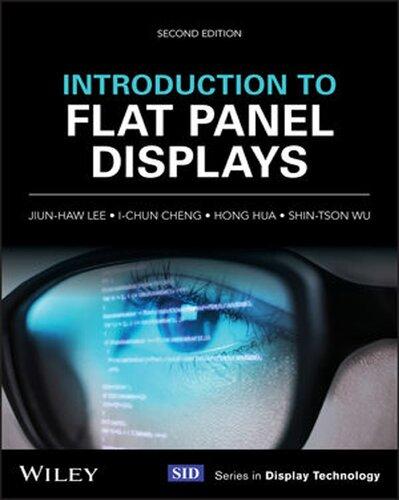
Introduction to Flat Panel Displays 2nd Edition Jiun-Haw Lee
https://ebookmass.com/product/introduction-to-flat-panel-displays-2ndedition-jiun-haw-lee/
ebookmass.com
Isle of Beauty: An arranged marriage mafia romance (The Moretti Chronicles Book 1) C.J. Lucci
https://ebookmass.com/product/isle-of-beauty-an-arranged-marriagemafia-romance-the-moretti-chronicles-book-1-c-j-lucci/
ebookmass.com
Subhuman - The Moral Psychology of Human Attitudes to Animals T.J. Kasperbauer
https://ebookmass.com/product/subhuman-the-moral-psychology-of-humanattitudes-to-animals-t-j-kasperbauer/
ebookmass.com
The Devil You Know (Detective Margaret Nolan #3) P. J. Tracy
https://ebookmass.com/product/the-devil-you-know-detective-margaretnolan-3-p-j-tracy/
ebookmass.com
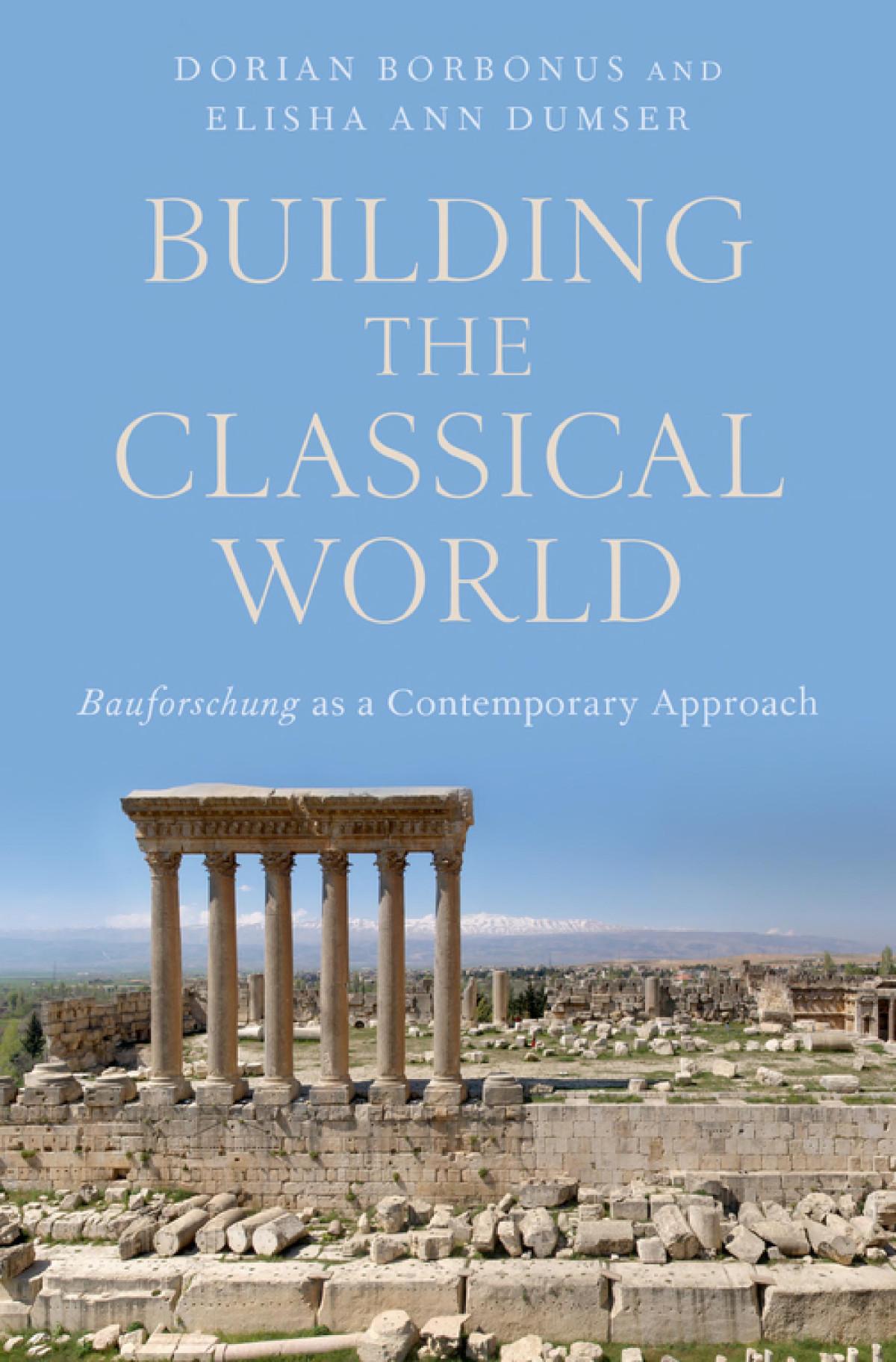
Building the Classical World: Bauforschung As a Contemporary Approach Dorian Borbonus
https://ebookmass.com/product/building-the-classical-worldbauforschung-as-a-contemporary-approach-dorian-borbonus/
ebookmass.com
Kierkegaard, MacIntyre, Williams, and the Internal Point of View Rob Compaijen
https://ebookmass.com/product/kierkegaard-macintyre-williams-and-theinternal-point-of-view-rob-compaijen/
ebookmass.com
https://ebookmass.com/product/rogue-wolf-paige-tyler/
ebookmass.com
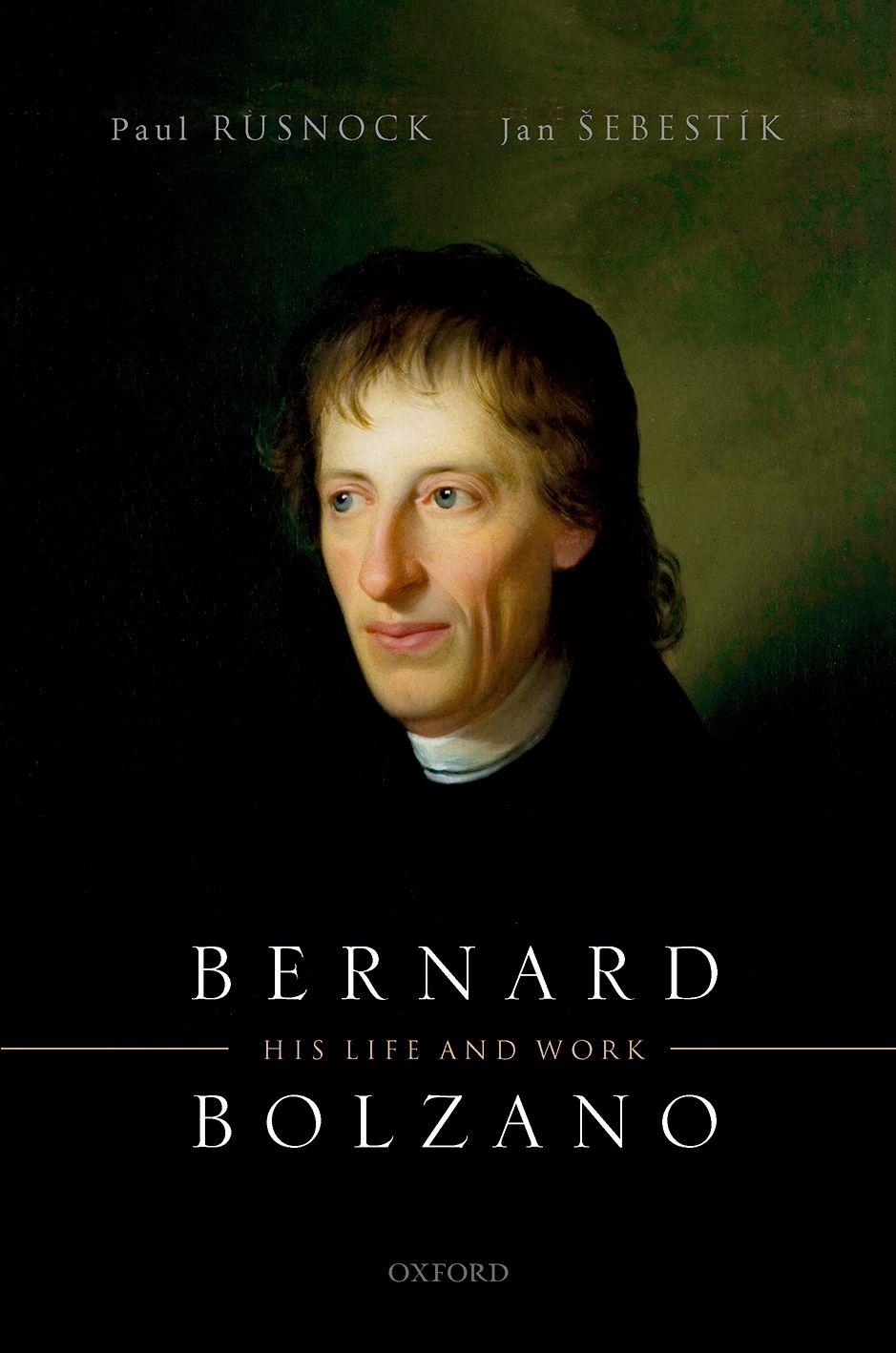
BernardBolzano BernardBolzano HisLifeandWork PaulRusnockandJan Šebestík
1 Great Clarendon Street, Oxford, OX2 6DP, United Kingdom
Oxford University Press is a department of the University of Oxford. It furthers the University’s objective of excellence in research, scholarship, and education by publishing worldwide. Oxford is a registered trade mark of Oxford University Press in the UK and in certain other countries © Paul Rusnock and Jan Šebestík 2019
The moral rights of the authors have been asserted
First Edition published in 2019
Impression: 1
All rights reserved. No part of this publication may be reproduced, stored in a retrieval system, or transmitted, in any form or by any means, without the prior permission in writing of Oxford University Press, or as expressly permitted by law, by licence or under terms agreed with the appropriate reprographics rights organization. Enquiries concerning reproduction outside the scope of the above should be sent to the Rights Department, Oxford University Press, at the address above
You must not circulate this work in any other form and you must impose this same condition on any acquirer
Published in the United States of America by Oxford University Press 198 Madison Avenue, New York, NY 10016, United States of America
British Library Cataloguing in Publication Data Data available
Library of Congress Control Number: 2018965063
ISBN 978–0–19–882368–1
Printed and bound by CPI Group (UK) Ltd, Croydon, CR0 4YY
Links to third party websites are provided by Oxford in good faith and for information only. Oxford disclaims any responsibility for the materials contained in any third party website referenced in this work.
C ONTENTS 4PhilosophyofReligion 139
1.Bolzano’sConceptofReligion.................143
2.FigurativeorSymbolicDoctrines................152
3.SourcesofReligiousBelief:NaturalandRevealedReligion..157
4.TheConceptofRevelation...................158
5.Conclusion............................164
5CatholicismandtheCatholicChurch167
1.NaturalReligion.........................167
2.Catholicism...........................169
3.HowistheContentofCatholicismDetermined?........170
4.RevelationandMiracles.....................174
5.UniversalConsensusandRevelation..............177
6.AuthorityintheChurch.....................181
7.Conclusion............................184
6Logic 187
1.Bolzano’sLogicalWritings...................190
2.TheScopeofBolzano’sLogic.................191
3.LogicalObjects.........................193
4.PropositionsandIdeas......................206
5.TheNatureofIdeas.......................210
(a)IdeasandtheirObjects...................215
(b)TheIndividuationofIdeas.................217
(c)TheLogicofClasses....................219
(d)SimpleandComplexIdeas.................221
(e)ObjectlessIdeas.......................222
(f)IntuitionsandConcepts...................224
(g)RepresentingIndividuals..................232
(h)RepresentingNaturalKinds.................238
(i)Conclusion.........................242
6.ContributionstotheAnalysisofPropositions......... .243
(a)OntheFormandContentofPropositions.........245
(b)TheSubject–PredicateForm................249
(c)Truth.............................250
(d)TemporalDeterminations..................253
(e)Relations..........................255
(f)ExistenceandObjectuality.................259
(g)Negation...........................261
(h)CategoricalStatementForms................265 (i)DisjunctionsandConditionals...............267
(j)PurelyConceptualandIntuitionalPropositions...... 271 (k)Necessity,Possibility,andContingency..........272 (l)Conclusion.........................273
7.Bolzano’sVariationLogic....................274 (a)Introduction.........................274 (b)Variation,Substitution,andForm..............281 (c)AnalyticityandRelatedNotions..............295 (d)ConsequenceandRelatedNotions.............301
8.Ground–ConsequenceandtheObjectiveConnection betweenTruths.........................327
9.SciencesandtheirTreatises:TheTheoryofScienceProper..331 10.Conclusion............................334
7TheoryofKnowledge 337
1.TheElementsofBolzano’sTheoryofKnowledge.......342 (a)SubjectiveIdeasandJudgments..............342 (b)IntuitionsandConcepts...................346 (c)Individuation;EqualIdeas;Clarity,Distinctness,and Vividness..........................348 (d)Judgments..........................351 (e)MediatedandImmediateJudgments............352 (f) Apriori andEmpiricalJudgments.............356
2.Knowledge,Ignorance,Error..................357
3.Certainty,Probability,andConfidence;Knowledgeand Belief..............................362
4. Wissen ..............................365
5.JudgmentsofExperience....................367
6.BolzanoonKant.........................373
7.Conclusion............................398
8OntologyandMetaphysics 1.ObjectsinGeneral........................407 2.Attributes............................408
3.Collections............................416 (a)Origins:UniversalMathematics(1810)..........417 (b)Bolzano’sLaterTheoryofCollections...........422
4.Identity,Equality,Similarity..................442
5.BolzanoonsomeTraditionalOntologicalTheses.......444
6.ActualandNon-actualObjects.................449
7.SubstanceandAdherence....................450
8.TimeandSpace.........................458
9.FromMetaphysicstoPhysics:Bolzano’sAtomsand Leibniz’sMonads........................470
10.Non-actualObjects.......................474
11.Necessity,Possibility,Contingency............... 475
12.AProofoftheExistenceofGod................495
13.TheWorld............................497
9Mathematics 502
1.OnMathematicalMethod....................503 (a)TheAncientIdeal......................503 (b)Bolzano’sPosition.....................507 (c)DefinitionsandExplications................509 (d)Proofs,ObjectiveandSubjective..............510 (e)FoundationsandFoundationalResearch..........513
2.AdventuresintheInfinite:ASampleofBolzano’s MathematicalWork.......................515 (a)InfiniteSeries........................515 (b)Bolzano’sAnalysisofContinuity..............520 (c) ParadoxesoftheInfinite ..................533
3.Conclusion............................540
10Aesthetics,theScienceofBeauty544 1.Introduction...........................544
2.WorksonAesthetics.......................548
3.OnLaughter...........................549
4.TheConceptofAesthetics...................551
5.TheConceptoftheBeautiful..................552 (a)ConceptualAnalysis....................552 (b)TheBeautiful........................556 (c)OtherDefinitions......................570
6.OntheClassificationoftheFineArts..............578 (a)TheDivisionoftheArts..................580 (b)ArtsofPureThought....................581 (c)ArtsoftheExternalSenses:theTonalArts.........584 (d)TheVisualArts.......................586 (e)PanoramaoftheFineArts.................589 x
AN OTEON C ITATIONS Abibliographyisprovidedtowardstheendofthisbook(pp.599ff.).Inour footnotes,weusethefollowingabbreviations:
BBGA BernardBolzano-Gesamtausgabe,ed.E.Winter,J.Berg,F.Kambartel,J.Loužil,E.Morscher,andB.vanRootselaar(Stuttgart-BadCannstatt: Frommann-Holzboog,1969–).
BD BeyträgezueinerbegründeterenDarstellungderMathematik (Prague, 1810).Englishtranslationin MW (seebelow).
EP SelectedWritingsonEthicsandPolitics,tr.P.RusnockandR.George (Amsterdam:Rodopi,2007).
GL Größenlehre (manuscript); BBGA,Series2A,Vols7–10(somevolumes stilltoappear).Selectionstranslatedin MM-EX, MW (seebelow).
ML “VondermathematischenLehrart”(manuscript,partof GL); BBGA 2A.7,pp.46–97.Englishtranslationin MM-EX (seenextentry).
MM-EX OntheMathematicalMethodandCorrespondencewithExner,tr. P.RusnockandR.George(Amsterdam:Rodopi,2004).
MW TheMathematicalWorksofBernardBolzano,tr.S.B.Russ(Oxford UniversityPress,2004).
PdU ParadoxiendesUnendlichen (Leipzig,1851).Englishtranslations: ParadoxesoftheInfinite byD.A.Steele(London:Routledge&KeganPaul, 1950)andS.B.Russ(in MW).
PK UeberdiePerfectibilitätdesKatholicismus,2Vols(Leipzig,1845).
RB ReinanalytischerBeweis... (Prague,1817).Englishtranslationin MW.
RW LehrbuchderReligionswissenschaft (Sulzbach,1834).
3-D VersucheinerobjectivenBegründungvondendreiDimensionendes Raumes (Prague,1843).
WL Wissenschaftslehre (Sulzbach,1837).Newednin BBGA,Series1,Vols 11/1–14/3.EnglishtranslationbyP.RusnockandR.George: Theoryof Science,4Vols(OxfordUniversityPress,2014).
The BernardBolzano-Gesamtausgabe (BBGA)isdividedinto6Series:
E:Einleitungsband
1:Schriften
2A:Nachlaß:Schriften
2B:Nachlaß:WissenschaftlicheTagebücher
3:Briefwechsel
4:Dokumente
TheSeriesaredividedintoVolumes,andsomeofthelatterarefurtherdivided intoparts.Accordingly,wegivecitationsoftheforms:
w.x/y,p.z
w.x,p.z wherewindicatestheSeries,xtheVolume,ythePart(whenapplicable),and zthepagenumber.Forexample:
BBGA 1.6/1,p.25 referstoSeries1,Volume6(part1),page25;and
BBGA 1.18,p.35 toSeries1,Volume18(whichisnotsubdivided),page35.
Generallyspeaking,weciteoriginaleditions(whichareoftenavailable online),followedbythe Gesamtausgabe,andEnglishtranslation(thelasttwo whenavailable).Here,forexample,isatypicalreference:
RW,I,§14,no.7[BBGA 1.6/1,pp.77–8; EP,p.177].
Thereisoneexceptiontothispractice:inthecaseofthe Wissenschaftslehre (WL),wesimplycitethesectionnumbersand,whereappropriate,the volumeandpagenumbersofthefirst(1837)edition,e.g., WL,§148[II.83]. Wedothisbecausethepaginationofthefirsteditionisgiven inthemargins ofboththe BBGA editionandthecompleteEnglishtranslation.
Finally,forKant’sworks,weusuallycitetheAcademyedition: Ak Kant’sgesammelteSchriften,herausgegebenvonderKöniglichPreußischenAkademiederWissenschaften.BerlinandLeipzig,1900–.
Wealsousethestandardabbreviations(A,B)todesignatethefirstandsecond editionsofthe CritiqueofPureReason.
ACKNOWLEDGEMENTS Evenifwecannotmentionallpeoplewhohelpedusatdifferentstagesof writingthisbook,wewouldatleastliketonamesomeofthose whosework informedoursandtowhomweexpressourparticulargratitude:
MarieBayerová,AliBehboud,AliBenmakhlouf,JocelynBenoist,Johann vanBenthem,JanBerg,KarelBerka,StefanoBesoli,ArianaBetti,KurtBlaukopf,JohannBlok,JacquesBouveresse,GünterBuhl,PaolaCantù,Ettore Casari,CarloCellucci,StefaniaCentrone,CharlesChihara,AlbertoCoffa, JonathanL.Cohen,JaromírDan ˇ ek,MichaelDetlefsen,GeorgDorn,Jacques Dubucs,PierreDugac,PetrDvoˇrák,JohnEtchemendy,BorisI.Fedorov,Jiˇrí Fiala,DenisFisette,DagfinnFøllesdal,JaroslavFolta,GuillaumeFréchette, MargretFriedrich,FrantišekGahér,AlainGallerand,HeinrichGanthaler, CarstenGieske,RolfGeorge,Gilles-GastonGranger,IvorGrattan-Guinness, JohannesHafner,VlastimilHála,RudolfHaller,JosefHaubelt,JanHavránek, MagdalenaHykšová,Vojt ˇ echJarník,DaleM.Johnson,WillemdeJong,Anita Kasabova,ArnoštKolman,AnitaKonzelmannZiv,L.Kore ˇ n,JanKoˇralka, LukasBenedictKraus,AndrejKrause,LotharKreiser,Frank Krickel,Pavel Kˇrivský,WolfgangKünne,SandraLapointe,DetlefLaugwitz, JacquesLaz, AlaindeLibera,PaisleyLivingston,JanMili ˇ cLochman,IrisLoeb,Helena Lorenzová,WinfriedLöffler,JaromírLoužil,Jan Łukasiewicz,KarelMa ˇ cák, CaroleMaigné,ClaudioMajolino,PaoloMancosu,PavelMaterna,Benson Mates,HenrykMoese,EdgarMorscher,MassimoMugnai,Kevin Mulligan, OttoNeumaier,Luboš Nový,RadimPalouš,FrancescoPaoli,JanPato ˇ cka, MiroslavPauza,MariePavlíková,GaëtanPégny,KarelPetr, JoëlleProust, VenanzioRaspa,JaneRegenfelder,MariaReicher,StefanRoski,Bobvan Rootselaar,AntjeRumberg,HelmutRumpler,FrédéricRuscher,SteveRuss, KarelRychlík,MariavanderSchaar,GünterSchenk,BenjaminSchnieder, HeinrichScholz,IrenaSeidlerová,MarkSiebel,PetrSimon,PeterSimons, HouryaSinaceur,Alena Šolcová,DetlefSpalt,PeterStachel,AnatoliA. Star ˇ cenko,WernerStelzner,KurtF.Strasser,GöranSundholm,Christian Tapp,ArminTatzel,GerhardTerton,MarkTextor,PaulB.Thompson,KateˇrinaTrlifajová,PetrUrban,EmilUtitz,LubomírValenta,KarelVe ˇ cerka,Marta Vlasáková,FrancoVoltaggio,PetrVop ˇ enka,ManfriedWelan,EduardWinter, JanWole ´ nski,HansWussing,andPavelZlatoš.
Thecontributionsofthosewhowerenotmentionedorquotedinourtext alsofoundtheirwayintothisbook.Betweenthetwoofus,wehavemetquite afewofthesescholars(some,alas,nolongerwithus),andfeelveryfortunate tobeabletocallanumberofthemfriends.
Severalofthesubjectsdiscussedinthisbookhavebeenpreviouslydealt withinarticleswehavepublished(listedbelow),andwehavemadeuseof thematerialinthematvariouspoints.Wearegratefultothe publishersand co-authorsforgrantinguspermissiontodothis.
S.RoskiandP.Rusnock,“Bolzanoonnecessaryexistence,” ArchivfürGeschichtederPhilosophie 96 (2014)320–59.
P.Rusnock,“AnalyticityinKantandBolzano,” ArchivfürGeschichteder Philosophie 95 (2013)298–335.
P.Rusnock,“OnBolzano’sconceptofasum,” HistoryandPhilosophyof Logic 34 (2013)155–69.
P.RusnockandJ. Šebestík,“The Beyträge at200:Bolzano’squietrevolutioninthephilosophyofmathematics,” JournalfortheHistoryofAnalytic Philosophy,Vol.1,no.8(2013).
P.Rusnock,“RemarksonBolzano’sconceptionofnecessarytruth,” British JournalfortheHistoryofPhilosophy 20 (2012)817–37.
P.Rusnock,“KantandBolzanoonlogicalform,” Kant-Studien 102 (2011) 1–15.
P.RusnockandM.Burke,“EtchemendyandBolzanoonlogicalconsequence,” HistoryandPhilosophyofLogic 31 (2010)3–29.
R.GeorgeandP.Rusnock,“Bolzano’sPoliticalPhilosophy,”inM.Textor,ed. TheAustrianContributiontoAnalyticPhilosophy (London:Routledge, 2006),pp.264–92.
P.RusnockandR.George,“BolzanoasLogician,”inD.Gabbay andJ. Woods,eds, HandbookoftheHistoryandPhilosophyofLogic,Vol.3 (Amsterdam:Elsevier,2004),pp.177–205.
P.Rusnock,“Bolzanoandthetraditionsofanalysis,”in BolzanoandAnalytic Philosophy,ed.W.Künne,M.SiebelandM.Textor(Amsterdam:Rodopi, 1998);alsoin GrazerphilosophischeStudien 53 (1997)61–85.
P REFACE Jan ŠebestíkandIbeganworkonthisbookalmosttwodecadesago.Ihad cometoworkwithhiminthemid-1990safterfinishingmydoctorate,andhe invitedmetojoinhisseminar,whichwasthenworkingtotranslateBolzano’s work VondermathematischenLehrart andhiscorrespondencewithFranz Exner.Afterayearorsoofworkingtogether,wediscussedthepossibilityof writingabooktogetheronBolzano’slifeandwork,andfinallyresolvedtodo it.Itwouldbedifficulttooverstatethebreadthanddepthof Jan’sknowledge, thefruitofalonglifeofdeterminedstudy,andIcountitasoneofthegreat fortunesofmylifetohaveworkedwithhimonthisbook.
Asthingsturnedout,ittookmuchlongerthaneitherofushad anticipatedtoreachthispoint.Soonafterwehaddecidedtowritethisbook,Iwas launchedonthesessionallecturers’circuit,movingrepeatedlywithmyfamilyandteachinganewselectionofcourseseachyearwhileconstantlyonthe lookoutforthenextcontract.Jan,forhispart,struggledthroughtwoboutsof cancerandotherassortedhealthproblems,allthewhiletakingonamultitude ofothercommitments.Thiswasontopoftheintrinsicdifficultiesinvolved intryingtotakethemeasureofthemanyandvariedinterests ofanauthor aswidely-read,far-seeing,andprolificasBolzano—andmysomewhatfoolhardydecisiontotranslatesubstantialpartsofBolzano’s worksintoEnglish withRolfGeorge,includingthemassive TheoryofScience.
Overtheyears,Ihaveworkedwithanumberofotherpeopleonvarious aspectsofBolzano’sthought.RolfGeorge,tobeginwith,hasbeenaconstant sourceofknowledgeandsupportsinceIfirstwenttoWaterloo tostudywith himintheearly1990s.Throughhisteaching,aswellasourdiscussions andjointwork,hehasdeeplyinfluencedmycontributionstothisbook,not leasttothechapterinthisvolumeonBolzano’spoliticalphilosophy,which isbasedonanarticlewewrotetogether.Icannotimagineabetterteacher, supervisor,collaborator,orfriend.
IalsohavefondmemoriesofworkingonBolzano’smathematicswith thelateAngusKerr-Lawson,onhisconceptionoflogicalconsequencewith MarkBurke,onhisphilosophyofreligionwithAnnaEzekiel, andonthe conceptofnecessitywithStefanRoski.Mydeepestthanksgo toallofthem.
WeoweanothermajordebttoWolfgangKünne,whoprovidedacuteand detailedcommentsonsignificantpartsofthisbook,andwhohasgenerously sharedwithusanumberofhisstilltobepublishedwritingsonBolzano. StefanRoski,too,readanearlierversionofthemanuscript andprovided
manyvaluablecommentsandsuggestions.Wewouldalsoliketothanktwo anonymousreviewersforOxfordUniversityPress,whosecomments,based uponathoroughandcarefulreadingofourtext,havehelpedusgreatly,along withPeterMomtchiloff,whohasbeenanidealeditor.
Thisbookwouldnothavebeenpossibleifnotforthewell-advancedcriticaleditionofBolzano’sworks(BernardBolzano-Gesamtausgabe),thefruit ofmanydecadesofhardworkandexemplarydedicationonthepartofitseditors:JanBerg,FriedrichKambartel,JaromírLoužil,EdgarMorscher,Bob vanRootselaar,andEduardWinter.LikeallthosewhostudyBolzano,we mourntherecentpassingofJanBerg.
Finally,myfamilyhasbeenremarkablypatientwithmewhile Ipursued thesemassiveprojects.ToElizabeth,Sophie,andHarry,Ihereexpressmy gratitudeandmylove.
PaulRusnock,Ottawa,February2018
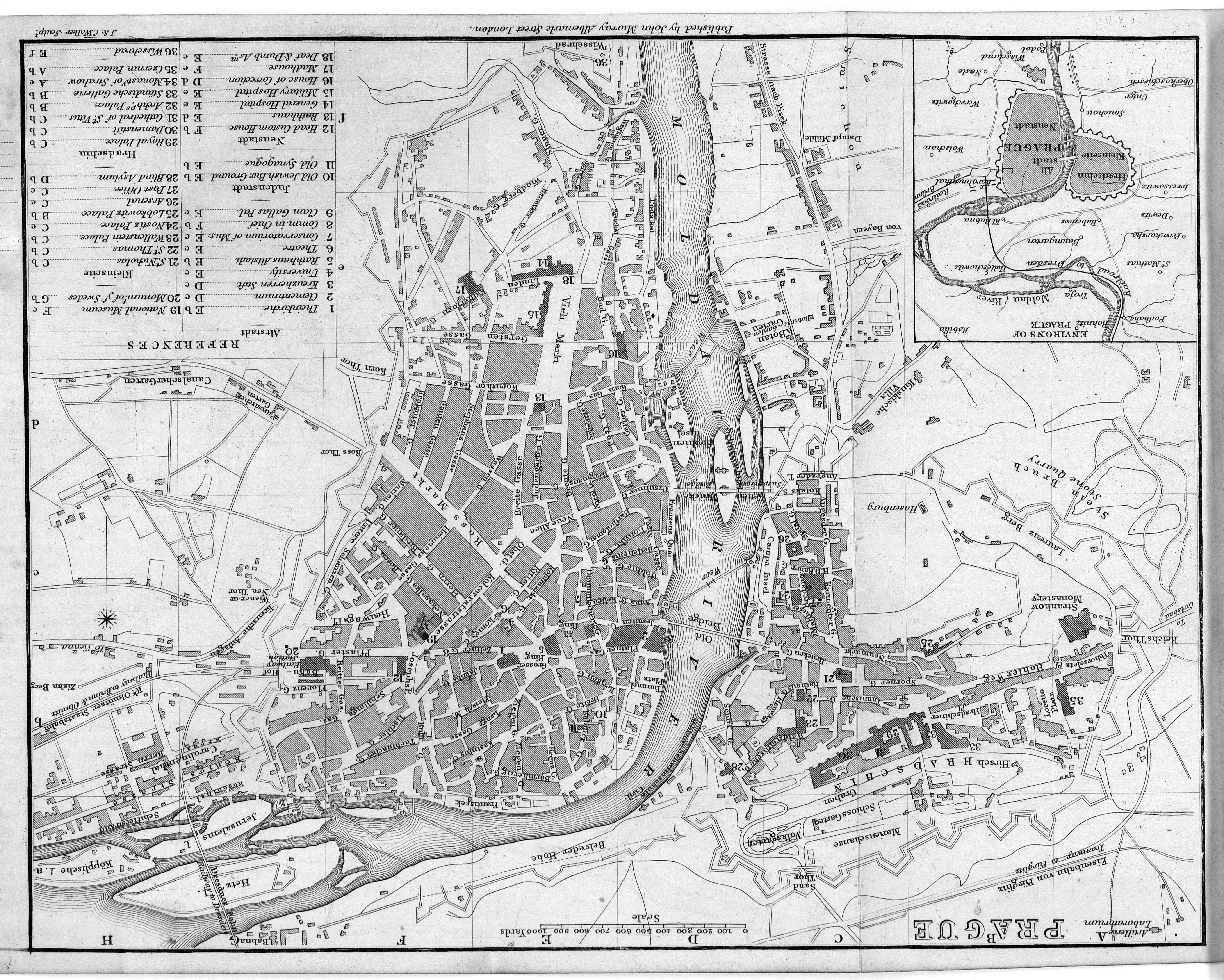
Mid-NineteenthCenturyPrague;from AHandbookforTravellersinSouthernGermany (7thedn,London:JohnMurray,1857).ImagecourtesyoftheMcGillUniversity Library.
C HRONOLOGY Y EAR B OLZANO ’ S L IFEAND W ORKS A RTSAND L ETTERS
1776 Smith, WealthofNations
1779 Hume, DialoguesonNatural Religion (posth.)
1780
1781Born5OctoberinPragueKant, CritiqueofPureReason; Rousseau, Confessions
1787–1788 Goethe, IphigenieaufTauris; Schiller, DonCarlos;Mozart, DonGiovanni,Symphoniesnos. 39–41
1789
Bentham, Introductiontothe PrinciplesofMoralsandLegislation;Blake, SongsofInnocence; Gibbon, DeclineandFallofthe RomanEmpire
1790 Burke, ReflectionsontheRevolutioninFrance
1792
Dobrovský, HistoryofCzech LanguageandLiterature;Wollstonecroft, Vindicationofthe RightsofWomen
1793 David, DeathofMarat
1794–1795
Blake, SongsofExperience; Condorcet, Esquissed’untableau historiquedesprogrèsdel’esprit humain;Paine, TheAgeof Reason
S CIENCEAND T ECHNOLOGY H ISTORICAL E VENTS ThirteenColoniesissueDeclaration ofIndependence JosephIIbecomesrulerofHabsburg lands
Wattpatentssteamengine;Herschel, discoveryofUranus
JosephIIIssuesPatentofTolerance, expandsfreedomofpressinAustria
USConstitutionratified
Lavoisier, Traitéelémentairede chimie FrenchRevolution;Washington electedPresidentofUSA
BohemianRoyalSocietyofSciences founded
JosephIIdies;LeopoldIIbecomes rulerofHabsburglands
LeopoldIIdies;succeededbyFrancis WhitneyinventscottonginLouisXVIexecuted;ReignofTerror begins
Lavoisierexecuted;ÉcolePolytechniquefounded;Metricsystem adoptedinFrance
BernardBolzano:HisLifeandWork Y EAR B OLZANO ’ S L IFEAND W ORKS A RTSAND L ETTERS 1796–1799 StudentatCharlesUniversityGoethe, WilhelmMeister (1796); Coleridge, KublaKhan;ColeridgeandWordsworth, Lyrical Ballads;Haydn, TheCreation
1799–1800 AdvancedstudiesinMathematics
1800–1804
1804
StudiesTheologyatCharlesUniversity; Considerationsonsome ObjectsofElementaryGeometry (1804)
Schelling, SystemofTranscendentalIdealism;Paley, Natural Theology
Fichte, TheoryofScience
1805Ordainedpriest,doctorateconferred,provisionallyappointedto ChairoftheScienceofReligion atCharlesUniversity
1806–1807 Universityappointmentconfirmed(1806)
1808
1809
1810 ContributionstoamoreWellGroundedPresentationofMathematics,1
1812Inanotebook,recordsintention towritea“NewLogic”
1813 ErbauungsredenfürAkademiker, avolumeofexhortations
Beethoven, Eroica Symphony
Goethe, Faust,Part1
Goethe, ElectiveAffinities
Fichte, AddressestotheGerman Nation
Austen, PrideandPrejudice; Herbart, IntroductoryTreatiseof Philosophy
Chronology S CIENCEAND T ECHNOLOGY H ISTORICAL E VENTS Jenner,vaccinationforsmallpox; Lagrange, Théoriedesfonctionsanalytiques;Malthus, EssayonthePrincipleofPopulation;RosettaStonediscovered
GaussprovesFundamentalTheorem ofAlgebra;Laplace, Traitédemécaniquecéleste
Voltaconstructschemicalbattery; firstcensusinFrance,Britain
LewisandClarkbegintheirexpedition
NapoleonbecomesFirstConsul (1800)
LouisianaPurchase;NapoleonicWars begin(1803)
PraguePolytechnicalInstitute,GeologicalSocietyofLondonfounded
Dalton, ANewSystemofChemical Philosophy
Lamarck, Philosophiezoologique
FrancisII,HolyRomanEmperor, crownedFrancisIofAustria; NapoleoncrownedEmperorofthe French FrenchtroopsoccupyVienna; NapoleonvictoriousatAusterlitz; PeaceofPressburg
HolyRomanEmpireofficiallydissolved
Cuvier, Recherchessurlesossements fossilesdequadrupèdes
NapoleonannexesPapalStates,Pope PiusVIItakenprisoner;Metternich becomesForeignMinisterofAustria
NapoleonmarriesArchduchessMarie LouiseofAustria,daughterofFrancis
Napoleon’sRussiancampaign;USA declareswaronBritain
BernardBolzano:HisLifeandWork Y EAR B OLZANO ’ S L IFEAND W ORKS A RTSAND L ETTERS 1814
Scott, Waverley;Ingrès, La grandeodalisque;Goya, The ThirdofMay,1808inMadrid
1815ElectedmemberofBohemian RoyalSociety Schubert, Erlkönig
1816 BinomialTheorem Rossini, BarberofSeville
1817–1818 PurelyAnalyticProof ; Three Problems Hegel, Encyclopedia;Ricardo, PrinciplesofPoliticalEconomy andTaxation
1819On24December,KaiserFrancis ordersBolzano’sdismissal Schopenhauer, TheWorldasWill andIdea
1820Beginsworkon TheoryofScience Keats,“OdetoaNightingale,” “OdeonaGrecianUrn”
1821–1825 Bolzano’secclesiastical“trial”; meetsAnnaHoffmann(1823)
Constable, TheHayWain;De Quincey, Confessionsofan EnglishOpiumEater (1821)
1823–1830 SummersinT ˇ echobuzwiththe Hoffmanns Beethoven,NinthSymphony (1824);Kollár, Slávydcera (1824);FennimoreCooper, The LastoftheMohicans (1826)
1827 Athanasia Heine, BuchderLieder ;Schubert, DieWinterreise
1828 Erbauungsreden placedonIndexTurner, ChichesterCanal
1830Completesmanuscriptof Theory ofScience Comte, Coursdephilosophie positive (6Vols,1830–42);Stendahl, Lerougeetlenoir
xxiv
S CIENCEAND T ECHNOLOGY Chronology H ISTORICAL E VENTS NapoleondefeatedinBattleofthe NationsatLeipzig
AlliesinvadeFrance,Napoleonabdicates;CongressofViennabegins; PiusVIIreturnstoRome,reinstates Inquisition;Britishtroopssetfireto WhiteHouse
Napoleonreturns,isdefeatedatWaterloo;MountTamboraerupts,leadingto“yearwithoutasummer”in 1816
Cuvier, Larègneanimal;firstsuccessfulbloodtransfusion
Wartburgfest
Kotzebueassassinated;Carlsbaddecrees;Peterloomassacre
OersteddiscoverselectromagnetismMissouriCompromise
Fourier, Théorieanalytiquedela chaleur ;Poncelet, Traitédespropriétésprojectivesdesfigures (1822)
Abelprovesthatthegeneralquintic isnotsolvableintermsofradicals; BolyaiandLobachevsky,NonEuclideanGeometry
Ohm’sLawdiscovered
Railwaybetween ˇ CeskéBudj ˇ ejovice andLinzpartiallycompleted—first railserviceinAustria(horse-drawn); Woehlersynthesizesurea
LiverpoolandManchesterRailway opens;Lyell, PrinciplesofGeology
JulyRevolutioninFrance,Belgian Revolution