Oxford University Press is a department of the University of Oxford. It furthers the University’s objective of excellence in research, scholarship, and education by publishing worldwide Oxford is a registered trade mark of Oxford University Press in the UK and certain other countries
Published in the United States of America by Oxford University Press 198 Madison Avenue, New York, NY 10016, United States of America.
All rights reserved. No part of this publication may be reproduced, stored in a retrieval system, or transmitted, in any form or by any means, without the prior permission in writing of Oxford University Press, or as expressly permitted by law, by license, or under terms agreed with the appropriate reproduction rights organization. Inquiries concerning reproduction outside the scope of the above should be sent to the Rights Department, Oxford University Press, at the address above.
You must not circulate this work in any other form and you must impose this same condition on any acquirer.
Library of Congress Cataloging-in-Publication Data
Names: Hayashi, Brian Masaru, 1955– author
Title: Asian American spies : how Asian Americans helped win the Allied victory / Brian Masaru Hayashi.
Other titles: How Asian Americans helped win the Allied victory
Description: New York, NY : Oxford University Press, [2021] | Includes bibliographical references and index
Identifiers: LCCN 2021001784 (print) | LCCN 2021001785 (ebook) | ISBN 9780195338850 (hardback) | ISBN 9780190092863 (epub) | ISBN 9780190092856
Subjects: LCSH: World War, 1939–1945 Secret service United States. | World War, 1939-1945 Participation, Asian American. | Asian American spies United States History 20th century | United States Office of Strategic Services History. | World War, 1939–1945 Propaganda. | Propaganda, American Asia History 20th century.
LC record available at https://lccn loc gov/2021001784
LC ebook record available at https://lccn loc gov/2021001785
DOI: 10 1093/oso/9780195338850 001 0001
For Yumei Song and Esther Yumi Hayashi
CONTENTS
Acknowledgments
Abbreviations
Note on Transliteration
Prologue: A Trojan Horse?
Introduction
1. Creating an Inclusive, Centralized Intelligence Agency
2. Recruiting Asian Americans with the Right Stuff
3. Morale Operations and Talking Their Way Into Japan
4. Fighting Like a Man, Special Operations Style
5. Knowing Your Enemies and Allies: Research & Analysis and Secret Intelligence
6. Countering Enemy Spies, Rescuing POWs, and Dealing with Collaborators
7. Race, Loyalty, and Asian Americans
Epilogue: Unveiling the Trojan Horse
Notes Selected Bibliography
Index
ACKNOWLEDGMENTS
This book began years ago as part of a chapter for another book. However, finding a wealth of primary sources and a dearth of secondary materials, I expanded this project and, in the process, multiplied the number of people who helped make this book possible. At the early stages of the book, certain knowledgeable individuals encouraged me along the way, providing information, leads, and tips in the form of interviews that proved invaluable for this project. The Japanese American Veterans Association members, and Terry Shima and Grant Ichikawa in particular, provided a contact list of potential interviewees, some of whom appear in this book. Father Richard Kim and his brother Arthur, too, supplied me with many stories and insights about their family and life in prewar Shanghai that intersected with my work on the OSS. Dick Hamada, Maggie Ikeda, Shirley Chun-Ming, and Howard Furumoto opened their homes to me and allowed themselves to be interviewed about their involvement or their family members’ role in the OSS. Debra Thurston, Hai and Tramh Le, and Ty and Loan Nguyen, all friends of mine, helped by putting this vagabond researcher up overnight as he explored the archives of key libraries in their area.
As the search for Asian Americans in the OSS expanded, my dependence on archivists and librarians enlarged to include a considerable number of specialists. At the National Archives and Records Administration II in College Park, Maryland, I received guidance from Larry MacDonald regarding the OSS records that he and a host of volunteers processed and organized after the CIA released them. The late John Taylor was especially helpful in pointing out the largely untapped Shanghai Municipal Police records the CIA pulled out of China before 1949. Nathan Patch, William Cunliffe, and Eric van Slander devoted an enormous amount of their time to track down personnel records of various individuals within the office. Jennifer Cole and Tad Bennicoff of the Seeley-Mudd Library at Princeton University, and Peggy Dillard of the George Marshall Library in Lexington, Virginia, went above and beyond the call of duty by locating and copying documents related to William Lockwood and Peter Kim. Naoki Kanno, senior fellow at the Military Archives Center for Military History at the National Institute for Defense Studies in Tokyo, was quite helpful in my search through various materials. Susan Hammond, director of the War Legacies Project and John McAuliffe, founder and director of the Fund for Reconciliation and Development, searched through their transcripts related to Mac Shin and Frank Tan’s activities in Vietnam. Other archivists and librarians who were generous with their time included Robert Tam of the Chinese Historical Society Archives in Honolulu, Marjorie Lee of the UCLA Asian American Studies Reading Room, and Sherman Seki of University of Hawai’i, Manoa. In tracking down the social scientists who worked with Asian Americans in the OSS, Timothy Driscoll of the Pusey Library at Harvard University, Susan Irving of the Rockefeller Archives Center, Susan Jania of the Bentley Historical Library at the University of Michigan, David Sun and Carole Leadenham of the Hoover Institution of War and Peace at Stanford University, and Anne Watanabe, Octavio Olvera, Simon Elliott, and Jeffrey Rankin of
Special Collections at the UCLA Library were all extremely accommodating during my long perusals of their materials.
The extensive research behind this book would not have been possible without financial assistance or independent wealth. Lacking the latter, I was able to complete this project with the former. The Mitsubishi Foundation generously provided me with funds that allowed me to cross-check OSS materials against the Special Operations Executive records held at the National Archives in London and the Guomingdang records at the National Archives in Xindian City, Taiwan. The Japanese Ministry of Culture, Education, and Sports amply supplied me with research grants over portions of this project that paid for much of the high cost of traveling and lodging in so many different locations where the documents were deposited. In addition, my previous academic home, the Graduate School of Human and Environmental Studies, Kyoto University, supplied general financial assistance with the high cost of copying and equipment during the writing of this book. Henry Choi, Sonia Kim, and Aki Yamamoto helped me locate certain documents in Japanese and Korean languages. Anran Wei assisted with some of the translation of the Chinese-language materials, as did Jinhee Kwon, who ably assisted me when I went to inspect the Syngman Rhee Presidential Papers at Yonsei University in Seoul, Korea. Shōtarō Shindo and Shinichi Itagaki, as usual, provided valuable hints and insights from their own research which immeasurably help improve this manuscript. Funding from the Department of History, Kent State University, where I now have settled, was also helpful.
Special thanks goes to individuals who helped make the manuscript better. Susan Ferber, editor, provided many insightful comments, suggestions, and corrections, making this manuscript far more readable than it had been before. Lon Kurashige, Valerie Matsumoto, Yasuko Takezawa, and Rumi Yasutake gave invaluable advice along with opportunities to present portions of the research at their conferences.
And finally, my family deserves mention. My wife, Yumei, helped me as I struggled with some of the Chinese-language documents, digitally photographed other materials, and took care of our daughter Esther, whose help occasionally made the research and writing that much more difficult to do. This book is dedicated to them.
ABBREVIATIONS
AGFRTS Air Ground Forces Resources & Technical Staff
AUS Army of the United States
CBI China-Burma-India Theater
CN Chinese Nationalist (dollars)
CNO Chief of Naval Operations, United States Navy
COMINTERN Communist International
CPUSA Communist Party of the United States of America
CT China Theater
COI Coordinator of Information
DOJ Department of Justice
FE Far East section
FBI Federal Bureau of Investigation
GBT Gordon-Bernard-Tan spy team
IBT India-Burma Theater
ICP Indochinese Communist Party
JACL Japanese American Citizens League
JCS Joint Chiefs of Staff
MID Military Intelligence Division
MO Morale Operations Division, Office of Strategic Services
NKVD Narodnyy Komissariat Vnutrennikh Dei or People’s Commissariat for Internal Affairs
ONI Office of Naval Intelligence
OSS Office of Strategic Services
OWI Office of War Information
R&A Research and Analysis Division, Office of Strategic Services
ROTC Reserve Officer Training Corps
SACO Sino-American Special Technical Cooperative Organization
SI Secret Intelligence, Office of Strategic Services
SIS Secret Intelligence Service (British)
SO Special Operations Division, Office of Strategic Services
SOE Special Operations Executive (British)
SSU Strategic Services Unit
USN United States Navy
WRA War Relocation Authority
X-2 Counterintelligence Division, Office of Strategic Services
Personal Names
NOTE ON TRANSLITERATION
Chiang Kai-shek (Jiang Jieshi)
Chou Enlai (Zhou Enlai)
Ho Chi Minh (Nguyễn Sinh Cung)
Ilhan New (Yu Il Han)
Key H. Chang (Chang Ki Hyung)
Kilsoo Hahn (Kilsu Hahn)
Mao Tse-tung (Mao Zedong)
Pak Hoy Wong (Congxakhai)
Sisavang Vong (Sisavang Phoulivong)
Soong, T.V. (Sòng Zĭwén)
Syngman Rhee (Yi Sŭng-man)
Tai Li (Dai Li)
Geographic location names
Amoy (Xiamen)
Annam (central Vietnam)
Bias Bay (Daya Bay)
Burma (Myanmar)
Canton (Guangzhou)
Ceylon (Sri Lanka)
Chengtu (Chengdu),
Chinnanpo (Chinnampo)
Chungking (Chongqing)
Djakarta (Jakarta)
Dutch East Indies (Republic of Indonesia)
Foochow (Fuzhou)
Fo Shan (Foshan or Fatshen)
Foochow (Fuzhou)
Formosa (Taiwan)
Fort Bayard (Zhanjiang)
Genzan (Wonsan)
Hankow (Hankou)
Hoifung (Haifeng)
Hsian (Xian)
Icheng (Yichang)
Kangwŏn-do (Gangwon)
Karafuto (South Sakhalin)
Keijo (Seoul)
Kiukiang (Jiujiang)
Kongmoon (Jiangmen)
Kukong (Shaoguan)
Kwangtung (Guangdong)
Kweilin (Guilin)
Kweiyang (Guiyang)
Kweiyang (Guiyang)
Kweilin (Guilin)
Liuchow (Liuzhou)
Malacca (Malaysia)
Malaya (Malaysia)
Manchukuo (Manchuria)
Maoming (Mowming)
Mengtze (Mengzi)
Moneta (Gardena, California)
Mukden (Shenyang)
Nanking (Nanjing)
Pakhoi (Beihai)
Saigon (Ho Chi Minh City)
Seishin (Chongjin)
Shameen (Shamian)
Sheklung (Shih-lung)
Shensi (Shaanxi)
Soochow (Suzhou)
Suiho (Sup’ung)
Sunwai (Sun Wui, Xhinhui)
Swatow (Shantou)
Tientsin (Tianjin)
Tsinan (Jinan)
Tientsin (Tianjin)
Toishan (Taishan)
Waichow (Huizhou)
Yangtze River (Yangzi)
Yenan (Yan’an)
Asian American Spies
Prologue
A Trojan Horse?
On a cold day after Christmas 1944, Joe Teiji Koide stepped forward and placed his hand over the Bible as others looked on. He pledged his solemn oath of office, as had so many others as part of their induction into the United States’ first centralized intelligence agency, the Office of Strategic Services (OSS). His words echoed through the room in more ways than one:
I do further solemnly swear (or affirm) that I will support and defend the Constitution and laws of the United States of America against all enemies, foreign and domestic; that I will bear true faith and allegiance to the same; that I take this obligation freely, without any mental reservation or purpose of evasion; and that I will well and faithfully discharge the duties of the office on which I am about to enter So help me God 1
After the ceremony was over, Koide went to Catalina Island, some twenty-two miles southwest of Los Angeles, California, for his training. Koide worked for the Morale Operations section of the Office on Project Green, a radio propaganda unit designing materials for broadcast direct to Japan from the recently-captured Saipan in the Marianas Island. The project was based in San Francisco, a city from which thousands of Koide’s coethnics were forcibly removed only three years earlier. He enjoyed a $3,000 annual salary, which was more than ten times higher than his previous one in the War Relocation Authority camp at Heart Mountain, Wyoming. Koide directed and produced radio scripts designed to undermine the support the Imperial Japanese forces received from that nation’s civilian populace. Before San Francisco, when Koide was in the “Collingwood” group at a secret location outside of Washington, DC, he had proven himself a capable leader deserving of his high salary and leadership status. Koide’s recruiter Thomas McFadden wrote:
He and three other members of the staff have demonstrated outstanding ability and have been designated as the chief creative workers of the group Their work is of a highly skilled and technical nature requiring a broad educational background combined with a natural aptitude for the creation of subversive propaganda. Subject and the three other individuals in question direct the other Japanese personnel in their work and have been given positions involving a great deal of responsibility 2
Yet Joe Koide’s behavior prior to working for the OSS raises questions about his loyalty, despite his obvious skills and production. One might excuse his invoking of God’s help as simply verbalizing the standard wording of the oath, but his pledge made “without mental reservation” to support the Constitution “against all enemies” raised questions after the war, given his membership in the Communist Party in Moscow and New York City during the 1930s. Worse, his behavior prior to joining the OSS made some Communist Party members doubt his commitment to the Allied war effort, though they kept silent during the war. During the 1970s and 1980s, Koide came under attack from Communist Party members Karl Yoneda
and James Oda, both of whom accused him of undermining the Party while serving as its underground agent. He violated basic security procedures regarding membership lists, even though he received training at the Lenin International School in Moscow during the 1930s, where he learned from the Communist International (COMINTERN) about the art of espionage, sabotage, and propaganda. In particular, Koide compiled a list of forty-seven Japanese communists in 1938, a copy of which surfaced in February 1972 in the Imperial Japanese (Police) Security Bureau’s files, raising suspicions that he was, in fact, an agent of Imperial Japan.
Koide was also known to have stirred up draft resistance among Japanese Americans interned at the War Relocation Authority’s camp at Heart Mountain, actions deemed by Party and non-Party members alike to be detrimental to the Allied war cause. Hence, Koide’s life appeared “like that of a double or triple agent,” as James Oda declared.3
AN AGENT FOR HIRE?
Kunsung Rie crept through the underbrush as stealthily as possible. His aim in the exercise was to place a “bomb” next to an “enemy” gasoline tank to destroy it. Rie’s three-man sabotage team included Jimmy Pyen and Diamond Kimm, all Korean Americans, who had successfully rowed into Johnson’s Landing in nylon row boats. They stealthily crept up to the gasoline tank and set their charges, after which the three quietly withdrew to a secluded spot to set up their portable radio set. Rie, the fastest of the three at twenty words a minute, tapped out coded messages and received a reply. The Korean Americans then returned to base where they listened to a critique of their performance on their sabotage practice run at night on Catalina Island in late March 1945.4
“Napko” was the name of the sabotage mission that Rie was a part of. Led by Colonel Carl Eifler of the OSS, its departure was scheduled for mid-August 1945. This Special Operations’ mission, code-named “Einec,” was to land the three Korean Americans in the Chemulpo Bay area, near present-day Incheon, and another three-man Korean American team called “Charo” close to Chinnampo, near Songnam. Both Einec and Charo aimed to establish a base inside Korea from which to report on the Imperial Japanese forces and make contact with the Korean underground. Once completed, they would launch sabotage operations, action that Kunsung Rie preferred to intelligence-gathering. To successfully carry out their mission, however, the OSS required Napko members to complete the necessary training. It also needed them to form social connections with locals to shield them and their collaborators from Imperial Japanese forces and political connections to win the cooperation of the Korean underground. Above all, Napko required loyalty to the Allied cause.5
Kunsung Rie met most of Napko’s requirements. His social connections were strong the team was to be based initially at Rie’s own house in Korea, which made it necessary for him to undergo plastic surgery to disguise his appearance. Before their mission’s mid-August 1945 departure, he had excelled in the OSS training in Special Operations. He was rated “exceptionally well” in sending and receiving coded messages and quite adept at weapons training. His trainer wrote: “Very good with carbine because he likes the weapon.” He earned only a “satisfactory” mark in map work, partly because he was inattentive in his military
intelligence class. As Lieutenant Robert Carter Jr. wrote, Rie “would rather fire weapons than learn what makes them operate.”6
But a critical requirement was in doubt. Who or what cause was Rie loyal to? The Office of War Information (OWI) determined that this young Korean American held “questionable loyalty” after a special hearing on Rie’s suitability for federal government service. It withdrew Rie’s contract after fifty-eight witnesses, including Korean Americans such as Woon Su Chung, Secretary to the Chairman of the Korean Committee, and Korean independence lobbyist Kilsoo Haan, accused Rie of giving propaganda speeches for the Japanese while employed at the New York Japanese Consulate. They believed Rie had distanced himself from other “loyal Koreans,” fearing actions taken against Japan might trigger “reprisal after the war.” OSS Chief of Security Archbold van Beuren informed Carl Eifler that Rie was not trusted by other federal government agencies either: “The Subject is regarded with suspicion by all government departments which have had contact with him, and these suspicions range from allegations that he is a Japanese agent to statements that he is loyal to the Allied cause but very unreliable.” Upon further investigation, van Beuren found that Rie could not be trusted with confidential information since he was mercenary: “There is much evidence to indicate that the Subject will always be willing to sell out to the highest bidder and that he cannot be trusted with any type of confidential information.”7
Evidence notwithstanding, Carl Eifler retained Rie. The colonel believed dropping Rie would in effect abort the mission before it began: “This entire plan of his particular group is built about him and if I lose him I lose the entire striking force of the plan, and I doubt seriously if the entire project could be carried on without this original striking force.” Moreover, Eifler believed Rie’s motive for serving on Napko involved Korean nationalism. He saw firsthand Rie’s ruthlessness in wanting to assassinate a fellow countryman for actions deemed detrimental to the cause of Korean independence. When asked if he had any misgivings, the colonel responded: “Definitely not, because the man, in going back, is going back to a hard life of starvation, while carrying on the work which he is to do, where on the other hand he could live in the United States in comparative peace and comfort.”8
AN AGENT TURNED?
“Where is Lincoln Kan?” Wilfred Smith, his superior, asked aloud in February 1945 after the suave Chinese American had not been heard from for about six months. Kan was dispatched on a spy mission into Japanese-occupied Guangdong Province of southern China. As a leader of one of four spy teams sent to this region, Kan was assigned to Sector Two (Macao) to gather intelligence on Imperial Japanese forces stationed there. His mission preceded a ground assault by Chinese Nationalist troops seeking to capture southern China and open up a port for the safe arrival of American “Liberty” supply ships that year. Kan’s “Akron” team gathered information critical for planning this campaign, code-named “Carbonado.” He needed to uncover the deployment, numbers, weaponry, and morale information known as Order of Battle of the Imperial Japanese forces the Chinese Nationalist troops would likely face, as well as the attitudes of the Pearl River Delta region’s local population toward support, resistance, or neutrality in the event of such an assault. All of this, Wilfred Smith of
the Fourteenth Air Force, Charles Dewey, and Charles D. Ambelang Jr. Kan’s superiors expected Kan and the Akron team to deliver by March 26, 1945.9
Lincoln Sat Hing Kan, also known as Kan Yuen Fook, was well-qualified for the mission. Code-named “Karlin,” Kan understood the importance of Order of Battle information since he was a lieutenant in the army and was experienced at collecting such data. He had once served in the famed “Flying Tigers” of the Fourteenth Air Force’s Air and Ground Forces Resources Technical Staff (AGFRTS). He was also socially well-connected to Guangdong region, which provided him a measure of protection. His grandfather, father, and uncles were all owners of a cigarette and tobacco enterprise known as Nanyang Brothers Company, with an estimated value in 1924 of twelve million dollars. His loyalty was to the United States. After all, he had been born an American citizen, in New York City on February 12, 1919, and named after the sixteenth president of the United States, whose birthdate he shared. Kan himself was fluent in both Chinese and English. His language skills came easily to him as he was raised in Shanghai, and his English language skills were well-honed at the American School there. He had socialized freely with other American students, as evidenced by his founding of the Photographic Society. His college education began at the University of North Carolina as a political science major in 1938. He took a leave of absence to enlist in 1940, undergoing army training at Fort Bragg, North Carolina. Due to his training and qualifications, Kan understood the risk he was taking and, prior to departure behind enemy lines, he left a letter with Charles Fenn to deliver to his family, “just in case anything happens,” he told Major Harold C. Faxon. With the requisite linguistic skills, cultural and social connections to the targeted region, military training, social science background, and correct “racial uniform,” Kan was prepared for the challenging assignment facing him.10
Kan’s assignment was fraught with danger. He faced the uncertain loyalties of many guerrillas the Guangdong and Guangxi provincial areas alone had some 10,000 who could suddenly turn against the Chinese American and reveal his identity to the Imperial Japanese forces. Or he could be assassinated by one of the thousands of agents serving Tai Li, head of a Chinese Nationalist government’s intelligence agency, who swore to kill any OSS operatives operating inside China without Chinese Nationalist government approval. Transiting by water was equally dangerous. The area was known for centuries for its piratical activities and the notorious pirate Kit Kung Wong preyed upon the boat traffic in the region. He was reputedly in the pay of Imperial Japanese intelligence. Compounding these dangers, Kan faced a formidable opponent a well-trained Imperial Japanese intelligence unit. Headquartered at the Japanese Consulate office in Macao, they had recruited a large number of Chinese locals as informants who kept them well apprised about the local population. Under the capable leadership of Colonel Toyo Sawa, Vice-Consul Kan faced a formidable opponent and thus had to move around the region with considerable caution.11
The message from Karlin received on February 20, 1945, provided little comfort to Kan’s superior. After such a long absence of contact, Wilfred Smith and Charles Dewey sent a test message to authenticate Kan’s identity. “Every possible precaution in being taken,” Smith assured the Akron mission planners. He planned “to ascertain the authenticity of his messages and a test message is being given Lt. Kan during the schedule on the night of 23 February.” Karlin, however, gave an unsatisfactory response to the test message, raising
suspicions that Kan had been captured, tortured, and “turned” by their nemesis Colonel Toyo Sawa.12
A TROJAN HORSE?
Both immediate supervisors and top-level OSS officers responsible for the spy and saboteur operations showed no apparent concern for the risks involved with two of the three Asian American agents. Herbert Little, chief of Morale Operations and the main recruiter for the “Green Japanese” American team, admitted that he and his staff gave only “carefully worded suggestions,” not orders regarding the black radio propaganda materials they were creating. “It was rule by indirection,” Little confessed, despite the obvious distrust by some European American staff members who scrutinized the materials submitted by Koide and other Japanese Americans for covert messages. Henson Robinson, chief of the Schools and Training, instructed Philip Allen at the Catalina Island training center to ignore Security’s red flags on Kunsung Rie and proceed with Napko. After observing firsthand Rie and Napko members’ training, the director, William Donovan, too showed no concern and took the plan directly to the War Department’s Planning Group for approval.13
Following Donovan’s lead, other high-ranking OSS leaders pressed forward with their plans, ignoring the possibility of an Asian American Trojan Horse in the midst. Instead, they saw opportunities for including experienced agents like Lincoln Kan with his wide commercial, social, and political connections in China into their postwar spy network for East Asia. In early May 1945, Paul Helliwell and Duncan Lee, legal advisor to the office and a colleague of Director William Donovan prior to the war, determined the best espionage system for East Asia would involve bringing into their fold experienced agents and American expatriates residing in the target area. Duncan Lee, whom Helliwell wanted to direct the entire postwar spy network for East Asia, further advised William Donovan: “An efficient intelligence system must have many roots among the masses of the population. In this respect, I believe we can well learn from the British and other Europeans in Asia who certainly make full use of their commercial people.”14
Only those near the bottom of the chain of command continued to doubt the loyalty of the Asian American agents working directly under them. The European American personnel in the San Francisco Green office constantly checked the translations and content of the materials produced by the Japanese American staff, searching for hidden messages to the enemy. The Security Investigation office of the OSS continued protesting Rie’s inclusion in Napko. Kan’s superiors harbored doubts about the authenticity of his radio messages as well. Suspecting capture, Wilfred Smith decided to continue communications with Karlin for the purpose of feeding Sawa disinformation:
Our agent [Karlin] in Macao is maintaining a daily radio schedule with us but is at present suspicious as to his security and knowing something of Colonel SAWA (Chief Special Affairs Bureau in Macao) and his methods give increasing reason for misgiving Our agent has been given test questions and has not entirely given satisfaction in his answers However, in any case, he will be useful, if not for our intelligence perhaps we can give [disinformation] . through him to the Japanese.15
The action and behavior of the three Asian American agents raises a question about their role within the OSS. Which of these OSS agents worked, voluntarily or involuntarily, for the enemy? To find this answer, one must understand how the OSS and Asian Americans understood each other, and their respective roles within that organization and the larger American war effort of World War II.
Introduction
“Race” was changing in the years immediately prior to and during World War II. For many European Americans in the Office of Strategic Services (OSS), it was no longer an idea that ascribed a fixed set of social or cultural characteristics to a given ethnic or racial group. Instead, William Donovan, the founding director of America’s first wartime centralized intelligence agency, took pride in his organization’s ethnic and racial inclusiveness by requiring loyalty, along with cultural and linguistic skills, as the basis for employment. On September 28, 1945, he characterized the OSS in his final speech to his employees terminating the five-year-old spy agency as “a group of Americans constituting a cross section of racial origins” that successfully collected, analyzed, and disseminated strategic and tactical intelligence necessary for America’s decision-makers during the war. In the audience were African Americans, Latino Americans, and Asian Americans.1
Donovan’s claim appears accurate as it applies to Asian Americans. Within this hybrid federal government agency of civilian and military personnel, Asian Americans numbered over 400 or under 2 percent of 23,978 names in the OSS personnel records. These numbers suggest racial discrimination at the entry level, since Asian Americans comprised roughly 3 percent of the total American population for the continental United States and its territories of Alaska, Guam, Hawai’i, and the Philippines. Yet these Asian Americans served in roles that affirm the agency’s racial inclusiveness. Those with the necessary linguistic skills translated the mass of collected materials and documents for the Research and Analysis (R&A) section’s reports on East Asia, earning high marks among military officers and federal government officials. Others slipped behind enemy lines, gathering covertly intelligence on the enemy forces and local conditions for Secret Intelligence (SI), having the requisite linguistic and cultural skills, local social connections, and the correct racial uniform. Still others served in Special Operations (SO), conducting raids against the Imperial Japanese forces in Burma, while those in Morale Operations (MO) cranked out propaganda pamphlets and radio broadcasts to stiffen Chinese resistance to Imperial Japanese occupiers and weaken the Japanese resolve in fighting against the Allied forces. Nearly all held the rank of “technical” personnel: noncommissioned or commissioned officers to whom European American enlisted men serving under them were required to salute and obey orders. In nearly all cases, Asian American civilian personnel handled classified materials without restrictions on their security clearance. Their salaries, too, were commensurate with other OSS employees of similar qualifications instead of relegation to the secretarial pool and janitorial service.2
Yet writers on the OSS differ in their assessment of the spy agency’s racial inclusiveness. Bradley Smith suggests that racial segregation was commonplace, pointing to an instance of a Japanese American R&A employee unable to obtain security clearance to the Library of Congress due to race. However, Douglas Waller disagrees. He portrays the OSS as the
opposite very racially inclusive after consulting a much a wider range of documents than what had been available to Smith thirty years prior. He portrays Donovan as staunchly defending one of his African American employees against racial discrimination and taking exception to the mass removal and internment of West Coast Japanese Americans.3
In addition to race, loyalty is another important issue when considering Asian Americans in World War II. The OSS placed a premium on loyalty, requiring it of all their employees to ensure that the intelligence they collected, analyzed, and disseminated to other federal government agencies was not disinformation originating with the enemy. Even today, the Central Intelligence Agency (CIA)’s employment ads list patriotism or loyalty to the United States as one of their requirements. But here too, one simply cannot borrow from previous studies on the subject matter. Past studies of Asian Americans in general portray them as exclusively loyal to the United States when loyalty is often not singular, nor directed solely toward one country such as the United States. Such depictions of Asian Americans as political “model minorities” presents only one side of a multilayered, fluid phenomenon known as loyalty.
Moving beyond oversimplification, this book widens the coverage of the OSS. Along with MO, it explores the SI, SO, and R&A sections to provide a wider and more complete picture of Japanese Americans in the OSS. It also examines Chinese Americans and Korean Americans, as their historical experiences in the OSS were intertwined with one another in the agency. The book does not cover Filipino Americans, however, since the OSS was banned from operating in the Philippines by General Douglas MacArthur, eliminating the need for such ethnic heritage speakers. In terms of time periodization, the book covers closely Asian Americans and their prewar backgrounds, as those experiences influenced their wartime participation in the OSS, a dimension often overlooked in studies on Asian American intelligence agents. The book also covers some months after the Japanese formally surrendered on September 2, 1945, as some of these Asian Americans were detailed to conduct war crimes investigations allegedly committed by other Asian Americans in collaboration with the Imperial Japanese forces.4
In this book, therefore, both race and loyalty are understood as fluid social constructions. They are not seen as a fixed, essentialized phenomenon, nor are they restricted to a single country, but can be multiple and changing. This study utilizes the social constructivist approach of Simon Keller to understand loyalty and its antithesis, treason and collaboration. Loyalty is not a stable identity in which, for example, one is born in the United States, therefore one is loyal to that country to the exclusion of others. Keller defines loyalty as “the attitude and associated pattern of conduct that is constituted by an individual’s taking something’s side” and once taken, makes “essential reference to a special relationship” between the individual and the object of that individual’s loyalty. Patriotism is one type of loyalty that expresses itself in belief, and requires the creation of an imagined special relationship. It does not originate from where one is born, raised, or educated; it is not sui generis nor a product of the “historical self.” Similarly, treason requires betrayal of that imaginary special relationship by the adoption of another object of loyalty at war with the United States. Article III of the Constitution defines treason as “levying war” on the United States and “adhering to the nation’s enemies, giving aid and comfort.” Treason and loyalty
are therefore social constructions whose meaning change over time, especially after 1945. Collaboration is understood to mean “the continuing exercise of power under the pressure produced by the presence of an occupying power,” a definition that removes the negative association with treason imposed by those on the winning side of a war.5
Other terms used in this book related to espionage should be mentioned here. Intelligence is, as John Ferris aptly puts it, “the collection and analysis of information by a power, to enable it to make maximum use of its resources against rivals and potential enemies.” Such kind of information may be tactical in nature, designed to answer the question, “What is the enemy composed of?” This includes the targeted groups’ military capabilities, such as the number of troops, the specifications of their weaponry, and general state of readiness for combat. Other information gathered and analyzed include operational intelligence aimed at determining where the enemy forces are deployed. To collect this type of intelligence, sometimes it is done overtly, as when military attaches of the army or navy are assigned to work in foreign countries. At other times, the information is gathered covertly or in secret. In the latter, an agent or an individual capable of gathering such information covertly is used. Occasionally used is a double agent, or one who has switched sides while in the service of one intelligence agency. Communication from the agent to his or her supervisor or case officer is usually done in writing or by radio in a language disguised so as to render the message meaningless to the casual reader. A code is where words, phrases, letters, or syllables are used to replace a plaintext element. A cipher is where a letter (or two at most) is represented by another letter or number. Strategic intelligence concerns what the enemy or ally is likely to do within the limits of their military capabilities. To determine intent, such agencies must pull together a wide range of information including the personalities and their tendencies in decision-making, and the political, economic, social, and cultural factors that come into play in the decision-making process. Agencies usually gather such information from open sources or those materials such as newspapers, magazines, technical and academic journals, radio broadcasts, and other sources deemed accessible to the public. Intelligence groups sometimes engage in propaganda work as well. The OSS conducted such operations, spreading disinformation to undermine morale and sow confusion among enemy military and civilian populations. Their distribution of leaflets and transmission of radio broadcasts for that end was known as “black” propaganda, as opposed to “white” propaganda, which is a straightforward and generally verifiable information. The latter was handled by the Office of War Information (OWI), an agency that also employed Asian Americans and is the subject of another book.6
In addition, some terms in Japanese are worth noting. Japanese Americans after World War II often use generational terms. Issei refers to the first generation that immigrated from Japan to the United States. Nisei refers to the second-generation or those born in the United States and its territories. Other terms, such as kibei, refer to American-born Japanese who spent some time in Japan before returning to the United States. Yobiyose refers to those Japanese who were born in Japan but came at an early age to the United States. Inu refers to “spy” in the singular or plural.7
Primary sources used in this study are another reason why Asian American Spies stands apart from other books. Unlike previous studies, this book takes advantage of a much wider
set of documents related to the subject. The CIA released to the National Archives and Records Administration nearly 4,000 cubic feet of OSS documents in the 1990s and, after 2000, made available the personnel records and other recently declassified materials that are rich in detail and shed considerable light on OSS operations. To verify the essential integrity of the OSS documents, OSS records were checked against materials from their rival organizations the SOE and the OWI as well as former disgruntled employees such as J. Arthur Duff. The study also utilizes personal papers of various individuals who served in the OSS and were well-positioned to observe these Asian Americans. A few Asian American spies left their personal papers, which are also used here. To further sketch their backgrounds, materials in Chinese, Korean, and Japanese languages from around the world are also used for this study, the former two with considerable assistance of native speakers. Together, these sources provide a new look at the OSS, Asian Americans, and how they understood and constructed loyalty during their service in World War II.8
However, memoirs and oral interviews by former OSS personnel are used selectively. They are understood as being “between memory and history,” to borrow a phrase from Pierre Nora, because their recollections of historical events are shaped by additional factors beyond individual abilities in recall and proximity, temporal and spatial. In the first place, former members of the OSS were legally obligated not to reveal publicly their wartime activities in accordance with their oath of office. Only a small handful were given permission to write or talk about their experiences. A half-century after the war ended they were released from their obligation of silence, though many members continued to conceal important details of operations and methods used in carrying out their duties for the OSS. Additionally, memoirs and interviews are subject to “schematic reconstruction,” or the reframing of memory over time. When individuals recall their personal experience or what cognitive psychologists call “episodic memory” they apply a “schema” to facilitate recall. Those schemas are mental concepts that inform individuals about what to expect from a given situation. The schema or “lessons learned” change the details recalled with the passage of time and are shaped, even invented to fit the “semantic memory.” The latter is a memory of knowledge, such as remembering how to speak a foreign language, and begins to shape the episodic memory when former participants gathered together to write accounts of their personal experiences. Hence, they are used only with corroboration from other materials generated at the time of the events under analysis.9
The few who received permission to write their memoirs consulted their colleagues prior to publication and avoided subject matters that might reveal ongoing operations. Elizabeth McIntosh, in Sisterhood of Spies and her previous book, Undercover Girl, penned her memoirs only after consulting with the top officials inside the OSS and the CIA. Carl Eifler wrote his autobiography with Thomas Moon, another SO agent, in The Deadliest Colonel and fictionalized names and details to cover his wartime activities thirty years prior. Joe Koide did the same, disguising the names of the personnel in MO he worked with. His twovolume autobiography, initially intended as a work of fiction, was based on unrevealed sources he collected and was written after consulting with colleagues. Unlike reports generated at the time or immediately after an observed event, memoirs and oral interviews are thus shaped by not only the individual author but by other unrevealed sources whose
accuracy and proximity cannot be determined without other corroborating sources.10
Beyond sources upon which it stands, this book’s unusual arrangement and findings require an explanation. The prologue opens with the question of which of the three OSS Asian American personnel in 1945 might have been a double agent or a mole. The first chapter considers the internal structure of the OSS how it was put together and how its recruitment of agents was handled with respect to race and ethnicity. It finds that the intelligence organization founded by William Donovan was, for the most part, quite liberal with respect to both categories, though with such a large organization instances of discrimination were entirely possible. The second chapter examines Chinese Americans, Japanese Americans, and Korean Americans to assess the risk factors involved in recruiting agents from these ethnic groups. It reveals that there were a handful of Asian Americans recruited to serve foreign intelligence agencies and the risk, while low, nevertheless existed. Chapters 3 to 5 examine three sections of the Asian American agents introduced in the prologue. Joe Koide’s MO, whose aim was primarily black propaganda, is examined to better understand how a possible foreign agent could transmit intelligence to another intelligence agency. It finds that this section had a higher risk than others, because MO recruited individuals with loyalty to the Allied cause of defeating the Axis powers rather than to the American Constitution, as had other sections. And it allowed its Asian American personnel considerable latitude in the creation of propaganda materials, both in print and over the radio. In contrast, SO posed the lowest risk of infiltration, in large part because field operations undertaken by this section were well behind enemy lines where the dangers were greatest and where mutual reliance among team members the strongest for survival. Except for their office in Istanbul, Turkey, Secret Intelligence avoided foreign agent penetration, since they carefully recruited agents from groups known for their loyalty to the United States. Counterintelligence and R&A sections were also free from foreign agent penetration, perhaps in part because the former was too small numerically while the latter, the largest section of the OSS, shielded itself from foreign interference by restricting its recruitment to their “old boy network,” which kept out foreign agents but also excluded a number of qualified and talented female recruits of all racial and ethnic groups. Chapter 6 delves into the months immediately after Japan’s surrender, when OSS Asian Americans were tasked to rescue Allied prisoners of war (POWs) and to investigate war crimes, which included alleged Asian American collaborators. It unveils a small but significant number of Asian Americans who served Imperial Japanese interests voluntarily and involuntarily. The last chapter ends with an examination of loyalty and treason, since these issues were crucial not only for the employment of Asian American agents, but also because many readers today have a particularly strong image of Japanese Americans having a singular loyal to the United States based on the stellar combat record of the 442nd Regimental Combat Team. While true for many Japanese Americans, historical truth is rarely so simple and in this case, both so-called loyal and disloyal Asian Americans are presented here in the belief that the telling of only the former reinforces the model minority image that many scholars today find detrimental. Hopefully, the last chapter will help remove that simplistic image of Japanese Americans as it reconsiders the meaning of loyalty and treason. The epilogue closes the book with a revelation of which OSS member was the agent for a foreign power.11
Given these findings, this study offers a new look in three different areas of scholarly examination. For studies on the OSS, Asian American Spies provides a valuable corrective to the Europe-centric view of the agency. It also brings to light Asian American agents and their activities for the OSS in ways not possible until 1996, when Congress released all former OSS members from their legal obligation of silence. For Asian American studies, it provides a rare comparative look at three Asian American communities historically, and how social, economic, and cultural tensions within and between these communities created a dynamic mix from which these agents for the OSS were recruited. It also points to how some Asian Americans were able to play a large but behind-the-scene role in postwar American intelligence. And finally, for studies on race and loyalty, this book shows that racial antipathy was far from pervasive in the OSS. Asian American Spies demonstrates how the OSS, notably SO and SI, were racially inclusive in part because Asian Americans had the correct racial and cultural uniforms that had greater value in close proximity to the enemy in Asia. This finding contradicts the broad generalizations made by John Dower in War Without Mercy and more recently by Peter Schrijvers in The GI War against Japan, that antipathetic racial stereotypes against all Japanese was pervasive and deep. Instead, this book finds that race as it applies to Asian Americans in World War II was a social construction whose definitional boundaries of categories of races changed over time, as articulated by Michael Omi and Howard Winant in Racial Formation in the United States. Its findings also match those of Lon Kurashige, who demonstrates in Two Faces of Exclusion that racialist exclusion was beginning to give way to inclusion of Asian Americans prior to World War II.12
A final comment on the spelling used for this study is in order. To the extent possible, the original spelling as it appears in the documents is used. However, for clarity’s sake I have added a list of personal names and geographic locations with their pinyin pronunciation for the Chinese language and the same for the McCune-Reischauer system for the Korean language. For Japanese names, I have inserted long vowel marks to help those interested and able to read Japanese to better find the documents I have used. Given names followed by surnames appear here, except for those whose names are widely recognized by last name first, such as key leaders and royalty. I have also shortened some of the citations, since the OSS attached long labels to their folders and files. I left off the middle initial for most names, and omitted the military ranks and marital status of the personnel. I alone bear responsibility alone for any errors that may appear here.
CHAPTER 1
Creating an Inclusive,
Centralized
Intelligence Agency
The federal government agency Joe Koide, Kunsung Rie, and Lincoln Kan joined was an ethnically and racially inclusive organization. This was not common inside the Washington governmental bureaucracy in the early 1940s, as racial segregation was widespread. The State Department routinely practiced racial discrimination, restricting African Americans to the lowest positions within their organization. However, other newer agencies, such as the Office of Price Administration, provided higher-level employment opportunities for minorities while the Civilian Aeronautics Administration integrated National Airport’s restaurants. How and why the Office of Strategic Services became the part of the newer group of federal government agencies turning away from Jim Crow and employing Asian Americans is the subject of this chapter.1
When the Office of the Coordinator of Information (COI) was established on July 11, 1941, its director, William Donovan, was not concerned with recruiting Asian Americans. Instead, he recruited individuals with European language skills as he sought information on the capabilities and intentions of potential enemies and allies in Europe. Donovan gathered from them information on weaponry, strength and size of combat troops, training and state of readiness, and supply delivery systems, all of which is known as “tactical intelligence.” He pulled together “operational intelligence,” or data on where those forces were deployed and in what strength. Furthermore, he required details on the infrastructure supporting those forces, such as the factories producing the weapons, raw materials necessary for such production, food supplies, and other necessities for deployment, all of which affects the capabilities of the enemy or ally. Yet to evaluate the enemy or ally’s intent, Donovan further required an in-depth understanding of the enemy’s people and its leaders, together with careful mapping of its topography information referred to as “strategic intelligence.” Prior to the COI, Donovan’s job was handled separately and information compartmentalized: the Office of Naval Intelligence (ONI) and the Military Intelligence Division (MID) collected tactical intelligence; the State Department and the Treasury Department gathered strategic intelligence; and the FBI confined its agent to counterintelligence work. But once established, COI became indispensable for assembling both tactical and strategic intelligence after American embassies in enemy territories were closed and all State, Justice, and Treasury officials and army and navy military attaches were called home following the declaration of war against the Axis powers in December.2
The Joint Chiefs of Staff (JCS) of the War Department adopted the general outlines of Donovan’s vision. They took Donovan’s organization under their wing in the summer of 1942 when President Roosevelt renamed the group the Office of Strategic Services. Recognizing the need for an agency “distinct from the [army and navy] service intelligence agencies,” the staff charged it with gathering “military, economic and political information” on enemy, neutral, and allied countries to shed light on “the conditions and intentions of opposing governments,” as well as to conduct counterintelligence against foreign agents. To carry out these tasks, the JCS granted the OSS the right of access to intelligence reports and secret intercepts, to transmit and receive messages confidentially with its own codes and ciphers or through diplomatic pouches, and to have passports issued to its agents without “the usual formalities of proof of identity.” In addition, the War Department’s top brass granted the OSS the privilege of securing officers’ commissions for its personnel, “adequate” priority in travel and supplies, and official recognition of “the military necessity of issuing simulated or facsimile documents such as identity cards, ration cards, travel documents and currency.” In short, the Joint Chiefs of Staff assigned Donovan’s group the task of centralizing American intelligence through various means and to conduct “irregular warfare” as they deemed appropriate.3
To assist in operations against Japan, William Donovan gathered intelligence outside of the main islands of Japan. He realized getting information out of Japanese-occupied territories
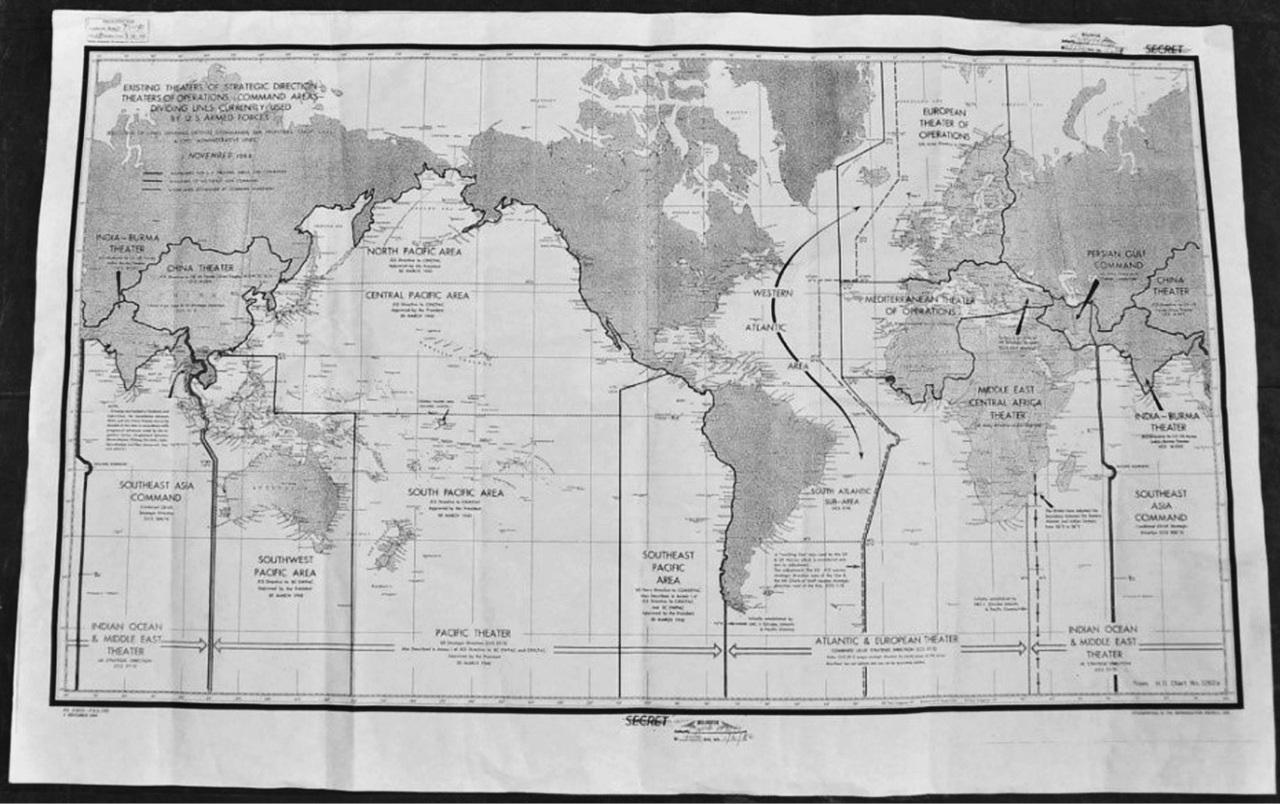
Figure 1.1 Map of Existing Theaters of Strategic Direction-Theaters of Operation, 1944 Courtesy of National Archives and Records Administration II.