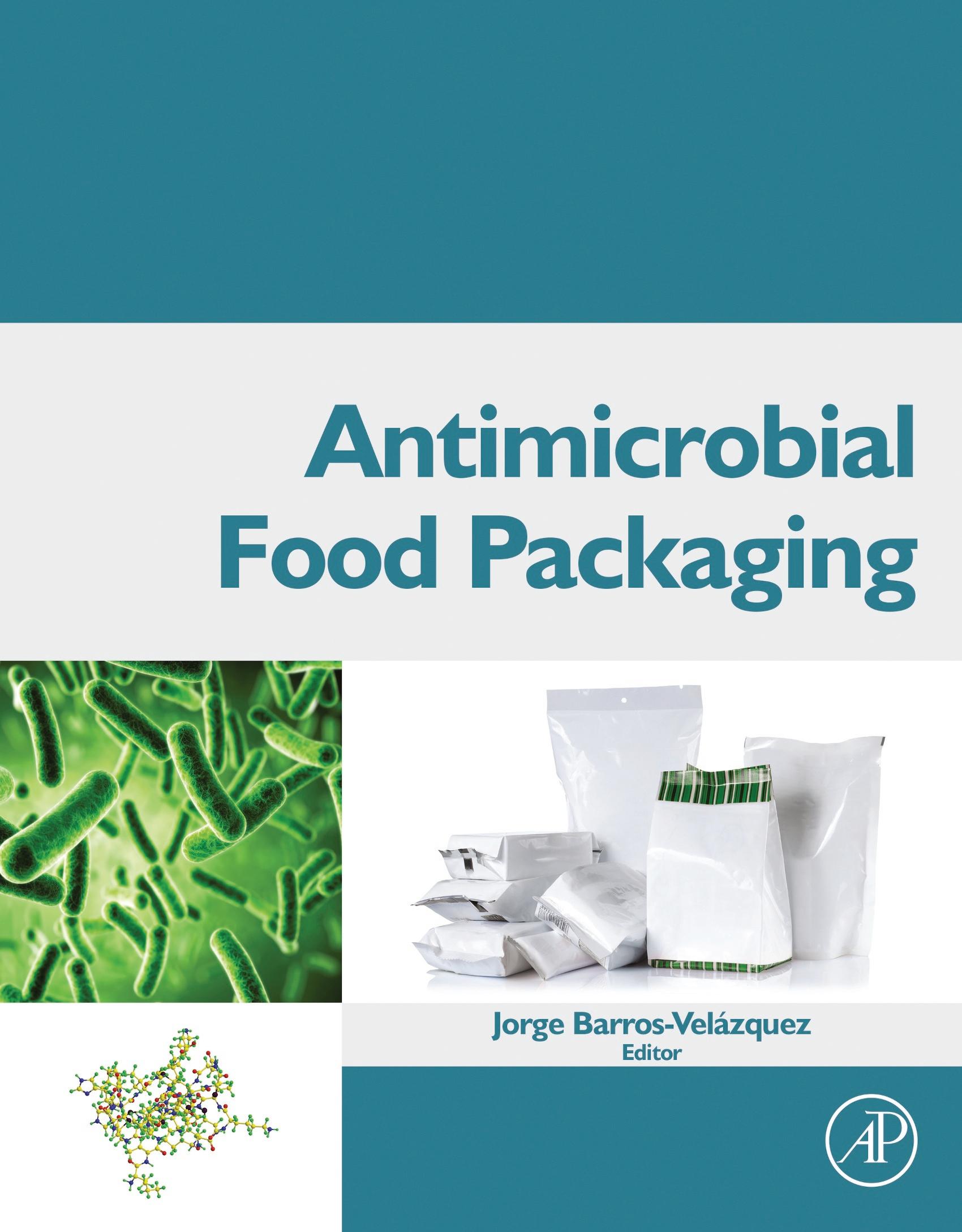
Antimicrobial Food Packaging
C.C. Adley and M.P. Ryan 1.1
T.G. Villa, L. Feijoo-Siota, J.L.R. Rama, A. Sánchez-Pérez and T. de Miguel-Bouzas
2.3.1
2.3.2
15.3.2 MALDI-TOF MS for Taxonomic Studies and Identification of Bacterial Strains Isolated from Food 209
15.4 Future Trends 211 References 211
16. Industrial Applications: Regulatory Issues and Life Cycle Assessment of Food Packaging 215
D. Restuccia, R. Salomone, U.G. Spizzirri, G. Saija, G. Ioppolo, O.I. Parisi and N. Picci
16.1 Main Characteristics of Antimicrobial Packaging 215
16.2 Global Market and Applications 216
16.3 The United States' and Europe's Approach to Antimicrobial Food Packaging 218
16.4 European Legislation on FCM (Regulation 1935/2004/EC) and A&I Packaging (Regulation 450/2009/EC) 218
16.5 Safety Issues and Compliance 220
16.6 Environmental Assessment of Food Packaging: Reasons, Relevance, and Methods 221
16.7 Life Cycle Assessment of Food Packaging 223
16.7.1 A Literature Overview 223
16.7.2 Life Cycle Assessment of Antimicrobial and Active and Intelligent Food Packaging: Main Findings and Future Research Needs 224 References 226
17. Antimicrobial Packaging for Meat Products 229
S. Rawdkuen, N. Punbusayakul and D.S. Lee
17.1 Introduction 229
17.2 Spoilage or Pathogenic Microorganisms in Meat 229
17.3 Monitoring Techniques for Detecting the Microbial Quality and Spoilage in Meat
17.4 Action Mode of AM Packaging in Meat Products 232
17.5 Types and Applications of AM Packaging Applied to Meat Products 234
17.6 Combination
18. Antimicrobial Packaging for Fresh and Minimally Processed Fruits and Vegetables
J. Jung and Y. Zhao
18.4 Future Perspectives in Antimicrobial Packaging for Fresh and Minimally Processed Fruits and Vegetables
18.4.1 Improvement of Antimicrobial Activity with Antimicrobial Packaging
18.4.2 Enhancement of Stability of Volatile Antimicrobial Substance in the Packaging System
19. Antimicrobial Packaging for Poultry
D.P. Karumathil, A. Upadhyay and K. Venkitanarayanan
Antimicrobial Packaging Materials
Antimicrobial Agents Used in Food Packaging Materials
19.4.1 Organic Acids and Their Salts
19.4.4 Amino Acid-Based Surfactants
19.4.5 Chitosan
19.4.6 Chlorine-Based Antimicrobials
19.4.7 Plant-Derived Antimicrobials
30.5 Existing Applications for Pullulan in the Food and Pharmaceutical Industry 394
30.6 Future Trends, Opportunities, and Challenges 395
30.7 Conclusions 395 References 395
31. Use of Metal Nanoparticles for Active Packaging Applications 399
C. Costa, A. Conte, M. Alessandro and D. Nobile
31.1 Introduction 399
31.2 Copper Nanoparticles 400
31.3 Gold Nanoparticles 400
31.4 Silver Nanoparticles 401
31.5 Zinc and Magnesium Oxide Nanoparticles 402
31.6 Titanium Dioxide Nanoparticles 403 References 404
32. Silver-Based Antibacterial and Virucide Biopolymers: Usage and Potential in Antimicrobial Packaging 407
J.L. Castro-Mayorga, A. Martínez-Abad, M.F. Fabra, J.M. Lagarón, M.J. Ocio and G. Sánchez
32.1 Biopolymers in Food Packaging 407
32.2 Active Packaging 408
32.3 Silver as Antimicrobial Agent 408
32.4 Regulatory Issues 409
32.5 Silver-Based Antibacterial Biopolymers 409
32.5.1 Polylactic Acid-Silver Nanocomposites 410
32.5.2 Polyhydroxyalkanoates-Silver Nanocomposites 411
32.5.3 Other Silver-Based Biopolymer Nanocomposites 412
32.6 Virucide Activity of Silver Based Polymers 412
32.7 Conclusions and Future Perspectives 413 Acknowledgments 413 References 413 Websites 415
33. Antimicrobial Food Packaging Incorporated with Triclosan: Potential Uses and Restrictions 417
P.J.P. Espitia, R.A. Batista, C.G. Otoni and N.F.F. Soares
33.1 Introduction 417
33.2 Main Characteristics and Mechanism of Action 417
33.3 Active Food Packaging Incorporated with Triclosan 419
33.4
34. Zinc Oxide Nanoparticles for Food Packaging Applications 425
P.J.P. Espitia, C.G. Otoni and N.F.F. Soares
34.1
35.1
35.7.1
35.7.2
35.7.3
35.8.2 The Expanded Roles of Food
35.8.3
35.9
45. Thymol: Use in Antimicrobial Packaging 553
M.J. Galotto, C. López de Dicastillo, A. Torres and A. Guarda
45.1 Introduction 553
45.2 Chemical Structure and Properties 554
45.3 Types of Microbial Targets 555
45.4 Incorporation Methods of Active Substance in Plastic Polymeric Matrices 557
45.4.1 Supercritical Impregnation of Active Compounds 558
45.5 Release of Active Compounds 559
45.6 Conclusions 559
References 559
46. Organic Acids: Usage and Potential in Antimicrobial Packaging 563
C. Hauser, J. Thielmann and P. Muranyi
46.1 Organic Acids for the Preservation of Food 563
46.2 Toxicological Innocuousness 563
46.3 Antimicrobial Mode of Action and Cellular Resistance Mechanisms 569
46.4 Incorporation of Organic Acids in Active Packaging Material 571
46.4.1 Extrusion and Compression Molding 571
46.4.2 Solvent Casting 571
46.4.3 Coating 572
46.5 Assessment of the Release and the Antimicrobial Activity 572
46.5.1 Test Methods In Vitro 573
46.5.2 Testing on Food 574
46.6 Legislation and Labeling in the EU 575
46.7 Future Potential of Organic Acids in Antimicrobial Packaging 576 References 576
47. Combinational Approaches for Antimicrobial Packaging: Chitosan and Oregano Oil 581
R. Avila-Sosa, C.E. Ochoa-Velasco, A.R. NavarroCruz, E. Palou and A. López-Malo
47.1 Introduction 581
47.2 Chitosan 582
47.3 Oregano Essential Oil 583
47.4 Potential for Food Packaging 585
47.5 Final Remarks 586 References 586
48. Combinational Approaches for Antimicrobial Packaging: Lysozyme and Lactoferrin 589
A. Barbiroli, S. Farris and M. Rollini
48.1 Lysozyme 589
48.1.1 Structure, Functions, and Applications 589
48.1.2 Lysozyme in Packaging 590
48.2 Lactoferrin 590
48.2.1 Structure, Functions, and Applications 590
48.2.2 Lactoferrin in Packaging 591
48.3 Lysozyme-Lactoferrin Combination in Food Packages 592
48.3.1 LZ-LF Incorporation in Thin Polymer Layers 592
48.3.2 LZ-LF "Bulk" Incorporation 594 References 595
49. Combinational Approaches for Antimicrobial Packaging: Natamycin and Nisin 599
R.J. Jagus, L.N. Gerschenson and C.P. Ollé Resa
49.1 Introduction 599
49.1.1 Packaging 599
49.1.2 Natural Antimicrobials 600
49.1.3 Active Antimicrobial Films for the Control of Mixed Populations 600
49.2 Packaging Formulation: Physicochemical Properties 601
49.3 Packaging Formulation: Antimicrobial Activity 602
49.4 Recent Developments Concerning Antimicrobial Edible Food Packaging Containing Natamycin and Nisin 603
49.5 Conclusion 606 Acknowledgments 606 References 606
50. Combinational Approaches for Antimicrobial Packaging: Pectin and Cinnamon Leaf Oil 609
M.M. Gutierrez-Pacheco, L.A. Ortega-Ramirez, M.R. Cruz-Valenzuela, B.A. Silva-Espinoza, G.A. Gonzalez-Aguilar and J.F. Ayala-Zavala
50.1 Introduction 609
50.2 Use of Pectin to Formulate ECs 609
50.3 Antimicrobial Properties of CLO 611
50.4 Combination of Pectin with Cinnamon Leaf Essential Oil to Formulate Antimicrobial Edible Films 613
50.5 Conclusion 615 References 615
51. Combinational Approaches for Antimicrobial Packaging: Bivalve Shell Waste-Derived Material and Silver 619
Z.-T. Yao
51.1 Introduction 619
51.2 Materials and Methods 620
51.2.1 Materials 620
51.2.2 Antibacterial Material Preparation 620
51.2.3 Characterization and Tests 620
51.2.4 Silver Ion Release and pH Test 620
51.2.5 Antibacterial Test 621
51.3 Results and Discussion 621
51.3.1 Characterization 621
51.3.2 Antibacterial Test 624
52. Combinational Edible Antimicrobial Films and Coatings 633
R. Raybaudi-Massilia, J. Mosqueda-Melgar, R. Soliva-Fortuny and O. Martín-Belloso
52.1 Introduction 633
52.2 Potential Uses of Antimicrobial Edible Films and Coatings 633
52.3 Target Microorganisms for the Evaluation of the Antimicrobial Properties of Edible Films and Coatings 634
52.4 Antimicrobial Compounds Incorporated into Edible Film and Coating Formulations 634
52.5 Commercial Applications of Antimicrobial Edible Films and Coatings 639
52.6 Regulatory Aspects 639
52.7 Perspectives and Future Trends 641 References 641
51.3.3 Antibacterial Mechanism 625 51.4 Conclusions 629 References 629
L. Diéguez International Iberian Nanotechnology Laboratory (INL), Braga, Portugal
I. Domínguez Instituto de Agroquímica y Tecnología de Alimentos, CSIC, Paterna, Spain
M.Z. Elsabee Cairo University, Cairo, Egypt
Z. Emam-Djomeh University College of Agriculture and Natural Resources, University of Tehran, Karadj, Iran
B. Espiña International Iberian Nanotechnology Laboratory (INL), Braga, Portugal
P.J.P. Espitia Food Research Division, Observatorio del Caribe Colombiano, Cartagena de Indias, Colombia
M.F. Fabra Institute of Agrochemistry and Food Technology (IATA-CSIC), Valencia, Spain
P. Fajardo Colegio Universitario, Vigo (Pontevedra), Spain
S. Farris Università degli Studi di Milano, Milano, Italy
M. Fathy Egyptian Petroleum Research Institute, Cairo, Egypt
L. Feijoo-Siota Universidad de Santiago de Compostela, Lugo, Spain
M.T. Fernandez-Argüelles International Iberian Nanotechnology Laboratory (INL), Braga, Portugal
I.C. Fernández-No Universidad de Santiago de Compostela, Lugo, Spain
E. Fortunati University of Perugia, Terni, Italy
C.M. Franco Universidad de Santiago de Compostela, Lugo, Spain
C.F. Fronczek University of Arizona, Tucson, AZ, United States of America
L. Fu Zhejiang Gongshang University, Hangzhou, China
P. Fuciños International Iberian Nanotechnology Laboratory (INL), Braga, Portugal, and University of Vigo, Ourense, Spain
C. Fuciños University of Vigo, Ourense, Spain, and University of Minho, Braga, Portugal
M.J. Galotto University of Santiago de Chile, Santiago, Chile
V. García Ibarra Universidad de Santiago de Compostela, Lugo, Spain
M.C. Garrigós University of Alicante, Alicante, Spain
R. Gavara Instituto de Agroquímica y Tecnología de Alimentos, CSIC, Paterna, Spain
L.N. Gerschenson FCEN, UBA, and Member of the National Research Council (CONICET), Buenos Aires, Argentina
M.F. Gliemmo Universidad de Santiago de Compostela, Lugo, Spain
G.A. Gonzalez-Aguilar Centro de Investigacion en Alimentacion y Desarrollo, A.C. (CIAD, AC), Hermosillo, Mexico
A. Guarda University of Santiago de Chile, Santiago, Chile
S. Gupta Dr. B. Lal Institute of Biotechnology, Jaipur, Rajasthan, India
M.M. Gutierrez-Pacheco Centro de Investigacion en Alimentacion y Desarrollo, A.C. (CIAD, AC), Hermosillo, Mexico
P.M. Halami CSIR (Central Food Technological Research Institute), Mysore, India
C. Hauser Fraunhofer Institute for Process Engineering and Packaging (IVV), Freising, Germany
P. Hernández-Muñoz Instituto de Agroquímica y Tecnología de Alimentos, CSIC, Paterna, Spain
I.S. Ibarra Universidad Autónoma del Estado de Hidalgo, Pachuca, Mexico
G. Ioppolo University of Messina, Messina, Italy
R.J. Jagus FI, UBA, and Institute of Technology and Engineering Sciences (INTECIN), Buenos Aires, Argentina
L. Jaiswal Mokpo National University, Muangun, Republic of Korea
A. Jiménez University of Alicante, Alicante, Spain
J. Jung Oregon State University, Corvallis, OR, United States of America
A. Karami-Moghaddam University College of Agriculture and Natural Resources, University of Tehran, Karadj, Iran
D.P. Karumathil University of Connecticut, Storrs, CT, United States of America
J.M. Lagarón Institute of Agrochemistry and Food Technology (IATA-CSIC), Valencia, Spain
A. Lamas Universidad de Santiago de Compostela, Lugo, Spain
D.S. Lee Kyungnam University, Changwon, South Korea
C. López de Dicastillo University of Santiago de Chile, Santiago, Chile
A. López-Malo Universidad de las Américas Puebla, Puebla, Mexico
A. Lucera Università di Foggia, Foggia, Italy
S. Manso University of Zaragoza, Zaragoza, Spain
O. Martín-Belloso University of Lleida, Lleida, Spain
A. Martínez-Abad Institute of Agrochemistry and Food Technology (IATA-CSIC), Valencia, Spain
G. Mauriello University of Naples Federico II, Portici, Italy
M. Míguez University of Vigo, Ourense, Spain
Preface
It is my pleasure to introduce the book Antimicrobial Food Packaging to the food science and technology community. This book is intended to provide a profound and exhaustive review of the state-of-the-art active packaging strategies aimed at inhibiting microbial growth in raw and processed foods. Active packaging is a hot research area that has attracted increasing attention in the last two decades. The importance of such a novel strategy has run in parallel to consumer concern about food safety and the subsequent introduction of prevention measures against foodborne pathogens. In this book, we have tried to compile, to the best of our knowledge, the most up-to-date and well-documented reference text on every aspect of the development and application of novel antimicrobial films to all types of packaged foods. This has been possible thanks to the generous contributions of a vast list of expert scientists.
The book is structured in 52 chapters, the contents of which can be organized into six parts. Chapters 1–5 are aimed at introducing the main background and framework of the topic, reviewing the nature and extent of foodborne disease and paying special attention to emergent and resistant pathogens. These include bacterial, fungal, and viral agents. The second part of the book comprises Chapters 6–10 and is devoted to the study of the basic strategies of food packaging. Such chapters review the various types of packaging materials and packaging systems. These chapters review not only GMPs and HACCP, but also hot points such as the problem of the migration of packaging elements into food. Chapters 11–16 constitute the third part of the book, which reviews the most relevant established and emerging technologies for microbial detection. In these chapters the authors review the most updated techniques for the detection and identification of the most relevant foodborne pathogens. Thus, the development and applications of biosensors, microarrays, and, more recently, proteomics and nano-based microbial detection methods is the object of study in these chapters. Chapter 16 closes this initial part of the book by reviewing the main industrial and regulatory issues of applications in food packaging. The book continues with Chapters 17–21, which are focused on the review of the development and application of antimicrobial packaging strategies to specific food sectors. In this sense, specific development and application of novel antimicrobial films to meat, poultry, seafood, fruits, vegetables, and beverages are studied in this part of the book.
The central part of the book comprises Chapters 22–46, which are devoted to the review of the main synthetic and natural compounds that exhibit the highest relevance in antimicrobial food packaging strategies. Advanced elements such as zinc oxide and other metal nanoparticles, nanohydrogels, or nanocomposite films have earned specific chapters. Packaging systems based on the well-known antimicrobial properties of silver, EVOH, ethyl lauryl arginate, or triclosan, among others, have also been considered in specific chapters.
Keeping in mind consumer demand for more natural and biopreserved foods, the book has included a significant number of chapters that are focused on the most relevant natural compounds that have promising applications in antimicrobial packaging strategies for food products. Thus, the microbial world is a magnificent source of natural antimicrobial compounds with potential practical applications in food packaging strategies. Among these, three areas of relevance are specifically explored in the book in specific chapters: bacteriocins such as pediocin, the enzybiotics, and the antimicrobial peptides from Bacillus spp. Other bioactive natural products reviewed in the book are include plant extracts. Thus, specific chapters are focused on the mechanism of action and main packaging applications of spices such as oregano, or specific bioactive compounds such as eugenol, thymol, carvacrol, or cynnamaldehide, among others.
The final part of the book, which includes Chapters 47–52, is dedicated to reviewing the most promising combinational approaches of antimicrobial food packaging. This also includes combinational edible antimicrobial coatings. In this final part of the book, different combinations of compounds that exhibit antimicrobial activity are designed and evaluated with the aim of achieving a better microbial control of packaged foods. Thus, bacteriocins such as nisin, and other antimicrobial proteins such as lactoferrin or lysozyme, are combined with plant-based components such as oregano oil or cinnamon leaf extract.
Finally, the editor wishes to express his most sincere gratitude to all authors that contributed to this exciting book. Without their effort and dedication, this book would not be in your hands today. The editor also wishes to thank the Elsevier Editorial Office, especially Jackie Truesdell and Carrie Bolger, for their wonderful technical assistance, and Patricia M. Osborn for her confidence and support. Thank you so much, all of you.
Jorge
Barros-Velázquez,
Editor Santiago de Compostela, July 2015
Vibrio spp. Vibriosis 2-48 h 1-7 days Diarrhea, vomiting, abdominal pain 2-8 days Raw or undercooked seafood
Yersinia enterocolitica Yersiniosis 4-7 days Diarrhea, vomiting, abdominal pain 1-3 weeks Raw or undercooked pork, unpasteurized milk or contaminated water
Viruses
Astrovirus Variously called stomach flu, viral gastroenteritis 3-4 days Diarrhea, followed by nausea, vomiting, fever, malaise and abdominal pain 3-4 days Fecal-oral transmission, and handler contaminated food
Hepatitis A Jaundice 10-50 days Lethargy, loss of appetite, nausea, vomiting, fever, jaundice 2 weeks to 3 months Seafood and handler-contaminated food
Noroviruses Variously called viral gastroenteritis, winter diarrhea, acute nonbacterial gastroenteritis, food poisoning, and food infection 12-48 h Nausea, vomiting, abdominal cramping, diarrhea, fever, headache; diarrhea is more prevalent in adults, vomiting more common in children 12-60 h Raw produce, contaminated drinking water, uncooked foods and cooked foods that are not reheated after contact with an infected food handler; shellfish from contaminated waters
Rotaviruses Variously called stomach flu, viral gastroenteritis Up to 2 days
Diarrhea in infants and children 3-8 days
Sapovirus Variously called stomach flu, viral gastroenteritis 24-48 h Nausea, diarrhea, vomiting, abdominal cramp, headache, myalgia and fever
Parasites
Cryptosporidium spp. Cryptosporidiosis 2-10 days
Cyclospora cayetanensis Cyclosporiasis 7 days
Giardia intestinalis Giardiasis 1-3 weeks
Diarrhea (usually watery), stomach cramps, upset stomach, slight fever
Diarrhea, loss of appetite, weight loss, stomach cramps/pain, bloating, increased gas, nausea, fatigue, vomiting, body aches, headache, fever, and other flu-like symptoms
Fecal-oral transmission, and handlercontaminated food
12-60 h Fecal-oral transmission, and handlercontaminated food
May be remitting and relapsing over weeks to months
Days to a month
Uncooked food or food contaminated by an ill food handler after cooking, contaminated drinking water
Uncooked food or food contaminated by an ill food handler after cooking, contaminated drinking water
Diarrhea, flatulence, stomach or abdominal cramps, nausea, dehydration 2-6 weeks Contaminated meat
Toxoplasma gondii Toxoplasmosis 5-23 days Flu-like symptoms
Trichinella spp. Trichinellosis 1 day to 8 weeks Diarrhea, fever, profuse sweating, weakness, muscular pain, swelling around eyes
Weeks to months Undercooked meat such as pork, lamb and venison
Months Contaminated meat especially pork and wild game
aSix pathotypes are associated with diarrhea and collectively are referred to as diarrheagenic E. coli, including traveler's diarrhea (enterotoxigenic E. coli), hemorrhagic colitis and hemolytic-uremic syndrome (enterohemorrhagic E. coli), persistent diarrhea (enteroaggregative E. coli), and watery diarrhea of infants (enteropathogenic E. coli).
Source: Information above was taken from a variety of sources including: Adley and Dillon (2011), CDC (2015a), FDA (2015), Kaper et al. (2004), and Ryan et al. (2011)