AnIntroductiontothePolicyProcess
The fourth edition of this widely-used text relates theory to practice in the public policy process. In a clear, conversational style, author Tom Birkland conveys the best current thinking on the policy process with an emphasis on accessibility and synthesis This new edition has been reorganized to better explain the role of policyanalysisinthepolicyprocess Newtothisedition:
Anewsectionontheroleofpolicyanalysisandpolicyanalystsinthepolicyprocess.
A revised and updated chapter surveying the social, economic, and demographic trends that are transformingthepolicyenvironment
Fully updated references to help the advanced reader locate the most important theoretical literature in policyprocessstudies
Newillustrationsandanimprovedlayouttoclarifykeyideasandstimulateclassroomdiscussion
Thebookmakesgeneroususeofvisualaidsandexamplesthatlinkpolicytheorytotheconcreteexperienceof practitioners It includes chapter-at-a-glance outlines, definitions of key terms, provocative review questions, recommendedreading,andonlinematerialsforprofessorsandstudents
ThomasBirkland is the William T. Kretzer Distinguished Professor of Public Policy and Public Affairs in theSchoolofPublicandInternationalAffairs,aswellasAssociateDeanforResearchandEngagementinthe CollegeofHumanitiesandSocialScienceatNorthCarolinaStateUniversity
Firstpublished2011byME Sharpe
Thirdeditionpublished2015 byRoutledge
Fourtheditionpublished2016 byRoutledge 711ThirdAvenue,NewYork,NY10017
andbyRoutledge
2ParkSquare,MiltonPark,Abingdon,OxonOX144RN
RoutledgeisanimprintoftheTaylor&FrancisGroup,aninformabusiness ©2016Taylor&Francis
TherightofThomasA Birklandtobeidentifiedasauthorofthisworkhasbeenassertedbyhiminaccordancewithsections77and78ofthe
Copyright,DesignsandPatentsAct1988
Allrightsreserved Nopartofthisbookmaybereprintedorreproducedorutilizedinanyformorbyanyelectronic,mechanical,orother means,nowknownorhereafterinvented,includingphotocopyingandrecording,orinanyinformationstorageorretrievalsystem,without permissioninwritingfromthepublishers
Trademarknotice:Productorcorporatenamesmaybetrademarksorregisteredtrademarks,andareusedonlyforidentificationandexplanation withoutintenttoinfringe
LibraryofCongressCataloginginPublicationData Birkland,ThomasA
Anintroductiontothepolicyprocess:theories,concepts,andmodelsofpublicpolicymaking/byThomasA.Birkland. FourthEdition. pagescm
Includesbibliographicalreferencesandindex 1 Policysciences 2 Politicalplanning UnitedStates I Title H97B572015 32060973 dc23 2015013571
ISBN:978-1-138-93435-1(hbk) ISBN:978-0-7656-4662-0(pbk) ISBN:978-1-315-71737-1(ebk)
TypesetinStoneSerif byFlorenceProductionLtd,Stoodleigh,Devon,UK
Illustrations
FIGURES
21 TheStagesModelofthePolicyProcess
22 ASystemsModelofPoliticsandPolicy
23 UnitedStatesPopulation,1960–2012
24 AnnualRateofPopulationGrowth,UnitedStates,1960–2010
25 US PopulationbyAgeGroups
26 ProportionofPopulationbySelectEthnicorRacialGroup
27 LaborForceParticipation,MenandWomen
28 MedianFamilyIncome,byHouseholdType
29 ProportionateAnswersto“MostImportantProblem”Question
210 Answertothe“RightTrack”PollQuestion
211 ProportionofVotingAgePopulationParticipatinginElections
212 PresidentialApprovalRatings,FranklinD RooseveltthroughBarackObama
213 PresidentialandCongressionalApprovalRatings
214 US GrossDomesticProduct,Constant(2009)Dollars
215 FederalBudgetDeficitsandSurpluses,Constant(2009)Dollars
216 FederalBudgetDeficitsandDebtasaPercentageofGrossDomesticProduct
217 MonthlyUnemploymentRate,January1948-April2014
218 IncomeDistributionintheUnitedStates,1967–2013
219 ComparativeIncomeDistribution(GiniIndex),OECDStatesandOverallEuropeanUnion
41 TheLegislativeandRegulatoryProcess
42 OverallFederalOutlays,1940–2019,CurrentandConstantDollars
43 FederalGovernmentOutlaysasPercentageofGDP,1940–2019
44 FederalGovernmentOutlaysperCapita,ConstantDollars,1940–2019
45 TotalNumberofStateandLocalGovernmentEmployees,1992–2011
46 NumberofFederalCivilianEmployees,1981–2015
47 ComparativeGrowthofFederalBudgetandFederalEmployment,1981–2015
51 ElectionTurnout,PresidentandHouseofRepresentatives
52 NumberofUS Newspapers,1940–2011
53 NewspaperCirculation,DailyandSunday,1940–2011
54 EveningTelevisionNewsRatings,1980–2012
55 TrendsinHomeInternetAdoption,2000–2013
56 MostCommonlyVisitedTypesofInternetNewsSites,February2008
61 LevelsoftheAgenda
62 NewsCoverageofTerrorism,byNewYorkTimes“Desk,”1990–2002
63 MediaandCongressionalAttentiontoTerrorism,1990–2002
111 Kingdon’sStreamsMetaphor
112 TheAdvocacyCoalitionFramework
113 AFrameworkforInstitutionalAnalysis
TABLES
11 Defining“PublicPolicy”
12 APublicPolicyMorphology
13 SelectedDisciplinesThatStudyPublicPolicy
31 Article1,section8,oftheConstitution
32 ElementsofAmericanPoliticalStability
33 Separation(andSharing)ofPowers
41 MeasuringLegislativeActivity:Bills,Amendments,JointResolutions,andConcurrentResolutionsinthe105thand113thCongresses
42 Committeesinthe114thCongress
61 TypesofCausalTheorieswithExamples
71 LevelsofPolicyCodification
72 Actors,Stability,andVisibilityofVariousPolicyTypes
73 Wilson’sCost-BenefitPolicyTypology
81 ThreeViewsontheAppropriateRoleofthePolicyAnalyst
82 Rational-ComprehensiveDecision-MakingandBoundedRationality
91 ElementsofPolicyDesign
92 TypesofPolicyToolsorInstruments
93 CharacteristicsofPolicyInstruments 101 ExplanationsforPolicyFailure 111 AnecdotesandEvidence
PHOTOS
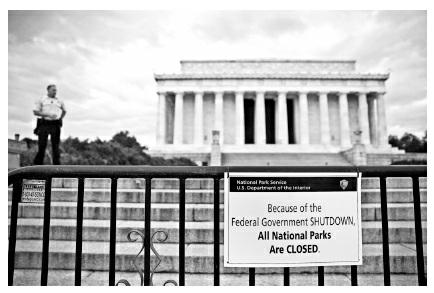
11 Dependingonthecurrentstateofpolitics,governmentsometimeschangeswhatitdoesordoesnotdo
31 Photographssuchasthisone,whichbecameknownas“MigrantMother,”byphotographersworkingforNewDealagencies,both reflectedtheneedforNewDealprogramsandprovidedpoliticalsupportforacontinuedandstrongfederalgovernmentroleinrelief
41 TouristsvisittheUS Capitolbuilding WhydopeoplevisitbuildingssuchastheCapitol,theWhiteHouse,andtheSupremeCourt?
51 IndividualsintheUnitedStatesmayprotesttheactionsofgovernment,industries,orotherpeople Fromwhatyouseehere,doesthis personbelongtoanyformallyorganizedorinformalinterestgroups?Whatisheexpressingwithhissignandflags?
61 TheNationalSeptember11Memorial
71 Ahomelessmanholdsafoodvoucher Thissortofaidisoftenconsidered“redistributive”policy,and,assuch,isaccompaniedbyfierce politicaldebatesoverthesepolicies’desirability Whydoyouthinkthisisso?
91 ATransportationSecurityAdministrationAgent Doyouthinkoursystemofaviationsecuritywasdesignedthroughcarefulpolicy analysis?Orasaresultofpersuasiveappealsto“dosomething”aftertheSeptember11attacks?Orboth,orotherreasons?
PrefacetotheFourthEdition
In a prior edition of this book, I wrote that it has long been said that one never really gets to know a subject until one has to teach it. If this is true, it’s doubly true that one really learns a subject when one writes a book about it And, indeed, one gets to know one ’ s subject even better when one rewrites, reorganizes, and reconsiders this book Once again, I learned a great deal about my field in the course of revising this book, particularly in reorganizing some chapters to make the book more accessible for instructors, students, and generalreaders.Liketheprioreditions,IhavewrittenthisbooktobeastartingpointinwhatIhopeyouwill findtobeaninterestingandfruitfullifetimeofthinkingaboutandengaginginpublicpolicymaking
There are many fine books on the public policy process, many of which introduce policy theory but focus more on the actual content of public policy. One of my goals in writing this book was to fill in the gap betweentheendofthetheoreticalsectionandthecasestudiesthatarestaplesinthesetextbooks.Strikingthe right balance in the classroom between the theoretical and the substantive or “practical” is a challenge throughoutthesocialsciences,andIhopethisbookhelpsteachersbalancethesetwoimportantaspectsofthe public policy curriculum. Indeed, one of the things I hope to stress is that there’s no real separation between “theory” and “practice” or the so-called “real world.” Our theories are fundamentally about explaining what happensintherealworld,notsimplyconjectureswithnobasisinactualpolicymaking Ihaveincludedmany examplesinthebook,basedonmyresearchoroninterestingthingsI’velearnedaboutfrommycolleagues,in the newspapers, or en route to learning about something else. Such serendipitous discoveries make the study ofpublicpolicyfreshandfascinating,andIhopeI’veconveyedsomeofthatexcitementinthisbook.
Another motivation for this book was my interest in providing a primer in public policy for advanced undergraduatesorgraduatestudentsincoursesandprogramsthatarenotprimarilyaboutpublicpolicy,butin whichanunderstandingofpublicpolicyisparticularlyuseful.Suchcoursesinclude,amongothers,courseson engineering and public policy, science and technology policy, social welfare policy, or, indeed, any field in which government acts, and where students would benefit from a readable but theoretically informed treatmentofthepolicyprocess
For example, for 12 years I taught in and co-directed the University at Albany’s (SUNY) master’s program in Biodiversity and Conservation Policy. The program included a required course in politics and policy, with an emphasis on policies relating to environmental conservation For many students, this course was initially quite daunting, as most students have a background in biology or other sciences but little exposure to public policy ideas. In particular, the complexity (or what my students called its “messiness”) and seemingly random complexity of the policy process is often confusing to students who have been trained to seek universal laws about all manner of natural phenomena, and hope for such laws in human and social behavior My goal in writing this book is to provide an overview of the policy process that acknowledges this messiness while showing how policy scholars have developed ways that we can think more systematically about this seemingly chaoticprocess Thissystematicthinkingdoesn’tapproachtheprecisionof,say,afundamentallawofphysics Butithelpsustofocusontheimportantvariablesinpolicymaking
I also hope people who are returning to policy studies or are seeking to teach themselves about the process willfindthisbookuseful.Returningstudents,andthosewhoarepursuinggraduatestudiesaftersomeyearsof professional experience, will find that policy studies grow and change quite quickly This book is intended to help students, whether they are studying in a formal educational institution or on their own, to become currentwithsomeimportantideasinthestudyofpolicy Iurgeallreaderstothinkofthisbookasabeginning orasupplement,andcertainlynotthefinalwordonpublicpolicy.
I’ve attempted to write this book in a somewhat more conversational style than most textbooks My goal is to provide a readable text and a useful reference that can be used to supplement or clarify concepts learned in classes,textbooks,andindailycontactwiththepolicyprocess,includingpersonalexperience,thenewsmedia, anddirectparticipationinpolicymaking.
WHAT’SAHEAD
Therearesomesubstantialchangesintheorganizationofthisbookfromthethirdedition,whileIhaveleftin place many of the case studies and examples that students have found effective in illustrating the concepts contained in this book This book starts with an overview of the idea of policy studies as both an academic discipline and an “applied” science I review my thinking on what makes policy studies an appropriate endeavor for systematic or scientific study, even when the subject of study seems to be so irrational and even whenwearethesubjectofthedisciplineitself!
Chapter 2 is an update of key social, economic, and demographic trends that influence and will influence policy making for some time to come Most students of political science and of public policy have a broad sense of the ideas and trends reflected in the graphs contained in Chapter 2, but I think there will be some surprises and interesting insights as well. This chapter has been updated to the most current data available at thetimeofitswritinginlate2014
Chapter3focusesonthehistoricalandstructuralfeaturesofAmericanpoliticsthatinfluencepublicpolicy; this chapter contrasts with Chapter 2 in that it describes a more stable set of external variables that shape public policy. This division between dynamic and changing environmental variables reflects Paul Sabatier’s thinkinginhisAdvocacyCoalitionFrameworkinthepolicyprocess Thisdiscussionisparticularlyimportant, as most political scientists and policy scholars acknowledge the importance of the structure and rules under which policy making is conducted. Students are often taught or at least are allowed to conclude that the rules and structure are neutral, and that anyone who wants to play the game can get involved in politics and “makeadifference”intheircommunity
By contrast, I argue that the founders of our constitutional order purposefully designed our system to favor commercialinterestsandpropertyholdersandtomakeithardformasspublicstomobilizeandseekashareof the wealth. For those interested in policy change, the structure is troubling, for it suggests that mass movements and participatory democracy are not likely to carry the day in policy debates But, as highlighted throughout this book, there are circumstances under which policy can change, and sometimes policy changes quiterapidly.Indeed,oneofthemostfascinatingaspectsofpoliticscomesinunderstandingwhen,againstthe odds, policy change based on mass mobilization is possible. And, of course, not all change is welcome, and liberalsandconservativesalikehaveengagedinattempts oftenaidedbythestructureofoursystem toslow downpolicychange Idrawnonormativeconclusionhere wecansimplyobservethatthesystemisresistant to change, as current debates over healthcare reform demonstrate, to the frustration of some and the relief of others
The various institutions and people that make public policy are described in Chapters 4 and 5 Chapter 4 describes the official or institutional actors in the process the legislative, executive, and judiciary Chapter 5 continues this discussion with the unofficial actors, such as interest groups and media, and then outlines the ways in which we think about how all the actors come together in “iron triangles,” sub-governments, and issue networks to debate and negotiate policy alternatives Much of this sort of material, particularly in Chapter 4, will be familiar, at least in form, to students of American politics My goal here is not simply to enumerate the various political institutions, but, instead, to explain why these institutions matter in making thepublicpoliciesthatgovernourlives
Groups, power, and agenda setting are reviewed in Chapter6 This is discussed at some length, as agenda setting is among the most important stages of the policy process (and, not coincidentally, it is the “stage” of thepolicyprocessinwhichmuchofmyownresearchhasbeenfocused).Itisatthisstagethatgroupsexercise political power to achieve their goals, either by promoting change or blocking it The use of power in politics issubtleandcomplex,particularlyinourpoliticalsystem Understandingofwhatpoweris,howitisacquired, and how it is used to prevent issues from gaining attention is key to understanding why any political system doessomethingswhilenotdoingothers,eveninthefaceofobviousneedsorlogicthatwouldseemtocompel a “superior” course of action Again, this question of power is challenging, and raises important questions aboutfairness,equity,anddemocraticgovernance,whichareimportantconsiderationsinanypolicycontext
Chapter 7 then describes several different ways one can categorize the substance of policies to better understand the political process behind making these policies. Like so much in public policy studies, these descriptions of policy types are not final, but they are useful as a way of stimulating thinking about what governmentsdo,andwhatweaskgovernmentstodo
Chapters 8, 9, and 10 are newly organized to flow better, and to make the chapters more tractable some of them were quite long! Chapter 8 combines much of the discussion of decision-making from the third edition with a new section on the role of policy analysis and policy analysts in the policy process Many students have wondered about the relationship between the study of the policy process and the profession of the policy analyst. This is unsurprising, considering that many students in the courses for which this book is assigned aspire to be policy analysts. I hope this discussion is helpful in locating their role as analysts within
thebroaderpublicpolicyprocess.
Chapter9isnowdevotedtoadiscussionofpolicydesignandpolicytools.Whilethissubjectisinextricably related to the success or failure of policy implementation, I have made the discussion of policy implementation, failure, and learning its own chapter (Chapter 10) Policy implementation is a well-studied aspect of the policy process, which considers the oft-forgotten work that must come after the excitement of policy enactment has passed. Implementation putting a program into effect is often as difficult and contentious as policy design and enactment, and in some cases is more difficult to manage Because of the difficulties inherent in policy design and implementation, many people will claim that policies have failed to meettheirgoals.InChapter10,Iexaminepolicyfailurebyoutliningthevariouswaysinwhichanypolicycan be said to be a failure. The complexity of policy making, with interconnectedness of policy impacts but disjointedpolicydesign,makesrealorclaimedfailurealmostinevitablebasedonhowonedefinesfailure
Chapter11 puts all these elements of policy making together by considering modern theories of the policy process. In this edition, I have focused more on the idea of policy science as social science in this chapter, moving some of the material that formerly appeared in Chapter 1 to here. I think this helps ground the discussion of theory By exploring theories and thinking of the policy process as a “system,” the inputs to and outputs from the political system are summarized and discussed in terms of their relationship to the political system, or what is often called “the black box” in systems models. The second half of the chapter discusses different and complementary ways of looking inside the black box; most of these models of policy making are attheforefrontofcurrentpolicytheory
PUBLICPOLICYINTHEEARLYTWENTY-FIRSTCENTURY
When the first edition of this book was written, the Clinton administration was coming to an end Eight years of relatively robust economic growth was continuing, the Internet boom seemed, to some, an unlimited engine of growth and innovation, and Americans felt reasonably secure at home and abroad. The end of the Cold War gave Americans the luxury to once again turn inward, for the first time since the dark days just before World War II This is not to say that the nation had no policy problems, including the state of the economy But,byandlarge,thenationwasatpeace,andwasprosperousbroadly(evenaswealthbecamemore unevenlydistributed),andcontentmentwasreasonablyhigh.
This sense of contentment was replaced by an initial sense of fear, then by long-term unease, after the September 11 terrorist attacks For weeks and months after September 11, it seemed to all of us that everything had changed Americans were less concerned about domestic politics We were confronted with thepossibilityofcatastrophicterrorismofthesortthatcouldkillmillionsofpeople.Aswehavelearnedsince September11,thisthreathadalwaysexisted,buttheSeptember11attacksweresurelythemostdramaticand shocking example of this sort of terrorism Concerns were raised about the possibility of nuclear, biological, andchemicalterrorism Whilesomeofthatuneasewasalleviatedbythenation’smilitarydisengagementfrom Iraq and Afghanistan, the emergence of groups such as Boko Haram, in Nigeria, and the “Islamic State,” in the Middle East, have rekindled concerns about foreign policy, international terrorism, and the policies that theUnitedStatesanditsalliescanadopttomitigate,ifnoteliminate,thethreatofterrorism
ButforthevastmajorityofAmericans,theprimarysubjectofconversationbetween2007andnowhasbeen the state of the economy, both in terms of its very sharp decline in 2007 and 2008, and its apparent recovery formany butnotall peopleby2012 Thecostsofthe“bailout”offinancialinstitutions,andofautomakers GM and Chrysler, helped cause the federal budget deficit to balloon to near-record levels Huge deficits, and consequent government actions to raise revenues and cut expenses, had a significant effect both on the economyandontheverysubstanceofpublicpolicy;thoseeffectspersist.
Yet people continue to demand public services from government, particularly since the federal government expanded heavily into everyday life in the 1930s in response to the Great Depression All these matters highlight how terrorism, the economy, and many other matters influence other realms of public policy. The September 11 attacks changed, for a while at least, the agenda in American politics. But the attacks did not changethepolicyprocess that this book describes; nor has the financial crisis Indeed, the policy process and the actors and institutions that drive it remain as robust as ever, even if some features of it, such as partisanship in Congress and arcane rules such as the filibuster, seem to greatly impede change. What may havechangedisthenatureandsophisticationofourtheoriesofthepolicyprocess.
It is a testament to the capacity and resilience of the American political and policy system that some issues remain important even in the face of challenges such as the financial crisis, terrorism, and environmental disasters. The Obama administration felt able to tackle healthcare issues, and before then, the George W. BushadministrationhadexpandedMedicarecoverageforelderlyAmericans.Educationremainsanimportant
issue as well, as the Obama administration’s “Race to the Top” program attempts to build and improve upon the Bush program known as “No Child Left Behind”, even as controversy persists over the “ common core ” curriculum,asitoftendoesduringperiodsofattemptededucationalreform
Other issues, such as environmental policy and climate change, remain difficult yet high-profile matters in the public and government agendas. Disease outbreaks such as Ebola, in Africa, and the return, in some places, of diseases preventable by vaccines in the United States, have once again called into question the government’sroleinhealthandsafety
Because we are a large, generally wealthy, and powerful nation founded on a set of principles that people hold dear democracy, constitutional government, the rule of law, and liberty, to name a few these political controversies will persist in American politics, not because we enjoy arguing (although some of us do enter politics for this reason!), but because many people passionately care about these issues, and believe just as passionately that their ideas are the ones that will work best This passion was evident during the 2012 presidential election and the 2014 midterm elections. When you strip away the candidates’ debate styles and demeanors, what was left was a remarkable discussion of ideas and how to translate those ideas into policies thatbenefitthebroadestrangeofAmericans
In the nearly 10 years since I first began writing this book, I have been privileged to hear from many colleagues, students, and friends about how they used this book. I greatly value their comments and suggestions. The first edition would not have been possible without the extraordinary help and support of ScottBarclay,BrianDavis,MarkDonovan,BenFordham,JenniferKrausnick,ReginaLawrence,PeterMay, HenrikMinassians,BobNakamura,andBerylRadin
In the second edition, I acknowledged the debt I still owe to my students in my undergraduate course, Introduction to Public Policy, and in my graduate courses in Politics and Policy and Biodiversity and ConservationPolicyattheUniversityatAlbany AndmyfriendandcolleagueSarahAndersonatAlbanywas a helpful and patient reader and critic At Albany, two teaching assistants, Paul Alexander and Michael Deegan,createdthecoreofthedefinitionsofthekeytermsandthediscussionquestions.
Since joining the faculty at North Carolina State, I have twice revised this book, with the assistance of advanced graduate students and undergraduates For this edition, I owe a particular debt of gratitude toward another remarkable group of PhD students at NC State Susan Camilleri, Annie Izod, Emily McCartha, and Meg Warnement who, at various times, took on the tedious work of updating citations, graphs and charts,andtheotherthingsthathaveimprovedthisedition Anyerrorsoromissionsare,ofcourse,mine,and there would be many more were it not for the fantastic students I’ve worked with over the years To those friends and colleagues whose help I have failed to acknowledge, I thank you all for your support, ideas, and friendship.
Onethinghasn’tchanged:IstilldedicatethisbooktomywifeMolly,andmykidsOskarandIke,fortheir love, patience, and tolerance of dad taking over the one really good computer in the house during writing time Ihopethey,intime,finditwasworthit
CHAPTERATAGLANCE
Overview
PoliticsandthePolicyProcess
WhatIsPublicPolicy?
IdeasandProblemsinthePolicyProcess
WhatMakesPublicPolicyPublic?
WhyDoWeStudyPublicPolicy?
ThePlaceofPolicyStudiesintheSocialSciences
EvidenceandArgumentinthePolicyProcess
CaseStudy:DoestheDAREProgramWork?
Summary
KeyTerms
QuestionsforDiscussion,Reflection,andResearch
AdditionalReading
OVERVIEW
ThisbookisabouthowpublicpolicyismadeintheUnitedStates.Asabookonaparticularfieldofthesocial sciences, it goes beyond simple description to introduce you to theories and ways of thinking about the policy process This is not to deny the value of understanding the substance of the many policies themselves I am surethatyou,yourfamily,andfriendshaveoftenpuzzledoverwhythegovernmentdoessomeofthethingsit does, particularly when those things are contradictory Why does, for example, the government provide support for tobacco farming and discourage people from smoking? Why does the government give people tax breaks for buying houses? Why don’t renters get similar tax breaks? Or landlords, who could pass the savings ontorenters?Whydoesn’ttheUnitedStateshaveasingle-payer,comprehensivehealthinsurancesystemlike manyothercountries?Whywastheideaofcreatingsuchasystemsopassionatelyresisted?Whyisthefederal government so deeply involved in crime and education policy when our constitutional system places the primary responsibility for these programs in the state and local governments? Is regulation of consumer product safety better for public safety, or would greater reliance on the market and better information for consumers work better to promote public safety? These are questions that motivate many people of all ideologicalandpoliticalpersuasionstounderstandpublicproblemsandfindsolutionstothem
One of the most interesting reasons to study public policy is that public policy making is about problemsolving. People participate in policy making because they perceive that there are problems for which government, at some level, can provide solutions Others participate, in turn, because they believe that those problems are best handled by markets, or by families, or by nonprofit organizations, or churches, or any numberofothermeans
Butstudiesofthecontentsofpublicpolicy thelawsandregulationsthemselves isimportant,butit’snot enoughtounderstandthesocialscientificaspectsofthepolicyprocess Manyscholarshavedevelopedtheories of how the public policy process works: that is, theories about how public problems are discovered and how policiesarecreatedtoaddressthoseproblems
Thisbookintroducestheories,frameworks,andmodelsofthepolicyprocess.Thisfocusontheorysetsthis book apart from many other textbooks on public policy Many such textbooks contain a thin treatment of theories of public policy and the relation of these theories to broader social scientific questions and then provide a series of case studies on “environmental policy” or “ energy policy” or “national security policy.”
There are many good books about all manner of policy issues, and I hope you find them in the subjects that are the most interesting to you. This book focuses on the process by which policies are made. Other public policy textbooks approach policy making from an economic perspective as a form of policy analysis, which can be different from analysis based in politics (I take this topic up in Chapter 8) Many of these books develop new theories of the policy process, but often those theories are unique to these textbooks, and are unfamiliartothoseofuswhostudypolicymakingasapoliticalactivity.
An Introduction to the Policy Process describes how policy is shaped by social, institutional, political, economic,andothercontextsbydrawingonexistingtheoriesofthepolicyprocess Muchofthisdescriptionis orthodoxinpoliticalscience;thediscussionofthebranchesofgovernment,oftheConstitution,ofthevarious groupsandinstitutions,andthelike,issimilartothatfoundinintroductoryAmericanpoliticstextbooks.The difference between this book and an introductory American politics textbook is that I am interested in how groups, institutions, and structures work to solve problems through making public policies And, in keeping with the interdisciplinary nature of policy studies, this book owes a debt to sociology, history, economics, public administration, and other disciplines, but with a firm grounding in studies of American politics. Readers from other countries will likely find the theories described in this book useful in their countries, but willalsonoticeimportantdifferencesbetweentheAmericanandothercontexts
POLITICSANDTHEPOLICYPROCESS
Thisbookisaboutaparticularwayinwhichsocialscientistsstudypublicpolicy:bystudyingthepublicpolicy process.Butthestudyofpublicpolicyisanimportantaspectofpoliticalscience,soit’susefultostartbyasking, “What is politics?” One way to conceive of politics is as a process by which societies help figure out how to organizeandregulatethemselves;thatis,howtogovernthemselves Whatmakesthis“political”isitslocation in the public sphere, where decisions are made by the public to address issues that affect people in communities; all manner of other decisions are made in corporations, in families, and in other organizations that we do not consider to be part of the public sphere; sociologists tend to study these private organizations and the interactions among their members, although the line between “public” and “private” is quite blurry, whichiswhysociologistsandpoliticalscientistsoftenaddresssimilarquestions(Kumar2014)
Thepublicspherecanbeassmallasanapartmentcomplex,orasmallvillage,oraslargeasawholenation, or even the world Whatever the scale, public policies address problems that are public, or, more importantly, that some number of people think should be public instead of private Indeed, a key feature of politics and political decision-making is the very definition of what problems are public and which are private (Rochefort andCobb1994).
While these questions may, at the outset, seem simple, they are in fact very complex People have been trying to figure out how to work together in political communities for thousands of years Philosophers such asSocrates,Plato,andAristotlesoughttounderstandhowonecanbehaveinapoliticalcontexttohelppeople make decisions within human societies, while reducing the possibility of political conflict turning destructive or violent (McCool 1995) “Modern” political theory begins in the fifteenth century when Niccolò Machiavelli wrote The Prince for his patron, an Italian nobleman, to provide him with practical political advice Machiavelliarguedthatifweunderstandandplanthepoliticalactionswetakeinpursuitofourgoals, we are better prepared to seize the political opportunities that arise in the normal course of political life. The Prince depended on postulates statements about how we think the political world works and then argues that we should compare these postulates to the conduct of “real-world” politics Developing and testing postulates about how the political world works is consistent with the way people thought of the human and natural world during the Enlightenment, when thinkers turned toward modern methods of scientific inquiry in hopes of better understanding all manner of phenomena including physics, medicine, law, and politics (Gay 1996) During this era of great scientific, political, and social foment, a host of brilliant thinkers turned theirfocustounderstandingtheuseofpower abasicelementofpolitics insocialsettings.
EnlightenmentTermusedtodescribeaphilosophicmovementoftheearlyeighteenthcentury,inwhichnumeroustheoristsandphilosophers developednewpoliticalandsocialphilosophiesbasedonreasonandoninsightsfromthenaturalsciences.TheEnlightenmentdevelopedthe thinkingthatspurredtheAmericanandFrenchRevolutions,amongotherchanges
In continuing one ’ s exploration of political philosophy, one might read Thomas Hobbes, John Locke, and Jean-Jacques Rousseau on the nature of social and political interactions under what we call “the social contract.” In the American context, the French nobleman Charles-Louis de Secondat, more commonly known as Montesqieu, greatly influenced the most influential thinkers in America at the time of the American Revolution and the ratification of the Constitution; his work is best known for the idea of the separationofpowersintothelegislative,executive,andjudicialbranches(Montesquieu1989).
These ideas are reflected in The Federalist, a collection of essays written by Alexander Hamilton, James Madison, and John Jay to persuade New Yorkers to ratify the U.S. Constitution. Federalist #47 is the essay mostcloselyassociatedwiththeseparationofpowers,buttheentirecollectionofTheFederalist is still studied to gain insights into the meaning of the Constitution and the thoughts of its framers 1 To this foundation in American political thought we can also count the writings of, among others, George Washington, Samuel Adams, Thomas Jefferson, Abraham Lincoln, and Woodrow Wilson. All of these statesmen sought to explain, to themselves and their countrymen, how our nation came to be, and how, in their minds, it was the best equipped to preserve individual rights and harness the creative power that ultimately made the United Statesoneoftherichestandmostpowerfulcountriesintheworld.
European thinkers such as Karl Marx and Max Weber sought to understand how people organize their societies, and how the socially and politically strong can, by accident or design, ignore the desires of the politically weak From there, we can move to modern theorists and philosophers such as John Dewey, who studied the question of knowledge and learning in social life, and John Rawls, whose major work, A Theoryof Justice (1999), sought to understand fundamental questions of fairness. Postmodern philosophers such as Michel Foucault offer powerful challenges to social contract theory and explain how people come to be dominated by power structures beyond their control These theorists have all contributed to our understanding of politics and social interactions. Their ideas help us to understand the historic and modern waysofthinkingabouttherelationshipsbetweenourgovernmentsandourselves.
All this thinking still doesn’t provide a concise definition of “politics,” because such a definition is difficult to produce Harold Lasswell (1958) defines politics as “who gets what, when, and how” This definition is simple, but we can discern on its own terms three essential aspects of politics: competition to gain certain resources, sometimes at others’ expense; the need to cooperate to make decisions; and the nature of political power
Let’s look at the ways the word politics is defined in Merriam-Webster’s online dictionary Here are two that I find particularly interesting: “the art or science of government” and “political activities characterized by artfulandoftendishonestpractices.”
politicsInthisbook,IdefinepoliticsthesamewaythatHaroldLasswelldoes:theprocessbywhichsocietydetermineswhogetswhat,when theygetit,andhowtheygetit
Because this dictionary defines artful as “skillful or wily,” this definition reflects how many people focus on thedeviousbehaviorofpoliticiansorpoliticalactors,andontheseeminglydishonestaspectsofpolitics.They accusepeopleof“playingpolitics,”asiftheyengageintheprocesssimplytogainpersonalorgroupadvantages and not for any particular policy goals that would broadly benefit society The negative sense of the term is reflected in a Google News search I did while writing this section to make my point Using the search term “playingpoliticswith,”Ifoundthefollowingheadlines:
PlayingPoliticswiththeSupremeCourtOverObamaCare
PlayingPoliticswithChicago’sMurderEpidemic
HowDemocratsArePlayingPoliticswithEbola
StopPlayingPoliticswithWomen’sRights
RepublicansPlayingPoliticswithSecretServiceMistakes
Inthisdefinitionof“politics,”wecanseethattheterm“playingpoliticswith”isverynegative,andsuggests that politics, in this sense, is about scoring points and making partisan claims, not about solving problems Indeed, the process does seem to be tawdry to many people Clearly, there are great concerns about the motivations and honesty of politicians and lobbyists. The influence of interest group money, including very active “superPACs” that raise large sums of money, is a point of considerable concern. The legislative process often seems arcane and designed to be opaque so that ordinary people cannot understand or participate in politics
But the problem with claims of “playing politics” reduces the word to something with a negative connotation, which is not the most fruitful way to think about politics. After all, most people and organizations that make policy arguments claim that their ideas, if implemented, would serve the public interest One of the most fundamental questions we must confront, then, as students of politics and public policy in a “democracy,” broadly defined, is whether policy making does indeed serve the public interest, and
With this in mind it remains useful to consider politics as, in the dictionary’s terms, “the art or science of government.” Politics is therefore a profession unto itself and an object of study. As such, it is “the total complexofrelationsbetweenpeoplelivinginasociety,”asdefinedbyMerriam-Webstercom Whatdoesthis havetodowithpublicpolicy?Thestudyofpublicpolicyisthestudyofhowwetranslatewhattheproponents ofparticularactionsbelievetobethepopularwillintopractice.Ofcourse,thisisasimplification thenature of the popular will is itself highly debatable but it’s a good general way of considering what we study, while keeping in mind that, while a single definition of “the public will” or “the public interest” may never be available,weknowthatproponentsofpolicychangewillmakeappealstoitinanefforttopromotechange
WHATISPUBLICPOLICY?
While the study of politics has a long history, the systematic study of public policy as we understand it is a fairly recent discipline. Daniel McCool argues that modern policy studies began in 1922, when political scientist Charles Merriam sought to connect the theory and practice of politics to understanding the actual activities of government But McCool also notes “the study of public policy did not suddenly spring into existence in the 1950s and 1960s” (1995: 1) The classic literature that founded policy studies including much that is discussed in this book is only about 60 years old, beginning with Harold Lasswell’s call for the development of a distinctive policy science (Lasswell 1958; McCool 1995). Because the field of policy studies is so new, many of the fundamentals of the policy sciences have only begun to be well understood in the last 30 years or so Considerable debate remains over whether there is one coherent set of principles that can govern the study and understanding of what we call the public policy process (see, for example, Howlett, RameshandPerl2009,Chapter1)
As in every field of endeavor, the definition of key terms and ideas is often very important, but it also can lead to considerable contention There are many possible ways to define public policy In academic studies of public policy, we offer definitions of public policy to understand the shape of the field we seek to study. For many people, defining public policy helps them define their own role in policy making, as well as that of the organization they work for As I was writing this chapter for the first edition of this book, a member of the policy analysis office of a New York State agency called me The agency was engaging in a strategic planning initiative; to do so, it needed to establish its mission its very reason for existence. Because this agency influences taxation, spending, and government performance assessment that is, public policy in the broad sense the caller was particularly interested in defining the term public policy, so that her agency could know betterhowpublicpolicyrelatestoitswork Theanalystranthroughalistoftheclassicpublicpolicytexts,and askediftheseweregoodsourcesofadefinitionofpublicpolicy.
There are many good sources for such a definition, and I urged her to look at these sources because of scholars’lackofaconsensusdefinitionofpublicpolicy And,afterall,herquestionwasverypractical Shewas askingforadefinitionof“publicpolicy”sothatheragencycouldmorereadilydistinguishwhatisandwhatis not public policy, so as to focus its efforts on its public policy functions. I shared with her my agreement with Thomas Dye, who argues that this search for a definition of public policy can degenerate into a word game that, eventually, adds little more understanding It may be fruitless to look for one particular definition of public policy, and it is certainly not useful to continue to develop more definitions. I suggested to the caller that she review the texts and adopt a definition that the agency felt made the most sense in its particular context Table11 provides some examples of the definitions of public policy that the caller could draw from, andsomestrengthsandweaknessesofthesedefinitions
Nosingledefinitionmayeverbedeveloped,butwecandiscernkeyattributesofpublicpolicy:
Policyismadeinresponsetosomesortofproblemthatrequiresattention
Policyismadeonthe“public’s”behalf
• • whether the public is really engaged in making it As students of the policy process, we need to carefully and systematically understand why it is that money is so important in politics, why legislative processes can seem so confusing and slow, and whether and to what extent politics as currently practiced with competing claims, expensive elections, and political partisanship really works as a way of organizing our society But whilewecanquestionoursystemandrecognizethatourrepresentativedemocracy,aspracticedintheUnited States and in other world democracies, may not be perfect, it also has significant advantages over autocracy and dictatorship, which is why Winston Churchill once defined democracy as “the worst form of government exceptforalltheothers”
Policyisorientedtowardagoalordesiredstate,suchasthesolutionofaproblem.
•
•
• Policy is ultimately made by governments, even if the ideas come from outside government or through the interactionofgovernmentandnongovernmentalactors.
Policy is interpreted and implemented by public and private actors who have different interpretations of problems,solutions,andtheirownmotivations
Policyiswhatthegovernmentchoosestodoornottodo.
TABLE11Defining“PublicPolicy”
Definition
“Thetermpublicpolicyalwaysreferstotheactionsofgovernmentandtheintentionsthatdeterminethoseactions”
Author
ClarkeE Cochranetal a “Publicpolicyistheoutcomeofthestruggleingovernmentoverwhogetswhat”
ClarkeE Cochranetal Whatevergovernmentschoosetodoornottodo
“Publicpolicyconsistsofpoliticaldecisionsforimplementingprogramstoachievesocietalgoals”
ThomasDyeb
CharlesL CochranandEloiseF Malonec
“Statedmostsimply,publicpolicyisthesumofgovernmentactivities,whetheractingdirectlyorthroughagents,asithasaninfluenceonthe lifeofcitizens B GuyPetersd
a ClarkeE Cochranetal,AmericanPublicPolicy:AnIntroduction 10thed Boston,MA:CengageWadsworth,2010
b ThomasR Dye,UnderstandingPublicPolicy 14thed Boston,MA:Pearson,2013
c CharlesL CochranandEloiseF Malone,PublicPolicy:PerspectivesandChoices 4thed Boulder,CO:LynneRiennerPublishers,2010
d B GuyPeters,AmericanPublicPolicy:PromiseandPerformance 8thed Washington,DC:CQPress,2010
PHOTO11
Dependingonthecurrentstateofpolitics,governmentsometimeschangeswhatitdoesordoesnotdo
Source:©MarkWilson/GettyImages Usedwithpermission
While reaching a consensus on one definition of public policy has proved impossible, all the variants of the definition suggest that public policy making is public it affects a greater variety of people and interests than do private decisions This is why government and the policies made by government are sometimes so controversial,frustrating,andatthesametimeveryimportant.Butbecausethepublicisthesourceofpolitical authority that is, the authority to act on the public’s behalf it is clear that government is at the center of effortstomakepublicpolicy
Idefineapolicy as a statement by government at whatever level, in whatever form of what it intends to do about a public problem. Such statements can be found in the Constitution, statutes, regulation, case law (that is, court decisions), agency or leadership decisions, or even in changes in the behavior of government officialsatalllevels Forexample,alawthatsaysthatthosecaughtdrivingwhileintoxicatedwillgotojailfor up to one year is a statement of governmental policy to punish drunk drivers The National Environmental Policy Act (NEPA) is a statement of government policy toward the environment. The First Amendment specifies that Congress cannot abridge religious, speech, or press freedoms, by stating “Congress shall make nolaw ”Judicialdecisionsarealsostatementsofpolicy:theSupremeCourt’sdecisioninBrownv Boardof Education, 347 US 483 (1954), is a statement of policy that governments cannot racially segregate schools; the Court’s decision in CitizensUnitedv.FederalElectionCommission, 558 U.S. 310 (2010), is a statement of
policy that, as a matter of policy specifically, policy that implements the free speech provisions of the First AmendmenttotheConstitution thefederalgovernmentcannotregulatetheindependentpoliticalspeechof nonprofitorganizations
policyAstatementbygovernmentofwhatitintendstodo,suchasalaw,regulation,ruling,decision,order,oracombinationofthese Thelack ofsuchstatementsmayalsobeanimplicitstatementofpolicy
Because we also define public policy as what government chooses not to do, the lack of a definitive statement of policy may be evidence of an implicit policy, which is quite different from a clear and explicit statementofpolicy orevenavagueandbroadstatementofpolicy Thegovernmenthasneverdeclared and our system has never enshrined in the Constitution a right to education, or healthcare, or a living wage; therefore, we can assume that the implicit policy is that there is no right to these things, while some other nationsdoexpresstheseasrights.Bynotmakingthemrights,ourgovernmentputsthesesortsofgovernment orprivateservicesinadifferentcategorythan,forexample,therighttoworkshoportohaveajurytrial While wemightpasspoliciestoaddresstheproblemsthatarisewhendealingwiththesepolicymatters,wegenerally do not treat them as matters of right. In the United States, one cannot claim that the failure of the federal government to provide education, healthcare, or many other things violates a right stated or implied by the Constitution
Explicit statements of policies take many different forms A policy might be a law, or a regulation, or the set of all the laws and regulations that govern a particular issue area or problem. This would be a sound but incomplete explanation. Anne Schneider and Helen Ingram provide a more extensive definition of policy: “Policiesarerevealedthroughtexts,practices,symbols,anddiscoursesthatdefineanddelivervaluesincluding goods and services as well as regulations, income, status, and other positively or negatively valued attributes” (1997:2).Thisdefinitionmeansthatpoliciesarenotjustcontainedinlawsandregulations;oncealaworrule is made, policies continue to be made as the people who implement policy that is, those who put policies intoeffect makedecisionsaboutwhowillbenefitfrompoliciesandwhowillshoulderburdensasaresult In studying policy, then, we look at the broader sweep of politics, not simply the written laws and rules themselves.
Policy change can be detected at levels ranging from constitutional change, which is clearly very visible to most members of a political system, all the way to subtle changes in the behavior of “street-level bureaucrats” (Lipsky2010),whosevigilanceorotherbehaviorsmaybehidingbythemostrecentevent Agoodexampleof thisisthebehaviorofairportscreenersinthedaysimmediatelyaftertheSeptember11terroristattacks.These screeners became much more thorough and careful in their searches for dangers or prohibited items in passengerluggage,evenbeforethelawschangedtomakeairportscreeningstricter
IDEASANDPROBLEMSINTHEPOLICYPROCESS
Now that we know how we can think of public policy, and how we might find out what policies are, it is usefultothinkaboutwhypoliciesaremadeandwhytheychange Onewaytoexplainthedynamismofpublic policy is by understanding the relationship between ideas and problems According to Merriam-Webster, a problemis“asourceofperplexity,distress,orvexation.”Giventhisdefinition,Iamsureyoucanthinkofalot of problems in the world that are vexing. Big problems that people are worried about as I write this are the continued health of the economy, particularly after the deep recession that began in 2008 and its uneven recovery,continuingterrorismintheMiddleEast(and,inparticular,thegroupknownas“IslamicState”),the uncertain outcome of the so-called “ObamaCare” health reforms, the costs of doing something about or ignoring global climate change, and the threats posed by infectious diseases such as Ebola or variants of influenza Eachofthesethingsis orisnot vexingtosomenumberofpeople Publicpolicyislargelydriven byargumentsaboutwhethersomethingisasolvableproblem,whatthepotentialsolutionsare,whatthecosts ofthosesolutionsare,andwhetherthesolutionswillbewhollyor morelikely partiallyeffective.Thereare alotofpeoplewhoworktopromoteanunderstandingofaproblem,and,inframingtheproblemaparticular way,theypromotethelikelysetofsolutions,aswewillseeingreaterdetailinChapters6and8 problemAusuallyundesirablesituationthat,accordingtopeopleorinterestgroups,canbealleviatedbygovernmentaction
WHATMAKESPUBLICPOLICYPUBLIC?
The dominant ideological foundation of our constitutional system (and that of other countries that were once part of the British Empire, such as Canada, Australia, and Great Britain itself) is known as classical liberalism. This ideology is very clearly expressed in John Locke’s SecondTreatiseofCivilGovernment (1690).
Among the many beliefs of liberalism is that power derives from the consent of the governed that is, the people themselves. The people, and not royalty or the state, are therefore sovereign. Thus, when policy advocates seek to induce the government to make policy (by taking an action or refusing to do so), or when government actively engages in actions these advocates support, one can make a claim that the government does so in the public interest. Indeed, many states have groups called Public Interest Research Groups, or PIRGs,whichpromotetheirinterpretationofthepublicinterest.
classicalliberalismInpoliticaltheory,theideologicalsystemthatemphasizesindividuallibertyandtheownershipandacquisitionofprivate propertyasameanstoimproveoverallwealthandhappinessanddiscouragesocialstrife Liberalismisthepoliticalideologyonwhichthe Americanpoliticalsystemisbased.
For example, agencies that regulate public utilities, such as electric companies, claim to regulate in the public interest by limiting rates or assuring service Some policy advocates claim that laws that relieve tax burdens on the rich are in the public interest because they create overall public wealth, which leads to job creation, the creation of wealth, and, therefore, a more prosperous society overall (Viard 2007). Those who arguethattherichshouldbetaxedatahigherratethanthepoorclaimthattaxationbasedonabilitytopayis moreinthespiritofthepublicinterest Ofcourse,manypeoplewillarguethatmakingcertainpolicieswould harm the public interest For example, Google is under considerable scrutiny in Europe for its alleged anticompetitive behavior, and the European Parliament, in a largely symbolic vote, called for Google’s services, such as search and online advertising, to be broken into separate companies to promote competition, thereby serving the public interest But Google and its defenders argue that the service, as it exists without this regulation, is in the public interest because it gives people what they want Here’s where precisely what the publicinterestiscomesintothedebate.
Public policy is related to the publicinterest because the sum total of all policies affect all of us in some way But we are not all affected by the same policies in exactly the same way, nor is one ’ s intensity of feeling about an issue necessarily equal to that of others. And many of us don’t have any particular issue that would causeustomobilizewithotherstodemandpolicychange.Mostofusdonotcaretoomuchabouttheday-today workings of government because we are busy with the day-to-day workings of our lives and because the activities of government seem removed from our daily interests and needs, or even because some political actors would rather we not participate in such decisions. Still, the government, particularly the U.S. federal government, plays an important role in every aspect of our lives, from the nutrition labeling on our breakfast cereal to the standards for fire-retardant kids’ clothing And state and local governments tax us, can restrict how we use our land through land use planning and zoning, define what the schools can and cannot teach, and make rules about everything from the operation of the state fairgrounds to where and when we can own and carry firearms. Big states, such as California, are so influential that their standards are adopted by other states or in federal law Not everyone likes rules like these, of course But as oppressive as government is claimed to be by some interests, there are many government activities that most people ignore or support because they seem either benign or beneficial to most people, so we tend not to dwell on those policies until something goes wrong. And, as is often true in democracies, policies ultimately gain broad support so their repeal is unlikely, as with the social security program or income tax deductions for children or for mortgage interest publicinterestTheassumedbroaderdesiresandneedsofthepublic,inwhosenamepolicyismade Thepublicinterestishardtodefine,butis somethingtowhichallpolicyadvocatesappeal
You may be interested in public policy because you care intensely about particular public problems and the policiesintendedtoaddressthem,suchasthosedealingwiththeenvironment,civilrights,economicfreedom, or the promotion of personal morality But even the most intensely interested participants in the policy process are not concerned with every issue There is a considerable division of labor in democratic politics; in the formal institutions of government, different people have different constitutional responsibilities, and the vastarrayofissuesthatgovernmenthandlesonourbehalfrequirethatevenmembersoflegislaturesneedtobe specialistsinfairlynarrowfields
In the United States, as in many democracies, people tacitly delegate policymaking responsibilities to government and to specialists because everyone cannot concern themselves with the day-to-day panoply of issues that government must address. But in delegating these responsibilities, we do not abandon our interest inwhatthegovernmentdoesorhowitdoesit(andsometimestheproceduresthegovernmentusesareatleast asimportantasthegoalstobeachieved),orourrighttopromoteourownideasofwhatconstitutesthepublic interest when we are sufficiently motivated. But we do need to ask whether, by delegating much of the policy making power to other experts or other policy proponents, we are losing our voice in policy debates. This is bothanormativequestion aboutwhatagooddemocracyshouldlooklike andapositivequestion,inwhich