https://ebookmass.com/product/an-introduction-toquantitative-ecology-timothy-e-essington/
Instant digital products (PDF, ePub, MOBI) ready for you
Download now and discover formats that fit your needs...
Introduction to Quantitative Ecology: Mathematical and Statistical Modelling for Beginners Timothy E. Essington
https://ebookmass.com/product/introduction-to-quantitative-ecologymathematical-and-statistical-modelling-for-beginners-timothy-eessington/ ebookmass.com
Introduction to Quantitative Ecology: Mathematical and Statistical Modelling for Beginners Essington
https://ebookmass.com/product/introduction-to-quantitative-ecologymathematical-and-statistical-modelling-for-beginners-essington/
ebookmass.com
An Introduction to Management Science: Quantitative Approach 15th Edition David R. Anderson
https://ebookmass.com/product/an-introduction-to-management-sciencequantitative-approach-15th-edition-david-r-anderson/
ebookmass.com
History, Disrupted: How Social Media and the World Wide Web Have Changed the Past Jason Steinhauer
https://ebookmass.com/product/history-disrupted-how-social-media-andthe-world-wide-web-have-changed-the-past-jason-steinhauer/ ebookmass.com
The Oxford World History Of Empire Volume One: The Imperial Experience 1st Edition Edition Peter Fibiger Bang
https://ebookmass.com/product/the-oxford-world-history-of-empirevolume-one-the-imperial-experience-1st-edition-edition-peter-fibigerbang/
ebookmass.com
Criminal Procedure: Law and Practice Tenth Edition, Student Edition. Edition Del Carmen
https://ebookmass.com/product/criminal-procedure-law-and-practicetenth-edition-student-edition-edition-del-carmen/
ebookmass.com
Branded By The Dragon Prince (Lords Of Fire & Ash) Kiera Legend
https://ebookmass.com/product/branded-by-the-dragon-prince-lords-offire-ash-kiera-legend/
ebookmass.com
Connecting Gospels: Beyond the Canonical/Non-Canonical Divide Francis Watson
https://ebookmass.com/product/connecting-gospels-beyond-the-canonicalnon-canonical-divide-francis-watson/
ebookmass.com
Nanopharmaceuticals: Expectations and Realities of Multifunctional Drug Delivery Systems: Volume 1: Expectations and Realities of Multifunctional Drug Delivery Systems 1st Edition Ranjita Shegokar (Editor)
https://ebookmass.com/product/nanopharmaceuticals-expectations-andrealities-of-multifunctional-drug-delivery-systemsvolume-1-expectations-and-realities-of-multifunctional-drug-deliverysystems-1st-edition-ranjita-shegokar-ed/ ebookmass.com
Multifunctional Antennas and Arrays for Wireless Communication Systems (Wiley - IEEE) 1st Edition
https://ebookmass.com/product/multifunctional-antennas-and-arrays-forwireless-communication-systems-wiley-ieee-1st-edition/
ebookmass.com
INTRODUCTIONTOQUANTITATIVEECOLOGY IntroductiontoQuantitativeEcology MathematicalandStatisticalModellingforBeginners TimothyE.Essington
Professor,SchoolofAquaticandFisheriesSciences; UniversityofWashington,USA
GreatClarendonStreet,Oxford,OX26DP, UnitedKingdom
OxfordUniversityPressisadepartmentoftheUniversityofOxford. ItfurtherstheUniversity’sobjectiveofexcellenceinresearch,scholarship, andeducationbypublishingworldwide.Oxfordisaregisteredtrademarkof OxfordUniversityPressintheUKandincertainothercountries
©TimothyE.Essington2021
Themoralrightsoftheauthorhavebeenasserted
FirstEditionpublishedin2021
Impression:1
Allrightsreserved.Nopartofthispublicationmaybereproduced,storedin aretrievalsystem,ortransmitted,inanyformorbyanymeans,withoutthe priorpermissioninwritingofOxfordUniversityPress,orasexpresslypermitted bylaw,bylicenceorundertermsagreedwiththeappropriatereprographics rightsorganization.Enquiriesconcerningreproductionoutsidethescopeofthe aboveshouldbesenttotheRightsDepartment,OxfordUniversityPress,atthe addressabove
Youmustnotcirculatethisworkinanyotherform andyoumustimposethissameconditiononanyacquirer
PublishedintheUnitedStatesofAmericabyOxfordUniversityPress 198MadisonAvenue,NewYork,NY10016,UnitedStatesofAmerica
BritishLibraryCataloguinginPublicationData Dataavailable
LibraryofCongressControlNumber:2021937956
ISBN978–0–19–284347–0(hbk.)
ISBN978–0–19–284348–7(pbk.)
DOI:10.1093/oso/9780192843470.001.0001
Printedandboundby CPIGroup(UK)Ltd,Croydon,CR04YY
LinkstothirdpartywebsitesareprovidedbyOxfordingoodfaithand forinformationonly.Oxforddisclaimsanyresponsibilityforthematerials containedinanythirdpartywebsitereferencedinthiswork.
Acknowledgements IwillbeforevergratefulfortheoutstandingteachersandmentorsthatI’vehadthrough theyears,whonotonlyinspiredmetodevelopmyquantitativetoolboxbutalsoprovided mewiththetemplateforhowtoeffectivelyteachthismaterial.ThankyouTonyStarfield, AnthonyIves,andSteveCarpenterforshowingmehowitisdone.Iwillalwaysbegrateful toJamesKitchellfortakingachanceonagraduatestudenthebarelyknewandputme intheperfectenvironmenttosucceed.Wemissyou,Jim.
Ialsothankthemanyexcellentgraduate-studentteachingassistantswhohelpedme refinemyteaching,bringingfreshperspectivesandacriticaleyetomycoursematerial andinstructionalmethods:AnneBeaudreau,BridgetFerriss,KristinMarshall,Emma Hodgson,LauraKoehn,PamelaMoriarty,MaiaKapur,MariaKuruvilla,andHelena McMonagle.Thankyoutoallofthestudentsoverthepastfewyearswhosekeeneyefor detailhelpedmeremoveerrorsandwhosethoughtfulcontributionsidentifiedwherethe textneededimprovement.
Finally,andmostimportantly,thankyouShereenforallofyourlove,support,and encouragement.Youare,andalwayswillbe,theloveofmylifeandasourceofendless inspiration.
AboutThisBook Fordecades,quantitativeecologyhasbeentaughtintwodistinctsilos:“mathematical ecology,”(sometimescalled“theoreticalecology”),and“statisticalecology.”Foralong time,thatmodelofteachingworkedverywell.Studentschosewhichtopicstheywanted tofocuson,andselectedcoursesaccordinglytolearnin-depthknowledgeineachofthese topics.Becausemostofthesecourseswerenotrequired,studentsgenerallywereopting intothistraining:thosethathadpriortraining,confidence,orinnateskillsinquantitative reasoningnaturallygravitatedtowardsthismaterial.
Thefieldofecologyhaschangedtothepointwherethistrainingmodelisnolonger sufficient.Theapplicationofmethodsthatwerespecializedtwentyyearsagoarenow routineandubiquitousinecologicalresearchandliterature.Academiccurriculathatdo notspecificallyincorporatetraininginquantitativetoolsandtheirapplicationsinecology, conservation,andnaturalresourcemanagementarenotpreparingstudentsfortheir careers.Toensurethatstudentscanevaluatecontemporaryscientificliterature,moderndaytraininginecologyneedstoincludetreatmentofmathematicalandstatisticalecology forallstudents,even(orespecially)forstudentswhoareintimidated,lackconfidence, orhavebeentoldthat“theyaren’tgoodatmath.”Inotherwords,weneedamore encouragingapproachthanwhatwe’vebeendoing.
Thisbookrepresentsmyattemptatachievingthis—toprovideinformationonboth mathematicalandandstatisticalapproachesthathelpusbetterunderstandthenatural worldaroundus.
Inattemptingtoachievethisgoal,Ifacedanimmediatechallenge:howcouldI presentaninvitingandpracticalapproachtoquantitativeecology,onethatcovers bothmathematicalandstatisticalmodeling,thatdidn’tleavestudentsoverwhelmed, frustrated,anduninterested?
Mysolutionistoprovide foundational traininginthemainconceptsandskills inmathematicalandstatisticalecology,presentingconceptsinthe leasttechnical way possible.
Someearlierreadersexpressedconcernswithmysolution.Bybuildingfoundations, notspecialization,thereisn’tenoughdepthtoprepareindividualstotacklethemore complexproblemsthatpractitionersarelikelytoface.Iagree100%.Ialsoknowthat alargenumberofstudentsinmyclasswillneverbecomepractitionersbutinstead aredelightedtohavebecomequantitativelyfluent:theycanreadprimaryresearchand understandwhatwasdone,why,andhowthefindingsoughttobeinterpreted.AndIalso knowthatnosinglebookorcoursewillprepareindividualsnewtoanyfieldtotacklethe problemsthatpractitionersfaceeveryday.Areyouageneticistafteryoutakeasemester ofgenetics?Areyouapublichealthexpertafteryoutakeoneepidemiologyclass?Of coursenot.Butyoubuiltthefoundationsofknowledgethatallowyoutopursuemore advancedtraining.ThatiswhatI’veattemptedtodohere.Forthisveryreason,Iprovide
informationintiers:thefoundationslevelforeveryone,andtheadvancedlevelforthose whofeeltheyhavemasteredthefoundationsandarereadyformoretechnicalnuance.
“CanIhandlethis?” Youdon’tneedextensivequantitativebackgroundtomasterthesemethods.Generally, youneedtobefamiliarwithbasicalgebraandrememberwhataderivativeisandwhat anintegraldoes(thoughIpromisetonevermakeyousolveanintegral).Youshould rememberbasicprobabilityrules,andrememberwhatp-valuesandconfidenceintervals are.Youshouldrememberwhatalogarithmis,andrememberthattherearerulesthat governtheirproperties(evenifyoudonotremembertheserules).
Whatelsedoyouneed?First,abitofpatiencewithyourself.Everythinginhereisa newskill(eventheconceptualmaterial).Likeallskills,theonlywaytomasterthemis todothem—repeatedly.Tostealananalogyfromacolleagueofmine,onecouldread atwelve-volumetomeonhowtodotheperfectpushup.Youcouldrereadit,highlight text,andwritenotes,butyoustillwouldn’tbeabletodoaperfectpushup.Theonlyway todothatistopractice,overandoveragain.Andtheywillbehardertodothantheir descriptionwouldleaveyoutobelieve.“Plantfeetandpalmsonfloorwithhandsfacing forwardandforearmsnearlyparalleltothefloor.Keepingyourtorso,hipsandlegsin alignment,useyourarmstoraiseyourselfupwards,andthendescenddownwardsbut donotallowanypartofyourbodyapartfromhandsandfeettotouchthefloor.”Yet, withoutfail,everytimesomeonedoestheirfirstpushup,somethinggoeswrong.Their backsidemightstickupintheair,theirarmsmightbeatastrangeangle,ortheirlegs mightbend. Doingisalwaysharderthanitsounds.Ithinkitishelpfultorememberthisas youworkthroughthebook.Yes,itwillbehard,andharderthanitseemsfromthebook’s text.Thatisanaturalpartoflearning.
Youalsoneedabitofpatiencewithme.WhileI’vetriedtousenotationthatissensible andconsistent,thefieldasawholeisnotterriblyconsistent.Forinstance,inmathematical ecology,theparameter r usuallymeans“intrinsicrateofpopulationgrowth.”Instatistics, theparameter r isthe“rateparameterdescribingdensityinanegativebinomialor Poissonprobabilitydistribution.”WeusecommonGreekletterslike α and β allofthe timeincompletelydifferentcontextsindynamicequationsofecologicalsystemsandin statisticalnotation.I’vetriedmyverybesttoavoidusingthesameparametertomean morethanonething.But,whenaparticularfieldhasaconventiononnotation,I’llusually usethatconventionforsakeofconsistencywiththatfield.
Findamathematicsrefresherinchapter11(pp.183–86).
Howtousethisbook SomecontextonhowIdevelopedthistextwillbeuseful.Idevelopedthistextafter nearlytwentyyearsofteachingundergraduatesandgraduatesquantitativeecology.In myclass,Ifocusonthe“why”ofquantitativeecology.Thatis,howdowelearnabout
thenaturalworldaroundusthroughmodelsthatliveonourcomputers?Thisisthetrue artofmodeling—learningabouttherealworldfromadeepknowledgeofthemodel world.Inotherwords,thisbookisabouttheprocessoflearningabouttherealworld throughmodels.
Still,acommondemandfromstudentswastogainmoreknowledgeofthe“how.”How dowecodeupmodels?Howdowedocertaincalculations?Howcanweharnessthefull capacitiesofcommonlyavailablesoftwarepackages?Thesewerereasonabledemands. So,Ineededacompromise.
Thisbookreflectsthatcompromise.Throughoutthetext,Iemphasizethe“why” andthenlinktothe“how.”Idomybesttoseparatethetwo,astheyaredistinct topicsthatrequiredifferentmindsets.Somepeoplearereallyskilledattakingaconcrete findingfromamathematicalmodelandturningthatintoanabstraction,something generalizablethatformsapredictionabouttherealword.Thosesamepeoplemightbe terrifiedbyprogramming.Otherscanwritebeautiful,elegantcodethatshowsthelogical consequencesofmodelassumptionsbutstruggletomakesenseofthemodelwithrespect totherealworld.Bothskillsneedtobedeveloped.
Thefirstpartbuildsthefoundationsofconstructingandanalyzingmathematical models.Toretaincommonprinciples,notation,andmodelstructures,thesechapters willexplorethedifferentwaysonecanbuildandaskquestionsaboutpopulations.Asa result,manyothertypesofmodelsaren’tgivenanytreatment(seechapter18foralistof additionaltopics).Butthebenefitisthatyouareabletoseehowonecanmakedifferent decisionsaboutwhattoincludeandwhattoomitinyourmodel,andhowthosedecisions areguidedbydifferentmodelquestions.Thesecondpartbuildsfoundationsoffitting ecologicalmodelstodatatoestimateparametersofourmodelsandtousemodelsas hypothesistestingtools.Thethirdpartisdedicatedtothetechnical“skills.”Youmight finditmostusefultofirstexploretheconceptualfoundationsineachchapterandthen moveaheadtospecificskillsassociatedwitheachchapteronceyoufeelasthoughyou haveagoodgraspoftheconcepts.
Thelastpartprovidesasyntheticmodelingexercise(chapter17)thatintegrates componentsfromalloftheearliersections,whilealsogivingyouamomenttoappreciate whatyou’velearnedandtothinkaboutwhatyoumightdowiththisknowledge,moving forward.
Throughoutthebook,you’llseesectionslabeled“Advanced”;thesesectionscontain moredetailedexplorationsorexplanationsoftopics.Feelfreetoskiptheseifyouarejust beginningtoexplorequantitativeecology,savingthemforafteryouhavemasteredthe foundationalmaterial.Byincludingtheseadvancedsections,itismyhopethatthisbook canguideyouthroughseveralstagesofyourdevelopmentasaquantitativeecologist.
3.2Modelingusingmatrixnotation
4.1Introduction
4.1.1Considerthefollowingtwoecologicalscenarios
4.4.2Abriefasideonpredator-preymodels
4.4.3Backgroundandframework
4.4.4Calculatingstability
5.1.1Whatcausesstochasticity?
5.2.1Reason
5.2.2Reason
5.2.3So,whyaren’tallmodelsstochastic?
5.2.4Advanced:Whydoesstochasticitylowerpopulationabundance?
5.2.5Whywasthearithmeticmeanincorrect?
5.3Density-independentpredictions:Ananalyticresult
5.3.1Projectingforwardwithunknownfuturestochasticity
5.5Estimatingextinctionrisk
5.5.1Advanced:Autocorrelation
5.7.1Alleeeffects
5.8Structuredstochasticmodels
7.1Introduction
7.1.1Whatisarandomvariable?
7.2.1Keythingsaboutthisdistribution
7.2.2Theprobabilitymassfunction
7.2.3WhenwouldIusethis?
7.2.4Propertiesofthefunction
7.2.5Example
7.3Poisson
7.3.1Keythingsaboutthisdistribution
7.3.2Theprobabilityfunction
7.3.3WhenwouldIusethis?
7.3.4Propertiesofthefunction
7.4Negativebinomial
7.4.1Keythingsaboutthisfunction
7.4.2WhenwouldIusethis?
7.4.3Theprobabilityfunction
7.4.4Propertiesofthefunction
7.4.5Example
7.5Normal
7.5.1Keythingsaboutthisdistribution
7.5.2WhenwouldIusethis?
7.5.3Theprobabilitydensityfunction
7.5.4Propertiesofthefunction
7.6Log-normal
7.6.1Keythingsaboutthisdistribution
7.6.2WhenwouldIusethis?
7.6.3Theprobabilitydensityfunction
7.6.4Propertiesofthefunction
7.6.5Example
7.7Advanced:Otherdistributions
7.7.1Thegammadistribution
7.7.2Thebetadistribution
7.7.3Student’st-distribution
7.7.4Thebeta-binomialdistribution
7.7.5Zero-inflatedmodels
8 LikelihoodandItsApplications
8.1Introduction
8.1.1Wasthisafaircoin?
8.1.2Likelihoodtotherescue
8.1.3Maximumlikelihoodestimation
8.1.4Whatlikelihoodisnot
8.2Parameterestimationusinglikelihood
8.3Uncertaintyinmaximumlikelihoodparameterestimates
8.3.1Calculatingconfidenceintervalsusinglikelihoods
8.3.2Tosummarize
8.3.3Practiceexample 1132
8.4Likelihoodwithmultipleobservations
8.5Advanced:Nuisanceparameters
8.5.1Whatisalikelihoodprofile?
8.5.2Example
8.5.3Thelikelihoodprofile
8.6Estimatingparametersthatdonotappearinprobabilityfunctions
8.6.1EntanglementsofHector’sdolphins
8.7Estimatingparametersofdynamicmodels
10.2WhatisBayes’theorem,andhowisitusedinstatistics andmodelselection?
10.2.1Doesn’tthepriorprobabilityinfluencetheposteriorprobability?
PartIIISkills 11.3.1Dimensionsofmatrices
11.3.3Multiplyingtwomatrices
12.1Practicum:AlogisticpopulationmodelinExcel
13.1.1First,someorientation
13.1.2WritingandrunningRcode
13.1.3Statisticalfunctions
13.1.4Basicplotting
14.2Skillsformultivariablemodels
14.2.1Calculatingisoclines
14.4Skillsforstochasticmodels
14.4.1Stochasticmodelsinspreadsheets
14.4.2StochasticmodelsinR
14.5.2TheAdams-Bashfordmethod
14.5.3Runge-Kuttamethods
15.1.1Typesofsensitivityanalysis
15.1.2Stepsinsensitivityanalysis
16.1.1Maximumlikelihoodestimation:Directmethod
16.1.2Maximumlikelihoodestimation:Numericalmethods
16.3.1Profilesinspreadsheets
PartI FundamentalsofDynamic Models WhyDoWeModel? Convenientapproximationsbringyouclosesttocomprehendingthetruenatureof things.
—HarukiMurakami, Hard-BoiledWonderlandandtheEndoftheWorld
Model:n.Asimplificationofreality.
Oneofthefirstandmostimportantthingstolearnaboutquantitativeecologyis thateveryoneofourmodelsis,bydefinition,wrong(Box1979).Theyarewrong becausetheyvastlysimplifytherealworld.Realityisacomplexmessyplace:causeeffectrelationshipsareobscuredbydeeplycontextualandscale-dependentinteractions amongmultiplemovingparts.Wecannotpossiblyhopetorepresentallofrealitywith aseriesofmathematicalorstatisticalexpressions.Luckily,modelersdon’tintendtodo this.Rather,modelerssimplifyreality onpurpose,sothatwecanbetterunderstandit.
Thisisnodifferentthanotherwaysthathumansunderstandtheworld.Rightnow, you’rereadingthisbook,presumablyconcentratingonthecontentwithinit.Areyou thinkingaboutthetemperatureoftheroomrightnow?Areyoupayingattentiontothe personwhojustwalkedbyyouroffice?Doyouseealltheclutteronyourdesk?Doyou feelthetextureofyourclothesonyourskin?Mostofthetime,youareabletofilterout manyelementsofyoursurroundingstofocusinonthetaskathand.Inotherwords, yourbrainissimplifyingyourperceptionofrealityatthatmomentsothatyou’renot overwhelmedbystimuli.
Humancognitivedevelopmentprovidesanotherexampleofhowsimplifyingthe worldhelpsusunderstandit.Considerparentsspeakingtotheirinfantchildusing“baby talk.”Thismayseemlikeafunwayforparentstoengagewiththeirchild,butitturns outthatusingsimplifiedspeechpatternsisimportanttohelpinfantslearnlanguage.This simplified“infant-directedspeech”helpsinfantsunderstandthatthenoisescomingout oftheirparent’smouthconsistsofdiscretewords(Thiessenetal.2005).Thebabytalk servesasasimplifiedmodeloftheactuallanguage,thelatterbeingfartoocomplexfor infantstograsp.
Finally,ifyoulookatanypioneeringpieceofscience,you’llfindasimplifiedversion ofrealitybehindit.BobPainerevolutionizedourunderstandingofcommunityecology
bycreatingtheideaofkeystonespeciesspeciesthatarerelativelyscarcebuthave outsizedeffectsonecosystemsandcommunities.Hecametothisfindingthroughcareful observationsandexperimentsonTatooshIsland.Throughthispainstakingwork,Paine producedanelegantconceptualmodelofhowtheintertidalanimalcommunityworked. Thestarfish Pisaster consumesmussels,permittingbarnaclestopersist.Remove Pisaster, andmusselstakeover. Pisaster isakeystonespecieswhosepresencedictatescommunity structure.Thisisanelegantyetsimplemodelofthekeyprocessesregulatingintertidal communities.Thinkofalltheelementsthatare not includedinthisview:nomore thanthreespeciesareconsidered,thespecificprocessesthatdictaterecruitmentand settlementofbarnaclesandmusselsarenotconsidered(allofwhichhavebeenand continuetobeactiveareasofresearch),andtheeffectofbarnaclesonmusselson Pisaster areabsent.Sowhywasthissuchapowerfulmodel?Becausebyremovingtheelements ofrealitythatwerenotcruciallyimportanttothequestionathand,Painewasableto stripawaythenoiseandrevealafewkeyprocesses(competitionandpredation).
Hopefully,bynow,youareconvincedthatsimplifyingrealityisaverynaturalwayto learnandgainunderstanding.Ofcourse,thefieldofecologicalmodelinggoesbeyond simplifyingtherealworld;wetakethosesimplificationsandmakethemexplicitinthe formofequationsandrelationships.Allofoursimplificationsaretransparentforall tosee.Becausethisisanormalandnecessarywaytounderstandtheworldaround us,criticizingmodelsas“unrealistic”isfoolish,becauseallmodelsare,bydefinition, unrealistic.
Yet,ifweweretostophere,ourdefinitionwouldbeincomplete.Anyunrealistic depictionoftherealworldcouldbejustifiedunderthecoverthat“allmodelsarewrong.” Clearly,weneedtorefinetheterminologyinsomeway.Starfield(1997)claimedthatwe seekmodelsthatare faithful toreality.Amodelthatincludesphotosyntheticantelopeis notfaithfultoreality.Amodelthatincludesalinkagebetweenplantproductivityand antelopepopulationdynamicsisfaithfultoreality,evenitifdoesnotexplicitlymodel theprocessofphotosynthesis,plantphysiology,theactualchewinganddigestionofthe plants,orhowantelopesallocatenutrientsandenergy.
Asecondandcriticalrefinementistoclarifythatmodelsexistforaspecificpurpose. Modelsarenotasubstituteforexperience(Walters1986);rather,theyprovideatoolto guideourexperienceinveryspecificways.Thus,welandonamuch-improveddefinition formodel:
model: n.Apurposefulandfaithfulsimplificationofreality.
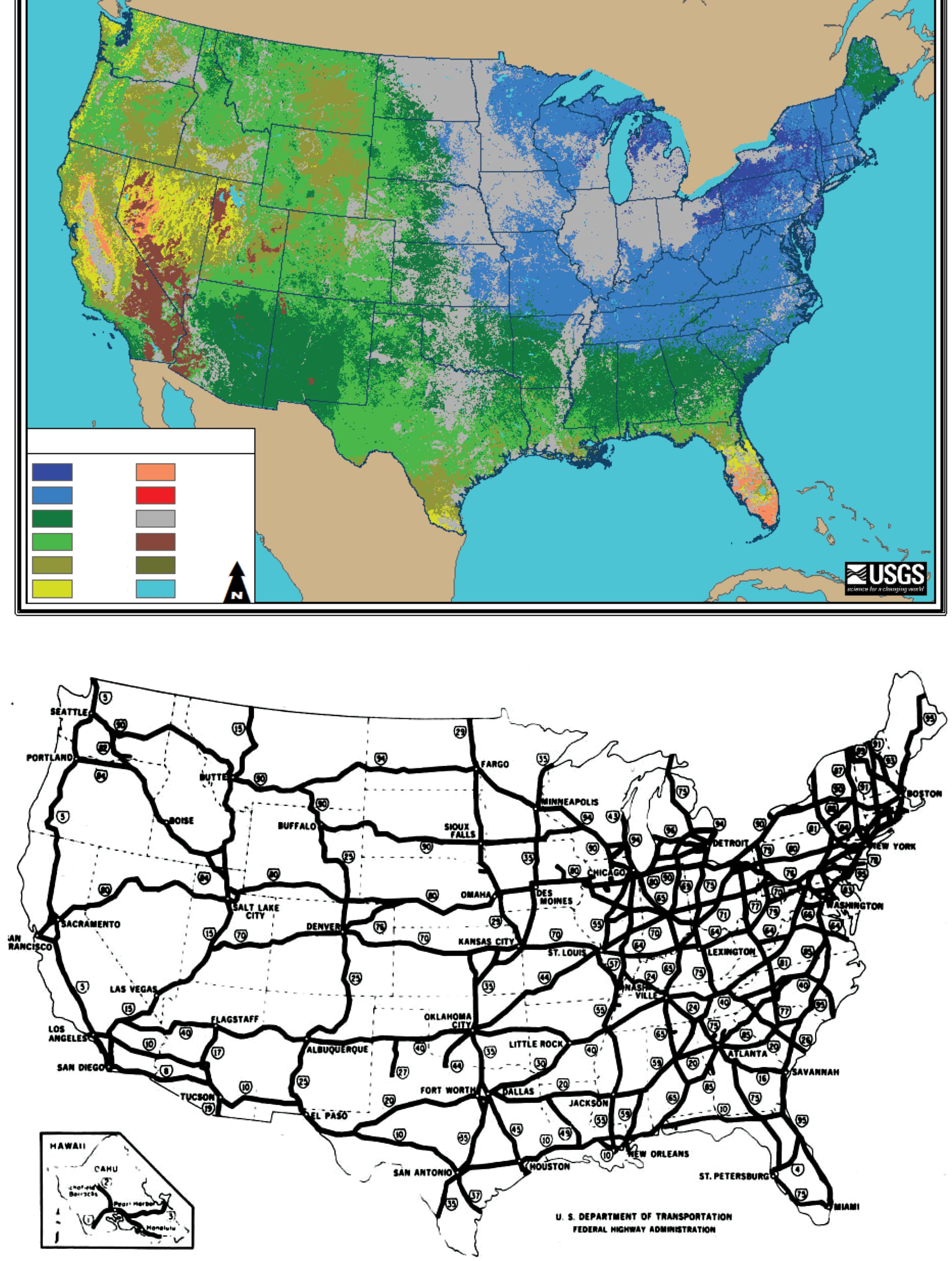
Theterm purposeful isreallyimportant.Itisthewordthatallowsustomakedecisions aboutwhataspectsoftherealworldtoincludeandwhichtoomit.Itisalsothewordthat allowsustoevaluateamodel.Take,forexample,thetwomapsinFigure1.1.Atthetopis amapshowingthepredictedriskoflargefires.Onthebottom,thesameareaisdepicted butshowingmaintransitroutes.Amap,likeamodel,isapurposefulsimplificationof reality.Nomapcontainseverypieceofspatialinformationthatonemighteverneed.So, weevaluatethemodelonthebasisofhowwellitservesitspurpose.Itwouldbefoolish
Figure1.1 TwomapsoftheUnitedStates.ThetopshowstheprobabilitiesoflargefiresinJuly 2017;thebottomshowstheinterstatehighwaysystem.TopmapfromtheU.S.GeologicalSurvey:https://firedanger.cr.usgs.gov/;bottommapfromtheU.S.DepartmentofTransportation:https:// www.fhwa.dot.gov/interstate/finalmap.cfm.
tocriticizethemodelatthetopforfailingtoprovideinformationonhowtotravelfrom Houston,TX,toSacramento,CA.Likewise,noonewouldtrytousethemodelonthe bottomtodeployfirefightingresources.
Becausemodelsaresimplificationsofreality,itishelpfultokeeptheboundary betweentherealworldandthemodelworldinmind.Therealworldcontainseverything happeningateveryscale.It’saterrifyingplacetotrytodoscience.Themodelworld iscarvedoutofthisplace;itcontainsasubsetoftherealworld.Becausethemodel worldissimple,youcanunderstandeveryfacetofit.Inamodelworld,youare omniscient.Youknoweveryrule,andeveryrelationship.Betteryet,youcanperform experimentsonamodelthatyoucouldneverdointherealworldtoclarifycause-effect relationships.
Butrememberthatthegoalofmodelingisn’ttounderstandthemodel;itisto understandtherealworld.Wewanttotakedeepunderstandingofthemodelworldand usethattoanswerquestionsabouttherealworld.Thistranslationbetweenthemodel worldandrealworldisimpossibleifyouhaven’tcarefullyconstructedtheboundary betweenthem:
Thereisnoneedtoaskthequestion“Isthemodeltrue?”.If“truth”istobethe “wholetruth”theanswermustbe“No”.Theonlyquestionofinterestis“Isthemodel illuminatinganduseful?”(Box1979,203)
Onelastcommentontherealworld–modelworlddistinctionisthat,whilethereare manyexcellentmathematiciansandstatisticiansouttherewhocandowondrousthings withequations,onlyasubsetofthemareexcellentmodelers.Whatsetsthemapart? Theyareskilledattranslatingbetweenmodelworldsandrealworlds.Notethatthis skillisnotrestrictedtomathematiciansandstatisticians.Inmyexperience,theability totranslatebetweenmodelworldsandrealworldsisthesinglemostimportantskillin ecologicalmodeling.Andbecausemodeltranslationisaskillthatanyonecanlearn, advancedmathematicalandstatisticaltrainingisnotaprerequisitetobecomingan effectiveecologicalmodeler.Ifyoufindyourselfstuckinamathematicalquagmire,find acolleaguewhocanhelpyouout.Inmyexperience,algebragetsabout60%ofthejob done,andcalculusandlinearalgebragetsanother30%ofthejobdone,leaving10%to moreadvancedtopics.
Thevalueofmodelinginecology Along-standingdebateintheecologicalcommunityconcernswhethermorediverse foodwebsaremorestable.Thebasicideasharedbymanyprominentecologistsin themiddleofthelastcenturywasthatifmanyspeciesoccupiedsimilarecological roles,theecosystemfunctionwouldbestable,becauseitwouldbelessimpactedby thevariabilityintheabundanceofindividualspecies.RobertMaytookthisseemingly
intuitiveideaandputittothetestmathematically:givenasystemofinteracting species,aremorecomplexsystemslikelytobemoreorlessstableovertime?The processofansweringthatquestionledtoseveralmorequestions,mostnotably,“How dowedefinestable?”Ifwedefinestabilityastheabilityofasystemtoquicklyreturn toanequilibriumstateafterdisturbance,thenMayshowedusthatmorecomplex foodwebsarelessstablethansimpleones,insharpcontrasttotheintuitivelogic behindthediversity-stabilityhypothesis(May1973).Didthismeanthattheother ecologistswerewrong,orthatRobertMaydidthemathwrong?Notatall.Rather, itforcedthecommunitytothinkmoreclearlywhatwemeantby“stability”and “complexity.”Manygenerationsofmodelsandexperimentalstudieshavedonejust that:theyhaveasked,kindsofstabilityexistandhowdodifferenttypesoffoodweb structurespromotethesekindsofstability(Dunneetal.2002)?
Whenyourejecttheextremestancesandrecognizemodelingasaveryhumanwayof gropingforunderstanding,itshouldbeobviouswhowillbenefitmostfromit:thosewho engageinitdirectly.(Walters1986,45)
Oneofthegreatestbenefitsofmodelingcomesfromtheprocessofmodeldevelopment:byforcingyoutolaybareyourimplicitnotionsabouthowasystem“works,” youcanexposethosenotionstothelightofday,potentiallyrevealinglogicalflawsor inconsistencies.Itisakintowritingascientificpaper:you’vedonealloftheanalyses, youthinkyouunderstandtheentirestory,butonceyoustartwriting,youmayrealize thatyourinterpretationcriticallyhingesonsomeimplicitassumptionthatyoudidn’t evenknowyouheld.
Asaresult,mostofthelearningthataccompaniesamodelingexerciseisactually quitefarremovedfromtheendproductofthemodel.Sayyouarebuildingamodelto predictresidencetimesofmercuryinawetland.Youfindyournearestmathematical modeler,askthemtodoitforyou,andgettheanswer.Allyouwouldgetwouldbe someanswer(presumablyanumber,perhapswitherrorbars).Imagineinsteadthat youbuildthemodelyourself.Nowyouwouldimmediatelystartaskingnewquestions. Whatwouldgoverntheresidencetimeofmercuryinawetland?Wheredoesmostofthe mercuryresideinawetland?Whatinformationisavailabletoassignnumericalvalues tomodelparameters?Arethereanycrucialdatagapsthatpreventyoufrommakinga preciseprediction?Isthemodelparticularlysensitivetoasmallhandfulofassumptions orparameters?Clearly,you’lllearnalotaboutyourownpreconceptionsabouthowthe wetlandprocessesmercury.Butmoreimportantly,theprocessofmodeldevelopment mayleadyoutorealizethatthere’sanalternativeandfarmoreimportantquestiontobe answered.Ifyouweren’tactivelyengagedinthemodelingprocess,thisopportunityfor learningwouldbelost.
Acentralthemeofthisbookisthatanyonecanbuildamathematicalmodeltoanswer scientificquestions.Modelsneednotbecomplexorintimidatingtobeuseful,aslongas you’recarefulaboutwhat“use”youintend.
1.1Mythsofmodeling Starfield(1997)outlinesseveralmythsaboutmathematicalmodelsusedfordecision supportinwildlifeandconservationbiology.BelowIlistseveralofthesemythsandhis responses.Theyapplyspecificallytoso-calledtacticalmodels,whicharemodelsthatare usedtoaiddecision-making,buttheycanbeappliedtoanysortofmodel.
Theprimarypurposeofbuildingmodelsistomakepredictions:True,models predictthings.Atmosphericmodelspredicttheweatherfromonedaytothenext. Theytakeahugeamountofdata,putthemintocomplexphysicalmodels,and generatepredictionsaboutweatherhazardsandallmannerofotherthings.In ecology,werarelyhavetheabilitytopredictoutcomesaspreciselyaswecanpredict tomorrow’sweather.Weusemodeloutputsinverydifferentways.Modelsreveal “whatispossible,”revealsurprisingconsequencesofrelativelysimpleassumptions, andhelpdecision-makingbydeterminingwhenandwherepolicystrategiesare likelytobeeffective.
Amodelcannotbebuiltwithincompleteunderstandingofthebehaviorofa system:Wealwayshavetomakedecisionsaboutthenaturalworld,andinformation isalmostalwayslimited.Amodelrepresentsasingleviewthatsummarizesyour understandingofthesystem.Incaseswheretherearemultipleplausibleinterpretationsforhowthesystemworks,youcanbuildmultiplemodelstorevealthe consequencesofthesealternativeviews.Besides,ifyoucompletelyunderstandthe system,whyexactlyareyoubuildingamodel?
Itisnotusefultobuildamodeliftherearegapsinthedataitislikelytoneed (sothepriorityistocollectdata):Howdoweknowwhatdataareneeded?And howprecisedothosedataneedtobe?Ofcourse,havingdataisimportant,butit israrelytruethatmodelsarenotusefulintheabsenceofdata.Modelsarehugely helpfulinhelpingrefinedata-collectioneffortsbyshowingthedatagapsthathave thebiggestconsequencesintermsofdecision-making.
Amodelcannotbeusedinanywayorformuntilithasbeenvalidatedorbeen proventobeaccurate:Therealissueisthatthemodelneedstobeusedinaway thatisconsistentwiththemodel’spurpose.Ifamodelisdesignedtogiveaspecific predictionaboutaveryspecificdecision,then,ofcourse,themodelneedstoshow thatthepredictionisrobust.Butweusemodelsinsomanymorewaysthanthis.
Amodelmustbeasrealisticaspossible,accountingforallthedetailed intricaciesofabiologicalsystem:Weknowthatallmodelsarewrong.Remember, amodelisafaithfulandpurposefulrepresentationofreality.Giventhepurpose, doesthemodelfaithfullyrepresentreality?Ifyes,thenitisagoodmodel.
Modelingisaprocessakintomathematics;assuch,itcannotbeusedorunderstoodbymostmanagersandmanyfieldbiologists:Thisisthefundamental myththatIhopethistextdebunks.Fordecades,thismythledtotheseparationof decision-makersfromstakeholders,fromquantitativescientists.Thefieldhastruly
changed:nowmodelingfordecision-makingengagesstakeholdersanddecisionmakersinallstepsofthemodelprocess(Plagányietal.2013;Fultonetal.2014). Everyoneneedstounderstandamodeltouseit.
Modelingistime-consumingandexpensive,somodelsmustbedesignedto answerallthequestionsthathavebeenthoughtof,orquestionsthatmay ariseinthefuture;themoremultipurposethemodel,thebetterthevalueon isgettingforone’sinvestment:Ifamodelisapurposefulrepresentationofreality, thenhowcanithavemultiplepurposes?Howcanyoudecidewhatthemodeldoes anddoesnotincludeifyoudon’tknowhowitisgoingtobeused?Modelsneed notbeexpensiveandtime-consumingiftheyarefocusedonaspecificproblemat hand.
1.2Typesofmodels Thereisnouniversallyagreed-upontypologyofmodels:ifyouput100modelersin100 differentroomsandaskthemtolistthetypesofmodels,you’llget100verydifferentlists. Thisisbecausetherearesomanydifferentdimensionsuponwhichsuchalistmightbe made.HereIreviewsomeofthemainwaysthatmodelsmightbedistinguishedfrom eachother.
1.2.1Organizationalscales
Weusuallythinkofbiologicalsystemsintermsofscales:cellular/subcellular;organismal; orgroupsofindividuals,populations,communities,foodwebs,ecosystems,andsoon. Modelsmightbedevelopedaroundanyoneofthosescales.Also,somemodelsspecificallyaddresscross-scaleinteractions:howprocessesthatoperateatoneorganizational scaleconstrainorenhancethoseoperatingathigherorlowerscales.
1.2.2Purpose Modelsarebuiltforavarietyofpurposes.Perhapsthemostcommonpurposethatcomes tomindisprediction.Thismakessense,becausemodelsaregreattoolsforgenerating quantitativepredictions.Yet,modelsareusedforquiteabitmorethanthat.Theyareused toexplainthenaturalworld.Bybuildingmodelsandunderstandingtheirproperties,we canunderstandwhysystemsthathavepropertiesa,b,andcarepronetox,y,andz. Wealsousemodelstoassistindecision-making.Sayyouaredecidingwhethertocreate awildernessprotectionareaforanendangeredspecies,butthereisalotofuncertainty onthespecies’habitatneedsandthreatstothem.Youcoulduseamodeltoidentifythe decisionsthataremostrobusttothisuncertainty.Wealsousemodelstoestimatethings, especiallythingsthatcannotbeobserveddirectly.Forinstance,JohnHarte’sexcellent book ConsideraSphericalCow showsanexampleofestimatingthetotalnumberof cobblers(peoplewhofixshoes)intheUnitedStatesthatisbasedonsomeassumptions aboutthedemandforcobblers,howmanyhoursadayanaveragecobblermightwork,