https://ebookmass.com/product/aims-of-argumentmla-2016-update/
Instant digital products (PDF, ePub, MOBI) ready for you
Download now and discover formats that fit your needs...
Steps to Writing Well, 2016 MLA Update 13th Edition, (Ebook PDF)
https://ebookmass.com/product/steps-to-writing-well-2016-mlaupdate-13th-edition-ebook-pdf/
ebookmass.com
Compact Literature: Reading, Reacting, Writing, 2016 MLA Update Laurie G. Kirszner
https://ebookmass.com/product/compact-literature-reading-reactingwriting-2016-mla-update-laurie-g-kirszner/
ebookmass.com
The St. Martin’s Handbook with 2016 MLA Update 8th Edition, (Ebook PDF)
https://ebookmass.com/product/the-st-martins-handbook-with-2016-mlaupdate-8th-edition-ebook-pdf/
ebookmass.com
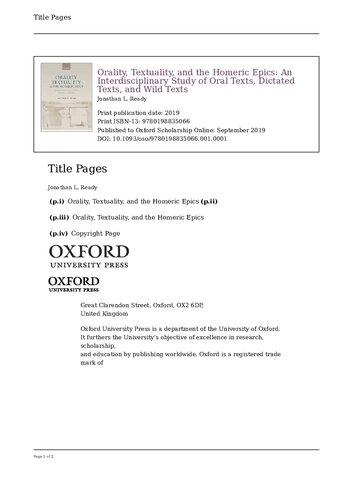
Orality, Textuality, and the Homeric Epics: An Interdisciplinary Study of Oral Texts, Dictated Texts, and Wild Texts Jonathan L Ready
https://ebookmass.com/product/orality-textuality-and-the-homericepics-an-interdisciplinary-study-of-oral-texts-dictated-texts-andwild-texts-jonathan-l-ready/ ebookmass.com
A Mysterious Universe: Quantum Mechanics, Relativity, and Cosmology for Everyone Suhail Zubairy
https://ebookmass.com/product/a-mysterious-universe-quantum-mechanicsrelativity-and-cosmology-for-everyone-suhail-zubairy/
ebookmass.com
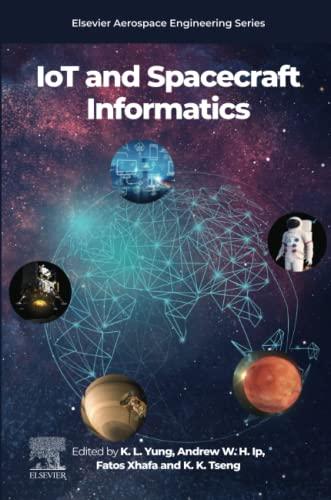
IoT and Spacecraft Informatics 1st Edition K.L. Yung
https://ebookmass.com/product/iot-and-spacecraft-informatics-1stedition-k-l-yung/
ebookmass.com
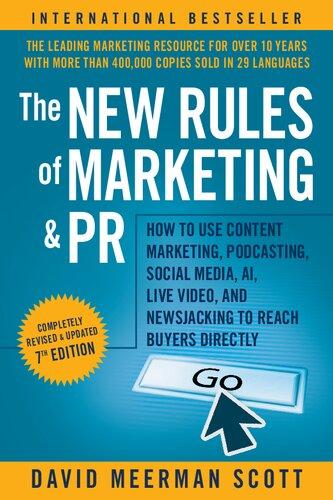
NEW RULES OF MARKETING & PR how to use social media, online video, mobile applications, blogs... , news releases, and viral marketing to reach buye. 7th Edition
David Meerman Scott
https://ebookmass.com/product/new-rules-of-marketing-pr-how-to-usesocial-media-online-video-mobile-applications-blogs-news-releases-andviral-marketing-to-reach-buye-7th-edition-david-meerman-scott/ ebookmass.com
The Viscount's Christmas Queen (Christmas Kisses Book 2) Rose Pearson
https://ebookmass.com/product/the-viscounts-christmas-queen-christmaskisses-book-2-rose-pearson/
ebookmass.com
Prescott’s Microbiology 10th Edition – Ebook PDF Version
https://ebookmass.com/product/prescotts-microbiology-10th-editionebook-pdf-version/
ebookmass.com
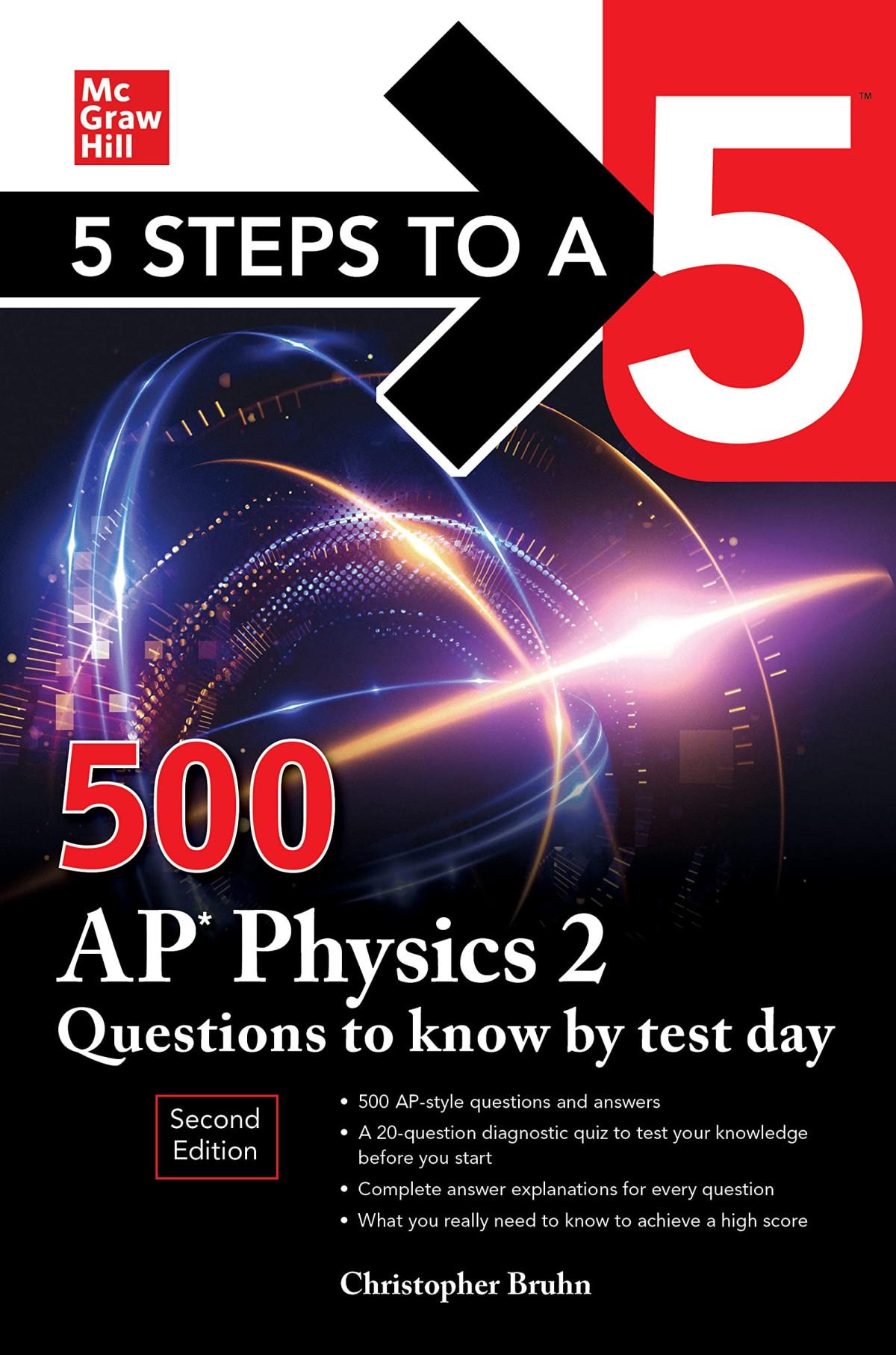
https://ebookmass.com/product/5-steps-to-a-5-500-apphysics-2-questions-to-know-by-test-day-second-edition-christopherbruhn/
ebookmass.com
UNIT
THE WRITING PROCESS
TOPIC
The Writing Process Generating Ideas Planning and Organizing
CRITICAL READING
THE RESEARCH PROCESS
REASONING AND ARGUMENT
Reading to Understand Literal Meaning Evaluating Truth and Accuracy in a Text
Developing and Implementing a Research Plan
Evaluating Information and Sources
Developing an Effective Thesis or Claim Using Evidence and Reasoning to Support a Thesis or Claim
Writing a Rough Draft Revising
Proofreading, Formatting, and Producing Texts
Evaluating the Effectiveness and Appropriateness of a Text
Integrating Source Material into a Text
Using Information Ethically and Legally
Using Ethos (Ethics) to Persuade Readers
Using Pathos (Emotion) to Persuade Readers
Using Logos (Logic) to Persuade Readers
MULTILINGUAL WRITERS
Helping Verbs, Gerunds and Infinitives, and Phrasal Verbs
Nouns, Verbs, and Objects
Articles
GRAMMAR AND COMMON SENTENCE PROBLEMS
PUNCTUATION AND MECHANICS
Parts of Speech
Phrases and Clauses
Sentence Types
Fused (Run-on) Sentence
Comma Splices
Sentence Fragments
Pronouns
Commas
Semicolons
Colons
End Punctuation
Apostrophes
Quotation Marks
Dashes
STYLE AND WORD
CHOICE
Wordiness
Eliminating Redundancies
Sentence Variety
Coordination and Subordination
LearnSmart Achieve can be assigned by units and/or topics.
Count and Noncount Nouns
Sentence Structure and Word Order
Subject-Verb Agreement
Participles and Adverb Placement
Pronoun-Antecedent Agreement
Pronoun Reference
Subject-Verb Agreement
Verbs and Verbals
Adjectives and Adverbs
Dangling and Misplaced Modifiers
Mixed Constructions
Verb Tense and Voice Shifts
Parentheses
Hyphens
Abbreviations
Capitalization
Italics
Numbers
Spelling
Faulty Comparisons
Word Choice
Clichés, Slang, and Jargon
Parallelism
ABOUT THE AIMS OF ARGUMENT APPROACH
This book is different from other argument texts because it focuses on four aims, or purposes, of argument:
• Arguing to inquire
• Arguing to convince
• Arguing to persuade
• Arguing to mediate
Central Tenets of the Approach
• Argumentation is a mode or means of discourse, not an aim or purpose for writing. Consequently, we need to teach the aims of argument.
• The aims of argument are linked in a learning sequence so that convincing builds on inquiry, persuasion on convincing, and all three contribute to mediation. Consequently, we offer a learning sequence for conceiving a course or courses in argument.
FAQs about the Approach
Here are the questions we are most frequently asked about this approach:
• What is the relative value of the four aims? Because mediation comes last, is it the best or most valued? No aim is “better” than any other aim. Given needs for writing and certain audiences, one aim is more appropriate than another for the task at hand. Mediation comes last because it integrates inquiry, convincing, and persuading.
• Must inquiry be taught as a separate aim? No. It may be taught as a separate aim, but we do not intend this “may” as a “must.” Teaching inquiry as a distinct aim has certain advantages. Students need to learn how to engage in constructive dialogue, which is more disciplined and more focused than most class discussion. Once they see how it is done, students enjoy dialogue with one another and with texts. Dialogue helps students think through their arguments and imagine reader reaction to what they say, both of which are crucial to convincing and persuading. Finally, as with mediation, inquiry offers avenues for assignments other than the standard argumentative essay.
• Should inquiry come first? For a number of reasons, inquiry has priority over the other aims. Most teachers are likely to approach inquiry as prewriting, preparatory to convincing or persuading. And commonly, we return to inquiry when we find something wrong with a case we are trying to construct, so the relationship between inquiry and the other aims is also recursive.
Moreover, inquiry has psychological, moral, and practical claims to priority. When we are unfamiliar with an issue, inquiry comes first psychologically, as a felt need to explore existing opinion. Regardless of what happens in the “real world,” convincing or persuading without an open, honest, and earnest search for the truth is, in our view, immoral. Finally, inquiry goes hand in hand with research, which requires questioning the opinions encountered.
• Isn’t the difference between convincing and persuading more a matter of degree than kind? Convincing and persuading do shade into one another so that the difference is clearest at the extremes. Furthermore, the “purest” appeal to reason—a legal brief, a philosophical or scientific argument—appeals in ways beyond the sheer cogency of the case. Persuasive techniques are submerged but not absent in arguing to convince. Our motivation for separating convincing from persuading is not theoretical but pedagogical. Case-making is complex enough that attention to logical appeal by itself is justified. Making students conscious of the appeals to character, emotion, and style while they are learning to cope with case-making can overburden them to the point of paralysis. Regardless, then, of how sound the traditional distinction between convincing and persuading may be, we think it best to take up convincing first and then persuasion, especially because what students learn in the former can be carried over intact into the latter. And because one cannot make a case without unconscious appeal to character, emotional commitments (such as values), and style, teaching persuasion is a matter of exposing and developing what is already there in arguing to convince.
About the Readings
• We have avoided the “great authors, classic essays” approach. We try instead to find bright, contemporary people arguing well from diverse viewpoints—articles and chapters similar to those that can be found in better journals and trade books, the sort of publications students should read most in doing research.
• We have not presented any issue in simple pro-and-con fashion, as if there were only two sides.
• Included in the range of perspectives are arguments made with both words and images. We include a full chapter examining visual arguments, such as editorial cartoons, advertisements, public sculpture, and photographs.
ABOUT THE AUTHORS
Acknowledgments
Carolyn E. Channell taught high school and community college students before coming to Southern Methodist University, where she is now a senior lecturer and specialist in first-year writing courses.
The authors are grateful for the comments of professors and students who have used this book over the years. Reviewers of the current edition include the following: Joanna Brooks, San Diego State University; Xiongya Gao, Southern University at New Orleans; Jennifer G. Herbert, University of Akron; Matthew Hollrah, University of Central Oklahoma; Anne Marie Reid, Colorado State University, Fort Collins; Eileen B. Seifert, DePaul University; Catherine Vieira, University of Wisconsin, Madison; and Lawrence White, Tacoma Community College.
PART ONE
RESOURCES FOR READING AND WRITING ARGUMENTS 1
1 Understanding Argument 3
2 Reading Arguments 17
3 Analyzing Arguments: The Toulmin Method 39 4 Critiquing an Argument 51
5 Analyzing and Using Visual Arguments 73 6 Writing Research-Based Arguments 91
7 Ethical Writing and Plagiarism 163
PART TWO THE AIMS OF ARGUMENT 173
8 Joining the Conversation: Arguing to Inquire 175 9 Making Your Case: Arguing to Convince 201
10 Motivating Action: Arguing to Persuade 235
11 Resolving Conflict: Arguing to Mediate 265
PART THREE READINGS: ISSUES AND ARGUMENTS 301
12 Consumer Society: Achieving Balance 303 13 Global Warming: What Should Be Done? 343
14 The Millennials: Issues Facing Young Adults 381
15 Immigration Revisited: A New Look at a Permanent Issue 415
16 Declining Civility: Is Rudeness on the Rise? 453
17 Enhancing Humans: How Far Is Too Far? 485
PART ONE
RESOURCES FOR READING AND WRITING ARGUMENTS 1
CHAPTER 1
Understanding Argument 3
What Is Argument? 3
What Is Rhetoric? 4
An Example of Argument 6
Steven Johnson, From Everything Bad Is Good for You 6
Arguing Responsibly 7
Four Criteria of Responsible Reasoning 8
Responsible Reasoning Is Well Informed 9
Responsible Reasoning Is Open to Constructive Criticism from Others 9
Responsible Reasoning Considers the Audience 9
Responsible Reasoning Understands an Argument’s Contexts 10
Reading 10
Kelby Carlson, “Fighting Words: Why Our Public Discourse Must Change” 10
What Are the Aims of Argument? 13
Arguing to Inquire 13
Arguing to Convince 13
Arguing to Persuade 14
Arguing to Mediate 14
CHAPTER 2
Reading Arguments 17
Strategies for Critical Reading: Once Through Is Not Enough 18
First Encounters: Skimming for Context, Reading for Content 18
Strategy: Before Reading, Skim (and Surf) for Context 18
Strategy: Skim to Preview the Whole Argument 19
Strategy: Annotate as You Read 19
Sally Jenkins, “A Major Gain for College Sports” 21
Second Encounters: Reading to Detect the Case 23
Strategy: Outlining the Case 24
Third Encounters: Responding to an Argument 25
Strategy: Paraphrasing 26
Strategy: Summarizing 27
Strategy: Joining the Conversation 29
Mariah Burton Nelson, Response to “A Major Gain for College Sports” 33
Reading Alternative Forms of Argument 33
Keith A. Williams, “A Technological Cloud Hangs over Higher Education” 35
CHAPTER 3
Analyzing Arguments: The Toulmin Method 39
An Overview of the Toulmin Method 39
Art Carden, “Let’s Be Blunt: It’s Time to End the Drug War” 42
A Step-by-Step Demonstration of the Toulmin Method 44
Analyzing the Claim 44
Identify the Claim 44
Look for Qualifiers and Exceptions 44
Analyzing the Reasons and Evidence 45
State the Reasons 45
Find the Evidence 45
Examine the Evidence 46
Examining the Warrants 46
Noting Rebuttals 47
Summarizing Your Analysis 47
A Final Note about Logical Analysis 48
CHAPTER 4
Critiquing an Argument 51
What Is a Critique? 51
Why Critique an Argument? 52
How a Critique Differs from a Reaction 52
Strategies for Critiquing Arguments 53
Tom Stafford, “Why Sherry Turkle Is So Wrong” 54
The Assignment 58
Topic and Focus 58
Audience 58
Voice and Ethos 58
Writing Assignment Suggestions 58
Choosing an Argument 59
Exploring Your Topic 59
David Fryman, “Open Your Ears to Biased Professors” 59
Forming a First Impression 61
Stepping Back: Analyzing the Argument 61
Doing Research 64
The Reality Test for Arguments 64
Preparing to Write 65
Formulating Your Stance 65
Consider Your Reader, Purpose, and Tone 66
Drafting Your Paper 66
Organization 67
Introduction 67
Body 67
Conclusion 67
Development 67
Introduction 67
Body 67
Conclusion 68
Revising Your Draft 68
Excerpts from a Sample Discovery Draft 68
Excerpt 1: Introduction 68
Excerpt 2: A Counterargument 68
Example Assessment: Sizing Up D. D. Solomon’s First Draft 70
Develop a Revision Strategy 70
Revised Draft: D. D. Solomon’s Evaluation of Fryman’s Argument 70
D. D. Solomon, “How Professors Should Deal with Their Biases” 70
Responding to the Revised Student Draft 71
Edit Your Paper 72
Chapter Summary 72
CHAPTER 5
Analyzing and Using Visual Arguments 73
Understanding Visual Arguments 74
“Reading” Images 74
Analysis: Five Common Types of Visual Argument 75
Advertisements 75
Editorial Cartoons 76
Public Sculpture 77
News Photographs 81
Graphics 83
Writing Assignment: Analyzing an Advertisement or Editorial
Cartoon 85
STUDENT SAMPLE—Analysis of Visual Rhetoric: Ryan Herrscher, “The Image of Happiness: An Analysis of Coca-Cola’s ‘Open Happiness’ Campaign” 86
Alternative Assignment 1 88
Alternative Assignment 2 89
Alternative Assignment 3 89
CHAPTER
6
Writing Research-Based Arguments 91
Finding an Issue 92
Understand the Difference between a Topic and an Issue 92
Find Issues in the News 93
The Internet 93
Library Online Databases and Resources 93
Magazines and Newspapers 93
Lectures, Panel Discussions, Class Discussions, Conversations 94
Personal Observations 94
Finding an Issue on the Topic of Global Warming: A Student Example 94
Finding Sources 95
Field Research 96
Observations 96
Questionnaires and Surveys 96
Interviews 97
Library and Internet Research 98
Kinds of Sources 98
Books 98
Periodicals 99
Audiovisual Materials 100
Websites 100
Blogs, Listservs, Usenet Groups, Message Boards 101
Choosing Precise Search Terms 101
Use Keyword Searching 102
Use Phrase Searching 102
Use Boolean Searching 102
Use Subject Words 102
Searching Your Library 103
Your Library’s Online Catalog 104
Your Library’s Online Resources 106
Internet Research 108
Domains 108
Commercial (.com) 109
Nonprofit Organizations (.org) 109
Educational Institutions (.edu) 109
Government Agencies (.gov) 109
Advanced Features for Searching the Web 109
Advanced Searches 109
Google Specialized Searches 110
Google Scholar 110
Subject Directories to the Web 110
Blogs, Listservs, Message Boards, and Chat Groups 111
Evaluating Sources 111
Eliminate Inappropriate Sources 111
Carefully Record Complete Bibliographic Information 111
Read the Source Critically 111
Who Is the Writer, and What Is His or Her Bias? 112
How Reliable Is the Source? 112
When Was This Source Written? 113
Where Did This Source Appear? 113
What Is the Author’s Aim? 114
How Is the Source Organized? 114
Special Help with Evaluating Websites 114
Using Sources 117
Richard Moe, “Battling Teardowns, Saving Neighborhoods” 117
Writing Informally to Gain Mastery over Your Sources 121
1. Annotate the Source 121
2. Respond to the Source in Your Notebook 121
3. Paraphrase Important Ideas from the Source 122
Examples of Adequate and Inadequate Paraphrasing 123
4. Write Summaries of Portions of a Source 124
5. Write Capsule Summaries of Entire Sources 126
6. Dialogue about Sources 127
Incorporating and Documenting Source Material 128
Different Styles of Documentation 128
MLA Style 128
APA Style 129
Direct Quotations 129
MLA Style 129
APA Style 129
Altering Direct Quotations with Ellipses and Square Brackets 130
Using Block Quotations 131
Indirect Quotations 131
MLA Style 131
APA Style 132
In-Text References to Electronic Sources 133
Creating Works Cited and Reference Lists 133
MLA Style for Entries in the Works Cited List 133
Books 134
Articles in Periodicals 138
Other Genres as Sources 139
Sources on the Internet 139
Student Sample of a Research Paper in MLA Style 143
Using APA Documentation Style 143
In-text Citations 143
Reference List Examples 146
Books 146
Articles in Periodicals 148
Sources on the Internet 150
Other Genres as Sources 151
Sample of a Research Paper in APA Style 151
STUDENT SAMPLE—A Research Paper (MLA Style): Julie Ross, “Why Residential
Construction Needs to Get a Conscience” 152
CHAPTER
7
Ethical Writing and Plagiarism 163
Why Ethics Matter 163 What Plagiarism Is 164
The Ethics of Using Sources 164
Purchasing a Paper 164
Using a Paper Found Online 165
Using Passages from Online Sources without Citing the Source 165
Inadequate Paraphrasing 167
Paraphrasing Ideas or Information without Naming the Source 168 When Opinions Coincide 170
The Ethics of Giving and Receiving Help with Writing 170
Ethical Writing and Good Study Habits 172
PART TWO
THE AIMS OF ARGUMENT 173
CHAPTER 8
Joining the Conversation: Arguing to Inquire 175
What Is Comparing Perspectives? 176 Why Write to Compare Perspectives? 176
How Does Comparing Perspectives Work? 177
What to Ask When Comparing Perspectives 177
The Writer as Inquirer 177
Andy Rudd, “Which Character Should Sports Develop?” 177
Readings 180
John F. Schumaker, “The Paradox of Narcissism” 181
Jean M. Twenge, “Changes in Narcissism” 185
Duncan Greenberg, “Generation Y and the New Myth of Narcissus” 187
The Assignment 189
Topic and Focus 189
Audience 189
Voice and Style 189
Writing Assignment Suggestions 189
Choosing a Topic 190
Exploring Your Topic 190
Paraphrase or Summarize the Main Points 191
Turn Main Points into Questions 192
Paraphrase and Comment 192
Keep Track of Connections across Perspectives 193
Maintain an Exploratory Stance 194
Drafting Your Paper 194
Planning the Draft 194
The Art of Questioning: Planning the Body 194
Development and Organization 195
Revising Your Draft 195
REVISED STUDENT EXAMPLE—Ian Fagerstrom, “Comparison of Perspectives on Narcissism” 197
Chapter Summary 200
CHAPTER
9
Making Your Case: Arguing to Convince 201
What Is a Case? 202
Why Make a Case? 202
How Do You Make a Case? 203
Examining Your Audience’s Beliefs 205
Readings 205
Olivia Judson, “Optimism in Evolution” 205
Strategies Used in Case-Making: Structure and Readership 207
Putting Your Voice into Your Argument 208
Wilbert Rideau, “Why Prisons Don’t Work” 209
Strategies Used in Case-Making: Problem-Solution, Cause-and-Effect
Reasoning 211
T. Boone Pickens, “A Plan for Reducing American Dependence on Foreign Oil” 212
Strategies Used in Case-Making: Lines of Reasoning 216
The Assignment 218
Topic and Focus 218
Audience 218
Voice and Style 219
Writing Assignment Suggestions 219
Choosing a Topic 219
Exploring Your Topic 220
Find the Issues 220
Order the Issues (Stasis) 220
Do More Research 222
Analyze Your Sources: Information versus Interpretation 222
Start Your Working Bibliography 223
A Key Question before Drafting: Is My Opinion Defensible? 223
Assessing Your Opinion from Research Results 224
Preparing to Write 224
State Your Opinion as a Thesis 224
Writing Defensible Claims 225
Unpack Your Thesis 226
Examine Possible Reasons 226
Arrange Your Evidence under Each Reason 227
Examine Possible Evidence 227
STUDENT EXAMPLE: Noelle Alberto’s Draft Case Outline 227
Drafting Your Paper 229
Development and Organization 229
STUDENT EXAMPLE: Excerpts from Alberto’s Draft 230
Revising Your Draft 231
Formulate a Plan to Guide Your Revision 231
REVISED STUDENT EXAMPLE: Noelle Alberto, “Multitasking: A Poor Study Habit” 231
Chapter Summary 233
CHAPTER 10
Motivating Action: Arguing to Persuade 235
What Is Persuasion? 235
Why Write to Persuade? 236
How Does Persuasion Work? 236
The Art of Questioning: What Really Persuades Us? 237
Readings 238
Subaru Advertisement 238
Tom Beaudoin, “Consuming Faith” 239
Strategies for Appealing for Action 242
Katharine Weber, “The Factories of Lost Children” 243
Strategies for Appealing for Action 245
Using Your Voice in Appealing for Action 246
The Assignment 247
Topic and Focus 247
Audience 247
Voice and Ethos 247
Writing Assignment Suggestions 247
Choosing a Topic 248
Exploring Your Topic 248
Focus, Audience, and Need 248
Establishing Need 249
Doing Research 250
Preparing to Write: Thinking about Persuasive Appeals 250
The Appeal through Logos: Deciding on a Claim and Reasons 251
Developing Reasons for Your Claim 252
Making a Brief of Your Case 252
STUDENT EXAMPLE: Natsumi Hazama’s Brief 252
The Appeal through Ethos: Presenting Good Character 254
Establishing Ethos with Your Readers 254
The Appeal through Pathos: Using Emotional Appeals 254
Drafting Your Paper 255
Development and Organization 255
Revising Your Draft 256
Getting Feedback from Others 256
Practicing Revision 257
Revising to Bring Out the Structure of the Argument 258
Revising to Improve Incorporation of Quoted Material 259
REVISED STUDENT EXAMPLE: Natsumi Hazama, “Is Too Much Pressure Healthy?” 260
Chapter Summary 263
CHAPTER 11
Resolving Conflict: Arguing to Mediate 265
Mediation and the Other Aims of Argument 266
The Process of Mediation 267
Mediation and Rogerian Argument 267
A Conflict to Mediate 268
Understanding the Positions 268
Roger Kimball, “Institutionalizing Our Demise: America vs. Multiculturalism” 268
Elizabeth Martínez, “Reinventing ‘America’: Call for a New National Identity” 275
Analysis of the Writers’ Positions 280
Kimball’s Position 280
Martínez’s Position 281
Locating the Areas of Agreement and Disagreement 282
Differences over Facts 282
Differences over Interests, Values, and Interpretations 282
Finding Creative Solutions: Exploring Common Ground 285
Exploring Common Ground in the Debate over National Identity 286
The Mediatory Essay 287
Bharati Mukherjee, “Beyond Multiculturalism: A Two-Way Transformation” 287
Analyzing Mukherjee’s Essay 293
Ethos: Earning the Respect of Both Sides 293
Pathos: Using Emotion to Appeal to Both Sides 293
Logos: Integrating Values of Both Sides 294
The Assignment 295
Prewriting 295
Drafting 296
Revising 296
STUDENT EXAMPLE—Arguing to Mediate: Angi Grellhesl, “Mediating the Speech Code Controversy” 297
Chapter Summary 299
PART THREE
READINGS: ISSUES AND ARGUMENTS 301
CHAPTER 12
Consumer Society: Achieving Balance 303
Consumerism: Ten Quotations 305
Virginia Postrel, “The Aesthetic Imperative” 306
Erik Kain, “In Defense of Consumerism” 310
David Brooks, “The Grill-Buying Guy” 312
Alex Kotlowitz, “False Connections” 315
Three Cartoons about the Consumer Society 320
Caroline Heldman, “Out-of-Body Image” 322
Alissa Quart, “X-Large Boys” 327
Don Peck and Ross Douthat, “Does Money Buy Happiness?” 331
John F. Schumaker, “The Happiness Conspiracy: What Does It Mean to Be Happy in a Modern Consumer Society?” 336
For Further Reading 340
CHAPTER 13
Global Warming: What Should Be Done? 343
Text of the American College and University Presidents’ Climate Commitment 344
National Geographic, “Global Warming: An Overview” 347
Scientific American, “15 Ways to Make a Wedge” 352
Bill Blakemore, “Who’s ‘Most to Blame’ for Global Warming?” 353
Gregg Easterbrook, “Some Convenient Truths” 358
Tim Appenzeller, “The Coal Paradox” 362
Al Gore, “Existing Technologies for Reducing CO2 Emissions” 367
Michelle Nijhuis, “Selling the Wind” 368
Union of Concerned Scientists, “Ten Personal Solutions” 372
William F. Ruddiman, “Consuming Earth’s Gifts” 375
For Further Reading 378
CHAPTER 14
The Millennials: Issues Facing Young Adults 381
Pew Research Center, “Millennials: Confident. Connected. Open to Change” 383
Kit Yarrow and Jayne O’Donnell, “Gen Y Is from Mercury” 391
Kim Brooks, “Is It Time to Kill the Liberal Arts Degree?” 395
Stuart Rabinowitz, “A Liberal Arts Education Is Still Relevant” 399
Dale Archer, “College Debt: Necessary Evil or Ponzi Scheme?” 402
Richard Vedder, “Forgive Student Loans?” 405
Anya Kamenetz, “Waking Up and Taking Charge” 408
For Further Reading 413
CHAPTER 15
Immigration Revisited: A New Look at a Permanent Issue 415
Historical Images: Our Contradictory Attitudes toward Immigration 417
Tamar Jacoby, “The New Immigrants and the Issue of Assimilation” 418
Samuel Huntington, “One Nation, Out of Many: Why ‘Americanization’ of Newcomers Is Still Important” 425
Jeff Koterba, Cartoon: “Playing POLITICS with the Border” 429
Ross Douthat and Jenny Woodson, “The Border” 430
Linda Chavez, “The Realities of Immigration” 434
Chris Farrell, “Obama’s Next Act: Immigration Reform” 441
Dava Castillo, “Comprehensive Immigration Reform—Past, Present, and Future” 444
Leslie Marmon Silko, “The Border Patrol State” 447
For Further Reading 451
CHAPTER 16
Declining Civility: Is Rudeness on the Rise? 453
P. M. Forni, “What Is Civility?” 455
Sara Rimer, “Play with Your Food, Just Don’t Text” 459
Elizabeth Bernstein, “Why We Are So Rude Online” 462
Leonard Pitts, Jr., “Going beyond Edgy—and Falling off the Cliff” 465
Tufts Now, “Left Is Mean But Right Is Meaner, Says New Study of Political Discourse” 467
Brian McGee, “Can Political Rhetoric Be Too Civil?” 470
Frank D. Adams and Gloria J. Lawrence, “Bullying Victims: The Effects Last into College” 472
Emily Bazelon, “Don’t Be a Bystander” 479
For Further Reading 482
CHAPTER 17
Enhancing Humans: How Far Is Too Far? 485
Carl Elliott, “The Tyranny of Happiness” 487
Benedict Carey, “Brain Enhancement Is Wrong, Right?” 492
Barbara Sahakian and Nora Volkow, “Professor’s Little Helper?” 495
Gregory Stock, “Choosing Our Genes” 501
John Naish, “Genetically Modified Athletes” 506
Arthur L. Caplan, “A Shot in the Rear: Why Are We Really against Steroids?” 509
Ed Smith, “Lance Armstrong and the Cult of Positive Thinking” 514
Larry Gonick and Mark Wheelis, Cartoon: “Gene-Splicing as Big Business” 517
C. Ben Mitchell, “On Human Bioenhancements” 519
For Further Reading 521
APPENDIXES
A A Brief Guide to Editing and Proofreading 523 B Fallacies—and Critical Thinking 541
Glossary 557
Credits 562
Index 565
BOXES BY TYPE
CONCEPT CLOSE-UP BOXES
Defining Rhetoric 5
Defining Responsible Reasoning 6
Four Criteria of Responsible Reasoning 8
Comparing the Aims of Argument 15
Defining Critical Reading 18
Understanding Case Structure 25
Model Toulmin Diagram for Analyzing Arguments 48
Context and Critique 52
Sample Entry in an Annotated Bibliography 127
Plagiarism: The Presentation or Submission of Another’s
Work as Your Own 165
Understanding the Ethics of Plagiarism 166
What Is Synthesis? 176
From Inquiry to Convincing 202
Understanding the Functions of Case Structure 203
Key Questions for Case-Making 204
When Should You Persuade? 236
The Four Forms of Appeal 237
Audience Analysis 249
Characteristics of Mediation 266
BEST PRACTICES BOXES
Questions for Determining Rhetorical Context 19
Annotating as You Read 20
Guidelines for Paraphrasing 27
Questions for Responding to an Argument 31
Toulmin Analysis 49
Concepts and Questions for Analyzing an Argument 62
Critique Revision Checklist 69
Guidelines for Using Visuals 90
Additional Guidelines for Evaluating Internet Sources 114
Guidelines for Summarizing 125
Guidelines for Writing with Sources 126
Leading into Direct Quotations 132
Strategies for Comparing Perspectives 190
Organizing around Questions 195
Revision Checklist for Comparing Perspectives 196
Doing Team Research 221
Drafting a Case Outline 228
Drafting Your Case 229
Revision Checklist for Arguing a Case 230
Key Questions for Preparing to Write 251
Places to Find Audience-Based Reasons 253
Revision Checklist for Appealing to Action 257 Questions for Understanding Difference 283
1
This page intentionally left blank