Oxford University Press is a department of the University of Oxford. It furthers the University’s objective of excellence in research, scholarship, and education by publishing worldwide. Oxford is a registered trade mark of Oxford University Press in the UK and certain other countries.
Published in the United States of America by Oxford University Press
198 Madison Avenue, New York, NY 10016, United States of America.
All rights reserved. No part of this publication may be reproduced, stored in a retrieval system, or transmitted, in any form or by any means, without the prior permission in writing of Oxford University Press, or as expressly permitted by law, by license, or under terms agreed with the appropriate reproduction rights organization. Inquiries concerning reproduction outside the scope of the above should be sent to the Rights Department, Oxford University Press, at the address above.
You must not circulate this work in any other form and you must impose this same condition on any acquirer.
Library of Congress Cataloging-in-Publication Data
Names: Dahlin, Constance, editor. | Coyne, Patrick J., 1957– editor.
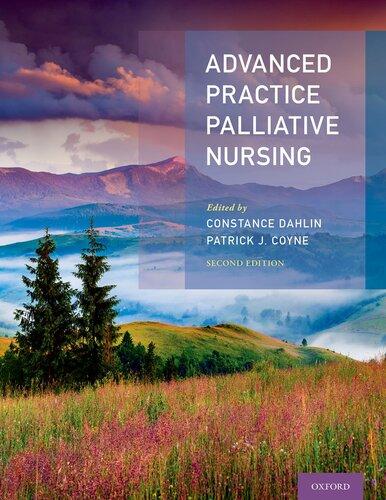
Title: Advanced practice palliative nursing / [edited by] Constance Dahlin and Patrick J. Coyne.
Other titles: Advanced practice palliative nursing (2016)
Description: Second edition. | New York, NY : Oxford University Press, [2023] | Includes bibliographical references and index.
LC record available at https://lccn.loc.gov/2021034903
LC ebook record available at https://lccn.loc.gov/2021034904
DOI: 10.1093/med/9780197559321.001.0001
This material is not intended to be, and should not be considered, a substitute for medical or other professional advice. Treatment for the conditions described in this material is highly dependent on the individual circumstances. And, while this material is designed to offer accurate information with respect to the subject matter covered and to be current as of the time it was written, research and knowledge about medical and health issues is constantly evolving and dose schedules for medications are being revised continually, with new side effects recognized and accounted for regularly. Readers must therefore always check the product information and clinical procedures with the most up-to-date published product information and data sheets provided by the manufacturers and the most recent codes of conduct and safety regulation. The publisher and the authors make no representations or warranties to readers, express or implied, as to the accuracy or completeness of this material. Without limiting the foregoing, the publisher and the authors make no representations or warranties as to the accuracy or efficacy of the drug dosages mentioned in the material. The authors and the publisher do not accept, and expressly disclaim, any responsibility for any liability, loss, or risk that may be claimed or incurred as a consequence of the use and/or application of any of the contents of this material.
Printed by Sheridan Books, Inc., United States of America
56. Discontinuation of Other Life-Sustaining Therapies 723
Kathy Plakovic and Jennifer Donoghue
57. Palliative Sedation 735
David Collett and Kelly Baxter
Appendix I Palliative APRN Billing and Coding 749 Constance Dahlin
Appendix II Perinatal and Pediatric Pain and Symptom Tables 760
Maggie C. Root, Mallory Fossa, Gina Santucci, Nicole Sartor, Faith Kinnear, Alice Bass, Jaime Hensel, Amy Corey Haskamp, Joanne M. Greene, Cheryl Ann Thaxton, Joan “Jody” Chrastek, Vanessa Battista, and Constance Dahlin
PREFACE
A palliative care textbook is always a labor of love. It symbolizes one’s passion and commitment to the specialty. The ability to accomplish such a textbook is only through collaboration, patience, a sense of humor, and a north star of excellence and quality. The first edition of Advanced Practice Palliative Nursing was born out of the fact that there was no specific textbook for palliative APRNs. Prior to its publication, many seasoned APRNs learned content along the way and applied it to the APRN role. The goal of the first edition was to capture the uniqueness of the role, as well as validate and codify practice and ground the role the evidence, practice, and research. Each chapter was led by a practicing APRN to assure authenticity. Since that time, we have been thrilled from the outpouring of support for Advanced Practice Palliative Nursing as many APRNs said it met their need and their practice.
We recognize that we need to assure education and resources to the cadre of APRNs who will need to practice both primary and specialty palliative nursing. APRNs will need to develop new roles, lead new programs, and care for many populations across all health settings. The world and practice environment has changed considerably since the first edition. The APRN role continues to be the fastest growing segment of healthcare, and there will be a burgeoning of care for older adults. The current social construct puts more emphasis on the role of palliative care in crises including infectious disease such as the COVID-19 pandemic, humanitarian crises from conflicts, and natural disasters such as fires, floods, earthquakes, hurricanes, and the like. And the emphasis on health equity is urgent in palliative care, an issue brought to the forefront by the disparities illuminated by COVID-19 and structural racism.
Our plan had been to initiate the next edition in late 2022, as we were in the middle of other projects. However, the pandemic changed everyone’s plans and it changed ours. We immediately thought to revise this edition, knowing that palliative APRNs were answering the call of the pandemic in many ways. They were particularly on the frontlines since palliative care expertise was needed to support patients in the crisis. We put out a call to authors and were pleasantly surprised when many said this would be a great diversion and provide some normalcy in a chaotic world. We were even more thrilled that 32 new chapter authors stepped in. To assure authenticity to each chapter, it was a requirement that the lead author of each chapter was an APRN currently in practice. Many of the authors APRNs are certified in advanced hospice and palliative nursing (ACHPN). It was a joy to coach and mentor them to succeed in the production of their chapters. We are grateful for all authors’ contributions and appreciate the sharing of their expertise.
As a result, this textbook provides the essential knowledge and attitudes to improve skills and practice in palliative nursing to assure quality care. We hope it serves as a foundation for advanced practice palliative nursing practice. It is intended for the graduate nursing student as well as the novice, advanced beginner, and competent palliative APRN to support their specialty palliative care practice. It is also intended to support all APRNs in their provision of primary palliative care. We also hope it promotes role delineation and development within the spectrum of APRN practice. Finally, it is directed to nurse educators to help support their learners in primary and specialty palliative nursing and offer a curricular resource in preparing the next generation of palliative APRNs. We hope the reader will find the knowledge helpful to their practice and appreciate that it reflects current practice and research.
Constance Dahlin and Patrick J. Coyne
ACKNOWLEDGMENTS
We are grateful for the support and understanding of our families as we follow our passion to further the field. We thank Dr. Betty Ferrell for her previous editorship.
DISCLAIMER
To avoid repetitive information in the references, please note that all online material was accessed and is current as of October 1, 2021.
CONTRIBUTORS
Katharine Adelstein, PhD, ANP-BC, PMHNP-BC
Assistant Professor of Nursing School of Nursing University of Louisville Louisville, KY, USA
Elizabeth Archer-Nanda, DNP, APRN, PMHCNS-BC Manager Behavioral Oncology Program
Norton Healthcare Louisville, KY, USA
Alice Bass, MSN, APRN, CPNP-PC Pediatric Nurse Practitioner
Case Western Reserve University Cleveland, OH, USA
Julia McBee, MSN, CPNP-PC Nurse Practitioner
Hassenfeld Children’s Hospital at NYU Langone
Pediatric Advance Care Team
New York City, NY, USA
Donna E. McCabe, DNP, GNP-BC, PMHNP-BC
Hartford Institute for Geriatric Nursing
New York University Rory Meyers College of Nursing
New York, NY, USA
Melissa McClean, MSN, ANP-BC, ACHPN
Medical Director
Community-Based Palliative Care
Capital Caring Health
Falls Church, VA, USA
Kerrith McDowell, MSN, AGPCNP-BC
Nurse Practitioner
Palliative Care
Duke University Health System Durham, NC, USA
Matthew McGraw, DNP, ANP-BC, CNP, ACHPN
Nurse Practitioner
Community Palliative Care
Allina Health
Minneapolis, MN, USA
Marlene E. McHugh, DNP, FNP-BC, AGACNP-BC, ACHPN, DCC, FPCN
Associate Professor
School of Nursing
Columbia University Nurse Practitioner
Montefiore Medical Center
New York, NY, USA
Paula McKinzie, MSN, ANP-BC
Associate Clinical Director
Duke Regional Palliative Care
Nurse Practitioner
Duke Regional Hospital Durham, NC, USA
Joseph Albert Melocoton, MSN, NP- C, AOCNS
Nurse Practitioner
Division of Palliative Medicine
VA Greater Los Angeles Healthcare System
Los Angeles, CA, USA
Kate Meyer, MSN, AGNP-BC, CNP
Nurse Practitioner
Allina Health
St. Paul, MN, USA
Ember S. Moore, MSN, AG-ACNP-BC, ACHPN
Nurse Practitioner
Section of Palliative Medicine
Dartmouth Hitchcock Medical Center Lebanon, NH, USA
Cecilia R. Motschenbacher, DNP, APRN, FNP- C, ACHPN
Nurse Practitioner
Hematology Oncology
Kaiser Permanente
Olympia, WA, USA
Karen Mulvihill, DNP, APRN, FNP-BC, ACHPN
Network Director
Palliative Care Services
Nuvance Health System
Danbury, CT, USA
Ryan Murphy, MSN, AGNP- C, ACHPN
Palliative Nurse Practitioner
St. Joseph’s Health Paterson, NJ, USA
Victoria Nalls, PhD, GNP-BC, ACHPN, CWS Director of Education Capital Caring Health Falls Church, VA, USA
Jessica Nymeyer, MBA, MSN, AGACNP-BC, ACHPN, CCRN
Palliative Nurse Practitioner Calvary Hospital Bronx, NY, USA
James C. Pace, PhD, MDiv, APRN, FAANP, FAAN Dean and Professor Valdosta State University College of Nursing and Health Sciences Valdosta, GA, USA
Judith A. Paice, PhD, ACHPN, FAAN Director, Cancer Pain Program Division of Hematology-Oncology Northwestern University, Feinberg School of Medicine Chicago, IL, USA
Memorial Sloan Kettering Cancer Center New York, NY, USA
Kristyn Pellecchia, MSN, PMHNP-BC Clinical Director Advanced Practice Nursing Psychiatric Nurse Practitioner Senior Medical Associates San Diego, CA, USA
Kathy Plakovic, MSN, ARNP, FNP-BC, ACHPN, AOCNP
Palliative Nurse Practitioner Seattle Cancer Care Alliance Teaching Associate Department of Medicine, Division on Oncology University of Washington Seattle, WA, USA
Chari Price, MSN, AGNP-BC, ACHPN Director of Community Palliative Care
Four Seasons Hospice Flat Rock, NC, USA
Robert David Rice, PhD, MSN, RN, NEA-BC Chief Nurse—Research, Innovation, and Development
Designated Learning Officer—Workforce Development
VA Greater Los Angeles Healthcare System
Los Angeles, CA, USA
Maggie C. Root, MSN, CPNP-AC, RN, CHPPN
PhD Student
School of Nursing/Graduate School
Vanderbilt University Nashville, TN, USA
Jamie Lee Rouse, DNP, AGNP-BC Nurse Practitioner Four Seasons Flat Rock, NC, USA
Adrienne Rudden, DNP, ACACNP-BC Palliative Nurse Practitioner Brookdale Department of Geriatrics and Palliative Medicine
Mount Sinai New York, NY, USA
Rachel Rusch, MSW, MA, LCSW Clinical Social Worker
Division of Comfort and Palliative Care
Children’s Hospital Los Angeles Los Angeles, CA, USA
Gina Santucci, MSN, APRN, FNP-BC
Nurse Practitioner
Palliative Care Team
Texas Children’s Hospital Houston, TX, USA
Nicole Sartor, MSN, APRN, CPNP-PC, CHPPN Children’s Supportive Care Team Coordinator Department of Palliative Care University of North Carolina Children’s Hospital Chapel Hill, NC, USA
Professor & Associate Dean for Academic Affairs School of Nursing University of Connecticut Storrs, CT, USA
Lisa A. Stephens, MSN, APRN, ANP-BC, ACHPN, FPCN
Lead Nurse Practitioner
Associate Program Director, Interprofessional Fellowship
Section of Palliative Medicine
Dartmouth-Hitchcock Medical Center Lebanon, NH, USA
Ann Quinn Syrett, MSN, FNP- C, ACHPN
Lead Nurse Practitioner
Adult Palliative Care Consultation Service University of Rochester Medical Center—Strong Memorial Hospital
Associate Professor of Clinical Nursing
University of Rochester School of Nursing Rochester, NY, USA
Cheryl Ann Thaxton, DNP, APRN, CPNP-BC, FNP-BC, CHPPN, ACHPN, FPCN
Associate Clinical Professor
DNP Program Director— College of Nursing Texas Woman’s University Denton, TX, USA
Charles Tilley, MS, ANP-BC, ACHPN, CWOCN Hospice and Palliative Nurse Practitioner Calvary Hospital and Hospice New York, NY, USA; Assistant Director of Simulation
NYU Rory Meyers College of Nursing New York, NY, USA
Lorie Resendes Trainor, MSN, ANP-BC, CNP, ACHPN Clinical Manager/Nurse Practitioner Commonwealth Care Alliance Boston, MA, USA
Carolyn White, MSN, NP- C, FNP-BC, GNP-BC, ACHPN
Lead Nurse Practitioner
Palliative Medicine
Centra Health Palliative Care Lynchburg, VA, USA
Phyllis B. Whitehead, PhD, MSN, CNS, ACHPN, PMGT-BC, FNAP, FAAN
Professor and Director of Advanced Practice for MSN Program School of Nursing University of Virginia Charlottesville, VA, USA
Brenna Winn, MSN, APRN, FNP, NP- C Nurse Practitioner
GraceMed Health Clinic
McPherson, KS, USA
Devon S. Wojcikewych, MD
Associate Professor
Department of Internal Medicine
Virginia Commonwealth University Health System Richmond, VA, USA
SECTION I
THE PALLIATIVE APRN
PALLIATIVE APRN PRACTICE AND LEADERSHIP
PAST, PRESENT, AND FUTURE
Constance Dahlin and Patrick J. Coyne
KEY POINTS
• The foundational principles of nursing and palliative care are synergistic. Modern nursing has always focused on alleviating suffering for individuals in health and illness. Palliative care focuses on quality of life.
• All advanced practice registered nurses (APRNs) practice primary palliative care within their practice. Specialty palliative APRNs focus on more complex care for individuals with serious illness.
• Palliative APRNs promote access to palliative care, facilitate evidence-based palliative practices, and deliver safe, quality palliative care across settings and populations.
• Palliative APRN leaders are essential to the evolution of palliative care.
HISTORY OF NURSING AND PALLIATIVE APRN s
As the largest segment of healthcare providers, nurses have a prominent role in the front line of care. Nurses spend the most time with patients and families. This proximity allows for comprehensive assessment of the person and family to facilitate personalized care, implementation and evaluation of the treatment plan, and care coordination. Nurses are uniquely positioned in healthcare to observe family interactions, support a patient’s coping, and listen to a patient’s inner most thoughts and concerns across many situations. Advanced practice registered nurses (APRNs) are one of the fastest growing segments of nursing and healthcare and will continue to have a growing influence on the accessibility and quality of healthcare.1,2 Both nursing and palliative care have evolved to focus on health, wellness, and caring across a continuum.3 Nurses protect, promote, and optimize human function; prevent illness and injury; and alleviate suffering through their compassionate presence, including individuals coping with actual or potential serious illness.4 Florence Nightingale and Mary Seacole established nursing practice while caring for soldiers in the Crimean War, many of whom were critically wounded.5 Thus, the essence of nursing was grounded in caring for gravely ill individuals. When nursing moved to the United States,
Clara Barton of the American Red Cross advanced nursing through the Civil War. Again, nursing practice was based in the care of soldiers wounded in battle.6
Nursing has developed in its breadth and scope of practice to include registered nurses (RNs) and graduate-level (master’s or doctoral)–prepared specialty nurses. In the mid-twentieth century, four advanced practice nursing roles developed: certified nurse midwife, nurse practitioner (NP), clinical nurse specialist (CNS), and certified nurse anesthetist. These roles play a significant part in hospice and palliative care in the United States today. This textbook highlights how APRNs are leaders in the assurance of high-quality palliative care for all, the delivery of palliative care, the development and administration of palliative programs, advocacy in policy related to palliative care, access to palliative care education, and the development and participation in necessary palliative care research, with an emphasis on nursing.
HISTORY OF HOSPICE AND PALLIATIVE CARE
The modern hospice movement was established in the 1960s in England by Dame Cicely Saunders, a physician who was first a nurse, then a social worker. At St. Joseph’s Hospice, Dr. Saunders followed her calling to promote compassionate care to the dying, calling on her background in nursing and social work. She then founded St. Christopher’s Hospice to further develop hospice care.6 These concepts traveled to the United States through the work of Dr. Florence Wald, then dean of the Yale School of Nursing. Dr. Wald developed an expansive nursing curriculum that emphasized the nursing skills necessary for caring for dying patients, specifically pain and symptom management and communication.7 Dr. Wald stated, “Hospice care is the epitome of good nursing care.” She asserted, “It enables the patient to get through the end- of-life on their own terms. It is a holistic approach, looking at the patient as an individual, a human being. The spiritual role nurses play in the end- of-life process is essential to both patients and families.” 7 Dr. Wald then founded the Connecticut Hospice, the first hospice in the United States.
In 1982, the Medicare Hospice Benefit was enacted, offering benefits to patients with a terminal illness. Specific Medicare Hospice Conditions of Participation (CoPs) directed hospices to offer a certain set of services to patients and families.8 Within the benefit, nursing has a prominent
role as a core service. In programs across the United States, the majority of hospice care is provided by nurses visiting patients’ homes. However, in its infancy, the Medicare Hospice Benefit recognized only RN practice. It was not until recently that the Medicare Hospice Benefit even acknowledged that APRNs lead hospice teams and oversee the care of hospice patients. The most recent version of the CoPs (2011) clarifies the role of the APRN.9
In addition, when the Medicare Hospice Benefit was started, care of dying patients was marked by a lack of consistency in care provision and little consensus on the defining characteristics of palliative care or quality indicators for adults and children. Even less was known about patients with serious illness. Research from the 1990s confirmed the worst fears about healthcare. The Study to Understand Prognoses and Preferences for Outcomes and Risks of Treatment (SUPPORT) demonstrated a failure to honor patients’ preferences even when patients were clear about their wishes and preferences.10 The study found a continued lack of communication between patients and their healthcare providers about end-of-life care. Furthermore, patients who were seriously ill and dying reported high levels of pain and other symptoms, extensive financial stress, and, most importantly, a lack of concordance between care provided and their care preferences. Despite patient preferences to focus on quality of life, aggressive care was often continued despite reduced quality of life.10 In the intervention arm of the study, nurse-conducted patient interviews did not improve outcomes in aligning care with patient goals. However, there was variation in the SUPPORT study: both APRNs and RNs were used in the intervention which meant variability in communication skills and scope of practice. This may have caused an inconsistency in the interventions for patients and, ultimately, the affected consistency of outcomes.
As the findings from SUPPORT were being disseminated in the mid-1990s, hospice concepts moved into the academic hospital setting in the form of palliative care.11 This care applied hospice concepts of symptom management, family support, goal-centered care, and quality of life earlier in the care of hospitalized patients. Care first focused on adults with serious and life-threatening illnesses whose care was complicated, as well as on terminally ill patients who were not ready for hospice.11 Specialty pediatric palliative care then developed as well.
INCEPTION OF PALLIATIVE CARE AND PALLIATIVE NURSING
Pioneer palliative care programs were developed across the country. Many of these palliative care services had a large presence of APRNs.11 With their enhanced graduate education and scope of practice, APRNs offered a wide range of clinical services to patients and families, such as taking histories, performing physical examinations, developing diagnoses, creating care plans, prescribing medications, and offering treatment options.11,12 Moreover, many APRNs had been selected as faculty scholars of the Open Society Project on Death in America to improve care at the end of life.13 APRNs
also had prominent roles in program development, research, and education of patients, families, professional colleagues, and health systems. The challenge was ensuring appropriate education and training so that APRNs could move into these roles. The development of the specialty of palliative APRN practice was just beginning. See Box 1.1 for a review of the specialty.
In the early years, most APRNs who moved into palliative care roles had to design their own education and support for clinical decision-making since there were no organized educational plans. Frequently, APRNs learned aspects of a palliative approach through clinical care over months to years. It was often the case of on-the-job skill building while developing individual models of care. Often education, practice expertise, and skills emanated from either oncology nursing or AIDS/HIV nursing, which involved a range of skills associated with symptom control, care at end of life, coping, and bereavement. Other nurses moved from hospice care into palliative care because of shared experience in pain and symptom management, counseling about life-limiting illness, and working with an interprofessional team.
ESSENTIAL REPORTS
The release of essential reports about dying in America influenced palliative advanced practice nursing. The 1997 Institute of Medicine (IOM) report Approaching Death described the state of end-of-life care in America.16 This report recommended the subspecialty of palliative care, reviewed the use of medications for pain and symptom management, supported financial investment in palliative care, and appealed for professional education that included palliative care content in various curricula, textbooks, and training programs.14
EVOLUTION OF PALLIATIVE CARE
The Precepts of Palliative Care were released by Last Acts (formerly a Robert Wood Johnson Foundation-funded organization, which was enveloped within the National Hospice and Palliative Care Organization).15 These precepts reaffirmed the comprehensive approach of palliative care as a specialized area of expertise. The Precepts of Palliative Care also stated that care should respect patient choices, affirmed that care utilizes the strengths of the interdisciplinary team, and encouraged the building of palliative care support through financing, outcomes, and research.15
In 2002, Last Acts published a seminal document, a stateby-state report card of end-of-life care in America, which captured a fairly bleak picture of palliative care in the United States.16 It promoted much discussion about a unified response from the palliative care community. This state reporting was subsequently monitored by the Center to Advance Palliative Care. Other significant reports included two IOM reports, When Children Die and Crossing the Quality Chasm, and a monograph by the National Hospice Work Group and the Hastings Center in association with the National Hospice and Palliative Care Organization (NHPCO) entitled Access to Hospice Care: Expanding Boundaries, Overcoming Barriers. 17–19
1982 Enactment of the Medicare Hospice Benefit
1986 Establishment of the Hospice Nurses Association
1991 Release of American Nurses Association Position Statement: Nursing and the Patient Self-Determination Act: Supporting Autonomy
1993 Establishment of National Board for certification of Hospice Nurses
1994 Establishment of the Open Society-Project on Death in America-to support the leadership development of interdisciplinary faculty, including APRNs, to address barriers to end-of-life care.
Administration of first examination for hospice nursing offered by National Board for certification of Hospice Nurses
1995 Release of the Study to Understand Prognoses and Preferences for Outcomes and Risks of Treatments (SUPPORT)
1997 Publication of Institute of Medicine c ommittee on c are at the End of Life Approaching Death: Improving Care at the End of Life centers for Medicare and Medicaid Services first recognizes and allows the billable services of a nurse practitioner
Development of first palliative nursing master’s programs for NPs and cNSs
1998 Publication of American Association of colleges of Nursing Peaceful Death: Recommended Competencies and Curricular Guidelines for End-of-Life Nursing Care
Transition of the Hospice Nurses Association to the Hospice and Palliative Nurses Association (HPNA)
Transition of National Board for certification of Hospice Nurses to the National Board for certification of Hospice and Palliative Nurses (NBcHPN)
1999 Publication of Last Acts The Precepts of Palliative Care
Establishment of the Nursing Leadership Academy for End-of-Life care to design an agenda for end-of-life care for the nursing profession
2000 Publication of the Institute of Medicine committee on Palliative and End of Life care When Children Die: Improving Palliative and End-of-Life Care for Children and Their Families and Crossing the Quality Chasm: A New Health System for the 21st Century city of Hope National Medical center and American Academy of colleges of Nursing collaborate to create the End-of-Life Nursing Education consortium (ELNEc), which develops a nursing curriculum for care at end of life and partners.
Publication of HPNA Statement on the Scope and Standards of Hospice and Palliative Nursing Practice (2nd ed.)
2001 Publication of Advanced Practice Nurses Role in Palliative Care: A Position Statement from American Nursing Leaders, supported by Promoting Excellence in End-of-Life care
creation of HPNA Professional Competencies for the Generalist Hospice and Palliative Nurse
Publication of Oxford Textbook of Palliative Nursing (1st ed.)
2002 Publication of HPNA and ANA Scope and Standards of Hospice and Palliative Nursing Practice (3rd ed.)
creation of HPNA Competencies for the Advanced Practice Hospice and Palliative Care Nurse
2003 Administration of first palliative and hospice examination for APRNs administered within a partnership of NBcHPN and American Nurses credentialing center
2004
Publication of National consensus Project for Quality Palliative care Clinical Practice Guidelines (1st ed.)
2005 Publication of Oxford Textbook of Palliative Nursing (2nd ed.)
2006 Recognition of NBcHPN by the centers for Medicare and Medicaid Services as a national certifying body for APRNs allowing for practice solely as a palliative APRN, which allows palliative NPs to bill
Release of HPNA Position Statement: Value of the Advanced Practice Nurse in Palliative Care (revised 2010, with name changed to Value of the Advanced Practice Registered Nurse in Palliative Care)
2007
Publication of HPNA and ANA Hospice and Palliative Nursing: Scope and Standards of Practice (4th ed.)
(continued)
2008
2009
Enactment of National council of State Boards of Nursing Licensure, Accreditation, certification and Education (LAcE) to standardize advance practice nursing across states, defining palliative nursing as an advanced practice nursing specialty, to be added to population-based licensure
Publication of National consensus Project for Quality Palliative care Clinical Practice Guidelines (2nd ed.)
Publication of Core Curriculum for the Advanced Hospice and Palliative Registered Nurse (1st ed.)
2010 Publication of Oxford Textbook of Palliative Nursing (3rd ed.)
2011 Publication of HPNA Position Statement: The Nurse’s Role in Advance Care Planning
2013 Institute of Medicine forms the Transforming care at the End-of-Life committee to review and expand palliative care across healthcare settings.
Publication of National consensus Project for Quality Palliative care Clinical Practice Guidelines (3rd ed.)
Transition of National Board for certification of Hospice and Palliative Nurses (NBcHPN) to the Hospice and Palliative credentialing center
Publication of HPNA Core Curriculum for the Advanced Practice Hospice and Palliative Registered Nurse (2nd ed.)
2014 Publication of the Institute of Medicine of Dying in America—Improving Quality and Honoring Individual Preferences Near End of Life
Inauguration of cambia Healthcare Foundation Sojourns Leadership Scholars Program funding leadership development for nurses and physicians
Development of ELNEc for APRNs, which focuses on both clinical care and program development
Publication of HPNA and ANA Palliative Nursing: Scope and Standards—An Essential Resource for Nurses (5th ed.)
Publication of HPNA Competencies for the Hospice and Palliative Advanced Practice Nurse
2015 Release of ANA Position Statement: Roles and Responsibilities in Providing Care and Support at the End of Life
Publication of HPNA Standards for Clinical Education to identify essential type of clinical experiences
Publication of Oxford Textbook of Palliative Nursing (4th ed.)
2017 Release of ANA and HPNA Call for Action: Nurses Lead and Transform Palliative Care
2018 Publication of National consensus Project for Quality Palliative care Clinical Practice Guidelines (4th ed.) centers for Medicare and Medicaid Services allows NPs and cNSs to certify home health care
2019 Publication of AAcN primary palliative nursing competencies for graduate-prepared nurses, Graduate Competencies and Recommendations for Educating Nursing Students (G-CARES)
Publication of Oxford Textbook of Palliative Nursing (5th ed.)
2020 Release of ANA Position Statement: Nursing Care and Do-Not-Resuscitate (DNR) Decisions
Publication of HPNA Core Curriculum for the Advanced Practice Hospice and Palliative Registered Nurse (3rd ed.)
2021 Publication of HPNA Palliative Nursing: Scope and Standards of Practice (6th ed.)
Publication of HPNA Competencies for the Palliative and Hospice Palliative APRN (3rd ed.)
Publication of AAc N The Essentials: Core Competencies for Professional Nursing Education , which requires primary supportive/palliative/hospice nursing education
Adapted from American Nurses Association, Hospice and Palliative Nurses Association. Palliative Nursing: Scope and Standards of Practice: An Essential Resource for Hospice and Palliative Nurses. 5th ed. 20 ; Dahlin C, ed. Palliative Nursing Scope and Standards of Practice. 6th ed. 21
These reports argued for significant changes in access to palliative care that would promote access for all ages, ensure care in all health settings, and provide services for all progressive chronic, serious, or life-threatening illness and injuries.17–19
A significant development in the field was the 2004 release of the National Consensus Project for Quality
Palliative Care’s (NCP) Clinical Practice Guidelines, created by the five major professional organizations dedicated to promoting hospice, palliative, and end-of-life care: the American Academy of Hospice and Palliative Medicine (AAHPM), the Center to Advance Palliative Care (CAPC), the Hospice and Palliative Nurses Association (HPNA),
Last Acts, and the National Hospice and Palliative Care Organization (NHPCO). These guidelines established principles to improve and ensure the quality of palliative care in the United States. 22 They offer a framework for the future of palliative care and continue to serve as a blueprint to create new programs, guide developing programs, and set high expectations for excellence in existing programs. The guidelines set ideal practices and goals that palliative care services should strive to attain rather than setting minimally acceptable practices. The guidelines have three specific aims: (1) to promote quality and reduce variation in new and existing programs, (2) to develop and encourage continuity of care across settings, and (3) to facilitate collaborative partnerships among palliative care programs, community hospices, and a wide range of other healthcare delivery settings. 22–24 Now in its fourth edition, the NCP Clinical Practice Guidelines are a collaboration of a wider group of professional organizations dedicated to care of individuals (both children and adults) with serious illness. Moreover, the guidelines stress specialty education, training, and certification; specific to APRNs is the promotion of obtaining advanced certification within hospice and palliative nursing. 24,25
Later in 2004, the first national meeting on palliative care research was convened in Bethesda, Maryland. The National Institutes of Health (NIH) held the first State of the Science Conference on Improving End-of-Life Care, which put forth statements to formulate future palliative research.26 The cochairs who convened the meeting concluded that (1) the definition of end-of-life care was vague and poorly understood and was experienced differently across subgroups of culture, healthcare settings, and disease populations; (2) the vague definition led to poor-quality, fragmented care, and lack of continuity; and (3) research measures and interventions in use were inconsistent and lacked validation.26 In 2011, the National Institute for Nursing Research (NINR) convened a follow-up meeting that provided a summary of research initiatives and offered innovative methods to develop palliative metrics and measure quality.27 It also emphasized the need for interdisciplinary research and training.27 Palliative-focused research continues through the National Center for Palliative Care Research and the Palliative Care Research Cooperative Group.
In 2014, the IOM released its report Dying in America: Improving Quality and Honoring Individual Preferences Near End of Life.28 The report focuses on five areas for quality palliative care: (1) delivery of person-centered and familyfocused palliative care, (2) clinician–patient communication and advance care planning, (3) professional education in palliative care, (4) policies and payment for palliative care, and (5) public education and engagement in palliative care.28 These areas would provide a focus for healthcare improvement and would move care upstream to patients with serious illness rather than focusing just on the end of life. In addition, the report calls for more coordinated and collaborative care that is based in the community. APRNs would have a major role in the implementation of these areas and, more broadly, in moving palliative care into the community.
In 2018, the Commonwealth Fund released the report Health Care in America: The Experience of People with Serious Illness. It outlines several important findings: (1) the distress of people with serious illness caused by physical and psychological symptoms and distress; (2) the challenges of care related to insurance coverage, procedures, and conflicting information; and (3) the financial devastation of serious illness. It offers three strategies: (1) assessment of social determinants of health and management of these needs, (2) coordination of care across teams, and (3) affordable care. These have become major themes as palliative care evolves into the future. The APRN has a role in addressing each of these strategies to improve the care of people with serious illness. 29
QUALITY
There have been several significant events related to the quality of palliative care. APRNs are obligated to ensure the quality of palliative nursing practice, which requires an awareness of these developments and standards and an appreciation of how they affect care delivery, the measurement of quality practice, and education. The National Quality Forum (NQF) is a nonprofit public–private partnership focused on quality care through the adoption of voluntary standards. Its goal is to develop meaningful information about care delivery, including timeliness, efficiency, safety, equality, and patientcenteredness.30 In 2006, it published A National Framework and Preferred Practices for Palliative and Hospice Care Quality: A Consensus Report, 31 which built on the NCP’s eight domains of care and put forth 38 preferred practices for hospice and palliative care.
Related to the NQF was the formation of the National Priorities Partnership (NPP). In 2008, the NPP released the report National Priorities & Goals: Aligning Our Efforts to Transform America’s Healthcare. It identified palliative and end-of-life care as one of the six National Priorities that, if addressed, would significantly improve the quality of care delivered to Americans.32 In 2010, the NPP convened a palliative and end-of-life care meeting. It developed several areas on which to focus strategies to promote palliative care, including quality improvement stakeholders, insurers, consumer groups, certification groups, professional groups, and educational institutions.33 In 2012, the NQF developed 14 measures on palliative and end-of-life care.34
Within the federal structures of healthcare reporting, work has been done as well. The Measure Applications Partnership (MAP) is a public–private partnership convened by the NQF. MAP was created to provide input to the Department of Health and Human Services on the selection of performance measures for public reporting and performance-based payment programs. Each year the MAP clinician workgroup reviews measures for the government to use in its reporting programs. It continues the work on the measures put forth by the NPP and the previous measures endorsed in 2012.
EVOLUTION
NURSING EDUCATION
Other initiatives are exclusive to nursing. The multifaceted project Strengthening Nursing Education to Improve End-of-Life Care was funded by the Robert Wood Johnson Foundation and focused on improving nursing knowledge about end-of-life care.35 The first component of the project reviewed nursing textbooks for end-of-life content, which was liberally defined as pain and symptom management, care of the dying patient, or spiritual care. This was completed in 1999, and it demonstrated that written content in end-of-life nursing care was nearly nonexistent.35 One result was The Oxford Textbook of Palliative Nursing, originally co-edited by Betty Ferrell and Nessa Coyle. Now in its fifth edition, with Drs. Betty Ferrell and Judith Paice as editors, this nursing text serves as a reference for both the RN and APRN.
The second component of the project examined end-of-life care content in nursing licensing examinations. This resulted in the creation of baccalaureate education competencies in end-of-life care that were disseminated within the American Association of Colleges of Nursing (AACN) document, Peaceful Death: Recommended Competencies and Curricular Guidelines for End-of-Life Nursing Care. 36 Previous research had clearly demonstrated that both RNs and APRNs felt they had inadequate preparation in end-of-life care.37,38 These competencies have served as the basis for nursing education at both the graduate and undergraduate levels. Palliative and end-of-life content questions now appear on the National Council Licensure Examination (NCLEX) and on some national advanced practice certification examinations.
The third component was to support key organizations to improve end-of-life education for nursing. The result was the Nursing Leadership Consortium on End-of-Life Care, funded by the Project on Death in America. The goal was to design an agenda for the nursing profession in end-of-life care.39 The agenda emphasized (1) educating nurse leaders in strategies of planning and managing change and advocacy related to palliative care and end-of-life care; (2) creating a system of support, networking, and mentorship for nurses engaged in leadership and advocacy in palliative and end-of-life care; and (3) developing and implementing innovative strategies to advance the priorities of the Nursing Leadership Consortium on End-ofLife Care.39
An important collaboration between AACN and the City of Hope established the End-of-Life Nursing Education Consortium (ELNEC), which created a model of education for nurses.40 The ELNEC curriculum, which initially focused the 1997 AACN’s Peaceful Death Competencies, was created to educate nurses at all levels of practice and across all specialties. With a goal of developing a core of expert educators and teaching resources to enhance end-of-life care competency, many versions have been developed over the past 20 years, including core, graduate, oncology, critical care, geriatrics, pediatrics, and veterans.40 More than 1 million nurses and health professionals have been trained. In 2013, the ELNEC Advanced Practice Registered Nurse Curriculum was developed, with the authors of this chapter serving as consultants for its development. The
goal is to offer education to new APRNs entering palliative care. There is a graduate version online as well as a curriculum for Doctor of Nursing Practice (DNP) faculty to teach them how to integrate palliative care into a DNP oncology curriculum. Recently, a curriculum specific to oncology APRNs has been created to help integrate primary palliative nursing skills into advanced oncology nursing practice. Current ELNEC versions include core, critical care, pediatric, geriatric, APRN, DNP palliative oncology, and oncology APRN.40
In 2001, an important summit was held of national nursing leaders who represented clinical practice, academia, and research. The goal was to discuss advanced practice nursing in palliative care. The result was the document, Advanced Practice Nurses Role in Palliative Care: A Position Statement from American Nursing Leaders, which outlined the unique role of advanced practice nurses (APNs) in palliative care, and a companion monograph of pioneer APNs in the field.12,41 The position statement acknowledged the APN role in palliative care as a “valuable resource in national efforts to improve care and quality of life for Americans and their families living with advanced, life-limiting illness.”41 These concepts were later woven into HPNA position statements.
Two graduate programs with a focus on specialist palliative nursing emerged early in palliative nursing development.6 In 1998, Ursuline College in Ohio offered preparation for the palliative CNS and New York University offered a program for the palliative NP. Both of the novel programs promoted specialist practice. The programs were successful for several years. However, in 2008, the National Council of State Boards of Nursing released the Licensure, Accreditation, Certification, and Education (LACE) model to increase the clarity and uniformity of APRN education and practice.42 The LACE model stated that APRNs must be educated in one of six population foci: (1) family/individual across the lifespan, (2) adult-gerontology, (3) pediatrics, (4) neonatal, (5) women’s health/gender-related, or (6) psychiatric/mental health.42
Thus, APRN education was focused on population-based and primary practice rather than disease-focused specialties. The result was that palliative care was no longer recognized as a primary practice, but as a specialty practice. Thus, both programs needed to revise their curricula, moving away from a primary palliative care focus to meet the population/primary care focus of the LACE model. The LACE model remains controversial because palliative care cuts across all the foci and requires knowledge across the life trajectory of wellness and illness.
PALLIATIVE NURSING AS A SPECIALTY
In 1998, the Hospice Nurses Association embraced palliative care and changed its name to the Hospice and Palliative Nurses Association. In 2002, the Scope and Standards of Hospice and Palliative Nursing Practice was published in collaboration with the American Nurses Association.43 These delineated the actions of RNs, APNs, and APRNs. Each subsequent standard represents the broader scope of palliative nursing for individuals with serious illness, beginning at diagnosis, through treatment and, if preferred by the patient
and family, continuing to hospice care, which focuses on the last 6 months of care. Moreover, they reflect the current social, cultural, and political milieu.20,21 Primary palliative nursing and specialty palliative nursing are described, and the different levels of advanced practice nursing within palliative care are delineated. One is a clinical role, where the APRN practices in the role of CNS, NP, certified nurse midwife, or certified nurse anesthetist. In a nonclinical role, the researcher, administrator, case manager, and educator are delineated as APNs.
To emphasize the practice of APRNs, Competencies for the Advanced Practice Hospice and Palliative Care Nurse were first developed in 2002 by the HPNA.44 They are in their third edition and speak to care across the life continuum from perinatal to geriatric care. They focus on the fact that the principles of advanced practice and nursing process are consistent for all practice, although specific care delivery differs by age group.45
In 2006, HPNA developed the Standards for Clinical Practicum in Palliative Nursing for Practicing Professional Nurses, which were updated in 2015.46,47 The goal of the standards is to ensure quality and consistency within palliative nursing education. Specific to advanced practice nursing is that a palliative program must have an Advanced Certified Hospice and Palliative Nurse (ACHPN) who leads the nursing education for graduate practicums and provides mentoring in the role development of an APRN. In addition, it sets the standard that palliative programs offering advanced nursing preceptorships or practicums must have been established for at least 2 years. It emphasizes the importance of using the NCP’s Clinical Practice Guidelines as a framework for education. Finally, it requires palliative care programs offering APRN practicums or preceptorships to use the Palliative Nursing: Scope and Standards of Practice and the Competencies for the Palliative and Hospice APRN.
PALLIATIVE NURSING CERTIFICATION
Certification is a measure of specialty practice and serves as public recognition of an APRN’s expertise. Within palliative care, nursing was first to develop a specialty hospice nursing certification in 1994, which in 2001 was expanded to include palliative nursing.6,21 (See Chapter 3, “Credentialing, Certification and Scope of Practice Issues for the Palliative APRN.”) This was based on being recognized by ANA as a nursing specialty in 1987. Medicine offered certification in hospice and palliative medicine in 1996, and social work in 2000, followed later by chaplaincy organizations. In 2003, specialty certification at the APRN level was first offered.48 As a note, palliative care was not recognized as a medical specialty by the American Board of Medical Specialties until 2007. As a collaborative effort between the American Nurses Credentialing Center and the National Board for the Certification of Hospice and Palliative Nursing, the examination necessitated evaluation of the CNS role and the NP role. The role delineation study found that the work in each role was almost identical and therefore only one examination was necessary; this study has been repeated several times with
similar results continuing with one examination. Starting in the early 2000s, many nurses used the ACHPN credential to establish palliative care as their primary practice.
An important milestone was achieved when the Center for Medicare and Medicaid Services recognized the National Board of Certification of Hospice and Palliative Nurses as one of seven recognized national certifications for reimbursement eligibility.49,50 However, this was short-lived, because implementation of the LACE model no longer allowed palliative care as a primary area of practice.42 Nevertheless, the role delineation study to determine the difference between CNS and NP practice was recently repeated, and the results again found that the activities were similar, necessitating one examination. To date, more than 2,200 APRNs have obtained the ACHPN credential.51
THE PALLIATIVE APRN TODAY
The palliative APRN role has evolved over the past 20 years, more rapidly in adult care than in pediatric care. APRNs are practicing primary palliative care and specialty palliative care across the lifespan, diseases, settings, and roles. Of note, pediatric APRN roles are still evolving because of how pediatric palliative care is billed and the prevalent consultant model of care. In addition, there is a difference in how pediatric care is delivered in designated children’s hospitals that may have the luxury of more resources versus community or safety net hospitals that care for children.
There are two roles of advanced practice nursing in palliative care, set forth by the American Nurses Association and described in Palliative Nursing: Scope and Standards of Practice. One role is the graduate-level prepared specialty nurse who is educated at the master’s or doctoral level but does not practice in the clinical arena.21, p. 23 The second role is the clinical role, or APRN, educated at a master’s degree or higher, working across settings.21, p. 23 The phrase “advanced practice nurse” is an umbrella term which includes both types of graduate-prepared nurse. Therefore, all APRNs are APNs, but not all APNs are APRNs. Table 1.1 explains the two roles, and Table 1.2 gives information about the settings where APNs practice.
The current state of graduate palliative nursing education is inconsistent. Work has been done to create content guidelines for graduate programs for APRNs wanting to focus on palliative care as a minor or subspecialty. Table 1.3 and Table 1.4 offer resources and guidelines for palliative APRN practice. Several national organizations, such as ELNEC, CAPC, and HPNA, have recognized this gap in education and skill-building. HPNA offers palliative-focused continuing education for all levels of nursing practice. Since 2000, ELNEC has offered 2-day education programs focusing on eight modules. Recognizing the lack of APRN-specific education, in 2013, ELNEC launched a 2-day classroom APRN course focusing on six clinical modules (overview of palliative nursing, pain management, symptom management, communication, loss and grief, the final hours) and four program development models (finances, quality, education, and
Table
APN TYPE
EDUCATIONAL PREPARATION ROLES
Graduate-level–prepared APN4,20 Master’s or doctoral degree
Hospice, home health agency, clinic, residential facility, skilled care facility, long-term care facility, hospital
Insurance company, hospital (acute and rehabilitation), skilled care facility, hospice, home health agency, private practice
Academic setting, such as school of nursing and/or medicine, hospital, professional organization
National research entity, such as National Institutes of Health or National Institute of Nursing Research, academic setting, such as school of nursing and/or medicine, academic medical setting, professional organization
Administrator Hospice, home health agency, palliative care service
Policymaker Professional organization, public organization, federal or state legislative body
Ethicist Healthcare organizations, schools of nursing, professional organizations
Social justice advocate
Technologist
Table 1.3 PROFESSIONAL
Professional organizations, public organizations, federal or state legislative bodies, clinical settings (hospice, home health agency, clinics, residential facility, skilled care facility, long-term care facility, hospital, schools, prisons, group homes, rural clinics, etc.), payor settings (insurers and reimbursement entities), academic education settings, professional organization, public organization, federal or state legislative body
Telehealth development within organizations, health apps, smart device integration, electronic information storage, health equipment
American Nurses Association Nursing: Scope and Standards of Practice, 4th ed. (2021) 4
Position Statement: Nurses’ Roles and Responsibilities in Providing Care and Support at the End of Life (2016)52
Position Statement: The Nurse’s Role in Ethics and Human Rights: Protecting and Promoting Individual Worth, Dignity, and Human Rights in Practice Settings (2016)53
Position Statement: Nursing Care and Do Not Resuscitate (DNR) (2020)54
Hospice and Palliative Nurses Association
National council of State Boards of Nursing
Palliative Nursing: Scope and Standards of Practice, 6th ed. (2021)21
Competencies for the Palliative and Hospice APRN, 3rd ed. (2021) 45
Position Statement: The Nurse’s Role in Advance Care Planning (2017)55
The Hospice and Palliative APRN Professional Practice Guide (2017)56
Consensus Model for APRN Regulations: Licensure, Accreditation, Certification & Education42 (LAcE) (2008)