ADVANCEDMATERIALS FROMRECYCLEDWASTE
Editedby SARIKA VERMA
IndustrialWasteUtilization,NanoandBiomaterials,CSIR-AdvancedMaterialsandProcesses ResearchInstitute(AMPRI),Bhopal,MadhyaPradesh,India AcademyofScientificandInnovativeResearch(AcSIR),Ghaziabad,India
RAJU KHAN
IndustrialWasteUtilization,NanoandBiomaterials,CSIR-AdvancedMaterialsandProcesses ResearchInstitute(AMPRI),Bhopal,MadhyaPradesh,India
MEDHA MILI
GreenEngineeredMaterialsandAdditiveManufacturing,CSIR-AdvancedMaterialsand ProcessesResearchInstitute(AMPRI),Bhopal,MadhyaPradesh,India AcademyofScientificandInnovativeResearch(AcSIR),Ghaziabad,India
S.A.R.HASHMI
GreenEngineeredMaterialsandAdditiveManufacturing,CSIR-AdvancedMaterialsand ProcessesResearchInstitute(AMPRI),Bhopal,MadhyaPradesh,India AcademyofScientificandInnovativeResearch(AcSIR),Ghaziabad,India
AVANISH KUMAR SRIVASTAVA
CSIR-AdvancedMaterialsandProcessesResearchInstitute(AMPRI),Bhopal, MadhyaPradesh,India
Elsevier
Radarweg29,POBox211,1000AEAmsterdam,Netherlands TheBoulevard,LangfordLane,Kidlington,OxfordOX51GB,UnitedKingdom 50HampshireStreet,5thFloor,Cambridge,MA02139,UnitedStates
Copyright©2023ElsevierInc.Allrightsreserved.
Nopartofthispublicationmaybereproducedortransmittedinanyformorbyanymeans,electronic ormechanical,includingphotocopying,recording,oranyinformationstorageandretrievalsystem, withoutpermissioninwritingfromthepublisher.Detailsonhowtoseekpermission,further informationaboutthePublisher’spermissionspoliciesandourarrangementswithorganizationssuch astheCopyrightClearanceCenterandtheCopyrightLicensingAgency,canbefoundatourwebsite: www.elsevier.com/permissions.
Thisbookandtheindividualcontributionscontainedinitareprotectedundercopyrightbythe Publisher(otherthanasmaybenotedherein).
Notices
Knowledgeandbestpracticeinthisfieldareconstantlychanging.Asnewresearchandexperience broadenourunderstanding,changesinresearchmethods,professionalpractices,ormedical treatmentmaybecomenecessary.
Practitionersandresearchersmustalwaysrelyontheirownexperienceandknowledgeinevaluating andusinganyinformation,methods,compounds,orexperimentsdescribedherein.Inusingsuch informationormethodstheyshouldbemindfuloftheirownsafetyandthesafetyofothers,including partiesforwhomtheyhaveaprofessionalresponsibility.
Tothefullestextentofthelaw,neitherthePublishernortheauthors,contributors,oreditors,assume anyliabilityforanyinjuryand/ordamagetopersonsorpropertyasamatterofproductsliability, negligenceorotherwise,orfromanyuseoroperationofanymethods,products,instructions,orideas containedinthematerialherein.
ISBN:978-0-323-85604-1
ForinformationonallElsevierpublications visitourwebsiteat https://www.elsevier.com/books-and-journals
Publisher: MatthewDeans
AcquisitionsEditor: KaylaDosSantos
EditorialProjectManager: IsabellaC.Silva
ProductionProjectManager: PremKumarKaliamoorthi
CoverDesigner: GregHarris
TypesetbySTRAIVE,India
Contributors
Preface
Acknowledgments
1.Industrialsolidwaste:Anoverview
N.B.SinghandR.G.Chaudhary
1.1Introduction1
1.2ClassificationofISW2
1.3Wastesfromdifferentindustries:Generation,propertiesanduses4
1.4Conclusionsandfutureprospects21 References22
2.Exploringbrinesludgeandflyashwasteformakingnontoxic radiationshieldingmaterials
SarikaVerma,SriparnaPaul,HarshBajpai,Mohd.AkramKhan,andMedhaMili
2.1Introduction27
2.2Brinesludgeasradiationshieldingmaterials32
2.3Flyashasradiationshieldingmaterials37
2.4Applicationsofbrinesludgeandflyashasnontoxicradiation shieldingmaterials37
2.5Conclusion41
2.6Futureperspectives41 References42
3.Useofredmudasadvancedsoilstabilizationmaterial
SuchitaRai,SnehaBahadure,M.J.Chaddha,andA.Agnihotri
3.1Introduction45
3.2Chemicalpropertiesofredmud46
3.3Physicalpropertiesofsoilandredmud47
3.4Redmudasasoilstabilizer47
3.5Discussion49
3.6Conclusion50 References54
4.Conversionofagriculturalcropwasteintovaluablechemicals
VrushaliH.Jadhav,ChetanaR.Patil,andSanjayP.Kamble
4.1Introduction57
4.2Value-addedchemicalsfromlignocellulosicbiomass61
4.3Conclusionsandfutureprospect81 Acknowledgments81 References81
5.Membrane-basedtreatmentofwastewatergeneratedin pharmaceuticalandtextileindustriesforasustainable environment
MontiGogoi,RajivGoswami,andSwapnaliHazarika
5.1Abriefoverviewonpharmaceuticalandtextilewaste87
5.2Wastewater:Asourceofenvironmentalhazards91
5.3Effectiveperformanceofmembraneonwastewater92
5.4Effectofnanocompositemembraneonwastewatertreatmentprocess99
5.5Conclusion105 References106
6.Efficientandnutritivevalueadditionofwastefromfood processingindustries
AlimpiaBorah,RajivGoswami,andSwapnaliHazarika
6.1Abriefoverviewonfoodwaste111
6.2Typesoffoodwaste115
6.3Processforrecoveryofwasteproducts118
6.4Extractionoffoodwaste119
6.5Recoveryofbioactivecompoundsfromwaste125
6.6Potentialapplicabilityoffoodwaste127
6.7Conclusion128 References129
7.Wasteincorporationinglass:Apotentialalternative andsafeutilization
AshisKumarMandal,SourjaGhosh,BarunHaldar,SouravNag, andSitenduMandal
7.1Introduction133
7.2Materialandmethod142
7.3Resultanddiscussion145
7.4Conclusion150 Acknowledgment151 References151
8.Agriculturalwaste:Sustainablevaluableproducts
PranjalKalita,SanjayBasumatary,BiswajitNath,andManasiBuzarBaruah
8.1Introduction155
8.2Currentscenarioofagriculturalwaste157
8.3Agriculturalwastestowardbiorefineryprocess160
8.4Agriculturalwastetowardplatformchemicals166
8.5Agriculturalwastetowardpharmaceuticalchemicals169
8.6Othervalue-addedproducts170
8.7Conclusions171 References172
9.Useofindustrialwasteforvalue-addedproducts
DilipD.Sarode
9.1Introduction179
9.2Differentindustrialwasteandtheiruses180
9.3Concludingremarks195 Acknowledgment196 References196
10.Conversionofagriculture,forest,andgardenwastefor alternateenergysource:Bio-oilandbiocharproductionfrom surplusagriculturalwaste
DilipD.Sarode,RohanS.Oak,andJyeshtharajB.Joshi
10.1Introduction199
10.2Literaturereview201
10.3Materialsandmethod207
10.4Resultsanddiscussion209
10.5Economicbenefitsofcombinedproductionofbiocharandbio-oil214
10.6Conclusionsandsuggestionforfuturework217 Acknowledgment218 References219
11.Agriculturalwaste:Anexplorationoftheinnovative possibilitiesinthepursuitoflong-termsustainability
MohdAseelRizwan,MamtaBhagat,SurinderSingh,S.Arisutha,S.Suresh, SarikaVerma,andSushilKumarKansal
11.1Introduction221
11.2Categorizationandsourcesofagriculturalwaste223
11.3Effectofagriculturalresidueonanenvironmentandhumanhealth227
11.4Value-addedproductsfromagriculturalwastes228
11.5Conclusionsandfuturescope234 References235
12.Utilizationofvalue-addedproductsfromflyash: Anindustrialwaste
MamtaBhagat,SurinderSingh,S.Suresh,S.Arisutha,SarikaVerma, andSushilKumarKansal
12.1Introduction239
12.2FAproperties242
12.3Flyash(FA)applicationsindifferentfields244
12.4Conclusionsandrecommendations250 References251
13.Advancedgeopolymer:Utilizingindustrialwastetomaterial toachievezerowaste
AkmRahmanandSudhirAmritphale
13.1Introduction255
13.2Basicprinciplesofsolidwastemanagement258
13.3Industrialwastesutilizationingeopolymertechnology262
13.4Municipalwasteencapsulationandintegrationintogeopolymer technology266
13.5Advancedapplicationsofwastedrivengeopolymer268
13.6Summary269
13.7Diversitystatement269
13.8Conclusionandfutureperspectives270 References270
14.Utilizationofwasteglassfiberinpolymer composites
U.K.Dwivedi,SarikaVerma,RaviKantChoubey,andS.A.R.Hashmi
14.1Introduction273
14.2Aboutwasteglassfiber(WGF)276
14.3SomestudiesontheseparationoffibersfromwasteFRP276
14.4Developmentofsuitablepolymercomposite281
14.5Wearbehaviorofwasteglassfiber(WGF)-polyestercomposites286
14.6Possibleapplicationsofwasteglassfiber292
14.7Conclusions292 References293
15.Mugasilk:Sustainablematerialsforemergingtechnology
ManasiBuzarBaruahandPranjalKalita
15.1Introduction295
15.2Originofsilk296
15.3Typesofsilk296
15.4AntiquityofMugasilkinAssam297
15.5DistributionofMugasilk298
15.6PresentstatusofMugasilk
16.Plasticrecycling:Challenges,opportunities,andfutureaspects NishantMarkandeya,AmolN.Joshi,NayakuN.Chavan,andSanjayP.Kamble
16.1Introduction317
16.2Stepsinvolvedinplasticrecyclingandadvantagesofrecycling319 16.3Chemicalrecyclingmethodsforvariouspolymers320 16.4Applicationsandpropertiesofrecycledpolymers342
Contributors
A.Agnihotri JawaharlalNehruAluminiumResearchDevelopmentandDesign Centre(JNARDDC),Nagpur,Maharashtra,India
SudhirAmritphale AlchemyGeopolymerSolutions,Ruston,LA,UnitedStates
S.Arisutha DepartmentofEnergy,MaulanaAzadNationalInstituteofTechnology,Bhopal,MadhyaPradesh;EcoScience&Technology,Bhopal;Energy Centre,MaulanaAzadNationalInstituteofTechnology,Bhopal,MadhyaPradesh,India
SnehaBahadure JawaharlalNehruAluminiumResearchDevelopmentand DesignCentre(JNARDDC),Nagpur,Maharashtra,India
HarshBajpai CouncilofScientificandIndustrialResearch(CSIR)-Advanced MaterialsandProcessesResearchInstitute(AMPRI),Bhopal,MadhyaPradesh, India
ManasiBuzarBaruah DepartmentofPhysics,CentralInstituteofTechnology Kokrajhar(DeemedtobeUniversity,MinistryofEducation,Govt.ofIndia), Kokrajhar,Assam,India
SanjayBasumatary DepartmentofChemistry,BodolandUniversity,Kokrajhar, Assam,India
MamtaBhagat DepartmentofChemicalEngineering,DeenbandhuChottuRam UniversityofScienceandTechnology,Murthal,Sonepat,Haryana,India
AlimpiaBorah ChemicalEngineeringGroup,EngineeringSciencesandTechnologyDivision,CSIR-NorthEastInstituteofScienceandTechnology,Jorhat,Assam; AcademyofScientificandInnovativeResearch(AcSIR),Ghaziabad,India
M.J.Chaddha JawaharlalNehruAluminiumResearchDevelopmentandDesign Centre(JNARDDC),Nagpur,Maharashtra,India
R.G.Chaudhary PostGraduateDepartmentofChemistry,SethKesarimalPorwalCollegeofArts,CommerceandScience,Kamptee,India
NayakuN.Chavan ChemicalEngineeringandProcessDevelopmentDivision, CSIR-NationalChemicalLaboratory,Pune,Maharashtra,India
RaviKantChoubey DepartmentofAppliedPhysics,AmityInstituteofApplied Sciences(AIAS),AmityUniversity,Noida,UttarPradesh,India
U.K.Dwivedi AmitySchoolofAppliedSciences,AmityUniversityRajasthan, Jaipur,India
SourjaGhosh CSIR-CentralGlassandCeramicResearchInstitute,Kolkata, India
MontiGogoi ChemicalEngineeringGroup,EngineeringSciencesandTechnologyDivision,CSIR-NorthEastInstituteofScienceandTechnology,Jorhat, Assam;AcademyofScientificandInnovativeResearch(AcSIR),Ghaziabad, India
RajivGoswami CSIR-NorthEastInstituteofScienceandTechnology,Jorhat, Assam;AcademyofScientificandInnovativeResearch(AcSIR),Ghaziabad, India
BarunHaldar CSIR-CentralGlassandCeramicResearchInstitute,Kolkata,India
S.A.R.Hashmi GreenEngineeredMaterialsandAdditiveManufacturing,CSIRAdvancedMaterialsandProcessesResearchInstitute(AMPRI),Bhopal,Madhya Pradesh;AcademyofScientificandInnovativeResearch(AcSIR),Ghaziabad, India
SwapnaliHazarika ChemicalEngineeringGroup,EngineeringSciencesand TechnologyDivision,CSIR-NorthEastInstituteofScienceandTechnology,Jorhat,Assam;AcademyofScientificandInnovativeResearch(AcSIR),Ghaziabad, India
VrushaliH.Jadhav CatalysisandInorganicChemistryDivision,CSIR-National ChemicalLaboratory,Pune,India
AmolN.Joshi ChemicalEngineeringandProcessDevelopmentDivision,CSIRNationalChemicalLaboratory;DepartmentofChemicalEngineering,VishwakarmaInstituteofTechnology,Pune,Maharashtra,India
JyeshtharajB.Joshi EmeritusProfessorofEminence,InstituteofChemical Technology,Mumbai,India
PranjalKalita DepartmentofChemistry,CentralInstituteofTechnologyKokrajhar(DeemedtobeUniversity,MinistryofEducation,Govt.ofIndia),Kokrajhar, Assam,India
SanjayP.Kamble ChemicalEngineeringandProcessDevelopmentDivision, CSIR-NationalChemicalLaboratory,Pune,Maharashtra,India
SushilKumarKansal Dr.S.S.BhatnagarUniversityInstituteofChemicalEngineeringandTechnology,PanjabUniversity,Chandigarh,India
Mohd.AkramKhan IndustrialWasteUtilization,NanoandBiomaterials,CSIRAdvancedMaterialsandProcessesResearchInstitute(AMPRI),Bhopal,Madhya Pradesh;AcademyofScientificandInnovativeResearch(AcSIR),Ghaziabad, India
AshisKumarMandal CSIR-CentralGlassandCeramicResearchInstitute, Kolkata,India
SitenduMandal CSIR-CentralGlassandCeramicResearchInstitute,Kolkata, India
NishantMarkandeya ChemicalEngineeringandProcessDevelopmentDivision,CSIR-NationalChemicalLaboratory,Pune,Maharashtra;Academyof ScientificandInnovativeResearch(AcSIR),Ghaziabad,India
MedhaMili GreenEngineeredMaterialsandAdditiveManufacturing,CSIRAdvancedMaterialsandProcessesResearchInstitute(AMPRI),Bhopal,Madhya Pradesh;AcademyofScientificandInnovativeResearch(AcSIR),Ghaziabad, India
SouravNag CSIR-CentralGlassandCeramicResearchInstitute,Kolkata,India
BiswajitNath DepartmentofChemistry,BodolandUniversity;Departmentof Chemistry,ScienceCollege,Kokrajhar,Assam,India
RohanS.Oak DepartmentofGeneralEngineering,InstituteofChemicalTechnology,Mumbai,India
ChetanaR.Patil ChemicalEngineeringandProcessDevelopmentDivision, CSIR-NationalChemicalLaboratory,Pune,Maharashtra,India
SriparnaPaul CouncilofScientificandIndustrialResearch(CSIR)-Advanced MaterialsandProcessesResearchInstitute(AMPRI),Bhopal,MadhyaPradesh, India
AkmRahman MechanicalEngineeringTechnology,NewYorkCityCollegeof Technology,Brooklyn,NY,UnitedStates
SuchitaRai JawaharlalNehruAluminiumResearchDevelopmentandDesign Centre(JNARDDC),Nagpur,Maharashtra,India
MohdAseelRizwan Dr.S.S.BhatnagarUniversityInstituteofChemicalEngineeringandTechnology,PanjabUniversity,Chandigarh,India
DilipD.Sarode DepartmentofGeneralEngineering,InstituteofChemicalTechnology,Mumbai,India
N.B.Singh DepartmentofChemistryandBiochemistry,SBSR,ResearchDevelopmentCell,ShardaUniversity,GreaterNoida,India
SurinderSingh Dr.S.S.BhatnagarUniversityInstituteofChemicalEngineering andTechnology,PanjabUniversity,Chandigarh,India
S.Suresh DepartmentofChemicalEngineering,MaulanaAzadNationalInstituteofTechnology,Bhopal,India
SarikaVerma IndustrialWasteUtilization,NanoandBiomaterials,CSIRAdvancedMaterialsandProcessesResearchInstitute(AMPRI),Bhopal,Madhya Pradesh;AcademyofScientificandInnovativeResearch(AcSIR),Ghaziabad, India
Industrialsolidwaste: Anoverview
N.B.Singha andR.G.Chaudharyb
aDepartmentofChemistryandBiochemistry,SBSR,ResearchDevelopment Cell,ShardaUniversity,GreaterNoida,India, bPostGraduateDepartmentof Chemistry,SethKesarimalPorwalCollegeofArts,CommerceandScience, Kamptee,India
1.1Introduction
Therearenumberoffactories,industries,mills,miningplants,etc. throughouttheworld.Theseindustriesproducefinishedgoodsforconsumersfromrawmaterials.However,intheprocessofmanufacturing, by-productsareformedwhichareconsidereduseless [1,2].Theyconstitutetheindustrialwaste.Inaddition,thereareagriculturalwastes,municipalsolidwaste,andhazardouswastes.Withurbanizationandfaster economicdevelopmentalneed,allkindofwastesarebeinggenerated heavily.Wasteisoftensubjective“(becausewhatiswastetooneneed notnecessarilybewastetoanother).”BaselConventionbyUNEPdefines wastes“assubstancesorobjects,whicharedisposedoforareintendedto bedisposedoforarerequiredtobedisposedofbytheprovisionsof nationallaw.”Industrialwastesmaybesolid,semisolid,liquid,andgaseous.Everyyear,hugeamountofindustrialwastesareproducedand becomeathreattoenvironmentandhumanhealth.Becauseofnonavailabilityofappropriatetechnologies,developingcountriesfacemajorproblemsindisposalandmanagementofindustrialwaste.Outofdifferent wastes,solidwastessuchasmunicipalandindustrialwastesposelotof problemsfromdifferentpointofview.
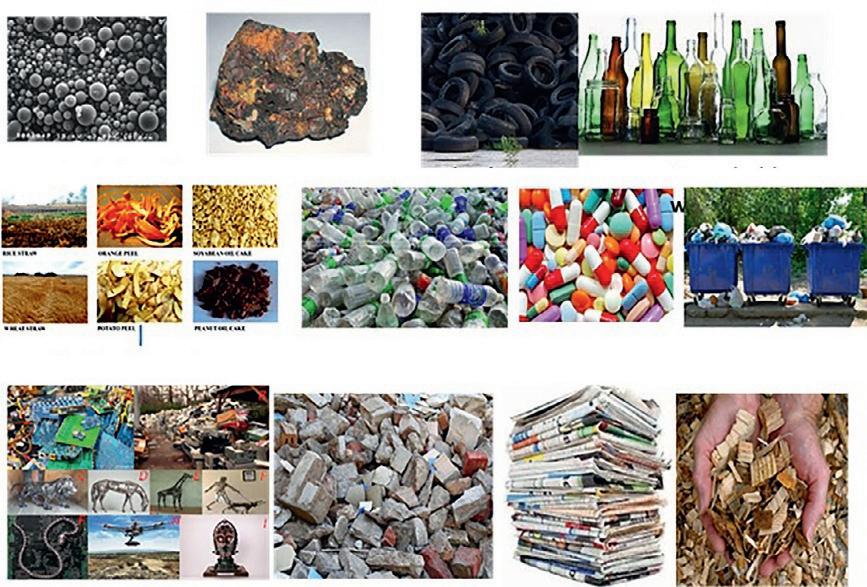
Commonlydiscardedwastesbythepublicareknownasmunicipal solidwastes(MSWs).Thesematerialsarelawnfurniture,packagingmaterials,clothingmaterials,cuttings,bottles/glasses,electricappliances,food scraps,batteries,newspapers,paint,etc. [3].
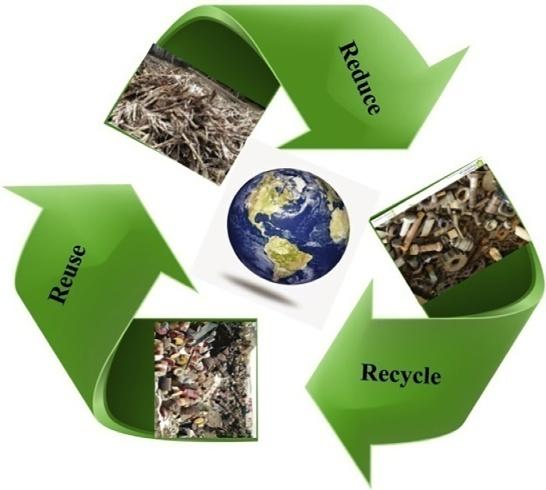
Outofdifferenttypesofsolidwastes,industrialsolidwastes(ISW) haveattractedalot.ISWincludesalltypesofreusable,nonreusable,hazardous,nonhazardous,recyclable,andnonrecyclablewastes [4,5].Despite differentregulationsandprecautions,ISWgenerationisincreasingwitha veryfastrate.Attemptsarebeingmadetominimizewasteproducts.The end-of-lifeforanywasteproductisrelatedtoitsvolume,andavailable collectionandprocessinginfrastructure.Wasteshouldbemanagedin orderof“(i)prevention;(ii)preparingforre-use;(iii)recycling; (iv)otherrecovery,e.g.,energyrecovery;and(v)disposal.”However, themajorwaystominimizeISWarerecycle(1stR),reuse(2ndR),and reduce(3rdR)(Fig.1.1) [1].ThethreeRconceptsconsidereconomics,naturalresourcesavings,andenergysavings,henceresultinminimizingthe obtainedISWandtheirhealthandenvironmentalimpactandthewastes. Inthischapter,generation,characterization,management,anduseofdifferentindustrialsolidwasteshavebeendiscussedindetail.
1.2ClassificationofISW
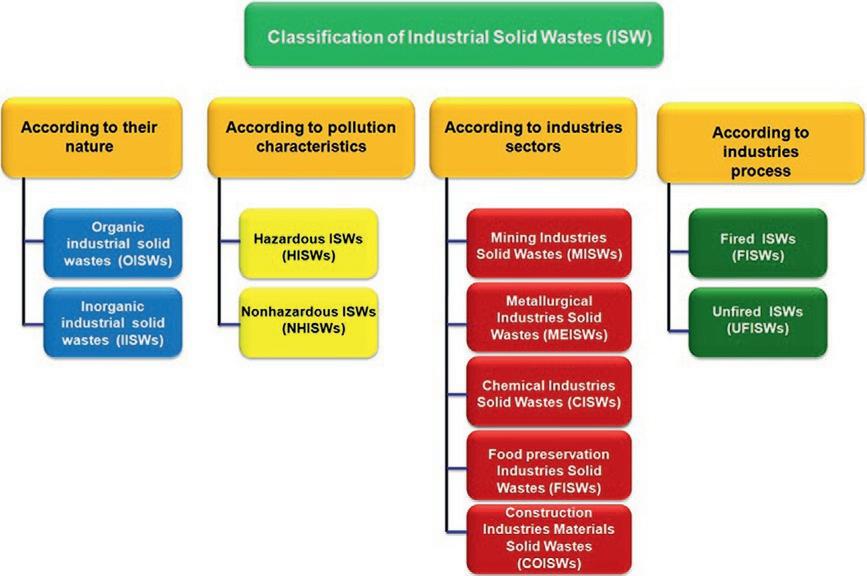
ISWscanbedividedintofourcategoriesdependingontheirnature, pollutioncharacteristics,sectorsandprocessasdiscussedbelow.
FIG.1.1 Reducing,reusingandrecyclingofwastes [1].
1.2.1Accordingtonature
TheISWbasedonthenaturehasbeenclassifiedinto(i)organicand (ii)inorganicindustrialsolidwastes(OISW,IISW).OISWcontains organiccompoundsandaregeneratedinnumberofindustrieslikeoil extraction,painting,tanning,dyeing,foodpreservation,watertreatment stationsandplasticindustries.T heOISWquantityandtheirphysical shapedependonthetechnologiesusedandthesource.Thesourceof OISWisarrangedinthefollowingorder:“Watertreatmentstations <woodmanufactories < oilextraction < plastic,foodpreservation < painting,dyingandtanning.”TheOISWswithpolymericnatureareproduced fromplasticandorganicchemicalmanufacturingindustries.OISW,of herbalnature,isobtainedfromwasteproducedfromwood,food preservation,andoilextractionindustries [1].TheIISWsaregenerated fromindustriessuchasceramic,cement,andgranitemanufacturing. Thedustsgeneratedincementindustriesareveryhazardoussolid waste.Ingeneral,IISWsaremorehazardousthanOISWs.Theamount ofIISWsgeneratedfromindustriesisarrangedinthesequence “cement < ceramic < graniteandmarble.”
1.2.2Perpollutioncharacteristics
TheISWsarehazardousandnonhazardous.ThehazardousISWs (HISWs)needspecialactionaspercharacteristics.HISWsposevarious typesofenvironmentalandhealthproblemsandsotheyarestoredand treatedinaspecialwaydependingontheirhazardousnature.TheNonhazardousISWs(NHISW)donotrequireanyspecialconsiderations.They canbereusedorrecycled.
1.2.3Accordingtoindustrialsectors
Thesesolidwastescanbedividedintofivecategories:(i)miningindustriessolidwaste(MISW),(ii)metallurgicalindustrysolidwaste(MEISW), (iii)chemicalindustriessolidwaste(CISW),solidwastesfromfoodpreservationindustries(FISW),and(v)solidwastesfromconstruction industries.
1.2.4Industrialprocess
Asperindustrialprocess,wasteisclassifiedtofiredISW(FISW)and unfiredISW(UFISW).AllFISWsareobtainedbyfiring.Theexamplesarefired steelwaste,firedceramicwaste,cementdustandfiredbrickswaste [1].All UFISWsareobtainedwithoutfiring.Theexamplesaregraniteandmarble waste,foodpreservationwaste,wastefrompaperindustryandunfired
FIG.1.2 (A)Differentsolidwastesand(B)classificationofISWand [1]
ceramicwaste [1].Differenttypesofsolidwastesaregivenin Fig.1.2Aand differentcategoryissubdividedintonumberofcategories(Fig.1.2B) [1]
1.3Wastesfromdifferentindustries:Generation,properties anduses
Inthissectionsomeimportantsolidwastesfromdifferentindustries havebeendiscussed.
1.3.1Coalflyash(FA)
Flyash(FA),alsoknownaspulverizedfuelash(PFA),isafinepowder obtainedfromthecombustionofpowderedcoalinelectricgenerating plant.Temperaturemayexceed1600°Cduringburningprocessand maymeltmostoftheinorganicmaterialspresentinthecoal.Theinorganic matterpresentinitgetsfusedduringcombustionofcoal.Afterorduring combustion,mineralmatterswithinthecoalorexcluded,liquefy,vaporize,condenseoragglomerate [6].Amorphousandsphericalparticlesof FAareobtainedbyrapidcoolinginthepostcombustionzoneduetosurfacetension.FAproducedfromthermalpowerplantsareinlargequantitiesandcreatepollution.ByreusingFA,environmentalpollutioncanbe minimized.FlyashesobtainedfromdifferentvarietyofcoalshavedifferentcompositionsandaregenerallyTantodarkgray.
1.3.1.1ClassificationofFA
TherearetwogradesofFAbasedonIS3812–1981.Flyash-Iisobtained frombituminouscoalwithSiO2 +Al2O3 +Fe2O3 70%,whereasflyash-II isobtainedfromlignitecoalwithSiO2 +Al2O3 +Fe2O3 50%.Asper ASTMC618,ClassCandClassFFAhavebeenspecifiedbasedoncoal typeandthechemicalcomposition.ClassCflyashhasCaOhigherthan 10%andhascementitiousaswellaspozzolanicpropertiesandnormally obtainedfromthecombustionofligniteorsubbituminouscoals.Class Fflyash,obtainedfromthecombustionofbituminousorananthracite coalwithCaObelow10%,haspozzolanicproperties.
1.3.1.2PhysicalpropertiesofFA
SomeofthephysicalpropertiesofFAsuchasbulkdensity,specific gravity,plasticity,freeswellindex,porosity,surfacearea,limereactivity, coefficientofuniformity,optimummoisturecontent,shearstrengthfrictionangle,etc.aregivenin Table1.1[7].
TABLE1.1 PhysicochemicalpropertiesofFA [7].
TABLE1.1 PhysicochemicalpropertiesofFA—cont’d
Property
1.3.1.3CompositionofFA
FAconsistsofnumberofoxidessuchasAl2O3,MgO,Fe2O3,SiO2,Cao, Na2O,K2OSO3, TiO2,etc.,whichdependonthetypeofthecoalandcombustiontechnology.CompositionsofFAobtainedfromdifferenttypeof coalsaregivenin Table1.2[7]
1.3.1.4CharacterizationofFA
ThemostcommontechniquesforcharacterizationofFAareX-raydiffraction,FTIR,andscanningelectronmicroscopic(SEM)techniques.X-ray diffractionpatternofFAgenerallyshowsbroadhalobandbetween 2θ ¼ 22° –35° duetoamorphousnature [8].Variousothercrystallinephases suchasmullite(M),ironoxide(Fe)(hematiteand/ormagnetite),and
1.3Wastesfromdifferentindustries:Generation,propertiesanduses
TABLE1.2 CompositionofFAobtainedfromdifferentcoals [7]
quartz(Q)areseen.FTIRspectraofflyashshowsnumberofvibrational bandsduetothepresenceofO-H,Si-O-T(T ¼ SiorAl)andFe-Ogroups [8].SEMstudieshaveshownthattheFAparticlesaresphericalinshape andconsistofcenospheres,solidspheres,porousunburntcarbon,and irregular-shapeddebris [9].
1.3.1.5ApplicationsofFA
Dependingonthesource,thecompositionofFAvariesandaccordingly usedindifferentsectorsespeciallyincivilengineeringandconstruction [10].Duetothepresenceofnumberofelements,itisusedasnutrients insoil,precursortosynthesizezeolites,mesoporoussilica,andcarbon nanotubes.Flyashpolymercompositesarebeingsynthesizedfornumber ofapplications.Itactsasanadsorbenttocapturesomepollutinggases fromatmosphereandpurificationofwaterasanadsorbent.SomeimportantapplicationsofFAaregivenin Fig.1.3[9] anddiscussedinthefollowingsections.
1.3.1.5.1FAinconcretes
OneofthemajorapplicationsofFAisinconstructionindustry.When Portlandcement(OPC)ismixedwithFAinappropriateamounts,blended cementsareformed.Thisimprovesthequalityofcementandatthesame