Great Clarendon Street, Oxford, OX2 6DP, United Kingdom
Oxford University Press is a department of the University of Oxford. It furthers the University’s objective of excellence in research, scholarship, and education by publishing worldwide. Oxford is a registered trade mark of Oxford University Press in the UK and in certain other countries
All rights reserved. No part of this publication may be reproduced, stored in a retrieval system, or transmitted, in any form or by any means, without the prior permission in writing of Oxford University Press, or as expressly permitted by law, by licence or under terms agreed with the appropriate reprographics rights organization. Enquiries concerning reproduction outside the scope of the above should be sent to the Rights Department, Oxford University Press, at the address above
You must not circulate this work in any other form and you must impose this same condition on any acquirer
Published in the United States of America by Oxford University Press 198 Madison Avenue, New York, NY 10016, United States of America
British Library Cataloguing in Publication Data
Data available
Library of Congress Control Number: 2020944518
ISBN 978–0–19–886910–8
Printed and bound by CPI Group (UK) Ltd, Croydon, CR0 4YY
Links to third party websites are provided by Oxford in good faith and for information only. Oxford disclaims any responsibility for the materials contained in any third party website referenced in this work.
Prologue
In 1990, the US House of Representatives authorized a total federal expenditure of $5 billion dollars to construct a giant proton accelerator called the Superconducting Super Collider (SSC). The purpose of this machine was to test a sophisticated theoretical description of subatomic particles and to announce to the world that the United States was not prepared to cede leadership in high-energy particle physics research to Europe.
Some scientists and science administrators not involved in particle physics feared that the construction and maintenance costs of the SSC would siphon off government funds from their own areas of research. As a result, the scientific community did not speak with one voice when the budget for the project came up for review every year by Congress. Two Nobel laureates emerged as the principal spokespersons for and against the SSC. The particle physicist Steven Weinberg supported the project; the condensed matter physicist Philip Anderson opposed it.
Weinberg was an expert in the physics of the very small—one of the creators of the theoretical “standard model” of subatomic particles that the SSC was designed to test. He believed that the most important problems in science aimed to discover the physical laws obeyed by the minutest particles in the cosmos. Knowing these microscopic laws, one could derive (in principle) the macroscopic laws obeyed by larger objects like nuclei, atoms, molecules, solids, plants, animals, people, planets, solar systems, galaxies, etc.
Anderson was an expert in the physics of the very many—one of the creators of condensed matter physics, the science of how vast numbers of atoms interact with each other to produce everything from liquid water to sparkling diamonds. He agreed that the standard model was interesting, but he denied the assertion that the laws of elementary particle physics had anything useful to say about famously difficult and unsolved problems like: Why is there
such a thing as window glass? How does turbulence develop in fluids? How does the brain learn? He feared that building and maintaining the SSC would inevitably consume the majority of the funds the government allocates to support scientific research of all kinds.
The debate over the SSC was a unique forum where the differing scientific philosophies of Weinberg and Anderson intersected with a hard decision Congress had to make about spending many federal dollars on a single scientific project. For that reason, the two theorists provided testimony to Congress on several occasions. But only once, at a 1993 hearing, did they testify together in person.1 Portions of their verbatim testimony follow.
Dr. WEINBERG: I am grateful to the chairman to allow me to come here to talk about the Super Collider. In essence, the Super Collider is a machine for creating new kinds of matter, particles that have existed since the Universe was about a trillionth of a second old. To produce these particles requires an energy about twenty times higher than the energy of the largest accelerators that now exist, which is why the Super Collider is so big and therefore why it is so expensive.
This little statement that I have made really does not do justice, however, to what the Super Collider is about because particles in themselves are not really that interesting. . . . If you have seen one proton you have seen them all. We are not really after the particles, we are after the principles . . . that govern matter and energy and force, and everything in the Universe.
Culminating around the mid-1970s, we developed a theory called the standard model which encompasses all the forces we know about, all the different kinds of matter that we can observe
1 Superconducting Super Collider, Joint Hearing 103–85 before the Committee on Energy and Natural Resources and the Subcommittee on Energy and Water Development of the Committee on Appropriations. United States Senate. August 4, 1993, pp. 48–60.
with existing laboratories. We know that [this theory] is not the last word [because] it leaves out things that are pretty important, like the force of gravity. . . In addition, the particles that we know, quarks, electrons and so on all have mass . . . But [the theory] does not know exactly what [these masses] are. This is the question that the Super Collider is specifically designed to answer.
But there is a sense, nevertheless, [that] this kind of elementary particle physics is at the most fundamental level of science. That is, you may ask any question, for example, how does a superconductor work, and you get an answer. You get an answer in terms of the properties of electrons and the electromagnetic field and other things. And then you ask, well, why are those things true? And you get an answer in terms of the standard model. . . . And then you say, well, why is the standard model true? And you do not get an answer. We do not know. We are at the frontier. We have pushed the chain of why questions as far as we can, and as far as we can tell we cannot make any progress without the Super Collider. Thank you.
CHAIRMAN: Thank you very much Dr. Weinberg. Our next witness is Professor Philip Anderson from the Department of Physics, I think that is Applied Physics, at Princeton University.
Dr. ANDERSON: Thank you. For the record, I am not an applied physicist. I like to call myself a fundamental physicist as well; I am just fundamental in a somewhat different way.
CHAIRMAN: Was that because of the W particle?
Dr. ANDERSON: No, it was the Higgs boson that I helped invent.
Now, on several occasions over the years I have testified against the SSC and against other big science projects, and in favor of funding a wider variety of fundamental science on a peer-reviewed basis through institutions such as the National Science Foundation and the National Institutes of Health, which have good records of responsible distribution of funds. I will try to be as brief as possible
and in any case I do not think I can be anywhere near as eloquent as my colleague here, Steve Weinberg.
Dr. WEINBERG: You can try.
Dr. ANDERSON: The point of my testimony is priorities. The physics being done by the SSC is in a very narrow specialized area of physics with a very narrow focus. It focuses on the very tiny and very energetic sub-sub-substructure of the world in which we live. Most of that substructure is well understood in a very definite sense. Nothing discovered by the SSC can, for the foreseeable future, change the way we work or think about the world and cannot change even nuclear physics.
Perhaps a couple of hundred theorists (too many for such a narrow subject in my opinion). . . and a few thousand experimentalists work in this particular field of science. That is less than ten percent of the research physicists in the world. . . . Yet the budget of [the SSC] dwarfs the budget for all the rest of physics. The fact is that particle physicists are funded, on average, ten times as liberally as other physicists . . . In this sense, the SSC is not a very efficient jobs program, at least for physicists.
At least two books and many articles have been published recently trying to justify the special status for this particular branch of physics as somehow more fundamental than all other science. That so many particle physicists have time to write such books and articles may tell you something about the real interest in the field; it has not made much progress lately, and so they do not have anything else to do.
There are many other really exciting fundamental questions which science can hope to answer and which people like myself are, on the whole, too busy to write books about. There are questions like: How did life begin? What is the origin of the human race? How does the brain work? What is the theory of the immune system? Is there a science of economics?
All these things have in common that they are manifestations not of the simplest things about matter—the elementary particles—but of the complexity of matter and energy as we ordinarily run into them. These manifestations of complexity do not . . . have any possibility of being affected by whatever the SSC may discover. . . . On the other hand, the future seems to me to belong to these subjects, to these questions, rather than to the infinite regression of following the tiny substructure of matter. Perhaps you should think which fundamental questions are easier and less expensive to solve. Thank you.
Congress cancelled the SSC two months later. Many particle physicists blamed the demise of the SSC on the testimony and lobbying skill of the outspoken Anderson. He had broken ranks and given public voice to a dispute best handled quietly within the family of physicists. Who was this condensed matter physicist and how had he become so influential?
Acknowledgments
My former Georgia Tech colleague Paul Goldbart suggested I write this book. I had never met Phil Anderson, so Paul volunteered to pitch the idea to him through a mutual friend. The prospective subject was not enthusiastic. He thought his life was too dull for anyone to write about.
I introduced myself to Anderson electronically and explained why I thought a biography would be both timely and interesting. Eventually he agreed and I am grateful for his cooperation. He submitted to several interview sessions and answered the many questions I posed in subsequent emails. He also supplied documents, letters, and photographs without restriction. I regret only that I was not able to complete this book before his death.
Formal interviews of Anderson were indispensable to this book. The website of the American Institute of Physics maintains transcripts of oral history interviews of Anderson conducted by Lillian Hoddeson (1987–1988), Alexei Kojevnikov (1999–2000) and Premela Chandra, Piers Coleman, and Shivaji Sondhi (1999–2002). Author Laurence Gonzales also kindly provided me with a tape of an interview he conducted with Anderson more recently for a history of the Santa Fe Institute.
It is a pleasure to thank the more than one hundred people who spoke or wrote to me about their interactions with Anderson. This group included family (particularly his daughter Susan), friends, acquaintances, students, collaborators, and competitors. I also thank historian Michael Gordin, who was very encouraging at an early stage.
For their help with primary documents, I am grateful to the archivists at Harvard University, the Library of Congress, the Massachusetts Institute of Technology, Princeton University, Rutgers University, the University of California at San Diego, the University of Cambridge, the University of Illinois, the University
of Oxford, Wabash College, and Yale University. I am also grateful for the help I received from the American Institute of Physics Center for History of Physics, the Aspen Center for Physics, the AT&T Archives and History Center, the Chemical Heritage Foundation, the Niels Bohr Archive, and the Santa Fe Institute.
Several individuals read draft chapters of this book and I thank Bert Halperin, Volker Heine, David Joffe, Tony Leggett, Joseph Martin, Marc Merlin, Núria Munoz Garganté, Rob Phillips, Wayne Saslow, and Richard Werthamer for their constructive criticism. I am grateful also to Joshua Weitz for suggesting the title. Special thanks go to two people. Glenn Smith was present when this project began and he patiently provided feedback, advice, and friendship throughout. Dan Goldman read the final manuscript and his comments led me to produce a much improved, truly final manuscript. Of course, all errors and obscurities are my responsibility alone.
Lastly, I am grateful to Sonke Adlung and the entire editorial and production staff of Oxford University Press for their excellent work in bringing this book to fruition.
1
Introduction
History will judge Philip W. Anderson (Figure 1.1) to have been one of the most accomplished and influential physicists of the second half of the twentieth century. His name is not widely known to non-scientists because his accomplishments do not involve the physics of the very small (quarks and string theory) or the physics of the very distant (supernovae and black holes).
Anderson’s expertise was the physics of the very many, primarily very many atoms and/or very many electrons. How many? A typical question in his field might ask for the energy required to disassemble one grain of sand into its constituent atoms. The number of these atoms is about equal to the number of grains of sand in the Sahara desert.1 Special methods and talents are needed to answers questions of this kind.
During his nearly sixty-year career at Bell Telephone Laboratories, the University of Cambridge, and Princeton University, Anderson played a dominant role in shaping the character and research agenda for solid-state physics. This is the subfield of physics that deals with ordinary matter like iron, wood, glass, and pencil lead. It also provides the basic understanding which supports the semiconductor industry, computers, lasers, smart phones, fiber optics, magnetic resonance imaging, and most of the other drivers of our technological society.
Important as they are, these applications of solid-state physics did not direct Anderson’s personal research. His preference to focus on basic principles led him to study phenomena with
1 This number is about one hundred quintillion (1020).
exotic-sounding names like superconductivity, antiferromagnetism, the Josephson effect, superfluidity, the Kondo effect, spin glasses, Mott insulators, liquid crystals, heavy fermions, and resonating valence bonds. His share of the 1977 Nobel Prize for Physics recognized his theoretical discovery of a phenomenon now called Anderson localization, which describes how a propagating wave can be stopped in its tracks by a disordered medium.
Over the years, Anderson earned a reputation for his ability to identify and then tackle very difficult solid-state physics problems and for the deep, seemingly magical, intuition he brought to bear on them. The type of questions that engaged him were often easy to state but very difficult to answer. Why are some solids rigid while others are not? Why do electrons move easily through some solids but not at all through others? What are the fundamental mechanisms responsible for magnetism and superconductivity?
Anderson’s intuition often led him to reach conclusions instinctively rather than by conscious deduction. Some part of this ability comes from a breadth and depth of knowledge that permitted him to weave multiple strands of information together into a single coherent story. But at least some of his intuition— which was so often correct—came from a place that remained a mystery to even his closest friends and collaborators.
As a theoretical physicist, one of Anderson’s greatest strengths was his uncanny ability to strip away the details from a complicated problem and identify its key elements. He would then construct a mathematical model (description) which retained only those elements. Invariably, the models he developed were simple enough to analyze in detail, yet complex enough to exhibit the physical behavior he hoped to understand.
Anderson’s nearly 500 scientific papers provide a clear guide to his research achievements. However, his story is compelling beyond his individual accomplishments because, more than any other twentieth-century physicist, he transformed the patchwork of ideas and techniques formerly called solid-state physics
into the deep, subtle, and intellectually coherent discipline known today as condensed matter physics.
This was not merely a cosmetic change of name. To a great extent, Anderson and a few other like-minded physicists abandoned the prevailing methodology of concentrating on the differences between solid substances and devoted themselves to discovering, exploiting, systematizing, and educating others about the universal properties of solids, i.e , those properties that always appear when 1023 particles interact strongly with one another. This so-called many-body problem fascinated Anderson endlessly.
In a solid, the relevant particles are electrons and an important part of solid-state physics resembles a chess game where every chess piece is an electron. We know the rules obeyed by the pieces, but their vast number generates a huge number of possible arrangements for them. At the highest level of achievement, which is where Anderson operated, the insight and skill of a grandmaster are required to gain an understanding of the true behavior of the electrons.
Anderson wrote a book where he identified a handful of fundamental organizing principles and showed that many seemingly disparate phenomena in condensed systems are actually different manifestations of these few principles. His book is not easy to read, but it had a profound effect on many of the leaders of the next generation of theoretical physicists. Important ideas spread quickly and a glance at the current textbook literature shows that Anderson’s perspective now permeates the gestalt of the entire condensed matter community.
The concept of broken symmetry is one of the ideas that the physics community identifies most closely with Anderson’s personal research. He discovered its importance at an early stage and applied it over and over with great success to a variety of problems. Symmetry breaking also describes a recurring feature of Anderson’s life where he deliberately—and often contrarily— disassociated himself from the behaviors or beliefs of others. This pattern had many consequences, not least in producing the
circumstances for a deep disappointment which settled on him during the final phase of his long career.
Anderson made it his business to influence the culture and politics of American science. He sought and found profound ideas in condensed matter physics as part of a deliberate effort to challenge a high-energy physics community that had spent decades claiming the intellectual high ground for its own activities. By arguing strenuously for the fundamental nature of his own field, Anderson hoped to blunt the influence particle physicists had long enjoyed with government officials and science journalists. The former kept the money flowing to build ever-larger particle accelerator machines. The latter breathlessly reported the cosmic significance of every newly discovered subatomic particle while noting that the latest research by solid-state physicists might produce a better toaster.
Anderson vented his frustrations in a 1972 article where he pointed out that symmetry breaking generated novel properties in large many-particle systems. Moreover, he insisted, these novel
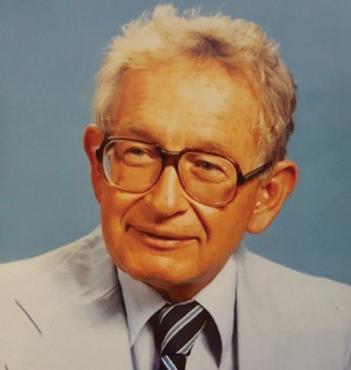
Figure 1.1 Philip Warren Anderson in 1988 at age 65. Source: Donn Forbes.
properties are impossible to predict knowing only the properties of the individual constituent particles and their mutual interactions. He used this idea to attack the claims of particle physicists who asserted that the essential job of science was to discover the laws governing subatomic particles because all other “laws” of Nature were ultimately derivable from them.
To the contrary, Anderson argued, the hierarchical structure of science (e.g , from physics to chemistry to biology to psychology) is not merely a convenient way to divide research practice. Rather, it reflects the existence of fundamental laws at each level that do not depend in any significant way on the details of the laws at lower levels. The higher level laws must be consistent with the subatomic laws, but the likelihood that one can derive the former from the latter is essentially zero. Anderson inspired a small intellectual renaissance among philosophers because (unbeknownst to him) his ideas revived a concept called emergence which had been proposed a century earlier.
In the 1980s, Anderson helped found the Santa Fe Institute, a think tank devoted to developing strategies to study complex systems as dissimilar as turbulent fluids and the US economy. Anderson knew that some physical systems produced complex behavior starting from very simple rules of engagement. This led him to suggest that the mathematics used to analyze these systems might be useful to analyze complexity in other situations. With some success, he lobbied practitioners in fields as diverse as finance, neuroscience, economics, computer science, operations research, physiology, and evolutionary biology to adopt his approach.
Keeping up the pressure on particle physicists, Anderson was a lightning rod for controversy when, as described in the Prologue, he testified in Washington to oppose plans by the US government to build the Superconducting Super Collider. The project was eventually cancelled and some members of the physics community never forgave him for breaking ranks and publicly exposing disagreements inside the larger community of US physicists.
The arc of Anderson’s career reveals a shy mid-western boy who learned the more sophisticated ways of the larger world as a college and graduate student at Harvard University. Eschewing an academic career, he went to work at an industrial laboratory, rose quickly to the top rank of theoretical physicists, and stayed there for thirty-five years. His name became synonymous with success in condensed matter physics and the breadth of his ideas and his skills as a polemicist gave him influence well outside the traditional community of physicists.
Anderson’s novel theory of high-temperature superconductivity in the late 1980s should have been the crowning jewel of his career. However, it proved difficult to work out the predictions of the theory in sufficient detail to compare them with the results of experiments. As time went on and other physicists offered alternative theories, Anderson sometimes became dismissive and combative towards them. This behavior damaged his reputation and drove some young theorists away from the problem. In the end, twenty years of effort failed to convince the majority of his colleagues that his basic idea was correct. This experience left a bitter taste in his mouth.
My original conception of this project was to use Anderson’s career as a vehicle to discuss the intellectual history of condensed matter physics. The impossibility of this task soon became apparent. Entire books could be written to trace the history of the community’s efforts to understand magnetism, superconductivity, the Kondo effect, the Hubbard model, and dozens of other topics. For that reason, I was forced to adopt an extremely Andersoncentric perspective and leave unmentioned the contributions of a great many other excellent scientists unless they bore directly on his involvement.
I did not meet Anderson in person until I interviewed him for this biography. He was no tabula rasa because he had been diligent to curate his own history. Personal historical commentary appears in a volume of his collected essays, in the annotations to the papers included in two volumes of his selected
scientific works, in the transcripts of three oral histories, and even in the text of many of his technical papers.
This is not a textbook, so I have aimed to make my discussions of Anderson’s physics as descriptive as possible. I use virtually no equations and diagrams do most of the heavy lifting. The main requirement is that the reader be able to follow logical arguments of the sort used in college science and engineering courses. Technical terms are unavoidable, but all of them are defined, and when one re-appears later in the text, the reader will lose virtually nothing by skipping over it lightly as a non-musician might skip over a technical musical term when reading a biography of a great composer.
This leads to a broader discussion of the political and cultural aspects of Anderson’s career. It was, in fact, an issue of science politics which put him on the path that led to his interests in emergence and complexity mentioned above. Important sources of information here are the many non-technical essays and book reviews he wrote over the years. These feature his opinions about religion, education, computers, journalism, statistics, the culture wars, and the history, practice, sociology, and philosophy of science.
The mathematician Mark Kac once contrasted the “ordinary genius,” who was someone simply “many times better” than his colleagues, with the “magician,” for whom “even after we understand what they have done, the process by which they have done it is completely dark.”2 Phil Anderson has always struck me as a magician in this sense. I cannot pretend to have completely discovered how he got that way, so I have attempted to understand how this characteristic influenced his scientific trajectory and the effect it had on his students, coworkers, his community, and on the enterprise of physics.
2 Mark Kac, Enigmas of Chance: An Autobiography (Harper and Row, New York, 1985), p. xxv.
2
Son of the Heartland
Philip Warren Anderson was a winter baby, born December 13, 1923. He grew up in an academic family deeply rooted in the American Midwest. His father, Harry, was a professor of plant pathology at the University of Illinois at Urbana-Champaign. His mother, Elsie (née Osborne), was the daughter and sister of professors of mathematics and English, respectively, at Wabash College in Crawfordsville, Indiana.
Anderson’s parents were natives of Crawfordsville and a very pregnant Elsie insisted on a just-in-time road trip to ensure that her son was born on Indiana soil. Later, holiday and long summer visits kept Phil connected to his extended Indiana family. Until the age of thirty, he spent almost every Christmas at his maternal grandfather’s home in Crawfordsville. These visits exposed him to the traditional Hoosier values of pugnacity, skepticism, patriotism, and sensitivity.1 There is a grain of truth in all regional stereotypes and the reader can judge the extent to which these traits appear in some of the behavior of the mature adult.
Phil and his sister Eleanor Grace (older by four years and always called Graccie by the family) engaged with science from an early age.2 Their father encouraged them to collect insects and ask questions, just as he had done as a child. Harry’s professional interest in horticulture led him to encourage his children to
1 Readings in Indiana History, edited by Oscar H. Williams (Indiana University, Bloomington, IN, 1914), p. 259.
2 Graccie is pronounced “Gracky.”
learn about this subject and he largely succeeded. Both became passionate and knowledgeable gardeners as adults.
Harry set up a small chemistry laboratory in his home where his grade school-aged son managed to synthesize hydrogen. The boy failed to produce a working firework in this laboratory, but a child-like enthusiasm for skyrockets and Roman candles survived far into adulthood.3 The Anderson kids also learned to love the outdoors. Graccie was a tomboy and she and young Phil spent many summers carousing with their cousins on the farms still owned by their parents’ families.
Elsie was the guardian of academic standards and she was quite unhappy if her children ever brought home a grade less than an “A.” The nurturing example of Harry, fueled by pressure from Elsie, made it almost inevitable that their children would dream about careers in science. Harry subscribed to the weekly magazine Science and the Anderson kids always made a stab at reading it as high school students. Phil was good at math and he thought he might become a mathematician. Graccie planned to become the Marie Curie of biochemistry.
The Saturday Hikers
Anderson learned about the world beyond Illinois and Indiana from his father’s membership in an institution unique to the University of Illinois called the Saturday Hikers.4 This group of 15–30 male faculty members drove out to a river or lake in the countryside outside Urbana every Saturday morning to hike, canoe, play softball, swim, battle chiggers, and enjoy a campfire cookout. Afterward, there would be singing, university gossip, and spirited political discussion.
3 Interview of Claire and David Jacobus by the author, Princeton, NJ, May 5, 2016.
4 P.W. Anderson, “Growing Up with the Illinois Faculty’s Saturday Hikers” (unpublished, 2016).
The politics of the Saturday Hikers was mostly leftist at the national level and strongly interventionist when it concerned Europe and Asia. During the 1930s, they debated President Herbert Hoover’s plan to relieve farmers facing mortgage foreclosures, the appropriateness of adopting the “Star Spangled Banner” as the national anthem, the hunger strike of Mahatma Gandhi, the rise of the Nazi party in Germany, the Spanish Civil War, and President Franklin Roosevelt’s plan to add justices to the Supreme Court of the United States.
At the time, the left-wing orientation of the Hikers was not common in the Agriculture and Engineering Colleges of the University of Illinois. This meant that the members of the group tended to come from other parts of the campus. Among these people, Harry Anderson was particularly friendly with the chairman of the physics department, Wheeler Loomis, the psychologist Coleman Griffith, and the political scientist Clarence Berdahl.
The creator and leader of the Saturday Hikers for thirty-five years was William Abbott Oldfather, a distinguished professor of classics. Oldfather was a fearless scholar who expressed his socialist opinions “vigorously and often vituperatively.”5 The Andersons and Oldfathers were quite close. They vacationed together in the Teton Mountains and spent two weeks sharing an isolated cabin in Ontario, Canada. On that occasion, Oldfather read aloud from a copy of Thorstein Veblen’s famous economic and sociological analysis of consumerism, Theory of the Leisure Class (1899).
No faculty children or spouses attended the Saturday Hikes. However, the Hikers often trooped out again on Sundays, this time with their families invited. The serious hiking and political debate simply picked up from where it had ended the previous day. Anderson remembered these occasions as his happiest hours as a child and adolescent.6
5 Winton U. Solberg, “William Abbott Oldfather: Making the Classical Relevant to Modern Life” in No Boundaries: University of Illinois Vignettes, edited by Lillian Hoddeson (University of Illinois Press, Urbana, IL, 2004), pp. 69–87.
6 Biography of Philip W. Anderson, Nobel Foundation, 1977.
With the encouragement of his parents, Phil honed his outdoor skills and adopted the political views of the Hikers. Often, the Andersons hosted a rotating dinner/dance called the “Indoor Yacht Club” where progressive political talk was a major feature. Phil and Graccie were not invited, but they stayed out of sight and absorbed all that was said. Both remained committed liberal Democrats their entire lives.
Formal Education
Eleven-year-old Phil Anderson entered the Laboratory High School of the University of Illinois in the fall of 1935. The quality of the instruction at this small private high school (nicknamed “Uni”) was very high. A unique feature—exploited by Anderson— was the ability to begin with a “sub-freshman” year which consolidated the seventh and eighth grades. The annual tuition was $25 and the students were mostly children of University of Illinois faculty and wealthy businesspeople.7
Graccie was a senior at Uni when Phil entered as a sub-freshman. She excelled academically and socially, serving as both the vicepresident of the junior class and president of the senior class. Later, she majored in chemistry at the University of Illinois, served as a meteorologist for the US Navy, and earned a PhD in biochemistry from the University of Wisconsin. The birth of her children interrupted her plans to work in that field but she later enjoyed a long and successful career as a scientific librarian, biographer, and translator.8
Graccie and her brother rarely quarreled. However, as one might expect of two close and very smart siblings, they maintained a healthy intellectual rivalry all their lives. When they both lived in New Jersey, they raced each other to be the first to complete a difficult word puzzle which appeared every week in the Sunday New York Times.
7 Interview of Henry P. Noyes by the author, September 20, 2015.
8 Interview of Andrew Maass by the author, June 18, 2017.
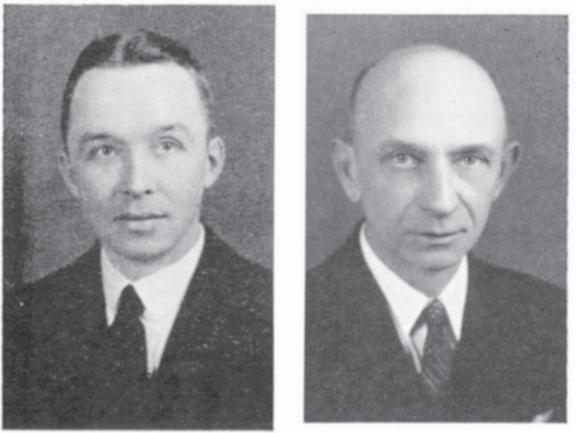
Figure 2.1 Early influences. Phil Anderson’s mathematics teacher, Miles Hartley (left) and his physics teacher, Wilber Harnish (right) in 1939, when Anderson was a junior. Source: U and I, the yearbook of the University High School, University of Illinois.
Anderson’s favorite teacher at Uni was Miles Hartley, a University of Illinois PhD who taught plane geometry and algebra to the juniors and solid geometry and advanced algebra to the seniors (Figure 2.1). He was a stickler, but he was also a pedagogical innovator who used plywood and dowels to construct models to illustrate theorems in solid geometry.9 Inspired by Hartley, Anderson cemented his plan to major in mathematics in college.10
The physics teacher at University High School, Wilber Harnish (Figure 2.1), was the anti-Hartley. Harnish’s background was in education, not physics, and he avoided quantitative deductions by focusing on student experiments. This meant that Phil and his classmates
9 Miles C. Hartley, “Models of Solid Geometry,” The Mathematics Teacher 35 (1) 5–7 (1942).
10 Jeremy Bernstein, Three Degrees Above Zero: Bell Laboratories in the Information Age (Cambridge University Press, Cambridge, 1984), p. 121.
worked with vacuum pumps and electric motors, but they were not taught the laws of physics that made them work. Harnish discussed gravity in connection with pulleys and falling objects, but he neglected to point out that gravity also governs the motions of the planets. His teaching provided not a hint of the unity of the subject.11
Phil compensated by borrowing popular science books from the school library. His two favorites were The Einstein Theory of Relativity (1936) by Lillian and Hugh Lieber, and Mr. Tompkins in Wonderland (1940) by George Gamow. The Liebers were expert at using cartoons and geometrical diagrams, but they included serious algebraic manipulations also.
George Gamow was a world-renowned theoretical physicist who used fiction to introduce modern physics to a popular audience. His hero, Mr. Tompkins, was a bank clerk who attended physics lectures at a local university. Each night, he dreamed of a fantastical world where the usually unseen effects of special relativity, quantum mechanics, and the curvature of space due to gravity become apparent during the course of daily life. Clever cartoons and a clear presentation of the physics are notable features of Gamow’s book also.
The Lieber and Gamow books leave the reader with a vivid impression of the interplay between theory and experiment in physics.12 In light of Phil’s later insistence on the importance of experiment to guide and inform theory, it is not surprising that these particular books never left his memory. On the other hand, much of the material he read from the Uni library differed so much from what he saw in Harnish’s physics class that he was a college freshman before he realized they were all part of the same subject.13 The search for connections would be a characteristic feature of his research for his entire career.
11 Interview of Henry P. Noyes by the author, September 20, 2015.
12 Both books are still in print: Lillian R. Lieber and Hugh Gray Lieber, The Einstein Theory of Relativity: A Trip to the Fourth Dimension (Paul Dry Books, Philadelphia, PA, 2008); George Gamow, Mr. Tompkins in Paperback (Cambridge University Press, Cambridge, 2012).
13 Interview of PWA by Alexei Kojevnikov on March 30, 1999, Niels Bohr Library & Archives, American Institute of Physics, College Park, MD.
Anderson was a diligent student, and the editors of the school yearbook used the title of an Oscar Wilde play, The Importance of Being Earnest, as the caption for his 1940 graduation photo. The accompanying thumbnail biography reveals that he acted in the school play every year, wrote and read the senior class history at commencement, and participated in the biology and chess clubs. At graduation, he ranked first in his class, tied with “three others, one a girl” as his transcript put it. He earned a grade of “A” in every course except typewriting and physical education. The latter probably reflects disinterest because he won the school tennis championship as a junior, competed in the state track meet as a miler, and was a talented speed skater.
The Krebiozen Affair
Elsie Anderson stressed education to her children, but she also put great emphasis on the importance of self-respect and respect for others.14 There were many opportunities to communicate this message, particularly because the ravages of the Great Depression were grimly apparent on the streets of Champaign and Urbana during her children’s school years. One day, an out-of-work man came to the back door of the Anderson residence looking for food. Elsie treated him with kindness and respect and it was made clear that no other behavior was acceptable.15
Anderson also looked to his father for advice and example. Harry’s success as a researcher was a clear model for a life devoted to science.16 Less apparent, but perhaps more important, Phil put great value on his father’s personal integrity. A striking example
14 Letter from PWA to Liberty Santos, November 17, 1986. Anderson, Philip W.; Faculty and Professional Staff files, Subgroup 13: P, AC107.13, Princeton University Archives, Department of Rare Books and Special Collections, Princeton University Library.
15 Interview of Andrew Maass by the author, June 18, 2017.
16 Harry Anderson’s Diseases of Fruit Crops (McGraw-Hill, New York, 1956) continues to garner citations in the scientific literature, more than sixty years after its original publication. Google Search, September 26, 2018.