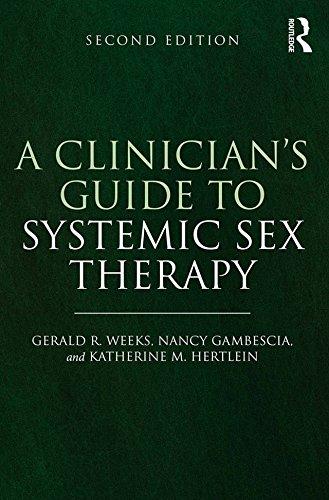
The second edition of AClinician’sGuidetoSystemicSexTherapy has been completely revised, updated, and expanded. This volume is written for beginning psychotherapy practitioners in order to guide them through the complexities of sex therapy and help them to be more efficient in their treatment. The authors offer a unique theoretical approach to understanding and treating sexual problems from a systemic perspective, incorporating the multifaceted perspectives of the individual client, the couple, the family, and the other contextual factors. Both beginning and experienced sex/relationship therapists will broaden their perspectives with the Intersystem approach and gain information rarely seen in sex therapy texts such as: how to thoroughly assess each sexual disorder, the implementation of various treatment principles and techniques, how to incorporate homework, dealing with ethical dilemmas, understanding different expressions of sexual behavior, and addressing the impact of medical problems on sexuality. Aside from bringing the diagnostic criteria up-to-date with the DSM 5, this new edition contains a new chapter on sensate focus, an expanded section on assessment, more information about development across the lifespan, and more focus on diversity issues throughout the text.
Gerald R. Weeks, PhD, APBB, CST, is a certified sex therapist with 30 years of practice experience and is a professor at the University of Nevada, Las Vegas. He is among a handful of individuals to be given the “Outstanding Contribution to Marriage and Family Therapy” award in 2009 from the American Association of Marriage and Family Therapy, and was named the “2010 Family Psychologist of the Year.” He has published over 20 books in the fields of individual, couple, family, and sex therapy.
Nancy Gambescia, PhD, CST , is a certified sex therapist with 35 years of practice experience, and is the Director of the postgraduate sex therapy program at Council for Relationships in Philadelphia, Pennsylvania. She also maintains a private practice specializing in relationship and sex therapy in Rosemont, PA. Dr. Gambescia has published numerous book chapters, journal articles, and 6 books in couple and sex therapy.
Katherine M. Hertlein, PhD, is a professor and Program Director of the marriage and family therapy program at the University of Nevada, Las Vegas. She has published over 50 articles, 7 books, and 25 book chapters over the course of her career. She presents nationally and internationally on sex, technology, and couples.
“Written by master sex therapy clinicians, this second edition surpasses its predecessor by offering up-to-date research and clinical insight, making a compelling case for its use for systemic sex therapy with couples experiencing sexual problems. This text will serve as an outstanding resource for all clinicians, particularly those heavily entrenched in working with individuals and couples. It is an invaluable text for both beginners and seasoned practitioners. I applaud the authors on producing a masterful work and strongly recommend it.”
Frank M. Dattilio, PhD, ABPP, works in the department of psychiatry at Harvard Medical School
“It is a pleasure to endorse such a strongly resourced, credible, and contemporary resource for the practicing sexual and relationship therapist. Throughout the text, the authors emphasize the crucial awareness yet problematic dichotomy between psychological and physiological states alongside relational and other factors that contribute to sexual functioning. The text offers practical tips, guidance and tools from a strong clinical background with clear emphasis to systemic practice. Key signposting throughout the text makes this especially meaningful to the audience of modern society with key literature sharing space with other media resources.”
Professor Kevan Wylie, MD FRCP FRCPsych FRCOG FECSM , is a consultant in sexual medicine, Sheffield, and President, World Association for Sexual Health
“There are three reasons why you should read AClinician’sGuidetoSystemicSexTherapy It is the only book that places sex therapy squarely within a family systems approach. In other words, it focuses not only on the mechanics and biology but also on the couple relationship. Second, it is among the most comprehensive books on sex therapy with sections on diversity, diagnosis and ethics. Finally, as the title suggests, it is the most practical text available with cutting edge techniques described in detail and updated for DSM-V. Every clinician working with couples needs this book.”
Mark E. Young, PhD, works at the Marriage and Family Research Institute at the University of Central Florida
“The only book you need to practice effective sex therapy. Drs Weeks, Gambescia, and Hertlein have improved on their original gem and expanded their integrated model to include the latest diagnostic categories of the DSM 5. The authors show how to treat sexual problems within the context of the couple relationship and not as an unconnected ‘plumbing’ problem. This easy-to-use guide that addresses the gamut of sexual and relationship issues belongs on every clinician’s bookshelf.”
Jon Carlson, PsyD, EdD, ABPP, CST, is a Distinguished Professor of Adlerian Psychology at Adler University in Chicago
“This is much more than a ‘Guide.’ The term ‘guide’ is really a humble misnomer. This is in the true term of the word a veritable encyclopedia of all you want to know and need to do systemic sex therapy. Beginning students as well as seasoned professionals will be brought up to date in all the myriad of possible information that makes this humbly-called ‘guide’ a classic source of information and knowledge about sex therapy. I wish I had it when I fi rst started doing couple therapy.”
Luciano L’Abate, PhD, ABEPP, is Professor Emeritus of Psychology at Georgia State University
A CLINICIAN’S GUIDE TO
SYSTEMIC SEX
THERAPY
Second Edition
Gerald R. Weeks, Nancy Gambescia, and Katherine M. Hertlein
Second edition published 2016 by Routledge
711 Third Avenue, New York, NY 10017
and by Routledge 2 Park Square, Milton Park, Abingdon, Oxon, OX14 4RN
The right of Gerald R. Weeks, Nancy Gambescia, and Katherine M. Hertlein to be identified as authors of this work has been asserted by them in accordance with sections 77 and 78 of the Copyright, Designs and Patents Act 1988.
All rights reserved. No part of this book may be reprinted or reproduced or utilised in any form or by any electronic, mechanical, or other means, now known or hereafter invented, including photocopying and recording, or in any information storage or retrieval system, without permission in writing from the publishers.
Trademarknotice: Product or corporate names may be trademarks or registered trademarks, and are used only for identification and explanation without intent to infringe.
First edition published by Routledge 2009 LibraryofCongressCataloging-in-PublicationData
A catalog record has been requested for this title
ISBN: 978-0-415-73840-8 (hbk)
ISBN: 978-0-415-73839-2 (pbk)
ISBN: 978-1-315-81739-2 (ebk)
Typeset in Bembo by Apex CoVantage, LLC
ToNancy,fortheloveyoubringtomylife. GW
ToMatt,LaurenandMichael,withlove
NG
ToAdam,forfillingmylifewithjoy
KH
This page intentionally left blank
PREFACE
The second edition of AClinician’sGuidetoSystemicSexTherapy is a companion volume to SystemicSexTherapy (Hertlein, Weeks, & Gambescia, 2009) or may be used as a stand-alone book. This book is the fi rst major popular text to propose that sexual problems must be considered within the context of the couple system. The book is based on several assumptions, which make it highly compatible with the field of marriage and family therapy or for those therapists who view problems from a systemic perspective. We assume (1) sexual problems may reflect problems at many different levels in the couple; (2) the resolution of many couple-related problems must precede work on the sexual difficulty; (3) unconscious factors in the couple’s relationship may sabotage the sex therapy; (4) sexual problem(s) in one partner may serve to mask sexual problems in the other partner; (5) sexual problems may be unconsciously maintained by the couple in order to avoid intimacy in other parts of the relationship; (6) homework assignments must always actively involve both partners such that each derives benefit; and (7) couple and sexual problems may reciprocally maintain and exacerbate each other. Thus, this text is an ideal choice for marriage and family therapy programs because it is practical and has a systemic orientation.
With the first edition of AClinician’sGuidetoSystemicSexTherapy, we noticed that therapists we were training often carried the book to and from sessions, paging through it to read descriptions of specific disorders, or to find a plan for conducting their next session. We also noted that postgraduate interns consulted the book during classes in which SystemicSexTherapy (Hertlein, Weeks & Gambescia, 2009) was used as a textbook. In the preparation of the second edition, we focused on topics that every therapist needs to know about when doing
psychotherapy, specifically when integrating couple and sex therapy. We refined it so it would be more of a guide, a reference, a quick source of information for the clinician. Accordingly, we added chapters on conducting a sex history; using the sexual genogram and timeline; and incorporating sensual touch exercises, commonly known as sensate focus (but in our chapter, a much more refined approach is presented).
The second edition of AClinician’sGuidetoSystemicSexTherapy is truly a companion to the larger text, SystemicSexTherapy,SecondEdition (Hertlein, Weeks, & Gambescia, 2015). It covers such topics as the new DSM-5 (American Psychiatric Association, 2013) diagnostic categories, assessment strategies and treatment issues. It also offers a road map for the experienced therapist dealing with a sexual disorder or for the therapist-in-training who might be meeting a couple for the fi rst time. This book is different from many psychotherapy texts because of the inclusion of essential topics such as a triage tree, conducting a sexual interview, and multilayered diagnosis formulations.
The core chapters of this book are lengthy and highly detailed chapters on clinical assessment and treatment. These chapters blend our extensive experience from training sex therapists and being practitioners. We offer general guidelines for assessment and treatment and then proceed with offering very specific guidelines about how to assess and treat. In the assessment chapter, we list questions that provide the essential information for the therapist to have in order to construct a treatment plan. The treatment chapter is very specific about the general principles and the steps to intervention. We discuss not only the technique but also the proper implementation of the technique. The purpose of this book is to provide readers with an integrative and comprehensive theory in guiding their clinical practice. Most of this text is pragmatically oriented. We inform the therapist about diagnosing and treating sexual problems with many resources, such as tables, graphs, flow charts, treatment plans, and implementation strategies. The use of this information needs to be guided by a theory that can be translated into practice. The Intersystem Approach that we have developed gives the clinician this guide.
As with all of our texts, the overarching theory is the Intersystem Approach, a unique contribution to the field of couple and sex therapy developed by Gerald Weeks in 1977 with some of the fundamental concepts, and refi ned and developed continuously since that time. This approach has produced a major paradigm shift in the field of sex therapy, expanding the focus of treatment beyond the individual partner to include several contexts in the person’s life, such as the relationship, family of origin, medical issues and contextual factors.
In general, the field of sex therapy started with an emphasis on behavioral therapy, then psychodynamic/behavioral therapy, followed by cognitive-behavioral therapy, next the integration of medical treatments with sex therapy and fi nally
with an emerging use of mindfulness as an adjunctive treatment. Each movement in sex therapy has advocated for the use of a singular perspective, such as cognitive-behavioral therapy, psychodynamic approaches or the medicalization of sex therapy, with the individualalwaysbeingthebasicunitoftreatment and the spouse as a cotherapist. The Intersystem Approach is distinctive because it is a comprehensive and integrative paradigm that empowers the therapist to draw from multiple approaches simultaneously while addressing all components of the couple system. These components or domains of behavior include the individual, the couple, the intergenerational system and larger contextual factors such as culture and religion. In summary, the following factors make Systemic SexTherapy,SecondEdition (Hertlein, Weeks, & Gambescia, 2015) unique from other texts:
• Grounded in Systems Theory
The basic assumptions regarding sexual problems are compatible with a systems approach. This means the individual is not the sole unit of treatment, but one part of a larger system.
• The Intersystem Approach
The meta-framework for this volume is the Intersystem Approach. This approach transcends all specific therapeutic modalities and techniques and focuses on several domains of behavior that should be evaluated and possibly used in the treatment for every sexual problem.
• The Integration of Sex and Couple Therapy
We view these two approaches as inseparable. The sexual problem is embedded within the couple relationship, and the couple relationship may be contributing to the sexual problem or the sexual problem may be creating or exacerbating couple problems.
• Clinical Innovation
This text represents over a century of clinical experience from a systems perspective and the integration of the latest research fi ndings. The assessment and treatment protocols blend practice and research.
• Focus on Implementation
Many of the prior books on sex therapy described techniques without providing a context or suggestions as to how to sequence and implement the techniques.
A technique is likely to fail without proper implementation. This text offers suggestions on how to create treatment plans and implement the techniques.
Chapter Overview
AClinician’sGuidetoSystemicSexTherapy,SecondEdition, contains many chapters that deal specifically with issues that arise in sex therapy:
Chapter 1. The Intersystem Approach to Sex Therapy establishes the foundation for the entire book by introducing the Intersystem paradigm we have been using for years in couple and marital therapy. This approach enables assessment and treatment of sexual and marital problems through five domains: (1) individual/biological; (2) individual psychological; (3) the dyadic relationship; (4) family of origin influences; and (5) contextual factors such as society, culture, history, religion and so on. This chapter addresses the theoretical stagnation that has been discussed by several other authors in the field of sex therapy and emphasizes the need to integrate couple and sex therapy.
Chapter 2. Diagnosis of Sexual Disorders begins with a review of the DSM-5 diagnostic criteria for sexual dysfunctions, comparing the differences between the last two editions of DSM and some sexual issues not included in the DSM-5, such as sexual compulsivity, ego-syntonic gender nonconformity, and consensual kink. Diagnosis from an Intersystemic perspective is described as a way to bring the various diagnoses together.
Chapter 3. Intersystem Assessment of Sexual Disorders is presented as a comprehensive, continuous and fluid process that can be comingled with treatment throughout the duration of therapy. Guidelines for conducting a sex history, assessment for specific sexual disorders and related questions for inquiry are offered. A review of how to assess each domain of the system provides guidelines for different methods of evaluation.
Chapter 4. The Sexual Genogram in Assessment is a relatively new and efficient way to assess sexual function and dysfunction from an intergenerational perspective . The functions, construction and use of the different sexual/ gender/attachment genograms is discussed with their implications for treatment. Follow-up questions to the genogram and the use of a sexual timeline are offered.
Chapter 5. Measures of Sexual Function and Dysfunction reviews a number of ways of objectively collecting information about sexual functioning. These methods include behavioral, physiological and psychological measures that are objective and have known validity and reliability.
Chapter 6. General Treatment Principles, Strategies and Techniques covers some of the basic considerations when beginning treatment for sexual problems. Issues such as how to begin treatment, how to conceptualize the sequencing of treatment and how to keep treatment systemic (couple-oriented) are discussed. The assessment and treatment of each domain of behavior is reviewed. Each
one is a multifactorial disorder requiring the combination of multiple techniques of treatment. A number of new and innovative treatment techniques are offered for these disorders.
Chapter 7. Treating Absent or Low Sexual Desire in Men and Women combines the diagnosis and treatment of low/absent desire in men and women. Although DSM-5 splits these diagnoses, the etiology and treatment are so similar that combining them in one chapter was more reasonable.
Chapter 8. Treatment Principles, Strategies and Techniques Specific to Men gives a detailed description of the techniques, methods and strategies for treating erectile disorder, premature ejaculation, and delayed ejaculation. The assessment and treatment of each domain of behavior is reviewed. A guideline for the sequence of treatment for each disorder is laid out, with a focus on effective implementation.
Chapter 9. Treatment Principles, Strategies and Techniques Specific to Women gives a detailed description of the techniques, methods and strategies for treating female orgasmic disorder and a newly defi ned disorder in DSM-5 called genito-pelvic pain disorder. The latter diagnosis is a combination of several disorders that produce pain with touch and/or penetration. A guideline for the sequence of treatment for each disorder is laid out, with a focus on effective implementation.
Chapter 10 . The New Sensate Focus Technique is a special application of incremental sensual touch exercises within an Intersystem framework. Although we still call these sensate focus exercises, our conceptualization of the functions of this technique and their implementation is radically different from traditional approaches. For the fi rst time since the publication of our fi rst volume, sensate focus is described within a systemic framework. This change represents a significant advance over the traditional use of sensate focus.
Chapter 11. Factors That Complicate Treating Sexual Disorders reviews topics such as sexual ignorance, incorrect mythological information, faulty cognitions, sexual guilt and shame. It also highlights specific treatment strategies for these factors. Much of the chapter describes underlying fears of intimacy in the couple that can manifest as sexual problems.
Chapter 12. Principles of Homework illustrates many of the cognitive and behavioral assignments we design in session that must be practiced outside of the therapy office in order for lasting change to occur. The chapter provides an overview of the basic principles of how to design homework assignments. The structural elements of a homework exercise are outlined along with principles of how to increase compliance. The collaborative process of creating homework assignments is thoroughly described.
Chapter 13. Psychoeducation in Sex Therapy describes the numerous ways of providing clients with psychoeducational information. The text gives the clinician a number of resources that can be used with clients from books, to videos/multimedia, to Internet resources, and so on.
Chapter 14. Physical/Medical Issues in Sex Therapy offers suggestions for working with clients dealing with medical issues such as cardiovascular illness, neurological disorders, cancer, diabetes and other illnesses or disabilities that affect sexual functioning. Changes associated with ageing that typically affect sexual functioning are also described.
Chapter 15. Diversity in Sexual Expression addresses the needs of gay, lesbian, queer, kinky, gender-variant, nonmonogamous and asexual clients and other groups. The therapeutic treatment of these groups has been underemphasized in the literature on sex therapy. Particular attention is given to countertransference issues.
Chapter 16. Ethics in Sex Therapy reviews specific obligatory concerns in sex therapy treatment, such as the responsibility of the therapist to understand his or her own ethical vulnerabilities that could obstruct treatment and interfere with a safe environment for the sex therapy. Some of the specific topics covered are how to refer and collaborate with other professionals, especially physicians, several common ethical dilemmas in sex therapy, the use of sexual surrogates, and suggestions for the ethical management of all of these issues.
References
American Psychiatric Association. (2013). Diagnosticandstatisticalmanualofmentaldisorders (5th ed.). Arlington,VA: Author.
Hertlein, K. M., Weeks, G. R., & Gambescia, N. (Eds.) (2009). Systemicsextherapy. New York: Routledge.
Hertlein, K. M., Weeks, G. R., & Gambescia, N. (Eds.) (2015). Systemicsextherapy (2nd ed.). New York: Routledge.
ACKNOWLEDGMENTS
A book is always the effort of many different people. First, we would like to thank George Zimmar, the senior editor at Routledge/Taylor & Francis and Marta Moldvai, the editor for this volume. We wrote this second edition at Marta’s request because the fi rst edition of this book was one of their most important texts in the field of sex therapy. Marta was always available to guide us and answer questions. She also did a superb job of editing the fi nal manuscript. Of course, many other staff at Routledge helped to bring this book to publication.
Second, we want to thank our own partners, who showed infi nite patience and support when we spent weekends, weeknights and parts of holidays working on the book rather than spending time with them. Their understanding and tolerance were invaluable in our fi nding the seemingly endless hours to work on this project. They truly understood how important this project was to us.
Third, we had assistance from a small army of extremely helpful students who performed literature reviews and made editorial comments on the chapters. These graduate and postgraduate students were interested in the field of sex therapy and willing to devote hours in helping with this text. Their feedback helped to ensure the book would be more understandable to the beginning sex therapist and would be user friendly. These students tediously performed multiple reference checks. Paige Espinosa, the lead graduate assistant (GA) on the project, helped coordinate the work of the GAs and did more than her share of editing, searching for references and reading for the flow of content. Kiera McGillivray, another research assistant, also did much of the fi nal proofreading and meticulous editing. Other GAs and postgraduate students also provided invaluable assistance: Nedka Klimas, Dawn Canty, Diane Caldas, Jenna
DiLauro, Claire Wertz and Mary Chen. Their personal interest in our writing about sex therapy was another source of inspiration for us.
Finally, a book that presents an alternative paradigm to the traditional paradigm would be of no value unless we had an audience of readers interested in doing sex therapy in a different way. We are gratified that so many readers found value in this new approach in the fi rst volume of AClinician’sGuideto SystemicSexTherapy. Without their interest, this second volume would not exist.
This page intentionally left blank
Exploring the Variety of Random Documents with Different Content