A Brain for Business – A Brain for Life: How insights from behavioural and brain science can change business and business practice for the better 1st Edition Shane O'Mara (Auth.)
LC record available at https://lccn.loc.gov/2023018976
LC ebook record available at https://lccn.loc.gov/2023018977
Printed in the United States of America
Cover design: Henry Sene Yee Cover image: Shutterstock
CONTENTS
Acknowledgments vii
Introduction 1
PART I: HIPPOCAMPUS AND IMAGINATION
Chapter One Hippocampus: From Memory to Imagination 9
Chapter Two False Memory 16
Chapter Three Place Cells and Hippocampal Replay 23
PART II: THE NEURAL SYMPHONY OF IMAGINATION
Chapter Four Neural Circuits of the Hippocampus 37
Chapter Five Value-Based Decision-Making 45
Chapter Six Remembering Rewarding Futures 56
Chapter Seven The Evolution of Imagination 63
PART III: THE NEURAL FOUNDATION OF ABSTRACTION
Chapter Eight
Abstract Thinking and Neocortex 75
Chapter Nine Prefrontal Cortex 87
Chapter Ten
The Human Revolution and Associated Brain Changes 96
Chapter Eleven Deep Neural Network 107
PART IV: BEYOND IMAGINATION AND ABSTRACTION
Chapter Twelve
Sharing Ideas and Knowledge Through Language 119
Chapter Thirteen On Creativity 138
Chapter Fourteen The Future of Innovation 147
EPILOGUE
APPENDIX : DENTATE GYRUS
APPENDIX : VALUECODING NEURONS
NOTES
BIBLIOGRAPHY
INDEX
ACKNOWLEDGMENTS
I’m grateful that I’ve had the opportunity to work with so many great fellow scientists over the course of my career, including my doctoral mentor, Gary Lynch, and postdoctoral mentor, Bruce McNaughton, who have shaped the way I view how the brain supports high-level mental functions. I want to thank all of these scientists, but there are too many to mention by name here.
A special note of appreciation is owed to my former students Jong Won Lee, Hyunjeong Lee, Sung-Hyun Lee, and Youngseok Jeong, as well as my collaborators Daeyeol Lee, Inah Lee, Woong Sun, and Woonryung Kim, who made significant contributions to the works discussed in chapters 5 and 6 and the appendixes. Special thanks also go to Kyoon Huh and Eunjoon Kim as colleagues for their advice and support.
I want to thank Se-Bum Paik for his insightful comments on the first draft of chapter 11 (“Deep Neural Network”). I’d also like to thank Maame Boetamaa for her editorial help, Jong Won Lee for preparing figures, Jooyong Shin for assisting with references, and Verner Bingman and Kimberly Wade for providing original images.
The staff at Columbia University Press has been extremely helpful to me in finishing this book. In particular, the project was greatly fueled by the enthusiasm of Miranda Martin, the project’s editor. She and the rest of the production, graphics, and marketing team at Columbia University Press have my appreciation.
Most of all, I would like to express my deepest gratitude to my parents and my family, Inhee, Alice, and Amy, for their sacrifice, support, and encouragement throughout my life as a scientist.
A BRAIN FOR INNOVATION
INTRODUCTION
Humans are extraordinary animals. As the only known species that can understand the concept of their own existence, humans have long pondered their place in the world and their relationship to the universe. These inquiries have resulted in some of the most significant advances in science, philosophy, and spirituality. Our extraordinary capacity for introspection and self-reflection distinguishes us from all other living species on the planet. Despite our exceptionality, we share with other living organisms the same ultimate goal: the survival and perpetuation of our species.
Which animals best achieve the ultimate biological goal? Without a doubt, insects; they are currently the most adapted animals on earth. Scientists estimate their number to be about ten quintillion (10,000,000,000,000,000,000), and together they weigh seventy times more than all humans combined. Their diversity is also amazing. There are about 1 million known insect species, and this amounts to around 90 percent of all known animal species and more than 50 percent of all known life species. Moreover, the number of unknown insect species is estimated to be between 2 and 10 million (5.5 million on average). It is not surprising that there exists a discipline, entomology, dedicated to studying insects: insects are the most dominant animals on earth in terms of number, mass, and diversity. Scientists predict that insects will survive tenaciously when many other animal species, including humans, become extinct in the distant future. Biologically, it is obvious that humans are not the most successful animal species on earth.
Even though we are not currently the most successful animals on earth, we are perhaps the most successful large vertebrate animals. We have managed to thrive in a wide range of environments on every continent, and our total weight now far exceeds that of all wild land vertebrate animals. More importantly, we are the only animals that have advanced technologies, created sophisticated cultures, established large societies, and, remarkably, gained power to affect and shape our environment in ways that no other animal has.
These achievements would not have been possible without our capacity for innovation. We tend to try new things to improve our futures. The accumulation of innovations big and small throughout history has eventually enabled us to build civilizations on a global scale. We even have established a social system to promote innovations—the patent laws. In this respect, humans may be regarded as innovative animals or Homo innovaticus.
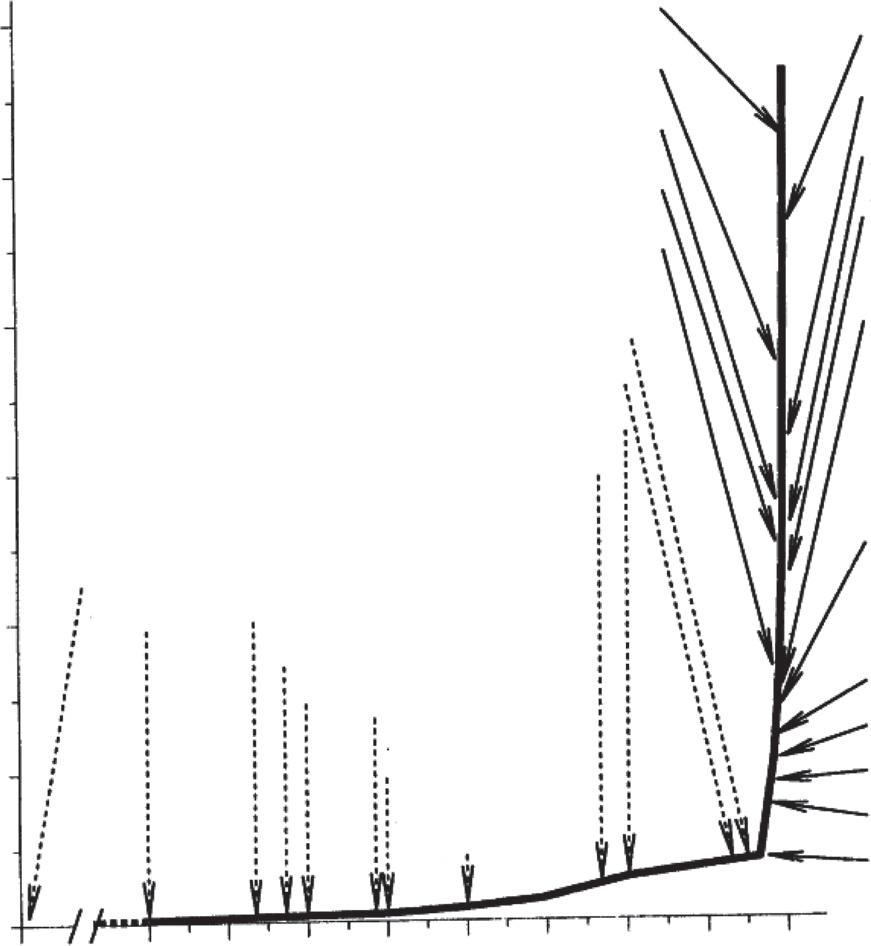
Figure 0.1 shows advances in technology along with the growth of the world’s population since the dawn of agriculture. The population size grew exponentially, and technological changes accelerated at an astonishing rate during the last two centuries. The major technological events shown represent only a minute fraction of the scientific and technological advances mankind has achieved during the last two hundred years.
Why are we so innovative? Perhaps our brains differ from those of other animals. But how? This is the main topic of this book. Innovation requires a new insight, and a critical factor for new insights is the capability for imagination. We come up with new technologies, bits of knowledge, ideas, and art by combining existing ones in new ways using our imagination. Albert Einstein referred to the power of imagination this way: “Logic will get you from A to B. Imagination will take you everywhere.” A question arises then as to whether the capability for imagination is unique to humans. The answer to this question is clear: “Definitely not.” Imagination is far from being a unique human mental faculty. Psychological, neuroscientific, and animal behavioral studies have provided converging evidence that animals are capable of imagination. In particular, neuroscientific research in the last two decades has revealed neural activity seemingly related to imagination.
What then is the unique human mental faculty that enabled innovation throughout human history? Imagination promotes but does not guarantee innovation. The scope of imagination is constrained by one’s cognitive capacity. Without a sufficiently high cognitive capacity, the content of one’s imagination would be far from being innovative. In particular, the capacity
for high-level abstraction is essential for innovations involving conceptual knowledge such as those shown in figure 0.1. In other words, humans are particularly innovative because they have the unique capacity to imagine freely using high-level abstract concepts such as imaginary numbers, vectors, gravity, atoms, genes, mutations, algorithms, beauty, humanism, free will, liberty, and social justice.
I by no means argue that abstract thinking is a unique human mental faculty. It is well known that other animals, especially primates, are capable of abstract thinking. However, no animals come close to humans in terms of the level of abstraction. Humans are superb at forming and manipulating high-level abstract concepts and imagining freely using them. A prime example of this capability is language. Only humans possess a true capability for language with specialized brain regions dedicated to language processing. Innovations such as those shown in figure 0.1 would have not been possible
FIGURE 0.1. Population growth and major technological events. Figure reproduced with permission from Robert W. Fogel, “Catching up with the Economy,” American Economic Review 89, no. 1 (1999): 2 (copyright American Economic Association).
without the unique human capacity for imagination using high-level abstract concepts. Thus, of a diverse array of advanced mental faculties, one critical element for innovation would be the capacity to imagine freely using highlevel abstract concepts.
Our current understanding of the brain mechanisms that allow this is limited. Nevertheless, we have a sufficiently large body of discoveries from several different disciplines, neuroscience in particular, to allow discussion of the specific neural processes underlying this great human faculty. Neuroscience has traditionally focused on how the brain processes and stores external sensory information and controls behavior using this information. In contrast, the neural processes underlying internal thinking and self-generated thought, especially those related to imagination and creativity, have received less attention. This trend is changing because of discoveries such as the existence of a neural system that is particularly active when we are engaged in internal thinking such as daydreaming and envisioning futures; that this neural system interacts dynamically with other neural systems during creative thinking; that the hippocampus, already known to play a crucial role in encoding new memories, also plays an important role in imagination; and neuronal activity identified in animal studies that is seemingly related to imagining future episodes. These discoveries allow us to glimpse into the neural processes that encompass internal mentation, imagination, creative thinking, and innovation.
This book will delve into modern neuroscientific research by examining various discoveries that have provided important insights into the neural mechanisms underlying imagination and high-level abstraction. I intend to take this matter down to the level of neural circuit operation wherever possible rather than merely assuming some brain region or homunculus is doing the job. Groundbreaking discoveries in the last two decades centered around the hippocampus have enabled us to explain the process of imagining the future at the level of neural circuits. Even though we have less understanding of the neural basis of high-level abstraction, some clues allow us to conjecture about the neural network processes that underpin highlevel abstraction. Additionally, I will highlight related works in psychology, anthropology, and artificial intelligence. In doing so, I will try to explain a unique faculty of Homo sapiens, the capacity for innovation, in terms of the organization and functioning of neural systems and circuits.
This book has four sections. The role of the hippocampus in imagination is covered in part 1 (chapters 1–3). The hippocampal neural circuit
processes underlying imagination are examined in part 2 (chapters 4–7). Part 3 (chapters 8–11) moves to the neural basis of high-level abstraction in humans. Part 4 (chapters 12–14) takes us beyond imagination to help us understand creativity and how humans might use the capacity for innovation in the future.
Note that many significant discoveries that are pertinent to the book’s numerous sections have been omitted. This book aims to bring together disparate findings in neuroscience and related fields in order to explain the neural basis of innovation in a concise manner. Inevitably, topics and findings are handled in a highly selective manner. There is a huge amount of scientific literature available, and many sources are beyond the scope of this book. Also note that this book’s writing style differs substantially from that of scientific monographs. Even though I delve deep into modern neuroscientific research, I intend to present a concise narrative to an intelligent reader who has no expert knowledge of neuroscience.
I hope that this book will help you gain a better understanding of the neural processes that underlie one of the most fascinating and essential aspects of human nature: our capacity for innovation.
PART I
Hippocampus and Imagination
Chapter One
HIPPOCAMPUS
From Memory to Imagination
What is the neural basis of the ability for unbounded imagination using highlevel abstract concepts? Surprisingly, the neuroscientific journey to find an answer to this question begins with the study of memory. Remembering past experiences is one thing, and imagining future events is another. Therefore, one would presume that the neural machinery for imagination differs from that for memory. In fact, that’s what neuroscientists used to think until 2007, when scientists found an overlap in the brain regions in charge of memory and imagination. In particular, the hippocampus, which is well known for playing a critical role in encoding new memories, was found to be involved in imagination as well. In this chapter, we examine landmark discoveries on the hippocampus beginning from its role in memory (1950s) to its role in imagination (2000s).
HENRY MOLAISON: AN UNFORGETTABLE AMNESIAC
Henry Molaison, known by his initials, H.M., to the public until his death, was born in February 1926 in Manchester, Connecticut. He suffered from such severe epilepsy that he could not lead a normal life by the age of twentyseven. In September 1953, William Scoville, a neurosurgeon, removed parts of Molaison’s brain to alleviate his symptoms. The surgery was effective in controlling the seizures. However, an unexpected side effect of the surgery deprived him of a vital brain function—remembering new experiences.
Surprisingly, other functions, such as sensation, movement, language, intelligence, short-term memories, and even old memories, were barely compromised. It appeared that only the ability to remember new experiences was profoundly impaired.
Molaison’s case indicates that a separate neural system is in charge of encoding new memories. Before this case, many scientists thought that memory was a function of the entire brain rather than a specific brain structure. Consider the well-known work of Karl Lashley. After training rats to run in a maze, Lashley made various cuts on their brains to impair their memories. However, his experiment failed to find the specific brain region that, when cut, impaired the rat’s memory as assessed by their behavior of running to the goal box. Instead, he found that the degree of memory impairment correlated with the degree of knife cuts. He proposed then, based on these observations, that the whole brain has the capacity to store memory.
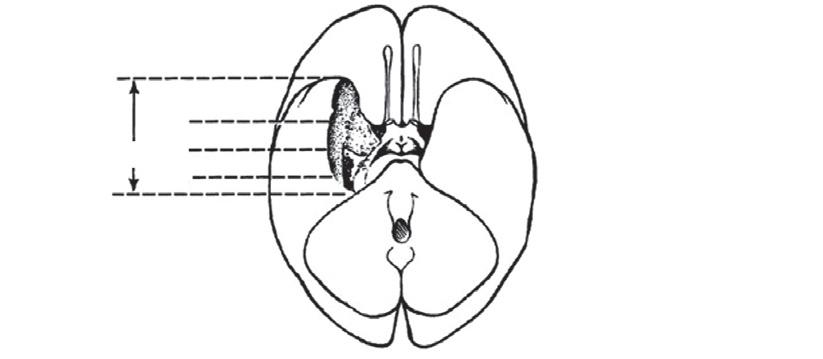
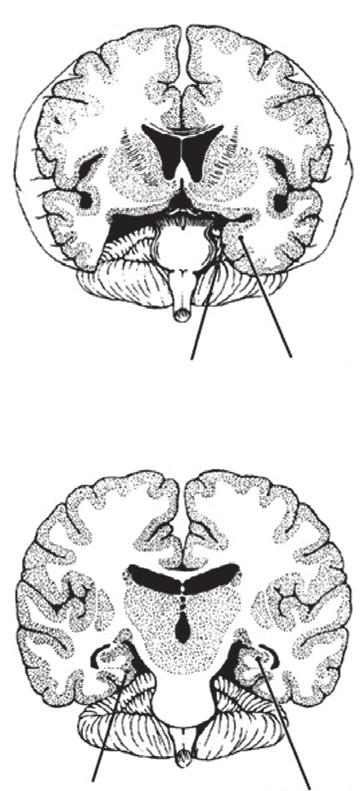
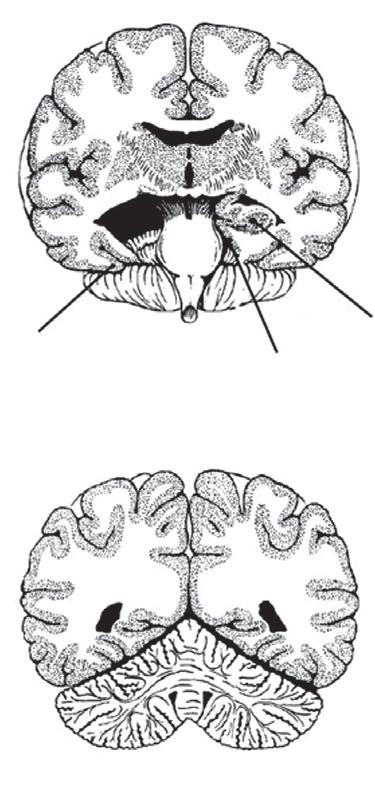
In contrast to this proposal, the Molaison case clearly demonstrates that a separate brain region specifically oversees encoding new memories without being involved in many other brain functions. Additionally, Molaison’s older memories’ remaining intact indicates that separate neural systems are in charge of encoding new memories and storing long-lasting memories. During his surgery, his medial temporal lobe, including the hippocampus, was removed bilaterally (see fig. 1.1). The results of this case indicate that while the medial temporal lobe is in charge of encoding new memories, it is not the final memory storage site. These astonishing discoveries had deep impacts on our understanding of memory and the brain. Molaison lost his memory but left an unforgettable legacy in neuroscience.
MEMORY CONSOLIDATION
Another unexpected finding from Molaison’s case was his development of temporally graded retrograde amnesia. He lost not only the ability to form new memories (referred to as anterograde amnesia) but also the ability to recollect some of the memories for events he experienced before the surgery (referred to as retrograde amnesia). His retrograde amnesia was temporally graded; his recent memories were more likely to be lost while distant memories were spared. In fact, he could not remember most of the events he experienced a year or two before the surgery. This indicates that the medial temporal lobe is necessary not only to encode new memories but
HIPPOCAMPUS
Small lesionHippocampus
FIGURE 1.1. Drawings of Henry Molaison’s brain. The medial temporal lobe was removed bilaterally, but the right hemisphere is left intact here to show removed structures. Figure reproduced with permission from Suzanne Corkin et al., “H. M.’s Medial Temporal Lobe Lesion: Findings from Magnetic Resonance Imaging,” Journal of Neuroscience 17, no. 10 (May 1997): 3965 (copyright Society for Neuroscience).
also to recollect memories of recently experienced events. According to the systems consolidation theory, which is currently the most popular theory on brainwide organization of memory, new memory is rapidly stored in the hippocampus and then goes through a “consolidation” process so that it is eventually stored elsewhere in the brain, such as the neocortex.
Graded retrograde amnesia and memory consolidation indicate that the way humans encode and store experiences as memories is different from that of a digital computer. Why then do we store memory in this way? Why not simply send memories to the final storage site? Probably because it is advantageous, albeit cumbersome, to have two separate memory storage
Entorhinal cortex Amygdala
Collateral sulcus Hippocampus
Entorhinal cortex
sites. On the one hand, it would be useful to remember details of experienced events to make better choices in everyday life. On the other hand, we may run out of storage space if we store most of our experiences as permanent memories. One way to resolve this conundrum would be having two memory storage sites: one for the temporary storage of details of experiences and another for the permanent storage of the gist of experiences. Suppose you commute to work by car. You need to remember exactly where you parked your car in the morning to get back to it in the evening. However, it wouldn’t be useful to remember your exact daily parking locations for the rest of your life. Instead, remembering that you drove to work and probably parked your car in the company’s parking lot would be less wasteful as a longlasting memory. The hippocampus may temporarily store detailed memories of recent experiences (this type of memory is called episodic memory) whereas the neocortex may gradually extract general facts from ensembles of experiences and store them as permanent memories (semantic memory).
Systems consolidation is not the only existing theory on the organization of memory. According to the multiple trace theory, the hippocampus stores remote memories even after consolidation; the hippocampus is not necessary to recollect memories of general facts (semantic memories) but is necessary to recollect memories of specific experienced events (episodic memories) even after consolidation. As such, there are multiple theories on how memories are organized in the brain, indicating that we do not yet perfectly understand why and how initially acquired memories are consolidated over time to become permanent memories. In fact, memory consolidation is directly related to the central issue of this book, imagination. I think that memory consolidation is a process of actively selecting and reinforcing valuable options for the future by recombining past experiences using imagination rather than passively storing incidental events. I also think that this is a fundamental basis for the human capacity for innovation. I will discuss this matter in more detail in chapter 6.
Another important finding from Henry Molaison’s case is that there are multiple forms of memory. Molaison could not remember new facts and events but could learn to perform new tasks by practice. This indicates that remembering new facts and events (declarative or explicit memory) is mediated by the medial temporal lobe, whereas learning new skills such as riding a bicycle (procedural or implicit memory) is mediated by other brain structures. Despite a large body of studies on multiple forms of memory, this book does not further explore these memory forms as they do not directly relate to the main issue at hand.
HIPPOCAMPUS AND IMAGINATION
The Molaison case, first published in 1957, changed the course of memory research. Fifty years later, in 2007, new findings were published that once again changed the course of memory research. In one study, Demis Hassabis and colleagues demonstrated that hippocampal amnesiacs have trouble not only in memory encoding but also in vivid imagination. They asked hippocampal amnesic patients and a normal control group to imagine plausible events under hypothetical situations. Some sample verbal cues for imagination are “Imagine you are lying on a white sandy beach in a beautiful tropical bay” and “Imagine that you are standing in the main hall of a museum containing many exhibits.”
The results of this experiment were surprising. Hippocampal amnesic patients had trouble constructing new imagined experiences. The control subjects, of course, came up with diverse imaginary scenarios with little difficulty. Try this exercise yourself. You can probably easily imagine a plausible sequence of events without much effort. However, hippocampal amnesic patients have trouble vividly imagining plausible episodes. In other words, damage to the brain structure known to play a critical role in memory can also impair the ability for vivid imagination.
Two other studies published in 2007 yielded the same conclusion using a different approach. They used functional magnetic resonance imaging (fMRI), a widely used brain imaging technique, to examine which brain areas are activated during imagination in neurotypical people. The hippocampus was activated when the subjects were recollecting autobiographical memories, which is expected; the hippocampus is crucial for remembering recent experiences. Surprisingly, the hippocampus was also activated when the subjects were envisioning the future. In other words, the hippocampus was active not only during remembering past episodes but also during imagining future events.
DEFAULT MODE NETWORK
To better understand hippocampal activation during imagination in a broader context, consider that certain brain areas are particularly active when we are relaxed and not paying much attention to the external world. These areas are collectively called the default mode network. Scientists have traditionally focused on how the brain processes information in response to external sensory stimuli, but little attention has been paid to brain activity during its
HIPPOCAMPUS AND IMAGINATION
idle state. Surprisingly, scientists have found that certain brain regions are more active during rest than while performing attention-demanding tasks.
The discovery of the default mode network was, in fact, accidental. Brain imaging techniques began to be widely used to investigate brain functions in the 1980s, and early studies commonly employed passive conditions, such as rest, as a control for task-performance conditions. As experimental data accumulated, scientists realized that there are certain brain areas that are more active during passive conditions. The name Marcus Raichle and colleagues collectively gave these brain regions was because they represent baseline-state (default) brain activity.
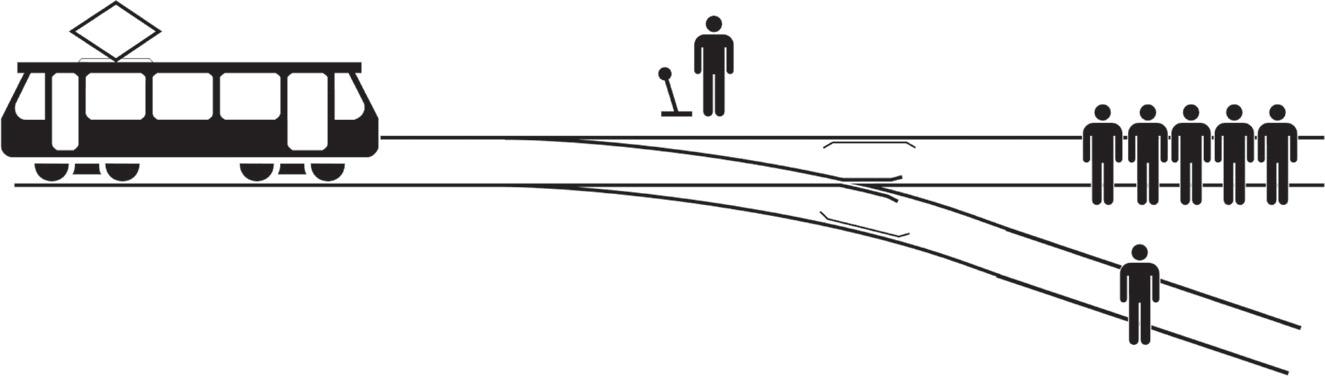
What were the subjects doing during the passive conditions? They reported that they were recollecting autobiographical memories (e.g., thinking about the previous night’s dinner) or envisioning the future (i.e., daydreaming) during rest. Subsequent studies have found that the default mode network is active in association with diverse mental activities such as thinking about someone else’s thoughts (called theory of mind), making moral decisions (e.g., the trolley dilemma shown in figure 1.2), and performing creative thinking tasks (e.g., the divergent thinking task in which subjects are asked to produce multiple alternative options in response to such an open-ended question: “In what ways can a brick be used?”). These results suggest that the default mode network is activated in association with internal mentation. The brain appears to be equipped with a task-associated network, which is active when we are engaged in an activity that requires us to pay attention to the external world, while the default mode network is active when we are engaged in internal mentation.
FIGURE 1.2. Trolley dilemma. A runaway trolley is hurtling toward five workers who are unaware of the trolley coming. You can save their lives by pulling a lever to divert the trolley to a sidetrack. However, there is a lone worker in the sidetrack who is also unaware of the trolley coming. What would you do? Would you kill one person to save five? Figure reproduced with permission from McGeddon, “File:Trolley Problem.svg,” Wikimedia Commons, updated March 6, 2018, https://commons.wikimedia.org/wiki/File:Trolley_Problem .svg (CC BY-SA 4.0).
As outlined in the rest of this book, innovative ideas often emerge in resting states and even during sleep. The brain may seem to be idle when we take a rest. On the contrary, the default mode network is active while we rest, and innovative ideas may appear while our minds wander freely. We will examine this issue closely in chapter 13. For now, germane to the rest of these discussions is noting that the hippocampus is a main component of the default mode network.
In summary, hippocampal damages impair one’s ability to imagine, and the hippocampus, as an important part of the default mode network, is activated in association with internal mentation including envisioning the future. These findings are not without caveats, however. Patients with hippocampal damages usually have damage in other brain areas as well. Also, brain imaging studies rely on the indirect measure of brain blood flow instead of neural activity. Nevertheless, the implication of these findings is clear; the hippocampus is involved not only in memory but also in imagination. We reached a new turning point in memory research fifty years after the publication of the Henry Molaison case. For this reason, the journal Science named the discovery of the hippocampus’s involvement in imagination as one of ten breakthroughs in 2007.