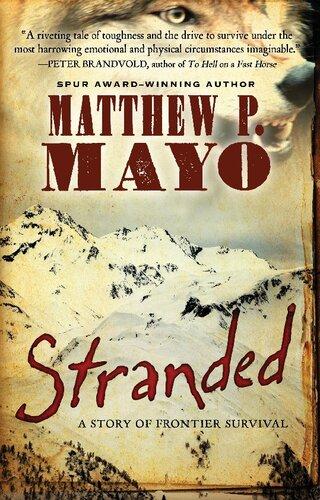
Stranded
https://ebookmass.com/product/stranded-matthew-p-mayo-2/
ebookmass.com
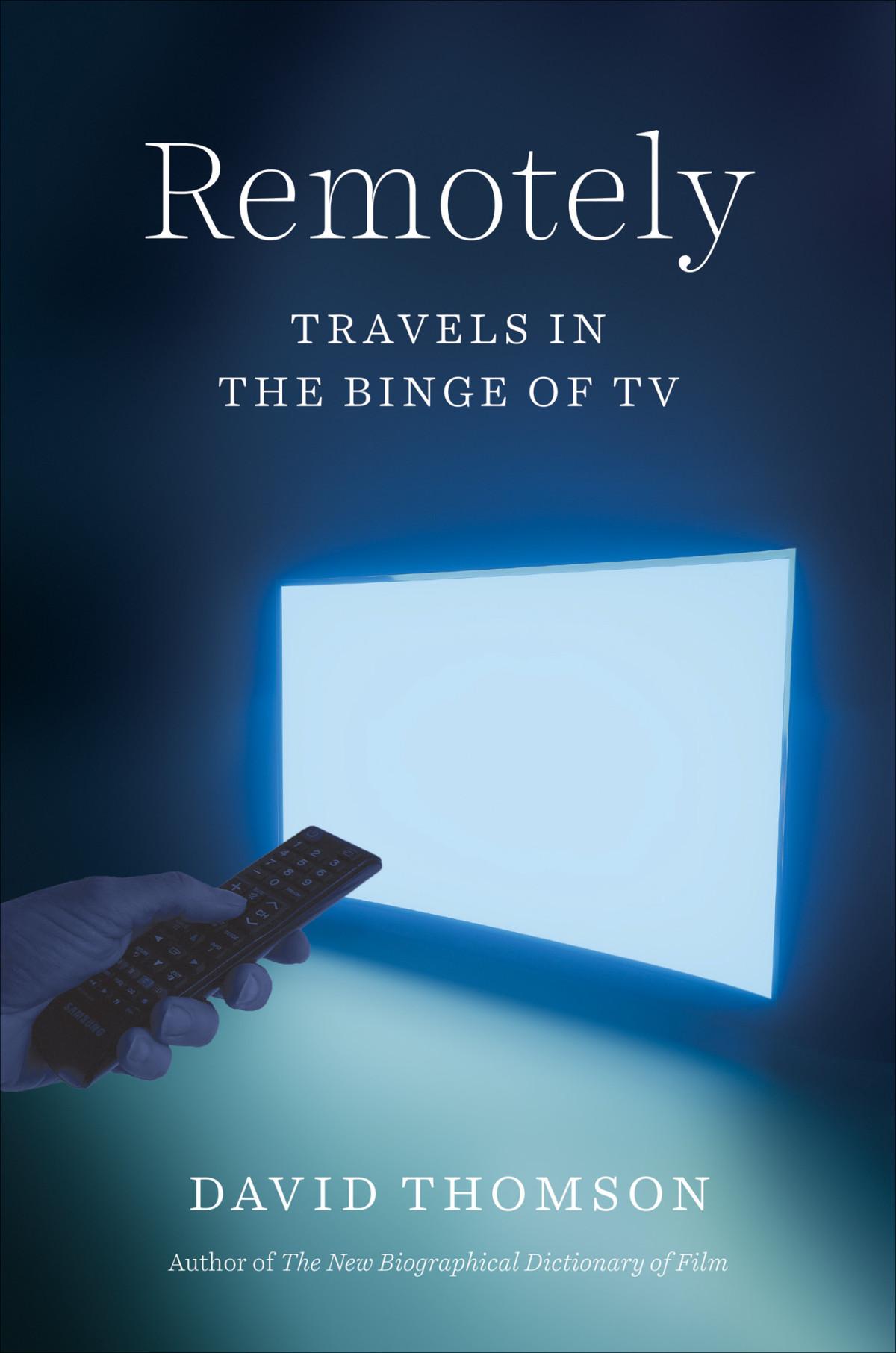
Remotely
Travels in the Binge of TV
David Thomson
Published with assistance from the foundation established in memory of James Wesley Cooper of the Class of 1865, Yale College.
Copyright © 2024 by David Thomson. All rights reserved. This book may not be reproduced, in whole or in part, including illustrations, in any form (beyond that copying permitted by Sections 107 and 108 of the U.S. Copyright Law and except by reviewers for the public press), without written permission from the publishers.
Yale University Press books may be purchased in quantity for educational, business, or promotional use. For information, please email sales.press@yale.edu (U.S. office) or sales@yaleup.co.uk (U.K. office).
Set in Adobe Garamond type by Integrated Publishing Solutions.
Library of Congress Control Number: 2023933106
ISBN 978-0-300-26100-4 (hardcover : alk. paper)
A catalogue record for this book is available from the British Library.
This paper meets the requirements of ANSI/NISO Z39.48-1992 (Permanence of Paper).
for Lucy Gray
Remotely
The Switches
It was a night like all the others. We looked out on the city streets in the moonlight and told ourselves that nothing was there. Not yet.
Soon after the onset of lockdown, a feeling crept up that something more extensive than the pandemic, yet vaguer, was happening. Life had receded, maybe, but we were left on the lookout. A worry was there, not to be dispelled, that perhaps our city and our home had been taken already. So the frontier was not guarding home security now. It was just a ragged street that had wandered into desert or mythology.
The hope in a lockdown was for safety, the envelope of home. But we could not escape the thought—hushed or unspoken—that we had opened ourselves up to a greater threat. People were hoarding toilet paper and the esteemed works of our civilization. Torn between shit and literature. Or some such prologue.
Ican’tputmyfingeron it,said Lucy. She talks in italic, or seems about to sing. So many nights we came into this room, to be entertained.Asifwedeservedthat.Yettheroomfeltoccupied,long ago,notjustbythetelevision,butbythisconditionofremoteness.
That was close to the heart of it. Our room had three mechanisms, or what we called “switches”; they were sesames of alteration. There was the electric light in the room. There was the way the television could be on or off.
And there was the remote. You could say it was a simple convenience, a way of not having to move the few feet to change thechannel.Butthe“remote”mademe thinkofimmensedistances andunbridgeableseparation. As if we were spinning off intospace likelostspectators.“Hello,Imustbegoing”cameintomymind.
Or are you sitting comfortably, my dear?
Yes, Ibelieve Iam. Notthatone can besure. It’s kindofyou to ask,butalsoweird.
I recall that fond question from radio. There was a program in Britain, ListenwithMother , where every story began like that. WasittheQueenspeakinginthatniceemptyvoiceshekept?
Is there something amiss?
Well,maybejustthefeelingofabeastintheroom.
Can you see it?
Notinthebrightnessofthescreen. There’s the trick.
We were old enough to be wary of catching Covid, but there was also this indication—between a hum and a pressure—that something like a malaise had been going on since . . . who knew when?
Covid had been announced as a new threat to the world, but I don’t think we were surprised. Hadn’t we learned not to show shock?—I think of it as being deadpan.
So are wegoing tohave tostay athomeindefinitely, asked Lucy, justanelderlymarriedcouplewatchingTV?
Maybe that’s the message, the whole point of Covid, that some time ago, without realizing it, we were taken over by this technology.
Oh, Lord, I see what this means—you’re going to want to write aboutit.
This comic tendency is at the heart of our thing. I admit, I sometimes believe I live to have something to write about. Lucy writes too; she takes photographs; her head glows with daring ideas. But she is devoted to actual life. She always socialized more than I was inclined to do, and she reproaches me for hiding at my desk in the silence of composition.
We argue a lot, as a policy. And she forgives me for being wrong —or right sometimes. Call it gamesmanship. Long ago, we played tennis in that spirit. Being older and slower than she, and less of a player, I went in for slices, drop shots, spun services, and eccentric
lobs, and she would curse at my cunning and not playing in the robust American way. But if she lost her temper, I had a chance of beating her. Then like a chump I told her that, explained the trick— and after that, she wiped me off the court.
I know, this sounds personal or domestic, but do not be disconcerted. This is a reverie on marriage and its conversation, but it will do its best to be a serious, searching book about TV and screens, likely to ask, “What are we going to do about this?”
Willyoupromisetobeinstructive?
I hope to get minds spinning. But the book may be read as a kind of novel, too, because she and I have always reckoned we were living in a story, talking to each other and to the TV. And one point of television was to give us all a way of talking to ourselves about what the world might be.
We have decided that argument is the liveliest part of ourselves. So as we settled into lockdown, we picked up the habit of following TV marriages—Edith and Archie Bunker from All in the Family; Walter and Skyler White in BreakingBad;Larry David and Cheryl in those first seasons of Curb Your Enthusiasm; Marty and Wendy Byrde in Ozark (that was the Covid show, because those Byrdes were caged from the outset). Plus the gold standard, the wildest of all, silly yet essential, on fire with amour fou—the Ricardos in ILove Lucy.
Thatshowisyoureverlastingdropshot.
Everyone loves ILoveLucy.
Noone ever askedherifsheloves it.Rickyseems toown herin thetitle,butisn’tshekindacrazy, thewaymenaretaughttoregard women?Whenthewackothingaboutwomeniswhytheylikemen.
I was about to resume, but she was not finished. You’ve omitted an important show. Ithought I should tellyou. It’s an answer to I Love Lucy.
This was making me uneasy. You must not think we’re some settled couple.
It’s one ofyour favorites:I’ve seenyou on thefloor , barkingmad withlaughterat it. Isn’t thatwhy we calledourdogBasil,andwhy
youkeephisoldredcollaronyourdesk?
Of course, the one and only—FawltyTowers.
Justtwoseasons, 1975and ’79.Keep thatgap inmind.Andonly sixepisodes a series. The modesty. The restraint. Where Basil and hiswife Sybilrun thissmallhotelattheseaside.Andhe’smad,just falling down the stairs absurd, a mantrap of chaos who thinks the world is out to ruin him with disorder . So he fights with the hotel guests,derideshisstaff, whileSybilbeholdsitallandneverneedsto say,“WhyamIstillwiththiswretchedman?”
Maybe the most rueful comedy we’ve had. It’s in an English tradition of marital misunderstanding. With a possibility of murder in the offing.
Anddon’tforgetthatgap, ’75and ’79.Itwasashowcreatedand writtenby JohnCleeseandConnieBooth.Theyweremarriedinlife. He was Basil and she played Polly, the waitress and the chambermaidatthehotel.
The only sane person in the place.
But she and Cleese broke up. They were divorced before the secondseason.
They still wrote it together. Doesthatremindyouofus?
Everything reminds me of us. And Prunella Scales was Sybil the wife, grim, patient, and unyielding.
Craziest of the lot—because she knows what madness is but ignores it. Every day she realizes the catastrophe of Basil, but refrainsfrommurderinghim.Isthatwhatyoumeant?
Years ahead, in Alan Bennett’s A Question of Attribution, 1991, Scales would play the Queen. Like a suburban Lady Bracknell. She was the first person to do that.
Ohno, HerMajestichadbeendoingitfordecades.Withsourpuss grandeur , endlesscorgis, andprotocol—don’tspeakto me untilI’ve spokentoyou.Absolutemadness,withoutaraindropofirony.
So we looked at those married series again like gossips in the neighborhood wondering which couples would stick together. We
had our own perseverance; we argued and disputed, and then we made up. We had decided that couples benefited from a gap or friction in their lives. We learned this from favorite movies, the ones about couples that parted and then came back together again. The comedies of reengagement: like TheAwfulTruth,TheLadyEve,The PhiladelphiaStory, and HisGirlFriday.
MustIalwaysbemarriedtoCaryGrant?
That was the rage once. Stick around and you may see that any alert couple needs to get remarried once a week, or before dinner. It is a surreal sport, making these screen people into our friends.
And in lockdown the idea of talking together seemed not just occupational, but elemental.
One of the troubles about the lockdown is that you can’t leave yourother . You’relockedtogether , asifyou’reinaseries.Somedays Iwakeupandlongtotakeaflight,togetaway.
Where would you go?
Tahiti.Tashkent.HuluorCriterion.Theseimaginaryplaces. Who are we when we see ourselves there?
We’re like the celebrity guests on The Larry Sanders Show. Wonderingifthere’sascript,orisitenoughifwejuststarttalking. That’s it. Theoretical. I talked to Warren Beatty the other day—or fifteen years ago; he was on the Sanders show sometimes—and after a while, he asked me, “Am I my Warren Beatty, or yours?” Onesmartfellow.Iknowhowhefeels.
2
A Theory of Entertainment
We try to think of ourselves existing in history, like people waiting in line. More or less patient, but with our fingers crossed, trusting that someone will be in charge.
That queue is scattered now; we are left in an unmapped zone where the facts are uncertain, and dreams struggle with numbness— isn’t that the mood of modern advertising? It’s not that it is selling any item now, so much as the theory of salesmanship hanging on like an old gospel.
We would prefer to hold on to reliability. You would rather not worry and we say that TV is there to take our minds off all the bad stuff. But we gave up on our contract to stay real or rational some time ago—was that early in the new century, an uneasy calm in which we guessed that “turning points” and their inane sequence had been discontinued? So we’re on hold, not quite going away.
You may not remember this as an event; it happened too long ago. The risk or incursion was not much examined at the time, because the new toy then seemed trivial and warm-hearted. Uplifting even: endless hours of fun. I’m talking about 1945–50, the dawn of TV. You see,weletitinthehouse,we welcomed it in.
This was only moments after a war in which, in Europe and the Far East, many homes were ripped apart beyond repair or belief. So much of our physical world had been demolished. Has it ever come back? We felt the horizon of extinction in our carefree evolution. It could seem a folly to rebuild.
There was a bombsite in south London where our gang played, a ruined house. This was a couple of years into the peace. In 1947,
the house was still fenced off, with warning signs telling us it was unsound. And we could read by then, haltingly! So we went in like rats and rascals—no one prevented it—and there was a dining room, still laid for a meal. With the dust of old food on the plates. Nothing had been done to repair it. If we looked up, there was a hole in the roof with birds fluttering at its ragged edge.
Howwereyouchildrenabletodothat?
We crawled beneath the fence and found a broken window.
Andyouhadwonthewar?
That’s what they said.
There was no doubting the danger to structure, not after Guernica, the London Blitz, Dresden, and the places in Japan we had never heard of until their great illumination. In a similar way, in those devastated countries there were homeless people on the road who might be refugees or marauders. They felt lost and despairing, yet they seemed dangerous to others. The old domestic order had been canceled. There was a legend of new bombs hovering over us, game changers before we understood how our lives had become as fleeting as a game.
Wasn’t it playful or folly then that we let this beast in, treating it as comic or benign, and found a place for it in what we called our living room?
We were coming out of a dread of Gestapo knocking at the door. Knocking?—that’s too gentle; those fellows tore doors off their hinges; they devoured whole villages. One thing about war is how it leaves you so vulnerable in what you had regarded as home.
Maybe our proper history with television is to sabotage the theory and comfort of home.
So we let it in. Without a thought. There was an episode of The Honeymooners whereJackieGleasonbringsaTVsethometoplease hiswife. Hetellsherabouttheloansofferedsoworkingpeoplecan buyaset.Itwasanadforthewholeenterprise.
Every day, we still let it in the house and we have observed by now that its picture quality is brighter, more lifelike, more detailed in its texture, and simply more vivid than those larger archaic screens
that still linger in our last movie theatres. It feels good to turn it on and have the light flood into our darkness.
Isn’t that how we have gone beyond our nice flat screen? Whereas we had just one screen at first—the pale gray curve of plastic in a shell of mock walnut furniture, with an antenna to make us think of science fiction—we now give every person and child in the house their own screen. We call that a smartphone, which wants to believe we’re being pretty clever, no matter that the phone screens are thresholds of remoteness. Instead, we say these small screens are a lot of fun. Aren’t they entertaining? Isn’t television a treasury, sitting patiently in what used to be our house? Like a hole in the roof.
It’s light we have to have. From the photograph onwards, we have been so busy examining the styles and the genres of our imagery. But such time can seem academic if we do not admit that, like lions on the veldt seeking meat, wehavegottohavelight.
That’s why Iturn thelightsoffintheroom. So thescreen’s light willmeanmore.
I realize, we all have our favorites, the shows we delighted in for so many episodes, and felt transported by so that we forgot some of our worries. Isn’t that what “they” and we mean by entertainment? And in the new millennium, there was this dawning of a fresh ambition in television series—as if it knew we might be ready to concentrate. Because television was growing up, or surpassing movies.
As if we believed we could save ourselves. Think of the excitementtherewasgoingfromThe Wire toOzark.
Such dark stories for brave travelers. Yet sometimes there’s a surge of triumph. Remember the commitment we made to The Queen’sGambit(2020, only two years ago as I write). Wasn’t that a raw thrill? Adapted from a novel by Walter Tevis, scripted by Scott Frank and Alan Scott, and directed by Frank, it’s the story of a young woman, Beth, an orphan, who realizes she may be a chess genius, and how she emerges in the world as a champion and as herself. It’s
a story, but an advert, too, a spasm in the room that makes us feel more hopeful about ourselves. That’s how we let it in.
This Tevis story wasn’t overdone; it was just seven episodes, each about an hour long, and there it was on Netflix in October 2020 (that dark time in the pandemic). Never mind, the overcast of plague was lifted by the joy of discovery in the eyes of Beth (or Anya TaylorJoy a name made for casting) as she went from an orphanage in Kentucky to Moscow, where she takes on the world champions at the sixty-four-square game. We loved Beth escaping from confinement, so the show made the walls and ceilings of her world a display board for her chess thinking. I relished the 1950s setting and the shabbiness of Lexington, all lit up by diagrams of chess moves and this unschooled girl flowering into womanhood as a player. There were supporting people to treasure: Bill Camp as the janitor at the orphanage who teaches her to play and is quickly defeated by her, but who is drawn out of his gloom by her prowess; Marielle Heller as the indolent woman who adopts and then manages Beth; and Thomas Brodie-Sangster as the brash boy who is nearly as good a player as she is.
After seven episodes it ended: Beth was at the top by then. Her arc was complete.
I wanted her to go on and on. Why not turn her loose on backgammon or Middle East diplomacy? A show called The Diplomat?
We were afraid of empty nights, without her. Still, we need to know when to stop with a story: time and again in this book we’ll be mulling over the energy of shows that last for years as business ventures defying the pressure in all story for an ending, or a way of lettingusknowwhywewatched.
With The Queen’s Gambit it was easy to say we wanted Beth’s end-game glory, whether or not we had a feminist agenda. TaylorJoy’s face, with burnished beaded eyes, made us yearn for her to smile. She and chess were sensations for a season. Yet by now, chess has subsided or gone back to being the obsession of fierce
outcasts. (Didn’t Bobby Fischer say, “I like the moment I break a man’s ego”?)
The show won the Emmy for outstanding limited drama series: Scott Frank won for directing and writing; Anya Taylor-Joy was nominated (she lost to Kate Winslet in Mare of Easttown, and that was forgivable—wasn’tWinsletasgoodas TVcan be?). And Netflix, which reports its viewing figures rarely and then in the tightlipped way that empires admit to their ballistic missiles, declared that sixtytwo million households had tuned in to it, or to part of it. A record! Something like everyone. That uplifting hope.
We could not wait for Beth’s next episode, and that urgency may be the proof of entertainment. There’s the word. In Act IV of Henry V , the Chorus asks, “Now entertain conjecture of a time / When creeping murmur and the poring dark / Fills the wide vessel of the universe.” It could be an airline commercial? Entertain. Don’t forget the idea of a screen being entered, a room beyond our room.
It’s the inhalation of an atmosphere. But this is more complicated than our feeling lifted up in an adventure. The word “entertainment” seems to have originated in the sixteenth century to convey something amusing and diverting, but compelling. Even now, we suppose it takes our mind off sad things for an hour or two. But this usage surely derives from the richness of theatre in that age. For the tiny portion of the population that had theatres they could go to, the era of Shakespeare and the flourishing acting companies meant a marriage of poetry and the business of filling seats for the price of admission.
It was a business, and its operators, in 1600 or now, have been happy to treat it as a simple transaction: our fun, their money granted how few people were involved in a culture that depended on live attendance. That system lasted until well into the nineteenth century, and it was only shifted or deepened by the creation of the photograph. That was an industry and a new discourse that mined the lifelike, and it reached from a keepsake of a wife or a child that soldiers kept in their tunic pocket, to be treasured if they found themselves dying, to images of unknown chorus girls that could be
indulged for hours in the new voyeurism. Some soldiers kept both pictures—in separate pockets. But the photograph was our first mass medium because it seemed open for everyone. That very big concept revered the universality of those dead or alive, but forever lifelike in a print.
Those old photographs can be ravishing—they have enhanced the pathos of memory: look at the photographer Julia Margaret Cameron beholding the young actress Ellen Terry in 1863, or the wild-haired, wilder-eyed astronomer John Herschel, who named some moons of Saturn and Uranus. Those two were famous portrait subjects, but the camera was startlingly egalitarian: it was a new way of recognizing a pauper beauty in the slums, or a nobleman in the cotton fields. Photographs were useful and inescapable tokens of life —nearly everyone was using them by 1900 in a steady, automatic way. We still trust them to establish identity. But they are phenomenal in quietly acting out the plan offered in several Constitutions but seldom seen through to fruition—that we are all alike and equal, faces fit to be dreamed over.
I see twin possibilities: first that the entertainment in photographic discourse was easily monetized; and then that the precious slips of photo paper built an inventory of everyone, a culture of common virtue or vivacity that was entrancing. Some photographs may be better than others (like television shows), but they all share this mysterious allure: in giving us the lifelike they downplay life with an alternative. The photograph and its offspring let us think we had mastered life. But at the same time its surreal beast began to eat away at reality.
Andwe letthistrickintothehouse,even if it has some qualities of an assassin. I do not use that last word lightly. If you want another example of what I am looking at—of why I am watching something I could not endure in life—notice that heavyset man over there, not quite brutish but morose or sorrowful.
He seems like a hulk with a hurt boy’s expression. He is a local chieftainpresidingover a familybusinessthatsometimes killsother menanddegradeswomen.Thosearenothabitsweadmire,butyou
maylikethisguyiftheactorandhiswritingprovewarmenough—so you feel sympathy just because he seems gloomy in himself. Killer andchieftain, but he needs to see a shrink to try to sort his head out. We followed him over sixyears. Call him Tony Soprano. Some smartandlawfulpeoplesayheandhisshowredeemedtelevision. Whereas pros in that business ask why their trick ever neededto be redeemed when it had the world by the eyes and was making so much money? How could redemption match up to that? Are we still harking back to 1961, when Newton Minnow, chairman of the Federal Communications Commission (founded in 1934), told a convention of broadcasters that television much of the time was “a vast wasteland”? Wasn’t that like the president of Harvard (or Northwestern, Minnow’s school) warning the world to be wary of its graduates? Or like a pilot on the tarmac passing on a last hint to us passengers that we might be advised to disembark?
What would the opposite of a wasteland look like, and could it be cultivated? Or was there even a chance—between 1945 and our unsteady future—that a wasteland might be the most appropriate education we could ask for? Minnow himself enjoyed live drama shows like Playhouse90;he took pleasure in TheTwilightZone and Fred Astaire specials. He allowed that occasionally TV was very good, but no one was in doubt about his overall view of things. I suspect he never saw TheGongShow. So what does television need to be saved from? Or is the redemption schtick just another commercial for us suckers? What did Minnow think he meant by “wasteland”? Was it a huge bombsite, or just round any corner?
Perhaps Tony Soprano was more disturbed than he knew—more than the show’s creator, David Chase, could have explained; more than James Gandolfini, who played the part, understood; and more than those who conspired in the dark glow of TheSopranoscared to think about. That includes us, the viewers who found inner fulfillment in the ways Tony and his people behaved so badly. There has always been this possibility in moving picture narratives that our feeling ignored, downtrodden, and unknown in life can be relieved by gaudy monsters who trash the self-important world. That is the
song in TheSopranos, as it was in TheGodfather . We let ourselves be entertained by this rueful portrait of a mobster who lacked confidence, and we chuckled at what a funny old life it was for us to be backing a gangster in our worldly way. Equally, Beth was a lesson that hapless orphans deserved great expectations. These stories are always urging us to be bigger than ourselves. And that can forget our smallness or vulgarity.
But is there emotional space in the world for so many needy swelling creatures—when many of them are not officially American? We know it can be a test to feed the 8 billion, and keep them in health or balance. (You remember balance?) But then consider the congestion of egos and desires that television is so nonchalant over. One man may kill another to get clean water and fresh bread. Or he may take up arms and vengeance just because his desire has been thwarted. What does the game of thrones permit? Desire is so hungry its targets hardly matter. We feel we have a right to be pleased or consoled. That’s the insistence in advertising. Didn’t America come up with the greatest of all jingles—the one about the pursuit of happiness?
That’s how a theory of entertainment comes into being. That’s why we have been reckless in letting this medium in the house when we had a buried understanding that the “forces” involved—show business, our government, and our feeble selves—reckoned that if the entertainment was novel enough then we would overlook warning strains in how unsettled we are. And 1945 was on an incline towards dismay and disintegration: the codes of progress and humanism had been dissolved, even if you felt the “right” side had won the war. So do not be overconfident about how we relax on our couch in the evening. It’s as if on a bad night in Eden, Adam, Eve, and the Serpent had preferred to watch Candid Camera than hear the Lord read his solemn riot act. Everything on the box tended towards the facetious.
It was a smart retort from that Edenic trio to ask what the hell they could do about anything. It is our habit, or our escape, to say that there’s nothing to be done about progress: the momentum
leaves our helplessness untouched, and strips away our dignity—that pomp. So photography altered how we felt about ourselves, and whether we might expect to be understood—or liked. Movies had offered the liberty of fantasies that looked like life. But television knifed into our homes, less inspiring than useful; it seemed visible yet not quite visual. TV threw out the cinematic allure of voyeurism, and was so quick we hardly noticed the switch.
Not that the incline will stop here. “Progress” is headlong and accelerating, a force that adds to our insignificance every day. We slipped into the computer and the Internet, the smartphone, and the expansive scheme of data interpretation. What next? Especially if the pinch of physical survival gets a few degrees tighter. There could come a rationale and a crisis in which the persistence of individuals will have to be measured and controlled. This happens already, if you care to think about it. It is the way poverty closes down on many “unproductive” lives—as in shortening them.
Isn’t it part of the theory of entertainment that everything in life is not quite all right? You see, the prompt for seeking entertainment is that there are things—we call them realities; we’re sentimental that way—that we’d rather not think about or dwell on, or wake up screaming at. We need entertainment, a show, because our regular condition gets on our nerves.
That raises the question: are these awkward things natural and unalterable? Or are they something that we could attend to? Are we subject to an outside chance of improvement, or bound on a wheel of fire that has never given any hint of being under control?
Doyouhaveagrantforthisstuff?
Please, I am trying to concentrate.
It may seem tactless to raise the matter of poverty as a population control system. It is more appealing and viable to think of the system doing its best for us, encouraging us, cheering us up, and making a few sensible recommendations to go with the pizza. We have turned government into a dead-end game, and thus a good
deal of television offers alternatives to the implacable grind of getting along.
Once upon a time (it was 1729, the year North Carolina became a royal colony), a desperate comedy writer suggested that the most efficient remedy for starvation in the impoverished classes was for the dead babies of the poor to be processed as palatable foods with market value. This was the insight of Jonathan Swift, and there were those who knew him who thought he was mentally disturbed. Desperate comedy writers easily acquire that reputation.
LikeGarryShandlingorLarryDavid.
Despite the ingenuity of his plan and a few tempting recipe suggestions, Swift’s Modest Proposal was not taken up formally. But the project was already being digested in diligent, matter-of-fact ways. So we live in this contract: that we allowed television into the house and gave it license to treat us as consumers. This could seem like the smart thing sometimes called a functioning society. It altered our citizenship, and took away our power to notice that trick.
Is that what “remotely” means? It does resemble prison. Don’t you remember Sullivan’s Travels, where the film director (Joel McCrea)grows tiredofmaking silly, funpictures. So hetakes tothe roadtofindthe real,hardAmerica.Butheendsuponachaingang in the South. Life is brutal and unkind there. One Sunday the wretchedprisoners are taken to a movie show for relief. They start tolaugh.ThenSullivanseesthelight:youhavetosettleforsillyfun sometimes.Whatisthatpicturetheywatch?Is itLaurelandHardy, oraDisneycartoon?Whatyearwasthat? 1941. Theyearyouwereborn.
What’s On?
Whatarewegoingtowatchtonight?
Perhaps it doesn’t matter.
Youmean,justturnitonandsithere?
Isn’t that what we do? Soaking up the light?
For a week we had been going through old ILoveLucys. It’s easy enough to get into that collection—though it is still rerunning here and there on what I’ll call the old, regular, and programmed TV. It’s still there in hospitals and prisons and on the back roads left when the new highways came in. (I would guess the Bates Motel is always playing Lucy.) That Ricardo household gets crazier and more yesteryear, but I love her still. Though maybe decades later “madcap,” the style, has yielded to madness, the inner meaning.
My wife is a Lucy, born in 1955, so her parents cannot have been unmindful of Lucy Ricardo. That “Lucy” on screen may have been the most loved woman in America in 1955—more than Marilyn Monroe, Eleanor Roosevelt, or Annette Funicello in The Mickey Mouse Club. The way in which we make companions of people on screen is remarkable and so much fun. But it has led us into many secret passages; we now find the labyrinth so natural we don’t notice it.
People thinkthey know Donald Trump. That hideousintimacy he shitsonus.Talkaboutbody-snatched.
Lucy and I keep lists of shows to see, things read about in reviews or recommended by friends. But then we mislay the lists and sometimes face the infinite possibilities, vexed and insecure at not having an obvious choice for tonight.
So we might start going over the archive of the medium. Isn’t there too much to choose from these days? Do you remember Red Riding(2009) well enough to want to try it again? It was very dark, I think. I still have its atmosphere in my head, the anxiety and the dread of that north of England being out of control, but I’m not sure who did what in that story. Rebecca Hall came and went—was she murdered? I recall Peter Mullan seeming dangerous in it, but that is often his thing—he was like that in Top of the Lake and in Ozark. Would RedRiding seem like a fresh offering now, only teaching us how easily we forget? Could we regain the first zest of Peaky Blinders (2013)? Is it even time to go farther back, to the seeming reality of OurFriendsintheNorth(1996)? Or would you be prepared to revisit the original ForsyteSaga?
YoumayhaveAmericancitizenship,butyou’restillEnglish.
Those Forsytes began in Britain in January 1967, just a few months before BonnieandClydeopened in cinemas, two ill-assorted period pieces in the same season, and both sensational. The Saga was adapted for television from novels by John Galsworthy (published in the period 1906–21), whereas Bonnie and Clyde sprang from noir snapshots of the Barrow gang in the early 1930s, and from Warren Beatty’s urge to grab 1967. His movie was sex and violence in narcissist color, a rekindling of gangster picture attitudes cast in the antiauthoritarian elan of the late ’60s. It was how to take your plunder to the bank on a career of robbing banks. It was a death wish meeting the sex drive. Even if you haven’t seen the film, you know the panache of Beatty and Faye Dunaway in chic clothes and hard times.
In 1967, I was a movie man, a member of that church, inclined to regard television fiction as staid and formulaic. I sat down to watch The Forsyte Saga in a patronizing mood because this was mere television from some dusty novels, in black-and-white, and aimed at one’s parents. Did the BBC expect us to sit still for twenty-six weekly episodes? Did they ever guess what habit they were onto with that project? From today’s stance it looks more influential or significant than the BBC ever dreamed. Bonnie and Clyde was pretty kids