3.11 What Can (or Should) We Do About Climate Change? 142 Conclusion 148 Chapter Summary 148 Questions 149
Chapter
4
Energy from Combustion 154
4.1 Fossil Fuels and Electricity 156
4.2 Efficiency of Energy Transformation 159
4.3 The Chemistry of Coal 161
4.4 Petroleum and Natural Gas 166
4.5 Measuring Energy Changes 171
4.6 Energy Changes at the Molecular Level 175
4.7 The Chemistry of Gasoline 178
4.8 New Uses for an Old Fuel 181
4.9 Biofuels I—Ethanol 183
4.10 Biofuels II—Biodiesel 187
4.11 Biofuels and the Way Forward 191 Conclusion 195 Chapter Summary 196 Questions 196
Chapter
5
Water for Life 202
5.1 The Unique Properties of Water 204
5.2 The Role of Hydrogen Bonding 206
5.3 The Water We Drink and Use 208
5.4 Water Issues 212
5.5 Aqueous Solutions 216
5.6 A Closer Look at Solutes 219
5.7 Names and Formulas of Ionic Compounds 222
5.8 The Ocean—An Aqueous Solution with Many Ions 225
5.9 Covalent Compounds and Their Solutions 227
5.10 Protecting Our Drinking Water: Federal Legislation 230
5.11 Water Treatment 234
5.12 Water Solutions for Global Challenges 237
Chapter 6
Neutralizing the Threats of Acid Rain and Ocean Acidification 246
6.1 What Is an Acid? 248
6.2 What Is a Base? 249
6.3 Neutralization: Bases Are Antacids
6.4 Introducing pH
6.5 Ocean Acidification
6.6 The Challenges of Measuring the pH of Rain
6.7 Sulfur Dioxide and the Combustion of Coal 261
6.8 Nitrogen Oxides and the Combustion of Gasoline 263
6.9 The Nitrogen Cycle 264
6.10 SO2 and NOx—How Do They Stack Up? 268 6.11 Acid Deposition and Its Effects on Materials 270
6.12 Acid Deposition, Haze, and Human Health 274
6.13 Damage to Lakes and Streams 278
Chapter
7 The Fires of Nuclear Fission
7.1 Nuclear Power Worldwide
7.2 How Fission Produces Energy
7.3 How Nuclear Reactors Produce Electricity
7.4 What Is Radioactivity?
7.5 Looking Backward to Go Forward
7.6 Nuclear Radiation and You
7.7 The Weapons Connection 312 7.8 Nuclear Time: The Half–Life 315 7.9 Nuclear Waste: Here Today, Here Tomorrow 319
7.10 Risks and Benefits of Nuclear Power 323 7.11 A Future for Nuclear Power
Chapter 8
Energy from Electron Transfer
8.1 Batteries, Galvanic Cells, and Electrons
8.2 Other Common Galvanic Cells
8.3 Battery Ingredients: Cradle–to–Cradle 342
8.4 Hybrid Vehicles
8.5 Fuel Cells: The Basics
8.6 Hydrogen for Fuel Cell Vehicles
8.7 Photovoltaic Cells: The Basics
8.8 Electricity from Renewable (Sustainable) Sources
Chapter 9
The World of Polymers and Plastics
9.1 Polymers Here, There, and Everywhere
9.2 Polymers: Long, Long Chains
9.3 Adding Up the Monomers
9.4 Polyethylene: A Closer Look 377
9.5 The “Big Six”: Theme and Variations 381
9.6 Condensing the Monomers 385
9.7 Polyamides: Natural and Nylon
9.8 Dealing with Our Solid Waste: The Four Rs 391
9.9 Recycling Plastics: The Bigger Picture
9.10 From Plants to Plastics
9.11 Shifting Baselines
Chapter 10
Manipulating Molecules and Designing Drugs
10.1 A Classic Wonder Drug
10.2 The Study of Carbon–Containing Molecules
Chapter 11
Fats, Oils, and Your Diet
Chapter 12
Genetic Engineering and the Molecules of Life 494
12.1 Stronger and Better Corn Plants? 495
12.2 A Chemical That Codes Life 497
12.3 The Double Helix of DNA 501
12.4 Cracking the Chemical Code 506
12.5 Proteins: Form to Function 507
12.6 The Process of Genetic Engineering 511
12.7 Making Chemical Synthesis Green from Genetic Engineering 515
12.8 The New Frankenstein 517
Appendix 1
Measure for Measure: Metric Prefixes, Conversion Factors, and Constants A-1
Appendix 2
The Power of Exponents A-2
Appendix 3
Clearing the Logjam A-3
Appendix 4
Answers to Your Turn Questions Not Answered in the Text A-4
Appendix 5
Answers to Selected End-of-Chapter Questions Indicated in Color in the Text A-16
Glossary G-1
Credits C-1
Index I-1
Dear Readers,
The word context appears in the title of this book. And context has multiple meanings. Context! Did you know that the word derives from the Latin word meaning “to weave”? The spiderweb image on the cover conveys the connections that this book weaves between chemistry and society. In the absence of societal issues, there could be no Chemistry in Context. Similarly, without teachers and students who were willing (and brave enough) to engage in these issues, there could be no Chemistry in Context. Chemistry is woven into the fabric of practically every issue that our society faces today.
Context! Do you enjoy good stories about the world in which you live? If so, look inside this book for stories that intrigue, challenge, and possibly even motivate you to act in new or different ways. In almost all contexts—local, regional, and global—parts of these stories are still unfolding. The ways in which you and others make choices today will determine the nature of the stories told in the future.
Context! Are you aware that using a real-world context to engage people is a highimpact practice backed by the research on how people learn? Chemistry in Context offers real-world contexts through which to engage learners on multiple levels: personal, societal, and global. Given the rapidly changing nature of these contexts, Chemistry in Context also offers teachers the opportunity to become learners right along with their students.
Sustainability—The Ultimate Context
Global sustainability is not just a challenge. Rather, it is the defining challenge of our century. Accordingly, the eighth edition of Chemistry in Context is designed to help students meet this challenge. The opening chapter, “Chemistry for a Sustainable Future,” sets the stage for the 12 chapters that follow. By placing sustainability fi rst, sustainability is established as a core, normative part of the chemistry curriculum.
Sustainability adds a new degree of complexity to Chemistry in Context. This complexity arises in part because sustainability can be conceptualized in two ways: as a topic worth studying and as a problem worth solving. As a topic, sustainability provides a new body of content for students to master. For example, the tragedy of the commons, the Triple Bottom Line, and the concept of cradle-to-cradle all are part of this new body of content. As a problem worth solving, sustainability generates new questions for students to ask—ones that help them to imagine and achieve a sustainable future. For example, students will find questions about the risks and benefits of acting (or not acting) to reduce emissions of greenhouse gases.
Incorporating sustainability requires more than a casual rethinking of the curriculum. Which approach do the authors take? Unlike most general chemistry texts, this one is context rich. Thus, the writers already had the necessary vehicle through which to convey the concepts of sustainability—rich real-world scenarios about energy, food, and water. However, the connections to sustainability were not always readily apparent. In essence, the dots needed to be connected for the reader. Here are some examples of how this was done:
Chapter 1, “The Air We Breathe,” now more strongly reminds the reader that the air is a resource held in common. We all must breathe it, and nobody owns it. Air pollution is thus a perfect means by which to introduce the concept of the tragedy of the commons.
Chapter 2, “Protecting the Ozone Layer,” now more clearly points out that the older replacements for chlorofluorocarbons (CFCs), although not harmful to the ozone layer, are potent greenhouse gases. The chapter ends with a decisive call to action: “We all,
The tragedy of the commons is the situation in which a resource is common to all and used by many, but has no one in particular responsible for it. As a result, the resource may be destroyed by overuse to the detriment of all that use it.
breathing on this planet today and having the potential, must guarantee its future, rapidly and decisively. We have no right to delay; we have no luxury of losing time.”
Chapter 3, “The Chemistry of Global Climate Change,” now presents more data on the chemistry of global climate change, and challenges students to evaluate the changes occurring on Earth from greenhouse gases and the consequences of these changes.
Chapter 5, “Water for Life,” now better connects the scarcity of fresh water, sustainable management of water resources, and water contamination. These themes are echoed in discussing food production in Chapter 11.
Chapter 7, “The Fires of Nuclear Fission,” while introducing students to the nuclear crisis that occurred in Japan, also challenges students to evaluate nuclear power as a sustainable resource.
Chapter 8, “Energy from Electron Transfer,” was recast to better show the match between our energy needs and the available technologies. The sustainability concept of cradle-to-cradle, introduced in Chapter 0, is connected to battery design.
Chapter 11, “Nutrition: Food for Thought,” still describes how what you eat affects your health. Now, however, it more strongly connects what you eat to the health of the planet and has students track food production and consumption.
Green chemistry, a means to sustainability, continues to be an important theme in Chemistry in Context. As in previous editions, examples of green chemistry are highlighted in each chapter. In this new edition, look for more examples. This expanded coverage offers the reader an even better sense of the need for and the importance of greening our chemical processes. For easier access, key ideas in green chemistry are listed on the inside front cover of the text.
Updates to Existing Content
People sometimes ask us, “Why do you release new editions so often?” Indeed, we are on a fast publishing cycle, turning out a new version every three years. We do this because the content in Chemistry in Context is time sensitive.
With each new edition, the author team reworks the content of practically every chapter, updating it to reflect new scientific developments, changes in policies, energy trends, and current world events. These updates are nontrivial to implement. Some involve writing new content; others involve producing new graphs and data tables. For example, since the publication of the 7th edition, the tragedy in Fukushima, Japan, has influenced nuclear power industries and policies. The atmospheric concentration of CO2 increased to over 400 ppm. A final example is the release of new dietary guidelines from the USDA.
In addition, the issues that we select to “hook” the reader at the start of the chapter are recast from edition to edition. Chapter 9, “The World of Polymers and Plastics,” is one example. The new version now opens with a quote from the book coauthored by a chemist who greatly influenced our thinking in revising this chapter: “ Nature doesn’t have a design problem. People do.” (William McDonough and Michael Braungart, Cradle-to-Cradle, 2002)
The story of polymers unfolds using a spiderweb as an example, noting that orb spiders may build new webs each day. So how does an orb spider manage to spin so much silk and still survive? Most simply, it recycles. Orb spiders have the ability to ingest old spider silk and recover the raw materials from which they are constructed. The theme of recycling is then carried throughout the chapter.
Teaching and Learning in Context
This new edition of Chemistry in Context continues with the organizational scheme used in previous editions, one that has stood the test of time. The first six chapters, all with real-world themes such as air, water, and energy, provide a foundation of chemistry concepts on which to build in subsequent chapters. For example, early chapters introduce elements, compounds, and the periodic table. In later chapters, we build upon these
chemistry concepts to consider other contexts and chemistry content. Chapters 7 and 8 consider additional energy sources—nuclear power, batteries, fuel cells, and hydrogen. Chapters 9–12 are all carbon based, focusing on polymers, drugs, food production, and genetic engineering. They provide students with the opportunity to explore interests, as time permits, beyond the core topics.
The New Edition—A Team Effort
Once again, we have the pleasure of offering our readers a new edition of Chemistry in Context. But the work is not done by just one individual; rather, it is the work of many talented individuals. The eighth edition builds on the legacy of prior author teams led by A. Truman Schwartz, Conrad L. Stanitski, and Lucy Pryde Eubanks, all now retired from long and successful careers of teaching chemistry.
This new edition was prepared by a team of writers: Cathy Middlecamp, Michael Mury, Karen Anderson, Anne Bentley, Michael Cann, Jamie Ellis, and Katie Purvis-Roberts. The laboratory manual to accompany it was revised by Jennifer Tripp and Lallie McKenzie and reviewed by Teresa Larson. Each person brought different expertise to the project. In common, though, each brought goodwill, hopes, dreams, and seemingly boundless enthusiasm to bring real-world chemistry into the classroom and into the lives of our readers.
At the American Chemical Society, leadership was provided by Mary Kirchhoff, Director of the Education Division. She supported the writing team, cheering on its efforts to “connect the dots” between chemistry and sustainability, even to the point of writing parts of Chapter 0. Furthermore, she and Terri Taylor, Assistant Director for K–12 Science at the American Chemical Society, made it possible for Michael Mury to expand his role in the project, taking the reins as a production manager. His abilities to bring together all of the parties involved—the author team, the publisher, and the American Chemical Society—were unparalleled.
The McGraw-Hill team was superb in all aspects of this project, with special thanks to Jodi Rhomberg for shepherding the project to the finish line. Marty Lange (Vice President and General Manager), Thomas Timp (Managing Director), David Spurgeon, PhD (Brand Manager), Rose Koos (Director of Development), Shirley Hino, PhD (Director of Digital Content Development), and Jodi Rhomberg (Developmental Editor) led this outstanding team. Heather Wagner served as the Executive Marketing Manager. Sandra Schnee (Content Project Manager) coordinated the production team of Carrie Burger (Content Licensing Specialist), Tara McDermott (Designer), and Nichole Birkenholz (Buyer). The team also benefited from the careful editing of Carol Kromminga and proofreading by Kim Koetz and Patti Evers.
The author team truly benefited from the expertise of a wider community. We would like to thank the following individuals who wrote and/or reviewed learning-goal-oriented content for LearnSmart.
Peter de Lijser, California State University—Fullerton
David G. Jones, University of North Carolina at Chapel Hill
Adam I. Keller, Columbus State Community College
We also extend our thanks to David McNelis, University of North Carolina, for the technical expertise he provided in preparing the manuscript.
Input from instructors teaching this course is invaluable to the development of each new edition. Our thanks and gratitude go out to the following instructors who participated in Chemistry in Context workshops:
Sana Ahmed
Nikki Burnett
Donghai Chen
Tammy Crosby
Mohammed Daoudi
Sidnee-Marie Dunn
Kimberly Fields
Boca Raton Community High School
Baldwin High School
Malone University
Hillsborough High School
University of Central Florida
Saint Martins University
Florida Southern College
Tam’ra Kay Francis
Andrew Frazer
Song Gao
Carmen Gauthier
Myung Han
Al Hazari
Sandra Helquist
Martha Kellner
Todd Knippenberg
Candace Kristensson
Shamsher-Patrick Lambda
Laura Lanni
Devin Latimer
Toby Long
Sara Marchlewicz
Jessica Menke
Mark Mitton-Fry
Mark Morris
Jung Oh
Tatyana Pinayayev
Kresimir Rupnik
Indrani Sindhuvalli
Jose Vites
University of Tennessee
University of Central Florida
Nova Southeastern University
Florida Southern College
Columbus State Community College
University of Tennessee
Loyola University Chicago
Westminster College
High Point University
University of Denver
Young Men’s Preparatory Academy (M-DCPS)
Newberry College
University of Winnipeg
Rollins College
University of Illinois at Chicago
University of Wisconsin—Whitewater
Ohio Wesleyan University
University of Tampa
Kansas State University at Salina
Miami University
Lousiana State University
Florida State College at Jacksonville
Eastern Michigan University
Wishing Our Readers Well
When fi rst published in 1993, Chemistry in Context was “the book that broke the mold.” Unlike the books of its time, it did not teach chemistry in isolation from people and the real-world issues they were facing. Similarly, it did not introduce a fact or concept for the sake of “covering it” as part of the curriculum. Rather, Chemistry in Context carefully matched each chemical principle to a real-world issue such as air quality, energy, or water use.
We are very excited by the features of this new edition that continue to break the mold in bringing chemistry to you, our reader. We have selected engaging and timely topics that we hope will serve you not only today but also in the years to come.
We wish you well as you read, explore the issues, respectfully argue with each other (and with the authors), and, most important, as you use what you learn to bring your dreams to reality.
Sincerely, and with all good wishes from the author team,
Cathy Middlecamp Senior Author and Editor–in–Chief
June 2013
Digital Resources
McGraw-Hill offers various tools and technology products to support Chemistry in Context, 8th edition.
McGraw-Hill’s ConnectPlus™
McGraw-Hill’s Connect Plus (www.mcgrawhillconnect.com/Chemistry) is a web-based assignment and assessment platform that gives students the means to better connect with their coursework, with their instructors, and with the important concepts that they will need to know for success now and in the future. The following resources are available in Connect:
■ Autograded assessments
■ LearnSmart, an adaptive diagnostic tool
■ Powerful reporting against learning outcomes and level of difficulty
■ McGraw-Hill Tegrity Campus, which digitally records and distributes your lectures with a click of a button
■ The full textbook as an integrated, dynamic eBook that you can also assign
■ Instructor resources, such as Instructor’s Manual
■ PowerPoints and Test Banks
■ Image Bank, which includes all images available for presentation tools.
With ConnectPlus, instructors can deliver assignments, quizzes, and tests online. Instructors can edit existing questions and author entirely new problems; track individual student performance—by question and assignment or in relation to the class overall—with detailed grade reports; integrate grade reports easily with Learning Management Systems (LMS), such as WebCT and Blackboard; and much more. By choosing Connect, instructors are providing their students with a powerful tool for improving academic performance and truly mastering course material. Connect allows students to practice important skills at their own pace and on their own schedule. Importantly, students’ assessment results and instructors’ feedback are all saved online, so students can continually review their progress and plot their course to success.
McGraw-Hill LearnSmart ™
McGraw-Hill LearnSmart™ is available as a stand-alone product as well as an integrated feature of McGraw-Hill Connect® Chemistry. It is an adaptive learning system designed to help students learn faster, study more efficiently, and retain more knowledge for greater success. LearnSmart assesses a student’s knowledge of course content through a series of adaptive questions. It pinpoints concepts the student does not understand and maps out a personalized study plan for success. This innovative study tool also has features that allow instructors to see exactly what students have accomplished and a built-in assessment tool for graded assignments. Visit the following site for a demonstration: www.mhlearnsmart.com.
McGraw-Hill SmartBook™
Powered by the intelligent and adaptive LearnSmart engine, SmartBook is the fi rst and only continuously adaptive reading experience available today. Distinguishing what students know from what they don’t, and honing in on concepts they are most likely to forget, SmartBook personalizes content for each student. Reading is no longer a passive and linear experience but an engaging and dynamic one, where students are more likely to master and retain important concepts, coming to class better prepared.
SmartBook includes powerful reports that identify specific topics and learning objectives students need to study. These valuable reports also provide instructors insight into how students are progressing through textbook content and are useful for identifying class trends, focusing precious class time, providing personalized feedback to students, and tailoring assessment.
How does SmartBook work?
Each SmartBook contains four components: Preview, Read, Practice, and Recharge. Starting with an initial preview of each chapter and key learning objectives, students read the material and are guided to topics over which they need the most practice based on their responses to a continuously adapting diagnostic. Read and Practice continue until SmartBook directs students to recharge important material they are most likely to forget to ensure concept mastery and retention.
Customizable Textbooks: Create™
Create what you’ve only imagined. Introducing McGraw-Hill Create—a new, self-service website that allows you to create custom course materials—print and eBooks—by drawing upon McGraw-Hill’s comprehensive, cross-disciplinary content. Add your own content quickly and easily. Tap into other rights-secured third party sources as well. Then, arrange the content in a way that makes the most sense for your course. Even personalize your book with your course name and information. Choose the best format for your course: color print, black and white print, or eBook. The eBook is now viewable on an iPad! And when you are finished customizing, you will receive a free PDF review copy in just minutes! Visit McGraw-Hill Create at www.mcgrawhillcreate.com today and begin building your perfect book.
My Lectures—Tegrity ®
McGraw-Hill Tegrity® records and distributes your class lecture with just a click of a button. Students can view anytime/anywhere via computer, iPod, or mobile device. It indexes as it records your PowerPoint® presentations and anything shown on your computer so students can use keywords to find exactly what they want to study. Tegrity is available as an integrated feature of McGraw-Hill Connect® Chemistry and as a standalone product.
A Project of the American Chemical Society
Chemistry for a Sustainable Future
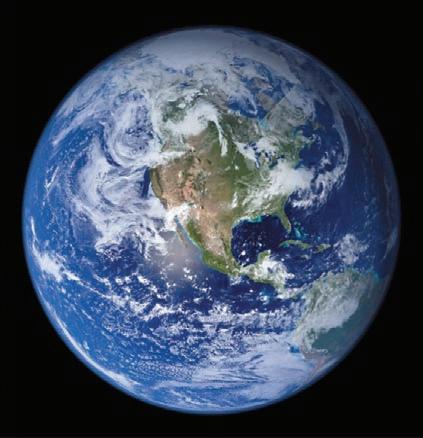
The “blue marble,” our Earth, as seen from outer space.
“The first day or so, we all pointed to our countries. The third or fourth day, we were pointing to our continents. By the fifth day, we were aware of only one Earth.”
Saudi Arabia, 1985.
Prince Sultan bin Salman Al Sa’ud, Astronaut,
Only one Earth. From the vantage point of outer space, the planet we call home is truly magnificent—a “blue marble” of water, land, and clouds. In 1972, the crew of the Apollo 17 spacecraft photographed the Earth at a distance of about 28,000 miles (45,000 kilometers). In the words of Soviet cosmonaut Aleksei Leonov, “The Earth was small, light blue, and so touchingly alone.”
Are we alone in the universe? Possibly. Clearly, though, we are not alone on our planet. We share it with other creatures large and small. Biologists estimate that upwards of 1.5 million species exist in addition to our own. Some help to feed and sustain us. Others contribute to our well-being. Still others (like mosquitoes) annoy and perhaps even sicken us.
We also share the planet with more than 7 billion other people. Over the past century, the human population on Earth has more than tripled, an unprecedented growth spurt in the history of our planet. By 2050, the population may grow by another 2 to 3 billion.
Large and small, all of the species on our planet somehow connect. Exactly how this happens, however, may not be so obvious to us. For example, unseen microorganisms shuttle nitrogen from one chemical form to another, providing nutrients for green plants to grow. These plants harness the light energy of the Sun during the process of photosynthesis. Using this energy, they convert the compounds carbon dioxide and water to that of glucose. At the same time, they release the element oxygen into the air that we breathe. And we humans are host to countless microorganisms that have taken up residence in our skin and internal organs.
Chapter 6 describes the nitrogen cycle. Chapter 4 describes photosynthesis.
Large and small, these connections are breaking at an alarming rate.
A change has occurred in our perspective. Today, we are accustomed to reading reports of declining fish populations and of endangered species. Have you run across the term shifting baselines? This refers to the idea that what people expect as “normal” on our planet has changed over time, especially with regard to ecosystems. The abundance of fish and wildlife that once was normal is no longer carried in the memories of those living today. Similarly, many of us no longer carry memories of cities unclogged by vehicles. Fewer people remember clear summer days when it really did seem that you could see forever. Clearly we humans are industrious creatures. We grow crops, dam rivers, burn fuels, build structures, and jet across time zones. When we carry out such activities by the million, we change the quality of the air we breathe, the water we drink, and the land on which we live. Over time, our actions have changed the face of our planet. What was it once like? See what you can find out by doing the next activity.
Consider This 0.1
Shifting Baselines
Seek out one of the elders in your community. This person may be a friend, relative, or possibly even a community historian.
a. Think about the current price of a loaf of bread, a gallon of gas, or a candy bar. Then inquire about what things used to cost. How has what people expect as “normal” shifted?
b. Now a more difficult task. Think about the local rivers, air quality, vegetation, and/or wildlife. In talking with an elder, see if you can identify at least one case in which the perception of what is “normal” has shifted. It may be that nobody remembers.
The bottom line? The things we perceive today as “normal” were not normal in the past. Although we cannot turn back the clock, we still can make choices that promote our health and the health of our planet today and in the future. A knowledge of chemistry can help. The global problems that we face—and their solutions—are intimately linked with chemical expertise and good old human ingenuity.
Consider This activities appear in all chapters. These activities give you a chance to use what you are learning to make informed decisions. For example, they may require you to consider opposing viewpoints or to make and defend a personal decision. They may require additional research.
0.1 | The Choices We Make Today
Individually, it may seem that our actions have little effect on a system as large as our planet. After all, in comparison to a hurricane, a drought, or an earthquake, what we do on a daily basis can seem pretty inconsequential. What difference could it possibly make if we biked to work instead of driving, used a reusable cloth bag instead of discarding a plastic one, or ate foods grown locally instead of consuming those shipped from hundreds or even thousands of miles away?
Most human activities—including biking, driving, using bags of whatever sort, and eating—have two things in common: They require the consumption of natural resources, and they result in the creation of waste. Driving a car requires gasoline (refined from crude oil), and burning gasoline sends waste products out the exhaust pipe. Although riding a bike is a more ecological choice, all bicycles, just like automobiles, still require the manufacture and disposal of metals, plastics, synthetic rubbers, fabrics, and paints. Shopping bags, whether paper or plastic, require the materials to produce them. Later down the line, these bags become a waste product. And growing food requires water and energy to harvest and transport to market. In addition, food production may require fertilizer and involve the use of insecticides and herbicides.
You can see where this is going. Any time we manufacture and transport things, we consume resources and produce waste. Clearly, though, some activities consume fewer resources and produce less waste than others. Biking produces less waste than driving; reusing cloth bags produces less waste than continually throwing plastic ones away. Although what you do may be negligible in the grand scheme of things, what 7 billion people do clearly is not. Our collective actions not only cause local changes to our air, water, and soil but also hurt regional and global ecosystems.
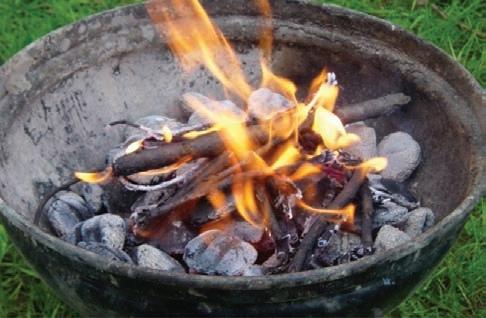
We need to think by the billion. A single cooking fire? No problem; well, unless it accidentally burns down a dwelling. But imagine a few billion people across the planet each tending an individual cooking fi re. Add in fi res from those who cook using stoves, brick ovens, and outdoor grills. Now you have a lot of fuel being burned! Each fuel releases waste products into the atmosphere as it is burned. Some of these waste products—better known as air pollutants—are highly unfriendly to our lungs, our eyes, and of course to our ecosystems.
Today, the waste products we release are unprecedented in their scale and in their potential to lower our quality of life and even shorten it. For example, in a large city such as New York, New Delhi, Mexico City, or Beijing, you will find that hospital admissions and death rates correlate with air pollution levels. Although the health risks are smaller than those caused by obesity or smoking, the issues of public health loom large because people are exposed to air pollutants both indoors and out over a lifetime. Also worrisome is that our actions (by the billion) release waste products that destroy the habitats of other species on the planet. Extinction, of course, is a natural phenomenon. But today the rate is many times faster than would be expected from natural causes. Our destruction of local specialized habitats, particularly those of plants, has led to these extinctions.
Underpinning much of our waste production is energy. The need to find energy sources that are both clean and sustainable arguably is the major challenge of our century. Currently we are both consuming renewable and nonrenewable resources and adding waste to our air, land, and water at a rate that cannot be sustained. This should come as no surprise. Time is the key factor in determining if a resource is renewable or nonrenewable. Renewable resources are those that are replenished more quickly over time than they are being consumed. Examples of renewable resources include solar energy and biomass, such as trees and agricultural crops. Nonrenewable resources are those that have a limited supply or are consumed more quickly than they are produced. Metal ores and fossil fuels (coal, oil, and natural gas) are examples of nonrenewable resources.
Look for more about crude oil and how it is refined in Chapter 4.
Chapters 1, 3, 4, and 6 all explore the connections between fuels and the waste products they release when burned.
Look for more about what comes out a tailpipe in Chapter 1.
With any problem comes the opportunity to find creative solutions. We hope you are asking yourself “What can I do?” and “How can I make a difference in my community?” As you ask questions such as these, remember to include chemistry in your deliberations. Indeed, chemistry is well named the “Central Science.” Today, chemists are at the center of the action when it comes to the sustainable use of resources. Chemists are challenged to use their knowledge responsibly to protect human health and the environment. The same, of course, is true for you. In this book, we will support you as you learn and encourage you to use what you learn to act responsibly in preserving our one Earth.
0.2 | The Sustainable Practices We Need for Tomorrow
What does it mean to use the resources of our planet in a sustainable manner? We hope that you can answer this question—at least in part—from what you already have learned in other classes. People from many disciplines, including those from economics, political science, engineering, history, nursing, and agriculture, have a stake in developing sustainable practices. And, as you will learn in this text, those of us in chemistry play a major role in creating a sustainable world.
Because the term sustainability is used by so many groups of people, it has taken on different meanings. We have selected one that is frequently quoted: “Meeting the needs of the present without compromising the ability of future generations to meet their own needs.” This definition is drawn from a statement written in a 1987 report, Our Common Future, by the World Commission on Environment and Development of the United Nations. In Table 0.1, we reprint excerpts from the foreword to Our Common Future so that you can read its challenging words in their original context.
0.1 Our Common Future (excerpts from the Foreword)
“A global agenda for change”—this was what the World Commission on Environment and Development was asked to formulate. It was an urgent call by the General Assembly of the United Nations.
In the final analysis, I decided to accept the challenge. The challenge of facing the future, and of safeguarding the interests of coming generations.
After a decade and a half of a standstill or even deterioration in global co–operation, I believe the time has come for higher expectations, for common goals pursued together, for an increased political will to address our common future.
The present decade has been marked by a retreat from social concerns. Scientists bring to our attention urgent but complex problems bearing on our very survival: a warming globe, threats to the Earth’s ozone layer, deserts consuming agricultural land.
The question of population—of population pressure, of population and human rights—and the links between these related issues and poverty, environment, and development proved to be one of the more difficult concerns with which we had to struggle.
But first and foremost our message is directed towards people, whose well being is the ultimate goal of all environment and development policies. In particular, the Commission is addressing the young. The world’s teachers will have a crucial role to play in bringing this report to them.
If we do not succeed in putting our message of urgency through to today’s parents and decision makers, we risk undermining our children’s fundamental right to a healthy, life–enhancing environment.
In the final analysis, this is what it amounts to: furthering the common understanding and common spirit of responsibility so clearly needed in a divided world.
Gro Harlem Brundtland, Oslo, 1987.
Our Common Future is also called the Brundtland Report. It was named after Gro Harlem Brundtland, the woman who chaired the commission.
Table
Brundtland’s words carry a message to those who teach and learn. She writes: “In particular, the Commission is addressing the young. The world’s teachers will have a crucial role to play in bringing this report to them.” We agree. To this end, we hope that your chemistry course will stimulate conversations both inside and outside of the classroom. One such conversation is about practices that are not sustainable. For example, you will study fossil fuels and learn why their use is not sustainable (Chapter 4). But don’t stop there. You also need to discuss what you can do to solve the problems we face today. Use what you learn about air quality to act to improve local air quality and to make informed decisions as a citizen to improve it more widely (Chapter 1). Similarly, use what you learn about aqueous solubility and waste water to evaluate public policies that relate to water quality (Chapter 5).
In 2000, the United Nations adopted the Millennium Development Goals, which are targeted toward helping the world’s poor through such efforts as improving maternal and child health care and ending poverty and hunger. One of these eight goals focuses on environmental sustainability. The four targets identified to ensure environmental sustainability are:
1. Integrate the principles of sustainable development into country policies and programmes and reverse the loss of environmental resources.
2. Reverse biodiversity loss, achieving, by 2010, a significant reduction in the rate of loss.
3. Halve, by 2015, the proportion of the population without sustainable access to safe drinking water and basic sanitation.
4. Achieve, by 2020, a significant improvement in the lives of at least 100 million slum dwellers.
Significant progress has been made in achieving these targets, and Target 3, with respect to drinking water, and Target 4 are on track. The biodiversity target has been missed, however. Science and technology continue to be essential in meeting the Millennium Development Goals and other sustainability efforts.
Scientific societies across the globe recognize the importance of mobilizing their members in applying their knowledge and expertise to the challenges of sustainability. The American Chemical Society’s “Sustainability and the Chemical Enterprise” policy statement notes:
WCED, 1987, Our Common Future (the “Brundtland” Report), World Commission on Environment and Development, Oxford University Press, Oxford, UK.
NRC, 1999, Our Common Journey: A Transition Toward Sustainability, National Research Council, National Academy Press, Washington, D.C.
NRC, 2005, Sustainability in the Chemical Industry, National Research Council, National Academy Press, Washington, D.C.
Preserving the habitability of the Earth and its ability to provide the resources required for future generations to thrive is a basic human obligation. It is now necessary for society to address the challenges of limited resources, an expanding population, and the unintended impacts of technological achievements on human health and ecosystem viability. The best way to handle these challenges is by redirecting human development towards a path of sustainability, which would allow humanity “to meet current environmental and human health, economic, and societal needs without compromising the progress and success of future generations” (WCED, 1987; NRC, 1999; NRC, 2005).
The chemical enterprise—consisting of the chemical and allied industries, their trade associations, and the educational and professional organizations (schools, colleges, universities, research institutions, government laboratories, professional societies) that produce both the enabling scientific knowledge and the necessary scientific and engineering workforce—has a crucial role to play in advancing sustainable development.
In this text, we will explore the contributions of science and technology, especially chemistry, to a sustainable world. The next section describes the Triple Bottom Line, a paradigm that looks beyond profit in assessing business success.
0.3 | The Triple Bottom Line
Scientists aren’t the only ones responsible for a sustainable planet. If you are a business or economics major, you may be well aware that people in the business sector have put sustainability on the corporate agenda. In fact, sustainable practices can offer a competitive advantage in the marketplace.
In the world of business, the bottom line always has included turning a profit, preferably a large one. Today, however, the bottom line includes more than this. For example, corporations are judged to be successful when they are fair and beneficial to workers and to the larger society. Another measure of their success is how well they protect the health of the environment, including the quality of the air, water, and land.
Taken together, this three-way measure of the success of a business based on its benefits to the economy, to society, and to the environment has become known as the Triple Bottom Line. One way to represent the Triple Bottom Line is with the overlapping circles shown in Figure 0.1. The economy must be healthy, that is, the annual reports need to show a profit. But no economy exists in isolation; rather, it connects to a community whose members also need to be healthy. In turn, communities connect to ecosystems that need to be healthy. Hence the figure includes not one, but three connecting circles. At the intersection of these circles lies the “Green Zone.” This represents the conditions under which the Triple Bottom Line is met.
Harm that occurs in any of the circles of Figure 0.1 will ultimately translate into harm for the business. Conversely, achieving success can provide a competitive advantage, both immediately and in the years to come. Businesses can turn a profit; at the same time, they can get good publicity (and minimize any harm) by using less energy, consuming fewer resources, and creating less waste. A triple win!
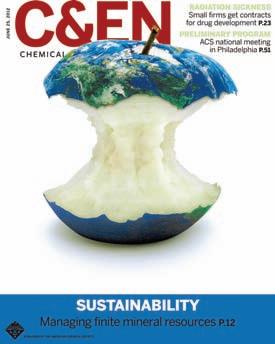
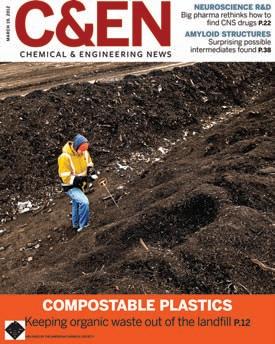
Recent news articles document the changes that are occurring. For example, read this excerpt from a news article that explains how the use of compostable plastics is diverting organic waste from landfills to compost piles. The source is Chemical & Engineering News (C&EN), the weekly publication of the American Chemical Society. Houston had a problem. The city’s composting program called for residents to put their lawn clippings and leaves in polyethylene bags and leave them curbside. The sanitation workers who collected the bags had to cut them open and dump the contents into the backs of their trucks. It was laborious and time-consuming. Overtime was piling up.
The city decided to end the program and stop composting yard waste, recalls Gary Readore, chief of staff and recycling manager for Houston’s Solid Waste Management Department. “Everything was going to the landfill.” That system wasn’t cheap either. Houston was collecting 60,000 tons of clippings per year. With a $25-per-ton “tipping fee,” the
Figure 0.1
A representation of the Triple Bottom Line. The “Green Zone” (where the Triple Bottom Line is achieved) lies at the intersection of these three circles.
The Triple Bottom Line sometimes is shortened to the 3Ps: Profits, People, and the Planet.
charge for sending it to the landfill, yard waste cost the city $1.5 million per year.
In 2010, Houston resumed collecting yard waste for composting, but now residents leave it out in compostable plastic bags. The bags are translucent, allowing workers to peer inside to see if residents are cheating by commingling regular trash with the leaves. In addition to saving the tipping fee, the city gets $5.00 per ton for the material from its composting contractor, Living Earth Technology. The fi rm composts the bags right along with the rest of the waste; no special handling is required. Houston’s experience illustrates the value of compostable plastics. Such materials aren’t meant to make the problem of plastic waste magically disappear. But they are intended to help municipalities and institutions divert organic waste away from the landfi ll and to the compost pile by making participation in composting programs convenient for consumers (C&EN, Mar. 19, 2012).
Consider This 0.2
Compostable vs. Recyclable
Plastics are often referred to as compostable or recyclable. But is there a difference? Explain, in your own words, the difference between a plastic that is compostable versus one that is recyclable. What are the benefits of composting and recycling with respect to the fate of plastics?
The point? The debates over how to be “green” are likely to continue over your lifetime. The issues are not new; they are not likely to be resolved anytime soon. Chemistry in Context will encourage you to explore these issues, arming you with the knowledge you need to formulate more creatively your own response.
“A sustainable society is one that is far-seeing enough, flexible enough, and wise enough not to undermine either its physical or its social systems.”
0.4 | Cradle-to-Where?
You may have heard the expression cradle-to-grave, that is, an approach to analyzing the life cycle of an item, starting with the raw materials from which it came and ending with its ultimate disposal someplace, presumably on Earth. This catchy phrase offers a frame of reference from which to ask questions about consumer items. Where did the item come from? And what will happen to the item when you are finished with it? More than ever, individuals, communities, and corporations are recognizing the importance of asking these types of questions. Cradle-to-grave means thinking about every step in the process.
Look for more about batteries in Chapter 8 and more about plastics in Chapter 9.
Chapter 4 explains how and why crude oil is separated into fractions.
Companies should take responsibility—as should you—for items from the moment the natural resources used to make them were taken out of the ground, air, or water to the point at which they were ultimately “disposed of.” Think of items such as batteries, plastic water bottles, T-shirts, cleaning supplies, running shoes, cell phones— anything that you buy and eventually discard.
Cradle-to-grave thinking clearly has its limitations. As an illustration, let us follow one of the plastic bags that supermarkets provide for your groceries. The raw material for these bags is petroleum. Accordingly, the “cradle” of this plastic bag most likely was crude oil somewhere on our planet, for example, the oil fields of Canada. Let’s assume that the oil was pumped from a well in Alberta and then transported to a refinery in the United States. At the refinery, the crude oil was separated into fractions. One of the fractions was then cracked into ethylene, the starting material for a polymer. Ethylene next was polymerized and formed into polyethylene bags. These bags were packaged and then trucked (burning diesel fuel, another refi nery product) to your
Donella Meadows (1941–2001) was a scientist and writer. Her books include The Limits to Growth and The Global Citizen
Chapter 9 explains how polyethylene is made from ethylene (and why).
Donella Meadows, 1992
grocery store. Ultimately, you purchased groceries and used one of the bags to carry them home.
As stated, this is not a cradle-to-grave scenario. Rather, it was cradle-to-yourkitchen, definitely several steps short of any graveyard. So what happened to this plastic bag after you used it? Did it go into the trash? The term grave describes wherever an item eventually ends up. One trillion plastic bags, give or take, are used each year in supermarkets. Only about 5% are recycled. The rest end up either in our cupboards, our landfills, or littered across the planet. As litter, these bags begin a 1000-year cycle, again give or take, of slow decomposition into carbon dioxide and water.
Cradle-to-a-grave-somewhere-on-the-planet is a poorly planned scenario for a supermarket bag. If each of the trillion plastic bags instead were to serve as the starting material for a new product, we then would have a more sustainable situation. Cradle-to-cradle, a term that emerged in the 1970s, refers to a regenerative approach to the use of things in which the end of the life cycle of one item dovetails with the beginning of the life cycle of another, so that everything is reused rather than disposed of as waste. In Chapter 9, we will examine different recycle-and-reuse scenarios for plastic bottles. But right now, you can do your own cradle-to-cradle thinking in the next activity.
Your Turn 0.3 The Can That Holds Your Beverage
People tend to think of an aluminum can as starting on a supermarket shelf and ending in a recycling bin. There is more to the story!
a. Where on the planet is aluminum ore (bauxite) found?
b. Once removed from the ground, the ore usually is refined to alumina (aluminum oxide) near the mining site. The alumina is then transported to a production facility. What happens next to produce aluminum metal?
c. What happens to the can after you recycle it?
Answers
a. Bauxite is mined in several places, including Australia, China, Brazil, and India.
b. The ore must be refined electrolytically to produce aluminum metal. This process is energy–intensive and carried out in many locations worldwide.
As you can tell from these examples, it is not just the decisions of manufacturers that matter. Your decisions do as well. What you buy, what you discard, and how you discard it all warrant attention. The choices that we make—individually and collectively—matter.
At the risk of repeating ourselves, we remind you that the current state of affairs in which we consume the nonrenewable resources of our planet and add waste to our air, land, and water is not sustainable. In the next section, we explain why, setting the stage for the topics in chemistry that you will explore in this text.
0.5 | Your Ecological Footprint
You already may know how to estimate the gas mileage for a vehicle. Likewise, you can estimate how many calories you consume. How might you estimate how much of the Earth’s natural capital it takes to support the way in which you live? Clearly, this is far more difficult. Fortunately, other scientists already have grappled with how to do the math. They base the calculations on the way in which a person lives coupled with the available renewable resources needed to sustain this lifestyle.
Consider the metaphor of a footprint. You can see the footprints that you leave in sand or snow. You also can see the muddy tracks that your boots leave on the kitchen
Your Turn activities appear in all chapters. They provide an opportunity for you to practice a new skill or calculation that was just introduced in the text. Answers are given either following the Your Turn activity or in Appendix 4.
Although you may not know how much air you breathe in a day, Chapter 1 will help you to estimate this.
The term cradle–to–cradle caught on with the publication in 2002 of a book of this same title.
Ecological footprints consider resource consumption based on land and water use; carbon footprints are based upon the release of greenhouse gases associated with the combustion of fossil fuels. Look for more about carbon footprints in Section 3.9.
A hectare is 10,000 square meters, or 2.471 acres.
Figure 0.2
A comparison of ecological footprints, in global hectares per person.
Source: The Ecological Footprint Atlas, 2010.
floor. Similarly, one might argue that your life leaves a footprint on planet Earth. To understand this footprint, you need to think in units of hectares or acres. A hectare is a bit more than twice the area of an acre. The ecological footprint is a means of estimating the amount of biologically productive space (land and water) necessary to support a particular standard of living or lifestyle.
For the average U.S. citizen, the ecological footprint was estimated in 2007 to be about 8.0 hectares (20 acres). In other words, if you live in the United States, on average it requires 8.0 hectares of land to provide the resources to feed you, clothe you, transport you, and give you a dwelling with the creature comforts to which you are accustomed. The people of the United States have relatively big feet, as you can see in Figure 0.2. The world average in 2007 was estimated to be 2.7 hectares per person.
How much biologically productive land and water is available on our planet? We can estimate this by including regions such as croplands and fishing zones, and omitting regions such as deserts and ice caps. Currently, the value is estimated at about 12 billion hectares (roughly 30 billion acres) of land, water, and sea surface. This turns out to be about a quarter of the Earth’s surface. Is this enough to sustain everybody on the planet with the lifestyle that people in the United States have? The next activity allows you to see for yourself.
Your Turn 0.4 Your Personal Share of the Planet
As stated earlier, an estimated 12 billion hectares (~30 billion acres) of biologically productive land, water, and sea are available on our planet.
a. Find the current estimate for the world population. Cite your source.
b. Use this estimate together with the one for biologically productive land to calculate the amount of land theoretically available for each person in the world.
Answers
a. In 2012, the population of the Earth was between 7.0 and 7.1 billion.
b. About 1.7 hectares or ~4 acres per person.
Why is this important? We have been exceeding the Earth’s ability to meet our demands since the 1970s. A nation whose people have an average footprint greater than about 1.7 hectares is exceeding the “carrying capacity” of the Earth. Using the United States as an example, let’s do one more calculation to see by how much.
Your Turn 0.5 How Many Earths?
In 2007, the United States had an ecological footprint of about 8.0 hectares (~20 acres) per person.
a. Find an estimate of the current population of the United States. Cite your source.
b. Calculate the amount of biologically productive land that the United States currently requires for this population.
c. What percentage is this amount of the biologically productive space (about 12 billion hectares or ~30 billion acres) available on our planet?
Answer
b. Estimating the U.S. population at 315 million and using the estimate of 8.0 hectares per person, the United States required about 2.5 billion hectares (6.2 billion acres).
Let’s now say that everyone on the planet lived like the average citizen in the United States. Here is the calculation based on the world population in 2012.
Thus, to sustain this same standard of living for everybody on the planet we would need nearly 4 more Earths in addition to the one we currently have!
“Only One Earth.” On this Earth, the number of people has risen dramatically in the last few hundred years. So has economic development. As a result, the estimated global ecological footprint is rising, as shown in Figure 0.3. In 2003, we estimate that humanity used the equivalent of 1.25 Earths. By the 2030s, the projection is that we will be using 2 Earths. Clearly this rate of consumption cannot be sustained.
Through your study of chemistry, we hope you will learn ways either to reduce your ecological footprint or to keep it low, if it already is. The next section describes how chemists can help make this process work in some ways you might not expect.
The current and projected ecological footprint of humans. Current estimates place the footprint above 1.0 Earths, that is, above what the Earth can sustain. Note: The upper projection assumes “moderate business as usual.” The lower projection assumes a change to sustainable practices.
Source: Adapted from data provided by the Global Footprint Network.
0.6 | Our Responsibilities as Citizens and Chemists
We humans have a special responsibility to take care of our planet. Living out this responsibility, however, has proven to be no easy task. Each chapter in Chemistry in Context highlights an issue of interest such as air quality, water quality, or nutrition. These issues not only affect you personally, they also affect the health and well-being of the wider communities of which you are a part. For each issue, you will work on two related tasks: (1) learning about the issue and (2) finding ways to act constructively. How do chemists meet the challenges of sustainability? The answer lies in part with “green chemistry,” a set of principles originally articulated by people at the Environmental Protection Agency (EPA) and now actively pursued by the American Chemical Society (ACS). Green chemistry is the design of chemical products and processes that reduce or eliminate the use and generation of hazardous substances. The desired outcome is to produce less waste, especially toxic waste, and to use fewer resources.
Recognize that green chemistry is a tool in achieving sustainability, not an end in itself. As stated in the article “Color Me Green” from an issue of Chemical & Engineering News published in 2000: “Green chemistry represents the pillars that hold up our sustainable future. It is imperative to teach the value of green chemistry to tomorrow’s chemists.” Actually, we believe that it is imperative to teach the value of green chemistry to citizens as well. This is why so many applications of green chemistry are woven throughout Chemistry in Context.
To get you started, we list six key ideas about green chemistry (Table 0.2). They also are printed on the inside cover of this book.
Initiated under the EPA’s Design for the Environment Program, green chemistry leads to cleaner air, water, and land, and the consumption of fewer resources. Chemists are now designing new processes (or retooling older ones) to make them more environmentally friendly. We call this “benign by design.” Every green innovation does not necessarily have to be successful in achieving all six of these key ideas. But achieving several of them is an excellent step on the road to sustainability.
For example, an obvious way to reduce waste is to design chemical processes that don’t produce it in the fi rst place. One way is to have most or all of the atoms in the reactants end up as part of the desired product molecules. This “atom economy” approach, although not applicable to all reactions, has been used for the synthesis of many products, including pharmaceuticals, plastics, and pesticides. The approach saves
2. It is better to minimize the amount of materials used in the production of a product.
3. It is better to use and generate substances that are not toxic.
4. It is better to use less energy.
5. It is better to use renewable materials when it makes technical and economic sense.
6. It is better to design materials that degrade into innocuous products at the end of their useful life.
Source: Adapted from The Twelve Principles of Green Chemistry by
Look for green chemistry examples throughout this book, designated with this icon.
Table 0.2 Key Ideas in Green Chemistry
1. It is better to prevent waste than to treat or clean up waste after it is formed.
Paul Anastas and John Warner.
money, uses fewer starting materials, and minimizes waste. The connection between green chemistry and the Triple Bottom Line should be apparent!
Many chemical manufacturing processes now use innovative green chemical methods. For example, you will see applications of green chemistry that have led to cheaper, less wasteful, and less toxic production of low VOC paint (Chapter 1). You also will see the key ideas in green chemistry applied to processing raw cotton, dry-cleaning methods (Chapter 5), and economical and healthier ways to process vegetable oils (Chapter 11).
Green chemistry efforts have been rewarded! A select group of research chemists, chemical engineers, small businesses, large corporations, and government labs has received the Presidential Green Chemistry Challenge Award. Initiated in 1995, this presidential-level award recognizes chemists and the chemical industry for their innovations aimed at reducing pollution. These awards recognize innovations in “cleaner, cheaper, and smarter chemistry.”
0.7 | Back to the Blue Marble
Before we send you off to Chapter 1, we revisit the 1987 United Nations document Our Common Future. Earlier, we drew from this document our definition of sustainability: “Meeting the needs of the present without compromising the ability of future generations to meet their own needs.” The foreword to this report was written by the chair, Gro Harlem Brundtland. She also wrote these words, ones that call us back to the image of Earth that opened this chapter:
In the middle of the 20th century, we saw our planet from space for the fi rst time. Historians may eventually find that this vision had a greater impact on thought than did the Copernican revolution of the 16th century, which upset the human self-image by revealing that the Earth is not the centre of the universe. From space, we see a small and fragile ball dominated not by human activity and edifice but by a pattern of clouds, oceans, greenery, and soils. Humanity’s inability to fit its activities into that pattern is changing planetary systems, fundamentally. Many such changes are accompanied by life-threatening hazards. This new reality, from which there is no escape, must be recognized—and managed.
We agree. The new reality must be recognized. There is no escape. And all of us—students and teachers alike—have important roles to play. With Chemistry in Context, we will strive to provide you with the chemical information that can make a difference in your life and in the lives of others. We hope that you will use it to meet the challenges of today and tomorrow, equipped with a deeper understanding of chemistry.
VOC stands for volatile organic compound. Look for more about VOCs in connection with air pollution in Chapter 1, “The Air We Breathe.”
Questions
1. This chapter opened with a famous quote from a Saudi astronaut, Prince Sultan. Later, in a 2005 interview, he remarked: “Being an astronaut has had an enormous impact on me. Looking at the planet from the perspective of the blackness of space, it makes you wonder, . . .” Prince Sultan went on to describe what he wondered about. We did not reprint his words. Rather, we hoped that you would write your own.
a. Write a three-paragraph essay. In the fi rst, introduce yourself briefly. In the second, describe what is important to you as you begin your study of chemistry. And in the third, describe what you most wonder about that relates to planet Earth.
b. Share your self-introduction with others in your class, as indicated by your instructor.
2. When you look at a picture of Earth, “the blue marble,” what are your fi rst impressions?
3. Classify the following resources as renewable or nonrenewable: wind power, minerals, water, biofuel, and natural gas.
4. Read the full text of the Foreword to the Brundtland Report, easily found by a web search. It is only a few pages in length and contains some of the most compelling language ever written. Pick a small section and write a short piece that connects it to something you care about. You may choose a stance of agreement or disagreement.
5. This chapter introduces the idea that the species on our planet are all connected, sometimes in ways that are not obvious. From your studies in other fields, give three examples of how organisms are linked or in some way depend on one another.
6. Energy is the focus of one of the key ideas in green chemistry, and this chapter notes that finding “energy sources that are both clean and sustainable arguably is the major challenge of our century.”
a. Why are our current sources of energy – fossil fuels – neither clean nor sustainable?
b. Why is it so important to replace our current sources of energy with ones that are clean and sustainable?
7. This chapter introduces the concept of “cradle-tograve,” one that you will encounter in subsequent chapters as well.
a. Explain what is meant by a “cradle.”
b. For each of these items, name the cradle: plastic bag, paper cup, cotton T-shirt.
c. Explain what is meant by a “grave.”
d. For the items listed in part b, suggest possible “graves” for each.
8. Choose an item that you use at school and describe the cradle-to-grave approach for its resources. Describe how you could change the cycle of the resources to “cradle-tocradle.”
9. Figure 0.1 shows one possible representation of the Triple Bottom Line. Here is another. Comment on the similarities and differences between these two figures.
Economy Society
Environment
10. Propose a business practice that could follow the Triple Bottom Line.
11. This chapter also introduces the concept of “shifting baselines.”
a. In your own words, explain what “shifting baselines” means.
b. Name an example of shifting baselines that has occurred in the past 20 years.
12. Calculate your ecological footprint. Feel free to use any of the websites available.
13. A bus serving a university campus had this sign painted on its side: “Reduce your footprints. Take the bus.” Explain the double meaning.
14. Based on your experiences, why do you think that chemistry is called “the central science”?
15. Consider the waste produced as a result of an activity that you enjoy.
a. Describe the activity and the waste that accompanies it.
b. As more and more people participate in this activity, does the waste produced become a concern? Explain why or why not.
16. Define sustainability in your own words and describe two of your current activities that you can make more sustainable.
17. Describe the progress that has been made with regard to Target 4 in the Millennium Development Goals, “Achieve, by 2020, a significant improvement in the lives of at least 100 million slum dwellers.”
18. Propose some ways that you can personally lower your ecological footprint.
19. Which key idea in green chemistry do you think is most important? Why?
20. Select a corporation of your choice, visit its website, and look for the pages that describe its efforts in regards to sustainability and/or corporate responsibility. Possibilities include Coca-Cola, WalMart, ExxonMobil, and Burger King. Report on what you find.
21. Mel George, a retired mathematics professor and one of the architects of Shaping the Future: New Expectations for Education in Undergraduate Science, Technology, Engineering, and Mathematics ( National Science Foundation), remarked: “Putting a man on the moon did not require me to do anything. In contrast, we all must do something to save the planet.” Describe five things that you could do, given who you are and your field of study.
22. Although the key ideas in green chemistry were written to guide chemists, you may find that these concepts are relevant to you as well. Perhaps you are an economics major. Or you are planning to become a nurse or a teacher. Perhaps you spend time gardening or you like to commute by bike. Pick two of the key ideas in green chemistry and describe ways in which they connect to your life and/or intended profession.
23. Newspaper and magazine advertisements often proclaim how “green” a business or corporation is. Find one and read it closely. What do you think—is it a case of “greenwashing,” in which a corporation is trying to use as a selling point one tiny green drop in an otherwise wasteful bucket? Or is it a case of a real improvement that significantly reduces the waste stream? Note: It may be difficult to tell. For example, eliminating 7 tons of waste may sound large unless you know that the actual waste stream is in the billions of tons.
24. The mission statement of the American Chemical Society, the world’s largest scientific society, is “Advance the broader chemistry enterprise and its practitioners for the benefit of Earth and its people.” Explain how the final six words of this statement connect to the definition of sustainability used in this chapter.
ACS Chemistry for LifeTM
25. Thomas Berry, theologian and cultural historian (1914–2009), described in his book The Great Works (1999) how humanity is faced with the job of moving from the present geological age, the Cenozoic, to the coming age. He names this age as “Ecozoic,” reflecting the tremendous power of humans to shape the face of the world. “The universities must decide whether they will continue training persons for temporary survival in the declining Cenozoic Era or whether they will begin educating students for the emerging Ecozoic. . . . While this is not the time for continued denial by the universities or for attributing blame to the universities, it is the time for universities to rethink themselves and what they are doing.”
a. What do you see as the coming age? Describe it. If you don’t prefer the term Ecozoic Age, suggest one of your own.
b. How have your studies to date been preparing you for the future world in which you will live?
c. In what ways do you think your study of chemistry might prepare you?
26. Select an idea in this chapter that caught your attention. a. Which idea did you select? Expand upon it in a few sentences.
b. What was it about this idea that caught your attention? Explain.