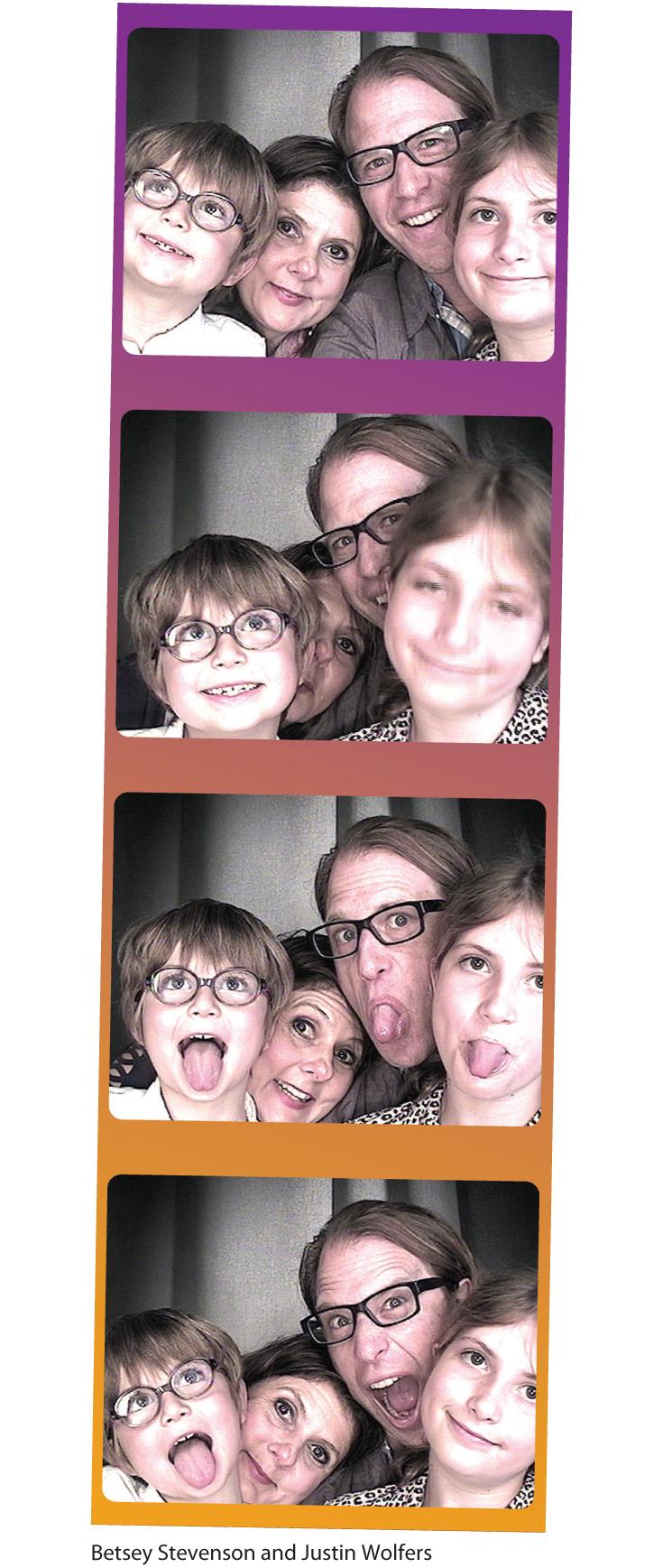
Betsey Stevenson is a professor of economics and public policy at the University of Michigan. Her research focuses on the impact of public policies on the labor market, and explores women’s labor market experiences, the economic forces shaping the modern family, and the role of subjective well-being data for public policy. She serves on the Executive Committee of the American Economic Association, and is also a research associate with the National Bureau of Economic Research, a fellow of the Institute for Economic
Research in Munich, a visiting associate professor of economics at the University of Sydney, and a research Fellow with the Centre for Economic Policy Research in London. She served as a member of the Council of Economic Advisers from 2013 to 2015, where she advised President Obama on social policy, labor market, and trade issues. She also served as the chief economist of the U.S. Department of Labor from 2010 to 2011. Betsey is an occasional editorialist for Bloomberg, and a trusted presence in the public debate about economics and public policy. She earned a BA in economics and mathematics from Wellesley College and an AM and PhD in economics from Harvard University.
Justin Wolfers is a professor of economics and public policy at the University of Michigan. He has research in both macroeconomics and applied microeconomics topics, having explored unemployment and inflation, the power of prediction markets, the economic forces shaping the modern family, discrimination, and happiness. He is a research associate with the National Bureau for Economic Research, a fellow of the Brookings Institution, a fellow of the Peterson Institute for International Economics, a research fellow with the Centre for Economic Policy Research in London, a fellow of the Institute for Economic Research in Munich, a visiting professor of economics at the University of Sydney, and an international research fellow at the Kiel Institute for the World Economy in Germany. He has been an editor of the Brookings Papers on Economic Activity, a board member on the Committee on the Status of Women in Economics, a member of the Panel of Advisors of the U.S.
Congressional Budget Office, among many other board and advisory positions. He is currently a contributing columnist for the New York Times, and has written about economic issues in numerous other outlets. He is frequently quoted in the media on economic policy and relied upon to provide unbiased assessments of the current state of the macroeconomy. Justin earned a BA in economics from the University of Sydney and an AM and PhD in economics from Harvard University.
One of them was once described by Jezebel.com as the “hippesteconomist-ever.” The other was not.
Betsey and Justin live in Ann Arbor, Michigan, with their children Matilda and Oliver and their lovable mutt, Max. They’re thinking of getting a cat.
A Fresh Perspective on Economics
A slow-motion revolution has transformed economics. We’ve moved beyond the widget factory—the standardized set of business interactions involving inputs, outputs, and pricing decisions— toward a social science that can speak to the decisions we make in every aspect of our lives. Successive cohorts of economists have transformed the field so that it has greater relevance and a closer relationship to actual human behavior, making it more meaningful to more people. This is no longer your parents’ economics.
This transformation presents a once-in-a-generation teaching opportunity. More than ever before, we have the capacity to deliver a compelling introductory economics class that will deliver an extraordinary return on our students’ investment in the field.
This opportunity requires a textbook that works with instructors to showcase how economics has become broader, and we show that it is more relevant to a larger, more diverse population of students. It has to show that economics has become more useful for the ordinary business of life, and our students delight in seeing the relevance of economic tools to the real-world decisions they face. We believe that by focusing on intuition, we can reorient students to seeing
themselves as economic actors poised to apply the lessons they’re learning throughout their lives.
Our fresh perspective gives us an opportunity to write in a voice that students actually want to read. If you’ve ever had the pleasure of reading one of those popular economics books that takes readers on a joyous romp through our field, you quickly understand why millions of people spend their weekends reading them. Podcast rankings and best-seller lists reveal a latent demand for an approach that supplies some of the same magic. We aim to bring that sense of delight and discovery to your introductory economics class.
Economics can provide students with a toolkit of extraordinary breadth, usefulness, and insight. It’s a toolkit they can use to better understand and navigate their world, empowering them to make better decisions in the many different roles they’ll play in the economy, their communities, and their careers—indeed, in every aspect of their lives.
For economics instructors, the opportunity is larger still, giving us the capacity to transform individual lives and entire communities. Our goal is for every single student who turns the page to do more than remember to use(!) what they’ve learned, every day, for the rest of their lives. We aim to show them the power and transformative potential in the lessons they’re about to absorb.
We each have that one class that we remember from college. It’s the class you look back on as having somehow caused your synapses to fire differently, that sparked new neural connections, and provided a clarity that felt like it allowed you to see beyond the horizon. It might have been the class that inspired you to study economics—or maybe it was an elective that, though it seemed tangential to your studies at the time, you’ve found yourself drawing on every day since. We want principles of economics to be that class for each of our students, and for each of yours.
Description -
This is asamplecontentforLongALTtext
Broad. Useful. Intuitive.
“The Stevenson/Wolfers textbook is as revolutionary as Greg Mankiw’s first edition and definitely surpasses Mankiw’s current edition. It will convince the students that microeconomics is fun and easy to learn.”
Debashis Pal, University of Cincinnati
“If I only had one shot at a student, the material in these first few chapters is what I would want them to walk away with.”
“This text presents more graphs from real economic data than I think I have ever seen! I love how the graphs are presented with great down-to-earth, easy explanations.”
Heather Schumacker, Salt Lake Community College
“Engaging and presented in such a way that the student has no problem applying the concepts shared in this chapter to their daily lives, forever. . . . Such a great read!”
Yolunda Nabors, Tennessee Technological University
“I’m not a new guy. I’m an experienced professor. I’ve received several teaching awards. I’m comparing this text with several wellestablished texts. And I find this text unique, innovative, and refreshing.”
Reza Ramazani, St. Michael’s College-Colchester, VT
“Most of the students are concerned about seeing mathematics and graphs so the clear verbal approach is inclusive to all students. Since I started using Stevenson/Wolfers more students are asking me what courses I teach at higher levels and more students are considering minoring in Economics!”
Gennady Lyakir, Fashion Institute of Technology
[T]he material is presented in an intuitive, relevant way that is maybe deceptively rigorous. And I’m still blown away by the business cycle chapter.
Susan Laury, Georgia State University
“My students pretty much universally seemed happy, both in class and in their surveys. Fewer students dropped the course, especially early on. They even got better grades on the final. There was a noticeable difference.”
Steve Davis, Southwest Minnesota State University
Broadly Applicable
How will you allocate your limited attention? See Chapter 1
DescriptionWe’re part of a generation that has come to understand economics as a set of tools, rather than a specific set of interactions in traditional markets. In our research, we’ve analyzed marriage and divorce,
women’s changing role in the labor market, happiness, elections, unemployment, and inequality. This broad approach enables us to show students that the economic tools they’re learning can be used to study families, education, and health as well as business strategy, political economy, finance, and economic policy. This greater relevance means that studying economics has a bigger payoff for more students across a wider range of interests and career ambitions, including those who have traditionally been deterred from the field. The result is a more diverse set of students, higher enrollments, and greater momentum in the major.
Extraordinarily Useful
Do it yourself, or delegate? See Chapter 8
Description -
This is asamplecontentforLongALTtext
In our experience, students identify with economics when economics identifies with them. And so on every page we show how it applies to the real-world decisions they’ll face in their lives. The theory of supply comes to life when students see themselves not just as potential suppliers but also as suppliers of their labor, their savings, and even their attention. The theory of comparative advantage that animates international trade is more broadly a theory of task allocation that students can use now to inform their choice of major, and later as managers assigning responsibilities among their staff. Likewise, the net present value framework we use to teach future CEOs how to make investment decisions applies equally to our students’ decisions to invest in their education, their health, and their careers. The value of the economic toolkit becomes immediately obvious when students can start using it straight away and when they can see themselves applying it through the rest of their lives.
Refreshingly Intuitive
Should you keep or sell your textbooks? See Chapter 3
DescriptionThis broader and more useful scope requires us to shi perspectives, from thinking about our students as spectators who
watch the economic action unfold, to preparing them for the important roles they’ll play as economic actors. That means emphasizing economic intuition so that they learn to see the world through an economics lens. We do this by doing more, with less. Rather than overstuff each lesson with technical detail, we focus on the foundational ideas. For faculty, this means teaching the same economic ideas that you use every day. For students, it means working through these ideas again and again, to build familiarity and competence. In time, the muscle that connects theory with reality grows stronger, and something magical happens as students start to recognize economic forces all around them. This transforms the relationship that our students have with economics: They report that it changes from just another subject of classroom study to a whole new way of thinking that they find themselves using every day.
Build a Solid Foundation
If you want to build something that lasts, start with a solid foundation. This means stripping economics back to its foundational ideas, and then showing the power and reach of those ideas.
Four Core Principles. Endless Applications.
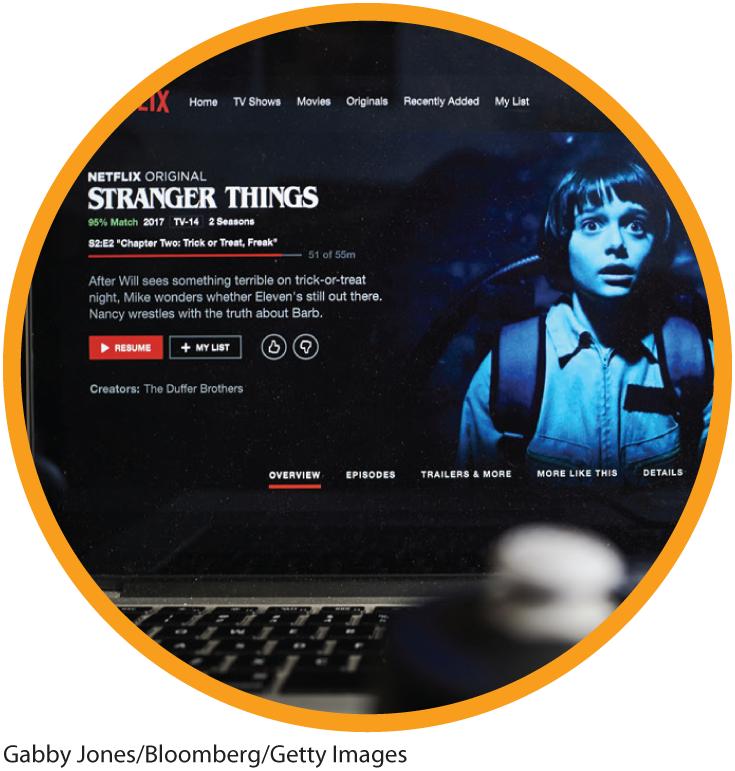
Should you stream one more episode? See Chapter 1
Description
Economists know that the core principles of economics can be applied broadly, to just about any decision. Our goal is for students to walk out of the principles course thinking the same way. In
Chapter 1, we introduce students to the four core principles that are the foundation of economic reasoning:
The marginal principle: Ask “one more?” instead of “how many?”
The cost-benefit principle: Compare the relevant costs and benefits
The opportunity cost principle: Remember to consider the opportunity costs
The interdependence principle: Take account of the broader effects of your decisions
Throughout the book, we show students how these four core principles form a simple but powerful framework for making even the most mundane decisions (Walk or drive? Cook or takeout?). We then return to them throughout the book, to show students how these basic tools can be scaled up to larger decisions, with higher stakes (Spend or save? Make or buy? Work or school?). These ideas recur in every chapter of the book, showing students the unity and power of the economic approach. In our experience, students have a much easier time understanding new concepts when they see them built from the same core principles. Along the way, they develop vital “muscle memory,” learning to apply these core ideas to any new economic question they face. Over time, they’ll naturally come to “think like an economist.”
Economic Intuition Begins with the Basics
What happens to the demand and supply of lifeguards in the summertime? See Chapter 4. Description
The concepts of supply and demand are the foundational framework for much of economics, which is why it’s essential that students master this material. We walk students patiently through these topics, dedicating a full chapter to demand, then supply, and finally equilibrium. This breakdown of topics aligns with the way most instructors already teach, taking several lectures to work through this foundational material even as most textbooks rush through it all in a single chapter. Our deliberate approach supports students with clear, familiar examples and plenty of opportunities to practice drawing and shiing curves, helping them build a deeper and more intuitive understanding of the ideas behind the curves. By the time they’re through the first few chapters, the urge to find an equilibrium is practically a reflex. This sets them up for success in later chapters, where they’ll apply the supply and demand framework to new problems and adapt it to account for specific market failures.
From Fundamentals to “One Economics”
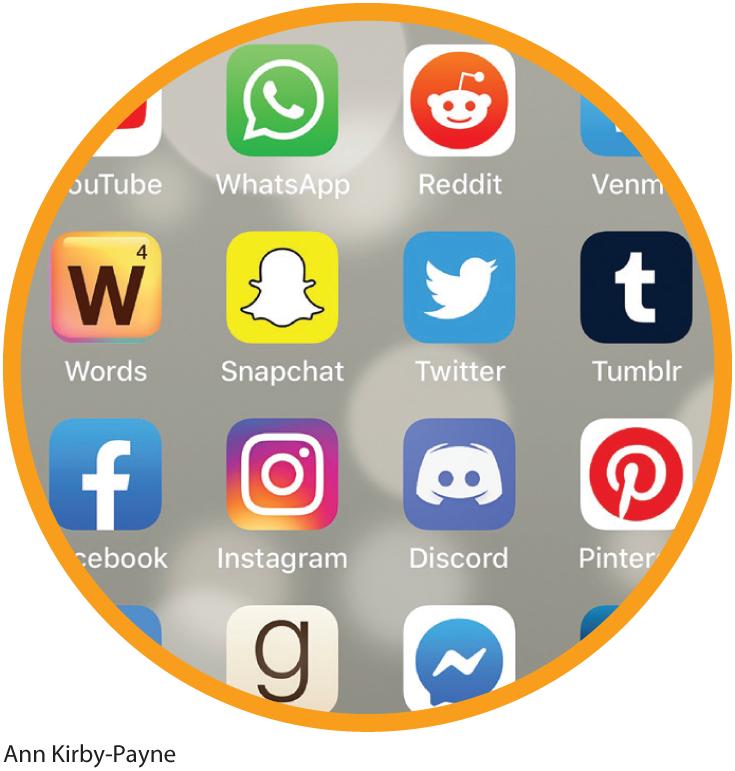
Which social app will you use? See Chapter 2
DescriptionBy mastering the four core principles and the basics of supply and demand, students learn to apply the tools of economics to just about any decision they face. We leverage this foundation as later chapters
delve into more advanced topics. In each case, we follow a recipe that students will find familiar, initially focusing on individual choices, then aggregating them to yield demand and supply curves, and ultimately market outcomes. We work through the principles to discover a series of “rational rules”—such as producing until marginal revenue equals marginal cost, hiring until wages equal the marginal revenue product of labor, or consuming until the marginal benefit of a dollar of spending today is equal to the marginal benefit of spending a dollar-plus-interest tomorrow. This approach also sets students up for a thoroughly modern treatment of macroeconomics, which is built from these microeconomic foundations. The payoff is that our students study “one economics,” which they can apply to whatever new issues interest them.
Useful Economics for the Real World
How can a nonprofit use market forces to better feed America’s hungry? See Chapter 8
DescriptionWhile most students won’t become professional economists, they are all economic actors who will manage their careers and their families, play active roles in their communities, and perhaps run