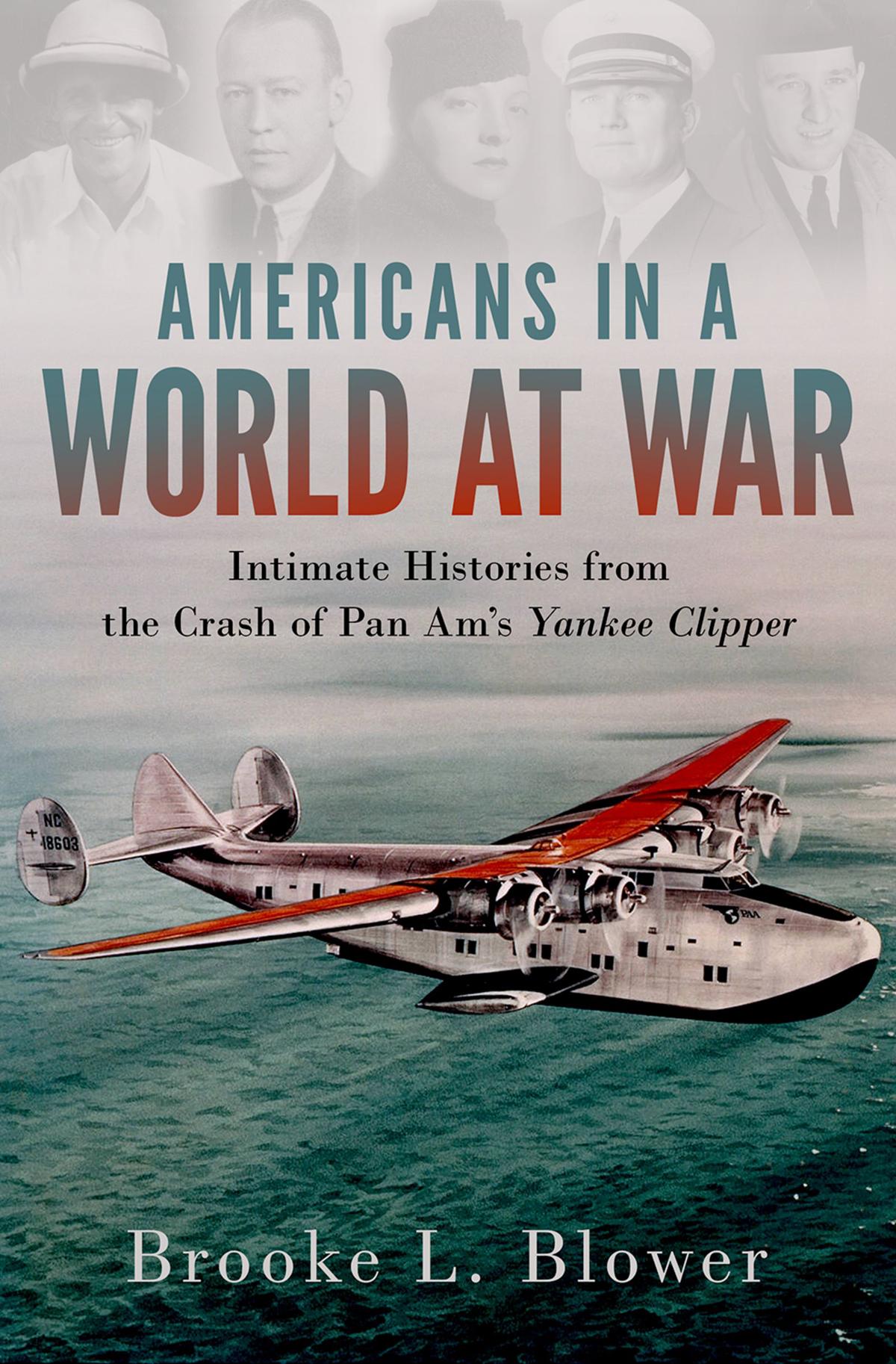
PDF Americans in a world at war: intimate histories from the crash of pan am's yankee clipper brooke
Americans in a World at War: Intimate Histories from the Crash of Pan Am's
Yankee Clipper Brooke L. Blower
Visit to download the full and correct content document: https://ebookmass.com/product/americans-in-a-world-at-war-intimate-histories-from-t he-crash-of-pan-ams-yankee-clipper-brooke-l-blower/
More products digital (pdf, epub, mobi) instant download maybe you interests ...
Diary of a Yankee Engineer: The Civil War Diary of John Henry Westervelt Anita Palladino
https://ebookmass.com/product/diary-of-a-yankee-engineer-thecivil-war-diary-of-john-henry-westervelt-anita-palladino/ Ego-histories of France and the Second World War: Writing Vichy Manuel Bragança
INTIMATE HISTORIES FROM THE CRASH OF PAN AM’S YANKEECLIPPER
BROOKE L. BLOWER
Oxford University Press is a department of the University of Oxford. It furthers the University’s objective of excellence in research, scholarship, and education by publishing worldwide. Oxford is a registered trade mark of Oxford University Press in the UK and certain other countries.
Published in the United States of America by Oxford University Press 198 Madison Avenue, New York, NY 10016, United States of America.
All rights reserved. No part of this publication may be reproduced, stored in a retrieval system, or transmitted, in any form or by any means, without the prior permission in writing of Oxford University Press, or as expressly permitted by law, by license, or under terms agreed with the appropriate reproduction rights organization. Inquiries concerning reproduction outside the scope of the above should be sent to the Rights Department, Oxford University Press, at the address above.
You must not circulate this work in any other form and you must impose this same condition on any acquirer.
“When That Man Is Dead And Gone.” Words and Music by Irving Berlin
Library of Congress Cataloging-in-Publication Data
Names: Blower, Brooke L., 1976– author.
Title: Americans in a world at war : intimate histories from the crash of Pan Am’s Yankee Clipper / Brooke L. Blower.
Other titles: Intimate histories from the crash of the Yankee Clipper Description: New York, NY : Oxford University Press, [2023] | Includes bibliographical references and index.
Identifiers: LCCN 2023004896 (print) | LCCN 2023004897 (ebook) | ISBN 9780199322008 (hardback) | ISBN 9780199322022 (epub) | ISBN 9780197676240
Subjects: LCSH: Yankee Clipper Crash, Portugal, 1943. | Aircraft accidents Portugal Lisbon History 20th century. | World War, 1939–1945 United States Biography. | World War, 1939–1945 Portugal. | Yakee Clipper (Airplane) | Pan American World Airways, inc. History. | Transpacific flights History 20th century. | Aircraft accident victims—Portugal—Biography. | War and society—United States.
Appendix: The YankeeClipper’s Last Passenger Manifest
A Note on Method, with Acknowledgments Notes Index
PREFACE
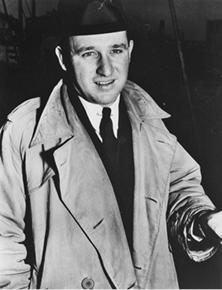
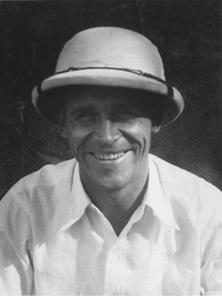
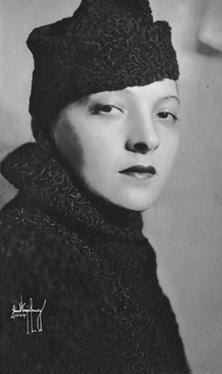
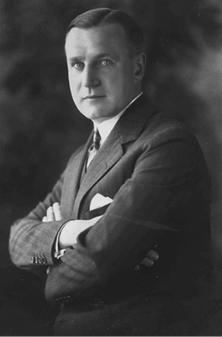
On February 21, 1943, THE celebrated Pan American Airways seaplane, the Yankee Clipper, took off from New York’s Marine Air Terminal and island-hopped its way across the Atlantic Ocean. Arriving at Lisbon the following evening, it crashed in the Tagus River, killing twenty-four of the thirty-nine passengers and crew on board. This book traces the backstories of seven people on that plane, seven worldly Americans, their personal histories, their politics, and the paths that led them toward war. Only two of them would survive the crash.
Combat soldiers made up only a small fraction of the millions of Americans, both in and out of uniform, who scattered across six continents on the eve of and during the Second World War. Long before GIs began storming beaches, and beyond the war’s most famous battlefields, Americans forged extensive political and economic ties to other parts of the world. Between spring 1939 and fall 1945, Pan Am’s regular transatlantic service alone transported 83,000 noncombatants back and forth across the ocean. Tens of thousands more travelled along the airline’s Pacific, Latin American, and African routes. Filing down the gangplank went bankers, oil brokers, ordinance experts, physicists, farmers, photographers, purchasing agents, plastic surgeons, statisticians, civil defense planners, fact-finding politicians, radio announcers, and more. Americans in a World at War revives this panoramic and often surprising history—of how a diverse cast of people were drawn into global crisis, how they navigated an era of unprecedented mobility and perilous interdependence, and how their deep and sometimes
contradictory international engagements would shape and in turn be strengthened, transformed, or else derailed by the US war effort. It is a story about Americans in the world before the Allies were winning.
Hindsight can teach us how and why the Allies prevailed in the Second World War. But thinking forward in time through the eyes of individuals instead dramatizes how much Americans headed into the conflict not with ultimate victory in view but still grappling with the fallout from previous battles and still consumed by the passions and partisan divides of the 1920s and 1930s. It brings to life the singular emotions, the worry and fright, as well as the contingencies and unknowns of the war’s early years. It drives home how quickly the international order can collapse and how fragile the future of democracy can be.
The individuals profiled here are not stand-ins for larger groups. They are complex people who were in some ways representative but in other ways exceptional. They lived lives of contradiction and complication, like most human beings. As their biographies accumulate, intersect, and sometimes work at cross-purposes, they defy expectations, spilling out over social categories, national borders, time periods, and other schemes for order. They put flesh and bone to otherwise hard-to-grasp events of global scope and invite those who follow them to revisit even well-known history with fresh eyes. They help to better situate the early-twentieth-century United States in the stream of world history.
Americans in this era—even many of those labeled “isolationists” by their opponents—were remarkably cosmopolitan. Indeed, they were curious and worldly in ways that Americans no longer needed to be after the United States emerged as a “superpower” at the end of the war. It’s just that they did not agree—about diplomacy and military strategy, the purpose of government, the place of women and people of color in their society, the role of the press, the merits of capitalism and communism, and the future of the planet’s colonies. The worldviews of the Yankee Clipper’s passengers spanned the political spectrum. Some were progressive, others were conservative. One leaned toward socialism, another toward fascism.
This is not surprising given their diverse regional, professional, and family backgrounds. Of the seven travelers profiled here, all but one of them was a child or a grandchild of immigrants, and two of them were immigrants themselves. They came from families of Irish and Spanish Catholics, Southern evangelical and mainline East Coast Protestants, old-stock German and newly arrived Russian-speaking Jews. Among them they knew almost a dozen different languages and at formative moments had lived in Spain, France, Romania, Ukraine, Panama, Singapore, the Philippines, and the Netherlands East Indies. Wartime commitments, which for many of them began before the bombing of Pearl Harbor, would take them to India, Australia, England, Egypt, Brazil, Portugal, the Soviet Union, and the Belgian Congo, among other places. As these Americans crisscrossed the globe they found their beliefs sorely tested. Two of them would find their work the subject of angry congressional hearings. Another would be arrested on suspicion of aiding the enemy. Together, their actions do not amount to a united national crusade but rather stand as a testament to the variety, ingenuity, and sometimes folly of Americans’ wartime endeavors, and to the cumulative impact of a series of separate decisions that hurtled a group of strange compatriots toward one shared tragedy that cost five of them their lives.
Not so long ago, an attempt to trace the stories gathered here would have ended after an unsuccessful flip through the phonebook. But online search engines make it possible to track everyday people like never before. Electronic databases yielded up census records and passport applications. Word-searchable newspapers unearthed other enticing clues, which in turn led to alumni records, love letters, and FBI files. The ability to find some of the Yankee Clipper passengers’ living relatives at the stroke of a keyboard produced yet more material gathering dust in family basements and closets: century-old correspondence on parchment paper, scrapbooks encrusted with ration coupons and yellowing photographs, steamer trunks stuffed with business records and journals. In addition to writing biographies about people because they embody something we deem important in retrospect (and because they deemed
themselves important enough to leave an archive), it is now possible to write about people simply to see where they can take us, places we might otherwise never think to go.
CAST OF CHARACTERS
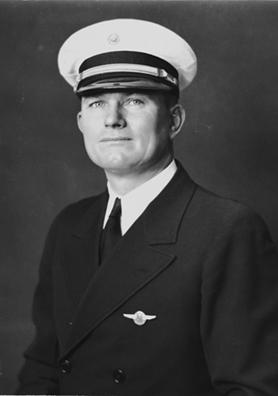
The Pilot.
Robert Oliver Daniel Sullivan
The Shipping Agent. Manuel Diaz Riestra
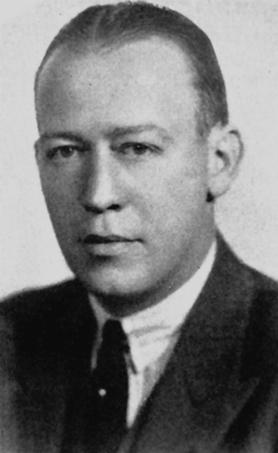
The Lawyer. George Alfred Spiegelberg
The Writer. Benjamin Franklin Robertson, Jr.
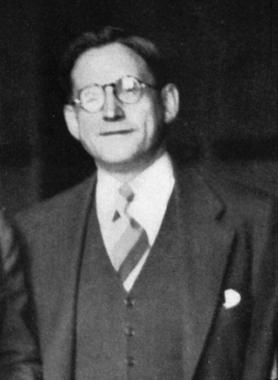
The Salesman. Frank Joseph Cuhel
The Performer. Tamara Drasin Swann
The OilMan. Harry George Seidel
Sources (previous page): Sullivan: Courtesy of Special Collections, University of Miami Libraries, Coral Gables, Florida. Diaz: Courtesy of Harvard College Library, Widener Library. Spiegelberg: Courtesy of Ann S. Brown. Robertson: Special Collections and Archives, Clemson University Libraries. Cuhel: Courtesy of Michael Safranek/University Archives, The University of Iowa Libraries. Drasin Swann: Photograph by James Hargis Connelly/Special Collections and University Archives, Rutgers University Libraries. Seidel: Courtesy of Geraldine Seidel.
A NOTE ON NAMES AND LANGUAGE
ONE OF THIS BOOK’S CENTRAL SUBJECTS—Tamara—preferred to be known only by her first name. To avoid calling the only woman in the group by her first name while identifying men by their last names, all the main characters and their close confidants are referred to by first names, sometimes nicknames. Perhaps this is fitting for such intimate stories. Famous figures who make cameo appearances are identified by their full or last names.
The surnames of Manuel and his business partner, Marcelino Garcia Rubiera, originally included accents in Spanish: García y Díaz. But in forming their New York company, they dropped the accents, which is followed here: Garcia & Diaz. In Spain, a person’s name customarily includes three parts: a given name, a father’s surname, followed by a mother’s maiden name.
Japanese and Chinese surnames appear first, given names second. Chinese words are rendered in pinyin except when alternative romanizations are more recognizable (Chiang Kai-shek rather than Jiang Jieshi) and for established institutions (Peking Union Medical College).
Place-name spellings preferred by locals are employed whenever possible (Kyiv rather than Kiev, Hawai‘i rather than Hawaii), but in cases where doing so would introduce historical inaccuracy, colonial terms are preserved (Léopoldville versus Kinshasa, Netherlands East Indies versus Indonesia). For famous cities with variable spellings, the version more recognizable to English-language readers is used (Calcutta not Kolkata, Guernica not Gernika, Nuremberg not Nürnberg).
Black and White are both capitalized when referring to historically constructed—and consequential—racial identities. Spurious concepts such as white supremacy and white virtue, however, remain lower case.
Quotations from Ben’s notes, dispatches, and telegrams, which he often drafted in cablese, have been converted into regular English for easier reading. Translations from Russian are by April French. Interpretations of French, Spanish, and Dutch sources are by the author.
Nothing that follows has been embellished. All dialogue and details derive from letters, testimony, and other historical documents—but with care and crosschecking. Newspaper accounts often contain inaccuracies. Public records can be wrong. People omit or exaggerate, misremember, mislead, and sometimes lie.
AMERICANS IN A WORLD AT WAR
Introduction
Into the Vortex
THE PLANE WAS DELAYED by almost a week. First for maintenance—a backfiring engine, a warped exhaust valve, a sticky piston—then crew illness, then weather conditions. This was not uncommon. Regular transatlantic air service to Portugal, where passengers caught connecting flights to the British Isles, North Africa, and other danger zones, had been running for less than four years, only since the spring before Adolf Hitler’s forces invaded Poland. Fingerprinted, passported, and vaccinated, travelers awaited their boarding instructions in New York apartments and hotel rooms, smoking cigarettes, listening to the radio, or reading the latest about the war.1
Frank Cuhel was anxious to get going. New York was driving him “batty.” The Olympic athlete-turned-export salesman had spent the previous decade living it up as a bachelor in colonial Southeast Asia —until forced to flee and almost killed by the Japanese. Camped out at Greenwich Village’s Hotel Lafayette, he likely pored over reports that US Marines had finally clawed their way to full control of Guadalcanal, even though costly naval and air skirmishes continued around the Solomon Islands. He would have read about North Africa, too, where he was headed after talking his way into a job with the Mutual Broadcasting System and where untested American troops had just been humbled by Field Marshal Erwin Rommel’s tanks in their first face-to-face engagement with the Germans near Tunisia’s Kasserine Pass. “It rather looks as though I shall be on my way in a very few days,” he wrote to his sister on February 14. When he got there, he told her, she might be able to hear him on the radio every night. He would keep close to the action, and when the drive on Europe began, he would be “right up there with the first ones.”2