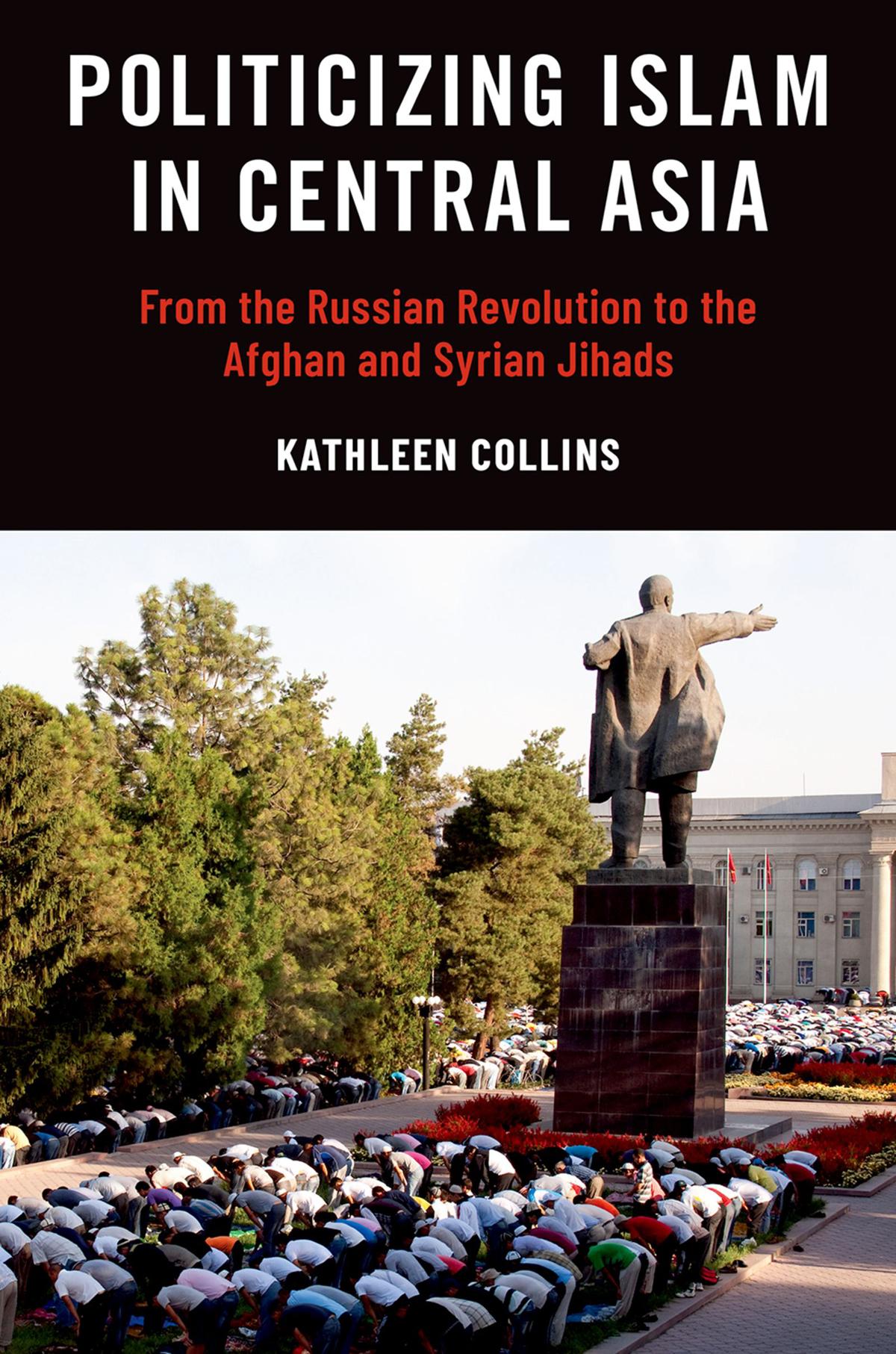
Politicizing islam in central asia: from the russian revolution to the afghan and syrian jihads kath
Politicizing Islam in Central Asia: From the Russian Revolution to the Afghan and Syrian
Jihads Kathleen Collins
Visit to download the full and correct content document: https://ebookmass.com/product/politicizing-islam-in-central-asia-from-the-russian-revo lution-to-the-afghan-and-syrian-jihads-kathleen-collins/
More products digital (pdf, epub, mobi) instant download maybe you interests ...
Russian Central Asia in the Works of Nikolai Karazin, 1842–1908: Ambivalent Triumph Elena Andreeva
ADVANCE PRAISE FOR POLITICIZINGISLAMIN CENTRALASIA
“Kathleen Collins achieves something extraordinary in this masterful and careful analysis of Islamism in Central Asia. Based on years of in-depth interviews, archival materials, and other sources, Collins traces the emergence of Islamist movements, from the moderate and democratic to the radical and militant in Kyrgyzstan, Tajikistan, and Uzbekistan. Along the way, she reveals the lived experiences of many Kyrgyz, Tajik, and Uzbek religious believers. Without demonizing Islam or sensationalizing Islamism, Collins enriches our understanding of both Soviet and post-Soviet religious repression and its unintended consequences: making Islam more resilient and fostering a religious basis for political opposition. Anyone endeavoring to understand the fabric of modern-day Central Asia should closely read Collins’ scholarship.”
Steve Swerdlow, esq., Associate Professor of the Practice of Human Rights, University of Southern California, and former Senior Central Asia researcher at Human Rights Watch
Politicizing Islam in Central Asia
From the Russian Revolution to the Afghan and Syrian Jihads
KATHLEEN COLLINS
Oxford University Press is a department of the University of Oxford. It furthers the University’s objective of excellence in research, scholarship, and education by publishing worldwide. Oxford is a registered trade mark of Oxford University Press in the UK and certain other countries.
Published in the United States of America by Oxford University Press 198 Madison Avenue, New York, NY 10016, United States of America.
All rights reserved. No part of this publication may be reproduced, stored in a retrieval system, or transmitted, in any form or by any means, without the prior permission in writing of Oxford University Press, or as expressly permitted by law, by license, or under terms agreed with the appropriate reproduction rights organization. Inquiries concerning reproduction outside the scope of the above should be sent to the Rights Department, Oxford University Press, at the address above.
You must not circulate this work in any other form and you must impose this same condition on any acquirer.
IRPT leader Mullah Sayid Abdullohi Nuri at peace talks
Haji Akbar Turajonzoda, deputy head of the MIRT
Funeral ceremony for Muhammadsharif Himmatzoda, the IRP
T’s first political leader
Leaders of the IRPT
Muhiddin Kabiri’s Outreach on Twitter
Adolat leader Tohir Yo’ldosh challenges President Islom Karimo v, Namangan, 1991
The IMU’s martyr, Shaykh Abduvali Qori
Women visit a mosque in Bukhara
Warning poster, hung at a mosque in Khiva, showing alleged e xtremists
Propaganda video of IMU suicide assault team
Propaganda video of IMU leader Shaykh Muhammad Tohir For uq Yo’ldosh in Afghanistan
Jumanamazat Imam Sulaiman-Too Mosque in Osh
Imam Sarakhsi Mosque in Bishkek, Kyrgyzstan
Imam Rafiq Qori, Kara-Suu
KTJ battalion training in Syria
From “The Hijra”
Abu Saloh, leader of Katibat al-Tawhid wal Jihad
Abu Saloh—“Are You Afraid to Go to Jihad?”
Abu Saloh—“Jihad is the Way of Honor!”
Abu Saloh—“About the Virgin Servants”
Abu Saloh—“The Shahid’s Reward”
Tajik Colonel Gulmurod Halimov in ISIS video
“One more friend of mine became a shahid”
List of Tables
I.1: I.2: 3.1: 12.1: 14.1: 14.2: A.1:
Waves of Muslim and Islamist Mobilization, 1917–2022
Islamist Organizations, their Characteristics, and Relative Level of Mass Mobilization, 1990–2022
Registered Friday Mosques in Several Muslim-Majority Republic s
Registered Mosques and Muslim Population, 2015
Foreign Fighters Joining Sunni Militant Islamist Organizations i n Syria and Iraq
Foreign Fighters in Syria and Iraq by Region, 2017
Focus Group Interviews
List of Maps
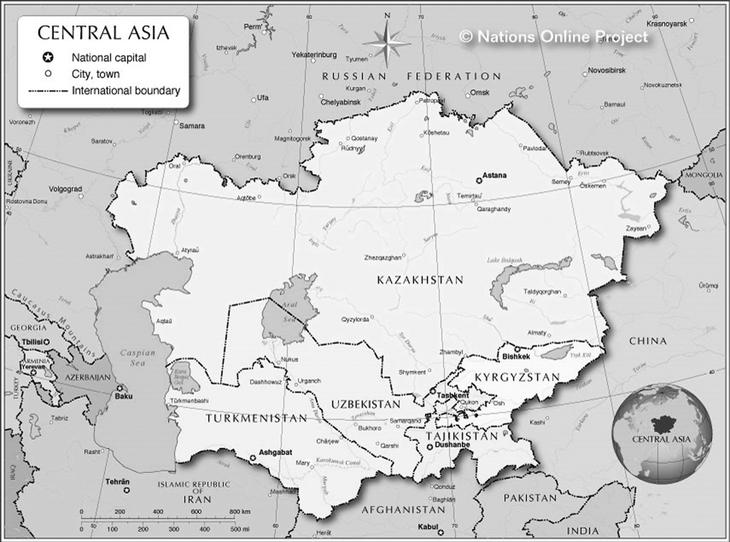
Map of Central Asia
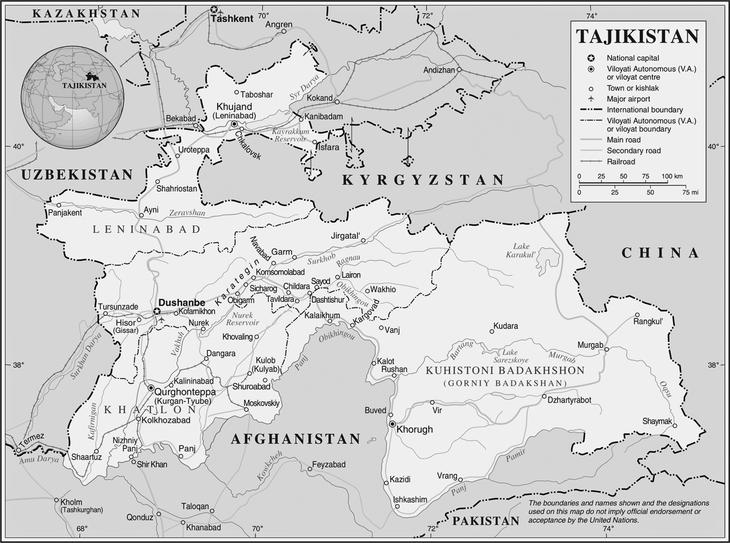
Map of Tajikistan
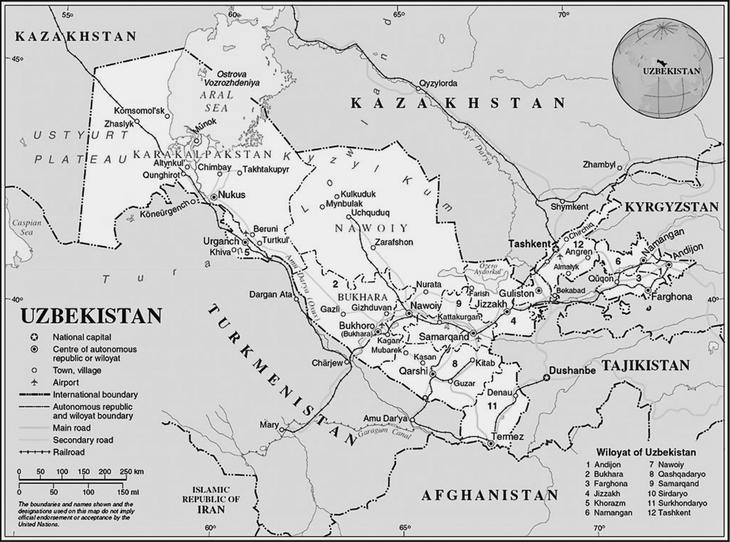
Map of Uzbekistan
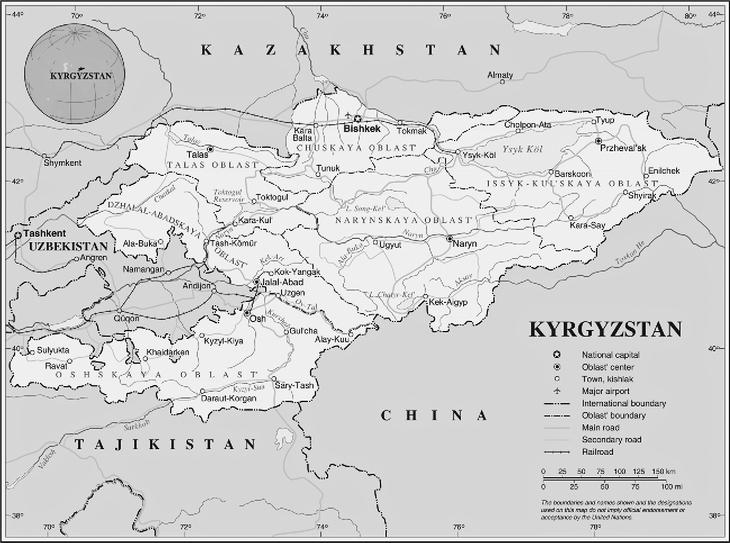
Map of Kyrgyzstan
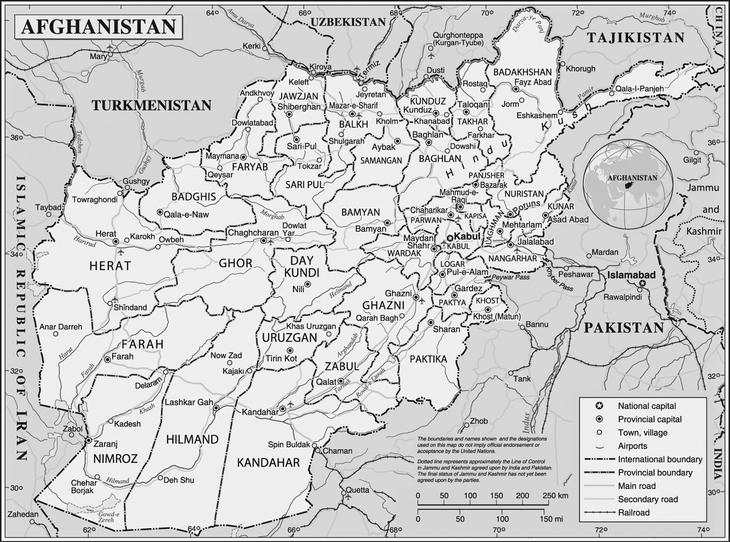
Map of Afghanistan
Map 9.1:
Map 14.1:
Location of IMU and insurgent operations in Afghanistan, 2010
Location and control of Central Asian al-Qaeda–linked figh ters in Syria, March 2018
Acknowledgments
One of the things I have often admired about Central Asians, from those living in remote villages to those in dense urban mahallas (neighborhoods), is their ability to persist despite adversity. Their faith and endurance motivated me to continue with this book, which has been a long time in the making. My Central Asian friends and I have often shared our hopes for a better future. I pray this book makes a small contribution to that future, both by remembering the past and by reminding readers of the basic human need for justice and religious freedom.
During the years that I have worked on this book, I have been able to observe Islamism in Central Asia as it has developed and changed. My project grew as Islamism of many forms evolved and spread across the region, from Tajikistan to Uzbekistan and Kyrgyzstan. I became all too aware of the complexity of the Islamist phenomenon. Some, like the Islamic Movement of Uzbekistan, shifted from an early focus on President Islom Karimov’s regime to attacking U.S. forces in Afghanistan, and then waging jihad in Syria. Most Islamists in Tajikistan, by contrast, moderated and were willing to speak with me about their desire for democracy and religious freedom. My eyes were opened as they recounted how the “Red Terror” had triggered their demands for justice. Caught between the state’s religious oppression and the violence perpetrated by some Islamists were ordinary Muslims, men and women seeking a better life for their children, as do people everywhere. As an Uzbek cab driver once told me, “You’re Christian, I’m Muslim, but there’s just one God.”
Over the years, I have worked closely with wonderful colleagues and assistants throughout Central Asia; they have become dear friends. Together we have watched—and they have lived through—
the turmoil of politics and everyday existence in the region. Throughout this time, I have relied on them and many other good people there for help. Given continued political oppression and uncertainty, I have chosen not to name most of them here. I hope that they know how grateful I am and how much I have learned from them. I truly appreciate the advice, knowledge, and friendship of Elvira Ilibezova and El-Pikr in Kyrgyzstan. I thank Saodat Olimova, Muzaffar Olimov, and Muhiddin Kabiri in Tajikistan. Ercan Murat, Emil Nasritdinov, Keneshbek, Esen, Hassan and his family, Hurmat, Dinara, Parviz, Murat, Dilbar, Tolekan, and many others shared their knowledge, helped arrange meetings, and got me safely from Bishkek to Kara-Suu, from Tashkent to Andijon, and from Khujand to Dushanbe, among many other places. Central Asian journalists and human rights activists who risk their lives every day offered me their assistance. Those who drove me around cities and villages, through the mountain passes, and across the steppe of Central Asia all deserve far more than my heartfelt thanks. Others poured me tea, brought me warm meals, kept me safe and healthy, and became my friends. Many took risks because they wanted me to tell their story.
The U.S. embassies, Organization for Security and Co-operation in Europe, and United Nations Development Programme in Tashkent, Bishkek, and Dushanbe provided support and insight, as did Robin Schulman, Greg Taubman, Kelly Kivler, Daniel Burghart, and David Abramson. Damon Mehl and Chris Borg offered a wealth of expertise on militants in Afghanistan. Ismail Yaylacı and Selçuk Köseoğlu assisted me in Turkey, and Valery Tishkov in Russia. David Holloway nominated me for the Carnegie grant that funded the initial stages of this project. My mentor at Notre Dame, Jim McAdams, encouraged me never to forget the human side of my work. His wisdom and copious comments greatly improved this manuscript. Scott Mainwaring, Kathryn Sikkink, and Sid Tarrow were especially generous with their counsel. Bayram Balcı, Stéphane Dudoignon, Steve Fish, Fran Hagopian, Valerie Bunce, Laura Adams, Carrie Rosefsky, Kathryn Hendley, Amaney Jamal, Mark Tessler, Eric McGlinchey, John Heathershaw, Ted Gerber, and David Samuels, among others, offered advice. Adam Casey, Shoshanna Keller, Alisher
Khamidov, Adeeb Khalid, and Jeff Sahadeo each thoughtfully read several chapters. My dear Uzbek friend and colleague provided feedback on the Uzbekistan chapters. I have learned so much from him over the years, and he has been a steady source of inspiration. Farhad greatly assisted me with Abu Saloh’s videos. Esen translated Kyrgyz, Zamira and Marifat translated Tajik, and Mustafa Düzdağ translated Arabic sources. I am most grateful to the two anonymous reviewers for generously giving me their time and sage advice.
Lisa Hilbink, Teri Caraway, Nancy Luxon, Adrienne Edgar, and Bisi Agboola continually encouraged and reassured me. Bud Duvall, Joan Tronto, and Paul Goren always supported me. I have been blessed with many outstanding undergraduates and Ph.D. students. Niamh McIntosh-Yee, Margaux Granath, Alisher Kassym, Sasha Dunagan, Maya Mehra, Ethan Hoeschen, Natalie Melm, and especially Shawn Stefanik, Kamaan Richards, and Zamria Yusufjonova assisted at various stages. Ibrahim Öker, Selçuk Köseoğlu, and Luke Dykowski each generously read the entire manuscript and offered insight on every aspect of the book. Selçuk, more than once, painstakingly helped me proofread the text. Luke was a superb copyeditor. Their dedication has made this book far better.
The Carnegie Corporation of New York, the U.S. Institute of Peace, the National Council for East European and Eurasian Studies, the Kellogg Institute, the University of Notre Dame, the McKnight Land Grant, the Templeton Foundation, and the University of Minnesota each provided grants to finance my fieldwork and writing. I am indebted to David McBride and the production team at Oxford University Press for their superb advice, careful oversight, and cheer as they guided this project to completion.
I am especially beholden to my family—my parents, Megan, Ryan, and Tom—who have encouraged and supported my endeavors and lived through this project with me. Above all, I am infinitely grateful for my children’s love, companionship, and inspiration. My eldest, Michael, was born not long after I began my research. Michael and his younger sisters, Katie and Elisa, have brought an abundance of joy into my life. They have often sat beside me in my office or at the kitchen table, writing their own books as I wrote mine. They went
from knocking over my towering stacks of sources and colorfully scribbling on my books and notes, to solving my computer problems, helping me proofread chapters, and filing thousands of pages of interview transcripts. They endlessly encouraged me to press ahead. They cheered me on and told me they believed in me. They kept me grounded by reminding me to bake cookies and come play. I dedicate this book to them, with love.
Technical Note
Writing a book of this nature involves many complications. Uzbek, Tajik, and Kyrgyz have changed spellings and even alphabets multiple times over the past century. The names of cities, territories, countries, and institutions have changed as well. So too the geographical borders of the Central Asian states changed multiple times in the period discussed in this book.
Throughout I have sought to balance historical accuracy and cultural respect for local particularities with a reader-friendly manuscript. I have generally adopted the following guidelines for spelling and transliteration. I have retained the standard English spelling of names that are common (e.g., Ferghana, Kokand, Samarqand). For Uzbek words, I have followed the most recent Uzbek Latin script. For Turkish, I have used the Turkish Latin script. For languages written in Cyrillic (Russian, Tajik, Kyrgyz), I have transliterated titles of sources and other names and terms from the most recent spellings, using the Library of Congress system. Tajik and Kyrgyz transliterations follow the Library of Congress system for the modified Cyrillic alphabets. For example, as is common in transliteration for nonlinguists, I use gh for Ғ ғ, and j for Ҷ ҷ (e.g., Turajonzoda). I have used the most recent official spellings (e.g., Jalalabat, not Jalal-Abad). For Arabic terms or names, I have used those commonly recognized (al-Qaeda). I have dropped most diacritical marks to make the book more accessible to readers of English.
I have used the Oxford English Dictionary variant of Islamic terms that have become common in English (e.g., hijab, jihad, hajj without italics). For religious terms that differ across Tajik, Uzbek, and Kyrgyz, I have generally used the more well-known Arabic form (e.g., hadith, kafir , zakat). In deference to local culture, I have
adopted the commonly used Central Asian variants of certain frequently used terms that are distinct from the Arabic (e.g., shariat, da’watchi, namaz).
There are some issues that simply have no easy answer. I resolved them by balancing the native language names and spellings, as much as possible, with the ease of the reader. Wherever possible, I replaced Russified names of people and places (even during the Soviet era) with the current Central Asian spelling. If a Central Asian author has published in English, I used the spelling of the given publication. Acronyms reflect the native language, unless there is a commonly used acronym in English-language sources.
I attempted to verify the transliteration of every Central Asian and Arabic word, phrase, name, and place in this book (and its variations in name over time), with multiple sources, including many native speakers. Sometimes they themselves did not agree, so I defaulted to the principles above. My goal throughout the text has been to respect the Central Asian languages and cultures, maximize consistency, and ease the nonspecialist’s burden. I hope the reader will forgive any errors and focus on the substance of the work.
List of Acronyms
AKP Justice and Development Party, Turkey
ANF Al-Nusra Front
AQI Al-Qaeda in Iraq
ASSR Autonomous Soviet Socialist Republic
AUIRP All-Union Islamic Revival Party
BNSR People’s Soviet Republic of Bukhara
CAISIS Central Asians in the Islamic State of Iraq and Syria
CPT Communist Party of Tajikistan
CRA Council on Religious Affairs
CTC Combating Terrorism Center
DoD Department of Defense
DPT Democratic Party of Tajikistan
ETIM East Turkestan Islamic Movement
FATA Federally Administered Tribal Areas
FSB Federal Security Service, Russia
GKNB State Committee on National Security, Kyrgyzstan
GNR Government of National Reconciliation, Tajikistan
ICSR International Centre for the Study of Radicalisation and Political Violence
IED improvised explosive devices
IJU Islamic Jihad Union
IMU Islamic Movement of Uzbekistan
IRPT Islamic Revival Party of Tajikistan
IRPU Islamic Revival Party of Uzbekistan
ISAF International Security Assistance Force
ISIS Islamic State of Iraq and Syria
ISIS-K ISIS-Khorasan Province
JA Jamoati Ansorulloh, Tajikistan
KA Kokand Autonomy
KGB Committee for State Security (USSR)
KIB Katibat Imam al-Bukhari
KTJ Katibat al-Tawhid wal Jihad
MIRT Movement for the Islamic Revival of Tajikistan
MVD Ministry of Internal Affairs (the police)
MXX National Security Service, Uzbekistan (also known by the acronym SNB; since 2018, it is called the DXX, State Security Service)
NATO North Atlantic Treaty Organization
NEP New Economic Policy, USSR
NKVD People’s Commissariat for Internal Affairs, USSR
ODIHR OSCE Office for Democratic Institutions and Human Rights
OGPU Soviet secret police, predecessor to NKVD
OMI Muslim Board of Uzbekistan
OMON Interior Ministry’s Special Purpose Police Unit (or the MVD’s Special Forces), Tajikistan
OSCE Organization for Security and Co-operation in Europe
RFE/RL Radio Free Europe/Radio Liberty
SADUM Spiritual Administration of the Muslims of Central Asia and Kazakhstan
SAMK Spiritual Administration of the Muslims of Kyrgyzstan
SCO Shanghai Cooperation Organization
SCRA State Commission on Religious Affairs, Kyrgyzstan
SSR Soviet Socialist Republic
SUJ Seyfuddin Uzbek Jamaat
TTP Tehrik-i-Taliban of Pakistan
USCIRF U.S. Commission on International Religious Freedom
UTO United Tajik Opposition
WMD weapons of mass destruction
Map of Central Asia
Source: Wikimedia Commons
Source: United Nations Cartographic Section, Wikimedia Commons
Map of Tajikistan
of Uzbekistan
Source: United Nations Cartographic Section, Wikimedia Commons
Map
Source: United Nations Cartographic Section, Wikimedia Commons
Map of Kyrgyzstan
Map of Afghanistan
Source: United Nations Cartographic Section, Wikimedia Commons
PART I UNDERSTANDING ISLAMISM
Introduction: An Overview of Islamism in Cent ral Asia
Sitting in a cab from Tashkent to Bukhara, I chatted with my driver, Hurmat, for many hours as we crossed the dusty steppe. An Uzbek man in his twenties, Hurmat was dressed in jeans and a “New York” T-shirt. He sported short hair and a clean-shaven face. Although he had completed only a secondary education, he spoke intelligently about world affairs, from Russian-U.S. relations to the war in Afghanistan. He voiced strong opinions. He looked like someone who ought to have a bright future. Over the many hours of the trip, Hurmat expressed his overwhelming frustration with the conditions created by then-President Islom Karimov, whose degradation of ordinary Muslims was evident to him every day. Hurmat had been born Muslim but had only recently pursued an Islamic education. Working in Russia, he had purchased many books about Islam and cassettes of imams’ sermons. He played some of them while we drove. They were lectures on how to pray, how to fast, and how to be a good Muslim. Hurmat was not a member of the Islamic Movement of Uzbekistan (IMU) or a “Wahhabi” sect, the term the Uzbek government used to stigmatize and ban almost any independent form of Islamic practice, branding it as terrorism. However, much of the literature that Hurmat read originally came from Saudi Arabia, where Salafist sermons were published in Russian or Uzbek. He was not a member of any Islamist organization, but his religious and political views, which he conveyed passionately to me, were typical of those the Uzbek regime had branded “extremist.” He was brashly disdainful of “government mullahs,” who urged him “to be patient” with injustice. He explained, “Before 1999, women wore hijab and men had beards. People freely prayed. After 1999, everyone went to jail; women could not wear the hijab. They [the security services] closed all the small mahalla [neighborhood]
mosques, only the big ones stayed open, fewer than ten. They [the government] prepare one lecture for all the imams. But the imam’s sermon should be about religion, for example, about sins, not political propaganda.” Hurmat’s anger was palpable. After much thought and investigation of religion on his own, outside of “government mosques,” he had concluded that Islam and law by shariat1 would improve life in Uzbekistan: “For sins, you need shariat law, cutting off hands for stealing and corruption. . . . Of course, it would be better with shariatlaw.” Shariat, in Hurmat’s view, was the clear solution. Influenced by his voracious consumption of Saudi publications, he was supportive of the hududpenalties,2 which most Central Asians would decry as extreme and premodern. Repressive state policy had politicized Hurmat’s Muslim identity.
Hurmat was far more explicit and puritanical than most Central Asians in endorsing shariatas state law. However, he was not alone in thinking that Islam was somehow the answer to decades of Soviet and post-Soviet state repression. A group of women from the Ferghana Valley recounted to me their fear and horror after the Andijon massacre of 2005, in which Uzbek government forces killed hundreds of ordinary Muslims protesting both shortages and the unjust imprisonment of their loved ones for “Islamic extremism.”3 Others gave examples of neighbors who had “disappeared” while going to mosque. These women, like Hurmat, sympathized with calls for a more just and more Muslim—legal system. They did not support radical Islamist parties, and they expressed fear for youth in their neighborhoods, who were drawn to the ideas of Islamist opposition groups. Still, they too opposed Karimov’s oppressive secular regime and believed Islamic law would bring justice.
The vast majority of Central Asians avoided politics, remaining silent out of fear. Some scholars expected that the Islamist phenomenon that has characterized politics in the Middle East and South Asia had bypassed Central Asia due to its unique Soviet historical legacy; decades of Soviet oppression of religion and destruction of religious knowledge, together with forced secular modernization, seemed to have a firm hold on societal views about
religion and politics. For decades, Soviet “nationalities policy” had relegated Islamic practices to mere “culture” or ethnonational tradition.4 Indeed, the Soviet regime eliminated Islam’s role in law and political legitimacy. The growth of political Islam has thus been a strikingly unexpected phenomenon: since the Soviet collapse in 1991, Islamist movements have been a major form of political opposition in Central Asia. Many thousands of Tajiks, Uzbeks, and Kyrgyz have turned to Islamist ideologies and joined Islamist movements, and many others increasingly favor at least some Islamist ideas. In fact, for over forty years now, Central Asia has experienced several waves of Islamism. Islamism’s first wave had roots in Tajikistan and Uzbekistan in the 1970s and 1980s. Over time, new and highly varied Islamist organizations emerged. By 2013, the Islamic State of Iraq and Syria (also known as the Islamic State of Iraq and al-Sham, or ISIS) and al-Qaeda affiliates were recruiting young Central Asian men like Hurmat to fight for the caliphate in Syria.
Why and how did Islam become politicized in Central Asia? How did it become a source of political contention and subsequently an ideology at the core of various opposition movements challenging the secular authoritarian state? And why and how did Central Asians become mobilized to support Islamist movements? Understanding and explaining Islamism’s root causes and varied paths in the postSoviet space is the task of this book. Neither Hurmat nor those Tajiks, Uzbeks, and Kyrgyz who joined ISIS were born extremists. Muslims are not born extremists. Rather, political injustice— especially state repression of Islamic belief and practice together with forced secularization—breeds contention over the proper role of religion in the function of the state and society. In the context of such grievances, religious ideologues proffer Islamist ideas of justice as the solution. They promote a political interpretation of the religion. Ultimately, they drive Islamist opposition and mobilization, and sometimes foster violence.
The Longue Durée of Political Islam in Central Asia,
1917–2021
It was the Bolshevik Revolution and Soviet power that, ironically, both transformed Central Asia and politicized Islam, planting the roots of Islamism. From Vladimir Lenin and Josef Stalin to late communist and postcommunist dictators such as Islom Karimov, these leaders implemented the Communist Party’s crushing antireligious policies—policies that were responsible for “making extremists,” in the words of one of my Uzbek informants.
The Bolsheviks confronted a deeply Islamic society across Central Asia in 1917. Lying at the heart of the Silk Road with historical, theological, and cultural centers in Samarqand and Bukhara, this region was for many centuries a hub of the Muslim world. Islam shaped not only society but also the law, public life, and politics of the region.5 Central town mosques and madrasas (Islamic religious institutes) defined the cultural landscape and education system. Musulmonchilik(Muslimness) characterized one’s everyday existence and worldview. Shrines to Muslim saints dotted the landscape even where madrasas and mosques were fewer in number. Tombstones in clan cemeteries featured crescent moons. Throughout the region, shariat and adat (customary law) courts implemented the law. The political order of nineteenth-century Central Asia—which governed the region’s settled people until the tsarist and then Bolshevik incorporation of the region eventually destroyed them—drew upon both Islam and lineage to construct their political legitimacy. Yet, the dominant Hanafi school of Islamic law was explicitly quietist following the advent of Russian colonial rule in the nineteenth century. Many Muslims made peace with secular rule so long as it did not repress Islam and force secularization on society.6
The Bolshevik Revolution destroyed the old political and religious order by the late 1920s. For decades, the Soviet party-state brutally attacked Islamic institutions and law, religious authorities, sacred literature, and even belief itself. It mandated Cyrillic script to eliminate access to Arabic, the language of the Qur’an. Soviet
Muslims not only lost a great deal of religious knowledge and the possibility of fulfilling the core pillars of Islam; many even lost the fundamentals of Islamic doctrine and prayer, fearing the repercussions of passing faith and customary practice on to their children. Signs of children fasting at school could inadvertently expose the religiosity of their parents, who could lose their job or the privilege of Party membership and higher education. Thousands of ulama (Muslim religious scholars) were sent to the Gulag because they possessed a sacred authority that rivaled the Party’s authority. Moreover, the Soviet party-state was intent upon—and almost totally succeeded in—severing Central Asian ties with the rest of the Muslim world for the seven decades of its existence. Consequently, until the USSR’s demise, Soviet Muslims did not experience the trends pervading the rest of the Islamic world during much of the twentieth century.
Nonetheless, the past century has witnessed several periods of Muslim political mobilization in Central Asia, some of them violent and all of them in response to the state repression of Islam that began in 1917. Mass Muslim mobilization—albeit not shaped by Islamist ideology—took place during the Russian Revolution and early Bolshevik period (1917–1926) in opposition to communism and atheism. When decades of nearly total state control began to loosen, a new generation of Muslim underground opposition began networking; entrepreneurial religio-political activists gained access to and were profoundly shaped by the transnational diffusion of the ideology of political Islam. Their activism ushered in successive “waves” of Islamist mobilization.7
The first wave began in the 1970s, when Islamist ideology spread to the Tajik and Uzbek republics. Influenced by the Muslim Brotherhood, the Iranian Revolution, and the anti-Soviet jihad of the Afghan mujahidin, first-wave Islamists mobilized against communism during the Soviet collapse. When the communist regime responded with violence in Tajikistan, a bloody civil war erupted, killing up to 100,000 Tajiks. Both Tajik and Uzbek Islamists were driven into Afghanistan. The second wave of Islamist movements mobilized in