Sometimes there are no dreams to dream. Night-time brings other things, and we must wait patiently until it’s over. In the kitchen, chamomile clouds drift across the ceiling, while Mum hides inside her mug of tea, soothed by the lullaby of the washing machine. It will soon be morning. My feet don’t make a sound as I slide through the garden on frosted grass. I’m lost inside the blackness of a new moon. Wood pigeons puff themselves up in the cider apple trees and watch me in curious silence. I tread lightly past rushes, the last of the meadowsweet and loosestrife and dying stinging nettles, to where the river twists itself into a silver ribbon. Cold water soaks into my skin. I let it carry me as I listen to the music of the stars and the kree, kree, kree of little egrets until, at last, she comes, her tea drunk, laundry basket in her arms, headscarf tightly wrapped. Like a fearful animal, she tiptoes on slippered feet with her clothes pegs, dark eyes looking inwards. She’s too afraid to see how my legs have rooted deep into the riverbed. Eels swim between my knees. When I call for her, I know she sees me.
Tess
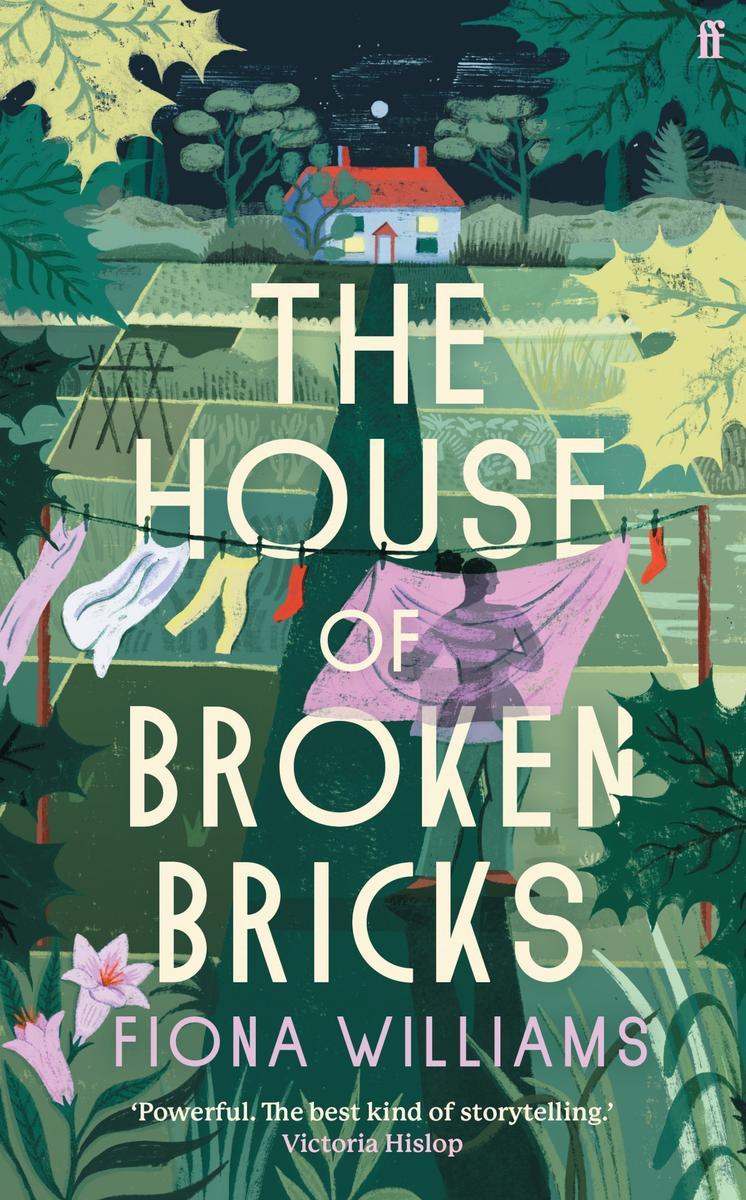
There he is again, my mini-me. The soft chestnut-brown little-boy curve of his cheek, and those eyes of his, peering out from between overgrown tangles of dock and ivy, where he plays like he did as a small child. Those eyes flicker as I peg first pants, then mismatched pairs of socks, up on the washing line. They’re my eyes, so dark, they’re almost black.
It’s towels next, which swing back and forth, tainting the chilly air with the synthetic scent of lavender fabric conditioner. It’s a struggle to hang up the sheets. My arms have lost their strength and strain to fling them one by one over the line. Steam rises to float away over the river that watches me from behind a screen of butterburs, the leaves no longer green but patched yellow, ragged and torn.
Sunrise appears later and later each day, though at last, the dull red bricks at the back of the house are lit up in startling crimson. There are two suns this morning; one rises low over a stretch of willows that lean as the wind picks up its pace. The other shines brightly out at me from beneath the surface of the water. Together, the light from them is blinding. Still, it’s easy to ignore the painful beauty of it and think instead of the frozen chicken thighs defrosting on the kitchen counter that will need seasoning with scallion, garlic, tomatoes and a spoonful of jerk paste ready for roasting tomorrow. Easy to ignore the flock of seagulls already sailing like tiny, brilliant white boats across the floodplain, screeching as they probe the waterlogged grass for worms, or the clouds, purple, and now scarlet, buffeted across the sky towards the distant Quantocks. There is only the laundry,
pillowcases billowing, and of course Sonny’s face, his sweet lips open as he calls for me.
Max
From the other side of the moor, the church bell at Meare rings six times. I wait behind our house among the tall reeds right at the river’s edge. Mud oozes over my frozen toes. Ahead, my brother flashes in and out of sight.
‘Maybe we should go back,’ I shout. He’ll say I’m whining but I don’t care. He doesn’t answer but heads further into the river to where the current spins, drags and catches things. Floating driftwood and rafts of rotten leaves are tugged down into the darkness. ‘Come on, Sonny! It’s freezing,’ I shout again, but my voice is croaky and sounds like someone else’s. I slosh through the water after him, worried about the shadows that stretch long fingers along the bank towards us. My stumbling scares a moorhen off its roost. Clucks and coos echo in the damp air. It won’t be long before Mum notices we’ve gone.
‘Over here,’ Sonny calls, teasing me.
‘Where?’ As I trip over sunken logs, my breath blows steam around my head. Water laps at my rolled-up jeans and the cold is painful now. ‘Sonny?’ I yell. But all I can hear is the rushof water.
‘What on earth are you doing in there?’
Mum’s shout makes me jump and I slip, crash onto my knees and soak myself completely. She’s high on the riverbank, with her legs half hidden behind nettles. As we clamber out of the water, Sonny’s grin vanishes. ‘What were you thinking? Get inside!’ She chases us through the garden and indoors into the warm, bright kitchen. Dad, still in his dirty outside clothes, sits at the table doing the crossword. He smiles at us as we stand shivering by the
Rayburn, dripping water onto the floor. The anger in Mum’s eyes looks out at us. ‘Off with the wet clothes. Now!’
‘Come on, Tess, it’s alright. Calm down. Here. Look … I’ve got one for you – remaining, five letters, second letter T,’ says Dad, pointing with his pencil at the newspaper. Mum ignores him and comes towards us with a towel in her brown hands. She wraps me up first, like I’m a baby, even though I’m nearly as tall as her. Over her shoulder, I can see a small white moth, a pale tussock I think, fluttering against the steamed-up window.
‘You know you’re not to go anywhere near the river.’
‘We were only mucking about,’ I tell her.
Beside me, Sonny nods. ‘We’re sorry.’
Mum breathes very slowly like she’s trying to hold herself still. She does this a lot. ‘Go and get changed. It’s time for dinner.’
We leap up the stairs, two at a time, our palms streaking along the wallpaper. But once we’re safe on the landing, we fight back laughter and shove each other towards the bedroom we share. Inside, we flop down onto our beds, which are identical with matching Spider-Man sheets. Although mine’s messy – the duvet’s bunched up and covered in books. Sonny’s is tidy like all of his things. On the bedside table between us are his reading glasses, the big silver cup he won for maths at school, a photo of us and our cousin Nathan outside an aquarium in London when we were nine, and our whistles with the red, yellow and green ribbons we got that time we went to Notting Hill Carnival. On the shelf above Sonny’s bed is his fossil collection. He has way too many. Mum had to put some away in boxes under his bed. I’ve only got my animal field guides and bird books on my shelf, and the binoculars Aunty Peaches bought me for my last birthday. There’s also my jar of feathers, which has fallen on its side. Rook feathers cover my pillow. They look black until I hold them up to the light, then you can see beautiful dark greens, blues and purples. Me and Sonny change quickly, still giggling and poking one another, picking out jeans and identical black and orange striped sweatshirts, before racing back down to the kitchen.
With a finger to his lips, Dad shushes us. He’s trying to listen to a gardening programme on the radio. Some man in Hereford is talking about overwintering Swiss chard. Whenever he says something useful, Dad scribbles it down quickly on the edge of his newspaper. I smell cider every time he moves.
‘Can you get the cutlery?’ Mum asks, glancing at us. She uses her favourite tea towel, the one with the colourful map of Jamaica that’s all covered with stains, to lift the hot blackened Dutch pot from the oven. It was a moving-in gift from Nana, bought a long time ago in Brixton Market. I’m guessing at one point the aluminium would have been as bright and shiny as the ones in the Caribbean food shop near Nana’s house in Lewisham. As we eat, Dad goes over his plans for the winter planting. He lists hardy onion varieties, Red Baron and Autumn Champion, garlic, leeks, lamb’s lettuce, turnips and perpetual spinach. Mum seems to listen, but her eyes keep looking our way and her fingers fidget with the scarf she ties around her afro to keep out the smell of cooking.
‘I must get the broad beans in tomorrow morning,’ says Dad. ‘Anyone going to give me a hand?’
‘It’s Saturday,’ Mum replies without looking up from her plate. ‘You know I’ve got to check on Cyril.’
Dad, busy thinking about seedlings, doesn’t hear her. Me and Sonny stay quiet and concentrate on sucking the fat from peppery oxtail bones.
Flicking off the radio, Dad turns to us. ‘What about you?’
‘Me?’ I splutter, spraying bits of rice across the table. Sonny snorts and shoots me a halook.
‘No. I was going to take him to Cyril’s,’ says Mum, jumping up and taking a tray of baked apples from the Rayburn warming drawer. They smell of cloves and cinnamon.
‘I don’t see why …’ starts Dad, but then he stops, switches the radio on again and goes back to scribbling on his newspaper. Lately, all their conversations are like this; it’s not proper talking at all.
After dinner, Mum goes upstairs with her phone. I can hear her bedroom window opening and know that she’ll be sticking her head and arm out into the cold to find good reception. Her voice travels down through the gaps in the floorboards. She’ll be talking to Nana, complaining about Dad and how he’s got his head in the dirt and never pays attention. It’s all they talk about, that and about how lonely Mum is living all the way down here when she should be with Nana and Aunty Peaches and the rest of her family in London. Me and Sonny lie on the sofa and watch Bear Grylls on the telly. This time he’s drinking camel pee. We leave Dad at the kitchen table listening to the news with a bottle of beer in his hands.
Later that night, I hear them arguing. ‘What are they fighting about?’ I ask Sonny. ‘You,’ he tells me. ‘They’re worried.’
We lie together in his bed with our noses nearly touching, hidden beneath the duvet. When I stare into Sonny’s eyes, I can see my own reflection. Rolling onto my back, I shift my body sideways and lay my head alongside his. Strands of my long sandy hair mix with the dark curls by his ear.
No one believes we’re twins. Mum’s tired of explaining us to people. ‘You can’t be twins,’ they say, ‘twins aren’t supposed to be different colours.’ Everyone agrees. But we are twins. Nonidentical, yes. Different colours, yes, but still definitely twins. People say Sonny takes after Mum because they both have brown skin, shiny brown like a conker. Their eyes are nearly black, and they have black, fluffyish, curly hair. I look like our dad, pale and peaky, according to Nana, with bluey-grey eyes that always look surprised. Everyone says Sonny and I are a rarity, something out of the ordinary, one in a million apparently. When we were born there was a photo of us in the Gazette with a quote from Mum describing her shock: ‘We had no idea, their skin colour didn’t show up on the scans.’ Mum says we used to attract lots of attention when she took us out for walks in our double buggy. If
Dad wasn’t there, strangers would come to say hello to me and ask if she was babysitting. To prove we were twins, she always dressed us the same, in identical dungarees and matching Babygros. We still like to wear the same clothes, to make sure no one forgets.
Tess
One moment it’s breakfast and I’m scooping up stray Coco Pops from the kitchen table, and the next it’s gone seven in the evening and I’m clearing away dinner things. Unhappiness settles inside my fingers making them clumsy, so as I wash the dishes, mugs fall, tossing suds onto the draining board. It blocks my ears so they can’t hear Richard’s retelling of some piece of gossip he picked up from one of his customers as he scrapes the last mouthful of baked apple and custard from his bowl. I watch him laugh and recall the vague memory of how it feels to press my lips against his. Across from him at the table sits Max, laughing the same laugh, his mirror image.
‘Mum … Mum?’ His voice, still a child’s but already tinged with the threat of adolescence, cuts into my thoughts.
‘Sorry, sweetheart. I wasn’t listening.’
Max smiles, showing me little-boy crooked teeth, but it’s Richard’s smile I see when I look at him and Richard’s pale bluegrey eyes that gleam with satisfaction as the tale is told a second time for my benefit. Old fears resurface, dark complicated feelings no mother should feel, and I’m taken back to the earth-shattering day his small body, still slick with vernix, was first placed in my arms. OhGod,howisthisboymychild?
The words hum like angry flies caged inside my head. Iwantto go home. Back to the comforting chaos of millions of people who look like me and who don’t care who I am. The concrete landscape there is far too caught up with its own affairs to bother with mine. Here, I’m watched at every turn – over hedges, both neatly manicured privet and unkempt tangles of holly, hawthorn and dog rose, through bleached net curtains that twitch as I take
solitary walks along quiet lanes, from across the crowded playground, as I queue for bread in the village’s one and only shop or wait for the little bus that appears only twice a day. There’s no escape, even in this house, where I must keep away from the back windows if I’m to avoid the watchful gaze of the river.
Sonny
I dream about house bricks glowing tangerine orange in the evening sunlight. Over in Hector’s field, the hawthorns are covered in dark red berries. Daddy-long-legs dance robotically across the lawn. In the grass, acorns shine like wet gems. Look – there are earwigs living inside the damsons. See how the dragonflies are hunting the wasps? Behind Dad’s shed, the elderberries are going over and turning into hedge currants. Mum better hurry and bring in the laundry. There’ll be a frost tonight. After dinner, let’s go out into the garden and wave goodbye to the swallows.
Mum says I’m the dreamy one, my head always floating in the clouds, or, as Nana puts it, I’m an old soul on his third round, whereas Max is all corners and straight lines, awkward, unable to fit in comfortably whatever shape the hole is. But people treat us differently because of the way we look. They can’t believe we’re brothers, not half, step or foster, but full brothers. If they looked closer, they’d see we’re really both the same. We smile the same, have the same small teeth that are a bit wonky at the front. We laugh the same too. Mum says she can never tell who’s giggling. Most importantly, we’re both exactly the same height. I only look taller because of my hair.
Watchmeflattenitdownwithwater .
Plus, our feet are the same size, so we can wear each other’s wellies. Gloves too, and hats, except I need glasses to read the whiteboard in class. We’re the same … but different.
It feels weird being called the blackone. What do they mean? Black, like the chunks of coal we use in the Rayburn when Dad
hasn’t enough wood? Or black like the ravens that steal the chickens’ eggs, and sit and cough on the garden fence?
Sometimes, people say things that hurt, not on purpose, I don’t think, just silly things they think are clever or funny. To them, we’re a joke. Especially at school, where I’m the only person who looks like me. I pretend it doesn’t matter. Like the time Evan said I was the colour of shit because I accidentally hit him in the face with a football. Mr Reid heard and made him sit outside Mrs Haycock’s office. I laughed it off with everyone else like I usually do, but I really wanted to punch him.
Mum always knows when I’m upset. Her hugs are sandalwood and vanilla cardigans.
‘Don’t worry,’ she tells me. ‘You’re perfect. And, anyway, it’s the same for me. I’m the only one here too. But see … I don’t mind.’
But now I know she’s pretending.
Mum calls us her rainbow twins. She says it like it’s a good thing. I’m afraid to tell her that sometimes, not all the time, I wish I looked more like Max and Dad, and less like her. I wish people could guess straight away that Dad’s my dad. When I’m out with him in Combe Leigh or Branstock, sitting inside strange pubs or queueing in the post office, they always ask if I’m fostered or just a friend who’s come for a visit. Dad laughs it off. When I get upset, he reminds me that I have great-great-grandparents buried in the churchyard. OldEnglish bonesgoing soft underdark, cold earth. We’ve more than three generations now, so I belong here more than most of the other villagers do. But does it count if I only belong on one side of the family?
Everyone knows us here in our village, so no one stares. Not much anyway. According to Dad, we’re no longer a novelty. But when I walk with Mum across the fields, out past the chicken farm or Churley’s willow works, which mark the ends of our village, onto the footpaths leading to the villages surrounding ours, we’re often asked if we’re okay or if we need help or directions. Mum smiles, but never shows her teeth, even though they’re really white, and
puts on a posh voice. She tells them we’re fine, only out for a stroll, actually we live not far from here. Yes,justdowntheroad. She always says something about the weather, which seems to make them happy. But sometimes, people don’t speak to us at all. Their silence watches us as they rake up fallen leaves, weed their flower beds and hang out their laundry. Mum always calls out ‘Good morning’ or ‘Good afternoon.’ She puts her arm around my shoulders or holds my hand too tight.
Seeourhands?Theymatch.
When a black delivery driver turns up at our house, Mum acts embarrassed. She fusses with her hair or picks fluff off her clothes. Then, she speaks with the same voice she uses for Nana and Aunty Peaches. It’s like she’s saying ‘Yes, I know it looks like I live here, but really, I don’t.’
My mum’s a chameleon, like the ones in Max’s books. When no one else’s around, she’s a different Mum. She laughs, teeth and tongue all showing, dances to Missy Elliott, shaking her stomach and bottom until Dad grabs her. He always steps on her feet when he spins her around the kitchen. Her voice feels as soft as the lamb’s ears plants that grow along the garden path. It’s just Mum’s voice, her real one, the one she saves for us.
I’ve not seen her laugh or smile for a long time. She hardly goes out anymore. She stays at home, going only as far as school, the churchyard and the big supermarket on Combe Leigh High Street. She blames the rain and the deep mud that sticks to our boots. Dad’s tried to make her laugh, but it’s getting too hard, so he’s giving up. He’s busy doing other things. Sometimes, we hide on the stairs listening to them quarrelling in the kitchen. I press my head against Max’s and lean on the warm chimney breast. We’ve heard these arguments before. Dad’s voice is small and quiet. There’s the slip-slapof Mum’s slippers on the stone kitchen floor.
Richard
Richard squats on the heels of his boots in front of the Rayburn and opens the door to the firebox, releasing a blast of heat into the already warm kitchen. Steadying himself, he reaches over to the basket and grasps at logs still slimy and wet.
‘You know how I feel.’ He tries to keep his voice low, as though talking to a skittish horse. Tess paces behind him, snatching up dirty cutlery from the table and throwing it clattering into the sink.
It has become some unspoken rule; she tends to the inside chores, the laundry, cleaning, cooking and so on, while he takes care of the outside things. There are hedges to trim, the last rounds of blackthorn waiting in the log shed to be split and stacked, fences to mend and, of course, there is his garden, with its constant demand for his time and attention. If someone had told him they would have ended up living a marital stereotype, he would have laughed. The younger, untroubled versions of themselves would have done everything as a team – them against conformity, whether it was outside shoulder to shoulder in the garden pitching hay for mulching, cleaning out the chicken house and pruning back the raspberries, or here in the kitchen, their double act of cooking the Sunday roast perfected, with him whisking batter for Yorkshire puddings while she took care of the meat. Autumn had been a special time. By now, they would have worked their way through the orchard, picking the Bramleys and unblemished pippins and russets, before getting cosy together in the shed, where, between kisses, they wrapped the apples in newspaper and stuck them in an old chest of drawers for winter.
Standing, Richard brushes sawdust and flecks of lichen from his chest and legs, and from his beard, where it clings to the reddish
hair, and turns to face the window. Night-time throws the brightly lit kitchen back at him.
‘We can’t keep pretending this is normal,’ he continues evenly, his gaze fixed on his own face – gaunt, almost ghostly, so pale with dark shadows weighing down his eyes. The last fourteen months have aged him ten years.
‘Normal? What do you mean – normal?’ Her voice is quiet, but he can sense danger in it, like feeling a carving knife hidden beneath teaspoons.
‘Come off it, Tess. Don’t do this. You know what I mean.’
‘No, actually I don’t.’ She abandons the dishes and quickly strides the short length of the kitchen. ‘Of course things aren’t normal…’ Her voice cracks with the promise of tears.
Richard knows he has to choose his words carefully. ‘But love. It’s not healthy for Max to carry on like—’
‘Not healthy?’ She loops around the kitchen – a baited tiger. ‘Explain to me how it’s not healthy?’ She stops behind him, her face reflected alongside his, its features blurred like in a bad photo. ‘You want him to be normal? Is that it? Is that what you want?’
‘For Christ’s sake – am I not allowed to be worried too?’
‘Oh, don’t act like you give a damn,’ Tess shouts, returning to the sink and thrashing her hands in the soapy water. Translucent bubbles drift into the air. ‘Come on. Let’s be honest – all you really care about are your bloodyplants.’
Richard steps away from the window. ‘Wow. Thanks, Tess. Right … I can’t do this. I’ve got stuff to do.’ She could not be further from the truth, but he does not know what to say to make it right. Guilt is what he feels when he looks at her. Guilt, like bindweed among the cabbages, rooted deep. He picks up his damp coat from where it is draped over one of the dining chairs and heads towards the back door.
‘So … what? You’re just going to walk away?’ Tess cuts him off, her soaked dress sticking to her chest.
Richard rounds on her angrily. ‘Yeah! Because there’s no point. No point, whatsoever. You don’t want to hear what I’ve got to say.’