■ Interview with Mark Jackson, chief technology catalyst, McCann Worldgroup
Note
CHAPTER 11
DIGITALBYDESIGN: MOBILE, SOCIAL& WEBSITES
Experience Focused/Media Agnostic
Website Basics
Branding
Mobile by Design
Desktop Website Design
Website Development
Social by Design
■ Case Study: Clever Girls Collective
■ Case Study: UrbanDaddy
■ Essay: Understanding and Wrangling the Web, by Manik Rathee, user-experience designer, Google
■ Interview with Gerard Crichlow, director of social and cultural innovation, AMV
BBDO
GLOSSARY
BIBLIOGRAPHY
INDEX
EULA
List of Illustrations
Chapter 1
FIGURE 1-1
FIGURE 1-2
FIGURE 1-3
FIGURE 1-4
Chapter 2
FIGURE 2-1
FIGURE 2-2
FIGURE 2-3
DIAGRAM 2-1
FIGURE 2-4
FIGURE 2-5
FIGURE 2-6
FIGURE 2-7
DIAGRAM 2-2
DIAGRAM 2-3
DIAGRAM 2-4
FIGURE 2-8
FIGURE 2-9
DIAGRAM 2-5
FIGURE 2-10
FIGURE 2-11
FIGURE 2-12
FIGURE 2-13
FIGURE 2-14
FIGURE 2-15
FIGURE 2-16
DIAGRAM 2-6
FIGURE 2-17
FIGURE 2-18
FIGURE 2-19
DIAGRAM 2-7
FIGURE 2-20
FIGURE 2-21
FIGURE 2-22
FIGURE 2-23
FIGURE 2-24
Chapter 3
DIAGRAM 3-1
FIGURE 3-1
FIGURE 3-2
FIGURE 3-3
FIGURE 3-4
FIGURE 3-5
DIAGRAM 3-2
DIAGRAM 3-3
DIAGRAM 3-4
FIGURE 3-6
DIAGRAM 3-5
FIGURE 3-7
FIGURE 3-8
FIGURE 3-9
FIGURE 3-10
FIGURE 3-11
FIGURE 3-12
FIGURE 3-13
FIGURE 3-14
FIGURE 3-15
Chapter 4
FIGURE 4-1
FIGURE 4-2
FIGURE 4-3
FIGURE 4-4
FIGURE 4-5
FIGURE 4-6
FIGURE 4-7
FIGURE 4-8
FIGURE 4-9
Chapter 5
FIGURE 5-1
FIGURE 5-2
DIAGRAM 5-1
DIAGRAM 5-2
FIGURE 5-3
FIGURE 5-4
FIGURE 5-5
FIGURE 5-6
FIGURE 5-7
FIGURE 5-8
FIGURE 5-9
FIGURE 5-10
FIGURE 5-11
Chapter 6
FIGURE 6-1
FIGURE 6-2
FIGURE 6-3
FIGURE 6-4
FIGURE 6-5
Chapter 7
FIGURE 7-1
FIGURE 7-2
FIGURE 7-3
FIGURE 7-4
FIGURE 7-5
FIGURE 7-6
FIGURE 7-7
FIGURE 7-8
FIGURE 7-9
FIGURE 7-10
FIGURE 7-11
Chapter 8
FIGURE 8-1
FIGURE 8-2
FIGURE 8-3
FIGURE 8-4
FIGURE 8-5
FIGURE 8-6
FIGURE 8-7
Chapter 9
DIAGRAM 9-1
DIAGRAM 9-2
FIGURE 9-1
FIGURE 9-2
FIGURE 9-3
Chapter 10
DIAGRAM 10-1
FIGURE 10-1
FIGURE 10-2
FIGURE 10-3
FIGURE 10-4
Chapter 11
FIGURE 11-1
FIGURE 11-2
DIAGRAM 11-1
FIGURE 11-3
FIGURE 11-4
DIAGRAM 11-2
FIGURE 11-5
FIGURE 11-6
FIGURE 11-7
FIGURE 11-8
FIGURE 11-9
PREFACE
We live in a connected age where we can snack on media 24/7, viewing what we want, when we want, and how much we want. Many of us participate with brands and content in social media and online in ways that are engaging and behavior-changing. The advertising ecosystem has changed because of the ever-evolving digital landscape. To reflect the changes in the advertising industry, I changed and expanded the third edition of Advertising by Design. This book remains the most comprehensive text on creative idea generation and designing for advertising. Its content and features make it a highly effective resource for instructors, students, or any reader interested in the creative side of advertising. In Advertising by Design, the approach is to start stories people will co-author and participate in across media channels; generate ideas that benefit people; design those ideas to grab people’s attention; build brand communities; and be creative while delivering on the brand promise.
NEW TO THIS EDITION
This new edition of Advertising by Design focuses on:
Understanding the audience in the 24/7 connected age
Knowing the strategic thinking underpinning the brand
Generating strategic, viable, and creative advertising ideas
Constructing shareworthy stories people will participate in
Designing and visualizing ad ideas for print, screen, film, and animation
The third edition offers the following essentials and enhancements:
Design principles for print, screen, animation, commercials, and social films
Typographic basics and principles for print and screen
Integrating copy and image for print, screen, and motion
Designing integrated media campaigns: print, screen, video sharing, and social media channels
Approaches to type and image constructions and integration
Guiding principles for advertising storytelling in animation and motion
Design essentials for the look of a commercial or social film
Designing mobile first, rich and ready
Social media ideas by design
Building a brand narrative in the digital age
Idea generation for integrated campaigns and all media channels
Copywriting
Creating engaging work that grabs attention and resonates
Deconstructing model frameworks
Starting stories people will co-author
Social media participation
Conceiving advertising ideas that benefit people
Imbuing advertising with social purpose and benefit
Building brand communities and brand advocates
Sourcing data to create useful brand apps, experiences, and platforms
Social campaigning that maps back to the brand proposition
Understanding that a brand is a promise
Understanding social responsibility in practice
Learning the skills required of a junior art director
FEATURES
Comprehensive examination of designing for print and screen
Designing integrated media campaigns
Designing with type and image
Ten guiding principles for ad storytelling and design in animation
Complete guide to advertising model formats
Approaches to constructing brand narratives and constructs
Basic guide to writing headlines and taglines
Award-winning examples of classic and contemporary advertising across media channels
Interviews with esteemed advertising creatives
Case studies
Essays
Exercises and projects to jump-start creative thinking and work
Supplemental instructional materials online
Resources for Instructors
Online instructor materials include:
11-week syllabus
15-week syllabus
Additional exercises and projects
Notes on how to teach the creative side of advertising
PowerPoints
Grading rubric
Website links
Test questions for every chapter
Sample creative brief
Portfolio tips
ORGANIZATION AND FIGURES
In order to create advertising, you need to understand the basics about the people you’re advertising to, and the brand, organization, or cause you’re advertising; the strategic underpinning of the brand, organization, or cause; how to generate ideas; and how to design for different media channels. That’s a lot of content to digest in order to begin. With that in mind, I ordered this edition’s content to get you concepting and designing as quickly as possible. Ideally, it would be great if you read chapters 1 through 5 right away. It would be even better if you read chapters 1 through 7 right off.
You can read the chapters in any order that you think would best help you to understand how to generate ad ideas and design them. You’ll notice some necessary repetition about brand strategy, storytelling, and design for two main reasons: each chapter is almost a stand-alone module, and some notions and principles need to be heard in more than one context.
The examples in this edition include a few classics fromthe 1960s, the creative revolution. But most are contemporary, chosen to be timeless. This isn’t a periodical, so I chose outstanding work that would stand up to the test of a few years. I selected work fromaward-winning agencies, creative directors, art directors, copywriters, and advertising designers. You can visit agencies online to see new work, as well as visit the archives of the One Show, the Clio Awards, the Art Directors Club Awards, Cannes Lions, Favourite Website Awards (FWA), and other respected award archives.
There are more informational and instructional resources available to you on the John Wiley & Sons website: www.wiley.com. On the Advertising by Design, 3rd edition, companion site you will find an advertising historical perspective, PowerPoint slides, resources, portfolio
tips, a sample creative brief, and additional exercises and projects.
Generating advertising ideas that resonate with people is challenging. However, if you enjoy thinking creatively and strategically, it is a rewarding endeavor. Be patient and immerse yourself in the discipline by looking at award-winning work, visiting professional advertising organizations’ archives, reading, sketching, watching good films, thinking about what people want and why they want it, and being a student of human nature, popular culture, and visual communication.
Best wishes for a rich and enjoyable career!
ACKNOWLEDGMENTS
Thanks to Dr. Dawood Farahi, president, Kean University; Dr. Jeffrey Toney, provost, Kean University; David Mohney, dean, Michael Graves College at Kean University; and Rose Gonnella, associate dean, Robert Busch School of Design at Kean University.
Thanks as well to John Wiley & Sons executive editor Margaret Cummins. Also at John Wiley & Sons, my thanks to Amanda Shettleton, Lauren Poplawski, and David Sassian.
I must also thank all the brilliant creatives whose work appears in this edition and those who contributed to this book: Chris Adams, Rosie Arnold, Scott Carlton, Rolando Cordova, Gerard Crichlow, Scott Goodson, Mark Jackson, Guilherme Jahara, Gian Carlo Lanfranco, Sophia Lindholm, George Lois, Fernando Mattei, Milton Melendez, Justin Moore, Stephani Pomponi, Jon Randazzo, Manik Rathee, Alan Robbins, Kevin Roberts, Bill Schwab, Dave Snyder, Darren Spiller, and Sacha Traest.
I amindebted to the agencies and companies who granted permission to include their advertising for this edition and the previous editions. Thank you to all the folks who made this happen: Nils Andersson and Helena Zheng, Y&R, Beijing; Kristine Bender, WATERisLIFE.com; Mathilde Block, Leo Burnett France; Amy Bradley, IBM Corporation; Katrina Cabrera, AKQA; Clare Chick, Clemenger BBDO Melbourne; Nicola Conneally, StrawberryFrog; Ellyn Fisher, Ad Council; Rachele Greenberg, Psyop; Susan Irwin, McCann New York; Eva Langley, Mower; Laura Maroldt, DDB Tribal; Lynsay Montour, VML; Lisa Morch, Leo Burnett Canada; Matt Paddock, Grow; Charlotte Arndal Pedersen, Sid Lee; Michelle Pulman, HUGE; Freya Sampson, Clever Girls Collective; Alyssa Siegel, Firstborn; Ilona Siller, BBDO New York; Ashley Stewart, 360i; Kelly Thomas, DDB Melbourne; Casey Tuck, Publicis Healthcare Communications Group; and Sara Vinson, Deutsch.
Thank you to my colleagues at Kean University.
My gratitude to my students, Kean alumni, and my friends and family, especially Denise M. Anderson, Paula Bosco, Max Friedman, Margaret Grzymkowski, Ed Johnston, Chelsey Negron, Jasmine White, my husband, Dr. Harry Gruenspan, and our beautiful daughter, Hayley.
1
ADVERTISING IS…
Advertising doesn’t only compete with other advertising for people’s attention. It also competes with everything online, in print, on television, and everywhere else, with the best entertainment and information available. To effectively reach the right audience, to reach people where they spend the most time and where they value brand experiences, advertising has to be relevant, resonate, engaging, and worth their time. Advertising has to start meaningful conversations with people, fire connections, fuel communities, and be shareworthy.
Are you on two or more screens simultaneously? Do you watch TVwith your mobile in hand or nearby? Only a few years ago, the heart of the advertising ecosystemwas TVcommercials which is advertising that is pushed at people, marketing that disrupts programming. That ecosystemis shifting to a more interactive and mobile-ready model. The change in distribution of advertising messages fromprint and broadcast channels (TVand radio) to interactive media channels (mobile, social, and web) in turn has changed how advertising creative professionals conceive and execute ideas. It has also changed how we need to prepare, what we need to know, and the required thinking and design skills.
Advertising is …
Starting stories people will coauthor and participate in across media channels
Service and actions: advertising ideas that benefit people and that people can participate in
Doing something to benefit society, not just selling more brand product; brands that behave like good world citizens
Building brand communities and brand advocates and sirens
Sourcing data to informuseful brand apps, experiences, and platforms
Mobile first, mobile rich and ready
Social campaigning that maps back to the brand proposition, how a brand defines itself, the benefit it commits to delivering to you, what it promises. A brand is a promise.
The three steps for any brand messaging have not changed:
1. Get people’s attention.
2. Keep their attention.
3. Call themto action.
Digital spaces, however, have changed how we get people’s attention and engage them. Through offering entertainment, utilities, apps, games, or education, or leveraging YouTube stars, advertisers get people to notice, to pay attention, or to respond by making a purchase or taking an action.
THE PURPOSE OF ADVERTISING
Although advertising channels have multiplied, advertising still serves the same purpose. In a free-market system, advertising promotes one brand or entity over another; raises awareness about social issues and causes, individuals, and organizations; and calls people to action for charitable or nonprofit organizations.
Most competing brands are of equal quality and have equivalent defining features that is, they are parity goods or services. For example, most toothpaste brands in the same price category (perhaps even across price categories) use similar ingredients and provide equivalent results. Among parity products and services, effective advertising could persuade you that one brand is better or more appealing than its competition. An ad campaign for a toothpaste brand might convince you that its use would leave your teeth cleaner, brighter, healthier, or your mouth more fragrant than any other. For any advertising to affect you, to call you to action, it has to be relevant to you, and it has to be presented on media channels that will reach you.
In industrialized countries (and, increasingly, globally) advertising is part of daily life and inseparable frompopular culture. In many countries, advertising is the one common experience shared by a large, diverse populace. Advertising is a mass media leveler, the pop culture vehicle with which we all come into contact and know frombranded entertainment online to mobile ads to television commercials.
An advertisement (or “ad”) is a specific message constructed to inform, persuade, promote, provoke, or motivate people on behalf of a brand, entity, or cause. (In this book, “entity” designates commercial companies, government agencies, and nonprofit organizations.) An advertising campaign is a series of coordinated ads, based on an overarching strategy and an insight into the audience, connected by voice, design, style, imagery, and tagline (brand catchphrase), where each individual ad in the campaign can also stand on its own.
An integrated ad campaign has an overarching strategy and core concept and is conceived and created for audiences using specific media channels and then distributed on those channels. These might include broadcast, print, screen-based media, and out-of-home (OOH), and might include categories such as branded entertainment and content for web or social media, ambient advertising, TVcommercials, or innovative media.
BROAD ADVERTISING CATEGORIES
Public service advertising seeks to advance the common good. According to the Advertising Council, an American public service advertising organization (www.adcouncil.org): “The objectives of [public service] ads are education and awareness of significant social issues, in an effort to change the public’s attitudes and behaviors and stimulate positive social change.”
Advertising agencies donate their expertise and time to create public service advertising, commonly called PSAs, in service of a great variety of social causes and nonprofit
organizations. At times there is a facilitating organization, such as the Ad Council. According to its website, the Ad Council is “a private, non-profit organization that marshals volunteer talent fromthe advertising and communications industries, the facilities of the media, and the resources of the business and non-profit communities to deliver critical messages to the American public.” The Ad Council produces and distributes PSAs “in issue areas such as improving the quality of life for children, preventive health, education, community well being and strengthening families.”
In most countries, media outlets consider PSAs a public service to the community, and therefore they do not charge to run the PSAs on television, radio, or in print. To have more control over PSAplacement, however, some nonprofit organizations and government agencies have begun to pay for media time.
Cause advertising, though initiated by commercial concerns, seeks to raise funds for nonprofit organizations or raise awareness on social issues and runs in paid media channels. It is generally affiliated with a corporation and used in part to promote a corporation’s public image or brand, unlike public service advertising, which has no commercial affiliation. Common examples of this are brands that support existing causes, such as cancer research, or organizations that partner with brands. For instance, the World Wildlife Fund (WWF) and the Coca-Cola Company joined forces to help protect the polar bear and its habitat. According to the WWF website (http://www.worldwildlife.org/partnership-categories/marketingpartnerships), “WWF engages in a variety of cause marketing partnerships that help drive awareness of, and revenue towards, our conservation work.”
In another example of cause marketing, in the early 2000s Dove set out to widen the definition of beauty with a groundbreaking ad campaign. Out of that campaign came the Dove SelfEsteemProject, which was founded “to help the next generation of women grow up feeling happy and confident about the way they look” (www.dove.us/Our-Mission/Girls-SelfEsteem/Vision/). Dove has continued in that direction with campaigns such as the awardwinning “Real Beauty Sketches.”
Some brands go beyond cause marketing as an integral part of their business models. TOMS, a company that makes shoes and accessories, includes a “One for One” concept in its business model: “With every product you purchase, TOMS will help a person in need.” Similarly, Patagonia’s “Common Threads Partnership” aims to reduce its environmental impact.
Commercial advertising promotes brands, companies, individuals, and commodities. Aimed at mass audiences, commercial advertising takes many forms, fromsingle print advertisements to campaigns across media to sponsorships to branded utilities and entertainment. Within the commercial category, there are several subcategories. Consumer advertising is directed toward targeted segments of the general public and includes most of the ads shown in this book. Other types of commercial advertising include business to business (B2B), which is one company advertising to others, and trade advertising, which is consumer-product advertising intended not for the average consumer but for the various entities and experts who influence consumers (for example, health care professionals) or advertising aimed at a specific trade or profession (for example, a publisher’s ad aimed at potential authors).
ADVERTISING TAKES MANY FORMS
Branded entertainment was a mainstay during the earliest days of radio and television. Advertisers and agencies developed programs and brought themto the networks. These programs were often named for the sponsors. For example, the NBC network once offered programs such as The Colgate Comedy Hour, Kraft Television Theatre, and The Philco Television Playhouse. The Texaco Star Theater began as a radio programin the 1930s and moved to television in the 1940s. Soap operas are another example of brand-sponsored programs; for example, Procter & Gamble sponsored the production of CBS’s As the World Turns. Being the sole sponsor of a programis very costly, however. That’s one reason this model fromtelevision’s early years gave way to dividing the sponsorship among many advertisers into 30- or 60-second television commercials.
By sponsoring good television entertainment, brands acquired the cachet of the programming. Product placement, in which brands are embedded into television or web programs, banks on the same cachet, hoping the viewer associates the brand with the characters on the show or with the likeability of the programitself. Today, branded sponsorship or entertainment also seeks to target a specific audience and endear itself to themby giving themsomething they want and enjoy. Branded entertainment includes original content into which a brand is organically integrated. It can take the formof online programming (including web TVand web films), social films, games, mobile apps, social networks, motion pictures, and branded platforms that may feature multiple brands.
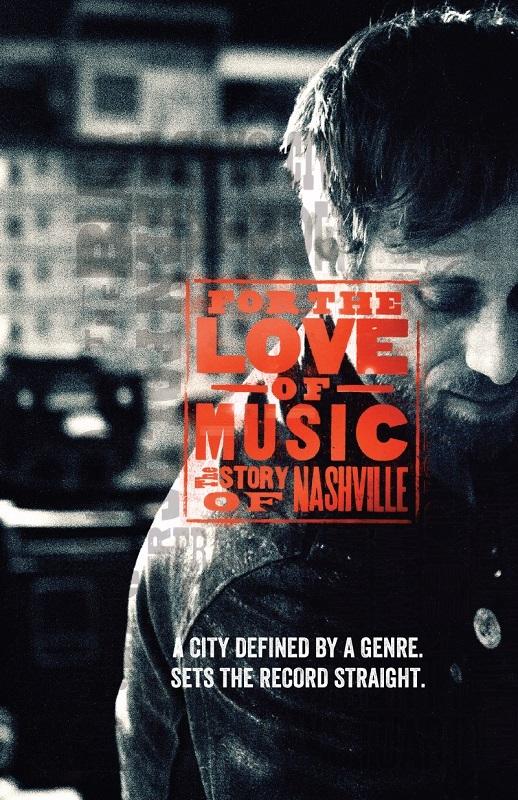
For example, the VMLagency produced For the Love of Music for the Nashville Convention & Visitors Corporation (figure 1-1). Web Therapy (episodic branded programming starring Lisa Kudrow) is “brought to you” by L/Studio created by Lexus.
Realizing that the tools to create and share advertising messages are available to the average person and that many people want to co-create, some brands have turned to soliciting advertising created by consumers, called consumer-generated content, or user-generated content (UGC). For example, Doritos brand snack food started an impressive conversation with consumers through a strategy of co-creation, sponsoring contests for amateur filmmakers to create commercials. (For this kind of advertising to work, brands must recognize and accept that the public has enormous sway over a brand’s content anyway through blogging, reviewing, parody videos, takeoffs, and more.) For Hanes, as part of a campaign for a new line of colorful underwear aimed at millennial women with the goal of getting themto think of Hanes as a fashion brand, agency 360i asked women online, “What color underwear are you wearing?” Women shared their responses through the video “Undercover Color,” which drew over 350 million earned media impressions (any publicity achieved that a brand has not paid for but earns, such as impressions created by social sharing, news coverage, reviews, or word of mouth) and lots of data about underwear. “When millennial women think of Hanes, they often think of the brand’s comfy fuller-coverage styles. So when Hanes launched a new line of stylish, colorful underwear for young women, they asked us to help bring themout of the comfort conversation and into the fashion conversation,” states 360i on Vimeo.
In-game advertising whether product placement, live billboard feeds, or ads embedded into games is often well received by appropriately targeted gamer audiences. Research indicates that young male gamers think product placement enhances the reality of the content and game experience.
A branded utility is a product created by a brand or sponsor that is ostensibly useful to the audience and generally (but not always) offered free of charge. The branded utility or product should provide a useful or pleasant experience for the user. For example, ColorSnap from Sherwin-Williams enables users to take real-world colors and turn theminto paint-color swatches on their smartphones; the Glad Products Company’s TrashSmart app finds nearby locations to recycle hundreds of household items, and Vodafone’s Pocket Power is clothing that charges smartphones. The tradition of branded utilities dates back to the first Michelin guide for French motorists to facilitate their travels. Branded utilities continue to flourish in a variety of forms, frombooks to web-based games to mobile apps. Nike+ is a proprietary web platform a complex branded utility that offers something useful providing a training systemthat lets runners easily track and share their running data to a global community operating 24/7.
Agency: VMLagency / Kansas City, MO Client: Nashville Convention & Visitors Corporation
“Most tourists thought Nashville, Tennessee, was only for country music fans. But in reality, Nashville had evolved into the most diverse music scene in the world. Amust-see destination for all music fans. Our challenge was to change perceptions and inspire people to plan a visit. Problemwas, Nashville had a low production budget and absolutely no media budget.
So when we realized that some of the biggest rock stars in the world had actually moved to Nashville, we knew if we could get themto help us tell the story of the town’s transformation, we would not only have compelling content, but could leverage their huge social followings to promote it.
The Black Keys, Kings of Leon, Ben Folds, The Civil Wars, and 20 other famous artists signed on to be part of the project. Not as paid spokespeople, but simply for the love of the city they call home. The result was a one-hour documentary, For the Love of Music.
We tapped into the musicians’ 24 million social followers by creating social kits with custom bonus content that the artists posted on their sites, driving people to view the film.
Music sites and blogs took notice, and as the buzz spread, ABC took an interest and offered to air the documentary. What was essentially a 60-minute commercial for the city of Nashville ran as pure entertainment on one of the biggest television networks in the world.
To make it easy for viewers to actually plan a trip to Nashville, we launched a second-screen app to accompany the broadcast premier. The app connected the stories in the filmto actual places in Nashville, letting viewers create customtours of the city inspired by the musicians’ favorite restaurants, venues, and hangouts. Then, once in Nashville, it became a personal tour guide, directing themaround the city.
For the Love of Music far surpassed any previous marketing efforts by the Nashville Convention & Visitors Bureau. Twenty-four of the biggest names in music starred in and promoted the filmto their more than 20 million social followers, for free. It aired on some of the biggest television networks in the world, including ABC, Foxtel, Palladia, and CMT. The filmeven gave ABC a 38 percent bump in ratings in its on-air debut. It has been talked about in magazines, featured on music blogs, news sites, and even Southwest Airlines’ company blog. Since the filmdebuted, visits to visitmusiccity.comhave increased 787 percent and hotel bookings are up 18 percent. Nashville has credited the filmwith helping spark the biggest tourismboomin the city’s history, all without traditional advertising or a dime spent on media.” VML
MEDIA CHANNELS: PAID, OWNED, AND EARNED
Over the years, advertising channels of distribution have multiplied. Now there are many channels, fromcable television to mobile web and apps to desktop web.
Paid media includes channels where advertisers must buy space and time. This includes TV, radio, print, cinema, outdoor, direct mail, in-store placement, sponsorships, product placement, banners, paid search, paid ads on blogs and other digital domains, seeded blog posts, and miscellaneous premiums. Even some unconventional media, such as building projections, tearaway postings, and “wild” postings are paid media made to appear as guerrilla marketing (unpaid ads that catch you unexpectedly).
Owned media includes brand-owned media: websites and microsites, proprietary platforms, mobile apps, social media apps, branded retail environments, branded events, social films, games, branded utilities, street and marketing stunts, brand installations, experiential marketing, and more.
Earned media includes word of mouth, fan pages, news and other TVcoverage, blog coverage, social media discussions and shares, Twitter mentions, fan works, fan videos, mentions in song lyrics or celebrity mentions, and fan forums.
People are consuming their media through many channels handheld, wearables, desktop, public screens, besides traditional ones such as TVand print. Media is distributed everywhere all the time.
What this means is that advertising can pull people in or push itself at audiences. Advertising is pushed at people through conventional channels television network programming is free because advertising pays for it. Online, we can opt in to advertising, usually branded content or owned media, that we find compelling it pulls us in. Here are some successful examples of pull marketing:
Samsung and Jay Z entered into an unprecedented partnership to distribute Jay Z’s album Magna Carta … Holy Grail exclusively to Samsung Galaxy owners, available through an app to one million Galaxy phone users, three days before the general public was able to purchase it.
Agency 360i created a Game of Thrones promotional, “Roast Joffrey,” appealing to celebrities and viewers alike. The Games of Thrones twitter site tweeted: “Welcome to #RoastJoffrey, a disrespectful celebration of his grace and the world’s 1st social media comedy roast.”
Agency Deutsch LAteamed with client Pop Secret to offer an app, Perfect Pop, available for free download on iPhones. If you place your phone by your microwave, the app “listens” as your Pop Secret popcorn pops to precisely calculate when it is done. No more burned popcorn. According to Creativity Online, although not publicly launched, the app has become extremely popular.
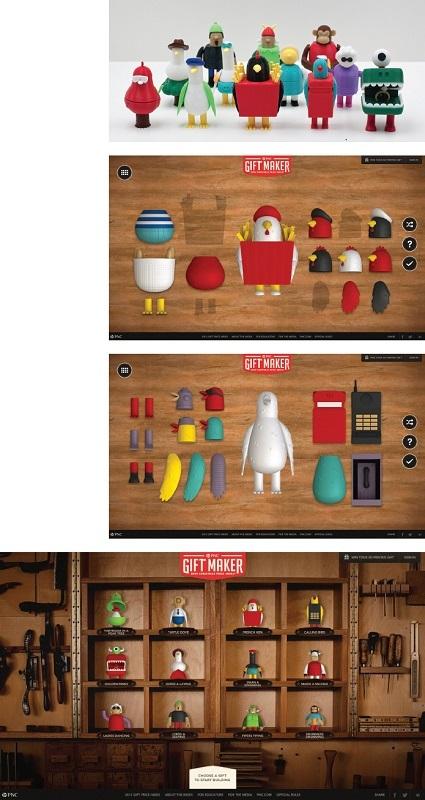
Drew Neisser, president and CEO of Renegade, advocates “marketing as service.” In their ideal form, branded utilities provide something useful to people for free. The brand is doing something positive for the consumer or customer. PNC Bank’s Christmas Price Index (figure 1-
2) is an example of such a utility. (For more on branded utilities, see page 82.)
Environmental branded utilities are useful services that become part of the common environment, such as sponsored spaces. Examples include clean bathrooms in Times Square (sponsored by Charmin), laundries for people affected by disaster (“Loads of Hope,” sponsored by Tide), or free charging stations sponsored by a brand. These could even be sponsored activities, such as those created by Red Bull. Awebsite can be a branded utility, too for example, BabyCenter.comoffers information for parents fromJohnson & Johnson.
WHO CREATES ADVERTISING
In an advertising agency, a conventional creative teamgenerates ad ideas together. It is typically led by two people: a copywriter, who is responsible for the written advertising components in the formof a tagline, headline, and body copy, and an art director who directs the artistic features of an advertising solution and is responsible for the ad’s design, selecting and creating imagery (photographs, illustrations, diagrams, or any graphic elements), and general visual style. This model was Bill Bernbach’s brainchild. Bernbach, of Doyle Dane Bernbach (DDB), paired copywriters with art directors. His vision, along with that of his creative teams, produced seminal work during advertising’s “Creative Revolution,” of the 1950s and 1960s.
FIGURE 1-2
WEBSITE and 3-D TOYS: PNC BANK’S 3-D “GIFT MAKER” CAMPAIGN and ANNUALCHRISTMAS PRICE INDEX
Agency: Deutsch New York
PNC Bank’s 3-D “Gift Maker” campaign brings “the 12 days of christmas” to life for its annual Christmas price index.
Deutsch New York lets consumers create a collection of customizable toys while explaining economic trends.
“Every year, PNC Bank calculates the current costs of each of the gifts in the holiday carol ‘The 12 Days of Christmas’ and announces the total cost of Christmas in a playful economic report. To celebrate the 30th anniversary of this tradition, Deutsch New York created a campaign called ‘Gift Maker,’ using 3-D printing.
AFrench Hen dressed as a bag of french fries?
An innovative and consumer-friendly website experience, the Christmas Price Index (CPI) is used by educators across the country to teach economic trends and … price fluctuation to middle and high school students. With that in mind, this site includes a set of customizable toys, with close to 3,000 possible mix-and-match costume experiences, based on the 12 gifts in the song.
Skateboard, snowboard, or skis for your Leaping Lord? Your pick! People were able to build their toys in the online workshop to find out their prices, and then submit toy designs for an opportunity to receive actual 3-D versions of their toy. Twenty-four 3-D toys were designed daily, over the course of 12 days, totaling 288 toys
‘The whole effort, in the end, is about making finances a whole lot of fun,’ said Kerry Keenan, chief creative officer at Deutsch New York. ‘For five years, we have utilized the latest technology to help make a serious subject interesting. Last year, we were the first to incorporate Google Street Maps into a campaign. This year, we venture into the 3-D space.’
Your Calling Bird can sport a 1980s style cellphone:
Seattle-based graphic design firmInvisible Creature has designed all 12 toys and their customizable accessories. In conjunction with MediaMonks, a digital production company, which is responsible for the backend technology, bringing the toys to life. The 3-D Printer Experience is responsible for printing all of the toys, and each toy is printed using a MakerBot printer. In addition, each toy is made fromsustainable plastics and filament, harvested froma farmoutside of Chicago.
‘We thought about how we could make economics interesting for kids during the most distracting time of the school year the holidays. While every kid is different, they all love toys and, in particular, toys they can customize,’ said Jeremy Bernstein, EVP, group creative director. ‘That got us thinking about the 12 gifts of Christmas and what they might look like as a modern toy collection one that kids could build in our online workshop and, if they’re lucky enough, arrive at their doorstep thanks to the power of 3-D printing.’
The microsite includes several pages of animated gifts, an interactive chart, and an explanation of how the CPI was determined.” Deutsch New York
ADVERTISING MEDIA CHANNELS
CONVENTIONAL MEDIA
Broadcast
Television commercials
Network
Cable
Radio commercials
Network
Satellite
Local
Print advertisements and campaigns
Magazines
Newspapers
Branded utilities in print (maps, guides, books, etc.)
Direct mail (printed advertising mailed directly to people)
SCREEN-BASED MEDIACHANNELS AND FORMS
Websites and micro websites
Web platforms and other owned digital media
Branded digital utilities
Web films, social films
Online interactive content and entertainment
Web commercials
Mobile advertising
Mobile apps
Mobile branded content entertainment
Social media apps
Social media campaigns
Videos made for video sharing websites and mobile, such as YouTube, Snapchat or Vine
Campaigns made for photo sharing
websites, such as Instagram
Widgets
Video e-mail
Banners and floaters
Blogs (fromweb logs)
Vlogs (video blogs)
MoBlogs (mobile blogs)
Ads embedded in video and online games
Digital outdoor/public screens
Digital kiosks
SUPPORT MEDIA
Out-of-home (OOH) (billboards, transit, bus shelters, street furniture, ads in arenas and stadiums, shopping malls, the cinema, etc.)
Posters
Vending machines
In-store
Kiosks
Installations
UNCONVENTIONAL
Ambient
Unconventional or guerrilla media projections on buildings, mobile truck signs, taxi toppers, tear-away wild postings, food truck marketing, influencer marketing, street art performance, nightlife marketing, etc.)
SPONSORSHIP, PARTNERSHIPS, AND BRANDED ENTERTAINMENT