










With the Winter Olympics ongoing in Italy, it might interest some of our readership to know just how popular the Edmond Ice Rink was this past season. Although now closed for the season, the attraction at Mitch Park drew a remarkable 11,811 skaters and their families. Besides having great fun — the ice rink also gave back to the community.The following is from officials with the rink. “We were able to give back $6,914 to


schools in the Edmond and Deer Creek school districts. Beyond public skating, the rink served as a gathering place for over 15 churches and nonprofit organizations, including partnering with Alpha Xi Delta to raise money for Kindly Hearts Initiative which focuses on supporting children and teens experiencing foster care or homelessness. Additionally, we hosted two Shop Small Pop-Up events that supported more than 20 local businesses.“

College sports have always lived in a strange cultural space, amateur in terms of name, professional in everything but compensation. Yet the era of Name, Image, and Likeness (NIL) has shattered that illusion forever. Just a few years after the NCAA begrudgingly opened the door to athlete compensation, NIL has exploded into a multibillion - dollar ecosystem reshaping the economic, cultural, and moral identity of college athletics. Depending on whom you ask, NIL is either the long-overdue liberation of exploited athletes or the first stage of failure of college sports as we knew them.
The truth, of course, lies somewhere in between. NIL is both a triumph and a crisis, a renaissance and a reckoning. And like many revolutions, it is transforming institutions faster than they can catch up with.
To unpack this complex moment, you need to dig into what NIL has profoundly changed. The numbers, the narratives, and the tensions tell a dramatic story. It is still unfolding.
The raw financial scale of NIL is jaw-dropping.
According to 2025–26 projections, the NIL marketplace has surged to $2.75 billion, with nearly $1.95 billion reaching athletes directly. That is not a typo folks. A system that once punished a player for accepting free tacos now funnels billions through endorsements, school - sanctioned revenue sharing, collectives, and digital branding opportunities.
In the 2025 update of NIL economics, schools can now directly pay athletes up to $20.5 million per year through revenue sharing, on top of whatever athletes can earn from personal NIL deals. In the 2025 House settlement, this revenue - sharing structure formalized what many critics long feared: college sports are officially a business, and athletes are its compensated workforce.
On one hand, good. The game has been lucrative for decades just not for the athletes generating value. On the other hand, the system now tilts toward whoever can pay the most.
Here are some pros:
Gone are the days when a star quarterback might generate tens of millions in revenue for his school while struggling to buy groceries. Players like Shedeur Sanders, for example, have earned an estimated $4.7 million thanks to NIL deals, endorsements, and brand partnerships. Others have earned even more, with six and seven figure contracts becoming increasingly normal for high-visibility athletes.
Women’s sports, especially volleyball, softball, and basketball, have seen triple-digit NIL growth, with athletes like LSU gymnast Livvy Dunne earning nearly $4 million annually. NIL has given female athletes unprecedented access to national visibility and financial leverage. That is a revolution.
NIL empowers athletes to build careers before going pro, if they even go pro. Social media deals, merchandise lines, podcast empires, training camps, the college athlete is now part competitor, part entrepreneur. NIL teaches real-world skills: negotiation, marketing, personal brand manage-

ment, financial literacy. That is not exploitation. That is opportunity.
NIL has not just given athletes money; it has given them power. For decades, athletes were stuck in rigid team structures, beholden to coaches and boosters who controlled their futures. But now? The balance has shifted.
The NCAA’s revised transfer portal and NIL ecosystem together have created unprecedented mobility. Athletes can transfer freely if they maintain academic eligibility, and many do so in pursuit of better NIL opportunities. In 2025, for instance, quarterback Nico Iamaleava left Tennessee for UCLA after a dispute over renegotiating his NIL deal. His move embodied this new dynamic: players are not just commodities. Heck, they are negotiators. Some celebrate this empowerment. Others call it chaos. Either way, athletes now have an unimaginable process.
Here are some cons:
According to updated 2025 NIL analysis, 84% of direct school revenue sharing flows to football and men’s basketball alone. Other sports, swimming, wrestling, cross-country, are left to fight for scraps. And while women’s sports have carved out more NIL success than expected, most athletes still earn modest incomes, if any.
This imbalance threatens the very idea of broad collegiate athletics. The old model subsidized smaller sports through football revenue. Powerful boosters in big-money programs are flooding the system with cash. Collectives have surged by over 824% year-over-year creating recruiting arms races that smaller schools cannot possibly match. The result is a widening chasm, the haves and the have-nots. Sports are already stratified economically. NIL is widening the cracks into craters.
Though the regulatory framework has evolved, NIL remains messy. NCAA requires schools to report third-party NIL deals over $600 to a clearinghouse to prevent pay-for-play schemes. But many of these guardrails are reactive, inconsistent across states, or already outdated. Collectives, booster-funded groups that pool money for player deals, still skirt the boundaries of legality and ethics.
As of 2025, universities are required to maintain transparency and fair-market valuation for deals, yet enforcement is thin. With billions at stake, loopholes are inevitable. The unpredictability extends to players too. Athletes with limited financial literacy are bombarded with offers, contracts, and obligations. Some sign predatory deals. Others burn through new wealth too quickly. It makes me wonder what I would have done with $2 million at 19. Many are overwhelmed by the additional workload of appearances, content creation, brand-

ing on top of being full-time students and athletes.
This is not a small burden. NIL did not eliminate exploitation; it merely remodeled it.
Recruitment, once driven by relationships and development promises, is now a bidding war. High-school athletes choose schools based on “best offer,” not best fit. More than 10,500 college football players entered the transfer portal recently, many seeking better NIL deals.
Even high school recruits face a warped marketplace. As Cathedral Catholic senior Carson Szekeres told reporters, loyalty to a program is fading fast; athletes now “prioritize financial and brand opportunities a lot of the time.”
Professionals make financially motivated decisions daily. But it is undeniably destabilizing. For coaches, roster continuity is a fantasy. For schools without billionaire boosters, competing in this new reality is nearly impossible. The “pay-to-play” era is here, even if no one will say it aloud.
The ideal of the scholar-athlete already under strain has taken further damage. With lucrative deals available, some athletes treat college not as an academic experience but as a holding zone for brand building. Time spent managing sponsorships, social media, and appearances often dwarfs time spent studying.
Schools have responded with compliance officers, tax workshops, and legal resources. But despite this support, much of the burden remains on the athletes, who now juggle dual careers. Is this the NCAA’s fault? Or is it simply the evolution of a multibillion-dollar industry? Either way, academics have slipped further down the priority ladder.
The heart of the NIL debate is not just economics it is identity. College sports have always thrived on a kind of illusion: athletes played “for the love of the game,” students first, amateurs always. Fans embraced the mythology. Schools marketed it. The NCAA enforced it.
But now, with athletes treated, and paid, as professionals, the old narrative has cracked. The transfer portal makes rosters volatile. Collectives function as quasi-free-agent markets. Personal brands overshadow school brands. College sports look less like a tradition-rich amateur pastime and more like a minor-league professional ecosystem. Where Do We Go From Here?
NIL is not going away. The toothpaste is not going back into the tube as my son Clark likes to say.
How do we regulate the system without stifling opportunity?
How do we ensure competitive balance without artificially suppressing athlete earnings?
How do we protect athletes from predatory deals and overwhelming obligations?
How do we maintain the educational mission of universities in a professionalized sports economy?
If the NCAA cannot answer these questions, and its history is shaky, federal legislation may be inevitable. But federal policy making on anything, let alone sports regulation, is a long, uncertain road. Meanwhile, NIL will continue reshaping the landscape for good, bad, and everything in between.
(Publisher Ray Hibbard may be reached at ray@edmondpaper.com)


By Carol Smaglinski
A romantic Dinner a Deux with the spotlight on salmon in puff pastry By Carol Smaglinski Since Christmas, New Year’s Eve and Valentine’s Day are oftentimes the choice for sweethearts and marriage proposals, why not make it a special dinner?
As John Lennon (1940-1980) and Paul McCartney once sang, “All You Need Is Love.”
A common myth about Valentine’s Day involves a Christian martyr named Valentine who was incarcerated around 279 AD by the Romans for his refusal to give up his Christian faith.
Before being executed, he wrote a letter to his daughter and signed it, “Your Valentine.”
He was canonized as a saint and Feb. 14 is now St. Valentine’s Day.
So, don’t fret if that desired proposal does not come to fruition on Saturday, as you will have made a thrilling dinner and left a good impression, even if you eat on cozy cushions in front of the fireplace.
Turn on some beautiful background music, as any candlelit dinner would be simply unbearable without it.
A filet of salmon cooked in puff pastry, with Greek origins, is also known as pate feuilletee (pat fwee tay) in French, and made extremely easy with pre-made phyllo (fee loh), also spelled filo, which is available in the frozen food area in supermarkets.
Simply put, puff pastry is made from scratch by folding dough (usually 4 cups) around a pound of butter, ice water and salt, then rolling it out and folding it at least six times, with a rest (for both the dough and the baker) in between the rollings.
When handled gently, this formula creates tissue-thin innumerable layers, which separate when baked to create a light and crisp pastry.
Phyllo is used for making delicious baklava, and spanakopita.
Think ahead. Thaw frozen dough in its package under refrigeration overnight, then bring the phyllo to room temperature before using.
When exposed to air, it can dry out quickly, so keep it covered and the remainder covered and in
the refrigerator.
Be aware when doing this recipe, that salmon cooks in 15 minutes, but the pastry takes 20. So start with fish right out of the refrigerator, thus guaranteeing that the salmon will not be overcooked.
Brushing with the egg and milk gives the rolls an extra-crisp, substantial glaze.
Pay close attention when baking and this dish will be a pleasure for you and your guest. Finish with anything chocolate.
Salmon in Phyllo Dough Serves 2
Imperative! Preheat oven to 425 degrees - no microwaves, no toaster ovens
20 oz. filet of salmon, skinned, no bones and cut into two servings of
10 oz. each, rinsed and dried on paper towels and kept under refrigeration Juice of ½ lemon
2 thawed phyllo patty shells (also called shells)
2 Tbsp. fresh chopped parsley
¼ cup minced chives
Salt and pepper to taste
1 tsp. butter
1 egg and 1 tsp. milk, mixed
Sprinkle salmon with the lemon juice and marinate for ½ hour under refrigeration.
When ready to cook, preheat oven. Sprinkle the rolling area with a bit of flour. Roll the pastry into 7-inch rounds. Sprinkle on the parsley and chives and dot with a few dabs of butter.
Reserve the other shells for another dish.
Lay a filet in the center of the rolled out pastry shell.
Fold the dough towards the center covering the filling. Seal the seams with the beaten egg and turn them over with the sealed part on the bottom.
Place pastries on a greased cookie sheet, and brush with egg mixture.
Bake for 20 minutes until golden. Carefully remove with a wide spatula to a warmed serving platter.
Garnish with lemon slices. Serve with a tomato sauce and a fresh green salad.



























(Editor’s note: The following Q&A was put together by local CPA, Holly Shaw)
Check fraud continues to be a significant risk for businesses of all sizes as schemes evolve and exploit weaknesses in internal controls. Whether fraud originates internally due to inadequate segregation of duties or externally through stolen and altered checks, the financial and operational impact can be substantial. Under-
standing how check fraud occurs, recognizing warning signs, and implementing preventive controls are critical steps in protecting an organization’s assets. How does check fraud typically occur?
Typically check fraud occurs internally and when there is a lack of seg-

regation of duties between employees who prepare and approve payments. However, recently there has been an increase in checks being stolen in the mail, and the thefts change the payee of the check using a technique called "washing" to remove the original recipient and add their own name or business to the check.
What are the warning signs of check fraud?
watermarks and carbon copies.
What should a business do if check fraud is suspected?
An internal investigation should involve obtaining official bank statements and copies of cancelled and processed checks directly from the bank or its website. Compare these documents to those used in bank reconciliations and company records to detect alterations. Review supporting invoices for unusual items. Management should assess internal controls for proper segregation of duties and policy compliance. Owners and managers must increase their involvement in check processing procedures to strengthen oversight.










Receiving complaints from vendors that are stating that checks haven’t been received, but the bank is showing the check was cashed. Supporting documentation for invoices looks like it has been altered or is difficult to make out details. Unexplained gaps in the check register. Unexplained gaps in the employee ID register. Employees who refuse to take a vacation or refuse to train others. Unexplained differences in the bank reconciliation. How can check fraud be detected?
Conduct timely bank reconciliations between the internal records and the bank statement. Compare returned checks to the accounting records. Use bank services such as positive pay, which compares check presented to the bank for payment to a list of checks issued and searches for any unusual items such as check numbers, amounts, payees and dates. If there are any unusual items noted, the bank will flag the check and will ask for approval before posting the payment.
What internal controls help prevent check fraud?
When possible, separate the check preparation, check authorization, and bank reconciliation between three different employees. Require dual signatures for all processed checks. Conduct regular reviews of the vendor listing. Establish a policy that requires approval before vendors can be added to the vendor listing. Conduct regular reviews of the employee listing. Enforce mandatory vacations and job rotation, if possible. Use checks with security features such as
In summary, check fraud can be difficult to detect and costly if not addressed promptly, but proactive measures can significantly reduce a business’s exposure. By maintaining strong internal controls, performing timely reconciliations, leveraging bank fraud-prevention tools, and remaining alert to warning signs, organizations can better safeguard their payment processes. In the event fraud is suspected, swift investigation and increased management oversight are essential to limit losses and prevent future occurrences.
Holly Shaw, CPA, is an Assurance Manager at Arledge, the largest locally owned accounting firm in the Oklahoma City metropolitan area. Arledge is a recognized leader in the accounting industry offering practical solutions in the areas of tax planning, auditing, consulting, accounting advisory services and client accounting. This article contains general information only and does not constitute tax advice or any other professional services. Before making any decisions or taking any action that might affect your income taxes, you should consult a professional tax advisor. This article is not intended for and cannot be used to avoid future penalties that may be imposed by the Internal Revenue Service.
In summary, check fraud can be difficult to detect and costly if not addressed promptly, but proactive measures can significantly reduce a business’s exposure.













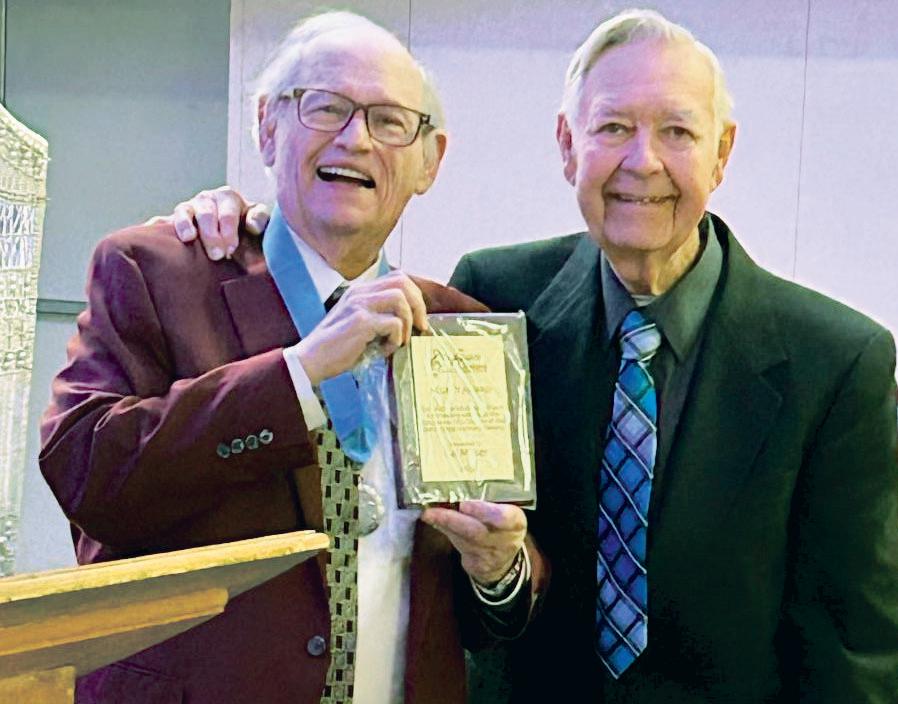
Edmond’s own, Cal Moser, was recently honored with the “2025 Legacy Award” at this year’s Vocal Sounds of Oklahoma Annual Awards & Installation Banquet. This annual award honors an outstanding member for lifetime achievement with the Oklahoma City Chapter of the Barbershop Harmony Society, an award-winning, men’s a cappella chapter, better known as the Vocal Sounds of Oklahoma (VSO).
A member since 1971, Moser has been actively involved with barbershop harmony for more than 50 years and was a member of Singing Sooners, the original name of the Oklahoma City Chapter during its founding on July 6, 1938. As one of the survivors inside the Murrah Building on that infamous day of April 19, 1995, Moser lost his hearing and temporarily left the chorus, only to recover and come back years later into a hobby he truly enjoyed. Over the years, Moser has helped to bring countless smiles to many people as a member of the chorus, where he sings with the lead section. During 2025, Moser was an active member of the Legacy Committee, where he continues to inspire the newer members through his wealth of chapter history and funny stories that have happened with the chapter over the years.
“Each year, we honor a long-time member for their time, talents, dedication to the artform of barbershop harmony, and many
contributions that have helped to move the Oklahoma City Chapter forward,” stated Don Rogers, Chair of the Legacy Committee. “Cal Moser has dedicated 50+ years to the Barbershop Harmony Society and Oklahoma City Chapter and is very deserving of this honor for lifetime achievement.”
In existence since 1938, the Vocal Sounds of Oklahoma, a 501c3 non-profit organization, is the third oldest chapter of the Barbershop Harmony Society. The Vocal Sounds of Oklahoma is the reigning Southwestern District Men’s Overall Chorus Champion and will be performing their Spring Show on April 11, a special day known as National Barbershop Quartet Day. It was on that day 88 years ago when the 4-part barbershop harmony a cappella artform was founded as an organized society, originating in Tulsa on April 11, 1938, before going worldwide. In addition to sing-outs and community events, a chorus barbershop quartet can deliver a special Singing Valentine through the gift of barbershop harmony to serenade loved ones with a cappella Valentine songs in the OKC metro to include Edmond.
To learn more about 4-part barbershop harmony and the Oklahoma City Chapter of the Barbershop Harmony Society, visit www.vocalsoundsok.org for info about joining, ordering a Singing Valentine’s delivery, or learning about upcoming shows and events.





(Editor’s Note: The following arrest reports are provided by the Edmond Police Department. Guilt or innocence is determined in a court of law.
Also, CDS is controlled dangerous substance; APC is Actual Physical Control; DUI is driving under the influence.)
Jan. 26
Tevin Dejuan Robinson, 33 of Oklahoma City. Three counts of failure to appear.
Jan. 27
Jacob Scott Willis, 36 of Shawnee. Two misdemeanor warrants and one




felony warrant.
Gerron Ezekiel Cobb, 28 of Oklahoma City. Trafficking in illegal drugs, possess CDS and a misdemeanor warrant.
Jan. 28
Aubrey Madison Granata, 22 of Guthrie. Aggrevated felony DUI — Operate (DUI or APC) a motor vehicle with a blood alcohol content level of.15 or more.
Benjamin Eugene Standifer, 51 of Edmond. Expired tag — over three months, no proof of insurance and two counts of failure to appear.
Aiyanili Hoshotika Pucknatubby, 54 of Norman. Public intoxication.
Michael David Beck, 58 of Edmond. Possess drug paraphernalia and trafficking in illegal drugs.
Jan. 29
Jing Yan, 54 of Edmond. Felony warrant.
Yi Zhao, 49 of Edmond. Felony warrant.
Chu Xin Zeng, 32 of Edmond. Felony warrant.
Jan. 30
Jonah Alexander Lillis, 28 of Edmond. Felony warrant.
Annie Caitlin Conner, 34 of Oklahoma City. Possess CDS.
Christopher Jace Linder Under-
wood, 19 of El Reno. (Possession of a stolen vehicle) unauthorized use of vehicle or implement of husbandry.
Rodney Lane Chambers, 66 homeless. Three counts of failure to appear
Fanny Patricia Sanchez Villanueva, 54 of Oklahoma City. Shoplifting — petit larceny.
Feb. 1
Johnny Craig Wheeler II, 41 of Edmond. Interruption, disruption, interference with emergency phone call and (Fel) domestic abuse assault & battery.
Kobie Eugene Hilliard, 34 of Edmond. Public intoxication. 17 booking reports
Weekend Calendar of Events Feb 12-15
---- In the Gallery
---- Indoor Farmer’s Market
---- Edmond Patriot Market
---- Weekly Game Night
---- Karaoke Night
---- Beer + Yoga
---- Saturday Morning Music Sessions
---- Saturday Storytime
---- Watch Party
---- Coffee & Guitars
---- Book Swap
---- Trivia Night
---- Vinyl Night
---- Music Bingo
---- The Round Barn Rendezvous
---- Frenzy February Live Music
---- 1889 Territorial School Open House
---- Lunar New Year
---- Love Takes Root: An Orchid Engagement
---- Lyric Theatre of Oklahoma presents: Beehive
– The 60s Musical
---- Monster Jam
---- Dinner Detective Comedy Mystery Dinner Show
---- The Jones Assembly’s Mardi Gras
Extra Information
In the Gallery
Location: Edmond Fine Arts Institute
Extra Info: First Thu of every month Gallery opening: 5 – 7 p.m.; Free; Gallery is open Mon –Thu; 9 a.m. – 5 p.m.; Free; Featuring the Hustis/Mantor Family Show, alongside the premiere installation of Frozen Rain (1987) by acclaimed kinetic sculptor Meryl Taradash; edmondfinearts.com
Indoor Farmer’s Market
Location: MAC in Mitch Park
Extra Info: Sat, Nov 1 – Sat, Mar 28; Saturdays 9 a.m. – 12 p.m.; Free; edmondok.gov
Edmond Patriot Market
Location: 425 Fretz Ave, Edmond
Extra Info: Recurring last Saturdays of the month; 8 a.m. – 5 p.m.; free; facebook.com
Karaoke Night
Location: The Gin
Local Oklahoma County Republican precinct chairs are sponsoring monthly information meetings to help educate voters. The next meeting will be on February 19 at Revive Church, 400 W Danforth, 6:30 p.m. and will feature four candidates running for State Insurance Commissioner.
Extra Info: Recurring weekly on Thursday; 7 p.m.; theginok.com
Beer + Yoga
Location: American Solera – Icehouse Project
Extra Info: Recurring monthly on the 2nd Sunday; Free; 11 a.m. – 12 p.m.; americansolera.com
Weekly Game Night
Location: American Solera – Icehouse Project
Extra Info: Recurring weekly on Thu; 6 – 8:30 p.m.; visitedmondok.com
Saturday Morning Music Sessions
Location: Arcadia Round Barn
Extra Info: Recurring weekly on Saturday; 10:30 a.m. – 12:30 p.m.; visitedmondok.com
Saturday Storytime
Location: Best of Books
Extra Info: Recurring weekly until Mar 7; Free; 11 a.m. – 12 p.m.; bestofbooksok.com
Watch Party
Location: The Gin
Extra Info: Recurring weekly every Thursday; Free; 7 p.m.; visitedmondok.com
Coffee & Guitars
Location: Edmond Music
Extra Info: Every Saturday morning; 10 a.m. –12 p.m.
Book Swap
Location: American Solera – Icehouse Project
Extra Info: Recurring every 2 months on the first Sunday; 2 – 5 p.m.; visitedmondok.com
Trivia Night
Location: Flatire Burgers
Extra Info: Recurring weekly on Thu; 8 – 10 p.m.; flatireburgers.com
Vinyl Night
Location: Round Midnight
Extra Info: Recurring weekly on Thursdays; facebook.com
Music Bingo
Location: Flatire Burgers
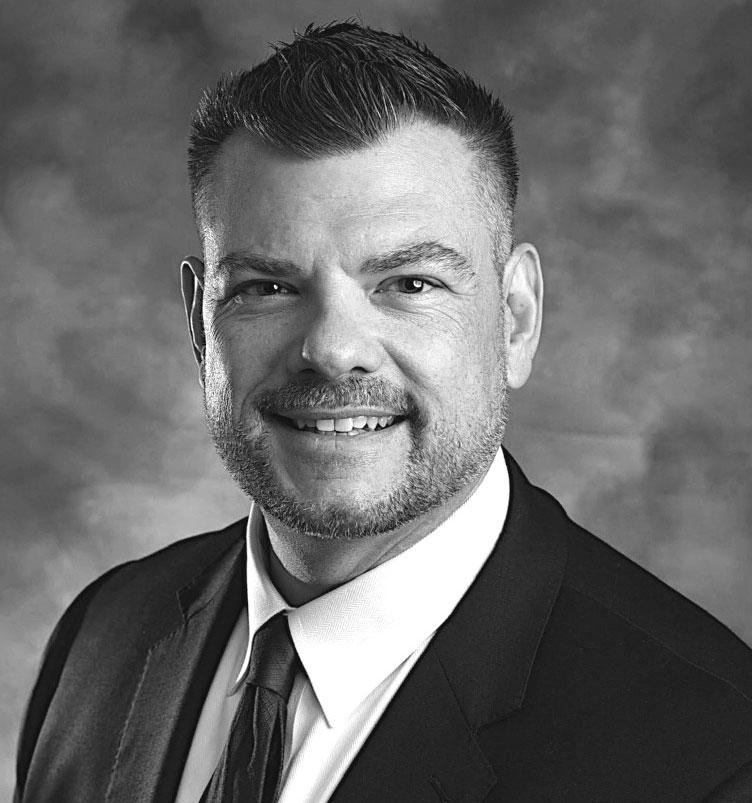
Speaking will be Chris Merideth, Edmond; Marty Quinn, Tulsa; Greta Shuler, Shawnee; and Bob Sullivan, Inola. Dr. Billye Putnam, HD39 Coordinator, explained, “Many voters never have a chance to
person. They
Extra Info: Recurring weekly on Sat; 7:30 p.m.; flatireburgers.com
The Round Barn Rendezvous
Location: Arcadia Round Barn
Extra Info: Recurring monthly on the 2nd Sunday; Free; 12 – 4 p.m.; arcadiaroundbarn.com
Frenzy February Live Music
Location: Frenzy Brewing Co
Extra Info: Thu, Feb 12: The Brave Amigos @ 7 p.m.; Fri, Feb 13: Tyler Boren @ 6:30 p.m.; frenzybrewing.com
1889 Territorial School Open House
Location: 124 E 2nd
Extra Info: Recurring weekly on Sat; 1 – 4 p.m.; Free; edmondhistory.org
Lunar New Year
Location: Riverwind Casino, Showplace Theatre
Extra Info: Sun, Feb 15; 6 p.m.; riverwind.com
Love Takes Root: An Orchid Engagement
Location: Myriad Botanical Gardens
Extra Info: through Sun, Mar 1; Mon – Fri: 9 a.m. – 5 p.m.; Sun: 11 a.m. – 5 p.m.; myriadgardens.org
Lyric Theatre of Oklahoma presents: Beehive – The 60s Musical
Location: Lyric Theatre of Oklahoma
Extra Info: Wed, Feb 11 – Sun, Mar 1; Wed –Fri: 7:30 p.m.; Sat: 2 p.m. & 7:30 p.m.; Sun: 2 p.m.; lyrictheatreokc.com
Monster Jam Location: Paycom Center
Extra Info: Sat, Feb 14 – Sun, Feb 15; Sat 1 p.m. & 7 p.m.; Sun: 1 p.m.; paycomcenter.com
Dinner Detective Comedy Mystery Dinner Show
Location: Skirvin Hilton Oklahoma City Extra Info: Sat, Feb 14; 6 – 9 p.m.; thedinnerdetective.com
The Jones Assembly’s Mardi Gras
Location: The Jones Assembly Extra Info: Sun, Feb 15; 10 a.m. – 3 p.m.; thejonesassembly.com
By Marci Stevens Edmond Family Counseling
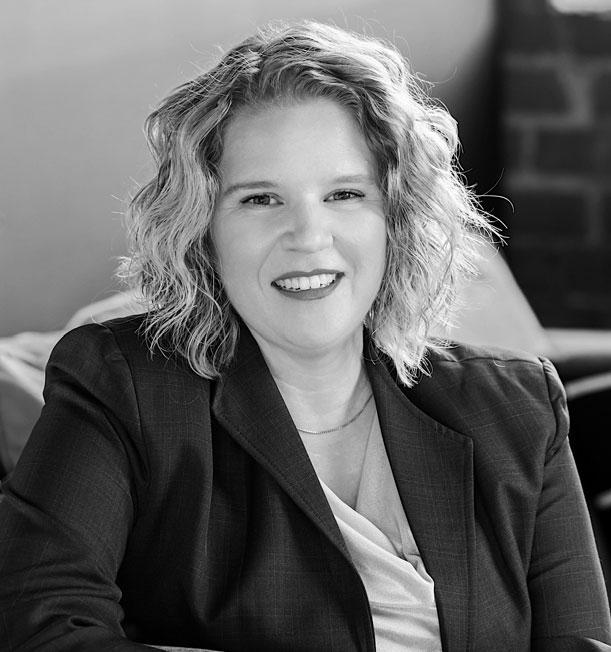
For a holiday meant for love, Valentine’s Day can create an unexpected level of stress. While store shelves fill with heart-shaped boxes, roses by the dozens, and social media overflowing with romantic gestures, many people silently feel lonely, disappointed, or overwhelmed. A study done by the online dating site “Plenty of Fish” (2020) involving 2,000 singles revealed 43 percent of respondents thought Valentine’s Day was the most pressure-filled holiday.
Valentine’s Day tends to intensify existing emotions. If a relationship feels disconnected, the day can highlight what’s missing. If someone is single, recently divorced, or grieving a loss, the emphasis on romance may lead to feelings of isolation rather than joy. Even couples in healthy, happy relationships can feel pressure to “get it right” feeling anxiety about expectations, finances, and measuring up to others.
One major source of stress is the unspoken belief that love should look a certain way on Valentine’s Day. Each year, Americans spend billions of dollars on Valentine’s Day- related purchases. Valentine’s Day is deeply rooted in consumerism and has become a massive industry. As a result of numerous marketing campaigns, the idea that love should be shown through material gifts is often reinforced, creating an unrealistic and often expensive standard for relationships. For singles, Valentine’s Day can bring about harsh self-judgement. It can bring about thoughts like “what’s wrong with me?” or “am I unlovable?” It is important to remember that one’s relationship status is not a measure of one’s value. Choosing or being single is part of life’s journey, not a personal shortcoming.
Parents may notice that Valentine’s Day affects children and teenagers more than expected. There is pressure for children and teenagers to be chosen, included, and to be admired. Those feelings can impact their self-esteem.
So how can one approach Valentine’s Day with less anxiety and more understanding and empathy.?
First, consider redefining what the day means to you. Express love of all kinds- not just romance. It can look

like spending time with a friend or spending quality time with family. Take the day to communicate to those you love the most how grateful you are for them.
Second, choose not to celebrate Valentine’s Day at all. Treat it as a regular day or remind yourself that it’s a highly commercialized holiday constructed to get people to spend money. Instead of indulging in it, decide not to celebrate it.
For couples, lowering the pressure starts with communication. Agree on what expectations are going to bewhether that’s keeping things low-key or planning something special. Communicating expectations can turn the day into a fun, shared experience rather than a test. Consider celebrating Valentine’s Day in ways that line up with each of your values and financial comfort. Don’t fall into the trap of comparison. Honor the love and bond that is uniquely yours.
For singles, it can help to limit social media exposure and intentionally plan something enjoyable. Use it as a day to celebrate yourself. Go have your favorite lunch, have a spa day, or buy yourself flowers! Do something to affirm that you don’t need a romantic date or partnership to feel whole and fulfilled in life.
For parents with children and teenagers, consider having conversations about kindness, inclusion, and the many different forms love can take- celebrating friendships, family, a beloved pet can all reduce the pressure kids might be feeling.
If Valentine’s Day brings more pressure than pleasure this year, know you’re not alone in feeling this way, and it doesn't mean anything is wrong with you. Feeling weighed down by anxiety and stress doesn't mean you’re doing love wrong. Sometimes the most loving choice is to loosen our grip on unrealistic expectations and offer ourselves kindness and understanding. Remember, love should not be measured by perfection or performance. Love is something we practice every day, sometimes imperfectly but that should not diminish its value.






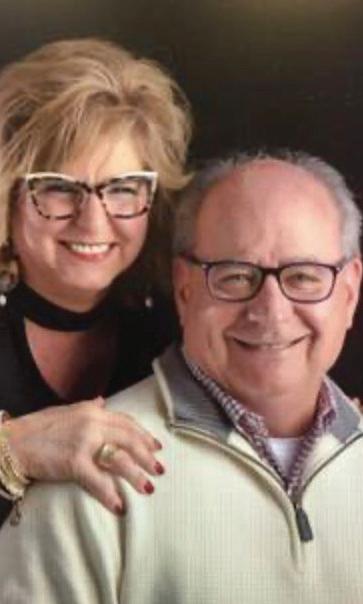

What was supposed to be a relaxing vacation turned out to be a critical point for Terry Furrh’s health. The 71-year-old optometrist experienced a medical emergency while traveling that ultimately led to the diagnosis of heart valve disease.
During American Heart Month, Furrh is sharing his story to raise awareness about heart health and the importance of early detection.
An unexpected turn of events
Terry has always maintained an active and healthy lifestyle, participating in various sports including golf, hiking and skiing.
“I’ve been an athlete all my life," Terry said. “I was never sick and most certainly didn’t have any issues that pertained to my heart.”
That perception changed during a trip to Cabo, Mexico, with his wife and friends. While playing golf one afternoon, Terry suddenly passed out while retrieving a ball on the green.
"It was a beautiful day, no heat and a light cool breeze,” he recalled. “Next thing I knew, I woke up with the golf ball still in my hand, confused about what happened.”
Terry spent the next 24 hours in a local emergency department before returning to the resort to finish his vacation.
The diagnosis
Once back home, Terry followed up with his nurse practitioner, who detected a heart murmur. This discovery led to an appointment with Jeffrey Sparling, M.D., an interventional cardiologist at the INTEGRIS Health Heart Hospital.
“Terry’s experience is a powerful reminder that heart disease doesn’t always come with obvious warning signs,” Sparling said. “Even patients who are active and feel healthy can have underlying valve disease. Detecting the murmur early allowed us to move quickly with testing and develop the right treatment plan before more serious complications occurred.”
Further testing revealed Terry had aortic valve stenosis, a heart valve disease in which the heart valve is narrowed and doesn’t fully open, reducing or blocking blood flow from the heart to the aorta and the rest of the body.
“I could hardly speak after hearing the diagnosis,” Terry said. “My wife had to talk for me because I was just in shock.”
Treatment and recovery
As part of his treatment plan, Terry received a pacemaker under the care of Richard Lane, M.D., a cardiac electrophysiologist at INTEGRIS Health Heart Hospital.
“A pacemaker helps regulate the heart’s rhythm and ensures it beats at a safe and consistent rate,” Lane said. “In Terry’s case, his valve disease was affecting the heart’s electrical system and likely contributed to his fainting episode. He was fortunate to return from Cabo and receive a diagnosis so quickly, which allowed us to intervene early.”
After continued monitoring, Terry’s care team determined that a heart valve replacement would be the next step in his treatment. The procedure was performed by Dr. Sparling and Craig Elkins, M.D., a cardiovascular surgeon with INTEGRIS Health Heart Hospital.
On the day of his procedure, Terry says a moment shared with his care team brought unexpected comfort. “The team and my wife stood by my bed and prayed,” he said. “I'd never experienced that before. It was an emotional time for me.”
The valve replacement was successful, and Terry was discharged the next day. The follow-up tests showed positive results, and he was able to transition back to daily life with confidence.
“I value what this team has done, especially their professionalism and compassion,” Terry said. “I’m fortunate and lucky to have been given a second chance.”

As part of American Heart Month, INTEGRIS Health encourages Oklahomans to schedule a Heart Scan to get a clear picture of your heart’s health. For more information, visit integrishealth.org/hearthospital or call 405-948-4040 to schedule with one of our cardiologists.












Edmond resident and business owner Matthew Clayton has been selected as the winner of the Edmond Transfer Station’s 2025 Citizen Appreciation Contest. Clayton was selected from more than 850 citizens who used the Citizen Convenience Center at the Edmond Transfer Station in December. He was presented with a $100 gift certificate on Tuesday, Feb. 3, by McKenzie Stanford with ETS Enterprises and Corey Smith with Waste Management.
“I use the Edmond Transfer Station for its convenience, safety and cost savings,” said Clayton, who owns and operates two construction businesses - Throne and Hammer, and Infinite Interiors and Storage.
“They keep the facility clean, so I don’t have to worry about running over nails and getting a flat tire when I bring in loads. I used it for the first time just last year, and I’ve been recommending it to everyone in Edmond ever since.”
Since beginning operation in 2003, the Edmond Transfer Station located in north central Edmond has processed more than 1.5 million tons of solid waste. During that time, Edmond citizens have enjoyed significant savings when utilizing the transfer station’s Citizen Convenience Center which allows Edmond residents to drop off small loads of solid waste at a significant savings compared to traveling to the nearest landfill. In 2025 alone more than 9,000 Edmond customers saved more than $450 thousand dollars in individual dumping expenses. The facility is located near Air Depot Blvd. and Covell Rd. and is operated as a public-private partnership between the City of Edmond and ETS Enterprises, L.P.
“The Customer Convenience Center at the Edmond Transfer Station is an excellent amenity for the citizens of Edmond,” ETS Enterprises Manager Derek Turner said. “The service provides a significant cost savings and convenience to our citizens by providing an orderly and convenient location to dump solid waste in town compared to driving 20 miles one-way to the nearest Oklahoma City landfill. It’s a great public-private partnership for the citizens and the city.”
The Edmond Transfer Station features a local all-weather, covered dump site on concrete with paved access roads at a convenient central Edmond location. Citizens presenting a drivers license and utility bill proving their residency, receive a discounted price of $22 to dump a full pickup truck load of waste at the transfer station. Area landfills charge $80 for the same load, and require customers to drive to the top of the landfill on often muddy dirt roads.
Six days a week, City of Edmond residential and commercial solid waste trucks deliver their loads to the transfer station as well. This allows Edmond solid waste trucks to dump easily and efficiently in town and return to their routes quickly, saving time, reducing fleet wear-and-tear and fuel costs, and keeping Edmond’s specialized solid waste collection vehicles off busy metro interstate highways.


By Steve Gust Politics baffles me.
These days it all seems to come down to power. Even if you have a lot of power – you still want more. Witness the display put on last week by Sen. Charles Schumer, D-NY.
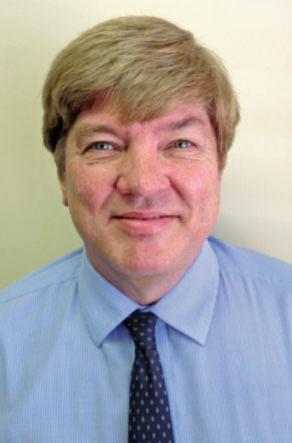
The pending SAVE Act would make people prove citizenship before registering to vote in federal elections. Schumer went so far as to call the measure “Jim Crow 2.0” — a reminder of the laws in the 19th and 20th century which discriminated against minorities.
I’m not sure what voting safeguards have to do with that today.
A lot of people want election reform. Many reject a proposal of photo ID to vote, It seems like a great idea to me. In Oklahoma you have to show either a government photo ID or a voter ID card issued by the county board of election.
Schumer might call that racist. I’m not sure that’s good politics on his behalf. Why would you want to in-
sult half of your colleagues with something that isn’t true? In normal life, if you disagreed with a lot of people in your office, would you resort to calling them racist?
Schumer can make a ridiculous allegation like that and two minutes later, he’s bemoaning how divisive politics is in America. It’s just crazy.
——
It reminds me a little of a movie on Netflix I watched called “LBJ” about the late-president.I always wonder how many liberties filmmakers take with movies on history. For instance in “LBJ,” there is a scene where Johnson corners Bobby Kennedy in the Oval Office when his brother John was president and asks Bobby, “Why do you not like me?”
It is pretty well known that Bobby Kennedy didn’t care much for Johnson. I still have a hard time believing that Johnson would ask him such a third-grade question. Besides, politics isn’t exactly the field to go into to make friends. If you’re elected to office you automatically have thousands, if not millions, of people not liking you. Politics can be odd.
(Steve Gust, editor, may be reached for comment at news@edmondpaper.com)
Last week, Governor Kevin Stitt signed two executive orders aimed at ensuring Oklahoma’s public higher education system delivers real results for students, taxpayers, and the state’s economy.
The executive orders prioritize datadriven decision-making, accelerated pathways to graduation, and performance-based faculty employment to align colleges with workforce needs and to hold universities accountable to tuition payers and taxpayers.
"Here in Oklahoma, we want to deliver higher education that meets workforce needs and keeps our talent at home. It's a win-win," said Governor Stitt. "I'm pushing for a 90-hour bachelor's degree pathway to cut costs and get students into good jobs. I am also pushing tenure reforms that tie accountability to performance at public institutions."
Key Highlights from Executive Order 2026-07: Data and Accelerated Degrees
Directs the Oklahoma Employment Security Commission and Regents for Higher Education to enhance tracking of post-graduate wages, job types,

Senator James Lankford (R-OK), Senate Republican Vice Chair, joined Mornings with Maria on Fox Business to highlight billions in waste exposed in his ninth edition of Federal Fumbles, discuss the SAVE America Act, and outline the costly impact of government shutdowns.
On DHS Funding and What Democrats Are Holding Up:
“That's correct. Yes. September the 30th. All government is funded all the way up to that point, except for Homeland Security, which my Democratic colleagues say is ICE funding. But it's way more than that – it includes FEMA, that includes all of our TSA, that includes Coast Guard, that includes Secret Service. There's a lot that's in that funding that they're holding up while they're working to defund ICE.”
On What Was Already in the Bipartisan DHS Deal:
“Sure it is. Yeah. Homeland Security's critical for the basic operations of our nation and national security. What's interesting is the bill that was negotiated
now, 10 days ago with Democrats, Republicans, House, and Senate. We had wide agreement on it. It had funding for body worn cameras for our federal agents, ICE, Border Patrol. It had what's called de-escalation training funding in it.
“So if you get in tense situations, how to be able to bring the volume down. Those things were in the funding bill that Democrats then refused to be able to pass. So I don't know if they didn't read the bill that they had negotiated or if this just became an optics issue, that we can't pass something because our base is screaming at us to defund ICE.”
On Administrative Warrants:
“What they're asking for is to be able to get rid of what's called administrative warrants and only do judicial warrants. That sounds nice on it, but what that really means is ICE would not be able to operate in almost anywhere in the country. It would turn us from having sanctuary cities to having a sanctuary country that individuals, even with criminal records that are not legally present, could not be picked up by ICE unless they had a federal offense, not a state offense.
hours worked, and employment locations for better return-on-investment analysis.
Orders a 90-day feasibility study on 90-credit-hour “accelerated” bachelor’s degrees to slash time and costs while maintaining quality, accreditation, and job relevance. Requires Regents to use outcomes data when approving, reviewing, or sunsetting academic programs.
Initiates Performance-Based Funding in the appropriation of higher education dollars, tying institutions’ state funding to workforce and employment outcomes, affordability, and the state’s strategic economic development priorities.
Key Highlights from Executive Order 2026-06: Tenure Reform
Establishes a state policy for accountability within the tenure system at higher education institutions.
Allows research universities to retain tenure with mandatory 5-year reviews and performance standards.
Instructs regional universities and community colleges to phase out new lifetime tenure, shifting to renewable contracts tied to teaching effectiveness, student completion, job placement, and economic alignment. Existing tenures remain with reviews.
Instructs institutions to certify compliance to Regents.
In other news
"Yesterday (Feb. 5) afternoon in Okmulgee County, two of our sheriffs’ deputies were shot while responding to a disturbance and were injured in the line of duty. Both deputies have been treated at a local hospital and are reported to be in stable condition, and a suspect is in custody.
I join our community in lifting them, their families, and all first responders in prayer as they recover from this frightening incident. These men and women put themselves between danger and the people they serve every day, and our thoughts are with them and their loved ones right now.
At the same time, this incident underscores the importance of respecting the rule of law and supporting the brave individuals who answer the call when we need help. We must continue working together — across communities and across the aisle — to ensure public safety and support for law enforcement while also building trust and understanding.”
“That means a rape, a murder, an assault, three DUIs, that ICE could not pick them up. So what they're asking for sounds nice, but when you read the fine print on it, you find out they're actually trying to do a total ‘ICE out’ in the nation of all areas of the country.”
On the SAVE America Act and Securing Our Elections:
“Yeah, we are working through the process and that in my great state of Oklahoma, you already have to show ID. This is not hard. You have to show ID to be able to go into every federal building. You have to show ID to go to the airport. People are used to doing that. It is already federal law that you cannot be a non-citizen and vote, but there's no way to prove it.
“We're just trusting and there's no verification. What we're talking about with the SAVE Act is trust and verify that person is not legally present in the country or they are US citizens. Just show it.”
“... California and other states also have ballot harvesting, where you don't have to actually show up and handle your ballot at all. Someone could come to your door, pick up your ballot, and then they could do anything with that ballot. Lots of states that are blue states have no custody of their ballots.
“We can only assume that is so that they can do ballot harvesting and ballot fraud on it. This law is pretty straightforward, saying, ‘if you're legally in the country and you're voting,’ we want to have voter ID, we want to make sure it's actually you that's voting. Let's have secure elections, of course.”
On Federal Fumbles and the Cost of Shutdowns:
“... There is always need for more oversight in this. This is the ninth year that we work through this. It doesn't matter who's in the administration or who's in Congress. There's a lot of complexity. There should be a lot of eyes on it and provide some sunshine.
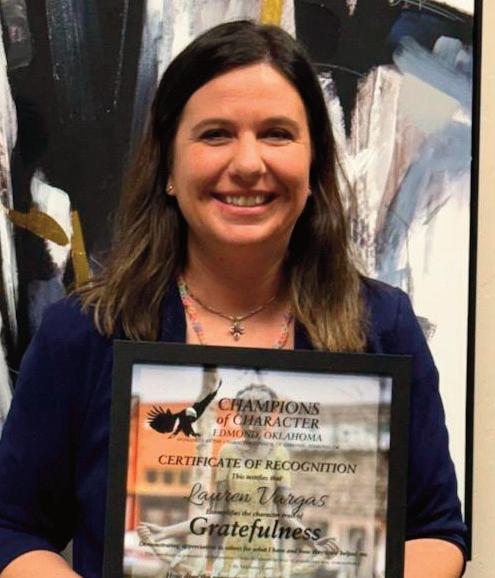
Edmond resident Lauren Vargas received the Champion of Character for Gratefulness award on February 2, 2026, at the offices of the Stewart Title Company where Lauren is the Business Development Officer.
Joining in the celebration were Lauren’s husband, Ramiro, mother Tracy Ratcliff, and Stewart Title team members, Kelli Brinkoetter, Traci Coker, Sarah Spottedhorse, Ann Dixon and Miranda Taylor. The Character Council of Edmond’s president, Diane Krakowski and board member, Gloria Baumann, were also present.
Lauren was born in Durant but has lived in Edmond for most of her life. She graduated from Edmond North High School in 2003 and from UCO in 2008 with a journalism and public relations minor and major in broadcasting. She and her husband, Ramiro, were married in 2013. Ramiro is an Edmond realtor at Keller Williams Central Oklahoma.
The couple enjoys outdoor activities, which is reflected in the names of their children. Their daughter Lakyn is ten years old and their son, River, is five. Rounding out their family is their pet dog, Walker.
In her nomination, Lauren’s friend, Stephanie, said, “One thing stands out for me with Lauren, she is always grateful.” Stephanie went on to say that Lauren is thankful for her family, her job and co-workers, for her community and for all the blessings that come with each day.Lauren agreed with Stephanie’s observation that she is grateful all the time. “Honestly, I know I’m human, but I do feel very appreciative. That’s been one of my biggest prayers, even if my kids and I have a rough start in the morning when we leave the house every day, we say a prayer and mean it, ‘Dear Jesus, thank You for this day. Thank You for everything You do for us.’ We pray for everyone to be happy, healthy and safe” Lauren said. She credits her family for modeling gratefulness throughout her life. Her parents, Anthony and Tracy Ratcliff were always supportive when Lauren and her younger brother, Austin, were growing up. They showed up for Lauren and Austin’s sports events and other activities they were involved in. The family attended church and volunteered together. Lauren said, “It meant the world to us to have our parents there supporting and encouraging us.” Through her parents’ example Lauren learned to value family, work and her community. Lauren’s focus is to maintain an awareness of
gratefulness. She confessed that she has stressful moments when she may indulge in venting for a bit. Lauren said, “I definitely have to talk to myself if I feel like I’m having a human moment where I’m a little stressed about something. At the end of the day, I’m like, ‘You have a job, you have a steady paycheck coming in, you need to make sure you are thankful and grateful for it.’”
There are two special times that brought Lauren a deep heart-felt sense of appreciation and still does. When each of her babies were born. She was overwhelmed with gratitude over the way her family and friends showed up. The gifts and the meals were special, but she was surprised and delighted by the mom gifts. Friends brought things she didn’t realize would make such a difference for her as a new mom. Lauren said, “I definitely had a lot of moments that I appreciated, but that for sure really touched me with how everybody comes out and they are so happy for you.”
Lauren will celebrate her eighth anniversary at Stewart Title in May. She was promoted three years ago to sales representative. In that position she asked herself, “How can I get out there in the community and show that we are involved and helping?” She wanted the community to know that Stewart Title isn’t just a title company, “I wanted them to see that we care and will show up,” Lauren said.
Due to her upbringing, Lauren enjoys giving back to the community to show her gratitude. Lauren said, “I’ve done that the whole time that I’ve been in sales. It is how I got connected with Stephanie. I think I’ve been on the events committee with her for the past two years, for sure. She’s great. I love working with, helping her and all the ladies.”
Stephanie said, “Lauren is always helping downtown Edmond with their many events and fundraisers. She is grateful for having the opportunity and that is something that she exemplifies in her happy spirit and the beautiful smile.”
Deck the Downtown is Lauren’s favorite event that takes place in November. The whole Stewart Title team gets involved making s’mores and passing them out to the community. The local Edmond Fire Department helps by working with them to contain the fire.
Lauren, her kids and husband take part in the Turn Edmond Purple event in May which involves the community in raising Alzheimer’s awareness. Downtown Edmond is decked out in purple. Lauren said, “I like that my kids do that because they can see what it’s like to serve.”
Describing the benefits of Lauren’s gratefulness to the Edmond community, Stephanie said, “Her family, friends, co-workers and community are reminded to be grateful with every action Lauren takes. You realize that being grateful for all the little things makes your life a happier more vibrant place.”
On behalf of the City of Edmond and the Character Council of Edmond, Lauren Vargas was honored as a Champion of Character for exemplifying the character trait of gratefulness, defined by Character First as “demonstrating appreciation to others for what I have and how they have helped me.”
The Character Council of Edmond, a grassroots nonprofit organization, is committed to creating a citywide initiative to build Edmond into a “community of character." To learn more about the Character Council or to nominate a citizen as a Champion of Character, for someone who exemplifies the current month’s featured character trait, go to www.edmondcharacter.org or write: Champions of Character, PO Box 392, Edmond OK 73083-0392.
To learn more about Deck the Downtown and Turn Edmond Purple see: www.vistedmondok.com and www.Alz.org


By Tonya Coffman
The next meeting of Edmond Republican Womens Club will be Monday, Feb. 23rd, 2026, in the Meinders/Gaylord Center of Oklahoma Christian University, 2501 E. Memorial Road, Edmond.
Doors open at 11:15 a.m., when check-in begins, with the buffet lunch served at 11:30 a.m.
This month our speakers will be two Republican Candidates running for Oklahoma Insurance Commissioner, Marty Quinn and Chris Meredith.
In addition, we will have two Republican candidates for Corporation Commissioner, Justin Hornbeck and Brad Boles. In the past few months, our meetings have featured Republican candidates who have announced their intent to run for office. This has enabled our members and quests to become better acquainted with them and hopefully be able to
make better informed decisions at the ballot box.
The petitions with signatures for Open or "Jungle" Primaries have been delivered to the Secretary of State and each signature is being examined for authenticity and legality. Should this issue make it's way on to a ballot to be voted on by the registered voters of Oklahoma, Republicans will be working vigorously to oppose it.
Again, the date of the next meeting is Feb 23, in the Meinders/Gaylord Center of Oklahoma Christian University, 2501 E. Memorial Rd, Edmond. Reservations can be made at ERWC1787@gmail.com and please indicate whether or not you will be having lunch.
Lunch is $25 per person, or $5 for meeting only. We also have several gentlemen who are associate members of our club. Come and start off the New Year with us!
The date of the next meeting is Feb 23, in the Meinders/Gaylord Center of Oklahoma Christian University, 2501 E. Memorial Rd.






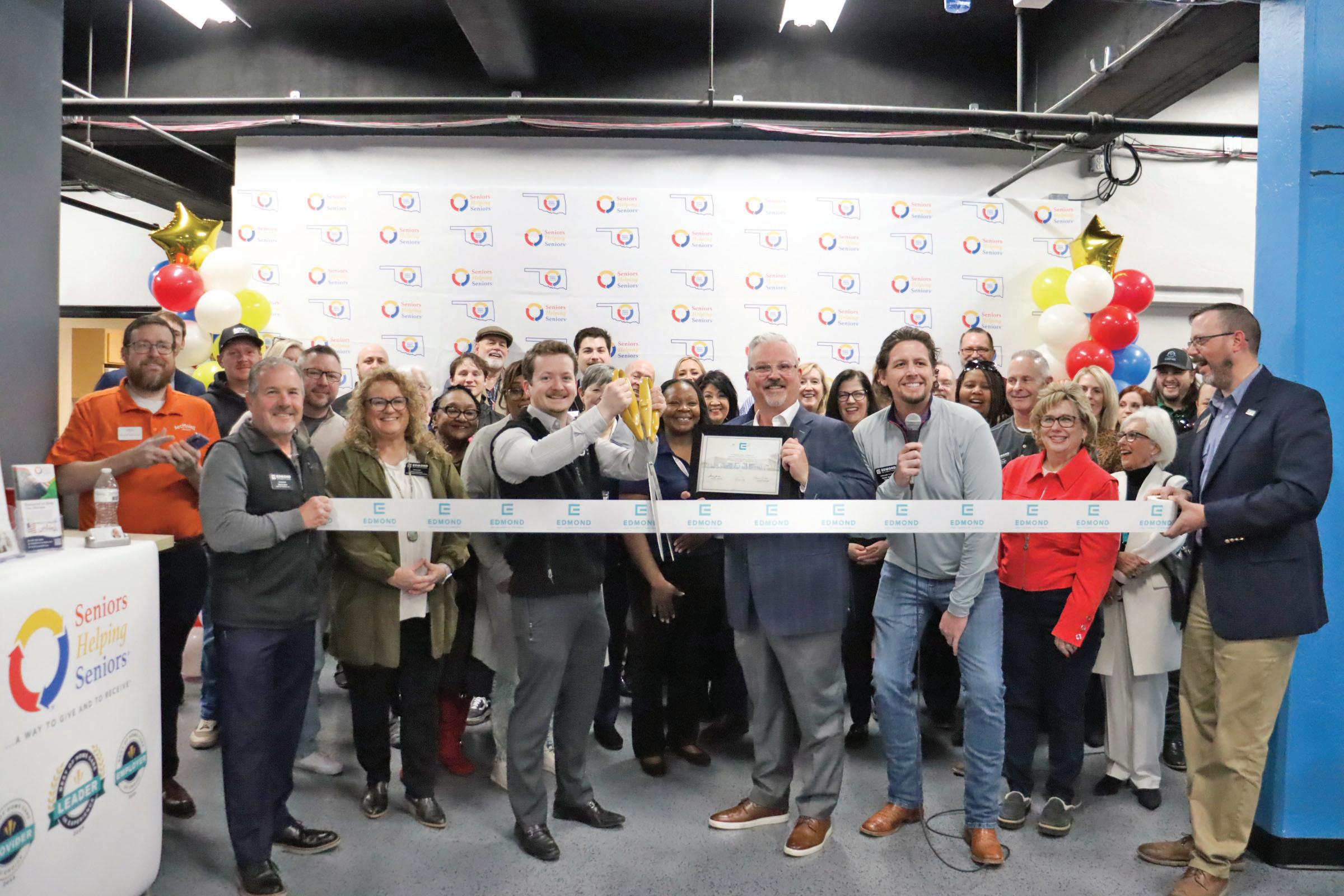
Seniors Helping Seniors held a ribbon cutting with the Edmond Area Chamber of Commerce to celebrate their anniversary at 100 NE 5th St.
As a licensed in-home care agency, Seniors Helping Seniors hire active seniors to provide all the services necessary to help fewer active seniors live independently in the home of their choice.
While there are many companies that assist people in their homes, they are the only company that focuses on employing seniors (age 50+) as our caregivers. These individuals are often retired, and
desire to stay active and enjoy helping others. Their lifetime of experience and their understanding of the aging process enable them to provide the compassionate care and attention that only those who have experienced it can. Their caregivers form friendships with their clients, and both benefit equally from the time they spend together. They often remark, “It’s like getting a little help from a friend”.
For more information visit https://locations.seniorshelpingseniors.com/ok/oklahomacity/85.html.
Oklahoma Journalism Hall of Fame’s 56th Anniversary celebration to honor 12 journalists, authors, pioneers during induction ceremony at UCO
Longtime journalists, a nationally known author and television news pioneers are among those who will be honored at the 56th annual induction ceremony of the Oklahoma Journalism Hall of Fame.
The induction ceremony will begin at 11:30 a.m. Thursday, May 14, in the grand ballroom of the Nigh University Center at the University of Central Oklahoma. A reception toasting the honorees will occur immediately after the ceremony in the University Center’s Heritage Room.
The hall of fame will induct two Lifetime Achievement honorees and 10 journalists this year.
This year’s Lifetime Achievement honorees are the late Gene Allen, an Oklahoma television pioneer and author; and Michael Wallis, a nationally known nonfiction author and journalist who has become famous for his Route 66 work.
The 2026 induction class are Cindy Elliott Allen, a longtime news executive in Oklahoma, Kansas and Arkansas; Mike Brown, a longtime sportswriter for the Tulsa World; H. Willis Choate III, a third-generation publisher and longtime columnist for the Marietta Monitor; Jason Colling-
‘This year’s class and
ton, former executive editor of the Tulsa World and a digital news innovator; Russell A. LaCour, a longtime journalist, copy editor and founder of the National Association of Black Journalists’ high school program; Kathryn Sherry McNutt, who just retired from The Journal Record and was a longtime editor at The Oklahoman; .Joyce Reed, the first vice president for News for Griffin Media in Oklahoma; Phil Rogers, a longtime radio and TV reporter who began his career in his native Oklahoma; Patrick Spencer, a news executive and producer with KFOR-TV; and the late Ed Turner, a founding CNN executive who pioneered many of the national cable news network’s hallmarks in news coverage.
“This year’s class and Lifetime Achievement honorees show again how Oklahoma has the greatest journalists and news pioneers in this country,” said Joe Hight, director and member of the Oklahoma Journalism Hall of Fame. “This year’s inductees remind me of why this hall of fame is so important and how it continues to show the depth of journalism produced here in Oklahoma and by Oklahomans.”
All 12 honorees will become members of the Oklahoma Journalism Hall of Fame, which now has inducted nearly 550 members since its beginning.
Lifetime
Achievement honorees show again how Oklahoma has the greatest journalists and news pioneers in this country.’
Joe Hight Director & member
Legislation that would allow and later require certain public cash transactions to be rounded to the nearest nickel has passed a House policy committee and now moves to an oversight committee.
Authored by Rep. Derrick Hildebrant, RCatoosa, House Bill 3075, formally titled the Oklahoma Common Cents Act, would not apply to the private sector and would apply only to public payments made in cash or the portion paid in cash. The measure does not apply to checks, debit cards, credit cards, electronic payments or other digital transactions.
"This is a simple, practical bill that modernizes how we handle cash payments without impacting anyone who pays digitally," Hildebrant said. "HB3075 is limited to public cash transactions only. If you’re paying online or with a card, nothing changes."
Under HB3075, final cash amounts owed to a political subdivision would be rounded to the nearest nickel. Amounts ending in $0.01 or $0.02 would be rounded down to $0.00, amounts ending in $0.03 or $0.04 would be rounded up to $0.05, amounts ending in $0.06 or $0.07 would be rounded down to $0.05, and amounts ending in $0.08 or $0.09 would be rounded up to $0.10.
Hildebrant says the bill was requested by one of his constituents, who is also the Rogers County Treasurer, Jason Carini.
"The Rogers County penny analysis showed the rounding approach is essentially neutral overall, and in some years, it resulted in a slight net gain," Hildebrant said.
Rogers County analyzed cash transaction data across 2023, 2024 and 2025. The analysis found the rounding outcomes would have been minimal over the three-year period. In 2023, the county recorded 1,517 cash transactions, with rounding resulting in an overall net gain of $0.21.

By George Gust
Prime
Video’s
“The Wrecking Crew” is a loud, sun bleached buddy action throwback that plants itself firmly in the lineage of the big, bruising buddy cop films of the ’80s and ’90s. It’s the flip side of another recent streaming throwback “The Rip,” trading that film’s bottled-up paranoia for a broader, more bombastic islandset romp where the plot is less important than the swagger.
“The Wrecking Crew” follows estranged halfbrothers Jonny (Jason Momoa) and James (Dave Bautista) who reunite after their father's mysterious death. As they search for the truth, buried secrets reveal a conspiracy threatening to tear their family apart.
What works best is the film’s sense of place and its willingness to embrace its own cartoonishness. The island setting gives everything a vibrant, lived in texture, and the cinematography does more work than you’d expect from a disposable straight to streaming action flick. There’s a looseness to the camera, a sense of movement and heat that keeps the early scenes lively. But the film also leans too heavily on tropes at times. Some sequences like a towel clad brawl set to a syrupy pop song feel




more obligatory than inspired. Once you get the gist, you’re ready for the scene to wrap and move on. The story hits every beat you expect, and while the film knows exactly what kind of movie it is, that self awareness doesn’t always keep it from feeling derivative.
The real engine here is the pairing of Momoa and Bautista, who settle into a rhythm that feels both chaotic and oddly earnest. Momoa brings a frenetic, wildcard energy (think Mel Gibson in Lethal Weapon) against Bautista’s more self serious characterization and their back and forth gives the film its pulse. Bautista, in particular, finds a way to make the film’s wrestler bravado dialogue
land with surprising sincerity; when he growls, “I’m the bear you don’t want to poke,” you believe him. Their contrasting flavors of cinematic masculinity play like a knowing riff on the genre, and even when the plot starts to wobble, they keep the film grounded.
“The Wrecking Crew” doesn’t reinvent the wheel, and it’s not trying to. It’s a fun, colorful, occasionally clunky romp that delivers exactly what it promises: two charismatic action stars bouncing off each other in a sundrenched world of doublecrosses and bruised knuckles. It’s ultimately forgettable, but in the moment, it’s a pretty good time. This is the kind of movie that plays well on a lazy Saturday when you want something loud, easy, and unpretentious.
“The Wrecking Crew” is rated R for strong bloody violence, sexual material, pervasive language and some drug use.
2.8 out of 5 stars.
(Contact George Gust for comment about this movie, or any other motion pictures at gust.george@gmail.com)

The Oklahoma County Home and Community Education (OHCE) Genealogy Group is pleased to present a program that combines two of America’s favorite hobbies: Genealogy and Quilting. On Wednesday, Feb.18, at 10 a.m. they will host member Beverly Kirk as she presents “Admiring Harriet Powers.”












Harriet Angeline Powers, an African-American quilter from the late 1800’s, poured her faith, experiences and community’s stories into her work. Only two of her quilts survive today: The Bible Quilt and the Pictorial Quilt. Yet, their impact is timeless. Whether you are a quilter, a lover of history, or someone who values the voice of trailblazing women, this lecture will inspire and connect you to an enduring creative legacy.
The speaker, Beverly Kirk, is a member of the Genealogy Group.





The OHCE Genealogy group meets the third Wednesday of the month at the Oklahoma County Extension Center, 2500 NE 63rd St., OKC.Our meetings are open to the public and more information can be found on our Facebook page: OHCE Genealogy Group.






































































Sen. Logan, R-District 8, is commending the passage of Senate Bill 743, a measure addressing the intentional disruption of religious worship services. The freshman lawmaker and pastor issued the following statement:
"Look, I have widows and families in my congregation. I’ve got folks who come to church looking for peace, not confrontation. As a pastor, I take seriously the responsibility to make sure people can worship without fear — in my church and anywhere else across our state.
At the same time, honoring the Constitution and respecting one another as neighbors is foundational to who we are as Oklahomans.
Our families deserve to worship in peace and security.
This legislation strikes a thoughtful balance: it seeks to prevent the willful interruption of religious gatherings — an activity that can be frightening and harmful for congregations — without infringing on lawful expression and assembly.
I appreciate Senator Todd Gollihare for bringing this issue forward, for Pro Tem Paxton and the Senate’s work to address it in a responsible way, and for Governor Stitt for seeing it through. As we move forward, I look forward to working with members from both chambers and sides of the aisle to ensure this measure upholds the principles


of safety and constitutional protections we all value."
——-
Rep. Ross Ford, R-Broken Arrow, has filed legislation that initially would increase the ad valorem tax exemption homeowners are allowed each year from $1,0000 to $2,315.
Under House Bill 4103, beginning in 2032 and every five years thereafter, the amount would increase by a percentage equal to the percentage change in the Consumer Price Index for the most recent five-year period for which final data is available immediately preceding the adjustment date.













“WHEN YOU ARE KIND TO OTHERS, IT NOT ONLY CHANGES YOU, IT CHANGES THE WORLD” - HAROLD KUSHNER