


By Amira Benjamin, Vihaan Bhatnagar and Shaaranki Kulenthirarasa
The release of the unofficial results for the Toronto Metropolitan Students’ Union (TMSU)’s Winter 2026 general election has been delayed due to “outstanding complaints and investigations,” according to a mass email sent by the TMSU to all undergraduate students.
According to the TMSU’s Election Procedures Code (EPC), unofficial results are to be released within 48 hours after the voting period ends. The voting period ended on Wednesday, March 18 at 5 p.m.
There are a total of six Chief Returning Officer (CRO) rulings issued on the TMSU website as of March 20. Two of the six rulings were dismissals of the complaints. The email did not state how many complaints the CRO received regarding the election.
A total of 35 demerit points acquired by any slate would result in their disqualification from the election.
Team Justice received a total of four demerit points, one for violating EPC s.8.1.5: “Approval of Campaign Methods” and EPC s.8.1.7: “Physical Campaign Materials,” and three for violating
EPC s.8.1.1: “Campaigning outside the Campaign Period.”
The CRO stated that since the team attempted to retrieve distributed pamphlets after realizing they should have been stamped and numbered by the CRO’s office, they were issued “a minimal penalty,” one demerit point in this case.
Team Justice had a paid Instagram advertisement “intended to influence voters” that was active after the campaign period, which ended on March 13, leading to the three additional demerit points.
Maria Fatkhullin, Faculty of Arts director candidate, received four demerit points for violating EPC s.8.1.1: “Campaigning outside the Campaign Period.”
According to the ruling, there was an Instagram account encouraging voters with Fatkhullin’s name, with the first post being on March 8, a day before the campaigning period. The ruling stated Fatkhullin was sent a “Notice of Complaint,” but Fatkhullin did not provide a response to the CRO, leading to the issuing of the demerit points.
Muhammad Vehra, an independent vice-president equity candidate, withdrew from the election after a complaint was issued against him. The complaint concerned an unidentified in -
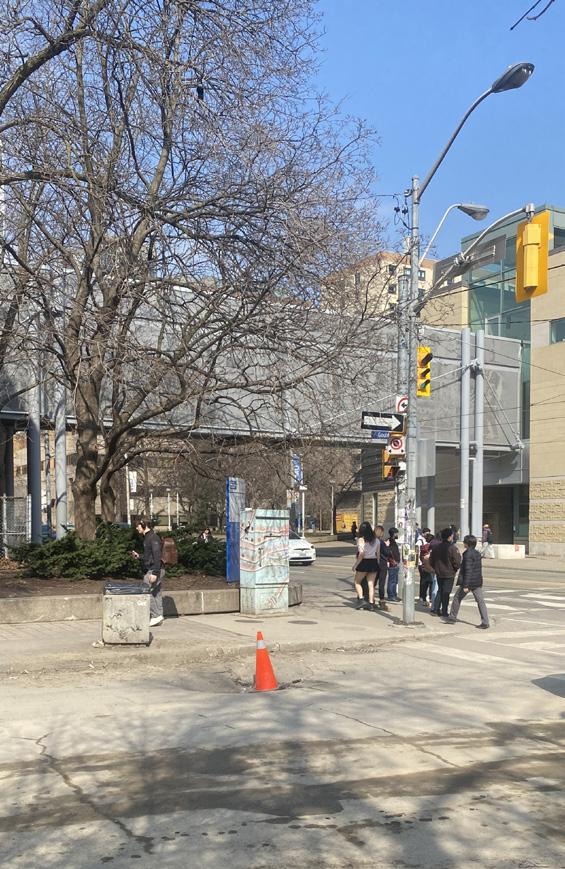

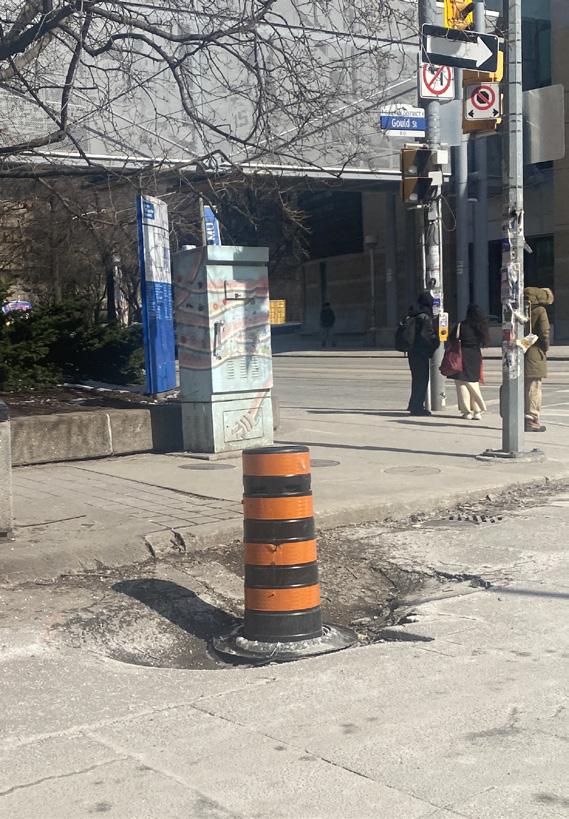

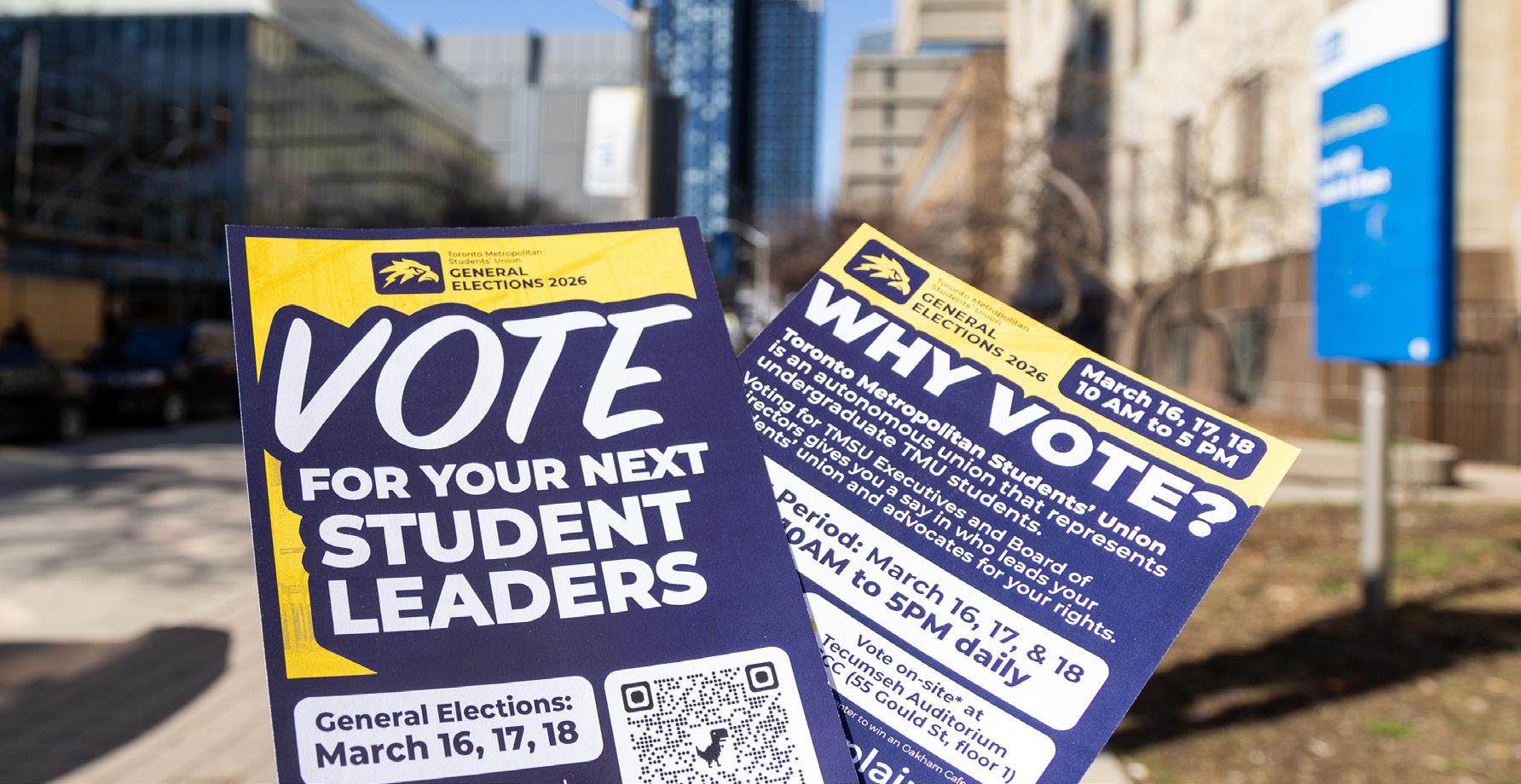
dividual approaching a student with a QR code and asking them to vote for Vehra, a violation of EPC s. 8.1.1: “Campaigning outside the Campaign Period.”
A complaint against Anthony Gerges, a presidential candidate, was dismissed following a review by the CRO. The complaint concerned activity on Gerges’ posts from an Instagram account belonging to former TMSU president and his older sister, Marina Gerges, under the username @ tmsu.president. The CRO requested the account username be edited to avoid confusion and the complaint was dismissed.
A third complaint against Team Justice was dismissed following a review by the CRO.
The complaint alleged the slate was using a pre-existing Instagram account with a follower base, which would give them an unfair advantage. The CRO acknowledged the Instagram account was approved by the CRO and did not violate pre-campaigning regulations.
The mass email also noted that TMSU Saviour, an address that regularly sends emails alleging corruption within the TMSU, has sent emails to students promoting election candidates.
According to the TMSU, this violates EPC s.8.1.49 about prohibited anonymous digital campaigning and EPC s.8.1.1 about campaigning outside the designated period.
TMSU Saviour has also been previously named in a lawsuit for allegedly breaching confidential information belonging to the TMSU, as previously reported by The Eyeopener
The last day to file an EPC complaint was March 20 at 5 p.m.
This is a developing story and will be updated as details emerge.
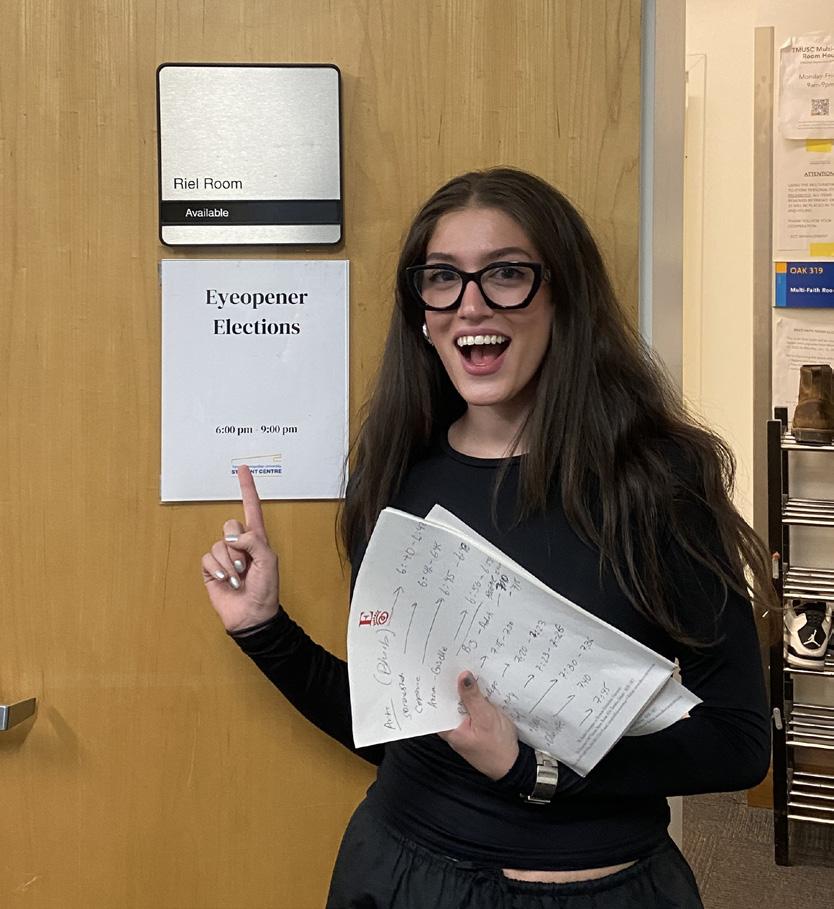
Run to work on our masthead for Volume 60
AVAILABLE POSITIONS
All full-time TMU students are eligible to run for a masthead position. The following positions are open for Fall 2026:
• News Editors (3)
• Photo Editors (3)
• Media Editors (2)
• Production Editors (2)
• Sports Editors (2)
• Arts & Culture Editor (1)
• Business & Technology Editor (1)
• Features Editor (1)
• Communities Editor (1)
• Fun and Satire Editor (1)
• Digital Producer (1)
The nomination period is now open. Please see the link in our Instagram bio for full details and requirements.
Want to vote? The list of eligible voters will be available in the same link.

The Eyeopener Masthead
Editor-in-Chief

Negin “Senioritis” Khodayari
News Editors
Shaaranki “14 Submissions” Kulenthirarasa
Vihaan “JUMPING” Bhatnagar Amira “Videogrpaher” Benjamin
Arts & Culture Editor
Sophie “Ballerina” Wallace
Business & Technology Editor
Aditi “Ol’ Reliable” Roy
Communities Editor
Daniel “Cooties” Opasinis
Features Editor
Edward “Frenchie” Lander
Fun & Satire Editor
Dylan “Cum Rag” Marks
Sports Editors
Jonathan “Light Red” Reynoso
Victoria “Go To Doc Plz” Cha
Production Editors
Jasmine “Man” Makar
Sarah “Fish” Grishpul
Photo Editors
Ava “Manspread” Whelpley
Saif “Running Late” Ullah-Khan
Pierre-Philipe “En Pointe” WanyaTambwe
Media Editors
Divine “Attedance Bonus” Amayo Lucas “Fork” Bustinski
Digital Producer
Anthony “Shake Junt” LippaHardy
General Manager
Liane “Eyeopener, Small o” McLarty
Design Director
Vanessa “Shopping Nightmare” Kauk
Contributors
Myrtle “She’s Back!” Manicad
Nadine “Sick” Alsaghir
Harsh “House Party” Kumar
Ethan “Mac DeMarco” Clarke
Daniyah “This Week” Yaqoob Yuna “Labour Survey” Cho
Hannah “Floor-Crosser” Sabaratnam
Abel “FINALLY!” Berhane
Claire “Host” Van De Weghe
Colin “Pas de Bourrée” Morley
By Yuna Cho
The unemployment rate for youth aged 15 to 24 reached 14.1 per cent in February, approaching the 14.6 per cent recorded in September 2025— the highest level since 2010, according to a report by Statistics Canada.
Youth unemployment grew from 12.8 per cent in January.
Nick Hazell, a first-year English student at Toronto Metropolitan University (TMU), said he was unable to secure a summer job in Toronto and plans to return to his hometown of Cobourg, Ont. for the summer.
Hazell said he applied to jobs at Tim Hortons, McDonald’s, Metro and many clothing stores at the CF Toronto Eaton Centre.
“I found that it was just they were always overstaffed and they were never hiring because it’s just easier to get [those] kinds of job,” he said.
Hazell has previous work experience in the food industry, working at a Dairy Queen for two and a half years as a supervisor and eight months at a Tim Hortons.
Hazell’s experience is not unique. Tenzin Kunsang, a first-year social work student at TMU, said she struggled to find jobs or internships in the summer. Kunsang said she submitted approximately 30 resumes in-person, but did not receive any response.
As an international student, she faced additional barriers in the job search. “Almost every job here [requires] reference[s].
Since I was not born here, I don’t have this network [and] it is hard
[to get a job] for not just me, but my friends [too],” she said. She eventually secured a summer job through a friend’s referral.
The Statistics Canada report also highlighted that the unemployment rate for Black youth reached 23.2 per cent, 17.4 per cent among Chinese youth and 13.0 per cent among South Asian youth—higher than that amongnon-racialized and non-Indigenous youth (11.2 per cent).
Kunsang said she initially applied to full-time jobs and was unemployed for about three months, before she began to blame herself after repeated rejections.
“‘Do I have not good experience? Am I really not going to [get] any job at all?’ I was worried about it,” she said. “But then I realized it’s very common [to struggle finding employment]. So I was like, ‘oh it doesn’t matter’ because a lot of people are also...facing this problem.”
After returning to an old job in Cobourg, Ont., Hazell expressed concerns about the cost of living.
“I would say I pay about…70 to 80 dollars a week on gas. And then on top of that, my car insurance, [and] just everything overall, it just takes a lot more money out of me,” said Hazell, who will have to spend an hour driving back and forth from work.
He added that youth unemployment is a larger problem in bigger cities, as it affects young people’s independence and life planning.
“They can’t get a job, they can’t live properly, they can’t do anything on their own, they have to rely on their parents,” he said.

Students reflect on Lachemi’s presidency By Abel Berhane
With Mohamed Lachemi’s term as president ending next semester, Toronto Metropolitan University (TMU) students are reflecting on his two consecutive five-year terms. While Lachemi lead various initiatives on campus, some students feel he could’ve done more and build better relationships with the community.
The presidential search committee is expected to present a top candidate to the Board of Governors for approval by summer/fall 2026.
First appointed in 2016, Lachemi has overseen several expansion development projects at TMU, including the Lincoln Alexander School of Law, the School of Medicine in Brampton, the Rogers Cybersecure Catalyst centre, the Smart Campus Integration and Testing Hub and the

Timothy Lang, president and CEO of Youth Employment Services, a non-profit organization based in Toronto that provides job search counselling and training to youth, said they see tens of thousands of people every year.
Some industries are always in demand, like healthcare, but others like engineering and marketing have seen a decline in hiring lately, Lang said.
“It’s been harder than many years [prior], because there’s been more competition for the same amount of jobs,” he said. “The other difficulty is that so many organizations are using electronic submissions only, or AI, and that has meant, on the one hand, sure, it’s easy to apply to hundreds of jobs, but it’s also easy for everyone to apply. So one employer who 10 years ago, might get 50 resumes, now they’re getting 500 so [resumes are] getting lost in the shuffle.”
Despite this, Lang said he would
rectly to the students and students should always have a chance to go and talk to the president,” he said.
In an interview with The Eyeopener, Lachemi apologized that some students feel disconnected from him.
Wyatt Wichert, a third-year social work student described his leadership as distant but said anyone is that position would face the same issue.
Wichert, an Indigenous student, said though TMU started some initiatives and Indigenous events during Lachemi’s term, the president was sometimes not in attendance despite being expected. During his presidency the Standing Strong Task Force was created to “respond to the history and legacy of Egerton Ryerson” according to their website, but many recommendations have yet to be implemented.
Artin Nikou, a first-year business management student said he has not noticed much outreach or attention to undergraduate students other than his attendance at the TMU Frost Holiday Festival.
“The president should talk di-
“I encourage students to get in touch, so students can email my office directly… and I’m happy to attend events when my schedule allows,” he said.
Federal by-elections called in two Toronto ridings
By Hannah Sabaratnam
Voters in the ridings of Scarborough Southwest and UniversityRosedale will be able to cast their ballot for the upcoming federal by-election on April 13. Both ridings were previously occupied by the Liberal Party of Canada, with Bill Blair holding Scarborough Southwest and Chrystia Freeland holding University-Rosedale. However, after Blair was designated as Canada’s high commissioner and Freeland became an economic advisor to Ukraine, the ridings have become vacant.
encourage job seekers to keep trying and be positive. He also suggested people should take advantage of employment services and career councils, as well as leverage any network they have.
“Above all, it’s a numbers game,” said Lang.
The growing youth unemployment rate adds burdens to Toronto students, who are already navigating high rental costs and increasing grocery prices. According to the March 2026 Rentals.ca Rent Report, the average rental price in Toronto for a two bedroom is $2,857, which would typically be divided for two students.
The Career, Co-op & Student Success Centre said in a written statement that “to support student employment, TMU’s Career Boost program continues to offer a diverse set of student job opportunities, providing students with hundreds of paid work experiences every year."
This is a crucial by-election in which the Liberals are looking to secure a majority government, giving them an upper hand in the House of Commons.
“A majority would essentially just mean that they don’t need to rely on opposition parties to pass legislation,” said Darren Major, a senior writer with CBC’s Ottawa parliamentary bureau in an interview with The Eyeopener
Typically downtown Toronto is known as “safe Liberal territory,” Major said.
After the most recent floor crossing, the Liberal party is at 170 seats—therefore to reach a majority, technically only two more seats are needed. However, because the Speaker counts as a Member of Parliament, a true majority will be reached at 173 seats, albeit a slim one, according to Major.
A by-election has also been called in Terrebonne, Que., which Major says will be an interesting watch.
If the Liberal Party wins both by-elections, they will hold the first majority in parliament since the end of Justin Trudeau’s first term as Prime Minister in 2019.
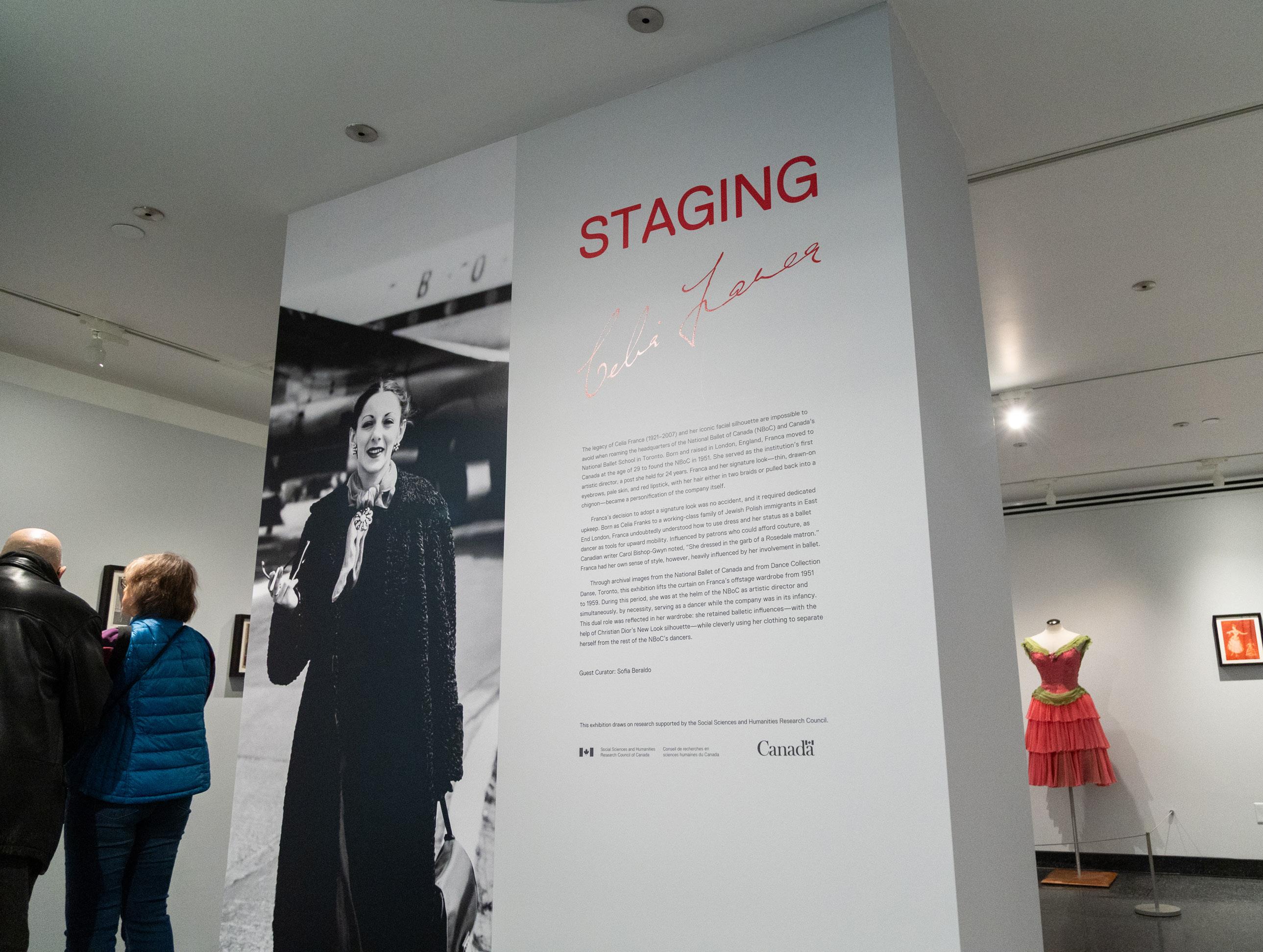
Sofia Beraldo’s exhibit displayed ballet’s enduring influence
By Colin Morley and Sophie Wallace
Timothée Chalamet made headlines last month for his controversial comments about ballet at a Variety and CNN town hall.
“I don’t wanna be working in ballet, or opera, or things where it’s like ‘hey, keep this thing alive’ even though no one cares about this anymore,” he said in conversation with Matthew McConaughey.
The work of Sofia Beraldo, a Toronto Metropolitan University (TMU) Master of Arts in Fashion graduate, would imply otherwise.
Her recently curated exhibition at the Image Arts Centre, Staging Celia Franca, showcased photographs of Franca, the founder and first artistic director of the National Ballet of Canada’s wardrobe from 1951 to 1959. Beraldo, who graduated in 2024, wrote her major research project (MRP) on the prominent figure in Canadian ballet.
“I was really interested in fifties fashion because of how intertwined it was with ballet,” said Beraldo. According to the BBC, ballet has had a long and enduring impact on fashion.
Beraldo said the 1950s’ pivot to more restrictive, feminine clothing was partly modelled on the hyperfeminine figure of the ballerina. “Ballet…requires a level of physical discipline, which also comes into what is worn, like the pointe shoe.”
This came alongside a societal pushback to traditional gender roles after women wore more utilitarian clothing whilst in the workforce during World War II, Beraldo explained. “It’s a very specific silhouette that lends well to specific movements and not to others. And so to see that kind of echoed in mainstream fashion, really, to me, kind of points to the role of women in society,” she said.
Christian Dior’s “New Look” of the late-forties featuring a tight waistline and voluminous skirts, became emblematic of this shift and was worn by prominent dancers like Franca. Beraldo said Franca also had a unique “aura” that made her stand out at a time when women were often not in positions of power.
Beraldo’s comments were echoed by Caroline O’Brien, TMU’s School of Performance chair, who worked with Franca. She said Franca “built the world” for future prominent dancers at the National Ballet of Canada, including Nadia Potts, who became the director of the dance program at TMU in 1989— Potts passed away this February.
O’Brien said women’s fashion in the 1950s adopted the silhouette of the Romanic ballet costume, with a fitted bodice and full skirt.
Ballet dancers, “have an ability to influence fashion and to influence social and cultural norms in ways that not everyone does because they’re in the spotlight, because they’re on stage,” O’Brien said.
According to Vogue, ballet’s influence on fashion is not just a thing of the past. Modern designers such as Miu Miu are heavily influenced by the aesthetic of the ‘off-duty dancer’—characterized by comfortable but elegant feminine silhouettes.
But the trend dubbed ‘balletcore’ on the internet is not without controversies of its own. Ballet has historically favoured a particular body-type—white, tall and thin—and according to Vogue, the ballet-core aesthetic has not always been inclusive.
O’Brien said that it was only very recently that ballet has begun to diversify. “Within the past 10 years, even less than 10—dancers who [weren’t white] had to use makeup to colour shoes, and we would use tea or coffee to color tights.”
Bridget Laur, a third-year journalism student at TMU, danced ballet for 14 years. She said her love of ballet was complicated by the aesthetic expectations that came with it.
“There were many girls who were excelling in ballet who looked nothing like me,” she said. “I am a big person in comparison to ballet dancers, and I think that was a big part of why I never excelled in it, and I was never looked at as someone who could excel in it.”
Laur shared that in her experience, girls whose bodies fit the “ballerina shape” were given more opportunities in her studio. “I hope for it to be more inclusive…I think a dancer’s body can look like anything,” she said.
Madison Stewart, a fourthyear public health student who has attended the National Ballet of Canada, said she too is drawn to imagery of ballet dancers and wishes more people understood the skill that goes into it. “I remember going to see last year’s Swan Lake when it was playing…it brought me to tears, it was such a beautiful performance.”
Beraldo hopes her work leads more people to become interested in ballet. “I wanted to bring ballet out of its context, because it can seem a little bit inaccessible…and bring it to people in a way where they can look at it and think ‘oh, I had no idea.’”


In contrast to the NCAA, Canadian university sports struggle to thrive
By Harsh Kumar
Some Toronto Metropolitan University (TMU) athletes are highlighting reasons Canadian university sports and their governing body, U Sports, get overshadowed by college athletics south of the border.
The National Collegiate Athletic Association (NCAA) has helped turn collegiate sports into a multibillion-dollar industry. Its system includes stadiums that hold over 100,000 people, TV deals worth millions of dollars and a pipeline to professional leagues.
Varsity athletes at TMU who have NCAA experience said there are various differences between the NCAA and U Sports that can explain the latter’s scope—or lack thereof—across Canada.
Jack Budd is a third-year defenseman on the TMU Bold men’s hockey team who spent two years with the Canisius University Golden Griffins in Buffalo, N.Y. He said that the NCAA becomes embedded in general student life because of its competitive nature.
“When you’re at a big school… the students just want to see their team win because it’s bragging rights, right? When your hockey team wins a national championship, it’s pretty sick for the whole school. Classes will get shut down. The students feel part of the team,” said Budd.
Similarly, Aidan Campbell, a second-year business management student at TMU and an avid fan
of the NCAA, believes university culture and sports in the U.S. go hand-in-hand.
“In the States, when you go to school, that’s your heart and soul, that’s your blood. That’s what people are doing year round, that’s all they care about,” said Campbell.
Adam O’Marra, a first-year Bold men’s hockey forward, spent one season with the Robert Morris University Colonials near Pittsburgh and remembers seeing a large student turnout at home games.
“There would be a group of students, they’ll have different chants, and kind of…give jabs to the other team. I think it brings more of a community together,” said O’Marra.
The sports community is a prominent aspect of American university culture. Noah Bickford, a third-year Bold men’s soccer defender who spent two seasons with the Oakland University Golden Grizzlies in Michigan, said he remembers the emphasis U.S. teams put on fans.
“You’re prepped to talk to the fans who are there, go up and say ‘hi,’” said Bickford. “I think it’s just more of an experience than it is here in U Sports.”
Special U Sports events such as the Panda Game between the University of Ottawa and Carleton University, which have a combined student count of around 79,000, sell out annually with crowds of up to 24,000 fans. In contrast, an American school like the University of Michigan has an average game attendance of over 110,000—which it

had in 2024 according to the Sports Business Journal.
Many top NCAA Division I programs are direct pipelines to professional leagues. This is most prevalent in the NFL, where as of 2024, over 99 per cent of players drafted all came from NCAA schools, according to The Gauntlet.
This conversion of talent drives media exposure for the NCAA and its over 1,100 schools in a way that U Sports and its 58 schools can’t keep up with. Even when it’s seen greater results in recent years—Inside The Games found there was a 20 per cent increase in viewership for the U Sports National Championship between 2022-23 and 2023-24—the NCAA’s success is much greater.
Major sports networks are investing close to one billion dollars for broadcasting deals with the NCAA. In 2024, CNBC reported the NCAA and ESPN signed an eight-year media rights deal worth US$920 million that includes the rights to 40 NCAA championships. In comparison, only 19 U Sports national championships are broadcasted in English on CBC’s
By Ethan Clarke
For the Toronto Metropolitan University (TMU) figure skating team, the day often starts at the rink. Four mornings a week, skaters train at the Mattamy Athletic Centre (MAC), balancing early practices with classes, assignments and commuting.
Unlike many varsity sports that compete weekly, the figure skating team prepares for just a few events each season: a fall invitational, a winter invitational and the Ontario University Athletics (OUA) championship. For many skaters, maintaining that routine requires discipline long before the academic day begins.
Third-year psychology student and team leader Emily Erner starts many mornings before sunrise.
“I commute from Scarborough. That in itself means waking up at 5 a.m., and then you’re still doing school on top of that,” said Erner.
Weekly practices consist of two days of “synchro” which involves training with the entire team, and two days of individual member training.
Despite the demanding schedule,
the team often goes unnoticed across campus. Second-year skater and creative industries student, Arianna Goarley said many students are surprised to learn the university even has a varsity figure skating team.
“I’ll say like, ‘oh, I’m on the figure skating team,’ and people, most of the time, their reaction is, ‘I didn’t even know we had that,’” she said.
Still, the skaters remain active across the university community.
Fourth-year captain and architectural science student Hailey O’Brien said the team regularly participates in campus events alongside its training schedule.
“We helped out with homecoming, orientation week and move-in day,” she said. “We also do performances during men’s and women’s hockey intermissions and help with face painting at the women’s hockey kids game.”
The team also participates in community events throughout the year, including the CIBC Run for the Cure and campus showcases like TMU Frost, where skaters perform exhibition routines for students and the public on Lake Devo.
From March 10 to 11, the team hosted the OUA championship at the (MAC), bringing university skating teams from across Ontario to compete.
For the athletes, the championship marks the highlight of the season.
“All year we’re working towards OUAs, so to see everyone shine…that’s just so rewarding,” said Goarley.
During the competition, TMU earned the Team Spirit Award despite placing ninth, recognizing sportsmanship and support shown toward other schools. O’Brien said the team worked hard to create an atmosphere that welcomed every competitor.
“We made 65 little DIY pompoms, we had a poster for other graduates to sign off. And then we also had a poster as skaters got on, they were able to sign and put any like reminders or good luck wishes,” said O’Brien.
The effort reflects a culture that some skaters say sets varsity competition apart from other skating environments.
“You have your entire team up
digital platforms, according to CBC.
There’s a stark difference between media coverage for university sports on either side of the border. Budd believes prominent NCAA teams garner a larger limelight, partly because of who is playing on them.
“[At] the bigger schools, like Penn State, Michigan State, you’re under a bit more of a microscope. You’re probably dealing with reporters after every game, before games, after games on the road. It also comes with having a bunch of first-round draft picks on your team,” said Budd.
A single 2025 rivalry match between Ohio State and Michigan had more than 18 million viewers on FOX, according to Sports Media Watch, whereas, the entirety of the 2023-24 U Sports season saw around one million streams on CBC platforms.
U Sports coverage is a hindrance to its ability in capturing an audience, according to Campbell.
“I don’t think [U Sports] is as accessible as it is for me just to turn on my TV, watch ESPN. You know, you don’t see TSN going and filming all
this stuff for U Sports,” said Campbell.
When it comes to U Sports expanding its reach and becoming more of an NCAA-adjacent, O’Marra believes funding will be the biggest benefit.
“The funding for hockey programs in the States is massive. So all the facilities are very high caliber, and then with that, there’s a better student and fan experience that draws more people in too,” said O’Marra.
Athletic budgets for NCAA schools are significant, and come from television and marketing rights and championship tournaments. Budgets range from US$5 million to $250 million.
By comparison, TMU, which recorded a student body of 47,310 for the 2024-25 academic year, generates approximately $12.5 million annually for its athletics department through annual athletics and recreation fees.
The NCAA’s mass presence and culture only continue to leave U Sports living among its shadows.
“It’s just a different animal, honestly,” said Budd.

there cheering for you the whole time you’re warming up and the whole time that you’re competing,” Goarley said.
Regardless of the team’s results, Goarley felt like achieving school spirit was the most important thing. Being proud of what they do and staying connected to each other and the skating community were their biggest goals at the tournament.
“We are very team-oriented and just feel proud afterwards, regardless of the technical score or how the other teams skate,”said Goarley. Unlike traditional competitive skating, where athletes often train alongside people they later compete against, university skaters represent their
schools and support their teammates.
Still, the program faces challenges. According to Goarley, there have been struggles finding a school to host a championship.
Even after the championship ends, the work continues. Practices resume quickly as skaters begin preparing for the next season.
Having to manage the load of both team commitments and class, these figure skaters consider their on-ice community a reason to push through their busy schedules.
“Just to think about how hard everybody is working, and to want to contribute to that and not let anybody down is definitely a big [motivator],” said Goarley.
Rahul* was on his lunch break at his Oakville high school when he found out the Ontario Student Assistance Program (OSAP) was being cut. He was sitting in Tim Hortons with a group of friends, sipping an iced capp and scrolling Instagram when a post from 6ixBuzz caught his eye.
The post says Ontario premier Doug Ford had lifted the tuition freeze—which had been in place since 2019. But most shocking was a line underneath. It said OSAP would now only provide a maximum of 25 per cent grants—a dramatic decrease from the previous limit of 85 per cent.
Rahul’s heart sank. He no longer felt like a care-free senior, enjoying lunch with his friends. In his final year of high school, Rahul had been looking forward to university for ages. He’d just accepted his offer to Toronto Metropolitan University (TMU)’s business technology management program and was eager to be one of the first in his family to obtain a post-secondary degree. Now, he could only think of how he would fund it. Where would the money come from? He didn’t tell his friends the news, he didn’t want to dampen the mood.
Rahul is just one of many incoming and current post-secondary students across the province whose world is being shaken up by the impending cuts to OSAP. Students like him now worry whether their postsecondary dreams will survive.
THE HISTORY OF OSAP HAS BEEN full of frustration. When it launched in 1966 it came with a cumbersome application with invasive questions about the applicant’s family and their means, according to TVO.
Students on OSAP could not receive additional provincial scholarships or bursaries. This meant some wealthier students not on OSAP could nab scholarships, while lower-income students who needed them more would be saddled with loans. Three months after it launched, students from Toronto universities marched to Queen’s Park to protest it. Their demands were largely met and the program was reformed a year later.
In 2003, the government moved to allow OSAP to waive tuition entirely for the 10 per cent of students with the lowest income. This was later expanded to offer free tuition to all students whose parents’ annual income was lower than $50,000, according to the Western Gazette. In 2019, however, newly-elected Ontario premier Doug Ford reversed this, leading to further protests from students.
Despite grievances with the program, OSAP can be considered a necessity for post-secondary education in Ontario. According to a 2024 release from TMU’s Business Career Hub, 75 per cent of TMU students received financial assistance through the program.
The most recent changes to OSAP are some of the most dramatic to date. And they come at a time when post-secondary education in Ontario—and Canada as a whole—has found itself in crisis. When the federal government capped immigration and reduced study permits for international students in late 2024, they turned off the tap from which many Ontario universities were receiving funding.
In the wake of the 2019 tuition freeze, 10 per cent tuition cut and financial strain, many colleges and universities turned to international student tuition as a way to fill the gaps. When they could no longer cover them, massive budget shortfalls led to program cuts at multiple post-secondary institutions. In 2025, York University suspended admission to 18 programs when the legislation passed—largely in the liberal arts and cultural studies, according to the CBC. Seneca Polytechnic temporarily closed its Markham campus, consolidating its programs to the Newham Campus.
Now, in the face of what his government calls “unprecedented pressures,” Ford has proposed a new solution: make students pay up. Come next semester, the 2019 tuition freeze will be lifted and OSAP grants slashed—all in the name of stability in the wake of the federal government’s changes, according to the province.
While this has allowed the government to fork over a much-needed $6.4 billion funding package to Ontario postsecondary institutions, the changes will come at a high price for students. If a student owes $20,000 in tuition, they were previously eligible for up to $17,000 in grants, but this September, they’d only be eligible for $5,000.
Students’ organizations across the province are now sounding the alarm. In a press release from the Canadian Federation of Students–Ontario (CFS-O), chairperson Cyrielle Ngeleka said the changes “leave students concerned about the state of education.” CFS-O has also organized a series of protests, which began on March 4 and will continue to bring frustrated students back to Ford’s doorstep at Queen’s Park. While the effects of these changes won’t be felt in students’ pockets until fall, incoming students like Rahul and current
students are scrambling to restructure their futures around the cuts. What lies ahead is unclear but what’s certain is that next year’s students will be facing a much harder situation than those who came before them.
ANIEYAH LINDSTROM-MCFARLANE knew by age six that she wanted a university degree. She’s wanted to pursue a career in the medical field. “Jobs that involve helping people have always been something I’m interested in,” she says.
In her senior year of high school, Lindstrom-McFarlane applied to the three main universities in the Greater Toronto Area— York, TMU and the University of Toronto (U of T). Ultimately, she decided to pursue English and biology at U of T’s Scarborough campus.
Her father had set aside enough money for two years of tuition, she says. “I went into university with no cares in the world.”
But having been among the generation of students whose entire high school experience was impacted by the COVID-19 pandemic—she was in Grade 9 year when the world locked down— her adjustment to university life was harder than she’d expected.
Her first year went fine, she says, but she struggled through her second, ultimately not completing enough credits to advance to third year. While she was determined to make her academic comeback, the funds set aside for her had dried up.
For the 2025 fall semester, LindstromMcFarlane applied for OSAP, which she described as a “surprisingly easy path.”
By the winter semester, however, she was placed on academic suspension. She’d been staying at home, putting off a meeting with the school’s financial advisor, not eager about the two-hour commute she would need to make for a much-shorter conversation. It was on one of those days where she spotted a CP24 headline on the TV in her dad’s house.
Her eyes briefly caught the words but not enough to register. It wasn’t until two days later, when she was back at her home, that she saw the headline again. This time, she paused and read carefully over the words, announcing that her OSAP lifeline was being cut. “I was devastated,” she says.
Sometime between the announcement and now, Lindstrom-McFarlane has started to consider the prospect that she will not be able to continue her schooling altogether. She had aimed to enter orthodontics nursing but without OSAP grant support, she says it’s no longer feasible.
In February, the Ford government drastically lowered the amount grants the province’s post-secondary financial assistance program provides—now, students futures are being derailed


BY DANIYAH YAQOOB
government amount of post-secondary program students say their derailed

RAHUL DIDN’T REALIZE AT FIRST the direct impact the OSAP cuts would have on his studies.
“To be honest, that didn’t cross my mind for a good week. I was just mad about this, like, ‘oh my god, this is so annoying, so now I’m gonna have to go through these OSAP loans.’ And then it clocked in my mind about a week later: ‘crap, I might not even be able to afford this at all. Like, I might not be able to go,’” he says. “And that’s just crushing to me.”
He doesn’t often talk to his friends or classmates about his concerns regarding OSAP, either. Rahul says compared to him, they come from well-off families and are not as worried about putting themselves through post-secondary.
When Rahul was five years old, his mother got into a car accident. When he was eight, his father had a heart attack. The medical conditions impacted his family’s income. He also largely cares for his two younger brothers, bringing them home from school, helping them with homework and making them dinner to take the load off of his mother. It means he has less time to get a job and make money to fund school.
It also means he’s concerned about his brothers’ futures and their ability to fund their dream education down the line.
Rahul said his youngest brother wants to be an astronaut someday. His other brother in Grade 8 is into art and design. He worries they’ll one day have to decide whether to get a job straight out of high school or a low-cost degree that would be more likely to lead to a high-paying job, rather than to follow their passions.
WHEN KELLY TRAN FOUND OUT about the OSAP cuts, they were so upset they found themselves unable to finish an essay due that night. They ended up handing it in a day late, explaining in the D2L dropbox that their frustrations had gotten the best of them.
OSAP paid for the first two years of Tran’s sociology degree at TMU. Because of this, they said, they were able to focus entirely on their education rather than the pressure of funding it.
Tran, now in fourth year, also does whatever they can to cut costs as a student. They avoid eating at restaurants and try to commute within Presto’s two-hour free transfer frame.
Coming from a low-income family, they structured their education plans almost entirely around finances. Their first choice for university was the University of Waterloo but they couldn’t afford to move out of their parents’ house in Scarborough. Even when their parents offered to uproot the family and move to Kitchener, they in-
stead settled on TMU. TMU, they say, was also the cheapest option among the options for their program.
But by their third year of university, they began receiving less in grants from OSAP. For the first time, they depended on OSAP loans, picking up $3,000—and a job to pay them off.
Tran is taking a fifth year but says they’re confident they can cover the costs with their savings if OSAP is no longer a viable option. However, it’s not their own education they’re worried about. Tran has two siblings, one 14 and another university-aged, currently studying at Ontario Tech University in Oshawa. They know their siblings have a much harder road ahead of them financially.

Tran is also now questioning whether or not pursuing a master’s degree is possible, something they’ve wanted for some time. They say their favourite part of their program is the academic community surrounding it. But with the cuts, they may not be able to fund it.
“I would like to pursue a master’s, but also if I had the chance to not put my siblings into lifelong debt, I am of course going to do that,” they said.
If a grad school is off the table, they say they may pursue their field in other ways. “I know that there’s other ways to contribute to research outside a master’s, like through nonprofits and social work organizations,” they said.
FOLLOWING FORD’S triple-header announcement about lifting the tuition freeze, boosting post-secondary funding and slashing OSAP grants, TMU released an excited announcement about the raise in funding they’d receive—and this alone.
“This funding will ensure that our students are well prepared to take on the complex challenges of the future,” said president Mohamed Lachemi in the announcement.
What the press release did not consider, however, was how students would be impacted by the OSAP changes. The Eyeopener reached out to Student Financial Assistance (SFA)—which oversees scholarship, loans and bursaries at TMU—about whether the university is supporting students in the face of these changes.
SFA told The Eye in an email that, “The university remains committed to supporting students by connecting them with funding opportunities, employment resources, and financial guidance.”
SFA directed students to the scholarships and bursaries offered by TMU. The statement ended with, “Students are encouraged to understand available supports and repayment options after graduation to help manage costs and reduce uncertainty around financing their education.”
Rahul’s youngest brother wants to be an astronaut someday. His other brother in Grade 8 is into art and design. He worries they’ll one day have to decide whether to get a job straight out of high school or a low-cost degree
Lindstrom-McFarlane, however, has no faith in a decision reversal. In fact, she says she wouldn’t be surprised if OSAP grant proportions declined even more under the Ford government
“I would like to pursue a master’s, but also if I had the chance to not put my siblings into lifelong debt, I am of course going to do that”
PHOTOS BY LUCAS BUSTINSKI
But students’ concerns weren’t just about the immediate funding but the long-term impacts of stripping essential support from students who needed it most.
Common among these students is one thing: they don’t want to take what they see as an attack on their education from Ford lying down.
On March 4, Rahul decided to attend the Queen’s Park rally against OSAP changes hosted by CFS-O. He went with a friend, driving an hour from Oakville to Toronto to join the protest. They carried two signs with them—one read “Doug Ford, you’re a dropout” and the other, “We’re not taking basket weaving.”
At the rally, he says he met other students going through similarly stressful situations. One person he met said neither of his parents were in his life anymore and that he was responsible for caring for his younger brother. He was heavily reliant on OSAP grants and without them, he didn’t know if he could continue postsecondary education.
Tran also attended the Queen’s Park rally, alongside Common Pot, an organization they helped found as part of a course—SOC493 Creating Social Change. The group gives out free food to the community on a regular basis and served breakfast to protesters on campus before the protesters marched to Queen’s Park. They listened in on students’ conversations—one student told her friend she didn’t mind skipping class for the protest. “Girl, there’s going to be no class if there’s no OSAP, I’m going to the rally,” she said.
Other students Rahul knew outside of the rally had started to consider whether it was worth saddling debt for a degree or whether making money straight out of school would now be the wiser option. He worried that students from low-income areas like himself—especially with the rising cost of living—would be locked out of post-secondary education if Ford didn’t reverse the decision.
Lindstrom-McFarlane, however, has no faith in a decision reversal. In fact, she says she wouldn’t be surprised if OSAP grant proportions declined further under the Ford government.
In recent months, she’s become fascinated with “endangered crafts.” She’s even considering becoming an apprentice to a craftsman if higher education doesn’t work out in her favour.
“My form of protest is going to have to be me succeeding in something,” she says. “Be it through higher education or an art that I know is really gonna piss Doug Ford off.”
*This source is remaining anonymous for privacy reasons. The Eye has verified this source.
By Aditi Roy
Third-culture kids (TCK) are people who have grown up across multiple countries. At TMU, thirdculture students are finding a new place to call home.
Masoud Kianpour is a sociologist, social psychologist and senior research fellow of multiculturalism at TMU. He defined the term as a “child who spends a significant portion of their developmental years…growing up outside their parents’ culture of origin.”
Kianpour explained that such kids tend to develop a malleable sense of identity in attempts to adapt to their changing environment. “These kids do not develop a sort of cool rootedness in either their home culture or their parents’ culture or the host culture…but instead construct a thirdculture,” he said.
Elizabeth Abi Jones is a fifth-year psychology student who has lived across six different countries in her lifetime. Jones is of Gambian descent and was born in the U.S. She said she has lived in Senegal, Kenya, Tunisia and Ivory Coast—constantly having to relocate due to her father’s work.
“I usually just tell [people] I’m American, depending on how I feel, I’ll give them the full breakdown,” said Jones.
Kianpour himself fathers a TCK son and said he understands the struggles children can have growing up in various environments. “They live in what we call cultural liminality, or in-betweenness. Many of these TCK kids feel that they do not fully belong anywhere,” he said.
For Jones, home is not bound by a location. “Home is where my family is, just because wherever I’ve gone, they’ve also been there too,” she said. Jones’ mother has played a piv-
otal role in helping her find a sense of belonging. Growing up, she said she experienced being teased for not being able to speak her native language Wolof.
“Don’t ever let anybody tell you where you’re from,” Jones quoted her mother’s words in times of need.
On campus, Jones is a member of the Black Business Student Association (BBSA), choosing to identify more with her race than any of the cultures that have impacted her—a larger ground to make meaningful connections.
Jones said she feels understood at the BBSA, seeing the diversity present within the club. “It’s a group filled [with] different people, ranging from African to the Caribbean to Latin American and me personally, I’ve always been interested in other people’s cultures,” she said, a nod to her rich traveling experiences.
Hamed Bakkar is a third-year computer science student at TMU. He was born and raised in Damascus, Syria and moved to Rome, Italy at the age of 17 due to his fathers work with the United Nations.
Spending three and a half years in Rome, Bakkar noted the similarities the two cultures shared, making the experience an easier transition.
“The family culture and getting together, the restaurant culture, the cafes. I’d say something similar between Syria and Italy is definitely…[that] they love living life,” he said. Bakkar added his upbringing in Syria and time spent in Italy was in stark contrast to his university life in the fast-paced city of Toronto—where he feels life is centred more around work.
Having moved at a slightly older age, Bakkar has a different experience of living in a foreign country, recalling a lingering feeling of not belonging.

“It was definitely a little weird, because I did not speak the language… I’d say, in Italy, you definitely feel it immediately,” he said.
Kianpour explained why it is easier to navigate one’s intricate identity in such a multicultural country like Canada.
“When you say, ‘I’m a Canadian,’ no one assumes that you’re necessarily white or belong to a particular ethnic racial background,” he said.
Saanika Mahajan is a fourth-year software engineering student of Maharashtrian origin—an ethnic group in India—who was raised in the United Arab Emirates from the age of 10.
Although she spent nearly the same amount of time in both countries, Mahajan holds closer to her Indian heritage, framing her identity as being “80 per cent Indian.”
Mahajan clung onto her Indian heritage, unable to find opportunities to integrate herself into local Emirati culture. She has fond memories of her time in Sharjah, U.A.E.
and adores the local culture but she felt like an immigrant through and through.
“They are very close knit among themselves, so they don’t really take in…other cultures that way. They let everybody coexist, but in their own groups,” she said in reference to the U.A.E.
Her childhood in Sharjah still felt very Indian, as she attended an Indian school, ate home-cooked traditional meals and immersed herself in the Indian community within the U.A.E.
“At home [in the U.A.E] we celebrated our festivals, we spoke in our native language, and we connected with people around even in U.A.E.— we found a little community,” she said.
Mahajan’s experience with discrimination within the country has also shaped her sense of community.
“There are salary discrepancies and the workload distribution… even being an American company, they overwork the Indians, but they underpay them for the same designation,” she said in reference to her father, who has worked
there for years.
Kianpour noted this is a common experience for many TCK’s. “Their belonging might become conditional or hesitant, because they always know that acceptance is something that is contingent on appearance [and] accent,” he said.
Despite such encounters Mahajan still holds pride in her Indian identity, sharing her excitement with the widespread reach of Bollywood movies and songs.
“There is a huge fan base for Bollywood in [the] U.A.E. So they host a lot of Bollywood movies. I used to go watch them, even locals like Bollywood,” she said.
For Mahajan, Canada marked the start of a fresh chapter as she attempts to “absorb” the local culture. She recounts feeling five per cent Canadian a result of her undergraduate years in the country.
“I have managed so much on my own in this country…when I went back home for a vacation and I came back here, you have no idea, when I navigated [Sankofa] Square again, I felt like home,” she said.
TMU students shared a free vegan meal while sitting on the floor, a tradition that symbolizes equality
By Nadine Alsaghir
On March 17, the Sikh Student Association held Langar at Toronto Metropolitan University (TMU), offering a traditional communal meal to students while teaching Sikh principles of equality, service and shared learning.
Langar is a cultural event that aims to bring people together to experience Sikhism’s core values— sharing food and fostering understanding and inclusion, according to the Parliament of the World’s Religions. Students removed their shoes and wore head coverings before entering the room where floor decals marked places to sit.
Sunit Janjua, a fifth-year accounting and finance student at TMU and president of the Sikh Student Association said the way attendees
sit on the floor conveys the event’s message. “That symbolizes equality because regardless of your race, culture, ethnicity, everyone’s equal,” she said.
Janjua said bringing this to campus helps emphasize Sikhism’s core principle of learning.
“Everyone is on their own pace… it’s good because everyone’s students here, everyone’s learning different things and we’re all on our different learning paths,” she said.
Sikhism is a monotheistic religion that originated in the Punjab region of South Asia in the 15th century, founded by Guru Nanak. Janjua explained that historically in Punjab, India, kings and emperors would sit beside servants in Langar to reinforce the principle of equality.
Participants in the event could take unlimited servings of rotis
(bread), dal (lentils), sabzi (vegetables) and kheer (rice pudding). Event volunteers would check on the guests to pour preferred dishes and refill plates.
During the event, Paath, a Sikh prayer, played in the background. Angadjot Mann, a first-year business management student, emphasized that the Paath playing in the background was a touch of authenticity from the Gurdwara—a Sikh holy temple.
For first-time attendees, Langar offered a unique cultural experience.
Jonah Roukema, a fourth-year mechanical engineering student, said he was surprised by the depth of the tradition as someone who isn’t Sikh.
“We didn’t realize it was a whole [thing], like putting on a head covering and stuff, but it was definitely a fun surprise,” he said.
He added that participating in serving the meal taught him about giving back to the community. “I think people can get sucked into individualism a lot and just kind of protecting [themselves],” Roukema said.
Mann said the event highlighted important human values.
“I think this is a really important part of being human…it kind of also gives you that self-fulfilment, kind of helping people, serving them food,” he said.
Mann said it was inspiring to see students his age participating in Seva, bringing energy and engagement to the event. Seva in Sikhism means selfless service done without expecting anything in return.
“You go to the Gurdwara, it’s mostly older people, 25, 30, but it’s really nice seeing the younger
generation getting on it as well,” Mann said.
Organizing the event requires careful planning. Janjua said the food is prepared in a Gurdwara in Scarborough and transported to campus. Leftovers are donated to local people experiencing homelessness, reflecting the Sikh commitment to helping those in need.
Attendees hope that future events like Langar will continue to bring students together, offering opportunities to learn about different cultures and give back to the community.
Roukema said he appreciates living in a multicultural city like Toronto, “It’s so awesome to be able to experience all different parts of the world within one small area, so I definitely would go to any other event like this.”
By Aditi Roy
Third-culture kids (TCK) are people who have grown up across multiple countries. At TMU, thirdculture students are finding a new place to call home.
Masoud Kianpour is a sociologist, social psychologist and senior research fellow of multiculturalism at TMU. He defined the term as a “child who spends a significant portion of their developmental years…growing up outside their parents’ culture of origin.”
Kianpour explained that such kids tend to develop a malleable sense of identity in attempts to adapt to their changing environment. “These kids do not develop a sort of cool rootedness in either their home culture or their parents’ culture or the host culture…but instead construct a thirdculture,” he said.
Elizabeth Abi Jones is a fifth-year psychology student who has lived across six different countries in her lifetime. Jones is of Gambian descent and was born in the U.S. She said she has lived in Senegal, Kenya, Tunisia and Ivory Coast—constantly having to relocate due to her father’s work.
“I usually just tell [people] I’m American, depending on how I feel, I’ll give them the full breakdown,” said Jones.
Kianpour himself fathers a TCK son and said he understands the struggles children can have growing up in various environments. “They live in what we call cultural liminality, or in-betweenness. Many of these TCK kids feel that they do not fully belong anywhere,” he said.
For Jones, home is not bound by a location. “Home is where my family is, just because wherever I’ve gone, they’ve also been there too,” she said. Jones’ mother has played a piv-
otal role in helping her find a sense of belonging. Growing up, she said she experienced being teased for not being able to speak her native language Wolof.
“Don’t ever let anybody tell you where you’re from,” Jones quoted her mother’s words in times of need.
On campus, Jones is a member of the Black Business Student Association (BBSA), choosing to identify more with her race than any of the cultures that have impacted her—a larger ground to make meaningful connections.
Jones said she feels understood at the BBSA, seeing the diversity present within the club. “It’s a group filled [with] different people, ranging from African to the Caribbean to Latin American and me personally, I’ve always been interested in other people’s cultures,” she said, a nod to her rich traveling experiences.
Hamed Bakkar is a third-year computer science student at TMU. He was born and raised in Damascus, Syria and moved to Rome, Italy at the age of 17 due to his fathers work with the United Nations.
Spending three and a half years in Rome, Bakkar noted the similarities the two cultures shared, making the experience an easier transition.
“The family culture and getting together, the restaurant culture, the cafes. I’d say something similar between Syria and Italy is definitely…[that] they love living life,” he said. Bakkar added his upbringing in Syria and time spent in Italy was in stark contrast to his university life in the fast-paced city of Toronto—where he feels life is centred more around work.
Having moved at a slightly older age, Bakkar has a different experience of living in a foreign country, recalling a lingering feeling of not belonging.

“It was definitely a little weird, because I did not speak the language… I’d say, in Italy, you definitely feel it immediately,” he said.
Kianpour explained why it is easier to navigate one’s intricate identity in such a multicultural country like Canada.
“When you say, ‘I’m a Canadian,’ no one assumes that you’re necessarily white or belong to a particular ethnic racial background,” he said.
Saanika Mahajan is a fourth-year software engineering student of Maharashtrian origin—an ethnic group in India—who was raised in the United Arab Emirates from the age of 10.
Although she spent nearly the same amount of time in both countries, Mahajan holds closer to her Indian heritage, framing her identity as being “80 per cent Indian.”
Mahajan clung onto her Indian heritage, unable to find opportunities to integrate herself into local Emirati culture. She has fond memories of her time in Sharjah, U.A.E.
and adores the local culture but she felt like an immigrant through and through.
“They are very close knit among themselves, so they don’t really take in…other cultures that way. They let everybody coexist, but in their own groups,” she said in reference to the U.A.E.
Her childhood in Sharjah still felt very Indian, as she attended an Indian school, ate home-cooked traditional meals and immersed herself in the Indian community within the U.A.E.
“At home [in the U.A.E] we celebrated our festivals, we spoke in our native language, and we connected with people around even in U.A.E.— we found a little community,” she said.
Mahajan’s experience with discrimination within the country has also shaped her sense of community.
“There are salary discrepancies and the workload distribution… even being an American company, they overwork the Indians, but they underpay them for the same designation,” she said in reference to her father, who has worked
there for years.
Kianpour noted this is a common experience for many TCK’s. “Their belonging might become conditional or hesitant, because they always know that acceptance is something that is contingent on appearance [and] accent,” he said.
Despite such encounters Mahajan still holds pride in her Indian identity, sharing her excitement with the widespread reach of Bollywood movies and songs.
“There is a huge fan base for Bollywood in [the] U.A.E. So they host a lot of Bollywood movies. I used to go watch them, even locals like Bollywood,” she said.
For Mahajan, Canada marked the start of a fresh chapter as she attempts to “absorb” the local culture. She recounts feeling five per cent Canadian a result of her undergraduate years in the country.
“I have managed so much on my own in this country…when I went back home for a vacation and I came back here, you have no idea, when I navigated [Sankofa] Square again, I felt like home,” she said.
TMU students shared a free vegan meal while sitting on the floor, a tradition that symbolizes equality
By Nadine Alsaghir
On March 17, the Sikh Student Association held Langar at Toronto Metropolitan University (TMU), offering a traditional communal meal to students while teaching Sikh principles of equality, service and shared learning.
Langar is a cultural event that aims to bring people together to experience Sikhism’s core values— sharing food and fostering understanding and inclusion, according to the Parliament of the World’s Religions. Students removed their shoes and wore head coverings before entering the room where floor decals marked places to sit.
Sunit Janjua, a fifth-year accounting and finance student at TMU and president of the Sikh Student Association said the way attendees
sit on the floor conveys the event’s message. “That symbolizes equality because regardless of your race, culture, ethnicity, everyone’s equal,” she said.
Janjua said bringing this to campus helps emphasize Sikhism’s core principle of learning.
“Everyone is on their own pace… it’s good because everyone’s students here, everyone’s learning different things and we’re all on our different learning paths,” she said.
Sikhism is a monotheistic religion that originated in the Punjab region of South Asia in the 15th century, founded by Guru Nanak. Janjua explained that historically in Punjab, India, kings and emperors would sit beside servants in Langar to reinforce the principle of equality.
Participants in the event could take unlimited servings of rotis
(bread), dal (lentils), sabzi (vegetables) and kheer (rice pudding). Event volunteers would check on the guests to pour preferred dishes and refill plates.
During the event, Paath, a Sikh prayer, played in the background. Angadjot Mann, a first-year business management student, emphasized that the Paath playing in the background was a touch of authenticity from the Gurdwara—a Sikh holy temple.
For first-time attendees, Langar offered a unique cultural experience.
Jonah Roukema, a fourth-year mechanical engineering student, said he was surprised by the depth of the tradition as someone who isn’t Sikh.
“We didn’t realize it was a whole [thing], like putting on a head covering and stuff, but it was definitely a fun surprise,” he said.
He added that participating in serving the meal taught him about giving back to the community. “I think people can get sucked into individualism a lot and just kind of protecting [themselves],” Roukema said.
Mann said the event highlighted important human values.
“I think this is a really important part of being human…it kind of also gives you that self-fulfilment, kind of helping people, serving them food,” he said.
Mann said it was inspiring to see students his age participating in Seva, bringing energy and engagement to the event. Seva in Sikhism means selfless service done without expecting anything in return.
“You go to the Gurdwara, it’s mostly older people, 25, 30, but it’s really nice seeing the younger
generation getting on it as well,” Mann said.
Organizing the event requires careful planning. Janjua said the food is prepared in a Gurdwara in Scarborough and transported to campus. Leftovers are donated to local people experiencing homelessness, reflecting the Sikh commitment to helping those in need.
Attendees hope that future events like Langar will continue to bring students together, offering opportunities to learn about different cultures and give back to the community.
Roukema said he appreciates living in a multicultural city like Toronto, “It’s so awesome to be able to experience all different parts of the world within one small area, so I definitely would go to any other event like this.”
Three TMU students have barricaded a library study room and have shown they are not messing around
By Anita Booking
Disclaimer: Even though the contents of this story are entirely fake, the message rings true to all who have attempted to study anywhere on campus.
Three students at Toronto Metropolitan University (TMU) have been occupying a third-floor library study room since 10:45 a.m. Monday, and at this point, the university may need to start charging them rent.
After being asked to leave multiple times by students who had booked the room for upcoming time slots, the three began to barricade themselves inside. They were also seen breaking down the study room tables inside the room and nailing the pieces onto the door to keep it from opening from the outside.
“They started pushing chairs up against the door and screaming about ‘owning this fucking study room,‘” one witness said. “Honestly, it felt less like a library and more like a very low-budget reality show.”
Since then, the occupants have ordered multiple DoorDash deliveries, accepting food through a narrowly opened door like raccoons with Wi-Fi.
The three, all second-year business management students, were reportedly cramming for an upcoming examination and simply decided to not leave until they understood business management or died trying, whichever came first.
The Eye is looking to hear from students who’ve been mistreated, scammed or exploited on the rental market as well as those who’ve pursued recourse through legal channels or collective action.

The Eyeopener had a unique chance to speak with the occupiers through the process of slipping notes underneath the door.
“All of these different people are coming to our room and saying it now belongs to them, it doesn’t make any damn sense,” said Mia Lone, one of the occupants. “We were here first, this is our room and we ain’t giving it up for nobody.”
Third-year politics and governance student
Polly Tishan, who booked the same study room with her friends, said she refused to stand for this unfair and unjust occupation.
“This kind of story has been seen time and time again and I am sick of it,” Tishan said. “It is due time for study rooms to be free and unoccupied by controlling forces that will not listen to those who want them out.”
Lone added that while the room may be a public space, she truly believes it is fair and just that they continue to occupy it.
“This study room is fucking ours, man. We were born to live in this study room,” Lone said. “Once everybody understands that what we’re doing here is for the benefit of the room and the benefit of the people, they will thank us.”
All further requests for information from them have been met with “fuck off” screamed through the door. Whether or not these students will ever leave the study room is currently unknown.
If that’s you, share a response to the form above


The Eyeopener is giving away two $25 gift cards to Winners.
Find the giveaway rules through the link in our Instagram bio.
1. Complete the crossword! Only 100 per cent accurate crosswords will be accepted.
2. Complete the Google Form via the QR code on the page and add a photo of your completed crossword!
3. Await an email! The form will close end-of-day on March. 31st and winners will be contacted shortly afterwards and asked to come into our office for photos!
Submit Completed Crossword Here




ACROSS
2. Device that measures temperature
4. Largest planet in our solar system
6. The natural process by which green plants use sunlight to create their own food
10. A group of stars forming a recognizable pattern in the sky (plural)
DOWN
1. The largest land animal on Earth, known for its
trunk and tusks
3. Type of scientist who studies the weather, including storms, temperature and climate
5. A person who travels to space aboard a spacecraft
6. The language spoken in Brazil
7. The largest ocean on Earth, stretching from Asia to the Americas
8. Capital city on the River Thames
9. The hardest naturally occurring mineral, often used in jewelry BUGONIA