
By Landon Randfield
The Toronto Metropolitan Students’ Union (TMSU)’s Student Issues and Advocacy Coordinator (SIAC), Hector Flores, reported at the union’s December Semi-Annual General Meeting (SAGM) that his office has seen an increase in students’ academic misconduct consultations between May and December 2025, due to alleged artifical intelligence (AI) usage.
In an emailed statement to The Eyeopener, Flores said the most common cases in his office, “involve allegations that a student used generative AI to produce part or all of a written assignment without permission from the instructor.”
Flores reported at the SAGM that 30 per cent, or 120 of approximately 400 student consultations with his office between May and December 2025, were about academic misconduct. A longer processing time for academic misconduct cases was also noted.
In an email to The Eye, Toronto Metropolitan University’s (TMU) Academic Integrity Office (AIO) confirmed they have seen an increase in the number of academic misconduct cases arising from “unauthorized/irresponsible use of generative AI.”
The annual report from the Office of the Ombudsperson at TMU
also stated that some instructors have not followed the university’s guidelines and instead penalized students without bringing their suspicions to the AIO.
Janice Neil is an associate professor of journalism at TMU who sits on the Designated Decision Makers Council, a group of trained faculty members who investigate academic misconduct under Policy 60: Academic Integrity.
“Some instructors will say ‘absolutely no AI use at all’...and others will say, ‘you’re allowed to use AI for brainstorming’...there is a wide range of permissibility across the university, and I don’t expect that that is going to change,” said Neil.
Tara Aiello, a fourth-year arts and contemporary studies student, was accused of using AI to write an essay for a summer 2025 course.
Aiello said her essay was accused of having language and ideas that were too complex, as well as a source her professor claimed was an AI hallucination.
However, Aiello maintains she never used AI, she cited her sources and said her use of complex language was her own and shouldn’t be automatically assumed to be AI.
Her academic misconduct case has not been resolved as of March 16.
Nimra Mohiuddin, a secondyear sociology student, said she uses AI as an aid for research and finding information.
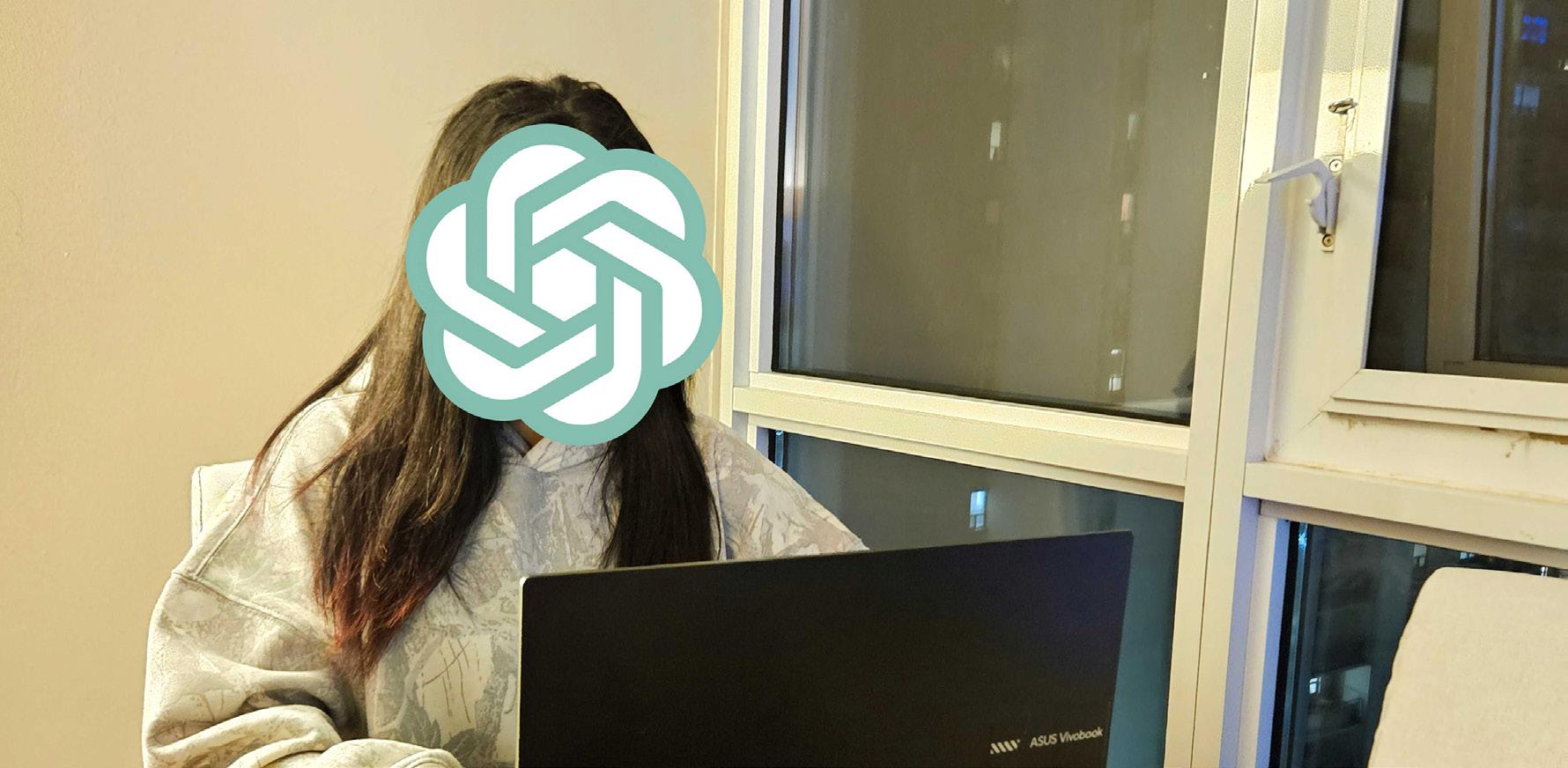
Mohiuddin highlighted the lack of clarity from professors when it comes to understanding when AI use is acceptable.
“I think they need to make the guidelines clear, because I do think AI is a really good tool in terms of finding information...especially when you might not understand an assignment fully,” she said.
Neil also highlighted the inaccuracy of AI detection tools. “The experts that are at our university, including the Academic Integrity Office, say that the detection tools [give] false positives and false negatives [and] that they are not an effective tool,” she said.
Flores also said he agrees that AI and similar detection tools
have “questionable” reliability, and many instructors have not used them, even before AI.
“For example, Turnitin is a well-known similarity detection tool. Whenever the similarity index is high, the instructor reviews the work and determines whether there may be plagiarism. The Turnitin results only raise a red flag that the professor may choose to further investigate,” he said in the email to The Eye
Matthew Mongillo, a first-year business student at TMU, said he thinks students should be honest with their work, but understands why some students turn to AI.
“There [are] a lot of people who have homework assign-
ments...and it’ll be completely separate from what a lecture is... and then it becomes hard for the student to even know what’s going on,” he said.
On Reddit, many TMU students say they have been incorrectly flagged for academic misconduct or AI use in their course work.
“Policy 60 clearly states that submitting work created in whole or in part by artificial intelligence tools, unless expressly permitted by the faculty/clinical faculty/ contract lecturer, is academic misconduct and falls under the category of ‘misrepresentation of personal identity or performance,” TMU’s AIO said in the email to The Eye
By Sophie Wallace
Some members of Toronto Metropolitan University (TMU)’s faculties believe more funds from the upcoming 2026-27 budget should be allocated towards reducing class sizes to improve student experience.
At the university’s Budget Town Hall on March 2, staff and students were given the opportunity to ask questions about the upcoming budget. TMU president Mohamed Lachemi, provost and vice-president academic Roberta IannacitoProvenzano and vice-provost of university planning Kimberley McCausland led the meeting.
In anonymous feedback during the meeting, multiple attendees wrote that TMU should focus on improving classrooms and student experience in the coming year
According to data from the University Planning Office, the number of undergraduate students enrolled at TMU has risen by about 3.7 per cent over the past five years.
Jacqui Gingras, a sociology professor at TMU and member of the Toronto Metropoli -
tan Faculty Association (TFA), thinks TMU should expand resources for faculty
“Learning is very tightly tied to a sense of belonging”
Gingras said some of her liberal studies classes have grown from 60 students to over 100 since she began teaching. CSOC 808: Sociology of Food and Eating, she said, is one of her most popular classes with 170 students.
“Learning is very tightly tied to a sense of belonging, feeling seen, feeling heard, being able to ask questions, being able to connect with your professor. And when you walk into a room of even over 100 people, that feeling instantly is diminished, unless people are working really hard to disrupt that,” she said.
She added that hiring more faculty to support smaller class sizes would help prevent students from feeling “anonymous” and “a number.”
Wayne Smith, a hospitality and tourism professor at TMU, said
with bigger classes, instructors need to be more creative with their teaching methods. He said he has noticed a reduction in resources over the past decade.
“You can only do more with less for so long,” said Smith.
In an email to The Eyeopener, TMU facilities management and development said, “the overall classroom utilization rate at TMU was close to 80 per cent in Fall 2025 for daytime from Monday to Friday.”
They added that this indicates the university uses their space efficiently, but there is little flexibility for adjustments when needed.
“You can only do more with less for so long”
The university generally sets aside $300,000 every year to update classrooms, including replacement of furniture and renovations, read the email.
Students have mixed views on the importance of small class sizes. Mansha Kashyap, a first-year psychology student, said her lectures usually have between 70-100 stu-
dents. She takes Spanish as an elective, a course she says has roughly 20 to 35 students.
“I think having a larger class size makes it a little bit harder to ask the professor for help”
“The only professor that I would say knows me is my professor in my [Spanish] class,” she said. “It definitely helps with my performance in class as well.”
However, Kashyap said there are benefits to larger class sizes too.
“I do like going to my psychology class more because then I don’t have that pressure of, ‘oh, I have to perform’.”
Ami Holenghan is a first-year student transferring to media production this fall, after a year in performance: acting. Holengan’s acting program had a cohort of 24 students, but he has taken electives in history and radio and television arts where classes were larger.
“I think having a larger class size makes it a little bit harder to ask the professor for help,” he said.
In an interview with The Eye, Lachemi said, “evidence shows that the design of the learning experience is often much more important than the absolute number of students in the room.”
According to Lachemi, the Centre for Excellence in Learning and Teaching at TMU provides a number of resources and workshops to support faculty and “strong student outcomes,” even in large courses.
“It definitely helps with my perfomance in class...”
According to McCausland’s presentation at the town hall, the 2026-27 budget would be supported by the $6.4 billion investment in post-secondary institutions across Ontario over the next four years. This also comes with the incoming two per cent tuition rise and planned cuts to Ontario Student Assistance Program (OSAP) grants, as previously reported by The Eye
The final figures for TMU’s 202627 budget will be published in April.

EDITORIAL:
By Victoria Cha
On Oct. 29, 2025, I walked up to my Hopp ride at Clarkson GO Station, exhausted from a long day on campus. The moment I opened the car door, my driver turned to me from her seat and shouted, “Guerrero home run, baby!”
It was the sixth inning of Game 5 of the 2025 World Series and Vladimir Guerrero Jr. had just hit a homer against the Los Angeles Dodgers, bringing their lead to 2-0 My energy immediately surged. For the entirety of that 15-minute car ride, with the Sportsnet game stream blasting through the car’s speakers, we were just two sports fans enjoying each other’s company—two people connected by the love of the game.
Like many, I first fell in love with sports because of my dad—but that didn’t happen until I was 17. Growing up, there would always be a sports game on the TV—I got used to never using it during the evenings out of the assumption something sports-related would be on and my dad would be tuning into it. I was forced into a lot of different activities too: skating, swimming, dance, soccer, volley-
EDITORIAL:
ball. But I quit them as soon as my parents gave me permission to.
Sports never made sense to me. Until one day, they did.
Bound for university in the fall of 2023 and hoping to spend more time with my dad before I left home and moved into residence, I decided to, for the first time in my life, watch the Stanley Cup Playoffs. Something in me clicked.
I was amazed at the joint collective these playoffs had created. After beginning to tune into hockey, I couldn’t go anywhere without it appearing around me—in ads and campaigns, in conversations, on people’s Instagram stories. I couldn’t get enough of being part of it. I’d watch every YouTube video about the Leafs that would show up on my explore page, read every comment under related Instagram posts and even give my uninterested but extremely considerate friends recaps of the previous night’s game.
More than anything though, I was able to connect with my dad in a way I never had before, and I was thrilled. My greatest takeaway from entering the world of sport came down to one thing: human connection.
A few months later, as a univer-
By Jonathan Reynoso
When stepping into a new era in your life, you never truly know what to expect. There is a long, winding path that could lead to success, or to what can be seen as a learning experience. Ever since I started my role as one of two sports editors at The Eyeopener, I have faced this crossroads. From not knowing how to read or write properly until I was in grade two, struggling in school as I was always just a step slow, to contemplating my entire future—my palms pressed up against my face as I sat on my twin bed—during the winter break of 2022, deciding if I should drop out of school or continue struggling in my business degree, I was lost, unsure of what
the rest of my life would possibly look like.
After all of that, I ended up switching programs to study journalism at Toronto Metropolitan University (TMU)—realizing I could turn my passion for sports into a career felt like entering my house after a long car ride home. Stepping into The Eye office as a sports editor in August 2025, I felt like an imposter.
Not good enough, not smart enough, not intuitive enough… simply, not enough.
The more and more I thought about those feelings, the more I thought about how I got here and the hurdles I had to overcome to reach a point in my career where I could create something special like Home Court Advantage.
AVA WHELPLEY/THE EYEOPENER
sity student, I met the individuals who I now call my best friends, at a hockey game. I soon realized sport wields a beautiful kind of magic. It brings unknowing people together.
During the 4 Nations Face-Off in February 2025, the entirety of Canada joined as one to watch its star players defeat the U.S.—a huge statement at a time when the nation was actively threatened to be annexed. Every two years, so many different countries, cultures and identities unite to partake in a new set of riveting Olympic games—the same goes for the FIFA World Cup every four years. I lavish in that feeling of connection and collective joy every single time. They’re the moments I live for. Even when I’m watching a game from my living room couch, I still feel like I’m part of something bigger than myself.
During that car ride, my driver and I wound up talking about how that playoff season in particular, and in relation to the Jays, was the best time to get into baseball. She said it didn’t matter when and to, “just get into it.” I absolutely concur. Despite what many might say or believe, sports requires noth-
ing, no skillset or experience, other than passion, regardless of the way it manifests itself.
So many stories, backgrounds, motivations and identities make up this electrifying world. To see an arena or court or field come alive through the unity of countless individuals who wouldn’t have connected otherwise is something that overwhelms me in the best way. And that’s exactly what Home Court Advantage hopes to highlight.
While there is so much about sports culture that must be called out and confronted and oftentimes makes me question whether my love for this space is enough for me to persist, there is also so much to appreciate, admire and celebrate. And right now, through this special issue, I’m choosing to focus on the latter.
As elated as I was when the Jays won Game 5 that night, all I could think about was the conversation I shared with my Hopp driver and how excited she must have been. To this day, I still think back to that 15-minute car ride. For me, it will always be the people and their passion that make sports a home.
The Eyeopener Masthead

Editor-in-Chief
Negin “Happy 1405” Khodayari
News Editors
Shaaranki “Commuter” Kulenthirarasa
Vihaan “Landlord” Bhatnagar
Amira “Heaven Sent” Benjamin
Arts & Culture Editor
Sophie “Poet” Wallace
Business & Technology Editor
Aditi “Disney Princess” Roy
Communities Editor
Daniel “Photo” Opasinis
Features Editor
Edward “Rash” Lander
Fun & Satire Editor
Dylan “Tim the Lizard” Marks
Sports Editors
Jonathan “Yin” Reynoso
Victoria “Yang” Cha
Production Editors
Jasmine “Don’t Wanna WP” Makar
Sarah “Bring Back Stash, Pedro” Grishpul
Photo Editors
Ava “Sports Special Issue:” Whelpley
Saif-Ullah “New Danny” Khan
Pierre-Philipe “Tinfoil” WanyaTambwe
Media Editors
Divine “Repost” Amayo
Lucas “Blueberry Jam” Bustinski
Digital Producer
Anthony “Heathcliff” Lippa-Hardy
General Manager
Liane “Bring Me My Monayyyy” McLarty
Design Director
Vanessa “Jeopardy” Kauk
The Bench Mob
Fancesco “Pro Max” Cautillo
Courtney “Passion” PowersLuketić”
Hannah “Smoothie” Sabaratnam
In this editorial role, I have learned that regardless of how I got here, it is my duty to leave a positive impact on sports by creating a space where no one feels like an imposter. Whether it is giving individuals or communities a voice that they might not otherwise have, or providing a contributor with a platform to show their work, there is no area in sports where you don’t belong.
It’s funny when you think about it–the action of pushing, kicking or swatting an inanimate object can bring so many people together.
That is where the beauty of sport lies. You don’t have to feel inadequate, you don’t have to feel like you don’t fit—as long as you
are actively and positively contributing to the game you love, there is always room for you.
And that is what this special issue is about.
Sports is a field of opportunity and you have to play your role, regardless of what it may be. You can’t close off your mind to the influence you might have.
Now looking back at my time here, I can confidently say the success I have had is the lessons that I have learned. Whether it’s from my co-workers or my contributors—the sky is the limit when it comes to making something beautiful, because at the end of the day, there is no limit on the impact you can have on the world and it surely doesn’t stop if you are not playing.
Eli “That’s your shot” Silverstone
Mohamed “Apple” Lachemi
Maisy “Squishy” Chang
Eunice “F the Takchuks” Soriano
Noah “Class” Curitti
Ethan “LinkedIn Warrior” Clarke
Eliza “Med School” Nwaesei
Hannah “Networking” Thompson
Landon “Turnitin” Randfield
Molly “OSAP Stickers” Simpson
Charlotte “Consistent Queen” Ligtenberg
Mochi “Catch” Cha
Jack “Elephant” Kauk
Oscar “Fatto” Marks
Pyrus “Py Py” Benjamin
Address
55 Gould Street, Toronto, ON, M5B 15B, Suite 207
By Ethan Clarke
Daija Peters no longer watches games like she used to.
Instead of following the action, she watches the players. She looks for a limp, a hesitation or someone getting up slower than before. While fans track the game, she is usually watching behind it, looking for signs someone might be hurt.
“My heart rate is really high during a game,” she says. “A good day is not having to work.”
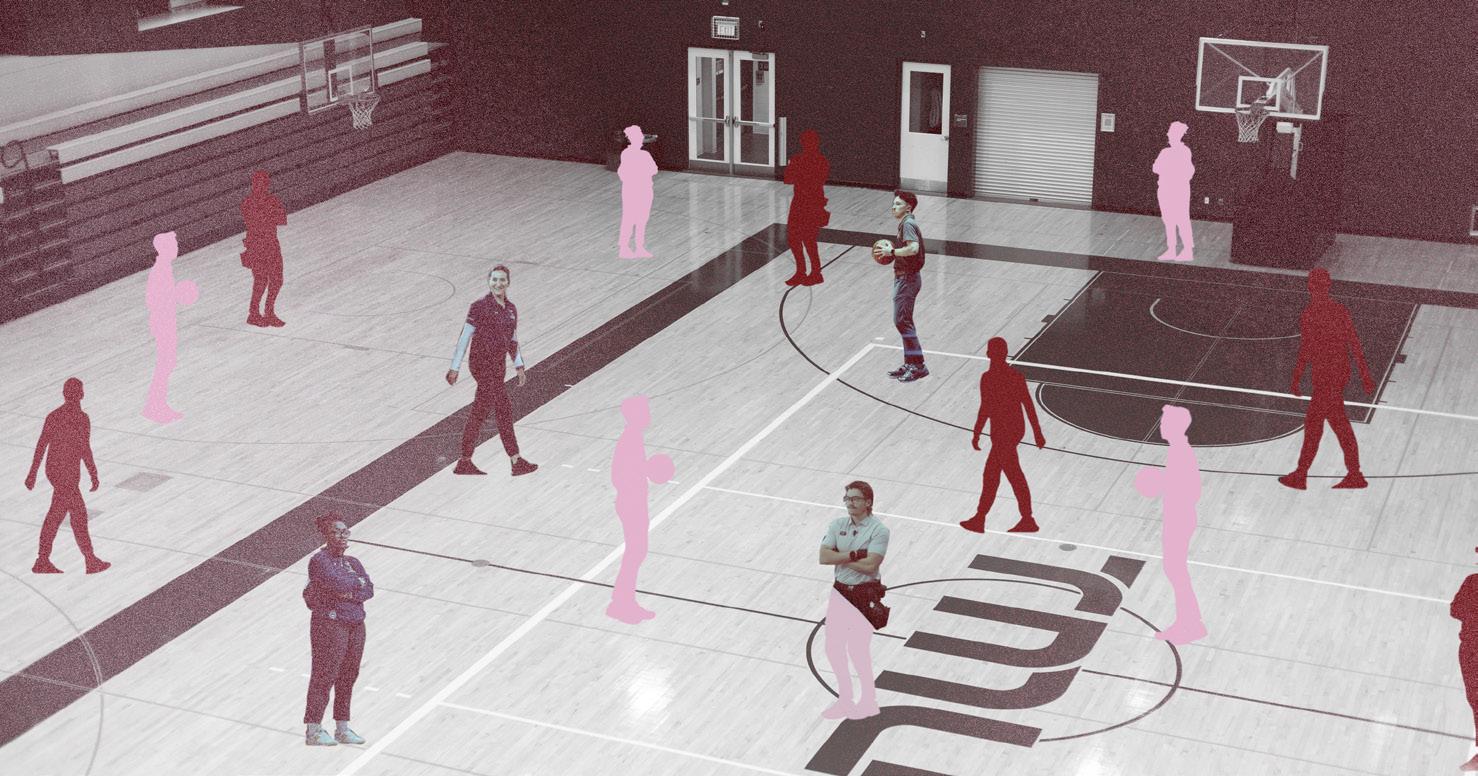
Peters is an undergraduate student studying athletic therapy at York University, and a student athletic therapist for the Toronto Metropolitan University Bold women’s basketball team. Most spectators only notice athletic therapists when they run onto the field after an injury. But that moment represents only a small part of the job.
Athletic therapy combines emergency care, injury assessment and ongoing support for athletes, often under pressure. Therapists spend practices observing movement, preparing equipment and checking on players long before an injury occurs.
Before entering the profession, Rachel Di Lecce, a certified athletic therapist in Toronto, misunderstood the role herself.
“I just thought, ‘okay, they just go help them and bring them off the field,’” she says. “I didn’t really know what happened behind the scenes.”
Peters says she had the same assumption be-
fore entering athletic therapy at York.
“I thought it was going to be taping a little bit, covering a couple of cuts, massages here and there,” she says. “It’s just so much more than that.”
Before they can stand on a sideline, students spend years preparing for the role. According to the Canadian Athletic Therapists Association (CATA), aspiring athletic therapists in Canada must graduate from a CATA accredited program, obtain a First Responder certificate before working games and pass the CATA National Certification Exam. Practical hands-on training within undergraduate programs teach injury prevention, assessment, treatment, management and rehabilitation.
Preparation matters because athletic therapists are often the first person an injured athlete sees.
Comfort Tieku, a student athletic therapist at Sheridan College studying in its Bachelor of Athletic Therapy program, remembers treating a wrestler early in her training. Tieku says she was “freaking out,” but adds, “you live and you learn.” Classroom simulations, she adds, cannot replicate real injuries because “you’re dealing with their emotions.”
The work also extends beyond injuries. According to PhysioDNA, athletic therapists help prepare athletes for competition, monitor their condition and work to prevent injuries before they occur. They also help athletes return after injury, adjusting treatment and exercises throughout recovery.
Natalie Kierpiec, also an athletic therapy student at Sheridan College, says athletes often confide in therapists. “You’re their safe space.”
Because therapists spend so much time around teams, Kierpiec often notices issues athletes may not tell coaches. Maintaining that trust, they say, becomes an important part of the job.
The role can also require difficult decisions. Di Lecce says that sometimes, coaches and even the impacted player themself want to continue playing, despite their injury.
“They are saying that they can go, but they really can’t,” she says. “Our job isn’t about making people happy…it’s player health and safety.”
Despite the responsibility, therapists say the profession is often misunderstood. Di Lecce says many therapists are advocating for greater recognition and wages comparable to other healthcare professionals.
At the professional level, the pressure becomes immediate. Colby MacLean, an athletic therapist with the Belleville Senators, says in-
jured players are often anxious or unsure of what has happened in the moment after a play that results in bodily impact.
“The number one thing you always have to do is just calm them down first,” he says.
MacLean says therapists guide athletes through what happened while assessing the injury and determining whether they can safely continue.
Athletes often look to athletic therapists for clear answers in uncertain moments. MacLean says part of the role is helping players understand what an injury means, whether they can return that day and what recovery may involve. Even after a game ends, he says, follow-up treatment and monitoring continue as athletes begin rehabilitation.
A “jack of all trades,” as MacLean describes it, athletic therapists are integral to any sports team and are prepared to lend a hand in various situations.
“If an emergency happens, we’re trained. A big injury happens, we’re ready for that. Little things, you know, we take care of everything.”
Moustapha Youssouf on his journey from coaching at TMU to being one step closer to the NBA
By Eli Silverstone
Finding a passion you can make into a career isn’t something many people get to experience—especially during their postsecondary years. But Toronto Metropolitan University (TMU) Bold men’s assistant basketball coach Moustapha Youssouf has always known his passion—making a career out of it was a matter of fate.
As a former student who studied marketing at TMU from 2019 to 2021, Youssouf joined the Bold men’s coaching staff in 2023 as an assistant. Less than three years later in November 2025, he announced he would be joining
the Raptors 905 of the NBA G-League—the developmental affiliate to the Toronto Raptors—as an assistant coach. From the outside looking in, it might seem like a quick ascension but Youssouf has been tied to the Raptors organization since their championship 201819 season when he was 19 years old.
He started his professional career young. When he was just 15, he shot games as a photographer, making connections to the Toronto basketball world, and gaining him access to shoot for Raptors’ media day and an NBA game against the Philadelphia 76ers during the 2018-19 season four years later.
“I always feel like I’ve been so close to
the organization for the last 10 years,” said Youssouf. “It just felt like something that almost was, I don’t want to say destined, but it felt like it just made sense…a lot of the people have been there for a long time and have seen me grow up since I was 15.”
In his first season on the Raptors 905 coaching staff, Youssouf helped the team win their first 16 games of the season, which was a franchise record. The season started on Nov. 7, 2025 and they didn’t lose a game until three days before Christmas.
“I had gone into the season with the expectation that, regardless of the record this year, this is a learning opportunity for everyone involved…Being present and having fun regardless of whether we won or we lost games,” said Youssouf. “And then we ended up having the best start ever. For me to walk into this in my first year, I felt so grateful and a little spoiled.”
Youssouf said he credits the beginning of his coaching journey as well as a lot of his growth in the profession to TMU Bold men’s basketball head coach David DeAveiro.
When Youssouf was playing basketball for the Centennial Colts in 2023, he met DeAveiro for the first time and they talked hoops for over three hours during lunch. When Youssouf finished up his playing career a few months later, DeAveiro gave him a call and asked if he was interested in transitioning to coaching by joining the Bold’s staff.
“I learned so much from a basketball standpoint and to work with someone who has 26 years of head coaching experience and one of the winningest coaches in Canada, you pick up on a lot of good things,” said Youssouf.
Between the Raptors 905’s 50-plus game season and the Bold’s deep playoff run that has resulted in 39 games, Youssouf will be involved in more games than a full NBA regular season. He said he’s splitting his time evenly between the Bold and the 905 this season, learning from DeAveiro at TMU—who was recently named the 2025-26 Ontario University Athletics Head Coach of the Year—and people in the Raptors organization like assistant coach Jama Mahlalela.
“The energy that [Mahlalela] brings, alongside everything else he does really well, that’s a goal of mine. To be where he is one day, being the best assistant in the NBA would be really, really cool,” said Youssouf.
It’s a goal that’s not far off, considering his rise through three years of coaching and Raptors connections. Youssouf has been organizing the BGR8 summer basketball runs for professional Canadian hoopers, Raptors players and TMU Bold athletes the past few summers. Raptors such as Scottie Barnes, Serge Ibaka and Chris Boucher were routinely playing with and against members of the Bold’s roster at Kerr Hall’s Upper Gym during the past two summers.
BGR8 runs are just another example of Youssouf’s mindset to be great, the Canadian basketball network he has been working on for over a decade and his commitment to elevating developing athletes.
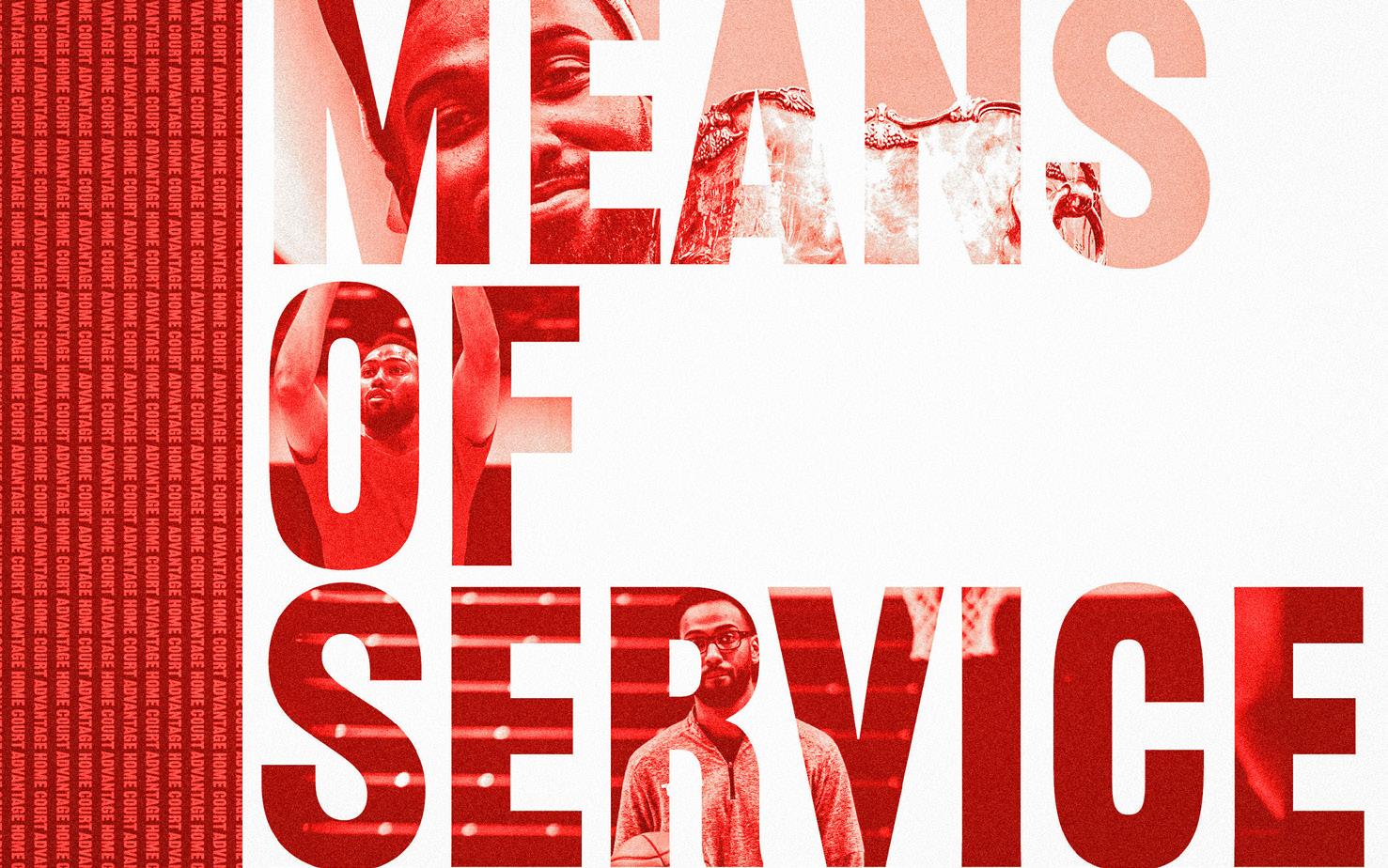
“To me, basketball and coaching is my service to the world, and it’s how I contribute to people. I just use basketball as a means of service,” said Youssouf. “As of now I am healthy enough to do it, and I love it.”
By Eunice Soriano
For many, Canada is deemed as a “leading sport nation,” according to the Government of Canada. But even within its diverse sports scene, inaccessibility remains a steadfast concern among those who are trying to get into the action. From the lack of opportunities to the hefty cost of equipment, it is getting increasingly hard for people to access sports.
In 2024, three quarters of Canadian adults aged 18 years and older did not participate in sport, as reported by the Canadian Fitness and Lifestyle Research Institute. Various Canadian groups and charities are actively trying to find solutions to these barriers. Whether it’s through new programs, like run clubs, or creating affordable gear by cutting marketing costs, their end goal is to create spaces where athletes of today and tomorrow can thrive.
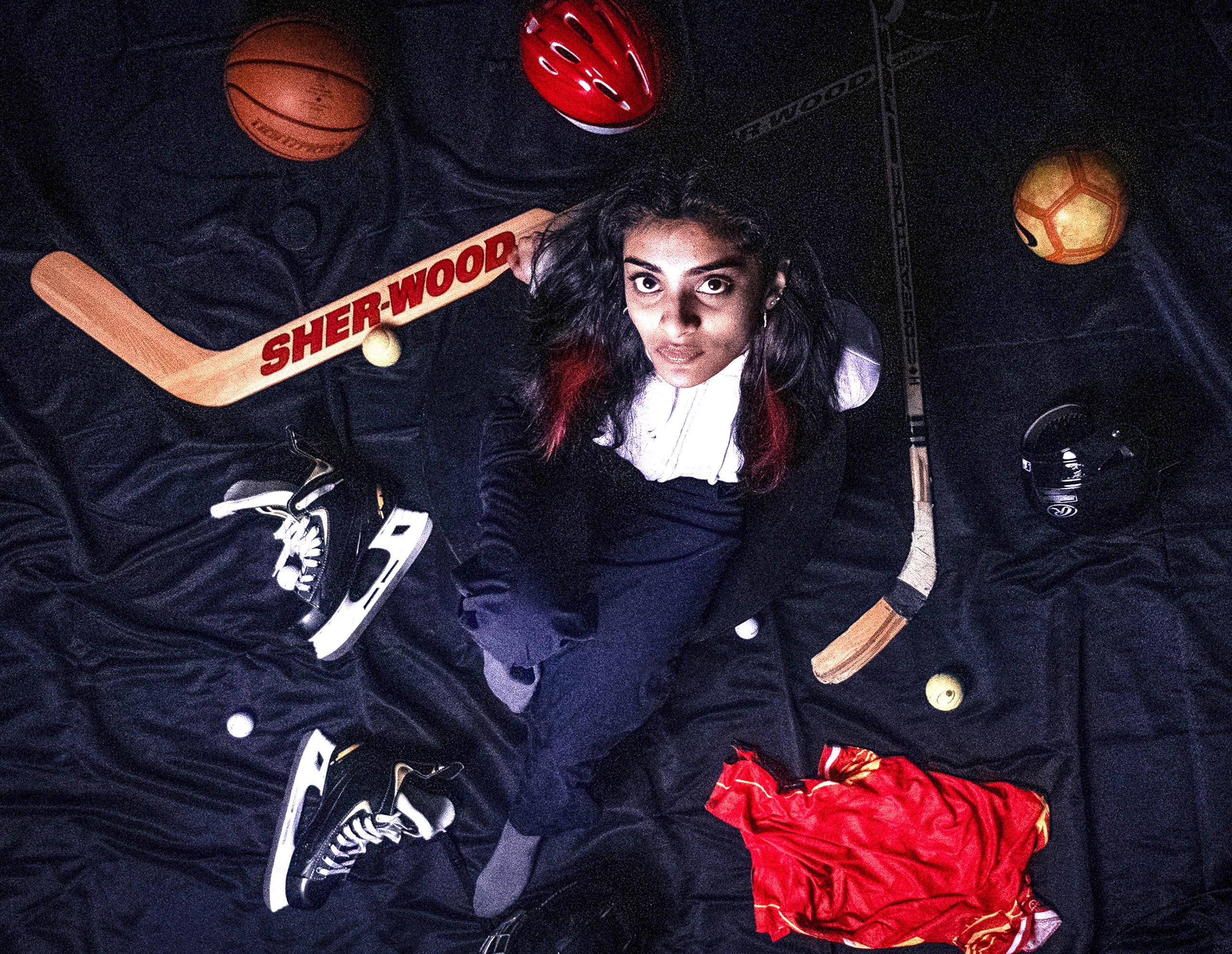
Zechariah Thomas, founder and CEO of Swift Hockey, said growing up among the strong hockey culture in Oshawa, Ont. made it easy to fall in love with the sport.
When it came time to purchase new hockey gear, he said the price would always be a concern for him and his teammates. Equipment can be a significant barrier in entering hockey due to its high costs and the volume of gear required. A full set of mid-range equipment alone, including skates, a helmet, shoulder pads, gloves, pants and hockey sticks, can easily exceed $1,000.
He always believed the unaffordability of the sport pulled people away from the game. A 2023 study by Hockey Canada found, “the average annual cost to play minor hockey at the competitive level surpassed $5,000 per player, with some families paying upwards of $10,000.” The costs of the sport come down to equipment, ice time and rink maintenance, coaching and league fees and travel costs, which are demands that other sports like soccer don’t require. An article from The Etownian explained that soccer is, “the most accessible sport in the world. Amateurs can play it easily because all that is needed is a ball and two goal posts.”
“Most parents can definitely make a soccer season work, but getting in some of the other sports, it’s not something possible”
Thomas said he believes high costs contribute to lack of diversity in his sport. “[The price of equipment] is obviously why we don’t see a lot of different demographics in hockey,” he said. “[It’s] definitely the major impact on why hockey is not really where it should be, in my opinion.”
When the COVID-19 pandemic came around, Thomas’ hockey season came to an abrupt halt. But all that time allowed him to steer his attention towards a new business venture: Swift Hockey, a company that sells customizable hockey sticks at affordable prices.
“COVID started something within me. I didn’t have hockey anymore, so I kind of turned all the way to [Swift Hockey] and kept that going from there,” said Thomas. With the desire to introduce hockey to younger audiences, Thomas said it was also important for Swift Hockey to donate a portion of their proceeds from every stick sale to various programs and to support underprivileged youth across the country.
“[Giving back] is something that I always want to do…And that’s definitely the most
important thing, is where we have a lot of people reaching out and asking for items, we want to give back to people,” he said.
As he looks to the future, Thomas and his team are toying with the idea of expanding into ringette and lacrosse, sports that have also been riddled with inaccessible equipment. As of 2023, prices of lacrosse starter gear have ranged between $200 to $400 for items like sticks, helmets and appendage pads. Thomas said he hopes the growth of Swift Hockey and those sports can flourish in tandem.
“[Kids] may want to play lacrosse, they want to play hockey, they want to play ringette, but understanding the cost of what it takes to get there is just not feasible. Most parents can definitely make a soccer season work, but getting in some of the other sports, it’s not something possible,” he said.
Like Swift Hockey, many other groups are leveraging sports as a way to guide youth to reach their full potential.
Since 2014, community-based basketball program Lay-Up has helped young people succeed in athletics by providing cost-free programming designed to develop the skills they need on the court and beyond.
Regional manager John Gerongco said Lay-Up serves as a “home away from home” for their players.
When highlighting the current challenges in basketball, Gerongco said the location of a sporting venue and lack of transportation may be a hindrance for many people who dream of playing at a competitive level.
Gerongco expressed how imperative it is to have numerous Lay-Up programs operating across the Greater Toronto Area.
“Many basketball teams travel forever to be able to play a tournament or [preparatory] system today,” Gerongco said.
“We’re somewhere the families can get
PIERRE-PHILIPE WANYA-TAMBWE/THE EYEOPENER
to without having to have kids get on the TTC or have to be driven somewhere, especially with how sports is just usually at odd hours of the night sometimes.”
International e-commerce company Picodi found that Toronto has one of the most expensive public transit fares in the world when it comes to the price of monthly transit passes, with the prices of a pass reaching up to $156.
Gerongco highlighted how Lay-Up is, “more than just dribbling a basketball up and down the court,” but also imparts leadership opportunities that can help youth as they embark on new endeavours, whether that’s in sports or in other fields.
Sports within community leagues rely on people who do “behind the scenes” tasks like managing and structuring games, and overseeing registration and marketing, according to Gerongco. “Those are all jobs that a lot of young athletes don’t really think about that’s accessible to them at an earlier stage.”
“We knew and recognized that those who kept coming back could always go further”
Similarly, The Kickback Foundation runs youth events and programs that intersect with sports, education and the arts.
Tara Magloire, the program manager for Kickback, shared how the non-profit supplies running and hiking shoes for their annual trips and clubs. By providing those resources, Magloire said she hopes athletes can step into new sports while feeling comfortable in their own skin.
She expressed how the shoes helped athletes achieve their goals—some athletes even exceeding their initial expectations.
“Youth were showing up in Crocs, in [Air]
Jordans, in flip flops, but they were still running the distances we provided each week. It didn’t stop them from doing the thing, but we knew and recognized that those who kept coming back could always go further,” Magloire said. “Maybe they could run their first 5K, maybe they could run their first half marathon or full marathon, if given the right pair of shoes.”
“If you are a beginner, the scariest thing is the first day”
She also recognizes accessibility in athletics is not limited to introducing a newcomer to a sport—it’s equally important to ensure they feel secure enough to stay and progress in it. She said the Kickback team does their best to foster a safe environment that can “alleviate strain.”
“If you are a beginner, the scariest thing is the first day. If the right words are tuned in that day, if you’re meeting them where they’re at, they may come back next week,” said Magloire.
By curating these programs, she said she hopes young athletes can sustain their vigour for their sport for as long as possible; she said she hopes to see them play on the professional stage one day.
To inspire them, Magloire said Kickback has provided opportunities for youth to attend games and tournaments, and even connect them with professional athletes whose careers they can emulate with hard work and dedication.
“If you just have a day to meet someone who is already on the path that you’re envisioning for yourself, you actually have a roadmap for things you can do to get there… you just never really knew or they could be a Canadian success story, and that’s something you dream for yourself,” Magloire said.
IN HIS BACKYARD in South Africa, Siby Diomande imagines an opposing player standing in front of him. He moves left to right, dribbling the ball, picturing how he’s going to get past the figure. Once the opposing player is out of his way he drives to the net. Swish Diomande, now a fourth-year business management student at Toronto Metropolitan University (TMU), comes from an athletic family. His parents were athletes in high school and believed sport fosters a sense of community and grit. They put Diomande and his brother in all kinds of sports, like roller skating, rugby and soccer.
“Sports were pretty much mandatory growing up,” he says.
His love for the game morphed into a dream of playing high level basketball. In 2017, he got a taste of what that could look like. The Jr. NBA program—an initiative aimed at developing youth basketball players—came to Johannesburg, South Africa and Diomande’s friend told him about the league, introducing him to organized basketball.
It wasn’t a smooth transition going from playing on an imaginary court to playing on a real team, especially since most of the kids were also new to the game. But Diomande quickly fell in love with it. It became all he wanted to do after school, spending hours at the rim in his backyard. He watched highlight reels of his favourite players and tutorials on how to jump higher.
He enjoyed the adrenaline building inside him while playing under pressure. The mental challenge of playing basketball gave him confidence not only in-game but also outside of the sport.
“Seeing yourself perform well under pressure kind of does something for you even outside of basketball,” says Diomande. “I just feel like it gives me a big sense of confidence that I am able to do anything.”
Once Diomande graduated from the program, he continued to play rep basketball in South Africa. He found a place on an under-18 team and was happy to keep playing the game.
However, in the summer of 2021, Diomande's father announced his family would be moving to Switzerland, another of the many countries he’d live in for his father’s work. When he arrived, it was hard to make friends and leaving his community in South Africa took a toll.
“This is my senior year of high school. I have to make friends just for one year of school. I didn’t want to do it,” says Diomande.
So he resorted to the one thing he knew would bring him comfort. Diomande picked up his basketball. While looking for a gym to play, he found a group of people who’d formed a team. Diomande asked if they were looking for players.
Aside from a few of them who spoke English, there was a language barrier on the team. Despite this, Diomande says everyone tried their best to communicate. The team liked each other, they got along and they played well.
After his senior year wrapped up, Diomande was once again on the move. This time though, he’d be moving himself, for school. He traveled to Canada in 2022—the sixth country he’s lived in—to study.
He had an easier transition in Canada than Switzerland. His peers spoke English and he quickly made friends through basket-
ball. But in his time thus far, there’s been a hole in his life where competitive basketball used to live, he says.
During his first semester, he wanted to try out for the Bold men’s basketball team. After tracking down the coach, he finally got his shot—but didn’t make the cut. Diomande had opportunities to play for lowdivision schools in the U.S. but wasn't interested, he says.
At this point, Diomande had played competitive basketball for five years, so having to stop was devastating. It felt like his upward ascent in the sport was crashing down.
DOESN’T WORK OUT for everyone. Sometimes you’ll love a game, spend hours tweaking your craft, skip nights out or even move away from home, all in the hopes of reaching a higher level but never achieve it in the end.
In fact, this is likely the more common story. According to a report from Canadian Tire, 22 per cent of youth in Ontario play hockey but only around 300 players are selected for the Ontario Hockey League (OHL) priority selection. And among those who get in, only 20 per cent actually get drafted to the NHL. In other sports, chances of going pro are similarly meagre.
And it’s not just competition which blocks many athletes' journey to the top. Sometimes life gets in the way. Things like income, socioeconomic status and family issues can put a player’s career on the bench. A 2024 report from RBC found the average cost of playing hockey in Canada sits between $4,478 and $7,371 a year. Other roadblocks can come from the games themselves, many players face injuries like concussions which render them unable to play their sport.
Sports organizations face barriers too, according to a 2022 report from Canadian Tire, 75 per cent of these organizations say the cost of running activities has spiked in the years following the pandemic. Without strong organizations and resources to back you, making it in your sport can be much more challenging.
For many, the prospect of leaving a sport behind is a tough reality but one they have to face. Sports culture puts winners on a pedestal, so when life takes you out of the game, the fall can be hard.
AS HOWIE MARTIN CUTS across the neutral zone, he receives a pass. But what he doesn’t see coming is an opposing player flying towards him. The player makes contact, crushing Martin with the impact. Thinking he’s fine, he gets up and continues to play the rest of the game.
After it’s over, Martin—who was just 13 years old—heads to the car with his parents. Once he’s in his seat, he feels off. He’s slurring, his body shivering while sweat streams down his body.
His parents take him to the emergency room. Once the car is parked, Martin and his parents make their way inside. Many hours pass, most of which Martin will not be able to recall later.
“Where are you from?” asked the doctor. “Boston,” Martin responds. He had never been to Boston.
Two ex-athletes on the bittersweet, sometimes painful task of saying goodbye to the game
By Hannah Sabaratnam
He’d suffered his first it wouldn’t be his last. least five more in the coming all as big as the first but pile up.
Like Diomande, Martin, was another kid with a the case with a lot of hockey introduced to the game dad who also played hockey He began skating as a organized hockey in kindergarten.
At age six, his dad found playing against eight-year-olds. kid, he was able to blend ers so much that his coaches when they found out was. From there, Martin teams in Toronto from the mid-teens.
Making it into the OHL the minds of most teenagers level hockey. For Martin, was the ultimate dream.
In the spring of 2002, years after his first concus sion, he and his parents are gathered around a box-like desktop monitor.
A 15-year-old Martin iously waits for his to appear on the screen. Before the OHL switched to a live event is today, prospects waited their names to appear online list.
Martin refreshed the over and over. He knew were interested in him but pending on where other ers got selected, it could where he landed.
Within an hour, the round was wrapping up. tin wasn’t expecting to the first but seeing other ers get drafted before him the start of the second led him to wonder, gonna happen?
One more click erased his anxiety. There it is. Next the 27th pick for the Sudbury Wolves, the name “Howie tin” appeared. Cheers from his parents. “That pretty cool moment for me my parents,” he says. Wanting to be humble, quiet about his hockey endeavours his peers. His now wife, high school, didn’t even he played at the time.
“It was an exciting time,” didn’t really hit me until moving out. Like, 'holy I’m moving out.'”
He says it was hard at to at a young age and he ing a younger guy on the very much either. After playing with his parents in attendance, his dad aside.
“I don’t think I can “You’re doing fine,” his don’t want to be up here,” Martin’s parents told some time. Knowing he the team decided to move
first concussion and He experienced at coming years—none but they continued to
Martin, who is now 39, sports dream. As is hockey players, he was at a young age by a hockey in his youth. toddler and joined kindergarten. found a way to get him eight-year-olds. As a bigger in with older playcoaches were shocked how old he really Martin played for various the ages of 10 to his
OHL has likely crossed teenagers playing highMartin, playing in the ‘O’ 2002, two concusparents large monitor. anxname screen. draft like it waited for in an the page teams but deother playimpact
the first up. Margo in other playhim at round is this erased all Next to Sudbury
“Howie Marerupt was a me and humble, he says he kept endeavours around wife, whom he met in even know what level time,” says Martin. “It August when I was smokes, I’m 15 and first leaving Toronhe got homesick. Beteam, he didn’t play playing a scrimmage attendance, Martin took do this,” he said. dad responded. “I here,” Martin said. told him to give it he was struggling, move him from his
original billeting house to another family who were housing a teammate. The move made for a better arrangement now that he was with a peer.
He spent the next four seasons in the OHL, one with the Wolves and the rest with the Brampton Battalion and a stint at the end with the Owen Sound Attack. Despite a professional tryout with the Toronto Maple Leafs, Martin never got drafted by an NHL team like he’d been hoping from the beginning. Now he had a decision to make.
“As you get older and you start to realize the ultimate dream of the NHL might not be happening, you start to question, ‘do I still want to do this?’” he says.
DIOMANDE WAS disappointed when he didn’t make the Bold. “It definitely felt like there was a huge void,” he says.
“As
you get older and you start to realize the ultimate dream of the NHL might not be happening, you start to question, ‘do I still want to do this?’”
played only made him realize how much he missed playing. “There was some form of emptiness that needed some type of fulfillment,” he says.
He decided to do something about the feeling. Diomande discovered the Brodie League—an independent competitive men’s league in Toronto—in the fall of 2023. And the following semester, another opportunity arose.
Diomande’s friend was looking to interview someone about basketball for a film project. And as the subject for his documentary, Diomande felt inspired to create one of his own. “This has to be a sign,” Diomande thought to himself.
He created his own series alongside a friend and eventually “Pathfinder” was born, a documentary series centering basketball and mental health, two things Diomande felt he knew very well. The series highlights what happens to athletes who no longer play their sport.
FOR MARTIN, MAKING THE choice whether to continue in hockey was fairly simple. Every year he was in the OHL, he received compensation as part of his education package. So, instead of taking up offers from the East Coast Hockey League (ECHL), Martin chose to attend the University of Prince Edward Island, which he also received a scholarship for.
Though he played recreational hockey there, in his final year at university, Martin decided to give it up. A concussion the year prior prevented him from getting back into action in his third year. Feeling frustrated, Martin found himself thinking, why am I doing this?
He felt he had been missing out on a lot, so the summer before his senior year, he and his friends decided to simply have fun.
After earning his degree, Martin got married to his high school sweetheart. In an effort to pay for a wedding, honeymoon and a condo, he worked a full-time job at the same company as his dad, and would end his evenings working shifts at FritoLay—where his mother worked at the time.

He wanted to fill the void with other things—like hobbies—but felt he couldn't. His routine was now taken up with school and work. He felt purposeless without basketball. Though he sometimes went to the Recreation and Athletic Centre (RAC) at TMU to play pickup, he says it never really worked.
“I was literally doing nothing good with my time,” he says.
Aside from the winter 2023 semester where Diomande says the competition at the RAC was intense with large crowds coming to watch, the same fervour wasn’t repeated in future semesters. He tried out again for the Bold in the fall of 2023, but still didn’t make the team.
The same semester, Diomande landed a job at the RAC supervising drop-in and facilitated basketball among other sports. But watching on the sidelines while others
“If I'm being honest, there's still an ache to play basketball”
The series is nearing completion and a screening will take place March 22 at It's Ok* Studios on Queen West. The project has given Diomande another way to stay connected to the sport, even if he’s not playing it.
“I’m working on a project that has to do with basketball and people who play basketball…that brings me almost just as much joy,” he says. “I’ll still always have love for playing the game.”
No longer in the Brodie League, Diomande is back playing at the RAC these days. Although his relationship with the sport has changed, the longing to play hasn’t really gone away.
“If I'm being honest, there's still an ache to play basketball,” says Diomande. “But... now I still have an outlet that keeps me connected to basketball. I can still go watch basketball and be okay."
After he got married, Martin started working for FritoLay full-time in hopes to pay for teachers’ college. His application was waitlisted, so he worked another year.
Around this time, however, an ECHL team called the Beast came to Brampton. To Martin it felt like one last chance to get back in the game. He was tempted but was quickly talked out of it by his parents who were worried about his head. His interest in joining the team lasted about a week, he says.
After another application, Martin was yet again waitlisted for teachers' college. FritoLay had just promoted him to a managerial role, so he considered staying there for good, until getting a surprise call from York University saying a spot had opened up. But as newlyweds, the couple still needed to make money. With his wife working full-time already, Martin went to school during the week and worked Friday nights and the rest of the weekend at FritoLay loading trucks. After graduating, Martin landed a job at Milton Christian School, where he works today.
Martin says he’s happy in his life and is content coaching his three sons. He’s played pick-up before but says it wasn’t for him, nor does he have the time now for a men’s league with his coaching duties and making sure he attends his kids’ games. Ultimately, he’s not sure when he’ll step away from coaching or the game entirely.
He’s content in his career but from time to time he does wonder what could have been if he’d stuck with hockey. Looking back, Martin thinks there was more he could have done. When he was playing, he’d be on the ice and in the gym for two hours every day, six days a week but still, he thinks he could have worked harder.
“To this day I wish I could go back in time and [have] somebody tell me that I need to work harder when I was in the OHL,” says Martin. “Because had I, maybe I [would have] played in the NHL.”
TMU athletes reflect on representation and their experiences being the only racialized members on former teams
By Jasmine Makar
Lisa Pryce was playing on the field with her high school soccer team when she heard someone from the opposing team direct a racial slur at her. Her teammates turned to her, waiting for a reaction. What’s Lisa gonna do?
Assessing the situation, being the only Black girl on her team at the time and in her communities for most of her life, she knew she couldn’t react in the way people expected her to.
“I was obviously upset, it’s just not going to be good for my image to get upset in the way that I want to right now. So I just kind of need to move on,” said Pryce.
For Pryce, this was not a new reality but one that often daunted her throughout her soccer career growing up, eventually leading to her taking a break from sports for a few years.
She made her way back to athletics in the fall of 2025 debuting as a scrum-half on the women’s rugby team in her final year of study at Toronto Metropolitan University (TMU). This will be her first year playing sports at a collegiate level.
She found herself having to work harder in soccer to get play time in her home city of Ajax, Ont. compared to other girls who already knew each other and had formed a relationship with the coach. Pryce also recalled how she noticed microaggressions against racialized players from both sides of the field when her team would play in certain neighbourhoods.
“I think that their lack of familiarity with cultural diversity definitely showed when it came to those teams,” said Pryce, specifically referencing a time when a Black girl on the opposing team was called “Minnie Mouse” for having her hair in two buns parted to either side of her head. The nickname was said enough times for the coach to adopt it as well, leaving Pryce disconcerted.
“That’s obviously going to affect how I show up in my sport as well. Because well, that’s also how my hair is,” she said.
In 2023, the Government of Canada reported 25 per cent of Canadians felt discrimination or experienced racism in community sports. Black athletes were also 35 per cent more likely to experience unfair treatment compared to their non-racialized counterparts, with physical appearance and skin colour being the major motivations of these cited discriminations.
“I want to prove to these people that this is not a sport just for white people”
For Black athletes, proving themselves is especially important because of the stereotypes placed on them. Kwame Baffour, a mid-distance track runner for TMU, often feels the burden of stereotypes when performing in his individual sport.
Like Pryce, Baffour came from a soccer background with very few Black players around him. Wanting to thrive in his sport, he had to prove himself, especially being from Etobicoke, Ont., an area that he said doesn’t often get recognition.
“I think it’s really hard for people from Etobicoke, like Black Creek, Rexdale, Weston, Jane and Finch and stuff like that. You don’t really get noticed a lot. You kind of have to break from that stereotype to kind of prove yourself,” he said.
Lack of resourcing emerges as one of the main contributing factors to the discrimination these Black athletes encounter with marginalized youth facing obstacles like lack of support with career planning and the rise of unaffordability.
Proving himself isn’t something Baffour takes lightly, especially when he feels like people don’t believe in his abili -

ties as a Black athlete.
“You kind of do stand out a lot, because sometimes, it’s either, ‘He should be one of the quickest or one of the best on the team,’ or, ‘He shouldn’t be [on the team].”
Being in an individual sport also adds to the pressure compared to Baffour’s previous soccer career. With all eyes on him, he feels the physical and mental pressure to accomplish certain times but notes the importance of not letting accomplishments consume his identity.
Second-year women’s volleyball middle, Rayanna Amos-Ross Fisher, also reflects on how being a Black athlete has mentally and physically affected her drive for the sport. She said she puts pressure on herself but has also struggled with external expectations, especially in a white-dominated sport like volleyball.
“Pressure from other people is a little bit of an issue for me, because, in my head, I want to prove to these people that this is not a sport just for white people. It’s a sport for everybody, and everybody can join,” said Amos-Ross Fisher.
“You kind of have to break from that stereotype to kind of prove yourself”
Amos-Ross Fisher also said she often finds herself ‘code-switching’ because she doesn’t know how people will accept her identity, specifically, based on the way she talks.
Growing up in those spaces where expressing herself was difficult, she said it slowly became a mental struggle, “You kind of lose sight
of who you are and who you want to be.”
Being the only Black member of the women’s volleyball team, Amos-Ross Fisher added she wants to show more Black girls that they can reach the same goals—with that sentiment comes the stress of representing the Black community.
“I love the sport so much, and I do enjoy seeing other Black girls joining the sport… putting pressure on myself to be that person of representation,” she said.
Pryce grappled with the lack of community she felt in sports saying she felt “ostracized at times.” She also emphasized the significant role institutions play in making racialized people feel comfortable and supported enough to continue playing at higher levels.
“I think the whole point of sports is community, obviously. That’s what I’m there for. That’s what I’m hoping to do...it was really hard because I wasn’t getting that,” Pryce said. “I was these people’s window into what a Black person was. I felt like anything that I did was now anything that we all did.”
Coming back to sports years later, Pryce reflected on the community aspect of it, especially entering rugby, another predominantly white sport. “Do I really want to be the only person in a community again?” she said. Despite these feelings, she has found her team to be accepting and extremely supportive of her identity and fully embracing her, a difference that’s taken time to experience.
By Victoria Cha
Contributions to the world of sport go further than the field or a court. At Toronto Metropolitan University (TMU), current students and alumni, whether behind a lens or in front of a camera, are changing the way people interact with sports.
A growing group of students and alumni are getting involved in sport media: the various channels—including broadcast, print and online platforms—which cover profes-
sional and amateur sports.
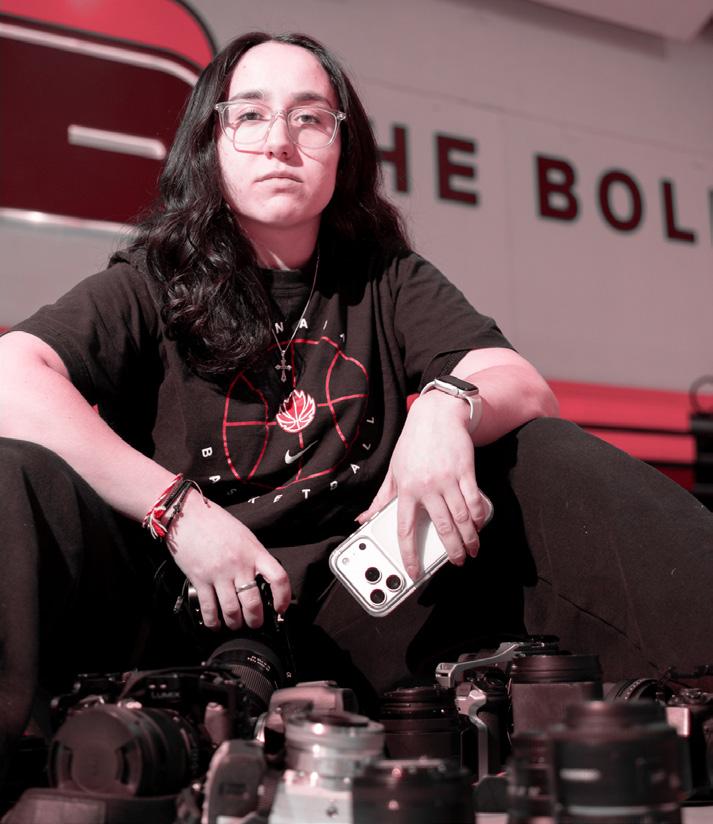
Less than a year after graduating from TMU’s media production program, Magdalena Grammenopoulos is working full-time as a content and communications coordinator for Canada Basketball, the country’s national organization for basketball.
Having interned for the organization during her final semester at TMU, she was able to transition into a full-time position last spring. She shoots photos, creates graphics and edits video for their social media pages and also helps lead brand marketing strategy.
Her path into the industry started on campus. During her time at TMU, Grammenopoulos worked as a videographer for the Bold, an experience she said was advantageous.
“My time at TMU and working with [the] Bold allowed me to try new things as a creative, step outside my comfort zone, expand my horizons and meet a lot of people who ended up being valuable connections,” said Grammenopoulos.
She said she had never worked in sports a day in her life before applying for the Bold videographer job and she understands the feelings of fear and uncertainty amongst young creatives.
“Even if you don’t feel like it’s something you’ve ever done before so you’re kind of
scared…just try to put yourself out there. You’ll never know what doors it might open,” said Grammenopoulos.
Now having gotten herself through the sports door, Grammenopoulas hopes to offer representation to fellow women-identifying creators. “I want to be as much of an inspiration as I can to girls and women who are trying to work in sport,” she said. “It can be a little bit scary, especially as girls, if you don’t see as many people in those roles that you want to work in.”
Josh Kim is a 2024 sport media alum and is currently the team photographer for the PWHL’s Ottawa Charge and a live social contributor with the NHL. Before landing these jobs, Kim’s sport media expertise was developed at internships and through personal projects.
During his third year at TMU, Kim interned as a story editor for SportsCentre where he would clip highlight packages together for the show’s program on TSN. He later completed similar internships with BarDown and Sportsnet, creating and producing content for the networks.
Kim spent his final year working with Grammenopoulos to produce a 10-episode docuseries titled, Order of Business, which followed the Bold men’s hockey team throughout the 2023-24 season.
“A lot of work went into that. [Grammeno-
poulos] did a lot of the heavy lifting on the editing side because she’s much more well-versed in video, but that was a proud moment because we poured a lot of hours into that project,” said Kim. “Seeing it all come together and how well received it ended up being was great.”
Just like Kim and Grammenopoulos, current students are carving out their paths in the industry.
For second-year sport media student Liam MacLean, spare time and a desire to learn a new skill kickstarted his journey.
MacLean’s entry to sport media dates back to his high school years when he was growing a fan page on the Seattle Mariners on Instagram. Having built a portfolio with posts he designed for the account, MacLean was able to land graphic design positions at TSN, BarDown and the TMU Bold shortly after starting his first year.
MacLean said connecting with fellow creatives already versed in the industry “snowballed” him into various work opportunities.
“There’s always a need for graphic design in the industry. Everybody needs graphics and if you have those skills, it’s useful to pretty much just about anybody,” said MacLean.
With files from Hannah Thompson. Read
By Francesco Cautillo
For me, sports have always been a necessity rather than a choice. What started as a method implemented by my parents to teach me teamwork and discipline, turned into an addiction that has been at the forefront of my life for as long as I can remember.
With my father being raised in Toronto and my mother in Montreal, watching Leafs-Habs games were some of my earliest memories of the game of hockey—a tradition that still remains in the Cautillo household. Although I didn’t support either of my parents’ teams (Go Sharks!) , I remember seeing the superstar players and, like every other young boy my age, dreamed of playing professionally one day.
My father was my first coach, teaching me everything I’ve ever known about the game. We would sit on the basement couch and watch the Toronto Maple Leafs play, taking turns predicting both teams’ next moves. On occasion, he would allow me to stay up past my bedtime to watch the San Jose Sharks play in California at 10 p.m.
During weekends, I would get up at 6 a.m., rush downstairs and play floor hockey, practicing plays I hoped to use that afternoon in my own games, while being serenaded by the Sportsnet highlight packs from the night before.
Before hitting the ice, my father would make me recite the three rules he believed were the key to enjoying the sport of hockey to its fullest: always have fun,
listen to the coach and try your best.
For the next 13 years, my energy, schedule and friendships revolved around the thing I loved most in the world. Every week, my parents would, “divide and conquer,” as we called it—alternating between taking me and my brother to countless games, practices and tournaments. No matter how hard that balancing act would get, or how nervous or exhausted I would be before games, every uncomfortable feeling would leave me the second my blade touched the ice.
My dream was always in the back of my mind, unaware of its impending finish.
As a white male playing the sport, my hockey experience was easier than others’ who didn’t fit the game’s toxic monoculture. However, I still held an unsuitable resume for my large aspirations. As I approached my mid-teens, I began to realize I was too short, too weak and simply too late to achieve any goal of playing professionally. At this point, another thought creeped into my mind: the nightmare of becoming like every other washed up athlete who became unfit for their sport.
The hardest thing any athlete will do in their lives is take off their jersey for the final time, stuffing it away in a closet to collect dust. For a little while, I lived life without hockey, becoming more and more aware of the game’s hierarchy and the exclusive community it bred.
Despite continuing to closely follow the NHL and news within the league, other sports like soccer and American football be-
By Jonathan Reynoso
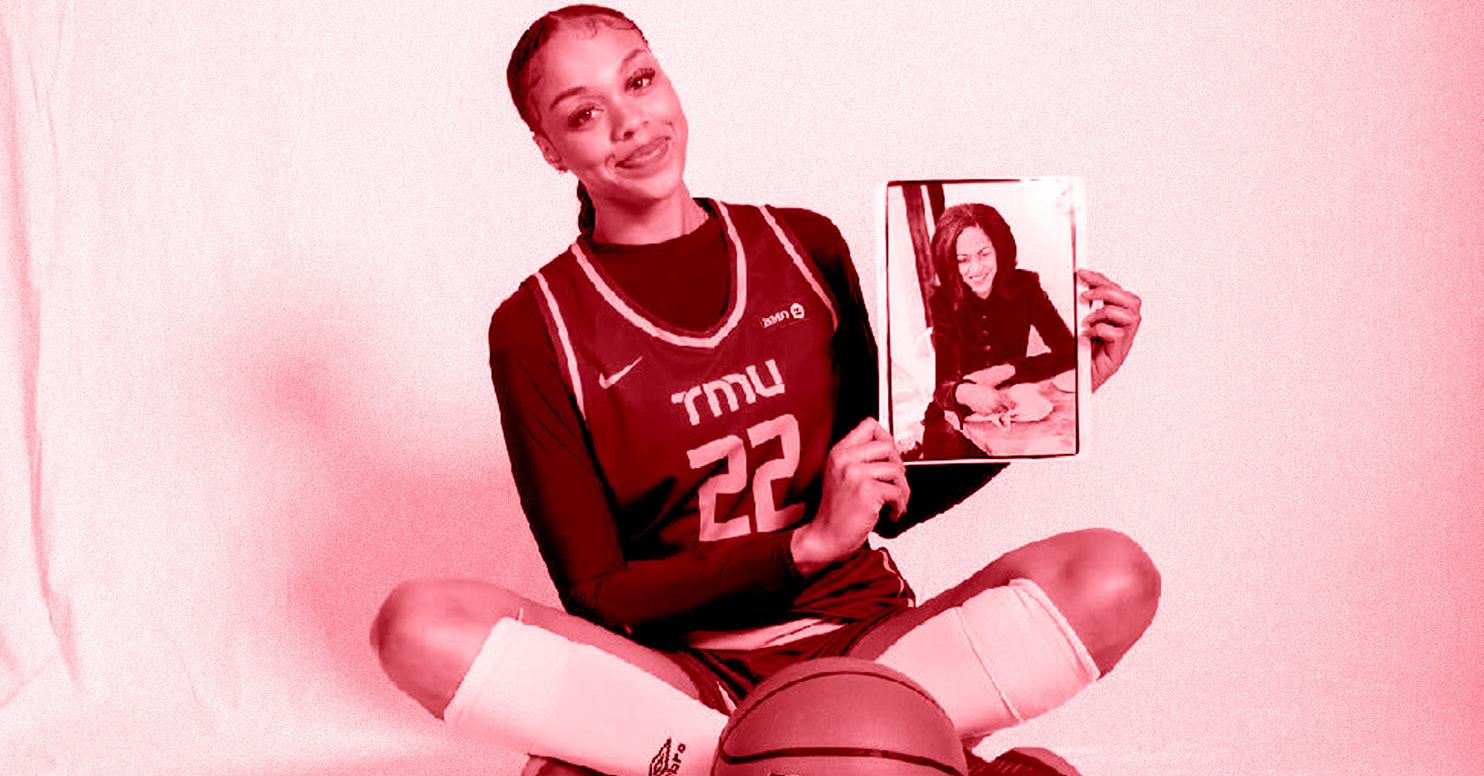
Expectations follow a person throughout their life, whether from others or from themselves—there is a constant battle to prove that they belong. From moving to the U.S. to play college basketball at the age of 17, to returning to Ontario University Athletics (OUA) at 28 to pursue a national championship, Toronto Metropolitan University (TMU) Bold women’s basketball forward Eternati Willock has continued to exceed expectations.
Coming out of high school, she was touted as one of the best prospects in North America, being ranked 59th on the 2016 SportsCenter NEXT 100, a list that featured names like Sabrina Ionescu and Crystal Dangerfield. The precedent was set early for Willock.
As a highly ranked prospect, there were presumptions Willock had to deal with, mostly in regards to her performance on the court. She felt the pressure, she said, often looking to those closest to her for comfort when she had downtime.
“I was just hanging out with my friends and seeing family and just taking the time and moments for myself to recover and not think about it too much because it was a lot,” she said.
It was not long before Willock made her mark on the National Collegiate Athletic Association (NCAA) as she was unanimously chosen for the 2017 Big 12 All-Freshman Team.
After almost a decade and three teams later, she is still having an impact on the court, recently helping push TMU to a Critelli Cup championship and a nationals appearance.
In this stage of her career, Willock said her

came more prevalent in my life and hockey simply remained ‘part of the bunch.’
That was until the 4 Nations Face-Off came around in February 2025, and my passion for the game was reinvigorated.
During the final between Canada and the U.S., while all my friends were out at sports bars, I decided to stay home and watch the game with my dad. That night turned into the two of us—joined by my younger brother and my best friend, who had discovered a recent eagerness for understanding the game—spending hours in collective excitement and anticipation.
As overtime beckoned and the puck reached Connor McDavid’s stick, my dad and I simultaneously called “game,” predicting the goal as we had countless times before.
As the country united as one, I came
across a revelation: the epitome of sport is not found at a professional athletic level but rather, the uniqueness of its enjoyment. The only thing more powerful than an athlete’s dedication to their game is a beginner’s discovery and passion for learning the sport.
As often as I can, I make the effort to take my two best friends to the rink to coach them. Both of them are immigrants, one from India and the other from Venezuela, and I’ve seen them fall in love with the game the same way I did, improving with every session. That, for me, is sport at its simplest form.
Sport has no resume or requirements. All that’s needed is three rules. If you love the sport, listen to experts of the game and make an effort to continuously learn and grow, then you are just as much of a fan or player as anyone else.
SUPPLIED BY: ETERNATI WILLOCK
attention to detail when it comes to taking care of her body has become ever so important. She often finds herself making sacrifices to sustain herself throughout the season.
“You have to roll out. You have to eat properly. You have to not go out to that one party because you have to stay home and stretch,” said Willock. “There’s certain things you have to do because when you don’t do it, it definitely wears you down.”
Barring any setbacks in health, the peak performance of female athletes generally apexes around ages 25 to 28, commonly known as a “prime.” As Willock approaches the end of her prime, her post-game and post-practice regime have become more important, especially as she lives with a sickle cell trait, meaning she carries or has inherited a single copy of the gene that causes sickle cell anemia.
Even though she doesn’t necessarily have the disease, she said it still has an effect on her athletic ability.
In her time at TMU she’s been able to receive the proper care she needs to perform on the court, receiving patience and attention from team staff who make sure she stays on top of her training and preparation.
“It’s hard. I just have to stay on top of it,” said Willock. “Starting workouts or when starting out on a new team in general, it takes me longer than everybody else to get back within it.”
Willock recalled her recent experience at the U Sports Championship in Laval, Que., and her conversation with strength and conditioning coach Serra Henderson, where she felt the toll of missing certain workouts to prepare her for the physicality of the game.
“I was on the court and I was like, ‘hold on,’
my lungs were burning. I was like, ‘oh my gosh, [Henderson], we forgot to do extra workouts and I could feel it,’” she said. Navigating her condition, balancing her undergraduate degree in early childhood education and competing at such a high level is a task few experience.
According to Stats Canada, the average age of a student that completes their undergraduate program is 25, while the National Library of Medicine mentions that the average age of Division 1 women-identifying athletes hovers around the age of 20.
Despite Willock being on the older side of these spectrums, she doesn’t allow her age to limit her drive to compete.
“I think it’s just breaking that barrier. Because I feel like there’s no limit for anyone to stop playing basketball,” said Willock.
Willock witnessed others in the basketball space around her moving on to other ventures in life, starting families or beginning new careers, making her “have that thought” if she should continue to play or not.
Being in the role she is now, she has become an inspiration to her peers to get back into the sports they love, recognizing there is much more left for her within the world of basketball.
Along with playing for her late mother, Willock said her love for the sport drives her to inspire a new generation of hoopers, preaching the message that there’s no singular route to success.
“I want to show little girls that there’s not one straight path to playing basketball or achieving your goals when it comes to being an athlete, or a student athlete at that,” she said.
Willock also attributed her love of basketball and her push to continue playing at a high level to the support systems in her life. From her Bold teammates to her family back in Scarborough, Ont., these aspects of her life are what “keeps [her] going.”
In her constant pursuit to defy the odds and being supported by everyone behind her, Willock emphasized taking it one day at a time and sticking to your passions regardless of what anyone says.
“Don’t be afraid of what people say. People are always going to have something to say. Everyone always has something to say,” said Willock. “So as long as you know in your heart that this is your path, this is something you want to do, and this is something you’re passionate about, keep doing it.”
By Courtney Powers-Luketić
Disclaimer: One of the sources, Gabi Grande, is a previous contributor with The Eyeopener. The writer has previously taken RTA 233 with Shireen Ahmed, another one of the sources.
Students at Toronto Metropolitan University (TMU) are keeping their aspirations of working in the sports industry alive with guidance from sports journalism professors.
TMU has a long history of developing sports industry titans. With a decorated roster of alumni such as Jamie Campbell, Martine Gillard and Cabbie Richards—all of whom have grown huge presences in sports broadcasting since graduating—who are the people behind the sports professionals machine today?
As two big hitters among sports journalists, Shireen Ahmed and Sonny Sachdeva are media instructors at TMU who work to educate the next generation of sports industry moguls.
Sachdeva has been with Sportsnet for nearly nine years and has been a staff writer for the last five. He works within RTA Sport Media and has taught RTA 433: Social Issues in Sports as well as RTA 233: Sport Journalism.
Being surrounded by professors in his personal life, Sachdeva said teaching always interested him and was a natural course in his career.
“My partner is a professor. We spend a lot of time talking about teaching and her philosophy of teaching,” he said.
Sachdeva said he remembers how hazy it was as a young journalist trying to find his path—he believes teaching allows him a platform to work with young writers and share his experiences.
Ahmed has been a senior contributor with CBC Sports for the last five years. She describes herself as a sports activist and journalist whose work focuses on the “intersection of race and gender in sports.”
Ahmed’s journey as an educator was less straightforward than Sachdeva. “I never considered teaching,” she said.
After completing her Masters of Media Production in communications and media studies at TMU in 2021, her supervisor asked whether she would be interested in teaching.
Though Ahmed said she had experience teaching kids before, it was “absolutely not [her] jam.” Despite this, she took a chance and began teaching the Sport Journalism course online during the COVID-19 pandemic.
Two years after beginning her teaching career at TMU, she was asked to take on the role of lead instructor for the course.
Read more at theeyeopener.com
By Noah Curitti
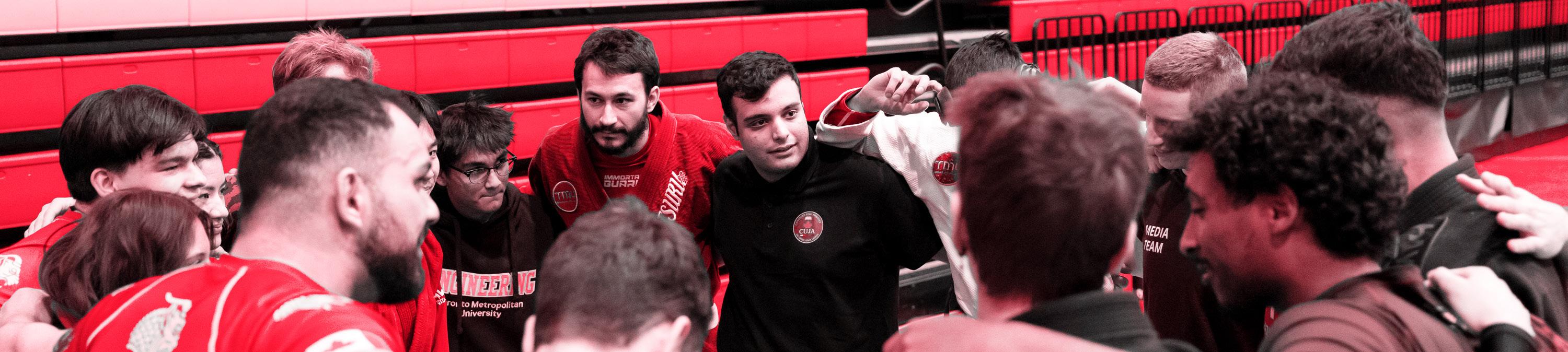
In Brazilian jiu-jitsu (BJJ), there’s a concept called “physical chess”— meaning every move leads to a result, says Shervin Akhlaghi. For the fifth-year civil engineering student and creator of the Toronto Metropolitan University (TMU) BJJ Club, one move led to a major breakthrough for the Canadian university BJJ scene.
On March 14, the first-ever Canadian University Jiu-Jitsu Championship (CUJC) was hosted at the Mattamy Athletic Centre (MAC), on TMU’s campus—an achievement made possible by Akhlaghi. He says the event marked a turning point for BJJ, elevating it from a campus activity to a national competition.
Akhlaghi’s own connection to BJJ is rooted in his heritage and a drive for self-improvement. He started training and competing in jiu-jitsu tournaments across Ontario three and a half years ago. In these competitions, he met university students who shared his passion for the sport and learned about the different clubs across Canadian universities.
Akhlaghi also points to the diversity of the sport. “I’m Iranian myself,” he said, noting the country’s ancient history with wrestling, a cultural perspective he tries to bring to jiu-jitsu.
“We have people from every corner of the world: Georgians, Russians, Brazilians. It’s a melting pot shaping the future of Canadian jiu-jitsu.”
As a blue belt with two stripes, Akhlaghi’s ability has grown from raw strength to strategic intelligence. The second of five belt ranks, the blue belt introduces advanced techniques and more refined defensive skills. There are multiple stripe stages within each belt level. Four stripes must be acquired to graduate from the blue belt.
Chaim Grafstein, a coach at TMU BJJ, remembers Akhlaghi’s early days. Shortly after he started training, “it became obvious he had a real capacity to understand and
The Eyeopener is giving away two $25 gift cards to Uber Eats Find the giveaway rules through the link in our Instagram bio.
1. Complete the maze! Only 100 per cent accurate puzzles will be accepted.
2. Complete the Google Form via the QR code on the page and add a photo of your completed crossword!
grow as an athlete,” said Grafstein. “He wasn’t just hardworking, he was really intelligent. He was studying engineering, participating in Model [United Nations (UN)] and always talking about politics and current events.”
That mix of skill and intelligence shaped Akhlaghi’s approach to the sport. He caught on quickly to attacking from the mount position, which was taught to him by Grafstein, so much so that training partners began to, playfully, complain. He was too strong to move—not because of physical strength but because Akhlaghi effectively used the mount position. Grafstein says, “that development in jiu-jitsu reflects Shervin’s overall growth in his training and in the sport.”
Akhlaghi’s journey into leadership began when he realized that, while lots of university students were passionate about jiu-jitsu, many could not afford to participate. In the GTA, training fees often exceed $150 per month, a high price for the average student. Akhlaghi sees this not only as a financial gap but as a community failure. He says this is why he decided to create TMU BJJ. Akhlaghi pitched his idea and began the process of creating a recreation club. “The goal was to promote BJJ on the TMU campus and give students access to affordable martial arts.” He volunteered to teach the classes himself, lowering the cost to $65 per semester or $100 for two semesters.
The lower cost made the sport more accessible at TMU, he said. Shelby Mawson, a second-year student at TMU’s Lincoln Alexander School of Law who had previously trained in mixed martial arts, says they were immediately interested in the club after meeting Akhlaghi.
Mawson says that Akhlaghi introduced them to an aspect of their TMU experience that never would have happened. “Shervin’s passion for Brazilian jiu-jitsu shines through everything he does. As a teammate,
3. Await an email! The form will close end-of-day on March 24 and winners will be contacted shortly afterwards.
SUBMIT HERE
he further invigorates my love for the sport and motivates me to be the best practitioner I can.”
Akhlaghi’s passion for the sport didn’t stop at TMU. Through various tournaments, he’s met students from the University of Toronto (U of T), Queen’s University, Wilfrid Laurier University and the University of British Columbia (UBC) who all echoed the same aspiration: an association of their own. Akhlaghi says he realized if these clubs could unite, they could create something much bigger for the sport.
The formation of CUJA was Akhlaghi’s most ambitious venture to date, he said. He sought to create a united voice for six initial schools: TMU, U of T, Queen’s, Laurier, McMaster and UBC. Akhlaghi notes that the endeavor of creating the national association, which is separate from TMU BJJ, was taxing.
“We reached out to the [Ontario University Athletics] and the response we got was that we cannot make this a varsity sport because the financial model doesn’t make sense,” Akhlaghi recalls. “Our dream was kind of shot dead.”
But rather than conceding, Akhlaghi put his Model UN background to use. “I learned how to navigate through administrative bureaucracy.”
The obstacles, he says, were immense. Funding was non-existent because the organization was too young to satisfy the paperwork requirements of major banks like RBC.
Finding a location was another hurdle, a planned event at TMU’s Kerr Hall Upper West Gym fell through due to institutional obstacles, he says. Yet Akhlaghi persevered, and was able to secure the backing of the Ontario Jiu-Jitsu Association and the Canadian Jiu-Jitsu Association, ensuring the CUJA would be a fully sanctioned nonprofit.
Grafstein said, “When Shervin pitched the idea of CUJA it seemed like a big challenge, but if there’s
anyone who can do this, it’s Shervin. He laid out every barrier that he anticipated and set up a plan to deal with them.”
Akhlaghi’s dedication helped secure a historic venue, Maple Leaf Gardens, now the MAC and home to TMU’s hockey, volleyball and basketball teams. He also nabbed a partnership with Hayabusa Fightwear for podium prizes.
He managed it all while keeping membership free for participating universities. Akhlaghi says this is about, “bringing everyone together, not making money off university students.”
As the inaugural CUJA competition approached, the atmosphere in the training rooms was electric. “Shervin’s creation of CUJA motivated us to train harder,” says Mawson. “It shifted our focus from recreational practice to competition. We’ve realized we are part of something bigger.”
The event marked the first of its kind in North America. For Akhlaghi, the milestone was bittersweet as he had to sacrifice his own spot on the mats to ensure the event ran perfectly.
“I really wanted to be a participant,” he admits. “But I needed to be fully present to make sure the CUJC ran smoothly.”
For Mawson, being part of the moment was a testament to the sport’s growth in Canada over the last decade. “For too long, BJJ has been relegated as a hobby martial art,” he says. “CUJA and the CUJC had the opportunity to show what BJJ has to offer to the broader academic community. It was a pivotal moment for the sport in this country, and it is only the beginning,” says Mawson.
The CUJC on March 14 made history. Akhlaghi’s legacy, stemming from passion and determination, was measured on the mats where Canadian university BJJ finally had a chance to compete on a national scale.
By Victoria Cha
“Hockey is for everyone” is a term that floats around the NHL on certain occasions—a declaration that the league seeks inclusion and respect for all. But as the world of hockey continues to spin and I continue to try existing within the space, my doubts on the validity of this phrase grow larger.
Another phrase I frequently encounter seems to ring more true: “I love hockey but hockey doesn’t love me back.”
Time and time again, hockey reveals itself for what it is—a monoculture tailored to a very specific identity. Every couple of months, we are shown a new instance of how the sport is unwilling to give marginalized communities a place to thrive without harm.
A joint initiative amongst the NHL, AHL and East Coast Hockey League, Hockey is For Everyone aims to, “make the sport a more inclusive and safe environment for all players and fans.”
But that doesn’t seem to be the case. Not when discrimination is a continuous occurrence and players so freely make or support remarks that create a stark divide between who belongs and who doesn’t.
In a December 2025 episode of their podcast, NHL-playing brothers Matthew and Brady Tkachuk exchanged remarks about women hockey fans. In a broader discussion about people outside of the NHL using hockey terminology, Matthew said, “[There’s] nothing worse than when girls call a player by their nickname. That’s just fucking weird to me.”
But what is so weird, so foreign about a woman who simply knows as much as any other dedicated hockey fan? It seems women can never do anything right. Even when we can “name five players” to prove our validity as sports fans, it’s still not enough. We still get laughed at.
More recently, after their Feb. 22 gold medal win at the 2026 Winter Olympic Games, the U.S. men’s hockey team took a call with President Donald Trump who invited them
to the White House. Following this, Trump joked, “I must tell you, we’re going to have to bring the women’s team, you do know that.”
Despite being the first of the two U.S. hockey teams to win gold during the Games, the women were not only an afterthought but something to mock.
Yet the locker room burst into immediate laughter. Not a single person in that room— not the fathers of young girls or husbands to strong wives—seemed to have an issue with the belittling of women.
It’s not just women who are pushed out.
Amidst the popularity of Heated Rivalry, a “noticeable spike” in anti-2SLGBTQ+ hate has been seen in school-affiliated hockey programs in Boston. This was something the Lawyers for Civil Rights Boston mentioned in a March 3 open letter addressed to Massachusetts Attorney General Andrea Joy Campbell.
The letter explained that increased homophobia may be, “a backlash to the growing visibility and popularity of the television series Heated Rivalry—and the resulting attention, commentary, and social media discourse it has generated around gay hockey players.”
As conversations that confront hockey’s monoculture become more prevalent, members of the sport only get more angry that its borders are threatening to widen. But what is the issue with diversifying the community?
In 2020, former NHLer and equality advocate Akim Aliu, who is Nigerian-Ukrainian, wrote in The Players’ Tribune, “the NHL’s title for their annual diversity campaign, ‘Hockey is For Everyone’ makes me crack up. Because, right now, hockey is not for everyone.”
Aliu’s words carry just as much truth today as they did six years ago. Ill treatment in the hockey world, from those who are safe within its borders, has only continued.
In January, Minnesota Frost forward Britta Curl-Salemme posted a video to her Instagram in collaboration with FIERCE Athlete, an anti-trans organization that, as per its website, “is here to help you realize who you were created to be, by God, as a true and authentic female athlete.” This was one of mul-
tiple instances Curl-Salemme received criticism for engaging with and promoting racist and transphobic commentary.
Women’s hockey is seen as much more inclusive than men’s hockey—the 2025-26 PWHL season saw 30 queer players hit the ice, while the NHL has never had an openly gay player compete. But that doesn’t mean the space is immune to discrimination.
Shortly after the U.S. men’s team locker room celebration went public, Ellen Hughes was asked to share her thoughts. Hughes is a former U.S. women’s hockey team member and a player development coach for the current team. She is also the mother of Jack and Quinn Hughes, both of whom were players on the men’s team in that locker room. In defense of their team, she said, “they care about humanity. They care about unity and they care about the country.”
But if they cared about unity, why did they laugh? And why is their behaviour, that so profoundly degrades women, so excusable?
Hockey grants acceptance only to those it was designed for. Research from the Sociology of Sport Journal explains that hockey is, “a white cis-male-dominated sphere that attempts to socialize young boys and men into traditional hegemonic masculine ideals.”
While these individuals can lavish in the
privilege and power the sport gives them, everyone else is left having to accept being treated like an outsider, simply for not fitting the status quo.
Addressing the criticism he received regarding his reaction to Trump’s locker room “joke,” Jack Hughes said, “people are so negative out there and they are just trying to find a reason to put people down and make something out of almost nothing.” Almost nothing?
For many, hockey, and this culture that excludes and discriminates them with little to no remorse, means everything. The “harmless” and “comedic” comments made by those who belong tell those who don’t they will always be different. Othered.
The lack of change within this culture begs the question: how can marginalized fans remain in the hockey community when they’re not welcome to begin with?
Right now, it’s up to them to create their own space in hockey. But when so many, especially those in power, make it clear they are unwanted, these marginalized groups not only have to navigate a fight for space but also their own sense of power to do so.
For now, we’re going to keep pushing the door open. We must. We know what real unity looks like, and we will keep fighting for it even when others don’t want us to.

By Eliza Nwaesei
Before watching Heated Rivalry, hockey was something Sadie Ptasinski, third-year Toronto Metropolitan University (TMU) media production student, was not particularly invested in. Though she was already following the Toronto Maple Leafs, watching the viral series in November 2025 sparked her interest
in the sport even more, and prompted a deep dive into the hockey world.
For some women-identifying students at TMU, pop culture is providing a new lane for them to explore growing interests and enter the world of sport.
“I felt like I would enjoy the show way more if I actually knew what was going on and what was at stake,” said Ptasinski. “I re-

member looking into how the [NHL] drafting process works and learning more about Sidney Crosby…and the more I looked into it, there’s a lot of interesting drama.”
Heated Rivalry has sparked widespread conversations about hockey culture, bringing in new fans but it’s only the latest example of pop culture influencing sports. Sports teams increasingly reference trending shows and books, famous musicians wear jerseys at concerts and sports romances are thriving on BookTok— a large reading community on TikTok. This crossover has brought in a new wave of fans, largely women, many of whom didn’t grow up in traditional sports environments.
For third-year creative industries student Qadra Rihdan, that bridge between pop culture moments and sports was what first drew her in.
“I never felt, as a woman, that I belonged in the hockey sphere”
“I’ll be honest with you, I’m going to keep it frank, like the ocean, I was not connected at all, not even a little bit,” said Rihdan about her involvement in the world of sports.
Rihdan jokes she was a stereotypical “girly girl,” painting her nails with markers, and although her family members played sports,
she said she didn’t understand the appeal. It was the fashion in sports that ultimately drew her in.
“Seeing a lot of different basketball players and how they dressed is what initially got me into understanding basketball and seeing it as something more than just a bunch of guys jumping up and down with stupid sneakers and a ball,” said Rihdan.
While music and television are often the first things people think about when discussing pop culture, fashion has also become a major part of the sports world. Athletes across leagues such as the WNBA, NBA and NFL use game day arrivals as a way to display their personal style.
More conservative leagues “steeped in tradition,” like the NHL, as the New York Times suggests, started the 2025-26 season with a removed suit-and-tie mandate, allowing players to dress more contemporarily. The overlap is also seen on global fashion stages like the Met Gala where athletes, such as Serena Williams and Lewis Hamilton, have become repeat guests.
As pop culture continues to intersect with sports, it’s changing the way people talk about them, according to Rihdan.
Read more at theeyeopener.com
TUESDAY-FRIDAY
12:00-5:00PM


Play, watch, and relax in our gaming area with Oakham Café takeout and Pub drinks!
No outside food allowed!