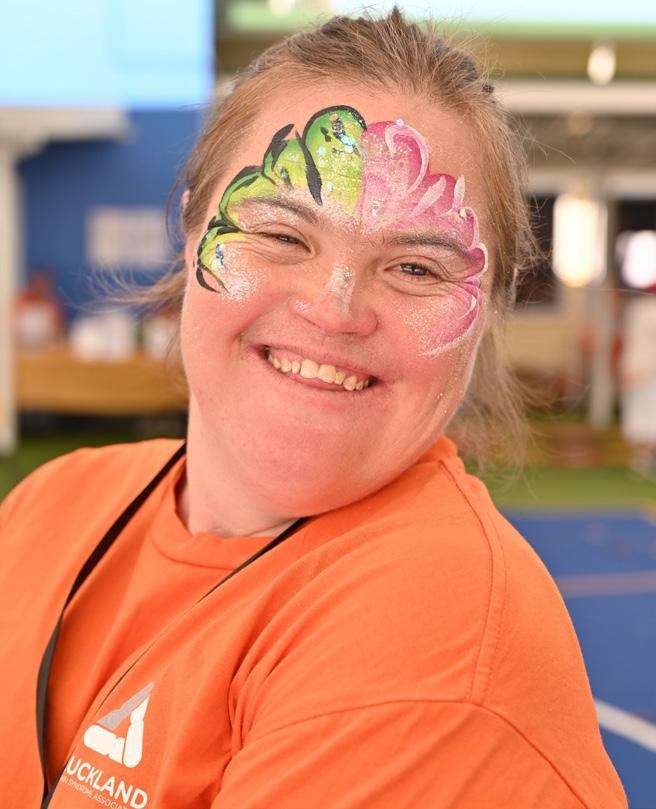
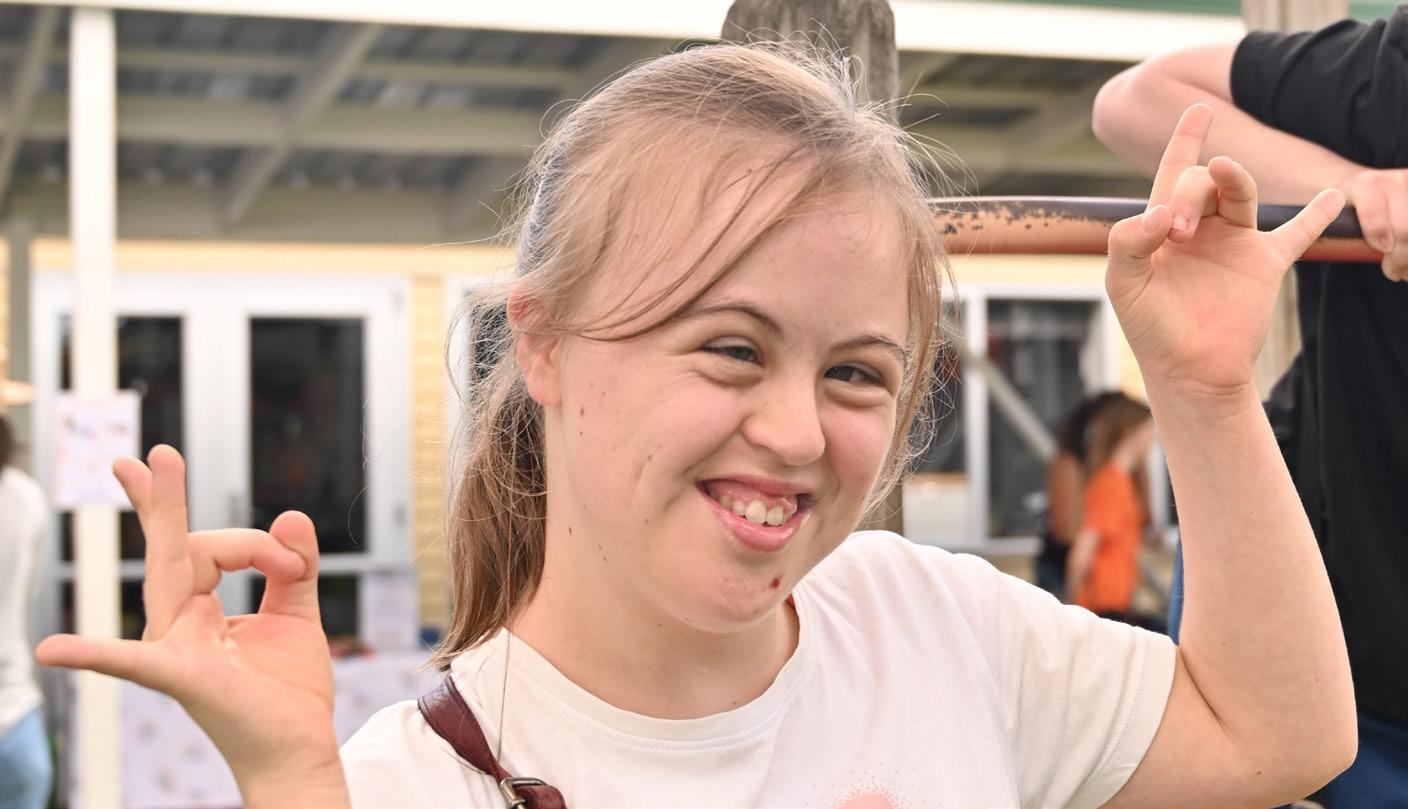
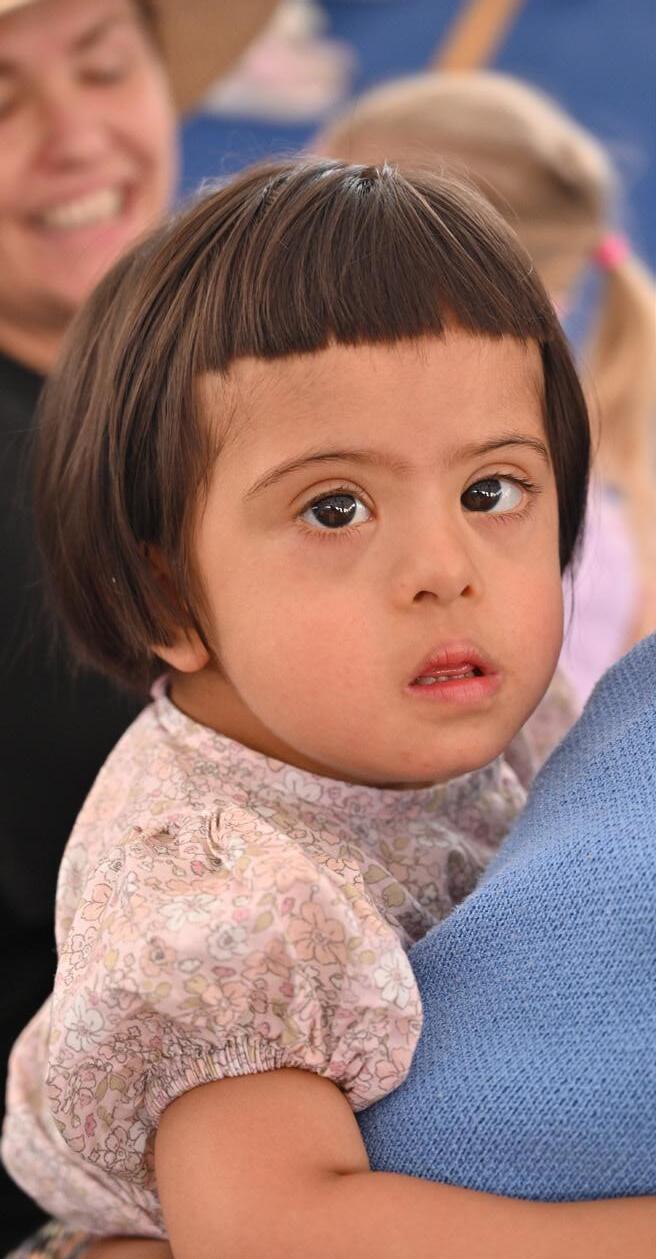
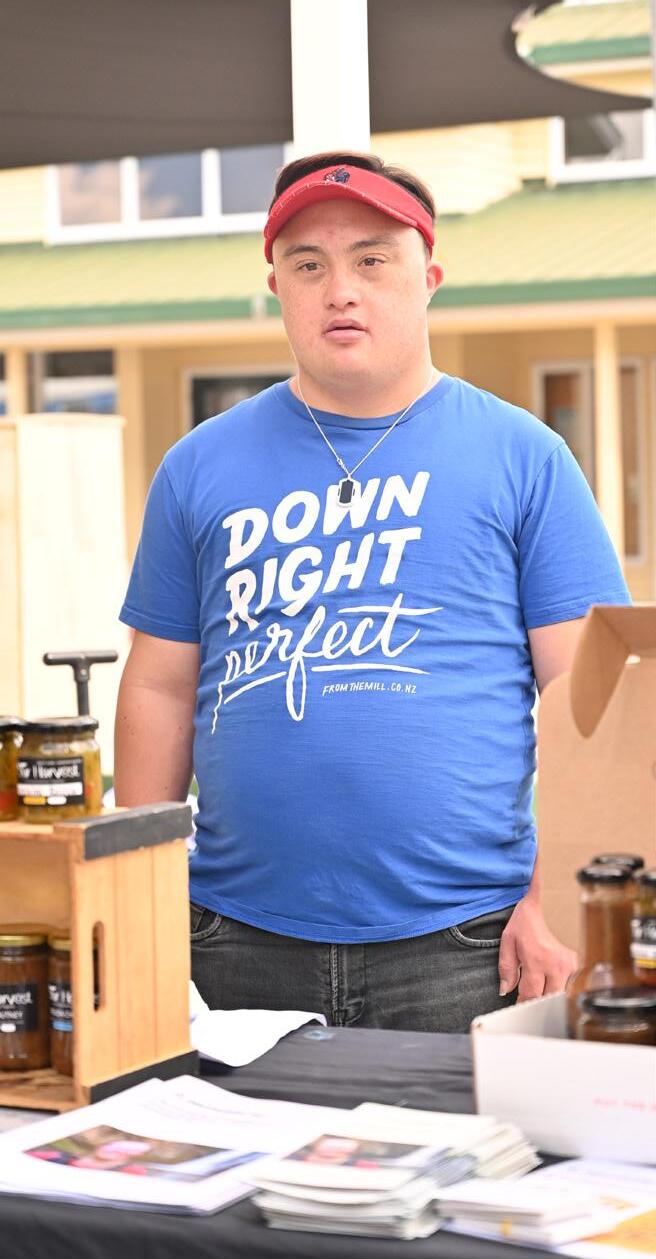
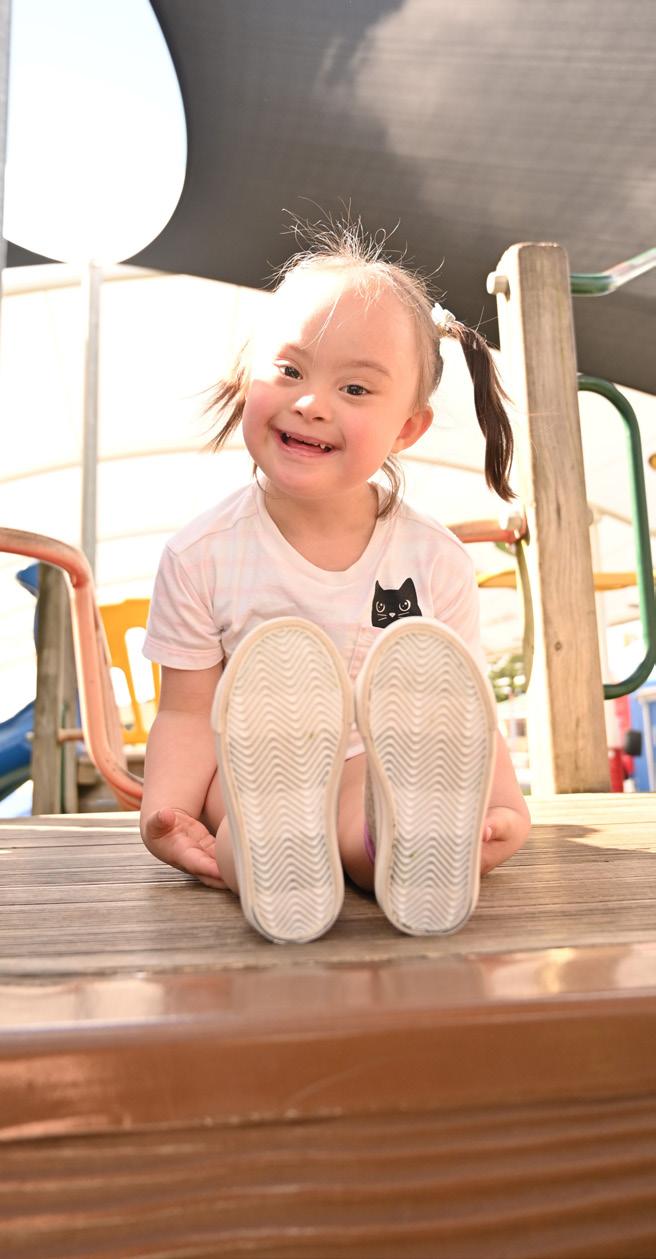
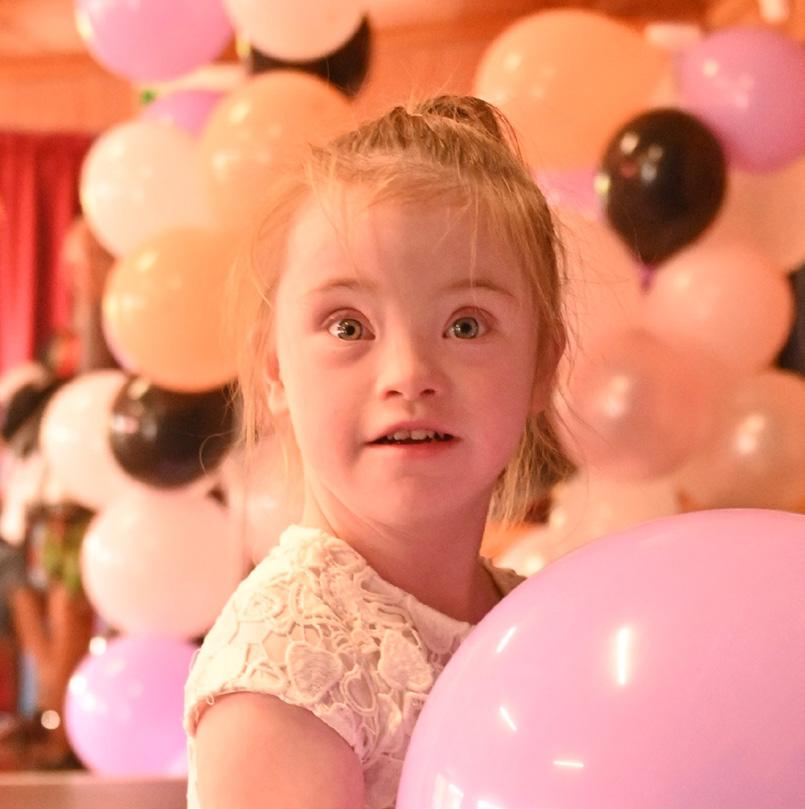
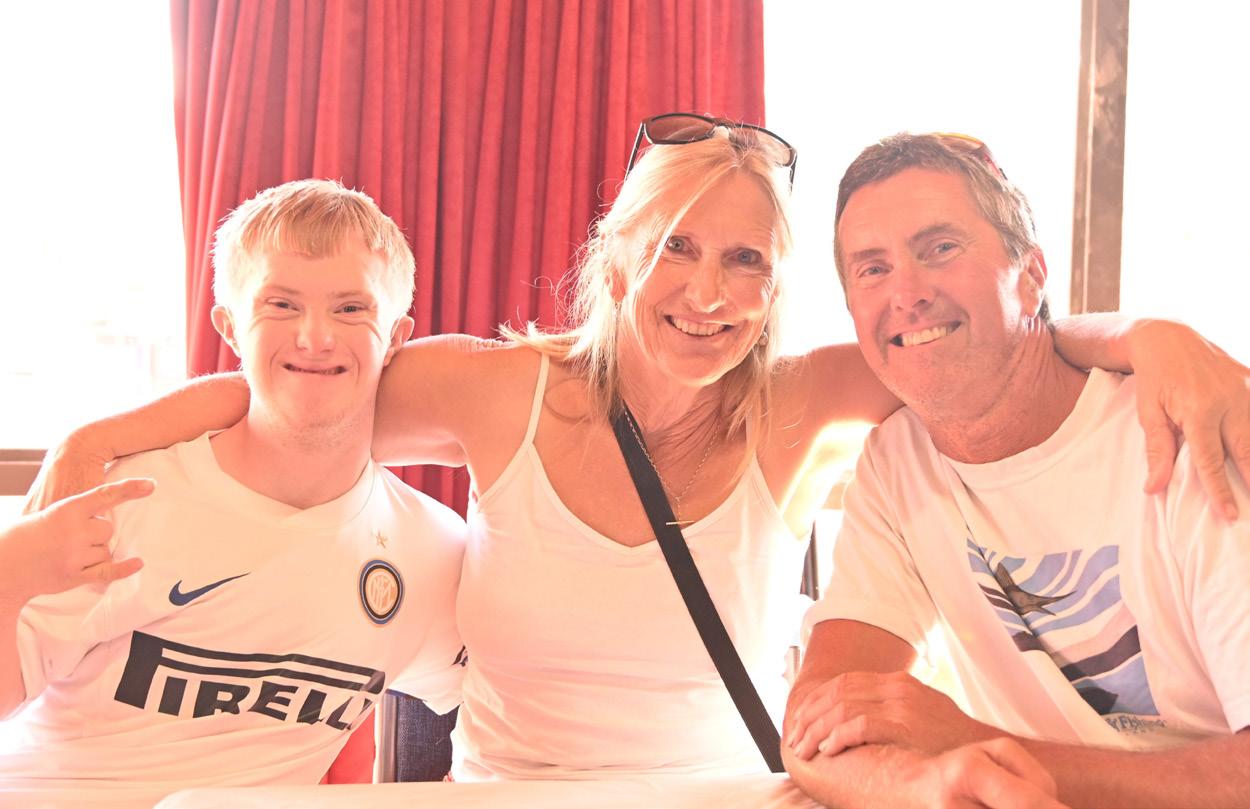
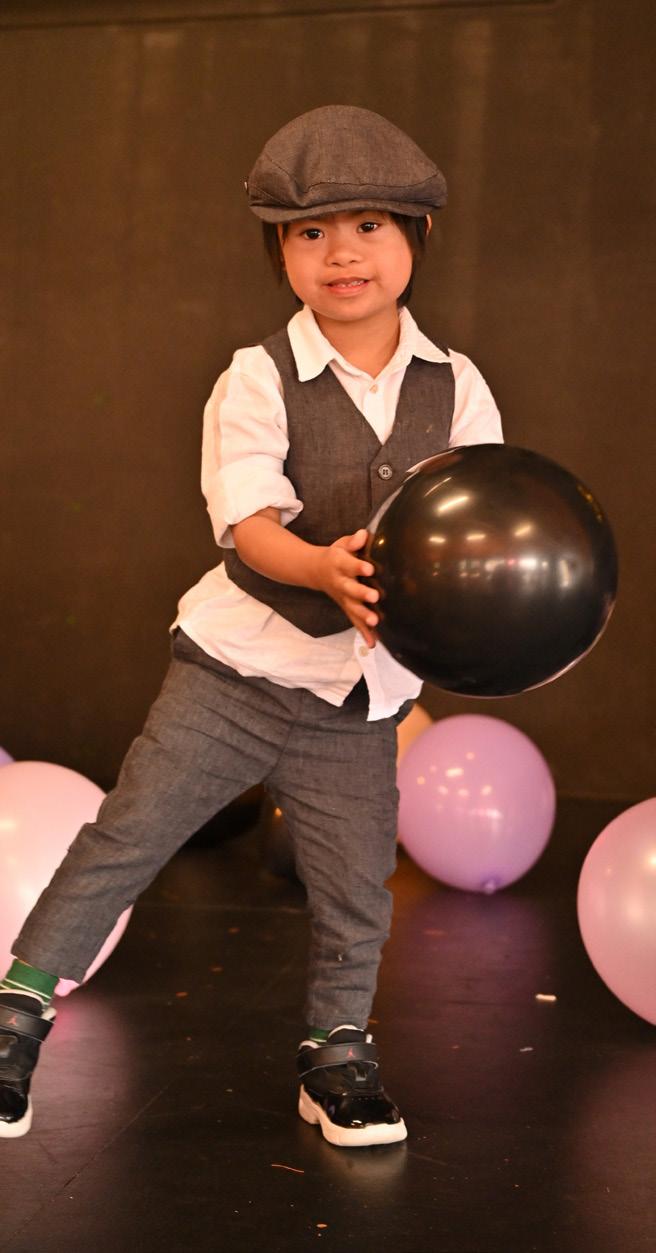
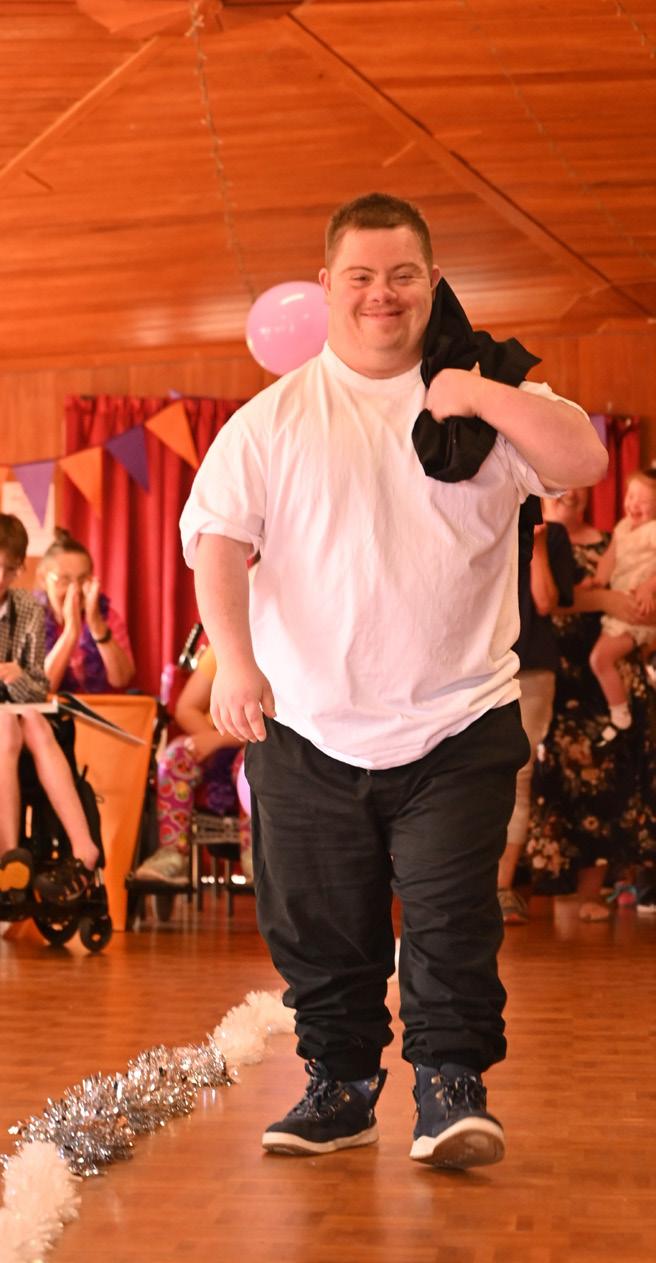
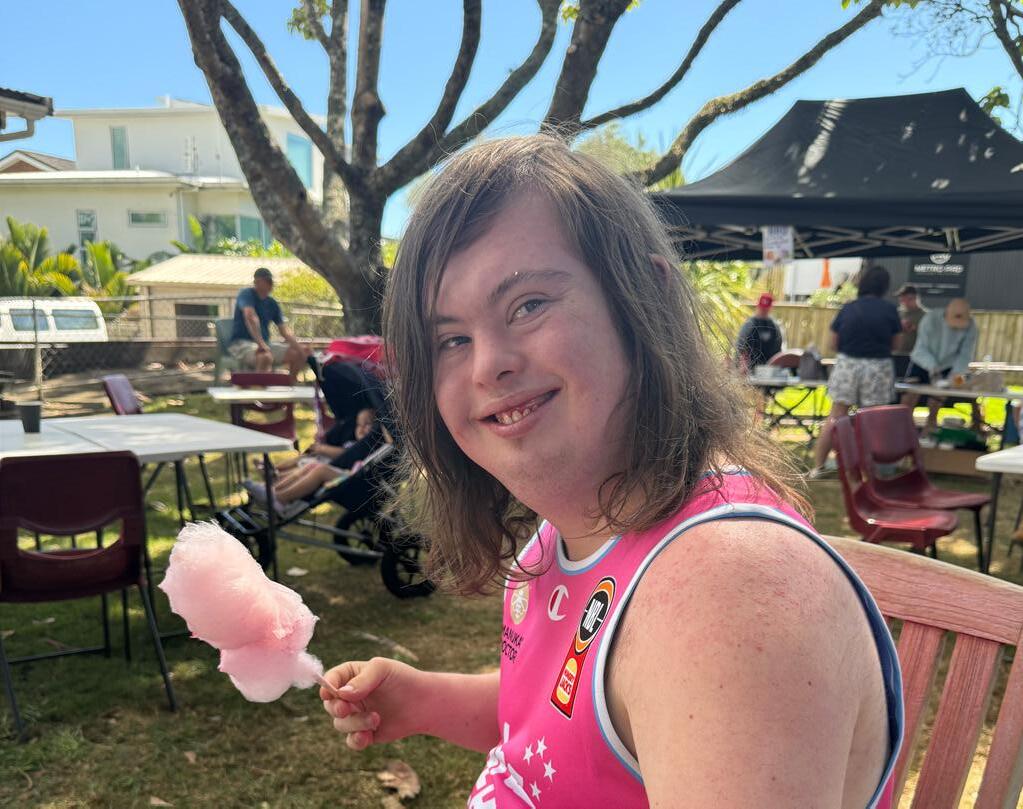
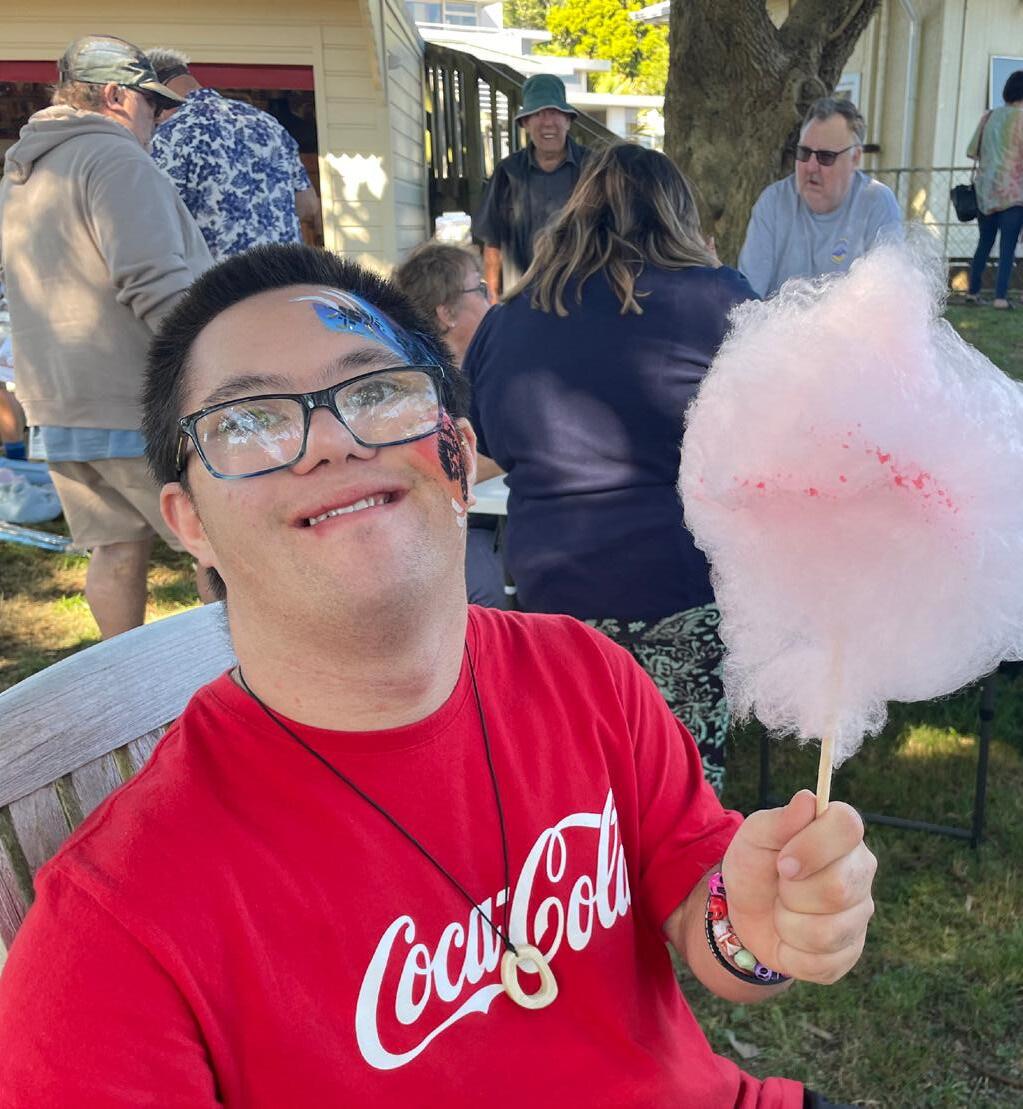
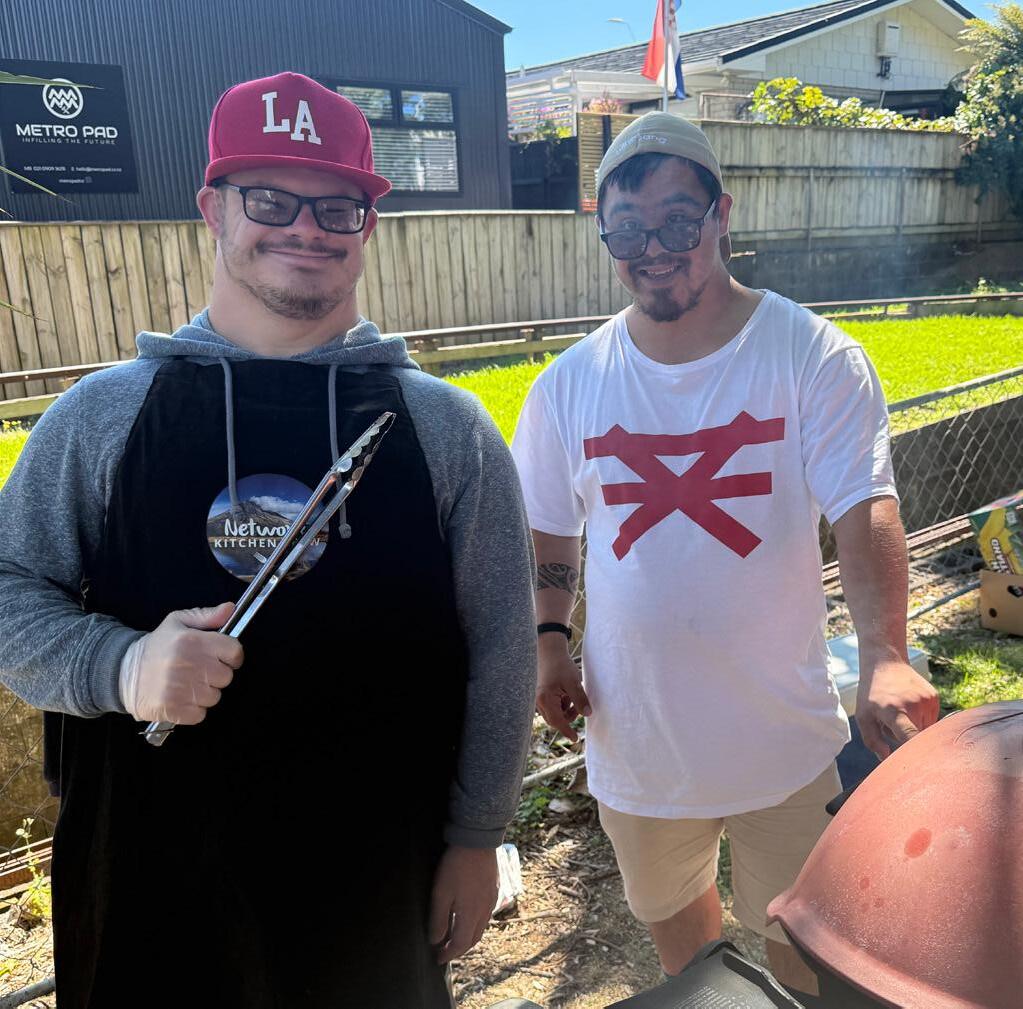
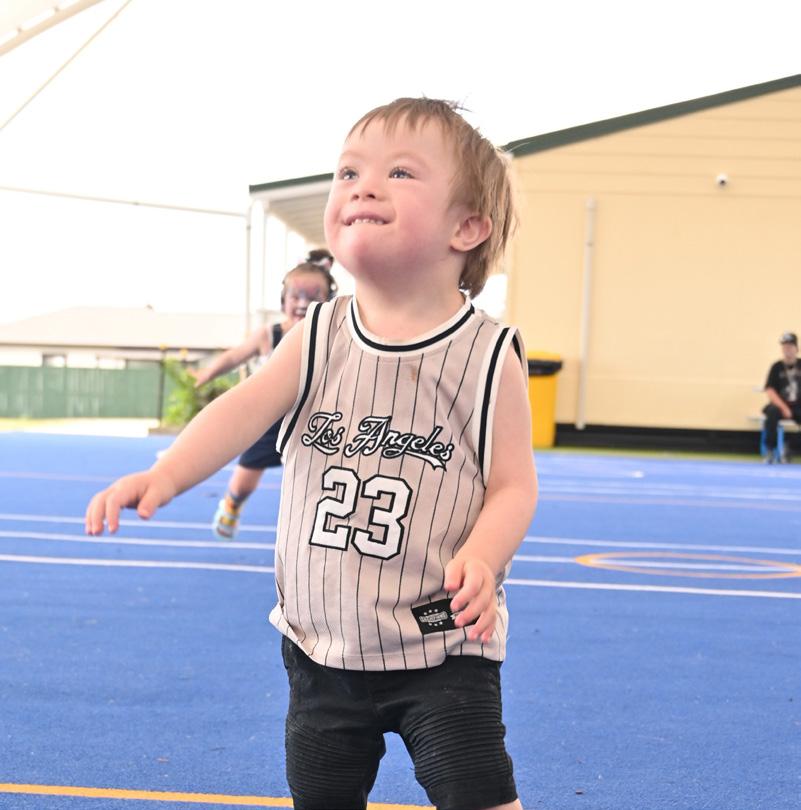
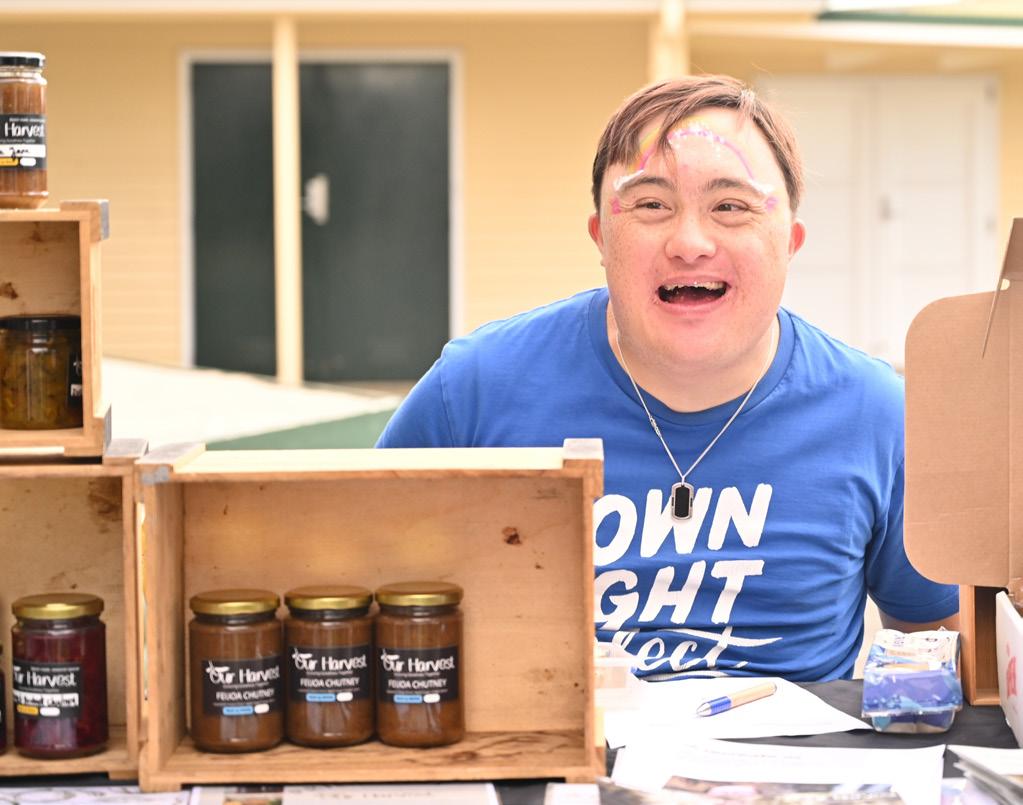
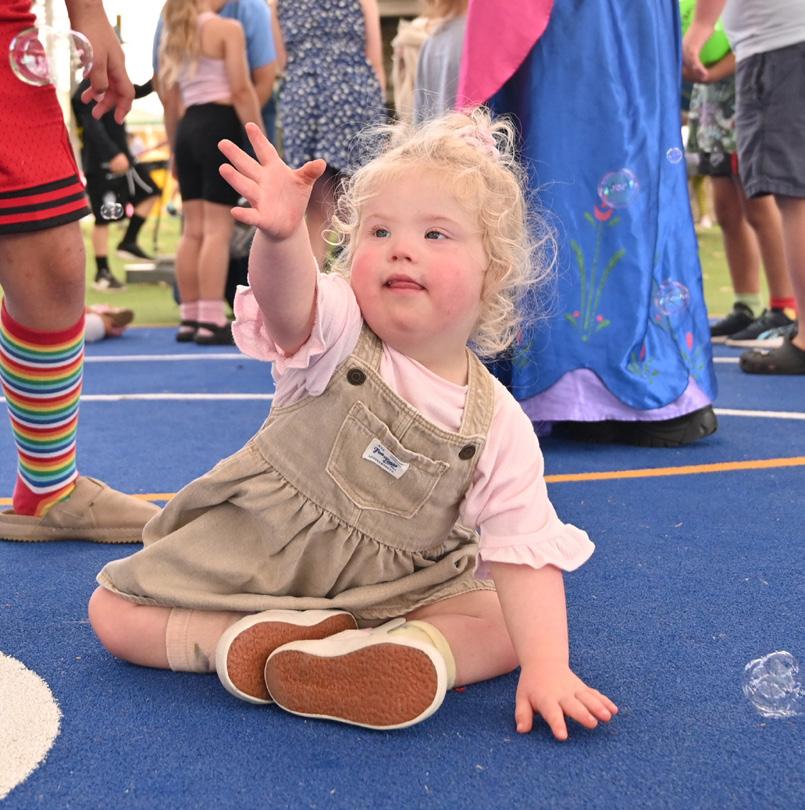
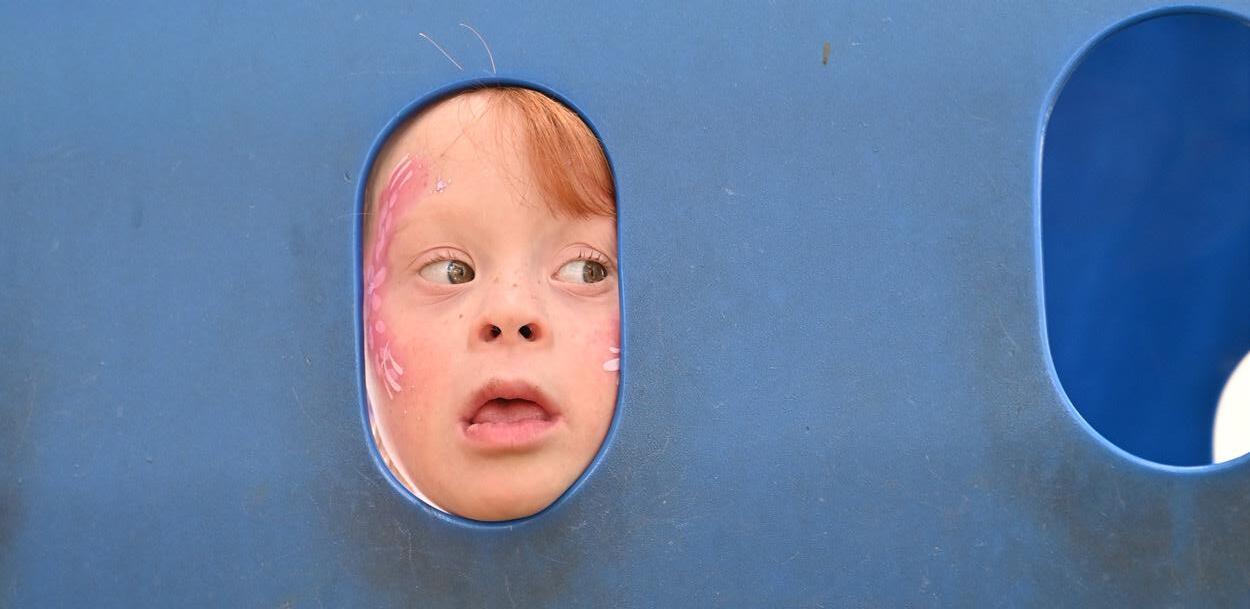
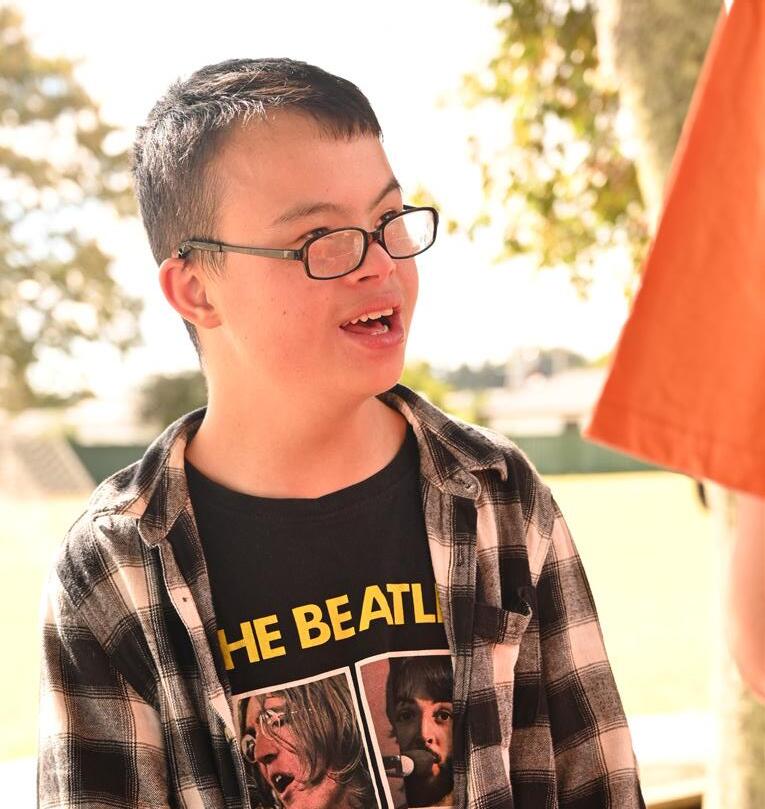
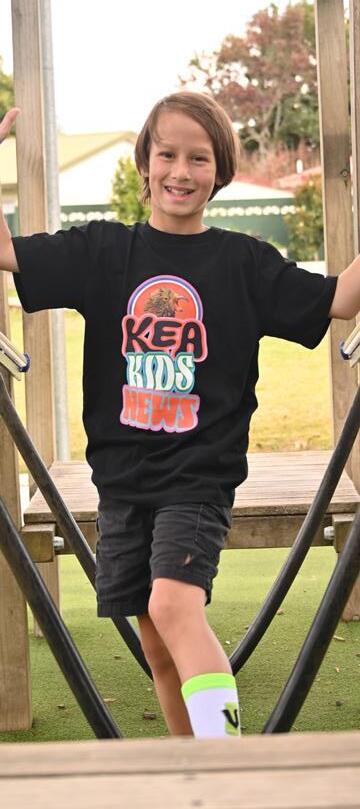
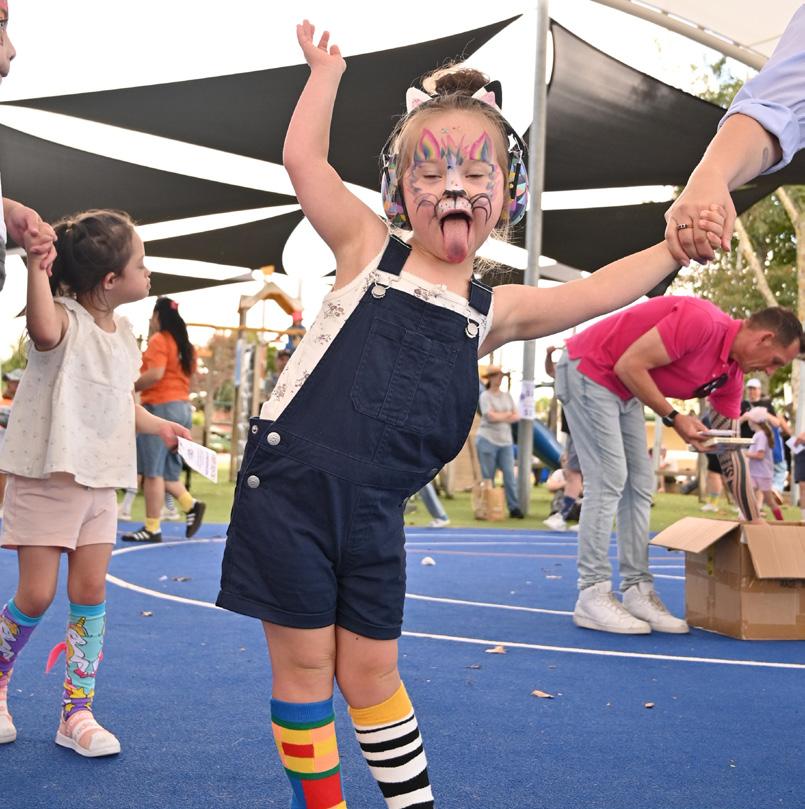
World Down Syndrome Day Coverage from around Aotearoa
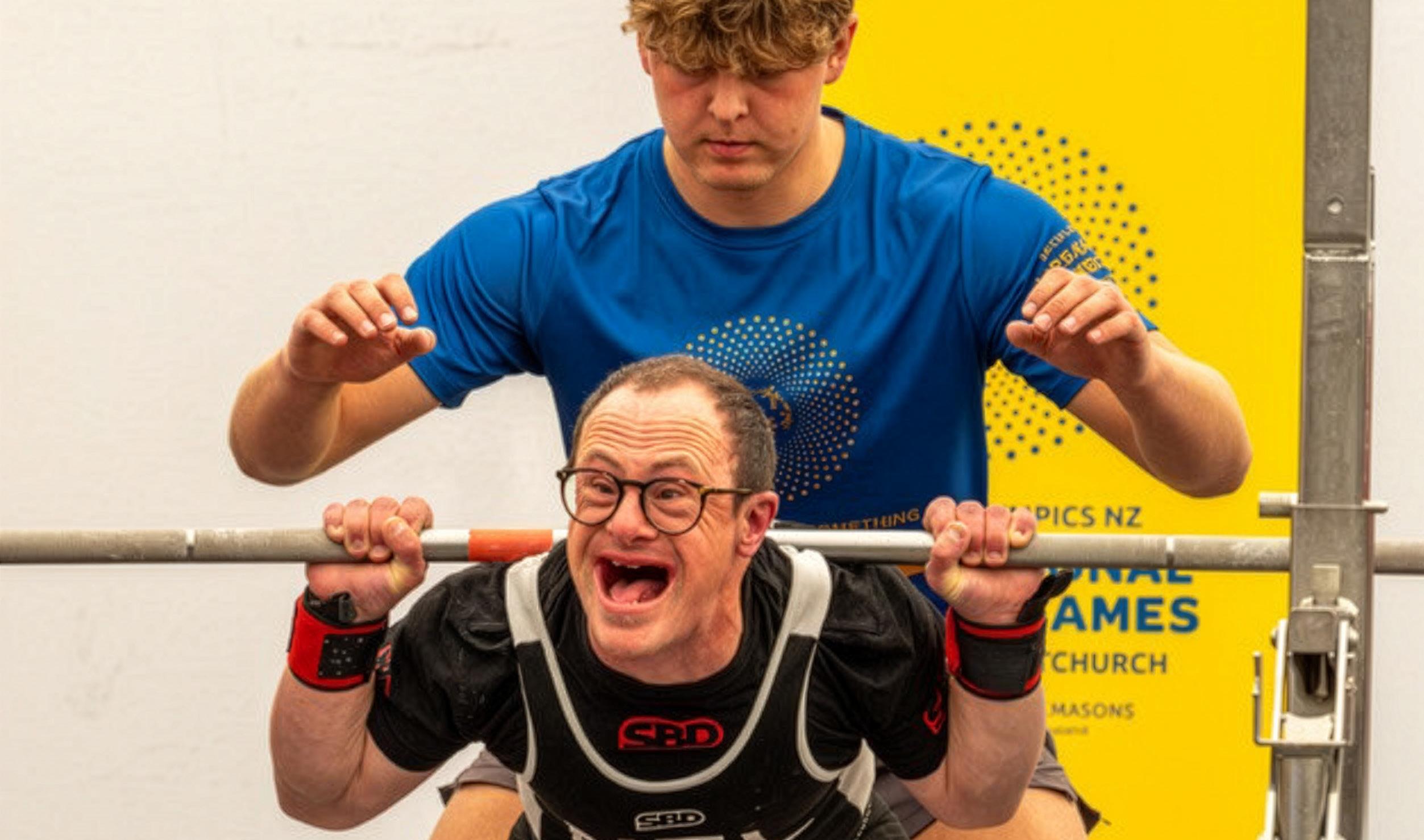
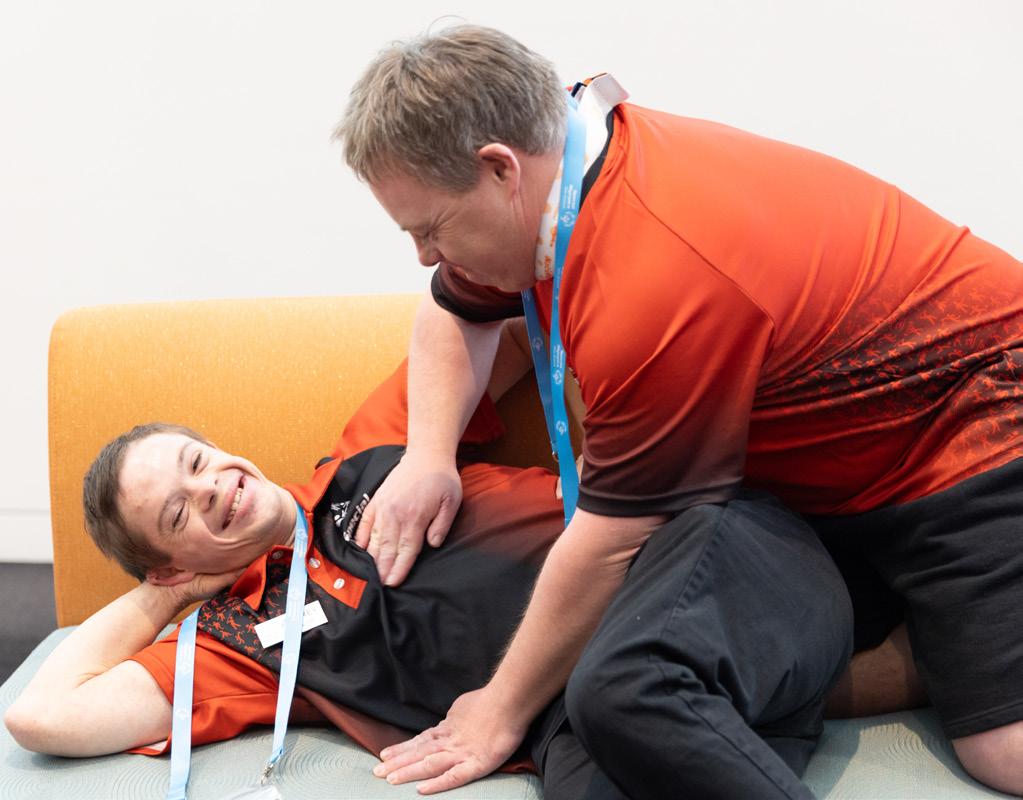
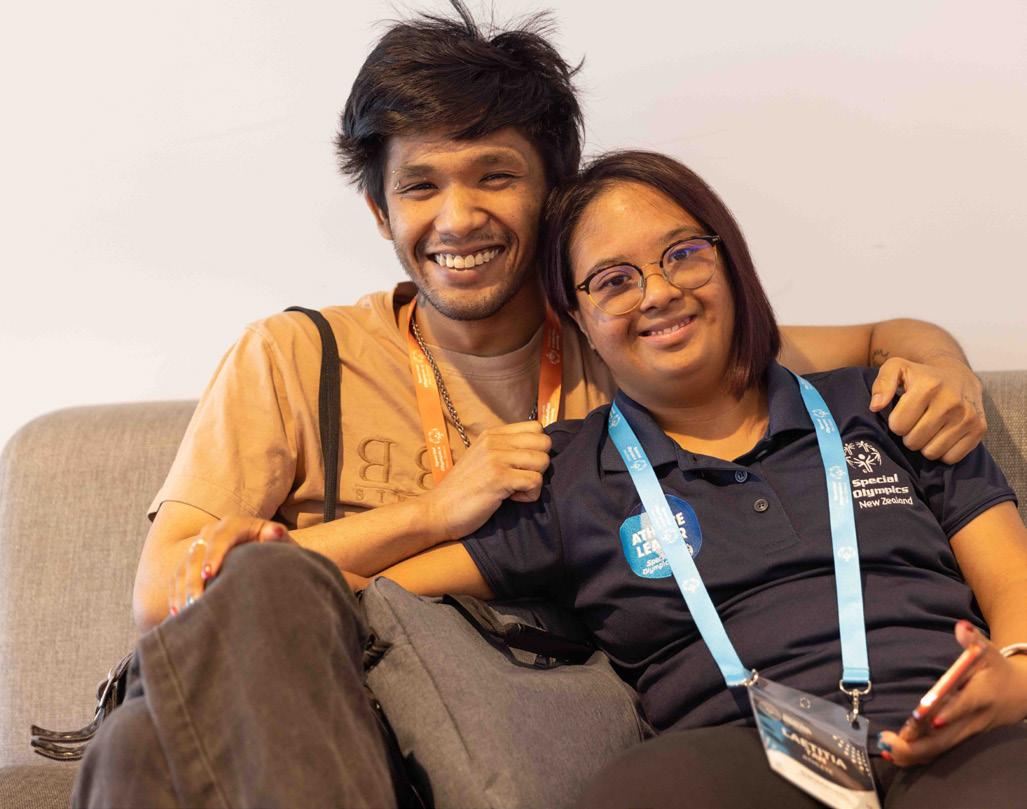
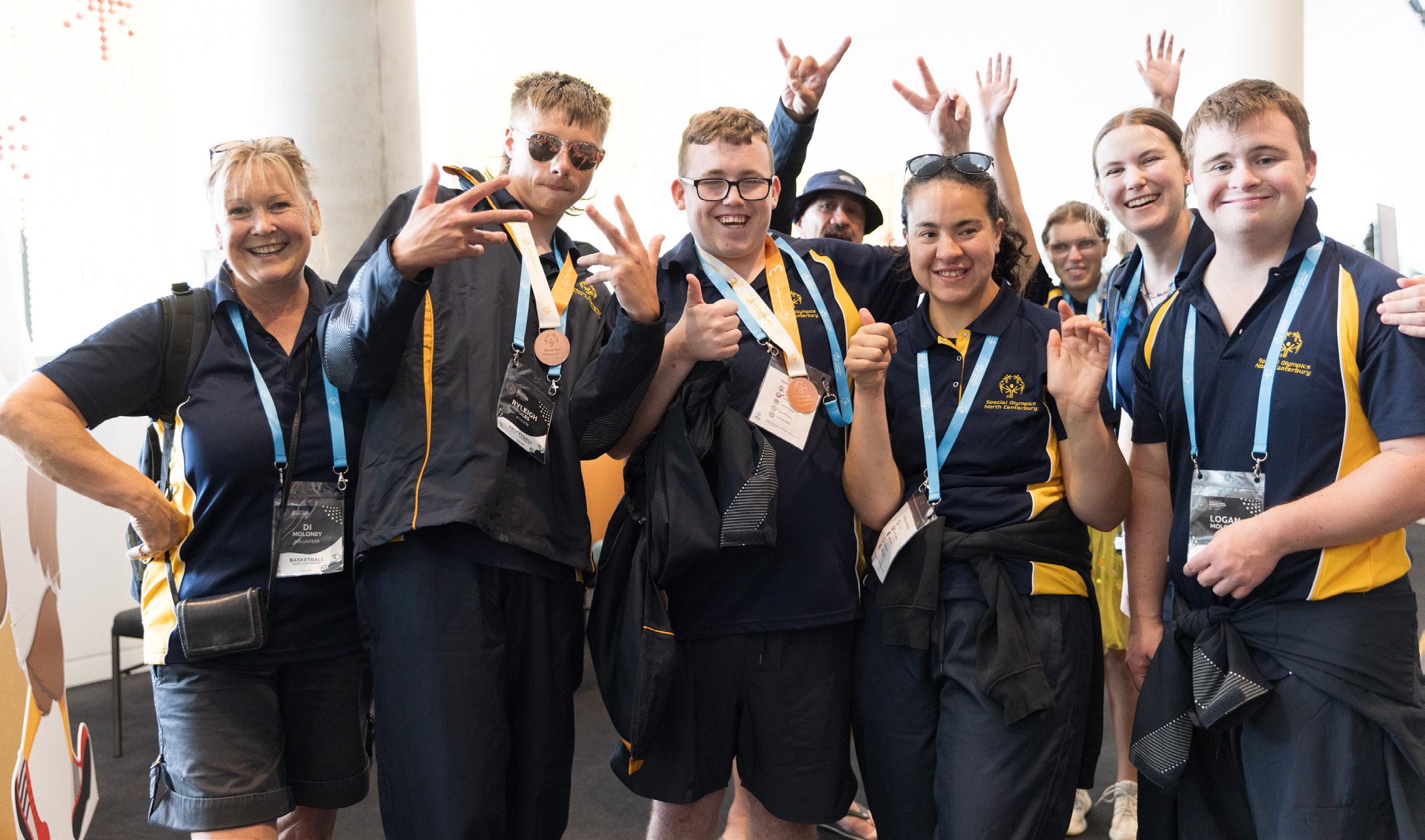
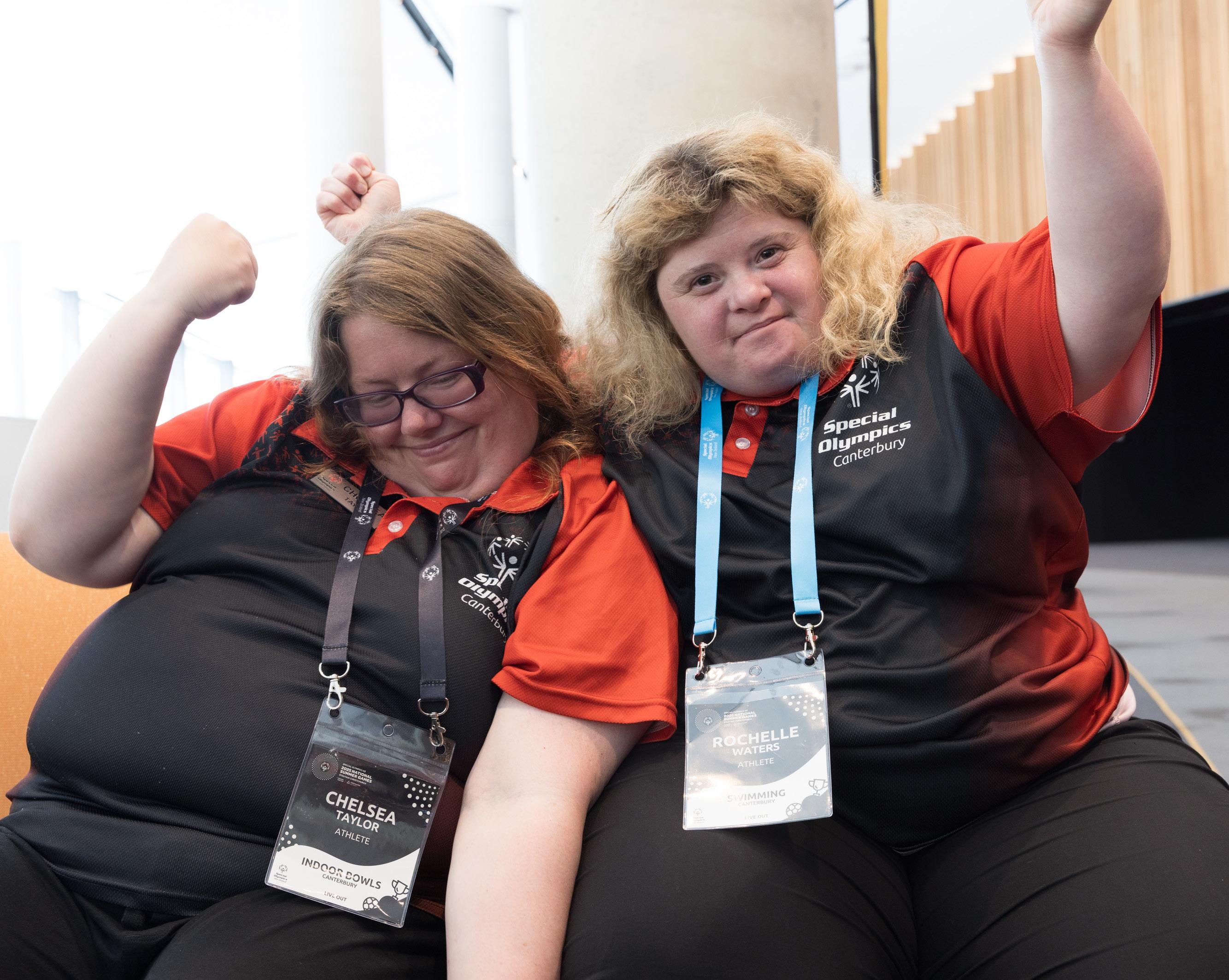
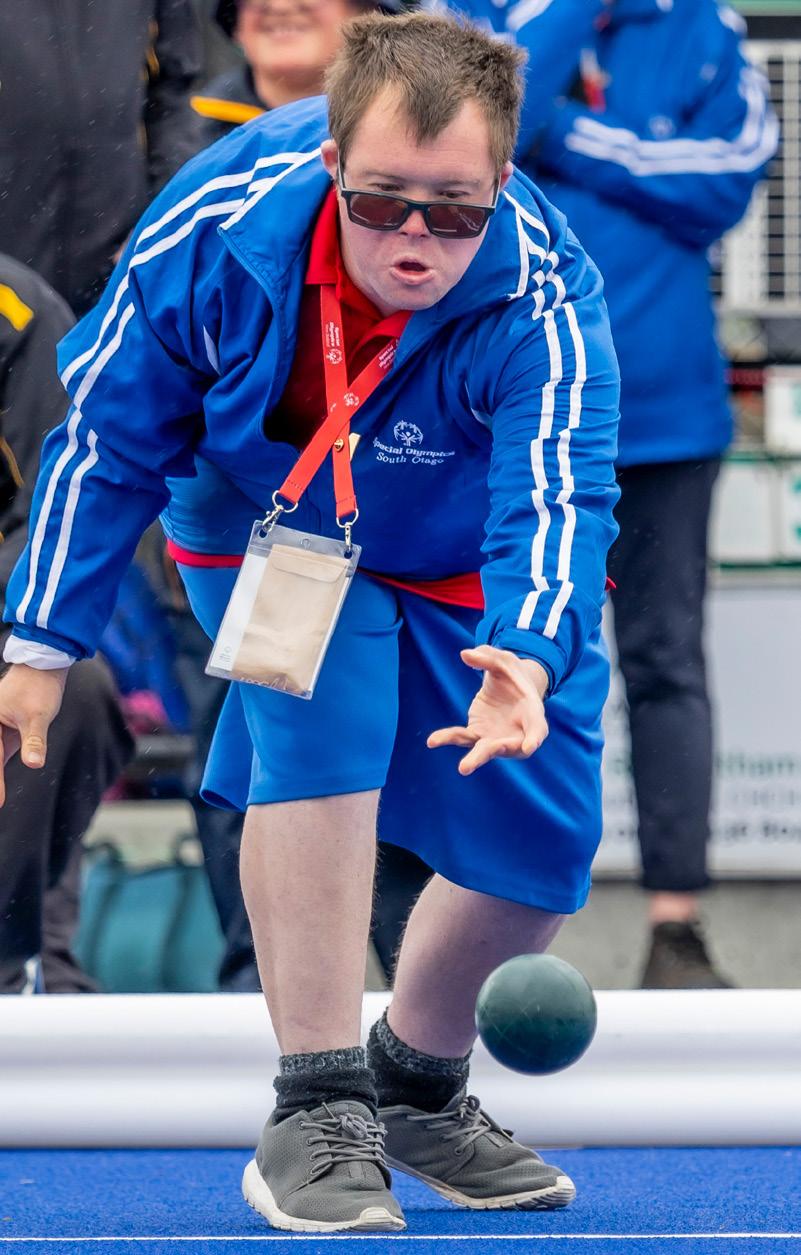
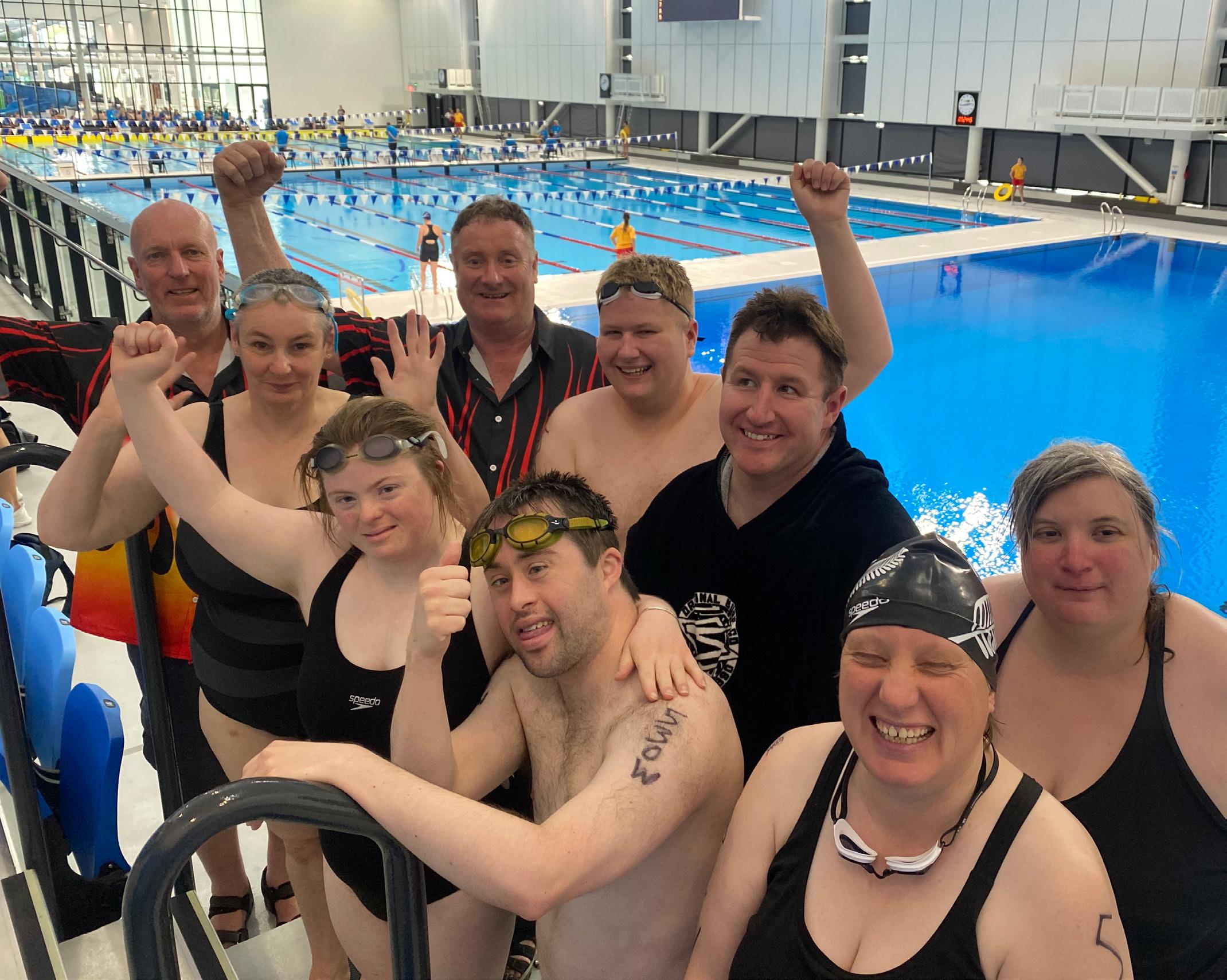
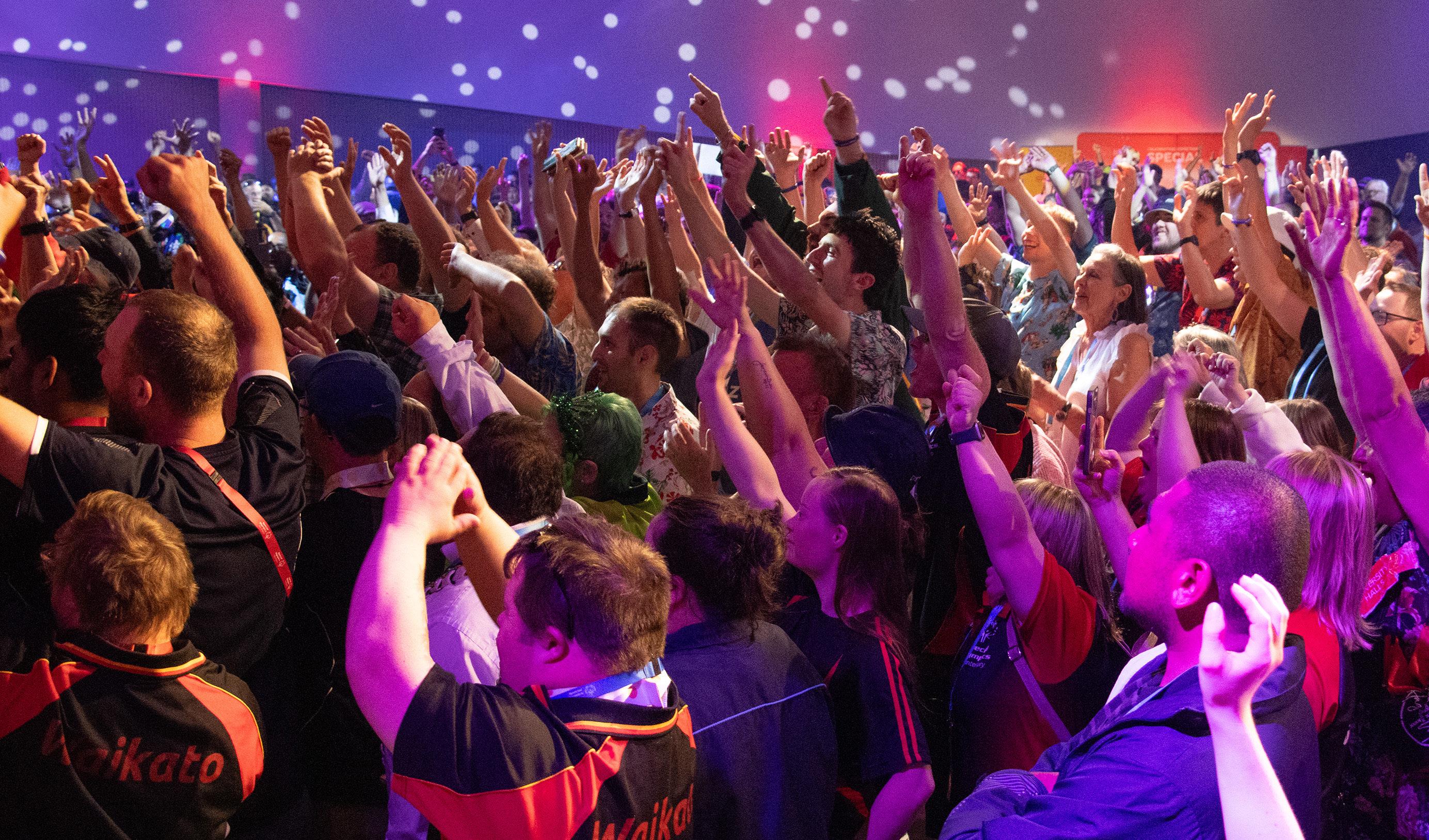
Special Olympics highlights from this year's games in Christchurch
Part two of our virtual conference overview
Editor and lead writer: Maddie Daybell
Proofreading: Franco Vaccarino
Feature writer: Andrew Oswin
Lead creative: Daniel te Kaat @ You Are Here.
Production: Spectrum Print
Coordination: Zandra Vaccarino & Linda te Kaat @ NZDSA
Disclaimer: Through the quarterly Journal, the New Zealand Down Syndrome Association will attempt to report items of interest relating to Down syndrome. The NZDSA does not promote or recommend any therapy, treatment, agency, product, political position, religion or advice. The opinions expressed in CHAT 21 are not necessarily those of the NZDSA. The editor reserves the right to make corrections to materials submitted for publication. All photos sent in to the journal become the property of the NZDSA and can be used in other NZDSA publications.
Editorial
Kia ora rā e hoa,
A warm hello from me and my growing whānau. We started the year by welcoming a new addition, say kia ora to my puppy, Baby Tato. He’s keeping life interesting; I’ve had to pause editing this issue more than once to rescue socks, shoes, and my other dog’s ears from Tato’s slobbery but surprisingly sharp little teeth.
This edition of CHAT 21 comes right after Te Rā o te Mate Pūira Kehe, World Down Syndrome Day. Fun fact: we celebrate it on March 21st to mark the triplication of the 21st chromosome, pretty cool, right? Many of you probably already knew that tidbit but I couldn’t help but share it anyway. The theme for this year’s WDSD celebration was Together Against Loneliness, an uplifting motif that will continue to inspire us moving forward.
Living between Te Tai Tokerau, Northland, and Tāmaki Makaurau, Auckland, meant I was able to attend WDSD celebrations in both regions, plus NZDSA’s Big Connect online event. I snapped hundreds of photos, which you can check out later in this issue, along with snapshots and summaries of how our other regions celebrated.
We’ve also included the recaps for the second half of last year’s Virtual Conference/hui ā-ataata in this editionalthough I maintain it is best to experience the sessions yourself, especially because you get to ask the presenters questions in real time.
Of course we couldn’t print this issue without shining a spotlight on the Special Olympics Summer Games that happened in Ōtautahi, Christchurch in December. We have some awesome articles from our feature writer Andrew Oswin, former CHAT 21 editor Coen Lammers, and Amelia Eades, who graduated from the Special Olympics Leadership Programme last year.
Exciting changes are coming to the journal. We’re working to make CHAT 21 more accessible and can’t wait to refresh the Down Write Brilliant and Get Down With sections. I’d love to hear from you about what you want to see, email me at editor@nzdsa.org.nz and let your voice be heard.
I’d like to leave you with one of my favourite whakataukī:
Mā te huruhuru ka rere te manu.
Adorn the bird with feathers so it can fly.
That’s it from me until next time!
Hei konā mai, Maddie
Believe it or not, this issue marks our talented and creative graphic designer Dan's 50th edition of Chat 21 - that's over fourteen years of commitment.
Edition after edition, Dan has brought each page to life with imagination, thoughtfulness, and a keen eye for details. His work has quietly shaped the way our stories are shared and celebrated.
From all of us at NZDSA, thank you, Dan, for the passion, dedication, and heart you generously pour into your work. Reaching 50 editions is an amazing achievement and one we are so proud to celebrate by your side.
CHAT 21
Summer 2026
Around the world
Pune, India
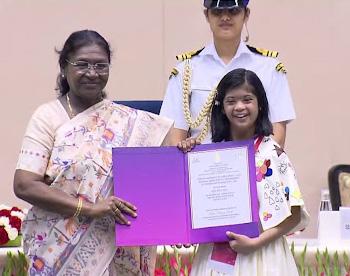
After launching her art venture, Tickle YoUr Art, to support and empower artists with Down syndrome, 13-year-old Dhriti Ranka gained national attention by promoting her work on Shark Tank India and speaking at the India Inclusion Summit. Her advocacy and entrepreneurship culminated in receiving India’s prestigious National Award for Empowerment of Persons with Disabilities from the President of India, Smt. Droupadi Murmu, at the end of last year - one of the country’s highest honours recognising leadership and impact in advancing inclusion for persons with disabilities.
Vienna, Austria
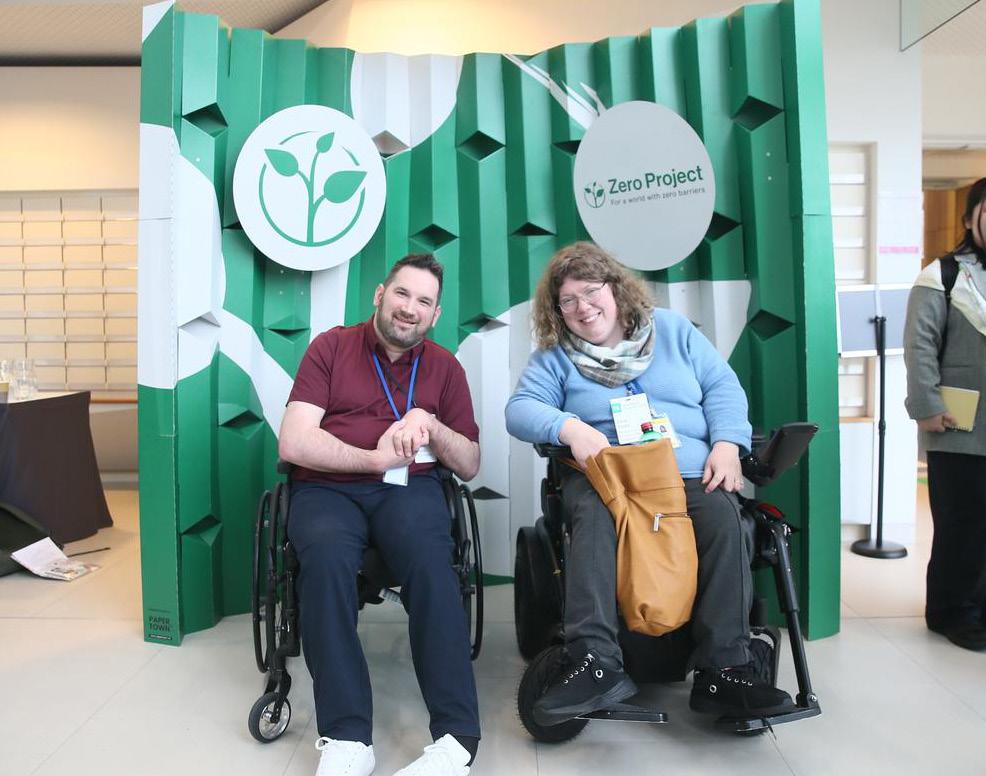
The Türkiye Down Syndrome Association was honoured at the Zero Project Conference 2026 in Vienna for its project “+1 Academy for the Future,” which delivered sustained education, psychosocial, and community support to individuals with disabilities for two years following the devastating 2023 earthquakes in eastern Türkiye. The international recognition highlights the organisation’s long-term commitment to rebuilding lives and promoting inclusion in disaster-affected communities
Washington, USA
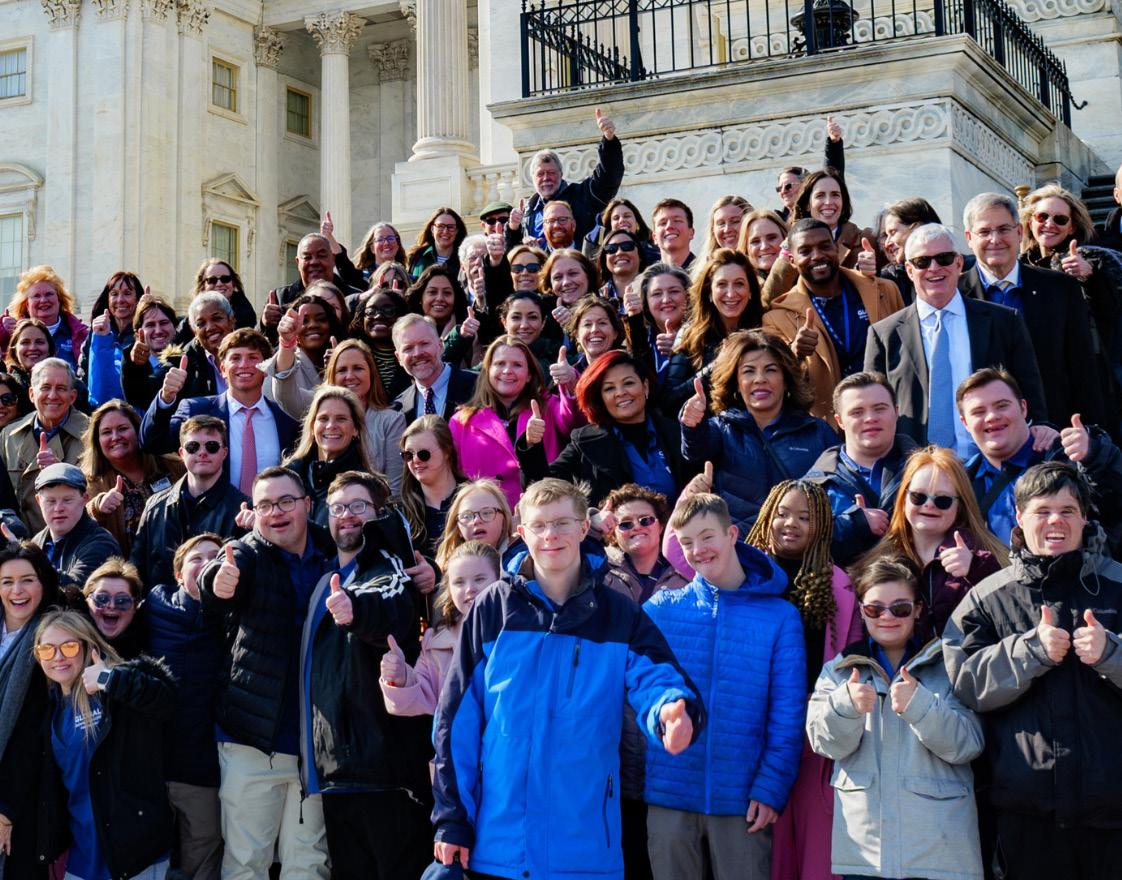
On February 24th of this year, leaders, selfadvocates and families from across the United States gathered in the nation’s capital for the annual Global Down Syndrome Foundation’s D.C. Fly-In. They met with members of Congress to share personal stories and press for passage of the DeOndra Dixon INCLUDE Project Act, designed to strengthen federal support for Down syndrome research and medical care. The event celebrated the community’s resilience and brought diverse voices together to advocate for dignity, opportunity and improved health outcomes for people with Down syndrome
On the socials
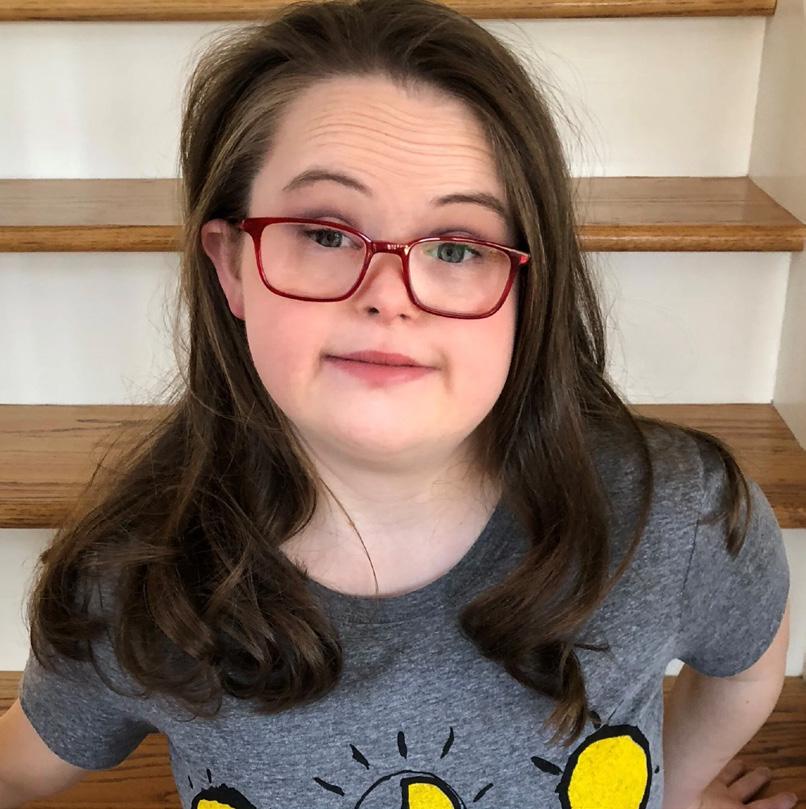
@candidlykind
Instagram
Candidly Kind is a brand founded by Grace Key, an Atlantabased artist and entrepreneur with Down syndrome, dedicated to spreading positivity, creativity, and self-expression. Through the Instagram account, which boasts over 260k followers, Grace shares her artwork, fashion designs, and everyday life, inspiring thousands of followers while promoting kindness, inclusion, and confidence for people with Down syndrome. The vibrant feed combines colourful designs, motivational messages, and personal insights, making it both uplifting and engaging for a wide audience. Candidly Kind has become a platform for advocacy as well as creativity, showing that talent, joy, and heart can shine through any medium.
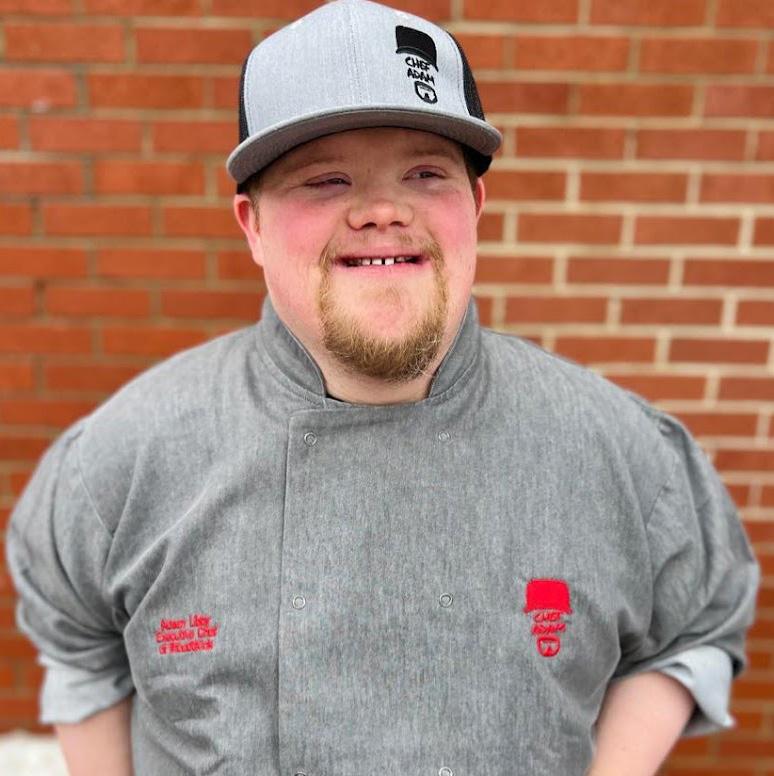
@chefadamlibby TikTok
Chef Adam Libby is a chef and social media personality from Maine, USA who went viral on TikTok by sharing his joyful cooking videos, showing himself preparing and tasting recipes with enthusiasm and humour. His TikTok account has amassed over 2.5 million followers, and he’s begun expanding into YouTube and Instagram too, creating hype around his food, and fostering a positive online community while challenging stereotypes about people with Down syndrome. His signature catchphrases and warm personality have earned him awards and brand partnerships, making him a beloved figure who inspires others to follow their passions.
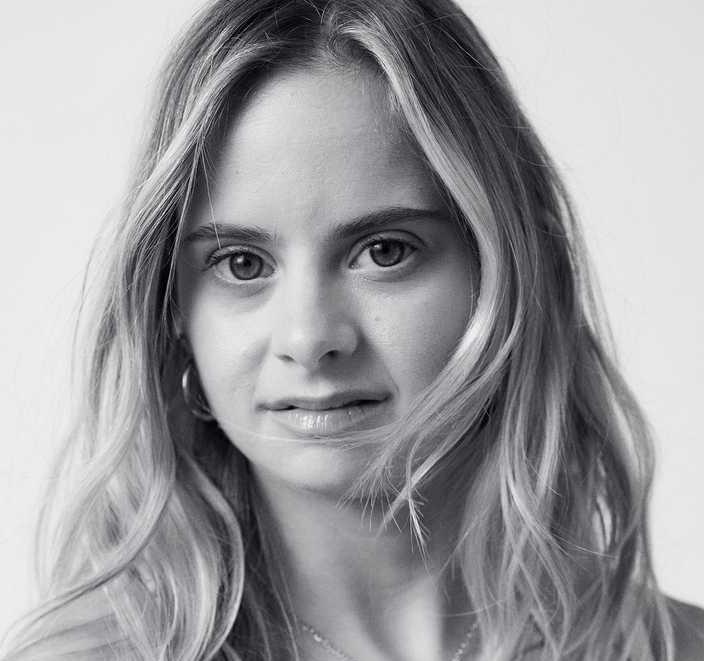
@sofiajirau Instagram
Sofía Jirau is a Puerto Rican fashion model and advocate with Down syndrome who has broken barriers in the modeling industry by walking runways, appearing in major campaigns, and representing inclusion in high-profile fashion events. She uses her platform to inspire confidence, celebrate individuality, and challenge stereotypes about people with Down syndrome. Sofía shares behind-the-scenes glimpses of her professional life as well as personal moments, encouraging others to pursue their dreams regardless of societal expectations. Her work has made her a global role model, highlighting talent, determination, and the importance of visibility.
World Down Syndrome Day
Palmerston North
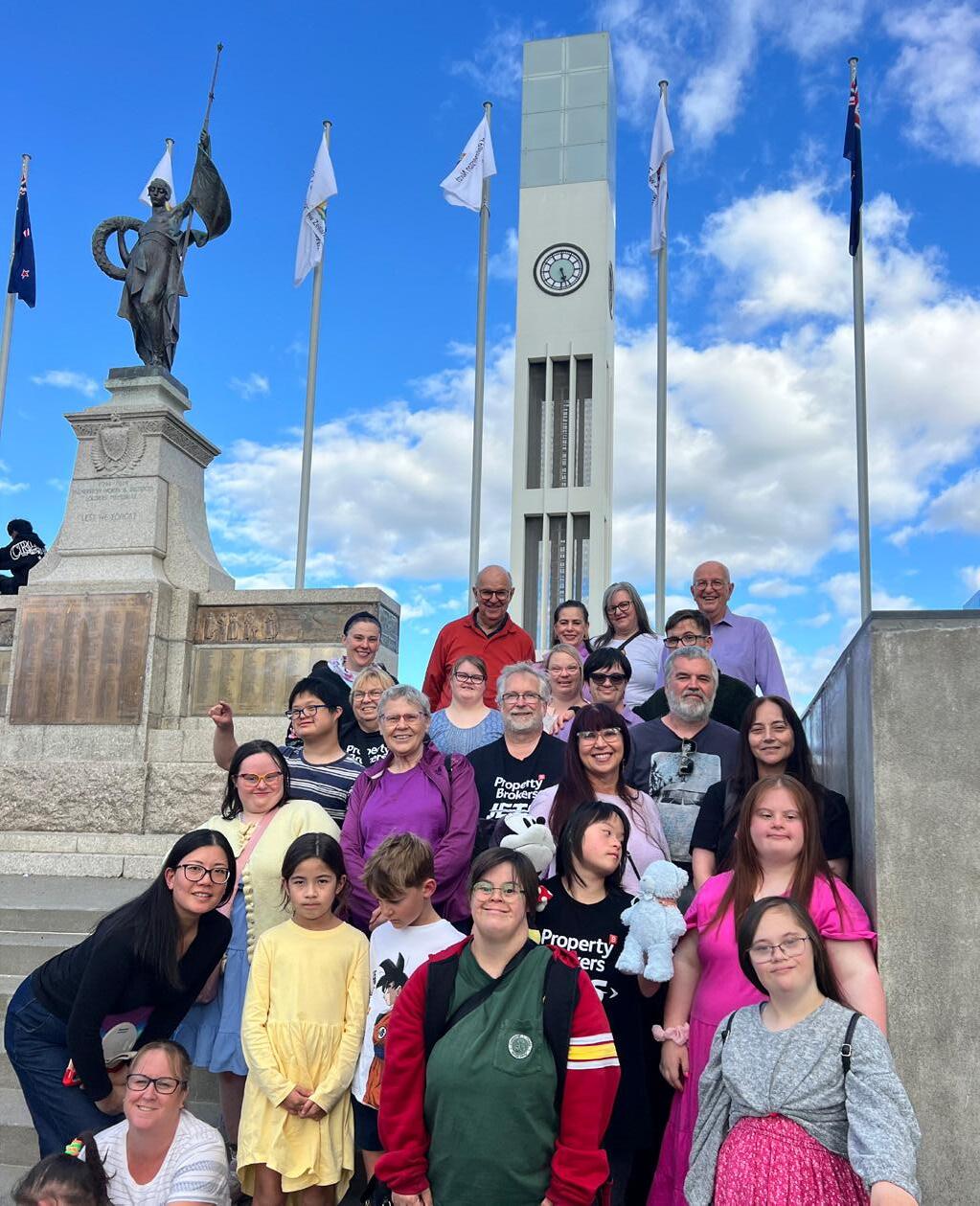
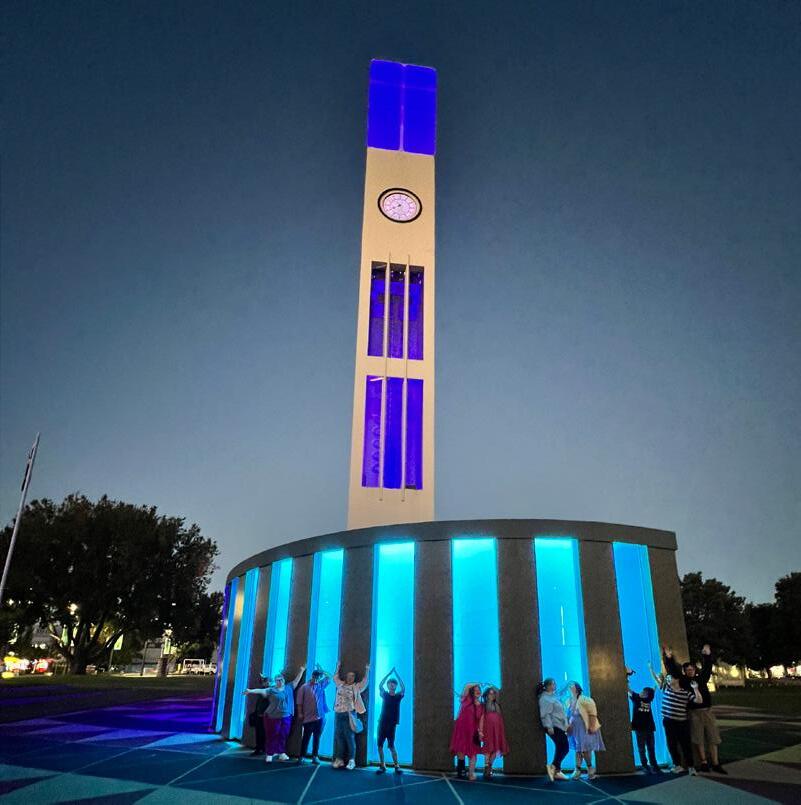
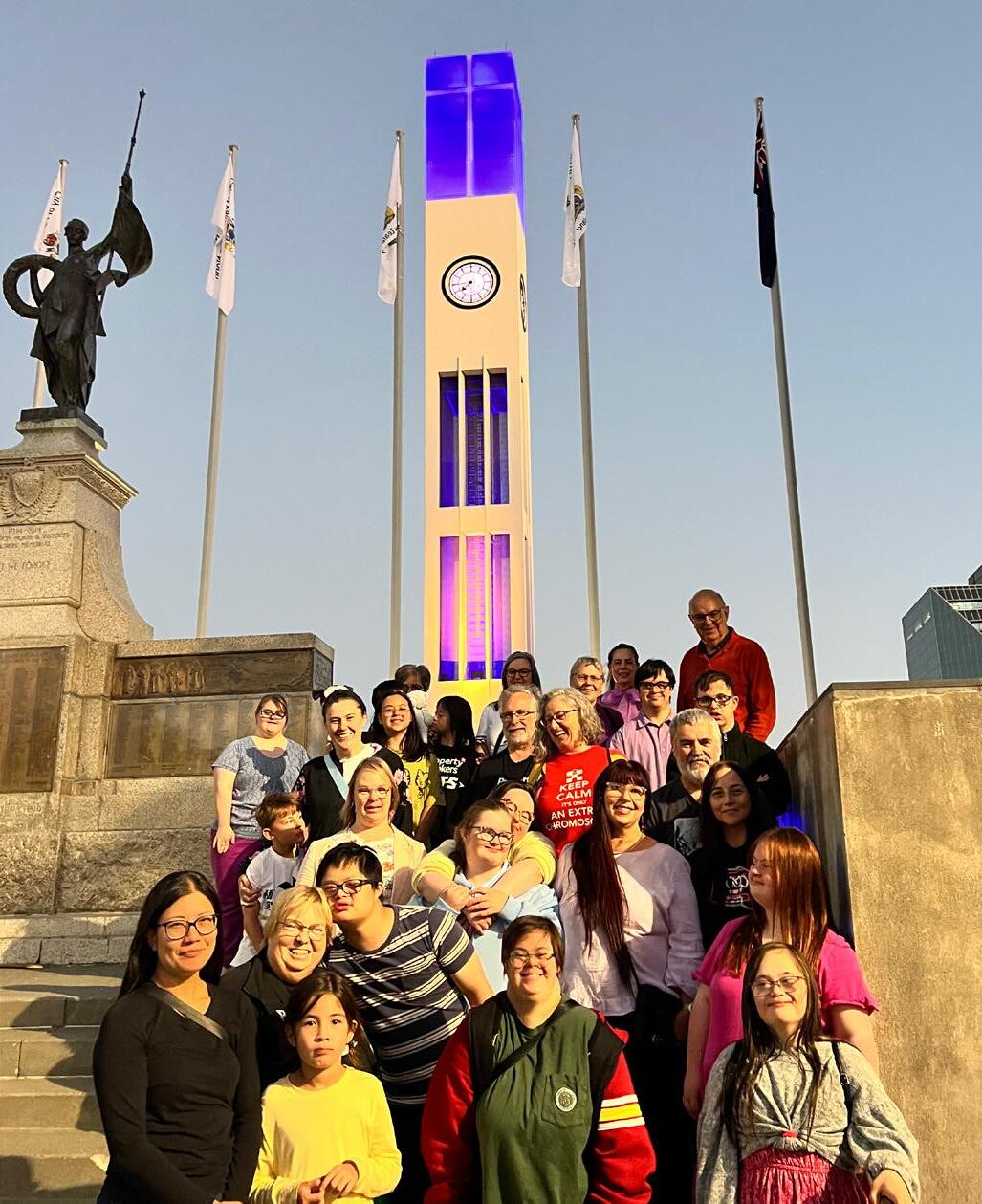
Palmerston North's Down syndrome community made history as the city's clock tower lit up in blue and yellow for World Down Syndrome Day, becoming the first landmark in New Zealand to join the global Light Up movement, exactly 20 years after the city hosted the world's first WDSD celebration. The event also featured a lively odd socks parade, colouring competitions, games, activities, and plenty of community connection.
Canterbury
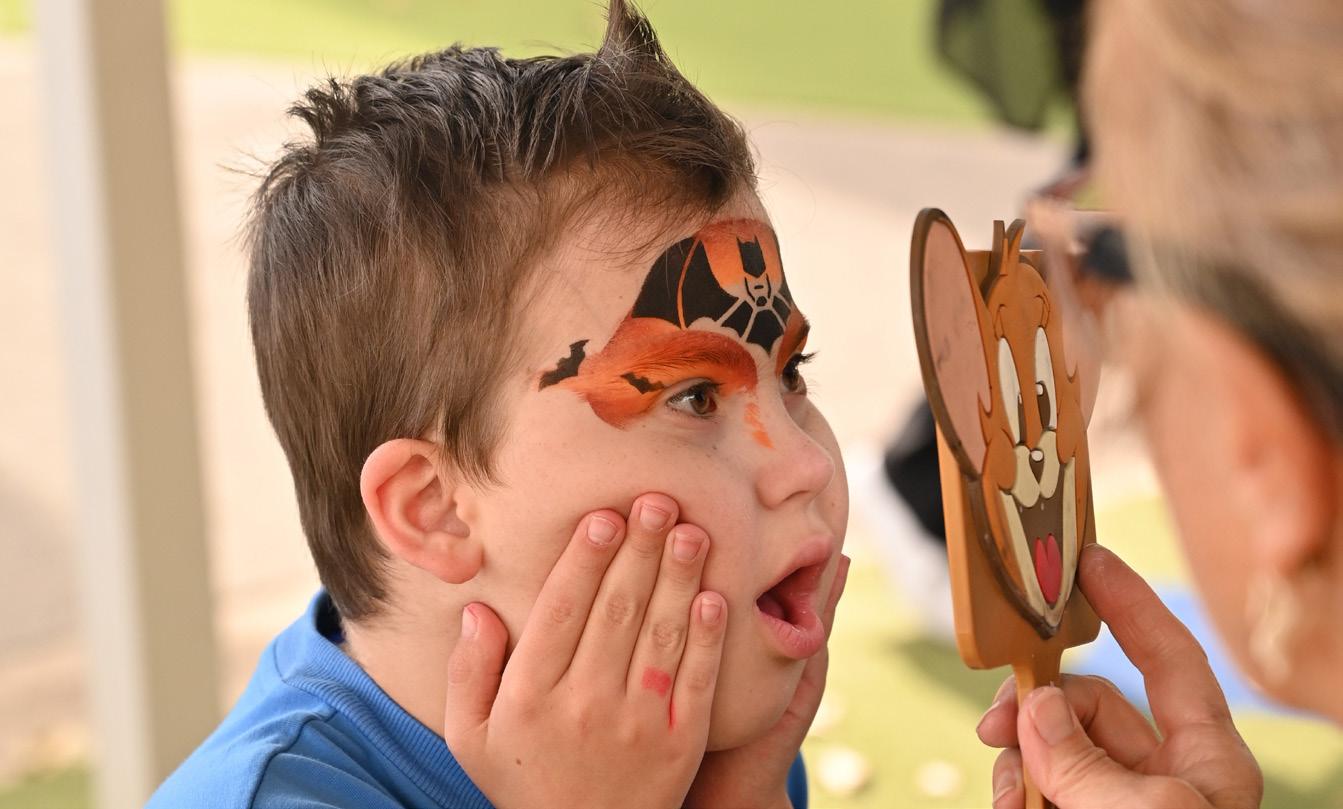
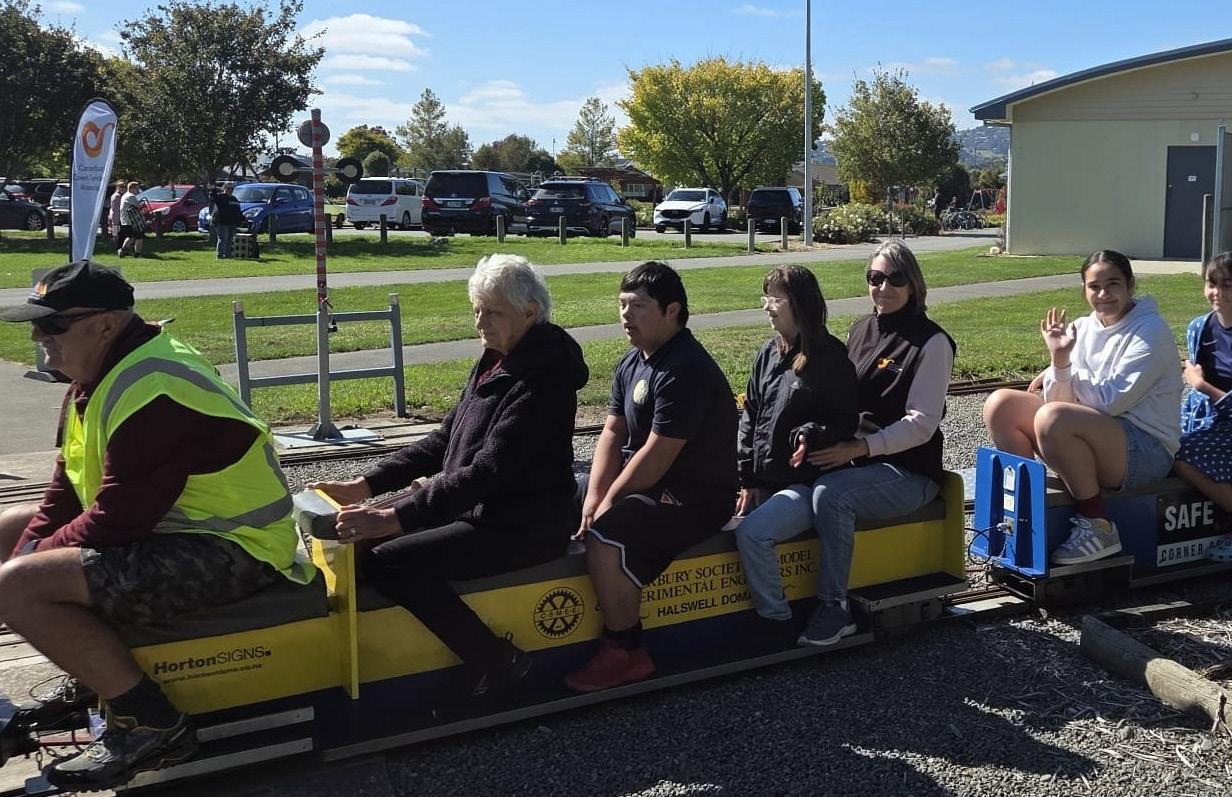
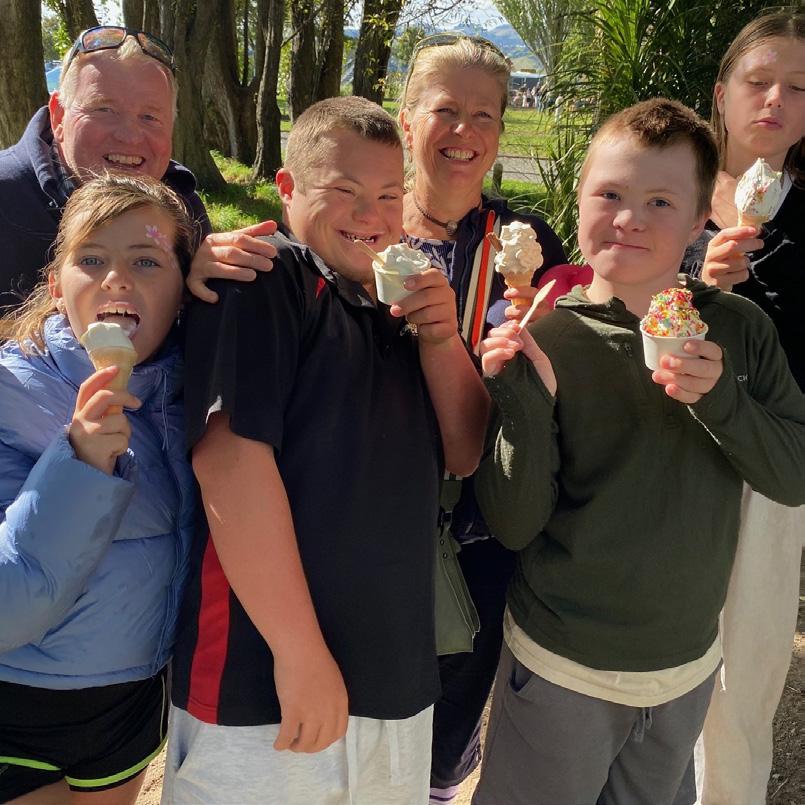
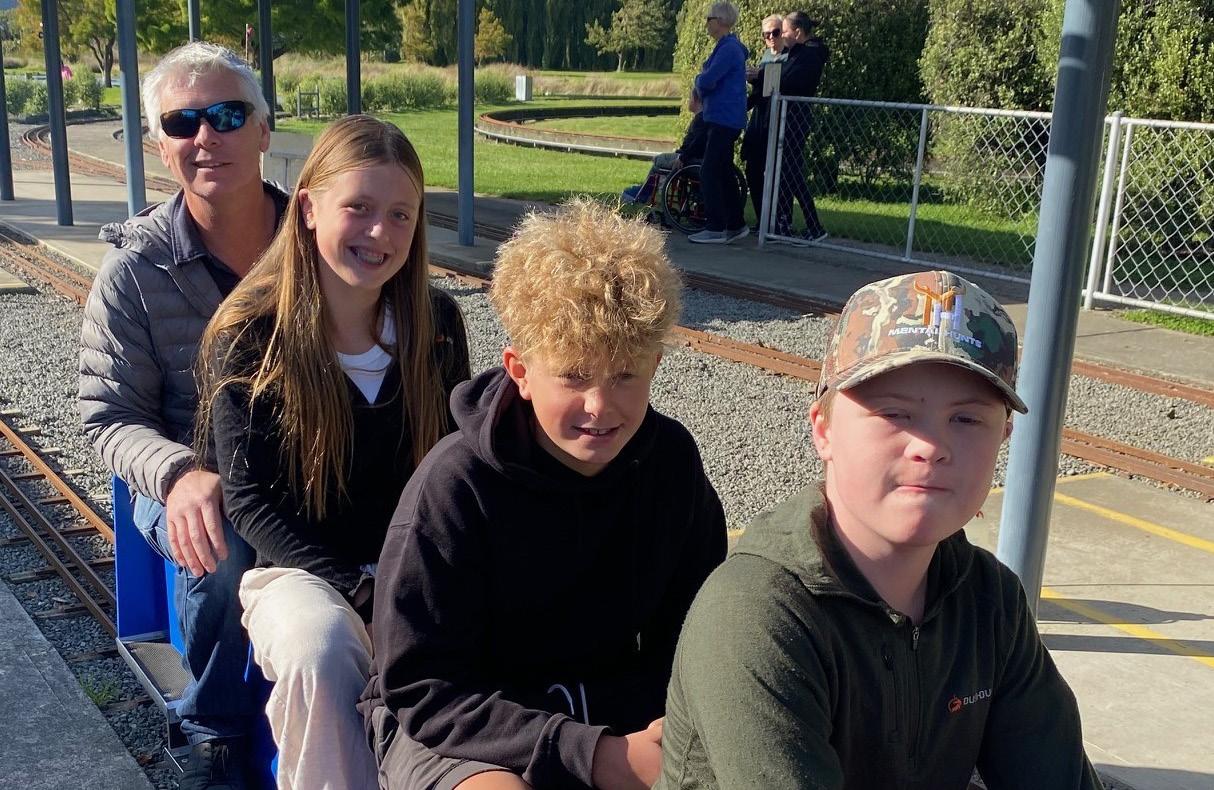
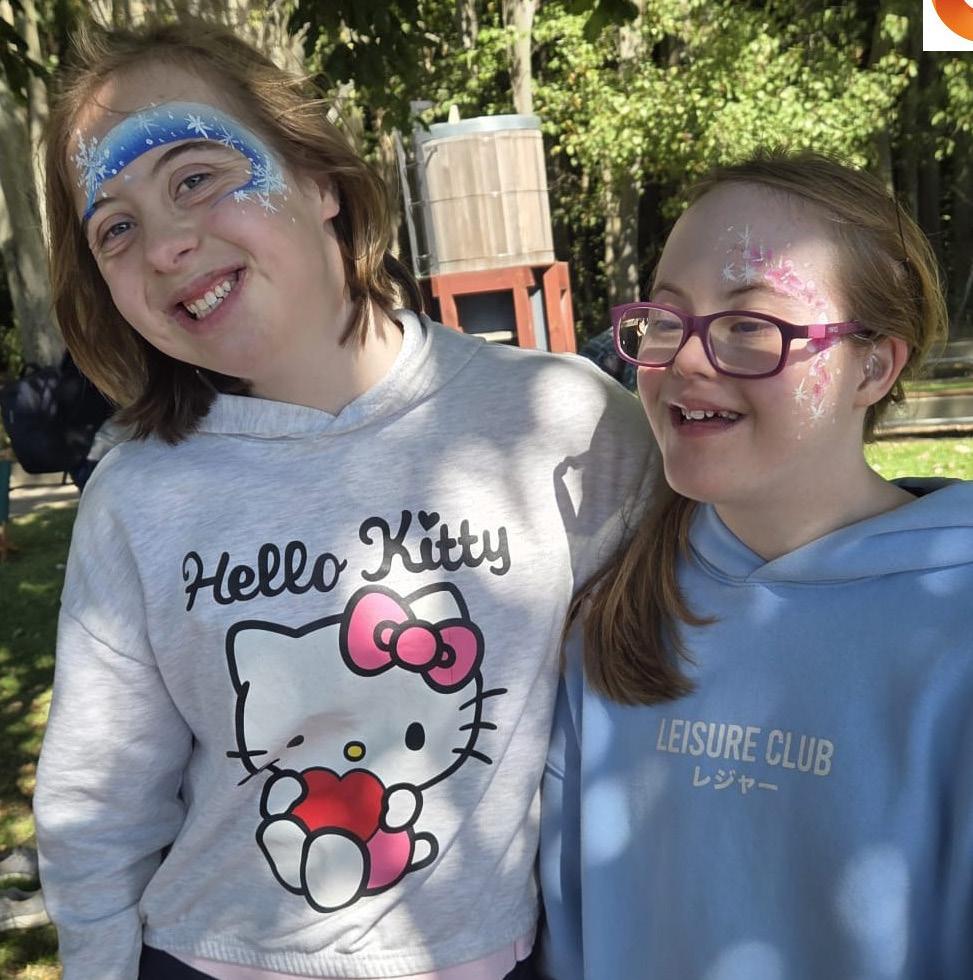
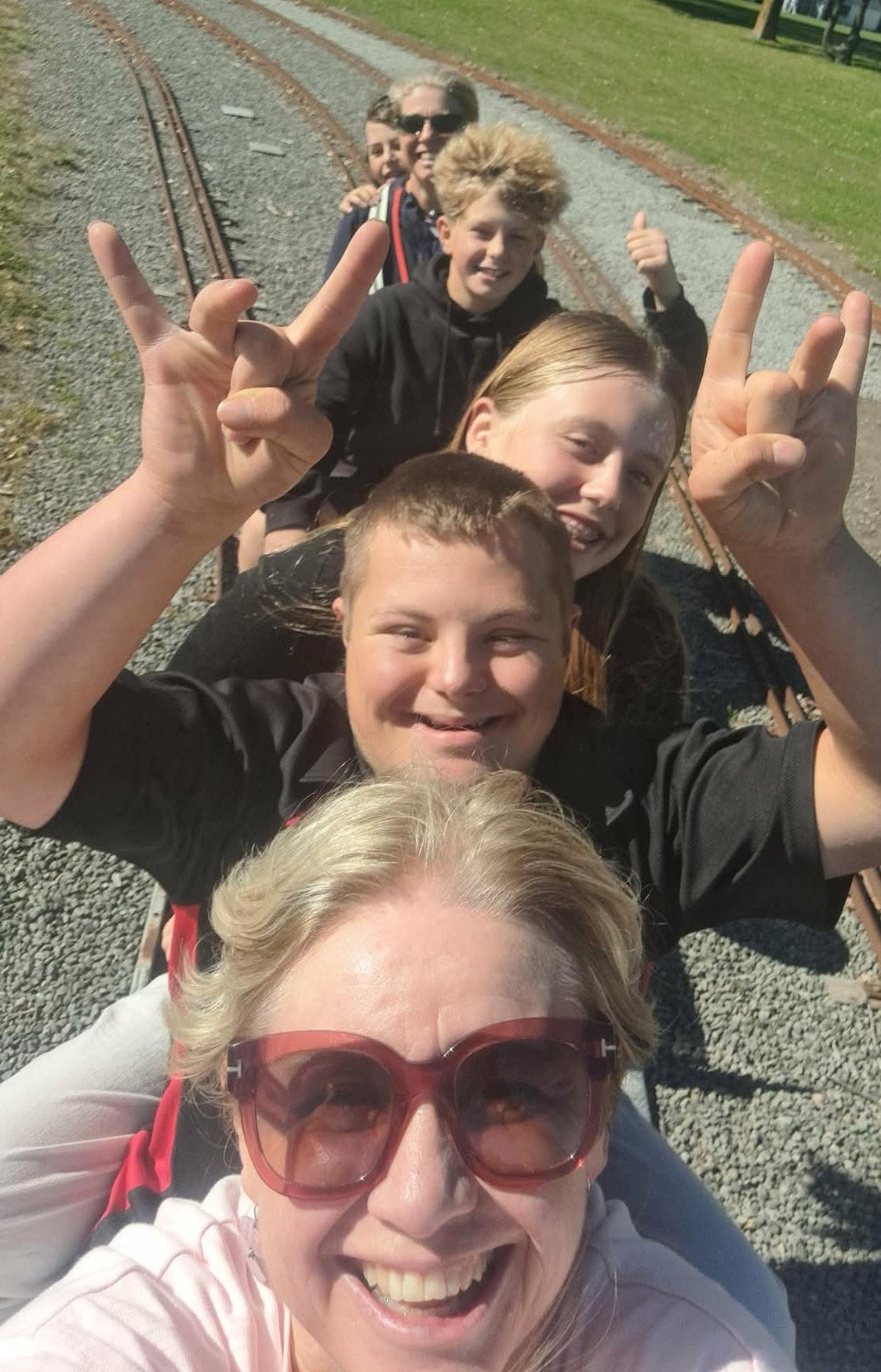
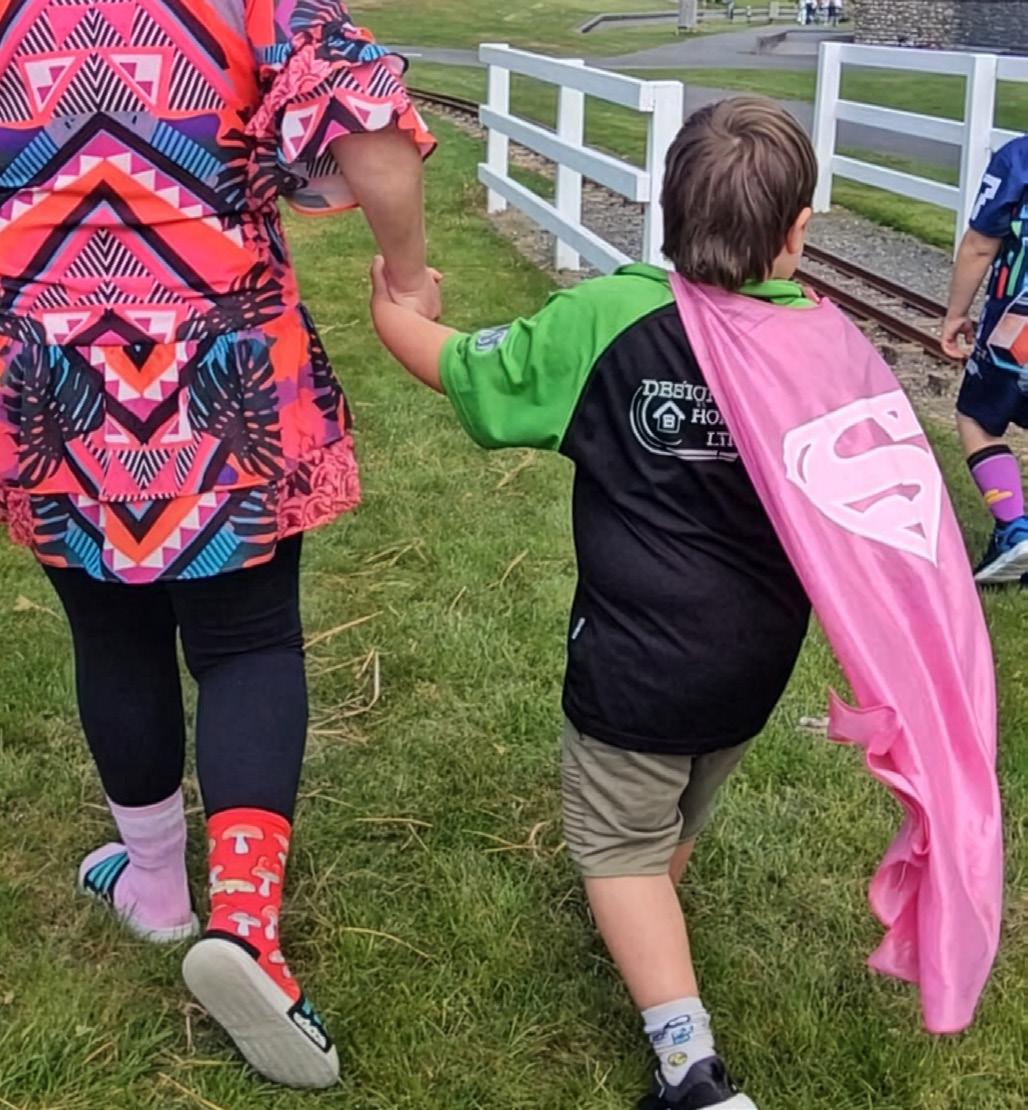
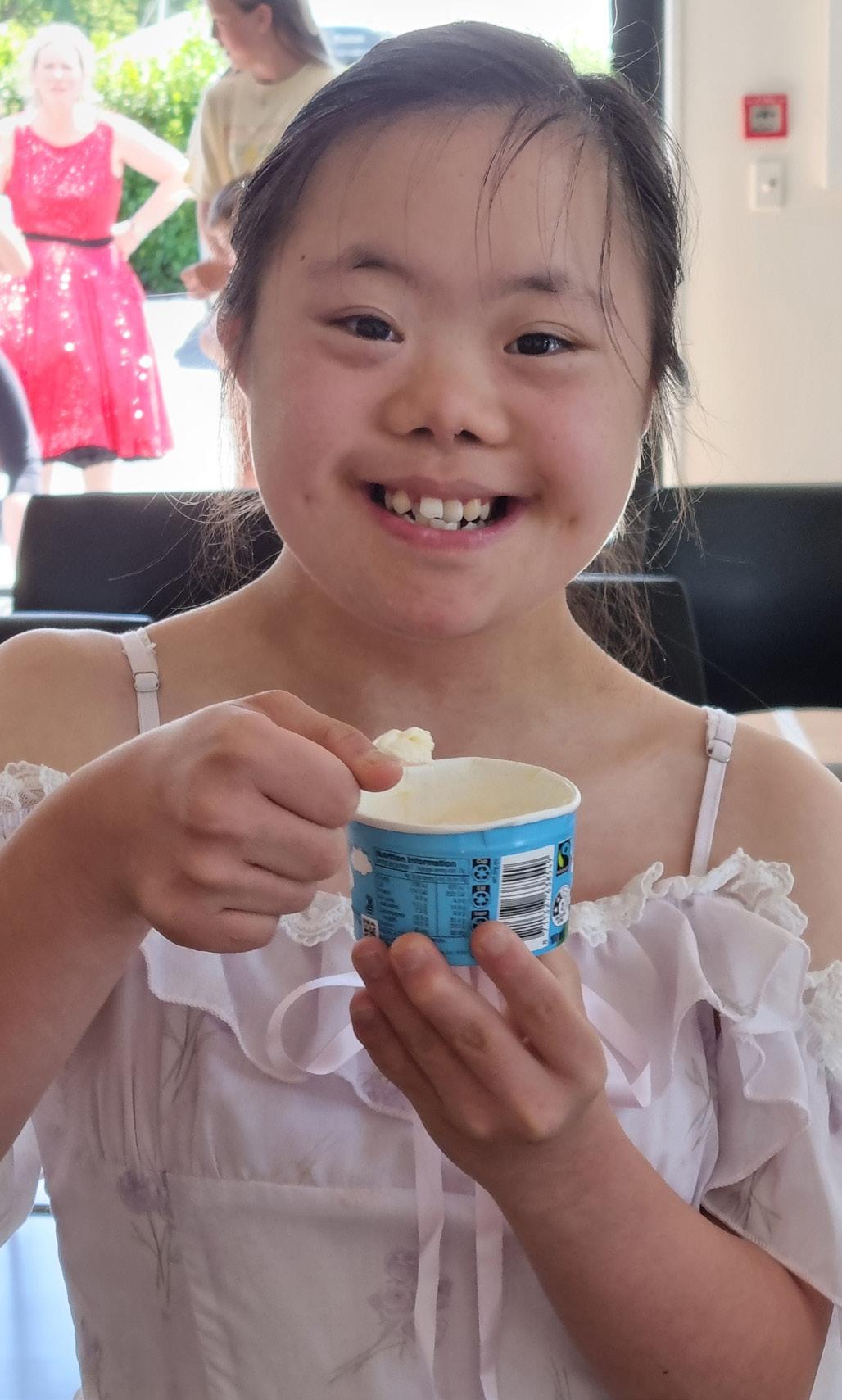
It was a beautiful autumn day in Canterbury for WDSD 2026, with a record number of CDSA whānau coming together to enjoy a funfilled time at Halswell Mini Trains. The morning was spent riding the trains, eating ice cream, enjoying creative balloon art, getting faces painted, and simply relaxing and having fun together. After all the excitement, families gathered to share a picnic lunch.
Northland
Sun, smiles, and a whole lot of fun! Northland Down Syndrome Support Group threw an unforgettable community celebration for World Down Syndrome Day. With colourful costumes, epic beats from DJ Hemi, sweet treats from Neo the Ice Cream Man, a special visit from the Northland Taniwha, delicious eats from the Rapid Relief Team, and heaps of giveaways and prizes, it was a day packed with joy and connection.
Wellington
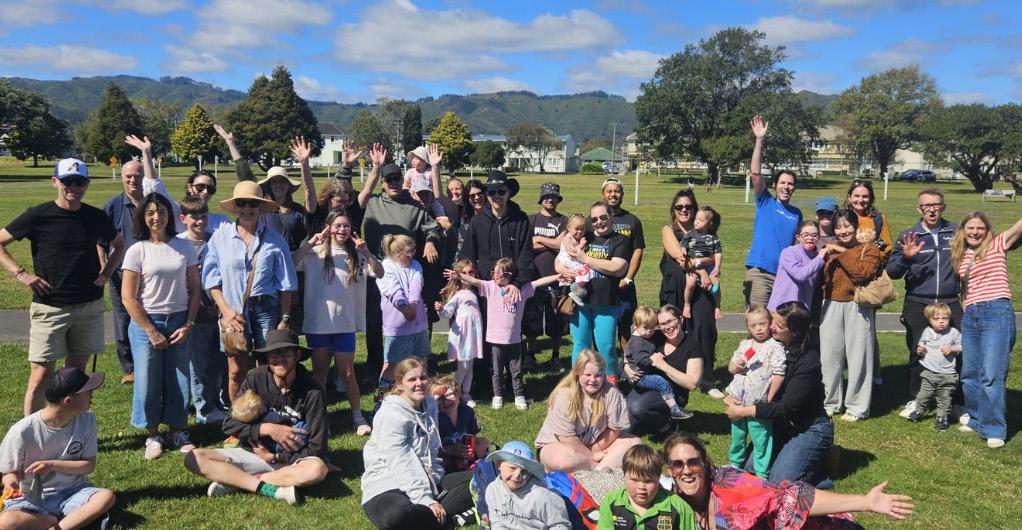
We had a wonderful turnout at Avalon Park, with many families, children, and community members coming together to celebrate inclusion and connection. The day had a warm, relaxed picnic atmosphere, where people were able to meet others, share experiences, and feel part of a supportive community.
We had face painting for the children, free train rides kindly supported by Lower Hutt Lions Club, and a shared picnic where families connected and spent time together. We also enjoyed ice cream, which was a big hit with everyone! Parents had the chance to talk and connect with each other, while children played, socialised, and even danced together throughout the day.
We also ran our “Rock Your Socks” colouring competition, which brought lots of creativity and joy to the day.
Overall, it was a beautiful and successful event, full of smiles, laughter, and meaningful connections. We are very grateful to everyone who attended and supported the day.
Taranaki
This year the Taranaki Down Syndrome Association had a special reason to celebrate World Down Syndrome Day.
Earlier in the year, our annual Gala fundraiser at the Pukekura Railway had to be cancelled thanks to classic Taranaki weather. While disappointing at the time, we were fortunate to secure a new date on 21st of March, World Down Syndrome Day, turning what had been a setback into the perfect opportunity to celebrate.
With the sun shining and laughter filling the railway, the day became a fantastic community event. Friends, families and supporters gathered to celebrate World Down Syndrome Day and support the Taranaki Down Syndrome Association.
Visitors enjoyed train rides, games, food, raffles and plenty of fun. The candy floss was enjoyed by
all, and the trains were kept busy all day going round and round the track. The Pukekura Railway team generously donated all of their takings from the day to the TDSA.
One highlight was Louis helping run the BBQ. No small job when you also have to make sure you look good for the camera, especially when national television is filming. No pressure, Lou!
A fantastic day celebrating inclusion and bringing the Taranaki community together in support of the TDSA.
CHAT 21
Auckland
It was a vibrant, sunny day at Papatoetoe East Primary School where our ADSA community came together to celebrate World Down Syndrome Day in the spirit of this year’s theme, “Together Against Loneliness.” Families enjoyed performances and activities from Kris and Lena’s Magic Dance Movers, Raukatauri Music Therapy, and Giant Bubbles NZ, alongside a joyful Rock Your Socks parade, market stalls, music, and a sausage sizzle. The day was a true reflection of connection, inclusion, and community support.
Special Olympics Christchurch New Zealand National Summer Games 2025
by Andrew Oswin, CHAT 21 Feature Writer
The Special Olympics National Summer Games were hosted in Christchurch where athletes, from all over New Zealand, came to a very big national sporting competition from 10th - 14th December 2025.
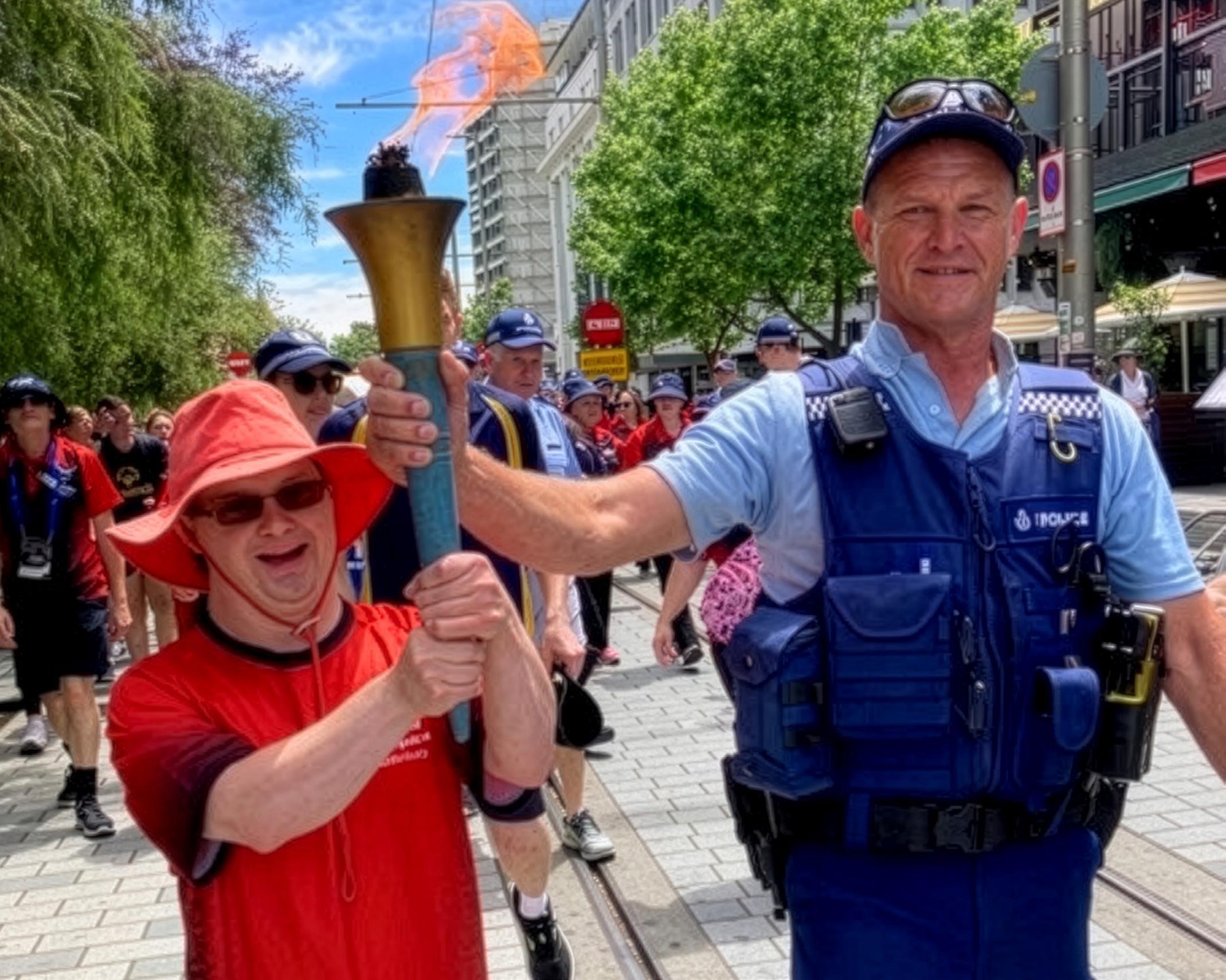
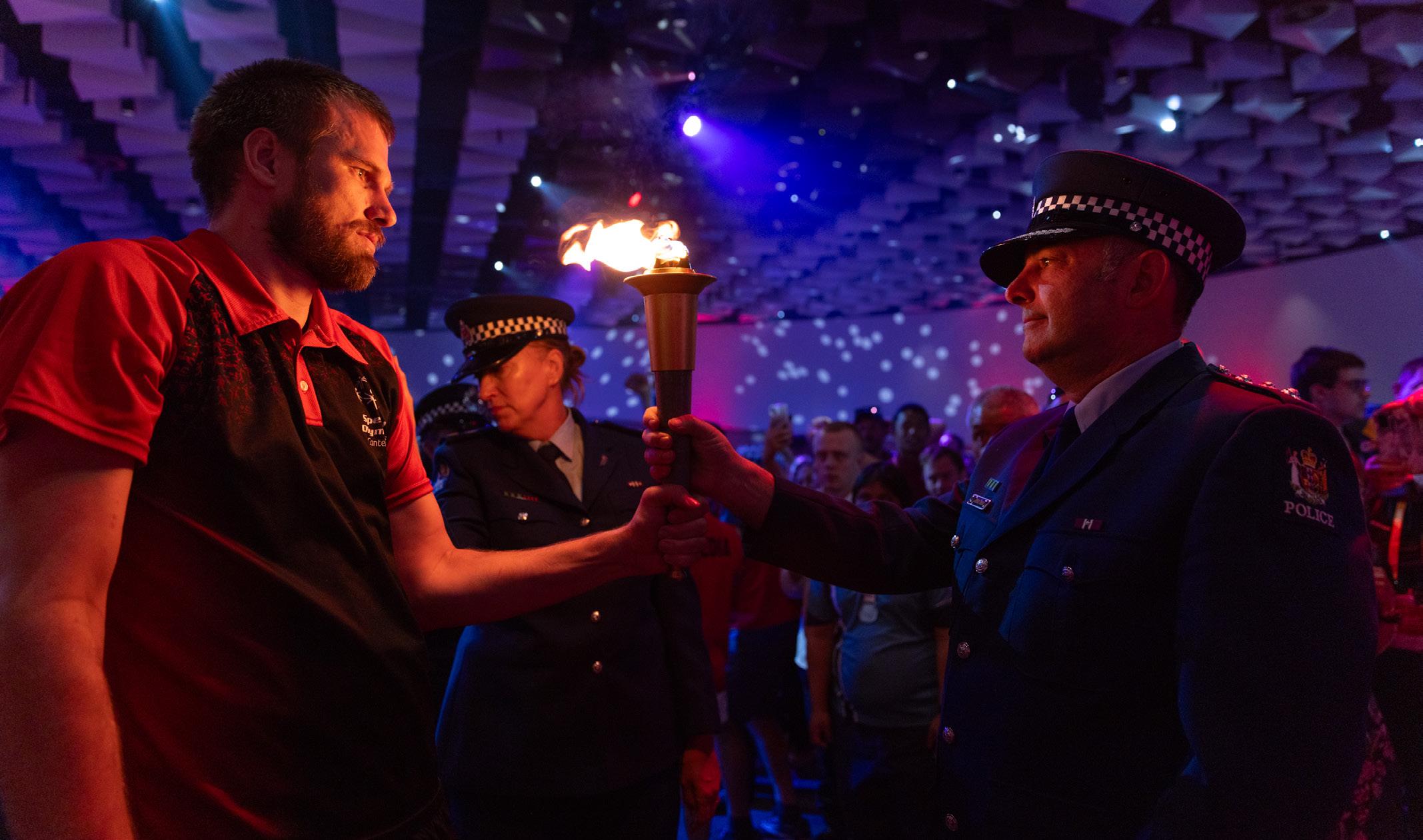
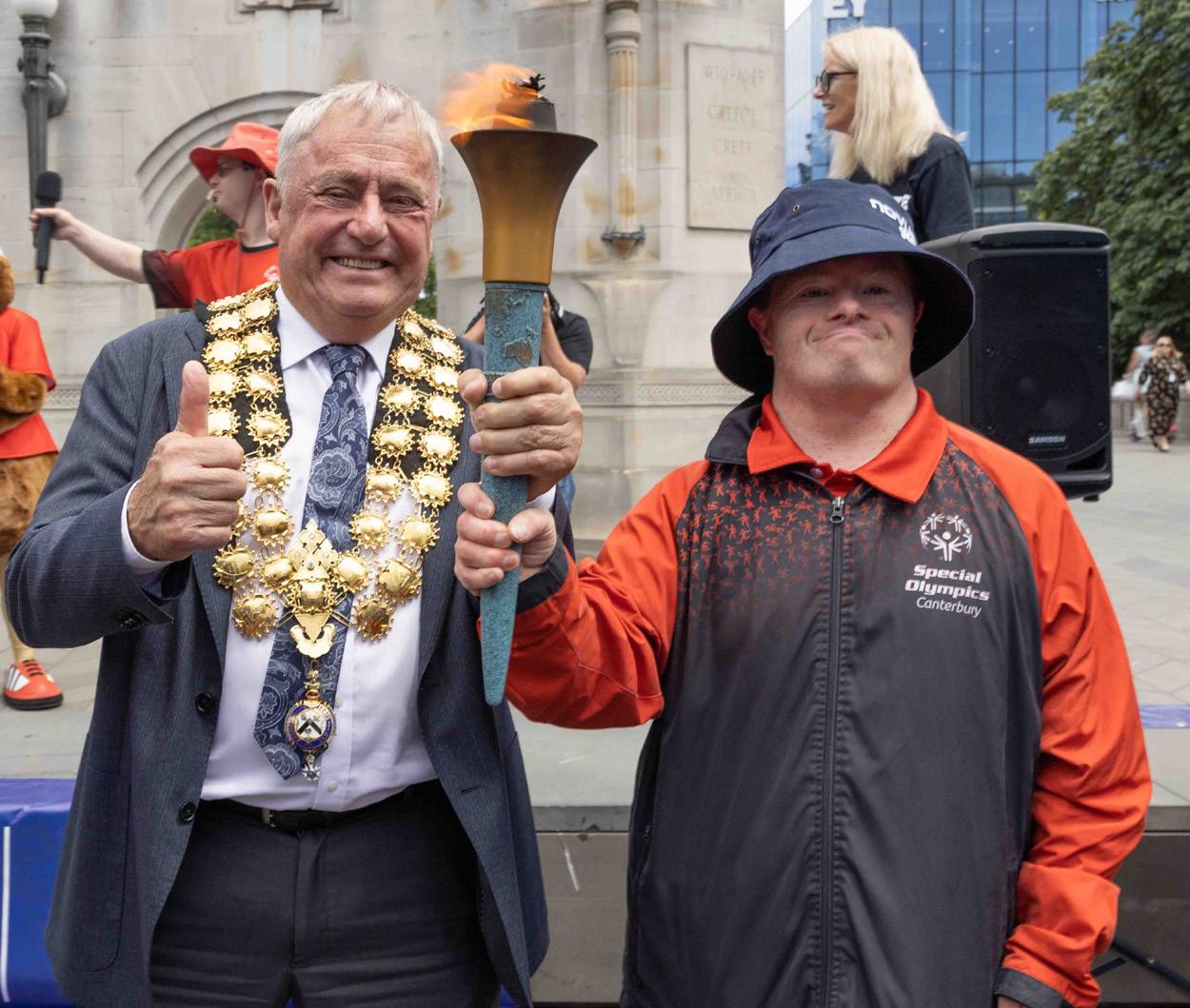
The New Zealand Police and the New Zealand Law Enforcement Squad held a Torch Run all over New Zealand. The torch run started travelling through Whangarei, Auckland, Rotorua, Hamilton, Palmerston North, Napier, Wellington, Nelson, Blenheim, Dunedin, Invercargill and finished in Christchurch at the Bridge of Remembrance. We had speech formalities with His Worship the Mayor of Christchurch, Phil Mauger, The Breeze Canterbury 94.5FM, NOVUS New Zealand, the Canterbury Police, and Athlete Leader, Andrew Oswin.
Athletes who were staying in Christchurch for the National Summer Games were accommodated at the University of Canterbury’s Halls of Residence, and they were very well catered for, and looked after while enjoying their visit to Christchurch.
On Wednesday, the Opening Ceremony was hosted at Wolfbrook Arena with the Masters of Ceremony, Jason Gunn and Andrew Oswin. At the Opening Ceremony, Phil Mauger presented his address speech and welcomed everyone to the Special Olympics Christchurch National Summer Games.
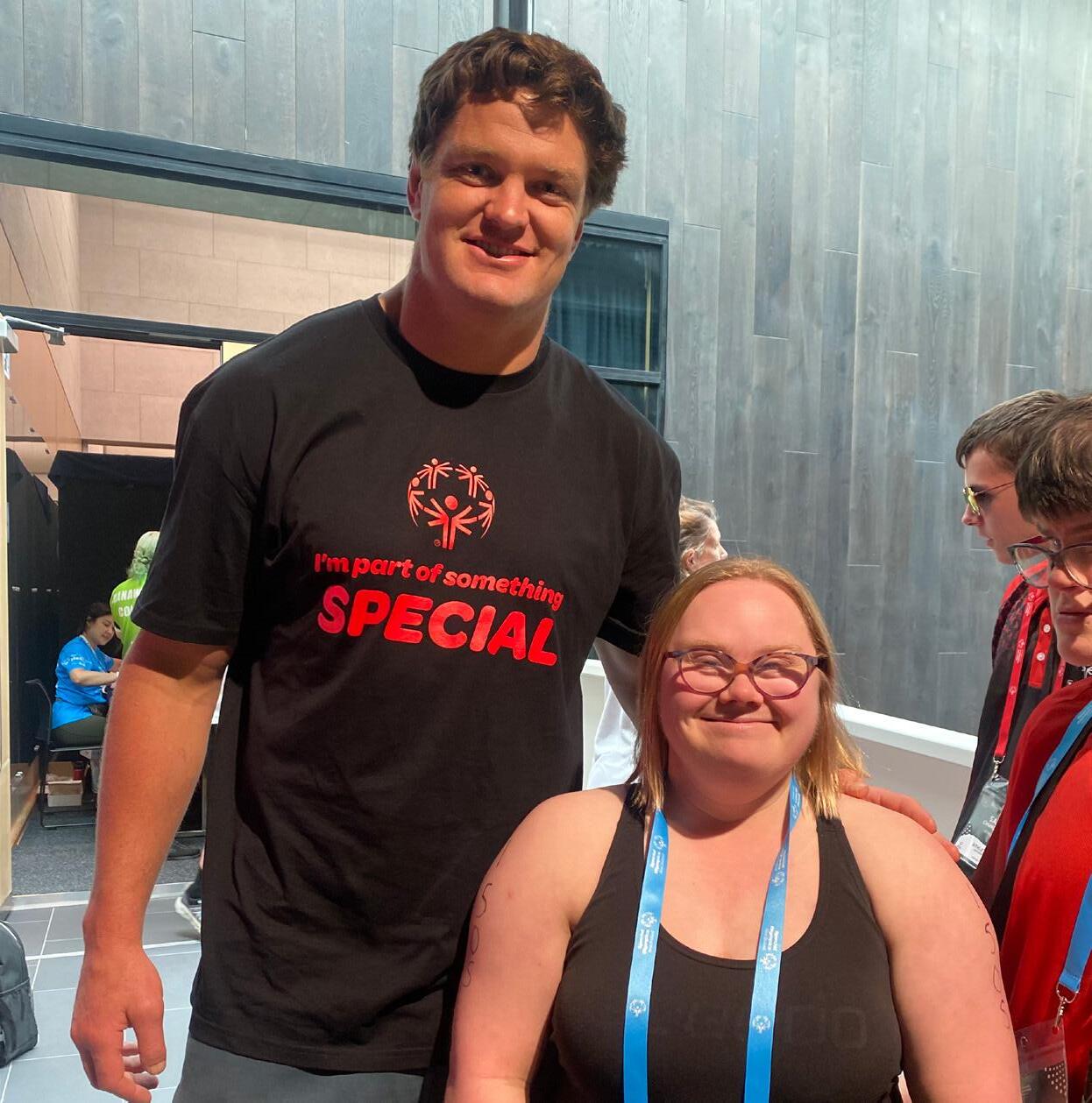
New Zealand All Blacks Rugby star, Scott Barrett, spoke about his experiences on the rugby field and especially about his family’s involvement with sport. Scott then spoke about how his sister, Zara, a
young lady with Down syndrome, got involved with the Special Olympics and how this helped to make a difference and change her life. He also gave a very important message that Zara learned about winning and losing, being part of a team, and being determined to do her best. This refers to the Special Olympics oath which says,” Let me win, but if I cannot win, let me be brave in the attempt”.
Chairman of Special Olympics, Tim Shriver, presented his address speech by video, and wished every single athlete good luck, do your best in whatever sport you are participating in, go for the gold, go for the silver, go for the bronze and you will be great, so get out there and make your team, and club proud.
The competition ran from the Thursday to the Sunday of the week. These were the venues that hosted the various sports:
• Athletics, Bocce, Football and Power Lifting at the Nga Puna Wai Sports Hub;
• Swimming and Basketball at the Parakiore Recreation and Sport Centre;
• Golf at the Harewood Golf Club;
• Indoor Bowls at the Canterbury Indoor Bowls Association;
• Equestrian at the Canterbury Riding for the Disabled Centre Arena; and
• Ten Pin Bowling at the Zone Bowling Garden City.
I saw athletes from other sports doing really well in Athletics, and Bocce at Nga Puna Wai, and Swimming and Basketball at Parakiore. Each athlete
Andrew holding The Flame of Hope with a police officer at the Torch Run Parade
competed, participated, and performed at their very best. The families, friends and supporters from the different regions were very supportive of the athletes representing their clubs competing at a national level.
STRIVE members, Rochelle Waters made a big splash in Swimming, while Mohit Chand sent his ten pin bowl down into the alley in Ten Pin Bowling. STEP-UP member, Andrew Oswin was sprinting on the track and shot putting in the field in Athletics, while Emily Thompson, a former member of STEP UP was also competing in Athletics. Georgia Garrett, Rachel Vaccarino, and Jacqui Glew also made an extra splash in the swimming pool.
During the games, the Healthy Athletes Programme took place at the Parakiore Recreation and Sport Centre. Each athlete had the opportunity to have their eyes, feet, ears, teeth, and minds checked. All of the queues were very long on the day my team went. On behalf of Special Olympians, we would like to thank the supportive and wonderful team of health professionals for giving us free check-ups, and also for giving up their time to make this happen. Your services were very much appreciated.
I got involved with the Athlete Leaders Forum which was held at the University of Canterbury’s Arcady Hall Campus on Saturday night. The focus of the forum was for the athletes to discuss any thoughts, ideas, issues and challenges about the Special Olympics in New Zealand and how it can be improved. The feedback will be collated and then the information from the Athlete Leaders Forum will be taken by the Athlete Representative to the Special Olympics New
Zealand Board. The forum turned out to be very successful!
The Closing Party was hosted at Te Pae, the new Christchurch Convention Centre, with the Masters of Ceremony, Jason Gunn and Georgia List. At the Closing Party, we had a few VIPs present speeches, and then the party started with a dance, and dinner. It was a very special and memorable night for all of the athletes.
The highlights of the Special Olympics National Summer Games 2025 for me were my personal performances and seeing the achievements and successes which every athlete made, and especially seeing how happy they looked on the day of competition, and when they were presented with their medals and ribbons.
Photograph taken by Peter Meecham
2025 Special Olympics Athlete Leadership programme
Written by Amelia Eades
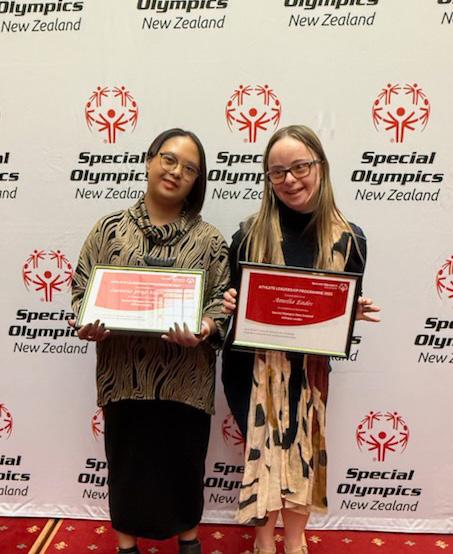
Last month I went to Wellington to receive my graduation certificate for the 2025 Special Olympics Athlete Leadership programme. There were 10 of us. This is a photo of me and Laetitia Tan with our certificates.
Special Olympics is a great organisation for people with intellectual disabilities like Down Syndrome. They have lots of sports. I do swimming but there’s athletics and basketball and bowling and football and skiing and lots of others. They are all around New Zealand and you can join from when you are 8 years old and keep going as long as you like.
I like Special Olympics because I can make friends there and have fun and the coaches understand me. Special Olympics has taught me to keep going at something I have started. I am working hard to improve my performance.
We have lots of competitions during the year between clubs and the National Games every 4 years. This year the National Games will be in Christchurch. Then there is a World Games every four years. The next Summer Special Olympics World Games are in Chile in 2027.
Special Olympics run an Athlete Leadership Programme each year, and they nominate people to be part of it. It is to teach people personal and professional leadership skills so they can help the organisation grow and stay strong. It is a great programme and I am very grateful to have done it.
The athlete oath for Special Olympics is “Let me win, but if I can’t win, let me be brave in the attempt.” And have lots of fun with your mates and your team!
Amelia Eades and Laetitia Tan with their certificates
I Was Part of Something Special
Written by Carlos Biggemann
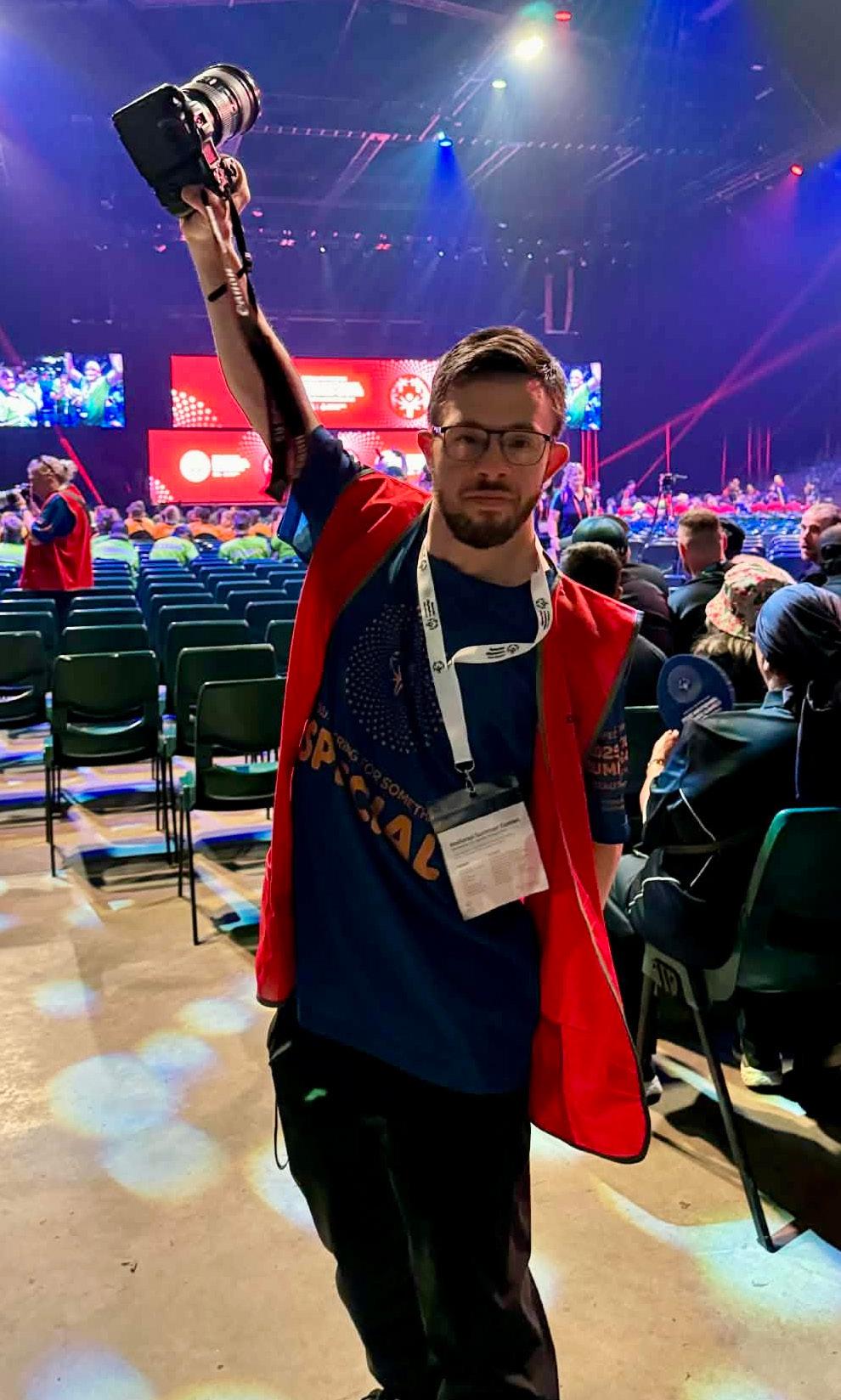
Here is a summary of my experience at The Special Olympics National Summer Games as a Photographer for five days, from Wednesday, December 10, to Sunday, December 14, 2025.
More than 1,200 athletes with intellectual disabilities from 42 clubs nationwide were competing in ten sports at six different venues.
When I heard about this monumental event I didn’t hesitate to volunteer as a photographer.
I took it knowing that I will be covering the laughter, tears, triumphs, and many more aspects of what real athletes show when they are winning or losing.
I was arriving on Tuesday the 9th from Dunedin-Ōtepoti to ChristchurchŌtautahi for the National Summer Games. I was privileged enough to take photos of the Torch run held at Victoria Square. I was not the only one who covered that event, with Carissa Trotter we worked together by capturing unforgettable moments with other photographers too, we were the Media group.
During the torch run I got to see new faces and old ones. It's nice to see old friends while meeting new ones. That day was beautiful. The climate was hot, what a day to get sweaty but worth it to be mingling with the athletes.
Then the big celebration had begun, of course I am speaking about the opening ceremony that was an afternoon to remember not only for the Media but for everyone. Voices of joyfulness were heard, music, and joy when the shout of the haka, so New Zealand- Aotearoa should be proud of it, special guests were invited such as Chief Executive Fran Scholey the CEO Commissioner, Dipak Natali Regional President and Managing Director, Special Olympics Asia Pacific and the Mayor Phil Mauger and Jason Gunn the Master of Ceremonies for the opening and closing the event.
The big moment arrives when the main Torch enters through the doors of Te Pae Convention Centre, everyone standing up applauding. The light was burning now at the Special Olympics altar from that moment the games were officially opened.
During these 4 days of capturing moments that will last forever I was rostered in some events like Bocce, Ten Pin Bowling, Swimming, the Opening Ceremony and on the last day the closure of the Olympics.
On Saturday the 13th of December I went to take photos of the health checks of athletes. I got to see how vaccinations were done or if their teeth were impeccable, as well.
All good things must come to an end, late afternoon on Sunday 14th it was a mix of joy and sadness for all of us, athletes, volunteers, families, organisers and the Media for the closure of the Special Olympics games. Now we have to wait another four years to see each other. In order to keep us smiling we danced until our feet hurt, we sang until our voices faded and of course we were all excited to see the torch being lit again. I was among other photographers to capture such an event which in the photos shows tears and laughter.
CHAT 21 Summer 2026
Special Olympics Athletes Light Up Christchurch Arenas
by Coen Lammers
Special Olympics athletes from across the country danced the night away at the Closing Ceremony disco to cap off five unforgettable days at the National Summer Games in Ōtautahi Christchurch.
More than 1,200 athletes with intellectual disabilities from 42 clubs competed in 10 sports across six venues, making it the biggest sporting event Christchurch has hosted in over a decade.
Athletes with Down syndrome represented most of the clubs in the country and took their fair share in the medal haul.
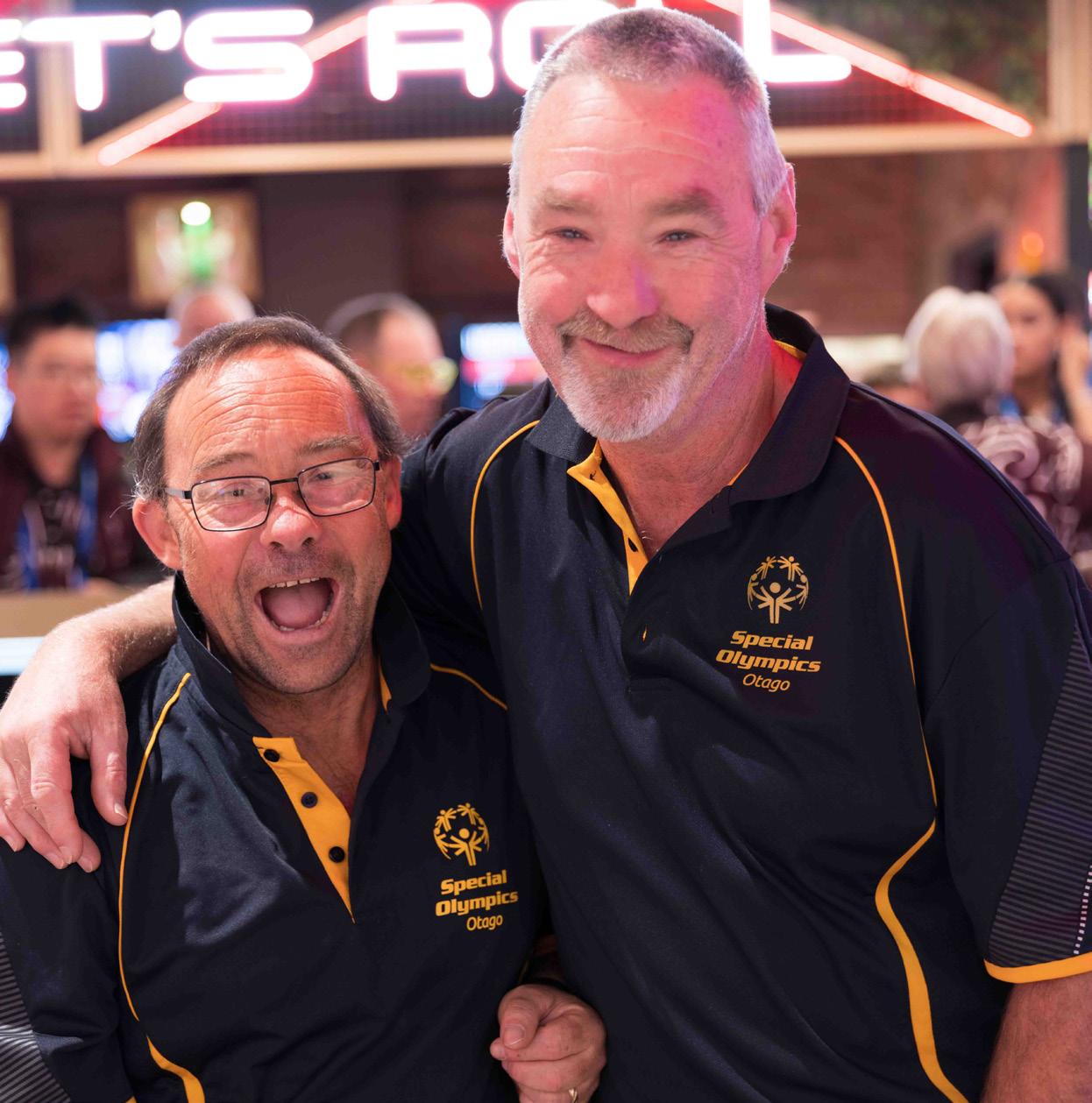
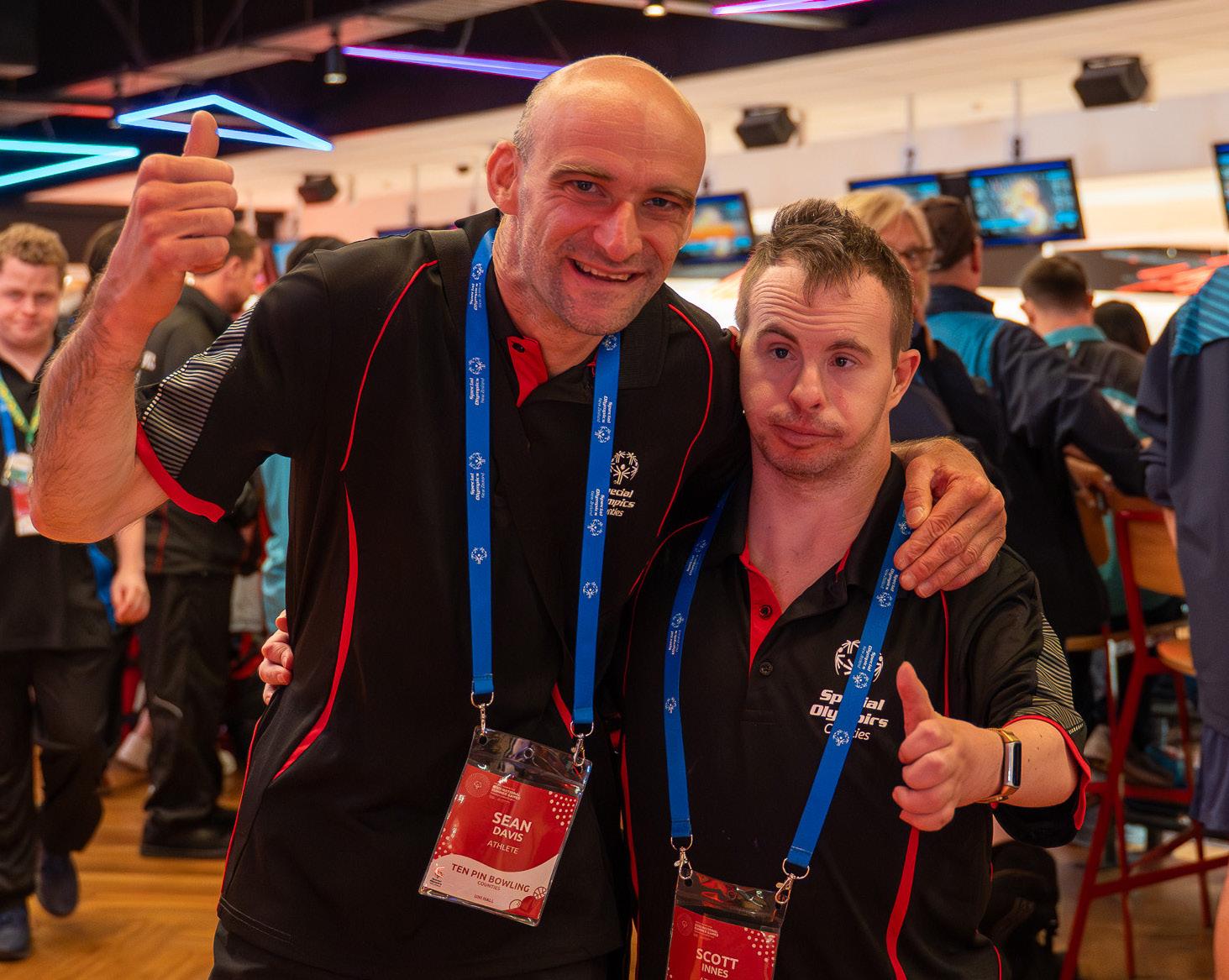
Over in ten-pin bowling, Counties duo Sean Davis and Scott “Scotty” Innes rolled in with big smiles and a clear goal - “Do our best and have fun.”
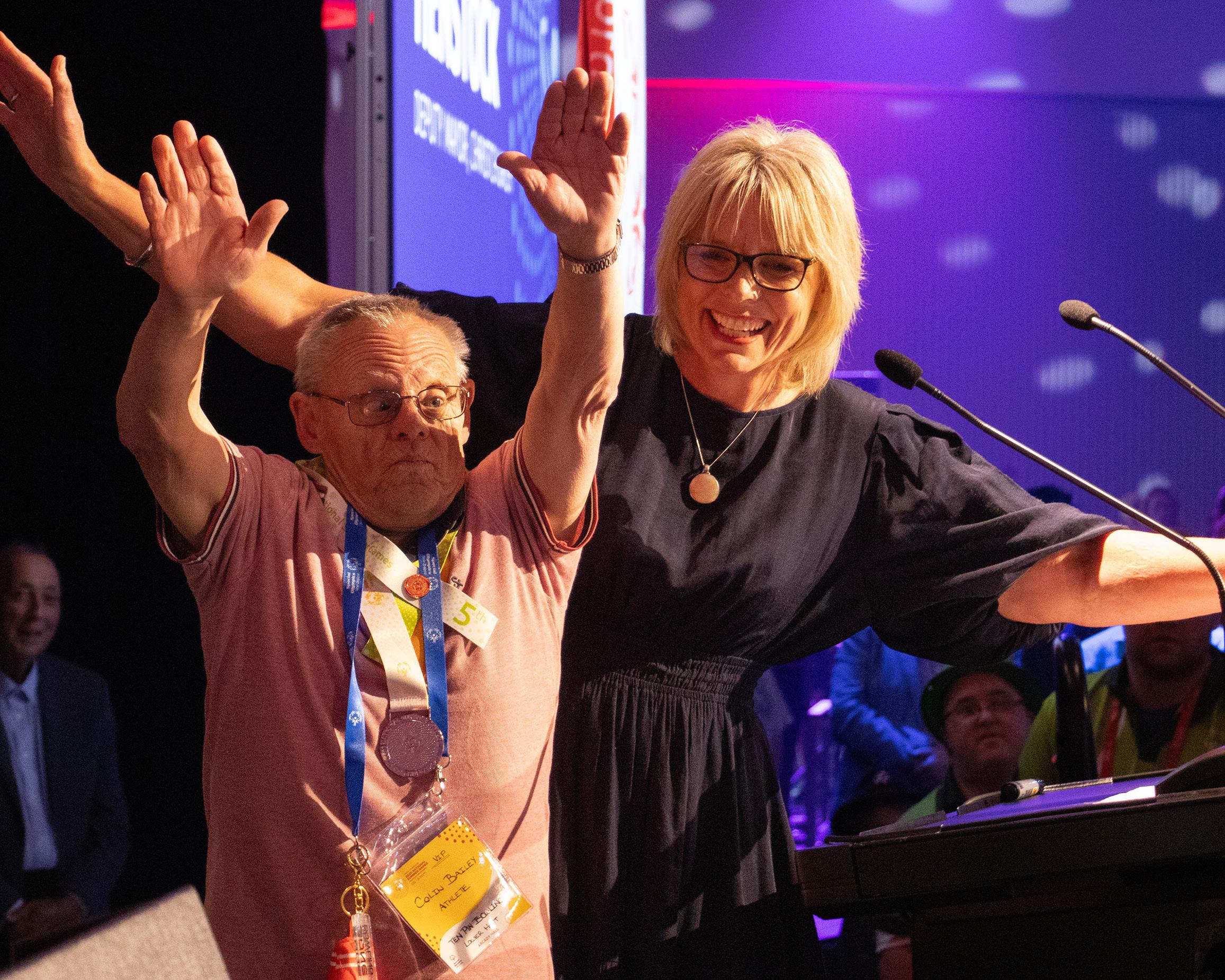
When Colin Bailey stepped onto the tenpin bowling lane, it marked the end of an era for one of the movement’s founding athletes. The Hutt Valley local, now 64, is competing in his final National Summer Games after more than 40 years, having been part of the original team that helped establish the organisation in the early 1980s. A multi-sport athlete who eventually found his home in tenpin bowling, Colin is widely admired for his generosity, humour and commitment both on and off the lanes. While he will continue to bowl socially, this year’s Games will be his last at national level, closing a remarkable chapter in the community he helped build from the very beginning.
Special Olympics New Zealand Chief Executive Fran Scholey said the 2025 Games set a new benchmark, thanks to Christchurch’s new venues and massive community support.
“The whole city got into it, and from what I can see in the media, the whole country got into it. I am so proud of the team delivering the Games, the general public and media for giving our athletes the recognition they deserve.” She also thanked the nearly 1,000 volunteers and hundreds of health professionals who supported the Games, including the Healthy Athletes Programme, which screened all 1,200 competitors. Around 300 pairs of glasses were handed out during the week.
The week wrapped up in true Special Olympics style with the much-loved disco - a highlight for many - before athletes headed home on Monday, tired, happy, and full of memories.
Special Olympics Summer Games & World Down Syndrome Day
Kia ora koutou
As we step into the season of sport, connection, and celebration, I am reflecting on the incredible journey that brought us December’s Special Olympics Summer Games. These Games are more than a showcase of athletic ability; they embody unity, determination and the belief that everyone deserves the opportunity to shine.
Every athlete who competes has a story of courage. A story of early mornings, long trainings, supportive whānau, and the quiet resilience that grows over months and years. Their achievements in their chosen sport are a testament not only to physical skill, but to the spirit that defines Special Olympics worldwide: that everyone belongs, and everyone has the right to shine.
I would like to acknowledge the amazing coaches, volunteers, and families whose commitment makes everything possible. Your dedication, passion and aroha create an environment where athletes feel valued, supported, and empowered.
Big Connect – 20 March
We had our annual Big Connect, which on Friday, 20 March, from 7.00–8.30pm. This gathering is always a special opportunity for our community to come together, share stories, reconnect, and celebrate the amazing mahi happening across the motu. It’s a perfect lead into World Down Syndrome Day on 21 March, a day where we join whānau worldwide in shining a light on inclusion, aroha, and the incredible achievements of people with Down syndrome.
Celebrating World Down Syndrome Day – 21 March
As we celebrate the excitement of the Games, we also celebrate World Down Syndrome Day on 21 March. This special day gave us a chance to honour the incredible contributions, talents, and leadership of people with Down syndrome in our communities.
There are many ways we can celebrate this day together:
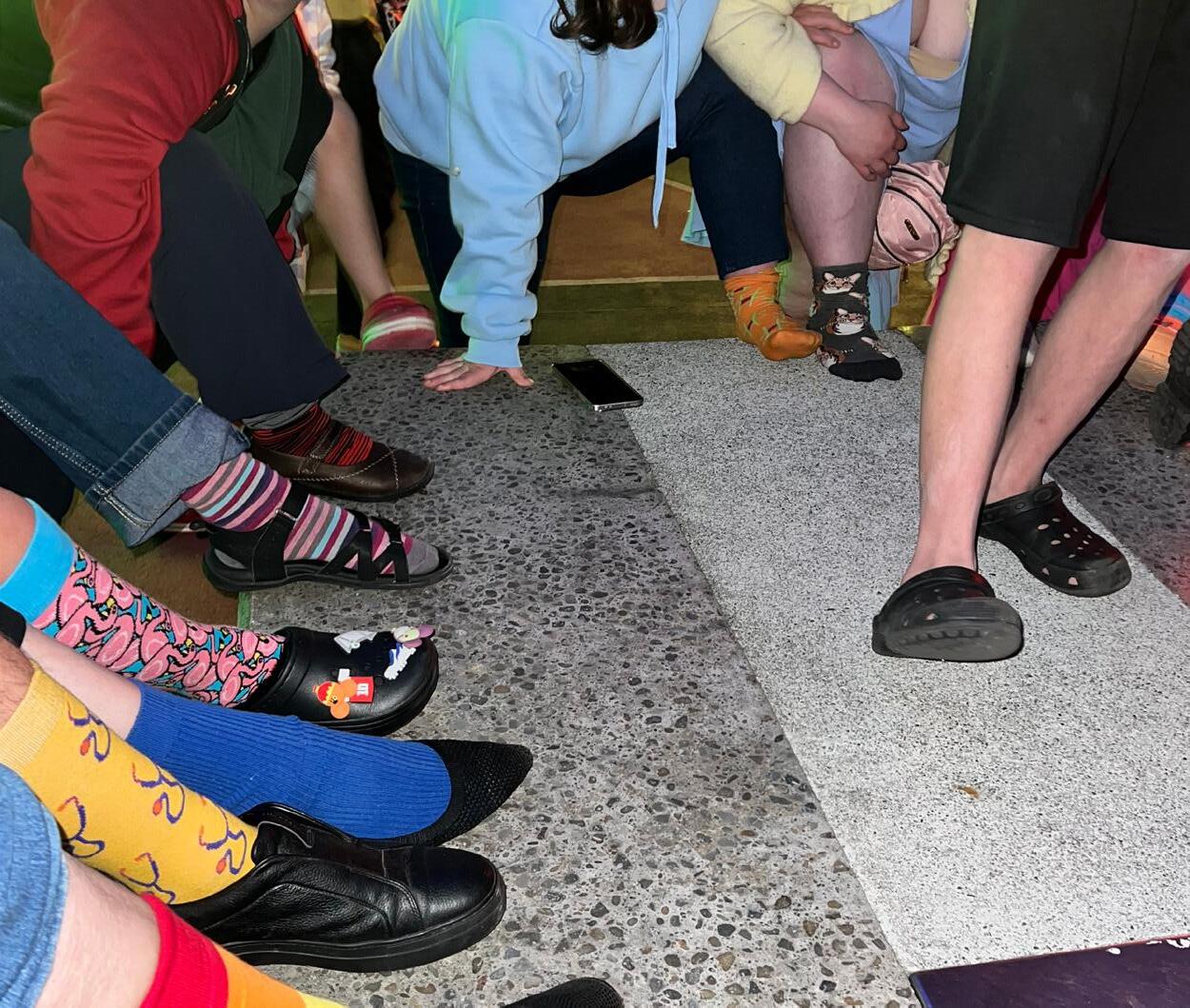
• Rock your socks – Wear brightly coloured, mismatched socks to spark conversations and celebrate uniqueness.
• Share stories – Highlight the voices, achievements, and perspectives of people with Down syndrome across our networks and social platforms.
• Join community events – Participate in gatherings, fundraisers, or activities that amplify awareness and inclusion.
• Promote advocacy – Support initiatives that strengthen rights, opportunities, and representation for people with Down syndrome.
World Down Syndrome Day reminds us that inclusion is not a single event—it’s a daily commitment to valuing every person for who they are.
Looking Ahead
I am excited for the year ahead. We have so much to look forward to –stronger connections, and continued opportunities to uplift our community. I am inspired by the passion I see and grateful to be part of an organisation guided by whanaungatanga, respect, and aroha.
To our athletes: you are the heart of everything we do. Your determination, joy, and leadership continue to inspire us and bring our community together in powerful ways.
To all our supporters, whānau, and partners: thank you for walking alongside us. Together, we will continue to build a future where everyone belongs.
Ngā manaakitanga, Gwen
NEO notes
Kia ora,
2026 is shaping up to be a year of celebration, connection, and taking action, because the choices we make today shape the world we live in. Over the coming year, the New Zealand Down Syndrome Association will focus on a number of practical actions that strengthen our community, build leadership, and ensure our collective voice continues to be heard. We will celebrate the 45th anniversary of the New Zealand Down Syndrome Association, host the National Achievement Awards, and mark both World Down Syndrome Day and Down Syndrome Awareness Month. Alongside these milestones, we will run self-advocacy workshops, host the youth development camp, develop new resources, and continue providing support, advocacy, and education to empower and strengthen connections across our community. Advocacy will remain a strong focus, with the NZDSA preparing submissions and responding to key consultations, including the Carers’ Strategy Consultation and the Review of the Total Mobility Scheme, ensuring the experiences of people with Down syndrome and their whānau inform decisionmaking. We will also continue building capability across our community through professional development for staff and online education opportunities for families and people with Down syndrome, to ensure everyone has the tools to make a difference.
Elections
Like the rest of New Zealand, we’ll also be talking about politics. Government decisions and policy changes have real impacts on our daily lives – something we’ve seen first-
hand through changes to Disability Services and the proposed changes to the Total Mobility Scheme. The choices we make at the ballot box shape these decisions, which is why the NZDSA will collaborate with IHC to keep disability issues at the forefront of political parties' minds.
This is your chance to make your voice heard. You can meet your local MP to share what matters most to you, or if speaking to your MP isn’t for you, email your questions to neo@nzdsa.org.nz – they could help shape the Disability Election Forum Q&A. Personal stories are powerful; they raise awareness, shift perspectives, and help shape policies that make a real difference in our community.
World Down Syndrome Day –Together Against Loneliness
Loneliness is not just a feeling – it’s a human rights issue. Research in New Zealand, including IHC’s From Data to Dignity report, shows many people with learning disabilities experience social isolation. When rights are upheld – to live in the community, have relationships and be part of a family,
go to an inclusive school and job, and take part in cultural life, sport, and play – loneliness is reduced and people are more able to experience a good life.
To mark World Down Syndrome Day, the NZDSA hosted The Big Connect, where self-advocates, parents, and professionals shared inspiring stories of how access and inclusion fight loneliness.
At the same time, we partnered with CoorDown on a thought-provoking campaign that may be viewed as controversial by some, but one designed to challenge assumptions and encourage reflection on the language we use. Words have the power to include or exclude, and exclusion contributes directly to loneliness.
Another highlight was joining the international Light Up a Landmark campaign – the first time in New Zealand. Landmarks worldwide were illuminated in blue and yellow, and in Palmerston North, the clock tower shone in solidarity with the global Down syndrome community. This was especially fitting because the firstever intentional celebration of World
NZDSA Professional Development Course
Down Syndrome Day was hosted in Palmerston North, marking its historic role. Even though our NZDSA branding is orange and purple, we joined the global movement to show connection and solidarity.
All our regional events brought communities together to celebrate, connect, and take action against loneliness. These experiences remind us that advocacy, inclusion, and community engagement are powerful tools for change.
From Data to Dignity 2026: Health indicators for New Zealanders with intellectual disability
IHC recently published the third From Data to Dignity 2026: Health indicators for New Zealanders with intellectual disability report using the Government’s Integrated Data Infrastructure to track outcomes for people with intellectual disabilities.
The full report is well worth reading and, like the previous report, remains sobering. It examines the inequities experienced by people with learning
disabilities and shows that, despite some positive developments such as improved internet access, longstanding disparities persist and in some cases are becoming more pronounced in New Zealand. The findings offer important food for thought, highlighting how inequities continue to shape everyday experiences and opportunities for people with learning disabilities and their whānau.
The report also highlights why it remains essential for the New Zealand Down Syndrome Association to continue engaging with the government and advocating for people with Down syndrome and their whānau. The findings reinforce the importance of ensuring that the voices and experiences of our community are reflected in policy, services, and decision-making. You can read the full report on the IHC website.
IHC have provided a summary of the key issues:
• Increasing injury rates, diabetes, and dementia
• High emergency department use
Welcome
Melissa Helg
and injury-related hospitalisations particularly among women with intellectual disability
• Evidence of barriers to ACC access, with lower claim rates despite higher injury prevalence
• A concerning rise in young people leaving school without qualifications
• Persistent income disadvantage and over-representation in hardship supports
• Greater exposure to housing pressure with rising placement on social housing waiting lists, particularly for Māori and Pacific children with intellectual disability
• Shorter lifespans: People with learning disabilities live on average 17 years less than the general population and face higher risks of poor health, justice system involvement, and economic exclusion
• Employment gaps remain stark, with only 21% of adults in paid employment compared with 78% of the general population.
• School engagement remains lower than for the non-intellectually disabled population.
Building Skills, Building Community
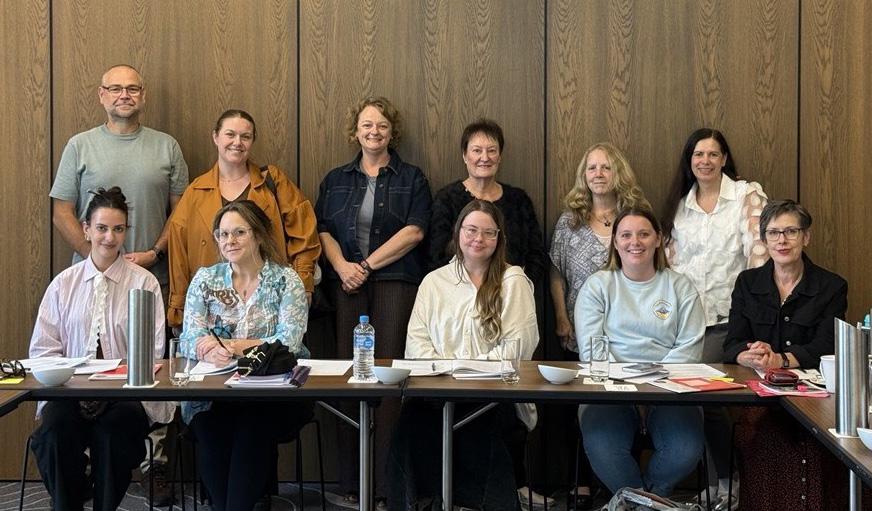
At the heart of the NZDSA is our mission to support, inform, and advocate alongside people with Down syndrome, their families, whānau, and professionals. Living this mission means investing in our people – and recently, NZDSA staff, regional staff, and volunteers came together for a fantastic professional development opportunity to share knowledge, connect, and strengthen practices across the organisation – whether supporting our community via the 0800 number or in person.
Welcome
If you call our 0800 number, you might hear a new voice. Melissa Helg joined us at the end of last year as our Helpline Support Officer. Please join me in giving her a warm welcome to our community!
Wrapping up with a few reminders:
Please see the notice page for important announcements, including nominations for the National Achievement Awards, the Rose Awards and the Youth Development camp.
I also want to remind you that all our events are advertised via E-news, our website, and Facebook. I look forward to seeing you either online or at in-person events soon.
Hei konei rā Zandra
Standing Together
In closing, I invite you to share what we can do together to stand against loneliness.
Let’s strengthen advocacy.
Let’s challenge exclusion.
LET’S STAND TOGETHER AGAINST LONELINESS.
Fowler Family Award, Caleb Hall
A quarterly prize draw acknowledging an important achievement in your young person’s life.
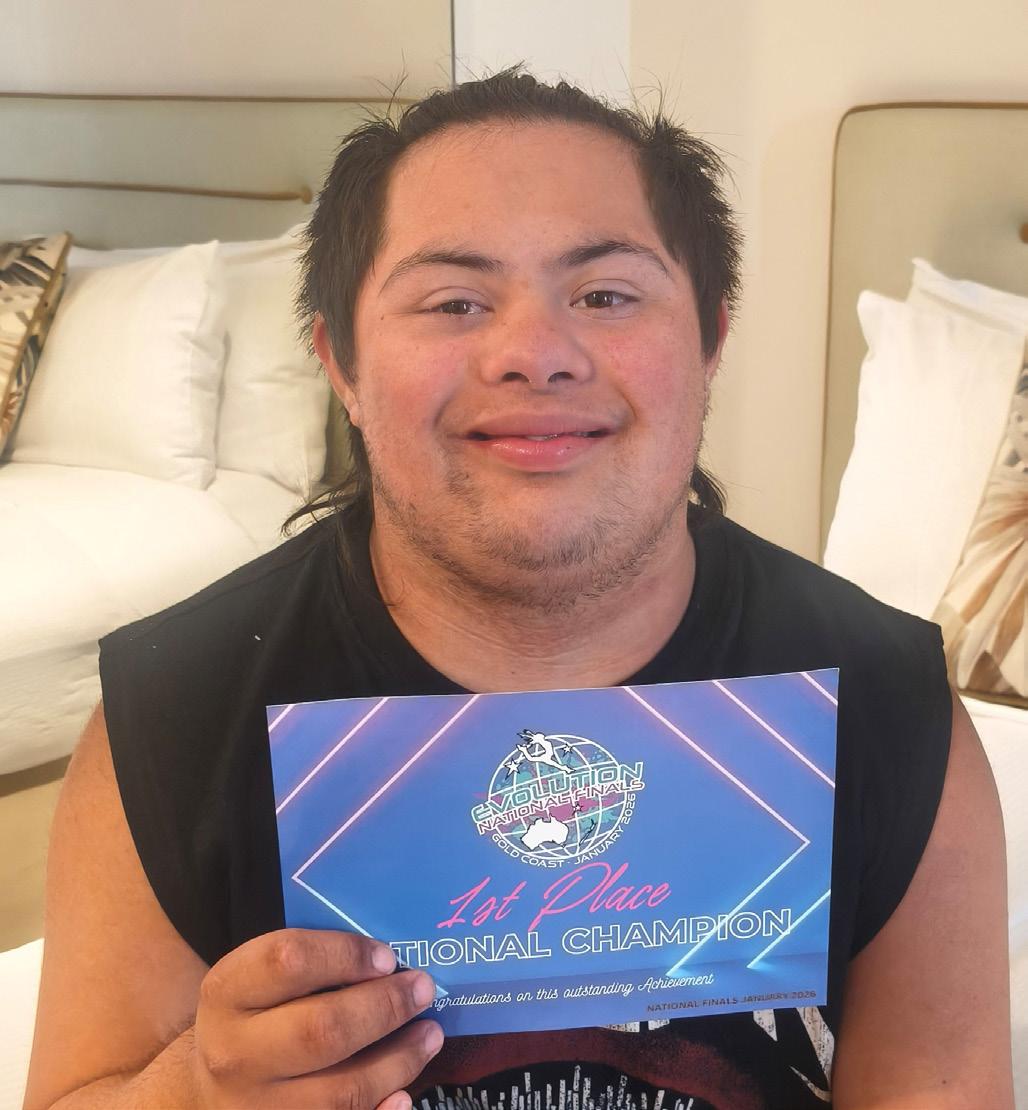
The winner of our lastest prize draw was Caleb Hall. Caleb has had many recent achievements, but two particularly impressive ones were performing a dance solo in the Evolution Dance Competition in Brisbane and gaining employment at a local cafe after volunteering during his Duke of Edinburgh award.
To enter, all you need to do is email na@nzdsa. org.nz about something your young person has achieved that is a significant milestone for them and/or your family. It is not always about the big things in life that our young ones achieve – this award is for any achievement, big or small, that means a lot to you and your young one. Entry is open to all ages. The only condition is that the winner will be announced in each journal after the draw, hopefully including a photo of them and their voucher.
Some achievements that you might want to consider entering for, include:
• Using the toilet for the first time
• Going to the toilet on their own
• Brushing their hair independently
• Eating their dinner without help
• Catching the bus
• Putting on their shoes independently
• Organising themselves without prompts
• Sleeping all night
• Getting a job
• Achieving something great in sport
The list is endless & All entries are equal.
The winner will be chosen at random by drawing a name out of a hat. Every submission matters, and no entry will be judged as being better than any other.
Our Virtual Down Syndrome Conference
Maddie Daybell
We celebrated Down Syndrome Awareness Month with an epic virtual conference on the theme of Improved Support-Improved Lives. The event featured 24 sessions, hosted by seven incredible people with Down syndrome, with over 29 speakers from Aotearoa and around the world, 500 attendees, and more than 30 hours of invaluable tips, strategies, information and connection.
I was lucky enough to attend every session and have summarised each one for those who couldn’t make it. I participated mostly from my office, but sometimes I listened from the car, playing the sessions over my speakers, or with earphones while grocery shopping. One of the best things about this conference is that you can truly join from anywhere, while doing anything.
A huge thank you to everyone who attended, to our incredible presenters, to the team who set it all up, and most of all to Zandra, whose vision and organisation made the whole event possible.
Although these summaries highlight some key insights, they can’t capture the full energy and experience of attending these sessions. During each session, we were able to ask questions and receive answers from people with invaluable professional or lived experience in real time — a truly incredible and irreplaceable opportunity. I hope to see you all at this year’s conference! While we would love to share all the summaries with you now, there are just too many to squeeze into one issue. This is the second half, you'll find the first half in the last edition, available online at nzdsa.org.nz.
October 11th
Creating, Sharing, and Empowering
Andrew Dever
Self-advocate
STRIVE and STEP-UP: Shaping Futures Through Advocacy
In this session Andrew Dever, a 38-year-old YouTuber with Down syndrome, shared his love for capturing photos and videos with us. Andrew started his YouTube channel after seeing a video from another person with Down syndrome on the platform. He thought, “Wow, if he can do it, then I can too.”
Since then, Andrew has used his passion for filming to preserve memories. His favourite video so far is one he made during a family trip to Japan. Becoming a Youtuber has been a learning journey for Andrew, he’s discovered that it’s okay to laugh at himself and to keep going when things don’t go as planned.
Andrew hopes his channel will inspire other people with Down syndrome and show the world that having Down syndrome doesn’t stop him from living a full and exciting life. His advice to everyone is to “keep being yourself, keep smiling, and don’t be afraid to show the world who you are.”
Looking ahead, Andrew’s goals are to grow his YouTube subscriber base and create more videos about travel or interviews with other people with Down syndrome. You can like, comment, and subscribe to Andrew at @ downwithandrew73 on YouTube.
At this session, members of STRIVE and STEP-UP highlighted how the two groups help transform self-advocates into national-level leaders, using their voices to shape services and drive systemic change right across Aotearoa. They shared powerful personal journeys, revealing what advocacy means, how they have grown through adversity, and why understanding your rights matters for everyone.
They also discussed how STRIVE and STEP-UP evolved into a collective of systemic advocates who actively influence change for people with Down syndrome nationwide and internationally.
October 13th
Krissy Wright shared her contagious passion for making information accessible and truly empowering people through knowledge. As the librarian at CCS Disability Action’s Library and Information Service, she walked us through the rich catalogue of resources and services the library offers — and explained exactly how anyone in New Zealand can tap into them. She took us on a brief journey through the history of CCS Disability Action, weaving in how the organisation’s values align with her mission.
Then she opened up about how her podcast Books Beyond Barriers came to life — describing the inspiration behind it, what the series is all about, and how each session is structured. She underscored why it’s so important to share information in ways that everyone can access — highlighting community radio and the podcast format as key tools for reaching more people.
Supporting People with Learning Difficulties Experiencing Bereavement and Grief
Professor Suzanne Guerin
Professor of Psychology (Research Design & Analysis), UCD School of Psychology, Dublin, Ireland
Professor Guerin explored bereavement, grief, and mourning, breaking down the different types of grief, with a focus on complicated grief. She highlighted research on treating complicated grief and shared practical tips for talking about death with people who have learning difficulties. Historically, it was believed people with learning disabilities didn’t experience grief, but research now shows they do.
She explained key concepts: anticipatory grief (worrying before a loss), acute grief (intense initial emotions), disenfranchised grief (when sadness is unrecognised), and complicated grief (when grief is complex and evolving). Factors like culture, personality, the nature of the death, and life changes can affect how grief is experienced.
Professor Guerin also discussed adapting therapies like Cognitive Behavioural Therapy (CBT) for people with intellectual disabilities, using accessible formats and easyread principles. Practical tips for families include normalising conversations about death, using stories and books as examples, acknowledging emotions, and respecting cultural practices, such as wanting to view the body. Her work emphasises that grief is universal, unique, and deserving of sensitive, accessible support.
October 14th
Home & School: Joyful Connections and a Strong Relationship
Paula Beguely
Parent & ADSA community liaison
From Voices to Power: Making Accessibility a Political Priority
Juliana Carvalho
Strategic Programmes and Impact Lead, Access Matters Aotearoa Trust
In this session, Paula shared her family’s journey with her daughters Harriet (12) and Charlotte (9, who has Down syndrome). She spoke not in a professional capacity, but from her role as a mum who learned to stop comparing and start imagining the life she wanted for her whānau.
In the early days she assumed a special school was their only option. However, over time she and her family built a vision of Charlotte growing up in her local community — going to the same school as her sister, surrounded by familiar faces and belonging.
They joined ADSA, found community, started early speech therapy, and prepared carefully for school. The ORS process was tough and deficit-focused, and their local primary school had never had a student with Down syndrome, so Paula led the way: sharing who Charlotte is, using photos to prepare her for school spaces, and building strong communication with teachers.
There were bumps along the way — COVID lockdowns, staff changes, misunderstandings — but also breakthroughs. Paula advocated gently but firmly for better communication, clearer learning plans, and truly inclusive practice. Paula reminded us that getting the schooling system to work efficiently for Charlotte isn’t a one-off task; it’s a journey that needs constant attention and effort. Even when Paula’s family and the school found strategies that worked — like shared Google Slides, WhatsApp updates, or preparing Charlotte with photos — there was always a chance things could stop working, new challenges could appear, or systems could fail. It requires constant attention, flexibility, and effort to keep the school environment responsive to Charlotte’s needs, ensuring she continues to thrive and be included.
Her takeaway: inclusion doesn’t just happen — it’s built through partnership, preparation, honest conversations, and community. And when families and schools work together, children like Charlotte can thrive right where they belong.
Juliana Carvalho was born in Brazil and has been living in Aotearoa for 13 years; she shared her deeply personal story with us about how she became disabled as a teen, paralysed in much of her body, and now uses a wheelchair. Her first experiences out in the world as a wheelchair user showed her how differently she was treated — a pattern she saw continue in New Zealand, compounded by visa struggles. These personal battles became the fuel for her advocacy.
Juliana stresses that accessibility isn’t just about ramps — it’s about communication, transport, information, and attitudes. Without it, disabled people, their families, and allies are
excluded. Accessibility equals freedom and dignity, yet in 2025, it’s still optional in New Zealand. Unlike other countries, the only protection here is the Human Rights Act, which relies on confidential complaints rather than systemic change.
Her solution: a law with mandatory accessibility standards, backed by campaigns, community action, and political engagement. Initiatives like the Kōrero for Change webinars, the Accessible Futures Summit, and petitions aim to shift the story from the cost of exclusion to the value of inclusion. Investing in accessibility saves money in the long run — building accessible from the start is far cheaper than retrofitting.
To end her session, Juliana made her call to action clear: share your story, support each other, join campaigns, influence decision-makers, educate your community, and demand access everywhere. Real change comes when politicians feel public pressure and see clear solutions. True equality can only be measured by comparing the lives of disabled and non-disabled people in New Zealand — and the disparity is undeniable.
October 15th
IHC Library Responding to Change
Phil Clarke
Head of Library and Information Resourcing, IHC Library
Phil Clarke gave a lively and inspiring tour through the world of the IHC library, from its early beginnings to the nationwide service it now offers for anyone interested in intellectual disability. He explained that if you are 18 or older and living in Aotearoa, you can join the library for free, and access the library remotely from anywhere in the country, with pre-paid courier bags now making borrowing and returning books easier for everyone.
With roots stretching back nearly 60 years, the library has grown from a small lending collection of 52 titles into a rich, specialist treasury covering books, reports, podcasts, videos, e-books, and more. Phil highlighted how the team behind the scenes are just as much a part of the “collection”, ready to connect members with what they need and even purchase new titles if something’s missing.
He shared how the library has continuously evolved: embracing the digital era and even creating interactive tools — including the “Stand Tall” game designed to help young people with intellectual disabilities make decisions about independent living. Phil emphasised that change isn’t new, but the pace and nature of it are accelerating, and the library is committed to staying ahead so its community can always find reliable, up-to-date information.
In short: the IHC Library isn’t just a place to borrow books; it’s a dynamic hub of knowledge that adapts to your needs, and invites you to ask questions, explore resources, and let the team help you every step of the way.
Polly Newton
Speech Language Therapist, Expert Advisor Speech Sound Disorders, NZ Speech-Language Therapists Association
In this session, Polly Newton introduced the pilot study of Babble Boot Camp, a caregiver-led programme designed to boost early speech and language development in infants with Down syndrome. She explained how the programme works, who it’s for, and how families can take part. Polly shared encouraging results from the pilot, showing tangible benefits for babies and young children with Down syndrome. The session wrapped up with a lively Q&A, where participants stressed the need to raise broader awareness so that more children can benefit.
Polly, a speech and language therapist and parent with over 18 years’ experience in education, emphasised her belief that prevention is better than a cure. She welcomed people to follow her on social media for a steady stream of free resources.
Babble Boot Camp
October 16th
Health Equity for People with Down syndrome and Intellectual Disabilities: Global Updates from Down Syndrome International
Nathan Rowe
Director, Down Syndrome International, UK
In his presentation, Nathan Rowe discussed Down Syndrome International’s Our Say in Our Health report, detailing how individuals with intellectual disabilities and their supporters see the gaps in health access worldwide.
He highlighted clear trends of unfair health outcomes; some people are forced to choose which of their health conditions to treat due to rising costs, while others are ignored by medical staff who prefer to talk about rather than with the person who has an intellectual disability. The presentation referenced the World Health Organisation’s new Disability Health Equity Network, which promotes inclusive health systems for all.
Nathan’s key message: the health system isn’t equitable by design, it requires both structural reform and strong advocacy. Most of all, he inspired us to stay hopeful, he reminded us we can spark change and create better health outcomes when we continue to stand up and advocate
October 20th
Ageing and future aspirations: Navigating Ever-Changing Seas
Dr Henrietta Trip
Senior Lecturer University of Otago
In this session, Dr Henrietta Tripp introduced an emerging theoretical model Navigating Ever-Changing Seas: a fresh way to understand what ageing looks like for people with intellectual disabilities and the whānau who support them. Rather than treating ageing as a single milestone, the model invites us into ongoing, evolving conversations about life, change, purpose, future planning, and end-of-life preferences.
To make these big topics more approachable, Dr Tripp encouraged interviewees to use everyday objects, like photographs, or simple prompts to spark discussion:
• “Tell me about this picture — why did you choose it?”
• “What does growing older look like to you?”
• “What are you looking forward to? What worries you?”
Having small discussions like these adds up over time, weaving meaningful dialogue into daily life. The experience of ageing is shaped not only by the individual, but also by their identity, relationships, past and present supports, and the broader community context. One striking theme: while some view ageing as a chance to grow and become more independent, others see it as a time of becoming more dependent and requiring more support — and both perspectives are valid and deserve equal respect.
Another vital insight from Dr Tripp: ageing doesn’t just affect the person with the intellectual disability, it impacts siblings, parents, carers and the wider support network too. The “elephant in the room” often isn’t just the person getting older, but the people looking after them evolving too.
The take-home message? Conversations about ageing and future planning shouldn’t be delayed until a crisis hits. They should become a normal part of life; familiar, supported, and sensitive. Planning ahead means asking “Who makes the decisions?”, “What’s important to you?”, “How will things change?” and doing so with tools that recognise individuals’ voices, agency and hopes. Ageing isn’t a map, it’s a shared journey, unfolding in real-time. Let’s start the conversation now.
Improving Brain Health for People with Down syndrome
Madeleine Healy
Geriatrician, Monash Health Clinical
Lead Cognitive Dementia and Memory Service, Australia
Madeleine Healy delivered a passionate and deeply informative overview of dementia among people with Down syndrome; she covered why it is unusually common in this group, what early warning signs and risk factors to look out for, and what other health issues often go unrecognised. She explained how specialists assess memory and brain health, urging a baseline cognitive check around age 30 so future changes can be accurately monitored. She also outlined the latest treatments and research, and highlighted preventative strategies to support brain health throughout life: doing 30-minute sessions that raise your heart rate five days a week,
treating hearing loss, and tackling sleep issues among other things. Madeleine’s key message to us all: early, proactive, lifelong care is essential in supporting cognitive vitality for all people, but especially those with Down syndrome.
October 21st
Building Capability Through Supported Independence
Dr Maree Kirk
National Director of Supporting Teaching Practice
Empowering Self-Determination with Volition
Erika Butters
Founder of
Volition
Dr Maree Kirk explored the theme Improved Support, Improved Lives through a uniquely Aotearoa lens, drawing on her PhD research into wellbeing for children with disabilities. Her framework centres on three pillars — acceptance, recognition, and supported independence — and challenges us to see independence not as doing everything alone, but as having the right support to make choices, learn skills, and take part in everyday life.
Maree emphasised that capability doesn’t just appear — it has to be built deliberately across home, school, and community. When those environments aren’t aligned, families end up carrying the load. She shared insights from Ministry of Education pilots, the national NEX network, and her action research on transitions, showing how structured routines and consistent support help children build confidence and independence over time.
Her message was clear: supported independence is a journey, not a moment. With family-led, rights-based practice and strong collaboration, children with Down syndrome can thrive, participate, and live ordinary, meaningful lives. Inclusion, she reminded us, is a right — and everyone benefits when we get it right
In our final session of the virtual conference, Erika Butters introduced Volition, a new app designed to strengthen free will and personal agency through Supported Decision-Making. The idea is simple but powerful: people should stay in control of their own choices, while getting whatever support they need to make them confidently.
Volition acts like a digital hub for decision-making. Decisionmakers can record their preferences, using voice notes, photos, videos, or text, and share them with trusted supporters, who can also add helpful information. Everyone stays connected, and the person stays in charge. The app can link with provider organisations too, making it easier to keep support aligned and consistent.
Most importantly, Volition means people don’t have to repeat their wishes over and over — their preferences are stored and respected in one place. It’s free to use and built with accessibility in mind, the app helps ensure decisions are clear, supported, and genuinely the person’s own, reinforcing choice and control in everyday life.
IHC Library
There’s a lot happening in the library this year! We’ve changed to a new eBook supplier, EBSCOhost, and by the time you’re reading this, the new eBooks should be live on the IHC Library catalogue. Next on the way are online audiobooks.
Our Easy Read collection keeps growing, with new titles added throughout the year to support accessible reading for everyone. We’re pleased to share that the latest IHC / Kōtata Research Report - From Data to Dignity 2026 also has an Easy Read version.
We have a great selection of educational games designed to help people learn about social skills, feelings, and emotions in a fun and supportive way.
These games make learning easier by creating a relaxed space to explore emotions, practise communication, and build confidence. They’re especially helpful for people who benefit from hands-on, visual, or interactive ways of learning. They’re practical, engaging, and a great tool for families, teachers, and support staff. Browse the collection and try them out!
We’re excited to announce our very first bookmark competition for rangatahi with an intellectual disability and/or autism.
The winning entries will become the official IHC Library bookmarks, included in every parcel we send to borrowers. The competition opens 30th of March and will run over the school holidays, giving families a fun and creative activity to enjoy together.
Who can enter?
Rangatahi with an intellectual disability and/or autism, aged 21 and under. Entries will be judged in the following age groups:
• 8 and under
• 9–14
• 15–18
• 18–21
Help us spread the word
Please share the competition with families who might like to get involved. We can’t wait to see all the beautiful designs!
Details will be available on the IHC and IHC Library websites from 30 March CHAT 21 Summer 2026
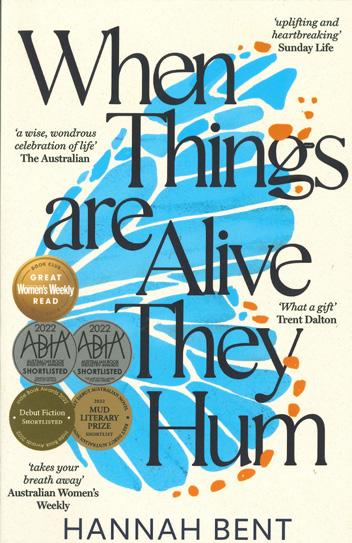
When Things are Alive They Hum
/
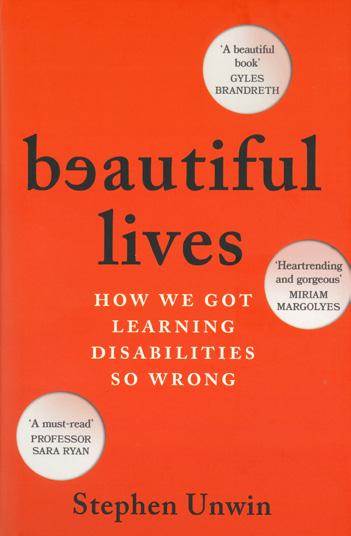
by Hannah Bent Beautiful Lives: How We Got Learning Disabilities So Wrong
/ by Stephen Unwin
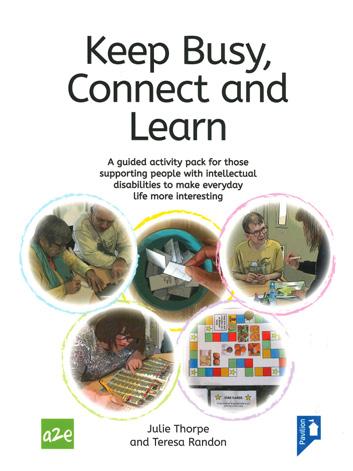
Keep Busy, Connect and Learn
/ by Julie Thorpe and Teresa Randon
"Marlowe and Harper share a bond deeper than most sisters, shaped by the loss of their mother in childhood. For Harper, living with what she calls the Up syndrome and gifted with an endless capacity for wonder, Marlowe and she are connected by an invisible thread, like the hum that connects all things. For Marlowe, they are bound by her fierce determination to keep Harper, born with a congenital heart disorder, alive. Now 25, Marlowe is finally living her own life abroad, pursuing her studies of a rare species of butterfly secure in the knowledge Harper's happiness is complete, having found love with boyfriend, Louis. But then she receives the devastating call that Harper's heart is failing. She needs a heart transplant but is denied one by the medical establishment because she is living with a disability. Marlowe rushes to her childhood home in Hong Kong to be by Harper's side and soon has to answer the question - what lengths would you go to save your sister?" -- Provided by the publisher.
"Beautiful Lives is a personal and pragmatic account; told through the eyes of a father whose son has severe learning disabilities. From early civilisation to the chilling realities of twentieth-century eugenics, this powerful book uncovers a startling and rarely told history – one deeply embedded in the challenges still faced today. Unwin shapes this history into a powerful story of love, lived experience and the long struggle for a better future.” -- Provided by the publisher
There is an excellent review online at https://citizen-network. org/library/beautiful-lives.html
“This practical, fully illustrated manual is packed with easy-torun, fun activities for individuals and groups of people with intellectual disabilities who may be at risk of boredom and under-achievement. This hands-on manual brings together a wealth of tried and tested ideas, specially designed to engage people with diverse learning, physical or behavioural needs, with or without support as needed. Each of the 52 clearly structured activities has plain English guidance to help the person to achieve, plus options to extend it further, utilising everyday resources available in most homes and other settings. The accompanying guidance, based on Adult and Community Education principles, enables support staff and others to provide fulfilling activities led by the interests and needs of the person, and to reflect on delivery of each activity and lessons learned.” -- Provided by the publisher.
Please contact the IHC library team on 0800 442 442, email them at librarian@ihc. org.nz or visit the online catalogue at https://ihc.mykoha.co.nz/
You can watch the library videos at https://ihc.mykoha.co.nz/cgi-bin/koha/opacmain.pl
And a reminder about their Free Book Scheme that gives a free book to families who have a family member aged 0-24 years who is autistic or who has an intellectual disability. Please check it out at https://ihc.org.nz/ihc-library-free-book
NZDSA Committee
Gwen Matchitt
President and Zone 3 Representative Waikato, BOP & Taranaki 0800 693 724 zone2@nzdsa.org.nz
Deborah Jones Zone 5 Representative Wellington & Wairarapa 0800 693 724 zone4@nzdsa.org.nz
NZDSA Staff
Zandra Vaccarino
National Executive Officer 0800 693 724 neo@nzdsa.org.nz
Jess Waters Social Media & Information Officer kiaora@nzdsa.org.nz
Regional Liaison Officers
Ashleigh Downing
Taranaki Community Liaison Coordinator 0800 693 724 taranakidownsyndrome @gmail.com
NZDSA Membership
Bev Smith Zone 1 Representative Northland 0800 693 724 northland@nzdsa.org.nz
Angelique van der Velden
Vice President and Zone 6 Representative Ashburton & all areas above 0800 693 724 zone5@nzdsa.org.nz
Kirsten McDonald Zone 2 Representative Auckland 0800 693 724 auckland@nzdsa.org.nz
Averill Glew Zone 7 Representative, Treasurer, Self-Advocacy Portfolio
All areas below Ashburton 0800 693 724 zone6@nzdsa.org.nz
Vacant Zone 4 Representative Whanganui, Manawatū, Gisborne & Hawke’s Bay 0800 693 724
Maddie Daybell National Administrator 0800 693 724 na@nzdsa.org.nz
Siobhan Vaccarino Administration Support Officer hello@nzdsa.org.nz
Maddie Daybell CHAT21 Editor editor@nzdsa.org.nz
Melissa Helg Helpline Support Officer help@nzdsa.org.nz 0800 693 724
Daniel te Kaat Graphic Designer 021 22 333 93 danielyouarehere.co.nz
Membership is now done online. For all details please go to www.nzdsa.org.nz or for any queries please ring 0800 693 724. If you have not received an email to update your membership online please call the number above.
Donations
The NZDSA receives no Government funding and relies solely on donations and grant applications to keep us running. If you can make a donation big or small, please go to www.nzdsa.org.nz or ring 0800 693 724.
Sheridan Davies Community Liaison Officer 0800 693 724 community@adsa.org.nz
NZDSA Socials
Pauline Marshall Canterbury Community Liaison Officer 0800 693 724 cdsainc@gmail.com
The NZDSA has a Facebook page that serves as a community forum and notice board for relevant issues, events and stories. facebook.com/NZDSA
Follow us on Instagram to see what our communities are up to @the_NZDSA
Check out the NZDSA’s website at nzdsa.org.nz
NUMICON KITS
CALLING FOR EXPRESSION OF INTEREST
Are you interested in loaning the NZDSA Numicon kits?
Numicon is a multi-sensory, structured maths programme. If you would like to know more about Numicon, the website is www.numicon.co.nz/
• The NZDSA has 16 kits to loan to NZDSA members.
• These kits can be used at home or school.
• The loan period is from February/March to the end of November.
• The NZDSA does require you to pay a refundable bond of $60.00.
• The NZDSA will reimburse you the $60.00 bond if the kits are returned clean and complete.
• The only cost to you is the courier and handling fee which is $40.00 and the cost of returning the kit to the NZDSA.
If you would like to loan a kit please email Maddie Daybell at na@nzdsa.org.nz
Youth Development Camp
Expressions of interest are now open for the Youth Development Camp, scheduled for the 27th to 29th of November 2026 at Vaughan Park, Auckland. This event promises to be an enriching experience for young people with Down syndrome. To register your interest please email Maddie at nzdsaevents@nzdsa.org.nz by the 1st May 2026.
Tell us
your story!
We are looking for adults with Down syndrome to tell their life stories! We will either publish these stories in a book or include them in CHAT21 or on the NZDSA’s website. We will be looking at different aspects of life stories, for example education, work, friends, love, leisure time, spirituality, inclusion, and dreams for the future. If you are interested in being part of this project, please contact Zandra at neo@ nzdsa.org.nz and we will send you a list of questions that you could have a look at. We will organise a Zoom meeting where you can tell us your life story. You are welcome to bring a support buddy or whānau member to this Zoom session.
Hope to hear from you soon!
Rose Awards
The Rose Awards provide the opportunity to thank individuals or organisations who either support individuals with Down syndrome or the Down syndrome community. Please email me on neo@ nzdsa.org.nz any nominations for an individual, family, or organisation explaining what they have done to “promote the participation of people with Down syndrome in their community”. We will acknowledge the person in CHAT21 and will post them a letter outlining why they were selected and include a box of Rose’s chocolates.
The NZDSA National Achievement Awards
The NZDSA National Achievement Awards, hosted by Her Excellency the Governor-General, will take place on Friday 23 October 2026 in Wellington. Nominations are currently open, so seize the opportunity to recognise the outstanding contributions and achievements of people with Down syndrome in your community. Please email Zandra neo@nzdsa.org.nz for the nomination form. Nominations close on the 1st June 2026.
Thanks
Thanks to the following funders and sponsors who have made donations to the NZDSA this financial year:
• IHC Foundation
• COGS Kahungunu Ki Heretaunga
• Lottery Grants Board
• COGS: Hamilton
• COGS: Auckland City
• COGS: Manukau
• COGS Southland
• COGS Whangārei
• Holdsworth Charitable Trust
• Joyce Fisher Charitable Trust
• Mainland Foundation
• Pub Charity
• Southern Stars
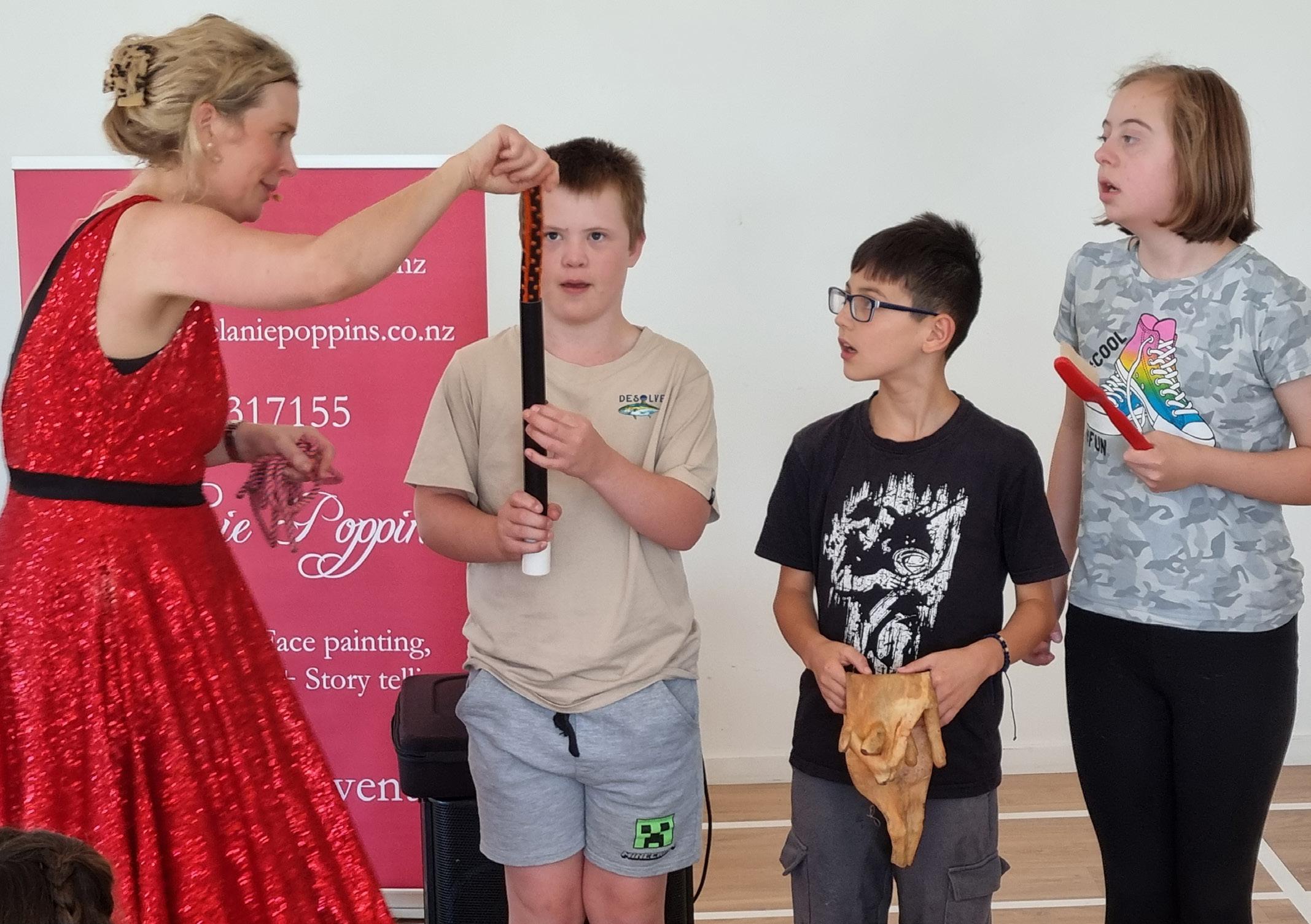
OUR PEOPLE, CDSA’S MAGIC SHOW
A few shots from CDSA’s recent fun magic show with Melanie Poppins, a local children’s entertainer that our families love.