Explore Your Holiday Experience with Andrew Oswin Looking Back On Our Virtual Down Syndrome Conference
Luka Willems: Charting New Waters
Carlos Biggemann: Chasing the Horizon

Explore Your Holiday Experience with Andrew Oswin Looking Back On Our Virtual Down Syndrome Conference
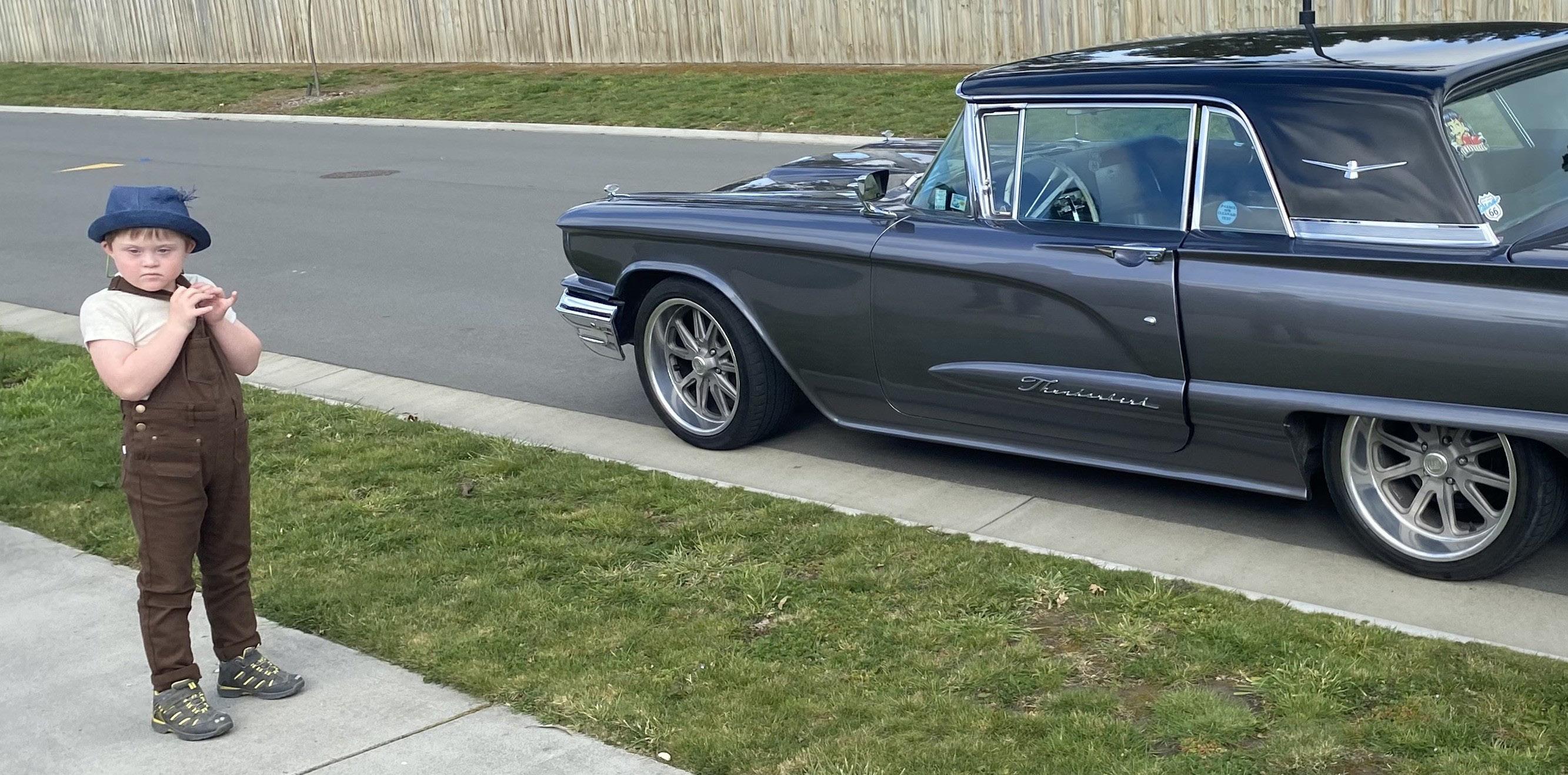
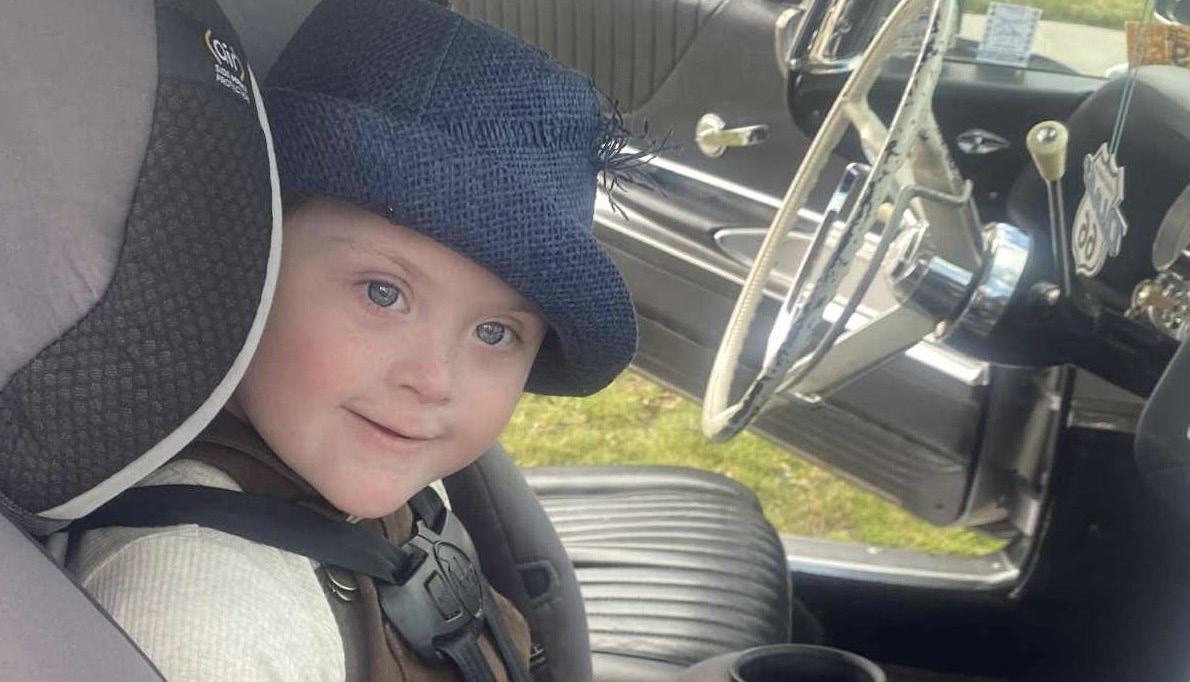
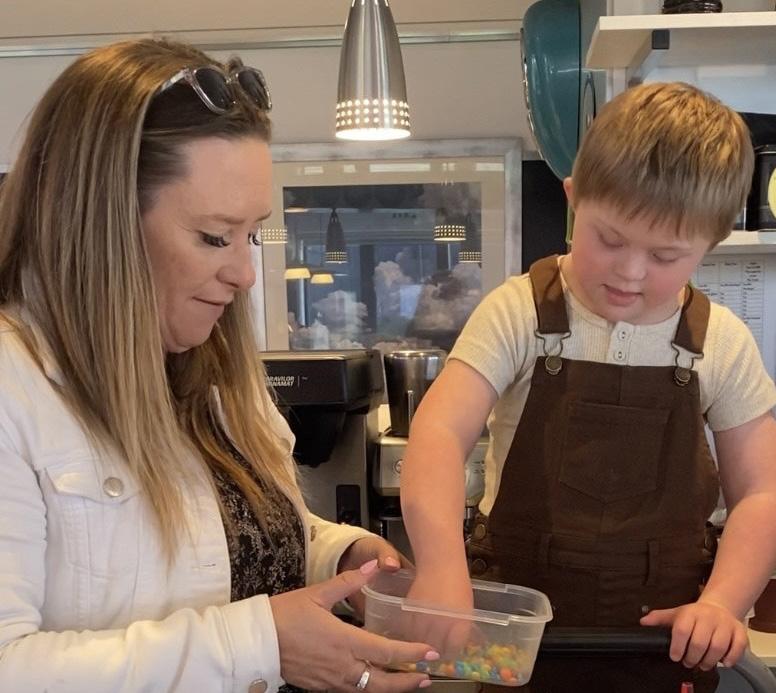
Recently CDSA were approached by a local café, Diner 66, who offered to run a competition with the prize being a ride in a classic muscle car, followed by a chance to make (and eat) your own milkshake or ice cream sundae. The lucky winner was Jonty Bailey and according to Jonty’s Mum, Emma, he had “the most wonderful adventure!” Especially while “driving in style in Shelly’s most beautiful silver Thunderbird classic muscle car.” Jonty chose to make his very own ice cream sundae complete with all manner of very yummy toppings. Emma also says, “Shelley & the team at Diner 66 made Jonty’s day so special and the whole family had a lovely afternoon together.” CHAT 21




Editor and lead writer: Maddie Daybell
Proofreading: Franco Vaccarino
Feature writer: Andrew Oswin
Lead creative: Daniel te Kaat @ You Are Here.
Production: Spectrum Print
Coordination: Zandra Vaccarino & Linda te Kaat @ NZDSA
The NZDSA does not promote or recommend any therapy, treatment, agency, product, political position, religion or advice. The opinions expressed in CHAT 21 are not necessarily those of the NZDSA. The editor reserves the right to make corrections to materials submitted for publication. All photos sent in to the journal become the property of the NZDSA and can be used in other NZDSA publications.
Kia
ora koutou,
This edition of CHAT 21 is bursting with stories, celebration, and community spirit!
October was International Down Syndrome Awareness Month, and we marked it in style — with an action-packed virtual conference that ran the whole month. It was inspiring to see so many people come together to share ideas, experiences, and laughter. I’ve put together some brief session summaries in case you couldn’t make it — but seriously, nothing beats being there yourself! I highly recommend coming along next year.
One of the key themes that arose throughout our virtual conference was the power of sharing your story. We often convince ourselves that our experiences need to be extraordinary for anyone to care — but that couldn’t be further from the truth. I’ve learned that people connect most deeply with the “ordinary” moments, the ones that mirror their own lives and remind them they’re not alone. Morgan Harper Nichols once said, “Tell the story of the mountain you climbed. Your words
could become a page in someone else's survival guide.”
I’d genuinely love to hear from you. Tell me how you’re doing, what’s been happening in your world, or what you’re excited about right now. If you ever feel like chatting, sharing your story, or even being featured in CHAT 21, just reach out; email me at editor@nzdsa.org.nz and let’s talk. I’m always excited to connect and get to know the amazing people in our community. And here’s a little secret: contributing to CHAT 21 doesn’t mean you have to sit down and write an article. I’m more than happy to meet with you and write something up about you or your loved one. You can send photos, artwork, or anything you’d like to share. You can also send in questions, ideas, or topics you’d like to see featured in the journal.
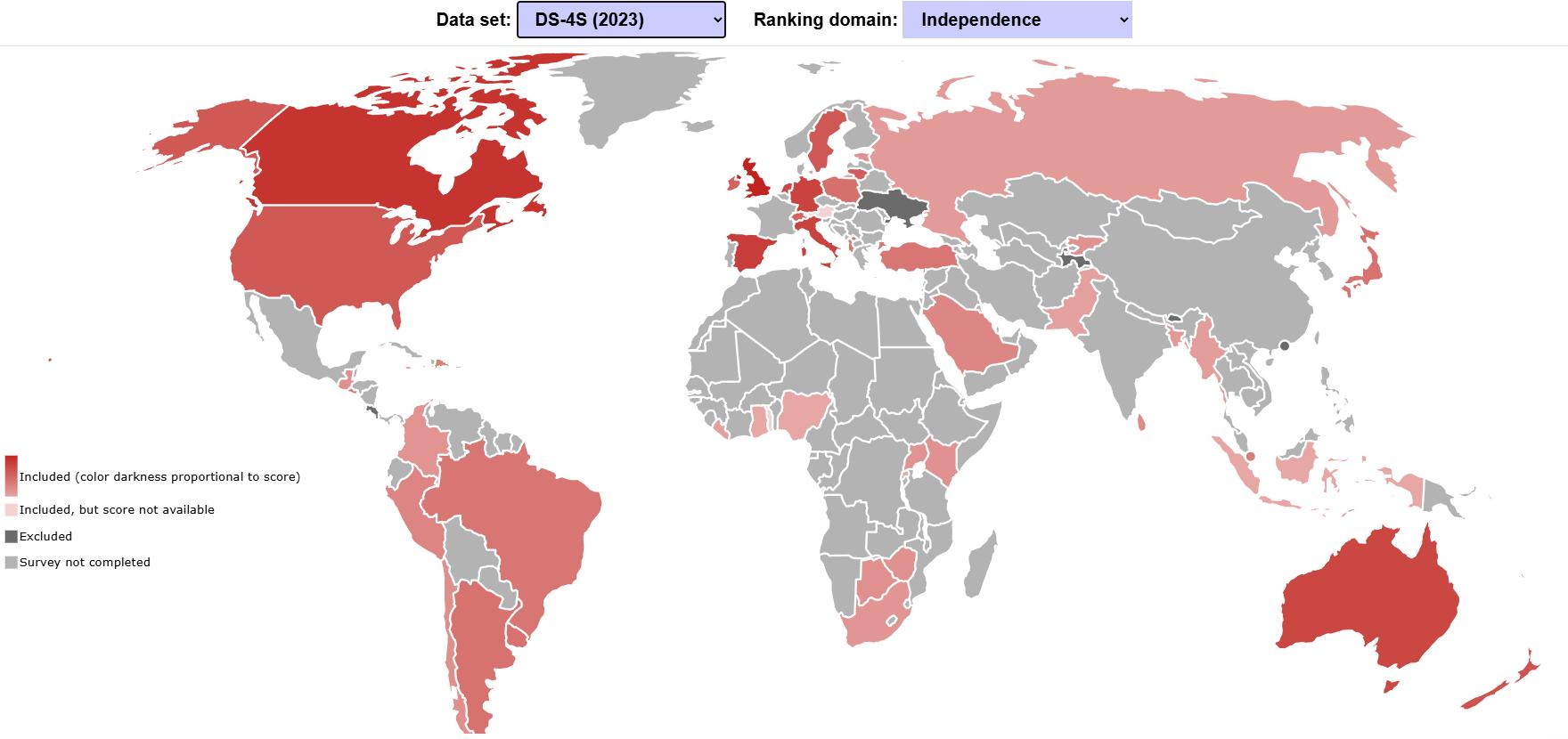
This issue is all about independence — and there’s some good news to celebrate. According to research from Dr. Skotko and his team, Aotearoa ranks 8th out of the participating countries of the quality-of-life survey — our highest score yet. That’s something we can be proud of. But there’s
another side to the story. When we look at research comparing the outcomes of people with Down syndrome to those of people without intellectual disabilities in New Zealand, the picture becomes much more concerning. Adults with intellectual disabilities continue to face some of the toughest outcomes in the country — especially when it comes to health, poverty, and opportunities for independence. You can read more about this in our WDSM virtual conference summaries, but don’t despair, we are taking some promising steps forward in regard to Supported Decision-Making. I was particularly intrigued by the new app Volition, founded by Erika Butters, who presented the invention at our virtual conference. It’s an app designed for decision-makers and their supporters, and in my opinion is an excellent way for people to ease into integrating Supported Decision-Making into their everyday lives. Find out more about this cool new app by visiting Volition’s website (www.volition.org.nz), or check out our summary on Erika’s session.
In this edition, we are bringing back some favourites — the President’s Pen column from our president, Gwen
Matchitt, and Down Write Brilliant, featuring an awesome article by Amelia Eades on the Special Olympics. I’m also super excited to introduce a new section to CHAT 21, where I head out and #GetDownWith awesome people from our community. In the past couple months, I had the absolute pleasure of speaking with three incredible community members — Carlos Biggemann, Erin Smith, and Luka Willems — about their lives, passions, and achievements.
Andrew Oswin is back with another great story about his overseas adventure, plus we have some insightful articles from Phil Clarke, who dives into IHC’s Stand Tall game, and Adrian Hatwell, who brings us highlights from the Share the Dream gala.
That’s all from me for now. Happy holidays, catch you all in the summer edition!
Ngā mihi me te aroha nui, Maddie Daybell
CHAT 21 Spring 2025
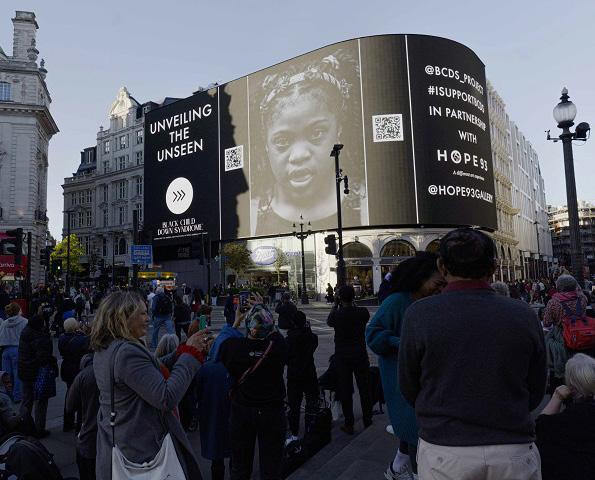
On 6 October 2025, the iconic Piccadilly Circus in London lit up for ten minutes with powerful black-and-white photographs of Black children with Down syndrome, taken by Oscar nominee Misan Harriman. The display formed part of the “Reflecting Radiance” exhibition by the Black Child’s Down Syndrome (BCDS) project. Aimed at marking both Black History Month and Down Syndrome Awareness Month, the event celebrated visibility for a group too often overlooked. Founders of BCDS described it as a monumental moment. The children featured in the images lit up seeing themselves on the screen and reacted with awe and delight.
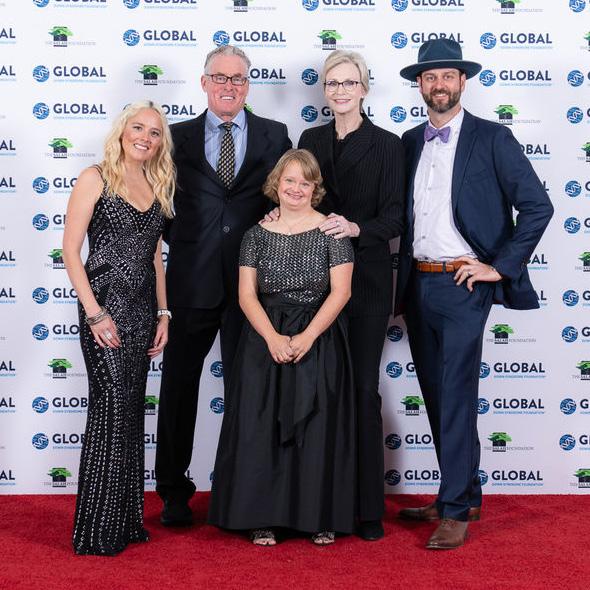
This year’s show for the Global Down Syndrome Foundation lit up Denver with all the glitz and glamour of a high-end runway show and all the impact of a movement for inclusion. The 18th annual Be Beautiful Be Yourself Fashion Show gathered over 1,400 attendees and raised US $2.6 million for Down syndrome research, care, and advocacy. Jane Lynch was honoured with the Quincy Jones Exceptional Advocacy Award for her longstanding support of people with Down syndrome; she attended the event with her Glee co-star Lauren Potter, an acclaimed actress who has Down syndrome. Beyond the celebrities, the evening belonged to more than 20 models with Down syndrome; they strutted down the runway, owned the spotlight and showcased that beauty, brilliance and ambition know no limits. The message of the night was clear: people with Down syndrome deserve to be celebrated.
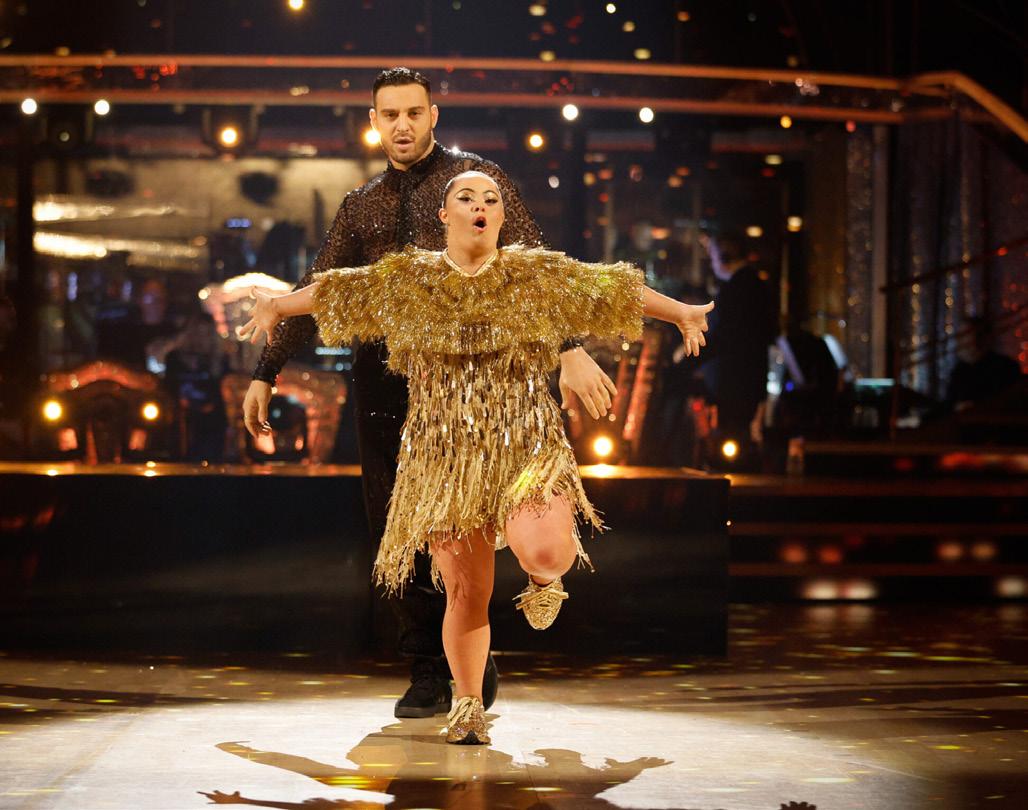
Once again, we feature Ellie Goldstein, as she has become the first contestant with Down syndrome to take part in the main series of Strictly Come Dancing, marking another significant milestone in representation and inclusion. The show’s 2025 series premiered in September, with Ellie describing the opportunity as a “dream” and saying she was ready to step onto the dance floor.
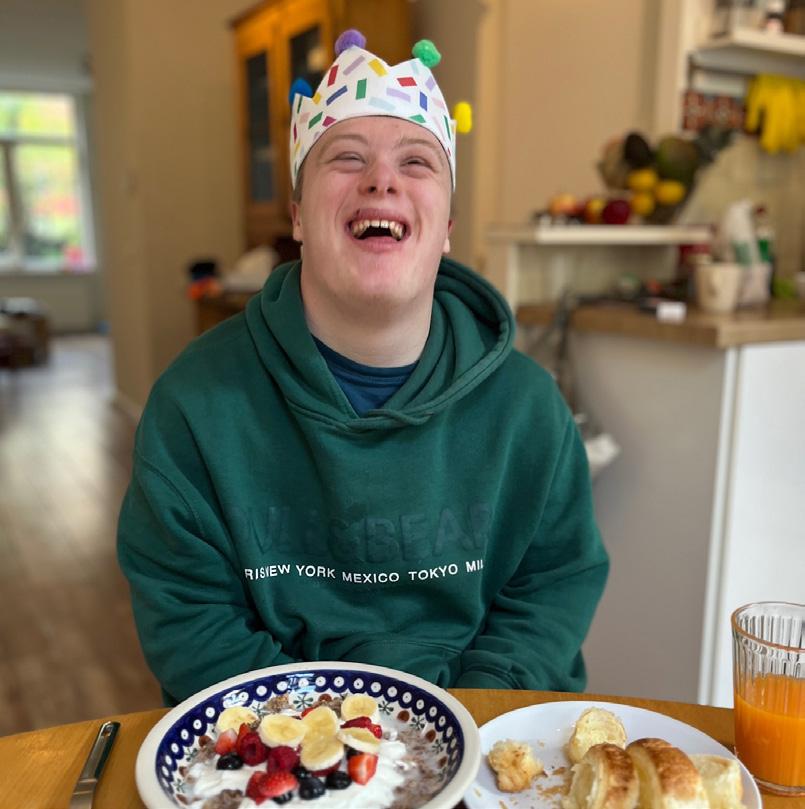
New Zealand’s very own Luka Willems is making waves as an up-and-coming social media influencer. On his YouTube channel, @LukaWillems, and Instagram, @luka.willems, he shares fun, inspiring glimpses into his daily life. From intense training sessions for swimming competitions to whipping up delicious meals in the kitchen, Luka gives his followers a front-row seat to his adventures. He also takes fans along on his travels, showing how he embraces new experiences with energy and enthusiasm. Whether it’s sports, cooking, or exploring new places, Luka’s posts are a mix of fun, positivity, and inspiration — definitely worth checking out.
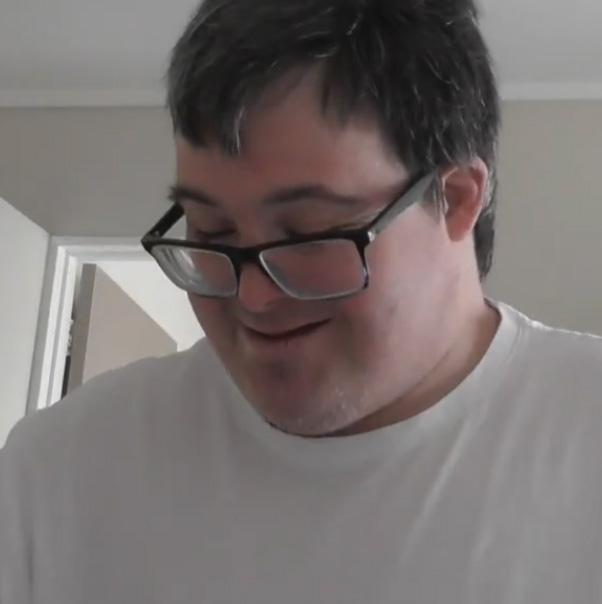
Another of Aotearoa’s standout YouTubers, Andrew Dever, captivates viewers on his channel with his passion for filmmaking and preserving memories. His favourite content to share is his travel videos, taking audiences along on his adventures, and showing the world through his eyes. Andrew is also excited to start featuring interviews with other people who have Down syndrome, creating space for more voices and stories to be heard. With every upload, he hopes to inspire others to embark on their own content creation journeys, encouraging everyone to share their experiences, express themselves, and celebrate life in their own unique way.
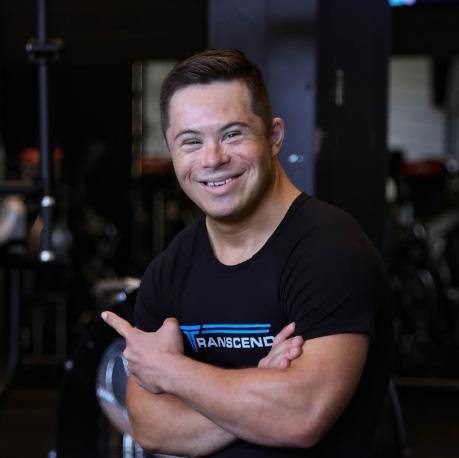
Green Ranger Kyle, known on TikTok as @kylelandi, is a Canadian bodybuilder and advocate attracting attention online. Since sharing his story on social media, Kyle has gained over 750,000 followers and more than 26 million likes. His content showcases not only his dedication to building muscle, but also his commitment to breaking down stereotypes about what people with Down syndrome can achieve. From workouts to motivational posts, he inspires viewers to push their limits, embrace their potential, and challenge expectations. Kyle proves that strength isn’t just physical; it’s also about determination, resilience, and refusing to let labels define you.
#gettingdownwith

At first glance, Erin Smith looks like any busy professional; she balances a full-time job, a thriving social life, and time with her family. But look a little closer, and you’ll see a woman blazing a trail for others, shattering barriers and expectations, and reminding the world that no label or limitation can define her.
In 2007, Erin became the first person with Down syndrome to star on Shortland Street, playing the role of Cathy Arnold, a patient on the show. She landed the coveted role after auditioning alongside other young women with Down syndrome; they filmed her reaction to scoring the role for Attitude TV — though her brother nearly ruined the surprise by phoning the landline at the same time as the production crew was set to call and break the news to Erin. She’s been on television several times now, including when she was interviewed by Seven Sharp in 2013 about a typical day in the office, and her most recent appearance on Down for Love last year. She’s such a familiar face that she has been stopped on the street by strangers wanting to say hello, recognising her from her television performances.
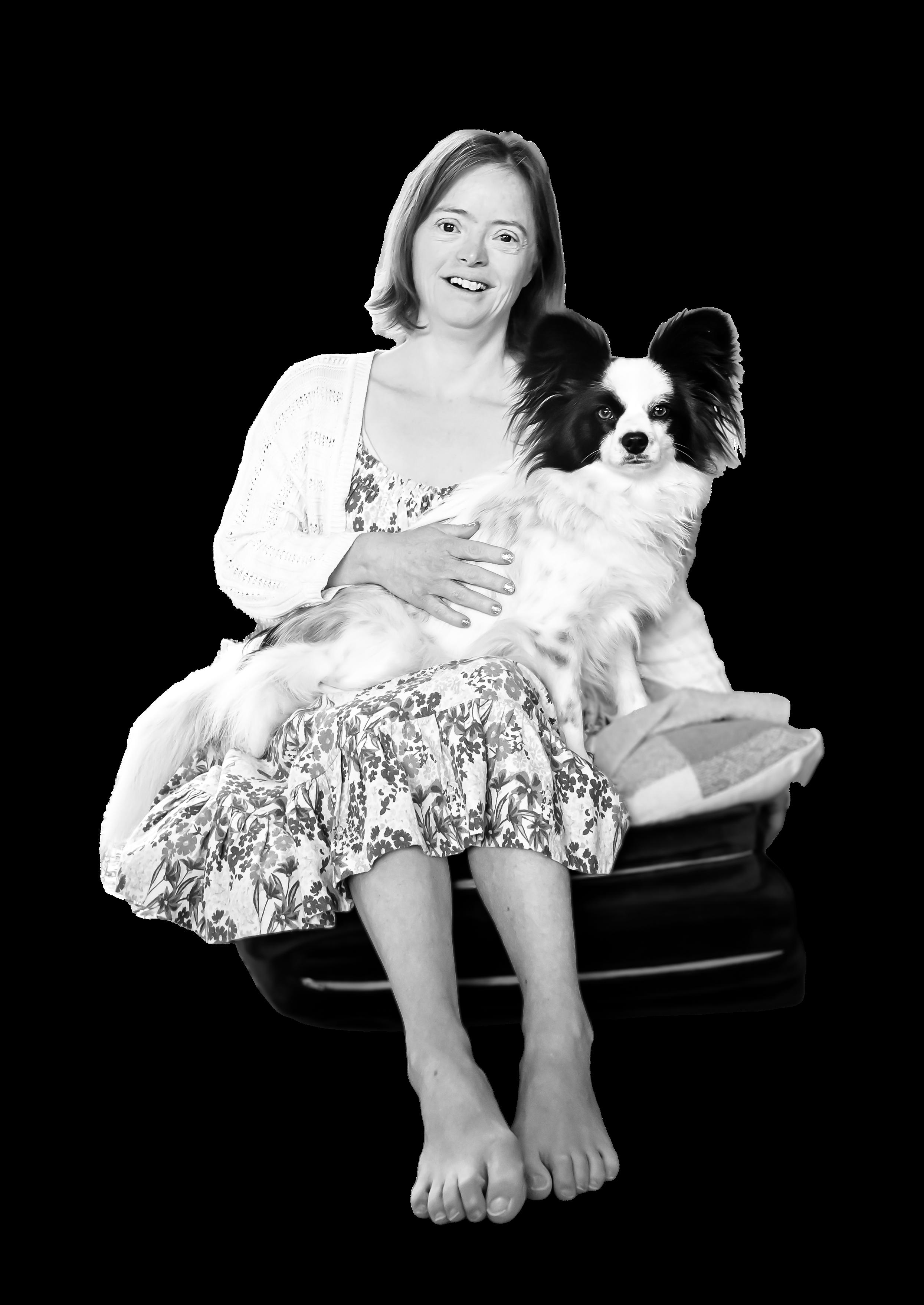
Although she lights up the screen, one of Erin’s favourite roles is being the doting aunt to her nieces and nephews — she absolutely lights up when they visit. And when she’s not entertaining family, you’ll often find her on the floor laughing and playing with her little Papillon puppy, Pascal.
Erin navigated mainstream school, despite a system that wasn’t built for her, pushing through every challenge and learning the resilience and grit that have made her the incredible, independent woman she is today. After school, Erin went on to a mainstream computer course — but during that course she started a full-time placement at the hospital, which eventually turned into a job offer and full-time role.
At 41, Erin has dedicated the last two decades of her life to working for Te Whatu Ora in Northland, where she has become a trusted member of the team. Over twenty years she has moved through various roles; she currently works five days a week as an administrator for the District Nursing team, always bringing compassion, reliability, and deep institutional knowledge to the role. Her calm professionalism, strong organisational skills and empathetic communication make her a key person in maintaining a functional and smooth relationship between the clinical team, administrative support, and patients. One career highlight was when she was a part of Orientation Day for new hospital staff. From security guards to surgeons, everyone was welcomed by Erin — a brilliant young woman who shattered their expectations and showed them what people with Down syndrome are capable of.
Despite her humble nature, Erin’s understated brilliance has been noticed a few times; in 2013,

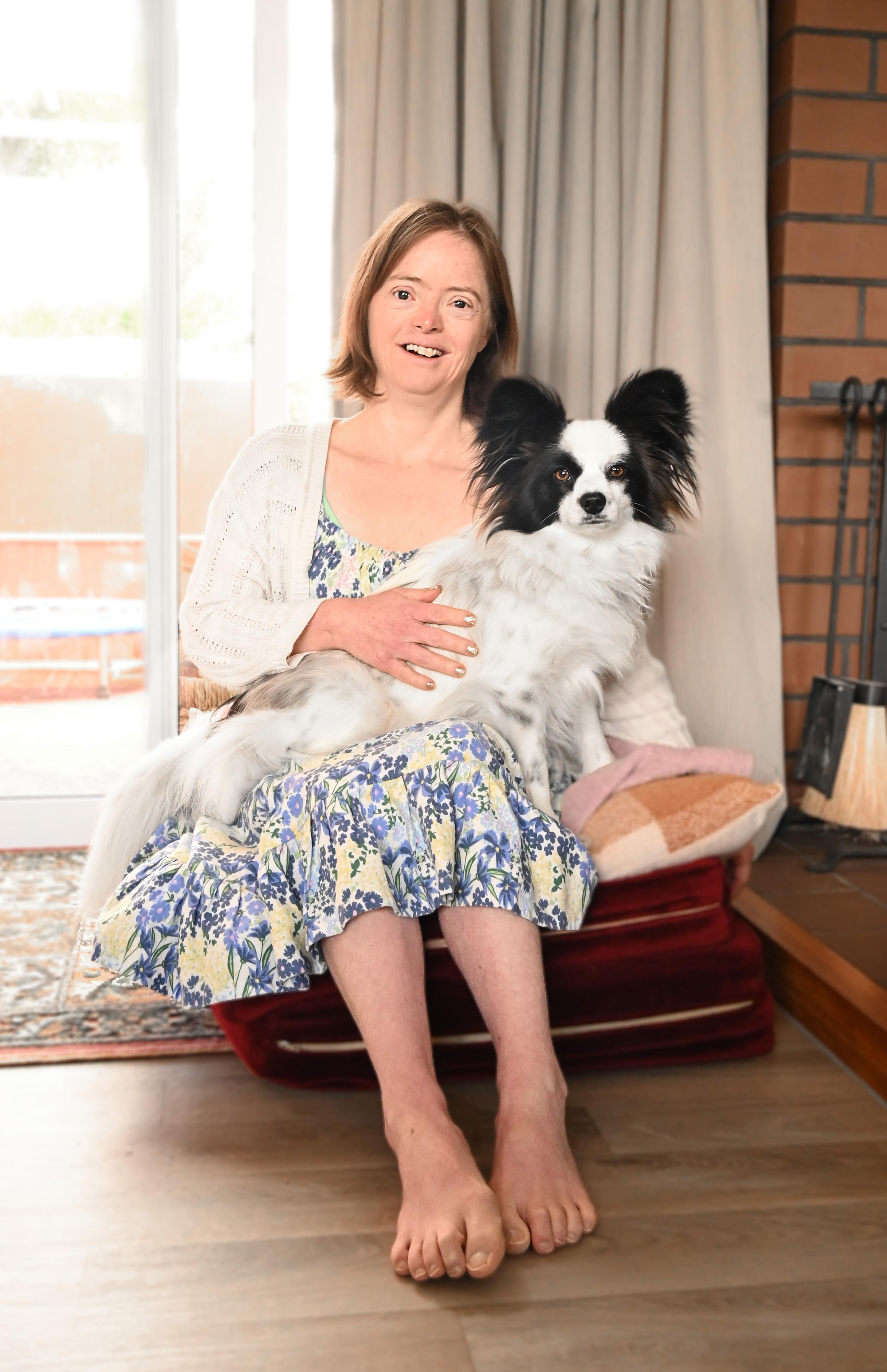
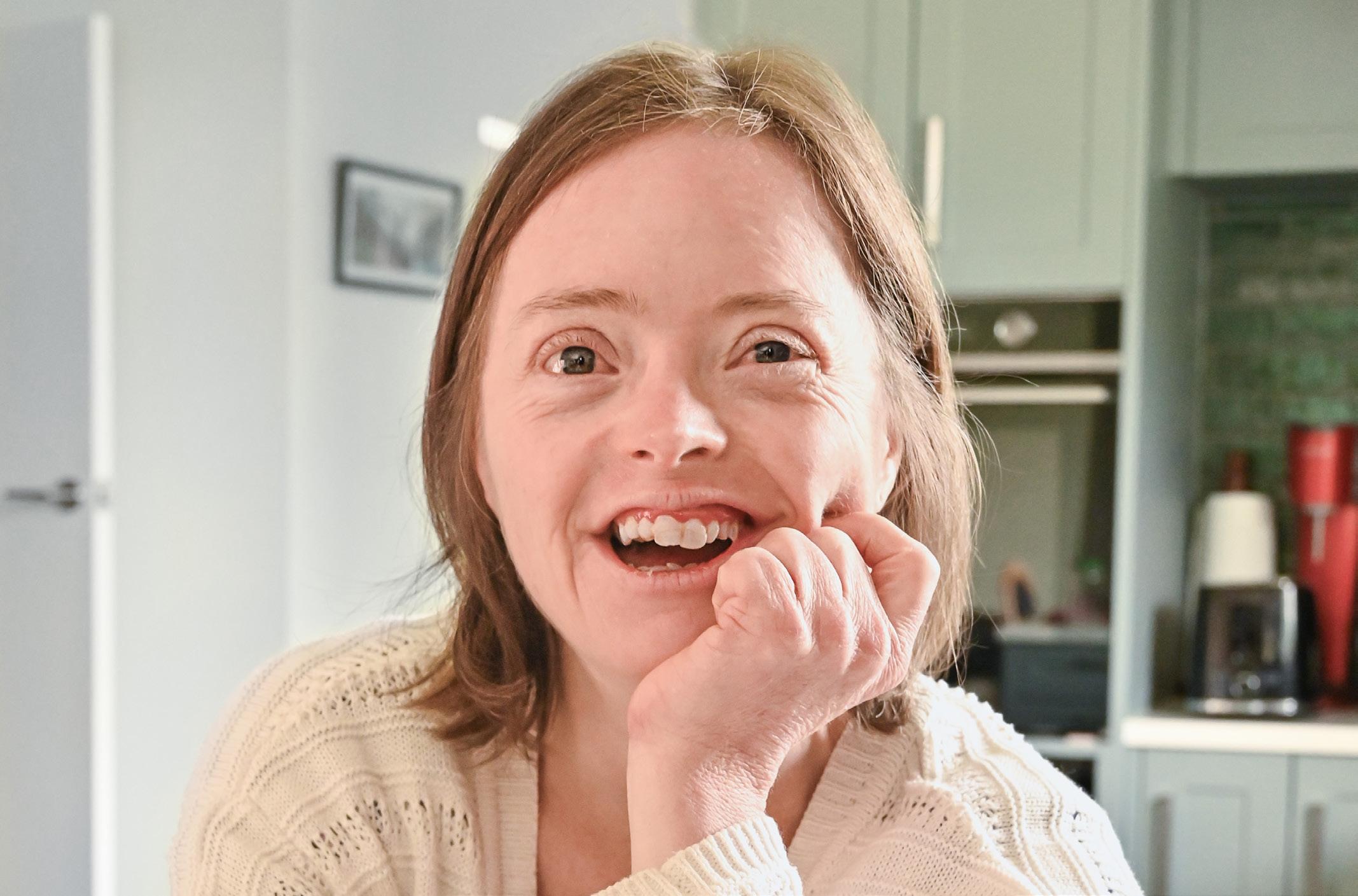
she received a National Achievement Award from the NZDSA after being nominated by her employer. A spokesperson for the NDHB at the time went on record stating that the Learning and Development team, where Erin was stationed at the time, could not have achieved everything it did without her. She also won a Youth Employee of the Year award in 2004 from the WDC after being nominated by her coworkers. Not only is she exceptionally skilled at her job, but she genuinely loves what she does. Erin balances her busy work life and full social calendar by carving out regular alone time each week to recharge, reset, and get ready to do it all over again.
Thanks to her steady commitment to work, she’s not just covering her own expenses — board, clothes, gluten-free food, activities — she’s also stacking up the savings at the same time. When she was 21, people suggested Erin go on Outward Bound, and even offered to help her fundraise. “Fundraise?” she asked — after all, she was a working woman. Naturally, she went and paid her own way. She’s already been on several overseas trips, including to two major conferences, both of which she boldly stepped onto stage and presented at: the 13th World Down Syndrome Congress in Glasgow in 2018 and the 15th World Down Syndrome Congress in Brisbane in 2024 — and yep, she paid for the entirety of both trips herself.

You simply can’t talk about Erin Smith without mentioning her love for dance. From StarJam to StrongBeatz, she’s been owning the stage from an early age and showing everyone her sweet moves. Every other week Erin’s off on a mini-adventure with her friends from Great M8’s; whether it’s playing laser tag, getting a strike at ten-pin bowling, or unleashing her inner artist at a garden pot painting class. But her all-time favourite? Their wild and wonderful music-therapy sessions, where everyone grooves to the beat and unleashes their inner musician. Each afternoon she taxis from work into the town centre near her house, ready for any number of spontaneous detours: maybe a cheeky Maccas run, a fresh trim at the hairdressers, or a quick errand run before walking the rest of the way home.
Erin Smith shows us that life is for seizing. Trailblazer, daughter, sister, aunt, colleague, friend, adventurer: she turns everyday moments into extraordinary ones, and reminds us that labels don’t define us. Independence, adventures, and fun aren’t dreams for Erin, they’re the reality she has achieved through hard work, breaking barriers, and ignoring the expectations others have had for her. She inspires us to embrace our full potential, and live active, meaningful lives.
by Andrew Oswin, CHAT
Feature Writer
If you were to go on an overseas holiday with your parents in an aeroplane thousands of kilometres away, to where would you go?
I’ll start by telling you about a six-week holiday I am very privileged to share with you.
Hong Kong SAR, China:
It started with a three-night stopover in Hong Kong, staying in a flash hotel and eating Chinese cuisine. I enjoyed posing for photos with Disney characters at the top of Victoria Peak, having got there on a funicular railway. The temperature was 34°C but it felt like 41°C with the high humidity. We walked to the waterfront to watch a symphony lightshow at Tsim Sha Tsui. My favourite thing about Hong Kong was having a stroll glimpsing the Chinese temples at the Nan Lian Garden. It was very beautiful and peaceful.
London, England, United Kingdom:
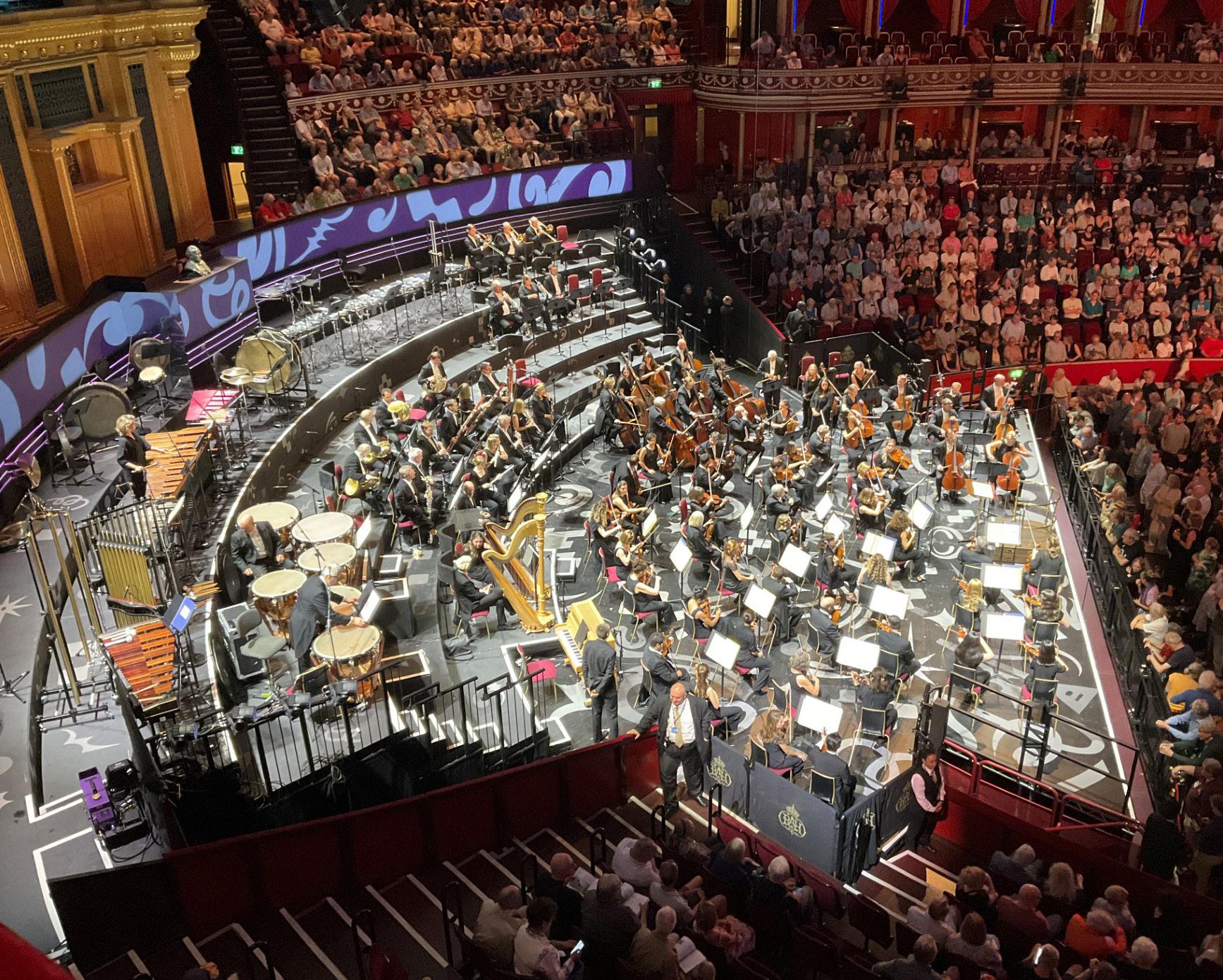
We then flew from Hong Kong to London Heathrow. My parents and I spent two weeks in the very busy city of London. I enjoyed going on a self-guided tour of Kensington Palace and the Sunken Gardens, where there is a statue of Diana, Princess of Wales. We also went to watch Kata Kabanova, an opera, in which my sister played
violin with the London Philharmonic Orchestra at the Glyndebourne Opera House. I really enjoyed going to the Royal Albert Hall where the BBC Proms concerts are performed. We saw three Proms concerts in this huge hall.
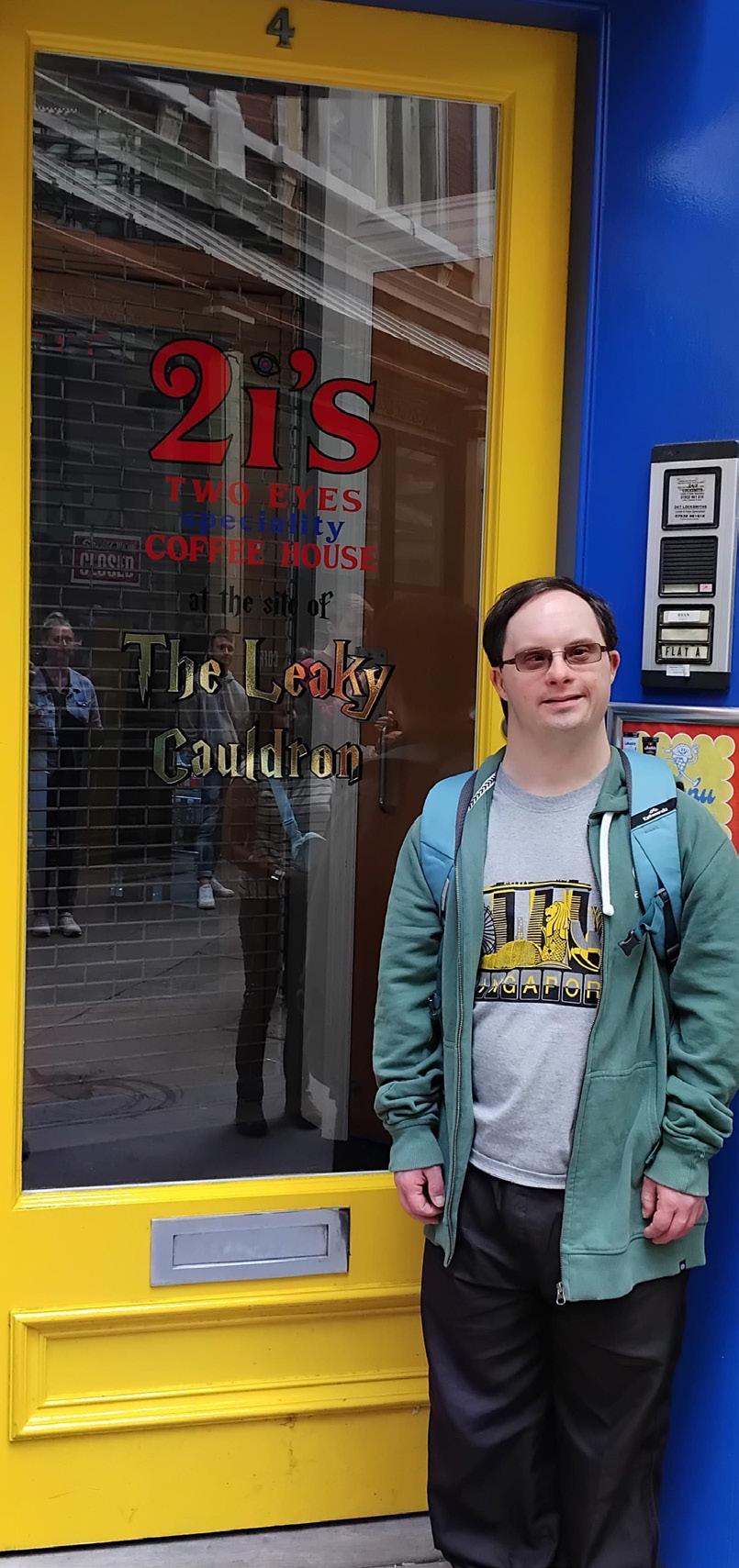
I went to see many attractions in London. I had lunch at the Camden Town Lock Market, Spitalfields Market and the Borough Markets. My father and I went on a Harry Potter guided Tour for Muggles with Charlie, our enthusiastic host. My parents and I had an audio-guided tour at The Royal Mews, Buckingham Palace, where we saw lots of carriages used in the royal processions.
My parents and I left London to see some parts of the English countryside, so we drove to Isfield, a little village near Lewes. While we were there, we went to watch another production at the Glyndebourne Opera House. It was called Falstaff, which is a comedy based on some of Shakespeare’s plays. It was very funny, especially when Falstaff got put into a laundry basket and then thrown out of a window into the River Thames. We did have a lovely walk around Glyndebourne’s beautiful gardens. We went on some other trips as well to Pooh Corner, where we had a self-guided tour of the Ashdown Forest; a visit to Lewes Castle and Museum; an audio-guided tour of Hever Castle, the childhood home of Anne Boleyn, the second
wife of Henry VIII, and to Beachy Head where the car from Chitty Chitty Bang Bang flew.
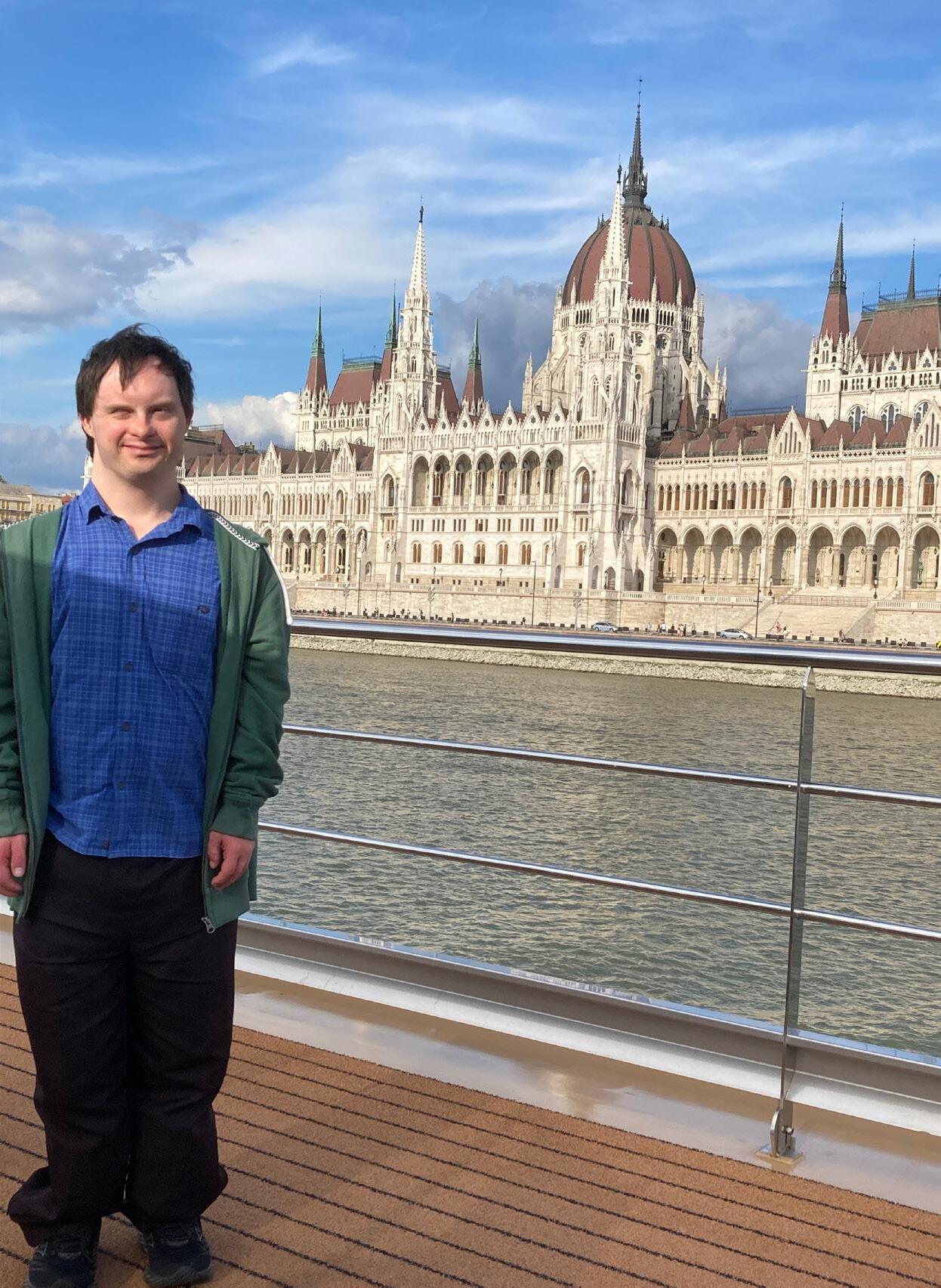
We flew from London Heathrow to Budapest. The temperature was quite dry and hot when we arrived. We stayed at an apartment that looked over the Danube River where the Avalon Illumination, our river cruise ship, was moored. Budapest is a very beautiful scenic city to visit. I experienced seeing spectacular fireworks displays on Saint Stephen’s Day (20th August), and loved eating Hungarian cuisines in the local area.
We started on an eight-day river cruise sailing down the Danube River. My parents and I visited many countries: Hungary, Croatia, Serbia, Bulgaria and
Romania where we went on many excursions that involved lots of walking such as visiting fortresses and castles, churches and cathedrals. I really enjoyed my experience on the Avalon Illumination river cruise very much, eating different foods and having a great gym session each day on the ship. I would like to thoroughly recommend it as a great experience.
The final day of the river cruise finished in Bucharest. My parents and I spent a couple of extra nights in Bucharest, and we stayed in a very swish and flash hotel. We were able to go to the Radio Sala Concert Hall to hear an orchestral concert as part of the Enescu Festival. I think that Bucharest is a very lively place to visit.
Frankfurt, Germany, Europe:
The final part of the holiday was when my parents and I flew all the way from Bucharest to Frankfurt. We were then driven by airport bus and stayed the night at the Hilton Frankfurt Airport Hotel. The next day we went out to the Bahnhof (train station) where we met up with some friends who took us out sightseeing around the old city of Frankfurt. Then we had lunch at a restaurant where I got to eat some frankfurters with some lovely mashed potato. I think that Frankfurt is a very special city to visit. I really liked sightseeing around different parts of the community, eating tasty German cuisines, and I enjoyed eating Apfelstrudel (Apple Pastry) with ice cream while having a drink of cappuccino coffee for afternoon tea.
I have really enjoyed sharing this experience with my parents very much and I had a great ‘trip of a lifetime’. At every country I have visited on my travels, I was wearing a Sunflower lanyard, so that it helped me to avoid standing in long queues while going through security, customs, and getting onto the plane. This shows that people like me, who have a disability, can be identified by their characteristics and their facial features. It is very important that you stand in front of your parents so that you can be seen by airport staff members who will be able to assist and support you professionally and how they can meet your special requirements. It is also important in the disability sector that before you travel overseas to let your travel agent know about your dietary and any mobility requirements you might have. If you have a paid job, you will also need to let the Ministry of Social Development know when you are about to leave and when you have come back into the country.
We celebrated Down Syndrome Awareness Month with an epic virtual conference on the theme of Improved Support-Improved Lives. The event featured 24 sessions, hosted by seven incredible people with Down syndrome, with over 29 speakers from Aotearoa and around the world, 500 attendees, and more than 30 hours of invaluable tips, strategies, information and connection.
I was lucky enough to attend every session and have summarised each one for those who couldn’t make it. I participated mostly from my office, but sometimes I listened from the car, playing the sessions over my speakers, or with earphones while grocery shopping. One of the best things about this conference is that you can truly join from anywhere, while doing anything.
A huge thank you to everyone who attended, to our incredible presenters, to the team who set it all up, and most of all to Zandra, whose vision and organisation made the whole event possible.
Although these summaries highlight some key insights, they can’t capture the full energy and experience of attending these sessions. During each session, we were able to ask questions and receive answers from people with invaluable professional or lived experience in real time — a truly incredible and irreplaceable opportunity. I hope to see you all at next year’s conference! While we would love to share all the summaries with you now, there are just too many to squeeze into one issue. You'll find the first half below and the rest in the next edition.
October 3rd
Bridget Snedden
President, Down Syndrome International
We kicked off our virtual conference with the first session from Bridget Snedden, president of Down Syndrome International, who led a powerful session about the importance of having a clear vision for our children’s futures — a North Star to guide every decision along the way. For her family, that vision was for her son Alex, who has Down syndrome, to live an ordinary, fulfilling life like anyone else: going to school, working, forming relationships, and contributing meaningfully to his community. Every choice they made — from education to employment — was intentional and guided by that vision.
Bridget shared how having a clear sense of direction helped her family to navigate challenges and stay focused on what truly matters. She emphasised that having a good life doesn’t happen by chance — it takes planning, persistence, and the courage to keep pushing for inclusion, even when the system isn’t designed to make it easy.
She reminded us that real change only happens when families share their stories, raise awareness, and inspire others to build communities where everyone belongs, contributes, and is celebrated for who they are. If we do not fight for inclusion, the result is exclusion, and the grief that comes with it. Inclusion means belonging in your community, having access to the same opportunities as others, and being a valued member of society.
Bridget ended her session by encouraging families to surround themselves with allies who can support their vision; she shared the example of Alex, showing how planning, action, and support have helped build a good life for him and, in turn, a good life for his family.
October 4th
Supported Independence in Action: Spencer’s Everyday Life
Spencer Kirk
Self-advocate
Achievements that Inspire
NZDSA Award Winners’ Panel
At our second virtual conference session we had the pleasure of hearing from Spencer Kirk, an inspiring self-advocate who shared a glimpse into his busy and fulfilling daily life. While balancing two jobs and attending a course in Auckland, Spencer also maintains an active social life.
Spencer currently works at Grindz Cafe three times a week, and at Nando’s twice a week. After completing a barista course, he enjoys making cappuccinos, flat whites, and iced coffees. He loves cooking, greeting customers, serving coffee, and connecting with new people. Spencer was excited, but very nervous to start his new job at Nando’s, but now he has been working there for a year and loves it.
Outside of work, Spencer spends his time dancing, hitting the gym, walking on the beach with his girlfriend, photographing sunrises and sunsets, and embracing his new role as an uncle. He has even traveled to Sydney with his girlfriend to visit his sister.
Spencer’s advice for people wanting to make new friends is to talk to the people around you and find ways to have fun with them — many of his own friendships began at work and the gym.
This lively session featured three NZDSA Award winners— Luka Willems, Alfie Linn, and Hamish Gilbert—sharing their proudest achievements, inspirations and messages from the community. The session included a video presentation by Luka, a PowerPoint from Alfie, and a live presentation by Hamish, who answered questions with confidence and insight.
Luka Willems
Luka is a self-advocate, award-winning swimmer, and influencer. Luka was extremely excited to find out he had won a National Achievement Award, and was happy his family was proud of him. He has great memories of sharing the award ceremony with his friends Alfie and Hamish, and having his friends and family watch him receive his award. The achievements he is most proud of, aside from his award, come from his high-performance swimming, and his entry into mainstream swimming.
Luka believes it is important to be a positive role model for others, to show the world that people with Down syndrome can do many things. His message to parents, teachers, and the wider community is simple: let us try, we can do it. Luka’s advice to others with Down syndrome who are trying to reach their goals is heartwarming: I believe that you can do it. You work hard, and you make your dreams come true. He says his family, especially his mum, have always supported him and believed in him, which helped him to be brave when
doing new things. Luka ended his session with one simple, yet important message for all: Be the change you want to see in the world.
Alfie, a talented sportsman and self-advocate, was over the moon to receive his National Achievement Award. He was very excited to meet the Governor-General, Dame Cindy Kiro, and Dr Richard Davies, and loved seeing all of the art at the Government House.
Alfie is most proud of representing New Zealand in table tennis at the 2024 Virtus Global games in France, where he brought home silver and bronze medals. His next goal is to win a gold medal for New Zealand. Alfie believes that everyone should train hard, work hard, listen to coaches and support people, and believe in themselves to achieve their dreams.
Hamish is a passionate self-advocate and a skilled athlete, he was very proud to receive a National Achievement Award. He was especially excited to meet the Governor-General for the second time, as he had previously met her when she presented him with his Gold Duke of Edinburgh’s Hillary Award. Aside from these awesome achievements, Hamish is also very proud to be awarded the Attitude Special Olympics Award in 2020. As a talented swimmer, his favourite strokes are backstroke and freestyle.
Hamish feels very passionately about advocating for the rights of people with Down syndrome. Winning his National Achievement Award last year is motivating him to get even more involved with advocating, and to get involved with NZDSA’s STRIVE group. Hamish’s advice to others is to go outside your comfort zone, break your challenges down into small steps to build up your confidence and achieve your goals.
October 6th
Krissy Wright
Parent and advocate
This was the first of two sessions led by Krissy Wright, who shared her heartfelt journey as an advocate and parent of two boys with Down syndrome. She spoke openly about her experience as a young mum to her son Robbie, who was born with Down syndrome and was medically fragile. Although his time in this world was brief, he had a profound and lasting impact on Krissy, and all those who were lucky enough to have known him. At a time when little support was available for bereaved parents, Krissy and her family had to learn to navigate their grief on their own. She now believes that conversations about loss and grief should be open and supported, not avoided.
Improving Support and Improving Lives Through Supported DecisionMaking
Associate Professor Brigit MirfinVeitch
Director, Donald Beasley Institute
After Robbie’s passing, Krissy began volunteering at the Beasley Institute, which eventually turned into a paid role. It was there she met her current partner, and together they welcomed their son Joel, who was also born with Down syndrome. While Krissy initially feared he might face similar health challenges, Joel was thankfully born healthy. Later, she learned she had parental trisomy 21 mosaicism, a rare condition that increases her chances of having children with Down syndrome.
Krissy became a strong advocate for Joel, especially during his school years. She organised meetings with staff and students to promote understanding and inclusion, helping others see that Joe is just like any other child — he loves Bluey, has a favourite colour, and enjoys playing games. She also emphasised the importance of bringing a support person to meetings or appointments to help manage the power imbalance, take notes, and provide emotional support. Above all, she reminded parents to take care of their own mental health. Put your own oxygen mask on before helping your children or others.
Joel has grown into an independent young man who loves mowing lawns, and even started his own small business. He has been flatting with a friend since 2019, has a girlfriend and talks about marriage, and even saved up and traveled to Australia to meet the Wiggles. He lives a full, active, and meaningful life.
Krissy’s key advice for parents was to:
• Find joy in your child and celebrate their successes.
• Seek support whenever needed.
• Have high expectations and allow appropriate risks.
• Recognise that parenting a child with Down syndrome also brings many moments of laughter and wonderful stories to share.
Krissy’s story is a powerful reminder that with support, advocacy, and hope, families can thrive through even the toughest challenges.
Brigit Mirfin-Veitch gave an engaging overview of Article 12 of the UN Convention on the Rights of Persons with Disabilities and the evolution of Supported Decision-Making (SDM). Her key message was clear: every person has the right to make their own decisions, and denying that right is discrimination.
She explained that:
• No one should make decisions for someone else without first fully understanding their will and preferences.
• SDM is about rights, dignity, and choice—not what others assume is in someone’s “best interests.”
• Substituted decision-making should be avoided, and the right support must be provided so people can access information and confidently make decisions.
Brigit emphasised that governments must ensure people have support, tools, and encouragement to self-advocate. She also shared practical strategies to help people with Down syndrome and their whānau build decision-making skills and become confident supporters.
Her closing point: when people are supported to make their own choice, they gain real control over their lives—and that is true inclusion.
Dr Brian Skotko
Board-certified medical geneticist
Down Syndrome Regression Disorder (DSRD)
Dr Cathy Franklin
Director, QCEAIDH at Mater Hospital
Dr Brian Skotko is the Emma Campbell Endowed Chair on Down Syndrome and director of Massachusetts General Hospital’s Down Syndrome Program, an award-winning author, and a professor at Harvard Medical School. This heartwarming session was all about celebrating our loved ones with Down syndrome, and Dr Skotko began with a single request from participants: Let’s pledge that we are going to be positive, celebrate, and let those lessons ground us and lead us through.
After sharing a personal story about how his sister Kristen, who has Down syndrome, surprised him and changed his perspective of Down syndrome entirely, Dr Skotko led us through a number of self-reflection tasks.
• What is something our person with Down syndrome did that surprised us?
• How has your person changed your perspective, or shifted your view on something?
• What wonderfully ordinary things does your loved one do that have nothing to do with Down syndrome?
• How has your person shaped, empowered, or enriched your own power of belief?
He shared the experiences he has had with people who have Down syndrome and are defying expectations and breaking down barriers to live full and meaningful lives. Through the sharing of stories from not only Dr Skotko, but many of the session’s participants, we were left with all the warm and fuzzy feelings, and a renewed appreciation for our loved ones with Down syndrome. Dr Skotko ended the session with a single, but powerful message: It’s the stories we tell that slowly change the narrative.
Dr Cathy Franklin is the Director of the Queensland Centre of Excellence in Intellectual Disability and Autism Health (QCEAIDH), at Mater Hospital in South Brisbane. In this session, she shared her insights from her work into Down Syndrome Regression Disorder (DSRD). Dr Franklin described regression as a loss of previously gained skills, meaning a noticeable step backwards in daily abilities or behaviour. She stressed:
October 8th
Whaimana - The Front Door to Learn About Supported Decision-Making in New Zealand
Erika Butters
Chair of Whaimana
• Regression is not permanent — skills are still there, just buried.
• It is crucial to investigate medical, psychological, and environmental causes, as many factors can contribute and there are effective interventions.
• Causes can include stress, physical illness, grief, and more — detective work is key.
Dr Franklin noted that there are diagnostic criteria available — useful for clinicians unfamiliar with the condition — and encouraged attendees to share these with doctors to improve recognition and support.
The key takeaways from this session were:
• Regression needs careful assessment and early intervention.
• Greater medical awareness and education about DSRD is essential.
• Families can access helpful resources, including the free online book Mental Wellness in Adults with Down Syndrome.
She encouraged ongoing advocacy and knowledge-sharing — and reminded us to reach out for her presentation slides for more detailed guidance.
Erika Butters introduced Whaimana | Support My Decisions, a new website co-designed by the community and government to help people exercise their right to make their own decisions. The site provides simple tools, guidance, and reallife examples to support Supported Decision-Making (SDM) in everyday life.
She explained that everyone has the right to decide, and Whaimana exists to make that real — especially for people who may need support, such as those with learning disabilities, cognitive decline, or mental distress. The website is designed for decision-makers, their supporters, and the services that work alongside them.
Erika gave us a tour of the website and highlighted the website’s easy, accessible layout, and shared some of the resources that build confidence, understanding, and good practice in SDM.
She closed with a key reminder reflected in the whakataukī:
Mā ngā hau whakapiki ka rere ai te manu — The bird flies with the help of the supporting winds.
With the right support, people can make their own choices and lead lives with true autonomy and control. CHAT 21 Spring 2025
Shara Turner
Senior Advocate at IHC
Shara Turner was a lawyer in Australia before moving to New Zealand, where driven by a strong desire to make a meaningful impact, she shifted her focus to advocacy work. Within her session, she explained how powerful data can be for creating change. There is a common misconception that people who use numbers don’t see the people behind those numbers, but Shara explained to us that this simply isn’t true — “We need the numbers. The numbers show the huge systemic failures and inequity facing the people in New Zealand with learning disabilities.”
Shara delivered a compelling look at new IHC research drawn from Aotearoa’s Integrated Data Infrastructure — and the picture is clear: people with intellectual disability are still being left behind. The data shows big gaps in education, work, income, housing, and health. Too many people are living in damp or temporary homes, missing out on screening and healthcare, and facing higher rates of violence and child removal.
Shara called for stronger investment in families and carers, better training for health professionals, and routine annual health checks. She encouraged everyone to use this evidence to push for fairer systems and better outcomes.
In short: the data is powerful, the inequities are real, and now we have a clearer map for action — it’s time to use it.
The full report From Data to Dignity: Health and Wellbeing Indicators for New Zealanders with Intellectual Disability can be accessed here at ihc.org.nz
October 9th
Keeping Children and Adolescents with Down Syndrome Healthy: All the Medical Updates that Parents Need to Know
Dr Brian Skotko
Board-certified medical geneticist
Dr Brian Skotko and his colleagues have taken care of over 700 people a year with Down syndrome over the last ten years. Many people visit his clinic to figure out how to deal with their children’s difficult to manage behaviours. Dr Skotko’s advice for parents when dealing with these behaviours is to first rule out any medical causes.
75% of children with Down syndrome have hearing loss. Hearing tests are recommended at birth, 6-month, 12-month, and then yearly. Hearing loss can happen at any time; don’t wait until it gets worse to get it checked out.
60% of children with Down syndrome have eye conditions. Eye tests are recommended at birth, another before one year, annually from 1 to 5 years, every two years from 5 to 13, and every three years from 13 to 21 years.
15% of children with Down syndrome have thyroid problems. Checks are recommended at birth, 6-month, 12-month, and then annually.
5% of children with Down syndrome have Coeliac disease. Check at one-year-old if symptomatic.
Up to 75% of children with Down syndrome have obstructive sleep apnea (OSA).
• Does your child snore at night?
• Does your child gasp, choke, snort during sleep?
• Does your child fall asleep on short drives? At school?
• Does your child need to nap in a non-age-appropriate way?
• Does your child not seem refreshed during the day?
If you answer yes to any of these questions, it is highly recommended that you go and get a sleep study. However, the majority of OSA is silent, so it is recommended that you get a sleep study done before the age of four. OSA can come back at any age, keep an eye out for the signs. OSA can rob an individual with Down syndrome of up to 9 IQ points within one year.
If you can exclude the above medical conditions, the next step is to address behaviour conditions, things like ADHD, OCD, depression and anxiety. It is important to make sure your loved one with Down syndrome is up to date on all their health checks. Dr Skotko and his team have developed an extremely helpful resource, Down Syndrome Clinic to You (www.dsc2u.org), an online personal care plan for caregivers and primary care physicians. If you complete dsc2u once a year, you can be reassured that your loved one is up to date for the year. The clinic will even generate medical letters for you to take to your general practitioner, advising them on what tests might need to be undertaken and when.
Grant Cleland
Managing Director, Creative Solutions
Grant Cleland shared his journey, emphasising the power of hope and dream-chasing — principles his parents instilled early on. They laid the foundation for his success by setting high standards and tirelessly advocating for his place in mainstream education, making a world of difference. He spoke about the real value of being included with his peers — where classmates naturally became his supporters and inspired him to strive alongside them. Growing up in a small town helped make this possible, and his involvement in sports and community activities played a key role in building his social skills and confidence.
In his early twenties, Grant entered a period of soul-searching that redirected his focus towards education, employment and maintaining his health through active pursuits. He credited his parents for urging him to take risks, embrace mistakes and find out what he was strong at — through tutoring, volunteering, and internships that eventually led to employment. He also acknowledged the vital role of family, support services and inclusive employers, and encouraged people to harness technology to boost independence and job access.
Finally, Grant called for systemic change — embedding universal design in education, smoothing the school-to-work transition, and strengthening employment supports — to create truly equitable opportunities for people with Down syndrome.

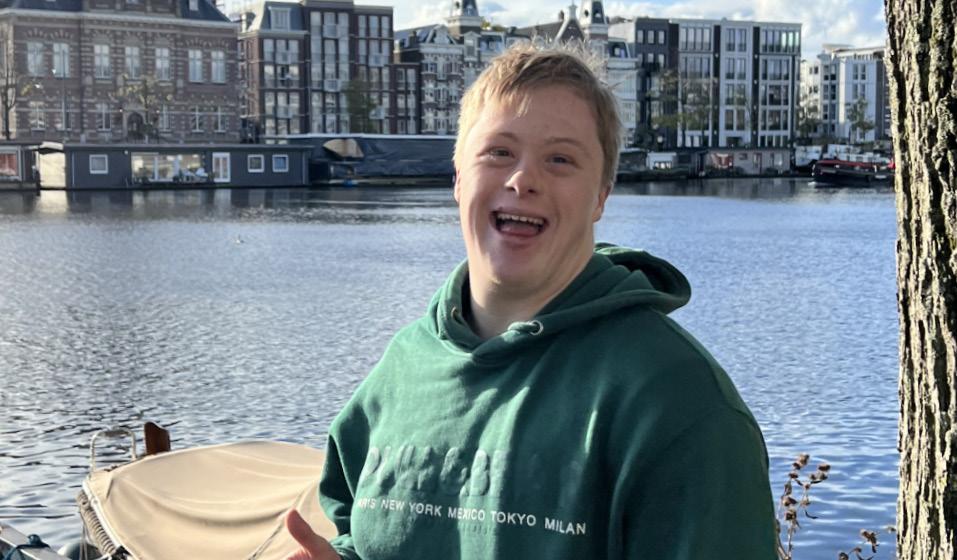
Christchurch swimmer Luka Willems has made a hobby of turning the impossible into reality. Born prematurely, with Down syndrome, and with muscle weakness that even made lifting a spoon to his mouth as a baby a challenge, Luka’s first steps into the pool were never expected to lead to greatness. Swimming started as a way to build strength and improve his health, but it didn’t take long for people to realise Luka was a natural.
Today, he’s not just a swimmer; he’s a familiar face and beloved figure at his local pool. “People used to look at him and think, ‘Oh, that’s the kid with Down syndrome,’” says his mum, Angelique. “Over time that has changed. He fistbumps everybody. It’s so cool to see he’s just part of the parcel now.”
I had the opportunity to talk to Luka and his mum, Angelique, over Zoom while they were training in Amsterdam, before heading to Portugal for the 8th European Down Syndrome Swimming & Artistic Championships. Even through a screen, Luka’s contagious energy and humour were unmissable — grinning, laughing, and playfully teasing his mum throughout the conversation.
When I interviewed Luka, he had one request for this story: to include his love for his family. He shared that his dad and sister were born in Amsterdam, while he and his mum were born in New Zealand. Amsterdam feels like a second home to him — he’d even celebrated his 23rd birthday there the day before our interview, surrounded by friends and family. Though he takes full ownership of his hard work and achievements, Luka knows the constant love and support from his family have been a huge part of his journey. Whether they’re cheering him on at a big race, appearing in his YouTube videos, or simply sharing a home-cooked meal, they're always in his corner.
When I asked Luka what goes through his mind right before a big race, he smiled and said, “I totally focus and be serious. I think about the race. When I was young I would get scared, but not anymore.” When his name and lane are announced, he comes out dancing, having fun and fist-bumping the air — but as soon as he steps onto that starting platform, he switches into competition mode.
When I enquired about how he stays
motivated even though he has already achieved so much, Luka replied, “I love trying new things. It excites me. I’m like my mum. Sometimes it’s hard to be motivated to train for swimming, but I love competing and that helps.”
The results speak for themselves: personal bests, international competitions, and medals. But Luka’s greatest impact might be the inspiration he provides to everyone around him. Angelique has always lived with the belief that “The biggest limitation to people achieving things is other people’s expectations.” She provides as many opportunities for Luka as possible, but he is the one who goes for it and reaches all his milestones, goals, and achievements on his own.
Luka is more than a high-performance swimmer; he’s a chef, influencer, cyclist, gardener, student, employee, and a great friend. At home, he loves gardening — especially the heavy

work like mowing lawns, pruning, and general maintenance. He also spends hours colouring, drawing, and editing his YouTube videos, where he shares his life, sports adventures, and cooking experiments.
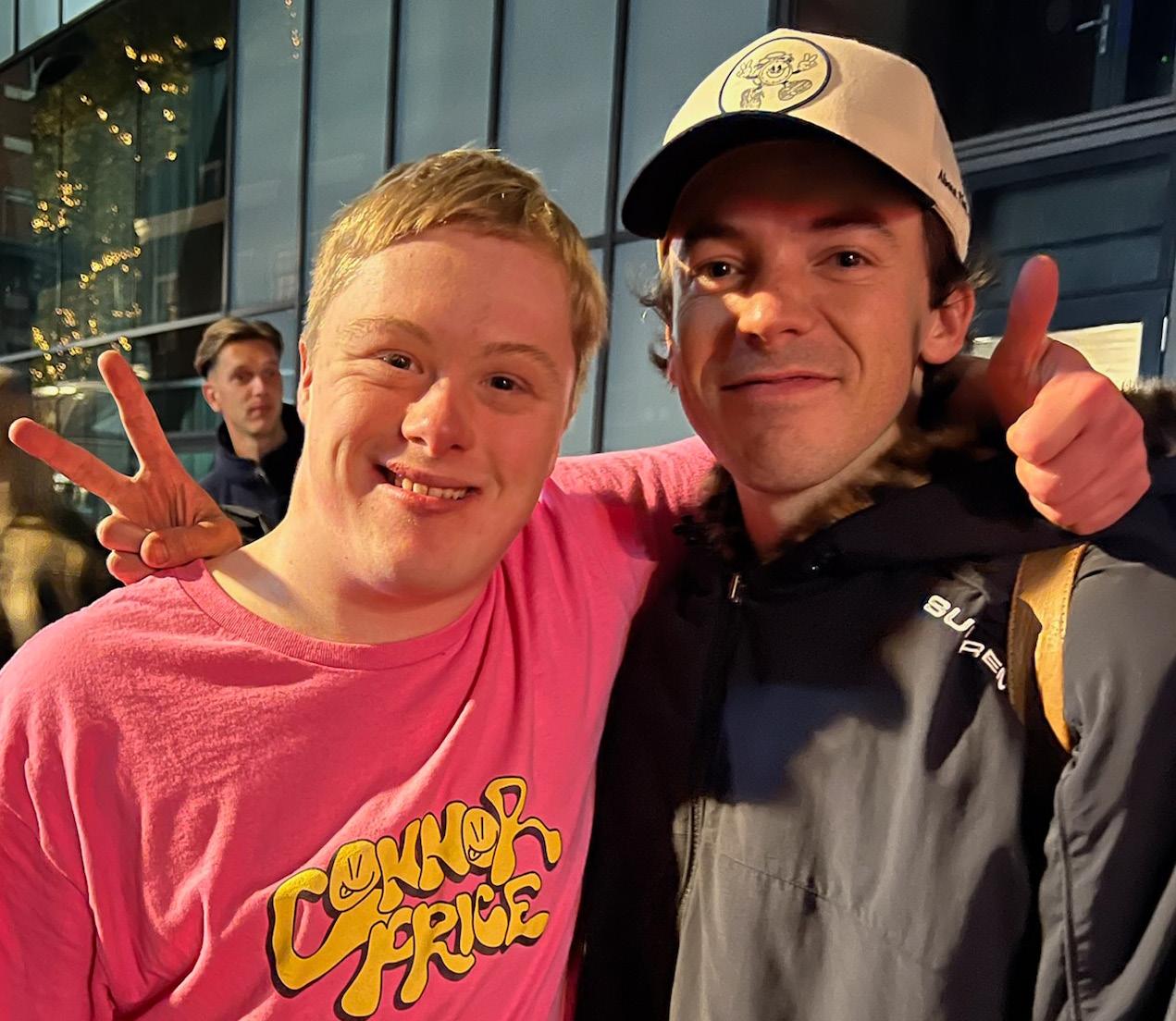
“What can people expect when they subscribe to your channel?” I asked. Luka leaned forward with a grin, “They will find out about my life, about cooking, activities, sports, friendships, and a lot more. I hope they find my channel inspiring. I always ask people to like and subscribe, and to be nice in the comments.” Even one of his favourite rappers, Connor Price (who has 7.7 million monthly listeners on Spotify) subscribed to Luka’s YouTube channel after meeting him.
Luka wants to do more instructional cooking videos to help people discover his delicious food, and he hopes people try out his recipes themselves at home. Luka is a big dreamer, when I asked about potentially having his own restaurant, he laughed and said, “It would be called Food with Luka, and my signature dish would be Luka’s Lasagna.” When I asked him for the recipe, he shook his head with a sly grin. That’s one secret he wasn’t willing to share.

For many of us, being a professional athlete, running a YouTube channel, and keeping up with cooking and gardening would take up all our time. However, on top of all of that, Luka studies hospitality and barista work at the Ara Institute of Canterbury, where he commutes independently by bike or bus. “My study fuels my brain, and it’s great to be able to get there by myself,” he told me with his usual grin. He’s also gaining real-world work experience at Elmwood Trading Company. He thrives on customer service and never misses the chance for a cheeky bit of self-promotion, handing out his self-designed business cards complete with a QR code linking straight to his social media. His vibrant personality brightens the workplace for both colleagues and customers, consistently turning a good night into a great one.
From the pool to the garden, the classroom to the kitchen, Luka Willems continues to chart new waters — inspiring others to dive in, follow their passions, and approach life with courage, curiosity, and joy. We can’t wait to see where his journey goes next.
Gwen Matchitt, National Committee President
Independence means different things to different people. For many in our Down syndrome community, it’s not about doing everything alone, it’s about having the choice and support to live life on your own terms.
True independence starts with small steps: learning to make decisions, having a voice in what you wear, what you eat, and how you spend your day. These moments matter. They build confidence and remind us that independence is a right, not a privilege.
When we talk about independence, it’s easy to picture someone doing everything on their own. But for people with Down syndrome, independence isn’t about being alone, it’s about having choices, confidence, and the right support to live life fully.
Independence looks different for everyone. For some, it might mean learning to make decisions about what to wear or what to eat. For others, it could be catching the bus to work, managing money, or living in their own home. These steps, big or small, are milestones worth celebrating because they represent progress toward a life of dignity and self-determination.
Independence is more than a skill; it’s a human right. It gives people the power to shape their own lives and be active members of their communities. When self-advocates have opportunities to make choices, they gain confidence and a sense of belonging. Families often tell us that watching their loved one take those steps, whether it’s cooking a meal or speaking up in a meeting, brings them pride and joy.
I see this every day in my own life. Our daughter, who is 18, is beginning her journey toward
independence. It’s exciting and sometimes a little scary, but mostly it’s inspiring. Watching her take ownership of her choices reminds me that independence is not about perfection, it’s about progress.
Independence isn’t just about personal effort — it’s also about the environment. We need communities that believe in inclusion, workplaces that offer meaningful jobs, and systems that provide the right supports. Advocacy is how we make this happen.
Whether it’s pushing for accessible transport, inclusive education, or supported living options, these efforts create opportunities for independence to flourish.
As a society, we must challenge assumptions. People with Down syndrome are capable of learning, working, and contributing. They deserve the same chances as anyone else. When barriers are removed, independence becomes possible, not just for individuals, but for families and communities too.
Independence doesn’t always mean big leaps. Sometimes it’s the small wins that matter most. Choosing your own clothes. Ordering your own meal. Speaking up about what you want. These moments build confidence and remind us that independence is a journey, not a destination.
So, let’s celebrate every step forward. Let’s cheer for the milestones and support each other through the challenges. Together, we can create a world where independence is not just a dream — it’s a reality for everyone.

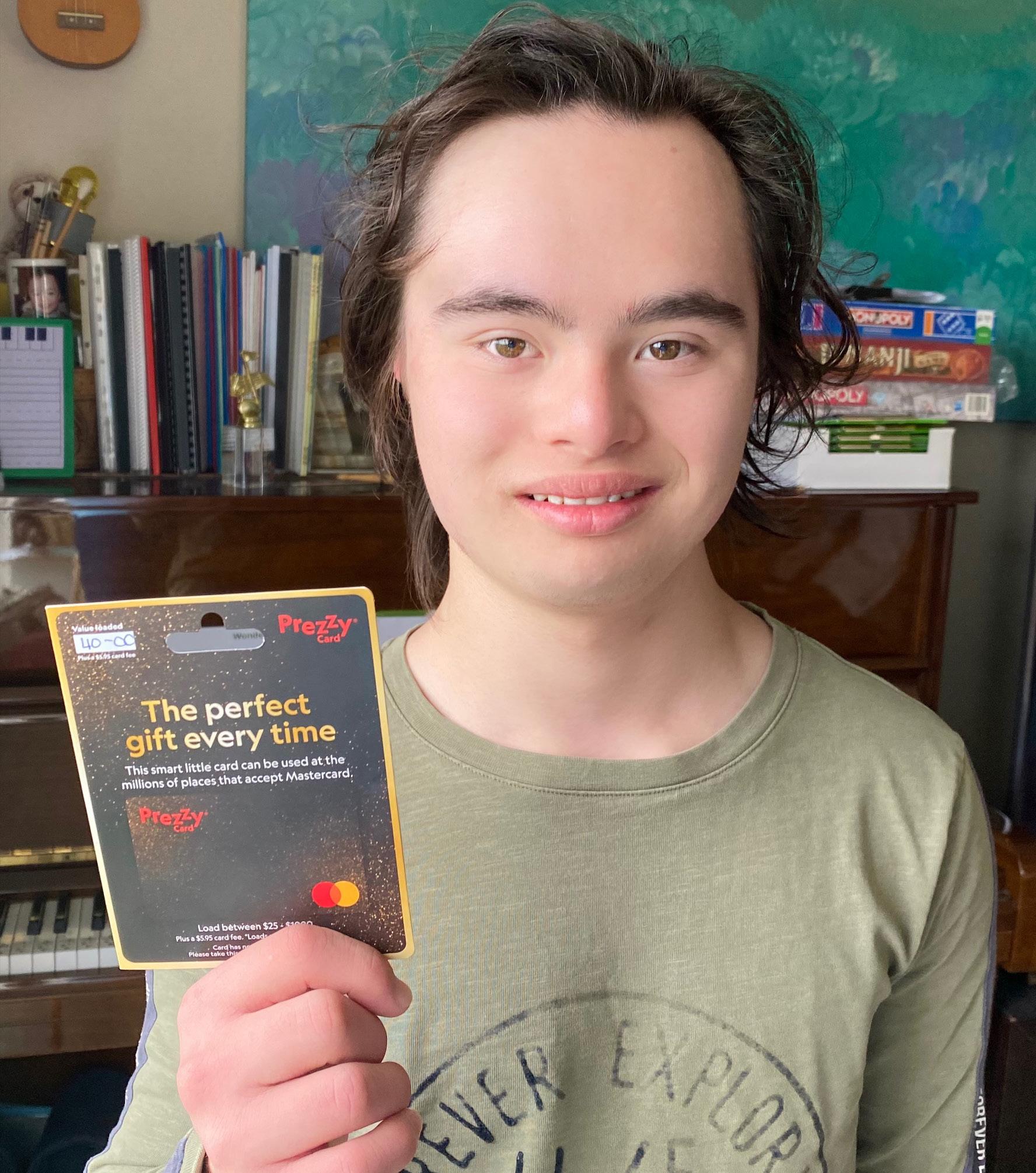
A quarterly prize draw acknowledging an important achievement in your young person’s life.
The winner of our last prize draw was Xervier Doney, who was entered by his parents for getting his Learner Driver's License and driving to school each day, a huge accomplishment for any teenager.

To enter, all you need to do is email na@nzdsa. org.nz about something your young person has achieved that is a significant milestone for them and/or your family. It is not always about the big things in life that our young ones achieve – this award is for any achievement, big or small, that means a lot to you and your young one. Entry is open to all ages. The only condition is that the winner will be announced in each journal after the draw, hopefully including a photo of them and their voucher.
Some achievements that you might want to consider entering for include:
• Using the toilet for the first time
• Going to the toilet on their own
• Brushing their hair independently
• Eating their dinner without help
• Catching the bus
• Putting on their shoes independently
• Organising themselves without prompts
• Sleeping all night
• Getting a job
• Achieving something great in sport
The list is endless & All entries are equal.
The winner will be chosen at random by drawing a name out of a hat. Every submission matters, and no entry will be judged as being better than any other. CHAT 21 Spring 2025
Celebrating Our Volunteers and Community
International Volunteer Day on 5 December reminds us of the incredible people whose dedication makes everything possible at the NZDSA.
Our volunteers give their time, energy, and care to connect communities, deliver initiatives, organise events, and support people with Down syndrome and their whānau across Aotearoa. The achievements of the 2024–2025 financial year simply would not have been possible without them.
Every connection made, every programme delivered, and every partnership strengthened shows the true power of collaboration. Volunteers lift our community, amplify voices, and create opportunities.
To all our volunteers, we extend our heartfelt thanks — your commitment makes everything we do possible.
If you’d like to read more about what we’ve achieved together this year, request a copy of the NZDSA Annual Report by emailing neo@nzdsa.org.nz.
National Committee Highlights
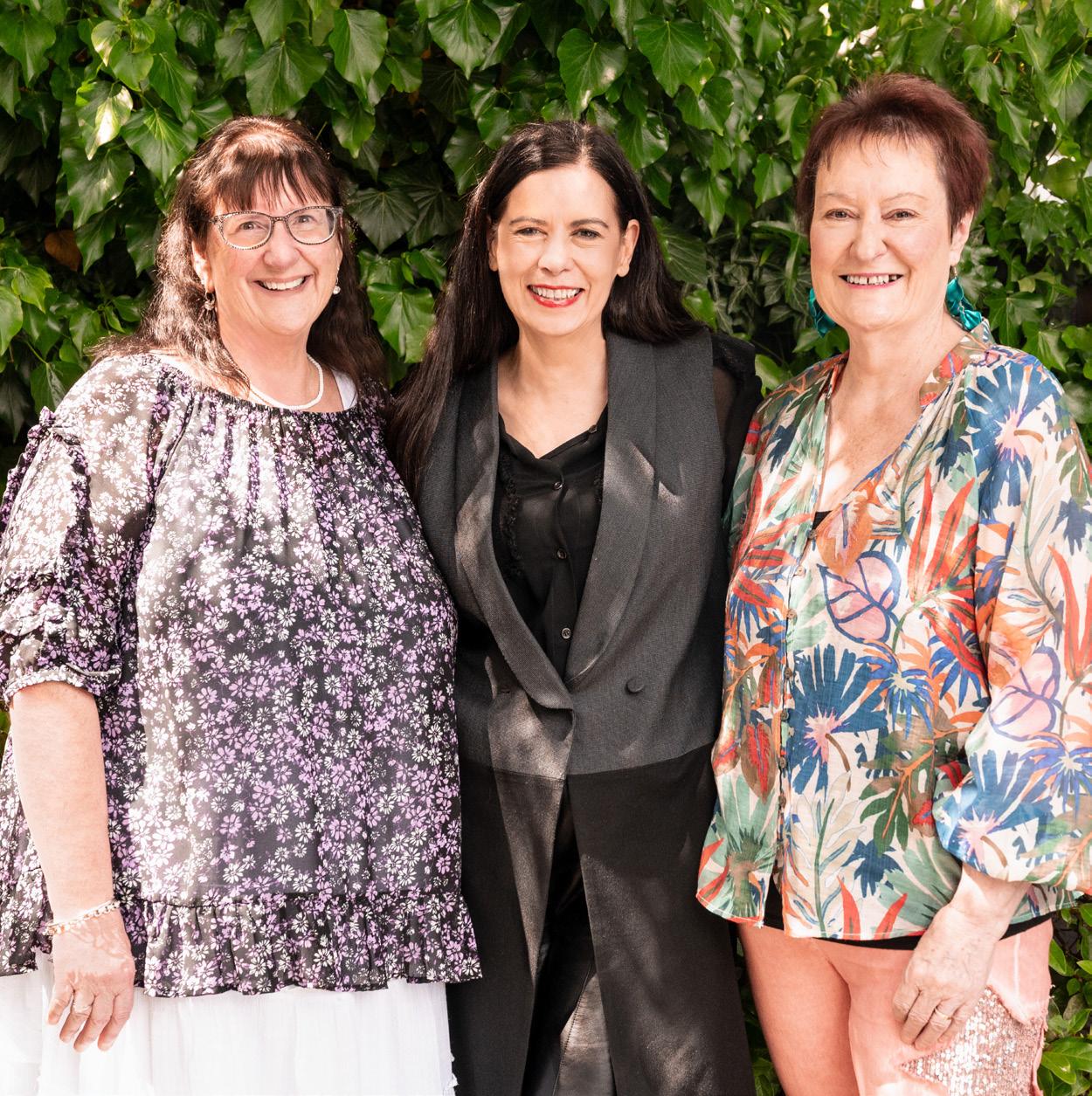
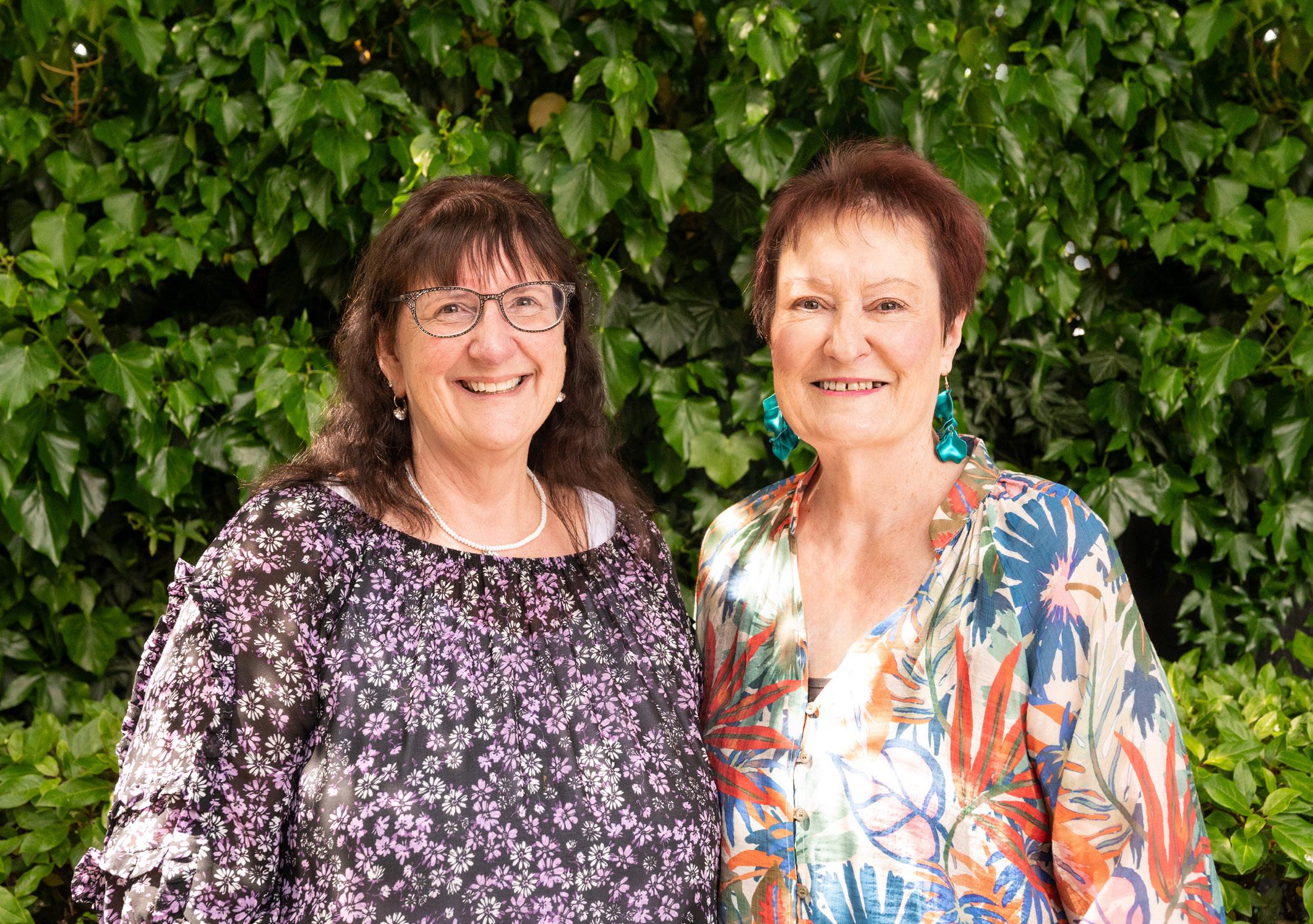
This spirit of volunteerism shines through our National Committee. All our Zone Representatives are parents who generously share their time, experience, and passion to support the NZDSA and the Down syndrome community.
At this year’s AGM, we farewelled two long-serving members:
• Shelley Waters, Treasurer, former Zone 6 Representative, and past President of the NZDSA.
• Maia Faulkner, Zone 1 Representative.
Both have shown outstanding leadership, insight, and commitment, helping to strengthen the NZDSA and represent their zones with dedication. We are deeply grateful for everything they’ve contributed and wish them the very best in what comes next.
We were also pleased to welcome Kirsten McDonald as the new Zone 1 Representative and look forward to introducing her fully in the next edition of Chat 21.
There is still a vacancy in Zone 4. If you’d like to get involved with the National Committee, please contact neo@nzdsa.org.nz — we’d love to hear from you.
CHAT 21 Spring 2025
Farewell to Linda te Kaat – A Tribute to a Valued
After more than 20 years of dedicated service, Linda te Kaat, our National Administrator, has
Linda played a vital role in professionalising the organisation, securing funding for countless projects, supporting the National Committee, and providing unwavering support to our members and families. Beyond her professionalism, she has been a passionate advocate for people with Down
Her warmth, humour, and deep commitment have shaped the NZDSA into the organisation it is today,
We were fortunate to celebrate Linda’s contributions at a farewell during our AGM in early November. For those unable to attend but wishing to share a message or photo, please email neo@nzdsa.org.nz — we will ensure your messages
Linda, thank you for your years of service, wisdom, and good humour. You will be greatly missed.
Many of you already know Maddie Daybell, who joined the NZDSA team as Editor of Chat 21. We are delighted to announce that Maddie will now also take on the role of National Administrator and Finance Officer.
Maddie brings energy, dedication, and a genuine passion for supporting people with Down syndrome and their whānau. We are confident she will continue to build on the strong foundations Linda helped to create.
The 5th Virtual Conference brought together over 500 participants, 29 national and international expert speakers, and seven fantastic hosts from the STRIVE and STEP-UP groups. Across 24 sessions, participants gained valuable insights spanning a wide range of topics and age groups.
The Conference continues to be a vital platform for building knowledge, inspiring growth, and strengthening connections within our community.
It provides opportunities to learn, share experiences, and access supports that help people with Down syndrome and their whānau thrive.
A huge thank you to all the speakers, and to Dan, Linda, Jess, and the STRIVE and STEP-UP members whose energy and enthusiasm made the event such a success.
Save the date: The next Virtual Conference will take place from 3 to 21 October 2026. If there’s a particular theme or topic you’d like us to include, please email neo@nzdsa.org.nz.
The Rose Award celebrates those who go above and beyond to make a difference for people with Down syndrome and their communities.
Do you know an individual, family, or organisation that deserves recognition for promoting the participation of people with Down syndrome in their community?
Please send your nomination to neo@nzdsa.org. nz, including a short note about their contribution. Each nominee will be celebrated in Chat 21 and receive a personal letter outlining why they were chosen — along with a box of Rose’s chocolates as a token of our appreciation.
The Youth Development Camp is always a highlight in the annual NZDSA calendar. The camp provides an inspiring and empowering environment for young people and their whānau, fostering personal growth, new friendships, and stronger community bonds.
Participants leave with valuable tools and insights to help build a brighter future.
A huge thank you to Southern Stars and all the generous donors who made it possible for youth across the motu to gather at Vaughan Park in November 2025. More about the weekend will appear in the next edition of Chat 21.
STRIVE and STEP-UP groups continue to provide national platforms for leadership development among people with Down syndrome. This quarter, both groups met for an online Funshop and preparation meetings for the Virtual Conference.
In October, STRIVE members met in Christchurch for a weekend workshop focusing on advocacy, leadership, and mentorship. The Funshop explored human rights, child rights, and disability rights in depth. It also provided a space for the in-person STRIVE Afternoon Tea Club and for planning exciting events for 2026.
Throughout the quarter, STRIVE and STEP-UP ran a series of online STRIVE Afternoon Tea Club sessions, hosted by people with Down syndrome for others with Down syndrome. These sessions continue to provide valuable opportunities for connection, learning, and peer support.
World Down Syndrome Day (WDSD) is an opportunity to raise awareness, connect with our community, and support the NZDSA’s work in providing information, education, and services.
We are looking for champions to help make a difference — whether by raising funds online or
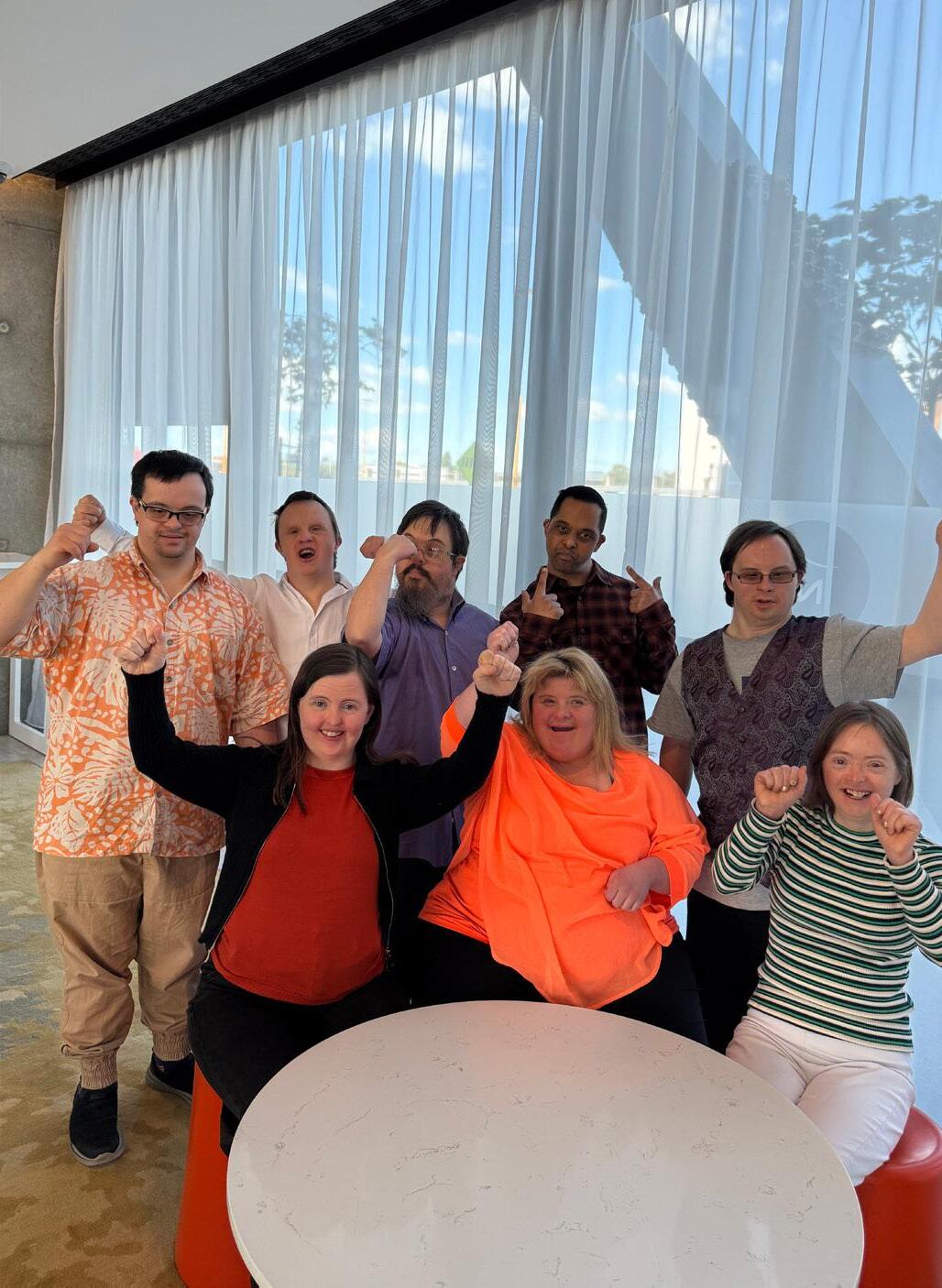
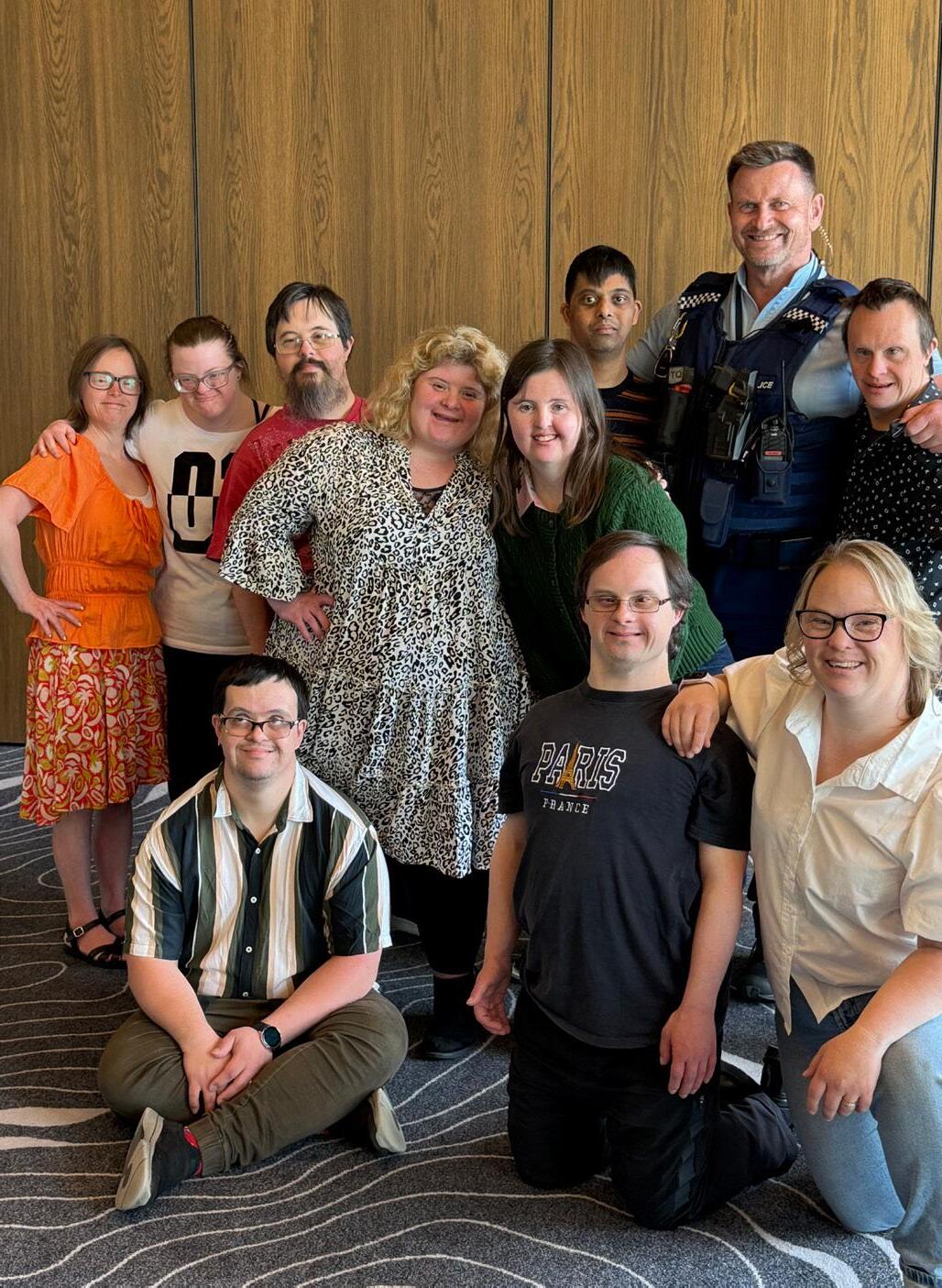
hosting a T4T party. To get involved, contact Zandra at neo@nzdsa.org.nz.
Save the date: Our annual Online Big Connect will mark World Down Syndrome Day on 20 March 2026, from 7pm to 8.30pm. Join us in the celebration!
The NZDSA National Committee has already planned several exciting events for 2026 and looks forward to engaging with you in your community.
Updates will be shared through Enews. If you haven’t subscribed, contact Jess at kiaora@nzdsa. org.nz so you don’t miss any news.
As the year draws to a close, the NZDSA is preparing to close the National Office from 15th December 2025, reopening on 14 January 2026. Urgent parent support will continue to be available through our 0800 helpline.
Just as we celebrated the incredible contributions of our volunteers on International Volunteer
Day, this is a perfect moment to reflect on and appreciate the dedication of everyone who makes the NZDSA community thrive. Volunteers, committee members, community supporters and staff who generously give their time, energy, and care to connect communities, deliver initiatives, and support people with Down syndrome and their whānau across Aotearoa.
As we pause for the summer break, we hope everyone has the opportunity to rest, recharge, and spend quality time with loved ones. Taking this time to rejuvenate ensures we can return in 2026 ready to continue contributing, connecting, and making a difference together.
We would love to feature your favourite summer moments in upcoming editions of E-news or Chat 21 — please send your photos to Jess at kiaora@ nzdsa.org.nz or Maddie at editor@nzdsa.org.nz.
From all of us at the National Office and the NZDSA National Committee, we wish you a bright, fulfilling, and inspiring 2026.
Hei konei rā, Zandra

When Carlos Biggemann lifts his camera, he isn’t just capturing a photo; he’s capturing a feeling. Each image reveals a mesmerising glimpse into the world as Carlos experiences it: from the streets of Bolivia spilling with symphonies of colour and light, to brooding clouds hovering on Aotearoa’s horizons, his photographs trace the poetry of places that have shaped his life.
From the very beginning, the world around Carlos placed limits on him. Doctors said he might never speak, that he probably wouldn’t live past five, and that if he did reach adulthood, his mind would never grow beyond that of a ten-year-old. Yet from birth, Carlos refused to let his life be defined by those boundaries. He grew into an educated and eloquent young man and awardwinning photographer – a creator whose
work transcends expectation and whose life inspires people to see possibilities where others might see limitations.
Carlos has lived in New Zealand for more than nineteen years, but his story stretches far beyond. Born in Bolivia, he moved to Aotearoa with his family and eventually pursued formal studies in photography, earning a Certificate in Digital Photography from the Ara Institute of Canterbury (formerly Aoraki Polytechnic) in 2012. He immersed himself in every aspect of the craft –history, composition, special techniques, and editing – mastering each subject independently. Education for Carlos wasn’t just about learning how to take photos; it was learning how to share his vision of the world with others. “My goal,” he says, “is to make a better world, and to make it more human.”
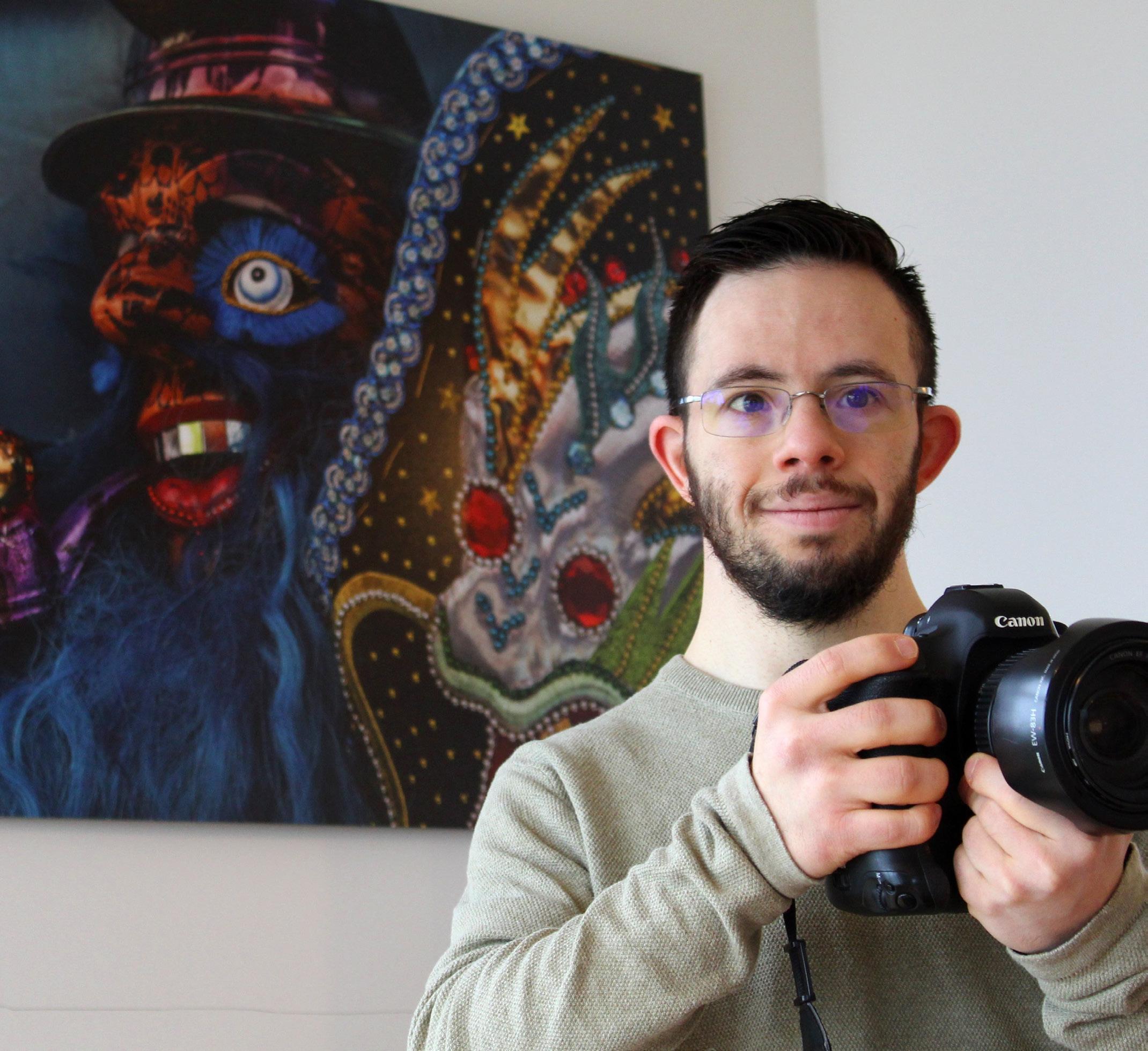
Carlos Biggemann’s brilliance has been celebrated time and time again, and though his achievements are too many to list, here are a special few that highlight his extraordinary journey. In 2013, he was honoured with the New Zealand Down Syndrome Association’s National Achievement Award by Governor-General Sir Jerry Mateparae, recognising his excellence in both swimming and photography. His photographic journey led him to win the prestigious Stephen Thomas Award at the UK Down Syndrome Association’s My Perspective competition not once, but twice, with his evocative images capturing the world’s beauty. His exhibition in Bolivia, New Zealand Magic, garnered international attention and by the end of opening night over half of his works had sold out. The exhibition was featured in two local newspapers, and

Carlos was interviewed about his works by CNN. During 2015’s Carnaval de Oruro in Bolivia, Carlos worked as an accredited photographer; he expertly captured the lively costumes, dynamic performances, vibrant atmosphere, and joyous spirit of the celebration. In his landscapes, the skies dominate; expansive, expressive, and endless. His 2016 exhibition, Dramatic Skies, captured this fascination: light became a dancer weaving through brooding clouds, revealing and accentuating the rich, striking colours of the sky. He deepened this exploration with the release of his 2023 book Cumulus: An Anthology of Skies, a collaboration between his photography and a collection of poetic voices. Together, the images and words form a dialogue about nature, impermanence, and awe.
CHAT 21 Spring 2025
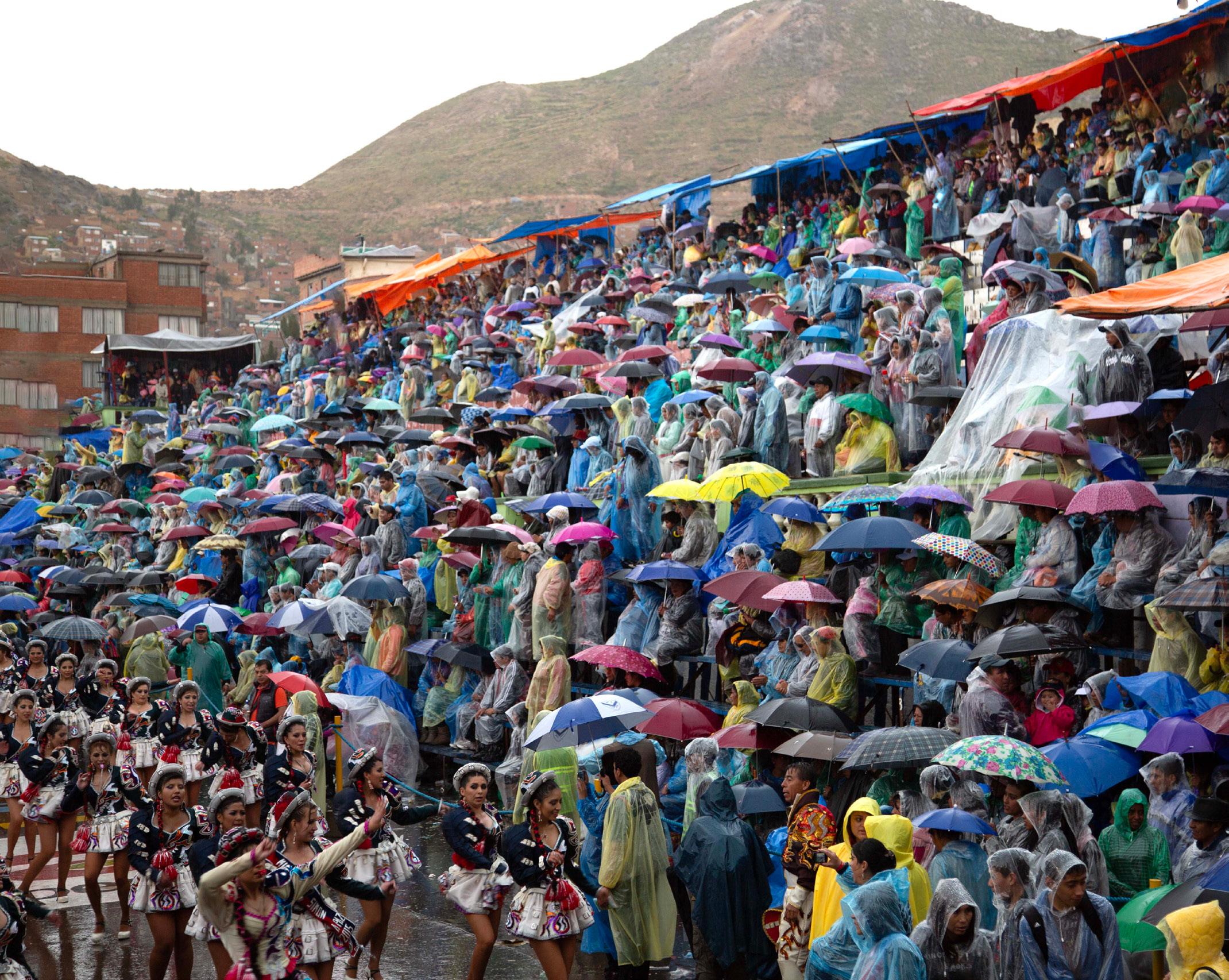
Carlos does not ask the world to view him differently, rather, he challenges the world to look at itself differently; he is determined that “Down syndrome means nothing.” Instead, he insists “It means I can do anything.” Independence, for Carlos, means living fully; working, travelling, learning, and creating on his own terms. It means building bridges between cultures, and showing, through art, that difference does not equal limitation. His photography is proof of how creativity can dissolve boundaries, and transcend the expectations placed on us by ourselves and others.
When asked what advice he would offer a young person pursuing their dreams, he said:

Your parents, family, and friends can give you advice, but remember the one who will make this big decision in your life is you. My dream is mine. My goal is mine. My decision is mine. So, my advice is to take what support people around you are willing to give, but it is your decision, your passion, your goal, your achievement, and your future.
If you want to make something happen, fight for it, make sacrifices, put yourself out there, and master your craft. If you want to make your dream come true, you must face uncertain things, and it won’t be easy, but you must do it to make your dreams a reality.
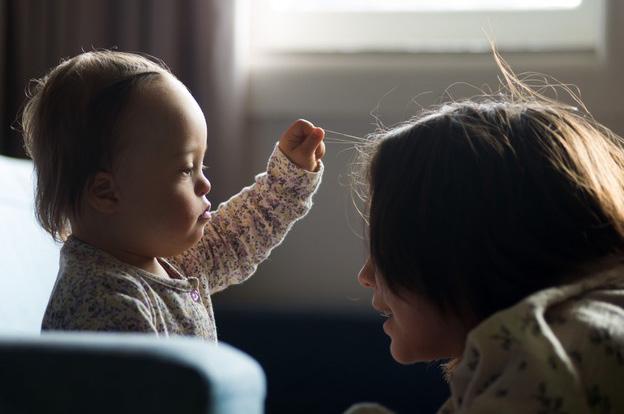
In a world where having the perfect baby is becoming a choice, Julia is struggling to love and accept her daughter for who she is. I See You is a powerful short film that follows a young mum navigating her feelings after her baby is born with Down syndrome. Everything changes when she meets Maui, a charismatic young man with Down syndrome, whose warmth and presence help Julia see her daughter in a new light.
Since its release, I See You has been screened at 19 international film festivals and won 5 awards. It was released on Vimeo as part of World Down Syndrome Awareness Month for anyone, anywhere to be able to watch. It garnered around 30,000 views in its first ten days and is now featured as a Vimeo Staff Pick. Both the director, Briar March, and the producer Caroline Hutchison, have sons with Down syndrome and have experienced the issues explored by the film.

I See You is a challenging and heart-warming film that has us questioning our own judgements and
expectations, and ultimately helps us to accept and embrace people for who they really are.
Experience the story by watching it for free now on Vimeo: https://vimeo.com/channels/ staffpicks/1125102718
We need your voice! Watch I See You now, and then let us know your thoughts and questions, and you could have your queries answered directly by the director, producer, team and actors in our next edition of CHAT 21. This is a unique chance to get a glimpse behind the scenes, don’t miss out! Email editor@nzdsa.org.nz or message us on social media with your hot takes and questions!

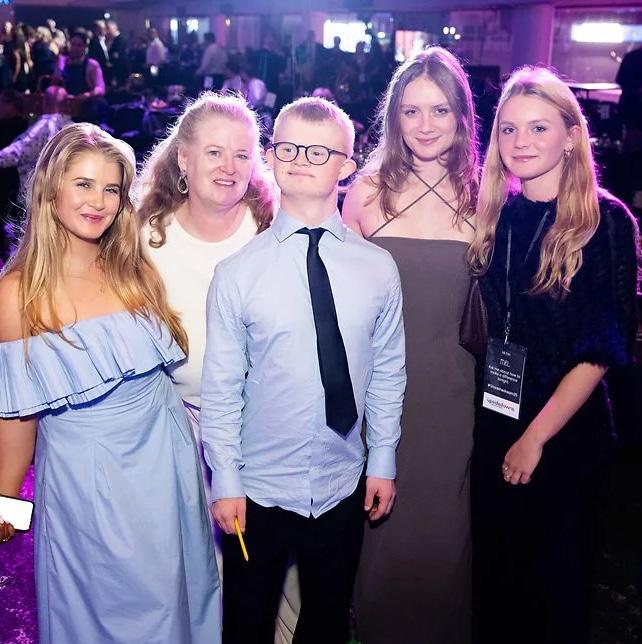
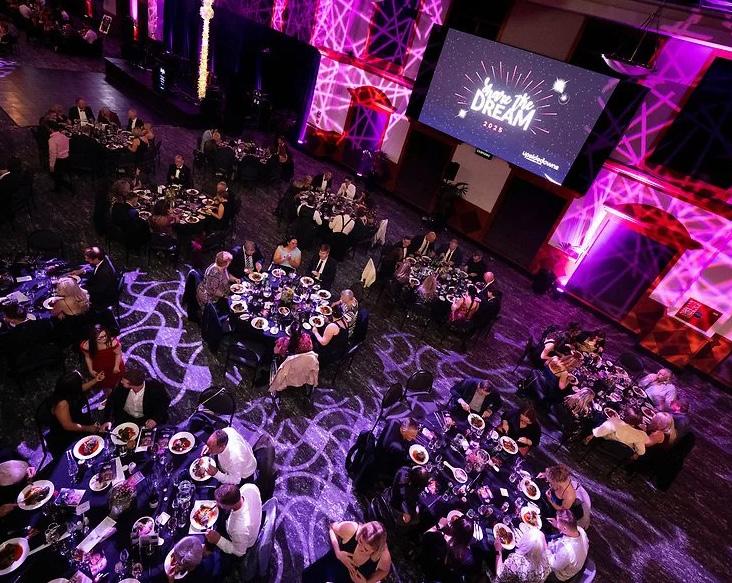
On the evening of Saturday, 13 September, hundreds of glamorously attired philanthropists converged on Eden Park’s stately Grand Hall for a magnificent night of wining and fine dining, music and dance, bidding and mingling — and making a massive difference to the lives of children and young people with Down syndrome.
When the doors to UpsideDowns’ Share the Dream Gala opened at 6:30pm, guests were treated to a gorgeous sight. Not only was the Grand Hall beautifully decorated and bathed in electrifying light, but through the windows looking out over the hallowed ground of Eden Park, huge images of the kids supported by UpsideDowns were projected on the park’s massive digital displays. Eden Park went all out to make sure this night would be one to remember.
Upon entry, guests filed past rows of silent auction items donated by generous supporters from around the country. Up for grabs were dozens of fantastic prizes, including rare sporting collectables and priceless experiences, fashion and styling gems, epicurean delights and luxury personal care
treats. After perusing the items, guests could then have their photo taken by Nigel King of White Door Photography. He took all the fabulous photos you see here.
The main event kicked off with legendary entertainer Phil Madsen and his band performing a stirring number, the singer roaming through the hall with his guitar in hand. He was followed by the night’s excellent MC, Wendy Meyer, who charmed the crowd while guiding us through the event schedule.
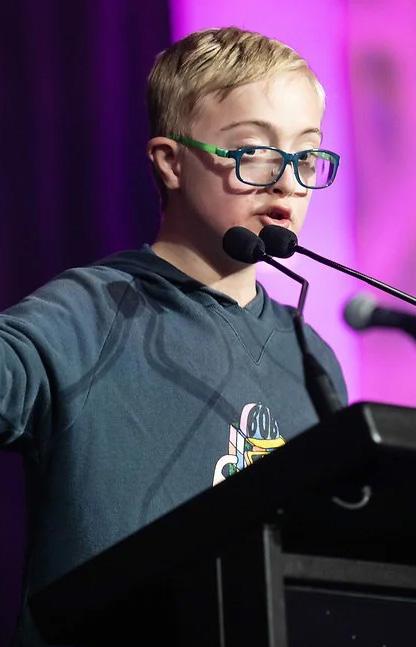
Absolutely bringing down the house, 11-year-old Joshua Venables took to the stage to deliver a speech about his communication journey to date. Funny, heartfelt, and confident, Joshua is a perfect example of the power of speech and language therapy for young people living with Down syndrome. We couldn’t be prouder to be supporting him.
A hard act to follow, but past chairperson and the architect of Share the Dream, Mel Watson, was up for the job. She delivered a powerful speech honouring her friend Hannah Blow, one of UpsideDowns’ founders, who passed away earlier this year.

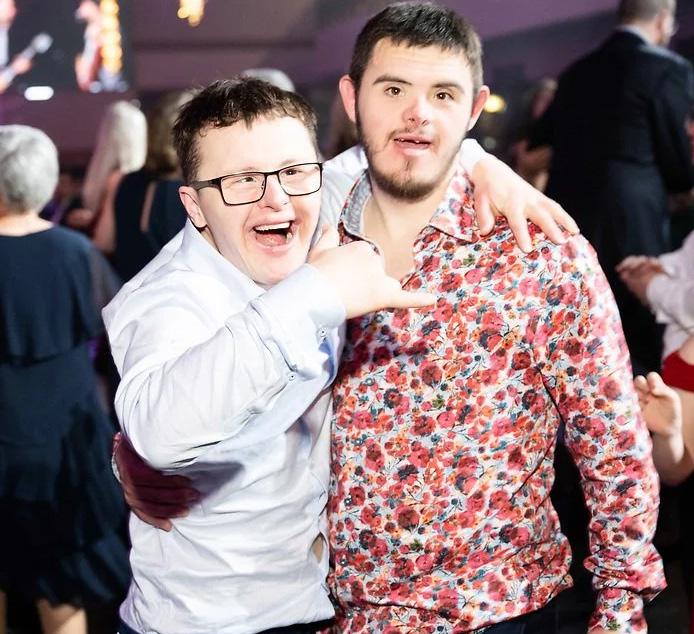

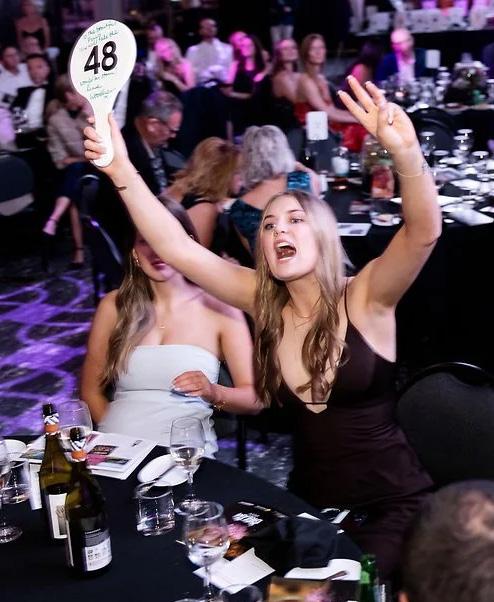
With guests fed, watered, and inspired, it was time to kick off the excitement of the live auction. Led by master auctioneer Sam Steele — who shared his own heartfelt story of growing up with a speech impediment — the crowd was soon hoisting their auction paddles in a frenzy of bids.
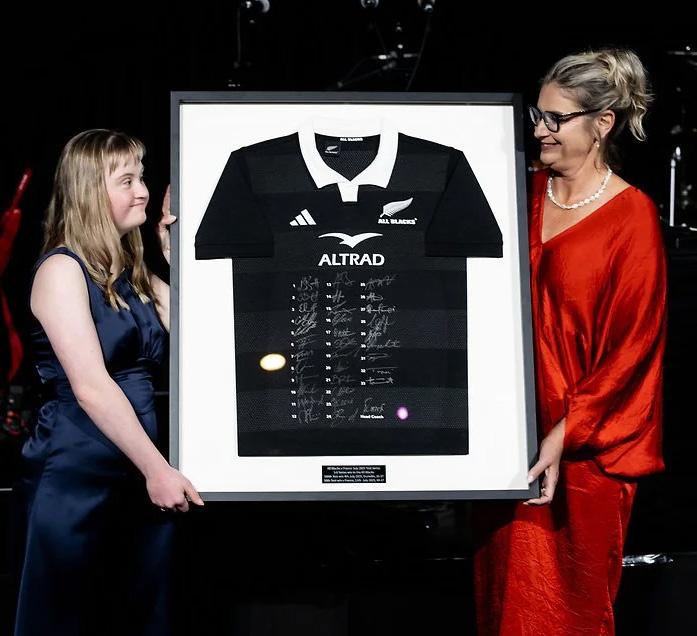
There were some amazing items on the block from generous supporters near and far: VIP seats at music and sporting events, relaxing holidays and adventurous getaways, jaw-dropping jewellery and fine tailoring. One item that garnered some media coverage was a historic All Blacks jersey signed by the squad and donated by the Barrett family. We were lucky enough to have Zara Barrett at the event to present this priceless piece of memorabilia. There was no shortage of treasure to be had and the bidding was fierce.

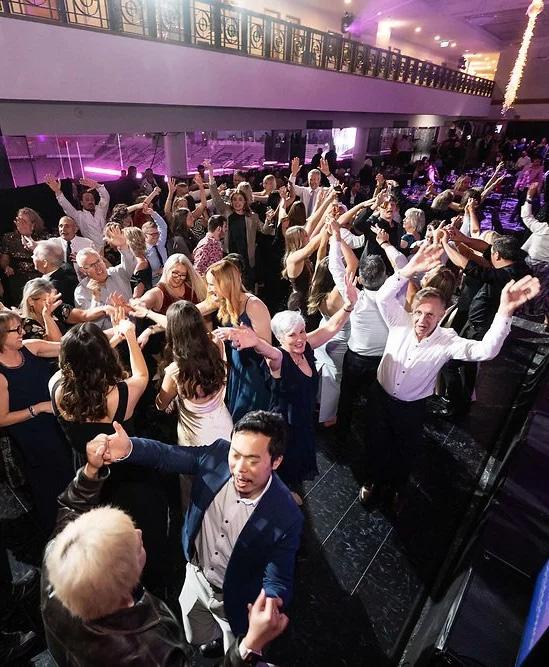
With business out of the way, it was time for pleasure. Decadent dessert gave way to a pulsing dance floor as Phil and his band expertly belted out a crowd-pleasing medley of requested favourites. The evening wrapped up just before the bells tolled midnight, an impeccably stylish audience spilling out of Eden Park’s doors, spirits high from an unforgettable night and the knowledge they had made a real difference.
Through our guests’ generous support and enthusiasm, the Share the Dream Gala raised more than $85,000 — a phenomenal result which will have a profound impact on the families in our community supported by UpsideDowns.
A huge thank you to everyone who made Share the Dream such a success. From our guests to our sponsors, our members to our volunteers — we couldn’t ask for a more passionate community backing us up as we support Aotearoa’s families living with Down syndrome.
Article provided by Upside Downs website with permission
by Adrian Hatwell, UpsideDowns Head of Marketing & Operations
The UpsideDowns Education Trust has a singular mission: to make speech and language therapy accessible to all Kiwi kids living with Down syndrome.
The Trust was formed 22 years ago by parents of children living with Down syndrome. After learning how vital speech and language therapy is for their kids’ development, they were shocked to discover the intervention was not publicly funded. They established UpsideDowns so that no child would have to miss out on this life-changing therapy.
So, why is speech and language therapy so important?
Your child may have met a speech-language therapist (SLT) soon after birth, as one of the most crucial roles they can play is helping a baby learn to feed successfully. Unfortunately, this can also be the last time your baby sees an SLT unless parents proactively seek further services.
It is important that children with Down syndrome continue to receive regular speech and language therapy. Their communication journey begins before they start to use words, and therapy can assist in learning developments such as:
• Eye contact
• Turn-taking
• Babbling and producing sounds
• Gestures and signs
Speech and language therapy can help solidify the foundations of auditory and speech-motor skills that are fundamental for the communication skills they will develop in the years ahead.
All children develop at different rates, so it is important that each child’s therapy journey is individualised for their needs. Working frequently with an SLT in the preschool years is very important during this time of rapid development.
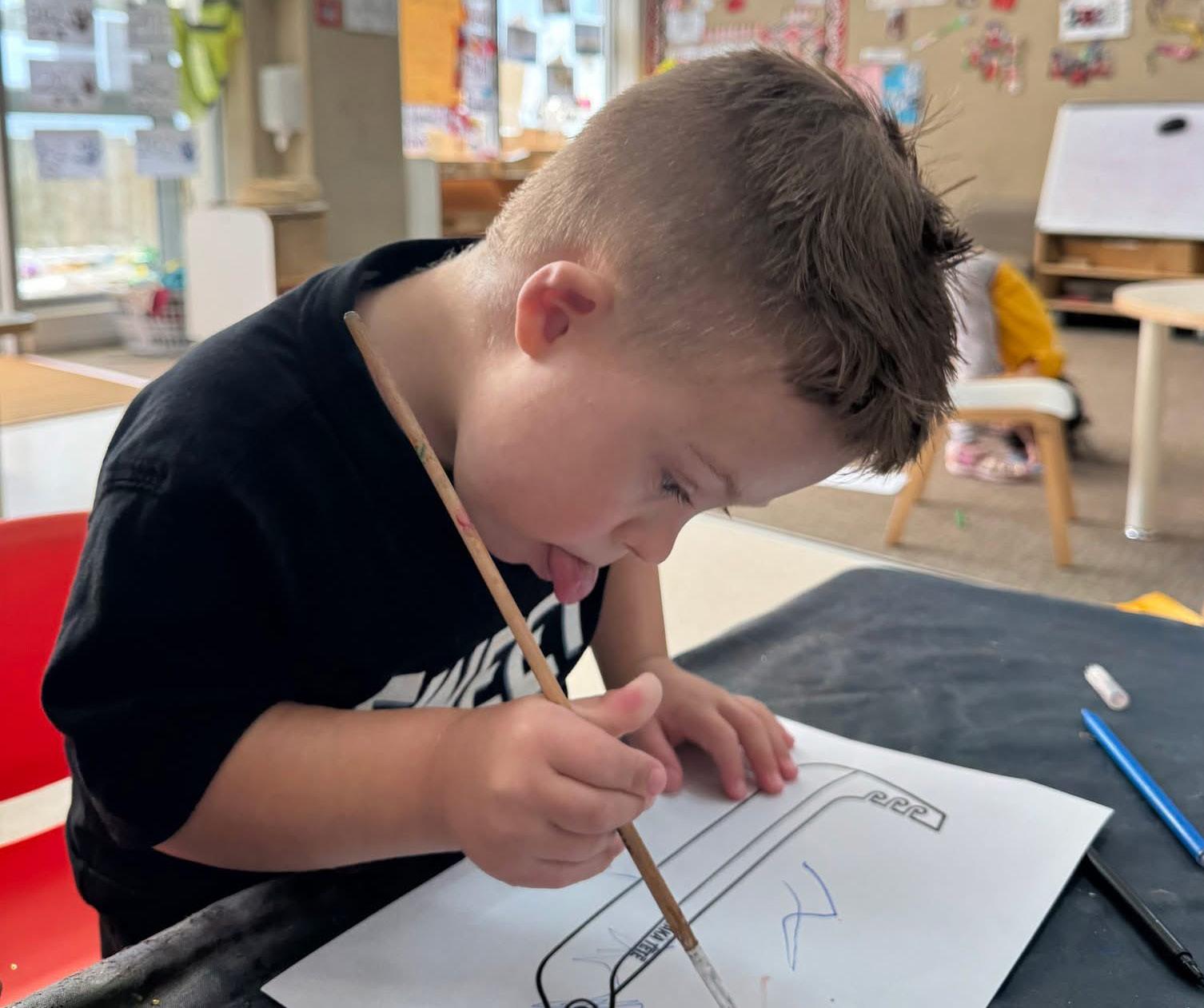
Children with Down syndrome often understand far more than they can express, and therapy can help bridge this gap by teaching invaluable communication skills, like:
• Improving the intelligibility of speech sounds and words
• Developing early vocabulary, syntax, and grammar
• Following instructions and sharing ideas
• Early reading skills
Speech and language therapy isn’t just for the child; it teaches parents and carers strategies for supporting speech and communication at home and in preschool.
By this time, different children will have made different levels of progress in their communication journeys. The ongoing support of an SLT can ensure your little one is being appropriately supported when it's time to start school. To help kids thrive during this exciting time, therapy can help with:
• Understanding and following classroom instructions
• Producing and comprehending more complex vocabulary
• Improving clarity and intelligibility of speech
• Reading comprehension and written language
In the classroom and the playground, communication skills are also important for helping children with Down syndrome socialise with peers – working in groups, maintaining conversations, solving conflicts, and understanding social rules.
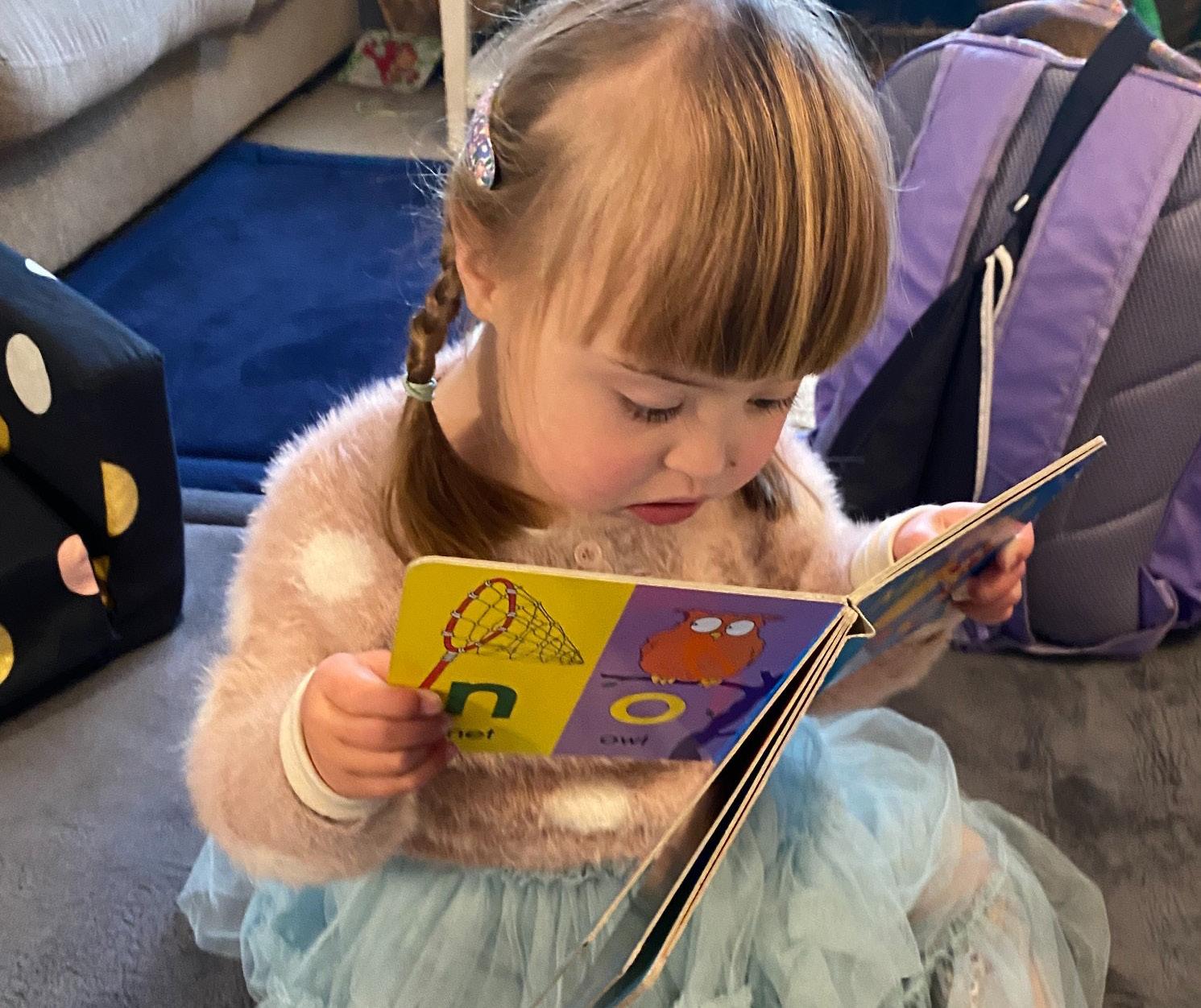
As your child progresses through adolescence, communication challenges can become more complex. Working through a focused speech and language therapy programme can help ensure they are supported academically, as well as developing social independence and tending to their wellbeing needs. Therapy can help teens with:
• Understanding concepts and following explanations
• Asking questions and being understood in class
• Conversation skills and social cues
• Literacy and numeracy development
As well as being critical to success in school, speech and language therapy also helps teenagers prepare for adulthood. They learn how to advocate for themselves, understand and express personal boundaries, integrate into a community and workplace, and how to keep themselves safe and healthy.
UpsideDowns exists so that no child has to miss out on the amazing benefits of speech and language therapy. We help our members access this life-changing intervention by providing subsidies for therapy costs.
We support Aotearoa’s young people with Down syndrome from birth until the age of 21. New members are encouraged to join at any time –though we currently operate a waitlist, so get in as early as possible: www.upsidedowns.co.nz
In this issue we highlight some of the resources in the collection around the theme of independence.
IHC Library has appointed Piper Kilmister as the Customer Engagement Librarian, a new role that reflects our commitment to making the library the best it can be for their members. Piper will be looking at the results of the annual survey and leading work on any improvements based on feedback. This work will cover all aspects of the library and already Piper has revised some of the messages that the catalogue sends out, created an online feedback form for members to review books and is working on improvements to the library catalogue.
IHC’s Stand Tall independent living and money management game is available online. See https://www.ihc.org.nz/how-we-can-help/stand-tall-money-game A project is underway to look at the game’s impact on player independence. Players, parents and teachers are encouraged to get in touch with IHC's Library (librarian@ ihc.org.nz) if you’re interested in taking part in this research.
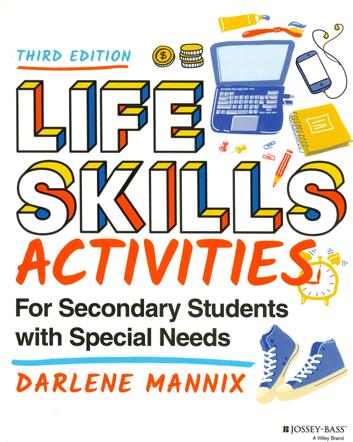
Spectrum of Independence: How to Teach Your Neurodiverse Child Daily Life Skills
/ by Kristin Lombardi, Christine Drew, with a foreword by Peter Gerhardt.
"For parents of neurodiverse children, milestones that many families take for granted--like graduating from high school or college, getting a job, and, eventually, leaving the nest--may be fraught with uncertainty. How can kids who need loads of support to get through the day ever learn to take care of themselves? This motivating, practical book gives worried parents concrete strategies for maximizing the independence of their child or teen with autism, intellectual disabilities, or other forms of neurodiversity. Exercises and downloadable worksheets are rooted in scientifically based behavioural principles and illustrated with vivid, relatable examples. By breaking down tasks like getting dressed, brushing teeth, and making a sandwich into manageable 'micro steps,' parents learn to phase out assistance gradually and systematically as kids take ownership of their routines. Daily life skills truly can be improved with the right tools--and they are vital steppingstones for the challenges of adulthood. " — Provided by the publisher
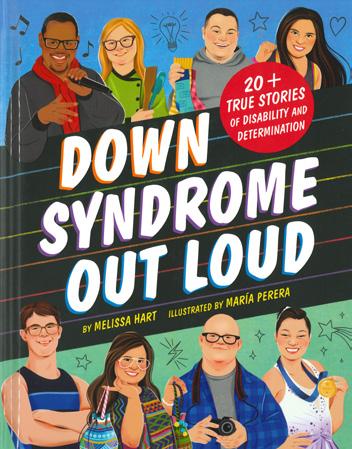
Down Syndrome Out Loud: 20+ True Stories of Disability and Determination
/ by Melissa Hart; illustrated by Marīa Perera
"In this illustrated biography collection, meet over twenty people with Down syndrome who have accomplished amazing things in their lives. Excelling in film, sports, business, photography, and more, these people are changing hearts and minds about their disability. Read about Chris Nikic, the first person with Down syndrome to complete an Ironman Triathlon, and Isabella Springmuhl Tejada, the first designer with Down syndrome invited to showcase her work at London Fashion Week. Learn about the Special Olympics, Best Buddies, and other organizations who support the Down syndrome community.” — From the publisher’s website
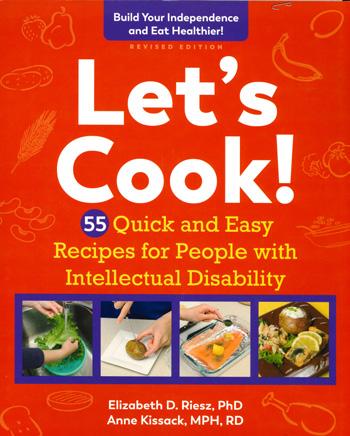
Let's Cook! : 55 Quick and Easy Recipes for People with Intellectual Disability
/ by Elizabeth D. Riesz, Anne Kissack
"A cookbook designed to help people with intellectual disability prepare their own meals with success" — Provided by the publisher
In Let’s Cook! you’ll learn how to cook simple and nutritious meals — with recipes using all the MyPlate food groups. Gain confidence in the kitchen and build self-worth! Designed by and for adults with intellectual disabilities, Let’s Cook! promotes and reinforces life skills for independent living.
Let’s Cook! can help you:
• Create healthy meals.
• Control carbs, calories, and salt.
• Follow food and kitchen safety.
• Eat well, today and every day!
Inside Let’s Cook! you’ll find:
• More than 50 healthy “I can cook” recipes in large print that are written at an early elementary reading level.
• An easy-to-follow recipe style sets forth What I Need, What I Use, What I Do.
• Colour photos showcase each recipe.
• Step-by-step preparations take the guesswork out of cooking.
• Complete nutrient information is included for each recipe.
Please contact the IHC library team on 0800 442 442, email them at librarian@ihc. org.nz or visit the online catalogue at https://ihc.mykoha.co.nz/
You can watch the library videos at https://ihc.mykoha.co.nz/cgi-bin/koha/opacmain.pl
And a reminder about their Free Book Scheme that gives a free book to families who have a family member aged 0-24 years who is autistic or who has an intellectual disability. Please check it out at https://ihc.org.nz/ihc-library-free-book
NZDSA Committee
Gwen Matchitt
President and Zone 3 Representative Waikato, BOP & Taranaki 0800 693 724 zone2@nzdsa.org.nz
Deborah Jones Zone 5 Representative Wellington & Wairarapa 0800 693 724 zone4@nzdsa.org.nz
NZDSA Staff
Zandra Vaccarino
National Executive Officer 0800 693 724 neo@nzdsa.org.nz
Bev Smith Zone 1 Representative Northland 0800 693 724 northland@nzdsa.org.nz
Angelique van der Velden
Vice President and Zone 6 Representative Ashburton & all areas above 0800 693 724 zone5@nzdsa.org.nz
Kirsten McDonald
Zone 2 Representative Auckland 0800 693 724 auckland@nzdsa.org.nz
Averill Glew
Treasurer and Zone 7 Representative All areas below Ashburton 0800 693 724 zone6@nzdsa.org.nz
Vacant Zone 4 Representative Whanganui, Manawatū, Gisborne & Hawke’s Bay 0800 693 724
Averill Glew Self-Advocacy Portfolio averill@nzdsa.org.nz
Jess Waters
Social Media & Information Officer kiaora@nzdsa.org.nz
Maddie Daybell National Administrator 0800 693 724 na@nzdsa.org.nz
Siobhan Vaccarino Administration Support Officer hello@nzdsa.org.nz
Regional Liaison Officers
Ashleigh Downing
Taranaki Community LO 0800 693 724 taranakidownsyndrome @gmail.com
Kathryn Sadgrove Northland Coordinator 0800 693 724 ksadgrove@xtra.co.nz
Maddie Daybell CHAT21 Editor editor@nzdsa.org.nz
Daniel te Kaat Graphic Designer 021 22 333 93 daniel@youarehere.co.nz
Membership is now done online. For all details please go to www.nzdsa.org.nz or for any queries please ring 0800 693 724. If you have not received an email to update your membership online please call the number above.
The NZDSA receives no Government funding and relies solely on donations and grant applications to keep us running. If you can make a donation big or small, please go to www.nzdsa.org.nz or ring 0800 693 724.
Sheridan Davies
Auckland Community Liaison Officer 0800 693 724 community@adsa.org.nz
Pauline Marshall Canterbury Community Liaison Officer 0800 693 724 cdsainc@gmail.com
The NZDSA has a Facebook page that serves as a community forum and notice board for relevant issues, events and stories. facebook.com/NZDSA
Follow us on Instagram to see what our communities are up to @the_NZDSA
Check out the NZDSA’s website at nzdsa.org.nz
Yes, now is the time to start thinking about whether you would be interested in loaning the NZDSA Numicon kits for 2026.
Numicon is a multi-sensory, structured maths programme. If you would like to know more about Numicon, the website is www.numicon.co.nz/
• The NZDSA has 16 kits to loan to NZDSA members.
• These kits can be used at home or school.
• The loan period is from February/March to the end of November.
• The NZDSA does require you to pay a refundable bond of $60.00.
• The NZDSA will reimburse you the $60.00 bond if the kits are returned clean and complete.
• The only cost to you is the courier and handling fee which is $40.00 and the cost of returning the kit to the NZDSA.
If you would like to loan a kit please email Maddie at na@nzdsa.org.nz
The NZDSA is calling for nominations for the NZDSA 2026 National Achievement Awards. These awards recognize the accomplishments of individuals with Down syndrome during the years 2024 to 2026. If you would like to nominate someone, please contact Zandra Vaccarino at neo@nzdsa.org.nz.
The NZDSA, as a member of the Carers Alliance, has campaigned for a commitment to the next Carers’ Strategy.
The consultation period runs until the 12th of February. We are hosting the second of our two online consultation sessions on Tuesday the 27th of January and we strongly encourage you to attend.
Tuesday 27th January 2026 12pm
Please find links to the Zoom meeting on our website and Facebook pages.
World Down Syndrome Day - Save the Date – Big Connect 2026!
Join us for our annual Big Connect as we come together to celebrate World Down Syndrome Day!
We’ll be gathering on the eve of World Down Syndrome Day to connect, share, and celebrate our amazing community.
Friday 20 March 2026
7.00pm – 8.30pm Online via Zoom - links will be shared soon
The 2026 World Down Syndrome Day theme will be announced soon – stay tuned!
Let’s celebrate, connect, and make the 2026 Big Connect our biggest yet!
Thanks to the following funders and sponsors who have made donations to the NZDSA this financial year:
• Rehabilitation Welfare League
• IHC Foundation
• COGS Kahungunu Ki Heretaunga
• Frozen Funds Charitable Trust
• Lottery Grants Board
• COGS: Rodney/North Shore
• COGS: Hamilton
• COGS: Auckland City
• COGS: Manukau
• COGS Southland
• COGS Manawatū/Horowhenua
• COGS Whangārei
• Grassroots Trust Central Ltd
• Holdsworth Charitable Trust
• Te Whatu Ora — Health NZ
• Ministry of Social Development
• Joyce Fisher Charitable Trust
• Pub Charity
• T G Macarthy Trust
• Lion Foundation
• Southern Stars
• Lindsay Foundation

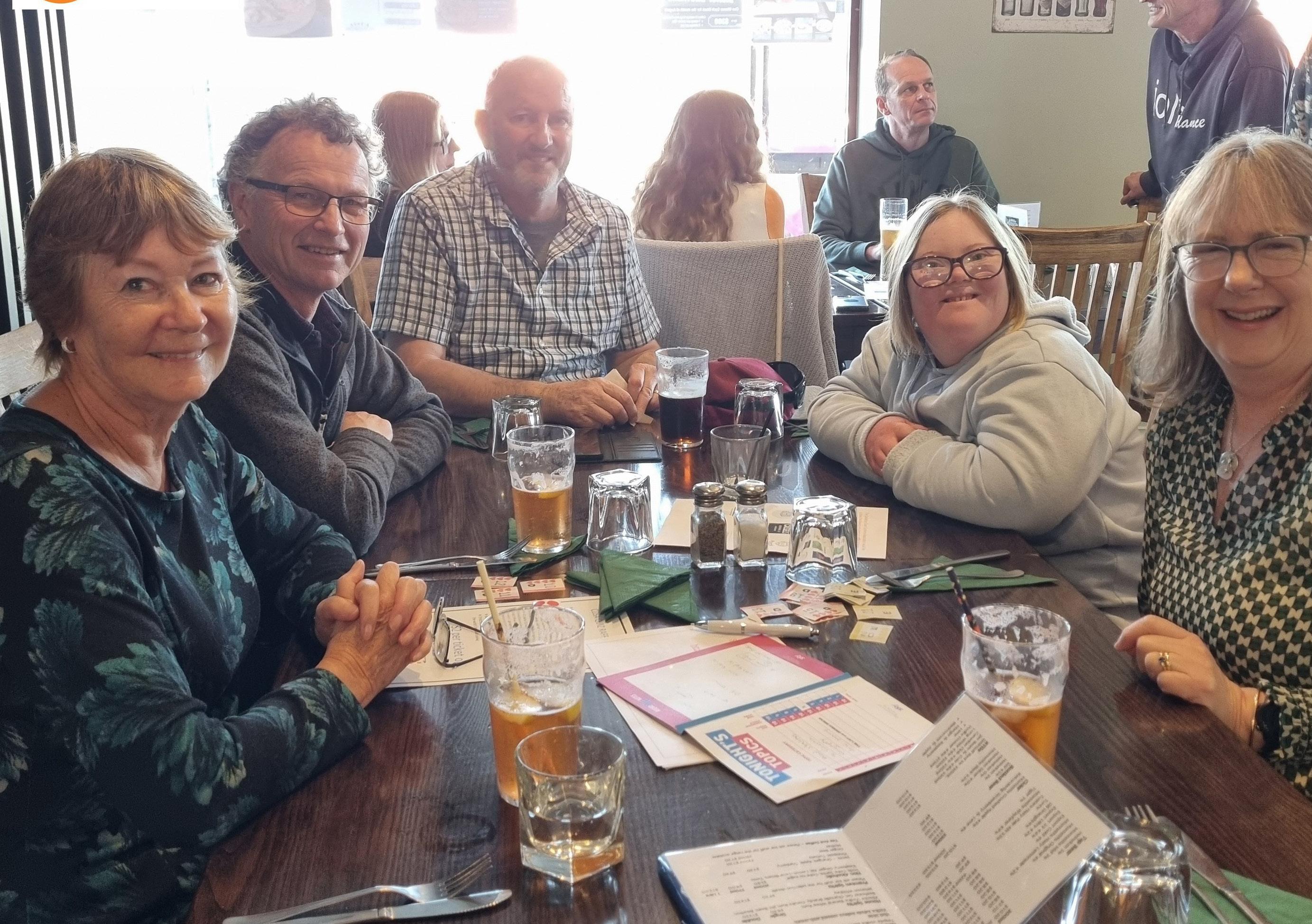
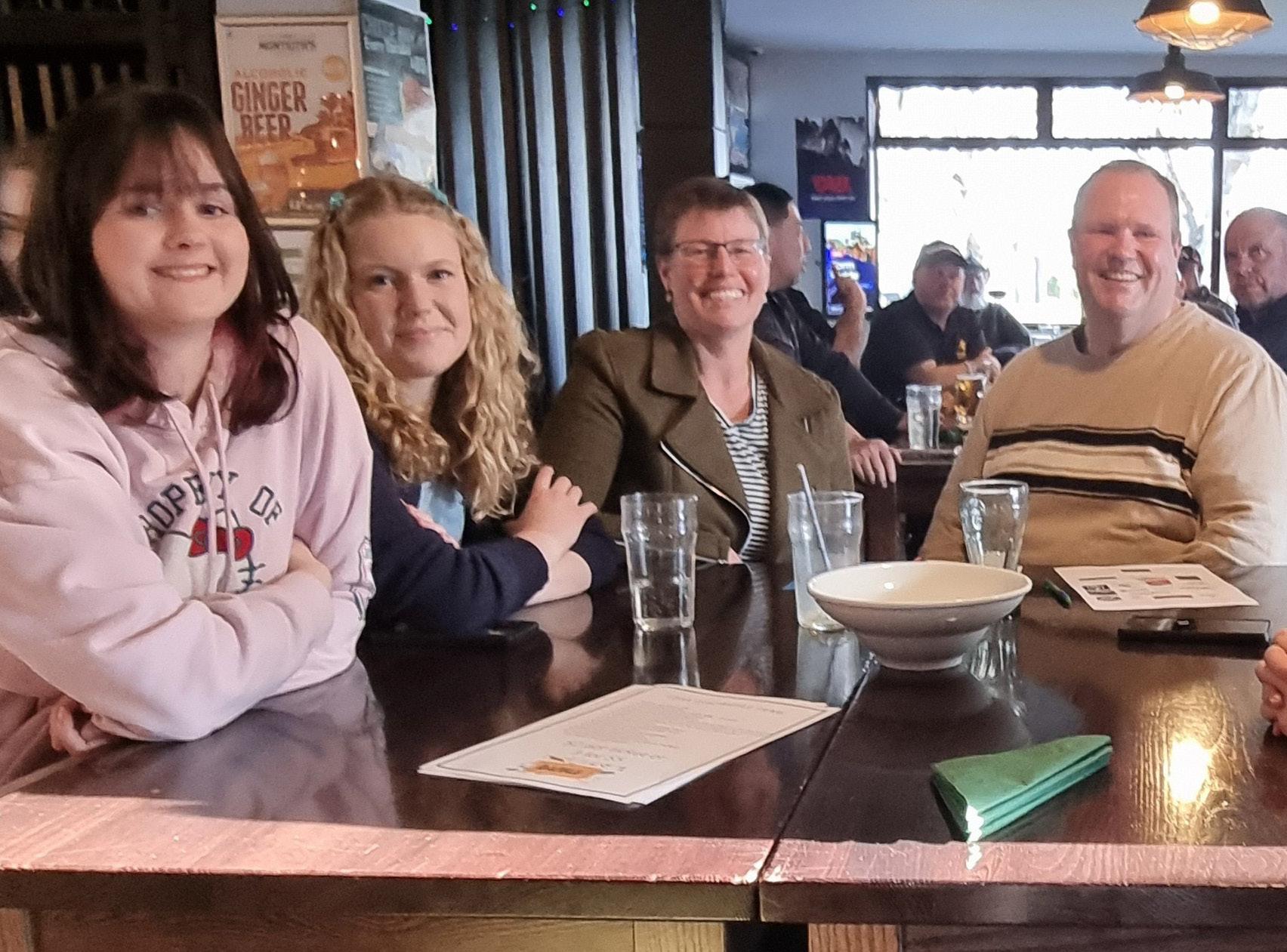
OUR PEOPLE, THE CDSA QUIZ