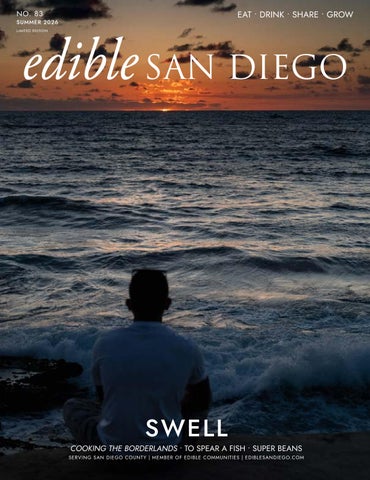

edible SAN DIEGO


Come
the Inspiration. Stay Awhile.
A Santa Ysabel destination for European-inspired antiques, cozy home styling, and a shop + garden experience.
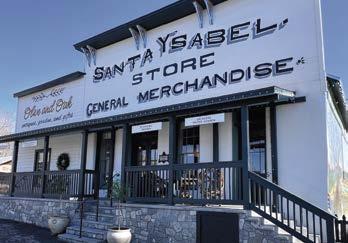
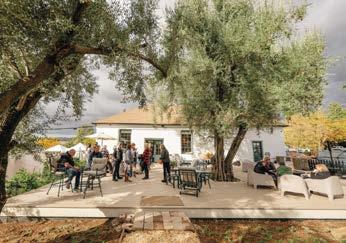
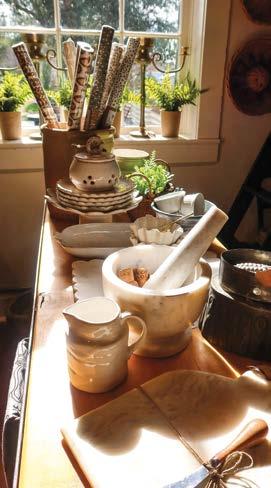
Family-owned and thoughtfully curated. Wander the shop, explore the garden, slow your pace, and discover finds that make a home feel collected and lived-in.
Olive & Oak Antiques Thur - Sun, 10 a.m. to 5 p.m 30275 Highway 78, Santa Ysabel, CA 760-419-8795 • oliveandoakantiques.com @oandoantiques


edible SAN DIEGO
PUBLISHER AND EDITOR IN CHIEF
Katie Stokes
EXECUTIVE EDITOR
Maria Hesse
COPY EDITOR
Dawn Mobley
ADVERTISING
Katie Stokes
COVER BY LUKE SCHMUECKER
DESIGN BY MARIA HESSE
ADVERTISING
For information about advertising options, rates, and deadlines please contact katie@ediblesandiego.com.
Edible San Diego magazine is a quarterly publication made available by subscription and free distribution at select locations throughout San Diego County. No part of this publication may be used or reproduced without permission from the publisher. Information in this magazine has been obtained from sources believed to be reliable. The publisher disclaims all liability for any occurrence that may arise as a consequence of the use of information or recipes. Every effort is made to avoid errors, misspellings, and omissions. If an error comes to your attention, please accept our sincere apologies and notify us.
© 2026 All rights reserved.
This magazine is made possible thanks to Edible San Diego advertisers and subscribers. Subscriptions available online or by mailing $25 to:
EDIBLE SAN DIEGO
3451 Via Montebello #192-313 Carlsbad, CA 92009
601-526-1919
info@ediblesandiego.com ediblesandiego.com
Instagram @ediblesdmag
Facebook @ediblesandiego
YouTube @ediblesandiego

Issue 83 Contributors
Campestre Mag is an indie wine publication telling stories from the San Diego–Baja California borderlands since 2018 and is known for connecting global wine industry issues through a local lens by spotlighting the people, places, and culture that don’t show up anywhere else. This issue, Campestre serves as guest wine editor.
Children’s Museum of Discovery sparks a love of learning so all children can discover their wildest dreams. The museum is located in the heart of downtown Escondido and creates exciting hands-on and purposeful play opportunities for children ages 0–10.
Adriana Delgado is an editorial and documentary photographer dedicated to telling authentic stories through compelling visuals. With a passion for capturing the essence of people, places, and moments, her work highlights the richness of local culture and community. When not behind the lens, she enjoys exploring new environments with her family in their Volkswagen van, finding inspiration in everyday details, and connecting with creatives who share a love for food, wine, and travel. Find her work at @__adelgado__/ or adrianadelgado.photo.
Sabrina A. Falquier, MD, CCMS, DipABLM is a triple-board-certified physician. As founder and owner of Sensations Salud, LLC, she focuses on culinary medicine education and consulting and serves on the board of Olivewood Gardens. Find her on Instagram @sensationssalud.
Heidi Greenwood founded Campestre Mag, an indie wine publication rooted in the San Diego–Baja borderlands, in 2018. She also runs Esquina Wine Shop and The Puente House and is a 2026 BBB Torch Award nominee for ethics in business.
Haley Hazell is a San Diego-based art director, photographer, food stylist, and recipe developer. She attended culinary school at San Francisco Cooking School and now resides in San Diego with her husband and children. For Haley, it is all about balance—balancing careers, tastes, and textures. She loves to cook and eat with the seasons, letting the amazing peak produce from her local farmers’ markets inspire her recipe writing.
Maria Hesse is the executive editor and designer of Edible San Diego. Her interest in functional arts led to a degree in interior design, which inspires her passion to be an advocate for sustainable living through food. Find her @mariafromediblesd on Instagram.
Helen I. Hwang is an award-winning journalist, author, and mechanical engineer. Her work has appeared in Eater, The Infatuation, The New York Times for Kids, Parents Magazine, Trip Advisor, People Magazine, San Diego Magazine, The Philadelphia Inquirer, HuffPost, NPR’s Fresh Air with Terry Gross, and more.
Emily Laracuente is an illustrator and wine industry community member based in Normal Heights. She can be found sketching at her favorite local coffee shop or pouring wine at your neighborhood wine bar. Find her art on walls, T-shirts, and tote bags in wine bars around town and on Instagram @simpledoodz.
Arianna Litrenta is the founder of Sunflower Creative Co., a content services agency specializing in the food, wine, and travel industry. Established in 2020, Sunflower Creative Co. provides recipe development, food photography, and written content to restaurants, brands, magazines, and cookbooks.
Jen Lo is a San Diego-based editorial and commercial food photographer who is passionate about travel and capturing new perspectives. Jen loves exploring and finding new places to eat with her husband and daughter. Follow her on Instagram @jenlophotography.
Liz Murphy is a local sustainability warrior and chef behind Santosha Nutrition, offering plant-based cooking class for cooks of any level. Have questions about storing a specific food item? Her cookbook Kitchen Contentment: A Seasonal Guide to Cooking with Plants contains over 50 vegan and gluten-free recipes to encourage support for local farmers and shops. Find out more at santoshanutrition.com.
Theodore R. Niekras sails, surfs, spears, and cooks in San Diego, among other places. He holds a master’s in creative writing from San Diego State University. His interests include foraging, good food journalism, and being close to nature.
Julie Pendray is an award-winning journalist with an environmental background. She’s also a master composter and community gardener.
Maya Seaman is a SoCal-born food and beverage photographer, freelance writer, and self-proclaimed hobby hoarder with a passion for cocktails, baking, gardening, and petting other people’s dogs. You can find her work at mayaseamancreative.com, or follow @seaman_shoots on Instagram.
Luke Schmuecker is a creative director, photographer, and the founder of Farnam West Creative, a brand strategy and creative collective based in San Diego. He has worked on projects for everyone from Food & Wine to the Tennis Channel. In his free time you can find him wandering the aisles of grocery stores, analyzing branding, seeing what’s new, and trying to predict the future.
Jordan Younis is a Southern California-based photographer specializing in food, hospitality, and editorial photography. Drawn to natural light and authentic storytelling, she captures the people, places, moments, and experiences that shape local communities. Her work is rooted in a love of food and storytelling and aims to create evocative images grounded in connection and a strong sense of place.
2011 Publication of the Year
LUKE SCHMUECKER

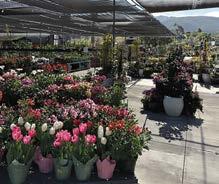
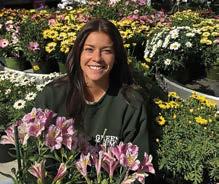
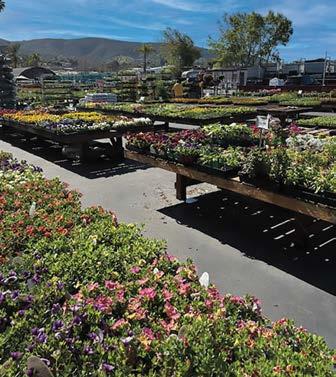
Green Thumb Nursery, proudly family-owned and located in San Marcos. We are dedicated to providing high-quality products and exceptional customer service. Explore our extensive selection of indoor and outdoor plants, fountains, garden decor, outdoor patio furniture, gardening supplies, and bird feeders. Our diverse range includes drought-tolerant and native plants, fruit trees, vibrant flowers, water plants, perennials, annuals, succulents, and more. Visit us and discover why Green Thumb Nursery is your ultimate destination for all gardening needs.






ONE BIG HAPPY
The Artemis crew reminded us of our rare and delicate biosphere floating in so much space.
If we look west, the Pacific expresses enormity and abundance that we can barely grasp.
Have you noticed? A new or very old awareness seems to be percolating up. We are caretakers.
Welcome to our summer issue for 2026, our water- and warm-weather-themed conversation about eating and drinking local in San Diego County.
We are family, as we learn about the Yasukochis and their farm.
We are innovative, seeing how easy it can be to shop zero-waste or how one San Diegan harvests drinking water from vapor.
We are travelers or benefit from those who are, as Claudette Zepeda’s cooking shows us. Also, for our kitchens, our superfoods series takes on the bean. Far from lowly, this nutritional powerhouse is economical, versatile, and easy to prepare. Happily, legumes are relatively easy to grow at home and good for building healthy, living soil.
An individual’s swim to spear a fish connects us with people living along the water’s edge, going back millennia, and to our fertile coastline that stretches practically from pole to pole.
Plants on the land and in the ocean teach us resilience. Grapevines that produce the most intriguing wine surround us, as Heidi Greenwood explains. And so-called seaweed is a marvel. Vast underwater forests interweave and flow with so many systems and creatures, including us.
So here’s to summer. If you’re visiting from afar, we’re glad you’re here. We invite visitors and locals alike to venture out to neighborhood farmers’ and fishers’ markets, farms, ranches, and wineries to soak up all the sunshine and richness our region offers.
Dear readers, please visit our advertisers, essential partners that make these pages possible. (Tell them we sent you!) Business folks reading, let’s talk about getting your brand in here. Come on in, the water’s fine!
See you out and about, grateful for your company.
Katie Stokes
Publisher and Editor in Chief
Edible San Diego

LAND ACKNOWLEDGEMENT
Edible San Diego recognizes the Kumeyaay, Luiseño/Payómkawichum, Cahuilla, and Cupeño/Kuupangaxwichem people who have lived in relationship with the earth, flora, fauna, waters, and sky for thousands of years as the original stewards of this region. This publication commits to building greater awareness of and appreciation for the traditional ecological knowledge, wisdom, and experiences of San Diego County’s first peoples as an essential part of the health and vitality of our local food system.
The Yasukochi Family Has Farmed for Over a Century in North County
BY JULIE PENDRAY
When Donal Yasukochi’s ancestors arrived as Japanese immigrants in San Francisco in the early 1900s, they went to work on farms in Salinas, saved money, and eventually began growing in Garden Grove. From Orange County, the Yasukochis settled in San Marcos and later moved their farm to Oceanside in the late 1920s. Their major crop was Anaheim chiles, which they dried and sold to markets.
business associates and friends in North County.
CSA Summer Selections
BY JULIE PENDRAY
Summer brings melons, corn, berries, flowers, backyard parties, beach picnics, and more! Learn how to get your favorite produce, along with delicious add-ons, through Community Supported Agriculture (CSA).
Be Wise Ranch
Escondido
“It was a big thing,” Donal shared with a chuckle. “My grandfather was known as King of the Chiles.”
Now, several generations of their family have farmed in North County for more than 100 years. Their legacy of success includes strawberries, tomatoes, cucumbers, squash, and melons, which are sold at farmers’ markets throughout San Diego County and beyond. Along with the high notes, there have been difficult challenges in the family’s history. During World War II, Japanese immigrants on or near the West Coast were evacuated to internment camps under federal order, including many Yasukochi family members. Donal’s grandparents, a great-grandfather, uncles, aunts, and their children were sent to camps out of state. “The main family went to Poston,” he said.
The Poston War Relocation Center, located in southwestern Arizona on the Colorado River Indian Reservation in the Mojave Desert, was a major Japanese internment camp during WWII. Research conducted by the San Diego Public Library for this story confirmed that people with the last name Yasukochi were among those housed in the wood and adobe barracks. Historical accounts of the camp detail the spread of illness, inadequate medical supplies, and a wide range of temperatures, from blazing hot to extremely cold.
Through it all, the Yasukochis were able to continue their business and also generate income from their strawberries on their San Marcos farm while they were at the camps, Donal shared. This was due to the help of
“We were fortunate because a lot of people lost a lot of things,” he said. Family members at the camp were able to have a refrigerator there, he recalls, noting that not all interned families there could afford such an item. “I was told we were one of the few incarcerated families that were receiving income at the time.” After release, “the Japanese farming community had to rebuild,” he said.
Donal and his brother, Kerry, now farm in Bonsall, and the warehouse remains in Oceanside. Donal was born in 1959 and has been farming for 47 years. When he talks about the setback of the internment, his voice reflects a deep wound, but he’s quick to transition to an uplifting tone when he describes his family’s currently popular vegetables and fruit, including Japanese cucumbers and Momotaro tomatoes. “We knew people would like them once they tried them, and word of mouth spreads.”
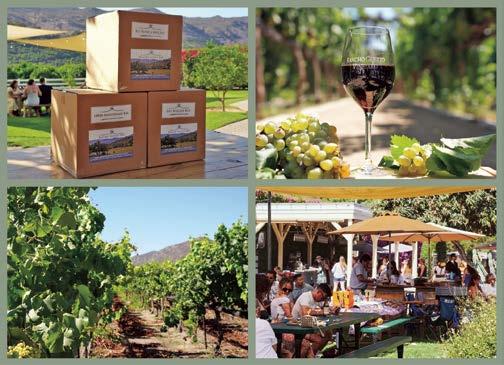
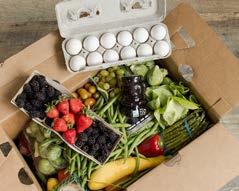
Yasukochi Family Farms’ CSA boxes are delivered throughout the county weekly and often include selections like squash, greens, celery, beans, berries, citrus, corn, avocados, peaches, and mushrooms from Mountain Meadow Mushrooms in Escondido, along with flowers or local honey. Although not certified, Yasukochi Family Farms produce is grown organically when possible, and they always use “responsible practices,” said Donal.
Donal’s daughter, Britinee, says the word “family” is very important in their business name, Yasukochi Family Farms. “We are a very close-knit group, so when we say ‘family business,’ we truly mean it. While the long-term future is still taking shape, there’s a strong shared hope and intention to keep the business in the family for many years to come.” D
» yasukochifamilyfarms.com
Nearly 30 pickup spots throughout the county.
Arugula, cucumbers, green beans, herbs, radishes, strawberries, summer squash, tomatoes, and more.
» bewiseranch.com
Foodshed Cooperative
City Heights
Produce sourced from 60 farms in San Diego and Riverside counties. Pickup and home delivery.
Arugula, beets, berries, herbs, microgreens, pasture-raised eggs, honey, flowers, and more.
» foodshedcooperative.com
Rodney Kawano Farms
Oceanside
Delivery, or pick up at their farmers’ market booths.
Beets, berries, cucumbers, greens, herbs, mushrooms, and more.
» rodneykawanofarms.org
Sand ‘n’ Straw
Vista
Pick up at the farm Wednesdays through Sundays. On-site farm stand, tours, crafts, events, camps, and workshops.
Apricots, arugula, beets, berries, corn, herbs, melons, peaches, radishes, summer squash, tomatoes, and more.
» sandnstraw.com
CSA offerings are subject to change.
Contact farms directly for more details.
Scan the QR code to find more CSAs on ediblesandiego.com.

JACKIE WONDERS COURTESY OF YASUKOCHI FAMIKY FARMS
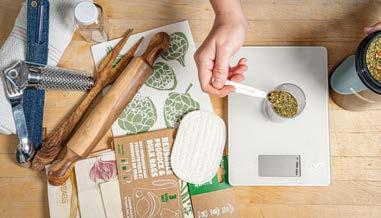
Shopping at local farmers’ markets supports community agriculture, fosters connection, and ensures fresher, more nutrient-dense produce. One of the reasons I love shopping at local markets is that I can get my family’s weekly produce without excess packaging. Plastic has become so ingrained in our everyday lives that avoiding it requires significant effort and a big mindset shift. Before we discuss ways to use less plastic, let’s talk about a brief history of this petroleum-based product. Although cellophane arrived on the market in the 1910s, the use of plastic packaging surged after World War II. Since the 1950s, we have accumulated over 8 billion tons of plastic waste, and because plastic’s breakdown time is essentially unknown, nearly every piece ever made still exists. Before the plastic boom, beverages came in glass, milk was delivered to doorsteps, and grains were sold in bulk using cloth or paper bags. While many businesses are making efforts to return to these practices, motivated shoppers can avoid excess plastic packaging if they know where to find the goods.
Skip the packaging
Bulk food bins are a great option for avoiding excess packaging. You’ll find them at local grocery retailers like Windmill Farms, Ramona Family Naturals Market, Ocean Beach People’s Food Co-Op, Specialty Produce, and Origin’s Grocer, as well as larger chains like Sprouts and Winco. Remember: The most sustainable option is using what you already have. It is perfectly okay to reuse old plastic containers for refilling as you transition toward glass or metal alternatives.
Zero-waste shops are another incredible resource for avoiding plastic packaging. These are stores dedicated to providing the community with bulk options for food, beauty, and household products like shampoo and conditioner, as well as plastic-free alternatives to everyday items. Walking into these shops is like stepping into both the past and the future all at once. Some of my favorite swaps are Swedish dishcloths instead of paper towels, shampoo bars, and bulk spices, teas, and dish soap. Here’s how local refill shop owners are helping San Diego live plastic-free.
MARKET EXPLORER JARRINGLY SIMPLE WHY REFILL IS BETTER
BY LIZ MURPHY
PHOTOGRAPHY BY MAYA SEAMAN
EARTHWELL REFILL
Kensington
Since opening Earthwell in 2016, owner Katrina Oprisko notes that customer interests have evolved. There is a significant focus on finding products with cleaner ingredients, and Katrina is adding plastic- and toxin-free makeup options to her inventory in response.
VESSEL REFILLS
Escondido
Brook Gunn, owner of Vessel Refills in Escondido, recommends that people start small. Replacing just one product at a time helps customers avoid “eco-fatigue” and feeling overwhelmed.
SHINE MARKET
Encinitas and Del Mar
Offering food, household refills, and plastic-free alternatives at two locations, owner Cara Moon Schloss views the movement as a community effort. “Every refill and every small swap moves things forward,” she says.
SONORA REFILLERY
Oceanside
Owner Marissa Figueroa says, “We have cooking oils by the ounce and organic teas and spices by the gram. Having the opportunity to buy spices by the gram is helpful for recipes that require an ingredient you hardly use and therefore end up wasted. Shopping in bulk gives the customer the freedom to buy what they need, reduces packaging waste, and helps keep people from overconsuming. When you’re able to purchase the amount you need, you’re able to save money—and that helps everyone.”
Speaking with these owners makes one thing clear: Owning a refill shop is a labor of love for our community and the planet. Large-scale change is simply the result of many small actions. By supporting these practices and shops, we can all be part of the solution together. D
Scan the QR code to find this article with expanded guides to grocers with bulk aisles and zero-waste shops.

San Diego County
Farmers’ and Fishermen’s Markets

4–8pm
Pacific Beach Tuesday √ † ! 901 Hornblend St. 2–7pm
WEDNESDAY
Carlsbad √
State St. & Carlsbad Village Dr. 2:30–7pm
Little Italy Mercato √ † *
Date St. from Kettner Blvd. to Front St. 9:30am–1:30pm
Ocean Beach √ 4900 block of Newport Ave. 4–8pm
Santee √ † * ! Pathway Center
6939 Linda Vista Rd.

North Park √ † * ! 3000 North Park Way at 30th
Oceanside Morning √ * ! 511 Pier View Way & Hwy. 101
Ramona Grange Growers Exchange 10045 Carroll Canyon Rd.
FRIDAY
Fallbrook Main Avenue √ * ! Main Ave. btwn Hawthorne & Fig 9am–1pm
Little Italy Mercato √ † * !
Date St. from Kettner Blvd. to Front St. 8am–2pm
Mission Valley √ Civita Park 7960 Civita Blvd.
9am–1pm

Poway √ *
Old Poway Park 14134 Midland Rd. at Temple 8am–1pm

Santa Ysabel √ 21887 Washington St. Hwy. 78 & Hwy. 79 Saturday & Sunday 11am–4pm

Santa Ysabel √ 21887 Washington St. Hwy. 78 & Hwy. 79 Saturday & Sunday 11am–4pm
Tuna Harbor Dockside Market
598 Harbor Ln. 8am–1pm (or until sold out)
La Mesa Village √ * !
La Mesa Blvd. btwn Palm Ave. & 4th St. 3–7:30pm
Marina District - ASCENDKemet Collective † 210 West Island Ave. 3–7pm
Rancho Bernardo √ Bernardo Winery
13330 Paseo del Verano Norte 9am–1pm
San Marcos √ † 251 North City Dr. 4–8pm
SATURDAY

Miracosta College San Elijo Campus 3333 Manchester Ave.
Vista √ † * !
345 S. Melrose Dr. 8am—noon
SUNDAY
Carmel Valley √ † Torrey Pines High School

City Heights - ASCENDKemet
4325 Wightman St.
Del Mar Civic Center 1050 Camino Del Mar
Back Roads Certified 14335 Olde Hwy. 80
Solana Beach √ 444 So. Cedros Ave. Noon–4pm

MOBILE MARKETS
People’s Produce Mobile Farmers’ Market † Servicing eight different market locations throughout Southeastern San Diego, National City, Barrio Logan, and Lemon Grove. Visit projectnewvillage.org for days and locations.

3710 Del Mar Heights Rd. 10:30am—1:30pm
Chula Vista √ 300 Park Way & Third Ave. 10am–2pm Fishermen’s Market of North
320 Harbor Dr. 8am–2pm
Hillcrest √ *
University Ave. btwn Herbert St. & Park Blvd. 9am–2pm
La Jolla Open Aire √ 7335 Girard Ave. & Genter St. 9am–1pm

Leucadia √
Paul Ecke Elementary School 185 Union St. 10am–2pm
Rancho Santa Fe √
Del Rayo Village 16079 San Dieguito Rd. 9:30am–2pm
San Carlos 7849 Tommy Dr. Fourth Sunday 11am–2pm
LEGEND
Markets certified by the San Diego County Agricultural Commissioner, ensuring that the produce is grown by the seller or another certified farmer in California, and meets all state quality standards.
† Market vendors accept EBT (Electronic Benefit Transfer).
* Market vendors accept WIC (Women, Infants, Children) Farmers’ Market checks.
! Market vendors accept WIC Fruit and Vegetable checks.
All listings are subject to change. Please contact markets directly to confirm hours of operation, locations, and what benefits are accepted.


Bookmark the digital market guide on ediblesandiego.com for more

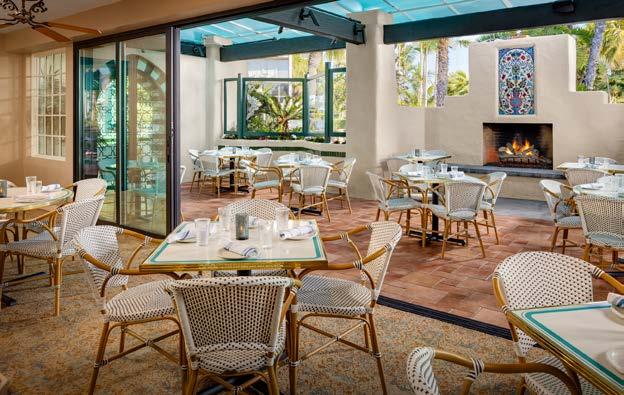
https://www.bahiahotel.com/bianchi

Cooking Together
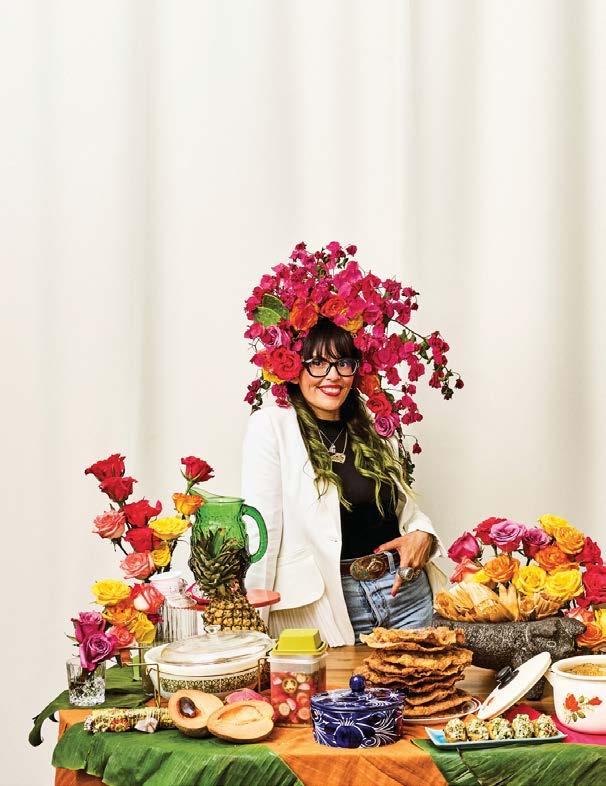
Claudette Zepeda’s debut cookbook embodies local culinary cultures
COOKING
THE
BORDERLANDS: SPICE AND SMOKE BETWEEN MEXICO AND THE STATES
REVIEW BY ARIANNA LITRENTA
RECIPES BY CLAUDETTE ZEPEDA
PHOTOGRAPHY BY DAVID ALVARADO AND JASON SUTHERLAND HSU
Food tells the story of a city’s history, shaped by movement and cultures. In her debut cookbook, Cooking the Borderlands: Spice and Smoke Between Mexico and the States, chef Claudette Zepeda captures the complexity of life between two countries, offering a personal look at the cuisine that defines it.
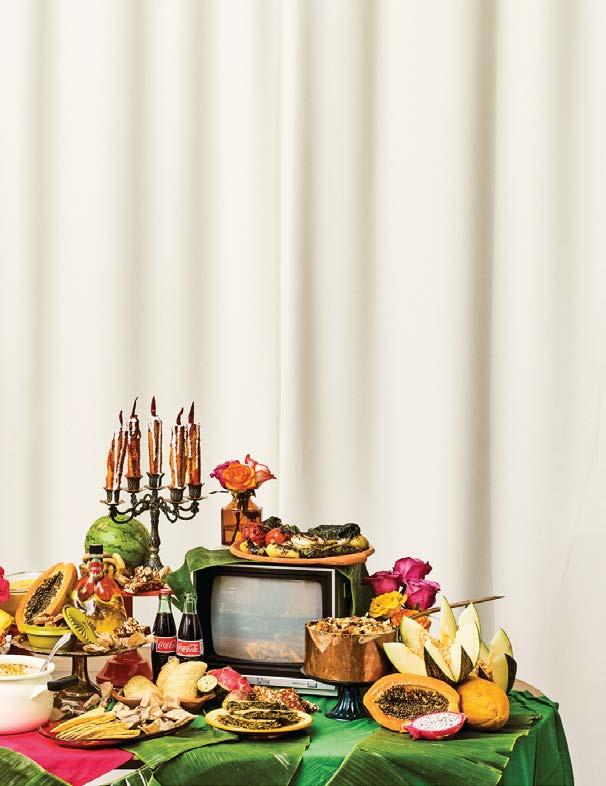
For Edible San Diego’s summer Cookbook Club, Zepeda reflects on the evolving portrait of this region and highlights three recipes: Carnitas Coloradas, Tres Leches Gelatina con Mango, and Frijoles Rancheros. Each offers a window into border cuisine and its cultural richness.
The Evolution of Borderlands
Raised between San Diego and Tijuana, Zepeda routinely crossed the border. That fluidity inspired how she understands and interacts with food. She says border cuisine isn’t static; it’s shaped by migration and adaptation.
“Obviously, San Diego is a literal border city,” she shares. “People think it’s one thing, that it’s just tacos or just street food. But nothing is ‘just’ anything. It’s so multidimensional. It’s so layered,
and decade after decade of human crossing, the border changes the cultural culinary landscape by default.”
Her perspective is deeply embedded in Cooking the Borderlands, and her journey to the cookbook reflects that sense of evolution. Zepeda’s initial idea centered on her experience growing up as a border kid, but the project slowly transformed into something more expansive. What emerged is a hybrid: part cookbook, part personal narrative, and entirely reflective of her lived experience.
“Cookbooks feel like a legacy to me,” Zepeda says. “This isn’t just a book; it’s me poured into the pages.”
That sense of pride extends beyond the recipes as Zepeda took on a direct role in shaping the book’s visual identity. “I had one vision, and then it transformed,” she says. “At some point, the book starts telling you what it wants to be. You just have to listen.”
Three Dishes, One Story
While many call the merging of cuisines “fusion,” Zepeda sees it as more organic. “They’re living side by side,” she says. “They’re compadres.” The three selected recipes here highlight the different dimensions of her philosophy.
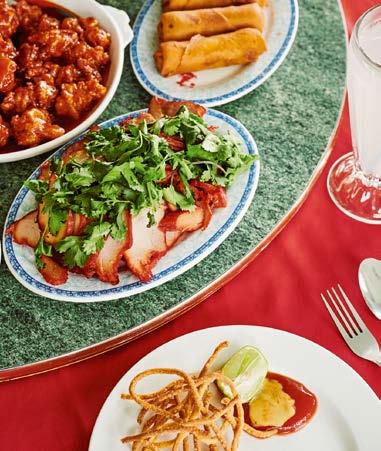
Carnitas Coloradas draws inspiration from Chinese char siu while marrying Mexican technique and ingredients. “I use what’s available to me,” Zepeda says. “If you taste it, your brain might say it’s Chinese barbecue, but it’s rooted in my world.” It’s a dish that reflects the exchange inherent to border regions, where traditions intersect naturally.
Tres Leches Gelatina con Mango leans into nostalgia and playfulness. Reflecting on her childhood, Zepeda says, “It was the first thing I’d reach for on the table. It felt like candy!” This bright and unexpected recipe reimagines a classic dessert through a personal lens.
they’re the foundation of every meal.
Grounded in practicality and sustenance, frijoles reflect the daily rhythm of feeding families while also offering comfort and connection.
Zepeda’s recipes inspire readers to cook without boundaries and adapt them to their own kitchens. In doing so, she reinforces the essence of border cooking: that it’s constantly evolving.
Let’s Cook
This unique book holds up a mirror to San Diego, inviting readers to see their own family histories reflected in its pages while expanding how we each might interpret the city’s relationship to the border. At its core, Cooking the Borderlands is about the connection between cultures, generations, and the people gathered around the table. Zepeda’s recipes create connections between meals similarly, by incorporating leftovers into new dishes. D

The Frijoles Rancheros serve as a reminder that some of the most essential dishes are also the simplest. In Zepeda’s cooking, beans are more than a side; Reprinted with permission from Cooking the Borderlands: Spice and Smoke Between Mexico and the States by Claudette Zepeda. © 2026 by Claudette Zepeda. Photographs © 2026 by David Alvarado. Photos on pages 8, 10, and 242 courtesy of the author. Photos on page 14 courtesy of Jason Sutherland Hsu. Published by Clarkson Potter, an imprint of the Crown Publishing Group, a division of Penguin Random House LLC, New York.
Purchase at The Book Catapult

RECIPESTOSETABORDERLANDSTABLE
Carnitas Coloradas
(CHAR SIU PORK, MEXICALI-STYLE)
When this beautiful culinary creation landed on our lazy Susan, I was immediately smitten. If you’re familiar with char siu pork, the bright red, sweet-and-savory honey-lacquered Chinese barbecued pork that hangs in the windows of butcher shops around Chinatown, this is the Mexicali version of it.
The bright red color in this dish actually comes from food coloring, so you can opt out of it if you’d like. To me personally, that signature red ring around the meat is sort of nostalgic, reminding me that the meal is going to be delicious, as dependable as Chinese mustard is hot.
For my ode to char siu pork, I include five-spice powder and ground Szechuan peppercorns. You’ll also notice the use of unrefined piloncillo cane sugar here, which I prefer over regular brown sugar because it contains more minerals that give it a deeper flavor.
SERVES 4 TO 6
2 pounds boneless pork shoulder ¼ cup ground or grated piloncillo
4 cloves garlic, minced
2 teaspoons Diamond Crystal kosher salt (or 1¼ teaspoons Morton salt)
1 tablespoon five-spice powder
½ teaspoon ground Szechuan peppercorns
1 teaspoon sesame oil
½ cup plus 2 tablespoons Chinese cooking wine (Shaoxing)
2 tablespoons soy sauce
2 tablespoons hoisin sauce
2 tablespoons molasses
½ teaspoon red food coloring (optional)
2 tablespoons honey
Cut the pork shoulder into long strips, about 2 inches wide and 1 inch thick. You can trim off some of the fat if you want, but don’t trim it completely. Place the sliced pork in a 13 × 9-inch baking dish and set aside. Make the marinade: In a small bowl, combine the piloncillo, garlic, salt, five-spice powder, ground Szechuan peppercorns, sesame oil, 2 tablespoons of the Chinese
cooking wine, soy sauce, hoisin sauce, molasses, and red food coloring (if using). Whisk until combined.
Pour the marinade into the baking dish with the pork, and turn the pork to ensure it is fully coated with the marinade. Cover the dish with plastic wrap and place in the refrigerator to marinate for 24 hours, flipping the strips of pork after 12 hours.
After 24 hours, remove the pork from the refrigerator and allow it to come to room temperature, about 30 minutes.
Preheat the oven to 475°. Line a rimmed baking sheet with aluminum foil and place a wire rack on top.
Arrange the pork on the wire rack, leaving space between the pieces. Place the baking sheet with the pork on the middle rack of your oven. Pour the remaining ½ cup of Chinese cooking wine and ½ cup of water into the baking sheet (below the wire rack), carefully close the oven, and roast the pork for 10 minutes.
While the pork is roasting, make the glaze: Combine the honey and 1 tablespoon of hot water in a small bowl and whisk together. Set aside.
After 10 minutes, remove the pork from the oven and brush with the glaze. Reduce the oven temperature to 375° and return the pork to the oven for 10 more minutes, or until the glaze is no longer shiny. If the cooking wine and water in the baking sheet have evaporated, replenish as necessary.
Remove the pork from the oven, flip the pieces, and brush with the glaze again. Put the pork back in the oven for another 10 minutes.
Repeat this process of glazing and roasting until you run out of glaze—about 2 more rounds. (Continue replenishing the cooking wine and water as needed.)
Cook the pork until it reaches an internal temperature of 145° at the thickest part. Remove the pork from the oven, tent loosely with aluminum foil, and let the meat rest so the juices can redistribute for at least 10 minutes.
If the pork is still not browned or charred to your liking at this point, broil it on the highest oven rack for a few minutes, with the door open. For serving, I like to slice it into thin strips and enjoy with steamed rice. Leftovers of both the carnitas and the steamed rice can be used for the House Avocado Fried Rice on page 139, Cooking the Borderlands
Tres Leches Gelatina Con Mango
(THREE-MILK
GELATIN WITH MANGO)
Cake with gelatin is our version of cake with ice cream—it’s the perfect birthday pairing. My mother’s creativity (and her sweet tooth) helped her make the tastiest gelatinas. It was the first thing I learned to make with her, to bring to a sleepover at a friend’s house. I remember making panna cotta for the first time as a pastry cook (now over 18 years ago) and connecting the dots with the treats of my youth … my mom was more of a chef than she ever gave herself credit for.
With that said, Mexican gelatinas are very different stylistically from a classic Italian panna cotta. We like a firmer, bouncier texture, as our gelatinas need to withstand sitting outside on a hot summer day and then being cut into 50 slices. This tres leches version, with the addition of canned mango chunks, is a favorite of mine and my brothers.
MAKES ONE 13 × 9-INCH BAKING DISH, OR ONE LARGE BUNDT MOLD
1 (15-ounce) can mango chunks in syrup (see Note)
4 (7-gram) packets instant gelatin (28 grams total)
1 (12-ounce) can evaporated milk
1 (14-ounce) can sweetened condensed milk
2 cups heavy cream
1 teaspoon vanilla extract
Cooking spray, for greasing
Strain the canned mangoes, reserving the syrup. Dice the fruit into small pieces, if needed. Set aside.
In a small bowl, combine the gelatin and ½ cup of cold water. Whisk to incorporate; let the gelatin hydrate for 15 minutes.
In a separate large bowl, combine the evaporated milk, condensed milk, heavy cream, vanilla extract, and reserved mango syrup. Whisk until incorporated.
Transfer 1 cup of the milk mixture to a small pot and bring it to a slow simmer over medium heat. As soon as the milk reaches a simmer, turn the heat off. Add the hydrated gelatin and whisk until fully dissolved. Using a fine-mesh sieve, strain the gelatin-milk mixture back into the bowl with the rest of the milk mixture and whisk to combine.
Spray a 13 × 9-inch baking dish or a Bundt pan with cooking spray. Pour the milk mixture into the pan, then add in the diced mango, making sure it is evenly distributed throughout. Cover with plastic wrap and place in the refrigerator. Let the gelatina set for 3 to 4 hours before serving.
Note: You can use fresh mango, as long as you have access to incredibly ripe, very sweet fruit. Canned mango just gives you consistent sweetness, which is important for this recipe.
Alternative gelatina flavors/mix-ins (instead of mango): Fresh strawberry, chongos (caramelized milk curds), cajeta, coffee, mazapán (ground peanut candy)

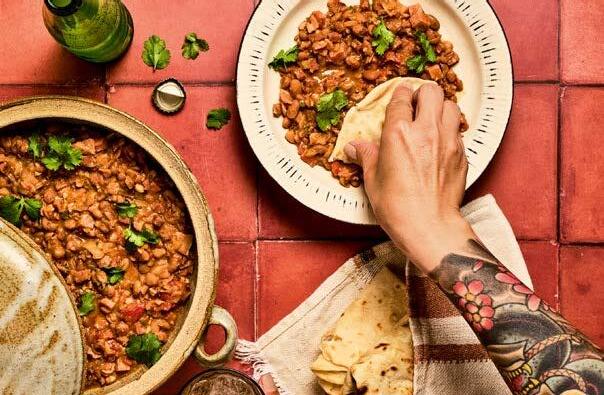
Frijoles Rancheros
(COWBOY BEANS)
We can’t talk about the borderlands without talking about our vaqueros, the men on horses who worked the cattle on the rancheros. Vaca means cow—that’s where vaqueros get their name. (Yes, Mexico gave the world cowboys—you’re welcome!)
The cowboys would make do with whatever meat they had available on the ranch, cooking giant pots of protein-filled beans outside over a live fire. These meals are probably best enjoyed when eaten sitting under a tree, sharing jokes and stories from the good ol’ days … but they’re pretty damn good eaten inside in your air-conditioned house, too.
There are many versions of these types of beans, but my favorite frijoles charros are made with lots of cured and smoked pork products, which accommodate the roaming ranchero lifestyle. The various textures, heat, creaminess, and the cool, fresh flavor of the cilantro on top makes this a complete meal, always better when tucked into a homemade flour tortilla. You can make beans fresh just for this, but I like to use this recipe to finish up leftover beans and amp them up with aromatics and pork.
SERVES 4 TO 6
6 strips bacon, diced
½ cup diced smoked ham
1½ cups diced andouille sausage
2 serrano peppers, stemmed, seeded, and minced
½ medium yellow onion, diced small
2 cloves garlic, minced
2 whole San Marzano tomatoes from a can
2 canned chipotle peppers in adobo sauce, minced
4 cups leftover stewed beans*, liquid strained
Diamond Crystal kosher salt to taste
Flour tortillas for serving
*See recipe for Frijoles de la Olla (Aromatic Stewed Beans) on page 30, Cooking the Borderlands
Optional Garnishes
Crumbled chicharrones
Fresh chopped cilantro
Crumbled queso fresco
In a large pot or Dutch oven set over medium heat, add the bacon, ham, and sausage. Cook to render out the fat, browning the sausage and ensuring the bacon is crisp, about 8 minutes. Pour most of the fat out into a ramekin and set aside, then return the pot to the heat.
Add the serranos, onion, and garlic to the pot with the meat.
Sauté until the onion becomes translucent, 3 to 5 minutes. Add the tomatoes and chipotle peppers, scraping the bottom of the pan to dislodge any caramelized bits.
Lastly, add the stewed beans and bring to a simmer, then reduce the heat to low. Smash everything roughly with a bean smasher or the back of a spoon until you have a chunky purée. Adjust salt to taste. Serve hot with warm flour tortillas. I like to crumble chicharrones and chopped fresh cilantro on top, and if I’m feeling fancy, maybe some crumbled queso fresco.

A PERSONAL, OPINIONATED GUIDE TO A FEW WINES WORTH BUYING— AND WINERIES WORTH SUPPORTING

Here’s something I say a lot and mean every time: San Diego wine should be on your radar. We don’t have the marketing machine of Napa or the influencer moment of Temecula, but what we do have is something better—scrappy, passionate winemakers growing varieties that were practically unheard of in Southern California a decade ago, in soils that genuinely surprise people.
This list is not diplomatic. It is not comprehensive. These are the wines I would actually hand you at a Campestre party, the ones I’ve shared with friends at Winyl Club, the ones I think about when I’m choosing wines for Esquina Wine Shop. And the best part? You don’t have to spend a fortune to drink well here. Let’s get into it.
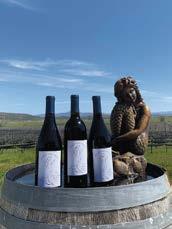
1. ODDISH WINE
2025 Solecito $28
TASTING NOTES

100% albariño grapes sourced from Ballena Vista Farms in Ramona. High elevation and rocky canyons keep the cool morning breeze intact and blanket the vines in fog for a good portion of the day. This second vintage is medium-bodied with great mouthfeel and zippy acidity. Notes of lemon zest, nectarine, cantaloupe, and a hint of saline.

WHY I LOVE IT
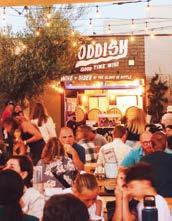
A surprising amount of acidity makes the wine super cohesive, and honestly, Spanish grapes show really well in San Diego soil. This one is quickly becoming one of my favorites. And bonus: The Oddish team is one of the few urban wineries in town actually working with all local San Diego fruit.
FOOD PAIRING
Grilled fish. The saline edge and bright acidity make it a natural match with whole rockfish, grilled swordfish, or fish tacos straight off the plancha.
WHERE TO FIND IT
The Oddish tasting room: 5322 Banks St., Bay Park (inside The Gärten)
Open Wednesday–Sunday. Bottles available for pickup or shipping via their website.
2. SPECKLE ROCK VINEYARDS
Estate Falanghina $35
WHY I LOVE IT

This family literally pivoted to winemaking after the 2007 Witch Creek wildfire destroyed their avocado ranch. They named the winery after the granite boulders that survived. That story alone would make me want to drink this wine, but then you taste it, and you realize that they actually know what they’re doing.
Falanghina is an ancient Italian grape from the southern coast of Campania, and it thrives at Speckle Rock’s 1,200-foot elevation in Highland Valley. It won Double Gold at Toast of the Coast in 2022 and Best of Class at the San Francisco Chronicle Wine Competition for their 2019 vintage. This is not a novelty. It’s the real deal, and you can only get 450 cases of it.
FOOD PAIRING
Thai food, full stop. They say it themselves, and they’re right: The crispness cuts through spice in the most satisfying way. At only 11.5% ABV, this is a beautifully light-bodied white with bright acidity that makes it easy to drink through the whole bottle— clean, refreshing finish with a subtle mineral edge.
WHERE TO FIND IT
Visit the tasting room at their vineyard: 16138 Highland Valley Rd., Escondido
Open Thursday–Sunday. Also available via their website for shipping.
3. RANCHO GUEJITO VINEYARD
2024 Rosé of Grenache, Cinsaut, Counoise $36
TASTING NOTES

A gorgeous color with generous cantaloupe and honeydew melon fruits, white cherry, and fresh raspberries. The palate is mouthwatering and fruity, with lots of herbal notes in the finish and a medley of white and pink flowers. This vintage is super fresh and bright.
WHY I LOVE IT
One of the last Mexican land grants in California, Rancho Guejito was established in 1845 and is now a 23,000-acre parcel. You’re drinking wine from a working cattle ranch with avocado and citrus groves. The history gives every bottle a sense of place that money can’t manufacture.
FOOD PAIRING
The estate produces 100% grass-fed, USDA-verified black angus beef, and their hot dogs are the best I’ve ever tasted. The tasting room is a legitimately great pairing experience—bring an appetite.
WHERE TO FIND IT
Tasting room at the historic Rockwood Farmhouse, minutes from the San Diego Safari Park: 17224 San Pasqual Valley Rd., Escondido
Open Saturday–Sunday 11am–7pm. Complimentary hayride vineyard tours with any purchase.

4. SIPWELL WINE CO.
Tiny Victories Sparkling White
$36 for a 4-pack of 250mL cans
WHY I LOVE IT

I am on a mission to change how people think about alternatively packaged wine, and Sipwell is my best argument. Founder Hilary Cocalis came from Ballast Point. She spent years watching San Diego make world-class beer in cans while the canned wine category stayed stuck in gas-station rosé territory. So she fixed it. Tiny Victories is the first and only canned wine ever to make Wine Enthusiast’s Top 100 list. Out of 23,000 wines tasted, one can made the cut. The cans are also infinitely recyclable with a 45% lower carbon footprint than glass. I keep a four-pack in my cooler for picnics, beach days, and, honestly, any event where I’d feel awkward showing up with a bottle. It’s 250mL, one glass, perfect portion, zero waste. While the wine is made in Central California, Sipwell is a North County San Diego company—so I think it deserves a mention!
FOOD PAIRING
WHERE TO FIND IT
Available at select San Diego retailers—check sipwellwine.com for the current store finder. Also ships to 40+ states directly from their website.
The Big Picture
San Diego wine is not a backup plan. It’s not the thing you buy when you can’t afford Napa. It’s a living, experimental, deeply local scene made by people who chose to plant vines in this particular soil and Mediterranean microclimate and to challenge the old-school typicity of each grape grown here.
Falanghina on a fire-recovered hillside in Escondido. Albariño from a rocky, fog-soaked canyon in Ramona. Grenache rosé from one of the last remaining Mexican land grants in Old California. Champagne-method sparkling wine in a can by a North County woman-owned business. This is what a sense of place tastes like. Drink local. Tell your friends. That’s how we keep these places alive. <>

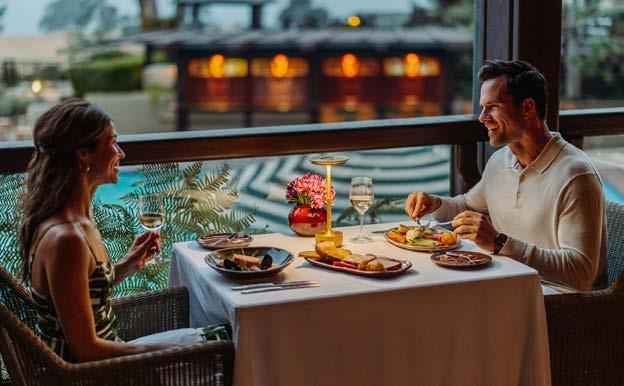
Locally sourced, regional cuisine with breathtaking views of the Torrey Pines Golf Course and stunning sunsets over the Pacific Ocean.

Local Pairings Change the Subject
SAN DIEGO WINES INVITE TABLE TALK THAT IS DOWNRIGHT REGENERATIVE
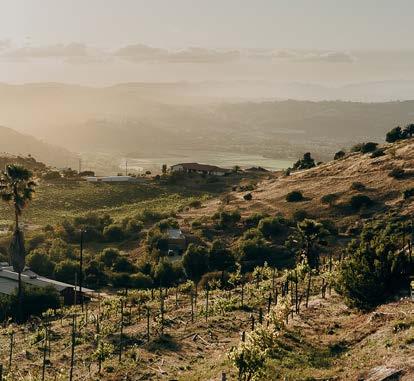
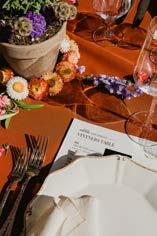
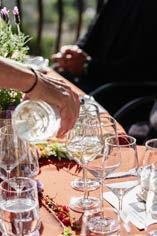
Highland Valley, one of San Diego County’s premier boutique wine regions, set the stage for an evening of firsts this past May. Presented by Edible San Diego, Vintners Table would be would be the first (to our knowledge) high-end, hyper-local multicourse dinner centering five local wineries and their winemakers.
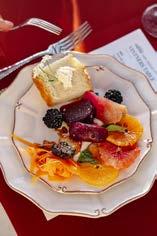
Cordiano Winery hosted. The chef for the evening, Coral Strong of Garden Kitchen, listened to our vision and worked with local farmers and purveyors to identify which foods would be at their prime on May 28. Next, we shared this unique selection of ingredients with nearby vintners who accepted the invitation to not only pour but to also help guests taste their wines as
expressions of place, vision, and heartfelt craft.
Our intention with this dinner series is to invite everyone involved into a new kind of conversation and relationship. The obvious care that chef Strong and winemakers expressed as they spoke at each course turned what could have been simply a beautiful meal into a shared experience of learning and feeling part of the local food system in a much more personal way. <>
This inside look at the Vintners Table is written and sponsored by Edible San Diego. The event was produced in partnership with San Diego Wine Week, May 25–31, 2026, hosted by the San Diego County Vintners Association.

EXPLORE SAN DIEGO WINE COUNTRY
PHOTOGRAPHY BY JORDAN YOUNIS
San Diego Wineries Guide
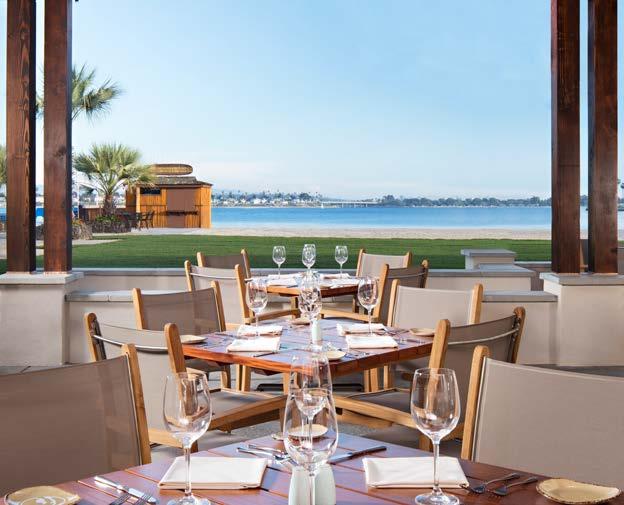
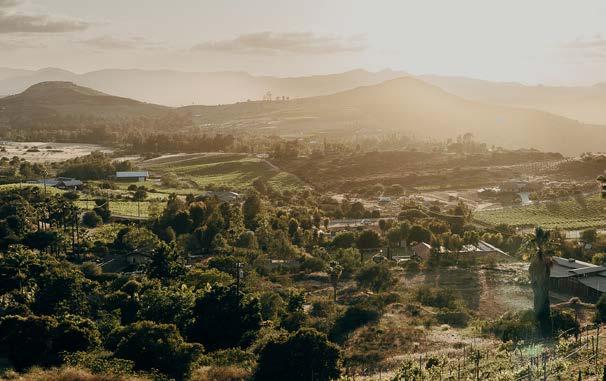
Highland Valley as seen from the dining patio at Cordiano Winery.
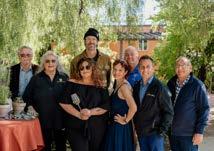
Wineries
CORDIANO WINERY
FRANK CORDIANO
MERMAID VALLEY VINEYARD
SCOTT FLINN
MIA MARIE VINEYARDS
MIA REDMOND AND KIARA BOCCIA-FENLASON
ODDISH WINES
BILLY AND SUZANNA BELTZ
WOOF’N ROSE WINERY
STEPHEN AND MARILYN KAHLE
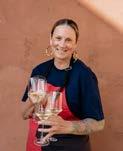
Chef
CORAL STRONG, GARDEN KITCHEN
Farmers
STEHLY FARMS
THOMPSON HERITAGE RANCH
THREE SONS FARM
TAJ FARMS
D’ACQUISTO FARMS
Purveyors
TUNAVILLE MARKET & GROCERY
BEEWORTHY FARMS
EL PLANTIO NURSERY

Diego








Summer Word Play
Across
1 Tiny living organisms important to gut health
6 Place for a pea
7 Drops from the sky
8 Oenophile’s delight
10 Safe to consume as food
12 Diet-friendly food option, 2 words
13 Edible marine algae
17 Morays, e.g.
18 Fruit coating
19 Do some shoal-searching
21 Dawn time
22 Popular
24 Roadside produce booth
25 Brewed drink that can be served hot or cold
26 Tree juice
27 Hot apple __
28 Colored channel marker in a harbor
29 Bar request
Down
1 Farmers’ ______
2 Hot pepper
3 Approves
4 Tropical orange-yellow fruit
5 Irma S. Rombauer’s The __ of Cooking
6 ____ pear cactus
8 Warrant officer, abbr.
9 The A in IPA

11 Are situated
12 Unit of weight measurement, abbr.
14 Green-fleshed tropical fruit
15 Prior to, poetically
16 Reduce the strength of
17 Sushi bar appetizer
20 Large brown seaweed
23 Cactus used in Mexican cuisine
24 Hero sandwich
26 Snow travel equipment
Carlsbad resident Myles Mellor is one of the top crossword and puzzle writers in the world. He has published over 55 crossword and word search books, producing dozens of puzzles each month.
» mylesmellor.com
» themecrosswords.com
Answer key on page 44.




SEAWEED
alk along the coast after a storm, and you’ll see thick ropes of kelp tangled in the tide line, drying in the sun. For many, it’s just part of the beach, but there’s more to seaweed than meets
scientists are paying closer attention to than ever before. Seaweed
coast, supporting fisheries, biodiversity, and coastal ecosystems. Today, researchers are looking at them through a new lens—not
Institution of Oceanography. “They support entire food webs and
attention, prompting a closer look at how these ecosystems are
WHAT’S HAPPENING BENEATH THE SURFACE?
concerns along the California coast. Marine heatwaves, shifting species dynamics, and long-term environmental pressures have all
In Northern California, a marine heatwave from 2014 to 2016 led to the loss of more than 90% of kelp in some areas. Southern extreme, partly because predator species like California sheephead

quickly, and others don’t,” says Dr. Smith. “We’re still trying to understand why.” That uncertainty is driving a wave of research and experimentation. Scientists are testing a range of restoration
with “green gravel,” small rocks seeded with young kelp that are challenge has prompted restoration efforts to evolve, reflecting a broader shift from studying kelp loss to actively sustaining these
FARMING THE OCEAN
At the same time, interest in seaweed aquaculture is growing worldwide. Asia already produces millions of tons annually, using seaweed for food, industrial materials, and more. In the United States, the industry is still in its early stages, and California faces unique challenges. “There’s a lot of interest, but also a lot of barriers,” says Dr. Theresa Talley, a coastal specialist with California Sea Grant.
One of the biggest obstacles is permitting. Setting up a seaweed farm in California waters requires navigating a complex web of state and federal regulations, a process that can take years.
“It’s a steep mountain to climb,” says Dr. Smith, noting that few new permits for in-water aquaculture have been issued in decades.
As a result, many researchers and entrepreneurs are turning to land-based systems to grow seaweed in tanks supplied with seawater and sunlight. While these systems are easier to permit and allow for more controlled conditions, they come with trade-offs. Higher costs and limitations on scale make land-based systems a useful starting point and learning process as sustainable ocean-based farming becomes more viable.
A MISSING SUPPLY CHAIN
Even as interest grows, one challenge remains surprisingly simple: access. Local chefs and food producers are eager to work with fresh, locally grown seaweed, but it’s challenging to find. “There’s demand for it,” says Rebecca Richards of San Diego Bay Aquaculture. “But the supply chain really isn’t there yet.”
Unlike dried seaweed, fresh seaweed is highly perishable. It requires careful handling, refrigeration, and specialized packaging to maintain quality. Researchers and businesses are still working out how to store, transport, and distribute it at scale. Furthermore, the gap between growing interest and limited availability of seaweed highlights a key issue: While seaweed offers promise, the necessary infrastructure for farming, processing, and distribution is still developing, creating a barrier to broader adoption.
BEYOND FOOD
Much of the excitement around seaweed extends beyond what’s on the plate. Seaweed-derived compounds are already used in everyday products, from toothpaste to ice cream, where they act as stabilizers and thickeners. But new research is pushing those applications further.
Scientists are exploring seaweed as a source for biodegradable plastics, fertilizers, and even livestock feed additives that reduce methane emissions. “We already interact with seaweed every day, we just don’t realize it,” says Dr. Michael Graham, a marine scientist at Moss Landing Marine Laboratories.
Because seaweed grows rapidly without land or fresh water, many view it as a model for low-impact coastal economies. The simplicity of its cultivation is central to its appeal.
stipe
pneumatocyst (air bladder)
blades or fronds
canopy
senescent frond
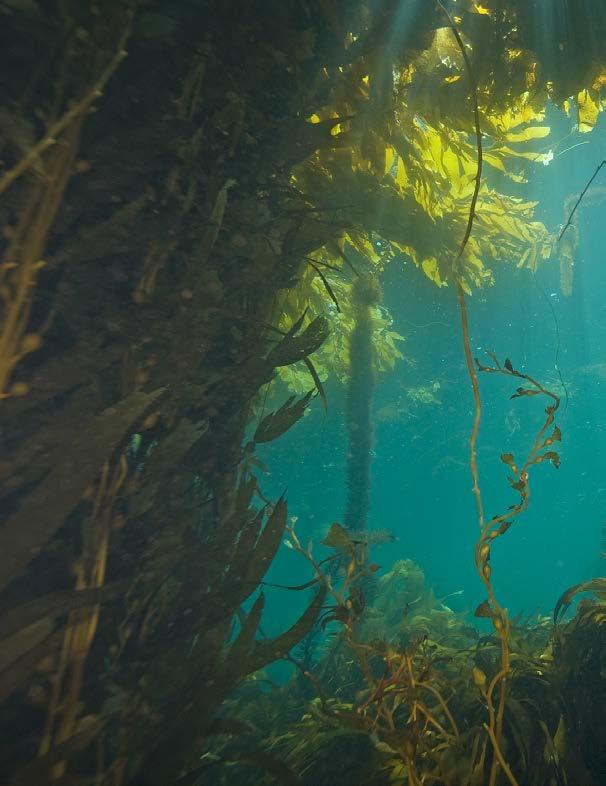
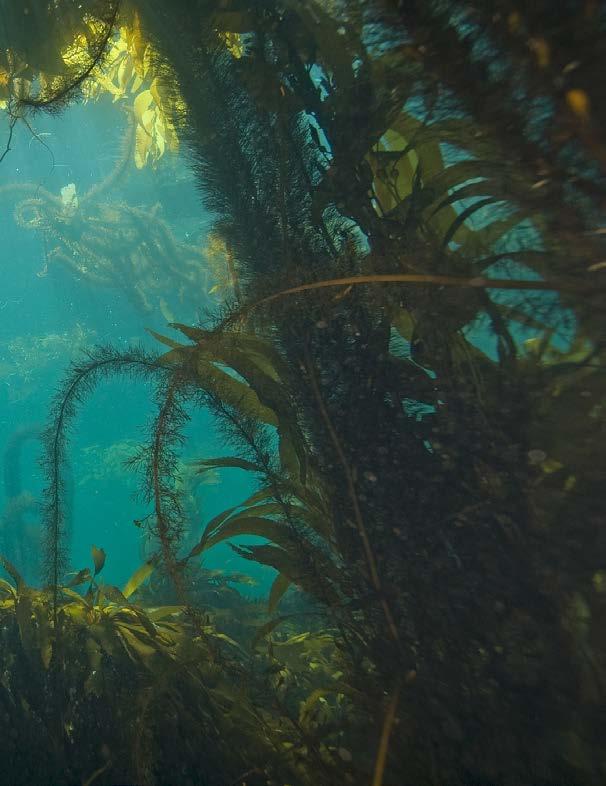
San Diego is home to two of California’s largest underwater giant kelp forests. Much like California’s terrestrial forests harbor Earth’s largest trees, sequoias, its ocean coastline harbors the world’s largest brown algae—giant kelp. Over 1,000 marine species are dependent on California’s coastal kelp forests.
A special thanks to California Sea Grant coastal specialist Theresa Talley and research associate Emily Miller for help in advising information for this article.
The San Diego Port Authority is in the proposal process of developing a shellfish and seaweed aquaculture program. Learn more about it at » portofsandiego.org/waterfront-development/aquaculture
A LOW-INPUT CROP WITH BIG POTENTIAL
One of seaweed’s biggest advantages is what it doesn’t need. Unlike conventional agriculture, seaweed farming requires no soil, irrigation, or synthetic fertilizers. Instead, it grows using sunlight and the nutrients already present in seawater.
As it grows, seaweed also absorbs excess nutrients from the water, such as nitrogen and phosphorus. These pollutants can contribute to harmful algal blooms. “Seaweed acts a bit like a sponge,” says Dr. Talley. “It takes up nutrients from the water as it grows.”
Researchers are investigating whether seaweed farms can improve coastal water quality, particularly in areas affected by runoff. However, the necessary scale to make a measurable impact remains unknown. The key takeaway is that while seaweed farms have potential, their effectiveness remains undetermined.
CLIMATE PROMISE WITH LIMITS
Seaweed is also part of the conversation around climate change. As it grows quickly, some kelp species can reach lengths of up to two feet per day, and they absorb carbon dioxide as they photosynthesize. In some cases, detached seaweed may sink into deep ocean waters, potentially storing carbon for long periods.
But scientists caution against overstating its impact. “Seaweed isn’t a silver bullet,” says Dr. Matthew Edwards, a marine biologist at San Diego State University. “It’s one piece of a much larger puzzle.”
The main climate benefit of seaweed may be its ability to replace resource-intensive materials and practices, rather than longterm carbon storage. The captured carbon often returns to the environment when seaweed is consumed.
WHY IT MATTERS HERE
For San Diego, the future of seaweed is still taking shape. It could mean new opportunities for coastal businesses, from aquaculture ventures to food production. It could help restore kelp forests and support marine biodiversity. It could also influence how people think about food, sustainability, and the ocean itself.
Those possibilities come with open questions about regulation, scalability, and environmental impact. Seaweed is moving from the margins to the center of scientific and economic discussions. This shift signals seaweed’s growing importance for coastal regions like San Diego.
For a region defined by its coastline, that shift matters. The next time kelp washes up on the shore, remember it represents a vital, evolving system, one with growing significance for San Diego’s future.
Scan the QR code to read about what San Diego marine biologists and chefs are doing to bring more seaweed to our plates.











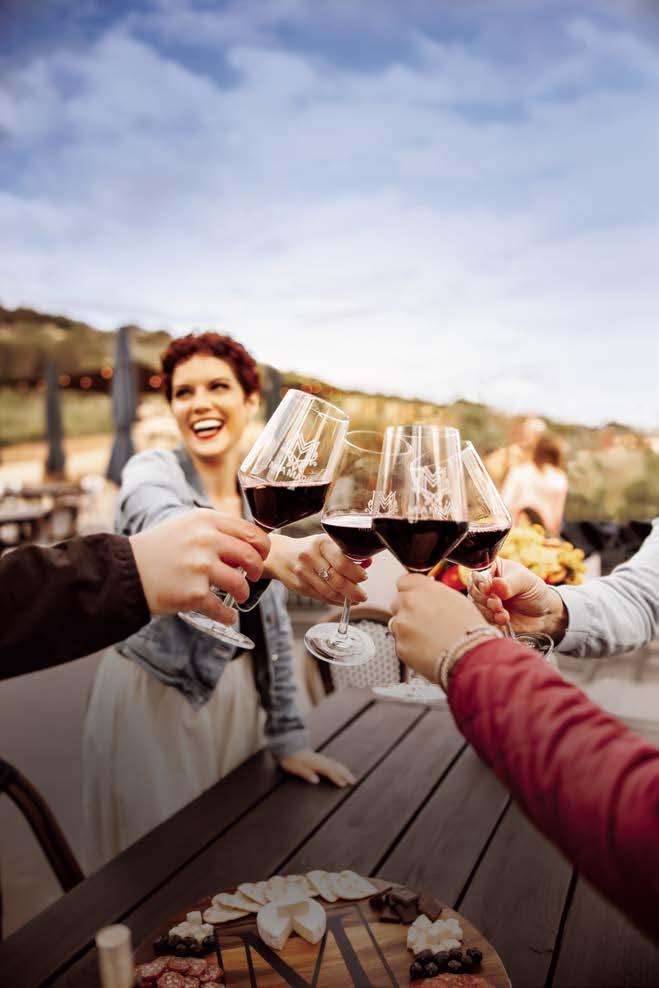
Specializing in red wines made only from estate grown and other Ramona Valley grapes. National and international award-winning wine.
Tasting veranda open Sat. and Sun. and by appointment.
Bring in this ad to receive Two Tastings for the Price of One.
marilyn@woofnrosewinery.com 760-788-4818 woofnrose.com




RAMONA VALLEY
Ramona Valley
Woof ‘n Rose Winery
To Spear a Fish
BY THEODORE R. NIEKRAS PHOTOGRAPHY BY LUKE SCHMUECKER
Mitsuki Hara was once a new international student from Japan at UC San Diego. When she first arrived in San Diego, she didn’t have many friends, family, or money. It was tough. She grew up rod and reel fishing with her family, so she would often fish along the coast of La Jolla.
One day while fishing, she saw something that piqued her interest … and her appetite.
“I saw these guys come out from the water with lobsters. That kind of gave me an idea. Like, oh, maybe I want to try this out because I like lobster, but I can’t afford it,” she tells me.
There was a problem: Hara was deathly afraid of deep water because of a near-drowning as a child.
Something, though—maybe the idea of eating fresh and free lobster—drove her to face this fear.
“I had this buoy with a metal chain on the bottom, that’s maybe like 10 or 11, like 15 feet or less than that. I tried it once, going down to the bottom using that line, and I realized that it wasn’t scary at all.”
In fact, it was beautiful.
Shortly after, Hara went to a meetup with the San Diego Freedivers, a freediving and spearfishing community. They welcomed her, mentored her, and taught her to spearfish.
From then on—excuse the pun—she was hooked. Years later, Hara is now a two-time world record holder and still goes out to spear seasonal fish to eat regularly.
The same can be said of Spear America San Diego owner Ryan Moore. He grew up in Los Angeles and now owns one of the nation’s largest freediving and spearfishing shops in the US. Moore has also traveled the world spearfishing and is on the board of the San Diego Freedivers.
He went rod and reel fishing as a child, but her never really took to it.
As a teenager, though, Moore got a mask, snorkel, and fin set from Costco, used an old wetsuit, and found a friend with a speargun. “It was a lot more dynamic,” he tells me. “You were hunting, you were swimming around, you were seeing all the wildlife in its habitat,
and I was immediately hooked. In fact, since the first day I went spearfishing, I haven’t gone a single day of my life without thinking about it all day.”
For many “spearos” like these two, there’s a multitude of factors that brought them to the point of obsession. There’s the connection with nature, the meditative aspect of underwater breath-holding. There’s also the competition and community. Most of all, it is the personal connection to the fish they will hunt and eat.
“Gathering your own food is something that so many people have lost touch with. Today, you go to the market and food comes prepackaged, and it doesn’t look like the animal it started out as,” Moore tells me. “What draws me to spearfishing is I’m all about going out and collecting my own food and teaching other people to do that as well.”
Spearfishing has seen an explosion in global popularity in the last decade, with San Diego being one of many hotbeds for the sport due to its long fishing heritage and productive waters.
Historically, using a spear to fish is one of the oldest forms of fishing, dating back at least 16,000 years. Ancient cave art in France depicts humans spearing fish. Literature from ancient Greece details methods and techniques. In Rome, it was a recreational pastime of the elite. Various island cultures, most notably the Polynesians, traditionally speared fish.
As it turns out, San Diego’s spearfishing heritage goes back millennia.
Richard Carrico, a professor in the Department of American Indian Studies at San Diego State University, has extensively dug archeological sites all over San Diego. What he found in archeological digs over 20 years was archaeological and anthropological evidence of the San Diego Kumeyaay’s own spearing heritage.
Traditionally thought to have subsisted mostly on inland resources, Carrico found the Kumeyaay were utilizing San Diego’s productive coastline to sustain populations far larger than inland food sources like deer, acorn, and rabbit could sustain.
“Archeologically, at a couple of the sites in Sorrento Valley, there was a village called East Owa that we dug that went back more than
2,000 years,” Carrico explained. “And in Sorrento Valley, we found 32 species of fish.”
“There was another huge, huge site on Ballast Point down there, near Point Loma,” he continued. “Especially there at Ballast Point, we found what I would believe, and my other colleague Dennis Gallegos, are barbed spear points.”
These spear points, he explained, were usually tied with sinew to willow or arrowwood poles, and, judging by the bones they excavated, were used to spear many species then found in the bay.
More recently, modern spearfishing got its start in the United States in La Jolla, when a group of freedivers formed the San Diego Bottom Scratchers in 1933. With homemade masks, they dove the chilly waters of La Jolla cove without wetsuits, using tridents to spear 200-pound fish.
Spearfishing has evolved over time, but it remains true to its ancient roots as a practical, economical, and effective way to target fish to eat.
Moore notes that it’s accessible and can be done without the excessive price tag of a sportfishing charter. Although you can spend about $1,000 on a medium-quality kit that comes with all you need, you don’t have to. Like Moore, a mask and fins from Costco, a fishing license, and a borrowed speargun or pole spear will work.
With the closure of Ocean Beach Pier, there are few options left for for the public to fish species of kelp fish without having to charter a boat. Spearfishing helps fill that space.
“You could just swim off the beach here almost any day of the year and capture calico or halibut,” Moore says. “So many of our local fish, I think, are 100 times better than those other options you buy in the market.”
Importantly, though, the sport is not without its dangers. Shallow water blackouts, where you pass out coming to the surface, can be fatal. Hara has had two; she was also once shot in the leg with a spear. That’s why it’s best to join a club or learn from those more experienced.
“You have to really listen to us, really understand what we do,” Hara warns. “It’s a dangerous sport.”
For those willing to try, it offers something remarkable: the chance to put the freshest and most sustainably caught fish directly on the table. To be out in nature. To connect with food in a way that most people never get a chance to experience in our modern world. D
DISCLAIMER: Safety & Liability
The information provided in this article is intended for educational and informational purposes only. Ocean spearfishing is an inherently dangerous activity that carries significant risks, including but not limited to drowning, shallow water blackouts, marine animal encounters, equipment failure, strong currents, and other life-threatening hazards. By reading and applying any information contained in this article, you acknowledge and agree that:
1. You assume full and sole responsibility for your own safety and the safety of others in your party.
2. You will obtain proper training, certification, and supervision from qualified instructors before engaging in spearfishing activities.
3. You will comply with all applicable federal, state, and local laws, regulations, and licensing requirements governing spearfishing in your jurisdiction.
4. You will never spearfish alone and will always dive with a qualified buddy or certified dive professional.
5. You will assess your own physical fitness, skill level, and environmental conditions before entering the water.
The author(s) and publisher(s) of this article make no representations or warranties, expressed or implied, regarding the accuracy, completeness, or suitability of this information for any particular purpose. To the fullest extent permitted by law, the author(s) and publisher(s) expressly disclaim all liability for any injury, death, property damage, legal violations, or other losses arising directly or indirectly from the use or misuse of information contained herein.
This article does not constitute professional diving, medical, or legal advice. Always consult a certified dive instructor and relevant authorities before engaging in ocean spearfishing.
where
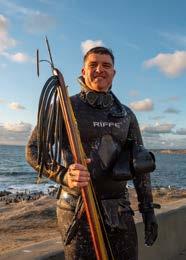
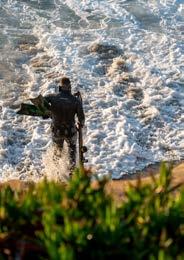
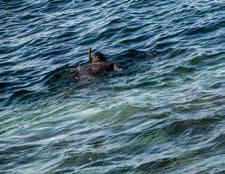
Avid spearfisher Ryan Moore geared up for an afternoon of diving outside the Marine Protected Area in La Jolla. Alas, the fish knew
to hide, as no fish were caught this day.

For 20 years, the Ramona Valley American Viticultural Area (AVA) has been a testament to the vision, dedication, and perseverance of growers, winemakers, and advocates who transformed a dream into a thriving wine industry. Countless hours of hard work, vineyard stewardship, and winemaking excellence have shaped the Ramona Valley AVA into a recognized and respected wine destination.
Come out to Ramona in the summer and you can experience the magic at over 45 wineries.
Sun-drenched days, vibrant landscapes & outdoor adventures with breezy, starlit nights perfectly balanced by award winning wines. Can we pour you a taste?


Ramona Valley Vineyard Association
Meet the Man Making Pure Water out of the Ocean and Sun
INTERVIEW BY HELEN I HWANG PHOTOGRAPHY BY ADRIANA DELGADO
With San Diego in such close proximity to the Pacific Ocean, one entrepreneur, BJ Kjaer of Solar Rain Water, has created a way to transform the H₂O from our beaches into drinking water. The world’s oceans occupy more than 70% of the Earth’s surface and contain approximately 97% of the Earth’s water, according to NASA’s Earthdata. Kjaer started the company in 2010 to leverage natural resources to fulfill an essential human need: hydration.
Below is the interview with CEO BJ Kjaer. The interview has been edited and condensed.
Can you tell us what’s special about Solar Rain Water? I love the motto,“Straight from the Clouds,” that you put on every bottle.
Our company converts ocean water into pure drinking water. About once a week, we bring local ocean water to Ramona. We use vapor distillation, which relies on evaporation and condensation to remove impurities. Solar tubes efficiently convert solar energy to heat the water; the hotter the water, the faster it evaporates.
Our solar thermal field occupies about 10,000 square feet. It’s next to our production plant and warehouse, which takes up about 60,000 square feet.
What made you come up with the idea for Solar Rain Water?
I’m an avocado and citrus farmer with 42 acres, so water is always an issue. I want to make my own rain and basically mimic what nature does by using ocean water.
How often do you test the water?
Every day! We have an in-house lab where we test for different bacteria, like mold, yeast, E. coli, and coliform. Every week, we send all our water to a third-party lab in San Bernardino. And once a year, we produce a 40-page document with a comprehensive list of everything that’s in the water.
Where can people find Solar Rain Water?
It’s available in over 500 places in Southern California. Not only do we distribute to stores and markets, like Jensen’s Foods in Point Loma, OB People’s Food Co-op in Ocean Beach, and Cream of the Crop in Oceanside, but we also provide private-label water to yoga studios, gyms, and hotels, like The Lodge at Torrey Pines. We’ve also donated water to Berry Good Food Foundation and Camp Pendleton military families.
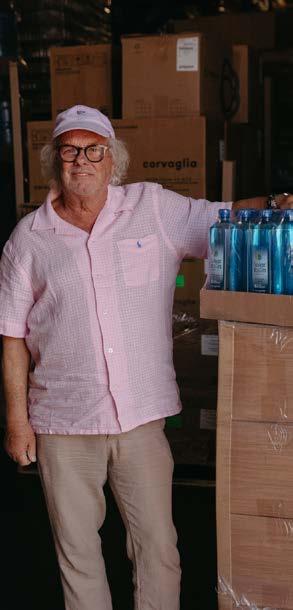
Why square bottles instead of round bottles?
I wanted to try to make the bottles as environmentally friendly as possible. You can fit more square bottles in a tray than round bottles— something like 20%—which means more bottles can be shipped in less space, thus reducing CO₂ emissions.
With fuel prices being what they are, transporting water around is expensive because it’s heavy. We have locally sourced water here in San Diego. It’s just crazy to me when I go to stores and see water from Bulgaria and Fiji. *


red, ripe, and rad!
Summertime is tomato time! Tomatoes thrive in summer because they need long, warm days and lots of sunshine to help them grow.
Did you know that, according to scientists, a tomato is really a fruit? Like a fruit, a tomato develops from a flower and contains seeds inside, making it technically a berry!
Tomatoes are unique because they aren’t very sweet! They contain high levels of the amino acid glutamate, which gives them a natural savory, or umami, flavor. As tomatoes ripen, their glutamate levels increase, creating a richer taste. Tomatoes come in many colors (like red, yellow, purple, and green), and their color can help you guess whether they’ll taste sweeter or more savory.
spill the sauce: tomato facts
• In 1984, the space shuttle Challenger carried tomato seeds into space, making them one of the first vegetables grown in space.
• There are over 10,000 known types, ranging from tiny cherry tomatoes to massive 10-pound record-setting fruit!
sink or float?
This simple experiment requires 2 cups of water, salt, a container, and a cherry tomato.
Steps
1. Prepare Water: Fill a glass or jar with 2 cups of tap water.
2. Initial Test: Drop a cherry tomato into the water; it will sink.
3. Add Salt: Remove the tomato, then stir in 3-4 tablespoons of salt until completely dissolved.
4. Final Test: Drop the tomato back in; it will now float!
Salt increases water’s density, making it heavier than the tomato, and buoyancy forces the tomato upward.
connect the colors
Connect the fun color tomato to something else the same color. This article was created in partnership with the Children’s Museum of Discovery in Escondido, CA, inspiring young minds and strengthening our community through play-based learning.
play with your food
• Tomato Pops (Caprese Skewers): Thread cherry tomatoes and mozzarella balls onto skewers, then dip them in basil pesto!
• Tic-Tac-Toe: Draw a board and use red and yellow cherry tomatoes as game pieces.
• Paint with Purée: Use thick tomato sauce or purée for finger painting, or use brushes to paint on paper.













How to Survive a Prickly Pear Harvest
BY MARIA HESSE AND KATIE STOKES
PHOTOGRAPHY BY LAUREN DI MATTEO
to as
The odds were stacked against us, and the glochids (remember this word) prevailed. It’s the kind of story where you can anticipate what the protagonists go through on their quest for juice.
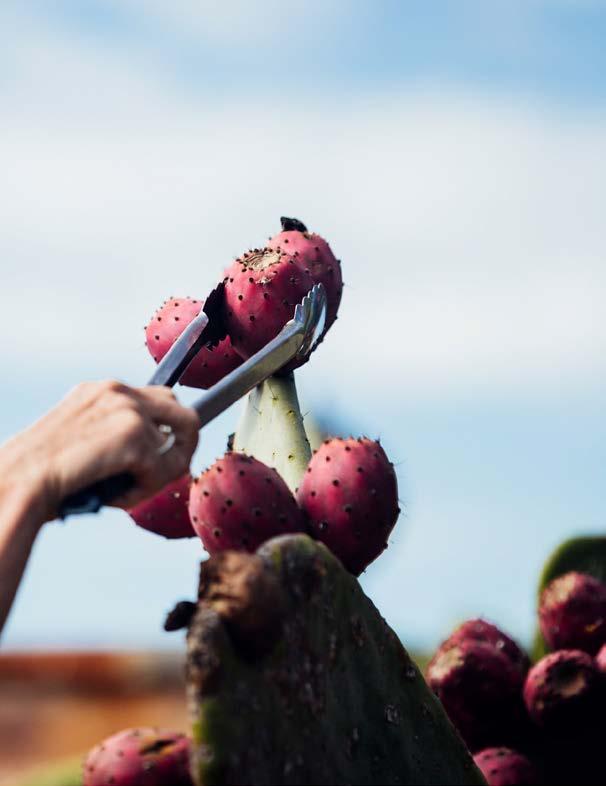
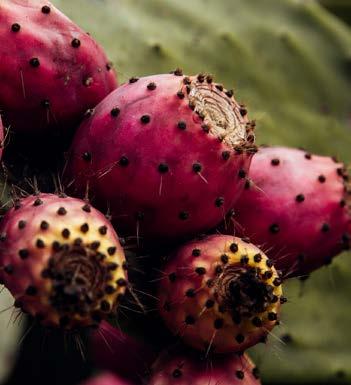
The setting: It was a clear day on a hill. A large patch of cactus was covered with dozens of ruby-red orbs, contrasting beautifully with the jade-green paddles and the blue sky. It’s as if nature selected this complementary jewel-toned palette from a color wheel.
We see them all around town, either in our own yards, in the neighborhood, or growing on the side of the road—the Opuntia ficus-indica commonly called the prickly pear or Indian fig Opuntia. Opuntia cacti are native to the Americas, with wide varieties and growing regions spanning from Canada to Chile.
THE HISTORY
Beyond its colorful beauty, Opuntia cacti have been a vital food source in the region for millennia, feeding everything from insects to birds, tortoises, rabbits, ground squirrels, rats, coyotes, and people. Despite their spines, both the paddles (nopales) and the fruit— prickly pear in English or tuna in Spanish—are edible. Given their low-calorie, high-fiber, and high-nutrient density, they are widely considered a superfood.
We’re here to focus on the prickly pear part of the Opuntia, which can also range in color from light green to yellow to orange and purple, depending on the variety and ripeness. If you’re lucky enough, you might come across a spineless variety, like the Opuntia cacanapa 'Ellisiana,’ also called the spineless prickly pear, which can still have glochids, or the Opuntia ficusindica 'Burbank Spineless,' a hybridized thornless variety, and the Opuntia cochenillifera (Warm Hand/Velvet Opuntia) known for its “pleasant-to-touch” pads.
Katie’s confession: “For the first few years we lived here, I ignored this patch of nopal. The thorns were intimidating, and settling in kept our attention elsewhere. Over time, though, I noticed how the plant changed through the seasons and how the birds, bees, deer, and probably other critters liked it just fine. The patch didn’t require any care from me. I became curious gradually and looked
Referred
‘ehpaa or ‘xapa by the Kumeyaay, Opuntia paddles and fruits have been a staple food source in the region for centuries.
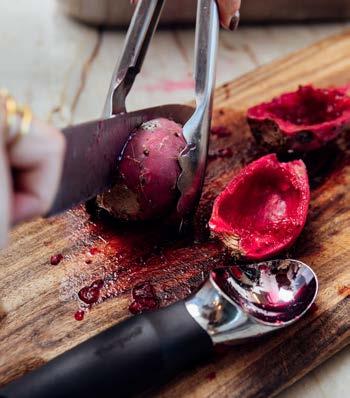
Glochids are these fuzzy-looking, hair-like clusters. Slicing them off with a paring knife is another more tedious way to remove them.
into the lore of harvesting, cooking, and eating the paddles and making juice from the fruit. Mistakes were made, but over time, the patch won me over. I now view the prickly part as inherent in our relationship—an inexorable reminder to slow down, focus, and appreciate. Good life lessons, especially because you’re rewarded with nopales fresh or sautéed and impossibly gorgeous juice.”
Neither Maria nor Katie will take exclusive responsibility for the idea of a group harvest of the juice, but things turned out well in the end. If you feel similarly inspired, here’s how to survive.
1. Call up your people
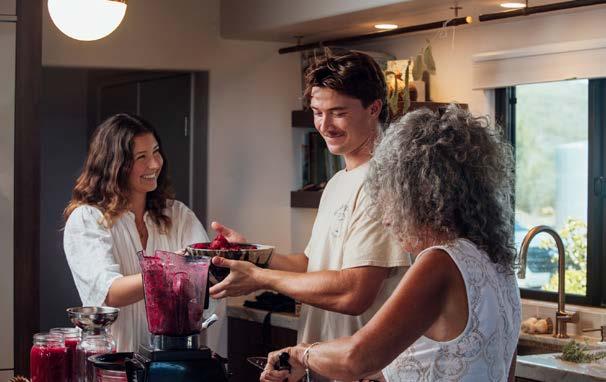
In the case of this particular Opuntia, there are far too many fruits for one person to harvest, let alone enjoy. We invited our friends Alex, Oscar, and Sophia from Petalume Shrub Co. to join us for the day’s activity. Our goal was to collect as many prickly pears as possible and process them into juice. The shrub makers were eager partners and later made a special prickly pear shrub to experiment with. If you’re not familiar with a shrub, it’s typically made of 1:1:1 equal parts of fruit, sugar, and vinegar. Petalume uses an organic apple cider vinegar with the mother for their blends, and they often rescue produce that doesn’t sell at the farmers’ market.
2. Basic gardening gloves are no match for glochids
Here are some recommended tools you can use:
• Long-handled metal tongs, ideally the kind without plastic or silicone tips, because those attract the spines.
• Large buckets or sheet pans for collecting.
• Gloves that are chemical-resistant or heavy-duty rubber—optional but not recommended. It’s kind of zen to go barehanded because you’re more nimble, albeit vulnerable!
3. You are likely to come in contact with glochids
Accept your fate, pay attention, and learn to move in ways that minimize the truly prickly aftereffects (which do wear off after a day or two or three).
The larger cactus spines are easier to spot and avoid. What you really need to be aware of are the glochids, tiny hair-like spines that appear as fuzzy clusters and measure as small as two to three millimeters long. They are composed of microscopic barbs that will burrow into your skin. They aren’t
poisonous, but they are an irritant. We saw a video that advised brushing them off—DON’T DO THAT. We tried this and found out the hard way that the clusters break up, become airborne, and tend to stick to whatever they land on (clothing, skin, hair, cloth towels, sponges, even cutting boards).
4. How to pick
Approach the patch with humility. Pause, acknowledge the abundance of tempting food so close at hand, request permission, and express appreciation in advance. It sounds obvious, but moving slowly and with attention is the best way to avoid the prickly parts and busy yellow jackets.
5. What to do if you get stuck?
Online sources recommend tweezers, glue, or duct tape. We all kind of accepted our fate. Prevention is best (a truism, admittedly), but it’s kind of part of the experience. It makes the fruits of your labor all the sweeter.
6. Processing
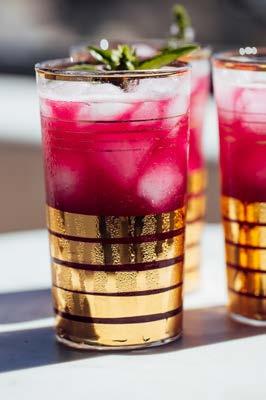
Some more experienced harvesters use diverse techniques to reduce the spines and glochids, from sloshing in buckets to brushing to torching and other methods. In our admitted inexperience, we sliced the fruits in half, holding them with the same tongs, scooped out the insides with an ice cream scoop (which gets almost all of the interior fruit), blended the pulp, strained it with a wire mesh strainer, and voilà, vibrant juice!
As you may guess, this story had a very refreshing ending … and all of us compared notes on how many days we felt the prickly effects on various body parts. We learned from the prickles, marveled at the juice, and are already eyeing the nopal patch and watching as the little fruits grow. D













Active Longevity
Biohacking Skincare & Treatments for True Skin Longevity. We have a science based strategy focused on preserving and optimizing skin function, resilience, and cellular vitality, not just masking visible signs of aging.
| www.gingerroad.com






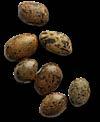
Super Beans
BY DR. SABRINA A. FALQUIER
JEN LO
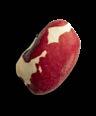

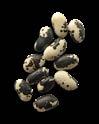
As summer unfolds and gardens fill with climbing vines, it’s the perfect moment to celebrate one of the most humble and powerful foods we have: beans and legumes. Grown and eaten around the world for centuries, beans offer comfort, nutrition, versatility, and a deep cultural connection.



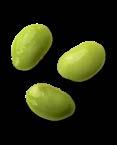



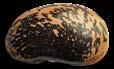
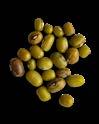








PHOTOGRAPHY BY
STYLING: DR. SABRINA A. FALQUIER, HALEY HAZELL, MARIA HESSE, AND JEN LO.

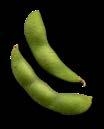
WHICH LEGUME
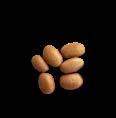
Legumes include any plant that grows in a pod. Think beans, lentils, chickpeas, and edamame. In the United States, pinto beans are the most commonly eaten legume, with black beans coming in second. Globally, there are dozens of varieties, each with its own texture and culinary role. Some cook quickly and require no soaking, such as lentils, while others, like dried beans, benefit from a longer cooking time. Part of the joy is discovering which ones fit your lifestyle and palate. From small lentils to large, creamy white beans, there’s a legume for every season and dish.
HOW TO USE THEM
Beans are one of the most versatile foods in the kitchen. Across many cultures, they are served alongside staple foods like grains, creating a complete, satisfying meal. Think of traditional dishes from Mexico, Costa Rica, or across the Mediterranean, spanning North Africa and the Middle East, with influences from Turkey, Lebanon, and Morocco.
Beans can be served simply, simmered with aromatics and olive oil, blended into soups like black bean soup, or formed into patties and fritters. They also work beautifully in blended burgers, where part of the meat is replaced with mashed or finely chopped beans to add moisture, fiber, and plant-based nutrients.
White beans, such as cannellini or Great Northern beans, are especially useful as a substitute for cream in soups and dressings, lending richness without heaviness. Beans also shine in dips and spreads, flavored with herbs, spices, citrus, and garlic.


Cooked beans keep well and are economical: A single pot can become several meals, and they freeze well for up to six months. For convenience, canned beans are a perfectly good option—just be sure to drain and rinse to reduce excess sodium.
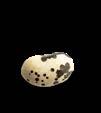
WHY INCLUDE THEM

Beans are among the most affordable and environmentally friendly sources of protein available. They provide both protein and fiber in a naturally complete package—a whole food, just as nature designed—along with complex carbohydrates, minerals, and B vitamins, particularly folate, which plays an important role in overall health.
Their high fiber content supports gut health by nourishing beneficial bacteria in the microbiome. For those not used to legumes, it’s normal to notice some digestive adjustment at first. Gradually increasing intake, staying well hydrated, and preparing beans properly can help improve tolerance.
Consistent inclusion is key: Over time, the body adapts and the benefits compound.
WHY BRING THEM INTO YOUR KITCHEN
Beans invite exploration, creativity, and connection. If they feel intimidating, start with something familiar, perhaps a lentil dish that cooks in under 20 minutes or a bean-based dish you’ve enjoyed at a restaurant. Spices, herbs, and sauces add endless variety and keep meals exciting and personal.
I often encourage people to try a bean outside their usual rotation. One of my favorites is a giant white bean tossed with a classic Greek salad of tomatoes, cucumbers, herbs, and plenty of olive oil. I first tasted this dish at a friend’s home on a hot, humid East Coast summer evening. We ate outside until a sudden downpour sent us scrambling indoors, laughing, plates in hand. The olive oil came from her family’s olive groves in Greece, making the meal even more meaningful.
I share this story because food is never just about nutrients; it’s about connection, memory, and shared experience. Beans, simple as they are, carry all of it.
¡Salud! D
Legal disclaimer: Information in this article is for educational purposes only and should not replace individualized medical advice. Always consult your healthcare provider regarding personal health concerns.









Community-Driven Media
These local businesses make the magic happen
Edible San Diego’s print and digital advertisers believe in the need for an independent media company dedicated to creating connection and enriching our community through good food. We invite you to discover what our advertising partners have to offer. Your patronage of their businesses helps ensure we continue sharing stories and recipes meant to nourish communities. Please tell them we sent you.
AMERICAN FARMLAND TRUST
A.R. VALENTIEN
BIANCHI PIZZA AND PASTA
CARLA AND LINDA’S LOCAL FOOD TOURS
CATALINA OFFSHORE PRODUCTS
CHUPAROSA VINEYARDS
DA-LE RANCH
EDIBLE COMMUNITIES
EL PLANTIO NURSERY
EXPLORE MURRIETA
FALLBROOK CHAMBER OF COMMERCE
THE FISHERY
GINGER ROAD
GOLDEN DOOR COUNTRY STORE
GRANGETTO’S FARM & GARDEN
GRAPE DAY FESTIVAL 2026
GREEN THUMB NURSERY
HAPPY HENS
HAWTHORNE COUNTRY STORE
JENSEN’S MARKET
THE LAMPSHADE GALLERY
LUCKYBOLT
MAINSTREET OCEANSIDE FARMERS’ MARKET
MERMAID VALLEY VINEYARD
MIA MARIE VINEYARDS
MITCH’S SEAFOOD
OCEANA COASTAL KITCHEN
OCEAN BEACH PEOPLE’S FOOD CO-OP
ODDISH WINE
OLIVE AND OAK ANTIQUES
PETALUME SHRUB COMPANY
RAMONA RANCH WINERY
RAMONA VALLEY VINEYARD ASSOCIATION
RANCHO GUEJITO
RANCHO LA PUERTA
THE RIPOL EFFECT INC.
SAFARI COFFEE ROASTERS
SAND N’ STRAW COMMUNITY
FARM & FARMSTAND
SOLARE RISTORANTE
SOLAR RAIN BOTTLED WATER COMPANY INC.
SPECIALTY PRODUCE
STARWALKER ORGANIC FARMS
STATE STREET FARMERS’ MARKETCARLSBAD VILLAGE ASSOCIATION
THOMPSON HERITAGE RANCH
THREE SONS FARM
UNIVERSITY OF GASTRONOMIC SCIENCES OF POLLENZO
WOOF’N ROSE WINERY
Connect with folks who care about living local in San Diego, and support independent food journalism at the same time. Advertise with Edible San Diego

This is for anyone who eats.
For television host and author Capri Cafaro, the phrase No Farms No Food® isn’t just a familiar bumper sticker—it’s a truth she knows personally. Having spent years working alongside dairy producers and grain growers, she came to understand that protecting farmland and supporting the people who steward it are inseparable parts of a healthy food system.
For Cafaro, American Farmland Trust (AFT) is doing work she recognizes from the ground up. Not just protecting acres on a map but showing up for the farmers and ranchers behind them—in the fields and in the rooms where decisions get made. “Anyone who eats should recognize that farmland preservation and supporting the next generation of farmers is critical to our sustainability as a nation,” Cafaro reflects.
As a storyteller and host of programs exploring America’s regional food cultures, Cafaro is especially passionate about amplifying the voices of those behind our food—from family farmers to the many women who farm or co-farm more than 40 percent of U.S. farmland. For her, conservation organizations like AFT are part of how we make sure the land and the communities that steward it can continue for generations to come.
Join Capri and thousands of others in helping keep America’s farms and ranches thriving. Become a member of AFT today.

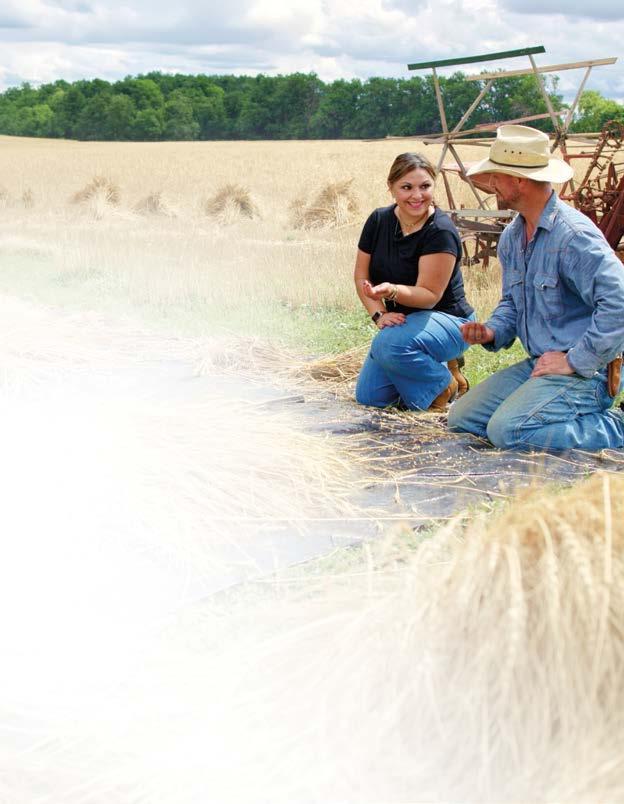
American Farmland Trust believes in thriving farms and ranches. AFT protects agricultural land, promotes environmentally sound farming practices, and keeps farmers on their land. It is the only national agricultural organization of its kind recognizing the connection between land, practices, and farmers. Because of AFT, millions of acres of farmland that otherwise would have been converted into house lots and shopping malls remain in farming, and tens of thousands of farmers and ranchers have adopted better farming practices.
Capri Cafaro, television host, author and AFT member
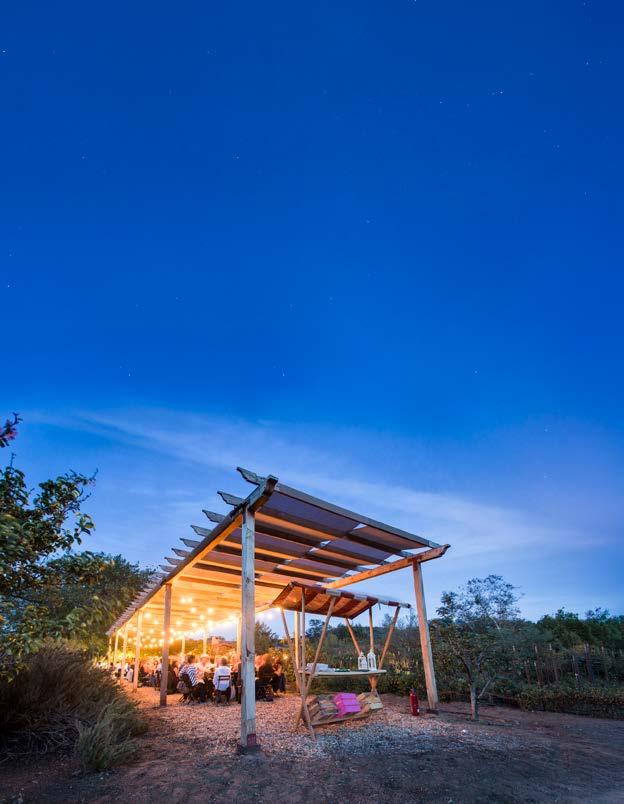
Pacific Flavors Culinary
November 28 – December 5, 2026
Indulge in the flavors of the Pacific at Rancho La Puerta, as top chefs bring creativity and unforgettable flavors to every meal. Surrounded by beautiful gardens and stunning landscapes, enjoy dishes made with fresh ingredients from our organic farm, blending Mexican traditions with California style. Take part in hands-on cooking classes, try inventive dishes, and hear the stories behind each bite as you dine under the Baja night sky.
Christa Cotton Founder of New Orleans Beverage Group and El Guapo Bitters & Mixers Featured Chefs:
Chef Vivian Mercado Head Chef and Culinary Instructor at La Cocina que Canta
Chef Segundo Romero
Acclaimed Argentine Chef with 20+ Years of International Cooking Experience and Executive Chef of Rancho La Puerta
(MORE CHEFS TO BE ANNOUNCED)