edible SAN DIEGO

YOUR STORY STARTS HERE
COME FOR THE WONDER: award-winning floral and garden design, inspiring arts and crafts exhibitions, and culinary competitions showcasing local talent.
STAY FOR THE TRADITIONS: thrilling rides, classic carnival games, indulgent fair food, and animal edu-tainment for all ages.
End on a high note with a Ferris wheel ride and a spectacular ocean view!
START YOUR SUMMER AT THE SAN DIEGO COUNTY FAIR.


2011 Publication of the Year
edible SAN DIEGO
PUBLISHER AND EDITOR IN CHIEF
Katie Stokes
EXECUTIVE EDITOR
Maria Hesse
COPY EDITOR
Dawn Mobley
ADVERTISING
Katie Stokes
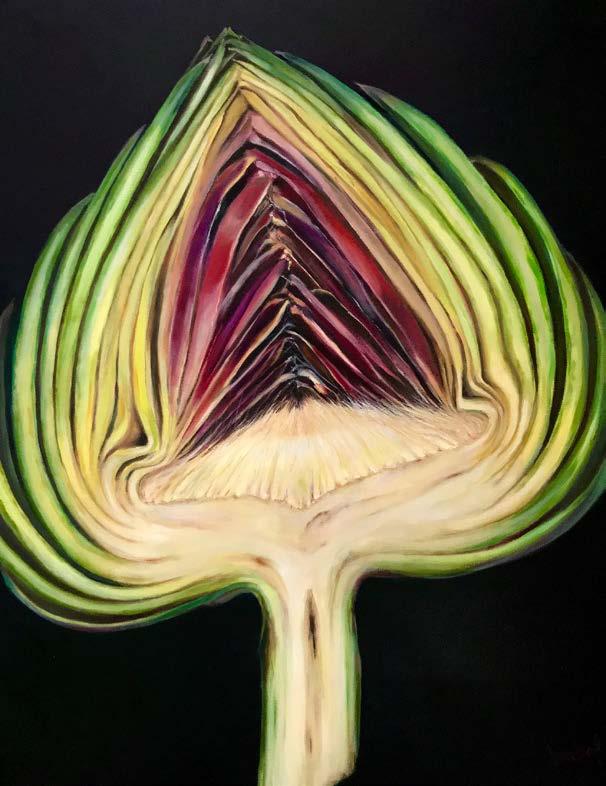
COVER BY ISABEL OLIVER
DESIGN BY MARIA HESSE
ADVERTISING
For information about advertising options, rates, and deadlines please contact katie@ediblesandiego.com.
Edible San Diego magazine is a quarterly publication made available by subscription and free distribution at select locations throughout San Diego County. No part of this publication may be used or reproduced without permission from the publisher. Information in this magazine has been obtained from sources believed to be reliable. The publisher disclaims all liability for any occurrence that may arise as a consequence of the use of information or recipes. Every effort is made to avoid errors, misspellings, and omissions. If an error comes to your attention, please accept our sincere apologies and notify us.
© 2026 All rights reserved.
This magazine is made possible thanks to Edible San Diego advertisers and subscribers. Subscriptions available online or by mailing $25 to:
EDIBLE SAN DIEGO
3451 Via Montebello #192-313 Carlsbad, CA 92009
601-526-1919
info@ediblesandiego.com ediblesandiego.com
Instagram @ediblesdmag
Facebook @ediblesandiego
YouTube @ediblesandiego

Issue 82 Contributors
Children’s Museum of Discovery sparks a love of learning so all children can discover their wildest dreams. The museum is located in the heart of downtown Escondido and creates exciting hands-on and purposeful play opportunities for children ages 0–10.
Beth Demmon is an award-winning San Diegobased freelance writer, beer and cider judge, and author of The Beer Lover’s Guide to Cider: American Ciders for Craft Beer Fans to Explore. You can view all of her work at bethdemmon.com or find her on Instagram @thedelightedbite.
Lauren di Matteo is a San Diego-based storyteller. Lauren’s creativity captures the beauty of heritage and perseverance, celebrating the inherent dignity of her subjects. She is drawn to stories of craftsmanship, sustainability, and ethical sourcing, and is passionate about bringing those to light. Whether photographing a Michelin-starred chef or farmer in a foreign field, their persistent commitment to craft through hardship inspires her work the most.
Sabrina A. Falquier, MD, CCMS, DipABLM is a triple-board-certified physician. As founder and owner of Sensations Salud, LLC, she focuses on culinary medicine education and consulting and serves on the board of Olivewood Gardens. Find her on Instagram @sensationssalud.
Jennifer Felmley, known as Chef Jenn, is a highly skilled personal chef. With a love for gourmet cooking, healthy meal prep, and local food, her creations radiate warmth and excitement. Whether you need a personal chef, weekly meal prep, or cooking lessons, Chef Jenn offers customized menus and unforgettable experiences. Contact her today to turn your culinary dreams into reality or follow her on Instagram @chefjenncooks.
Alyssa and Christian Frutos are the farmers of the vegetables growing at Ranchito Milkyway. They carry a drive (sometimes mistaken as insanity) to feed healthy food to the people they love. In addition to the farm, Alyssa teaches Organic Gardening 101 at Southwestern Community College and the first lesson in the Master Composters course at The Living Coast. Ranchito Milkyway is a vegetable farm in Bonita with a focus on growing vegetables and connecting folks to their food and farmers. Join the newsletter at ranchitomilkyway.farm or follow @ranchitomilkywayfarmstand on Instagram or Facebook.
Haley Hazell is a San Diego-based art director, photographer, food stylist, and recipe developer. She attended culinary school at San Francisco Cooking School and now resides in San Diego with her husband and children. For Haley, it is all about balance—balancing careers, tastes, and textures. She loves to cook and eat with the seasons, letting the amazing peak produce from her local farmers’ markets inspire her recipe writing.
Maria Hesse is the executive editor and designer of Edible San Diego. Her interest in functional arts led to a degree in interior design, which inspires her passion to be an advocate for sustainable living through food. She enjoys balcony gardening and designing crochet patterns in her downtime. Find her @mariafromediblesd on Instagram.
Arianna Litrenta is the founder of Sunflower Creative Co., a content services agency specializing in the food, wine, and travel industry. Established in 2020, Sunflower Creative Co. provides recipe development, food photography, and written content to restaurants, brands, magazines, and cookbooks.
Jen Lo is a San Diego-based editorial and commercial food photographer who is passionate about travel and capturing new perspectives. Jen loves exploring and finding new places to eat with her husband and daughter. Follow her on Instagram @jenlophotography.
Isabel Oliver is a Mexican-born artist who has a passion for painting flowers, fruits, and veggies in her home studio in San Diego. Through her art, she honors the farmers who practice organic agriculture, our link to sustainable food sources. Isabel is also the cofounder of Somos Maíz, an initiative to promote native Mexican corn. The rich culture, colors, and flavors of her homeland remain an endless source of inspiration in both of these pursuits.
Kai Oliver-Kurtin is a San Diego-based writer who contributes to several national and regional publications covering dining, travel, and lifestyle.
Julie Pendray is an award-winning journalist with an environmental background. She’s also a master composter and community gardener.
Brianna Wilkerson, founder of The Beverage Botanist, is a seasoned beverage director, bar consultant, and event producer with over two decades of experience in the hospitality industry. She specializes in creating unique, curated beverage experiences aimed at fostering genuine connections and memorable moments for modern, mindful drinkers.
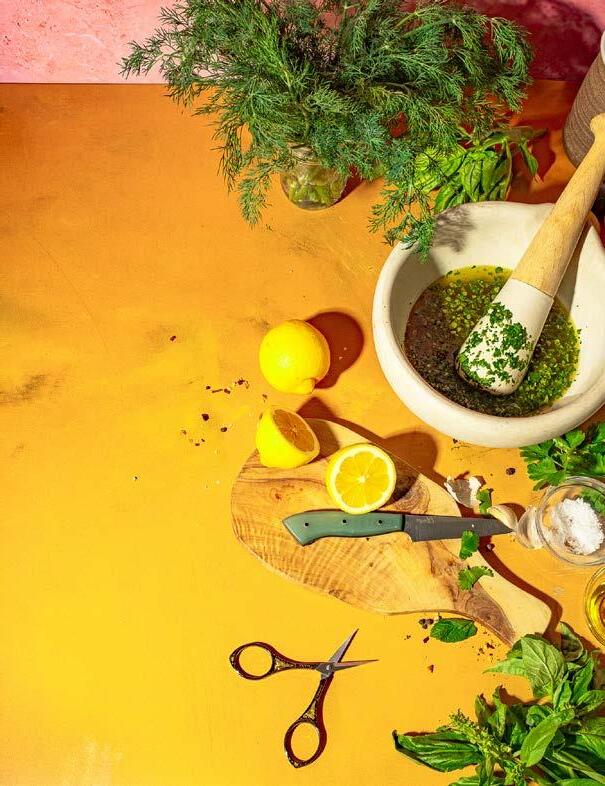

PHOTO:
HALEY HAZELL, MARIA H ESSE, AND JEN


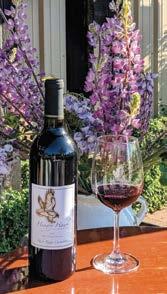
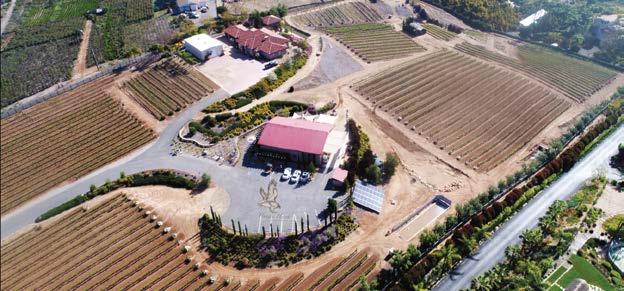
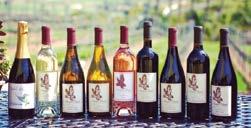
Escape to Hungry Hawk Vineyards
Hungry HawkVineyards & Winery
HUMAN BEING REALLY IS A VERB WHEN YOU THINK ABOUT IT
Reading this, you know that Edible San Diego is all about eating local here in San Diego County. You probably know the expression that we are what we eat. Or, that we are what we eat eats if our diet includes meat, poultry, or seafood.
Is now a good time to talk about this?
Let’s do something basic. Imagine holding a locally grown fruit or vegetable. Use all your available senses to experience it. For a few moments, visualize the sequence of things that had to happen for that strawberry, potato, or lettuce to sprout and grow (which comes first, the seed or the fruit?).
Then, imagine the hands of all the people, their life stories, hopes and dreams, tools and equipment, knowledge, relationships, determination, and the energy it took to get that goodness to you. Hmmm.
How about what’s not there? Certainly, carefully reading food labels has never been more important, but with local food, fortunately, we can rely on the tried-and-true method of talking with the people who actually grew or raised it. For example, lots of growers aren’t certified organic, but they avoid chemicals and seek ways of working with nature. Ask questions. Learn about the whys and the hows. Then decide on what’s most important to you.
Have you ever thought about the sunlight that those plants photosynthesized, the water, soil microbiome, and pollinators, which all had to come together just over that hill there, or in that valley, for you to eat this peach or steak or drink that wine? An incredible mix of wildness and cultivation makes local food possible. While the natural habitats and systems that support them may not clamor for our attention every day, they’re there in the background supporting life in its many forms. As we learn about these places, we might develop an affection for them and want them to thrive.
Even if we don’t eat mostly local food every day, in this thought experiment, what happens when we take it into our bodies? Are local foods more nutritionally dense? If so, why would that be? To close the loop, what effects do your purchasing decisions have? I can tell you that “small business owner happy dance when someone makes a purchase” is real. Said in another way, follow the money.
Does any of this seem overly obvious to you, pointless, inconvenient, a little intriguing, or profound? All reactions are welcome in this conversation.
Eating local is what we make of it and also what it makes of us. It’s a gateway, an invitation to connect and reflect. With the support of our advertising partners, subscribers, contributors, and readers like you, Edible San Diego is here to help make local food more convenient and accessible. When we experience nourishment as a reciprocal relationship, all kinds of possibilities open. The energy we take into these truly miraculous bodies of ours becomes part of doing good in the community and the world. As a matter of fact, now is a great time to talk about eating local.
Katie Stokes Publisher and Editor in Chief Edible San Diego
LAND ACKNOWLEDGEMENT
Edible San Diego recognizes the Kumeyaay, Luiseño/Payómkawichum, Cahuilla, and Cupeño/Kuupangaxwichem people who have lived in relationship with the earth, flora, fauna, waters, and sky for thousands of years as the original stewards of this region. This publication commits to building greater awareness of and appreciation for the traditional ecological knowledge, wisdom, and experiences of San Diego County’s first peoples as an essential part of the health and vitality of our local food system.




MARKET EXPLORER Cellar Hand Shops the Hillcrest Farmers’ Market
BY JENN FELMLEY
PHOTOGRAPHY BY JENN FELMLEY AND MARIA HESSE
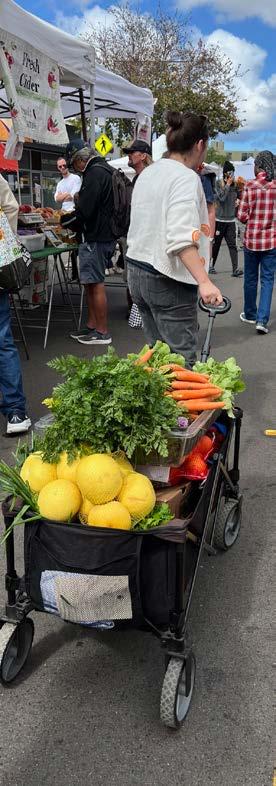
On a soft San Diego morning, as the marine layer slowly burned away and a gentle chill lingered in the air, I found myself strolling through the Hillcrest Farmers’ Market alongside executive chef Ashley McBrady, her wagon rolling at her side.
To an ordinary passerby, it looked like a typical Sunday market: bright tents, bountiful spring produce piled high on every table, kids tucked into strollers, and neighbors wandering slowly with sunglasses perched on their heads and fresh morning coffee in hand. But to walk beside Ashley (and her trusty wagon) was to see something entirely different—a living pantry gradually filling that wagon, and a web of relationships that pulse directly into Cellar Hand’s kitchen a few steps away.
As a chef-turned-food writer, I’ve wandered countless markets in my career. I’ve pushed carts through crowded aisles, scribbled menu ideas in notebooks, and felt that electric jolt of inspiration when a perfectly ripe, juicy peach lands in my hand. Yet this morning felt different. There was no rush, no list, no transactional urgency. Instead, Ashley moved through the market like someone visiting old friends.
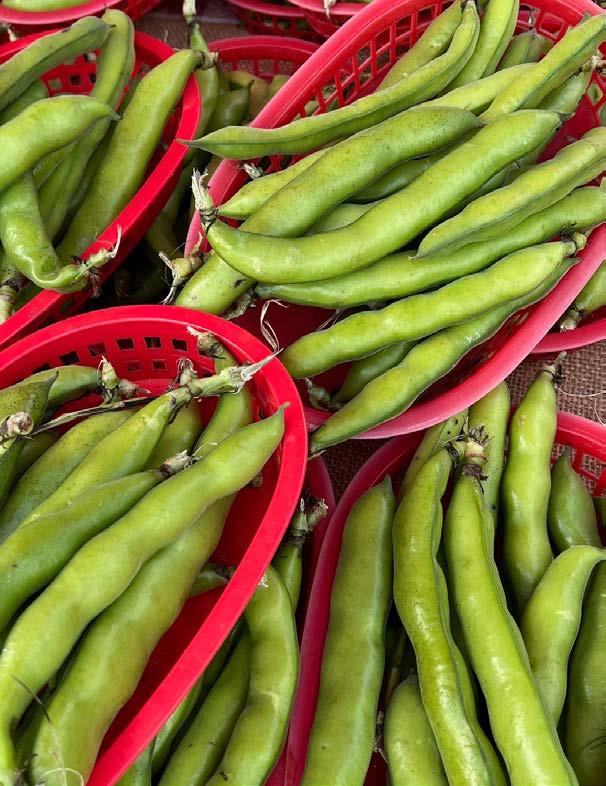
At every stall, she paused to greet the farmers by name, leaning in to admire their latest produce as if it were something precious and new. Conversations unfolded naturally—about their families, the week behind them, and what the coming days might bring to the market. She cradled a bundle of radishes and talked thoughtfully about what dish they might become and why they mattered to her menu. A few steps later, she was laughing with another vendor over fava beans, debating how best to showcase them at Cellar Hand.
What struck me most was how deeply reciprocal these exchanges felt. This wasn’t a chef shopping for ingredients; it was a chef tending to relationships. Every conversation seemed to shape not only what would land on Cellar Hand’s menu, but how that menu would evolve over time.
And that’s the magic of being located within walking distance of a farmers’ market.
Cellar Hand sits close enough to the Hillcrest Sunday market that sourcing doesn’t feel like a special weekly errand—more like an extension of the restaurant itself. Unlike rigid menus planned weeks in advance, theirs lets the market speak first. What’s ripe today? What’s
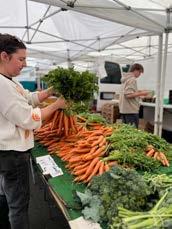
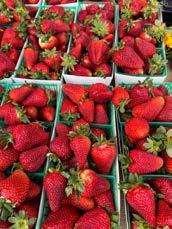
abundant? What farmer has something they’re especially proud of?
This philosophy is increasingly rare in a restaurant world dominated by convenience, consistency, and corporate distribution. So many modern kitchens rely on the same catalog of frozen appetizers, premade sauces, and mass-produced desserts that arrive in identical boxes nationwide. You can walk into chain restaurants across the country and see the same mozzarella sticks, the same cheesecake, the same industrial uniformity.
Ashley’s approach couldn’t be further from that reality.
As we walked, she spoke about how she’s constantly “chasing farmers and fishermen around” to see what’s available that day. Sometimes that means rewriting a dish at the last minute. Other times it means scrapping an idea entirely in favor of something better that emerged unexpectedly.
From Thompson Heritage Ranch pork to pristine local seafood, Ashley sees each ingredient not as interchangeable, but as a story worth telling. That story becomes the backbone of Cellar Hand’s menu.
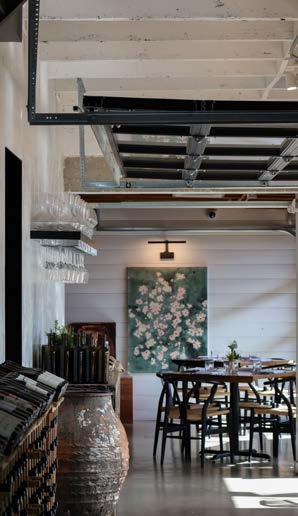
After our market tour, we slipped into Cellar Hand for brunch. The space felt warm, minimalist, and alive—tables buzzed with conversation against the steady hum of cooking in the background and pita bread baking in the tiny open-view kitchen.
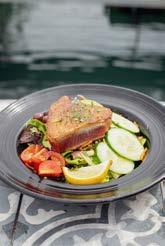
Over plates of vibrant seasonal vegetables, house-baked pita, and perfectly crispy bluefin tuna schnitzel, Ashley opened up about her creative process. Off to one side, she had arranged a small display of that day’s market produce for guests to see—an intentional gesture that invited diners into the story behind their meal.
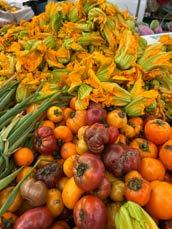
She and the cooks talked openly about what they saw at the market, what ingredients excited them, and what they wanted to experiment with. A dish might begin as a simple idea from a line cook, then evolve through collective brainstorming into something entirely new.
Sometimes the evolution is practical—what’s available, what’s in season, what a farmer has in abundance. Other times it’s more conceptual—how to showcase local seafood, or how to highlight the flavors of a particular rancher’s pork.
The result is a menu that feels alive, fluid, and deeply rooted in place.
One of the most striking things Ashley emphasized was how much they strive to make in-house. Not because it’s trendy, but because it matters.
She spoke with a kind of quiet passion that’s rare in leadership: humble, thoughtful, and deeply collaborative.
From babka to pita bread, from pickles to preserves, Cellar Hand pushes itself to craft as much as possible from scratch. In an era when restaurants could easily outsource baking or rely on premade dough, Ashley and her team chose the harder path.
“We try to push ourselves all the time to make everything,” she said—a line that lingered with me long after brunch ended.
That ethos isn’t just about technique. It’s about integrity. It’s about honoring the farmers and fishermen who provide their ingredients by treating them with the care they deserve.
And nowhere is that more evident than in my favorite dish on the menu: chicken liver mousse with orange wine gelée, mustard seed, and seeded toast.
As someone who grew up on my grandmother’s chopped liver— served proudly at every family gathering—this dish hit me right in the heart.
Ashley explained that she first began developing a version of this
dish at a previous restaurant, but it wasn’t until she arrived at Cellar Hand that it truly found its soul.
The mousse is silky, rich, and surprisingly delicate. The bright citrus of the orange wine gelée cuts through the fat with elegance, while the mustard seeds add texture and bite. The housemade seeded toast feels purposeful rather than ornamental—a vehicle meant to carry every last luxurious bite.
Beyond flavor, the dish tells a story.
Ashley wanted something that could connect Cellar Hand to its founders and their relationship with Pali Wine Co. in Santa Barbara County. The orange wine gelée is not only a clever garnish; it’s a bridge between vineyard, land, and plate.
In that moment, I realized how intentional the menu is. Nothing is random. Every element exists for a reason—culinary, emotional, or relational.
As we finished our meal, the market outside still bustling, I reflected on what makes this kind of restaurant so special.
Cellar Hand’s menu weaves a community of farmers, fishermen, ranchers, winemakers, cooks, diners, and storytellers together.
The kitchen’s deep connection to the Hillcrest Farmers’ Market isn’t about convenience—it’s about creativity.
In a city as rich with agriculture and coastline as San Diego, this relationship feels almost sacred.
Too often, local ingredients are invisible or forgotten. Even if we go to farmers’ markets, we might stroll past booths without truly seeing the labor, love, and risk behind each tomato or oyster. But restaurants like Cellar Hand remind us what’s possible when we pay attention—when we listen to the land, to the seasons, and to the people who steward them.
At the end of my meal, I felt grateful—not for a beautiful brunch, but for witnessing a model of cooking rooted in respect, curiosity, and connection.
This is a San Diego restaurant that lets seasonal farmers’ market ingredients lead the way. D
» cellarhandhillcrest.com





San Diego County Farmers’ and
MONDAY
Escondido—Welk Resort √ 8860 Lawrence Welk Dr.
Fishermen’s Markets
Ramona Grange Growers Exchange † Grange Hall 215 7th St.

10045 Carroll Canyon Rd.
Little Italy Mercato √ † * !
Date St. from Kettner Blvd. to Front St. 8am–2pm
Mission Valley √ Civita Park
7960 Civita Blvd. 9am–1pm
Poway √ *
14134 Midland Rd. at Temple
Oceanside Morning √ * !
511 Pier View Way & Hwy. 101 9am–1pm
10am–2pm
City Heights - ASCENDKemet Collective † 4325 Wightman St. 10am–2pm
Del Mar √
Del Mar Civic Center 1050 Camino Del Mar Noon–4pm
El Cajon Backroads NEW 14335 Olde Hwy. 80 9am–1pm
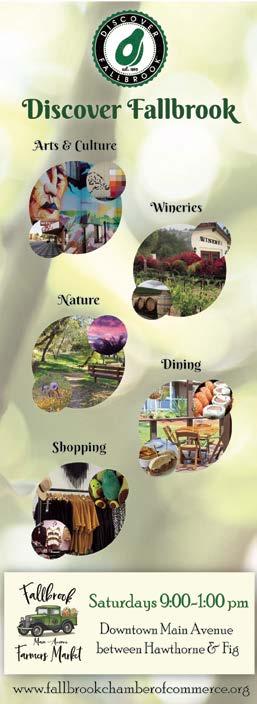
Fallbrook Main Avenue √ * ! Main Ave. btwn Hawthorne & Fig
Rancho Santa Fe √
Del Rayo Village 16079 San Dieguito Rd. 9:30am–2pm
San Carlos
7849 Tommy Dr. Fourth Sunday 11am–2pm
Santa Ysabel √ 21887 Washington St. Hwy. 78 & Hwy. 79 Saturday & Sunday 11am–4pm

21887 Washington St. Hwy. 78 & Hwy. 79
Solana Beach √ 444 So. Cedros Ave. Noon–4pm
Leucadia √ Paul Ecke Elementary School
People’s Produce Mobile
Servicing eight different market locations throughout Southeastern San Diego, National City, Barrio Logan, projectnewvillage.org for days
Markets certified by the San Diego County Agricultural Commissioner, ensuring that the produce is grown by the seller or another certified farmer in California, and meets all state
Market vendors accept EBT (Electronic Benefit Transfer). Market vendors accept WIC


Cooking Together
A farm-to-kitchen Cookbook Club read with three berry delightful recipes
REVIEW BY ARIANNA LITRENTA
RECIPES BY AMON AND JENNA MULLER
PHOTOGRAPHY BY MOLLY DECOUDREAUX
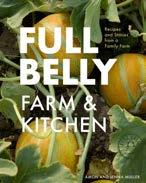
For our spring Cookbook Club, we’re diving into the folds of Full Belly Farm & Kitchen: Recipes and Stories from a Family Farm, featuring an exclusive from authors and Full Belly Farm owners Amon and Jenna Muller. Their debut cookbook offers an intimate look at life on a working farm and the central role of seasonality on and off the page. We’re honoring that approach with three strawberry recipes that celebrate the season’s beloved fruit and Full Belly’s produce-driven spirit.
It’s only fitting that the cookbook kicks off in spring, as Amon and Jenna intended Full Belly to “travel through the seasons on a farm,” helping readers understand farm life as a lived experience. Even the process of bringing Full Belly to life followed this rhythm, with monthly photo shoots capturing ingredients at their peak.
This deliberate pace reinforced the book’s seasonal theme while allowing the Mullers to thoughtfully balance accessibility. Their
aim is for readers to cook with what’s available— seeking seasonal ingredients as much as possible.
When deciding which recipes to include, Amon and Jenna drew from their long-running dinner series, family recipes, and commercial-level favorites like preserves. That perspective shaped a balance between sparking curiosity and remaining approachable, leading to the guiding question: “Would people make this at home?”
Looking at the first seasonal recipe, Simple Strawberry Jam, the
“There’s a lot of history we would have loved to have written down,” Amon says. “And these stories do just that.”
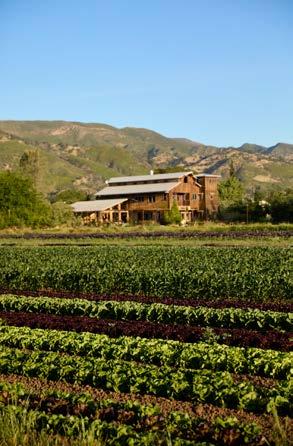
Full Belly Farm is a 400-acre certified organic farm located in Northern California’s Capay Valley. Founded by environmentalists Dru Rivers and Paul Muller in 1985, the farm now has six owners, including Amon and Jenna (right), and grows over 80 different fruit and vegetable crops.
Recipes and images excerpted with permission from Full Belly Farm & Kitchen: Recipes and Stories from a Family Farm by Amon and Jenna Muller (Hardie Grant Publishing, March 2026). Purchase here »

Mullers carefully considered whether home cooks would have the produce, time, or motivation to make it themselves. Originally created to use overripe fruit, the jam quickly became a favorite among visitors. That response encouraged the Mullers to include it in the book, a choice readers will find well worth the effort.
The showstopping Strawberry Citrus Pavlova may sound intimidating, but Jenna says she “never realized how easy it was to make.” With minimal hands-on time and forgiving results, the Mullers note that it still tastes delicious even when under- or overcooked. Luckily, the cookbook offers plenty of tips for success. Finally, the Strawberry Thyme Shortcake plays with traditional expectations. Jenna acknowledges this isn’t a classically sweet shortcake, but instead “a more herbal and savory biscuit,” allowing the berries and the cream's sweetness to shine. All three recipes focus on simplicity, letting strawberries take center stage in their purest form.
From the first pages, Full Belly draws readers in with its humor, reflections, and what Amon calls “local lore on the farm.” The Mullers set out to create a cookbook that reads like a memoir, preserving the stories that have shaped the farm over generations. “There’s a lot of history we would have loved to have written down,” Amon says. “And these stories do just that.”
When asked how they hope readers feel, Jenna shared, “It’s so important to know that food comes from a place, grown and picked by people.” Together, they encourage readers to rediscover the joy of creating or preserving something with their own hands. That belief carries through Full Belly, where the Mullers’ love for their craft inspires readers to slow down, better understand the roots of recipes, and appreciate the simplicity of seasonal ingredients. D

THREE STRAWBERRY RECIPES
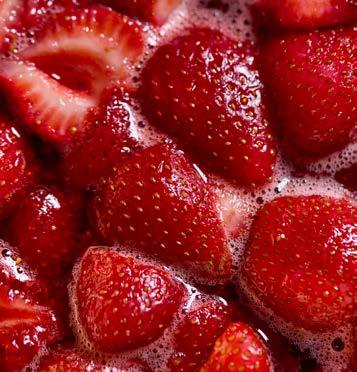
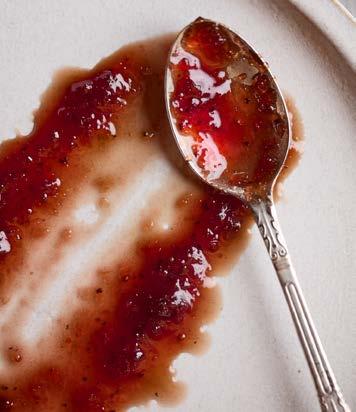
Simple Strawberry Jam
This jam captures the essence of peak-season berries, balanced with a touch of lemon to enhance their natural sweetness. Perfect for spreading on toast, swirling into yogurt, or as a filling for baked goods, this jam is a pantry essential. Amon
MAKES EIGHT TO NINE 8-OUNCE JARS
4 pounds strawberries
6 cups granulated sugar ¾ cup fresh lemon juice
Hull and rinse the strawberries, then place them in a large, wide, heavy-bottomed pot. Add the sugar and 7 tablespoons of the lemon juice to the pot.
Heat the mixture slowly over medium heat, stirring occasionally, until the strawberries release their juices and the sugar dissolves completely.
Increase the heat to bring the mixture to a rolling boil. Boil hard for 20 to 30 minutes, stirring frequently to prevent sticking or scorching. The strawberries should soften and become saturated with the syrup.
Add the remaining 5 tablespoons of lemon juice to the pot. Continue boiling for an additional 5 minutes, stirring constantly.
Check if the jam is set (see Testing Jam note below). When your jam is ready, remove the pot from the heat and let it rest for a minute without stirring. Skim off any foam from the surface using a spoon.
Carefully ladle the hot jam into sterilized canning jars, leaving a ¼ inch of headspace. Wipe the rims clean and seal with lids and bands, tightening to fingertip tightness. Process in accordance with the jar manufacturer’s instructions.
Allow the jars to cool to room temperature. Store in a cool, dark place for up to 1 year. Once opened, refrigerate and use within a few weeks.
TESTING JAM
The Wrinkle Test
1. Place 2 to 3 small plates in the freezer just before you start cooking your jam.
2. When you are ready to test the jam, drop a spoonful of hot jam onto a cold plate and let it sit for 30 seconds.
3. Make a line through the middle of the jam with your finger or a spoon. If the jam wrinkles and holds its shape and does not come back together, the jam is ready.
4. If the jam comes back together and does not wrinkle, continue to cook for a few more minutes and retest on a new cold plate.
Strawberry Citrus Pavlova
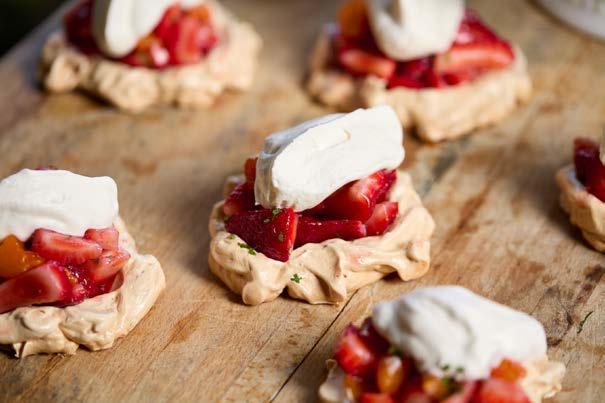
This dessert has endless potential—you can use any combination of fruit on top. The meringues can be made ahead of time and kept in an airtight container for several days. Once you top them with fruit, they will absorb the juices, so that step should happen right before you serve. My daughter Hazel always asks for this on her birthday with the meringues stacked up in place of cake layers. Jenna
MAKES 8 TO 10 MINI PAVLOVAS OR ONE 9-INCH PAVLOVA
MERINGUE
4 large egg whites
1 cup granulated sugar
1 teaspoon vanilla extract
1 teaspoon fresh lemon juice
1 teaspoon cornstarch
TOPPING
1 pint (about 2 cups) strawberries, hulled and sliced 3 mandarins, peeled and cut into pieces
2 tablespoons sugar
1 to 2 sprigs fresh lemon verbena, leaves picked and finely chopped
1 cup freshly whipped cream, lightly sweetened or unsweetened
Make the meringue: Preheat the oven to 250°. Line a sheet pan with parchment paper and draw a 9-inch circle on the paper if making a large meringue or several smaller circles for individual servings. For smaller meringues, I use the lid of a wide-mouth Mason jar, which is approximately 3 inches wide, to make my circles. You can also freeform this. Once you have drawn circles, flip the paper over so the circles are underneath.
In a stand mixer fitted with the whisk (or in a large bowl with a hand mixer), beat the egg whites at medium speed until soft peaks form. Gradually add the sugar, a tablespoon at a time, and continue beating until stiff, glossy peaks form. This may take 5 to 7 minutes. Add in the vanilla and lemon juice and sift the cornstarch over the top, then gently fold together. This helps stabilize the meringue and adds a slight tanginess to complement the sweetness of the fruit.
Spoon the meringue mixture onto the prepared sheet pan, shaping it into a round (for the large pavlova) or individual nests inside the circle(s). Smooth the sides and top, making a small well in the center, which will eventually hold the fruit.
Bake the meringue(s) until crisp on the outside but soft and marshmallow-like inside, 1 hour for smaller meringues or 1½ to 2 hours for a large pavlova. Turn off the oven and let the meringue(s) cool completely in the oven with the door slightly ajar.
Make the topping: Place the sliced strawberries and mandarin pieces in a bowl. Sprinkle with the sugar and lemon verbena. Let the fruit macerate for 15 to 20 minutes to release their juices and intensify the flavors.
Once the meringue has cooled, spoon the macerated fruit mixture on top. Dollop with whipped cream.
Serve immediately.
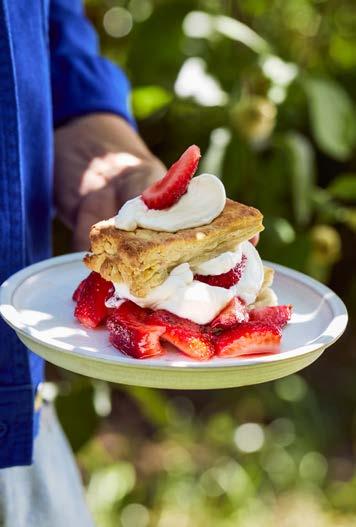
Strawberry Thyme Shortcakes
We often don’t have good luck with our strawberries. One year, the deer ate nearly all of the plants in the fall. Another year, we put straw all around the plants, which brought in bugs and made the berries hard to find. This past year, a raccoon started eating the berries long before they turned red! Nonetheless, we continue to plant them because we need something to tide us over between citrus season and stone fruit season. They may not be the biggest moneymaker for the farm, but they sure do brighten our springtime days, and it is always fun to go out and hunt for ripe strawberries with the kids.
Strawberry shortcake is a springtime classic, and it’s something the kids always ask to make the minute we have a critical mass of strawberries. For this recipe, I use a biscuit instead of a true shortcake. I find that the sweetness of the berries and whipped cream is quite enough, and I prefer a more savory biscuit instead of yet another layer of sweetness. I add thyme to the dough, and no sugar. Strawberries and thyme are a surprising and winning flavor combination. This biscuit also goes well with savory dishes and soups. Jenna
MAKES 9 LARGE OR 12 SMALL SHORTCAKES, DEPENDING ON HOW YOU CUT YOUR BISCUITS
BISCUITS
3 tablespoons cornmeal
2 cups all-purpose flour
2 tablespoons finely chopped fresh thyme leaves
1 ½ teaspoons kosher salt
½ teaspoon baking soda
½ cup unsalted butter, cut into small chunks and chilled (freeze for best results)
1 cup milk or buttermilk
STRAWBERRIES
4 cups sliced (¼ inch thick) hulled strawberries
½ cup sugar
Squeeze of fresh lemon juice
WHIPPED CREAM
1 cup cold heavy whipping cream
2 tablespoons powdered or granulated sugar
½ teaspoon vanilla extract
Make the biscuits: Preheat the oven to 450°. Line a sheet pan with parchment paper or butter it lightly. Sprinkle 2 tablespoons of the cornmeal over the sheet.
In a food processor or medium bowl, combine the flour, thyme, salt, and baking soda. Add the butter chunks and pulse in the food processor, or cut them in with a pastry cutter or fork, until the mixture resembles coarse crumbs.
Add the milk and gently fold with a spatula until just combined. Avoid overmixing.
Turn the dough out onto a floured surface and shape it into a square about 1 inch thick. Using a knife or bench scraper, cut the dough in half and stack one half on top of the other. Press gently into another square and repeat this process three to four times to create flaky layers that will easily pull apart when baked.
Transfer the dough to the prepared sheet pan. Sprinkle the remaining 1 tablespoon cornmeal over the top and cut into roughly 2-inch squares.
Bake until golden brown, about 15 minutes.
Set the pan on a cooling rack and let cool completely before assembling.
Macerate the strawberries: In a bowl, toss together the strawberries, sugar, and lemon juice. Stir to dissolve the sugar, then refrigerate to macerate until ready to use.
Make the whipped cream: In a stand mixer fitted with the whisk, whip the heavy cream on medium-high speed until soft peaks form. Add the sugar and vanilla and whip to your desired consistency (we like the softest of peaks). Keep refrigerated until serving.
Once the biscuits have cooled, gently pull them apart at the center (the layers should make this easy). Place a layer of macerated strawberries on the bottom half of each biscuit. Add a generous dollop of whipped cream, then top with the other biscuit half.
Serve immediately and enjoy!
Specializing in red wines made only from estate grown and other Ramona Valley grapes. National and international award-winning wine.
Tasting veranda open Sat. and Sun. and by appointment.
Bring in this ad to receive Two Tastings for the Price of One.
marilyn@woofnrosewinery.com 760-788-4818
woofnrose.com

Springtime in Ramona
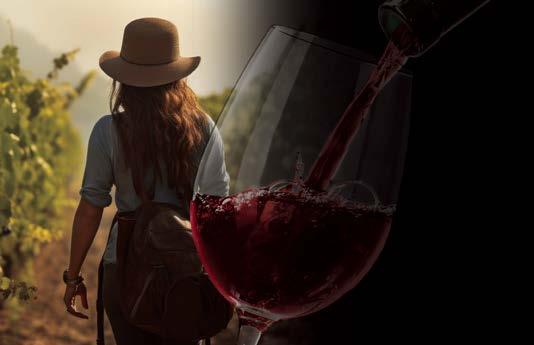
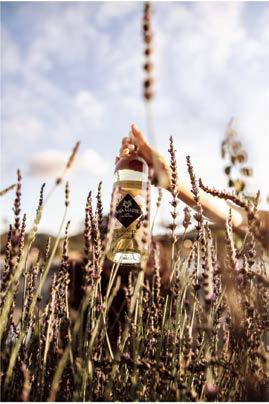
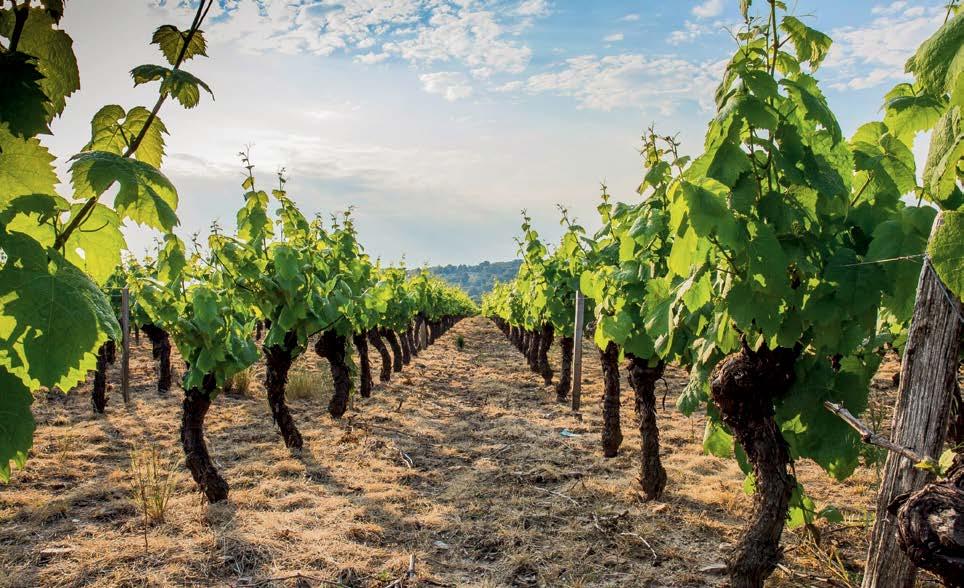
Against a backdrop of rain-washed hills, farmers are walking the vineyards. Bright green buds appear on well-rested vines. The soil is refreshed and the grapes are coming soon. Special grapes. Ramona grapes, that, in the hands of talented winemakers, year after year, make award-winning wines. Come out to Ramona in the spring and you can experience


RAMONA VALLEY
The Spring Sip Report
BY BRIANNA WILKERSON
I
n characteristically unfussy San Diego fashion, the city has quietly emerged as a serious food and beverage destination, earning recognition and national attention for cocktail programs that favor technique, terroir, and hospitality rather than hype. It is a vibrant network of influential players—bartenders, operators, and creatives shaping how the city drinks, from conceptual competitors like Communion’s Eliza Woodman to bold, technique-driven programs such as The Realm of 52 Remedies, whose recent James Beard nomination signals San Diego’s growing authority on the national stage.
Across neighborhoods, industry leaders are redefining the day-to-night continuum: menus designed for lingering, programs that prioritize balance and seasonality, and spaces that welcome everything from post-beach refreshment to late-evening ritual. Whether you’re looking for café-bar hybrids or destination cocktail rooms, these experiences feel distinctly like San Diego—laid-back, globally informed, and gracefully ambitious. A good drink isn’t just measured by what’s in a glass, but by how seamlessly it fits into the rhythm of the day and the pulse of the city.
In the morning hours, caffeination is the goal, and San Diego delivers with no shortage of cozy-cool coffee shops pairing strong aesthetics with thoughtful craft. What sets the standouts apart isn’t just atmosphere or luxe lattes, but community-driven programming and an all-day sensibility that encourages guests to lounge. At Muri in North Park, a transportive interior is the backdrop for sustainably sourced traditional Kurdish coffee and decadent desserts. In Normal Heights, Bica takes a similarly holistic approach, with a focus on local sourcing, natural wine, chef pop-ups, and other community-forward events like collabs with SD producers such as Oddish Wine and Cool Hand Co. that make the engaging space and a must-visit spot.
That same all-day mindset rooted in hospitality and care extends naturally into San Diego’s evolving non-alcoholic drinking scene. Monday Morning, San Diego’s first alcohol-free bottle shop, has helped shift the city’s non-alcoholic conversation from novelty to legitimacy, positioning flavor and function as equal priorities. Beyond retail, the team recently launched a full NA beverage services program to support bar and restaurant operators with recipe development, staff training, and product sourcing as a true one-stop shop. Owner Zane Curtis asserts that “mocktails are often a mockery of a cocktail—sugary, broken down, no artistic flare.” Monday Morning’s approach prioritizes aroma, structure, presentation, and functional benefit. With a third location opening in Encinitas, a growing distribution warehouse, and a non-alcoholic beer brand launching this spring, the overwhelming consumer response is clear, signaling a lasting shift in how San Diego is drinking differently.
The move toward mindful, moderate drinking is also finding its rhythm with menus built around spritzes, fortified wines, and
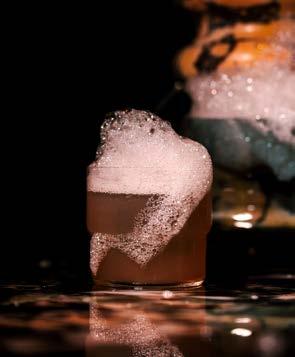
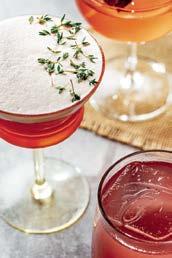
Myth & Mist, a gin paloma with aromatic foam.
lighter concoctions designed for balance and all-day appeal. The morning-to-evening transition is cultivated seamlessly inside Nómade, the cafe-listening bar in North Park serving up aperitivo hour ambiance at any hour with tapas and fortified wine-based beverages that invite guests to sit and stay a while. Menu design excels at Barrio Logan’s Jaguar Paw, where innovation is a requirement to create their seasonal low-alcohol cocktails. “Having a low-ABV program comes with more limitations than one would imagine, so we learned to adapt, experimenting with different spices, sauces, and combinations,” says beverage director Alex Aguayo. Their kiwi, green tea, and toasted brown rice cocktail made with a low-ABV gin came from simply trying to push the bar and from “never being afraid to try new things,” says Aguayo.
Any conversation about San Diego’s beverage innovators would be incomplete without a nod to Happy Medium in North Park, led by OG cocktail magicians Christian Siglin and Eric Johnson. Designed for day-to-night drinking, the space pairs a genuinely welcoming, hospitality-first atmosphere where approachable cocktails are crafted with inventive techniques and executed with precision—making it just as easy to settle in midday as it is to post up well into the evening.
After dark, San Diego’s low-lit bars pair elevated cocktails with curated soundscapes and spirit-driven narratives, creating spaces designed for lingering. The result is a nightlife culture that feels balanced and nuanced—subtly chic and effortless rather than performative. At Kiku Room in Little Italy, a central DJ booth anchors an intimate Japanese-style listening bar where beverage director Seth Sandoval applies a technique-driven yet playful approach to refining familiar classics. Designed with San Diego’s drinking culture in mind—flavor-forward, efficient,
MEGAN BURGESS COURTESY OF CARLO.
Carlo’s
and accessible—the program delivers unexpectedly elevated riffs like an off-menu draft highball built with Japanese whisky, sake, citrus oleo saccharum, and pear eau-de-vie, or the Mt. Midori, blending a Mountain Dew reduction, Suze, and textured Midori-gin precision. Backed by a tightly curated bar and no-pretense ethos, the result is polished, confident drinking that keeps guests coming back. “We’re focused on excellent cocktails, you’re gonna get them quickly, and they’re $14,” Sandoval says.
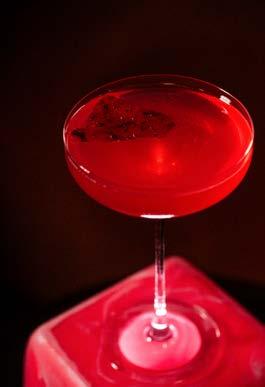
At the newly opened speakeasy Carlo, the bar program mirrors the space itself: luxurious, transportive, and refined. Beverage director Jess Stewart and her team built a cocktail menu inspired by Greco-Roman mythology and centered on sustainability, Italian spirits, and narrative craft. “I think we’re now at a point where cocktail programs are focused on the guest and guests are consuming cocktails in a more intentional manner. This is a great moment for cocktails in the city,” bar lead Marina Ferreira notes—a philosophy that shows up in drinks like Amongst the Cosmos, where cranberries are fully utilized from juice to garnish, and Myth & Mist, a gin-forward Paloma reimagined with hoja santa and an aromatic foam that invites curiosity without sacrificing approachability. As San Diego’s drinking culture shifts toward more mindful consumption and experience-driven spaces, Stewart proclaims, “Dinner and the bar is now the show,” positioning this speakeasy as a place where storytelling, ambiance, and thoughtful drinking converge into a truly modern third space.
Across hours and neighborhoods, San Diego’s bars are setting the standard—driven by visionary players, precise technique, and memorable experiences that prove the city’s creativity is poured with purpose. Stay thirsty, San Diego. ?
Amongst the Cosmos at Carlo.
SAN DIEGO COUNTY VINTNER’S ASSOCIATION
$77 Early Bird tickets - Ends May 1st
$90

















SPRING WORD PLAY
Across
1 Sweet, fleshy red fruit
6 Kilogram, for short
9 Spring holiday with egg hunts
10 Not yet ready to eat
12 Where garden tools are stored (plural)
13 Large tree
14 Egg layer
15 Head covering
17 Encountered
18 Areas of land or water used to cultivate specific crops, raise livestock or fish
19 Electric vehicle, for short
20 Plot for growing plants
21 Where flowers and vegetables are cultivated
23 Prohibit
24 Digging tool
25 Corn piece
26 Golden state, abbr.
28 Yellowfin tuna
29 Plant stalk
30 Non-alcoholic cocktail
Down
1 Plant beginnings
2 Admiration
3 Unwanted garden plants
4 Former
5 Large area used to raise livestock
7 Conservation color
8 Anglers
11 Domesticated bovines
15 Culinary plants like basil and thyme

16 Audio visual, for short
17 Farmers’ ____: where produce is sold
18 Foot measurement, abbr.
20 It protects hands when gardening
21 Counter for serving drinks
22 Slow-moving mollusk
23 Tree covering
26 Martial art Tai ____
27 Depart
28 Major airline, for short
Carlsbad resident Myles Mellor is one of the top crossword and puzzle writers in the world. He has published over 55 crossword and word search books, producing dozens of puzzles each month.
» mylesmellor.com
» themecrosswords.com
Answer key on page 45.


Locally sourced, regional cuisine with breathtaking views of the Torrey Pines Golf Course and stunning sunsets over the Pacific Ocean.

PARADISE PRESERVED
STEWARDING A HISTORIC PROPERTY FOR TODAY AND TOMORROW
BY BETH DEMMON
PHOTOGRAPHY BY LAUREN DI MATTEO
The story of Rancho Guejito didn’t start yesterday, last year, this century, or even hundreds of centuries ago. To start at the beginning, we have to look as far as the Jurassic Period, when the ancient granite upon which the ranch now lies shifted and came into existence through seismic activity.
The ranch spans over 22,559 acres, or 36 square miles, an area just a hair smaller than the city of Escondido. For scale, it takes six hours by truck, or two days on horseback, to visit every corner of the property, according to chief operating officer Hank Rupp. Tucked away in the rolling hills and valleys, Native American pictographs, the ruins of a 19th-century blacksmith shop, and a bullet-riddled winery (a relic of Prohibition) hint at the complex history of California. Nowadays, the property supports a thousand head of cattle, 24 different grape varietals, and enough trees to stretch end-to-end from here to Chicago.
Jose Maria Orozco originally established Rancho Guejito in 1845, five years before California became part of the United States. Pio Pico, the last governor of Alta California, parceled out the initial land grant, and in 1974, Benjamin Coates bought the ranch and supervised its preservation until his death in 2004. In the ‘80s, Coates met Rupp, a former prosecutor for the Los Angeles District Attorney, who eventually lobbied on behalf of the ranch and became the full-time COO and general counsel in 2004 under the ownership of Coates’s daughter, Theo.
Rupp believes the ranch is the longest-running business in San Diego County “by far,” and they’ve been able to protect the land
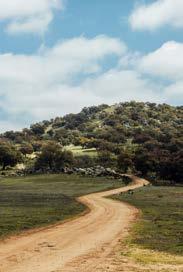
by doing things the old-fashioned way. “We’ve got about 500 acres of agriculture—meaning planted areas, vineyards,” he explains. “The rest is open ranch.”
One major reason Rancho Guejito has endured so long is a single crucial asset: water. Derived from the word aguito, meaning “small water,” the ranch was named for how its hills and valleys collect rainfall into streams and abundant groundwater. “The ranch is a very unusual place, because the water that we use is replenished every time it rains,” explains Rupp. “That’s how we got started.”
Access to water in parched Southern California is one thing. But there are other dangers to contend with—notably, fire, pests, and, in Rupp’s opinion, people. In 2007, the Witch Creek fire threatened the property on a massive scale, followed by the discovery of the Goldspotted Oak Borer (GSOB) five years ago. Rupp posits the pest, an invasive species that feasts on oak trees, came from contaminated firewood brought into the area by an unsuspecting person. That means every single one of the approximately 60,000 coast live oaks on the ranch is now susceptible.
Rupp estimates it costs around $150,000 annually just to keep the GSOB threat in check. (Thankfully, the 120,000 Englemann oaks across the property—the largest collection in the world— are naturally immune to the GSOB.) But regardless of cost, he sees it as their duty. “If all of a sudden you were the owner of a piece of land that looks a lot like it did when it was founded in 1845—and probably a lot like it did in 1845 BC—that’s a lot of responsibility,” he says. And the money to keep up with

that responsibility has to come from somewhere. Under Rupp’s leadership, the ranch has developed diverse revenue streams including cattle ranching with direct-to-customer meat sales, a winery and popular tasting room, wine club, citrus and avocado cultivation, and an increasingly popular wedding venue.
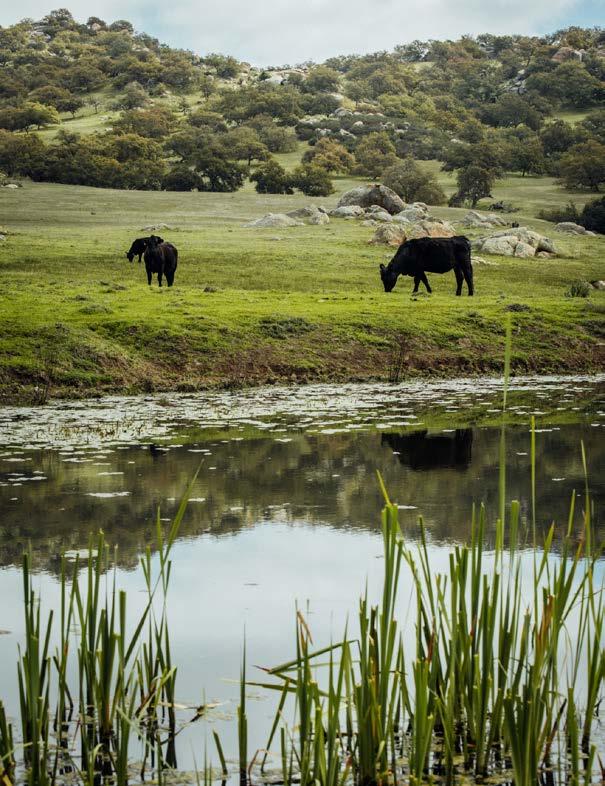
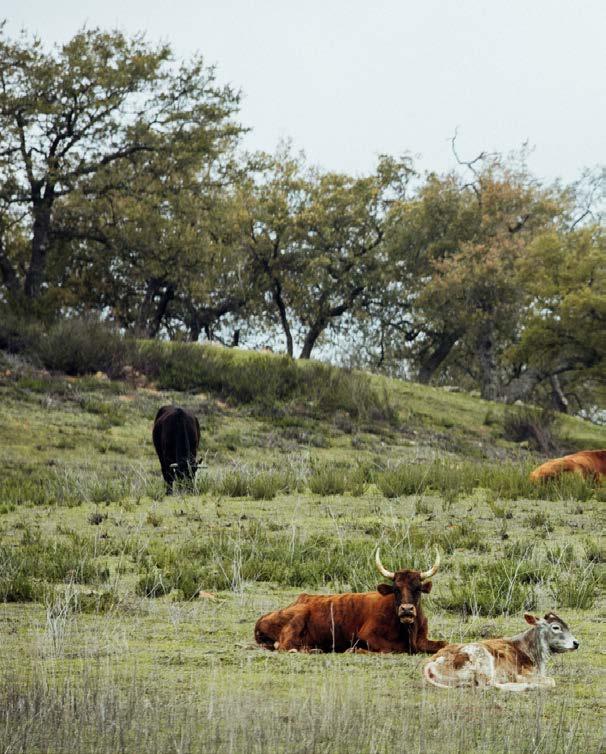
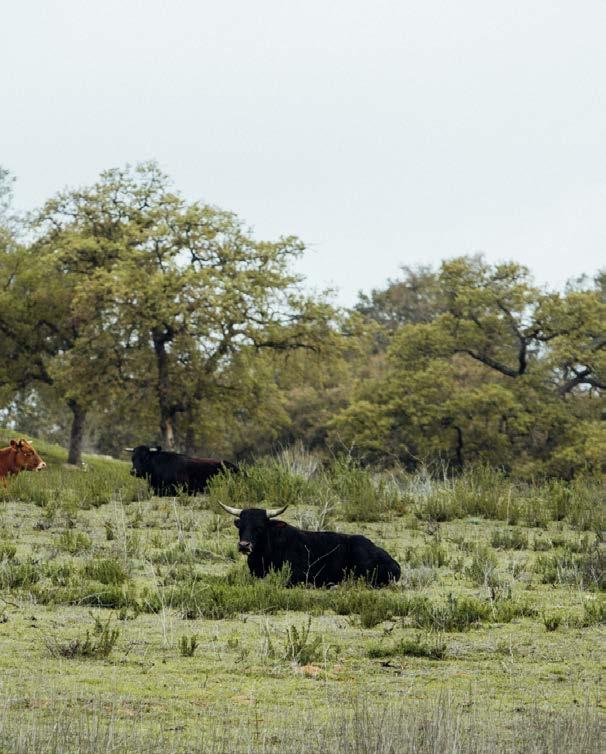
“If you were born a cow, you’d want to be born on Rancho Guejito,” promises Lauren Eram, beef operations manager for the ranch. The pasture-raised, grass-fed herd has free rein of the entire land and has grazed these pastures undisturbed since 1845. The 1,000-plus head of USDA-certified, 100% Black Angus cattle on the ranch are all born on the ranch and live their entire lives there. Their ability to naturally graze from pasture to pasture is easier on the cows and the land itself.
A small staff of cowboys (yes, real ones) keep an eye on the herd, encouraging them to move along once the grass in one area gets too low. “You don’t want to overgraze the land with cows because that will contribute to erosion, which will contribute to destruction of the land,” explains Rupp. The cowboys use horses rather than machinery to ensure the herd keeps moving—a conscious decision to impact the land as gently as possible.
Rancho Guejito has been a working ranch since its inception, but it didn’t start selling beef directly to consumers until 2022. The wine program, however, began before that. Today, winemakers work over 50 acres of vines to plant grapes, plan the harvest, make the wine, and provide bottles to the ranch’s 200 or so wine club members and guests of the tasting room. Grape varietals grown on-site range from cabernet sauvignon to malbec, viognier,
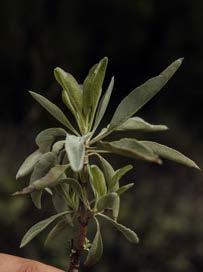
grenache, and more for a total of two dozen (for now). They’re currently building a new—and much larger—tasting room over the next three years to expand their wine program and host more public events. As an example of its commitment, the Ranch has applied for its own AVA (American Viticultural Area) designation.
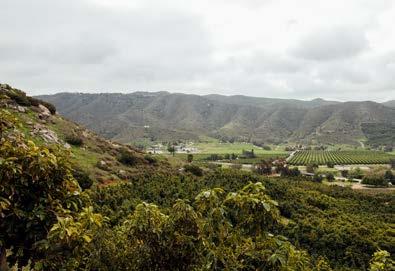
In terms of crops across the property, there’s more than just grapes. With a peak of 4,000 feet above sea level in the north and a base of around 400 feet on the south side of the property, Rancho Guejito contains a multitude of microclimates—for instance, chardonnay grapes prosper at higher elevations due to the cooler climate, and citrus and avocado trees soak up the warm air and sunshine in the lower elevations. It goes without saying that ongoing access to groundwater helps. A lot.
A typical avocado or citrus farm might have around 110 trees per acre, says Rupp. But at Guejito, they utilize a high-intensity planting pattern with around 440 trees per acre. “We found that the canopy that grows with that kind of grove protects the soil from evaporation,” he explains. “We get four times the production with the same amount of water.” It’s a hyper-efficient method that they consider the pinnacle of long-term sustainability. I asked the ranch caretaker, Chris Lyon, who’s worked there for 22 years, if he could hazard a guess at how many avocado trees there are across the property.“Oh, forget it,” he laughed, shaking his head at the very thought of estimating the astronomical number. (Regular Joes can’t get their hands on the green gems, though—Rancho Guejito sells their avocados exclusively to Whole Foods.)
At the end of the day, Rupp says all of the business endeavors on
“We believe—we know—they’re not making land like this anymore.”
—Hank Rupp
the ranch—the wine, the beef, the avocados, the events—support their goal of keeping this parcel of unspoiled land intact for generations to come. Not just generations of humans, either. The thousands of turkeys, bobcats, mountain lions, snakes, hawks, and coyotes who share this land depend on us to maintain this historic and thriving ecosystem.
“We believe—we know—they’re not making land like this anymore,” says Rupp with conviction. “We do everything we can to protect the ranch.”
To Rupp, sustainability isn’t a buzzword. It’s the honorable way of doing things—and necessary because some things, like the natural gem that is Rancho Guejito, are simply irreplaceable. D
» ranchoguejitovineyard.com
» ranchoguejitobeef.com



















Agriculture Takes Center Stage
San Diego County Fair’s Farm 2 U Exhibit
BY KAI OLIVER-KURTIN PHOTOGRAPHY BY CHLOE CALDWELL
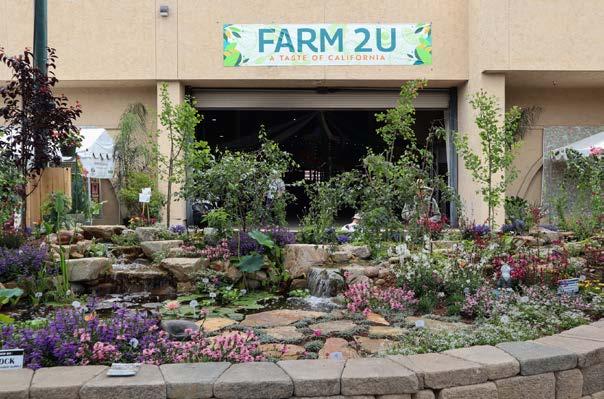
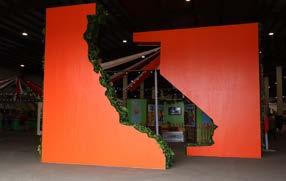
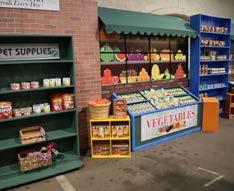
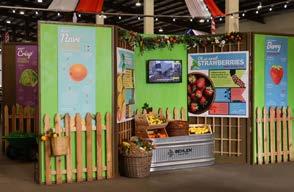
San Diego County Fair is going back to its roots with an emphasis on agriculture at every touchpoint, including a significantly expanded Farm 2 U exhibit showcasing agriculture from San Diego and throughout California. Farm 2 U is housed inside O’Brien Hall within Del Mar Fairgrounds, which will host the 2026 fair June 10 through July 5 with the theme Once Upon a Fair.
For many, San Diego County’s largest and longest-running community event with nearly one million visitors annually brings to mind carnival rides, fried food, and concerts. Fair organizers are eager for more San Diegans to get involved with the Fair’s original traditions, from food competitions and livestock displays to agricultural trivia and beer and wine competitions, as well as arts, crafts and more. The interactive Farm 2 U exhibit gives fairgoers a free alternative to paid attractions, with fun and engaging learning
opportunities all about agriculture and the benefits of local food.
New competitions that are intended for backyard gardeners will take place this year for honey, eggs, fruit, and veggies. The honey competition was created at the request of the San Diego Beekeeping Society and will focus on products that can be made from bees, including a session where kids can make a beeswax candle to take home. One of the most entertaining categories is for fruit and veggie monstrosities—think funny-looking tomatoes or misshapen carrots.
“There’s a standard of perfection, unfortunately, and we as consumers don’t like produce that doesn’t look pretty,” said Mary Martineau, a deputy manager and programs supervisor of the Agriculture, Arts, and Education department. “But just because it’s not perfect doesn’t mean
COMPETITIONS & EXHIBITIONS
BE
A PART OF THE FAIR
Whether your talent is patio gardening, food preserving, baking goods, or collecting honey, the competitive exhibits at the San Diego County Fair offer chances to showcase your skills and interests. Visit the website for a full list of entry categories and varied deadlines for submissions.
• Fine Art
• Flower & Garden
• Gems, Minerals, & Jewelry
• Home Arts & Hobbies
• Photography
• Student Showcase
• Woodworking

you can’t eat it.”
Martineau taught high school agriculture for 16 years before joining the fair staff. As she told former students, she’s not necessarily trying to turn others into farmers or ranchers.
“I just want everyone to know where their food comes from—that’s the most important thing,” she said. “We’re doing demonstrations onstage so families can sit and watch while talking about how to use those products. We’re trying to have hands-on activities every day instead of just a static display of information.”
Competition judges will include local farmers and producers like Frank Hilliker, owner of Hilliker’s Ranch Fresh Eggs in Lakeside, who will hold weekly presentations called Sunny Side Up Sundays, where he talks about egg production in the poultry industry. Henry Avocado Corporation in Escondido will bring avocado trees and their fruit, giving fairgoers a chance to see how this beloved local staple originates while it’s in peak harvest season. There will even be an opportunity to purchase farm-fresh goods directly
from local producers at a farmers’ marketplace held throughout the fair.
One particularly notable display and competition is produced with help from the Master Food Preservers program at University of California Cooperative Extension. This volunteer group showcases food preservation and canning during workshops and presentations all around the county and has a strict certification process to join. During the fair, they hold daily presentations to teach others how to prepare and preserve various foods for storage. Some example products include kombucha, kimchi, pickled jalapeños, pasta sauce, and zucchini relish. The goal is to show fairgoers these techniques so they can try their hand at home and maybe return next year to enter competitions.
Escondido resident Sandy Shephard is a longtime competitor in the Home Arts & Hobbies exhibit. In 2019, she took home 27 ribbons for food competitions ranging from chili and baked beans to guacamole and salsa, and last year, she won prizes for pickled onions and jam.

“I suffer from depression, so I use my cooking to deal with that,” Shephard said. “It’s uplifting to me; it’s helpful to do these things, and the staff at the fair is like my family.”
“I’m looking forward to entering food items this year and to also display my collections of cars, frogs, and Coca-Cola,” she said. “There’s always a lot of excitement around seeing who wins the competitions.”
At least one competition will look a little different this year. The San Diego County Fair Wine Competition, formerly known as Toast of the Coast, which was open nationally, will now feature Southern California wineries exclusively.
“We sat down as a group this year and decided that we really wanted to focus on the local vintners, so we rebranded the competition,” Martineau said. “It’s only for wineries that are located and bonded in Southern California—San Diego, Riverside, and Imperial Counties, for now. We’re keeping it local because we really want to showcase local producers.”
“We’ve had mixed reviews about this change; some smaller wineries were really thankful that we are making the shift and focusing on them, but some were kind of bummed they couldn’t go up against wines from Napa, Sonoma, and Paso Robles,” she added.
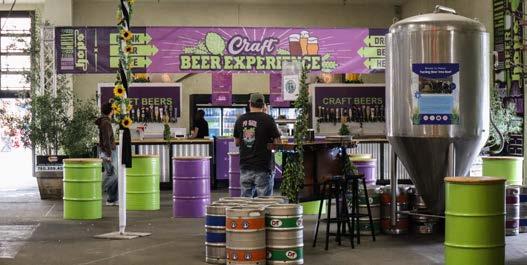
However, the San Diego County Fair Craft Brew Competition remains open to breweries nationwide, with a special award category for the best brewery in San Diego. Top-scoring breweries are invited by the fair’s catering service to sell their award-winning brew throughout the fair’s Beer Experience bars.
Cooking competitions will include showdowns between fairgoers of all ages who volunteer to test their culinary
skills with a selected California fruit or vegetable, just like in popular cooking shows. Outside of O’Brien Hall, a patio garden competition will challenge participants to stage a 10-foot-by-10-foot area with plants according to various themes. The exercise is intended to illustrate the potential of growing some form of fruit, vegetable, or other plant in your living space, no matter its size.
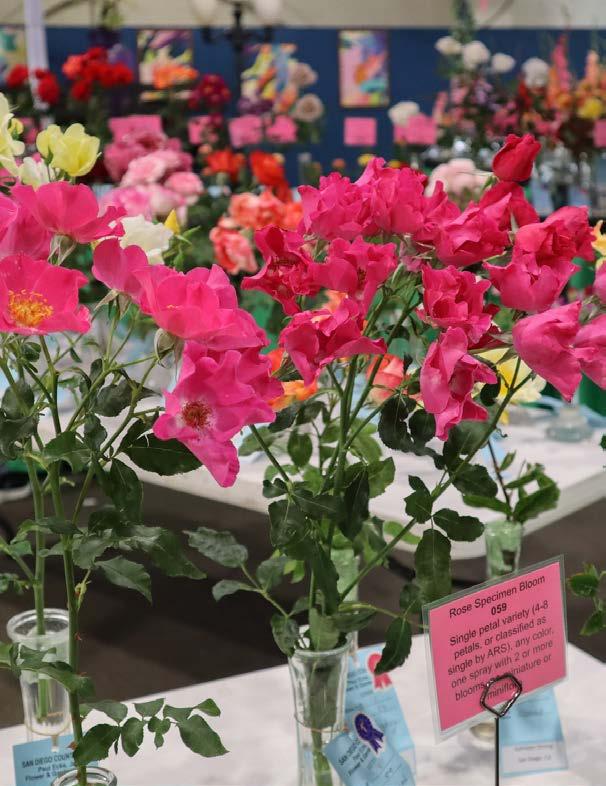
As a nod to San Diego County’s large horticulture and cut flower industry, part of Farm 2 U will also include a flower show and floral arrangement demonstration. Other daily competitions will include activities like butter making, lasso roping, corn shucking, seed spitting, and rooster crowing.
In the livestock expo barn, fairgoers can see live animals and watch a fleece competition between sheep exhibitors, while the infield area will have farming activities for young kids, including corn picking and egg collection. Exhibit areas and activities are spread around the fairgrounds, where visitors can find many opportunities to explore and connect the dots about eating local.
“The average fairgoer is fascinated by these things [agricultural products] and where they come from,” Martineau said. “The more we can teach them about it, the better off we are.” D
2026 SAN DIEGO COUNTY FAIR
Once Upon a Fair
June 10–July 5 (closed Mondays and Tuesdays)
Del Mar Fairgrounds
2260 Jimmy Durante Blvd., Del Mar
» sdfair.com
What happens in the fields shapes everything we do in our kitchens.
For Colorado-based Chef Daniel Asher, the phrase No Farms No Food® belonging to American Farmland Trust (AFT) isn’t just a slogan—it’s reality. As a chef and restaurant founder and owner, he knows that everything we eat begins with farmers and ranchers. “What happens in the fields—weather, soil, seasonality—shapes everything we do in our kitchens,” he says. “It’s a relationship built on trust, reverence, and deep interdependence.”
That understanding led him to become a longtime member of American Farmland Trust. To Asher, AFT stands apart as a steady, credible voice for agriculture—deeply connected to what’s happening on the ground and willing to advocate for farmers at every level. AFT works to address complex challenges that America’s farmers and ranchers face today in the halls of Congress, at kitchen tables, and everywhere in between.
Protecting farmland, Asher believes, is inseparable from protecting our collective health. “The wellness of our soil, water, and air is the foundation of human wellness,” he says. Membership in AFT is a way to stay connected—to land, to food, and to community—at a time when those connections matter more than ever.
“Jump on in,” he says. “Eat delicious local food. Protect the land. And help keep agriculture—and community—alive.”
Join Chef Daniel Asher—and thousands of others—who are keeping America’s farms growing strong.
Become a member at farmland.org/edible


American Farmland Trust believes in thriving farms and ranches. AFT protects agricultural land, promotes environmentally sound farming practices, and keeps farmers on their land. It is the only national agricultural organization of its kind recognizing the connection between land, practices, and farmers. Because of AFT, millions of acres of farmland that otherwise would have been converted into house lots and shopping malls remain in farming, and tens of thousands of farmers and ranchers have adopted better farming practices.
American Farmland Trust member and chef, Daniel Asher, plates River and Woods appetizers at a farm-to-table community event in Denver, Colorado.
Photo © Nikki A. Rae Photography 2025



nature’s power-packed snacks
Carrots, beets, and radishes are cool-season root veggies. These three vegetables are called root vegetables because they grow underground like hidden treasures. Root vegetables grow down in the dirt and absorb lots of vitamins and minerals from the soil. Carrots, beets, and radishes come in bright, fun colors and offer lots of crunch!
These vegetables are often known as nutrient powerhouses because they are so good for your body. Check out the superpowers of these colorful superheroes below:
• Carrots are orange because they have beta-carotene—this nutrient gives us eyesight power and helps us to see.
• Beets are often a deep red or gold and are known as a superfood because they have lots of fiber that helps us digest food that we eat.
• Radishes are pink and have a zesty, spicy flavor. They are packed with Vitamin C, which strengthens immunity and prevents us from getting sick, and minerals like potassium, calcium, and magnesium for growing bones and muscles.
simple beet juice paint
Prep beets: Wash and chop 1–2 beets (with skin on).
Simmer: Place in a pot, cover with water, add 1–2 tablespoons of vinegar (helps color last), and simmer for 15 to 20 minutes until beets are soft and the liquid is a deep red.
Strain: Pour the liquid into a jar. Strain out the solids (consider saving the beets for snacks or a salad topper). Add a pinch of salt to the strained liquid.
Use the strained liquid as a watercolor. Dip brushes or sponges in the beet paint to use on paper or cardboard. You can even use the beet tops as stamps to paint!
cooking up curiosity
• Use cookie cutters: Transform sliced beets, carrots, or radishes into stars, hearts, or even animal shapes!
• Make veggie fries or chips: Slice carrots and beets into french fry shapes or paper-thin chips, coat lightly with olive oil and salt, and bake until crisp.
• Create veggie noodles or ribbons: Use a vegetable peeler or spiralizer to make thin ribbons of carrots and other root vegetables that can be added to salads, wraps, or eaten on their own.
radish
This article was created in partnership with the Children’s Museum of Discovery in Escondido, CA, inspiring young minds and strengthening our community through play-based learning. Learn more at visitcmod.org.

in
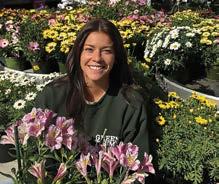
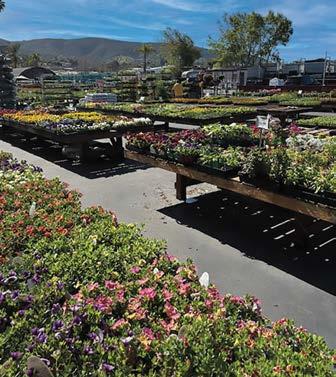
Green Thumb Nursery, proudly family-owned and located in San Marcos. We are dedicated to providing high-quality products and exceptional customer service. Explore our extensive selection of indoor and outdoor plants, fountains, garden decor, outdoor patio furniture, gardening supplies, and bird feeders. Our diverse range includes drought-tolerant and native plants, fruit trees, vibrant flowers, water plants, perennials, annuals, succulents, and more. Visit us and discover why Green Thumb Nursery is your ultimate destination for all gardening needs.
How to Start a Garden Club
BY ALYSSA AND CHRISTIAN FRUTOS
So Edible San Diego is now accepting rants from farmers—well, there goes the neighborhood! All jokes aside, hear me out. Nobody will argue with me when I say food is a significant pillar of culture, along with art, dance, and song. Why, then, do we think we can garden alone and expect to flourish? Growing in a void, only reliant upon the local nursery, mega-convenience stores, YouTubers, and influencers works out about as well as the occasional online irrigation hose purchase that never ends up fitting right.
This is a call to start your own garden club—not headed by larger entities, not hosted by your local library, but started by you and your neighbors, fueled by whatever brings you together. The exchange of ideas, resources, and knowledge at a neighborhood scale will strengthen our unique garden culture and seed bank here in San Diego. These groups will be bound by one unavoidable constraint: time—the time it takes for plants to truly grow, and the time it takes for real bonds to form, building the strong roots and branches
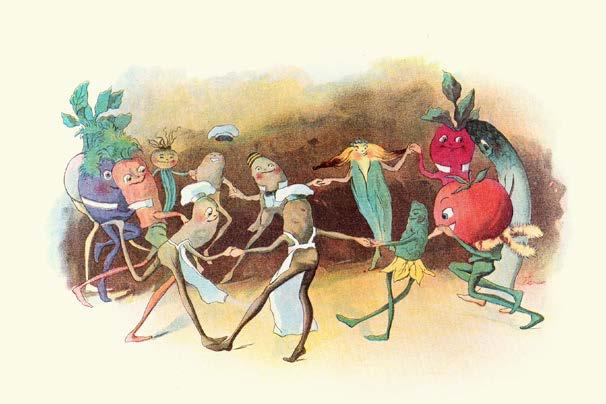

needed to weather an ever-changing world.
Here’s one way to do it.
In Sand Talk, author Tyson Yunkaporta dives into the steps Aboriginal groups go through to come to knowledge and work together in a way that endures and thrives. Through observations of groups all over the country, a pattern throughout emerged.
Those steps were: Respect Connect Reflect Direct
Once you’ve gathered your group (use your intuition from observing front yards—I am sure you’ll find the gardeners you vibe with), you can use these steps as a roadmap to guide how your group determines its form.
First, build respect. Start with introductions, see each other's gardens, and set boundaries where you need them. Next, connect. Find what can bring you all together (a small potluck, walks around the neighborhood, field trips to farms). Once you’ve met a few times and started to build trust, start to reflect. What commonalities have you found?
What are your diverse strengths? Finally, direct your garden club’s path. Here you can decide if you want to get a shared compost delivery for your summer garden. Direct the path you’d like to take for starting seeds together, swapping seedlings, or whatever unique needs you’ve observed during those times of meeting and building respect and connection. The key is to choose the path of your garden club only after building respect, connecting, and reflecting.
When I reflect on Ranchito Milkyway, our farm, I realize that our favorite varieties have been those shown to us by other farmer friends. Our sanity is moderated by our ability to rely on other farms to grow amazing strawberries so we don’t have to. And our struggles that appear year after year are usually fixed much faster if we give our friends a call, with longer-lasting results compared to occasions when we relied on a dive into the depths of Google.
As gardeners in San Diego, we have the choice to participate in the development of our food culture or to let it be determined by the growing power of algorithms, optimizations, and seeds developed in growing zones far away. If you’re reading Edible San Diego, I have a hunch you already have something up your sleeve. Find your fellow gardeners, see what happens, and keep us updated with how it goes!

FRESH CAFE






Biohacking Skincare & Treatments for True Skin Longevity. We have a science based strategy focused on preserving and optimizing skin function, resilience, and cellular vitality, not just masking visible signs of aging.



STYLING: DR. SABRINA A. FALQUIER, HALEY HAZELL, MARIA HESSE, AND JEN LO.
Super Herbs
BY DR. SABRINA A. FALQUIER PHOTOGRAPHY BY JEN LO
One of my favorite signs of spring is the return of light green grasses in open fields, a sight that takes me back to childhood time spent in Switzerland and spring drives along the California coast. Spring also brings a quiet abundance to the kitchen: tender greens, young lettuces, and, most notably, fresh herbs. Their aromas and colors signal a seasonal shift that invites lighter, fresher cooking. This season, we’re focusing on herbs—which ones to include, how to use them, and why they deserve a regular place in your cooking.
Which Herbs
Herbs are among the easiest foods to grow. Many thrive in small spaces, from backyard gardens to simple pots on a windowsill, and several are perennial, returning year after year while adding beauty to your space.
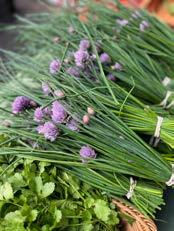
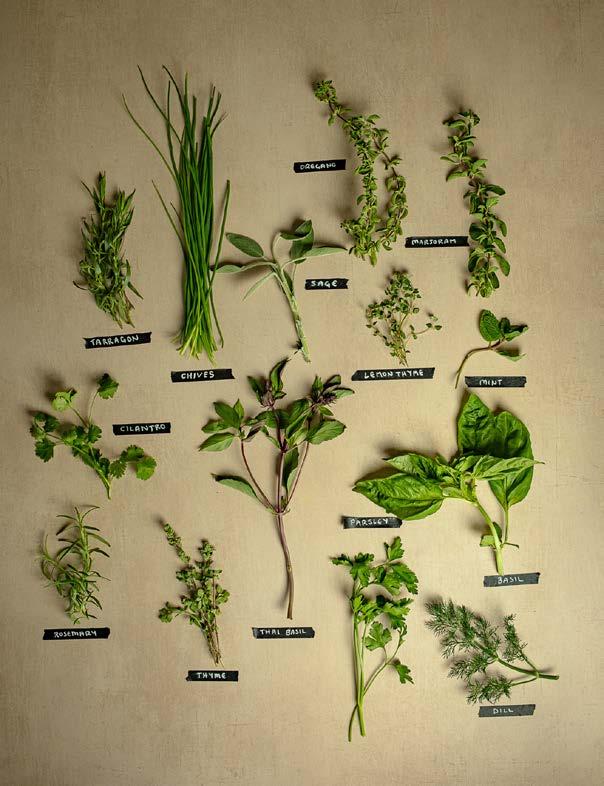
Some of my go-to herbs include chives, thyme (of different varieties), parsley, and cilantro. Certain combinations naturally pair with the seasons, such as rosemary, sage, and thyme, which often appear together in fall and winter dishes. Some herbs live well year-round, including oregano, thyme, and rosemary, while others, like cilantro and dill, are more sensitive to heat.
Beyond these classics, spring invites exploration with mint, French tarragon, and marjoram, all of which bring brightness and freshness to the plate. Each herb offers its own mood, and using a variety keeps cooking expressive and engaging, allowing meals to reflect both seasonal and personal taste.
How to Use Them
Herbs are delicious on their own, but they truly shine when layered thoughtfully into meals. Fresh herbs can be folded into salads, sprinkled over roasted vegetables, or used as a finishing touch that wakes up an entire dish.
One of the most versatile ways to use herbs is by making a green sauce, a technique found across cultures. These sauces are simple to prepare: Combine one or several herbs with olive oil and an

acid like vinegar or citrus juice, or both, plus garlic and salt. Spices or additional ingredients, like a leafy green, can easily shift the flavor profile. Mix these in a food processor, or give a mortar and pestle a try.
Some examples include Italy’s pesto, Argentina’s chimichurri, Spain’s salsa verde, North Africa’s chermoula, Peru’s ají verde, Yemen’s zhug, and Cuba’s mojo.
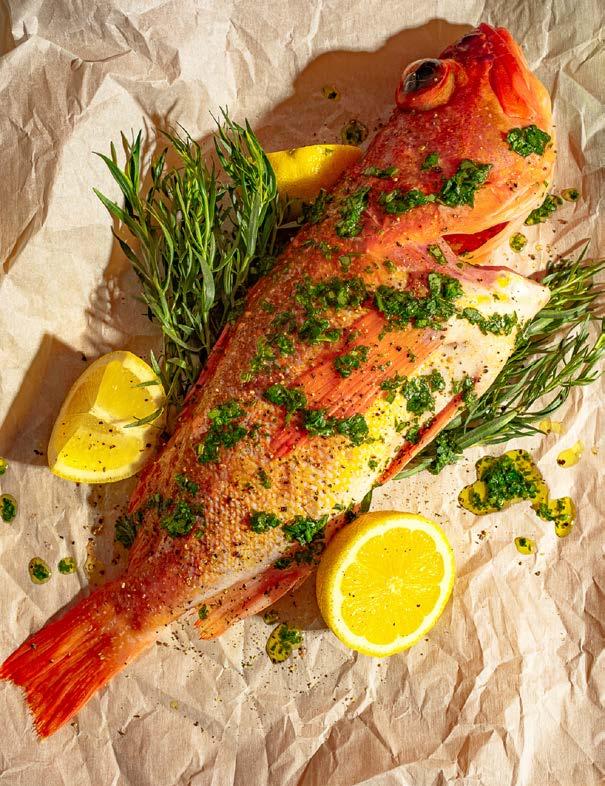
These sauces keep well for up to a week in the refrigerator or up to six months in the freezer. They elevate simple meals, including eggs, roasted vegetables, grain bowls, beans, sandwiches, and proteins like fish or chicken, while helping reduce reliance on salt.
If using dried herbs, remember this simple ratio: Use one-third the amount of dried herbs compared to fresh.
Why Include Them
From a nutritional standpoint, herbs share many benefits with leafy greens. They contain vitamins such as A and K, along with minerals and antioxidant compounds that support overall health. While used in smaller quantities, their concentrated flavors and bioactive compounds allow them to make a meaningful contribution to meals.
More importantly, herbs offer an alternative and enjoyable way to eat your greens. They add complexity, freshness, and depth, transforming everyday dishes into something memorable without requiring major changes to how you cook.
Why Bring Them Into Your Kitchen
Herbs bring deliciousness, ease, vibrancy, and connection into daily cooking. Growing them, whether in a garden or a small pot, creates a direct link between your daily life, living space, and what you eat. Stepping outside to snip what you need for a meal encourages presence, creativity, and pleasure at the table, reminding us that good food doesn’t have to be complicated, just mindful.
¡Salud! D

Community-Driven Media
These local businesses make the magic happen
Edible San Diego’s print and digital advertisers believe in the need for an independent media company dedicated to creating connection and enriching our community through good food. We invite you to discover what our advertising partners have to offer. Your patronage of their businesses helps ensure we continue sharing stories and recipes meant to nourish communities.
A LO FRESCO
AMERICAN FARMLAND TRUST
A.R. VALENTIEN
CARLA AND LINDA’S LOCAL FOOD TOURS
CATALINA OFFSHORE PRODUCTS
CHUPAROSA VINEYARDS
DA-LE RANCH
DOCKSIDE 1953
EDIBLE COMMUNITIES
FALLBROOK CHAMBER OF COMMERCE
THE FISHERY FRESH CAFÉ
FRUITMOMMY
GARDEN PARTY COCKTAIL SHRUBS
GINGER ROAD
GOLDEN DOOR COUNTRY STORE
GRANGETTO’S FARM & GARDEN
GREEN THUMB NURSERY
HAPPY HENS
HAWTHORNE COUNTRY STORE
HUNGRY HAWK VINEYARDS & WINERY
JENSEN’S MARKET
LUCKYBOLT
MAINSTREET OCEANSIDE FARMERS’ MARKET
MIA MARIE VINEYARDS
MISSION HILLS GARDEN CLUB WALK
MITCH’S SEAFOOD
OCEANA COASTAL KITCHEN
OCEAN BEACH PEOPLE’S FOOD CO-OP
OLIVE AND OAK ANTIQUES
PURE PROJECT BREWERY AND GASTROPUB
RAMONA RANCH WINERY
RAMONA VALLEY VINEYARD ASSOCIATION
RANCHO GUEJITO
RANCHO LA PUERTA
THE RIPOL EFFECT INC.
SAN DIEGO COUNTY FAIR
SAN DIEGO COUNTY VINTNERS ASSOCIATION
SAND N’ STRAW COMMUNITY FARM & FARMSTAND
SAFARI COFFEE ROASTERS
SOLARE RISTORANTE
SOLAR RAIN BOTTLED WATER COMPANY INC.
SPECIALTY PRODUCE
STATE STREET FARMERS’ MARKETCARLSBAD VILLAGE ASSOCIATION
UNIVERSITY OF GASTRONOMIC SCIENCES OF POLLENZO
WHITE ROSE AQUA CREMATION
WOOF’N ROSE WINERY
Join the good food movement here. Advertise with Edible San Diego

Come for the Inspiration. Stay Awhile.
A Santa Ysabel destination for European-inspired antiques, cozy home styling, and a shop + garden experience.


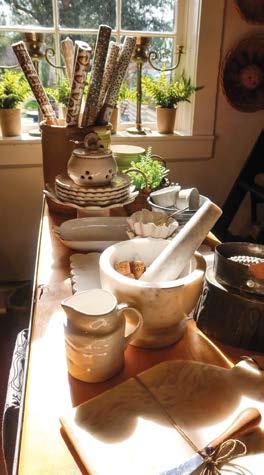
Family-owned and thoughtfully curated. Wander the shop, explore the garden, slow your pace, and discover finds that make a home feel collected and lived-in.
Olive & Oak Antiques
Thur - Sun, 10 a.m. to 5 p.m 30275 Highway 78, Santa Ysabel, CA 760-419-8795 • oliveandoakantiques.com @oandoantiques
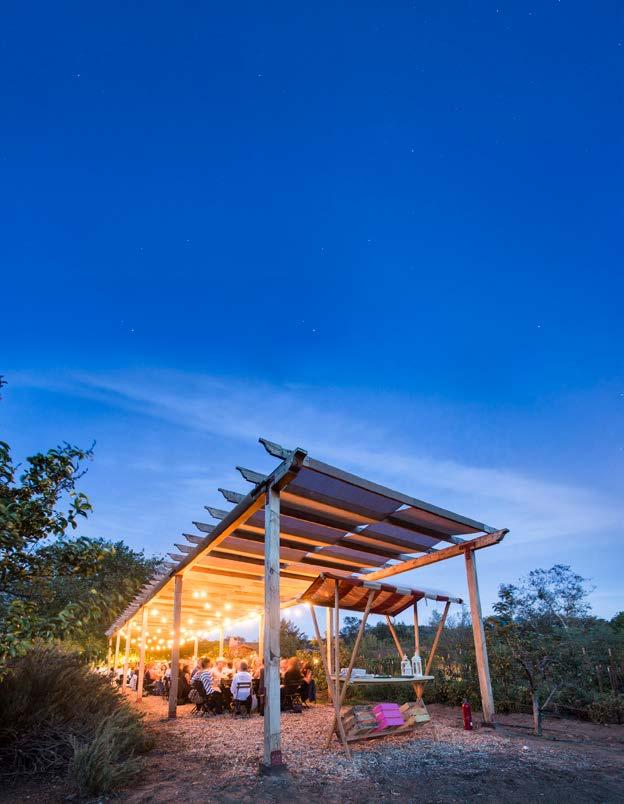
Chef Javier Plascencia Animalón (Michelin Star) James Beard Award Nominee
Chef Claudia Sandoval MasterChef Winner (2015) Founder of Claudia’s Cocina
Chef Vivian Mercado Head Chef of La Cocina que Canta
Chef Michelle Mathelin MasterChef Latinos Winner Founder of Celestine (Opening Soon)