
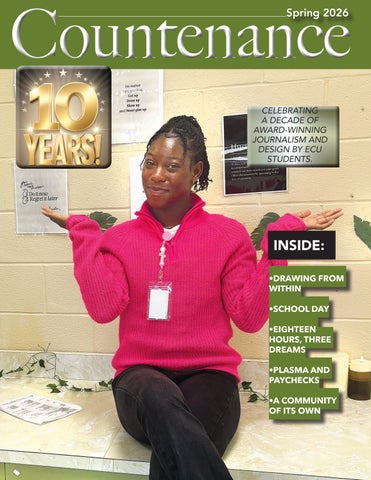
CELEBRATING A DECADE OF AWARD-WINNING JOURNALISM AND DESIGN BY ECU

•DRAWING FROM WITHIN
•SCHOOL DAY
•EIGHTEEN HOURS, THREE DREAMS
•PLASMA AND PAYCHECKS
•A COMMUNITY OF ITS OWN
CELEBRATING A DECADE OF AWARD-WINNING JOURNALISM AND DESIGN BY ECU
•DRAWING FROM WITHIN
•SCHOOL DAY
•EIGHTEEN HOURS, THREE DREAMS
•PLASMA AND PAYCHECKS
•A COMMUNITY OF ITS OWN

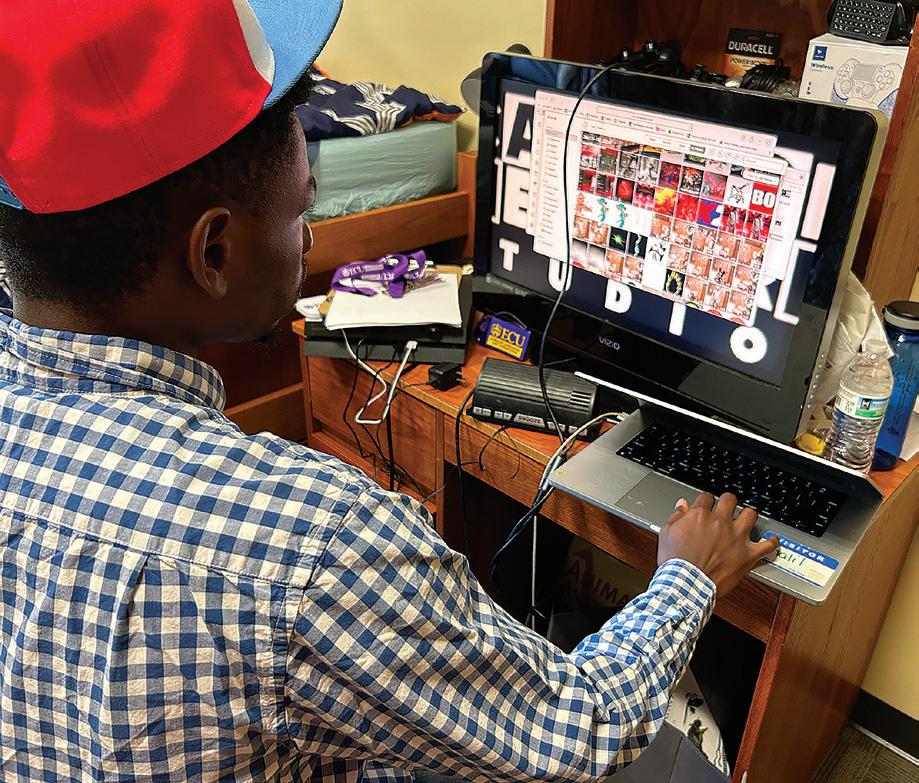
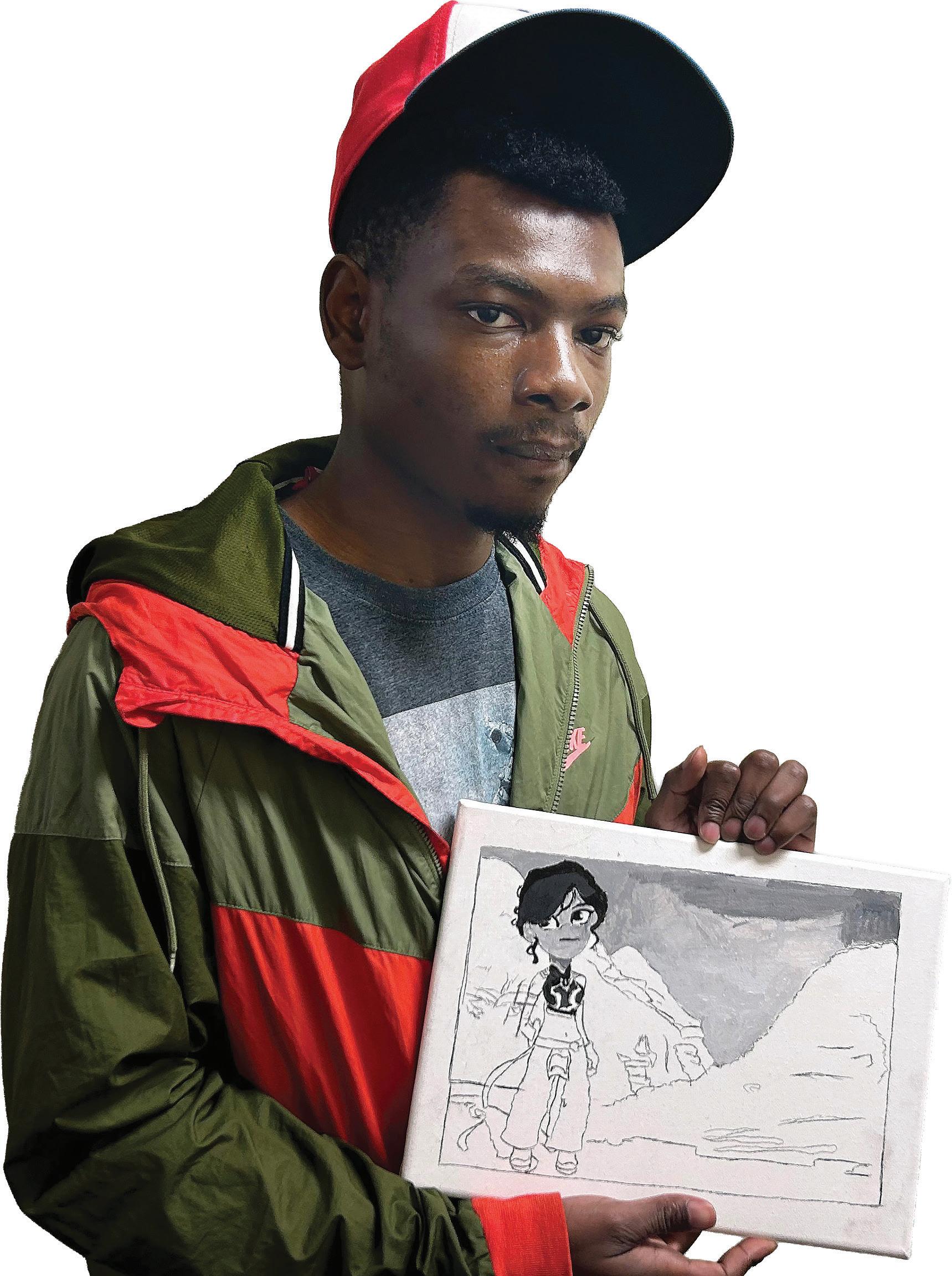
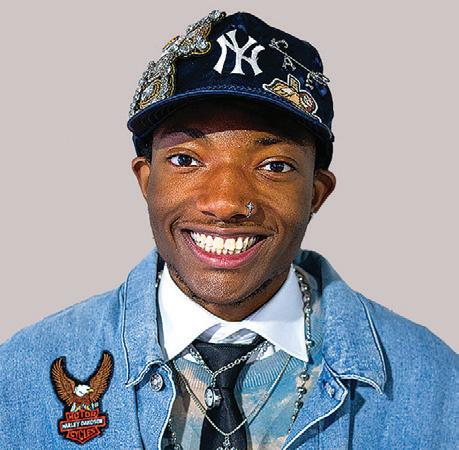
When an idea hits him, animation student Khalil Peoples might seek out his desk at 2 a.m. to sketch it out. For Khalil, art has always been more than just a creative outlet. It has been a therapeutic expression of self after being bullied for being different.
Story by Travis Johnson
From adolescent fights to on-the-fly changes in her lesson plans, Teliyah James powers through her days teaching at AydenGrifton High School in spite of being a late hire who never planned on becoming an educator.
Story by Jaelyn Green


Story by Benjamin Barnes III 22 28 16
A day that began with a pre-dawn ROTC workout and ended with an ECU pep band performance — and plenty of obligations in between — has not been unusual for Josh Hardie. He relishes the eclectic mix of activities in his busy college life.
Story by Trent Kaeding
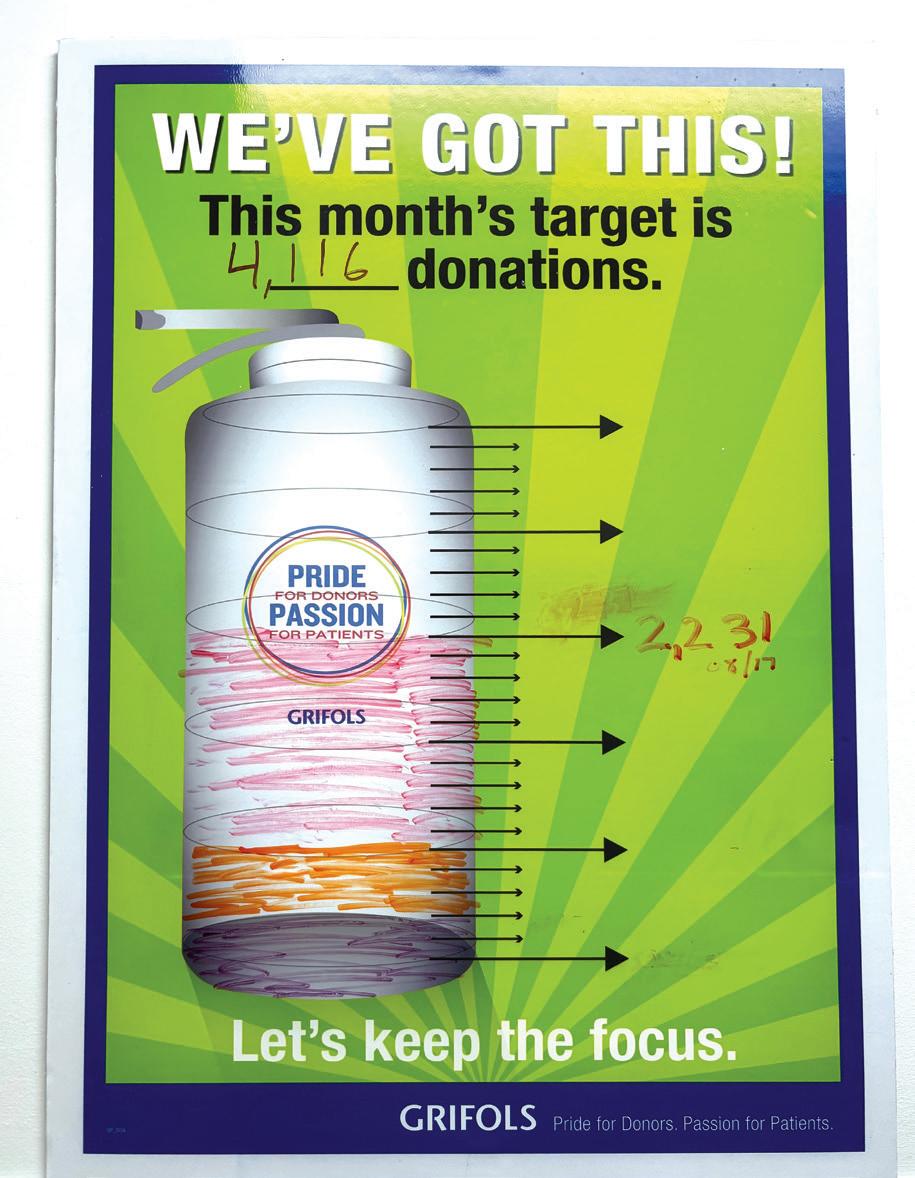
On any given weekday morning, people might be standing in line outside of Greenville’s Grifols Biomat waiting to donate their plasma. Some do it to get through a rough patch financially. Others think about the research and medical benefits their plasma might bring to others.
Story by Danielle Baugh
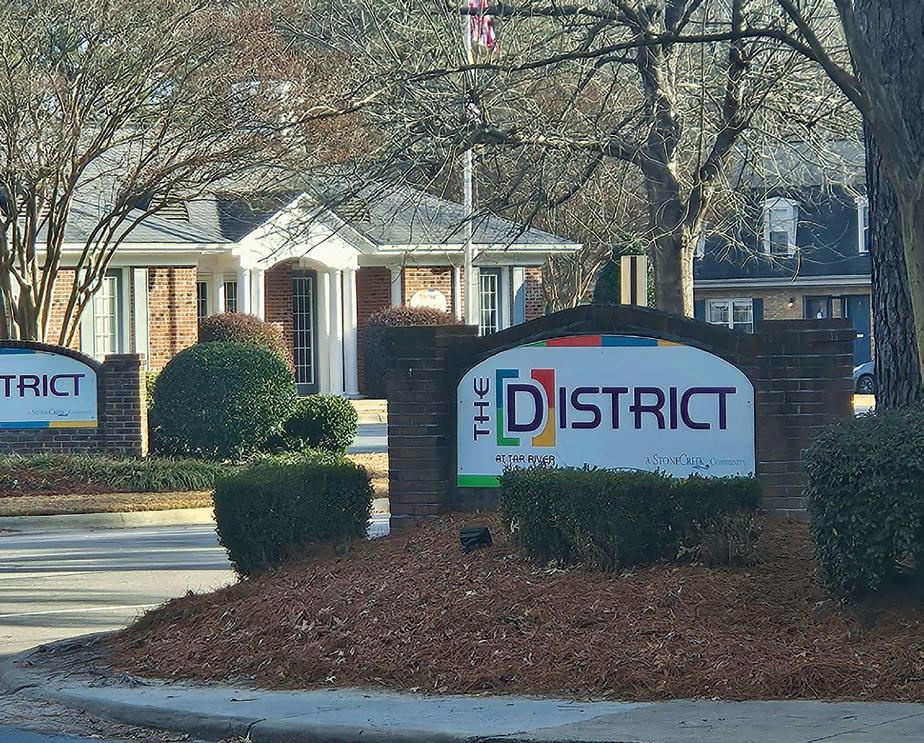
East Carolina University students living in District at Tar River apartments are no longer surrounded by others just like themselves. Instead, this older apartment complex northeast of campus has cultivated a mix of renters of various ages and stages in life.


by Travis Johnson

Driven to draw, Khalil Peoples hopes to one day have a full-length cartoon based on one of his original characters, loosely inspired by his own life and experiences.
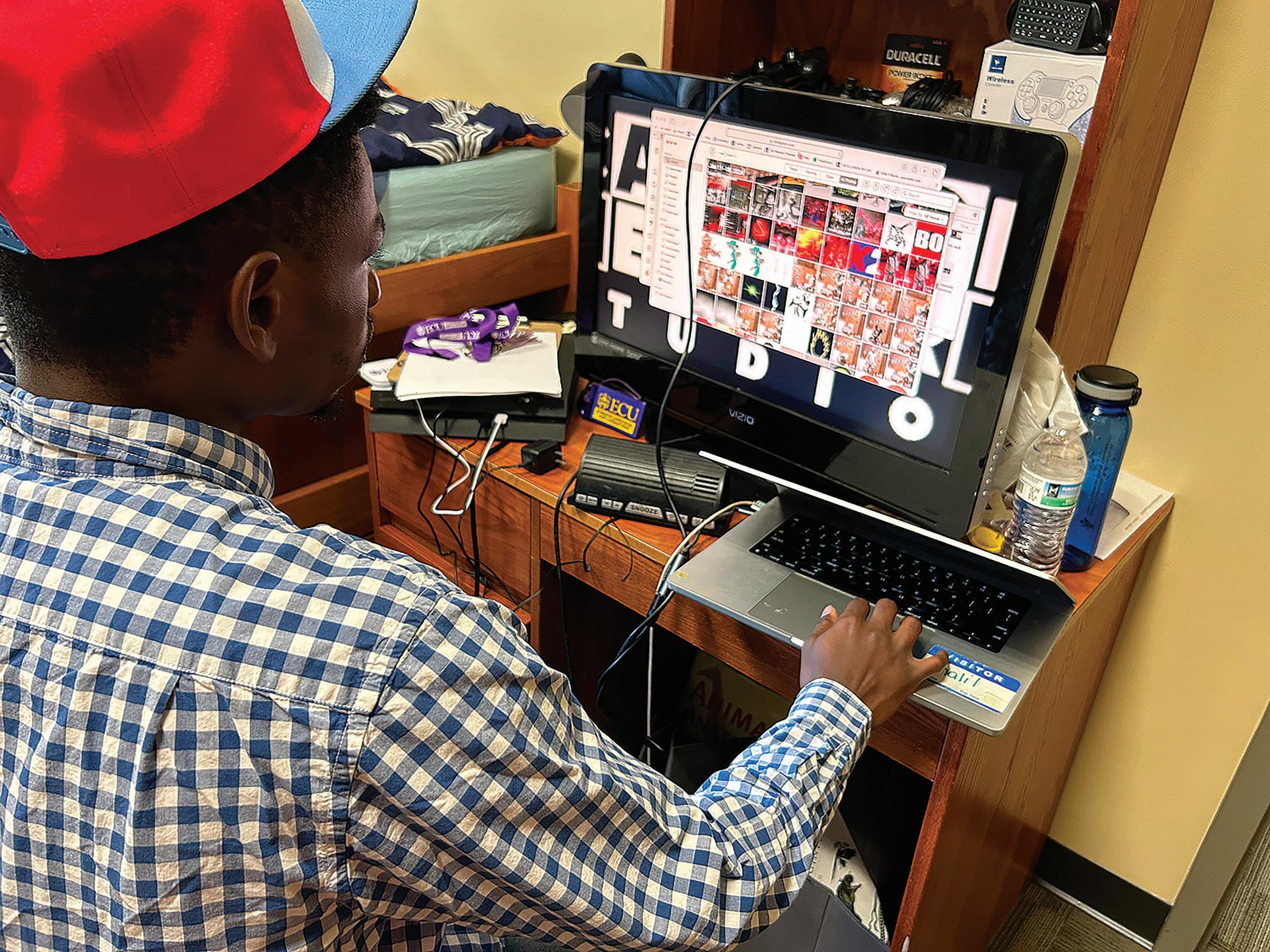
In a quiet corner of his dorm room, Khalil Peoples sketches away, creating a world of imaginative characters. No matter the time or place, when an idea strikes, he lets his mind guide his hands.
“I just do it,” he simply puts it. “Like when I’m outside and something pops in my head, I don’t think too hard. I just start creating. It almost happens automatically.”
This has been Khalil’s approach to art ever since he started back in the first grade, making characters out of pipe cleaners. He always had a creative mind and was constantly thinking of extravagant characters and worlds. He cites watching cartoons such as “Mickey Mouse” and “Toy Story” while growing up as the catalyst that sent him down the path of art and animation.
“‘Toy Story’ got me hooked on animation,” he says.
Ever since, Khalil has known that working in animation, being able to create his own characters and bring them to life, is his dream.
Today, Khalil is a 26-year-old undergraduate graphic design major at East Carolina University. It is his first year at a new university after studying art and animation at Full Sail University in Florida. Khalil is one of the growing number of students drawn to ECU’s animation and interactive design program, which lives inside the broader School of Art and Design. The program gives students the opportunity to be surrounded by not just fellow animators, but also illustrators, graphic designers, photographers and sculptors. All of these students feed into the same artistic ecosystem.
Students in ECU’s animation and interactive design track move through a sequence that blends drawing fundamentals with digital tools, with which they learn how to design characters, build worlds and think about movement in both two and three dimensions. This approach has admittedly taken some getting used to for Khalil.
“At Full Sail, I was always focused on just my animations,” he explains. “Now, having to take these drawing classes, it gets frustrating because I already know how to draw.”
It hasn’t been easy for Khalil adjusting to a new university, with new ways of doing things, but he is as determined as ever.
“Next semester I get to start more animation-heavy classes, so I’m getting through it,” says Khalil, who plans to graduate in 2027.
This transition has been helped by the fact that his longtime friend and now roommate, KeShawn Bowen, is also going to ECU to major in public health.
“Khalil has been making characters since I met him. He’ll be up sketching at 2 a.m. because an idea hit him,” KeShawn said.
“I would just draw my characters,” he says. “Like, when I didn’t feel like talking to anyone, I could put it all on paper. That’s where my ideas started to come to life.”
Even now, Khalil deals with ridicule from some of his peers.
“There’s a girl in my class that laughs at me every time I go in for critiques,” he says. “Just because I’m different.”
He took a moment to stress the importance of not listening to the doubters and showing them how capable he is rather than telling them.
“I just stay quiet and show them the results,” he states sternly. “Let your work do the talking.”
Growing up, Khalil’s drive and creativity caught the eye of his uncle, Tristan Peoples, who recalls Khalil drawing for hours in his room as a child.
I wanted people to see themselves. To see that we’re out here. To see that black kids, kids with autism, we’re part of this too.
Outside of the classroom, Khalil is a local artist and aspiring visual effects artist. He posts his visual effects videos on social media, hoping to catch the eye of animation studios.
“There’s this guy, Julian Bass,” Khalil begins to explain. “He posted his VFX videos on TikTok and eventually got recognized by Disney. I saw that when I was 16 and have been inspired to do the same ever since.”
However, for Khalil, art has always been more than just a creative outlet. It has been a therapeutic expression of self.
Before attending Full Sail in Florida and then moving to North Carolina, Khalil was raised in Brooklyn, New York. In school he was bullied — picked on for being different, for being quiet, for not fitting in. Diagnosed with autism, he opened up about his struggles growing up and says there were many hard days. That is when he would pick up a pencil.
“He was always creating,” Tristan said, thinking back. “He always saw things in a way I didn’t fully understand, but I knew it was something special.”
Khalil’s art has always helped him through tough times, and he wants it to help others as well.
In 2021, Khalil was invited to be part of a community art project in Rocky Mount, North Carolina. It was a mural supporting the Black Lives Matter movement. Khalil jumped at the opportunity, filling his part of the mural with iconic black cartoon characters such as Fat Albert, Riley Freeman and others.
“I wanted people to see themselves,” he says with a sense of pride. “To see that we’re out here. To see that black kids, kids with autism, we’re part of this, too.”
His goal is to inspire others. He strives to show that the things that make you different are not things to overcome, rather they are the things that make you who you are.
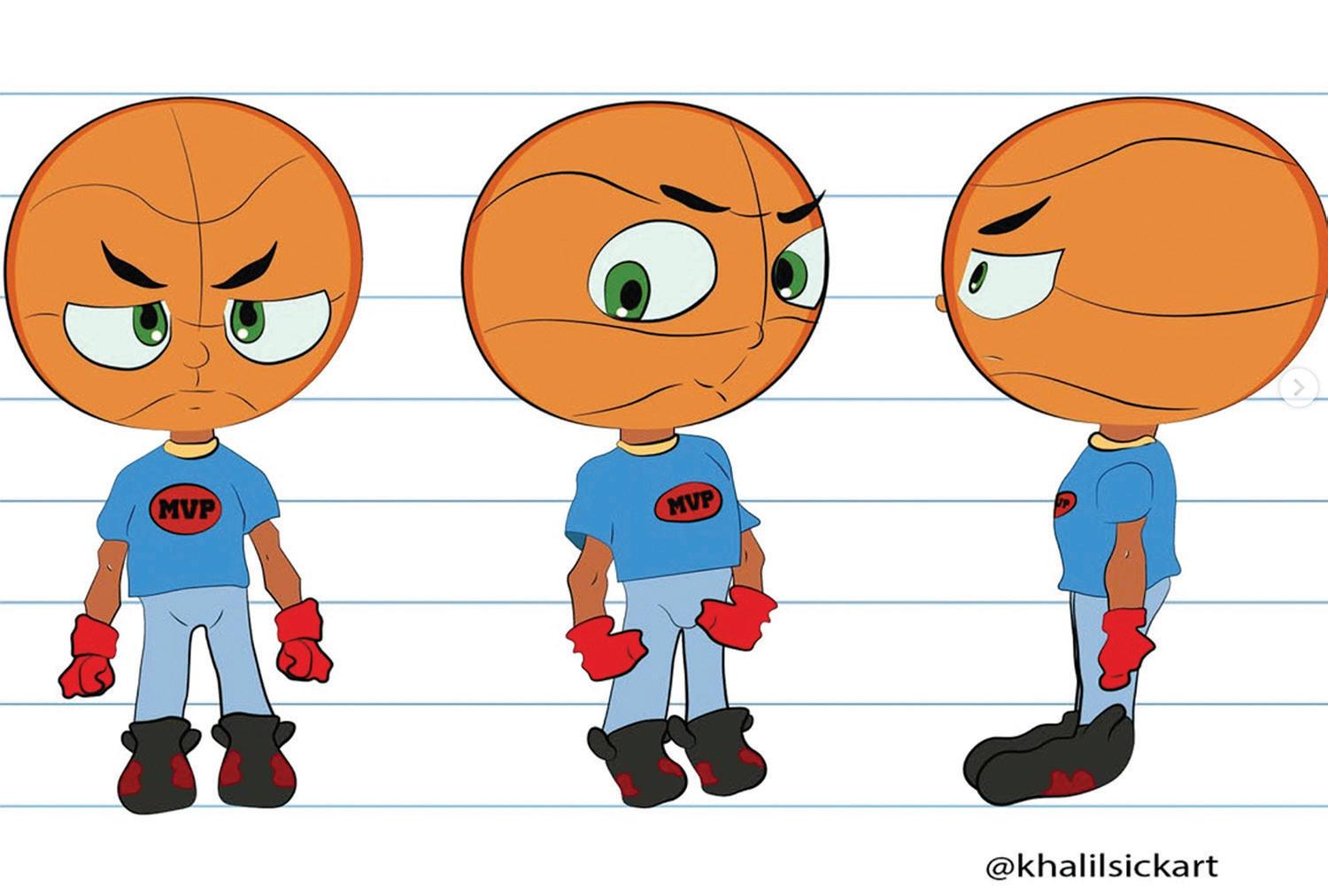
Khalil’s biggest dream is to one day have the opportunity to create a full-length cartoon based
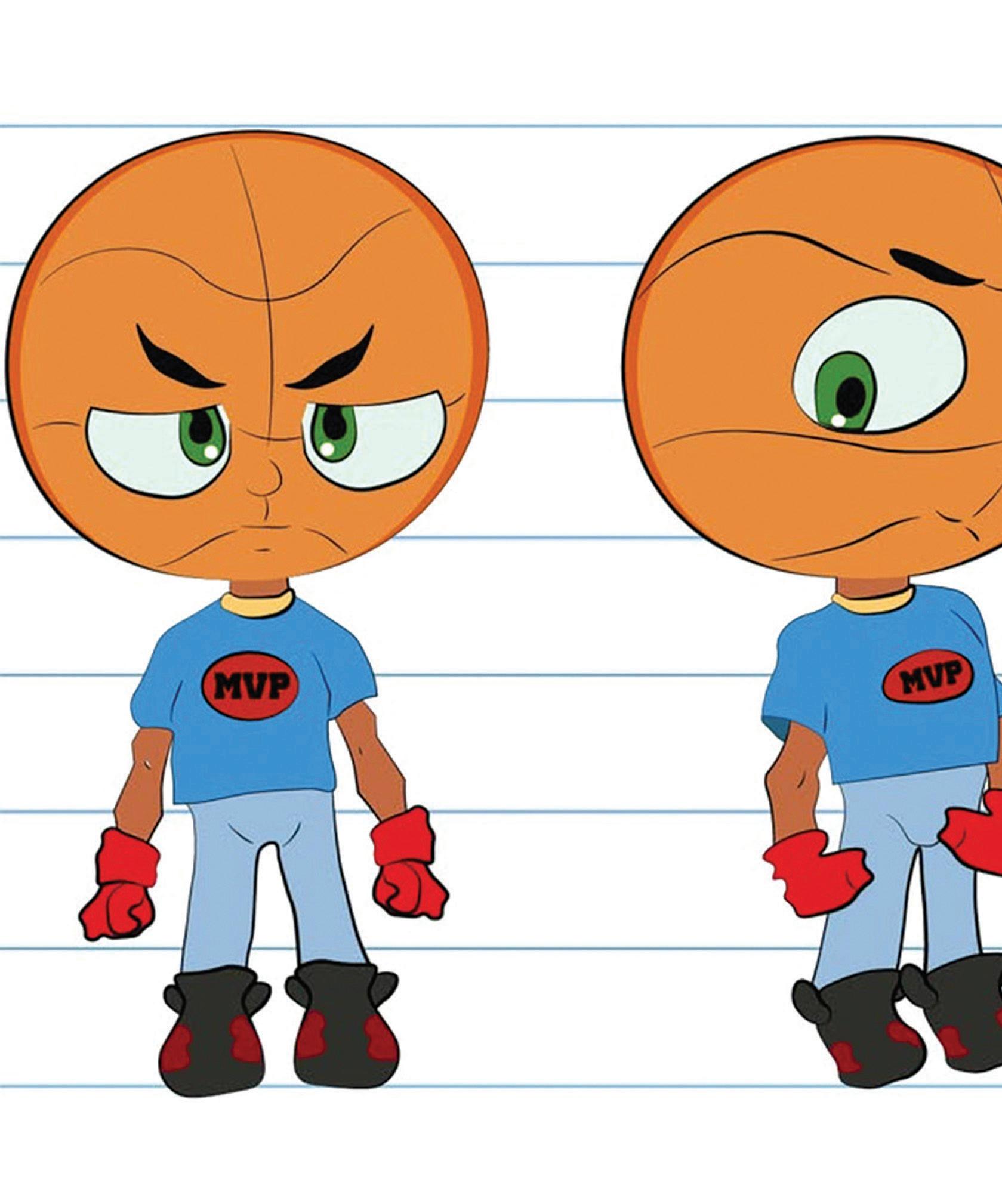
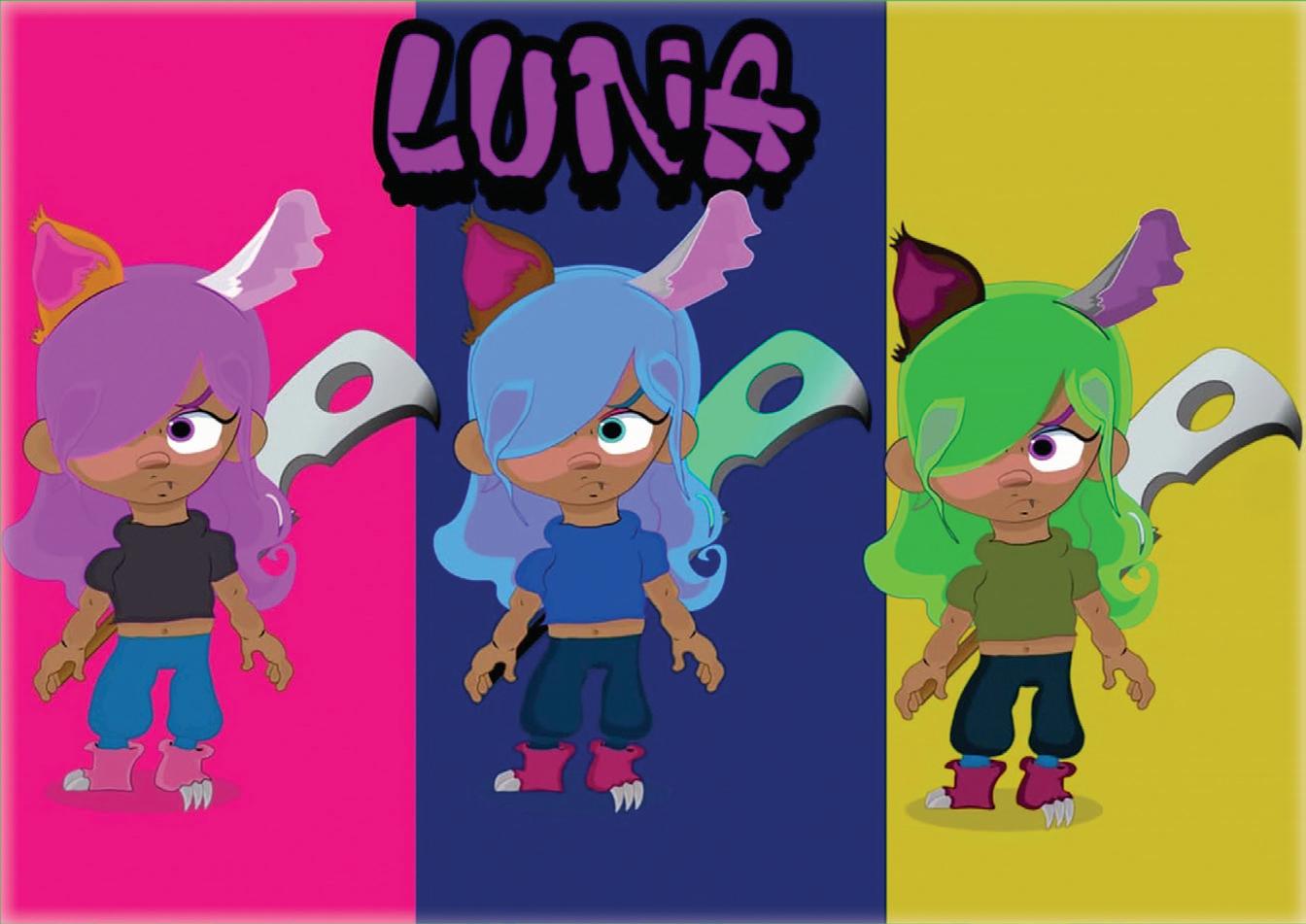
Pam and Chessie are some of Khalil Peoples' characters from Instagram at kgp_animation
Also shown is Luna, who is part wolf and part human. She carries a big sword behind her back to defend herself. Peoples describes her as “fearless, brave and a little emo."
used with permission of Khalil Peoples


See more!
Scan the QR code for more artwork on Khalil People's Instagram page.
AI is cool and all. But it doesn’t have the same experiences I do.
on one of his original characters, loosely inspired by his own life and experiences: a basketball-playing figure who mixes street style, humor and high-energy visuals.
“I work on the story in my head all the time,” Khalil adds as he shifts up in his seat. “Now I just need the time and tools to make it a reality.”
For aspiring animators like Khalil, tools like AI offer game-changing technology. Generative tools such as Adobe Firefly or Midjourney churn out concept art from simple prompts like "street-smart basketball character dunking at dusk," expediting weeks of work. Yet the
If someone’s got autism, or ADHD, or anything, I want them to see my story and feel like they can do it too. Don’t let anyone tell you you’re stupid or weird. You’re not. You just think differently.
downsides loom over the industry. With video-generating AI tools such as Sora and others threatening job pathways people like Khalil are working hard to pursue, the future can seem even more uncertain in an industry where it is already difficult to catch a break. However, the implications of this new technology are not lost on Khalil, who offers his own unique perspective on the future of art and animation.
“AI is cool and all,” Khalil begins. “But it doesn’t have the same experiences I do.”
Choosing to bet on his own voice is what keeps Khalil driven to accomplish his goals in such an uncertain industry. But while the dreams of producing his own cartoons and being recognized by people he looks up to at studios like Disney or Cartoon Network do fuel his creative pursuits, what he wants
How Khalil creates
1. Idea strikes: Anytime, day or night

most is to inspire. Khalil stresses the value of impact over fame.
“If someone’s got autism, or ADHD, or anything, I want them to see my story and feel like they can do it too,” he says. “Don’t let anyone tell you you’re stupid or weird. You’re not. You just think differently.”
Some research seems to support Khalil’s perspective. A review of research studies on autism and creativity published in the journal Cognitive Processing, found that autistic individuals often display “a high level of detail and a particularly high level of originality” in artistic works.
KeShawn agrees. “Khalil doesn’t just draw,” he says. “He makes a space for people who don’t always feel seen. That’s what makes him different.”
Khalil doesn’t want to fit the mold of the traditional artist. He is acutely aware of the things that make him different, and he is proud of them.
“I’m not going to make it like everyone else,” he proclaims. “I’m going to do it differently. Be original.”
Khalil finishes drawing, takes a moment to appreciate the sprawling designs and characters he’s created, before another strike of inspiration hits and he quickly pulls out another page and goes back to creating. n
Travis Johnson is a communication major from Tarboro with a concentration in journalism. His interests are skateboarding, music and combat sports. After graduation, he hopes to have a career in sports journalism.
2. Straight to work
Doesn't overthink — starts drawing instantly


3. Develop
Creates personalities, worlds and stories using his unique voice

4. Expression
Experiences a creative outlet to express self 5. Shares Posts work, connects with others

by Jaelyn Green
Competing with cellphones and coping with glitches in technology are only some of the challenges faced by an elective teacher as she navigates her first, and possibly only, year of teaching.


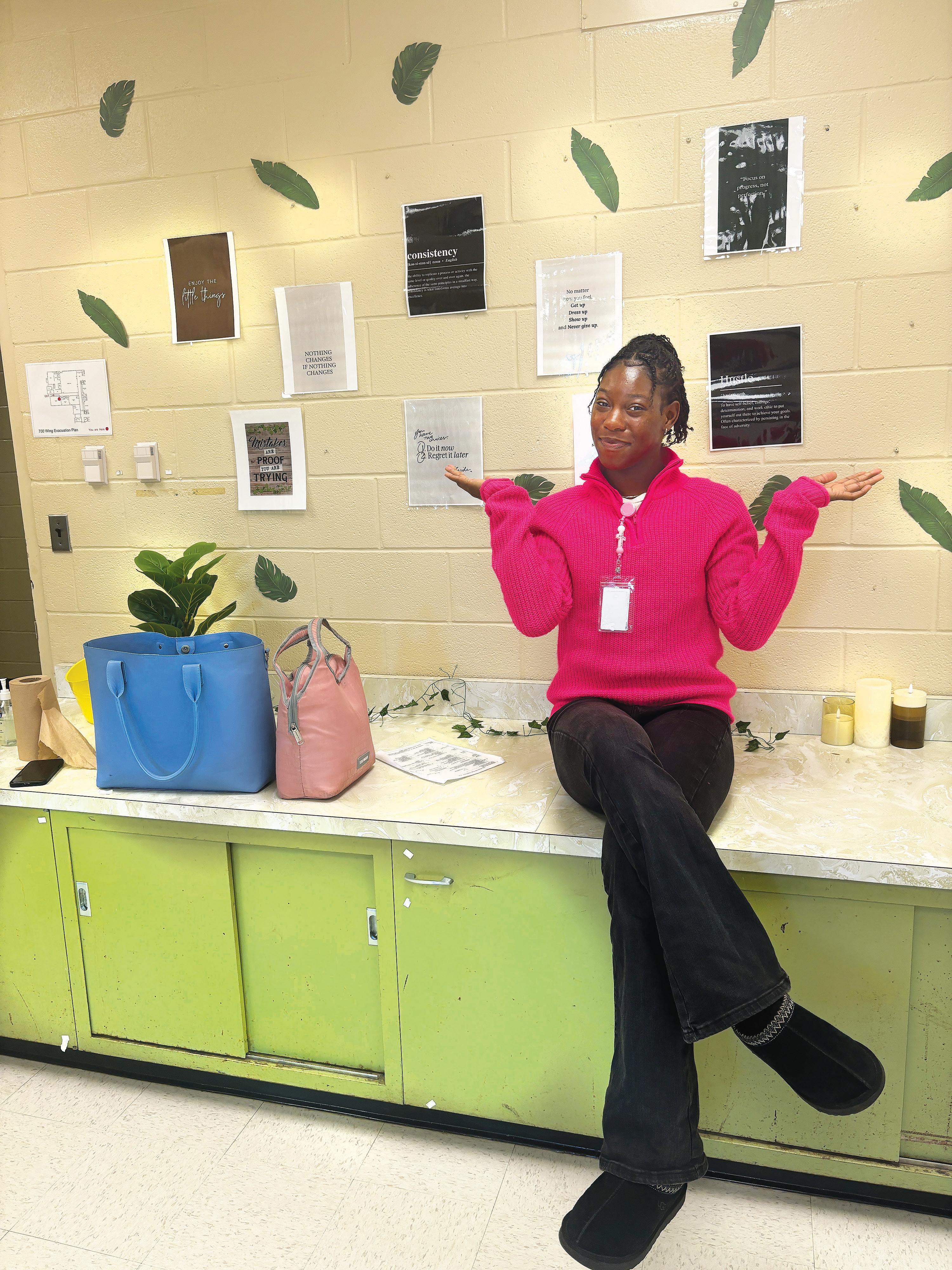
It’s 7:30 a.m., the start of the school day, and 23-year-old Teliyah James meets a visitor who is observing her teaching at Ayden-Gifton High School.
“At 3:30, I don’t want to talk about anything school-related,” James abruptly tells the visitor. “Ask me all the questions now, or just observe. I just had to kick a kid out yesterday.”
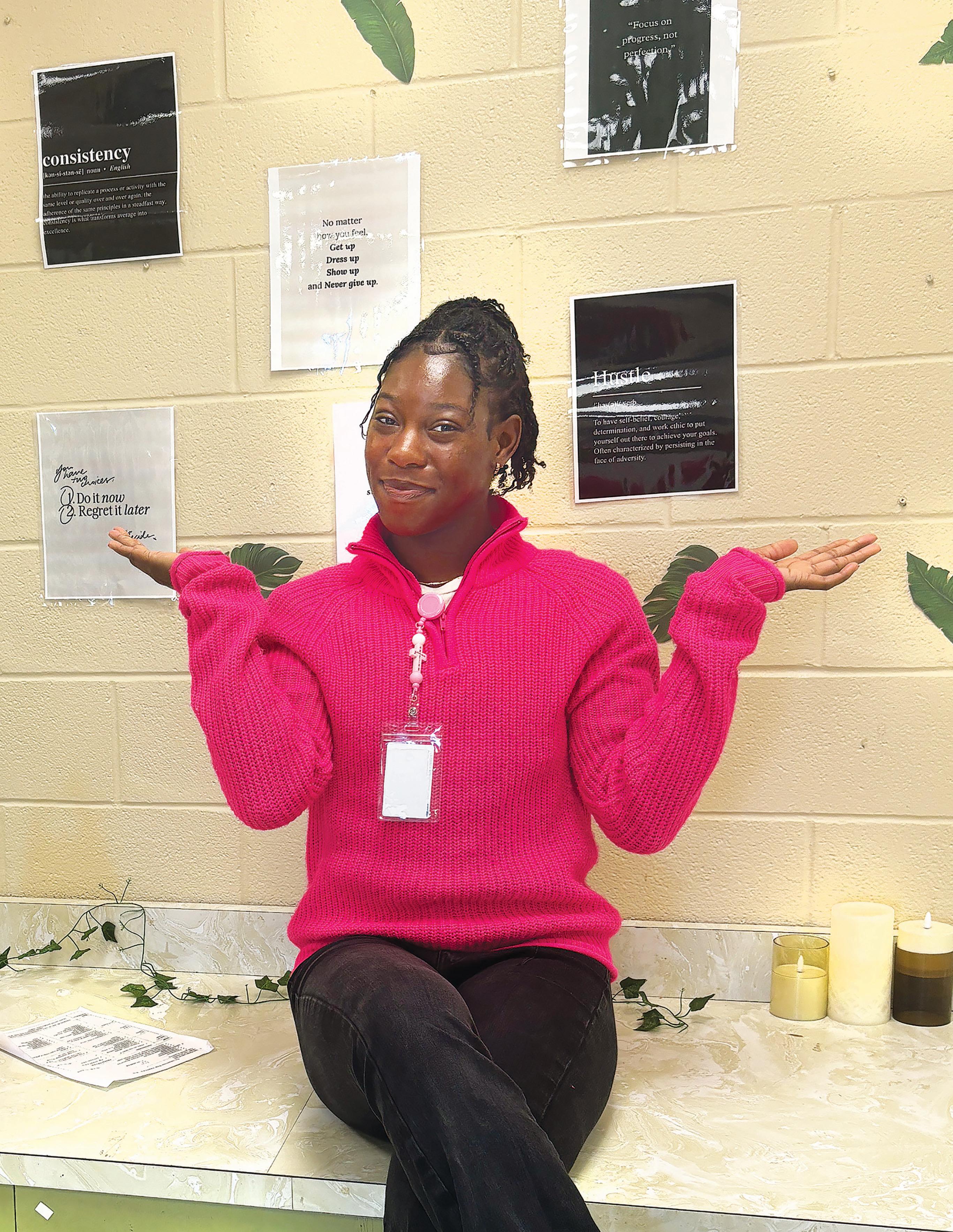
James is dressed in a hot pink cardigan, complete with a bubble gum teacher's badge and a pink cross necklace, paired with blousy bottoms to match her coal-colored low-top Ugg boots.
James and virtual lab teacher Alexia Bryant apparently had to help break up a heated fight in James’s classroom yesterday.
One of her white female students said the N word, which caused an aggressive dispute between her and four black students. Bryant happened to be in the class helping James with a technical issue, so she joined James to separate the fighting group.
James is an elective teacher for three periods at Ayden-Grifton, teaching Early Childhood Development and Interior Design, neither of which she pursued for her degree from East Carolina University.
James was hired a couple of weeks before the 202526 school year began and was given a temporary license to teach — no training or program required. She teaches 17 to 25 students in each class, a job she has while pursuing an online master's degree.
In 2025, James graduated with a bachelor's degree in communication, with a concentration in interpersonal/organizational communication, and is currently pursuing her master's in social work online.
Her temporary career path may not be unusual, given that James intends to help families and children access the right counseling, housing and resources, tailored to their specific situations,
through social work clinics in the future. She was previously working in a job caring for toddlers at Opendoor Church in Winterville.
As with many school districts across North Carolina, Pitt County Schools has experienced a significant loss of teachers, recently losing 12.7% of its staff during the 2024-25 academic year. To fill those losses, school districts today are often forced to reach beyond the declining number of people with education degrees. As a result, no longer is a teaching credential required to be hired as a teacher. An undergraduate degree in almost anything could get you hired.
At Ayden-Grifton, James is in one of the county’s smaller high schools, with around 735 students in grades 9–12 and about 45 faculty members, a 17:1 student-to-teacher ratio.
Starting the day with a booooooop!
At 7:46 a.m., James backs in her blue Mazda right outside the double doors of Ayden-Grifton, not too far away from Dr. Kirby Maness, the principal. School Administrative Assistant Kathy Rouse scans James's and the visitor’s IDs as James clocks in for the day.
James takes a deep breath as she walks away from the front desk into the school halls.
As she strolls through a hallway filled with beige and brown lockers, each one bearing a senior picture and the college attended by last year's graduates, she encounters another teacher along the way.
“Hey, I meant to talk to you, too!” James shouts, describing a problematic student they share. “He is still watching football in my class and is hanging around those boys again. I get it's his senior year, but he is still unfocused,” she explains.
She goes on about how the student is a phenomenal athlete close to graduation, but the crowd he hangs around is negatively affecting him and his grades.
The teacher pulls the boy out of her own homeroom and immediately sets him straight. The teacher also happens to be close friends with the boy’s mother and makes sure to remind him of that. The boy looks disappointed as he apologizes to them both and walks back into the classroom, dragging his Nike slides.
8:15 a.m. Booooooop!
This sound echoes throughout the entire building each time a class starts or changes throughout the day. For James, Fridays are usually chill days, review days or test days, depending on how much her students have covered throughout the week.
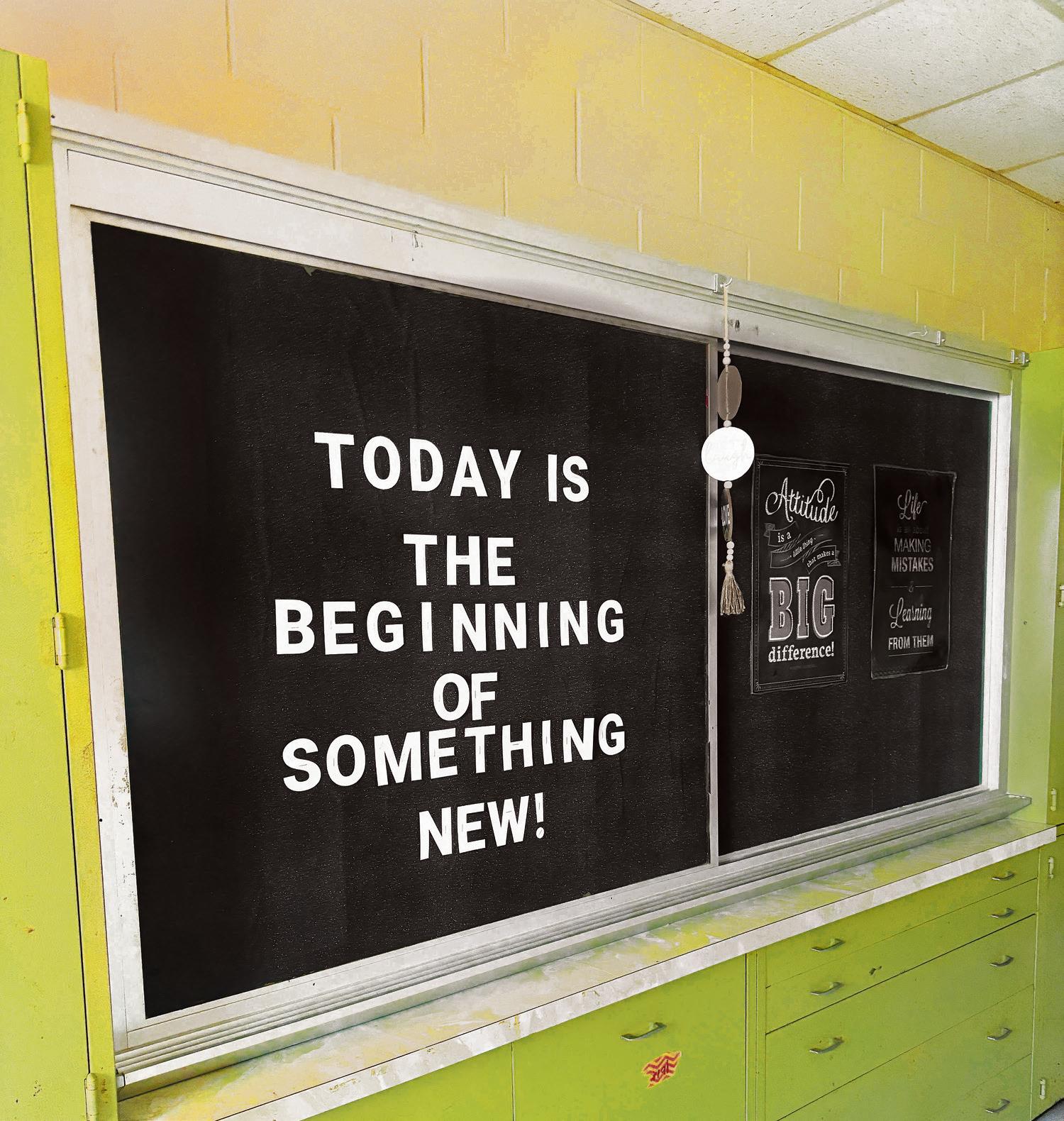
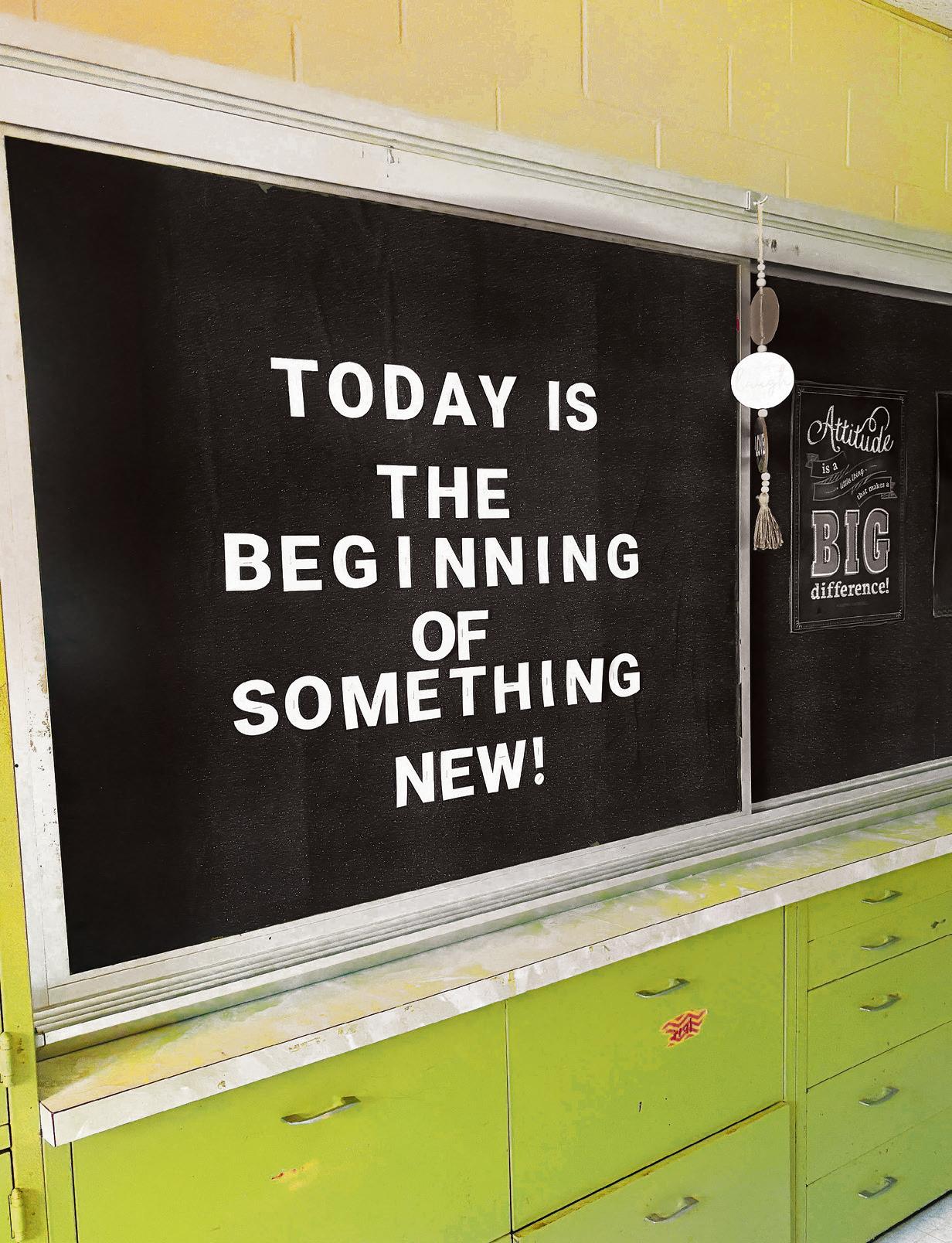
James bolts to her classroom door while curating some vibrant energy to greet students with her teaching bestie, 51-year-old Tiffany Crumpler. Together, they pass by a quote on the chalkboard that reads, "Today is the beginning of something new."
“Good morning!” James roars as a kid in all black and Crocs slides right past her without responding. After greeting more students in the hallway with Crumpler, James marches toward her desk.
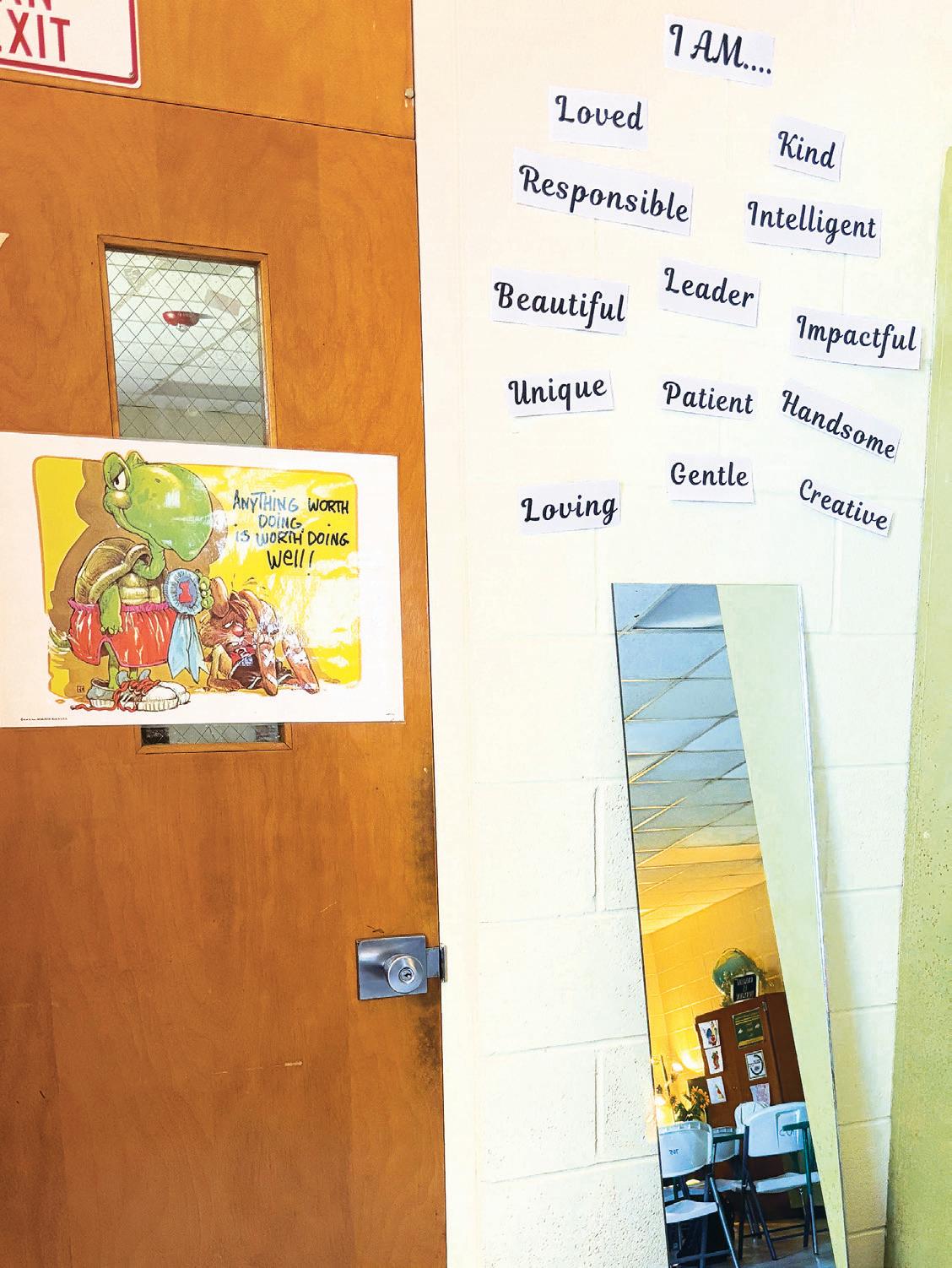
A long, narrow mirror sitting on fake grass and surrounded by words of encouragement seems to be the hot spot in her classroom. Many students immediately jet to the mirror to check their hair or take selfies under the words, “I am loved, kind, responsible, beautiful, intelligent, unique,” and other encouraging statements.
James then bounces from a projector to a laptop, struggling to get her Friday PowerPoint slides to load. Her first-block class is Early Childhood Development, and the students have journal prompts to complete.

“Ms. James, you forgot something!” hollers a student.
“What?” James responds as she shuffles through computer cords.
“I'm the Queen,” the student responds as they share a quick laugh before the student sits in her seat.
James later shares how this student makes her day with little jokes often left at her desk every morning.
“It's the little things like that that keep me at peace with this job, and she’s one of them. That's my girl,” James says.
The morning announcements overtake the horde of students talking as they all shuffle to their seats. The Pledge of Allegiance plays. A moment of silence follows, and students shuffle through their bookbags, completely ignoring the expectation. Not a single student stands for the pledge or stops their range of motion for the moment of silence.
Once the first period begins, minutes go by as James leaps from student to student to help them understand the depth of the journal prompts needed to be completed, and how to properly construct each paragraph.
James says that many of her students are on a thirdgrade reading and writing level. She has no new regimen when it comes to writing prompts — just simple grammar, spacing and spelling — but she still finds errors.
Meanwhile, hands spring up asking for extra credit after the students find out that they forgot today’s assignment due date. One student pulls out his concealer and pats his face while looking deep into his Chromebook camera as a mirror, unbothered by James’s instructions on the board. A student loudly questions James’ career choice, while another student follows up by questioning her age.
She ignores him and then shouts, “Y'all want music?" in an attempt to calm down the excited class.
“Not this old music,” a student immediately replies as the 2007 song “With You” by Chris Brown plays.
“I can turn it off, and you can listen to your thoughts?” James sarcastically snaps back.
She then grabs the laptop of a student who has been stuck on her paragraph assignment and types a few sentences to help her with the two-page paper students have to write for their journal prompt about the adolescent stage in childhood.
“This is just to help you start,” James tells her.
9:55 a.m. Booooooop!
The electronic “bell” echoes through the hall again, and a new group of students enters James's classroom for the second period class, Interior Design.
“Michella, come be a good slave, please,” a student jokingly says as she enters James's room with her friend, not realizing James is behind her and hears the joke.
The student's face sinks as she takes in James's glare.
“I'm sorry! I'll write five sentences,” she begs. “One word each!”
“Girl, that's not even a sentence,” her friend snorts, as James leads them back to their seats.
After greeting another round of students, James shuts the door, holding a yellow bucket filled with a plethora of board games. The class has a free period today until lunch. As she asks them to remain seated and quiet, she tells the students that today will be a chill day before their vocabulary test after lunch.
Not even two minutes after this instruction, three girls pull out a tiny hot pink Ping-Pong table from one of the girls' bags. Other students rally around for the mobile game Heads Up, while others circle for an Uno game.
James drags herself back to her desk to catch up on graduate school homework while the students play games. As James balances homework and constant calls from the office, the classroom echoes with talk.
“Ms. James, you heard she is trying to have a teen pregnancy!"
“Boy, you keep rushing me to draw a card!”
“Y'all seen that stud singing at the funeral?"
“Omg, she cannot sing!”
“Wait, we can't post that TikTok. Disten might see it and look at me!”
“Michael, how many days have you gone without a bath?”
10:35 a.m. Booooooop!
The students dismiss for lunch, and James enters her planning period.
As the class vacates the room, James juggles grad schoolwork, lesson plans, emails, and does the programming needed for her fourth period on the computerized “infant simulator” dolls students use in their Child Development class.
Those students will soon have to bring home the computerized “babies” for a week and be graded on how well they each took care of their assigned child.
Throughout the period, James makes “baby bags” containing toy bottles, diapers and clothes, while
programming each one. She spends her planning period reading manuals and watching tutorials, trying to program the plastic babies, using her PC with an AC cord attached to each doll to beta-test them. The beta test includes a series of burping, crying and baby noises to bring realism to each doll.
The student who called herself the queen earlier enters the room as James starts loading the dolls into their plastic car seats.
“They had no good breakfast or lunch today, Ms. James,” the student proclaims as she hands James a cafeteria tray with strawberry yogurt, graham crackers, milk and a strawberry Pop-Tart.
James rarely has time to eat because of her loaded schedule, and her students tend to bring her meals or snacks from the cafeteria to get her through the day.
“Beggers can't be choosers,” James responds, adding a thank you.
12:15 p.m. Booooooop!
The Interior Design students return from lunch.
“Ethan, get your foot off my desk, " James orders as she walks around with a yellow bucket collecting cell phones before a test. “Everyone, silence your phones and place them in this bucket as I make my rounds!”
“Rico, can you tell her for me, please?” James asks one student. James wants him to translate her instructions to his girlfriend, who only speaks Spanish.
Rico translates in Spanish for his girlfriend while holding his arm over her shoulders.
The girl pulls out her phone and gently places it in the bucket.
James writes a test code for the digital vocabulary test on a whiteboard, only for her students to remind her that her 5’s look like S’s. But moments later, the students have no access to the test.
James paces from a student's computer back to her desktop to try to figure out the problem, then calls in Tyler Pulley, the school's Career and Technical Education Business Teacher, to help reboot the system.
The students' conversations overlap with James’s train of thought as she urges them to be quiet.
“Is this your first year teaching, Ms. James?”
“My dad won't let me go to my mom's this weekend. Isn't that illegal because of the court?”
“My mom actually beat me and took my phone.”
”I was bullet-shot high off of Halloween candy.”
“Maybe you should get a tan!”
“I don't want to look like Donald Trump.”
“It goes by, man. I remember being a freshman just minutes ago.”
“Wait, so you have to work a real job now, Rico?”
“Man, I've been working before I was a freshman.”
“What do you even do at home, Ivory?”
“Your mom.”
“Can you all please get in groups of three? We're just going to play Booklet to review and push the test back to another day,” James says, following a deep sigh. Booklet is a gaming platform used to help students review and study.
“I'm already in a group,” a student with wide glasses snaps back. “Me, myself and I!”
Classes change again, and James tiredly greets the incoming students from her desk this time.
It's her last Child Development class of the day. Her body slouches back in her chair.
Moments after all the kids are somewhat in their seats, James steps out to visit the guidance counselor as Ms. Crumpler, her teaching bestie, comes in to watch the class for a bit.

A student with wavy hair and braces looks at a visitor and says, "Don't become a high school teacher. It's a nightmare,” then continues to scroll on TikTok.
James returns, announcing yet another technology challenge to her day.
“Ok, so we're going to have a chill day because of a bunch of malfunctions on my end. Just join the Booklet and don't touch the babies in the back — I'm still working on them,” James says, referring to the dolls she's been learning how to program throughout the day.
James drags herself back to finish demo-testing the dolls. One is crying loudly while the other connects to her laptop, surrounded by baby bags and baby bottles. The students have also ditched the Booklet review game and started their own conversations.
“Ouu, Kenny called you a bottom!” shouts a girl with a high bun and a hoodie from far across the room. A bottom is a sexual term used in the LGBTQ+ community.
“Tuh, I can promise you I don’t get texts like I’m a bottom,” a guy claps back as he fixes his blue hair and rolls his eyes.
Meanwhile, another student leaves her desk to touch the dolls as James continues to run them through her PC. James doesn't even budge to tell the student to sit down this time.
“Don't you want kids, Ms. James?” the student asks. She looks at her students and lets out a slight chuckle. “Yeah.”
“Smash!” A student shouts randomly with a group of students surrounding one laptop.
James balances on her tiptoes, trying to reach the black and red car seats from a cabinet, and then “Smash!” another student shouts across the classroom. The phone
•includes 40 schools and about 24,500 students
source: pitt.k12.nc.us
•four-year graduation rate: 85.5%
source: pitt.k12.nc.us
•student-to-teacher ratio: 16:1; slightly higher than the state average
source: publicschoolreview.com
•average amount spent per student: $13,389
source: nces.ed.gov
•high school students who tested at or above the proficient level for reading and math: 62%, 53%, respectively
source: usnews.com/education
This was actually the best day I've had all week, and that says a lot in itself.
then rings, and James hops from her stepstool and scurries to her desk to answer another call from the office.
“Smashhhhhh!!” The group of students hollers the slang term at each other as they share a loud laugh across the classroom. They're looking at “Lord Farquaad” from the Shrek movie in a YouTube video on a student's laptop.
•multiple disruptions
•tech failures
•little time for lunch
•keeping students focused •exhaustion by afternoon
After James' classes are over, she is asked what she learned this first year as a teacher to prepare for another.
“Who said I'll be here next year? I don't even know if I'll be here next semester,” she says, chuckling. “I truly can't answer that right now.”
She has, however, appreciated “the extended family I've been able to grasp being here,” she explains. “The hardest part is trying to teach these students these subjects while trying to learn them myself and adapting to this new generation. They themselves expose me to something new every day.”
James says she has grown to love her students, especially their many differences. Yet, teaching can be “a lot.”
“You can only control what you can control,” James says. “This was actually the best day I've had all week, and that says a lot in itself.” n
Jaelyn Green is a communication major from Chesapeake, Virginia, who will graduate in Spring 2027. His postgraduation plans include commissioning into the Air Force as an officer in public affairs. His interests include music, nature, praying, dancing and creating.

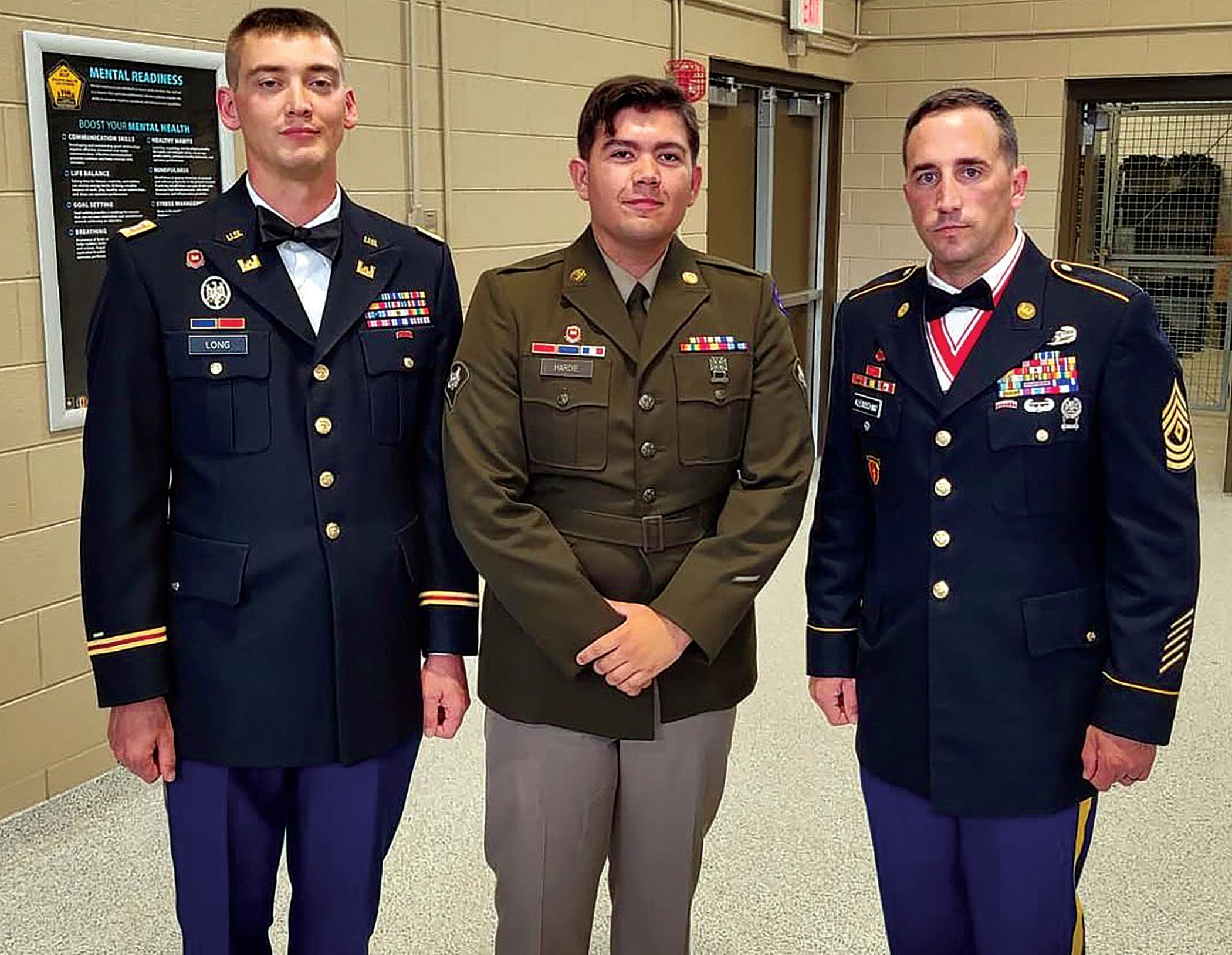
Josh Hardie has been in the Army National Guard for three years.
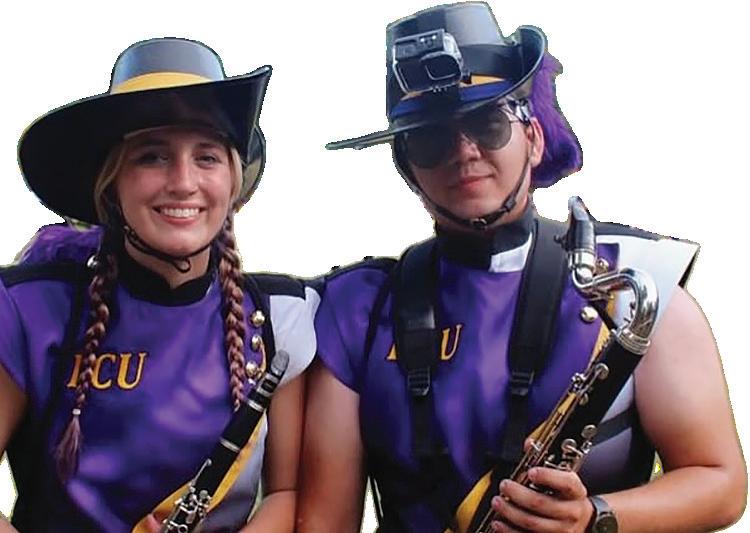
Combining that responsibility with being a computer science major and playing clarinet may seem daunting to others. But, for Hardie, it's all part of being a Pirate.


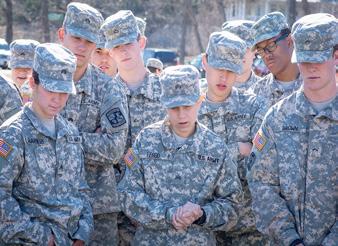
It’s 4:30 a.m. on Nov. 13. Most of campus is sound asleep, but Josh Hardie wakes up and puts on his Operational Camouflage Patterned uniform. The uniform is a mix of soft greens, browns and tans designed to blend into almost every environment. The jacket and pants smell of Tide detergent as he washed the uniform the night before, squeezing in laundry while finishing up some math homework.
“I usually try and wash it once or twice a week,” Josh says. “It really just depends on the time I get home, because late-night is the only time I have to do laundry.”
Josh grew up in a North Carolina town so small, he says, “you could miss it with a blink.” Then he came to East Carolina University to take a leap and chase his dreams, and now he’s chasing three at once. Between ROTC drills, marching band rehearsals and the challenge of being a computer science major, he’s just trying to hold it all together.
Josh joined ECU’s Army ROTC program during his first year at ECU. This came following a gap year after high school, which he used to join the Army National Guard. While there, he went through Basic Combat Training and Advanced Individual Training, which is the specialized schooling that soldiers go through after they get through basic.
A look at Josh's schedule on a typical day:
5 a.m. — PT
~7:30 a.m. — nap
11 a.m. — algebra class
1 p.m. — band rehearsal
2 p.m. — ROTC class
6 p.m. — dinner
7 p.m. — pep band
10:30 p.m. — more than 18 hours after waking up, it's bedtime

There wasn’t one singular moment that made Josh realize the military was something that he wanted to do long-term. It was a culmination of things.
Josh’s grandfather served in the Air Force as an airplane mechanic during the Vietnam War, which propelled Josh to join.
“He always talked highly of it,” Josh said, “and that made me think that one day I would want to serve.”
Josh also wanted to help people, and that was a big reason he enlisted. In Fall 2024, he helped with the rebuilding after Hurricane Helene devastated the Asheville region.
“I did what I set out to do, and I’m very grateful for that experience,” he recalled. “It taught me a major lesson in that ‘someone always has it worse,’ and I believe that’s an important mindset to keep. So I constantly remind myself of that.”
Josh is still in the Guard, but is looking for more.
“Now I’m seeing that I want to help myself with my own career and my own future by using my benefits to get a college degree.”
His long-term goal is to commission into the Army as an officer after graduation in 2028. He hopes to work in cyber security — a path that will allow the opportunity to blend his computer science degree with a military career.
It’s pitch-black outside with a chill in the air when Josh arrives at PT by 5 a.m. sharp, looking visibly tired with noticeable eye bags underneath his hazel eyes. As he’s stretching, his squad leader, Jason Loy, walks up and asks, “Did you get much sleep last night?”
“Not much,” Josh admits, yawning. “I stayed up late finishing a math assignment and doing some laundry.”
Jason nods. “Well, I’m glad you’re here.”
PT isn’t mandatory for every cadet, unless they’re commissioning, and Josh is in line to commission in spring 2026. So, for him, PT is a mandatory event three times a week if he wants to stay on track in the program and commission as a U.S. Army officer.
Josh has been in the Army National Guard for three years, and Jason, the squad leader, says it shows.
“I like to say he’s a natural-born leader,” Jason says. “He’s always making sure the other cadets are in order and in the right position, whether that’s as a cadet or a student.”
Once, Josh showed up at the Army Combat Fitness Test to cheer on a struggling cadet, James Rippe Jr., who needed to pass the test to stay in the program. Before James began running, Josh decided to run beside him to help him get to the finish line in time. James went on to pass the fitness test to remain in the Army ROTC program.
“It meant the world to me,” James recalled. “Just for him to run with me and motivate me to the finish line. I don’t think I would’ve done it without him.”
Josh had already passed the test the week prior, while James failed it that same day and had to take it over again.
Josh Hardie and Sarah Stratton stand on the practice field before their game day performance.
photo by Landen Garner

Back at PT, the rest of the squad lines up in formation, their boots kicking up the gravel at ECU’s North Recreational Complex with every step.
Josh locks in. This is a routine he’s been through hundreds of times, but each time he takes it seriously. The cadences crack through the cold morning air as the sun slowly rises. It’s a cold morning with around 30 cadets gathered in the field. Each exhale of breath hits the early morning air like smoke exiting a grill.
By 7 a.m., when PT wraps up, the sky trades its pitch-black color for a soft orange glow. Josh makes his way back to his apartment, where he steals an extra few hours of sleep, knowing he won’t get home until late.
Three hours later,
he’s up again. He trades his raggedy T-shirt and basketball shorts for jeans and a hoodie, grabs his backpack, heads out the door and catches the bus to campus for his 11 a.m. College Algebra class.
Josh meets up with his girlfriend, Sarah Stratton, where the bus drops him off outside Christenbury Memorial Gym. As they walk to their respective classes, Josh talks about what thoughts are piling up in his mind.
“Today is going to be such a long day,” he says. “Between classes, rehearsals for the game on Saturday and the basketball game tonight, I’m just slammed.”
Before they split, Sarah gives him a nudge on the elbow and leaves him with a parting smile.
“Math is the one class he worries about the most,” she says. “He needs it for his major, so he’s taking it seriously. I keep telling him that he’s got it, but he never
believes it. When he gets stressed, he usually takes a step back by doing something he enjoys, like playing Fortnite with his friends.”
This semester, though, Josh doesn’t have much time for that.
“It sucks, but they’ve come to the point where they understand that I just have so much going on,” he says. “I really hope after finals settle down that I get to do that again.”
A schedule this busy might sound productive, but according to Hillary Liles, the assistant director/ prevention coordinator at ECU’s Center for Counseling and Student Development, there are two sides to a busy schedule.
“What one person deems as a ‘busy’ schedule may not be busy for another person,” she explains. “Some people thrive, but some people feel overwhelmed.”
If a student has taken on too much and feels stressed, her advice would be to evaluate
what coping strategies they are using to manage stress, if any: “As a clinical social worker, I would always encourage a student to seek support.”
Josh, however, is doing fine. So fine that within a few weeks he will add a job at Red Robin restaurant.
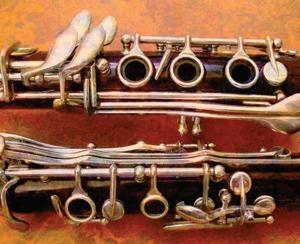
College Algebra runs long, and by the time Josh leaves, he doesn’t have time to grab food. He heads straight to his 1 p.m. symphonic band rehearsal with his bass clarinet in hand.
Long ago, he tried nearly every band instrument before finally landing on the bass clarinet, something he has played since middle school.
“It was the perfect fit,” Josh says. “I started playing it and couldn’t stop… clearly,” he adds, chuckling.
As the rehearsal wraps, he gets back into uniform and heads to his 2 p.m. ROTC class, muttering, “It’s never-ending,” with a slight smile.
Each Tuesday and Thursday, Josh has PT in the morning and a 2 p.m. Small Unit Leadership class. On Wednesday, there is PT in the morning, and a threehour afternoon ROTC lab, where students practice tactical strategies that they would use in the Army.
By the time Josh is out of class for the day, it is already 6 p.m. He grabs a bite to eat at Todd Dining Hall: chicken parmesan and buttery noodles, and his
a
He
— he’s in yet another time crunch to get to the basketball game before the 7 p.m. tip-off.
As Josh rushes to Minges Coliseum, he glances at his watch. 6:42. “I’ll make it, but I won’t have too much time to warm up.”
Josh isn’t supposed to even play with the pep band tonight, but someone backed out last minute, and the band needed a fill-in.
“I’d prefer to do the pep band for the men’s team, but I’ve been doing it for the women’s team so far,” he says. “I just love music; I’ll take any opportunity I can to play my bass clarinet.”
Josh arrives at Minges at 6:52, and as he is walking in, runs into his roommate, Bryson Monroe, who tells him he looks tired.
“Man, I am,” Josh admits. “It’s been a long one for sure, but it’s just another Thursday for me.”
Bryson nods. He knows the challenges — he’s a computer science major, too.
Computer Science is an intensive major at ECU, with courses such as “Computational Linear Algebra” and “Automata & Complexity.” Yet, the department awards nearly 100 bachelor’s degrees yearly.
Janie Goddard advises Joshua in his computer
I wouldn’t imagine myself doing anything else. I love music, I love the Army, and I love being a Pirate.
science degree pathway and worries that he might become overwhelmed carrying such a heavy workload.
“When students have an additional minor or ROTC requirements, they will most likely delay their graduation,” she said.
Back at the game, Bryson and Josh head through opposite doors — Bryson to the student section, and Josh to join the band behind the hoop. He reaches the band just in
time to assemble his bass clarinet before the lights dim and the PA announcer introduces the starting lineup for Elizabeth City State University, followed by the starting lineup for the Pirates.
Back in the student section, Bryson looks toward the band and says, “I don’t know how he does it. With the computer science coursework, I’m stressed to no end, but Josh just puts a smile on his face, and it feels like he’s everywhere at one time.”
The Pirates win the tip, and a decently packed crowd in Minges Coliseum gets loud. Josh doesn’t miss a beat. He’s been in this exact position many times before, and he loves it. As the game winds down, and the final buzzer nears, the crowd and the band get an extra pep in their step. The team feeds off that energy and wins a close one, 72-71.
After the game, Josh walks outside the coliseum into the cool night breeze. He takes a second to soak in the moment and describe his busy student life.
“I wouldn’t imagine myself doing anything else. I love music, I love the Army, and I love being a Pirate,” he says, smiling.
It’s been a long and stressful day, but it’s almost over. When Josh makes it back to his apartment, he unlocks his bedroom door, puts the backpack next to his desk, grabs a towel and heads to the bathroom for a shower.
“Much needed, after the day I’ve had,” he jokes. It’s 10:30 p.m.
Josh’s day started at 4:30 a.m., and more than 18 hours later he’s in bed.
And tomorrow, he’ll do it again. n
Trent Kaeding, of Fuquay-Varina, North Carolina, just completed his junior year at ECU. He is a communication major who hopes to pursue a career in sports media.
Consider a degree in Communication with a concentration in Journalism.
The journalism concentration is designed to teach students how to obtain and verify information to produce an accurate, comprehensive, concise and easy-to-understand written and broadcast message. Journalism students are in a program of study that encompasses a variety of professional skills needed to compete for today's mass media jobs. Coursework focuses on reporting, broadcast, editing and producing.
Potential careers in journalism include the following:
•News Anchor
•Multimedia Journalist
•Digital Content Manager
•News Producer
•Web Producer

•Director •Reporter •Copy Editor •Editor
•Assignment Editor
•Video Editor •Entrepreneurial Journalist
•Freelance Journalist
•Magazine Writer
•Digital Media Manager
Visit communication.ecu.edu for more information.
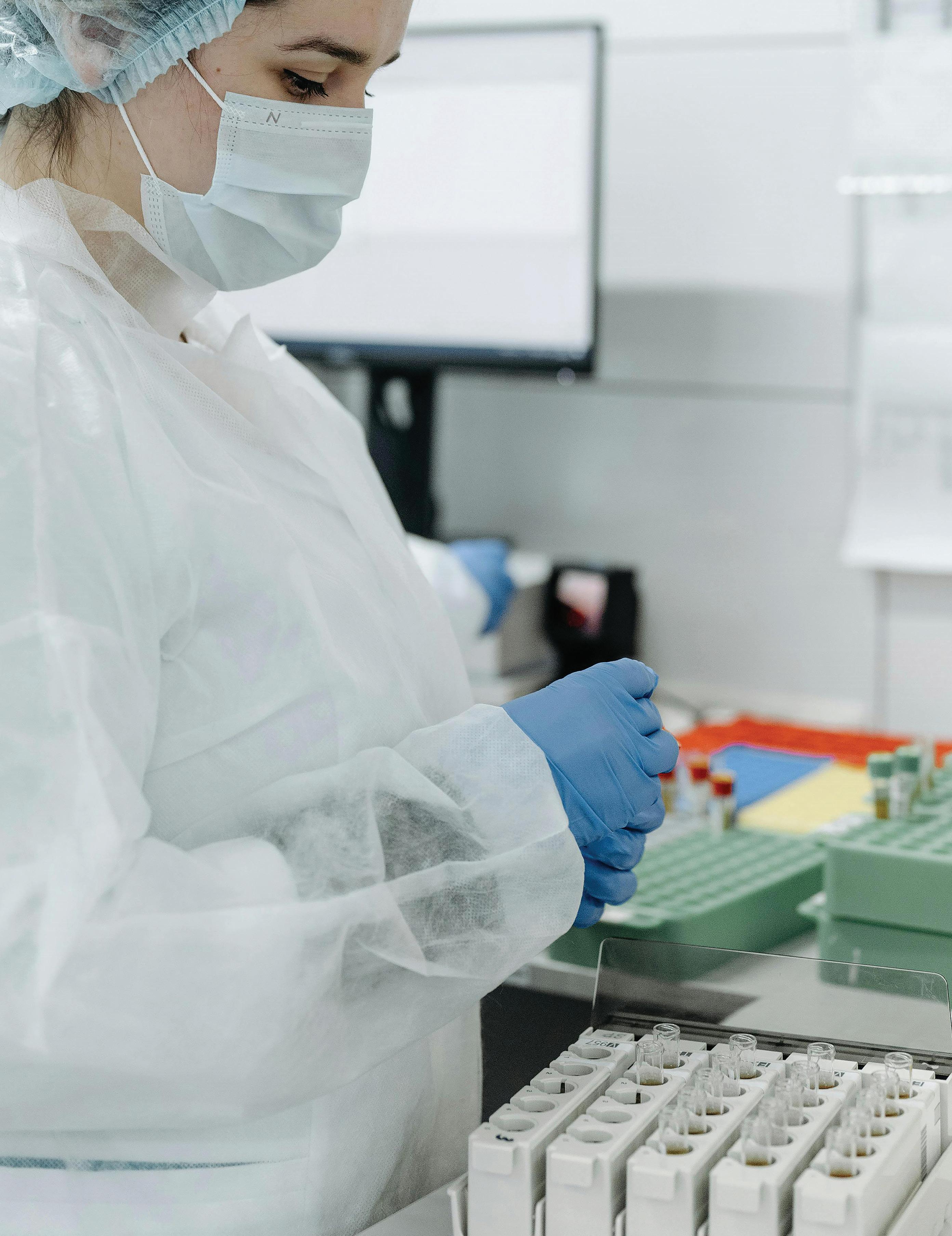
Greenville’s plasma donation center fills quickly with donors on most mornings — some for financial relief, others to help save lives of people they’ll never meet.
Before 7 a.m., when the Grifols Biomat plasma donation center opens, there’s a line of people waiting outside. One man smokes as he waits for the doors to open, while others pace around in the chilly November morning air. Many of the people standing in line arrive with more than just an appointment on their mind. Soon the doors open and the waiting room fills quickly. Music plays from speakers in the ceiling as donors sit and wait for their name to be called to donate plasma. Once inside, donors are separated by experience. Returning donors sit in the middle of the waiting room, while new donors have a special seating area along the wall beneath a New Donors sign. Returning donors have an easy check-in process because their information is already in the computer system, and their blood has already been tested to rule out any infectious diseases. New donors have a much longer process. They must answer 70 questions before their blood gets tested to make sure it is suitable for plasma to be extracted and safe for it to be used by the 150,000 people in the U.S. who are treated with donated plasma every year.
Temperatures are taken at check-in, and a low fever will defer a donor for one or two days, while a high-grade fever will defer a donor for two weeks in case they have Covid-19.

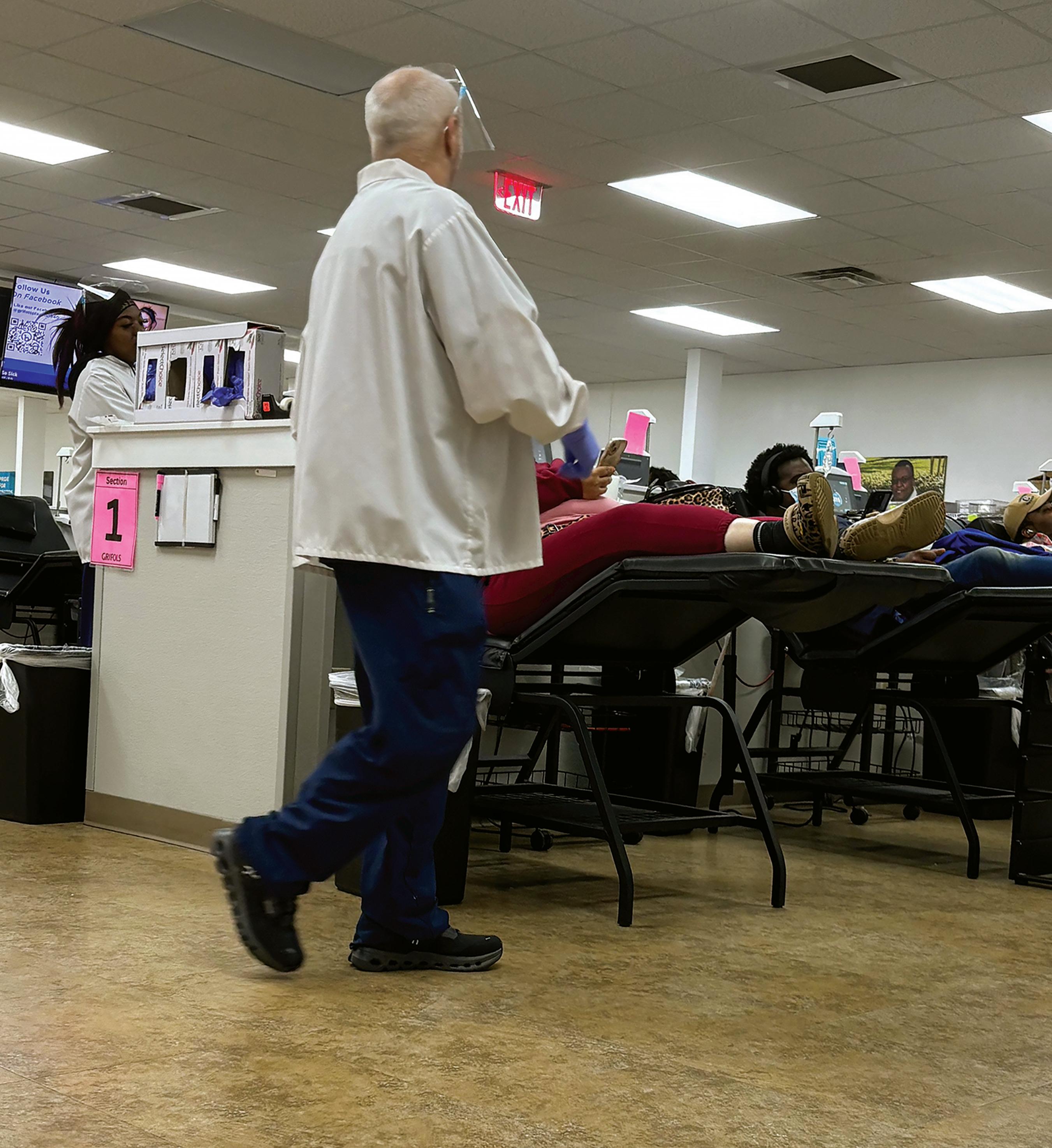
Chairs elevate donors' feet while they give plasma. Some scroll on their phones, while others chat with each other.
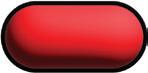
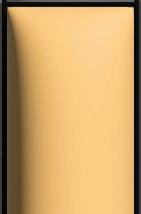
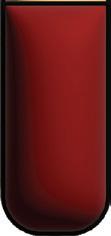
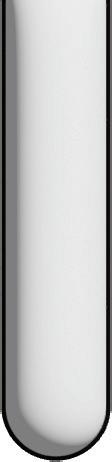
•Plasma is the liquid portion of blood.
•About 55% of our blood is plasma.
•The remaining 45% are red blood cells, white blood cells and platelets.
•Helps maintain blood pressure
•Supplies proteins for blood clotting and immunity
•Carries electrolytes to muscles
•Helps maintain a proper pH balance, which supports cell function
The list of those who benefit from plasma includes:
•Trauma, burn and shock patients
•People with severe liver disease
•People with immune deficiencies and bleeding disorders

Israel Harel sits at the new donor check-in desk to ask the new donors those 70 questions after they read a 20-page binder with information about donating plasma. During the government shutdown, when food stamp benefits were paused, he noticed more people coming to donate.
Beatriz Castro, a phlebotomist for Grifols, also saw the government’s shutdown effect when she had to turn down a man who came into the plasma center to try to donate but didn’t meet all of the requirements. The man begged to still be able to donate so he could earn money to get by, but he still had to be denied. He wasn’t the only such case. Castro
said she overheard many donors talk about how donating plasma for $60 a visit was the only reason they were making ends meet.
Castro says she sees everyone from pediatricians to veterans to the homeless donating plasma. From her experience, “It’s those who struggle financially who are nicer than those who are well off. I had a homeless guy donate regularly, and one day he overheard me say that I was hungry, and he left and came back with some trail mix from the store for me.”
For many donors, the 30- to 90-minute time commitment is



source: redcrossblood.org
balanced by the compensation. Technically, donors aren’t paid for their plasma but for their time, according to the website for Grifols, a multinational company that develops medicines from plasma and operates the Greenville center. How much plasma is extracted depends on the donor’s height and weight. New donors can make $150 from their first two donations, and returning donors then make $30 to $60 per donation. An extra $100 can be made by referring a friend to donate, with an additional financial reward after their friend’s second donation.
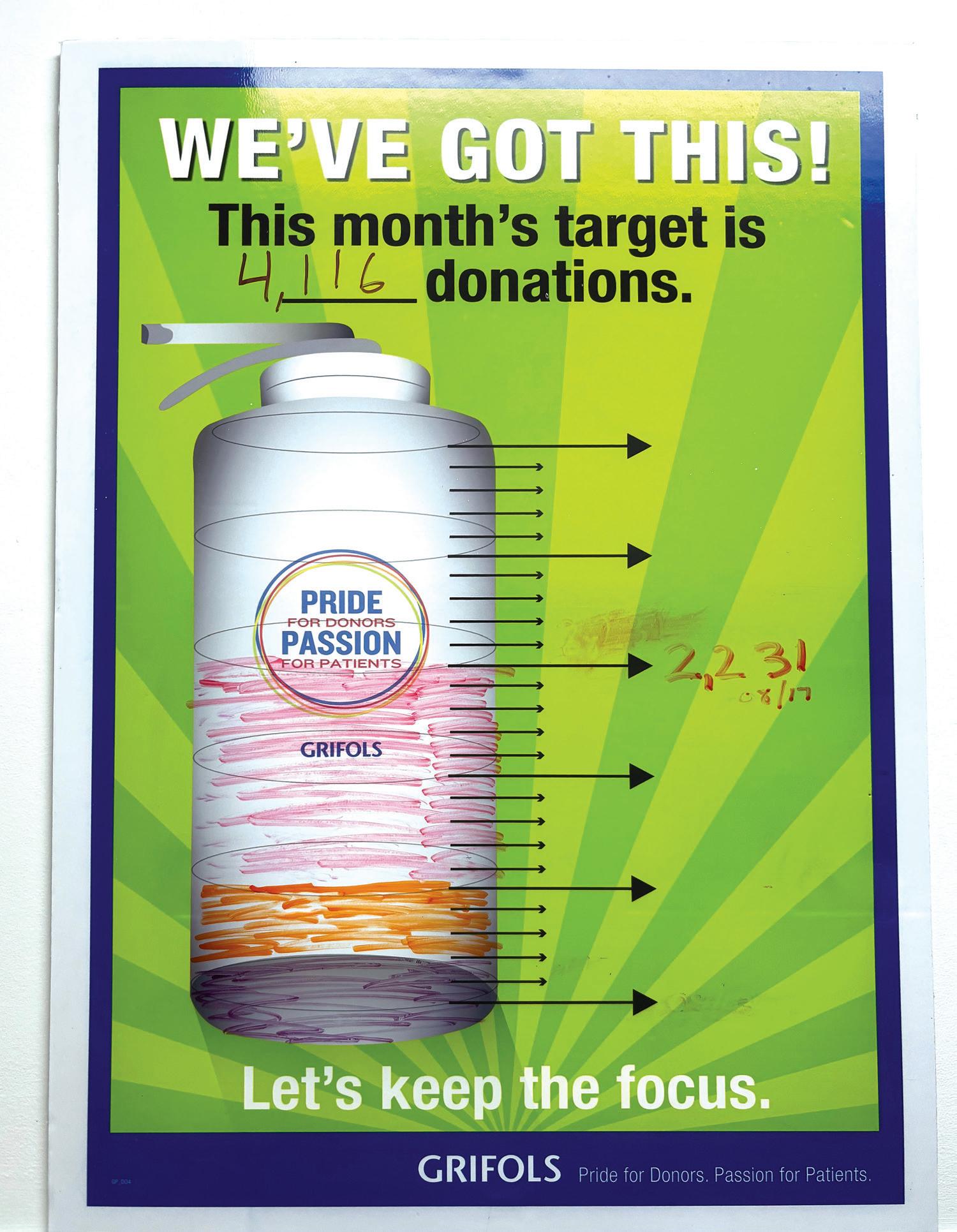
The 30 donation chairs elevate each donor’s feet while donors give plasma. Some scroll on their phones, while others talk to the donors around them. Phlebotomists have a 1 to 6 donor ratio, so one phlebotomist can watch up to six people giving plasma at a time. Castro, one of the Grifols phlebotomists, says the Greenville center has around 150 donors on a busy day, and about 70 on a slow day. Others say a busy day has more than 170 donors. In any case, Castro says it is rare for the waiting room to ever be empty. Another phlebotomist notes that the number of people sitting in the waiting room may dwindle down but will fill right back up. “The floor,” as all the employees call it, is behind the check-in desks.
Most donors are in sweatshirts on this cold November day, with just one arm out for the collection process. One returning donor winces as the needle enters into his arm to start the process. All collections are taken from the crease on the inside of the elbow, and donors are allowed to pick which arm the needle goes into. The machines hum as phlebotomists move from chair to chair, checking vitals. Castro says she began donating her own plasma before she started working at Grifols, so she uses her experience to soothe nervous donors and let them know it is rare for anything to go wrong.
Larry Cannon, the operations supervisor at Grifols, keeps Grifols' atmosphere bright, saying, “If I won the lottery, I would still come to work because I love my job.”
Cannon knows many of the regular donors by name and says it is his top priority to make sure everyone feels comfortable, whether that is his staff or the donors.
He greets new donors with: “Thank you for saving a life.”
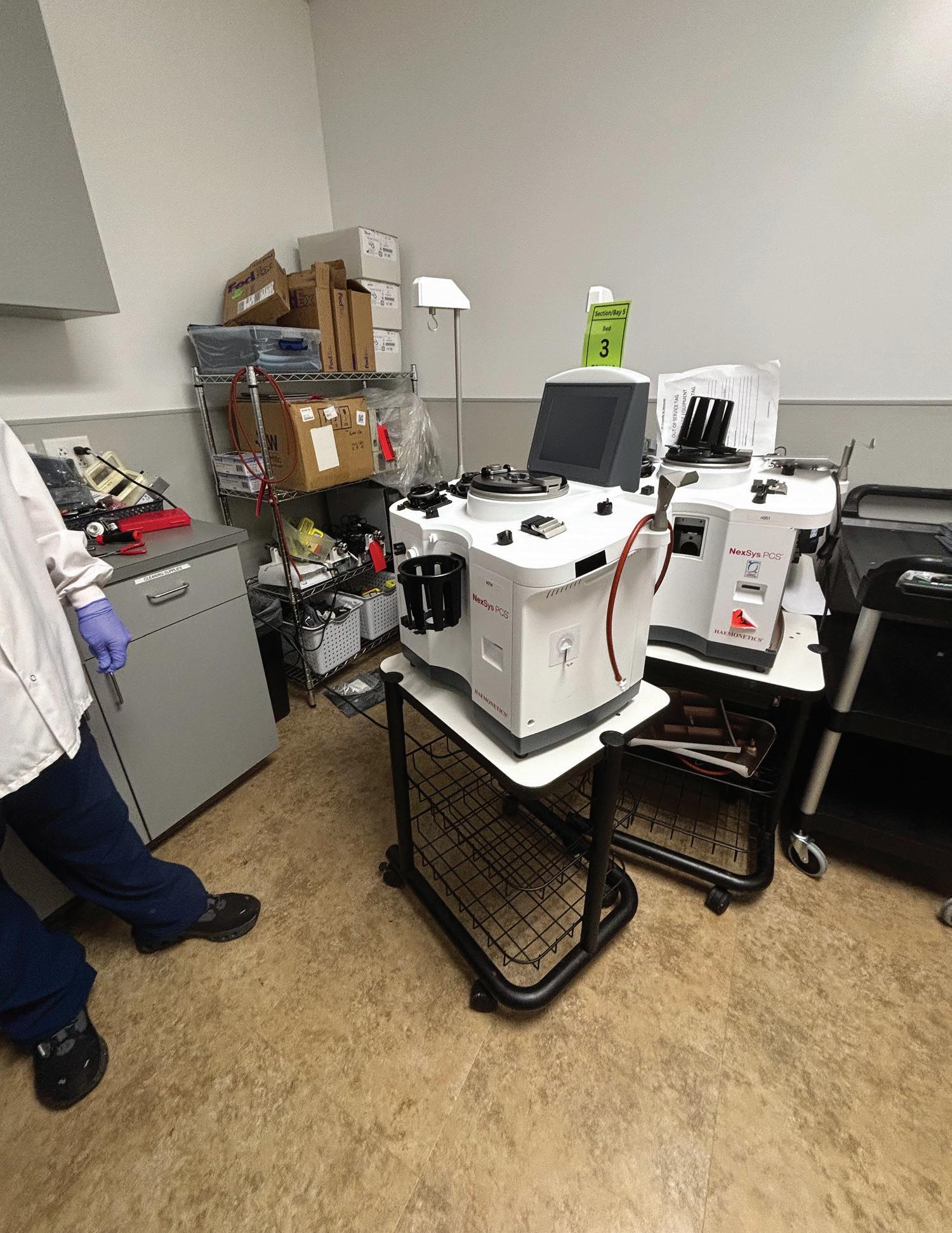
The donation process is both precise and controlled. Each donor is met with a 16-gauge needle, which is bigger than the typical 21-gauge needle used to draw blood. The blood flows from the needle through a tube into what’s called a plasmapheresis machine. A drop of blood contains 55% plasma, 44% red blood cells, and 1% white blood cells, but it must all be separated. To do this, the blood goes into a cylindrical centrifuge, which spins so the lightweight plasma rises to the top, and the heavier red and white blood cells fall to the bottom. Plasma consists of 92% water, 7% proteins and 1% other things, according to Grifols' website.
After this process, the plasma is separated into a smaller cylinder and the rest of the blood into a different cylinder, both of which continue to spin to keep
Two out-of-commission apheresis machines, the machine used to collect and separate plasma from the blood.
the blood from clotting. Then the donor’s blood is returned to them through the same two-way 16-gauge needle, along with a small bag of saline to replace the lost plasma.
The amount of plasma collected differs by the donor’s height and weight. It ends up in a plastic bottle that looks exactly like a clear squeeze bottle that holds ketchup at a restaurant, but bigger. All donors have their own bottle, which is taken to a window where the lab is located.
Each room in the plasma donation building is temperaturecontrolled with multiple thermometers in the rooms. It is colder in the lab because not one, but two doors open to the zerodegree freezer where the plasma is stored before being loaded on the truck and sent to Grifols Biomat East Coast headquarters in Clayton, North Carolina, within a day.
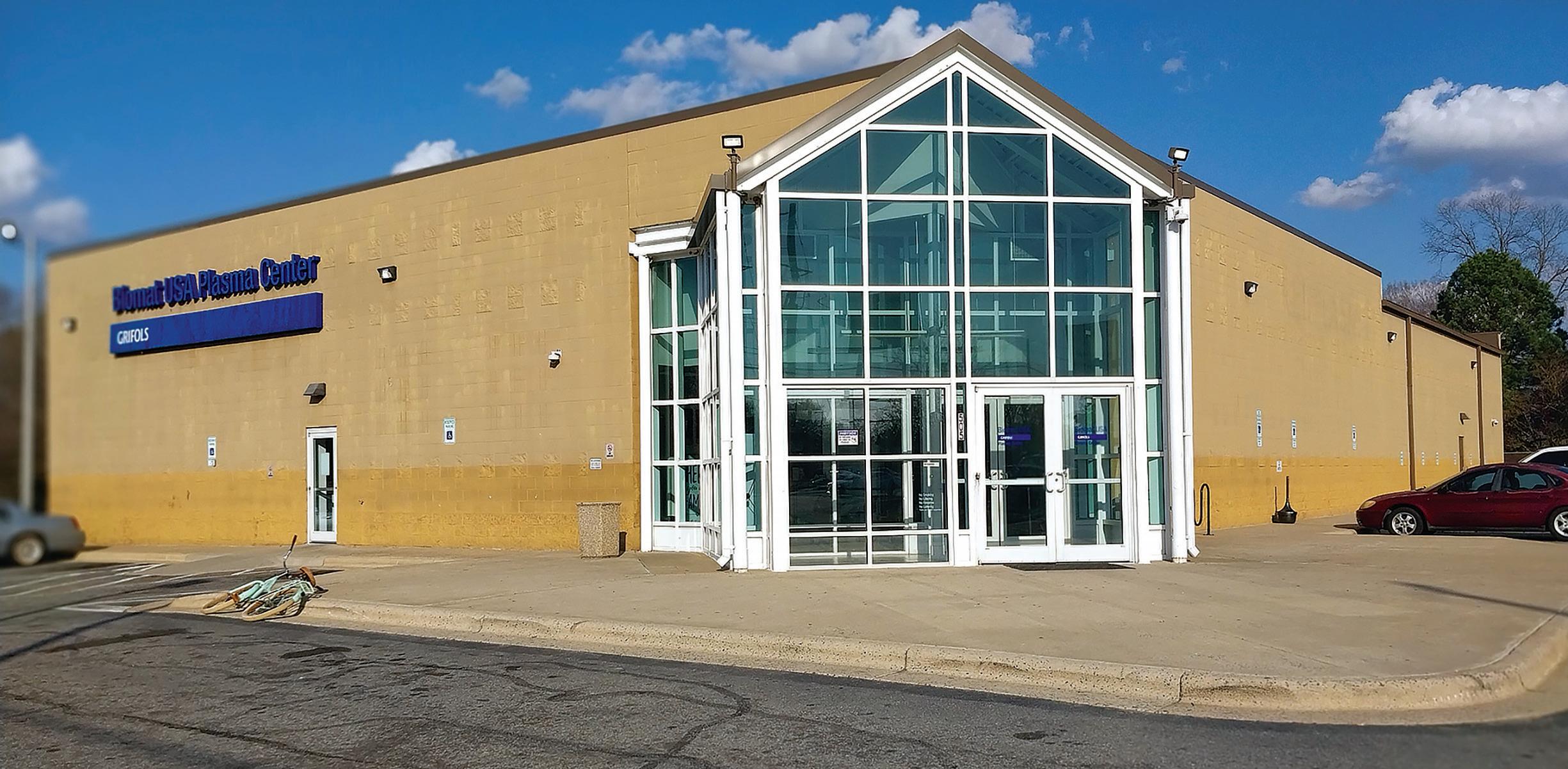
The Grifols Greenville donation center is just one part of a much larger plasma donation network extracting plasma from 20 million U.S. donors every year. Across North Carolina, there are 31 plasma donation centers in 16 cities, including two in Greenville. Nationwide, more than 2,600 plasma donation centers operated in the United States as of late 2025. Grifols operates one of the largest plasma collection networks in the country, with more than 300 donation centers nationwide and more than a dozen locations in North Carolina alone, according to Grifols' website.
Many people depend on medicine made from donated plasma. These medications treat serious conditions like breathing problems, bleeding disorders, low blood volume, weakened immune systems, antibody deficiencies, and RH disease in newborns.
Every donor is tested to see if their plasma can be used to treat RSV, a common respiratory infection. Some plasma may contain specific levels of certain antibodies required to manufacture immune globulins, and if a donor is eligible for this, they are asked if they want to participate in a program and commit to donating regularly.
The research usefulness of donated plasma does inspire some to donate. Kaliana Almonte, a sophomore at East Carolina University, started donating for money but kept going after learning her plasma can be used for research into fibromyalgia,
I’m a firm believer that everyone should donate if they’re in good health. It can be the difference between life or death for someone.
a condition she was diagnosed with when she was 16.
“I’m a firm believer that everyone should donate if they’re in good health,” Almonte said. “It can be the difference between life or death for someone.”
While Almonte cut back her frequent donations over her own health concerns, the act of giving plasma becomes part of a
weekly routine for many donors. Appointments are scheduled between classes, before work or early in the morning, before the rest of the day begins. Like Almonte, some donors come for financial relief, others for research and some simply because they can.
Inside Grifols, those reasons don’t matter. What matters is that the plasma collected here will leave Greenville, travel to Clayton, and eventually be turned into medicine for patients the donors will never meet.
The process is quiet, repetitive and controlled, but its impact reaches far beyond the room. n
Danielle Baugh is a double major in sports studies and communication with a concentration in journalism. After graduating in May 2026, she plans to work in sports broadcasting.
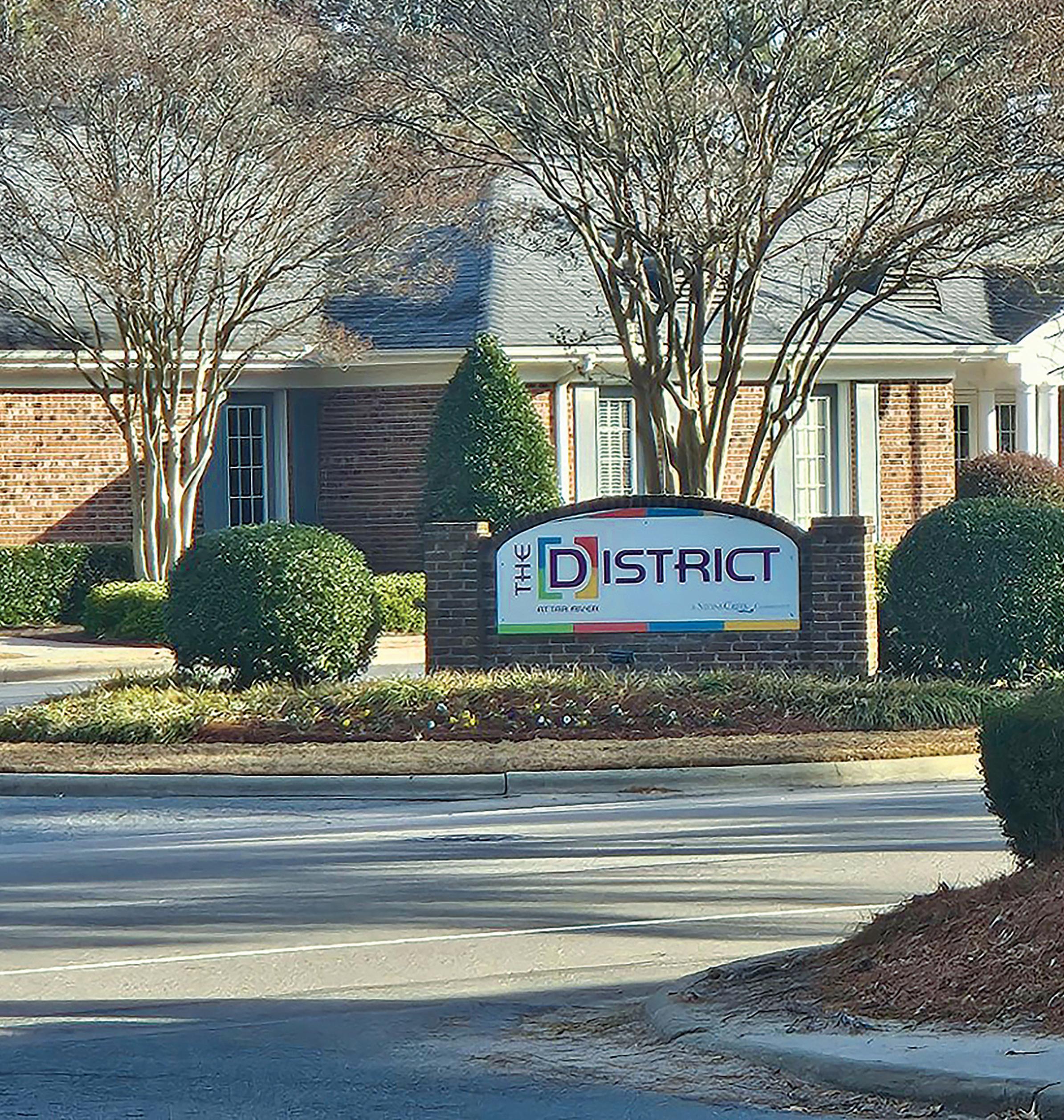
At District at Tar River, life unfolds in small, everyday moments. Students and longterm residents alike share tacos, casual encounters and conversations that turn an apartment complex into a close-knit community.
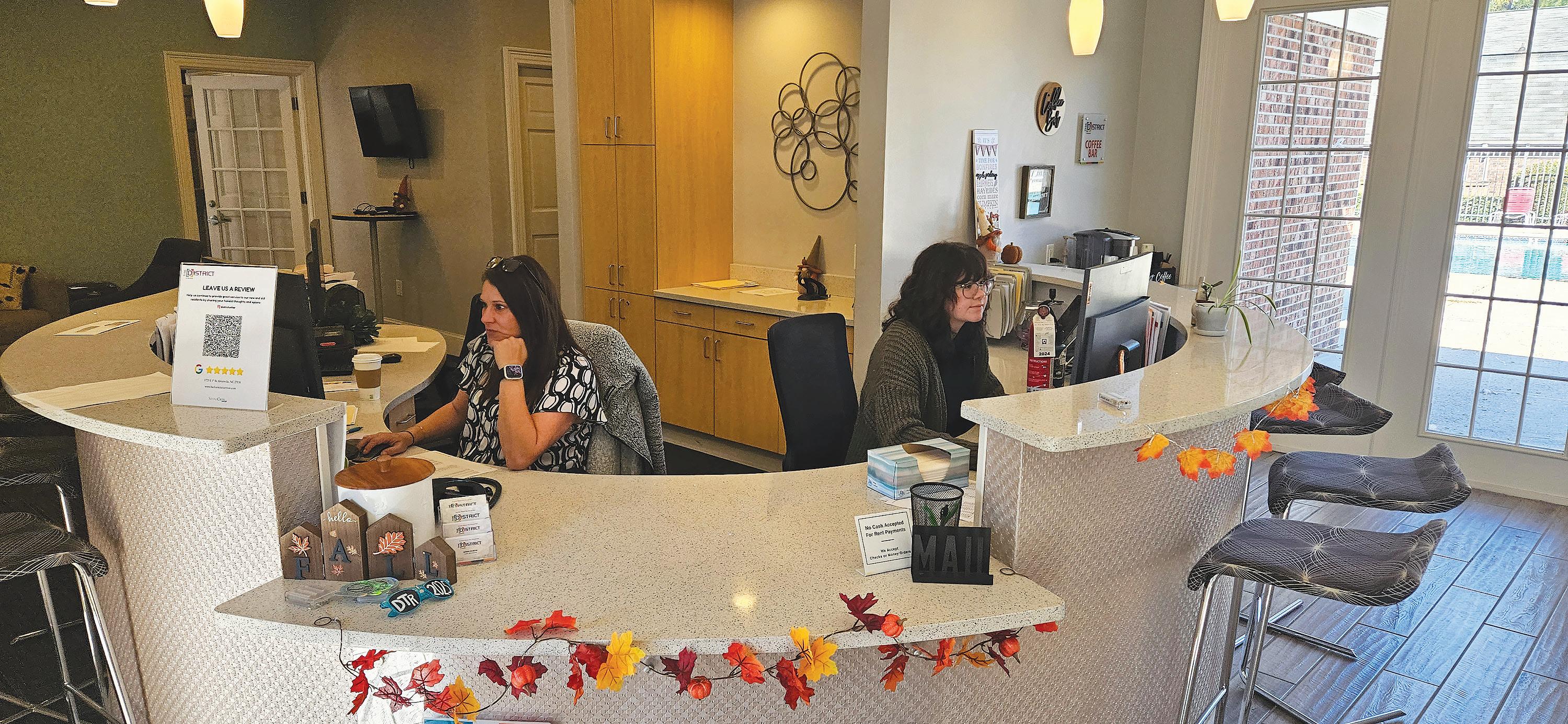
The leasing office at the District at Tar River apartments is quiet this Tuesday afternoon. For a moment, the room is still. Just the steady hum of the refrigerator and the soft sound of keys behind the leasing desk. Then the aluminum trays of food are opened. Warm steam rises, and the smell of seasoned beef and tortillas spreads through the air, signaling Taco Tuesday.

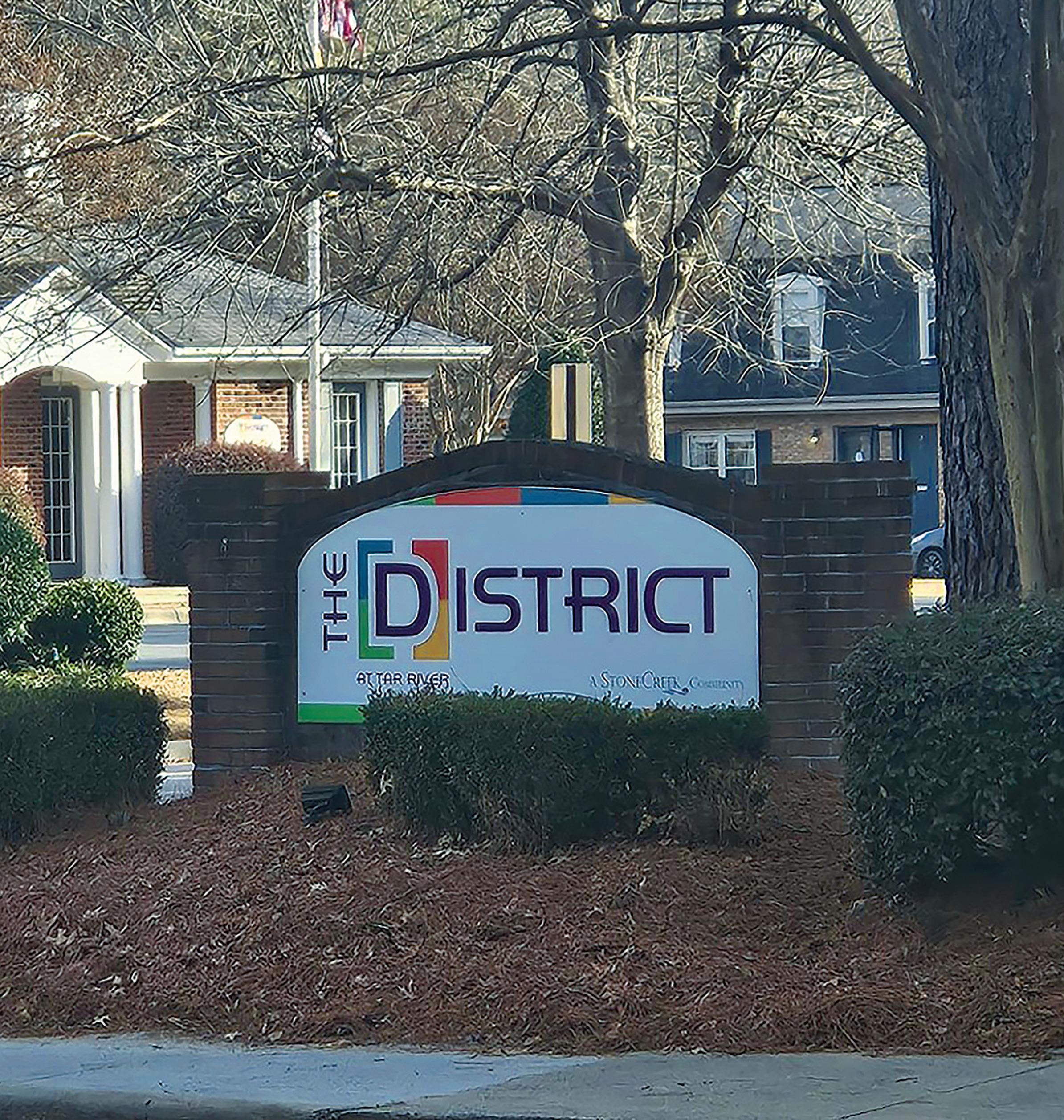
Residents begin drifting in one by one. Some wear backpacks from class, others stop by in name-tagged work shirts after long shifts. A few linger near the doorway before committing to a plate.
They aren’t all college students.
District at Tar River has long housed a mix of
East Carolina University students and non-student residents, and that blend shows in moments like this. A freshman quietly asks an older resident if the queso is spicy. A man in steel boots laughs as he tells a group of students that Charles “claims the first taco every week.”
Since we’re an older property, we have more of a homey feel. We want a mix of college students, young professionals and longterm residents. Not every place around here has that.
That student is Charles Horiates, an ECU senior about to graduate. He grins when he hears his name.
“Ya’ll know I’m always first,” he says, leaning casually against the counter while waiting for the tortillas to be uncovered. Horiates said he comes to events like Taco Tuesday not just for the food but because he enjoys “the environment and the people," explaining that the events make the complex feel more welcoming.
The District at Tar River is located in Greenville’s college district, just about four blocks northeast of ECU’s main campus. The 25-acre apartment complex includes dozens of lowrise buildings connected by shared walkways and outdoor common areas.
Behind the front desk, leasing consultant Sarah Dorow looks up from her computer and greets residents as they enter, calling several by name. She “never expected to end up in leasing,” Dorow says, adjusting a stack of paperwork. “But I love it here. The people I work with make it worth it.”
Residents stop to ask about their packages or chat briefly about their day, and Dorow moves easily between conversations.
Across the room, property manager Miranda Long finishes
explaining a lease renewal before stepping outside for her afternoon walk around the property. Long says working at an older complex comes with challenges, but also with rewards.
“Since we’re an older property, we have more of a homey feel,” she says. “We want a mix of college students, young professionals and long-term residents. Not every place around here has that.”
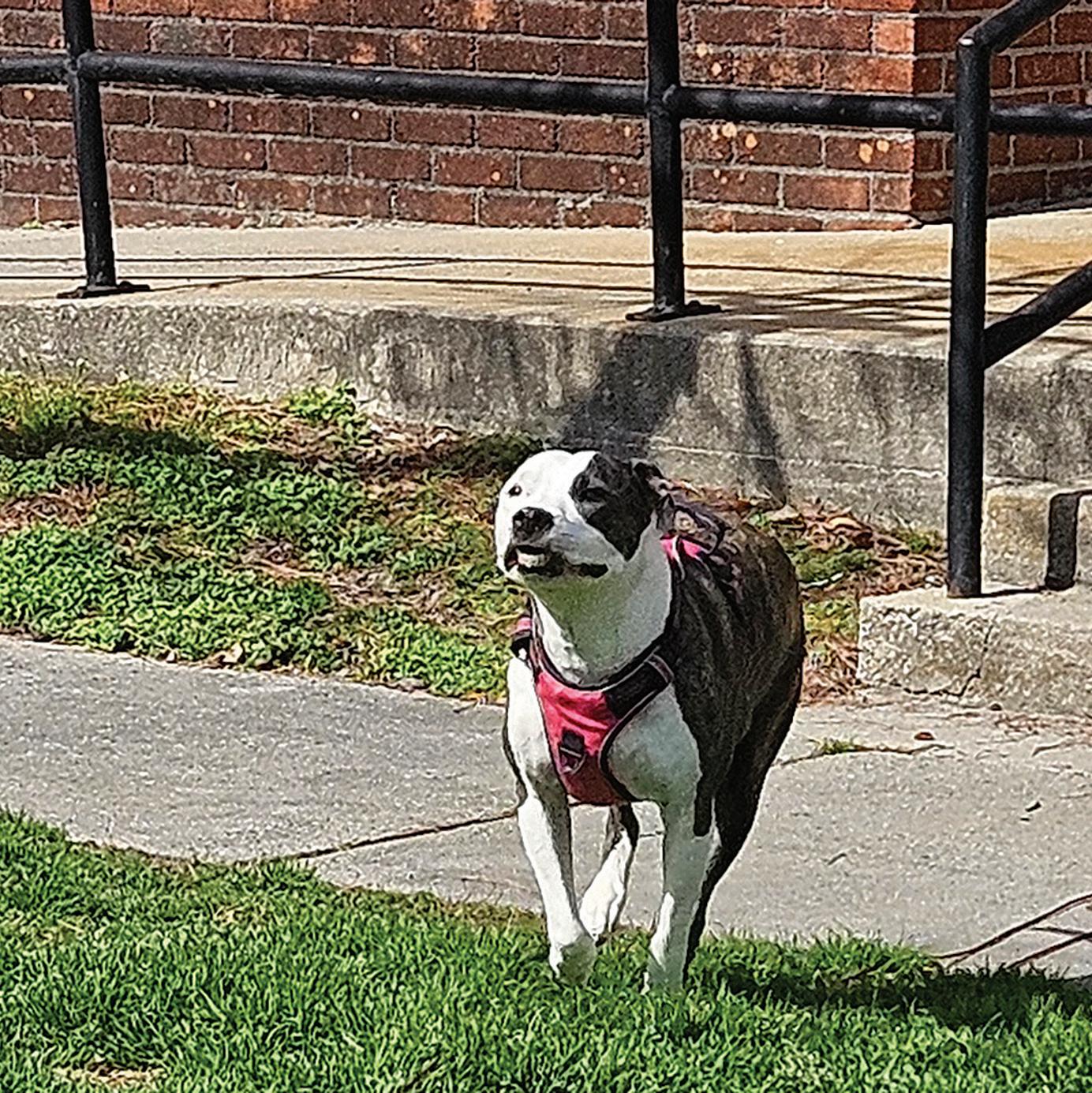
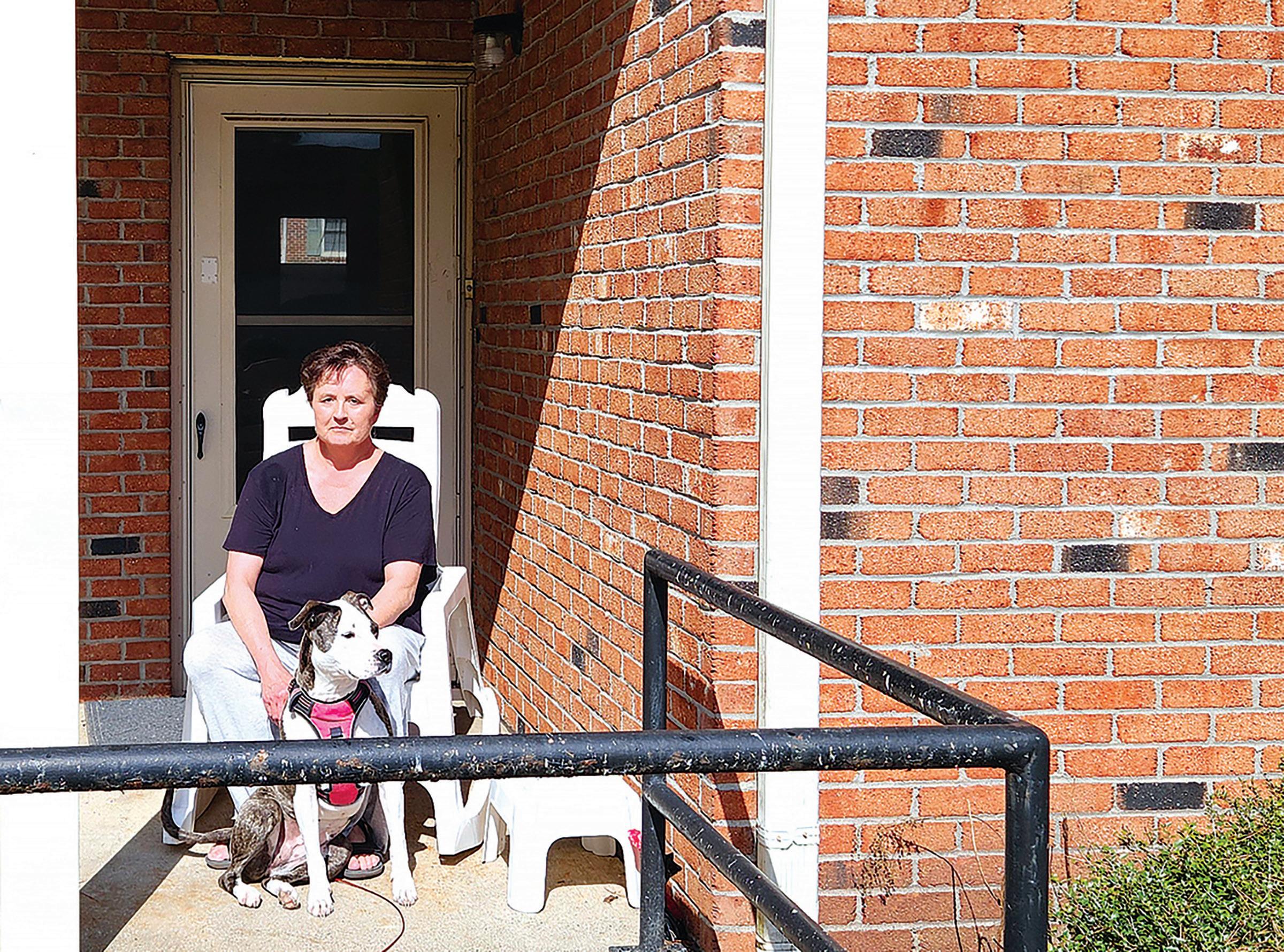
Outside, a group of students heads toward the nearby Greenville dog park as a non-student resident walks a small terrier in the opposite direction. Dogs bark, neighbors wave and paths cross without anyone seeming out of place.
Beyond the leasing window, brick apartment buildings stretch across the property, with exterior staircases and second floor balconies overlooking the complex, which was built between 1969 and 1980.
Residents cross paths on curving walkways, some of which show their age. Some stop briefly to talk
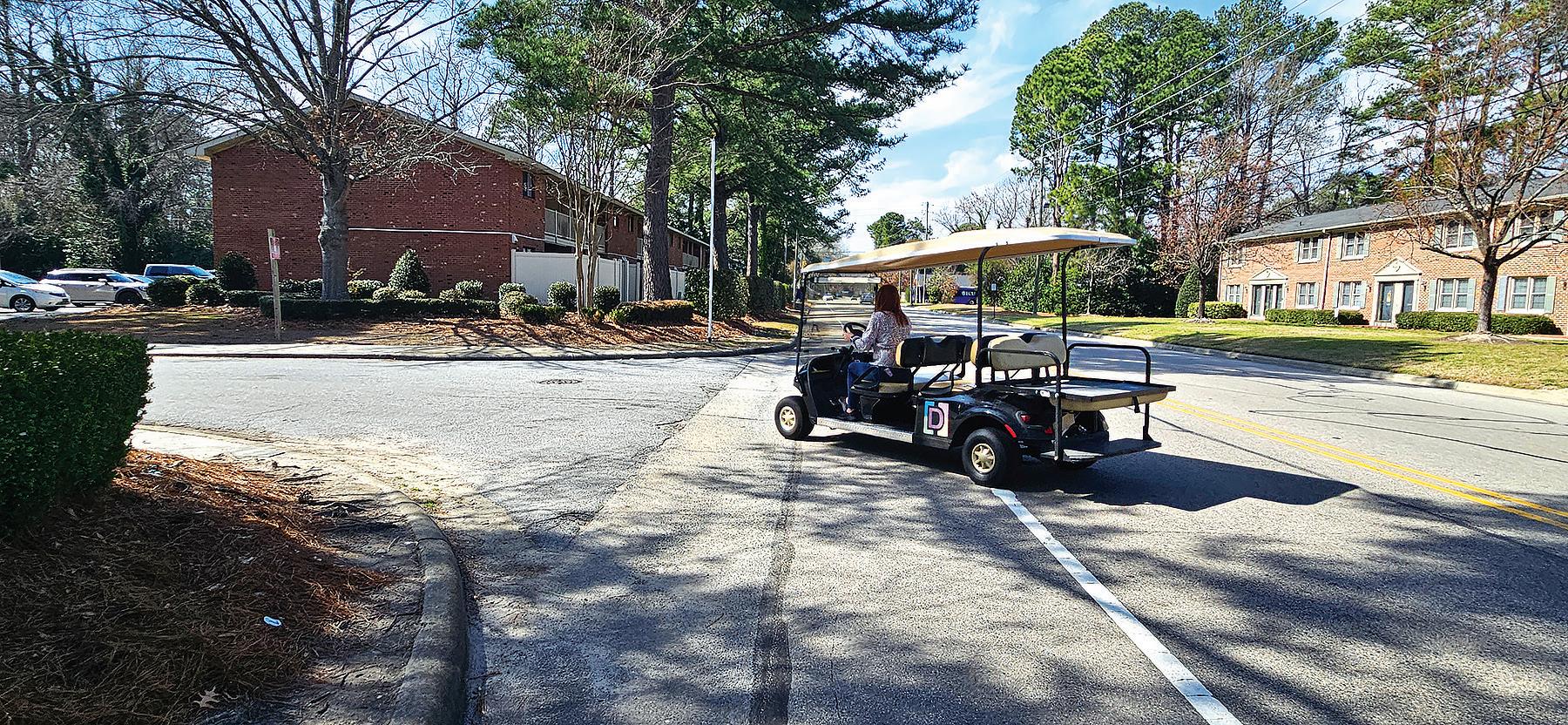
while walking dogs or checking mail. The sounds of nearby traffic mix with footsteps, conversation and the occasional bark, creating a steady background hum that signals constant movement.
One resident who fits easily into that mix is Brandon Atkins, who had moved into the complex a few months earlier.
“My experience here has been very good,” Atkins says. “The units are older, but they’re in good shape. Maintenance is always available, and everyone I’ve met is friendly.”
The maintenance staff plays a major role in shaping that atmosphere. Their day starts early, with tool
• The average age of a renter is 42.
• About half (46%) of renters are under the age of 40.
• The first apartments date back more than 2,000 years to the Roman Empire. These structures were similar to many of today's apartment buildings.
source: zillow.com
carts rolling out before most residents wake up. They move steadily from building to building, handling repairs and routine maintenance. Horiates says the maintenance team is one of the strongest parts of the community.
“The repair crew is awesome,” he says. “They get their job done the right way.”
As Taco Tuesday winds down, residents linger; some sit at the tables discussing their weekend plans. Others grab second plates for friends who couldn’t make it. Two strangers bond over grabbing the last tortilla. A maintenance worker stops by for a quick bite before heading back out to finish a work order.
Beyond organized events, much of the community of District at Tar River forms through routine, unplanned encounters. Residents cross paths while taking out the trash, walking dogs or checking their mail, often stopping for brief conversations that grow familiar over time. These interactions may seem small, but they help establish a sense of recognition and belonging in a large complex. In a space with constantly changing residents,
those repeated moments help transform the shared walkways and courtyards into something more personal.
The community often reveals itself in small, everyday moments. A student holds the door for a resident carrying groceries. Neighbors check on one another when storms move through Greenville. Non-student residents help students with car troubles in the parking lot. Conversations that begin in the leasing office continue later in the courtyard or parking lot, stretching into familiar exchanges.
Kendyl Lopp, 24, lived in District at Tar River until mid-2024, when she moved out after graduating from ECU. Lopp said location was one of the biggest advantages.
“The walk to school is an easy about-four blocks,” she said. She described the staff as generally helpful, but said some communications handled through third-party services could be unclear. She also described the community as “nice-ish,” adding that updates and more consistent trash removal could have improved the overall experience. While she appreciated the events for residents, she said many were scheduled during work or class hours, making them hard to attend.
Other residents and former residents said work orders could remain open for long periods before being marked “completed” without the issue being addressed, requiring residents to contact the leasing office to reopen the
request. Others pointed to delays in receiving replacement parts and said communications between departments don’t always transfer smoothly, creating confusion about follow-up responsibilities.
But for Lorri Phillips, 62, The District at Tar River offers affordability and connection.
“The rent is reasonable, and I know people (who) live here,” Phillips said.
She acknowledged that living in a college district can be noisy, but said the office staff are kind, efficient and quick to communicate. Phillips added that the students in the complex have been respectful and helpful, contributing to a sense of mutual respect across generations.
See more!
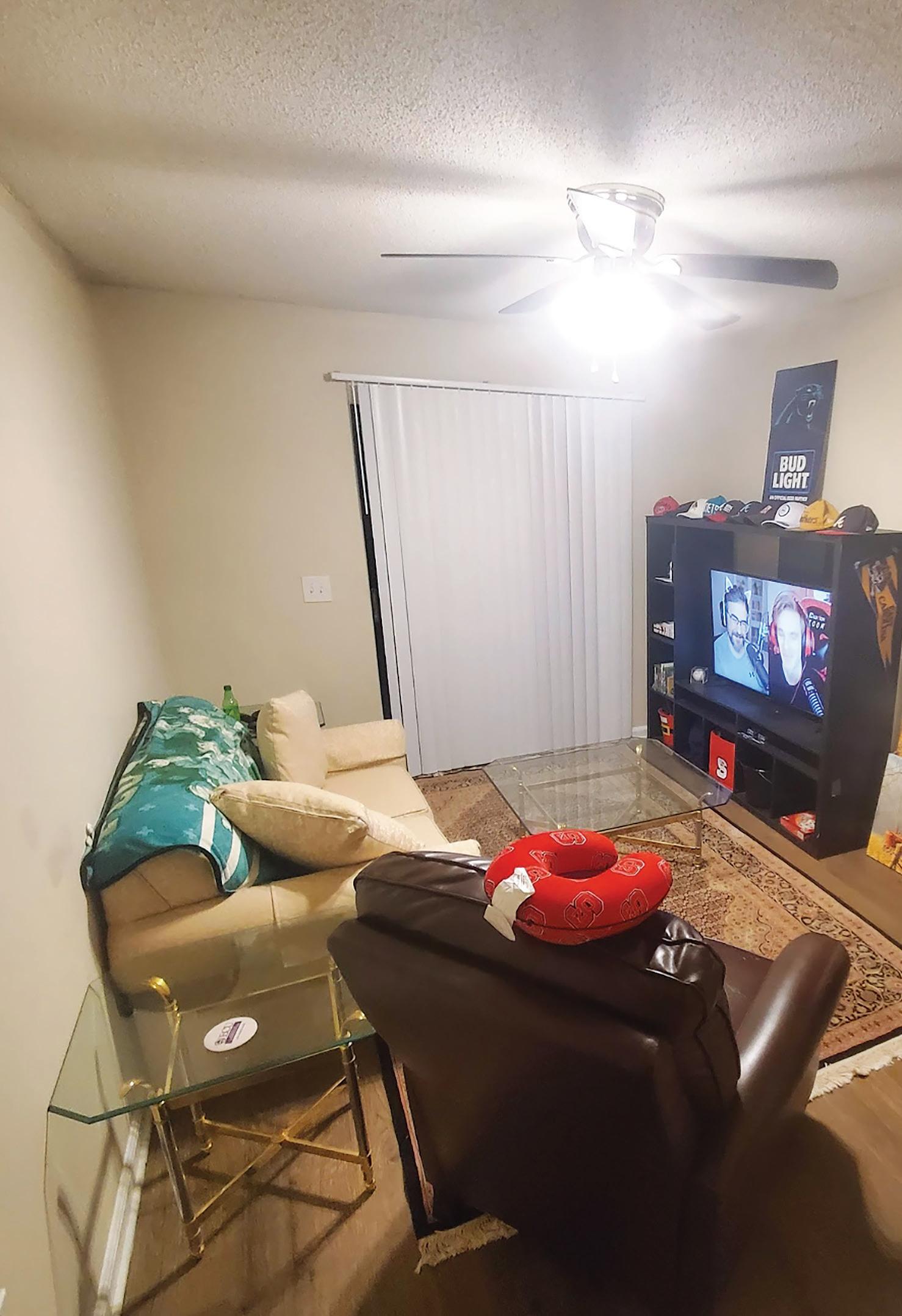
Scan the QR code for a 3D District at Tar River apartment tour.
As the sun dips down, the leasing office begins its nightly routine. Residents stop in with last-minute questions. Sarah helps someone with package delivery paperwork, while Miranda explains a billing note. A maintenance worker pops his head in to say he is staying late to finish a repair.

When the office lights are dim, the complex settles into its evening rhythm. A resident in medical scrubs returns from a shift at ECU Health. Two students carrying textbooks hold the door for her. Porch lights flicker on, dogs tug at leashes and conversations echo across the walkways.
As with other student housing areas, the buildings show their age at District at Tar River, and not every concern can be solved with a quick fix or a new amenity. Still, what the complex offers is something harder to measure — a community built through repeated,
everyday interactions between people of different ages, backgrounds and routines.
Living in a space that includes students, working professionals and long-term residents requires patience and adjustment from everyone involved. For students, it means learning how to share space beyond campus housing. For non-student residents, it means adapting to the rhythms of a college neighborhood. Staff members serve as the bridge between those groups, balancing maintenance needs, communication and community-building efforts across dozens and dozens of apartments, all of them now owned by a Coloradobased investment group. Here, the most important amenity is not listed in a brochure. It is the people who call this place home, one greeting, one repair, one conversation in the courtyard, and one Taco Tuesday at a time. n
Ben Barnes is a student writer at East Carolina University majoring in communication. He is interested in sports journalism and broadcasting and plans to pursue a career in media after graduation.


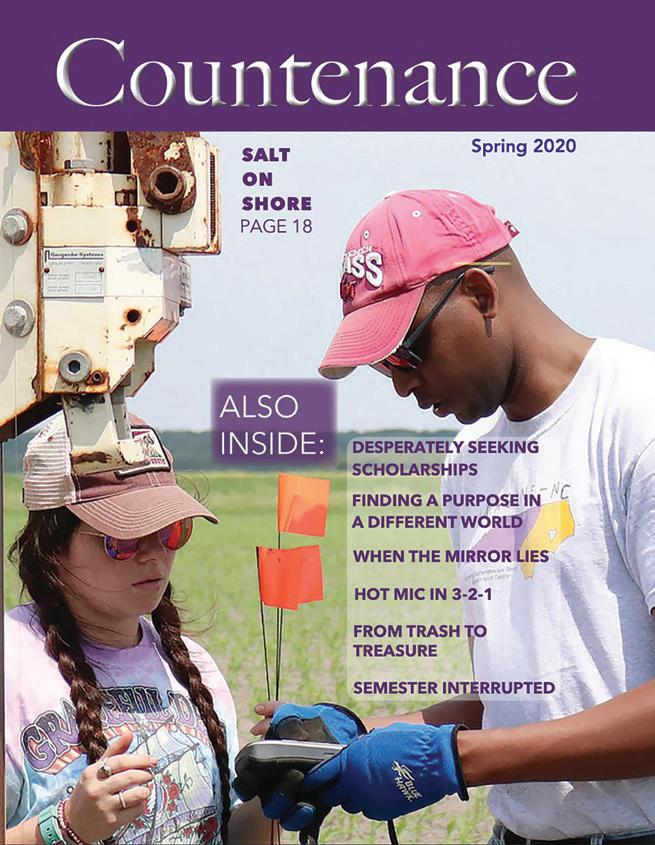



Countenance (Vol. 10, Issue 1) is a general feature magazine produced by students in the School of Communication at East Carolina University since 2017. The articles were written by students in the Fall 2025 Feature Writing class taught by Cindy Elmore. Countenance was designed by students in Creative Design in Publishing, which was taught by Barbara Bullington in the spring of 2026. Funding for the magazine is provided by the School of Communication.
Questions or feedback can be addressed to Cindy Elmore at elmorec@ecu.edu or 252-328-5306.
For more information about Countenance, including awards received and additionall photo credits, please visit: countenance5.wordpress.com
Jordan Adams
Miriam Arensman
Kelly Bullock
Miles Cali
William Casbon
Andi Creech
Sophia Garsik
Kylie Hood
Ianna Marijono
James McClellan
Madison McKenna
Katie Murr
Tricia Schuyler
Sheilia Suggs
Ella Turner
Kamden Wiggins