SLOW FASHION MAGAZINE
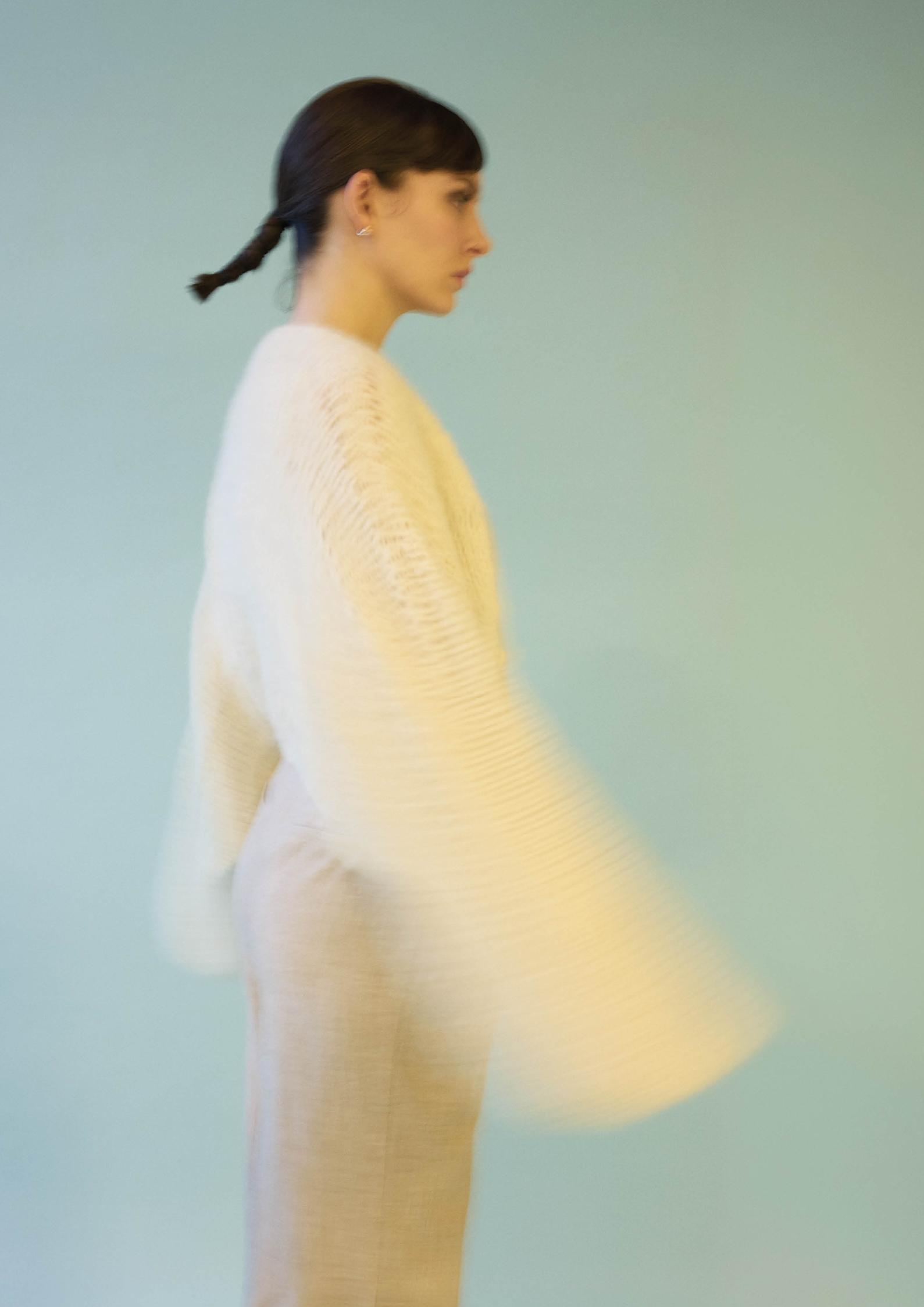
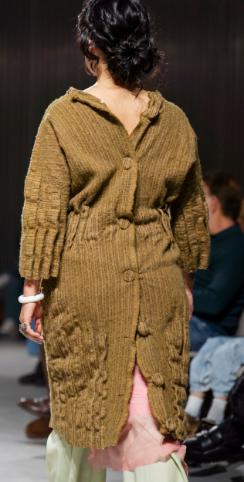
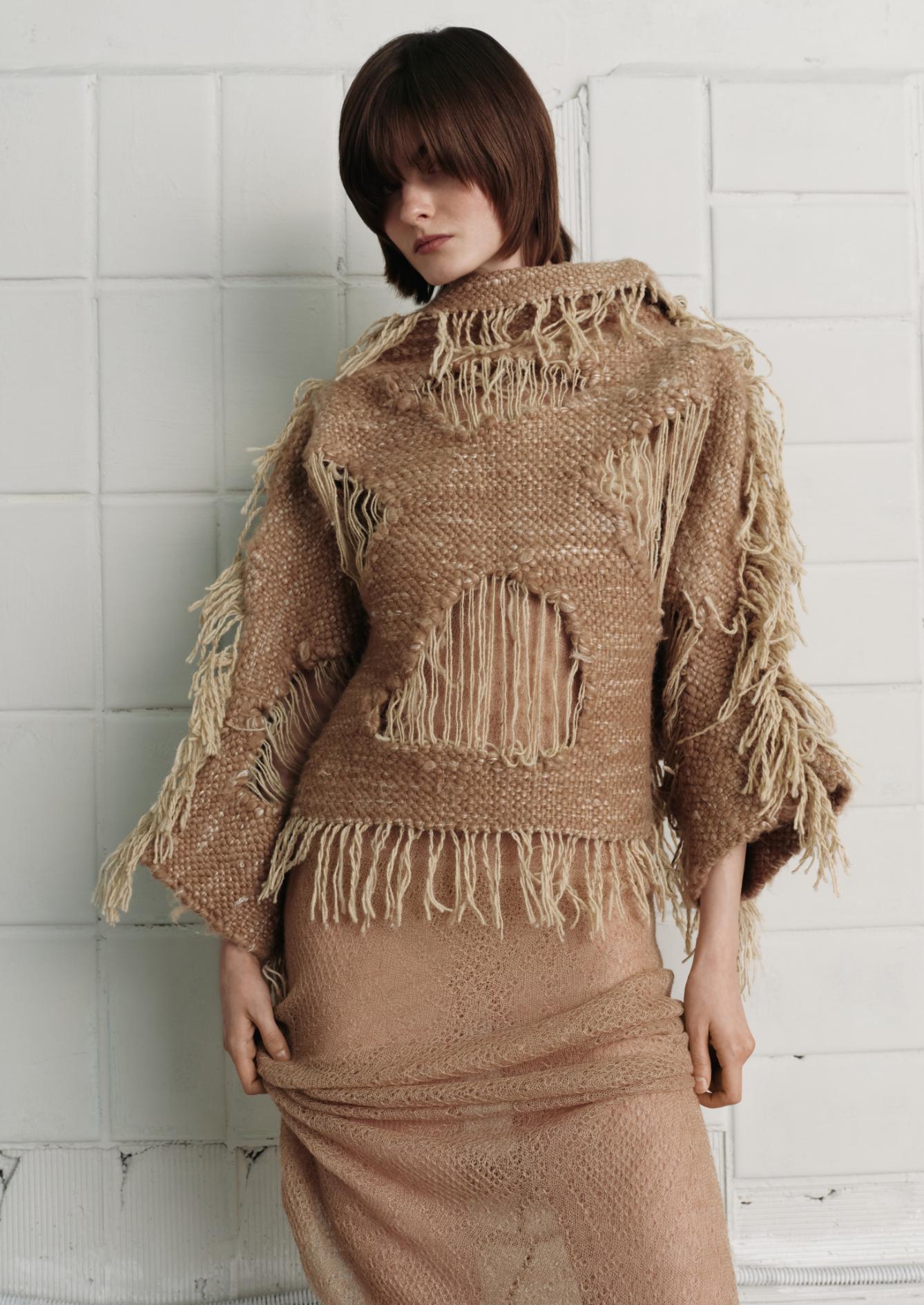
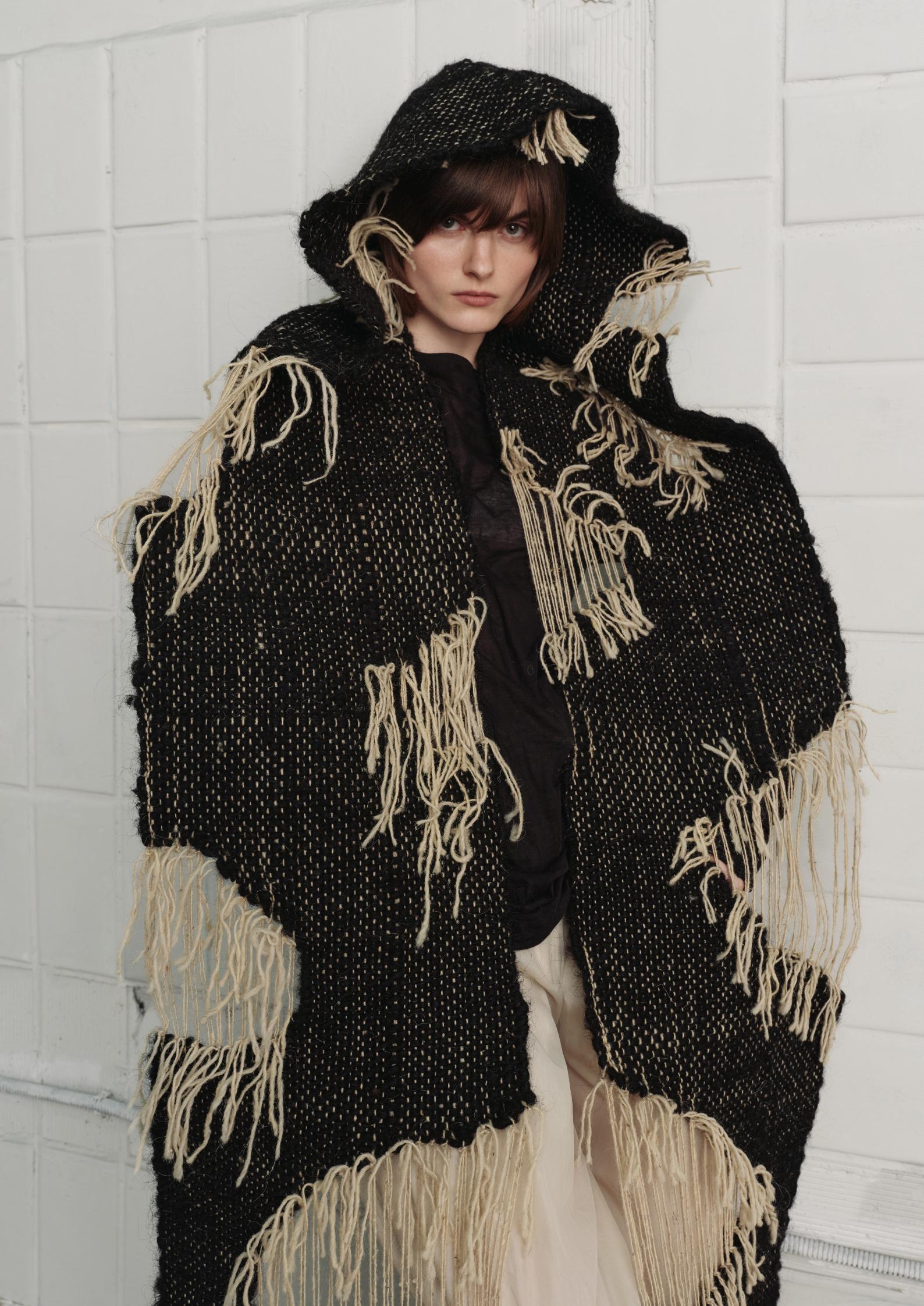
Inti Cardigan SS 2611 Mila
photographer
Suus Waijers
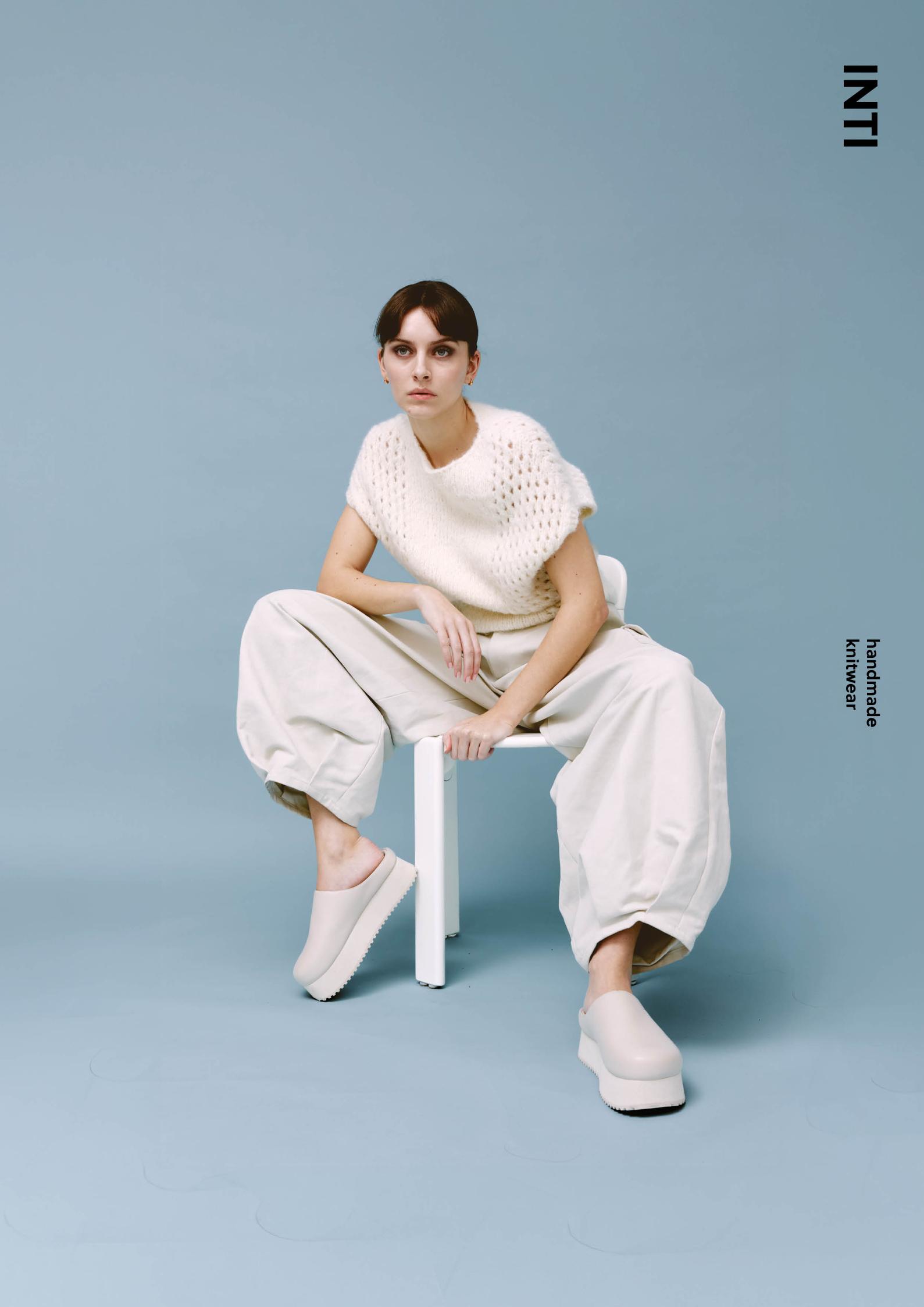
Inti Sweater Cape SS2613 Loua
ECOPOLITAN®
editor-in-chief
Map Renes - MAPSZ
graphic design / layout
Richard Vermijs - IJgenweis Visuele Vormgeving
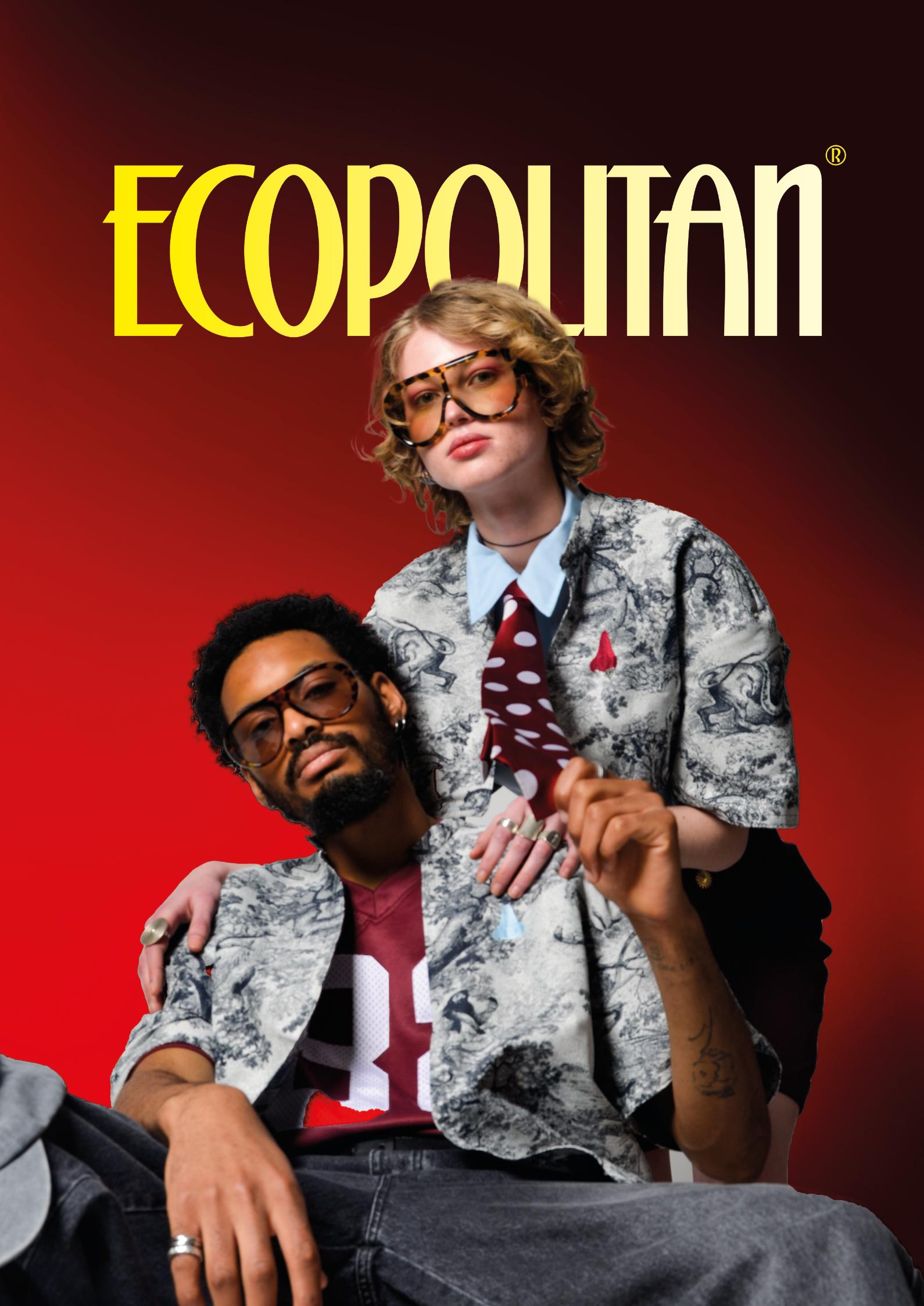
cover
Charly Mala (f), Shu Jantje (m) - models
Jelle Op Den Camp - photography
Wievien Alberts - Studio Wievien - designer
photographers
Andriy Sokolov, Carmen van Vuure, Christina Diebel, Diewertje Vlamings, Eva Badole, Eva Maria Dekker, Felipe Bonicatto, Han Gyeol Kim, Hannah Wolf, Hans Mooijer, Hector Passat, Hugo Snelooper, Iris Ooms, Jacqueline Haeberle, James Rees, Jonathan Widdershoven, Kaja Margarethe Weimer, Katja Diroen, Laura Knipsael, Marc Baptiste, Marcelo Moraes, Mia Strazicic, Mala Kateryna, Menno Kok, Mitch van Schijndel, Natalia Dabrowska, Nikitina Khrystyna, Roman Mishchuk, Elisabeth Gatterburg, Suus Waijers, Tom van Maren Franke, Tony Dočekal, Valerie Voithofer
models
Anna Chiron, Bela Hackenberg, Carlo Jossa, Carlotta Lotta Gekeler, Davide Luciano Peroni, Eric Vinsonneau, Eva Maria Dekker, Fabienne Molela, Fiona Hesse, Ilija Surla, Jahmael Robertson, Jasmijn Hamming, Jella Nine Meijvogel, Jill Alocke, Juicyca, Julie Genevois, Kimberly Okenge, Laurie, Lilia Diebel, Matteo Gentiluomo, Michelle Fadina, Nena Nawijn, Rotaru, Robert Bartholot, Sofia, Sophie van Kampen, Sophie van Rij, Stan Groenewoud, Stellamodels Vienna the following contributed to this magazine
Andrea Bonfini, Angie Aguirre, Anke Vermeer, Anna Cales, Arva Bustin, Bas Timmer, Branko Popovic, Cristina Palacios, Diewertje Vlamings, Elise Rolot, Erik Toenhake, Eva Maria Dekker, Guya Corsale, Juliana García Bello, Jacob Bosma, Julie Bourgeois, Katharina Reuschel, Liesel Swart, Mariángeles Aguirre, Mariia Pavlyk, Natalia Dabrowska, Sabine Scheers, Saskia Kemperman, Sebastiaan Kramer, Sjaak Hullekes, Sophie Fabre, Wievien Alberts, Wikky Rossner, Willemijn Beekman
mail us
Respond to an article: map@ecopolitan.nl www.ecopolitan.nl ***
No part of this publication may be reproduced, stored in an automated data file, or made public in whole or in part, in any way whatsoever, without the written permission of Ecopolitan®. Ecopolitan® excludes all liability for damages resulting from printing and typesetting errors.
preface
clouds are dancing around our world
Clouds drift across the world, moving through the air like elegant cloud dancers. Clouds are for all of us and connect us.
weaving, or felting. Every fashion designer in their own way. In Ecuador, 800 knitters hand-knit the wool sweaters and cardigans for INTI Knitwear.
A better world / for a better world
all
are connected
One world, one voice We
As a child, I spent hours watching the clouds in the sky. My father Debo's hobby was gliding. I was often at the airstrip, loafing about to the point of boredom. By watching the clouds, I forgot the time. That is where my fascination with clouds originated. I can still get excited about clouds that grow into cauliflowers, clouds at different altitudes that drift through the air at their own pace, sweeping cloud streets, dark clouds with rainbow colors.
The Pantone color 2026 Cloud Dancer is the inspiration for the design of the seventh edition of ECOPOLITAN magazine.
Making a fashion statement from a Fashion Cloud for Fashion Revolution Week 2026. By answering the questions #whomademyclothes? And #whatisinmyclothes? Coloring the cloud together by collecting fashion stories from fashion designers around the world.
Wool as a material for making clothing by knitting,
A magazine to reflect on everything that is going on in our world. Based on 17 Sustainable Development Goals established by the UN for a better life for humans, animals, and planet Earth. Goals such as No poverty, Decent work, Responsible production and consumption, Peace, Climate Change.
ECOPOLITAN Slow Fashion magazine is an English edition. It gives us the freedom to connect with sustainable fashion designers around the world. Connections from the Netherlands with Germany, Poland, Ukraine, Austria, Italy, France, the United Kingdom, Ecuador, Peru, and Argentina. The wish to meet each other live at sustainable fashion events this year.
Dancing across the world like a Fashion Cloud!
Map Renes
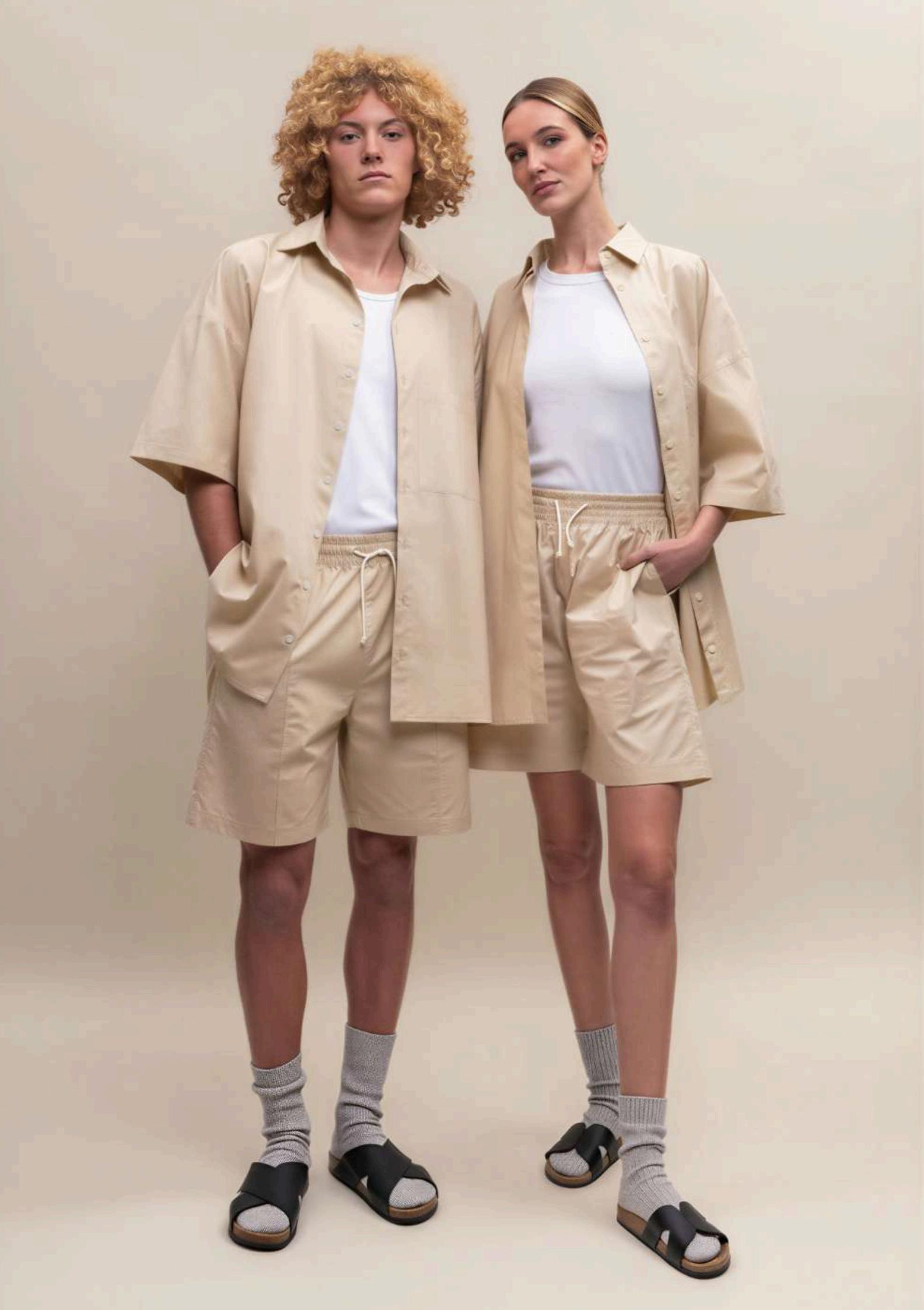
fashion designer
Eva Dekker
photography
Hand Mooijer
models Stan Groenewoud, Jasmijn Hamming
CLOUD DANCER
BE WOOL - TISHOO
NATALIA DABROWSKA
WOOLEN SHOES - LEV’01
STUDIO WIEVIEN
II WORLD - MARIIA PAVLYK VISSERSTRUI
COLORFUL
THE SUNNY SPIRIT OF INTI
STUDIO VLAMINGS
ONE SYSTEM. TWO WINGS. INFINITE PLAY. MULTIPLE IDENTITIES
SOPHIE FABRE DESIGN
BUTTY TOPS - KATHARINA REUSCHEL
SLOW FASHION
STUDIO EVA D
HUL LE KES
A WE-DING COUTOUR - KATHARINA REUSCHEL AARDEN
ONE OF XX - BAS TIMMER FINDERS KEEPERS X LUA
MAP RENES
CIRCULAR FASHION
GARCḮA BELLO
EXHIBITION - XULY BËT
RARE
FADE OUT LABEL EVERYDAY PIECES
THERAPY RECYCLE & EXORCISE
TATE CHRISTIANE
FASHION CLASH FESTIVAL RECAP
WIEVIEN ALBERTS
ARVA BUSTIN
CLOUDED JUDGEMENT - KINKLEID
FURTHER
THE MIRROR IN YOUR WARDROBE - ANKE VERMEER STUDIO SASKIA KEMPERMAN
STICHTING OFFTREND
ARE YOU AWARE? - LAURA KNIPSAEL CLEAN CLOTHES CAMPAGNES
SLOW FASHION FESTIVAL MARSEILLE 2026
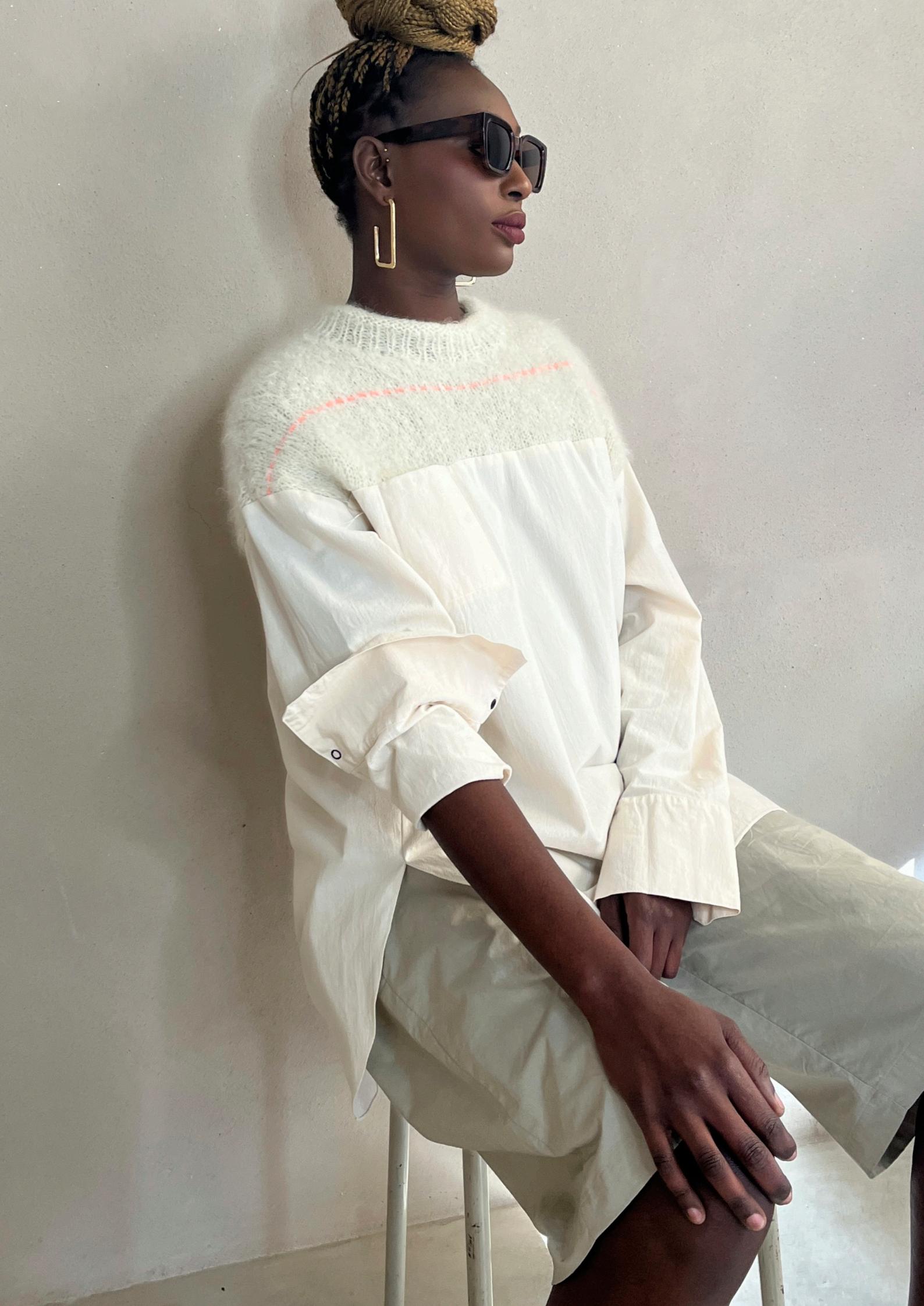
be wool by tiSHōō
First and foremost, tiSH�� stands for a love of materials. With the intended result: a pleasant feeling for both the wearer of the clothing and the maker. One of the materials is wool!
BE WOOL is a beautiful project featuring wool from Dutch sheep, goats, and alpacas from The Knitwit Stable.
BE WOOL is not just about wool. It is also about knitting and craftsmanship. Every maker (whether by hand or by machine) knits uniquely, and it is often precisely imperfections and irregularities that characterize garments. Together with local makers, they look at feasibility, various techniques, and the joy of knitting in our project.
WOOL
Wool naturally possesses fantastic properties that distinguish it from synthetic materials. It is self-cleaning, fire-retardant, and moistureregulating. Cool in the summer and warm in the winter. The material is highly resistant to bacteria. The knitwear is cuddly, soft, has texture, and lasts a long time.
Made by order
The Wool chapter is fully in development. During this process, tiSHõõ is delving into the possibilities of knitting for a unique, small-scale run.
The BE WOOL collection consists of 4 styles. Fashion made by order means that they only start working on an item of your choice after the order has been placed. This way, they avoid unnecessary stock and waste. Due to this method, the delivery time varies between 2 and 4 weeks.
But we promise: it is worth the wait.
natalia dąbrowska
GRADUATE OF THE ARTEZ ACADEMY OF ARTS IN ARNHEM
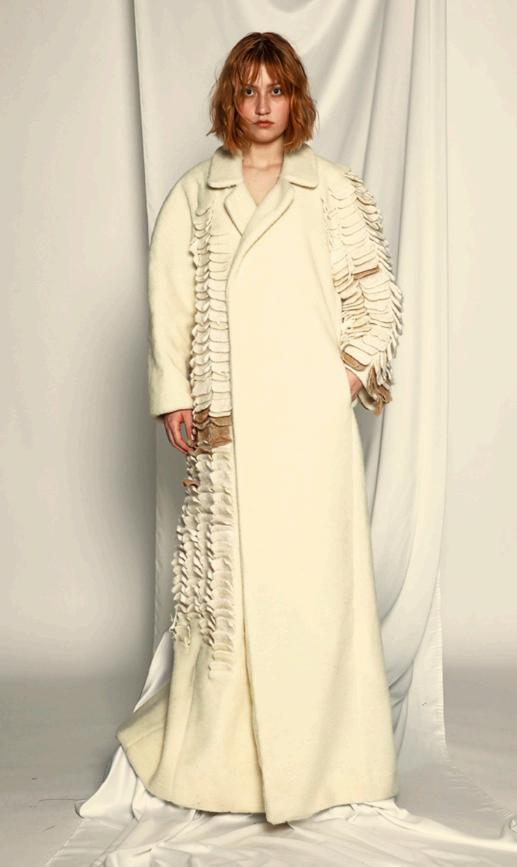
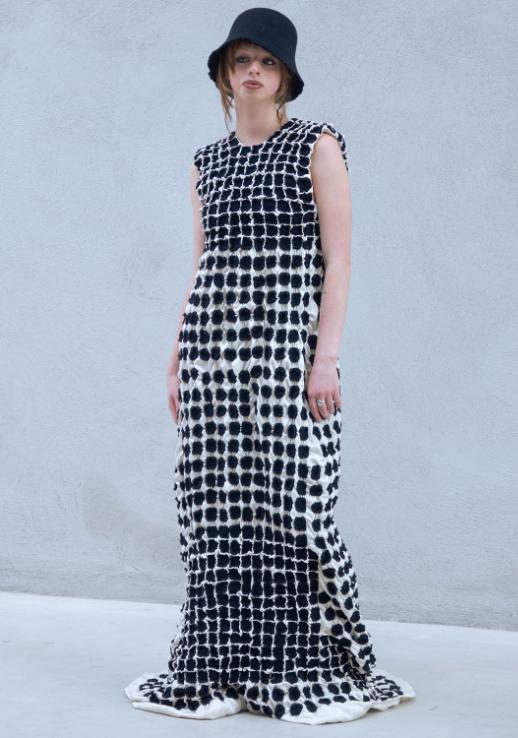
Shaped by Shrinkage: The Transformative Power of Wool
Inever expected that wool shrinkage could be a tool for creation, yet what I initially saw as a flaw became the foundation of my graduation collection. Working with wool taught me that fabric is not just a surface to be shaped, but an active participant in the design process, capable of transforming silhouettes and textures in unpredictable ways. It was this dialogue between material and shape that came to define my work and my approach to garment creation.
At the beginning of my fashion design education, I underestimated the extent to which a fabric can inform and define the outcome of a garment. Since then, I have understood how textiles are not a secondary elements but active components of the design process, that determine silhouette and construction. I developed a deep interest in the relationship between the texture and the shape of the garment, which I currently prioritise in my work. I investigate this relationship thoroughly as a part of my creative process to achieve harmony between shape, fabric, and texture. I am interested in creating innovative textures, while using staple fabrics such as woollen tweeds, as well as raw fibres, in combination with silk satins. The four years of my studies culminated in my graduation collection titled ‘Shaped by Shrinkage’, which explores wool shrinkage as a technique of textile and garment creation.
I often draw inspiration from nature and human interventions in the environment. I specifically feel drawn to the land art movement from the 1970s, where artists explored the relationship between humans and the environment. The boundaries of art were blurred as one could not determine where the artwork ends and environment begins. I research this thinking in my work, aiming to shape the garments through texture and fabric features. The inspiration for this collection came from an earthwork, ‘Sculpture for the Earth’ by Teresa Murak. The salient aspect of my experience with this artwork was the appreciation of its exploration of the relationship between negative and positive space. I was curious how this spatial relationship could be translated into fashion.
The notion of fabric shrinkage was inspired by Comme des Garçons' F/W 1994 collection, featuring woollen, tailored, and lined garments that were boiled. I was curious whether I would be able to use wool shrinkage as a deliberate method not only for design, but also garment construction.
When a man-made woollen tweed, is exposed to a high temperature wash, it turns into a felted piece of material. This process reestablishes the connection to the fibre origin. Felt is one of the oldest fabrics in human history, known for its weather-resistant and durable qualities. My
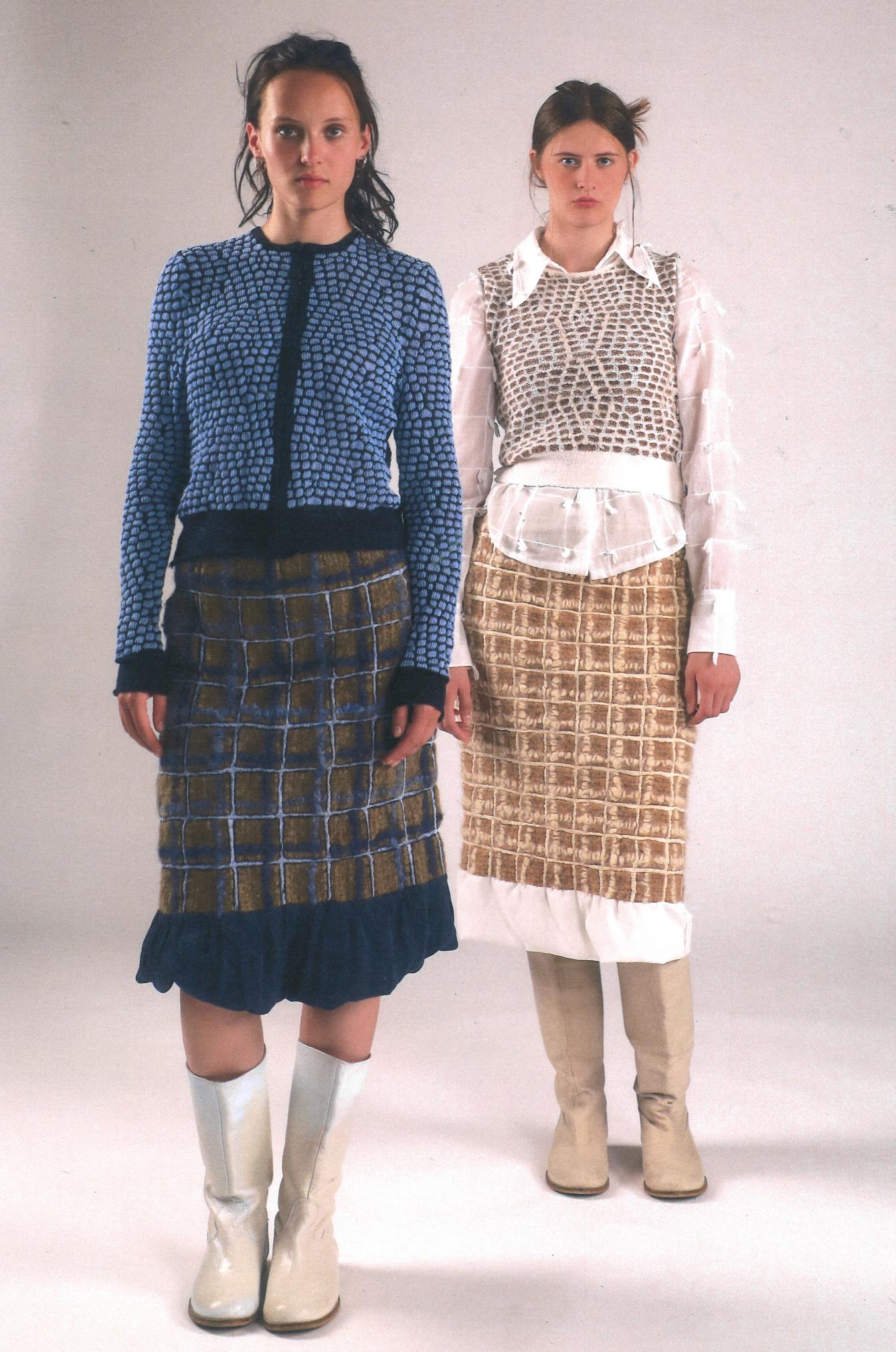
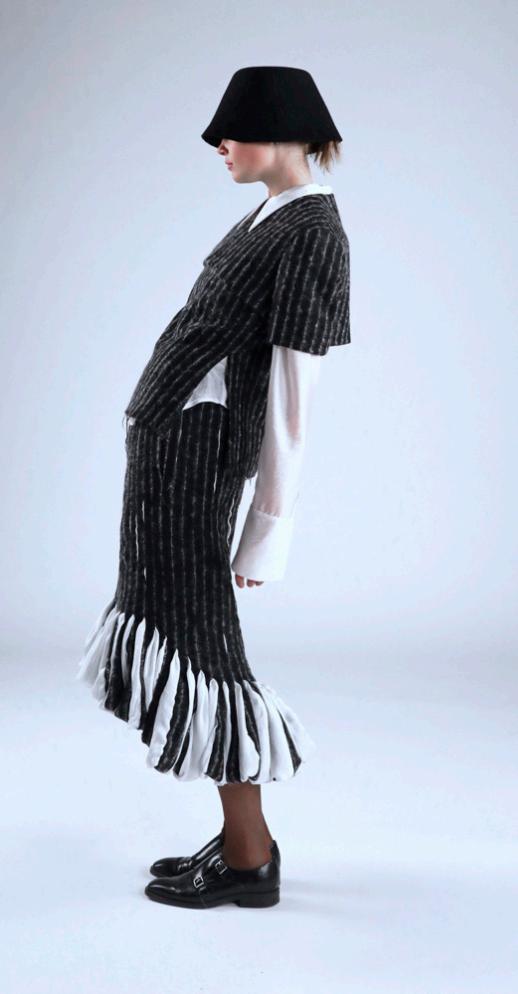
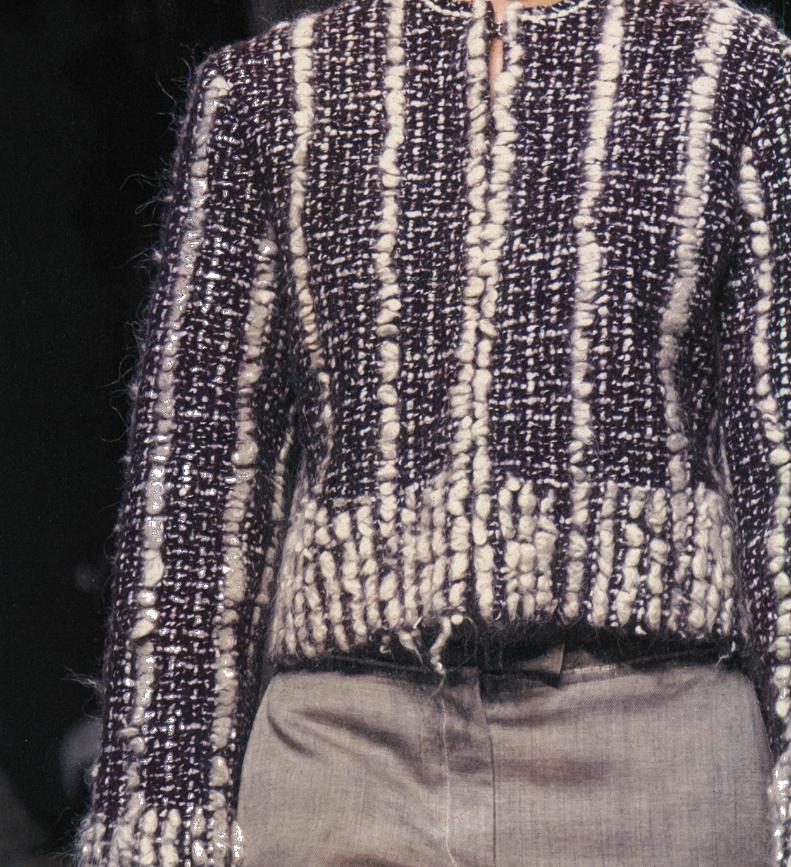
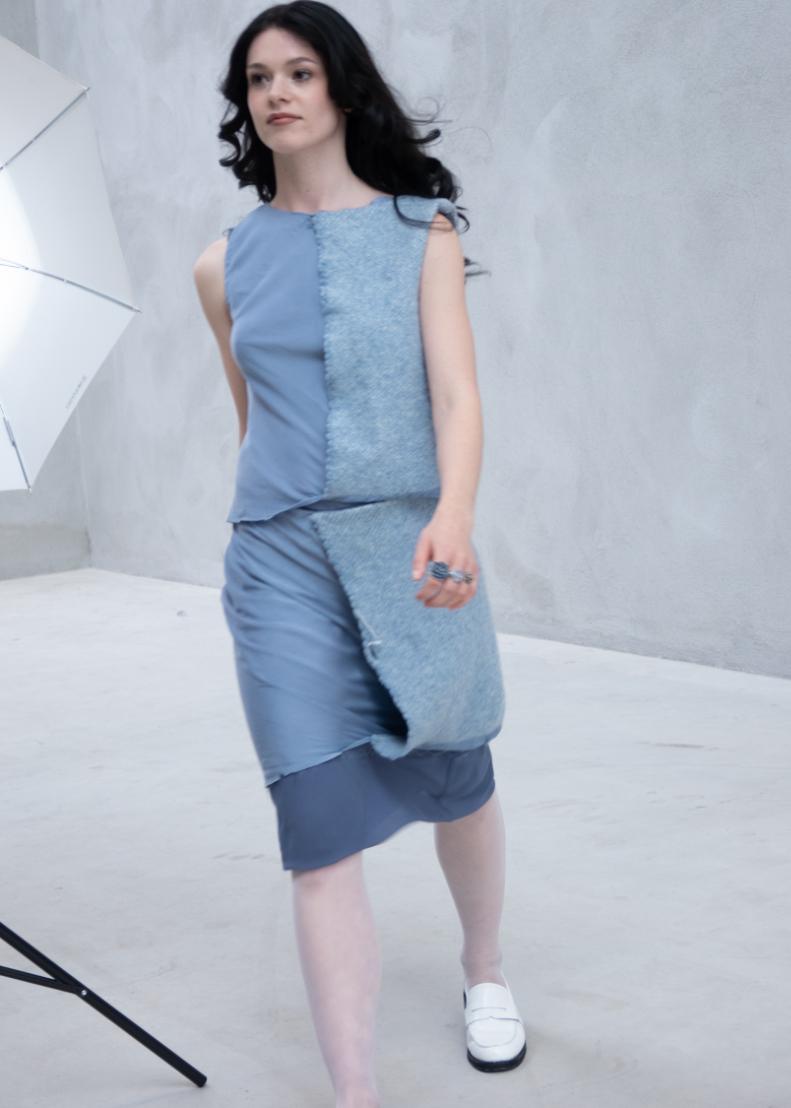
“I am interested in creating innovative textures”
photography clockwise start leftabove:
Natalia Dabrowska
Iris Ooms
Iris Ooms
Han Gyeol Kim
process while technically damaging the tweeds; proved to increase the quality of cheaper wool, as it resulted in binding the fibres together. It is irreversible, and the shrinkage leads to regeneration of tweed through losing or breaking the regularity of its structure into a sturdy, far more durable felted piece of fabric.
Inevitably, the fabric choice became a crucial factor in my collection. I worked primarily with pure rough woollen tweeds which I combined with smooth silk and synthetic satins. The relationship between these two fabric textures was the foundation of my research. I have created textures through combining these two materials and putting the fabrics through a hightemperature washing process. It resulted in significant shrinkage of wool, whereas satins remained unaffected by the heat, yet were influenced by the change of size and texture of wool. This created ruffling, creasing, and even 3D-textures.
In the context of the shape of the garment, the wool shrinkage process helped me reimagine the garments as not the finished products, but as changing with time and environment. Even though I have made multiple tests for each and every garment to achieve a desired result, the process included far more trials and errors than my usual projects. The acceptance of the unpredictability became a vital part of my process. The process of shrinking the garment changes its shape in a mostly unpredictable way, leading to new forms and appreciation of imperfection. The regeneration occurs through new unexpected results transforming the garment into a completely new design.
While refining the idea for my graduation collection, I had a conversation with one of my tutors about my textile developments. My initial thought was to base it around felting. He appeared skeptical, as in his words, “Felt is often perceived as crafty”. Later on, we found a compromise that opened numerous possibilities for me - working with wool shrinkage. This conversation has stayed with me, as I understand his point of view, however, I have since come to question this perception, as it reveals how certain techniques are limited by their associations. Wool as a fibre offers endless possibilities within textile innovation, due to its transformative qualities. For me, this only reinforces the potential of wool and felt as under explored materials within contemporary fashion. ◆
photography
Natalia Dabrowska - top
Han Gyeol Kim - bottom
the mirror in your wardrobe
ANKE VERMEER
Few things fascinate me more than the signals fashion sends us - not just fashion, but music, art and design too. These creative worlds act as mirrors, catching what stirs beneath the surface of our society. Colours, trends and aesthetic choices are rarely random. They reveal what preoccupies us, what we long for, and sometimes what we're trying to escape.
collage Saskia Kemperman
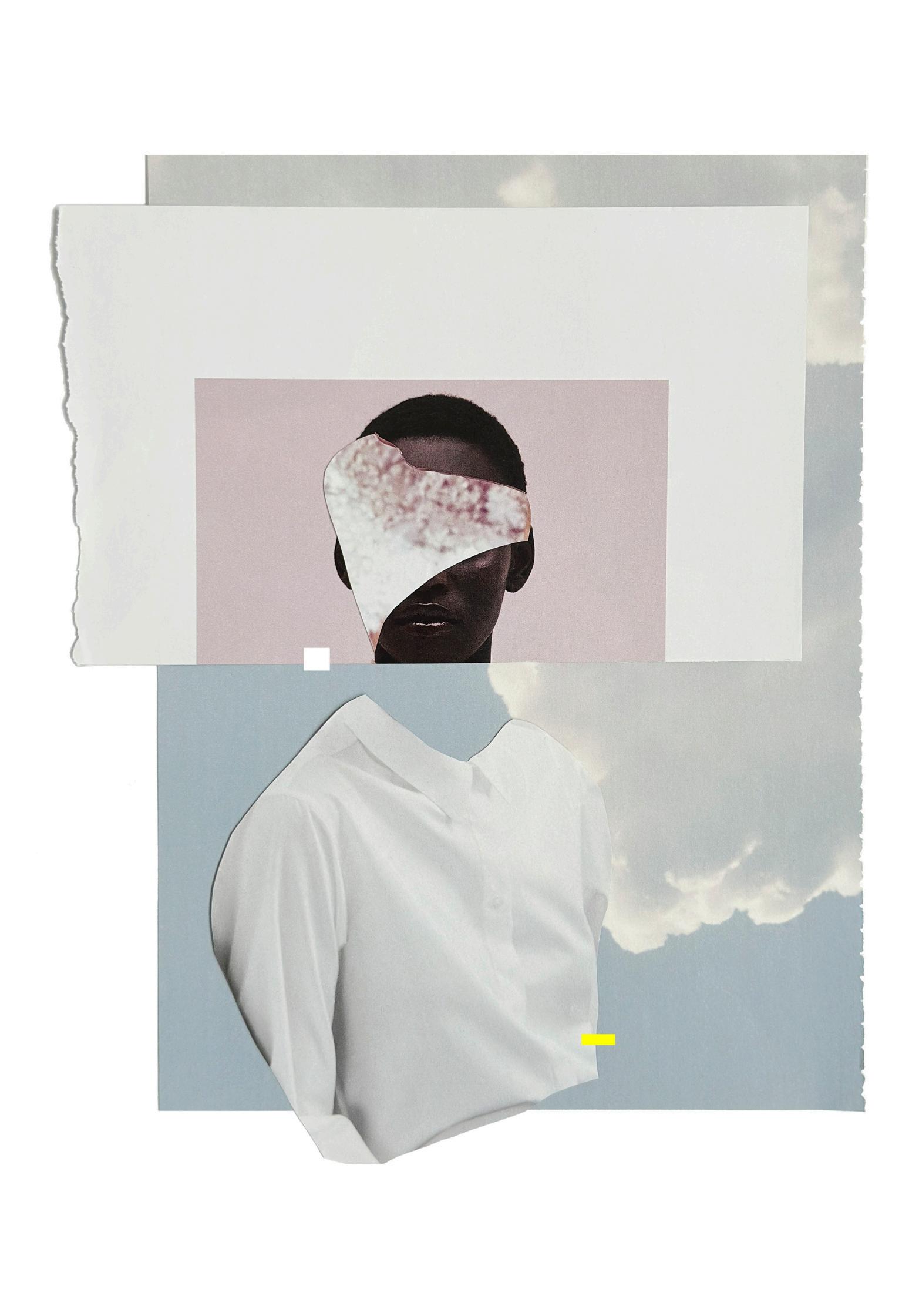
This year, the Pantone Color Institute named PANTONE 11-4201 Cloud Dancer its Colour of the Year. It's a natural, luminous white, and Pantone describes it as "a whisper of tranquility in a noisy world" - a calming symbol for a society that is slowly rediscovering the value of quiet reflection.
Look a little closer, and Cloud Dancer starts to feel like a near-perfect portrait of this cultural moment. We live in a world of constant stimulation, where hustle culture tells us to keep pushing, keep producing, keep performing. And yet, in direct response to all that noise, a countermovement is growing; a deep collective craving for stillness, simplicity and mental breathing room.
More and more people are searching for meaning beyond the material. Rest, genuine human connection and real-life experience are gaining currency. Satisfaction is found less in accumulation and more in reduction: less noise, less speed, more presence. What many people are looking for, says Pantone, is a reset.
That desire for a reset is showing up in fashion too (Hello fourteen newly appointed creative directors!). Vogue described the mood of the Spring / Summer 2026 season as ‘fashion as feeling’ — expressive, celebratory and deeply personal. Collections burst with energy and colour, with a strong focus on layering, wearability and individual joy. Getting dressed, it seems, has become an act of pure self-expression again (happy me!).
At first glance, this seems to contradict the quiet white of Cloud Dancer. But look again, and a common thread emerges: expression and authenticity. Pantone's invitation with Cloud Dancer isn't to wear white, it's to use the blank space, to fill it with who you are, how you want to feel and how you want to show up in the world.
And that, to me, is exactly when fashion has always been at its best. A language. A way of signaling something true about yourself. In an era where our preferences are shaped by algorithms and our social media feeds curate our desires before we've even noticed them, developing your own aesthetic sensibility feels almost like an act of resistance.
The Mirror We Don't Always Notice
What strikes me most is how these vast cultural currents eventually find their way into something
remarkably small and personal: that moment in the morning, standing in front of your wardrobe.
It might seem trivial. But it's actually a quiet psychological ritual; one of the few genuine private decisions most of us make each day. Before the emails, before the meetings, before the noise of other people's expectations settles in, there is this small window of selfdetermination. In those few seconds, you're deciding (often without realising it) how you'll face the world that day.
We psychologists have long understood that what we wear influences not just how others perceive us, but how we perceive ourselves. The term ‘enclothed cognition’ describes the way clothing shapes our mindset and behaviour. A sharp blazer can shift your posture and your confidence. A favourite worn-in sweater can soften the edges of a hard day before it's even begun. We dress not just for the occasion, but for the version of ourselves we need to be - or hope to become. Clothing, in that sense, is never passive. It's a daily negotiation between your inner world and the one you're about to step into.
The desire to present yourself, to be seen, to communicate something without words
This is what makes fashion so much more interesting than its critics give it credit for. It's easy to dismiss it as superficial. But the impulse behind it runs much deeper. The desire to present yourself, to be seen, to communicate something without words — these are fundamental human needs.
The challenge today, of course, is that this vocabulary is increasingly being written for us. Scroll through any social media platform and you'll encounter an endlessly refreshing parade of aesthetics, each one packaged and hashtagged and made to feel both aspirational and immediately accessible. Cottagecore. Quiet luxury. Mob wife. The cycle spins faster every
season, and the pressure to participate (or at least to keep up) can quietly erode the very sense of personal style it claims to inspire.
This is precisely why the cultural mood Pantone is pointing to feels so relevant. Cloud Dancer, with its invitation to pause and imagine, is in many ways a response to that overwhelm. It asks: what would you choose, if you weren't being told what to choose?
Developing a genuine personal style takes time and a certain willingness to experiment. It means paying attention to what actually makes you feel like yourself, rather than what earns approval or what looks good in photos. It means being curious about why certain colours or silhouettes resonate with you, and letting those preferences evolve naturally, rather than forcing them to align with whatever the algorithm is currently surfacing.
That kind of self-knowledge doesn't come from endlessly shopping or scrolling, and it doesn't arrive overnight. It builds slowly, through the outfits that felt exactly right and the ones that didn't. It comes from paying attention to how clothes make you feel, not just how they look.
Perhaps the most honest mirror fashion gives us is the one in your own wardrobe each morning. In a world saturated with visual noise, where trends cycle faster than ever, there is something quietly powerful about choosing what you wear with intention. Not because it's in style, but because it feels like you.
And maybe that is the most beautiful thing fashion can offer us right now. Not a trend to follow, but a question worth asking, every single morning.
Who am I today?
How do I want to feel?
And what do I want to show the world?
Who is Anke Vermeer?
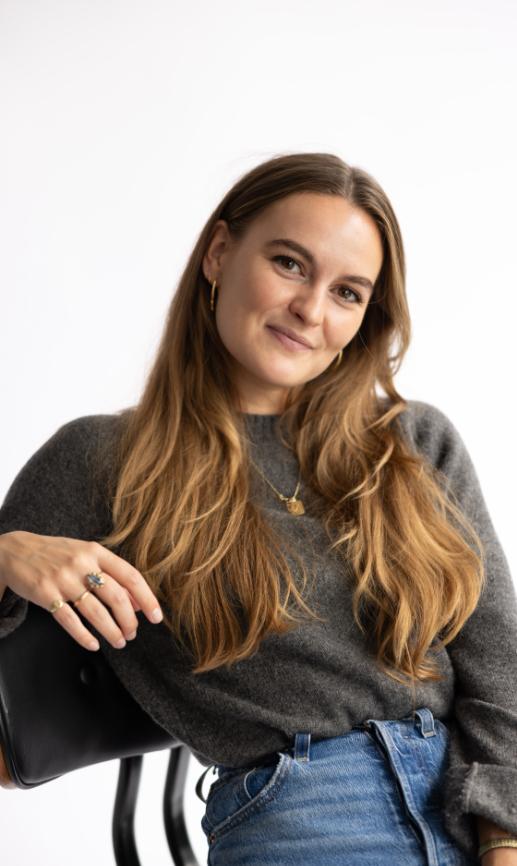
a fashion psychologist and researcher, Vermeer focuses on the psychological impact of clothing and the role that fashion and clothing plays in our society, our behavior, and the transition to a more sustainable system. As a researcher at the Amsterdam University of Applied Sciences, she focuses on consumer behavior and how sustainable marketing can be used to make conscious choices more attractive and accessible. Her mission is to provide insight into the psychological drivers behind clothing and consumer behavior in order to contribute to a better future for people and the planet.
more information demodepsycholoog.nl photography Willemijn Beekman
thespiritsunny ofinti
HANDMADE KNITWEAR
INTI Knitwear has always been an adventure. A positive, brightly growing and always changing story. When Anna and Leon landed in Ecuador 1993, the country immediately stole their hearts with its colourful people and welcoming culture. The thread started there: from love. In their quest to build a knitting company, the steps they made were small and considerate. Less is more: by growing and learning together with their knitting community, they ensure the knits are made with durability in mind.
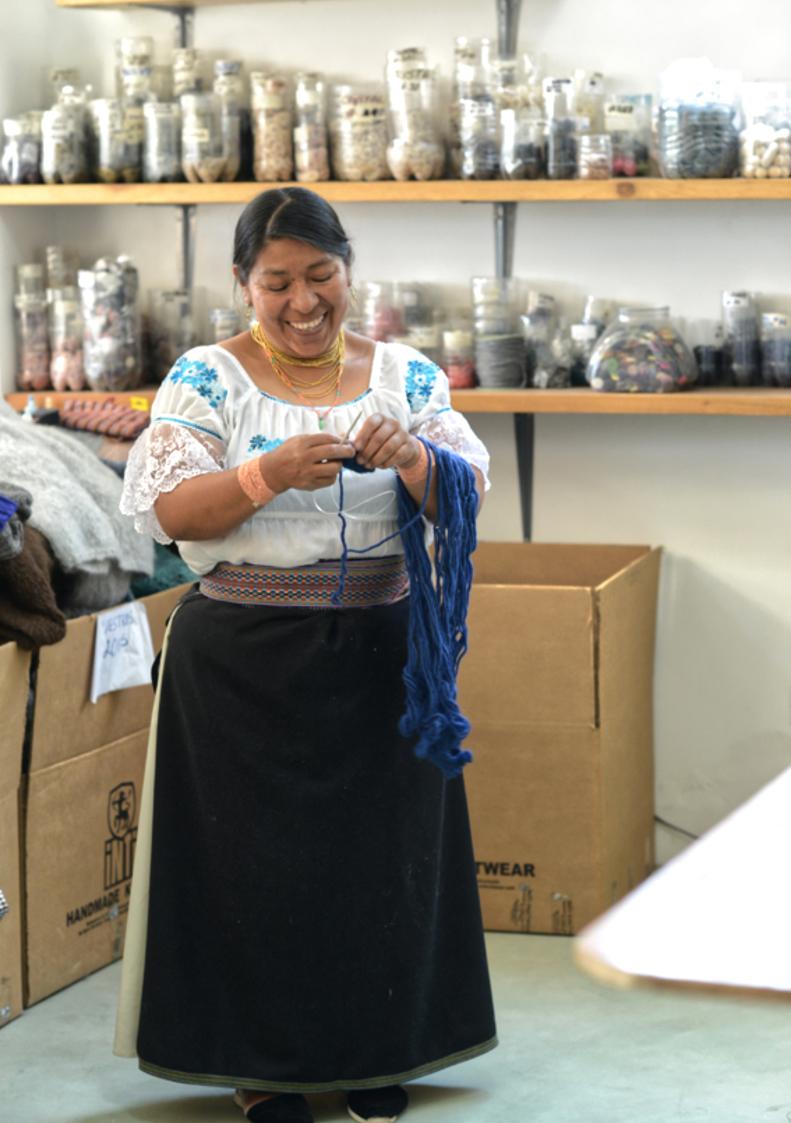
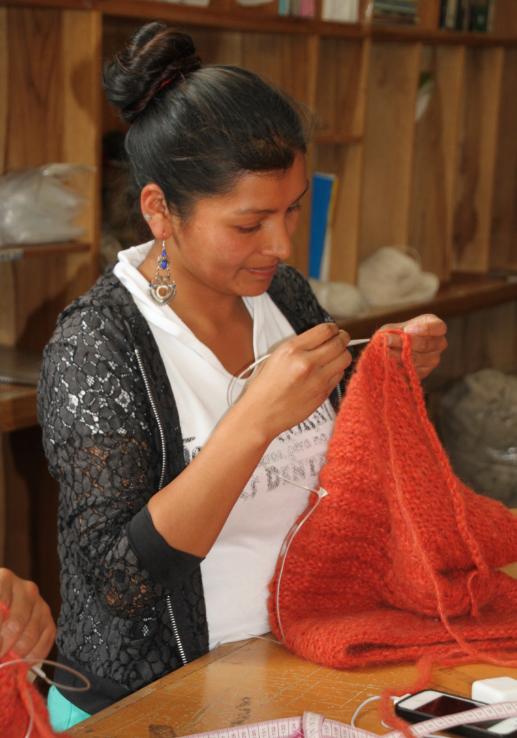
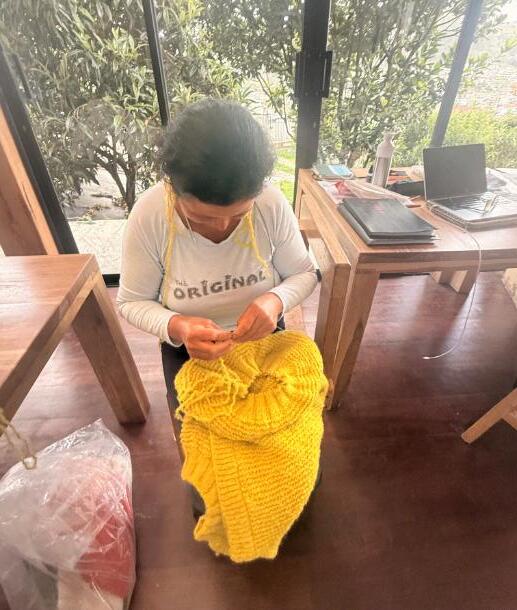
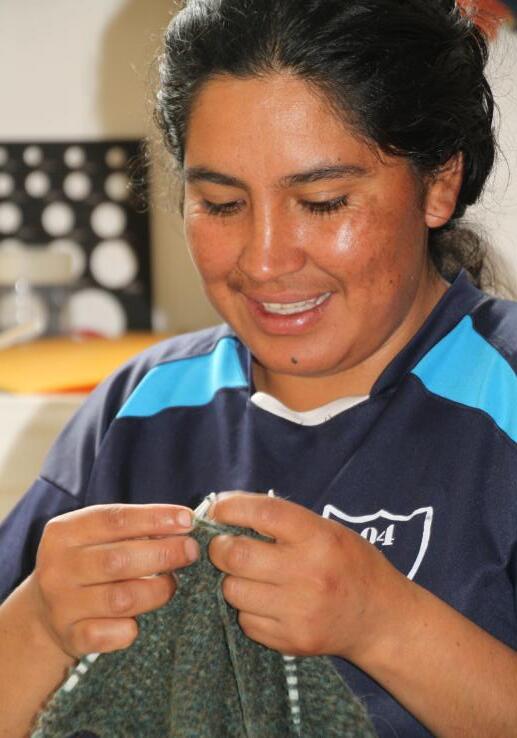
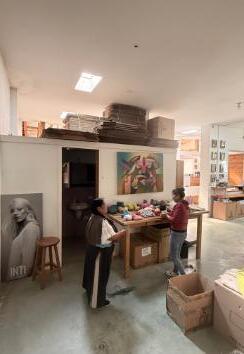
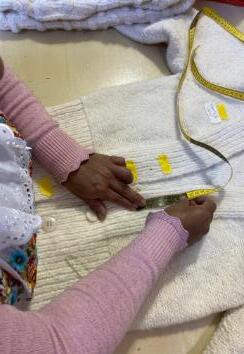
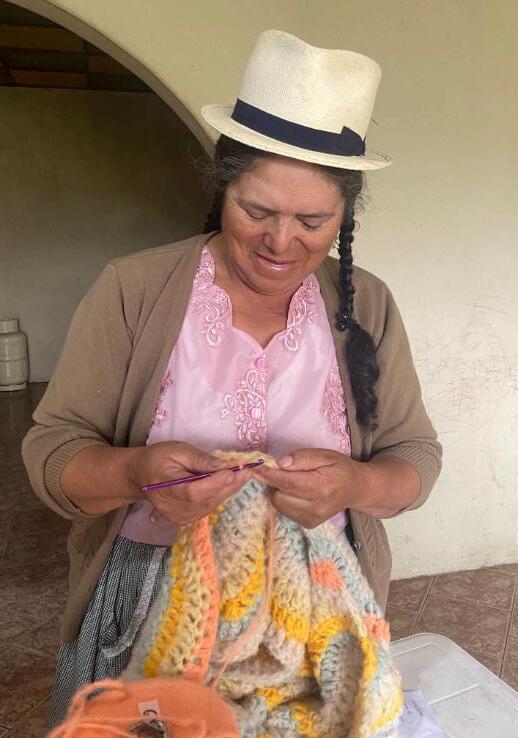
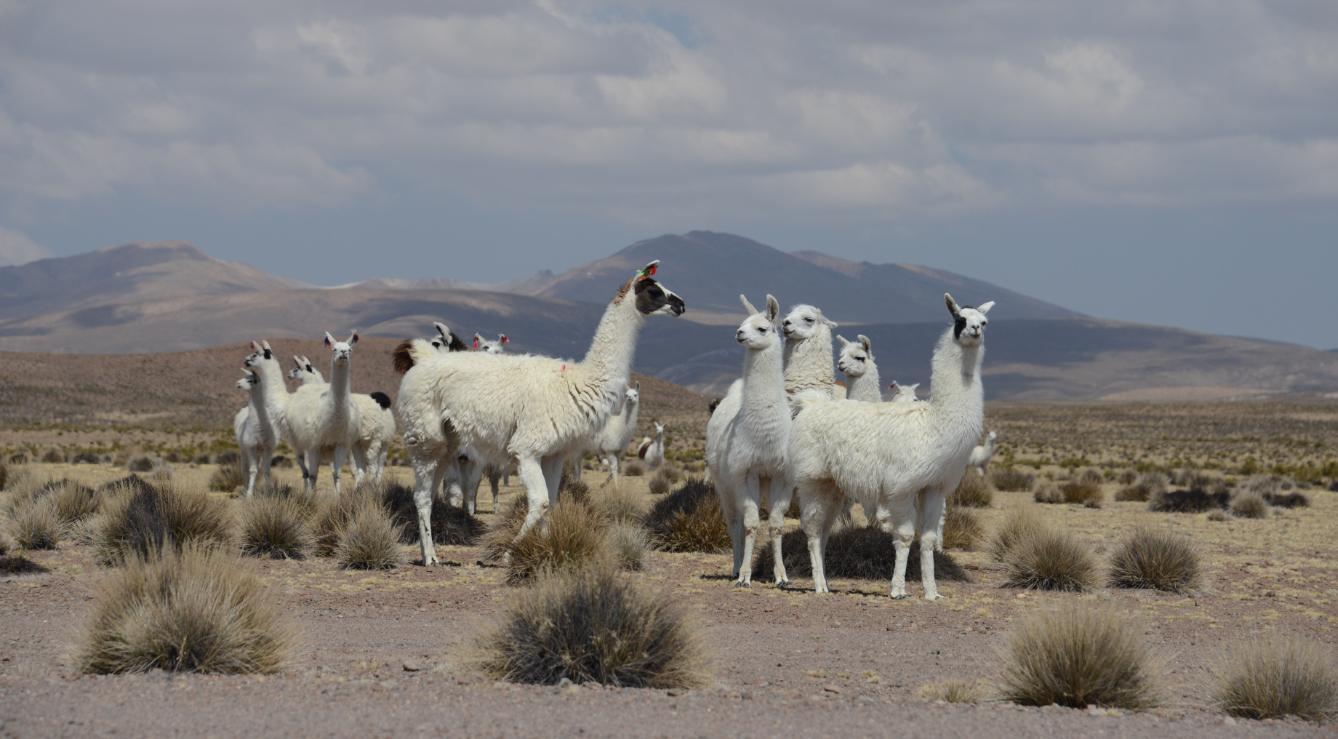
INTI Knitwear has been creating soft knits and employment in Ecuador for about 32 years.
They all feel the thread run through our fingers when it comes to our craft. From head knitters to wool producers to the embroidery stars of Zuleta, their knitting sisters and producers. Together, they are connected through our love of the product. Taking care of each other, celebrate birthdays, laughing at each other’s silly jokes, respecting each other in learning new skills, sharing beautiful dinners and crying when we need to. Their main goal isn’t to grow exponentially. What they value most is the sunny spirit of INTI and the warmth it provides so many.
Knitting as a life form
INTI operates from Den Bosch (the Netherlands) and from their workshop at the volcano in Otavalo, Ecuador. There, a large team of loyal knitting women work on the production of limited edition jumpers, cardigans and scarves. All INTI products are handmade from so-called baby alpaca wool - a lengthy and precise job. Together with designer Anna Cales, the driven ‘lead-knitters’ discuss the process, from pattern to button type. They then instruct more than 700 local knitters, many of whom work from home. The lovely professional knitters, who love a chat and a joke while working on a jumper. Checking sizes, patterns and wool can be quite time consuming, but the team always runs through all
of it, patiently. The work provides the knitting women with an extra income on top of their existing role. This role can be anything from selling vegetables on the market from her own vegetable garden patch to working at a farmer’s land, harvesting grains, corn and potatoes. Some of the women own a shop, others are known as ‘print women’, working as copy ladies for the kids at local schools. And many of our knitting women are housewives, knitting among their children or elderly parents, who often still live with their daughters or sons.
Baby alpaca from Peru
First things first: our beautiful wool, called ‘baby alpaca’, comes from the adult alpaca. It refers to the finest, softest fibers on an animal. Secondly, we buy our wool in Peru - the country when it comes to alpaca wool expertise. Although the scene is up & coming in Ecuador, it cannot yet compete with the years and years of experience the Peruvians have. Quite the dilemma, it proved. When we traveled to Peru in 2006 to find out
“Balance minimalism with the richness of handcraft, with each design reflecting the urban and the ancestral.”
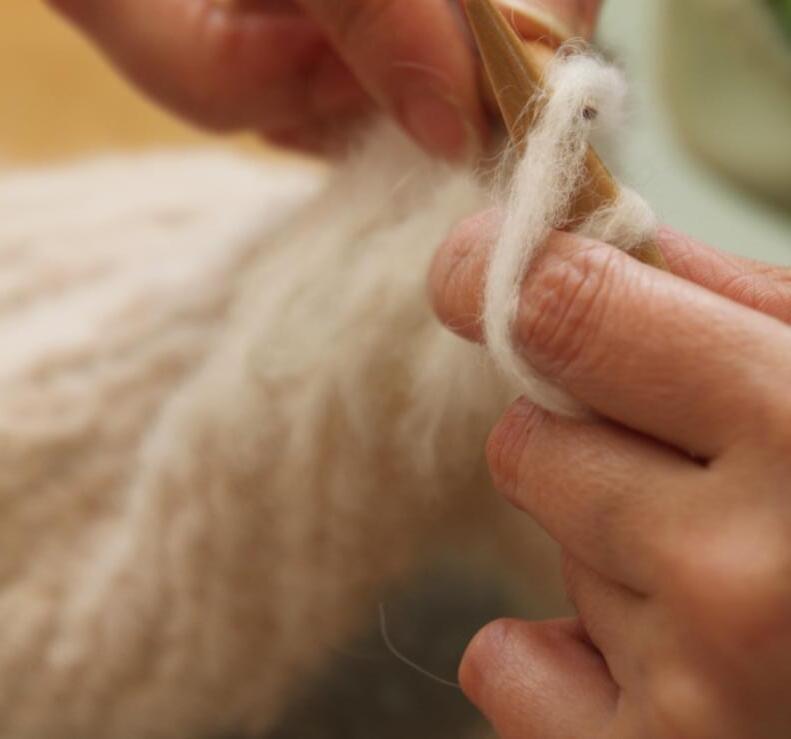
where we could buy the most beautiful thread, we had already built up a life in Ecuador. We knew we weren’t going to leave our knitters behind like that.
To provide you with the best alpaca wool from Arequipa, a wonderful city in the south of Peru, we import. The threads come from a lovely family owned business, just like ours! Four times a year, plane and boat shipments full of wool arrive in Ecuador. They are then driven through the country, right to the doorstep of our studio in Otavalo. Everyone then helps carry it up the steep hill in front of our house. And after that? We celebrate!
Care & repair
Extra wool for your INTI story
My INTI jumper has seen a bit of the world through me. I’ve taken it along on roadtrips through summery France, wearing it on an evening walk through fields of poppies and brittle hay. I’ve worn the jumper while I tried to climb a fence to get to a little stream in which I dipped my toe. And I took it with me while I visited the west coast of Portugal to work on my book, wearing it on bare skin on the windier nights while I watched the waves collapse and roll in at the beach.
My jumper is part of a longer story. That’s why it’s important to treat your INTI garment with care, too: the item is for life. It provides you with warmth on chillier nights and is cool and soft to the touch when your body is hot. We call this ‘thermoregulatory’: the alpacas’ wool is made from hollow fibres that keep the animals warm or
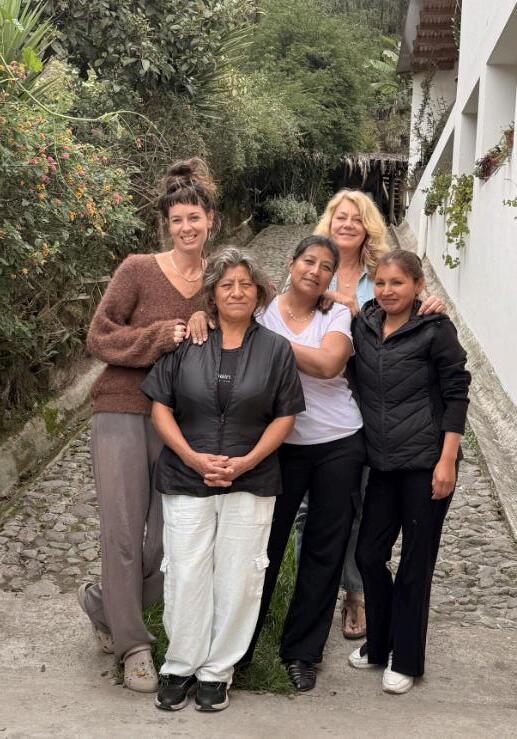
cool, depending on the weather conditions. The wool simply adjusts to their bodies’ temperature changes, and will do the same for you. No need to wash your item either – the wool is self-cleaning and prefers to be laid out on the table in the backyard to air. In storing a jumper or cardigan away, it’s best to do so in your drawers or folded on a shelf. To help you preserve your INTI garment for a lifetime, all items now come with a bit of extra wool. Use this dot when you find a little hole in your sleeve or a fray at the hem. So you can enjoy all those adventurous paths in life without worries. ◆
���
About the Dutch couple that went to South America on spec
In 1993, Anna Cales (then 34) and Leon van der Broek (then 27) flew to Ecuador. They were looking forward to adventure and discovering the world. They chose their destination by poking around in an atlas in the library – at random. Without a word of Spanish and with little money, they arrived in Otavalo, the market town of the region. 32 years ago, the Dutch couple started the INTI Knitwear company. By now, their daughter-in-law Anneloes is also working within the company and will continue its operations in the future.
lev’01 woolen shoes
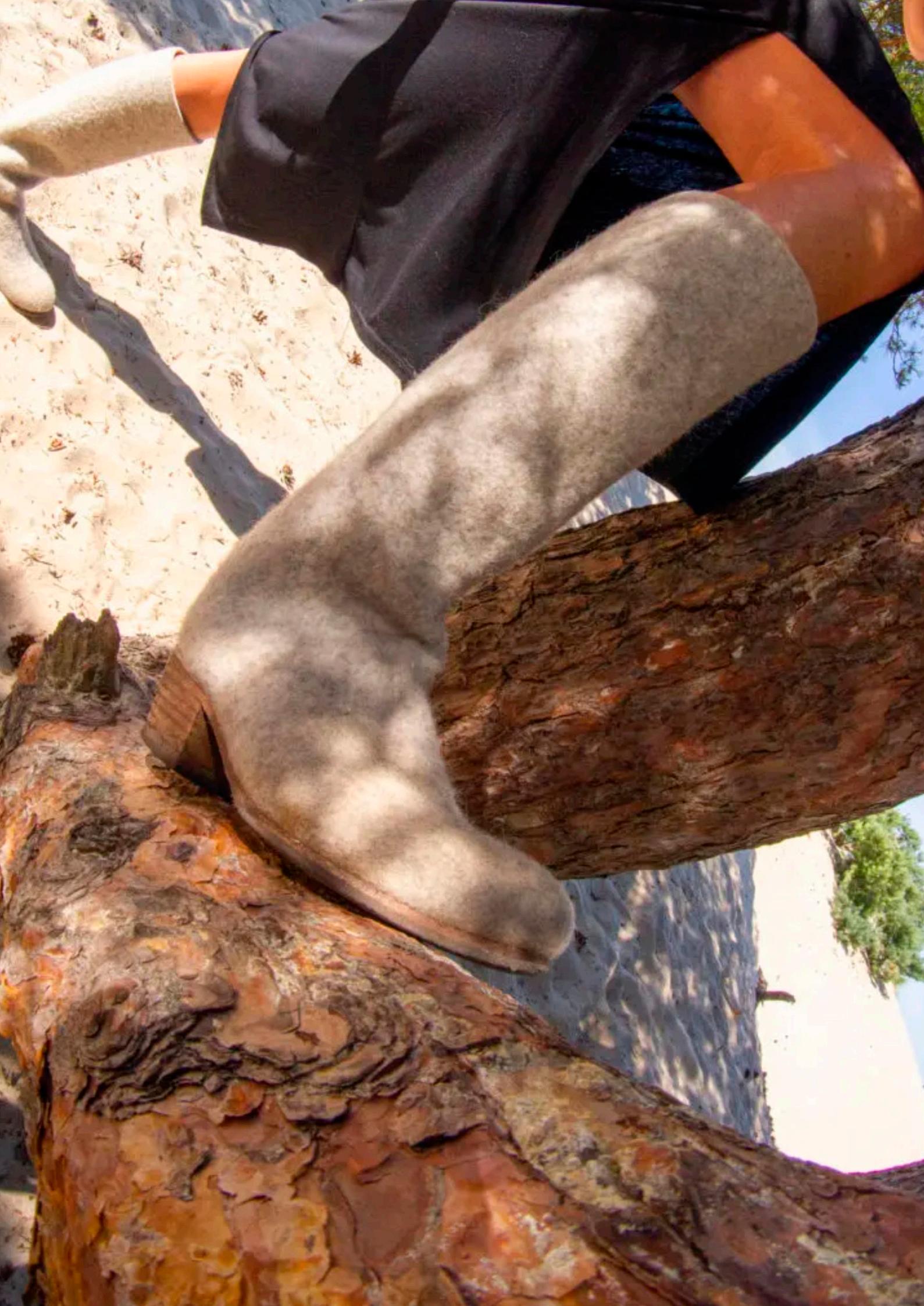
LEV’01, established in 2015 by Liesel Swart, is a Dutch eco footwear label. Swart is a footwear designer with over 30 years of experience and a nationally respected lecturer in Shoe Technology at the Dutch Shoe Academy. Her designs have appeared in fashion shows and exhibitions in the Netherlands and abroad. She dreamed of a green shoe label that makes the industry cleaner, where the choice of natural materials drives sustainability and enables true circularity. The shoe industry is highly polluting, and LEV’01 aims to challenge that status quo.
A pivotal moment came when woolen boots from Finland crossed her path. Wool is a clean, animal-friendly material traditionally used in Northern Europe for footwear. It is temperatureregulating, warm in winter and cool in summer, yet it had been forgotten in much of Europe as a shoe material. Swart reimagined wool for contemporary footwear without compromising performance or style.
Initially, Swart produced the first woolfelt boots for personal use to keep her feet warm. The overwhelmingly positive reactions from family and friends signaled a genuine market need for footwear that bridges sustainability, comfort, and fashion. LEV’01 was founded with their support, and since then the collection has grown gradually to include timeless sneakers and hikers. The label embodies slow fashion— prioritizing craftsmanship, repairability, and lasting quality over fast turnover— and seeks to broaden its reach while staying true to its ethics.
A key aspect of LEV’01’s growth has been its network of shop partners and collaborators who share a commitment to sustainable design. Swart works with select store partners that prioritize ethical production, transparent sourcing, and consumer education about lifecycle impact, helping reach customers who value responsible choices without compromising style or comfort.
We collaborate with Marijke van Hulst, a long-time partner and friend who makes bags from wool. Marijke uses the same Portuguese wool featured in our sneakers and hikers, extending the collection into durable, versatile accessories. She and Liesel have known each other since 1989, a relationship rooted in shared values and collaborative creativity.
Beyond footwear and accessories,
LEV’01 engages with other sustainable professionals across the ecosystem. Partners, material scientists to test natural fibers/ blends and low-impact finishes;Fibershed, with textile recyclers, Boldwool to explore closedloop processes. Organizing mini events with the Sustainable Stylist and COSH to show sustainable options while maintaining comfort and performance. Being part of “Ambachtelijk Vakmanschap Nederland” to promote craft together.
Education and knowledge sharing are central to our mission. Swart’s role at the Dutch Shoe Academy informs our approach to design, manufacturing, and consumer education. LEV’01 serves as a living classroom, inviting students, apprentices, and practitioners to observe production, discuss material sourcing, and contribute to iterative prototyping. This exchange helps raise industry standards and nurture designers who value transparency, circularity, and social responsibility.
LEV’01 remains committed to mindful growth: transparent supply chains, natural materials, and collaboration with like-minded professionals. Our woolen shoes symbolize a future where comfort, fashion, and environmental stewardship coexist. For more information, visit the website. ◆
Photographer
Tom van Maren Franke
Styling
Wassim El Hodayebi
garcía bello
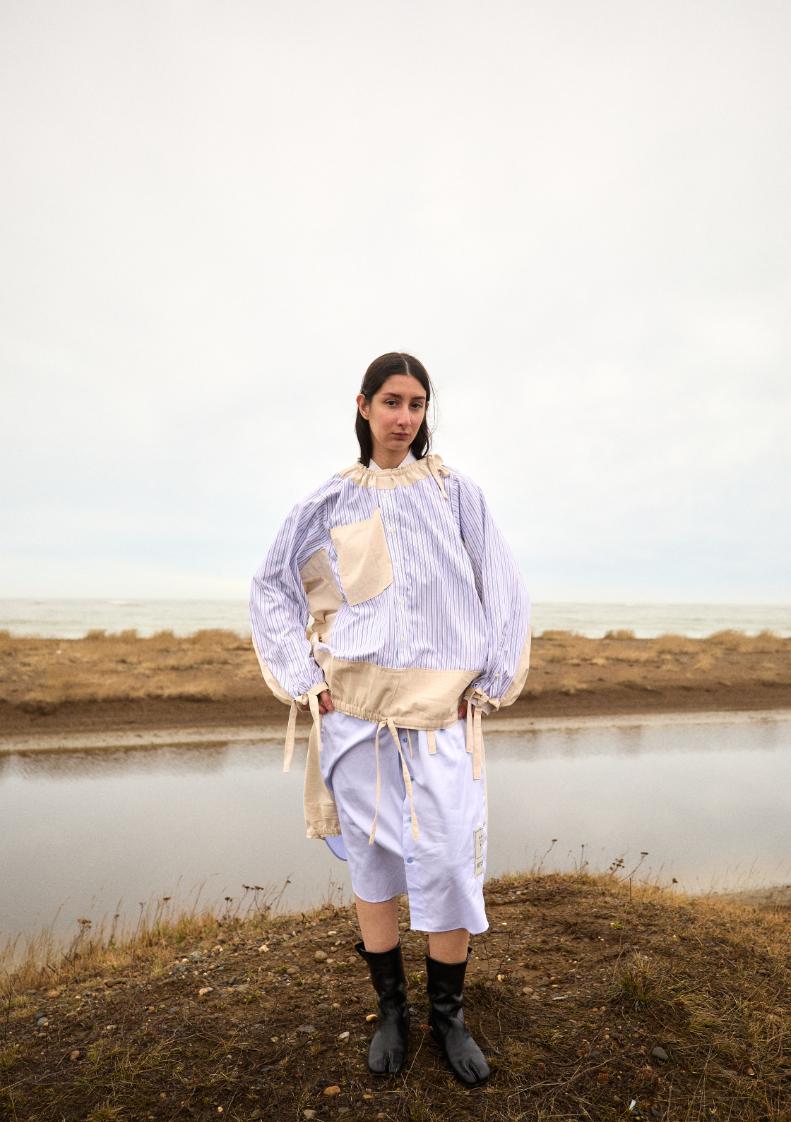
JULIANA GARCÍA BELLO, FOUNDER & CREATIVE DIRECTOR
THE IDENTITY OF SCARCITY
southern geographies: designing from austerity
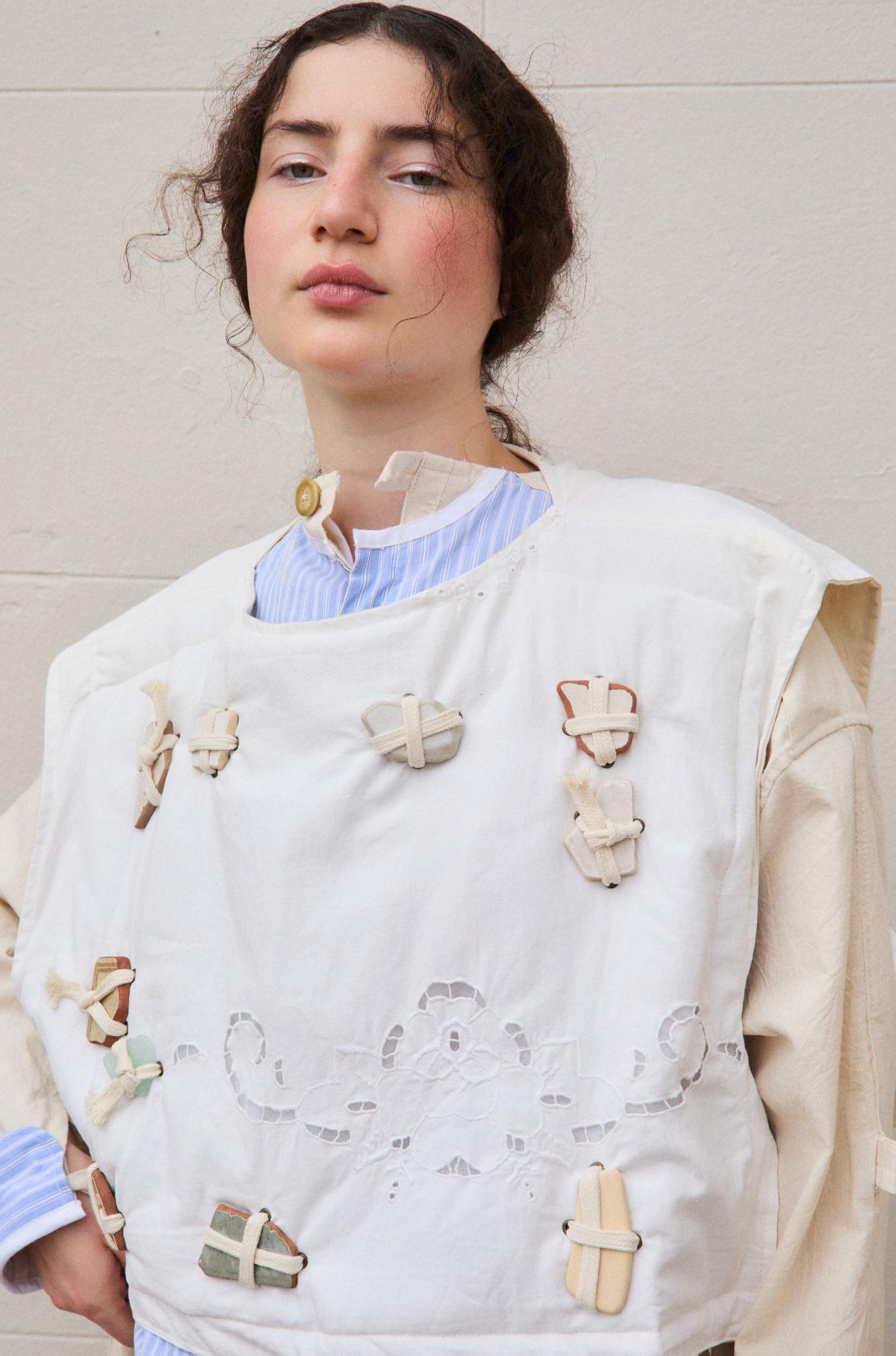
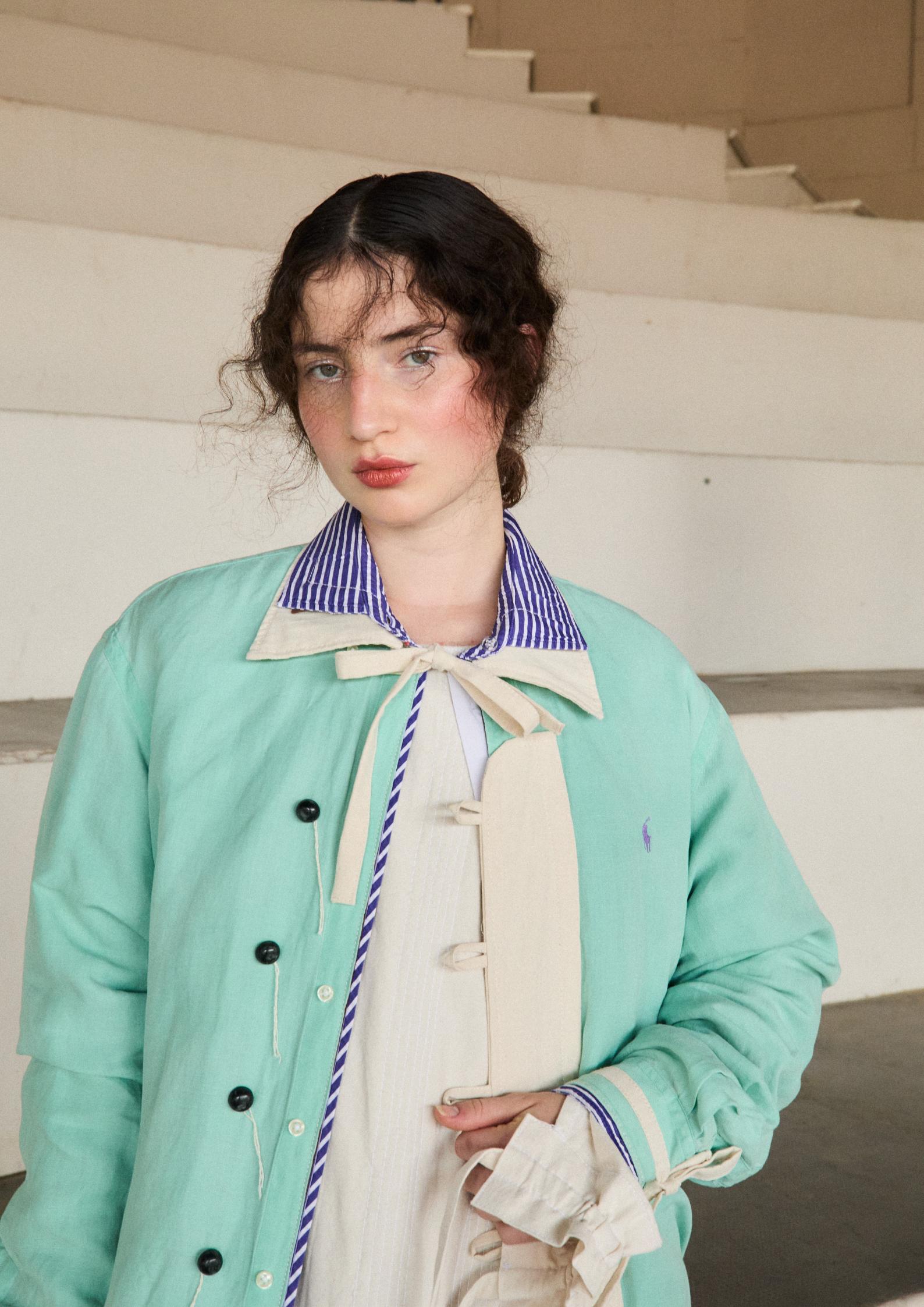
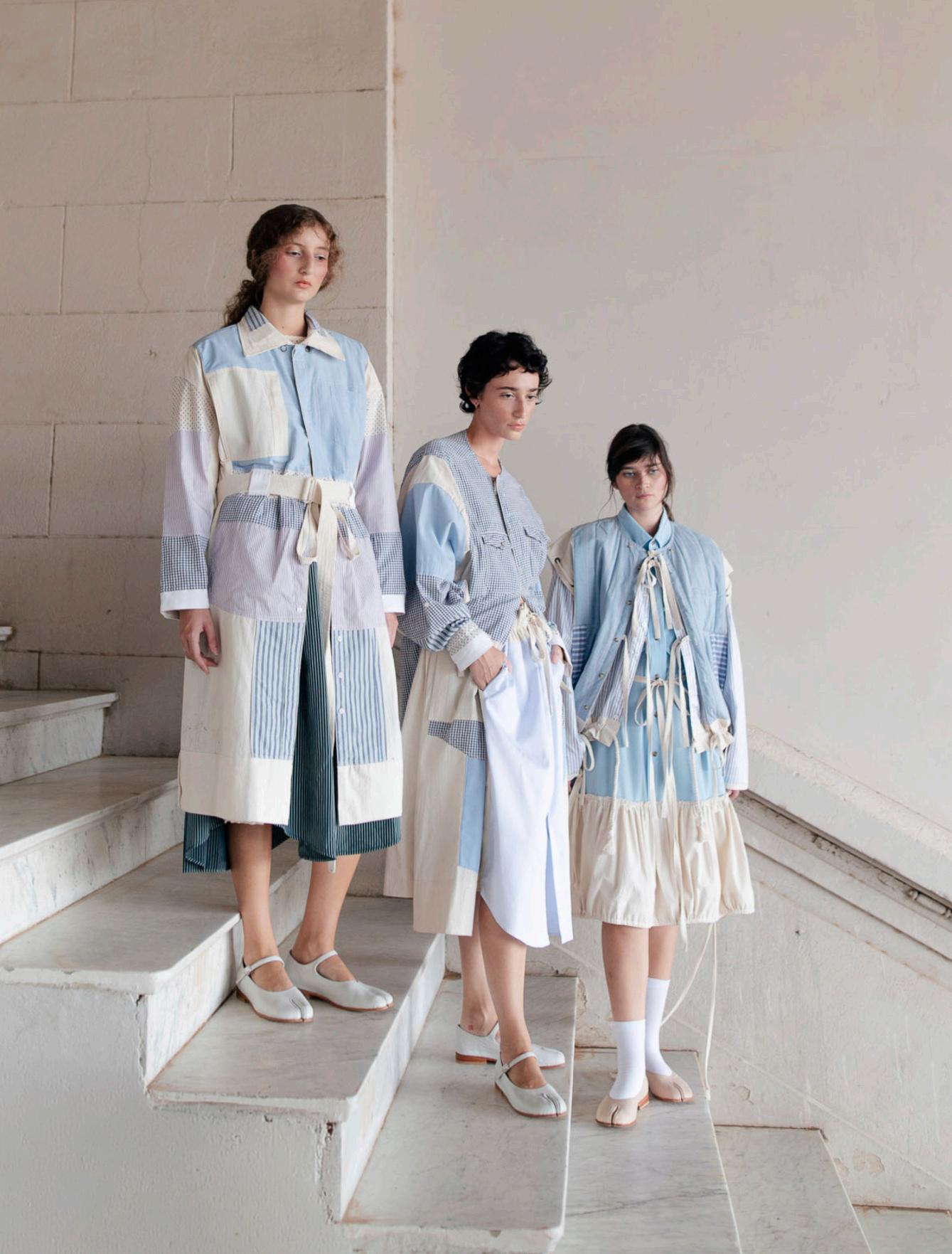
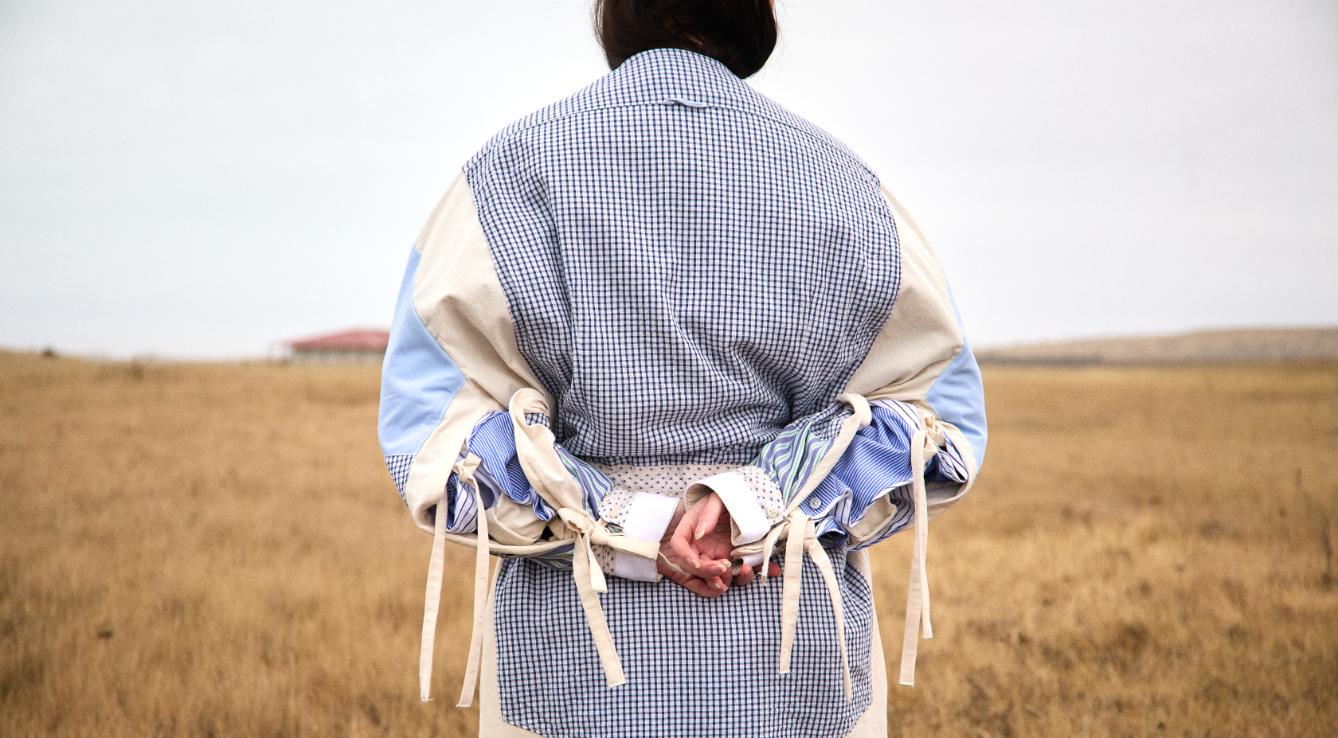
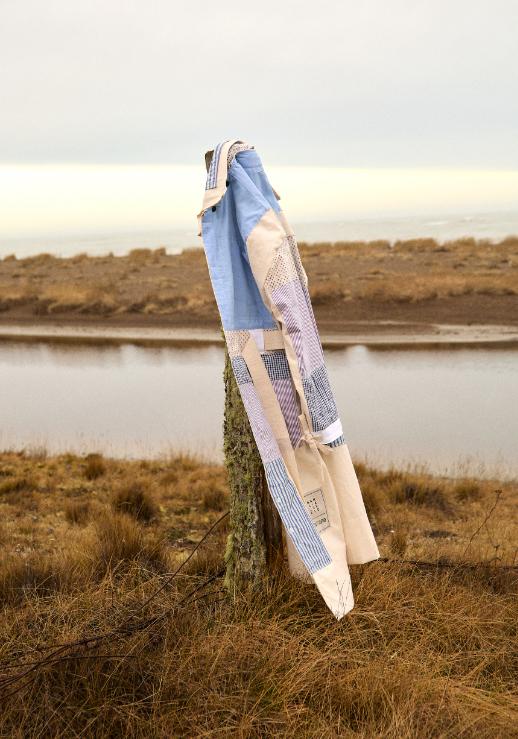
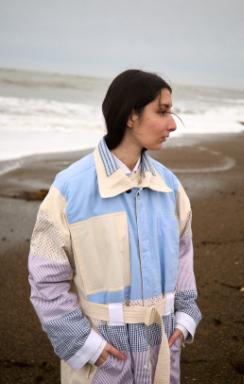
"Rooted in the landscapes of Tierra del Fuego, my creative process fosters a dialogue between territorial identity and material memory. At GARCIA BELLO, design goes beyond garment making; it is a strategic management of existing resources. I have developed a methodology centered on upcycling, focused on revaluing discarded textiles—such as shirting and domestic linens—transforming them through zerowaste pattern-cutting techniques. In a context of global overproduction, 'slow making' is our most radical statement. We operate under a handcrafted system that remains scalable to industry, ensuring each piece carries a defined purpose and tells a local story."
founder & creative director
Juliana García Bello @julianagarciabello photographer
Mariana Pacho Lopez @empalagarmedemar Models
@ceres_management / @renuu.gardonioo @camcainero @emmapredolini @sofiferran @martidietrich
Photographer
Mariana Pacho Lopez
@empalagarmedemar
Model
Eva Vazquez
@vazquezeva_
CIRCULAR METHODOLOGY
upcycling as a technical discipline
"Our commitment lies in ensuring that garment construction meets the standards of luxury craftsmanship. Through advanced upcycling, we extend the lifecycle of highquality raw materials, proving that circularity and contemporary design are inseparable. Each collection is an exercise in resourcefulness, where material constraints dictate the final form. We view clothing as the skin we inhabit and a powerful communication tool. By integrating heritage, manual techniques, and circular solutions, we invite the wearer to build a lasting narrative and maximize the garment's lifespan."
STUDIO WIEVIEN
coloring a cloud together
There is something floating above us that we all share: clouds. They have no owner, no boundaries, no judgment. They constantly change shape from full, soft masses to fragile wisps that almost disappear. Perhaps that is exactly why I feel so drawn to them. Clouds show that transformation is natural.
The color of the moment, Cloud Dancer, feels like an invitation. Not to define what something is, but to move along with what it can become. To color a cloud together, without anyone determining the right line.
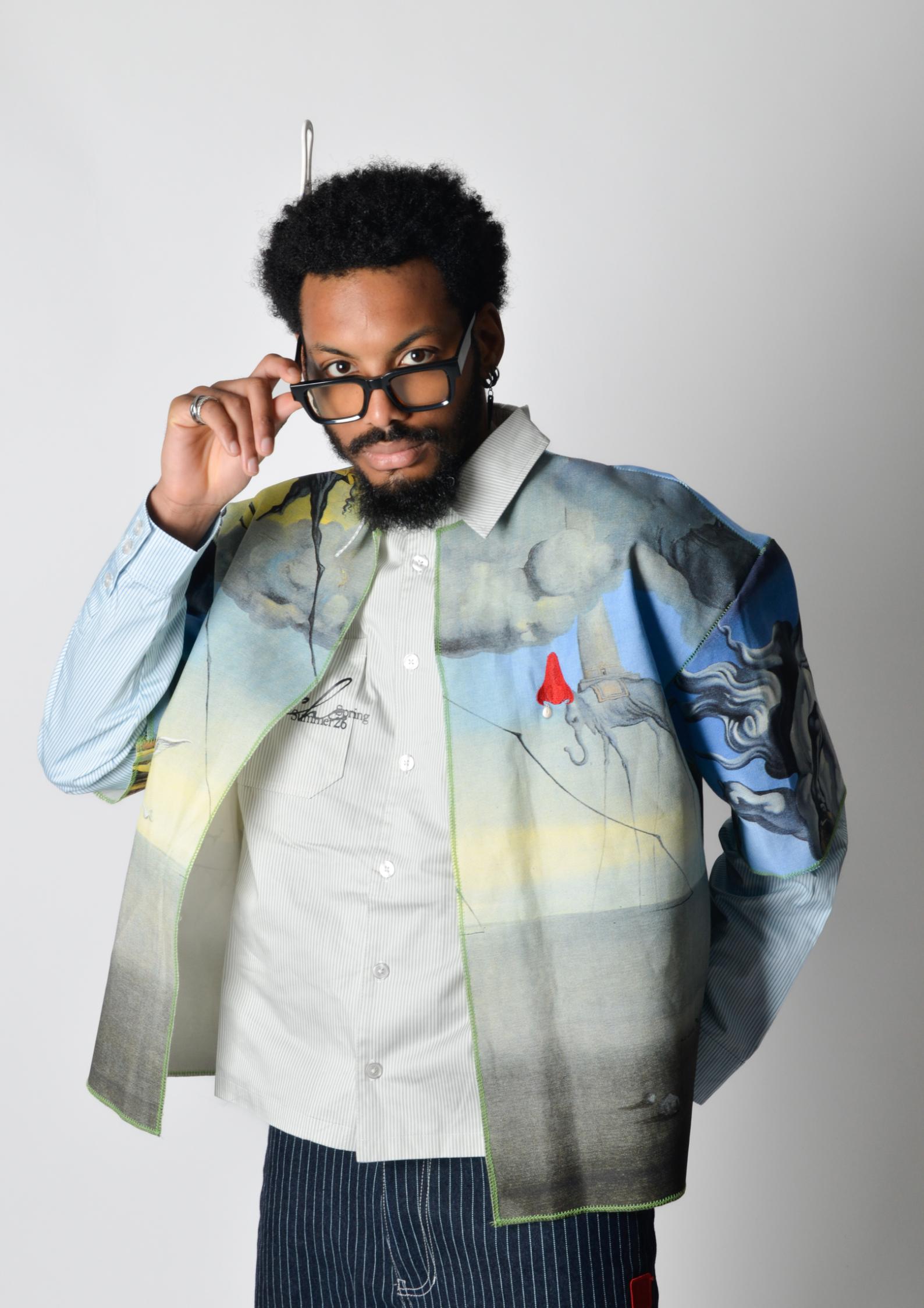
That is also what my brand, Fancy Boogers, is about.
My logo—a nose with a crystal snot bubble—often elicits an initial reaction:
a frown, a laugh, sometimes even disgust. Perfect. Because that is exactly where it begins. We have become so accustomed to defining beauty as something smooth, controlled, and ‘finished.’ But what happens when we let go of that idea? When we look at what we normally push away?
A snot bubble is perhaps the opposite of luxury. Or perhaps not? What if you view it as a pearl that has not yet been acknowledged? Something that feels uncomfortable, but also human, honest, and close. In that field of tension, space emerges. Space to play, to laugh, to grow.
“Something that feels uncomfortable, but also human, honest, and close.”
For me, Fancy Boogers is not a provocation for the sake of provocation. It is a gentle nudge towards acceptance. Of everything that is frayed. Of everything that isn't immediately called ‘beautiful.’ Because that is often where the energy we need lies. The humor that
connects us. The strength that moves us forward.
Just like clouds.
They are never perfectly symmetrical, never the same, and yet we look at them and see stories. Everyone sees something different: an animal, a face, a memory. Perhaps that is the invitation: not only to look, but also to share what you see. To give meaning together.
Coloring a cloud together is, for me, about collectivity. About the realization that we are all part of the same moving whole. That we are allowed to have our own forms, our own interpretations, without one excluding the other.
Perhaps it is time to view ourselves that way too.
Not as something that needs to be fixed or polished, but as something that is allowed to float, change, and sometimes even be a little uncomfortable.
Because who knows, maybe your pearl lies there. ◆
photography
Jelle Op Den Camp
model
Shu Jantje
stylist
Lisa Somers
Anna Sab
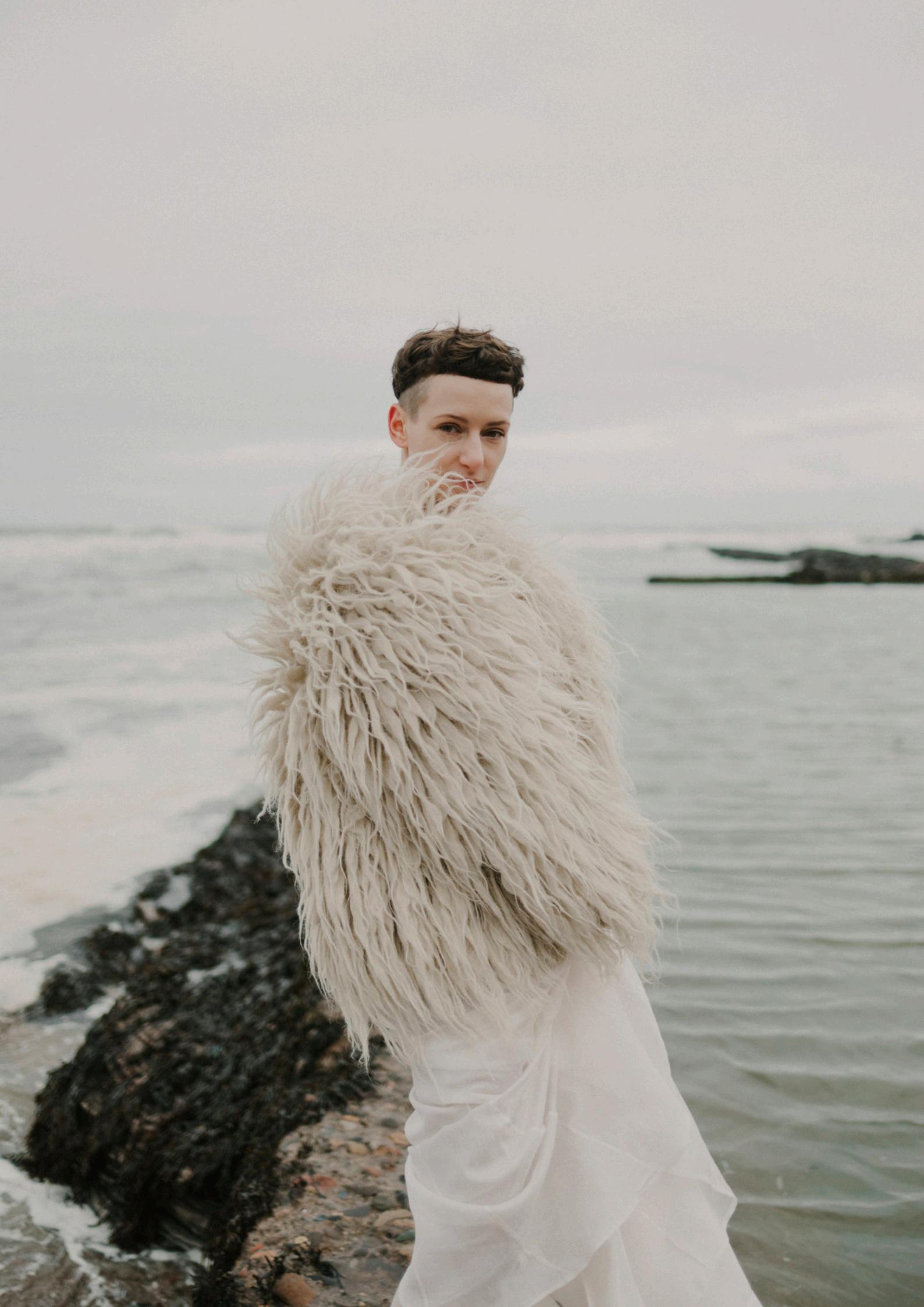
photography
Mala Kateryna
mariia pavlyk
A CONTEMPORARY SLOW FASHION BRAND
“A little story about the journey from Wool fibre to Identity”
Wool is an amazing material. For me, it is one of the most delightful to work with. It is natural and renewable; it is very forgiving: the draping and tailoring feel intuitive and it is easy to shape without forcing it. Wool has been used for centuries around the world and has given rise to distinct local practices and craftsmanship that are now slowly fading. My work aims to preserve and perpetuate Ukrainian wool culture, ensuring that its unique heritage continues to be recognised and valued.
I began seriously exploring wool during the final year of my master’s. While working on my graduation project, I wanted to reconnect with my roots by identifying a distinctive Ukrainian craft that would resonate with my design aesthetic.
That period was deeply challenging. I had left a peaceful Kyiv to pursue my studies, and within six months, the country I remembered had changed entirely following the Russian invasion.
When many of my friends volunteered to join the army to fight for our freedom, I experienced an overwhelming sense of guilt. That transformed my approach to design. I realised my mission is not only to create beautiful designs, but also to include meaning to my work by sharing my country's history and traditions on the international fashion scene.
In the summer of 2023, for the first time since the beginning of the war, I returned to Ukraine to conduct field research for my master’s project. It took me to the Carpathian Mountains, the heart of Ukrainian craft traditions. Among the many crafts practised there, I was drawn to traditional wool weaving, a technique that once existed widely across Ukraine but declined during Soviet collectivisation. Today, only a few villages continue this centuries-old tradition. I spent the summer time in the village of Kosiv, learning the basics of the craft and developing my own design language through it.
In Ukraine, this technique is known as “Lizhnykarstvo”, from “Lizhnyk”, meaning a
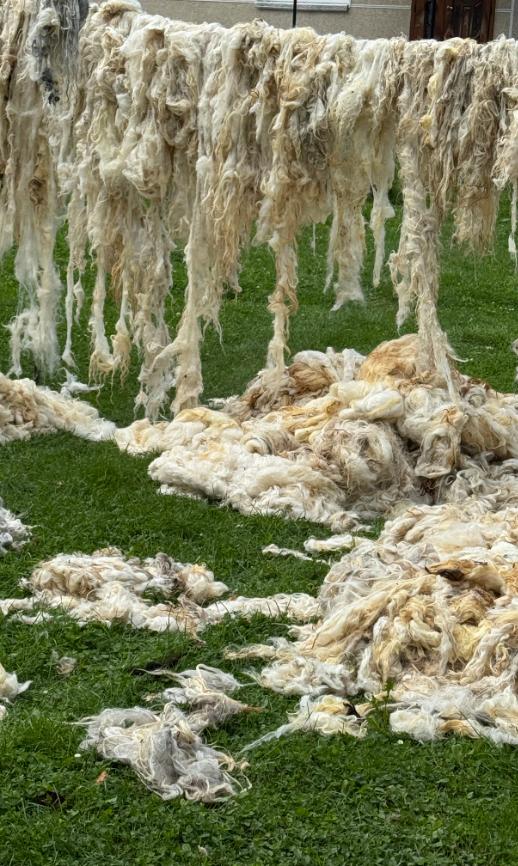
woollen blanket. The wool used for weaving is coarse, with long fibres that make products strong and durable. These blankets hold deep cultural significance and accompany people throughout their lives as they are used in birth rituals, weddings and funerals. In addition to blankets, it is used to make thick “Gunia” coats, traditionally worn by shepherds. They provide warmth in winter, breathability in summer, and a natural resistance to wet weather.
PROCESS:
The original way to process wool into a final product could still be done with no electricity involved. Wool is washed in mountain streams, boiled over wood fires, dried, and sorted by colour. It is then dyed when needed, traditionally using natural materials such as bark, vegetables and herbs, though, sadly, synthetic dyes are now sometimes used for more vivid colours.
One of the most labour-intensive stages is preparing the wool by brushing it into soft fibres for spinning. While some artisans now use simple electric machines, many still do this by hand, a process that can take up to a week for a single garment.
Spinning is traditionally carried out by the youngest and oldest members of the family. For children, it is often their first introduction to the craft, as they learn to spin small wool balls called “Gushka”. Older artisans often continue spinning
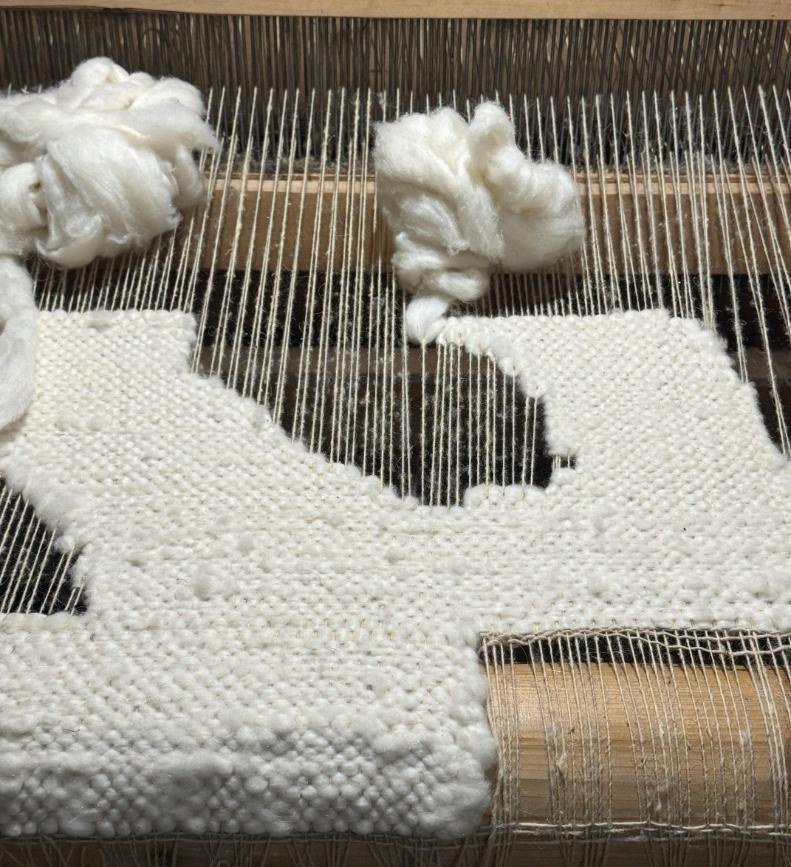
even when weaving is no longer physically possible for them.
Traditionally, by autumn, once the wool is prepared, weaving begins. Simple wooden looms, often passed down through generations, are used to create basic woven structures. The weaving itself is relatively fast, but finishing and securing threads can take just as long as the weaving itself.
The woven pieces are then processed in a “Valylo”, a wooden structure over a river stream where flowing water felts the wool. This step takes hours, followed by days of drying and cleaning. Some pieces are brushed again to refine their final texture.
“Every stage is local, visible, and connected directly to the land, animal, and maker.”
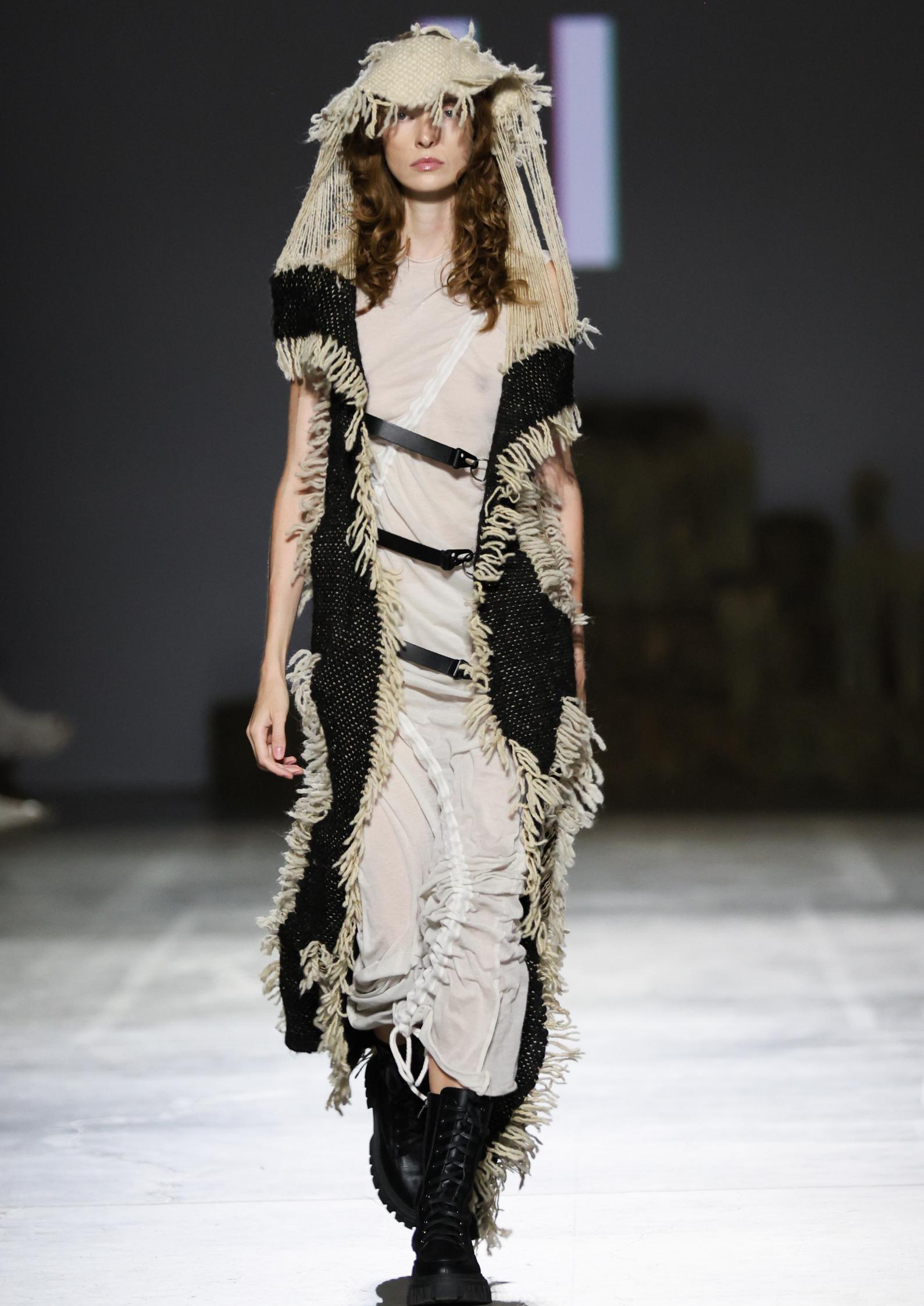
photography
Andriy Sokolov
photography
Nikitina Khrystyna Model
Rotaru Sofia
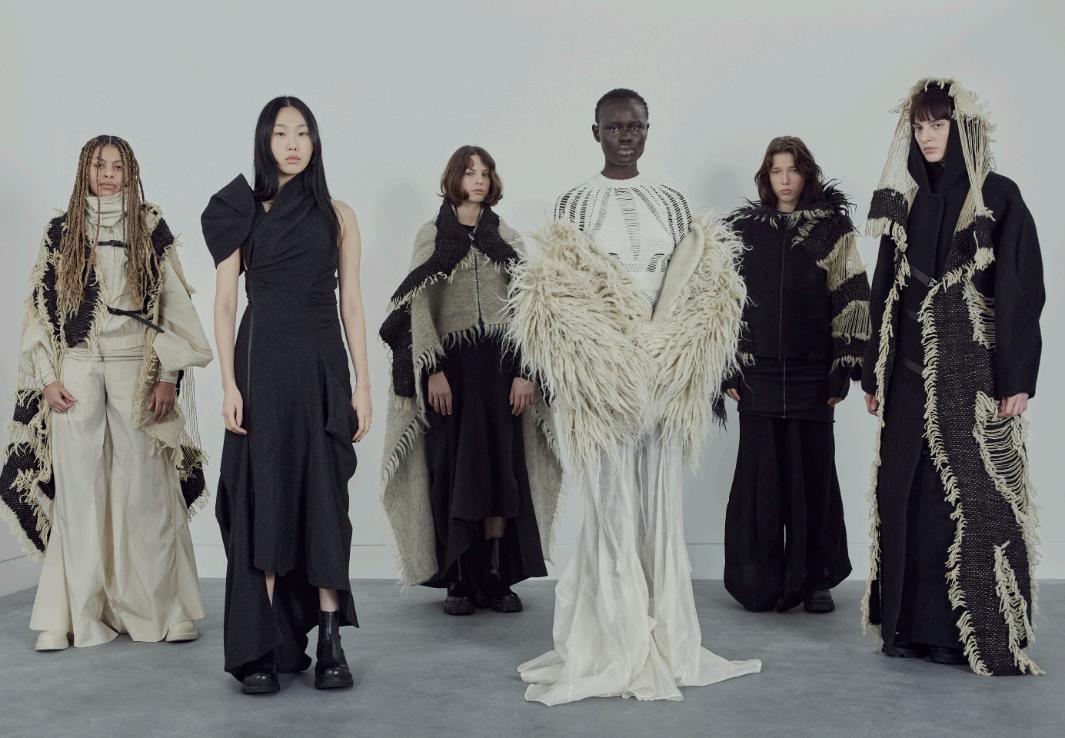
When I learned this craft, I tried to take part in every stage. I felt an incredible sense of belonging, becoming part of the Ukrainian people, keeping our tradition alive. What defines Ukrainian weaving is not complexity or refinement, but continuity. It is a self-sufficient system, independent of external supply chains or industrial infrastructure. In a global fashion system where materials often travel thousands of miles, this form of weaving offers radical transparency. Every stage is local, visible, and connected directly to the land, animal, and maker. This reminds us of the value of time, labour, and material, and how they shape not only garments but cultural identity.
Through this process, I found space for exploration and creativity. This led to the development of my collection Spero. I continued to transform traditional techniques and experimented with finer materials such as cashmere and silk. The act of weaving became deeply meditative for me; thread by thread, it allowed me to reconnect with my country and its enduring craft traditions. ◆
“ My mission is not only to create beautiful designs, but also to include meaning to my work by sharing my country's history and traditions ”
MA Graduation collection photography James Rees
Bio
Mariia Pavlyk is a Ukrainian fashion designer torn between Kyiv and London. She co-founded the brand ii in 2019, a contemporary slow fashion brand that is known for narrative-driven designs and integrating traditional craft techniques within contemporary fashion design. She undertook a Graduate Diploma (2022) and an MA (2024) in Fashion Design Technology at the London College of Fashion (UAL), developing a research-driven, material-focused design methodology. Her practice investigates weaving traditions, cultural memory, and artisanal processes. In 2024, she presented her collection “Spero!”. She currently operates her studio in Kyiv, which covers all steps of production in-house, from deadstock fabrics to finished garments.
STUDIO EVA D°
the wardrobe that asks nothing of you
In a season of relentless newness, one small studio is making a quieter argument: that the right clothes have nothing to prove — and neither do you.
There is a particular exhaustion that comes with following fashion. Not from the clothes themselves, but from the pace — the microtrends, the drops, the creeping sense that what you wore last month has already aged. Most of us have learned to live with it. STUDIO EVA Dº has decided not to.
The studio's position is almost disarmingly simple: you don't need more clothes. You need the right ones. It sounds obvious until you sit with it, and realise how rarely the industry actually means it.
FOR ANYONE WHO WEARS CLOTHES
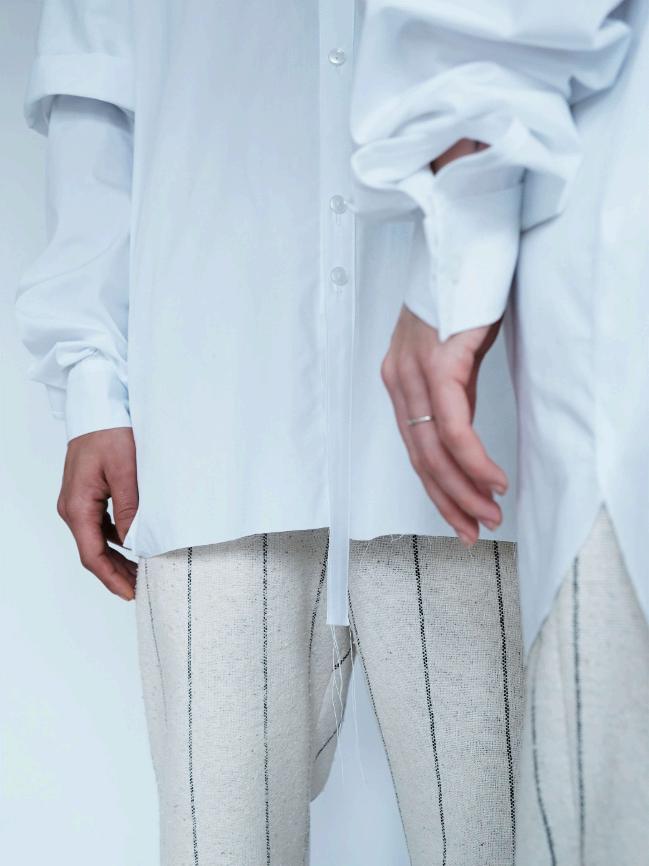
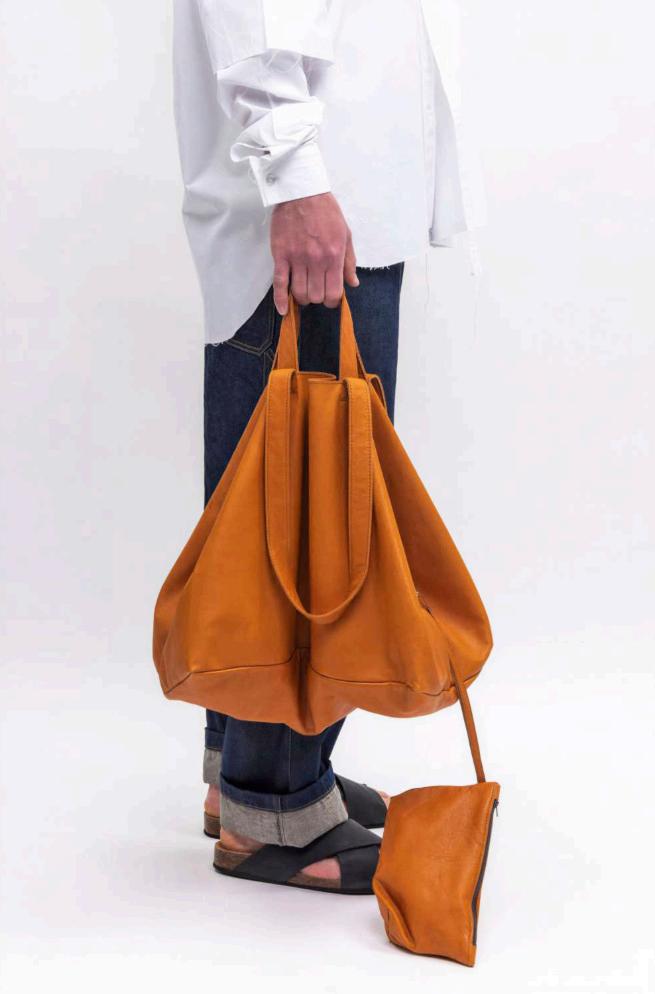
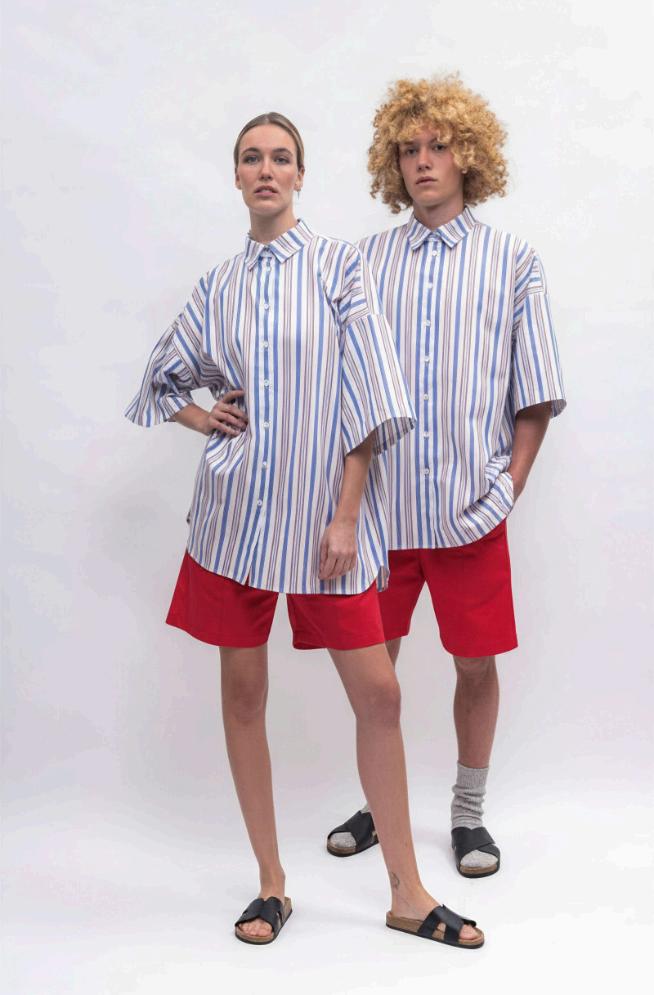
Nothing here is designed for a particular gender. That is not a political gesture — it is just a logical one. The pieces are cut for bodies, not categories. A long drape, a structured shoulder, a raw hem: each works across frames, across contexts, across the people who move through your life and might, quite literally, borrow what you own. Genderless, here, means genuinely open.
"The garment shouldn't tell you who to be. It should leave room for who you already are."
THE UNFINISHED EDGE
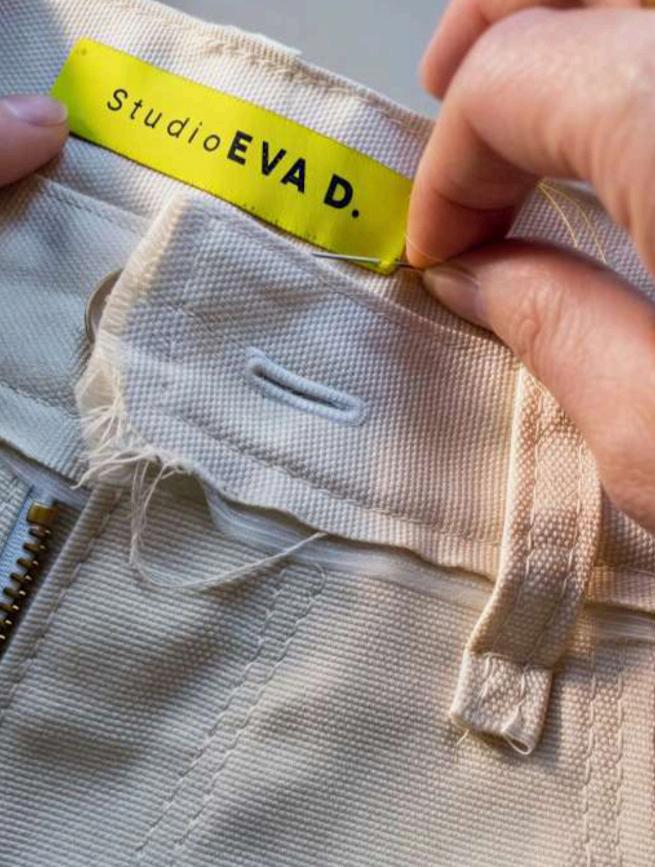
Look closely at a STUDIO EVA Dº piece and you will find the maker's hand still in it — in the weave, in the occasional irregularity, in the seam that is left deliberately raw. This is not carelessness. It is honesty. The imperfection is the point: a reminder that something real was made here, by someone, with intention. In a market flooded with frictionless finish, there is something grounding about a garment that doesn't pretend to be a product.
RADICAL SIMPLICITY
The silhouettes are quiet. Almost radically so. No excess, no decoration — just form doing exactly what it needs to do. Raw and refined at once, they sit in a palette of clay, stone, and anthracite, with a single note of lime that lands, in context, like a considered full stop. These are not statement pieces. They are pieces that stay relevant precisely because they never shout.
For those who have grown tired of fashion's noise, STUDIO EVA Dº offers something rarer: clothes built to be worn often, kept long, and repaired when the time comes. Not a collection. A different way of thinking about getting dressed. ◆
photography Eva Maria Dekker, Hans Mooijer modellen Nena Nawijn, Jahmael Robertson, Stan Groenewoud, Jasmijn Hamming
“wear with love and care—like wings that peace”carry
For centuries, pigeons have moved quietly alongside us threading the skies between war and peace, carrying messages when human voices could not.
They learned our cities the way fabric learns the body softly, patiently, shaping themselves to our presence. In their wings lives a memory of distance, of separation, and of return.
Now they remain, woven into the rhythm of our streets, dressed in the muted silvers and blues of survival a living testament to resilience, to adaptation, to a beauty often overlooked.
In a world still marked by conflict, their flight becomes a quiet language of peace a reminder that connection can endure even when everything else feels fragile.
As we rethink what we wear, what we make, what we value, we are asked to move with the same care to choose gentleness over excess, respect over disregard.
Because they, like us, are shaped by the world we create.
And perhaps, in their small, steady presence, there is comfort a soft, feathered promise that peace is still possible, and always worth returning to.
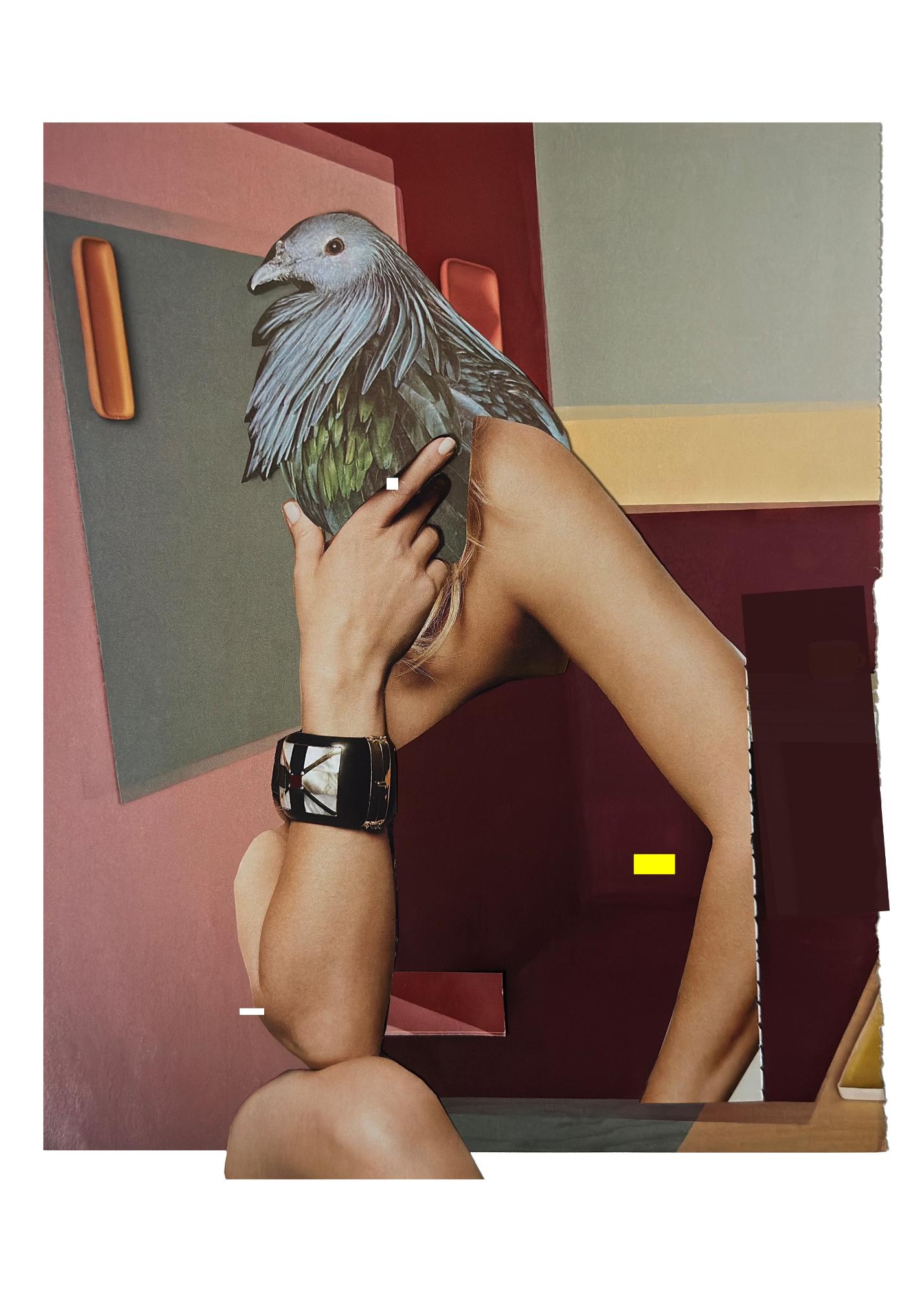
text and collage
Saskia Kemperman
DUO INTERVIEW
many hands, one vision
HUL LE KES
In an industry that often revolves around speed, scale, and distance, Sjaak Hullekes and Sebastiaan Kramer consciously choose proximity. With Hul le Kes, they are building an alternative fashion system in which care for materials and people takes center stage. Their practice moves between studio and repair space, between design and social engagement. In this double interview, they discuss the origins of that vision, the tension between ideals and reality, and the power of collaboration.
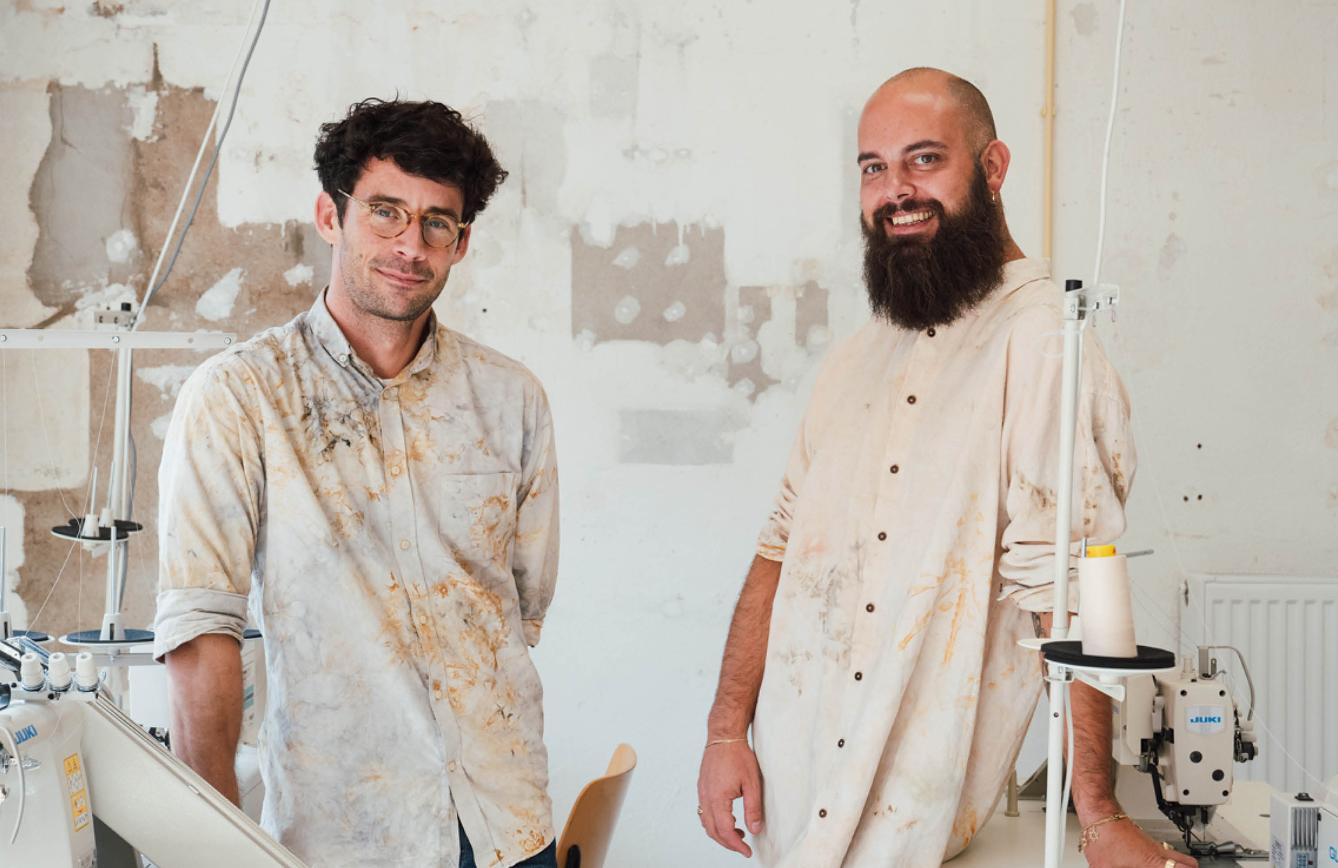
When did you realize that fashion can also be care; for materials *and* for people?
Sjaak: “That actually started with a lack of humanity in the fashion process. As a designer, you supposedly lead a team, but in reality, everyone works very linearly. I missed the interplay, the shared strength. When we started working with upcycled materials, we saw how many fabrics there were that literally needed care in the form of repair and attention. That is when the connection with care emerged naturally for me. The idea that you can also heal your mind with your hands.”
Sebastiaan: “But your background in healthcare is also interwoven into that.”
Sjaak: “Yes. Alongside my HAVO (senior general secondary education), I also did SPW (Social Pedagogical Work), partly out of insecurity; that little voice saying, ‘Can you really make a living from fashion?’ But ultimately, it turned out to be a huge asset. Care is close to your heart *and* your head. That is something I would recommend to everyone.”
What did you feel was missing in the existing fashion system?
Sjaak: “Connection. The system was mainly about broadcasting: you produce clothing, send it out into the world, and then don't look back at it

again. Everyone works alongside each other, not with each other. That felt empty. Now we have brought the chain much more under one roof. You *have* to collaborate to make something good.”
Was there a turning point where you decided: things have to change?
Sjaak: “When we shut down our previous label. Working within the existing fashion system didn't give us any energy. That is a strange realization: that something can go ‘well,’ but isn't right. That emptiness created space to start over. To color in the coloring book again.”
Sebastiaan: “The existing system simply didn't give us any energy anymore. And then you have to be honest: this isn't us.”
Sebastiaan, alongside fashion, you also studied business administration. What did that bring?
Sebastiaan: “I saw how traditional business models are at odds with how you are trained as a designer. They are linear, focused on efficiency and growth, whereas creativity actually thrives on space and circularity. My quest became: how do you combine those two? How do you retain the strengths of business administration, but make room for a truly circular and creative practice?”
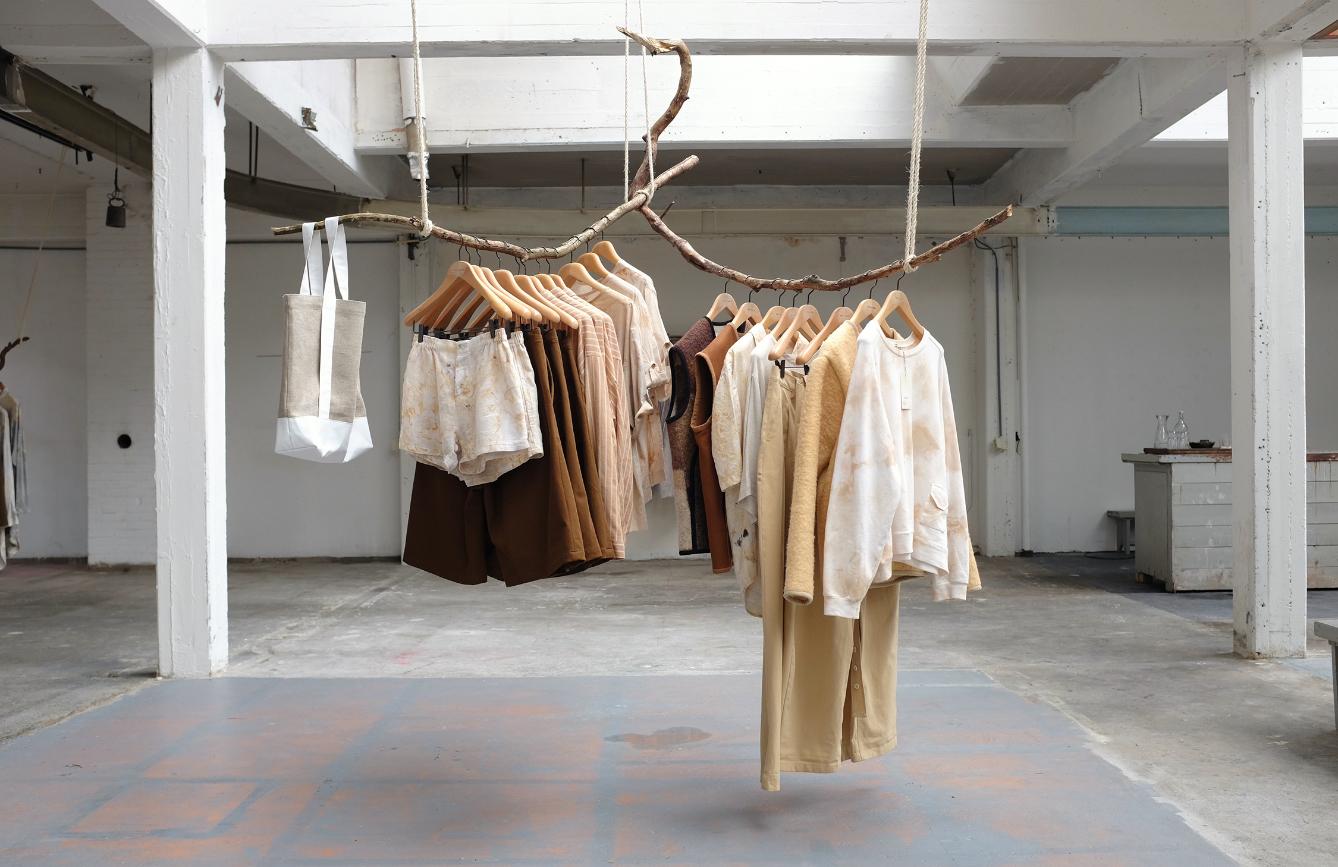
You have deliberately built a complex system: social, circular, and creative. What makes that difficult?
Sebastiaan: “The fact that we want to do things differently on so many levels at the same time. We said: we don’t want to be ‘just another sustainable label.’ So we innovate on materials, production, and social impact. But because of that, you sometimes lose focus. You have to constantly balance things out while also keeping it profitable.”
“What we do is often: solve multiple problems at once. We re-dye rejected white textiles. We repair damaged fabrics and link that to people in repair processes. We actually repair both textiles and people. That is the core of what we do.”
Where does the conflict lie between ideal and reality?
Sebastiaan: “Our ideals are not the most economical route. The fastest way to make money is still to follow the old system. But we don’t want that, so you automatically choose the most difficult path.” Sjaak: “You do count other things: how many kilos of textile you save, how many people you give back a sense of perspective. But those aren't figures that generate direct income. That can create tension. At the same time, we want things to be done right, and that isn't a process you can tightly manage. It grows, through trial and error.
How do you complement each other?
Sebastiaan: “Sjaak is very strong in materiality. He feels fabrics, sees beauty in what is already there. That makes him exceptional when working with existing materials.”
Sjaak: “And you are precisely the one who builds the structures. You can look across the entire chain and ensure that our ideals remain intact. You have that helicopter view. I see you at your best when you get to design systems.”
And where do you differ the most?
Sjaak: “Sebastiaan is more ‘fashion’ than I am. He thinks in silhouettes, in broad strokes. I am smaller in my gestures, more focused on fabric and technique. I prefer to remove things; he adds.”
Sebastiaan: “You are more conservative. For me, it’s okay for things to be a bit edgy, crazy, maybe even a little uncomfortable. But that difference is precisely what makes it valuable.”
You work closely with wearers and customers. Why is that important?
Sebastiaan: “We have always stayed close to our customers, with our own stores. We don’t want to be designers who are far removed from the wearer. That connection is essential.”
Sjaak: “And those customers are happy for us too. They are special people. Sometimes we would like to spend even more time with them.”
What gives you the most satisfaction?
Sebastiaan: “The Recovery Studio. People who come in, often withdrawn, and slowly blossom again. Those aren't big stage moments, but small, personal breakthroughs. That is what I am most proud of.”
Sjaak: “Yes, that really makes me emotional. And also the trust of our team. People who fully commit to what we do; that brings responsibility, but also a huge amount of energy.”
Looking ahead: where does the future lie for Hul le Kes?
Sebastiaan: “I see a lot of potential in collaborations. Not because we necessarily need them, but because we can show other companies that things can be done differently. Additionally, I would like to have more physical spaces, popups or permanent locations, to reach a broader audience.”
And what do you hope the fashion world will look like in twenty years?
Sjaak: “I secretly hope that the big multinationals have exhausted themselves. That we go back to smaller fashion houses. What is happening now, on this scale, is not healthy; not for the earth, not for the product.”
Sebastiaan: “I hope that people have more textile knowledge again. That they feel the difference between materials, understand how much work goes into a garment. That naturally leads to more appreciation.”
Sjaak: “And therefore to more care. For what you wear.”
Finally: what do you hope the other person never loses?
Sjaak: “Your drive. You take on a lot of responsibility, and that can cost you energy. But your conviction, that is something you must never lose.”
Sebastiaan:“And you, your sense of material and color. That is so unique. But I also hope that you keep seeking out the world, that you don't turn inward too much.” ◆
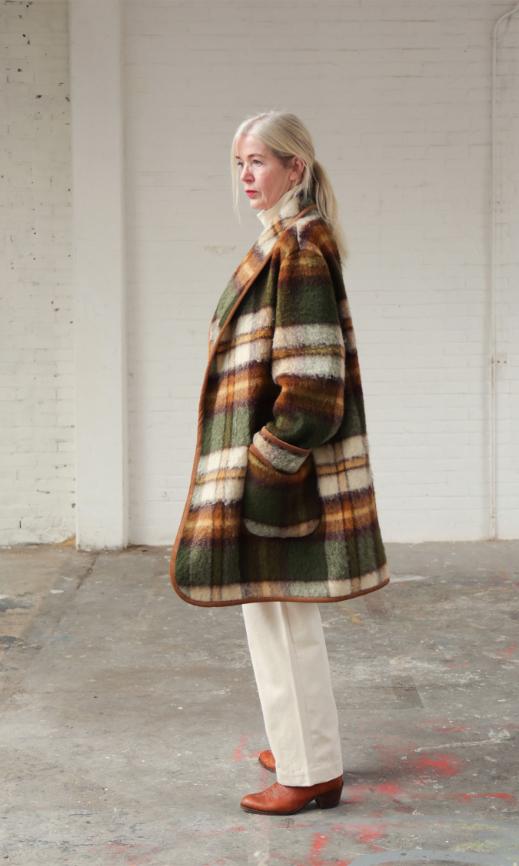
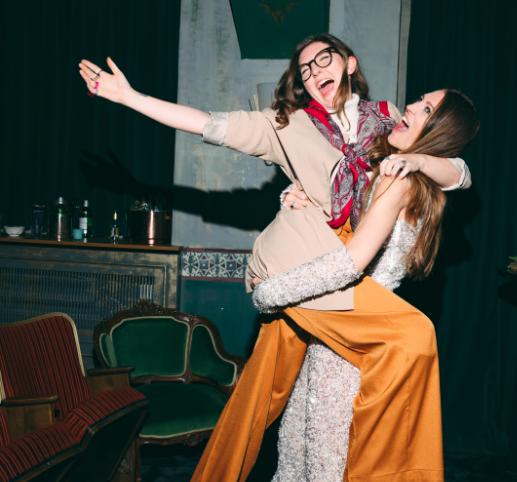
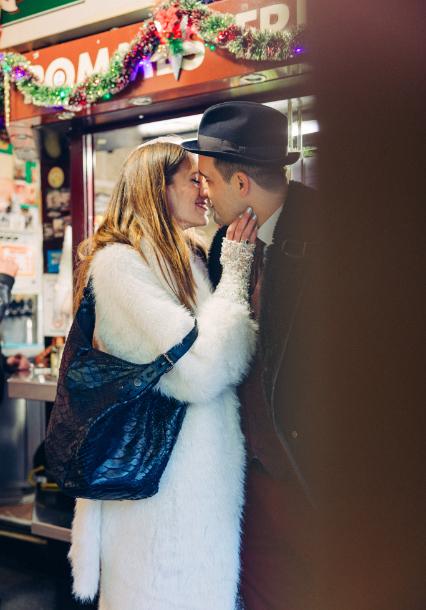
a we-ding - but make it couture
KATHARINA REUSCHEL
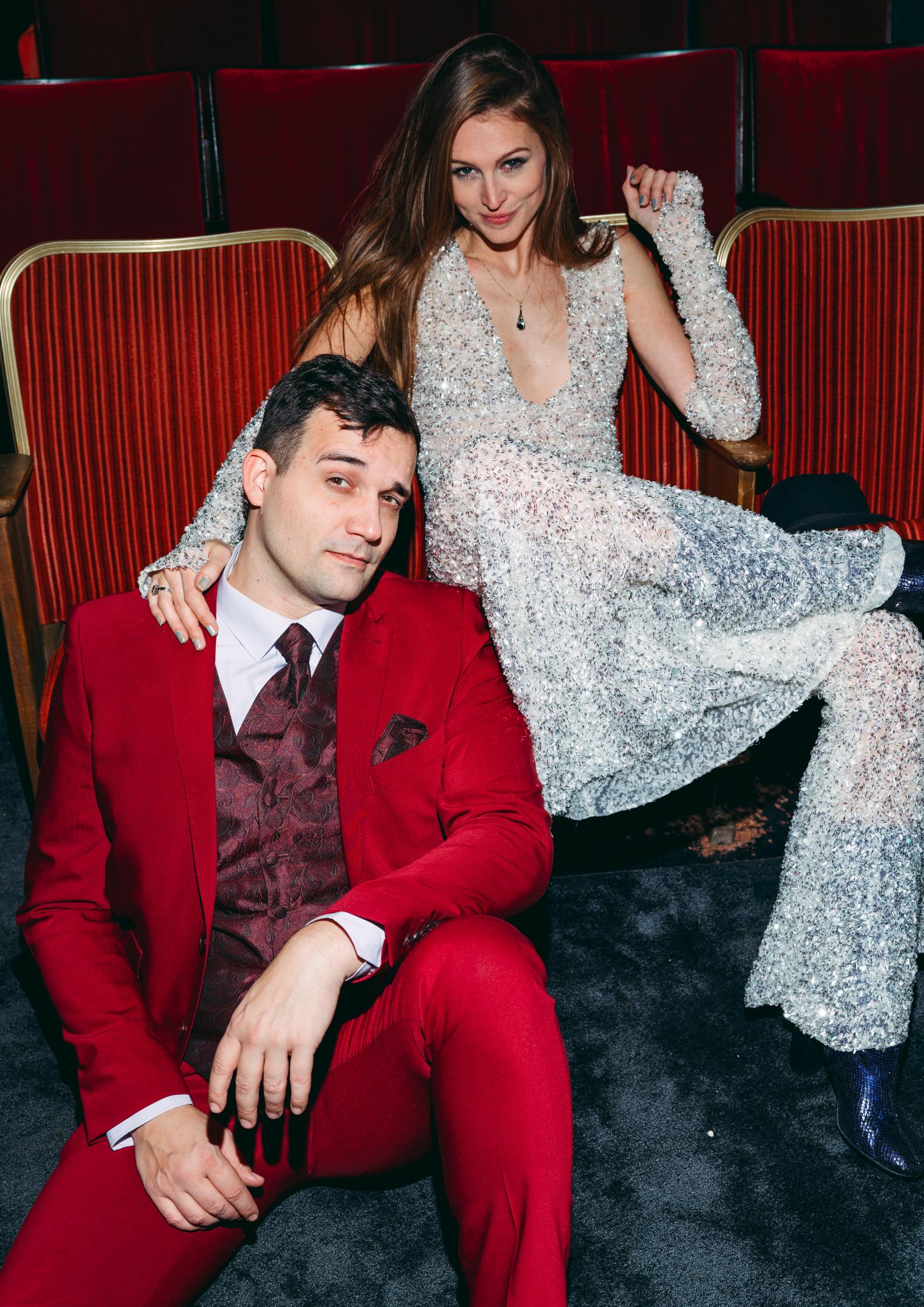
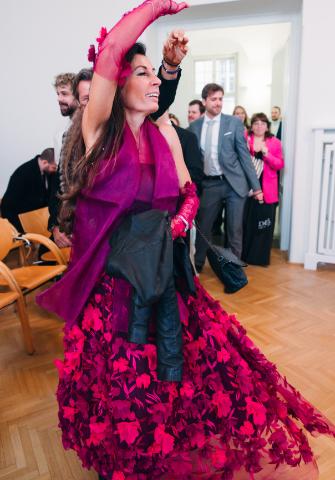
After 13 years of relationship we spontaneously decided to get hitched. We knew that we would do anything but traditional wedding thingsmostly because after working in the wedding industry the one thing most important for me and my partner was to have fun at our most special day. We didn’t want to obsess about flower decorations but rather about all the personal touches and little gimmicks that made our guests smile.
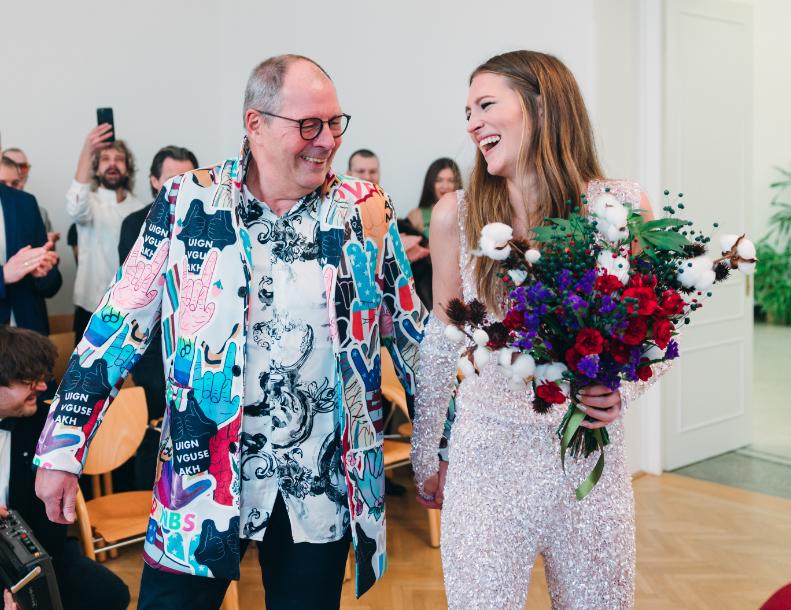
The only stereotypical part about me planning my own wedding was the obsession about what I would wear. As a true 90s girl, I decided for a Britney Toxic Tribute Look but set in the year 1976.
It took weeks to make, was basically see through
and felt absolutely amazing while walking in during ACDCs „High Way to hell“.
For my bridal bouquet I had a very specific concept. I wanted all the natural fibers I commonly use in my work to be represented. Therefore I bought dried and fresh linen, hemp and cotton twigs and combined them into a flower bouquet (thank God for YouTube tutorials).
Our getting ready was held at our studio apartment. We thought some friends might join but didn’t expect a whole party to start. My talented friend Christoph Haider did my hair as my wedding gift in the most beautiful cut I ever had.
We came 30 minutes late since it was really hard to split giving the good atmosphere but hey, this time I was the bride, so it was fine.
We had the ceremony in the same building my parents got married in. It was a - now abandoned - district court house with amazing staircases and the kindest administer we could ever have asked for.
I bought our rings. They were giant candy gemstone rings, the ones we had as kids. Without me knowing it, my fiancé went to the minster upfront to ask if he could instead of saying „kiss the bride“ use the phrase „lick the ring“. He kindly responded that he couldn’t do that. But after seeing our 50 guests dancing into the hall to the sound of „Bachmann Turner Overdrive- Takin‘ Care of Business“ like a bunch of lunatics, his mind shifted. The crowed, meaning even my new mother in law, loved it just as much as we did.
The Agape was held at a Viennese Hotdog stand right across, perfectly in contrast with our Couture dresscode.
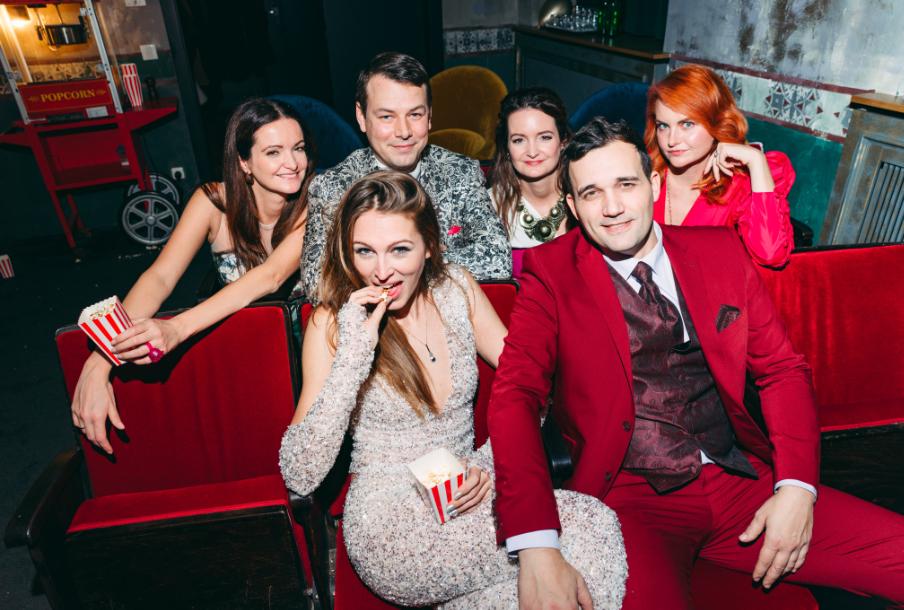
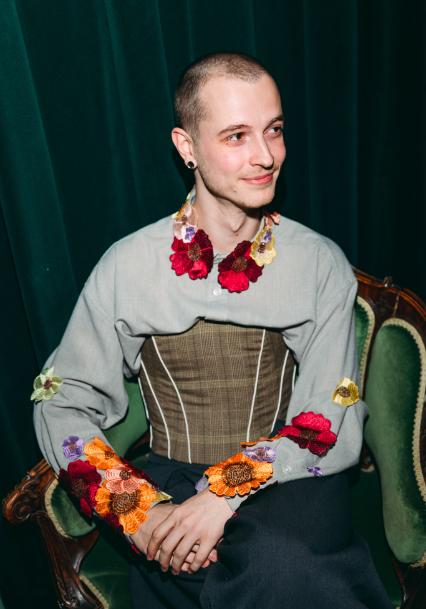
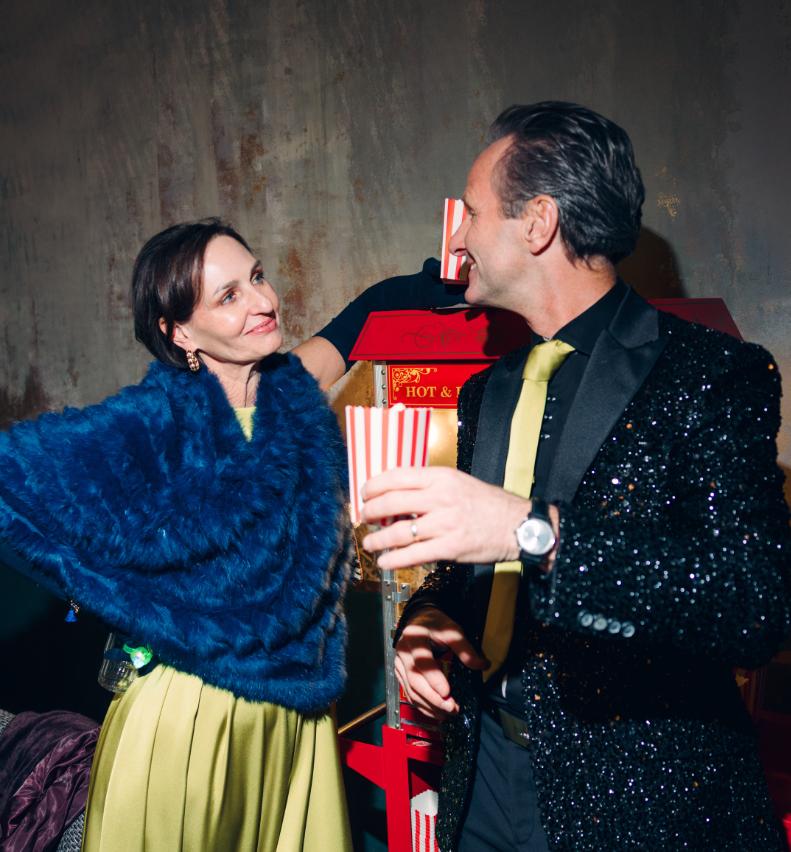
All friends that already had their own Katharina Reuschel looks came in theirs, some got dressed in archive garments and my maid of honor got her outfit as my gift to her. It was just such an amazing feeling, seeing all those creations standing side by side, laughing and celebrating together.
After that we rented a small Artdeco Cinema where speeches were held, songs were sung and many happy tears were shared. Everyone could play billiard, roulette or just enjoy the bottomless cocktail bar. Our friend Valerie Voithofer, who is a professional fashion photographer, was kind enough to shoot our wedding. And I think the outcome speaks for itself.
Our next location was a small show kitchen of friends of ours, that make their own meats. We had a flying dinner with small plates of traditional Austrian dishes. Our friends took amazing care of us, decorated the place beautifully and filled all the bars with our favorite drinks.
The whole day was filled with love and personal touches, surrounded by the most amazing people we know. Well, until the neighbors called the police on us. But they were extremely nice aswell,
and didn’t give us any real troubles.
Our wedding was set on a Wednesday, so we knew most people would work the next day. Nevertheless we had an optional night plan. We went to a techno rave. And only one guest, my dear friend Marina, was still up for it after this long day and danced with us till morning came. To end a beautifully out of the ordinary wedding day, we finally had our first dance, at 5:30 in the morning in the already closed club thanks to the kind bartender Nicki, who played one last „Living La Vida Loca“ for us. ◆
photography
Valerie Voithofer
bridal hair
Christoph Haider
make up bridal crew
Ramona Rabel
aarden
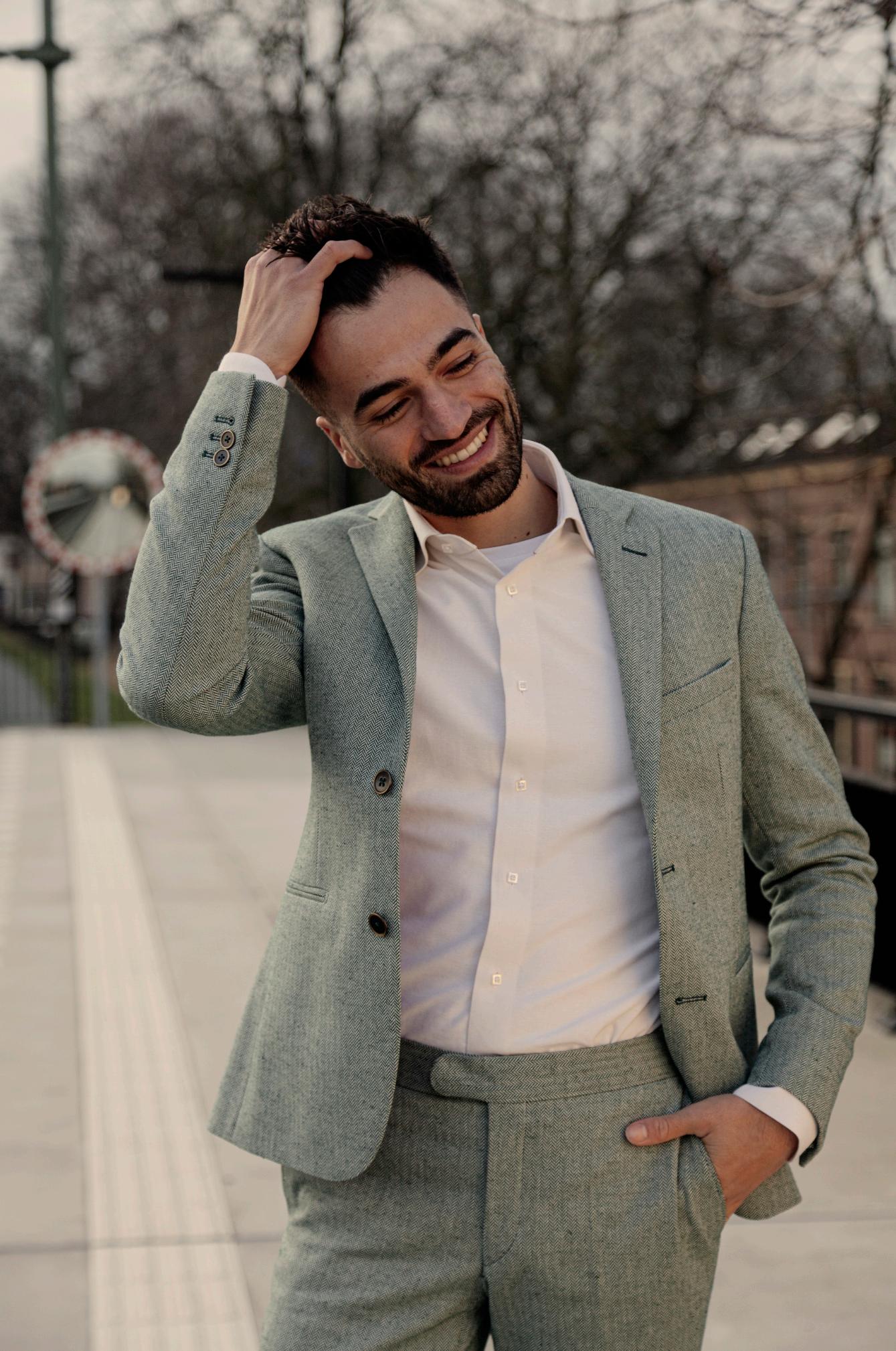
SUSTAINABLE CUSTOM SUITS AND CUSTOM CLOTHING
From pioneering idea to mature movement in sustainable custom clothing
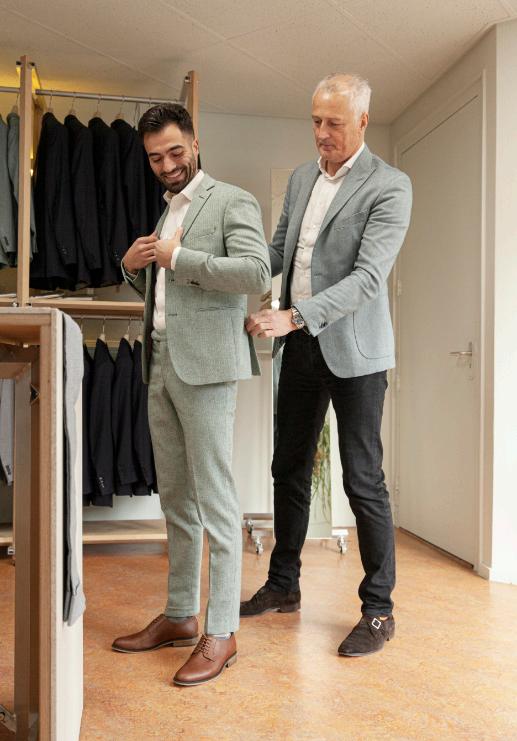
While Aarden was still fully engaged in building an innovative cooperative model in 2024, in 2026 it stands as a mature organization with a clear direction, a growing community, and a proven alternative to the traditional fashion industry. What began as a bold idea regarding fairer clothing production and smarter consumption has since grown into a powerful movement of over 100 members.
Aarden demonstrates that dressing representatively, wearing high-quality custom clothing, and making sustainable choices go hand in hand.
Clothing with substance
For years, Aarden has been known as a place where style, fit, and conscious entrepreneurship come together. No overcrowded collections, no fleeting trends, and no overproduction, but clothing made for the wearer. A perfect fit, designed with care, and meant to last for years.
This appeals to a broad group of people. The
members of Aarden Cooperative consist of entrepreneurs, self-employed professionals, and people who want to look well-groomed and representative, both professionally and privately. People who value quality, appearance, and responsibility.
Whether it concerns a jacket, shirt, jeans, blazer, or a full tailored suit: Aarden proves that sustainable clothing does not have to be restrictive, but actually offers freedom.
A cooperative that works
The founding of Aarden Cooperative was a clear choice for a different economic model at the time. Not shareholder value, but member value. Not quick profit, but the long term. Not buying anonymously, but participating with involvement.
The cooperative now numbers 104 members, and with that, not only is the network growing, but also the impact. The strength of the model lies in continuity, loyalty, and shared ownership. Members invest not only in clothing, but also in a fairer supply chain, local collaboration, and future-proof production.
In doing so, Aarden has become more than a
clothing brand. It is a community of like-minded individuals who consciously choose quality over quantity.
New fabrics, new standard
A key step in 2026 is the introduction of a new fabric line that fully aligns with what Aarden stands for: innovation, circularity, and character.
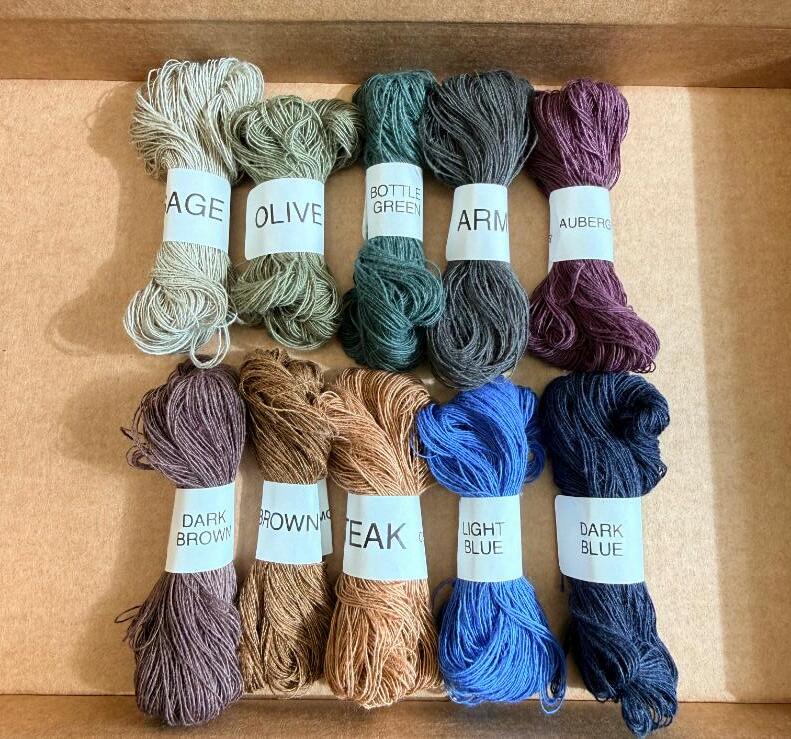
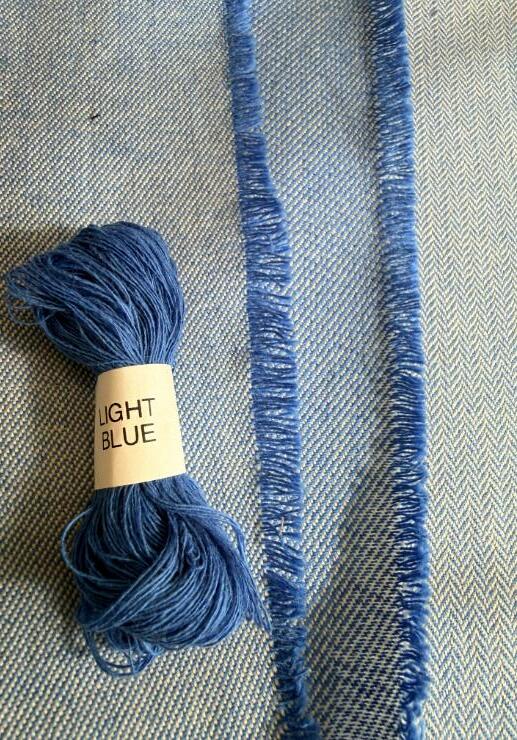
Together with Enschede Textielstad, Aarden is working on a special series of new fabrics, 50% of which consists of recycled material. The construction is innovative: a wool warp combined with a cotton weft, where the cotton is fully recycled.
The result is a fabric with a rich appearance, natural texture, and contemporary character. Less smooth and shiny than traditional suit fabrics, but rather more robust, modern, and distinctly stylish.
The fabrics will appear in six to seven new colors and are particularly suitable for:
• summer blazers
• casual chic jackets
• overshirts / blazer shirts
• unique wedding outfits
• smart casual combinations for work and leisure
This new line demonstrates that sustainability no longer equates to austere or boring. On the contrary: it opens the door to more personality and distinctiveness. For work, leisure, and special moments
Where traditional fashion often thinks in boxes— business, casual, or ceremonial—Aarden takes a different view. One good garment can fulfill multiple roles. A summer jacket worn at the office, comes into its own perfectly during a dinner, and later looks perfectly at home at a wedding.
“It is precisely this versatility that makes custom tailoring sustainable. Fewer purchases, better choices, a longer lifespan.”
Interest in bridal wear is also growing. Not everyone wants to choose a standard shiny wedding suit that disappears into the closet afterwards. Many people are looking for something contemporary, stylish, and wearable for the future. Aarden offers a distinctive answer to this.
The new luxury
Today's consumer views luxury differently than ten years ago. Luxury is no longer just a wellknown label or a high price. Luxury is:
• knowing where something is made
• choosing quality
• experiencing a perfect fit
• wearing what suits you
• investing in something that lasts
• buying with a good feeling
That is exactly where Aarden taps into the spirit of the times. The cooperative connects image to values and demonstrates that fashion can be meaningful again.
From niche to frontrunner
What was once seen as idealistic is proving increasingly realistic. The market is moving towards less fast fashion, more awareness, and a stronger need for authenticity. Aarden was ahead of the curve in this regard and is now benefiting from this development.
With 104 members, a growing network, innovative fabrics, and a clear narrative, Aarden in 2026 is no longer an experiment, but a mature frontrunner.
The future calls for customization
In the coming years, Aarden aims to continue building circularity, long-term customer relationships, and new collections where style and responsibility go hand in hand.
For ultimately, it is about a simple idea: if people dress better, make more conscious choices, and wear their clothes longer, not only does their wardrobe change — but so does the industry behind it.
And that is exactly what Aarden stands for today, stronger than ever. ◆
photography
Katja Diroen
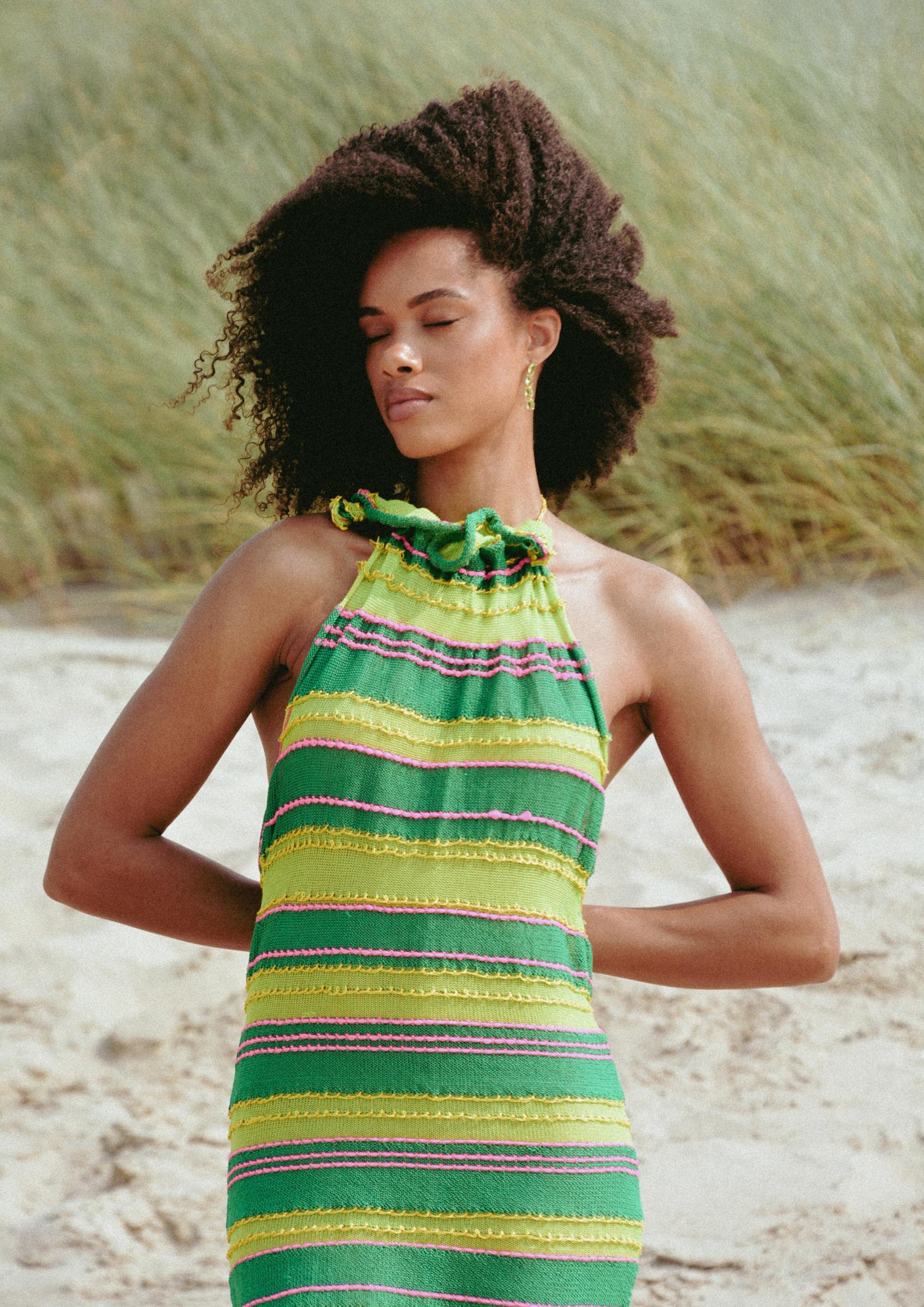
Jona Dress photography Diewertje Vlamings model Michelle Fadina
studio vlamings
FROM YARN TO GARMENT
At Studio Vlamings, fashion begins at its most essential point: the yarn. Before shape, before silhouette, there is material, inspiration, and intention. In contrast to an industry driven by speed and volume, we embrace a slower, more deliberate process where craftsmanship and material understanding take the lead.
Each garment is handmade to order, allowing design to unfold step by step. From yarn selection to textile development and final construction, every phase is considered and connected.This approach not only ensures a high level of quality and detail, but also reduces overproduction. Everything is made with purpose, and each piece is created to be truly valued.
Knitting plays a central role in this process. It is not treated merely as a technique, but as a form of expression. Through structure, texture, and color, the material itself informs the outcome.
The result is a collection of garments that feel tactile, personal, and quietly distinctive.
“Garments are designed to be worn, valued, and kept over time, rather than replaced.”
Sustainability at Studio Vlamings is an inherent part of how each piece is created. By producing on demand and working closely with the material, we reduce waste and encourage a more conscious relationship with clothing. Garments are designed to be worn, valued, and kept over time, rather than replaced.
This way of working also reshapes the connection between maker and wearer. Each piece carries the trace of its making, reflecting both the process and the intention behind it. It invites a slower form of consumption, where clothing is appreciated for its beauty, its making process, and the intention behind it.
Studio Vlamings offers an alternative perspective on fashion: one where time, material, and craftsmanship define the value of a garment. From yarn to final garment, each piece tells a story of thoughtful creation and enduring relevance. ◆
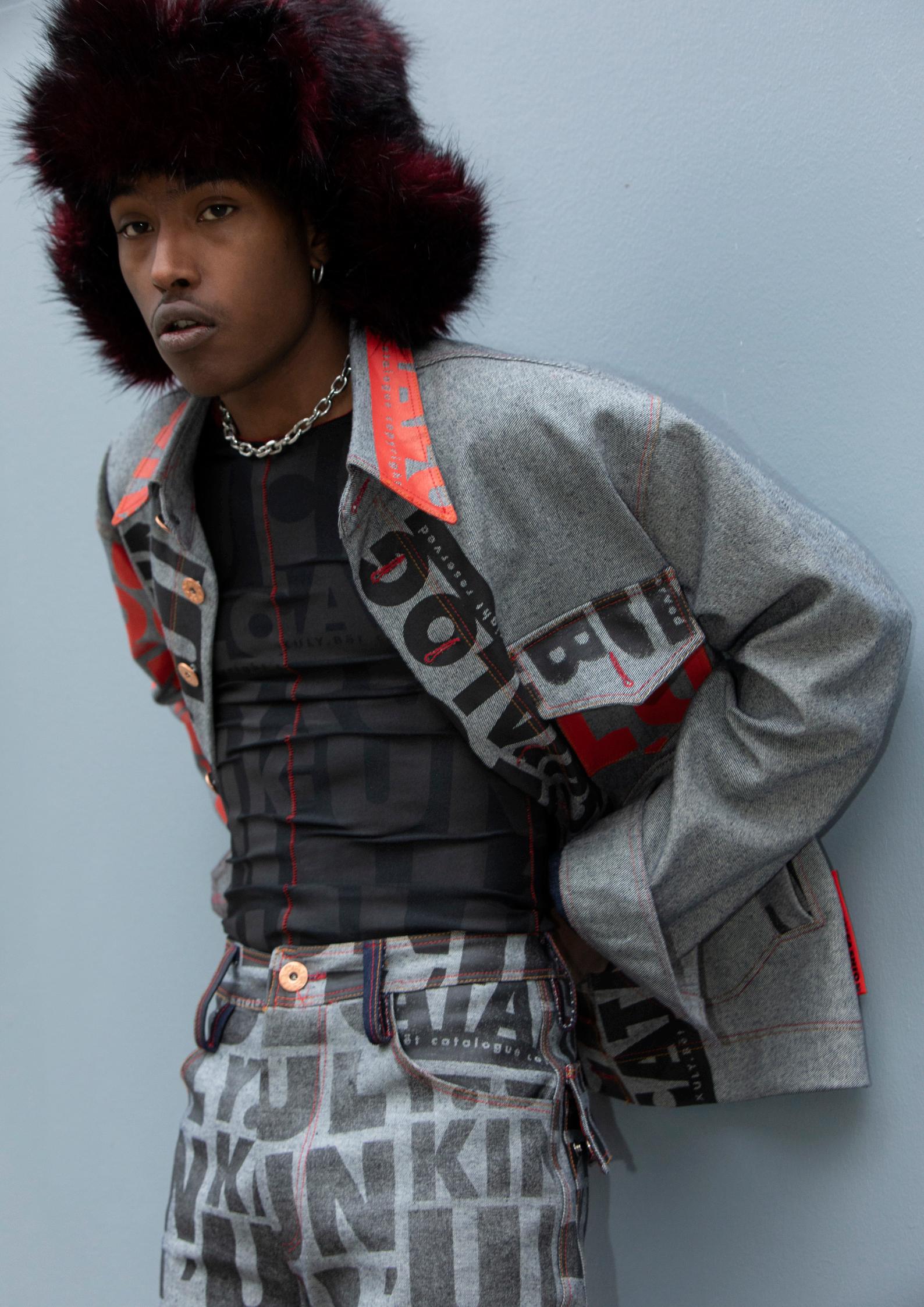
photography
Marc Baptiste
MUSEUM FÜR KUNST & GEWERBE HAMBURG
FUNKIN’ FASHION FACTORY 100% RECYCLED
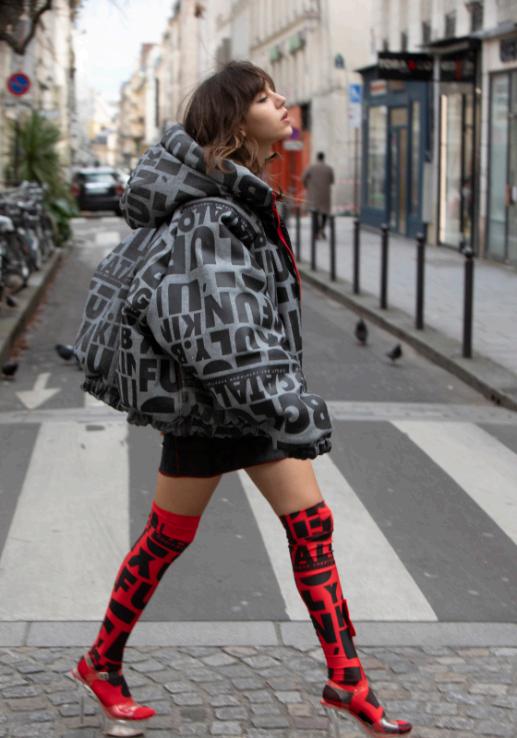
Bold lettering, assertive statements and recycled textiles – these are the distinguishing features of the Parisian fashion label XULY.Bët. The Museum für Kunst und Gewerbe Hamburg (MK&G) is dedicating a solo exhibition to designer Lamine Kouyaté’s innovative label. On display are around 20 selected outfits from collections of recent years, which were recently acquired for the museum’s Fashion and Textiles Collection –including a sporty dress worn by internationally renowned singer Rihanna. The exhibition at the MK&G asks questions about the limitations of the fashion industry and textile production, the circular economy and the interaction between body and consumption.
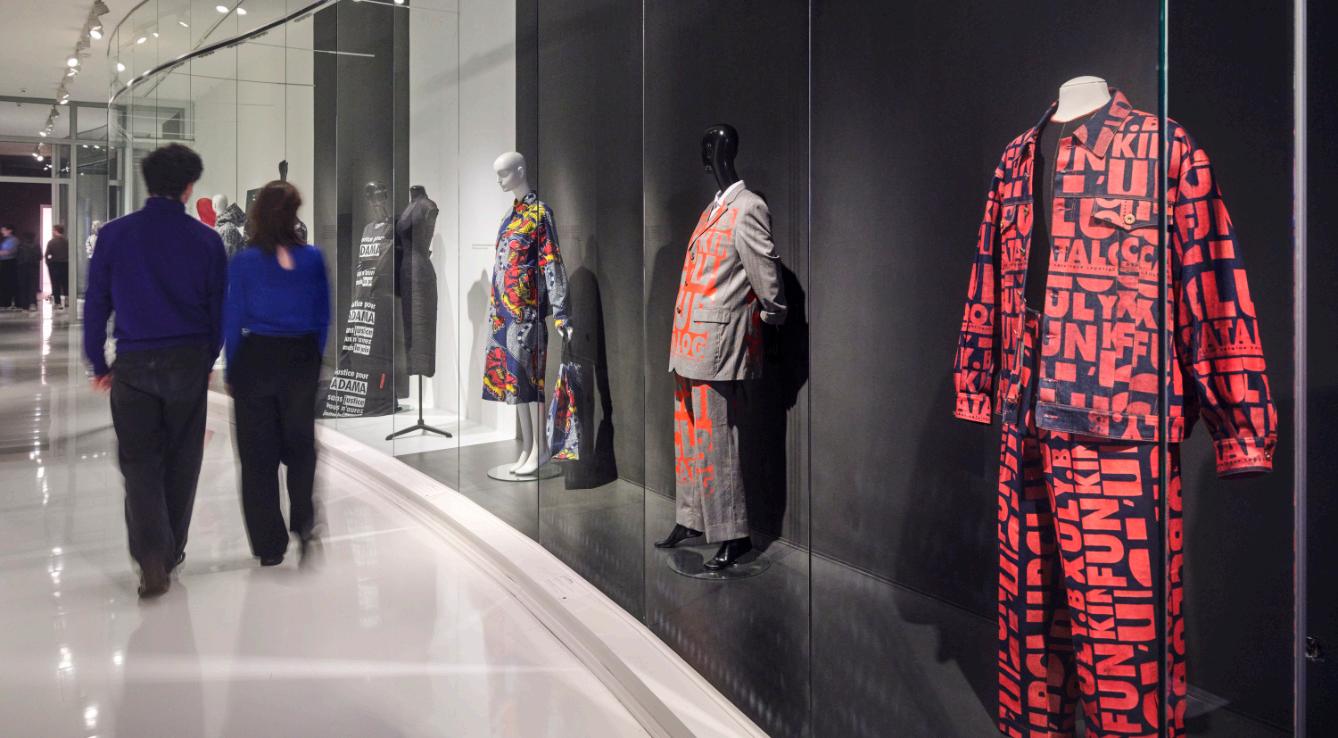
XULY.BËT
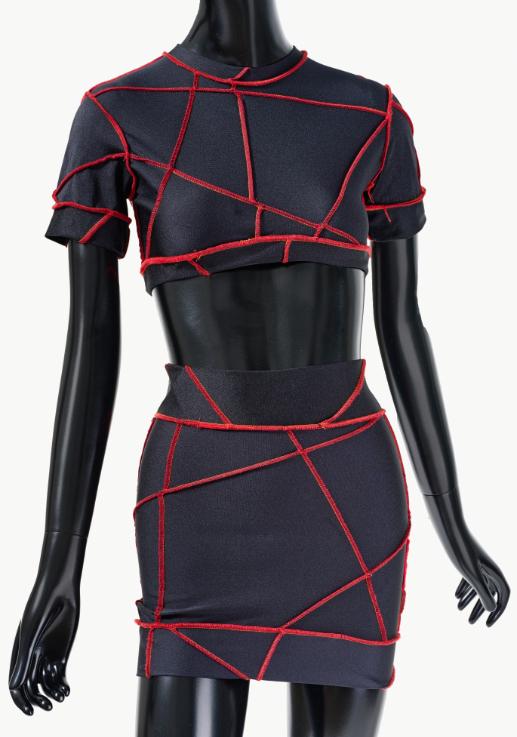
Founded in Paris in 1991 by Lamine Kouyaté (b. 1962), the fashion house XULY.Bët produces wearable fashion made from second-hand textiles. The label’s name comes from the West African language Wolof and means “keep your eyes open”. By conceiving everyday pieces and sportswear in the elegant style of Parisian haute couture, XULY.Bët broke with the zeitgeist of the 1990s fashion world, introducing seams turned outwards, slanted cuts, dangling red threads and outfits made up of several individual pieces emblazoned with activist messages and product information. The focus is on visible upcycling and entirely sustainable production. Lamine Kouyaté was inspired by his mother and grandmother, who lent the family’s used clothes new life by reworking the garments.
XULY.Bët also gained wider recognition through the 1994 film “Prêt-à-Porter” by director Robert Altman. Altman was so impressed by Kouyaté’s work that he included him as a character in the film about the fashion world – portrayed by actor Forest Whitaker.
LAMINE KOUYATÉ
Designer and architect Lamine Badian Kouyaté (b. 1962 in Bamako, Mali) studied at the Dakar School of Fine Arts and architecture at the École Nationale Supérieure d’Architecture in Strasbourg. In 1995, Kouyaté collaborated with the Puma brand, and he has also developed fashions for A.P.C., 3 Suisses and Leclerc. The first XULY.Bët boutique opened in 1996 in Les Halles in Paris. His designs have been
represented in exhibitions including “Africa 2005” at the Victoria and Albert Museum in London. Lamine Kouyaté lives and works in Paris. In the exhibition, two short films offer deeper insights into Lamine Kouyaté's working methods: Filmmaker Susan Chales de Beaulieu visited the fashion designer on behalf of NDR in 1993 for the programme “DAS!”, while the arte TRACKS programme “Upcycling: Fashion Punks Against Fast Fashion!” from 2024 explores the background of upcycling in fashion, using XULY. Bët as one example.
Thanks to the support of the Stiftung Hamburger Kunstsammlungen (SHK), around 60 works by XULY.Bët were added to the Fashion and Textiles Collection in 2024 through acquisitions and donations. These new additions help to further diversify the collection.
ACCOMPANYING PROGRAM
An accompanying programme will be held in conjunction with the exhibition, including the four-day workshop “Reshape! Tailoring, Sewing, Transforming” (starting 7 September 2025). Further events are taking place in collaboration with Fabric – a project by Hamburg Kreativ Gesellschaft. For more information, please refer to the calendar on our website. ◆
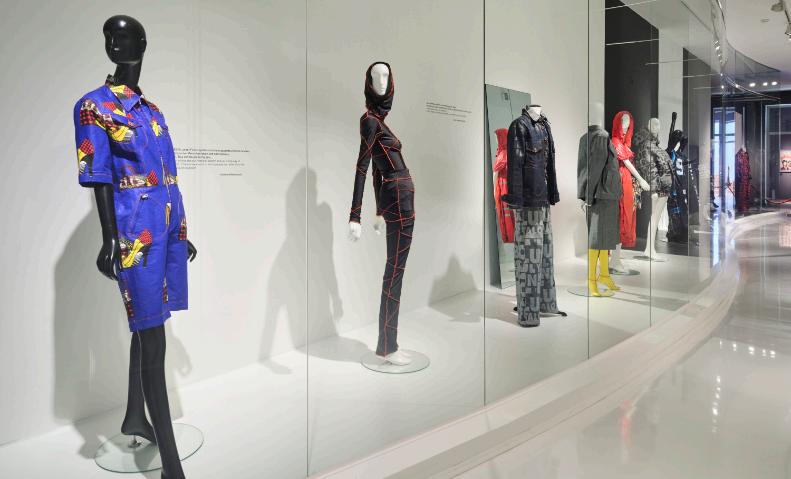
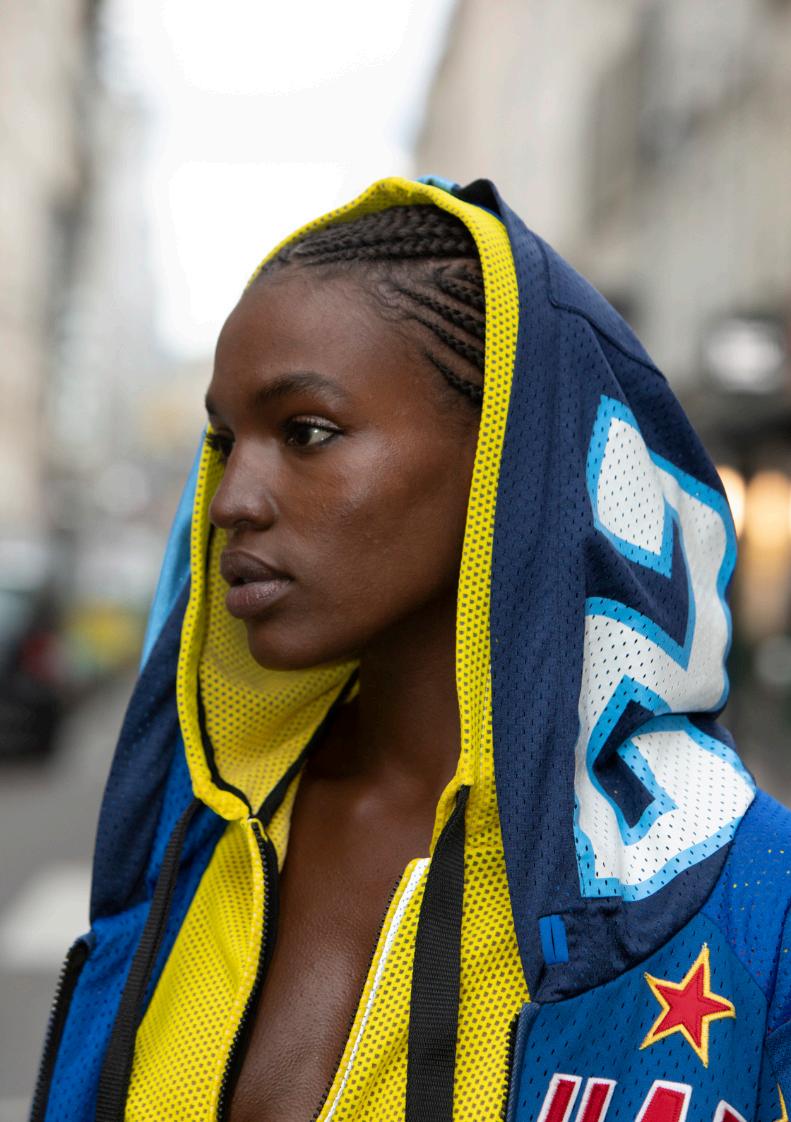
photography
Marc Baptiste (top right & bottom left)
MK&G/Roman Mishchuk (left page, top left & bottom right)
MULTIPLE IDENTITIES
onetwosystem infinitewingsplay.
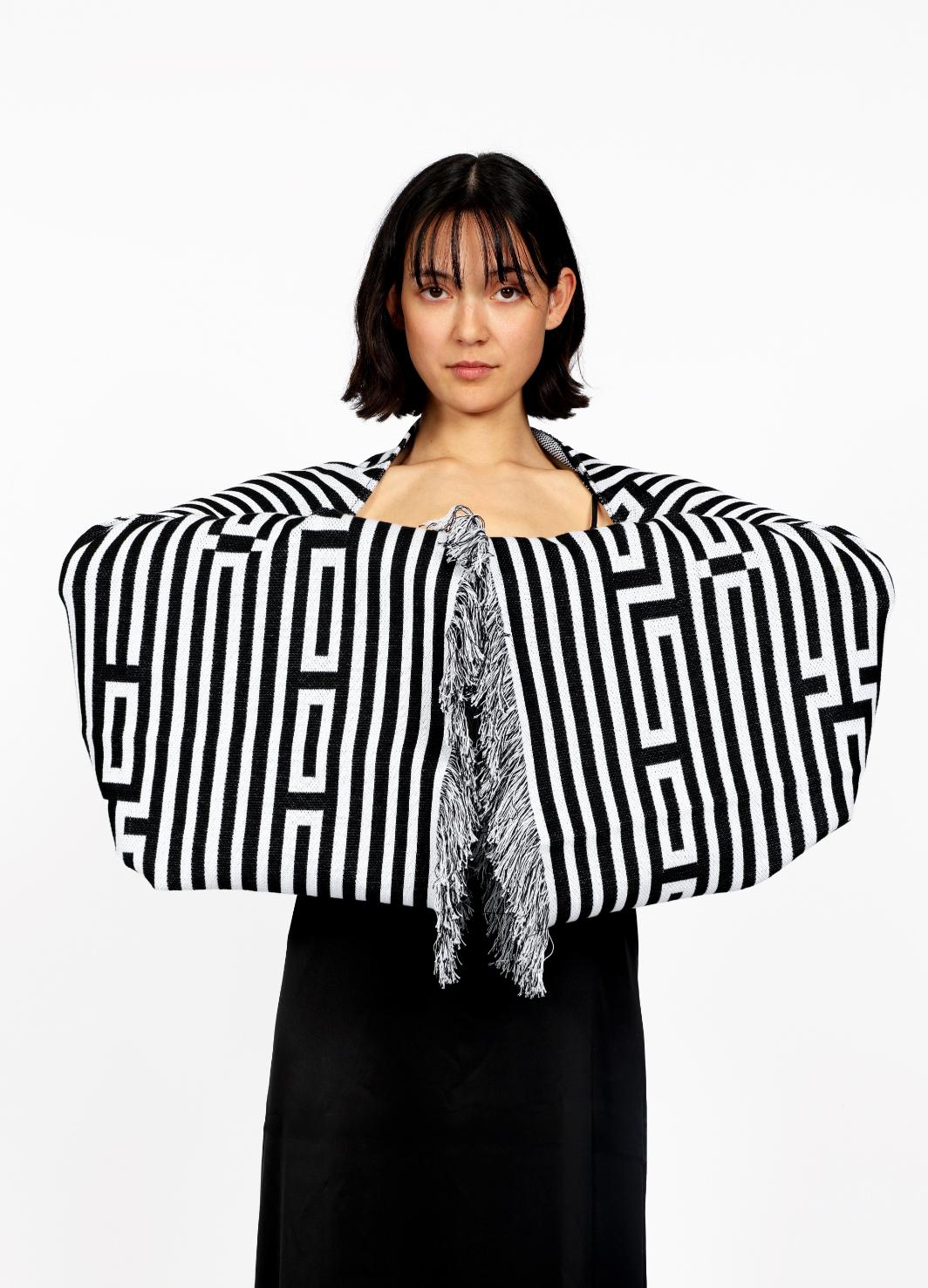
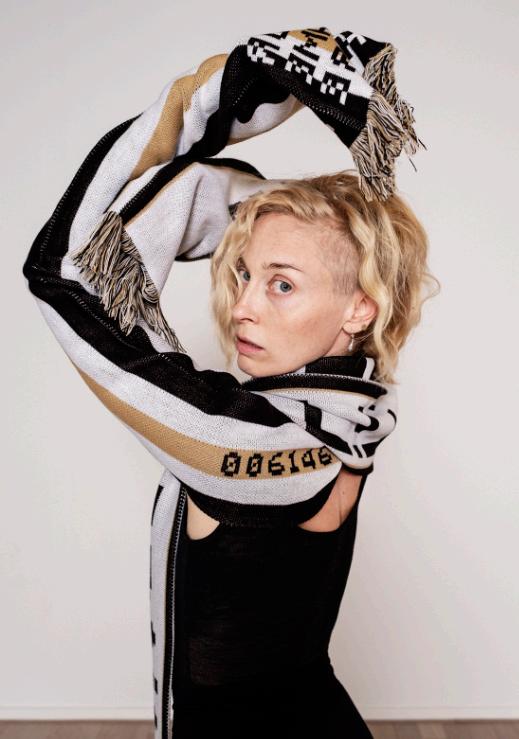
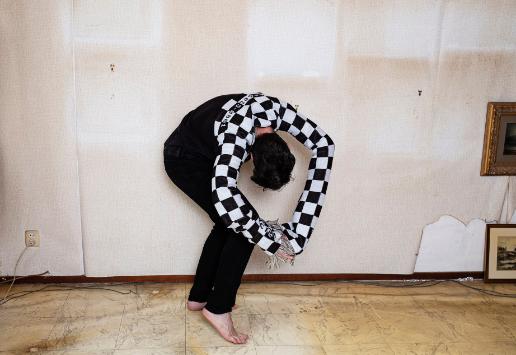
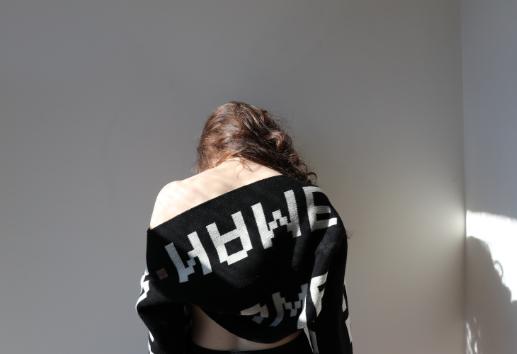
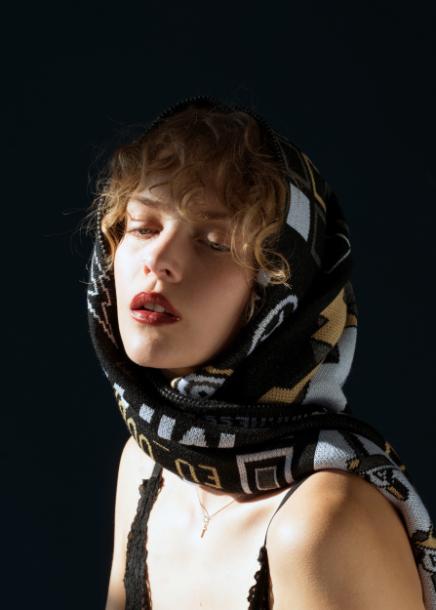
The mi_scarfsleeve is a system and it is part of one. Worn alone, it transforms. Worn within the mi_kit_ system, it multiplies.
It is not just a scarf. Not just a sleeve. Not interested in definitions.
It wraps, drapes, becomes a hood, a mask, a cover, a canvas, whatever the wearer needs it to be.
No instructions included. None needed. It is multiple identities (mi) signature piece, the entry point into a modular wardrobe platform built for multiplicity, play, and zero overproduction.
The piece is always under construction. The player decides what it becomes.
THE MI_SCARFSLEEVE: MI SIGNATURE PIECE -
BRUSH TO PIXEL TO STITCH
Guido de Boer's Extinction–Extension edition, in 11.
This week, at multiple identities' proof-of-concept presentation of the mi_kit_system in Amsterdam, the Extinction–Extension edition is on display for the first time
See it, try it on, pre-order it on the spot. Visual artist and illustrator Guido de Boer has translated his hand-drawn work into a custom-knitted mi_scarfsleeve: brush to pixel to stitch
The result is the mi_GDB_scarfsleeve, produced on demand, by pre-order, in batches of eleven. Knitted in Germany. Close by. Not across the world.
1 letter apart. 2 different directions. Extension. Extinction. They've always lived on the same surface, on the same body. What you extend, you choose. What you let go extinct, you choose. Extinction is the right word. Not only for what Guido draws, but for what mi is building against. Waste is what we want to make extinct.
Pre-order open now. Batches of 11.
mi_GDB photography
Jacqueline Haeberle @miself2 model
Fiona Hesse @fiohesse
BETTER TOGETHER
Most mi_scarfsleeves are made through select collaborations. Local artists, both established and emerging, lend their hands, eyes, and instincts. Every piece is a shared language. No mass production. No background noise.
The mi_scarfsleeve is an internationally copyrighted blueprint (Registered Design: EU 006146023-0001), a template for co-creation. The visual language changes with every partner. The system stays the same. All editions are produced on demand, knitted in Germany, in small numbered batches.
mi_GDB - Extinction / Extension, 2026
Guido de Boer brings his hand-drawn practice onto a surface that moves, wraps and changes with every body. Bold enough to be seen. Smart enough to disappear. Available on demand, batches of 11
bof x mi x mrtn ed_01, 2026
Co-curated with Bits of Freedom and Maarten Schuurman. Pixels to stitches, a circuit of symbols, eyes and encrypted pathways knitted into a wearable layer of resistance. Digital autonomy in textile form. Limited edition of 26 pieces, knitted on demand only.
mi_nieuwmarkt
Made for the block mi calls home. Crafted between window lights, canal smoke, and whispers. A textile tribute to contradictions: quiet/loud, seen/unseen, past/present. By locals, for locals.
mi_APT_scarfsleeve - Boris Tellegen a.k.a. DELTA (NL)
Artist and graffiti legend Boris Tellegen used the mi_ scarfsleeve as a playground, and expressed what mi likes to do most: play. The piece unfolds and transforms, showing its many yet always complete identities in black, blue, red and white. Where it all started.
mi_mask_scarfsleeve - Petra Luneburg Renowned for her unique artistic approach, Petra Luneburg brought her brushes into pixels, bitmaps and stitches. Embracing transformation, she weaves her artistic vision onto the versatile canvas, from scarf to sleeve, revealing ever-evolving identities in black, white, sand, grey and yellow. Playfulness through expression.
mi_permanent - Permanent (Iris van Melsen & Ben van Brummelen, NL)
Amsterdam-based sustainable clothing brand established in 2018. Opposing fast fashion, each Permanent collection addresses a different environmental issue. Sustainability as the norm, not the exception.
mi_beyond - Beyond Studio (David Robustelli, NL)
A creative digital studio at the intersection of virtual fashion and luxury retail. This piece links to an augmented world, at the time of launch displayed for virtual try-on in the mi_ window.
mi_soyboy - Soyboy / sadsad studio (Markus Bauer, DE/NL)
Redefining masculinity through authenticity and selfexpression. Inspired by Japanese design ethos, clean, highquality, produced on demand to combat overproduction.
mi_cuffsleeve | YNH
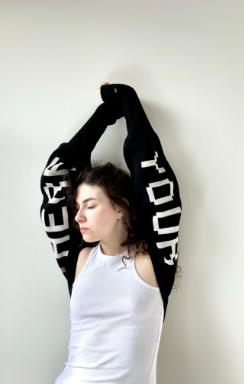
The blueprint of these mi_scarfsleeves comes in 100% recycled cashmere, sourced in Italy and knitted in Belgium at a little factory that predominantly works for some of the most respected luxury fashion houses in France and Belgium. No names needed. This master edition of the YOUR NAME HERE product series transforms from sleeve to scarf and back again. Up your sleeves!
���
ABOUT multiple identities multiple identities (mi) is a design studio based in Amsterdam, founded in 2000 by J. Haeberle.
The studio draws on over three decades of experience designing for global sportswear and innovation-rooted brands including Nike, The North Face and PUMA.
mi_space is the studio's Amsterdam-based physical space for development, prototyping and exhibition, operating from the Red Light District,
A “no shop” shop, not a gallery nor a store. A creative workspace, experiment lab, a curated showcase, a gateway into culture. It is where most pilot programmes with partner brands are initiated, built, and put on display.
A playground.
mi advocates for a new category in fashion. A play on scarcity. A wardrobe system for humans of all ages. Playful. Unapologetic. UR_N_CTRL.
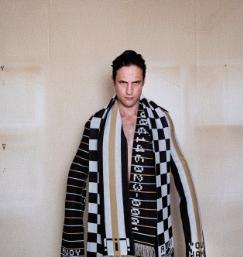
IDENTITIES BEFORE GENDER. NO RULES.
mi_scarfsleeve is unisex. Ungrouped. Made from highperformance deadstock and preloved recycled fabrics, or produced as a fully custom commission. Soft enough to disarm, sharp enough to protect. A scarf is one of the most familiar stereotypical objects every player knows. This one is still obviously a football scarf. It is also something more. Transformable on the go.
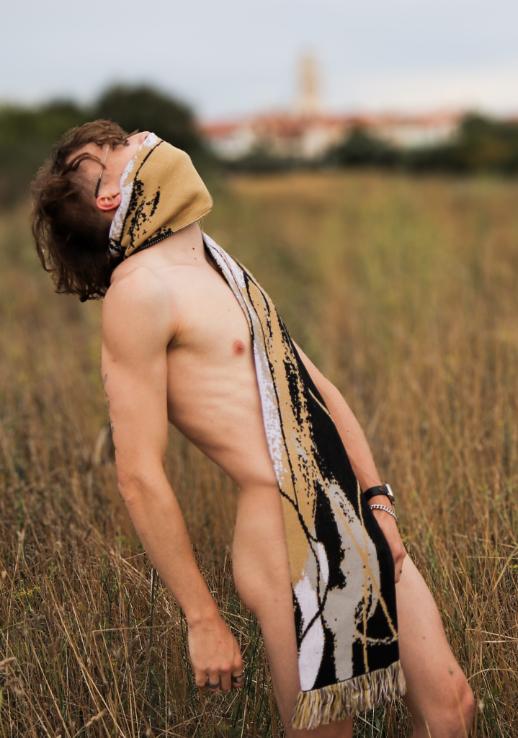
mi_APT
photography Hugo Snelooper @hugosnelooper
model Jella Nine Meijvogel @jellanm
mi_cuffsleeve
photography: Christina Diebel @christinadiebel
model Lilia Diebel @liliaa_aaa
mi_mask
photography Mia Strazicic @straszi.mias
model Laurie @laurtek42
mi_scarfsleeve
photography Menno Kok @kokkster
model Jill Alocke @jillalocke
model Ilija Surla @ilijasurla
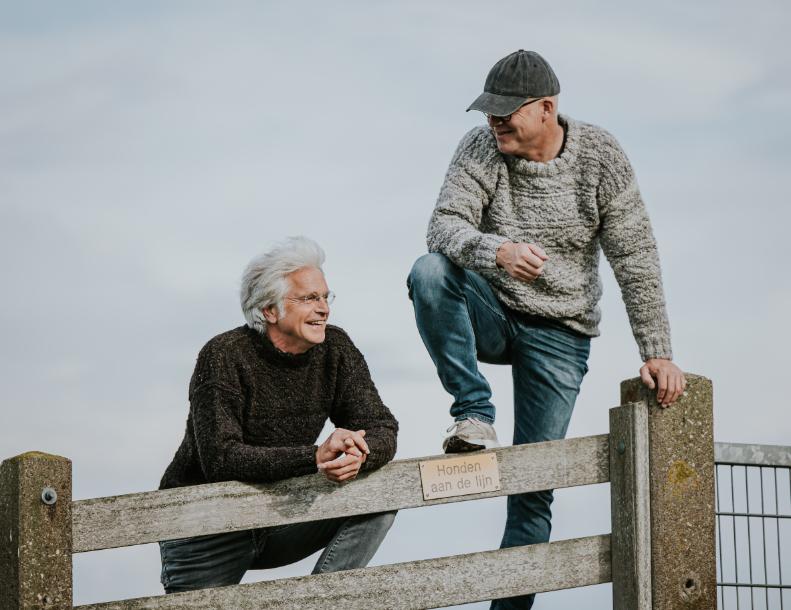
'jumpersfishermanfrom the coast of the wadden sea
A regional hand-knitted wool jumper that tells a story
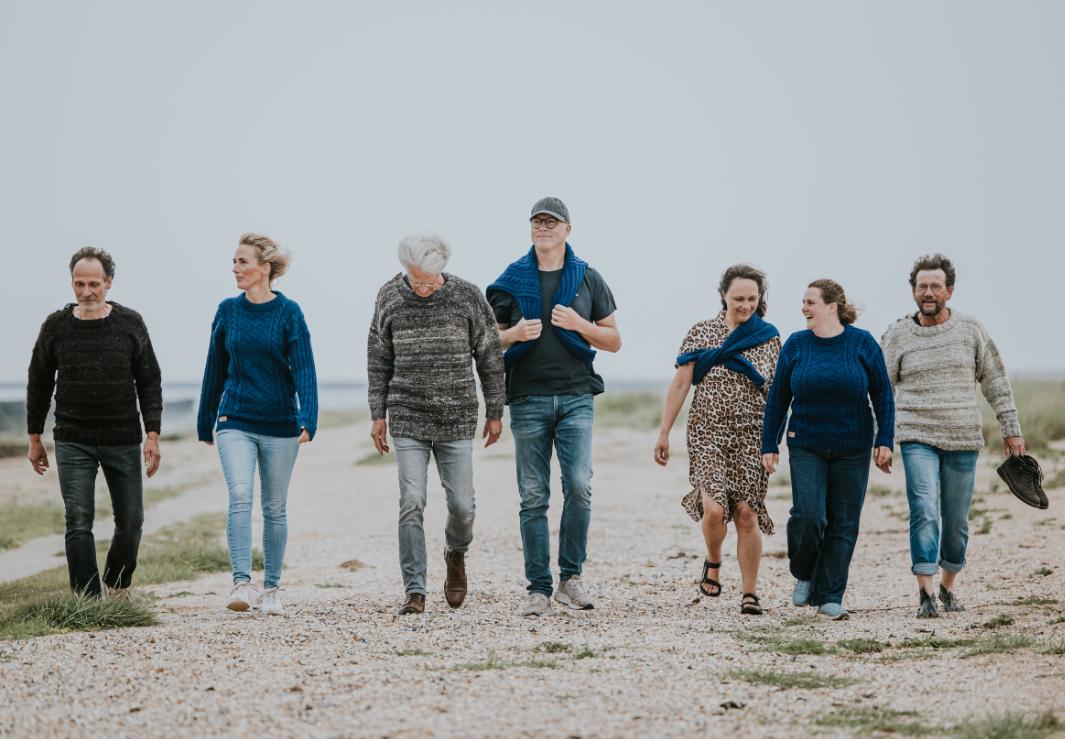
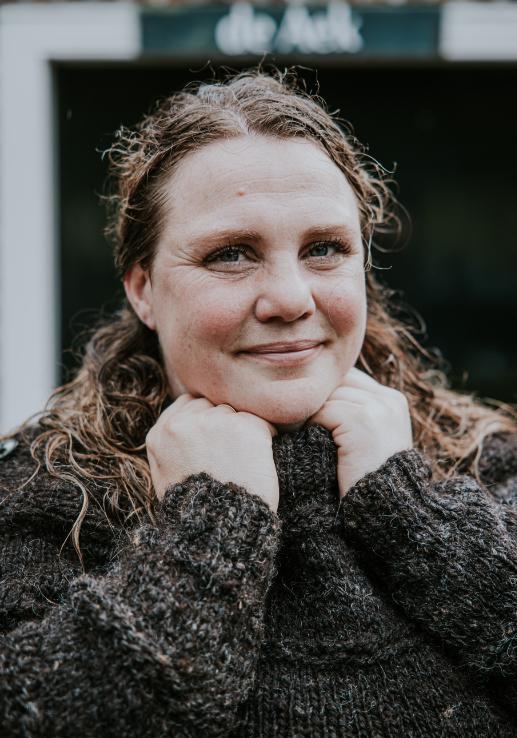
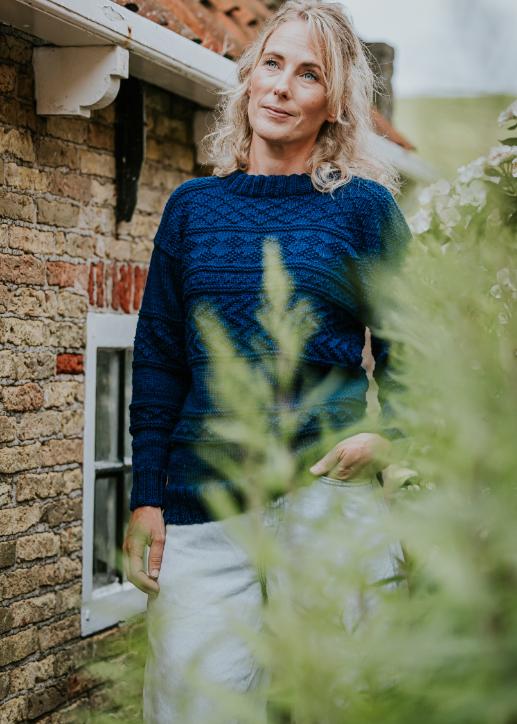
At first glance, the modern fisherman's jumper from Moddergat is a warm, itchy, wool jumper. But those who look closer will see a rich past in every stitch. These jumpers used to be worn by fishermen who worked at sea for days on end. They kept them warm and offered protection against the elements. But the jumpers did more than that: they told where someone came from and told the story of a craft that uses beautiful material.
The Fisherman's Jumper (+/-18601940)
Every fisherman's jumper had its own pattern. In the relatively remote and closed fishing villages along the coast in Northeast Friesland, motifs emerged that were passed down from generation to generation. Mothers taught their daughters not only how to knit, but also how to create specific patterns. In this way, you could sometimes tell from a jumper where a fisherman comes from. And sometimes those patterns even helped identify shipwrecked people. The origin of the fisherman's jumper likely lies in the Channel Islands, such as Guernsey. Frisian and Dutch fishermen took these jumpers home and put their own spin on them. As a result, all kinds
of variations emerged along the Wadden Sea coast, with motifs referring to life at sea: waves, nets, cables, and the striking ‘Eye of God’, which symbolizes protection.
Knitting a fisherman's jumper was done in between other duties. Fisherwomen led a hard life: in addition to housekeeping and caring for children, they also contributed to the income by selling fish or searching for worms in the seabed of the Wadden Sea. The jumpers were made from wool from local sheep, often still greasy and therefore more resistant to water. A jumper lasted for years and was repaired time and again.
After the Second World War, the fisherman's jumper slowly disappeared from the streets. Mass-produced clothing was increasingly bought in shops, and regional traditions faded into the background. What was once visible in the daily street scene became a memory.
The Fisherman's Jumper (2013present)
Since 2013, the fisherman's jumper has been making a comeback in the north of Friesland. Jumpers are once again being knitted by a group of about 15
volunteers from Museum ’t Fiskershúske in Moddergat, inspired by historical photos of fishermen from the region. Volunteers knit with ‘factory wool’ or Wadden wool: wool from the northeast of Friesland, which is spun and knitted by hand. Consequently, one jumper takes approximately 100 hours of work.
In 2026, the fisherman’s jumper will become even more regional. Not only do the patterns refer to a specific location, but the material is also increasingly sourced from the immediate vicinity. For instance, on Ameland, wool from local sheep is processed into yarn, thanks to a dedicated wool machine at Museum Swartwoude. From sheep to jumper: the entire process takes place close to home and will replace the ‘factory wool’. In doing so, the fisherman’s jumper regains a strong connection to the sea, the landscape, and the community from which it originates.
What museum ’t Fiskershúske wants to express is that the modern fisherman’s jumper is more than just a garment. It is a tangible connection to the past and an example of how craftsmanship, the material wool, and sustainability are regaining significance. ◆
More information at www.visserstrui.eu.
building a clothing system from alreadywhatexists
BY BAS TIMMER, FOUNDER SHELTERSUIT FOUNDATION AND ONE OF XX
For many
years I worked with textiles
that had nothing to do with fashion trends.
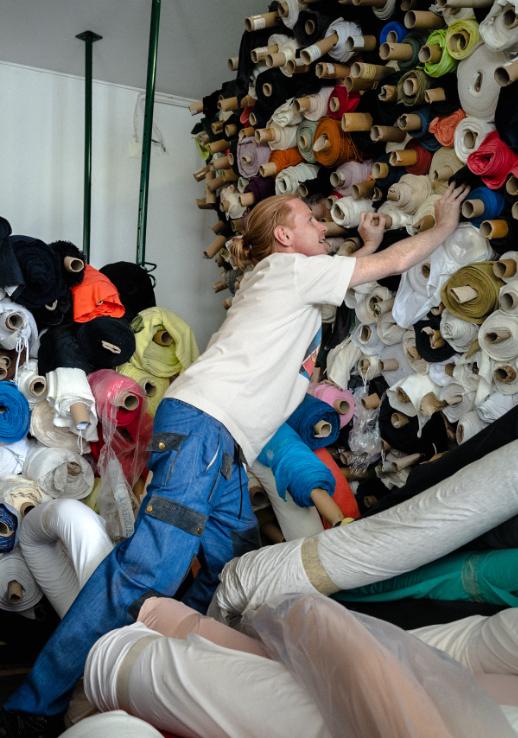
Through the Sheltersuit Foundation we collected discarded fabrics from factories and turned them into protective clothing for people sleeping outside. A practical solution to a problem. But spending time inside those warehouses changed how I see the industry.
There is already an enormous amount of material in the world. Perfectly good fabric, sitting unused. Rolls left behind when collections change, orders get cancelled, or brands simply move on. The industry keeps producing more every year while large quantities of existing material go untouched.
That’s where One of XX came from.
The idea was never to start another clothing brand. It was to ask a different question: what if you begin with the fabric that already exists, and work forward from there? Instead of designing a collection and ordering material afterwards, the
process is reversed. We find deadstock fabric somewhere in Europe, and then we figure out what can realistically be made from it.
Deadstock doesn’t come in unlimited quantities. Sometimes we find eighty meters. Sometimes a few hundred. Whatever the roll allows determines how many pieces exist.
Every garment is individually numbered so the wearer knows exactly how many were made. Thirty-four garments from one roll means thirtyfour exist in the world. That’s it.
Working with existing materials also changes how we think about design. We don’t reinvent silhouettes every season. Instead we work with a small number of shapes, a t-shirt, a hoodie, a jacket, and improve them over time. Better fit, stronger stitching, more durable construction. The fabric changes from batch to batch. The system stays the same.
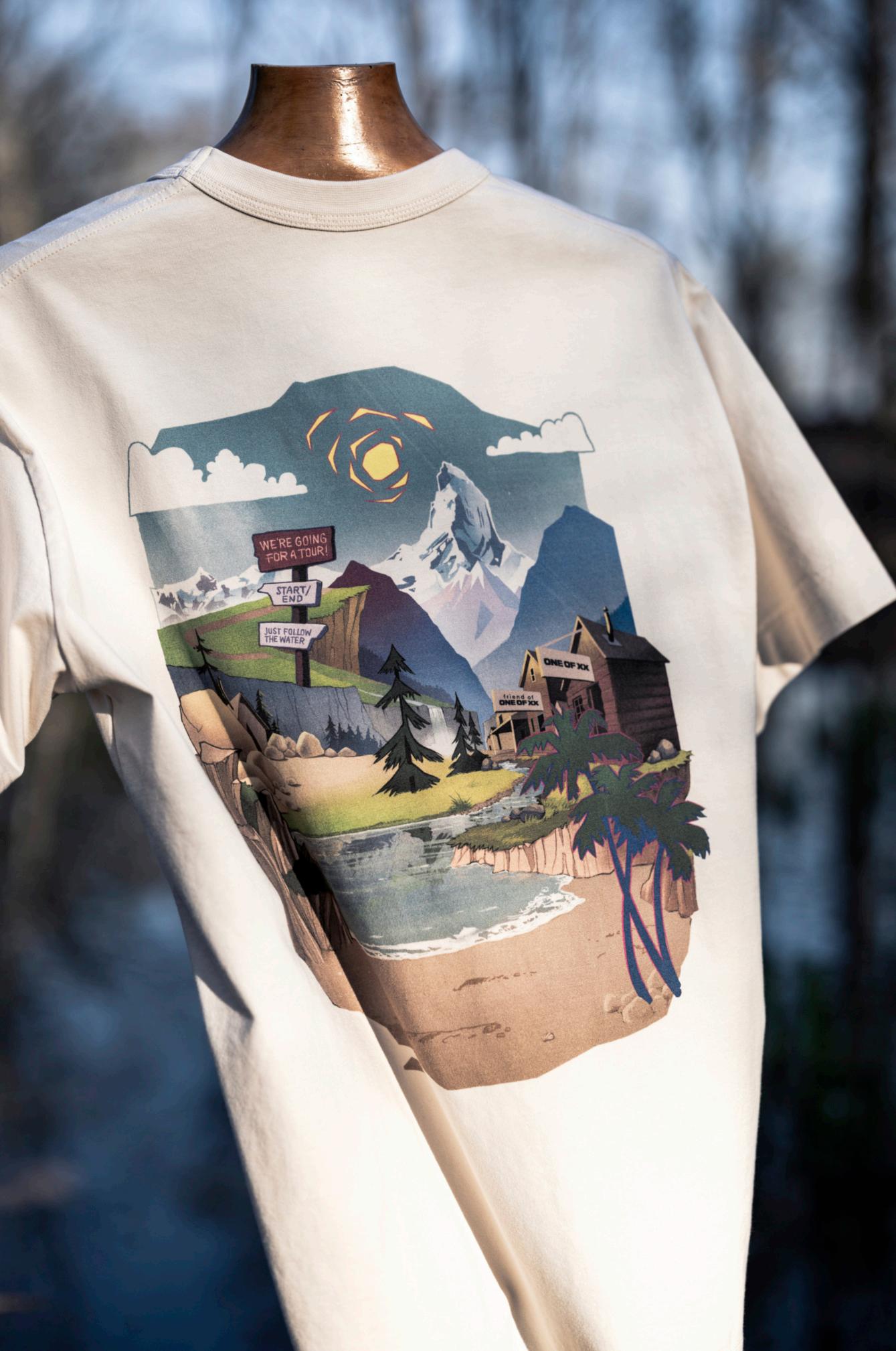
Clothing was originally made to protect the body. A good garment should get better with time, not lose relevance the moment a new collection drops.
All production happens in Portugal, in small factories that are used to working in limited quantities. These relationships matter. Too often clothing arrives as an anonymous object with no visible connection to the people who made it. Working closely with the factories keeps that connection visible.
As we built this out, another question came up: how does a brand like this actually grow?
The usual answer is fashion weeks, showrooms, marketing campaigns. None of that felt right. The whole point of One of XX is transparency and real conversation. So we chose a different route.
In April we’re leaving for a long trip across Europe in a converted bus. We’re calling it Follow the Water. The route starts in the Swiss Alps, where many of Europe’s major rivers begin, and follows the water downstream from there.
We’ll travel city to city, meet independent retailers, speak with people who are interested in different ways of making fashion, and document the process as it unfolds. We’ll cook meals with

local communities. We’ll visit stores. We’ll share what we’re building as we build it.
Fashion communicates mostly through carefully staged images. But real change happens through conversations. Slow travel forces those conversations.
I grew up around textiles. My family worked with fabrics. As a kid I spent hours through warehouses full of large rolls of fabrics. It felt ordinary at the time. Looking back, those early years probably shaped how I see materials today.
Where others see leftover fabric, I see something unfinished. Each roll is waiting to become something. When you look at it that way, continuously producing new material starts to feel less like innovation and more like a failure of imagination.
One of XX isn’t presented as the solution to fashion’s problems. It’s one attempt to build something differently by starting from the assumption that the world already contains more than enough.
If it works, maybe it inspires other systems that operate the same way. Fashion doesn’t have to revolve around endless cycles of production and disposal. It can be built around reuse, limitation, and paying attention to what’s already there.
The outcome is uncertain. Building a brand through slow travel, independent retailers and existing materials isn’t the most predictable path. But that’s part of it.
Sometimes the only way to find out if an idea works is to start moving.
That’s exactly what we’re about to do.
Follow the journey at oneofxx.com ◆
photography
Tony Dočekal
SALE HUMAN RIGHTS ARE NOT FOR
DUO INTERVIEW
finders keepers x lua
SLOWING DOWN AS A LIFESTYLE: WHERE COFFEE AND CLOTHING MEET
What
starts with a cup of coffee often ends among the clothing racks - or the other way around. In the shared space of LUA and Finders Keepers, everything revolves around slowing down, making conscious choices, and truly being offline for a moment. Janske and Lisanne explain how their worlds come together in one place where slow coffee, slow fashion, and connection meet.
1. What does “slow” mean to you, and how does it show up in what you do?
Janske “Slow” means making conscious choices to me. Not following the speed of trends, but instead slowing down and paying attention to what you create and offer. In the store, you can see that in the selection: every piece of clothing is carefully chosen, often with a story. No mass production, but items that have already had a life and are appreciated again. You also feel it in the atmosphere - people can take their time to browse, feel, and try things on without any rush.
Lisanne For me, “slow” means consciously slowing down in a world that’s always moving.
At LUA, that’s reflected in everything: from how we make coffee to how people spend time here. No rush - just arriving in the moment. Slow coffee is about attention - to the product, but especially to the moment itself.
For me, it’s also about truly being present. Taking the time and space to reconnect with yourself, but also to have meaningful conversations and connect with others. We notice that the need for this is growing, which is why we organize monthly sip & paint slow evenings. Evenings where people create together, go offline, and meet each other - stepping away from scrolling or Netflix, and returning to attention and creativity.
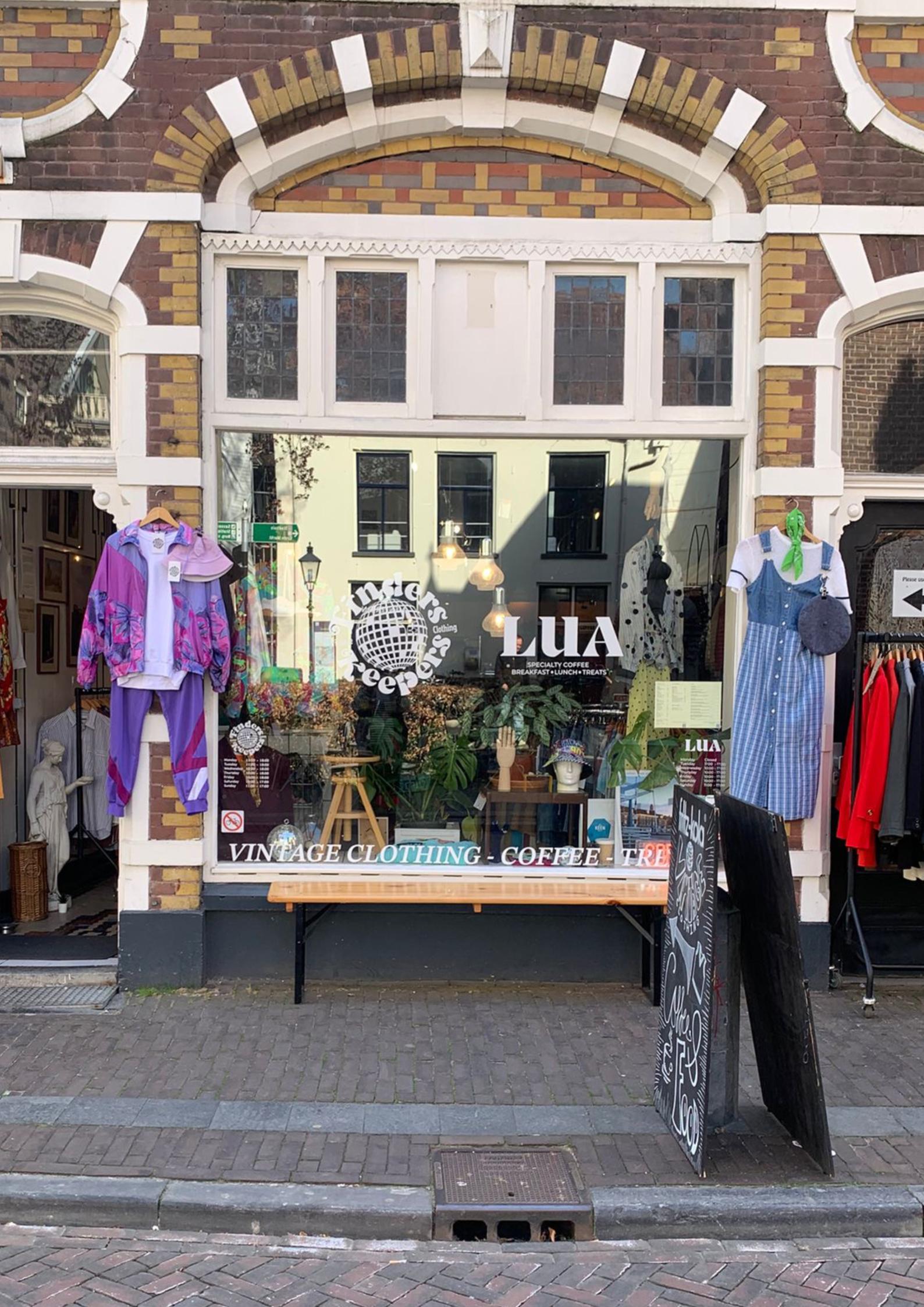
2. You share a space — how do you strengthen each other?
Janske We complement each other very naturally. Finders Keepers and LUA both represent the same feeling: attention, quality, and a moment for yourself. It encourages people to stay longer and experience the shop as a place, not just a store.
Lisanne Exactly. Together we create a place where people can be offline for a while. Have a coffee, browse around, have conversations - it all feels very natural and organic.
What’s beautiful is that our concepts strengthen each other without feeling forced. Someone might come in for coffee and end up browsing the clothes, or the other way around. It flows into each other seamlessly. We share the same mindset: attention, calm, and quality. That’s why it doesn’t feel like two separate concepts, but truly one place where people enjoy taking their time.
We also attract a similar audiencepeople who make conscious choices. Whether it’s specialty coffee and vegetarian or vegan food, or vintage clothing. You can feel that overlap, and it makes everything just click.
3. Where does your love for this work come from? Was it always there?
Janske That love grew over time, but it was always there in some way. I grew up going to thrift stores with my mother,
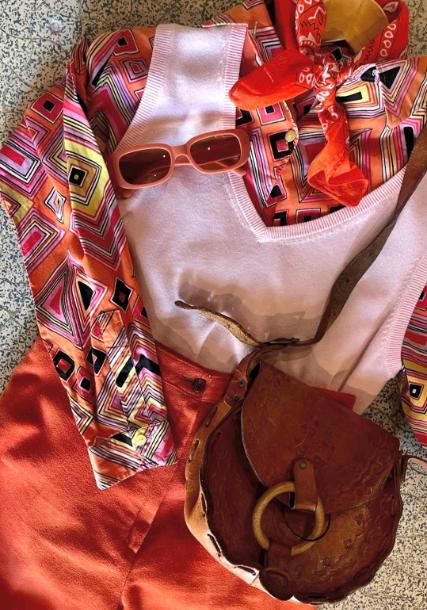
searching for interior treasures. During my student years, I started looking for unique clothing pieces in thrift shops and vintage stores, and that’s when I realized that older clothing had much more character than the fast-fashion items I also used to buy.
Lisanne Looking back, that love was always there too. As a child, I loved playing “restaurant” and coming up with my own concepts. So it felt natural that my first job was in hospitality - and many more followed.
After my studies, I briefly worked in the corporate world, but quickly realized how much I missed hospitality. The energy, the interaction with people, the idea that you can make someone’s day just a little bit better - that kept pulling me back. It confirmed that this is where my heart truly lies.
What I love most is creating a place where people feel welcome. A space where they can relax and where spontaneous conversations and connections arise. That, combined with creating coffee and dishes, makes it never feel like just work. Even in my free time, I love exploring other coffee and food spots.
4. Why is offline connection so important to you today?
Janske Because it’s becoming increasingly rare. So much happens online and at a fast pace, while real connection happens when you’re physically together. You see that in the shop too: people want to feel, try, and talk.
Lisanne Because we’ve become so used to always being “on.” We automatically fill moments with scrolling or distraction, while slowing down actually creates space for real attention - for yourself and for others.
At LUA, you really see how valuable that is. People sitting without rush, having meaningful conversations, or simply enjoying a quiet moment. We also have many guests who come here to read, puzzle, or draw. Those are exactly the kinds of moments you can’t replace with a screen.
That’s why we actively encourage it, for example through our sip & paint slow evenings. You can feel that the desire to be offline is growing again - stepping away from the digital world and returning to the here and now.
5. What do you hope people take away after visiting?
Janske: That they leave feeling happywith a special piece of clothing, having relaxed with good food and drinks, feeling welcome, and wanting to come back again.
Lisanne: That they walk out with a good feeling. That they’ve had a moment for themselves, or shared a meaningful time with someone else. I hope people feel welcome here and have been able to truly relax, without rush. That they’ve enjoyed the coffee, the food, and the atmosphere -and that they think: I’d love to come back here again. ◆
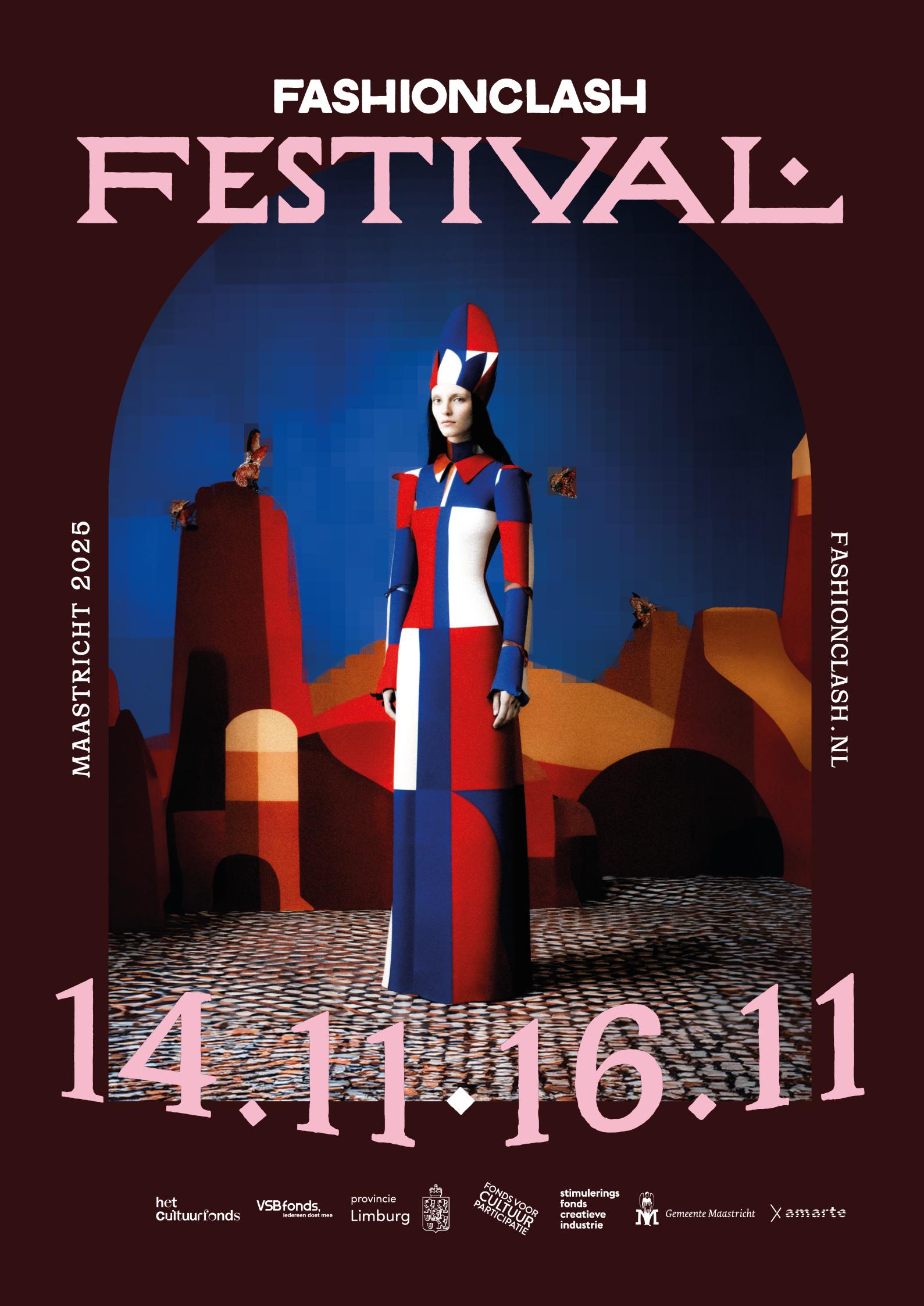
RECAP
fashionclash festival
REVIEW 2025
From November 14 to 16, 2025, the FASHIONCLASH Festival took place for its 17th edition. At various locations in Maastricht, this international and multidisciplinary fashion festival offered a platform to a new generation of designers, artists, and performers from home and abroad. During this three-day festival, visitors were immersed in an inspiring program full of performances, exhibitions, films, workshops, talks, and participation projects. With program components such as The CLASH House (fashion performances), the exhibition New Fashion Narratives at Bureau Europa, the Fashion Film Program & Awards at Lumière Cinema, and the participation program Fashion Makes Sense at Centre Céramique, the Amarte x FASHIONCLASH project at Jan van Eyck Academie, and much more—the festival showcased a versatile palette of perspectives on contemporary fashion culture.
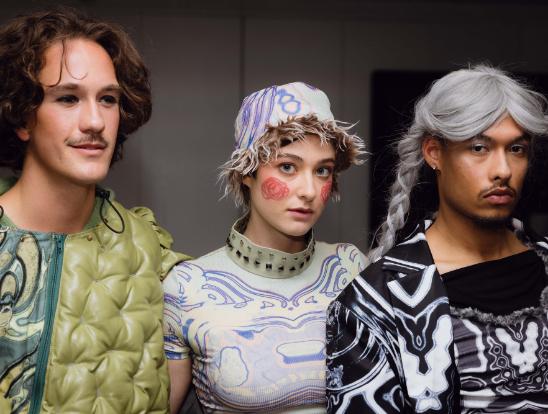
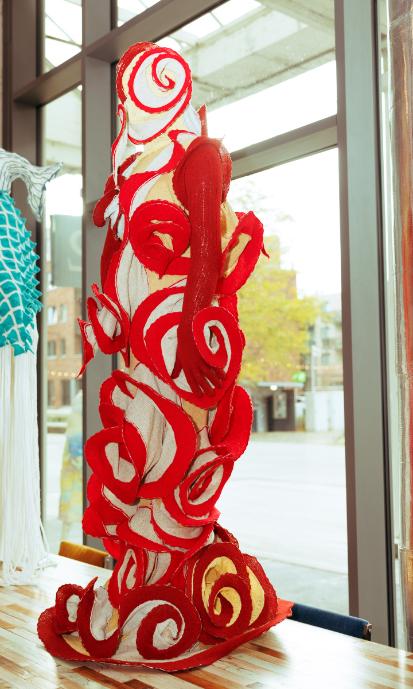
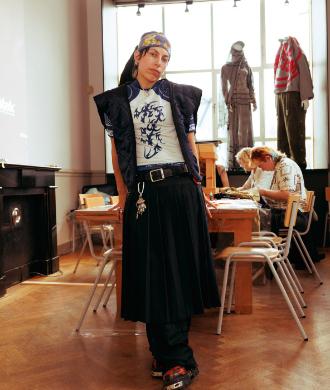
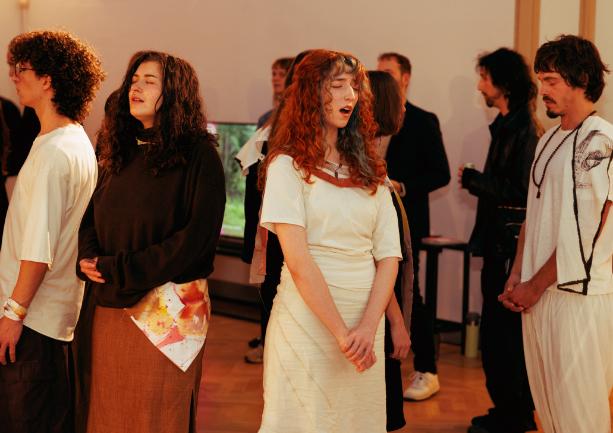
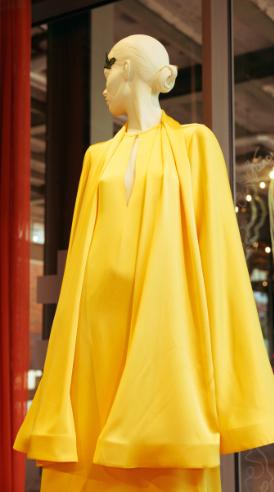
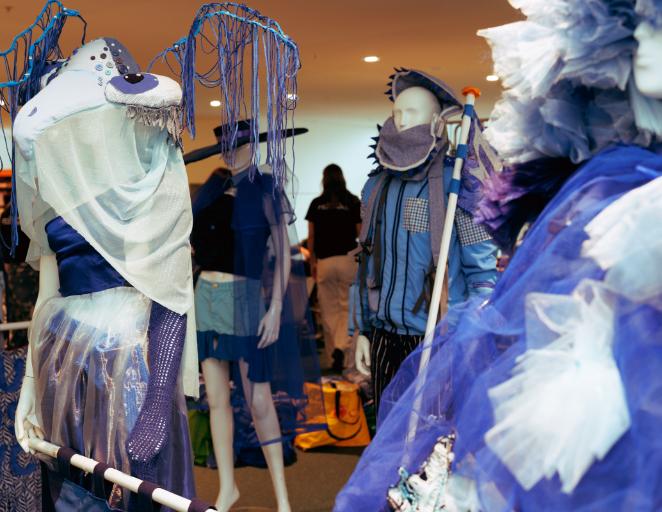
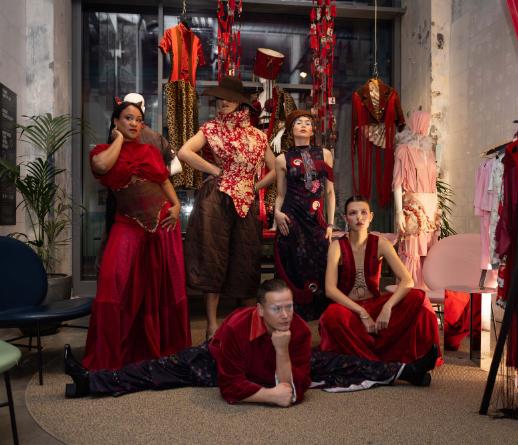
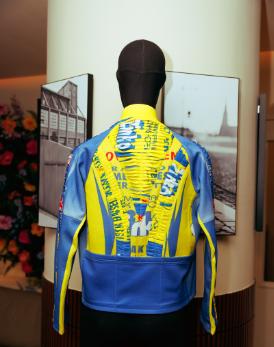
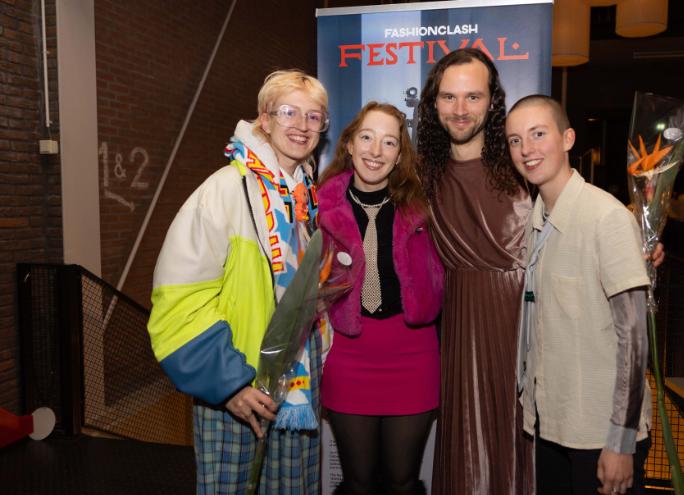
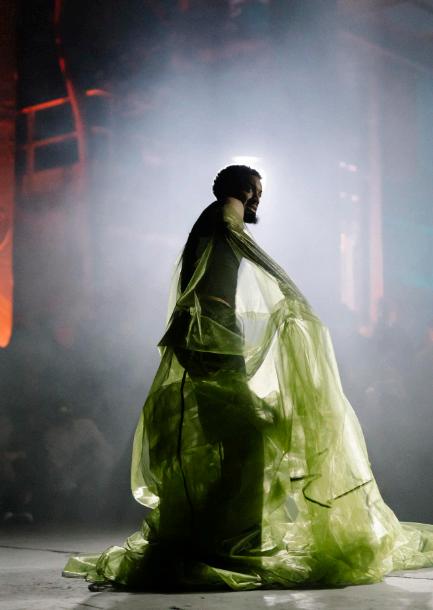
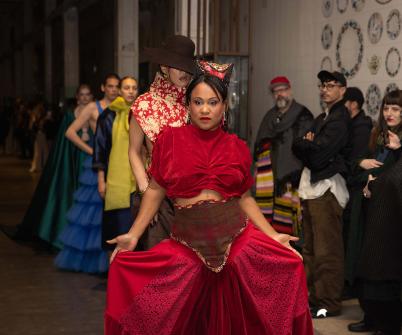
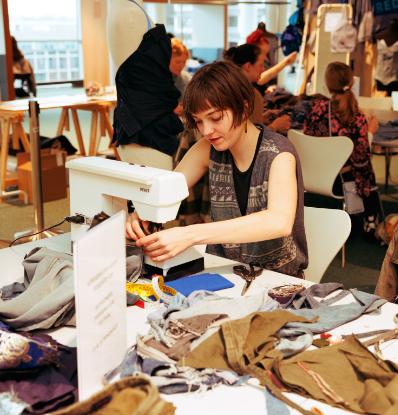
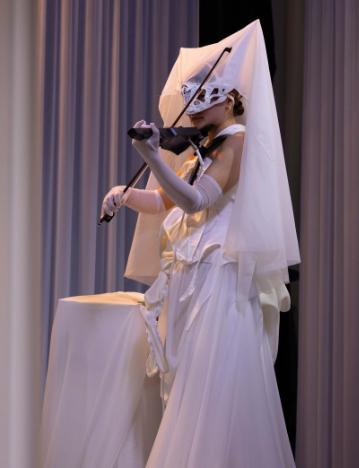
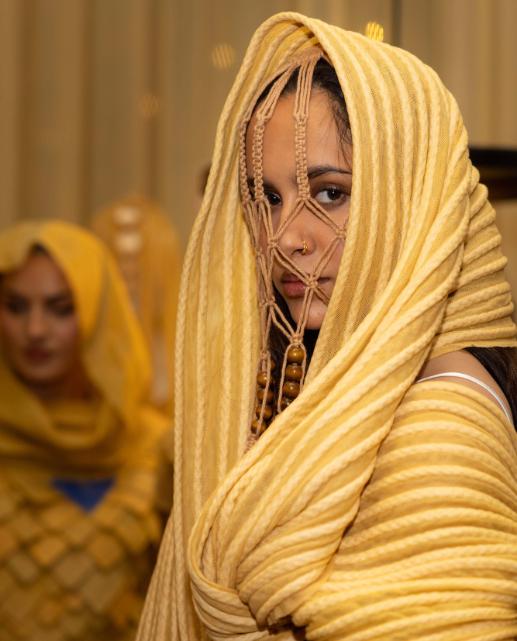
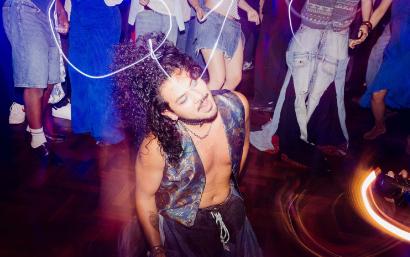
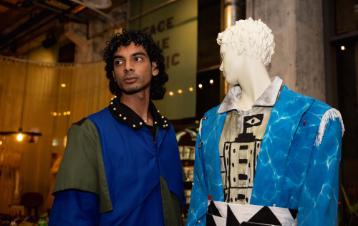
A look back at FASHIONCLASH Festival from different perspectives.
ECOPOLITAN
It was the first time ECOPOLITAN immersed itself in the festival. The ECOPOLITAN Dresses were also exhibited as a fashion statement for consuming differently in the participation program “Fashion Makes Sense” . The dresses were arranged in a circle in the entrance of Centre Céramique. Visitors were invited to scan the fashion labels’ QR codes to read the ECOPOLITAN sustainable fashion magazines. In this way, Map Renes aims to inspire readers to make different choices regarding fashion consumption and to offer sustainable fashion designers a platform. Fashion as a framework for a better world.
OverLap X Ecopolitan on tour
Together with Annemarie Huirne, OverLap, and program maker DSFW Enschede, we visited the program. It was nice to visit a festival as a visitor ourselves, instead of being in charge of our own event. During the boat trip on the Maas, we met friends of the artists, a performance maker, and
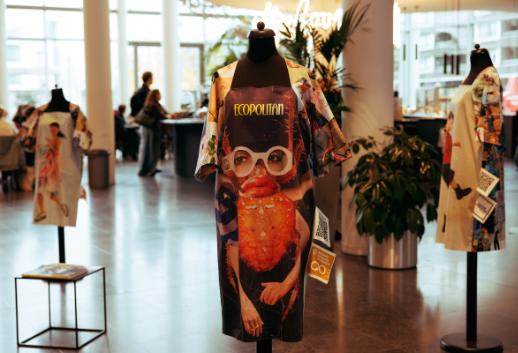
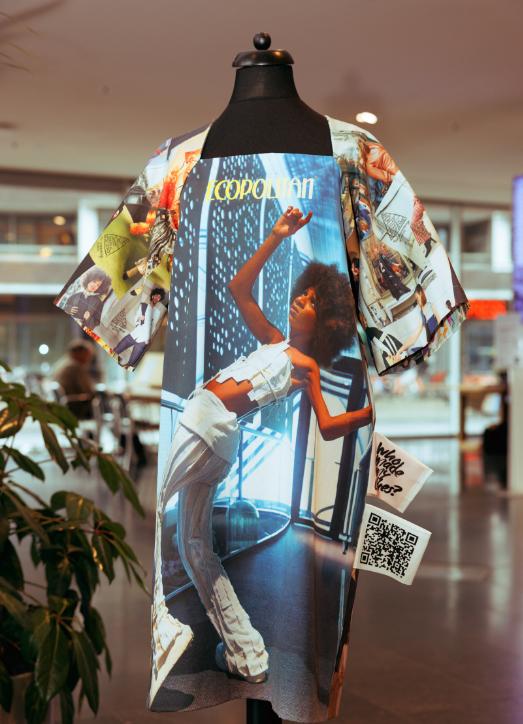
a curator. This provided beautiful personal introductions to the performance and exhibition. It was a creative ‘coming home’, also involving flashbacks to our own fashion productions.
After the Festival, it was a creative exploration of how to shape a review give. The idea came to mind to publish a triptych on the ECOPOLITAN website from various perspectives.
The review written by the organization. A photo collage of various moments by photographer Laura Knipsel. Experiences written down by Wievin Aalbers, as a fashion designer, volunteer, and visitor of the FASHIONCLASH festival. From a different perspective, Arva Bustin's experience regarding her preparations and collaboration with her brother for creating the performance about the impact of climate change on the social relations of citizens.
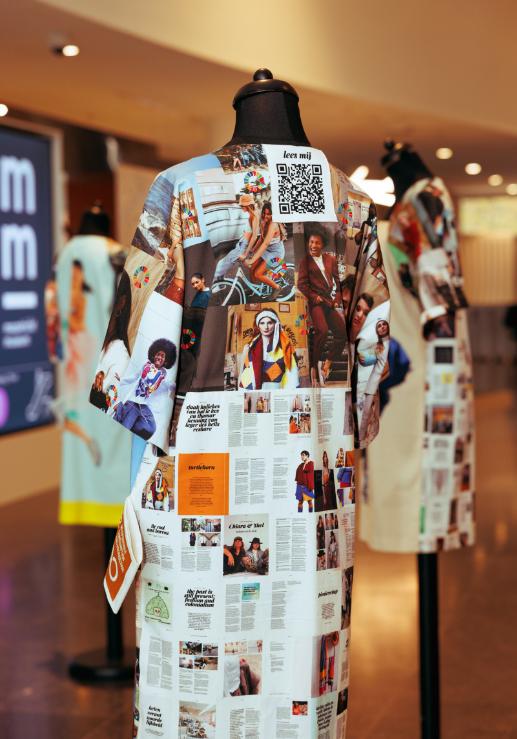
photography
Laura Knipsael
JonathanWiddershoven
Mitch van Schijndel
The FASHIONCLASH Festival Experience in Three Perspectives on One Weekend
by Wievien Aalbers
During the FASHIONCLASH Festival, I got to fulfill a special role. In fact, three roles at once. I worked as a coordinator on location at Center Céramique, I participated as a designer with my clothing line Fancy Boogers, and I attended the Clash House program as a guest. These three perspectives made the weekend intense, inspiring, and unforgettable.
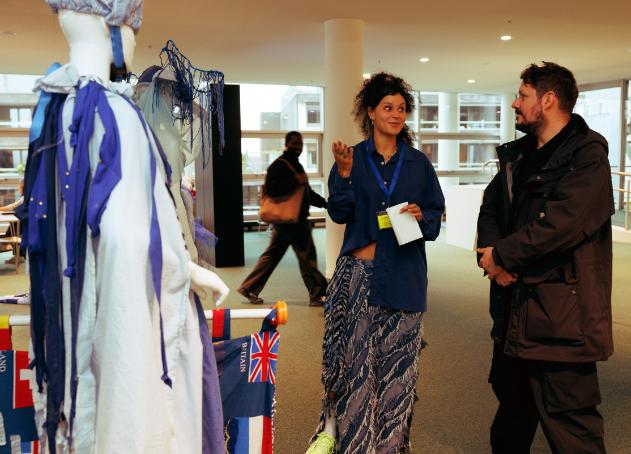
1. As coordinator at Center Céramique
During the opening of the festival, I stood for hours at the entrance of Center Céramique, where visitors were welcomed and directed to the exhibition on the third floor. Downstairs, there were already a few impressive dresses by Ecopolitan – a kind of first teaser. These immediately caught the eye, even of people who weren't there for FASHIONCLASH at all. As a result, many new visitors spontaneously came to take a look on the third floor.
Upstairs, we had set up a beautiful and diverse exhibition. Think of the project *Mensen dragen mensen* (People Carry People), which was previously on display during the *Heiligdomsvaart*. Additionally, there were designs by the Amfi students, who had completed their minor in collaboration with FASHIONCLASH. Their assignment was to draw inspiration from the *Heiligdomsvaart*, which resulted in surprising, personal creations. Furthermore, there were five striking outfits by Tara Smit, winner of Kunstbende, which immediately demonstrated the abundance of young talent in the Netherlands. In the large open space, there was also a circle skirt that had
previously appeared in Ecopolitan magazine. The whole formed a diverse mix of stories, sustainability, and innovative fashion. During the festival, upcycling workshops were also held, in which visitors created new pieces from second-hand clothing. We had also worked exclusively with recycled materials during the *Heiligdomsvaart*, so the link to sustainability felt very logical.
On November 16, there was a *Fashion Makes Sense Talk* that I was part of. I spoke about my experience as coordinator of the Pilgrimage Project, what I had learned from it, and how it strengthened my development as a designer. It felt special to share my story among so many other inspiring makers.
2. As a designer - Fancy Boogers in collaboration with Juunam.
In addition to my coordination work, I was also able to participate in the festival as a designer with my own brand, Fancy Boogers. The day before the weekend, I had set up my clothing at Juunam in Maastricht. Unfortunately, I could not be present during the festival itself because I was working at Center Céramique, but the feedback I received was overwhelmingly positive.
My logo – a nose with a crystal snot bubble –always elicits reactions. That is exactly the intention. Fancy Boogers stands for embracing the non-sublime: the idea that beauty and inspiration can also be found in things we normally reject or find uncomfortable. It is precisely there that growth, humor, and strength are often found.
It was incredibly motivating to see my work hanging among other strong designers. It inspired me to move forward, experiment more, and further develop my collection. During the festival, my webshop went live, and I immediately sold several pieces – a huge boost and confirmation that I am on the right track.
3. As a visitor to Clash House
On Saturday, November 15, I personally attended the Clash House program, which is one of the highlights of the festival every year. This time, it took place in the ENCI quarry in Maastricht – a breathtaking location with a raw, almost macabre atmosphere. The former limestone quarry and factory form a perfect backdrop for experimental fashion presentations.
We started in a smaller room with a short performance as a warm-up. Afterward, we were allowed to proceed to the large space, where chairs were set for the main show. What followed was not a traditional fashion show, but a series of performances in which designers presented their
work as a complete work of art. It was innovative, thought-provoking, and meticulously thought out. It felt as if fashion, performance, music, and space flowed seamlessly into one another.
A weekend never to be forgotten.
For me, the Fashionclash Festival was more than an event. It was a place where all my roles came together: organizer, designer, and enthusiast. I have met new people, gained new inspiration, been able to showcase my work, and seen how fashion brings people together, surprises, and moves them.
All of this has made me feel again why I do what I do – and why I want to continue doing this for a very long time.
FASHIONCLASH Festival Experience by Arva Bustin
My first collaboration with FASHIONCLASH was in 2024, when I was allowed to exhibit my graduation work (ULTRA-ORA) in one of the festival's exhibitions. This was also the weekend I saw the CLASH house performances in the SintAnna Church and was inspired to participate as well. In May 2025, my application to participate in The CLASH house was approved, which started a 6-month process of producing the collection and performance.
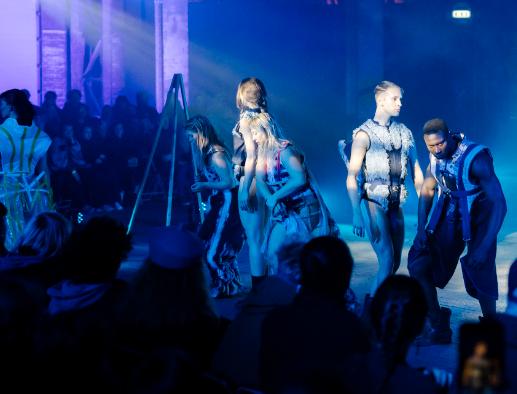
Creating a performance in conjunction with a new collection was something I had not done before, which therefore provided a great opportunity to take the design/creation process in new, unexpected directions. I was guided by Fashion Clash in developing the story and the choreography. These developments went hand in hand with the concept and the clothing, creating a workflow where no single part was leading, but rather there was room for mutual influence. Based on this development of the story, I set to work with my brother (Raf Bustin) to create
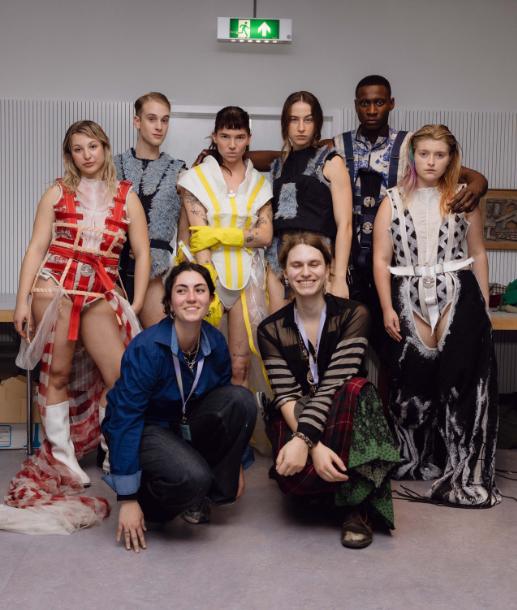
music that would fit the performance. During this process, I showed him the progress of the project during our discussions. He then set to work creating sound sketches, from which I extracted the elements that I felt fit well. This led to a final product that was both my brother’s interpretation and my vision. Seeing all these aspects ultimately come together at the ENCI venue gave me a completely new perspective on my own work.
In addition to the performance, I also participated in a panel talk focusing on cocreation within fashion, which aligned with part of my project. Alongside the main track of the CLASH House, I was selected to participate in the participatory trajectory to introduce people outside the art world to it. My approach to this was setting up screen printing workshops in Arnhem. During this panel talk, I also had the opportunity to delve deeper into the subject matter of my art. In my work, I always use storytelling as a basis for designing clothing and weaving political/social themes into the pieces. However, the risk of this is that the message can be lost to people who are not paying attention. Being able to explain this in more detail was therefore a welcome addition to the debut of my work. It was also interesting to see how the other participants had approached this aspect of cocreation and to be able to engage in dialogue with each other/the audience to exchange visions on the fashion world. ◆
clouded judgement
CRISTINA PALACIOS
Imagine a fully circular jacket: made with recycled yarns, and designed for easy disassembly and further recycling at the end of its life. Would you consider this jacket sustainable?
If your answer is yes, you are not alone. I’ve asked this question over a hundred times in surveys, workshops and exhibitions, and most participants respond positively, with sparkling eyes, thinking they’ve just discovered the most sustainable jacket ever. We tend to think of circularity and sustainability as synonyms. And it’s only natural to do so: for decades, we’ve been told that recycling is one of the most important actions we can take as individuals to help the environment (in the end, the recycling symbol is one of redemption). And while this is true for some materials, sustainability is not one-size-fitsall.
When it comes to fashion and textiles, the story becomes quite complicated. One reason is the undeniable link between recycled yarns and microfiber pollution.
The issue of microfibers
Nowadays, the most common method for recycling textiles is mechanical recycling, where fabrics are shredded, carded and spun again into new yarns. This process, however, shortens the original filament length, resulting in “fuzzier” yarns than its virgin counterpart. This makes mechanically recycled yarns more prone to releasing tiny fiber fragments, known as microfibers.
Another method, common for synthetic textiles, is thermomechanical recycling. Here, fibers are re-melted and then spun again. Research shows that this process can lower the molecular weight of the polymer, which is a fancy way of saying that the resulting fibers are weaker. And weaker fibers are more prone to breaking into microfibers.
Once released, these tiny particles move easily through air, land, and water systems. And did you know they’ve even been detected in rainwater? As poetic as it may be to imagine clouds of fluffy microfibers, it is not so dreamy thinking of the associated health risks. Thus, exposure should be minimized as much as possible. (this is your cue to install a microfiber filter on your washing machine).
Although all textiles release microfibers to some extent, this is especially true for textiles made with (thermo)mechanically recycled yarns, for the reasons mentioned above.
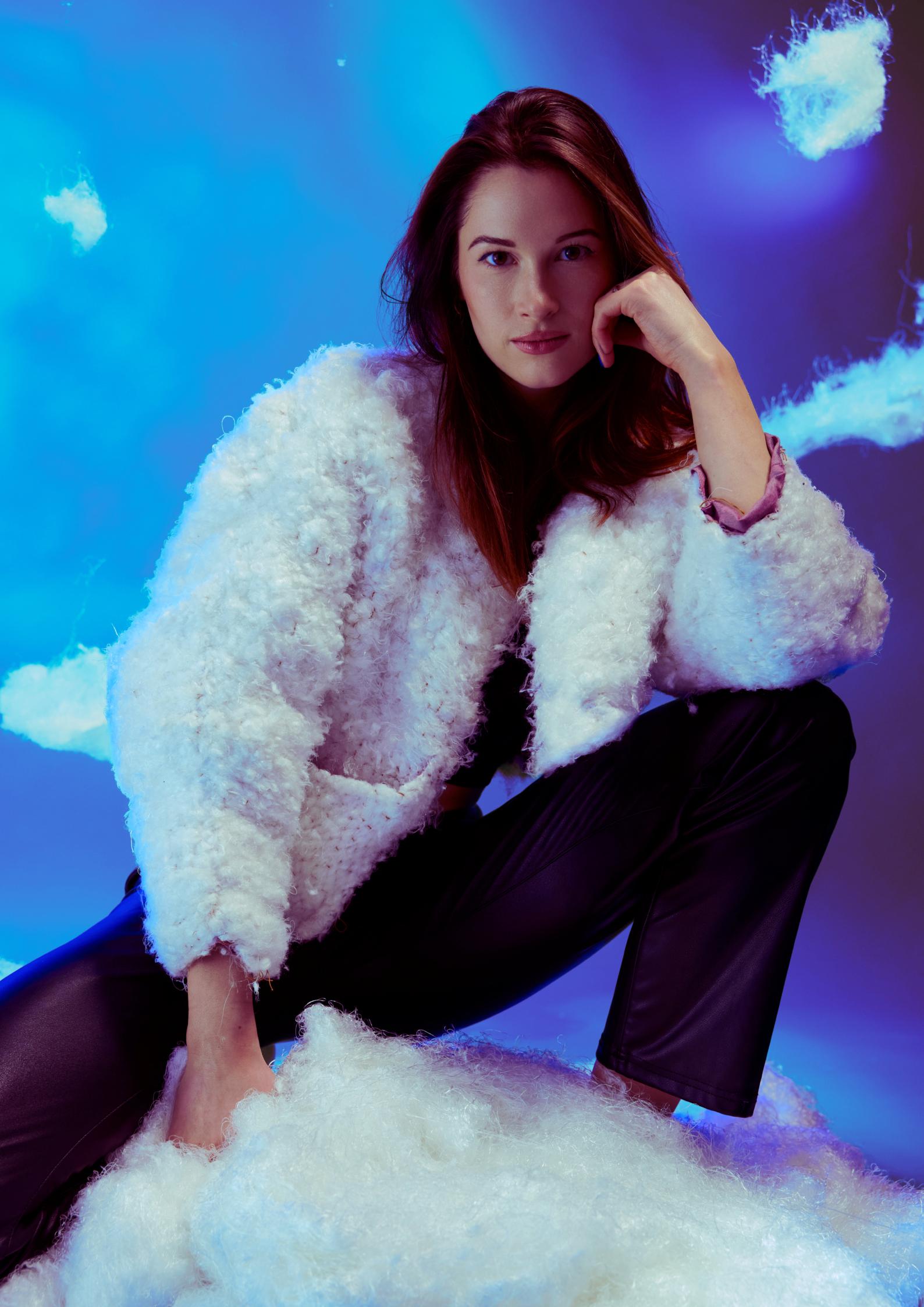
Understanding this connection helps reveal why circularity alone does not guarantee that a product will be sustainable.
This is not to say that we shouldn’t recycle at all. Of course, we should manage our waste responsibly, and take care of the available resources. The recycling industry is also working on alternative technologies capable of producing recycled yarns of comparable quality to that of virgin fibers. These (bio)chemical technologies are currently being developed for cotton (Circulose, SE) and polyester (CuRe, NL or Carbios, FR), and will, hopefully, be available at scale soon. But either way, there are other things we can do first.
Rethink before you recycle
Maybe you’ve heard of the R-strategy before, or maybe you’ve been practicing it without knowing it had a name. Basically, it’s a hierarchy that shows the order in which our actions should be prioritized. In the R-strategy, recycling is the last option of the sequence: Rethink > Refuse > Reduce > Reuse > Repair > Remake > Recycle. Personally, I would add one more R to the list, as guiding principle: Respect. Respect for the material, the people and the planet.
If we follow this logic, the only way forward is to slow down fashion. And the real challenge? Rethinking how we design, produce, consume and discard clothing.
Some estimates suggest that there are enough garments out there to clothe several future generations. So, in theory, we have already produced all the textile material we need. The problem, of course, is stylistic obsolescence.
Here is where your local tailor becomes your best friend: if something in your wardrobe no longer feels right, consider bringing it to a specialist before buying new. Tailors and upcyclers can transform garments in such creative ways… and you’ll end up with a totally unique look. Honestly, your local community of textile nerds (and I include myself here) are your strongest allies in navigating a more sustainable relationship with (your) clothing.
Designing for sustainability?
Now, back to the jacket that prompted this reflection. This fully circular prototype, made in collaboration with fashion brand Turtlehorn (DE/ES), was never intended to be
a perfect solution for yarn waste. Rather, it was designed as a conversation starter, to bring up the issue of microfibers in a creative way.
Of course, the link between recycled yarns and microfiber pollution explained here is just one among many aspects to consider when designing for sustainability. Every material, every product, and every context requires careful evaluation.
Sustainability is far from simple, and that is exactly why multidisciplinary collaborations are so essential in design. When we come together, we bring different perspectives that help reveal blind spots and open new possibilities: only through collective action can we clear clouded skies.
So if you want to brainstorm, discuss future design directions, or need help with the sustainability of your product… let’s meet up! ◆
Rethink
Refuse Reduce Reuse Repair Remake Recycle

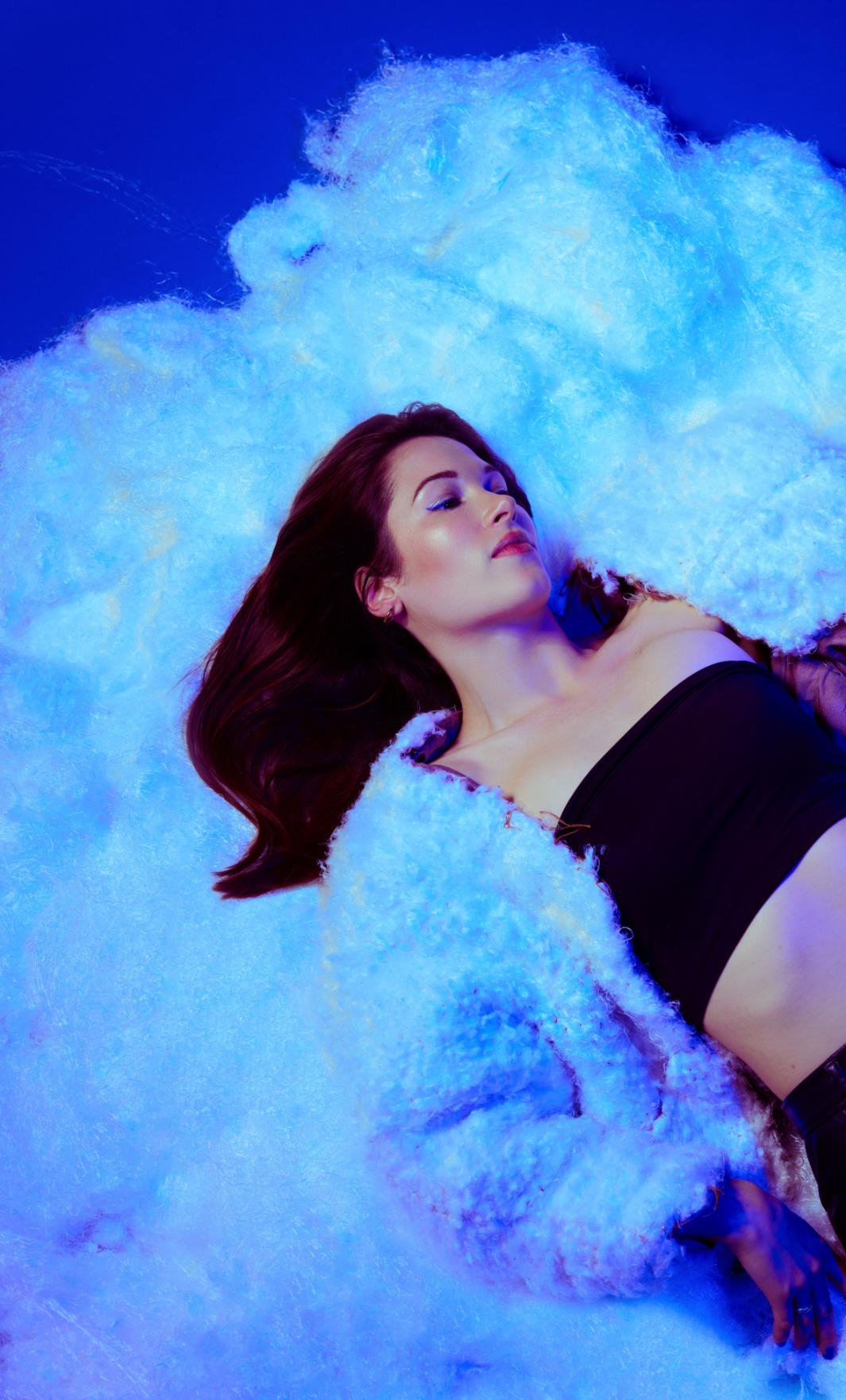

Cristina Palacios is an interdisciplinary researcher, educator, consultant and creative based in the Netherlands. With a background in ecology and material science, she currently works in between Maastricht University and her own practice. With KINKLEID, she aims to open a conversation about sustainable materials in fashion and beyond, facilitating science communication through design. In the past year her work has taken her to Milan Design Week, Dutch Design Week, Yale University and FashionClash Festival, supported by Creative Industries Fund NL, WORTH Partnership Programme, and Regional Deal ZuidLimburg I.
www.kinkleid.eu
photographer Laura Knipsael
model Sophie van Rij
outfit Turtlehorn x KINKLEID
art direction Cristina Palacios
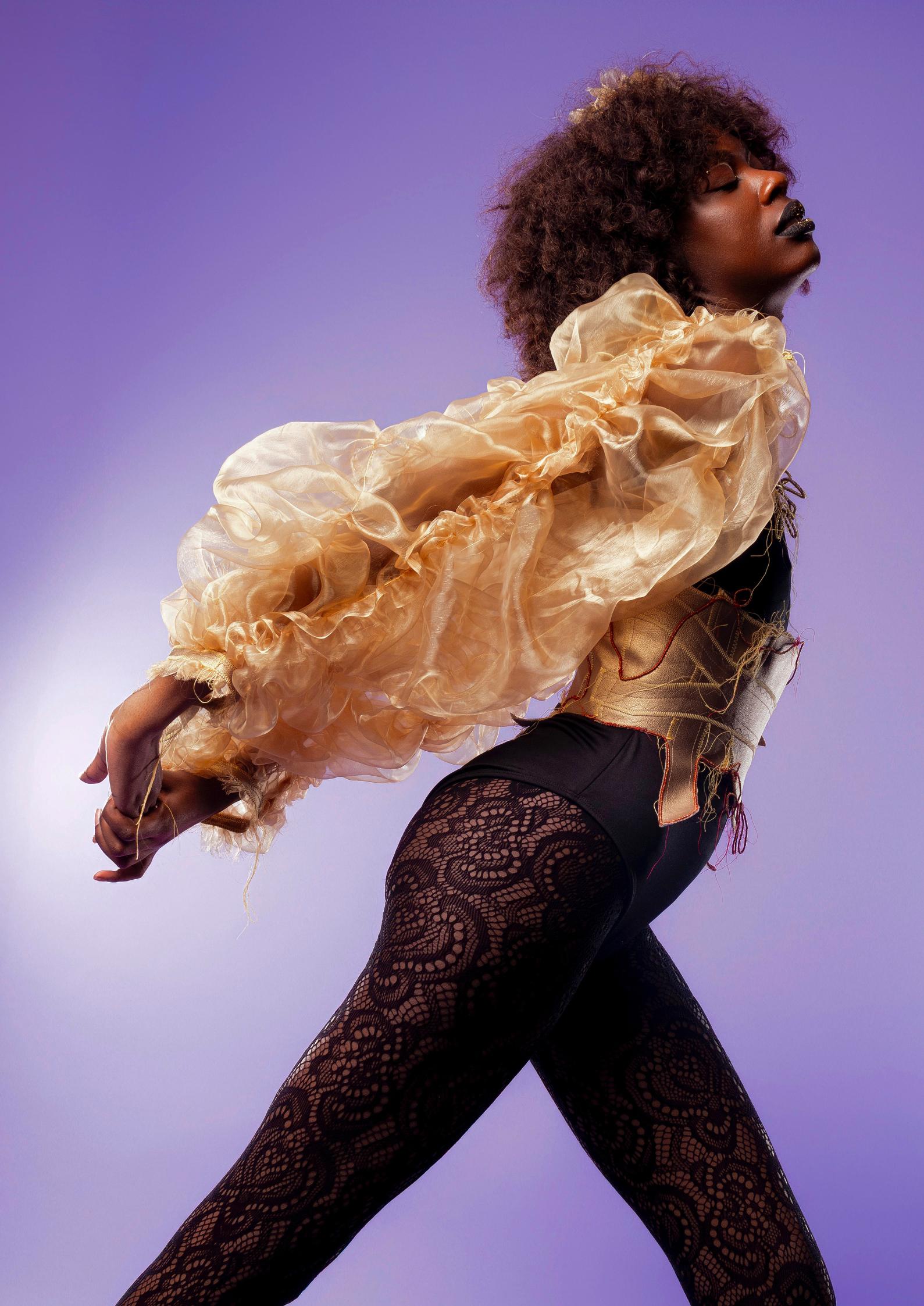
project roi du soleil designer en stylist Sophie Fabre Design
photographer Hannah Wolf
model Kimberly Okenge
make-up
Fatou Timymuah
sophiedesignfabre
Who is Sophie Fabre Design?
Sophie Fabre is my own name. It’s a French name, to be precise. I was born in ’s-Hertogenbosch on May 19, 2000, and grew up in Oisterwijk in a creative family. My mother designs and makes beautiful wedding dresses, and my grandmother makes the sweetest teddy bears. From a young age, I was always drawing, often cats wearing colorful dresses, for some reason.
When I was about eight, I got my first sewing machine. I started turning my drawings into 3D objects, making all kinds of stuffed animals from textile. After school, I would often spend time in my mother’s atelier, and she even trusted me to use her industrial sewing machine.
In my final year of secondary school, I decided to design my own clothing for my graduation project, and that’s when Sophie Fabre Design began. I created a T-shirt brand with prints inspired by trends at the time, like “the dap” and “the Snapchat dog filter”.
I went to study fashion at Koning Willem I College and later at HKU, where I graduated two years ago. During my studies, I gradually focused more and more on sustainability, which eventually shaped Sophie Fabre Design
into a sustainable fashion and art label.
What sparked the sustainable aspect that now defines Sophie Fabre Design?
It started during my first project at Koning Willem I College, where we were asked to create a wearable piece using recycled materials. I asked around for old stuffed animals and visited thrift stores.I used one of my mother’s old fake fur coats, to make a jacket where the plushies seemed to grow out of the fabric. I didn’t just attach them to the jacket, I really experimented with finding a way how they could become part of the garment. For example, I let a sleeve run through the middle of a plushie, or used only certain parts of it.
I loved the challenge of working with limited materials and figuring out how to make everything fit together.
Giving these stuffed animals a new life, and discovering what the materials could become, made me realize that I wanted to keep working this way. Beyond the importance of sustainability, the process itself brings me a lot of
joy. Whether someone donates their old clothes, I find unexpected materials in a thrift store, or I go searching through textile waste bins, it all feels like treasure hunting, and it genuinely makes me so happy. This way of working also pushes me to think creatively and constantly leads to unexpected results.
Where has Sophie Fabre Design taken you so far, and what’s next?
My fashion and art label has already taken me to many inspiring places, such as Fashionclash, Betweter Festival, Modefabriek, FAAM and many more. I’ve also done fashion shows in several cities, such as Tilburg, Utrecht, and Dordrecht. This past winter, my wearable art was even shown at Antwerp Central Station. Although I feel deeply connected to NoordBrabant, I also feel a strong connection to France because of my French heritage. Last year, I explored this further by spending three months in Paris. I had my own place in a french atelier and started working on my new collection, SIP: Spring in Paris. The collection is about starting a new life in a new environment. I shared this workspace with three other fashion designers and really experienced what it’s like to live and work as a designer in Paris. I used luxurious curtain fabrics I found in my grandmother’s attic and combined them with materials from Parisian thrift stores.
The collection brings together different sources of inspiration: clothing from the French Revolution, the bright colors of flowers in parks like Parc Monceau and Bois de Boulogne, and the contrast of the banlieues, the outskirts of Paris, alongside my own style of making. It became a colorful mix of everything I experienced there. Paris truly captured my heart, and I’m currently continuing this collection. I may return soon to capture new images of this collection in the city.
What else makes you feel on cloud nine?
One place where I feel completely at home, and where some of my dreams came true, is the TextielMuseum in Tilburg. I’ve felt connected to this place since I was a child, when I used to visit it and be completely fascinated. I remember watching someone use a tufting gun. Years later, in 2023, I started an internship there, working in the embroidery, passementerie, and tufting departments. I had already discovered tufting during a minor in Ghent, where I taught myself the basics using YouTube and an electric tufting gun on jute. But working at the museum with an air-powered tufting gun and leftover merino wool
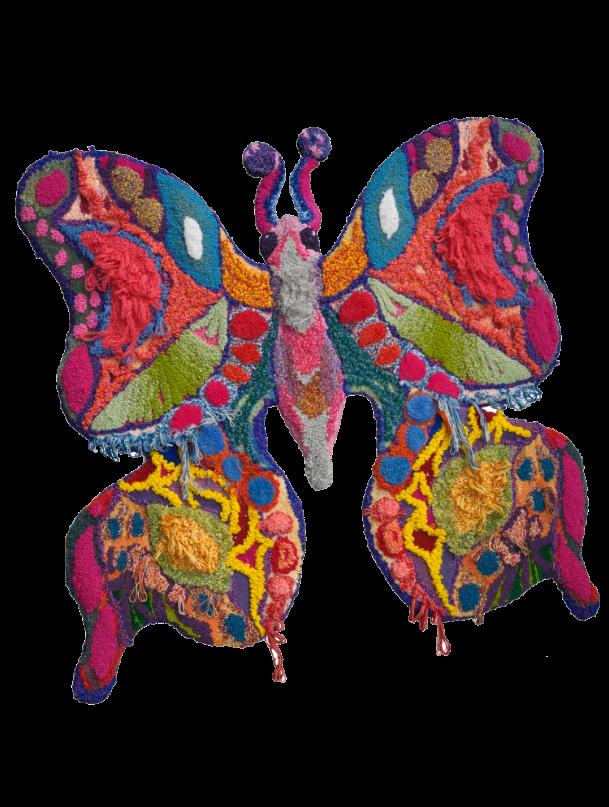
felt like a whole new level. More recently, the museum has also given me the opportunity to teach, something I’ve always been passionate about. Alongside my own practice, teaching has become an important part of what I do. I now give workshops to a wide range of groups, from primary school children to adults. I’ve also started giving guided tours, which initially felt quite intimidating, but has now become one of the most enjoyable parts of my work.
What is the biggest project you’ve worked on so far?
The biggest project, both physically and personally, is a large tufted butterfly I created at the TextielMuseum. After my internship, I continued working there as a volunteer in the TextielLab, where I really pushed the boundaries of the technique.
The butterfly measures 140 by 140 centimeters, and I experimented with as many techniques as possible. For the body, I used shimmering silver thread and even made mistakes on purpose to create long loops. I worked with different textures, color contrasts, height variations, and sparkling details.
It took me a full year to complete. There were many moments when I wanted to give up, especially because the process was physically demanding, tufting requires strength and control. On top of that, I’m allergic to wool, which made it even more challenging. My hands reacted quite badly, but with determination, and gloves, I kept going.
In the end, the piece became more than just a work of art. It’s a reflection of my love for textile techniques, my unstoppable determination, and a reminder to keep going, even when things get difficult. ◆

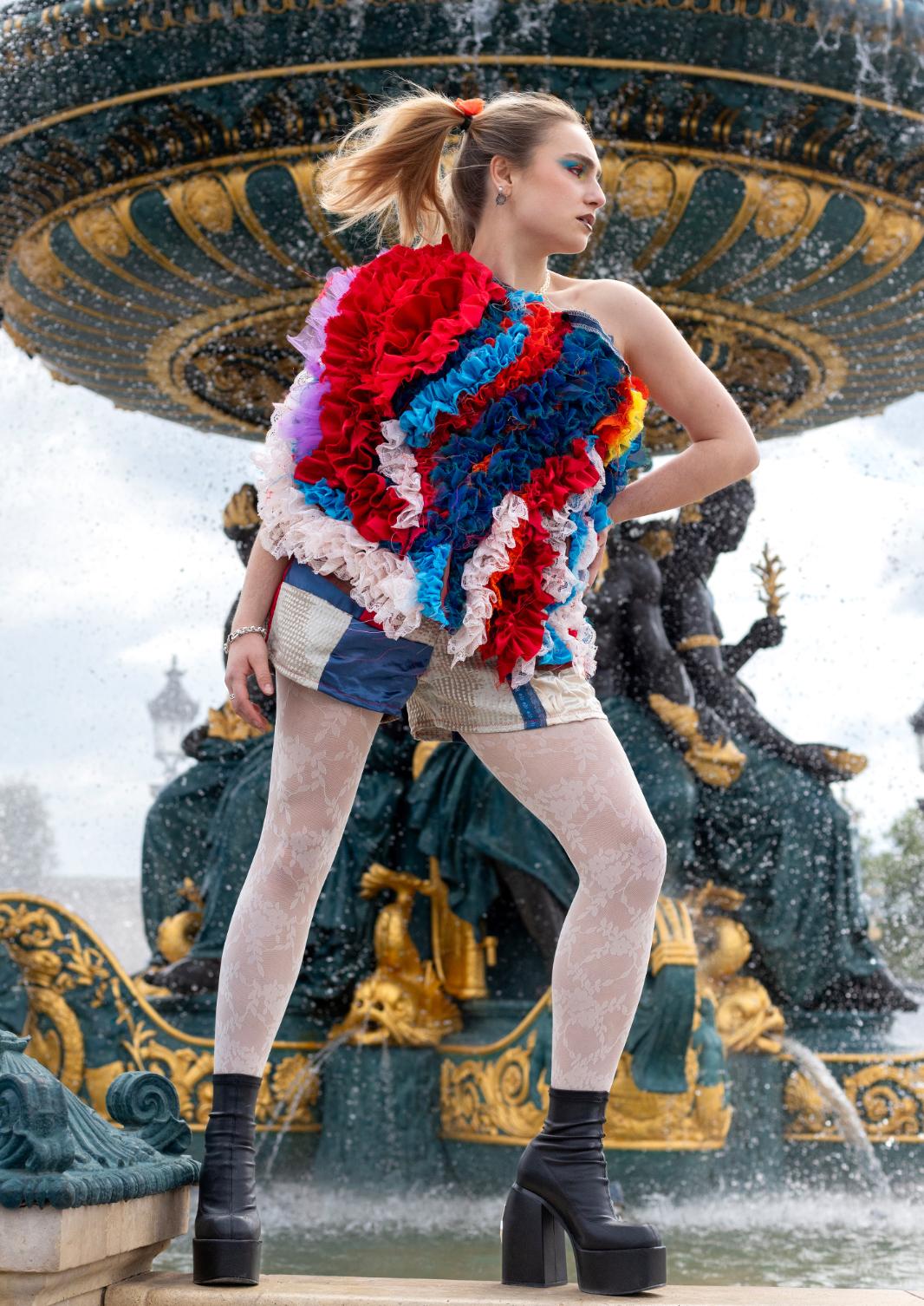
Sip collectie
designer en stylist Sophie Fabre Design
photography Eva Badole
model Anna Chiron
make-up Marie Gibert
KATHARINA REUSCHEL
butty2026tops
Katharina Reuschel is a fashion designer and Couturiere from Vienna, specialized in evening and bridal wear. She designs and creates her own tulle embroidery in-house to make every piece as individual as possible.
With her first Webshop Product- The Butty Topshe created a product that represents her own party and festival spirit. The aim was to spread joy and a hint of summer vibes.
This years edition is again inspired by the many artdeco influences of her home city Vienna. It’s made out of deadstock materials as a base and Viscose embroidery on top.
We produce it on demand to avoid any overproduction or inventory.
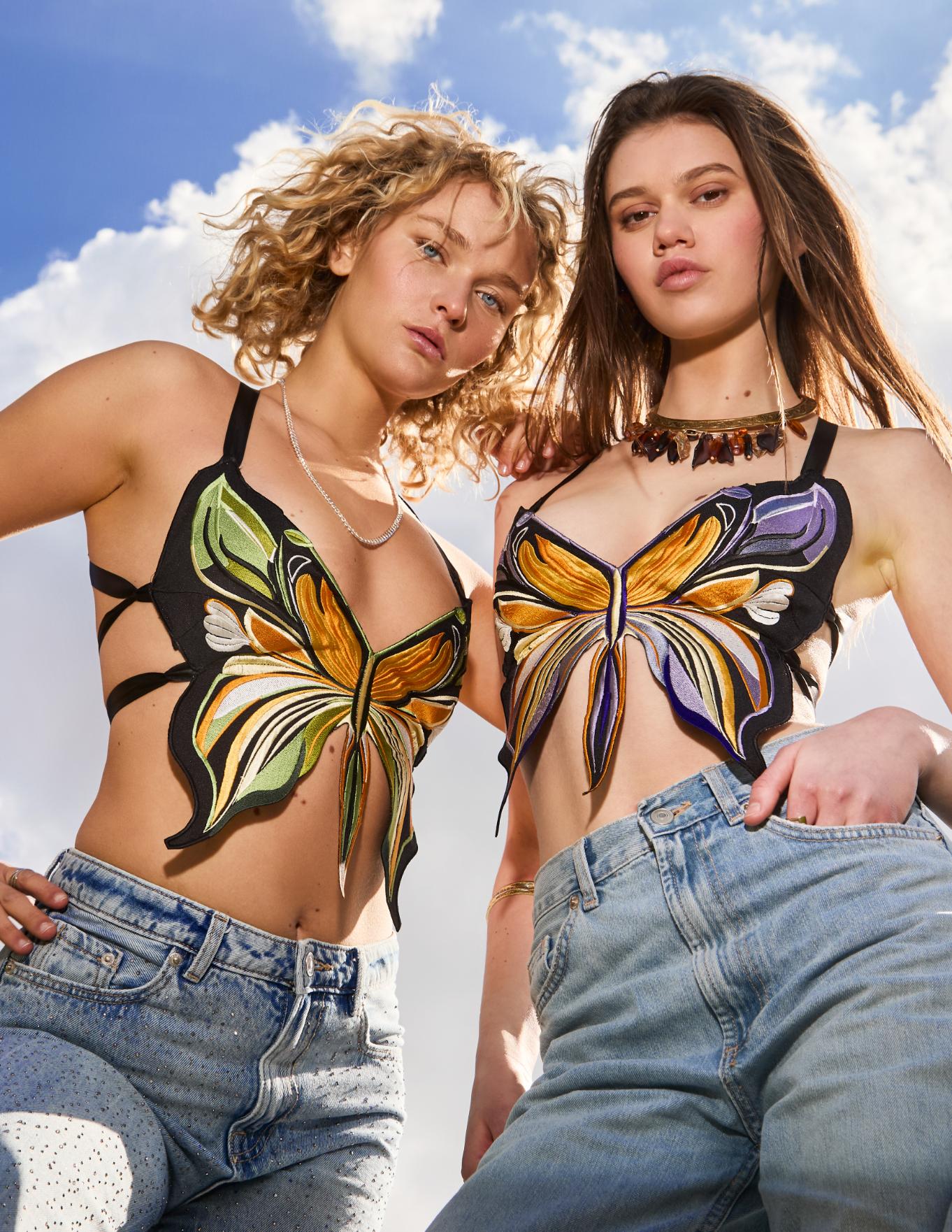
��� photographer
Elisabeth Gatterburg hair and make up
Alix Moncheur models
Stellamodels Vienna
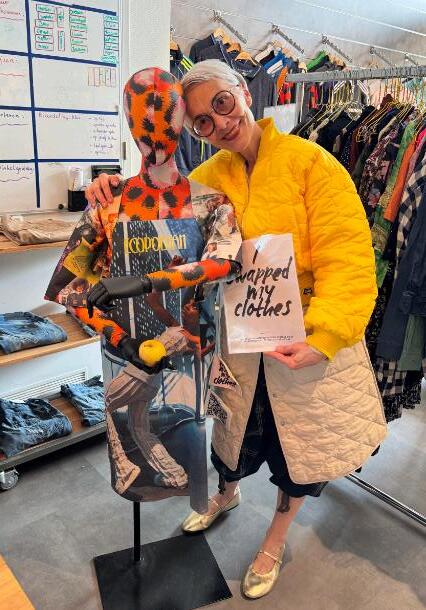
TREND
what if fashion is not somethingjustyou wear, somethingbutyou pass on?
The OFF TREND Foundation is a movement at the intersection of education, creativity, and sustainability. We believe that young people are not the future, but the present. And that, provided they are properly facilitated, they hold the key to a fair and circular fashion industry.
During the Swap Party on April 17, 2026, we brought this vision to life. What feels like a party, with music, style, and social interaction, is in reality a learning environment. This time, not just *for* young people, but *by* young people, for their teachers and local residents. This
created something special: a reversal of roles, in which young people transfer knowledge and awareness to their own environment.
At the same time, that is precisely where the challenge lies. For it is easier to change for yourself than to motivate someone else. Within that tension, young people learn what it means to bear responsibility.
During the event, clothing was swapped, stories were shared, and the hidden reality behind fashion was made visible: the depletion of raw materials, the exploitation of labor, and a system driven by overproduction and
throwaway behavior.
But we do not dwell on the problem. OFF TREND creates a perspective for action. Through makerspaces, educational programs, and our clothing label SUSPENSE, young people learn how things can be done differently. They design, repair, and revalue clothing. They do not become consumers, but makers and change-makers.
We make the dark side visible, not to paralyze, but to activate. ◆
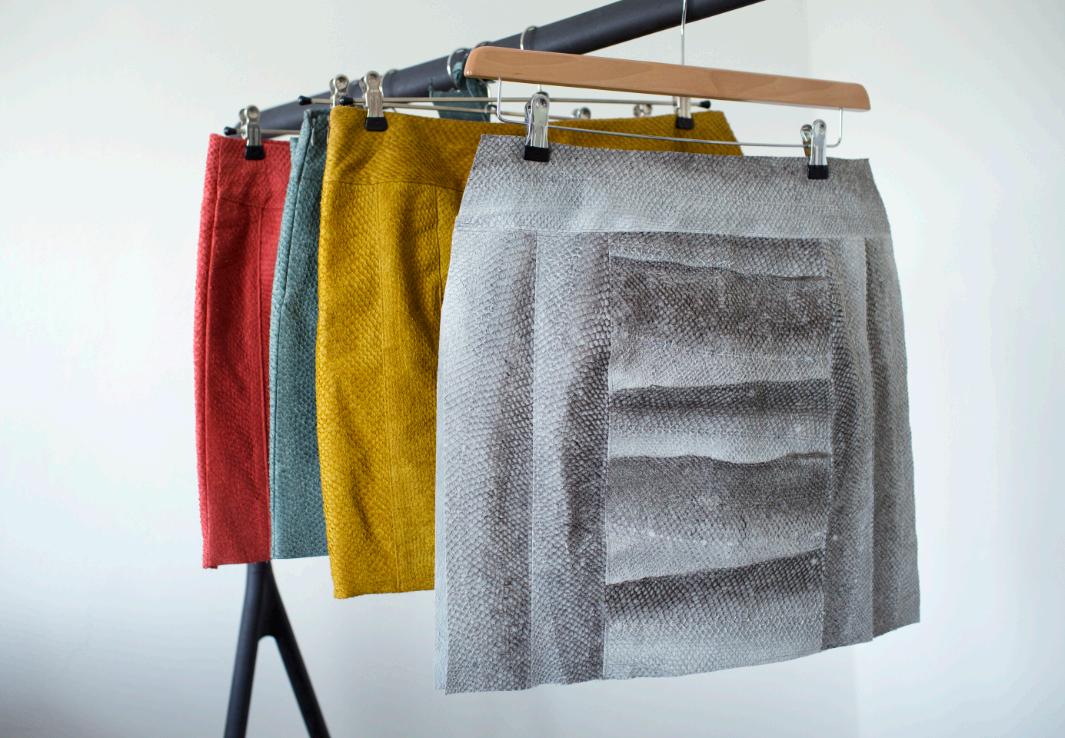
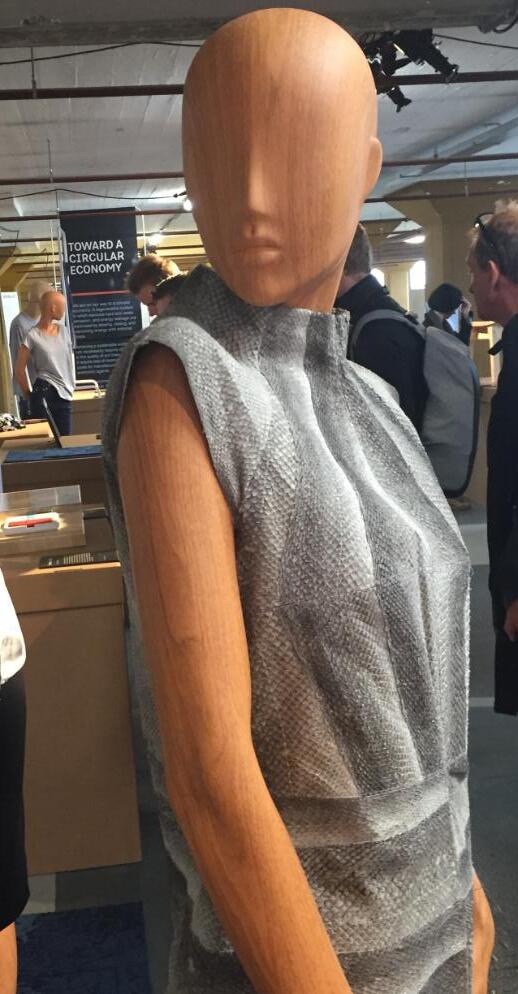
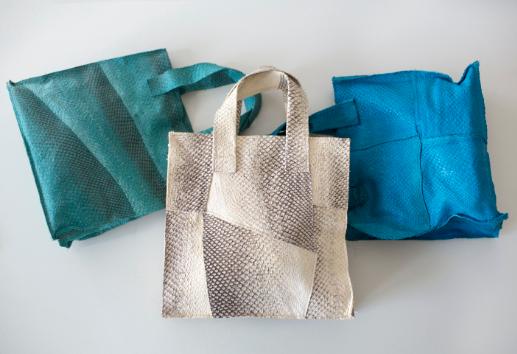
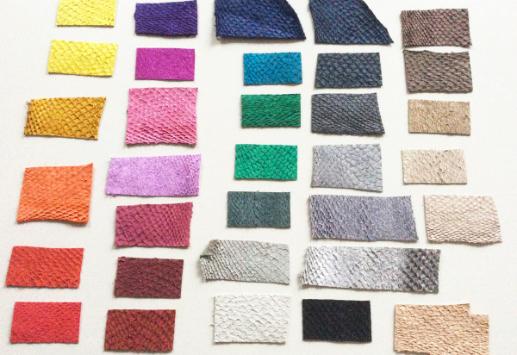
salmon leather skirts in all the colors of rainbowthe
RENES
It is a circular fashion concept by Map Renes, fashion designer and fashion activist. The skirts— which are made to measure—are made from washable salmon leather; a byproduct of salmon intended for consumption. No waste is achieved by making optimal use of the fish—from fin to tail. Additionally, the salmon leather can constantly change shape from a skirt to a bag or another fashion item.
Slow Fashion
The creation process focuses on the wearer. In consultation with the consumer, a salmon leather fashion design is created that is tailored to their physique, fashion style, and color preference. The
salmon leather is available in natural and in all Pantone colors.
After the design phase, the salmon leather is ordered from Iceland. There, it is dyed specifically for the order. Delivery of the salmon leather takes approximately 4 weeks. In the meantime, a test skirt is sewn from cotton. Once the salmon leather skirt has been sewn, there is a fitting. Patience is required from both the consumer and the maker. The salmon leather skirt will be handed over after approximately 6 weeks.
Map Renes challenges her skirt wearers to enter into a long-term relationship with the custommade skirt. “In my wardrobe hang fashion items that I have owned for over thirty years. How special it would be if the wearers of the salmon leather skirt could say the same in the future.
Fish on the Catwalk
Map Renes created the first salmon leather skirt in 2014. The leather came from Urk in Holland.
“The Waterzooi collection” featured one salmon leather skirt and organic cotton skirts with a
MAP
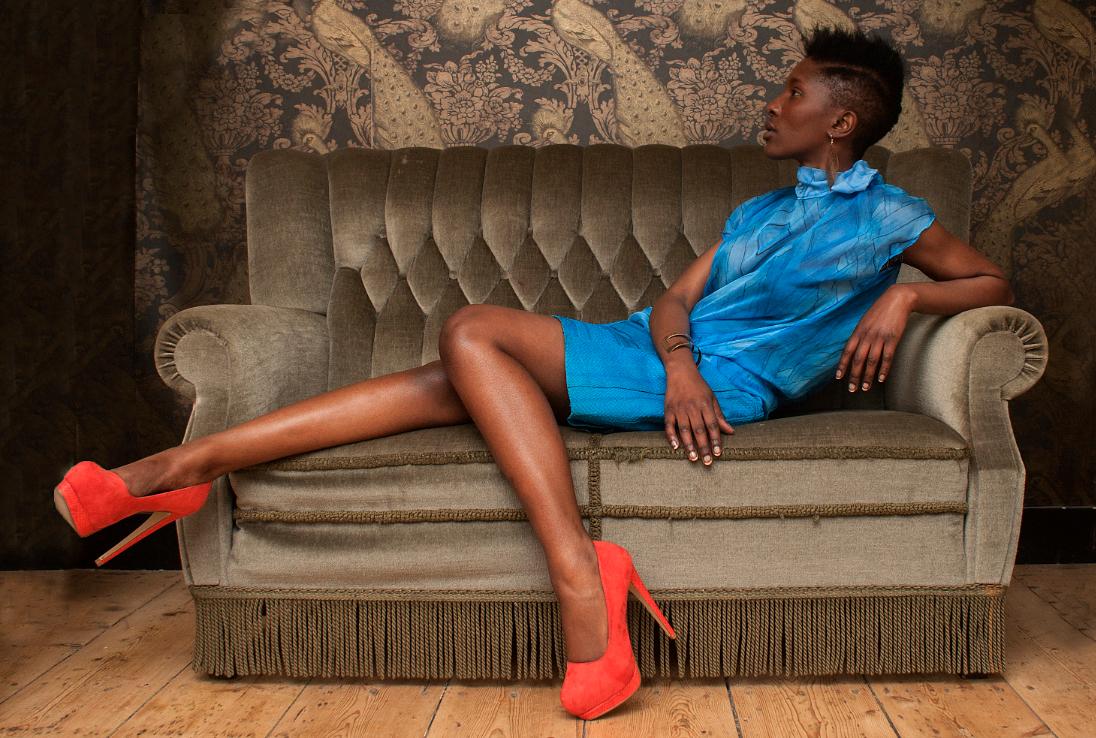
fabric print derived from the blue salmon leather. The tops also had a salmon leather fabric print. A pattern created by weaving or braiding the salmon skins. A salmon leather dress was added specifically for the Dutch Sustainable Fashion Show in 2016.
For the kick-off show ‘Talking Trash’ Dutch Sustainable Fashion Week, she designed a collection called Beautiful Garbage. For this, she chose natural salmon leather. The fabric print for the tops was derived from the dirty colors of a mountain of waste.
FISH & Climate
Through fashion activism, Map Renes wants to inspire other people to make eco-conscious choices for a future world. Fashion with a story to wear and to admire. Map Renes' collections have been shown not only at fashion shows but also at various exhibitions. For example, the exhibition Clean Revolution - Dutch design for a better World, curated by Leonne Cuppen (Yksi Expo). It was a traveling showcase of sustainable fashion and design focusing on reused and recycled materials, primarily launched around 2018 for the Global Climate Action Summit in Sam Francisco. Later, the exhibition was on display during Dutch Design Week in Eindhoven.
A salmon leather dress was shown at the Climate Expo 2022, organized by ArtWorlds and Museum de Fundatie in Zwolle, to generate attention for climate change.
For Map Renes, fashion is a means of communication for a better world with respect for people, animals, and planet Earth. Her timeless fashion is meant to be worn, shown, and exhibited. ◆
��� photography
Jörgen Caris (previous page top left)
Job Boersma
Richard Vermijs model
Tinotenda Mushore (top left)
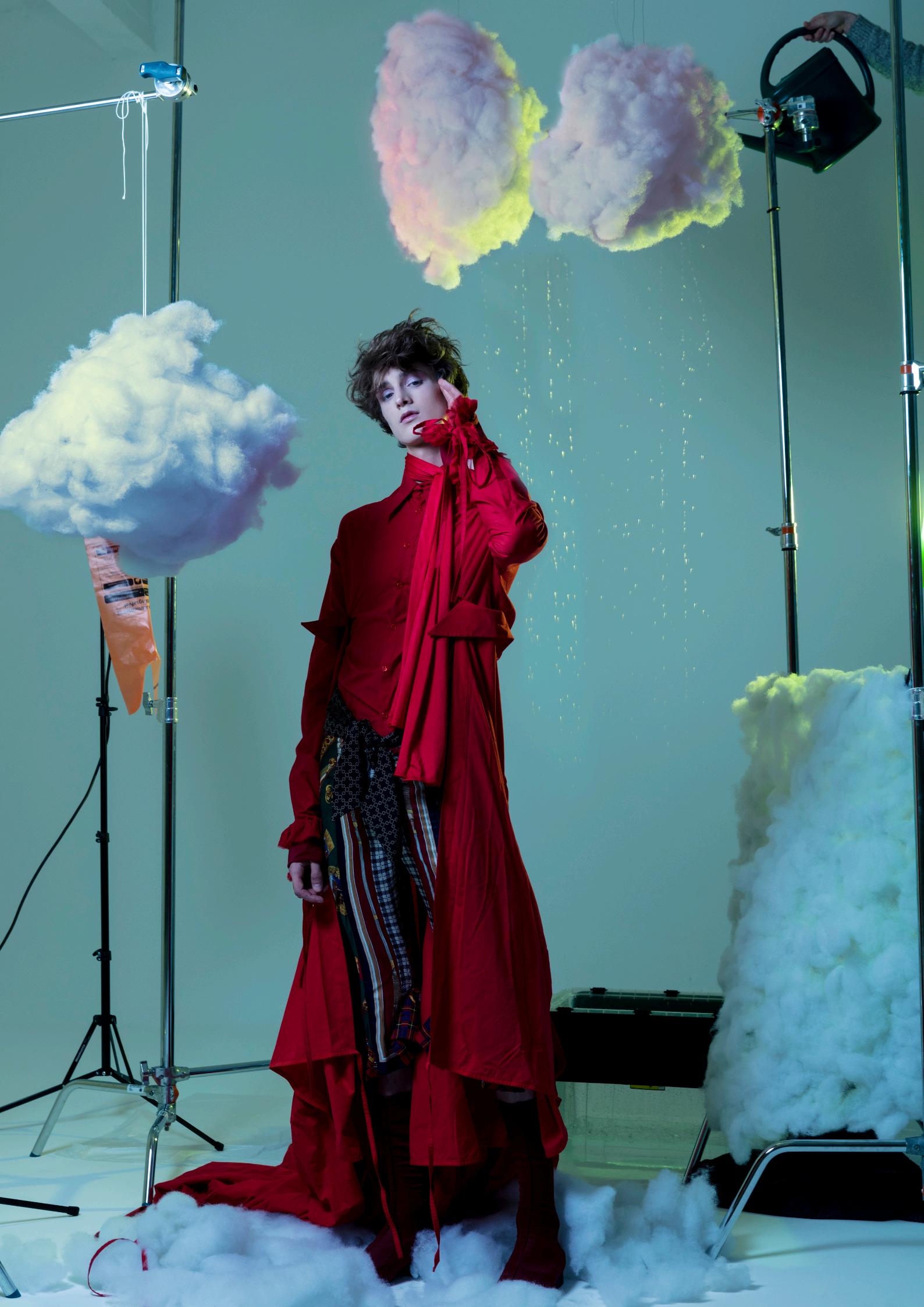
photography Laura Knipsael make-up and hair @emiliederoomakeupartist
fashion designer @rittlermaximilian model @carlo_jossa @flagmodels
LAURA KNIPSAEL
are you aware?
THEME: ACID RAIN
Are You Aware? is a fashion series about environmental pollution and climate change. Pollution remains one of the most underestimated world problems. Three factors determine the extent and nature of the pollution problem, whether at local or global level, namely: the size of the human population, the speed of production and consumption and the level and use of technology. While the overall stress caused by these factors increases, the ability of the environment to cope with these side effects, decreases. Laura tackles seven different issues within her graduation project 2018: acid rain, chemical pollution, electronic waste, oil pollution, plastic pollution, smog pollution and soil pollution. Each theme has its own concept. A surrealistic approach that threatens to become reality. With this project, Laura not only aims to inspire the viewer, but also tries to create a place to talk about these issues. Something has to change and it is time to do it now.
clean clothes campaigns
Labour rights NGO clean clothes campaigns sues Levi’s for misleading claims
Today, 21 April 2026, the Dutch office of the Clean Clothes Campaign (CCC) network filed a groundbreaking lawsuit against denim giant Levi Strauss (Levi's). CCC’s core argument is that Levi’s has used misleading claims on the labour conditions in its supply chain when advertising its products to Dutch consumers. CCC is joined by four individual consumers who purchased Levi’s products on the basis of these misleading claims.
Both online and in Dutch stores, Levi’s made consumer-facing statements about responsible production and respect for workers’ rights, such as the right to freely join a trade union. These statements convinced consumers they were buying from an ethical brand.
The consumers became aware the misleading nature of these claims in 2025, when CCC launched a campaign amplifying stories of severe worker repression at a Turkish factory producing exclusively for Levi's (Özak Tekstil). In 2023 these workers, who peacefully protested for better working conditions, were met with violence and later fired. The hundreds of affected
workers are still demanding compensation. According to labour watchdog Worker Rights Consortium, and to Levi’s own code of conduct, Levi’s should have remedied the violations of workers’ fundamental rights and freedoms at work.
“Levi’s gave me the impression that they care about social responsibility. Knowing what happened in Türkiye, I feel misled and don’t feel proud of my purchase anymore” said Patrick van Klink, one of the participating consumers. “Levi’s should stay true to its promises”, he added.
According to Funda Bakiş, who was employed at the Levi’s supplier for four years, “We were laid off because we used our right to organise. At home I live with seven siblings. At some point we could not even meet our most basic needs. We went through very difficult times with my family. We asked Levi’s for help, but they did not hear our voice.”
Advocates for the Turkish workers, including their trade union and CCC, have repeatedly asked Levi's to take action, but the case still has not been
remedied. Bego Demir (CCC Türkiye) recalls: “I’ve seen with my own eyes that the reality for workers making Levi’s jeans is very different from how the brand presents it.”
Emma Vogt, campaigner at CCC, explains: “Dutch law protects consumers against misleading claims. In this case there’s a clear contrast between Levi’s statements and its response to a concrete violation of their own code of conduct and international labour standards. From our perspective, Levi’s remedying the situation for the workers in Türkiye is the best way to rectify their false advertising.”
CCC is now awaiting a first hearing date in court. The NGO emphasises that they remain available if Levi’s is interested to re-engage in constructive dialogue.
The Centre for Research on Multinational Corporations (SOMO) supports the proceedings and has provided factual research to assist the case. Although it is not acting as a legal representative or co-claimant, and will not take procedural steps, it continues to contribute in a supportive capacity.
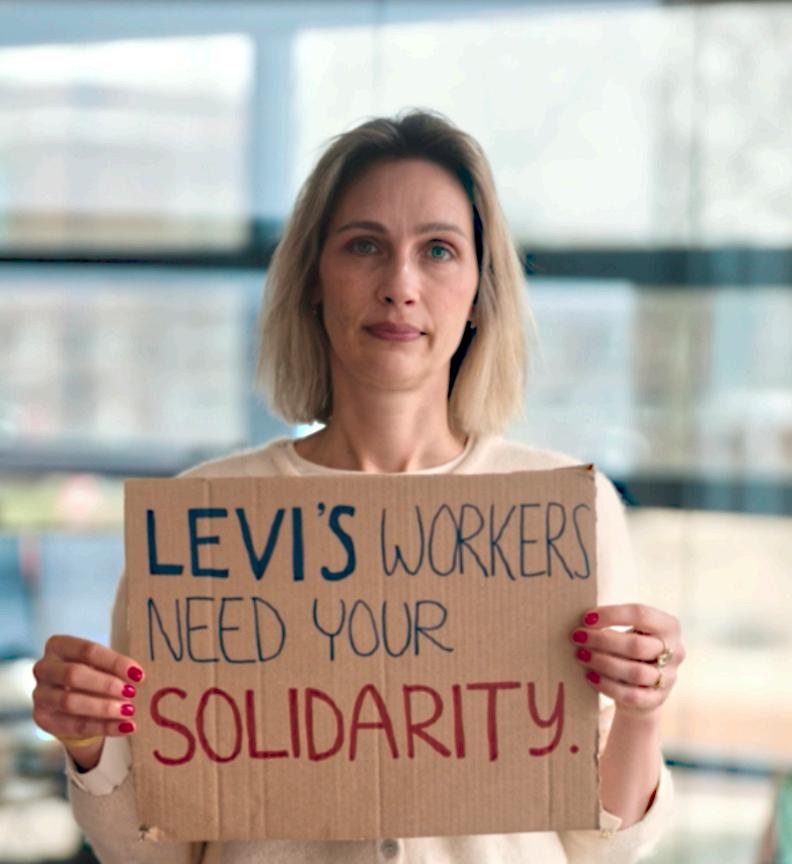
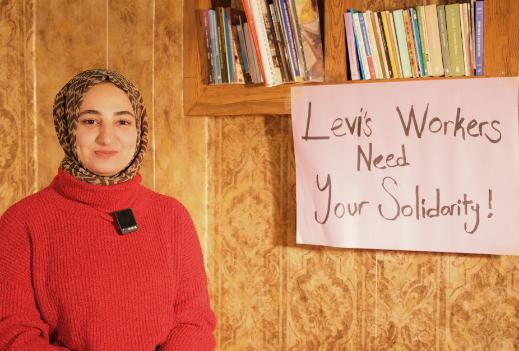
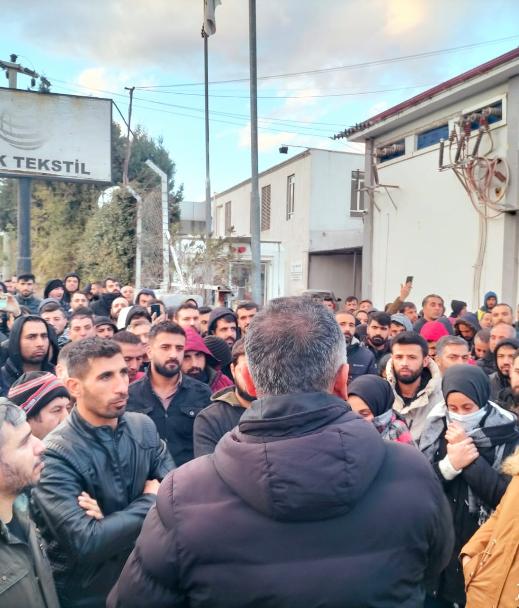
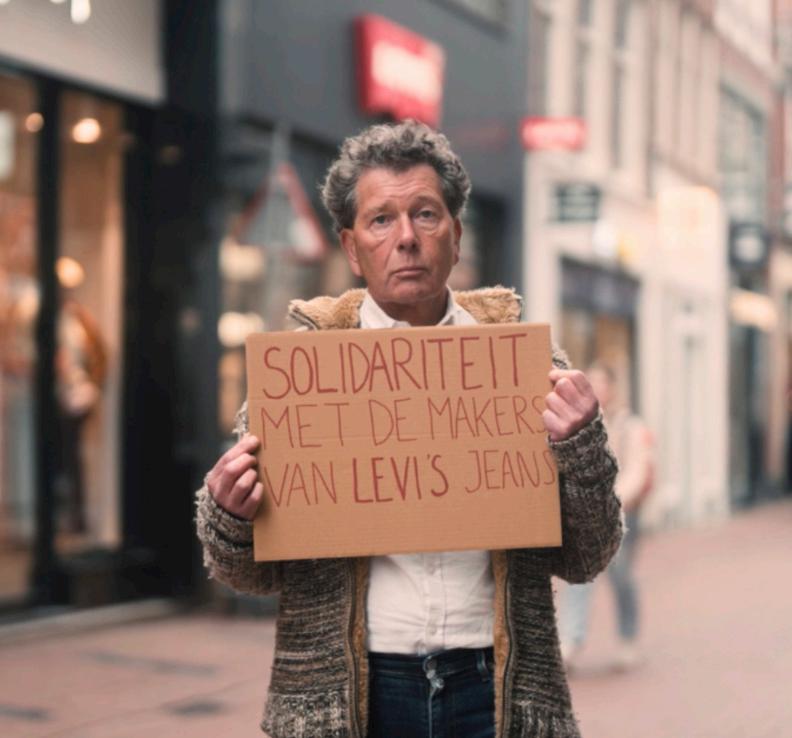
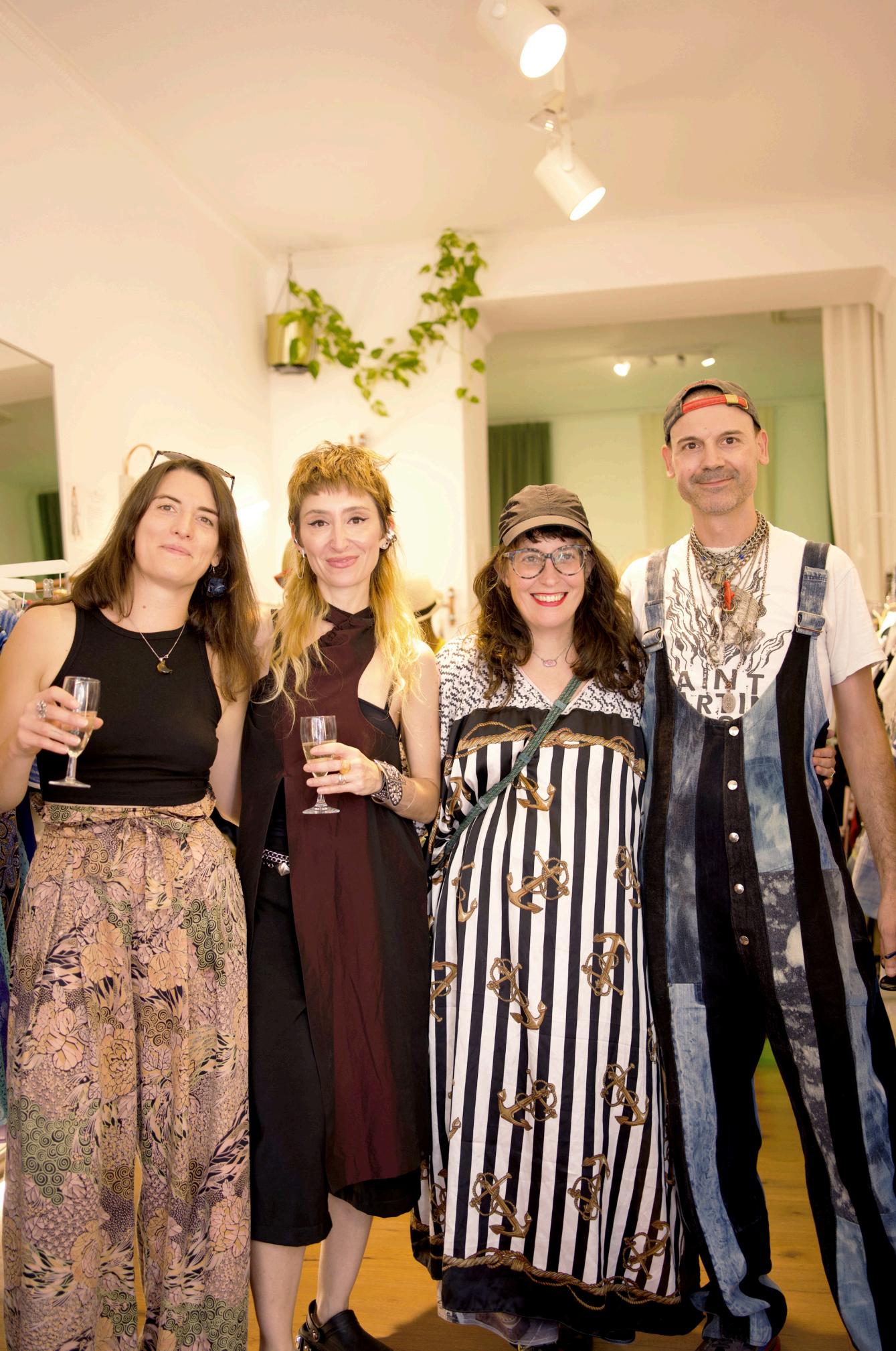
LIVING ATELIER rare
RARE is Berlin’s quietly radical answer to fashion’s waste problem—a curated space where style and circular thinking meet. Opened in August 2024 in Friedrichshain, the boutique brings together four forward-thinking, zero-waste labels—Tata Christiane, Therapy Recycle & Exorcise, Everydaypieces, and Fade Out Label—each redefining upcycling with a distinct aesthetic voice. More than a store, RARE is a living atelier. The designers themselves are present, inviting conversation, connection, and a rare transparency between maker and wearer. Pieces are handcrafted from discarded materials, reimagined into one-of-a-kind garments that balance experimentation with wearability. Regularly refreshed collections—and weekly special selections— keep the offering dynamic and accessible.
Sustainability here extends beyond production. Clients can commission bespoke designs, repair beloved items, or even rent standout pieces for a day—an elegant solution to overconsumption. The space also pulses with creative exchange, hosting workshops, student collaborations, and intimate exhibitions exploring art, fashion, and environmental responsibility.
At its core, RARE is not just a boutique—it’s a collective in motion, continually welcoming new designers and reshaping what conscious fashion can look like. New entry, the jewelry designer CHAIN CULT @chain.cult
ZERO-WASTE, DENIM COUTURE BRAND
fade out label
BACK TO LIFE / BACK TO GOOD

Fade Out Label is a zero-waste, denim couture brand born in Berlin and officially launched in Paris in January 2015, where it won Designer of the Year at the Who’s Next competition. Its story, however, begins earlier in Rome (Italy), after my studies at the Academy of Fine Arts. Although I approached fashion and tailoring as a self-taught designer, I later worked for international denim companies, where I developed a strong understanding of design, garment construction, and the business side of fashion. At the same time, I became deeply aware of the vast amount of unused materials and production waste left behind.
Berlin marked a turning point. The city welcomed me with openness and creative freedom,inspiring me to combine my professional background with a more sustainable vision. In 2013, while creating costumes for a performance, musician Jochen Arbeit asked me to design custom pieces using his old Levi’s jeans. This moment led to the first creations and to the development of the brand’s signature patchwork technique. Used denim became my core material: democratic,inclusive, widely available, and endlessly transformable.
The name “Fade Out” comes from the inner labels of the many jeans taken apart and reassembled, as well as from the natural fading of denim over time. Each garment carries traces of its past—marks and textures that give it
depth and authenticity. Much like Berlin itself at the time I arrived:raw, undefined, and full of possibilities. Design and ecology naturally became the pillars of the brand.
Paris was where the project took shape. At the time of the first presentation, the brand didn’t even have a name. We introduced five unisex patchwork denim pieces—repeatable yet unique, made to order in different sizes and colors. This approach represented a new model: an upcycling brand capable of operating like a traditional denim label, without overproduction or stock. The response was strong, even if not always immediate. Presenting a fully upcycled collection in a conventional fashion context required courage.
“Each garment carries traces of its past—marks and textures that give it depth and authenticity.”
Shortly after, Tokyo (Japan) became a key market. Large orders pushed the brand into a new phase, demanding precision and growth while maintaining its identity. Today, Fade Out Label continues to evolve, offering permanent collections where each piece remains available over time—always moving forward, yet deeply rooted in its origins. ◆
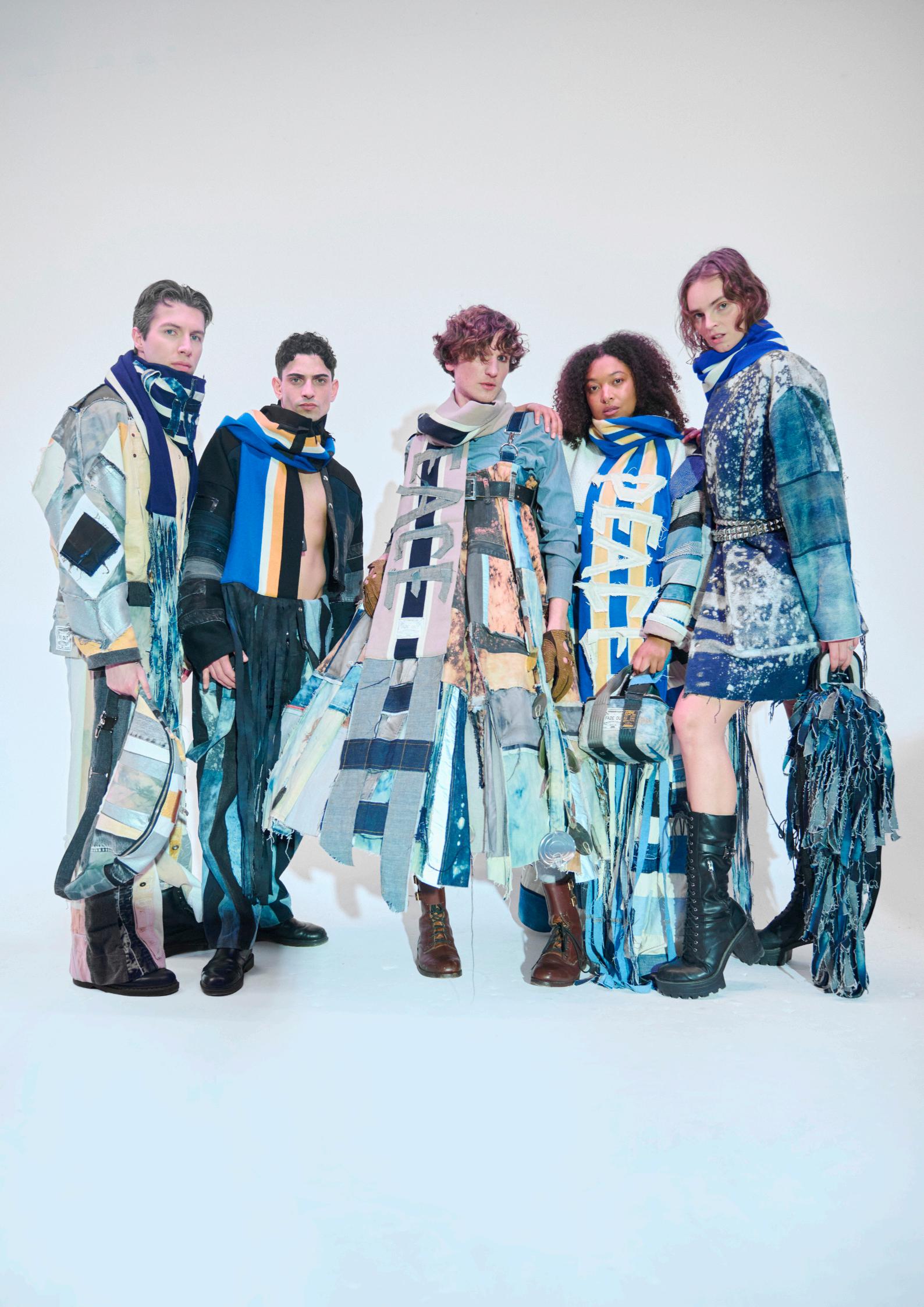
designer @fadeoutlabel photography
Marcelo Moraes @mmoraesinsta models
Eric Vinsonneau @eric.vincent.model
Fabienne Molela @fabiennemolela
Davide Luciano Peroni @anywaydave
Bela Hackenberg @bela.belissima_ Matteo Gentiluomo @matteogentiluomo mua
Roberta Bertok @robertabertokmua Kelly Yuri @kellyyuribeauty_
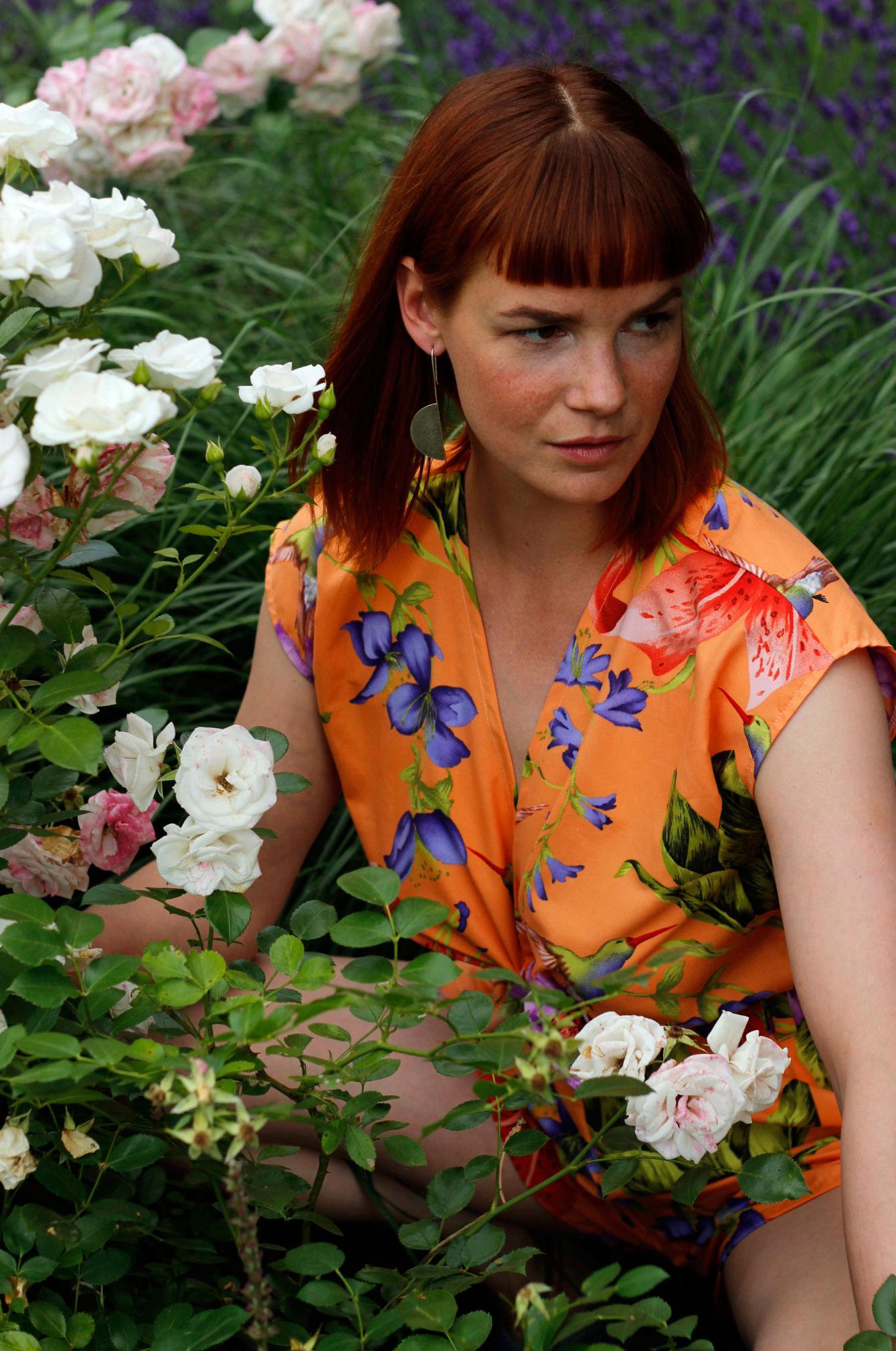
photography
Kaja Margarethe Weimer
model
Carlotta Lotta Gekeler
everyday pieces
Founded in Berlin in 2015, Everyday Pieces was born from my love for colourful, textured fabrics and the craft of sewing. I created the brand as a response to a global fashion industry that too often encourages overconsumption, undervalues garment workers, and damages the environment.
From the beginning, upcycling has been at the core of my practice. I work with second-hand textiles—such as duvet covers, tablecloths, or curtains— transforming them into distinctive, wearable garments. By reusing what already exists, each piece gives new life to materials that would otherwise be discarded. This process reflects a commitment to a more circular approach to fashion: reducing waste, reusing resources, and rethinking value.
Berlin has played an important role in shaping the project. The city has a strong culture of using what is already there and recognising potential in what might otherwise be considered waste. Alongside its independent and
experimental approach to clothing, Berlin provided a context where my project could grow organically.
At the same time, my connection to Belgium, my home country, remains an essential part of the brand. Brussels was one of the first places outside of Berlin where I had the opportunity to present my work and where the brand has grown steadily over the years.
“By reusing what already exists, each piece gives new life to materials that would otherwise be discarded.”
Today, Everyday Pieces is available in selected shops in Berlin, Brussels, and Luxembourg, and growing between these locations has allowed the brand to
evolve through meaningful relationships rather than rapid expansion. The fact that I travel regularly between these countries also gives me the opportunity to collaborate with local initiatives and projects focused on sustainable fashion and upcycling. These exchanges are a key part of the brand: they create space for dialogue, for sharing knowledge, and for building connections with other designers who are also working towards similar values.
Each location also brings a slightly different perspective—whether in terms of styles, expectations, or ways of wearing the garments—which feeds back into the design process and keeps the collections grounded in real use. Each collection is designed to last beyond trends—timeless pieces meant to be worn repeatedly, without losing their relevance. Everyday Pieces is ultimately about creating garments that combine individuality, durability, and responsibility.
Through its presence in these three neighbouring countries, I want the brand to continue to grow while staying true to its core values: making better use of existing materials, supporting local makers networks, and giving lasting meaning to everyday clothing. ◆
recycletherapy& exorcise

Therapy Recycle & Exorcise, run by two sisters between Berlin and Córdoba, Argentina is more than a fashion brand—it is a living practice of transformation. Since 2012, they have created everything in-house, handcrafting genderless, inclusive, one-of-akind clothing and accessories from discarded materials. Each piece is an intentional act of reclaiming value, turning what was once considered waste into authentic, wearable art.
Rooted in a deep awareness of the environmental impact of the fashion industry, Therapy challenges the logic of mass production and overconsumption. Instead of following seasonal trends, the brand works with what already exists: forgotten garments, textile remnants, and surplus materials. These elements are carefully selected and reimagined through artisanal techniques such as patchworking, deconstruction, and reconstruction. The result is not only a garment, but a story—layered with past lives, new meanings, and future possibilities.
At the core of Therapy lies a philosophy that goes beyond sustainability. The name itself reflects a dual process: recycling as a material practice, and exorcising as an emotional and symbolic act. Through their work, the sisters confront excess, waste, and inherited systems, transforming them into something expressive and empowering. This approach resonates both on a personal and
collective level, inviting wearers to rethink their relationship with clothing and consumption.
Operating between Europe and South America, Therapy also embodies a cross-continental dialogue. Their production connects different cultural contexts, skills, and realities, highlighting both contrasts and shared histories. This exchange enriches each creation, embedding it with diverse influences while maintaining a strong commitment to craftsmanship and community.
In addition to producing garments, Therapy Recycle & Exorcise actively engages with its audience through workshops, installations, and collaborative spaces. These initiatives open up the creative process, encouraging others to explore upcycling as a tool for self-expression and environmental responsibility. By sharing knowledge and fostering participation, the brand extends its impact beyond the objects it creates.
“recycling as a material practice, and exorcising as an emotional and symbolic act.”
Ultimately, Therapy Recycle & Exorcise proposes an alternative vision of fashion—one that values individuality over uniformity, process over speed, and meaning over excess. In a world overwhelmed by discarded materials, their work stands as a reminder that transformation is always possible, and that beauty can emerge from what has been left behind. ◆
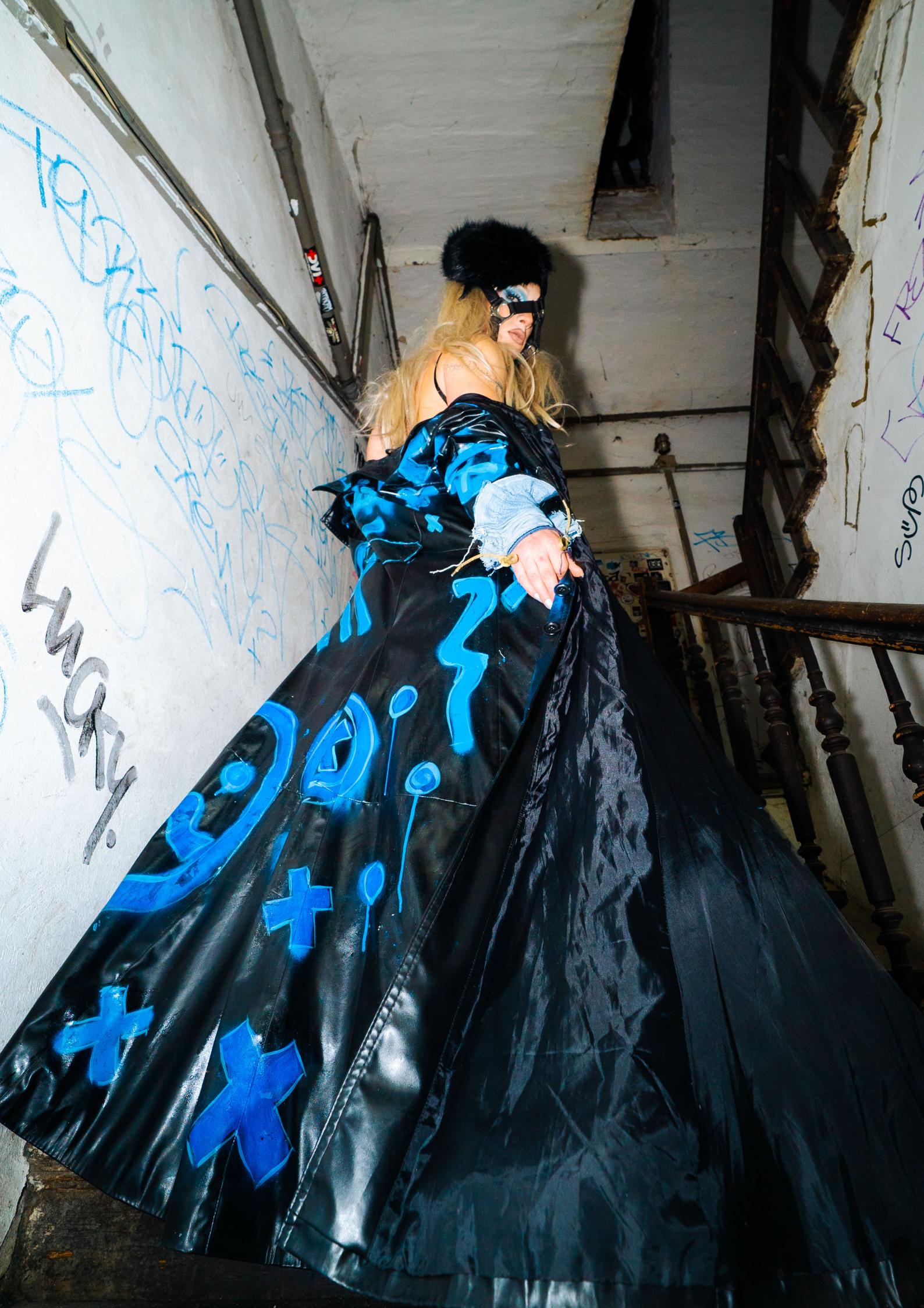
photography
Felipe Bonicatto - @felipebonicatto.ph
model
Juicyca - @juicycaaa
tata christiane
WHERE DECONSTRUCTED COUTURE MEETS CONTEMPORARY STREET COSTUME
From Berlin to Tokyo: Fashion, Friendship, and the Slow Beauty of Japan
Japan has held a very particular place in my life as a designer, not only because it welcomed my work early on, but because it taught me something essential about fashion: that clothing can still be approached with attention, emotion, and depth.
I am based in Berlin, a city that shaped my identity through freedom, experimentation, and a certain productive chaos. Berlin gave me permission to create outside the expected, to build Tata Christiane as a world of emotional upcycling, handcrafted singularity, and contemporary street costume. But Japan gave this work another kind of echo. There, I felt that eccentricity did not need to be explained. It could simply be lived, worn, and intuitively understood.
My relationship with Tokyo began more than fifteen years ago through Wut Store and its visionary buyer Yann Le Goec, whose sharp eye and generosity opened a door for my work in Japan. In 2024, Wut Store and Destination Tokyo celebrated their twentieth anniversary. For that occasion, I created a tribute dress inspired by Peau d’Âne, made from upcycled vintage foulards, as a gesture of friendship, memory, and shared imagination. That story remains dear to me because it speaks not only about fashion, but about loyalty and the poetry
of long creative relationships.
What moves me most about Japan is the care that can still be felt in retail spaces. In much of today’s fashion system, speed has replaced encounter. In Japan, I have often experienced something different: sensitivity to presentation, context, and conversation. The act of trying on a garment can still feel ceremonial. A piece is not only sold, it is introduced.
This resonates deeply with my own practice. I have always believed that fashion should not be reduced to product. A garment carries time within it: the time of sourcing, cutting, assembling, repairing, and imagining. When I work with deadstock, vintage textiles, leftover fabrics, or one off materials, I am not just making sustainable fashion in the technical sense. I am trying to preserve memory while proposing another future.
On 22 March 2026, I returned to Destination Tokyo for a meet the designer event inside Destination Tokyo Wut Store in Lumine Est Shinjuku. Customers came not only to discover the pieces, but to engage with the textures, the upcycled materials, and the stories behind the garments. I also had the honour of meeting the new investors team of H.P. France. What touched me
most was seeing longtime customers arrive wearing Tata Christiane pieces from previous seasons, some even from collections fifteen years old.
For our SS26 collection My French Summer Playlist, each piece comes with a QR code leading to a playlist of French songs from my childhood. In Tokyo, this created a beautiful exchange, as people were curious about the title and the songs behind it. It opened conversations and created another connection to the clothes through memory and music.
Alain Souchon’s Foule Sentimentale, for example, speaks of the human need for ideals and meaning beyond simple consumption.
That experience confirmed something I have felt for years: fashion becomes more sustainable when it becomes relational, rooted in memory, conversation, and attachment.
From Berlin to Tokyo, this is the path I continue to follow: making clothes slowly, with affection and conviction. In Berlin too, spaces such as Rare Berlin, Reuse Superstore at Bikini Berlin, and Pop Upcycling at Schönhauser Allee Arcaden have helped reshape fashion into something more human, rooted in dialogue, discovery, repair, and connection. ◆
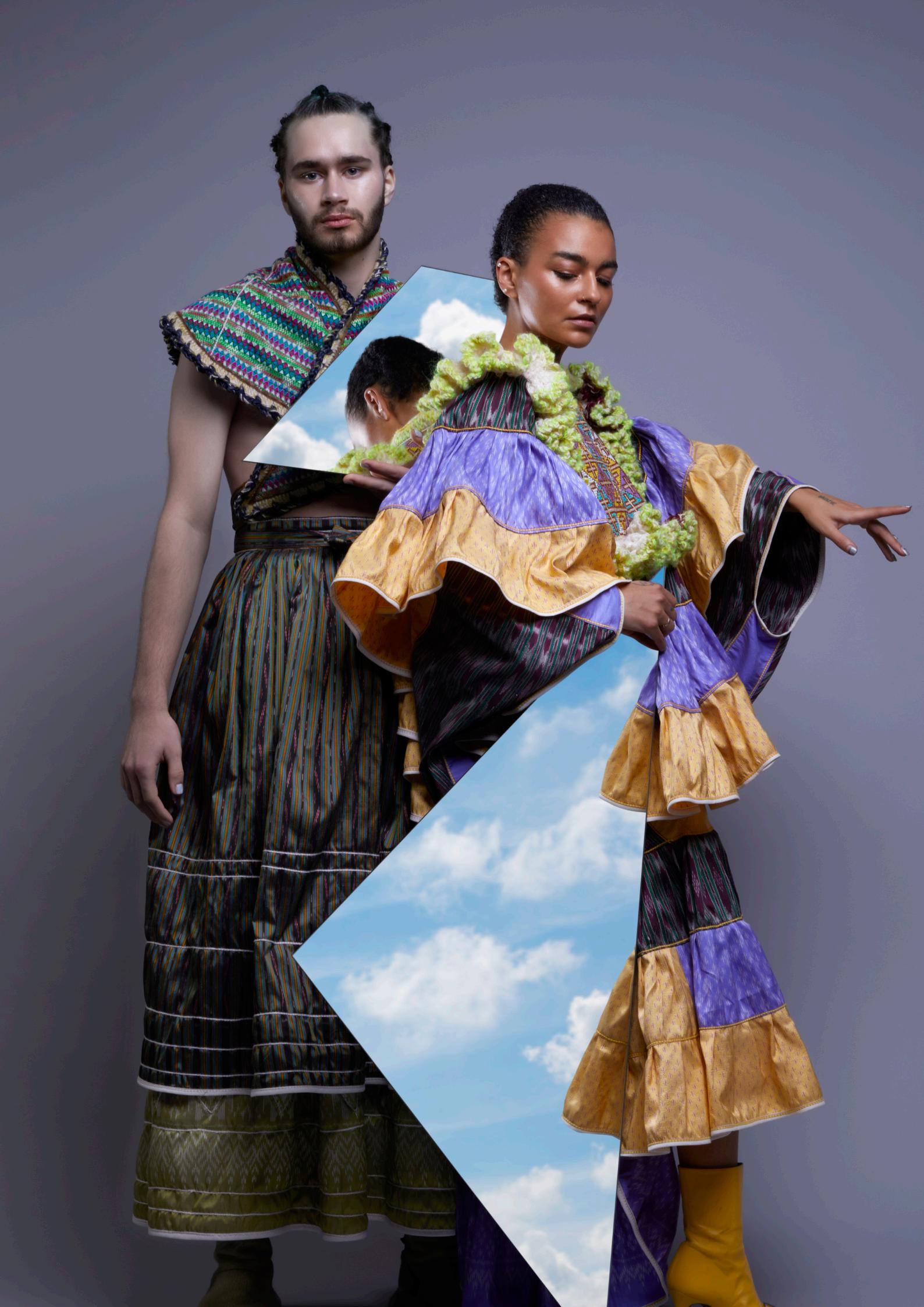
photography
Robert Bartholot
ECOPOLITAN
baga collectif & slow fashion week marseille 2026
Responsible fashion returns to Marseille from June 5 to 13, 2026.
Following a remarkable first edition, Slow Fashion Week Marseille is back from June 5 to 13, 2026, reaffi rming its ambition: to make Marseille the French capital of responsible fashion.
Led by the Baga collective, this week dedicated to sustainable creation brings together designers, artisans, committed brands, and citizens around a shared vision: to imagine a more responsible, inclusive fashion rooted in its local territory.
In response to traditional, elitist Fashion Weeks and their disastrous environmental impact, Slow Fashion Week Marseille off ers an alternative: an inclusive, committed Fashion Week accessible to all audiences.
For nine days, the city of Marseille becomes a space for conscious fashion, where creation, knowledge-sharing, and experimentation come together.
PROGRAM
The week will open with an inaugural evening on Friday, June 5, held in the Jardins des Vestiges of the Marseille History Museum. This evening will mark the official launch of the event, featuring a press conference followed by the presentation of the program, during a cocktail reception open to all.
Among the highlights, Slow Fashion Week will take over Fort Saint-Jean at the Mucem during the opening weekend on June 6 and 7. Activities will include natural dye workshops, talks, a collective artwork proposed by the brand Gomis, and an open-air fashion show by the brand MARJ. These events will create a dialogue between contemporary creation and Marseille’s heritage, in partnership with the Mucem as part of its exhibition “Mossi Traoré, la mode aussi” (May 20 – November 16, 2026).
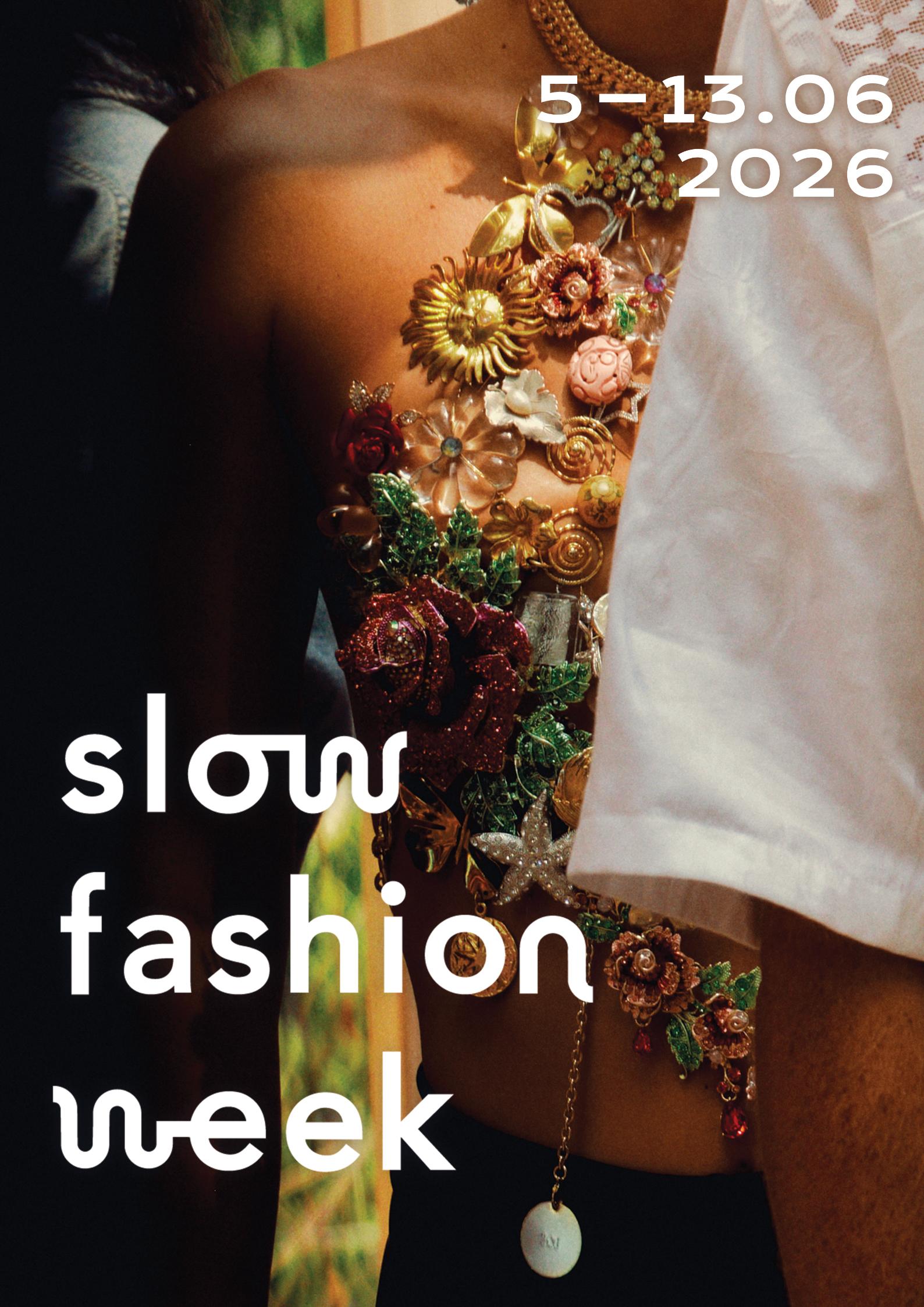
Another unique venue: the Sainte-Marguerite Dromel tram maintenance site of the RTM, which will host a collective fashion show led by the brands Strass Chronique and Kazuki. This is a way of activating usually unseen spaces and creating a dialogue between fashion and urban infrastructure.
The Baga collective is proud to renew its partnership with the City of Marseille. Thanks to this valuable support, the program will extend across several emblematic locations: a performance by Jade Tekhil at Palais Longchamp, a fashion show by Engagés Engagées at the foot of the Porte d’Orient, a runway show by students of Lycée Saint Louis at Stade Jules Baudon, the Salé fashion show at Jardin de la Colline Puget, a performance by the brand Captcha at the Musée des Beaux-Arts de Marseille… and many more events to come.
With a desire to foster openness beyond the regional territory, Baga continues to invite a brand from outside the South Region. After welcoming Maison Cléo from Calais in the previous edition, this year the Normandy-based brand Amour Collective will present its collection on Saturday, June 13. This invitation refl ects shared values of mutual support and ethics at the heart of the collective’s mission.
That same day will also mark the closing of the week, with the runway show of Studio Lausié’s fifth cohort, held in another exceptional Marseille heritage venue, to be revealed soon.
But the program goes beyond fashion shows: it unfolds in an open and diverse way through participatory workshops, panel discussions, popups, exhibitions—such as the immersive reuse exhibition L’unique at La Smala—as well as evening formats like the Frankie Collection opening at Galerie Mesure Club on Thursday, June 11.
More than 40 events to discover, reflect on, admire, and experience sustainable fashion at every stage—from design to final product.
WHAT’S NEW
For this new edition, Slow Fashion Week Marseille continues to grow and strengthens its role as a platform for exchange between the diff erent stakeholders of responsible fashion. Among the highlights, a dedicated buying pathway will be introduced in partnership with the WSN group, a major player in professional fashion trade shows in Paris and worldwide. This initiative will allow buyers from department stores and concept stores to discover
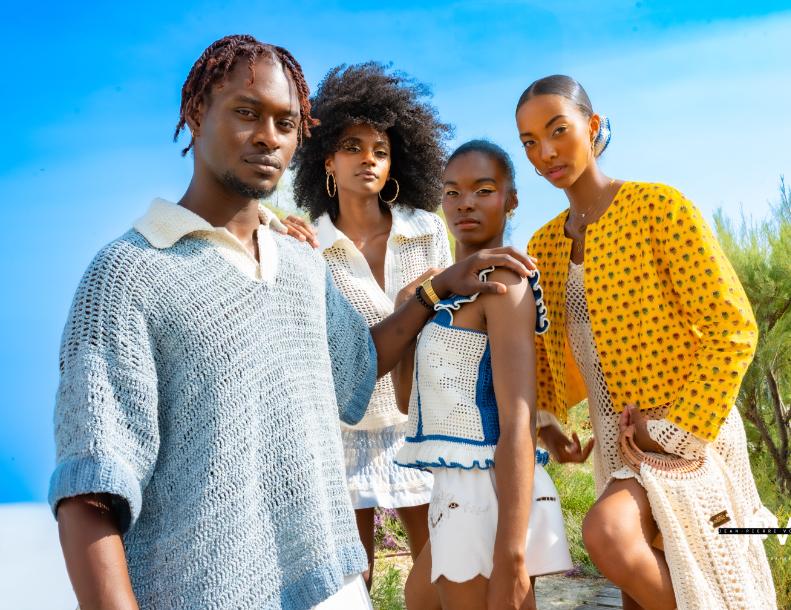
participating brands’ collections exclusively within the events. Its goal is to support brand development by increasing international visibility and facilitating access to new commercial opportunities. This edition aims to contribute to the economic development of both the represented brands and the Marseille region, while further promoting a more responsible and ecological approach to fashion.
A FIRST EDITION THAT MADE AN IMPACT
The first Slow Fashion Week, held in 2025, confirmed the growing interest in more sustainable fashion.
It brought together:
• more than 50 events across the city
• over 80 designers and committed brands
• nearly 10,000 visitors
• more than 150 national and international press mentions
A success that helped position Marseille as a true launchpad for upcycling and sustainable fashion brands seeking to transform the industry.
“MARSEILLE,
CAPITAL OF RESPONSIBLE
FASHION”
Now made up of more than 120 brands, professionals, and artisans in responsible fashion, the Baga collective promotes an engaged, inclusive, and supportive vision of fashion, helping Marseille shine as the French capital of responsible fashion in recent years.
Designed as a unifying moment, Slow Fashion Week aims to establish itself as a key event for sustainable fashion in Europe. ◆
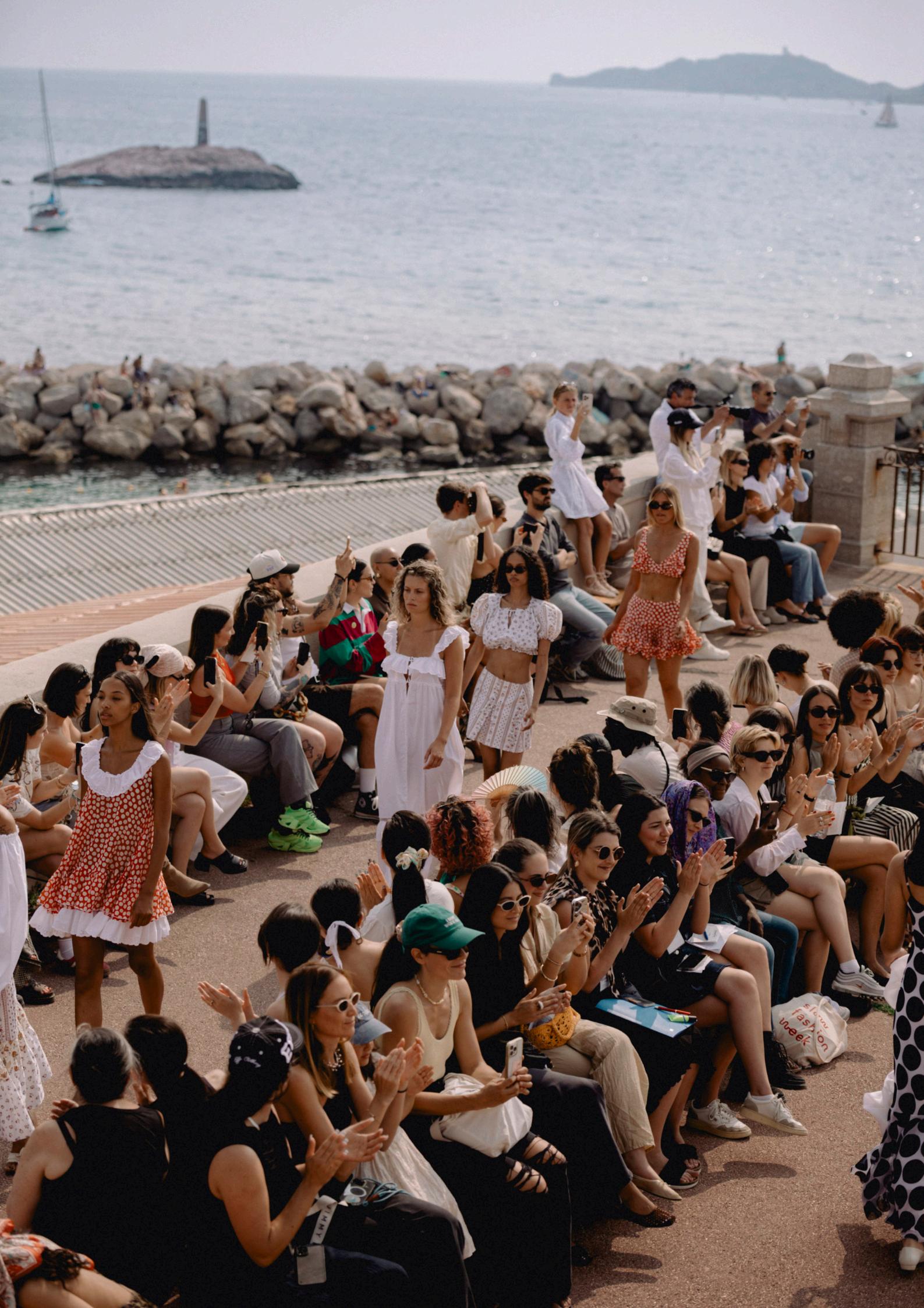
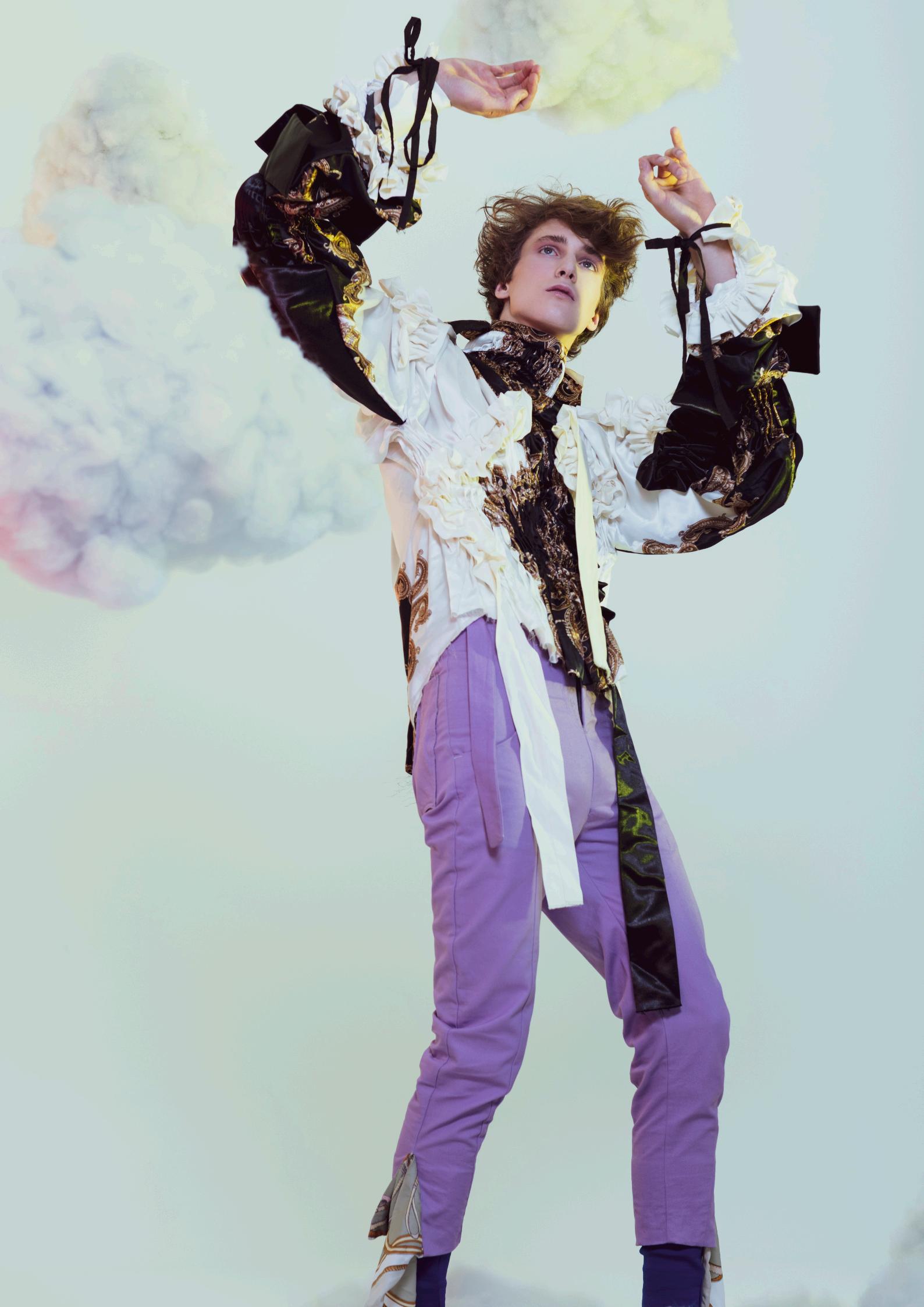
photography Laura Knipsael make-up and hair @emiliederoomakeupartist fashion designer @rittlermaximilian model @carlo_jossa @flagmodels