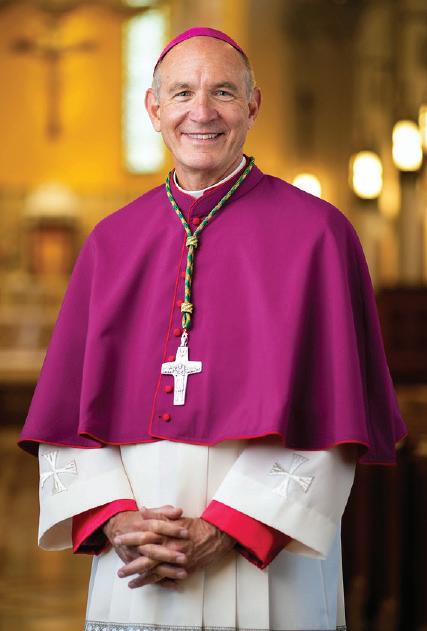
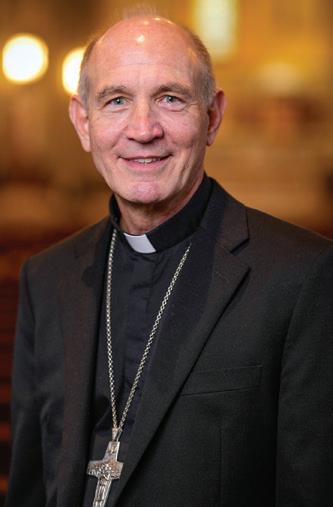
New superintendent of schools named Bishop Beckman appoints Martha Mundine of New Orleans Archdiocese
The East Tennessee Catholic
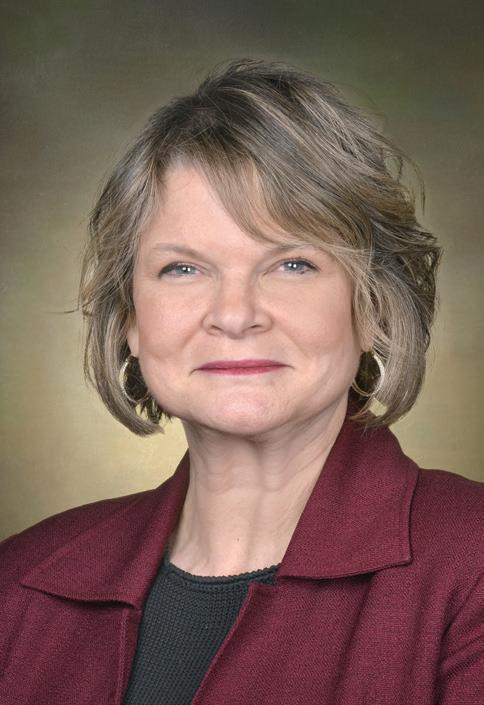
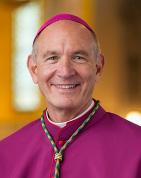
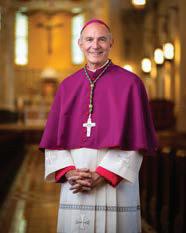
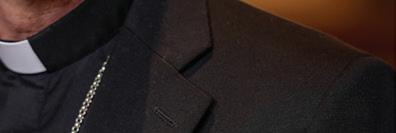
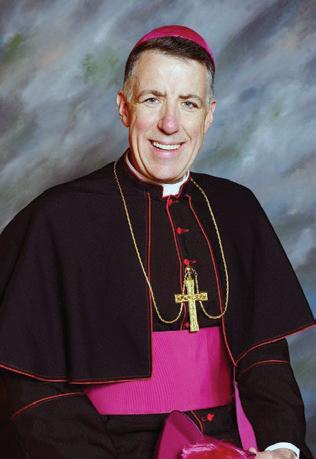
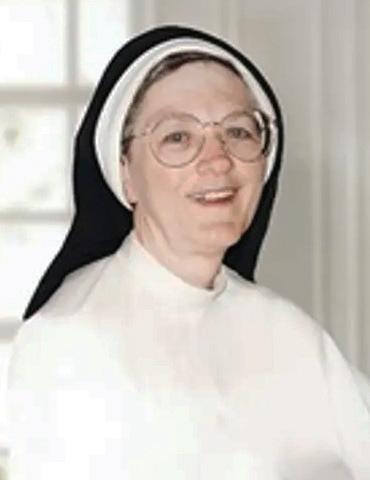
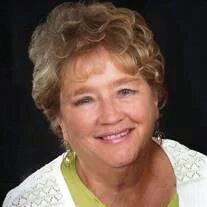
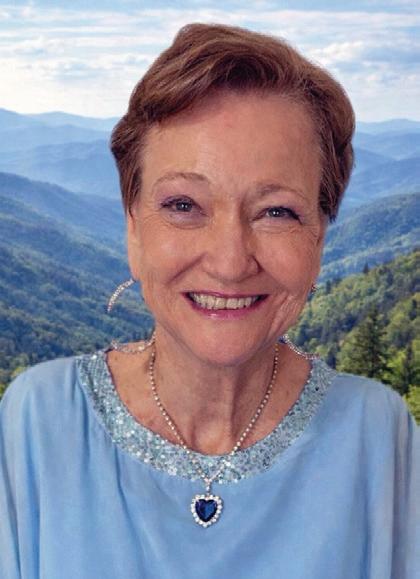
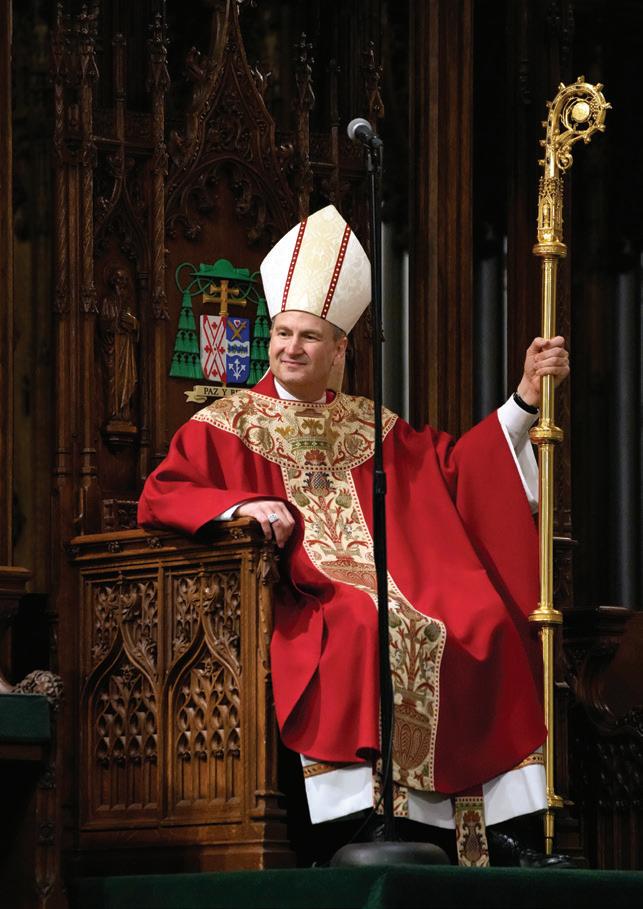
Martha Mundine, who currently serves as the deputy schools superintendent for the Archdiocese of New Orleans, has been named superintendent of Diocese of Knoxville schools.
Bishop Mark Beckman made the announcement on Feb. 11 following a comprehensive, nationwide search to fill the position. Mrs. Mundine’s appointment is effective April 13.
She succeeds longtime diocesan educator George Valadie, who has been serving as interim superintendent since 2024.
“We are blessed to welcome Martha Mundine to this important ministry,” Bishop Beckman said. “Catholic schools are essential to our diocese’s mission of forming young disciples of Christ. Mrs. Mundine’s deep commitment
to advancing the mission of Catholic education, combined with her wealth of experience in classrooms, deep Catholic faith, and proven educational leadership, will strengthen our schools and support our students, families, teachers, and administrators. Additionally, I would like to extend my deep gratitude to our dedicated search committee for its hard work and effort in helping find the best candidate.”
Bishop Beckman said the diocese extends its
heartfelt gratitude to Mr. Valadie for his many years of dedicated service to Catholic education in East Tennessee.
Mrs. Mundine has more than 30 years of experience in Catholic education, from classroom teaching and school leadership to senior executive administration.
She earned a bachelor ’s degree in elementary education from the University of South Alabama in 1992 and received a master's degree in educational leadership from the Mobile, Ala., university in 2002. She is currently working on a doctorate in executive leadership at the University of Holy Cross in New Orleans. She expects to receive her Ph.D. in 2027.
As superintendent, Mrs. Mundine will oversee 10 schools that serve approximately 3,400 students in Chattanooga, Oak Ridge, Farragut, Knoxville, Kingsport, and Johnson City. ■
KCHS parent detained in ICE enforcement Diocese’s immigrant community assessing impact of federal actions
The East Tennessee Catholic
On the morning of Jan. 28, the father of a Knoxville Catholic High School student, whose family has asked to remain anonymous, was detained by Immigration and Customs Enforcement (ICE) agents near The Home Depot in East Knoxville. The father of three was leaving the store in his work van when he was pulled over by several unmarked cars at a nearby gas station. His daughter, who spoke with him via video call at the Knox County jail on Jan. 29, said the immigration agents asked him to show identification. The father produced his driver's license and a current work permit when asked for further documentation. The agents asked if he would step out of the car so they could take his picture. Upon exiting the vehicle, he was taken into custody. The man is working with his immigration attorney to assess next steps. The family was told that not much can be determined until he is relocated and processed at a federal immigration detention facility in Louisiana.
“The officer [at the Knoxville detention center]
Homeland Security Investigations officers executing search warrants on federal immigration violations in Sumner, Texas.
wasn’t able to provide information,” the daughter said. “We won’t be informed of him being moved. We just have to wait for him to call us.”
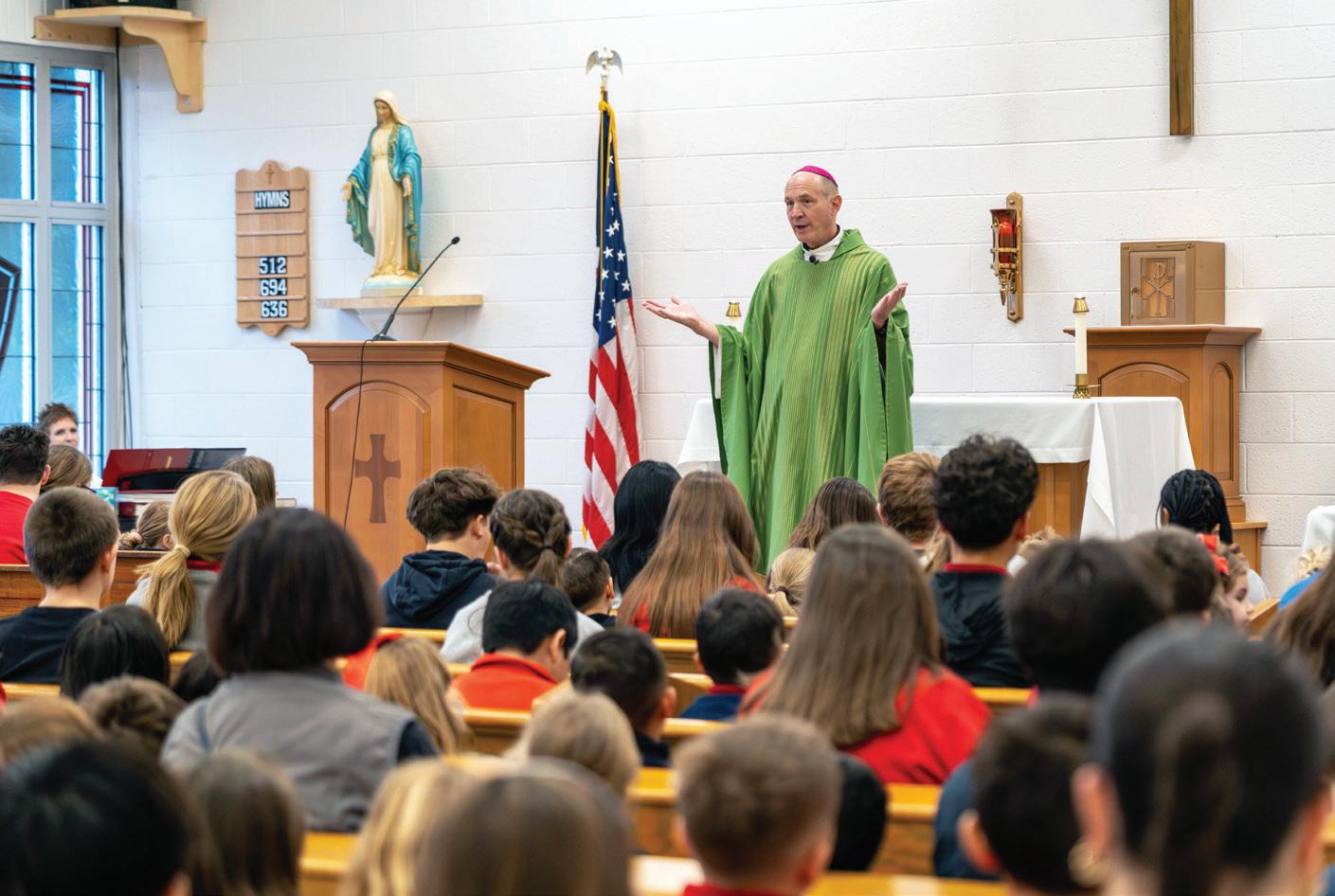
Bishop Beckman visits with students at St. Joseph School
By Bee Goodman
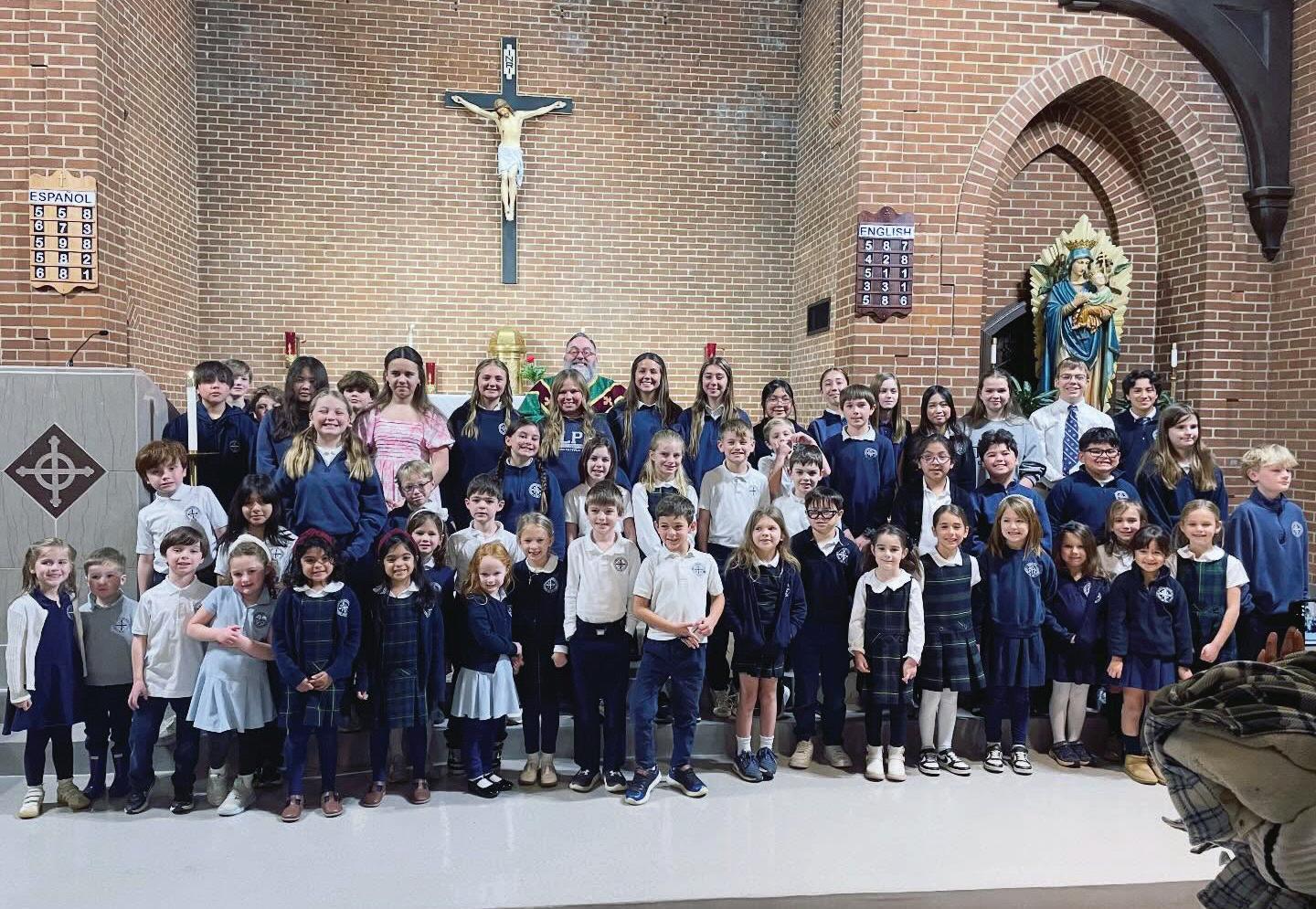
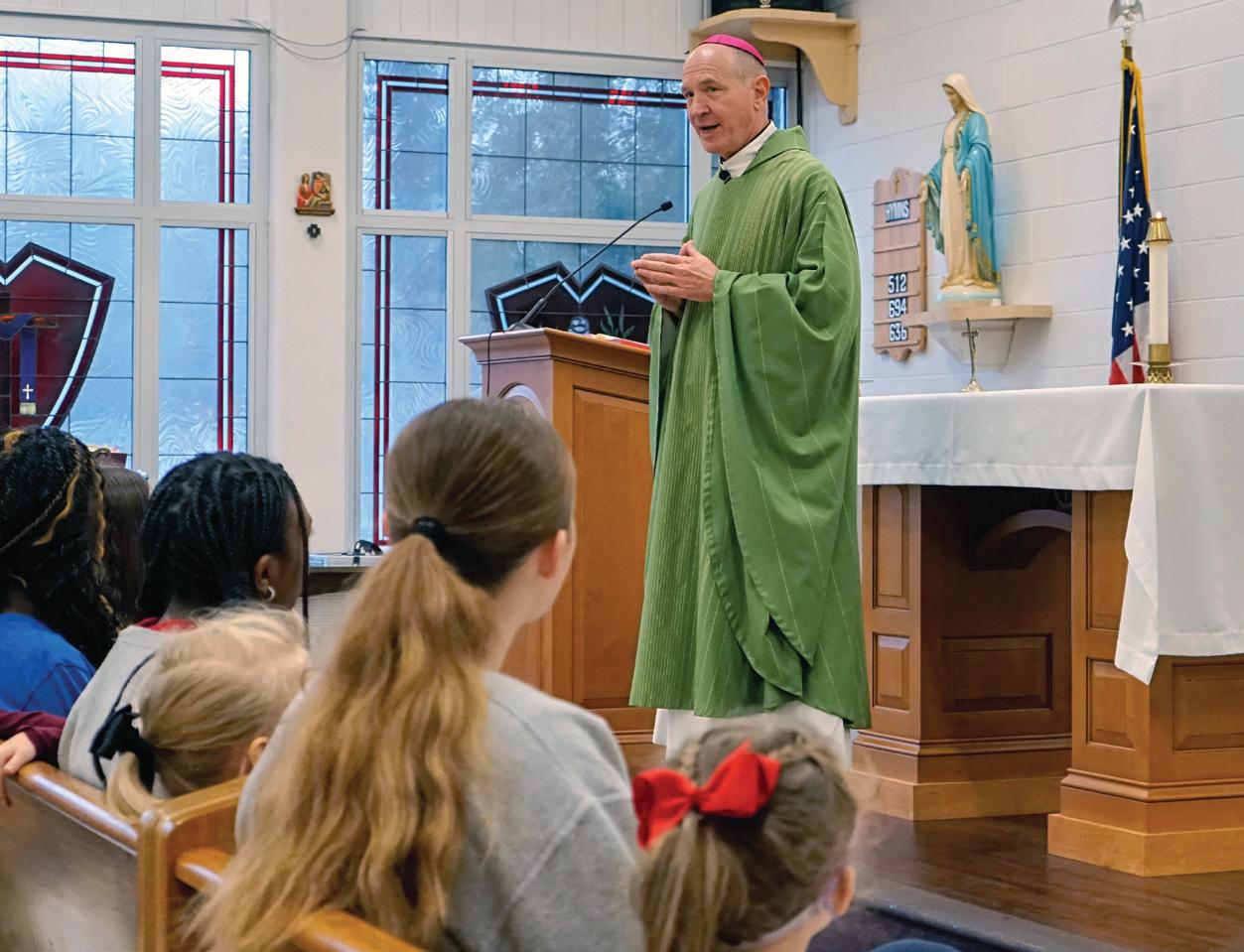
Bishop Mark Beckman had planned to spend Catholic Schools Week traveling throughout the diocese, visiting classrooms and celebrating the educators and students who make Catholic education a defining part of parish life. Winter weather, however, forced changes to many of those plans.
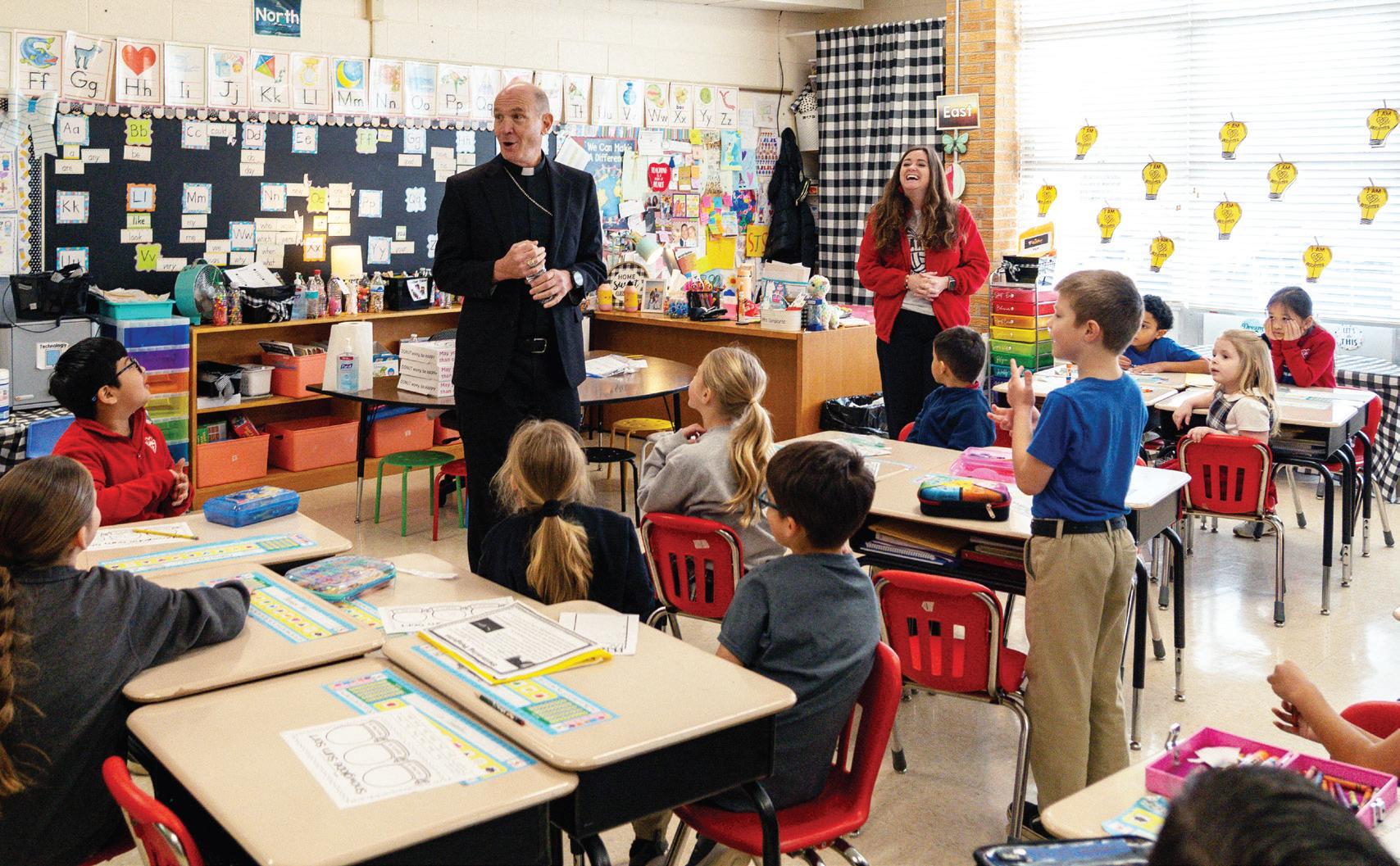
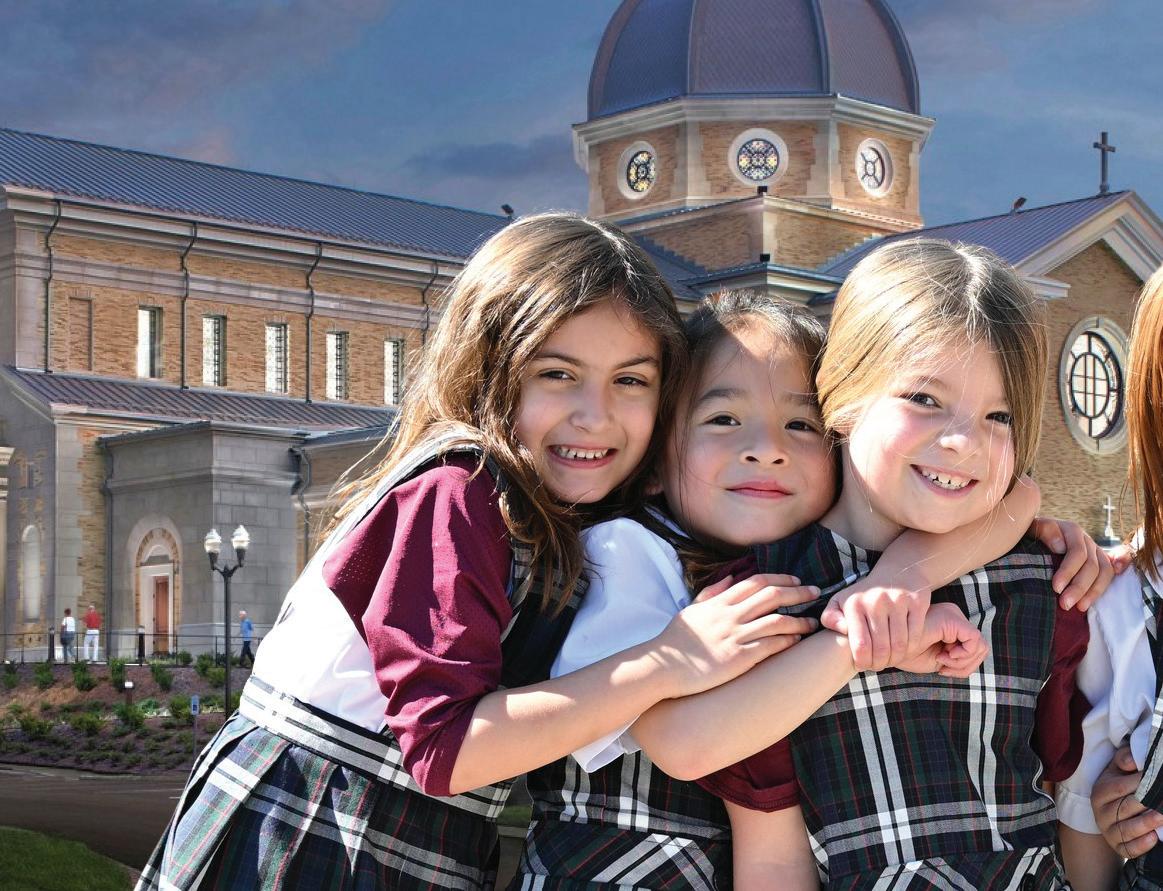
Despite the disruptions, Bishop Beckman concluded the week with a visit to St. Joseph School in Knoxville on Jan. 30, bringing encouragement, prayer, and a sense of joy to the pre-K-through-eighth-grade school community. The visit began with Mass celebrated by Bishop Beckman, attended by students, parents, teachers, and staff. Students took part in the liturgy as readers and musicians, leading
St. Joseph continued on page A16
The daughter said her father is originally from Mexico and has lived in Tennessee since he was 15. The family has lived in the same home in East Tennessee for nearly 20 years.
“I have lived here all my life,” the daughter said. She and her siblings are U.S. citizens. She said her mother is a Deferred Action for Childhood Arrivals (DACA) recipient and her father has been working with immigration lawyers since 2021 to continually update his status as he owns a framing company.
DACA is a U.S. immigration program that provides renewable protection from deportation and legal work authorization for eligible undocumented immigrants who were brought to the country as children.
Parish responds Father Samuel Mungai, GHM, pastor of St. Teresa of Kolkata Parish in Maynardville, has been in contact with the family, but the Knox County jail is not allowing clergy to make ministerial visits to ICE detainees.
Texas enforcement action A file photo shows U.S. Immigration and Customs Enforcement's
Schools Week: Celebrating faith-based education in the Diocese of Knoxville
Head of the class Bishop Mark Beckman visits Jackie Delaney's first-grade class at St. Joseph School on Jan. 30 during Catholic Schools Week. The students and Bishop Beckman were having an engaging dialogue.
Martha Mundine
Making a connection via SacredSpark
Catholic infl uencer ’ s matchmaking social media posts lead to new dating app
By Katie Yoder OSV News
Jerome and Jessie Jumawan studied at the same Catholic university and, years later, attended the same wedding of a mutual friend. But it wasn’t until they joined a matchmaking post on social media that they connected—and discerned marriage.
“Let’s see what happens. Let’s stay open,” Mrs. Jumawan remembered thinking at the time. “The opportunity, through the post and through that prompting, really helped to unfold maybe what was already there underneath—or what God was working on that we didn’t even know.”
Today, the couple is one of 20 marriages to come from Emily Wilson Hussem’s matchmaking posts on social media. Mrs. Hussem, a Catholic speaker and author with more than 150,000 followers between Instagram and Facebook, began matchmaking posts in 2023 after feeling a
Making a sacred connection Daniel and Emily Wilson Hussem are pictured in an undated photo. Mrs. Hussem, a Catholic speaker and author with more than 150,000 followers between Instagram and Facebook, began matchmaking posts in 2023 after feeling a "nudge from the Lord," which ultimately led to the Catholic dating app SacredSpark that she runs with her husband.
“nudge from the Lord.”
The posts, which she once called a “silly idea,” went viral.
their
and
for
than three-quarters
a
year
of
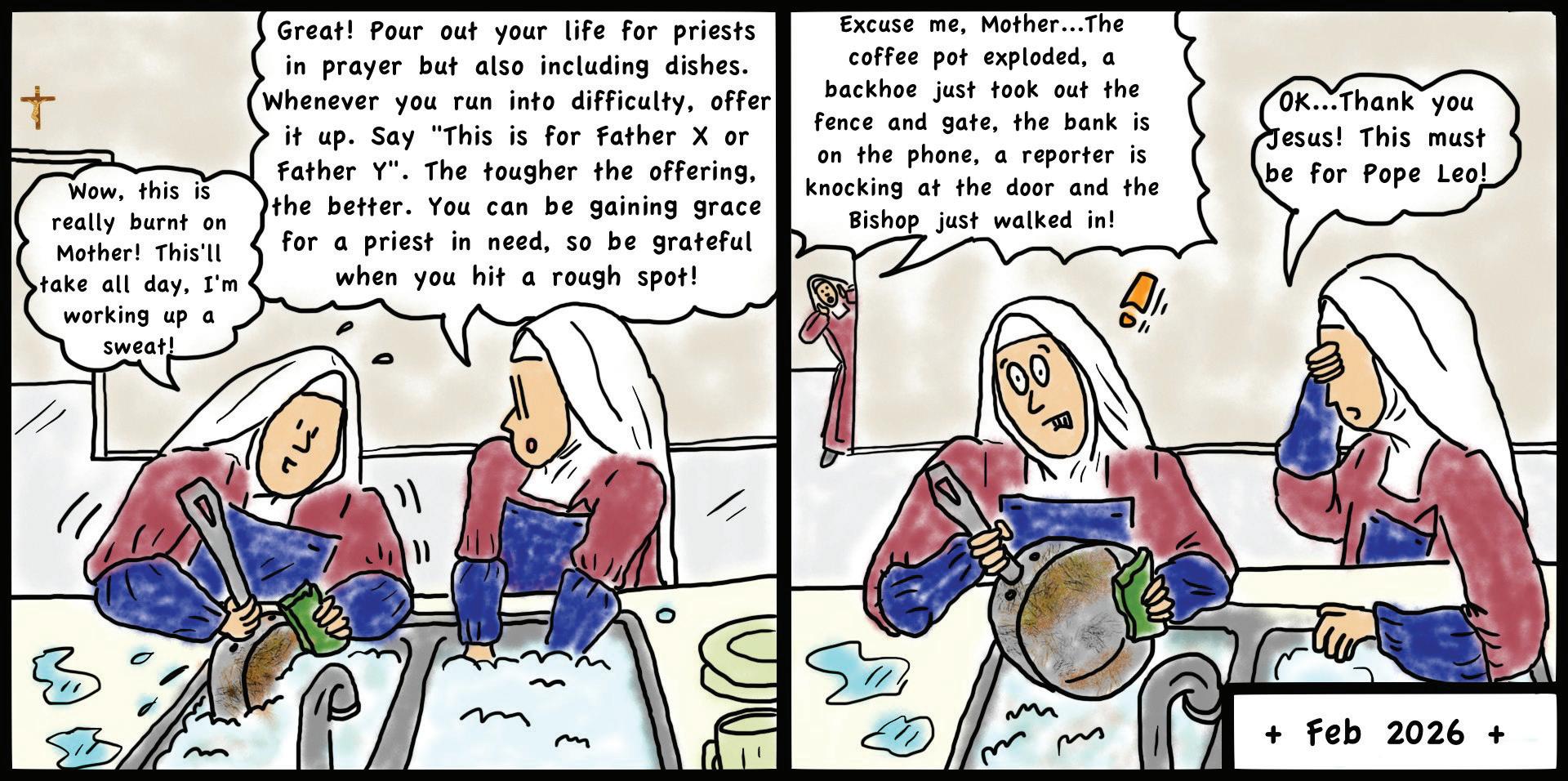
weekly cartoons and short reflections and news from the Handmaids of the Precious Blood, visit their website, nunsforpriests.org, and sign up for the FIAT newsletter.
A February prayer intention for children with incurable diseases
“Let us pray that children suffering from incurable diseases, and their families, receive the necessary medical care and support, never losing strength and hope.”
Pope Leo XIV
“I made a post on my Instagram that said, ‘This is a matchmaking post,’” she said of her first one. “If
you’re single and you want to comment about yourself, what you’re looking for, go ahead. If you have a brother or a sister or a friend that you want to write a comment for—and they’re looking for someone great— you go ahead and do that, too.”
Now, Mrs. Hussem and her husband, Daniel, are introducing something bigger: a new Catholic dating and matchmaking app called SacredSpark that is becoming available in the United States one diocese at a time. Later this year, they plan for the app to go international.
The husband-and-wife team spoke with OSV News about SacredSpark and why it is different from other dating apps—including Catholic dating apps—ahead of National Marriage Week (Feb. 7-14), World Marriage Day (Feb. 8), and Valentine’s Day (Feb. 14). After launching in October, their app already boasts tens of thousands of users. Its mission promises to “help build up the Church, one relation-
How to sign up and qualify for Diocese of Knoxville’s safe-environment program
The Diocese of Knoxville has implemented the CMG Connect platform to administer the Safe Environment Program, which replaces the former Safe Environment Program (VIRTUS “Protecting God’s Children”).
CMG Connect is a web-based platform that will assist in ensuring that all employees and volunteers who are in a position of trust with children and vulnerable adults within Diocese of Knoxville schools and parishes are trained to recognize behavior patterns of potential abusers and provide pro-active measures for preventing abuse in any context.
“Safe Haven-It’s Up to You” is a three-part video that provides vignettes of real-life situations to educate the viewer about methods of grooming, desensitization, bullying, and neglect, all of which can lead to abuse.
Each part of the video is immediately followed by a brief questionnaire to further develop understanding.
Education is a key
element of the Safe Environment Program.
All clergy, employees, contracted school personnel, volunteers, members of groups and organizations over the age of 18 who work, volunteer, or participate in any capacity are required to complete the diocesan Safe Environment training and a criminal-background check before they can begin employment, volunteer, or participate with ministries, groups, and organizations affiliated with the Diocese of Knoxville.
In addition, the mandatory renewal training must be completed every five years and a new background check submitted before the five-year expiration of prior training The Diocese of Knoxville Safe Environment compliance training and renewal training is a condition of employment and for volunteer ministry in the Diocese of Knoxville.
The CMG Connect platform contains all three elements of the Diocese of Knoxville’s Safe Environment Program: n Annual review of the Diocese of Knoxville’s Policy and Procedures Relating to Sexual Misconduct; n CMG Connect Safe Haven training program to be completed every five years; n Criminal background check to be completed every five years.
In compliance with the Diocese of Knoxville’s Safe Environment Program, all affiliates require that volunteers and employees complete the requirements prior to working and/or volunteering in a parish, school, or through Catholic Charities of East Tennessee and/ or St. Mary’s Legacy Clinic. Go to https:// dioknox.org/safeenvironment on the Diocese of Knoxville website for more information ■
The Handmaids of the Precious Blood this year celebrate the 79th
since
founding in 1947; more
of
century
prayer
sacrifice
priests. To receive
MA
‘ Does might make right? ’
‘ Might’ must be exercised ‘ rightly’ if it is not to be destructive
y world history teacher in high school introduced me to the fascinating story of human history and was able to convey remarkable insights at times with key phrases. One of them I remember best was the simple statement, “Might makes right!”
He was quoting a centuries-old aphorism that revealed on one level a crass realism of the “way things are” and so often have been in the history of the world.
I was reminded of this aphorism recently when I heard a quote by Stephen Miller, a key adviser to the president, when he stated, “We live in a world, in the real world… that is governed by strength, that is governed by force, that is governed by power. These are the iron laws of the world since the beginning of time.”
During the Second Vatican Council, the Fathers of the Church invited all of us to reflect on the signs of the times and interpret them “in the light of the Gospel” (Gaudium et Spes, n. 4).
The signs of the times these days reveal a world when arguments are increasingly being made about the use of force in relationships between nations (weaker nations and peoples are subject to the might of those with greater power) without reference to “international law,” the right of determination of peoples,
and an ordering of the world constrained by any principles beyond power and expediency.
These justifications are also being used in actions being taken around the globe these days. Examples of the use of force in our nation highlighted recently in the media reveal some disturbing patterns of a lack of attention to due process, legal boundaries, and respect for the life and dignity of the human person.
Does might indeed make right as my history teacher so often said?
As we examine these signs of the times in the light of the Gospel, from the vantage point of Christian revelation, we must begin with an awareness of the truth of such
statements.
The use of force and power without any regard for moral boundaries is indeed a clear sign of our fallen human nature, the grave consequence of sin. It is not the way God created the human person. Originally created to live in harmony with our Creator, with each other, and with respect for the world God has entrusted to our care, the emergence of violence is deeply portrayed in the murder of Abel by his brother Cain, a devastation that will spread in the unfolding narrative of Genesis.
St. Thomas Aquinas noted that our universe is governed by God’s eternal law, something we are able
to participate in with the use of our human reason, part of the very natural law that points to the correct way we are meant to live together in this world.
That we are created by God with an inherent human dignity that demands respect for human life and the necessary rights of the person flowing from that dignity must govern the way societies operate and the way nations interact with each other
Failure to adhere to these universal principles of the natural law always results in destructive consequences that undermine the good ordering of human society and leave devastation in their wake.
The unique contribution of Christianity makes it clear that Jesus Christ Himself, in taking on our own humanity and dying and rising from the dead, has given us the grace and power, through the gift of the Holy Spirit, to transform the use of our human power. “Might” must be exercised “rightly” if it is not to be destructive.
The laws that govern nations, the emergence of international law, and the awareness of the grave importance of universal human rights articulated so well in the 20th century must always be governed by our rational participation in God’s eternal law to be worthy of humanity. In our world today, it is more
Bishop continued on page A22
‘Drawing new maps of hope’ for education
Pope Leo: Changing world calls for new commitment to Catholic schools
By Cindy Wooden Catholic News Service
Catholic education, which has changed over the centuries, must continue to evolve to help young people face the challenges not only of technology but of confusion about the meaning and purpose of life, Pope Leo XIV said.
“I call upon all educational institutions to inaugurate a new season that speaks to the hearts of the younger generations, reuniting knowledge and meaning, competence and responsibility, faith and life,” he wrote in an apostolic letter.
Titled Disegnare Nuove Mappe Di Speranza (Drawing New Maps of Hope), the letter was issued only in Italian on Oct. 28. It marked the 60th anniversary of the Second Vatican Council’s Declaration on Catholic Education
In the letter, Pope Leo formally declared St. John Henry Newman “patron of the Church’s educational mission alongside St. Thomas Aquinas.”
The pope formally proclaimed St. Newman a “doctor of the Church” on Nov. 1 in recognition of his contribution to “the renewal of theology and to the understanding of the development of Christian doctrine.” He was born in London on Feb. 21, 1801, was ordained an Anglican priest, became Catholic in 1845, was made a cardinal in 1879 by Pope Leo XIII, and died in 1890. Even in the face of the digital revolution and the advent of artificial intelligence, Pope Leo said, Catholic schools and universities show “a surprising resilience.”
When they are “guided by the word of Christ, they do not retreat but press forward; they do not raise walls but build bridges. They respond creatively, opening new possibilities for the transmission of knowledge and meaning,” he wrote.
Pope Leo asked Catholic educators and educational institutions to focus on “three priorities”:
n “The first regards the interior life: Young people seek depth; they need spaces of silence, discernment, and dialogue with their consciences and with God.
n “The second concerns a humane digital culture: We must educate in the wise use of technology and AI, placing the person before the algorithm, and harmonizing technical, emotional, social, spiritual, and ecological forms of intelligence.
n “The third concerns peace unarmed and disarming: Let us educate in nonviolent language, reconciliation, and bridge-building rather than wall-building; may ‘Blessed are the peacemakers’ (Matthew 5:9) become both
Commentary
the method and the content of learning.”
At the same time, the pope said, it is obvious that Catholic schools cannot ignore technology or avoid it, but they must be discerning about digital platforms, data protection, and fair access for all students.
“In any case,” he said, “no algorithm can replace what makes education truly human: poetry, irony, love, art, imagination, the joy of discovery,” and even learning from mistakes “as an opportunity for growth.”
In the letter, the pope briefly traced the history of Catholic education from the “desert fathers” teaching with parables, to the monastic study and preservation of classic texts and scholasticism’s highly structured and interdisciplinary curriculum.
But he also noted the huge array of Catholic saints throughout the ages who insisted that learning to read and write and add and subtract were matters of human dignity and so dedicated their lives and their religious orders to educating women and girls, the poor, migrants and refugees, and others on the margins of society.
“Wherever access to education remains a privilege,” Pope Leo wrote, “the Church must push open doors and invent new pathways because to ‘lose the poor’ is to lose the very meaning of the school.”
“To educate is an act of hope,” he said. Catholic schools and universities, the pope
wrote, must be “places where questions are not silenced and doubt is not banned but accompanied. The ‘heart speaks to heart,’” he said, quoting St. Newman’s motto as a cardinal.
Parents, as the Second Vatican Council affirmed, are the first and primary educators of their children, the pope said, but “Christian education is a choral work: no one educates alone.”
Those who teach in Catholic institutions, he said, “are called to a responsibility that goes beyond the employment contract: their witness is worth as much as their lesson.”
And while the human person is at the center of all educational initiatives, the goal is to help that person learn to see beyond himself or herself and “discover the meaning of life, inalienable dignity, and responsibility toward others,” he wrote.
“Education is not merely the transmission of content but an apprenticeship in virtue,” Pope Leo said. “It forms citizens capable of serving and believers capable of bearing witness men and women who are freer, not more isolated.”
The pope also called on Catholic schools and universities to be models of social and “environmental justice,” promoting simplicity and sustainable lifestyles and helping students recognize their responsibility for caring for the earth.
“Every small gesture avoiding waste, making responsible choices, defending the common good is an act of cultural and moral literacy,” he wrote. ■
Word from the Bishop by Bishop Mark Beckman
OSV NEWS PHOTO/TIM EVANS, REUTERS
CATHOLIC NEWS SERVICE PHOTO/LOLA GOMEZ
Teaching moments Pope Leo XIV greets people from the popemobile as he rides around St. Peter’s Square after celebrating Mass at the Vatican on Nov. 1. The liturgy concluded the Jubilee of the World of Education and included the formal declaration of St. John Henry Newman as a doctor of the Church.
Preparing the way of the Lord
Lent 2026 is here, and Catholic faithful around East Tennessee are readying for Holy Week
The East Tennessee Catholic and OSV News
It has been just over a month since the feasts of Epiphany and Baptism of the Lord marked the end of Christmas.
And now in 2026, Lent is upon us.
Ash Wednesday on Feb. 18 begins the 40-plus days of Lent leading to Easter Vigil on Saturday, April 4, and Easter Sunday on April 5.
Priests around the Diocese of Knoxville greeted long lines of youth, young adults, adults, and senior citizens as they distributed crosses of ash of burned palm fronds from Easter 2025 on foreheads during Masses on Feb. 18.
While Ash Wednesday is not a holy day of obligation, Ash Wednesday Masses are among the most well-attended celebrations of the liturgical year.
Just as anyone is welcome to receive a blessing in the Catholic Church, anyone can receive ashes on Ash Wednesday.
Lent is a time of spiritual preparation, self-examination, and penance leading up to the celebration of Easter. Catholic faithful use this time to imitate Jesus’ 40 days of fasting in the desert.
It is an opportunity for the faithful to deepen their relationship with God, seek forgiveness for sins, and grow in spiritual discipline. Catholics focus on selfdenial, prayerful reflection, and charitable acts as a means of drawing closer to God.
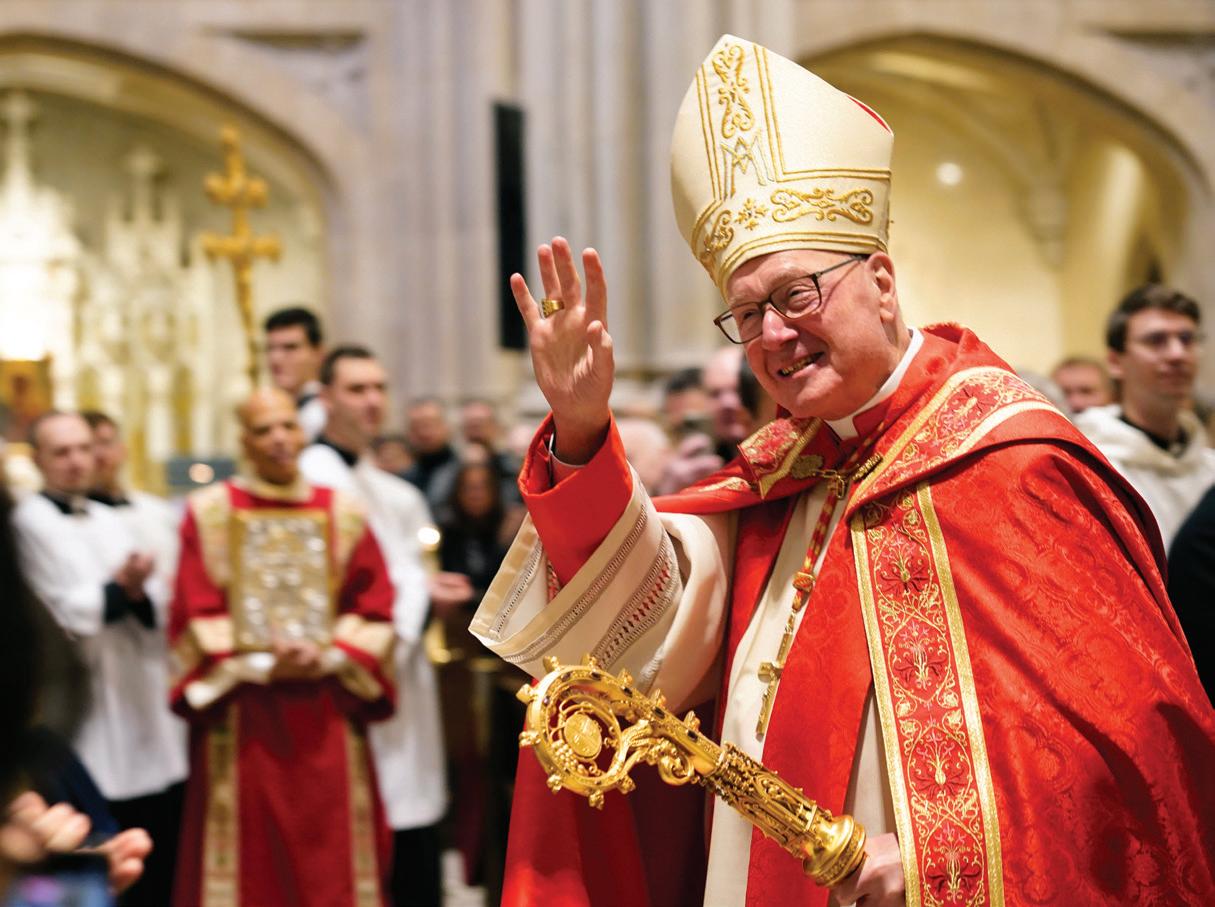
Bishop Mark Beckman is leading the diocese through Lent into Holy Week and the Triduum. He will celebrate the annual Chrism Mass at 4 p.m. on March 31 at the Cathedral of the Most Sacred Heart of Jesus, a Mass where all
the priests of the diocese gather to renew their priestly vows and the bishop consecrates the sacred chrism for use in each parish over the next year for baptisms, confirmations, and holy orders.
The bishop will then celebrate
Easter Vigil Mass at the Cathedral of the Most Sacred Heart of Jesus, one of the most sacred and solemn Masses celebrated in the Catholic Church.
Easter Vigil Masses also will be celebrated in each parish, where
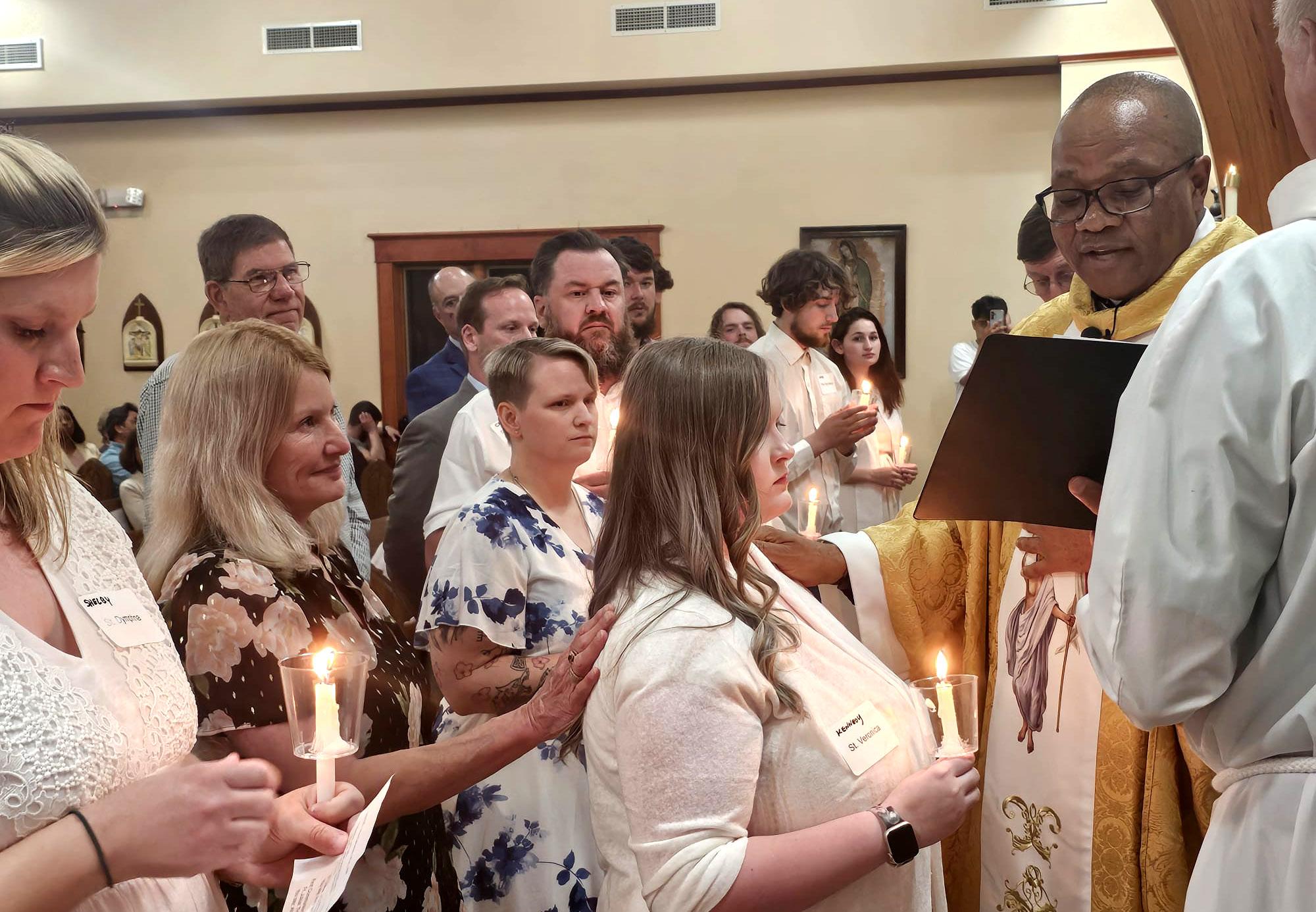
diocesan priests will welcome the Catholic Church ’s newest members catechumens and candidates who joined through the Order of Christian Initiation of Adults (formerly RCIA).
Important dates, times, and locations during Lent in the Diocese of Knoxville include:
n Ash Wednesday, Feb. 18 at each church, diocesan school, and university Catholic student center. See location for Mass times.
n First Sunday of Lent, Feb. 22.
n Palm Sunday, March 29.
n Holy Week, March 29-April 5.
n Chrism Mass, 4 p.m. on Tuesday, March 31, at the Cathedral of the Most Sacred Heart of Jesus, 711 S. Northshore Drive, Knoxville.
n Holy Thursday, April 2.
n Good Friday, April 3.
n Easter Vigil, dusk on Saturday, April 4.
n Easter Sunday, April 5.
As part of the Lenten observances are weekly Stations of the Cross at local churches.
Stations of the Cross is a 14-step Catholic devotion commemorating Jesus Christ’s Passion and death, typically prayed during Lent and on Good Friday. During the Stations, the faithful, led by a priest or deacon, meditate on scenes from Jesus’ condemnation to His burial and join in prayer.
The Living Stations of the Cross is reenacted at a number of parishes in the diocese. During Live Stations, parishioners act out Jesus’ Passion, from condemnation to crucifixion and resurrection.
And then there are the fish fries. Fish fries (and soup suppers) are a staple at many churches around the diocese and are enjoyed by parishioners each Friday during Lent. The fish fries are coordinated by Knights of Columbus, Councils of Lent continued on page A19
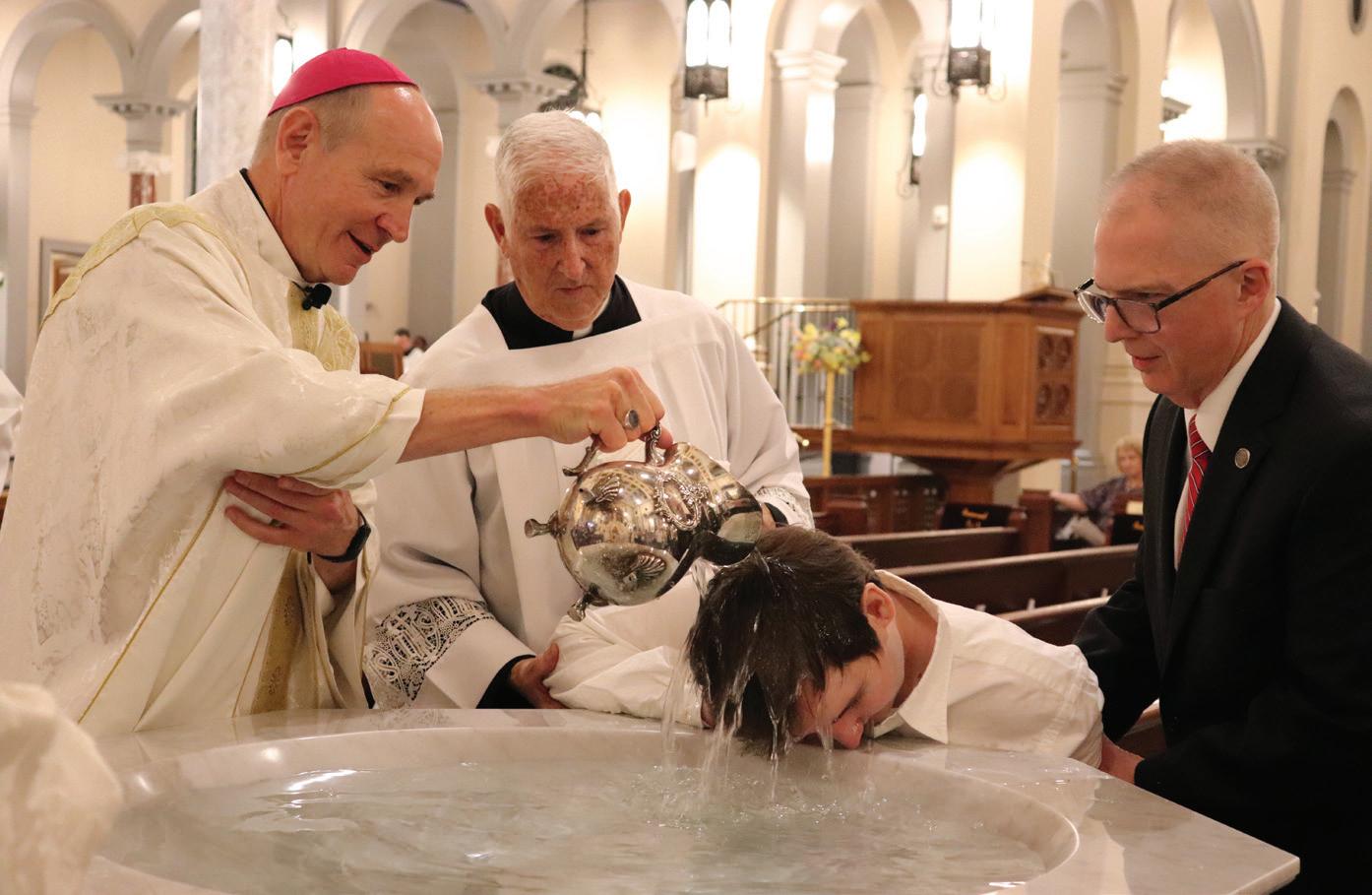
Lent begins Above: Bishop Mark Beckman baptizes a young man during the Easter Vigil at the Cathedral of the Most Sacred Heart of Jesus on April 19. Below: Father Julius Abuh, pastor of St. Joseph the Worker Parish in Madisonville, welcomes catechumens and candidates into the Catholic Church during the Easter Vigil Mass in 2025.
Through the eyes of a child
SEEK26 conference was a new kind of fulfilling experience for FOCUS parents
By Claire Collins
Ten years ago, I found myself in the back of a crowded conference room full of thousands of college students. I was a first-year missionary with the Fellowship of Catholic University Students and had just witnessed five days of lifechanging talks, Masses, prayers, and encounters with God all around me.
As I stood listening to the final keynote address of the conference, I looked around at the other people who populated the back of the room, a place I had never found myself at a FOCUS conference before.
What I observed were many babies and toddlers being chased and entertained by mom and dad as they tried to squeeze in as much of these final talks as their littles would let them.
I dreamed that maybe one day I could be one of those moms at SEEK with my little people, showing them the great joy and hope of the Church and giving them a small taste of just how big and beautiful it was, as I had so many times had the privilege to see and experience.
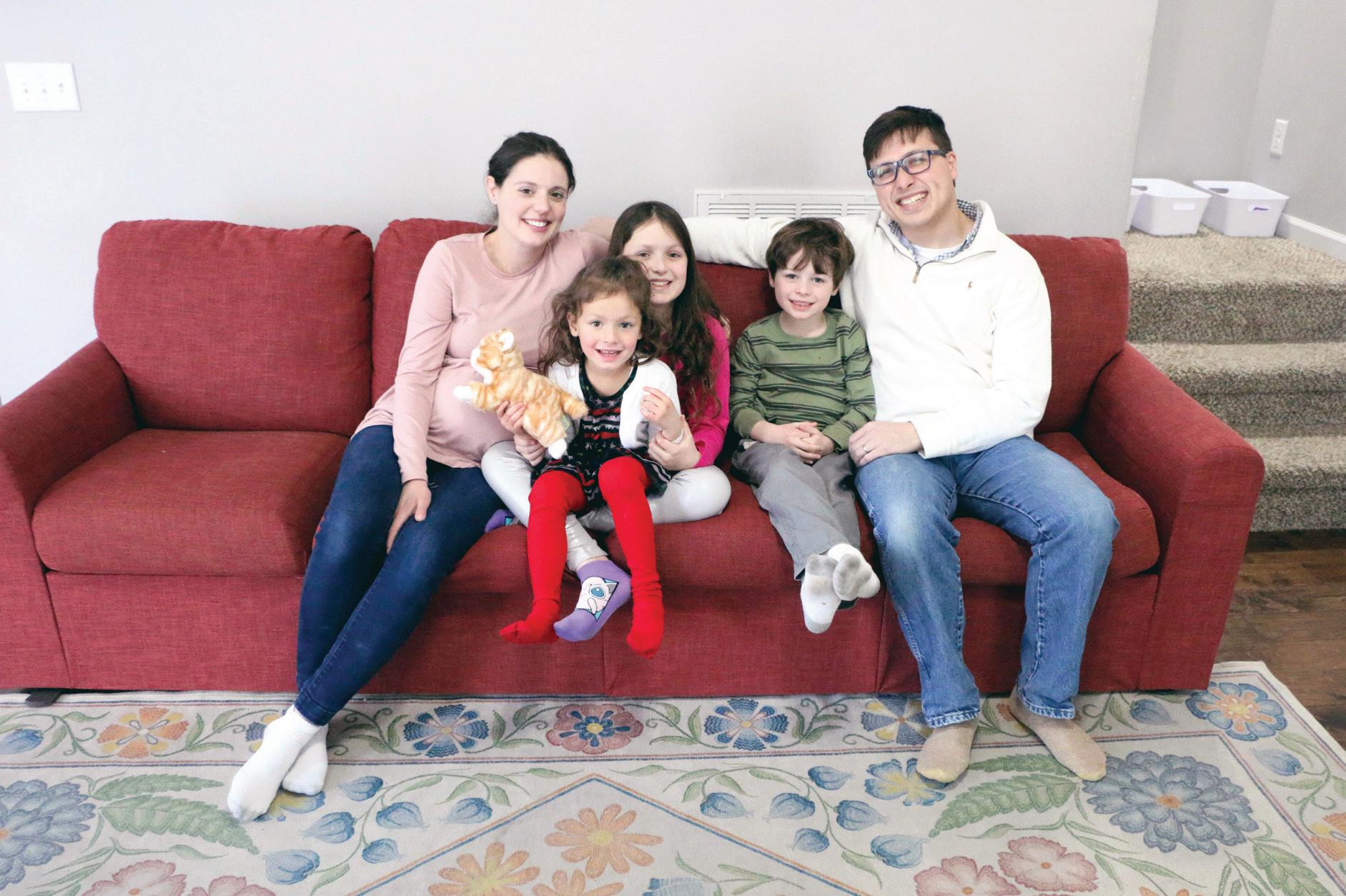
Last month, that dream was fulfilled as my husband and I made a pilgrimage to the FOCUS SEEK conference in Columbus, Ohio the first time with our three children in tow.
Though my conference experience was different than the eight other FOCUS conferences I’ve had the privilege to attend (chasing three kids around while pregnant in the midst of 16,000 people is no easy feat), I left with an abundance of graces received as I saw our Church not just through my own eyes, but also through the eyes of my children.
It might have been the joy at watching the hundreds of priests and multiple bishops, all so different from one another and yet together in their call to serve the Church, enter and leave Mass in a procession that took at least 15 minutes. It might have been the wonder as my children stood in the hall waving to these priests as they exited Mass to their vesting rooms, often taking the priests by pleasant surprise and catching them in cheerful grins and eagerness to return the simple greeting. It might have been the Dominican Sister who played ball with my children in the hallways after they lost interest in the extra-long liturgies. It might have been Archbishop John Hartmayer of Atlanta, who
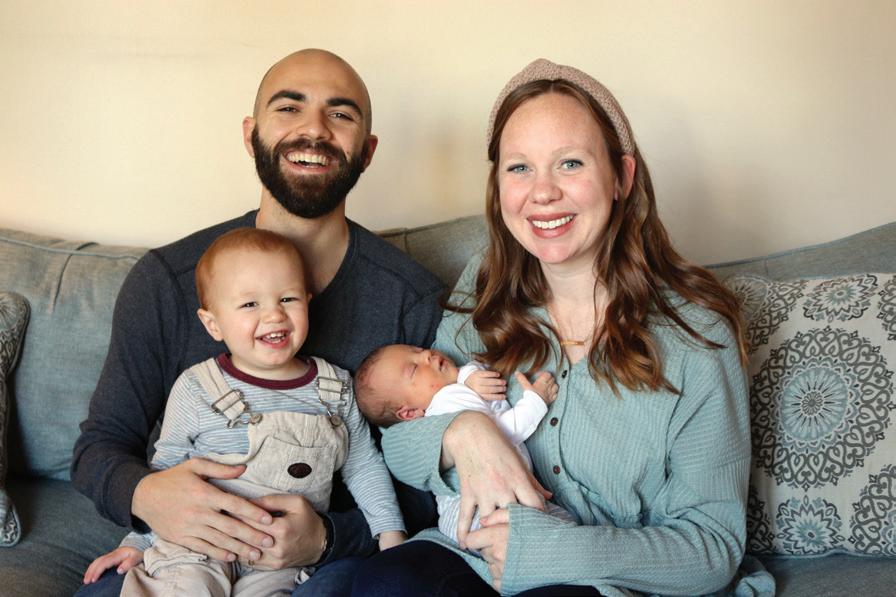
Claire Collins is a freelance writer whose columns have appeared in Radiant Magazine. Claire and her husband, Andrew, live in Chattanooga with their sons, Joe and Frank, and daughter, Eloise.
joyfully let my son Frank try on his “pink hat.”
Maybe it was the old friends we encountered and the joy at recounting who they were and how we knew them, the stories we shared as we caught up on lives lived “since our time in FOCUS,” and the showing-off of these new little lives that had entered the world since we last saw one another.
Adoration for all ages A monstrance is carried during adoration on Jan. 3 at the SEEK26 conference in Denver. Young Catholics and attendees of all ages were invited to embrace the conference's theme inspired by St. Pier Giorgio Frassati: "To the Heights," The SEEK26 conference was held in Denver, Fort Worth, and Columbus, Ohio, Jan. 1-5
As we watched an old priest friend process out of Mass and our eyes caught one another’s, a joyful smile was exchanged followed by a “these are my kids!” That phrase was uttered many times during those five days.
Maybe it was the time spent walking around Mission Way, the kids getting candy and stickers (and being given gifts of rosaries and miraculous medals) from the different booths. Maybe it was encountering the 75 different religious orders and an even greater number of apostolates represented, all so different from one another, all serving the same Church.
There were orders and ministries that serve the poor, that fight for every human being’s right to life, that educate children and adults, that make beautiful art, that craft beautiful home goods and clothing, that serve families and promote the domestic Church, that run summer camps, that lead mission trips, that support women’s fertility, and so much more.
Maybe it was seeing my kids look at Jesus up close in the monstrance during children’s adoration, singing songs of praise and answering theological questions about Jesus with childlike simplicity that cut to the heart. Maybe it was their wonder as the monstrance was brought close to them, or the freedom one little girl found as she danced before the monstrance, right in front of everyone, unashamed as she basked in her father’s glorious love of her.
I didn’t get to go to as many talks, didn’t have as much quiet reflection in prayer, didn’t spend time in long confession lines or late nights processing graces with my friends.
But I saw the Church anew, through the eyes of little children. I saw a freedom from my self-righteous preferences and judgments, from the latest news headlines about what someone in the Church was or wasn’t saying, from debates about my role in the Church, and I simply got to rest in the childlike wonder of all that God is doing in this beautiful Church of ours and all the ways He might one day call my children to uniquely serve Him.
SEEK is a conference aimed at college students, giving them a life-changing encounter with Christ and His Church in the midst of the community of their college or university. But the SEEK leaders have expanded their conferences to serve not just
SEEK continued on page A19
Positive results for faithful ministry
Diocese reports stable financial position in fiscal year 2025 audit report
The East Tennessee Catholic
The finance department of the Diocese of Knoxville has released its audited financial statements for the fiscal year ending June 30, 2025. The statements reflect continued financial stability, prudent stewardship, and a modest increase in net assets.
According to the independent audit conducted by Brown Jake & McDaniel, PC, the diocesan financial statements present fairly, in all material respects, the financial position and activities of the diocese in accordance with generally accepted accounting principles.
The auditors issued an unmodified (clean) opinion.
Total assets of the diocese increased to approximately
$89.4 million, up from $79.7 million the prior year. This growth was driven primarily by investment performance.
Total net assets increased by
View the entire audited financial statement
The complete audited financial statement for the Diocese of Knoxville’s fiscal year 2024-25, as well as other years, can be seen on the diocese’s website, www.dioknox.org/finance ■
$1.43 million, ending the fiscal year at $25.9 million. Of the total net assets, $18.3 million is subject to donor restrictions for specific ministries and purposes, while $7.7 million is without donor restrictions and available to support ongoing operations.
Operating revenues for the year totaled $15.3 million, supported by the Bishop’s Appeal for Ministries, parish assessments, investment and interest income, grants, and other program revenues. Expenses totaled $13.9 million, with the majority directed toward pastoral services, clergy care, education, charitable outreach, and diocesan
ministries. Administrative and fundraising costs remained consistent with prior years.
While the diocese reported a positive change in net assets, cash and cash equivalents decreased by about $5 million; this is mostly due to investing activities and a decrease in the medical claims reserve.
The diocese ended the year with no outstanding bank debt, following the payoff of its remaining note payable. Long-term obligations related to pension and post-retirement benefits continue to be monitored closely, with contributions made in accordance with actuarial recommendations.
“These financial statements reflect the diocese’s careful stewardship of the resources entrusted to it,” according to Diocese of Knoxville officials.
“While we remain mindful of long-term obligations and broader economic uncertainties, the diocese is well positioned to continue supporting the parishes, clergy, charitable works, and ministries vital to the growth of the Church throughout East Tennessee. We are blessed to live in an area where the Church is growing, and we are deeply grateful to the people of East Tennessee for their faithful and generous support of our parishes and the diocese,” the diocesan officials noted.
The full audited financial statements are available at dioknox.org/ finance, or use the QR code below to access the full, detailed report, including information on diocesan finances, investments, pension plans, and liquidity. ■
Diocese of Knoxville Annual Financial Report
Diocese of Knoxville Annual Financial Report
Years ended June 30, 2024 and 2023
Years ended June 30, 2025, and 2024
February 10, 2026
Dear Brothers and Sisters in Christ,
It is my privilege to present this financial report as we complete another year of faithful ministry together in the Diocese of Knoxville. Your continued generosity and dedication to our shared mission inspires me deeply, and I am grateful for the ways you support the proclamation of the Gospel in East Tennessee.
The financial report for the 2024-25 fiscal year reflects not just numbers on a page, but the living testimony of your faithfulness and generosity. I am especially grateful for this year’s Bishop’s Appeal, which raised over $3.17 million an increase that speaks to your growing commitment to our mission. These funds directly support our seminarians, faith formation programs, Catholic Charities, and vital ministries that touch lives across our diocese.
Through prudent financial stewardship and your faithful support, we have strengthened our fiscal foundation while expanding our capacity to serve. The detailed financial statements that follow demonstrate our strong fiscal position and unwavering commitment to transparency and accountability in managing the gifts you have entrusted to us.
As we look to the future, we face challenges and opportunities with clear purpose. Supporting growing vocations to the priesthood, addressing rising operational costs, meeting evolving parish needs, and sustaining our commitment to Catholic education and charitable outreach require long-term dedication and thoughtful planning. I am deeply confident that, with God’s grace and your continued partnership, we will not only meet these challenges but will discover new ways to proclaim the Gospel and serve those in need.
I thank you for your generous support of our diocesan family and ask for your continued prayers as we work together to advance our shared mission in East Tennessee. Please be assured of my daily prayers for you and your loved ones.
Sincerely in Christ,
Most Reverend Mark Beckman Bishop of Knoxville
Faith and marriage are gifts from the Holy Spirit that require nurturing Braiding God into relationships
By Bee Goodman
While some adore it, others trudge through Valentine’s Day because of the commercialism it has turned into. Pink glitter, chocolate, and teddy bears are not equal to the value of someone’s love.
St. Valentine didn’t become well known because he had the biggest bouquet of roses; it’s because he fought for what’s hidden under all the candy-coated commercialism: the sacrament of love.
There’s a long history tied to the February date we know as Valentine’s Day; it began long before St. Valentine. A fertility festival called Lupercalia took place each year in Rome. Women of Rome would place their names in a large urn and the city’s bachelors would then draw a name and the matches would often lead to marriage.
Around 270 A.D., Emperor Claudius II outlawed young men from getting married, thinking that single men made better soldiers. This is when the patron of love, St. Valentine, stepped up and began to marry couples in secret.
Claudius had him imprisoned and sentenced to be executed. According to legend, Valentine helped to heal a young woman possibly his jailer’s daughter and grew very fond of her.
Before his death, St. Valentine was said to have written the jailer’s daughter a letter, signing it “Your Valentine.”
The Lupercalia festival continued until Pope Gelasius I deemed it un-Christian in the fifth century and declared Feb. 14 to be Valentine’s Day, though the day wasn’t closely associated with love and romance until much later.
During the Middle Ages, it was believed in France and England that birds’ mating season began on Feb. 14, and many thought of this as a romantic association.
It’s quite possible that legends are nothing but passed-down stories that developed into a part of what we see Valentine’s Day is today. But the reality is that no legend or special chocolatebox holiday would exist if not for the efforts to preserve the sacrament of marriage by the saint. Those efforts are carried on through the Church today.
The Church celebrates Catholic Marriage Week the week before Valentine’s Day, and many
events are celebrated throughout the Diocese of Knoxville. All Saints Church in Knoxville annually hosts married couples for a special Mass and vow renewal, followed with a wedding reception.
Other events hosted through the diocesan Office of Marriage and Family Life are held throughout the year to prepare for marriage, teach, and remind couples what the sacrament of marriage is, and be a recourse to couples entering into a family union with God.
The Office of Marriage and Family Life is led by director Carolyn Krings, who often has the privilege of meeting young, engaged couples as they prepare to begin their lives together as well as couples who have enjoyed wedded happiness for many years.
Fixed-up by Father Harvey
Mrs. Krings talked about a young couple she met two years ago during their engagement.
“Their story highlights the gift of the Holy Spirit working through a good shepherd and his call to support the community,” Mrs. Krings said.
Leigh and Brandi Smith, parishioners of St. Alphonsus in Crossville, were married on Sept. 7, 2024.
They grew up in the same circle but really found each other in 2020 when then-St. Alphonsus pastor Father Jim Harvey told parishioners to call on their neighbors to check on them during the pandemic. Brandi (then Disidoro) felt compelled to reach out to Leigh and check on his family.
Father Harvey is now pastor of Holy Trinity Parish in Jefferson City.
Mr. Smith shared that his biggest role models for marriage are his adoptive parents, his biological grandparents. The parents dated for six months before approaching a priest for marriage. Mr. Smith’s father had not yet converted to Catholicism and was part of another denomination, while his mother was a cradle Catholic.
Because of this, and the short time the couple had been together, the priest didn’t feel marriage was appropriate at that point. But the Smiths persevered and continued their relationship, eventually marrying.
During their wedding, a rope was used to separate his father from the priest inside the church because he was not yet Catholic. Mr. Smith’s parents were married 56 years before his mother’s death in 2021.
Sitting at the kitchen table in his father’s house, Mr. Smith shared another story of his parents during the early years of their marriage.
“They had joined a bank and requested a loan to build the house. The bank said no because they hadn’t been with them long enough. A few years later the bank reached out to the couple asking if they were still interested in the loan and dad said no because they’d already built it. He just worked and did a bit here and there until it was done,” Mr. Smith recalled.
Despite challenges, the couple never let anything stop them from moving forward in their 56 years of marriage.
continued on page A17
Forever and ever, amen Leigh and Brandi Smith are married on Sept. 7, 2024, at St. Alphonsus Church in Crossville. Father Jim Harvey is the wedding Mass celebrant. He is assisted by Deacon
Peter Minneci.
COURTESY OF LEIGH AND BRANDI SMITH
Couples
‘H umble, prayerful, obedient servant of the Church ’
Bishops Beckman, Spalding lead funeral Mass for Father John Kirk
By Jim Casey Nashville Catholic
Father John Kirk, a priest of the Diocese of Nashville for more than 55 years, died on Jan. 18 in Knoxville. He was 84.
A funeral Mass was celebrated by Bishop Mark Beckman of Knoxville on Jan. 23 at the Cathedral of the Most Sacred Heart of Jesus. Bishop J. Mark Spalding of Nashville served as concelebrant and presided over the final commendation.
Father John Hammond, vicar general and judicial vicar for the Diocese of Nashville and rector of the Cathedral of the Incarnation, and Father Andy Bulso, vicar for priests for the Diocese of Nashville and pastor of St. Edward Church, served as concelebrants, as did several priests of the Diocese of Knoxville, including Father Peter Iorio, pastor of Our Lady of Fatima Parish in Alcoa and vicar general for the Diocese of Knoxville, Father David Boettner, rector of Sacred Heart Cathedral, and Father Diego Rivera, associate pastor of Sacred Heart Cathedral.
Assisting at the Mass were Deacon Sean Smith, Diocese of Knoxville chancellor, and Deacon Mike Mescall and Deacon Walt Otey, both of Sacred Heart Cathedral.
“Father John Kirk was a real inspiration for me both because he seemed to be a man of prayer, but also because he really connected to the youth,” Bishop Beckman said in a 2023 interview with the Tennessee Register about his journey to the priesthood before being named the fourth bishop of East Tennessee.
Bishop Beckman echoed those sentiments during his homily at the funeral Mass, noting that he met Father Kirk during the summer of his seventh- and eighth-grade years when Father Kirk became pastor of Sacred Heart Church in
for
Lawrenceburg.
"I will never forget his arrival. The energy and enthusiasm he brought to us and our community, and for me as a young person, were truly inspiring. He reached out to me and asked me to be an altar server. He planted that seed of a vocation of God in me."
Bishop Mark Beckman
He was a good mentor for us.
“So, today when I go to the cemetery one last time with Father Kirk, I will never forget that first time I went with him to a cemetery.”
Prior to his retirement in 2018, Father Kirk served as a pastor or associate pastor at more than a dozen parishes in the Diocese of Nashville, including three parishes where he served as founding pastor: St. Luke Church in Smyrna, St. Mark Church in Manchester, and Church of the Nativity in Thompson’s Station.
Father Kirk was born on Oct. 25, 1941, in Knoxville. He attended St. Mary School, which was operated by the Sisters of Mercy, and Knoxville Catholic High School. He continued his studies at the University of Tennessee in Knoxville, studying Latin, before entering St. Pius X Seminary in Erlanger, Ky., and later St. Mary’s Seminary in Baltimore. He was ordained a priest of the Diocese of Nashville on May 9, 1970, by Bishop Joseph A. Durick, who was the eighth bishop of Nashville, at his home parish of Sacred Heart in Knoxville.
“I will never forget his arrival,” said Bishop Beckman, in part. “The energy and enthusiasm he brought to us and our community, and for me as a young person, were truly inspiring. He reached out to me and asked me to be an altar server.
“He planted that seed of a vocation of God in me,” Bishop Beckman continued, in part. “The two qualities I saw in him so clearly that drew me to consider this vocation were his closeness to God, his life of prayer, and his closeness to the people, especially us young people.
Pro-democracy activist Jimmy Lai sentenced
By Junno Arocho Esteves
OSV News
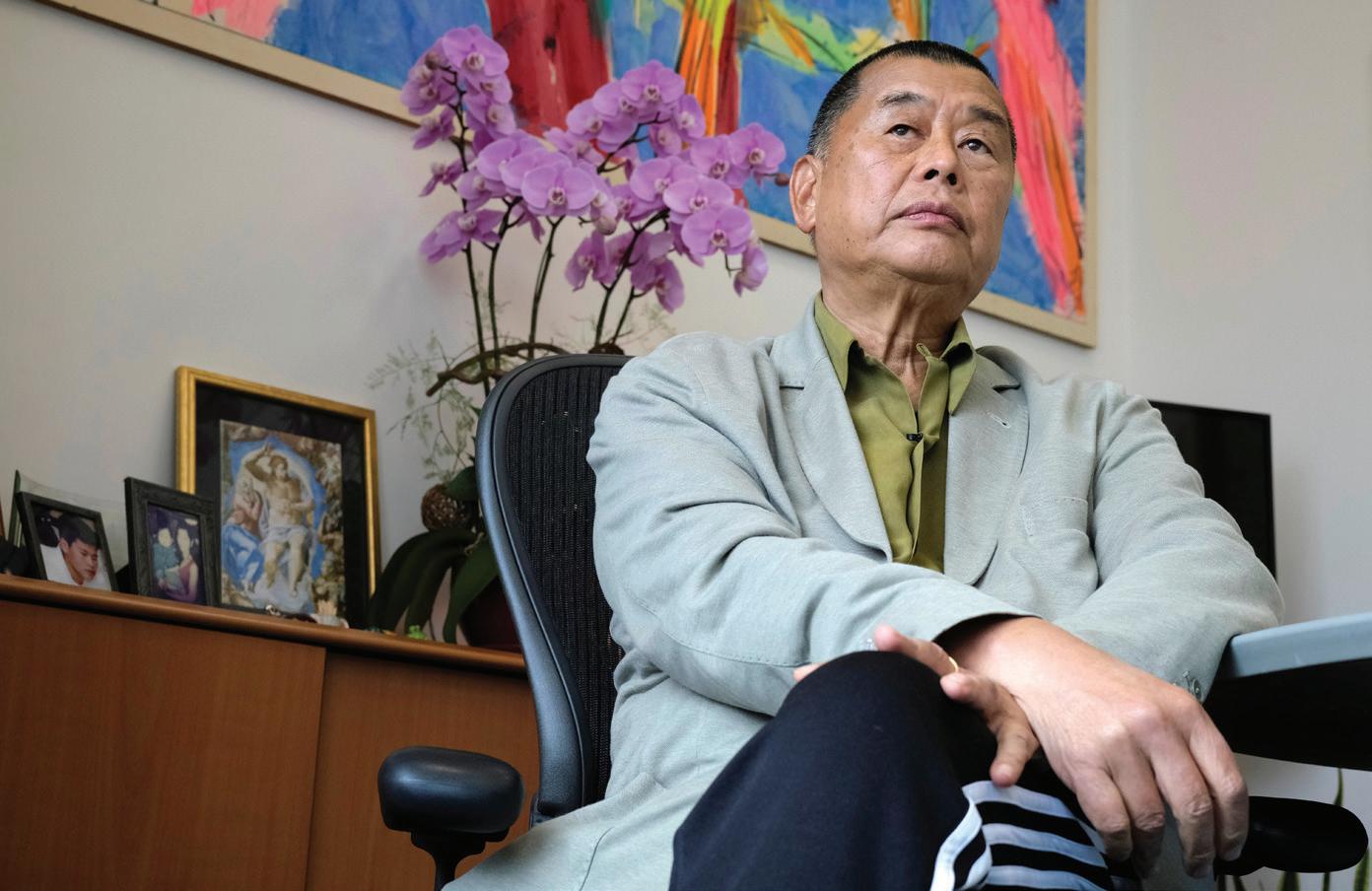
Media entrepreneur and pro-democracy advocate Jimmy Lai, whose arrest nearly six years ago prompted outrage around the world, was sentenced to 20 years in prison.
A court in Hong Kong delivered its ruling Feb. 9, which is believed to be the harshest sentence imposed under China’s so-called national security law, which criminalizes secession, subversion, terrorism, and collusion with foreign forces.
The law has been criticized for its vagueness and use in silencing dissent, curbing press freedoms, and prosecuting opposition figures, like Lai, who was convicted of sedition and two charges of conspiracy to collude with foreign forces Dec. 15.
“Today is another dark day for justice,” Mr. Lai’s family said in a
statement published shortly after the sentence was handed down.
“Sentencing my father to this draconian prison sentence is devastating for our family and life-threatening for my father,” Mr. Lai’s son, Sebastian, said. “It signifies the total destruction of the Hong Kong legal system and the end of justice. After more than five years of relentlessly persecuting my father, it is time for China to do the right thing and release him before it is too late.”
Claire, Lai’s daughter, called the 20-year imprisonment “a heartbreakingly cruel sentence.”
“I have watched my father’s health deteriorate dramatically, and the conditions he’s kept in go from bad to worse. If this sentence is carried out, he will die a martyr behind bars,” she said.
For decades, Mr. Lai, a British citizen who founded the now-defunct
“I remember once thinking, ‘God, if I could be as close to You as Father Kirk seems to be and as close to the people, I would like to be a priest.’ That is where the seed really began.”
Following the funeral Mass, Father Kirk was buried at Calvary Cemetery in Knoxville.
During the homily, Bishop Beckman described with some emotion how Father Kirk asked if he would accompany him to a cemetery on one occasion when Bishop Beckman was young.
His first assignments included associate pastor of the Cathedral of the Incarnation, St. Joseph Church in Madison, and Holy Rosary Church in Donelson, before being assigned pastor of Sacred Heart Church in June 1975. While serving as pastor, he was also assigned as liaison to the National Committee for Charismatic Renewal.
In July 1979, he was assigned pastor of Our Lady of Lourdes Church in Springfield and St. Michael Mission Church in Cedar Hill. While serving in his next assignment as pastor at St. Luke, which began in June 1982, he was also appointed the bishop’s liaison for the charismatic prayer groups of the diocese. Additional assignments included pastor of St. Ann Parish in Fr. Kirk continued on page A25
Prison sentence condemned Jimmy Lai, a prominent Hong Kong Catholic, philanthropist, and media mogul, is pictured in Hong Kong on May 29, 2020. On Dec. 15, three government-vetted judges found Mr. Lai, 78, guilty of conspiring with others to collude with foreign forces to endanger national security and conspiracy to publish seditious articles. He was sentenced to 20 years imprisonment on Feb. 9
Remembered
'His closeness to God' Father John Kirk welcomes parishioners to the first Mass in the new Church of the Nativity in the Diocese of Nashville on March 19, 2016. Father Kirk, a Knoxville native, was tasked in 2008 with establishing the parish in Thompson's Station, Tenn., and remained pastor there until his retirement in 2018.
ANDY TELLI/TENNESSEE REGISTER
Tracking religious persecution
Report: Over 388 million Christians face ‘high levels’ of oppression
By Gina Christian and Kurt Jensen OSV News
More than 388 million Christians—or 1 in 7 believers worldwide—face “high levels of persecution and discrimination for their faith,” according to a new report.
Open Doors International, a global advocacy organization for persecuted Christians, released the figure as part of its “World Watch List 2026” report, an annual overview that measures the severity of Christian persecution in some 50 countries.
For the 24th consecutive year, North Korea remains the harshest country in which to practice the Christian faith, due to a national policy that bans worship of any other entity beside the ruling Kim regime, said the report.
If found to be one of the estimated 400,000 Christians in North Korea, “you and your family could be immediately executed or sent to a terrible labor camp—forever,” said Open Doors, pointing to that nation’s 2020 “anti-reactionary thought law,” which has “made it even clearer that being a Christian and owning a Bible is a serious crime.” Somalia, Yemen, Sudan, Eritrea, Syria, Nigeria, Pakistan, Libya, and Iran also have “extreme” levels of Christian persecution, said Open Doors, which traces its origins to one man’s postwar efforts to smuggle Bibles into the former Soviet Union.
In Nigeria, close to 3,500 Christians were killed over the past year, according to the report. Among those slain have been several priests, with abductions of Christians also escalating in that nation.
Most of the countries topping Open Doors’ 2026 list are located on the African continent and in Southeast Asia, with a handful in Central and South America.
Measuring Christian persecution, which Open Doors defines as “any hostility experienced as a result of one’s identification with Christ,” is a “complex task,” since the phenomenon is “multidimensional” and can encompass other factors such as gender and ethnicity, the organization notes on its website.
The organization relies on a “longstanding underground network” as well as its “commitment to working with local Christians” to ensure its information sources “are almost always based on direct eyewitness accounts” from contacts, explained Open Doors on its website. In addition, the organization draws on in-country news reports as well as
Imprisoned continued from page A9
pro-democracy Apple Daily newspaper, campaigned for freedom of the press and freedom of expression in Hong Kong, which was designated a Special Administrative Region of China in 1997, when British rule ended after more than 150 years Hong Kong’s Basic Law was supposed to allow the region “to exercise a high degree of autonomy and enjoy executive, legislative, and independent judicial power, including that of final adjudication.”
However, after a year of prodemocracy protests in 2019, China imposed the national security law— under which Mr. Lai was arrested in August 2020 and has been imprisoned since December of that year.
In the wake of the sentencing, U.K. Foreign Secretary Yvette Cooper said the 20-year imprisonment was “an effective life sentence” and called his conviction “a politically motivated prosecution under a law that was imposed to silence China’s critics.”
“I again call on Hong Kong authorities to end his appalling ordeal and release him on humanitarian grounds, so that he may be reunited with his family,” Ms. Cooper wrote Feb. 9 in a statement posted on X. British Prime Minister Keir Starmer, who visited China Jan. 28-31, was criticized for not doing
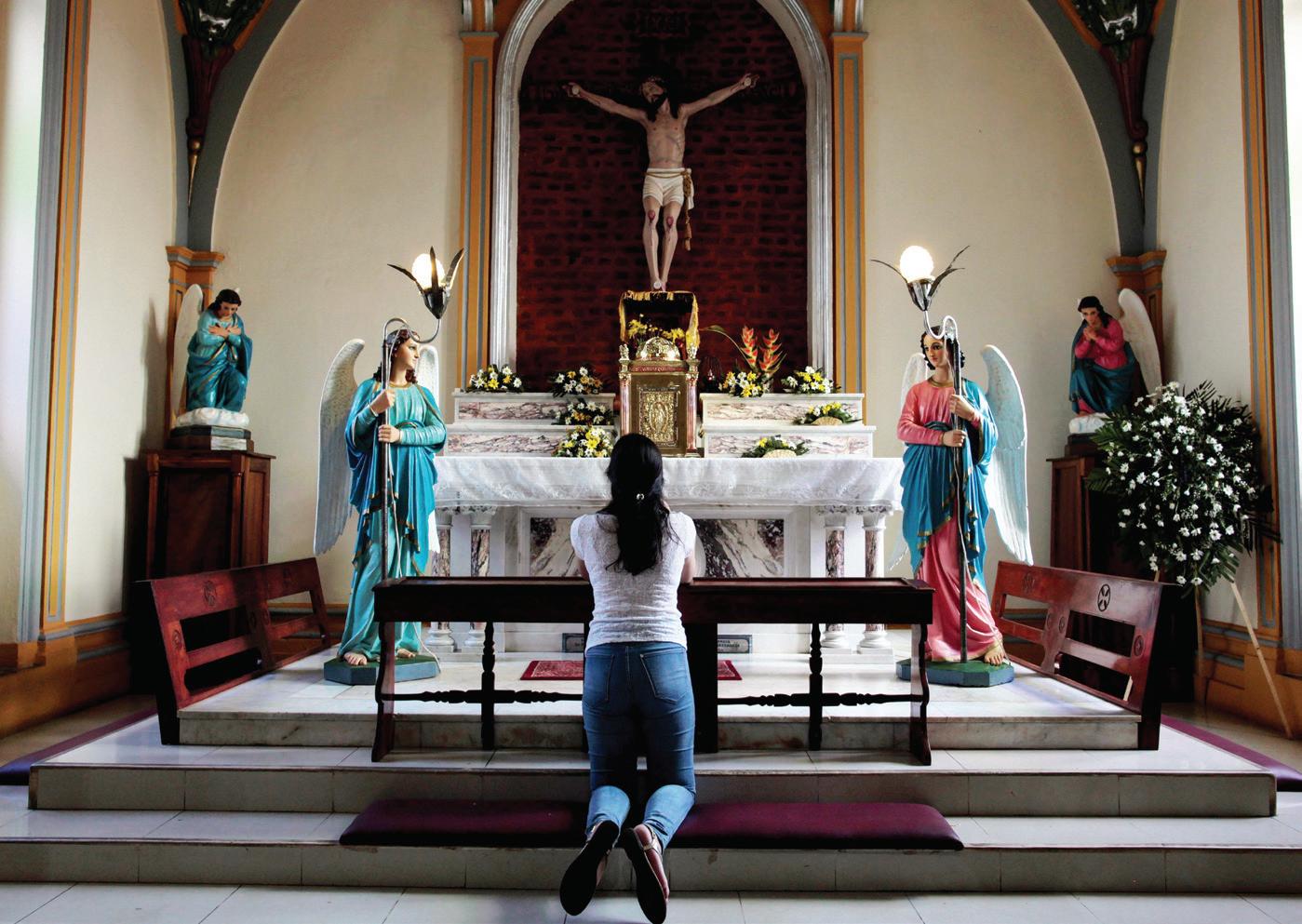
Penalty for praying Above: A woman prays following Mass at the San Juan Church in Masaya, Nicaragua, on Feb. 14, 2018. Nicaragua is among the countries worldwide where religious persecution is severe. Below: Schoolchildren from St. Mary's Catholic School in Papiri, Nigeria, arrive at the Niger State Government House on Dec. 8 after being freed from captivity following their abduction by gunmen on Nov. 21.
news services.
Because it has “developed personal relationships” with churches and pastors it serves, Open Doors remains “careful to protect the identity of persecuted Christians,” and as a result often “cannot disclose the nature or location of the assistance we are providing in full detail.”
Specifically, Open Doors focuses on collecting data on Christian persecution in six key areas: restrictions or dangers on practicing faith in private, family, community, national, and church life, as well as the levels of violence—mental, physical, and sexual—Christians face in the 150 nations Open Doors monitors.
Each area is scored, with each country then receiving an overall score out of 100 for the severity of Christian persecution, with scores of 81-100 designated as “extreme,” 6180 “very high,” and 41-60 “high.”
enough to pursue Mr. Lai’s release.
According to BBC News, the United Kingdom’s All-Party Parliamentary Group on Arbitrary Detention and Hostage Affairs issued a statement saying that the failure to secure the British entrepreneur’s release was “squandered by weak diplomacy.”
“These opportunities will cost Jimmy Lai his life,” the statement read
However, Ms. Cooper said Prime Minister Starmer had raised Mr. Lai’s case “directly with (Chinese President Xi Jinping) during his visit,” which had “opened up discussion of our most acute concerns directly with the Chinese government at the highest levels.”
“Following today’s sentencing, we will rapidly engage further on Mr. Lai’s case,” she said.
The sentence also was condemned by Amnesty International, calling it “another grim milestone in Hong Kong’s transformation from a city governed by the rule of law to one ruled by fear.”
“With this ruling, we see yet again how Hong Kong’s National Security Law is being used to distort fundamental freedoms into criminal acts,” the human rights organization said. “Jimmy Lai’s imprisonment is a cold-blooded attack on freedom of expression that epitomizes the systematic dismantling of rights that once defined Hong Kong.” ■
“has resulted in a surge of violence” that saw the country move up by 12 spots on Open Doors’ list.
Other nations, particularly those in sub-Saharan Africa, “have a kind of split personality,” with regions of both persecution and “relative tranquility” for Christians, said the report.
Nigeria, the locus of Africa’s Christian population, is a prime example, with megachurches in the south while thousands of Christians have been killed and millions displaced in the country’s north.
Under dictatorships and authoritarian regimes—as in North Korea, Nicaragua, Cuba, and China— “persecution operates within a wider suffocation of rights, reinforced by media censorship, weak courts, and oppressive surveillance,” Open Doors noted in its report.
In other countries, “persecution sometimes comes down to some very basic things: greed, corruption, and crime,” said Open Doors, citing organized crime in Central and South America as “one of the biggest drivers” of persecution there.
In Mexico, warring gangs and cartels often target church leaders and groups who attempt to mediate conflicts or provide aid, the report said.
Open Doors said that such persecution can “be allied with poverty, food scarcity, or competition for land driven by climate change,” but “whatever the motivation ... Christians make easy targets.”
Nationalism and religiously driven hatred also fuel persecution, especially as “the world is becoming more partisan, more divided,” and as “more countries are deciding that religion is part of their national identity,” said Open Doors.
Open Doors’ research and results are independently audited by the International Institute for Religious Freedom, a global organization that promotes religious freedom for all faiths through academic research and policy development.
Christian persecution “happens for a wide variety of reasons,” Open Doors said in its report.
Conflict, chaos, and anarchy are key drivers, creating “lawless zones where criminal gangs and religious extremists can attack Christians secure in the knowledge that they will not face any consequences,” the report said.
Yemen, Sudan, Libya, and Myanmar are all marred by such breakdowns in the rule of lawful state authority, the report noted, with Syria as “the most striking example” over the past year, where the fall of the long-running Assad regime
In the Maldives, “it is assumed that all citizens are Muslim,” while a merging of Indian nationality with Hinduism “has led to a number of states imposing anti-conversion laws,” the report found.
Yet “perhaps the most potent and powerful reason for persecution is the faith of the church itself,” said Open Doors in its report, adding that in all of the countries it surveyed, “the church is still present and alive,” and “even growing” in some places.
Along with data, the Open Doors report included numerous testimonies from individuals living their faith in the face of persecution and possible death.
In North Korea, where most Christians are “too afraid to speak of their faith openly, even to their children,” according to one Open Doors
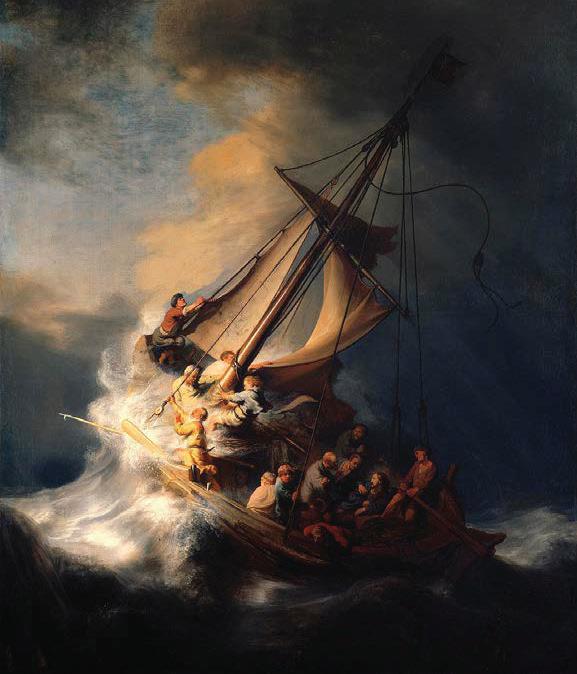
Weathering the Storm
Kat Coy among small group from across U.S. selected to serve university KCHS counselor named to UT advisory board
By Bill Brewer
Kat Coy, who has served as a school counselor at Knoxville Catholic High School since July 2006, has been selected to serve on the University of Tennessee Admissions Counselor Advisory Board.
Mrs. Coy was selected as one of less than two dozen counselors from across the nation to serve on the UT panel. This group is dedicated to supporting students through collaboration and innovation.
According to UT, the board’s mission is to engage a select group of high-school counselors to provide valuable insights that help shape the strategic direction of student services at the University of Tennessee.
Mrs. Coy said she is grateful for the opportunity to represent the students and contribute to the future of college admissions at UT-Knoxville.
Mrs. Coy explained the selection process: “Each year, the admissions office selects new members to serve on the advisory board.
Membership is a two-year commitment, with half of the members rotating off annually. The committee strives to include at least one local counselor and often looks for individuals with a long-standing history of working with UTK admissions,” she said.
She said her position as a school counselor for two decades at KCHS played an important part in her selection by UT. She also noted that the role of counselor in schools has evolved through the years.
“My professional title is school counselor, not ‘guidance counselor,’ as that term is considered outdated in my field. The title of school counselor reflects that I am a master’s-level trained professional who focuses on the academic, college/career, and social-emotional needs of
Persecution continued from page A10
ministry coordinator, the nation’s estimated 400,000 Christians live their beliefs silently, secretly, and steadily.
The report quoted one North Korea escapee, who said, “If you could see what God is doing in my country, you would never have any doubts again. The Holy Spirit is at work thanks to your prayers.”
U.S. commission hearing focuses on persecution of Christians around the globe
Rep. Jim McGovern, D-Mass., a longtime champion of religious liberty, particularly in Tibet, proudly wears a bracelet of brown prayer beads, called mala, given to him by the Dalai Lama during a visit to India in 2024.
Their purpose, he told a hearing of the U.S. Commission on International Religious Freedom on Jan. 13, is to lower stress and anxiety.
“I want to see him soon to tell him they’re not working,” Rep. McGovern quipped.
“When human rights are decoupled from other rights, our efforts are less effective,” he said.
The congressman’s observations ranged from Vietnam, where he said the government continues to criminalize religious practice, to Nigeria, where more than 250 pupils and staff members were abducted from St. Mary’s Catholic School in Papiri in November, to Catholic clergy not being permitted to enter certain Immigration and Customs Enforcement, or ICE, facilities in the United States to provide sacraments to Catholics detained there.
In Nigeria, all the children and staff were eventually freed before the end of December, but their abductors, believed to be members of a criminal gang, “have not been held accountable,” Rep. McGovern said.
Although individual accounts are now familiar to many, the purpose of the hearing, said Vicky Hartzler, a former congresswoman from Missouri and an evangelical Christian who is currently chair of the commission, was to draw attention to what she called “a dark picture for religious freedom” with persecution of all faiths by official government policy.
She called China, where the government has targeted Catholics, “a stark illustration of just how far governments will go to restrict religion or belief.” Myanmar, a country also
" It is truly an honor to be selected for the Admissions Advisory Board. I am able to help them critically evaluate their practices and, in the end, find systems that best serve students. This honor recognizes my leadership in the counseling profession and my dedication to supporting students in their academic and college journeys"
Kat Coy, counselor at Knoxville Catholic High School
every student,” she said.
“My 20-year career at KCHS played a significant role in my selection. Over the years, I have built strong connections with colleagues who also serve on the board and have extensive experience working with a variety of colleges throughout the admissions process,” she
known as Burma, prohibits all religious gatherings, she observed, and more than 200 churches there have been destroyed, with 85 clergy members killed.
Rep. Mary Miller, R-Ill., praised President Donald Trump’s administration for its decision in November to officially return Nigeria to the classification of Country of Particular Concern for religious freedom violations there.
The CPC designation comes from the International Religious Freedom Act and allows the imposition of economic sanctions. President Trump first imposed the designation in 2021 during his first administration, but President Joe Biden’s administration revoked it the following year.
On Christmas Day, President Trump announced that the United States had bombed Islamist State militants in Nigeria. In a Truth Social post, he said the airstrikes responded to attacks that “have been targeting and viciously killing, primarily, innocent Christians” in Northern Nigeria and the country’s Middle Belt region.
“It’s evident that human rights abuses in Nigeria” have only one purpose, and that is to extend the sectarian fighting there, said Rep. John Rose, R-Tenn. “And the United States is no longer turning a blind eye to this violence.”
“The United States is not powerless in the face of this persecution,” said Asif Mahmood, vice chair of the Commission on International Religious Freedom, who also is a doctor and human rights activist in California.
Moves by governments “to harass, imprison, or mistreat Christians on the basis of their faith,” he said, is also a violation of international law.
Grace Jin Drexel, daughter of Pastor Ezra Jin Mingri, who shepherds the independent Zion Church of Beijing, said the arrest of her father, who has been detained by the government since last October, and those of 30 others “came from centralized government planning.”
“Many watched parents handcuffed and dragged off in the middle of the night,” she said.
Another witness at the hearing was Catholic researcher Martha Patricia Molina, whose report, “Nicaragua: A Persecuted Church,” is now in its seventh edition. Pope Leo XIV received the latest version in December.
Speaking through an interpreter,
added.
Mrs. Coy’s role on the UTK board will be hands-on and strategic in nature.
“My role will be to serve as an advisory board member. The mission of the board is to engage a select group of high-school counselors to represent the students served by the University of Tennessee. As members, we act as a resource for the admissions staff by reviewing internal processes and providing valuable input to help guide UTK’s strategic direction in serving students effectively,” she said.
Mrs. Coy also described the significance of serving on this board.
“It is truly an honor to be selected for the Admissions Advisory Board. Only 21 counselors from across the nation were chosen, and I am proud to be one of them. This recognition means that UTK admissions sees me as a leader in my field—a qualified counselor, an advocate for students, and someone who can help make the admissions office more effective, equitable, and high-functioning,” she said.
“I am able to help them critically evaluate their practices and, in the end, find systems that best serve students. This honor recognizes my leadership in the counseling profession and my dedication to supporting students in their academic and college journeys,” she added.
The 21 counselors chosen for the UTK Admissions Counselor Advisory Board were selected from across the country, representing states including Florida, Idaho, New Jersey, Colorado, and Minnesota. Of the 21, seven are from Tennessee.
The board includes counselors from diverse regions and backgrounds, with a goal of incorporating local expertise and long-standing relationships with UTK admissions. It is also a mix of public-school counselors and private-school counselors. ■
Ms. Molina said that not only has President Daniel Ortega’s ban on religious processions intensified in Nicaragua since 2022, but also that the faithful at Masses “cannot pray out loud.”
There is now a shortage of priests because of the fear of the government punishing or exiling them, and as a result, Catholics “don’t get to go to confession regularly,” she said. A choir member there was arrested “simply for sharing a video of himself singing at Mass,” she said.
“Altar boys are harassed by Nicaraguan police and forced to sign documents they don’t understand,” Ms. Molina said. ■
The annual Bishop’s Appeal for Ministries makes possible the formation of clergy, the growth of Catholic education and campus ministries, the provision of food, shelter, and medical care to those in need, and vibrant faith formation in every parish—impact made possible each year by the generous support of the faithful of our diocese.
Make your gift and learn more today at dioknox.org/appeal.
Mary’s Mobile Medical Clinic Youth, Young Adult and College Campus Ministries
CATHOLIC MINISTRIES SUPPORTED BY THE BISHOP’S APPEAL FOR MINISTRIES
Mrs. Coy
‘Who wants to read the newspaper?’
OLPH 5th-grader
By Bill Brewer
Gtakes
faith, school, and The East Tennessee Catholic to
enevieve Moy wants to change the world—one book report, poem, notebook drawing, math problem, violin piece, school play—and newspaper—at a time.
The fifth-grader at Our Lady of Perpetual Help School in Chattanooga isn’t just about change for change’s sake. She wants to make the world a better place.
Inspired by her faith and some of her storybook friends like Nancy Drew, Encyclopedia Brown, Harry Potter, and Miss Penelope Lumley, Genevieve—with pencil and notebook in hand—is out to solve some of life’s mysteries.
The first one?
Why aren’t there any stories and pictures for kids in The East Tennessee Catholic newspaper?
Great question!
So, Genevieve set out last fall to find the answer. Sitting at her bedroom desk in the Moys’ Cleveland home, she composed a letter to The East Tennessee Catholic on notebook paper to make her question official.
Glimpses of Catholic Schools Week
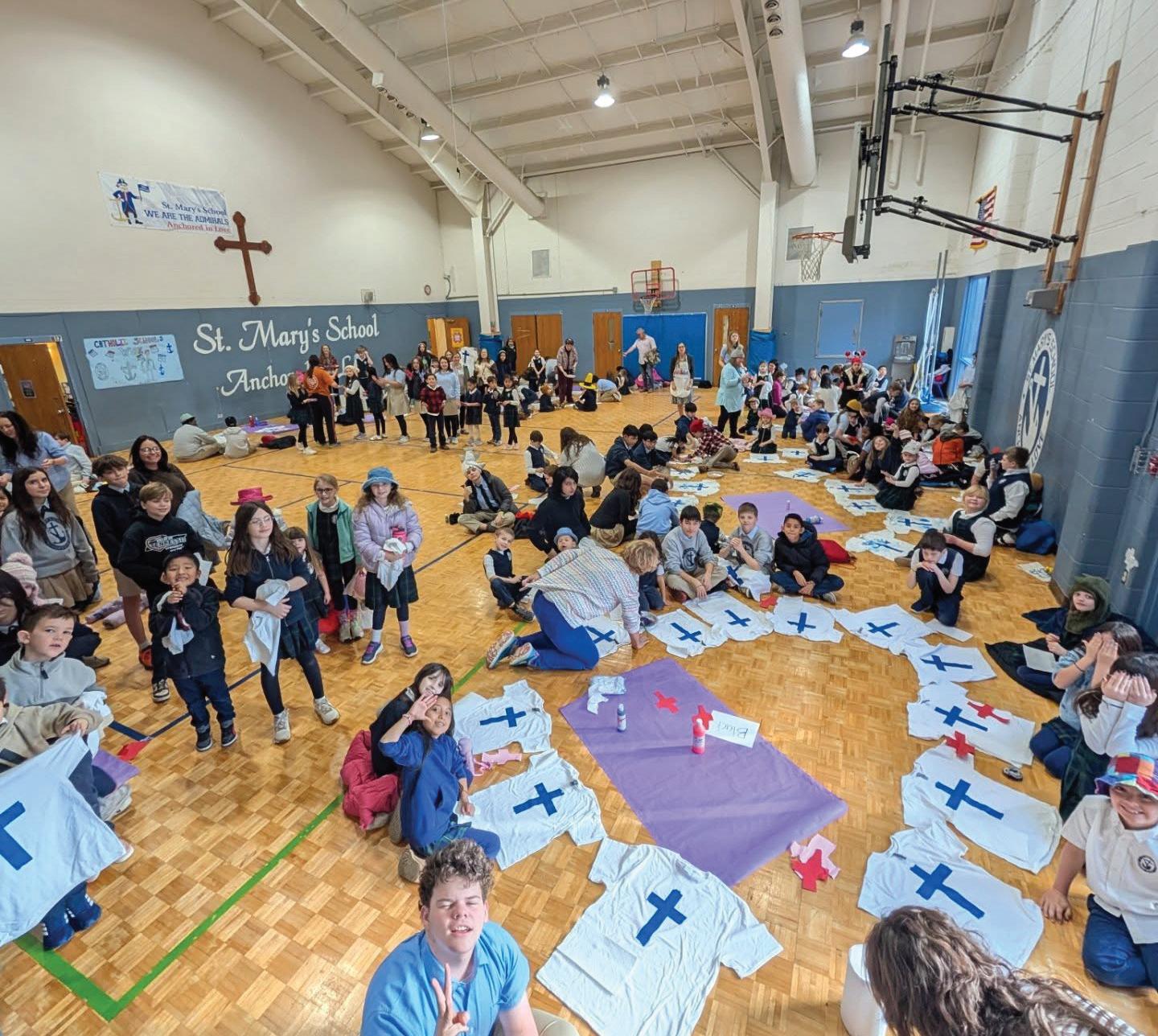
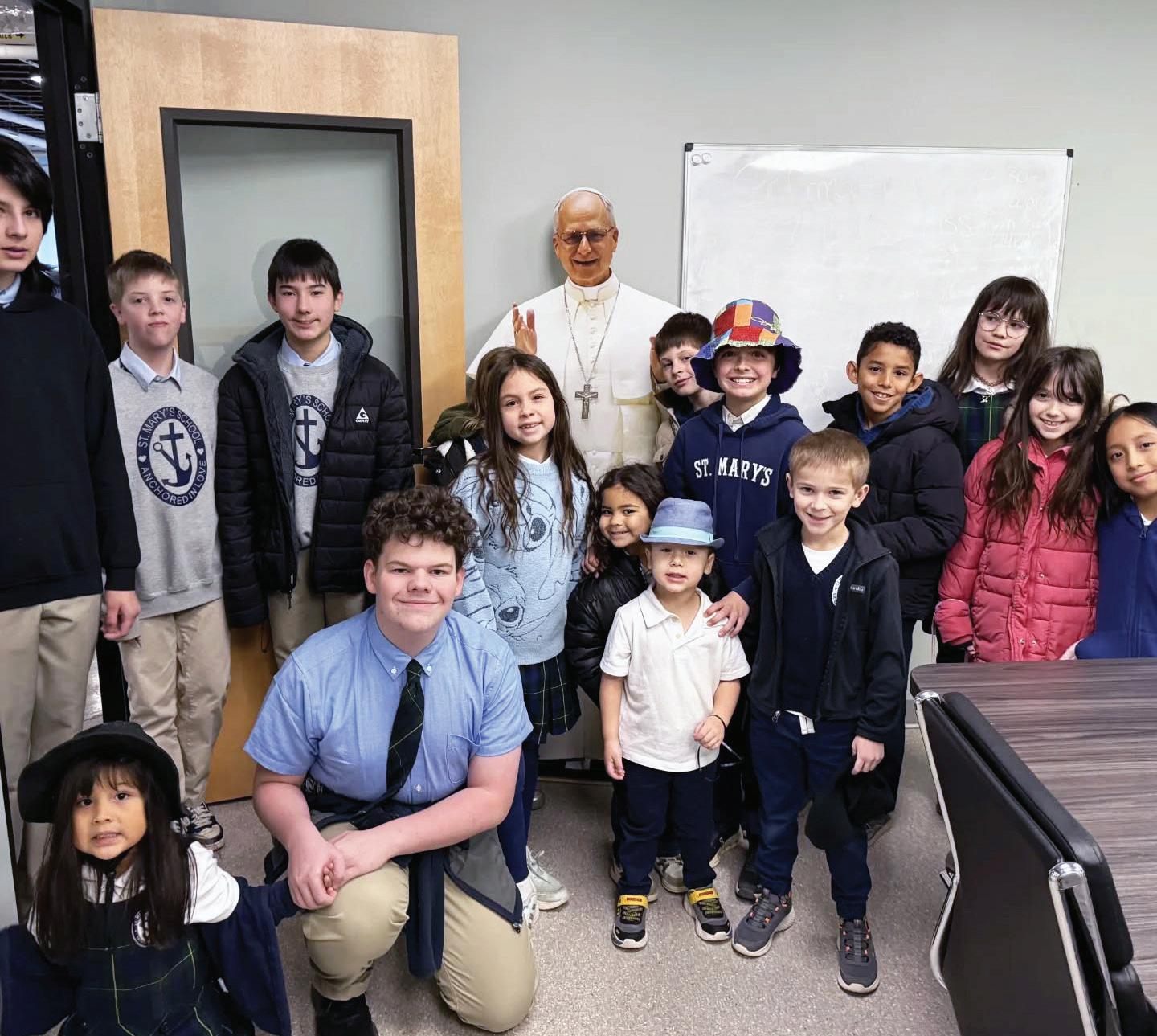
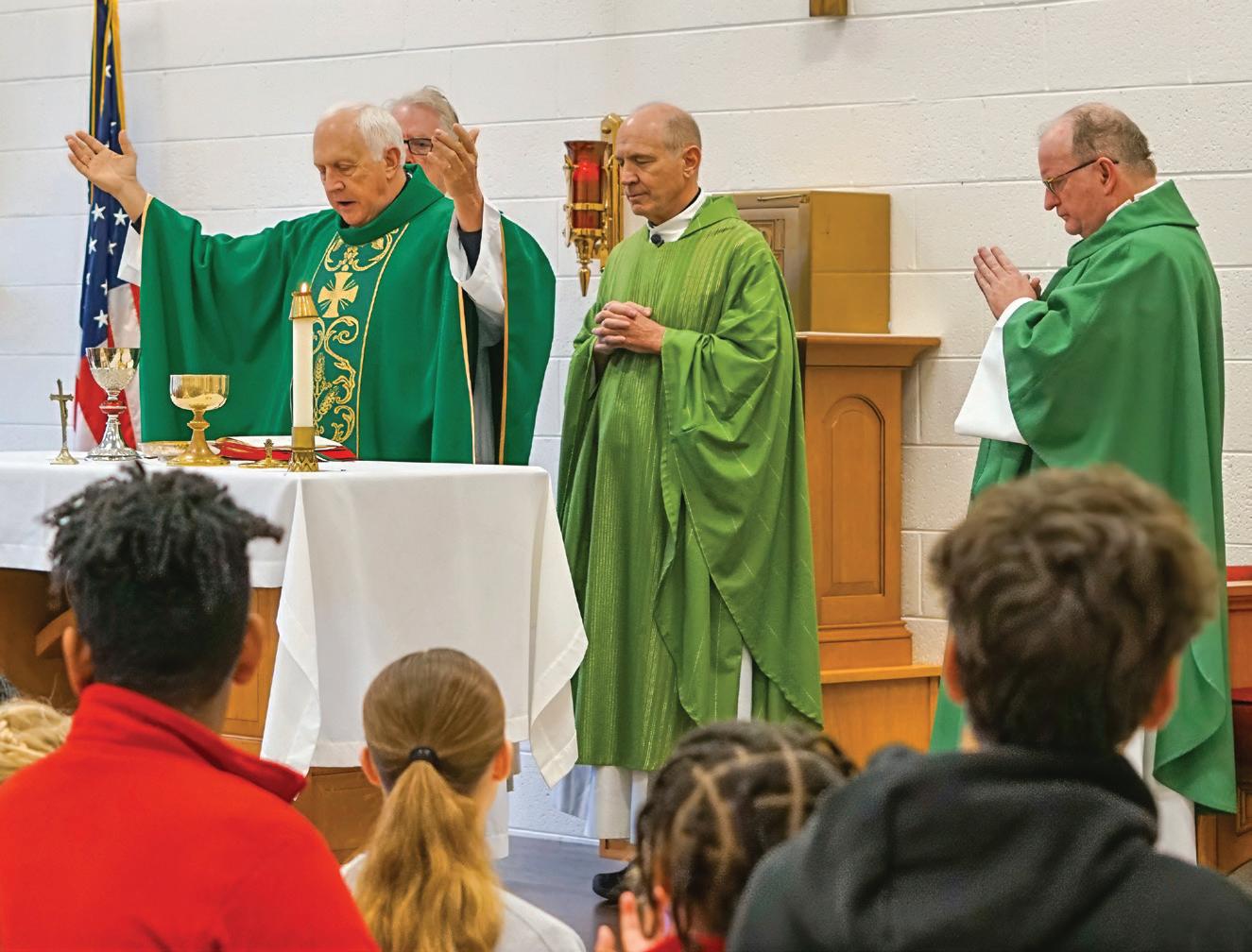
Schools around the Diocese of Knoxville observed Catholic Schools Week Jan. 25-31. Students and faculty were involved in activities at every grade level, showing what makes Catholic education special. Below are snapshots of some of the schools that took part. Ice and snow, which led to school closings, curtailed some activities. ■
Catholic media influencer Genevieve Moy, 10, has her writing and drawing tools at the ready when she feels like being creative or needs to do her homework.
Our Lady of Perpetual Help School
Kairos Kids
Wo rd Se a rch
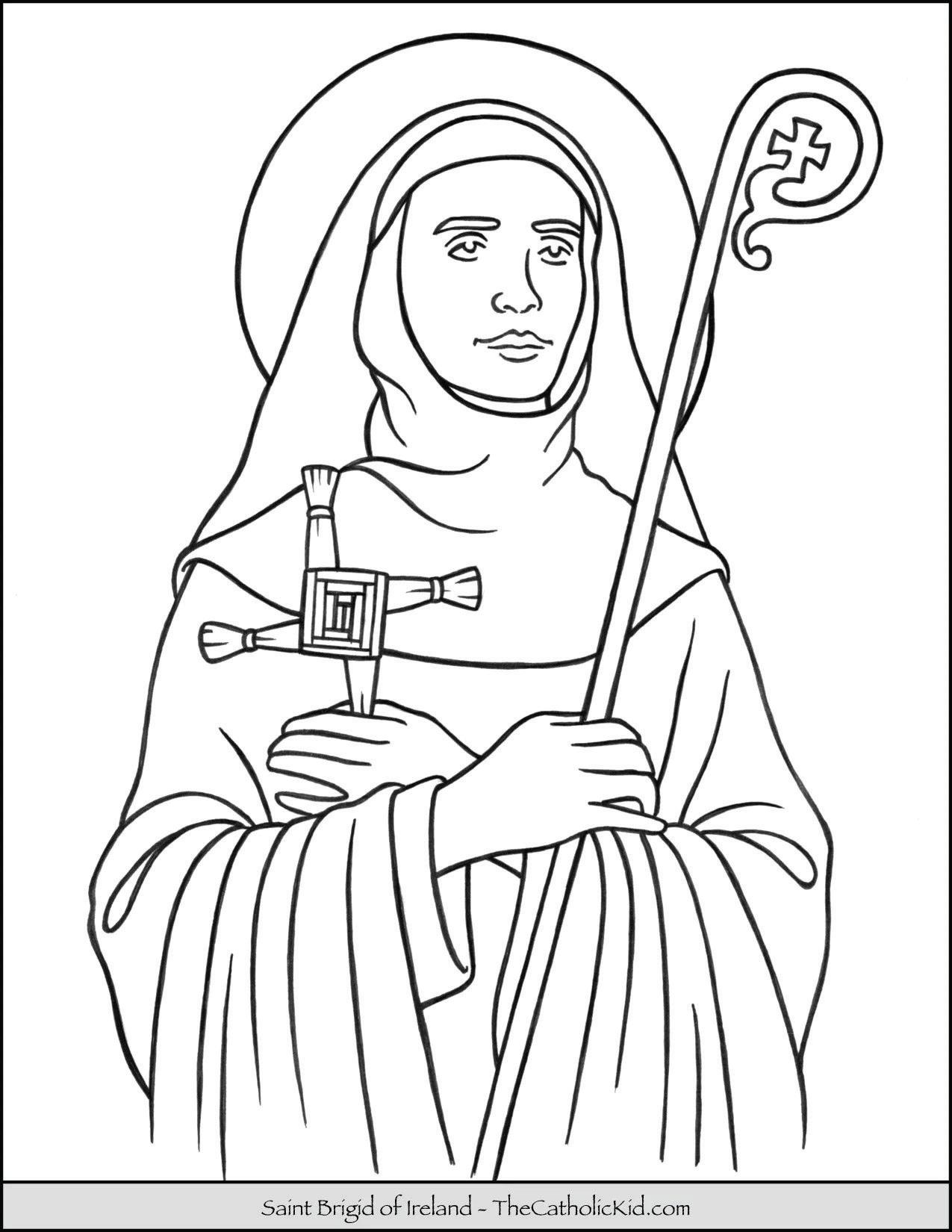
Feast Day
February 1
Patroness of Ireland, dairymaids, and poets Co lo r m e
Question: Why did you want to be part of the Catholic church?
-Sommers, 5 grade th
Dear Sommers: I was blessed to grow up in a Catholic family and because of the great gif t of faith given to me by parents and grandparents and Sacred Heart Church in Lawrenceburg, Tenn., I was able to embrace the Catholic faith!
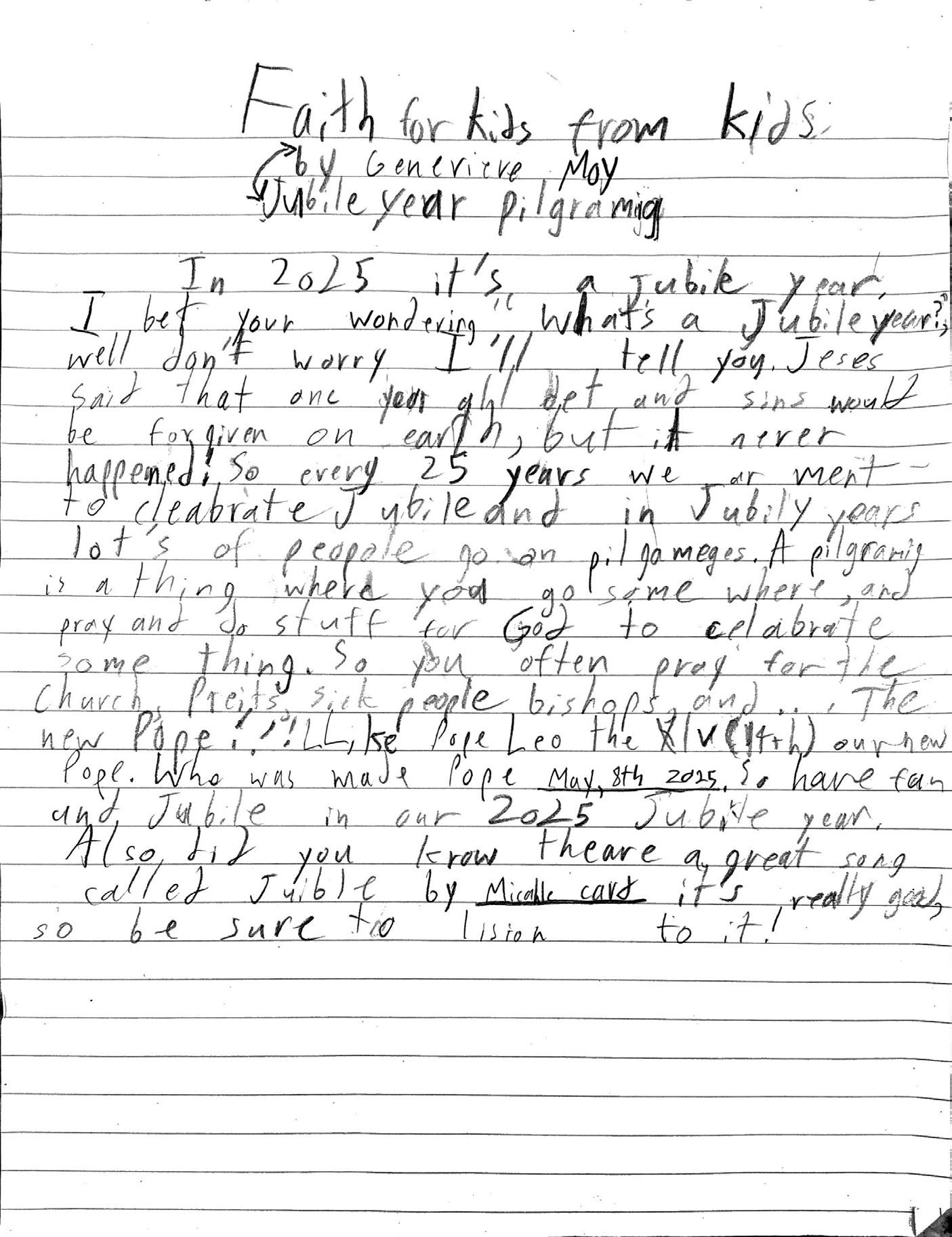
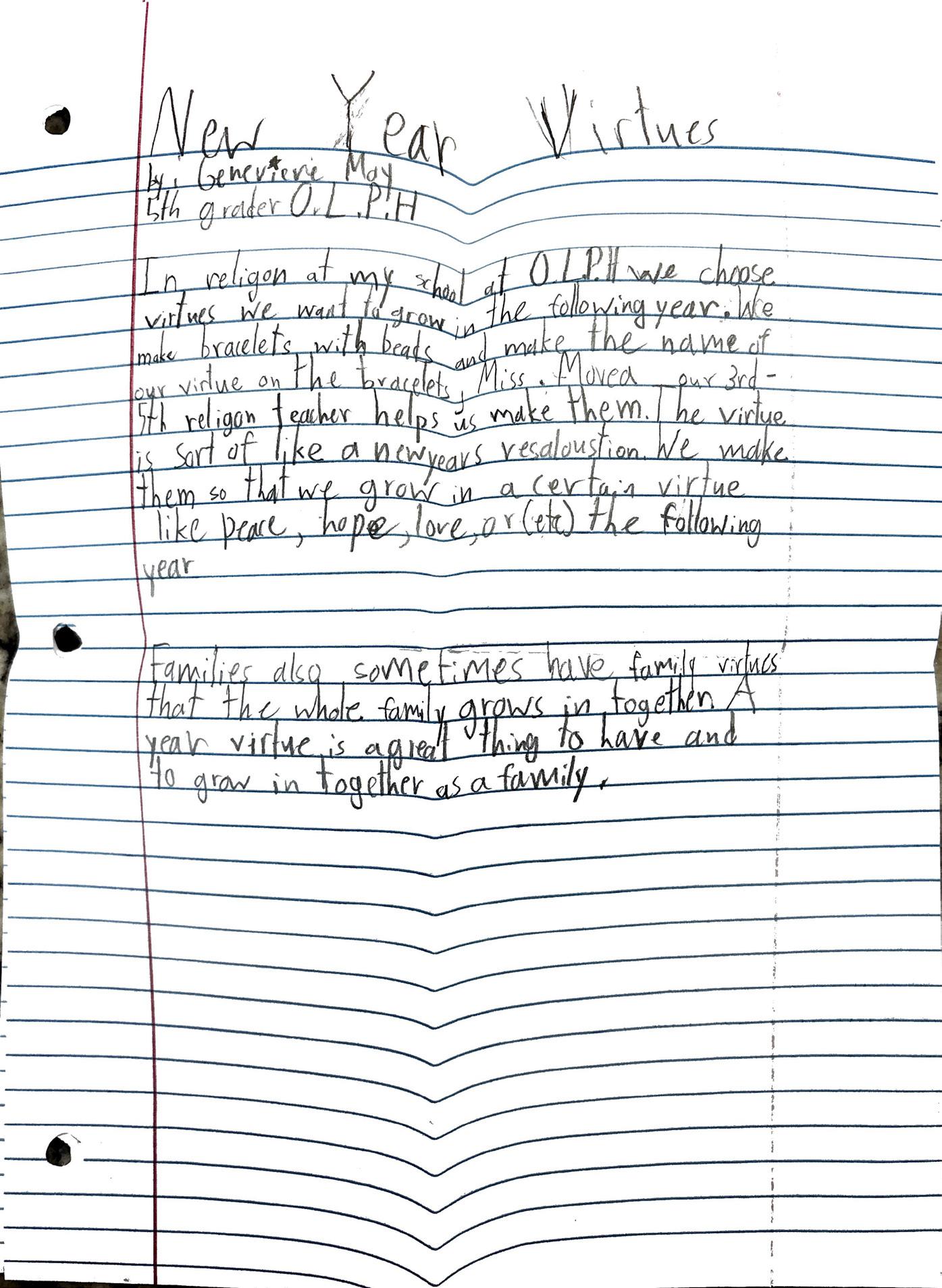
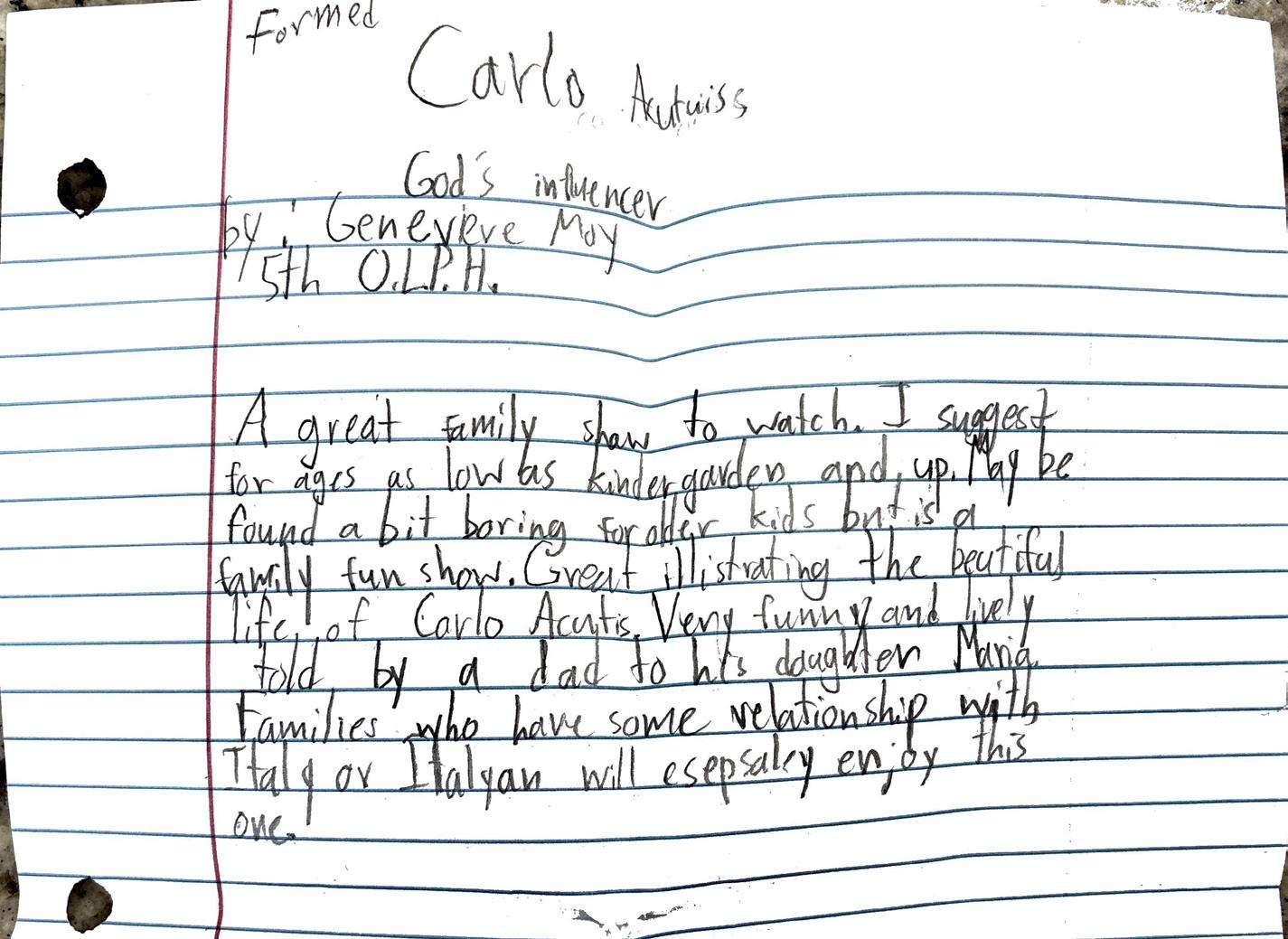
Not content simply to raise a question without supplying a solution, Genevieve included in her letter articles about her Catholic faith that she had written. She offered them for publication in case the newspaper takes her up on her idea.
There were her stories about the 2025 Jubilee Year and Catholic virtues, and her movie reviews of Carlo Acutis: Roadmap to Reality and Sleigh Ride
She also shared some information about herself and her family. Genevieve, 10, is the oldest of three children of Dr. Richard Moy and Dr. Charlotte Moy. Her brother, Matthias, is 6, and her sister, Rosaria, is 5. And there is another sister on the way.
Matthias and Rosaria also attend Our Lady of Perpetual Help School with Genevieve.
The Moy family are members of St. Thérèse of Lisieux Parish in Cleveland, where they have lived for more than seven years. Dr. Richard Moy is a professor of mathematics at Lee University in Cleveland and Dr. Charlotte Moy is an author who taught history at Lee before deciding to stay at home with their children.
The Moys said they have been very happy with OLPH School and are glad they made the decision to enroll their children there. They feel the same about St. Thérèse of Lisieux.
Genevieve emphatically supports those feelings, saying she really likes Father Arthur Torres and Father Andrew Crabtree (“He’s really funny!”) at OLPH School and Father Mike Nolan and Father Mike Creson at St. Thérèse.
She wrote that she especially enjoys going to school and learning.
“My favorite subjects in school? I really like math and art. I really like art because I like drawing and stuff. And everyone tells me I’m really good at drawing. The thing is I just look at a picture and I copy it. So, I think I’m really good at copying pictures. I really like writing because I like writing stories,” Genevieve said. “For Halloween, Mr. (Jim) Zidan, our teacher, told us to write a Halloween story and that was really fun.”
One of her favorite pastimes is reading, which has inspired her to write in different ways. She admits that her spelling is a work in progress.
The more books she has read, the more interested she has become in writing, as well as investigating, just as in her favorite sleuthing stories. Those have piqued her interest in news and reporting.
“In some of the books I read there are some things about reporters who have notepads and stuff. There is Nancy Drew and Encyclopedia Brown. I like reading books. I love fantasy books. That is my favorite genre,” Genevieve shared.
Authors of the Nancy Drew and Encyclopedia Brown book series were actual newspaper reporters, helping to fuel Genevieve’s interest in writing—and in helping The East Tennessee Catholic reach a new, untapped demographic.
Genevieve is confident her newspaper idea, if embraced, will be popular with her peers throughout East Tennessee. In the meantime, she continues to write.
“The other day I started writing a story. But I haven’t gotten that far yet,” she said. “It’s going to be like a fantasy, since that’s my favorite genre. It will have real places and like not real places. I’m not entirely sure yet, but it will have like a magic animal-riding school and stuff.”
Her parents watch with joy as Genevieve practices her elementary interests.
“Genevieve has always been pretty expressive. First, it was in art. She really likes drawing. Whenever
they have the Knights of Columbus Keep Christ in Christmas contest, she draws for it,” her father said.
“And she really likes writing, too.
She’s quite creative.”
The Moys credit Genevieve’s fourth- and fifth-grade language arts teachers at OLPH, Aimee Passavant and Mr. Zidan, for her interest in reading and writing.
During a recent interview with the diocesan newspaper, Genevieve emphasized her love of learning and school, excitedly describing Catholic Schools Week (Jan. 25-31) at OLPH. Despite challenges from snow and ice, the fifth-grader and her classmates made the most of the annual week that celebrates Catholic education. Since joining OLPH School as a fourth-grader, Genevieve has put her own stamp on vocations day.
“Wednesday (Jan. 28) was USA Day, so we wore uniform bottoms and like a red, white, or blue shirt. Thursday (Jan. 29) was my favorite day. We had vocations stations, so you could dress up like your future career. I dressed up like a writer. Last year I was an artist. I wore an artist smock with paint on it, and my momma got me a palette. I colored on it to make it look like I had paint on it, and I brought a few paint brushes. This year, I wore my green sweater, which I like, a shirt, and my jeans. I put a pen and pencil in the pocket and a mini pencil sharpener, and I brought a notebook. And I wore fake eyeglasses. I said they were my reading glasses. They didn’t have any lenses,” Genevieve said giggling, describing her best impersonation of a newspaper reporter.
While confident in her likes and dislikes as a 10-year-old, Genevieve isn’t certain what she wants to be when she grows up.
“I’m not really sure because there are so many options. I’m like, what do I choose? But it would be cool to be like a writer. There are so many options; it’s hard to choose,” Genevieve said.
Her mother said Genevieve also has talked about being a teacher. Both parents are intrigued by Genevieve’s interests.
“I think it’s really exciting. Her getting interested in reading and writing has been really fun. Every stage of parenting has things that are fun about it, but as your kids get older you see them develop their own interests. And then when they have some that are in common with you, and you can talk to them about the books they’re interested in or ideas they have for things; it has been really fun for me,” Dr. Charlotte Moy said.
“She has always loved school. She has always loved learning. She is very internally motivated to learn things. It’s a very natural interest for her,” Genevieve’s mother added. The Moys take a hands-on approach to their children’s education and interests.
As Genevieve reminded that her favorite books include the Harry Potter series, The Incorrigible Children of Ashton Place series, and the Chronicles of Narnia, her mother discussed with her how some of those books include faith and religious themes in their content.
“Does your guidebook to Narnia talk about religious meanings of the books?” Dr. Charlotte Moy asked her daughter.
“Yeah, it talks about … like the first book is the beginning; the second book is like Easter and stuff; the third book is, I forgot; and the last book is like the end of the world,” Genevieve responded.
“And some of the books are really funny. I like the funny parts,” the 10-year-old added.
When she was asked what are some of the important aspects of writing to learn to be a good writer,
continued on page A15
Faith for kids from kids Budding writer Genevieve Moy, a fifth-grader at Our Lady of Perpetual Help School who attends St. Thérèse of Lisieux Church with her family, shares a few of her stories and movie reviews. Genevieve is calling on The East Tennessee Catholic to include content for kids and from kids in the monthly newspaper, which is a good idea.
Genevieve
Catholic Schools Week: Celebrating faith-based
School Spotlight
St. Mary School – Johnson City
“It felt rewarding, not that you were doing something good, but that what you were doing was making an impact.”
The idea originated when a friend of St. Mary School came across a Washington Post story that had previously gone viral.
It was the story of a woman (Kristina) whose younger sister (Katie), a waitress, had died in a car wreck in Pennsylvania. And when her purse was retrieved from the wreckage, they found $100 in small bills – the sum of her morning tips after having just finished working the breakfast shift.
Kristina held on to her sister’s money for several years trying to decide what exactly to do with it, but she was absolutely certain it had to in some way reflect her sister’s life: it had to be used for “kindness.”
Ultimately, Kristina added to the sum, divided it into $20 bills then handed one each to her high school English students along with the challenge to get off their screens, spread some much-needed empathy into the world, and use the money to “perform an act of kindness.”
That same St. Mary “friend” not only shared the story with school principal Becky Frye but also made a gift of $220 (in $20 bills).
And from there teachers Denise Miracle and Dustin Panzenhagen took charge, sharing the story and the idea with their 11 eighth-graders.
The St. Mary Kindness Project was born, and needless to say, the students did all the rest.
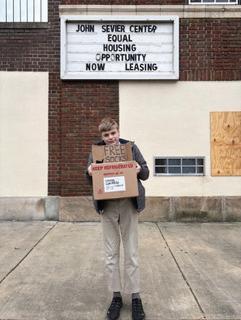
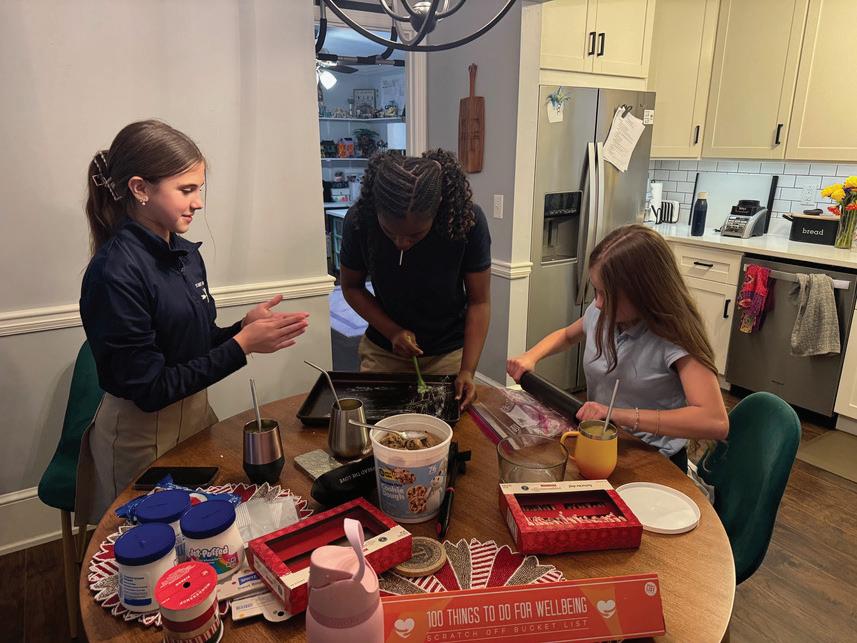
Sofjia knew right away she wanted to do something for workers in her community – like her mom – who would have to report to their jobs on Christmas Day. She baked cupcakes and made cards for the employees at a nearby senior-living facility.
Hailey and Naomi combined their money and bought baking supplies. Precious joined in the fun and the trio baked cookies for four hours before delivering them around the school to all the teachers at St. Mary.
What would y’all tell the next group of eighth-graders about the Kindness Project?
“I would tell them you don’t even need $20. Find a partner, go to the Dollar Tree or wherever, have some fun, but most of all, spend some time really deciding who it is in the community that you most want to help.” Teddy, Gabe, and John decided the best way to make the most difference was to invest their joint $60 into the stock market, hoping a big return would provide even more money to spread.
Until it got vetoed by the teacher.
“We just wanted to get more; she ruled out gambling, too.”
Both teachers laughed, having commended them for the theory – if not the execution.
The three ultimately decided to pool their dollars and went shopping for cans of food and jars of preserves, which they donated to the parish food pantry.
Azzie pondered several options, but her final decision was to purchase treats and small toys for puppies and kittens, which she donated to a no-kill animal shelter.
Henry bought as many socks as he could for the homeless – often mentioned as the No. 1 sought-after need of those who suffer from that circumstance.
Precious talked her older sister into taking her to the Dollar General, where she purchased a remote-control helicopter for the 2-year-old son of one of the other St. Mary teachers. “I’m pretty sure he’ll play with it more than his son will.”
Denise chose the Dollar Tree, where she purchased small hygiene and toiletry items, packaging those with some canned food into baskets to be given out through the parish pantry.
Did having this experience and feeling this feeling inspire any of the students to do other kind things – maybe around the house?
“My folks were at the gym one day, and I decided to clean my room. But then I just kept going. I went from one room to the next and straightened up whatever I could.
continued from page A14
Dr. Charlotte Moy told her daughter, “I feel like one of the biggest things, and this was hard for me, is getting used to going back and editing your work. Because so often you finish writing something and you want to just feel like you’re done with it. But then maybe you get feedback from somebody or maybe you just have to take a break from it and go back yourself and fix parts of it. Sometimes it can be hard to motivate yourself at that stage to go back and change it.”
Genevieve had her own take on the question.
“Spelling is hard,” she confided. “Like, it’s hard to decide if you do a ‘ph’ or an ‘f.’” As part of her interest in writing, the Moys said Genevieve also likes writing letters and mailing them, as evidenced by her letters to the newspaper.
“In class, Mr. Z has been teaching us to write in letter form,” Genevieve advised.
Genevieve described how she looks forward to getting The East Tennessee Catholic in the mail at her house, and she likes seeing the pictures and reading the “Sister Regina” comic, which is created by Sister Rose Philomena of the Handmaids of the Precious Blood religious order in New Market.
“I really like the comic they do each time because I like reading that stuff,” Genevieve said. “I liked the one around Halloween with the friar, who was asked, ‘What are you doing? Halloween is over!’ And then the friar said he was celebrating All Saints Day. I also liked the one about Mary’s birthday party and with the nuns asking if they still get the cake. That was funny.”
Genevieve’s reading habits extend beyond comics and photographs.
“She likes looking at some of the news, especially if it’s about Our Lady of Perpetual Help,” Dr. Richard Moy said.
Genevieve added, “And St. Thérèse of Lisieux. I looked at the story about the Three Kings Feast (December edition). I helped with that.”
Dr. Richard Moy said the family also read other Catholic publications, noting that he and his wife like Magnificat and the kids like MagnifiKid!
“So, Genevieve said there should be something like that in The East Tennessee Catholic,” he noted. “That was the only idea we offered up, that there should be more things for kids.”
“I think my friend Arden would really like
that, and also maybe some of my friends at church,” Genevieve said.
“And also, if there can be pictures, too.”
Far be it from The East Tennessee Catholic to ignore an excellent suggestion from a faithful, young reader.
As stories, pictures, and word games for kids begin to appear in the publication, thanks to Genevieve’s interest— and persistence, she may be giving the Diocese of Knoxville newspaper some competition.
"I really like the (Sister Regina) comic they do each time because I like reading that stuff. I liked the one around Halloween with the friar, who was asked, 'What are you doing? Halloween is over!' And then the friar said he was celebrating All Saints Day. I also liked the one about Mary's birthday party and with the nuns asking if they still get cake. That was funny."
Genevieve Moy, who is in the fifth grade at Our Lady of Perpetual Help School
brighten it up.
Her father noted that she has published a classroom newsletter in her spare time that she distributes to her classmates.
Genevieve explained that she creates the newsletter on notebook paper using her pencil, and she looks forward to lending her artistic flair to
“It was hard to get it (newsletter) going since you have to get people to write articles. Like, sometimes they would get home and then forget to bring them back,” Genevieve pointed out.
After each edition of the newsletter, Genevieve announces to her classmates, “Who wants to read the newspaper?” ■
Genevieve
BILL BREWER (2)
Family togetherness The Moy family of Cleveland includes mother Charlotte, father Richard, Genevieve, Matthias, Rosaria, and a little sister on the way.
Venerable Fulton Sheen beatification can move ahead
Holy See approves step in archbishop’s cause for sainthood after a 6-year pause
OSV News
Venerable Fulton J. Sheen will soon be beatified now that the Vatican has given the green light, the Diocese of Peoria, Ill., announced on Feb. 9.
No date or location for the beatification was given.
The announcement comes six years after the Holy See had postponed the beatification, initially scheduled for December 2019, only weeks before the event was to take place.
“The Holy See has informed me that the cause for the Venerable Servant of God Archbishop Fulton J. Sheen can proceed to beatification,” Bishop Louis Tylka of Peoria said in a Feb. 9 statement. “The next step in the process is the celebration of the beatification, in which Fulton Sheen would be declared Blessed.”
He added, “We are working with the Dicastery of the Causes of Saints at the Vatican to determine the details for the upcoming beatification.”
The bishop said the date and event details will be released soon through celebratesheen.com, the website for Archbishop Sheen’s cause.
“Archbishop Fulton Sheen was one of the greatest voices of evangelization in the Church and the world in the 20th century,” Bishop Tylka said. “I have long admired his lifelong commitment to serve the Church as a priest, rooted in his deep devotion to the Blessed Mother and the Eucharist. As he journeyed through the different stages of his life, his ability to share the Gospel and truly relate to people drew countless souls into an encounter with Jesus one that transformed not only his life, but more importantly, the lives of those he touched.”
Archbishop Sheen’s cause for canonization, opened in 2002, has been stalled by two controversies a public battle to relocate his remains from St. Patrick’s Cathedral in New York to its current location, the side chapel of the Cathedral of St. Mary of
prayers and hymns that filled the school chapel. The participation reflected a core mission of Catholic education: to invite students not only to learn about their faith but to actively live it.
During his homily, Bishop Beckman addressed the adults gathered alongside the students, emphasizing the shared responsibility of forming young people in faith and character.
“You are a part of God’s work in scattering the seed of the kingdom,” he said.
The message affirmed the daily efforts of parents, teachers, and staff whose work often goes unseen but shapes the spiritual and academic growth of children.
Catholic Schools Week, celebrated annually, highlights the role Catholic schools play in educating students and supporting families. At St. Joseph, the week included special activities designed to strengthen community and celebrate student life, many of which coincided with the bishop’s visit.
Following Mass, students gathered as the Knoxville Catholic High School pep band performed in St. Joseph’s gym. The band’s appearance offered a glimpse into opportunities students may have in the coming year. St. Joseph is preparing to introduce a band program for students in fifth through eighth grades, and the performance sparked excitement among students who watched closely as instruments filled the space with sound.
Knoxville Catholic High band director Paul Foster addressed St. Joseph with the pep band to introduce different instruments and their respective sounds to the young audience. The introductions piqued the interest of many potential future KCHS band students.
Bishop Beckman remained to watch the performance before beginning a tour of the school. As he walked the hallways, he stopped to greet students and teachers, taking time to ask questions and listen to stories from the classrooms.
For many students, the visit was their first opportunity to meet a bishop, and curiosity followed him from room to room.
The bishop also viewed a newly completed mural depicting the Holy Family. The mural, displayed prominently within the school, serves as a visual expression of the school’s mission and values. It reflects the
the Immaculate Conception in Peoria; and, more significantly, concerns that as bishop of the Diocese of Rochester, N.Y., from 1966-1969, the prelate might have overlooked sexual abuse by at least one former diocesan priest there.
The latter concern was magnified after the state of New York adopted look-back laws that allowed hundreds of abuse claims to be considered, with the Diocese of Rochester ultimately filing for bankruptcy. The bankruptcy was finalized in September 2025 after the establishment of a $256.35 million settlement fund for abuse survivors.
In July 2019, then-Bishop Daniel R. Jenky of Peoria announced Pope Francis had approved a miracle attributed to the intercession of Archbishop
Sheen, which led the way to the announcement he would be beatified. The announcement was made on Nov. 18, 2019, that Pope Francis had called for the beatification to be held Dec. 21, 2019, in Peoria.
A little more than two weeks later, a Dec. 3, 2019, news release from the Diocese of Peoria said it had been informed the previous day that the Holy See had decided to postpone the Dec. 21, 2019, ceremony “at the request of a few members” of the U.S. Conference of Catholic Bishops over the possibility that abuse-related concerns might surface.
The Dec. 3, 2019, statement from the Diocese of Peoria said, “In our current climate, it is important for the faithful to know that there has never
central role faith plays in daily life at St. Joseph School, where religious instruction is woven into academics and extracurricular activities.
The visit coincided with one of the most anticipated events of Catholic Schools Week: a student-teacher volleyball game. The matchup featured the eighth-grade class facing off against their teachers. Anticipation for the game had been building throughout the week, and Bishop Beckman joined in the excitement by asking students in each classroom who they thought would win.
Each time, he was met with enthusiastic shouts of “Students!” and “Eighth grade!” While a few students expressed confidence in the teachers’ volleyball prowess, most were firmly in favor of their classmates.
When the game took place later that day, the gymnasium filled with cheers, laughter, and friendly competition. Students and teachers encouraged one another from the sidelines as the teams played.
The eighth-graders ultimately claimed victory, drawing applause and celebratory cheers from classmates and staff. The game served as a reminder that community-building moments are just as important as academic instruction in shaping a positive school environment.
For Bishop Beckman, returning to a school setting often brings back personal memories. He frequently recalls his time teaching at St. Henry School in the Diocese of Nashville. The opportunity to walk through classrooms and interact with students continues to hold special meaning for him.
During Mass, the bishop told the students to “have faith in Him and hope in God’s work in the world.”
In one classroom, a student asked the bishop why he enjoys church so much. Bishop Beckman responded that he “enjoys the presence of God and seeing how He shares His love with us.” His answer, delivered simply and thoughtfully, resonated with students and prompted further questions about faith and prayer.
In another classroom, a young boy shared his dream of becoming a priest. When Bishop Beckman asked if he was serious, the student nodded confidently and said, “Yep. I’m going to be the pope.”
The comment drew laughter from classmates, but Bishop Beckman responded with encouragement. Smiling, he told the student that with hard work and dedication, he could one day become the next American pope, following Pope Leo XIV.
The exchange reflects a hallmark of Catholic education: creating a space where students feel comfortable expressing big ideas and bigger aspirations rooted in faith. While such dreams may seem distant, Bishop Beckman emphasized that encouragement and guidance can help students discover their vocation over time.
During his visit to the kindergarten classroom, Bishop Beckman asked students what they wanted to be when they grew up. Their answers ranged from cheerleader and veterinarian to teacher and firefighter. Each response reflected a child’s evergrowing sense of identity, imagination, and young heart.
Providing an environment where
students feel supported requires daily commitment from school administrators and teachers. Education is demanding work, often requiring early mornings, long hours, and constant adaptability. At St. Joseph School, staff begin each day with prayer, grounding themselves in faith before welcoming students.
These daily routines help create an atmosphere where students can thrive academically and spiritually. Teachers not only deliver lessons in reading, math, and science, but also model kindness, patience, and service. Through classroom instruction, prayer, and spiritual example, the students at St. Joseph are encouraged to see learning as a lifelong pursuit connected to their faith.
Bishop Beckman reminded parents and educators during Mass that while students are still young and learning, their potential is vast. With guidance and support, he said, children are capable of achieving far more than they may realize.
Catholic schools play a unique role in helping students recognize their gifts while nurturing a sense of responsibility toward others. By integrating faith into education, Catholic schools aim to prepare students not only for future careers, but for lives rooted in compassion, service, and leadership.
As Catholic Schools Week came to a close on Jan. 31, Bishop Beckman’s visit to St. Joseph School stood as a reminder of the enduring impact of Catholic education. Despite weatherrelated changes to school schedules, the visit offered students and staff an opportunity to celebrate their shared mission.
“May God continue to bless all of you here at St. Joseph, continue to grow in His love, and this goodness,” the bishop said as his visit concluded.
The day concluded with a sense of gratitude and renewed purpose. For students, the visit was a chance to feel seen and encouraged. For teachers and staff, it was a reminder that their work matters deeply. And for the wider parish community, the visit highlighted the role Catholic schools play in shaping future generations. Through prayer, learning, and community, St. Joseph School continues to serve as a place where faith and education meet. Bishop Beckman’s visit reinforced that mission, leaving behind not only memories of a special day, but a lasting message of hope, encouragement, and possibility. ■
Next step toward sainthood Left: Venerable Fulton J. Sheen, pictured in an undated photo, is remembered as one of the most influential and innovative evangelists in American history. Right: Archbishop Sheen, pictured in this archive photo, is shown wearing his pectoral cross and his signature cape. Archbishop Sheen understood early the importance of evangelization in a new media era and was renowned for spreading the Gospel using print, radio, and television.
St. Joseph continued from page A1
The spirit of St. Joseph Bishop Mark Beckman delivers the homily during Mass at St. Joseph School in Knoxville on Jan. 30. The bishop visited with students as he toured classrooms during Catholic Schools Week
BEE GOODMAN
Sainthood continued on page A23
OSV NEWS FILE PHOTO
Mrs. Smith shared quite the opposite as a role model for marriage: her single, divorced mother.
Mrs. Smith shared that her parents divorced very early in her life, but her mother had made it a point to never let Brandi think divorce was an option. Her mother instilled in her from a young age that marriage is an important sacrament and shouldn’t be discarded so easily.
“Even though my parents were divorced, my mother was always the first to say divorce was not OK, and divorce was never something she wanted,” Mrs. Smith explained.
She continued, “It was always instilled that if I did get married, it is supposed to be with one person for life…it’s supposed to be forever.”
The different backgrounds never tainted the couple’s combined view of marriage. It helped instill the importance of marriage as a sacrament and why it’s so important to braid God into their relationship.
“People like to say fate, and they always like to use it as a magical term. But this is divine intervention. I can’t say COVID was bad for me when this happened because if COVID wouldn’t have happened, Father Jim wouldn’t have made that call,” Mrs. Smith said.
“We’d always been around each other, in the same church, the same building. We like to joke that the Lord got tired of waiting for us to do something, so He decided to just say, ‘Let’s help these people out.’ Then Father Jim made the call,” she said, laughing.
High-school sweethearts
Warren and Shawna Hunt might be a familiar face around the community as they are dedicated to the marriage ministry. They’ll celebrate 50 years of marriage in August. Since their wedding day, Warren and Shawna have stuck together and have continued to give their marriage to God from the beginning.
The two are sort of high-school sweethearts. They dated in high school but agreed that since they would be thousands of miles apart in college, they’d see other people. But as high-school sweethearts often do, they struggled to really stay apart and reconnected. They married in August 1977.
The couple quickly added two children to the family and found themselves swamped in dayto-day life with working and parenting. About 15 years into their marriage, they began to struggle.
“We kind of felt like we were living on two separate tracks. I’d called it married singles. And Shawna’s mom thought it would be beneficial for
us to get some marriage enrichment help,” Mr. Hunt remembered.
Mrs. Hunt’s mother offered to take their kids for a weekend while the two participated in a Marriage Encounter weekend. They shared that the weekend changed their marriage completely.
For the next 10 or so years, the couple worked in marriage ministry together and presented at Marriage Encounter weekends a few times every year. Even after they stopped actively working in marriage ministry, the couple still found themselves involved.
Through several moves from Pittsburgh, now to Lenoir City, they stayed involved in the ministry and met more couples along the way.
“At one church, we started an empty-nesters group for couples whose kids were grown. We found some studies that were focused on them, and we found that a lot of those marriages felt emptiness,” Mrs. Hunt said.
Mr. and Mrs. Hunt can offer much advice for couples of any age or time spent together. In fact, their dedication to marriage ministry is what
brought them to Knoxville.
“We were looking for a good, strong Catholic church. … Knoxville had this great opportunity because we looked on the website and found the Office of Marriage Preparation and Enrichment (now Marriage and Family Life). Most times you’ll see an office of marriage prep, but they actually had enrichment in the title,” Mr. Hunt said.
“So, we spoke to Marian Christiania, who was the director at the time, and she was excited about our background and excited to have us involved in marriage enrichment. …We’ve done this program called Couple Prayer, helping couples learn to pray together,” Mr. Hunt continued.
Now the couple has shifted focus to adult formation, which they’ve been doing for the last six to seven years. They shared that one thing they learned through Marriage Encounter is how to appreciate working together as a team.
“Shawna’s working on a program now that she’s leading and I’m helping her. That’s just how we operate as a couple now,” Mr. Hunt said, expressing pride as he spoke of his wife’s work.
Mrs. Hunt grew emotional when talking about the formation program for returning adults.
“I feel like God’s using us right now in that way to reach people to come back to the faith of your childhood,” she said.
She also shared that while she is leading the Landing program, Mr. Hunt is always there to jump in whenever needed.
“I wouldn’t be able to do this without him. Our faith just plays a huge role in what we do and who we are,” she said.
Backing each other in whatever their current projects are doesn’t begin to show how much these two work together in the faith. Each morning, they dedicate time to pray, go through the readings, and “pray for each other and for the things that we need. It’s a simple prayer but we say, ‘God, I give my day to you.’ That’s how we start our day,” they shared.
Mr. Hunt also noted that knowing a partner’s gifts makes a big difference.
“I tend to be more structured, organized, and make an outline of everything. But Shawna is very compassionate and good at filling in details. I’m the forest and Shawna deals with the trees,” he said.
Knowing each other’s gifts and talents makes working together much easier but also more joyful because it allows each person to observe God working through a person they love. The Hunts said that finding a marriage-enrichment activ-
Couples continued on page A18
Marriage is a ministry High-school sweethearts Shawna and Warren Hunt will celebrate 50 years of marriage this year. The couple, who make Lenoir City home, have traveled the country giving talks on the importance of marriage.
COURTESY OF WARREN AND SHAWNA HUNT
A call to action
Further drop in U.S. married households prompts message to Church leaders
By Kimberley Heatherington OSV News
As the twin annual observances of World Marriage Day (Feb. 8) and National Marriage Week (Feb. 7-14) were celebrated, America finds itself at a proverbial sociological crossroads, confronting a disconcerting question about a millennia-old institution: Does marriage matter anymore?
That startling query is prompted by new U.S. Census data from America’s Family and Living Arrangements tables released in December showing that fewer than half (47 percent) of U.S. households in 2025 were married couples, a significant shift from 50 years earlier when nearly two-thirds (66 percent) were.
“What this year’s Census release shows is that America is getting older and more lonely,” said Patrick T. Brown, a fellow at the Ethics and Public Policy Center in Washington, D.C.
“Our population continues to live longer, have fewer babies, and pair off later in life, meaning that the share of Americans who are married with children under 18 is at an all-time low,” Mr. Brown told OSV News. “This is the continuation of a long-running trend, one that unfortunately shows little sign of reversing any time soon.”
While some of this trend may be rooted in young adults’ finances, there are other major factors at play. A 2021 survey by the Institute for Family Studies, American Enterprise Institute, and the Wheatley Institution indicated that 58 percent of unmarried adults ages 18-55 surveyed reported “it is hard to find the right person to marry,” while 33 percent said they’re “not ready for commitment.”
These responses were consistent across both lower-income and higher-income adults in the marriage market.
“Men and women have fewer social settings in which to meet and are more polarized by online influencers,” observed Julia Dezelski, associate director of marriage and family life in the Secretariat of Laity, Marriage, Family Life, and Youth for the U.S. Conference of Catholic Bishops.
“When they do marry, there are fewer social supports for, and more obstacles placed in the way of, their ability to start and maintain flourishing families. These changes have combined to
ity to share is important, more than just taking a break like going to the beach or having a weekend without kids or work. Their point: Do something productive.
Mr. Hunt compared marriage to a car, saying that just like a vehicle, marriage requires maintenance and tune-ups.
“You don’t think your marriage needs a tune-up? Don’t wait until the car breaks down,” he advised.
Mr. Hunt pointed out that divorce rates spike after kids leave the home. Couples spend so much time on their children that when they do grow up and leave, many couples are left to find out they don’t recognize the person they married.
Dedicating time for marriage enrichment allows couples to stay bonded with the knowledge of each other throughout their marriage.
Mrs. Krings described marriage as a vocation that calls upon two people to form a special relationship.
“Marriage and the covenant between a couple are deeply connected to the teachings of the Catholic faith. Seek the wisdom of the Church and its teaching in times of struggle and pain,” she said.
According to the U.S. Conference of Catholic Bishops website, “A sacramental marriage is a means of grace, giving strength to the husband and wife to live out their commitment, and to help each on the path to holiness.”
“God placed at the center of the covenant promise will be the breath of life that is needed in a marriage and family life,” Mrs. Krings explained.
The vocation of marriage is a hot topic for Catholic young adults, resulting in many events catered to engaged couples. While the Church does require couples to go through counseling before marriage, the preparation often leads couples to think about subjects that may have been forgotten when discussing their future together.
The Smiths shared that when they
consistently decrease childbirths over time,” she explained.
The data show Catholics are not immune.
In 2024, there were 85,171 Catholic weddings celebrated in the United States, along with 21,880 interreligious unions, for a total of 107,051 weddings across the 175 Latin-rite dioceses. The number of Catholic marriages in the United States has decreased by nearly 60 percent since 2000, and about 75 percent since 1970, when there were approximately 426,000 Catholic marriages.
“Catholics ... live in a wider social, cultural, political, and legal environment from which they cannot and should not close themselves and their families to their cultural milieu,” said David Crawford, dean and associate professor of moral theology and family law for the Pontifical John Paul II Institute for Studies on Mar-
began counseling in preparation for their marriage they were partially surprised by the questions they were asked. There were a few topics that they’d never thought to ask each other but nothing major. The counseling covered financial discussions, communication pillars, and parenting styles, and examined their dedication to faith.
For a well-grounded couple, these topics are less likely to pose an issue. But for a less-experienced pair, the topics can make or break a marriage. Exploring these discussions before approaching the altar creates a stronger foundation for a couple.
riage and Family at The Catholic University of America in Washington, D.C. “Whatever ails the wider culture will inevitably also weaken Catholic marriages and families.”
“It is difficult to use an obvious example to raise one’s children to have a properly balanced sense of the relationship between men and women when the wider culture is awash in (the) anti-marriage practice of pornography,” he continued. “For this reason, the Church needs to bring light to that wider culture.”
Mr. Brown sees these statistics as a call to action for Church leaders.
“If we cannot figure out ways of rebuilding the institution of marriage making it more attractive, making it easier for young men and women to pair off earlier in life we will see society continue to become more sterile, more fragile, and less optimistic,” he said.
Ms. Dezelski agreed.
“Without significant incisive action within the Church and in wider society, these trends will continue and likely worsen,” she said. “The percentage of adults who are married continues to drop, as does the total fertility rate. These related downturns make for an unsustainable society.”
That prediction, she said, is really a matter of math.
“When children and young adults make up a smaller and smaller segment of the population, while the elderly segment expands, it will become harder to ‘keep the lights on’ in many areas of life,” she said.
Including in the Catholic Church.
“These changes will have a downstream impact on the Church’s ability to maintain its institutions, including parishes, schools, and nursing homes,” Ms. Dezelski said. “Fewer young people (both absolutely and as a percentage) means fewer students, fewer people entering the workforce, and fewer people contributing to support the elderly.
“There will also be unforeseeable changes because these trends have never been observed on this scale over such a long period of time in human history,” she added.
Another factor may be rooted in the myth of overpopulation, which is persistent enough that there are frequent public and private sugges-
“Oftentimes, we focus only on the difficulties and the challenges that come within a marriage. We need to remember why we fell in love in the first place. Being intentional and focusing on recalling your love story strengthens the commitment between spouses,” she added.
In a culture that often reduces love to grand gestures and fleeting feelings, the stories of St. Valentine, the Smiths, and the Hunts remind us that real love is quieter and far more courageous.
The key for couples is to seek enrichment before crisis, and to commit to helping one another reach heaven.
Just as the Hunts suggested, reexamining these same topics later own love story,” Mrs. Krings said.
It is found in secret vows whispered under threat of persecution, in phone calls made during a pandemic, in decades of choosing one another through life’s hardships and joys. Valentine’s Day may be wrapped with ribbon in a pretty box, but its truest meaning is written in sacrifice, shown through couples who pray together each day, who persevere when banks say no, and when life feels like “married singles.”
The world may celebrate Feb. 14 with roses and chocolate. The Church celebrates something deeper: a vocation, covenant, and a daily decision to love. Real love is far more enduring than any bouquet of red roses.
CREATE MARRIAGE FORMATION PROGRAMS FOR INDIVIDUALS & COUPLES
Celebrating 'I do' A file photo shows a couple smiling after lighting the unity candle during their wedding at Sts. Philip and James Church in St. James, N.Y.
Couples continued from page A17
Pope makes announcement on New Orleans archbishops
Aymond retires, Checchio is named successor effective immediately
By Courtney Mares OSV News
Pope Leo XIV has confirmed Archbishop James F. Checchio as the new leader of the Archdiocese of New Orleans, effective immediately, following the retirement of Archbishop Gregory M. Aymond.
Archbishop Checchio, 59, was appointed coadjutor archbishop of New Orleans by the pope in September. According to the Church’s canon law, a coadjutor bishop is appointed to assist the diocesan bishop until
continued from page A18
his retirement, when the coadjutor automatically becomes head of the diocese.
The Vatican announced on Feb. 11 that Pope Leo had accepted Archbishop Aymond’s resignation. He is 76, one year past the age canon law requires bishops to submit their resignation to the pope.
Archbishop Checchio, a native
tions that having children is irresponsible, Mr. Crawford said.
“After so many decades of constant conditioning, it is very difficult for people to wrap their heads around the thought that overpopulation is not our problem,” he said. “In reality, global fertility (the number of children per woman) has been declining for a very long time (about 200 years). This has been true, even though world population has been increasing, due to decreased infant mortality.”
“However,” he continued, “demographers tell us that in the not too distant future world population will cease to increase and in fact will begin to decline, along with the social, economic, and cultural tensions that this trend will entail and which many countries with rapidly graying populations have already begun to experience.”
As the Catechism of the Catholic Church makes clear, marriage is not a human invention: “The intimate community of life and love which constitutes the married state has been established
SEEK continued from page A5
college students but Catholics of all ages, through their “Making Missionary Disciples” track.
This option within the conferences aims to equip lay people and consecrated alike with the tools to go and set their parishes, and the world, on fire with Christ’s love through small-scale and intentional investment, not with some flashy product or hip new approach. Just the way Jesus did it Himself, using you as you are with your gifts and with whom God has placed in your life.
Even with my unique conference experience, there was still so much to be inspired by and equipped with to bring back home with me.
Another couple from our parish joined us at the conference and we were able to share in the excite-
Lent continued from page A4
Catholic Women, Society of St. Vincent de Paul conferences, and other lay ministries.
Fish fries offer up delicious meals that enable parishioners to abstain from meat on Fridays during Lent, are a popular social time, especially before or after Stations of the Cross, and provide a valuable fundraising activity for parish activities.
Holy Week, between Palm Sunday and Easter Sunday, is the most sacred period of the year. During this special time, Catholics enter into the passion of Christ His crucifixion, death, and resurrection through liturgical celebration and personal conversion. While the season of Lent is a very important time in the Church, it is helpful to remember that Lenten practices (prayer, fasting, and almsgiving) are meant as preparation for the three days of the Triduum.
The three days of the Triduum are counted as the Hebrews counted their days, from dusk to dusk. Lent officially ends and the Triduum begins at dusk on Holy Thursday and continues through dusk on Easter Sunday.
Because the Catholic faithful cannot separate Jesus’ death from His resurrection, the Church teaches that the Triduum is really one celebration that lasts for three days. Parishioners do not spend all of the three days in church, of course, but at various times during these days they are called to gather together at church to celebrate and remember the saving action of Christ.
The evening Mass on Holy Thursday begins the sacred Triduum. On this night, the faithful remember the Last Supper and celebrate the institution of the Eucharist and the sacrament of holy orders.
At the end of the liturgy, the sanctuary is stripped clean in preparation for the most somber of feasts, Good Friday.
The spirituality of the Triduum is centered on the accounts of the Paschal mystery in the Gospel of John. In John ’s Gospel, the Last Supper is not the Passover meal; rather, Jesus is crucified at the same time the lambs are being slaughtered for Passover, as a sign that He is the Lamb of God, sacrificed for all of humanity.
The last meal that Jesus shares with His Apostles in the Gospel of John is marked by the washing of feet. Jesus gets down in the dirt
of New Jersey, was formally welcomed to the Archdiocese of New Orleans with a Mass on Nov. 18. Prior to his appointment, he served nine years as bishop of Metuchen, N.J.
Archbishop Checchio, who served as rector of the Pontifical North American College in Rome from 2006 to 2016, brings extensive admin-
by the Creator and endowed by Him with its own proper laws ... God himself is the author of marriage.”
It’s a critical bond with sociological and theological implications, Mr. Crawford explained.
“Marriage is the primary means of guaranteeing and bringing stability to this vital social and cultural good. From this point of view, marriage is an act of generosity to our fellow citizens and indeed to the world as a whole,” he said.
Meanwhile, “marriage is our central image for our relationship with God,” he said. “Christ is the bridegroom, and the Church is the bride, as Scripture and the tradition repeatedly tell us. We are also told that God is our Father, and that the Church is our mother.”
He added, “The decrease of marriage and family life as a widely experienced, concrete, and even existential reality weakens and ultimately deprives Catholics and others of this central Christian image, what John Paul II had referred to as a ‘primordial sacrament.’”
Researchers from the University of Michigan
ment of what it might look like for us to live out this call to discipleship in our specific community. I was connected and reconnected with so many others who are trying to more intentionally serve their communities and parishes as fathers, mothers, and professionals.
I was reminded that this call of discipleship is not just for the evangelist, or just for the missionary, or just for the person employed by the diocese, but for every single baptized Catholic even little children. And I was reminded that we who take this call seriously are leaven for our communities, families, and parishes, often in a small and unseen way.
To be called out of the world and to go to a sort of mountaintop, transfiguration-type of experi-
and washes the feet of His disciples, and in this way connects the holy Eucharist with service to others.
Most Holy Thursday liturgies include a modern-day experience of foot washing. This recalls Jesus washing the feet of His Apostles and is a powerful example of how His people are called to serve and care for one another. Holy Thursday is also referred to as Maundy Thursday, meaning a new mandate. It refers to the mandate put forth by Jesus in John 13:34, “Love one another as I have loved you. ”
Good Friday is a somber remembrance of Jesus ’ crucifixion and death on the cross. It is a day of fasting and penance and a time to examine all of the places in our lives where the faithful fail to follow Christ and fall into sin.
Good Friday is not only a commemoration of a historical event; rather, Christ s sacrificial death on the cross, along with His glorious resurrection, comprise the heart of the Christian faith.
The Church is bare on Good Friday, the altar stripped of ornamentation and the tabernacle left open and empty. Good Friday is a day of mourning.
Traditionally, there is no music (other than chanting) on this day, and the prayer of consecration is also omitted from the service as a sign of what Christ ’s sacrifice on the cross truly means. Good Friday is not a Mass; the holy Communion that is given out has been consecrated on Holy Thursday and kept in the tabernacle for adoration.
This service is divided into reading of the Passion, veneration of the cross, and reception of the Eucharist. Christ ’s Passion is read from the Gospel of John and concludes with the prayers of the faithful offered for the unity of the universal Church.
Veneration of the cross is a time for the faithful to individually revere the cross and ponder the enormity of Christ ’s salvific act. Holy Communion is then distributed, and the priest, along with the entire congregation, departs in silence.
Many parishes offer Stations of the Cross on Good Friday. Meanwhile, fasting is required on Good Friday. Catholics are to take in only one full meal (smaller than a regular meal and often
istrative experience to New Orleans. Born in Camden, N.J., in 1966, he was ordained a priest for the Diocese of Camden in 1992 and holds a doctorate in canon law from the Pontifical University of St. Thomas Aquinas in Rome and a master’s degree in business economics from LaSalle University in Philadelphia. His career has included parish ministry, diocesan communications, and leadership roles such as moderator of the curia and episcopal vicar in Camden before he was appointed bishop of Metuchen in 2016. ■
and Singapore Management University recently studied nearly 5,000 adults in the United States and Japan to see how being single or married affects their well-being. The results released in September showed that single people in both countries had lower life satisfaction and health compared to married people.
So, what can the Church do in the face of a societal momentum that only seems to gain greater traction with each passing year?
“Everyone but especially Catholics should be thinking about how they can orient their institutions and relationships in a more pro-marriage direction,” Mr. Brown said.
That includes, he said, “more informal getto-know-you nights for single Catholics, more conversations about not waiting around if a years-long relationship is showing no signs of leading to a ring and a proposal, and more policies and preaching about what we can do to make young men and women more ‘marriageable’ and interested in becoming the type of person worth starting a life with.” ■
ence like a conference might seem out of reach for a multitude of reasons. But Jesus multiplies our loaves and our fish. He takes our two pennies and turns them into eternal treasures.
It might not be a SEEK conference or even a big retreat, but a meeting with a priest or spiritual mentor or a small gathering of fellow disciples, that inspires us and keeps us rooted in this project of discipleship.
But in this “Big Tent Church,” where truly all are called and welcomed, where we share in the glory and in the mess together, it is important that we are reminded of the true project, of the real goal, of relishing in heaven’s glory rather than brooding over church disappointments or cultural erosion. And to do that, we must do it together. ■
substituting fish for meat) in solemn remembrance of the faithful ’s hunger for Christ and His everlasting sacrifice on the cross.
The Easter Vigil is the restoration of the early Church ’s tradition as the great celebration of adult baptism and confirmation. It is the high point in the Church liturgical year.
The Vigil begins in darkness at dusk (usually outside), and the long procession of candlelight that enlivens the church reminds that Jesus is the light of the world who has conquered all darkness and death.
The Paschal candle that is lit at Easter Vigil will remain in the church throughout the year as a sign of Christ ’s death and resurrection.
Those who are coming into full communion with the Church receive the sacraments of initiation at Easter Vigil, and the community of believers participate in this initiation by renewing their own baptismal promises.
The communion of believers recommit themselves to Christ by once again rejecting sin and accepting the freedom that comes from living as children of God. They pray and welcome the newly initiated as the catechumens and candidates receive the oil of chrism and “share in the outpouring of the Holy Spirit at confirmation.
The white garments given to the newly initiated represent Christ ’s everlasting victory over death.
The Vigil concludes with reception of the Eucharist. As the newly confirmed receive the final sacrament of initiation, the body and blood of Jesus, Easter is ready to be celebrated. The tomb is empty. There is light in the darkness. Alleluia, Christ has risen!
The Triduum is the culmination of the entire liturgical year and the three most sacred days in the lives of Catholic Christians. The single celebration that comprises the Triduum commemorates the fullness of the Paschal mystery the Passion, death, and resurrection of Jesus Christ.
Because Jesus was willing to die for the people ’s sins and was resurrected, death is no longer the end of life for His communion of believers. It is the beginning of new life.
His people gather together during Holy Week, then, to remember His saving act, to celebrate the miracle of His resurrection, and to embrace His promise of eternal life. ■
Marriage
Abp. Checchio
Abp. Aymond
Migration & Catholic Social Teaching
Key Principles Derived from the Magisterial Teaching of the Catholic Church
Irregular Migration and Immigration Enforcement
• Persons have the right to find opportunities in their homeland (i.e., the right not to migrate).
• When the conditions necessary for a dignified life are absent, persons have the natural right to migrate to support themselves and their family.
• More prosperous nations are obliged, to the extent they are able, to welcome those in search of the security and means of livelihood unavailable in their country of origin.
• Countries have the right to maintain their borders and regulate immigration, consistent with the common good and with respect for the sanctity of human life.
• Refugees and asylum seekers should be afforded protection.
• The God-given dignity and rights of undocumented immigrants should be respected.
• Immigrants have a responsibility to respect the country that receives them.
• Pope Francis has stated that “safe, orderly, regular, and sustainable migration is in the interest of all countries.” At the same time, Catholic teaching recognizes that it “is impossible to further the common good without acknowledging and defending the right to life, upon which all the other inalienable rights of individuals are founded and from which they develop.” Threats to human life, therefore, may compel irregular migration. Above all, we must reject an oversimplification of the issue that disregards the human lives involved. One of the main differences between immigrating to the United States today and immigrating to the United States 100 years ago is that the process has become much more complicated and limiting, meaning most who immigrated during the late nineteenth/early twentieth centuries could not do so today.
• Immigration enforcement should always be targeted, proportionate, and humane. According to its nature (i.e., the crossing of international boundaries) and the U.S. Constitution, it is principally and necessarily the responsibility of the federal government to regulate immigration and provide orderly processes for people seeking to immigrate to the United States. However, national, state, and local governments must work collaboratively with one another and civil society to devise a collective and humane response to migration.
Immigration Reform
• As recognized by the Church for decades, the current immigration system is inadequate to address the needs of American families, employers, and communities, as well as immigrants themselves. Reforms and investments are needed to modernize/ increase capacity at ports of entry, increase the number of/access to lawful immigration pathways, and establish earned legalization programs for long-time undocumented residents.
Additional Resources
• Catechism of the Catholic Church, no. 2241 (USCCB).
• Strangers No Longer: Together on the Journey of Hope (USCCB)
• Q&A on Catholic Ministries Serving Migrants and Refugees (USCCB)
• Human Trafficking, U.S. Policy, and the Catholic Church (USCCB)
• Justice for Immigrants (USCCB)
• Responding to Migrants and Refugees: Twenty Action Points (Holy See) Pastoral Orientations on Human Trafficking (Holy See)
• The situation at the U.S.-Mexico border is unsustainable for migrants and communities alike, but it can and should be addressed without sacrificing longstanding, life-saving humanitarian protections, such as asylum. Ultimately, no sustainable reduction in migration can be achieved without a longterm commitment to addressing its root causes. Looking only at the U.S.-Mexico border or the domestic situation ignores the realities people face in their countries of origin. Heavy-handed enforcement measures will not alleviate forced migration. Much more attention should be given to the myriad causes of increased migration, rather than simply responding to its symptoms. As Pope Francis has acknowledged, “Ideally, unnecessary migration ought to be avoided; this entails creating in countries of origin the conditions needed for a dignified life and integral development.”
• And They Shall Know Us by Our Love (Catholic Charities USA)
• Modern Catholic Social Teaching on Immigration: Notable Quotes (CLINIC)
Father Mungai confirmed that the family are active parishioners and that the father was involved in building the church sanctuary and donated his crew for portions of the St. Teresa construction project in 2018.
“The majority of our Hispanic community are feeling frozen afraid of going out, going to work, and keeping kids from school,” Father Mungai said. “The church is helping with food and utilities as we can.”
Noting that he has noticed several families scared to attend Mass at church, Father Mungai said, “I celebrated home Mass [with them] because of fear.”
The Diocese of Knoxville has been hearing similar reports from parishes across East Tennessee. Fear is increasing in many communities as arrest numbers continue to rise.
At a recent meeting of Diocese of Knoxville priests, one Knoxville parish reported 26 Hispanic parishioners missing in the first half of 2025.
Navigating the process
A Cathedral of the Most Sacred Heart of Jesus parishioner, who has asked to remain anonymous, described her boyfriend and his brother being pulled over by ICE agents in Sevierville on Dec. 1.
According to the parishioner, the agents did not give a reason for the stop. However, after questioning, the agents determined the brothers had overstayed their visas. The two were taken into custody and transported to the federal detention center in Louisiana.
The brothers are Honduran and arrived in the United States in 2022 on travel visas to assist with medical treatments for their father, who is paralyzed from the waist down and requires full-time caretakers.
The brothers have electrical engineering degrees and began working for an HVAC company to help sup-
port their mother and father during the treatment period.
Navigating the process of reuniting with their loved ones has been an ongoing challenge. “It’s like a puzzle where you have to figure out what the pieces are,” the girlfriend said.
The family has provided officials with support letters 18 in total from individuals vouching for the character of the men in hope they can positively influence legal hearings.
In a Jan. 21 hearing, the boyfriend was denied bail. It remains unclear if he will be released.
The following week, on Jan. 28, the brother was released by a judge on house arrest. He was ordered to wear an ankle bracelet, pay $8,000 in bail, and not drive without a license.
The family scrambled to make transportation arrangements for him to return to the area as he was detained in rural Louisiana. They learned a taxi service would be required for pickup, and that they could book a flight for his return. He was fortunate that his belongings were returned as that had not always been the case.
He is now back in the area.
The family reports he lost around 30 pounds during the detention period and that food was scarce and sickness was prevalent among the population. There are about 100 detainees per cell block at the facility, and due to the cold and winter storms they had not been allowed time outside for nearly three weeks.
In the community
Emma Ellis-Cosigua, community organizer with the Alliance for Community Transformation East Tennessee (ACTET), a nonpartisan, nonprofit organization focused on building multicultural, multiracial, and interfaith relationships, spoke with diocesan priests at the January meeting on the broader impact of ICE enforcement in the region.
“[ICE enforcement] has mainly been on Latino communities,” Ms. Ellis-Cosigua said. “Agents will sometimes approach with guns drawn.”
Ms. Ellis-Cosigua noted that her organization sometimes collaborates with Weekly Witness, an interfaith alliance that sets up outside the ICE field office in West Knoxville to provide hospitality, support, and witness to immigrants in ICE check-in lines.
“We have seen many immigrants picked up during routine check-ins for visas or applications for residency,” she said.
Weekly Witness observed approximately 40 individuals picked up in 2025 during the required check-ins. The organization also reports that field-office operations have been sporadic at times requiring individuals to travel to Nashville for check-ins without advance notice.
She said ICE enforcement is largely targeting men, which is causing families to be separated. ACTET has assisted with easing the challenges when a father or husband is detained.
“We can assist with getting passports for their children so they can go home,” she said. “Women may not have transportation, so we have helped with getting food, paying rent.”
Ms. Ellis-Cosigua said that because men often are the breadwinners, families may have had only one vehicle, and meeting basic needs can become challenging.
“We have families who are afraid to go to doctor appointments,” she said, adding they had to ease fears of a family who was reluctant to go to University of Tennessee Medical Center despite the mother needing surgery for appendicitis.
By the numbers
The Knox County Sheriff’s Office (KCSO) estimates an average of 300 people are detained locally by ICE each month. Data aggregated
by Allies of Knoxville’s Immigrant Neighbors (AKIN) in 2025 suggests the KCSO estimates may be low, as ICE detentions are categorized into two groups: those brought in on local criminal charges, and those brought in pursuant to bed contracts under the 287(g) program.
The 287(g) program is a voluntary partnership between federal immigration offices and local law enforcement to process and detain noncitizens in local jails for potential deportation
The distinction is that those held on 287(g) bed contracts are brought in for civil actions, not criminal actions, and are temporarily held before being transported to a federal immigration detention facility for further processing and determination by ICE or an immigration judge.
When accounting for the periods when temporary funding suspensions affect the program, AKIN is recording numbers closer to 400 ICE detainees per month. In many of those months, less than 10 percent of the ICE detainees are being held on local criminal charges.
Justice and mercy
Ms. Ellis-Cosigua urged priests of the diocese to “be aware of people at the parishes,” appealing for community vigilance and for parishes to check in on their Hispanic parishioners and neighbors.
Bishop Mark Beckman wrote in a Dec. 12 letter, on the feast of Our Lady of Guadalupe, “I remind all that Catholic teaching affirms the right of people to migrate when they cannot find security, livelihood, or life for their families. We also affirm the right of nations to regulate borders in a just manner. The two truths must never be placed in opposition. Justice and mercy must walk together.”
The Knoxville Catholic High School family hopes that their father will be able to come home in time for their loved one’s graduation in May. ■
An open-air confessional
French priest hears confessions while riding a chairlift in the Alps
By Caroline de Sury OSV News
Father Geoffroy Génin is a 69-year-old French priest whose appearance is sometimes unusual. Tall and slim, he has the look of an athlete competing for a spot in the Winter Olympics in neighboring Italy.
And once a week, he can be seen on the ski slopes, in the heart of a magnifi cent snowcovered valley in the Alps.
Dressed in a ski suit and goggles, he wears a red T-shirt or a blue bib bearing his name and the website of his parish. He has made a habit of hearing people’s confessions on the chairlift that takes them to the top of the slopes.
“It is an open-air confessional for an airy pastoral ministry,” he told OSV News with humor.
Father Génin’s parish, Notre-Dame de l’Alliance, includes churches in numerous mountain communities, where the population doubles with the arrival of vacationers, particularly during the winter sports season. It is to meet them that he stands near the ski lifts of the Val Cenis ski area, every Monday morning, in the Maurienne Valley in Savoie.
Savoie is very close to the Italian border. Nine-tenths of the diocese’s territory is mountainous and home to around 60 ski resorts. The diocese is known for its shortage of priests.
“I am originally from Lyon,” Father Génin said. “That is where I studied at the seminary and where I fi rst exercised my ministry.”
Father Génin had grown up in a family where he had been baptized, but where faith was not practiced.
“I was a cultural Christian,” he said. “I had taken a little catechism, but that was all.”
At around age 35 or 36, he was working in production management. He wanted to give more meaning to his life but did not know how to go about it.
“One day, I went to visit the Abbey of Cîteaux, the founding abbey of the Cistercian order,” he said. “I was with my friends visiting the Burgundy wine cellars, and we arrived there somewhat by chance, as tourists.”
“I was deeply struck by the quiet peace that inhabited these monks,” Father Génin recounted. “I was so impressed that I went back to see them several times afterwards. The monks eventually advised me to go and see the priest in my parish. I had to search for him, because I had no idea where to fi nd him…!”
A few years later, in 2000, Father Génin was ordained a priest in the highly urbanized city of Lyon at the age of 43. But in 2014, he moved to Savoie, a much more rural diocese.
“I had spent all my childhood vacations in the Alps, so I volunteered when the bishop there asked the Diocese of Lyon to ‘lend him priests,’” he said.
Father Génin became a parish priest in Bourg-Saint-Maurice, a town in the Tarentaise Valley, well known for its renowned alpine ski resorts, including Les Arcs, one of the largest and most prestigious ski resorts in France. A great skier himself, he felt completely at home in this environment.
“I love the mountains,” he said. “And I love meeting people who enjoy mountain sports. I enjoy doing various activities with them, like climbing, paragliding, hang gliding, and skiing in winter. Above all, I love long hikes. I go hiking a lot.”
It was during a Sunday Mass, as Easter approached, that some skiers asked him one day to hear their confessions.
“I did not have time at all that day, so I told them to meet me the next day at the foot of
Bishop continued from page A3
important than ever to call our attention back to the inviolable dignity of the human person, the respect for human rights, especially the life of the human person, and the just and proper ordering of society.
This must include respect for the rule of law itself, the importance of due process, and the cultivation of a society governed by respect, compassion, and a genuine and active concern for the well-being of every person. A final timely reminder from the Pastoral Constitution on Church in the Modern World (n. 27): “In our times a special obligation binds us to make ourselves the neighbor of absolutely every person, and of actively helping him when he comes across our path, whether he be an old person abandoned by all, a foreign laborer unjustly looked down upon, a refugee, a child born of an unlawful union and wrongly suffering for a sin he did not commit, or a hungry person who disturbs our conscience by recalling the voice of the Lord ‘As long as you did it for one of these, the least of my brethren, you did it for me.’ (Matthew 25:40).” ■
Father Geoffroy Génin
the slopes,” he recalled. “The following morning, I rode up with each of them at one end of the chairlift for a discreet confession, whispered in a low voice, that lasted six or seven minutes. After absolution, at the top, facing the snow-capped mountains, I skied down the slope with them!”
“I found it so easy that I kept going,” Father Génin said. “Confession goes well with skiing because the mountains allow you to gain altitude and take a step back. And confession is not sad or tearful. On the contrary, it lightens your heart. So, I have continued until now to offer confessions on the chairlift to those who come to Mass on Sundays. We make an appointment for the next day so that I can be sure they will not forget. Once there, seeing their friends confess, others volunteer.”
Today, Father Génin lives in Val Cenis, in the Maurienne Valley. There, the ski resorts are smaller and more family-oriented.
“The atmosphere is particularly friendly,” he said. “I can talk to those who work on the ski lifts. No one thinks to thank them for all the work they do throughout the day. They tell me their prayer intentions, and sometimes, when-
ever there are fewer people around, they also come to the chairlift to confess.”
Sometimes these meetings are an opportunity for simple exchanges, without confession, especially if the people are not believers.
“I enjoy meeting people where they are,” he said. “Right now, people are on the slopes. So, I am there, too. And the simplicity of mountain life facilitates human relationships.”
In addition to confessions, Father Génin loves to take people who cannot ski on their own out skiing. He glides down the slopes on tandem flex skis with elderly or disabled people.
“I do it as often as possible,” he said. “I am very happy to share this happiness with those who cannot enjoy it on their own.”
These days, Father Génin follows the Winter Olympics in Milan Cortina, Italy, from afar.
“I am not really a fan of watching sports on TV, but I am following the news about the athletes who come from here,” he said. “For me, sports are all about sweat, blood, and fl esh, rather than television. And it is a great opportunity to meet people who never go to church and who would otherwise never think of going to see a priest.” ■
1 John 4:11-18 Guest Speaker: Lisa Tuggle
Singer/Songwriter: Danielle Rose Saturday, April 18th, 2026, 9:00am - 3:00pm St. Mary's Catholic Church, Athens, TN 9:00am Mass of Remembrance
The Chattanooga
Missionary to media pioneer
From Emmy Awards to exposing communism: 11 surprising facts about Archbishop Sheen
By Joseph Pronechen National Catholic Register
Venerable Archbishop Fulton J. Sheen (1895-1979) was one of the best-known Catholics of 20th-century America and the world. His preaching on radio and TV drew acclaim, and he also served as a bishop, first as an auxiliary of the Archdiocese of New York and then as bishop of Rochester, N.Y., from 1966 to 1969.
On July 6, 2019, Pope Francis approved a miracle attributed to Fulton Sheen’s intercession, paving the way for the venerable bishop to be beatified that Dec. 19. But a challenge put the beatification in a holding pattern—until now, as Archbishop Sheen’s beatification is now able to move forward.
Pending the big day, here are 11 surprising, fascinating facts about Fulton J. Sheen.
1. The beatification miracle happened in his home diocese.
Bonnie and Travis Engstrom and their Sheen-named son James Fulton were the recipients of the miracle leading to Archbishop Sheen’s forthcoming beatification.
At the initial beatification announcement from Pope Francis, Mrs. Engstrom said, “The Church is so big and we are so little in it, but to share in this really special moment is such a grace from God. It’s been a joy.”
The miracle happened on Sept.
been, nor is there now, any allegation against (Archbishop) Sheen involving the abuse of a minor.”
However, a Dec. 5, 2019, statement from the Diocese of Rochester said it had “expressed concern about advancing the cause for the beatification of Archbishop Sheen at this time without a further review of his role in priests’ assignments.”
The statement said the Rochester Diocese, prior to the Vatican announcement on Nov. 18, 2019, that Pope Francis approved the beatification, had provided documentation expressing its concern to the Diocese of Peoria and the Congregation for Saints’ Causes via the apostolic nunciature in Washington, D.C.
The one-time New York look-back window, part of the state’s Child Victims Act, was open from August 2019 until August 2021.
In December 2024, Monsignor Jason Gray, executive director of the Archbishop Fulton John Sheen Foundation, told OSV News that “Sheen is clean. ... Not one accusation has been raised that impugned Sheen.”
Monsignor Gray said the foundation has examined “all of the pleadings” relevant to claims against the Rochester Diocese, and “there hasn’t been anything that was brought up there” implicating Archbishop Sheen.
Monsignor Gray also told OSV News that “the desire to see Sheen beatified is increasing, and there is a growing devotion to him,” as evidenced by a surge in visits to his tomb, requests for both relics and for his more than 50 books, and reports of favors and graces received through Archbishop Sheen’s intercession. Archbishop Sheen is remembered as one of the most influential and innovative evangelists in American history. Once dubbed “God’s microphone,” Archbishop Sheen announced God’s truth in a nonconfrontational, yet no less life-giving, manner to untold millions through radio, print, and television.
Born in El Paso, Ill., on May 8, 1895, Archbishop Sheen resolved to serve the Church as a priest from an early age. He was assigned to academic ministry following his ordination to the priesthood on Sept. 20, 1919, for the Diocese of Peoria.
After studies in Europe, a promising future as a professor awaited Archbishop Sheen. First, though, his bishop called him back to a parish in
Answered prayers James Engstrom, 15, who has a great interest in meteorology as a hobby, shows his parents, Travis and Bonnie, the weather forecast at their home in Washington, Ill., on Jan. 23. James, who was born without a pulse on Sept. 16, 2010, and remained clinically dead for an hour before his heart began beating, led to a Church-approved miracle that helped advance the cause for Venerable Fulton J. Sheen's beatification.
16, 2010, at OSF St. Francis Medical Center, slightly less than a mile away from Peoria’s St. Mary of the Immaculate Conception Cathedral, where Archbishop Sheen served as a young altar server, was ordained to the priesthood, and now where his earthly remains lie.
Stillborn at his home birth, James Fulton had been rushed to the hospital. His parents and their family and friends “immediately began
offering prayers, begging Bishop Fulton Sheen to intercede for their newborn child,” according to the Peoria Diocese.
As they prayed for the archbishop’s intercession to heal their newborn son, a medical team worked on the infant.
“Despite receiving the most advanced medical treatment available, the infant continued to show no signs of life,” the Peoria report
Modern media evangelist Venerable Archbishop Fulton J. Sheen is pictured in an undated file photo. He was a prominent radio personality primarily from 1930 to 1952, most notably hosting the popular Sunday night program "The Catholic Hour" on NBC. He began his radio career in 1926 with Lenten sermons before his long-running, 22-year stint on "The Catholic Hour," which reached millions of listeners around the country
Peoria to test his obedience. And he zealously took on the task. In less than a year, though, Archbishop Sheen landed a professorship at The Catholic University of America in Washington, D.C.
For a quarter-century, he was known there for his engaging and stimulating lectures. During that time, he published more than half of his over 60 books, informed by a lively and heroic faith.
During the 1930s and 1940s, thenMonsignor Sheen became a household name as host of “The Catholic Hour,” broadcast nationally from NBC radio in New York. The priest emerged as a national voice, a prophetic truth-teller who spoke out on a host of issues, particularly the threats of communism.
Having to give up his professorship after his appointment as director of the Society for the Propagation of the Faith in 1950, Monsignor Sheen moved to New York City. The next year, he was appointed an auxiliary bishop of New York, ordained in Rome on June 11, 1951.
Bishop Sheen began his work on behalf of the global missions with great energy, and his innovative efforts enabled him to evangelize at the same time. He donated all media earnings
noted. There was no heartbeat. The moment a doctor was going to pronounce the baby dead, “suddenly and without any medical explanation, the infant’s heart began to beat normally and the baby breathed normally.” All of this after being stillborn and showing no vital signs—for 61 minutes.
Mrs. Engstrom has written about this miracle in her book 61 Minutes to a Miracle
Even after the baby astounded the medical professionals by reviving, doctors told the parents they believed the baby had massive organ damage and would die soon or would be severely disabled.
But within a few weeks, little James Fulton was home with his parents—and he continues to develop as a normal, growing, healthy child.
2. He was a media pioneer, with television and radio firsts.
Archbishop Fulton Sheen is the first American beatified who hosted major television and radio programs. His famous television series, Life Is Worth Living, launched in 1951, just months after he was consecrated a bishop. His magnetic personality and presentations quickly drew millions of viewers—an estimated 30 million each week; even Protestants and Jews tuned in—quickly making him a household name. Happy viewers sent in more than
Francis Spellman of New York, which caused Bishop Sheen great pain. But in the face of his troubles, Bishop Sheen persevered in virtue. He understood his sufferings in light of God's providence: “Christianity begins not with sunshine, but with defeat. During those days when my life was backed up against the cross, I began to know and to love it more.”
Despite his best efforts as bishop in Rochester (1966-69) what many considered to be an exile Bishop Sheen’s brief tenure was met with great resistance, resulting in a good deal of selfdescribed failure. After retirement, Bishop Sheen was appointed titular archbishop of Newport, Wales, by Pope St. Paul VI. Archbishop Sheen delivered retreats aimed at renewal of the priesthood throughout the country and maintained a voice in the public square through regular media appearances.
to the missions.
Beginning in 1952, Bishop Sheen proposed eternal truths each Tuesday evening to tens of millions via his “Life Is Worth Living” TV program, armed only with his charisma and intellect and his famous cape and chalkboard. After his first year on the air, Bishop Sheen won an Emmy award for best television personality. Upon acceptance, he famously thanked his writers: Matthew, Mark, Luke, and John.
Bishop Sheen was a charitable and attentive pastor who treated prince and leper alike. His intelligence, wit, and sense of humor made him an effective evangelist. And with clear teaching and common sense, Bishop Sheen helped people make sense of life’s problems. He was never afraid to proclaim Christ and brought many converts to Catholicism.
Throughout his 60-year priesthood, Bishop Sheen sought to conform himself more closely to Christ by observing a daily eucharistic holy hour, what he called “the hour that makes my day.” He also was intensely devoted to the Mother of God.
Bishop Sheen battled various temptations and difficulties throughout his life including a decade of behindthe-scenes hostility from Cardinal
The temptations and sufferings Archbishop Sheen faced purified him and intensified his union with Christ. He maintained “God has been easy with me.” Toward the end of his life, writing in his autobiography, Archbishop Sheen apologized for his failures, wondering “Was I inspiring anyone to imitate Christ in the daily carrying of His cross?"
After nearly two years in and out of the hospital following open-heart surgery, Archbishop Sheen died Dec. 9, 1979, in New York City, in the presence of the Blessed Sacrament. He was declared venerable in 2012.
Bishop Tylka said that Archbishop Sheen, particularly in his work for the missions, “helped us recognize that the Church is meant for all people” and that “as members of the Church, we are called to serve everyone, especially those most in need and those longing to hear and experience the Gospel, wherever they may be in the world.”
“Archbishop Sheen will be a special blessing for the Church in the United States, where he was a powerful evangelist on radio, television, and in personal appearances,” he said.
Bishop Tylka expressed thanks for “the collaboration, assistance, generosity, and prayers from the Holy See, my brother bishops, clergy, and laypeople from around the world in moving this cause forward.” ■
Contributing to this story were Gina Christian, Michael R. Heinlein, and Catholic News Service.
OSV NEWS FILE PHOTO
Sainthood continued from page A16
OSV NEWS
PHOTO/DARYL WILSON
Miracle continued on page A24
‘Once a Catholic always a Catholic’
Bruce Springsteen breaks bread with N.J. bishop
Trenton Monitor/OSV News
New Jersey rock legend Bruce Springsteen and Bishop David M. O’Connell of Trenton, N.J., met recently for an impromptu lunch in Federici’s Restaurant in Freehold, N.J. The lunch was arranged through Father Brian Butch, pastor of St. Anselm Parish in Tinton Falls, who is a friend of Mr. Springsteen’s. It was the first time that Bishop O’Connell had met Mr. Springsteen, though he has been a fan for many years. The bishop described the Feb. 2 lunch as “delightful” in an interview with the Trenton Monitor, the Diocese of Trenton news outlet. Mr. Springsteen, who resides in the Diocese of Trenton, was raised Catholic and attended St. Rose of Lima School in Freehold, preserving his connection there to the present day. While not currently a registered parishioner in the Diocese of Trenton, Mr. Springsteen has said publicly,
8,000 letters a week to the station. People even liked his “corny joke style” that was usually at his own expense.
In short order, Archbishop Sheen won an Emmy Award for “Most Outstanding Television Personality” in 1953, even besting celebrities like Lucille Ball. Accepting his award, with his signature humor, he said, “It is time I pay tribute to my four writers—Matthew, Mark, Luke, and John.”
Archbishop Sheen’s Life Is Worth Living show ran until 1957. He returned to television with a similar series, The Fulton Sheen Program, from 1961 to 1968. (Reruns of his shows are aired weekly on EWTN.)
Archbishop Sheen was no stranger to the airwaves or to audiences before television. For 22 years, beginning in 1930, millions listened to him on his regular radio show, The Catholic Hour Whether on television or radio, listeners were drawn to his themes of Christian morality and patriotism.
Unbeknownst to most, earlier as Monsignor Sheen, he appeared on the world’s first television broadcast of a Catholic religious service on Easter Sunday, March 24, 1940. The broadcast was an experimental predecessor to today’s NBC and sponsored by the National Council of Catholic Men, which also sponsored The Catholic Hour radio broadcast.
3. He was a Second Vatican Council attendee. Bishop Sheen was a familiar face at the Second Vatican Council from 1962 to 1965. He was present at all the sessions and worked closely with the future Pope Benedict XVI, at the time theological expert Father Joseph Ratzinger.
4. He was a great Marian devotee.
The love for Mary was always present in Archbishop Sheen’s life. He grew up praying the rosary every night with his family. Among the few items he had on stage during his TV shows was the statue of Madonna and Child that he called “Our Lady of Television.” When made a bishop, he chose as his motto “To Jesus through Mary.”
Among the dazzling treasury of 66 books he wrote—he was a prolific writer—Archbishop Sheen called The World’s First Love: Mary, Mother of God, his favorite. Archbishop Sheen, probably the greatest preacher in the 20th century, sheds beautiful light on Mary’s life and role.
In The World’s First Love, he spurs us on to greater love for and trust in our Heavenly Queen, our Queen of Mercy, our Queen and Mother. She is never a monarch, only waving to her children-subjects from a balcony high above them.
“It was the greatest of all honors to be the Mother of Christ; but it was also a great honor to be the Mother of Christians,” Archbishop Sheen wrote. “There was no room in the inn for that first birth; but Mary had the whole world for her second.”
Archbishop Sheen called the popular Memorare from St. Bernard “the prayer to Mary as the Queen of Mercy. As Christ intercedes for us at the throne of His Father, so Mary intercedes for us to her Divine Son.”
The archbishop’s affection for the Mother of Jesus and the truth and beauty he found in her spilled over into his estimation of all women. On his many overseas trips, there was one place he particularly headed to: Lourdes. This shrine had a very special place in his heart, beginning when he was a young student in Europe.
5. He was a patriot.
In 1941, when the United States entered World War II, Archbishop Sheen wrote the book A Declaration of Dependence
“The Declaration of Independence, I repeat, is a Declaration of Dependence,” he said. “We are independent of dictators because we are dependent on God. God is the necessary factor of our salvation. As a result, He is to be the center
“Once a Catholic always a Catholic.”
Many of the themes he espouses in his music reflect Gospel values and Church teaching.
“What a nice man! Given his worldwide fame, he was so humble and low-key,” Bishop O’Connell said. “We both talked about our families, our backgrounds, our career paths, and our current interests. Bruce is a ‘Jersey guy’ through and through. It felt as though we’d known each other for years! I hope we can visit again.”
In later remarks to the Trenton Monitor, the bishop said that as a “long-time fan” of Mr. Springsteen, he had been interested in meeting him since he lives in the diocese and went to Catholic school there. As to whether Mr. Springsteen is a practicing Catholic, “how can we know that?” Bishop O’Connell asked. “He is not registered in a parish here, but he travels so much.”
Bishop O’Connell noted that Mr. Springsteen’s songs “touch on so many themes consistent with our Catholic faith. The lunch was purely a social visit and an opportunity to meet.” ■
"God's microphone"
is
as one of the most influential and innovative evangelists in American history. Once dubbed "God's microphone," Archbishop Sheen announced God's truth in a nonconfrontational, yet no less life-giving, manner to untold millions through radio, print, and television.
of our lives. His ways ought to permeate every aspect and area of our lives: education, employment, pleasure, mourning, socializing, etc. All is done in sight of the omnipotent Lord, and all we do should be done reflecting this knowledge. Our every interaction should be filled with the love of our Savior.”
6. He was a relentless foe of communism.
Archbishop Sheen was an expert on communism, recognizing it as a serious threat to the United States and democracy and exposing its destructive errors.
In the last television show of his first season in 1953, he explained how communism was spreading, calling it “the scavenger of decaying civilizations” because it “makes its way into a country and into a culture only when that culture begins to rot from the inside. The proper way, then, to look upon communism is to see it is a judgment of God.”
7. As a priest, he was an extraordinary missioner.
In 1950, Archbishop Sheen was appointed the national director of the Society for the Propagation of the Faith, now The Pontifical Mission Societies USA. For the next 16 years, until 1966, he raised millions of dollars for world missions.
Viewers of his TV shows learned of the missions and contributed much to the society, to support missions, helping tens of millions of people worldwide. As a Marian devotee, not surprisingly, he also created the world mission rosary.
8. He was a convert-maker.
It is impossible to estimate how many people Archbishop Sheen converted to the Catholic faith through his television and radio shows. Many would write to him, telling him that they converted to the Catholic Church or returned to it by something he said or did. He insisted that he never proselytized.
Among the famous, and infamous, who became converts through Archbishop Sheen’s instruction might not be household names today as they once were. But some famous names include congresswoman and ambassador Clare Boothe Luce, communist organizer Bella Dodd, violinist and composer Fritz Kreisler, and Hollywood actress Virginia Mayo. Through Archbishop Sheen,
they came either to convert or return to the Catholic faith.
9. He exhibited great generosity.
As fast as money flowed into his hands or arrived on his desk, out it would go to those in need. For example, when Archbishop Sheen asked on his radio shows for dimes for the missions, thousands of dollars in change would arrive. Children even mailed pennies.
When he began appearing on television, the donations increased—as well as the money he was able to give away.
One example: After he helped a couple in France, they kept in touch. When the wife died, she left Archbishop Sheen more than $68,000.
Most of it he gave to the Sisters of Mercy to build St. Martin de Porres Hospital, a maternity hospital for Black women in Mobile, Ala. When the hospital was renovated and enlarged, Archbishop Sheen raised and donated most of the $600,000 cost.
For years he sent his book royalties and speaker’s fees to Bishop Thomas Toolen to support Black communities in the Mobile-Birmingham Diocese.
It was well known that every cent he got while speaking weekly to an estimated 4 million listeners on The Catholic Hour radio program was always turned over to the National Council of Catholic Men.
He never refused people who came up to him on the street asking him for money.
There was no limit to his generosity, including to countless individuals like Paul Scott, a destitute leper. Archbishop Sheen “took him into his care,” got him an apartment, and invited him to dinner, sometimes twice a week. Mr. Scott eventually became a convert.
10. He was human, helpful, and humorous. Archbishop Sheen worked 19 hours a day. Yet in a book written about her uncle Archbishop Sheen, Joan Sheen Cunningham related how even as a child she remembered being “perfectly comfortable around my uncle because I also knew him to be a fun—and funny—person. He had a ready sense of humor and the most infectious belly laugh.”
He loved playing tennis and had a stationary bicycle in his apartment.
He was good-natured and patient, made friends wherever he went, and knew as many poor people as wealthy people, treating them all with the same respect.
Her uncle, Archbishop Sheen, was drawn to simple, honest people, Mrs. Sheen Cunningham recounted, but he also enjoyed getting together with his fellow TV stars Milton Berle and Jackie Gleason, both popular at the same time he was. They also loved spending time together and considered him very funny. Archbishop Sheen valued good humor as a virtue. And he had a hearty laugh. He always said, “If you don’t have humor in your life, you’re lost.”
Most important, he taught his niece to be thankful: “Always appreciate all that God does for you, he said, ‘be they small things or big things. And always say, ‘God is good.’ Whether wonderful things happen, or difficulty arises, or sadness comes: God is good.’”
11. His daily Holy Hour shaped his priestly life. On Dec. 9, 1979, Archbishop Sheen died in his private New York chapel while making his daily Holy Hour in front of the Blessed Sacrament. Two months earlier, he had met Pope John Paul II in St. Patrick’s Cathedral. John Paul told him, “You have written and spoken well of the Lord Jesus. You are a loyal son of the Church!” Loyal, too, was Archbishop Sheen’s keeping his Holy Hour that he started from the day of his priestly ordination and never missed. This was a final lesson for what he consistently preached. As he did, and said, “You will have to fight many battles, but you will win the war before the Blessed Sacrament.” ■
OSV NEWS FILE PHOTO
Venerable Archbishop Fulton Sheen, pictured in an undated photo,
remembered
Miracle continued from page A23
Bishop and Boss Bruce Springsteen poses with Bishop David M. O'Connell of Trenton, N.J., on Feb. 2.
OSV NEWS PHOTO/COURTESY OF THE DIOCESE OF TRENTON
ship at a time.”
Years before SacredSpark, Mrs. Hussem made her first matchmaking post on social media. She invited singles to connect with one another through the comments—and tag other single people
“Here goes nothing,” she typed in the caption. “I have never seen this done, but it’s worth it to try to connect wonderful men and women prayerfully in search of a faith-centered dating relationship.”
In the first 48 hours, her post attracted nearly 7,000 comments, she said.
“I had news outlets … calling saying, ‘What is going on here?’” she said. “Because nobody had seen this done before.”
Over the years, Mrs. Hussem continued her matchmaking posts that have led to several marriages and two babies. At the same time, she noticed people running into different problems trying to connect. Mr. Hussem said one of the issues was that people couldn’t scroll through all of the comments.
“Even though there’s thousands and thousands of people who have put an entry in, you can only see a subset—a very small subset—of maybe a little over 100, and then the feed would reset,” he said They saw that Catholic singles wanted to connect, and they felt called to help. So, they began SacredSpark. With SacredSpark, the Hussems wanted to create an intentional platform that blends technology and tradition with matchmaking, community, and formation for Catholics seeking Christ-centered relationships.
Today, users can download the app for free through Apple’s App Store and Google Play and access additional features with a paid subscription (called Spark+).
The app encourages users to encounter each other as human with audio and video introductions. The app hopes to challenge “swipeculture,” where users swipe through each other’s photos, by partially blurring profiles until a couple matches (although users can always see at least one photo or video of other users). In-app video calling will be available soon.
SacredSpark offers a free “Dating 101” formation series that provides guidance on how to date, communicate, discern, and more.
The Hussems also highlighted the app’s matchmaking feature.
“Within Spark+, you can have a matchmaker— and you can invite your best friend or family member to matchmake for you within the platform,” Mrs. Hussem said. “This brings the tradition of setting two people up into this technological age in a way that we want singles to feel seen and supported and loved.”
They recommended this feature especially for singles who may be tired of dating apps.
According to a 2022 Pew Research Center survey, 30 percent of U.S. adults say they have used a dating site or app, including 53 percent of those under 30.
The couple hopes the app fosters online connections for offline relationships. In the future, SacredSpark even plans to have an offline component. In March, the Hussems are partnering with national pro-life group Live Action for the app’s first in-person event: a singles mixer and speeddating gathering in Anaheim, Calif.
The Hussems, who live in Southern California, recognize the challenges of modern dating.
Among men especially, “there’s a fear of rejection, so to speak, and that results in a fear of commitment,” Mr. Hussem said. “There are all these things inside of dating in general, let alone Catholic dating, of just an unhealthy culture of ghosting, of non-committal relationships, situationships.”
Mrs. Hussem said she finds today’s Catholic singles frustrated and, at the same time, hopeful. She pointed to the thousands using SacredSpark.
“We hope that our story can inspire people to think outside the box,” Mrs. Hussem said. “God is outside of space and time … and He can do anything to help you meet the right person.”
The couple practices a special devotion to the Sacred Heart of Jesus, and SacredSpark’s name draws inspiration from that devotion. When they first met, Mrs. Hussem lived in California and Mr. Hussem lived in the Netherlands. Today, after being married for 10 years, they have three children.
“Every night, our prayer is, ‘Lord, we surrender all of ourselves. You take care of everything,’” Mr. Hussem said. “That’s what we keep doing with SacredSpark as well. It’s all His.”
From Southern California, the Jumawans spoke with OSV News about how a 2024 matchmaking post by Mrs. Hussem changed their lives forever. When they connected, Mr. Jumawan, 40, lived in California while Mrs. Jumawan, 39, lived in Washington, D.C.
“I really think this is a unique example of just God’s providence and timing,” Mr. Jumawan said The couple married on Nov. 21. They spoke about the importance of working on themselves and embracing their faith while waiting to meet each other.
“Going through dating and being single for such a long time can be incredibly challenging and stressful,” Mrs. Jumawan said, offering advice for single Catholics. “But if you truly believe that God is good and that you have a vocation to marriage, continue to have courage and persevere.” ■
Nashville; pastor of St. Patrick Parish in McEwen and St. Elizabeth Ann Seton Parish in Tennessee Ridge; pastor of St. Paul the Apostle Parish in Tullahoma, and eventually St. Mark in Manchester, where he helped build the current church building.
After leaving St. Paul and St. Mark, he was assigned associate pastor and eventual administrator of St. Philip the Apostle Church in Franklin in 2003. He was also appointed chaplain of the Williamson County Serra Club in Franklin in 2004. From July 1995 to August 2003, he served as dean of the Southeast Deanery of the diocese.
In July 2008, Bishop David R. Choby, the 11th bishop of Nashville, appointed Father Kirk to establish a new parish in Spring Hill and Thompson’s Station, which would become the Church of the Nativity. The first Mass of the parish was celebrated on Christmas Eve 2008.
“Nativity grew and flourished under the guidance of Father Kirk, to whom a great debt is owed,” according to the history on the parish website. “The entire parish stands as a tribute to his tireless efforts to grow the
Church in Middle Tennessee.”
Father Kirk remained pastor of Church of the Nativity until his retirement on Nov. 5, 2018.
“I have been blessed in the parishes I have served,” Father Kirk said in an interview with the Register on the occasion of his 50th anniversary of priesthood in 2020. A parish priest “receives many blessings from the people, known and unknown.”
“Being a parish priest is all I wanted to be,” he continued. “I am eternally grateful and thankful to Our Lord for the call to be His priest.”
During the final commendation at Father Kirk’s funeral Mass, Bishop Spalding spoke of Father Kirk’s years of service at more than a dozen parishes in the diocese and his eventual retirement in 2018.
“He was a man who loved to serve and loved to be involved with people’s lives,” Bishop Spalding said. “Whenever he moved and this is a great sign of a good priest it was tough for him to move because he had invested his life in and for others in the name of Christ Jesus. What an example we’ve been given a humble, prayerful, and obedient servant of the Church. May we find the cour-
age and the strength to live our lives just like his, in the light of Christ.”
Father Kirk was preceded in death by his parents, Stephen L. and Anna Mae Billington Kirk; sister, Mary Kirk Bassett Montgomery; and brothers, Stephen L. Kirk Jr., Joseph Billington Kirk, and Monsignor Thomas Kirk. He is survived by his twin sister, Anne Gallegos; sister, Joan Lyttle; brother, Philip Anthony Kirk; and many nieces, nephews, and cousins.
At the funeral Mass, Father Kirk’s nieces Eve Smith, Sarah Jones, Rebekah Posadas, and Mary Easterday placed the funeral pall on his casket. His nephews Gregory Bassett, Stephen Gallegos, Michael Gallegos, Lorenzo Kirk, Andrew Lyttle, Mark Lyttle, and Brian Lyttle served as pallbearers. Bishop Spalding celebrated a Memorial Mass for Father Kirk on Feb. 7 at the Church of the Nativity in Thompson’s Station, the final church of Father Kirk’s active priestly ministry before he retired in 2018. ■
Jim Casey and Katie Peterson of Nashville Catholic, and Bill Brewer of The East Tennessee Catholic contributed to this report.
Fr. Kirk continued from page A9
'A man who loved to serve' Bishop J. Mark Spalding of Nashville gives the final commendation for Father John Kirk to conclude the funeral Mass for Father Kirk on Jan. 23 at the Cathedral of the Most Sacred Heart of Jesus. Bishop Mark Beckman, seated, celebrated the funeral Mass.
BILL BREWER
Sister Mary Kevin Cronin, OP
Sister Mary Kevin Cronin, OP, who was a member of the Dominican Sisters of St. Cecilia Congregation in Nashville for 67 years, died on Dec. 11. She was 85.
Sister Mary Kevin was born in Chicago as the daughter of the late Michael and Alice Stephens Cronin. She attended St. Cecilia Academy, graduating in 1958. She entered the Dominican Sisters the same year, making her profession of vows in 1960.
With a heart for the education of young children, Sister Mary Kevin served for more than 30 years as a teacher in Catholic schools across Tennessee. She taught at St. Mary School in Oak Ridge from 1963-1965. She also helped to take care of the congregation’s infirm Sisters before moving to the infirmary herself. In recent years, Sister Mary Kevin has supported the congregation through her prayers and sacrifices.
A funeral Mass for Sister Mary Keven was celebrated on Dec. 13 at the St. Cecilia motherhouse in Nashville. A burial service in the convent cemetery followed the Mass.
William ‘Bill’ Sullivan
Our father, William “Bill” Sullivan, went home to God’s celestial shore on Jan. 30.
Known to many as “Sully,” Mr. Sullivan graduated from Townsend High School in 1971. After attending trade school in Atlanta, he moved to Knoxville where he worked as a video engineer for WBIR, Channel 10, for more than 30 years. He was often seen in commercials for Cas Walker’s grocery stores, Mad Jack Fielden’s furniture store, or numerous episodes of WBIR’s Heartland Series.
After retiring from Channel 10, he worked for Mac’s Pharmacy and the Knox County Clerk’s Office for several years. No matter where he worked, he always had a host of friends.
Faithful Departed
Mr. Sullivan was preceded in death by his father, Henry Wilson Sullivan, his mother, Helen Waters Sullivan, his grandparents, and numerous aunts and uncles.
He is survived by his wife of 43 years, Angela Sullivan; sons, Josh and wife Deanna, and Patrick; daughters, Maggie and husband Juan Bartolo, and Libby and husband Jacob Myers; his three grandchildren and true pride and joy, Javi, Helen, and Benny Bartolo; several nieces and nephews; many special cousins; and the best group of friends anyone could ask for.
A rosary for Mr. Sullivan was prayed on Feb. 6 at Rose Funeral & Cremation in Knoxville. A funeral Mass for him was held at Holy Ghost Church on Feb. 7, with Father John Orr serving as the celebrant. A burial service at Lynnhurst Cemetery in Knoxville followed the Mass.
Mr. Sullivan always said, “Be kind to old people, children, and animals.” With that in mind, in lieu of flowers, please donate to the Alzheimer’s Association of Tennessee, East Tennessee Children’s Hospital, or a local animal shelter in his memory.
Jacqueline Ellis Mathis
Our beloved Jacqueline Ellis Mathis passed away peacefully on Jan. 27 following a long and brave battle with cancer.
Mrs. Mathis’ final moments were spent exactly where she was happiest: surrounded by her family.
Mrs. Mathis was the heart of her home—a loving mother and teacher whose warmth touched everyone she met. She loved sewing, Christmas treasures, and cooking for her loved ones.
Her Catholic faith was her compass, guiding her through life’s joys and challenges with dignity and poise. Her spirit lives on in the family she nurtured and the faith she shared.
Mrs. Mathis is survived by her seven children, Anthony Mathis, David Mathis (Elizabeth), Patrick Mathis (Stephanie), Christian Zehner (Anne), Tiffany Gail Mathis, Amber Brittany Mathis, and Autumn Gretchen Mathis; her brothers, Charles Ellis Jr. (Dianne) and Michael Ellis (Diana); many grandchildren; and beloved cats, Michael and Joan. She was preceded in death by her parents, Bessie Ellis and Charles Ellis Sr., and her brothers, W.C. Ellis and Johnny Ellis. Mrs. Mathis leaves a legacy
of faith and family love. Her family finds comfort knowing she is with the Lord.
A rosary for Mrs. Mathis was prayed on Feb. 6 at Advantage Funeral Home in Chattanooga. A funeral Mass for her was celebrated on Feb. 7 at the Basilica of Sts. Peter and Paul in Chattanooga, with a burial service following the Mass at Mount Olivet Cemetery in Chattanooga. The family asks for prayers and Masses for her soul. May she rest in peace. Amen.
Joan V. Zaar
Joan V. “Jody” Zaar, age 91, of Tellico Village, passed away peacefully on Dec. 19.
Mrs. Zaar was preceded in death by her parents; her husband, Gerry; her daughter, Leann R. Zaar, RN; and her sons, Dr. Gregory T. Zaar and John Zaar.
Survivors include her daughter, Susan M. Zaar of Loudon along with many cousins, nieces, and nephews, and her two “granddogs,” Tennessee Bourbon of Loudon County (Tucker) and Brandy Alexander (Brandy).
A funeral Mass for Mrs. Zaar was held at St. Thomas the Apostle Church in Lenoir City on Jan. 30. Donations in Mrs. Zaar’s memory may be made to St. Thomas the Apostle Church, 1580 Saint Thomas Way, Lenoir City, TN 37771, or St. Jude Children’s Research Hospital in Memphis.
Gail Nevins
Gail Louise Nevins, 80, of East Brainerd passed away on Nov. 22 at her home.
Ms. Nevins, was born in Pittsburgh and was a longtime resident of Chattanooga. She was a retired educator from Notre Dame High School and was a member of St. Stephen Parish.
Ms. Nevins was preceded in death by her parents, James Edward Nevins and Catherine Grace Seisert Nevins; a sister, Patricia Mason; and a brother, Richard Nevins. She is survived by her brother-in-law, William Mason; nephews, Kevin Mason, Brian (Theresa) Mason, and Eddie Mason; niece, Diana Nevins; two great-nieces and four great-nephews.
A rosary for Ms. Nevins was prayed on Dec. 4 at Heritage Funeral Home, and a funeral Mass for her was held on Dec. 5 at St. Stephen Church, with Father Manuel Pérez serving as the celebrant. A burial service followed at Mount Olivet Cemetery.
Sister Mary Kevin
Mr. Sullivan
Mrs. Mathis
Ms. Nevins
Hugo Schielke
Hugo Josef Hans Schielke, age 87, of Monroe County, formerly of Boca Raton, Fla., and Rockville, Md., passed away quietly at his home in the Ballplay community on Dec. 13 after being under hospice care since January 2025.
Mr. Schielke was born in Wehrden, Germany, on March 4, 1938. As a child during World War II, his family fled their home only to find upon return that it had been partially bombed and occupied by strangers.
Mr. Schielke was a lifelong learner who carried his curiosity across the globe. He graduated from the University of Berlin in Germany and later obtained a master’s degree in business administration from American University in Washington, D.C. His sharp mind and financial wisdom led him to a distinguished career with various investment banks, including the World Bank and Bear Stearns. He continued as a financial adviser to his clients until 2014, when his health began to fail.
In 2003, Mr. Schielke and his wife, Ivy, found their true sanctuary on 50 timbered acres in East Tennessee. After the purchase of his new tractor, he refreshed his vast collection of old-school woodworking tools, harvested his own timber to build two barns, and expanded the family home with his own hands. Here they lived a simple yet very fulfilling life together.
To know Mr. Schielke was to know the joy of his “Oktoberfest hospitality,” his many interests, and his faith, with service to the Catholic Church and the Knights of Columbus.
Mr. Schielke possessed a humble, generous spirit that touched everyone he met.
He was preceded in death by his parents, Augusta Quirin and Hugo Gustav Schielke, and his three siblings, Ursel, Anna, and Jürgen.
He is survived by his devoted wife, Yvonne “Ivy” Schielke, who remained by his side throughout his long decline; and his first wife and the mother of his children, Mary Dwyer.
Mr. Schielke’s legacy of love and strength is carried forward by his three children, H.J., Erik (Danielle), and Mark (Ginnie); and his cherished grandchildren, Ian and Sabrina.
He was remembered with a funeral Mass on Jan. 3 at St. Joseph the Worker Church in Madisonville, with Father Julius Abuh serving as the Mass celebrant. Donations in Mr. Schielke’s memory may be made to St. Joseph the Worker Church, 649 Old Tellico Highway N., Madisonville, TN 37354.
Dr. John Dombroski
John Richard Dombroski entered into rest on All Souls Day, Nov. 2, after a period of declining health.
Dr. Dombroski was born on June 6, 1941, and raised in Elmira, N.Y. He was educated with multiple degrees in New York, including a Ph.D. in polymer chemistry from the State University of New York College of Environmental Science and Forestry and a degree in organic chemistry from Syracuse University.
Dr. Dombroski and his family lived for a year in Freiburg im Breisgau, Germany, where he worked as a postdoctoral fellow at the Institute for Macromolecular Chemistry. From there, the family moved to Kingsport, where Dr. Dombroski worked at Eastman Kodak Co. and Eastman Chemical Co. for the remainder of his career.
Dr. Dombroski, who was awarded 13 patents and authored nine journal articles on chemistry that were published, was a communicant of St. Dominic Church in Kingsport, where he served as a reader and eucharistic minister.
Dr. Dombroski was predeceased by his parents, two sisters, and a brother. Those left to cherish his memory are his brother, Edward; his loving wife of 58 years, Julie; a daughter, Jane Dauster (Chris); a son, Raymond (Megan); granddaughters Emma Dauster and Diya and Rosie Dombroski; grandson, Kemp Dauster; and several nieces and nephews. A funeral Mass for Dr. Dombroski was celebrated on Nov. 8 at St. Dominic Church. Inurnment was in the church’s columbarium.
Memorials for Dr. Dombroski can be given to St. Dominic Church or St. Dominic School; the Michael J. Fox Foundation for Parkinson’s Research; or to the Bays Mountain Park Association.
Virginia Gaylor
Virginia “Gina” Postell Gaylor, age 83, of Knoxville, passed away on Oct. 8 at her home surrounded by her loving family.
Mrs. Gaylor was born in Alexandria, Va., on Feb. 2, 1942, to Paul and Patricia Postell. She was born into a military family that moved frequently until
Faithful Departed
settling in Oak Ridge in 1952.
Mrs. Gaylor graduated from Karns High School in 1960, where she met the love of her life, Roy.
Despite battling multiple health issues over the years, Mrs. Gaylor had a zest for life. She was a fighter to the end. She loved travel, decorating, antiquing, gardening, food, golf, bird-watching, puzzles and crosswords, and she loved to host dinners throughout the years for family and friends.
Mrs. Gaylor and her husband loved to watch and attend sporting events. She was an avid University of Tennessee Vols fan and also enjoyed supporting the athletic events of Knoxville Catholic High School and all of her children, grandchildren, and great-grandchildren.
She was passionately committed to her faith, family, and the Knoxville community in which she lived. Her spunky personality and the love of celebrating the people she loved will be greatly missed.
Mrs. Gaylor is preceded in death by her parents and her sister, Pat Roberts.
She is survived by her beloved husband of 64 years; her daughter, Catherine Robins (Shawn); her sons, Chris Gaylor (Laurie) and Bobby Gaylor; her seven grandchildren, Ashley Coulter (John), Michael Robins (Kendall), John Paul Gaylor, Ryan Gaylor, Molly Gaylor, Haley Gaylor, and Samantha Gaylor; five great-grandchildren, Grayson, Callie, Caitlin, Claire, and Thomas Coulter; her brother, Paul Postell (Jean); her sisters, Kathleen Stephens and Becky Postell (Glenn); and her brother, Mark Postell (Jeanie). She also was survived by numerous nieces and nephews and their families who she loved dearly.
A funeral Mass for Mrs. Gaylor was held at the Cathedral of the Most Sacred Heart of Jesus on Nov. 25.
Robert Rash
Robert Rash, age 79, was born on April 3, 1946, and went home to Jesus on Dec. 28.
CSP, serving as the celebrant. A burial service followed at New Gray Cemetery in Knoxville. Donations in Mr. Rash’s memory may be made to the National Kidney Foundation (www.kidney.org).
Mary Catherine Marshall
Mary Catherine “Cathy” Marshall passed away on Dec. 29 surrounded by her family.
Born on Aug. 30, 1955, in Oak Ridge, Ms. Marshall was the beloved daughter of Nita and Ed Marshall. She was the third of four daughters and grew up rooted in faith, family, and service values that would guide her entire life.
Ms. Marshall was a graduate of St. Mary School in Oak Ridge and Knoxville Catholic High School. She joined the Dominican Sisters of St. Cecilia Congregation in Nashville, where she served in mission communities for 19 years.
After serving the religious community, Mrs. Marshall continued her mission as a lay educator and leader. She served at Maryvale Preparatory School in Maryland and St. Elizabeth Elementary School in Baltimore City. She went on to make history as the first principal of Archbishop Borders School to establish a dual-language program that became a model of inclusion and excellence.
Ms. Marshall moved to Florida in 2015 and served as principal of St. John Vianney School. There she established a dual-language program that continues to flourish today.
Ms. Marshall is preceded in death by her parents, Ed and Nita Marshall.
Mr. Rash was joyfully reunited with his beloved wife, Diane. After 20 years of separation, Mr. Rash is once again peacefully at rest in the arms of his bride of 38 years. Waiting to welcome him were his cherished mother, Lela Rash; his father, Paul Rash; and his brothers, Donald and Earl Rash. His entire core family, along with his wife, were there to embrace him at the gate. Left behind to carry on his legacy are his daughters, Lisa Rash Lacey and Kimberly Rash Magaro (Matthew Magaro). His greatest pride and joy were his five grandchildren: Corey (Deanna Maldonado) Lacey, Garret Lacey, Levi Lacey, David Lacey, and Bethany Lacey.
Mr. Rash also is survived by his four greatgrandchildren whom he adored and who adored him in return: Harper Lacey, Harmony Lacey, and Landon Lacey, and Freya Maldonado.
To know Mr. Rash was to know the depth of his love for his family. He also leaves behind his very best friend, Walter, his beloved pup who never left his side and was always the best boy. He is lovingly remembered by many other family members and friends who will miss him, including special cousin Betty Dunaway.
Mr. Rash will be remembered as the kind of dad everyone hopes to have. He was present. He was dependable. He was a man of his word. He never missed a school play or band concert for his daughters. He showed up for every ballgame, recital, competition, and life event for his grandchildren. It was a privilege and a rare gift to have him as a father, grandfather, and husband.
Mr. Rash joined the Air Force in 1968, and he and his wife spent a short time living in Idaho during his service. After completing his time in the military, he returned to Knoxville, where he began building his family and his life. He went on to work for the city as an asphalt truck driver for 25 years, a role he took great pride in.
Mr. Rash wasn’t rich, didn’t have a flashy job, and didn’t own fancy things, but he was a provider. He worked every day and came home to his family every night. He loved and respected his wife deeply. They married when she was only 18, during a turbulent time, and they stood side by side through the Vietnam War era, house fires, depression, job loss, and countless other hardships.
The happiness and joy they shared carried them through every storm and strengthened their love. They were inseparable for 38 years. Only death separated them and now, in death, they are together once again.
Those Mr. Rash leaves behind will strive to honor his memory by carrying on his legacy. He left behind very big shoes to fill.
A funeral Mass for Mr. Rash was held on Jan. 5 at Immaculate Conception Church, with Immaculate Conception associate pastor Father Tim Sullivan,
She is survived by her three sisters, Susan (Paul) Vance, Becky (Kirk) Amerson, and Anne (Michael) Sams; her beloved nieces and nephews, Matt and Kelley Amerson, Pete and Tim Vance, and Erin Rudolph; her great-nieces and great-nephews, Caroline and Aly Cotton, Wyatt Vance, James Premo, and Lorelei Rudolph; her great-great niece and nephew Emma and Colton Brubach; and her cherished Florida family, who held her close in prayer and love.
Following a funeral Mass for her in Florida, Ms. Marshall was returned home to Oak Ridge for burial. A memorial service in Oak Ridge was held on Jan. 11 at Mott-McKamey Funeral Home followed by a burial service at Anderson Memorial Gardens. Donations in Ms. Marshall’s memory may be made to the American Cancer Society or the American Diabetes Association.
Lynne Mary Lynch
Lynne Mary (Kartlie) Lynch was born on Jan. 6, 1945, in Camden, N.J., and died on Dec. 20 at Parkwest Medical Center in Knoxville after a courageous battle with colon cancer.
Mrs. Lynch, who was the daughter of the late John Oswald Kartlie and Margaret Wilma (Mauer) Kartlie, married the love of her life, Carmin E. Lynch, on Feb. 20, 1965, at Fort Hood, Texas.
She was a graduate of Merchantville High School in New Jersey and received her bachelor’s degree in business management from the University of La Verne in California. She managed several high-end women’s clothing boutiques around the country as she moved with Mr. Lynch to various states during their working careers.
In 1998, Mr. and Mrs. Lynch moved to Fairfield Glade to enjoy their early retirement. Mrs. Lynch had a “green thumb” and loved gardening. She competed in floral arranging and tablescape competitions and was an active member of the Fairfield Glade Garden Club. She also was active with the Ladies Club and ladies golf leagues.
Mrs. Lynch was a long-time parishioner of St. Francis of Assisi in Fairfield Glade and was a member of the parish Council of Catholic Women as well as a member of the National Council of Catholic Women. She joined Beta Sigma Phi international sorority in 1978 and was a founding charter member of the Laureate Alpha Kappa chapter in Crossville. She was voted Woman of the Year and Valentine Queen.
Mrs. Lynch is survived by her husband and their two daughters, Cynthia L. Leathers (Robert) of Roseville, Calif., and Michelle L. Williams (Richard) of Crossville. She also is survived by her two sisters, Karen S. Kartlie of Houston and Margaret K. Alexy of Merida, Mexico, as well as many cousins, nieces, and nephews. She was a beloved Grammy to the “apples of her eyes,” her grandsons, Zachariah A. Cole and Austin J. Cole, both of Knoxville.
A funeral Mass for Mrs. Lynch was held on Feb. 4 at St. Francis of Assisi Church. Donations in Mrs. Lynch’s memory may be made to Hospice of Cumberland County, the American Cancer Society, or St. Jude Children’s Research Hospital. ■
Mr. Schielke
Dr. Dombroski
Mrs. Gaylor
Ms. Marshall
Mr. Rash
Mrs. Lynch
‘The mission is before us’
Archbishop Ronald A. Hicks installed as 11th shepherd of New York
By Gina Christian OSV News
The world “always has and always will need a missionary Church,” said Archbishop Ronald A. Hicks in his first homily as the new shepherd of the Archdiocese of New York.
“The mission is before us,” he said. “The world is waiting with hope. And behold, God is with us always.”
Moments after his Feb. 6 installation Mass at St. Patrick’s Cathedral a liturgy that filled “America’s parish church” with at least 2,000 congregants Archbishop Hicks reaffirmed the words he spoke at the time of his December appointment by Pope Leo XIV: The Church is meant to go forth from the pews to the peripheries, bringing the Gospel of Christ’s saving love to a wounded and warring world.
“This is a call to be a missionary Church, not a country club,” said Archbishop Hicks, the 11th archbishop of New York. “A club exists to serve its members. The Church exists, on the other hand, to go out and serve all people, on fire with faith, hope, and charity in the name of Jesus Christ.”
“This is not a criticism; it’s simply an invitation to constantly renew who we are and to rediscover why the Church exists,” he said, stressing the point.
That message delivered with fervor, humility, and a gentle wit set the tone for the bilingual installation Mass, a liturgy of both splendor and warmth that blended the solemnity of the Church’s sacred tradition of episcopal succession with pastoral closeness and affection.
Embraces, laughter, prayerful quiet, applause, and more than one standing ovation marked key moments of the sacred celebration.
Even as he processed outside the cathedral ahead of his formal entrance, Archbishop Hicks was greeted by dozens of youth and young adults from the Neocatechumenal Way a Vatican-approved Catholic formation program that originated in Spain who joyfully sang hymns in his honor, braving the winter chill behind a barricade across the street from the heavily guarded cathedral.
Knocking on the doors of the cathedral with a hammer, Archbishop Hicks was admitted by St. Patrick’s rector, Father Enrique Salvo, and then greeted by his predecessor, Cardinal Timothy M. Dolan, who welcomed the new shepherd on behalf of the Archdiocese of New York’s faithful.
Also greeting Archbishop Hicks were several dozen fellow prelates, including Cardinal Blase J. Cupich of Chicago whom the archbishop, a Chicago native, ordained a priest of that archdiocese thanked in his homily for more than 11 years of “example and mentorship.”
Archdiocesan vicar general Monsignor Joseph LaMorte presented Archbishop Hicks with a crucifix, which the archbishop kissed before being presented with holy water by Father Salvo for blessing the congregation.
Archbishop Paul S. Coakley of Oklahoma City, president of the U.S. Conference of Catholic Bishops, and bishops from throughout the nation, including several from the Eastern Catholic churches, awaited Archbishop Hicks as well, preceding him up the aisle to the sanctuary.
Archbishop Hicks pressed his hand to his heart as the entrance hymn, “All Creatures of Our God and King,” concluded the first of several such gestures he made throughout the liturgy, which
he celebrated with joyful intensity and energy.
Following the entrance procession to the sanctuary, Cardinal Dolan greeted the congregation from the cathedra, the episcopal throne, before Cardinal Christophe Pierre, the apostolic nuncio to the United States, prepared to read the apostolic letter in which Pope Leo formally appointed Archbishop Hicks as the shepherd of New York
Cardinal Pierre first commended Cardinal Dolan for his 17 years of service to the Archdiocese of New York, prompting applause and a standing ovation.
“And by the way, did you know it is his birthday?” added Cardinal Pierre, with the choir promptly singing a brief version of “Happy Birthday” to Cardinal Dolan, who turned 76.
A year ago, after his 75th birthday, Cardinal Dolan submitted his resignation to the pope as required by canon law. On Dec. 18, Pope Leo accepted his resignation and named Archbishop Hicks, then bishop of Joliet, Ill., as his successor.
Applause and a standing ovation marked Archbishop Hicks’ formal acceptance of Pope Leo’s appointment, with the new shepherd of New York displaying the document to those present. He and Cardinal Dolan embraced, and Archbish-
op Hicks then seated himself at the cathedra. Archbishop Hicks alternately delivered his homily in English and Spanish and began by quoting one of his favorite hymns, “Alma Misionera,” by Enrique Garcia Velez.
“We are called to be a missionary Church; a Church that catechizes, evangelizes, and puts our faith into action; a Church made up of missionary disciples who go out and make disciples, passing the faith on from one generation to the next,” the new archbishop said.
He called for “a Church that takes care of the poor and the vulnerable,” “respects and upholds life, from conception to natural death,” “cares for creation, builds bridges, listens synodally,” and “protects children, promotes healing for survivors and for all those who have been wounded by the Church.”
“A Church that shows respect for all, building unity across cultures and generations,” Archbishop Hicks continued.
And, he said, “I believe the world always has and always will need a missionary Church. A Church that proclaims Jesus Christ clearly and without fear. A Church that forms missionary disciples, not passive spectators. A Church that goes out to the peripheries.” ■
'Our Father' Above: Archbishop Ronald A. Hicks recites the Lord's Prayer during his installation Mass as the new archbishop of New York at St. Patrick's Cathedral in New York City on Feb. 6. Below left: Archbishop Hicks sits in the cathedra during his installation Mass as the new archbishop of New York at St. Patrick's Cathedral. Below right: Cardinal Timothy M. Dolan, retired archbishop of New York, smiles as he arrives for the installation Mass of his successor, Archbishop Ronald A. Hicks, at St. Patrick's Cathedral in New York City Feb. 6, 2026. The liturgy was celebrated on Cardinal Dolan's 76th birthday.