


President Michael Scutt Crane & Staples Employment
Vice President
Laura Woolard Taylor Walton Family
Hon Treasurer /secretary Judith Gower
Immediate past president Massimo Trebar Lawtons Criminal
Council Members:
Nicola Smyrl Taylor Walton Employment
Marilyn Bell SA Law Family
Jane -Louise Burrows Fullers Family Law Family
Neil Johnson Burnside Partnership Civil Litigation
(From January 2026 until 31 December 2026)
Alexander McDowall Hertfordshire County Council Local Government
Steven Hamilton
Taylor Walton Probate and Trusts
Claire Sharp Debenhams Ottaway Probate and Trusts
Sylvia Goulding Perrin Myddleton Property & Commercial
Josephine Duchenne National Council Member for Hertfordshire & Bedfordshire (from 15th October 2021)
Paul Davies Hamilton Davies Small Firms Division
Keira O’ Connor
Royal College of Nursing Public Inquiries and Regulatory Nursing and Midwifery council
Amanda Thurston University of Hertfordshire
Penny Carey University of Hertfordshire


It has been a busy year so far.
Former Prime Minister Harold Macmillan complained about “events, dear boy, events” and we have had plenty of those this year, and not just in the legal world.
The latest of those events was the judgment in the Mazur appeal, which you will all have noted carefully, I am sure. The Law Society has produced an updated practice note in light of that appeal and that can be found on their website. In a very brief summary though, it appears that it is not a case of “as you were” in those innocent, pre-Mazur, days of yore. As usual everything will depend on the particular facts of each situation where unqualified staff are engaged in litigation. Further guidance is expected from the SRA in due course.
Your society also submitted a response to the government’s consultation on its proposal to effectively tax the interest on solicitor’s clients’ accounts. The consultation has now closed and we await the government’s decision on that.
Also on the subject of consultations, the Law Society has commenced a consultation on the annual practising certificate fee, which is asking whether members agree with a proposed 2% increase to the Law Society’s share of the practising certificate fee, which would amount to, on average, between £1 and £2 per individual practising certificate fee per year. The Law Society currently takes approximately 25% of the practising certificate fee and is it’s main source of income and determines what services they can provide and deliver for the profession. The proposed increase would allow them to deliver more for us. The consultation takes 10 minutes to complete and runs from 25 March until 15 May and there is a chance for participants to win a £150 voucher. The consultation can be found at www.lawsociety.org.uk/membership/practisingcertificate-fee-consultation.
I am now four months into my presidency and thoughts are turning very firmly towards the annual dinner at the Old Palace in Hatfield House on 19 June. Invitations will
be sent out shortly, as well as nomination forms for our annual awards ceremony.
I was pleased to join the Society of Beds, Bucks and Herts Chartered Accountants at Sopwell House recently for their annual dinner. It was a very good evening, with some excellent speakers, including Lucy Lewis who was the first female bomb disposal officer in the British Army. In her experience bombs do not usually come with helpful countdown timers or with wires protruding inviting you to cut the red one. Her advice if faced with an unexploded bomb is never cut the red wire, or indeed any wire, but I don’t think I needed to hear that advice. I will never again think that I have a stressful job!
Michael Scutt President, Hertfordshire Law Society
The house is now back to normal and there is a beautiful new kitchen in place. It is now suitable fitting for a princess.
Now all the workman are out of the house my parents seem to be going out too much and leave me on my own. If they are away for a weekend or a few days then lovely Tara and Lexi look after me. I am thoroughly spoilt by them which serves my parents right for leaving me alone. I do try to get in their bags when they start packing. Don’t I look beautiful?
Apparently, there is yet another grandchild on the way in the Autumn.
Unfortunately, my cousin Oliver had cancer and very sadly died very recently.
@princessgigi2019





In private children proceedings, few documents carry as much practical influence as a Section 7 report. Prepared under the authority of the Children Act 1989 and typically authored by CAFCASS officers or local authority social workers, these reports often shape the trajectory and outcome of a case.
Yet, despite their importance, there remains a noticeable hesitation among practitioners to robustly challenge them. Whether due to deference to professional expertise, concern about judicial reception, or simple case fatigue, many reports go insufficiently tested.
This reluctance can be misplaced. A Section 7 report is not determinative, it is evidence. And like all evidence, it is capable of being incomplete, imbalanced, or flawed. Where inconsistencies arise, key information is omitted, or a client’s voice has not been properly reflected, practitioners not only can challenge the report, they arguably must.
In practice, a Section 7 report often becomes far more than just one piece of evidence, it becomes the framework through which the case progresses and ultimately concludes.
Its recommendations frequently:
• Shape interim arrangements
• Influence negotiations between the parties
• Guide the court’s approach at later hearings
In most cases, the report becomes the focal guide for the court’s final decision. That reality makes it all the more important that it is accurate, balanced, and complete.
A recurring issue in private children proceedings arises in cases involving competing allegations. Where one party raises more serious allegations, such as substance misuse or Domestic abuse, those issues can dominate the focus of the report, often at the expense of other important matters. As a result, concerns relating to a child’s presentation, hygiene, routine, or even their wishes and feelings may receive less attention and are not always fully explored or properly reflected within the report.
This is not necessarily the result of poor practice. It is often a consequence of limited time, competing priorities, and a perceived need to focus on higherrisk issues. However, the effect remains the same; the report risks presenting an incomplete picture to the court.
A Section 7 report is not intended to prioritise one set of concerns at the expense of another. Its purpose is to identify all relevant issues and assist the court in reaching a safe and workable outcome for the child. Where certain matters are not properly addressed, that purpose is undermined.
Many practitioners will recognise a common theme in client feedback:
“CAFCASS dismissed my concerns.”
“I didn’t feel heard.”
While not every expression of dissatisfaction will justify a challenge, these concerns should not be dismissed lightly. They often point to:
• Limited engagement with one party
• Incomplete recording of concerns
• A lack of balance in how the issues
have been presented
As practitioners, we must be prepared to properly interrogate these concerns. Because where a client’s position has not been fairly or fully reflected, the court is being asked to determine the case on a partial evidential basis.
Challenging More Than Just the Recommendation
It is widely understood that a Section 7 report can be challenged where a party disagrees with the recommendations. However, it is equally important to recognise that a report can and should be challenged where there are:
• Omissions in the evidence
• Imbalances in the presentation of each party’s case
• Failures to properly reflect a party’s concerns
This is the critical distinction. A challenge is not simply about whether your client “likes” the outcome. It is about whether the report has properly fulfilled its function.
The Practitioner’s Responsibility
Practitioners play a crucial role in ensuring that Section 7 reports are properly scrutinised. You are not there to simply accept the report at face value. You are there to:
• Ensure your client’s voice is before the court
• Identify gaps or inconsistencies in the evidence
• Assist the court in reaching a fair and informed decision
Where a report does not accurately reflect your client’s concerns, it is entirely appropriate to say so and to invite the court to address it. This is not adversarial. It is effective advocacy.
Grounds for Challenge
A strong challenge begins with a careful and structured review of the report. Practitioners should consider:
• Inconsistencies between findings and conclusions
• Omissions of relevant incidents or evidence
• Imbalance in how each party’s case is presented
• Lack of engagement with one or both parties
• Insufficient analysis of welfare considerations
The key question is simple: Does this report properly and fairly assist the court in determining what is in the child’s best interests? If it does not, a challenge should be considered.
Practical Steps for an Effective Challenge
An effective challenge is focused, proportionate, and evidence-based.
1. Take Clear Instructions
Identify:
• What your client says is missing or incorrect
• What concerns have not been addressed
• Why those issues matter
2. Prepare a Targeted Position Statement
• Refer to specific paragraphs in the report
• Clearly identify the issue
• Support your points with evidence where possible
3. Focus on What Matters
Avoid raising every minor issue. Concentrate on matters that:
• Affect the reliability of the report
• Impact the welfare analysis
• Could influence the outcome
4. Make Measured Submissions When addressing the court:
• Keep the focus on the child’s welfare
• Avoid unnecessary criticism of the report’s author
• Clearly explain the impact of the identified issues
5. Seek Appropriate Directions Where justified, invite the court to:
• Direct an addendum report
• Order a fresh Section 7 report
• Place limited weight on the existing recommendations
There is a need for a shift in approach. Practitioners should not feel hesitant about challenging Section 7 reports where it is justified. The court does not
expect unquestioning acceptance, it expects assistance.
And that includes identifying when:
• A report does not fully capture the evidence
• A party’s concerns have not been properly heard
• The analysis does not support the recommendations
The real difficulty is not in challenging a report. It is in allowing a flawed report to stand unchallenged. Section 7 reports sit at the heart of private children proceedings. When they are right, they assist the court. When they are not, they risk shaping important decisions on an incomplete picture. Where concerns have been overlooked, where imbalance exists, or where a party’s voice has not been properly heard, practitioners must be prepared to say so. Ensuring the court has a full and fair evidential foundation is not optional, it is essential to achieving a fair and just outcome for the child, and to doing the best for our clients.
Ammarah Balouch Fullers Family Law
EACH STARTING AT 12:15PM FOR 1 HOUR:
Hertfordshire Law Society
20TH MAY - RENTERS RIGHTS ACT 2025 presented by Chris Bryden: https://www.4kbw.co.uk/our-people/chris-bryden - cxb@4kbw.co.uk
24TH JUNE - CASE - ROGERS V WILLS https://www.bailii.org/ew/cases/EWHC/Ch/2025/1367.html presented by Ben Haseldine: https://www.4kbw.co.uk/our-people/ben-haseldine - bph@4kbw.co.uk
22ND JULY - LATEST DEVELOPMENTS IN AI/COPYRIGHT LAW presented by Romana Canneti: https://www.4kbw.co.uk/our-people/romana-canneti - rc@4kbw.co.uk
People can register to attend at:
Amy Davies - a.davies@crane-staples.co.uk
And will then be sent a TEAMs link.
http://www.hertslawsoc.org.uk/


https://docs.google.com/forms/d/e/1FAIpQLSfRLmQGGJ8n6Ii15VvZd1--RHA8sgNfFHKhHpGE84R7wRnPng/viewform

Iam honoured to have been re-elected in October 2025, as Council Member for Hertfordshire and Bedfordshire at The Law Society of England and Wales. I have now held the seat since October 2021, stepping into the shoes of Paul Davies, who capably held the role for over 12 years.
I wrote in this magazine a year ago, setting out what sort of things crop up in a year as a Council Member. The work is varied but always interesting. I have had the opportunity of expanding my network of contacts and making many friends indeed. There are 97 seats on Council – roughly half are geographic and the remainder are for sectors or characteristics, eg criminal defence, family, in-house, women. A good number of seats are coming up for election, having been held for four years, or interim vacancies have arisen. TLS website has a list of the vacancies and if anyone is interested, they should note nominations close early in May.
We meet as full Council a minimum of four times a year. Meetings are hybrid, but I do try to attend in person as it is sometimes easier to ask questions in the Council Chamber at Chancery Lane and there are also networking opportunities afterwards, (usually at a nearby pub). We
are expected to attend the full session of all Council meetings, having read a bulky set of papers beforehand and ready to join in debates, ask questions and vote when required.
Essentially quoting from TLS website the responsibilities of a Council Member include ‘identifying and taking into consideration the view and interests of their constituents and to pursue matters raised by or relevant to their constituents, as well as the wider profession and public interest.’ I would add that I regularly report to Hertfordshire Law Society Council at our quarterly meetings and send out anything of interest between meetings. In addition, I try to circulate the President’s weekly updates with details of his engagements and those of the office holder team, namely the Vice President and Deputy Vice President. If anyone would like to receive updates, please contact me direct.
The highlight of the last Council meeting in March was the visit of Sarah Rapson, when in addition to making a speech as to what her leadership at the SRA is expected to look like, she answered a good number of questions on multiple issues facing the profession. Comments have been made in the legal press about perceptions of openness, willingness to listen and rebuilding trust.
Most Council meetings have a general pattern of receiving reports from various key personnel including the President, CEO and Board Chair as well as intermittent presentations from various committees. Opportunities arise from time to time to join committees and I have joined the Membership and Communications Committee, with a focus on all things member orientated, such as supporting the Aspiring Solicitors programme, promoting the Solicitor brand campaign, Legal Heroes and the Get Involved project. On the latter, if you get a chance, do have a look on TLS website. There are a number of upcoming opportunities to volunteer,
from short-term one-off matters to longer involvement, but you do need to have a MyLS account to access, which is fairly straightforward.
Legal Heroes is being run again this year after a pause for the bi-centenary last year. I hope there are some local nominations for these prestigious awards - Kirsty Richards was shortlisted in 2024 and I was very pleased to join her in the celebrations at Chancery Lane. The awards ceremony will be held in September, ‘recognising solicitors who have made a tangible difference to the life or lives of others, their community or society.’ I am honoured to have been selected as one of the Judges.
It is not all work! I had the opportunity to go to Cardiff at the end of February to celebrate St David’s Day. The legal community came together for an evening reception in the spacious and beautiful National Museum, marked by Dr Rowan Williams delivering the keynote speech. Earlier in the day, a local Council Member had kindly organised guided visits to the Senedd and the Stadium, with plenty of opportunities for photos and it was all very interesting. The Museum has a fabulous art collection, well worth a visit which I did the next day.
I participated in the London Legal Walk last June and hope to do so again this year, culminating in a street party on Carey Street. I hope some of you can make it.
And finally… despite having travelled extensively in his Presidential Year (both at home and abroad) and with a very full schedule of meetings, it is remarkable that Mark Evans has managed to keep up extensive training for the London Marathon, which he is doing in aid of LawCare. We hope to hear more when he visits Hertfordshire.
Thank you for taking the time to read this article and if you have any questions or comments, do please contact me.


• Research reveals 60% of clients include a charitable gift after discussing it with a professional adviser
• Awareness of Inheritance Tax (IHT) incentives of legacy giving remains low, even among higher value estates
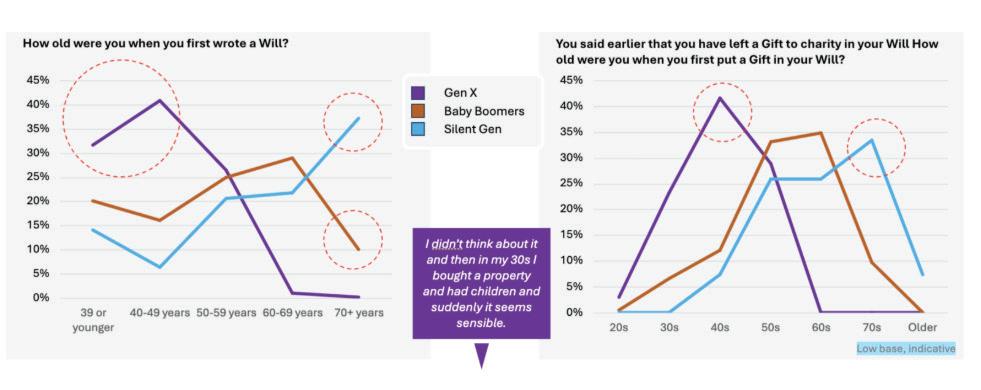
• People are writing Wills earlier, with Gen X-ers most commonly doing so in their 40s and Baby boomers in their 60s
Professional advisers are playing a critical role in shaping clients’ decisions to include charitable gifts in their Wills, according to new consumer research from Remember A Charity.
The study shows that among individuals with a Will who

have discussed leaving a charitable gift with a professional adviser, 60% have gone on to include one. This compares with just 20% of those who have not had such a conversation, underlining the significance advisers can play.
The findings are based on research carried out by independent agency OKO, which surveyed more than 2,000 UK charity supporters aged 40+ as part of Remember A Charity’s longrunning consumer benchmarking study 1. The study tracks long-term growth in the proportion of people choosing to include charitable gifts in Wills, which rose from 14% in 2010 to 22% in the latest annual survey (November 2025).
While legacy giving is increasingly common amongst those with Wills, it is younger generations, those with higher levels of assts and those who are aware of the tax incentives, who are most likely to leave a gift. (Gifts to charity are exempt from IHT and donations of 10% or more reduce the rate of IHT from 40% to 36%).
Despite this, awareness of the IHT benefits associated with charitable giving remains relatively low – at 42%. Even among individuals with assets of £1 million or more, 30% are unaware that leaving a charitable gift in their Will can reduce inheritance tax.
While tax incentives can support decision-making, they are rarely the primary motivation. Instead, individuals are typically driven by personal values and a desire to support causes they care about, after providing for family and friends.
Continues over page...



Adviser conversations linked to higher charitable giving in Wills... continued
People are writing Wills earlier
The research shows that the average age of making a first Will is 50, but that this is shifting over time. Generation X is most likely to write a Will in their 40s, Baby Boomers in their 60s and Silent Generation in their 70s. This reflects a broader shift towards earlier financial planning, even as traditional life milestones such as home ownership, marriage and children are occurring later.
Younger Will-makers are more likely to include a gift, with 35% of those aged 40–59 having done so, compared with 32% of those aged 60–69 and 30% of those aged 70+.
Over one third (35%) of those who have not yet included a charitable gift say they would consider doing so. (See chart below)
Professional advice and changing behaviours
Professional advisers continue to play a central role in Willwriting, with 66% of those with a Will using a solicitor and 18% a professional Will writer. At the same time, approaches are evolving, particularly among younger clients: 28% of Gen X respondents say they would make a Will online or have already done so, compared with around 10% of Boomers and Silent Generation respondents.
Demand for financial advice is also increasing. The proportion of people seeking financial advice has risen from 42% in 2021 to 53% in 2025, with younger and wealthier individuals and those supporting multiple charities most likely to seek guidance. Those aged under 55 with assets over £250k are the most engaged with professional wealth advice.
Wills as evolving documents
The study reinforces that Wills are not static and often change over time. While 49% of respondents have never updated their Will, more than half (53%) expect they will need to do so in future.
Life events such as bereavement, changes in family relationships, inheritance and retirement are key triggers for reviewing a Will, creating important opportunities for advisers to revisit clients’ intentions and ensure their plans remain aligned with their wishes.

Long-term trend and adviser opportunity
Jeremy Rix , Managing Director of the independent research agency OKO, says:
“People like to feel like that they’re exerting some
control in uncertain times by planning ahead. Given an easier process and a wider range of options available, making a Will is one practical way they can do this.”

Lucinda Frostick , Director of Remember A Charity, says:
“Professional advisers play a vital role in helping clients navigate complex decisions around their estates and finances. This research highlights just how influential those conversations can be, particularly when it comes to charitable giving.”
Remember A Charity offers a free Campaign Supporter scheme and a wide range of resources for solicitors and Willwriters on legacy giving 2, with a dedicated hub 3 for wealth advisers.
A summary report 4 is published on the consortium’s website, with a full report available for Remember A Charity members.
1The tracking study, which follows Prochaska’s Stages of Change model, shows forward movement over 15 years from donors’ active rejection of leaving a gift in their Will and lack of awareness through to awareness, contemplation, preparation and action (leaving a gift). The Stages of Change model features six levels: rejection of leaving a gift in their Will; pre-contemplation unaware – those who have never thought about it and are not sure if they would consider it, pre-contemplation aware – those who have thought about it and given it low consideration; contemplation - those who know about it and would consider leaving a gift; preparation – those who intend to give; and action - those who have already included a gift in their Will.
NB. A small number of respondents don’t fall into any group (i.e. those who say they’re not sure if they’ve thought about and wouldn’t consider leaving a gift in their Will, plus those who haven’t thought about it but say they would consider leaving a gift and/or intend to do so) and are excluded from the analysis and results from the other groups prorated to 100%.
2 https://www.rememberacharity.org.uk/about-us/for-solicitorswill-writers/
3 https://www.rememberacharity.org.uk/about-us/for-wealthadvisers/
4 https://www.rememberacharity.org.uk/about-us/latest-news/ study-reveals-move-towards-earlier-will-writing/



Law firms in England and Wales experienced rapid, sector-wide growth in 2025, according to the Law Society’s new annual Financial Benchmarking Survey.*
The UK legal sector is a world-leading economic powerhouse generating £60 billion annually and employing about half a million people. It provides the necessary legal certainty for other sectors to innovate, invest and grow. Law Society’s research shows that the legal sector remains resilient even in these uncertain times, providing stability and support to businesses and communities across England and Wales.
Law firms’ average earnings grew by 11.2% in 2025, compared with a 6.1% increase in 2024. This acceleration marks the highest rate of growth in more than 15 years. Growth was widespread across the sector, with 85% of firms reporting year on year fee growth in 2025, including more than half seeing growth of 10% or more.
The legal sector continues to be a significant employer. The number of legal professionals across participating firms increased by 2.3%, while productivity also improved for a second consecutive year.
The report highlights a continuing need to invest more in certain areas.
For example, technology remains key as well as investing in support staff.
Mark Evans, president of the Law Society of England and Wales, said:
“Despite ongoing external uncertainty and an increased need to invest in new technology, law firms are seeing strong growth. The legal sector remains healthy and resilient.
“Solicitors continue to support clients, businesses and communities while heavily contributing to the UK’s economy. With the right support and investment, England and Wales can continue to lead the world as a renowned legal centre.”
Key findings from the Financial Benchmarking Survey include:
• median practice fee income increased by 11.2%, compared with 6.1% in 2024.
• 85% of firms reported year-on-year fee growth in 2025, with 55% seeing growth of 10% or more.
• total fee income across participating firms exceeded £1.2bn, equating to an average of £9.9m per practice.
• total median salary costs fell slightly as a proportion of fee income to 63.9%.
• non-salary overheads fell as a share of income to 28.4% from 31.0% in 2024, with median overhead costs per fee earner broadly stable.
• the number of fee earners increased by 2.3%, reflecting sustained demand for legal services.
• lock up days, which is the time it takes to collect payments, fell from 146 days to 134 days in 2025. While this still represents just over four months between
being appointed and getting paid, the report notes this is a clear improvement.
• while overall overheads fell as a share of income, the report highlights a continuing need to invest more in certain areas. For example, technology remains a key area of investment as well as support staff.
• non salary overheads fell as a share of fee income to 28.4%, down from 31.0% in 2024

**The Financial Benchmarking Survey 2026 (https://www.lawsociety.org.uk/ topics/research/financial-benchmarkingsurvey-2026 ) provides an overview of the financial performance of the legal sector and is written and produced by the legal team of Hazlewoods LLP for the Law Society Leadership and Management Section and sponsored by Lloyds Bank Commercial Banking.
In its 25th year, the survey for 2026 collected financial data from 121 firms, with a combined income of over £1.2 billion.
Firms who would like to register their interest to participate in the 2026/27 survey can contact benchmarking@ hazlewoods.co.uk
Working with expert witnesses... is a new monthly article series. The series takes a look at the role of expert witnesses in a range of sectors from the perspective of the legal and other professionals who work with them. If you are interested in being featured in the series, you can contact us at policy@ ewi.org.uk
The first article in the series is by Richard Black1 and Jennifer Fitzmaurice2 from Eversheds Sutherland3 on their experience of working with expert witnesses in the construction industry.
Why is expert evidence so important in the construction industry?
Expert evidence is crucial in the construction industry due to the technical, specialist, and often complex nature of disputes that arise in this sector and which go beyond the legal expertise of lawyers, arbitrators and judges.
It is common for claims to hinge on expert evidence, including as to design, defects, delay and quantum.
We will often seek expert input very early on in a matter, in order to properly understand the merits of our client’s claim or defence and advise the appropriate next steps or strategy accordingly.
Selecting the right expert is therefore of paramount importance on almost every construction dispute.
What qualities do you look for when appointing an expert?
A great expert witness combines technical expertise with integrity, clarity and fairness.

The first quality we look for is expertise – do they have extensive, hands-on experience of the particular issue in the dispute? Is this experience recent and on real projects, as opposed to perhaps more ‘career’ experts who, whilst being credible, may lack experience of the latest position or recent changes.
In some cases, where we are carrying out an early evaluation of a matter, our clients may be looking for practical advice as to how to rectify the issue, as well as support for the potential dispute. In these cases, practical and industry experience is particularly important.
Where formal proceedings are inevitable, it is important that the expert can properly and clearly communicate this experience and expertise in a way that makes it easy for a tribunal to understand.
Finally, remaining calm and credible under inevitable pressure during hearings or under cross-examination is extremely important.
When selecting an expert, we typically research their appropriate expertise, review their CVs, interview them and also seek referees where available. It is extremely helpful when experts can provide referees from past cases that they have worked on. We will also obtain feedback from other lawyers, both inside and outside of Eversheds, if they have used the expert previously.
How much weight do you put on hearing experience? If the matter we are working on goes to trial, we would expect our expert to
attend and observe any evidential areas which are relevant to their report (subject to any restrictions imposed by the relevant tribunal)
Prior experience giving evidence before a court or tribunal is helpful, but not essential.
In cases involving delay and quantum claims, which are the most common form of construction dispute, we would expect the lead expert to have trial experience.
However, it is common for construction disputes to raise very specific technical issues. In these cases, we regularly prioritise technical expertise over trial experience.
A significant number of cases settle before a hearing takes place, and it is often the technical experience of an expert that can help achieve an early settlement by unlocking the technical issues between the parties.
In all cases, we recommend that experts attend cross-examination training prior to hearings taking place, as this can often fill the gap in trial experience, or act as a refresher for more experienced experts.
What are the main duties of an expert witness?
• Part 35 of the Civil Procedure Rules governs the use of expert witnesses in civil litigation. For example:
• Provide independent and impartial evidence
• Base opinions on facts, analysis and professional judgment
• Clearly state when an issue is outside their expertise
• Include in their report any material facts which could affect their conclusions
• Comply with any tribunal directions and deadlines.
Similar duties are often imported into international arbitration proceedings, whether by order of the Tribunal, and/or through incorporation of the Chartered Institute of Arbitrators Protocol for the Use of Party-Appointed Expert Witnesses in International Arbitration.
In any event, ensuring credibility of the


expert is key to ensuring that any opinion is given sufficient weight by a Court or Tribunal. This means, as a matter of practice, presenting evidence in a neutral and balanced way.
Can you provide any tips on how experts can make an instructing solicitor’s role easier during a dispute?
More often than not, the best practices are relatively simple:
• Understand and address the issues in dispute, and adopt a reporting structure which reflects the issues in dispute.
• Keep reports clear and succinct, avoiding too much technical jargon or, where technical jargon is unavoidable, provide clear explanations and definitions. Include cross-references to any documents relied upon.
• Comply with agreed deadlines, whether set for internal purposes or by the Court or Tribunal.
• Provide reliable cost estimates and regular cost updates. This is particularly important in court proceedings which are subject to cost budgeting.
Working well with the other side’s expert is also extremely helpful, with a willingness to identify areas of agreement and disagreement in order to ultimately narrow the issues in dispute.
Experts who understand that their role is giving technical evidence rather than trying to determine the dispute underpins this approach, and can really help us to advise our clients better on the merits of their position.
Are there any common pitfalls for experts to avoid when instructed on a dispute?
There are a few mistakes that experts regularly make, which can and do fundamentally affect their credibility:
• Appearing biased towards the instructing party.
• Making assumptions or overstating conclusions without adequate evidence.
• Giving opinions which are outside of the expert’s scope or expertise, including determinations of facts or opinions of law (which are for the Court or Tribunal).
Ultimately, impartiality and accuracy are key – and credibility once lost is quite difficult to recover.
Richard
Black & Jennifer Fitzmaurice, Eversheds Sutherland
1https://www.eversheds-sutherland.com/en/ global/people/black-richard
2https://www.eversheds-sutherland.com/en/ global/people/fitzmaurice-jennifer
3https://www.eversheds-sutherland.com/en/ global


The FHM team
In April we celebrated our second birthday as FHM Forensic Accounting. Although the practice was founded just two years ago, Fiona Hotston Moore has over 20 years’ experience as a forensic accountant and expert witness. Our Associate Director, Tom Arnold, is a qualified accountant and has focused on forensic accounting for over five years and accepts appointments as named expert.
In addition to Fiona and Tom, who lead on all client assignments, Kirsty Shuckford is a qualified accountant with experience as a financial accountant both in practice and in a global business. She joined us a year ago and is an important member of the team who brings exceptional analytical skills.
Supporting the client facing team, our Managing Director and cofounder, Graham Hines takes care of our technology, website, finance and compliance to ensure we deliver the exceptional client service that we target on every assignment.
This summer we are delighted to
be expanding further with a senior appointment in the Northeast and we look forward to building on our existing strong law firm relationships in the North.

Beyond the core team, we are delighted to work with other professionals, including tax and corporate finance specialists. This allows us to provide a first class and seamless advisory service to our clients. We do not provide ongoing accounting or tax compliance services, but we can suggest appropriate firms.
As a team we have adopted fully remote working. This delivers an excellent worklife balance for the team and means we operate in a sustainable way by eliminating the need for dedicated office space… and the daily commute.
The important statistics
Of course, as forensic accountants, we do like numbers and financial analysis so here are a few of our statistics.
We have accepted over 230 engagements since we started and more than 20 of these came from law firms based in the North. Overall,
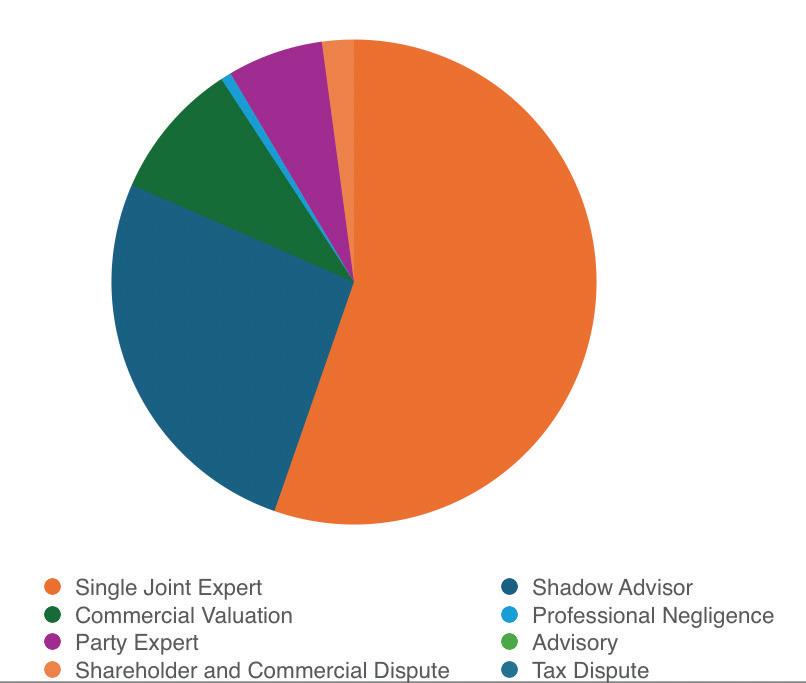

122 of our engagements were appointments as Single Joint Expert in shareholder/commercial disputes or matrimonial cases. Seventy were as Shadow Adviser or Party Expert and another 20 were company or group valuations for tax, audit or strategic planning purposes.
The businesses we have valued for dispute, divorce and tax planning cases have been in a wide variety of sectors: dentists, wealth management, law firms, accountancy practices, technology, media, farming, property, construction, industrial services, fashion, hospitality, retail and more. We have expertise beyond private companies including international groups, LLPs, partnerships and sole traders.
What next?
We will continue focusing on our mission to help clients resolve financial disputes and problems in an efficient and cost-effective way. Whether the case is large or small, we provide opinions that are clear, relevant, credible, informed and cost-proportionate.
Our specialist forensic accounting services include:
• Business valuations
• Divorce and matrimonial matters
• Shareholder and commercial disputes
• Professional negligence claims
• Private client, inheritance and family matters
• Employment disputes
By continuing our focus on business
valuation and forensic accounting we plan to further expand our law firm network, including in the North.
Over the next few months, we will continue our successful webinar series for our legal contacts. The recent webinars on tax proved popular with our family law contacts and we will offer webinars on business accounts and company valuation later this year. If you would like an in-house training session, please do let us know.
Further information
Our website at https://www.fhmforensic. co.uk, has details of our services and also plenty of relevant articles on business valuation and forensic accounting. You can also download our brochure, CVs and tax cards. Please email us to receive invites to webinars etc.

http://www.hertslawsoc.org.uk/
Tribunal Practice And Procedure
Tribunals under the Tribunals, Courts and Enforcement Act 2007 6th edition
By Edward Jacobs
ISBN: 978 1 91364 871 8 LEGAL ACTION GROUP www.lag.org.uk
A comprehensive handbook by edward jacobs for practitioners in tribunals
Now in a sixth edition for 2024, Edward Jacobs’ celebrated book on Tribunals remains a comprehensive and authoritative guide to the integrated tribunal system created over ten years ago by the Tribunals, Courts and Enforcement Act 2007.
What the reader gets is a structured approach to the practice and procedure of tribunals, setting out what the rules of procedure are in their context and offering a framework for understanding and analysing the practices that apply to them.
The tribunal system has at this time in 2020s, attained a steadfast state though the matters over which it has jurisdiction continue to expand. This is especially important in the General Regulatory Chamber of the First-tier Tribunal and the Administrative Appeals Chamber of the Upper Tribunal. The judicial review work of the Immigration and Asylum Chamber of the Upper Tribunal has now established its position in place of the Administrative Court for that jurisdiction at a very testing time politically.
As well as dealing with the rules of procedure, this book contains practical advice for tribunal members and those who appear before them. For parties and their representatives, it deals with obtaining and assessing evidence, writing decisions, applying for adjournments, techniques of questioning and tribunal advocacy.
The sixth edition covers the following main areas depending on what you are looking for: the proposed change in status of Senior President of Tribunals as part of the “One Judiciary” reforms; devolved tribunals in Scotland; anticipated changes to devolved tribunals in Wales; abolition of Cart judicial reviews; updated reported case law of Upper Tribunal and the senior courts since 2019, including important decisions on the nature of an appeal; amendments
Appreciations by Elizabeth Robson Taylor of Richmond Green Chambers and Phillip Taylor MBE, Head of Chambers and Reviews Editor, 'The Barrister'
to TCEA and the rules of procedure; and extended coverage of rules on anonymity, confidentiality and disclosure.
The book remains essential reading for tribunal judges and panel members, representatives and anyone who appears before the tribunal or is interested in how they work. The Legal Action Group (LAG), continue to publish the book. LAG is the access to justice charity who are justly famed for producing legal texts accessible not only to lawyers, but to the average, concerned reader, and they are famed for the support they give us as practitioners today.
This work has been described is “the one book that every tribunal judge, member, adviser and representative should have at their fingertips”. Very true as it offers great advice and support for established and new practitioners.
It remains unique for the depth of its coverage, and it guides us well with Jacobs’ considerable skill, experience and dedication of the subject matter setting out, as he does, the hugely important range of work undertaken by the modern tribunal system. Thank you LAG for continuing to publish this work.
The sixth edition of this paperback book from LAG was published in 2024.
Nhs Law And Practice
2nd edition
By David Lock KC, Leon Glenister and Hannah Gibbs
ISBN: 978 1 91364 859 6 LEGAL ACTION GROUP www.lag.org.uk
Another comprehensive handbook from lag covering one of the biggest areas of modern law: the nhs and its budget
The National Health Service (NHS) is the most important public service provided by the state today in the United Kingdom. For lawyers, the complex structures and organisation of the NHS can make it one of the most difficult public services to understand. So, we welcome this new edition of “NHS: Law and Practice” by David Lock KC, Leon Glenister and Hannah Gibbs which explains the law so well.
The Legal Action Group (LAG) is the access to justice charity. They are justly famed for producing legal texts accessible not only to lawyers, but to the concerned reader, and to practitioners, old and new to the English legal system.
There is no single public body called the ‘National Health Service’ and no single legal regime that governs how NHS bodies should operate. What we have is an NHS which is made up of a complex network of public bodies that operate as commissioners of NHS services who contract with NHS trusts, NHS foundation trusts, private businesses and charities that all provide medical, dental and other services to NHS patients.
What is called the NHS ‘managed market’ is overseen by both economic and care quality regulators. The rules under which commissioners, providers and regulators operate are both inaccessible and of such complexity that they can be impenetrable for even the most specialist lawyers.
This new second edition describes the large and complex legal structures of the modern NHS. Lock, Glenister and Gibbs explain the legal relationships between NHS commissioners and primary care, community and acute providers of NHS services, as well as explaining the structure of NHS regulation.
LAG offers us detailed guidance to the enforcement of patients’ legal rights around NHS Continuing Healthcare, patient choice, and it examines the rules around NHS personal budgets which remains a mystery to many!
Edited and written by this specialist team of lawyers whose involvement with NHS law and many of the leading cases over decades has given them unrivalled expertise in NHS and healthcare law.
This book will be an essential text for anyone who needs to understand how the legal structures of the NHS currently operate and how they should operate for, as Lors Sales says, “the NHS can truly be said to be the centre of national life!” so do add it to your law library.
The second edition of this paperback book was published in 2023.