

President Michael Scutt Crane & Staples Employment
Vice President
Laura Woolard
Taylor Walton Family
Hon Treasurer /secretary
Judith Gower
Immediate past president
Massimo Trebar Lawtons Criminal
Council Members:
Nicola Smyrl Taylor Walton Employment
Marilyn Bell SA Law Family
Jane -Louise Burrows Fullers Family Law Family
Neil Johnson Burnside Partnership Civil Litigation
(From January 2026 until 31 December 2026)
Alexander McDowall Hertfordshire County Council Local Government
Steven Hamilton
Taylor Walton Probate and Trusts
Claire Sharp Debenhams Ottaway Probate and Trusts
Sylvia Goulding Perrin Myddleton Property & Commercial
Paul Davies
Hamilton Davies Small Firms Division
Keira O’ Connor
Royal College of Nursing Public Inquiries and Regulatory Nursing and Midwifery council
Amanda Thurston University of Hertfordshire
Penny Carey University of Hertfordshir


I am honoured and privileged to write this column as the president of the Society for 2026. I am delighted to have taken up the role and would like to give my great thanks to my predecessor, Massimo Trebar, for the hard work that he put into the role last year. I am also delighted that Laura Woollard of Taylor Walton is my vice president for this year.
Like all of you, I have hit the ground running: I am an employment practitioner and the wave of settlement agreements and disputes shows no sign of abating. Whether the upturn in redundancies is due to the effect of the employees NIC increase last April, or AI is actually starting to eat away at human roles I cannot say but Christmas now seems like a distant memory and we are already hurtling into February. I am one-twelfth of the way through my presidency already!
We had our first council meeting at the end and it was a pleasure to meet other members of the Council on a face to face basis for the first time in several months. I was pleased to welcome former colleague Emma Curtis-Vegh onto the Council as
Herts Junior Lawyers Division representative and I look forward to working closely with HJLD over the coming months.
A couple of days after that meeting, I attended the SAALS (Southern Area Association of Law Societies) meeting in Basingstoke (the Honorary Secretary is Paul Davies , also of this parish)and it was a very useful exercise to discover what other local law societies have on their agenda and are planning in the coming year.
As we all know, the old allegedly Chinese proverb wished that you “may live in interesting times” . That seems to become more and more appropriate with every passing year. The wider world may be assailed by the volatility of a certain resident on Pennsylvania Avenue, the threat to world stability, the cost of living, hospital waiting lists and the traumas in the Beckham family, solicitors have enough on their plats to not even notice. Mazur rocked our world in Q4 last year and the appeal is due next month. And don’t mention Axiom Ince or SSB, or anti-money laundering or …it goes on. Then the government issued a short-dated consultation on the taxation of interest on client accounts, which could have an existential impact on many firms. Take a deep breath…
The deadline for responding to the consultation is 9 February and I would urge all members to respond to the consultation as this is something which is clearly going to have a major impact on solicitors’ firms up and down the country if implemented. In the Law Society's view it could force many firms to the wall and there is
no suggestion the funds raised in tax are going to be earmarked solely for the court system or be of any direct benefit to the justice system at all. I have many clients who are waiting months and months for hearings in employment tribunal cases and I know that is replicated throughout the civil, family and criminal justice systems. Justice delayed is justice denied and nothing in this government proposal will do anything to alter that reality.
How about proper funding for the legal system? Similarly, removing the right to jury trials in supposedly less serious cases will do nothing to improve justice either. There should be greater investment in the justice system if justice is to be preserved. The rule of law is being challenged, not just in this country, on a daily basis, but if we cannot ensure that litigants can have their cases heard in a reasonable period of time, what hope do we have for preserving the rule of law? It’s a drum that solicitors need to keep banging time and time again.
In this coming year I am hoping to arrange events which will be of benefit to members of the Society, focusing on practice issues, and I would be delighted for you all to get involved where you can. The Law Society is here to represent your interests as practitioners and I welcome any input from any members who have ideas on how we can best assist you.
I look forward to meeting members as the year goes on.
Wishing you all the best for 2026.
Michael Scutt President, Hertfordshire
Law Society
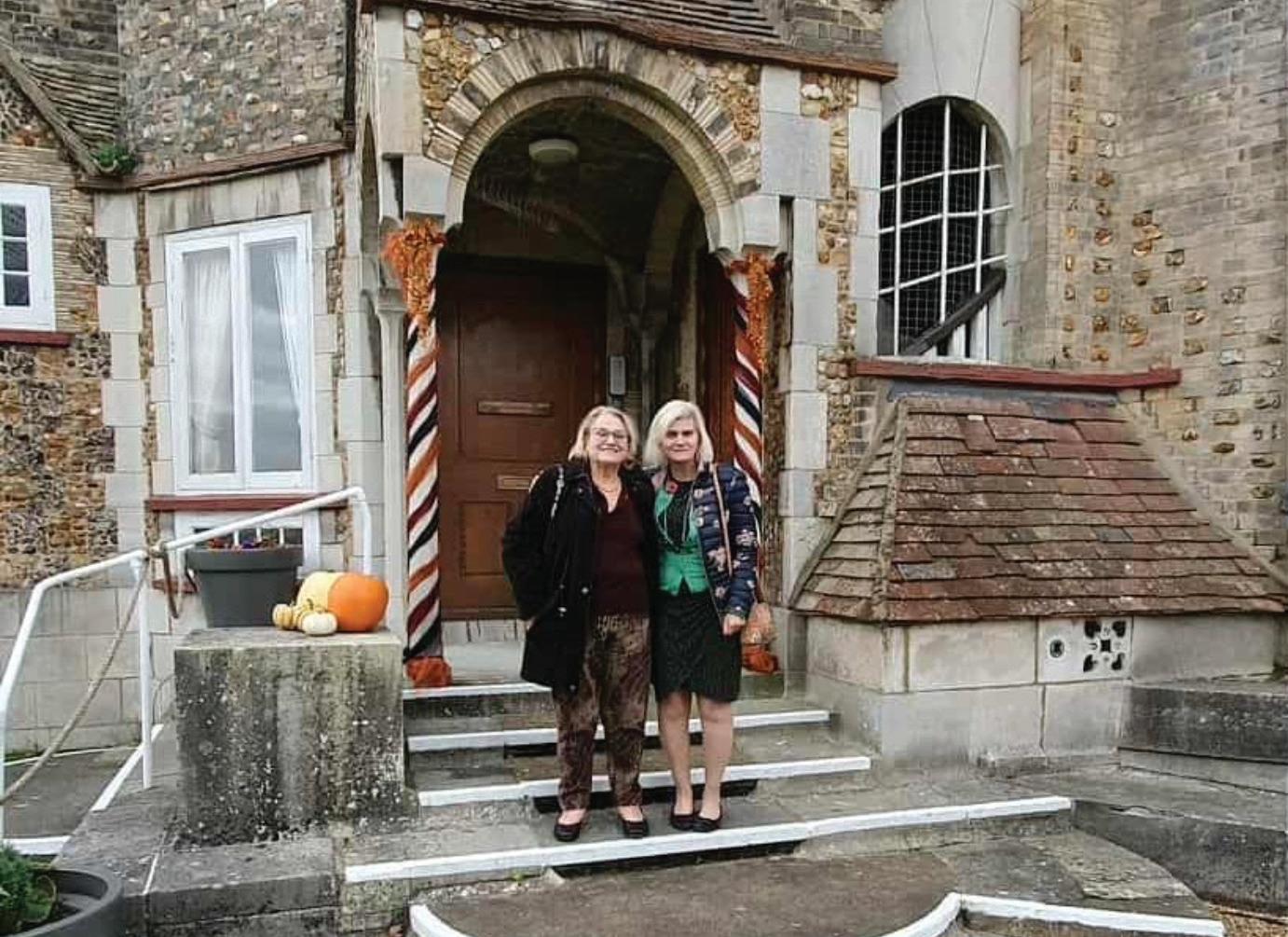
The Cloisters was built by Miss Annie Jane Lawrence as an Open Air School and Theosophical Meditation Centre. Having moved to Letchworth in 1905, Miss Lawrence leased a three-acre plot and wasted no time in setting up her school, alongside building a home for herself, the Cloisters Lodge.
The building opened on 28th January 1907 – the unique design is said to have come to Miss Lawrence in a dream and she employed the architect William Harrison Collishaw to bring it to reality.
It consisted of a large half-oval ‘openair room’ called the ‘Cloisters Garth’ with an open colonnade to the south and large glazed bays to the north. This was flanked by two wings, one housing the kitchen and store rooms and the other the cubicles & dressing rooms for an oval open-air swimming pool. The decorations around the building, which can still be seen today, were packed with symbolism from the healthy lifestyle she advocated – doves representing innocence, bats about to start their dusk patrols, bees building honeycombs to provide food for the gods, and butterflies dancing with natural joy.

An electric organ was installed in the Cloisters entrance hall, and through a system of pipes the disembodied sound of organ music would waft around the building. Boarding students ate communally (although all housework was considered a male activity) and retired in the evenings to hammocks that were let down from the ceiling.
During the Second World War, the Cloisters was commandeered by the army who, unfortunately, did not treat the building kindly. When it was returned
after 6 years, compensation of £2500 was claimed towards its restoration. However, this was not enough and Miss Lawrence did not have the money to repair it on her own. Convinced
that it should remain a building for the community, she offered it to the County Council for free but was turned down and spent the rest of her life looking for the right organisation to take the building on.
In 1948, after a chance remark, Miss Lawrence was inspired to offer the Cloisters to the local Masonic fraternity. They accepted and the first Lodge meeting took place in October 1951, after extensive renovations had been carried out. By now Miss Lawrence had moved out of the Lodge and into a nursing home where, now happy that her grand building was in use again, she died in 1953 at the age of 90.
The Cloisters has been managed by the Lawrence Cloisters Trust since 2018.
This is a very brief history of the Cloisters. To learn more and have a wonderful tea and tour please contact 01462 678059, bookings@ lawrencecloisterstrust.org or me.
Judith Gower

I’m not a happy princess currently. At the beginning of January everything was moved out of the kitchen into either the garage or the dining room. Luckily my things went into the dining room. I think I like having all my meals in the dining room. The kitchen, including flooring, units, tiles everything was ripped out. New units have been installed and worktops are on but it is still chaos. I hate the noise and the smells. I have found a wonderful place to hide which is in the base of a bed. I open the sliding door and hide in there. I come out when there are no workmen in the house or it is my meal time.
My hooman parents are not very happy as there is dust everywhere and the house is such a mess. They will be conducting tours when it is finished!
@princessgigi2019


http://www.hertslawsoc.org.uk/
Those who enter the legal profession often share a familiar set of attributes, resilience, attention to detail, analytical thinking, and a strong sense of justice and ethics. These qualities, among many others, are the very foundations upon which one of the world’s most influential legal systems has been built.
It is therefore unsurprising that these same determined junior lawyers also experience the emotional pressures and challenges inherent in a profession that asks a great deal of them from the very earliest stages of their careers.
The Hertfordshire Junior Lawyers Division is here to support junior lawyers at this stage of their journey by offering a welcoming, inclusive space where junior lawyers and students can connect, learn, and feel part of a genuine legal community.
The Hertfordshire Junior Lawyers Division is a committee of 18 volunteers, comprising students, trainee solicitors, qualified solicitors, and legal professionals across both private practice and in-house roles. Alongside our day jobs, we dedicate our time and energy to organising networking events, educational webinars, and seminars, creating opportunities for junior lawyers not only to develop professionally, but to feel heard, supported, and understood by their peers.
At its heart, the Hertfordshire Junior Lawyers Division is about connection, bringing people together, breaking down barriers, and reminding junior lawyers that they are not navigating this demanding profession alone.
To find out more about our individual committee members, please visit our introductory post using the link below and connect with us: https://www.
linkedin.com/feed/update/urn :li:activi ty:7395076833043484672/

Wellbeing sits firmly at the centre of our focus for the year ahead. We are continuing our popular bimonthly NetWalking events, with routes carefully mapped across a variety of Hertfordshire locations. Previous walks have taken us through the beautiful countryside of Codicote and Hitchin, and our next walk, taking place in April, will be in Hatfield, perfectly timed to allow for some guilt free post-Easter chocolate consumption.
While many of our events are tailored specifically to junior lawyers, our NetWalking events are open to all, including children and well-behaved furry friends.
On the alternate months, we host afterwork drinks, rotating locations across Hertfordshire to promote inclusivity and to explore what the county’s pubs have to offer (purely in the interests of research, of course).
Our Netwalking and after-work drink events are free to attend, whether you can join us for the whole time or just pop in briefly. We share details of upcoming events on our LinkedIn page, and we warmly encourage anyone local to come along and join us.
Diversity, Accessibility and Wellbeing “A judiciary which reflects the society it serves is more likely to command public confidence.”
— Baroness Hale
A strong sense of belonging is essential to a thriving legal community. We are committed to maintaining an open and inclusive platform where Hertfordshire junior lawyers from all backgrounds feel proud, supported, and confident that their Junior Lawyers Division is there to encourage, empower, and advocate for them.
We recognise that junior lawyers do not all start from the same place, and that those from lower income backgrounds may face additional barriers when entering the profession. In response, and as part of our broader commitment to inclusion, wellbeing, and sustainability, we have begun establishing a preloved clothing, footwear, and literature initiative aimed specifically at junior lawyers.
This initiative seeks to remove financial barriers and ensure that no one feels prevented from attending a job interview or important meeting due to the cost of professional attire. We believe that talent and potential, not financial circumstance, should determine opportunity.
Supporting one another strengthens our legal community, and we would be delighted to hear from anyone wishing to donate items.
Our Charity – MS Together

We are proud to support MS Together, our chosen charity, who provide vital social, mental health and peer support to young adults living with Multiple Sclerosis (MS). Their work aligns closely with our own commitment to wellbeing, inclusion and community, and we are delighted to champion the incredible impact they continue to make. Over the coming months, we will be sharing further details on how members and supporters can get involved in our fundraising activities.
We are excited to hold events and collaborate with fantastic organisations

such as Parkrun. Through these partnerships, we aim not only to raise awareness of MS but also to generate vital funds to support the meaningful work MS Together does every day. To learn more about the charity or their work, please visit www.mstogether.org
We enjoyed an exceptional programme of events in 2025 and are delighted to be launching another full calendar for the year ahead. We began with our Boom Battle Bar event in Stevenage, kindly sponsored by Tollers, and have a full week of activities planned for Mental Health Awareness Week, including yoga, pottery, and more.
We have a range of in person and online opportunities to get involved with us and urge you to connect with us on LinkedIn or email us to join our ever-growing mailing list to stay up to date with our events.
Guided by our attendee feedback, we are also introducing events such as a Thai cookery class and sporting events, creating opportunities for junior lawyers to learn new skills, relax, and have fun together outside the courtroom and office environment.
http://www.hertslawsoc.org.uk/
We plan to hold a larger event during summer to celebrate with our junior lawyers and look forward to revealing our plans with you shortly.
Our events are only made possible with the invaluable support of our sponsors. Their generosity allows us to deliver a vibrant programme of events that remain accessible, inclusive, and low cost to attend, while continuing to invest in initiatives that genuinely support the wellbeing and development of junior lawyers across Hertfordshire.
We are always excited to collaborate with local businesses and organisations who share our commitment to nurturing the next generation of legal professionals. If you are interested in sponsoring an event, partnering with us, or exploring creative ways to work together, we would love to hear from you.
As we step into the new year with optimism and ambition, we are also proud to celebrate the achievements of our former Chair, Kiera O’Connor. Kiera remains an invaluable asset to our committee and has recently joined the Hertfordshire Law Society as a Council
Member. We are incredibly proud of her and excited to see all that she will achieve. If you would like any information on our events, wish to talk about your experiences coming into our legal profession or want to see how you can get involved please do reach out. We are your Junior Lawyers Division, the voice of junior lawyers in Hertfordshire, and we look forward to meeting as many of you as possible in the year ahead.

Emma Curtis-Végh
Private
Wealth Solicitor
and
Chair of
Hertfordshire Junior Lawyers Division Junior Lawyer of the Year 2025
https://www.linkedin.com/feed/update/urn:li: activity:7395076833043484672/

The 2025 decision in Re O represents a significant reaffirmation of the court’s approach to international relocation cases where domestic abuse is a central feature. The case involved a mother’s application to relocate permanently to the United Arab Emirates with her two children, following serious findings of coercive control and physical abuse perpetrated by the father. Both parents, although residing in the UK, were nationals of other countries, and the children were British.
The parents separated in early 2021 after the mother alleged sustained domestic abuse, including coercive and controlling behaviour and physical assaults. These incidents were witnessed by the children, who were later described as “deeply affected” by the emotional impact of the father’s behaviour.
In January 2025, after considering the findings of abuse and the psychological effects on the family, the High Court granted the mother permission to relocate with the children to the UAE. The father appealed, arguing that the mother’s relocation plans were insufficiently detailed and highlighted the absence
of a robust legal framework in the UAE for recognising or enforcing Child Arrangement Orders, particularly significant given that the parties were unmarried, creating additional jurisdictional uncertainty.
The Court of Appeal upheld the High Court’s decision. In doing so, it endorsed the lower court's careful welfare analysis and its approach to domestic abuse within relocation proceedings.
The court emphasised that welfare encompasses not only physical safety but also emotional security. Even though the most severe abuse had occurred in the past, its emotional consequences remained acute. Remaining in England, where the father continued to demonstrate limited insight and a lack of genuine remorse, carried an ongoing risk of emotional harm.
The father’s coercive control and violence, and their profound psychological impact, were found to be decisive factors. The court accepted that the mother and children required a safer emotional environment, which the proposed relocation was capable of providing.
Although relocating to a non - Hague Convention country inevitably raises concerns about future enforcement of contact arrangements, the court concluded that the children’s immediate emotional safety outweighed those uncertainties. Expert evidence had highlighted jurisdictional complications in the UAE, but the court viewed these risks as less significant than the harm posed by the father’s behaviour in the UK.
Cafcass and the court both accepted that the mother’s relocation plan was child - focused, sincere, and grounded in a desire to rebuild a stable and financially secure life. Importantly, the court noted her commitment to promoting the children’s relationship with their father, despite the history of abuse.
Conclusion
Whilst the judgment does not create new precedent it reinforces established principles where there is serious domestic abuse, the need to secure a safe and stable emotional environment may outweigh concerns about international enforcement, including in non - Hague jurisdictions.
Re O (2025) highlights that in relocation cases involving domestic abuse, the courts will prioritise emotional safety and long - term welfare over international legal complexities. Even in challenging international contexts, a move may be justified where it offers a meaningful opportunity for recovery and stability.
This case serves as a powerful reminder that coercive control and psychological harm are treated with equal seriousness as physical abuse, and that a parent’s lack of insight can significantly influence the court’s risk assessment.
Ultimately, the ruling reflects a child - centred approach that recognises the protective function of relocation in cases of entrenched domestic abuse
Gurjeet Panesar Fullers Family Law

Following several months of back and forth between the House of Commons and the House of Lords, royal assent was granted on December 18th 2025, making Labour’s ‘Employment Rights Bill’, the ‘Employment Rights Act 2025’; launching some of the most substantial reforms seen in decades. With major implementations coming into force in 2026 and 2027, employees and employers are expected to be faced with a rapidly evolving landscape over the coming years.
This article will outline some of the most influential, upcoming changes, their anticipated dates of action and how they may affect you or your business.
Under the current legal framework, unfair dismissal requires that employees must have served a minimum of 2 years’ continuous service to qualify for the right to bring a claim for unfair dismissal at a tribunal. This does not apply to those under the umbrella of automatically unfair reasons such as pregnancy, whistleblowing or trade union membership.
Labour’s initiative ‘Make Work Pay’, launched in October 2024, proposed removing the two-year qualifying period, making unfair dismissal a dayone right, whilst also enabling employers to operate statutory probation periods to ensure employees are capable and suited to the role. However, as of November 2025, following resistance from the House of Lords and negotiations between business representatives and trade union representatives, it is now confirmed the qualifying period is to be set at 6 months of continuous service and probation periods are to be shelved.
However, the employment tribunal backlog is continuing to build, and it is likely that this reduction in the qualifying period will exacerbate the number of cases in the system awaiting hearing. A reported 52,000 cases were
outstanding in March 2025, displaying an almost 25% increase on the figures from the previous year. Whilst this new amendment is aiming to promote justice, we must acknowledge that providing citizens with ‘swift justice is a vital public service, not a luxury’ (Richard Atkinson, President of the Law Society of England and Wales). With a current 450,000 individuals awaiting resolution, this amendment may be placing pressure on an already overwhelmed system. As wait times increase, with some cases now being listed for late 2028, delays are causing huge anxiety and frustration amongst claimants, whilst increasing their potentially unrecoverable costs.
Additionally, many businesses have raised concerns about the potential challenges and costs this reduced qualifying period may cause in the recruitment process. This reduced qualifying period is set to heighten the legal and procedural risks associated with each new hire. Employers will undoubtedly want to ensure their recruitment processes are both stringent and robust to guarantee employees are the correct fit. Striking the balance between fairness and flexibility is vital to afford vulnerable employees’ fair treatment whilst not stunting the recruitment process entirely.
Compensatory Award for Unfair Dismissal:
Currently capped at the lower of 52 weeks gross pay or £118,223, the act is also set to remove the statutory cap on the compensatory award applied to unfair dismissal claims. By removing this cap, the government is facilitating the opportunity for higher earners to benefit the most and seek significantly higher damages. This is also likely to impact settlement expectations as it awards employees more bargaining power and removes the ability for employers to rely on the cap as an upper ceiling. Ultimately, this change is bound to increase the financial stakes of every termination and ensuring that
all dismissals are both procedurally and legally compliant will remain more crucial than ever.
Fire and Rehire:
Fire and rehire refers to the practice of changing the terms and conditions of an individual’s employment by way of dismissing and then re-engaging them on generally less favourable terms. This has previously been a lawful way to amend an employee’s contract, whilst evading any liability for an unfair dismissal claim.
From the 1st of October 2026, the Employment Rights Act 2025 proposes ‘to close the loopholes which allow firms to engage in these unscrupulous practices’ by tightly regulating the rules surrounding fire and rehire. Dismissal will now be considered ‘automatically unfair’ in circumstances where it is linked to refusal to accept changes in core contractual terms, also known as imposing ‘restricted variations’. As a result, any dismissal linked to pay, working hours, pensions, shift patterns or time off will be considered automatically unfair. It will also be unlawful to rehire the same employee, or to recruit a new employee, on less favourable terms where the duties are substantially the same.
The only exception to this will be in the narrow circumstances where businesses are experiencing genuine and severe financial difficulties affecting business viability. The proposed changes will need to either mitigate these financial problems or will simply be unavoidable in terms of sustaining the business.
These changes will substantially impede an employer’s ability to use fire and rehire going forward. Employers who do not comply with these new requirements put themselves at risk of unfair dismissal claims and of a protective award, as well as increased compensation awards of up to 25% and potential damage to their reputation.
However, for employees, these changes provide much greater job security, knowing employers cannot misuse their power and undermine terms negotiated in good faith, enabling greater financial stability. Preventing these practices mitigates any potential power imbalance and prevents employees from feeling pressured to comply with changes they believe are unfair.
While fire and rehire remains lawful, employers planning to use these practices should approach the matter with extreme caution. These practices should be employed only as a last resort, and employers should ensure they consult with their employees and their representatives honestly and meaningfully before proceeding. They should document all rationale and alternatives and ensure they follow fair procedure and the ‘Dismissal and Reengagement Code of Practice’ to avoid any legal, financial or reputational risk.
It is estimated that 1 in 10 employees may be affected by bereavement each year, yet at present, there is no statutory entitlement to bereavement leave, except in the limited circumstance of a parent suffering a child loss or miscarriage beyond 24 weeks of pregnancy. This current legal framework remains outdated and ill-defined, leaving those in an already vulnerable position with inconsistent support. Labour’s proposed amendments demonstrate recognition for the vastly different way that grief impacts individuals and comprehends the need to treat employees in these circumstances with compassion, acknowledging that ‘grief cannot be confined to rigid timescales, or a onesize fits all approach’.
Expected to come into force in 2027, the bill proposes a day one right to unpaid bereavement leave with all employees entitled to a minimum of one week of leave to be taken within a window of a minimum of 56 days. The consultation also poses to broaden the scope of relationships that are included in the description of ‘loved ones’, with the specifics to be set out in forthcoming law,
but with parents, partners and siblings expected to be included.
By implementing this as a statutory right, it sets a clear minimum standard for employers, removing current reliance on good faith and discretion. Employers will be required to act with compassion in these circumstances and allow employees to properly grieve without the added anxiety of their job security being undermined.
The new bill also proposes an extension of bereavement rights to families who experience pregnancy loss before 24 weeks. This will apply not only to the woman physically experiencing that loss but also to the partner involved. In addition to protecting those experiencing miscarriage, it is also expected to extend to women experiencing ectopic pregnancy, molar pregnancy, embryo transfer loss during IVF, and terminations for medical reasons.
With an estimated 250,000 pregnancy losses a year, the necessity for a minimum standard in law is overwhelming. This inclusion in law recognises the emotional, psychological and physical toll of pregnancy loss and demonstrates a recognition of the nuances of loss, whilst displaying a commitment to fostering profoundly more positive and considerate workplace practices.
Public consultation for these matters closed on the 15th of January 2026, with key details to be confirmed in the coming months, we are expecting these changes to be launched in 2027.
Zero hours contracts and agency workers:
1.13 million employees in the UK are on zero-hour contracts, representing 3% of the workforce. Due to the fact that they are amongst some of the lowest paid and face the most job instability, the government’s initial manifesto displayed a commitment to ‘tackle insecure work’ and end ‘one-sided flexibility’ by pledging to ‘ban these exploitative zero-hour contracts’.
The Employment Rights Act 2025
reflects a slightly softened version of this, not eradicating them entirely but attempting to make them fairer for both employers and employees. Under the new regulations, zero-hour, low hour and agency workers are set to have a right to guaranteed hours, reasonable notice of shifts, payments for short-notice cancellation of shifts and protection from dismissal.
Employers will have to offer ‘guaranteed hour contracts’ which will reflect the hours worked during a specific reference period, expected to be twelve weeks, alongside being required to give notice to their employees of the date of the shift, and the set hours expected not to exceed seven days. Finally, employers will be liable to compensate employees if they cancel or significantly shorten their shifts at short notice, and noncompliance with these new regulations could risk costly tribunal claims. The consultation on this matter is planned for early 2026, with full implementation by 2027.
Conclusion:
This landmark legislation is set to be transformative to the current employment landscape. Increased protection for employees indicates increased legal risks and exposure for employers. To prevent any potential difficulties, employers should ensure they conduct early impact assessments to address the legal, financial and operational risks arising from these amendments. They should prioritise auditing employee contracts and reviewing existing workplace policies to ensure adherence with legal requirements and identify areas in need of update and restructure. Staff training and increased awareness should be implemented to ensure those responsible for implementing these legal changes do so consistency and precisely. Finally, it is crucial that employers remain proactive and informed about ongoing government consultations and anticipated timelines to ensure compliance and mitigate potential legal and reputational risks.
Amy Davies Paralegal, Crane & Staple
http://www.hertslawsoc.org.uk/
If UK government is serious about resuscitating our criminal justice system, they must now enact a comprehensive, long-term rescue strategy with strong political leadership, sustained investment and a joinedup approach, urges the Law Society of England and Wales.

Sir Brian Leveson (pictured left) has today published part II of his Independent Review of the Criminal Courts*, which focuses on how the courts in England and Wales can operate efficiently.
Immediate past president of the Law Society and criminal defence solicitor, Richard Atkinson , said: “Sir Brian’s report demonstrates there is no single fix to bring our criminal justice system back from the brink and ensure swift and fair justice is delivered.
“Sir Brian shows that sustained investment is needed throughout to resuscitate our criminal justice system.
“Successive governments’ neglect and underfunding** of this crucial public service have degraded every element of it, leaving many victims and defendants having to wait until 2030 for justice. Anyone pretending the appalling backlogs can be fixed simply by unproven headline-grabbing measures, such as cutting jury trials or transferring cases from one overburdened court (the Crown Court) to another (the Magistrates' Court), is betraying the public.
“There are no corners left to cut. The government must provide sustained investment in our crumbling courts*** and those who work in them, and robust evidence that its reforms will fix the backlogs. We urge the government to respond in full to all of Sir Brian’s recommendations and to show the joined-up leadership our criminal justice system needs to survive this crisis.
“Some short-term gains are possible through reducing demand on the system with increased out-of-court disposals, and we welcome the report’s emphasis on dealing with cases at an early stage.
“We also support its recommendations that the government should take positive steps to help recruit and retain defence solicitors, who are essential to the fairness and efficiency of the criminal justice system.
“We disagree with some recommendations that may compromise the fairness and safety of the justice system, including providing legal advice by video link to people detained in police stations, and remote first court hearings after arrest where people’s liberty is at stake.”
• * See Sir Brian’s report:

https://www.gov.uk/government/publications/independentreview-of-the-criminal-courts-part-2
• ** An Institute for Fiscal Studies report on justice spending in England and Wales stated that in 2025/26, real-term day to-day spending by the Ministry of Justice is set to be 14% lower than in 2007/08. Full article here:
https://ifs.org.uk/publications/justice-spending-england-andwales
• *** See our State of the courts report demonstrating the poor state of our court infrastructure:
https://www.lawsociety.org.uk/topics/research/state-of-thecourts-solicitors-views-in-2025


With the largest intergenerational wealth transfer now underway, new data from our latest tracking study reveals that almost one in three people aged 40+ with a Will have included a gift to charity (32%).
The study, based on over 2,000 people who donate to charity more than once a year, indicates that people often write their Will at a younger age than others might think. Almost half of those who have made a Will, did so before they reached their 50s (49%). However, it also shows that almost 2 in 5 people aged 40+ (37%) have not yet written a Will at all.
This New Year, we're encouraging people, when writing or updating their Will, to consider all the things they care about; loved ones and good causes alike.
As New Year’s resolutions take shape, January remains the most natural time of year for a financial reset. Writing or updating a Will is essential for anyone who wants to influence how their assets will be distributed beyond their lifetime, while being a key opportunity to protect family, loved ones and any good causes they wish to support.
Good estate planning can also help families reduce their Inheritance Tax (IHT) bill. Charitable gifts in Wills are free of tax, with donations of 10% or more of the net value of the estate reducing the IHT rate from 40% to 36%. However, even amongst wealthier UK households, a significant knowledge gap remains about these tax incentives, with 30% of millionaires in this study saying they were unaware of the tax breaks on charitable gifts in Wills.
This news comes at a time when
IHT receipts continue to rise. The Chancellor’s Autumn Budget statement revealed that IHT thresholds will be frozen for another year (until 2030/31). With the Government’s plans to draw inherited pension pots into the scope of IHT from April 2027, experts are predicting that around twice as many estates will be liable for IHT by 2031,1 prompting more households to think carefully about how they preserve and pass on wealth.
Solicitors, Will-writers and financial advisers are already reporting a growing appetite for inheritance planning. In recent research, 60% said they have seen a rise in demand for estate or tax planning advice, and 65% say they expect charitable tax incentives to become even more important2 to their clients in the years ahead.
With the UK entering the largest intergenerational wealth transfer in history and many more estates facing an Inheritance Tax liability, having an up-to-date Will in place has never mattered more.
This January, Remember A Charity is urging people to reflect not only on their financial affairs, but the good causes they wish to support alongside their loved ones. Charitable gifts in Wills can make a considerable impact on good causes and communities across the UK – funding vital research, care in the community, emergency helplines, animal welfare, environmental causes and so much more.

Lucinda Frostick , Director of Remember A Charity, says:
“The new year is a great opportunity for us all to get our affairs in order

and it’s deeply inspiring to see that – for so many people – that includes good causes as well as our loved ones. We’re seeing a growing sense of social responsibility and a real desire to leave the world a little better. No matter the size of the gift, remembering a charity in your Will can be one of the most empowering things to do – helping to sustain urgently-needed charitable services for future generations.”

James Antoniou , Head of Estate
Planning
&
Senior Solicitor
at Co-op Legal Services, says:
"Typically, the start of the year is the most popular time for putting a Will in place. It’s an essential part of planning for the future and a properly prepared Will is often much easier to do than people realise. Gaining peace of mind that your wishes will be legally recognised and your assets protected for your loved ones after you’re gone are often key incentives however we are increasingly seeing clients choose to include charitable causes in their Wills, leaving a lasting legacy that can make a real difference to the causes that matter to them.”
To explore how charitable gifts in Wills are changing the world, visit the Great Map of Willanthropy.3
1 https://obr.uk/efo/economic-and-fiscaloutlook-november-2025/
2 https://www.rememberacharity.org.uk/ about-us/latest-news/6-in-10-professionaladvisers-think-inheritance-tax-changeswill-prompt-growth-in-charitable-legacies/
3 https://www.rememberacharity.org.uk/ great-map-of-willanthropy/




The Solicitors’ Charity is highlighting the pivotal role of Ricardo Premchand, Director of Data and Operations, whose strategic leadership behind the scenes continues to strengthen the charity’s mission of supporting solicitors and their families through times of need.
Ricardo, the longest-serving current member of the charity’s staff with 13 years of dedicated service, brings a unique blend of operational expertise and purpose-led commitment to his work.
In The Legal Loop series on the charity’s website, he shared insights into how his team’s focus on systems, data integrity and process optimisation has enabled the charity to operate with greater clarity, responsiveness, and impact: https:// thesolicitorscharity.org/article/legal-loopricardo/
“You don’t have to manage things on your own. We all need a helping hand from time to time – and it really is ok to ask for help,” says Ricardo, reflecting both his personal
ethos and the charity’s approach to wellbeing support.
Ricardo emphasises that while his team’s work may be less visible than frontline services, it is vital in ensuring The Solicitors’ Charity runs smoothly and effectively.
From enhancing internal systems to better coordinate casework, donor management and reporting workflows, his contributions help create space for colleagues to deliver thoughtful, humancentred support to solicitors and their dependants across England and Wales.
He explains that: “good data and wellconsidered ways of working give us the confidence to adapt, improve and grow in the right direction,” while reinforcing the charity’s commitment to a holistic wellbeing model that goes beyond financial aid to address emotional, physical, and professional wellbeing too.
Ricardo’s perspective underscores a broader evolution within the charity:
one that recognises the complexities of modern legal lives and the need for tailored, efficient, and compassionate support systems.
His reflections also resonate with the legal profession at large, encouraging organisations and individuals alike to consider how informed, strategic operational practices can amplify impact across sectors.
He concludes: “The Solicitors’ Charity is here not only for moments of crisis, but to walk alongside people as they move forward. With over 165 years of experience and a sole focus on supporting solicitors and their dependants, we’re uniquely placed to offer personalised, compassionate help that reflects modern legal life.”
The Legal Loop series offers a behindthe-scenes look at the people shaping The Solicitors’ Charity’s work.
Find out more about the support available through The Solicitors’ Charity: https:// thesolicitorscharity.org/how-we-help/



In this article our experts at FHM Forensic Accountants share their top tips for lawyers. Fiona Hotston Moore and Tom Arnold undertake 50 to 60 forensic accounting assignments each year. We are instructed on a range of matters including business valuations, financial investigations, professional negligence, shareholder and partnership disputes. We act as Single Joint Expert, Party Expert and Shadow Adviser.
1) Beware of placing too much reliance on published company accounts
Less than 5% of companies are subject to an external audit. An external audit gives assurance that an external qualified auditor has scrutinised the accounts both in terms of the numbers and the disclosures. An audit gives an assurance that the auditor has not identified a “material” error in the accounts. However, Accounting and Auditing Standards are principles-based and you may need expert advice to interpret the accounts. If you do have audited accounts, we recommend first checking the Audit Report to see if the auditor was happy with the accounts. If the auditor was unable to give a “clean” audit report, you may see either a “Disclaimer of Opinion” or an “Adverse Opinion”. Read the qualification carefully and ideally obtain an interpretation from a qualified accountant. Additionally, the auditor may express a view as to whether the company is a “going concern” (i.e. is able to continue to trade and meet its liabilities as they fall due).
In respect of most limited companies other than the largest entities, the published accounts on Companies
House, are of limited value. The accounts on public record will be extracted from the full accounts that are prepared for shareholders. Often the published accounts comprise only a balance sheet and a few notes. The profit and loss statement is not published and so there is no information on turnover or profitability. The accounts will normally include a note of the number of employees which gives an indication on the likely size of the company.
The balance sheet in the published accounts will give you the “net assets”a very rough estimate of the baseline net worth of a company. However, but this may be very different from the market value of the company which takes into account the value of the trade and intangibles. Also remember that assets shown in the balance sheet may be at historical cost. The current market value of, say, a property may be substantially higher than its original cost.
Finally, as experts we all too often come across errors in accounts as well as accounts that show a misleading view of the financial position. Errors can include inclusion of provisions and liabilities that are not justifiable or failure to correctly account for a share premium. Occasionally we even see accounts that do not add up!
2) Think tax Tax impacts much of our work as forensic accountants. We may be giving a view on the after-tax valuation of a shareholding or the tax costs of extracting cash or assets from a company. The tax costs of a transaction can be substantially reduced if capital gains tax rates apply rather than

income tax rates. Furthermore, there are various reliefs and exemptions that may be available.
There are also taxes that are easily overlooked in a transfer or transaction but that can be significant. For example, disposing of shares that were eligible for Business Asset Disposal Relief, may result in a substantial increase in the potential Inheritance Tax liability on an estate. Similarly, don’t overlook potential VAT on a business or asset transfer or Stamp Duty Land Tax on the transfer of a property.
The list of potential tax pitfalls is very long and early input from the company accountant or an independent expert is advisable.
We also come across tax liabilities arising from tax schemes or failed tax planning. This may include disputed Research & Development claims or Employee Ownership Trusts. In such situations an objective assessment of the likely liability is required.
3) Don’t overlook the option of engaging a shadow adviser
We are instructed as shadow adviser in a range of cases. Typically, in a financial dispute where a Single Joint Expert is engaged, we may be instructed to help the clients and legal counsel to draft the instructions, to assess the expert report, formulate questions and decide on the litigation strategy.
In family cases we can review the initial disclosure and give a view on any valuation provided by a party or company accountant. We can give a view on whether the appointment of a Single Joint Expert should be sought.
The shadow adviser can help give your client reassurance on the reasonableness of the Single Joint Expert report and help contain costs.
fiona@fhmforensic.co.uk
+44 (0)7770 642491
Tom@fhmforensic.co.uk www.fhmforensic.co.uk
http://www.hertslawsoc.org.uk/

or legal professionals practising across Hertfordshire, alcohol misuse can be a key concern in family law and child protection.
According to the Department for Education, 73,250 social care cases in the year ending 31 March 2025 involved concerns about a parent’s alcohol misuse. While drugs often attract the headlines, alcohol is the substance more frequently linked to child neglect, domestic abuse, and fluctuating parental capacity.
With around 1 in every 30 children classified as being “in need” of social care services, understanding patterns of alcohol consumption among parents or guardians is critical to safeguarding cases.
Meanwhile in the workplace, alcohol misuse is likely to be minimised, misunderstood, or missed. This is despite studies suggesting that a whopping 40 per cent of workplace industrial accidents are due to substance misuse.
Using alcohol testing to support decision making
At Certis BioLabs, we provide clear and scientifically grounded evidence about alcohol and drug patterns of use to support sound decision making.
Our UKAS-accredited labs and experienced forensic teams will help you identify patterns of use over time, so that fair decisions can be taken in family courts or the workplace.
We understand that every test result goes deeper than data: it can impact a child’s or adult’s future. That’s why we uphold the highest standards of accuracy, confidentiality, and scientific clarity in all our services.
How do we do this? We develop a full picture of alcohol consumption by looking at alcohol biomarkers in hair, blood, urine, and nail samples. These biomarkers are usually produced in the body following alcohol consumption and can provide insight into a person’s alcohol consumption patterns over time.
With our reports, you will have clear, court-compliant evidence of alcohol use over both short and extended time periods.
What test is best for your case? There are a lot of tests out there and it can be confusing to know which to choose from.
We offer:
Hair strand testing: By looking at biomarkers left by alcohol in the hair (EtG, EtPa), this test can indicate excessive or chronic historical consumption over a 1-6 month window.
Blood testing (PEth): Provides insight into a person’s alcohol consumption in a roughly four-week period prior to testing.
Nail alcohol testing (EtG): This is useful for understanding historical consumption and is a good alternative to blood or hair samples.
Hair and nails are generally best at revealing long-term use, while blood (PEth) and urine (EtG) are better placed to highlight recent consumption. For the Public Law Outline (PLO) process, assessments over 3 or 6-month periods are usually required, whereas shorter detection windows may be preferred for employment-related tests.
If you are unsure about which methods are best for your case, our dedicated customer service team will be happy to advise.
Translating results into reliable evidence Reports where cut-off levels or certificates of analysis have been used can easily lead to disputed results.
Certis BioLabs ensures reports that stand up to scrutiny, providing:
• Clear and easy to digest courtadmissible reports
• Contextual explanation of what results mean, as well as what they can and cannot show
• None of our findings are filtered out – we report all substances found, no matter how small
• Dedicated support from our experts for follow up questions
We don’t just provide data but clarity about what the data means and why it matters.
Our interpretation is complemented with information collected from the client about their self-declared use, as well as other relevant information, such as hair colour, pregnancy, medication use and other factors that can impact results.
Certis BioLabs works with solicitors and local authority teams at the instruction stage to ensure the chosen method answers the precise questions the court need answered.
Having supported thousands of cases with drug and alcohol testing, we know how high the stakes are for individuals being tested.
The Importance of High-Quality Sample Collection
Sample collection remains a frequent source of delay in family cases when not performed to forensic standards.
Certis BioLabs offers nationwide professional sample collection, ensuring:
• Full forensic chain of custody
• Convenient appointments, including home visits or appointments at one of our nationwide walk-in centres
• Bespoke handling of each case, ensuring clients are treated with dignity and respect
• Consistent, legally defensible processes to ensure evidence is reliable and court admissible.
• 3-day turnaround once the sample is received
Reliable evidence supports better outcomes
When it comes to alcohol testing, Certis BioLabs helps eliminate the guess work. Our focus is on clarity, safeguarding, and trust, providing results that meet the highest standards of accuracy and care.
Need an alcohol test?
Contact us now on 01235 633040 or email testing@certis-biolabs.co.uk to discuss how we can support your testing needs.
Website: Certis BioLabs Limited - Drug, Alcohol & DNA Testing: https://www. certis-biolabs.co.uk/

haemorrhoids which permanently hang down from within the anus and cannot be pushed back inside.

Summary
The Claimant brought a claim of clinical negligence after suffering a rare but serious complication (anal stenosis) of an operation performed by the Defendant to surgically remove her haemorrhoids. The judge found that the evidence of the Claimant’s expert was based on limited experience or expertise. There were also several instances where he had not acted in accordance with his duties as an expert.
Learning points
Leaning points for experts
• Expert witnesses are under a duty to assess the arguments of both sides and weigh them up fairly. It may damage or even be fatal to your evidence if you do not engage with the arguments of the opposing side.
• You risk losing credibility if you refuse to admit when you have changed your opinion or make reasonable concessions when you have been shown to have been wrong.
Learning points for instructing parties
• Ensure that the experts you instruct in a clinical negligence case have sufficient expertise and recent experience to identify the standard of a reasonably competent practitioner at the time of the index events.
The case
The Claimant brought a claim of clinical negligence after suffering a rare but serious complication (anal stenosis) of an operation performed by the Defendant to surgically remove her haemorrhoids. The original allegations of negligence in respect of the conduct of the surgery were discontinued after the joint statement, but the Claimant continued to the allege that the Defendant acting negligently in: (i) grading her haemorrhoids, (ii) failing to discuss non-surgical options, and (iii) failing to adequately explain the risk and benefits of the surgery (a ligature haemorrhoidectomy).
Haemorrhoids are graded in severity from Grade 1, small swellings on the inside lining of the anus, to Grade 4,
The expert evidence
Mr T provided expert evidence for the Claimant and Professor P for the Defendant. Both experts retired from clinical practice prior to the date of the surgery. Counsel for the Claimant conceded that Mr T’s level of expertise in terms of the live issues in this case was limited given how few haemorrhoidectomies he had ever carried out, and how few patients he had seen with grade 3 or 4 haemorrhoids.
The evidence of Mr T
Mr T is a retired general and colorectal surgeon with over 25 years’ experience in a District General Hospital. In crossexamination, he said that by the 1990’s he was working almost exclusively as a colorectal surgeon, mainly cancer but also haemorrhoids. However, he said he had not done many haemorrhoidectomies and had never done a ligature haemorrhoidectomy. From 2009 he was doing very little operating on haemorrhoids and none after 2010. He agreed that it was “a reasonable point” that it was difficult for him to identify the standard of a reasonably competent haemorrhoid surgeon in 2019.
The judge reached the conclusion that Mr T’s evidence was based on limited experience or expertise.
During cross-examination, it emerged that in several instances he had not acted in accordance with his duties as an expert under CPR Part 35 and the Practice Direction to Part 35. These included:
• Referring in his witness statement dated 21 July 2021 to his having read the Claimant’s and Defendant’s witness evidence when this was only served in April 2024.
• Although he accepted that he was under a duty to assess the arguments of both sides and weigh them up fairly, neither his expert report, nor his subsequent report, made any reference to the Defendant’s case and he had not analysed the Defendant’s case.
• Asserting, without any evidence to support it, that the Defendant had graded the haemorrhoids based on their size alone, rather than by using
the Grade 1-4 grading system which was consistent with the practice of a responsible body of Consultant Colorectal Surgeons.
• Denying that he had changed his opinion despite stating in his first report that in his opinion the Claimant’s haemorrhoids were Grade 1 and in the Joint Statement that it was likely that the Claimant had Grade 1-2 piles.
• It was also clear in his report that he wrongly thought the fissure was not healed and therefore needing treating before changing his opinion in the Joint Statement which noted that “as the fissure is healed it needed no active treatment at that time”. Despite this Mr T denied he had changed his opinion. The judge found it concerning that Mr T was unable to make this reasonable concession and admit that he was wrong.
The evidence of Professor P
Until his retirement Professor P was a full-time colorectal surgeon at the National Bowel Hospital where he undertook a combination of complex and anorectal work. He also ran several clinical trials relating to haemorrhoids in which he did all the surgery. He was made an Honorary Professor of Colorectal Surgery by Imperial College London in 2000. He is the author of 9 recent textbooks in colorectal surgery and has contributed to 300 original articles and 59 book chapters. The Joint Statement listed twelve publications by Professor P on haemorrhoids, including diagnosis and treatment, haemorrhoidectomy and evidence-based practice.
The judge noted that “[Professor P] has extensive experience of diagnosing, grading and treating haemorrhoids and of undertaking haemorrhoidectomies. I found him to be a forthright, straightforward witness who gave direct answers to questions and made concessions where appropriate (as set out in the body of this judgment below). In my judgment his evidence is reliable, objective and unbiased and I therefore consider it appropriate to place considerable reliance on it. I prefer his evidence in all respects to the evidence of Mr T save where he and Mr T agree.”
1https://caselaw.nationalarchives.gov.uk/ewhc/ kb/2025/2025?query=tosh+gupta



Discrimination In Housing Law
By David Renton
ISBN 978 1 91364 856 5
LEGAL ACTION GROUP
The access to justice charity www.lag.org.uk
Essential reading for housing practitioners acting for clients faced with repossession
There is very little that strikes more terror in the souls of its victims than the threat of impending homelessness via the judicial processes involved, which culminate in the process of eviction.
There ought to be an erudite and readable le book about it — and there is, thanks to this very useful publication from the Legal Action Group (LAG), the access to justice charity, who are justly famed for producing legal texts accessible not only to lawyers, but to the average concerned reader. David Renton, the author, is a barrister who represents tenants and mortgage holders embroiled in possession hearings. Published in handy paperback format, the
An
appreciation
by
Elizabeth Robson Taylor of Richmond Green Chambers and Phillip Taylor MBE, Head of Chambers and Reviews Editor, “The Barrister”
book offers a broad and concise coverage of ‘the use of the principles of equality in housing law’ — and equally of prime importance — the duty of landlords to fulfil their duties under the general categories of fitness and repossession.
As the publishers point out, the book covers the often complex and controversial matters, for example, of council houses let by housing associations, as well as houses held in thrall either to mortgages, or long leases. It should be added that homeowners in mortgage arrears suffer the same anxieties as those who rent — hence the general and urgent need for all practitioners to be duly bound in support of clients who struggle with these and other difficulties in the housing sector.
Practitioners and clients alike coming to grips with these problems will find this book especially helpful. As a concise work of reference, it truly excels. The precise introduction points directly to the subject of the book, namely the Equality
Act of 2010 and its related principles — which apply both to business premises and residential properties.
Straightforward to navigate, the book has a detailed table of contents, enabling the reader — lawyer of not — to find the necessary advice they may be looking for, and for those doing further research, the book contains extensive footnotes, plus a detailed and useful index at the back.
Note too, the particular advantage of a 30page section of precedents — including for example, the precedent entitled ‘Case Summary Application to Set Aside Possession Order.’ Also included in this concise text are Tables of Statutes, Statutory Instruments and also a Table of European and International Legislation.
For practitioners and clients alike, this book emerges as a practical and indispensable purchase.
The date of publication of this paperback book is cited as 2024.