Another telling sign is the presence of drug paraphernalia—any equipment, product, or material of any kind that is modified for making, using, or concealing a controlled substance. Examples of drug paraphernalia include the following: •
Rolling paper (a specialty paper used for making a marijuana cigarette);
•
Cigar (hollowed out and filled with marijuana to make what is referred to as a “blunt”);
•
Pipe (a device to smoke marijuana);
•
Bong (a filtration device to smoke marijuana);
•
Roach clip (a metal clip used to hold a marijuana cigarette);
•
Electronic cigarette (a device to smoke marijuana extracts); and
•
Grinder (a tool that breaks marijuana up into smaller bits).
TA K E A C TION
Help your teen create an “exit plan” in case he or she is offered or faced with a difficult decision about marijuana. Peer pressure can be powerful, so coming up with realistic action steps and practicing them together in a safe environment will prepare and empower your teen to make good choices when it matters.
Research suggests that one of the most influential factors when a teen is growing up is a strong, open relationship with a parent or caregiver. For more information about how to talk with your teen about marijuana, visit www.underagedrinking.samhsa.gov and www.samhsa.gov.
Use these tips to talk with your teen: • Check in frequently to see how they are doing; •
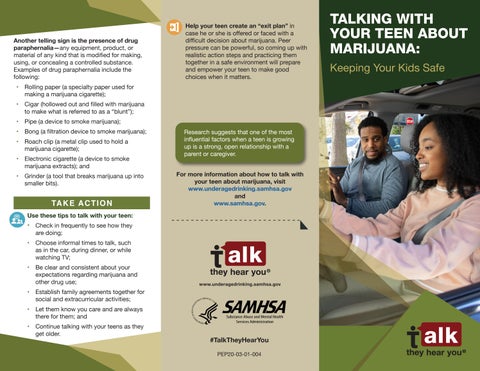
Choose informal times to talk, such as in the car, during dinner, or while watching TV;
•
Be clear and consistent about your expectations regarding marijuana and other drug use;
•
Establish family agreements together for social and extracurricular activities;
•
Let them know you care and are always there for them; and
•
Continue talking with your teens as they get older.
www.underagedrinking.samhsa.gov
#TalkTheyHearYou PEP20-03-01-004
TALKING WITH YOUR TEEN ABOUT MARIJUANA: Keeping Your Kids Safe