NURSING CONNECTIONS Published by The Office of University Relations at Eastern University 1300 Eagle Road St. Davids, PA 19087 610-341-5800
The Magazine of the Eastern University Department of Nursing
Summer 2015
Contents 1 Connections Corner 2 SNAP and Commencement address
Mary T. Boylston Editor
3 Korean Nurse Alumni Gift
Mark W. Lambertson Graphic Design
4 Rigors of Nursing Education
Daniel Peirce Brand Director Denise McMillan Communications Director Sherry-Ann Morris Chief Marketing Officer
3 Meet Stephanie Knowles Newman
6 Technology Enhanced Education 9 Striving for Perfection 12 Child Abuse Regulations 16 Top Chef 19 Poetry 20 Incivility 22 Cross Cultural Communication 24 Final Words
CONNECTIONS CORNER
G
Mary T. Boylston RN, MSN, Ed D, AHN-BC Professor of Nursing Editor, Nursing Connections
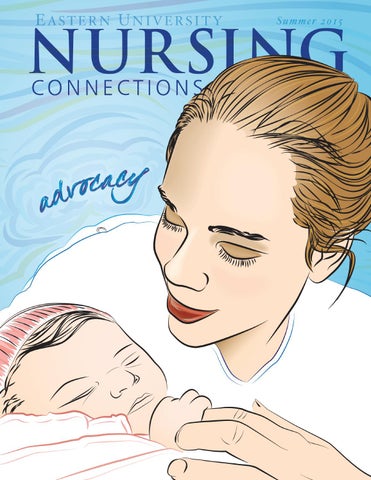
Above: The children in the photo inspired the art on pages 12 & 13. Below: This photo was the basis for the cover art.
reetings and welcome to the fourth edition of Nursing Connections! I am honored to bring to you the professional and personal journeys of some of our faculty, staff, students, and alumni. This magazine has been created to showcase the hard work, determination, talents, and dedication of some of the members of the Eastern community. The focus of this edition is to highlight the role of the nurse as advocate. As advocates, we tirelessly promote the wellbeing of our communities of interest. Placing the welfare of others as a primary concern is part of the daily routine of the professional nurse. Therefore, advocacy can be accomplished in a number of ways from rendering physical, emotional, and spiritual care to leading students and faculty to carry out the mission of the university. With that said, our lead advocate Dr. Mary Anne Peters has written her last message as Chair of the Department of Nursing. She is returning to her first love, which is teaching in the classroom. Dr. Peters, the winner of the Lindback Award for teaching excellence, has been our fearless leader for the past eight years. She took over the helm of the Department and added the traditional pre-licensure program. She also successfully steered the Department through the arduous, yet essential, CCNE accreditation process as well as countless other endeavors and projects. As a colleague, I have witnessed Dr. Peters’ advocacy and dedication to nursing education and professional practice. She has never wavered in her commitment to excellence. Her leadership and vision have been strategically aligned with the changes in nursing and health care. She is intelligent, intuitive, and perseverant. Despite the labile nature of an administrative position, she made her job look effortless, yet her colleagues and family know that she worked on weekends, long into the night, and through vacations. Dr. Mary Anne Peters has exemplified nursing leadership and excellence. As a friend, I am happy that she has chosen to stay with Eastern despite numerous employment opportunities elsewhere. She believes and lives our mission. It has been a great pleasure to work with her over the years. I look forward to observing her in the classroom and gaining some tips from a master educator and advocate. Thanks Mary Anne! With Appreciation,
Mary T. Boylston, RN, MSN, Ed D, AHN-BC Editor, Nursing Connections Summer 2015
Summer 2015
ADVOCACY
1
Mavis Sesay RN, BSN
Eastern University SNAP Activities The Student Nurses Association led by Senior President Kamilah Berry-Barnes with the assistance of the Board of Directors, Kristin Zinsmeister, Chelsea Bateman (Nurses Christian Fellowship), Courtney Keppley, Sandy Szopa, Coco Kaminski, and Olivia Scherlacher were busy as they organized nursing majors and promoted professionalism, volunteerism, and activism. They were joined by Junior members Kirsten Boyer, Taylor Profitt, Dominique Brown, Lily Dorleku, Onyinye Nwakamma, and Megan Maniscalco. The following list is just a few of their community activities: n Collected shampoo and toiletries in collaboration with Holy
Family, Immaculata, and Neumann Universities for the West Chester Food Cupboard. n Spearheaded The Lemon Challenge JDRF fundraiser. n Hosted We Know You’re Hungry Bake Sale. n Provided Ronald McDonald House breakfast for families of sick children at Nemours Children’s Hospital. n Hosted a resume workshop. n Invited the regional emergency room student nurses association to campus for a presentation. n Worked with regional university SNAP groups. n Sponsored T-Shirt sale. n Initiated mentoring program for junior class.
Members of Sigma Theta Tau International Honor Society 2015 First row: Brianne Walsh, Courtney Keppley, Emily York, Libby Garrison, Kristin Zinsmeister, Chelsea Bateman, Gwen Bretz Back row: Eleanor Rooks, Mary Anne Peters, Kamilah Berry-Barnes, Chantel Murray, Mary Boylston Unavailable: Michele Heim, David Herbetko, Linda Lofland, Stacy Marciano, Toni Petroski, Kaycee Torres, and Cathy Wilkes
2
Nursing Connections
Class of 2014 Commencement Address
G
ood morning friends, families, colleagues and faculty. Thank you for the opportunity to speak today. It is a great honor to graduate from Eastern University’s BSN program. It was a privilege to learn and work with intelligent nurses from all different cultures and experiences. I remember on the first day when we all attended orientation and reviewed the syllabus we all looked at each other and wondered if it was possible to achieve what was expected. However, as we all traveled together through our academic journey, we shared our experiences, embraced different cultures, prayed for Mavis Sesay delivered the Commencement Address in December 2014. each other and the world, and acquired rich knowledge to help us strengthen our practices as professionals. It was not an easy journey. It was stressful, but it was worth it. I wish to express my appreciation to the most intelligent, attentive, patient and respectful faculty who mentored us and shared their skills and knowledge to help us along the path. Nursing is a very challenging profession both mentally and physically. Throughout the program we learned how to care for ourselves in order to be able to care for others. We enhanced our skills in understanding other cultures, communication, listening, respect, collaboration, leadership and evidence-based research. As I stand here today, I am on the edge of another large step in my profession. I have decided to continue my studies to become a nurse practitioner. I could not move forward without a good foundation from Eastern University. I pray for all of us to use the knowledge we have acquired to provide excellent patient care. Put God first; everything is possible. We must speak for those who cannot speak for themselves and see for those who cannot see. There are many doors that have been opened. As nurses we can do great things within our community and across the world. We are here to teach, promote healing, and provide comfort. Remember God loves us all. Thank you. n
Eastern University
Korean Nurse Alumni Association:
A Lasting Legacy
Meet graduate Stephanie Knowles Newman
She works as a pediatric nurse at Pennsylvania Hospital.
Gilda Jean-Louis, M.Div.(c), MS, BA
T
he Korean Nurse Alumni Association presented a generous donation of $2,500.00 to the Department of Nursing in memory of their academic achievements in the RN to BSN Korean Nurse (KN) Track at Eastern University. Young Hee Kim, KN Alumni President, and Yoo Mi Kim, member, under the guidance of their Advisor, Mrs. Sung Yoo, presented the funds on October 30, 2014. The purpose of the funds was to purchase 15 portable chairs for the Nursing Skills Laboratory Resource Center, a 5 foot red cedar English garden bench to be placed outside the Gatehouse building facing McGraw Lake, and multi-colored Azalea bushes. The Korean Nurse Alumni Association, under the guidance of Mrs. Yoo met annually in the Baird Library in Walton Hall to share their experiences in the American healthcare system, advances in their careers in the nursing profession as well as personal achievements and challenges they have faced since their arrival in the United States. The graduates continue to network with each other in the U.S., Korea, and through social media. A total of 182 graduated from the RN to BSN Korean Nurse Track since its inception in fall 2004. The Department of Nursing faculty and staff are very proud of the graduates’ achievements and would like to convey a heartfelt thanks to each Korean nurse for the opportunity to contribute to their academic success. Also, a special thanks to Mrs. Sung Yoo for her dedication, commitment, and tireless contributions to the success of the program and all the students. n
Summer 2015
1. Why Did You Choose Eastern University? “I was looking for a Christian school that offered a Nursing major and fell in love with Eastern when I visited!” 2. What Was Your Experience While You Were at Eastern? “Being a part of Eastern’s community was such an amazing experience. I made so many good friends and learned from some very passionate, intelligent, and kind professors. I loved learning nursing from a Christian perspective. My professors were amazing and taught us how to be Christ’s hands and feet as we care for our patients.” 3. Did You Have Any Extracurricular Activities? “I was involved in powder puff football, the photography editor of the Waltonian, and did intramural sports.” 4. How Did Eastern Equip You for What You Are Currently Doing? “Eastern taught me the skills I needed to become a good nurse. I am currently a nurse in the Intensive Care Nursery and I care for babies and families who are going through traumatic experiences. Eastern equipped me with the knowledge of how to care for the babies physically, but also how to care for the family’s emotional needs as they journey through this hardship.” n ADVOCACY
3
Dr. Mary Anne Peters convenes annual systematic evaluation meeting to review program effectiveness and achievement of outcomes.
The Process and Rigors of Nursing Education:
The Role of Nursing Faculty Dr. Mary T. Boylston
The Department of Nursing at Eastern University prepares undergraduate nursing students for thoughtful and productive lives of Christian faith, leadership, and service as generalist nurses and members of the global nursing community. ~Mission Statement~
N
ursing education programs at Eastern University prepare the graduate for a generalist role in health care grounded in a Christian worldview. To do this effectively requires review, revision, and evaluation of teaching strategies, curriculum, and student learning outcomes as part of the everyday life of nursing faculty. This assures all stakeholders that Eastern’s program is sound, logical, meets national and internal standards, and prepares the graduate to deliver safe, evidence-based nursing care. Trends and new issues emerge regularly and nursing major courses must be up-to-date to accommodate the changing landscape of health care. To that end, Eastern University’s Department of Nursing, led by Dr. Mary Anne Peters, tracks changes, observes trends, and modifies courses annually. Through this rigorous systematic evaluation process, the faculty assess each course including student evaluations, books, grades, teaching learning strat-
4
Nursing Connections
egies, assessment and evaluation strategies, and adjust the courses accordingly. Furthermore, student learning outcomes are collected, evaluated and discussed, and course content, teaching, learning, or evaluation strategies are changed to improve or enhance the outcomes. For example, each BSN student completes a critical thinking standardized examination before graduation. Aggregate data are analyzed and assessed to determine the growth (or lack of growth) of the aforementioned critical thinking skills. Along with the course evaluation strategies, one and three year alumni surveys, ATI practice exams, Student Learning Assessment Plan (SLAP) completion, and employment rates are also collected for analysis of program effectiveness. If an aggregate score is lower than the expected benchmark, the course or curriculum is altered to achieve the benchmarks. An example of the impact of outcomes measurement is depicted in Box 1. According to the sys-
tematic evaluation plan, Key Element IV-E, the faculty collects, measures, and analyzes outcomes to demonstrate program effectiveness. This is achieved in a myriad of ways as evidenced by the data sources associated with this task. This process requires a great deal of careful consideration and time as courses, content, and outcomes are part of the analysis and evaluation that is often debated by faculty during semi-annual meetings. Once the faculty has come to an agreement, the course or courses may be modified and the process is repeated. Figure 1 demonstrates the iterative process of course evaluations, revisions, teaching learning strategies changes, and outcomes as they are measured and analyzed. After the extensive systematic evaluation process conducted by the faculty has been completed, the always present student question “will this be in the test?” makes the faculty smile. Like students, faculty do not want to nor need to teach extraneous content. They are Eastern University
Box 1: Key Element IV-E
Figure 1: Systematic Evaluation
Program Outcomes Demonstrate Program Effectiveness Collect: Student learning outcome data as defined in the Student Learning Assessment Plan for the program. Analyze: Student learning outcome data in regards to program benchmarks. Data Sources Student Learning Assessments Plans Student Learning Assessment Reports ATI critical thinking test results ATI content examinations Written communication tool data Oral communication tool data Ethical reasoning tool data Outcome Student learning assessment data will provide evidence of student achievement of DON curriculum goals and objectives.
not seeking ways to keep students busy. or close nursing programs is the State In fact, the process of curriculum deBoard of Nursing. The Pennsylvania velopment emerges from a number of State Board of Nursing, affiliated with areas. the National Council of State Boards of For example, the Commission on Nursing, evaluates and approves nursCollegiate Nursing Education (CCNE), ing programs in the Commonwealth. the accrediting body of the Department To gain approval, programs also abide of Nursing, sets standards for accrediby the State Board standards and guidetation. These standards evaluate lines. The latest the use of technology, adequate rechange to have an sources, curricular alignment with Running an effective impact on nursthe university’s mission, theoretiing programs in program takes a cal underpinnings, and the use of the Commongreat deal of business wealth of Pennoutcome measurement to assure the communitty of interest, the acumen as well as the sylvania is a new students and health care system, ability to lead faculty regulation which that Eastern’s program is sound, dictates at least and students to logical, and prepares the graduate 80% of first-time for safe, holistic practice in today’s achieve the outcomes test takers will health care setting. There is no pass the NCLEXof the program. room for fluff or assignments that RN on the first are considered “busy work.” attempt. In other words, if a uniOther sources of curricular versity graduates 100 students, 80 out input are the Institute of Medicine, of the 100 must pass the NCLEX-RN American Nurses Association (ANA), on the first take. If university or college ANA Code of Ethics, clinical partnernursing graduates achieve a pass rate ships, faculty input, and hospital assoless than 80%, the State Board will place ciations as evidenced in Box 2. These entities are just a few of the sources that the program on provisional status. This offer guidance to ensure the nursing is not a standard taken lightly by faculprogram has the tools needed to equip ty and administrators. When applicants students for success. search for nursing programs, the first One of the most influential organiquestion an enlightened student will ask zations that has the power to approve is “what percentage of students pass the Summer 2015
Box 2: Data Sources
Eastern University Mission Statement Demographic and University characteristics that influence mission, goals, and expected outcomes Department of Nursing mission, goals, and expected outcomes Commonwealth of PA Professional Nurse Law Pennsylvania Code, Title 49, Professional and Vocational Standards, Chapter 21 AACN Essentials for Baccalaureate Education ANA Standards of Practice Holistic Nursing Scope and Standards of Practice (AHNA) IOM Recommendations Committee Meeting Minutes
boards?” When posed with this inquiry, Eastern University’s Department of Nursing can reply “95.24% of last year’s graduating class passed the NCLEX-RN on the first attempt. This is one of the highest rates in the Commonwealth.” Fortunately, with the rigorous evaluation process, commitment to nursing excellence, and expert faculty and leadership, the Department of Nursing has been able to meet the national standards and incorporate changes in health care and nursing into the curriculum. Simply stated, nursing education is complicated. Running an effective program takes a great deal of business acumen as well as the ability to lead faculty and students to achieve the outcomes of the program. For the past eight years, Dr. Peters has been at the helm as education and health care has been transformed. From the change in the minimum pass rates to the start of the pre-licensure program, faculty, staff, and administration have created avenues for students to achieve their goal of graduating from a holistically-based and accredited program. The people that Eastern University nurses serve deserve the best that we have to offer. Therefore, the process of review and revision will continue. n
ADVOCACY
5
I
n May 2005, Eastern University’s Department of Nursing launched the pre-licensure Bachelor of Science in Nursing (BSN Two2) program. The necessity of a lab for skills practice resulted in a search around Eastern’s space-starved campus for a location that would enhance the teaching learning process and prepare the students for practice. After several debates, administration designated the Heritage House basement, now known as Fowler Hall, as the initial site of the fledgling nursing laboratory. The small Nursing Clinical Resource Laboratory (NCRL) was satisfactory for a number of years, however, there were various environmental challenges associated with the basement location. Therefore, in 2008, the NCRL was moved into the newly completed Eagle Learning Center as we prepared to welcome traditional students into the major. The more spacious lab was essential for accommodating the growing pre-licensure nursing major as well as serving as the site for the development of psychomotor skills, review of content, tutoring, nursing skills practice, and classroom space.
Technology-Enhanced Learning and the Nursing Clinical Resource Laboratory
High Tech-High Touch Corinne Latini, M.Ed., BSN, RN-BC, CSN Nursing Clinical Resource Laboratory Coordinator RN to BSN Cohort 1
Yet, as any nursing professional can share, health care changes are constant with concomitant revisions of curriculum and training strategies to reflect the learning needs of the new nurse entering an increasingly complex profession. In the last 10 years there has been a revolutionary change in the delivery of patient care with the advancement of technology, thereby altering the practice environment and challenging educators to keep pace with the health care system. Recent legislation, such as the American Recovery and Reinvestment Act and Health Information Technology for Economic and Clinical Health Act, mandates the adoption of technology in the hospital as well as in nursing education settings. Therefore, with increasingly sophisticated health care technology, the challenge of preparing the student for clinical practice now requires multiple teaching modalities that are directly related to the inclusion of technology in the curriculum. In other words, nursing students must be immersed in a technologically
6
Nursing Connections
Eastern University
rich education to be competent practitioners upon graduation. Consequently, there has been an associated need to improve technology in the NCRL so that students may be prepared for clinical practice. These changes have been developed with careful thought and deliberation and reflect the needs of today’s health care consumer. Experts assert the need for technological enhancement for a number of reasons, particularly provision of safer and more effective nursing care. Currently, these safety standards can be attained through the addition of simulated experiences using technology in the NCRL. For example, Electronic Health Records (EHR) and Medication Administration Records (MAR) have been implemented to help nurses provide safe, efficient patient care and reduce the risk of medical errors. As a result, before entering into practice the student needs exposure to the computer systems to practice entering, reviewing, and analyzing data collected. In tandem with changes in health care come revisions in nursing curriculum and teaching learning strategies. Therefore, to keep pace, nursing education is constantly evolving as the trends and expectations in healthcare dictate curriculum. Within this context, optimal patient care is the goal of Eastern’s nursing program as we educate students to become safe practitioners of the art and science of nursing. Meeting the needs of students in this area is critical as we craft ways to improve the student learning experience to adeptly prepare graduates to meet the demands of their practice environment. Over the years, there has been a debate as to whether technology such as programmed and simulated patients can substitute for actual hands on clinical experience. In 2014, a landmark study conducted by the National Council of State Boards of Nursing (NCSBN) found that up to 50% of clinical hours can be substituted with high-quality simulation. Those students in the group who had more simulation time were able to realize the same clinical knowledge, skills, and critical thinking as those in the groups that had more direct hands-on care and less simulation. Results suggest that up to half of the time allotted for clinical practice can be comprised of simulated clinical experiences and this can be as effective as the traditional clinical experience in all core courses across the pre-licensure nursing curriculum. Additionally, the use of this amount of simulation did not affect NCLEX-RN pass rates (Hayden, Smiley, Alexander, Kardong-Edgren, & Jefferies, 2014). Study participants were also followed during their first six months of clinical practice. Data collected suggested that there were no meaningful differences between the groups in critical thinking, clinical competency, and overall readiness for practice as rated by managers at six weeks, three months, and six months after employment in a clinical position (Hayden et al, 2014). This study is significant for educators because there are fewer clinical sites available for students to practice and having the ability to interchange clinical hours and simulation in the lab can provide students with a rich learning Summer 2015
ADVOCACY
7
experience. In fact, many clinical experiences have also become observational and the simulations that can be done in the NCRL will provide hands-on encounters. All of this technology is not without a cost. With the increase in patient care technology hospital-wide, the need to enhance the NCRL technological infrastructure is an expensive endeavor. To assist in the purchase of the latest technology, the McLean Contributionship has generously provided grants that have allowed faculty and staff to dramatically expand our technology resources and simulation activities in the NCRL. The awards have helped to fund the Laerdal Virtual Intravenous Trainer, which is a self-paced learning system for skill-building with inserting intravenous catheters. The Gaumard birthing simulator Noelle and newborn Baby Hal were also purchased to enable our students to experience caring for antepartum, intrapartum, and postpartum patients. Through the power of technology, Noelle gives birth to Baby Hal and students can see the intricacies of the entire birthing process as well as the immediate care of the newborn. The most recent McLean award provided the lab with three Secure Mobile Rx Carts, which are equipped with computers and a medication delivery system identical to ones seen in the clinical setting.
In 2014, a landmark study conducted by the National Council of State Boards of Nursing (NCSBN) found that up to 50% of clinical hours can be substituted with high-quality simulation.
We have also been able to upgrade our Laerdal Nursing Anne VitalSim manikins with Sim Pad technology, which allows for wireless communication between the Sim Pad and the manikin. This allows for programming of heart, lung, and bowel sounds, as well as blood pressure, which can be changed as the scenario or teaching situation unfolds. The portable VitalSims can be transported to any classroom to augment a lecture session or a case study.
With patient safety and medication error reduction as the primary concern, the goals of the implementation of technological resources is to prepare students in a setting that is similar to health care settings in which nurses practice. Today, students have the opportunity to increase knowledge and critical thinking, learn and practice nursing skills, and build confidence using these various modalities. High quality simulation is now a vital part of the educational process at Eastern University and we are grateful to the McLean Contributionship for granting us these awards so that our students and faculty can best utilize technology in our NCRL and the classroom. n
Reference Hayden, J.K., Smiley, R.A., Alexander, M., Kardong-Edgren, S., & Jefferies, P.R. (2014). The NCSBN national simulation study: A longitudinal randomized, controlled study replacing clinical hours with simulation in prelicensure nursing education. Journal of Nursing Regulation, 5 (2), S53-S62.
8
Nursing Connections
Eastern University
An Advocate on a Mission My Eating Disorder Story:
Striving for Perfection Laura Carr, RN, BSN RN to BSN Graduate Cohort 51, Class of 2012
A
s a Registered Nurse and RN to BSN alumna, I have had the opportunity
to witness a number of people struggling with physical and mental illnesses. It is embedded in our professional nature that we provide holistic nursing care for people who need our help. As a young girl, I could have benefitted from having a nurse who saw me in totality and not just as an underweight adolescent. A year ago, I spoke on behalf of the National Eating Disorders Association (NEDA) to a group of medical students at a local university in Philadelphia. As an expert and former patient, I began the speech by asking, “How many people in this room know the signs and symptoms of eating disorders (ED)?” Not surprisingly, no one raised their hand. Sadly, this is consistent with many of today’s health care providers who are unable to identify an ED in their patients. Eating disorders are classified as mental illnesses that significantly affect the individual’s health and wellbeing, yet there are environmental, social, and biological reasons why my eating disorder manifested itself that are not unique to just me.
©iStock.com/hh5800
Continued on page 10.
Summer 2015
ADVOCACY
9
According to the National Eating Disorders Association (NEDA), eating disorders have the highest mortality rate of any mental illness (nationaleatingdisorders.org). With 20 million women and 10 million men suffering from an ED across the nation, it is puzzling that there is not more information readily available to identify this mental illness. Without prompt treatment of an ED, individuals are dying at an alarming rate. I never had a desire to specialize in eating disorders in graduate school, but I now understand ED from an insider’s perspective. In fact, I am a fully recovered individual and now comfortable with sharing my journey with others. My story is about personal survival and learning to advocate for others. The Beginning Unbelievably, the early stages of my eating disorder started at six years of age. I began to hear a voice in my head telling me I was not good enough. I don’t remember anyone saying this to me aloud, but the voice was present and convinced me that I was not worthy. I never told anyone, but remember hating my body by the age of ten. By twelve, my ED behaviors took shape. The voice told me that I had to be the perfect student and child for my parents. At first, I began restricting myself, refusing to eat, throwing out my lunches at school, and continuing my perfectionistic tendencies. I needed to be the best at every sport or activity. When I was no longer the fastest sprinter on my track team, I continued the negative self-talk and my eating disorder behaviors expanded as I slowly began to kill myself. Sadly, I seemed to be spinning out of control and yet I was in total control of what I was doing. I could control eating. If I was forced to eat with my family or friends, I would make any excuse and claim that I was not hungry. If I ate, I would then over exercise, continuing to work out long after practices had ended. Even when I was forced to eat, I discovered I could get rid of the food in multiple ways and continued to lose weight. I was in ultimate control of my body and food intake. Symptoms At that time I had no idea how truly sick I was. Even after fainting multiple times in school and being sent to the nurse’s office, nobody ever said anything to me about my weight and diet. My doctor did not diagnose me as having an ED in high school and claimed that I had anxiety as evidenced by my symptoms. The doctor explained that I was overwhelmed with school, sports, and family life, hence the reason for my weight loss. Nobody stopped me when I went to the bathroom after every meal or said anything when I only ate an apple for lunch. I always threw the rest of my food into the trash. There were people who could have seen the signs, such as my peers, coaches, teachers, the lunch aides, the school nurse, parents, and friends, yet it seemed that they did not or would not say anything. However, I continued to control my food intake and consequently lost more weight. As I became physically weaker, I pushed friends away, avoided social gatherings with food, wore loose clothing, and disregarded my appearance while continuing to exercise excessively, and ultimately became an angry individual. I was also confused as I didn’t know who I was nor did I think I would ever figure it out. My ED became my identity, my
10
Nursing Connections
friend, and the most important thing in my life. I constantly obsessed about food, eating, and calories. The voice in my head uttered words that are too horrible to share and now could unfortunately trigger others to follow my path. I felt trapped in an awful world. I felt invisible and confident that no one knew what I was doing. It seemed everyone else was happy as I drowned and silently and unwillingly called out for help. I felt like a prisoner and a puppet…I had no choice and no way out. Recognition Looking back, I graduated from high school in denial of how ill I truly During nursing was. Tragically, I had a school, the reality life threatening problem and nobody addressed finally hit me that it with me. There were signs that things were I couldn’t possibly not normal with me. For example, toward the take care of others end of high school I fiif I did not take nally realized that being weighed backwards by care of myself. the doctor was unusual. This was done so that I could not see the weight on a scale. My friends’ doctors didn’t do this. They knew their weight. At this point, I realized that my doctor had discovered my secret ED, yet never addressed it with me. Consequences Upon reflection with the help of therapy, my ED and lack of food affected me mentally and physically. I had no energy and my body constantly ached. I was anxious, depressed, and felt trapped. I never thought I would get better and decided that I didn’t deserve to recover. My ED yelled at me and said that I was a horrible, fat, stupid, and worthless. I wore my ED like a security blanket and found that it was a coping mechanism for every feeling I couldn’t express, but I could not understand this until I was through my recovery. The negative thoughts and yelling in my head became constant, familiar, and louder. I became more emotional and isolated. I lied so much I started to believe what I was doing was normal. During my college years I continued to spiral out of control, even though I felt like I was in control. This is part of the illness. It was at this point that my ED became worse. I became incredibly sick and did shameful things to hide my disorder. Finally, I was forced by a friend to go to a counselor on campus. The counselor said that she did not have the tools to help me and gave me the choice to call Renfrew with her or on my own. Angry, I walked out and never called. The voice said that she did not care enough to help, therefore, I was obviously not sick. Then I began to try to defeat my ED on my own. Honestly, I had no idea what I was doing or how to even begin.
Eastern University
©iStock.com/Squaredpixels
Realization I made my best friend cry on her 21st birthday. It was the first time someone truly expressed how much they cared and wanted me to stop hurting myself. I want to say that I changed after that. It took me multiple times fighting against the voice in my head for my behaviors to stop. After completing two years of pre-nursing science classes at a Philadelphia university, I transferred to a private college nursing school. I wanted to become a nurse for many reasons. I had seen my family sick in the hospital and death multiple times. I wantWhen I woke up on ed to be the great nurse who could heal and my 21st birthday, care for patients. My I cried. I believe it interest in science and anatomy in high school was a sign that I heightened my interest in the healthcare field. was strong enough During nursing school, the reality finalto fight this and ly hit me that I couldn’t God had given me possibly take care of others if I did not take a second chance. care of myself. I was also given a death sentence by my doctor. I was told I would be lucky to live to 21 years old. People receive these diagnoses when they have cancer, not an eating disorder. When I woke up on my 21st birthday, I cried. I believe it was a sign that I was strong enough to fight this and God had given me a second chance. I was finally convinced I needed treatment after calling the NEDA hotline. It was at this point that I knew I could not battle this illness alone and spoke with my doctor. With the doctor’s assistance, I found a therapist and appropriate treatment. I also began to write in a journal, learn new coping behaviors, and forgive those who had hurt me in my past - especially myself. Treatment During my treatment, I discovered that I had value; I was beautiful and smart. I also learned eating disorders need time for treatment and there is no quick fix. Furthermore, there is no “not sick enough” label for one to ask for help. I could do anything and focused my energies fully into recovery. Recovery allowed me to discover what makes me truly happy. Now I know who I am and what I want for my future. I have learned to forgive and be grateful. My relationships with current and past friends and family have improved. I have also become a more honest person knowing that I am not alone in my recovery. My therapist helped me to uncover what triggered my ED, which ultimately enhanced my feeling of peace. Through therapy, I discovered that my ED was never my fault and I now have enhanced coping mechanisms, know when I have eaten enough, can handle anxiety, and created positive lasting changes in my life. Each day, I reflect upon my blessings. This is all a part of recognition, treatment, and maintaining my recovery. Summer 2015
Living a Full Life After Recovery As a direct result of my ED, I have various physical disorders, some are chronic and some reversible and treatable. Sadly, it took me a long time to forgive myself when these problems began. Before my commitment to recovery and to shock me, my doctor said, “Is this the last thing you want to see? Is this the last place you ever want to be alive?” It didn’t hit me until I began recovery that she was trying to help me. I wish I did not wait 26 years to become the person I am today. I now have a great support group of friends and family who I wouldn’t trade for anything. After graduating from Eastern University with my BSN, I was hired at an amazing cardiac intensive care unit in Baltimore, Maryland. I am also applying to universities with the goal of becoming a nurse practitioner. I love my work and have become an advocate for individuals with eating disorders and speak on behalf of the NEDA. And now my passion has switched from self-loathing to sharing my journey and knowledge about eating disorders. Last Words I have never seen a television commercial for an eating disorder. Have you? To get the word out and educate the public and healthcare providers, we need media and websites to cover ED. Every doctor, nurse, social worker, teacher, parent, and student should know and understand the signs and symptoms and how to help if they know someone with an ED. The more we talk about it instead of stigmatize, the more research will be conducted, hopefully causing insurance companies to acknowledge ED and cover treatment costs. Inpatient costs can run as high as $30,000 per month, thereby deterring individuals and families from seeking appropriate assistance. The more we know about this illness, the more likely people will be diagnosed, placed into recovery, and survive. One in five people with ED will die prematurely. I am happy that I am not a statistic. I never chose my eating disorder, but I had to choose to help myself and recover. The choice to recover was incredibly difficult and cannot be done alone. I may always have an ED, but I am recovered and now in control of my life. Recovery was tougher than anything I have ever done, but absolutely worth the effort. I learned to feel again and trust myself. There is no quality of life when you are measuring, weighing, and hurting yourself. I remind myself daily that I am enough. I have nothing to prove to anyone. I do not need my eating disorder anymore. As previously mentioned, my ED was a security blanket. It was sewn to my hands and I would not let it go. It hurt pulling out the stitches. It was painful and it would have been easier to stop pulling them out, but it was just a blanket. Today, my hands and heart are lighter. The voice of my ED is quieter and I have finally found myself and peace of mind. For more information on Eating Disorders, contact the National Eating Disorder Association (NEDA) at nationaleatingdisorders.org. The information and referral hotline to help yourself and others is 1-800-931-2237. n
ADVOCACY
11
CHILD ABUSE REPORTING: REQUIREMENTS IN PENNSYLVANIA
Traci L. Johnson RN, BSN, MSN (c) RN to BSN Graduate Class of 2006
EMORIES OF CHILDHOOD can be one of the most beloved treasures that we as adults possess. Fun filled adventures, challenges galore, grandpa’s hugs, summers at the beach, mom’s hot chocolate in winter, and angels in the snow; many people are blessed to know a life encamped by love. Unfortunately, not all children grow up with this experience. The Centers for Disease Control (CDC) reports 9,200,000 children are treated each year for unintentional injuries in emergency rooms and health care facilities across this country (Borse, 2008). Of that number, 12,175 unintentional deaths occur. Even more sobering, in 2012 there were 2,600 intentional child deaths from homicide. Not every injury is a cause for alarm. Any mother of a rambunctious toddler or with sports enthusiast offspring will quickly admit to how rapidly events occur prior to an injury. Therefore, people can be reticent to use the term child abuse because it is indeed a serious concern that can potentially have dire consequences to both child and family. Nine million, however, is a considerably large number. Within that number contains the injuries and deaths that occur every day from child abuse. As health care providers who care for children and families, the questions are posed: Whose concern is it? Am I my brother’s keeper? Beginning January 1, 2015, the Pennsylvania Code pertaining to professional nursing practice had been amended: General Rule. Under 23 Pa.C.S. 6311 (relating to persons required to report suspected child abuse), RNs, LPNs or CRNPs who, in the course of their employment, occupation or practice of their profession, come into contact with children shall report or cause a report to be made to the Department of Public Welfare when they have reasonable cause to suspect on the basis of their professional or other training or experience, that a child coming before them in their professional or official capacity is a victim of child abuse” (PAC, 2015). Because of the high probability there is for nurses to come in contact with children during the practice of their profession, nurses are considered mandatory reporters. Therefore, mandatory reporters must report child abuse if there is a reasonable cause to suspect abuse. But how does an individual who has never seen a child before make a reasonable judgment that he or she has been the victim of abuse? A reasonable suspicion, as defined by the Pennsylvania Senate Aging and Youth Com-
12
Nursing Connections
Eastern University
mittee, is “an evaluation you make, based on your knowledge of circumstances, your observations, your familiarity with the individuals and your feelings about the incident” (PACWRC, 2015). As professional nurses, we will be expected to use all of our knowledge, training, experience, and background to make sound judgments based on the evidence we see, the activity and behaviors of both child and guardian, and report what is disclosed to us openly and definitively. Alongside of mandatory reporters are permissive reporters. These are individuals who are encouraged, but not required by law, to report suspected child abuse. Permissive reporters can be family members, concerned neighbors, a friend, a witness, bystander, or anyone who suspects a child has been the victim of physical, sexual, mental abuse, and/or neglect. One of the most profound differences between a mandatory reporter and a permissive reporter is that a mandatory reporter must report suspected child abuse in certain situations of disclosure as well. If a mandatory reporter encounters a situation where child abuse is admitted or confessed to them, it must also be reported. There are several issues to consider since it is not the role of the mandatory reporter to decide upon an alleged perpetrator’s guilt or innocence. Furthermore, a professional nurse must not allow racial, cultural, sexual, or financial bias to cloud their judgment with regards to child abuse reporting. Therefore, reasonable cause is based upon the evidence presented before them. For example, a child may be admitted to an emergency room and have a sub-normal body temperature in the winter. Is it abuse when the parents have no heat and have been told no shelter beds are available because of the weather? Consequently, we must also demonstrate compassion and not project our own social beliefs upon others. In other words, mandatory child abuse reporting is a delicate balance of judgment and care. The adoption of this change in law has been the catalyst for a more anonymous child abuse reporting system through the institution of CHILDLINE. Childline is a 24-hour toll free telephone reporting system (800-932-0313) that is operated by the Pennsylvania Department of Public Welfare. Childline can be an anonymous reporting system for permissive reporters, however mandatory reporters must identify themselves by name and give a current telephone number. Although the names of mandatory reporters will never be released publicly, they may be required at some point during the ensuing investigation to provide information or testimony in either civil or legal proceedings. Child abuse is a serious allegation. Therefore, there is a concomitant level of accountability expected of mandatory reporters who are practicing professionals. If for any reason, in the process of a Childline investigation, a mandatory reporter is found to have been negligent or failed to act to provide for the safety of a child, they become guilty of a misdemeanor of the third degree. In Pennsylvania, the maximum Summer 2015
ADVOCACY
13
penalty for this offense is $2,500.00 with a jail sentence up to one year. When a permissive reporter contacts Childline by telephone, staff will document the call and determine whom should best respond to that report. Once a determination is made, the appropriate Pennsylvania County or law enforcement agency is notified and the investigative process proceeds. For permissive reporters, Childline can be a completely anonymous process. On the other hand, mandatory reporters are encouraged to report electronically. The Pennsylvania Department of Public Welfare has established a PA Child Welfare Portal (www.compass.state.pa.us/cwis/public/home) from which all electronic reports must be filed. As of January, 2015, the Commonwealth of Pennsylvania is requiring every individual who holds a professional nursing license to complete at least two continuing education hours in recognizing and reporting child abuse. All current and graduating nurses must complete this training prior to their next application for license renewal. To complete the two hour training, the University Of Pittsburgh School Of Social Work offers a free online completion program for health care professionals at http://www.reportabusepa.pitt.edu/ Embedded within the continuing education are the tools needed to understand and identify all forms of child abuse which can be physical, mental, sexual, and/or neglect. Furthermore, dual evidence of physical and behavior indicators demonstrate each manifestation of abuse. Physical indicators are generally, but not exclusively, evidence of injury to a child’s body or actions a child demonstrates with his body (excessive bed-wetting). On the other hand, behavioral indicators are generally, but not exclusively, psychological or emotional patterns expressed through actions that demonstrate injury or distress. As depicted in Table 1, the Pennsylvania Child Welfare Resource Center (PACWRC) notes differences between physical and behavioral indicators a nurse may observe Table 1: Signs of Physical Abuse: Physical and Behavioral Indicators in the Child
PHYSIC AL
BEHAVIOR A L
Unexplained injuries
Fear of going home
Unbelievable or inconsistent explanations of injuries
Extreme apprehensiveness/ vigilance
Multiple bruises in various stages of healing Bruises located on face, ears, neck, buttocks, back, chest, thighs, back of legs, and genitalia Bruises that resemble objects such as a hand, fist, belt buckle, or rope Injuries that are inconsistent with a child’s age/developmental level
Pronounced aggression or passivity Flinches easily or avoids being touched Play includes abusive behavior or talk Unable to recall how injuries occurred or account of injuries is inconsistent with the nature of the injuries Fear of parent or caregiver
Burns
14
Nursing Connections
during contact with a potentially abused child. Additional signs of physical and behavioral sexual and mental abuse are depicted in Tables 2 & 3. Table 2: Signs of Sexual Abuse: Physical and Behavioral Indicators
PH YS I C A L
B E H AV I OR A L
Sleep disturbances
Sexually promiscuous
Bed-wetting
Developmental ageinappropriate sexual play and/or drawings
Pain or irritation in genital/ anal area Difficulty walking or sitting Difficulty urinating
Cruelty to others Cruelty to animals
Pregnancy
Fire setting
Positive testing for sexually transmitted disease or HIV
Withdrawn
Anxious
Table 3: Signs of Mental Abuse: Physical and Behavioral Indicators
PH YS I C A L Frequent psychosomatic complaints (nausea, stomachache, headache, etc.) Bed-wetting Self-harm Speech disorders
B E H AV I OR A L Expressing feelings of inadequacy Fearful of trying new things Overly compliant Poor peer relationships Excessive dependence on adults Habit disorders (sucking, rocking, etc.) Eating disorders
Negligence is another form of abuse with physical and behavioral indicators as noted in Table 4. Similarly important, but far less known, is that fact that social science research has also shown that parents and/or guardians who can be the perpetrators of abuse also demonstrate identifiable behaviors which accompany each form of abuse. Part of the objectives of the Pennsylvania nursing competency, recognizing and reporting child abuse is to equip nurses with all they need to be thoughtful and educated observers when determining reasonable cause to report suspected child abuse. The change in child abuse reporting laws does not, however, negate the rights of parents to raise their children as they deem fit with some measure of discipline and control. There are at least six different exclusions from the substantiation of child abuse claims (not from reporting however). These exclusions are: injuries solely from environmental factors such as inadequate housing, clothing, and medical care beyond the control of the parent or guardian; the practice of religious beliefs of a bona fide religion; the use of reasonable force (incidental, minor or reasonable physical contact) for supervision, Eastern University
Table 4: Signs of Neglect: Physical and Behavioral Indicators
PHYSICAL Lack of adequate medical and dental care
BEHAVIOR A L Not registered in school
Often hungry
Inadequate or inappropriate supervision
Lack of shelter
Poor impulse control
Child’s weight is significantly lower than what is normal for his/her age and gender
Frequently fatigued
Developmental delays
Mistrusting
Parentified behavior Delinquent behavior
Persistent (untreated) conditions (e.g. head lice, diaper rash) Exposure to hazards (e.g., illegal drugs, rodent/insect infestation, mold) Clothing that is dirty, inappropriate for the weather, too small or too large control, or safety; the rights of parents for the discipline of their children; participation in events that involve physical contact with child; child on child contact (with the exception of severe harm, death and/or deviant sexual behavior); and defensive force reasonable for a child to protect him/herself from another individual. Mandatory reporters are not exempt from reporting if they deem the injuries to constitute reasonable cause, however the investigation may determine that in some cases these exemptions do apply. Health care professionals represent a wide diversity of specializations within their domains of care. It may seem reasonable for a nurse to ask why this competency is required of an
References Borse, N., Gilchrist, J. (et. al.). (2008). CDC childhood injury report. United States Department of Health and Human Services Center for Disease Control and Prevention National Center for Injury Prevention and Control. Retrieved from http://www.cdc.gov/ safechild/Child_Injury_Data.html Centers for Disease Control and Prevention (CDC). (2015). Protect the ones you love: childhood injuries are preventable. National Center for Injury Prevention and Control. Retrieved from http://www.cdc.gov/safechild/ NAP/background.html
Summer 2015
individual who does not come in contact with children in any way. For example, a nurse who works in the Cardiac Catheterization lab in an adult care facility that does not admit children may believe this information to be useful, but not pertinent to their practice. However, it can be argued that with the 140,077 licensed professional nurses in Pennsylvania, quantifying the scope and practice of each nurse to determine who is most affected by child abuse and who is not would be difficult to say the least. Since education in nursing is a lifelong endeavor, the National League of Nursing (NLN) competency statement for graduates of a baccalaureate program suggests nurses “make judgments in practice, substantiated with evidence, that synthesize nursing science and knowledge from other disciplines in the provision of safe, quality care and that promote the health of patients, families, and communities” (NLN, 2015). As such, learning is one of the keystones of our practice. Even if we rarely see children in our everyday practice, it does not excuse any citizen, especially nurses, from the role of caring for the safety and protection of our society’s children. We are our brother’s keeper. As holistic nurses who profess faith in Christ, we endeavor to minister to and care for the needs, spirits, souls, and bodies of both child and family. Violence can never be condoned. With difficult situations that affect family dynamics it seems all the more reasonable and important to pray without ceasing. If and when we encounter an injured child in any clinical environment, let us pray. While we perform our physical assessment, let us pray in our hearts. When we think we so easily know who might be at fault, let us pray. As we bandage wounds, give treatments and provide relief, let us pray. Pray for a calm mind and a calm heart. Pray for wisdom and patience to do what is needed and right. Pray for strength and for the love of God. Most of all, let us pray for a family in potential crisis, that the spirit of the Lord will have free reign in every life and in every situation. n
Health Resources and Services Administration (HRSA). (2013). The U.S. nursing workforce: trends in supply and education. National Center for Health Workforce Analysis. Retrieved from http://bhpr.hrsa.gov/ healthworkforce/reports/nursingworkforce/ nursingworkforcefullreport.pdf Hospital and Healthsystem Association of Pennsylvania (HAP). (2015). Law requiring additional child abuse education and training for licensed health professionals takes effect December 31. Retrieved from https:/www. haponline.org/Newsroom/News/ID/465/ Law-Requiring-Additional-Child-AbuseEducation-and-Training-for-licensed-HealthProfessionals-Takes-Effect-December-31.
National League of Nursing (NLN). (2015). Competencies for graduates of baccalaureate programs. Retrieved from http://www.nln.org/ facultyprograms/competencies/comp_bacc. html Pennsylvania Child Welfare Resource Center (PACWRC). (2015). Glossary for recognizing and reporting child abuse. Retrieved from https://www.reportabusepa.pitt.edu/ courses/1/rrca-0560/content_3197_1/ a001index.html The Pennsylvania Code (PAC). (2015). Chapter 21: State board of nursing: subchapter E: Child abuse reporting requirements. Retrieved from http://www.pacode.com/secure/data/049/ chapter21/subchapterEtoc.html
ADVOCACY
15
s t n e l a T f o n o i s u AF
I
Top Chef & Top Student
n nursing education, we repeatedly teach our students that in order to care for others, a person must care for one’s self. In other words, this selfcare offers the caregiver replenishment and strengthens them for the next shift. With that said, students and nurses are encouraged to have hobbies, volunteer, exercise, meditate, pray, be creative, and relax. However, when a hobby becomes a person’s passion, the individual often seeks a balance where they not only work as a nurse, but follow their heart’s desire. Consequently, Crystal Smith’s passion for cooking has become more than an avocation; it is an entity she has
16
Nursing Connections
been able to merge into a money making enterprise.
Meet Crystal Smith Crystal Smith is an Eastern University RN to BSN student. As a student, Crystal has demonstrated an ability to critically think, communicate in oral and written formats, and present topics of clinical significance. However, her excellence in the classroom is not her only talent. In fact, multi-talented Crystal entered Eastern with her nursing diploma and degree from the Culinary Institute. On Wednesday evenings, if the students and faculty are lucky, she will also deliver gourmet
dishes for the class to sample and enjoy. In other words, Crystal is a nurse and a trained chef. Her story is unique and begins with nursing school…
Describe Your Nursing Background. “I wanted to become a nurse because my father encouraged me to apply to nursing school during my freshman year at Bryn Athyn College. There is a long history of nurses in my family and he saw the potential in me. I was accepted at Abington Hospital School of Nursing, graduated in 1985 as a diploma RN, and took my state board exams (NCLEX-RN) in Detroit. After passing my boards, I worked in Eastern University
neurology, medical surgical, and community nursing at Crittenton Hospital in Rochester, Michigan.” Why Did You Stop Working As a Nurse and Attend Culinary School? “I was originally inspired by a home economics class in high school. I loved what I was learning and thrived. I then advertised my skills in a local paper and became a personal chef for a couple who lived in the Cairnwood Mansion in Bryn Athyn. I also catered parties for people at my church and continued this work each summer until I graduated from high school. I then chose to study nursing.” “After working as a nurse for 10 years, I retired to stay at home to raise my four children. During this time, cooking became my focus and I began to cater local events. Finally, I took a class at Kitchen Glamour, a local kitchen store in Rochester, Michigan, and my passion for cooking developed into more than a hobby.” “After living in Michigan with my young family, I returned to the Philadelphia area in 2010. I then re-entered the workplace and took a job as a part-time office manager at the Academy of the New Church High School Doering Health Clinic where my children and I attended high school. Two months after starting the job my husband of 25 years moved to another state to be with someone else. My children and I were devastated by this event. In fact, our lives had changed in an instant and I realized that I needed to support the family alone.”
day the director said, ‘it is too bad you are not a nurse because you are very calm in a crisis.’ This gave me a pause for thought about returning to nursing. I needed the job and felt called back to nursing, but I did not let my love of cooking take a back seat. In fact, I cultivated it while I reactivated the RN license.” “It was during my first year of part time employment at the health clinic that my best friend heard of a local filmmaker who needed a private chef. She spoke to the vice president of his company on my behalf. I interviewed and was offered the job in June of 2011. After providing meals four nights a week for one year, I decided that I wanted more credibility associated with my cooking and enrolled in The Institute of Culinary Education in New York City. I traveled to New York for classes every weekend for over a year to earn my degree as a professional chef. I was fortunate because my supervisor’s best friend lived in New York and offered me a place to stay. This was an amazing gift of love and support. This incredible experience helped to save my life and I began to believe in myself again.” “When the Academy of the New Church High School learned of my culinary degree, they asked if I could also reactivate my nursing license and, in turn, they would provide full-time employment with benefits. I quickly accepted this offer because this change in employment status would provide me with the ability to take care of my children as the sole provider. The next morning, after finishing my internship for culinary school, I began a nurse reactivation course at the local community college. This required clinical practice and lab time as well as instruction for four months. At the completion of the program, I retook the NCLEX-RN exam,
“This is an exciting time for me as I believe there are ways to combine both careers.”
What Were the Series of Events That Led to Your Return to Nursing? “At the Doering Health Clinic, my medical knowledge served me and others well, however, since I had been a homemaker and let my nursing license lapse, I was limited in what I could do clinically. One Summer 2015
passed for the second time, and reactivated my license.” How Are You Combining Nursing and Cooking? “Although I was working full time in the health clinic, my passion for cooking never subsided. I continued to cook for the movie producer and began to study the benefits of eating a plant-based diet and the ability of adapting this lifestyle to change genetic DNA for better cardiac health. Research has shown that incorporating a plant-based diet decreases the risk of heart disease based on a lower fat intake and the overall health benefits of vegetables, fruit, nuts, and beans cannot be disputed.” “Because I have personally lost over 25 pounds in the past year and subsequently lowered my cholesterol level, I am becoming a resource on veganism. Therefore, I am writing a cookbook on vegan appetizers since they have always been my favorite food and I believe you can create great tasting meals without the addition of fat and sugar. I am also mentoring a student at the high school who is struggling with hypertension and obesity to encourage better food choices. My goal is to teach the student about a healthy diet and lifestyle choices, the value of exercise, and stress management techniques that can be incorporated into adulthood.” What Are Your Thoughts on the Blending of Two Distinct Yet Intertwined Professions? “This is an exciting time for me as I believe there are ways to combine both careers. During a discussion on “following your passion” in my Scholarly Writing class with Dr. Mary Boylston, she encouraged me to look outside the box at how I might incorporate both careers. At that point in time I only saw one career or the other, but her encouragement and advice gave me a different way to view my situation. I have now begun the process of teaching healthy cooking classes and was asked to give a presentation and cooking demonstration for Dr. Bruce Morrison’s concierge patients. In the future, I would like to add private lessons in clients’ homes. I see this as a real possibility that would be afforded with a more flexible ADVOCACY
17
summer schedule and weekends when I am not on call at the health clinic.” What Are Your Goals? “To earn my BSN and become the director of the health clinic when the current director retires. I would also like to grow my culinary business to include private lessons and health counseling.” How Will You Juggle Both Roles? “Currently, I am a nurse during the day and a chef at night. I believe the weekends will offer me the best opportunities for private lessons and health coaching. Earning my BSN will give me credibility in this area of my life. Yet, providing and caring for my family is my ultimate goal and privilege. I would also like to encourage and support others when their lives fall apart. I could not have done what I did without the tremendous support of my family, friends and most importantly my children.” What Brought You to Eastern University? “Going to culinary school helped me see that I could do anything I set my mind to, so the thought of returning to school to earn my BSN at age 52 was not a difficult decision. When I began looking at universities to complete my BSN, Eastern was at the top of the list for three reasons. First, working at a Christian high school and learning in Christian institutions since grade school was an important factor for me. Second, my supervisor attended Eastern University and earned her school nurse certificate as well as a Master’s in Education and loved learning at Eastern.
18
Nursing Connections
What brought me to ultimately choose Eastern, however, were the people I interacted with. For example, Alex Stenman from admissions always returned my calls promptly and answered all my questions. Other universities I was in contact with did not employ the same practice or professionalism. The final piece was the open house for the RN-BSN program. There I met some of the instructors and felt a kinship with them. They were welcoming and kind and I could picture myself at Eastern University.” How Has Working on Your BSN Impacted Your Daily Routine As a School Nurse? “I use the information I am learning every day at Eastern University in my job as a school nurse. Every course has provided me with new material I either did not know or had not considered. With the changing culture in nursing, having instructors sharing up-to-date information has kept my knowledge fresh and current. I believe everyone must keep learning regardless of their age, which is merely a number. The instructors at Eastern encourage growth through personal reflection and instruction to help the students understand a more global perspective with a Christian approach. The acts of charity and kindness I have experienced from the instructors far exceeded my expectations. Going to nursing school 30 years ago was more about breaking you down and molding you into someone that others thought you should be. At Eastern, encouraging success through the recognition of the gifts God has given you is a common theme. This, I believe, has in turn encouraged success with the RN-BSN students.” n
Tuscan Bean Dip (Serves 6-10)
15 ounce can of cannellini beans drained and rinsed ½ cup sun-dried tomatoes ¼ cup fresh basil leaves ¼ cup parsley leaves ¼ cup olive oil ½ teaspoon salt or to taste Directions: Put all ingredients in the food processor and process until almost smooth. Serve with grilled whole wheat baguette. Top with bruschetta.
My Bruschetta 6 plum tomatoes diced into ¼ inch pieces 4-6 leaves of basil cut in a chiffonade Salt to taste 2 tablespoons aged balsamic vinegar 2 tablespoons olive oil Directions: In a medium bowl add diced tomatoes, basil, vinegar, olive oil and salt. Mix well. Let sit at room temperature for 1-2 hours to blend flavors. Serve with grilled whole wheat baguette. Eastern University
Zoë E. Detzel, Eastern University BSN Major
There are people who can’t stand up — their legs just won’t hold them & they try not to lose hope, but so many feel sad, sorry, & alone. There’s little children who are working hard to breathe —they try to laugh but even happiness can feel painful when you have a lethal disease. & I’m going to be a nurse — I’ll be right there. By the grace & goodness of God, I’ll get to hold a thousand precious hands & let them know that I care. There will rarely be any “I know what it feels like.” But there will be a lot of “I’m so sorry this is so hard.” “I can’t imagine your pain.” & “I’m here for you.” I may not be able to cure diseases or save the world, but I can love people & I believe that’s just as important. Through my attentiveness my patients will learn that I value them. If I continue to hear their voice when everything & everyone else gets so loud they will know that they matter. I will bend over backwards to meet whatever needs I can — not because I will always deem them necessary, but because letting a patient know that they are heard is a necessity. I talked to a friend recently who is planning on becoming a doctor. She considered nursing, but said, “no offense, I just didn’t want to limit myself.” I smiled, because there’s no limit to love & compassion. She said, “I know I’m capable…” I thought, ‘Yes, me too… that’s why I’m becoming a nurse.’ We are not those who just take orders. We are the “can you tell me why she’s taking…?” & the “something’s not okay.” We are often the last line of defense. We are the watchers of warning signs. We are forever assessors. We are daily kindness manifestors.
©iStock.com/ma_rish
We will touch what most deem untouchable because we desire more that individuals feel lovable. Nursing is not just “good pay” or the medical field easy way. It is an absolute honor, a privilege — a million opportunities to bless a human life.
NURSING INCIVILITY
What Has Happened to My Profession? Katja DiRado, RN, MSN
R
espect for persons includes all individuals with whom the nurse interacts. Nurses maintain professional, respectful, and caring relationships and are committed to fair treatment, transparency, integrity-preserving compromise, and the best resolution for conflicts. Nurses function in many roles and settings, including direct care provider, care coordinator, administrator, educator, policymaker, researcher, and consultant. The nurse creates an ethical environment and a culture of civility and kindness, treating colleagues, co-workers, employees, students, and others with dignity and
Box 1: Common Behaviors Leading to a Negative Culture
n Giving a nurse the silent treatment n Spreading gossip and rumors n Using humiliation and put-downs n Excluding a person from socializing with coworkers on or off duty n Making fun of another nurse, e.g., appearance, demeanor, and/or attire n Refusing to share vital patient information in order to set nurse up to fail n Manipulating or intimidating another nurse n Using body language to show a nurse she/ he is disrespected or disliked n Hurtful comments and pretending it was a joke n Name calling n Telling a nurse in front of others that she/ he lacks skills or knowledge n Attempting to get others to turn against a nurse (Simpson, 2014).
20
Nursing Connections
respect. This standard of conduct includes an affirmative duty to act to prevent harm. Disregard for the effects of one’s actions on others, bullying, harassment, intimidation, manipulation, threats, or violence are always morally unacceptable behaviors. Nurses value the distinctive contribution of individuals or groups as they seek to achieve safe, quality patient outcomes in all settings. Additionally, they collaborate to meet shared goals of providing compassionate, transparent, and effective health services (ANA Code of Ethics, 2015, Provision 1.5 Relationships with Colleagues and Others). People are often drawn into the nursing profession because they are intelligent, compassionate, and desire to serve; yet an insidious subculture has emerged in multiple organizations that chips away at the nurses’ good intentions and transforms daily thoughts from service into job dissatisfaction, sickness, and attrition. This culture of incivility can be defined as behavior that is rude and impolite. The aforementioned behaviors may not necessarily lead to negative outcomes, however, when incivility permeates the workplace culture or classroom setting, the constant stress may take a toll on the nurse or nursing student. Back handed comments, slight rolling of the eyes, spreading malicious rumors, turning of the head, refusing a handshake, gossiping behind corners, whispering in hallways, and silence when someone enters the room are a few examples of incivility. Box 1 lists common uncivil behaviors that have
been a societal issue for a number of years. In the classroom setting, incivility can be characterized by subtle behaviors such as checking email and text messages while others are speaking or intimidation tactics and threats (Clark, 2010). These behaviors can create an atmosphere that is not conducive to learning, especially when students have their heads down looking at their cell phones or computers. Faculty may then be distracted during a lecture or discussion by the number of students who are either talking softly (or loudly as the case may be) or reading their news feed on Facebook. Student entitlement and disrespectful behavior toward their peers and faculty can also contribute to an unhealthy educational environment. Therefore, it should be the goal of faculty and students to discuss appropriate behaviors, establish an environment that fosters learning, and build a culture of teamwork and collegiality before the semester begins. The consequence of uncivil behaviors in academia, whether it has been instigated by faculty or students, is that attention is diverted from mastering new content, developing critical thinking, preparation, and understanding the nuances of the Eastern University
profession. Therefore, prevention of these behaviors is critical to an environment that not only enhances learning in the classroom and clinical areas, but provides the opportunity to develop professional nursing and leadership skills. Subsequently, instructors can proactively manage uncivil behavior by communicating behavioral expectations in the classroom early, with clear definitions along with their specific consequences. In addition, identifying motivations for student behavior, promoting accountability, and modeling expected behaviors are a few other ways the instructor can assist students in stopping uncivil behaviors and learning skills that can protect them as they enter the professional arena (Schroeder & Robertson, 2008). Through faculty role modeling of professional behavior, the graduate is more prepared to tackle the unpredictable health care setting as a novice. In the professional setting, there are classic stories shared by experienced nurses about incivility and bullying involving doctors, nurses, families, patients, and support personnel. Within healthcare, or any fast paced setting, stressful environments can breed uncivil behaviors. The demands of nursing can provoke feelings of anxiety and powerlessness. Budgetary cutbacks in support staff can contribute to a less collegial work environment as responsibil“And as ye would ities increase yet time allotthat men should do ted to fulfill the demands to you, do ye also to does not. The continuous them likewise.” stress and unpredictability Luke 6:31 can lead to the development and use of defense mechanisms to survive professionally. These defense mechanisms can be manifested in a number of ways that can contribute to either an uncivil or a civil climate. To counteract a negative professional culture, the new graduate must be equipped with the tools to make a lastSummer 2015
ing difference in a number of ways. Employing leadership techniques such as assertive and compassionate communication, negotiation tactics, and conflict resolution can help to create a positive culture that can contribute to positive outcomes. Other suggestions include: n Try to remember it may not be your
fault. Often the work place culture has the stress of unpredictability which may lead to impolite behaviors. Move on and leave the negativity behind you. n Work on your confidence. Find opportunities to build your self-esteem; volunteer, set personal and professional goals, challenge yourself, and do the things you love. n Be assertive. Stand up to inappropriate comments or behaviors if you have the confidence. n Role play. Practice for future encounters. n Work on social skills that can either prevent incivility or deal with it. n Move/Stay in groups. n Surround yourself with support of family, friends, teachers, coaches, and co-workers. Build your support team with people you love and people who care about you. They will offer positive feedback and build your self-esteem. n Do not believe everything that is said to you since these comments and behaviors may have nothing to do with you. Your colleague may be dealing with personal self-esteem issues. n Get help. Report behavior to supervisors, document forms of bullying or harassment, and utilize your civil rights if necessary--Title VI of Civil Rights Act and Disability Act. n See a counselor or someone who is non-judgmental. n Stand up for others and be a voice of reason and substance. Nurses are guided in identifying the provisions that address disruptive behaviors by the American Nurses Association’s Code of Ethics (ANA, 2015). Recently revised, the Code of Ethics assists nurses in addressing and preventing issues in the workplace. This is the profession’s attempt to ensure a safe and positive environment for all stakeholders from nurses to patients. Knowing and understanding the tenets of our profession is the beginning of creating a
positive, ethical workplace in which all can flourish. Civility plays an important role in the nursing profession as well as in society. Future nurses need to recognize which behaviors are civil and which are not. Nursing students can begin to practice positive, team building behaviors and recognize incivility in the classroom and clinical setting under the tutelage of faculty. This can prepare new graduate nurses to meet the challenges of the professional nursing environment and provide a collegial atmosphere in which nurses can continue to grow and learn. Not all nursing environments are toxic and stressful. The reality of our practice is that with the unpredictability of the daily activities, any individual can say or do something that is uncharacteristic. It is up to the nurse to have confidence in their abilities and see incivility for what it may be…an aberrant part of life’s events. We have the power to effect positive and negative changes in health care. Let’s focus on our roles, which begin and end with the holistic care of people in need. “And as ye would that men should do to you, do ye also to them likewise.” (Luke 6:31). n
References American Nurses Association (ANA). (2015). Code of ethics with interpretive statements. Retrieved from http://nursingworld.org/ codeofethics Clark, C. (2010). Why civility matters. Retrieved from http://www. reflectionsonnursingleadership.org/Pages/ Vol36_1_Clark2_civility.aspx Schroeder, J., & Robertson, H. (2008). Civility in the Classroom. Retrieved from http:// www.psychologicalscience.org/index.php/ publications/observer/2008/november-08/ civility-in-the-college-classroom.html Civility in the College Classroom Simpson, J. (2014). Nurses eat their young: Bullying at a university hospital. Retrieved from http://www.ejournalncrp.org/nurseseat-their-young-bullying-at-a-universityhospital/
ADVOCACY
21
on
nicati u m m o C d n ation a r i p s n I l a r u t ss-Cul
Cro
Kristin Zinsmeister, BA, BSN Class of 2015
hey say nursing is not just a profession, it is a calling. However, I do not think I have ever heard any nurses say that they felt called to the stress-laden event known as nursing school. At least not until I met Njameh. Njameh (pronounced Jamie) is a close friend of mine and an Eastern alumna with a rather interesting story. Raised in Gambia, Africa, Njameh became a nurse six months prior to moving to the US in 1986. After relocating, she found out that she could not work as a nurse in America until she had taken certain nursing classes in order to receive credentialing to take the NCLEX-RN. So she began taking courses at Millersville University and Franklin and Marshall College as part of the required curriculum for St. Joseph Hospital’s diploma nursing program in Lancaster, Pennsylvania. It was at St. Joseph’s that she was introduced
22
Nursing Connections
r
r. Z”) Zinsmeiste
, and Louann (“D
ter, Njameh Kristin Zinsmeis
to a nursing professor by the name of Louann Zinsmeister, who is known to her adult students as Professor Z, but who is better known to me as Mom. Through Professor Z and the other professors at St. Joseph’s, Njameh began seeing the differences between nursing in Gambia and nursing in America. “Being a nurse in Africa is much different from the US because the resources are not available. It’s like they give you toothpicks to start a fire. Also, nurses in Africa are not very autonomous. A nurse there is like an LPN here. You take vitals and you pass pills, but you don’t have to take a test after you graduate, which makes your practice very limited because we weren’t taught to assess. In America, the responsibility put on nurses is higher and more advanced, which requires a higher level of thinking.” Eastern University
While in her second year at St. Joseph’s, Njameh received clearance to take the NCLEX-RN. This meant that if she passed she would be a registered nurse and would no longer need to finish the nursing program. Although Njameh passed the NCLEX-RN and took a full-time nursing position at a nursing home, she felt that she wasn’t learning enough and wanted to continue her nursing school education. “The education was very valuable to me because I really wanted to work in acute care and I knew that I needed the knowledge that I was gaining through St. Joseph’s in order to do that. So, I decided that I was going to stay and graduate.” Njameh graduated from St. Joseph’s in 1992 and, immediately after, started working on the cardiac floor at Pinnacle Health’s Harrisburg Hospital. During that time, Pinnacle became a Magnet healthcare system and, as such, was pushing all Pinnacle nurses to have bachelor’s degrees. One of the programs that Pinnacle promoted was Eastern University’s RN to BSN program, which was available at Eastern’s Harrise I never onc burg Campus. gretted re r o Njameh began attending p u e v a g in y ta Eastern’s RN to BSN pros to n io my decis gram in 2008. When she l o nursing scho arrived for her first day of orientation, she was reintroduced to a familiar face, Professor Z. “I was so excited to see Professor Z, but I also knew that the RN to BSN program required a lot of writing, which was not my strength, so I knew that I was going to need help.” It was at this point that my mom (Professor Z) gave my information to Njameh and she contacted me the next day. I was only a sophomore English major at the University of Delaware (UD) at the time, but I was very excited to work with Njameh because, even though I worked at UD’s Writing Center, Njameh was my first English as a Second Language student. Initially we met once a week for one to two hours to discuss her papers. I taught her grammar rules but also focused on writing principles, such as how to write an introduction or a topic sentence. Through our lessons, we also became good friends and I enjoyed reading her papers because they taught me a lot about issues within nursing from a holistic perspective. Our friendship and student-tutor relationship continued after she graduated from Eastern and Njameh entered a nurse practitioner program. Then, in the midst of her nurse practitioner program and nearly five years after we first met, I announced that I was going to nursing school and I had chosen to attend Eastern University’s second degree program. I could tell Njameh was excited for me and I felt confident heading into my first semester of nursing school. I remember mistakenly thinking that I was prepared for it. I had been a strong student at UD and my mom was a nursing professor, making me well aware that nursing school was not easy. But, Summer 2015
I had always been a hard worker and I figured that I would be fine. So imagine my surprise when my on-the-ball, type A personality found myself off-the-ball and struggling to stay on top of my mounds of schoolwork. This, combined with the 6:30 am start time for clinicals, was not ideal for me as I am a self-proclaimed night owl. I felt as though I was running down a hill with a big boulder right at my heels. This was not like me. I had always been the person pushing the boulder, not the person being chased by it. It was during that semester that I thought a lot about Njameh. She had a lot to deal with when she went to nursing school. She was an English as a Second Language student who was brand new to the US and she worked full-time during her entire nursing school career. Yet, she was able to balance everything and succeed. I decided to reach out to her and ask for some advice. We had dinner that fall of 2013 so that I could discuss my nursing school woes. After describing my stress, I asked her, ‘how did you accomplish all that you did while in nursing school with everything you had on your plate?’ Her response was something I will never forget. She said, “I never once gave up or regretted my decision to stay in nursing school because I had my mind set on being the best RN I could be so that I am knowledgeable enough to take care of others. So even though it was difficult sometimes, I wanted to do it and I made sure I did it because I have such a passion for nursing because being a nurse is powerful. We think differently than other medical professionals and have to consider every aspect of patient care from what was going on before they arrived to what will happen after they get home. So we have a large impact on our patients’ lives. We encounter a lot of people and different circumstances, and we learn a lot from these experiences, which improves us going forward. That’s why I was excited you were going to become one of us. So, the difficulties you are having this semester need to motivate you to do better. It is a transition you are going through and a wakeup call. Nursing is totally different from any other major and if you want it, you will figure it out. But you can never give up. You just have to keep going because it is an honor and privilege to be a nurse.” I used Njameh’s insightful perspective to carry me through that fall semester and to shape my new view on my nursing education as a way to become a knowledgeable nurse rather than viewing it as a list of tasks to get done. It was the perspective I needed to turn a new page in my nursing school career. I began working as hard as I possibly could, developing study schedules, prioritizing my school work based on importance for long-term knowledge, and, of course, studying for countless hours. I made it through that fall semester and continued to improve in the semesters that followed. Now, in the last few weeks of my senior year, I am happy to say that Njameh’s words continue to push me forward by reminding me to never give up. Hopefully one day I will have the ability to motivate other nursing students the way Njameh motivated me because, as nurses know, sometimes people need a little shock to get them back into a normal rhythm. n ADVOCACY
23
LET MY TEACHING FALL LIKE RAIN AND MY WORDS DESCEND LIKE DEW, LIKE SHOWERS ON NEW GRASS, LIKE ABUNDANT RAIN ON TENDER PLANTS.
Dr. Mary Anne Peters with her successor Dr. Diane De Long.
Final Words From the Chair Dr. Mary Anne Peters
O
n review of Eastern University’s Strategic Plan, the reader notes that the first strategic imperative is “Eastern University will be known for excellence in teaching and learning.” I believe that the faculty and students within the Department of Nursing are exemplars of the accomplishment of this initiative. Nursing faculty employ the best practices to educate students and work tirelessly to provide opportunities for them to learn and develop as holistic professional nurses. Students invest their time, energy, and financial resources to attain a Christian nursing education. The mutuality inherent in the nursing faculty-student relationship at Eastern leads to the success of the nursing programs. I am pleased to share results of their efforts this year. Our 2014 NCLEX-RN pass rate of 95.24% is 13.27% above the mean pass rate for all BSN schools in Pennsylvania for exams taken between July 2014 and September 2014. In addition, our RN-BSN students are entering and graduating from master’s degree programs and serving as nurse practitioners, educators, and nurse anesthetists. I think this is a testament of excellence in teaching and learning and I am very proud of our faculty and students. On a more personal note, I realize that this will be my last column for Connections as chairperson of the Department of Nursing at Eastern University. I have asked for and
24
Nursing Connections
been granted permission to leave my administrative position and return to teaching. Teaching is my passion and my joy. I embraced the role of nursing faculty at Eastern University in 1992. The journey from novice to expert teacher has been bumpy at times but it has never been boring. As I recall my initial efforts at teaching, I am amazed by how much I have evolved as an educator over the past 23 years. Through study, practice, and experience I have developed a repertoire of teaching strategies that enable me to meet students where they are and encourage them to learn. However, my role as Department of Nursing Chairperson has been largely administrative. I have, at times, been challenged by this because I find it difficult to let go of teaching as my primary focus. With this in mind, I made the request to return to a full-time faculty role. I look forward to returning to a role in which I believe my gifts are best suited. The Department of Nursing faculty completed a search for a new chairperson. I am confident that the Lord sent just the right person. I would like to take this opportunity to thank the faculty, staff, and students who have made the past seven years so fruitful for me. I appreciate all the support, kind words, and the challenging times that have encouraged me to grow professionally and personally. n Eastern University
Looking toward a
future in nursing? The Department of Nursing offers the following BSN tracks:
Traditional Pre-licensure • Second Degree Nursing • RN to BSN Program
www.eastern.edu/nursing For more information, contact Alex Stenman at (484) 384-2980.
1300 Eagle Road St. Davids, PA 19087-3696
EASTERN UNIVERSITY
School Health Programs The Department of Education at Eastern University offers school health programs that are approved by the PennsylvaniaDepartment of Education. Certification and Master’s programs are offered in the following areas: • School Nurse Certification • Supervisor School Health Certification • Master’s Education School Health • All Programs Now Online For more information, contact Sue Seltzer, MSN, NCSN, Director of School Health Programs at 610-341-1717 or email: sseltzer@eastern.edu.
www.eastern.edu/nursing