
Apr-Dec 2025
Vol. 50 No. 2, 3, & 4
Apr-Dec 2025
Vol. 50 No. 2, 3, & 4
the Eastern, Inland, and Western Bird Banding
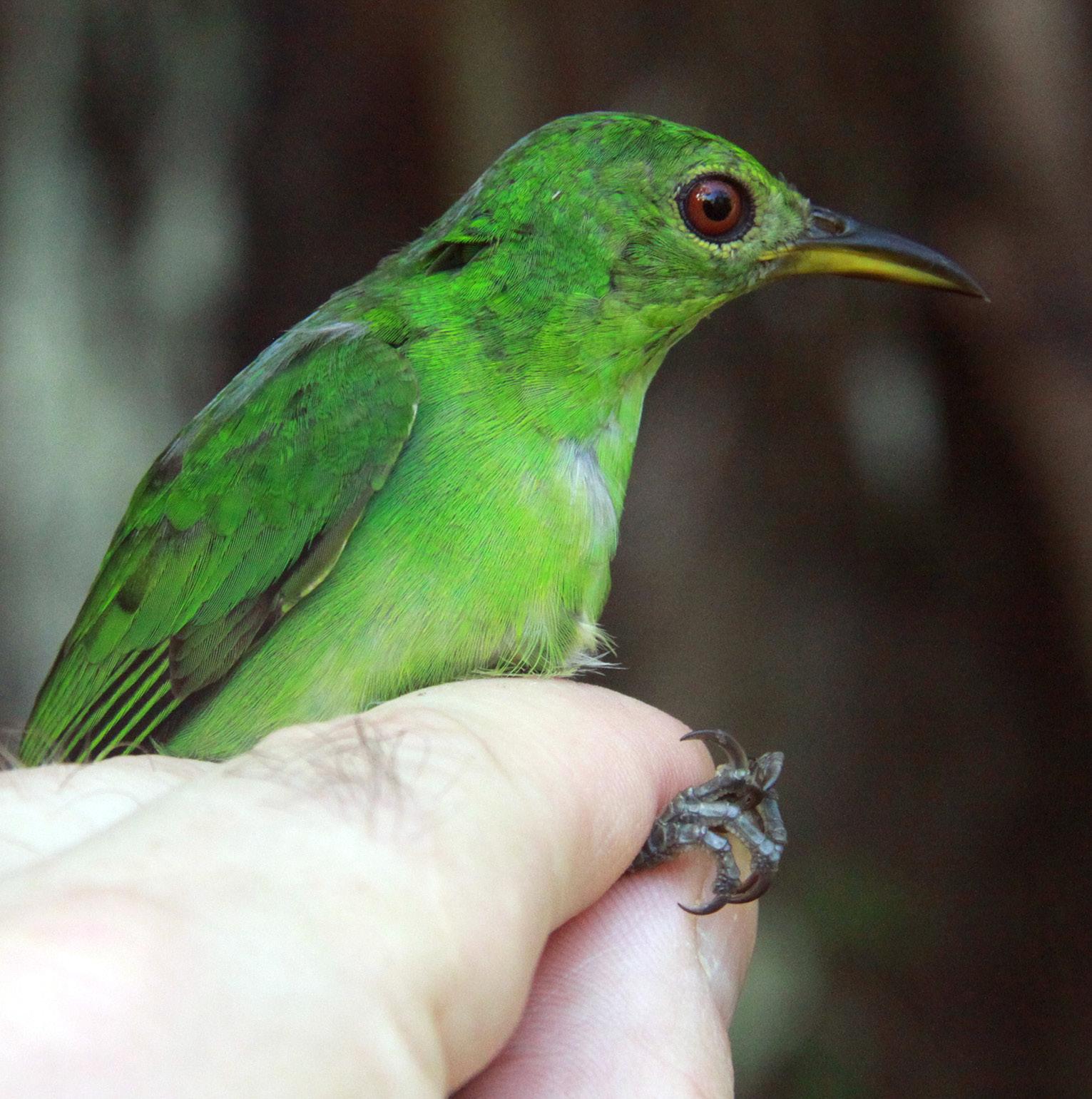
Front Cover: Female Green Honeycreeper, taken by Cyndi Smith
North American Bird Bander (NABB) is a peer-reviewed, quarterly publication of the Eastern, Inland, and Western Bird Banding associations. This journal welcomes original papers on research on marked birds, molts, plumages, morphometrics, capture techniques, telemetry, and notable bird captures or encounters.
Archived issues are included in the Searchable Ornithological Research Archive (SORA): https://digitalcommons.usf.edu/nabb/
Production Coordinator Kellie Hayden Omaha, NE nabbproductioncoordinator@gmail.com
EBBA Editor
Robert J. Pantle Candor, NY bpbirdrjp@yahoo.com
Atlantic Flyway Coordinator
Aaron Given Charleston, SC agiven@kiawahisland.gov
Caribbean Flyway Coordinator
Daniela Ventura de Puerto Havana, Cuba dvpuerto19@gmail.com
Literature Review Editor Claire Stuyck Tukwila, WA clairestuyck@gmail.com
IBBA Editor
Peter Lowther Chicago, IL plowther@fieldmuseum.org
Inland Flyway Coordinator
Steven Gabrey Van Buren, AR swgabrey@inlandbirdbanding.org
Caribbean Flyway Coordinator
Zoya E. A. Buckmire
St. George’s, Grenada zoya.buckmire@gmail.com
Production Assistant Daniel Zmoda Pen Argyl, PA robinanddanielz@gmail.com
WBBA Editor
Walter H. Sakai Thousand Oaks, CA DanauSakai@aol.com
Western Flyway Coordinator VACANT
Contact Danielle Kaschube if you would like to volunteer for this role.
Inland MAPS Coordinator Steven Gabrey Van Buren, AR swgabrey@inlandbirdbanding.org
These instructions apply to major manuscripts only. Other sections of the journal follow a less formal style (see recent issues).
Electronic submission preferred. Submit your manuscript to the editor of your regional banding association. All manuscripts should be organized into the following sections: Abstract (emphasize results, list species studied), Introduction (define problem, summarize appropriate literature), Methods, Results, Discussion, Acknowledgments, and Literature Cited.
Advise the Editor of the extent to which the data and/or text have been used, or are expected to be used, in any other publication or posted on the internet. Significant re-use of any previously published material is accepted at the sole discretion of the NABB Editor and requires written permission from the original publisher
Once a manuscript has been accepted for publication, the author must obtain approval from the NABB Production Coordinator prior to any subsequent publication (electronic or print) or posting to any website. Any re-publication must advise readers of the original publication source (NABB) and state that the manuscript is reprinted with permission.
When using information on birds banded by others, consult “Policy on Release of Banding and/or Recovery Data” in the North American Bird Banding Manual, Vol.1.
Questions and requests for assistance with manuscript preparation should be directed to the editor of the author’s regional association. For details of style, format, and abbreviations see Scientific Style and Format: the CBE manual for authors, editors, and publishers, 6th edition, 1994.
For complete requirements for publishing in NABB, please refer to: https://easternbirdbanding.org/resources/Documents/Suggestions_to_authors_ver10.pdf
Robert P. Yunick
1527 Myron Street, Schenectady, NY 12309
Email: anneboby@aol.com
Over the period of 2003-2021, 28 visits were made in early June and/or early August to hummingbird feeder locations along the shores of Mooselookmeguntic Lake, Rangeley Plantation, near Oquossoc, Franklin County, Maine, to capture, band and gather data on Ruby-throated Hummingbirds (Archilochus colubris) on their breeding grounds. A total of 2,288 birds were banded along with 190 return captures made in years after banding. Adult males in Jun (n= 819) outnumbered adult females (n=672) by 1.22:1, while in August females (n=426) outnumbered males (n=122) by 3.49:1. Immature males in Aug (n=147) outnumbered immature females (n=102) by 1.44:1. The oldest recaptured male was 6yr-0mo, and oldest recaptured female was 8yr-2mo old. That female had the distinction of being captured at each of four different feeder locations spanning a distance of 3 km of the south lakeshore. Other than for the one male recaptured at age 6yr-0mo, no other males
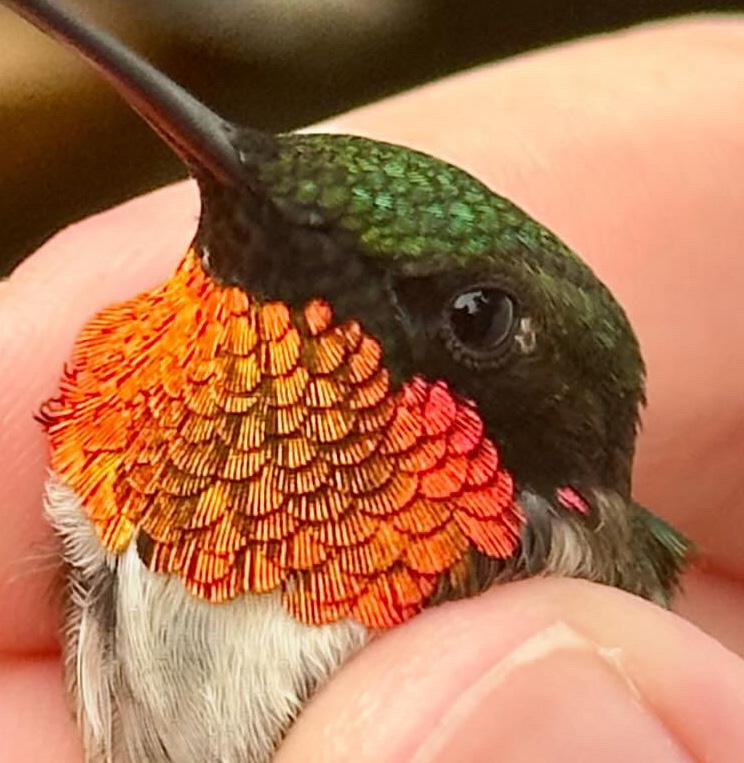
AHY/M Ruby-throated Hummingbird (Archilochus colubris), Antonio CelisMurillo.
(adult or immature) were recaptured beyond 2 years after banding. Among the 190 return recaptures, females (n=141) outnumbered males (n=49) 2.88:1, but if limited to June data only, females (n=103) outnumbered males (n=47) by 2.19:1. Changes in seasonal recapture locations from feeder to feeder as well as same-day movements between feeders suggest frequent ranging over 3 km of shoreline to use feeders. Based on digital records of the U.S. Bird Banding Laboratory (BBL) starting in 1960, the Ruby-throated Hummingbirds banded during this study at Mooselookmeguntic Lake represent nearly 80% of all Ruby-throats banded in Maine through 2021.
Based on digitized banding records of the U. S. Bird Banding Laboratory, 1960-2002, only 304 Ruby-throated Hummingbirds (Archilochus colubris) had been reported banded over those 63 yr (U.S. Bird Banding Laboratory 2021) in the state of Maine. That fact coupled with a chance visit in 2002 to Mooselookmeguntic Lake, Maine where people hosting our visit had out feeders that swarmed with Ruby-throated Hummingbirds prompted interest in studying this species in this heavily forested lake region.
Hummingbirds were captured in a Hall trap (Russell et al. 2001) baited with a feeder containing sugar-water (4 parts non-chlorinated well water to 1 part refined cane sugar) starting at three locations in 2003 increasing ultimately to six locations, all located along the southeastern shore of Mooselookmeguntic Lake, Rangeley Plantation, near Oquossoc, Franklin County, Maine (frequently referred to simply as “Mooselook”). Feeder





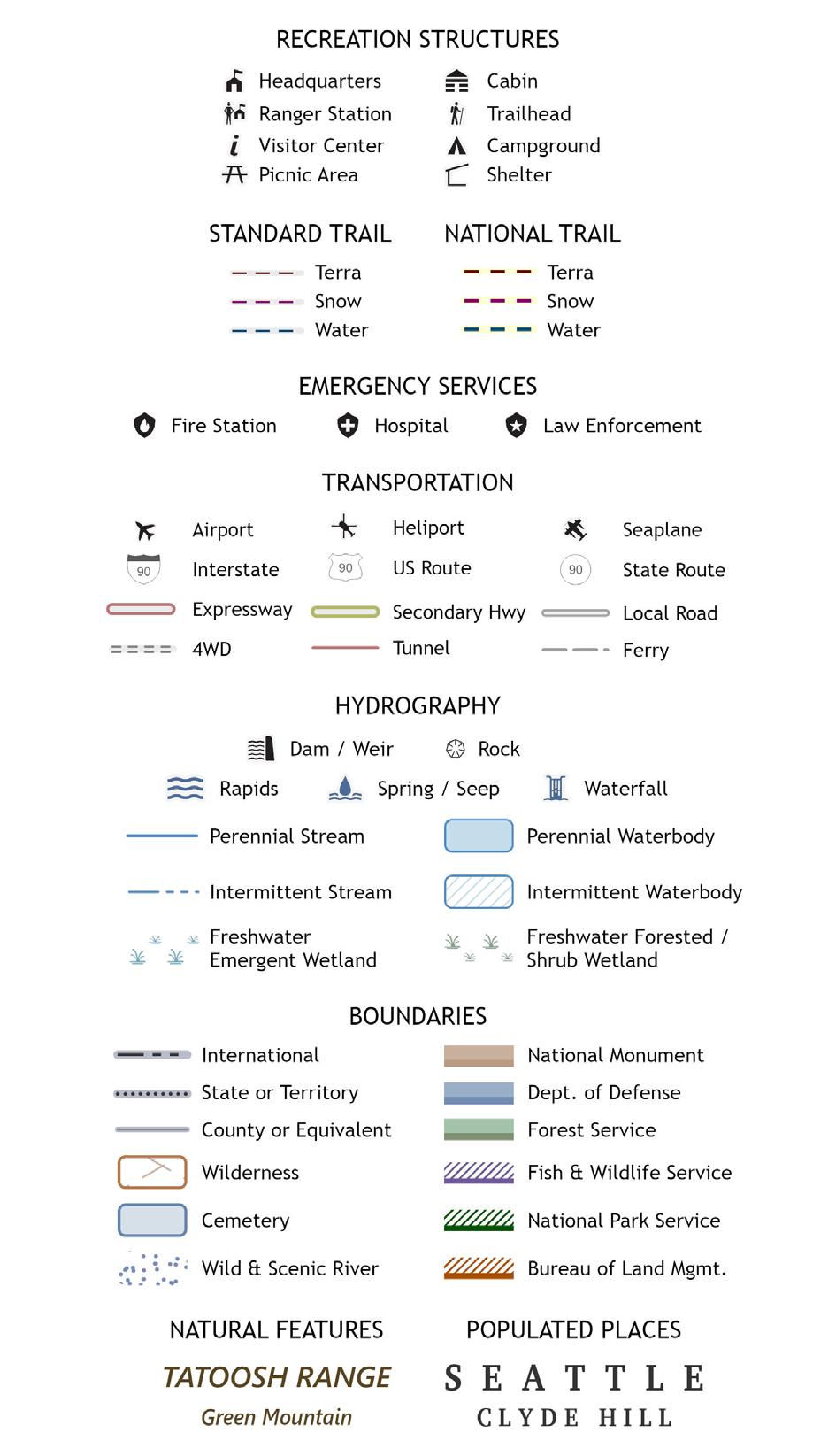

















Figure 1. Map of the locations of the six banding sites at Mooselookmeguntic Lake. See text and Table 1 for explanations of map symbols and site names. Topographic map adapted from United States Geological Survey.


Table 1. Names of feeder owners and their locations where hummingbird trapping occurred. On some recent maps, traditional Upper Dam Rd. is referred to as Shelton Trail.
Owner Address Latitude Longitude Elevation f/m
Wright 1327 Bemis
Schum 125 Upper Dam Rd.
Heath 397 Upper Dam Rd.
Koppel
Despres 1165 Bemis Rd.
1479/451
W 1499/457
Table 1a. Direct-line distances, in km, rounded to the nearest 0.1 km of banding locations in alphabetical order by owner on Mooselookmeguntic Lake, Maine as depicted in Fig. 1. Despres Heath Koppel O’Meara Schum Wright
operators, consisting of some year-round residents as well as summer visitors, operated 3-9 feeders per location beginning in early May just before or as hummingbirds arrived on their nesting territories, lasting through Aug-Sep prior to migrating south.
Visits of 2-3 day durations were made in early Jun to capture adults (After-Hatching-Year, AHY) and returning birds banded in previous years, and again in early Aug after immature birds of the year (Hatching-Year, HY) had begun using the feeders. During these visits, as many feeder sites as possible were visited from dawn to dusk to conduct trapping sessions lasting 1-3 hours each.
While trapping, all feeders but the one in the trap were taken down to direct birds to the trap. An assistant tended to the trapping while I banded the hummingbirds and recorded data on age/sex, wing chord, fat class, weight, and time of capture and release. The right rectrix 4 (RR4) was collected on return birds as well as newly fledged immatures for future hydrogen/deuterium isotope ratio analysis.
Banding locations are depicted in Figure 1 adapted
from USGS (2025) and are identified in Table 1 by latitude and longitude obtained from Google Earth (2023). Lake elevation was 1467 ft (447 m) above sea level and varied seasonally depending on water drawdown at the hydroelectric plant at Upper Dam at the outlet of Mooselookmeguntic Lake into Upper Richardson Lake. Direct-line distances between banding sites are summarized in Table 1a.
Tables 2 and 3 illustrate Jun and Aug, respectively, banding data by location of adult male and female hummingbirds, while Table 4 presents Aug data on HY bandings at each banding site.
Table 5 summarizes return data where a “return” capture is a recapture of a bird banded in a previous year showing the site where banded as well where recaptured.
Table 6 is a summary of capture data illustrating movement of birds from site to site after banding during their year of banding. Those marked with an asterisk represent birds recaptured a second time at another site than where banded on the same day as when banded and released.
Figure 1 is a map of the south and east shores of
Table 2. June bandings of AHY/M and AHY/F Ruby-throated Hummingbirds by location at Mooselookmeguntic Lake, Maine.
Total M/F=1.21:1; F/M=0.83:1.
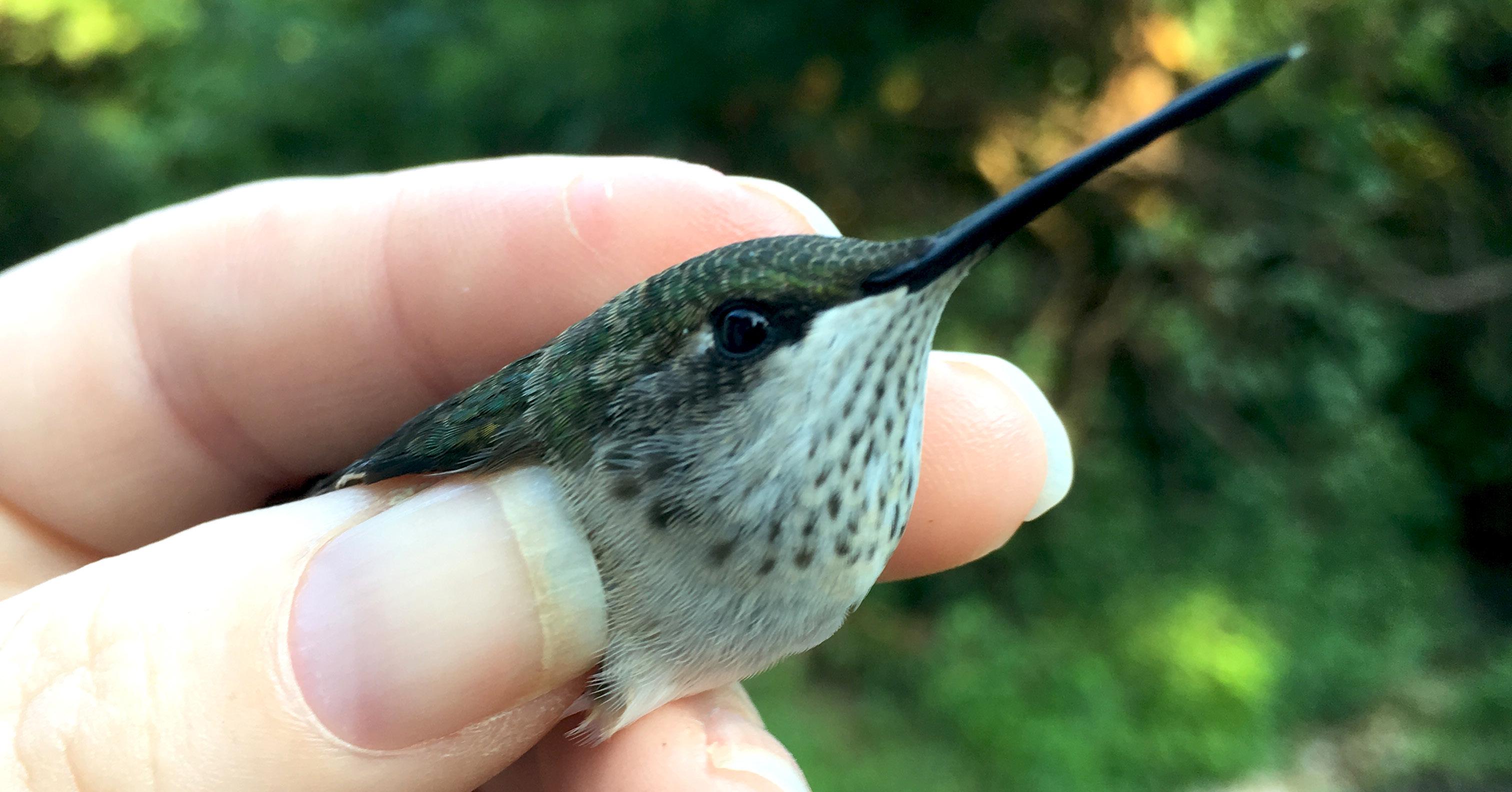
Table 3. August bandings of AHY/M and AHY/F Ruby-throated Hummingbirds by
Total M/F = 0.28:1; F/M=3.53:1
Table 4. August bandings of HY/M and HY/F Ruby-throated Hummingbirds by location at Mooselookmeguntic Lake, Maine.
Table 5. Location of return capture sites compared to site of original banding of Ruby-throated Hummingbirds banded at Mooselookmeguntic Lake, Maine.
Banding Site Return Capture Site Number of Return Captures
Table 6. A comparison of banding location and recapture location on either same day of banding or within two to three days of banding of Ruby-throated Hummingbirds banded at Mooselookmeguntic Lake, Maine.
Age/Sex Date/Location1 Date/Location1 Release Recapture Time Lapse Banded Recaptured Time Time for same-day Recaptures
AHY/M 4Jun2003 W 4Jun2003 S* 1048 1327 2hr39min
AHY/M 8Jun2005 S 11Jun2005 W
AHY/F 5Jun2005 S 5Jun2005 W * 1444 1703 2hr19min
AHY/M 4Jun 2007 S 5Jun2007 O
AHY/M 8Jun2009 O 10Jun2009 S
AHY/M 8Jun2009 O 8Jun2009 W * 1621:30 1936:30 3hr15min
AHY/F 3Jun2010 W 3Jun2010 S* 0656:30 0812:30 1hr16min
AHY/F 3Aug2010 K 3Aug2010 H * 1424:30 1610:30 1hr46min
AHY/M 3Aug2010 K 3Aug2010 H * 1448 1623:15 1hr35:15min
AHY/F 4Aug2010 S 4Aug2010 W * 1024 1812:15 7hr48:15min
AHY/M 7Jun2011 W 8Jun2011 S
AHY/M 5Jun2012 O 7Jun2012 W
AHY/M 5Jun2012 O 6Jun2012 S
AHY/M 6Jun2012 S 7Jun2012 W
AHY/F 3Jun2013 W 4Jun2013 S
AHY/M 11Aug2013 H 11Aug2013 K* 0717 0902 1hr45min
AHY/M 4Jun2014 D 5Jun2014 W
AHY/F 7Aug2015 S 7Aug2015 W * 0806 1532:15 7hr26:15
AHY/F 8Jun2016 O 9Jun2016 S
AHY/M 8Jun2018 S 9Jun2018 O
Footnote 1. Location codes are as follows: D = Despres, H = Heath, K = Koppel, O = O’Meara, S = Schum and W = Wright.
Table 7. Distribution of Numbers of return hummingbird recaptures over 1 to 7 yr following banding represented by age/sex class at time of banding
Age/sex
Mooselookmeguntic Lake depicting the following. Banding locations are marked with flags denoting the name of the feeder operators as identified in Table 1. The arrows represent recapture locations of birds which moved from feeder location of banding to feeder location of recapture. A single arrow represents a one-way movement from the feeder where banded to the location at the head of the arrow where recaptured as exemplified by O’Meara to Heath and Wright to both Despres and O’Meara. Double arrows represent two-way exchanges between sites such as Koppel to and from O’Meara, Koppel to and from Schum (a distance of 3.0 km), O’Meara to and from Schum and Schum to and from Wright. There was no exchange between Wright and Koppel, a distance of 3.5 km over water.
Sex Ratio. Adult male captures exceeded those of adult females by 1.21:1 in Jun, (Table 2); but declined sharply in Aug to 0.28:1, (Table 3). It is not certain that males were actually more numerous than females or alternately were more frequently captured due to their territorial defense of a feeder. Some males were recaptured more than once during a banding session, sometimes five and six times in the same banding session. The reversal of that ratio in Aug may have been the result of two factors: greater male mortality (Mulvihill et al. 1992) during the breeding season, as well as earlier departure due to onset of migration to wintering areas.
The sex ratio among banded immatures greatly favored males over females by 1.45:1, (Table 4). The
reason for this is not understood and differs from a ratio of 1.08:1 found at my Adirondack Mountain banding station at Jenny Lake in Saratoga County, New York (Yunick 2015). Cited in that same paper are ratios of 1.1:1 in Pennsylvania (Powdermill Nature Reserve 1963-1990); 0.67:1 at York, South Carolina, 1984-2001; and 0.5:1 at Jay, Oklahoma, 1987-1988.
Return Rate. Return captures were recaptures of banded birds a year or more after year of banding summarized in Table 5. While the greatest number of returns occurred at stations where the greatest numbers were originally banded (Wright, Schum and Koppel), there was widespread distribution of returns among the south shore sites, but less so along the east shore. There was no recorded exchange over the greatest stretch of water, 3.5 km from Wright to Koppel. In years prior to this study while fishing on Mooselook for trout and salmon in early Jun, hummingbirds were observed flying over open water near these banding sites at elevations of 50 m or more suggesting they were late migrants in passage (Yunick, personal observation).
Intra-day Recaptures. Not only did hummingbirds visit different feeder sites from year to year, they also exchanged feeding sites during the 2-3-day intervals of my visits as well as within hours of the same day of banding and release as depicted in Table 6. In the 9 instances marked with an asterisk in that table, the times of intra-day recapture varied from 1hr16min to 7hr48.25min, with near parity of the sexes: 4 males and 5 females.
Looking at the entire scope of recapture data, it is apparent these birds roamed widely up to 3.0 km along the south shore to visit feeder sources, but appeared reluctant to fly any extensive distance over water to do so such as between Wright and Koppel, 3.5 km.
Longevity. The AHY/F that was recaptured out to 7 yr following original banding had the further distinction of having been recaptured at each of the four south shore feeders as follows. Banded as an AHY/F at O’Meara 8 Aug 2006 and recaptured 2 Jun 2008 at Schum, 4 Jun 2013 at Heath and finally 11 Aug 2013 at Koppel making her at least 8yr-2mo old. The North American age record for the species stands at 11yr-2mo (Kleen 2024) for a female from Illinois. All other recent age records of 9 and 10 yr in the files of the BBL are of females. Except for one record above of a male 6 yrs old, there were no recorded male recaptures, HY or AHY, beyond 2 yr. E. Womack in a personal communication (Weidensaul et al. 2020) reported a male of 7yr8mo.
It is a pleasure to thank Gordon and Hildegard Wright, former Schenectady, NY neighbors, for their hospitality at Mooselookmeguntic Lake leading up to the initiation of and during this banding project; with special thanks to Gordon for his trapping efforts while I banded and processed birds. When the Wrights took up residence in Portland, ME in 2018, where Gordon passed away in 2022, Barb and Bill Koppel hosted me with Barb taking over the trapping responsibility. In alphabetical order, thanks to the following people who offered their feeders as well as informational assistance: Diane and Bruce Despres, Diana and Bill Heath, Barb and Bill Koppel, Mary and Tom O’Meara, Jan and Jeff Schum, and Hildegard and Gordon Wright.
Comments of 2 reviewers are acknowledged.
Google Earth. 2023. www.googleearth.com Kleen, V. 2024. Eleven years and counting. North American Bird Bander 49:119. Mulvihill, R.S., R.C. Leberman, and D.S. Wood. 1992. A possible relationship between reversed
sexual size dimorphism and reduced male survivorship in the Ruby-throated Hummingbird. Condor 94:480-489.
Russell, S.M. and R.O. Russell, 2001. The North American Banders Manual for Banding Hummingbirds. North American Banding Council at nabanding.net.
U. S. Banding Laboratory. 2021. Summaries of Banding and Encounter Data. pwrc.usgs.gov/BBL/homepage/howmany.cfm.
U. S. Geological Survey. 2025. USGS TNM OnDemand Topo Application v: 4.0. topobuilder.nationalmap.gov.
Weidensaul, S., T.R. Robinson, R.R. Sargent, M.B. Sargent, and T.J. Zenzal. 2020. Ruby-throated Hummingbird (Archilochus colubris), version 1.0. In Birds of the World (P.G. Rodewald, Editor). Cornell Lab of Ornithology, Ithaca, NY., USA. https://doi.org/10.2173/bow.rthhum.01.
Yunick, R.P. 2015. Observations from 24 years,1991-2014, of Banding an Adirondack Breeding Population of Ruby-throated Hummingbirds (Archilochus colubris). North American Bird Bander 40:1-11.
Cyndi M. Smith1*, Douglas M. Collister1
1 Calgary Bird Banding Society, P.O. Box 36111, Lakeview Post Office, Calgary, Alberta, T3E 7C6.
* Corresponding Author. Email: cyndi.smith9@gmail.com
At two sites in Costa Rica, we banded 3,200 individuals of 137 resident species: 2,647 of 103 species at Las Caletas (2002-2008) and 553 of 66 species at La Selva (2011-2012). Thirty-three species were captured at both sites. We present summary statistics for wing length and body mass for 133 species. We analyze both metrics by sex class where sample sizes permit. Data are presented by species in three ways: (1) the interquartile range (IQR: range of the middle 50% of the data), (2) the range of all data, and (3) plus-or-minus two standard deviations (SD) of the mean (intended to capture the middle 95% of wing lengths). For most species our mass ranges are more variable compared to Dunning (2008). Male wing was longer than female wing for 8 of 11 species for which we had sufficient data for comparison. Body mass differences were evenly split between the sexes for 10 species at Las Caletas whereas at La Selva males were heavier than females for both species for which we had sufficient data. Slightly over half (56.8%) of the birds captured at Las Caletas were aged as adult, whereas 4.4% were juvenile, and 43.2% were of unknown age; at La Selva, it was 86.3%, 10.6% and 3.1%, respectively. While published data for tropical resident species have been accumulating, morphometrics should be recorded at more localities because of the high level of both intraand inter-specific variation within landscapes that result in isolation (e.g. mountain ranges, islands).
Morphometric data are frequently used to determine age and sex-related differences, for physiological, ecological and evolutionary
studies (Clark 1979), and to quantify geographic variation in birds. Wing length may be highly sexually dimorphic in some species, but this may be confounded by age. Body mass reflects the overall size of an organism (Dunning 2008), and mass may vary intraspecifically, sometimes widely, between sexes and seasonally. It is commonly used to calculate the “condition” of a bird (Mulvihill et al. 2004).
While data for tropical resident birds have been accumulating (Sealy and Neudorf 2017), recording morphometrics from different localities is important because of the high level of both intraand interspecific variation within landscapes that result in isolation (e.g., mountain ranges, islands) (Buckley et al. 1985). We report wing length and body mass for resident species banded during spring migration at two sites in Costa Rica. When sample size permitted, we analyzed our data with respect to sex and age class.
Study sites. The first study site, Las Caletas, was located on the Pacific Coast of southwest Costa Rica (Fig. 1), on the Osa Peninsula approximately 10 km north of Corcovado National Park, on the grounds of Las Caletas Lodge. It is located on the south coast of Drake Bay, a few kilometers southwest of the village of Agujitas, and is accessible by a twohour boat trip from the town of Sierpe, down the Sierpe River, and then down the Pacific Coast. The lodge is on a hill looking north over the Pacific Ocean. The monitoring station (08°41’N, 83°41’W) was located 200 m farther uphill, south of the lodge buildings. The average elevation of the site was
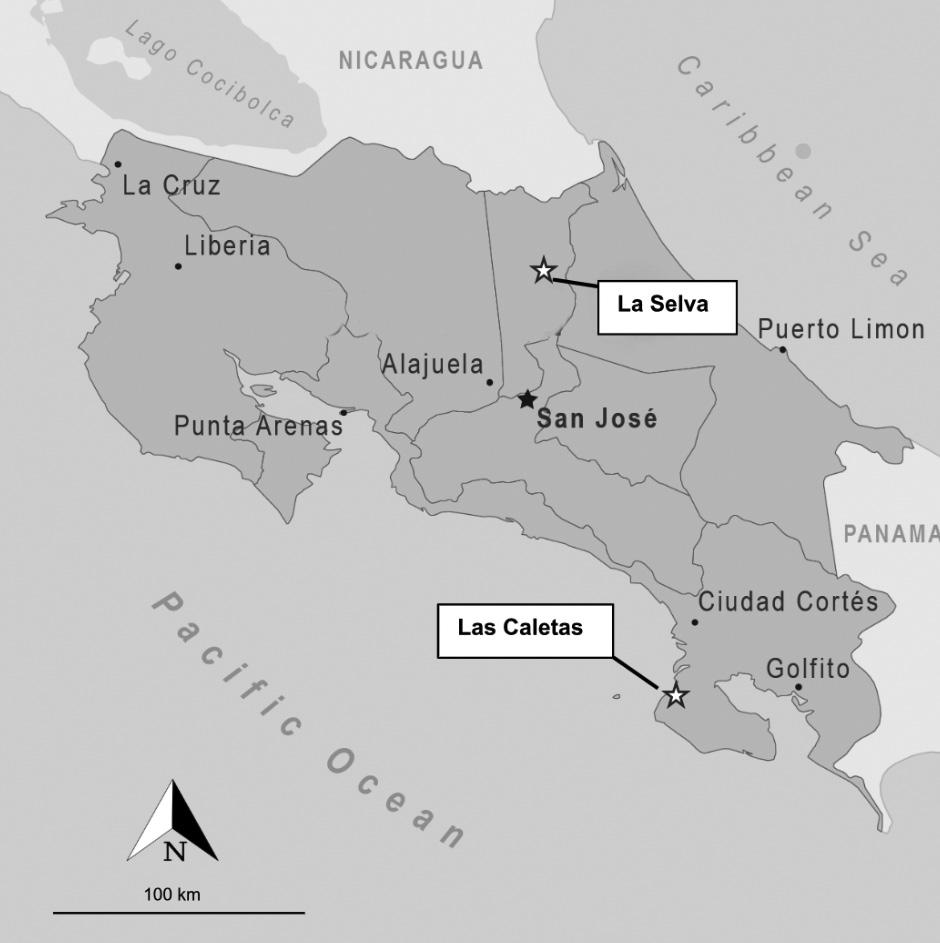
about 25 m above sea level (a.s.l.). The forest in this region is premontane wet forest and tropical wet forest (Sanchez-Azofeifa et al. 2002). The 3-ha site was situated primarily within secondary forest (15-25 years of age) with two small areas of banana and pineapple plantations (Wilson et al. 2011). To the east of the study site the habitats were a mix of open agricultural areas within secondary forest fragments, whereas to the south and west was a larger expanse of secondary and primary forest. To the north, the lodge area itself had a mix of secondary forest fragments and open areas.
The second study site, La Selva (10°26’N, 83°59’W), is located within the La Selva Biological Station (LSBS), which is operated by the Organization for Tropical Studies, a non-profit consortium of about 50 worldwide research institutions. The LSBS is located where the foothills of the central volcanic mountain chain transition to the Caribbean coastal plain that abuts Braulio Carrillo National Park to the south (McDade and Hartshorn 1994). With the exception of the corridor leading to the park, and the park itself, the forest around LSBS has mostly been converted to agricultural use. This site is within the “succession plots,” a set of five similarsized adjacent patches, at an elevation of about 35 m a.s.l., within the wet lowland tropical forest
which are managed for research, each of which are clear-cut every fifth year. Although each patch is in a different 5-year successional state, the study area contains habitat in each of the successional states each year and, therefore, is considered stable and in a condition of “dynamic equilibrium” (Collister et al. 2014).
Capture and banding. Our study was conducted annually at Las Caletas from 2002 through 2008, during migration monitoring, predominantly from mid-March to the end of April (except in spring 2006). In addition, from mid-December 2005 until early February 2006, and again in December 2006, we conducted a pilot MoSI (Monitereo de Sobrevivercia Invernal) program (Saracco et al. 2009). La Selva migration monitoring was conducted daily from 26 March to 24 April in 2011, and 16 April to 15 May in 2012. We operated 12-15 mist nets (12-m long x 2.6-m high x 30-mm mesh) at Las Caletas and up to 20 mist nets of the same size at La Selva. Weather permitting, nets were operated for six hours per day, beginning at sunrise.
All birds captured were identified to species (Stiles and Skutch 1989), aged, and sexed, and, if unbanded, were banded with a uniquely-numbered aluminum leg band, purchased by the Calgary Bird Banding Society (made by the National Band and Tag Co.). Each bird captured was aged using plumage characteristics and sexed using plumage and/or morphometric differences and/or presence of a brood patch or cloacal protuberance (Pyle 1997). Unflattened wing chord was recorded to the nearest mm, whereas body weight (mass) was recorded to the nearest 0.1 g using a digital scale.
Data analyses. Data were cleaned by deleting all records that either did not include wing chord or mass for their respective analyses, or the measurement was likely in error. We present wing and mass data for all species for which they were collected, and present females separate from males and adults separate from juveniles (hatch years) whenever sample size was sufficient for analyses, but all sex and age classes were also combined unless otherwise noted. Wing length and mass data are presented by species in three ways: 1) the interquartile range
(IQR: the range of the middle 50% of the data), 2) the range of all data for that species, and 3) plus-orminus two standard deviations (SD) of the mean, which is intended to capture 95% of the variation in wing lengths (Pyle 1997, French et al. 2016). We include data from small sample sizes because many of these species are seldom captured and thus under-reported in the literature. Body masses were then compared with those in Dunning (2008).
When comparing wing length or mass by sex or age class, if one class had at least 20 individuals, we included the other class, as long as there were at least 10 individuals. Where sample sizes met these criteria, comparisons were made using t-tests assuming unequal variances (Fowler and Cohen 1996). All data were normally distributed, and results were considered significant if P<0.05.
Common and scientific names, and order, follow the list of bird species found in North and Middle America compiled by the North American Classification Committee of the American Ornithological Union (Chesser et al. 2025).
During six years of study (2002-2008) at Las Caletas we banded 2,647 individuals of 103 resident species during 17,200 net hours of effort, and in two years of study (2011-2012) at La Selva we banded 553 birds of 66 species during 5,262 net hours of effort. Thirty-three of the 137 species were banded at both sites.
We present summary statistics for wing length and body mass for 85 species banded at Las Caletas (Table 1) and 53 species banded at La Selva (Table 2) that met our criteria. Table 3 presents wing length and body mass for species for which we only captured one individual: 14 species at each site. We also captured four species at Las Caletas for which we recorded no morphometric data: two Fierybilled Aracari (Pteroglossus frantzii), one Eyeringed Flatbill (Rhynchocyclus brevirostris), one Great Antshrike (Taraba major), and one Ruddy Foliage-gleaner (Clibanornis rubiginosus).
Wing length and mass comparisons. Wings
were longer in males than females for seven out of 10 species (70%) at Las Caletas for which we had sufficient data for comparison (Table 4), significantly so for three species: Band-tailed Barbthroat, Crowned Woodnymph, and Charming Hummingbird. Of the three species for which wing length was longer in females, Orange-collared and Red-capped Manakins were significantly longer. At La Selva, Variable Seedeater wing length was significantly longer in males than in females (Table 4).
Differences in mass were evenly split between the sexes for 10 species at Las Caletas (Table 4). Male Crowned Woodnymph, Rufous-tailed Hummingbird, Charming Hummingbird, and Orange-collared Manakin had significantly greater mass than females, while only Velvety Manakin females had greater mass than males. At La Selva mass was greater for males than females for both Scarlet-rumped Tanager and Variable Seedeater.
Over half (56.8%) of the birds captured at Las Caletas were adults, while 4.4% were juveniles, and 43.2% were of unknown age; at La Selva, it was 86.3%, 10.6% and 3.1%, respectively. We had sufficient sample size to compare adult and juvenile wing length for three species (Table 5). At Las Caletas, wing length of juveniles was greater than in adults for Red-capped Manakin and Ochre-bellied Flycatcher, but neither difference was significant; adult mass was only significantly greater for Redcapped Manakin. At La Selva, both wing length and mass of Variable Seedeater were significantly greater for adults than for juveniles.
We quantified differences in body size between the two subspecies of Scarlet-rumped Tanager found in Costa Rica: Passerini’s at La Selva and Cherrie’s at Las Caletas. For all comparisons Cherrie’s had longer wings and greater mass, but only female wing length was significant (Table 6).
Our species list reflects a diverse suite of 137 species (15%) that comprised a broad range of ecological and behavioral traits representative of the avian diversity of Costa Rica (895 species; IUCN
2024), and differences in species captured reflect the biogeographical separation between our two sites. Of the 77 species on the IUCN Red List for Costa Rica, we only captured the near-threatened Black-cheeked Ant-Tanager (IUCN 2024), which was banded in reasonable numbers (52 individuals) at Las Caletas, and whose population is considered stable.
We had sufficient sample sizes to analyze wing length and mass, by sex, for 10% of the species captured at Las Caletas, and 1.5% (wing length) and 3% (mass) of the species at La Selva. Overall, data on mass varied more than those reported in Dunning (2008). This may reflect geographical differences, as Dunning’s data were derived from various regions of Central America, the Caribbean, and South America; many of the studies were conducted in geographically specific populations that may have significantly variable weights. In addition, body mass can vary considerably depending on the breeding condition of the individual bird, particularly for females. Body mass can also vary between adults and juveniles (Alatalo et al. 1984); more data on the size differences between age classes would be enlightening.
Where we had sample sizes to compare, wing length was greater for males than females, while body mass was split equally. Sexual size dimorphism in birds may be influenced by several factors, including geographic region, clutch size, nest characteristics, competition for prey, sperm competition and migratory status, but some of the strongest evidence reflects different social mating systems, particularly between monogamous and polygynous taxa (see review in Dunn et al. 2001).
As there were some changes in personnel over the years of our study, we cannot rule out possible inter-observer variability in measurements. Any variance due to observers should be small as both wing chord and mass measurements are relatively easy to replicate accurately. Some caution should be exercised in comparing our data to other studies, particularly for species with smaller sample sizes (Barrett et al. 1989).
We thank Jolanda Hess, David Argüello, Jay Tress, and all the staff of Las Caletas Lodge for access and support; the Organization for Tropical Studies (F. Campos, O. Vargas, R. Vargas), and all the staff of LSBS for access and support; and the Costa Rican government (MINAE) for granting us permission to conduct this project. We thank the Banders-inCharge (Doug Collister, Rainer Ebel, Ken Foster, Steve Lane, and Scott Wilson) and volunteer banding assistants (Peter Achuff, Christine Bennett, John Cartwright, Amanda Cole, Alejandro Nava Donatti, Marcel Gahbauer, Chris Godwin, Jim Gregg, Jennifer Lane, Kathryn Manry, Pat Mitchell, El Peterson, Carl Savignac, Gwen Smiley, Cyndi Smith, Gwen Tietz, Bill Taylor, Barry Trakalo, Catherine Watson, Anne Weerstra, and Amy Wilson) of the Calgary Bird Banding Society for capturing and sampling birds. This study was funded by the Calgary Bird Banding Society with funds from the Alberta Gaming, Liquor and Cannabis Commission. The authors thank Diane Neudorf,,Walter Sakai, and Spencer Sealy for reviewing the manuscript.
Alatalo, R.V., L. Gustafsson, and A. Lundberg. 1984. Why do young passerine birds have shorter wings than older birds? Ibis 126:410415.
Buckley, P.A., M.S. Foster, E.S. Morton, R.S. Ridgely, and F.G. Buckley. 1985. Neotropical ornithology. Ornithological Monographs 36. Barrett, R.T., M. Peterz, R.W. Furness, and J. Dunnick. 1989. The variability of biometric measurements. Ringing and Migration 10:13-16.
Chesser, R.T., S.M. Billerman, K.J. Burns, C. Cicero, J.L. Dunn, B.E. Hernández-Baños, R.A. Jiménez, O. Johnson, N.A. Mason, and P.C. Rasmussen. 2025. Check-list of North American Birds (online). American Ornithological Society. https://checklist. americanornithology.org/taxa/
Clark, G.A., Jr. 1979. Body weights of birds: A review. Condor 81:193-202.
Collister, D.M., Y. Attia, M. Potter, and B. Taylor. 2014. Calgary Bird Banding Society 2011 annual technical report. Calgary Bird
Banding Society, Calgary, AB.
Dunn, P.O, L.A. Whittingham, and T.E. Pitcher. 2001. Mating systems, sperm competition, and the evolution of sexual dimorphism in birds. Evolution 55:161-175.
Dunning, J.B., Jr., Ed. 2008. CRC handbook of avian body masses. 2nd Ed. CRC Press, Boca Raton, FL.
Fowler, J. and L. Cohen. 1996. Statistics for ornithologists. 2nd Ed. British Trust for Ornithology, Guide No. 22, Thetford, England.
French, R.L.K, A. Roberto-Charron, and K.R. Foster. 2016. The accuracy of wing chord ranges in Pyle (1997) as indicators of sex in north-central Alberta populations of Least Flycatcher, Myrtle Warbler, and Claycolored Sparrow. North American Bird Bander 41:116-125.
IUCN. 2024. The IUCN Red List of Threatened Species. Version 2024-2. https://www. iucnredlist.org. Accessed on [01 February 2025].
McDade, L. and G. Hartshorn. 1994. Introduction to the La Selva Biological Station. In La Selva: Ecology and natural history of a neotropical rain forest. Edited by L.A. McDade, K.S. Bawa, H.A. Hespenheide, and G.S. Hartshorn. University of Chicago Press, Chicago, IL.
Mulvihill, R.S., R.C. Leberman, and A.J. Leopold. 2004. Relationships among body mass, fat, wing length, age, and sex for 170 species
of birds banded at Powdermill Nature Reserve. Eastern Bird Banding Association, Monograph No. 1.
Pyle, P. 1997. Identification guide to North American birds, Part 1 – Columbidae to Ploceidae. Slate Creek Press, Bolinas, CA.
Sanchez-Azofeifa, G.A., B. Rivard, J. Calvo, and I. Moorthy. 2002. Dynamics of tropical deforestation around national parks: Remote sensing of forest change on the Osa Peninsula of Costa Rica. Mountain Research and Development 22:352-358.
Saracco, J.F., D.F. DeSante, M.P. Nott, and D.R. Kaschube. 2009. Using the MAPS and MoSI programs to monitor landbirds and inform conservation. Pages 651-658 in Proceedings of the Fourth International Partners in Flight Conference: Tundra to Tropics. Edited by T.D. Rich, C.D. Thompson, D. Demarest, and C. Arizmendi. University of Texas-Pan American Press, Austin, TX.
Sealy, S. and D.L.H. Neudorf. 2017. Body masses of some cloud forest birds in Costa Rica. North American Bird Bander 42:65-70.
Stiles, F.G. and A.F. Skutch. 1989. A guide to the birds of Costa Rica. Cornell University Press, Ithaca, NY.
Wilson, S., D.M. Collister, and A.G. Wilson. 2011. Community composition and annual survival of lowland tropical forest birds on the Osa Peninsula, Costa Rica. Ornitologia Neotropical 22:421-436.
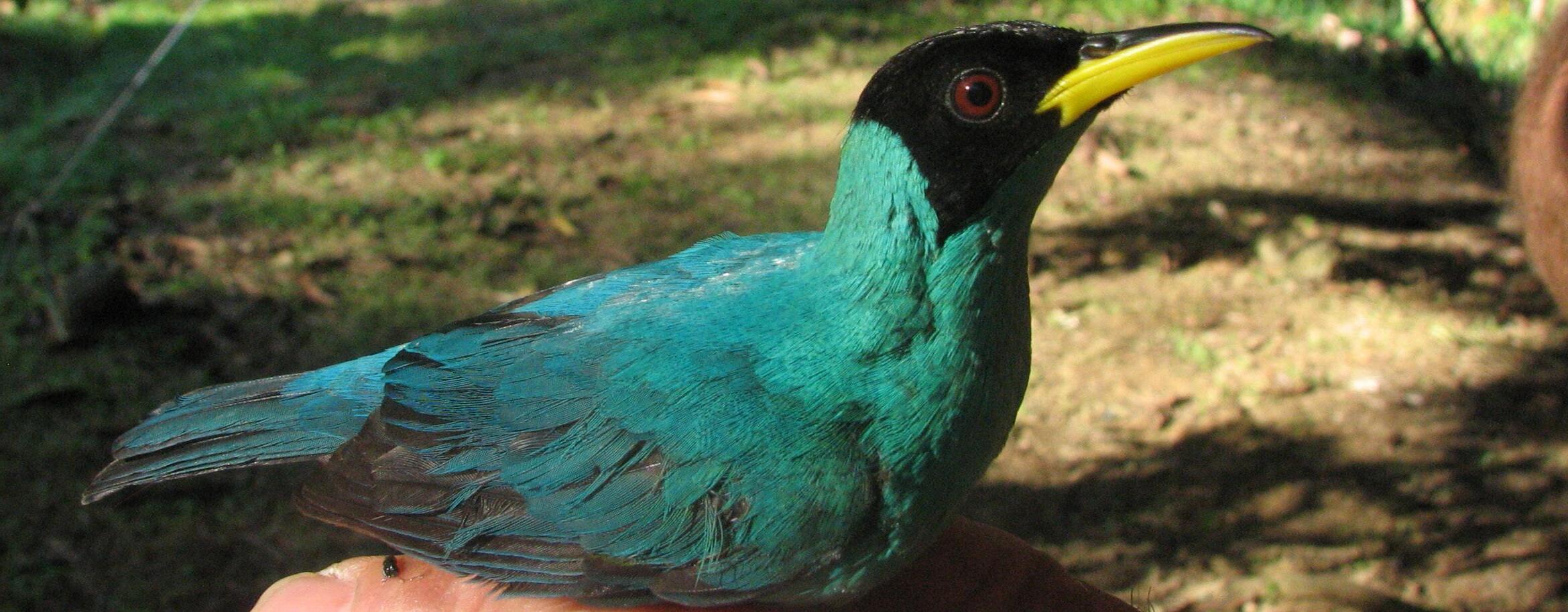
Table 1 (continued on next page). Wing length (mm) and body mass (g) statistics for 85 species banded at Las Caletas, 2002-2008. Mass is compared to ranges (or means, along with ± SD when given) in Dunning (2008). “IQR” represents the interquartile range, and “SD” refers to the standard deviation. All = all sex classes together. Data for only single individuals of a class are placed in the “Range” row. n.d. = no data recorded.
Ground
( Columbina talpacoti )
Ruddy QuailDove ( Geotrygon montana )
Gray-chested Dove ( Leptotila cassinii )
White-tipped Dove ( Leptotila verreauxi )
White-necked Jacobin ( Florisuga mellivora )
(
Table 1 (continued on next page). Wing length (mm) and body mass (g) statistics for 85 species banded at Las Caletas, 2002-2008. Mass is compared to ranges (or means, along with ± SD when given) in Dunning (2008). “IQR” represents the interquartile range, and “SD” refers to the standard deviation. All = all sex classes together. Data for only single individuals of a class are placed in the “Range” row. n.d. = no data recorded.
Stripe-throated Hermit ( Phaethornis striigularis )
Crowned Woodnymph ( Thalurania colombica )
Table 1 (continued on next page). Wing length (mm) and body mass (g) statistics for 85 species banded at Las Caletas, 2002-2008. Mass is compared to ranges (or means, along with ± SD when given) in Dunning (2008). “IQR” represents the interquartile range, and “SD” refers to the standard deviation. All = all sex classes together. Data for only single individuals of a class are placed in the “Range” row. n.d. = no data recorded.
Kingfisher ( Chloroceryle americana )
Rufous-tailed
Table 1 (continued on next page). Wing length (mm) and body mass (g) statistics for 85 species banded at Las Caletas, 2002-2008. Mass is compared to ranges (or means, along with ± SD when given) in Dunning (2008).
“IQR” represents the interquartile range, and “SD” refers to the standard deviation. All = all sex classes together. Data for only single individuals of a class are placed in the “Range” row. n.d. = no data recorded.
Golden-naped Woodpecker ( Melanerpes chrysauchen )
)
Orange-collared Manakin ( Manacus aurantiacus )
Red-capped Manakin ( Ceratopipra mentalis )
Table 1 (continued on next page). Wing length (mm) and body mass (g) statistics for 85 species banded at Las Caletas, 2002-2008. Mass is compared to ranges (or means, along with ± SD when given) in Dunning (2008).
“IQR” represents the interquartile range, and “SD” refers to the standard deviation. All = all sex classes together. Data for only single individuals of a class are placed in the “Range” row. n.d. = no data recorded.
Golden-crowned Spadebill ( Platyrinchus coronatus )
Ochre-bellied Flycatcher ( Mionectes oleagineus )
Northern Bentbill ( Oncostoma cinereigulare )
Table 1 (continued on next page). Wing length (mm) and body mass (g) statistics for 85 species banded at Las Caletas, 2002-2008. Mass is compared to ranges (or means, along with ± SD when given) in Dunning (2008).
“IQR” represents the interquartile range, and “SD” refers to the standard deviation. All = all sex classes together. Data for only single individuals of a class are placed in the “Range” row. n.d. = no data recorded.
Slaty Antwren ( Myrmotherula schisticolor )
Dot-winged Antwren ( Microrhopias quixensis )
Chestnut- backed Antbird ( Poliocrania
Table 1 (continued on next page). Wing length (mm) and body mass (g) statistics for 85 species banded at Las Caletas, 2002-2008. Mass is compared to ranges (or means, along with ± SD when given) in Dunning (2008). “IQR” represents the interquartile range, and “SD” refers to the standard deviation. All = all sex classes together. Data for only single individuals of a class are placed in the “Range” row. n.d. = no data recorded.
Streak-chested Antpitta ( Hylopezus perspicillatus )
2, 3, & 4
Black-faced Antthrush ( Formicarius analis
Scaly-throated Leaftosser ( Sclerurus guatemalensis )
Long-tailed Woodcreeper ( Deconychura longicauda )
Tawny-winged Woodcreeper ( Dendrocincla anabatina )
Wedge-billed Woodcreeper (
Barred- Woodcreeper ( Dendrocolaptes sanctithomae )
Table 1 (continued on next page). Wing length (mm) and body mass (g) statistics for 85 species banded at Las Caletas, 2002-2008. Mass is compared to ranges (or means, along with ± SD when given) in Dunning (2008). “IQR” represents the interquartile range, and “SD” refers to the standard deviation. All = all sex classes together. Data for only single individuals of a class are placed in the “Range” row. n.d. = no data recorded.
( Vireo flavoviridis )
Table 1 (continued on next page). Wing length (mm) and body mass (g) statistics for 85 species banded at Las Caletas, 2002-2008. Mass is compared to ranges (or means, along with ± SD when given) in Dunning (2008). “IQR” represents the interquartile range, and “SD” refers to the standard deviation. All = all sex classes together. Data for only single individuals of a class are placed in the “Range” row. n.d. = no data recorded.
Black- bellied Wren ( Pheugopedius fasciatoventris )
Riverside Wren ( Cantorchilus semibadius )
Southern House Wren ( Troglodytes musculus )
Table 1 (continued on next page). Wing length (mm) and body mass (g) statistics for 85 species banded at Las Caletas, 2002-2008. Mass is compared to ranges (or means, along with ± SD when given) in Dunning (2008). “IQR” represents the interquartile range, and “SD” refers to the standard deviation. All = all sex classes together. Data for only single individuals of a class are placed in the “Range” row. n.d. = no data recorded.
Black-cheeked Ant-Tanager ( Driophlox atrimaxillaris )
Blue-black Grosbeak ( Cyanoloxia cyanoides )
Table 1 (continued on next page). Wing length (mm) and body mass (g) statistics for 85 species banded at Las Caletas, 2002-2008. Mass is compared to ranges (or means, along with ± SD when given) in Dunning (2008).
“IQR” represents the interquartile range, and “SD” refers to the standard deviation. All = all sex classes together. Data for only single individuals of a class are placed in the “Range” row. n.d. = no data recorded.
Gray-headed Tanager ( Eucometis penicillata
White-shouldered Tanager ( Loriotus luctuosus )
White-throated Shrike- Tanager ( Lanio leucothorax )
Table 1. Wing length (mm) and body mass (g) statistics for 85 species banded at Las Caletas, 2002-2008. Mass is compared to ranges (or means, along with ± SD when given) in Dunning (2008). “IQR” represents the interquartile range, and “SD” refers to the standard deviation. All = all sex classes together. Data for only single individuals of a class are placed in the “Range” row. n.d. = no data recorded.
( Sporophila corvina )
Table 2 (continued on next page). Wing length (mm) and body mass (g) statistics by sex class for 53 species banded at La Selva, 2011-2012. Mass is compared to ranges (or means, along with ± SD when given) in Dunning (2008). “IQR” represents the interquartile range, and “SD” refers to the standard deviation. All = all sex and age classes together. Data for only single individuals of a class are placed in the “Range” row. n.d. = no data recorded.
Table 2 (continued on next page). Wing length (mm) and body mass (g) statistics by sex class for 53 species banded at La Selva, 2011-2012. Mass is compared to ranges (or means, along with ± SD when given) in Dunning (2008). “IQR” represents the interquartile range, and “SD” refers to the standard deviation. All = all sex and age classes together. Data for only single individuals of a class are placed in the “Range” row. n.d. = no data recorded.
Table 2 (continued on next page). Wing length (mm) and body mass (g) statistics by sex class for 53 species banded at La Selva, 2011-2012. Mass is compared to ranges (or means, along with ± SD when given) in Dunning (2008). “IQR” represents the interquartile range, and “SD” refers to the standard deviation. All = all sex and age classes together. Data for only single individuals of a class are placed in the “Range” row. n.d. = no data recorded.
Yellow Tyrannulet ( Capsiemis flaveola )
Table 2 (continued on next page). Wing length (mm) and body mass (g) statistics by sex class for 53 species banded at La Selva, 2011-2012. Mass is compared to ranges (or means, along with ± SD when given) in Dunning (2008). “IQR” represents the interquartile range, and “SD” refers to the standard deviation. All = all sex and age classes together. Data for only single individuals of a class are placed in the “Range” row. n.d. = no data recorded.
Northern Barred- Woodcreeper ( Dendrocolaptes sanctithomae )
Woodcreeper ( Xiphorhynchus susurrans
Table 2 (continued on next page). Wing length (mm) and body mass (g) statistics by sex class for 53 species banded at La Selva, 2011-2012. Mass is compared to ranges (or means, along with ± SD when given) in Dunning (2008). “IQR” represents the interquartile range, and “SD” refers to the standard deviation. All = all sex and age classes together. Data for only single individuals of a class are placed in the “Range” row. n.d. = no data recorded.
Black- throated Wren ( Pheugopedius atrogularis )
Wren ( Cantorchilus thoracicus )
Bay Wren ( Cantorchilus nigricapillus )
White-breasted Wood-Wren ( Henicorhina leucosticta )
Southern House Wren ( Troglodytes musculus )
Table 2 (continued on next page). Wing length (mm) and body mass (g) statistics by sex class for 53 species banded at La Selva, 2011-2012. Mass is compared to ranges (or means, along with ± SD when given) in Dunning (2008). “IQR” represents the interquartile range, and “SD” refers to the standard deviation. All = all sex and age classes together. Data for only single individuals of a class are placed in the “Range” row. n.d. = no data recorded.
Black-cowled Oriole ( Icterus prosthemelas )
Olive-crowned Yellowthroat ( Geothlypis semiflava )
Buff-rumped Warbler ( Myiothlypis fulvicauda )
Red-throated AntTanager ( Driophlox fuscicauda )
Table 2 (continued on next page). Wing length (mm) and body mass (g) statistics by sex class for 53 species banded at La Selva, 2011-2012. Mass is compared to ranges (or means, along with ± SD when given) in Dunning (2008).
“IQR” represents the interquartile range, and “SD” refers to the standard deviation. All = all sex and age classes together. Data for only single individuals of a class are placed in the “Range” row. n.d. = no data recorded.
Blue-black Grassquit ( Volatinia jacarina )
Scarlet-rumped Tanager ( Ramphocelus passerinii costaricensis )
Table 3. Wing length (mm) and body mass (g) for 14 species for which only one individual was banded (except for one species with two individuals) at Las Caletas, 2002-2008 and for 14 species banded at La Selva, 2011-2012. Mass is compared to ranges (or means, along with ± SD when given) in Dunning (2008). Sex is unknown (U), male (M) or female (F), and n.d. = no data recorded.
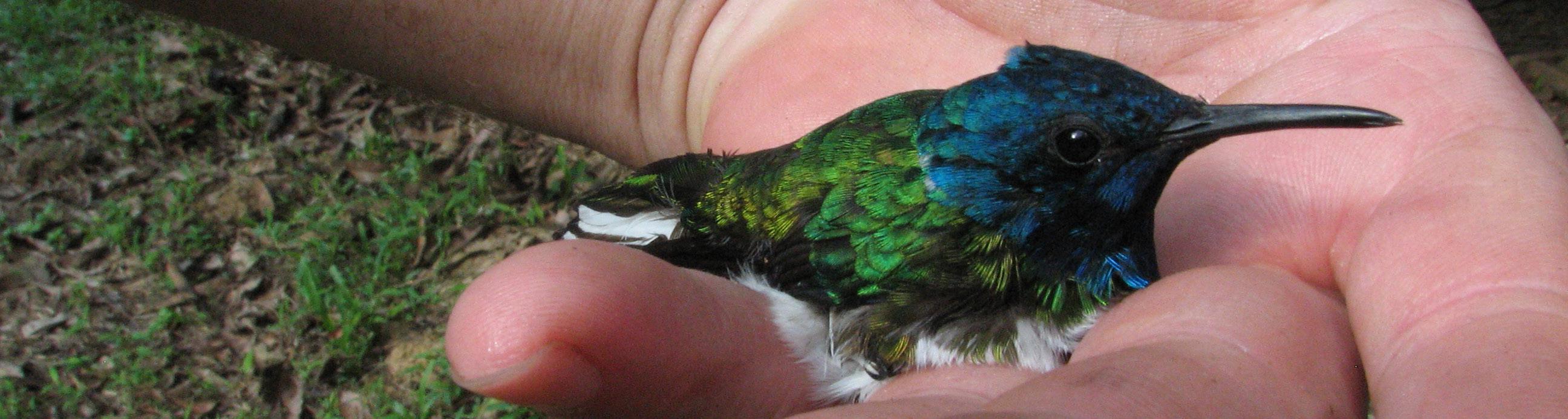
Table 4. Statistical comparison between sexes of mean wing length and body mass for 10 species at Las Caletas and two species at La Selva for which sex could be determined, and sample size was >10. T-statistic, degrees of freedom (df), and two-tailed P-value (< 0.05 in bold type) for each comparison are shown. A positive t-statistic indicates that male wing length was longer or male mass greater, while a negative number indicates that female wing length was longer or female mass greater. n.d. = no data recorded.
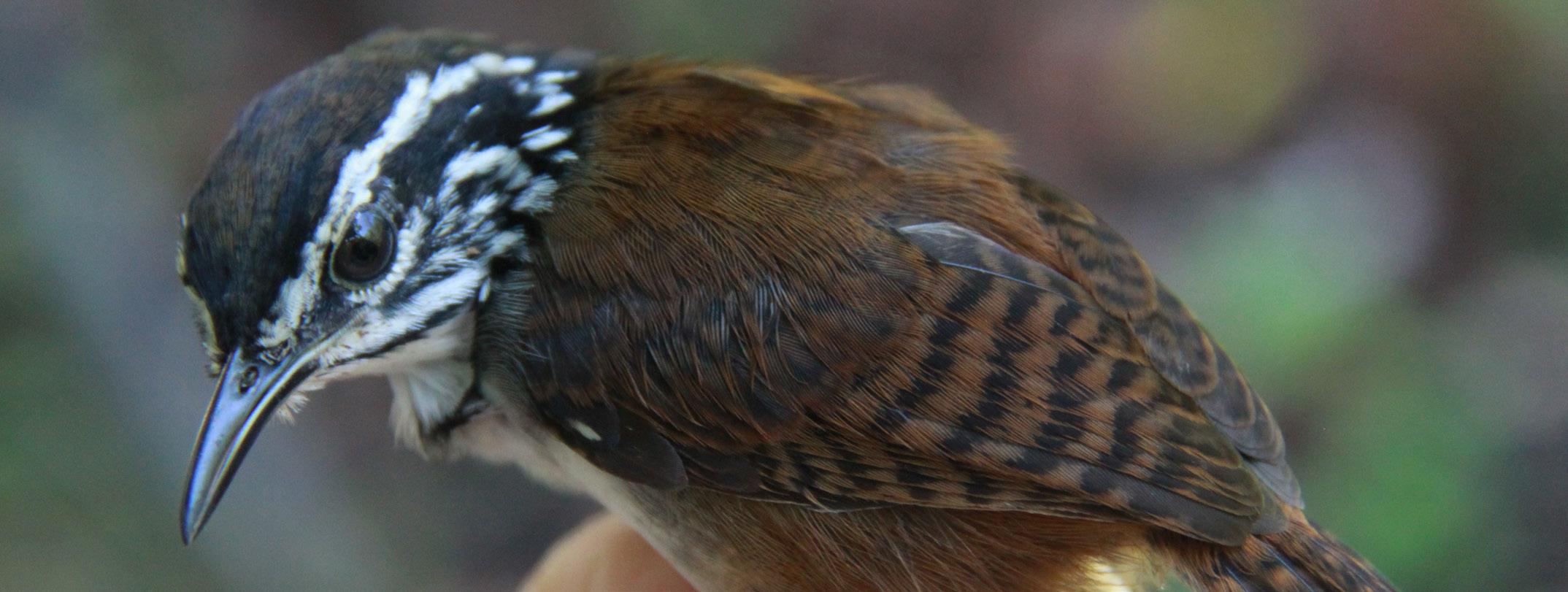
White-breasted Wood-Wren (Henicorhina leucosticta), Cyndi Smith.
Table 5. Statistical comparison of mean wing length and body mass between age classes (adult vs. juvenile) for two species at Las Caletas and one species at La Selva for which age could be determined, and sample size was >10. T-statistic, degrees of freedom (df), and two-tailed P-value (< 0.05 in bold type) for each comparison are shown. A positive t-statistic indicates that adult wing length was longer or adult mass greater, while a negative number indicates that juvenile wing length was longer or juvenile mass greater.
Table 6. Statistical comparison of mean wing length and body mass of the two subspecies of Scarlet-rumped Tanager: Cherrie’s (Ramphocelus passerinii costaricensis) at Las Caletas and Passerini’s (R. p. passerinii) at La Selva. T-statistic, degrees of freedom (df), and two-tailed P-value (< 0.05 in bold type) for each comparison are shown. A positive t-statistic indicates that Cherrie’s wing length was longer or mass greater, while a negative number indicates that Passerini’s wing length was longer or mass greater.
The Atlantic Flyway Review (AFR) is divided into 4 regions: Northeast (Maine, New Hampshire, Vermont, Massachusetts, Rhode Island, Connecticut, New York), Mid-Atlantic (Virginia, Maryland, Delaware, District of Columbia, New Jersey, Pennsylvania, West Virginia), Southeast (North Carolina, South Carolina, Georgia, Florida), and Canada (Ontario, Quebec, New Brunswick, Nova Scotia, Prince Edward Island, Newfoundland, Labrador).
We received reports from 7 banding stations from the Northeast, 8 from the Mid-Atlantic, 4 from the Southeast, and 2 from Canada. Across all regions, these 21 banding stations reported banding 48,575 birds with 14,056 recaptures and accumulating 142,715 net-hours this fall. There were no discernible trends this fall with stations across the Flyway reporting record high numbers and record low numbers, and everything in between.
Only two stations reported banding vagrant or rare birds this fall. In Pennsylvania, a Western Flycatcher and a Kirtland’s Warbler were banded at the Powdermill Avian Research Center. The Kiawah Island Banding Station in South Carolina banded a Bell’s Vireo, a Dusky Flycatcher, and a Black-headed Grosbeak.
If you would like to have your banding station featured in the fall or spring Atlantic Flyway Review, email Aaron Given at agiven@kiawahisland.gov. We would be happy to include your report in the next AFR.
Albany Pine Bush Karner Barrens East (AKBE)
Albany, Albany County, New York Neil A. Gifford, ngifford@albanypinebush.org www.albanypinebush.org www.facebook.com/AlbanyPineBush x.com/albanypinebush Banders: Neil Gifford, Alex Soldo, Steve Campbell
The AKBE banding station is located in the 1,376 ha Albany Pine Bush Preserve, which supports one of the best remaining global examples of an inland pitch pine-scrub oak barrens, and is a National Natural Landmark, NYS Unique Area, and a NYS Bird Conservation Area, as well as an Audubon Society Important Bird Area. The banding station consists of 20 nets within approximately 15 ha. Seventeen nets are within open-canopied barrens, two nets are within closed canopy pitch pine-oak forest, and one is at the transition between barrens and successional northern sandplain grassland. The vegetation in and around the banding station is actively managed with prescribed fire and other tools by the Albany Pine Bush Preserve Commission (APBPC).
In 2024, we completed the 18th consecutive season of banding during fall migration. We banded twice a week between 3 September and 29 October 2024 for a total of 16 mornings and 1,697 net-hours.
Our efforts yielded 615 captures; 517 were new individuals, 20 were individuals banded prior to the fall banding season, and the remaining were same-season and same-day recaptures. The number of captures per day ranged from 12 to 88 yielding an overall capture rate of 36.3 birds/100 net-hours. This capture rate was the second lowest since 2019 (range: 23.5–52 birds/100 net-hours). Many of the previously banded birds were resident birds or breeding season birds that had not yet migrated. These birds were banded during several public banding demonstrations in the spring and during our operation of a Monitoring Avian Productivity and Survivorship (MAPS) station in a nearby section of the preserve. One of these recaptures was notable: a Blue Jay we originally banded on 1 October 2015, making it at least 10 years old when we recaptured it this year.
The total number of species captured in 2024 was 49, the lowest since 2019 (range: 49–68). Whitethroated Sparrows were by far the most numerous species, representing 18% of the newly banded
birds. Song Sparrows were the next most numerous, representing 9% of the newly banded birds. All species had been captured previously at the banding station, except for a Sharp-shinned Hawk that we incidentally captured and banded.
Funding for the research and management was provided by the New York State Environmental Protection Fund with the support of the New York State Department of Environmental Conservation, and a Wildfire Risk Reduction grant from the USDA Forest Service. The APBPC also thanks our dedicated field technicians and the many volunteers who gave their time and talent to assist our efforts. We could not do this work without them.
Berkshire Bird Observatory (BBO)
Jug End State Reservation, Berkshire County, Massachusetts
Ben Nickley, ben@berkshirebirds.org www.berkshirebirds.org
Banders: Ananke Krishnan, Veronica Nault, Ben Nickley, Maya Roopnarine, Maya Vernick
BBO has banded during spring and fall migration since 2022.
Our banding station is within the leading valley of the south Taconic massif. Our nets are divided between two main cover types: shrub swamp and early successional scrub. Fields and forest surround our site, and Fenton Brook runs through the middle of our study area. We had very little rain during the fall which led to severe drought conditions.
This was our first season of participating in the Bird Genoscape Project. We also collected ticks for Harvard University. Thank you to our donors and volunteers. Funding is provided by the Geoffrey C. Hughes Foundation.
Joppa Flats Education Center Plum Island Bird Banding Station
Newburyport, Essex County, Massachusetts
Ben Flemer, bflemer@massaudubon.org
The station opened in 1998 with the fall of 2024 being our 26th year of operation. We use 19 nets (17 - 12m and 2 - 6m) in April/May and September/ October.
The banding station is located on the Parker River National Wildlife Refuge on Plum Island, a coastal barrier island between the Merrimack River, and the confluence of Parker and Ipswich rivers.
Habitat around the banding station consists of coastal dune shrub and forest dominated by highbush blueberry, winterberry, bayberry, Japanese honeysuckle, buckthorn, pin cherry, serviceberry, gray birch, quaking aspen, and red maple.
The fall season got off to a hot, humid, and mosquito filled start on 1 September. Despite the uncomfortable conditions, we banded 30 birds of 8 species, 20 of which were Gray Catbirds. Our good luck spilled over to 2 September, with 26 birds of 7 species banded, led again by the ubiquitous Gray Catbird. By the end of the month, we had banded a total of 361 birds of 43 species. Gray Catbird was number one on the top five list, which was rounded out by Common Yellowthroat, Red-eyed Vireo, White-throated Sparrow, and American Redstart.
October started out with warm morning temperatures but quickly settled into cooler weather, more typical of the month. Given the regionwide drought conditions, we were able to open for a total of 29 days, banding a total of 422 birds of 38 species. Despite the number of days of operation, this total was 155 below the average for the month. Yellowrumped Warbler is a species that we normally band a lot of in October, so the total of 40 was well below the average of 199, and precipitously below the 352 from October 2023. On the other wing, we banded a record number of Song Sparrows and Swamp Sparrows. Other highlights included an Indigo Bunting banded on the 26 October and a Whiteeyed Vireo banded on the 31 October. The Indigo Bunting was the fourth for the month of October for our station, and the vireo was only the ninth banded at the station. And if that was not enough for the last day of the season, we also captured a young,
male, Yellow-breasted Chat on 31 October.
We are grateful to the Parker River National Wildlife Refuge and Massachusetts Audubon Society for their support of the banding station. We are also grateful to the 40 volunteers who donated 1,045 hours of their time to help with all aspects of running the station this season.
Manomet Observatory (MBO)
Plymouth, Plymouth County, Massachusetts
Evan Dalton, edalton@manomet.org www.manomet.org
Banders: Sarah Duff, Amy Hogan, Camille Beckwith, Liam Norton
This was our 59th year of banding and the 56th official fall of consistent migration monitoring at Manomet Observatory. This season we welcomed visitors from near and far to the banding lab while continuing our efforts monitoring the resident and migratory species that rely upon the coastal scrub and wetlands on our property throughout the migratory season.
Weather this season was favorable with warm temps at the start of the season, very little rain and lighter-than-typical late-season winds. This resulted in an increase of 33% more net-hours over last fall. Overall, we captured 2,055 birds and placed bands on 1,337 new birds of 65 species.
The two busiest days occurred near the beginning and end of the season with 90 birds on 13 August and 98 birds on 22 October. We captured 60 or more birds on 14 of our 50 banding days. Capture rates were below our ten-year average for nearly half of the 65 species we captured. We saw particularly low numbers for migrants like American Redstart, Common Yellowthroat, Yellow-rumped Warbler and Hermit Thrush as well as American Goldfinch, Blue Jay and Northern Cardinal. Numbers were up this season for White-throated Sparrow, American Robin, and Black-and-white Warbler.
Although our average fall numbers for the two species are low, we have seen a slight uptick in both
Brown Thrasher and Blue-winged Warbler captures in the last two years. Both species prefer secondgrowth forest edges and an increase in numbers may indicate a change in habitat types in the region. This fall’s two Scarlet Tanagers, two Indigo Buntings, and a Rose-breasted Grosbeak were less than typical and allowed excellent opportunities for our team to practice recognizing plumage characters and molt limits. Three Tennessee Warblers were the highest fall total since 1998. Additionally, the 183 White-throated Sparrows banded this fall was the most since we banded 208 in the fall of 1998.
We had two foreign recaptures: a Blue Jay originally banded in Brewster, MA, and one of our four captured Northern Saw-whet Owls (NSWO numbers not included in AFR stats) was previously banded at a location TBD. The oldest known birds of the season included a seven-year-old Gray Catbird, a six-year-old Northern Cardinal, and a Downy Woodpecker and Ovenbird, both at least five years old.
We had over 300 visitors to our banding lab for hands-on educational and experiential programming – all designed to help encourage a new generation of enthusiastic naturalists with a connection to the environment. Visitors included school groups (from kindergarten-aged to college-aged), as well as many enthusiastic local bird clubs. This fall we also hosted our third Ornithology Careers Institute and our first Passerine Banding Fellowship. Both workshops offered opportunities for early career professionals from Latin America to participate in hands-on science, while networking with Manomet program staff.
As always, we are indebted to the many Manomet donors and volunteers as well as the Massachusetts Cultural Council, the Devonshire Foundation, and the Dorr Foundation for helping ensure the continuation of our banding operation.
Monomoy Refuge Banding Station
Chatham, Barnstable County, Massachusetts James Junda, james.junda@gmail.com Instagram: @monomoybirdobs www.monomoybirds.org
Banders: James Junda, Valerie Bourdeau, Anna Peel, Iggy Colon
The Monomoy Refuge Banding Station was founded in fall 2011, making 2023 the 14th fall season since operations started. However, we missed 2014, 2015 and 2021 for various reasons.
The site is located on a coastal island and the habitat consists of the only trees and thicket cover within seven miles of beach and dune–a classic migrant trap. The habitat is a mix of 6 m conifer groves, coastal wetland, and willow/bayberry scrub. Nantucket Sound is about a kilometer to the west and the Atlantic Ocean is 300 m to the east.
There were only two major storms over the 2024 season: a short intense storm in August that produced 25 cm of rain in an hour in parts of Cape Cod, and a long storm in September, when 25 cm of rain fell over a five-day period with 64.3 km winds. Outside of these, we banded every day except one between 15 August and 30 September. Our season ended a month early due to a loss of USFWS funding, and we unfortunately did not band in October this year.
With good weather, we were open on most days. However, that also meant that we did not have many birds “blown out” to Monomoy, and did not see our usual rarities. Because we missed the busiest part of the season (October) when thousands of Yellow-rumped Warblers arrive, our capture rate was very low at 38.4 birds/100 net-hours. We had a record number of Gray Catbirds, the result of more mature bushes on the island producing more breeding territories. American Redstart and Red-eyed Vireos also had record numbers, almost doubling any previous falls. Worm-eating Warbler was a new species for the station. All of our returns were breeders from the last few years, and we had no foreign recaptures.
Thank you to everyone at Monomoy National Wildlife Refuge for your years of support.
Wellfleet Bay Wildlife Sanctuary (WELL) South Wellfleet, Barnstable County, Massachusetts James Junda, James.junda@massaudubon.org Instagram: @massaudubonwellfleetbay
www.massaudubon.org/places-to-explore/wildlifesanctuaries/wellfleet-bay/projects/bird-banding Banders: James Junda, Valerie Bourdeau, Anna Peel, Iggy Colon
The station was founded in 2014 and runs during the spring and fall each year. This was the 11th fall of operation, although the first songbird banding on site happened in the 1930s. We are a coastal banding station, with Wellfleet Bay and saltmarsh on the west, and the Atlantic Ocean 2.5 km to the east. The banding station habitat is made up of mature oak forest with brushy non-native understory (40%), open field/salt plain grassland (30%), and mixed secondary black cherry/black locust forest (30%).
The weather in fall 2024 included a few storms and good weather in between storms. It only rained once in September, but the storm lasted for four days and brought 25 cm of rain. We only had a couple of minor storms in October and November which helped us reach the most days of operation and the most hours of effort in the history of our station.
It was by far our busiest season with 46.0 birds/100 net-hours. We set records for captures in 8 of the 10 top species in 2024: Pine Warbler, Northern Cardinal, Gray Catbird, American Goldfinch, White-throated Sparrow, Yellow-rumped Warbler, and Song Sparrow. Each fall we see a significant number of Eastern Bluebirds and this year was larger than usual with a record number of captures (51). We also had record numbers of captures of Pine Warblers, Yellow-rumped Warblers, and American Goldfinches. Our most noteworthy return was a Blue Jay banded as an AHY in fall 2015. All of our other returns were originally banded after 2019. We had a single foreign recapture, an American Goldfinch banded less the 15 km away in September and recaptured by us in November.
Thank you to all the volunteers that contributed to our project and all the collaboration at Massachusetts Audubon Society.
Flyway Review continued on next page
Wing Island Banding Station
Barnstable, Brewster County, Massachusetts
Sue Finnegan, suefinnegan@comcast.net
Facebook: Wing Island Bird Banding Station
Instagram: wing_banders
Banders: Sue Finnegan, Mike Babcock, Gretchen Putonen
The Wing Island Bird Observatory (formally called Wing Island Banding Station and changed to celebrate our 25th year!) is affiliated with the Cape Cod Museum of Natural History in Brewster, MA. It is situated on a tidal island located behind the museum. Wing Island consists of 49 ha with 5 ha of Cape Cod Bay Beach, 13 ha of upland (mainly pitch pine and oak trees and small meadow), and 31.5 ha of tidal saltwater marshland. The banding station was opened in 2000 by Master Bander Sue Finnegan.
Our 25th fall season began on 1 August and ended on 18 November. Nets were operated for 57 days. A range of 24-35 nets were used culminating in a total of 8,087 net-hours. We banded 2,328 new birds and had 1,173 recaptures of 74 species resulting in a capture rate of 43.3 birds/100 net-hours. Of the total recaptures, 110 of them were returns of the following species; 7Y- Gray Catbird (1), Myrtle Warbler (1-we have not recaptured him since 2018); 6Y- Common Yellowthroat (1); A5Y- Song Sparrow (1); 5Y- Blue Jay (1), Common Yellowthroat (4one of which has not been recaptured since 2019); A4Y- Gray Catbird(1), American Goldfinch (1); 4Y- Gray Catbird (5), Black-capped Chickadee (3), Song Sparrow (2), Carolina Wren (2) 1 each of Song Sparrow and Common Yellowthroat; ATY: Gray Catbird (1) and Common Yellowthroat (1). The rest of the birds were three years or younger.
Our best day was 13 October with 160 birds of 28 species netted. Highlights include our 3rd ever Dickcissel, our 5th fall capture of Pine Siskin, and latest date captures for Alder Flycatcher, American Redstart, Traill’s Flycatcher, Veery, and Yellowbreasted Chat. Though not technically in the time frame of fall banding, a Black-chinned Hummingbird was banded on 14 December in Provincetown MA, the latest arrival time in Massachusetts.
We had a greater number than 2 standard deviations of Brown Thrasher (4: average 1.25 ± 2.15), Connecticut Warbler (7: ave 1.42 ± 3.23), Hooded Warbler (2: ave 0.17 ± 0.96), Marsh Wren (16: ave 3.63 ± 8.44), Scarlet Tanager (2: ave 0.38 ± 1.29), and Swamp Sparrow (191: ave. 61.92 ± 72.55). We also had a greater than average number of Blueheaded Vireo (15: ave. 6.42) Black-throated Blue Warbler (11: average 4.83), Carolina Wren (30: ave. 12.79), Golden-crowned Kinglet (65: ave. 29.63), Orange-crowned Warbler (13: ave: 9.98), Western Palm Warbler (35: ave. 19.25), and White-throated Sparrow (39: ave. 17.42)). We had a lower-thanaverage number of American Robin (3: ave. 17.13), Black-capped Chickadee (38: ave. 83.46), Eastern Phoebe (8; ave. 17.88), and Myrtle Warbler (268: ave. 470.71).
We had two birds with beak deformities and three birds presented with pox.
We captured a Gray Catbird that was banded in Wellfleet in September 2023. The band of an American Goldfinch we banded in the fall of 2020 was reported by someone metal detecting on September 2024 in Dennis, MA.
Many thanks to the Cape Cod Museum of Natural History for hosting our banding station and providing monetary and all-around support. We are always appreciative of the monetary support from the French Foundation and the Cape Cod Bird Club. A big thank-you to the many volunteers who helped the banders this fall season: Lucy Wightman, Reenie Dwyer, Michele Burnat, Keelin Miller, Paula Pariseau, Gabbie DiNardi, Brandi Sikorski, Mary Keleher, Ethan Seufert, Lauren Grimes, and others who helped for a day or two.
Allegheny Front Migration Obs. (AFMO) Jordan Run, Grant County, West Virginia Katie Garst, k.garst20@gmail.com www.brooksbirdclub.org/afmo.html
Banders: Robert Dean, LeJay Graffious, Orion Metheny
AFMO began in the fall of 1958 at the Red Creek Campground on the eastern boundary of what is now the Dolly Sods Wilderness in Monongahela National Forest. Staffed by unpaid volunteers throughout the entirety of its existence, AFMO has operated during fall migration in every year since 1958 except for 2020 and 2022. In 1963, the station was moved 250 m northeast of the campground to its current location.
AFMO is perched at the top of a ravine at 1,180 m elevation along the Allegheny Front. When winds come out of the west, the combination of topography and wind concentrates the flight of southwardmigrating birds, and many birds fly at net level as they reach the top of the ravine. The station sits at the edge of the red spruce and northern hardwood forests of the Allegheny Mountains and overlooks the oak forests of the Ridge and Valley ecoregion to the east. The vegetation in an approximately 1.6-ha area around the net lanes is periodically trimmed and pruned to prevent vegetation succession from altering the flight path of migrating birds over the net lanes.
The station was closed for 10 days this fall due to poor weather conditions. Additionally, net hours were reduced on several days due to weather delays and due to nets being closed to prevent the number of birds captured from exceeding the number that could be processed in a timely manner by the available volunteer staff.
A total of 1,825 birds were banded at AFMO in 2024. The highest daily total this season occurred on 21 September 2024, with 361 birds banded. Starting this season, Orion Metheny collected feather samples from birds banded at AFMO for contribution to the Bird Genoscape Project (www. birdgenoscape.org).
Notable birds banded at AFMO that returned to AFMO in 2024 included a Black-capped Chickadee that was banded in 2019, a Gray Catbird and a Common Yellowthroat that were banded in 2021, and a Common Yellowthroat banded in 2023 that was recaptured five times between 24 August and 20 September 2024. A Cape May Warbler banded at AFMO on 4 September 2024 was found dead in North Wilkesboro, Wilkes County, NC on
14 October 2024.
The Brooks Bird Club supports and sponsors AFMO. Over 30 volunteers contributed their time and expertise to the operation of AFMO in 2024. The Monongahela National Forest authorized the Special Use Permit that allows AFMO to operate within the national forest. The Garrett College Wildlife Club assisted with carrying the banding shed into and out of the national forest at the start and end of the season. AFMO thanks all who have contributed to the operation of the station over the decades.
Foreman’s Branch Bird Observatory
Chestertown, Queen Anne’s County, Maryland Maren Gimpel, mgimpel2@washcoll.edu https://www.washcoll.edu/fbbo https://www.facebook.com/ForemansBranch https://www.instagram.com/foremansbranch Banders: Maren Gimpel, Meghan McHenry, Natalie Donofrio, Phillip Mercier, Connor O’Hea
The fall 2024 season marked the completion of FBBO’s 27th year of banding. The station has nets in a mix of habitats including fallow fields, second growth forests, mature woodlands and over a lake with mud flats. While the variety of habitats has remained mostly the same over the years, large edges of our fallow fields had become overgrown with saplings, and we did major habitat modification this past spring to restore our scrub-shrub areas. The other change to our operation was an approximate 20% reduction in the number of nets used.
Weather throughout the season was mostly cooperative. August’s weather was typical, while September was on the warm side with less favorable winds. Mid-October brought a stretch of favorable winds and days of high captures, while the end of October into November saw the return of unseasonably warm weather and south winds, slowing down migration earlier than normal. We missed only two full days due to rain.
The fall total of 11,488 birds banded was above average, while our species total of 117 was
just slightly below average. Our capture rate of 44.3 birds per 100 net hours was one of the best in years. Species caught in lower than normal numbers included Sharp-shinned Hawk, Fox Sparrow, Eastern Towhee, Red-eyed Vireo and Yellow Warbler (which tied our lowest ever total).
We missed Green Heron, Least Sandpiper, and Cooper’s Hawk entirely. Species caught in record high numbers that were also 2 SD above our longterm average included White-throated Sparrow, Swamp Sparrow, and Hermit Thrush. The Hooded Merganser banded on 15 November was a station first.
We netted two foreign recaptures. American Redstart #2970-06979 was banded in Alfred, NY on 18 September 2024 and captured at FBBO on 3 October 2024. Common Yellowthroat #301006111 was banded as an AHY-M on 27 August 2023 on Long Island, NY and was captured on 1 September 2024 at FBBO. About a dozen birds banded at FBBO were encountered elsewhere this fall including a Common Yellowthroat captured at Kiawah Island, SC and Northern Saw-whet Owls captured in Hebron, PA and McGill, Quebec.
Our 593 returns were comprised of 43 different species. There were 16 birds that were more than six years old. The oldest birds of the season were the three individuals that were 8 years and 5 months old. Two were White-throated Sparrows and one was a Song Sparrow.
Our collaborations included tagging 10 Wood Thrush as part of the continental effort by Sarah Kendrick of the U.S. Fish and Wildlife Service, and our partnership with the American Bird Conservancy to test bird-friendly glass.
We are most grateful to Dr. Henry F. Sears for his years of support, our Washington College interns Morgan Carlson and Lauren Albert, as well as to 12 volunteers who gave over 200 hours of their time. Lastly, our station founder Jim Gruber retired at the end of 2023, and this was our first fall season without him at the helm. FBBO would never have grown into its current iteration without him. He has
given countless hours of his time, mentored dozens of young birders and banders, and freely gave his years of knowledge and expertise to us all (while feeding us snacks from his store). We are proud to carry on his legacy.
Island Beach State Park
Seaside Heights, Ocean County, New Jersey Ted Hicks, TedHicks61@gmail.com
Banders: Edwin (Ted) A. Hicks, Robert P. Yunick
Island Beach State Park has hosted a fall migration banding station since 1956 with a vibrant banding program in place for decades thereafter. The Park is located on a narrow barrier island about 64 km long and positioned parallel to the New Jersey coast. It contains an extensive shoreline along Barnegat Bay to the west and the Atlantic Ocean to the east. The habitat consists of dense maritime forests, intermediate scrub brush, rolling sand dunes, and tidal marshes.
The station was operated from 22 October through 29 October. Bird numbers at this location during migration are heavily influenced by weather conditions, and in the fall, it takes a cold front with sweeping north or northwest winds overnight to bring birds to the park. Favorable overnight conditions only occurred on the evening of 24 October, which had the coolest temperatures of the week, clear skies, and an NNW wind of 15-25 kph.
Two banders operated each day from dawn until bird activity declined for the day. We banded 633 birds of 31 species with White-throated Sparrow being the most numerous species overall (252). Three species of sparrows (White-throated, Song, and Swamp) comprised more than half of the total number of birds banded. Warblers were few in numbers, and number of species, which would be expected this late in the season. We did manage to band a few, with Yellow-rumped Warbler being the most numerous (27). An Orange-crowned Warbler was also banded, a species that is seen here in the fall only intermittently. We had one good overnight flight resulting in 282 birds banded on 25 October.
In over 20 years of banding at this site, I had never seen or banded a Northern Mockingbird. During this session three were banded and one recaptured. We saw or heard them daily over the eight days we were there. I do not think this species is rare or unusual for this area, but it was nice to finally band one after so long.
One last observation, not necessarily related to banding, is the extent of bay shore erosion at this site. In 2019 I created a map of the net lanes from a Google Maps image where I drew in (to scale) where the 8 – 9 nets typically used were located. Comparing that image to this year, I estimate that the bay shore has advanced eastward about 12 - 15 meters from where it was in 2019. It seems clear that either the water level in the bay is rising, or the island is sinking.
We would like to acknowledge the strong support of Island Beach State Park Naturalist Kelly Scott once again this year. We cannot overstate how appreciative we are of her arranging to help clear net lanes and sharing her knowledge of the park history and local flora and fauna. Kelly arranged for three volunteers to participate, Linda Gloshinski, Rowena McNulty, and Paul Lang, and their capable assistance is greatly appreciated. Of course, our appreciation is extended to the park maintenance staff for their hard work clearing brush to open the net lanes back up, and to the New Jersey Department of Environmental Protection as well.
Meadowlands Bird Banding Station
Lyndhurst and North Arlington, Bergen County, New Jersey
Cailin O’Connor, coconnor@kean.edu https://www.instagram.com/nj_par/ Banders: Cailin O’Connor (Master Bander), Drew McQuade, Erica Mueller
The Meadowlands Bird Banding Station (MBBS) historically operated under a retired banding team from 2008-2015. The station was reopened in the fall of 2019 as a migratory and MAPS banding station on roughly half the footprint of the original banding site and was expanded to include most of
the original site in the summer of 2021. MBBS contains saltmarsh, mudflat, and mid-successional shrub/scrub habitats, as well as a capped landfill historically used for dumping industrial waste.
Roughly half of the station follows a narrow strip of land between a tidal marsh and an impoundment, while the landfill section is mid-successional habitat dominated by mugwort and Phragmites with sparse Eastern Cottonwood stands. The grounds on which the station operates have undergone some ecological restoration efforts in the past. More recently, in 2023, the top of the landfill was treated with targeted herbicides to remove invasive plants and encourage the growth of native grasses. The three nets in this location captured significantly different species before and after the vegetation changes.
The MBBS operated 23 mist nets during the fall 2024 season, opening an average of 12 mist nets per day on a rotating basis for 30 banding days from 13 August – 2 November. Most banding days were in the saltmarsh this season due to the unfortunate presence of two feral cats on the landfill site; only three banding days took place there, including our only public and university programs of the season. Any changes in species composition this year are likely to be influenced by this bias of data towards the saltmarsh site, as the two sites have significantly different habitats and thus different avian species compositions.
In total, 1,424 individuals of 69 species were banded for the season, including 23 species of warblers. The top ten species banded this season were: Yellow-rumped (Myrtle) Warbler (428), Swamp Sparrow (153), Gray Catbird (123), Common Yellowthroat (110), Song Sparrow (79), Traill’s Flycatcher (56), White-throated Sparrow (40), American Robin (36), Yellow Palm Warbler (36), and Northern Waterthrush (28). The total number of new birds banded is slightly higher than the average for the fall, but we banded more days than average as well. The top ten species were mostly expected, and most species were represented by near-average numbers for our station. However, there were significantly more Swamp Sparrows than average
this fall, the vast majority of which were hatchyear birds, and notably fewer Song Sparrows, White-throated Sparrows, and Traill’s Flycatchers. Additionally, Northern Waterthrush has never made our top ten.
There were 70 recaptures this season, a few more than average, of which 57 were repeats and 13 were returns. Repeats were mostly Gray Catbirds (17). Returns consisted of eight species and were also mostly Gray Catbirds (8), the oldest of which was banded in 2021. The oldest return was a Northern Mockingbird banded as a hatch-year in 2019. We also recaptured a Northern Cardinal and an American Robin, both of which were banded in 2020. There were no foreign recaptures this season. The total of 69 species for the season is our highest season total to date. Three new species for the station were banded this fall: Blue-winged Warbler, Purple Finch, and Yellow-billed Cuckoo, represented by one individual each. An additional 19 species encountered infrequently across seasons were represented by a single individual, including station seconds of Yellow-bellied Flycatcher, Hairy Woodpecker, and Bay-breasted Warbler. Other species of note included a Belted Kingfisher, an American Kestrel, and a record two Connecticut Warblers.
One hundred and one nanotags were deployed as part of a multiyear study into the effects of window strikes on avian migration. This season eight species were nanotagged including Gray Catbird (38), Song Sparrow (19), Northern Waterthrush (16), White-throated Sparrow (11), Veery (6), Hermit Thrush (5), Ovenbird (3), and Swainson’s Thrush (3). Data from these control birds will be compared to window-struck birds. We deployed an additional 51 nanotags on experimental (window-struck) birds but those data are not included in station totals.
This was our first season tagging thrushes and we are happy to note that many of our tagged Veeries and Swainson’s Thrushes passed through or are overwintering in Central America. The majority of our tagged Gray Catbirds and Northern Waterthrushes flew along the Atlantic coast and were last detected in southeastern states before,
presumably, continuing onto the Caribbean. Most of our tagged sparrows ended up just a bit south of us in Maryland and Virginia. Though we stayed open later than usual this year, data from one tagged White-throated Sparrow is making us rethink our closing date; the bird was tagged on our last banding day and migrated to Maryland the following day. Clearly, some birds are still migrating in early November in New Jersey and we may stay open longer in future fall seasons to capture the last push of migrants.
Thank you to New Jersey Sports and Exposition Authority (NJSEA) for use of their land for the banding station and to our core team members for the season: Juhi Rawal, Michael Turso, Olivia Haas, GJ Nazzola, Matthew Wolfe, and Clifford Berek. Thank you to Kean University and NJSEA for their financial support.
Mt. Nebo Wildlife Management Area (Mt. Nebo WMA)
Oakland, Garrett County, Maryland
Connie Skipper, connieskipper@hohnet.com
Bander: Connie Skipper
This was the 24th season of banding at Mt. Nebo WMA. The site is an old field in a wildlife management area. It is overgrown with invasive shrubs, autumn olive and honeysuckle in hedgerows, alternated with small plots of planted crops that include sorghum, field corn, brown top and pearl millet. There are apple trees throughout the site. It is surrounded by forest and adjacent to a wooded swamp. Soft mast was especially abundant this fall.
The station was operated on 29 days from 22 August to 2 November. A total of 1,153 birds of 68 species were banded. The station effort was 2,450 hours with a capture rate of 47 birds/100 net-hours. No new species were added to the station total which remains at 101. There were usually 18.5 nets open, but that number was as low as 11 and 14 on several days.
The largest daily catch occurred on 17 October with 91 birds of 16 species with sparrows making up 67%
of catch. The next best day was 22 August with 75 birds of 15 species with Gray Catbirds making up 61% of that total. The days with the highest number of species were 26 September and 3 October with 23 and 21, respectively.
All thrushes were captured in above average numbers: Gray Cheeked Thrush (n=7, avg. 4.7), Veery (n=6, avg 4.7), Swainson’s Thrush (n=29, avg. 22.6), Hermit Thrush (n=17, avg. 12.3), Wood Thrush (n=9, avg. 5.6), American Robin (n=24, avg. 18.2). Several other species were notably higher than usual. They were Gray Catbird n=335, avg. 160), Purple Finch (n=46, avg. 27), American Goldfinch (n=22, avg 14.3), Fox Sparrow (n=11, avg. 3.9) second highest number banded at this station, Swamp Sparrow (n=45, avg. 20), and White-throated Sparrow (n=126, avg. 87.3).
The following species were below average: Rubycrowned Kinglet (n=30, avg. 52.5), Tennessee Warbler (n=13, avg. 18.7), Common Yellowthroat (n=38, avg. 64), Magnolia Warbler (n=21, avg. 34.4), Black-throated Blue Warbler (n=12, avg. 28.4), Black-throated Green Warbler (n=5, avg. 11.4). We banded fewer flycatchers than normal and fewer warblers. It was unusual that we did not band any Golden-crowned Kinglets or White-crowned Sparrows.
The station had 296 recaptures of 23 species. We had 49 returns, individuals banded in prior years. One had been banded in 2015, one banded in 2018, one banded in 2019, seven banded in 2020, two banded in 2021, 16 banded in 2022 and 21 banded in 2023. The return of a Black-capped Chickadee banded as an HY bird in 2015 makes it nine years old.
We had one foreign recapture on 28 August, an after hatch-year male Mourning Warbler. It had been banded near Cap-Tourmente, Quebec, Canada on 24, May 2024 as a second-year.
The faithful volunteers who tended nets and helped maintain net lanes are most appreciated. Thanks also to Beau Emerson and the Mt. Nebo WMA staff for continued use of this site and their help in
clearing and maintaining net lanes.
Powdermill Avian Research Center (PARC)
Rector, Westmoreland County, Pennsylvania
Annie Lindsay, LindsayA@carnegiemnh.org
https://powdermillarc.org/ https://www.facebook.com/ PowdermillNatureReserve
https://www.instagram.com/ powdermillnaturereserve1956/
Banders: Annie Lindsay, Mallory Sarver, Jason Kitting, Ashlyn Rogers, Luke DeGroote, Mary Shidel
Powdermill Avian Research Center (PARC) is a long-term bird monitoring station operated and supported by the Carnegie Museum of Natural History. Powdermill operates a continuously run, year-round banding station that opened in June 1961, and fall 2024 marks the 63rd fall banding season. The fall season begins in early August and continues through mid-November.
Powdermill operates 67 nets during the fall
migration season, spread across a 10-ha banding area. The habitat is primarily early successional or transitional, and includes a meadow and four ponds, the largest of which holds water year-round and is roughly 4.5 m deep. The banding area is surrounded by forest and sits at the foot of the Laurel Ridge, bordering Forbes State Forest and other forested state and private land.
Beginning in 2024, Powdermill’s banding effort during the migration seasons was slightly reduced as we banded only five days/week rather than traditional six days/week. Southwest Pennsylvania experienced a severe drought this summer and fall and many small streams, ponds, and springs were dry. PARC’s ponds likely provided one of the only reliable local sources of water, congregating birds in the net lane area, and the capture rate in fall 2024 greatly exceeded that of many fall seasons over the past decade. In fact, there were several daily banding totals in summer and fall that were higher than Powdermill has had in recent years. For example, we netted 153 birds on 17 July, Powdermill’s third highest single-day total during the summer season, and had three fall days that exceeded 300 birds. A 300+ bird-day has not occurred at Powdermill since
We banded 6,292 new birds plus one unbanded and recaptured 2,516 birds of 101 species during the fall 2024 season. Of the recaptures, 115 were betweenyear returns, however most were species that are either non-migratory residents or were individuals that spend the breeding or winter season at PARC.
The season total was lower than most recent years, primarily due to 2024’s reduced effort. We had three species with noteworthy (± 2 standard deviations) below average captures including Acadian Flycatcher (n = 7; avg. 23.25 ± 7.73), Blue-headed Vireo (n = 9; avg. 44.79 ± 16.99), and Blue-winged Warbler (n = 1; avg. 13.38 ± 3.85), and several species with noteworthy above average captures including Sora (n = 2; avg. 0.29 ± 0.46), Barred Owl (n = 1; avg. 0), Western Flycatcher (n = 1; avg. 0), Veery (n = 25; avg. 13.58 ± 4.48), Bicknell’s Thrush (n = 1; avg. 0.08 ± 0.41), Swainson’s Thrush (n = 765; avg. 366.04 ± 145.03), Baltimore Oriole (n = 9; avg. 2.79 ± 2.95), Ovenbird (n = 193; avg. 91.58 ± 25.09), and Kirtland’s Warbler (n = 1; avg. 0).
There were many highlights at PARC this fall, including:
• Single-day high totals for Blackburnian Warbler (n = 11; 16 August) and Rubythroated Hummingbird (n= 35; 3 September).
• A Wilson’s Snipe that was originally banded at Powdermill on 6 April 2019 and aged as after second year (DCB) was recaptured on 11 October (its third recapture). Betweenyear recaptures of migrating birds are not common at PARC.
• Two Soras (21 September and 24 September) were the 22nd and 23rd of the species in PARC’s dataset, and notably, only once before were two Soras captured within the same season (fall 2013).
• A Bicknell’s Thrush banded on 27 September, that was separated from the similar Graycheeked Thrush by measurements, is the 2nd or 3rd of this species in PARC’s dataset.
• A Barred Owl banded on 2 November was a surprise capture during PARC’s public “Owling at the Moon” event and is the
second Barred Owl in PARC’s dataset.
• A Western Flycatcher, separated from other Empidonax flycatchers by wing morphology and measurements, that was banded on 2 November is a new species for PARC.
• A Kirtland’s Warbler banded on 24 September is the second in PARC’s history. The first was banded in September 1971, a remarkable capture given the species’ incredibly low numbers at that time. The bird stayed at PARC for a week, refueling for its next migratory flight, and delighted many birders.
PARC banding staff facilitated several in-house research projects, collaborated with outside researchers, and hosted visiting researchers during the fall 2024 migration season. Projects included our partnership with the American Bird Conservancy to test avian perception of glass, an ongoing, multi-year project; the banding crew collected fecal samples from Yellow-rumped Warblers for colleagues at the Smithsonian Museum to investigate the role of gut microbes in the digestion and seed dispersal of waxy fruits; we collected feathers for the Genoscape Project; a PhD student from University of Maryland deployed transmitters on six species of migratory songbirds to explore interspecies interactions during stopover events; and as part of a non-avian project, we collected spotted lanternflies at PARC for a researcher at St. Vincent College.
We hosted two in-person bird banding workshops in September and held a small, in-house North American Banding Council certification session in October. We welcomed 515 visitors to the banding station, provided outreach programs to the public and school groups, and partnered with Powdermill’s education staff to hold a Hummingbird Day and Owling at the Moon event, which together were attended by an additional 300 people.
We thank Powdermill’s banding crew, staff, and dedicated volunteers. Their help is critical to PARC’s research and outreach efforts. PARC’s bird banding operation is funded through the generosity of the Colcom Foundation, the Laurel Foundation, and numerous private donors who have supported
Powdermill Avian Research Center since its inception.
Patuxent Research Refuge, Laurel, Prince George’s County, Maryland
Matthew Rogosky, mrogosky@usgs.gov
Banders: Matthew Rogosky, Kyra Harvey, Lauren Walker, Danny Bystrak, Antonio Celis-Murillo
This year marked the 41st season the banding station at Patuxent Research Refuge was operated by the US Geological Survey’s Eastern Ecological Science Center-Bird Banding Laboratory. Since 1979, this station monitors migrating land birds that use the refuge to rest and refuel. Managed to maintain a dense shrub canopy, the station is located within one of the power line transmission right-of-ways that transects the refuge. In 2024, the team of BBL staff and volunteers operated the station for a total of 42 days from 16 August through 18 November. This season, we banded 1,366 new birds and recaptured 320 previously banded birds, representing 70 species.
Following the 2023 season’s record number of bandings (2,393 total), the 2024 season produced a surprisingly low total count of new bandings. The count in 2024 was the second lowest annual count in the history of the station, with only a lower total banding count occurring in 2016 (1,360 birds). The total count of new bandings in each month was below the station’s long term average, markedly so in August (141 total in 2024/205 avg.), September (354 total/540 avg.), and November (178 total/261 avg.). Total bandings in October were only slightly below average (672 total/733 avg.). We suspect weather conditions favorable for continuous migration resulted in fewer individuals stopping over at the site during the early part of the season.
Despite the low numbers, the station still documented a number of notable captures. Some highlights include: the first Blue Grosbeaks since
2014 (a group of three hatch year individuals were caught together); the first Prairie Warbler since 2019, several Nashville, Hooded, and Wilson’s Warblers, two Brown Creepers, and a single Eastern White-crowned Sparrow.
This year was the first year since 2015 that a hummingbird bander was consistently present at the station. A total of 21 Ruby-throated Hummingbirds were captured. The team plans to re-incorporate hummingbird banding into the long-term dataset to better understand how these pollinators utilize the landscape and provide a comparison to the passerine/near-passerine data collected.
The banding station hosted a number of groups and visitors for educational opportunities in 2024. Highlights included a visit from the Friends of Patuxent, who graciously helped fund improvements to the station, as well as a group of 40 participants from The Wildlife Society Meeting field trip to the Patuxent Research Refuge. Finally, we want to extend a huge thanks to our network of volunteers and continued support from the U.S. Geological Survey Eastern Ecological Science Center and the U.S. Fish and Wildlife Service Patuxent Research Refuge.
Rushton Woods Banding Station (RWBS) Newtown Square, Chester County, Pennsylvania AlisonFetterma, avf@wctrust.org https://wctrust.org/bird-banding/ Banders: Lisa Kiziuk, Blake Goll, Michelle Eshleman, Aaron Coolman, Doris McGovern, Alison Fetterman The Rushton Woods Banding Station (RWBS) completed the 15th consecutive year of fall migration songbird banding, having been in operation since 2010. We operated 16 nets, three days a week for a total of 20 days from 29 August through 24 October 2024.
RWBS is located on a 34-hectare preserve that is a matrix of mature deciduous forest, meadows, early to late successional shrub-scrub hedge rows, and 2.5 hectares of organic agriculture owned and managed by Willistown Conservation Trust. Songbird
migration and Northern Saw-whet Owl banding take place in the hedge rows, while a MAPS station is operated in the mature forest.
As with spring migration, we saw the lowest number of new birds and capture rates in station history this fall. The total number of birds (593) decreased by 38% from last fall and decreased 42% from the 13-year average. Two days were lost due to rain, and we closed for three additional days due to staff availability, neither of which contributed to the extremely low capture rate as our total net hours were well within the normal range. We banded 593 birds of 53 species with a capture rate of 46.1 birds/100 net-hours, with an additional 75 repeats, and three returns. The largest single-day catch was on 24 October, with 50 new birds of 14 species. No new species were recorded this season, leaving the station cumulative total to 90 species caught during fall migration. Gray Catbird was second to Whitethroated Sparrow for only the third time in station history. Most concerning was the low number of Gray Catbird (64), well below the 13-year average of 259.4 per fall (a 75% decrease). Gray Catbird accounts for about 25% of our total captures each fall, so this decline contributes greatly to our low total station capture. The reason for the decline is unknown. Other species with record low captures but are typically in our top ten most captured include Song Sparrow (24), American Robin (16), Northern Cardinal (8), and American Goldfinch (4). Despite low capture rates of common species, we had high fall counts for Veery (30), Yellow Palm Warbler (21), and Brown Creeper (4). Species diversity was average (53), and no species were notably absent.
We had three returning birds including a Whitethroated Sparrow originally banded as an adult in October 2023, a Carolina Chickadee banded as an adult in September 2023, and a female Northern Cardinal originally banded as an after hatch-year in April 2019. We had no foreign recaptures or encounters.
We hosted more than 100 visitors to the station including classes from three universities, students from local elementary and high schools, and many members of the public. We continue to collaborate
with Drexel University as a study site and University of Pennsylvania graduate research projects. Annual songbird banding reports can be found at: https:// wctrust.org/research/
Thanks to all the dedicated volunteers who gave their time, in some cases for many years, in contributing to the long-term data collection at the Rushton banding station.
Cape Florida Banding Station (CFBS)
Key Biscayne, Miami-Dade County, Florida
Michelle Davis, vireoojorojo@gmail.com http://capefloridabandingstation.wordpress.com/ Banders: Miriam Avello, Elizabeth Golden, Nasim Mahomar, Steffanie Munguía, Nicole Rita
The Cape Florida Banding Station (CFBS) is in its 23rd year of fall migration banding in Bill Baggs Cape Florida State Park (BBCFSP). This park is on the southern tip of a largely developed barrier island just off the coast of Miami. Mist nets are set in a restored tropical hardwood hammock that is the result of a multi-million-dollar project to return native vegetation to the park following Hurricane Andrew in 1992.
The fall banding period ran from 2 September until 5 November 2024, and we used 23 regular nets set in the same locations as the Fall 2023 seasons. We captured 817 birds overall of 36 species, with Ovenbird, American Redstart, and Black-throated Blue Warblers as the three most abundant species. Nine individuals banded during other seasons were recaptured this fall, and 76 individuals of 18 species were recaptured within-season. Of the returning birds, 3 were wintering Ovenbirds, one was a resident Northern Cardinal, and the balance was made up of a Gray Catbird, a Blue-gray Gnatcatcher, two White-eyed Vireos and a Swainson’s Warbler, all using BBCFSP as a winter home. The oldest return was a Northern Cardinal from 2016. We did not capture any foreign recaptures, but two birds from Cape Florida were recaptured by other banders on the same weekend! A Worm-eating Warbler banded
by us on 22 September 2020 was recaptured at the Kiawah Island Banding Station in South Carolina on 9 September 2024. Meanwhile banders near Gainesville FL recaptured a Chuck-will’s Widow we banded on 26 September 2023. A third recovery trickled in of an American Redstart banded at Cape Florida on 19 October 2022 that collided with a building in Toledo, OH on 18 May 2024. This marks our first recovery from the Midwest.
We operated with a reduced schedule during Fall 2024 due to staffing constraints, but the days were spread out evenly through the peak of the migration season. The capture rate of 35 birds/100 net hours seen was the highest since the fall of 2008. This probably reflects a combination of not being open during the low-volume (and very hot) weeks in August and the fact that Fall 2024 was a busy migration season for south Florida. The two powerful and destructive hurricanes that crossed Florida, Helene on 26 September and Milton on 9 October, fortunately had little impact on South Florida but may have contributed to the higher numbers of birds in the area. The busiest day was 12 October when 95 birds were banded following Milton. No new species were banded in 2024, but some unusual captures included a Golden-winged Warbler, a Rose-breasted Grosbeak, and three Yellow-throated Warblers. This common locallywintering species is surprisingly infrequently encountered at CFBS.
This project would not be possible without the assistance of our supporters, dedicated volunteer extractors, and banders-in-training for the fall season. Special thanks go to Robin Diaz, data entry master and all-around repository of knowledge, and to Jorge Brito and Bill Baggs Cape Florida State Park for continuing to support the project.
Kiawah Island Banding Station (KIBS), Captain Sams Site
Kiawah Island, Charleston County, South Carolina
Aaron Given, agiven@kiawahisland.gov www.kiawahislandbanding.blogspot.com
Banders: Aaron Given, Kristin Attinger, Michael Gamble, Natalie Miller, Noah Nei, Lisa Viviano
This was the 16th consecutive year of fall migration banding at the Captain Sams site with banding occurring daily during the last 13 years. Kiawah Island is a 3250-ha barrier island and residential/ resort community located approximately 32 km southeast of Charleston, South Carolina. The banding site is situated at the extreme western end of the island in secondary dune scrub/shrub and high marsh with wax-myrtle, sea ox-eye, and marsh-elder being the dominant plant species.
Overall, the average monthly temperature was consistent with the historical average. However, the first half of November was much warmer than the historic average. This season was also slightly drier, and we experienced less rain than normal. Most of the rain this season came in the first half of August prior to our banding season starting. The first “cold” front arrived on 20 August. Unlike the last several years, cold fronts seemed to come in more regularity averaging about one per week through September and October. However, most of the cold fronts were weak or had weakened by the time they reached the Southeast. We experienced good movement of migrants with the passage of two strong cold fronts in September (9/9 and 9/19) and two in October (10/1 and 10/15). As usual migration slowed down during November, but steady numbers of Yellowrumped Warblers arrived all month long.
It was an active Atlantic hurricane season with 18 named storms but only two affected our operations at KIBS. Hurricane Debby made landfall in the Florida panhandle as a Category 1 on 5 August. It weakened and moved up the coast making a second landfall on 8 August just north of Charleston, SC bringing with it 18 cm of rain, strong winds, and a 30 cm storm surge. Because Captain Sams is tidal, most of the water receded quickly only leaving 15-20 cm of water in the lower elevation areas of the station. Hurricane Helene made landfall as a Category 4 in the Big Bend region of Florida on 26 September. Helene weakened and quickly moved inland up into Georgia and western South Carolina. While the effects of Helene were minimal in our area, we did receive enough rain to shut down banding operations for a day.
Nets were open for a total of 105 days from 15 August - 30 November. There were 3 days when banding did not occur because of weather: 9/7 (rain), 9/27 (Hurricane Helene; rain and wind), 11/7 (rain).
We banded 5,776 new birds of 93 different species. The most commonly banded species were Common Yellowthroat (1,520), Yellow-rumped Warbler (1,013), and Gray Catbird (767). Those three species combined made up 57.1% of all the birds banded this season. After falling to the number 3 spot last year, Common Yellowthroats rushed to the top this year and increased by 82% from last year and 35% from the average since 2012. This was the most Common Yellowthroats we have ever banded in one season. Rebounding from a poor fall last year, Yellow-rumped Warblers increased by 93% this fall compared to last year and 31% compared to the average since 2012. After topping the list last year, Gray Catbirds fell to third with a decrease of 18% from last year and 5% since 2012.
The overall effort increased from 17,178.3 nethours in 2023 to 17,493.7 net-hours this year. This difference is relatively small, and we did have one additional day of banding this year.
We banded 1,155 more birds this year compared to last year, and 1,025 birds more than the average for the previous 13 years. The capture rate of new birds was 33.0 birds/100 net-hours. The capture rate increased by 6.1 birds/100 net-hours compared to last year but was still 4.8 birds/100 net-hours lower than the 13-year average of 37.8 birds/100 net-hours. Our capture rate has decreased every year starting in 2012 except for 2017, 2019, 2022, and again this year when we experienced small increases from the previous year. The capture rate of recaptures is normally very consistent from year to year, however, this year the capture rate was 8.6 birds/100 net-hours which is 1.2 birds/100 nethours lower than the average since 2012.
We had 1,499 recaptures this season compared to 1,292 recaptures from last year representing a 16% increase. Recaptures are divided into 3 categories: repeats (birds recaptured in the same season in
which they were banded), returns (birds recaptured in a different season in which they were banded), and foreign recaptures (birds recaptured that were banded elsewhere). We had 1,279 repeats, 221 returns, and 6 foreign recaptures. It is rare to catch a bird that was banded at another location but to have multiples in one season is even more extraordinary.
• Worm-eating Warbler (9/9/24) – banded 9/22/20 in Key Biscayne, FL
• Northern Waterthrush (9/22/24) – banded and nanotagged in New Jersey
• Common Yellowthroat (9/17/24) – banded 8/31/24 in Cape May, NJ
• Common Yellowthroat (9/22/24) – banded 9/9/24 in Cape May, NJ
• Common Yellowthroat (10/8/24) – banded 5/17/19 in Newberry, MA
• Common Yellowthroat (10/8/24) – banded 4/29/20 in Chestertown, MD
In addition to the foreign recaptures, we also captured 6 individuals that were banded at our Little Bear site that is located 8.8 miles to the east of Captain Sams. Despite banding thousands of birds at each site during the fall, we normally have very little movement of the birds between them. This year we captured a Northern Cardinal (10/21/21), Northern Waterthrush (9/25/22), Brown Thrasher (8/25/23), Gray Catbird (10/14/22), and 2 Song Sparrows (10/18/23, 11/8/23) that were originally banded at Little Bear on the date in parentheses.
There were 12 days this fall when over 100 birds were banded including 2 days with at least 400 birds banded and 3 days with over 200 birds banded. The best day of the season was on 20 September when we banded 438 birds. Of those 438 birds, 223 of them were Common Yellowthroats! The next two busiest days occurred on 15 October and 1 October when 400 and 296 birds were banded, respectively. Of the 400 birds banded on 15 October, 205 of those were Gray Catbirds!
We had 23 regularly occurring species that exhibited record high numbers this season: Yellow-billed Cuckoo (34*), Eastern Whip-poor-will (3), Yellow-
bellied Sapsucker (14), Yellow-bellied Flycatcher (5), Eastern Phoebe (90), White-eyed Vireo (120), Brown Creeper (8), Winter Wren (3), Marsh Wren (6), Blue-gray Gnatcatcher (18), Golden-crowned Kinglet (28), Swainson’s Thrush (100), Chipping Sparrow (2*), White-crowned Sparrow (4), Whitethroated Sparrow (24), Swamp Sparrow (80), Black-and-white Warbler (49), Nashville Warbler (4), Common Yellowthroat (1,520), Cape May Warbler (65), Bay-breasted Warbler (7), Summer Tanager (9), Painted Bunting (221). Alternatively, we had one species that had record low numbers: Hooded Warbler (1*). The * indicates species that tied the record high or low.
Some other rare and notable species that were banded this fall include: Red-shouldered Hawk (1; 3 previous), Sedge Wren (1; 4 previous), Grasshopper Sparrow (1; 3 previous), Nelson’s Sparrow (1; 1 previous).
Species notably absent this year included: Mourning Dove (36 total, average 2.8/year), Cooper’s Hawk (12 total, average 0.9 year), Eastern Bluebird (6 total, average 0.5/year), Clay-colored Sparrow (13 total, average 1.0/year), Field Sparrow (23 total, average 1.8/year), Lincoln’s Sparrow (5 total, average 0.4/year).
We banded 5 species that have never been banded before: Barred Owl, Dusky Flycatcher, Bicknell’s Thrush (2), Cerulean Warbler, and Black-headed Grosbeak. The Dusky Flycatcher is a western species that breeds wests of the Rocky Mountains and winters in Mexico. While there have been some records of Dusky Flycatchers in the east, this is the first one for South Carolina. Black-headed Grosbeak is another species that breeds in the western US and winters in Mexico however it is more prone to wander with hundreds of records throughout the eastern US. This appears to be the 4th record for South Carolina and the first since 1978. Bicknell’s Thrush is an eastern species with a very restricted range occupying disturbed mountaintop coniferous forest in the northeastern US during the breeding season and wintering in the Greater Antilles. While Bicknell’s Thrushes do occur in South Carolina during migration, they look identical to the Gray-
cheeked Thrush which makes identifying them in the field impossible. Only with measurements or (a voice recording) can Bicknell’s Thrush be identified outside of the breeding range. Of the 37 species of wood-warblers that regularly occur in eastern North America, the Cerulean Warbler was the only one we had not banded yet. Cerulean Warblers are rare along the east coast and mainly migrant inland crossing the Gulf of Mexico to South America for the winter.
We hosted 4 groups this year including the Kiawah Island Natural History Group (19 September), the Seabrook Island Birders (7 October), the SC Master Naturalist Program (8 October), and the naturalists from the Kiawah Island Golf Resort (21 November).
Little Bear Site
Kiawah Island, Charleston County, South Carolina Aaron Given, agiven@kiawahisland.gov www.kiawahislandbanding.blogspot.com Banders: Aaron Given, Kristin Attinger, Michael Gamble, Natalie Miller, Noah Nei, Lisa Viviano
This was the 10th season for the Little Bear site which we initiated in the fall of 2015. Kiawah Island is a 3,250-ha barrier island and residential/resort community located approximately 32 km southeast of Charleston, South Carolina. The banding site is situated at the extreme eastern end of the island in secondary dune scrub/shrub and ephemeral brackish wetlands with wax-myrtle, sea ox-eye, and marshelder being the dominant plant species.
Weather conditions and frontal movements were the same as reported in the Captain Sams report. Because much of Little Bear is situated in a basin that collects and holds water, Hurricane Debby had a much more profound effect and as a result the season started with 30-45 cm of water throughout much of the site.
Nets were open for a total of 80 days from 22 August - 15 November. There were 5 days cancelled due to weather: 9/7 (rain), 9/16 (Tropical Cyclone #8; wind), 9/27 (Hurricane Helene; wind and rain),
10/10 (wind and rain), and 11/7 (rain). Little Bear was closed for an additional day (10/18) due to insufficient staffing.
We banded 3,345 new birds of 87 different species. The most commonly banded species were Common Yellowthroat (825), Gray Catbird (547), and Yellow-rumped Warbler (290). Those three species combined made up 50% of all the birds banded this season. It was a good year for Common Yellowthroats with a 56% increase compared to last fall and a 35% increase over the average since 2015. Alternatively, Gray Catbird numbers exhibited a 28% decrease from last fall and a 16% decrease on the 10-year average. Jumping back into the 3rd spot this year, Yellow-rumped Warblers numbers were almost identical to last year but up 8.6% over the 10-year average. Palm Warblers fell out of the top 3 down to 5 this year with a 60% decrease from last year while Painted Buntings landed in 4th with an 186% increase from last year.
We logged 9,924.0 net-hours at Little Bear this fall – an increase from 9,260.1 net-hours in 2023. We banded one more day than last fall and added one new net (net 26). The new net was added to mitigate some of the loss of vegetation surrounding several of our wetland nets. Excessive flooding and saltwater intrusion have reduced the vegetation in that area severely to the point where a couple nets have very little cover nearby.
We banded 35 less birds this year compared to last year, but 373 more birds than the average since 2015. Little Bear’s capture rate of new birds decreased by 8% from 36.5 birds/100 net-hours in 2023 to 33.7 in 2024. Similarly, the capture rate decreased by 12.5% compared to the average over the last 10 years. The capture rate of recaptures was up 20% from last year but right in line with the 10year average.
We had 941 recaptures this season, which is much higher than the 729 recaptures from last year. We had 827 repeats, 112 returns, and 1 foreign recapture. The foreign recapture was a Gray Catbird that was banded near Chatham, Massachusetts on 27 August 2024.
There were 8 days when over 100 birds were banded including 1 day with at least 200 birds banded. Last year, we had 10 days with over 100 birds and two 200-bird days. The best day of the season was on 15 October when we banded 200 birds and had 13 recaptures. Of the 200 birds, 103 of them were Gray Catbirds! The next two busiest days occurred on 2 October and 9 September when 177 and 146 birds were banded, respectively.
Several species exhibited record high numbers this season: Yellow-crowned Night Heron (2), Chuckwills-widow (2*), Downy Woodpecker (10), Eastern Wood-Pewee (10), Acadian Flycatcher (2), Least Flycatcher (2), Eastern Phoebe (54), Brown Creeper (3), Golden-crowned Kinglet (12),Veery (16), White-throated Sparrow (6*), Song Sparrow (41), Swamp Sparrow (77), Cape May Warbler (61), Bay-breasted Warbler (3*), Summer Tanager (2*), Painted Bunting (286). Species that had record low numbers included: Eastern Towhee (1), Yellowbreasted Chat (5*), Baltimore Oriole (1*), Indigo Bunting (9). The * indicates species that tied the record high or low.
Some other rare and notable species banded included: Bell’s Vireo (1; 1 previous), Winter Wren (1; 4 previous), Clay-colored Sparrow (1; 5 previous), Dark-eyed Junco (1; 2 previous), Kentucky Warbler (1; 1 previous), Rose-breasted Grosbeak (2; 1 previous).
Species notably absent included Eastern Screech Owl (16 total; 1.6/year), Sharp-shinned Hawk (11 total; average 1.1/year), American Robin (9 total; 0.9/year), Chipping Sparrow (8 total; 0.8/year), Lincoln’s Sparrow (8 total; 0.8/year).We did not band any new species this year at Little Bear.
Flyway Review continued on next page
Sullivan’s Island Bird Banding Station (SIBBS) Sullivan’s Island, Charleston County, South Carolina
Sarah Harper (Diaz), sullivansislandbirds@gmail.com https://www.facebook.com/sullivansislandbirds
The Sullivan’s Island Bird Banding Station (SIBBS) has operated under Sarah’s permit since Spring 2020. The station had additional seasons under a prior master bander in 2015 and 2016. SIBBS is located within a 60-ha conservation easement that abuts the beach dune line. Between seven and nine 12-m mist nets were opened each morning. Temperature, wind speed and wind direction dictated which nets could be opened and how long they could stay open. Flooding from rain events consistently prevented us from using three net lanes. Most of the net lanes are located in early-successional scrubland habitat with a low canopy. Dominant shrubs include wax myrtle, Carolina cherry laurel, Hercules’ club, poison ivy and eastern red cedar. Many invasive plants are also well-established at the station, including Chinese tallow tree, rattlebox, Japanese honeysuckle, and Chinese wisteria. We retired three net lanes that
were frequently flooded and created two new net lanes in a thicket of wax myrtles directly behind the sand dunes.
The station opened for a total of 30 days between 27 August and 27 November. We banded three more days than last fall. Eight trained volunteers assisted on a weekly basis and five additional volunteers assisted on an irregular basis. We had a total of 30 visitors, including a local birding club. A total of 661 new birds were banded this season across 46 different species. Recaptures from 2024 indicated that three species demonstrate site fidelity to wintering grounds. We recaptured five Myrtle Warblers from prior seasons, including one from 2021, two from 2022, and two from 2023. A Swamp Sparrow banded in November of 2022 was recaptured in November 2024, indicating it had overwintered in the area for two (or possibly three) consecutive winters.
The capture rate of 97 birds/100 net-hours was lower than the capture rate of last fall which was 141 birds/100 net-hours. About 8 or 10 days during peak migration were missed due to a hurricane, a
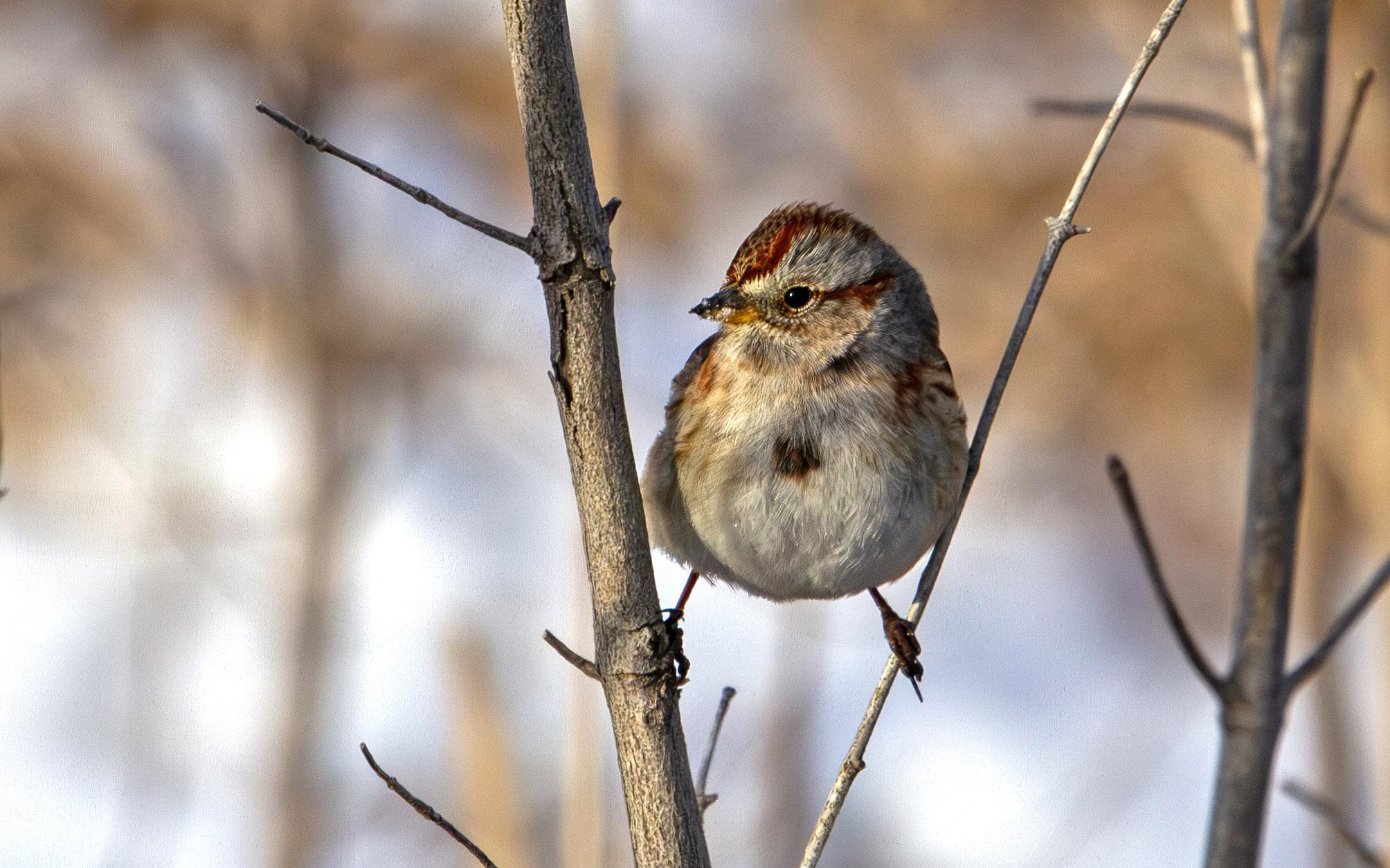
tropical storm, and high winds. Even though the total number of net-hours in this fall (795) was higher than last year (685), 121 fewer birds were banded (661) compared to last year (782). One notable difference is that more Myrtle Warblers were banded in 2024 (168) than in 2023 (53). In contrast, more Gray Catbirds were banded in 2023 (353) than in 2024 (134).
Unexpected and unusual captures in 2024 included a Philadelphia Vireo that had strayed farther east than its typical inland migration route. This is the second Philadelphia Vireo banded at SIBBS with the last one banded last fall. Two Tree Swallows were also unusual captures for the station. Despite the fact that Tree Swallows are frequently seen foraging in and around the station in large flocks of 300+ birds, only 6 of them have been captured since 2015. SIBBS is a volunteer-based organization that relies on regular trained volunteers for setting up and taking down equipment, extracting birds and scribing data. We would like to thank all of our volunteers and donors that make this research possible! SIBBS is a program of the Carolina Avian Research Program, a 501c3 nonprofit.
Gosnell’s Farm (Haldimand Bird Observatory) Cayuga, Ontario
Rick Ludkin, rludkin@hotmail.com www.haldimandbirdobservatory.com
Banders: Rick Ludkin, Sarah Sharp, Marnie Gibson, Joanne Fleet, Faye Socholotiuk-Duym
“The Farm” (as it will henceforth be referred to) sits about 9.5 kilometers east of Cayuga in southern Ontario. It consists of close to 40 hectares of land, much of which has been farmed over many years for soy beans, corn, and winter wheat. The north end of the Farm’s arable land butts up against part of the provincially significant Grand River/Dunnville Marshes Complex.
In the Fall of 2022, a 3-ha agricultural field was
restored to prairie by planting native grasses such as Big Bluestem (Andropogon gerardi), Switchgrass (Panicum virgatum), and Indian Grass (Sorghastrum nutans). The Gosnells waited until July to take a cutting off, ensuring that nesting birds would have fledged young. Further, they cut only about half of the field leaving a long (~250 m) swath of uncut grass. This swath was about 15 m wide; we cut a couple of net lanes across it. We caught 17 species in these 2 nets. Next year we will cut 5 lanes and stagger them evenly throughout the swath to maximize its effectiveness. Separating the field from the wetland is a long area of edge habitat. We have been doing a lot of work to make it more “bird friendly” – taking out buckthorn, thinning the number of Black Walnuts, planting dogwood shrubs and a variety of trees. This will be an ongoing project.
In previous years we have started at the beginning of September, always regretting that this “late” start would preclude the capture of early migrants. This year we banded on 4 days in August, catching 89 birds, many of them Bobolinks. We banded on 23 days in both September and October and another 7 in early November. The number of birds banded in September (689) and October (1,184) were new highs for the site. In total, we banded 2,173 birds of 65 species – both new records. The previous high was 1,791 birds of 57 species in 2023.
Perhaps most interesting, though, was that it took more than twice the number of net-hours to accomplish this. This year we put in 2,994 net-hours as opposed to just 1,401 last year. This showed up in our capture rate, calculated as the number of birds captured per 100 net-hours. This year it was just over 72 birds/100 net-hours; last year it was 119. Further, we banded on 57 days versus only 38 in 2023.
The bottom line is that we banded a record number of birds and a record number of species (65 vs 57). Song Sparrows and Swamp Sparrows are now our “bread and butter” – we banded new records of
each: 486 Songs (vs 479) and 388 swamps (vs 359). I would like to thank the Gosnells for the use of their land and their considerable support. I would also like to extend thanks to our banders and to our large crew of volunteers who worked hard, not just in the banding program, but also doing the grunt work – clearing and planting.
St. Andrews Bird Banding Station (StABBS)
St. Andrews by-the-Sea, Charlotte County, New Brunswick
Anna Tran Nguyen, annat.trannguyen@gmail.com www.huntsmanmarine.ca/birdbanding www.facebook.com/huntsmanmarine www.instagram.com/huntsmanmarine www.instagram.com/sabbs_hmsc Banders: Patricia Nancekivell, Anna Tran Nguyen Assistants: Dana Sandercock, Monica Armenta
The St. Andrews Bird Banding Station continues to follow the Canadian Migration Monitoring Network (CMMN) protocol and opened mist nets daily, between 21 August and 26 October 2024, for the 24th fall migration monitoring season.
The station is dominated by conifers (aspens, spruces and cedars) to the southwest and northeast, meadows of goldenrods and asters to the northwest and southeast, and buckthorns and alders in the center. Human-made changes have fragmented and isolated the banding areas over the years, including a forest clearing east of the station, but the changes seem to have slowed in the past few years. Deer are an expensive problem on some years; many nets have holes in the bottom shelf due to a deer passing through. Fire ants are numerous and cumbersome for the banders.
September and October were relatively dry, without strong hurricanes nor frequent ground wetness like last year and was more similar to several past years. However, like last year, mid to late October still had above-zero temperatures and the occasional frosty morning. Correlatively, the number of birds banded were still steady by the end of the banding season, as though the birds were not ready to migrate.
612 birds of 55 species were banded, and there were 126 recaptures (repeats and returns). There were many American Goldfinches banded (76 individuals) like most years, but there were the highest number of Song Sparrows (111 banded and 21 recaptured) the station has ever banded. 6 October had the highest number of individuals and diversity with 45 birds banded of 18 species, including 15 Song Sparrows and six Blue-headed Vireos.
Uncommon species banded included Pileated Woodpecker, Indigo Bunting (2), and a Common Grackle. White-breasted Nuthatch and Brown Thrasher were new banded species for the station, notable given that the station has not banded a new species in years. The station recaptured a female Black-and-White Warbler banded as after hatch year in 2020, now at least five years old, and a female Downy Woodpecker banded as second year in 2020, now five years old.
The capture rate of 25.0 birds/100 net-hours was below the 10-year average (27.5 birds/100 nethours) and the 24-year average (29.0 birds/100 net-hours). The number of birds and species tended to decline from 2001 to 2017, but seemed to have stabilized since then as have the habitat and species composition changes.
Like most years, we had a number of school groups visit the station. This year, we started collaborating with the Bird Genoscape Project, sampling feathers from specific species so they can create connectivity maps and better understand population-specific trends.
Thank you to StABBS banders and Huntsman staff for their dedication and commitment to the station and banding program, and to the Huntsman Marine Science Centre for all the in-kind support. Thank you to the New Brunswick Wildlife Trust Fund and the New Brunswick Wildlife Council for providing financial support, without which the station would not be able to operate.
Table 2.
(388) AMGO (76)
3 BTNW (143) SWSP (645) GCKI (55) GRCA (123) SOSP (70) GRCA (395) RCKI (46) RCKI (117) WTSP (271) WTSP (39) 4
Compiled by Claire Stuyck
If you would like to help review articles of interest to banders, please contact clairestuyck@gmail.com, and feel free to mention if you have a particular journal or geographic area of interest.
Contributors to this issue: CMS*= Claire M. Stuyck; CMS= Cyndi M. Smith; JLS = Joseph L. Saxfield; MSW= Meredith S. Walker; SKA= Steve Keith Albert.
mignette: An R package for creating and visualizing migratory network models. DeSaix, M.G., C.M. Bossu, J.C. Hagelin, R.J. Harrigan, J.F. Saracco, M. Somveille, C.M. Taylor, and K.C. Ruegg. 2024. Methods in Ecology and Evolution 2024;15:2216-2225. https://doi.org/10.1111/2041210X.14455.
A major difficulty for managing migratory species is to develop conservation plans that can take into account their movements among several sites. Migratory networks are models capable of quantifying movements of individuals as well as entire populations throughout the annual cycle. However, there is a need to make these esoteric models more accessible to conservation planners. In a recent paper, Matthew DeSaix from Colorado State University, Jim Saracco from the Institute for Bird Populations, and others present a new tool: mignette (migratory network tools ensemble), an R statistical package for developing migratory network models to estimate network connectivity among migratory populations. The authors demonstrate the functionality of mignette with three empirical examples that highlight the use of different types of tracking data for migratory assignment. Additionally, mignette provides R functions to
visualize modelled migratory networks. With increasing availability of migratory assignment and abundance data, mignette represents a valuable tool for developing effective conservation strategies for migratory species. SKA
Six-decade research bias towards fancy and familiar bird species. Fischer, S.E., J.G. Otten, A.M. Lindsay, D. Miles, and H. Streby. 2025. Proceedings of the Royal Society B 292: 20242846. https://doi.org/10.1098/rspb.2024.2846.
Does ornithological research tend to focus on species that are more visually appealing and familiar? The research conducted by Fischer et al. was designed to test this question by looking at 293 passerine and near-passerine species in the continental USA and Canada. They hypothesized that birds with greater aesthetic salience, larger breeding ranges, and ranges encompassing more universities are studied more than birds that don’t meet these three criteria. They focused on male birds as most ornithological research is already known to focus on male birds. They quantified research effort by using a bibliometric approach, evaluating over 27,000 publications between 1965 and 2020. They also looked at differences in aesthetic salience for birds featured on journal covers and birds listed as federally endangered, and whether species’ common names influenced research effort based on the level of aesthetic salience the name suggested.
The analyses revealed that research was heavily skewed in favor of aesthetically pleasing birds that occur in large breeding ranges encompassing more universities. They also found that birds listed as endangered tend to score higher in aesthetic salience. This was also found to be the case for birds featured on journal covers. Their results also showed that drab-suggestive common names and eponymous common names tend to garner less attention from researchers.
The gist of this article was not to shame researchers for being enthralled by more visually appealing birds and certainly recognized that some research happens based on geographic convenience and must be performed under stringent funding limitations, at times. The authors suggest that these preferences can have a snowball effect and lead to large data gaps that are detrimental to many species of birds. Birds that are less aesthetically salient and less accessible could very well fall through the cracks when it comes to conservation at the most, and at the very least, researchers could be missing out on some exciting and important discoveries and breakthroughs that our drab and distant feathered friends could hold the keys to. So, when you extract and band a drab bird in some remote location and find yourself whispering sweet nothings about how beautiful and underappreciated it is; remember that you could very well be an advocate for the underrepresented. You all have the unique privilege to see these birds in the hand and witness the nuances that make them special. Take a moment to be the voice that shares the beauty of what you see in these birds. JLS
A maneuverable canopy net for capturing large tropical birds. Russo N.J., K.M. Holbrook, T. Dietsch, F.A. Forzi, A.S.A. Tekam, and T.B. Smith. 2024. Journal of Field Ornithology 95(1):13. https:// doi.org/10.5751/JFO-00438-950113.
I have no experience with capturing tropical canopy birds, but having recently travelled in Guyana, I could see where it would be challenging to do. The authors studied large frugivores in the rainforests of Cameroon. They discuss assembling and placing the nets before giving step-by-step instructions for constructing the pulley-mounted net (actually four mist nets stacked on top of each other, tied together). There are illustrations of the key steps, and a link to a 7-minute video on the Wilson Ornithological Society YouTube site. One of the appendices is a
list of component parts, where to purchase them, and estimated prices. The authors also modified the placement of the net to capture fruit-eating bats. The target species were large, heavy birds and different size mist nets could be used to target smaller species in a different environment. CMS
Use of space by urban Loggerhead Shrikes (Lanius ludovicianus) as a window into habitat suitability. Maddox, K.A. and C.E. Hill. 2024. Journal of Field Ornithology 95(2):6. https://doi. org/10.5751/JFO-00458-950206.
The authors tracked color-banded Loggerhead Shrikes to measure population density, home range size and nest spacing to understand the habitat suitability of urban areas in South Carolina for this species. They discovered that shrikes readily used the grassland-mimicking urban areas, which contrasted findings in other studies. Home range sizes were smaller and nest spacing was closer together, both of which contributed to higher population densities. Shrikes require four resources to be successful: open areas with short grass, bare ground, perches to hunt from, and appropriate shrubs or trees to nest in. The authors suggest that moderate levels of development provide these resources, as well as abundant food. The warmer winters in the area (the species is non-migratory there) may also benefit shrikes compared to other urban areas. CMS
Potential for bird–insect phenological mismatch in a tri-trophic system. Belitz, M.W., E.A. Larsen, A.H. Hurlbert, G.J. Di Cecco, N. Neupane, L. Ries, M.W. Tingley, R.P. Guralnick, and C. Youngflesh. 2025. Journal of Animal Ecology 2025;94:717-728. https://doi.org/10.1111/1365-2656.70007.
Climate change is altering the seasonal timing of biological events across the tree of life. Phenological asynchrony has the potential to hasten population declines and disrupt ecosystem function. However, scientists lack broad comparisons of the
degree of sensitivity to common phenological cues across multiple trophic levels. In this recent paper, the authors made extensive use of data from the Monitoring Avian Productivity and Survivorship (MAPS) program, administered by The Institute for Bird Populations, to synthesize more than 15 years of data across three trophic levels to estimate the timing of four interacting phenological events in eastern North America: the green- up of forest canopy trees, emergence of adult Lepidoptera and arrival and subsequent breeding of migratory birds. The authors found that insect and plant phenology indeed had similarly strong sensitivity to growing degree days (GDD), while bird phenology had lower sensitivity. They also found that vegetation greenup and bird arrival were more sensitive to GDD in higher latitudes, but the timing of bird breeding was less sensitive to GDD in higher latitudes. Migratory bird species with slow migration pace, early arrivals and more northerly wintering grounds shifted their arrival the most. Across Eastern Temperate Forests, the similar responses of vegetation greenup and Lepidoptera emergence to temperature shifts support the use of remotely sensed green-up to track how the timing of bird food resources is shifting in response to climate change. MSW, SKA
Survival of fallen and returned rooftop nesting Least Tern chicks. Forys E.A., M.G. Korosy, and J.S. Liechty. 2024. Avian Conservation and Ecology 19(1):7. https://doi.org/10.5751/ACE02602-190107.
Not many wildlife rehabilitators are able to undertake studies into survival of the species that they rescue and release. This project benefited from a well-established collaboration between shorebird biologists, local birding groups and the general public. Least Terns (Sternula antillarum) have adapted to a loss of natural beach habitat by nesting on gravel rooftops. Unfortunately, it is quite common for tern chicks to fall off the roofs because they wander too close to the edge or because they are unable to fly back after attempting to fly. The authors banded 168 fallen chicks with metal USGS bands and three color bands
in unique combinations, then returned them to the rooftops. Subsequent resightings of these individuals enabled the authors to model apparent survival rates of juveniles and adults. While there was no other data for juvenile survival it was comparable to that of similar species, while adult survival was comparable to that from other studies. This study supports the management strategy of returning chicks to their rooftop nesting sites. CMS
Biased sampling of birds by mist nets. Furness, R. W. 2025. Ringing and Migration 40(1):20-35. https://doi.org/10.1080/03078698.2025.2588719.
Mist-netting is a widely used method for markrecapture studies. The potential for bias in captures of birds is known, yet, most causes are unknown or under investigation. Further, the magnitude of these biases is not often quantified. The author of this paper conducted a literature review to identify studies using mist netting that identified capture bias. Those studies were evaluated on the frequency bias occurring amongst studies, supporting evidence, and magnitude of bias. Bias was characterized and presented in order of relative magnitude into these topics: 1) use of bird-call lures, 2) flight-height distribution, 3) net type, 4) bird size, 5) prior learned experience of net capture, 6) bird morphology and behavioral features, 7) mist-net visiting protocol, 8) weather conditions, 9) breeding status, 10) molt condition, 11) sex bias, 12) age bias, 13) artificial feeding, 14) long-term habitat change, 15) disease, 16) personality, 17) net condition, 18) body condition, and 19) presence of marking attachment. This review paper improves our understanding of sources and magnitude of bias. Most importantly, the author calls for additional study into these topics to facilitate ongoing quality data improvements that can generate robust conclusions in studies using mist-netting. CMS*
Literature reviews continued on next page
El estudio de las aves neotropicales debería abarcar a las ciencias sociales [The study of Neotropical birds should incorporate the social sciences]. Albert, S., E.A. Silva-Rodríguez, A.A. Dayer, M. Chapman, B. Zukowski, G. Gifford, A. Echeverri, A. Martínez-Salinas, and D. RamírezCalvo. 2024. Ornitología Neotropical 35:87-91. https://doi.org/10.58843/ornneo.v35i2.659.
The journal Ornitologia Neotropical (Neotropical Ornithology) recently published a series of articles derived from presentations at the Neotropical Ornithological Congress in Costa Rica several years ago. One of these was a discussion about incorporating social sciences into Ornithology, a field known in the U.S. as Human Dimensions (or Human Dimensions of Ornithology). Steve Albert
of the Institute for Bird Populations, along with several colleagues from the U.S. and across Latin America, summarized some of the current thinking in this regard. They noted that reversing recent bird declines and effectively conserving birds is a responsibility that should be shared among all nations in the region. Support for conservation efforts often depends on several factors, many of which relate more to people than to birds. For example, relying on the approval of politicians, managers and local communities is a necessary strategy to implement conservation-related public policies. In the few past years, an academic field has emerged in the intersection between bird conservation and the social sciences. In this paper, they explore the origins of this field, and identify strategies that can be used by the scientific community and conservation professionals to incorporate the conservation social sciences into their work and obtain more effective results. SKA
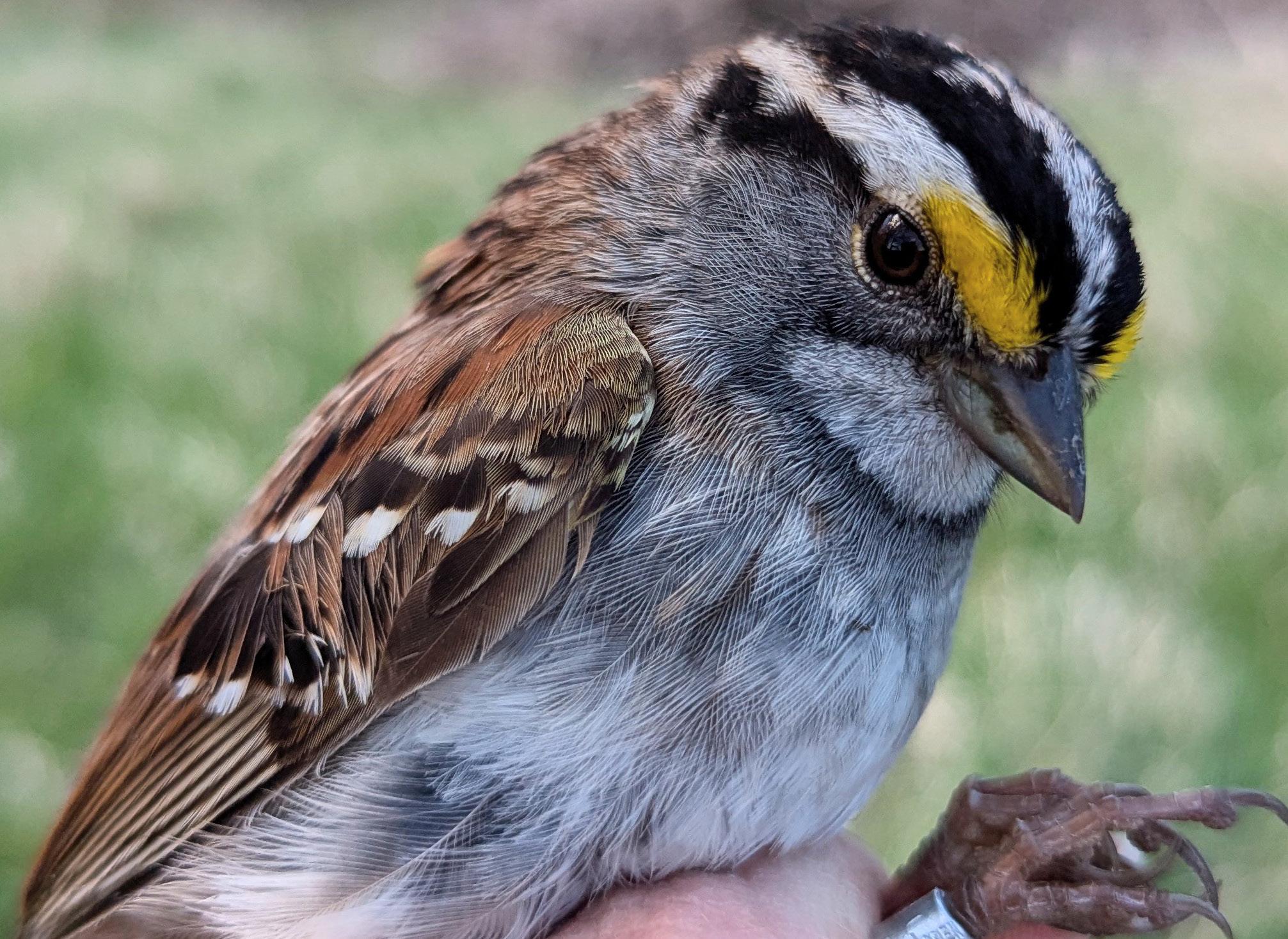
Steven Gabrey Van Buren, AR
Email:
swgabrey@inlandbirdbanding.org
This is the 18th installment in our regular feature presenting a brief synopsis of the banding and encounter records submitted to the Bird Banding Lab for a particular species. Each installment will feature a new species; suggestions for species to be covered or data to be presented are welcome. Space limitations of NABB prohibit any in depth analysis of the data and these notes are not meant to show any trends in population parameters such as population density or growth rate, geographic distribution, etc. and should not be viewed as a definitive analysis of the status of the species.
Although the banding program began in the 1920s, the currently available digital records for banding data include only those records from 1960 to the present (pre 1960 banding data are available in other formats, however). All encounters, including those of birds banded before 1960, are available in digital format. This summary includes only those birds banded in the United States and Canada between 1960 and June 2025; a brief review of encounters of birds banded in 1959 or earlier is included at the end.
Numbers and Age and Sex Categories
Since 1960, 836 American Bitterns have been banded in the United States, Canada, and Bermuda (Table 1). Sex was identified (either at banding or upon encounter) for 31% (n =263) of these, 70% were males (n = 185) and 30% were females (n = 78). Ten percent of the males were aged as “first year” (HY or L; n = 19), 90% were aged as “adult” (AHY, SY, ASY; n = 166), and 0% were aged as U. Twenty one percent of the females were aged as first year (n= 16), 79% were aged as adult (n = 62), and 0% were aged as U. Fifty one percent of the 573
bitterns for which sex was not identified were aged as first year (n =292), 27% were aged as adult (n = 152), and 22% were aged as U (n = 129).
Geographic distribution
A total of 660 American Bitterns have been banded in 35 US states, 175 in 8 Canadian provinces or territories, and 1 in Bermuda (Figure 1). Minnesota (n = 227) and California (n = 70) together accounted for 45% of all bitterns banded in the United States (34% and 11%, respectively) and Ontario (n = 114) accounted for 65% of all bitterns banded in Canada.
Seasonal distribution
Overall, 65% of all American Bitterns were banded in Summer (May Aug; n = 546), 18% in Fall (Sep Oct; n =149), 13% in Winter (Nov Feb; n = 107), and 4% in Spring (Mar Apr; n = 34; Table 2).
Numbers and Age and Sex Categories
There have been 34 encounters representing 33 American Bitterns in the United States and Canada between Jan 1960 and Jun 2025. No encounters had age or sex mismatch errors, and no bittern was encountered on the day it was banded. One bittern was encountered twice; the discussion below includes only the most recent encounter for that individual.
Sex was identified for 58% of the 33 encountered bitterns (n = 19), 13 of which were males and 6 were females (Table 1). All 13 males were aged as adults (AHY = 12, ASY = 1), while 2 females were aged as adult (AHY) and 4 as first year (HY). Of the 14 bitterns for which sex was unknown, 14% were adults (AHY = 2), 64% were first year (HY = 8, L = 1) and 22% were of unknown age (n = 3). Minimum age at encounter (MAE) ranged from 0 yr 1 mo to 6 yr 10 mo. MAE was less than 1 yr 0 mo for 14 encounters, between 1 yr 1 mo and 2 yr 0 mo for 9 encounters, between 2 yr 1 mo and 3 yr
0 mo for 6 encounters, and 3 yr 1 mo or greater for 3 encounters. One encounter had no MAE as it was of a GPS tag attached to a skeleton (how obtained code = 50). The tag was attached to a L U bittern in May 2022 and found in Oct 2022. The oldest bittern was banded as an HY U in Aug 1997 in California and encountered in Apr 2004, also in California (MAE = 6 yr 10 mo). The oldest bittern aged L when banded was banded in Jun 1970 in Ontario and encountered in Oct 1973 in Michigan (MAE = 3 yr 4 mo, 3rd oldest overall). The oldest known male bittern was banded as an AHY M in May 1995 in Minnesota and encountered in Jun 1997, also in Minnesota (MAE = 3 yr 0 mo, 4th oldest overall). The oldest known female bittern was banded as an AHY F in Jun 1995 in Minnesota and encountered in Jul 1996, also in Minnesota (MAE = 2 yr 1 mo, 9th oldest overall).
Geographic distribution
Eighty two percent of bittern encounters occurred in the state or province in which they were banded (n = 27; Table 3). Distance between banding and encounter locations for 27 of the 33 bitterns was 153 km or less or not reported and for the remaining 6 ranged from 137 to 1884 km. The two greatest distances were for 2 bitterns fitted with satellite GPS units. Both were males banded in Connecticut and encountered in Florida. One was a SY M banded in Jan 2023 and encountered in Nov 2023 (1884 km) and the other was an AHY M banded in May 2022 and encountered in Oct 2022 (1510 km). The greatest distance for a bittern aged L when banded (and 3rd greatest overall) was 740 km for a L U banded in Jun 1970 in Ontario and encountered in Oct 1973 in Michigan. The greatest distance for a known female (and 15th greatest overall) was 13 km for an AHY F banded in Jun 1995 and encountered in Jul 1996, both in Minnesota.
Fifty American Bitterns banded in 1959 or earlier have been encountered. Sex was identified for 2 (1 M, 1 F), both aged as AHY. Sex was unknown for the remaining 48, 26 of which were aged as first year, 11 as AHY, and 11 as U. Bitterns were banded in 17 US states, 5 Canadian provinces, and 1 “at sea”. Banded bitterns were encountered
in 24 US states, 3 Canadian provinces, and 2 other countries (Mexico and Bermuda). Twenty seven of the 50 banded bitterns were encountered in the state or province in which they were banded. The first banded bittern to be encountered was banded in Jul 1923 in Saskatchewan and encountered in Sep 1923 in Kansas, a distance of 1281 km. The known male bittern was banded in Apr 1938 in New York and encountered in May 1940 in Massachusetts (MAE 2 yr 11 mo), a distance of 235 km. The known female was banded in Aug 1952 in Quebec and encountered in Dec 1952 in Delaware (MAE 1 yr 6 mo), a distance of 1670 km. The greatest distance between banding and encounter locations was 2867 km for a J U banded in Jul 1938 in South Dakota and encountered in Oct 1938 in Maine. [NOTE: “J” is an obsolete BBL code for “juvenile” and most likely is equivalent to HY.] The oldest bittern was an AHY U banded in Apr 1940 in Ontario and encountered in Oct 1947, also in Ontario (MAE 8 yr 4 mo). One U U bittern was banded “at sea” on Oct 23, 1955 and encountered 3 days later in Bermuda, a distance of 97 km.
I thank the nearly 250 permit holders who have banded American Bitterns over the years, all the individuals who reported encounters, and Matthew Roginsky and staff at the Bird Banding Lab for supplying the data.
Clausen.
Table 1. Number of American Bitterns banded and encountered in the United States, Canada, and Bermuda between Jan 1960 and Jun 2025 by age at banding and sex (either sex at banding or sex updated upon encounter).
Table 2. Number and seasonal distribution of American Bitterns banded in the United States, Canada and Bermuda between Jan 1960 and Jun 2025.
Table 3. Banding region and encounter region of American Bitterns banded in the United States and Canada between Jan 1960 and Jun 2025 (n = 33).

Figure 1. Number of American Bitterns banded in the United States and Canada between Jan 1960 and Jun 2025 (n = 835; not shown: Bermuda, n = 1).
NABB is building a digital library of images to accompany articles in future issues. We charge no submission or printing fees, and your work will be credited. For consideration, please send your high-resolution banding photos, birding photos, and illustrations as JPGs or PNGs to nabbproductioncoordinator@gmail.com with the full name of who should be credited. Images should be yours (do not submit images on behalf of anyone). Generative AI is not accepted.
The 103rd annual meeting of the Eastern Bird Banding Association will be held March 20-22, 2026 at Antiochian Village Conference Center near Ligonier, Pennsylvania. We’ve begun to compile a slate of very interesting speakers, poster presenters, and workshops, and are currently accepting abstracts for presentations and proposals for workshops (please email andrea.marie.lindsay@gmail.com for more information). Field trips will include banding demos at Powdermill Avian Research Center’s new banding lab, a visit to nearby Spruce Flats Bog to look for carnivorous plants and birds, and other bird-related places.
Visit EBBA’s bonfire store for merchandise with the 2026 meeting logo, created by the talented Judy ElizaldeSalinas, featuring a Canada Warbler and mountain laurel. Purchases support EBBA and the 2026 meeting. www.bonfire.com/store/eastern-bird-banding-association
Registration is open online at www.easternbirdbanding.org/annualmeeting2026. Hope to see you all there!
–Annie Lindsay, EBBA 1st Vice President

Vernon Kleen Springfield, IL
Email: vkleen@comcast.net
On 23 May 1960, while a young birder living in Laurel, MD, I joined the world of bird banding when issued permit # 08355 by Allen J. Duvall, Chief of the Bird Banding Lab. The use of mist nets was just coming into widespread use at that time. During the early 60’s, Evening Grosbeaks and Purple Finches were common winter visitors at Maryland feeders (for me, maximum numbers banded using one mist net were 391 & 100, respectively, in 1964) while House Finches were just making their appearance. It was also during this period that Chandler Robbins coordinated a new program called Operation Recovery (often referred to as simply, O.R.). Briefly, O.R. consisted of banders throughout the Eastern Bird Banding Association (EBBA) region setting up fall migration stations (especially on weekends) in efforts to catch some of the banded migratory birds from farther north as they traveled southward. Each station’s summary was then printed in the EBBA journal under the heading of Atlantic Flyway Review (AFR). My participation in the O.R. program and EBBA was limited since I did not have a banding station, was out of the country from mid-1965 through the fall of 1969, and then made permanent move to Illinois. Although the O.R. program no longer exists by that name, the banding and subsequent AFR reports continue (now including the spring season as well) and are published in North American Bird Bander (NABB). In the fall of 2015, banders in the Inland Bird Banding Association (IBBA) region were invited to participate in an operation similar to the AFR, follow the AFR protocol and publish its results (both fall and spring) in NABB under the heading of Inland Flyway Review (IFR).
My banding pursuits were different here in Illinois; but, I did operate “more-or-less” fall and spring banding stations. Shortly after arriving in Illinois I joined IBBA and soon thereafter, was elected as one of its Vice Presidents. I was able to continue some seasonal banding and was elected IBBA President
in 1979. It was during this time that discussion was initiated for the GJJ (Great Journal Joining)–combining the publications of the three banding associations (to include the Western Bird Banding Association – WBBA) into a single publication. After repeated attempts for all three organizations to publish a single journal, only EBBA and WBBA formed NABB with its first printed issue dated Jan.-Mar. 1976. IBBA continued to publish its own quarterly journal through 1981. I do not recall if the GJJ issue was brought up at every IBBA annual meeting or not, however, it certainly provided serious discussion at the 1981 meeting in Houston, TX, just before my IBBA Presidency ended. Once the discussion appeared finished, the motion was made NOT to join the GJJ; a hand-vote was taken that ended in a tie. That’s when I made a mistake—I called for further discussion. When the second hand-vote was called, there were two more votes for NOT joining than the first round; however, there were also two more votes against the motion the second round—creating a tie for the second time. With my tie-breaking vote, IBBA finally joined the GJJ. Fortunately, my vote was only one in three that made the difference; many thanks to the two unknown IBBA members who didn’t vote the first time.
With that vote, IBBA’s independent journal was discontinued and NABB became its formal publication outlet. The first combined issue of NABB was Vol. 7: No 1 (Jan.-Mar. 1982) where it was noted on the first page: “We are very pleased to announce that, beginning with this issue the Inland Bird Banding Association is joining with the Eastern and Western Bird Banding Associations in the publication of North American Bird Bander.” IBBA, however, continued to publish its own Newsletter through 1986.
After this challenging vote there was concern that there may be an attempt to reverse the vote at the 1982 annual meeting to be held in Nebraska (home of lead persons opposed to the joining). We’re thankful that that never happened.
easternbirdbanding.org
President Aaron Given agiven@kiawahisland.gov
Secretary Maren Gimpel Maren.Gimpel@gmail.com
Treasurer Andy Thiede easternbirdbanding@gmail.com
Councilor Class of 2026
Rebecca Esch
Todd Alleger Alison Fetterman Nick Liadis
inlandbirdbanding.org
President Paula Cimprich paula.cimprich@gmail.com
Secretary Steven Gabrey swgabrey@inlandbirdbanding.org
Treasurer & Membership Mike Eichman Redtail15@aol.com
2026 Board of Directors
Erik Johnson (2nd term) erikjohnson@agcenter.lsu.edu
Linda Tossing (1st Term) ltossing@aol.com
Western Bird Banding Association
westernbirdbanding.org
President & Treasurer Danielle Kaschube dkaschube@birdpop.org
Secretary Cyndi Smith cyndi.smith9@gmail.com
Board Members at Large
Adam Hannuksela ahannuk@gmail.com
Jason Kitting jason1991.bnow@gmail.com
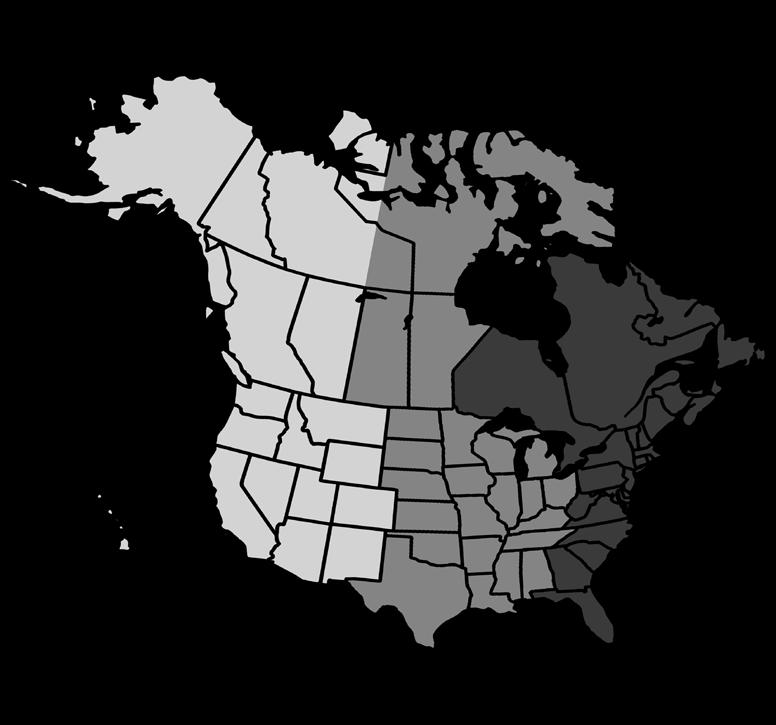
1st Vice President Annie Lindsay LindsayA@carnegiemnh.org
2nd Vice President Clifford Berek Clifford.berek@gmail.com
3rd Vice President Margaret Rohde margaret@wissahickontrails.org
Councilor Class of 2027
Gigi Gerben Cailin O’Connor
Robin Schweikart Maggie MacNeil
1st Vice President Tony Rothering tony.rothering@llcc.edu
2nd Vice President Scott Rush scott.rush@msstate.edu
Past President
David Cimprich davidcimprich@inlandbirdbanding.org
2027 Board of Directors Mike Bishop (2nd Term) bishop@alma.edu
Amy Wilms (2nd Term) wilmsab@gmail.com
1st Vice President C.J. Ralph cjralph@humboldtl.com
2nd Vice President VACANT Contact D. Kaschube to volunteer
Allison Nelson nelson.allison@gmail.com
Tania Romero t41romero@gmail.com
Past President Ariane Giudicelli Arianeg01@hotmail.com
Past Past President Lisa Kiziuk lkr@wctrust.org
Membership Robin Schweikart rkschweik@comcast.net
Councilor Class of 2028
David Brinker Grace Muench Medha Pandey Dan Zmoda
Nominating Committee Chair Tom Bartlett hthomas.bartlett@gmail.com
NABB Council Representative Mark Shieldcastle markshieldcastle@bsbo.org
Webmaster Amy Wilms wilmsab@miamioh.edu
2028 Board of Directors Roger Everhart (2nd Term) Roger.everhart@gmail.com
Richard Keith (1st Term) warblerrke@iserv.net
Membership Coordinator Julie Hovis jahovis711@gmail.com
Claire Stuyck clairestuyck@gmail.com
Colin Woolley colin.woolley@birdconservancy.org
Geographic coverage of Eastern, Inland, and Western Bird Banding Associations is shown on the map to the left. Send membership applications, subscription inquiries, manuscripts to the association representing your region.
Change of address? Inform the Treasurer or Membership chairperson of your region’s banding association as soon as possible, or at least six week in advance of a planned change of address. Delivery of your paper copy of North American Bird Bander cannot be guaranteed unless changes of address are received promptly.
Results of a 19-year Study on Ruby-throated Hummingbirds in the Deep North Woods of the State of Maine
Robert P. Yunick
Wing Length and Mass Ranges of Resident Birds at Two Sites in Costa Rica
Cyndi M. Smith and Douglas M. Collister
2024 Fall Migration
Compiled by Aaron Given
Analytical Methods; Equipment, Techniques, and Station Reports; Banding Results; Human Dimensions, Ethics, and Welfare
Compiled by Claire Stuyck
American Bittern (Botaurus lentiginosus)
Steven Gabrey
Annie Lindsay
and Merchandise