“My co-op is great. They are always trying to improve rural living. Years ago with big satellite dishes to now fast internet. Thanks.”
- DAVID & DEBBIE STEELE, MEMBERS OF 46 YEARS
Electricity is something most of us take for granted — until a storm knocks it out. Behind the scenes, however, keeping the power on takes careful planning, strong infrastructure and constant improvements. That’s where Associated Electric Cooperative’s longrange transmission plan comes in.
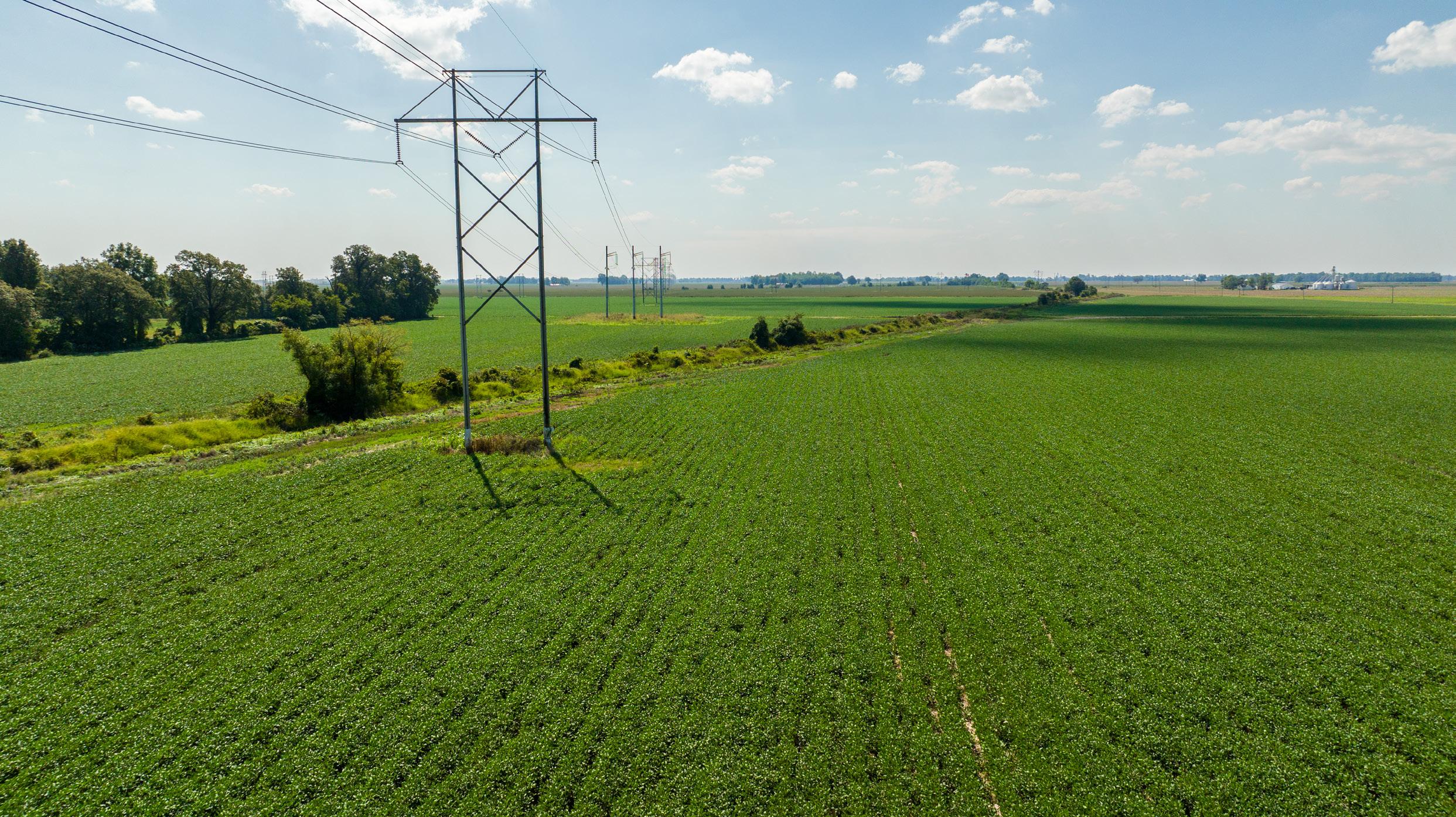
To deliver power to your homes and businesses, Associated’s six member-owner generation and transmission cooperatives maintain a massive network of more than 10,000 miles of transmission lines and nearly 1,000 substations. This network acts like our highway system for electricity, moving large amounts of power from where it’s generated to the rural people who need it.
East Central Electric Cooperative, as a distribution cooperative, is a member of two generation and transmission cooperatives, KAMO Power and Western Farmers Electric Cooperative. KAMO Power is, in turn, a member of Associated Electric Cooperative.
What Is the Long-Range Transmission Plan?
Think of the long-range transmission plan as a detailed road map for the
country living
FOR MEMBERS OF EAST CENTRAL ELECTRIC COOPERATIVE
Modern Grid Builds Strong Communities
power grid’s future. Every two years, Associated and its member-owners come together to review the current transmission system, examine what’s under construction and forecast what will be needed over the next decade.
This plan looks at how electricity demand might grow, much like how a city might plan for more cars on the road by adding lanes or building new roads. It also accounts for unexpected events such as severe storms or equipment failures — similar to how transportation planners prepare for detours or emergencies on the highway.
The result is a set of recommended upgrades to keep the system reliable and ready for whatever the future brings. These projects are added to construction work plans and help member cooperatives apply for federal loans through the Rural Utilities Service.
Why a Coordinated Plan?
Before 2009, each member cooperative created its own plan, and Associated combined them afterward. While this worked, it didn’t fully capture the big picture. Today, a unified plan covers our entire region.
This approach is like having all the towns in a region work together on one shared road plan instead of making separate ones that don’t connect well. It improves:
• Regional coordination — important with neighbors like Southwest Power Pool and Midcontinent Independent System Operator
• Problem-solving across borders — for aging infrastructure or large projects spanning multiple systems
• Timing and accuracy — synchronized with energy demand forecasts for current and future needs
Why Are Upgrades Needed?
The power grid is under more pressure than ever. With an aging transmission system, much of it built between 1940 and 1960, extreme weather events are causing record-breaking electricity demand. Meanwhile, more homes, businesses and electric vehicles are increasing the need for reliable electricity. Upgrades are driven by:
notes from the chair
You Can’t Always Predict the Outcome
By Lowell Hobbs, President, East Central Electric Cooperative Board of Trustees
In late 2025 and early 2026 we began receiving some frustrated calls at ECE. Not that many, but we are always aware of each member’s concerns. As members ourselves, we understand.
For the past few years we have been able to budget our expenses against our projected sales.
During the COVID spell the board elected to not increase our cost to our members. We had a few credits and some reserve that would benefit our members without increasing their cost. Then came Winter Storm Uri that sent expenses sailing and usage went up. Again the Board decided to hold tight and not add any more cost to our members. Then inflation hit us, again we voted to hold the line on increased electric bills and use every reserve we had. The members did not need any more expense. Finally, even though we were under budget on our expenses, we did not foresee the cooler summer and warmer winter for sales to produce the needed income to pay the bills.
As a Board, we are committed to keeping rates as low as possible for our members. We hope you will work with us as we continue to keep the power coming at a reasonable cost.
A few years back we had a new neighbor, John, move onto property that joined our ranch. He wanted to get some cows and needed some corral pens. After looking at our corrals, he asked me to help him build what he needed. One of our long-
time friends, Nick, has been helping us build, rebuild, and expand our corrals. Remember we have been here over 90 years, 6 generations, improving our facilities constantly.
John’s cousin, Ron, saw what we helped John build and asked Nick and me to help build his corral. Naturally we agreed. Ron had purchased a ‘tub’ (this is a preassembled round circle pen in a corral to assist the cow movement down the alleyway to the chute).
Ron’s “tub” or “circle” was a better quality than some by having solid sides as opposed to rails. Nick was by himself early one morning and the weather was cool. Nick had an urge to go to the bathroom, but seclusion was quite a ways off so he decided to get in the circle with the idea to take a shovel and cover his leavings. Before he noticed, John drove up. Nick exited his private spot about the time Ron came driving up. John said I’m gonna hide so Ron will wonder where I am.
About the time Ron got out of his car and before he and Nick started talking, there came a loud “Dammit, I just stepped in the biggest pile of dog poop I’ve ever seen.” Nick lowered his welding helmet so no one else ever knew what John stepped in.
Lowell Hobbs represents ECE District 2. To reach him, please call his cellphone at 918-695-5289.
Hobbs, District 2
Larry Harvey, District 1 Vice President Dwight Luther, District 7 Secretary / Treasurer
Hall, District 6 Assistant Sec. / Treasurer Max Shoemake, District 3 Michael Vernnon, District 4
Emerson, District 5
Spring
Scramble
1. Sealing air leaks around doors and diwwson saves energy and keeps your home comfortable.
2. LED hlgist typically use 75% less energy than traditional incandescent light bulbs.
3. Unplug devices and electronics that consume energy even when they’re not in use, like phone scragher.
4. Planting shade esrte around your home can block unwanted heat from the sun.
5. Ceiling fans cool people, not rooms. Turn them off when you leave the room to save yengre.
Modern Grid
Continued from Cover
• Growing demand due to population growth and electrification
• The need for grid reliability under peak loads and emergencies
• The shift in energy resources as coal plants retire and natural gas, wind and solar are added
What Kinds of Improvements Are Made?
The long-range plan evaluates upgrades based on performance, reliability and cost. Options include:
• New Transmission Lines – to carry electricity long distances and create redundant paths for reliability
• New Transformers – to improve voltage conversion, like widening a bridge for more traffic
• Upgrading Existing Infrastructure – such as larger wires, second circuits, and improved substations
• Interconnections – linking with neighboring systems for power trading and resilience
Working Together and Looking Ahead
Associated’s six member-owner cooperatives are vital to this planning. They help identify needs, suggest improvements and build and maintain the facilities outlined in the plan. This collaboration ensures the system supports all communities — rural or urban.
The long-range transmission plan is more than a project checklist — it’s a vision for a stronger, more reliable grid. Through smart planning, modern technology, and collaboration, Associated’s members are building a power system ready for the future.
Learn more at www.aeci. org/transmission.
Rate & Cost of Service Analysis
To ensure our Board of Directors is presented with accurate and unbiased information, we hire thirdparty consultants to audit our books and perform cost of service, rate, and financial analysis. Our most recent cost of service study was performed in 2022 by Guernsey.
This Oklahoma City based firm has more than 80 years of experience working with electric cooperatives and public power utilities.
Guernsey Managing Consultant Justin Proctor answered some frequently asked questions about what is involved in a cost of service study.
Why is it important for utilities to do a cost of service study?
A cost of service study helps cooperatives make informed decisions regarding rates that members pay. The cost of serving residential, commercial and industrial members is different for each type of member. Your Board monitors rates so that they are fair and equitable to all members.
What is the process of performing a cost of service study?
Guernsey analyzed the amount of revenue required to cover the cost of serving all cooperative members. The cost is based on the type of electric plant (poles, wires, transformers, meters, etc.) required to serve each type of member, the expenses incurred to operate and maintain those facilities and the amount of power used.
What factors are most important when considering rate changes?
It is important to understand how East Central builds and operates facilities to serve the many different types of members. Keeping a close eye on how the Cooperative incurs those costs and how it recovers them from members in the form of electric rates is very important.
This is why the Cooperative has different rates for residential, commercial and industrial members. It is also why each rate has a unique billing rate, such as the Monthly Service Availability Charge, kWh Charge, or Demand Charge.
What were the key highlights of East Central Electric’s most recent COS study?
The cost of service indicated that certain rates required increasing more than others. It also indicated that the monthly fixed charges such as the Service Availability Charge should be increased. Current monthly charges do not sufficiently recover fixed costs. Instead, too much of the Cooperative’s fixed cost recovery is reliant on energy sales.
East Central Electric Cooperative is working with Guernsey to perform an updated cost of service study in 2026.
ELECTRICAL SAFETY
TIP OF THE MONTH
Daylight Savings Time begins March 8. While changing your clocks, remember to change the batteries in your smoke alarms and carbon monoxide detectors. A few minutes now could give your family precious minutes in an emergency.
INGREDIENTS
1 orange cake mix
4 eggs
1 C. boiling water
1 small can crushed pineapple
DIRECTIONS
1/2 C. cooking oil
1 box orange Jell-O
1 box powdered sugar
Preheat oven to 350°. Mix hot water with orange Jell-O and stir until dissolved. Add oil and eggs. Mix to blend. Add cake mix. Pour mixture into 9x13 inch pan and bake 40-45 minutes. While cake is in the oven, mix powdered sugar and crushed pineapple. Pour over top of hot cake.