A
Promise Made and A Promise Kept
By Lowell Hobbs, President, East Central Electric Cooperative Board of Trustees
Around this time last year, in this very column, I assured you that the Board of Directors, the staff, and the entire employee group at East Central Electric Cooperative was dedicated to ensuring the comfort and security of each of our members.
There have been ups and downs throughout 2025, like cost increases in equipment and from our power suppliers, but our dedication to protecting our members has never wavered, and our commitment to bringing you along with us for the journey has only grown. In January, we held the first in a series of member engagement forums designed to give you a look inside your cooperative.
We are member-owned, from our founding in 1930s, through our stewardship over the last 85 years, and on into the future. So long as we stay focused on our mission, “To Serve Our Members and Communities.”
To that end, you’re going to hear a lot from us in the coming weeks and months probably more than you want to as we try to bring you up to speed on the challenges in the electric industry, and encourage you to be involved in the conversation.
Please join us at these forum events.
When we moved from in town Cleveland to an 80-acre farm on the Arkansas River to a small 4-room house with electricity; no phone, no water in the house. We had a wood heater in
the kitchen where we spent most of our in-the-house family time. A small screened-in porch served as our entry to the house as well as the washstand with wash pan and water bucket.
Some of my duties included keeping
“You’re going to hear a lot from us in the coming weeks and months probably more than you want to as we try to bring you up to speed on the challenges in the electric industry, and encourage you to be involved in the conversation.”
- LOWELL HOBBS, BOARD PRESIDENT
the water bucket full of water from the cistern located outside near the kitchen window. The water dipper stayed in the water bucket to dip water for wash pan and to drink. Everyone drank from the same dipper. Looking back I marvel that we weren’t sick more.
Many times one would get a dipper full of water to drink, swallow a few gulps, and put the balance left in the dipper back in the bucket. The cistern
Lowell Hobbs, District 2 President
Larry Harvey, District 1 Vice President
Dwight Luther, District 7 Secretary / Treasurer
Jim Hall, District 6 Assistant Sec. / Treasurer
Max Shoemake, District 3
Michael Vernnon, District 4
Jay Emerson, District 5
To learn more about your elected trustees, or to view a district map, please visit ecoec.com. To contact your trustee, please call 918-756-0833.
was filled with runoff water from the roof into the guttering and then into a small filter of sand and charcoal.
During a prolonged dry spell the cistern got low so my Dad decided it would be a good time to clean the cistern. They stood me in a metal 5 gallon bucket and lowered me down in the cistern. It was probably 10 to 12 feet deep and maybe 8’ in circumference. The first bucket I sent up contained a dead possum, dead rat, and 2 dead mice. Can you imagine we were drinking that water!
My job included taking a toe sack, some called it a gunny sack or maybe a burlap bag to wash the sides of the cistern I could reach. Only the sides that were wet needed cleaning. The dry parts appeared to be clean. After scrubbing and rinsing down, I would send the water up to dump. Fresh water came back down for me to continue to clean the inside of the cistern.
Then when it rained we had fresh water. We assumed it was. I do not remember anyone ever looking in the cistern again. The Keystone Lake finally consumed the remnants of our home.
Lowell Hobbs represents ECE District 2. To reach him, please call his cellphone at 918-695-5289.
as a credit on our bills. In 2024, the CCA was zero, indicating no additional costs were passed on to members. Weather remains the largest factor in electric usage and, in turn, the co-op’s monthly revenue, but it isn’t the full story, and I will elaborate further below.
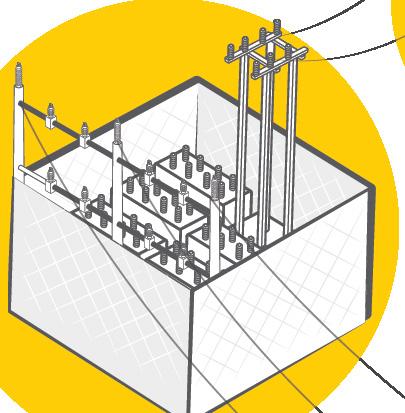
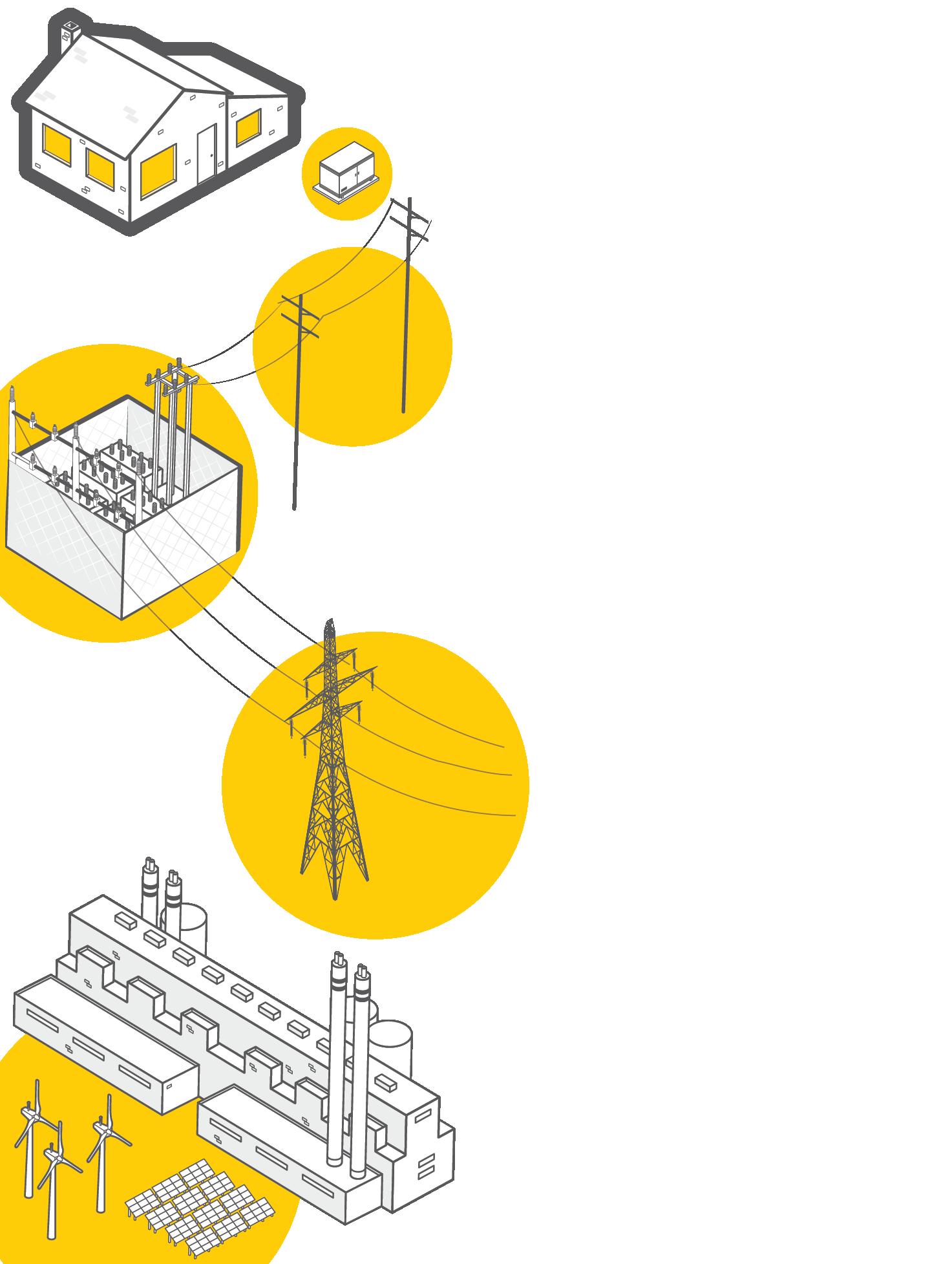
The final line item that increased was the service availability charge in September for all rate classes, to cover the fixed expenses required to supply the poles, wire, transformers, and meters used to power members’ homes and businesses. This decision was the result of a recommendation from our last Cost of Service Study, done in 2022.
Why have these increases taken place?
In 2022, our co-op underwent a Cost of Service Study performed by an independent firm. At that time, the rate study revealed that in order to fairly recuperate costs, the base rate for each residential electric meter should be $39.95 a month instead of $17.50. As the country was recovering from the COVID shutdown, the rise of inflation, and the impact of Winter Storm Uri, the Board decided that the member-owners did not need any additional burdens, unlike many of our neighboring utilities which implemented a 30-year storm rider.
The Board chose to tighten the belt and cut expenses where possible. It was admirable, but
also a challenge, as nearly 75% of the Co-op’s expenses are fixed. Simultaneously, the Co-op was building the infrastructure to bring fiber internet to all member-owners. A portion of the cost for this 7-year project is set to be covered by federal grants paid out over 10-years. In the meantime, the Cooperative had to take out loans to cover the infrastructure expenses while waiting on the grants to come in.
What can we expect moving forward?
When it comes to what power bills are going to do in 2026, the answer is two-fold:
1. Internally at the co-op, we’re improving forecasting and revenue planning to prevent unexpected increases in the future. We are also looking at every opportunity to tighten our belt, to bring down every expense we can control, and return member-equity to a sustainable percentage. And just as important, we are bringing in an independent firm to do an updated Cost of Service Study, so that we can take a closer look at how we ensure everyone pays their fair share and not a penny more.
2. Even with all this effort, the other side of this coin is the Power Cost Adjustment (PCA), a 100% direct pass through to the power suppliers to generate and transmit power to our
members. Our power suppliers have announced an increase in 2026 that we will continue to see on our bills as they upgrade power plants to account for ever-increasing electric demand and national regulations to improve reserve capacity.
The commitment we make to you is to improve transparency and create more opportunities for two-way communication. Beginning January 13, 2026 and continuing throughout the spring, we encourage you to attend one of our member engagement forums in each corner of our service area, to learn about critical updates on industry challenges as well as opportunities to ask questions and engage with your elected board member, myself and other co-op staff.
You can stay connected by visiting our website, reading the Oklahoma Living Magazine, and checking our social media channels for dates, locations and additional information about these member forums, and to learn more about how you can become more engaged with your Cooperative.
As a third-generation member, it was never my goal to step into this job and increase my family, my extended family, and my neighbors power bill. When I walked in the doors, I told the executive leadership that my goal was to improve the co-op’s education, training, and communication, for employees, the board and members alike. We did step it up, but we’ve also got more work to do as we strive to provide safe, reliable, and affordable electricity for all of us.