
EAGLEBROOK
A new tradition

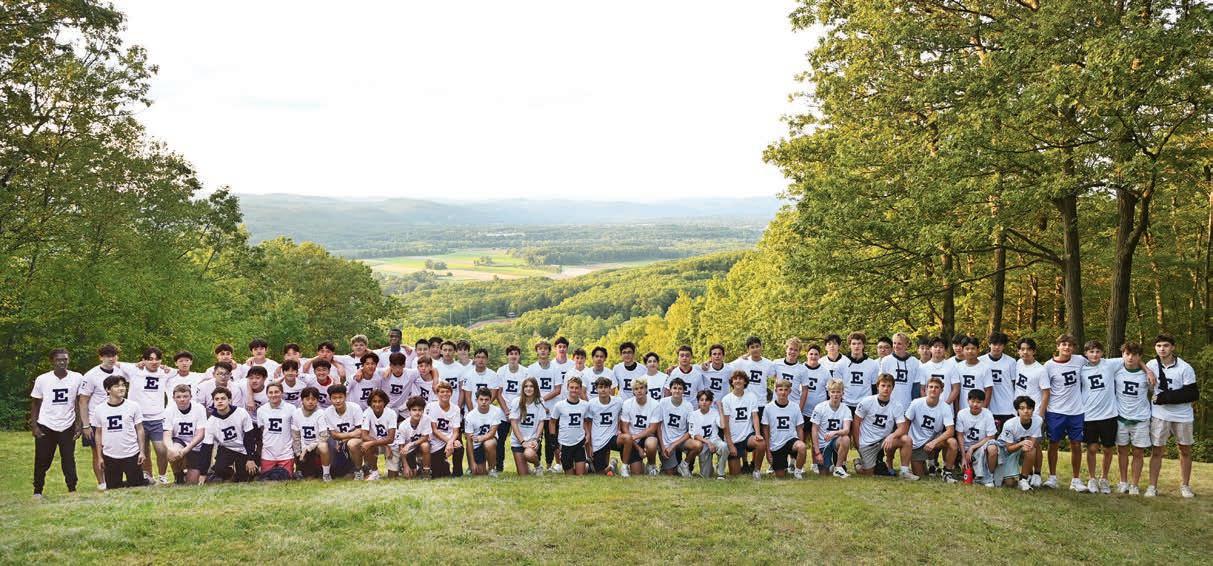
The Hilltop Ramble
An all-school two-mile run—jog—walk—or amble on a trail
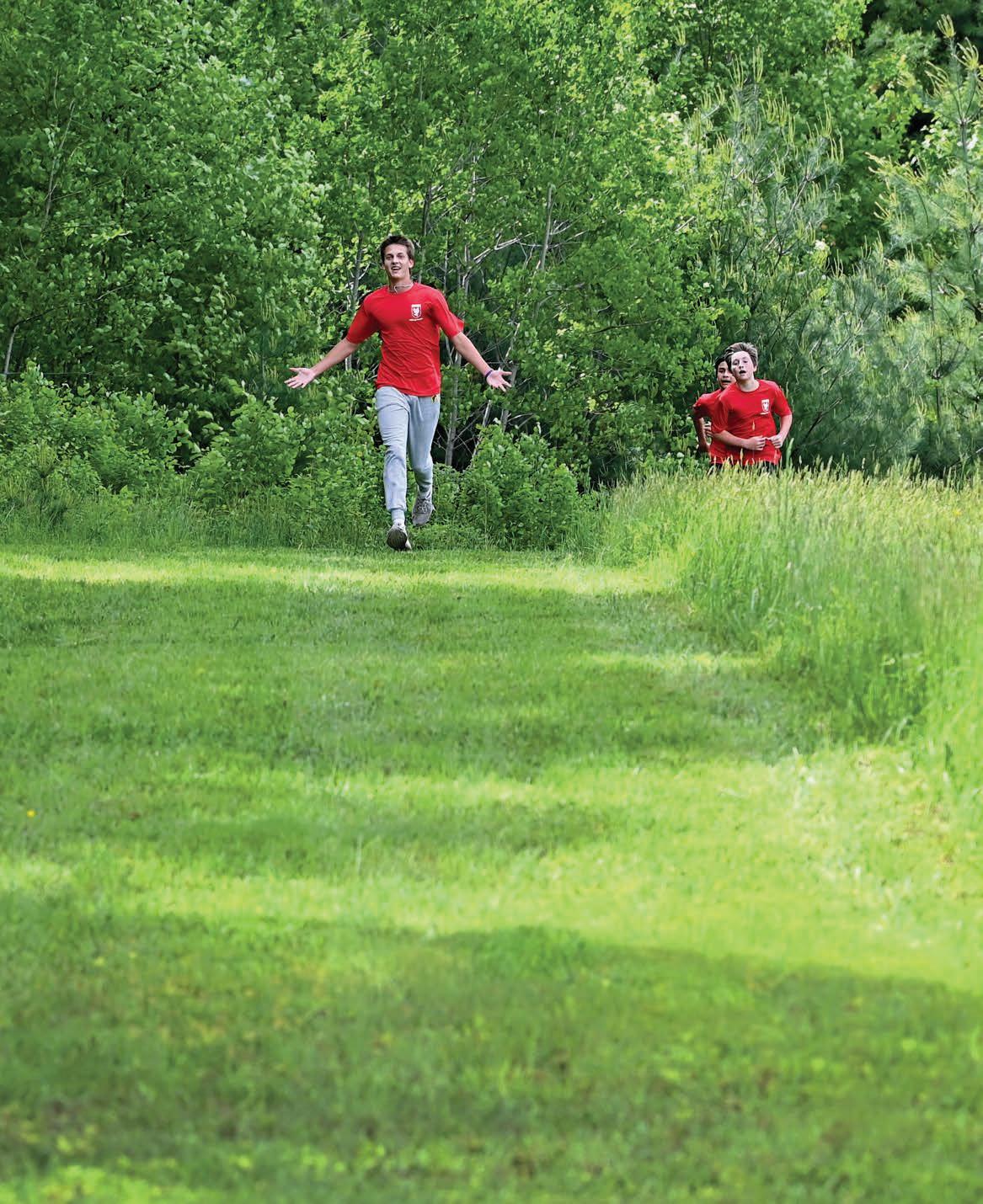
through the woods into the open meadows of Hilltop Farm
From Andrew Chase Head of School
No matter the season, when I am outside watching our students at play or heading from dorms to meals—to classes—to sports, I am reminded of how fortunate we are to live in this beautiful corner of the world, to work in a profession that we love, and—each day—to engage with young people, helping them grow more confident—more outgoing—more responsible.
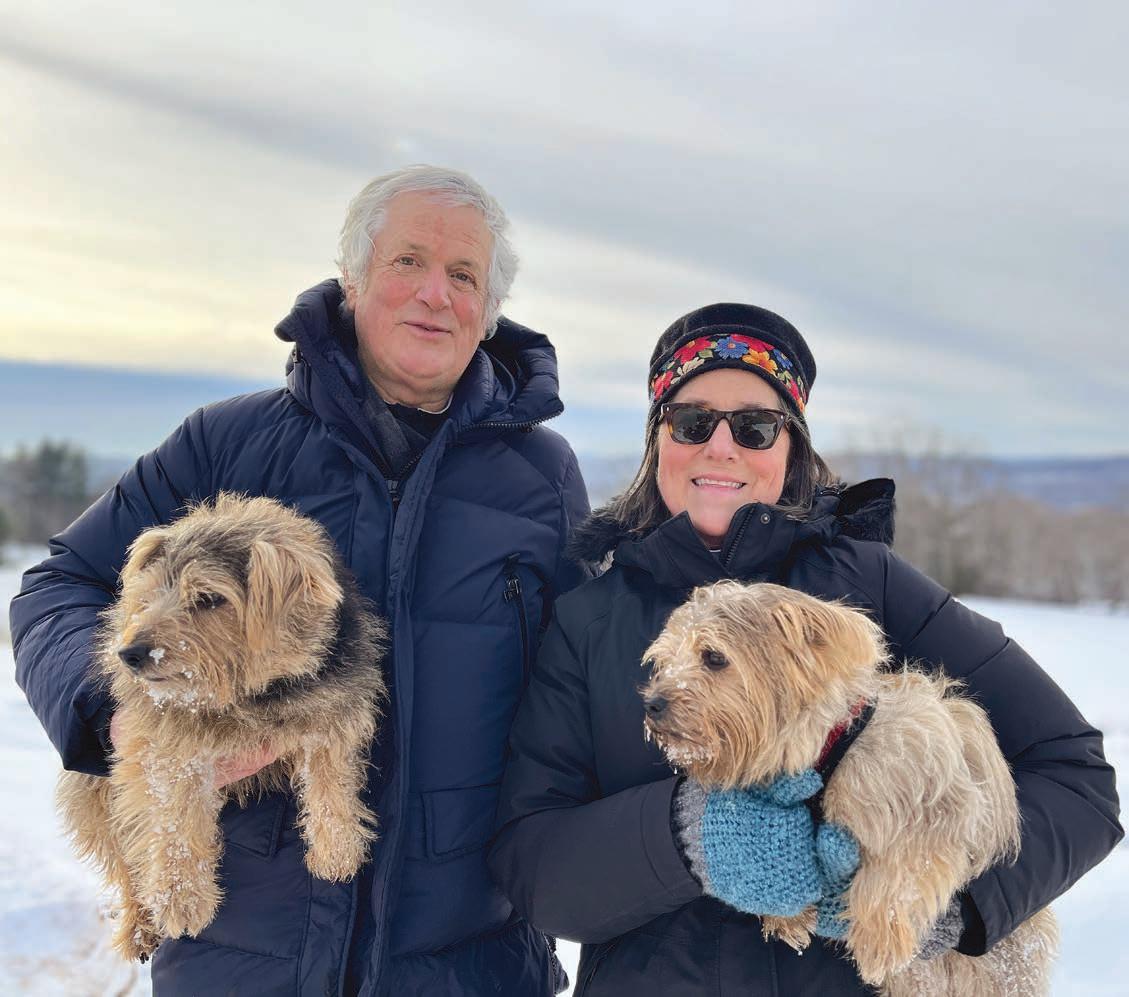
One early autumn afternoon, my walk around campus is interrupted by Raleigh and Rosie—my terriers—who, straining on their leashes, bark hellos to squirrels and chipmunks. On the path by the pond, they stop—tails wagging—to greet a boy.
The Eaglebrook community is all about connections.
For more than a hundred years, a simple philosophy has guided the school: the belief that children thrive in their classes when they spend time outside, exposed to the natural world. In the 1920s, this philosophy was considered unusual. In the 2020s, outdoor activity is believed to be a necessity.
Eaglebrook gives children more than an exceptional education.
Teachers become like family, watching over each child’s unique development, helping them discover who they are and what they want to become. Every day, in classes, the exchange of ideas excites learning. This back-and-forth swap of viewpoints continues around dining room tables and into dorms.
Horizons broaden.
Electives—two homework-free periods— open doors to new experiences. Curiosity and creativity—the hallmarks of electives—spill over into school life. Students get involved, set goals, and learn that deep understanding demands hard work, total involvement, and resilience to bounce back with more hard work when inevitable setbacks occur.
I like to think of a year at Eaglebrook as a tapestry—like the Bayeux—the year’s history stitched into a hundred different scenes: the orchestra in concert—the play cast in rehearsal— a history class’s debate—science students by the pond—a bowl spinning on the potter’s wheel— the Third Form off on a field trip—the band in concert—a football touchdown—a soccer goal—the glow of candles at Candlelighting—the campfire at a wooded campsite—an artist at his easel—canoes on a river—runners on a trail— the greased barrel at Country Fair—the Ad Libs at Fenway Park—a skier weaving through slalom gates—a mountain biker bounding over rocks and roots—a laughing dining room table—a fun-filled Home Night—the tug-o-war at Field Day—the hike up Mount Monadnock . . . and in each scene, children are growing and learning and experiencing the good times of childhood . . . .
The story in the Eaglebrook tapestry begins with the tears of goodbye at one graduation and ends with the joyful music at the start of another. Bright-colored yarns—the children at work and play—join together a hundred images, the history of the year.
READERS
Let us know what you think of our magazine. Email Andrew Chase at achase@eaglebrook.org
ALUMNI
Stay in touch. Send us your news: alumni@eaglebrook.org
EVERYONE
Test your knowledge of Eaglebrook. See back of magazine. WIN a HAT.
PLEASE Give to Eaglebrook. It’s not how much you give. It’s that you give.
6 Limelight on Eaglebrook
8 A New Sixth Form Rises
Chris Lee A Sixth Former Talks at Country Fair
11 Paul Cyr-Mutty—Master Teacher
Paul Cyr-Mutty Why I Teach in Middle School
Jun Lee Inside Paul’s Honors English Class
15 Athletics and the Outdoors
18 Limelight on Hilly Chase One Revolution
Whale Eyes
20 Electives—Classes Where the Boys Create Robotics and Eaglebrook’s Motto
T he Lumen—Fides—Labor—Facta Connection
Paul Huang Robotics Competition
Goose
26 What’s So Great About Dogs at Eaglebrook?
Allan Chen Why I Sketch Dogs
30 Music Room Is Named to Honor Gary Maynard
31 Limelight on Alumni
Simon Cheng ’93: A New Way to Attain Wellness
Har rison Chase ’10: LangChain Moves Into AI Space
Peter Melnik ’84: Bar-Way—the 2025 Massachusetts
Dair y Farm of the Year
36 News from the Classes
47 A Lesson in Eaglebrook Histor y
48 A Contest
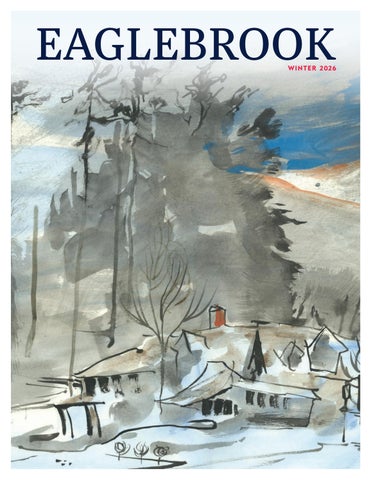
Tomas Manto Cover “The Lodge in Winter”
LIMELIGHT ON EAGLEBROOK
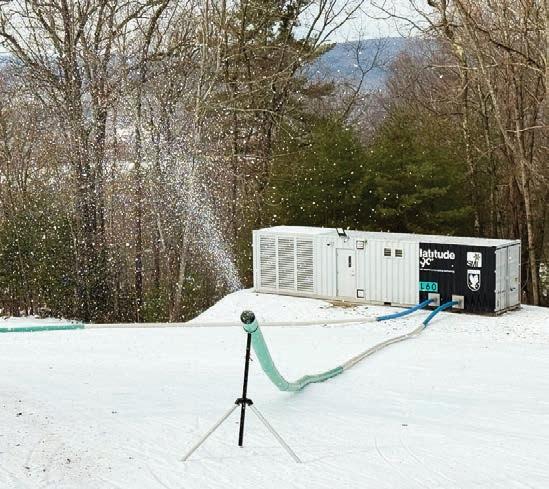
Three Latitude 90s Lengthen the Ski Season Publication of Still Across the Valley Gaze
Eaglebrook boasts a remarkable heritage. The school’s ski area, which has been in operation since 1922, is the second-oldest continuously operating area in the United States and offers students opportunities for alpine skiing at both recreational and competitive levels. A junior ski patrol program teaches mountain safety, emergency care, and toboggan rescues.
Weather patterns of recent years—warmer winters— fluctuating temperatures—snow followed by rain, sleet, and ice—have shortened the ski season, produced challenging conditions, compromised programs, and endangered skiers.
T he installation of three Latitude 90 snowmaking units, which operate at temperatures ranging from -4°F to 77°F, will guarantee snow coverage, improve conditions, and lengthen the ski season.
This is the story of Eaglebrook from its founding to the present. Voices are those of the students and the men and women who cared for them and cared about them. Watercolors and line drawings capture the spirit of the school.
What readers are saying:
The book is alive. Reading it makes you feel as though you are on the campus, experiencing its presence, breathing in its life, and hearing its peace.
What a beautiful and profound book. I am so touched by these stories—from true educators with big hearts and tons of patience. It is an amazing work, and the book will be forever cherished.
It is episodic and personal. The stories and drawings of young boys playing and learning create an almost spiritual atmosphere. It reads like an artist’s family recollection, more than a dull history. To me, it’s one of a kind.

Head of School Gives Keynote Address
At the Future-Focused School Leadership Summit held in Hong Kong, Andrew Chase, head of school at Eaglebrook and one of the keynote speakers, shared his insights on Cultivating a Culture of Innovation: Embracing STEAM and the Environment, inspiring educators to rethink how to create an ideal atmosphere that nurtures innovative ideas.
The event was attended by over 150 visionary leaders from industry and academia, and teachers from primary and secondary schools across Hong Kong and other areas of the Guangdong-Hong Kong-Macao Greater Bay Area.
Keynote speakers were from Mainland China, Hong Kong, and from overseas on Zoom. The Summit was simultaneously translated into English and Chinese.
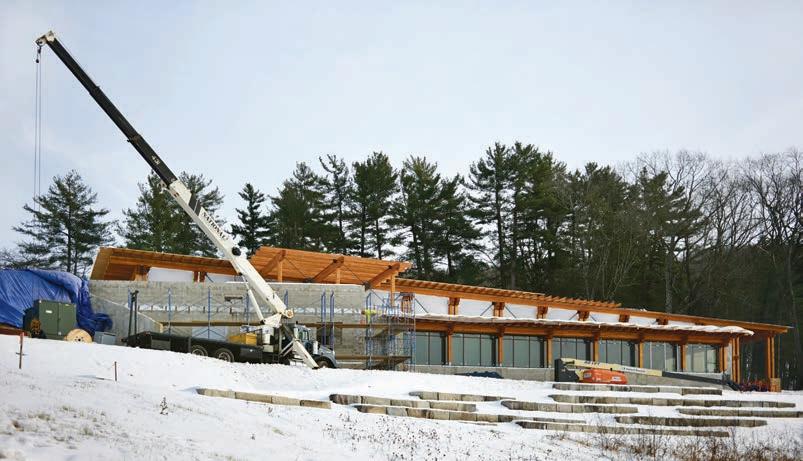
The Dining Hall Nears Completion
Eaglebrook’s new dining hall will be Massachusetts’ first zero-net-energy dining facility.
A New Sixth Form Rises
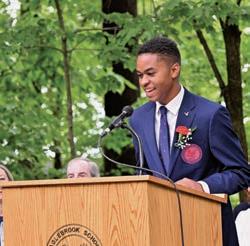
At the May graduation of the Class of 2025, Fifth Formers were already looking ahead to September, anticipating when they would be in the Sixth Form, welcoming new students, and helping to recreate the school community.
Jett Roberts ’25 was speaking on behalf of his class. His eloquence brought smiles— and a few tears to the eyes of families, friends, and faculty.
What we found here was— and is—something rare. We found teachers who believed in us—sometimes before we believed in ourselves. We found coaches who pushed us—physically and mentally. We found quiet moments of reflection and loud moments of victory. We found the best versions of ourselves.
It’s hard to explain just what Eaglebrook is. It’s more than a place where we learn equations, grammar rules, and how to conjugate French verbs. Eaglebrook is a living, breathing community.
It taught us that the way you shake a hand matters— that the early morning effort on the track counts as much as a final paper—that character is built not only on the stage or sports field, but in the quieter corners of campus when someone holds the door, helps clean up, and listens when someone needs to just talk.
When I think of who we’ve become and what we’ve accomplished, I can’t help but smile—because beneath the surface of every long block, every committee, every muddy pair of team cleats, and every early morning breakfast— with eyes half open—we were becoming more ourselves.
Fifth Formers wondered which of them, next year, would be speaking on their behalf at their graduation.
recent graduates, addressed the class with advice that her father had once given her: “Sometimes the simplest question can yield the most profound answer.”
She told the story of her dad’s school-boy experience in a philosophy exam.
He and his friends spent hours poring over their notes. The moment finally arrived. He opened the exam booklet. A single word stared back at him: “Why?”
Panic surged in him.
“What is the right answer? My grade hinges on this.”
My father took a deep breath and penned the only answer that felt true: “Why not?”
She urged the class to keep asking why throughout their lives: “If your answer resonates with a daring ‘Why not?’ you are charting a course toward success and fulfillment.”
The Commencement speaker was Kate Gubelmann, sister, aunt, mother, and grandmother of Eaglebrook students.
Fortune favors the brave and the bold.
She used the words of Tacitus and Virgil to celebrate her grandson and his classmates. She told them, “You are certainly brave; you left your home as young boys.” She spoke of their boldness: “Perhaps English was not your primary language. Perhaps you knew few, if any, students.”
When she described their good fortune, she quoted Louis Pasteur.
Fortune favors the prepared mind.
AAt the Baccalaureate service, Wendy Van Epps, the mother of a boy about to graduate and of two
She said, “You are well prepared for the next step, thanks to the many teachers who have helped you acquire the education you will need to be successful. I look at you and see that the future is bright.”
In his farewell to the class of 2025, Head of School Andrew Chase said, “As you take your last drive down the mountain road, you will be carrying the skills and values that you practiced here. Let them be an active part of who you are.”
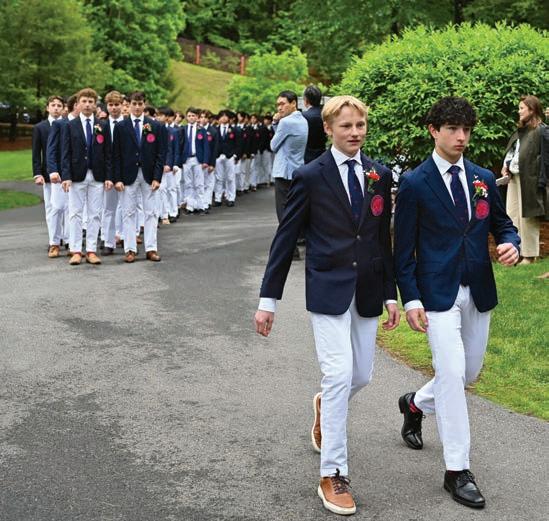
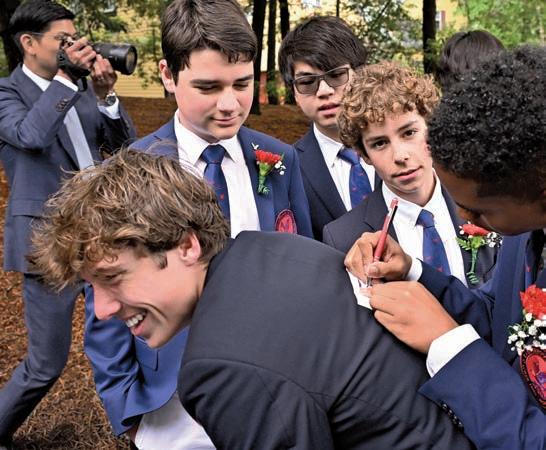
The 2025 Sixth Form was leaving behind Eaglebrook and their childhood. There were goodbye tears—and there were smiles. They were confident, anticipating new challenges.
Was the rising 2026 Sixth Form ready to step into these vacant shoes?
Why not? Fortune favors the brave and the bold.
A Sixth Former Talks at Country Fair
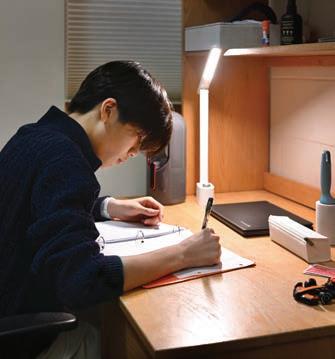
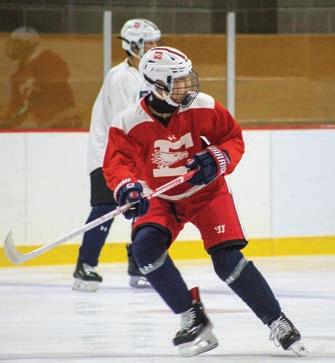
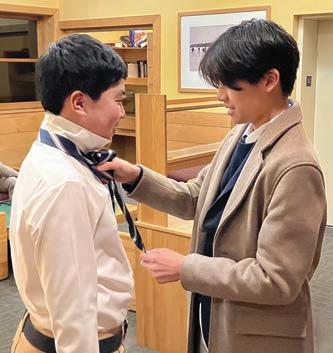
When I first came to Eaglebrook, I didn’t think about habits; I just thought about getting through classes, finishing homework, and having fun with friends. I figured the strict schedule would take care of this. But looking back now, I see how much this school has shaped the way I live, learn, and take on responsibilities—and how many good habits I’ve built without even realizing that I was building habits.
One of the first was time management—not just go with the flow. For classes, sports, and evening study hall, I had to plan my day: try to find my way through classes, learn how to dribble a soccer ball, attend play rehearsals, and figure out how myEBS works so I can do my homework.
Even after a year, I didn’t get managing time down perfectly, especially while trying to do all my OTHER homework—when Mr. Mandell’s 3,000-word essay was on my back. At first, I’d rush through assignments or forget them. But here, teachers and advisors really care; they don’t just tell you what to do. They teach you how to do work well, and—over time—I learned to organize my work, manage my schedule, and use my time efficiently—a skill I know will help me for the rest of my life.
Another habit I learned here was self-discipline. Whether it’s
waking up early, keeping my dorm room clean, or showing up on time to practice, Eaglebrook expects responsibility. At first those expectations felt tough—but they made me independent. Now, I don’t need anyone to remind me to do my homework or push me to show more effort—being responsible is part of who I am.
Eaglebrook also taught me the importance of balance. It’s easy to get caught up in academics or sports—but here I learned how to balance both while still enjoying time with friends. This school’s environment encourages us to give our best but also to take breaks, explore new things, and stay curious.
And most important— Eaglebrook taught me kindness and respect. The community here is built on teamwork and trust from the classrooms to the fields to the dining hall to the dorms. Being surrounded by teachers and friends who genuinely support each other has helped me develop the habit of thinking beyond myself—an example—it’s become a habit to tie at least 4 different ties for students before Sunday Meeting.
So, when I think about the habits I’ve built at Eaglebrook— discipline, balance, organization, and kindness—I realize they’re not just School Habits; they’re Life Habits. These habits will stay with me long after I leave this campus.
Paul Cyr-Mutty Master Teacher
“I’m going for the impossible, an A grade in Dr. Cyr-Mutty’s class.” The boy by the pond —his gestures dramatic—transformed into an agonized Macbeth: “Is this a dagger which I see before me . . . ?” A friend listens as he rehearses a soliloquy from the Scottish Play for a class presentation. The boy continues reciting—with dramatic changes in emotion—until he nears the end. His voice grows confident: “I go, and it is done. . .”
In Honors English—whether reading Macbeth , Hamlet, Julius Caesar or Romeo and Juliet—the soliloquy recitation is more than a graded assignment. It’s a deep dive into understanding the character’s emotions.
This is only one of the ways that Master Teacher Paul Cyr-Mutty, or Dr. Cyr-Mutty—as students like to call him—engages his Sixth Form honors class. When it’s time to write the lit-crit essay, they are ready.
Paul has always been a larger-than-life mentor for both boys and faculty.
A Boston Marathon runner
An Iron Man competitor
A master’s degree from Wesleyan
A UPenn PhD
A post-ear thquake Haiti volunteer
One of Eaglebrook’s deans
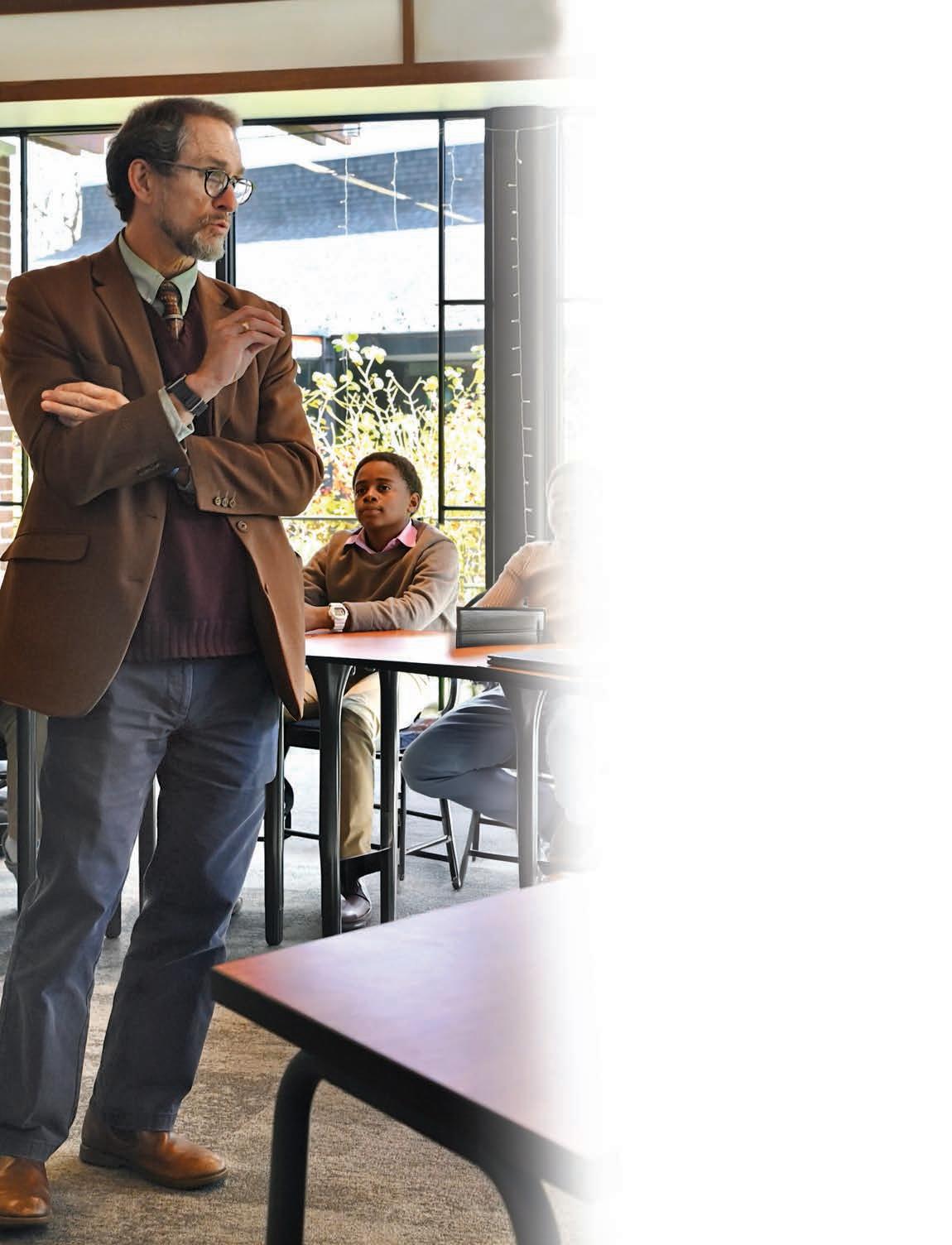
And Paul is an English teacher, who stretches students—but never more than is possible. He is their guide, helping them find satisfaction in real understanding. Paul has given students—from the 1980s to the present—a toolbox filled with knowledge and skills that will broaden their horizons throughout their lives.
Why I Teach in Middle School
To the average adult, the prospect of teaching middle school boys may seem like a fool’s errand; I’ve even had friends express sympathy to me when they learned the age group I taught. However, those of us who have taught this age group for a few years know that there are many pleasures to working with these young people. Early in their transition from being boys to men, adolescents are open to new ideas, willing to try new things, often very funny, and possess a sometimes boundless and infectious energy. It’s hard to remain passive in the face of a thirteenyear-old who has just discovered something that is true or for which they have a passion. Whether they’ve discovered football, piano, an injustice, or poetry, they joyfully commit themselves to its pursuit.
The moment when one sees this spark emerging, when suddenly something clicks for a young man and they see the possibilities and the
promise of an idea or activity they have never noticed before, is one I have taken to calling “Dawn in the Mountains.” Just as the rays of the morning sun can arrive at different times within a mountainous region—and as it does here on our own beautiful hillside—so too these moments of insight can come at their own pace in a youngster. But once they do, the game’s afoot; their world becomes filled with a clarity of vision and purpose that was only a vague notion a few moments before. They see what they want, that tremendous energy kicks in, and little can prevent them from pursuing their goal.
The pleasure I derive from witnessing these epiphanies is one of the main reasons I have made a career of teaching this age. At such moments, I feel I am present at the genesis of something big: a passion, a career, an avocation. Of course, there are times when you aren’t even aware that a spark
has been fanned into flame. One of the unique pleasures of teaching at a school like Eaglebrook is the opportunity it affords to meet your students ten, twenty, or thirty years after they have graduated and see the fine adults they have become. This pleasure is further heightened when they tell you that they carry with them some lesson, piece of advice, or activity you did with them while they were at school that has blossomed into a fixture in their lives. It is virtually impossible not to smile when a poised and articulate young adult excitedly recites for you the Shakespearean sonnet they had to memorize for your class years ago and then describes how the words of the poem had come to mean so much to them.
I’ve seen such moments in the classroom, dorm, dining hall, and playing fields. A middle school teacher is never absolutely certain where or what the teachable moment is, because they are everywhere. This
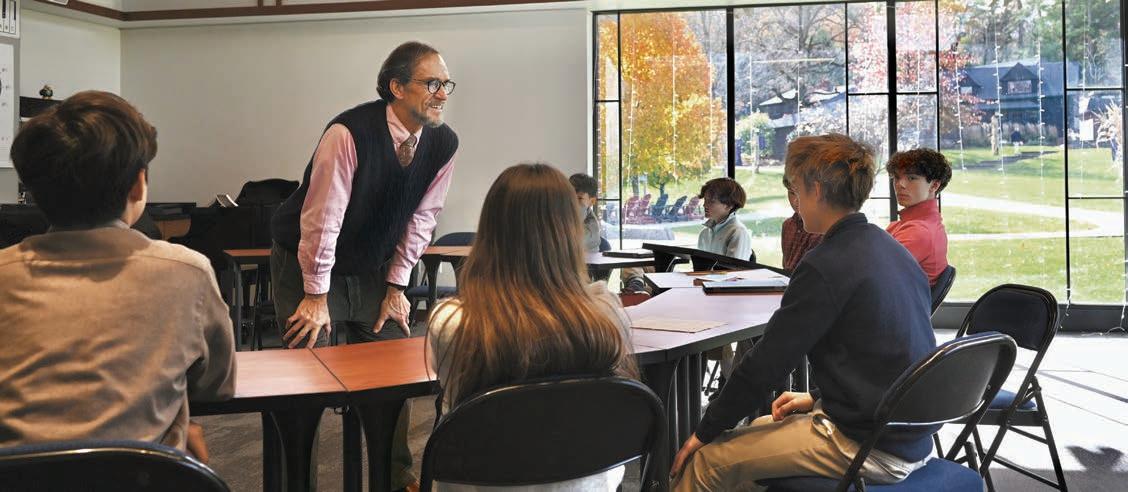
fact notwithstanding, they can be sure that, if they keep connecting with students, such moments are bound to come, because middle schoolers are always learning and growing.
As an English teacher, I have gained a particular pleasure from seeing students find their voice in my classroom and produce work that reflects both a student’s growing command of the tools of the writer as well as the desire to be one. I could be kidding myself when I note echoes of Beowulf’s alliterative verse in a student’s poem, but it’s no matter. The proof is in the poetry.
Ode to the Deep: A Discovery
By Alex Li
The lake lies still, its surface wide, A golden sheen where rays collide. I step within; the water grips, A fleeting chill on fingertips. It wraps my skin, a soft embrace, Its quiet pull, a measured pace. I dive below; the silence grows, The world dissolves where shadows flow. My breath runs short, my chest constrains, The depth conceals its vast remains. I rise to air, the sky expands, The water frees my open hands. The ripples fade, the lake is chill, Yet in my veins, it lingers still. A quiet power, cool and pure, Its pulse remains, a lock secure. I leave but carry what I found: A perfect peace, a life unbound. The water spoke; its voice was clear: Let go fully and have no fear.
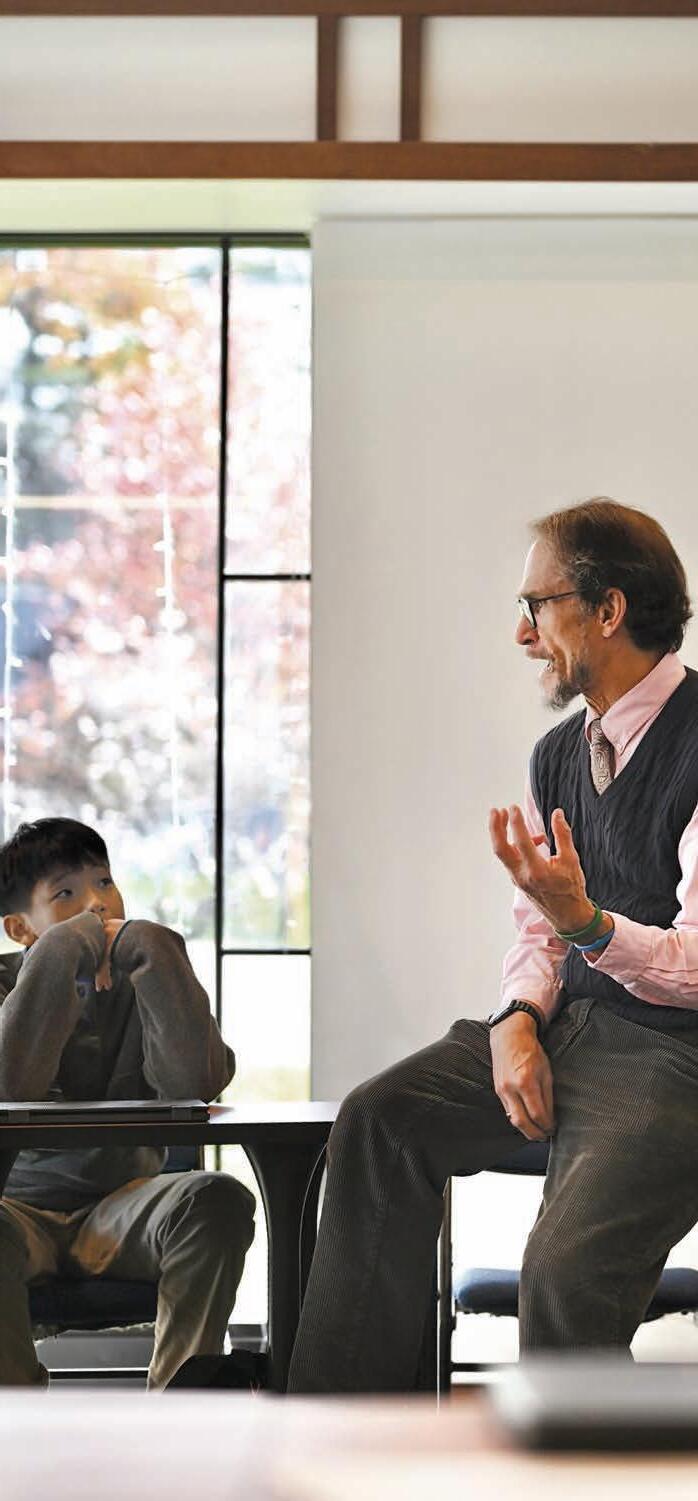
Inside Paul’s Honors English Class A student describes a writing exercise
“I’m sure you guys are all very proficient in writing long essays. In this class, however, we want to focus on writing more concisely.”
Dr. Cyr-Mutty stood up and moved to the whiteboard. He wrote down the sentence: “The person had a fancy car.”
Pr etty standard sentence, I thought. Some ways I could improve it popped up in my mind. Maybe we could use extravagant instead of fancy, or add a color to it, or even describe its size?
He crossed out the word car and wrote And, as he wrote Lamborghini, he said, “Instead of changing the adjectives, you usually want to change the noun if there is an explicit definition that describes what you want to cover.” A Lamborghini is fancy, sleek, small, and red. It defines a car with many specific characteristics, just condensed into one word.
This moment marked a shift in my perception of words. Before, I thought of a synonym as just a different way to paraphrase words, but not something necessary. Now the realization dawned on me. There were other variations of words, allowing us to use each one in the appropriate situation.
A table and a desk essentially have the same definition, but with slightly different associations. For example, a student who eats at a desk likely relates to some sort of work—like doing homework while wolfing down a bowl of salad. A table probably includes someone else sitting and talking with you, maybe family, a friend, or everyone around a dining table.
I was realizing the beauty of well-placed, specific words and how they shape the meaning of sentences and even whole paragraphs. This year in Honors English, I look forward to learning how to execute good word choice.
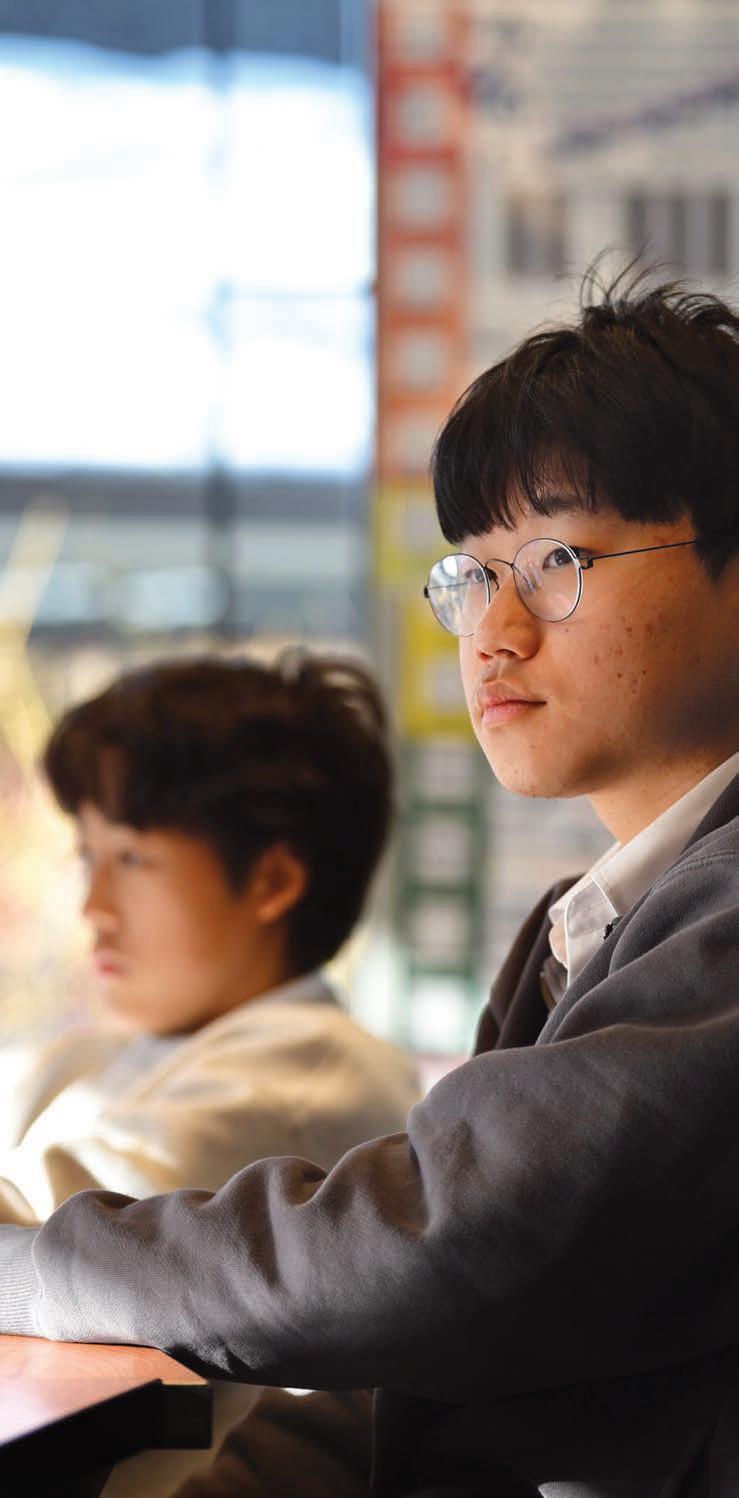
Athletics and the Outdoors
Inside—Outside—Afternoons—and After Dark
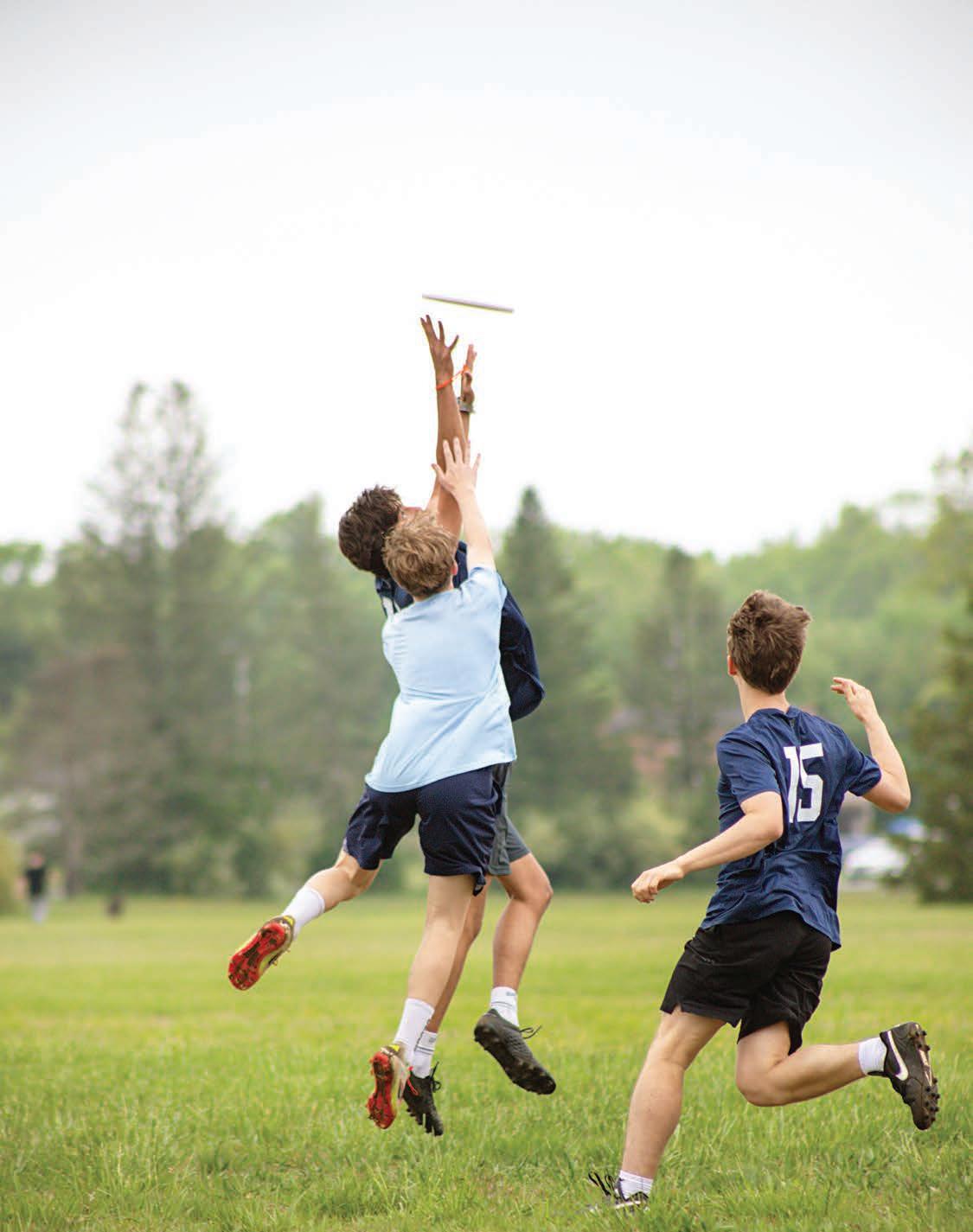
The natural world that surrounds Eaglebrook welcomes children outside. Whether dashing between buildings, climbing up and down stairs to dorms, to meals, to classes, to sports, the mountainside keeps them on the move.
An afternoon of athletics is for everyone. Varsity athletes and first-time players are competing against boys of comparable age and ability. Fall, winter, and spring, at
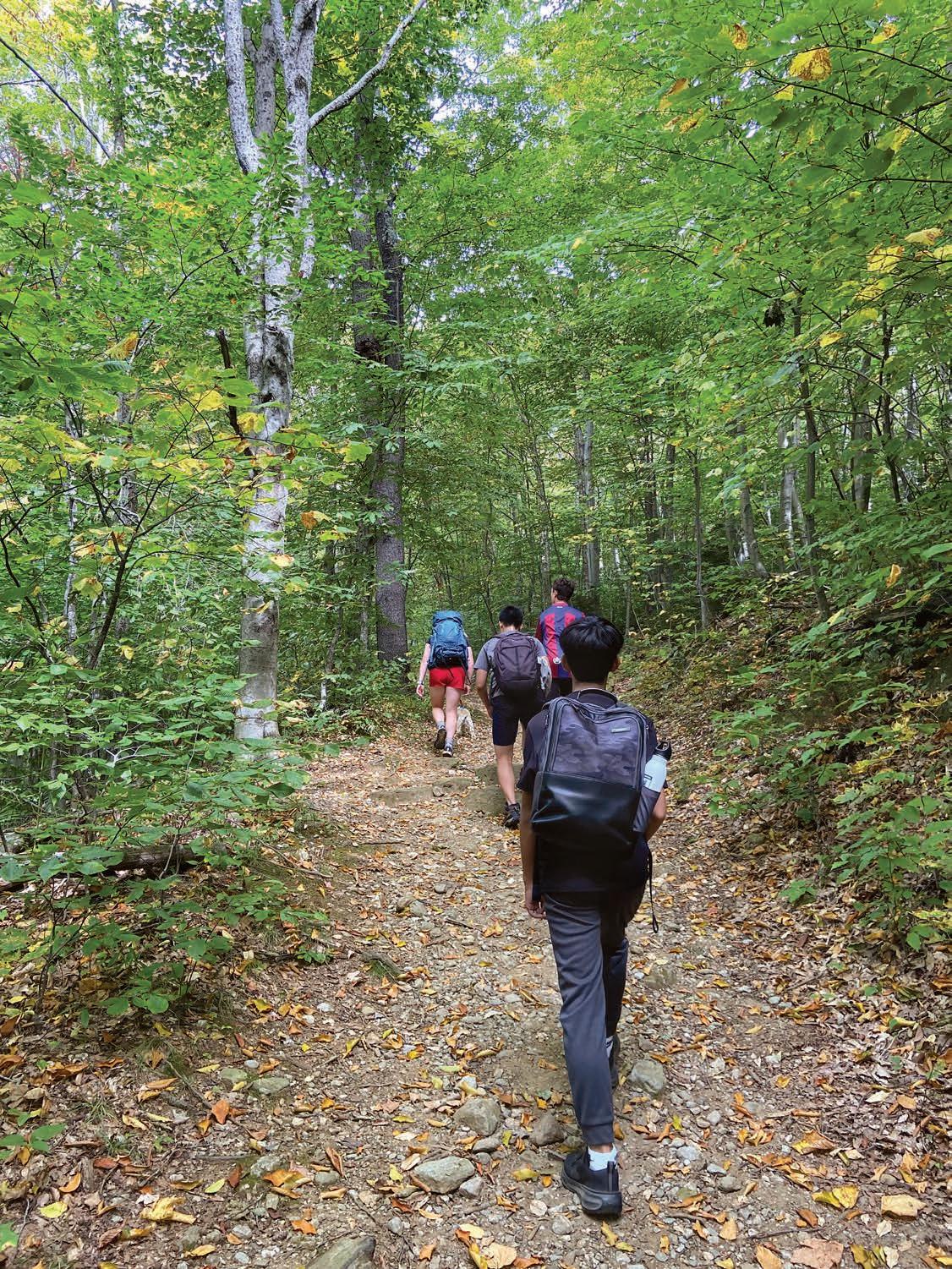
Outdoors IN FALL
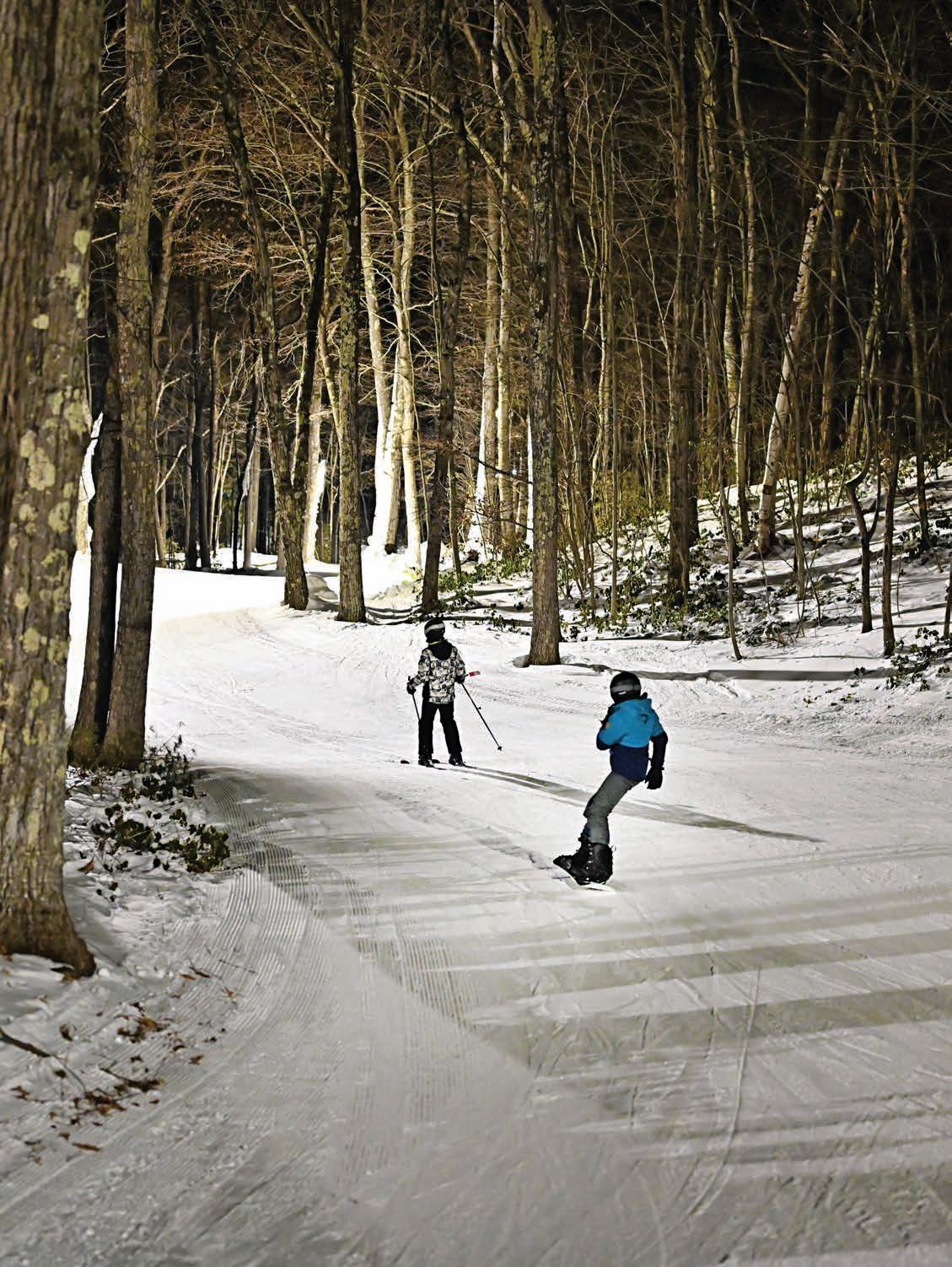
locations scattered around campus, sports vary with the seasons: fields and turf for games—rink for hockey— pool for swimming and water polo—hillsides for sledding— chairlift, open slopes and tree-lined runs for skiers— gym for basketball, squash, weight room, and golf
simulator—courts for tennis and pickleball—all-weather track for track and field—trails and open fields for cross country—miles of steep, narrow paths to challenge mountain bikers. Lights at the turf, by the courts, and on the ski hill provide after-dark time for play and games.
Outdoors IN WINTER
On weekends, teachers organize off-campus excursions for hiking, camping, and biking. Students go on canoe fishing trips and go on white water rafting and ziplining trips. There are on-campus overnights in the mountain hut and at
campsites scattered throughout Eaglebrook’s 850 acres. Allschool events take the school outside: Ski Day at one of the nearby areas; Mountain Day on Mount Monadnock, the Ramble through the woods to Hilltop Farm, and Field Day at the track.
Educators today acknowledge that “the benefits of being outdoors are endless”—that “the natural world nurtures imagination and improves academics.” At Eaglebrook today, teachers often take classes outdoors to connect nature to a lesson.
Teachers have discovered that this outside-time complements inside-studies, that their students develop a deeper understanding and enthusiasm for learning.
The emphasis on the outdoors has created a concern for the environment. Students appreciate the geothermal wells that heat buildings and the solar panels that supply electricity.
Recycling is a way of life; the new dining hall will be carbon neutral. Student-initiated projects have created a school-wide awareness of the dangers of plastics, a desire to decrease the number of Amazon orders, ways to lessen paper use, and habits that can lower the school’s energy consumption.
Expanses of glass in buildings bring the outdoors inside, and programs, sports, and classes are designed to keep boys outside, discovering the fun of play, the beauty in nature, and the joy of learning.
Outdoors IN SPRING
LIMELIGHT ON HILLY CHASE
The Hilly Chase Wednesday Series, named to honor Andrew Chase’s grandmother, brings a variety of programs to campus. Some guests entertain the students, some inform them, and others give inspirational talks. Two speakers—James Robinson, a recent Duke graduate, and Chris Waddell ’84—spoke about their disabilities and the challenges that shape their lives. A quiet and enthralled audience listened to talks that broke down stereotypes, changed perceptions, and left students seeing people with disabilities in new and different ways.
In 1988, Chris Waddell, a freshman at Middlebury College, had made the ski team, one of the best in the country. That year, during his Christmas holiday, he was skiing hard, getting ready to race, when a binding’s prerelease changed his life forever.
The crash left him paralyzed. In two months, he was back at college; the next winter, he was relearning how to ski. “It’s not what happens to you, it’s what you do with what happens to you,” Chris told the students. “People see tragedy in me. I see a gift. If I hadn’t broken my back, I would never have become who I am.”
And who is Chris Waddell? His life after the accident is almost unbelievable.
In 1992, he was on the U.S. Paralympic Ski Team; competed in four Winter Games; won 12 medals—five gold, five silver, and two bronze; became the most decorated monoskier in world history; joined the U.S. Paralympic Track Team; competed in three Summer Games, won silver in the 200m; was inducted into the Olympic and Paralympic Hall of Fame and was honored by Ski Magazine as one of the “25 Greatest Skiers in North America.” He ended competitive sports and took on a new challenge: climbing to the summit of Kilimanjaro, the tallest peak in Africa.
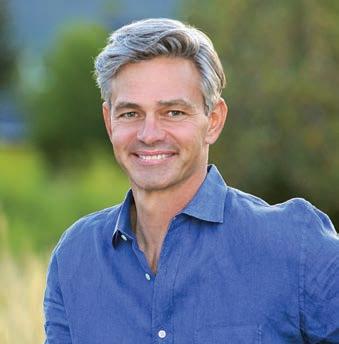

That climb—in a four-wheel handcycle, powered by turning the wheels one revolution at a time—led to his founding the nonprofit—One Revolution—dedicated to “turning the perception of disability upside down.”
Chris is an inspirational speaker, sought after to address schools, colleges, and business leaders. His goal is to change how society sees people with disabilities and how people with disabilities see themselves. He challenged the Eaglebrook students to view obstacles— even the most daunting—as opportunities for growth and learning—never as roadblocks: “We all can achieve our goals by breaking them down and turning the wheel one revolution at a time.”
James Robinson, a graduate of Duke University and the Duke Center for Documentary Studies, is an Emmy Awardwinning documentary filmmaker and creator of the New York Times Opinion Video series ADAPT-ABILITY.
He spoke to the school about Whale Eyes, the title of both the documentary he showed the students and his book. Both are about his strabismus and exotropia, eye conditions that he nicknamed Whale Eyes— “because,” he said, “we can look into only one of their eyes at a time.” The book uses creative imagery to simulate his 3D and optical challenges. He told the students, “I want you to experience the world through my jumpy vision.”
James’s eyes move in different directions; one looks forward; the other turns toward his ear. His sight leaps from one eye to the other. He described trying to play tee-ball and—swinging over and over—never making contact with the stationary ball. “I don’t have a problem with the way I see,” he said. “My only problem is with the way that I’m seen.”
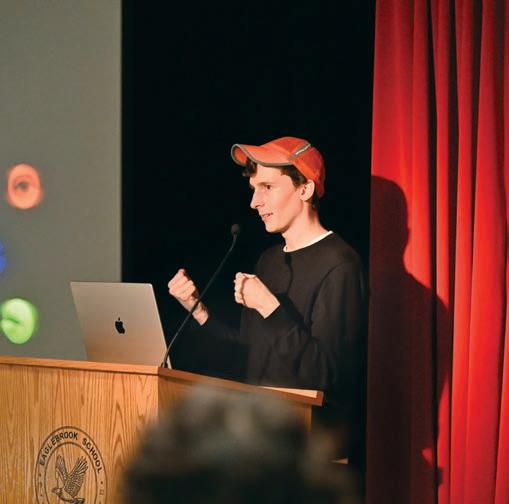
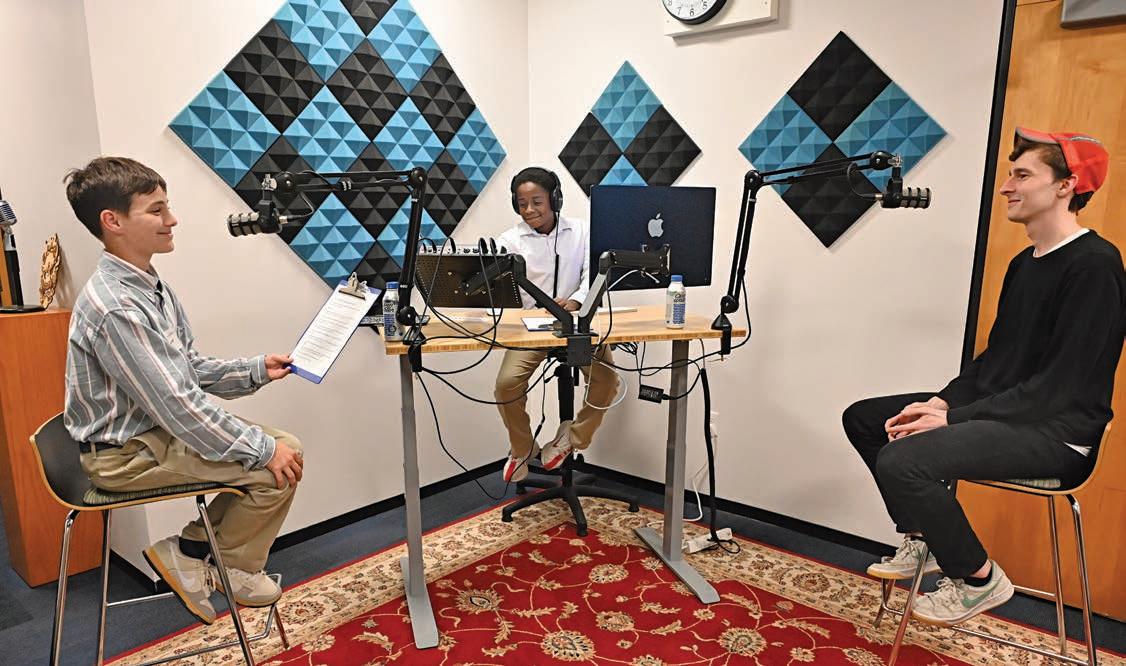
After each program, students engage in a podcast conversation with the speaker.
Electives— Classes Where the Boys Create
For the start of each trimester, students select their elective classes. Eaglebrook offers at least fifty elective choices throughout the academic year. Each trimester, students have one or two electives, with no homework, which break up the academic day. Electives provide opportunities that encourage creativity, develop talents, and expand interest.
Some of the students’ favorites show the wide variety of the elective program: Ceramics—Woodworking— Photography—Stone Carving—Puppet Lab—Stained Glass—Robotics—Fly Fishing and Fly Tying—Ad Libs—Piano—Band—Comic Book Art—Theater— Chess—Juggling—Podcasting—Making Stuff.
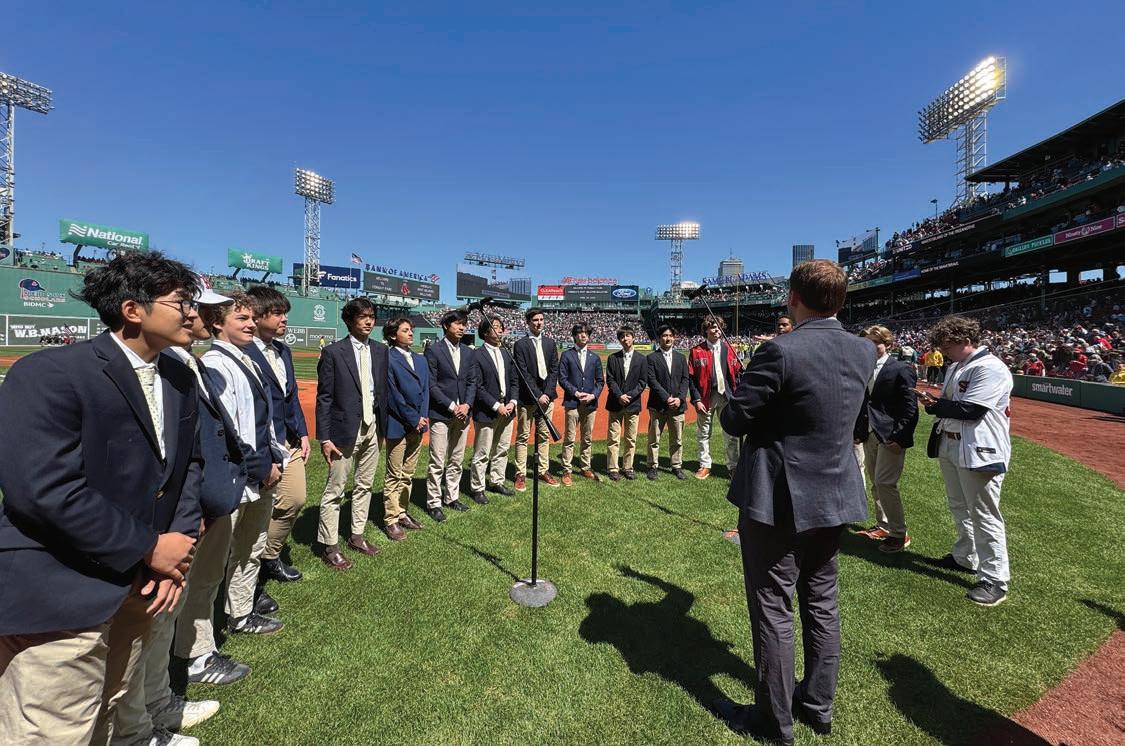
Singers in the Ad Libs, Eaglebrook’s Sixth Form a cappella group, develop tight harmony, and each spring they sing the national anthem to open a Red Sox game at Fenway Park.
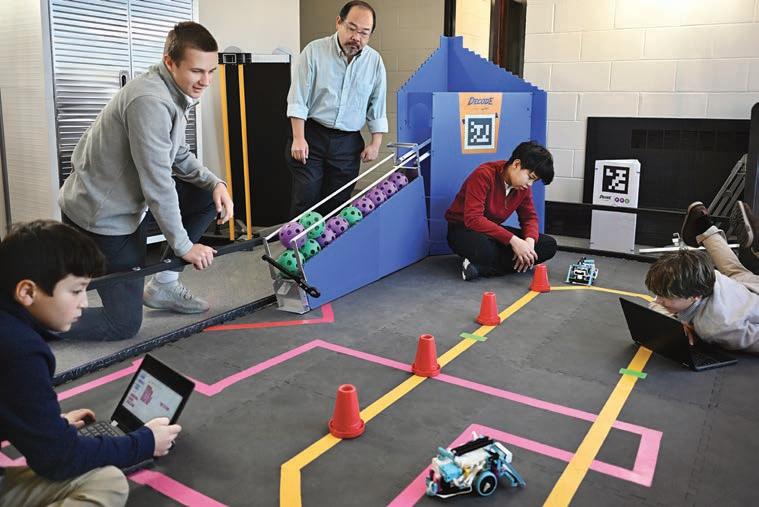
In the Robotics elective, students learn the basic skills necessary for building and programming robots.
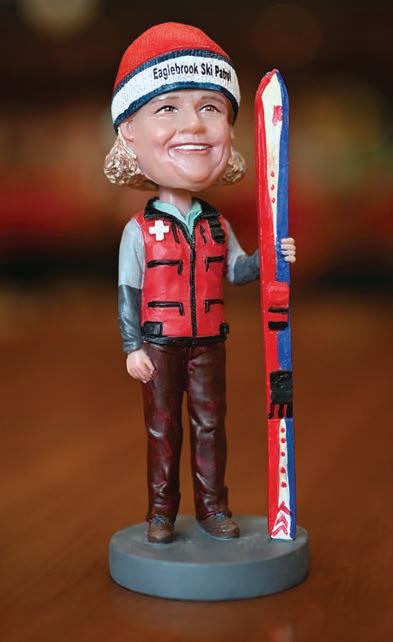
In the Innovation Lab, young entrepreneurs create bobble heads of faculty to sell at Country Fair.
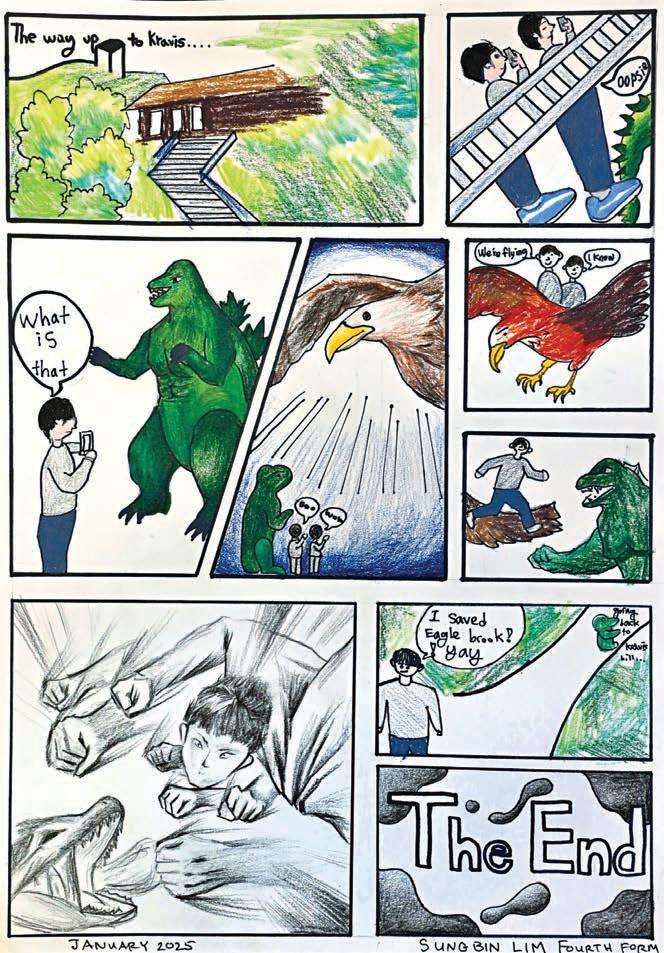
In Comic Book Art, imagination and drawing skills create a hero who— with help from an Eagle— saves Eaglebrook.
Robotics and Eaglebrook’s Motto
The Lumen—Fides—Labor—Facta Connection
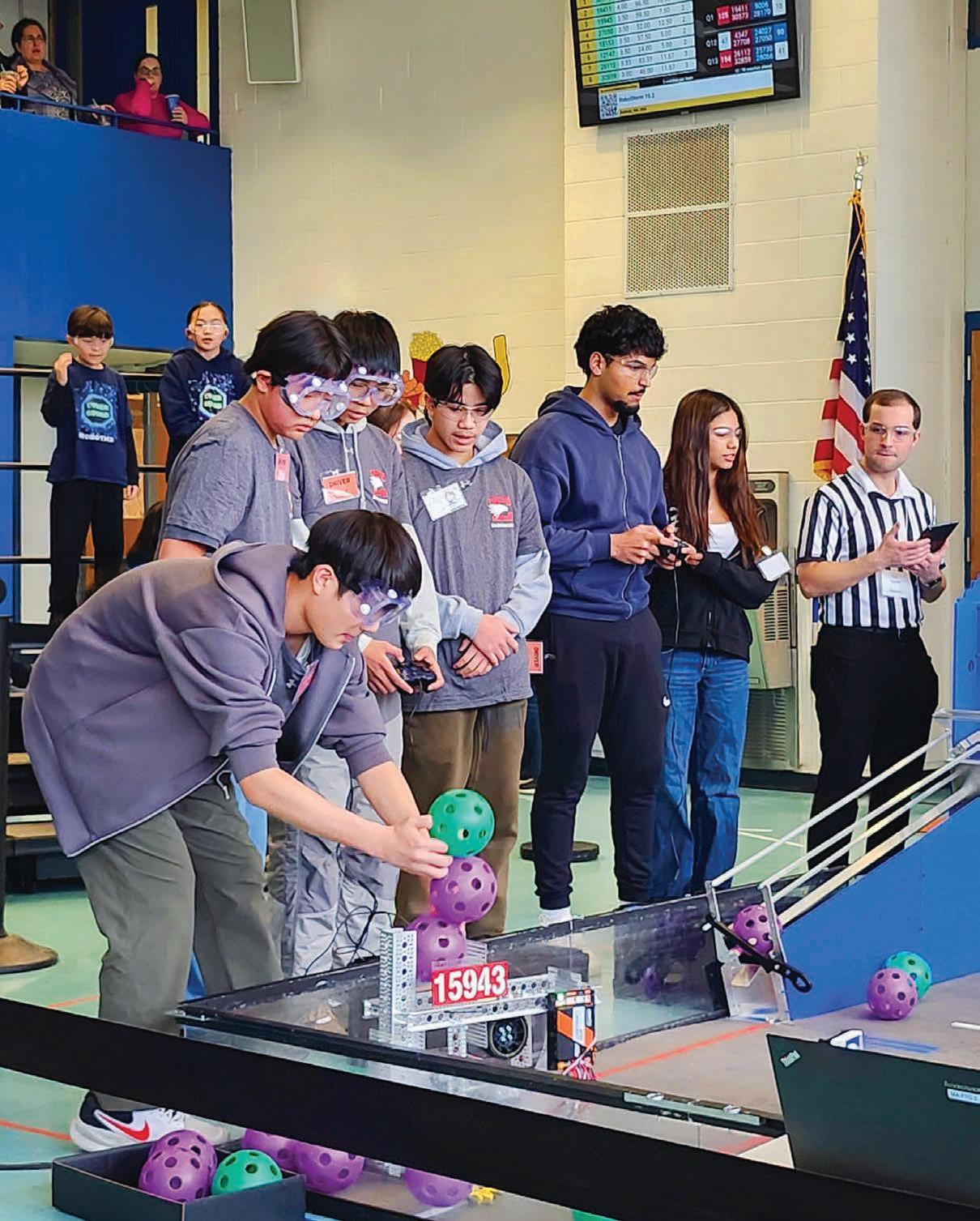
On the evening before their first competition, the Robotics team performs a total body check on their little bot, troubleshooting for possible disasters, practicing quick repairs, refining strategies, and fine-tuning their jobs. Everyone is responsible for something.
Tightening the screws Checking the batteries
Inspecting the wiring
Practicing driving
Filling the toolbox
Testing the codes
Reviewing strategy
Collecting spare par ts
Passing out team jerseys and safety goggles
T he Robotics team is the creation of Paul Huang, who arrived at Eaglebrook from Taipei at the age of 12, with limited English and a strong background in math. Now he’s back at Eaglebrook teaching math.
In September, the students who choose robotics as an activity gather around Paul for an introduction to their year-long project: planning—designing—building—programming—testing—and driving a robot in competitions.
T here is no easy-to-assemble kit. They will build their robot from scratch.
In the first meeting, discussions begin.
Paul expects everyone to ask questions and offer ideas. He’s there to teach them the necessary skills.
Robotics is a group effort.
This is a story of the Robotics team—using their words— on a journey of self-discovery and learning. It tells of the camaraderie that grows from their work together on a project that is challenging, creative, and fun.
First, we talk about what our robot will look like and the things that it will do.
After initial discussions about the process that they are about to begin, they g o online to click onto a robotics cookbook whose language is familiar kitchen talk with simple instructions for their project. They learn that “to cook their robot,” they must “follow the recipe step-by-step.” The cookbook, explains how to build, code, and drive a robot, using cooking terms—chop—knead — bake.
We begin to have ideas.
Robotics is one of many activities designed to give students time and space to explore and develop a unique interest.
Robotics—like all activities at Eaglebrook—can serve as a laboratory for acquiring values found in Eaglebrook’s Motto.
Lumen Light, Wisdom
This is the light that comes from:
g DETERMINATION
g PASSION
g CURIOSITY
g HUMOR
g COMPASSION
Fides
Faith, Trust
This is the faith and trust that is the foundation of:
g TEAMWORK
g COURAGE
g RESPECT
g HONESTY
g CONFIDENCE
Labor
Work, Effort
This is the hard work that is required for:
g ENGAGEMENT
g DETERMINATION
g RESILIENCE
g PATIENCE
g INDEPENDENCE
Facta
Accomplishments
These are the deeds that are reached through:
g BALANCE
g RESPONSIBILITY
g SCHOLARSHIP
g SERVICE
g ACCOUNTABILITY
Paul moderates the discussion, making sure that everyone contributes, listens, and is listened to. He reminds them that “no idea is stupid.”
We brainstorm for a plan. It’s everyone’s ingenuity that counts.
All of us are asking questions and making suggestions.
What will it look like?
It’s got to fit into an 18 x 18 x 18-inch box. What will it do?
Pick up stuff?
Hang on a bar?
T hey draw favorite designs on the board— discuss them—combine them. Paul introduces the group to Computer-Aided Design and then turns them loose to experiment.
I like cadding. Getting a preview first before making the actual robot saves time.
After Paul approves a design with precise details, they start collecting tools and parts, ordering some and CAD-making a few. Only when all elements are organized and ready can the construction of the little bot get underway.
We work together on the chassis.
There’s a lot of testing to check on our progress and make improvements.
I like getting my hands dirty and tinkering with the mechanics.
The best is screwing in the screws. Mechanics make me dizzy.
While builders are at work, the coders are creating a brain for their bot. Paul is helping them use teleop to create a code that will let the bot’s driver give commands for the bot to obey. This is tedious work that involves wiring, inserting batteries, and code testing—and retesting—to ensure their robot’s proper movement.
Watching a robot that we built from scratch come to life is really rewarding. It’s the culmination of latenight work, setbacks, and aha-moments.
Finding a flaw in performance involves making changes and round after round of trial-and-error testing.
It’s frustrating when the bot doesn’t work correctly after a lot of effort.
We have to recheck codes, design, and mechanics.
3D CAD-designed parts fail.
One was too large, and another broke off. We kept improving the design until one worked like it should.
T heir robot is not able to transfer blocks into the designated area.
We had to find the correct length and height of the bot’s arm before it could reach for the blocks and move them.
On paper, a new design—with compliant wheels and a pivoting arm—looks great, but it keeps jamming.
First, we adjusted the space between the rollers. That didn’t work.
We swapped the motor for a more powerful one. That didn’t work.
At last, a redesigned intake with a steeper angle did the job.
Once the robot is built, wired, coded, and tested, the robot is ready for competition. A driver is in charge of its movements, a job that requires hours of practice, coordination, automatic reactions, and the ability to make quick decisions under pressure.
Being patient is very important. I learned this the hard way. One time, I drove the robot too fast and messed up the plan. Now I use the slow mode button to balance the speed.
On the eve of their first competition, the Robotics team is confident.
We feel great. Everyone has completed his job.
It’s been a lot of hard work.
. . . and persistence.
Robotics forced us to deep think.
Students—in g roups throughout the school community—every day, are putting on display Eaglebrook’s hundred-year-old motto, which is still thriving in this modern world.
Lumen—the unique glow that comes from each one.
Fides—the trust that builds community. Labor—the effort that ignites achievement. Facta—the accomplishments that real engagement creates.
Robotics Competition
FIRST For Inspiration and Recognition of Science and Technology—is the global leader in robotics for young people. The aim of FIRST, a non-profit organization, is to present competitions that inspire innovation, build confidence, and prepare participants for life.
A FIRST Tech Challenge event is a lively robotics competition for middle and high school students. Teams design, build, program, and operate robots to play a unique, themed game in alliances, focusing on STEM skills, innovation, teamwork, and preparation for play in championship tournaments.
In September, the Eaglebrook Eagles, the school’s robotics team, assess the rules and conditions of the predetermined scoring routine. They can interpret them in any way they see fit and develop a solution to help them achieve success in this year’s events.
After experimenting with designs and prototypes, they commit to a robot that is both autonomous and driven by a human operator. The team learns to manage project flow—the sequence of actions that are necessary to complete a task. Team members— all with different skills—collaborate, aiming for their bot to achieve its best possible performance.
In engineering notebooks that detail the building, coding, wiring, and driving processes, they record their progress and capture the essential elements of each and every decision made—from one iteration to the next—each iteration improving the robot’s ability to perform assigned tasks.
Documenting the constr uction, testing and refining processes helps the group understand the how-and-why of their design and operating conclusions. Often, they must retrace—step by step—these findings to improve their bot’s performance. At competitions, teams—carrying their notebooks and robot and without their coaches—must stand before a panel of judges to explain their design and the improvements that they have made.
T he Eaglebrook Eagles are ready for competition—January’s FIRST Tech Challenge Massachusetts Regional Qualifier.
At each stage of construction, team members have shared ideas and collaborated in engaged discussions. Everyone—on a regular basis—has updated the group on what he has done and what he has learned from others in the group.
At Andover High School, where the match is held, they scout the other teams to assess their strengths and weaknesses. Competition is between alliances of two teams that must work together. Compatibility is important. The teams combine their robots’ efforts to complete tasks and score points. Teams, in a successful alliance, complement each other’s strengths and weaknesses and work well together.
The Eagles’ alliance with the fifth-seeded team reaches the double-elimination playoffs. They win four straight matches and are in the finals. Their loss—in a hard-fought contest—is against two high school teams.
The Eagles return to school, carrying the Finalist Alliance Captain award, an honor that recognizes the team that reaches the final match of the playoffs but does not win.
“You don’t have to be a math or coding wiz to have an important role on our team,” the Eagles tell everyone. “Those who are great at making sure all the screws are screwed on tight are just as critical to our success as the drivers and the programmers; one loose screw can sabotage a robot.”
The Eagles’ success was all about teamwork and individual responsibility.
What’s So Great About Dogs at Eaglebrook?

Eaglebrook magazine editors sent out a plea to campus dogs to respond to this question. One took on the challenge.
These are his words.
Call me Goose. Some weeks ago—never mind how long precisely—I began to discover that I had a flair for language. Like some boys at Eaglebrook, I am trilingual—fluent in canine, English, and feline—and can understand “Who’s a good doggie?” in both Korean and Spanish.
Of all the dogs on campus, only Max, a native of Taiwan, knows more languages; he speaks Mandarin, English, canine, and feline.
In August, new to campus, I decided to acquaint myself with the dormitories where families of boys, teachers, exceptional dogs, and a few ordinary cats live. In Eagles Nest, I
am the sole canine resident. Nearby is Little Hundridge—the head of school’s home—and a road lined with five large dormitories: Taylor and Halsted, adjacent to ski trails and open slopes; Flagler, near a pond that invites a quick splash; and Mayer and Kravis, reached by steep flights of stairs.
Next year, when I am seven dog-years old, I expect to join Eaglebrook’s counseling staff.
Whenever I find myself growing excited and wanting to bark and jump, whenever I find myself involuntarily desiring to dash after a squirrel—and especially whenever I find myself scampering under a bed, startled by a loud noise—I endeavor to remember what’s necessary for my chosen profession and remain calm, ignoring noise and squirrel.
But I admit that I did indeed grow excited when I overheard conversations about Sixth Form leadership training. Would I train with the Sixth Formers?
School started. Boys poured into Eagles Nest. I was jumping, and barking, and giving kisses to everyone. Everyone was saying, “Who’s a good doggie?” I was excited. The boys possessed— very nearly—the same degree of excitement.
How shall I describe my disappointment?
Not a Sixth Former asked me to train with them. Not a new boy invited me to their cookout and— most distressing—I learned that Olly, a Certified Therapy Canine, had an office in the Learning Center. Alone in the dorm, I stared at a bowl and counted the kibbles.
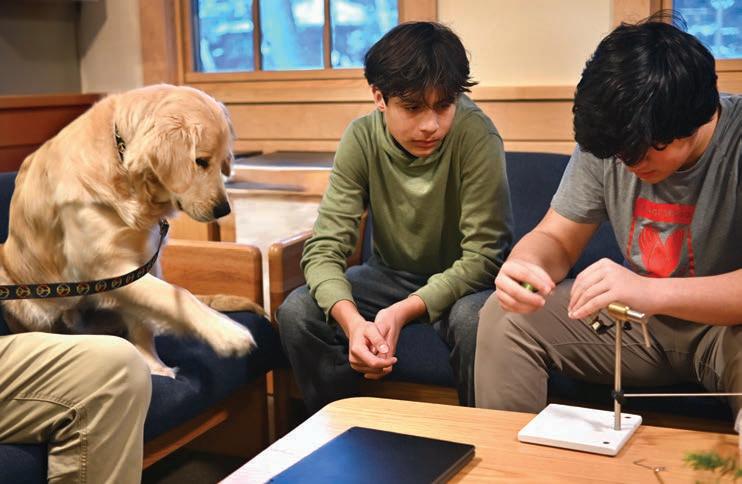
Iam a puppy—a Golden Retriever pup—with a sunny disposition. I asked myself, why be disappointed? I told myself; I’ll make some friends.
Near their home at Little Hundridge, Raleigh and Rosie— small, fierce, and on leash—police the road. I watch in awe; their cacophony of yips, snarls, and shrieking barks halts speeding cars.
Inside Halsted, sisters—River Rose and Silvia Sage—demonstrate essential dog-survival skills. Rose— with paws on any table in the sitting room—can devour a plate of unguarded food in a single gulp. Silvia lies still—her eyes on the door. If it opens—a dash outside—and she’s off to the top of the ski hill. At Taylor, Burton explains his expressive ears. He lets them lie flat when he’s relaxing, playing with his dorm-boys. When boys from other dorms come visiting, he folds his ears over and points them straight out—all the while letting out a fierce bark. Visitors freeze until someone comes to welcome them.
Flagler is the home of two dogs: Benson—a latte-sippingpart-Chihuahua-part-Poodle—and
bilingual Ariah. Once I overheard Ariah—in expressive feline— encourage Judy, the household cat, to eat her own food out of her own bowl. Any outside tussle between Ariah and me draws cheers from boys, urging us to leap higher, bark louder, and tumble head over paws.
I consider Kravis a canine paradise for Oakley, Stella, Stanley, and Molly. What dog wouldn’t love to vault up those 112 steps? And inside? The best of boys. They always have snacks and often make cookies—and they share.
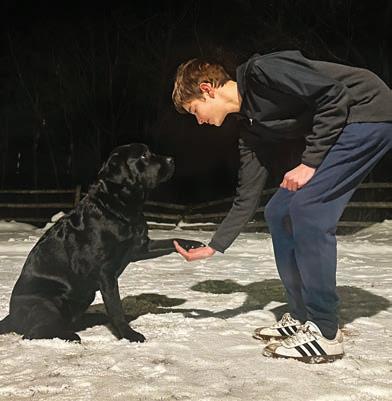
Ariah
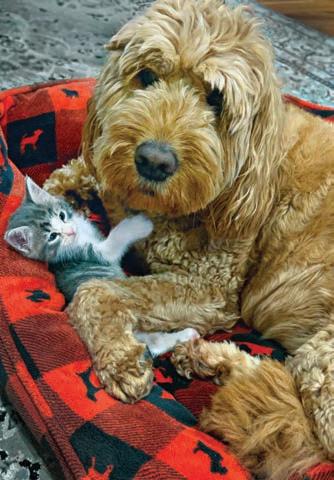
Judy
Clover
And yes, of course, I deny the rumor. I am not jealous of Clover. In Mayer, boys are calling that black-Lab pup “adorable.” They encourage her to chase her own tail and play tug-of-war; they clap when she sits, wagging her tail, waiting for a reward—and they say, “Who’s a good doggie?”
My friends and I love the outdoors—Tuck is at the soccer field for games—I go on fishing trips—Potato, Truman, and Toby lead campus walks. Potato—I call him Tater—is my hero. He’s huge—114 pounds and six feet tall if he stands on his hind legs.
He is an escape artist. You can sometimes see him dashing across the quad, bounding through the woods, and sniffing by the compost bin.
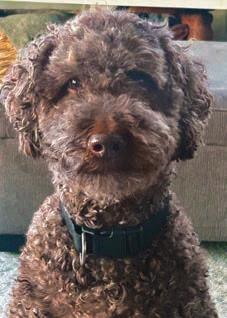
Heidi
Every day, I’m making more friends: Unagi has airplane ears; Yazhi helps in Admissions; Daisy tries to deliver mail; Heidi—my new best friend— has invited me to oversee the dining hall construction with her. There’s so much to do here—I have more dogs to meet. Max is teaching me Mandarin—I’m attending off-campus classes for professional development. Next fall, I expect to be a Certified Therapy Canine, welcoming new students—perhaps shaking hands with them—helping them feel at home— and at the New Student Cookout, I’ll sit, tail wagging, waiting for a hamburger—and they’ll say, “Who’s a good doggie?” They’ll visit my office in the Learning Center—and admire my portrait hanging on the wall.
To the editors of Eaglebrook magazine, I hope this answers the question: “What’s so great about the dogs at Eaglebrook?”
Signed, Goose



P.S. I have commissioned Allan, an Eaglebrook Sixth Former, to draw my portrait. It is ready to hang in my office in the Learning Center.
Why I Sketch Dogs
Have you ever thought about using your own skills to solve real-world problems? For me, the answer is yes
Last year, I had a chance to visit a dog shelter; the moment I stepped inside, I was greeted by dogs wagging their tails excitedly. Volunteers, all dedicated to their work, were walking around tirelessly. As an animal lover, I joined volunteers to help clean cages and feed the dogs. I started talking with these workers as we moved around the center.
Jessica, a volunteer for over three years, asked, “Did you know that around 6.3 million companion animals find their way to local shelters in the United States each year?” Her voice was filled with concern: “Sadly, about one-third of these animals are euthanized.” The weight of this statistic struck me. Jessica continued, “For those of us who care deeply about animals, this reality is truly heartbreaking.”
I wanted to make my contributions to these shelter dogs; Jessica’s words kept stuck in my head. I wanted to do something more. I asked myself, What else can I do to make my own contribution? How can I make an even larger influence?
Drawing is my skill; I initiated a dog portrait project.
I began sketching portraits for dogs at the shelter. My goal was simple: to capture the spirit of shelter dogs and help them get adopted. It was a way to show their unique personality through their eyes full of hope. Through the power of visual storytelling, I aimed to inspire concern for the dogs and encourage a brighter future through adoption.
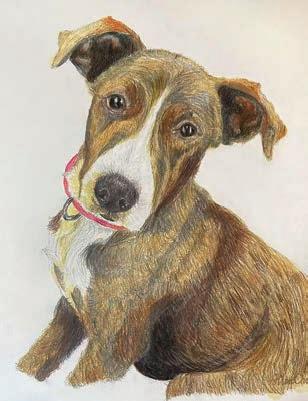
I suggested that the shelter upload the dogs’ portraits to social media platforms, and
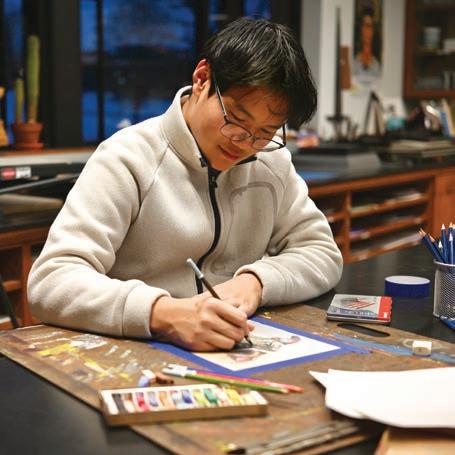
the response was immediate. Bella was the first one adopted. A family, touched by the gentle warmth in her eyes, decided to visit the shelter and took her home.
Many more like Bella found homes.
The family that adopted Victor reached out to me. They said that my artwork shows these dogs—uncaged— companions full of love and life. I never imagined such a big impression these portraits would make.

Through the dog portrait project, I witnessed the power of collective effort and creativity in solving realworld problems. I realized the importance of advocacy. More important for me was the decision that in my life journey ahead, I’ll keep asking myself, In what ways can I make a positive impact?
Bella
Victor
Music Room Is Named to Honor Gary Maynard
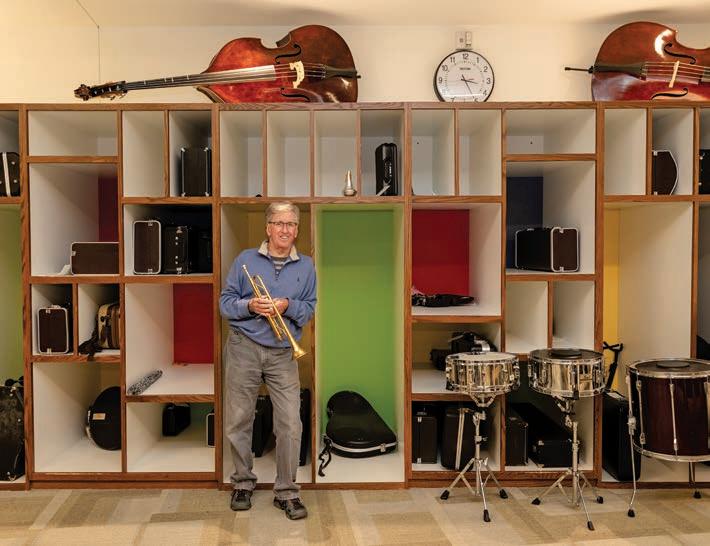
Almost half of the school— every day—heads to the music room for lessons, electives, and practice sessions.
Year after year, Eaglebrook’s musicians have presented their first performance at Country Fair, played carols at Candlelighting, entertained at Winter Carnival and Grandparents’ Day—and, on graduation day, their tunes echo through the Dell.
How anyone is able to organize, train, and put on display a middle school band and orchestra in a few short weeks remains a mystery. Somehow Gary Maynard accomplished this feat year after year.
Now, the Gary Maynard Music Room in the Evans Center will honor him and his ability to give so many students a chance to perform, develop real talent, and take a love of music into their lives beyond Eaglebrook.
Gary—a maestro on the trumpet—a graduate of the Berklee College of Music—a true Music Man—arrived at Eaglebrook in 1967 and began molding the gifted and not-so-gifted into a performing and marching band. He was carrying on—and taking to a new level of excellence—Eaglebrook’s tradition of music.
His students—from the ’60s, ’70s, ’80s, ’90s and into the second decade of the new century— cherish memories of a beloved teacher that they called “a ball of energy.” Even if they weren’t rehearsing, boys stopped by the band room to relax and hang out—but in the days before a performance, pressure built. Gary made each boy feel important, that he was essential to something great.
Alumni—whether in the band or not—remember the graduation
march and the stirring notes of Gary’s trumpet.
At class reunion, a 1970’s trumpet player’s Gary-story brought smiles.
Fingers were flying.
We were playing one of Gary’s favorite songs and scrambling to hit the notes.
The crescendo neared; Gary—red-faced and sweating—arms flailing. . . suddenly. . . signaled for everyone to stop playing.
I had made a mess of the notes.
Dripping sweat—his face as red as a tomato—Gary was marching toward me.
Without a word, he flipped me off— gave me the finger.
I was terrified.
He was glaring and waving both middle fingers in my face.
Then, slowly he cracked a smile.
I heard him say softly, “It’s B natural; it’s B natural.”
For those not familiar with the trumpet, you play B natural with the middle finger.
Gary grinned and said: “Let’s take it again.” The whole band started to laugh. Needless to say, I played B natural.
For so many boys, Gary was the person who could make a day better with a few simple words and a lot of humor.
LIMELIGHT ON ALUMNI
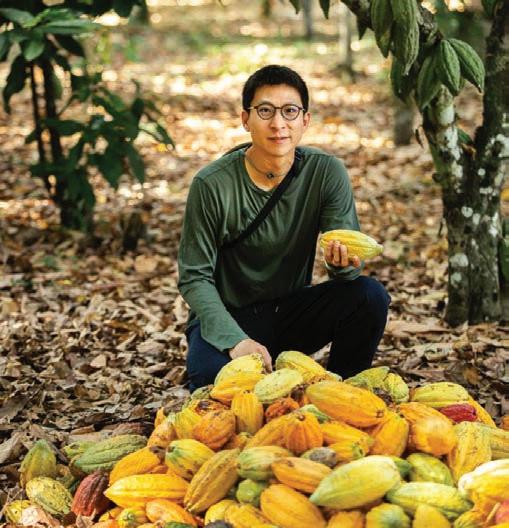
SIMON CHENG ’93 A New Way to Attain Wellness
HARRISON CHASE ’10 LangChain Moves Into AI Space

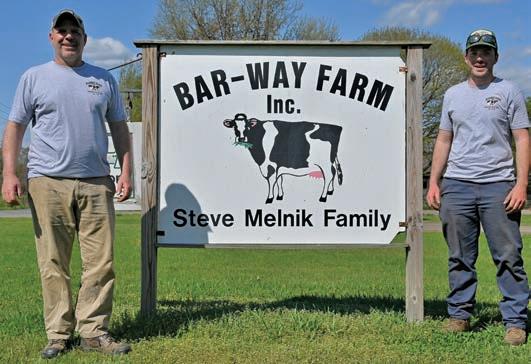
PETER MELNIK ’84
Bar-Way—the 2025 Massachusetts Dairy Farm of the Year
SIMON
Midyear—January 1991—thirteenyear-old Simon Cheng from Hong Kong arrived at Eaglebrook—a standout skier who spent winter afternoons zipping down the ski hill with friends. He amazed his history teacher: “Simon read Doctor Zhivago! That’s an epic task for an 8th grader!” The teacher added, “Simon has a mastery of detail and a writing style beyond his years.”
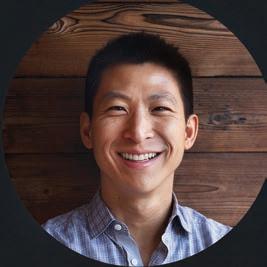
Simon, in middle school, was intent on an American education at the best schools—starting at Eaglebrook, then St. Paul’s, Harvard—and Stanford for an MBA. The same drive that led to success in classrooms was carrying him forward to success in the corporate world. He spent long hours advancing a career in finance.
This success-fast-track was derailed by medical problems and surgeries for collapsed lungs. A lingering infection was a wake-up call: “I took a look at myself and wondered what I was going to do to heal myself.”
Simon began a health quest that took him around the world—from the mountains of Tibet to Indonesia and the Pacific Northwest. He studied with Eastern healers, learned about medicinal plants, and practiced Qigong—an ancient Chinese routine of slow motions, breathing exercises, and meditation: “On a physical level, I never felt better; I also felt energized emotionally and spiritually.”
While backpacking in China’s Yunnan province, Simon discovered villagers preparing and eating Cha Gao—a tea paste whose concentrated ingredients, they told him, aided digestion and produced a calm, focused state. “It’s a 1,300-year-old preparation,” he said. “I was so amazed that I became inspired to share that with the world.”
Could Cha Gao, with its health benefits, be converted into a high-end tea extract that does not require brewing?
Gradually, over several years and after consultations with tea farmers, tea masters and food scientists, Simon developed his own version: brewing at low temperatures for up to ten hours to extract the nutrients and flavor from loose tea leaves. A dehydration process converted the concentrated liquid into crystals.
He was ready to test his product on a trial basis in Hong Kong. When his single-serve crystalized tea— with three times the antioxidants as a cup of tea—sold well, he “realized it was worth investing more.”
As he made plans to launch his product—Pique Life —in San Francisco, he patented his cold crystallization process, searched for a manufacturer who could execute his method—and raised some money from VCs in Silicon Valley.
Amanda Wee, from Singapore, was visiting her sister in San Francisco when she met Simon Cheng and “fell in love with his mission.” The two talked about his startup, his mission of spreading the Eastern approach of health and wellness—and his vision for Pique to become a world leader in botanical supplements at the intersection of nature, intuition and science.
Back in Singapore, Amanda and Simon talked about the business for hours on FaceTime and WhatsApp. Although they had seen each other in person only seven times, three months after they met, Simon asked her father for her hand in marriage.
Amanda quit her job, flew to San Francisco, and together—he CEO and she COO—they launched Pique Tea and attracted investors. In an article—“Storm In a Teacup”—Forbes recognized the possibilities of the new company: “Pique Tea, a startup offering crystallized tea that dissolves instantly in hot or cold water, is on a mission to bring an ancient Chinese method to the masses.”
In the eight years since its founding, Pique has expanded distribution, launched new products into new categories that now include botanicals, minerals and vitamins, and is scaling their mission: “Help everyone experience transformation in their physical, mental and spiritual health to achieve sustained wellness and beauty-from-within.” The company, proud of the purity of ingredients derived from sources in pristine regions around the world, has been honored with gold medals in the Global Tea Championships. Simon has been
invited to join the Harvard T.H. Chan School of Public Health Nutrition Roundtable and Dean’s Board of Advisors.
The Sun Goddess Matcha tea leaves are sourced from trees in Kagoshima, a region at the southern tip of the Japanese archipelago. The Pu’er Tea trees, wild and some more than 1,200 years old, are in a primordial forest in the Yunnan Province at the foothills of the Himalayas. BT Fountain is the first beauty electrolyte on the market delivering skin-plumping ingredients. Daily Immune combines liposomal encapsulated vitamin C and an organic elderberry complex in an innovative formula.
Simon is convinced of the benefits found in highquality botanicals produced by farmers who obsess over their unique environmental elements. He believes that science and nature—combined—can create products that increase overall health. Illness no longer disrupts his life; he practices Qigong and remembers his century-old grandfather who drank three cups of tea every day. Simon wants to increase awareness of tea’s health benefits and make crystals so convenient and flavorful that drinking tea will compete with coffee and soda in popularity: “What Pique is trying to do is make healthier options easier to use.”
He continues his mission to bring wellness to others. How do Simon and Amanda balance their own busy life? Dinnertime—between 7 and 9—is sacred. There is no mention of work.
Of course, business talk can resume at 9 and continue until midnight.
HARRISON
Joining Eaglebrook as a Fifth Former in 2009, Harrison Chase enjoyed his academic courses, especially his art and math classes, as well as playing soccer, squash, and tennis in a competitive
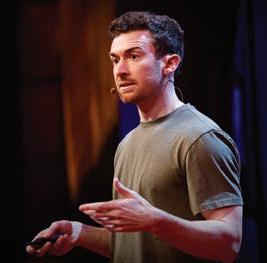
environment. In the classroom, he recalls that “there were a lot of really smart kids who helped push me in math” and that his art classes in stone-carving and painted glass helped “me embrace creativity and encouraged me to think outside the box.” On campus, he also found an entrepreneurial spirit that encouraged students to “do their own thing.” Today, guided by the same passion for learning, problem-solving, playful competition, and creativity, he serves as the CEO and co-founder of LangChain, a breakout startup company in generative AI. The company’s mission is to help developers integrate the reasoning engines of large language models (LLMs) into their applications.
In the San Francisco tech scene, Harrison Chase and LangChain have emerged as early leaders when they figured out how to streamline AI app development with a few lines of code, thereby democratizing access to the reasoning capabilities of LLMs.
Harrison’s path to founding LangChain was by no means linear or foreordained. After graduating from Eaglebrook, he pursued his passions and spent his 10thgrade year in Assisi, Italy, attending an Italian school and playing soccer. Then, after attending the Pomfret School, where his father taught Latin and his mother Anthropology, he matriculated to Harvard University and earned a degree in statistics and computer science.
Fresh out of college in 2016, Harrison joined Kensho Technologies, a fintech startup, as a machine learning engineer, where he refined his coding and modeling skills. Working on a number of products, he stood out for optimizing production-ready products. Harrison credits his mentors at Kensho for helping him develop his engineering skills and teaching him how to lead engineering teams and projects, adding, “Early on in one’s career, working with good people is by far the most important thing. Don’t worry about title and comp, that will pay off.”
After S&P Global acquired Kensho two years later, Harrison, trusting his entrepreneurial instincts, joined another startup, Robust Intelligence, where he expanded his skill set by engaging in adversarial machine learning, testing and validating ML models, and building out a platform to help other developers do the same.
While participating in hackathons and working on side projects, Harrison realized that there was
blossoming new AI technology in the form of LLMs. Furthermore, developers lacked the necessary tools to build with these LLMs and faced numerous production hurdles in building reliable AI apps. Capitalizing on his background in machine learning and infrastructure, he prototyped an initial Python package called LangChain that solved these problems. He tweeted his solutions to a small cadre of Twitter followers, tagged several authors, and retweeted updates, paving the way for developers to access the full capabilities of LLMs with just a few lines of Python code.
A month later, after Chat GPT was released, demand for agents skyrocketed as developers sought simpler ways to link external data and manage conversations without the LLMs hallucinating and going off track. Responding quickly to the rapid changes and evolving needs of the AI space, Harrison and LangChain provided more abstractions and various components to help developers connect LLMs to external sources of data. As the space filled with competitors, LangChain remained at the forefront by producing cuttingedge products, including LangServe (for deploying apps), LangGraph (for managing AI workflows), and LangSmith (for debugging, testing, and monitoring LLM applications).
Reflecting on his founding of LangChain, Harrison noted, “I built something I enjoyed working with and which people wanted. I put it out there, sought feedback, and reiterated. It all started with a Tweet!” Although managing the business and traveling worldwide to promote LangChain’s products consumes a large amount of his time, he still enjoys dabbling in coding. He is developing an email assistant to assist him and others in managing their workflows. When asked what advice he would give to aspiring app builders, he said, “Do stuff that you like, work hard at it, and you might become dangerous.”
Strengthened by three rounds of venture capital funding in the last three years, LangChain has grown to over 100 employees and continues to expand as it works to simplify the rapidly evolving complexities of agent development. For now, Harrison Chase is at the epicenter of the AI revolution and believes that this transformative technology is still in its early stages, but confesses, “I can’t predict anything.”
PETER
In 1984, when Peter Melnik, a Sixth Former at Eaglebrook, presented his assembly talk to the school, he began, “I have another life that begins every day at 4:30 in the morning.” He talked about the family farm, working with his dad—and the cows: “It’s a life I love, and I wouldn’t give it up for anything.” Love for this other life continued. While a student at Deerfield Academy, he was up and working alongside his dad before the start of his classes. His major in agricultural economics at the University of Vermont sparked an interest in sustainable farming.
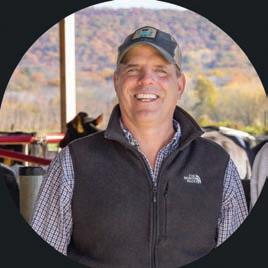
For five generations, the Melniks have farmed in the Deerfield Valley, where the rich soil in the alluvial flood plain along the river has, according to Peter, “some of the best soil in the world.” The patriarch of the Melnik dairy dynasty arrived in the Valley from Ukraine, farmed tobacco, onions, and cucumbers, and had a herd of, perhaps, twenty cows. Peter’s grandfather— then a sixteen-year-old boy—set to work, increasing the number of cows, buying more land, and creating a close-knit family. Peter remembers his grandfather’s advice: “You’re like a team of horses; if you pull together, you can get a lot of work done.”
That family-pulling-together has earned Bar-Way Farm the prestigious New England Green Pastures Award, the 2025 Massachusetts Dairy Farm of the Year. One farm in each of the six New England states is recognized for outstanding accomplishments in business management, crop production, herd performance, environmental practices, and community leadership.
Peter, a fourth-generation Melnik—along with his son Henry and younger brother Mark—runs the farm. Peter considers the award a tribute to his father, Steve Melnik: “I think most people who work a 9-to-5 job can’t comprehend the amount of time and effort that he put into his business; it’s mind-boggling.”
Steve Melnik, one of the first participants in the Agricultural Preservation Restriction Program, sold development rights to some of his land. At that time, people called him crazy, but Peter believes the sale helped: “We’ve reinvested the money in more land.” Peter—like his dad—isn’t afraid to try something new. He says, “One of the things that has made our farm successful is that the older generation has always let the younger ones take some ownership in responsibility and planning.”
Peter Melnik’s changes have proved advantageous for both the farm and the environment. In 2016, he worked with Vanguard Renewables to install an anaerobic digester that processes 25 tons of cow manure and 100 tons of food waste from local businesses daily. The methane captured from this system is generated into electricity, which flows into Deerfield’s electrical grid and is enough to power 1,600 homes. Peter uses the digester byproducts for cow bedding and organic fertilizer to increase crop yield. The digester, he says, “minimizes smells on the farm, which makes us better neighbors.”
He is a steward of the Valley land that provides forage and silage crops for his herd, noting that “to be able to grow crops in the best soil has its advantages. His care for the soil includes crop rotation, nutritious cover crops, and no-till farming to maintain soil health.
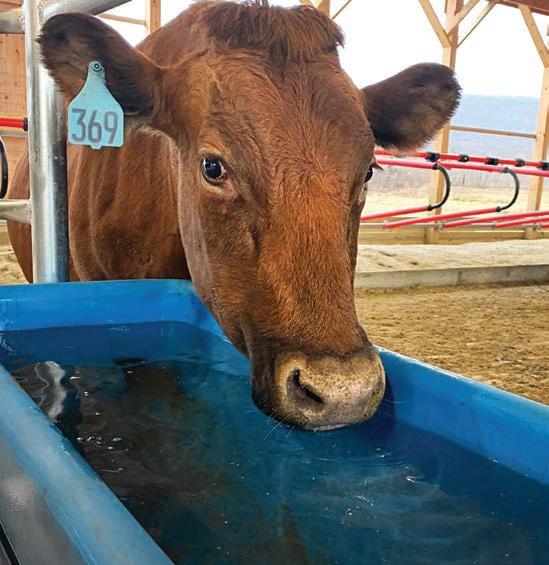
Peter, now general manager of the farm, is encouraging his younger brother, Mark, and son, Henry, to help take Bar-Way to a new level by using technology. Today, a double 12 parallel milking parlor is streamlining the milking process for their 400 Holstein herd. Cows wear monitors that track their steps, health, and rumination. This pampered herd produces more than 10 million pounds of milk each year, and Peter plans to increase that amount.
He explains, “One of the keys to our success is the previous generation. Instead of stifling growth and opportunity, my father wanted me to put my stamp on the farm. My son is back here, and he’s doing his thing.”
Henry—a 2018 Eaglebrook graduate—oversees the cropping on 900 acres of corn and forage crops. He operates the high-tech tractor, planter, and harvester for fieldwork, planting, and turning corn, triticale, clover, and alfalfa into silage. Like his father, he is invested
in conservation and soil health. The improvements in cropping have increased yield, improved feed quality and reduced operation costs. The fifteen-foot-wide notill drill planter prepares seed beds—without plowing— and places the seeds in even rows. The harvester—with its ten-row head—chops and collects grain crops and grasses for feed.
The groundwork is laid for enlarging the herd to a future 600 or even 700 cows and raising each cow’s daily milk production from 75 to 85 pounds. Henry is preparing himself for his role in Bar-Way’s future: “I’m just excited about doing a better job—using technology and better practices—for the farm, for the cows.”
That’s Henry’s goal, but he realizes that “by no means have we reached where we need to be.” What’s most rewarding for this fifth-generation Melnik and secondgeneration Brookie “is that you are consistently dealing with new things and new challenges and finding new ways to get at it.”
Class News and Notes
1950
Clark Whitney and his wife, Sally, moved in April to an apartment complex built in a restored cotton mill a mile and a half from their home in Spartanburg, South Carolina: “No more home mortgage, property tax, and, especially, no more yard work. Drayton Mills Lofts is dog-friendly, so we get a lot of exercise walking our two King Charles Spaniels on trails on the property, and I still enjoy golf two days a week.
“Wish I could get to Eaglebrook reunions, but it’s just too far away.”
1954
Ted Towl moved “into a wonderful apartment in the trees in Ludington, Michigan—house is rented but not sold yet. I am blessed with great health and wonderful living. I will be at Travelers Rest Resort and Golf in Dade City for the 11th year.
“I would love to hear from my classmates.”
1958
Eric Schmidt: “Retired here in Arizona in 2016 and enjoy the winters where there is no snow to shovel.”
1960
Cliff Irons: “I have not sent a class note for a number of years; I have been retired for about 20. For more than two decades I was at Brooks School, then Landmark School for more than a decade, and finally, asked out of retirement, I worked for a year at Groton School, where my father taught for nearly 50 years. At Brooks, I worked in admissions—often visiting Eaglebrook—ran a dorm and coached. At the last two schools, I was in charge of annual giving.
“During retirement, we have made trips to Pinehurst, North Carolina; Myrtle Beach, South Carolina; Bandon Dunes, Oregon; and to Northern Ireland and Ireland’s west coast.
“I’ve enjoyed being a founding member of a golf course nearby, where I have met many families, who have become close friends. This past summer, eight of us spent 13 days in Scotland, playing at many of the top courses in the world.
“Unfortunately, Rob MacColl is the only classmate I keep up with; we were at Brooks together.
“I now live in Newbury, Massachusetts, not far from Brooks. I was elected to their alumni board last year and have been involved with planning its 100th anniversary in ’26-’27.”
1961 JUNE REUNION
1964
Stephen Allen is completing his seventh year as owner of Bay Vinyl Records in Sturgeon Bay, Wisconsin, and is having lots of fun: “We have over 10,000 new and used vinyl records representing most genres.”
Larry Mark: “Well, it’s been over fifty years, so here goes. I’ve produced forty films that include: The Greatest Showman: the highest domestic grossing live-action original movie musical of all time; Julie & Julia: Best Actress Academy Award nomination for Meryl Streep; Dreamgirls: Golden Globe Award for Best Picture, eight Academy Award nominations, winning Best Supporting Actress for Jennifer Hudson; Vivo; Lady Chatterley’s Lover; I, Robot; As Good As It Gets: seven Academy Award nominations including Best Picture, winning Best Actor for Jack Nicholson and Best Actress for Helen Hunt; Working Girl: six Academy Award nominations including Best Picture; Jerry Maguire: five Academy Award nominations including Best Picture, winning Best Supporting Actor for Cuba Gooding; Romy & Michele’s High School Reunion; Last Holiday; The Look-Out: Independent Spirit Award, Best First Feature; Finding Forrester; Anywhere But Here; The Object of My Affection; Center Stage and its two sequels.
“I’ve also produced nine television shows, including Sweet Bird of Youth; Oliver Twist; When We Rise; the 81st Academy Awards hosted by Hugh Hackman: ten Emmy nominations, including Outstanding Special Class Program, winning four of them; Political Animals: five Emmy nominations, including Best Mini-Series, and winning Best Supporting Actress for Ellen Bursty.
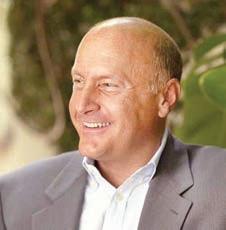
“I have two movies going into production next year— so it’s not quite over yet.”
1966 JUNE REUNION
Daniel Layton, who has moved to Reynolds Lake Oconee, a gated community in Greensboro, Georgia, is retired and playing a lot of golf.
1969
Gil Halsted: “My wife and I took a trip to Italy in January 2025 to visit friends and family with our son and his girlfriend. My wife is from Florence, and all of her family lives in Tuscany, so we visit at least once a year. This year, during our visit, we learned that our son’s girlfriend was pregnant. We rejoiced. Now, four months later, the two of them are married, and we are expecting our first grandchild—a girl named Pepper. So, at a time when there seems to be few things to celebrate about the state of the country, the world, or the planet, this is a small joy that comes our way.”
1971 JUNE REUNION
Thomas Mitchell had a big year.
“In a nutshell, our daughter Katharine and son-in-law, Clay, gave Sharon and me our first grandchild, Ellie, this past spring; our younger daughter, Carolyn, became engaged to her boyfriend, Craig—wedding planned for summer ’26—and last, but not least, I retired from practicing law.
“On the Eaglebrook front, I keep in touch with Hoyt Connell and Gregg Funkhouser, especially on all things golf and football.”
Emory Williams and his wife, Lucy, enjoy life in the Bay Area.
“We have 3 children. Our son John is closing in on his PhD at Northwestern; our son Bo ’23 is at St. Paul’s School; and our daughter, Joy, is in 8th grade and still with us at home.
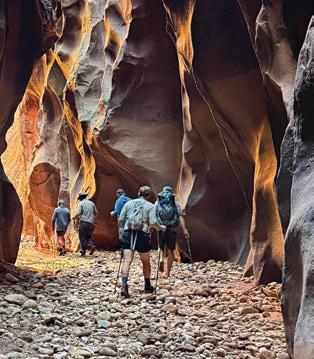
“Lucy is an artist, and I’m retired but active. I just finished a six-day hike with friends in the Paria River Canyon, which was beautiful.”
1972
Gren Blackhall’s Eaglebrook memory:
“Whenever I want to think of something that makes me smile, I see Stuart Chase doing the morning Assembly in the winter and making up some crazy way to suddenly let us know what today will bring. Like I remember once he wrote six words on a board and gave us some long-winded BS motivational speech about the words and then erased all but the first letters; it spelled out SKI DAY. Now, that was a good day.”
1975
J.D. Hale: “First, so great to celebrate our 50th reunion last spring.
“I love that I saw Monie first, and in catching up with her, she mentioned that Tad Chase was stopping by. He comes by quite a bit to see his mom and was popping in—unregistered—for our luncheon. I saw him, after 50 years, and dragged him over to
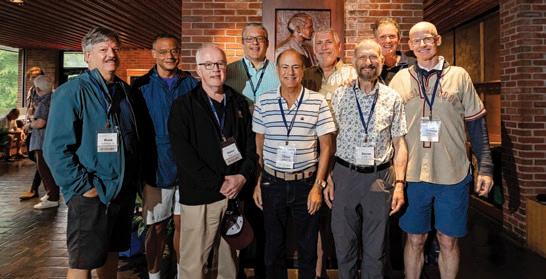
registration so he’d have a name tag. And next thing you know, we found our class. All the while, it was absolutely pouring rain outside.
“I loved the gathering with Andy and hearing from all the faculty heads about their departments and education today. Smart, down-to-earth approaches. Human to human.
“As I write, I just heard from my wife, Cindy, who’s in NYC, that our youngest just had a baby boy. So happy for them—everyone is healthy. This is our sixth grandchild and fourth within the year. Thanksgiving should be slightly crazy, but I am pumped for it.
“I miss you all. Our returning was so fun—and we appreciated it so much. We thought a lot about our classmates from 1975 who we have lost or couldn’t be there. 75ers rock!”
1976 JUNE REUNION
David Browning: “Following thirty years of working in the U.S. consumer and professional display fireworks market, I retired. After a few years of trying to deal with retirement’s monotony and the onset of Parkinson’s disease, I made the decision to go back to the fireworks business full-time as an independent consumer sales representative and trade consultant, working with several different companies. I have never enjoyed myself more, save for the extreme exhaustion caused by my illness.
“I have good memories of my years on the Hill, with especially fond memories of T.J. and Bobbee Low, Señor and Mrs. Bilello, and Mr. K.”
Kinka Usher: “Living in NYC now and bought a beautiful apartment at The Dakota on the park. Happy and healthy. Any Brookies in the city, contact me and say hello.”
1980
Bob Kuzmeski, the new athletic trainer at Holyoke Public Schools, also offers personal training sessions at Aegis Chiropractic & Physical Therapy in Hadley to help older people reach their fitness and activity goals.
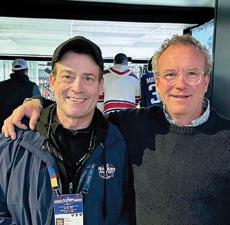
Mike Mackey and Seth Worcester at the 4 Nations Face-Off hockey tournament in 2025.
1981 JUNE REUNION
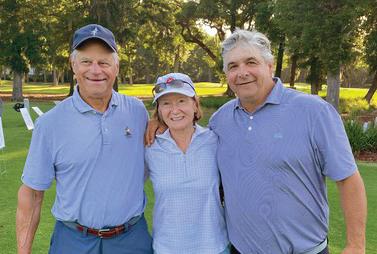
Tad Davis with former Eaglebrook faculty members Chip and Kit Norris on Dataw Island, South Carolina.
Will Hudson: “All is well with me. My wife, Nellie, and I split our time equally between Belvedere, California, and Northeast Harbor, Maine, and see Lamont Harris regularly and Armour Mellon once in a while. Would love to hear from any and all Brookies.”
Chris Kelley: “I was a Peace Corps volunteer in Honduras from 1989 to 1991; I worked in the health field. In 2000, I graduated from medical school at Nova Southeastern College of Osteopathic Medicine; I was a physician with the USAF from 2000 to 2010. I left the service to go into private practice. Currently, I work as a pulmonary/critical care and sleep physician at Alaska Native Medical Center in Anchorage.
“Since I have done three federal jobs, I have a somewhat unique perspective on government work. I am happy to offer guidance to graduates from Eaglebrook on what the future holds in medicine, both in private practice and in a government job. I am also happy to share my experience as a Peace Corps volunteer, as it really shaped me. Likewise, I think young grads should not have illusions of military life—it is not glamorous and is often very gritty. For me, it was a great experience.
“Now I am just a gruff old intensivist winding down his career, though I do love what I do.”
Randy Schafer, recently retired and moved with Kristi—his wife of 34 years—to Monument, Colorado, just north of Colorado Springs.
1982
Ian DeNolfo is the executive director of the Voice Foundation, the world’s oldest and leading organization dedicated to voice research, medicine, science, and education. For over 50 years, it has advanced the understanding, care, and training of the human voice by uniting clinicians, scientists, teachers, and performers: “Through innovative research, trusted education, and global outreach, we empower voice professionals and the public to protect, heal, and celebrate the power of the human voice.”
Ian, one of the most exciting opera singers of his generation, is a tenor who has sung leading roles in many of the world’s greatest opera houses. He shares his decades of experience with the Voice Foundation’s community of dedicated professionals.
For more information on the Foundation’s work, go to www.voicefoundation.org.
1983
1984
Andrew Collins: “I live in Needham, Massachusetts, with my wife, Kristen, and have two wonderful children, Rory and Kiernan. Rory just entered Columbia, and Kiernan is at Beaver Country Day in Chestnut Hill here in Boston.
“Professionally, I am the chief executive officer of Flexjet— www.flexjet.com—and serve on several boards of directors.”
Brian Peery, with more than 30 years of experience in finance, has been named a Managing Director at Silver Leaf Partners, a registered broker-dealer that offers expertise in marketing, advisory, and brokerage services.
Dameon Russell, co-founder of BETdat!, is revolutionizing online gaming. This new mobile app provides a secure, real-time settlement platform for peer-to-peer wagering and settlement on eSports, console video games, and recreational golf.
BETdat! can be found on any app store.
Bobby Strawbridge: “Hello, fellow Brookies. I have a 3-yearold daughter named Beatrix Faith. I live in Hawke’s Bay, New Zealand—in case you or anyone visits.
“I dare you to look it up.
“You can play golf at The Farm at Cape Kidnappers, jump off waterfalls and fly-fish for trout, pick fruit and vegetables along the way, visit wineries, and surf a long break that is in front of the house—all in one day.
“There are lots of sheep and cattle surrounded by beautiful green dramatic topography.
“The U.S. dollar goes far.
“No mosquitoes, no guns, no traffic, no honking, no sirens, no mercury in the ocean fish—just to name a few. There is no security when flying around the country. It’s like flying out of Nantucket in the 1970s.”
1986 JUNE REUNION
Jon Bonanno, a managing partner at Factor, is an investor in PILA, an architecture studio that considers buildings a way to connect people and their environment—a counterpoint to the speed of contemporary living.
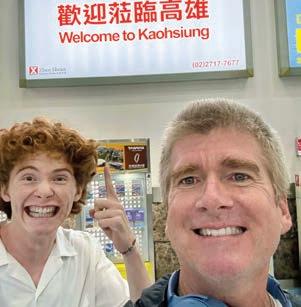
Patrick Mahoney with his son Rufus ’20 in Taiwan during Rufus’s fall semester abroad.
John Eagleton: “Almost forty years have dissolved like breath on a winter pane. Yet, the spirit of that small, relentless hill in the Deerfield Valley remains as vivid as the memory of winter’s frozen air in the lungs. We ascended that mountain to learn, but we descended it to live.
“I recall hiking down the snow-covered paths for morning class, knowing that the slope was less a road and more a canvas for our wild, unburdened youth. Sledding on Eaglebrook Hill was not merely a sport; it was our fleeting taste of absolute, unfettered freedom, a visceral lesson in momentum and the joy of the descent. Inside, the dining hall tray was the essential prop for another daily ritual: Kitchen Patrol—KP duty—a badge worn proudly just to earn the precious currency of a coveted Snapple.
“Our education was not only drawn from textbooks, but also from the remarkable souls who guided us. We were taught the weight of history and empire, studying Russian history with
Mr. Keep, and transported beyond the mountain’s ridge to the cultural streets of Paris by the cinematic curation of French movies with Mrs. Jones.
“And oh, the nights. When the watches slept, our sanctuary became the Halsted dorm, governed by the loving, encompassing presence of the Kilroy family, our universally adopted parents. There, within the shared laughter and whispered conspiracies, a certain soundtrack played on repeat—the synth-pop poetry of Pet Shop Boys, the sweeping ambition of Alphaville, and the philosophical yearning of “Forever Young.” Sometimes, we even tuned in, hushed and curious, to the late-night, knowing counsel of Doctor Ruth Westheimer, a secret ceremony of adolescence.
“We entered as boys and left as something more, possessing an internal compass spun not by academic grades alone, but by the gravity of shared experience and enduring friendship.
“Whenever the world demands resilience, I feel the bracing cold of that hill again.
“Eaglebrook was the stage where our true selves took flight, and in the deep archive of the heart, I can declare that those memories, like the best poetry, remain forever young. I am eternally grateful for those brief, magnificent years.”
J.P. Kennedy is working for the Amherst Fire Department—where he has served for 24 years—and is currently a captain/paramedic and fire chief for the Town of Whately. “Happily married—22 years and counting—two great kids and two amazing grandchildren.
“Looking forward to seeing some familiar faces on the Hill at Reunion.”
1987
Matt Royko is a counsel at Kilpatrick Townsend & Stockton LLP, an American multinational law firm that is known for its intellectual property practice.
1988
Liu with his daughters on a January 2025 visit to campus.
1990
1991 JUNE REUNION
Justin Stephens: “On the family front, our oldest, Parker, is applying to college, our middle is a junior, and our youngest will be starting high school in the fall—no boarding school for any of them. We are pleased with how they are doing.
“On the work front, Napa is just wrapping up another great harvest. We’ve got about 50% of our lots barreled down, so we can begin breathing easier. The season gave us awesome quality, so now it’s really up to us to screw it up in the cellar or keep it on course.
“That said, the wine world is facing significant headwinds these days and—in a growing capacity— over the last 3 years. It appears we haven’t been as badly beaten up at our Hunnicutt Winery as many others, but it’s not all peaches and cream, as it was a few years ago. Onward!”
1992
Michael Alexander: “To clear any confusion—I attended Eaglebrook under my mother’s last name, Thompson. It was later transitioned into my father’s last name, Alexander
“I now live in Albany, New York, and I work as a basketball and fitness trainer. I host multiple podcasts, including At the Bar with Beast, Sensitivity Sold Separately, and Spin the Block Music Review Show.
“Soon, I’ll launch Beauty and Da Beast with my wife Bobbie.
“I am the Voice of Upstate Basketball, known for calling events such as The Big G Classic, The JMac Stop the Violence Tournament, and The Troy Boys & Girls Club Championship Game.
“I’m a community representative working with The ALERT Partnership in helping to bridge the gap between community and law enforcement.”
and
Tyler Tremaine and his wife, Michelle, welcomed Burton Gad Tremaine V on June 7, 2024. They call him Gad.
Craig
Steve Bartlett, Lane Stephens, and Eliot Pierce with their wives during a get-together in New York City.
John de Neufville, Bobby Barrett,
Walker Lewis at lunch in California.
1993
Santiago Campero has been awarded tenure at the University of Toronto, where he teaches classes in Talent Management and Strategic HR.
1994
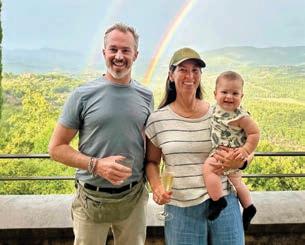
Justin Kreizel: “I am still living in Austin, Texas. I saw Andrew Ruschp in the summer, and we rode mountain bikes here in Austin.
“I married Catherine Stewart in 2024, and we had our first child, Arthur, in November.”
Roshen Menon’s son, Conall, is in the Fifth Form: “We have four boys—two sets of twins—so I suppose it shouldn’t be surprising that at least one of them ended up here. He is living in Eagles Nest and having a great time. It has been fascinating to experience Eaglebrook again as a parent. I have always looked back fondly on my time on the Hill, but seeing it through a parent’s eyes has made me realize all over again what a remarkable place it is.
“There are many new faces on the faculty, but the warmth, energy, and genuine care of the teachers feel exactly the same. We were back for Country Fair and caught up with Andy Newlin and his family; his son just joined as a Fourth Former. Our Good Fellow Andy is just as I remember him, one of the kindest and most solid people out there. Conall has a class with the son of Josiah Hornblower ’91, which has been a fun reconnection, and several other Brookies from my era now have sons attending.
“I have been able to watch many of Conall’s soccer games and am proud to embarrass him with my overly enthusiastic cheering. Chris Desrosiers’s ’92 son is on the same team, so I am hoping to recruit Chris to join me in shouting a little too loudly from the sidelines.
“Andy and Rachel continue to be a steady and amazing presence on campus and also haven’t changed a bit. I had a nice chat with Monie Chase, who remembers every detail—good and bad—from my time at the Hill. On a recent visit, I also bumped into Tinka Lunt, who still lives in Deerfield and has become quite the gardener.
“We are so grateful that Conall has the opportunity to learn, grow, and thrive in such a special place.”
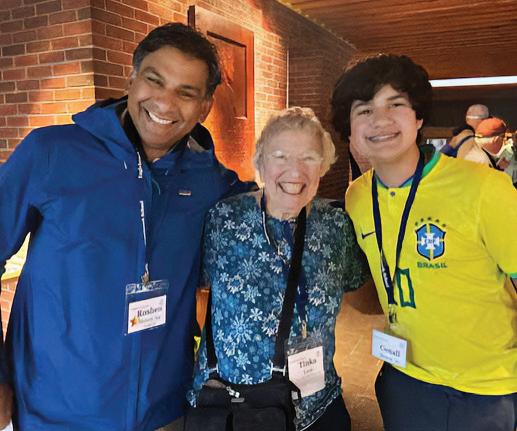
1995
Diego Creel Moreno is the global head of business and revenue operations at Incode Technologies.
Patrick Manasse and his wife, Nikki, welcomed their daughter, Eliana Rebel Manasse, in November 2024.
1996 JUNE REUNION
Zeke Jakub: “Wow, some things have changed.
“After a 14-plus-year run as a field scientist, ornithologist, and landscape ecologist, it was time for me to start slowing down. Spending months at a time trekking through the tropical forests of Panamá and Central America gets tough to continue in your 40s.
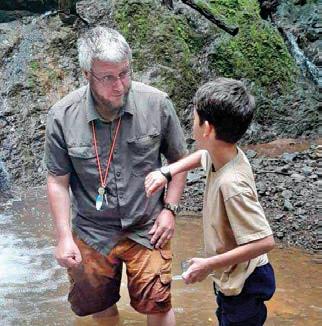
“I decided to do the next best thing—TEACH. I am the new 3rd-grade teacher at Manglares Discovery School, part of the Common Ground Collective, in Panamá. I am sharing my love for science with my students and am proud to see that I am training the next generation of future scientists who will continue my fieldwork. What a joy teaching is.”
Leandro Marini: “After 20 years of building my career and various companies in Hollywood and feeling like I was too busy to be involved in Eaglebrook the way I wanted to be, I have turned a corner and am now in a position to give back.
“I’ve been building a movie and TV studio in LA, and we recently launched a state-of-the-art facility. The studio is called FEATHER & CAP, and you can see our new facility here, as well as samples of our projects—www.featherandcap.com.
“Eaglebrook went WAY out of its way to encourage my love of film and media when I was a student. I am hoping to give back to the community now. I’d like to host Brookie alum networking events at my studio in Los Angeles once a quarter and offer Eaglebrook some in-person show-and-tell sessions on campus for current students. I could show them what the state-of-the-art VFX and production techniques in Hollywood are.”
1998
Richard Waring launched the law firm Conflict Orbit. His firm will help guide companies on Law of War compliance and related national security issues.
1999
Monty Gerrish: “I have a baby girl, Lulu.” Monty and his wife expect another daughter in July 2025.
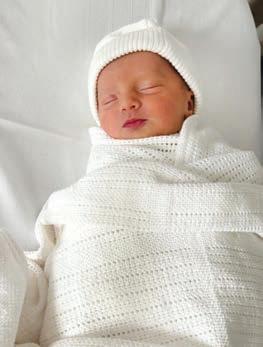
2000
Alejandro Duque Henao is the director of operation at Aesterra SAS, a company dedicated to sustainable agricultural practices, focusing on the cultivation of African palm trees and cattle ranching on the plains of Casanare, Colombia. Aesterra SAS works to ensure environmentally responsible and clean farming methods.
Damien Kimmelman’s daughter, Colette.
Walker Barnes: “I have been a realtor in Ann Arbor/Brighton for the past six years and my wife, Tammy, and I have a home on Ore Lake in Michigan. We have two wonderful girls, Harlow, 6, and Ellie, 8—and a couple of pooches, Zelda and Juno.”
Phillip Marotta, a professor in St Louis, Missouri, at Washington University’s Brown School and the School of Public Health, is the editor in chief of the Harm Reduction Journal, an international publication of original research on drug use and its consequences.
2001 JUNE REUNION
Chris Brown is the dean of equity and belonging, an academic team leader, and varsity soccer coach at Brewster Academy. He lives in Wolfeboro, New Hampshire, with his wife, Rachel, and daughter, Ivy.
David Dunning is an advisory council member of the Zage Business of Energy Initiative at the USC Marshall School of Business. The Initiative brings together business leaders, faculty experts, and students to advance innovative research, first-hand learning, and new perspectives.
Daniel Hahn is country manager of corporate development for Korea at Reap, a global financial technology company.
2002
Scott Woodward is head coach of the football team at Middlesex School.
At Mahar Regional High School, after graduating from Eaglebrook, he was a three-year starting quarterback. He led the team to back-to-back Division III Super Bowl titles, playing for his father, who was head coach. At UMass, Scott was a member of the 2006 Minutemen squad that reached the Division I-AA National Championship Game.
Following in his father’s coaching footsteps, Scott was an assistant coach at his alma mater, UMass, before moving to the University of Pittsburg and then to the University of Kentucky. He discovered the Middlesex opportunity from a longtime friend, who
had made a similar coaching move from Harvard to Belmont Hill. Scott is looking forward to leading his own program. He hopes to draw on his Eaglebrook experience when it comes to scouting middle schoolers and finding the right fit for those who aspire to play at the next level. He takes over a program that has struggled to win in recent years. Ray Yu ’23, a member of the current Middlesex team, is excited to be a part of the turnaround effort.
Other Brookies attending Middlesex are Harper Edwards ’22, Tiger Wu ’24, and Hans Yu ’24 Ben Kulas ’92 teaches history and is the head coach of the alpine ski team. Vinny Giambrocco is also on staff.
2003
Garrett Bewkes: “After eight years as publisher of National Review—and fifteen years in media overall—I decided to step outside the political news world to build something more positive and personal. I completed my Executive MBA at the University of Miami’s Herbert Business School in December 2004. Go ’Canes! I have since been developing a venture that makes pet fostering, ownership, and care more predictable, affordable, and emotionally easier.
“I also serve on the advisory board of PVUSA, a fast-growing pickleball startup.
“After a great run in Coral Gables, living next to ‘The U,’ I’m moving to West Palm Beach, Florida, with my husband Brad and our dog Benson while keeping our home in Stamford, Connecticut, where we continue to spend summers and holidays.”
Denver Gray welcomed twins, Emily and Denver.
Jon Lerch: “I’m in design. I left agency life about 2 years ago and built my full-time studio, hear!hear! design, which I am very proud of.
“I proposed to my fiancée in November 2024—and we are still finding a date, but it is looking like the wedding will be held in Montreal.”
Cullen McAlpine and his wife, Yasamin, welcomed their son, Charles Darius, on April 5, 2025.
Brett Moore has joined the San Diego FC, an American professional soccer club, as Vice President of Corporate Partnerships. He is associated with the club’s business side, developing corporate sponsorships.
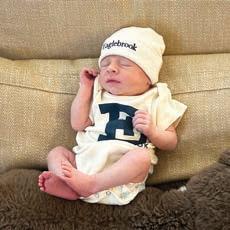
2005
Nicholas Anderson and his wife, Grace, welcomed their baby boy, Shepherd, on October 27, 2025. Shepherd has twin sisters, Isla and Solene, who were born in 2024.
Nick lives 10 minutes away from Noah Geupel and Matt Chesky, who also have young children: “That has given us even more reason to maintain our 20-plus-year friendship!”
Alex Sawabini has fond memories of his uncle Stuart Sawabini ’70, who died in October.
“He was a great man. I’ll never forget being homesick in my first year at EBS—one night, I was studying at the library by myself and suddenly felt something licking my ear. It was a puppy that Stuart was bringing home to Connecticut from Vermont, and he decided to stop by Eaglebrook, where he tracked me down at the library to say hello. It meant the world to me.”
Andrew Wood is a director within the Global Wealth Management Solutions division at Apollo Global Management.
2006 JUNE REUNION
Christopher Browne is a senior director, corporate communications at Monumental Sports & Entertainment, a company that owns and operates professional sports teams, places for events, and a regional sports network.
Brian Troy, former head coach of the Winchendon School’s ice hockey team, is entering his third season as the assistant men’s ice hockey coach at Albertus Magnus College in New Haven, Connecticut.
Wilcox Weaver has been with United Talent Agency, a global talent, sports, and entertainment company, for seven years: “I represent artists across a handful of genres, most notably Sullivan King, who headlined Red Rocks Amp in Colorado and the Shrine in LA, among 100 plus other shows between 2023 and 2024, ATLiens, who played a 35-date tour in 2023 and a 30-date arena tour in 2024, and Little Big from Russia, who sold out an entire U.S. tour in May through June 2024.”
2007
Ian Forsell is a property manager with Retta AB in Stockholm, Sweden. The company is a leading provider of property management and real estate services.
2008
Simon Choi has started a private practice in NYC as a neuropsychologist and therapist: “I am experienced in diagnosing developmental (ADHD, ASD, learning), psychiatric, and neurocognitive disorders.” He and his wife have a baby.
Marquez Cummings is an account executive at iHeartMedia Baltimore. The company operates local FM and AM stations, delivering music, news, talk, and sports programming: “I get to help local and regional businesses tell their stories.”
Jackson Fleury is warehouse operations manager at CardVault by Tom Brady, a sports memorabilia and trading card company that sells, buys, and trades cards and other collectibles.
Carter Fox and his wife welcomed twin boys in spring 2024.
Max Lawrence, co-founder and CEO of Melee, a platform that enables creators and traders to build prediction markets, announced that the company raised $3.5 million in seed funding to build viral prediction markets that will allow anyone to create a market on anything.
James Park, a graduate of NYU Stern’s MBA program, is an investment banking associate at Oberon Securities, LLC.
Hayden Arnot, co-founder of Nantucket Crisps, ran another successful Whale Jam benefit concert in the summer of 2025. Proceeds go to Whale & Dolphin Conservation USA, an organization that works to reduce the ship strikes and entanglements that threaten North Atlantic right whales. Read more about Hayden’s business, music, and philanthropy at https://www.n-magazine.com/nantucket-whale-jam
Santiago Bohmer and his wife welcomed a baby girl in November 2024.
Eric Dush and his wife, Olivia, welcomed a son, August Anderson, on April 14, 2025.
Julian Fialkow, co-founder of 186 Ventures, is a member of Kauffman Fellows Class 30, a two-year educational, networking, and leadership development program for a highly select global group of venture capitalists.
Thomas Friedman, market manager at Fiddlehead Brewing Company in Shelburne, Vermont, has been with the company for seven years.
Charles Kim, after almost five years at Ridgeline, is co-founder of Vibranium Labs, a company that is building AI on-call engineers. Vibranium Labs raised $4.5 million for agents that run 24/7 and spot IT issues.
John Landenberger married Emily Powers on July 27, 2024.
Jake Lans and his partner—along with their five-year-old basset hound—have moved from NYC to Berkeley, California.
Jake left the digital marketing agency Thunderfoot to take a job at Airbnb as an operations manager on the Host Comms team that communicates between hosts and guests. His partner is starting a pediatric residency at UCSF Benioff Children’s Hospital in Oakland.
They are settling in and looking forward to the next chapter in their lives.
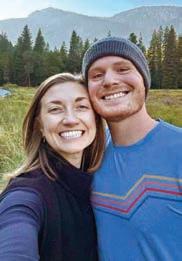
Kyle O’Brien, who was with the Feigenbaum Wealth Management Group at Briley Wealth Management, joined Stifel, bringing the Feigenbaum team with him. At Stifel, Kyle serves as associate vice president/investments.
Christian Rossetti, living in LA since 2018, is a senior manager for Prodigy Artists: “We manage and promote a stable of world-touring, multi-million-dollar DJs and electric dance music professionals.”
Rodrigo Saval is the president of the Diana Laura Riojas Reyes Foundation. The foundation promotes the well-being of Mexican children by providing opportunities focused on childcare, development, nutrition, and education.
Eli Tirk and his wife, Caroline, welcomed a son, Theodore “Teddy” Joseph, in early 2025.
2011 JUNE REUNION
Jared Armes, an executive search recruiter at Meta’s Chicago office, helps identify, evaluate, and secure top-level leadership— director, VP, and chief positions—for various functions within Meta, such as AI, engineering, product, and business.
Larsen Bidstrup: “I completed a master’s program focused on advanced ecological buildings in Barcelona, Spain. I have since returned to Montana to work for a real estate developer on some affordable housing projects, one of which is built primarily with cross-laminated timber. I am interested in implementing healthy and sustainable construction designs as part of my career.”
Michael Edson is a member services analyst at Crowd Street, an online service for investors.
Matt Knaus married Jenson Cannon on October 25, 2025, in Austin, Texas.
Jun Beom Ku will continue his graduate medical education in pain medicine at the Weill Cornell Medicine Tri-Institute Fellowship Program upon completion of his residency training.
Ben Rowland on a 2024 campus visit, sitting in his old assembly seat.
Anna Worcester is an associate director, client success at Dstillery.
2012
Douglas Braff, a reporter at KJRH-TV, the NBC affiliate in Tulsa, Oklahoma, signed off for the final time in June to take a new career direction.
At KJRK, Doug was a multimedia journalist and reporter covering local stories and was known for in-depth reporting and interaction with the community. He made the decision—“the most painful in my life”—to leave broadcast journalism because of the demanding nature—“It’s taken a toll on me.”
He is now pursuing a Master of Science in Real Estate Development at New York University’s Schack Institute of Real Estate.
Dieken Torpey is enrolled in the University of Miami School of Law.
Harry Wilmerding is an analyst at Apollo Global Management, Inc.
Zander Chase placed fourth in the men’s division of the Monmouth 200.
2013
Samir Agadi, formerly an investment banking analyst at JonesTrading, is now vice president investment banking.
Ernesto Brown, at Cardozo Law School, is focusing on bankruptcy and mergers and acquisitions.
Pi Chaipromprasith is head of AI, vice president at Finansia Syrus Securities in Bangkok, Thailand.
Matt Huggett is assistant teacher and special education paraprofessional at South Shore Stars, a non-profit organization that provides programs for children from diverse backgrounds in South Boston.
Rodney Miller and his Eaglebrook basketball coaches, David Goodrow, Sol Lakey, and Andy Bedell at Suffield Academy in February 2025.
Kozo Kubo and Teito Kokubo ’11 on a campus visit in April 2024.
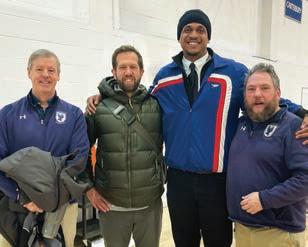
Brett Miner is a senior securitized research analyst at Breckinridge Capital Advisors in Boston.
Bryan Wijaya, a chemical engineering PhD candidate at UC Davis is researching how to make cultivated beef more affordable. At present, the liter cost for a nutrient liquid to grow beef cells is between $50 and $100. Brian hopes that his research can lower the liter cost to $1.
“World population is expected to reach 10 billion in the next 20 to 30 years,” he says. “We’re going to run into the issue of how to feed everyone. It might not be the only answer, but I really think that cultivated meat offers an opportunity to offset the problem.”
2014
Dominic Cormier is in his third season playing for the Sheffield Steelers in the British Elite Ice Hockey League; the coach calls him “an elite-skating and puck-moving defenseman who has been a huge point producer for us.”
Dom began his pro hockey career in Pennsylvania, playing for the Reading Royals before heading overseas to play on teams in Slovakia and Norway before joining the Steelers.
He considers the last four years the best in his life: “I am now engaged—and have a dog.”
Austin Gwon is pursuing an MS degree in professional accounting at Fordham’s Gabelli School of Business.
Brandon Liao is an AI deployment strategist at PromptQL, a startup that uses LLMs to analyze data, allowing users to interact with complex sources and get reliable insights. PromptQL is building AI agents that can understand and act on data.
2015
Juan Bolinaga is a founder and chief commercial officer at Nanuk Capital Partners, a private equity fund dedicated to transforming the health and wellness industry.
Grayson Brunjes is a pilot for United Airlines.
Gordon Cummings, Karl Koenigsbauer ’99, Seamus Cummings ’18, and Brian Cummings, Gordon and Seamus’s father, golfed with Jim Fay, Eaglebrook’s director of secondary school advising.
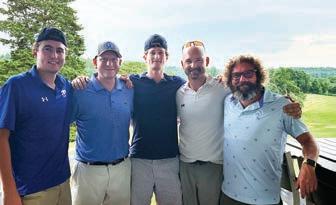
Jack Denhart is a commercial account executive at Anrok, the automated tax platform.
Peter Koenigsbauer is enrolled in the Master in Public Policy program at Harvard Kennedy School of Government.
Santiago Mendoza, after two and a half years at PepsiCo, is a founder and chief operating officer of Nanuk Capital Partners.
2016 JUNE REUNION
Connor Buettner, in 2024, graduated from Trinity College, where he was a member of the squash team. He is a research associate at DeMatteo Research in NYC.
Patricio Galvan-Duque is an associate at Mijares–Despacho de Abogados, a leading Mexican law firm.
Antonio Guerra graduated from Mexico’s Monterrey Institute of Technology and Higher Education. He is a strategy & business finance consultant at Deloitte, a global professional services network.
Jac Lymn graduated from the U.S. Air Force Boot Camp. He is stationed in Biloxi, Mississippi, training in air traffic control.
Nic Mason completed his MBA at Coastal Carolina University and is a financial services representative at New York Life Insurance Company.
Kabir Mohan is associate power portfolio manager at Karbone, a financial services firm that specializes in renewable energy and decarbonization markets.
Juan Enrique Montana, after graduating from Texas Christian University with a BS in Economics, is a project analyst at Banco INV.
2017
Seth Blain, during the summer, completed an internship at Deeplocal, a creative technology agency.
Brendan Greene graduated from Providence College in May 2024 and opened GreeneStone Studios, a clothing store in Providence, Rhode Island.
“The store is a brick-and-mortar location for my clothing brand, @greenewrks, and also serves as a vintage and boutique store for second-hand clothing. I started my own clothing company while I was in college by screen-printing shirts on the floor of my dorm room. The brand has grown a following, and we offer a full line of clothing, all designed and handmade by me. I studied graphic design in college, but I am completely self-taught in fashion design.”
Hobie Jamison, a graduate of Colgate University, is commissioned as a second lieutenant in the United States Marine Corps.
Thomas Li is a software engineer at Rokt, an e-commerce technology company that uses AI to give customers real-time offers during the checkout process.
Bennett Pitcher is a history teaching fellow and coach at Belmont Hill School.
Juan Sebastian Musi Somoza is a financial advisor at GBM, a major Mexican financial firm.
Junbo Yu was named an Echols Scholar at the University of Virginia. The program allows students with strong intellectual potential to pursue independent study.
2018
Andres Fonseca Portilla is an associate solution engineer at Appian, a U.S.-based tech company that has opened an office in Mexico City.
Burnham Johnston is an associate in Sales & Partnerships at GSE Worldwide, a sports and entertainment agency.
2019
Toby Atwill, a University of Virginia graduate, is an associate at Bondi Partners. He was a summer intern at the firm.
J.P. Castillo completed a commercial finance internship at the Washington, D.C., Guatemalan Embassy.
A.J. Finta, who played on the Syracuse University men’s ice hockey team, is a funding manager at FlatRock Capital Partners.
Kiernan Keller and Bobby Miele with faculty members Luke Williams and Nicole Lavin-Williams in Historic Deerfield.
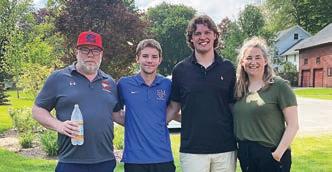
Jonathan Peng finished a summer internship at the Stanford Bao Group, developing flexible electronic sensors for biomedical applications.
2020
Andrew Jaroch, a junior accounting major at Santa Clara University, had a summer internship at Frank, Rimerman + Co. LLP.
Rufus Mahoney, who is passionate about learning languages and is a Chinese major at Middlebury, spent the summer volunteering as an English language teacher at Dandelion Middle School in Beijing, China.
Alexander Smythe, a sophomore at the University of Virginia, is an associate in McIntire Investment Institute, a student-run investment fund.
2021 JUNE REUNION
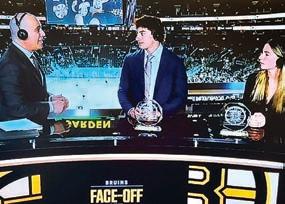
Austin Borggaard was awarded the 2024 John Carlton Memorial Trophy, given annually by the Boston Bruins to the outstanding male and female athlete in a Massachusetts high school or junior hockey program. The award honors not just excellence in hockey, but also in academics and extracurricular activities.
During his senior year at St. Mark’s, Austin was hockey captain with 49 points in 28 games, an honor roll A-student, and an entrepreneur, starting a successful mobile car detailing business. Austin—a Division I hockey recruit—is attending Sacred Heart University.
Carlos Perez-Eder is attending Texas Christian University.
Yinbo Zhang, a sophomore at UCLA, is a data journalism intern for the Daily Bruin, UCLA’s independent student-run newspaper. The data interns learn how to visualize information in an explanatory and engaging way.
2022
J.P. Lazar, a student at the University of Texas, is a creative intern for the football team, working with the media staff on photography, video and graphic design.
Zavi Salomon-Fernandez completed a two-month summer internship in the Admissions and Marketing Departments at the Urban College of Boston.
Nash Sutherland, a student at Purdue University, is studying motorsports engineering.
2023
Pete Areewong, a junior at Choate, is a youth advisor intern at the Yale Child Study Center.
2024
Stefan Flaska, Mark Lichtner, and Erik Lichtner ’22 played lacrosse for the Slovakian National team in the 2025 European Men’s Lacrosse Championship. Stefan’s father coached the team.
Jadin Smith ’23, Evers Saleeby, Cooper Johnson ’23 and Stefan Flaska on Deerfield’s soccer field during the 2024 game with St. Paul’s.
Knox Vitrano, Rintaro Aoyama, and Jeremy Fang on their first day at Hotchkiss.
2025
Rowan Muzzy plays the starring role of Nolan in Stonegate, an indie supernatural thriller, filmed in the abandoned buildings of the Tewksbury State Hospital.
Suffield Academy students, Whitney Bedell, Edward Yates, Mojo MacMillan, and Tim Chen, with Head of School Andrew Chase.
In Memoriam

In Memoriam
ALUMNI
1943 Owen Haskell 12/26/2024
1946 Walter Maynard Jr. 5/3/2024
1946 Jerrold Wexler 10/3/2024
1947 David Seifer 10/28/2024
1947 Robert H. Trask Jr. 5/8/2025
1948 Wilmot G. Gilland 12/2025
1950 James C. Ayer 8/12/2025
1953 P. Newell Freeman II 10/22/2024
1953 Ronald A. Goodman 1/5/2026
1953 T he Very Reverend Richard H. Mansfield Jr. 12/30/2025
1955 Louis L. Frierson 8/20/2024
1956 Georg e M. Tapley Jr. 8/23/2025
1958 T homas M. Brayton 5/17/2025
1958 William P. Klingenstein 4/23/2024
1959 T heodore U. Martin 4/13/2025
1961 Lucien E. Forbes 10/5/2025
1961 Charles M. Nolte 12/31/2024
1961 John Alexis Viereck 3/3/2025
1962 John Addison Berkey III 5/6/2024
1962 William T. Gaspar 2/23/2025
1963 Frank T. Hamilton III 8/2025
1963 Bur ton G. Tremaine III 8/23/2025
1964 Roger W. Foster Jr. 2/28/2025
1965 S. Denison Keeney 7/10/2024
1966 Georg e B. Lane 8/1/2024
1967 Steven F. Mamarchev 7/17/2024
1970 Stuar t J. Sawabini 10/22/2025
1972 Peter Franke 12/1/2025
1972 David K. Hayes 2/26/2025
1974 William T. Baird 4/24/2024
1975 T homas J. Fox 1/30/2024
1976 Richard M. McKelvey 10/12/2025
1980 John P. Chadderon 2/2/2025
1985 Winchester F. Jordan 10/7/2024
1988 Kenneth M. Scagel III 8/2/2025
1990 Stephen J. Sainsbury 6/8/2024
2006 Daniel J. Marcus 4/23/2024
2006 Samuel L. Smith 2025
2021 T haddeus W. Lucentini 10/13/2025
FORMER FACULTY
Beatrice Blain 1/6/2024
Sally (Jones) Laubin 11/3/2025
FORMER TRUSTEES
Walter (Robin) Maynard Jr. ’46 5/3/2024
David Seifer ’47 10/28/2024
Jay Q. Bonanno 8/2/2025
Bur ton G. Tremaine III ’63 8/23/2025
A Lesson in Eaglebrook History
Mr. Gibbs — the man and the buildings that honor him
If you walk around Eaglebrook today, you’ll see names everywhere—engraved into concrete, carved into stone, and etched into wooden plaques.
In 1922, Howard Gibbs began the naming tradition. He was converting the Eaglebrook Lodge into a school for boys and needed a dormitory. The Wood family, excited by Mr. Gibbs’s ideas about education, enrolled their son—and supplied the money. In two weeks, carpenters had the dorm built; a grateful Mr. Gibbs called it Wood House.
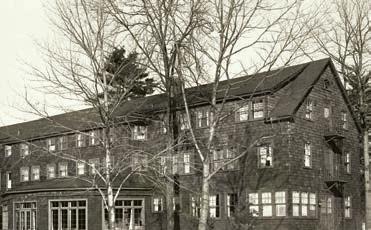
In 1928, after the unexpected death of Howard Gibbs, Hildreth and Thurston Chase bought the school.
The economy was booming; enrollment was doubling and doubling again. They needed more space, took out a bank loan, and—during the summer of 1929— carpenters built a three-story, multi-purpose building: dorm, dining/assembly room, and infirmary. The Chases called their new building Gibbs House.
That autumn, the economy crashed; the Gibbs dining/assembly room was the center of school life. Here, boys acted out charades, performed in skits and plays; here, guests spoke and entertained; here, Thurston’s minister father presided over a Christmas candle-lighting; here, Winter Carnival ended with a Carnival ball.
Gibbs House basement was a Halloween House of Horrors that, during the Second World War, was replaced by a fair to raise money for the war effort.
In the years after the war, enrollment was doubling. Dormitories replaced the small houses where boys and teachers lived. A Learning Center—with an assembly area—replaced the Schoolhouse. No longer the center of school life, Gibbs House was a destination for quick, crowded meals. At the large round tables, extra chairs jammed people together, elbow to elbow. Voices rose over voices to be heard. Waiters navigated between tables, carrying heavy loads of china plates; often, a
crash of broken dishes would halt conversation—then loud applause. Once, when a slice of chocolate cake on a tilted tray fell onto a small boy’s head, howls of laughter filled the room.
In 1966, Stuart Chase, the new headmaster, and two other graduates from the 1940s began planning a new dining room to recapture the atmosphere of the uncrowded family meals that they remembered. Architect John Carter drew up the plans, and George McComber, president of his family’s construction company, engineered the project. By the end of the decade, students and teachers were eating their meals in a new Gibbs Hall, a spacious room with windows that framed hills and the setting sun. In a state-of-the-art kitchen, Dick Davis—Eaglebrook’s legendary chef—was establishing his rule.
By the second decade of the 2000s, Andrew Chase, now head of school, faced the same problems that his grandfather faced in the 1940s, and that his father faced in the 1960s: more people to feed, crowded tables at meals, and an outdated kitchen.
This May, students and teachers—if construction continues as planned—will be in a new dining room, laughing and talking, enjoying a family meal at uncrowded tables.
And Gibbs—our current dining room? Its transformation into classrooms and a health and wellness center is slated to begin this summer. How fitting that students will be attending classes in a beautiful Gibbs Hall next to the Lodge where Howard Gibbs first taught his classes.
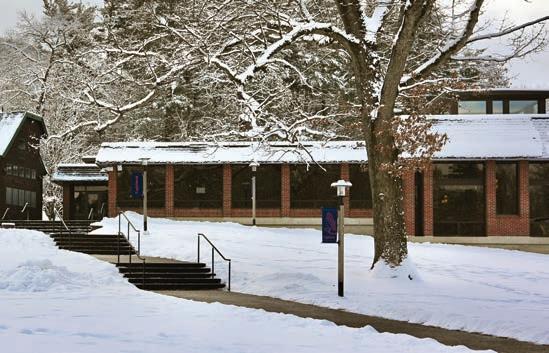
Match the then and now pictures
From the archives
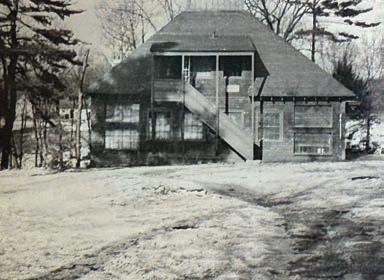
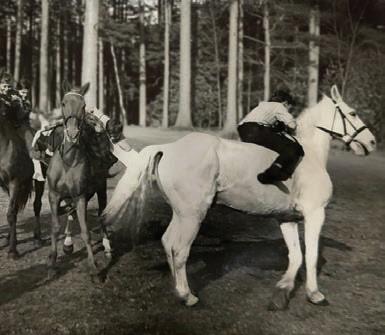
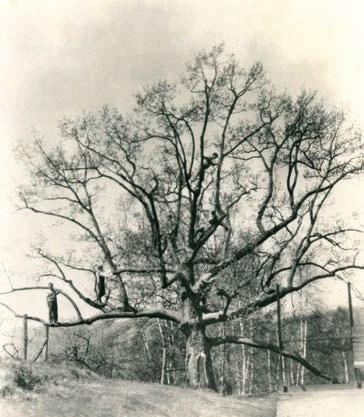

Eaglebrook magazine is featuring a contest—just for fun—and a chance to win a hat.
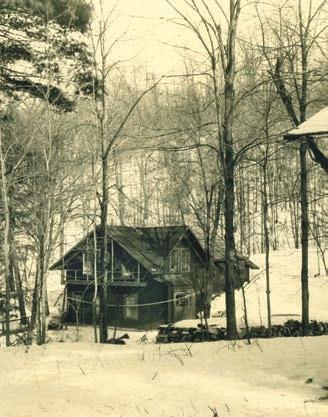
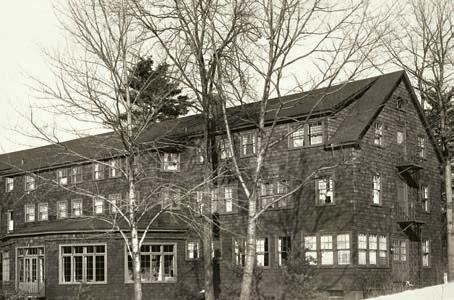
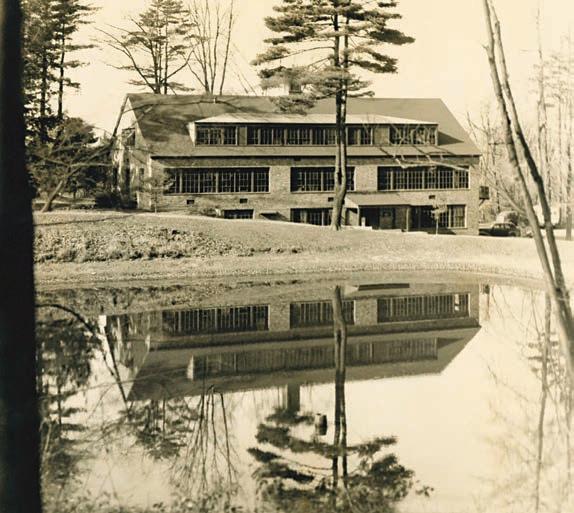
The Coach House/First Schoolhouse
the Tarzan Tree Benton House
Horses outside the stable
Gibbs House
the Schoolhouse/Bryant
Today, modern facilities replace the favorite places in Eaglebrook’s early years.
Connect an archive picture with an Eaglebrook-today picture. Match a letter with a number.
Use the archive picture letters (A through F) to connect with the Eaglebrook-today picture numbers (1 through 6).
At Eaglebrook today
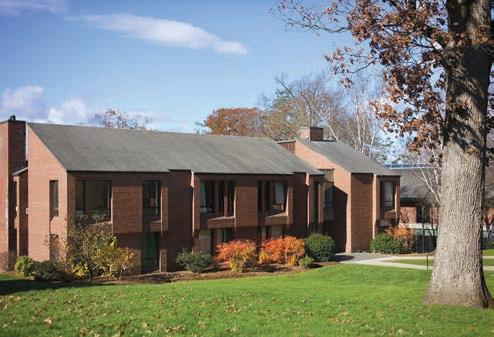
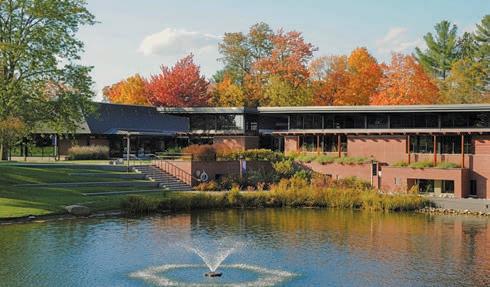
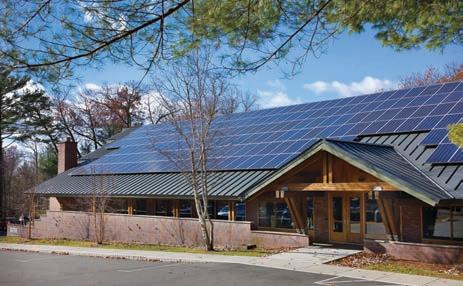
Scan this QR code to submit your answers, or go to www.eaglebrook.org/contest.
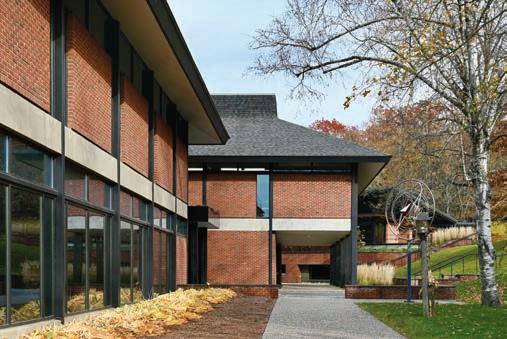
1 2 3 4 5 6
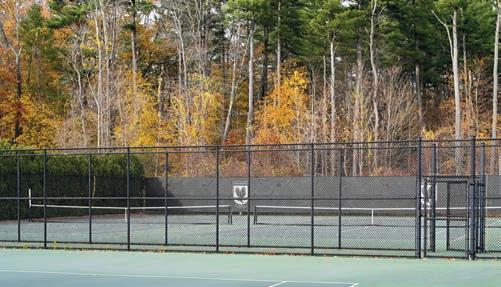
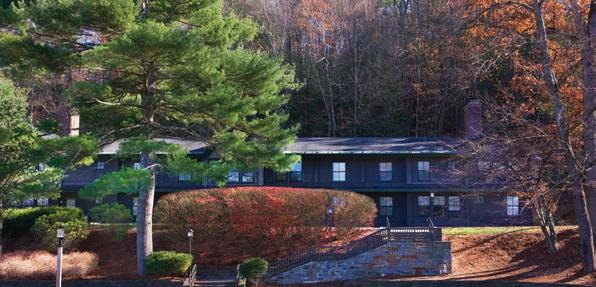
Baines
Chase Learning Center
Edward P. Evans Academic Center Tennis Courts
Schwab Family Pool Flagler House
271 Pine Nook Rd., PO Box 7 Deerfield, MA 01342
Tel: (413 ) 774-9182 www.eaglebrook.org