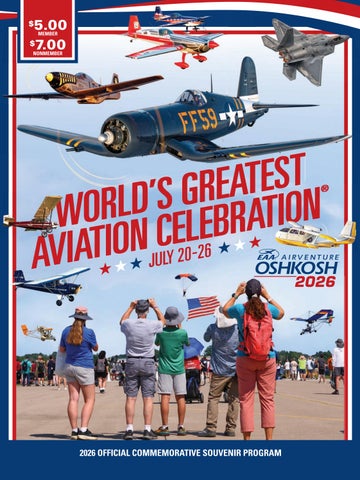
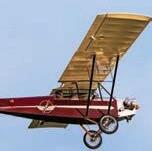
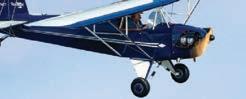
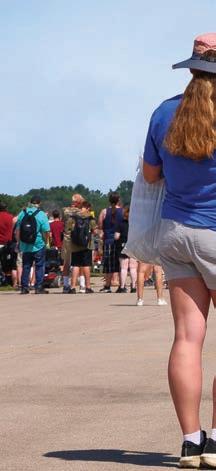
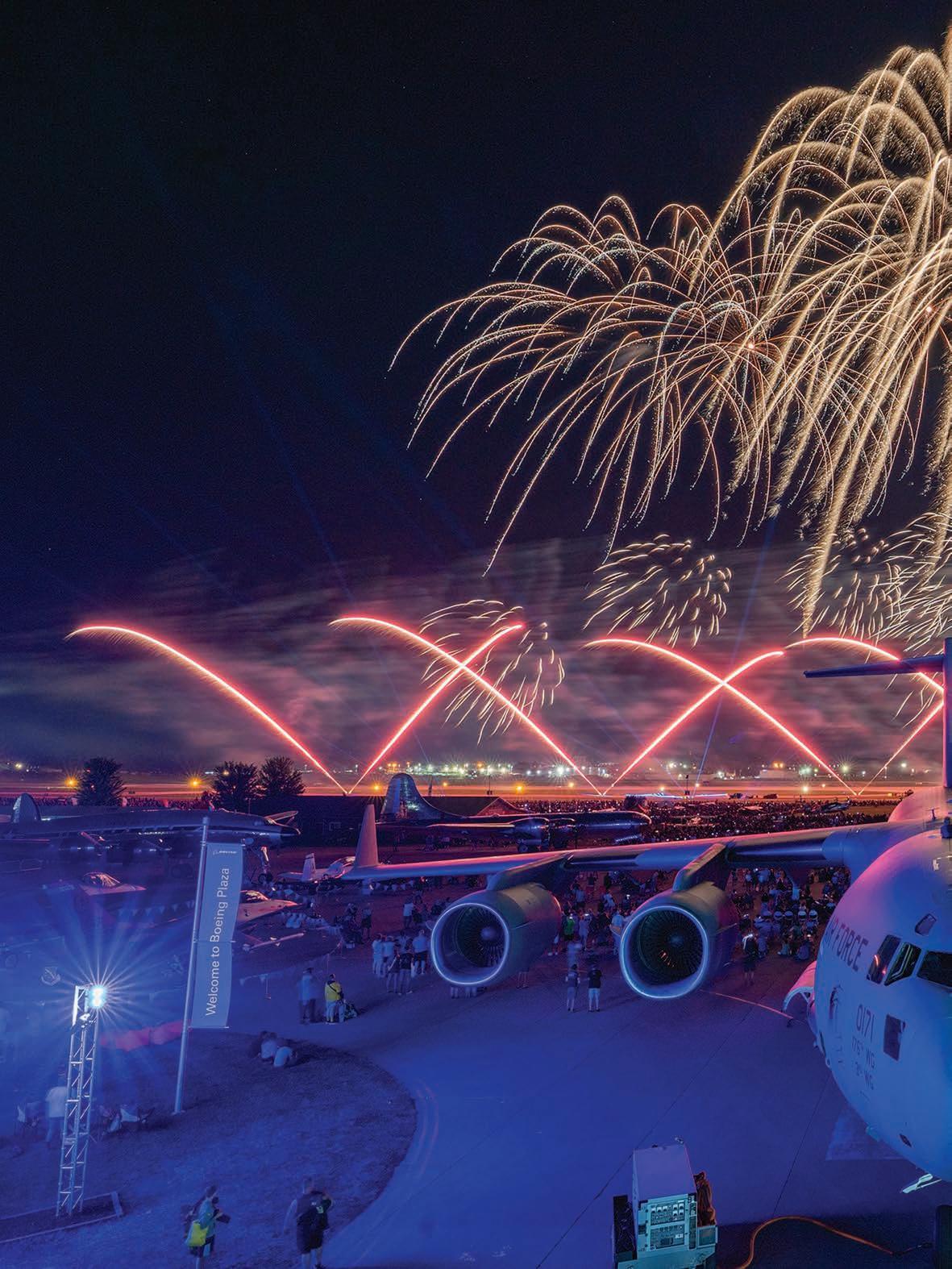
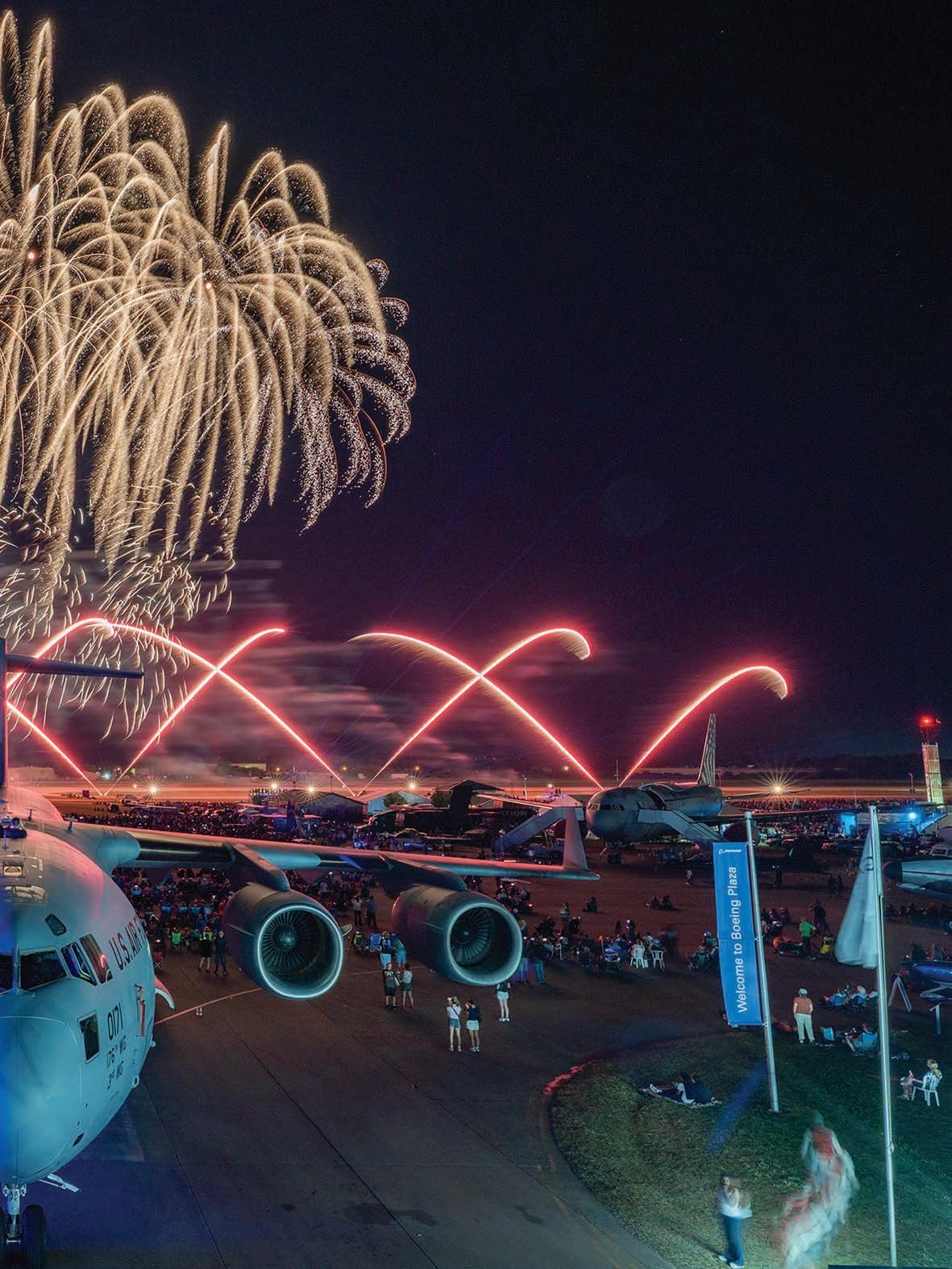
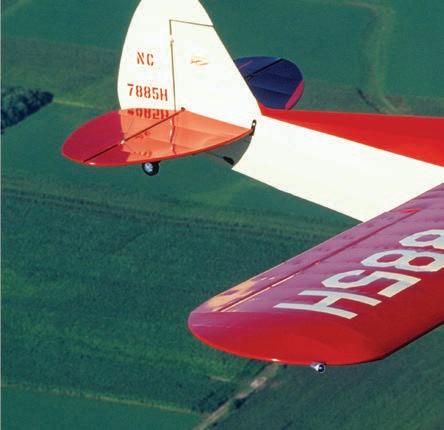
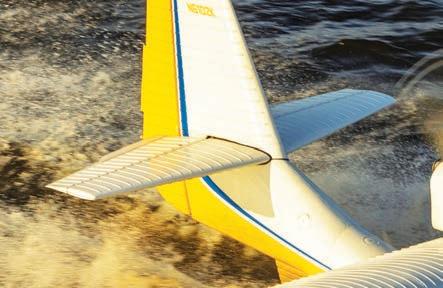
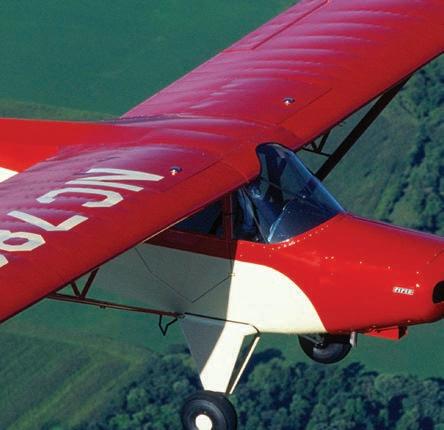
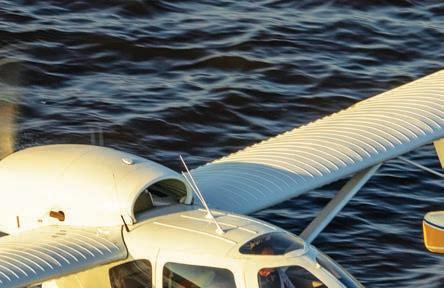
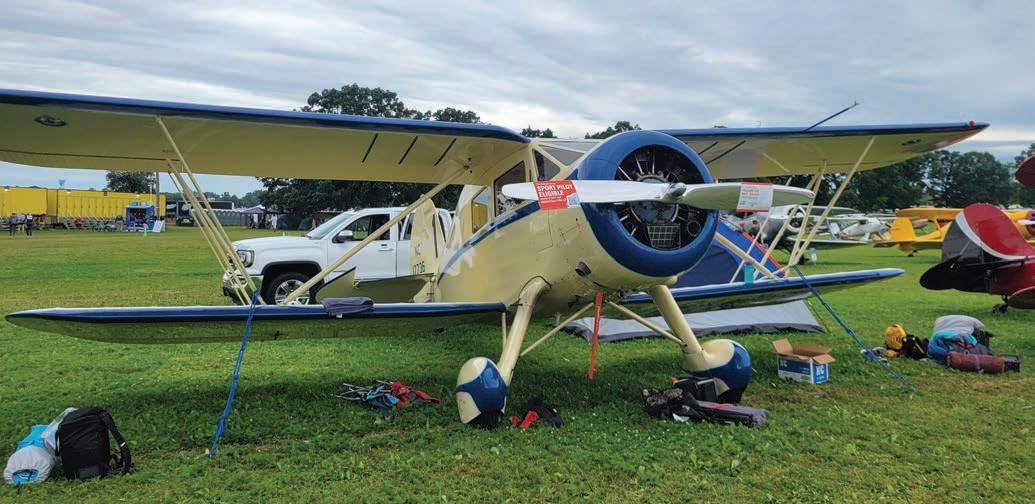
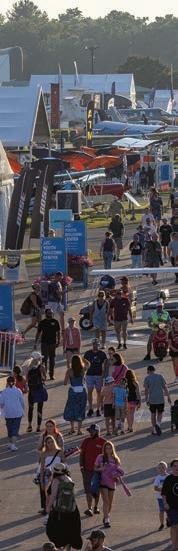
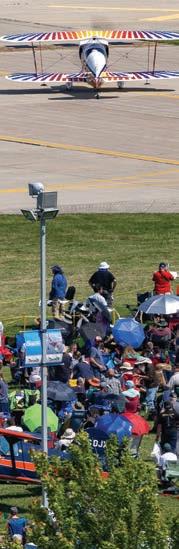
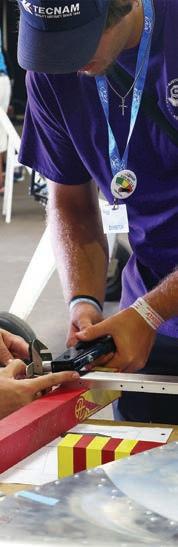
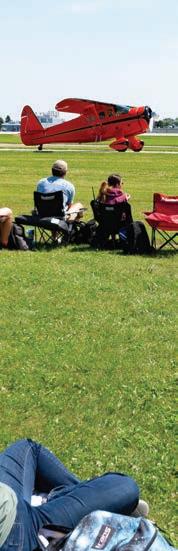
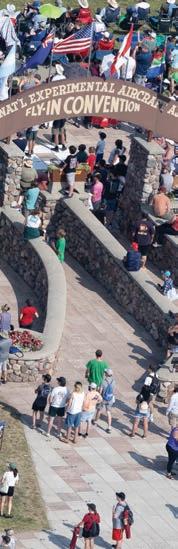
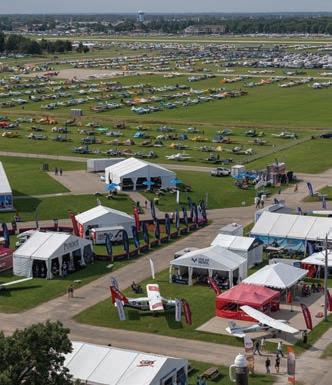
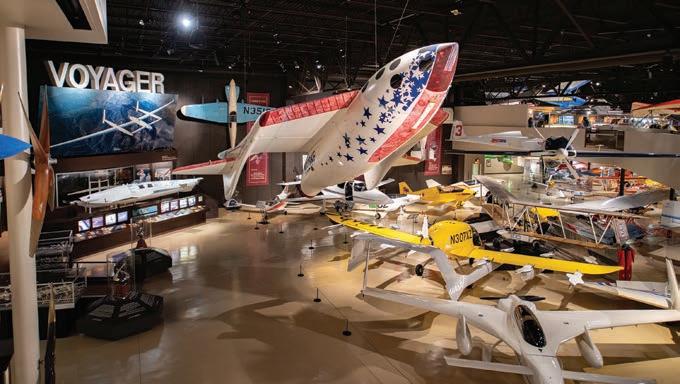
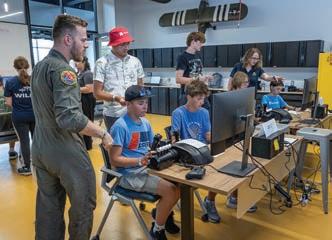
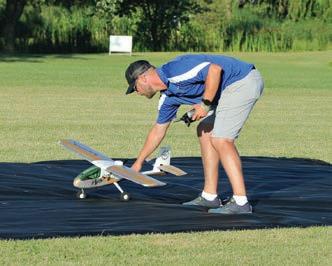
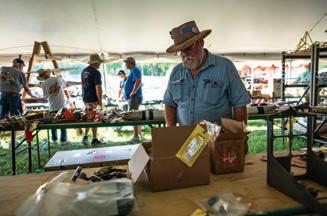
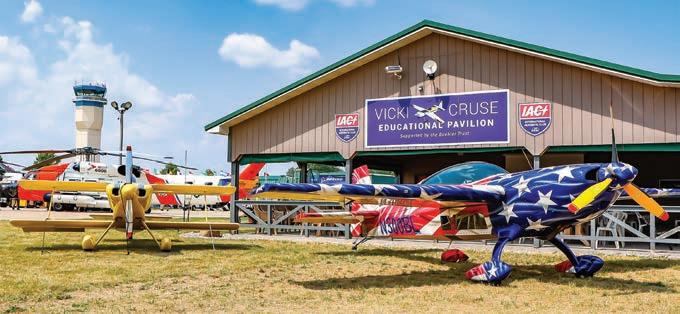
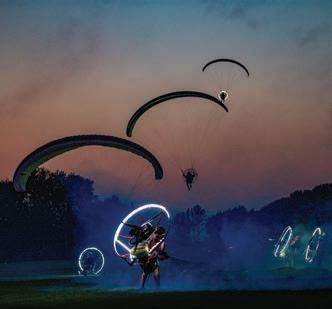
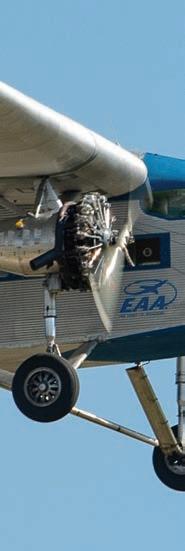
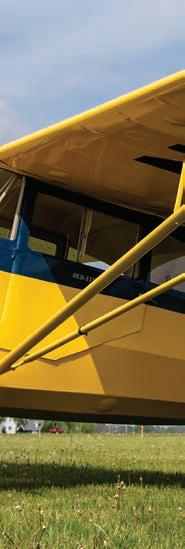
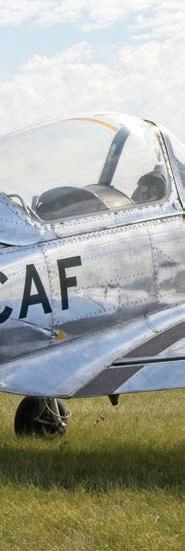
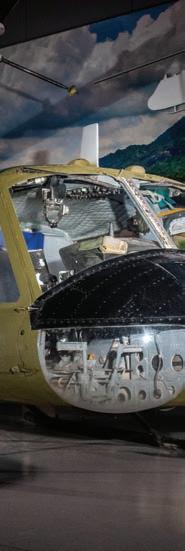
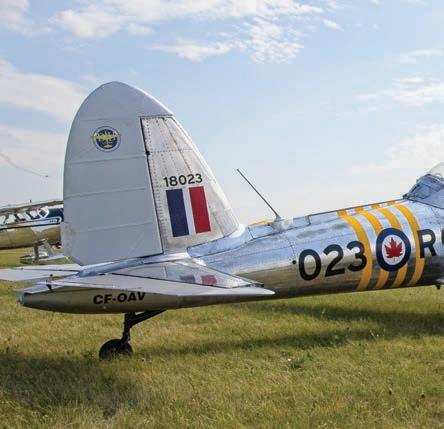
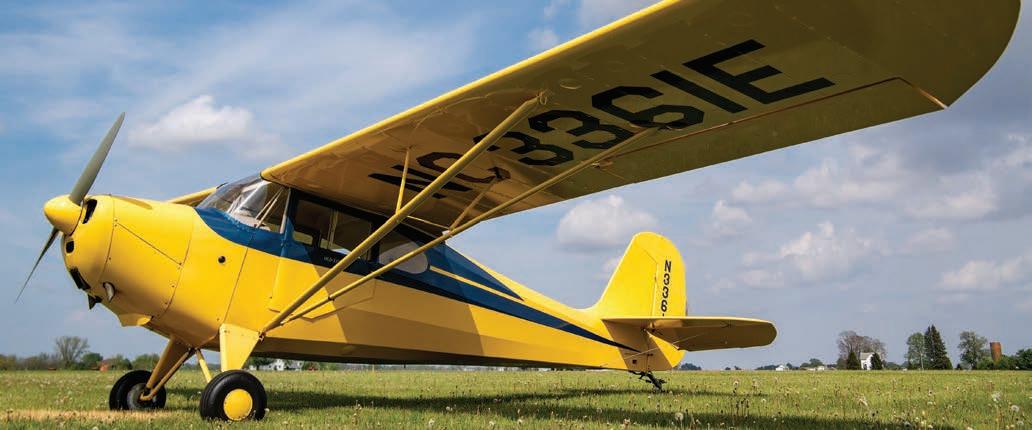
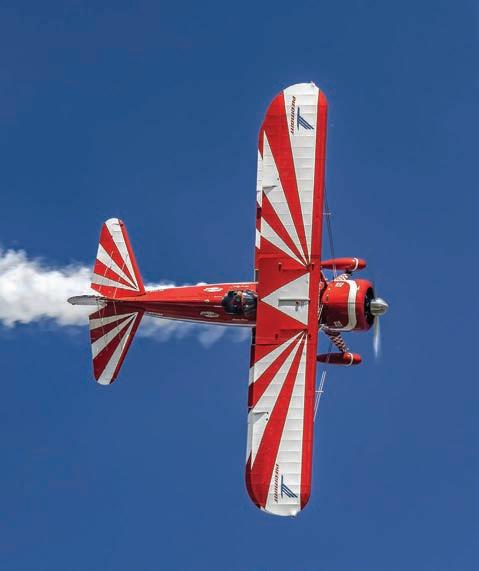
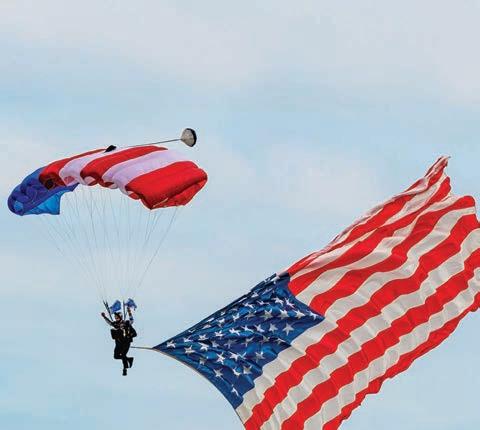
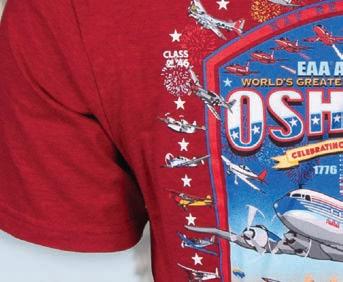
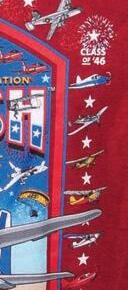
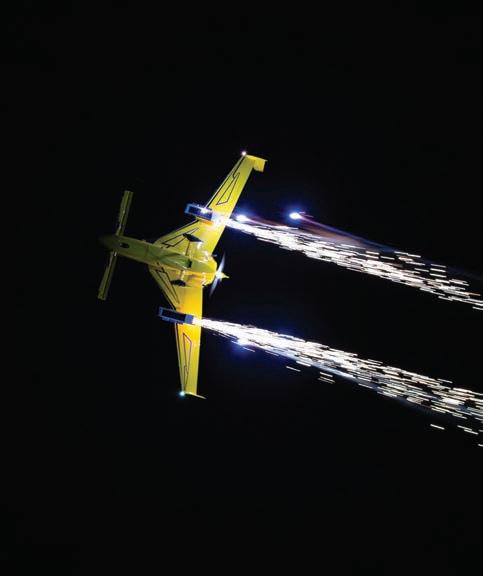
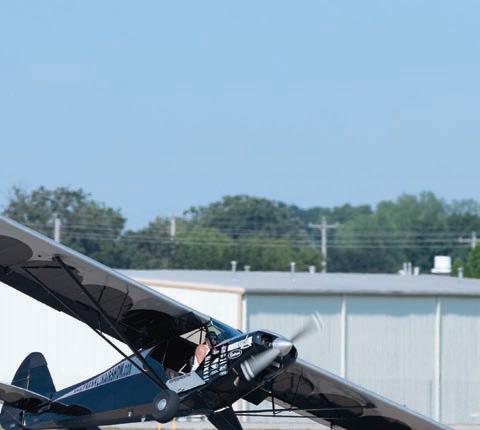
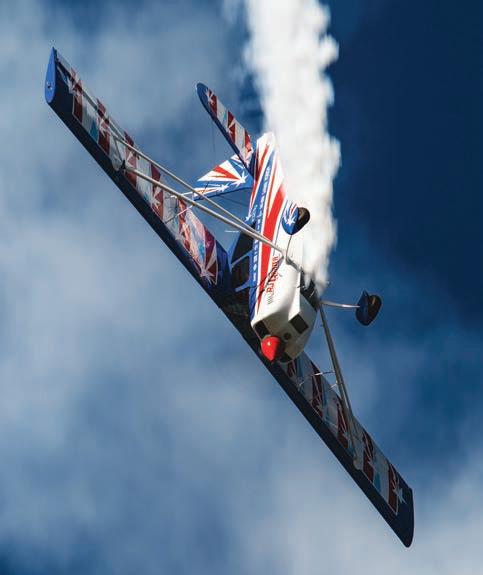
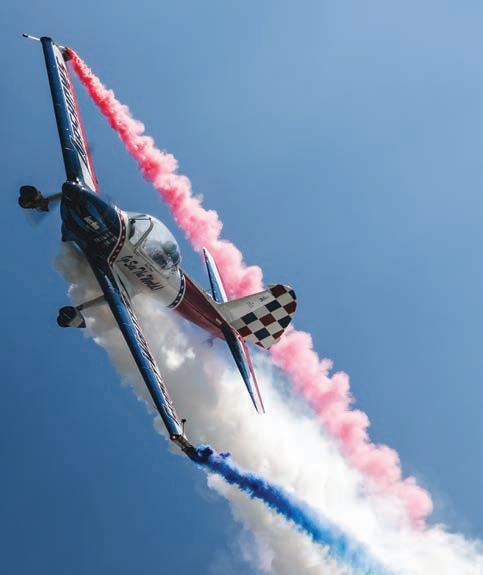
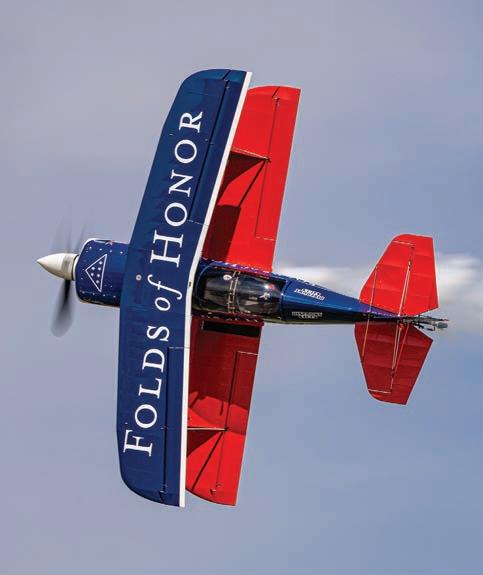
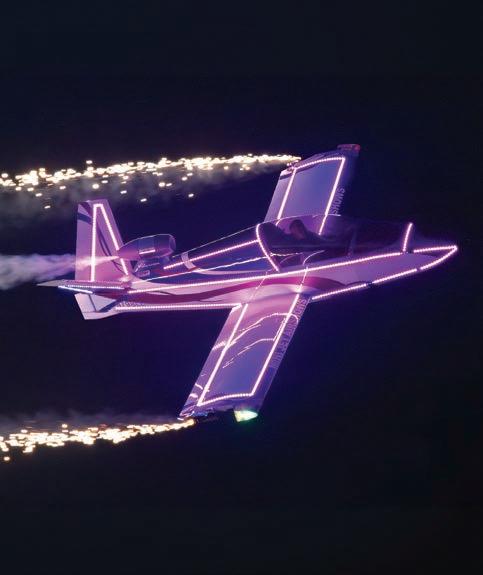
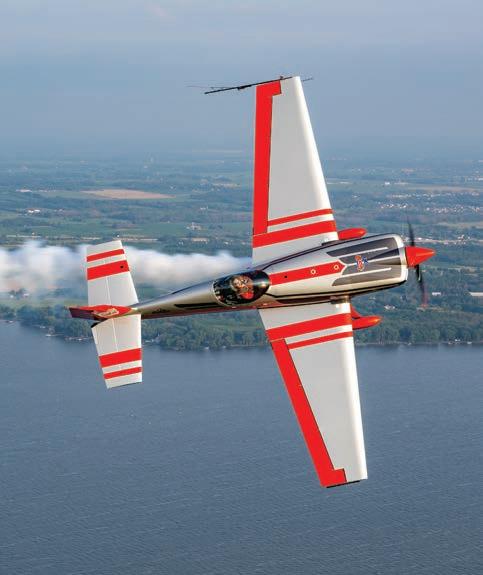
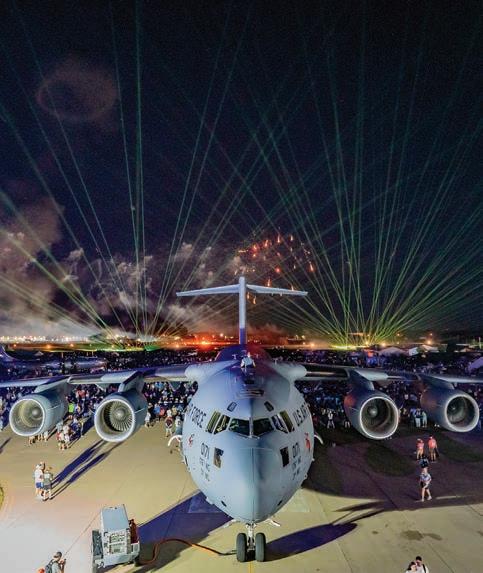
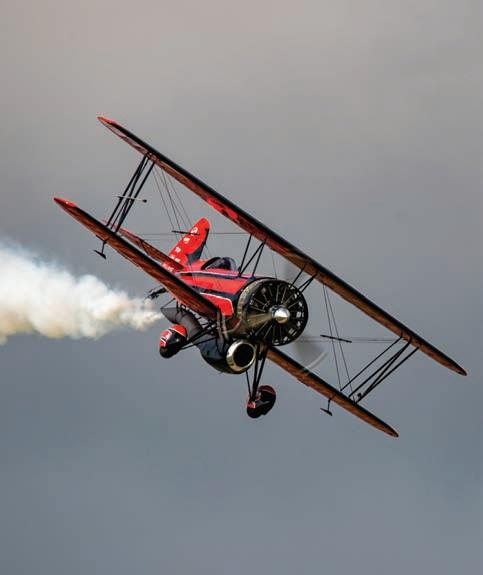
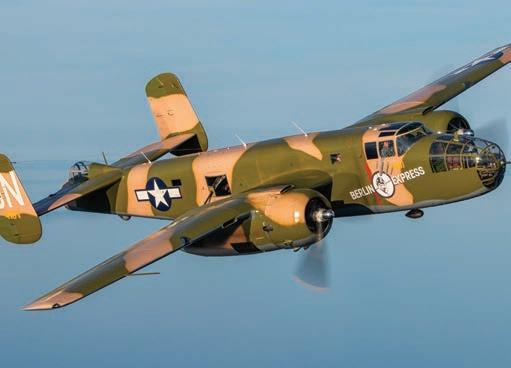
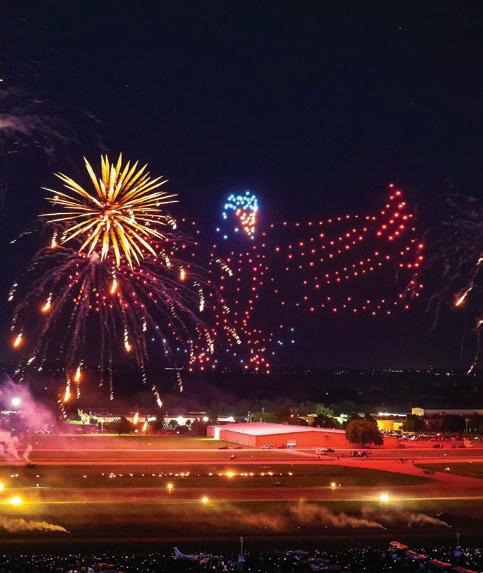
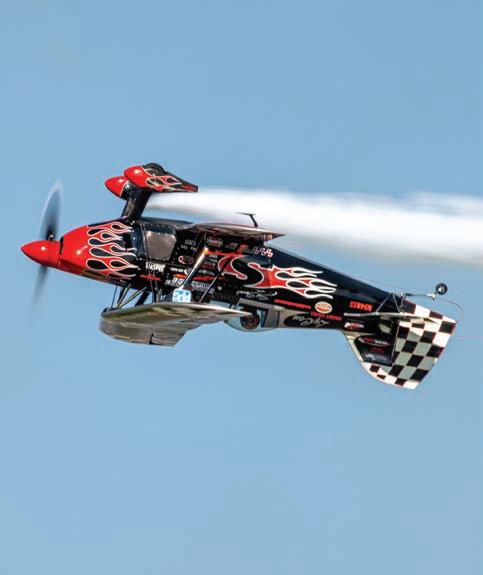
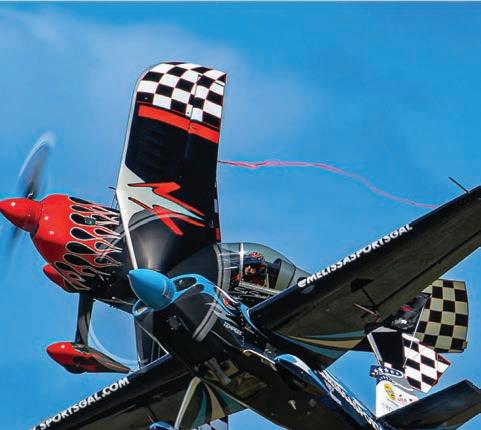
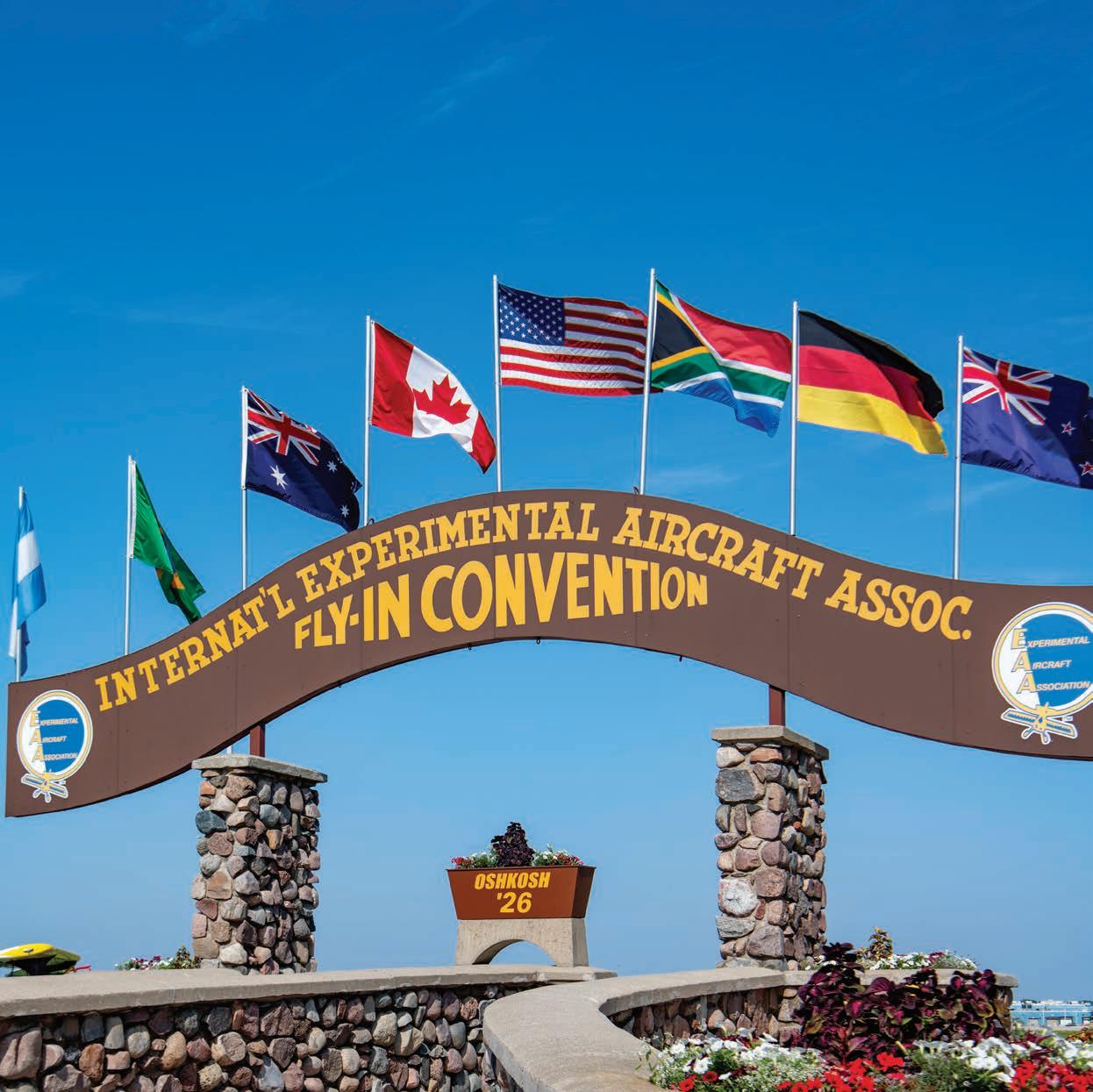
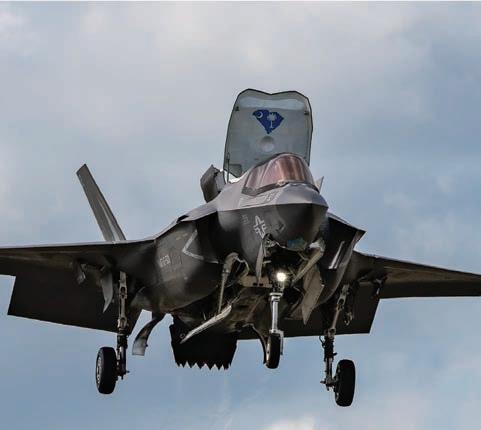
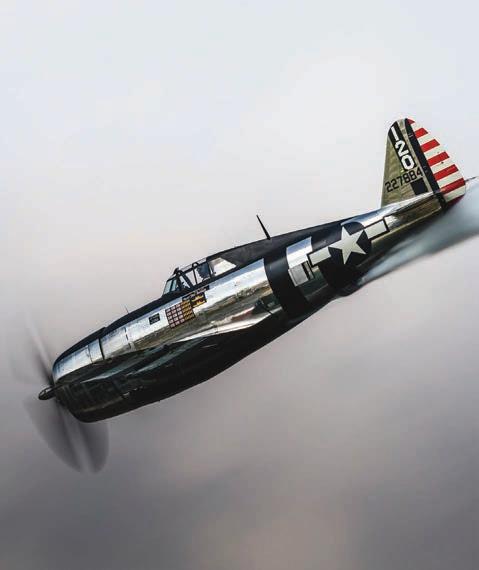
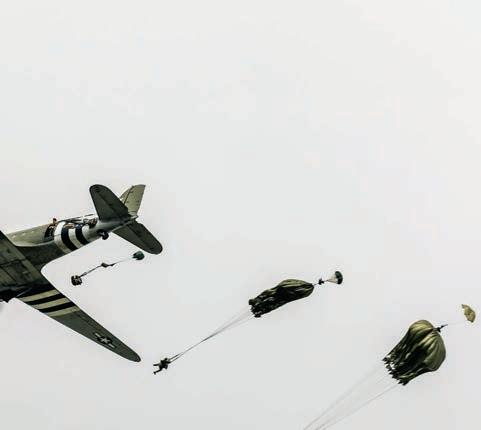
AIRVENTURE IS HERE! After months of preparation and e ort by sta and volunteers, all the moving parts have come together. Our overall theme of celebrating the freedom of flight coincides with our nation’s 250th anniversary, and that’s given us an opportunity to reflect on the milestones of aviation history.
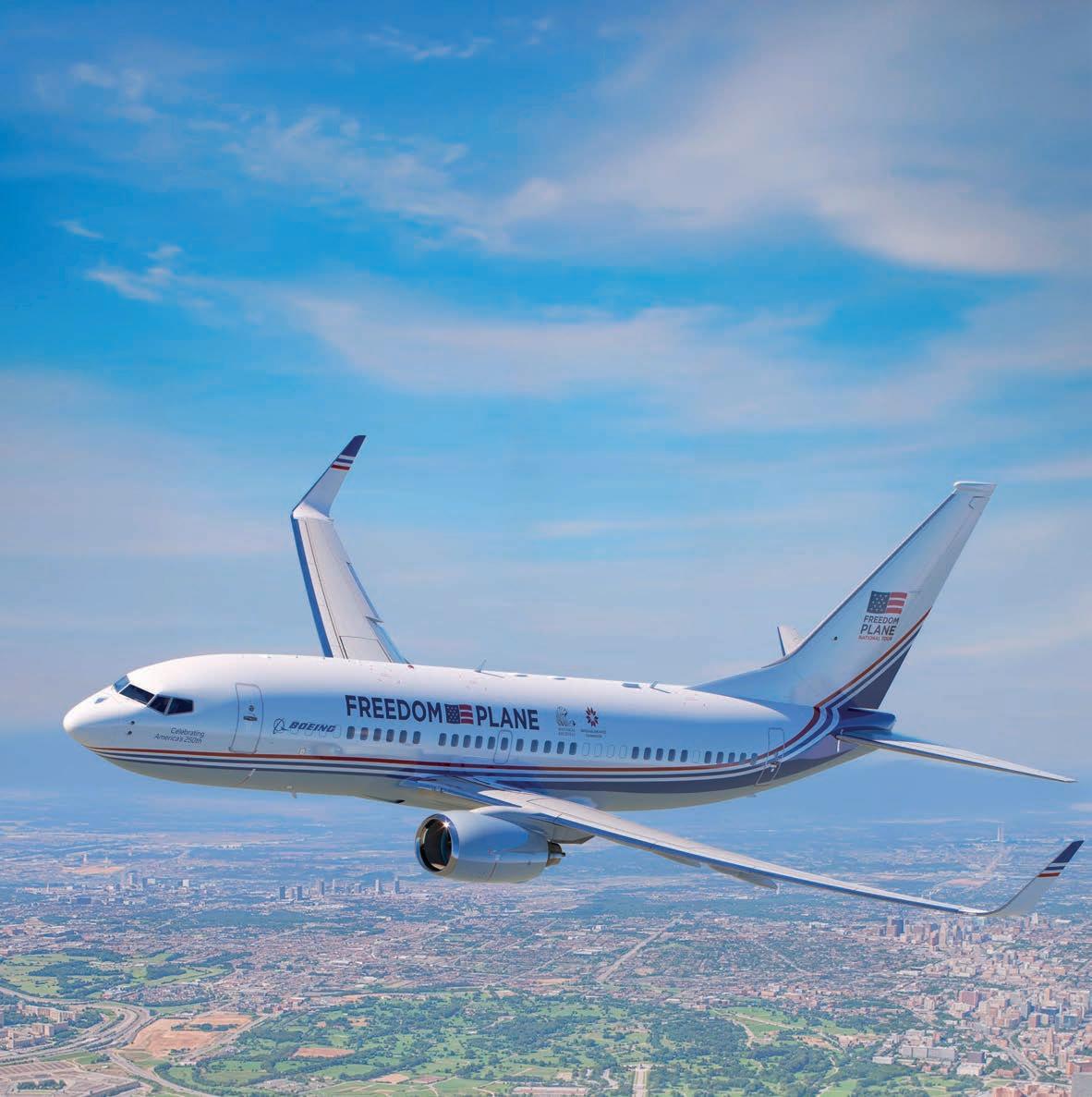
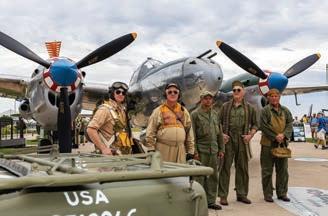
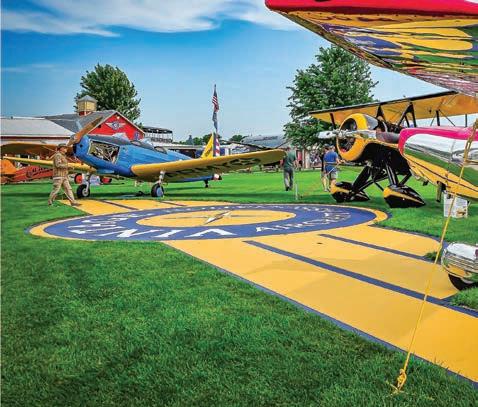
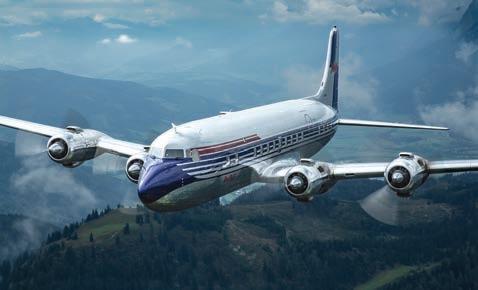
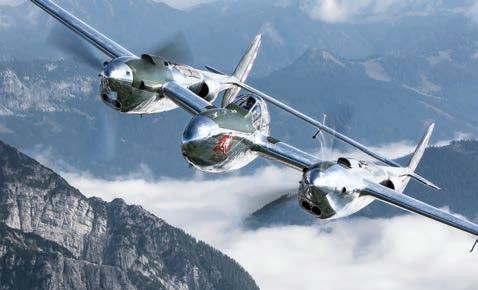
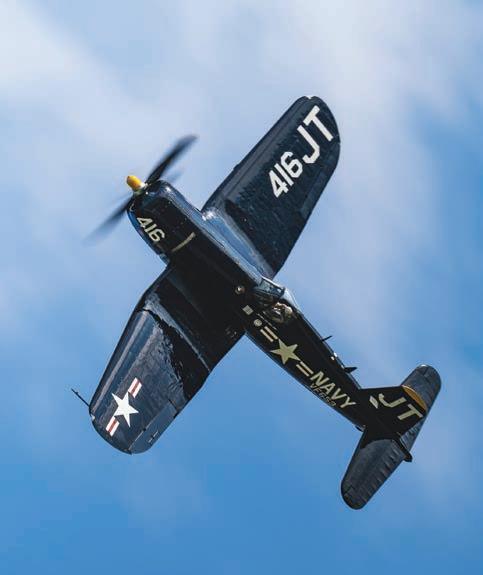
One of the cornerstones of that e ort is our vintage aircraft area, which is celebrating both the pioneer era and the postwar general aviation boom. We’re excited to see Goodyear returning with an airship, Southwest Airlines’ patriotic Independence One 737, and a rare visit from Austria’s Flying Bulls’ beautifully restored P-38 Lightning and Douglas DC-6.
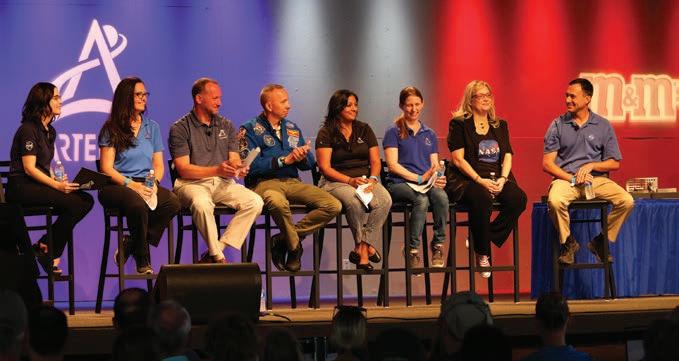
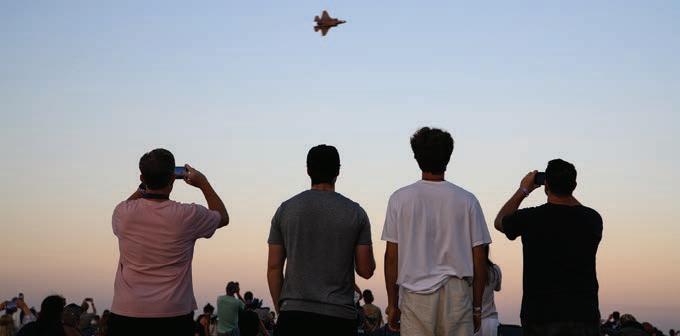
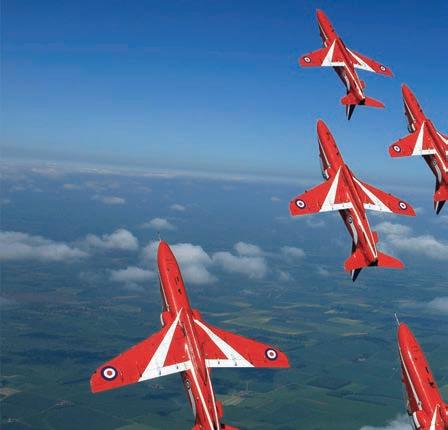
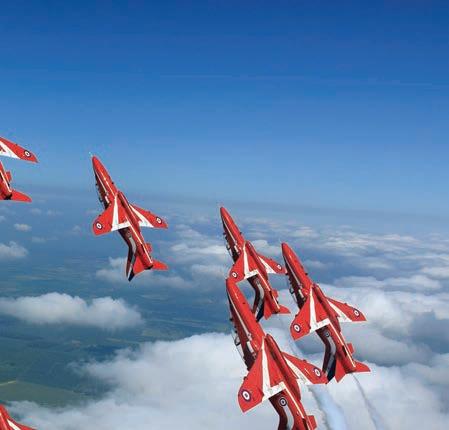
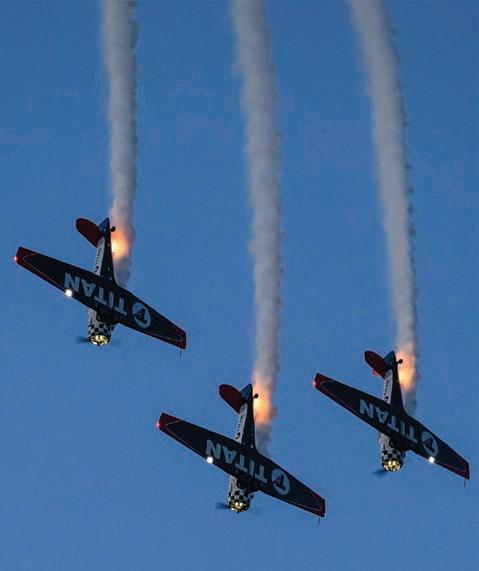
NASA is back celebrating the recent Artemis II mission, with Administrator Jared Isaacman attending, along with the agency’s massive Super Guppy. One of the biggest additions to our air shows is the Royal Air Force Red Arrows, who are making their first appearance in Oshkosh, flying on Friday, Saturday, and Sunday.
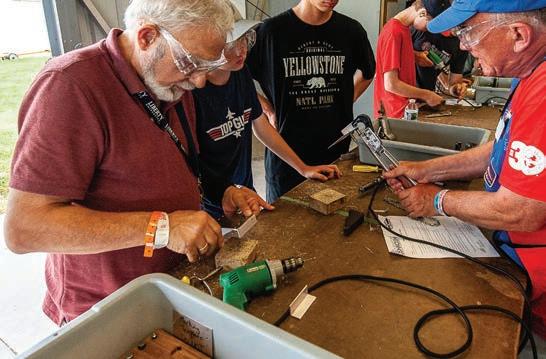
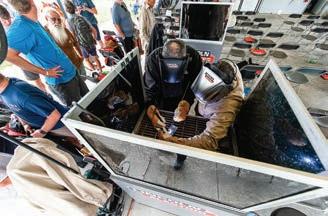
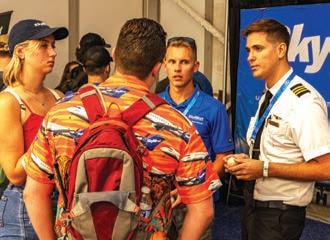
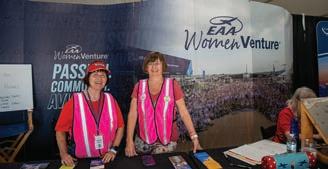
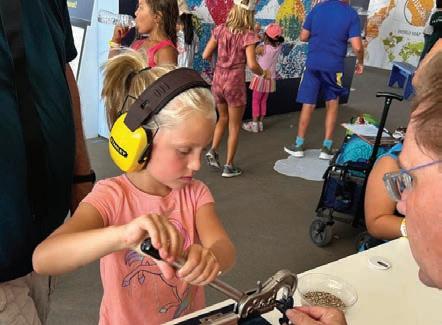
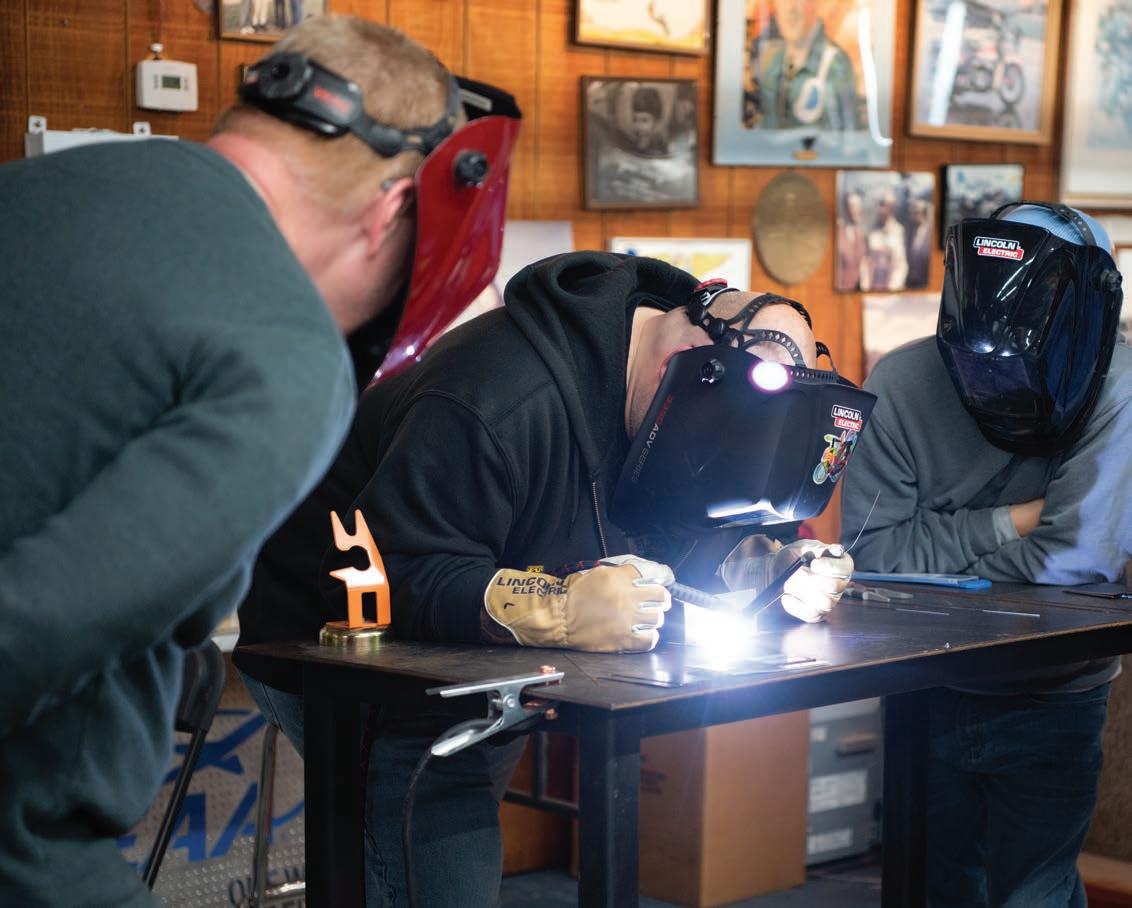
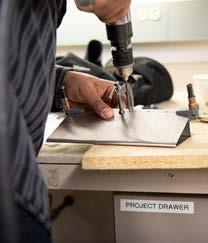
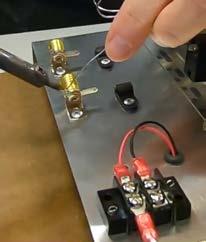
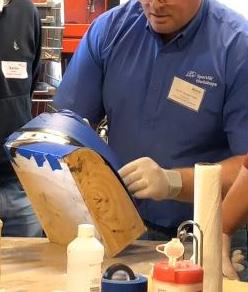
We’re again highlighting public benefit flying on Boeing Plaza, with several groups represented, so you can see these organizations firsthand and learn about how to get involved. Speaking of getting involved, I hope you’ll take the time to attend some of our hundreds of forums and workshops, where you can learn everything from detailed slices of aviation history to learning how to weld.
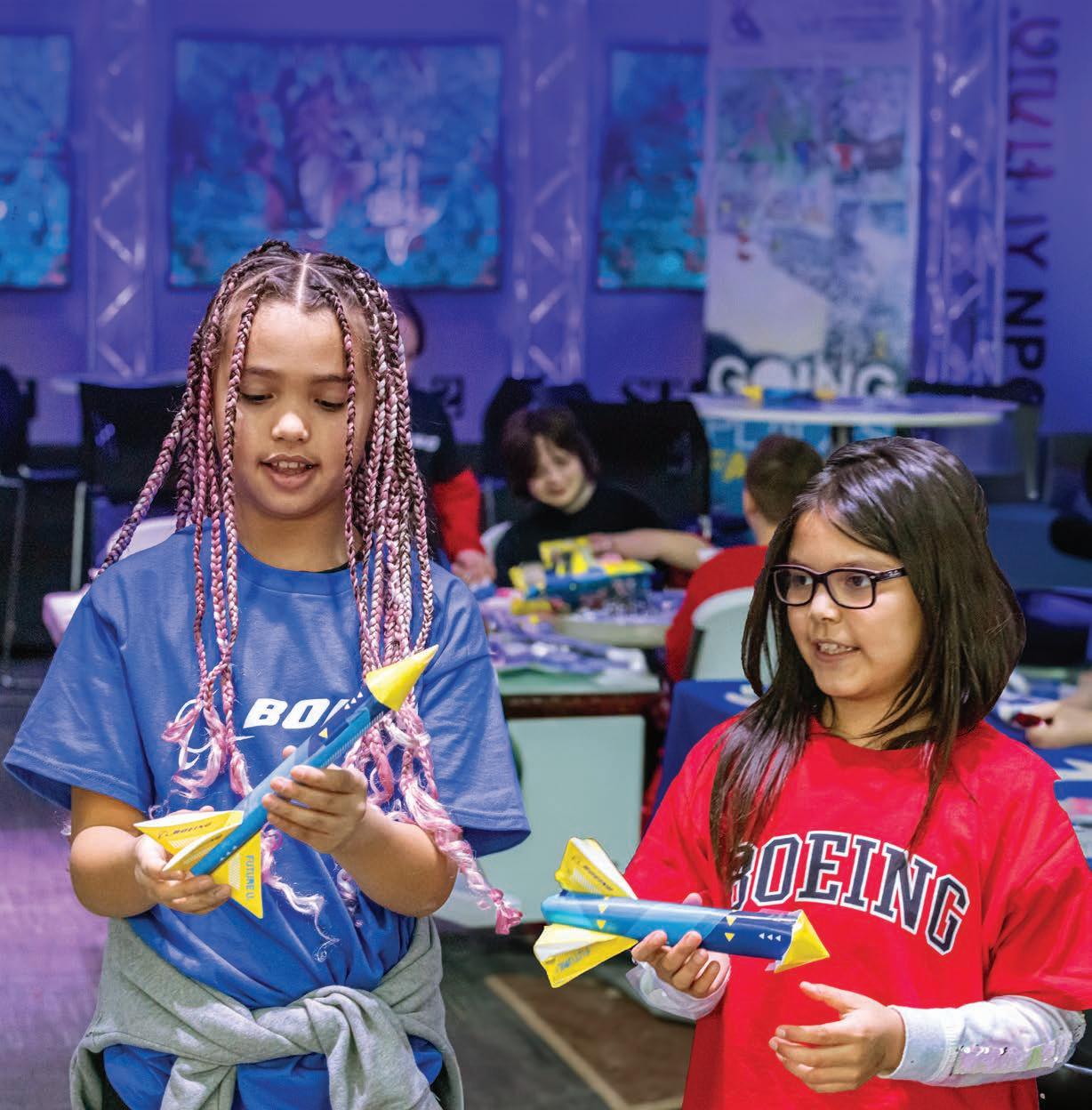
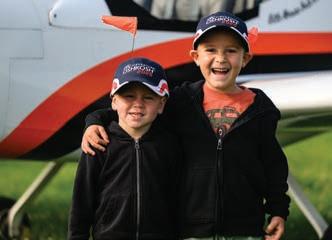
We’re grateful to Boeing for helping underwrite admission costs so that anyone age 18 and under can attend for free. It’s important to us to help support families, and this is a big step in helping relieve the burden of them bringing their kids to AirVenture. This year also finds us celebrating
Our overall theme of celebrating the freedom of flight coincides with our nation’s 250th anniversary, and that’s given us an opportunity to reflect on the milestones of aviation history.
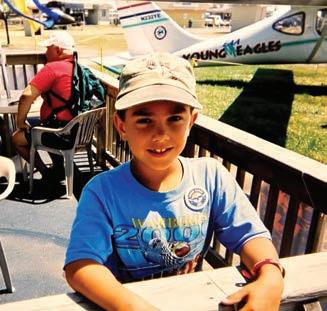
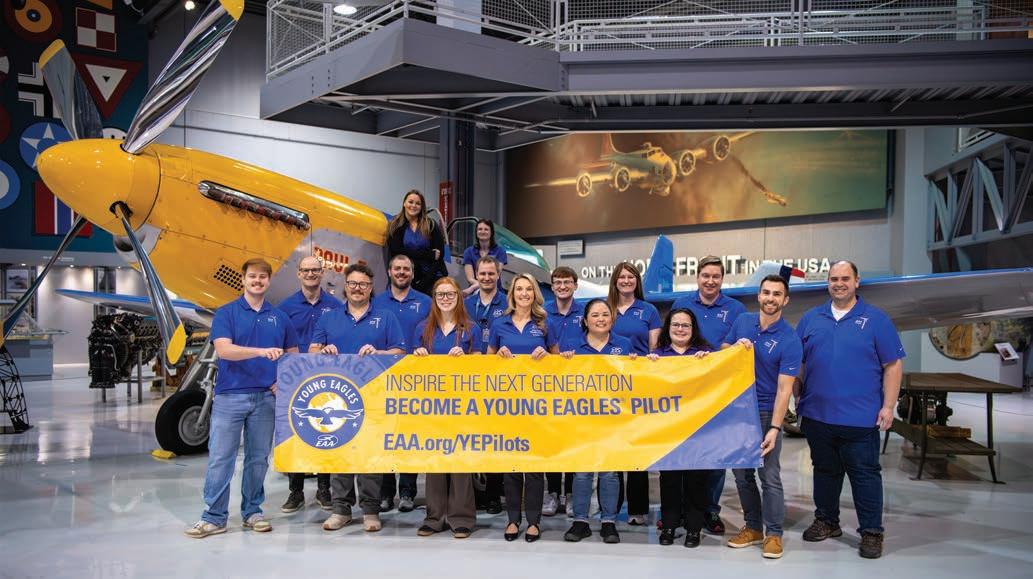
the remarkable milestone of having flown 2.5 million Young Eagles, thanks to the e orts of EAA chapters and a huge network of volunteer pilots and ground crews.
I want to thank the Wisconsin National Guard, which provides fire and rescue equipment, along with security and other personnel that enables us to host current military aircraft, and, of course, our 6,000 volunteers who work nonstop to make our convention a safe, happy, and successful one.
Welcome to Oshkosh! OSH 2026
A Membership Worth a Lifetime.
A Membership Worth a Lifetime.
An EAA® Lifetime membership shows your commitment to aviation as a way of life, and it signals that you stand with EAA’s mission to grow participation in aviation by promoting The Spirit of Aviation®!
An EAA® Lifetime membership shows your commitment to aviation as a way of life, and it signals that you stand with EAA’s mission to grow participation in aviation by promoting The Spirit of Aviation®!
As a thank you for your commitment to EAA, you will receive a $100 discount on your Lifetime membership during AirVenture ® 2026. Visit EAA.org/Lifetime to learn more or upgrade your membership today!
As a thank you for your commitment to EAA, you will receive a $100 discount on your Lifetime membership during AirVenture ® 2026.
Visit EAA.org/Lifetime to learn more or upgrade your membership today!
In Their Own Words
“The financial impact of a Lifetime membership was the logical choice over an annual membership. Apart from that, by committing a Lifetime membership to EAA, it assures me that EAA will provide a lifetime of support, direction, and advocacy to its members.”
Kreg Anderson EAA Lifetime 1008120 and EAA Chapter 702 Member
In Their Own Words
Back to Basics
Back to Basics
‘Pioneers of Flight’ at EAA AirVenture Oshkosh 2026
BY HAL BRYAN
IN THE LATE 1800S, not all that long after the United States celebrated its first 100 years, scientists, engineers, inventors, tinkerers, and adventurers around the world spent time and other resources trying to solve what was then widely known as “the flying machine problem.” While some of the most impactful innovations in history, from antibiotics to the internet, weren’t necessarily widely anticipated, the idea of controlled, powered, manned flight was, for some, almost impatiently expected.
Yes, there were plenty of skeptics, notably including an editor at the New
York Times who wrote in October 1903 that “… the flying machine which will really fly might be evolved by the combined and continuous efforts of mathematicians and mechanicians in from one to ten million years.” By that time, though, people had been successfully flying gliders for more than 50 years, and rubber-powered model airplanes had been around since 1870. So, instead of a surprising innovation, the Wrights’ success, coming just two months after the Times’ pessimistic prediction, was seen (eventually, once word
got around and people were convinced that it had happened) as a solution to a known problem. What nobody could have anticipated, however, was the impact of airplanes on civilization, nor the incredible rate of innovation that would take place. This year at EAA AirVenture Oshkosh 2026, we’re highlighting the first two dozen years of that innovation. Here’s a look at some of the aircraft, most but not all represented by painstakingly created replicas, that we anticipate having on display as we celebrate the “Pioneers of Flight.”
Wright Model B
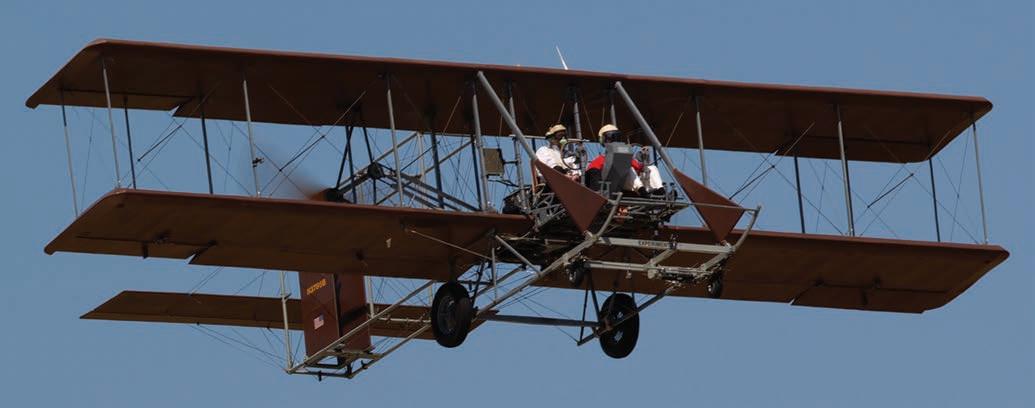
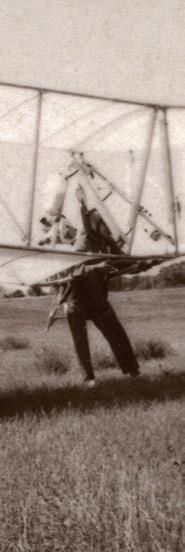
OF COURSE, WE BEGIN with the Wright brothers. In addition to the static replica of their world-changing 1903 Flyer that you can see in the EAA Aviation Museum, we’re excited that the Wrights will be represented this year by a flying replica of their Model B Flyer. First flown in 1910, the Wright B was the brothers’ first production aircraft, a practical two-seater for military and civilian use that grew out of a decade of experimentation. This example was built and is flown by Wright B Flyer Inc., fittingly based in Dayton, Ohio.
Specifications (Original):
Length: 29 feet, 10 inches
Wingspan: 39 feet
Height: 9 feet
Max speed: 44 mph
Engine: 35-hp Wright inline four-cylinder
Santos-Dumont Demoiselle (No. 19)
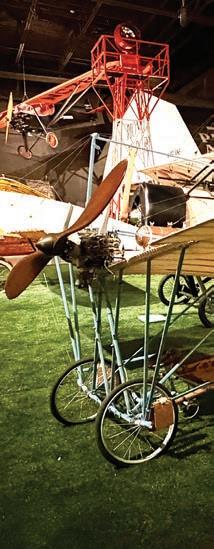
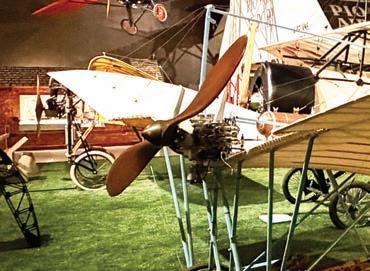
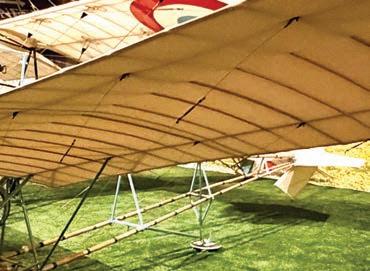
ALBERTO SANTOS-DUMONT WAS AN inventor and adventurer born in Brazil in 1873, who used the resources he’d amassed as the heir to a co ee fortune to experiment with aviation. His first e orts were in powered airships, and he stunned the world when he circled the Ei el Tower in one of them in 1901. He built a heavier-thanair glider in 1905, and experimented with an early helicopter design, before building a series of fixed-wing aircraft starting with the 14-bis in 1906. His pioneering e orts are represented by a replica of an extremely popular early airplane design of his called the Demoiselle that first flew in 1907. The beautifully detailed replica was built by Club Aéro des Garrigues in France and has been on display in the EAA Aviation Museum for the past year.
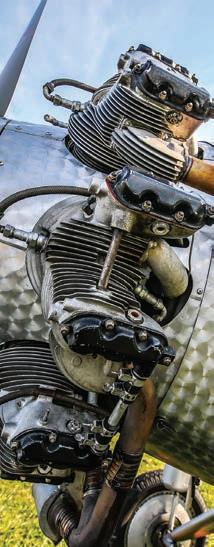
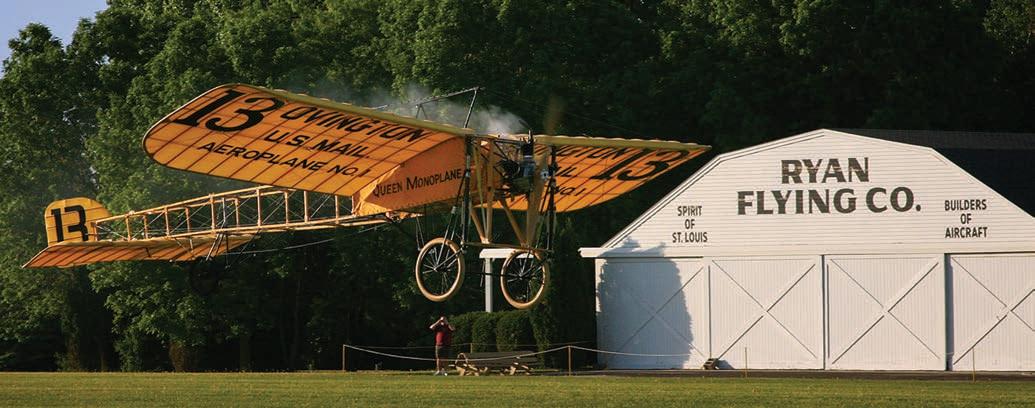
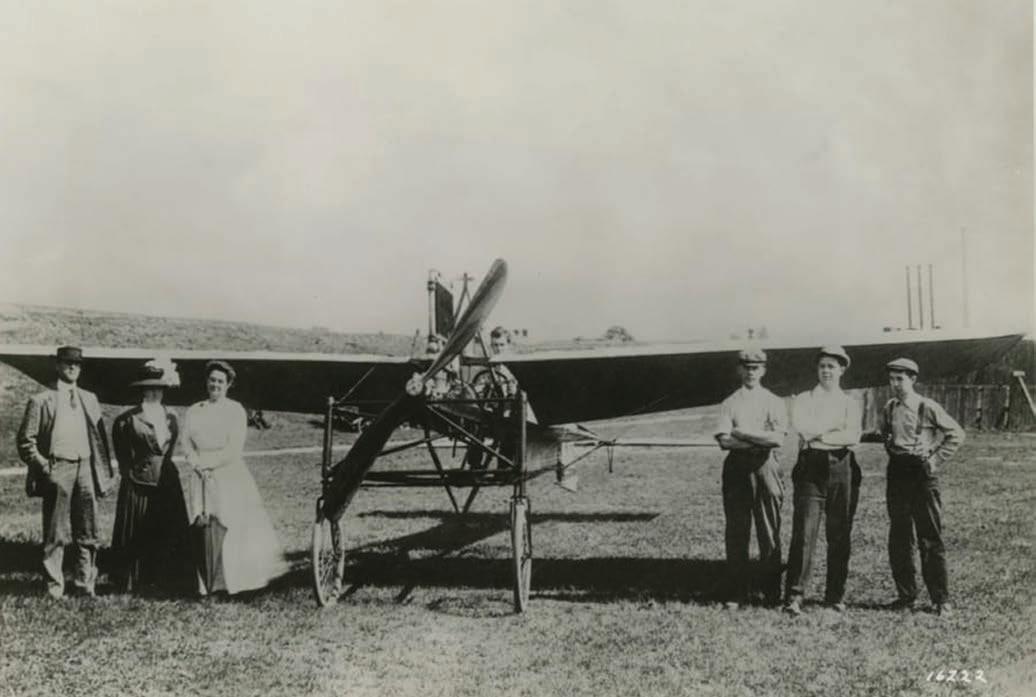
IN 1909, JUST SIX years after the Wrights’ first 120-foot flight, French aviator and engineer Louis Blériot won a £1,000 (approximately $130,000 in 2026) cash prize awarded by the Daily Mail newspaper for making the first flight across the English Channel. He did it in an aircraft of his own design, a Blériot XI. After the attention generated by the record-setting flight, Blériot went on to produce around 900 aircraft, the majority of them based on the XI. He went on to serve as president of the Société pour les Appareils Deperdussin, which produced the capable SPAD series of fighter aircraft during World War I. The replica on display here was built by EAA sta and volunteers, and it’s powered by an original Anzani three-cylinder radial engine.
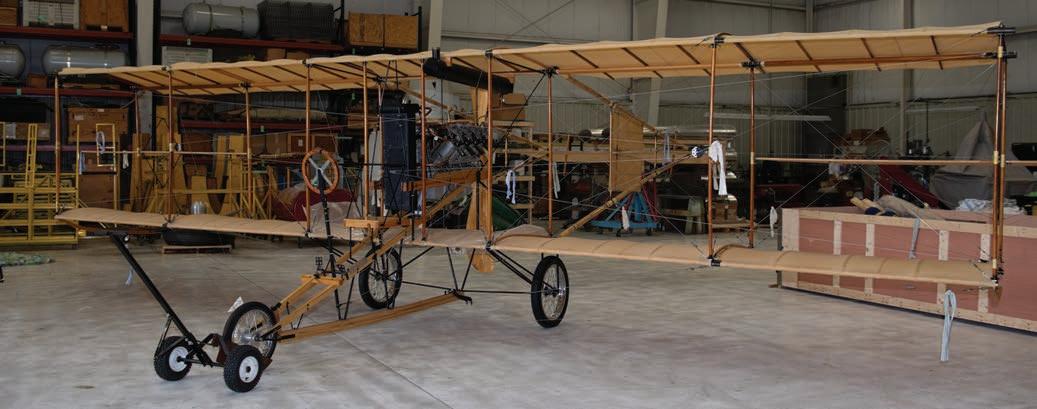
GLENN CURTISS HAD A longstanding interest in aviation, building engines for airships as early as 1904, then joining Alexander Graham Bell’s familiar-sounding Aerial Experiment Association (AEA) in 1907. His early aviation designs won him a place in history as a pioneer, including credit for inventing ailerons for aircraft roll control, as well as the enmity of Orville and Wilbur Wright who sued Curtiss, among others, for patent infringement. Curtiss parted with the AEA in 1909 and formed his own company, which led to a series of production aircraft, including the Curtiss Pusher. An original Pusher hangs in the EAA Aviation Museum, and the Collings Foundation restored a 1909 model to flying condition, using an original unbuilt kit that was found in a Massachusetts attic.
Specifications (Original):
Length: 29 feet, 3 inches
Wingspan: 38 feet, 3 inches
Height: 7 feet, 10 inches
Max speed: 50 mph Engine (original): 90-hp
Morane-Saulnier Type L
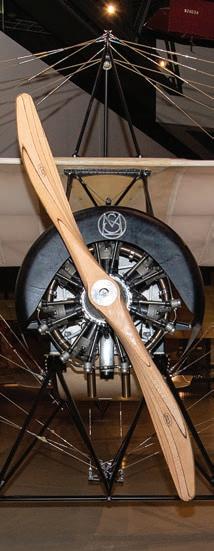
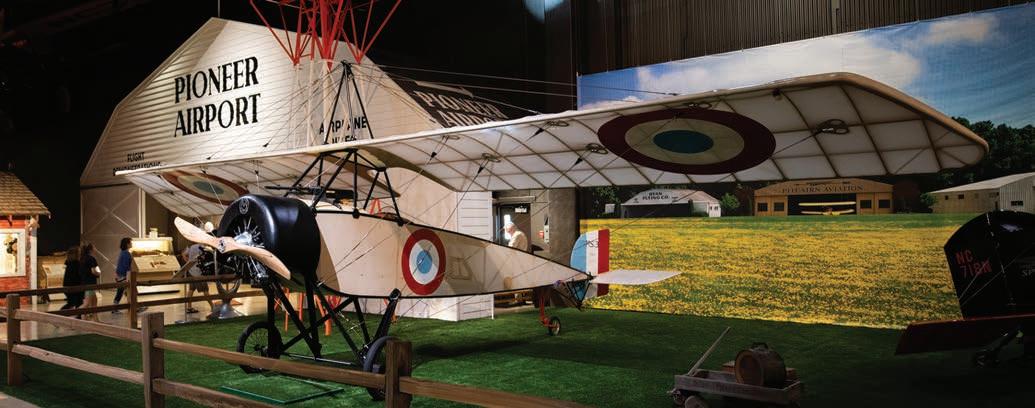
FRENCH AIRCRAFT COMPANY AÉROPLANES Morane-Saulnier was founded in 1911 by brothers Léon and Robert Morane, and Raymond Saulnier. The company produced a number of aircraft, including the Morane-Borel monoplane that was flown to victory in a race from Paris to Madrid in 1911. Turning its attention to military aircraft, Morane-Saulnier built a single-seat fighter, the Type N, and then modified the Type H to a parasol wing creating the Type L. The Type L first flew in 1913 and was used during WWI as a scout and early fighter aircraft by the French Aéronautique Militaire, as well as the Royal Flying Corps and Royal Naval Air Service. EAA’s example is a reproduction handcrafted by volunteers, including employees of Daher and the original Morane-Saulnier company.
Specifications (Original):
Length: 22 feet, 7 inches
Wingspan: 36 feet, 9 inches
Height: 12 feet, 11 inches
Max speed: 71 mph
Engine (original): 80-hp Gnome rotary
Curtiss JN-4 Jenny
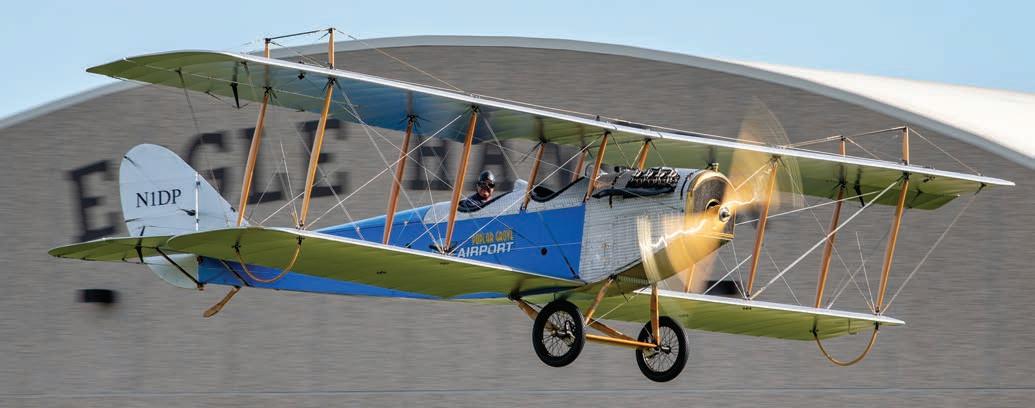
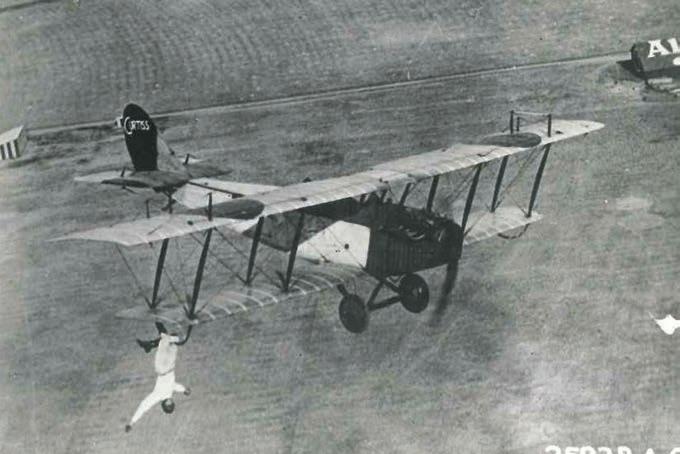
CURTISS BEGAN PRODUCTION OF the JN, or Jenny series of biplanes in 1915, building them as trainers for both the U.S. Army and the U.S. Navy. Designed by Benjamin Douglas Thomas, the two-seat, biplane taildragger was a terrific success, with nearly 7,000 examples eventually built. The Jenny trained the overwhelming majority of U.S. pilots and remained in use by the Army until 1927. Between the wars, surplus Jennys became popular with barnstormers and were the tentpoles of flying circuses across the country. A partially uncovered JN-4 is displayed in the EAA Aviation Museum, while a scratchbuilt flying reproduction built by volunteers at the Poplar Grove Vintage Wings and Wheels Museum in Illinois has been a welcome visitor to Oshkosh for our annual convention.
Specifications (Original):
Length: 27 feet, 4 inches
Wingspan: 43 feet, 7 inches
Height: 9 feet, 11 inches
Max speed: 75 mph
Engine (original): 90-hp Curtiss OX-5 V-8
Standard J-1
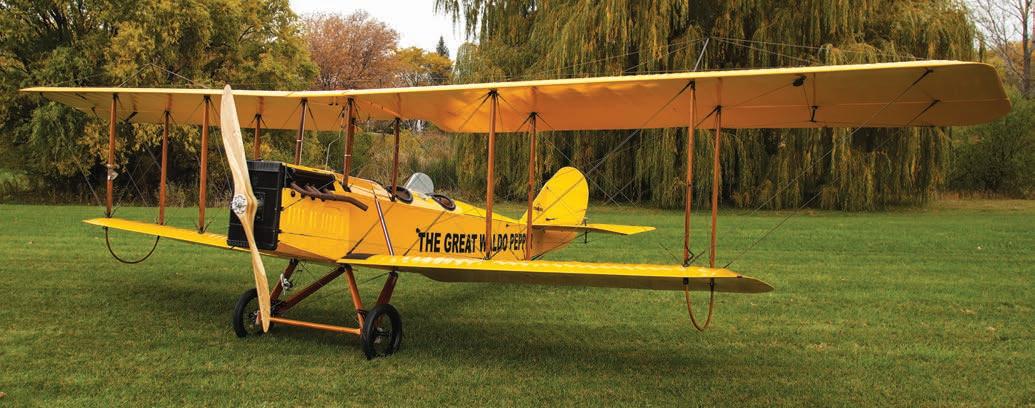
A CONTEMPORARY OF, AND quite often mistaken for, the Curtiss Jenny, the Standard J-1 was also built as a trainer and used by both the Army and the Navy, as well as by civilian flight schools. In addition, a variant called the Standard JR-1B was built specifically as a mail carrier for the U.S. Postal Service. After WWI, surplus Standards were modified in a number of ways to carry passengers, and at least one was converted for use as an aerial applicator. As with the Jenny, Standards found their way into the hands of barnstormers both in real life and on the silver screen — certainly the most famous J-1 was the one seen in The Great Waldo Pepper with the titular character’s name painted on the side. That’s the paint scheme EAA chose when restoring its original example to flying condition in 2013.
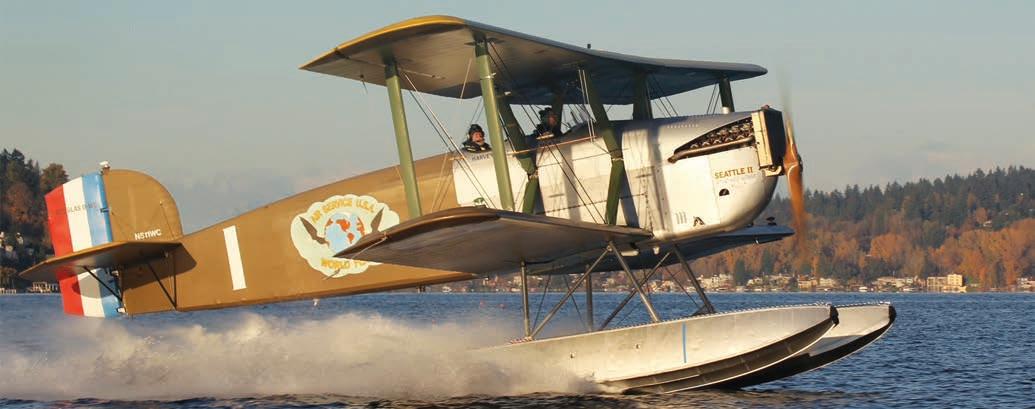
WHEN THE U.S. ARMY put out a call in 1923 for an aircraft that could be used for the first around-the-world flight, the Douglas Aircraft Co. responded with the confidently named Douglas World Cruiser (DWC). The DWC was built by modifying Douglas’ first military aircraft, the DT torpedo bomber, which had already been in production since 1921. One of the biggest changes, not surprisingly, was the addition of multiple fuel tanks, increasing the fuel capacity nearly six-fold, thanks to a system designed by the not-quite-yet-legendary Jack Northrop. Douglas built five examples, one to use as a trainer, and four, named Boston, Chicago, New Orleans, and Seattle, to make the circumnavigation starting in Seattle in April 1924. Two of the airplanes, Seattle and Boston, were lost during the attempt, but the other two, joined for the last leg by the prototype, completed the nearly 24,000-mile flight in September 1924. Bob Dempster of Seattle, Washington, built a stunning full-scale
reproduction dubbed Seattle II, powered by an original Liberty engine, which made its first flight in 2016.
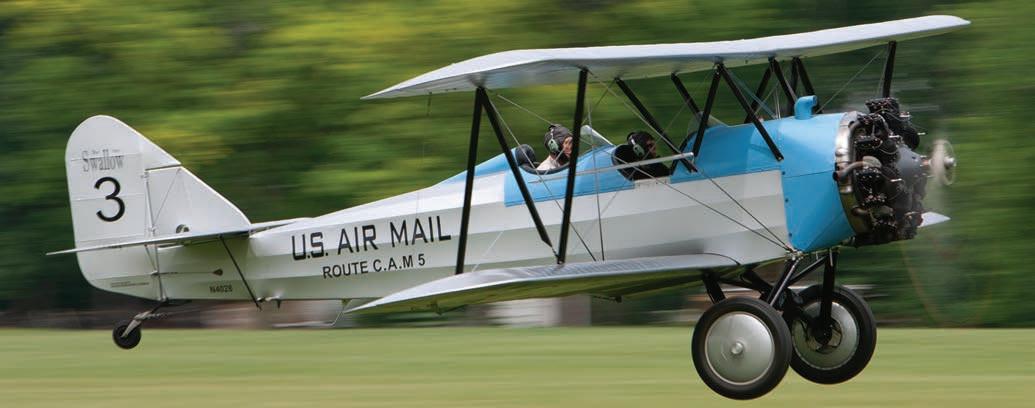
THE E.M. LAIRD AVIATION CO. was originally founded in 1920 by legendary air race designer Emil “Matty” Laird and was renamed the Swallow Airplane Manufacturing Co. after his departure. The new o cers of the Swallow Aircraft company included future household names Lloyd Stearman and Walter Beech. The company developed a series of multipurpose aircraft including the Super Swallow, which was a mainstay of early airmail e orts. EAA’s example, built in 1927, is serial No. 899 and is painted to represent an airmail airplane flown by Varney Air Lines, one of the companies that made up United Airlines when it was founded in 1931. The aircraft was donated to EAA in 1976 by John H. McGeary Jr. and remained in storage for many years, before being restored to flying condition with a 220-hp Continental radial engine from 2001 to 2004.
Specifications (Original):
Length: 23 feet, 10 inches
Wingspan: 32 feet, 8 inches
Height: 8 feet, 11 inches
Max speed: 100 mph
Engine (original): 90-hp Curtiss OX-5 V-8
Ryan NYP Spirit of St. Louis
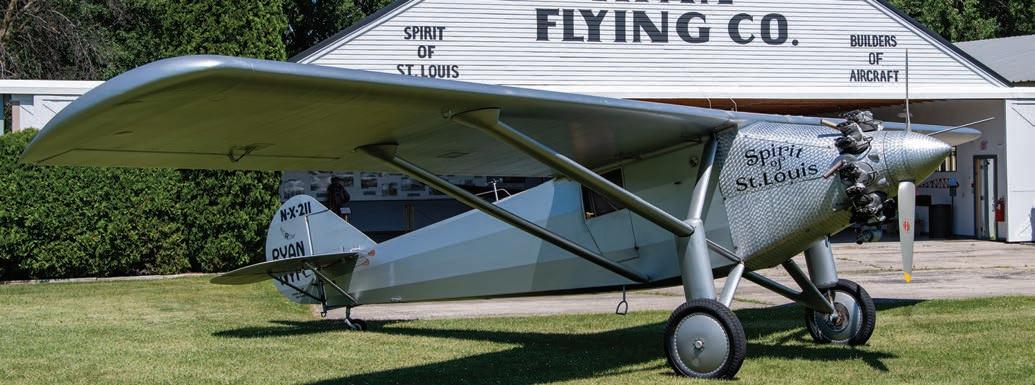
ONE OF THE MOST famous aircraft in history, the one-o Ryan NYP named Spirit of St. Louis was purpose-built for an audacious goal — to make the first nonstop flight between New York and Paris. The airplane was built, of course, for legendary aviator Charles Lindbergh, who completed the grueling 33-1/2-hour flight in May 1927, less than a month after the aircraft’s first flight. Developed from the Ryan M-2 mailplane, the NYP carried Lindbergh to world-changing success and transformed the idea of flying from a novelty to a societal necessity. The original, of course, hangs in a place of honor at the Smithsonian Institution’s National Air and Space Museum in Washington, D.C. Over the years, EAA has built two flyable replicas, the first for the 50th anniversary of Lindbergh’s flight in 1977 (this example hangs in the EAA
Aviation Museum) and a second, which first flew in 1990, that is maintained in flying condition. OSH 2026
Specifications (Original):
Length: 27 feet, 7 inches
Wingspan: 46 feet
Height: 9 feet, 10 inches
Max speed: 133 mph
Engine (original): 223-hp Wright J-5C
Whirlwind nine-cylinder radial
Hal Bryan, EAA Lifetime 638979, is managing editor for EAA print and digital content and publications, co-author of multiple books, and a lifelong pilot and aviation geek. Find him on Facebook, X, and Instagram at @halbryan or email him at hbryan@eaa.org.
PHOTOGRAPHY BY JIM KOEPNICK AND CONNOR MADISON
INTEGRATED
STANDARD
BLUETOOTH AUDIO OUTPUT
RECHARGEABLE BATTERY
OVERSIZED COLOR SCREEN
8.33/25 KHZ SPACING
100 MEMORY CHANNELS
BUILT-IN INTERCOM
Highways of the Sky
Highways of the Sky
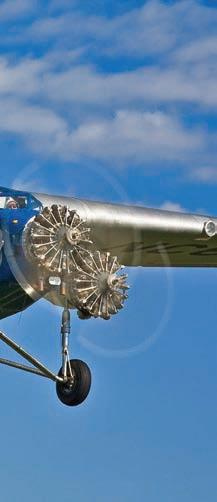
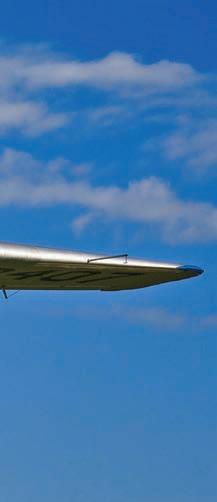
The Ford Tri-Motor’s 100-year legacy
BY EMME HORNUNG
THE UNITED STATES OF AMERICA’S 250 years of history have been shaped by many influences, including innovations in transportation. In the early 1800s, steam-powered riverboats improved water transportation and defined early settlements, and then the latter half of the century saw railroads rapidly expand, connect coasts, and change how goods and people moved. The automobile hit the scene in the 1890s, dirt roads were paved, and soon highways began connecting cities.
Then, of course, the airplane. The Wright brothers in 1903 proved
powered flight was possible, and the barnstormers of the 1920s with their not-always-death-defying stunts captured the American public’s attention. The fabric-covered wooden airplanes of the era demonstrated their utility in warfare and mail carrying, but the public overwhelmingly did not see aviation as safe for passenger travel. At least not until the Ford Tri-Motor took center stage, along with an extensive aviation PR campaign, to show the public that flying was a safe, reliable way to travel. And in 2026, the Ford Tri-Motor celebrates 100 years of its iconic legacy that shaped the highways of the sky.
The Ford Tri-Motor’s 100-year legacy
An Automotive Industry Titan Walks Into a Hangar …
“This interest in aviation is largely Edsel’s idea …. Airplanes belong to another generation.” — Henry Ford, founder of Ford Motor Co., 1925
A question I always ask story subjects during interviews is, “Where did your interest in aviation come from?” Common answers include growing up with a pilot in the family or watching airplanes fly overhead as a kid — neither of those answers would have been
The public overwhelmingly did not see aviation as safe for passenger travel. At least not until the Ford Tri-Motor took center stage, along with an extensive aviation PR campaign, to show the public that flying was a safe, reliable way to travel.
possible for either Henry Ford or his son, Edsel, in their pre-powered-flight youth.
Rather, it likely had something to do with a young Ford Motor Co. employee, Charles Van Auken, who convinced Ford to finance the building of a Blériotinspired airframe powered by a Model T engine in 1909. The engine, as they would find out, was underpowered for the frame, but this first aircraft build left an impression on the Fords, especially Edsel who was just 16 at the time.
Ford Motor Co. — along with other big names in cars like Buick, Cadillac, and Lincoln — turned its focus to aviation and joined the United States’ World War I e orts in 1917 when contracted to manufacture Liberty airplane engines. Following the war, Ford’s credibility in aviation continued to rise as Ford-built Liberty engines were the favored option to be used for military demonstration flights across the country.
The Fords’ interest in aviation persisted, foreseeing its commercial potential, and the Ford Motor Co. got
o cial authorization from the state of Michigan to sell aircraft and airships in March 1920. Ford created the Aircraft Development Corp. with William Mayo, Ford’s chief engineer, and Edsel at the helm.
Meanwhile, after the Great War, a surplus of Curtiss Jennys and Standard J-1s available for pennies on the dollar, thousands of newly minted veteran pilots itching for flight, plus a notable lack of aviation regulations led way to one of the most enchanting trends in flight history and the beginning of the golden age of aviation: barnstorming.
Golden Age, Aluminum Airplanes
“Ford Motor Co.’s entrance into the field of aeronautics is the greatest incentive to commercial aviation in the history of flying.” — Col. William Mitchell, Detroit News, August 1925
Barnstormers, often traveling in groups called flying circuses, flocked to the countryside and small towns to entertain crowds through stunts and
The airplane with a Ford Model T engine designed by Charles Van Auken, circa 1912-1913.
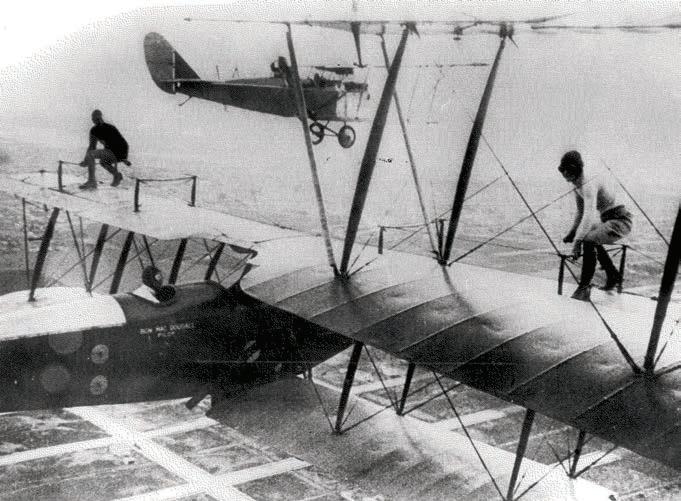
airplane rides over grass fields. These events were wildly popular, and they were often the first, if not only, firsthand experience people had with aviation. Crowds were wowed by spins, loops, dives, and even wing-walking; midair airplane transfers; and parachute jumps — but novelty wasn’t enough. The lack of regulation, increasingly dangerous aerial tricks, and deteriorating wooden airframes did not create a reputation of safety in the American public’s mind.
Barnstorming sharply declined when the U.S. government started placing regulations on aviation in 1925 as it began contracting private companies to carry mail for the U.S. Post O ce. The following year, as airlines began emerging, the Air Commerce Act was passed and required licensing for pilots and airplanes to ensure safety and airworthiness.
The government started addressing the regulation issue, but something had to be done about the short lifespan of wooden airframes. Hugo Junkers across the pond in Germany had already pioneered building an all-metal airplane in 1915, the Junkers J.1, using a corrugated aluminum alloy called duralumin, but it was not until seven years later that the same would be done in America.
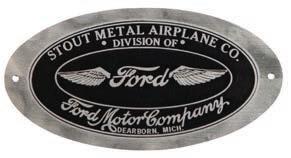
In 1922, William Stout built an allmetal bomber for the U.S. Navy. Test flights were unsuccessful, but it did make his name known among aviation circles, especially in Detroit. Stout began seeking investors for his new Stout Metal Airplane Co. to develop a four-seat, single-engine, all-metal Air Sedan using duralumin. Both Edsel Ford and William Mayo were among the early investors.
The four-seat Air Sedan was deemed too small for commercial use, and so the eight-seat Air Pullman was developed. The first model of the Air Pullman, Maiden Detroit , had its first flight in March 1924 at Selfridge Field in Michigan — 26 miles from Stout’s factory, but directly across the street from the first Ford factory.
Maiden Detroit suffered a crash-landing just months after its first flight, but, impressively, only minimal damage was sustained. It was sold to the U.S. Post O ce after being repaired, and the co-pilot seat was removed to better serve airmail purposes. This reworked Maiden Detroit became the first of a new type, the Air Transport or 2-AT.
Seeing the early success of these metal airplanes, Ford was even more intrigued by Stout’s potential, and after Stout complained about having to disassemble and transport aircraft between his factory and Selfridge Field for tests, Ford agreed to build a dedicated airport and factory for Stout’s operations if Stout could convince its initial investors to sell.
Airplane manufacturing was still new at this point, with most companies
Barnstormers, like the famous Ormer Locklear, performed dangerous aerial tricks for crowds and even Hollywood films.
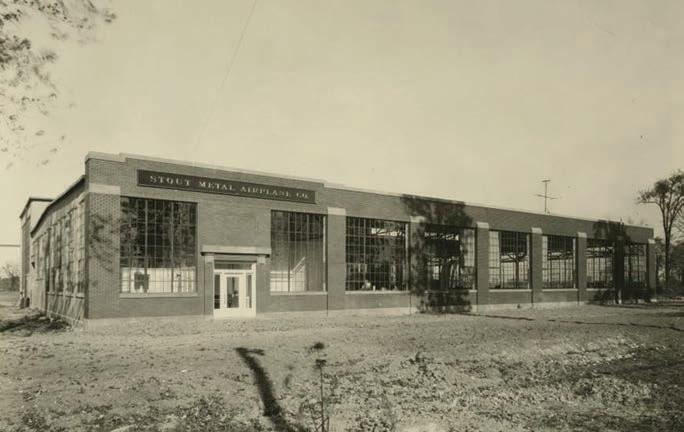
producing one aircraft at a time, so an airplane-dedicated factory was an entirely new concept. Nonetheless, Stout Metal Airplane Co. became a division of Ford Motor Co., the 20,000-square-foot factory was completed by October 1924, and the new Ford Airport was dedicated in January 1925.
The first aircraft built at the new factory was the second 2-AT, Maiden Dearborn (later Maiden Dearborn I when more were added to the lineup). Ford, looking to get its own slice of airmail business, purchased Maiden Dearborn for its newly formed Air Transport Service — and ordered three more right away at a cost of $20,000 each (with Liberty engines provided by Ford).
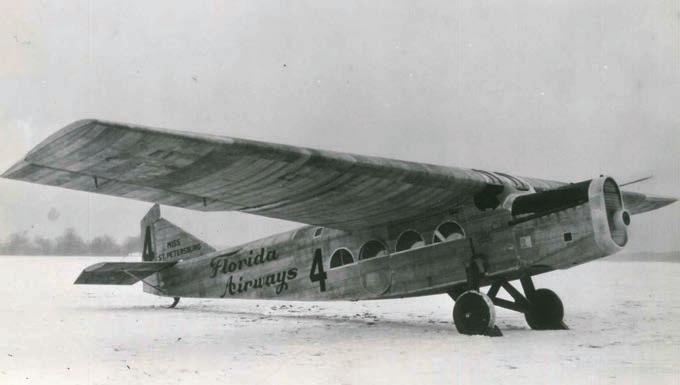
The newly formed Florida Airways, of which Henry Ford was an investor, also used the 2-AT. It was one of those airplanes that earned the earliest documented use of the nickname “Tin Goose” (a play on the Model T’s nickname, Tin Lizzie) when one had to divert due to a snowstorm, with a December 30, 1925, newspaper headline reading “One of Henry’s ‘Tin Geese’ is storm victim.”
The 2-AT was impressive, but Stout and Ford knew they needed to go bigger,
more powerful. Having multiple engines was attractive for the added safety benefits. The only aircraft with three engines on the market at this point was the German-made Fokker F.VII, but still it was of fabric-covered construction. In November 1925, Stout modified the 2-AT to house three engines; the center wing section was widened by 10 feet, the fuselage was strengthened, and with
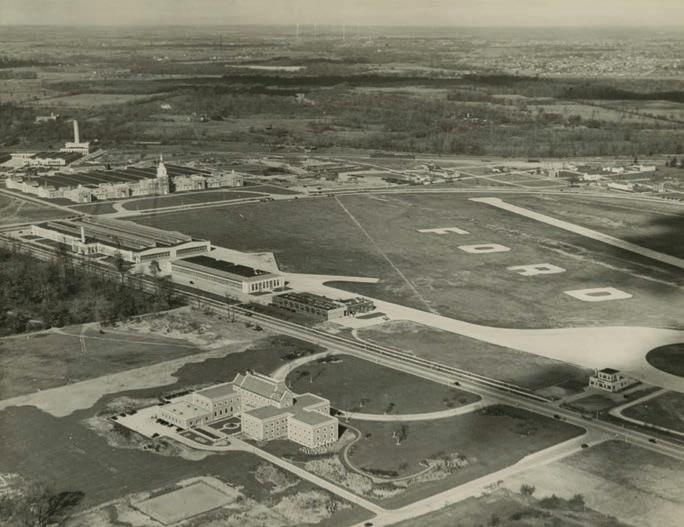
Ford Airport, complete with an airplane factory, concrete runways, a passenger terminal, and the Dearborn Inn, was unlike any other airport in the world for a time.
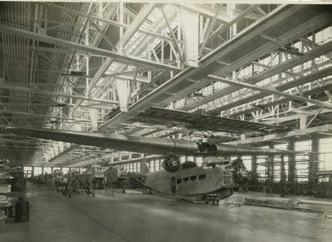
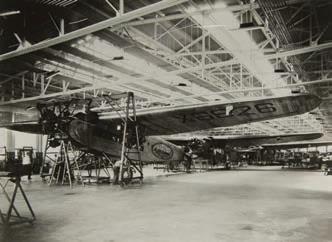
Just like automobile manufacturing, Ford revolutionized the way aircraft were built at the Stout factory, going from one at a time to an assembly line.
The newly built Stout Metal Airplane Company factory, Ford Airport, Dearborn, Michigan, 1924.
the development of the lighter-weight Wright radial engine, an engine was added to each wing in addition to the engine on the nose.
This new three-engine, all-metal airplane was designated the 3-AT — and it was an aerodynamic nightmare. Two test pilots cited poor handling, and landing required full power. Ford, aware of the fragility of aviation’s reputation, was so embarrassed by the failure that William Stout was promptly replaced by Harold Hicks as chief engineer along with Tom Towle to design a three-engined aircraft.
Interestingly, Towle reported that he was ordered to retrieve the 3-AT drawings from the factory just one day before a suspicious fire destroyed the factory and the only 3-AT with it in January 1926. Construction of a new, bigger factory started before the dust even settled, and in the meantime, a new three-engined airplane was being developed.
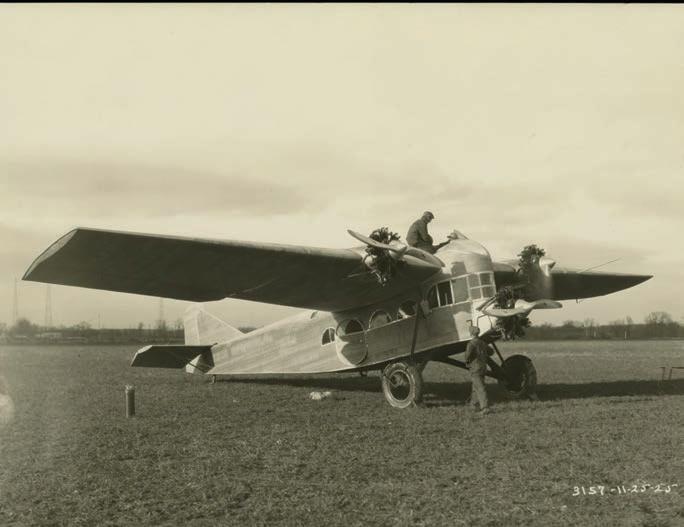
Only five months after the 3-AT was destroyed, the first iteration of what we know today as the Ford Tri-Motor was produced. The new 10-seat 4-AT, powered by three Wright J-4 200-hp
engines, saw its first flight on June 11, 1926. The earliest models had an open cockpit and a tail skid, which would be swapped for a closed cockpit and a tail wheel. It was discovered tail skids did not play well with the combination of large, heavy aircraft and grass runways, so Ford engineers developed the first tail wheel in 1927.
Through more refinements of the 4-AT, eventually the 14-seat 5-AT was introduced in July 1928. Early 5-AT
models featured three 420-hp Wasp engines. It was larger, faster, and more powerful, and it was used by all airlines in the United States at its peak.
The Ford Tri-Motor was now gracing the sky and setting an example for the quickly emerging airline industry. Ford even went so far as to publish booklets on best practices when forming a scheduled airline and o ered pilot training for companies looking to purchase a Tri-Motor. While all this was happening, Ford had already started pushing its aviation PR campaign.
Cleaning Up a Bad Reputation
“[Ford’s] advertising has done more to popularize flying among the reading public than all the stunts that have ever been stunted.” — Aero Digest, March 1928
Ford’s PR campaign landed in people’s hands all over America through extensive magazine advertising. But these advertisements usually weren’t selling the Ford Tri-Motor — they were selling a new image for air travel.
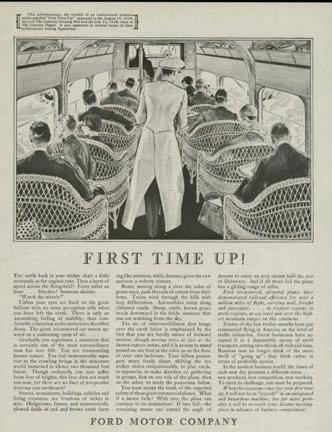
The first magazine ad by Ford appeared in Aviation magazine on August 15, 1927, and more than 100 unique ads would appear over the next five years. Headlines like “First Time Up!” described the sensation of taking o and seeing the earth from above in
Miss St. Petersburg, one of Florida Airways’ 2-ATs that would earn the first use of the “Tin Goose” nickname. Photo from EAA Archives
The ill-fated 3-AT built by Stout Metal Airplane Company, 1925.
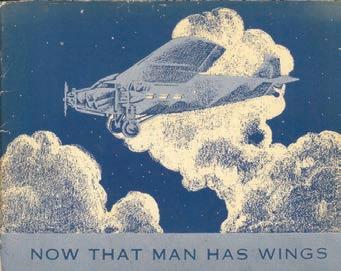
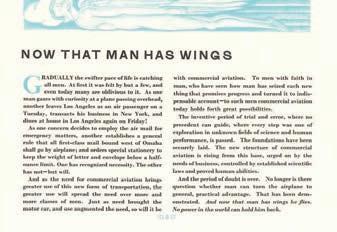
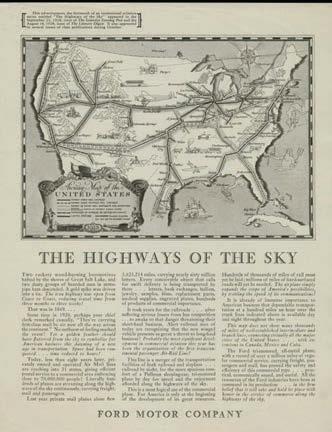
something that wasn’t “an antiquated and hazardous machine. ” Another ad titled “The Highways of the Sky” explained how commercial aviation has changed carrying mail and moving freight, proclaiming greater e ciency than railroads and, prematurely in hindsight, “Space has been conquered!”
This campaign went well beyond print advertising, however, and Ford made commercial aviation tangible for folks across the country by meeting them where they were — literally.
When auto manufacturers needed to normalize automobiles and promote acceptance by the public in the early 1900s, the American Automobile Association hosted the Glidden Auto Tour, aka the National Reliability Runs, across the country from 1905 to 1913.
The Ford National Reliability Air Tour, taking a page out of the automobile playbook, launched in September 1925 with support from Ford and the Detroit Aviation Society to demonstrate the reliability and safety of commercial air transportation, as well as to incite the development of airfields across the country.
Cities across the country were selected to be part of the tour, and ocials were sent out to find suitable locations for airfields, usually farm fields or fairgrounds. To encourage participation from aircraft manufacturers, there would be a cash prize and a trophy awarded to the tour winner. Aircraft were judged on useful load compared to empty weight, ability to take off and land, ability to maintain speed, and more.
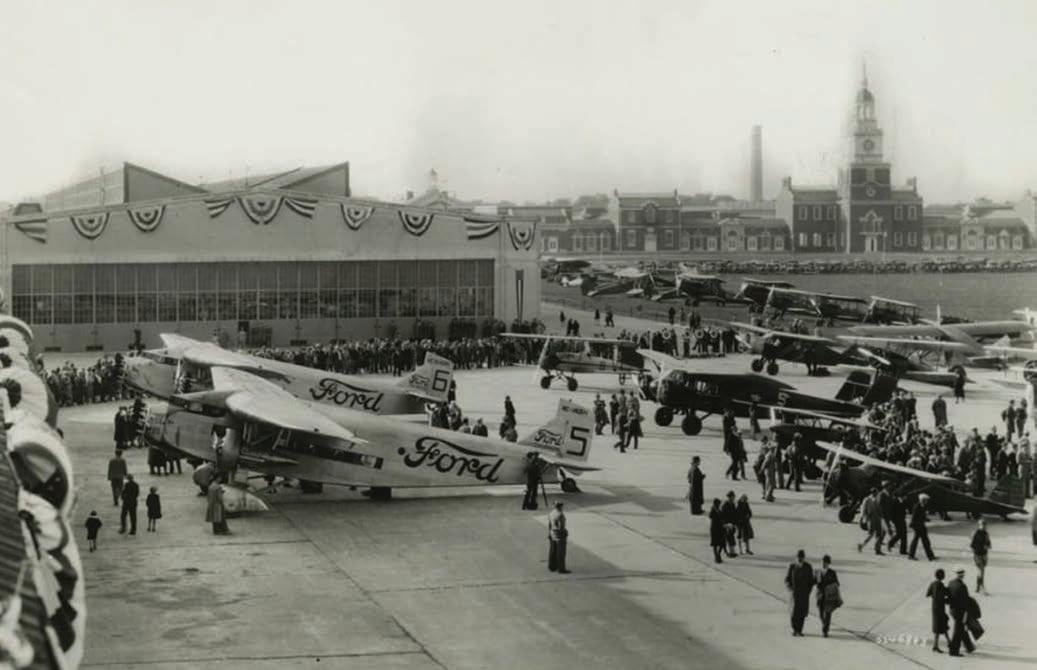
Crowds gather at the Wausau, Wisconsin, airport on July 26, 1928, to witness the Ford Reliability Tour. Photography from EAA Archives
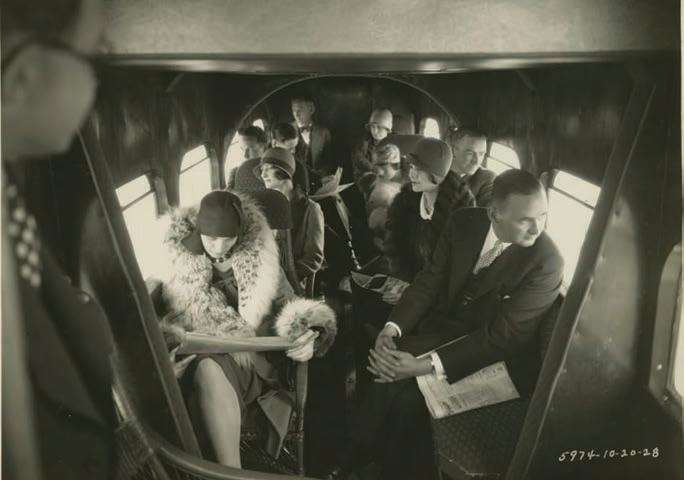
A flight in the Ford Tri-Motor was a new luxury for travelers, 1928.
The first tour in 1925 had 17 aircraft from 11 manufacturers participating, all single-engines aside from the Fokker Trimotor (much to Ford’s chagrin). The tour visited 13 cities, 1,775 miles, over six days, bringing crowds and aerial spectacles with it.
The second tour in 1926 was even grander. Twenty-five aircraft participated, and the tour was extended to 14 days to allow a full day for each stop: 14 cities covering 2,585 miles.
The 1927 tour was especially popular as excitement for aviation was at an all-time high, sparked by Charles Lindbergh’s trans-Atlantic trip in May 1927. A crowd of more than 30,000 gathered at Ford Airport to watch the tour aircraft depart, with similar crowds greeting them at airports all over the country.
Come 1928, more than 600 airports had been developed in America, and many cities were vying to be chosen as a tour stop.
The tour continued through 1931, with the last tour being the seventh to take place. The Great Depression took its toll on manufacturers, and the novelty of big airplanes wore o . The tour was no longer pulling the kind of crowds it once had, with air races becoming the preferred aviation pastime. But the lack of interest from the public marked an important turning point: Air travel was normalized.
Amid rapid developments in aviation, Ford made various attempts to stay relevant in aviation (including the 14-AT, a 32-passenger aircraft that cost more than $1,000,000 and never flew). In 1932, Ford announced it would cease aircraft production, stepping away from
An entire century later, those lucky enough to experience the Tri-Motor in flight are moved by its ability to take off into the sky while simultaneously bringing you down to earth with its nostalgic energy.
aviation entirely to regain its foothold in automobiles. The aircraft factory closed its doors on June 8, 1933, after producing just 199 Tri-Motors. Aircraft like the Boeing 247 and the Douglas DC-1 and soon DC-2 and -3 quickly came along, and these more modern aircraft began to dominate the air travel industry that Ford laid the foundation for.
The Ford Reliability Tour at the Ford Airport in 1930.
The Right Seat for Flight Instruction
Control the flight training environment
Avoid inefficiencies and create better learning opportunities
Build proficiency and confidence
Quickly change between aircraft types in one device
Reduce operating costs and rental costs for learners
Increase revenue streams and scheduling flexibility
Innovation to Icon
“Those Fords will fly as long as anyone wants to fly them.” — William Stout, Popular Mechanics, June 1953
Much of this story about the Ford Tri-Motor has not focused on the airplane itself, but rather the circumstances that led to its creation and its insurmountable influence — when it comes to the Tri-Motor, perhaps it’s never been about the airplane.
The pioneering of metal aircraft construction and aircraft manufacturing in America was an indication of an industry on the rise. The industrialist hunger of the Ford Motor Co. stoked the flames to many innovations beyond the Tri-Motor, like the world’s first concrete runway and an airport hangar and
terminal unlike any other, developing the tail wheel to replace tail skids, providing weather broadcasts to pilots en route, and many more patents and practices.
An essential aviation contribution of Ford engineers was a radio beacon that could transmit to aircraft, allowing the first successful radio-guided flight to occur in 1927. The patented technology was provided to the aviation industry for free, meaning flights could now go virtually anywhere at any time, visual conditions optional.
North of half of a million dollars was spent on advertisements that promoted an image of safety and reliability rather than strictly selling the Tri-Motor as a product, and Ford’s developments and early involvement in airmail transport ultimately shaped commercial air travel as we know it. And an incalculable number of people got their first taste of flight in the Tin Goose.
An entire century later, those lucky enough to experience the Tri-Motor in flight are moved by its ability to take o into the sky while simultaneously bringing you down to earth with its nostalgic energy. It’s not about the airplane at these tour stops, but the memories
made and the stories to be told. Stories from EAA’s flight tour include a 16-yearold who discovered a passion for aviation after volunteering for a tour stop on a whim, leading to her attending EAA’s Air Academy Camp; couples brought together by aviation who have said “yes” to marriage proposals as three engines rumble around them; and a 100-year-old flight attendant who was
reunited with the aircraft she once considered home.
Today, as much as 100 years ago, the Ford Tri-Motor is much more than an airplane. It’s an icon.
Emme Hornung, EAA 1463093, is the production coordinator for EAA’s print and digital content and enjoys sharing inspiring stories from the aviation community. She is currently working toward her sport pilot certificate. Connect with Emme at ehornung@eaa.org.
Flying the Ford
Experience the golden age in the modern day
WITH SEAN ELLIOTT, FORD TRI-MOTOR PILOT
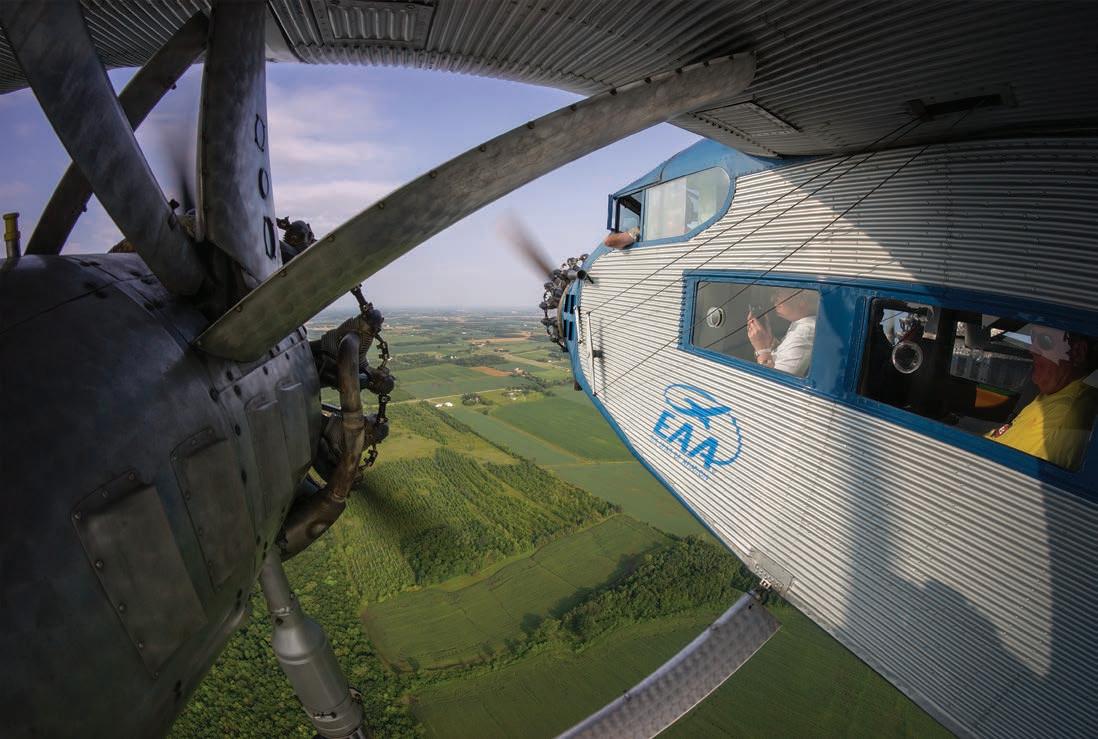
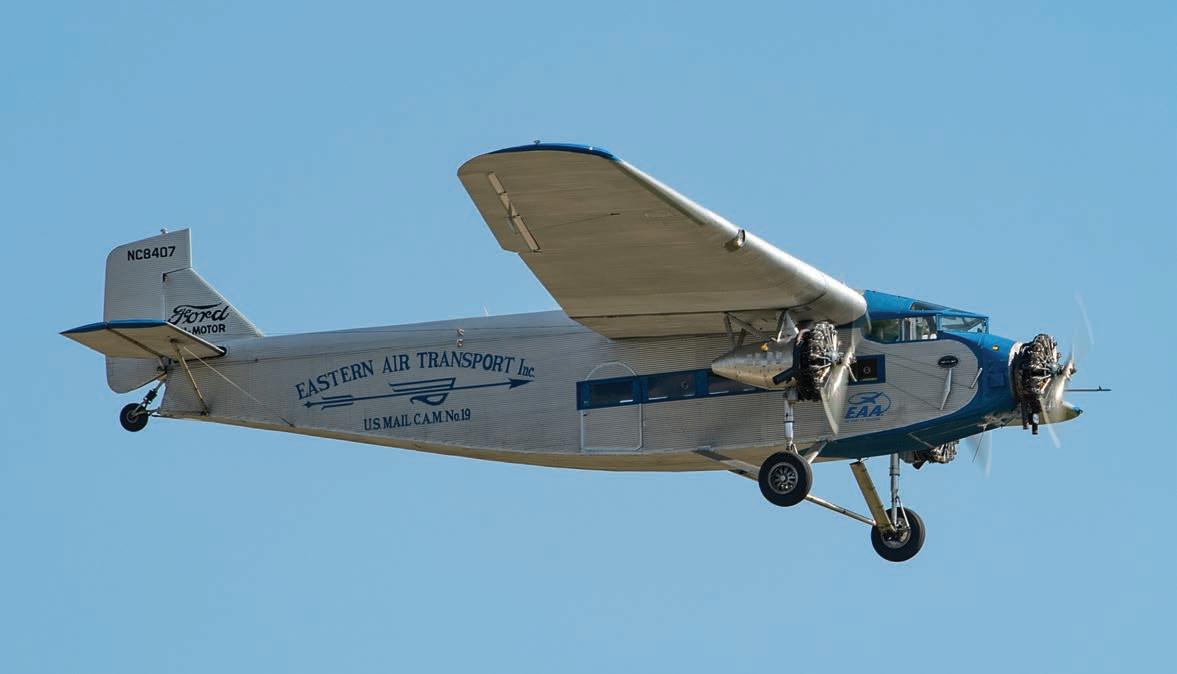
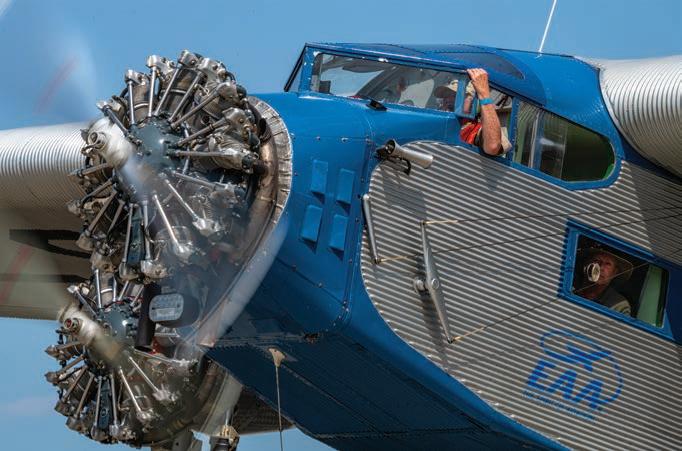
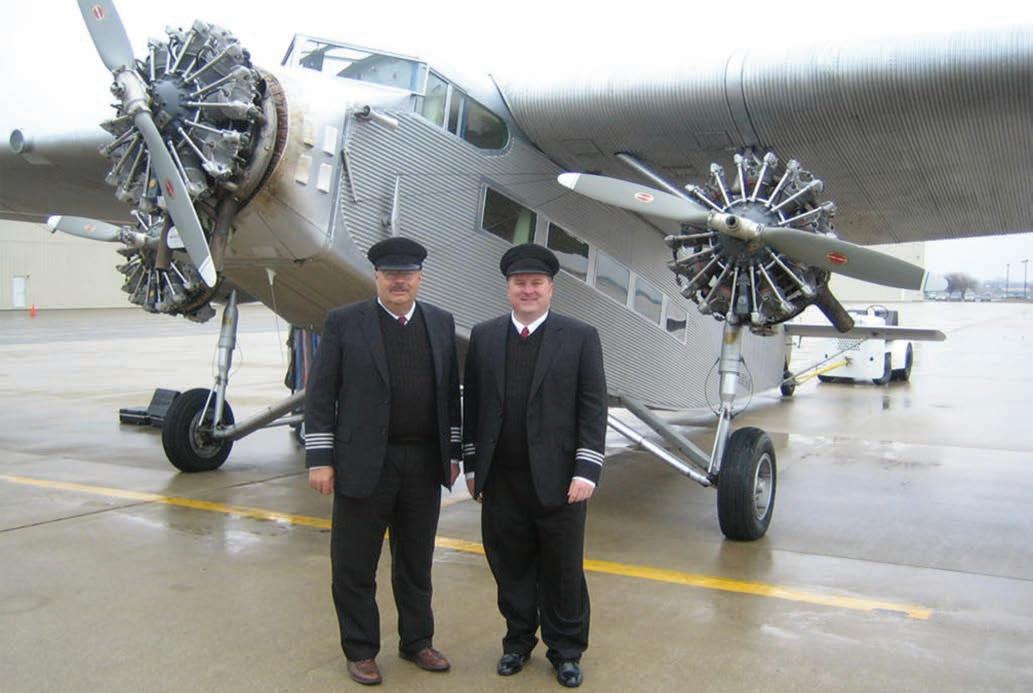
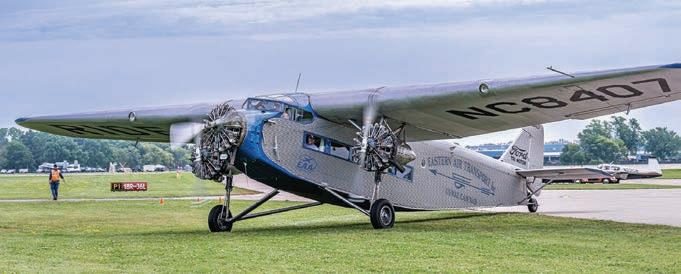
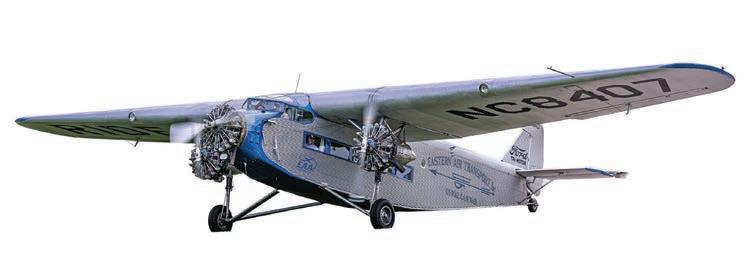
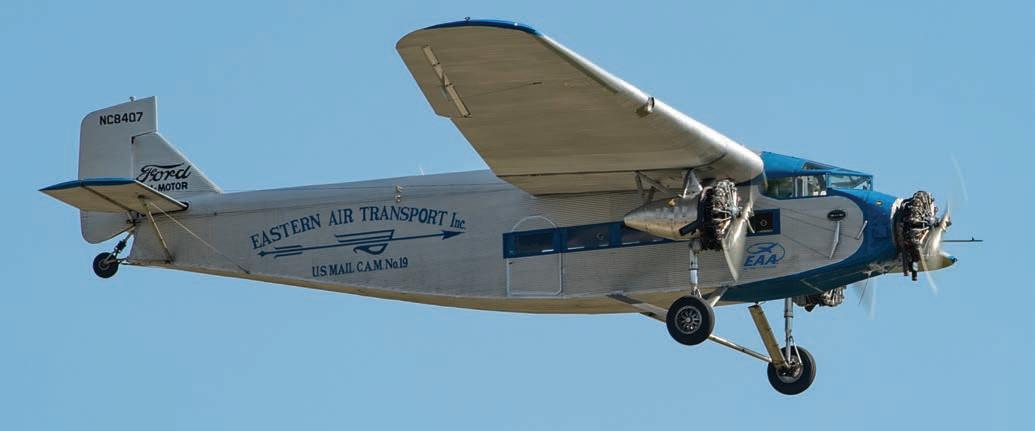
EAA’s Ford Tri-Motor, NC8407, a 1929 4-AT-E, is one of eight airworthy examples of the Ford Tri-Motor in the whole world. EAA’s founder Paul Poberezny purchased/ rescued it in 1973 after it had been wrecked in a windstorm during an EAA air show. After an airworthy restoration, it is only one of two that serves as living history by providing flight experiences to people across the United States.
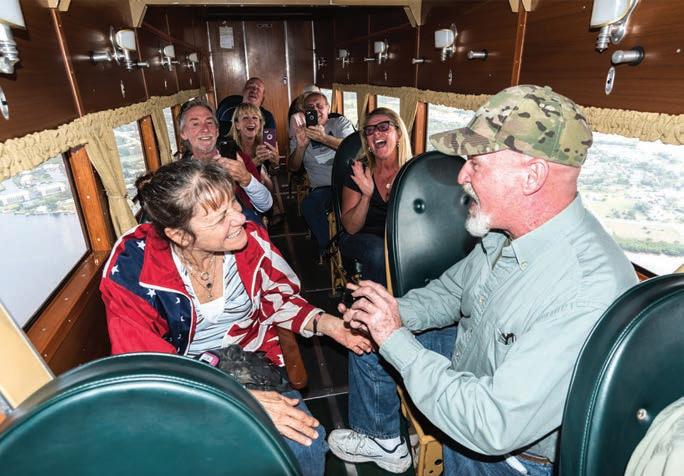
A flight in the Tri-Motor has a way of pulling passengers back in time, giving a glimpse into 1920s luxury. Sean Elliott, EAA’s vice president of advocacy and safety, has been flying NC8407 since 1999, and it still has yet to lose its magic — handling quirks and all.
“The Ford Tri-Motor is a really fabulous, vintage, old-school airplane,” Sean said. “Keep in mind, it’s very large for its day. Other 1920s airplanes that I’ve flown extensively are mostly open-cockpit biplanes
— the Travel Air 4000, the Swallow, the Pitcairn Mailwing, the Consolidated PT-3. There are definite similarities, but the size and mass and inertia of the Tri-Motor is unique.”
Citing its 74-foot wingspan and more than 10,000-pound gross weight, the Tri-Motor is “a sluggish airplane in the sense that nothing happens fast, rate-wise, compared to modern aircraft,” Sean said. “It is more than adequately powered, at least in the way the current Tri-Motors are configured. Ours has three 450-hp Pratt & Whitney engines on it. Originally, it had 300-hp Wrights, and that would have been a little more anemic, especially with a full load of people and gas. But the 450 hp gives you all kinds of power. Power is your friend in that kind of airplane.”
Ask Sean, or really any pilot who has flown the Tri-Motor, and he’ll tell you to watch out for the adverse yaw. “It very much is a coordination exercise. Aileron deflection is a big part of every takeo and every landing, especially with a crosswind,” Sean said. “Every time you deflect the ailerons, your feet have to be moving the rudder pedals because it’s got
a lot of adverse yaw. And that’s actually a good thing, because you use that adverse yaw on the ground for directional control.”
The Ford National Reliability Tours existed to introduce America to commercial aviation and these new, bigger aircraft. Today, EAA’s air tour program exists to remind people of past innovations and introduce new generations to the same spirit that captivated the public a century ago.
“The ride programs that we do, they give people that opportunity to really understand what a unique time machine the Tri-Motor is. And in many cases, it lights a spark for aviation. It’s a very e ective outreach tool,” Sean said. “It gives you a unique understanding, appreciation, and respect for what that generation did in those very early machines. And you can’t get the same level of understanding from reading a book or watching a movie or even flying a simulator. Flying the actual airplane is really the ultimate form of connection with 100-year-old aviation.”
Experience the magic yourself. Book your flight at FlytheFord.org. OSH 2026
Sean and fellow Tri-Motor pilot George Daubner were cast as extras in Public Enemies and took turns in the left seat of EAA’s Ford Tri-Motor, which was painted in an era-accurate American Airways scheme for the movie.
Visit Signia Aerospace in Booth #289
Celebrating the Class of ’46
A spotter’s guide for AirVenture Oshkosh 2026
By Hal Bryan
AS WORLD WAR II CAME to an end, people of the free world looked ahead to an era that held the promise of unprecedented peace and prosperity. Rough estimates indicate that, at the start of the war in September 1939, there were roughly 30,000 pilots, both civilian and military, in the United States. By war’s end in August 1945, the estimated number had ballooned to more than half a million. It seemed patently obvious that the previous generation’s “chicken in every pot” would be supplanted in 1946 by “an airplane in every garage.” Manufacturers went to work, introducing new aircraft
and updating (and more actively marketing) existing designs. Sadly, this was the boom that wasn’t. A lot of wartime pilots moved on from flying, and, while commercial air travel grew steadily, general and recreational aviation didn’t attain the hoped-for ubiquity.
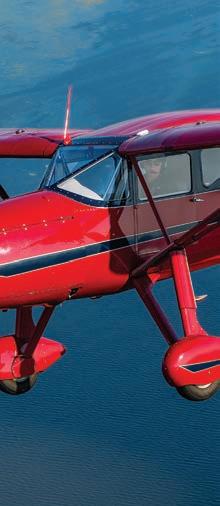
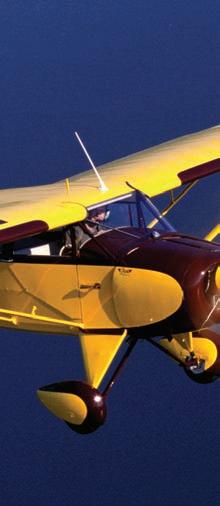
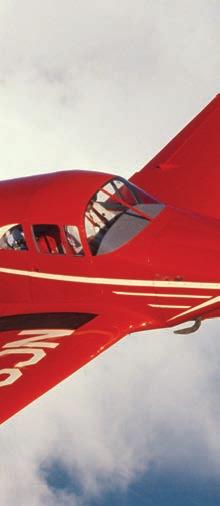
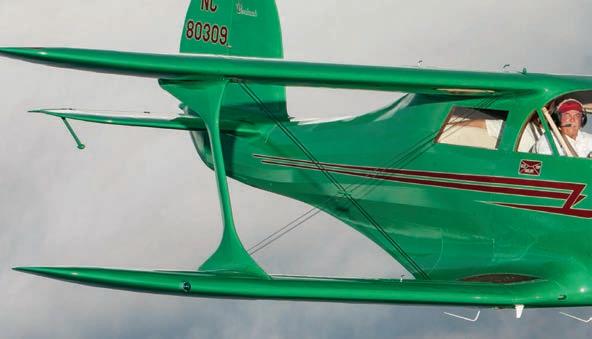
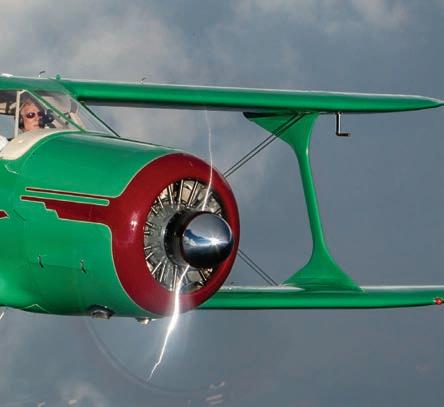
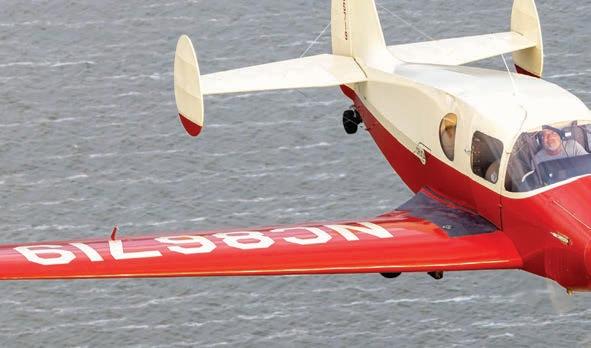
Still, 1946 was a remarkable year for GA, and that optimism, however impractical, gave us so many classic aircraft that remain beloved today. You’ll note that, unlike most aircraft anniversaries, this one isn’t exactly hard and fast. We’re not strictly celebrating first flights or introductions; rather, we’re
looking back at the airplanes that were in production and on the market in that first full year of postwar peace. As you wander the Vintage neighborhood on the AirVenture grounds, you’ll likely see lovingly restored examples of many of the types pictured on the next several pages. When you do, try to imagine what it was like 80 years ago, with the horrors of war well and truly behind us, a world in love with aviation, and nothing but blue skies ahead. That’s the context to have in mind as we celebrate the Class of ’46.
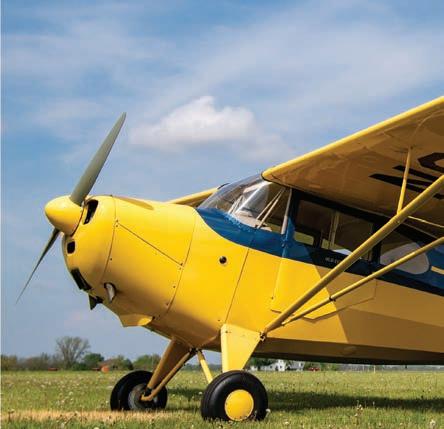
Aeronca Champ (7AC)
First flight: 1944
Length: 21 feet, 6 inches
Wingspan: 35 feet
Seats: 2
Cruise speed: ~85 mph
Aeronca Chief (11AC)
First flight: 1945
Length: 20 feet, 10 inches
Wingspan: 36 feet, 1 inch
Seats: 2
Cruise speed: ~95 mph
Wingspan: 32 feet
Seats: 4
Cruise speed: ~202 mph
Wingspan: 34 feet, 2 inches
Seats: 4
Cruise speed: ~150 mph
Seats: 2
Cruise speed: ~100 mph
PHOTOGRAPHY BY MIKE STEINEKE, JIM RAEDER, AND CONNOR MADISON
Wingspan: 33 feet, 4 inches
Seats: 2
Cruise speed: ~105 mph
Wingspan: 36 feet, 4 inches
Cruise speed: ~118 mph
PHOTOGRAPHY BY BONNIE KRATZ AND ED HICKS
TELLING YOUR STORY FOR 50 YEARS
Aviation—commercial or general or military, passenger or freight, firefighting or medivac— has changed our world for the better for more than 120 years. The National Air and Space Museum on the National Mall has been sharing the aviation industry’s achievements for nearly half of that time.
This year, the building marks its 50th anniversary. Telling your aviation stories is how we inspire the next generation of innovators, researchers, and explorers.
Join us by supporting our mission to help us all soar to new heights!
Length: 20 feet, 1 inch
Wingspan: 35 feet
Seats: 2
Cruise speed: ~100 mph
Seats: 2
Cruise speed: ~140 mph
PHOTOGRAPHY BY EAA ARCHIVES AND LYLE JANSMA
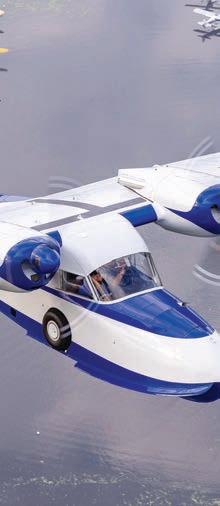
Grumman G-44A Widgeon
First flight: 1940
Length: 31 feet, 1 inch
Wingspan: 40 feet
Seats: 5
Cruise speed: ~138 mph
Johnson Rocket 185
First flight: 1945
Length: 21 feet, 7 inches
Wingspan: 31 feet
Seats: 2
Cruise speed: ~185 mph
PHOTOGRAPHY BY JIM RAEDER AND JIM KOEPNICK
LANDING
Luscombe 8 Silvaire
First flight: 1937
Length: 20 feet
Wingspan: 34 feet, 7 inches
Seats: 2
Cruise speed: ~105 mph
Length: 27 feet, 6 inches
Wingspan: 33 feet, 5 inches
Seats: 4
Cruise speed: ~150 mph
Length: 22 feet, 5 inches
Wingspan: 35 feet, 3 inches
Cruise speed: ~75 mph
PHOTOGRAPHY BY CONNOR MADISON AND ANDREW ZABACK
Celebrating 250 years of American innovation
During this important milestone, we’re proud to honor the spirit of innovation that continues to move the nation forward.
boeing.com/unitedstates
First flight: 1945
Length: 22 feet, 10 inches
Wingspan: 35 feet, 5 inches
Seats: 3
Cruise speed: ~105 mph
Republic RC-3 Seabee
First flight: 1945
Length: 27 feet, 11 inches
Wingspan: 37 feet, 8 inches
Seats: 4
Cruise speed: ~103 mph
PHOTOGRAPHY BY JIM KOEPNICK AND ANDREW ZABACK
First flight: 1944
Length: 24 feet, 6 inches
Wingspan: 33 feet, 11 inches
Seats: 4
Cruise speed: ~121 mph
Length: 21 feet, 10 inches
Wingspan: 36 feet
Seats: 2
Cruise speed: ~95 mph
Hal Bryan, EAA Lifetime 638979, is managing editor for EAA print and digital content and publications, co-author of multiple books, and a lifelong pilot and aviation geek. Find him on Facebook, X, and Instagram at @halbryan or email him at hbryan@eaa.org.
OSH 2026
PHOTOGRAPHY BY JIM RAEDER AND CARL SCHUPPEL
From the TBM’s speed, efficiency and refinement to Kodiak’s rugged versatility, the Daher Aircraft family is built for those who define their own horizons.
MOSAIC A year of Sport Pilot 2.0
By EAA Advocacy Staff
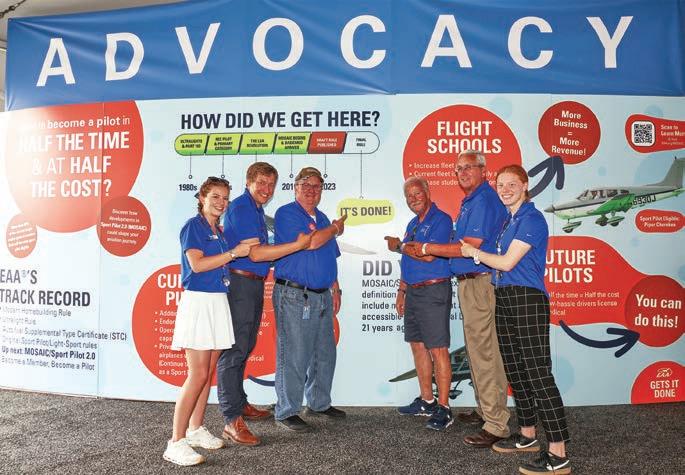
AFTER MORE THAN A decade of work by EAA, the FAA, and numerous others, MOSAIC (Modernization of Special Airworthiness Certification) is now completing its first year as a new FAA
rule. On Tuesday, July 22, during EAA AirVenture Oshkosh 2025, U.S. Secretary of Transportation Sean Du y, FAA Deputy Administrator Chris Rocheleau, House Transportation Committee Chairman Sam Graves (R-Missouri), and EAA CEO and Chairman of the Board Jack J. Pelton held a press conference announcing the new rule.
A generation after the creation of the original sport pilot and light-sport aircraft (LSA) rules, today we celebrate Sport Pilot 2.0 and light-sport category reform. On October 22, 2025, about three-quarters of the general aviation fleet became accessible to sport pilots and those exercising sport pilot privileges. On July 24, 2026, new and
modern aircraft will begin entering the fleet with minimal certification costs.
In aviation, progress is built upon progress. Even the Wright brothers stood on the shoulders of Lilienthal, Chanute, and many more as they revolutionized the world. Rules and policy are no di erent.
This has been a slow and steady march for decades by every general aviation advocacy organization, from Part 103 ultralight rules to recreational pilot, to primary category, to the first sport pilot and LSA rules, to BasicMed, and now to MOSAIC. Each of these rules has represented progress through additional freedom to fly small aircraft affordably, accessibly, and safely. MOSAIC is the latest milestone on this long journey.
Sport Pilot 2.0
Building upon the foundation of the original sport pilot rule, MOSAIC greatly expands the range of aircraft available to sport pilots or those exercising sport pilot privileges.
The sport pilot rule has been a boon for pilots at all stages of their aviation careers for more than 20 years. It allows new pilots to earn their certificates affordably, permits existing pilots to continue flying without an FAA medical certificate, and is even useful to cover the occasional gap between medical certificates or BasicMed authorizations.
The limitation that has always hampered the usefulness of the sport pilot certificate has been the size and capabilities of the aircraft. Powered landplanes were limited, among other parameters, to 1,320 pounds’ maximum takeo weight and two seats. This covered many simple postwar trainers like Cubs, Champs, and Taylorcrafts, as well as new designs from Cessna, Piper, overseas manufacturers, homebuilt kit manufacturers, and more.
However, that weight limitation remained a hindrance. For many designs it kept useful load impractically low and produced aircraft that were great “Sunday flyers,” but they were not capable and robust enough to serve in training and rental fleets and were lessthan-ideal modern touring aircraft.
With MOSAIC, the weight limitation is removed. GONE! In its place are a new set of limitations. For sport pilots and those exercising sport pilot privileges, the primary limitation will now be a “clean” stall speed (V S1) of 59
knots calibrated airspeed. Aircraft with up to four seats are now allowed, although sport pilots are still limited to one passenger. Sport pilots are also now allowed to fly aircraft with controllable-pitch propellers and retractable landing gear, with the appropriate training and endorsements.
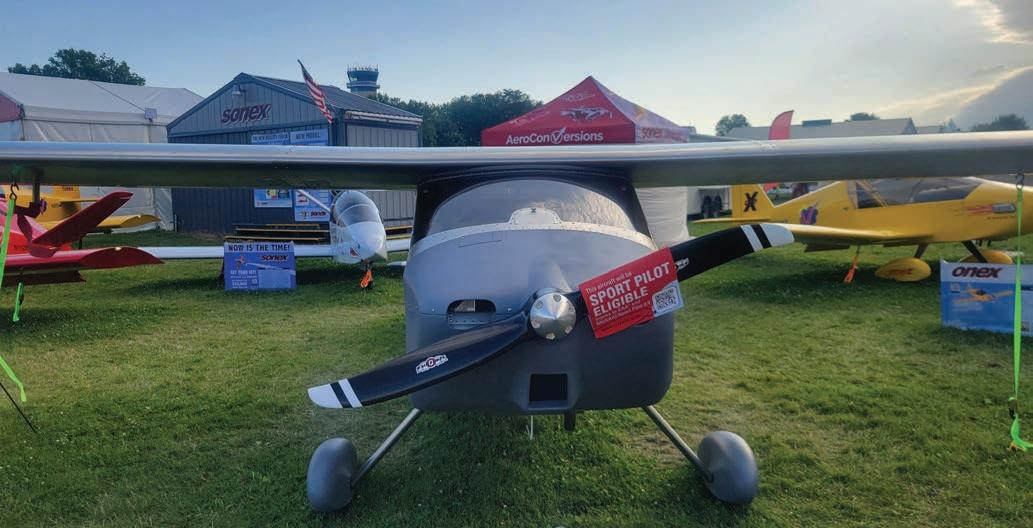
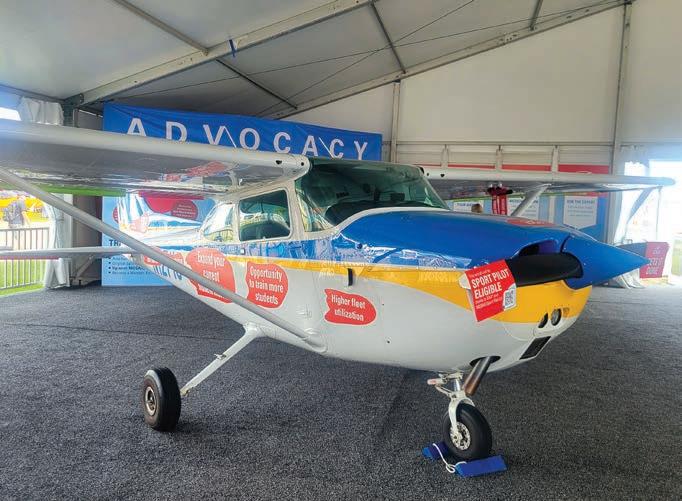
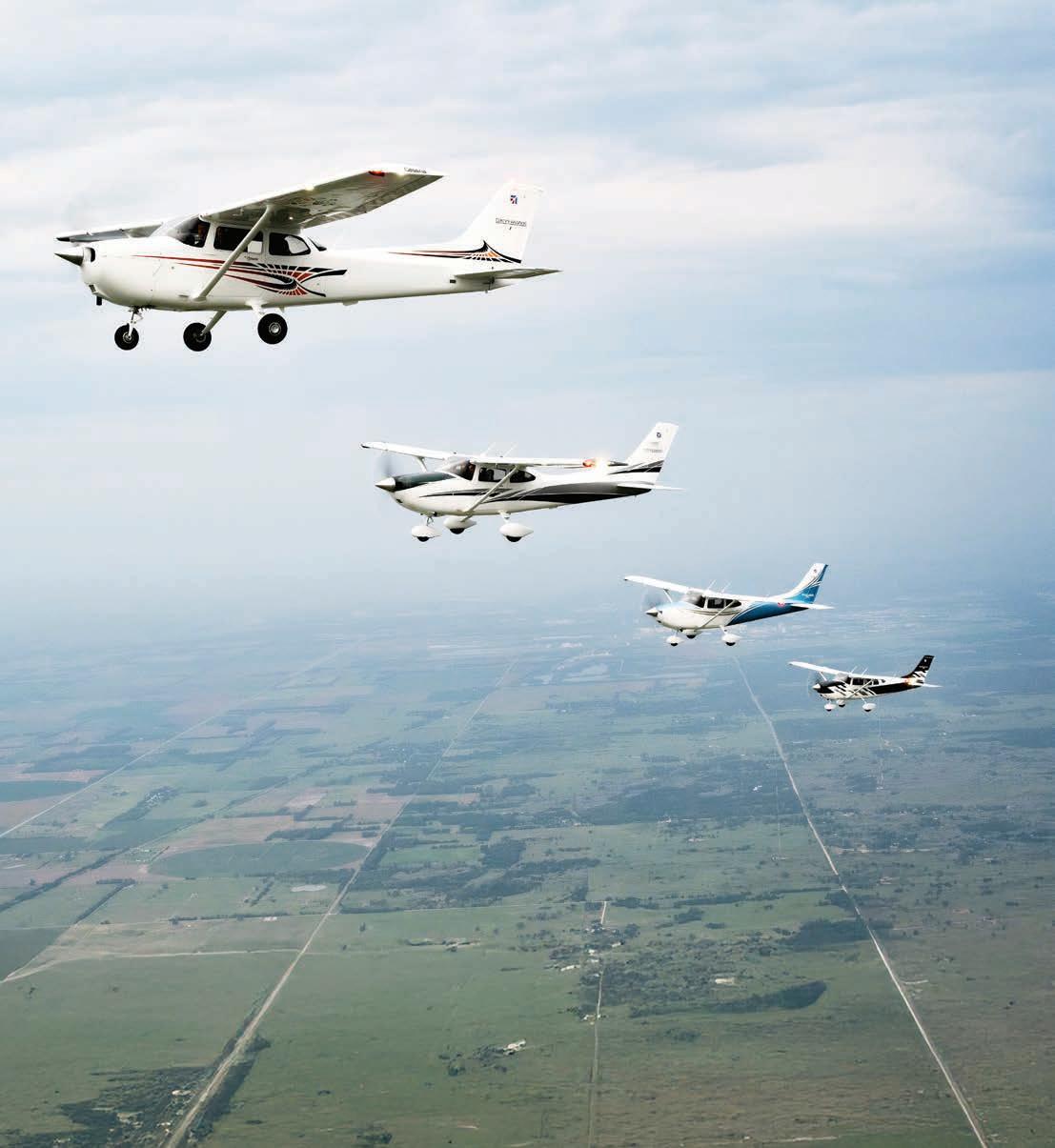
This means that most light GA aircraft can now be flown by sport pilots, or pilots with higher certificates exercising sport pilot privileges. Cessna 172s, Piper PA-28s, Cessna 182s, and many more venerable designs join the ranks of legacy aircraft that are available. Popular homebuilt aircraft, including some of the Van’s RV series and other well-known kitbuilts, such as the Glasair Sportsman 2+2, are now eligible.
In the past, new sport pilots usually had to seek out the rare flight school with an eligible aircraft on the line. No longer. Virtually the entire training fleet is now eligible. Private pilots transitioning to exercising sport pilot privileges often had to trade in their favorite mounts for unfamiliar, less capable aircraft. This happens much less often since the Sport Pilot 2.0 rules have gone into e ect.
Half the Time, Half the Cost, All the Fun
Exercising sport pilot privileges has been a popular option for existing private pilots or higher seeking to accept more limited flying privileges in exchange for the “driver’s license medical” standard. However, comparatively few individuals have trained to be sport
In the past, new sport pilots usually had to seek out the rare flight school with an eligible aircraft on the line. No longer. Virtually the entire training fleet is now eligible.
pilots from the outset. This is in part due to flight schools currently needing a specialized fleet to cater to this type of training.
With Sport Pilot 2.0, the rule can finally reach its full potential. Nearly every flight school will have an aircraft on their flightline that is eligible, if not their entire fleet. A sport pilot certificate is a viable option for anyone looking to get into aviation for recreational and personal flying. The additional privileges of private pilot remain desirable for many, but sport pilot privileges will cover the majority of VFR flying in the United States.
In addition, the sport pilot certificate creates a steppingstone for individuals considering a career in aviation, as a pilot or otherwise. Nonpilot aviation degree programs can use this certificate as a way to train wellrounded aviation professionals. Controllers, airport managers, accident investigators, and more can gain a ordable exposure to the pilot experience.
The FAA minimum hourly requirements for a sport pilot certificate are half that of a private pilot. For airplanes, this means 20 hours’ total versus 40, five
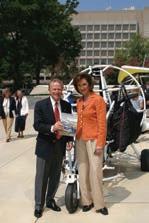
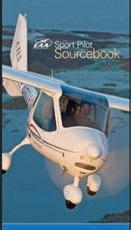
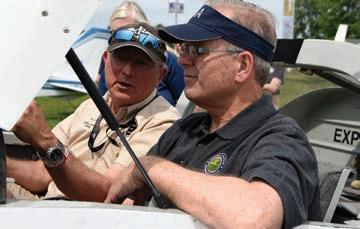
From left to right: Former EAA Chairman and President Tom Poberezny poses with former FAA Administrator Marion Blakey in front of the first light-sport aircraft at FAA Headquarters in 2004; EAA’s Sport Pilot Sourcebook; EAA Safety Committee member and columnist Paul Dye educates former Acting FAA Administrator Dan Elwell on the advantages of low-cost avionics in experimental amateur-built aircraft at AirVenture 2018; Former Acting FAA Administrator Billy Nolen speaks at AirVenture 2022, announcing the Agency’s intent to release a proposed rule the following year.
PHOTOGRAPHY
hours’ solo versus 10, and a shorter cross-country, among other requirements. Operations in B, C, or D airspace can either be trained initially or added on after certification via endorsement. With Sport Pilot 2.0, the same applies to night flying.
While precious few students complete training for any certificate in the minimum time, EAA has been training pilots in our three-week Sport Pilot Academy in an average of 35 hours. The FAA estimates that the national average training time for a private pilot is around 75 hours. This is very much a “your mileage may vary” situation, but a no-frills sport pilot curriculum at a nontowered airport without add-on endorsements saves at least a dozen hours over private pilot. This in turn shrinks down the real-world calendar days needed for training, with more emphasis on core skills.
With this in mind, the sport pilot certificate cuts down on training time and costs significantly. The minimum time is half that of private pilot, and many students may see real-world results that match this ratio. Despite this, the sport pilot certificate will provide a fulfilling recreational flying experience for many. Sport Pilot 2.0 is therefore half the time, half the cost, and all the fun! We are excited for a new era
The sport pilot certificate cuts down on training time and costs significantly. The minimum time is half that of private pilot, and many students may see real-world results that match this ratio.
in a ordable access to aviation, available soon at nearly every flight school.
Enthusiast Pilots, Enthusiast Instructors
With added utility to the sport pilot rule comes similar added utility to the sport pilot certificated flight instructor (CFI-SP) certificate. The usefulness of this certificate, issued under 14 CFR Subpart K, is set to climb steeply with Sport Pilot 2.0.
Sport pilot instructors may be compensated for instruction, but they may only o er training toward a sport pilot certificate and associated endorsements (dual received from a sport pilot instructor is invalid for higher ratings except in specific circumstances). In exchange, the requirements for earning this level of instructor certification are appropriate to the level of certificate sought and less expansive than the traditional flight instructor certificate.
The prerequisites for a CFI-SP in an airplane continue to be, broadly, (1) hold a sport pilot certificate at minimum, and (2) log at least 150 hours’ total time, with specific requirements therein. Beyond that, you must be trained and pass the Fundamentals of Instructing test, knowledge test, and checkride, similar to a traditional CFI. There is no prerequisite for an instrument rating or commercial certificate, and the medical requirement is the same as sport pilot — a valid driver’s license.
While the certificate is more limited than a traditional CFI, it has the potential to create an entirely new cadre of instructors who teach part time and yet have a full-time level of enthusiasm for teaching. Sport pilot and sport pilot instructors are outside of the ordinary career path for a full-time pilot. Neither lie on the road directly to a seat in a corporate jet or an airliner. This means that the next generation of sport pilot instructors will gain the certificate purely for the love of aviation, and they will be teaching students who are learning purely for the love of aviation. This is undeniably the bedrock of a positive learning environment.
Like the sport pilot certificate, the sport pilot instructor certificate has existed for the past 20 years but has
WELCOME TO PENFED
A Note on Aircraft Categories
The aviation community often uses “LSA” as a catchall for any aircraft eligible for a sport pilot to fly. It is important to clarify that a sport pilot can fly aircraft of any category that meets the criteria. For example, a Cessna 172 meets the definition in that it is a four-seat aircraft that stalls below 59 knots clean and meets the other requirements, but it is not a light-sport aircraft built to consensus standards. It is a standard-category aircraft. The maintenance and certification rules unique to LSA do not apply to a 172, nor may a 172 be recertified into the E-LSA category.
The LSA rules govern new aircraft specifically built to the rule, even though the definition of LSA serves to define which aircraft a sport pilot may fly.
been hampered by available aircraft. With Sport Pilot 2.0, a sport pilot instructor will be able to earn the certificate and teach in just about any popular training aircraft.
Less Time, Same Standards
While we trust most readers are excited about “right-sized” prerequisites and curricula for light GA certificates, we know that some may instinctively question whether these reduced-hour requirements are enough to produce a new generation of pilots who meet the high and ever-improving safety expectations of modern aviation.
It is understandable that some GA veterans may ask this question. The answer is simple: Two decades of sport pilot experience indicates that while the time requirements may be di erent for Sport Pilot 2.0 than traditional pilot and instructor certification, the standards are not. A candidate for any certificate must meet the standards of the certificate sought, both to their instructor and during a practical test conducted by an examiner.
The crucial point is that any certificate or rating is a license to learn. The
difference in the baseline number of instruction hours between a private and sport pilot is miniscule within the context of even a few years spent in GA.
What matters far more is quality type and scenario-specific training, no matter what certificate a pilot possesses. EAA, along with our partners across the GA world, will continue to aggressively support this type of training and proficiency.
Light-Sport Category
So far, we have been discussing the pilot certification side of MOSAIC, which is certainly the most hotly anticipated part of the rule for most EAA members. But equally exciting to the future of aviation is the aircraft certification reform included in the rule. New aircraft are on the way!
The original LSA rule proved that safe, modern aircraft could be certified with a minimum of FAA oversight by using industry consensus standards and simple forms of validation. Now, the light-sport category is set to deliver far more capability. For years, high certification costs have been cited as a barrier to a ordable ownership of new aircraft. The new Part 22 (light-sport category
With LSA 2.0 there are more opportunities for the training fleet to be refreshed with affordable new aircraft, and for new factory-built aircraft for private owners to bridge the gap between E-AB and full Part 23 certification.
aircraft) substantially cuts these costs for any aircraft meeting the new definition: a stall speed in landing configuration (V S0 ) of 61 knots calibrated airspeed; four seats, constant-speed propellers, and retractable landing gear allowed; and no restrictions on powerplants. This definition covers most of the GA fleet,
Taking Advantage of Sport Pilot 2.0
By Michael Chang, EAA Lifetime 1109992
I started learning to fly in 2012 at Trade Winds Aviation flight school in San Jose, California. I spent most of my hours learning to fly in a REMOS GX light-sport aircraft. I earned my sport pilot certificate in 2015. I built a Zenith CH 750 Cruzer in 2022, and after moving to Las Cruces, New Mexico (yikes, high density altitude), I have been flying it ever since.
When it would come time for my biennial flight review (BFR), I always traveled to Phoenix, Arizona, to attend Fly Eagle Sport flight school because it was the only one that had REMOS GX aircraft and could do a biennial flight review for me as a sport pilot. This past October my most recent BFR was due, but when I contacted Fly Eagle Sport, I was informed that its entire fleet of REMOS aircraft had been grounded.
Not wanting to wait until the issue was resolved, and because MOSIAC was now in e ect and I was now permitted to fly a Cessna 172, I contacted my local flight school and asked if I could have an “introductory flight” in a Cessna 172 and then a BFR. It all worked out. I saved money by not having to travel to a flight school in another state, I gained a new experience by flying a di erent aircraft, and my local flight school got more business.
As the new president of EAA Chapter 1570 in Santa Teresa, New Mexico, my first technical presentation at our monthly meeting was “MOSIAC — What It Means to Older Private Pilots.”
including multiengine airplanes. The result is a lot of room for continued innovation.
This directly supports an industry near and dear to the hearts of EAA members: kit manufacturers. With the original LSA rule, kit manufacturers started o ering factory-built aircraft, with design and production experience gleaned from years of supporting the amateur-built market. Companies not willing to deal with the hassle of Part 23 certification found a niche in LSA for selling completed aircraft. Now, that process is set to be repeated with a set of expanded design parameters.
Additionally, along with factory-complete special light-sport aircraft (S-LSA), there are experimental lightsport aircraft (E-LSA). E-LSA can be built from kits that are based on S-LSA. Unlike experimental amateur-built (E-AB) aircraft, E-LSA have no 51 percent rule and are eligible for any level of commercial assistance. They also have a minimum five-hour flight test period. In exchange for this flexibility, E-LSA must be built as direct copies of the S-LSA design, though they may be modified after certification.
Another unique feature of the LSA rule is that an owner can recertify an S-LSA as an E-LSA. By accepting the
limitations of the experimental category, the aircraft can be taken directly into a category that allows for owner maintenance, modification, and parts substitution. Many owners of standard-category aircraft wish there was a rule that allowed something similar for traditional legacy aircraft, but it already exists for S-LSA.
With next-gen light-sport there are more opportunities for the training fleet to be refreshed with a ordable new aircraft, and for new factory-built aircraft for private owners to bridge the gap between E-AB and full Part 23 certification.
LSA ≠ Sport Pilot Eligible
You probably caught something in the last section: The definition of a lightsport aircraft for either S-LSA or E-LSA certification is di erent than the eligibility requirements for sport pilots. This is new, and it’s new since the 2023 MOSAIC draft rule. This means there will be light-sport category aircraft on the market that will require at least a private pilot certificate to operate.
This is a new concept for the sport pilot community, as sport pilots and LSA shared a common definition in the original 2004 rule. While unlinking these rules created some
By Aviators
1923 Waco restored by Tempest Founders
Sport Pilot Milestone: Soloing With MOSAIC
By Emme Hornung, EAA Publications Production Coordinator
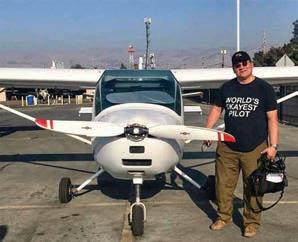
MOSAIC/Sport Pilot 2.0 went into e ect in October 2025, and we’re seeing sport pilots coming out of the woodwork because of it.
Lorn M. Dennis, EAA 1537823, of Missouri is among the first student pilots to take advantage of the new Sport Pilot 2.0 rules after soloing in a Cessna 172 on October 22, 2025, the day the rule went into e ect. This milestone has been a dream for Lorn for decades, and MOSAIC has made it attainable.
Lorn had always been interested in building an airplane, and a trip to Oshkosh for EAA’s fly-in convention in the 1980s inspired him to take the next step into his aviation journey. “I had taken a trip to Oshkosh with my son and saw all the experimental aircraft I was interested in building. At the time it was a Volksplane, and I had bought the plans but never did anything with it,” he said.
He had even started flight training to work toward his private pilot certificate, but in a tale as old as time, life put some roadblocks in the way of Lorn’s interests, and he had to put building and flight training on hold.
“But I was always looking to the skies,” he said. “Now that I retired from the fire department, that gives me a little more time, and I have a little more money now that I’m older. It was time to do something about it before it’s too late.”
Lorn first found his way back to homebuilding.
“About three and a half years ago I bought a partially completed [Zenith] project from a gentleman out in Wichita. He was an Air Force airman, and he was changing duty stations and couldn’t take it with him. It’s what I’ve been looking for since the factory is close to me, and I ended up purchasing it,” he said.
Getting closer to the finish line with the Zenith build, he knew he’d need a pilot certificate if he wanted to take it o the ground. And because Sport Pilot 2.0 was on the horizon, he started seeking out CFIs who would train him as a sport pilot.
“I’m 6-foot tall and 250 pounds. There’s not a lot of [light-sport aircraft] that me and an instructor could fly in and have any usable amount of fuel, and there weren’t a lot of LSAs in the area that were available to rent as a student,” Lorn said. “So, [Sport Pilot 2.0] really opened up a wider variety of aircraft. And, of course, as everyone knows, the C-172 is the most popular aircraft at training schools, and now that a sport pilot can fly those, it really helped out.”
In September 2025, Lorn found Tyler Stine, a local CFI and student at the University of Central Missouri’s aviation program. Tyler hadn’t been aware of the impending changes from MOSAIC
until Lorn reached out, but after looking into it, he was all in, and Lorn became his first student seeking a sport pilot certificate.
“It just all kind of came back. I was a lot rusty, but Tyler’s been pretty patient with me,” Lorn said. “But we got in the hours, and he was comfortable with my flying capabilities and endorsed me to solo.”
“The first solo you have with each student as a flight instructor, you get pretty nervous,” Tyler said. “But this one I didn’t think twice about.”
After 12.1 hours of dual instruction, the sportpilot-to-be Lorn soloed and was pilot in command of a Cessna 172 on the first day he was eligible to. Tyler has discovered the potential that Sport Pilot 2.0 has for CFIs like him. “I mean, a lot more people are going to be flying. I feel like everybody’s going to get a lot busier,” he said. “And it’s going to help people out in my situation who are trying to get their hours and go to the next step.”
Lorn completed the rest of his ground school studies over the winter, passed the written test, and completed his checkride on March 28, 2026. “It was an amazing experience, and I’m looking forward to completing my Zenith for future adventures,” he said.
True to the nature of the sport pilot certificate, Lorn looks forward to the pure fun of recreational flying. “Me and the wife, traveling around to little airports in Missouri. Hopefully at some point I’ll be able to fly my Zenith o my own property. I’ve got about 6 acres, and I’m hoping that I can just get up there and have fun. Low and slow as they say,” he said. “If we go on a longer trip, I’ll probably end up renting a 172 or a Piper Cherokee or something like that.”
Dreams like Lorn’s that can now be attained and realized because of MOSAIC are exactly why EAA spent so much time and e ort advocating for these changes. I’d say let’s welcome a new era in recreational aviation, but it would seem it’s already making its way through the door.
Has MOSAIC/Sport Pilot 2.0 allowed you to follow your recreational aviation dreams? Tell us how at EAA.org/Submissions. Learn more about what MOSAIC can do for you at EAA.org/MOSAIC.
understandable confusion in the early days following the release of the rule, it is ultimately a good thing. Pilot and aircraft certification are two di erent concepts, and allowing LSA certification to encompass four-seat aircraft up to 61 knots VS0 dramatically simplifies the certification of the light general aviation aircraft of the future. Aircraft up to the size of small twins will be eligible for S-LSA certification, bringing new designs to market more quickly and at a minimum of certification cost.
If you saw the 61-knot figure in initial reports on MOSAIC and are disappointed that it does not apply to sport pilot as well, that is certainly understandable. It is important, however, to understand just how far we’ve come with sport pilot. We started with a maximum weight of 1,320 pounds and a maximum stall speed of 45 knots VS1
• Base Station / Mobile: IC-A120B —
Moun
IC-A120B
in the 2004 sport pilot rule. We then went to no maximum weight and a VS1 of 54 knots in the 2023 NPRM. In our comments we requested raising the speed to at least 58 knots, and the FAA finalized the rule at 59 knots (along with four-seat aircraft, retractable gear, adjustable-pitch propellers, and more). A major win by any measure. As sport pilot continues to prove itself as a pilot and medical certification rule, there will likely be more advocacy wins in the future.
An Easter Egg for Homebuilt Owners
E-LSA has long had the advantage of being the only kitbuilt aircraft for which a subsequent owner could become certified to perform the annual condition inspection. With the completion of a weekend course, owners of E-LSA could earn the light-sport repairman certificate with an inspection rating (LSRI), which allowed the owner to perform the condition inspections on any E-LSA that they owned (as the original builder or otherwise). Many nonbuilder owners (or second owners) of traditional E-AB homebuilts have been requesting a similar program to earn inspection privileges for their aircraft, especially
with a lack of A&P mechanics willing to sign off condition inspections in some areas.
MOSAIC grants that wish. Now, holders of an LSRI certificate can perform the condition inspections on E-ABs in addition to E-LSA. That’s all E-AB, meeting the new LSA definition or otherwise. The only requirement is that the certificate holder must own the aircraft. Primary builders of E-ABs may still earn the traditional E-AB repairman certificate without taking the LSRI course.
A Long Road
MOSAIC started in a Kansas City meeting attended by EAA Chairman and CEO Jack J. Pelton and Vice President of Advocacy and Safety Sean Elliott in 2016, where EAA and FAA leaders began to explore ideas for expanding light-sport aircraft and sport pilot, as well as other ideas to bring the advantages of the thriving homebuilding movement to other facets of GA. After that initial meeting, EAA and the FAA established a regular cadence of calls and meetings that laid the foundation for MOSAIC.
Through nearly 10 years, seven FAA administrators, and four presidential
administrations, EAA has doggedly pursued the goal of reforming sport pilot and LSA. Over time the rulemaking project went through several evolutions, from an all-encompassing rule that included drones and other political priorities, to a focused rule solely dealing with sport pilot and LSA.
There were plenty of times when it looked like the rule would never see the light of day. At the start of AirVenture 2022, MOSAIC looked to be all but dead. During the course of a crucial visit by the FAA acting administrator and numerous other FAA and Department of Transportation o cials, EAA reinforced the necessity of the rule and its promise for the GA industry, leading to an announcement on the Thursday of that year’s convention that there would be a notice of proposed rulemaking the following year.
The draft rule arrived in 2023 as promised, and EAA led industry comments supporting the proposal, with plenty of feedback to make the rule even better.
All along the way, there were steadfast champions for the rule from top to bottom at the FAA who saw MOSAIC through. These were the people who wrote the rule, pitched it to leadership,
and prioritized it to move through the rulemaking process. You don’t know their names, and they would never accept public gratitude, but su ce it to say that general aviation has indispensable supporters within the FAA, without whom MOSAIC would have never been possible.
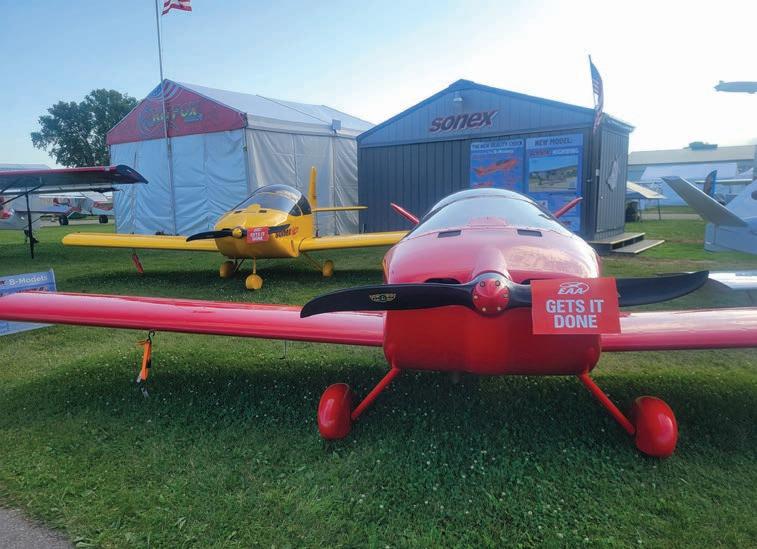
EAA’s advocacy and safety team has from time to time used the slogan “EAA Gets It Done.” Following the ethos set by EAA founder Paul Poberezny that “EAA is an organization of doers,” it is a celebration of EAA’s style of advocacy, which places a premium on building long-term relationships and engaging in collaborative advocacy projects with the FAA and our partner associations, that often takes years to pay o . It is a style of advocacy that does not often lend itself to flashy announcements or large public campaigns. However, we can announce with excitement, pride, and gratitude to all involved: MOSAIC is DONE.
OSH 2026
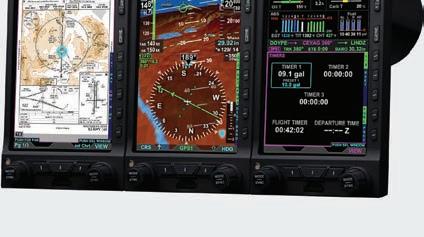
Bring Your Engine Data To Life
Maximize performance and minimize costs with Aspen’s Evolution Engine Instruments. Our system converts raw data into actionable intelligence for smarter maintenance and fuel savings in 4- or 6-cylinder single engine aircraft—turbo or normally aspirated. Integrated directly into Aspen MAX Multi-function Displays (MFD), the system provides customizable alerts and historical analysis to help reduce unscheduled maintenance costs. Get more from your cockpit displays with Aspen.
A LEGACY BUILT ON VERSATILITY
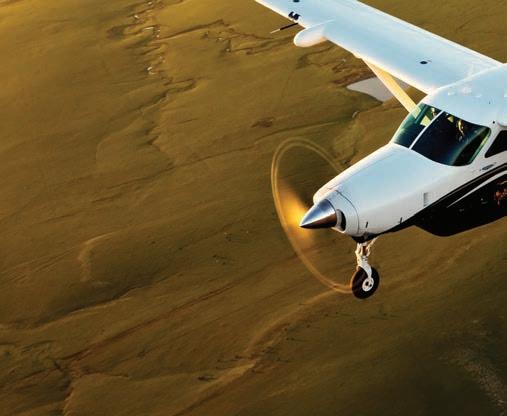
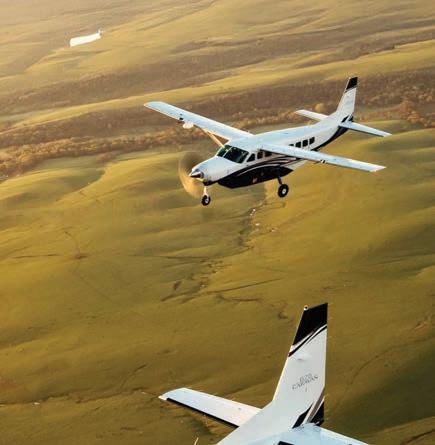
More than 3,000 Cessna® Caravan® turboprops have transported families and freight to the most remote and rugged destinations in the world. Now, a Caravan® turboprop is waiting for you and your next great adventure.
Explore more at cessna.com/caravan
BOOTH #78
Filling Your AirVenture Itinerary
Filling Your AirVenture Itinerary
The ultimate guide to EAA’s fly-in convention
By EAA Staff
CONGRATULATIONS. YOU’VE MADE IT to Oshkosh! But getting here was just the first step — and we can promise you will be taking many more steps before you leave.
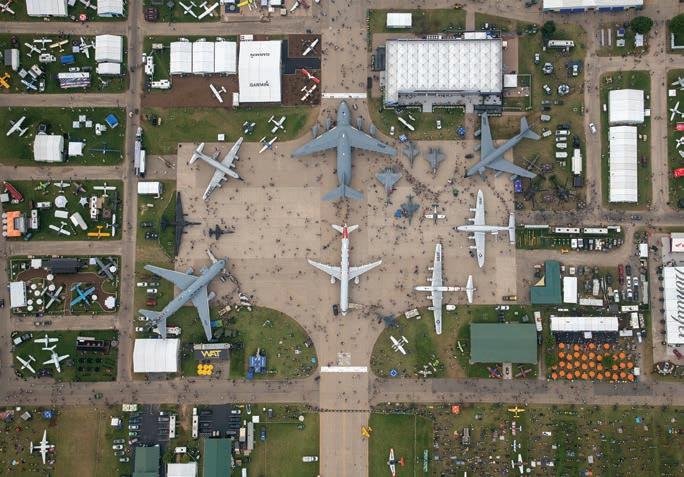
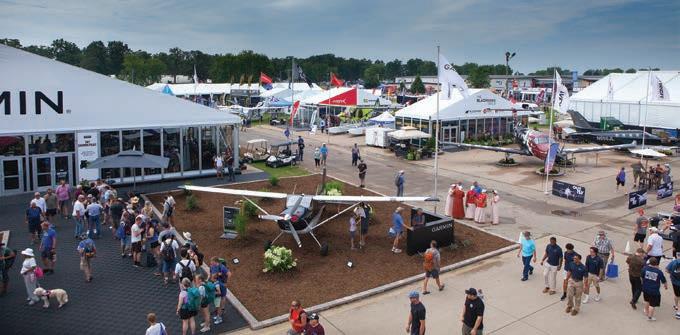
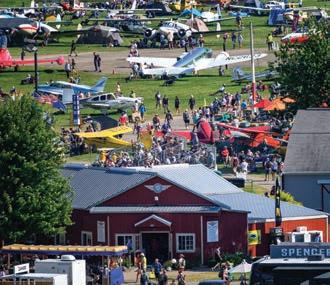
Spanning more than 1,500 acres, welcoming more than 10,000 visiting airplanes, and including endless activities to enjoy, AirVenture can be overwhelming to say the least. But the
incredible part of Oshkosh is you get to fill your own itinerary. You don’t have to see everything (though, you may want to try!), but you should absolutely see the parts that fuel your curiosity and excitement for aviation. Lucky for you, as your guide, we’ve put together this virtual tour to help you find what you’re looking for.
The grounds can best be understood as a city with various neighborhoods that each have their own unique o erings. Keep in mind, when looking at the o cial map on pages 66 and 67, you’ll see north is to the left on the map, not the top. That being said, let’s start at the northmost (leftmost!) neighborhood on the grounds.
The North 40
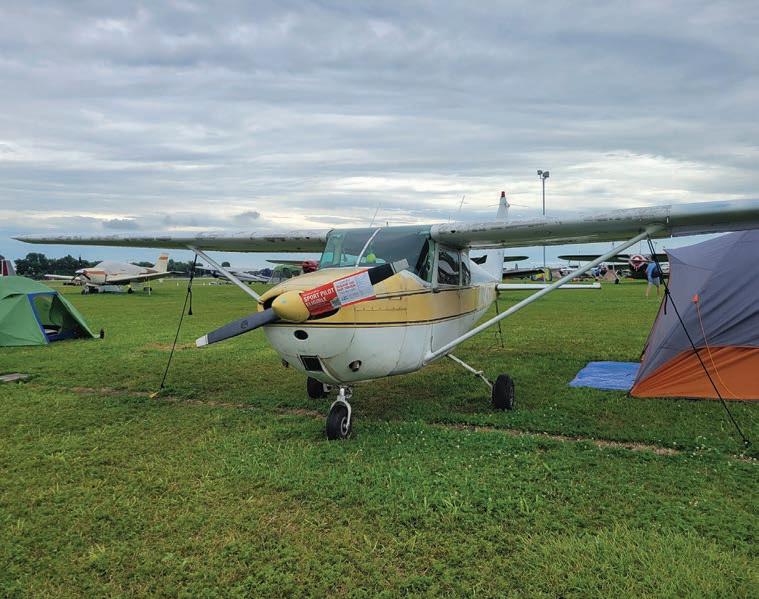
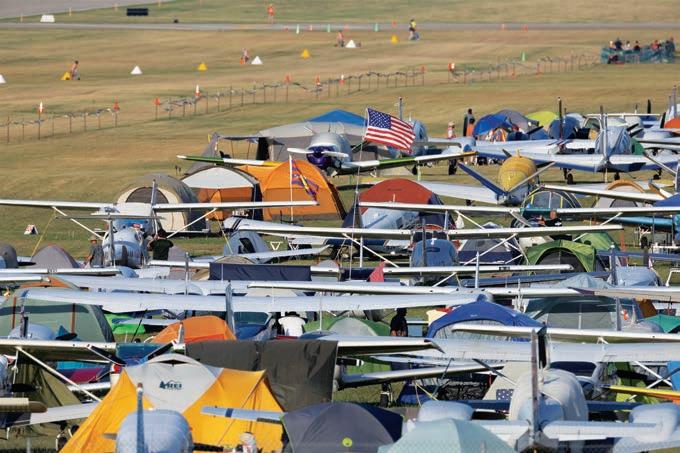
First up is the north end of Wittman Regional Airport, where you find an overwhelming sea of airplanes that make up the North 40. Whether it’s your first time at Oshkosh or you’ve come for years, it’s hard not to stare in awe at the 5,000 airplanes that, with their accompanying tents, seem to cover every little bit of the color spectrum, not to mention the grass. At first you’ll struggle to make out individual types as the rows run together, seemingly endlessly. After an adjustment period, you’ll make sense of things and start to see some familiar airplane faces, and probably some unfamiliar ones, too.
Take some time to chat with the aircraft owners; a great way to meet fellow enthusiasts and hear unique stories is to stroll through the rows of aircraft in the North 40 and other camping areas. Each of those aircraft was flown here by someone, and each of them has a story.
Heading farther east, we come to a gate. Despite already seeing thousands of airplanes and their pilots, we’re still at the beginning of our journey, not the end of it.
Warbirds
As we continue east, we come to the Warbirds area, home of our EAA Warbirds of America division. Always
popular amongst newcomers to the aviation world, this is the home of former military aircraft that are now owned and operated by civilian pilots.
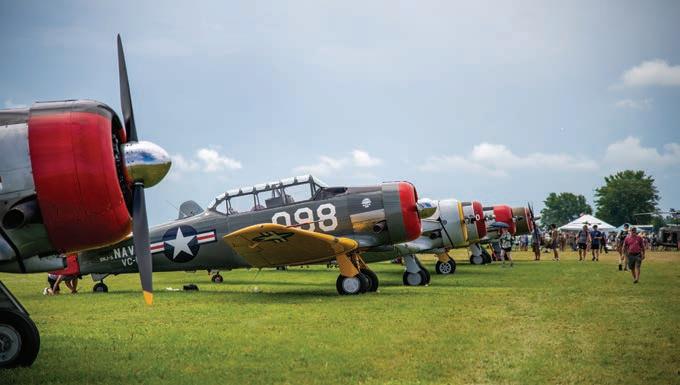
The warbirds are organized broadly by role and type, in typical structured military fashion, fittingly enough. First up are the L-birds, pristine examples of liaison aircraft dating back as far as World War II. They share a border with our reenactor camp, home of dedicated history bu s who appear to be transplants from the 1940s. As we progress through Warbirds, we’ll arrive at the home of the aircraft we call “Red Stars.” These are foreign warbirds, mostly trainers, including many Chinese Nanchang CJ-6s, along with their cousins from the former USSR, the Yakovlev Yak-18s and Yak-52s.
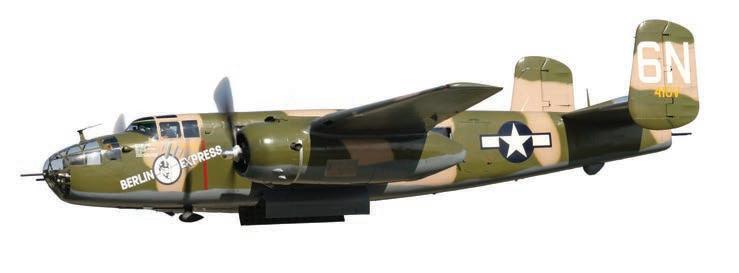
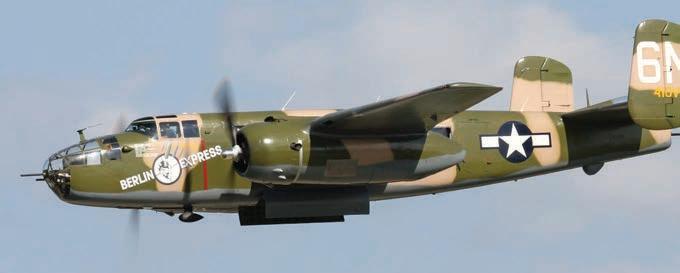
Continuing on, we come to the Beech T-34s, along with the North American T-28s, and countless examples of the many variants of the iconic T-6 Texan. As we continue our journey, trainers give way to transports and bombers. Here you’ll find an eclectic mix of everything from Cessna UC-78s and Beech C-45s to A-26s, B-25s, and C-47s. Depending on the year, a Fairchild C-123 or maybe a flying boat, like a PBY or Grumman Albatross, will call this spot home for the week. At the east end of Warbirds,
we enter the jet age. From the Lockheed T-33 and North American F-86 to Cold War spoils like the Soviet-era L-29 Delfín and L-39 Albatros trainers and MiG-15 fighters, the variety is remarkable.
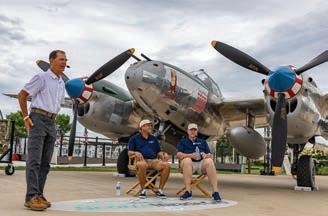
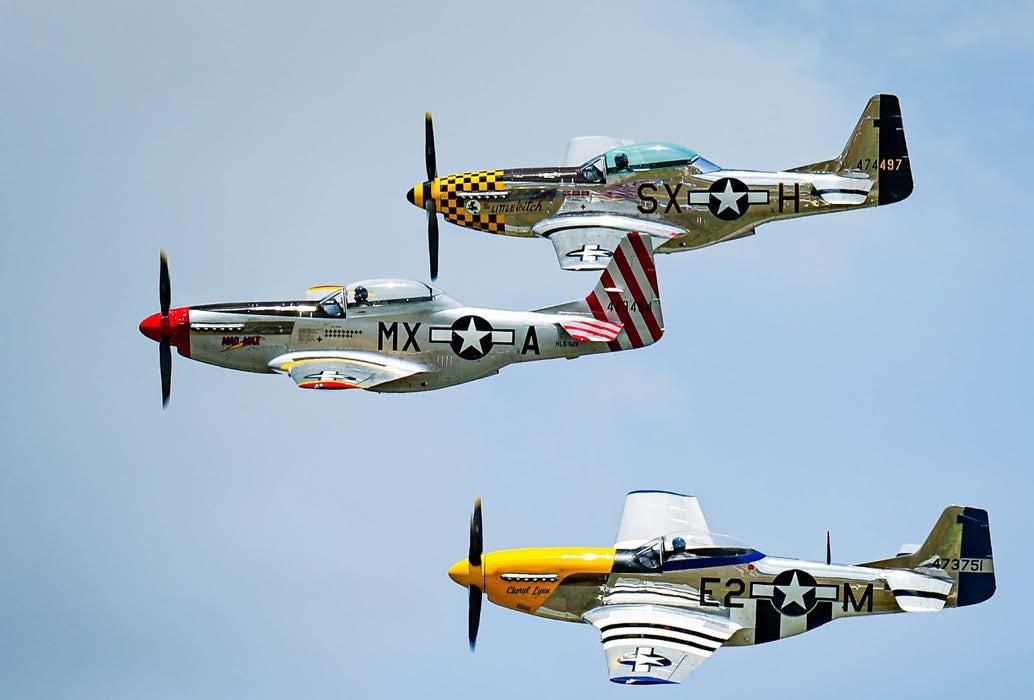
Moving on from the jets, as hard as that can be to do, you’ll find yourself immersed in naval aviation, walking among storied classics like F4F Wildcats, F4U Corsairs, TBM Avengers, and maybe a Dauntless or Helldiver. At this point, we’re headed back to the west, and reaching an area known as Fightertown. This is where you can find a score or more of P-51 Mustangs, in addition to a Yak-9, a couple of P-40s, a P-38 or two, and potentially a Spitfire.
Before continuing to the next neighborhood, hop on the Warbirds Tram Tour for an engaging 30-minute tour of scores of aircraft calling this area home for the week. Learn more about specific aircraft through the daily Warbirds in Review presentations, where you’ll hear the legendary stories of visiting aircraft and often the veterans who flew them.
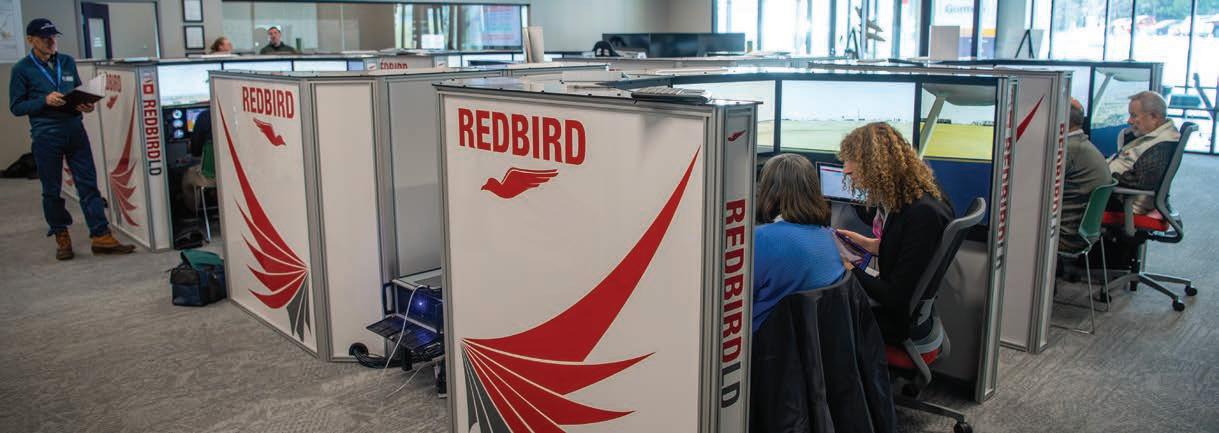
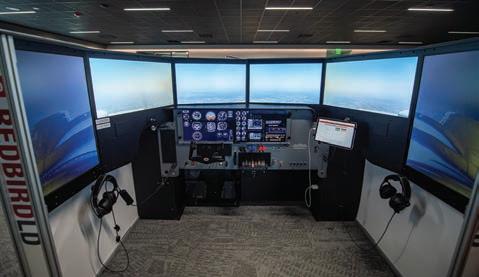
And for young aviation enthusiasts, the Warbirds Youth Education Center is where kids can try their hand at flying the P-51 Mustang and the F4U Corsair on one of five Redbird flight simulators.
Homebuilts
If we head south, we get to the airplanes that started it all for EAA — homebuilts. Starting on the west end of the area, there is a campground that may remind you of the North 40, with one key di erence — all these airplanes were painstakingly built by EAA members. Across from homebuilt camping, you’ll see a sea of Van’s Aircraft RVs.
Zigzagging back to the east takes us into homebuilt showplane parking, where proud builders show o their prized projects. You’ll see everything from early classics like Pietenpols and Baby Aces to high-end “fast glasses” like Glasairs and Lancairs. You’ll see Kitfoxes, Thorps, Stardusters,
GlaStars, and even a Dyke Delta or two. Then you’ll come to the canards, largely classic Burt Rutan designs like the VariEze and Long-EZ, but you’ll also spot some Cozys and Velocitys in there as well. And you’ll have the chance to learn about some of these aircraft from the proud builders themselves through daily Homebuilts in Review presentations.
A tour of the Homebuilts area is a monument to perseverance. Anyone can build an airplane, but it takes a special blend of dedication, patience, support, and encouragement to see the project through to the finish. We can help with the support piece; on the south end of Homebuilt Aircraft
Camping, you’ll find the Forums Plaza where daily forums and workshops with hands-on lessons will build your knowledge and skill on topics like aircraft restoration, composite construction, TIG welding, fabric covering, and more. You can walk into a workshop never having held a power tool and walk out with the confidence to get started on your dream
homebuilding project. Find the full daily schedule of presentations, forums, and workshops in the O cial Visitor’s Guide.
Aviation Gateway Park
If you head a bit south to Aviation Gateway Park, you’ll find an outdoor exhibit area featuring leading universities, flight schools, and aviation industry leaders.
In addition to outdoor exhibitors, the Education and Career Center will feature colleges, universities, and tech schools that o er programs in aviation and STEM-based curriculum. Attendees are able to learn how and where they can take the next step into their aviation adventure. It’s also the ideal place for aspiring aviators to network and interview with a variety of leading aviation companies and organizations with aviation-focused career opportunities.
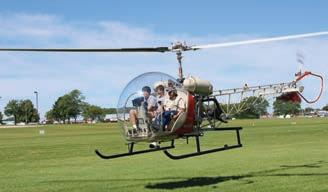
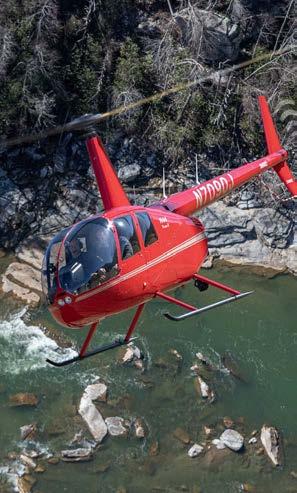
New in 2026 is the Vertical Lift Center, created to showcase cutting-edge vertical lift technology, promote education, and support workforce development in the rapidly evolving rotorcraft and advanced air mobility sectors. Visitors can interact with static aircraft displays and exhibits in partnership with the Robinson Helicopter Co. and Vertical Aviation International.
Completing this section is the WomenVenture Center, located
Four Leading Brands. One Complete Cockpit.
The Dynon Group unites leading avionics brands, offering a comprehensive product line for the general aviation fleet. Whatever your mission—VFR or IFR, certified or experimental—we have a solution for your aircraft. Visit our Booth inside Hangar D, #4034 - 4035
PHOTOGRAPHY BY CHRIS MILLER, JESSICA GOEBEL, AND ANDREW ZABACK
directly across Knapp Street from Aviation Gateway Park. This spot features weeklong programming to celebrate a passionate community of women in aviation, with this year’s theme of Design-Build-Test paying tribute to the spirit of innovation, hands-on creativity, and perseverance that fuels aviation. A schedule of events includes the traditional WomenVenture activities: Ice Cream Social, Annual Group Photo in Boeing Plaza, Power Lunch at Theater in the Woods, and an evening program at Theater in the Woods, plus daily presentations.
Celebration Way and Boeing Plaza
Continuing south on Knapp Street, you’ll hit the aptly named Celebration Way that runs from our Main Gate at the west end to the area known as Boeing Plaza at the east end. Boeing Plaza is where you’ll see the biggest aircraft on the grounds such as Southwest’s Independence One, helping to celebrate the 250th anniversary of the United States. You’re also likely to see C-5s and C-17s alongside an A320 or a 737, frontline jets like the F-22 and F-35, in addition to B-17s, a B-24, or B-29, among many others.
Surrounding the plaza, you’ll find the main outdoor exhibit area, home to most of the 850-plus exhibitors who travel from around the world to show o their latest aircraft, avionics, pilot supplies, you name it. And take a look at the control tower as we pass by, in
particular the banner proclaiming it the world’s busiest. With as many as 3,000 aircraft movements per day, they’re not kidding.
Get back on Celebration Way and start heading west to the Four Corners; you’ll find all sorts of resources for getting involved in aviation. At the EAA Member Center, you can get assistance from EAA sta members to find a local EAA chapter back home, explore EAA member programs and benefits, and even talk to the experts from EAA’s advocacy team on the latest in aviation advocacy and safety. Also at the Member Center, each day you’ll be able to meet some of the talented air show performers who dazzle the sky above Oshkosh.
PHOTOGRAPHY BY CRAIG VANDER KOLK, CONNOR MADISON, BRETT BROCK, JESSICA GOEBEL, AND TOM CROCKETT
Directly across the way is the EAA Learn to Fly Center. If you’ve ever dreamed of flying, this is the place to chat with certificated flight instructors, experienced pilots, and those fresh out of training to help answer
If you have a young aviator with you, you’ll want to stop at the Youth Welcome Center to grab a special youth-focused map to make your family’s day smooth and to learn about all the di erent youth programs EAA
rivet their own keychain, and sign up for a free Young Eagles flight in their local area.
The Four Corners rounds out with the EAA Merchandise Center, one of the many spots to pick up a souvenir to remember your trip to Oshkosh by. And if this merch spot doesn’t have what you’re looking for, make your way to the EAA Wearhouse just south of the tower. It’s the largest EAA merchandise spot on the grounds, and it’s
Corner, where authors covering the spectrum of aviation — astronauts to historians and adult nonfiction to children’s books — can connect one-on-one with readers and sign book copies.
Just a touch west, you’ll come upon Exhibit Hangars A-D, where you’ll find even more exhibitors to interact with, make purchases, and discover new products. Whether you want to try out some new technology or buy an entire aircraft, you can do it at AirVenture. On top of that, many exhibitors participate in the weeklong Aviation Job Fair, so if you’re in the market for a new job or are looking to break into the industry, bring a few copies of your résumé!
EAA Aviation Museum
Now, keep heading west and locate the Bus Park just north of the main admission area; you’re going to want to catch a ride to the museum. This area is easy to miss, but don’t because you’ll find the EAA Aviation Museum, the EAA Education Center, and Pioneer Airport. The museum is home to more than 200 historic aircraft, including such rarities as the prototypes for the Taylor Aerocar, Van’s RV-1, and the Breezy; one of four XP-51s (the oldest P-51 in existence); and the remarkably sleek and retro-futuristic 1938 Bugatti 100P racer. Like AirVenture itself, the museum o ers the chance to see a tremendous variety of aircraft, in addition to other supporting artifacts, interactive exhibits, and numerous forums and film presentations.
Adjacent to the museum is the EAA Education Center. Split into two parts, here you can find the Pilot Proficiency Center and the Youth Education Center. The Pilot Proficiency Center features a stateof-the-art skill building and training center for general aviation pilots. It combines relevant safety forums with challenging simulator training sessions that address key flight safety issues. The facility focuses on improving pilots’ overall aeronautical
decision-making skills. The Youth Education Center brings aviation-centric experiences to the EAA Aviation Museum year-round. The 15,000-square-foot Youth Education Center provides youths, their parents, and their teachers access to interactive and project-based activities that inspire and nurture the next generation of aviators.
Facing the museum is Pioneer Airport, a grass airstrip with several period hangars that house another 40 of the museum’s display aircraft. We use this airstrip year-round to provide museum visitors with rides in vintage biplanes and to o er free rides to kids as part of the EAA Young Eagles program.
During the fly-in, part of Pioneer becomes a heliport, where we operate a fleet of vintage Bell 47 helicopters that take visitors on aerial tours of the grounds, and this is also where a number of visiting helicopters are parked (and an occasional Goodyear blimp when we’re lucky!). Also located at Pioneer is the RC Flying Field. Here you can watch radio-controlled model aircraft zip around, or you can bring your own model to join the fun.
The majority of Pioneer, however, is transformed into KidVenture this week, which, as the name makes clear, encourages children and teens to explore several areas of aviation. It’s a can’t-miss spot being the largest area at AirVenture dedicated to young
people with hands-on fun like aircraft building stations, flight simulators, life-size replicas of space capsules, and more.
Now, get back on the bus to the main convention area. Believe it or not, we still have more ground to cover.
Fly Market and Aeromart
Upon entering the Main Gate again, immediately head south to the Fly Market. This outdoor market has a vast array of products, aviation related or not. Here, you’ll find leather
PHOTOGRAPHY BY CONNOR MADISON, DAVE SWARTZ, AND BERNIE KOSZEWA
goods to die-cast models to custom-embossed dog tags.
In between the Fly Market and Hangar D is the Aeromart, sta ed by the EAA Vintage Aircraft Association. It’s a combination swap meet/consignment sale/hangar clean-out where aviators buy and sell thousands of unused or extra aircraft parts and tools. It is a great place to find that carburetor, cylinder, fitting, fuselage, instrument, magneto, oil pump, spinner, wiring, wheel, or whatever else you’ve been looking to pick up for your own airplane. Who knows, you may just find the exact part you need to finish that lingering project or sell the scrap piece you’ve been hanging on to.
Camp Scholler
At this point, you are likely to see a fence, but don’t think our tour is coming to an end. Just outside the fence,
rich with friendly and interesting visitors, is Camp Scholler, AirVenture’s drive-in campsite area. This pop-up city boasts a population of approximately 40,000 people, and it comes with its own unique culture and happenings such as extravagant campsite setups and delicious meals prepared
PHOTOGRAPHY BY BAILEY FARRELL
Explore the G3 Vision Jet at the Cirrus exhibit on Celebration Way.
by various chapters at the Chapters Pavilion. It’s a city that never sleeps, the kind of place where friendships are forged and rekindled year after year. If the fly-in itself is a family reunion, a stay in Camp Scholler is a trip back to your old hometown, even if you’ve never been here before.
A bit farther west you’ll find the Fly-In Theater. Reminiscent of drive-in theaters, classic films to recent blockbusters are projected on a five-story-high screen as hundreds of campers and attendees cozy up for the nightly feature. Be sure to arrive in time to catch the entertaining movie introduction with special guests ranging from Hollywood stars to aviation legends, which starts around 8:30 p.m. There’s even free popcorn!
Theater in the Woods
Remember the fence? Keep going east and you’ll come to Theater in the Woods. This is home to relaxed, informative, and entertaining live programming that provides the
perfect conclusion to a busy day spent on the grounds. We have quite a lineup of notable personalities sharing presentations on topics covering the entire spectrum of aviation — NASA missions, aviation on the silver screen, military past and future, air racing, and more. Supported byM&M’S, the openair pavilion has seating for as many as 3,500 people under its spacious roof, though many more visitors bring lawn chairs and blankets to enjoy the evenings’ programs from spots adjacent to the seating area.
Vintage
Continuing east brings us to the next neighborhood: Vintage. Yes, more airplanes! This is a haven for those who love old airplanes, as the newest type you’ll see was built in 1970, and most of them are considerably older than that. Just as with Warbirds, the Vintage area is broadly grouped by type. As we head south, you’ll see the past grand champions on your left, then Antiques on your right. By definition, these are the oldest of the old, constituting airplanes built before 1945. As you meander through these rows, you’ll see Staggerwings, Stinsons, Howards, and Cubs. There will be timelessly beautiful biplanes from companies like de Havilland, Travel Air, and Fleet, and gleaming examples of rarities like the Spartan Executive or a Harlow PJC-2.
Farther south, you’ll transition from Antiques to Classics — aircraft built between 1945 and 1955. This is where you’ll find the Aeronca Champs, Cessna 140s and 170s, Bellanca
PHOTOGRAPHY BY BERNIE KOSZEWA, ALDEN FRAUTSCHY, BRETT BROCK, CHRISTINA MARSH, AND NICK MOORE
Cruisairs, and early Bonanzas. At this point, you’ll also see a number of twins, usually a stable of Beech 18s, oftentimes with a Lockheed Electra or two in the mix, and scores of Ercoupes all parked together, across from a proud group of Cessna 195s in a wellmarked area of their own.
Continuing south, there’s a loose and gradual transition from Classics to the newest of the old, the category known as Contemporary, for vintage aircraft built between 1956 and 1970.
This area is home to a wide variety of types, including early Cessna 172s and 182s, some more Bonanzas, early Piper Cherokees, Mooneys, and more.
Like Warbirds, a trip through Vintage is a trip back in time; in this
case, though, it’s one that celebrates the personal side of aviation history. You’ll have the opportunity to learn more about some of these vintage beauties during daily Vintage in Review presentations with stories of
Join or renew your membership today and get $10 o – plus you get your choice of an exclusive event shirt or hat* when you choose Automatic Annual Renewal.
When you need medical guidance, legal protection, an expert answer, and a voice in Washington D.C. fighting for your rights as a pilot — AOPA is the call you make. In the air, on the ground, and in the halls of Congress — we’ve got your back.
Antique, Classic, or Contemporary aircraft. For kids and teens, check out the Charles W. Harris Youth Aviation Center for hands-on activities, as well as Teen Night for group activities and root beer floats.
Aerobatics and Air Shows
Double back north just past Boeing Plaza, and you’ll find Aerobatics, the home base of EAA’s International Aerobatic Club. Wander through this area and you’ll see Pitts biplanes — from classic S-1s to the sturdy Model 12s with their 400-hp Russian-built radial engines. You’ll see those same big radials on Yak-54s and Yak-55s, alongside such other aerobatic mainstays as Extras, Decathlons, Christen Eagles, and more. If you’re interested in learning more about aerobatics or
how to get started, catch one of the forums in the Vicki Cruse Educational Pavilion
This general area also marks the main show center for the air shows that take place every afternoon. In addition to the exciting daily air shows, you’ll want to stick around Wednesday and Saturday evening for the spectacle that is the night air show.
Airplanes rigged with lights, smoke, and pyrotechnics; hundreds of synchronized drones; an extravagant fireworks display; and lasers to bring it all together — you won’t be able to take your eyes o the sky.
Ultralights
Now, head back toward Vintage and keep going until you arrive in Ultralights, an area better known as the Fun Fly Zone. The Fun Fly Zone is an airport within an airport, with scores of aircraft operating o its own grass runway, essentially independent of the activity that is going on elsewhere. The area is an eclectic mix of types, displayed and flown by both private owners and commercial exhibitors. It’s home to Quicksilvers,
PHOTOGRAPHY BY LEWIS BERGHOFF, LAURIE GOOSSENS, JIM RAEDER, AND CHRISTINA MARSH
Hummel Birds, Belites, Challengers, Mini-Maxes, and Legal Eagles, among many others. This area also hosts rotorcraft, including light helicopters like the Mosquito and Safari, as well as gyroplanes from companies like Magni and Calidus.
In the still hours shortly after sunrise and just before sunset, the runway is turned over to powered-parachute and paraglider pilots. Watching these slowest of flying machines is a perfect example of the pure pleasures of flight, a gentle reminder that it doesn’t have to be complicated to be fun. On Saturday morning, witness the colorful thrill of the hot air balloon launch.
On evenings without the full night air show, the Fun Fly Zone is the place to be. Twilight Flight Fest featuring STOL demonstrations, Red Bull skydivers, impressive 3D RC aircraft performances, and more are sure to keep you entertained.
The South 40
Once we’ve left Ultralights, we continue south through an area of parking that’s set aside for amphibians — Seabees, Lakes, Caravans on floats, you name it. This is also where we’re going to catch a bus, but not yet. Before we do that, we have to take a look through the South 40. As its name clearly suggests, this is the aircraft camping area that bookends the
grounds at the opposite end of the North 40.
The airplanes you’ll see run the gamut of general aviation, so if you haven’t seen it elsewhere on the grounds, you’ll probably see it here. There’s a decidedly di erent feel to this area, however, and not just because the airplanes are older, or at least tend to be. It’s quieter, more peaceful, bordered not by a city street or lots of hangars and infrastructure but by farmland and cornfields.
And speaking of peaceful, it’s time to double back and catch that bus for a trip to one of the best-kept secrets of the fly-in.
The Seaplane Base
We get o the bus after a short ride to the south and walk a few hundred yards along a grassy trail through a forest. Just about the time you start to wonder if this was a trick, you’ll step into a clearing that looks out across a well-sheltered lagoon that’s startlingly pretty, and the steel drums playing in the background transport you to paradise. You can feel time slowing down as you walk the shoreline or take a free boat tour of the lagoon, part of Lake Winnebago, that’s full of dozens of seaplanes, resting easily at anchor. You’ll see a wide range of types, from classic Piper Cubs to newer Cessna
AA A NA AND R R A NT ONTRO O BOOTH 4067 HANGAR D
PHOTOGRAPHY BY LAURIE GOOSSENS, JIM RAEDER, AND CHRISTINA MARSH
206s, and from 1930-era biplanes and burly de Havilland Beavers to homebuilt Coots and GlaStars. If it flies and floats, it’s welcome at the EAA Seaplane Base, and so is anyone who wants to spend some time at this most
serene corner of our annual fly-in and convention.
Our hypothetical tour would end with us getting back on the bus for the trip north to the main convention site, maybe to take in a movie or a forum
presentation, visit with a new old friend in the campground, or just wander the rows some more, taking in as many more airplanes as we can while the light fades.
Additional Activities During AirVenture 2026
At this point, you must be wondering, “What can’t I do at AirVenture?” or “How do they still have more suggestions?” or even “Why is AirVenture only one week with this much to do?” We get it, so whenever you’re ready to slow down and recharge, we’ve got you covered.
You’ll find a wide variety of food vendors scattered across the convention grounds serving breakfast to dessert and everything in between. We have American fast-food classics like Papa Johns and A&W, local favorites like Machine Shed and Osorio’s Latin
Fusion, and specialties like cheese curd tacos or exotic jerky.
What is a little leisure time without some entertainment? While you scarf down your food to get onto the next activity, tune into EAA Radio 96.5 FM/1210 AM to hear the latest up-tothe-minute happenings around the grounds, or crack open the daily AirVenture Today newspaper for stories and coverage on all things AirVenture.
Catch a Ride
Even if you didn’t fly into Oshkosh, there are still ways to get up in the air while attending the World’s Greatest Aviation Celebration. Rides are available in EAA’s historic B-25 and Ford Tri-Motor, and you can see Oshkosh like you never have before from the seat of one of our Bell 47 helicopters.
The North American B-25 Mitchell Berlin Express is a medium
bomber from WWII, made famous for its use by James H. Doolittle and the Doolittle Raiders. Buses leave from the AirVenture grounds to Appleton
International Airport Monday through Sunday, and tickets can be purchased in advance or at the walk-up booth in
the Warbirds area, just north of Taxiway Papa 1.
The Ford Tri-Motor was America’s first mass-produced airliner and the type is celebrating 100 years since its first flight in 1926. Flights leave from the AirVenture grounds Monday through Sunday, and tickets can be purchased in advance or at the Tri-Motor building, which is also located in the Warbirds area north of Taxiway Papa 1.
The Bell 47 is the first helicopter certified for civilian use and, with its full bubble canopy, o ers unmatched
visibility of all that happens around the grounds on a typical Oshkosh day. From the Sunday before AirVenture until the last day of the convention, tickets can be purchased at the Pitcairn Hangar at Pioneer Airport to take an unforgettable aerial tour of the Oshkosh grounds.
Salute to Veterans
In honor of our nation’s veterans, Friday is designated Salute to Veterans Day at AirVenture. The annual Parade of Veterans will take place on Friday, when all veterans in attendance are invited to meet in Warbird Alley at 1 p.m. for a special Warbirds in Review program, followed by assembly and parade departure at 1:45 p.m. The parade route will leave Warbird Alley and travel south along the flightline to Boeing Plaza, where there will be a welcome ceremony and group photo taken at 2 p.m.
In addition, the Old Glory Honor Flight will arrive around 6 p.m. on Friday carrying veterans who have spent the day in Washington, D.C.,
touring war memorials and monuments. The Missions of Glory organization of Northeast Wisconsin coordinates the flight and Washington, D.C.,
experience, which includes police escorts throughout the city. The public is invited to honor the returning veterans at Boeing Plaza as they arrive on an American Airlines charter.
The Magic of Oshkosh
Many of us often have said that our annual fly-in, whether you know it as our convention, EAA AirVenture, or just plain Oshkosh, isn’t an event we
created here, but it is assembled here, by volunteers and attendees from around the world. Because of this, the real story of EAA AirVenture Oshkosh is an entirely personal one — one that’s written during one week every year by hundreds of thousands of authors. If you’re interested in becoming part of the action, check out the Volunteer
Center in Camp Scholler to find out how you can join the 6,000 other enthusiastic volunteers!
EAA AirVenture Oshkosh is full of endless possibilities, and there is no right or wrong way to experience it. Whatever your itinerary looks like, if it fills your aviation cup, you’re doing it right. Welcome to Oshkosh!
EAA® VERTICAL LIFT CENTER
LOCATED IN AVIATION GATEWAY PARK EXHIBITS | CAREERS | EDUCATION
EAA® EXHIBITS
EAA® EXHIBITS
The Ultimate Aviation Marketplace
The Ultimate Aviation Marketplace
With more than 900 exhibitors on-site at EAA® AirVenture ® Oshkosh™ 2026, aviation innovation and inspiration is everywhere you turn. From cutting-edge technology to must-have gear, expert services to future opportunities — EAA exhibits support the industry and the lifestyle.
Whether you’re here for business, passion, or a little of both, you’ll find exactly what you need… and plenty you didn’t know you were looking for.
Make time to explore these exhibit destinations:
• Ultralight and Rotorcraft Display Area
With more than 900 exhibitors on-site at EAA® AirVenture ® Oshkosh™ 2026, aviation innovation and inspiration is everywhere you turn. From cutting-edge technology to must-have gear, expert services to future opportunities — EAA exhibits support the industry and the lifestyle.
•Fly Market Exhibit Area
•Main Aircraft Display Areas
•Aircraft Spruce & Specialty Exhibit Hangar A
•Aspen Avionics Exhibit Hangar B
•Elixir Aircraft Exhibit Hangar C
•DeltaHawk Engines Exhibit Hangar D
» International Federal Pavilion
•Aviation Gateway Park presented by Piper Aircraft Inc.
Whether you’re here for business, passion, or a little of both, you’ll find exactly what you need… and plenty you didn’t know you were looking for.
• Ultralight and Rotorcraft Display Area
•EAA Seaplane Base presented by Wipaire
Make time to explore these exhibit destinations:
» EAA Vertical Lift Center in partnership with Robinson Helicopter Co. and Vertical Aviation International (VAI)
» EAA Education and Career Center presented by Piedmont Airlines
•Fly Market Exhibit Area
• EAA WomenVenture Center
And more around every corner!
•Main Aircraft Display Areas
Scan the QR code to browse exhibitors and map your must-see stops.
•Aircraft Spruce & Specialty Exhibit Hangar A
•Aspen Avionics Exhibit Hangar B
•Elixir Aircraft Exhibit Hangar C
•DeltaHawk Engines Exhibit Hangar D
» International Federal Pavilion
•Aviation Gateway Park presented by Piper Aircraft Inc.
» EAA Vertical Lift Center in partnership with Robinson Helicopter Co. and Vertical Aviation International (VAI)
DON’T JUST ATTEND AIRVENTURE — BE INSPIRED!
Happy Anniversary! A variety of aircraft are celebrating this year
By Hal Bryan
EVERY YEAR, EAA AIRVENTURE OSHKOSH becomes home to thousands of aircraft. Some of them are here to be displayed or perform in one of the air shows, while others form the centerpieces of thousands of campsites. In some cases, though, there’s another reason, one that’s cause for specific celebration — the anniversary of an aircraft type’s first flight or introduction. At the time of this writing, we know of several types that are here to celebrate this year. So, as you walk the convention grounds, if you happen to see one of these aircraft, be sure to stop and wish it a happy birthday.
100 YEARS FORD 4-AT TRI-MOTOR
FORD’S TRI-MOTOR SERIES revolutionized airline travel by normalizing it. It wasn’t the first airliner, but it was the one that brought air travel to the masses.
Although only 199 were built, several examples remain in flying condition to this day, including EAA’s own 1929 4-AT, NC8407. Learn more about the
Tri-Motor in Emme Hornung’s feature story on page 16.
80
YEARS
POSTWAR GENERAL AVIATION BOOM
WE’RE CELEBRATING A wide range of aircraft from Aeroncas to Taylorcrafts under this banner, not necessarily because they made the first flights in 1946, but because they were part of the
“boom” that was predicted for general aviation immediately after World War II. There were more than 500,000 pilots in the United States at war’s end, and it seemed certain that all of them would
80 YEARS DE HAVILLAND DHC-1 CHIPMUNK
THE DHC-1 CHIPMUNK was designed and built by de Havilland Canada as a replacement for the long-serving DH.82 Tiger Moth. The low-wing, two-seat taildragger was a huge success, serving
buy airplanes. Sadly, they didn’t. For details, see the spotter’s guide on page 34.
the Royal Canadian Air Force, the Royal Air Force, and the Portuguese air force for decades. A ectionally nicknamed the “poor man’s Spitfire,” Chipmunks are prized by private owners today, either as restored warbirds or highly-modified Super Chipmunks used for aerobatics.
70 YEARS PIPER PA-24 COMANCHE
PIPER’S PA-24 COMANCHE first flew in May 1956, at the company’s home base in Lock Haven, Pennsylvania. The Comanche is a low-wing, all metal monoplane with retractable tricycle
gear, and Piper promised that it would deliver “the best combination of all the features you want in a high-performance business plane.” Those features included comfort, payload,
70 YEARS BELL UH-1 “HUEY” (XH-40 PROTOTYPE)
performance, beauty, economy, and safety. For an in-depth look at the airplane and its history, see the March/ April 2026 issue of EAA’s Vintage Airplane magazine.
BELL AIRCRAFT CORP., perhaps best known for the X-1, the first supersonic aircraft, started its helicopter division in 1941. Just as the company’s famed
model 47 did in the Korean War, the iconic UH-1, which started life as a prototype designated XH-40 that first flew in 1956, revolutionized rotorcraft
operations during the Vietnam War. UH-1 variants still serve the United States Air Force, Navy, and Marine Corps 70 years later.
JOHN MOODY’S ULTRALIGHT FLIGHT AT OSHKOSH
JOHN MOODY BECAME known as the “father of modern ultralights” after modifying his Icarus II hang glider to a powered aircraft with the addition of a
12.5-hp McCullough go-kart engine and flying publicly at EAA Oshkosh 1976. While his first powered flight was a year earlier in a modified Easy Riser, it was
the Icarus II, now fully restored and in the EAA Aviation Museum collection, that got the world’s attention and created the ultralight movement.
Young Eagles Mission 2.5
2.5
2.5 million and counting
By David Leiting, EAA Eagles Program Manager
THE EAA YOUNG EAGLES program has been a source of inspiration for more than 2.5 million youths. Over the course of 34 years, approximately 50,000 volunteer pilots and 2,000 EAA chapters have introduced 2.5 million Young Eagles to the magic of flight. As I often remind our volunteer network: Don’t become numb to that number. To put it in perspective, that’s an average of two Young Eagles flown every 15 minutes for 34 straight years — nonstop.
The Young Eagles “machine” has been running continuously since July 31, 1992, when our inaugural Young Eagles chairman, Cli Robertson, flew the first Young Eagle during EAA Oshkosh. Since then, those 2.5 million flights have generated countless stories that highlight the program’s profound impact on the aviation community. Visit Inspire.EAA.org/Youth and you’ll find recent examples: Young Eagles who became air traffic controllers, airline pilots who trace their careers back to their Young Eagles flight, mechanics who first engaged with aviation through a Young Eagles flight and a chapter
youth build, and former Young Eagles who now fly Young Eagles of their own.
You’ve also seen the remarkable dedication of our global volunteer network. Each year, EAA recognizes hundreds of volunteers — from chapter coordinators to exceptional ground volunteers to pilots reaching major milestones. Without this passionate community, the program would never have gotten o the ground.
One of the most unique aspects of Young Eagles, however, is the way it has shaped the EAA sta itself. Many sta members were first inspired by the program, and today they continue to support it not only in their professional
roles but also as weekend volunteers with their local chapters.
The Young Eagles program hasn’t just inspired the next generation of aviators — it has inspired the very people who help run it. Our sta believes so deeply in its mission that they don’t just talk the talk; they truly walk the walk.
When Young Eagles Grow Up
By Emme Hornung, EAA Publications Production Coordinator
In 2026, EAA’s Young Eagles program hit the next big milestone: Mission 2.5, or 2.5 million youths flown by volunteer pilots. The program’s goal is to get kids in the air and discover a passion for aviation through free introductory flights and follow-up educational opportunities, and since 1992, it has seen countless young people find inspiration to pursue careers in aviation.
In nature, fledglings usually don’t return to the nest after discovering their wings, but that’s not always the case at EAA. At our headquarters in Oshkosh, you can find 16 Young Eagles who have grown up to become full-time EAA employees, which is about 10 percent of our sta (15 percent if you don’t count the folks who had already aged out of the program when it started in 1992).
Formative Memories
For some staff members, and like many participants, their Young Eagles flight was their first time flying in a
general aviation aircraft, and some had never flown even in airliners.
EAA Aviation Museum Director Chris Henry didn’t come from a family with a flying background, but aviation always had his interest. While volunteering at an air museum just outside of Pittsburgh when he was 13, Chris was o ered a ride in a Cessna 170. “I’d never been up in a small plane. I’d never actually been up in an airplane at all, ever, at that point. I went for about a half-hour, and we flew — chasing trains and stu like that. It was just the coolest thing,” he said. “I knew right then and there that I wanted to work for a place like EAA … and make sure people had a clear pathway to be around aviation.”
Sta Photographer Connor Madison and Senior Communications Specialist Drew Stephani shared similar first flight experiences, flying over their hometown and getting a new perspective on the places they live. “It was really enjoyable,” Connor said. “I was interested in aviation to begin with, but it accelerated that, for sure.”
Drew’s flight was a bit di erent from the typical Young Eagles flight; he flew in an Enstrom Helicopter. “In the flight we went over my grandparents’ farmland, and my grandma was outside, and she was able to wave to us, which was really cool,” he said. “I remember after flying in a helicopter, I wanted to know what flying in an airplane was like. It made me more curious about aviation.”
Many Young Eagles-turned-EAAstaffers already had aviation roots planted that would be reinforced through their experience.
Bob Huddock (above) gave 13-year-old Chris (below) his Young Eagles flight in his Cessna 170. The two remained lifelong friends, and Bob even stood up in Chris’ wedding.
Connor’s role as staff photographer has opened the door to many unique flight opportunities. During the week of AirVenture, his team averages about 30 air-to-air photoshoots for EAA publications.
Drew’s dad’s friend was his Young Eagles pilot, and his dad even got to go along for the helicopter flight.
As the executive director of Warbirds of America, Kristin gets many opportunities to experience military aircraft up close, like this L-39 Albatros.
Take Warbirds
Executive Director Kristin Schaick, for example. Her grandfather was a pilot, and her father is a lifelong EAA volunteer, but her Young Eagles flight was her first flight — and a special one at that. She flew in EAA’s Ford Tri-Motor over Oshkosh the day after her 9th birthday. “It was so cool, I wanted to keep going,
and I wanted to keep flying. It sealed the deal for me,” she said.
Eagles Program Manager David Leiting also flew over Oshkosh for his Young Eagles flight, going up in a DC-3 to kick o the AirVenture 2002 air show and celebrate 10 years of the Young Eagles program. This flight strengthened a budding passion for aviation David had from attending AirVenture each year with his family and flying in a family friend’s Cessna 152.
Another staffer took off over Oshkosh from Pioneer Airport for her Young Eagles flight, and if any current sta er can say they were born into EAA, it’d have to be Print Mail Coordinator Emily Noack. Her parents, Tracy and Bauken Noack, met through their jobs at EAA; “I would not be alive today if EAA didn’t exist. My mom did fabric covering, and my dad worked on all different aircraft, so it was part of our daily life.”
Youth Education Center Manager
Alyssa Clancy also has been around EAA since a young age, first attending AirVenture when she was just 2 years old. Growing up with an aviation mechanic for a dad, she frequented air
shows and flew RC airplanes. “All of my experiences around aviation as a young child, including the Young Eagles rides I went on, made me want to become a pilot,” she said. “I actually even have a poster board in my o ce from a fifthgrade presentation I did about EAA that includes my Young Eagles certificate.”
Convention Administration Coordinator Preston Goetz was also a Young Eagle, though his aviation inspiration first came while on the ground. He lived near Wittman Regional Airport at the end of Runway 36, and one day his street was littered with stopped cars watching a funky-looking airplane land. “It turned out to be the Concorde, and the last time the Concorde flew into
Eleven years after his own Young Eagles flight, David flipped the script as a volunteer pilot in 2013. He now leads the youth program at EAA.
Emily’s whole life has been closely intertwined with aviation and EAA, and she has been an employee for 10 years. She soloed her Aeronca Champ in 2017.
Alyssa’s dad’s friend Scott Halvorson was her Young Eagles pilot in 1996. In 2023, she returned the favor as his pilot!
Oshkosh. From that day, I fell in love with the Concorde and aviation,” he said.
For Flight Program Manager Jakob Brouillette, his Young Eagles flight opened up new possibilities. “I had a strong fascination prior to my Young Eagles flight,” he said. During his flight in a Piper Tri-Pacer, his pilot explained that Jakob could solo an airplane at 16. “I knew I had to at that point. Nothing has fanned the flames of my aviation interest more than that flight.”
BLUE BARN
Your go-to destination for EAA Chapters and EAA Young Eagles® at AirVenture®.
> Attend a forum about growing your chapter, engaging youth, and more
> Represent your chapter by placing your pin on the chapter map
> Become a Young Eagles or Eagle Flights volunteer
> Learn about chapter resources and best practices
> Connect with chapter leaders and EAA’s Chapters staff
For Jakob, aviation isn’t just a career. “It is who I am,” he said. On top of his role at EAA, he also flies helicopters in the National Guard, is a flight instructor and A&P mechanic, owns a Cessna 150, and is married to a pilot who previously worked at EAA.
Preston has made many EAA memories, like when he met aerobatic helicopter pilot Chuck Aaron in 2013. And in 2019, his oldest son became a second-generation Young Eagle. “It’s awesome seeing aviation through the kids’ eyes now and how jazzed they get about it,” he said.
A different kind of Young Eagles rally. We gathered the 16 Young Eagles who now work at EAA around the P-51 Mustang Paul I. From the back, left to right: Nikki Watts, membership services manager; Emily Noack, print mail coordinator; Ethan Beswick, general counsel; Andrew Ramsey, sales and account executive; Jakob Brouillette, flight program manager; Drew Stephani, senior communications specialist; Alyssa Clancy, Youth Education Center manager; Connor Madison, staff photographer; Rusty Everhard, membership services representative; Preston Goetz, convention administration coordinator; Margaret Colwell, government advocacy specialist; Katie Neitzel, major gifts officer; Amber Gerard, executive assistant; Kristin Schaick, Warbirds executive director; David Leiting, Eagles program manager; Chris Henry, EAA Aviation Museum director.
The Places You’ll Go
These Young Eagles turned their aviation passion into much more than just a career at EAA.
Some have become pilots themselves and earned advanced ratings, some have built their own airplane, some are chapter leaders and volunteers, some have found lifelong friendships in the aviation community, and some have discovered purpose in returning the favor and sharing aviation with others.
These sta stories represent just a small fraction of people who turned their Young Eagles flight into an aviation career. In fact, they represent only 0.00064 percent of the full impact. With Mission 2.5 and the goal to bring the Young Eagles count to 2.5 million by this summer, there are and will be countless stories that prove the impact and importance of EAA’s youth outreach to foster the next generation of aviators.
Emme Hornung, EAA 1463093, is the production coordinator for EAA’s print and digital content and enjoys sharing inspiring stories from the aviation community. She is currently working toward her sport pilot certificate. Connect with Emme at ehornung@eaa.org.
Young Eagles Volunteers First, EAA Staff Members Second
By David Leiting, EAA Eagles Program Manager
While nearly 10 percent of EAA’s full-time sta began their aviation journey as Young Eagles, there is another meaningful group within our organization: employees who were Young Eagles volunteers long before they ever joined the sta . Alongside them are team members who learned about the program’s impact on the future of aviation and chose to get involved as volunteers because they believed in its mission.
As of spring 2026, the following EAA employees have volunteered as pilots with the Young Eagles program:
• Charlie Becker, Director, Chapters and Homebuilding
• Ethan Beswick, General Counsel
• Jakob Brouillette, Flight Program Manager, Pilot Proficiency
• Timm Bogenhagen, Program Specialist, Member Programs
• Hal Bryan, Managing Editor
• Jim Busha, Vice President, Publications, Membership Services, Retail, Safety and Security, and Editor in Chief
• Tom Charpentier, Government Relations Director
• Tim Dahnke, IAC Executive Director
• Sean Elliott, Vice President, Advocacy and Safety
• Mark Forss, Program Manager, SportAir Workshops (recently retired)
• Chris Gauger, Chapter Field Representative
• Tim Hoversten, Senior Membership Services Representative
• Dick Knapinski, Director, Communications
• Rick Larsen, Vice President, Programs, Chapters, AirVenture Features and Attractions
• David Leiting, Eagles Program Manager
• Thomas Otte, Program Manager, SportAir Workshops
Tom Otte, EAA 478036, has been EAA’s SportAir Workshops program manager since December 2025, but his Young Eagles story began long before that, when he flew his first Young Eagles in 1999. Tom’s motivation has always been rooted in ensuring a strong future for general aviation. As Tom said, “We must foster the next generation to carry and teach the traditions to keep these skills and small aircraft flying. In order to fly commercially, get overnight deliveries, have fertilized crops, medical transport, and so many other flying roles, we have to raise up young pilots to fill these roles.”
In addition to flying with his local EAA Chapter 572, Tom has served as a
marshaler, provided static preflight orientations, and escorted families. “It takes a whole team to make an event a success,” he said. “Every role is crucial to the program.”
Although he has enjoyed the additional duties, flying the next generation
remains closest to Tom’s heart. “I’ve had the pleasure of flying multiple Young Eagles who I’ve watched get their private, instrument, and commercial ratings …. As leaders we need to encourage chapter membership and help encourage them into their further training …. I’m happy to say I had a small part in fostering them into the aviation world. You never know where that first flight will take o to.”
As Tom emphasized, “Not everyone will be a pilot, but we need mechanics, dispatchers, line technicians, meteorologists, and many more roles. My goal is to let them know they can still be around flying, even if not in the cockpit.”
Bringing Education to the Skies
Unlike Tom, Cindi Pokorny, EAA 1326435, got her start with the Young Eagles program after joining the EAA sta . She earned her sport pilot certificate in the 2018 EAA One Week Wonder RV-12iS and flew her first Young Eagle in 2023. As an educator at EAA’s Youth Education Center, the Young Eagles program provides the perfect tie back to Cindi’s passion for educating youths, especially women, on the opportunities that exist within aviation.
Tom Otte, EAA’s SportAir Workshops program manager, has been supporting the Young Eagles program for nearly three decades.
Cindi Pokorny takes flight with a former student of hers.
PHOTOGRAPHY COURTESY OF EAA STAFF
Cindi said she “continued to support Young Eagles because I want kids who don’t have an avgeek in their lives to see aviation as a possible path for them.” She is especially grateful that Young Eagles provides youths the tools to help them begin their path in aviation and mentioned, “I think it’s especially important for girls to see a woman as a Young Eagles pilot so they can see themselves in aviation. Representation matters!”
A particularly rewarding flight for Cindi was when she was able to take one of her former third-grade students for a Young Eagles flight in 2024.
Inspiring Young Eagles — One at a Time
Chris Gauger, EAA 746128, began volunteering as a ground crew member in 2018 and started flying Young Eagles in 2022 after earning his private pilot
certificate. All 20 Young Eagles Chris has flown have been done one at time. For him, this provides the opportunity to ensure the youths are getting maximum enjoyment out of the flight. It goes a long way toward Chris’ goal of helping “new generations fall in love with aviation and learn about the many opportunities that aviation will bring them.”
Chris’ most memorable Young Eagles flight was the first one he conducted, in August 2022 at a rally hosted by EAA Chapter 174 at the Clermont County Airport in Batavia, Ohio, where Sporty’s is headquartered. Due to airspace congestion, and the need to conduct multiple go-arounds for tra c on the runway, Chris mentioned, “What was supposed to be a 20-minute flight was more like 40 minutes, but my Young Eagle was not upset at all.”
Sharing The Spirit of Aviation — Now’s Your Chance
With 2.5 million Young Eagles flown, EAA is now looking ahead to the next chapter of the program’s legacy. The volunteers who built Young Eagles into what it is today have set a remarkably high standard. This standard is defined by passion and a belief in aviation’s power to change lives. The sta members at EAA headquarters who volunteer as Young Eagles pilots are proud to carry that standard forward, right beside the nearly 10,000 Young Eagles volunteers in the field.
All our stories reflect a simple truth: The future of aviation depends on those willing to share it. And as long as there are young people dreaming of taking flight, EAA’s commitment remains the same — growing participating in aviation by sharing The Spirit of Aviation. This is best accomplished through the EAA Young Eagles program.
If you haven’t already joined us on our mission, this is the perfect opportunity to join us in ensuring aviation thrives for generations to come. Whether you desire to become a volunteer Young Eagles pilot, or support ground activities with your local chapter, we need your support. To learn more and get involved, visit YoungEagles.org. OSH 2026
David Leiting, EAA Lifetime 579157, serves as EAA’s Eagles Programs Manager. He took his first Young Eagles flight in 2002, began volunteering in 2013, and joined EAA staff in 2015. A weekend flier, he especially enjoys flying low-and-slow during golden hour. Connect with him at dleiting@eaa.org.
Chris Gauger posing with his first Young Eagle flown in the EAA 2018 One Week Wonder RV-12iS.
PHOTOGRAPHY
We
The Pillars of EAA
We couldn’t do it without our volunteers
VOLUNTEERS MAKE EAA
AIRVENTURE OSHKOSH — and just about everything else EAA does — possible. Over the past year, we’ve highlighted numerous AirVenture volunteers in EAA Sport Aviation magazine. Sadly, we cannot capture all the thousands of volunteers who give so much to the community every year. So, next time you see a volunteer at AirVenture (or elsewhere), however they are pitching in to make EAA better, be sure to thank them for it. It’s the least we can do.
Here are just a few of the volunteers we’ve highlighted over the past 12 months.
Gary Baker
FOR 32 YEARS GARY BAKER, EAA Lifetime 251742, has given his time and expertise to EAA and Chapter 846 in Wadsworth, Ohio.
As a young boy, Gary knew he wanted to become a pilot. Although no one in his family knew how to fly, his interest was still piqued. He took his first flight when he was 18 years old and soloed at 19, earning his private pilot certificate shortly after. While in college he balanced his accounting studies with working as a flight instructor, continually adding new ratings and certificates.
After college, Gary worked as a corporate accountant and pilot. In 1988, despite doubts from others, he achieved his dream of becoming an airline pilot, eventually retiring with 34 years of experience under his belt.
Gary began attending EAA conventions in 1980 and started volunteering with EAA in 1993 when EAA Chapter 846 needed volunteers for the newly established Young Eagles program. He has since coordinated Young Eagles rallies and flown more than 175 kids. He has also encouraged young people to join the chapter, supported Ray scholars, and managed the EAA Air Academy Scholarship application and selection process.
Despite being a member for less than two years, Gary stepped up to serve as his chapter’s president from 1994 to 1998, and again from 2010 to 2019, transitioning to
treasurer in 2020. While he valued his time as president, it was his connection with the kids that allowed him to make lasting impacts on inspiring young people to pursue aviation.
“I was helping at a local air show at Akron, moving airplanes around during the air show, and some dad called me over to the fence, and he said that he had introduced me to his son,” Gary said. “And it turns out I had flown his son five years earlier in the Young Eagles program, and that son was old enough now to take lessons.”
Gary helped Chapter 846 achieve gold status in 2019 and actively participates in every chapter activity. He is truly the keystone of Chapter 846. His volunteer e orts extend beyond the chapter, as he is a Ford Tri-Motor pilot for EAA and an EAA flight advisor and technical counselor. He’s also presented at AirVenture and during Homebuilders Week and has presented webinars on flight testing basics.
His passion for flying and sharing the joy of aviation with others is evident in his work flying the classic airliner.
“Being able to fly the Tri-Motor and seeing all the smiles of everybody is [incredible]. Having a passenger in the right seat … sitting there, and you’re actually letting [them] fly for a few minutes, putting their hands on the controls, and they can’t believe they’re flying a [97]-yearold airplane. Everybody gets off the airplane with a smile on their face.”
Gary’s unwavering commitment to aviation and his community has left a mark on EAA Chapter 846 and beyond. His e orts have inspired countless young people to pursue their dreams in aviation, fostering a new generation of pilots and enthusiasts.
Carol Corona
THE 2025 DOROTHY HILBERT AWARD was presented to Carol Corona, EAA Lifetime 545619, who has been volunteering for over 40 years. The award recognizes a female volunteer who embodies the same enthusiasm and heartfelt dedication to volunteerism that Dorothy Hilbert was known for. Carol’s e orts have impacted the community and showcase what EAA is all about.
Carol has been volunteering at Flight Line Operations since she was 15, sparking a lifelong passion for aviation.
“I was fortunate to grow up in Oshkosh and even live close enough to the airport to see much of the air show from my backyard, as long as I was willing to stare into the sun,” she said. “I first attended AirVenture … when I was 4 years old. My dad got me a ride in a Piper Cub — I sat on his lap — and we were able to see our house from the air. I even saw my mom hanging up laundry
in the backyard! I have been attending every year since (1975 to the present).”
Carol started volunteering because of her dad, who worked in many areas on the grounds until he settled at the Flight Line Operations, but she soon turned to love it herself.
“I started volunteering because my dad volunteered since EAA came to Oshkosh,” Carol explained. “By volunteering I was able to learn about airplanes and make friends who had similar interests.”
Shortly after she began volunteering, her sister and four of her cousins followed, forming what they call the “Cousin Crew.” They all worked under her dad, Jim Casper, EAA Lifetime 56712, who ran the parking area in the North 40 until he took over as chair of Flight Line Operations.
As the years passed, Carol began taking on more responsibilities. As she learned the inner workings of Flight Line Ops, she became a crew leader and then went on to be the chair of GA Parking, taking over for her dad. In 2017 she became the chair of Flight Line Ops
with her dad as a co-chair. “Being part of EAA is being part of a chosen family that also happens to include several of my actual family members,” she said.
“The friends I have met through EAA are lifelong friends. Many of us grew up together, and I have watched some of the younger generation grow up each summer,” she said. “It is truly exciting to bring more people into this wonderful family.”
Winning such a prestigious award means a lot to Carol.
“I am part of a volunteer group in which the less attention you get the better because if you are doing things right, no one should be hearing about you,” she explained. “My dad was also very humble and passed that along to me. So, I am incredibly surprised and honored to be part of the small group of women who have received this award.”
Growing up in Oshkosh meant being at the heart of EAA, something Carol never took for granted. Her hard work as a dedicated volunteer will always be remembered.
Tim & Liz Popp
TIM, EAA LIFETIME 317633, and Liz, EAA Lifetime 1486815, Popp are a dynamic husband-and-wife team who have played a crucial role in the EAA community since their first EAA Oshkosh fly-in in 1988. Their journey began with a rocky start when Liz declared she would never return after ’88, due to the intense heat and only having one day allotted to see everything. However, the fun Tim and his dad had in 1989, camping out and enjoying the event over several days, convinced Liz to give it another shot in 1990. She hasn’t missed a single year since.
Around 1993, Tim and Liz began volunteering, initially dedicating 10 days to working with vintage aircraft. Their commitment grew after Tim retired in 2020; now, they arrive in May and stay to October, living on the grounds, immersing themselves in their volunteer work. They have a reserved campsite in Audrey’s Park for the summer, far away from their hometown in Arizona.
Tim and Liz’s dedication is evident in the sheer number of hours they volunteer. Last year alone, Tim logged 850 hours, and Liz contributed 390 hours. Their work spans multiple areas,
including Vintage, South Maintenance, Facilities, Convention Admin, and any other department that needs their help.
Tim’s craftsmanship ability plays an important part in his role as a volunteer, as he assists with projects ranging from building new information booths to creating museum displays using his carpentry and metalworking skills.
Tim’s passion for aviation runs deep. His father, a pilot who owned a Cessna 140, would use the airplane to pick up Tim’s mother for dates. Tim’s older brother also became a pilot. Growing up around aircraft and being inspired by his family, Tim earned his pilot certificate in 1989.
Liz, who was a car enthusiast before meeting Tim, has since found herself drawn into the world of aviation. She frequently flies with Tim, although she doesn’t have a pilot certificate herself. Her contributions to EAA are diverse, including landscaping, transportation, camper registration, and so much more. Liz’s enthusiasm for volunteering is clear: “Whatever they need me to do, if I can physically do it, I’ll do it. I don’t [mind].”
Tim and Liz’s passion for EAA is not just about the work; it’s about the
community. “We wouldn’t want to miss coming back,” Tim said. “Seeing friends and people that we’ve worked with over the years, you catch up so quick, and it’s wonderful.” Liz added, “I always go back to my little village. It takes a village to make this happen, and I’m just happy to be part of that experience.”
Their work during AirVenture is particularly intense. Tim, who serves as the chairman of the classic judges in the Vintage area, starts his day at 6 a.m. and works tirelessly until the job is done, and Liz is right there next to him. Their teamwork is a testament to their dedication and love for the event.
Their willingness to help, their passion for aviation, and their commitment is what makes them stand out. As Tim put it, “Anybody that comes [to AirVenture] the first time, they have no idea what they’re in for. And then when you start volunteering and you kind of find out all the things that go on behind the scenes to make it happen and to be a part of that, it’s just pretty incredible.”
Tina Druskins
TINA DRUSKINS, EAA LIFETIME 1060950, of Hartford, Wisconsin, has long been inspired by aviation having grown up with a flight instructor for a mom. Now as a first o cer for United Airlines flying Boeing 757s and 767s, Tina is passing along that inspiration and giving back to the community as a volunteer mentor for EAA’s GirlVenture Camp.
In high school, Tina attended a couple di erent aviation camps, including at her local EAA chapter and EAA’s Women Soar You Soar program, which was the predecessor to GirlVenture. It was through programs like these that she started seriously considering aviation as a career rather than a hobby.
“It was cool to get to go [to Oshkosh] and have other peers and girls who were my age who had mutual interests. I still have good friends from it,” she said. “It was all the fun parts of a summer camp, but then also had these women that I really looked up to and was really inspired by the careers and choices they had made …. Because I got to form these personal relationships with them, it felt super attainable to have goals that were that big as well.”
Tina became a mentor in 2015 during her junior year of college. “I was a flight instructor at the time and just starting my career, and I got to help [campers] with those little baby steps because I had just gone through it pretty recently,” she said. “Because I started mentoring pretty early on in my career, I’ve gotten to share my career developments with the other women who I mentor with as well as the girls.”
What’s been most impactful to Tina is the change in confidence — for both her campers and herself. “It’s awesome to see the girls gain confidence throughout the camp. That’s one of my favorite things. And, frankly, it’s something that’s helped me also be more confident as a leader and as a woman in the industry as well, being able to see the impact that you’re having on the future generation,” she said.
“As a woman in this industry, at least for me, it’s been easy sometimes to feel like my voice is a little bit harder to hear because it is such a male-dominated industry. So being around other women who are constantly building each other up and working together as a team, it’s really easy to then carry that into the flight deck or different spots of my career.”
Tina’s main lesson she hopes to instill with campers is to be themselves. “No matter what you do, you just want to do it confidently, and you don’t need to blend into the stereotypes that exist within it.”
And for anyone who’s considering becoming a mentor, she has a lesson for you, too: “It’s very easy as people to underplay your own successes in life and in the industry, the hurdles you’ve overcome,” she said. “Your education, your career, and the messages you’ve learned will have an impact on people, and it’s worth sharing.”
Kaylee Krapfl
AT JUST 13 YEARS OLD, Kaylee Krapfl, EAA Lifetime 1484483, of Lomira, Wisconsin, is already making a significant impact as a volunteer. Her journey with EAA began at a remarkably young age, and her dedication and enthusiasm have only grown over the years. It began as a family tradition, stemming from the commitment of her grandmother, Mary Krapfl, EAA Lifetime 176647, who was the first Krapfl to volunteer at EAA. This legacy of service was passed down to Mary’s son and Kaylee’s father, Brian Krapfl, EAA Lifetime 728870, who continued the tradition with the same dedication and enthusiasm. Inspired by her family’s involvement, Kaylee naturally followed in their footsteps and became one of the youngest of 20 of their family members to volunteer.
Kaylee’s involvement began when she was just 5 years old. She started o by ripping up expired wristbands and picking up trash, but these small tasks
were the beginning of what would become a deep-rooted passion for volunteering at AirVenture. “It’s the best part of my summer, probably,” she said. “It’s so much fun!”
But it isn’t just a fun summer vacation. According to her parents, Brian and Ann Krapfl, EAA Lifetime 1484482, Kaylee takes her role seriously. “Sometimes she’s up at 5 a.m. getting in that first car ride that’s coming up and comes home at 5 p.m. or later,” they said. “She’s been a real trooper for sure.” And one of the aspects Kaylee enjoys most about volunteering is the sense of community and the opportunity to interact with people from all walks of life. “They’re all so nice,” she said.
Kaylee’s interest in aviation was sparked by her experiences at EAA, and she said that over the past two years things have really “clicked” for her. Her dream is to make aviation a lifetime passion by combining her love of teaching and flying, potentially becoming a certificated flight instructor. “It’d be really cool if I can put my two favorite things together and do something like that,” she explained.
Inspired by aviation role models including historical figures and family members alike, Kaylee looks up to many pilots. “I did Amelia Earhart for this project that we had to do on a historical person … all the accomplishments that she had were amazing,” she said. But the people she looks up to the most are much closer to home like her grandpa, dad, and godfather.
Despite her young age, her family is incredibly supportive of her ambitions. “She’s got determination to do whatever she wants,” Ann said. “I’m all for it if that’s what she wants to do,” Brian added. “I guess maybe based on my background, I know there’s probably still a lot of people that feel that flying is unsafe, but … I have no problems with that at all. You definitely have to do what fulfills you and what makes you happy. Otherwise, life could be very miserable.”
Kaylee’s story just goes to show the impact that early involvement and family support can have on a young person’s life. Her journey with EAA is just beginning, but as she continues to volunteer and learn, there’s no doubt that Kaylee will reach great heights. OSH 2026
EAA ® Four Corners
From first-time visitors to seasoned attendees, new EAA members to Lifetime, and aviation enthusiasts and pilots, the EAA Four Corners has something for everyone!
EAA Member Center
•Join, renew, or become an EAA Lifetime Member™
•Explore EAA’s many member programs and benefits
•Photo opportunities and airshow performer meet and greets
•Speak to an EAA Advocacy rep about Sport Pilot 2.0 (MOSAIC)
EAA Learn to Fly Center
•Enjoy daily “Learn to Fly” forums
•Take an introductory flight lesson on a Redbird flight simulator
•Apply for your student pilot certificate
•Ask our friendly volunteers all your “Learn to Fly” questions!
EAA Youth Welcome Center
•Learn about youth activities on the AirVenture ® grounds
•Delve into interactive aviation activities and rivet your own keychain
•Explore EAA’s youth education opportunities
EAA Merchandise
•Shop official AirVenture event merchandise
•Find event apparel, mini windsocks, aviation toys, and more
•EAA members receive 10% off
•Each purchase helps support EAA programs
Look Up!
Nine air shows to dazzle the Oshkosh sky
COMING TO WITTMAN REGIONAL Airport from around the world, thousands of spectators flood the flightline each day during EAA AirVenture Oshkosh to witness the spectacle that is an air show. From low-and-slow to the latest innovations to aerobatic maneuvers that amaze, and everything in between, our performers are ready to put on a show. On Wednesday and Saturday, the fun doesn’t stop when the sun goes down; the night air shows will be filled with fireworks, drones, pyrotechnics, and lasers to paint the night sky for an experience you’ll never forget. Welcome to Oshkosh! OSH 2026
Nine air shows to dazzle the Oshkosh sky
Paul Bennet — Wolf Pitts
PHOTOGRAPHY BY CHRISTOPHER LOHFF
Jeff Boerboon — Extra 330SC
PHOTOGRAPHY BY CHRISTOPHER LOHFF
American Drone — DJI T100 Agricultural Drone
PHOTOGRAPHY BY AMERICAN DRONE
Vicky Benzing — P-51 Mustang Plum Crazy PHOTOGRAPHY BY CONNOR MADISON
The Chuters — Parachute team
PHOTOGRAPHY BY NAME
Erik Edgren — Taylorcraft
PHOTOGRAPHY BY ANDY THOMPSON
Bob Carlton — FoxJet twin-engine sailplane
PHOTOGRAPHY BY LAURIE GOOSSENS
Susan Dacy — Super Stearman
PHOTOGRAPHY BY KAITLIN PIETTE
PHOTOGRAPHY BY GARY DANIELS
PHOTOGRAPHY
Kyle Fowler — Long-EZ
PHOTOGRAPHY BY CONNOR MADISON
Michael Goulian — Extra 330SC
PHOTOGRAPHY BY KAITLIN PIETTE
The Flying Bulls — P-38 Lightning, Douglas DC-6B
COURTESY OF THE FLYING BULLS
Kyle Franklin — Super Cub
PHOTOGRAPHY BY LEWIS BERGHOFF
Learn from Experts
In the Forums Plaza at AirVenture, the very best from the aviation world come together for one week to share their knowledge with you. Hundreds of innovators, authors, experts, and legends create the most comprehensive collection of aviation knowledge available anywhere.
EAA WORKSHOPS
Go Hands-On
Homebuilding gets to the heart of EAA, and you can learn virtually every skill and gain the confidence you need to build an airplane while at EAA AirVenture Oshkosh. Patterned after the highly successful EAA SportAir ® Workshops, these mini workshops let you experience a taste of aircraft building.
Ed Hamill — Folds of Honor Pitts
PHOTOGRAPHY BY DAVE SWARTZ
IAC Demo Team — Aura INTEGRAL R, Super Decathlon [Pictured: Michael Lents]
PHOTOGRAPHY BY ARJUN JAGADA
RJ Gritter — Decathlon
PHOTOGRAPHY BY TOM CROCKETT
Nathan Hammond — Super Chipmunk
PHOTOGRAPHY BY TOM CROCKETT
For 25 years, more than 20,000 homebuilders have built their confidence and aircraft by learning technical skills from experienced EAA SportAir instructors. Don’t do it alone — register for a workshop today and enjoy small class sizes, camaraderie, and success.
Jerry Kerby — T-28 Trojan
PHOTOGRAPHY BY HAYDEN SMITH
Greg Koontz — Decathlon
PHOTOGRAPHY BY CHRIS MILLER
Jack Aces — P-51D Mustangs
PHOTOGRAPHY BY DAVE WITTY
Frank Kimmel — F4U Corsair
PHOTOGRAPHY BY TREY CARROLL
Laser Encore — Laser light show
PHOTOGRAPHY BY ANDREW ZABACK
Jarrod Lindemann — Jet Waco
PHOTOGRAPHY BY SAM SASIN
Tom Larkin — SubSonex Mini Jet
PHOTOGRAPHY BY KELLEY HAMMOND
Britt Lincoln — Extra 330SC
PHOTOGRAPHY BY CONNOR MADISON
NORAD — GA Twin, F-35A
PHOTOGRAPHY BY HAYDEN SMITH
Jim Peitz — F33C Bonanza
PHOTOGRAPHY BY CHRISTOPHER LOHFF
David Martin — Beechcraft Baron
PHOTOGRAPHY BY CONNOR MADISON
Northern Stars — Pitts Specials
PHOTOGRAPHY BY AL SAUER
RAF Red Arrows — Hawk T1s
PHOTOGRAPHY BY JOHN DIBBS
Spielbauer Fireworks — Fireworks
PHOTOGRAPHY BY DAVE SWARTZ
Red Bull Air Force — Extra 300, BO 105, Wingsuits
PHOTOGRAPHY BY BERNIE KOSZEWA
Redline Airshows — Van’s Aircraft RV-8s
PHOTOGRAPHY BY CHRISTOPHER LOHFF
Jeff Shetterly — North American SNJ-6 Texan
PHOTOGRAPHY BY DAVE WITTY
TITAN Aerobatic Team — North American AT-6 Texans
PHOTOGRAPHY BY DAVE WITTY
Skip Stewart — Prometheus 2
PHOTOGRAPHY BY GRANT BURG
Starlight Aerial Productions — Drones
PHOTOGRAPHY BY LAURIE GOOSSENS
Tinstix of Dynamite — Pyrotechnics, Prometheus 2, Edge 540
PHOTOGRAPHY BY KENNETH JAMES
Tora Pyro — Pyrotechnics
PHOTOGRAPHY BY LAURIE GOOSSENS
Jim Tobul — F4U-4 Corsair
PHOTOGRAPHY BY TOM CROCKETT
U.S. Air Force C-17 Demo — C-17
U.S. Air Force F-22 Raptor Demo — F-22
U.S. Air Force F-16 Viper Demo — F-16
PHOTOGRAPHY BY DAVE SWARTZ
U.S. Army Golden Knights — Skydiving team
PHOTOGRAPHY BY CPL. CLARA SORIA
PHOTOGRAPHY BY JIM RAEDER
PHOTOGRAPHY BY HAYDEN SMITH
U.S. Marine Corps F-35B Demo — F-35B
WWII Airborne Demo Team — Parachute team
PHOTOGRAPHY BY ANDY THOMPSON
Bernie Vasquez — P-47 Thunderbolt Bonnie
PHOTOGRAPHY BY TOM CROCKETT
Matt Younkin — Beech 18
PHOTOGRAPHY BY PHIL HIGH
PHOTOGRAPHY BY CONNOR MADISON
THE EAA® PILOT
PROFICIENCY CENTER is a skill-building and training facility for those with a desire to increase their knowledge and hone their abilities.
Redbird LD Advanced Aviation Training Devices are available for solo flight training or with an EAA instructor pilot throughout the year.
PHOTOGRAPHY BY CONNOR MADISON
Young Eagles
the Next Generation Inspire
After more than 30 years of providing free flights for youths aged 8–17, now is your chance to get involved and share The Spirit of Aviation®. Visit the EAA® Blue Barn to learn more!
Next steps also available at EAA.org/YEPilots
STREAMLINE YOUR TERMINAL PROCEDURES WITH GARMIN SMARTCHARTS
Simplified, dynamic departures, arrivals, approaches and airport diagrams are here. Learn more at the Garmin exhibit on Celebration Way.